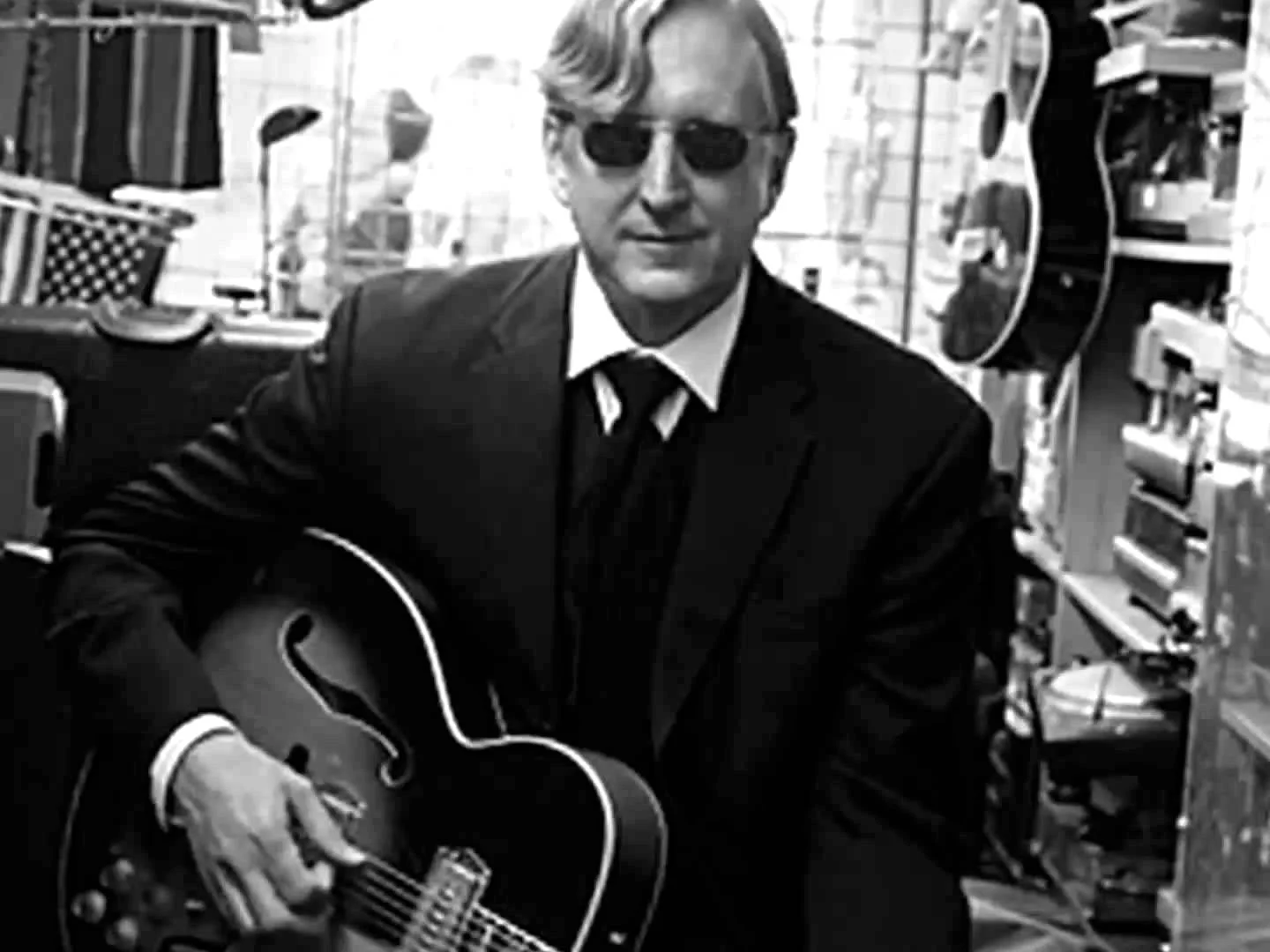
15 March 2012, South by Southwest festival, Austin, Texas. USA
Good morning! Why are we up so fucking early? How important can this speech be if we're giving it at noon? It can't be that important. Every decent musician in town is asleep, or they will be before I'm done with this thing, I guarantee you. I've got a bit of a mess up here.
When I was invited to do the keynote speech of this year's conference I was a little hesitant because the word keynote made me uncomfortable. It seemed to suggest that there was a key note to be struck that sums up whatever is going on out there in the streets.
Five days of bands, hundreds of venues from morning till night, and no one really hardly agrees on anything in pop anymore. There is no key note, I don't think. There is no unified theory of everything. You can ask Einstein. But you can pick any band, say KISS, and you can go, "Early Theatre Rock proponents, expressing the true raging hormones of youth" or "They suck!"
You can go, Phish, "Inheritors of the Grateful Dead's mantle, brilliant center of the true Alternative community," or "They suck." You go, "Bruce Springsteen, natural–born poetic genius off the streets of Monmouth County, hardest – hardest working – hardest working New Jerseyian in show business, voice of the common man, future of Rock and Roll!", or "He sucks. Get the fuck out of here!"
You could pick any band, and create your own equation. It's fun. There was even a recent book that focused on the Beatles and decided, you got it, they sucked. So really, instead of a keynote speech, I thought that perhaps this should be a key notes speech, or perhaps many keynote speakers. I exaggerate for effect, but only a little bit. So with that as my disclaimer, I move cautiously on.
Still, it's great to be in a town with ten thousand bands, or whatever . . . anybody know the actual number? Come on, a lot of them, right? Back in late '64 when I picked a guitar that would have seemed like some insane, teenage pipe dream, because first of all, it would have been numerically impossible. There just weren't that many guitars to go around in those days. They simply hadn't made that many yet. We would have all have to have been sharing.
Guitar players were rare. Mostly, music schooled bands were rare, and, until the Beatles hit, played primarily instrumental music. And there wasn't that much music to play. When I picked up the guitar, there was only ten years of Rock history to draw on. That would be, like, all of known Pop being only the music that you know that's occurred between 2002 and now.
The most groups in one place I had ever seen as a teenager was twenty bands at the Keyport Matawan Roller Dome in a battle to the death. So many styles were overlapping at that point in time that you would have a doo wop singing group with full pompadours and matching suits set up next to our band playing a garage version of Them's "Mystic Eyes," set up next to a full thirteen–piece soul show band. And still that's nothing minutely compared to what's going on, on the streets of Austin right now.
So, it's incredible to be back. I've had a lot of fun here in Austin since the '70s, and Jim Franklin and the Armadillo World Headquarters. It's fascinating to see what's become of the music that I've loved my whole life. Pop's become a new language, cultural force, social movement. Actually, a series of new languages, cultural forces, and social movements that have inspired and enlivened the second half of the twentieth century, and the dawning years of this one. I mean, who would have thought that there would have been a sax–playing president, or a soul–singing president, you know?
When we started, thirty years old for a rock musician was unthinkable. Bill Haley kept his age a relative secret. So when Danny and the Juniors sang "Rock and Roll is Here to Stay," they didn't have a clue as to how terrifyingly, fucking right they were going to be. When I look out from my stage these days, I look into the eyes of three generations of people, and still popular music continues to provide its primary function as youth music, as a joyous argument–starter, and as a subject for long booze–filled nights of debate with Steve Van Zandt, over who reigns ultimately supreme.
There are so many sub–genres and fashions, two–tone, acid rock, alternative dance, alternative metal, alternative rock, art punk, art rock, avant garde metal, black metal, black and death metal, Christian metal, heavy metal, funk metal, bland metal, medieval metal, indie metal, melodic death metal, melodic black metal, metal core, hard core, electronic hard core, folk punk, folk rock, pop punk, Brit pop, grunge, sad core, surf music, psychedelic rock, punk rock, hip hop, rap rock, rap metal, Nintendo core, huh?
I just want to know what a Nintendo core is, myself. But rock noir, shock rock, skate punk, noise core, noise pop, noise rock, pagan rock, paisley underground, indy pop, indy rock, heartland rock, roots rock, samba rock, screamo–emo, shoegazing stoner rock, swamp pop, synth pop, rock against communism, garage rock, blues rock, death and roll, lo–fi, jangle pop, folk music. Just add neo– and post– to everything I said, and mention them all again. Yeah, and rock & roll.
So, holy shit, this is all going on in this town right now. For a guy who realizes U2 is probably the last band he is going to know the names of all four members of, it's overwhelming. Perhaps the most prophetic comment I've heard over the past quarter century about rock music was made by Lester Bangs upon Elvis' death. In 1977, Lester Bangs said Elvis was probably the last thing we were all going to agree on – Public Enemy not counting.
From here on in, you would have your heroes and I would have mine. The center of your world may be Iggy Pop, or Joni Mitchell, or maybe Dylan. Mine might be KISS, or Pearl Jam, but we would never see eye–to–eye again, and be brought together by one music again. And his final quote in the article was, "So, instead of saying goodbye to Elvis, I'm gonna say goodbye to you."
While that's been proven a thousand times over, still here we are in a town with thousands of bands, each with a style, and a philosophy, and a song of their own. And I think the best of them believe that they have the power to turn Lester's prophecy inside out, and to beat his odds.
So as the records that my music was initially released on give way to a cloud of ones and zeroes, and as I carry my entire record collection since I was thirteen in my breast pocket, I'd like to talk about the one thing that's been consistent over the years, the genesis and power of creativity, the power of the songwriter, or let's say, composer, or just creator. So whether you're making dance music, Americana, rap music, electronica, it's all about how you are putting what you do together. The elements you're using don't matter. Purity of human expression and experience is not confined to guitars, to tubes, to turntables, to microchips. There is no right way, no pure way, of doing it. There's just doing it.
We live in a post–authentic world. And today authenticity is a house of mirrors. It's all just what you're bringing when the lights go down. It's your teachers, your influences, your personal history; and at the end of the day, it's the power and purpose of your music that still matters.
So I'm gonna talk, a little bit today, about how I've put what I've done together, in the hopes that someone slugging away in one of the clubs tonight may find some small piece of it valuable. And this being Woody Guthrie's hundredth birthday, and the centerpiece of this year's South–by–Southwest Conference, I'm also gonna talk a little about my musical development, and where it intersected with Woody's, and why.
In the beginning, every musician has their genesis moment. For you, it might have been the Sex Pistols, or Madonna, or Public Enemy. It's whatever initially inspires you to action. Mine was 1956, Elvis on the Ed Sullivan Show. It was the evening I realized a white man could make magic, that you did not have to be constrained by your upbringing, by the way you looked, or by the social context that oppressed you. You could call upon your own powers of imagination, and you could create a transformative self.
A certain type of transformative self, that perhaps at any other moment in American History, might have seemed difficult, if not impossible. And I always tell my kids that they were lucky to be born in the age of reproducible technology, otherwise they'd be traveling in the back of a wagon and I'd be wearing a jester's hat. It's all about timing. The advent of television and its dissemination of visual information changed the world in the fifties the way the internet has over the past twenty years.
Remember, it wasn't just the way Elvis looked, it was the way he moved that made people crazy, pissed off, driven to screaming ecstasy, and profane revulsion. That was television. When they made an attempt to censor him from the waist down, it was because of what you could see happening in his pants. Elvis was the first modern Twentieth Century man, the precursor of the Sexual Revolution, of the Civil Rights Revolution, drawn from the same Memphis as Martin Luther King, creating fundamental, outsider art that would be embraced by a mainstream popular culture.
Television and Elvis gave us full access to a new language, a new form of communication, a new way of being, a new way of looking, a new way of thinking; about sex, about race, about identity, about life; a new way of being an American, a human being; and a new way of hearing music. Once Elvis came across the airwaves, once he was heard and seen in action, you could not put the genie back in the bottle. After that moment, there was yesterday, and there was today, and there was a red hot, rockabilly forging of a new tomorrow, before your very eyes.
So, one week later, inspired by the passion in Elvis' pants, my little six–year–old fingers wrapped themselves around a guitar neck for the first time, rented from Mike Deal's Music in Freehold, New Jersey. They just wouldn't fit. Failure with a capital F. So I just beat on it, and beat on it, and beat on it – in front of the mirror, of course. I still do that. Don't you? Come on, you gotta check your moves. All right?
But even before there was Elvis, my world had begun to be shaped by the little radio with the six–inch mono speaker that sat on top of our refrigerator. My mother loved music, and she rahised us on pop music radio. So between 8:00 and 8:30 every morning, as I snowed sugar onto my Sugar Pops, the sounds of early pop and doo wop whispered into my young and impressionable ears. Doo wop, the most sensual music ever made, the sound of raw sex, of silk stockings rustling on backseat upholstery, the sound of the snaps of bras popping across the USA, of wonderful lies being whispered into Tabu–perfumed ears, the sound of smeared lipstick, untucked shirts, running mascara, tears on your pillow, secrets whispered in the still of the night, the high school bleachers, and the dark at the YMCA canteen. The soundtrack for your incredibly, wonderful limp–your–ass, blue–balled walk back home after the dance. Oh! And it hurt so good.
In the late fifties and early sixties doo wop dripped from radios in the gas stations, factories, streets, and pool halls – the temples of life and mystery in my little hometown. And I would always be enraptured by its basic chord progression. Isn't there supposed to be a guitar around here somewhere? Anybody got one?
(strumming guitar and singing opening lines of song, "Backstreets") One soft infested summer, me and Terry became friends...
It all comes from the same place. Well anyway, then into my thirteen–year–old ears came 60's pop. Roy Orbison, besides Johnny Cash, he was the other Man in Black. He was the true master of the romantic apocalypse you dreaded, and knew was coming after the first night you whispered, I love you, to your new girlfriend. You were going down. Roy was the coolest, uncool loser you'd ever seen. With his Coke bottle black glasses, his three–octave range, he seemed to take joy sticking his knife deep into the hot belly of your teenage insecurities.
Simply the titles, "Crying," "It's Over," "Running Scared." That's right, the paranoia, oh, the paranoia. He sang about the tragic unknowability of women. He was tortured by soft skin, angora sweaters, beauty, and death – just like you. But he also sang that he'd been risen to the heights of near unexpressable bliss by these same very things that tortured him. Oh, cruel irony.
And for those few moments, he told you that the wreckage, and the ruin, and the heartbreak was all worth it. I got it, my young songwriters, wisdom said to me: Life is tragedy, broken by moments of unworldly bliss that make that tragedy bearable. I was half right. That wasn't life, that was pop music.
But at twenty–four, who knew the difference? So I was on my way. Then Spector and the Wall of Sound. Phil's entire body of work could be described by the title of one of his lesser–known productions, "He Hit Me (And It Felt Like a Kiss)." Phil's records felt like near chaos, violence covered in sugar and candy, sung by the girls who were sending Roy–o running straight for the anti–depressants. If Roy was opera, Phil was symphonies, little three–minute orgasms, followed by oblivion.
And Phil's greatest lesson was sound. Sound is its own language. I mean, the first thing you would think of with Phil Spector is (soundbite of mimicking a drum beat). That was all you needed. And then, the British Invasion. My first real guitar, I actually began to learn how to play, and this was different, shifted the lay of the land. Four guys, playing and singing, writing their own material. There was no longer gonna be a music producer apart from the singer, a singer who didn't write, a writer who didn't sing. It changed the way things were done. The Beatles were cool. They were classical, formal, and created the idea of an independent unit where everything could come out of your garage. The "Meet the Beatles" album cover, those four head shots. I remember, I seen 'em at J. J. Newberry's. It was the first thing I saw when you ran down to the five–and–ten cent store. There were no record stores. There weren't enough records, I don't think, in those days. There was a little set by the toys where they sold a few albums.
And I remember running in and seeing that album cover with those four headshots. It was like the silent gods of Olympus. Your future was just sort of staring you in the face. I remember thinking, "That's too cool. I'm never gonna get there, man, never." And then in some fanzine I came across a picture of the Beatles in Hamburg. And they had on the leather jackets and the slick–backed pompadours, they had acned faces. I said, hey, "Wait a minute, those are the guys I grew up with, only they were Liverpool wharf rats."
So minus their Nehru jackets and the haircuts – so these guys, they're kids. They're a lot cooler than me, but they're still kids. There must be a way to get there from here. Then for me, it was The Animals. For some, they were just another one the really good beat groups that came of the 60s. But to me, The Animals were a revelation. The first records with full blown class consciousness that I had ever heard. "We Gotta Get Out Of This Place" had that great bass riff, that (playing bass line of "We Gotta Get Out Of This Place) and that was just marking time.
(Singing and strumming "We Gotta Get Out Of This Place"):
In this dirty old part of the city, where the sun refused to shine.
People tell me there ain't no sense in trying.
My little girl, you're so young and pretty.
One thing I know is true,
You'll be dead before your time is due, this I know.
See my Daddy in bed and dying.
See his hair turning grey.
He's been working and slaving his life away, yes, I know.
It's been work – every day
Just work – every day
It's been work, work, work, work.
We gotta get out of this place
If it's the last thing we ever do
We gotta get out of this place
Girl, there's a better life for me and you.
Yes, I know it's true.
That's every song I've ever written. Yeah. That's all of them. I'm not kidding, either. That's "Born to Run," "Born in the USA," everything I've done for the past 40 years, including all the new ones. But that struck me so deep. It was the first time I felt I heard something come across the radio that mirrored my home life, my childhood. And the other thing that was great about The Animals was there were no good–looking members. There were none. They were considered to be one of the ugliest groups in all of rock and roll.
And that was good. That was good for me, because I considered myself hideous at the time. And they weren't nice, you know. They didn't curry favor, you know. They were like aggression personified. It's my life, I'll do what I want. They were cruel. They were cruel, which was so freeing. It was so freeing. When you saw Eric Burdon, he was like your shrunken daddy with a wig on. He never, he never had a kid's face. He always had a little man's face, you know.
And he couldn't dance. And they put him in suit, but it was like putting a gorilla in a suit. You could tell he was like, "Fuck that shit, man." He didn't want it. And then he had that voice that was, like, I don't know, the Howlin' Wolf, or something – coming out of some seventeen or eighteen–year–old kid. I don't know how it happened. I found their cruelty so freeing. What was that great verse in "It's My Life?" It's a hard world to get a break in, all the good things have been taken. And then, "Though dressed in these rags I'll wear sable someday, hear what I say. I'm gonna ride the serpent. No more time spent sweating rent." Then that beautiful, "It's my life. Show me I'm wrong, hurt me sometime. Hurt me sometime. But someday I'll treat you real fine. I love that.
And then they had the name. The name was very different from the Beatles, or Herman's Hermits, or Freddie and the Dreamers. The name was unforgiving, and final, and irrevocable. I mean, it was in your face. It was the most unapologetic group name until the Sex Pistols came along.
"Badlands," "Prove It All Night," Darkness On The Edge of Town was filled with, with The Animals. Youngsters, watch this one. I'm gonna tell you how it's done, right now. I took "Don't Let Me Be Misunderstood,"
(Singing and strumming beginning of "Don't Let Me Be Misunderstood":
Danta, danta, danta, dah.
Dah, dah, dah, dah, dah.
Danta, danta, danta, dah
Dah, dah, dah, dah, dah.
(Singing melody of "Don't Let Me Be Misunderstood" while strumming chords of "Badlands":
Dah, dah, danta, tadah.
Dah, dah, dah, dah, dah.
Danta, danta, danta, dah.
Dah, dah, dah, dah, dah.
It's the same fucking riff, man.Listen up, listen up, youngsters, this is how successful theft is accomplished. "Darkness" was also informed by the punk explosion at the time. I went out and I got all the records, all the early punk records, and I brought "Anarchy in the UK," and "God Save the Queen," and the Sex Pistols were so frightening. They literally shook the earth. And a lot of groups managed shocking. But frightening, frightening was something else. There were, very, very few rock groups that managed frightening. And that was a great quality, and it was, part of their great beauty.
They were brave, and they challenged you, and they made you brave and lot of that energy seeped its way into subtext of "Darkness." "Darkness" was written in 1977, and all of that music was out there, and if you had ears you could not ignore it. And I had peers that did. And they were mistaken, you could not ignore that challenge.
Of course, for me, there was movies, films. That's another discussion. But it was, then about soul music. It's incredibly important. The blue collar grit of soul music.
(Singing "Soul Man"):
I was brought up on a backstreet
I learned how to love before I could eat.
Now even though I personally learned how to eat long before I knew how to love, I knew what he was talking about. It was the music of gritty determination – of the blues, of the church, of the Earth, and of the sex–soaked heavens. It was music of sweaty perspiration, and drenched demands for pleasure and respect. It was adult music, it was sung by soul men and women, not teen idols.
And then it was the silk and sequined aspirational sounds of Motown. And that was something smoother, but that was no less powerful than, than Stax. There's a beautifully socially–conscious soul of Curtis Mayfield and the Impressions, "We're a Winner," keep on pushin'. Just great, great records that just filled the airwaves at a time when you couldn't have needed them more. You just couldn't have needed them more.
"A Woman's Got Soul," what a beautiful, beautiful record to women. "It's All Right." It was the sound track of the Civil Rights Movement. And it was here, amongst these great African–American artists, that I learned my craft. You learned how to write. You learned how to arrange. You learned what mattered and what didn't. You learned what a great production sounds like. You learned how to lead a band. You learned how to front a band.
These men and women, they were and they remain my masters. By the time I reached my twenties, I'd spent a thousand nights employing their lessons in local clubs and bars, honing my own skills. I was signed as an acoustic singer/songwriter, but I was wolf in sheep's clothing – signed by John Hammond at Columbia Records, along with Elliott Murphy, John Prine, Loudin Wainwright III. We were all new Dylans.
And the old Dylan was only 30. So I don't even know why they needed a fucking new Dylan, all right? But those were the times. 30 was, you know…But I had nights and nights of bar playing behind me to bring my songs home. Young musicians, learn how to bring it live, and then bring it night, after night, after night, after night. Your audience will remember you.
Your ticket is your handshake. These skills gave me a huge ace up my sleeve. And when we finally went on the road, and we played that ace, we scorched the Earth, because that's what I was taught to do by Sam Moore, and by James Brown. There's no greater performance than James Brown burning ass on the Rolling Stones at The T.A.M.I. show. Sorry, sorry, my friends. I fucking loved the Stones. But James Brown – boys and men, you were screwed. Yeah, I think I'll go on after James Brown.
Oh, yeah, can you put me in the schedule somewhere after James Brown? Fuck, no. Get out. Go home. Save it. Don't waste it, man. I had a great thing with James Brown. I went to see James Brown one night, and he kind of knew me. I was sitting in the audience, and, suddenly I heard: Ladies and gentlemen, Magic Johnson, and Magic Johnson was onstage. And: Ladies and gentlemen, Woody Harrelson, and he was on stage. And then I'm sitting in my seat, watching, I hear: Ladies and gentleman, Mr. Mr., Mr. "Born in the USA." And I realized he didn't know my name, so I ran my ass up there as fast as I could.
I can't tell you, man, standing on stage alongside of James Brown…it was like, "Fuck, what am I doing here? He's such a, his influence. James Brown, underrated, still, today, underrated. He's, He's Elvis. He's Dylan. Dylan from whom I first heard a version of the place that I lived that felt unvarnished and real to me.
If you were young in the sixties and fifties, everything felt false everywhere you turned. But you didn't know how to say it. There was no language for it at the time. It just felt fucked up, but you didn't have the words. Bob came along and gave us those words. He gave us those songs. And the first time he asked you was: How does it feel? Man, how does it feel to be on your own? And if you were a kid in 1965, you were on your own, because your parents, God bless them, they could not understand the incredible changes that were taking place. You were on your own, without a home. He gave us the words to understand our hearts.
He didn't treat you like a child. He treated you like an adult. He stood back and he took in the stakes that we were playing for, he laid them out in front of you. I never forgot it. Bob is the father of my musical country, now and forever. And I thank him.
The great, the great trick I learned from Bob is that he still does one thing that nobody, nobody can do. He sings verse, after verse, after verse and it doesn't get boring. It's almost impossible. But he didn't write about something, he wrote about everything that mattered at once in every song, it seemed like.
He pulled it off. I said, "Yeah, I like that. I'm gonna try that." So now I'm in my late twenties, and I'm concerned, of course – getting older. I want to write music that I can imagine myself singing on stage at the advanced old age, perhaps, of 40? I wanted to grow up. I wanted to twist the form I loved into something that could address my adult concerns. And so I found my way to country music.
I remember sitting in my little apartment, playing "Hank Williams Greatest Hits" over and over. And I was trying to crack its code, because at first it just didn't sound good to me. It just sounded cranky and old–fashioned. But it was that hard country voice and I'm playing it, and it was an austere instrumentation. But slowly, slowly, my ears became accustomed to it, it's beautiful simplicity, and it's darkness and depth. And Hank Williams went from archival, to alive for me, before my very eyes.
And I lived on that for a while in the late seventies. In country music, I found the adult blues, the working men's and women's stories I'd been searching for, the grim recognition of the chips that were laid down against you. "My Bucket's Got A Hole In It." "I'll Never Get Out Of This World Alive," "Lost Highway," the great Charlie Rich song,
(Singing "Life Has it's Little Ups and Downs"):
Like ponies on a merry–go–round
No one grabs a brass ring every time
But she don't mind
(Speaking) Oh fuck, man, that was like…
(Singing "Life Has it's Little Ups and Downs"):
She wears a gold ring on her finger
And it's mine
Oh my God, you know, that can reduce me to tears now. It was so much. It was "Working Man's Blues" – stoic recognition of everyday reality, and the small and big things that allow you to put a foot in front of the other and get you through. I found that Country's fatalism attracted me. It was reflective. It was funny. It was soulful. But it was quite fatalistic. Tomorrow looked pretty dark.
And the one thing it rarely was, it was rarely politically angry, and it was rarely politically critical. And I realized that that fatalism had a toxic element. If rock and roll was a seven–day weekend, country was Saturday night hell–raising, followed by heavy "Sunday Morning Coming Down." Guilt, guilt, guilt, I fucked up. Oh, my God. But, as the song says: Would you take another chance on me? That was Country.
Country seemed, not to question why. It seemed like it was about doing, then dying, screwing, then crying, boozing, then trying, Then as Jerry Lee Lewis, the living, breathing personification of both rock and country said, "I've fallen to the bottom and I'm working my way down."
So that was hard core working man's blues, hard core – loved it. And in answer to Hank Williams question: Why does my bucket have a hole in it? Why? So along with our fun, and the bar band raucousness, the E Street Band carried a search for identity, and that became a central part of my music. Now country, by its nature, appealed to me. Country was provincial, and so was I. I was not downtown. I wasn't particularly Bohemian or hipster. I was kind of hippy–by–circumstance, when it happened. But, I felt I was an average guy, with a slightly above average gift. And if I worked my ass off on it…And country was about the truth emanating out of your sweat, out of your local bar, your corner store. It held its gaze on yesterday's blues, tonight's pleasures' and maybe on Sunday, the hereafter. And I covered a lot of ground, but there was still something missing. So, somewhere in my late twenties I picked up Joe Klein's "Woody Guthrie, A Life."
And as I read that book, a world of possibilities that predated Dylan's, that had inspired him, and lead to some of his greatest work, opened up for me. Woody's gaze was – it was set on today's hard times. But also, somewhere over the horizon, there was something. Woody's world was a world where fatalism was tempered by a practical idealism. It was a world where speaking truth to power wasn't futile, whatever its outcome.
Why do we continue to talk about Woody so many years on, never had a hit, never went platinum, never played in an arena, never got his picture on the cover of Rolling Stone. But he's a ghost in the machine – big, big ghost in the machine. And I believe it's because Woody's songs, his body of work, tried to answer Hank Williams' question: why your bucket has a whole in it. And that's a question that's eaten at me for a long time.
So, in my early 30s, his voice spoke to me very, very deeply. And we began to cover "This Land is Your Land" in concert. And I knew I was never gonna be Woody Guthrie. I liked Elvis, and I liked the Pink Cadillac too much. I like the simplicity, and the tossed–off temporary feeling of pop hits. I liked big, fucking noise. And in my own way, I like the luxuries and the comforts of being a star. I had already gone a long way down a pretty different road.
So four years ago, I found myself in an unusual situation. It was a cold winter day, and I was standing alongside of Pete Seeger, and it was 25 degrees. Pete had come to Washington. Pete carries a banjo everywhere he goes – the subway, the bus – and comes out in his shirt. I said, "Man, Pete, put on a jacket, man, it's freezing out here." He's ninety years old, a living embodiment of Woody's legacy. And there were several hundred thousand of our fellow citizens in front of us. We had the Lincoln Memorial behind us and a newly–elected president to our right. And we were going to sing, "This Land is Your Land" in front of all these Americans. And Pete insisted, "We have to sing all the verses. We have to sing all the verses, man. You can't leave any of them out." I said, I don't know, Pete, there's only – we had, like, a crowd of six year old school kids behind us. He says, "No, we're all gonna sing all the verses – all the verses. And, so we got to it."
(Playing guitar and singing "This Land Is Your Land"):
As I was walking
I saw a sign there
And on that sign said
We're trespassing
And on the other side
It didn't said nothing
That side was made
For you and me.
This land is your land
This land is my land
(Speaking) This song is meant to be sung by everybody.
(Playing guitar and singing "This Land Is Your Land" – crowd singing along):
From California
To the New York island
From the Redwood Forest
To the Gulf Stream waters
This land was made for you and me
So, on that day, Pete and myself, and generations of young and old Americans – all colors, religious beliefs – I realized that sometimes things that come from the outside, they make their way in, to become a part of the beating heart of the nation. And on that day, when we sung that song, Americans – young and old, black and white, of all religious and political beliefs – were united, for a brief moment, by Woody's poetry.
So, perhaps Lester Bangs wasn't completely right, for here we all are tonight in this town together, musicians, young and old, celebrating, each, perhaps in our own way, a sense of freedom that was Woody's legacy. So, rumble, young musicians, rumble. Open your ears and open your hearts. Don't take yourself too seriously, and take yourself as seriously as death itself. Don't worry. Worry your ass off. Have ironclad confidence, but doubt – it keeps you awake and alert. Believe you are the baddest ass in town, and, you suck!
It keeps you honest. It keeps you honest. Be able to keep two completely contradictory ideas alive and well inside of your heart and head at all times. If it doesn't drive you crazy, it will make you strong. And stay hard, stay hungry, and stay alive. And when you walk onstage on tonight to bring the noise, treat it like it's all we have. And then remember, it's only rock and roll. I think I may go out and catch a little black death metal. Thank you.