• Genre
  • About
  • Submissions
  • Donate
  • Search
Menu

Speakola

All Speeches Great and Small
  • Genre
  • About
  • Submissions
  • Donate
  • Search

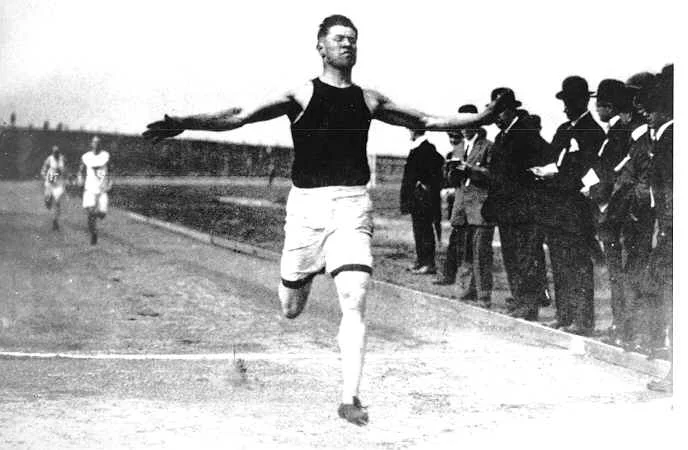
Jim Thorpe: 'Thanks, king', Decathlon gold medal presentation, Olympic Games - 1912

September 11, 2015

July 15, 1912, Stockholm, Sweden

Jim Thorpe was an American (also native American) decathlete who won gold in the decathlon. At the medal presentation, King Gustav of Sweden announced to Thorpe, "Sir, you are the greatest athlete in the world!". Thorpe's two word reply:

Thanks, king.

Source: https://en.wikipedia.org/wiki/Jim_Thorpe

Enjoyed this speech? Speakola is a labour of love and I’d be very grateful if you would share, tweet or like it. Thank you.

Facebook Twitter Facebook
In PLAYER Tags JIM THORPE, ATHLETE, ATHLETICS, SHORT SPEECH, OLYMPICS, MEDAL PRESENTATION, KING GUSTAV, DECATHLON
Comment

Kumar Sangakkara: 'I am today, and always, proudly Sri Lankan', MCC 'Spirit of Cricket' Lecture -2011

September 9, 2015

July 6, 2011, Lord's, London, UK (video in seven parts)

Mr President, my Lords, Ladies and gentlemen

Firstly I wish to sincerely thank the MCC for giving me the opportunity and great honour of delivering the 2011 Cowdrey Lecture.

I was in India after the World Cup when my manager called to pass on the message that CMJ was trying to get in touch with me to see whether I would like to deliver this year's lecture. I was initially hesitant given the fact we would be in the midst of the current ODI series, but after some reflection I realised that it was an invitation I should not turn down. To be the first Sri Lankan to be invited was not only a great honour for me, but also for my fellow countrymen.

Then I had to choose my topic. I suspect many of you might have anticipated that I pick one of the many topics being energetically debated today - the role of technology, the governance of the game, the future of Test cricket, and the curse of corruption, especially spot-fixing. All of the above are important and no doubt Colin Cowdrey, a cricketing legend with a deep affection for the game, would have strong opinions about them all.

For the record, I do too: I strongly believe that we have reached a critical juncture in the game's history and that unless we better sustain Test cricket, embrace technology enthusiastically, protect the game's global governance from narrow self-interest, and more aggressively root out corruption then cricket will face an uncertain future.

But, while these would all be interesting topics, deep down inside me I wanted to share with you a story, the story of Sri Lanka's cricket, a journey that I am sure Colin would have enjoyed greatly because I don't believe any cricket-playing nation in the world today better highlights the potential of cricket to be more than just a game.

This lecture is all about the Spirit of the Game and in this regard the story of cricket in Sri Lanka is fascinating. Cricket in Sri Lanka is no longer just a sport: it is a shared passion that is a source of fun and a force for unity. It is a treasured sport that occupies a celebrated place in our society.

It is remarkable that in a very short period an alien game has become our national obsession, played and followed with almost fanatical passion and love. A game that brings the nation to a standstill; a sport so powerful it is capable of transcending war and politics. I therefore decided that tonight I would like to talk about the Spirit of Sri Lanka's cricket.

The History of Sri Lanka

Ladies and Gentleman, the history of my country extends over 2500 years. A beautiful island situated in an advantageously strategic position in the Indian Ocean has long attracted the attentions of the world at times to both our disadvantage and at times to our advantage.

Sri Lanka is land rich in natural beauty and resources augmented by a wonderfully resilient and vibrant and hospitable people whose attitude to life has been shaped by volatile politics both internal and from without.

In our history you will find periods of glorious peace and prosperity and times of great strife, war and violence. Sri Lankans have been hardened by experience and have shown themselves to be a resilient and proud society celebrating at all times our zest for life and living.

Sri Lankans are a close knit community. The strength of the family unit reflects the spirit of our communities. We are an inquisitive and fun-loving people, smiling defiantly in the face of hardship and raucously celebrating times of prosperity.

Living not for tomorrow, but for today and savouring every breath of our daily existence. We are fiercely proud of our heritage and culture; the ordinary Sri Lankan standing tall and secure in that knowledge.

Over four hundred years of colonization by the Portuguese, the Dutch and the British has failed to crush or temper our indomitable spirit. And yet in this context the influence upon our recent history and society by the introduced sport of cricket is surprising and noteworthy. Sri Lankans for centuries have fiercely resisted the Westernisation of our society, at times summarily dismissing western tradition and influence as evil and detrimental.

Yet cricket, somehow, managed to slip through the crack in our anti-Western defences and has now become the most precious heirloom of our British Colonial inheritance. Maybe it is a result of our simple sense of hospitality where a guest is treated to all that we have and at times even to what we don't have.

If you a visit a rural Sri Lankan home and you are served a cup of tea you will find it to be intolerably sweet. I have at times experienced this and upon further inquiry have found that it is because the hosts believe that the guest is entitled to more of everything including the sugar. In homes where sugar is an ill-affordable luxury a guest will still have sugary tea while the hosts go without.

Sri Lanka's Cricketing Roots

Fittingly, as it happens, Colin Cowdrey and Sri Lanka's love for cricket had similar origins: Tea. Colin's father, Ernest, was a tea planter in India. While he was schooled in England, he played on his father's plantation where I am told he used to practice with Indian boys several years his elder. Cricket was introduced to Ceylon by men like Ernest, English tea planters, during the Colonial period of occupation that covered a span of about 150 years from 1796.

Credit for the game's establishment in Sri Lanka, though, also has to be given to the Anglican missionaries to whom the colonial government left the function of establishing the educational institutions.

By the latter half of the 19th century there grew a large group of Sri Lankan families who accumulated wealth by making use of the commercial opportunities thrown open by the colonial government.

However a majority of these families could not gain any high social recognition due to the prevalence of a rigid hierarchal caste system which labelled them until death to the caste they were born into. A possible way out to escape the caste stigma was to pledge their allegiance to the British crown and help the central seat of government.

The missionaries, assessing the situation wisely, opened superior fee levying English schools especially in Colombo for the affluent children of all races, castes and religions. By the dawn of the 20th Century the introduction of cricket to this educational system was automatic as the game had already ingrained into the English life; as Neville Cardus says "without cricket there can be no summer in that land."

Cricket was an expensive game needing playgrounds, equipment and coaches. The British missionaries provided all such facilities to these few schools. Cricket became an instant success in this English school system.

Most Sri Lankans considered cricket beyond their reach because it was confined to the privileged schools meant for the affluent.

The missionaries in due course arranged inter colligate matches backed by newspaper publicity to become a popular weekend social event to attend.

The newspapers carried all the details about the cricket matches played in the country and outside. As a result school boy cricketers became household names. The newspapers also gave prominent coverage to English county cricket and it had been often said that the Ceylonese knew more of county cricket than the English themselves.

Cricket clubs were formed around the dawn of the 20th century, designed to cater for the school leavers of affluent colleges. The clubs bore communal names like the Sinhalese Sports Club (SSC), Tamil Union, Burgher Recreation and the Moors Club, but if they were considered together they were all uniformly cultured with Anglicized values.

Inter-club matches were played purely for enjoyment as a sport. Club cricket also opened opportunities for the locals to mix socially with the British. So when Britain granted independence to Ceylon in 1948 it is no wonder cricket was a passion of the elitist class.

Although in the immediate post- independent period the Anglicized elite class was a small minority, they were pro-western in their political ideology and remained a powerful political lobby.

In the general elections immediately after independence, pro-elite governments were elected and the three Prime Ministers who headed the governments had played First XI cricket for premier affluent colleges and had been the members of SSC.

The period between 1960 and 1981 was one of slow progress in the game's popularity as the power transferred from the Anglicized elite to rising Socialist and Nationalist groups. Nevertheless, Sri Lanka was made an associate member of the ICC in 1965, gaining the opportunity to play unofficial test matches with players like Michael Tissera and Anura Tennakoon impressing as genuine world-class batsmen.

In 1981, thanks to the efforts of the late Honourable Gamini Dissanyake, the ICC granted Sri Lanka official Test status. It was obviously a pivotal time in our cricketing history. This was the start of a transformation of cricket from an elite sport to a game for the masses. Race Riots and Bloody Conflict

I do not remember this momentous occasion as a child. Maybe because I was only five years old, but also because it wasn't a topic that dominated conversation: the early 1980's was dominated by the escalation of militancy in the north into a full scale civil war that was to mar the next 30 years.

The terrible race riots of 1983 and a bloody communist insurgency amongst the youth was to darken my memories of my childhood and the lives of all Sri Lankans. I recollect now the race riots of 1983 now with horror, but for the simple imagination of a child not yet six it was a time of extended play and fun. I do not say this lightly as about 35 of our closest friends, all Tamils, took shelter in our home. They needed sanctuary from vicious politically-motivated goon squads and my father, like many other brave Sri Lankans from different ethnic backgrounds, opened his houses at great personal risk.

For me, though, it was a time where I had all my friends to play with all day long. The schools were closed and we'd play sport for hour after hour in the backyard - cricket, football, rounders…it was a child's dream come true. I remember getting annoyed when a game would be rudely interrupted by my parents and we'd all be ushered inside, hidden upstairs with our friends and ordered to be silent as the goon squads started searching homes in our neighbourhood.

I did not realise the terrible consequences of my friends being discovered and my father reminded me the other day of how one day during that period I turned to him and in all innocence said: "Is this going to happen every year as it is so much fun having all my friends live with us."

The JVP-led Communist insurgency rising out of our universities was equally horrific in the late 1980s. Shops, schools and universities were closed. People rarely stepped out of their homes in the evenings. The sight of charred bodies on the roadsides and floating corpses in the river was terrifyingly commonplace.

People who defied the JVP faced dire consequences. They even urged students of all schools to walk out and march in support of their aims. I was fortunate to be at Trinity College, one of the few schools that defied their dictates. Yet I was living just below Dharmaraja College where the students who walked out of its gates were met with tear gas and I would see students running down the hill to wash their eyes out with water from our garden tap.

My first cricket coach, Mr D.H. De Silva, a wonderful human being who coached tennis and cricket to students free of charge, was shot on the tennis coat by insurgents. Despite being hit in the abdomen twice, he miraculously survived when the gun held to his head jammed. Like many during and after that period, he fled overseas and started a new life in Australia. As the decade progressed, the fighting in the north and east had heightened to a full scale war. The Sri Lankan government was fighting the terrorist LTTE in a war that would drag our country's development back by decades.

This war affected the whole of our land in different ways. Families, usually from the lower economic classes, sacrificed their young men and women by the thousands in the service of Sri Lanka's military.

Even Colombo, a capital city that seemed far removed from the war's frontline, was under siege by the terrorists using powerful vehicle and suicide bombs. Bombs in public places targeting both civilians and political targets became an accepted risk of daily life in Sri Lanka. Parents travelling to work by bus would split up and travel separately so that if one of them died the other will return to tend to the family. Each and every Sri Lankan was touched by the brutality of that conflict.

People were disillusioned with politics and power and war. They were fearful of an uncertain future. The cycle of violence seemed unending. Sri Lanka became famous for its war and conflict.

It was a bleak time where we as a nation looked for inspiration - a miracle that would lift the pallid gloom and show us what we as a country were capable of if united as one, a beacon of hope to illuminate the potential of our peoples. That inspiration was to come in 1996.

An Identity Crisis

The pre-1995 era was a period during which Sri Lanka produced many fine cricketers but struggled to break free of the old colonial influences that had indoctrinated the way the game was played in Sri Lanka.

Even after gaining Test Status in 1981, Sri Lanka's cricket suffered from an identity crisis and there was far too little "Sri Lankan" in the way we played our cricket. Although there were exceptions, one being the much-talked about Sathasivam, who was a flamboyant and colourful cricketer, both on and off the field. He was cricketer in whose hand they say the bat was like a magic wand. Another unique batsman was Duleep Mendis, now our chief selector, who batted with swashbuckling bravado.

Generally, though, we played cricket by the book, copying the orthodox and conservative styles of the traditional cricketing powerhouses. There was none of the live-for-the moment and happy-go-lucky attitudes that underpin our own identity.

We had a competitive team, with able players, but we were timid, soft and did not yet fully believe in our own worth as individual players or as a team. I guess we were in many ways like the early West Indian teams: Calypso cricketers, who played the game as entertainers and lost more often than not albeit gracefully.

What we needed at the time was a leader. A cricketer from the masses who had the character, the ability and above all the courage and gall to change a system, to stand in the face of unfavourable culture and tradition, unafraid to put himself on the line for the achievement of a greater cause.

This much-awaited messiah arrived in the form of an immensely talented and slightly rotund Arjuna Ranatunga. He was to change the entire history of our cricketing heritage converting the game that we loved in to a shared fanatical passion that over 20 million people embraced as their own personal dream.

Arjuna's Leadership

The leadership of Arjuna during this period was critical to our emergence as a global force. It was Arjuna who understood most clearly why we needed to break free from the shackles of our colonial past and forge a new identity, an identity forged exclusively from Sri Lankan values, an identity that fed from the passion, vibrancy and emotion of normal Sri Lankans. Arjuna was a man hell-bent on making his own mark on the game in Sri Lanka, determined to break from foreign tradition and forge a new national brand of cricket.

Coming from Ananda College to the SSC proved to be a culture shock for him. SSC was dominated by students from St. Thomas' and Royal College, the two most elite schools in Colombo. The club's committee, membership and even the composition of the team was dominated by these elite schools.

Arjuna himself has spoken about how alien the culture felt and how difficult it was for him to adjust to try and fit in. As a 15-year-old school kid practising in the nets at the club, a senior stalwart of the club inquired about him. When told he was from the unfashionable Ananda College, he dismissed his obvious talents immediately: "We don't want any "Sarong Johnnie's" in this club."

As it turned out, Arjuna not only went to captain SSC for many years, he went onto break the stranglehold the elite schools had on the game. His goal was to impart in the team self-belief, to give us a backbone and a sense of self-worth that would inspire the team to look the opposition in the eye and stand equal, to compete without self-doubt or fear, to defy unhealthy traditions and to embrace our own Sri Lankan identity. He led fearlessly with unquestioned authority, but in a calm and collected manner that earned him the tag Captain Cool.

The first and most important foundation for our charge towards 1996 was laid. In this slightly over-weight and unfit southpaw, Sri Lanka had a brilliant general who for the first time looked to all available corners of our country to pick and choose his troops.

The Search for Unique Players

Arjuna better than anyone at the time realised that we needed an edge and in that regard he searched for players whose talents were so unique that when refined they would mystify and destroy the opposition.

In cricket, timing is everything. This proved to be true for the Sri Lankan team as well. We as a nation must be ever so thankful to the parents of Sanath Jayasuriya and Muthiah Muralitharan for having sired these two legends to serve our cricket at its time of greatest need.

From Matara came Sanath, a man from a humble background with an immense talent that was raw and without direction or refinement. A talent under the guidance of Arjuna that was harnessed to become one of the most destructive batting forces the game has ever known. It was talent never seen before and now with his retirement never to be seen again. Murali came from the hills of Kandy from a more affluent background. Starting off as a fast bowler and later changing to spin, he was blessed with a natural deformity in his bowling arm allowing him to impart so much spin on the ball that it spun at unthinkable angles. He brought wrist spin to off spin.

Arjuna's team was now in place and it was an impressive pool of talent, but they were not yet a team. Although winning the 1996 World Cup was a long-term goal, they needed to find a rallying point, a uniting factor that gave them a sense of "team", a cause to fight for, an event that not will not only bind the team together giving them a common focus but also rally the entire support of a nation for the team and its journey.

This came on Boxing Day at the MCG in 1995. Few realised it at the time, but the no balling of Murali for alleged chucking had far-reaching consequences. The issue raised the ire of the entire Sri Lankan nation. Murali was no longer alone. His pain, embarrassment and anger were shared by all. No matter what critics say, the manner in which Arjuna and team stood behind Murali made an entire nation proud. In that moment Sri Lanka adopted the cricketers simply as "our boys" or "Ape Kollo".

Gone was the earlier detachment of the Sri Lankan cricket fan and its place was a new found love for those 15 men. They became our sons, our brothers. Sri Lankans stood with them and shared their trials and tribulations.

The decision to no ball Murali in Melbourne was, for all Sri Lankans, an insult that would not be allowed to pass unavenged. It was the catalyst that spurred the Sri Lankan team on to do the unthinkable, become World Champions just 14 years after obtaining full ICC status. It is also important to mention that prior to 1981 more than 80% of the national players came from elite English schools, but by 1996 the same schools did not contribute a single player to the1996 World Cup squad.

The Unifying Impact of the 1996 World Cup

The impact of that World Cup victory was enormous, both broadening the game's grassroots as well as connecting all Sri Lankans with one shared passion. For the first time, children from outstations and government schools were allowed to make cricket their own. Cricket was opened up to the masses this unlocked the door for untapped talent to not only gain exposure but have a realistic chance of playing the game at the highest level.

These new grassroots cricketers brought with them the attributes of normal Sri Lankans, playing the game with a passion, joy and intensity that had hitherto been missing. They had watched Sanath, Kalu, Murali and Aravinda play a brand of cricket that not only changed the concept of one day cricket but was also instantly identifiable as being truly Sri Lankan.

We were no longer timid or soft or minnows. We had played and beaten the best in the world. We had done that without pretence or shame in a manner that highlighted and celebrated our national values, our collective cultures and habits. It was a brand of cricket we were proud to call our own, a style with local spirit and flair embodying all that was good in our heritage. The World Cup win gave us a new strength to understand our place in our society as cricketers. In the World Cup a country found a new beginning; a new inspiration upon which to build their dreams of a better future for Sri Lanka. Here were 15 individuals from different backgrounds, races, and religions, each fiercely proud of his own individuality and yet they united not just a team but a family.

Fighting for a common national cause representing the entirety of our society, providing a shining example to every Sri Lankan showing them with obvious clarity what it was to be truly Sri Lankan.

The 1996 World Cup gave all Sri Lankans a commonality, one point of collective joy and ambition that gave a divided society true national identity and was to be the panacea that healed all social evils and would stand the country in good stead through terrible natural disasters and a tragic civil war.

The 1996 World Cup win inspired people to look at their country differently. The sport overwhelmed terrorism and political strife; it provided something that everyone held dear to their hearts and helped normal people get through their lives.

The team also became a microcosm of how Sri Lankan society should be with players from different backgrounds, ethnicities and religions sharing their common joy, their passion and love for each other and their motherland.

Regardless of war, here we were playing together. The Sri Lanka team became a harmonising factor.

The Economic Impact of being World Champions

After the historic win the entire game of cricket in Sri Lanka was revolutionized. Television money started to pour into the cricket board's coffers. Large national and multinational corporations fought for sponsorship rights.

Cricketers started to earn real money both in the form of national contracts and endorsement deals. For the first time cricketers were on billboards and television advertising products, advertising anything from sausages to cellular networks.

Cricket became a viable profession and cricketers were both icons and role models. Personally, the win was very important for me. Until that time I was playing cricket with no real passion or ambition. I never thought or dreamed of playing for my country. This changed when I watched Sri Lanka play Kenya at Asgiriya. It was my final year in school and the first seed of my vision to play for my country was planted in my brain and heart when I witnessed Sanath, Gurasinghe and Aravinda produce a devastating display of batting. That seed of ambition spurted into life when, a couple of weeks later I watched on television that glorious final in Lahore. Everyone in Sri Lanka remembers where they were during that final. The cheering of a nation was a sound no bomb or exploding shell could drown. Cricket became an integral and all-important aspect of our national psyche.

Our cricket embodied everything in our lives, our laughter and tears, our hospitality our generosity, our music our food and drink. It was normality and hope and inspiration in a war-ravaged island. In it was our culture and heritage, enriched by our myriad ethnicities and religions. In it we were untouched, at least for a while, by petty politics and division. It is indeed a pity that life is not cricket. If it were we would not have seen the festering wounds of an ignorant war.

Bigger roles for the cricketers

The emergence of cricket and the new role of cricket within Sri Lankan society also meant that cricketers had bigger responsibilities than merely playing on the field. We needed to live positive lifestyles off the field and we need to also give back. The same people that applaud us every game need us to contribute back positively to their lives. We needed to inspire not just on the field but also off it.

The Tsunami was one such event. The death and destruction left in its wake was a blow our country could not afford. We were in New Zealand playing our first ODI. We had played badly and were sitting disappointed in the dressing room when, as usual, Sanath's phone started beeping. He read the SMS and told us a strange thing had just happened back home where "waves from the sea had flooded some areas". Initially we weren't too worried, assuming that it must have been a freak tide. It was only when we were back in the hotel watching the news coverage that we realized the magnitude of the devastation.

It was horrifying to watch footage of the waves sweeping through coastal towns and washing away in the blink of an eye the lives of thousands. We could not believe that it happened. We called home to check what is happening. "Is it true?" we asked. "How can the pictures be real?" we thought.

All we wanted to do was to go back home to be our families and stand together with our people. I remember landing at the airport on 31 December, a night when the whole of Colombo is normally light-up for the festivities, a time of music and laughter. But the town was empty and dark, the mood depressed and silent with sorrow. While we were thinking as to how we could help, Murali was quick to provide the inspiration.

Murali is a guy who has been pulled from all sides during his career, but he's always stood only alongside his team-mates and countrymen. Without any hesitation, he was on the phone to his contacts both local and foreign and in a matter of days along with the World Food Programme he had organised container loads of basic necessities of food, water and clothing to be distributed to the affected areas and people.

Amazingly, refusing to delegate the responsibility of distribution to the concerned authorities, he took it upon himself to accompany the convoys. It was my good fortune to be invited to join him. My wife and I along with Mahela, Ruchira Perera, our physio CJ Clark and many other volunteers drove alongside the aid convoys towards an experience that changed me as a person.

We based ourselves in Polonnaruwa, just north of Dambulla, driving daily to visit tsunami-ravaged coastal towns like Trincomalee and Batticaloa, as well as southern towns like Galle and Hambantota on later visits.

We visited shelter camps run by the Army and the LTTE and even some administered in partnership between them. Two bitter warring factions brought together to help people in a time of need.

In each camp we saw the effects of the tragedy written upon the faces of the young and old. Vacant and empty eyes filled with a sorrow and longing for homes and loved ones and livelihoods lost to the terrible waves.

Yet for us, their cricketers, they managed a smile. In the Kinniya Camp just south of Trincomalee, the first response of the people who had lost so much was to ask us if our families were okay. They had heard that Sanath and Upul Chandana's mothers were injured and they inquired about their health. They did not exaggerate their own plight nor did they wallow in it. Their concern was equal for all those around them.

This was true in all the camps we visited. Through their devastation shone the Sri Lankan spirit of indomitable resilience, of love, compassion, generosity and hospitality and gentleness. This is the same spirit in which we play our cricket. In this, our darkest hour, a country stood together in support and love for each other, united and strong. I experienced all this and vowed to myself that never would I be tempted to abuse the privilege that these very people had given me. The honour and responsibility of representing them on the field, playing a game they loved and adored.

The role the cricketers played in their personal capacities for post tsunami relief and re building was worthy of the trust the people of a nation had in them. Murali again stands out. His Seenigama project with his manager Kushil Gunasekera, which I know the MCC has supported, which included the rebuilding of over 1000 homes, was amazing.

The Lahore Attack

I was fortunate that during my life I never experienced violence in Sri Lanka first hand. They have been so many bomb explosions over the years but I was never in the wrong place at the wrong time.

In Colombo, apart from these occasional bombs, life was relatively normal. People had the luxury of being physically detached from the war. Children went to school, people went to work, I played my cricket.

In other parts of the country, though, people were putting their lives in harm's way every day either in the defence of their motherland or just trying to survive the geographical circumstances that made them inhabit a war zone.

For them, avoiding bullets, shells, mines and grenades, was imperative for survival. This was an experience that I could not relate to. I had great sympathy and compassion for them, but had no real experience with which I could draw parallels.

That was until we toured Pakistan in 2009. We set-off to play two Tests in Karachi and Lahore. The first Test played on a featherbed, past without great incident. The second Test was also meandering along with us piling up a big first innings when we departed for the ground on day three. Having been asked to leave early instead of waiting for the Pakistan bus, we were anticipating a day of hard toil for the bowlers.

At the back of the bus the fast bowlers were loud in their complaints. I remember Thilan Thushara being particularly vocal, complaining that his back was near breaking point. He joked that he wished a bomb would go off so we could all leave Lahore and go back home. Not thirty seconds had passed when we heard what sounded like fire crackers going off. Suddenly a shout came from the front: "Get down they are shooting at the bus."

The reaction was immediate. Everyone dived for cover and took shelter on the aisle or behind the seats. With very little space, we were all lying on top of each other. Then the bullets started to hit. It was like rain on a tin roof. The bus was at a standstill, an easy target for the gunmen.

As bullets started bursting through the bus all we could do was stay still and quiet, hoping and praying to avoid death or injury. Suddenly Mahela, who sits at the back of the bus, shouts saying he thinks he has been hit in the shin. I am lying next to Tilan. He groans in pain as a bullet hits him in the back of his thigh.

As I turn my head to look at him I feel something whizz past my ear and a bullet thuds into the side of the seat, the exact spot where my head had been a few seconds earlier. I feel something hit my shoulder and it goes numb. I know I had been hit, but I was just relieved and praying I was not going to be hit in the head.

Tharanga Paranvithana, on his debut tour, is also next to me. He stands up, bullets flying all around him, shouting "I have been hit" as he holds his blood-soaked chest. He collapsed onto his seat, apparently unconscious.

I see him and I think: "Oh my God, you were out first ball, run out the next innings and now you have been shot. What a terrible first tour." It is strange how clear your thinking is. I did not see my life flash by. There was no insane panic. There was absolute clarity and awareness of what was happening at that moment. I hear the bus roar in to life and start to move. Dilshan is screaming at the driver: "Drive…Drive". We speed up, swerve and are finally inside the safety of the stadium. There is a rush to get off the bus. Tharanga Paranawithana stands up. He is still bleeding and has a bullet lodged lightly in his sternum, the body of the bus tempering its velocity enough to be stopped by the bone.

Tilan is helped off the bus. In the dressing room there is a mixture of emotions: anger, relief, joy. Players and coaching staff are being examined by paramedics. Tilan and Paranavithana are taken by ambulance to the hospital.

We all sit in the dressing room and talk. Talk about what happened. Within minutes there is laughter and the jokes have started to flow. We have for the first time been a target of violence. We had survived.

We all realized that what some of our fellow Sri Lankans experienced every day for nearly 30 years. There was a new respect and awe for their courage and selflessness. It is notable how quickly we got over that attack on us. Although we were physically injured, mentally we held strong.

A few hours after the attack we were airlifted to the Lahore Air Force Base. Ajantha Mendis, his head swathed in bandages after multiple shrapnel wounds, suggests a game of Poker. Tilan has been brought back, sedated but fully conscious, to be with us and we make jokes at him and he smiles back.

We were shot at, grenades were thrown at us, we were injured and yet we were not cowed. We were not down and out. "We are Sri Lankan," we thought to ourselves, "and we are tough and we will get through hardship and we will overcome because our spirit is strong."

This is what the world saw in our interviews immediately after the attack: we were calm, collected, and rational. Our emotions held true to our role as unofficial ambassadors. A week after our arrival in Colombo from Pakistan I was driving about town and was stopped at a checkpoint. A soldier politely inquired as to my health after the attack. I said I was fine and added that what they as soldiers experience every day we only experienced for a few minutes, but managed to grab all the news headlines. That soldier looked me in the eye and replied: "It is OK if I die because it is my job and I am ready for it. But you are a hero and if you were to die it would be a great loss for our country."

I was taken aback. How can this man value his life less than mine? His sincerity was overwhelming. I felt humbled. This is the passion that cricket and cricketers evoke in Sri Lankans. This is the love that I strive every-day of my career to be worthy of.

Post 1996 Power Politics

Coming back to our cricket, the World Cup also brought less welcome changes with the start of detrimental cricket board politics and the transformation our cricket administration from a volunteer-led organisation run by well-meaning men of integrity into a multi-million dollar organisation that has been in turmoil ever since.

In Sri Lanka, cricket and politics have been synonymous. The efforts of Hon. Gamini Dissanayake were instrumental in getting Sri Lanka Test Status. He also was instrumental in building the Asgiriya international cricket stadium.

In the infancy of our cricket it was impossible to sustain the game without state patronage and funding. When Australia and West Indies refused to come to our country for the World Cup it was through government channels that the combined World Friendship XI came and played in Colombo to show the world that it was safe to play cricket here.

The importance of cricket to our society meant that at all times it enjoys benevolent state patronage. For Sri Lanka to be able to select a national team it must have membership of the Sports Ministry. No team can be fielded without the final approval of the Sports Minister. It is indeed a unique system where the board-appointed selectors can at any time be overruled and asked to reselect a side already chosen.

The Sports Minister can also exercise his unique powers to dissolve the cricket board if investigations reveal corruption or financial irregularity. With the victory in 1996 came money and power to the board and players. Players from within the team itself became involved in power games within the board. Officials elected to power in this way in turn manipulated player loyalty to achieve their own ends. At times board politics would spill over in to the team causing rift, ill feeling and distrust.

Accountability and transparency in administration and credibility of conduct were lost in a mad power struggle that would leave Sri Lankan cricket with no consistent and clear administration. Presidents and elected executive committees would come and go; government-picked interim committees would be appointed and dissolved.

After 1996 the cricket board has been controlled and administered by a handful of well-meaning individuals either personally or by proxy rotated in and out depending on appointment or election. Unfortunately to consolidate and perpetuate their power they opened the door of the administration to partisan cronies that would lead to corruption and wonton waste of cricket board finances and resources.

It was and still is confusing. Accusations of vote buying and rigging, player interference due to lobbying from each side and even violence at the AGMs, including the brandishing of weapons and ugly fist fights, have characterised cricket board elections for as long as I can remember.

The team lost the buffer between itself and the cricket administration. Players had become used to approaching members in power directly trading favours for mutual benefits and by 1999 all these changes in administration and player attitudes had transformed what was a close knit unit in 1996 into a collection of individuals with no shared vision or sense of team. The World Cup that followed in England in 1999 was a debacle: a first round exit.

Fortunately, though, the disastrous performance of the team proved to be a catalyst for further change within the dynamics of the Sri Lanka Cricket Team.

A new mix of players and a nice blend of youth and experience provided the context in which the old hierarchical structures within the team were dismantled in the decade that followed under the more consensual and inclusive leadership of Sanath, Marvan and Mahela. In the new team culture forged since 1999, individuals are accepted. The only thing that matters is commitment and discipline to the team. Individuality and internal debate are welcome. Respect is not demanded but earned. There was a new commitment towards keeping the team from board turmoil. It has been difficult to fully exclude it from our team dynamics because there are constant efforts to drag us back and in times of weakness and

doubt players have crossed the line. Still we have managed to protect and motivate our collective efforts towards one goal: winning on the field. We have to aspire to better administration. The administration needs to adopt the same values enshrined by the team over the years: integrity, transparency, commitment and discipline. Unless the administration is capable of becoming more professional, forward-thinking and transparent then we risk alienating the common man. Indeed, this is already happening. Loyal fans are becoming increasingly disillusioned. This is very dangerous because it is not the administrators or players that sustain the game- it is the cricket-loving public. It is their passion that powers cricket and if they turn their backs on cricket then the whole system will come crashing down.

The solution to this may be the ICC taking a stand to suspend member boards with any direct detrimental political interference and allegations of corruption and mismanagement. This will negate the ability to field representative teams or receive funding and other accompanying benefits from the ICC. But as a Sri Lankan I hope we have the strength to find the answers ourselves.

A Team Powered by Talent

While the team structure and culture itself was slowly evolving, our on-field success was primarily driven by the sheer talent and spirit of the uniquely talented players unearthed in recent times, players like Murali, Sanath, Aravinda, Mahela and Lasith.

Although our school cricket structure is extremely strong, our club structure remains archaic. With players diluted among 20 clubs it does not enable the national coaching staff to easily identify and funnel talented players through for further development. The lack of competitiveness of the club tournament does not lend itself to producing hardened first class professionals.

Various attempts to change this structure to condense and improve have been resisted by the administration and the clubs concerned, the main reason for this being that any elected cricket board that offended these clubs runs the risk of losing their votes come election time. At the same time, the instability of our administration is a huge stumbling block to the rapid face-change that we need. Indeed, it is amazing that that despite this system we are able to produce so many world-class cricketers.

However, the irony to this is that perhaps our biggest weakness has been our greatest strength. It is partly because of the lack of structure we are fortunate that the guys likes Lasith / Sanath / Murali and Mendis have escaped formalised textbook coaching. Had they been exposed to orthodox coaching then there is a very good chance that their skills would have been blunted. In all probability they would have been coached into ineffectiveness.

The Challenge Ahead for Sri Lanka

Nevertheless, despite abundant natural talent, we need to change our cricketing structure, we need to be more Sri Lankan rather than selfish, we need to condense our cricketing structure and ensure the that the best players are playing against each other at all times. We need to do this with an open mind, allowing both innovative thinking and free expression. In some respects we are doing that already, especially our coaching department anyway, which actively searches out for unorthodox talent.

We have recognised and learnt that our cricket is stronger when it is free-spirited and we therefore encourage players to express themselves and be open to innovation. There was a recent case where the national coaches were tipped off by a district coach running a bowling camp in the outstations. He'd discovered a volleyball player who ran to the crease slowly but then delivered the ball while in mid-air with a smash-like leap. His leap would land him quite a way down the pitch in the follow through. The district coach videorecorded his bowling for half an hour. National coaches in Colombo having watched the footage invited him out of curiosity a week later to come for formal training. The telephone call found him in a hospital bed tending a strained back as he had never bowled for such a long period as 30 minutes before in his life.

Another letter postmarked from a remote village in Sri Lanka had the writer claiming to be the fastest undiscovered bowler in Sri Lanka. A district coach investigating this claim found the writer to be a teenage Buddhist priest who insisted upon giving a demonstration of bowling while still dressed in his Saffron-coloured robes. Cricket in Sri Lanka tempts even the most chaste and holy.

On that occasion the interest in unique talent did not yield results. But the coaching staff will persevere in their search to unearth the next mystery bowler or cricketer who will take our cricket further forward.

Cricket's Heightened Importance in Sri Lanka's New Era

If we are able to seize the moment then the future of Sri Lanka's cricket remains very bright. I pray we do because cricket has such an important role to play in our island's future. Cricket played a crucial role during the dark days of Sri Lanka's civil war, a period of enormous suffering for all communities, but the conduct and performance of the team will have even greater importance as we enter a crucial period of reconciliation and recovery, an exciting period where all Sri Lankans aspire to peace and unity. It is also an exciting period for cricket where the re-integration of isolated communities in the north and east opens up new talent pools.

The spirit of cricket can and should remain and guiding force for good within society, providing entertain and fun, but also a shining example to all of how we all should approach our lives.

The war is now over. Sri Lanka looks towards a new future of peace and prosperity. I am eternally grateful for this. It means that my children will grow up without war and violence being a daily part of our lives. They will learn of its horrors not first-hand but perhaps in history class or through conversations for it is important that they understand and appreciate the great and terrible price our country and our people paid for the freedom and security they now enjoy.

In our cricket we display a unique spirit, a spirit enriched by lessons learned from a history spanning over two-and-a-half millennia. In our cricket you see the character of our people, our history, culture and tradition, our laughter, our joy, our tears and regrets. It is rich in emotion and talent. My responsibility as a Sri Lankan cricketer is to further enrich this beautiful sport, to add to it and enhance it and to leave a richer legacy for other cricketers to follow.

I will do that keeping paramount in my mind my Sri Lankan identity: play the game hard and fair and be a voice with which Sri Lanka can speak proudly and positively to the world. My loyalty will be to the ordinary Sri Lankan fan, their 20 million hearts beating collectively as one to our island rhythm and filled with an undying and ever-loyal love for this our game. Fans of different races, castes, ethnicities and religions who together celebrate their diversity by uniting for a common national cause. They are my foundation, they are my family. I will play my cricket for them. Their spirit is the true spirit of cricket. With me are all my people. I am Tamil, Sinhalese, Muslim and Burgher. I am a Buddhist, a Hindu, a follower of Islam and Christianity. I am today, and always, proudly Sri Lankan.


Source: http://www.espncricinfo.com/srilanka/conte...

Enjoyed this speech? Speakola is a labour of love and I’d be very grateful if you would share, tweet or like it. Thank you.

Facebook Twitter Facebook
In PLAYER Tags KUMAR SANGAKKARA, LORD'S, SPIRIT OF CRICKET, CRICKET, SRI LANKA
Comment
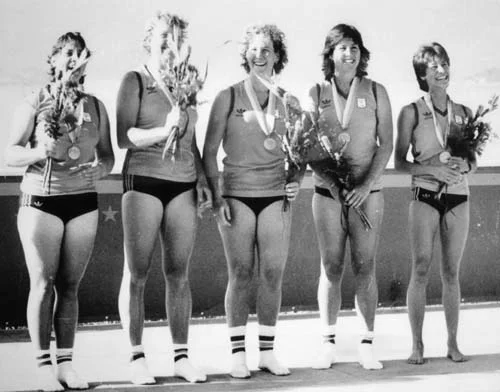
Margot Foster at 1984 LA Olympis. second from right

Margot Foster at 1984 LA Olympis. second from right

Margot Foster: MUSA Blues Awards - 2015

September 5, 2015

21 November, 2014, Copland Theatre, University of Melbourne

Distinguished guests, parents of Blues and most importantly all of you here today who are about to be awarded a full blue or half blue in recognition of your achievements in sport during the recent Australian University Games in Sydney in October.

It is my pleasure to be here as the president of the Melbourne University Sports Association and as a law and arts graduate of this university.  It is the role of MUSA, one of the oldest university sports associations in the country, founded in 1904, to represent the clubs and their members, the athletes, to ensure their best interests are looked after when it comes to resources, facilities and of course training, coaching and support for athletes, teams and crews.  This is done in conjunction with the university’s sports administration department Melbourne University Sport.

University Blues are awarded to athletes for “outstanding sporting performance representing the university” at an Australian University Games or Championships.  Blues have been awarded by the University of Melbourne since 1870 and follow in the long established tradition established by Oxford and Cambridge universities who each have their blues:  the navy blue for Oxford and the light blue for Cambridge.  Their rivalry is highlighted most publicly in the annual Boat Race on the Thames.  That race, so long for men only is, I am pleased to say now complemented by a women’s race over the same gruelling distance of 6.8km rowed in the dead of winter.

You are here because you have been nominated by your club, your coach or by MUS.  Those nominations are then deliberated on by the Blues Advisory Board a group formally constituted under the auspices of the Melbourne University Sports Association.  It comprises a number of experienced people from across sport at the university who consider and take very seriously their responsibility to maintain the standard of blues from year to year and between and amongst the different sports  recommending the awarding of blues and half blues, the highest sporting acknowledgement the university can bestow.  The Melbourne University Sports Association council then approves those recommendations.  I am pleased to note thata Distinguished Service Award will also be awarded tonight to a very worthy recipient.

Thank you so much to the members of the MUSA Blues Advisory Board who were available to meet at short notice between the Sydney AUG and this occasion to make these important decisions.  Whilst all are not here I’d like to acknowledge Cheryl McKinna  (athletics and basketball), Bob Girdwood (AFL and MUSA DSA) - Lisa Lovell (tennis DSA) Iain Scott  (football), Tony Steele  (cricket and squash), Ben Yeo (Water Polo DSA) Megan Lane (touch) and the MUS nominee Rod Warnecke who assisted me in this task. 


The University of Melbourne has produced many fine athletes over the years who were awarded Blues prior to becoming well known performers on the international stage bringing acclaim to themselves, their country and of course the university.  Many were household names of their eras:  John Landy, 1500m Olympic bronze medallist at the Melbourne 1956 Games and a former governor of Victoria; Ralph Doubell the 800 m winner at the 1968 Mexico Olympics in world record time; the late Dr Phil Law  (boxing), after whom one part of the Lazer Law Medal is named, himself a pioneer in Antarctic exploration; Sir Roderick Carnegie, a captain of industry and Sir James Gobbo, former governor and Supreme Court judge were both rowers in the late 40s and 50s, Geoff Rees, the Chairman of the Board of Sport and Australia’s first lightweight rowing world champion,  Dr Donald Cordner who played for the Demons and won a Brownlow, Kathy Watt former science student turned photographer who won gold on the bike in the road race  Barcelona in 1992; Peter Antonie current president of Melb Uni Boat Club who represented Australia on more occasions than you could imagine winning lightweight and heavyweight gold medals in rowing which is no mean feat.  And whilst there are many more I could mention, as but a selection of the illustrious company you are joining and will no doubt happily keep, I will conclude with Alice McNamara who loves her rowing so much (and as part of her training, and just for fun, she won the Eureka stair climb for the third time last weekend) she keeps on keeping on representing both Australia and the university winning her ninth blue last year.


I am particularly pleased to be here and to welcome you tonight as I too am a Blue in rowing.  I was fortunate to grow up well knowing what a blue was all about:  my father, a dual water polo Olympian,  was awarded full blues in each of water polo, swimming and tennis, one of a handful of triple blues in different sports, and it was something to which I aspired though never thought I would achieve.    I would not be standing here but for the fact that when I was at Trinity College I was made to go rowing.  I resisted and resisted but eventually relented, went for a row one early morning, was hooked and the rest is history.  I rowed for Trinity and for Melbourne Uni and was then fortunate to be selected in Olympic, Commonwealth Games and World Championship crews winning medals along the way.  I was able to combine elite sport whilst running my legal practice and I am grateful always that I was able to do both simultaneously though I am not sure it is possible in these times.  I have much to thank university sport for and have no doubt that all of you enjoy the opportunities that participating in sport at uni has provided as much as I did.   I encourage you to stay connected to university sport via your club or MUSA – in either a playing capacity or as a volunteer in  sports administration.  There can be no finer example of this commitment than that of Alf Lazer, the other half of the Lazer-Law medal, whose contribution to university sport, and to athletics particularly, spanned some 60 years before his retirement last year. 


It is with disappointment that I am unable to remain with you for the balance of these celebrations but I have an annual commitment to the Olympians Club of Victoria dinner which is on tonight this night being the closest Friday to the opening day of the Melbourne Olympic Games which was on 22nd November 1956.  Unfortunately this clash was unavoidable.  It has been my delight to be with you however for this short time and it is my pleasure to invite the Patron of Melbourne University Sports Association Dr Geoff Vaughan AO, a blue and a former Wallaby to present your certificates recognising your wonderful achievements.

In conclusion I hope to hear of your continued engagement with university sportand wish you well for your studies and your careers and your sporting endeavours.  I also hope that as I did, and others in this room have, that you might be able to do combine and meet the myriad challenges of study and career and sport, to the very best of your abilities, and participate and enjoy and succeed in each area of endeavour at the same time for a long time. 

Thank you.


Enjoyed this speech? Speakola is a labour of love and I’d be very grateful if you would share, tweet or like it. Thank you.

Facebook Twitter Facebook
In PLAYER Tags UNIVERSITY SPORT, OLYMPICS, BLUES, MARGOT FOSTER
Comment

Rahul Dravid: 'Three formats cannot be played in equal numbers', Bradman Oration - 2011

August 10, 2015

14 December, 2011, Bradman Oration, Canberra, Australia

Thank you for inviting me to deliver the Bradman Oration; the respect and the regard that came with the invitation to speak tonight, is deeply appreciated.

I realise a very distinguished list of gentlemen have preceded me in the ten years that the Bradman Oration has been held. I know that this Oration is held every year to appreciate the life and career of Sir Don Bradman, a great Australian and a great cricketer. I understand that I am supposed to speak about cricket and issues in the game - and I will.

Yet, but first before all else, I must say that I find myself humbled by the venue we find ourselves in. Even though there is neither a pitch in sight, nor stumps or bat and balls, as a cricketer, I feel I stand on very sacred ground tonight. When I was told that I would be speaking at the National War Memorial, I thought of how often and how meaninglessly, the words 'war', 'battle', 'fight' are used to describe cricket matches.

Yes, we cricketers devote the better part of our adult lives to being prepared to perform for our countries, to persist and compete as intensely as we can - and more. This building, however, recognises the men and women who lived out the words - war, battle, fight - for real and then gave it all up for their country, their lives left incomplete, futures extinguished.

The people of both our countries are often told that cricket is the one thing that brings Indians and Australians together. That cricket is our single common denominator.

India's first Test series as a free country was played against Australia in November 1947, three months after our independence. Yet the histories of our countries are linked together far more deeply than we think and further back in time than 1947.

We share something else other than cricket. Before they played the first Test match against each other, Indians and Australians fought wars together, on the same side. In Gallipoli, where, along with the thousands of Australians, over 1300 Indians also lost their lives. In World War II, there were Indian and Australian soldiers in El Alamein, North Africa, in the Syria-Lebanon campaign, in Burma, in the battle for Singapore.

Before we were competitors, Indians and Australians were comrades. So it is only appropriate that we are here this evening at the Australian War Memorial, where along with celebrating cricket and cricketers, we remember the unknown soldiers of both nations.

It is however, incongruous, that I, an Indian, happen to be the first cricketer from outside Australia, invited to deliver the the Bradman Oration. I don't say that only because Sir Don once scored a hundred before lunch at Lord's and my 100 at Lord's this year took almost an entire day.

But more seriously, Sir Don played just five Tests against India; that was in the first India-Australia series in 1947-48, which was to be his last season at home. He didn't even play in India, and remains the most venerated cricketer in India not to have played there.

We know that he set foot in India though, in May 1953, when on his way to England to report on the Ashes for an English newspaper, his plane stopped in Calcutta airport. There were said to be close to a 1000 people waiting to greet him; as you know, he was a very private person and so got into an army jeep and rushed into a barricaded building, annoyed with the airline for having 'breached confidentiality.' That was all Indians of the time saw of Bradman who remains a mythical figure.

For one generation of fans in my country, those who grew up in the 1930s, when India was still under British rule, Bradman represented a cricketing excellence that belonged to somewhere outside England. To a country taking its first steps in Test cricket, that meant something. His success against England at that time was thought of as our personal success. He was striking one for all of us ruled by the common enemy. Or as your country has so poetically called them, the Poms.

There are two stories that I thought I should bring to your notice. On June 28, 1930, the day Bradman scored 254 at Lord's against England, was also the day Jawaharlal Nehru was arrested by the police. Nehru was, at the time, one of the most prominent leaders of the Indian independence movement and later, independent India's first Prime Minister. The coincidence of the two events, was noted by a young boy KN Prabhu, who was both nationalist, cricket fan and later became independent India's foremost cricket writer. In the 30s, as Nehru went in and out of jail, Bradman went after the England bowling and, for KN Prabhu, became a kind of avenging angel.

There's another story I've heard about the day in 1933, when the news reached India that Bradman's record for the highest Test score of 334 had been broken by Wally Hammond. As much as we love our records, they say some Indian fans at the time were not exactly happy. Now, there's a tale that a few even wanted to wear black bands to mourn the fact that this precious record that belonged to Australia - and by extension, us - had gone back. To an Englishman. We will never know if this is true, if black bands were ever worn, but as journalists sometimes tell me, why let facts get in the way of a good story.

My own link with Bradman was much like that of most other Indians - through history books, some old video footage and his wise words. About leaving the game better than you found it. About playing it positively, as Bradman, then a selector, told Richie Benaud before the 1960-61 West Indies tour of Australia. Of sending a right message out from cricket to its public. Of players being temporary trustees of a great game.

While there may be very little similarity in our records or our strike-rates or our fielding - and I can say this only today in front of all of you - I am actually pleased that I share something very important with Sir Don.

He was, primarily, like me, a No.3 batsman. It is a tough, tough job.

We're the ones who make life easier for the kings of batting, the middle order that follows us. Bradman did that with a bit more success and style than I did. He dominated bowling attacks and put bums on seats, if i bat for any length of time I am more likely to bore people to sleep. Still, it is nice to have batted for a long time in a position, whose benchmark is, in fact, the benchmark for batsmanship itself.

Before he retired from public life in his 80s, I do know that Bradman watched Sunil Gavaskar's generation play a series in Australia. I remember the excitement that went through Indian cricket when we heard the news that Bradman had seen Sachin Tendulkar bat on TV and thought he batted like him. It was more than mere approval, it was as if the great Don had finally, passed on his torch. Not to an Aussie or an Englishman or a West Indian. But to one of our own.

One of the things, Bradman said has stayed in my mind. That the finest of athletes had, along with skill, a few more essential qualities: to conduct their life with dignity, with integrity, with courage and modesty. All this he believed, were totally compatible with pride, ambition, determination and competitiveness. Maybe those words should be put up in cricket dressing rooms all over the world.

As all of you know, Don Bradman passed away on February 25, 2001, two days before the India v Australia series was to begin in Mumbai.

Whenever an important figure in cricket leaves us, cricket's global community pauses in the midst of contests and debates, to remember what he represented of us, what he stood for, and Bradman was the pinnacle. The standard against which all Test batsmen must take guard.

The series that followed two days after Bradman's death later went on to become what many believe was one of the greatest in cricket. It is a series, I'd like to believe, he would have enjoyed following.

A fierce contest between bat and ball went down to the final session of the final day of the final Test. Between an Australian team who had risen to their most imposing powers and a young Indian team determined to rewrite some chapters of its own history.

The 2001 series contained high-quality cricket from both sides and had a deep impact on the careers of those who played a part in it. The Australians were near unbeatable in the first half of the new decade, both home and away. As others floundered against them, India became the only team that competed with them on even terms.

India kept answering questions put to them by the Australians and asking a few themselves. The quality demanded of those contests, sometimes acrimonious, sometimes uplifting, made us, the Indian team, grow and rise. As individuals, we were asked to play to the absolute outer limits of our capabilities and we often extended them.

Now, whenever India and Australia meet, there is expectation and anticipation - and as we get into the next two months of the Border-Gavaskar Trophy, players on both sides will want to deliver their best.

When we toured in 2007-08, I thought it was going to be my last tour of Australia. The Australians thought it was going to be the last time they would be seeing Sachin Tendulkar on their shores. He received warm standing ovations from wonderful crowds all around the country.

Well, like a few, creaking Terminators, we're back. Older, wiser and I hope improved.

The Australian public will want to stand up to send Sachin off all over again this time. But I must warn you, given how he's been playing these days, there are no guarantees about final goodbyes.

In all seriousness, though, the cricket world is going to stop and watch Australia and India. It is Australia's first chance to defend their supremacy at home following defeat in the 2010 Ashes and a drawn series against New Zealand. It is India's opportunity to prove that the defeat to England in the summer was an aberration that we will bounce back from.

If both teams look back to their last 2007-08 series in Australia, they will know that they should have done things a little differently in the Sydney Test. But I think both sides have moved on from there; we've played each other twice in India already and relations between the two teams are much better than they have been as far as I can remember.

Thanks to the IPL, Indians and Australians have even shared dressing rooms. Shane Watson's involvement in Rajasthan, Mike Hussey's role with Chennai to mention a few, are greatly appreciated back home. And even Shane Warne likes India now. I really enjoyed playing alongside him at Rajasthan last season and can confidently report to you that he is not eating imported baked beans any more.

In fact, looking at him, it seems, he is not eating anything.

It is often said that cricketers are ambassadors for their country; when there's a match to be won, sometimes we think that is an unreasonable demand. After all, what would career diplomats do if the result of a Test series depended on them, say, walking? But, as ties between India and Australia have strengthened and our contests have become more frequent, we realise that as Indian players, we stand for a vast, varied, often unfathomable and endlessly fascinating country.

At the moment, to much of the outside world, Indian cricket represents only two things - money and power. Yes, that aspect of Indian cricket is a part of the whole, but it is not the complete picture. As a player, as a proud and privileged member of the Indian cricket team, I want to say that, this one-dimensional, often cliched image relentlessly repeated is not what Indian cricket is really all about.

I cannot take all of you into the towns and villages our players come from, and introduce you to their families, teachers, coaches, mentors and team-mates who made them international cricketers. I cannot take all of you here to India to show you the belief, struggle, effort and sacrifice from hundreds of people that runs through our game.

As I stand here today, it is important for me to bring Indian cricket and its own remarkable story to you. I believe it is very necessary that cricketing nations try to find out about each other, try to understand each other and the different role cricket plays in different countries, because ours is, eventually, a very small world.

In India, cricket is a buzzing, humming, living entity going through a most remarkable time, like no other in our cricketing history. In this last decade, the Indian team represents more than ever before, the country we come from - of people from vastly different cultures, who speak different languages, follow different religions, belong to all classes of society. I went around our dressing room to work out how many languages could be spoken in there and the number I have arrived at is: 15, including Shona and Afrikaans.

Most foreign captains, I think, would baulk at the idea. But, when I led India, I enjoyed it, I marvelled at the range of difference and the ability of people from so many different backgrounds to share a dressing room, to accept, accommodate and respect that difference. In a world growing more insular, that is a precious quality to acquire, because it stays for life and helps you understand people better, understand the significance of the other.

Let me tell you one of my favourite stories from my Under-19 days, when the India Under-19 team played a match against the New Zealand junior team. We had two bowlers in the team, one from the north Indian state of Uttar Pradesh - he spoke only Hindi, which is usually a link language for players from all over India, ahead even of English. It should have been all right, except the other bowler came from Kerala, in the deep south, and he spoke only the state's regional language, Malayalam. Now even that should have been okay as they were both bowlers and could bowl simultaneous spells.

Yet in one game, they happened to come together at the crease. In the dressing room, we were in splits, wondering how they were going to manage the business of a partnership, calling for runs or sharing the strike. Neither man could understand a word of what the other was saying and they were batting together. This could only happen in Indian cricket. Except that these two guys came up with a 100-run partnership. Their common language was cricket and that worked out just fine.

The everyday richness of Indian cricket lies right there, not in the news you hear about million-dollar deals and television rights. When I look back over the 25 years I've spent in cricket, I realise two things. First, rather alarmingly, that I am the oldest man in the game, older to even Sachin by three months. More importantly, I realise that Indian cricket actually reflects our country's own growth story during this time. Cricket is so much a part of our national fabric that as India - its economy, society and popular culture - transformed itself, so did our most-loved sport.

As players we are appreciative beneficiaries of the financial strength of Indian cricket, but we are more than just mascots of that economic power. The caricature often made of Indian cricket and its cricketers in the rest of the world is that we are pampered superstars. Overpaid, underworked, treated like a cross between royalty and rock stars.

Yes, the Indian team has an enormous, emotional following and we do need security when we get around the country as a group. It is also why we make it a point to always try and conduct ourselves with composure and dignity. On tour, I must point out, we don't attack fans or do drugs or get into drunken theatrics. And at home, despite what some of you may have heard, we don't live in mansions with swimming pools.

The news about the money may well overpower all else, but along with it, our cricket is full of stories the outside world does not see. Television rights generated around Indian cricket, are much talked about. Let me tell you what the television - around those much sought-after rights - has done to our game.

A sport that was largely played and patronised by princes and businessmen in traditional urban centres, cities like Bombay, Bangalore, Chennai, Baroda, Hyderabad, Delhi - has begun to pull in cricketers from everywhere.

As the earnings from Indian cricket have grown in the past 2 decades, mainly through television, the BCCI has spread revenues to various pockets in the country and improved where we play. The field is now spread wider than it ever has been, the ground covered by Indian cricket, has shifted.

Twenty seven teams compete in our national championship, the Ranji Trophy. Last season Rajasthan, a state best known for its palaces, fortresses and tourism won the Ranji Trophy title for the first time in its history. The national one-day championship also had a first-time winner in the newly formed state of Jharkand, where our captain MS Dhoni comes from.

The growth and scale of cricket on our television was the engine of this population shift. Like Bradman was the boy from Bowral, a stream of Indian cricketers now come from what you could call India's outback.

Zaheer Khan belongs to the Maharashtra heartland, from a town that didn't have even one proper turf wicket. He could have been an instrumentation engineer but was drawn to cricket through TV and modelled his bowling by practising in front of the mirror on his cupboard at home, and first bowled with a proper cricket ball at the age of 17.

One day out of nowhere, a boy from a village in Gujarat turned up as India's fastest bowler. After Munaf Patel made his debut for India, the road from the nearest railway station to his village had to be improved because journalists and TV crews from the cities kept landing up there.

We are delighted that Umesh Yadav didn't become a policeman like he was planning and turned to cricket instead. He is the first cricketer from the central Indian first-class team of Vidarbha to play Test cricket.

Virender Sehwag, it shouldn't surprise you, belongs to the wild west just outside Delhi. He had to be enrolled in a college which had a good cricket programme and travelled 84kms every day by bus to get to practice and matches.

Every player in this room wearing an India blazer has a story like this. Here, ladies and gentlemen, is the heart and soul of Indian cricket.

Playing for India completely changes our lives. The game has given us a chance to pay back our debt to all those who gave their time, energy and resources for us to be better cricketers: we can build new homes for our parents, get our siblings married off in style, give our families very comfortable lives.

The Indian cricket team is in fact, India itself, in microcosm. A sport that was played first by princes, then their subordinates, then the urban elite, is now a sport played by all of India. Cricket, as my two under-19 team-mates proved, is India's most widely-spoken language. Even Indian cinema has its regional favourites; a movie star in the south may not be popular in the north. But a cricketer? Loved everywhere.

It is also a very tough environment to grow up in - criticism can be severe, responses to victory and defeat extreme. There are invasions of privacy and stones have been thrown at our homes after some defeats.

It takes time getting used to, extreme reactions can fill us with anger. But every cricketer realises at some stage of his career, that the Indian cricket fan is best understood by remembering the sentiment of the majority, not the actions of a minority.

One of the things that has always lifted me as a player is looking out of the team bus when we travelled somewhere in India. When people see the Indian bus going by, see some of us sitting with our curtains drawn back, it always amazes me how much they light up. There is an instantaneous smile, directed not just at the player they see - but at the game we play that, for whatever reason, means something to people's lives. Win or lose, the man on the street will smile and give you a wave.

After India won the World Cup this year, our players were not congratulated as much as they were thanked by people they ran into. "You have given us everything," they were told, "all of us have won." Cricket in India now stands not just for sport, but possibility, hope, opportunities.

On our way to the Indian team, we know of so many of our team-mates, some of whom may have been equally or more talented than those sitting here, who missed out. When I started out, for a young Indian, cricket was the ultimate gamble - all or nothing, no safety nets. No second chances for those without an education or a college degree or second careers. Indian cricket's wealth now means a wider pool of well paid cricketers even at first-class level.

For those of us who make it to the Indian team, cricket is not merely our livelihood, it is a gift we have been given. Without the game, we would just be average people leading average lives. As Indian cricketers, our sport has given us the chance do something worthwhile with our lives. How many people could say that?

This is the time Indian cricket should be flowering; we are the world champions in the short game, and over the space of the next 12 months should be involved in a tight contest with Australia, South Africa and England to determine which one of us is the world's strongest Test team.

Yet I believe this is also a time for introspection within our game, not only in india, but all over the world. We have been given some alerts and responding to them quickly is the smart thing to do.

I was surprised a few months ago to see the lack of crowds in an ODI series featuring India. By that I don't mean the lack of full houses, I think it was the sight of empty stands I found somewhat alarming.

India played its first one-day international at home in November 1981, when I was nine. Between then and now India have played 227 ODIs at home; the October five-match series against England was the first time that the grounds have not been full for an ODI featuring the Indian team.

In the summer of 1998, I played in a one-dayer against Kenya in Kolkata and the Eden Gardens was full. Our next game was held in the 48-degree heat of Gwalior and the stands were heaving.

The October series against England was the first one at home after India's World Cup win. It was called the 'revenge' series meant to wipe away the memory of a forgettable tour of England. India kept winning every game, and yet the stands did not fill up. Five days after a 5-0 victory 95,000 turned up to watch the India's first Formula One race.

A few weeks later I played in a Test match against West Indies in Calcutta, in front of what was the lowest turn out in Eden Gardens' history. Yes we still wanted to win and our intensity did not dip. But at the end of the day, we are performers, entertainers and we love an audience. The audience amplifies everything you are doing, the bigger the crowd the bigger the occasion, its magnitude, its emotion. When I think about the Eden Gardens crowds this year, I wonder what the famous Calcutta Test of 2001 would have felt like with 50,000 people less watching us.

Australia and South Africa played an exciting and thrilling Test series recently and two great Test matches produced some fantastic performances from players of both teams, but were sadly played in front of sparse crowds.

It is not the numbers that Test players need, it is the atmosphere of a Test that every player wants to revel in and draw energy from. My first reaction to the lack of crowds for cricket was that there had been a lot of cricket and so perhaps, a certain amount of spectator-fatigue. That is too simplistic a view; it's the easy thing to say but might not be the only thing.

The India v England ODI series had no context, because the two countries had played each other in four Tests and five ODIs just a few weeks before. When India and West Indies played ODIs a month after that the grounds were full, but this time the matches were played in smaller venues that didn't host too much international cricket. Maybe our clues are all there and we must remain vigilant.

Unlike Australia or England, Indian cricket has never had to compete with other sports for a share of revenues, mind space or crowd attendance at international matches. The lack of crowds may not directly impact on revenues or how important the sport is to Indians, but we do need to accept that there has definitely been a change in temperature over, I think, the last two years.

Whatever the reasons are - maybe it is too much cricket or too little by way of comfort for spectators - the fan has sent us a message and we must listen. This is not mere sentimentality. Empty stands do not make for good television. Bad television can lead to a fall in ratings, the fall in ratings will be felt by media planners and advertisers looking elsewhere.

If that happens, it is hard to see television rights around cricket being as sought after as they have always been in the last 15 years. And where does that leave everyone? I'm not trying to be an economist or doomsday prophet - this is just how I see it.

Let us not be so satisfied with the present, with deals and finances in hand that we get blindsided. Everything that has given cricket its power and influence in the world of sports has started from that fan in the stadium. They deserve our respect and let us not take them for granted. Disrespecting fans is disrespecting the game. The fans have stood by our game through everything. When we play, we need to think of them. As players, the balance between competitiveness and fairness can be tough but it must be found.

If we stand up for the game's basic decencies, it will be far easier to tackle its bigger dangers - whether it is finding short cuts to easy money or being lured by the scourge of spot-fixing and contemplating any involvement with the betting industry.

Cricket's financial success means it will face threats from outside the game and keep facing them. The last two decades have proved this over and over again. The internet and modern technology may just end up being a step ahead of every anti-corruption regulation in place in the game. As players, the one way we can stay ahead for the game, is if we are willing to be monitored and regulated closely.

Even if it means giving up a little bit of freedom of movement and privacy. If it means undergoing dope tests, let us never say no. If it means undergoing lie-detector tests, let us understand the technology, what purpose it serves and accept it. Now lie-detectors are by no means perfect but they could actually help the innocent clear their names. Similarly, we should not object to having our finances scrutinised if that is what is required.

When the first anti-corruption measures were put into place, we did moan a little bit about being accredited and depositing our cell phones with the manager. But now we must treat it like we do airport security because we know it is for our own good and our own security.

Players should be ready to give up a little personal space and personal comfort for this game, which has given us so much. If you have nothing to hide, you have nothing to fear.

Other sports have borrowed from cricket's anti-corruption measures to set up their own ethical governance programmes and we must take pride in belonging to a sport that is professional and progressive.

One of the biggest challenges that the game must respond to today, I believe, is charting out a clear road map for the three formats. We now realise that the sport's three formats cannot be played in equal numbers - that will only throw scheduling and the true development of players completely off gear.

There is a place for all three formats, though, we are the only sport I can think of which has three versions. Cricket must treasure this originality. These three versions require different skills, skills that have evolved, grown, changed over the last four decades, one impacting on the other.

Test cricket is the gold standard, it is the form the players want to play. The 50-over game is the one that has kept cricket's revenues alive for more than three decades now. Twenty20 has come upon us and it is the format people, the fans want to see.

Cricket must find a middle path, it must scale down this mad merry-go-round that teams and players find themselves in: heading off for two-Test tours and seven-match ODI series with a few Twenty20s thrown in.

Test cricket deserves to be protected, it is what the world's best know they will be judged by. Where I come from, nation versus nation is what got people interested in cricket in the first place. When I hear the news that a country is playing without some of its best players, I always wonder, what do their fans think?

People may not be able to turn up to watch Test cricket but everyone follows the scores. We may not fill 65,000 capacity stadiums for Test matches, but we must actively fight to get as many as we can in, to create a Test match environment that the players and the fans feed off. Anything but the sight of Tests played on empty grounds. For that, we have got to play Test cricket that people can watch.

I don't think day-night Tests or a Test championship should be dismissed.

In March of last year I played a day-night first-class game in Abu Dhabi for the MCC and my experience from that was that day-night Tests is an idea seriously worth exploring. There may be some challenges in places where there is dew but the visibility and durability of the pink cricket ball was not an issue.

Similarly, a Test championship, with every team and player driving themselves to be winners of a sought after title, seems like it would have a context to every game.

Keeping Tests alive may mean different innovations in different countries - maybe taking it to smaller cities, playing it in grounds with smaller capacities like New Zealand has thought of doing, maybe reviving some old venues in the West Indies, like the old Recreation Ground in Antigua.

When I was around seven years old, I remember my father taking a Friday off so that we could watch three days of Test cricket together. On occasions he couldn't, I would accompany one of his friends, just to soak in a day of Test cricket and watch the drama slowly unfold.

What we have to do is find a way to ensure that Test matches fit into 21st century life, through timing, environments and the venues they are held in. I am still convinced it can be done, even in our fast-moving world with a short attention span. We will often get told that Test matches don't make financial sense, but no one ever fell in love with Test cricket because they wanted to be a businessman. Not everything of value comes at a price.

There is a proposal doing the rounds about scrapping the 50-over game completely. I am not sure I agree with that - I certainly know that the 50-over game helped us innovate strokes in our batting which we were then able to take into Test matches. We all know that the 50-over game has been responsible for improving fielding standards all over the world.

The future may well lie in playing one-day internationals centered around ICC events, like the Champions Trophy and the World Cups. This would ensure that all 50-over matches would build up for those tournaments.

That will cut back the number of one-day internationals played every year but at least those matches will have context. Since about I think 1985, people have been saying that there is too much meaningless one-day cricket. Maybe it's finally time to do something about it.

The Twenty20 game as we know has as many critics as it has supporters in the public. Given that an acceptable strike rate in T20 these days is about 120, I should probably complain about it the most. The crowd and revenue numbers, though, tell us that if we don't handle Twenty20 correctly, we may well have more and more private players stepping in to offer not just slices of pie, but maybe even bigger pies themselves.

So I'll re-iterate what I've just said very quickly because balancing three formats is important:

We have Test cricket like we have always had, nation versus nation, but carefully scheduled to attract crowds and planned fairly so that every Test playing country gets its fair share of Tests. And playing for a championship or a cup, not just a ranking.

The 50-overs format focused around fewer, significant multi-nation ICC events like the Champions Trophy and the World Cup. In the four-year cycle between World Cups, plan the ODI calendar and devise rankings around these few important events. Anything makes more sense than seven-match ODI series.

The best role for Twenty20 is as a domestic competition through official leagues, which will make it financially attractive for cricketers. That could also keep cricket viable in countries where it fights for space and attention.

Because the game is bigger than us all, we must think way ahead of how it stands today. Where do we want it to be in the year 2020? Or say in 2027, when it will be 150 years since the first Test match was played. If you think about it, cricket has been with us longer than the modern motor car, it existed before modern air travel took off.

As much as cricket's revenues are important to its growth, its traditions and its vibrancy are a necessary part of its progress in the future. We shouldn't let either go because we played too much of one format and too little of the other.

Professionalism has given cricketers of my generation privileged lives and we know it, even though you may often hear us whining about burn-out, travel and the lack of recovery time.

Whenever we begin to get into that mindset, it's good to remember a piece of Sachin's conversation with Bradman. Sachin told us that he had asked Sir Don how he had mentally prepared for big games, what his routines were. Sir Don said, that well, before a game he would go to work and after the game go back to work. Whenever a cricketer feels a whinge coming on, that would be good to remember.

Before I conclude, I also want to talk briefly about an experience I have often had over the course of my career. It is not to do with individuals or incidents, but one I believe is important to share. I have sometimes found myself in the middle of a big game, standing at slip or even at the non-strikers end and suddenly realised that everything else has vanished. At that moment, all that exists is the contest and the very real sense of the joy that comes from playing the game.

It is an almost meditative experience, where you reconnect with the game just like you did years ago, when you first began, when you hit your first boundary, took the first catch, scored your first century, or were involved in a big victory. It lasts for a very fleeting passage of time, but it is a very precious instant and every cricketer should hang on to it.

I know it is utterly fanciful to expect professional cricketers to play the game like amateurs; but the trick, I believe, is taking the spirit of the amateur - of discovery, of learning, of pure joy, of playing by the rules - into our profession. Taking it to practice or play, even when there's an epidemic of white-line fever breaking out all over the field.

In every cricketer there lies a competitor who hates losing, and yes, winning matters. But it is not the only thing that matters when you play cricket. How it is played is as important for every member of every team because every game we play leaves a footprint in cricket's history. We must never forget that.

What we do as professionals is easily carried over into the amateur game, in every way - batting, bowling, fielding, appealing, celebration, dissent, argument. In the players of 2027, we will see a reflection of this time and of ourselves and it had better not annoy or anguish us 50-year-olds.

As the game's custodians, it is important we are not tempted by the short-term gains of the backward step. We can be remembered for being the generation that could take the giant stride.

Thank you for the invitation to address all of you tonight, and your attention.

Source: http://www.espncricinfo.com/ci/content/sto...

Enjoyed this speech? Speakola is a labour of love and I’d be very grateful if you would share, tweet or like it. Thank you.

Facebook Twitter Facebook
In PLAYER Tags CRICKET, BRADMAN ORATION, STATE OF THE GAME, INDIA, TRANSCRIPT
Comment

Richie Benaud: 'Meeting people and being mixed up in cricket has been one of my great joys', Hall of Fame speech - 2007

August 10, 2015

5 February, 2007, Crown Palladium, Melbourne, Australia

Distinguished guests ladies and gentlemen, thank you.

That is one of the most moving receptions I’ve ever been given, and I’m extremely grateful and privileged to be inducted into the hall of fame this evening.

In the twenty five who are already in the Australian cricket hall of fame, I played with or against eight of them , and I watched another eight from various stands around the Sydney Cricket Ground. And as I believe this particular hall of fame to be the best in the world, because it is, well it’s quite difficult to get into,  but I do believe it’s the best in the world. I’m a selector and I know how many great players are not in there at the moment, and it is an outstanding thing Cricket Australia and the Melbourne Cricket Club have done to set it up and have, now, twenty-seven people in there.

I was lucky when I started off in cricket with New South Wales because there were three players in there who were mentors. Ian was kind enough to mention that I in some small way might have helped him by being a mentor. I had Arthur Morris and Keith Miller and Ray Lindwall in the New South Wales and Australian side when I first played, and they were simply wonderful.

For all young players, not just me, but for every young playerthat they came across, they showed them the way to play, and the way to behave, and taught them that cricket had a lot of spirit in it, and could be played with spirit, but it had always to be, the right spirit.

You saw a little earlier Sir Donald Bradman talking about Charlie Macartney, and it’s a particular honour for me to be inducted with Charlie Macartney tonight. Don Bradman was talking there seeing Charlie Macartney make 170 in the whitewash series of 1920-21, and the thing was he had gone to the ground with his father, and he’d said that he’d never rest until he played on that great ground, once he’d seen Macartney make that 170. Well coincidence is everything because my father, in 1921 was aged sixteen, and he was a pretty good country schoolboy cricketer, and his parents gave him for his seventeenth birthday present, he was born on Feb 28, for his seventeenth birthday present they gave him the train tickets from Coraki which is way up on the north coast, and money for the accommodation, so that he could see the test match. And whenever I asked him about the great players, he said, ‘well I know that Bradman must be the best, because everyone says he is and players who played with him say Bradman was the best.’ He said, ‘but aw, Macartney, he was the greatest player that I ever saw. ‘ And there was always a touch there that he’d feel disloyal, if he hadn’t mentioned Macartney in the same breath or even better than Don Bradman.

We had Glenn McGrath talking about being a country boy over there, and all the land he owns in the outback at the moment. Well I’m a country boy as well. In the Herald Sun this morning,  there was a photograph of a little kid, that was me, with a bat almost as tall as myself, batting behind a motorcar. And that was when, my father was a schoolteacher, and we’d been to Penrith and to Koorawatha and Jugiong, my father was playing for the Jugiong school, and then he played for the representative Jugiong side if that’s not too grandiose a term, and the motor car was a 1929 Chevrolet, when you have a look at the Herald Sun later when you get home, you’ll see that it was pretty old. Now I was six years old at the time, and that was the match Jugiong against Berramagra, and I’ll bet not even Glenn McGrath has been to Berramagra.

Now one of the great things about being in cricket is the people you meet. I came to Adelaide and bowled against Ian Chappell very early in his career and he made a hundred against New South Wales. And it was a pretty good hundred I can tell you. But there was one thing about it that worried me. Les Favell was a good mate of mine. He was Chappelli’s skipper at the time. And we got off the field and it was 106 degrees, and we were absolutely knackered. And I went and said to Favell, ‘what’s with this young Chappell? He’s a pretty good player, ‘ and he said, ‘Yeah he is, he gave you a bit of a hammering, didn’t he?’ I said ,  ‘yeah, but he kept grinning at me. Is he all right?’ And Favell said, ‘Don’t worry about that. He was just gritting his teeth and he does it every ball, and he’ll make a lot of runs.’

Meeting people and being mixed up in cricket has been one of my great joys. I thank you all very much indeed, it is a privilege and an honour to be inducted, I’ve had a lot of assistance along the way from players in whose teams I played, and captains, and from everyone else whose had the pleasure of playing this game, this great game, and also from Daphne, a splendid lady who is much loved.

Thank you.

Source: https://www.youtube.com/watch?v=QmMR4PwDnl...

Enjoyed this speech? Speakola is a labour of love and I’d be very grateful if you would share, tweet or like it. Thank you.

Facebook Twitter Facebook
In PLAYER Tags RICHIE BENAUD, CRICKET, HALL OF FAME, TRANSCRIPT
Comment

Lou Gehrig: 'Yet today I consider myself the luckiest man on the face of this earth' - 1939

August 10, 2015

July 4, 1939, Lou Gehrig Appreciation Day, Yankee Stadium, New York

Fans, for the past two weeks you have been reading about the bad break I got. Yet today I consider myself the luckiest man on the face of this earth. I have been in ballparks for seventeen years and have never received anything but kindness and encouragement from you fans.

Look at these grand men. Which of you wouldn't consider it the highlight of his career just to associate with them for even one day? Sure, I'm lucky. Who wouldn't consider it an honor to have known Jacob Ruppert? Also, the builder of baseball's greatest empire, Ed Barrow? To have spent six years with that wonderful little fellow, Miller Huggins? Then to have spent the next nine years with that outstanding leader, that smart student of psychology, the best manager in baseball today, Joe McCarthy? Sure, I'm lucky.

When the New York Giants, a team you would give your right arm to beat, and vice versa, sends you a gift - that's something. When everybody down to the groundskeepers and those boys in white coats remember you with trophies - that's something. When you have a wonderful mother-in-law who takes sides with you in squabbles with her own daughter - that's something. When you have a father and a mother who work all their lives so you can have an education and build your body - it's a blessing. When you have a wife who has been a tower of strength and shown more courage than you dreamed existed - that's the finest I know.

So I close in saying that I might have been given a bad break, but I've got an awful lot to live for.

Enjoyed this speech? Speakola is a labour of love and I’d be very grateful if you would share, tweet or like it. Thank you.

Facebook Twitter Facebook
In PLAYER Tags BASEBALL, LOU GEHRIG, ILLNESS, STADIUM, TRANSCRIPT
4 Comments

Muhammad Ali: 'That's right. I have wrestled with an alligator. I done tussled with a whale', The Greatest speech - 1974

August 10, 2015

17 September 1974, Waldorf Astoria, New York, USA

It is befitting that I leave the game just like I came in, beating a big bad monster who knocks out everybody and no one can whup him. That's when little Cassius Clay from Louisville, Kentucky, came up to stop Sonny Liston. The man who annihilated Floyd Patterson twice. HE WAS GONNA KILL ME! But he hit harder than George. His reach is longer than George's. He's a better boxer than George. And I'm better now than I was when you saw that 22-years old undeveloped kid running from Sonny Liston. I'm experienced now, professional. Jaws been broke, been knocked down a couple of times, I'm bad! Been chopping trees. I done something new for this fight. I done wrestled with an alligator. That's right. I have wrestled with an alligator. I done tussled with a whale. I done handcuffed lightning, thrown thunder in jail. That's bad! Only last week I murdered a rock, injured a stone, hospitalised a brick! I'm so mean I make medicine sick!

DON KING: Bad dude!

Bad, fast! Fast! Fast! Last night I cut the light off in my bedroom, hit the switch and was in the bed before the room was dark.

DON KING: Incredible.

And you George Foreman, all you chumps are going to bow when I whup him. All of ya. I knowyou've got him. I know you've got him picked. But the man's in trouble. I'm going to show you how great I am.

Source: http://www.imdb.com/title/tt0118147/quotes

Enjoyed this speech? Speakola is a labour of love and I’d be very grateful if you would share, tweet or like it. Thank you.

Facebook Twitter Facebook
In PLAYER Tags THE GREATEST, MUHAMMAD ALI, BOXING, PRESS CONFERENCE
Comment

Michael Irvin: 'Look up, get up and don't ever give up", Hall of Fame induction - 2007

August 10, 2015

4 August 2007, Canton, Ohio, USA

Thank you. Father, I'd like to thank you for allowing us all to travel here safely, thank you in advance for the same in allowing us to travel home.

Father, thank you for the man that you sent me to help me in Bishop T.D. Jakes, my spiritual father. I ask you now to put your arms around my Hall of Fame classmate Gene Hickerson and his family. Father, hold them tight and love them right. In Jesus' name, I pray, amen.

Thank you.

I want to send a special love to all the people in Dallas, Texas, special love to all the Dallas Cowboy fans all over the world. Special love goes to my hometown of South Florida and all the Miami Hurricane fans, St. Thomas Aquinas fans.

I want to send love to every fan everywhere because you hear so often that people say, Oh, these are the guys that built the game. No. It's your hunger and your love for the game, your love for what we do that make this game what it is. I thank you for loving the game like we love it.

Jerry, those were kind words. Thank you. You know, when I first met Jerry he had just purchased the Dallas Cowboys. He had a bit of a concerned look on his face. I said to him, I said, We will have fun and we will win Super Bowls. You see, I knew Jerry had put all he had into purchasing the Cowboys. That's the way I see Jerry. He's a man that's willing to give all he has and all he wants to bring the Cowboy family Super Bowls.

Jerry, I appreciate your commitment to family, the Dallas Cowboy family and your own family. He has a beautiful wife, Jean. I tell her this. I just love her to death. Her spirit exudes beauty. Her mannerisms exude class. She's one of a kind. Jean, I do love you.

They have beautiful kids, daughter Charlotte, son Steven and Jerry, Jr. Each have played a role in my life and I thank all of them.

A heartfelt thank you to the selection committee, especially Rick Gosselin and Charean Williams. Charean is the first woman to have a seat on the selection committee. Charean, congratulations to you.

These gentlemen behind me, these men, they inspired me to become the player that I became. As I spent this week with these gentlemen that I've admired growing up, I kept thinking about how gifted they are. Man, they're gifted to run and cut, gifted to throw and catch, gifted to run through blocks and make great tackles.

And then I met their wives and their families and I realized that it's not only about the gift God gave us, but equally important is the help that God gave us. It's the people that God put in place to support us on our journey. So I will try to put the credit in the right place tonight and share with you my help and my journey.

I thank God for the help of my father Walter Irvin, whom I lost at the age of 17. He was my hero and he loved, I'm telling you, he loved the Dallas Cowboys. I woke up this morning smiling knowing that my father had not be here in the flesh but that he is in heaven watching and celebrating with his all time favorite coach, Coach Tom Landry.

Also Tex Schamm, Derrick Shepard and Mark Tuinei. Those guys, we think about them here, we feel them here. They will always be with us.

Before my father made his journey to heaven I sat with him. His final words to me were, Promise me you will take care of your mother. She's a good woman. As you've heard, my mother raised 17 children, most of whom are here tonight. There were challenges. But she would never complain. She always walked around the house and said, God has promised me that my latter days will be better than my former days. My mom and my Aunt Fanny, her oldest sister, they are part of my travel squad now.

As we travel, all they want is a nice room and an open tab on room service. When my workday is done I get to come by their room and we tell stories and we laugh and we have fun. We always end the night with them telling me, Baby, this is what God meant when he said, Our latter days will be better than our former days.

I can't tell you how it makes me feel to know that God uses me to deliver His promise. I love you, mom. I love you, Aunt Fanny.

For better or for worse, those are the vows we take before God in marriage. It's easy to live with the for better, but rarely can you find someone who sticks around and endures the for worse. Sandy, my beautiful wife, I have worked tirelessly, baby, to give you the for better. But I also gave you the for worse, and you didn't deserve it. You didn't deserve it.

But through it all I experienced the depth of your love and I thank God for you. I love the mother that you are, the wife that you are, I love the way that you take care of our family, our daughters Myesha and Chelsea, and our sons Michael and Elijah. I thank you from a place that I can't mention, I can't even express, baby, for keeping our family together. I love you so much.

My football family, as Jerry told you, began at St. Thomas Aquinas High School under the wise tutelage of a great coach named George Smith. George Smith dedicated 37 years to that great program. He's a great man. I thank all the people at St. Thomas for believing in a young man like me.

And then I went on to the University of Miami. I think most of y'all know how I feel about the U. Yeah, the U. You better believe it. After that I was drafted by the Dallas Cowboys where I played and worked with some of the best to ever be around this game. For example, Emmitt Smith. Emmitt Smith is the all time leading rusher.

The great thing about that, his rookie year he said to me he was going to become the all time leading rusher. I doubted him like I think everybody would have. But what an inspiration to be in a room and see a man set a goal so high and then be persistent, be dedicated, and accomplish that which he set out to accomplish. Emmitt, you're an inspiration to so many.

The third part and the third member The Triplets is Troy Aikman. My quarterback, our leader. Troy Aikman led us to three Super Bowls. When I said "led," I mean led, to three Super Bowls. He's the winningest quarterback in the decade of the '90s. If you talk to him and you ask him what's his most memorable game, he will tell you that '94 NFC Championship game that everybody's talking about.

It's a game we were down by 21 and we lost, but we never gave up. That's the mark of a true leader. All he wants is for each player to give all he has all the time. That's Troy Aikman.

That game is one of my most memorable games for all those reasons, but it had a little something extra for me. We were down 21. Troy came to that huddle with those big blue eyes and he looked up and he said, Hey, I'm coming to you no matter what. Whew, let me tell you. As a wide receiver, that's all I ever wanted to hear. Just come to me no matter what. And he did, he did. He came to me no matter what.

But, Troy, you've always come to me no matter what, and I'm not just talking about on the football field. For that, you have a special place in my heart. You always will no matter what. I love you, Troy. I love you deeply.

As The Triplets, we received most of the press, the credit. But we were surrounded with some great guys, great players, talented guys. Guys like Darren Woodson, Dallas Cowboys all time leading tackle. My Cowboy counterpart Jay Novacek, what a great tight end he is. Daryl Johnston, the unsung hero, Moose. Larry Allen and Eric Williams are two of the better linemen, if not the best linemen, to ever play this game. The big fella, Nate Newton. Jim Jeffcoat. And one of the best cornerbacks and the finest athlete I've ever been around, that's Deion Sanders, Prime Time.

So, so many more.

You can't accomplish what we've accomplished with just great players. You also need great coaches. And we had that. We had guys like Norv Turner, Dave Wannstedt, Dave Campo. My position coach, coach Hubbard Alexander, who is my heart. Coach, you took me as a young man out of high school, and I know I gave you a lot of mess through the years. Thank you for being there, Coach. And our head coach, he had always be my head coach, that's Jimmy Johnson.

We worked hard. We had the best, and I'm telling you the very best, and I'm willing to take an argument with anybody on this, strength and conditioning coach in the world. His name is Mike Warsick. He has six Super Bowl rings. Six, people. Twice he has won three Super Bowls in four years, once with us and now with the New England Patriots. So if anybody wants to take an argument, I am a debater. I am here and ready.

Mike Warsick, you are, man, the very best. You put me back together from that knee injury. As we always tell each other when we say good bye, MissPaw (phonetic), which means may God hold you till we see each other again.

I also walked on campus at the University of Miami the same day with our PR director, Rich Dalrymple. I know some of you are saying it's fitting that you are tight with the PR director, Michael. But Rich has been a great friend. When I walk in his office now Rich has a picture of us. He has pictures of us at the University of Miami with this nice beautiful black hair, and then he has pictures of us now when he's all gray.

He says to me all the time, You see these gray hairs? I say, Yeah. He says, You gave them to me. I tell him, I say, Well, you see those four championship rings you have? I gave them to you, too.

I have experienced all this game has to offer on the football field, the losing, going 3 13, even 1 15. In my second season the career threatening knee injury, thinking I would never play this game that I love again. And even in 1999, the career ending neck injury. That which football players fear the most.

But I've also had some beautiful victories. We won three Super Bowls in four years. I can't tell you what that feels like. And we did it with guys that we loved to play with and guys that we loved. Folks, I'm telling you, that's the true essence of a football family, and that's exactly what we are not was what we are. I love all of those guys that I played with.

Since retiring I have developed a deeper awareness and understanding for this game. First as a fan and then as an analyst. That is why I've learned it's so much more than merely a game. Thanks to ESPN. Thank you, ESPN, for giving me the opportunity to travel to NFL stadiums throughout this country, visiting with fans, and seeing this game from a completely different perspective.

The movie, Remember the Titans, is my favorite movie, staring Denzel Washington. I love the way in this movie the game of football brings those boys together, it unites those boys on that football field. It unites a whole town, black, white, old, young, rich and poor. It happens every year around this time in NFL locker rooms and NFL stadiums. So don't tell me it's just a game.

My favorite day was Monday, September the 25th, 2006. New Orleans, Louisiana, site of the Superdome. I watched our people who had suffered so grievously through Hurricane Katrina fill a stadium hours before a game and stay hours after the game. I witnessed those fans as they looked for each other, hugged one another and just be thankful to be in that stadium.

You see the game flexed its greatest muscle that day: the ability to heal. I experienced a football game that contributed to the healing of a city. So don't tell me it's just a game.

You know the Bible speaks of a healing place. It's called a threshing floor. The threshing floor is where you take your greatest fear and you pray for help from your great God. I want to share something with you today. I have two sons. Michael, he's 10, and Elijah, he's 8. Michael and Elijah, could you guys stand up for me. That's my heart right there. That's my heart. When I am on that threshing floor, I pray. I say, God, I have my struggles and I made some bad decisions, but whatever you do, whatever you do, don't let me mess this up.

I say, Please, help me raise them for some young lady so that they can be a better husband than I. Help me raise them for their kids so that they could be a better father than I. And I tell you guys to always do the right thing so you can be a better role model than dad. I sat right here where you are last year and I watched the Class of 2006: Troy Aikman, Warren Moon, Harry Carson, Rayfield Wright, John Madden, and the late great Reggie White represented by his wife Sara White. And I said, Wow, that's what a Hall of Famer is.

Certainly I am not that. I doubted I would ever have the chance to stand before you today. So when I returned home, I spoke with Michael and Elijah . I said, That's how you do it, son. You do it like they did it. Michael asked, he said, Dad, do you ever think we will be there? And I didn't know how to answer that. And it returned me to that threshing floor. This time I was voiceless, but my heart cried out. God, why must I go through so many peaks and valleys?

I wanted to stand in front of my boys and say, Do it like your dad, like any proud dad would want to. Why must I go through so much?

At that moment a voice came over me and said, Look up, get up, and don't ever give up. You tell everyone or anyone that has ever doubted, thought they did not measure up or wanted to quit, you tell them to look up, get up and don't ever give up.

Thank you and may God bless you.

Source: http://sports.espn.go.com/nfl/halloffame07...

Enjoyed this speech? Speakola is a labour of love and I’d be very grateful if you would share, tweet or like it. Thank you.

Facebook Twitter Facebook
In PLAYER Tags DALLAS COWBOYS, MICHAEL IRVIN, NFL, HALL OF FAME
Comment

Tim Tebow: 'I promise you one thing, a lot of good will come out of this', The Promise speech - 2008

August 10, 2015

27 September 2008, Ben Hill Griffin Stadium, Florida, USA

I just want to say one thing.

To the fans and everybody in Gator Nation, I'm sorry, extremely sorry.

I promise you one thing, a lot of good will come out of this.

You will never see any player in the entire country play as hard as I will play the rest of the season, and you will never see someone push the rest of the team as hard as I will push everybody the rest of the season, and you will never see a team play harder that we will the rest of the season.

God bless.

Source: https://prezi.com/cjl8jfwq3ase/the-promise...

Enjoyed this speech? Speakola is a labour of love and I’d be very grateful if you would share, tweet or like it. Thank you.

Facebook Twitter Facebook
In PLAYER Tags TIM TEBOW, THE PROMISE, AMERICAN FOOTBALL, COLLEGE FOOTBALL
Comment

Brett Favre: 'I don't think I've got anything left to give', Retirement Speech - 2008

August 10, 2015

6 March, 2008, press conference, Lambeau Field, Wisconsin, USA

Seems like just yesterday we were here. Well, I think we all know why I'm here. First of all, sorry I'm late. But I am officially retiring from the NFL and the Green Bay Packers, and as much as I've thought about what I would say, and how ... I promised I wouldn't get emotional ... it's never easy ... you know, it's funny, I've watched hundreds of players retire, and you wonder what that would be like ... you think you're prepared ... but I was telling Deanna on the way over here, God has blessed me with so many great things. Ability, wonderful family. And as I was flying up here today I thought about so many different things and how I wanted to say some of the things that I felt like I need to say, but he gave me an opportunity to use my abilities, and I seized that opportunity ... I thank him for that.

I'd like to thank the Packers, for giving me the opportunity as well. I hope that every penny ... I hope that every penny that they've spent on me, they know was money well-spent. It was never about the money or fame or records, and I hear people talk about your accomplishments and things ... It was never my accomplishments, it was our accomplishments, the teammates that I've played with, and I can name so many. It was never about me, it was about everybody else. It just so happens the position I played got most of the attention. But the Packers have been, ... it's been a great relationship, and I hope that this organization and the fans appreciate me as much as I appreciate them.

I can't leave without saying thanks to Ron Wolf and Mike Holmgren for giving me a chance when no one else would. I'd like to thank Mike McCarthy and Ted Thompson, Bob Harlan, Tom Clements my recent quarterback coach, Darrell Bevell. Mike was my quarterback coach in '99. Andy Reid, Marty, ... Steve Mariucci, Mike Sherman, Ray Rhodes, Tom Rossley, and I could go through so many different names and players and seasons. It's been everything I thought it would be, and then some. And it's hard to leave. You think you're prepared for it. I know there's been comments and issues in the press lately about why I'm leaving, whether or not the Packers did enough, whether or not Ted and Mike tried to convince me to stay. None of those things have anything to do with me retiring, and that's from the heart.

I've given everything I possibly can give to this organization, to the game of football, and I don't think I've got anything left to give, and that's it. I know I can play, but I don't think I want to. And that's really what it comes down to. Fishing for different answers and what ifs and will he come back and things like that, what matters is it's been a great career for me, and it's over. As hard as that is for me to say, it's over. There's only one way for me to play the game, and that's 100 percent. Mike and I had that conversation the other night, and I will wonder if I made the wrong decision. I'm sure on Sundays, I will say I could be doing that, I should be doing that. I'm not going to sit here like other players maybe have said in the past that I won't miss it, because I will. But I just don't think I can give anything else, aside from the three hours on Sundays, and in football you can't do that. It's a total commitment, and up to this point I have been totally committed.

As I look back on my career, no regrets. No regrets, whatsoever. Sure, I would have liked to have won more games, would have liked to have gone to a Super Bowl this year, would have liked to have thrown less interceptions, more touchdowns, but no regrets. I played the game one way, the only way I knew how.

I can't leave without saying thank you to the fans. When I laughed and when my family laughed, they laughed. When I cried, they cried. When I cheered, they cheered. When I threw an interception, well, you know. But it was a perfect fit for me. Little ol' Southern Miss, southern boy from Hancock County who had big dreams, no different than any other kid, to play here, and there's no better place to play. I had a conversation with Ron Wolf yesterday, and we had that discussion. To be thought of as one of the best players to play in this league, and to be mentioned within an organization that has players like Reggie White and Bart Starr and Paul Hornung and Willie Davis and Willie Wood and Herb Adderley and Jim Taylor, Ray Nitschke, Vince Lombardi. To be mentioned with those people, ... I'm honored. Really ... I am honored. I hope everyone knows how special this is and I truly appreciate the opportunity, and as they say all good things must come ... come to an end.

But I look forward to whatever the future may hold for me. Deanna and our two girls, Brittany and Breleigh, I sincerely thank you Deanna and my family for being there and supporting me, going back and forth and switching schools and putting up with all those things. I know you probably have some questions, I'll try to answer them as best I can, but hopefully I addressed a lot of the issues and spoke from the heart.

Q: There are still many fans in denial about this. They think Brett is tired now, but after time passes, maybe he'll change his mind. It sounds like that won't happen, but can you address that?

I think last year and the year before I was tired and it took awhile but I came back. Something told me this time not to come back. It took awhile once again. Once again, I wondered if it was the right decision. But I think in my situation, and I had this conversation with Mike and Ted, that it's a unique situation in that at 17 years I had one of the better years in my career, the team had a great year, everything seems to be going great, the team wants me back, I still can play, for the most part everyone would think I would be back, would want me back. That's a unique situation going into an 18th season. There's no guarantees next year, personally and as a team, and I'm well aware of that. It's a tough business and last year and the year before I questioned whether or not I should come back because I didn't play at a high enough level. Other people questioned that. I really didn't question my commitment. I just wondered, 'Could I not play anymore?' I know I can play. But this year, and this is not the first year but it really to me and Deanna was more noticeable, the stress part of it. It's demanding. It always has been, but I think as I've gotten older I'm much more aware of that. I'm much more aware of how hard it is to win in this league and to play at a high level. I'm not up to the challenge anymore. I can play, but I'm not up to the challenge. You can't just show up and play for three hours on Sunday. If you could, there'd be a lot more people doing it and they'd be doing it for a lot longer. I have way too much pride, I expect a lot out of myself, and if I cannot do those things 100 percent, then I can't play.

Q: From a mental standpoint, how much impact did that last play have on your thought process? How much did you think about it as you walked off the field?

I didn't really think about it when I walked off the field. Would I have liked to have finished that game and season differently? Absolutely. But one play, one game, one season doesn't define me. As upset as I was at the end of that game, I really didn't think about my future at that particular time. I didn't know what I was going to do and know that I had to get away and think about it. And I've heard remarks from family and friends that you don't want to go out on a play like that. I hear that every year, regardless of the play: You've got to go out on top or you've got to go out this way or you've got to go out that way. I'm going out on top, believe me. I could care less what other people think. It's what I think and I'm going out on top. It's been a wonderful career and, once again, I have no regrets. As I think back about my career, and I've said this numerous times, the losses and the bad plays, the ups and downs, all to me were important. I would hate to think that we were perfect all the time. You would never appreciate how tough it is to get there. And through every loss and every bad play, it made the plays like the first play in the overtime game against Denver so much sweeter. As time passes, I don't know what I will do. I'm not really worried about it right now. I'll take it as it comes. Poeple say, 'Do you have a plan?' No, I don't. This is all I've ever done. I'm proud of the fact that I've done it this long and at a high level. This is a new phase in my life. I don't know what that exactly means, but it's been a pretty good ride.

Q: When you talk about the strain of the offseason commitment or the strain of living up to your high standards on Sundays and leading such a young team, did those weigh any differently?

The off-season -- the minicamps, the training camp and just individually your off-season preparation -- has been difficult. As I looked at this upcoming season, I said, I probably could get myself prepared to play. That really didn't have that much of a bearing on my decision. It's tough on everybody. But it was more the in-season strain. And Mike knows this, there were numerous Saturdays (before) home games where I was here at 8:30 at night watching film. I had never done that before. It was never enough for me. And Deanna knows this, after numerous games I would come home and after a couple of hours I had the computer out and I was watching film of the upcoming opponent instead of enjoying the win we just had. At some point, you've got to relax and enjoy and I found myself not enjoying it as much. It's fun to win but you've got to enjoy it and relax a little bit. That more than anything was taking its toll on me.

Q: Some guys when they walk away can't get near the team they left. Do you see yourself being involved with this team in the upcoming year, or with Aaron Rodgers?

I'm sure that we will talk. I'm sure Mike and I will talk. But they have coaches and because I've played 17 years and had a great career here doesn't make me an expert. The way I've done things has worked for me. It may not work for the next guy. The last thing I want to be is one of those guys who hangs around and, because of my status, they keep me around. They don't know how to tell me no. Will I be a Green Bay Packer for life? Sure. That doesn't mean I come in and give my opinions and things like that. I wish the Packers well. I wish Aaron well. I think he'll do a great job. I think he has the talent. I've heard it for the last three years that hopefully he's learned from Brett. What that means I don't know. He's his own player, he has his own style and that's what he needs to stick to. Hopefully, what he's learned from me are things away from playing, how to handle certain situations and be a teammate and things like that. I think here in the last couple of years, that's where I've noticed, in my case, things maybe changing a little bit. You can credit it to age or whatever, but I was never really a vocal person. That hasn't changed. I always enjoyed playing the game and having fun and cracking up and things like that and I didn't do that as much. I maybe was not as good a teammate from that standpoint as I once was. Not to get away from your questsion, but I think that had some bearing on my decision as well. I don't even want to think about next year. Will I watch games? I'm sure I will. Will I be involved? I always made the joke about being here for the honorary coin toss. Well, that time may come. So I may be back for something like that. But as far as giving advice, I don't think that will happen.

Q: You said you didn't have an exact plan. What are some things you're looking forward to doing?

Nothing. Nothing. Ron Wolf asked me yesterday, 'What are you going to do?' I said, 'Nothing.' And I'm going to stick to that until I want to do something else.

Q: With so many accolades and honors, how do you want to be remembered?

You know, I think we all want to be liked and we want good things said about us, positive things said about us. As I stated earlier, I hope people appreciate me, the way I played the game, as much as I appreciate them. The way I approached the game, the way I played it, to me all was important. The statistics part of it were never that important. They have been earlier in my career. I was never really a statistics guy, and that's coming from a guy that ran the wishbone and wing-T in high school and was signed as a safety in college. So statistics never were never a big part of my makeup and I think people know that. I'm well aware of the statistics, the records that I have right now. I think those were meant to be ... That's why they keep records, for those to be broken. I'm sure it makes for good TV when the next guy comes through. But I hope my legacy is a lot more than that. If I have to be remembered because of statistics then I did something wrong along the way. I really believe that I left a lot more than that. I can't make people like me or say good things about me but I hope that I left a pretty good impact on people. As I've heard, that the way he's played the game, with as much fun as he's had, is all important and I agree with that. It's a game and I played it spontaneously, nothing was ever choreographed. And I've always said this: the money they pay is icing on the cake. It had no bearing on the way I played. I played the game regardless a certain way. And I hope that's what people appreciate about me.

Q: Playing in 275 straight games and the pride you took in that, how hard was it to admit to yourself that commitment just wasn't there anymore?

Well, yes and no. It's been 275 games, at some point it's got to end. I think there will be people, including myself, saying, 'Hey, you can still do it.' But I don't want to be one of those guys that you say, 'Well, he stuck around too long.' Who knows when that will be? Relatively healthy for the most part. There are little things here and there that bother me. The thing that I'm most impressed about in my career is the fact that I've played in all those games. Whether it be consecutive or not, the fact that I played in that many games is amazing. Might as well leave when I've still got my health for the most part. As far as a career goes, it's been wonderful. So it's been everything I thought it would be and then some. None of those statistics come without playing and there's nothing left to prove, there really isn't. There was nothing last year to prove. I've known that. I have a lot of pride but it wasn't that difficult. It's more important for me to play the game a certain way and be (in it) completely, than it is to admit to myself that maybe I don't have it anymore.

Q: Waking up this morning, knowing you were coming up here to do this, what have the emotions been like? What's today been like?

I'm not going to lie to ya. There was a lot ... I flew up here by myself, Deanna was already up here. I thought of so many different things. At first I got up and drove Breleigh to school. We were late as usual. I just went about my day up to that point as I always do. In the back of my mind, I knew in just few hours I was not going to be a Green Bay Packer anymore. That was hard. Breleigh understands but I didn't let on that something was bothering me. But as I got closer and closer, there was a knot the size of a basketball in my throat. There were so many things... Again, I'm not a person that likes to get up and speak. I thought about writing some things down that I wanted to say. I didn't want to leave anyone out. I wanted to say the right things. I wanted to come across as genuine. I wanted to leave gracefully. The more I thought about all those things, the worse it got. I have to admit that there's a little bit more of a relief right now. It went over somewhat smoothly. Time will tell. But it was a tough day. And Jeff (Blumb) and I went round and round. He wanted me to come up right away, the Packers wanted me to come up. If it was me, I would have just done something later. Which to me later meant they'll forget about it and it will be over and done with. But I'm glad it's done. It was tough, it will be tough. Today was extremely difficult. But I believe it's the right thing.

Q: You're one of the most competitive people, and other athletes who have retired have talked about needing something to fuel their competitive desire. Have you thought about that and how you transition that way?

I think every individual is different. I will say this, I have listened to advice in the past, directly or indirectly. People said play as long as you can - make them drag you off the field. If I play much longer, they will. So my situation has been different. Not too many people have played 275 games, not too many people have had the career that I've had. It's easy, I think, for other people to say, 'Do this' or 'Do that' There aren't many people who have been in my situation. Because of that I'm so thankful, but I have to be cautious looking at it from their standpoint. Will I find something to do that's equal to throwing a touchdown pass at Lambeau Field? I doubt it. Will I find something that's as equal as playing in the Super Bowl or playing a game in general? I doubt it. I'm not even going to try.

As I said earlier, there really isn't a plan. I know that this place and what it's meant to my career is really special, and to think that I can find something to replace that and feel the same, I'm no fool. I know there's nothing out there like that. So I'm not even going to try. But life does go on and I will do something, whatever that may be. But it will be nice for awhile, I think, to feel like I don't have to live up to certain expectations, not only that other people have of me, but I have of myself. I can just kind of as they say, ride off into the sunset, whatever that means. Just try to relax for once in my life and enjoy it. And I'm going to steal a quote from Deanna, and I thought about this on the way up, 'See life through the front windshield, not through the rearview mirror.' I think that is so true, so important. And people who know me and play with me and coaches that I work with, I can recite almost every play I've ever ran, called, think about near every game I've played in, and that's going back to high school. So as I look back, I can't say, 'What if? I don't quite remember that game or that play.' But there are things in life I can't say that about. There are things I missed. And you can't get those things back. From this day forward, I hope to kind of see things through the front windshield.

Q: Coach Holmgren released a statement that talked about how proud he was to see you grow as a person even more than on the football field. Can you talk about who you were and how you've grown and who you are today?

I think my career in life has been well-documented. We have lived my life in the public and that's OK. If I had to deal with it again, I would do it here in Green Bay. The people here have been phenomenal. I'm not just saying that because I'm here in front of you guys. We have been supported as if we were native. But, you know, for me it's been 16 wonderful years. And I look back and I was watching at home last night, I actually broke down and watched some of the footage. How could you not? I realize what it's like to die. As I'm watching TV last night, I said, 'This is what it's like when you die.' They're honoring me and saying all these things and showing all these games. It's good, but I've come a long ways. Some of those old interviews, I thought I had it all figured out, which I didn't. But fortunately I was able to overcome a lot of my - I don't know what you want to call it - insecurities or whatever, one thing about it is I can play football. And because of that I'm still here. Throughout that process I've become a better person, a more likeable person I hope. And as my skills maybe diminished, maybe I've picked up the slack in other areas. I'm about as proud of that as anything I've done on the field. I'm not perfect by any means. I'm not going to say that, not even close. Nor will I ever be. As I look back at my career and as I watched footage last night, I have come a long ways, in a positive way and I'm truly thankful for that.

Q: I have a question for Deanna if you wouldn't mind going up to the microphone. I just wanted to ask what retirement means to you and your family and the work you've done in Green Bay and with other organizations, in retrospect and looking forward?

I promised her she wouldn't have to speak.

Deanna: I'm not real crazy about being up here. It's been very rewarding to be part of this community and to be a part of the charity work going on because it always seemed like a team effort. The people here are very appreciative, grateful, for everything we've done and I hope we'll continue in some form or another with our charity work here, but I don't think it will be the extent it has been.

We're going to take a break for a year.

Deanna: We have decided to take a break from all events this year, so the softball game we normally have in June we won't have. I know that will disappoint a lot of people, but honestly we are really tired right now.

Q: Is there anything anybody in the organization could have said to you to change your mind and get you to play one more season?

Once again I think that there have been a lot of things in the press this week that aren't true. Believe me, I've questioned my decision. I believe it's the right decision. And there's nothing that they can do or say to change that. They can make me wonder. But I think that's part of it. But once again, I think it's the right decision. It's a hard decision. I know for the last couple of years, I mean, I'm sure there a lot of people who said, 'Finally.' Good or bad, he made a decision. Believe me, it was hard. Very hard. Because that decision is made don't think I won't question it. But that's life. For people who've never had to make a decision like the one I've had to make, I can't begin to explain to you how difficult it is. But I made it and I have to be at peace with that.

Q: As you reviewed this decision, are you saying that in order to match your standard, you had to put so much more into it and as a result you weren't getting as much fun out of it?

I had so many people saying, 'You look like you had a lot of fun out there this year,' and I did. But what they don't see, that's three hours during the course of a week and I'm no different than most people. I can act the part and I know I expect a lot out of myself and certain things are expected of me within this organization and I tried to live up to those all the time. And Brett Favre got hard to live up to. And I found myself during games at times, tough situation, people always kind of made this joke or other guys on the team, even Mike at times would turn to me and say, 'All right Brett. This is where you're at your best. Pull us out.' I'm thinking, 'Uh! ... ' Now I wouldn't do that, but I'm thinking that. I'm thinking, 'Boy it sure would be nice to be up about 14 right now.' It's just hard. It got hard. I did it, but it got hard. I don't think it would get easier next year or the following year. It hasn't up to this point. It's only gotten tougher and something told me, it's gotten too hard for you. I could probably come back and do it, suck it up, but what kind of a toll would that take on me, my family or my teammates? At some point it would affect one of those, if not all of them. Maybe it has already. I don't know. I can't speak for my teammates, but maybe it's affected my play. If I even question for a second that toll that it takes has affected at least one play, then it's time to leave. You can't second-guess any decision you make on the field or wonder did the pressure or stress get to you. I think if you're starting to question that at all, then it's probably time to go.

Q: Guys talk about the locker room, plays, and games. What will you miss the most?

Well, in my discussions with former players, every one of the guys I've talked to has said the things you miss, you miss the games but it is the guys. And I haven't heard too many guys say I miss meetings or miss practice. But I may be one of those rare people who miss that to a certain extent as I'm involved in it. Sitting in meetings or practice, I have to admit, I thought about being elsewhere, but it's easy to do that when you're in the moment. But the friendships you make along the way, they come and go to a certain extent. But they are special and that I think I'll miss, grinding together. Football, I think is very unique in that of all the sports because you have to rely on one another so much more than the other sports and it's a physical sport, which I think in turn mentally challenges you more so than any other sport. And I am a little biased, but I will miss that. Sitting in those meetings with the receivers and figuring out how we're going to beat the upcoming team and challenging each other and doing it in a fun way, slapping our big linemen on the butt, which I don't think I'll be doing that anytime soon. But all that stuff, man that's just what it's all about. And I will miss that stuff.

Q: What's the most memorable play or most memorable game you'll take with you?

I hate when that question's asked. I don't have one. I really don't. I know if you ask anyone who's covered the Packers or Brett Favre over the years, ask them their top five plays or games, they're going to give you some, as I probably could, too. But it's too hard. They all meant a lot to me. For obvious reasons, some may mean a little more. But I think most people who have never played professional football would kill for one opportunity to play if they could and I had thousands and thousands of plays. But the thing that is unique about me is that every one of those plays meant something to me, and I really mean that. I never took a play off and to me it came natural to me. And to sit here and name a few plays that meant more, there were some that were more exciting, there were some that other people could say, 'That's my favorite.' That's fine. But the fact I got a chance to take a snap under center in Green Bay or in professional football was something special. And the fact I've done it for that many years and have so many plays, they're all special.

Q: You've been embraced so wholeheartedly by the entire nation. Why do you think you've had that privilege?

Well, I think, I'm probably the wrong person to ask that. But if I had to guess I would say, and I hear this from time to time, he's like one of us. Well, I am. I just play professional football. Now that is a little different job than most people. But we are regular people and things have happened to our family, maybe it being that we're in the public eye, things we've had to deal with, tragedy, obviously has (been) dealt with within the community and the world when other people are able to deal with it privately. So I think people say, 'You know what, death does happen to Brett Favre and Deanna Favre. Cancer does happen to them.' It's not all about making a lot of money and being on TV all the time. There's more to it than that. And I think, I hate to say that we're appreciated because of that because we would love to change some of those things. But it's life and we've had to deal with it with the public and we're thankful for that because it has helped. And I think coming across as, to me as genuine as possible. Deanna told me on the way over her that her sister had called her, Christy, and said that Marshall Faulk was wondering what I was going to wear. Well, Marshall, here I am. This is about as dressed up as you're going to see. I thought about wearing a suit, I really did. I thought about shaving. But, what you see is what you get. And I hope that I never change. I don't think I will. I hope that people appreciate that side of me because it is real, obviously. And it's the way I played the game. I've always said that people watching in the stands I could see them saying, 'If I could play, that's the way I'd want to play.' And that is important to me because that's the only way I know how to play it. That's the only way I know how to dress. That's the only way I know how to act. Right or wrong, it's the only way and I think people do appreciate that.

Q: You were so close to the Super Bowl. Do you feel the 2008 Packers are capable of another Super Bowl run, and did that make this decision more difficult for you?

Sure. This is a good football team, and I think I could be sitting here next year saying, I could be pulling a Tiki Barber - what if? But you know, that's the chance you take. I've been to the Super Bowl, been fortunate to play on some great teams. Once again, I have no regrets and there are no guarantees. And in our discussions, we've said that over and over again. All we can make at this point are predictions, what we think will happen. And not too many people thought the Packers would be 13-3 this year, me included. But who knows? But there are no guarantees. And hopefully the Packers do go on and have great success. And if that is the case, I hope I don't say, you made the wrong decision. I don't believe I'll do that. I really don't. But this team is really close, and that makes it a little bit tougher, it makes it tougher to leave. Boy, we were right there. But that was last year we were right there.

So the Packers wanted me, I know I can play, the fans, I guess they love me. They were camped out at my gate, the media. All these great things. Why would you retire? That's a tough question. It's a tough decision. But once again, I think I made the right decision regardless of whether we were 13-3 and on the cusp of another Super Bowl. And I keep going back to, I've done everything there is to do, and then some, and then some. I would have liked to have won more Super Bowls, but you know what? I'm not disappointed about that. I gave it my all. I think people who know me know that. And I don't know if I had any more to give. There will be no what-ifs. When I think of high school and I think of college, I think I could play a little bit better at times. I didn't really appreciate (it), because high school, before you know it, it was over. College, before I knew it, it was over. I had 17 years and those experiences in high school and college to make sure I didn't say what if in professional football. And I don't think I will say what if.

Q: Does it feel as though you're leaving on your own terms?

Sure. Yeah, we all would like to leave on our own terms. What those terms are, I've heard so many times, 'Man, I'd like to see him go out like Elway.' Well, Elway was different. He'd never won a Super Bowl, until they beat us. We could have went 3-13 this year, and I was going out on top. People may argue against that, but look at my career. I shouldn't have to make an argument. And maybe I'm the only one who's so well aware of how blessed I really was. And I want to say this again. I know I get credit for the wins, yards, touchdowns, even interceptions. But it was about everyone else. Coaches, players, fans. I want to say that again: Our accomplishments. I never thought it was fair, the attention that the quarterback gets. Being labeled as, he has 160 wins. What about everyone else? And as I walk away, I'm walking away on top, my head high, chin up. And it is on my terms. It is on my terms. Which is a good way to go out.

Q: The toughest job in sports is to play quarterback in the NFL, and there's even more to that in your situation in Green Bay. Can you talk about carrying the hopes and dreams of this community and franchise for 16 years and restoring the team to glory after so many down years?

I go back to what I said when I look back at old clips. It's a good thing I didn't know any better. I watch those interviews, and it's painful to watch. But in a lot of ways that was good for me. I had talent, probably thought I had more. I probably thought a little more of myself than I should have. But I was talented to a certain degree, but I was so naïve. Believe me, I knew all about the Green Bay Packers, and all those great players that have played here before. Knew all about the tradition. But I thought, what the heck. What's the big deal? Now, if I had to go back with the same mentality right now that I have and start over again, I probably wouldn't make it, because I'm so much more aware of how difficult it is to win, to prepare. I'm well-aware of the expectations. Back then, it was like, bring them on. No big deal. And that mentality helped me, as I looked back. It's painful to watch, but it helped me.

It is a unique franchise. I'm telling you something that we all know. There's only a few in professional sports that are like this one. It's a tough job. I don't know how tough other jobs are, because I've never done them. But I know to be the quarterback, period, is tough. To be the quarterback in Green Bay, and to have success, is very difficult. But I'm proof it can be done. As I look back, and dreaming as a little kid, I hate to admit it I always dreamt of being a Dallas Cowboy, and winning Super Bowls and being Roger Staubach. Think of all the kids, and there's probably some here in Wisconsin who have dreamed of being Brett Favre and doing the things that he's done, as I look back on my career, those dreams have been surpassed a thousand times over, and that is rare that I've been able to do that. Because I was no different than anyone else with those dreams.

I wish Aaron the best of luck. I think once again he'll do a fine job. It can be done. I know everyone's made comments that, boy, big shoes to fill. The only shoes he has to fill is himself. He doesn't need to play like Brett Favre. It's all about the cast around you, it's about the coaching staff. If you stay focused on the fact that it's not about you -- they obviously drafted him because he has the talent, mental capabilities -- he'll be fine. Hopefully one day he's sitting here where I am and able to experience what I've been able to experience.

(For all of your contributions on the field, are you just as grateful and proud of your off-the-field accomplishments, the impact you've had with Make-A-Wish kids, your foundation, and other charities?)

If you really think about it, that stuff is so much more important than football. But at times we lose sight of that. Deanna and I this past Sunday were down in Gulfport, Mississippi. Ronnie Hebert, that name probably doesn't ring a bell to anyone in here, but he was a figure on the Gulf coast for 65 years, in fact. As my dad coached Legion ball for 28 years, the summer in Gulfport, Ronnie Hebert was a bat boy, was mentally challenged. Deanna surprised me several years ago at our dinner, charity dinner, bringing Ronnie up. He passed away this past week, suddenly. He had a long, fun life. Never saw him disappointed. But I've had so many people say to me, boy, you made a great impact on Ronnie and great impact on Make-A-Wish kids, and so on and so forth. But it's the impact they had on me. That's what it's all about. For me, football has been wonderful in a lot of ways, but the fact that I've been able to touch other people's lives, and Deanna has said this I don't know how many times, that you don't realize the impact you have on people, I really don't. I've never really thought about it. All I've thought about was playing football and playing it a certain way, and whatever comes along with that, great. Whether it be money, commercials, reaching out to people, charity, whatever. It's because of football, I'm well aware of that. But because of football, I've been impacted by a lot of people and charities.

We were in Phoenix a couple weeks ago visiting the Children's Hospital, boy, that's tough. It's really, really tough. And I'm very thankful that I've got two daughters who are (in) great health, and up to this point life has been pretty good. Difficult at times, but I think we can all say that, but it's been pretty good. And I can't say that for other people. But I am, once again, I'm not perfect, never will be. I'll probably get in trouble with Deanna at times, with my girls at times, but I do have a different outlook on life, much more than 16 years ago. But I am very proud of the things that we have done off the field. Could we have done more? Sure. Could we all do more? Absolutely. But we have impacted other people's lives in a positive way I would hope, and we are thankful for that.

Source: http://onmilwaukee.com/sports/articles/fav...

Enjoyed this speech? Speakola is a labour of love and I’d be very grateful if you would share, tweet or like it. Thank you.

Facebook Twitter Facebook
In PLAYER Tags ATHLETE, RETIREMENT, BRETT FAVRE, NFL, AMERICAN FOOTBALL, PRESS CONFERENCE
Comment
← Newer Posts

See my film!

Limited Australian Season

March 2025

Details and ticket bookings at

angeandtheboss.com

Support Speakola

Hi speech lovers,
With costs of hosting website and podcast, this labour of love has become a difficult financial proposition in recent times. If you can afford a donation, it will help Speakola survive and prosper.

Best wishes,
Tony Wilson.

Become a Patron!

Learn more about supporting Speakola.

Featured political

Featured
Jon Stewart: "They responded in five seconds", 9-11 first responders, Address to Congress - 2019
Jacinda Ardern: 'They were New Zealanders. They are us', Address to Parliament following Christchurch massacre - 2019
Dolores Ibárruri: "¡No Pasarán!, They shall not pass!', Defense of 2nd Spanish Republic - 1936
Jimmy Reid: 'A rat race is for rats. We're not rats', Rectorial address, Glasgow University - 1972

Featured eulogies

Featured
For Geoffrey Tozer: 'I have to say we all let him down', by Paul Keating - 2009
for James Baldwin: 'Jimmy. You crowned us', by Toni Morrison - 1988
for Michael Gordon: '13 days ago my Dad’s big, beautiful, generous heart suddenly stopped beating', by Scott and Sarah Gordon - 2018

Featured commencement

Featured
Tara Westover: 'Your avatar isn't real, it isn't terribly far from a lie', The Un-Instagrammable Self, Northeastern University - 2019
Tim Minchin: 'Being an artist requires massive reserves of self-belief', WAAPA - 2019
Atul Gawande: 'Curiosity and What Equality Really Means', UCLA Medical School - 2018
Abby Wambach: 'We are the wolves', Barnard College - 2018
Eric Idle: 'America is 300 million people all walking in the same direction, singing 'I Did It My Way'', Whitman College - 2013
Shirley Chisholm: ;America has gone to sleep', Greenfield High School - 1983

Featured sport

Featured
Joe Marler: 'Get back on the horse', Harlequins v Bath pre game interview - 2019
Ray Lewis : 'The greatest pain of my life is the reason I'm standing here today', 52 Cards -
Mel Jones: 'If she was Bradman on the field, she was definitely Keith Miller off the field', Betty Wilson's induction into Australian Cricket Hall of Fame - 2017
Jeff Thomson: 'It’s all those people that help you as kids', Hall of Fame - 2016

Fresh Tweets


Featured weddings

Featured
Dan Angelucci: 'The Best (Best Man) Speech of all time', for Don and Katherine - 2019
Hallerman Sisters: 'Oh sister now we have to let you gooooo!' for Caitlin & Johnny - 2015
Korey Soderman (via Kyle): 'All our lives I have used my voice to help Korey express his thoughts, so today, like always, I will be my brother’s voice' for Kyle and Jess - 2014

Featured Arts

Featured
Bruce Springsteen: 'They're keepers of some of the most beautiful sonic architecture in rock and roll', Induction U2 into Rock Hall of Fame - 2005
Olivia Colman: 'Done that bit. I think I have done that bit', BAFTA acceptance, Leading Actress - 2019
Axel Scheffler: 'The book wasn't called 'No Room on the Broom!', Illustrator of the Year, British Book Awards - 2018
Tina Fey: 'Only in comedy is an obedient white girl from the suburbs a diversity candidate', Kennedy Center Mark Twain Award -  2010
Tina Fey: 'Only in comedy is an obedient white girl from the suburbs a diversity candidate', Kennedy Center Mark Twain Award - 2010

Featured Debates

Featured
Sacha Baron Cohen: 'Just think what Goebbels might have done with Facebook', Anti Defamation League Leadership Award - 2019
Greta Thunberg: 'How dare you', UN Climate Action Summit - 2019
Charlie Munger: 'The Psychology of Human Misjudgment', Harvard University - 1995
Lawrence O'Donnell: 'The original sin of this country is that we invaders shot and murdered our way across the land killing every Native American that we could', The Last Word, 'Dakota' - 2016