• Genre
  • About
  • Submissions
  • Donate
  • Search
Menu

Speakola

All Speeches Great and Small
  • Genre
  • About
  • Submissions
  • Donate
  • Search

Eulogies

Some of the most moving and brilliant speeches ever made occur at funerals. Please upload the eulogy for your loved one using the form below.

For John F Kennedy: 'He was vigorous and healthy and smiling and friendly', Senate memorial service, by Jacob Javits - 1963

January 30, 2023

November 1963, Washington DC, USA

Mr. President, hundreds of thousands of words have been published, and hundreds of thousands more have been spoken into the microphones of the world since John F. Kennedy was struck down in Dallas, but none of them were really adequate. Words never are in the face of senseless tragedy.

Words cannot describe how the American people felt when they lost their president. Not until the vacuum of disbelief was filled with the horror of comprehension did any of us realize how much we identified ourselves, even apart from personal friendship, with the president — this intellectual, vigorous young man — and he would have been that if he were eighty — expressing the very essence of the youthfulness of our nation. It seems of little consequence now that there were political differences, or objections to this or that legislative product, though as far as I am concerned there was a very large measure of agreement. What matters is that feeling of loss — that personal sense of emptiness — that all Americans feel because their president was cut off in the prime of life. As a nation, we have lost a president who understood the institution of the presidency, gloried in its overwhelming responsibilities, and discharged his duties with dash and joy, which were an inspiration to the youth of our nation.

But John F. Kennedy was more than that. He was a man filled with the joy of living. He was a husband, a father — and my friend.

For myself, I remember coming to Congress the dame day he did. We were sworn in together on the same January day in 1947. A photograph on my office wall shows that we two, returning veterans, looked a little uncomfortable at the moment in our civilian clothes. It shows us looking at the Taft-Ellender-Wagner housing bill, and it recalls the first job we did together when we called on the National Veterans Housing Conference of 1947, which we had organized, to back this bill. It was the beginning of an association which extended throughout our careers in the House and Senate. We collaborated in many bipartisan matters, as is not unusual in the Congress. Indeed, in our service together in the Senate Committee on Labor and Public Welfare, we worked closely — as did Senator Morse and others — on the minimum wage bill, the Labor-Management Disclosure Act, and other similar measures which were major aspects of Senator Kennedy’s legislative career.

I am a personal witness to the fact that he was resourceful, optimistic, and creative. He became and was my friend, and this is a deep source of gratification to me and to Mrs. Javits and our family.

Mrs. Javits, too, knew President Kennedy well and admired him greatly. She will, I know, always think of the president’s graciousness and the warmth of personal friendship which he exuded.

Only a week before his tragic passing, I saw him in the Oval Room at the White House when he accepted the report of the Advisory Committee on Medical Care for the Aged, in which Senator Anderson and I joined, and issued a statement offering encouragement and help.

He was vigorous and healthy and smiling and friendly — a complete human being, concerned about other human beings who were no longer as vigorous and not quite as healthy as they used to be.

This concern for the unfortunate by a many with all of the social graces and all the social status and as much power as America allows one man was what made him so much the symbol of the youth of our country. His wife, Jacqueline, who has given Americans so much reason to be very proud of her and of all American womanhood as she reflected in it, in these last mournful weeks, in the way she carried herself, has said the most beautiful tribute — that John F. Kennedy had the “hero idea of history,” and that she did not want people to forget John F. Kennedy — the man — and replace him with some shadowy figure in the history books.

She need not fear that. There are already thousands upon thousands of people in the world working to keep his memory alive. I have been privileged to join with many others in this body in cosponsoring a bill to rename the National Cultural Center and make it a living, vibrant memorial to this vibrant man who loved the arts. And with Senator Humphrey, I have joined in a bill establishing a commission to ensure that only the most appropriate memorials be created in his honor.

These are well-meaning, deeply sincere tokens — necessary, but still tokens. In reality it will be John F. Kennedy’s youthful freshness in his aspirations for our country that will keep his memory fresh.

In a real sense we, his former colleagues in the Congress, are the only ones with the power to write words which can transform these aspirations into memorials with meaning. We can write legislative acts, like a meaningful civil rights law, which would consecrate and perpetuate John F. Kennedy’s love for personal and national dignity. We can exorcise from our country — and the American people are doing that even now — those extremes of hatred and disbelief in public affairs which create a climate in which terrible acts become much more likely.

Acts such as these will be his final memorials. It is within our power to establish them. Perhaps his noblest memorial is that he would have wanted such memorials almost as no others.

So, in common with my colleagues in this solemn service — and that is what this is today — I bespeak for Mrs. Javits and my children — and I would place their names in the Record, so that as they read this Record when they grow up, I hope they will read their names in it and see that their father spoke with deep sympathy — Joy, Joshua, and Carla, to Mrs. Kennedy and the children, and to the president’s father and mother and his brothers and sisters and their families our deepest sympathy on this terrible bereavement, for our nation and for all mankind, and in the deep expectation that flowers will grow from his grave for the benefit of man.”

Source JFK Presidential Library


Source: https://www.funeralwise.com/plan/eulogy/JF...

Enjoyed this speech? Speakola is a labour of love and I’d be very grateful if you would share, tweet or like it. Thank you.

Facebook Twitter Facebook
In PUBLIC FIGURE D Tags JOHN F KENNEDY, PRESIDENT, ASSASSINATION, SENATE MEMORIAL, JACOB JAVITS, SENATOR JAVITS, TRANSCRIPT
Comment

For Malcolm X: 'A Prince, our own black shining Prince', by Ossie Davis - 1965

July 26, 2017

27 February 1965, Faith Temple Church of God, Harlem, NYC, New York, USA

Here - at this final hour, in this quiet place - Harlem has come to bid farewell to one of its brightest hopes -extinguished now, and gone from us forever. For Harlem is where he worked and where he struggled and fought - his home of homes, where his heart was, and where his people are - and it is, therefore, most fitting that we meet once again - in Harlem - to share these last moments with him. For Harlem has ever been gracious to those who have loved her, have fought her, and have defended her honor even to the death.

It is not in the memory of man that this beleaguered, unfortunate, but nonetheless proud community has found a braver, more gallant young champion than this Afro-American who lies before us - unconquered still. I say the word again, as he would want me to : Afro-American -
Afro-American Malcolm, who was a master, was most meticulous in his use of words. Nobody knew better than he the power words have over minds of men. Malcolm had stopped being a 'Negro' years ago. It had become too small, too puny, too weak a word for him. Malcolm was bigger than that. Malcolm had become an Afro-American and he wanted - so desperately - that we, that all his people, would become Afro-Americans too.

There are those who will consider it their duty, as friends of the Negro people, to tell us to revile him, to flee, even from the presence of his memory, to save ourselves by writing him out of the history of our turbulent times. Many will ask what Harlem finds to honor in this stormy, controversial and bold young captain - and we will smile. Many will say turn away - away from this man, for he is not a man but a demon, a monster, a subverter and an enemy of the black man - and we will smile. They will say that he is of hate - a fanatic, a racist - who can only bring evil to the cause for which you struggle! And we will answer and say to them : Did you ever talk to Brother Malcolm? Did you ever touch him, or have him smile at you? Did you ever really listen to him? Did he ever do a mean thing? Was he ever himself associated with violence or any public disturbance? For if you did you would know him. And if you knew him you would know why we must honor him.

Malcolm was our manhood, our living, black manhood! This was his meaning to his people. And, in honoring him, we honor the best in ourselves. Last year, from Africa, he wrote these words to a friend: 'My journey', he says, 'is almost ended, and I have a much broader scope than when I started out, which I believe will add new life and dimension to our struggle for freedom and honor and dignity in the States. I am writing these things so that you will know for a fact the tremendous sympathy and support we have among the African States for our Human Rights struggle. The main thing is that we keep a United Front wherein our most
valuable time and energy will not be wasted fighting each other.' However we may have differed with him - or with each other about him and his value as a man - let his going from us serve only to bring us together, now.

Consigning these mortal remains to earth, the common mother of all, secure in the knowledge that what we place in the ground is no more now a man - but a seed - which, after the winter of our discontent, will come forth again to meet us. And we will know him then for what he was and is - a Prince - our own black shining Prince! - who didn't hesitate to die, because he loved us so.

Source: http://www.eulogyspeech.net/famous-eulogie...

Enjoyed this speech? Speakola is a labour of love and I’d be very grateful if you would share, tweet or like it. Thank you.

Facebook Twitter Facebook
In PUBLIC FIGURE B Tags MALCOLM X, OSSIE DAVIS, ASSASSINATION, TRANSCRIPT, NATION OF ISLAM
Comment

for John F Kennedy: 'America's leaders must be guided by learning and reason', Response to violence, by Leonard Bernstein - 1963

September 5, 2016

25 November 1963, Madison Square Garden, New York City, USA

On the 24th of November 1963, two days after the assassination, Bernstein conducted Mahler's Second Symphony in JFK's honour. The night after, he addressed United Jewish Appeal of Greater New York 'Night of Stars' fundraising appeal, and read these famous remarks.

My dear friends:

Last night the New York Philharmonic and I performed Mahler’s Second Symphony-- The Resurrection-- in tribute to the memory of our beloved late President. There were those who asked: Why the Resurrection Symphony, with its visionary concept of hope and triumph over worldly pain, instead of a Requiem, or the customary Funeral March from the Eroica? Why indeed? We played the Mahler symphony not only in terms of resurrection for the soul of one we love, but also for the resurrection of hope in all of us who mourn him. In spite of our shock, our shame, and our despair at the diminution of man that follows from this death, we must somehow gather strength for the increase of man, strength to go on striving for those goals he cherished. In mourning him, we must be worthy of him.

I know of no musician in this country who did not love John F. Kennedy. American artists have for three years looked to the White House with unaccustomed confidence and warmth. We loved him for the honor in which he held art, in which he held every creative impulse of the human mind, whether it was expressed in words, or notes, or paints, or mathematical symbols. This reverence for the life of the mind was apparent even in his last speech, which he was to have made a few hours after his death. He was to have said: “America’s leadership must be guided by learning and reason.” Learning and reason: precisely the two elements that were necessarily missing from the mind of anyone who could have fired that impossible bullet. Learning and reason: the two basic precepts of all Judaistic tradition, the twin sources from which every Jewish mind from Abraham and Moses to Freud and Einstein has drawn its living power. Learning and Reason: the motto we here tonight must continue to uphold with redoubled tenacity, and must continue, at any price, to make the basis of all our actions.

It is obvious that the grievous nature of our loss is immensely aggravated by the element of violence involved in it. And where does this violence spring from? From ignorance and hatred-- the exact antonyms of Learning and Reason. Learning and Reason: those two words of John Kennedy’s were not uttered in time to save his own life; but every man can pick them up where they fell, and make them part of himself, the seed of that rational intelligence without which our world can no longer survive. This must be the mission of every man of goodwill: to insist, unflaggingly, at risk of becoming a repetitive bore, but to insist on the achievement of a world in which the mind will have triumphed over violence.

We musicians, like everyone else, are numb with sorrow at this murder, and with rage at the senselessness of the crime. But this sorrow and rage will not inflame us to seek retribution; rather they will inflame our art. Our music will never again be quite the same. This will be our reply to violence: to make music more intensely, more beautifully, more devotedly than ever before. And with each note we will honor the spirit of John Kennedy, commemorate his courage, and reaffirm his faith in the Triumph of the Mind.


Script of JFK's undelivered Dallas speech.  

Script of JFK's undelivered Dallas speech.  

Source: http://www.leonardbernstein.com/response_t...

Enjoyed this speech? Speakola is a labour of love and I’d be very grateful if you would share, tweet or like it. Thank you.

Facebook Twitter Facebook
In PUBLIC FIGURE B Tags ASSASSINATION, TRANSCRIPT, LEONARD BERNSTEIN, TRIBUTE, JOHN F KENNEDY, NEW YORK PHILHARMONIC, EULOGY
Comment

for Martin Luther King Jr: 'It isn’t how long one lives, but how well', by Benjamin Mays - 1968

January 6, 2016

9 April 1968, Morehouse College. Atlanta, Georgia, USA

Benjamin Mays was a mentor and teacher to Martin Luther King during Dr King's time as a student at Morehouse College. They became close friends and Dr King called Mays his 'spriitual mentor'. They had a mutual promise to deliver the other's funeral, whomever should die first. Sadly, it was the much younger King. There is no video or audio of the speech.

To be honored by being requested to give the eulogy at the funeral of Dr. Martin Luther King Jr. is like asking one to eulogize his deceased son — so close and so precious was he to me. Our friendship goes back to his student days at Morehouse. It is not an easy task; nevertheless I accept it, with a sad heart and with full knowledge of my inadequacy to do justice to this man. It was my desire that if I predeceased Dr. King, he would pay tribute to me on my final day. It was his wish that if he predeceased me, I would deliver the homily at his funeral. Fate has decreed that I eulogize him. I wish it might have been otherwise; for, after all I am three score years and 10 and Martin Luther is dead at 39.

Although there are some who rejoice in his death, there are millions across the length and breadth of this world who are smitten with grief that this friend of mankind — all mankind — has been cut down in the flower of his youth. So, multitudes here and in foreign lands, queens, kings, heads of governments, the clergy of the world, and the common man everywhere, are praying that God will be with the family, the American people, and the president of the United States in this tragic hour. We hope that this universal concern will bring comfort to the family — for grief is like a heavy load: when shared it is easier to bear. We come today to help the family carry the load.

He was convinced that people could not be moved to abolish voluntarily the inhumanity of man to man by mere persuasion and pleading.

We have assembled here from every section of this great nation and from other parts of the world to give thanks to God that He gave to America, at this moment in history, Martin Luther King Jr. Truly God is no respecter of persons. How strange! God called the grandson of a slave on his father’s side, and the grandson of a man born during the Civil War on his mother’s side, and said to him: Martin Luther, speak to America about war and peace; about social justice and racial discrimination; about its obligation to the poor; and about nonviolence as a way of perfecting social change in a world of brutality and war.

Here was a man who believed with all of his might that the pursuit of violence at any time is ethically and morally wrong; that God and the moral weight of the universe are against it; that violence is self-defeating; and that only love and forgiveness can break the vicious circle of revenge. He believed that nonviolence would prove effective in the abolition of injustice in politics, in economics, in education, and in race relations. He was convinced, also, that people could not be moved to abolish voluntarily the inhumanity of man to man by mere persuasion and pleading, but that they could be moved to do so by dramatizing the evil through massive nonviolent resistance. He believed that nonviolent direct action was necessary to supplement the nonviolent victories won in federal courts. He believed that the nonviolent approach to solving social problems would ultimately prove to be redemptive.

He gave people an ethical and moral way to engage in activities designed to perfect social change without bloodshed and violence.

Out of this conviction, history records the marches in Montgomery, Birmingham, Selma, Chicago and other cities. He gave people an ethical and moral way to engage in activities designed to perfect social change without bloodshed and violence; and when violence did erupt it was that which is potential in any protest which aims to uproot deeply entrenched wrongs. No reasonable person would deny that the activities and the personality of Martin Luther King Jr. contributed largely to the success of the student sit-in movements in abolishing segregation in downtown establishments; and that his activities contributed mightily to the passage of the Civil Rights legislation of 1964 and 1965.

Martin Luther King Jr. believed in a united America. He believed that the walls of separation brought on by legal and de facto segregation, and discrimination based on race and color, could be eradicated. As he said in his Washington Monument address: “I have a dream.”

As he and his followers so often sang: “We shall overcome someday; black and white together.”

He had faith in his country. He died striving to desegregate and integrate America to the end that this great nation of ours, born in revolution and blood, conceived in liberty and dedicated to the proposition that all men are created free and equal, will truly become the lighthouse of freedom where none will be denied because his skin is black and none favored because his eyes are blue; where our nation will be militarily strong but perpetually at peace; economically secure but just; learned but wise; where the poorest — the garbage collectors — will have bread enough and to spare; where no one will be poorly housed; each educated up to his capacity; and where the richest will understand the meaning of empathy. This was his dream, and the end toward which he strove. As he and his followers so often sang: “We shall overcome someday; black and white together.”

Let it be thoroughly understood that our deceased brother did not embrace nonviolence out of fear or cowardice. Moral courage was one of his noblest virtues. As Mahatma Gandhi challenged the British Empire without a sword and won, Martin Luther King Jr. challenged the interracial wrongs of his country without a gun. And he had the faith to believe that he would win the battle for social justice. I make bold to assert that it took more courage for King to practice nonviolence than it took his assassin to fire the fatal shot. The assassin is a coward: He committed his dastardly deed and fled. When Martin Luther disobeyed an unjust law, he accepted the consequences of his actions. He never ran away and he never begged for mercy. He returned to the Birmingham jail to serve his time.

He had only his faith in a just God to rely on; and the belief that “thrice is he armed who has his quarrels just.”

Perhaps he was more courageous than soldiers who fight and die on the battlefield. There is an element of compulsion in their dying. But when Martin Luther faced death again and again, and finally embraced it, there was no external pressure. He was acting on an inner compulsion that drove him on. More courageous than those who advocate violence as a way out, for they carry weapons of destruction for defense. But Martin Luther faced the dogs, the police, jail, heavy criticism, and finally death; and he never carried a gun, not even a knife to defend himself. He had only his faith in a just God to rely on; and the belief that “thrice is he armed who has his quarrels just.” The faith that Browning writes about when he says:

“One who never turned his back but marched breast forward, / Never doubted clouds would break, / Never dreamed, though right were worsted, wrong would triumph, / Held we fall to rise, and baffled to fight better, / Sleep to wake.”

Coupled with moral courage was Martin Luther King Jr.’s capacity to love people. Though deeply committed to a program of freedom for Negroes, he had love and concern for all kinds of peoples.

He would probably say that if death had to come, I am sure there was no greater cause to die for than fighting to get a just wage for garbage collectors.

He drew no distinction between the high and low; none between the rich and the poor. He believed especially that he was sent to champion the cause of the man farthest down. He would probably say that if death had to come, I am sure there was no greater cause to die for than fighting to get a just wage for garbage collectors. He was supra-race, supra-nation, supra-denomination, supra-class and supra-culture. He belonged to the world and to mankind. Now he belongs to posterity.

But there is a dichotomy in all this. This man was loved by some and hated by others. If any man knew the meaning of suffering, King knew. House bombed; living day by day for 13 years under constant threats of death; maliciously accused of being a Communist; falsely accused of being insincere and seeking limelight for his own glory; stabbed by a member of his own race; slugged in a hotel lobby; jailed 30 times; occasionally deeply hurt because his friends betrayed him — and yet this man had no bitterness in his heart, no rancor in his soul, no revenge in his mind; and he went up and down the length and breadth of this world preaching nonviolence and the redemptive power of love. He believed with all of his heart, mind and soul that the way to peace and brotherhood is through nonviolence, love and suffering.

He was severely criticized for his opposition to the war in Vietnam. It must be said, however, that one could hardly expect a prophet of Dr. King’s commitments to advocate nonviolence at home and violence in Vietnam. Nonviolence to King was total commitment not only in solving the problems of race in the United States, butthe problems of the world.

No! He was not ahead of his time. No man is ahead of his time. Every man is within his star, each in his time.

Surely this man was called of God to do this work. If Amos and Micah were prophets in the eighth century B.C., Martin Luther King Jr. was a prophet in the 20th century. If Isaiah was called of God to prophesy in his day, Martin Luther was called of God to prophesy in his time. If Hosea was sent to preach love and forgiveness centuries ago, Martin Luther was sent to expound the doctrine of nonviolence and forgiveness in the third quarter of the 20th century. If Jesus was called to preach the Gospel to the poor, Martin Luther was called to give dignity to the common man. If a prophet is one who interprets in clear and intelligible language the will of God, Martin Luther King Jr. fits that designation. If a prophet is one who does not seek popular causes to espouse, but rather the causes he thinks are right, Martin Luther qualified on that score.

No! He was not ahead of his time. No man is ahead of his time. Every man is within his star, each in his time. Each man must respond to the call of God in his lifetime and not in somebody else’s time. Jesus had to respond to the call of God in the first century A.D., and not in the 20th century. He had but one life to live. He couldn’t wait. How long do you think Jesus would have had to wait for the constituted authorities to accept him? Twenty-five years? A hundred years? A thousand? He died at 33. He couldn’t wait. Paul, Galileo, Copernicus, Martin Luther the Protestant reformer, Gandhi and Nehru couldn’t wait for another time. They had to act in their lifetimes. No man is ahead of his time. Abraham, leaving his country in the obedience to God’s call; Moses leading a rebellious people to the Promised Land; Jesus dying on a cross, Galileo on his knees recanting; Lincoln dying of an assassin’s bullet; Woodrow Wilson crusading for a League of Nations; Martin Luther King Jr. dying fighting for justice for garbage collectors — none of these men were ahead of their time. With them the time was always ripe to do that which was right and that which needed to be done.

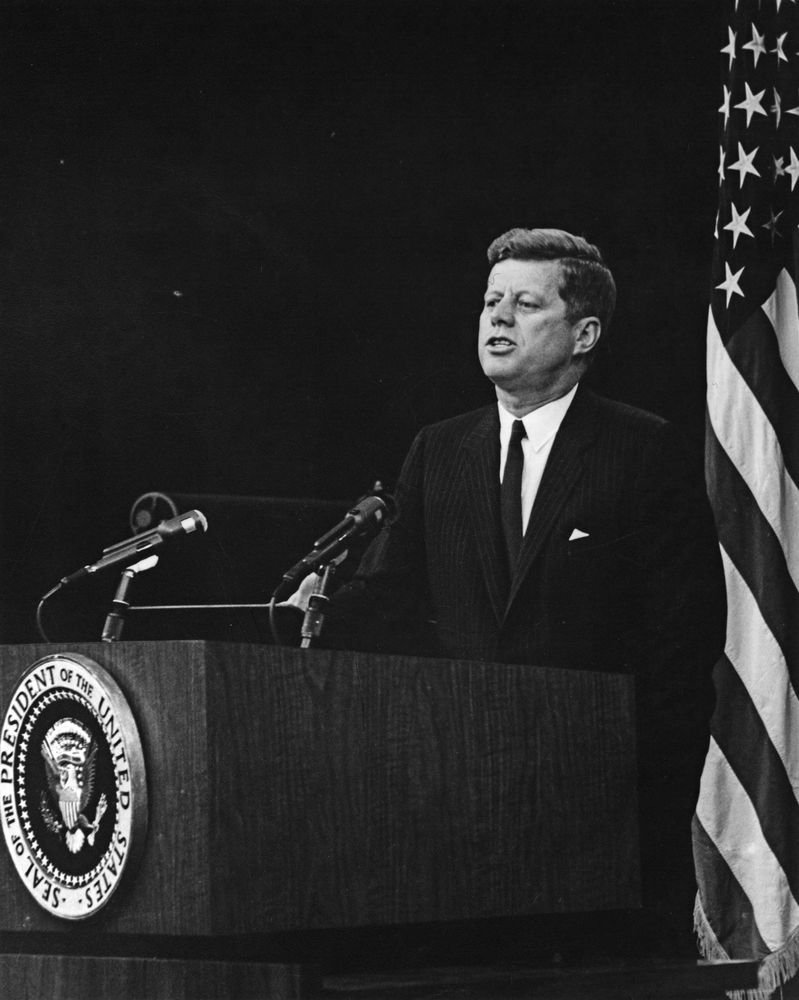
Too bad, you say, that Martin Luther King Jr. died so young. I feel that way, too. But, as I have said many times before, it isn’t how long one lives, but how well. It’s what one accomplishes for mankind that matters. Jesus died at 33; Joan of Arc at 19; Byron and Burns at 36; Keats at 25; Marlow at 29; Shelley at 30; Dunbar before 35; John Fitzgerald Kennedy at 46; William Rainey Harper at 49; and Martin Luther King Jr. at 39.

We all pray that the assassin will be apprehended and brought to justice. But, make no mistake, the American people are in part responsible for Martin Luther King Jr.’s death. The assassin heard enough condemnation of King and of Negroes to feel that he had public support. He knew that millions hated King.

We, and not the assassin, represent America at its best. We have the power — not the prejudiced, not the assassin — to make things right.

The Memphis officials must bear some of the guilt for Martin Luther’s assassination. The strike should have been settled several weeks ago. The lowest paid men in our society should not have to strike for a more just wage. A century after Emancipation, and after the enactment of the 13th, 14th and 15th Amendments, it should not have been necessary for Martin Luther King Jr. to stage marches in Montgomery, Birmingham and Selma, and go to jail 30 times trying to achieve for his people those rights which people of lighter hue get by virtue of their being born white. We, too, are guilty of murder. It is time for the American people to repent and make democracy equally applicable to all Americans. What can we do? We, and not the assassin, represent America at its best. We have the power — not the prejudiced, not the assassin — to make things right.

If we love Martin Luther King Jr., and respect him, as this crowd surely testifies, let us see to it that he did not die in vain; let us see to it that we do not dishonor his name by trying to solve our problems through rioting in the streets.

Violence was foreign to his nature. He warned that continued riots could produce a fascist state. But let us see to it also that the conditions that cause riots are promptly removed, as the president of the United States is trying to get us to do so. Let black and white alike search their hearts; and if there be prejudice in our hearts against any racial or ethnic group, let us exterminate it and let us pray, as Martin Luther King Jr. would pray if he could: “Father, forgive them for they know not what they do.” If we do this, Martin Luther King Jr. will have died a redemptive death from which all mankind will benefit….

I close by saying to you what Martin Luther King Jr. believed: If physical death was the price he had to pay to rid America of prejudice and injustice, nothing could be more redemptive. And, to paraphrase the words of the immortal John Fitzgerald Kennedy, permit me to say that Martin Luther King Jr.’s unfinished work on earth must truly be our own.

Source: http://www.bates.edu/150-years/months/apri...

Enjoyed this speech? Speakola is a labour of love and I’d be very grateful if you would share, tweet or like it. Thank you.

Facebook Twitter Facebook
In EDITORS CHOICE Tags MARTIN LUTHER KING, BENJAMIN MAYS, MOREHOUSE COLLEGE, CIVIL RIGHTS, ASSASSINATION, NON-VIOLENCE
Comment

For Robert Kennedy: 'What it really adds up to is love,' by Edward Kennedy - 1968

July 16, 2015

8 June 1968, St. Patrick's Cathedral, New York, USA

Your Eminences, Your Excellencies, Mr. President:

On behalf of Mrs. Kennedy, her children, the parents and sisters of Robert Kennedy, I want to express what we feel to those who mourn with us today in this Cathedral and around the world.

We loved him as a brother, and as a father, and as a son. From his parents, and from his older brothers and sisters -- Joe and Kathleen and Jack -- he received an inspiration which he passed on to all of us. He gave us strength in time of trouble, wisdom in time of uncertainty, and sharing in time of happiness. He will always be by our side.

Love is not an easy feeling to put into words. Nor is loyalty, or trust, or joy. But he was all of these. He loved life completely and he lived it intensely.

A few years back, Robert Kennedy wrote some words about his own father which expresses [sic] the way we in his family felt about him. He said of what his father meant to him, and I quote:

"What it really all adds up to is love -- not love as it is described with such facility in popular magazines, but the kind of love that is affection and respect, order and encouragement, and support. Our awareness of this was an incalculable source of strength, and because real love is something unselfish and involves sacrifice and giving, we could not help but profit from it."

And he continued,

"Beneath it all, he has tried to engender a social conscience. There were wrongs which needed attention. There were people who were poor and needed help. And we have a responsibility to them and to this country. Through no virtues and accomplishments of our own, we have been fortunate enough to be born in the United States under the most comfortable conditions. We, therefore, have a responsibility to others who are less well off."

That is what Robert Kennedy was given. What he leaves to us is what he said, what he did, and what he stood for. A speech he made to the young people of South Africa on their Day of Affirmation in 1966 sums it up the best, and I would like to read it now:

"There is discrimination in this world and slavery and slaughter and starvation. Governments repress their people; millions are trapped in poverty while the nation grows rich and wealth is lavished on armaments everywhere. These are differing evils, but they are the common works of man. They reflect the imperfection of human justice, the inadequacy of human compassion, our lack of sensibility towards the suffering of our fellows. But we can perhaps remember -- even if only for a time -- that those who live with us are our brothers; that they share with us the same short moment of life; that they seek -- as we do -- nothing but the chance to live out their lives in purpose and happiness, winning what satisfaction and fulfillment they can.

Surely, this bond of common faith, this bond of common goal, can begin to teach us something. Surely, we can learn, at least, to look at those around us as fellow men. And surely we can begin to work a little harder to bind up the wounds among us and to become in our own hearts brothers and countrymen once again. The answer is to rely on youth -- not a time of life but a state of mind, a temper of the will, a quality of imagination, a predominance of courage over timidity, of the appetite for adventure over the love of ease. The cruelties and obstacles of this swiftly changing planet will not yield to the obsolete dogmas and outworn slogans. They cannot be moved by those who cling to a present that is already dying, who prefer the illusion of security to the excitement and danger that come with even the most peaceful progress.

It is a revolutionary world we live in, and this generation at home and around the world has had thrust upon it a greater burden of responsibility than any generation that has ever lived. Some believe there is nothing one man or one woman can do against the enormous array of the world's ills. Yet many of the world's great movements, of thought and action, have flowed from the work of a single man. A young monk began the Protestant reformation; a young general extended an empire from Macedonia to the borders of the earth; a young woman reclaimed the territory of France; and it was a young Italian explorer who discovered the New World, and the 32 year-old Thomas Jefferson who [pro]claimed that "all men are created equal."

These men moved the world, and so can we all. Few will have the greatness to bend history itself, but each of us can work to change a small portion of events, and in the total of all those acts will be written the history of this generation. *It is from numberless diverse acts of courage and belief that human history is shaped.* Each time a man stands up for an ideal, or acts to improve the lot of others, or strikes out against injustice, he sends forth a tiny ripple of hope, and crossing each other from a million different centers of energy and daring, those ripples build a current that can sweep down the mightiest walls of oppression and resistance.

Few are willing to brave the disapproval of their fellows, the censure of their colleagues, the wrath of their society. Moral courage is a rarer commodity than bravery in battle or great intelligence. Yet it is the one essential, vital quality for those who seek to change a world that yields most painfully to change. And I believe that in this generation those with the courage to enter the moral conflict will find themselves with companions in every corner of the globe.

For the fortunate among us, there is the temptation to follow the easy and familiar paths of personal ambition and financial success so grandly spread before those who enjoy the privilege of education. But that is not the road history has marked out for us. Like it or not, we live in times of danger and uncertainty. But they are also more open to the creative energy of men than any other time in history. All of us will ultimately be judged, and as the years pass we will surely judge ourselves on the effort we have contributed to building a new world society and the extent to which our ideals and goals have shaped that event.

The future does not belong to those who are content with today, apathetic toward common problems and their fellow man alike, timid and fearful in the face of new ideas and bold projects. Rather it will belong to those who can blend vision, reason and courage in a personal commitment to the ideals and great enterprises of American Society. Our future may lie beyond our vision, but it is not completely beyond our control. It is the shaping impulse of America that neither fate nor nature nor the irresistible tides of history, but the work of our own hands, matched to reason and principle, that will determine our destiny. There is pride in that, even arrogance, but there is also experience and truth. In any event, it is the only way we can live.

That is the way he lived. That is what he leaves us.

My brother need not be idealized, or enlarged in death beyond what he was in life; to be remembered simply as a good and decent man, who saw wrong and tried to right it, saw suffering and tried to heal it, saw war and tried to stop it.

Those of us who loved him and who take him to his rest today, pray that what he was to us and what he wished for others will some day come to pass for all the world.

As he said many times, in many parts of this nation, to those he touched and who sought to touch him:

"Some men see things as they are and say why.
I dream things that never were and say why not."

Source: http://www.americanrhetoric.com/speeches/e...

Enjoyed this speech? Speakola is a labour of love and I’d be very grateful if you would share, tweet or like it. Thank you.

Facebook Twitter Facebook
In EDITORS CHOICE Tags ROBERT KENNEDY, EDWARD KENNEDY, ASSASSINATION, USA, TRANSCRIPT
Comment

For Mohandas Gandhi: by Jawaharlal Nehru, 'The light has gone out of our lives and there is darkness everywhere,' - 1948

July 2, 2015

30 January, 1948, national radio broadcast

Friends and Comrades,

The light has gone out of our lives and there is darkness everywhere. I do not know what to tell you and how to say it. Our beloved leader, Bapu as we called him, the Father of the Nation, is no more. Perhaps I am wrong to say that. Nevertheless, we will never see him again as we have seen him for these many years. We will not run to him for advice and seek solace from him, and that is a terrible blow, not to me only, but to millions and millions in this country. And it is a little difficult to soften the blow by any other advice that I or anyone else can give you.

The light has gone out, I said, and yet I was wrong. For the light that shone in this country was no ordinary light. The light that has illumined this country for these many years will illumine this country for many more years, and a thousand years later, that light will be seen in this country and the world will see it and it will give solace to innumerable hearts. For that light represented something more than the immediate past, it represented the living, the eternal truths, reminding us of the right path, drawing us from error, taking this ancient country to freedom.

All this has happened when there was so much more for him to do. We could never think that he was unnecessary or that he had done his task. But now, particularly, when we are faced with so many difficulties, his not being with us is a blow most terrible to bear.

A madman has put an end to his life, for I can only call him mad who did it, and yet there has been enough of poison spread in this country during the past years and months, and this poison has had an effect on people’s minds. We must face this poison, we must root out this poison, and we must face all the perils that encompass us, and face them not madly or badly, but rather in the way that our beloved teacher taught us to face them.

The first thing to remember now is that none of us dare misbehave because he is angry. We have to behave like strong and determined people, determined to face all the perils that surround us, determined to carry out the mandate that our great teacher and our great leader has given us, remembering always that if, as I believe, his spirit looks upon us and sees us, nothing would displease his soul so much as to see that we have indulged in any small behaviour or any violence.

So we must not do that. But that does not mean that we should be weak, but rather that we should, in strength and in unity, face all the troubles that are in front of us. We must hold together, and all our petty troubles and difficulties and conflicts must be ended in the face of this great disaster. A great disaster is a symbol to us to remember all the big things of life and forget the small things of which we have thought too much. In his death he has reminded us of the big things of life, the living truth, and if we remember that, then it will be well with India…

It was proposed by some friends that Mahatmaji’s body should be embalmed for a few days to enable millions of people to pay their last homage to him. But it was his wish, repeatedly expressed, that no such thing should happen, that this should not be done, that he was entirely opposed to any embalming of his body, and so we decided that we must follow his wishes in this matter, however much others might have wished otherwise.

And so the cremation will take place on Saturday in Delhi city by the side of the Jamuna River. On Saturday forenoon, about 11.30 a.m., the bier will be taken out at Birla House and it will follow a prescribed road and go to the Jamuna River. The cremation will take place there at about 4 p.m. The place and the route will be announced by radio and the Press.

People in Delhi who wish to pay their last homage should gather along this route. I will not advise too many of them to come to Birla House, but rather to gather on both sides of this long route from Birla House to the Jamuna River. And I trust that they will remain there in silence without any demonstrations. That is the best way and the most fitting way to pay homage to this great soul. Also, Saturday should be a day of fasting and prayer for all of us.

Those who live elsewhere, out of Delhi and in other parts of India, will no doubt take such part as they can in this last homage. For them also, let this be a day of fasting and prayer. And at the appointed time for cremation, that is 4 p.m. on Saturday afternoon, people should go to the river or to the sea and offer prayers there. And while we pray, the greatest prayer that we can offer is to take a pledge to dedicate ourselves to the truth, and to the cause for which this great countryman of ours lived and for which he has died. That is the best prayer that we can offer him and his memory. That is the best prayer we can offer to India and ourselves.

JAI HIND.

Source: http://www.thehindu.com/opinion/op-ed/we-m...

Enjoyed this speech? Speakola is a labour of love and I’d be very grateful if you would share, tweet or like it. Thank you.

Facebook Twitter Facebook
In EDITORS CHOICE Tags GANDHI, NEHRU, INDIA, 1940s, ASSASSINATION
1 Comment

See my film!

Limited Australian Season

March 2025

Details and ticket bookings at

angeandtheboss.com

Support Speakola

Hi speech lovers,
With costs of hosting website and podcast, this labour of love has become a difficult financial proposition in recent times. If you can afford a donation, it will help Speakola survive and prosper.

Best wishes,
Tony Wilson.

Become a Patron!

Learn more about supporting Speakola.

Featured political

Featured
Jon Stewart: "They responded in five seconds", 9-11 first responders, Address to Congress - 2019
Jacinda Ardern: 'They were New Zealanders. They are us', Address to Parliament following Christchurch massacre - 2019
Dolores Ibárruri: "¡No Pasarán!, They shall not pass!', Defense of 2nd Spanish Republic - 1936
Jimmy Reid: 'A rat race is for rats. We're not rats', Rectorial address, Glasgow University - 1972

Featured eulogies

Featured
For Geoffrey Tozer: 'I have to say we all let him down', by Paul Keating - 2009
for James Baldwin: 'Jimmy. You crowned us', by Toni Morrison - 1988
for Michael Gordon: '13 days ago my Dad’s big, beautiful, generous heart suddenly stopped beating', by Scott and Sarah Gordon - 2018

Featured commencement

Featured
Tara Westover: 'Your avatar isn't real, it isn't terribly far from a lie', The Un-Instagrammable Self, Northeastern University - 2019
Tim Minchin: 'Being an artist requires massive reserves of self-belief', WAAPA - 2019
Atul Gawande: 'Curiosity and What Equality Really Means', UCLA Medical School - 2018
Abby Wambach: 'We are the wolves', Barnard College - 2018
Eric Idle: 'America is 300 million people all walking in the same direction, singing 'I Did It My Way'', Whitman College - 2013
Shirley Chisholm: ;America has gone to sleep', Greenfield High School - 1983

Featured sport

Featured
Joe Marler: 'Get back on the horse', Harlequins v Bath pre game interview - 2019
Ray Lewis : 'The greatest pain of my life is the reason I'm standing here today', 52 Cards -
Mel Jones: 'If she was Bradman on the field, she was definitely Keith Miller off the field', Betty Wilson's induction into Australian Cricket Hall of Fame - 2017
Jeff Thomson: 'It’s all those people that help you as kids', Hall of Fame - 2016

Fresh Tweets


Featured weddings

Featured
Dan Angelucci: 'The Best (Best Man) Speech of all time', for Don and Katherine - 2019
Hallerman Sisters: 'Oh sister now we have to let you gooooo!' for Caitlin & Johnny - 2015
Korey Soderman (via Kyle): 'All our lives I have used my voice to help Korey express his thoughts, so today, like always, I will be my brother’s voice' for Kyle and Jess - 2014

Featured Arts

Featured
Bruce Springsteen: 'They're keepers of some of the most beautiful sonic architecture in rock and roll', Induction U2 into Rock Hall of Fame - 2005
Olivia Colman: 'Done that bit. I think I have done that bit', BAFTA acceptance, Leading Actress - 2019
Axel Scheffler: 'The book wasn't called 'No Room on the Broom!', Illustrator of the Year, British Book Awards - 2018
Tina Fey: 'Only in comedy is an obedient white girl from the suburbs a diversity candidate', Kennedy Center Mark Twain Award -  2010
Tina Fey: 'Only in comedy is an obedient white girl from the suburbs a diversity candidate', Kennedy Center Mark Twain Award - 2010

Featured Debates

Featured
Sacha Baron Cohen: 'Just think what Goebbels might have done with Facebook', Anti Defamation League Leadership Award - 2019
Greta Thunberg: 'How dare you', UN Climate Action Summit - 2019
Charlie Munger: 'The Psychology of Human Misjudgment', Harvard University - 1995
Lawrence O'Donnell: 'The original sin of this country is that we invaders shot and murdered our way across the land killing every Native American that we could', The Last Word, 'Dakota' - 2016