• Genre
  • About
  • Submissions
  • Donate
  • Search
Menu

Speakola

All Speeches Great and Small
  • Genre
  • About
  • Submissions
  • Donate
  • Search

Eulogies

Some of the most moving and brilliant speeches ever made occur at funerals. Please upload the eulogy for your loved one using the form below.

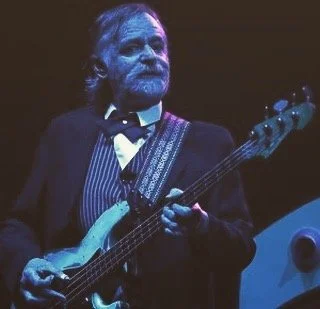
For Wayne Duncan: 'You're from Daddy Cool, you're a fuckin legend', by Craig Horne - 2016

September 10, 2025

December 2016, Melbourne Australia

I met Wayne Duncan for the first time on a Sunday afternoon at the Flowerdale Hotel in the mid-90’s.

Jeff Burstin and myself I had been playing as duo at the Flowerdale for sometime when the owner, Ian Keddie asked us to put a band together for a Christmas in July celebration. Jeff called his old mates Gary Young and Wayne Duncan and The Hornets were born.

I was suddenly singing in a band with Jeff Burstin, Gary Young and Wayne Duncan…are you kidding? These were blokes I’d seen and admired in a host of Melbourne bands for most of my adult life.

I was literally in heaven;

Pause

For the next few years The Hornets played bars, festivals and venues all around Victoria and in that time I got to know Wayne very well, a couple of observations…

Firstly women of a certain age loved him.

Maybe it was that pixy face of his, or his cheeky smile, but where ever The Hornets played, women lined-up in front of the band with their copies of “Daddy Who Daddy Cool” or whatever clutched to their eager breasts, their hands gripping permanent marker pens hoping for a kind word from their hero… Wayne always obliged.

Secondly middle-aged men also loved Wayne and liked to do things for him… like lump out his amp at the end of a gig, or buy him a beer in the break. Even the Premier of Victoria liked to perform acts of kindness for our Wayne.

One memorable sunny Sunday afternoon, The Hornets had played the St Andrews Hotel and I dropped Wayne at his Avenue home in Surrey Hills, just down the road from the then Victorian Premier.

As we drove up the street, I noticed a rather large man wearing an ill-fitting tracksuit pushing a Victor motor-mower up and down Wayne’s front nature strip.

As we pulled up outside the house, Wayne fell out of the front seat still clutching a traveller in his right hand, he looked up at the Easter -Island visage of Jeff Kennett and said something like…”Gidday Jeff, thanks for doing this mate, would you like a drink?” And offered the Premier the half full/half empty bottle of warm chardonnay, to which Mr Kennett politely declined and continued mowing.

I couldn’t resist writing a small article for The Age about a certain Melbourne rock star that employed the Premier of Victoria as his private gardener.

There was also the time Wayne was enjoying a three-month holiday in South Gippsland at the expense of Her Majesty. Wearing his green tracksuit Wayne arrived at his allotted accommodation carrying his bedding in his arms and sat forlornly on his bunk.

A shadow fell across the room and Wayne looked up to see a 6 foot three brick-shithouse filling the entrance to his rather humble accommodation. Wayne noticed tear drops tattooed on the gentleman’s cheek …here stood a murderer and lifer.

The man ordered Wayne to stand – and fearing the worst –Wayne obeyed and resigned himself to his fate. But then something remarkable happened, the brute took the bedding from Wayne’s arms and said in a gentle voice…

“ I’ll makeup your bunk mate… you’re from Daddy Cool, you’re a fuckin legend…’

Then, lowering his voice, the brick-shithouse added …”Ya have any trouble in here mate, just see me….”

But that summed up Wayne, people loved him, family, friends, fans we all loved him. We loved his gentleness, his encyclopedic knowledge of music, his sunglasses worn at night and his Converse runners worn….constantly. We loved his loyalty and his kindness and we loved him because he was unique…in every sense of the word.

I will miss when playing with The Hornets looking to my left and seeing an empty space where Wayne sat, his 1963 Jazzmaster balanced on his right hip and his eyes fixed on Jeff Burstin imploring him to reveal the key, the chords or even the name of the song we were currently playing.

That’s the thing about Wayne it didn’t matter that maybe he played the odd wrong note …. as Sam See recently said …”no-one plays like Wayne ….it doesn’t matter if he is sometimes wrong; he always sounds right. “

And Wayne was always right, he was the right bass player for Daddy Cool, the right father for his daughters and son, the right grandfather for grand kids, the right partner for Anne and the right friend for all of us.

Wayne… you are irreplaceable and you will live at the center of all of our hearts for the rest of our lives…

Vale Wayne Duncan

Enjoyed this speech? Speakola is a labour of love and I’d be very grateful if you would share, tweet or like it. Thank you.

Facebook Twitter Facebook
In PUBLIC FIGURE D Tags WAYNE DUNCAN, BASS, BASS GUITAR, BASSIST, DADDY COOL, MUSICIAN, CRAIG HORNE, AUSTRALIAN MUSIC, BLUES, THE HORNETS, TRANSCRIPT
Comment

For Chris Wilson, 'Chris was one of the best songwriters of his generation', Blues Music Hall of Fame, by Kerri Simpson - 2019

November 11, 2019

30 October 2019, Blues Music Hall of Fame, Memo Music Hall, St Kilda, Melbourne, Australia

There is no available video of this speech

Let’s raise our glasses to Chris Wilson.

It is hard to encapsulate everything that Chris did and was to the blues community in one speech. I think it would be safe to say that all the nominees, and all of us in the blues community, everyone wanted Chris to win. He truly deserves to be the first musician inducted into the Blues Music Victoria Hall of Fame. Of all of us musicians, Chris deserves this award because he played more and promoted blues music more in this country than any of us.

Chris Wilson was a giant of a man and he lived and breathed the blues. His commitment was always 100 percent; over the years, he played thousands of gigs. I’ve seen him exhausted, sick and worn out, laying on a couch backstage absolutely knackered, and then he would jump up on stage to blow everybody away, prowling, stomping blowing his head off.

Like any working musician, he played and loved a diverse range of styles and wrote a significant body of original work. However, everything he played was always informed by the blues. Chris was a highly insightful and intelligent man; he read about and listened incessantly to all kinds of blues. He was a deeply spiritual man. He had an extraordinarily astute understanding of the human condition, which showed in his lyrics and in the way he delivered every note. He understood the importance of placement, of one note or one word, one bend or twist, or a multitude of notes and words and bends. Regardless of the genre he was playing, every note was underpinned by his massive command and inherent understanding of the blues.

Chris was one of the best songwriters of his generation; he could write songs that made you laugh and cry, he was astute, observant, he understood people, his songs touched you. We will never forget iconic Australian songs like “Shoot out at the 7/11”, a blues at its heart.

Always thinking of others, Chris constantly sought out new bands and players; he had an excellent ear for new talent. He was a massive supporter of other musicians, male and female, and he employed female musicians and roadies long before that was an accepted thing in this industry. It wasn’t important whether someone was well known or just starting out, Chris would chat, discuss and pass on his formidable knowledge to anyone who had a genuine interest. He would sit and play with beginners or experienced musos; he didn’t care, he just loved playing and never gave “fame” even a thought.

In fact, he hated the whole fame and celebrity thing. I will never forget one night at a club; I was stony broke, having just come back from New Orleans. I’d walked from St Kilda to Richmond to see Chris, Vika and a few other mates play. The club owner had told Chris that he didn't want to give me a gig or let me sit in because I wasn't famous enough. Chris did not appreciate that at all. That was not how Chris did things. Later that night, Bob Dylan’s band came in and sat with Chris’ band. I was side of stage, drinking Chris’s rider because I was too broke to buy a drink. Chris grabbed me one handed by the collar of my coat and suddenly I was hoisted onto stage. He plonked me down and said, “If anyone belongs on this stage, Simpson, it’s you … fucking sing ! ” He pushed me towards his vocal mic and sing I did. That was the mark of the man. I was certainly not the only person he would do that kind of thing for, I was definitely not the only broke or struggling musician he helped out.

One of the reasons Chris loved blues so much was because it’s music for the common man. The blues is the people’s music. Something everyone could feel, whether they were educated in music or not. Blues has a primal power that connects with people. Chris had that same power, both on-stage and off. Those of you here tonight who were fortunate enough to have seen Chris Wilson perform know that when he hit his straps the whole room went with him.

I have seen and heard thousands of musicians in my time. I have seen musicians from all around the world, but no one anywhere could equal Chris Wilson in his stride. His voice and harp playing resonated deeply inside each and every one of us, he took you to another part of the planet. This was a man who made you feel; feel good, feel hopeful, happy or connected. He made you reflect but, no matter what, he always made you feel. As a musician playing alongside of him the experience as Shannon Bourne said was transcendental.

The extent to which Chris had affected people throughout his career was witnessed by the music community’s reaction and support when he became ill. Chris loved community, he passionately loved music and always worked towards bringing people together and helping people out. Teaching primary school kids, secondary school kids, helping out oldies, looking out for mates, helping out addicts, teaching harp. He played more benefits than most of us have had hot dinners.

Over the years, I know so many people found Chris’s music helped them when they had been suffering or having a hard time. Chris’s music made them feel again. When he was ill, I had so many people asking me to pass messages on to him, and that message was always the same: Chris had changed their life. He had often more than changed their life; his music had helped people who were suicidal, going through divorces or deaths. The stories always followed a similar pattern; they were going through a major tough time, but went to a gig, and that was the turning point in their recovery. Chris Wilson’s music touched and changed people’s lives that is why he deserves this award.

The reality was that Chris never helped people for his own gain and he never sought attention. However, there was many a time when he would quietly slip me a fifty-dollar note and say, “Simo, see that person over there … give them this and tell them to get a guitar lesson with it.”

We had a mutual mate who was down on their luck. As always, Chris slipped me a fifty and said, “Simo, can you get them some groceries?”. When I was down on my luck, having come back from the US, having had all my money stolen, and been ripped off, he simply said to me, “Simo, consider it payment for an education in life”. And then he slipped me some money.

Just when his career was taking off nationally and internationally, Chris’s beloved mum, Betty, became ill with cancer. Chris dropped his music without a second thought, he dropped everything to look after his mum.

It was acts like these to many hundreds of people over the years that touched so many people, that made such an impact. The deep respect and genuine love for Chris was evident in the way the entire country showed their support for him when he became ill.
It is shown tonight by this award. Chris’s induction as a Blues Legend into the Hall of Fame.

It was a blessing that Chris was able to understand before he died just how much of an impact he had made on other people’s lives. At the core, he was a humble man, and if he could only have been here with us tonight, he would have been all uncomfortable and saying the rest of us nominees deserved to win more than him.

All of us who were lucky enough to know Chris know that he would have been cracking endless jokes tonight about being inducted. He was a highly intelligent man and we will never forget his wickedly informed sense of humour. He would throw in lines and jokes at gigs that seemed so effortless, and he would have hundreds of people laughing.

He was fearless onstage and off, and he hated the bullshit side of the industry. One night, Pat Cash came in to that same club I was talking about earlier. Cash was pissed and asked Chris if he could get up and sing. Without skipping a beat, Chris told him to fuck off over the mic. “I don't come down to the tennis centre and ask if I can hit a ball around with you … Don't come in here and ask to sit in!”

Of course, no one manages to make a career like that without support, and Chris had his family. His beautiful mum, Betty, used to do all his bookings and management and we all knew, she was a darling. You used to have to call up Betty to book Chris. Later on he had the support of the love of his life, the incredible Sarah Carroll and their two sons, Fenn and George, and his legacy lives on through each of them. Chris was so proud of them, and would have been delighted that all three of them have albums coming out in the next few months.

If Chris were here, he would have been truly humbled and honoured to be inducted into the Hall of Fame. It would have meant so much more to him than the other awards he had won because this night and Blues Music Victoria has been set up by people who genuinely love and care about blues music and musicians. Like Chris did.


Thank you to those who nominated him and thank you to everyone who voted for Chris.


And to echo back almost the same words he once said to me “If anyone deserves to be a Blues Legend in this Blues Music Victoria Hall of Fame, it’s fucking you, Wilson !”

Source: https://www.bluesmusicvictoria.com.au/inau...

Enjoyed this speech? Speakola is a labour of love and I’d be very grateful if you would share, tweet or like it. Thank you.

Facebook Twitter Facebook
In PUBLIC FIGURE C Tags CHRIS WILSON, KERRI SIMPSON, BLUES MUSIC HALL OF FAME, AUSTRALIA, MUSICIAN
2 Comments

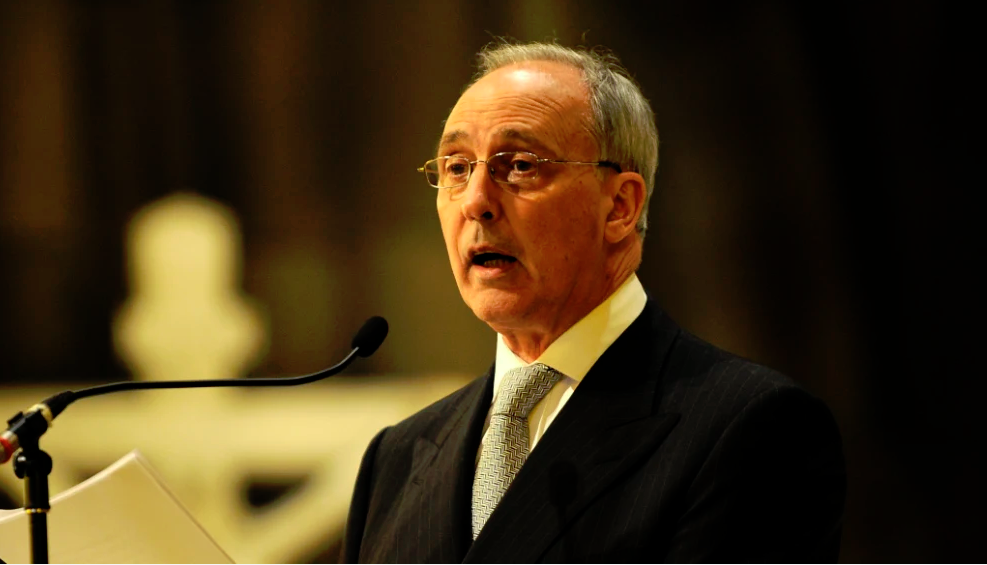
For Geoffrey Tozer: 'I have to say we all let him down', by Paul Keating - 2009

October 22, 2019


1 October 2009, St Patrick’s Cathedral, Melbourne, Australia

There is no available video for this speech. The above trailer is for a documentary made about the eulogy.

Geoffrey Tozer’s death is a national tragedy.

For the Australian arts and Australian music, losing Tozer is like Canada having lost Glenn Gould or France, Ginette Neveu. It is a massive cultural loss.

The national run rate for artists of Tozer’s accomplishment is about one in every hundred years. In fact, if you think of our greatest artists, those who are so regarded in world terms, three come to mind: Nellie Melba, Percy Grainger and Joan Sutherland. In terms of sheer artistry and musical power, Geoffrey Tozer could well be the credible addition to that triumvirate.

Tozer belonged to a small and rarefied stratum of world pianists. He was certainly of a calibre of greats like Emil Gilels, Arthur Rubenstein, Sviatoslav Richter, Ferruccio Busoni and Artur Schnabel, the latter two whose music he championed.

In terms of musical comprehension, intellectualism and facility, Geoffrey’s talent was simply off the scale. He could read an orchestral score, hear the entire work in his head and then play a piano transcription of it at sight. He could transpose anything put in front of him into any key and give a perfect performance of it. He could arrange, orchestrate, compose and improvise; indeed, improvisation was one of his specialties, weaving other melodies through the larger works of composers like Liszt.

The remarkable thing about Geoffrey Tozer was that in these last 25 years we were witnessing an artist with a level of musical understanding and repertoire you would have expected to witness in the last 25 years of the nineteenth century or the first 25 years of the twentieth, when classicism and scholarship in music was at its zenith.

Geoffrey would not have been out of place in 1920s Weimar Berlin in the company of people like Erich Kleiber or Otto Klemperer or Igor Stravinsky. Or with pianists like Rudolf Serkin or Claudio Arrau, who were playing there then.

Geoffrey made his international musical debut at the age of fifteen, playing Mozart’s Concerto No. 15 with the BBC Symphony Orchestra under Sir Colin Davis at the Royal Albert Hall. The Daily Telegraph critic wrote that ‘Geoffrey Tozer played Mozart’s Concerto in B Flat with agreeably crystalline touch, faultless technique and good sense’. The Times critic considered that Geoffrey ‘played in a way that many an artist twice his age might envy’.

Following his debut, in Belgium in November 1970 in which Geoffrey played an enormous program of Bach, Beethoven, Haydn and Chopin, the Antwerp-Stadt reported that Geoffrey Tozer ‘has become one of the great revelations to astound the musical world . . . he showed that his technical skill is merely a means to clarify the complete and often celestial way he plays, feeling the deeper meaning of everything he performs. Geoffrey Tozer will become one of the great pianists of the world’.

The following year, in 1971, the great composer Benjamin Britten invited Geoffrey to stay with him for several weeks, inviting him to also perform at the Aldeburgh Festival, where he accompanied the master Russian cellist, Mstislav Rostropovich.

Geoffrey could play anything written for piano from any period in history right up until now. He had virtually played and mostly knew anything of any substance written for the piano. His repertoire included over 200 concertos; for instance, it included 24 of the 27 Mozart concertos. Geoffrey had the ability not just to put himself into the head of a composer, he also had the ability to understand the milieu within which a composer worked, the musical influences at the time, the tastes, the comprehension of the whole.

When the pianist Tatiana Nikolayeva, a mistress of Shostakovich, came to Australia in the 1990s, she said to her tour promoter, ‘I want to hear the one who plays like a Russian’. And, of course, she meant Geoffrey. But if Geoffrey was playing Purcell he would bring an English feeling to the work or Liszt a more obviously Hungarian or middle European one.

He was unbelievable.

Born in the foothills of the Himalayas, Geoffrey’s infant years were filled with music. His earliest memory of the piano was when, as a three-year-old, he began to play Beethoven’s Appassionata Sonata, music he had just heard his mother teaching to a pupil.

Musical genius flowed through Veronica Tozer’s family and she realised at once that her son was possessed of vast musical ability. Just how rare it was became clear when she began to teach him music of Bach, Bartok and Beethoven.

By 1958, when Mrs Tozer brought her two sons to Australia to settle in Melbourne, Geoffrey was already immersed in music, playing, singing, reading and listening to music on a wind-up gramophone.

It was here, in Melbourne, that the world first discovered the young boy who was quickly dubbed a ‘musical genius’ by Australia’s foremost musicians. Within five years of his arrival in Australia, Geoffrey’s life as a professional musician began in earnest. This was an extraordinary period of his life, one during which he began to receive the patronage and recognition that would enable him to develop the full range of his virtuosic abilities, and become a concert pianist of the highest standard.

In 1963 when Geoffrey was eight, Dr Clive Douglas auditioned him for a concerto performance for ABC television. The performance, with Geoffrey playing Bach’s Concerto in F Minor was filmed in February 1964 with Dr Douglas conducting the Victorian Symphony Orchestra. On April 11 of that year, Geoffrey made his public debut in the Nicholas Hall playing the same concerto, this time under George Logie-Smith. Later the same year he gave at least eight more performances, playing concertos of Bach and Mozart with the orchestra in Melbourne and Ballarat. The phrase ‘musical genius’ was applied to him right from the beginning.

Geoffrey’s introduction to Eileen Ralf was the most important event in his musical development. She lived in Hobart. So, in order to foster Geoffrey’s prodigious talents, TAA announced that it would fly the young musician every week to Hobart and back free of charge, so that Geoffrey could have lessons with Eileen. Let’s hear what Geoffrey himself had to say about her influence and his lessons in Hobart during those early years. I am quoting from the text of Geoffrey’s lecture on the great pianist Artur Schnabel which Geoffrey delivered at the Berlin Festival in September 2001 in the presence of the entire Schnabel family:

By the greatest of good fortune I found a teacher who was the living, breathing embodiment of all the vitality I was getting from the recordings of Schnabel. This was the Australian pianist Eileen Ralf. She opened up for me a world of serious, probing musical thought I knew must exist but I had never experienced. Her teaching was the greatest musical gift given me.

For the next five years Geoffrey performed a vast amount of music in public performances, both in recitals and concerts. By the age of thirteen his concerto repertoire included all five of the Beethoven and nine of the Mozart as well as concertos by Bach and Haydn, and he later added more than 200 pieces to his solo repertoire. Geoffrey also recorded the first movement of the Brahms Second Concerto with the Sydney Symphony Orchestra in a studio performance arranged by Reuben Fineberg, the man who would manage Geoffrey’s career until his own death in 1997.

How was Australia to develop such a rare and prodigious talent, one that was already nationally recognised? The solution came when the committee of the Churchill Fellowship decided to lower the minimum age by five years and award Geoffrey a Churchill, extending it to two years instead of the usual one. Four years later the committee awarded Geoffrey a second Churchill as he began to make the difficult and, for many gifted teenagers, usually impossible transition from child prodigy to fully mature artist.

In 1969, the first of Geoffrey’s Churchill Fellowships enabled him to travel to England with his mother. That year he entered the Leeds Piano Competition and became the youngest semi-finalist. The same year he won the prestigious Alex de Vries Prize, making his debut with the English Chamber Orchestra soon afterwards. In May 1970 he won First Prize out of 157 contestants in the Royal Overseas League competition and was presented to the Queen.

And as I said earlier, on 17 August 1970 Geoffrey made his debut at the Royal Albert Hall playing Mozart’s Concerto No. 15 with the BBC Symphony Orchestra under Sir Colin Davis.

In 1971 Geoffrey returned to Australia to begin the next phase of his career; the difficult years of transition when the musical world had to decide whether he was just another prodigy, albeit one of seemingly superhuman ability, or whether, like Mozart, he was in fact a great musician whose artistry would continue to develop and improve as he gained maturity.

At least once a year throughout the 1970s he toured Australia playing concertos with all the major orchestras around the country, while frequently travelling to America, Britain and Europe for concert appearances.

During this period he hugely expanded his repertoire and toured Japan and New Zealand, also giving recitals in Israel, America and England where he resumed lessons with Maria Curcio, a pupil of Schnabel. In Israel, in 1977, Geoffrey won the first of his two Rubenstein medals, being awarded the prize personally by Arthur Rubenstein who described him as ‘an extraordinary pianist’. Many of his performances during this period were recorded and broadcast by the ABC as had been done in the 1960s. They included numerous concertos and recital performances and, sometimes, vocal performances. In 1978, for the ABC, Geoffrey gave the Australian premiere of the Medtner Vocalise with the soprano Loris Synan. This reflected his deep love of the vocal–piano repertoire as well as his ongoing relationship with the music of Medtner.

Geoffrey was already breaking convention by not fading from view like many prodigies before him and by his preparedness to explore new musical territory. He also knew that the vocal repertoire was a vitally important part of his future. The last recording he made for Chandos, released in 2004, the fortieth anniversary year of his career, was of the Medtner Vocalise sung by soprano Susan Gritton. It was a recording which earned Geoffrey one of the best reviews of his career in Gramophone magazine.

In 1980 he travelled to Israel to compete once more in the Rubenstein competition. This time he won the Gold Medal, returning to Australia for a celebratory tour. There, among several superlative reviews, he received what he considered to be one of the greatest compliments of all from the critic Ron Hanoch: ‘Geoffrey Tozer . . . is not only a great pianist, but also a great musician’.

The 1980s were halcyon days for Geoffrey. In 1983 he decided to base himself in Canberra. He was briefly on the staff of the Canberra School of Music until it became clear that his national and international touring engagements were as incompatible with such a position as some other aspects of institutional life. By now Geoffrey had become immersed in the music of Liszt. He toured Australia and New Zealand at least twice a year playing concertos and recitals, while constantly expanding his international career. He made debuts in many parts of the world, including Hungary, Germany, Finland, Ireland, Switzerland, Canada, Holland, Denmark and Austria, returning also to Russia for his debut with the Moscow Symphony Orchestra and also touring in Japan.

During the 1980s he began his commercial recording career. Although Geoffrey had made numerous recordings since as early as 1964, none had been commercially released. In 1986 he made his first commercial recording, the John Ireland Piano Concerto in E Flat with the Melbourne Symphony Orchestra, a recording that is still ranked by most critics as the best recording available of that music.

The same year, in recognition of his ability, Geoffrey was one of a handful of musicians around the world to receive the Liszt Centenary Medallion awarded by the Hungarian government. The following year he made his second commercial recording, an LP entitled Geoffrey Tozer in Concert, on which he played the music of Liszt, Brahms, Haydn, Weber and Chopin. In 1989 he joined Peter Sculthorpe to record Landscapes, a disc of Sculthorpe’s compositions for piano and strings.

Geoffrey had spent the 1980s performing around the world while based in Australia. He loved Australia and believed that the time had come when an Australian of international standing could build and sustain an international career from here. This involved substantial costs and, while he could generate a living from his touring engagements, once he had covered the costs, there was very little left. So it was then that he accepted a job at St Edmund’s College, Canberra to help him pay the rent. To its credit, the school allowed him great flexibility so that Geoffrey could continue to perform in many parts of the world while remaining on the staff.

It was owing to his decision to work at St Edmund’s that I first heard Geoffrey play. He was playing two works, one by Scriabin and the other by Liszt, for the school’s end-of-year pre-Christmas break-up. The playing was breathtaking. When the formalities ended I made my way over to him to inquire of his playing and career. It was then that I understood the under-realisation of Geoffrey’s international standing and of his straitened circumstances; earning $9000 a year at St Edmund’s, relying on a bicycle for his transport.

It was Geoffrey’s power and poverty that caused me to realise how little Australia valued artists of accomplishment, especially those in mid-career: in his case, the explosive power of his playing, yet his meagre capacity to afford the basics of life.

This sharp reality caused me to study the circumstances of other Australian artists who, while accomplished, found themselves marooned in mid-career. The novelty of their earlier work having faded, being left to fend for themselves, doing things that had naught to do with their art.

This was the inspiration for the Australian Artists Creative Fellowships, a Commonwealth-funded program paid to artists at about one-and-a-half to two times the average weekly earnings and paid for periods of one to five years. The inspiration for them came from Geoffrey’s greatness and his circumstances. It is not that many other artists were not also great but Geoffrey was one so obviously so and the one I actually ran into.

A country’s indifference to such accomplishment says something about it. When there is no obvious premium on this level of accomplishment, one has to ask, where and when does such a premium apply?

As it transpired, 63 other artists were awarded fellowships under the program and most did something substantial and valuable with their term awards.

In Geoffrey’s case it gave him a chance to develop works in parts of the piano repertoire beyond his great staples like Mozart, Beethoven, Bach, Liszt and Brahms. The musician in Geoffrey Tozer fell in love with beguiling compositions that had either rarely or never seen the light of day. One such composer was the Russian Nikolai Medtner, who composed three dramatic and complex piano concertos, only one of which had ever been recorded, and then, during the 1940s in London. Geoffrey began working up these concertos as he did the formerly unrecorded piano concerto of Ottorino Respighi and other compositional works by composers like Rimsky-Korsakov and Busoni. But he had nowhere to perform them; certainly no program to perform them.

So, in 1988, as Treasurer, I made my way down from London to Colchester in Britain in the High Commissioner’s car to engage the founder and managing director of Britain’s foremost recording company, Chandos Records. That person, Mr Brian Couzens, said, ‘why on earth would someone like you be making an appointment with someone like me?’

I said, ‘I have come to introduce to you one of the greatest pianists of world’ and he said, ‘Who is that?’ and I said, ‘The Australian, Geoffrey Tozer’. He said, ‘Yes, I have heard of him but not recently. Has he done anything I can listen to?’

I immediately brought forth a number of audio tapes for his listening. But Couzens said, ‘Audio tapes are often compositions themselves, many artists break down and can’t complete a full work across the dynamic range of the composition’.

I said to Couzens, ‘Well, I will get him over here. He will astound you’.

Well, Geoffrey did get over there. Couzens rang me to say he was unbelievable. He said not only can he play anything; he actually prepares the orchestra and individual players for you. The first thing he recorded for Chandos were the three Medtner piano concertos with the London Philharmonic Orchestra conducted by Neeme Jarvi. They hit the world of recorded classical music like a thunderclap and that year won for Chandos the world’s highest prize for classical music, the French Diapason D’Or. In the same year, the recordings were nominated for a US Grammy Award for Best Classical Performance—Instrumental Soloist with Orchestra. Geoffrey and Chandos missed winning the Grammy by one place, to the American cellist Yo-Yo Ma.

France’s top classical music critic, Alain Cochard, wrote of the Medtner recordings, ‘All that Medtner demands, Tozer possesses. This is the playing of a grand master; there is no doubt about it. This is a landmark in recording history’.

Geoffrey went on to make 36 recordings with Chandos, which for any pianist is a major recorded legacy. Indeed, he left behind more recordings of modern listening quality than were capable of execution by the pianists he most admired: Busoni, Schnabel and Rachmaninoff.

But Geoffrey’s great international success with orchestras like the London Philharmonic, the Swiss Romande, the Scottish National Orchestra and the Bergen Philharmonic was not replicated in Australia. Geoffrey gave his last performance with the Melbourne Symphony Orchestra fifteen years ago, on 5 June 1994, with the Emperor Concerto in a sold-out performance at the Town Hall. About fourteen months later, he played his last concert with the Sydney Symphony Orchestra.

From those performances, and for the rest of his life, he received nothing further from any major symphony orchestra in Australia. Indeed, in 1996, in one of the most stupendous performances of his career, he played Brahms’ Second Concerto with the Newcastle Symphony Orchestra under Roland Peelman. In the impossibly difficult passages towards the end of the first movement, we hear Geoffrey Tozer outdo Vladimir Horowitz.

But for all that, he could not make the cut with the latter-day Melbourne and Sydney Symphony Orchestras. Their indifference and contempt towards him left him to moulder away, largely playing to himself in a rented suburban Melbourne house. The people who chose repertoire for those two orchestras and who had charge in the selection of artists during this period should hang their heads in shame at their neglect of him. If anyone needs a case example of the bitchiness and preference within the Australian arts, here you have it.

Geoffrey was not just a musical genius; he was also an explosive performer. Some of these people felt this put an onus on them to engage him, which then, out of some kind of inverted snobbery, they resisted, choosing lesser artists they felt more comfortable with. Or agents they could do deals with.

This malevolence more or less broke Geoffrey’s heart. After all, all he wished to do was to give out. In a famous interview for a Melbourne newspaper, he said, ‘it’s a waste to have someone like me here, not being used’. Artists like Tozer secured the psychic income through sparkling performances and by mesmerising audiences. It was never about money. He only ever wanted enough to keep going.

The last time I saw him play was at the Australian Institute of Music in Sydney in 2005 in the company of Miriam Hyde and her daughter to an audience of about fifteen people. He played Miriam Hyde’s massive piano concerto, a concerto she told me needed someone of Geoffrey’s power to play. She had always made a good fist of it herself but Geoffrey ate the piece. On his program, he also had pieces by Sibelius and Scriabin, played with such fantasy and facility you knew you were in the presence of someone extraordinary. In reality, he was simply mucking around with our heads, and he knew he was. But in his humility he threw off these works, self-effacingly, like a stroll in the park.

But he did get to do other things outside of Australia. In 2001, with the support of close personal friends in Melbourne, Mr and Mrs Wu, he undertook a concert tour of China at the invitation of the Ministry of Culture, playing the Yellow River Concerto to a massive television audience. That was the year he performed the Schnabel Sonata for the Schnabel family at the Bergin Festival and then at the Festival En Blanco y Negro in Mexico City. Also, in 2001, on the anniversary of Medtner’s death, he gave the most transcendental recital of his career in the assembly hall here in Collins Street. Though the program was a sell-out and the playing was for the gods, there was not one review of the performance in the media, print or broadcast. This cut Geoffrey to the core.

His last grand tour of Australia in 2004 was a privately promoted one, where he gave over twenty performances around the country, including to a sold-out recital at the Sydney Opera House. The tour was promoted by Jim McPherson, who did Geoffrey the honour and the country the favour that the established orchestras had long denied him and it.

Peter McCallum, the Sydney Morning Herald’s music critic, had this to say about the performance:

‘Tozer plays as though he is trying things out, playing for himself with everything being imaginative and free. Then suddenly . . . something quite extraordinary emerges—a moment of special inspiration, special because it was unplanned, perhaps not fully even noticed or comprehended.’

McCallum went on to remind his readers that Liszt first devised the piano recital. He went on to say ‘Tozer here revived something of its original spirit: a great Australian musician and a true original’.

His early death at age 54 reminds us of the death of Maria Callas at the age of 53. Performing all their lives, both artists finally reached the stage of wondering what it is all about. After operating constantly at a level of high achievement they needed the spiritual sustenance of audiences and friends. They needed the acclamation to stir the genius in them. When the acclaim stopped, both of these people turned towards an inner, more human life, with a lower premium on the art and on longevity. Geoffrey had had a bout of hepatitis. He lived by himself, didn’t look after himself and his health suffered accordingly. In the end, his liver failed.

But I have to say we all let him down. Franco Zeffirelli, Callas’s great collaborator, said much the same thing following her death. He said ‘we thought she was all right in Paris, that she had the intellectual resources to hang on, if even in semi-seclusion’. But as it turned out, she didn’t. We should have cared more and done more. He could have been speaking for us about Geoffrey Tozer.

That said, it’s also worth saying that Geoffrey had many who cared deeply for him. Most of all, his mother and teacher, who put pressure on him but also loved everything about him, Reuben Fineberg, his mentor and manager, whom he lost in 1997 and Peter-Wyllie Johnston, the executor of Geoffrey’s estate, who took up where Reuben Fineberg left off and gave Geoffrey succour and support at important periods over the last decade.

Geoffrey is survived by his brother Peter and members of his extended family.

Geoffrey Tozer’s last public performance was here in Victoria with David Pereira in Bendigo, an artist whom he held in the highest esteem and finally, more privately, for the nuns and brothers at the Presentation Convent Chapel in Windsor.

When one has been touched by the stellar power and ethereal playing of a sublime musician, one is lifted, if only briefly, to a place beyond the realm of the temporal. Geoffrey Tozer did this for many people. His remembrance is the small recompense we give him in return.

Paul Keating Tozer eulogy.png

The film The Eulogy was inspired by Paul Keating’s speech.

Source: http://www.keating.org.au/shop/item/eulogy...

Enjoyed this speech? Speakola is a labour of love and I’d be very grateful if you would share, tweet or like it. Thank you.

Facebook Twitter Facebook
In PUBLIC FIGURE C Tags GEOFFREY TOZER, PIANIST, PIANO, MUSICIAN, PAUL KEATING, ARTS
1 Comment
Zak and Allan Zavod.PNG

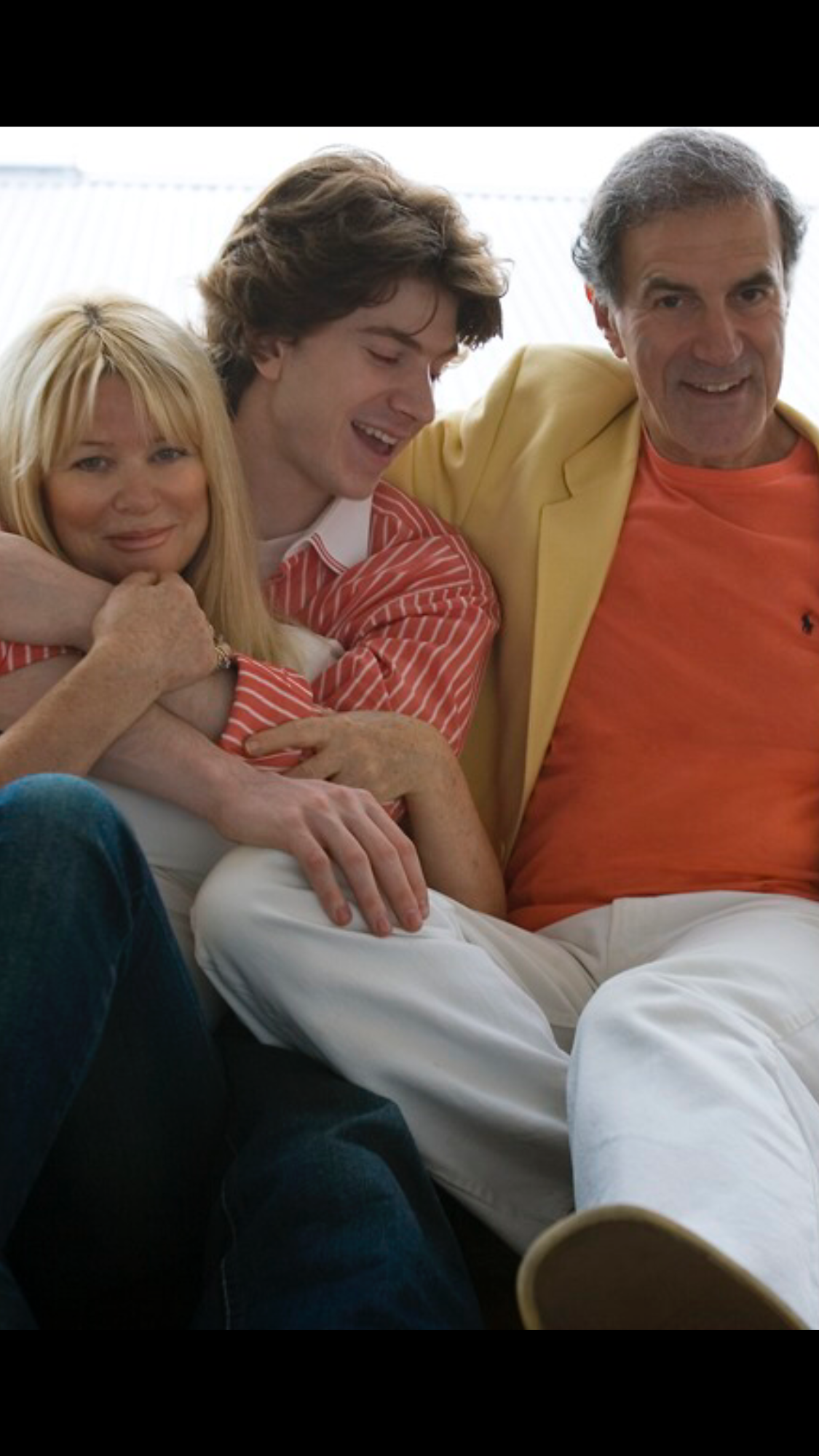
For Allan Zavod: 'Dad inspired us to be reckless and excited and fun and daring and part of the world', by Zak Zavod - 2016

June 7, 2019

4 December 2016, Melbourne, Australia

My dad led a remarkable life and was a remarkable man. And that is what we remember today. There is the pain of loosing him. And it runs deep. But there is also the joy of celebration in his life that was. He, in his abundance of love, touched many people, not least of us his family, but also beyond and into the community; here in Australia and forth into the larger world.

His roots started here in Melbourne, studying at "The Con" and playing here joyfully with school friends and music veterans alike. He then travelled for study at Berkeley and landing in the American 70's, immersing himself in slick Jazz and piping hot rock 'n roll. He thrived in the madness and challenge of it all and went on to collaborate and tour with some of the world’s musical greats including Jean Luc Ponte, Maynard Furgueson and Frank Zappa. But to speak plainly, I think one of the most significant musical experiences of his life happened relatively recently. Certainly the one I was most privy to. The Melbourne Symphony orchestra performed Dad's Environmental Symphony and I shared first hand in what it meant to him. To share his work with his home city and to have it received in such a way. To have the opportunity to share it with his beloved home community and to have people on their feet cheering and feeling. It was an experience that moved him as he moved others. We stood in the wings as the performance came to an end, as the final bars were played, and as the audience rose to their feet and as the energy in the room cracked and as the smiles on the orchestra members’ faces gleamed; and he turned to me and said "...you know... this is what I've always wanted." I knew at that moment that even though he was aware he might be leaving this world, he also knew he'd done things that he was mighty thrilled to have done, and even though he could have done them for another 100 years, if his time had to be now, he could be at peace with that. And I think we can take his lead on that one.

Dad's family of course was his pride and joy. The gem of seeing him smile in contentment at simply having the family together for a meal; indulging in that most basic and gracious of pleasures; food and chosen company. And well, he chose none to be closer than his family.

My Grandfather Eddy, who took hold of his artistic gene and grew it throughout the generations to Dad, and to me and to my daughter. My father and he bonded especially deeply in grandpa's twilight years where they spent many hours together speaking of the past, and of the future. Healing and sharing. Musically they shared a unique and vibrant bond through their careers and in these later years, dad and grandpa still played together often and dad encouraged him to keep performing all the way through his difficulties with Parkinson's. And so their musical joy kept on flowing.

His darling mother Anne, still here with us today. He was the light of her life, and continues to illuminate it even if now a little dimmed. He spoke often of his memories of a wonderful childhood in which he always felt nurtured and loved. And it was clear that his mother was a beautiful guiding soul to him, who protected him, and celebrated him.

My mum Christine, and dad, were soulmates. It’s hard to elaborate on what this meant to them. I perhaps am the one who knows most being their only offspring and having been present for so much of their love-filled lives together. We are all at loss without him. But perhaps no more than his angel partner, my mother. The passion they shared and the love and joy that blossomed between them and stretched its great boughs out over our heads and sheltered me from the dark, and inspired us to be reckless and excited and fun and daring and part of the world. That is quiet now and remains on in our hearts and in my mother. She can now carry that beacon for us. We all will a little. But his joy touched her in a unique way, as did hers touch him. And that is a torch that endures beyond death. For it is eternal.

As for me. There is not a great deal to say really. He is my Dad. He is the man who thought me to love. And I'll miss him, and he knows it. And I feel him with me. And it's ok. And it hurts very badly. But he is the one who taught me not just to love people, who are here, for a time, but that they also must leave. He taught and inspired me to love life, and living. And that is what we are left with. Thank you.

Enjoyed this speech? Speakola is a labour of love and I’d be very grateful if you would share, tweet or like it. Thank you.

Facebook Twitter Facebook
In SUBMITTED 3 Tags ALLAN ZAVOD, ZAK ZAVOD, FATHER, SON, FOR DAD, MUSICIAN, FAMILY EULOGY
Comment
Allan Zavod in dinner suit about 2000.jpg

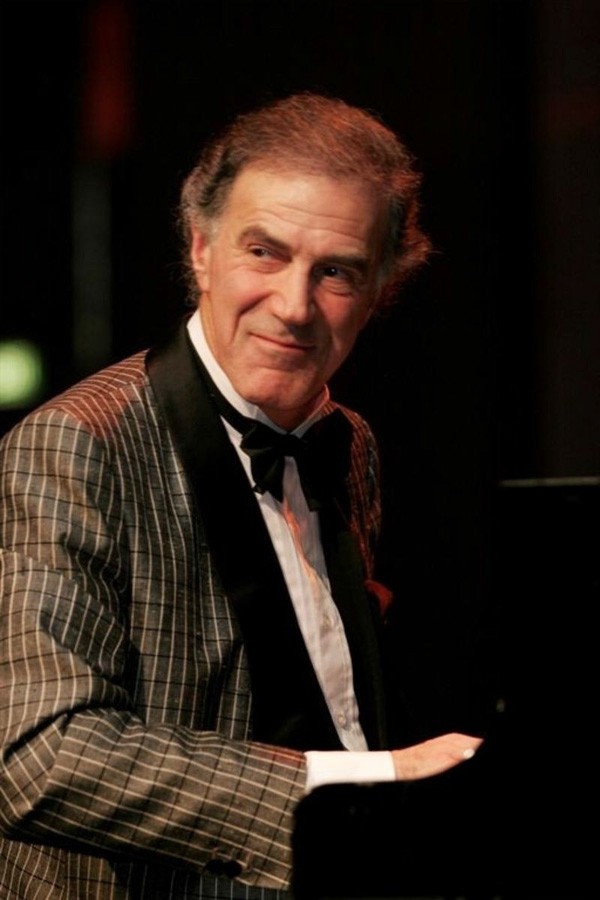
For Allan Zavod: 'Tribute to Allan Zavod, musician and composer', by Alan Finkel - 2016

June 5, 2019

4 December 2016, Melbourne, Australia

Twenty years ago I met a man. A most unusual man. A musical genius, playful, wild, intellectually powerful, a musical treasure, a legendary composer. Allan Zavod cut a powerful figure: tall, strong, wild curly black hair. But one thing dominated everything about him – music! When Allan played, either in a concert hall on a Steinway grand piano, or in his sickbed on a toy keyboard, Allan filled the room with music that resonated from the walls and through our bodies.

Born in 1947, Allan found music young. His mother Anne took him to his piano lessons and his Eisteddfod competitions – he won them all. His father Eddie, a superb concert violinist whose repertoire ranged from Gypsy to Classical, took him to symphonies and gave him his musicality.

Allan went to school at Brighton Grammar and from there to the University of Melbourne Conservatorium on an Ormond Scholarship, to be classically trained in Rachmaninov and Gershwin. While on tour in Australia, Duke Ellington discovered Allan Zavod and sponsored him to go Massachusetts to the acclaimed Berklee College of Music, where he graduated and became a music professor.

But Allan’s passion was performance so he left academia and went on tour playing keyboard with Frank Zappa and the Mothers of Invention. He spent 30 years in the US performing, recording and touring with the Glenn Miller Orchestra, Herby Hancock, Jean-Luc Ponty, Sting, George Benson, comedian Robin Williams, actor Chaim Topol and Australia’s James Morrison. He performed for Her Majesty the Queen of England, His Royal Highness Prince Norodom of Cambodia.

Back home he married Chris and fathered Zak. But Allan’s real strength was as a composer. He wrote the scores for over 40 films, including my favourite melody from the movie The Right Hand Man. Of all his many awards, the one that brought Allan most pride was the Doctor of Music in 2009 from the University of Melbourne, only the fifth time it was granted since the University was founded in 1853.

Allan was famous as a pioneer of the jazz-classical fusion genre, but I truly believe that there was nothing that Allan could not play, enhance or compose. I got a glimpse of Allan’s musical life about 15 years ago when I visited him in Phoenix, Arizona, where he was staying alone in the house of Geordie Hormel, heir to the SPAM fortune, back in the days where spam was a kind of food, not unwanted email. Geordie was away and Allan was the only person in the house, with 32 bedrooms, six kitchens, a squash court, and most important a fully equipped sound recording studio where Allan and Geordie could play and compose. Next morning, a Sunday, Allan’s friend George Benson, famous for such smash hits as Breezin’ and The Masquerade, picked us up in his Rolls Royce and took us, wide-eyed, to his evangelical church.

Allan, I shared more than a church service with you. We ate and drank at restaurants, we reminisced on the Jon Faine Conversation hour, we jogged the back beaches of Rye and swam the front beaches of Portsea, but most important to me was the Environmental Symphony. Sometime around 2008 you decided you wanted to write a major orchestral piece. You had enjoyed an earlier success when you won an international competition to compose a jazz-inspired symphony that was performed by the St Louis Philharmonic Orchestra in New Orleans. But now you decided you wanted to do something even bigger. And it had to have meaning beyond the music.

We lunched many times, we talked many topics. I suggested it could be about the threats and opportunities for our global environment. You were sold, you were on fire, a full symphony in five movements was sprouting in your mind. But it was not enough. I had to give you a narrative, which I did. But it was not enough, I had to give you a narration, which I wrote. But it was not enough, I had to find you a narrator, which I did – Richard Branson. But it was not enough, I had to give you an outlet, which I did. Last year I found myself as the executive producer for your Environmental Symphony, played by the Melbourne Symphony Orchestra at Hamer Hall. I learned what it meant to call in the favours, to nourish and to cajole. It was not me alone. The support for this concert was huge, because it was for you Allan, and because, by your choice, it was a fundraiser for brain cancer research.

Letting me be part of your success is the greatest gift you could have ever given me. I thank you. I share my love with you. Rest in peace.

Enjoyed this speech? Speakola is a labour of love and I’d be very grateful if you would share, tweet or like it. Thank you.

Facebook Twitter Facebook
In SUBMITTED 3 Tags ALLAN ZAVOD, ALAN FINKEL, MUSICIAN, COMPOSER, FRIEND, JAZZ-CLASSICAL FUSION
Comment

For Dr G Yunupingu: ‘Rest in peace, Rainbow Child’, by Michael Gunner - 2017

August 15, 2018

19 September 2017, Darwin, Australia

 “I was born and blind and I don’t know why. God knows why, because he love me so”.

Thank you Jessica, Manuel and the Y boys for your beautiful and moving rendition.

God did know why, though we, as flawed and finite mortals, can ourselves only guess and wonder.

Perhaps it was so a little boy from Elcho Island discovered his first pleasures not in the prodigious light and colour of that place, but in the sounds of sticks on tin cans in the sand – small cans, big cans, sharp sounds, deep sounds, rearranged and rearranged again.

Perhaps it was so that little boy expanded his curious mind not in what could be absorbed through the eyes, but in the infinite mathematics of music – the contours, the shapes, the peaks, valleys and trails of a 12-key piano accordion, guitar, and church hymns.

Perhaps it was so he felt the weight of song and language so keenly that, when combined with those other gifts bestowed by God, he would as a man make others as far away as Los Angeles, London and New York feel that weight, too.

That this humble Yolngu man from Elcho Island, could one day show the world its humanity through the passion, love and poetry of his people.

That through music, the world would come to hear, and even sing along with, the most ancient, living languages on earth.

That through music, he would remind us that while we are all unique in our colours, shapes and histories, we are all fundamentally the same.

Black or white, our skin goose-bumps at his melodies Brown or blue, our eyes close to absorb his voice.

He would soothe and sleep crying infants of all cultures.

His music is instantly of the Territory, its people and its languages, but it resonates far beyond our borders - and will forever more - because it is the music of humanity.

It is something deeper, something nourishing, something shared. In a 2008 interview, Dr Yunupingu said:

“When I hear that non-Aboriginal people start crying when they hear my music I am pleased to hear it, as it means we are all sharing the same experience and that there is not so much difference between us - black and white.”

Dr Yunupingu never sought fame, nor audiences with the Queen or Barack Obama.

He never sought ARIAs, NIMAs, Deadly Awards, A.I.R Awards, Limelight Awards, Northern Territory Indigenous Music Awards, APRA Awards or Helpmann Awards.

He remained a humble man. He remained a traditional Yolngu man. But the audiences and accolades found him because God had a plan. “I was born and blind and I don’t know why. God knows why, because he love me so”.

It is one of the honours of my life that I can stand here today to give thanks on behalf of Territorians to the man and his creator.

I give thanks on behalf of all the people of the world who, like me, weren’t fortunate enough to know him intimately - his warm personality or sense of humour - but who came to know him through music.

Today, as we remember and say thanks for Dr Yunupingu, I stand on the lands of the Larrakia. There are ancient and still-powerful connections to all Northern Territory lands.

People lived, loved, raised families, sang and danced here for a thousand generations before our own and will do for a thousand more.

Dr Yunupingu’s music speaks of the Yolngu connection to land and family. His connection to land and family.

Through his song, and in the most modern of ways - playlists, Spotify, MP3s, CDs - we live, know and share an ancient cultural legacy.

Through his song, we live, know and share love. We are richer for it. The world is richer for it.

I say thank you.

I say Yakurr djil’ngi yothu djarimi. Rest in Peace, Rainbow Child.


Source: https://chiefminister.nt.gov.au/articles/d...

Enjoyed this speech? Speakola is a labour of love and I’d be very grateful if you would share, tweet or like it. Thank you.

Facebook Twitter Facebook
In PUBLIC FIGURE C Tags BLIND, MICHAEL GUNNER, MUSICIAN, SONG, CHIEF MINISTER, INDIGENOUS, DR G YUNUPINGU, NORTHERN TERRITORY, TRANSCRIPT, SINGER
Comment

For Leonard Bernstein: 'Lenny lived four lives in one', by Ned Rorem - 1990

September 20, 2017

18 October 1990, New York City, USA

Ned Rorem is a composer, writer, diarist and friend of Bernstein, who won the Pulitzer Prize in 1976 is now 96. This obituary appeared in his collected pieces Other Entertainment. There is no available audio or vision of this speech.

During the terrible hours following Lenny’s death last Sunday the phone rang incessantly. Friend after friend called to commiserate, and also the press, with a flood of irrelevant questions: How well did you know him? What made him so American? Did he smoke himself to death? Wasn’t he too young to die? What was he really like? None of this seemed to matter since the world had suddenly grown empty – the most crucial musician of our time had vanished. But next morning it seemed clear that there are no irrelevant questions, and these were as good as any to set off a brief remembrance.

How well did I know him? To “know well” has to do with intensity more than with habit. Everyone in Lenny’s vast entourage felt themselves to be, at one time or another, the sole love of his life, and I was no exception. The fact that he not only championed my music, but conducted it in a manner coinciding with my very heartbeat, was naturally not unrelated to love. Years could pass without our meeting, then for weeks we’d be inseparable. During these periods he would play as hard as he worked, with a power of concentration as acute for orgies as for oratorios. In Milan, in 1954, when he was preparing La Sonnambula for La Scala, I asked him how Callas was to deal with. “Well, she knows what she wants and gets it, but since she’s always right, this wastes no time. She’s never temperamental or unkind during rehearsal – she saves that for parties.” Lenny was the same: socially exasperating, even cruel with his manipulative narcissism (but only with peers, not with unprotected underlings), generous to a fault with his professional sanctioning of what he believed in.

Was he indeed so American? He was the sum of his contradictions. His most significant identity was that of jack-of-all-trades (which the French aptly call l’homme orchestre), surely a European trait; while Americans have always been specialists. … Yes, he was frustrated at forever being “accused” of spreading himself thin, but this very spreading, like the frustration itself, defined his theatrical nature. Had he concentrated on but one of his gifts, that gift would have shriveled.

…

Was he too young to die? What is too young? Lenny led four lives in one, so he was not 72 years old but 288. Was he, as so many have meanly claimed, paying for the rough life he led? As he lived many lives, so he died many deaths. Smoking may have been one cause, but so was overwork, and especially sorrow at a world he so longed to change but which remained as philistine and foolish as before. Which may ultimately be the brokenhearted reason any artist dies. Or any person.

So what was he really like? Lenny was like everyone else, only more so. But nobody else was like him.

Source: https://mindlikethesky.wordpress.com/2013/...

Enjoyed this speech? Speakola is a labour of love and I’d be very grateful if you would share, tweet or like it. Thank you.

Facebook Twitter Facebook
In PUBLIC FIGURE C Tags LEONARD BERNSTEIN, NED ROREM, OTHER ENTERTAINMENT, OBITUARY, MUSICIAN, COMPOSER, TRANSCRIPT
Comment

for Clarence Clemons: 'Clarence doesn’t leave the E Street Band when he dies. He leaves when we die', by Bruce Springsteen

April 19, 2016

21 June 2011, Palm Beach, Florida, USA

I’ve been sitting here listening to everyone talk about Clarence and staring at that photo of the two of us right there.  It’s a picture of Scooter and The Big Man, people who we were sometimes.  As you can see in this particular photo, Clarence is admiring his muscles and I’m pretending to be nonchalant while leaning upon him.  I leaned on Clarence a lot; I made a career out of it in some ways.

Those of us who shared Clarence’s life, shared with him his love and his confusion.   Though "C" mellowed with age, he was always a wild and unpredictable ride.  Today I see his sons Nicky, Chuck, Christopher and Jarod sitting here and I see in them the reflection of a lot of C’s qualities. I see his light, his darkness, his sweetness, his roughness, his gentleness, his anger, his brilliance, his handsomeness, and his goodness.  But, as you boys know your pop was a not a day at the beach.  "C" lived a life where he did what he wanted to do and he let the chips, human and otherwise, fall where they may. Like a lot of us your pop was capable of great magic and also of making quite an amazing mess.  This was just the nature of your daddy and my beautiful friend.  Clarence’s unconditional love, which was very real, came with a lot of conditions.  Your pop was a major project and always a work in progress.   "C" never approached anything linearly, life never proceeded in a straight line. He never wentA… B…. C…. D.  It was always A… J…. C…. Z… Q… I….!  That was the way Clarence lived and made his way through the world.  I know that can lead to a lot of confusion and hurt, but your father also carried a lot of love with him, and I know he loved each of you very very dearly.  

It took a village to take care of Clarence Clemons.  Tina, I’m so glad you’re here.  Thank you for taking care of my friend, for loving him.  Victoria, you’ve been a loving, kind and caring wife to Clarence and you made a huge difference in his life at a time when the going was not always easy. To all of "C’s" vast support network, names too numerous to mention, you know who you are and we thank you. Your rewards await you at the pearly gates.  My pal was a tough act but he brought things into your life that were unique and when he turned on that love light, it illuminated your world.  I was lucky enough to stand in that light for almost 40 years, near Clarence’s heart, in the Temple of Soul.

So a little bit of history: from the early days when Clarence and I traveled together, we’d pull up to the evenings lodgings and within minutes "C" would transform his room into a world of his own.  Out came the colored scarves to be draped over the lamps, the scented candles, the incense, the patchouli oil, the herbs, the music, the day would be banished, entertainment would come and go, and Clarence the Shaman would reign and work his magic night, after night.  Clarence’s ability to enjoy Clarence was incredible.  By 69, he’d had a good run, because he’d already lived about 10 lives, 690 years in the life of an average man.  Every night, in every place, the magic came flying out of C’s suitcase.  As soon as success allowed, his dressing room would take on the same trappings as his hotel room until a visit there was like a trip to a sovereign nation that had just struck huge oil reserves.  "C" always knew how to live.  Long before Prince was out of his diapers, an air of raunchy mysticism ruled in the Big Man’s world.  I’d wander in from my dressing room, which contained several fine couches and some athletic lockers, and wonder what I was doing wrong! Somewhere along the way all of this was christened the Temple of Soul; and "C" presided smilingly over its secrets, and its pleasures.  Being allowed admittance to the Temple’s wonders was a lovely thing.  

As a young child my son Sam became enchanted with the Big Man… no surprise.  To a child Clarence was a towering fairy tale figure, out of some very exotic storybook.  He was a dreadlocked giant, with great hands and a deep mellifluous voice sugared with kindness and regard.  And… to Sammy, who was just a little white boy, he was deeply and mysteriously black.  In Sammy’s eyes, "C" must have appeared as all of the African continent, shot through with American cool, rolled into one welcoming and loving figure.  So… Sammy decided to pass on my work shirts and became fascinated by Clarence’s suits and his royal robes.  He declined a seat in dad’s van and opted for "C’s" stretch limousine, sitting by his side on the slow cruise to the show.  He decided dinner in front of the hometown locker just wouldn’t do, and he’d saunter up the hall and disappear into the Temple of Soul. 

 Of course, also enchanted was Sam’s dad, from the first time I saw my pal striding out of the shadows of a half empty bar in Asbury Park, a path opening up before him; here comes my brother, here comes my sax man, my inspiration, my partner, my lifelong friend.  Standing next to Clarence was like standing next to the baddest ass on the planet.  You were proud, you were strong, you were excited and laughing with what might happen, with what together, you might be able to do.  You felt like no matter what the day or the night brought, nothing was going to touch you.   Clarence could be fragile but he also emanated power and safety,  and in some funny way we became each other’s protectors; I think perhaps I protected "C" from a world where it still wasn’t so easy to be big and black.  Racism was ever present and over the years together, we saw it.  Clarence’s celebrity and size did not make him immune.  I think perhaps "C" protected me from a world where it wasn’t always so easy to be an insecure, weird and skinny white boy either.  But, standing together we were badass, on any given night, on our turf, some of the baddest asses on the planet.  We were united, we were strong, we were righteous, we were unmovable, we were funny, we were corny as hell and as serious as death itself.  And we were coming to your town to shake you and to wake you up. Together, we told an older, richer story about the possibilities of friendship that transcended those I’d written in my songs and in my music.  Clarence carried it in his heart.  It was a story where the Scooter and the Big Man not only busted the city in half, but we kicked ass and remade the city, shaping it into the kind of place where our friendship would not be such an anomaly. And that… that’s what I’m gonna miss.  The chance to renew that vow and double down on that story on a nightly basis, because that is something, that is the thing that we did together… the two of us.  Clarence was big, and he made me feel, and think, and love, and dream big. How big was the Big Man?  Too fucking big to die.  And that’s just the facts.  You can put it on his grave stone, you can tattoo it over your heart. Accept it… it’s the New World. 

Clarence doesn’t leave the E Street Band when he dies.  He leaves when we die.  

So, I’ll miss my friend, his sax, the force of nature his sound was, his glory, his foolishness, his accomplishments, his face, his hands, his humor, his skin, his noise, his confusion, his power, his peace.  But his love and his story, the story that he gave me, that he whispered in my ear, that he allowed me to tell… and that he gave to you… is gonna carry on.  I’m no mystic, but the undertow, the mystery and power of Clarence and my friendship leads me to believe we must have stood together in other, older times, along other rivers, in other cities, in other fields, doing our modest version of god’s work… work that’s still unfinished.  So I won’t say goodbye to my brother, I’ll simply say, see you in the next life, further on up the road, where we will once again pick up that work, and get it done.  

Big Man, thank you for your kindness, your strength, your dedication, your work, your story.  Thanks for the miracle… and for letting a little white boy slip through the side door of the Temple of Soul.  

SO LADIES AND GENTLEMAN… ALWAYS LAST, BUT NEVER LEAST.  LET’S HEAR IT FOR THE MASTER OF DISASTER, the BIG KAHUNA, the MAN WITH A PHD IN SAXUAL HEALING, the DUKE OF PADUCAH, the KING OF THE WORLD, LOOK OUT OBAMA! THE NEXT BLACK PRESIDENT OF THE UNITED STATES EVEN THOUGH HE’S DEAD… YOU WISH YOU COULD BE LIKE HIM BUT YOU CAN’T!   LADIES AND GENTLEMEN, THE BIGGEST MAN YOU’VE EVER SEEN!... GIVE ME A C-L-A-R-E-N-C-E.  WHAT’S THAT SPELL? CLARENCE! WHAT’S THAT SPELL? CLARENCE! WHAT’S THAT SPELL? CLARENCE! … amen.

I’m gonna leave you today with a quote from the Big Man himself, which he shared on the plane ride home from Buffalo, the last show of the last tour.  As we celebrated in the front cabin congratulating one another and telling tales of the many epic shows, rocking nights and good times we’d shared, "C" sat quietly, taking it all in, then he raised his glass, smiled and said to all gathered, "This could be the start of something big."

Love you, "C".


Source: http://www.rollingstone.com/music/news/bru...

Enjoyed this speech? Speakola is a labour of love and I’d be very grateful if you would share, tweet or like it. Thank you.

Facebook Twitter Facebook
In PUBLIC FIGURE B Tags BRUCE SPRINGSTEEN, BIG MAN, CLARENCE CLEMENS, TRANSCRIPT, MUSICIAN
Comment

For Lemmy Kilmister: 'Precious lord, take my hand', by Dave Grohl - 2016

January 18, 2016

10 January 2016, Forest Lawn Memorial Cemetery, Los Angeles, USA

The funeral streaming had technical difficulties during the amazing Dave Grohl eulogy. It's worth persevering, and the beautiful, tears-inducing Little Richard finale is in full sound from 7.00.

Hi guys

There’s not enough time for me to tell you how much Lemmy meant to me, and all the amazing experiences I had with him.

The first time I met Lemmy was at fucken Crazy Girls about twenty years ago, and I was walking back from the mens’ room,  and on the way back, I looked to my left and I saw Lemmy by himself in the corner on a video game. And it blew my mind. I knew that I couldn’t just go say something because he was on his own in the corner. On the way out I thought, ‘I have to say something. He’s my hero. He’s the one true rock ’n ’roller that bridged my love of ACDC and Sabbath and Zeppelin with my love of GBH and the Ramones and Black Flag. So I walked up and said, ‘Excuse me Lemmy, I don’t want to bother you, but you’ve influenced me so much, you’re my musical hero. I’m a musician. I play in the Foo Fighters, and I was in Nirvana. And he looked up from the video game, and the first thing he ever said to me, he said, “sorry about your friend Kurt [Cobain]”.

And in that moment he revealed this gun-slinging, whiskey-drinking badass, motherfucking rock star to be this gun slinging whiskey drinking badass mother fucking rockstar with a heart, and I walked away thinking if I never see him again, that’s enough, for the rest of my life.

But then we becamse friends. And its one thing when you have a hero, but it’s another when your hero becomes your friend.

And over the years I have a lot of great stories of going to his apartment, and walking through the aisles of pornos ... or going to the Rainbow and ordering two Jack and cokes and the waitress brings two Jack and cokes and he’s fucking male

Or the one time I text him and say, ‘hey man, my band’s playing at the Pantaras Theatre tonight you should come down check it out’,  

I said, it’s an acoustic show, it's not like a big rock gig

[mimes texting] Ok

An hour later, I’m downstairs backstage, and I hear fucking Motorhead blaring out of the dressing room, and I get so excited, “finally someone else in the band’s listening to fucking Motorhead!’ and I open up the door and there’s [mimes catatonic fagging] Lemmy, by himself listening to Motorhead.

My mom was there, so I say to Lemmy, I want you to come and meet my mom, so we walk across the hall way, and in that room was my mother, and my wife, and my daughter who was a baby I think she was six months old at the time. So Lemmy walks in with his drink, and his cigarette, [mimes pointing] ‘that Lemmy, from Motorhead’.

[Throat growling 'Lemmy']

And then he looks and he sees that there’s a baby in a crib, and he puts out his cigarette in his drink, and he puts the drink down. Now to most people that  would seem like nothing. But to me, that was my hero putting out his cigarette in his drink and putting it aside because my daughter was there in the room.

So I think what everybody has always known, at least where I am today, is that Lemmy was not only that gun slinging whiskey drinking badass mother fucking rock n roll  star, but he had the biggest heart and he set such a great example because he was so kind to everyone, people he  didn’t know, people he known for years, he was so kind.

He and I shared a love of Little Richard.

I always said that if there was one person I could meet it would be Little Richard. Because whose more badass than Little Richard? One day I was in the airport, at LAX and I was standing on a curb and a guy came up and said, ‘Hey I heard from Lemmy Kilmister that you wanted to meet Little Richard?’

‘Yeah.’

‘Well that’s my dad.’

‘What?’

And it’s true.  We walk over to this limousine, and he taps on the window, and the window comes down a little bit, and it’s fucken Little Richard sitting there!

Oh my god.

And this guy [whispers]

Windows comes all the way down.

Little Richard says , “I got blessings for you ... ‘ And he signs this bible pamphlet for me and hands it to me, and [Dave pulls out pamphlet to much applause] I kept it.

[Long pause fighting back tears]

And I wanted to give it to him on his birthday.

So last night [audio video glitch]

So this is a song Little Richard sang, and I thought I’d read it. It’s called ‘Precious Lord Take My Hand’

Precious Lord, take my hand
Lead me on, and help me stand
Lord I'm tired, I’m so weak,

Lord you know I’m worn,

Through the storm, through the night
Lead me on to the light
Take my hand precious Lord, lead me home

When my way it gets kinda dreary precious Lord’s somewhere near
When my life is almost gone
Hear my cry, lord
Hear my call
Hold my hand lest I fall
Take my hand precious Lord, lead me home

Cheers Lemmy


Source: https://www.youtube.com/watch?v=IgZWttSDQT...

Enjoyed this speech? Speakola is a labour of love and I’d be very grateful if you would share, tweet or like it. Thank you.

Facebook Twitter Facebook
In EDITORS CHOICE Tags LEMMY KILMISTER, DAVE GROHL, MOTORHEAD, FRIEND, MUSICIAN, ROCK STAR, SPEAKOLIES CELEB
Comment

For Graham Webb: (song and eulogy) 'I can't fit a giant into a shoebox', by sons Mal and John Webb - 2015

December 5, 2015

24 November 2015, Centennial Park, Adelaide, Australia


Mal Webb contributed original song Follicle Drive which he sang at the funeral. He is a songwriter, musician and instrumentalist from Melbourne. You can find his work here. His brother John Webb's magnificent eulogy is below.

Follicle Drive

The things I really loved
That I'll miss the most about my Dad
Are the things that could also drive me mad
He was a full on guy with a bursting brain
And a thirst for how and why
Sustained by a heart like a steam train

His ingrained sense of justice drove him on
Relentlessly he strove to champion what's right and fair
And all this with a gentlemanly air

And his voice, above all, would resound
Facts and stories would abound
Right into his anecdotage
Telling tangential tales related unabated
He was vaccinated with a gramophone needle
So he often stated

His many favourite phrases stay with me
Like music in my mind, they linger
While I picture that triumphant pointing of his finger

[Chorus]
"Aahh! That's fixed it, as good as a bought one
Aahh! You crumb! That's a wizard idea.
If dropped naked on a desert island, I would survive
Follicle Drive"

"Follicle Drive" is the name Dad gave to the subject of the research paper he was writing when he died.
His colleagues are continuing with his work.

Whether trains, lacrosse, genetics, fishing, rowing
Yes, whatever the endeavour he was keen as mustard
Truly an enthusiast
Infusing others with his eager educative passion
For doing stuff.

He loved lists and labels, fixing things, he hated waste
Post office red rubber bands on footpaths
would invariably end up in his pocket.
And I've ended up the same

I grew up helping with repairs
Soaked in brake fluid, acetone and Araldite
Holding torches for him, with him saying
"Shine it on my hands, not on my face!"
All to the soundtrack of the Goons

His science, I never understood
But I knew that it was good!
The sheer breadth of his intellect
So vast it brought us all to unexpected paths of thought
[Chorus]...

At the age of 5, to help me to explain my lack of red hair
He taught me how to say "it's a recessive gene".
He taught me sooo much
And in return, I taught him how to hug
And creative ways of eating something green.

His legendary high diaphram never really held him back.
And that crumb still had hair on his head
When he sailed over the horizon...
[Chorus]...

 ©Mal Webb 2015


The eulogy was delivered by Mal's brother, John Webb

Because I'm my father's son, my first impulse was to try to tell his whole story. Detailed, accurate, ordered: with headings, sub-headings, labels in Letraset: COMPLETE.
But then I was given ten minutes to do it. So, because I'm my father's son, I quickly realised I had to look at this from a different angle and then I got to work.

I can't fit a giant into a shoebox, but I can show you some of his works. My Dad was defined by, and now lives forever, through his works, and his deeds. He expressed his love for people through what he built or repaired for them, often when he had no other way to express it. When he handed you something he had just fixed he would loudly say, "THAT, is as good as a bought one" but he could possibly mean, "I have done you wrong, and I hope this makes it better".
Dad was a unique, passionate and complicated guy with a sometimes-confronting and intense manner, a huge voice and an odd turn of phrase. His voice helped him to be a superlative science teacher with a knack for keeping order in a big class, yet he had a rampant infectious enthusiasm that must have inspired many to pursue science as a career.

However as an aside, I should mention that Olivia Newton-John, whose charity we support today, was put on the road to success as an entertainer after Dad failed her in fifth form biology. A fact he was quite pleased about.

Dad used words that no-one else used. If you were annoying him you were a ‘crumb’, if you were annoying him a lot, you were an 'absolute crumb' , and if there were more than two of you, the collective noun was 'a pack'.
If something was really good it was 'wizard'.  If you belonged to the medical profession, you were a 'medic', NEVER a Doctor.

I now refer you to the objects:

The crossbow.
This magnificent thing was built by Dad for his kids when we lived in Canberra in the seventies. You'll note that there is a Perspex view of the trigger mechanism, which he went to great lengths and much research to get right. It's an example of fine craftsmanship with hand tools. Each component was painted a different colour to demonstrate how it worked. It is a permanent reminder of Dad's high intellect, his lifelong obsession with finding out how things worked, and then his equal obsession with ensuring he passed on what he knew. He loved weaponry and the ingenuity of it, and he wanted this crossbow to work properly and in fact with spear gun rubber it was quite deadly. He handed it to us after delivering a very strongly worded procedure and safety demonstration and it provided many happy hours of target shooting.


Dad always insisted that no matter the age, kids needed to learn like adults. He would tell us facts without dumbing them down and could answer questions about literally anything. He was our Google. We learned to use real tools properly, we learned to tie on barbed fish hooks and use sharp knives, we rode bikes on the road and we learned correct scientific names for animals and plants. For me and my siblings, the yellow winged grasshoppers that swarmed the front lawn in Canberra were not "yellow wingers" as our friends called them, but Gastrimargus musicus.

Dad also taught us about chromosomes, and when I was about ten, he would take us to the Genetics department at Melbourne Uni and he would get us to carefully cut up photographs of karyotypes of locusts for his PhD thesis and mount them on card in their correct order for photographing. It was difficult work, but if you got it right consistently you were paid handsomely and we would all have pizza for lunch.

Life with Dad as a father could be that nice. But he could also be away a lot, and quick tempered with children, especially during the PhD years. My mother Susan was often left to manage four kids on her own, while he avidly pursued his other interests.
Dad found parenthood difficult. His own father was ill for many years and he had no sisters, so he was largely flying blind when my sister Cath arrived on the scene. Dad developed strong theories and rigid procedures for how to be a father to a daughter, and very early on, Cath began to give him strong feedback. Their relationship eventually became a long campaign between two great powers, each struggling desperately to change and understand the other. Sometimes there would be a truce, sometimes full scale war. By the time me, Mary and Mal came along, Cath had convinced Dad to soften his disciplinarian line. We were allowed to pursue our lives and careers where they took us, sometimes following Dad, sometimes following Mum, sometimes just going our own way. Dad was proud of us all and expressed amazement at what we all did. Cath ironically followed Dad into teaching, but in the arts, and became a talented ceramicist, then a conservationist. Mary followed Dad into science and science writing. Mal shrugged Dad's entreaties to become an engineer or mathematician, and instead leaned to Mum's side of the family and went headlong into a life of music. I became interested in agriculture and more particularly dairying, following my Mum's father's interest, but I also took Dad's advice and studied Ag science. However, I think if Dad was labelling my specimen jar honestly he'd now texta "MISCELLANEOUS" on it. Incidentally; peace was eventually declared between Cath and Dad. And it was a wonderful thing to see.

In the end, from Dad we inherited an exactly-against-the-odds hair colour gene expression, passion for what we do, four good brains and the understanding that working hard is the way to succeed. We now pass this on to our kids and Dad was always fascinated to see how the DNA had fallen and how his grandchildren were developing: sometimes he'd see a little of himself peering back at him, sometimes someone else entirely.

Again, I'm my father's son, and the discussion has wandered. One last remark about the crossbow. Dad's brother Neil's son, our cousin Simon, will be looking at the crossbow with horror. He came to visit us in Canberra when the crossbow was our new toy, and because he missed Dad's safety briefing, he used it to hunt blowflies in the garage, and learned that lead-tipped bolts bust windows.

The trains.
Dad built these models of the Victorian Railways S class steam locomotive and the S class diesel that superseded it in 1952. There were only ever four of these beautiful steam engines built and Dad always thought it was always a great tragedy that all of them were scrapped before anyone thought of preserving such things. And so do I.

Dad had an intense enthusiasm for all things rail and as kids we spent many very happy days on steam train trips with cinders in our eyes and hair, madly excited by the noise and the heat, the smell of coal, steam and oil and the drama of vintage steam locomotion. Dad would be totally absorbed in the engines and would bellow over the noise of a hissing safety valve to explain pistons, superheaters and motion gear to us. He'd laugh when the whistle made us jump. To this day, I hear a distant steam whistle and the impulse to dive into a car and find it is overwhelming, and so it was for Dad.

Train travel defined many of his life adventures. He deeply felt the romance of it. He would tell you a story of how he travelled by train to Seymour, and then to Puckapunyal for National service, and the fact that the train was hauled by an R class engine was the detail that finished the picture.

Travel also became part of our family culture. As kids we moved around following Dad's science career. Melbourne to Canberra then back to Melbourne then back to Canberra again. The family became used to moving, settling for a while then moving again.
We became good at keeping in touch with distant friends, but it also gave me a feeling that change was always around the corner and that people would always come and go.

Dad followed his passions and didn't have much interest in staying somewhere for the sake of appearing settled. And this led to him declaring in 1988 that he had one more move to make and it was to Adelaide. I believe that the choice between staying with Susan, the mother of his children and wonderful wife of twenty eight years, or to throw it all in to re-kindle a passionate romance with Noela must have been heartbreaking. At the time I was very angry at his decision, but eventually grew to respect that sometimes someone must just follow their heart. To the baffled spectator, Dad's relationship with Noela always seemed like an improbable mix of two opposites. But time is the ultimate judge, and they remained devoted to eachother for nearly thirty years.


Noela loses Dad to his fight with cancer at a time when she has her own epic struggle going on. All I can do is wish her strength and her family courage.

Where was I? The steam train model was actually meant to be the project I did for cubs, with parents allowed to help. But the project developed a life of its own, and Dad largely built it himself. I was allowed to paint some of it and screw in some wheels. It's a beautiful and faithful representation of an engine that Dad saw and loved as a boy and missed terribly forever. It includes a battery operated headlight that ingeniously uses the welding rod handrails to complete the circuit.
The diesel was built for Mal. Dad felt that it was a fitting conciliatory gesture to build a model of the engine that replaced the one he loved. No hard feelings.


The lacrosse sticks
The old stick.
Before you are possibly, the first and last lacrosse sticks that Dad ever repaired, with about 55 years between them. The glue is the same on both. Slow-set Araldite. Dad's adhesive of choice for most of his life. It was mixed of two parts and Dad always pointed out that the hardener was horrifically poisonous, usually while he was wiping off excess with a handkerchief that would then be stuffed back in his pocket, where it would later be used to blow his nose.
 
Dad started playing lacrosse when the gear was all wood and leather in the fifties. He and his brother played together and he always said that Keith was a much better player than he was, with a marvellously damaging shot on goal. Dad always did that. He underrated himself and he always generously compared himself unfavourably to others. It extended to all areas of his life: "Noela is much more intelligent than I am" he would say, or "your cousin Andrew is a much better fisherman than I am" or "I was never much chop as a lacrosse referee". It was an endearing trait, but it probably also contributed to his endless drive to improve and learn and then to teach. He was never quite satisfied with what he'd just done and always thought he could do better.

Lacrosse was his favourite sport and he was deeply involved for most of his life, though an intense involvement with the ANU rowing club intervened, filling the void during our five years in Canberra. Both sports have acknowledged Dad's passing this week, but the lacrosse community has reacted with overwhelming sadness. Dad co-founded the Eltham lacrosse club in 1963 and was a keen player, coach or supporter for all of the club's life, while it sometimes struggled and mostly thrived into the success we see today. However, he was a member of many clubs over the years including Melbourne University, Coburg, University High, Uni High Old Boys, Camberwell and Adelaide University.
He also helped to found the Doncaster club, which he had to sadly watch fold. He made it his business to help out struggling clubs and was loved and now remembered warmly for it. While Dad was very keen on the sport, he also thought himself a mediocre player, and would throw himself into the running of a club to compensate. People soon understood that to have Dad in your club was to be lucky enough to have a mad enthusiast, a tireless worker, a great recruiter, a patient skills coach, a talented gear mender and labeller and someone who saw things differently and who could bring lateral thinking to problems.
Oh, and it nearly went without saying: a great friend.

Everything seemed possible to Dad and he had no patience with anyone who said otherwise on the grounds that it had never been done, or would upset the status quo. He could often see the clear answer to a problem, but fail to see the politics in the background. It led to him once sadly saying to me that not being a better politician stopped him from getting to the top in many endeavours.

However, for all that, in the early eighties, Dad was a successful president of the then Victorian Amateur Lacrosse Association, He often said that he felt self-conscious about the fact that he was the first president who never played the sport at state level. Of course, it didn't matter. People in the sport valued him and voted for him because of his sense of fairness and the great things they'd seen him do at club level, and backed him to do the same in the role as president.
 
I followed my Dad into the sport with the Eltham club, along with my brother Mal for a time and even my sister Cath, who played for a while in a fledgling competition in Canberra. Don't look for it now.

Lacrosse is the sport that hardly anyone plays, or even knows about. Yet, most that do play can never get it out of their system. Dad was very happy to see his passion for lacrosse carried on and he recently said that for him it was completely addictive. A sport in which deft skill and real danger produces a beautiful spectacle. And so it is that I will play on next year for the Bendigo club, despite Dad's worry that I may get killed. Another mediocre player, trying to help out a struggling club in the best Webb tradition.

The modern stick
This stick is from Dad's time at his last club, Adelaide University. It has a nice action and Dad was very happy with how he'd repaired and re-strung it. Dad was a particularly fierce defender of the Adelaide and Melbourne University clubs' right to exist. Like many other clubs, the Adelaide Uni sent me wonderful messages from their members, paying tribute to Dad's passing as a massive loss to their club and their sport. It makes for sad reading, though there are moments to make you smile. One fellow made reference to Dad's unique ability to fill the tape on an answering machine. I laughed out loud, because I had the same trouble decades earlier and as a defence, I bought a machine that only allowed 30 seconds of message at a time. Instead of doing what everyone else did and summarise, Dad would ring 5 or 6 times to ensure he said his piece in full. He loved to talk and he was loud.

And that reminds me of a story. When Dad became ill with cancer, he brought to bear on it all his intelligence, his will to understand and his great bravery. He was wise and measured in how he sought treatment and gave himself the best possible chance to beat it. We held our breaths while he stared down surgery, and then chemotherapy, but I knew we had a fight on our hands when I rang him in hospital and at the other end came silence and then a faint voice. A small weak voice, lost in delirium.


My father’s voice always had permanence about it. It was his greatest trademark and the shock of hearing him quiet, bewildered, and with not much to say, will forever stay with me.
My wonderful siblings and I tried to come to Dad's rescue and with the help of some of Dad's devoted and amazing Adelaide friends and the outstanding care he got at Marten Aged Care he was given back his ability to be himself again. Something I'll always be thankful for. We had many great times before he died, especially lacrosse on the front lawn, with Dad teaching my boys the basic skills. But he was doomed and he never really got his voice back fully.  I last saw him two weeks ago and there were some ominous signs and I have a clear picture in my mind of a final loving smile he gave me and tears starting in his eyes when he said "You'd better get out of here, I cry easily at the moment".

Alas, I now believe I have gone on a bit too long, but forgive me, I'm my father's son.

 

Enjoyed this speech? Speakola is a labour of love and I’d be very grateful if you would share, tweet or like it. Thank you.

Facebook Twitter Facebook
In SUBMITTED Tags GRAHAM WEBB, MAL WEBB, MUSICIAN, ORIGINAL SONG, JOHN WEBB, LACROSSE, OBJECTS, RED HAIR
Comment

For Cal Orr: 'He told Eleanor there were to be under no circumstances any tea lights', by Chris Johnston - 2015

December 4, 2015

24 August 2015, Melbourne, Australia

Thanks all for coming. Cal would have loved this except I reckon he would have thought there was too much talk, not enough action. He was a man who liked to get straight to the point which is maybe why we liked each other so much.

Thanks to Brad. Benno. Andy. Sam. Thanks to Eleanor. What a wonderfully strong and kind woman she is. Thanks to Henry, who has inherited two great qualities from his father – a wicked sense of humour and also courage. Last Friday he was in the moment as best he could and stared death in the face and held its hand and also didn’t back away from his emotions, so good on him for that.

I want to talk some more about courage. In one of his final gestures Cal stipulated something for today which took great courage. He told Eleanor there were to be under no circumstances any tea lights.

Which takes a lot of guts in this day and age of activated almonds. Imagine. No tealights at a memorial. It’s like even in death he can still open my eyes to a whole new way of living.

Seriously though – courage. We know he had loads of it in living with the disease for so long and submitting to the nasty treatments in the hope they would help. But it’s not courage from a fighting point of view. It wasn’t a battle because he didn’t choose to be in it. And it wasn’t a fight because it just lived in him. It was just there everyday and so his was perfect everyday courage. Rainer Rilke was an Austrian poet in the early 1900s and he said that real courage is facing the strange and the inexplicable like when love is offered out of the blue or when death comes. But he also said courage is better seen in people who however modestly or privately are brave enough to make a mark on the world, to create something. To do it their own way.

Sound familiar?

I was talking to Cal’s mum Julia the other day. We let loose a whole lot of balloons that were red and blue, the Demons colours. They flew towards the sea by the way.  It took a lot of courage and inner strength to keep barracking for Melbourne but he did. It’s like the tealights – NO TEALIGHTS! GO DEES!

Anyway I asked Julia if he was always the same. Funny and forthright and 100% sure of the odd way he went about things. He was described this week by his friend Louise as a loveable loudmouth and I reckon that’s about right. Julia said, yes, yes, he was always the same. She said Cal was a bit younger than his brother who also died too soon and his sisters and so a lot of the time it was just him and his mum tootling around and she loved that. Except if she told him not to do something as a little kid he would do it more. So she had to adopt a kind of reverse psychology to avoid anti-social behaviour. She said he had a scar on his chin from an incident when he was quite young in Scotland on a trike which he took down a hilly road at extreme speed, presumably because he was told not to or told it couldn’t be done. Julia said above all when he was little Cal was fun.

And by now we know the famous story of Cal leaving the hospital a couple of weeks ago to go out on the town. But that’s not all, he went with the two Shaun’s, Holt and Miljoen. Even in a healthy specimen that takes some constitution. At this point he could barely eat and was spewing up something brown and liquidy on the hour, but he went out and had a laugh with his great mates and sometime during the night ate an egg and bacon Mcmuffin – just to see where he was really at, he said. Like a canary in a coalmine, testing the gas. He got back to the Alfred at 2am. He said to me I don’t feel so good Johnsty. It must have been the McMuffin.

Then when he came home here last week things went downhill pretty quickly which was a blessing but also a curse. But mostly a blessing I think. We got him here to the surf club the day before he died and it was a flawless day with blue sky and warmish for the first time since last Autumn and it was offshore and 3-4 foot, and we got him up here and between mini morphine naps he watched the surfers one last time and it was pretty beautiful, but also sad. That night he was in strife and the next morning too and then what happened was he stumbled in the bedroom trying to get from the hospital bed to the dunny and we propped him up and put him in his own bed and suddenly he wasn’t agitated anymore, and there it was that he died not long later. It was of course all a cunning plan to get back into his own bed, he planned it meticulously I’m sure and it worked, he won, what a cheek.

So what I want you all to know was it was a good death. He was at home, he wasn’t in pain and he wasn’t alone. For that we should be grateful.

So he had courage of the best kind. And I guess what people like this offer to others is inspiration and that’s how I feel about Cal. Every time I saw him I felt better and felt energised and excited by new ideas or new thoughts. He did a really nice thing for my son Kit when he turned ten; he gave him some drumsticks because he knew Kit played the drums and the drumsticks belonged to Tre Cool, the Green Day drummer. Not exactly sure how Cal acquired them but as always he would have found a way, legally or illegally.

I found that inspiring. Just a simple act of generosity and thoughtfulness. There are some incredibly talented musicians in this room today and I know that they would also say they found Cal inspiring. Some have told me that straight up. It was almost as if he could will you on to greatness, or allow you to be the best that you could be. These are rare virtues. I will miss him so so much. My wife Penny said to me the other night when I was down in the dumps – he really helped you didn’t he? And I said yeah he really helped me.

But I guess this is where we stand up and smile like he always did and be true, like he always was.  

Enjoyed this speech? Speakola is a labour of love and I’d be very grateful if you would share, tweet or like it. Thank you.

Facebook Twitter Facebook
In SUBMITTED Tags CHRIS JOHNSTON, FRIEND, CAL ORR, MUSICIAN
Comment

For George Harrison: by Eric Idle, 'He paid for the movie The Life of Brian, because he wanted to see it' - 2002

July 2, 2015

3 July, 2002, Hollywood Bowl, LA, USA

When they told me they were going to induct my friend George Harrison into the Hollywood Bowl Hall of Fame posthumously: my first thought was – I bet he won’t show up.

Because, unlike some others one might mention – but won’t – he really wasn’t in to honors.

He was one of those odd people who believe that life is somehow more important than show business.

Which I know is a heresy here in Hollywood, and I’m sorry to bring it up here in the very Bowel of Hollywood but I can hear his voice saying “oh very nice, very useful, a posthumous award – where am I supposed to put it? What’s next for me then? A posthumous Grammy? An ex-Knighthood? An After-Lifetime Achievement Award?

He’s going to need a whole new shelf up there.

So: posthumously inducted – sounds rather unpleasant: sounds like some kind of after-life enema.

But Induct – in case you are wondering – comes from the word induce – meaning to bring on labor by the use of drugs.

And Posthumous is actually from the Latin post meaning after and hummus meaning Greek food.

So I like to think that George is still out there somewhere – pregnant and breaking plates at a Greek restaurant.

I think he would prefer to be inducted posthumorously because he loved comedians – poor sick sad deranged lovable puppies that we are – because they – like him – had the ability to say the wrong thing at the right time – which is what we call humor.

He put Monty Python on here at The Hollywood Bowl, and he paid for the movie The Life of Brian, because he wanted to see it.

Still the most anybody has ever paid for a Cinema ticket.

His life was filled with laughter and even his death was filled with laughter… In the hospital he asked the nurses to put fish and chips in his IV.

The doctor – thinking he was delusional – said to his son “don’t worry, we have a medical name for this condition.”

Yes said Dhani “humor.”

And I’m particularly sorry Dhani isn’t here tonight – because I wanted to introduce him by saying “Here comes the son” – but sadly that opportunity for a truly bad joke has gone, as has Dhani’s Christmas present from me.

George once said to me “if we’d known we were going to be The Beatles we’d have tried harder.”

What made George special – apart from his being the best guitarist in the Beatles – was what he did with his life after they achieved everything.

He realized that this fame business was – and I’ll use the technical philosophical term here – complete bullshit.

And he turned to find beauty and truth and meaning in life – and more extraordinarily – found it.

This is from his book I Me Mine:

“The things that most people are struggling for is fame or fortune or wealth or position – and really none of that is important because in the end death will take it all away. So you spend your life struggling for something, which is in effect a waste of time… I mean I don’t want to be lying there as I’m dying thinking ‘oh shit I forgot to put the cat out.'”

And he wasn’t. He passed away – here in LA – with beauty and dignity surrounded by people he loved.

Because he had an extraordinary capacity for friendship.

People loved him all over the planet.

George was in fact a moral philosopher: his life was all about a search for truth, and preparing himself for death.

Which is a bit weird for someone in rock and roll. They’re not supposed to be that smart. They’re supposed to be out there looking for Sharon. Not the meaning of life.

Michael Palin said George’s passing was really sad but it does make the afterlife seem much more attractive.

He was a gardener – he grew beauty in everything he did – in his life, in his music, in his marriage and as a father.

I was on an island somewhere when a man came up to him and said “George Harrison, oh my god, what are you doing here?” – and he said “Well everyone’s got to be somewhere.”

Well alas he isn’t here. But we are. And that’s the point. This isn’t for him. This is for us, because we want to honor him. We want to remember him, we want to say Thanks George for being. And we really miss you. So lets take a look at some of the places he got to in his life.

Video montage is shown of George Harrison’s life, from youthful Beatle to mature solo artist.

Well he’s still not here. But we do have someone very special who was very dear to him – who is here. The first man to perform with the Beatles. The one and only Billy Preston.

Billy Preston and a chorus of vocalists sing Harrison’s “My Sweet Lord.”

Thank you Billy Preston.

So this is the big drag about posthumous awards: there’s no one to give ’em to.

So I’m gonna keep this and put it next to the one I got last year. No, I’m going to give it to the love of his life, his dark sweet lady, dear wonderful Olivia Harrison, who is with us here tonight. Liv, you truly know what it is to be without him.

Thank you Hollywood Bowl you do good to honor him. Goodnight.

We would like to thank Eric Idle for generously promoting this speech.

Similar to this on Speakola:

John Cleese's eulogy for Graham Chapman

Visit our homepage.

Source: http://www.goodfuneralguide.co.uk/2011/11/...

Enjoyed this speech? Speakola is a labour of love and I’d be very grateful if you would share, tweet or like it. Thank you.

Facebook Twitter Facebook
In EDITORS CHOICE Tags GEORGE HARRISON, MUSICIAN, FUNNY[, ERIC IDLE, GOLD SPEAKOLIE
1 Comment

See my film!

Limited Australian Season

March 2025

Details and ticket bookings at

angeandtheboss.com

Support Speakola

Hi speech lovers,
With costs of hosting website and podcast, this labour of love has become a difficult financial proposition in recent times. If you can afford a donation, it will help Speakola survive and prosper.

Best wishes,
Tony Wilson.

Become a Patron!

Learn more about supporting Speakola.

Featured political

Featured
Jon Stewart: "They responded in five seconds", 9-11 first responders, Address to Congress - 2019
Jacinda Ardern: 'They were New Zealanders. They are us', Address to Parliament following Christchurch massacre - 2019
Dolores Ibárruri: "¡No Pasarán!, They shall not pass!', Defense of 2nd Spanish Republic - 1936
Jimmy Reid: 'A rat race is for rats. We're not rats', Rectorial address, Glasgow University - 1972

Featured eulogies

Featured
For Geoffrey Tozer: 'I have to say we all let him down', by Paul Keating - 2009
for James Baldwin: 'Jimmy. You crowned us', by Toni Morrison - 1988
for Michael Gordon: '13 days ago my Dad’s big, beautiful, generous heart suddenly stopped beating', by Scott and Sarah Gordon - 2018

Featured commencement

Featured
Tara Westover: 'Your avatar isn't real, it isn't terribly far from a lie', The Un-Instagrammable Self, Northeastern University - 2019
Tim Minchin: 'Being an artist requires massive reserves of self-belief', WAAPA - 2019
Atul Gawande: 'Curiosity and What Equality Really Means', UCLA Medical School - 2018
Abby Wambach: 'We are the wolves', Barnard College - 2018
Eric Idle: 'America is 300 million people all walking in the same direction, singing 'I Did It My Way'', Whitman College - 2013
Shirley Chisholm: ;America has gone to sleep', Greenfield High School - 1983

Featured sport

Featured
Joe Marler: 'Get back on the horse', Harlequins v Bath pre game interview - 2019
Ray Lewis : 'The greatest pain of my life is the reason I'm standing here today', 52 Cards -
Mel Jones: 'If she was Bradman on the field, she was definitely Keith Miller off the field', Betty Wilson's induction into Australian Cricket Hall of Fame - 2017
Jeff Thomson: 'It’s all those people that help you as kids', Hall of Fame - 2016

Fresh Tweets


Featured weddings

Featured
Dan Angelucci: 'The Best (Best Man) Speech of all time', for Don and Katherine - 2019
Hallerman Sisters: 'Oh sister now we have to let you gooooo!' for Caitlin & Johnny - 2015
Korey Soderman (via Kyle): 'All our lives I have used my voice to help Korey express his thoughts, so today, like always, I will be my brother’s voice' for Kyle and Jess - 2014

Featured Arts

Featured
Bruce Springsteen: 'They're keepers of some of the most beautiful sonic architecture in rock and roll', Induction U2 into Rock Hall of Fame - 2005
Olivia Colman: 'Done that bit. I think I have done that bit', BAFTA acceptance, Leading Actress - 2019
Axel Scheffler: 'The book wasn't called 'No Room on the Broom!', Illustrator of the Year, British Book Awards - 2018
Tina Fey: 'Only in comedy is an obedient white girl from the suburbs a diversity candidate', Kennedy Center Mark Twain Award -  2010
Tina Fey: 'Only in comedy is an obedient white girl from the suburbs a diversity candidate', Kennedy Center Mark Twain Award - 2010

Featured Debates

Featured
Sacha Baron Cohen: 'Just think what Goebbels might have done with Facebook', Anti Defamation League Leadership Award - 2019
Greta Thunberg: 'How dare you', UN Climate Action Summit - 2019
Charlie Munger: 'The Psychology of Human Misjudgment', Harvard University - 1995
Lawrence O'Donnell: 'The original sin of this country is that we invaders shot and murdered our way across the land killing every Native American that we could', The Last Word, 'Dakota' - 2016