• Genre
  • About
  • Submissions
  • Donate
  • Search
Menu

Speakola

All Speeches Great and Small
  • Genre
  • About
  • Submissions
  • Donate
  • Search

Eulogies

Some of the most moving and brilliant speeches ever made occur at funerals. Please upload the eulogy for your loved one using the form below.

photo supplied

photo supplied

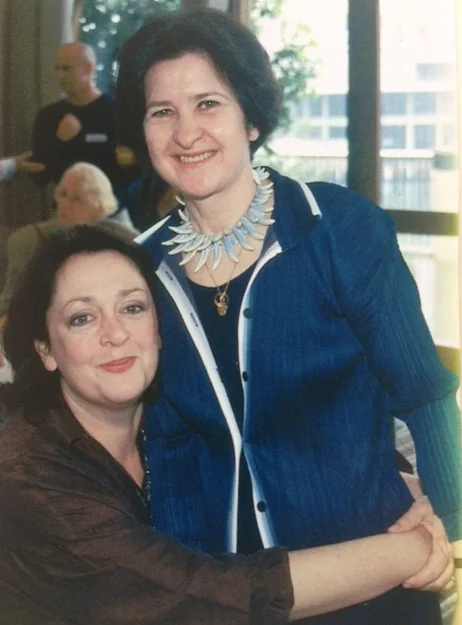
For Mietta O'Donnell: 'All around her was orderly and beautiful perfection', by Wendy Harmer - 2001

October 19, 2015

January, 2001, St Mary Star of Sea, West Melbourne, Australia

Wendy’s friend Mietta O’Donnell died in a car accident in Burnie, Tasmania on January 4, 2001. Mietta’s partner Tony Knox was the driver of their car and was in hospital on the day a requiem Mass was held for her at St Mary Star of Sea, West Melbourne. Knox was later charged, and cleared, of negligence in the collision in which local man Glen Harman also lost his life.

I’m speaking on behalf of Mietta’s family today, and in accordance with their wishes I’m not going to speak about the professional milestones in her career, because I’m sure that we’ll be reading about those for years as people come to understand and unravel her remarkable legacy.

Instead I’d like to offer a personal memoir about the woman I knew and loved dearly and then I’d like to talk about the privilege I enjoyed in having Tony and Mietta as my friends for the past 15 years or so.

Over the last few days I’ve read various newspaper articles about Mietta and often I’ve found it difficult to reconcile the woman I’m reading about and the woman I knew.

A “Queen of Cuisine”, a “Grand Dame of Dining”, a “Cultural Figure”, an “Ambassador for Melbourne”… of course she was all these things…

But more than that, quite simply, she really was the most charming, warm, gentle and loving person you could ever wish to meet.

I have read that Mietta patrolled her domain in the upstairs dining room in expensive gowns, with a personal style variously described as “aloof”, “austere” or even “forbidding”, but for those of us who watched her night, after night, we came to understand that what we were seeing in Mietta was actually pure concentration in the pursuit of absolute perfection.

And night, after night, after night, year, after year that’s exactly what she achieved.

All around her was orderly and beautiful perfection.

Mietta had an eye for detail which was extraordinary.

It was almost like she had X-ray vision or extra sensory perception. She intuitively knew if the slightest thing was out of place.

Every evening she would walk through the room setting the stage … straightening a napkin here, removing a speck of dust from a glass there, adjusting a flower, until it was “just so” and then the performance would begin…

The lamps would be turned on, the lights dimmed, music would swirl through the room and as the first diner arrived, all the staff would strike up asymphony for the senses which was sustained until the last person departed.

No wonder Mietta understood the artistic temperament so well and surrounded herself withactors and musicians.

She, herself, was a maestro.

And in that way that all great artists have, she lived each evening through the eyes of every member of her audience. Her aim was that every person who walked through the door should have a sublime experience.

And if you think about it, why would Mietta want to dedicate her life to offering such an experience to people she had never met and may never meet again?

Certainly not for personal aggrandisement, but because, I think, Mietta understood that to experience beauty and perfection has the ability to uplift the human spirit. To feed the soul.

If we understand that the soul is nurtured by good food and music, wonderful conversation with genuine friends and memories which touch the heart, then Mietta was a truly soulful person.

And when Mietta’s was alive with opera upstairs, jazz and cabaret downstairs and poetry in the bar … And all around her was vibrant and humming with creative energy … Mietta’s soul sang.

As she says in her lovely book “Mietta’s Italian Family Recipes”, it was her Italian grandparents who were her inspiration .

She writes: ”They gave me a glimpse of the sort of pleasure that can be given and gotten through true hospitality - when you give of yourself, of what you enjoy and what you like to surround yourself with. If that is, as it was in my grandparents case, art and music, fine food and wine, gardens and animals and family, it’s not a bad life.”

In the past few days I’ve had many conversations with friends about Mietta and, invariably, they remember some great kindness she showed .

Perhaps it was a welcome home dinner or a birthday lunch, a farewell supper. Often I would get a phone call: “I think so and so needs cheering up so I’m having a dinner, can you come?”

And always you knew, if you were lucky enough to be given such a treat, you would walk in the room to find exactly the people you wanted to see … even if you had been away from town a long time. Just like today.

Except that today there is the profound sadness that Tony isn’t here because, always of course, always when you saw Mietta, there would be Tony.

What a remarkable double act, what an inspirational love story.

If Mietta was the maestro then Tony was the architect who built the stage on which she performed.

Tony and Mietta. Mietta and Tony. You always spoke about them as if they were the one person. It was hard to tell where one finished and the other began.

They moved as one. They were together 24 hours a day for 30 years and still fascinated by each other, still passionate about each other.

Of course they didn’t always agree!

At the table it would be an exasperated, “Oh come on Mietta, get real!” or a firm, “That’s enough Tony” and then in the next breath: “You know Mietta’s absolutely right about this” or “Yes, well ask Tony, he knows everything about that.”

In all the years I knew them I never saw them show any great physical affection … No extravagant kisses or cuddles.

But did you ever watch them eat?

It was such a truly sensuous experience that sometimes you felt the children should be sent from the room.

You felt you were intruding as they spoonfed each other, passed tidbits back and forth and nodded and murmured in their own private language.

In fact, after staying with them once, I wanted to buy them a gift and I went though all the options - music, books, wine - but ended up buying an antique silver set of salt and pepper shakers in the shape of two little wrens sitting on a branch with their heads together.

And I’m reminded here of a story …

It was the only time I ever got to cook for Mietta and Tony.

They visited my husband Brendan and me in Sydney and of course I was in a great state about what I could serve for lunch!

I decided on chicken ravioli and while I slaved over the sauce I sent Brendan into town to buy the handmade gourmet ravioli from a particular little shop.

I served up the dish and it wasn’t until we cut into the pasta that we realised that the chicken had gone off, it was totally rancid and vile and it was only then that Brendan realised that’s what must have been in that package he’d found under the front seat of the car after he’d come from a few hours surfing.

What a disaster! We were mortified!

However it so happened that also on the table was a pile of our tomatoes, still warm from the garden which Mietta and Tony ate for lunch with a bit of bread and salt and declared it “just what they felt like and one of the best meals they ever had”.

To this day I believe them because it makes me feel better, but also because they could have been telling the truth.

Tony and Mietta were two of the most unpretentious people you’d ever meet. Wherever there was fellowship and conversation, that’s where they were happy to be - whether it was in a five star French restaurant or fish and chips on the end of a pier.

And as friends, they were always thinking about how to bring joy into your life, how to honour the friendship.

They travelled to Sydney on Tony’s motorbike when our son was born and walked into the room when he was only hours old with a bottle of champagne. Tony brought his camera and took photographs of him breastfeeding because they thought it would be good to record his first experience of fine dining.

What an adventure they had … what amazing things they achieved … and what plans they had for the future!

Their partnership will always be remembered for it’s physical and intellectual energy; commitment to community and dedication to social change. There was certainly nothing “relaxed and comfortable” about Tony and Mietta.

A friend made a wonderful observation when he said that usually social change is affected by a movement, but in this case, in the cultural life of Melbourne, and indeed Australia, change was affected by just two people -Tony and Mietta.

That’s how dynamic and creative they were as a couple. That’s how powerful and transforming true love can be.

And while they were all those things to the outside world - dynamic, formidable, energetic and forceful - to all those who loved them and were loved by them they were just a blessing.

So today we close one chapter on a great love story. I know it will inspire people for years and, of course, will never be over while Tony is alive.

And it’s time to say farewell to Mietta.

I know that forever in my mind I will be walking through a door and see her there, her hands gently clasped, a perfect size eight in her little silk suit from Milan, her hair “just so” and her little golden Cretan bee earrings and pendant shining in the soft light of the lamps … and that enigmatic smile.

A bit like the Mona Lisa now I think about it.

And I’m also thinking that at last they have in heaven someone who truly understands seating arrangements. What an asset she will be.

Goodbye dear friend. I don’t expect to see your like ever pass this way again.

We will all miss you so much.

We do love you so.
Enjoyed this speech? Speakola is a labour of love and I’d be very grateful if you would share, tweet or like it. Thank you.

Facebook Twitter Facebook
In PUBLIC FIGURE A Tags WENDY HARMER, MIETTA ODONNELL, MELBOURNE, RESTAURANTEUR, FOOD, COMEDY
Comment

For Jack Benny: 'He was stingy to the end. He only gave us eighty years', by Bob Hope - 1975

October 12, 2015

January 1975, Hillside Memorial Park, California, USA

When Benny Kubelsky was born, who in their wildest dreams would imagine that eighty years later, at the event of his passing, every television program, every radio show would stop, and that every magazine and newspaper would headline it on their front pages.

To millions of people who had never met him, who had only seen him or heard him would feel the pain of a very personal loss. For a man who is the undisputed master of comedy timing, you'd have to say this was only time when Jack Benny's timing was all wrong. He left us much too soon. He was stingy to the end. He only gave us eighty years and it wasn't enough.

Jack Benny long ago ceased to be merely a personality and became an institution. If there's a Mount Rushmore for humanitarians, the first stone face might easily resemble him, and if stone could talk it would say, 'Well.'

Perhaps what made Jack Benny such a great laugh maker was that he himself loved to laugh. He was the greatest audience a comedian could ever want. George Burns will attest to that. And of all of use would play jokes on him just to bring him up and hear him laugh. I know it might sound a little corny but there'll be times from now on when the lightening will crackle with a special type of sound or thunder will peal with a special roar, and I'll think to myself that # Fields or Fred Allen must have told Jack a joke.

In his beautiful full lifetime Jack succeeded gloriously. Jack found a great joy in the joy he brought to others. I cannot say it better than these words, his life was gentle and the elements so mixed in him that nature might stand up and say to all the world 'this was a man.'

God keep him, and enjoy him. We did for eighty years.


Source: https://www.youtube.com/watch?v=qNRptoRrpB...

Enjoyed this speech? Speakola is a labour of love and I’d be very grateful if you would share, tweet or like it. Thank you.

Facebook Twitter Facebook
In PUBLIC FIGURE A Tags BOB HOPE, JACK BENNY, COMEDY, TELEVISION, HOLLYWOOD
Comment

for Jack Benny: 'Without Jack Benny, the show will go on, but there will be a big hole in it', by George Burns

October 12, 2015

16 January, 1975, Hollywood, California, USA

George Burns was too upset to complete this eulogy at the funeral. He said it again to a reporter the next day. There is no video or audio of the speech.

Good, honest jokes live forever. Look at Jack Benny. Nobody knew how great he was until he passed away. I knew him for 55 years but even I didn't know how great he was until he was gone.

There was something magic about Jack. Everything he created—the old Maxwell car, the 'stingy' jokes, 'Jell-o Again,'—all that lived for all of us as though it were real.

The pauses. The look. The nerve he had when he used to go next door to the Colmans to borrow a cup of sugar.

Even if he told a bad joke, he made it work for him. I remember one show when he told a bad joke and he said it couldn't be a bad joke because a great writer, Norman Krasna, had written it. So he told it again. And the next week he repeated the whole thing and, within a few weeks, he had a whole thing going about that bad joke.

When Jack Benny got on the stage, he owned it—and he did. When I met him, he was already a great monologist. His opening joke was this. He'd come out holding his violin and he'd just stand there. A long pause. Already he was a master of the long pause. Then he'd say to the orchestra leader, 'How is the show up to now?' And the orchestra leader would say, 'Fine.' 'Well,' Jack would say, 'I'll stop that.'

He was a gentle man. And his humor was as gentle as he was.

He used to use his violin the way I use this cigar—as a prop, as a kind of comedian's security blanket. But he tried to get rid of it. He wanted to be able to stand up on the stage without it. I remember the first time he tried to go on without it. It was in Schenectady, New York. He told two jokes. Nobody laughed. So he quick borrowed a violin from the orchestra and he was all right after that.

He never said a mean thing. Jack's idea of being mean was this. Once we saw a certain comic work. I asked him what he thought of the comic. Jack said, 'Well, he's great but I just can't laugh at him.'

Without Jack Benny, the show will go on, but there will be a big hole in it. It just won't be as good. There's one good thing, though—Jack Benny will stay alive as long as any of us live.


Source: http://tralfaz.blogspot.com/2013/10/george...

Enjoyed this speech? Speakola is a labour of love and I’d be very grateful if you would share, tweet or like it. Thank you.

Facebook Twitter Facebook
In PUBLIC FIGURE A Tags GEORGE BURNS, JACK BENNY, TELEVISION, COMEDY
Comment

For Beau: 'I'll always love a dog named Beau', by Jimmy Stewart - 1981

September 30, 2015

27 July, 1981, New York, USA

He never came to me when I would call

Unless I had a tennis ball,

Or he felt like it,

But mostly he didn't come at all.

When he was young

He never learned to heel

Or sit or stay,

He did things his way.

Discipline was not his bag

But when you were with him things sure didn't drag.

He'd dig up a rosebush just to spite me,

And when I'd grab him, he'd turn and bite me.

He bit lots of folks from day to day,

The delivery boy was his favorite prey.

The gas man wouldn't read our meter,

He said we owned a real man-eater.

He set the house on fire

But the story's long to tell.

Suffice it to say that he survived

And the house survived as well.

On the evening walks, and Gloria took him,

He was always first out the door.

The Old One and I brought up the rear

Because our bones were sore.

He would charge up the street with Mom hanging on,

What a beautiful pair they were!

And if it was still light and the tourists were out,

They created a bit of a stir.

But every once in a while, he would stop in his tracks

And with a frown on his face look around.

It was just to make sure that the Old One was there

And would follow him where he was bound.

We are early-to-bedders at our house -- I guess I'm the first to retire.

And as I'd leave the room he'd look at me

And get up from his place by the fire.

He knew where the tennis balls were upstairs,

And I'd give him one for a while.

He would push it under the bed with his nose

And I'd fish it out with a smile.

And before very long He'd tire of the ball

And be asleep in his corner In no time at all.

And there were nights when I'd feel him Climb upon our bed

And lie between us,

And I'd pat his head.

And there were nights when I'd feel this stare

And I'd wake up and he'd be sitting there

And I reach out my hand and stroke his hair.

And sometimes I'd feel him sigh and I think I know the reason why.

He would wake up at night

And he would have this fear

Of the dark, of life, of lots of things,

And he'd be glad to have me near.

And now he's dead.

And there are nights when I think I feel him

Climb upon our bed and lie between us,

And I pat his head.

And there are nights when I think I feel that stare

And I reach out my hand to stroke his hair,

But he's not there.

Oh, how I wish that wasn't so,

I'll always love a dog named Beau.


Source: http://www.mnn.com/family/pets/stories/the...

Enjoyed this speech? Speakola is a labour of love and I’d be very grateful if you would share, tweet or like it. Thank you.

Facebook Twitter Facebook
In PUBLIC FIGURE A Tags JIMMY STEWART, DOG, PET, TELEVISION, ACTOR
Comment

For Jim Stynes: 'I love you Jim', by Garry Lyon - 2012

September 2, 2015

22 March, 2012, Channel 9, Melbourne, Australia

Jimmy Stynes was a giant in every sense of the word right from the very first moment I laid eyes on him.

It would be wrong to suggest we were close from Day 1, he was a novelty and for a 16-year-old kid from country Victoria he fulfilled all of my pre-conceived notions of what an Irishman should be - pale, lean and with an accent that was perfect for telling Irish jokes.

Beyond that I didn’t give him too much thought, my mind was captivated by the real footballers at our club, most notably the legendary Melbourne footy club figure Robbie Flower. He was the man I aspire to be.

How did it come to pass then that 27 years down the track, with the greatest respect to Robbie, that the Irish curiosity that I first encountered in the carpark outside of the MCG was to become, and will remain, the person that I judge and measure myself by?

With time and age or some form and degree of maturity comes perspective and I realize that life is more than just football and I now see the irony in that I was to become the leader of the football club and help set a standard for others to follow, all the while it was Jim who was doing the real leading and setting the real standard.

I see that with such clarity now. I didn’t then and it led to doubts about Jimmy.

Why was he not fanatical and obsessed like I was? Why did it appear that football was just a game to him when it was much more to me? Why could he smile an hour after a losing game whereas it took me a whole weekend to get over it?

Why did he not embrace the so-called 'manly elements’ of our game as enthusiastically as the next bloke where drinking beer and attracting girls was a badge of honour, worn as proudly as anything achieved on the playing field? Why could he be as passionate about the welfare of others outside of the club when I was predominantly obsessed with what happened solely within?

Jimmy refused to let the game define who he was. It was just a part of him and it allowed us to marvel at his determination, unwavering self-belief, resilience, strength, skill, endurance and courage.

Why was he so prepared to buck the system and explore an alternative path when the rest of us were so aligned to the one that had trod so rigidly for decades? Why did he not shy away from displaying his emotions where I saw it as a weakness to do so?

Why was he so fervently proud of his Irish heritage when I had barely given mine a second thought? Why was he so sensitive to issues of racial and religious tolerance, ahead of his time, while I was ignorantly part of the problem?

I thought he had it all wrong. What I now know to be true is that those doubts were less about Jim and more about myself, and I say that not self-consciously but with some degree of pride because it means that I’ve truly come to appreciate the man that Jim Stynes was and if that paints me in a lesser light then I’m fine with that because there are few that can compare to him.

Quite simply Jimmy refused to let the game define who he was. It was just a part of him and it allowed us to marvel at his determination, unwavering self-belief, resilience, strength, skill, endurance and courage. But he never let the game compromise what else he had going on in his life.

He showed me that you could be committed but not obsessive, the need to separate the playing field from the field of life, that you can gain satisfaction out of the contest regardless of the result, that you could enjoy the environment and male bonding that footy provided but always maintain a sensitivity to what is right and wrong, that you never get so tunnel visioned that you don’t recognise the needs of others, that you can be both passionate and ruthless in the pursuit of excellence.

He was secure enough to know that displaying vulnerability can be a strength and not a weakness.

So now he’s left us and it doesn’t feel right or fair in any way. I was honoured to have been able to spend some intimate time with him in the past few months and I’ll never forget those moments. We laughed more than we cried which as I’ve written about was consistent throughout our relationship.

I took a photo on one of the last occasions I sat with him and had the chance to say goodbye. It was deeply personal and highly symbolic of our 27-year friendship and it will serve as a constant reminder of him, what he stood for and how profound an impact he had on me, of just how right he got his 45 years.

The photo will sit on my wall at home and every time I look at it, I will think of the man that he was and the one I can only ever hope to be.

I love you Jim.

Source: https://www.youtube.com/watch?v=WNAn1b4NN0...

Enjoyed this speech? Speakola is a labour of love and I’d be very grateful if you would share, tweet or like it. Thank you.

Facebook Twitter Facebook
In PUBLIC FIGURE A Tags GARRY LYON, JIM STYNES, AFL, AUSTRALIA, CANCER, FRIEND, TEAMMATE, TELEVISION
Comment

For Cilla Black: 'Ta-ra girl, I'll see you on life's highway', by Paul O'Grady - 2015

August 23, 2015

20 August, 2015, St. Mary's Church, Woolton, Liverpool, UK

I’ve been asked to speak about Cilla on numerous occasions but I never thought I’d be doing it now, at a time like this because I firmly believed that Cilla was indestructible, and I’d most definitely go first, the state of my heart – we discussed my funeral at length, and she had a major role in it that involved a mantilla and lilies so I’m going to have to rethink that aren’t I?

I’ve got fabulous Cilla stories ‘cos we had such a great time together – whenever we went on holiday together, or even if we just went for a simple meal – something always happened – usually to me.

I first met her on Parkinson’s chat show, and we just clicked, we were soul mates. After Bobby died, I went round for dinner to the house, and sat up to 5 in the morning, and we decided to go and stay with Peter Brown in New York, which we did. I introduced her to the finer things of New York – like bars, burlesque shows and nightclubs with such a reputation that taxi drivers were always reticen  to drop us off.

But I always used to say to her, give us your jewellery Cilla, so I’d have the ring, the necklace in my pockets, permanently with my hand in my pockets, terrified in case I lost it.

But she loved life, if you said to me, what do you think about Cilla?’ One word, ‘laughter’. Because that’s all we did. We got up to a lot of trouble but we laughed while we were doing it.

I remember her losing her keys and getting wedged in the window in Barbados, with me holding her ankles.  And when the neighbours came out, she shouted, ‘surprise, surprise!’

I remember the time I broke my nose in her Jacuzzi in Barbados. Pat will tell you about this. Pat come rushing up the stairs, she couldn’t find any ice, she had the bag of frozen sprouts and she smacked it on my face. I think she broke it even more. And Cilla had been sunbathing, she had no makeup on, and her hair was on end, and we all rushed out into the street, and I don’t know where she got it from, she had a denim skirt on, and a sort of terrible black nylon slip. Hat was in the bathing suit, a sort of chiffon ... she looked like Tessie [?]. And I had the frozen sprouts and a toilet roll. And we all rushed off to the hospital. And it was a packed waiting room, and you can imagine the fuss as we got in, and Cilla had taken the water tablets ... and she had a bad cold as well, and so she was in and out of the toilets, and coming out and going [sniffs and wipes nose] We looked like something out of Shameless.

But these are the memories I have of her. I loved this lady, you have no idea. She was one of my closest friends, I absolutely adored her. And even if I hadn’t spoken to her for some time, we always used to pick up where we left off, whenever we got together. And I always found that quite remarkable.

One of things she always used to say to me was, 'Don't tell our Robert.' She said that quite a lot. She also said, 'Don't tell Pat and don't tell Peter Brown,’ so I’m afraid you three, that’s a promise I’m going to fulfil, and I’m not going to sing like a canary today.

She said after Bobby died that I taught her to laugh again and I never knew that until I read it in the papers. But on the other hand she said, 'He sent a guardian angel, only this one had hooves, horn and a tail.'

It’s so good that she’s come home today, because as Robbie said, she was a true girl of Lond- , [horrified] of Liverpool! Because Scottie Rd was never too far away. Neither was Paddy’s Markets. I don’t forget the humiliation of being # on Madison Avenue in New York, and Cilla haggling over the price of the coats. Which I desperately wanted. I don’t know why, it was a sheepskin, full length, and I looked like some geriatric dressed up at an ABBA convention, but Cilla said, 'If you want it Paul, we’ll get it,' and she said to the guy, ‘there’s a mark on this,’ – ‘yeah there’s a big mark on that’, he said, ‘well we’ve got one in our ... ‘

She said, ‘No we’re going home tonight. And then she said the classic line, ‘what will you do if it red ease?]’

She was just - I don’t know - she taught me lots of things. Mainly, never to turn left, no right on a plane! She was a great friend; She was full of fun. She was a wonderful woman, She was talented. She was so witty. She adored her family. She loved her sons, She loved her grandchildren. She was so proud that she came from Scotty Road.; and I’m just so grateful that she allowed me into her whirlwind of a life. And we spent nearly two decades together hellbent, [to priest] if you’ll pardon the expression, through London, New York, Barbados, Spain and the Maldives, and she was just, she was such a great friend, andso I don’t know what I’m going to do really. The light went off a couple of weeks ago and it hasn’t come back on yet. And then – I’m just going to miss her so much, really.

So Cilla, I’d just like to say, thanks for all the fun, thanks for all the laughs, and as I always used to say to yer, ‘Ta-ra girl, I’ll see you on life’s highway.’


Thank you.


Enjoyed this speech? Speakola is a labour of love and I’d be very grateful if you would share, tweet or like it. Thank you.

Facebook Twitter Facebook
In PUBLIC FIGURE A Tags TELEVISION, PAUL O'GRADY, CILLA BLACK, ENGLISH, UK
1 Comment
Robert Ingersoll

Robert Ingersoll

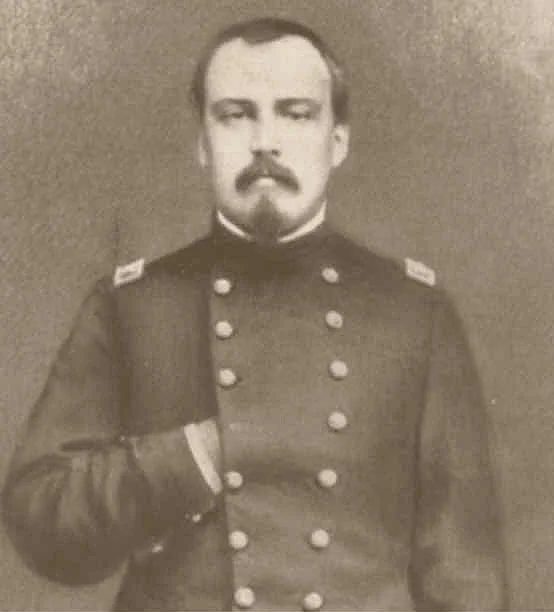
For Ebon C Ingersoll: 'I am going to do that which the dead oft promised he would do for me', by brother Robert C Ingersoll - 1879

August 13, 2015

3 June 1879, Washington D.C, USA

I am going to do that which the dead oft promised he would do for me. 
The loved and loving brother, husband, father, friend, died where manhood’s morning almost touches noon, and while the shadows still were falling toward the west.  
He had not passed on life’s highway the stone that marks the highest point, but, being weary for a moment, lay down by the wayside, and, using his burden for a pillow, fell into that dreamless sleep that kisses down his eyelids still. While yet in love with life and raptured with the world, he passed to silence and pathetic dust.  
Yet, after all, it may be best, just in the happiest, sunniest hour of all the voyage, while eager winds are kissing every sail, to dash against the unseen rock, and in an instant hear the billows roar above a sunken ship. For, whether in mid-sea or ’mong the breakers of the farther shore, a wreck at last must mark the end of each and all. And every life, no matter if its every hour is rich with love and every moment jeweled with a joy, will, at its close, become a tragedy as sad and deep and dark as can be woven of the warp and woof of mystery and death.  
This brave and tender man in every storm of life was oak and rock, but in the sunshine he was vine and flower. He was the friend of all heroic souls. He climbed the heights and left all superstitions far below, while on his forehead fell the golden dawning of the grander day.  
He loved the beautiful, and was with color, form, and music touched to tears. He sided with the weak, and with a willing hand gave alms; with loyal heart and with purest hands he faithfully discharged all public trusts. 
He was a worshiper of liberty, a friend of the oppressed. A thousand times I have heard him quote these words: “For justice all place a temple, and all seasons, summer.” He believed that happiness was the only good, reason the only torch, justice the only worship, humanity the only religion, and love the only priest. He added to the sum of human joy; and were every one to whom he did some loving service to bring a blossom to his grave, he would sleep to-night beneath a wilderness of flowers.  
Life is a narrow vale between the cold and barren peaks of two eternities. We strive in vain to look beyond the heights. We cry aloud, and the only answer is the echo of our wailing cry. From the voiceless lips of the unreplying dead there comes no word; but in the night of death hope sees a star, and listening love can hear the rustle of a wing.  
He who sleeps here, when dying, mistaking the approach of death for the return of health, whispered with his last breath: “I am better now.” Let us believe, in spite of doubts and dogmas, and tears and fears, that these dear words are true of all the countless dead.  
And now to you who have been chosen, from among the many men he loved, to do the last sad office for the dead, we give his sacred dust. Speech can not contain our love. There was, there is, no greater, stronger, manlier man


Source: http://www.bartleby.com/268/10/9.html

Enjoyed this speech? Speakola is a labour of love and I’d be very grateful if you would share, tweet or like it. Thank you.

Facebook Twitter Facebook
In PUBLIC FIGURE A Tags AGNOSTIC, CIVIL WAR, USA, BROTHER, LAWYER
Comment

John Howard: 'As the sun sets over this beautiful island we gather here in sorrow', Bali Bombings Memorial Service - 2002

August 6, 2015

17 October, 2002, Australian Consulate, Bali, Indonesia

There is no available audio or video of this speech.

As the sun sets over this beautiful island we gather here in sorrow, in anguish, in disbelief and in pain.

There are no words that I can summon to salve in anyway the hurt and the suffering and the pain being felt by so many of my fellow countrymen and women and by so many of the citizens of other nations.

I can say though to my Australian countrymen and women that there are 19 and a half million Australians who are trying however inadequately to feel for you and to support you at this time of unbearable grief and pain.

The wanton, cruel and barbaric character of what occurred last Saturday night has shocked our nation to the core and now the anguish that so many are feeling, the painful process of identification which has prolonged that agony for so many, the sense of bewilderment and disbelief that so many young lives with so much before them should have been taken away in such blind fury, hatred and violence.

I can on behalf of all the people of Australia declare to you that we will do everything in our power to bring to justice those who were responsible for this foul deed.

We will work with our friends in Indonesia to do that and we will work to others to achieve an outcome of justice.

Can I say to our Balinese friends, the lovely people of Bali, who have been befriended over the decades, by the generations of so many Australians who have come here, we grieve for you, we feel for you, we thank you from the bottom of our hearts for the love and support you have extended to our fellow countrymen and women over these past days.

As the chaplain said there will be scars left on people for the rest of their life, both physical and emotional.

Our nation has been changed by this event.

Perhaps we may not be so carefree as we have been in the past but we will never lose our openness, our sense of adventure.

The young of Australia will always travel, they will always seek fun in different parts, they will always reach out to the young of other nations, they will always be open, fun-loving and decent men and women.

So as we grapple inadequately and in despair to try and comprehend what has happened, let us gather ourselves together, let us wrap our arms not only around our fellow Australians but our arms around the people of Indonesia, of Bali, let us wrap our arms around the people of other nations and the friends and relatives of the nationals of other countries who died in this horrible event.

It will take a long time for these foul deeds to be seen in any kind of context, they can never be understood, they can never be excused.

Australia has been affected very deeply but the Australian spirit has not been broken, the spirit remains strong and free and open and tolerant.

I know that is what all of those who lost their lives would have wanted and I know that is what those who grieve for them want.

Source: http://www.smh.com.au/articles/2002/10/18/...

Enjoyed this speech? Speakola is a labour of love and I’d be very grateful if you would share, tweet or like it. Thank you.

Facebook Twitter Facebook
In PUBLIC FIGURE A Tags MEMORIAL, TERRORISM, JOHN HOWARD, PRIME MINISTER
Comment

For Ronald Reagan: 'We have lost a great president, a great American, and a great man', Margaret Thatcher - 2004

May 13, 2015

11 June 2004, Washington National Cathedral, Washington DC, USA

By video link

We have lost a great president, a great American, and a great man. And I have lost a dear friend.

In his lifetime Ronald Reagan was such a cheerful and invigorating presence that it was easy to forget what daunting historic tasks he set himself. He sought to mend America's wounded spirit, to restore the strength of the free world, and to free the slaves of communism.

These were causes hard to accomplish and heavy with risk.

Yet they were pursued with almost a lightness of spirit. For Ronald Reagan also embodied another great cause - what Arnold Bennett once called 'the great cause of cheering us all up'.

His politics had a freshness and optimism that won converts from every class and every nation - and ultimately from the very heart of the evil empire.

Yet his humour often had a purpose beyond humour. In the terrible hours after the attempt on his life, his easy jokes gave reassurance to an anxious world.

They were evidence that in the aftermath of terror and in the midst of hysteria, one great heart at least remained sane and jocular. They were truly grace under pressure.

And perhaps they signified grace of a deeper kind. Ronnie himself certainly believed that he had been given back his life for a purpose.

As he told a priest after his recovery 'Whatever time I've got left now belongs to the Big Fella Upstairs'.

And surely it is hard to deny that Ronald Reagan's life was providential, when we look at what he achieved in the eight years that followed.

Others prophesied the decline of the West; he inspired America and its allies with renewed faith in their mission of freedom.

Others saw only limits to growth; he transformed a stagnant economy into an engine of opportunity.

Others hoped, at best, for an uneasy cohabitation with the Soviet Union; he won the Cold War - not only without firing a shot, but also by inviting enemies out of their fortress and turning them into friends.

When his enemies tested American resolve, they soon discovered that his resolve was firm and unyielding

I cannot imagine how any diplomat, or any dramatist, could improve on his words to Mikhail Gorbachev at the Geneva summit: 'Let me tell you why it is we distrust you.'

Those words are candid and tough and they cannot have been easy to hear. But they are also a clear invitation to a new beginning and a new relationship that would be rooted in trust.

We live today in the world that Ronald Reagan began to reshape with those words. It is a very different world with different challenges and new dangers.

All in all, however, it is one of greater freedom and prosperity, one more hopeful than the world he inherited on becoming president.

As prime minister, I worked closely with Ronald Reagan for eight of the most important years of all our lives. We talked regularly both before and after his presidency. And I have had time and cause to reflect on what made him a great president.

Ronald Reagan knew his own mind. He had firm principles - and, I believe, right ones. He expounded them clearly, he acted upon them decisively.

When the world threw problems at the White House, he was not baffled, or disorientated, or overwhelmed. He knew almost instinctively what to do.

When his aides were preparing option papers for his decision, they were able to cut out entire rafts of proposals that they knew 'the Old Man' would never wear.

When his allies came under Soviet or domestic pressure, they could look confidently to Washington for firm leadership.

And when his enemies tested American resolve, they soon discovered that his resolve was firm and unyielding.

Yet his ideas, though clear, were never simplistic. He saw the many sides of truth.

Yes, he warned that the Soviet Union had an insatiable drive for military power and territorial expansion; but he also sensed it was being eaten away by systemic failures impossible to reform.

Yes, he did not shrink from denouncing Moscow's 'evil empire'. But he realised that a man of goodwill might nonetheless emerge from within its dark corridors.

So the President resisted Soviet expansion and pressed down on Soviet weakness at every point until the day came when communism began to collapse beneath the combined weight of these pressures and its own failures.

And when a man of goodwill did emerge from the ruins, President Reagan stepped forward to shake his hand and to offer sincere cooperation.

Nothing was more typical of Ronald Reagan than that large-hearted magnanimity - and nothing was more American.

Therein lies perhaps the final explanation of his achievements.

Ronald Reagan carried the American people with him in his great endeavours because there was perfect sympathy between them. He and they loved America and what it stands for - freedom and opportunity for ordinary people.

As an actor in Hollywood's golden age, he helped to make the American dream live for millions all over the globe. His own life was a fulfilment of that dream.

He never succumbed to the embarrassment some people feel about an honest expression of love of country.

He was able to say 'God Bless America' with equal fervour in public and in private. And so he was able to call confidently upon his fellow-countrymen to make sacrifices for America - and to make sacrifices for those who looked to America for hope and rescue.

With the lever of American patriotism, he lifted up the world.

And so today the world - in Prague, in Budapest, in Warsaw, in Sofia, in Bucharest, in Kiev and in Moscow itself - the world mourns the passing of the Great Liberator and echoes his prayer 'God Bless America'.

Ronald Reagan's life was rich not only in public achievement, but also in private happiness.

Indeed, his public achievements were rooted in his private happiness. The great turning point of his life was his meeting and marriage with Nancy.

On that we have the plain testimony of a loving and grateful husband: 'Nancy came along and saved my soul.' We share her grief today. But we also share her pride - and the grief and pride of Ronnie's children.

For the final years of his life, Ronnie's mind was clouded by illness. That cloud has now lifted.

He is himself again - more himself than at any time on this earth. For we may be sure that the Big Fella Upstairs never forgets those who remember Him.

And as the last journey of this faithful pilgrim took him beyond the sunset, and as heaven's morning broke, I like to think - in the words of Bunyan - that 'all the trumpets sounded on the other side'.

We here still move in twilight. But we have one beacon to guide us that Ronald Reagan never had.

We have his example. Let us give thanks today for a life that achieved so much for all of God's children.

Enjoyed this speech? Speakola is a labour of love and I’d be very grateful if you would share, tweet or like it. Thank you.

Facebook Twitter Facebook
In PUBLIC FIGURE A Tags PRESIDENTS, USA, POLITICIAN
Comment

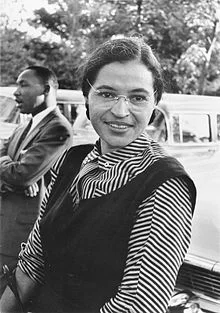
For Rosa Parks: 'In that moment you reclaimed your humanity ', by Oprah Winfrey - 2005

November 3, 2005

31 October 2005, Metropolitan AME Church, Washington DC, USA

Reverend Braxton, family, friends, admirers, and this amazing choir:

I feel it an honor to be here to come and say a final goodbye.

I grew up in the South, and Rosa Parks was a hero to me long before I recognized and understood the power and impact that her life embodied. I remember my father telling me about this coloured woman who had refused to give up her seat. And in my child's mind, I thought, 'She must be really big.'I thought she must be at least a hundred feet tall. I imagined her being stalwart and strong and carrying a shield to hold back the white folks.

And then I grew up and had the esteemed honor of meeting her. And wasn't that a surprise. Here was this petite, almost delicate lady who was the personification of grace and goodness. And I thanked her then. I said, 'Thank you,' for myself and for every coloured girl, every coloured boy, who didn't have heroes who were celebrated.

I thanked her then.

And after our first meeting I realized that God uses good people to do great things. And I'm here today to say a final thank you, Sister Rosa, for being a great woman who used your life to serve, to serve us all. That day that you refused to give up your seat on the bus, you, Sister Rosa, changed the trajectory of my life and the lives of so many other people in the world. I would not be standing here today nor standing where I stand every day had she not chosen to sit down. I know that. I know that. I know that. I know that, and I honor that. Had she not chosen to say we shall not - we shall not be moved.

So I thank you again, Sister Rosa, for not only confronting the one white man whose seat you took, not only confronting the bus driver, not only for confronting the law, but for confronting history, a history that for 400 years said that you were not even worthy of a glance, certainly no consideration. I thank you for not moving.

And in that moment when you resolved to stay in that seat, you reclaimed your humanity and you gave us all back a piece of our own. I thank you for that. I thank you for acting without concern. I often thought about what that took, knowing the climate of the times and what could have happened to you, what it took to stay seated. You acted without concern for yourself and made life better for us all. We shall not be moved.

I marvel at your will.

I celebrate your strength to this day.

And I am forever grateful, Sister Rosa, for your courage, your conviction.

I owe you -- to succeed.

I will not be moved.

Source: http://www.americanrhetoric.com/speeches/o...

Enjoyed this speech? Speakola is a labour of love and I’d be very grateful if you would share, tweet or like it. Thank you.

Facebook Twitter Facebook
In PUBLIC FIGURE A Tags FAMOUS, ACTIVIST
Comment
← Newer Posts

See my film!

Limited Australian Season

March 2025

Details and ticket bookings at

angeandtheboss.com

Support Speakola

Hi speech lovers,
With costs of hosting website and podcast, this labour of love has become a difficult financial proposition in recent times. If you can afford a donation, it will help Speakola survive and prosper.

Best wishes,
Tony Wilson.

Become a Patron!

Learn more about supporting Speakola.

Featured political

Featured
Jon Stewart: "They responded in five seconds", 9-11 first responders, Address to Congress - 2019
Jacinda Ardern: 'They were New Zealanders. They are us', Address to Parliament following Christchurch massacre - 2019
Dolores Ibárruri: "¡No Pasarán!, They shall not pass!', Defense of 2nd Spanish Republic - 1936
Jimmy Reid: 'A rat race is for rats. We're not rats', Rectorial address, Glasgow University - 1972

Featured eulogies

Featured
For Geoffrey Tozer: 'I have to say we all let him down', by Paul Keating - 2009
for James Baldwin: 'Jimmy. You crowned us', by Toni Morrison - 1988
for Michael Gordon: '13 days ago my Dad’s big, beautiful, generous heart suddenly stopped beating', by Scott and Sarah Gordon - 2018

Featured commencement

Featured
Tara Westover: 'Your avatar isn't real, it isn't terribly far from a lie', The Un-Instagrammable Self, Northeastern University - 2019
Tim Minchin: 'Being an artist requires massive reserves of self-belief', WAAPA - 2019
Atul Gawande: 'Curiosity and What Equality Really Means', UCLA Medical School - 2018
Abby Wambach: 'We are the wolves', Barnard College - 2018
Eric Idle: 'America is 300 million people all walking in the same direction, singing 'I Did It My Way'', Whitman College - 2013
Shirley Chisholm: ;America has gone to sleep', Greenfield High School - 1983

Featured sport

Featured
Joe Marler: 'Get back on the horse', Harlequins v Bath pre game interview - 2019
Ray Lewis : 'The greatest pain of my life is the reason I'm standing here today', 52 Cards -
Mel Jones: 'If she was Bradman on the field, she was definitely Keith Miller off the field', Betty Wilson's induction into Australian Cricket Hall of Fame - 2017
Jeff Thomson: 'It’s all those people that help you as kids', Hall of Fame - 2016

Fresh Tweets


Featured weddings

Featured
Dan Angelucci: 'The Best (Best Man) Speech of all time', for Don and Katherine - 2019
Hallerman Sisters: 'Oh sister now we have to let you gooooo!' for Caitlin & Johnny - 2015
Korey Soderman (via Kyle): 'All our lives I have used my voice to help Korey express his thoughts, so today, like always, I will be my brother’s voice' for Kyle and Jess - 2014

Featured Arts

Featured
Bruce Springsteen: 'They're keepers of some of the most beautiful sonic architecture in rock and roll', Induction U2 into Rock Hall of Fame - 2005
Olivia Colman: 'Done that bit. I think I have done that bit', BAFTA acceptance, Leading Actress - 2019
Axel Scheffler: 'The book wasn't called 'No Room on the Broom!', Illustrator of the Year, British Book Awards - 2018
Tina Fey: 'Only in comedy is an obedient white girl from the suburbs a diversity candidate', Kennedy Center Mark Twain Award -  2010
Tina Fey: 'Only in comedy is an obedient white girl from the suburbs a diversity candidate', Kennedy Center Mark Twain Award - 2010

Featured Debates

Featured
Sacha Baron Cohen: 'Just think what Goebbels might have done with Facebook', Anti Defamation League Leadership Award - 2019
Greta Thunberg: 'How dare you', UN Climate Action Summit - 2019
Charlie Munger: 'The Psychology of Human Misjudgment', Harvard University - 1995
Lawrence O'Donnell: 'The original sin of this country is that we invaders shot and murdered our way across the land killing every Native American that we could', The Last Word, 'Dakota' - 2016