• Genre
  • About
  • Submissions
  • Donate
  • Search
Menu

Speakola

All Speeches Great and Small
  • Genre
  • About
  • Submissions
  • Donate
  • Search

Eulogies

Some of the most moving and brilliant speeches ever made occur at funerals. Please upload the eulogy for your loved one using the form below.

For Peter Heerey: 'Dad, you’ve had a good life. You’ve had a great life', by Ed Heerey - 2021

May 26, 2021

14 May 2021, St Patrick’s Cathedral, Melbourne, Australia

Speech starts at 8.00

I speak today on behalf of our family: our mother Sally, my brother Tom who joins us by web-stream from Dublin with his wife Jen and their children Emma and Conor, my brother Charlie and his wife Anna and their son Nick, and my wife Mim and our children Sass, Gus and Nevie.

I must admit this is a very difficult task. I have a short time to sum up a long and eventful life.

How do I sum up the life of a man who achieved so much in the law, who loved literature, history and Louis Armstrong, and who only last Christmas was learning new Tik Tok dance routines from his grandchildren?

Dad’s many achievements as a barrister and judge are well-known and well documented, so I won’t focus on them now.

Rather, I want to focus on his greater achievement in life. That achievement was building a rich web of attachments to a wide range of family, friends and colleagues, who I am very glad to see here today.

This achievement became very clear over the last few months, as Dad received a steady stream of visits, phone calls, emails and letters from so many different people from so many parts of his life.

And it occurred to all of us, that this was truly Dad’s greatest passion: cultivating strong connections with the people around him, and nurturing them throughout his life.

As you all know, Dad’s story begins in Hobart, where he grew up with his younger sister Sue. Sue lives in New Zealand and we are very glad to have her and my cousins James and Sarah joining us on the web-stream from Auckland and Hong Kong.

There is no doubt that Dad’s father Francis Xavier Heerey loomed large in his life. Frank Heerey was a veteran of World War One, where he served in Egypt, France and Belgium. After the war, he ran a string of successful pubs around Tasmania, and was elected to the Tasmanian Parliament as a member of the Labor Party.

Dad learned early from his father that true friendship can and should accommodate any difference in opinion. Some of Frank Heerey’s closest friends were his political opponents Leo Doyle and Bill Hodgman, whose sons Brian and Michael became Dad’s own lifelong friends. That provides a lesson for all of us: we must focus on the many things that unite us, rather than the few things that divide us.

Dad was only 25 years old when his father died in 1964. Any time is too soon to lose a father, but aged 25 is sooner than most. There is no doubt that Dad missed his father greatly, and deeply wished that Frank could have known our Mum, and us, his grandsons.

But while Dad carried that regret through his life, he also carried an absolute confidence of his father’s love and support.

Dad only told me a few weeks ago that he was by his father’s side when he died. His father told him “I am proud of you.”

Dad never had reason to doubt his father’s pride and approval.

In our lives, he also made sure that his own sons had no reason to doubt their father’s pride and approval.

Dad moved to Melbourne in 1967 and has lived here ever since. However, he always remained a Tasmanian at heart. Many of his old friends from St Virgil’s College and the University of Tasmania have told us recently how Dad was instrumental in orchestrating regular catch-ups which preserved their friendships over the decades.

And many, many times Dad provided mainlanders with enthusiastic Tasmanian holiday advice, entirely unremunerated by the Tasmanian Tourism Commission.

On moving to Melbourne, Dad gravitated to Hawthorn, where his mother Jean Eileen Brady had grown up near the Church of the Immaculate Conception. In fact, his parents Jean and Frank were married at that Church. Dad used to take us to Mass there when we were young.

He often told the tale that, back in the early 70s, the church once put up a sign which challenged locals to consider “What would you do if Jesus came to Hawthorn?”

One local character wrote the answer: “Move Peter Hudson to centre-half-forward”.

As it turned out, Jesus did not move to Hawthorn in the 1970s, but Dad’s mother Jean did, and she lived not far from us until she passed away in 1976. I remember fondly how she used to add an extra sugar cube to each glass of lemonade when she looked after my brothers and me. We were bouncing off the walls!

Dad threw himself into community life in Hawthorn. Somehow, as a busy barrister with three small children, he found the time to get elected and serve on the Hawthorn City Council, where he made more friends who are here today.

Charlie, Tom and I attended Auburn South Primary School, where our family met a fantastic bunch of local families who became life-long friends, and are also here today.

During that time, Dad was also forging deep ties with his colleagues at the Bar. Many of his contemporaries who started at the Bar with him became his solid friends for life. Very early on, a group of those young barrister friends, and their much better halves, had a Christmas dinner together. They enjoyed it so much they have kept doing it for over 50 years.

As a barrister, Dad was more of a quiet achiever than a loud attention-seeker. However, he was prepared to make a rare exception. Once he was part of a delegation of Australian barristers who travelled to Dublin to meet their counterparts at the Irish Bar.

At their black-tie dinner, it turned out that one of the Irish barristers was a famous tenor who proceeded to entertain the crowd with song after song. The Australians were completely at a loss at how to respond, until Dad jumped up, stood on a chair and recited from memory the whole of Banjo Patterson’s “The Man from Snowy River”. By all accounts, he brought the house down.

The Bar has a strong tradition of formal and informal mentoring. Dad forever appreciated the guidance and assistance provided to him by his mentor Jim Gobbo, and other leading barristers with whom he worked as junior counsel, like Jeff Sher and Tom Hughes.

As he progressed up the ranks, it became his turn to mentor junior barristers. Dad had a string of readers who started out with him and went on to illustrious careers of their own. He took immense pride as each of them took silk and four of them became judges. Again, we are delighted to have them here today.

Dad’s focus on mentoring junior lawyers continued when he was appointed to the Federal Court. Over 19 years he had a string of associates working with him. Each new associate joined an expanding club of former associates which enjoyed an annual Christmas lunch and other ongoing contact with Dad so that he could keep up with progress in their professional and family lives. Many of them now live in other states or countries, but we are delighted to see so many of them here today.

A new chapter opened up for Dad after he retired from the Federal Court at the mandatory age of 70. He returned to the Bar to work as a mediator and arbitrator, and spent 11 years with a group of younger barristers in Dawson Chambers, and later Castan Chambers, named after his old mate Ron Castan. Throughout that time, Dad was the convenor of a regular Friday morning coffee catch-up, and took great interest in how his younger colleagues were getting on.

Those friends at Castan Chambers kindly hosted a farewell function for him in February this year. As it turned out, it was the last public event he attended. All that week, he was quite unwell and it was touch and go whether he would make it at all. In the end, he tapped into some hidden reservoir of energy so that he would not miss the opportunity to spend some quality time with a range of friends from so many different chapters of his life.

His old friend Alex Chernov gave a great speech about their decades together as colleagues and friends at the Bar. Then it was Dad’s turn, and he delivered the last speech of his life. I can’t do justice to it now, but we have a video of the speech skillfully recorded by my brother Charlie on his iPhone – if any of you are interested to see it, please send me an email and I will send you a link.

By that time, Dad had been fighting various types of cancer for several years. He did not want to draw attention to it. On the contrary, he was determined to carry on business as usual, enjoying his regular contacts with old and new friends and colleagues. Somehow, numerous bouts of chemotherapy made no dent at all on his thick head of hair, and he was able to keep doing most of the things he loved right up to late last year.

There is no avoiding the fact that the last four months were difficult for Dad, and for all of us, as his health steadily deteriorated.

But Dad was repaid in spades for all the efforts he made throughout his life, nurturing his wide range of friendships. Day after day, he received visits from friends old and new, travelling from near and far to come and spend time with him. He also received countless calls and emails from those who were unable to travel to Melbourne.

And, thankfully, despite all the challenges of the pandemic and various hotel quarantine debacles, our brother Tom was able to visit from Ireland and spend some significant quality time with Dad and all of us in February and March.

And I would like to pay a special tribute to my mother’s younger sister Jane. We call her Cool Aunt Jane. Back in the day, Jane was a registered nurse. For the best part of three months this year, she put her life in Brisbane on hold and came down here to live with Mum and Dad. She provided priceless care, company and a cheeky sense of humour. Jane: we can never thank you enough.

Only a few weeks ago, I had a brief discussion with Dad which took a sudden profound turn. Indeed, I was running late for a meeting when he decided to raise the biggest question of all: is there a life after this one?

I said to Dad, well, that’s why we make the best of this life. And I held Dad’s hand and said to him: if someone offered me a contract, and that contract guaranteed that I would live 82 years, that I would have children and grandchildren who love me and love each other, and that I would spend the last four months of my life receiving a constant stream of visitors wishing me well – I would sign that contract.

He nodded. And he said: “I’ve had a good life.”

Dad, you’ve had a good life. You’ve had a great life, and you touched the lives of so many others.

On behalf of our family, I thank all of you for the parts that each of you have played in making Dad’s life the life that it was.

A long life, well lived.

Enjoyed this speech? Speakola is a labour of love and I’d be very grateful if you would share, tweet or like it. Thank you.

Facebook Twitter Facebook
In SUBMITTED 4 Tags PETER HEEREY, ED HEEREY, BARRISTER, FATHER, SON, TRANSCRIPT, ST PATRICK'S CATHEDRAL, LAWYER, LEGAL PROFESSION
Comment

For Louis Waller: "A life devoted to justice, kindness, humility", Speech at Shloshim, by Ian Waller - 2019

April 19, 2020


7 November 2019, St Kilda Hebrew Congregation, Melbourne, Australia

Speaking at a dinner in honor of my father in 2000, Justice Michael Kirby then a High Court judge said:

In a life, such as Louis Waller has lived, it is not enough to begin with his academic laurels. To understand him, and the wellsprings of his humanity, it is essential to journey back to Siedlce in Poland.


My father, Peter Louis Waller,

הריני כפרת משכבו פנחס יהודה בן יעקב דב הכהן

was born Pinchas Leib Waligora in Siedlce Poland on 9th February 1935.

His birth was registered by his father the following day, so 10th February became his official birthday.

Like many other cities in Europe, Siedlce (which is situated about 100 km east of Warsaw) had a significant Jewish population. In 1935 Jews constituted some 40% of the city's population of 30,000.

Of course, all that changed forever during the Second World War. By the end of 1942, almost every member of its Jewish population had been murdered in Treblinka.

That was the fate that befell almost all of my father’s Siedlce family.

Somehow, sensing the impending doom, Dad’s parents managed to leave Poland with their 3 year old son in 1938 and made their way by sea to Melbourne.

Dad’s parents had both been raised in orthodox hassidic homes. Indeed, the sandek at Dad’s bris in 1935 (given the honor of holding Dad while he was circumcised) was the Biale Rebbe. There were also strong family connections on my grandmother’s side to the Alexander Rebbe.

Dad’s father had received a cheder and yeshiva education in Siedlce, but at the age of 18 he was conscripted into the Polish army for 4 years, and thereafter became a fervent supporter of the Linke Poale Zion, the left wing Socialist Zionist movement, and the life-style associated with it. So, by the time they arrived in Melbourne in 1938 with Dad then aged 3, my grandparents’ religious observance had diminished.

But my grandparents had decided that their son would have a Jewish education and a Jewish life. They understood that while in Siedlce, yiddishkeit was all-pervasive whatever one’s personal practice, in Melbourne they had to work at being Jewish especially if they wanted to ensure that Dad would remain so.

So, in 1940, aged 5, Dad became a pupil at the St Kilda Hebrew School. And from 1942 (while his father was conscripted, this time as a “friendly alien” in the Sixth Employment Company of the Australian Army) he began walking with his mother every Shabbat morning to St Kilda Synagogue from their rented cottage in Argyle Street. From the age of 9, Dad attended services every Friday evening as well.

After the Second World War my grandfather became a regular congregant here too, and he remained so until he died in 1981.

It is therefore particularly appropriate that this Shloshim service, marking 30 days since my father left this world, is being held here at St Kilda Synagogue.

waller funeral 1.png


* * *

Rabbi Jacob Danglow, who led this Synagogue for more than half a century between 1905 and 1957, had a powerful impact on my grandparents and on Dad.

In a speech he delivered in 1980 on the 100th anniversary of Rabbi Danglow’s birth, Dad said that when Rabbi Danglow stood in the pulpit – this pulpit – delivering his sermons he could, as a child, imagine no other occupant.

This is how Dad described Rabbi Danglow in that speech:

...pre-eminent always...- dark; a sun-tanned face, an iron-grey moustache, black canonicals, relieved a little by the bands of white at his throat, and draped in a silk tallit with blue stripes, a tiny replica of which I and every boy in the synagogue wore in those days...

Although he could imagine no one else occupying the pulpit, as an 8 year old attending Sunday school here, on one occasion Dad was directed to go into the shule ascend the pulpit and read from the Singers Prayer Book until he was told to stop. A microphone was being installed for some occasion and the electrician wanted to test its effectiveness. Dad said:

I mounted the steps with trepidation. The view I had was breathtaking, but I was also seized by a terrible fear. What if Rabbi Danglow should at that moment come through the door and see me? He would surely thunder “Get out!” and banish me forever from the shule.

Dad celebrated his barmitzvah in this shule on 21st February 1948 (parshat Tetzaveh). He remembers standing in the Warden’s box as Rabbi Danglow implored him to conduct himself so as to be a source of pride to his parents, his family and his school.

Exactly 3 months later, on 21st May 1948, David Ben Gurion proclaimed the declaration formally establishing the State of Israel.

Dad recalls attending a special thanksgiving service in this shule after the establishment of Medinat Yisrael.

He said:

Rabbi Danglow delivered a sermon which I do remember — it was on the theme that Israel should be a Jewish state. And when the choir, which throughout the war had sung the National Anthem to end the service, concluded instead with Hatikvah, I knew that the world had changed. Whatever happened, my life and the lives of my contemporaries would thereafter in large degree, be bound up with the life and future of Israel.


Of course, Dad’s words were prescient.

Because it would be in Israel where he would fall in love with Mum in the summer of 1957.

And it would be in Israel where my brother Anthony and sister Elly would make their homes, and together with Michal and Michael would raise their families.

And it would be in Israel where we would celebrate Mum and Dad’s 60th wedding anniversary - returning to the place where it all began, but this time surrounded by their 35 children, grandchildren and great grandchildren.

And it will be in Israel tomorrow that a Shloshim service will take place in Modi’in arranged by Anthony and Elly, at which a siyum mishnayot will be conducted marking the special learning that has been undertaken in Dad’s memory during the last 30 days.
* * *

Dad continued to attend this Synagogue regularly until he sailed to England to commence post graduate study at Oxford in 1956. And in later years Dad continued to attend here on those days when he could drive to shule.

So, he would return to the synagogue of his youth to celebrate the triumph of Purim and to commemorate the tragedy of Tisha B’Av and on other occasions as well.

As a boy, Dad also continued his formal Jewish education at its Hebrew school, attending classes on Shabbat mornings after shule, on Sunday mornings and on Monday, Tuesday and Thursday afternoons.

Dad’s life changed completely when, in March 1950, Reverend Bert Wreschner, then assistant minister of STKHC and Headmaster of the Hebrew School, appointed Dad, then aged 15, as a teacher in the Hebrew School responsible for a class of 10 and 11 year old boys and girls.

Dad said that that experience was “to light the fires of enthusiasm for Jewish learning and for teaching” in his impressionable mind.

In his matriculation exams in 1951 Dad received first class honours in Hebrew.

And in each year of his law degree, Dad continued his studies in Biblical Hebrew and Aramaic at Melbourne University in the Department of Semitic Studies under the renowned Professor Maurice David Goldman.

* * *

While Dad received his formal Jewish education at St Kilda Hebrew School, his informal Jewish education was probably more influential.

Of course, it came primarily from his home, from his mother and from his father who as a young boy had been a Talmudic prodigy and was well versed in Jewish law and practice.

Dad recalls being taught by his father to read Rashi script and, together with him, studying the biblical commentaries on the weekly Torah portion. His father also taught him how to read and write Yiddish which had been Dad’s mamaloshen (his mother tongue) from the time he could speak.

Dad’s informal Jewish education also came from 2 other principal sources.

From the age of 11 until he was 14, Dad attended an informal gathering called Oyneg Shabbos organised and led by a young man named Eli Loebenstein. Meetings were held on Shabbat afternoons in the homes of some of the participants where there were stories, games, songs – as well as cake and lemonade. Eli spoke to them about the forthcoming Jewish holidays, or about an episode in the Torah reading of the week, or about tallis and tefillin, or about all manner of matters Jewish and made sure that every person in the group was regarded as an important participant.

Dad later wrote:

I didn't see Eli often after the end of Oyneg Shabbos. I remember him today with undiminished fondness, and with deep respect. What he did for me, and my Oyneg Shabbos companions, he did because he wanted to ensure that we Melbourne Jewish kids understood how wonderful was our inheritance, and how precious was each Shabbos we enjoyed.

The second major informal influence on Dad was Bnei Akiva. Between the ages of 12 and 21, a large part of Dad’s life was lived in this Religious Zionist youth movement.

As a madrich or youth leader Dad welcomed the opportunities for autonomy and independence.

And his own madrichim left indelible impressions on him, particularly Arnold Bloch ע׳ה who showed Dad that Jewish learning and secular studies not only could, but should, merit equal attention and that the insights from one could illuminate the other.

The seeds of Jewish life and learning that were planted in Dad as a boy took root and flourished, imbuing his life with a spiritual dimension that permeated everything he did thereafter.

* * *

Dad returned to Melbourne in 1959 having obtained a BCL with first class honours from Oxford, but more importantly having met and married Mum.

Their first home was a flat in Glenhuntly Road Elwood. So from about June 1959 until October 1962 Dad davened at Elwood TTC. Dad especially enjoyed the davening of Chazan Adler who he described as “a superb ba'al tefila, and free of prima-donnaish characteristics”.

In 1962, Mum and Dad moved to Hartley Ave, Caulfield and Dad began a life-long association with another, very different, sort of synagogue.

In fact, in name not a synagogue or Bet Knesset, but a Bet Midrash (a house of learning) - the Caulfield Beth HaMedrash, colloquially known to many as Katanga.

Interestingly, Dad rarely if ever used that appellation, referring to it simply as “the Beis Medrash”.

It had no ornate sanctuary, no imposing dome, no Anglo-Jewish heritage, indeed no official rabbi.

Instead it comprised devout and learned Holocaust survivors whose mother tongue was Yiddish. Dad enjoyed its simplicity and authenticity and forged close personal relationships with generations of its mitpallelim.

For at least the last 20 years Dad would speak on Shabbat afternoons twice a year - on Parshat Mishpatim and Parshat Shoftim whose Torah readings dealt with legal matters.

Dad, the public teacher of law, enjoyed preparing and delivering these intimate lectures in which he would skilfully weave his own experiences, insights and reflections into the biblical text.

He delivered his last such talk just 2 months ago.

Dad’s final appearance at his beloved Beis Medrash was on Rosh Hashana the Jewish New Year - less than 6 weeks ago.

His last public pronouncement that day was his recitation of the Birkat Kohanim – the Priestly Blessing – which he always did with pride and more importantly be’ahava with love.

The memory of that day will stay with me forever.

Dad’s affiliation with, and attraction to, these very different places of worship – to St Kilda Hebrew Congregation and to the Caulfield Beth HaMedrash - speaks to his openness to different forms of Orthodox Jewish expression.

Dad understood the need for fidelity to tradition, to halacha, but accepted that there were “shivim panim letorah” many ways of expressing that connection.

That openness to different outlooks and approaches characterized Dad’s involvement with a vast range of Jewish organisations during his life - in education, in welfare, and in communal life.

With Bert Wreschner, Dad assisted the newly established Moriah College which we attended in the 1960’s. Later, when we moved to Mount Scopus College, Dad chaired its Education Committee.

He helped establish programs to enhance tertiary Jewish studies at both Monash University and the University of Melbourne.

Dad served as Chairman of the Advisory Committee of the Australian Centre for Jewish Civilisation at Monash University which is dedicated to teaching about the evolution of Jewish civilisation and its contribution to the world.
He also served on the Board of Governors of the Hebrew University of Jerusalem and of Tel Aviv University. And he was instrumental in the development of the Hillel Foundation in Victoria promoting Jewish life on university campuses and the establishment of Australian Academics for Peace in the Middle East.
Together with Mum he was actively involved with Bnai Brith for decades and more recently also with Courage to Care, the Makor Library and Jewish Care.

Throughout his life, Dad’s love of learning never ceased, his study overflowing with books, especially of Jewish law and lore (L.O.R.E. as Dad would say) spilling into bookshelves in every room of their home.
In recent years Dad rekindled his love of Yiddish, topping the State in VCE Yiddish and attending weekly conversation classes.
* * *
In a recently published book by Susan Bartie on Pioneering Australian Legal Scholars, she writes that as a law teacher, together with Peter Brett, Dad’s goal was not simply to produce competent legal practitioners, but to foster a sense of moral awareness in their students and to impress upon them the onerous moral responsibilities lawyers faced.

In teaching criminal law Dad would introduce his first lecture with Rv Dudley & Stevens the famous case involving human cannibalism on the high seas to illustrate the tension that exists between law and morality. That lesson and the issues it raised have remained with Dad’s students throughout their lives.

And as a pioneering law reformer, much of Dad’s work concerned the beginning and the end of life. Dad had to grapple with the most difficult legal, social and ethical dilemmas thrown up by scientific and medical advances in IVF and assisted reproduction technology.

A feature article in the Age in June 1982 stated:
The professor’s respect for human life is informed by his religious belief.
It quoted Dad as saying : “I am Jewish; it is part of the fabric of my life”.

And so it was.

In everything that he was, and in everything that he did.

* * *


In his study of Biblical Hebrew at University, and in the years since, Dad read the famous verse in the Book of Michah, where the Prophet says:

He has told you, O man, what is good, and what the Lord demands of you;
Only that you do justice,
love kindness,
and walk Humbly with your God.

הִגִּ֥יד לְךָ֛ אָדָ֖ם מַה־טּ֑וֹב וּמָה ה דּוֹרֵ֣שׁ מִמְּךָ֗ כִּ֣י אִם־עֲשׂ֚וֹת מִשְׁפָּט֙ וְאַ֣הֲבַת חֶ֔סֶד וְהַצְנֵ֥עַ לֶ֖כֶת עִם־אֱלֹקיךָ:

That simple yet profound verse encapsulates so beautifully Dad’s life.

A life devoted to justice – to teaching generations of lawyers, judges and legislators that the law must be an instrument of justice, to reforming the law so that it achieved that end, and to living a life of personal integrity

A life infused with kindness – in his lifelong relationships and in his daily interactions.

And – despite his enormous achievements - a life characterized by humility.

To have been so close to someone who embodied these qualities is a privilege that Adina and I and our children and our grandchildren will always cherish.

And a constant reminder to us of what we should strive to be.

Professor Waller.jpg


* * *

In the speech he gave about Rabbi Danglow, Dad recalls a final memory.

It is Yom Kippur. The day of Atonement.
The shule is full, and almost still, darkened by approaching night.
It is Neilah, the final service on this holiest of holy days.
On the bimah, enveloped in white kittel and woollen tallit stands the rabbi.

In Dad’s description:

The limpid words of the liturgical poem capture the scene and fix the atmosphere:

Hayom yifneh,
hashemesh yavo v’yifneh
Navo’ah sh’arecha

The day is passing,
The sun is low, the day is growing late.
O – let us come into Thy gates at last.

So let me conclude with my final memory of my father.

It is Yom Kippur. The Day of Atonement.
Night has fallen.
It is Kol Nidrei, the first service on this holiest of holy days.
But we are not in shule.
We are gathered around Dad’s hospital bed.
Enveloped in white kittel and woollen tallit, we sing the haunting melodies that have resonated with our people for centuries and which Dad loved.
Then, we begin to recite our silent devotion.
As we symbolically beat our chests in confession - we see that Dad’s chest is now still.

The day has now passed,
the sun has now set
And Dad’s soul is about to enter Thy gates at last.

Yehi zichro baruch

May his memory be a blessing

waller funeral2.png

Enjoyed this speech? Speakola is a labour of love and I’d be very grateful if you would share, tweet or like it. Thank you.

Facebook Twitter Facebook
In SUBMITTED 4 Tags LOUIS WALLER, PROFESSOR LOUIS WALLER, IAN WALLER, FATHER, SON, JEWISH, LAWYER, TEACHER, TRANSCRIPT, ST KILDA SYNAGOGUE, SHUL
Comment
Robert Ingersoll

Robert Ingersoll

For Ebon C Ingersoll: 'I am going to do that which the dead oft promised he would do for me', by brother Robert C Ingersoll - 1879

August 13, 2015

3 June 1879, Washington D.C, USA

I am going to do that which the dead oft promised he would do for me. 
The loved and loving brother, husband, father, friend, died where manhood’s morning almost touches noon, and while the shadows still were falling toward the west.  
He had not passed on life’s highway the stone that marks the highest point, but, being weary for a moment, lay down by the wayside, and, using his burden for a pillow, fell into that dreamless sleep that kisses down his eyelids still. While yet in love with life and raptured with the world, he passed to silence and pathetic dust.  
Yet, after all, it may be best, just in the happiest, sunniest hour of all the voyage, while eager winds are kissing every sail, to dash against the unseen rock, and in an instant hear the billows roar above a sunken ship. For, whether in mid-sea or ’mong the breakers of the farther shore, a wreck at last must mark the end of each and all. And every life, no matter if its every hour is rich with love and every moment jeweled with a joy, will, at its close, become a tragedy as sad and deep and dark as can be woven of the warp and woof of mystery and death.  
This brave and tender man in every storm of life was oak and rock, but in the sunshine he was vine and flower. He was the friend of all heroic souls. He climbed the heights and left all superstitions far below, while on his forehead fell the golden dawning of the grander day.  
He loved the beautiful, and was with color, form, and music touched to tears. He sided with the weak, and with a willing hand gave alms; with loyal heart and with purest hands he faithfully discharged all public trusts. 
He was a worshiper of liberty, a friend of the oppressed. A thousand times I have heard him quote these words: “For justice all place a temple, and all seasons, summer.” He believed that happiness was the only good, reason the only torch, justice the only worship, humanity the only religion, and love the only priest. He added to the sum of human joy; and were every one to whom he did some loving service to bring a blossom to his grave, he would sleep to-night beneath a wilderness of flowers.  
Life is a narrow vale between the cold and barren peaks of two eternities. We strive in vain to look beyond the heights. We cry aloud, and the only answer is the echo of our wailing cry. From the voiceless lips of the unreplying dead there comes no word; but in the night of death hope sees a star, and listening love can hear the rustle of a wing.  
He who sleeps here, when dying, mistaking the approach of death for the return of health, whispered with his last breath: “I am better now.” Let us believe, in spite of doubts and dogmas, and tears and fears, that these dear words are true of all the countless dead.  
And now to you who have been chosen, from among the many men he loved, to do the last sad office for the dead, we give his sacred dust. Speech can not contain our love. There was, there is, no greater, stronger, manlier man


Source: http://www.bartleby.com/268/10/9.html

Enjoyed this speech? Speakola is a labour of love and I’d be very grateful if you would share, tweet or like it. Thank you.

Facebook Twitter Facebook
In PUBLIC FIGURE A Tags AGNOSTIC, CIVIL WAR, USA, BROTHER, LAWYER
Comment

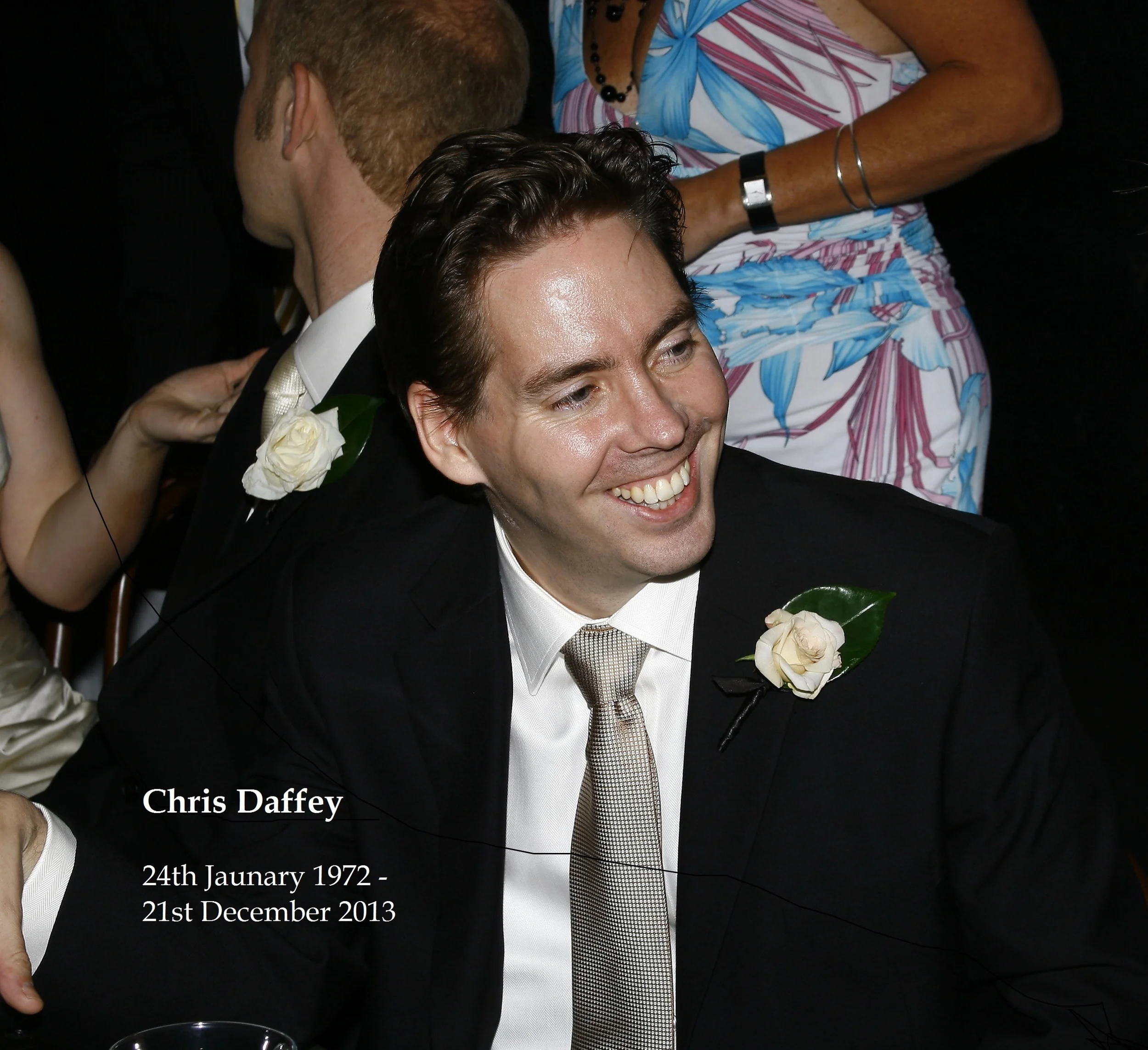
For Chris Daffey: 'I’m not ready for goodbyes when the jokes have run out', by Tony Wilson - 2014

May 13, 2015

2 January, 2014, Templestowe, Melbourne, Australia

I first met Daff in the Minter Ellison boardroom at Market Street on a hot February day in 1996. We had what I remember as a brief, hilarious chat before the event took a turn when Daff fainted unconscious right in the middle of the party. When his eyes flicked open, there were about fifty people huddled around him and he had about two seconds to think before throwing a hand out from his position lying flat on his back. ‘Chris Daffey,’ he said, without missing a beat.

I knew he was something amazing then and there. I didn’t get to speak to him any more at that function because, in Daff’s words, ‘HR had me in the lifts and out of the building before you could say “public liability insurance”. I later found out that Daff wasn’t as immediately sure about me. Like me, he kept this document with mugshots and profiles of his fellow articled clerks. Unlike me, he pencilled a first impression against each name. ‘R-sole’ [spelled capital R sole] was the designation for future friend James Edwards. I was granted slightly more wiggle room, assessed merely as ‘Possible R-Sole’.

Articles began and so did our friendship. We’d meet at the level one billiards table every day, and spend hours drinking Coke, eating sandwiches and attempting to roll pool balls down the table in such a way that the number would ‘hang’ perfectly still on the side. ‘Ugly’ we’d say when the axis scrambled. ‘Ooooooooh,’ we’d say if we got a perfect release. Whoever got more ‘Ooooohs’ over the lunchtime won. There was always a game with Daff. And always a winner.

It was the early days of email, and god knows how many billable units were wasted as Daff corresponded, not just with me, but with a growing number of Minters colleagues caught in the beam of his charisma. Minters called its email system the ‘Minternet’, and Daff quickly worked out that the template had one important flaw. An unscrupulous sender could just spacebar his own name out of the ‘from’ window, and write the name of any other person he might want to pretend to be.

The result was sheer mayhem. I spent three hours flirting with a girl, thinking I was some chance for a date, without knowing Daff was emailing in falsetto from his cubical on level 8. I then attempted to get Daff back, and indeed had a notable success posing as his then girlfriend Kerry, but I was a man out of my depth. ‘The only thing that mitigates my joy is the knowledge you will get me back,’ I wrote in my moment of triumph, which was exactly the same thing he wrote when the inevitable occurred. Yep, a phone message from my awfulest client wasn’t actually from him. Suspecting nothing, I hastily rang the awfulest client, pleading with him not to take the stupidest course of imaginable. ‘What are you talking about?’ he said to me. ‘What the f*ck are you talking about?’ Yep, Not for the first time, Daff had gone too far.

Amidst all the drudgery of that articles year, we had so much fun. There had been mid-year articled clerk revues before, but Daff turned ours into an extravaganza. In one sketch, he used artfully positioned pot-plants, photocopier lids, chair backs and assorted paraphernalia to film every articled clerk getting about his or her lawyerly tasks, naked. I’ll never forget Ben Liu on his tummy in centrefold pose, his dignity protected by the ‘Hot Stocks’ edition of the BRW. There was the bit in which Daff and I stormed the front foyer of Blakes in chicken suits. There was a sign in the copy room that said ‘Don’t Abuse the Photocopiers’ so Daff thought it would be funny if we found an old one, and filmed ourselves smashing it up with sledge-hammers in the middle of a field, to the Carmina Burana. ‘Twelve Angry Articled Clerks’ we called it. It was such a good time. I sometimes think it was the experience making that mid-year production together that encouraged both of us to pursue creative careers.

Today, I have such conflicted feelings about Daff’s decision to write his novel. It was an agony to watch its progress, not because the output wasn’t terrific, it almost always was, but because the words flowed like treacle. In true Daff style, he kept spreadsheets documenting his daily word count, and the numbers were sometimes in two figures. He’d ring me up, asking for a preference between two words. ‘It doesn’t matter, Daff’ I’d say. ‘Nobody will notice. Just move on.’ But he couldn’t. It had to be perfect. One year became two years, which became three years. He spent one of those at my parents’ holiday place at Red Hill, calling me every night at 5pm when he went outside to watch the rabbits. Daff loved animals. The one member of our family who still doesn’t know he’s gone is his beloved Charley Dog.

The novel, when it finally came out in 2004, was brilliant. The working title was ‘ImpressingJenny’ but it was eventually called A Girl, A Smock, and a Simple Plan. After all those years writing, the publisher assigned a woman who mainly edited gardening titles to whipper snipper Daff’s prose. He fought a lot of battles in the edit, won enough for him to be justly proud of the novel, but perhaps lost the war. He said in his letter that this awful disease has been with him eight years. Like I said, I have really conflicted feelings about this book.

A Girl, A Smock was part-memoir, part-fiction and truly hilarious. Daff’s recall of the primary school universe was phenomenal, and those painstakingly sculpted, comedy maximised-sentences were indeed very nearly perfect. One of my many favourite bits is this:

“You see the way I looked at it, the hardest part about primary school for Lucas must have been his lack of preparation for it. When he first strolled through the gates on his way to Mrs MacCauley’s Prep Grade M, he would have had no idea whatsoever that he’d been handed a business card that said, ‘Lucas Tordby – Dropkick’. In fact, like almost all of us, he would have had quite the opposite idea. Years of being smothered by parental affection and encouragement leaves the average pre-schooler thinking he is the smartest, best-looking, most advanced ‘little bundle of joy’ in the world ever. Parents rarely opt for honesty in assessing their children. No mother ever turns to her six year old daughter and says, ‘Marcy, you’re as dumb as you are hideous, but I Iove you anyway.’ It’s just praise praise and more praise until every little trooper turning up for their first day of school thinks they’re God’s gift to humanity. If only parents fessed up to the lies they’ve told before they packed their kids off to school. If only fathers grabbed their sons by the shoulders before they sailed out the door and said:

“You know all that stuff your mother and I told you about being cute and clever and adorable? Well it’s a bunch of cobblers. You’re actually a bit of a bonehead, Son, and you might cop a little stick out there because of it.’

Daff was so naturally funny, so natural at everything. Writing probably wasn’t even his top talent – his aptitude for maths was frightening, and he could sort and evaluate arguments like no person I’ve ever met. He often said he should have done law-science. These last couple of years I’ve been telling him to become a politician, or a political adviser, or a speech writer, or a barrister, or a public speaking coach or a management consultant or a stock market analyst. His beloved Pop trained in Daff an ear for injustice, and so many of my political views were nurtured by his eloquence for a cause. He could also go completely off tap. Daff had literally hundreds of yahoo email addresses, all of which have been blocked by Andrew Bolt’s blog moderators. Not many people know this, but he was also on Twitter, trading blows with right wing trolls on #auspol. The reason you might not be following him is also quintessentially Daff. When Charmaine joined Twitter and racked up more followers than the then barely-tweeting @chrisdaffey, Daff said that part of her success could be credited to being a woman with a nice looking profile pic. To prove himself right, he took to Twitter as an unbelievably hot looking New Zealand woman named Libby, who just happened to love footy. Dreamteam and politics. Within months, he had a thousand followers. He also received a remarkable number of coffee or dinner requests from left leaning, footy loving males, some of whom were prominent media figures. Libby always declined. She wasn’t that sort of girl.

Some of Libby’s most popular tweets:

“If you watch the Die Hard series backwards, an old bald guy slowly learns how to act.”

“Gina Rinehart launches ‘Seven Step Success In Business’ course. Step 1: Inherit billion dollar mining empire. Steps 2-7: Enjoy.”

“Nick Riewoldt claims ‘outside forces’ destabilising club: “All we want to do is train hard, play footy & take pics of each others nads” #afl”

“Q: What does @AndrewBolt say when he sees himself naked in the mirror? A: God damn it, it’s leaning left again!”

Our friendship was often quite competitive. In our Dreamteam head to head, his team, the Hindsight Mayors leads 10-1 against my team, the Maribynong Mustangs. It is now a small comfort to know that in a time of desperation, this score-line brought untold joy.  He once asked, ‘how much better a footballer do you think you are than me,’ and I said, ‘Put it this way Daff, if I toss this ball in the air for the rest of time, it will be up to me to decide whether you ever get to touch it again.’ We played the game for the next five minutes. It ended with him round-arming me across the back of the head. We went through a phase of entering 25 words or less competitions, and for New Year’s Eve in the Year 2000, Daff won a seven course dinner for ten on the balcony at Southbank overlooking the Yarra and the fireworks. I came second and won a slab of Crown Lager and a bottle opener. When he rang to tell me, I was incredulous, moaning to him that his entry was the worst example of corporate toadying, and that mine was clearly superior. He eventually shut me up by saying, ‘Willo. I’m inviting you! For eff’s sake! If anyone should be complaining it’s me. I’ve beaten you into a long second and you’re a slab and a bottle opener up.’ What a night that ended up being.

Like Dods, Daff would occasionally let me know I was still a ‘new friend’ who still had work to do to get to that Ben, Lawson and Al A-level. Through sheer weight of time together, I got there. During Dreamteam season, we spoke literally every day. In the off season we cooled it off to two or three times a week. Daff was quite possibly better at being a friend than he was at all the other things combined. There are at least five of us who call Daff our best friend. We each only had one Daff. I told him everything. He prided himself on being ‘the vault’. Nothing any of us confided ever went further than Daff.

In 2004 Daff and I travelled overseas together. It was an amazing few weeks full of stories that have peppered the years since. They include:

  • Walking the streets of Paris playing a game Daff invented called ‘Bonsoir or Bonsnub’. You pick a Parisian, and with full eye contact and beaming smile, hit them with an enthusiastic ‘Bonsoir’. If you get a bonsoir back, it is a ‘bonsoir’. If not, it is a ‘bonsnub’. Player with most ‘bonsoirs’ wins. There was always a game and there was always a winner.

  • Sprinting drunkenly through the cobblestoned streets of Barcelona at midnight, with Daff shouting ‘you have no cartilages, you have no cartilages’ and me shouting back ‘I will chase you down like a dog’. I did chase him down too. Like a dog.

  • Daff walking into a hotel bathroom to discover me asleep on the toilet. ‘Oh god, Willo, he said as he woke me up. ‘It’s our Elvis moment.’

  • Getting shot at by a Barcelona street kid with a toy bow and arrow. Daff found the kid in the same place the next day and bought his bow and arrow to give to me as a Christmas present. I gave him DVD copies of ‘El Graduado’ and ‘Adios Mr Chips’.

Daff was the most generous friend I’ve ever known. The presents were always spectacular – a carefully curated assortment of chocolates, a calendar of George W Bushisms, a Playstation 3 for Tam’s and my wedding that I now can hardly look at without crying. He was a big kid who loved kid stuff to the end. Swap cards, figurines, light sabres, Junior mints, endless endless Macdonalds. He spent nearly $1000 on footy cards in the year … 2012.  The last time he went to Red Hill he took the skin off his face attempting the steepest part of the hill on a billy cart. No wonder the kids loved him. He played chasey with them like he wanted to, because he actually did. He chased with intent. He chased for hours and hours and hours. It was only the last time he visited that I thought, ‘he’s having to work hard at this today’. I remember telling the kids to give Daff a bit of a rest.

The gift I mentioned on facebook this week is probably the one that means the most to us. When Tam was pregnant with our first, Daff barracked so hard for Polly to be born on his birthday, and when she was, he went around the streets of Melbourne, taking photos to give her so she could know what her city looked like that day. He also gave her newspaper front pages. They were the 24th of January twins, separated 35 years to the day. He even photoshopped his own head on to a baby’s body to put it in his ‘Daff box’. When’s going to be the right day to give her that box, Daff? I can’t believe this is happening.

We all loved you so much, Daff. Polly is wearing the blue butterfly necklace you gave her. She hasn’t said a word to me about it. She just started wearing it as a quiet tribute. Tam is bursting into tears as she plays Wordament, the speed boggle app you got her addicted to. The big Wordament face-off never happened, and now it isn’t going to. Harry, the one you called ‘the circus strongman’ keeps asking ‘is Daff going to come over?’ and I keep having to say that you won’t be coming over now. Jack got to meet you, but now won’t really know you like the others. But I know you were so pleased when he said your name during the last visit. One day I’ll tell him about the sort of person you were. That when he was born in 2011, it was you who read books on cerebral palsy so you could talk to me about it. That it was you who went to this special effort for me. Because you worried how low I was going. And I didn’t do the same for you. Because you didn’t want me to. Because you didn’t want the dynamic of this friendship, this perfect friendship, to change. Because you were the fun one. Well for me, Daff, it has changed, now. I don’t want to be angry, and mostly I’m not, and one day I won’t be at all. How could you have been in so much pain and told so few of us. How could I not have seen it? You say we couldn’t have done anything and I have to believe that we couldn’t. But we’ll never really know if enough was done. How can we?

You once wrote a goodbye for me, Daff. It was for when I was leaving Minters, and it was short and funny — typically brilliant. I’ve kept it along with all your emails from that time. You called it ‘Goodbye Mr Slips’. You dubbed me ‘the William the Conquerer of personal space invasion’. You noted ‘Tony’s tendency to get up close and personal during conversations introduced many lunch companions to the concept of “passive eating”’. You said, ‘Only a fool would sit through a meal with Tony in a suit colour that didn’t match his order.’

They’re the sort of goodbyes we’re supposed to be doing, Daff. Funny, shit-stirring goodbyes. I’m not ready for proper goodbyes. I’m not ready for goodbyes when the jokes have run out. I’m not ready for today. One of the few images I had of old age, was of calling you from a retirement home to complain about Dreamteam. How can we be stuck at 10:1? How can it be forever 10:1?

I’ll miss you so much Daff. My best man and my best friend. I’ll miss you and treasure you for the rest of my life.

I made an episdoe of the podcast dedicated to this speech, our friendship, and an interview I did on Richard Fidler’s Conversations.

Source: http://tonywilson.com.au/my-best-man-my-be...

Enjoyed this speech? Speakola is a labour of love and I’d be very grateful if you would share, tweet or like it. Thank you.

Facebook Twitter Facebook
In SUBMITTED Tags BEST FRIEND, TONY WILSON, LAWYER
1 Comment

See my film!

Limited Australian Season

March 2025

Details and ticket bookings at

angeandtheboss.com

Support Speakola

Hi speech lovers,
With costs of hosting website and podcast, this labour of love has become a difficult financial proposition in recent times. If you can afford a donation, it will help Speakola survive and prosper.

Best wishes,
Tony Wilson.

Become a Patron!

Learn more about supporting Speakola.

Featured political

Featured
Jon Stewart: "They responded in five seconds", 9-11 first responders, Address to Congress - 2019
Jacinda Ardern: 'They were New Zealanders. They are us', Address to Parliament following Christchurch massacre - 2019
Dolores Ibárruri: "¡No Pasarán!, They shall not pass!', Defense of 2nd Spanish Republic - 1936
Jimmy Reid: 'A rat race is for rats. We're not rats', Rectorial address, Glasgow University - 1972

Featured eulogies

Featured
For Geoffrey Tozer: 'I have to say we all let him down', by Paul Keating - 2009
for James Baldwin: 'Jimmy. You crowned us', by Toni Morrison - 1988
for Michael Gordon: '13 days ago my Dad’s big, beautiful, generous heart suddenly stopped beating', by Scott and Sarah Gordon - 2018

Featured commencement

Featured
Tara Westover: 'Your avatar isn't real, it isn't terribly far from a lie', The Un-Instagrammable Self, Northeastern University - 2019
Tim Minchin: 'Being an artist requires massive reserves of self-belief', WAAPA - 2019
Atul Gawande: 'Curiosity and What Equality Really Means', UCLA Medical School - 2018
Abby Wambach: 'We are the wolves', Barnard College - 2018
Eric Idle: 'America is 300 million people all walking in the same direction, singing 'I Did It My Way'', Whitman College - 2013
Shirley Chisholm: ;America has gone to sleep', Greenfield High School - 1983

Featured sport

Featured
Joe Marler: 'Get back on the horse', Harlequins v Bath pre game interview - 2019
Ray Lewis : 'The greatest pain of my life is the reason I'm standing here today', 52 Cards -
Mel Jones: 'If she was Bradman on the field, she was definitely Keith Miller off the field', Betty Wilson's induction into Australian Cricket Hall of Fame - 2017
Jeff Thomson: 'It’s all those people that help you as kids', Hall of Fame - 2016

Fresh Tweets


Featured weddings

Featured
Dan Angelucci: 'The Best (Best Man) Speech of all time', for Don and Katherine - 2019
Hallerman Sisters: 'Oh sister now we have to let you gooooo!' for Caitlin & Johnny - 2015
Korey Soderman (via Kyle): 'All our lives I have used my voice to help Korey express his thoughts, so today, like always, I will be my brother’s voice' for Kyle and Jess - 2014

Featured Arts

Featured
Bruce Springsteen: 'They're keepers of some of the most beautiful sonic architecture in rock and roll', Induction U2 into Rock Hall of Fame - 2005
Olivia Colman: 'Done that bit. I think I have done that bit', BAFTA acceptance, Leading Actress - 2019
Axel Scheffler: 'The book wasn't called 'No Room on the Broom!', Illustrator of the Year, British Book Awards - 2018
Tina Fey: 'Only in comedy is an obedient white girl from the suburbs a diversity candidate', Kennedy Center Mark Twain Award -  2010
Tina Fey: 'Only in comedy is an obedient white girl from the suburbs a diversity candidate', Kennedy Center Mark Twain Award - 2010

Featured Debates

Featured
Sacha Baron Cohen: 'Just think what Goebbels might have done with Facebook', Anti Defamation League Leadership Award - 2019
Greta Thunberg: 'How dare you', UN Climate Action Summit - 2019
Charlie Munger: 'The Psychology of Human Misjudgment', Harvard University - 1995
Lawrence O'Donnell: 'The original sin of this country is that we invaders shot and murdered our way across the land killing every Native American that we could', The Last Word, 'Dakota' - 2016