• Genre
  • About
  • Submissions
  • Donate
  • Search
Menu

Speakola

All Speeches Great and Small
  • Genre
  • About
  • Submissions
  • Donate
  • Search

Commencement and Graduation

Inspiring, humorous, wisdom imparting. Some of the best speeches are delivered in the educational context. Upload your commencement or graduation speech here.

Howard Schultz: 'Summon your compassion', Arizona State University - 2017

June 7, 2017

8 May 2017, Arizona, USA

Howard Schultz is the Executive Chairman, founder and former CEO of Starbucks.

Thank you, President Crow, for that generous introduction. I really appreciate our friendship and everything we are doing together. Thank you to the Arizona Board of Regents, faculty and special guests.

Congratulations to the graduating Class of 2017 and those who are here to support you on this very, very special day. And to our 330 Starbucks College Achievement Plan graduates. So proud of you! Who have benefited from the Starbucks and ASU partnership, I am incredibly proud to be your partner. Congratulations to all of you.

I would like to begin my time with you today by sharing a personal story.

Last year, Starbucks coffee company opened our first store in South Africa in Johannesburg. I had never been to South Africa before, did not know what to expect. Certainly could not be prepared for the level of poverty and what I saw in the townships throughout the city. We opened two stores and lines were out the door in anticipation of Starbucks coming to the market but before we opened the stores, I gathered the 50 young people who would embrace the green apron and represent the company. I sat with them for a few hours and wanted to hear each one of their personal stories.

As they were sharing their stories with me, despite their poverty, their plight in life, there was so much joy and gratitude in their hearts. But what I learned was two things. One, all 50 of these young people had never had a job before. They were all unemployed for their entire life and you should see the self-esteem and the sense of security as they were getting ready for their first job. But the second lesson was as they were going around the room and talking to me about their story, I kept hearing an African word I had never heard before. A word that Nelson Mandela used all the time. The word is "ubuntu" and finally, I got up the courage and I asked what does this word mean that you keep using. They couldn't wait to share it with me.

In unison, they said, Howard, “Ubuntu” means I am because of you. I am because of you.

As I have the honor to speak with you today, I ask you to keep that story in mind because everything I’m going to share with you today is through the lens of ubuntu.

I grew up in Brooklyn, New York, in public housing. The projects, as it was called back then. My parents were both high school dropouts, and they could barely afford $96 a month rent in our two-bedroom apartment for my brother, my sister and my parents.

However, from my earliest of memories, my mother instilled in me her belief in the American dream and the promise of America. That a good education and hard work will open the doors to a better life, and that provides me with an important lesson to share with you all today. That your station in life does not define you and the promise of America that is for all of us.

When I was 7 years old, I had a defining moment in my life. I came home from school one day and saw my father laid on a couch with a cast from his hip to his ankle. He had a series of terrible blue collar jobs as a high school dropout, army vet, but this particular job he had in 1960 was probably the worst.

He was a truck driver delivering and picking up cloth diapers before the invention of pampers. He fell on a sheet of ice in March of 1960, and in March of 1960, if you were a blue collar, uneducated worker, you were dismissed if you had an accident. No workers' compensation, no severance, no health insurance and I saw the fracturing of the American Dream and I saw my parents go through hopelessness and despair at the age of 7. And those scars, that shame, that is with me even today.

As a young boy, I could have never imagined that I would one day build a company of my own, let alone a company that would have more than 26,000 stores in 75 countries and employ more than 300,000 people. Thank you.

But from day one, I really wanted to build the kind of company my father never got a chance to work for. A company that honors and respects the dignity of work and the dignity of all men and all women. And that is why we became the first company in all of America to provide comprehensive health insurance 30 years ahead of the affordable care act, as well as ownership in the form of stock options for all of our employees, including part-time people because it is my firm belief that success in business and in life is best when it's shared.

Starbucks Coffee Company went public in 1992, and from 1992 to 2006, we were on a magical carpet ride in which everything we did turned to gold. But in 2007, the music stopped. We had lost sight of our shared purpose and our guiding principles, in which growth and success began to cover up mistakes and a disease set into Starbucks. That disease, hubris. We lost our way and believe it or not, we almost lost the entire company.

During this cataclysmic period, I was reminded what it means to love something and the responsibility that goes with it, as well as an understanding that leadership and moral courage is not a passive act.

My partners and I took it personally, and we transformed the entire company. We galvanized the entire organization around our core values and servant leadership. Every business, every organization, even every family, must be true to its values and reason for being. Our core purpose and reason for being then and now has always been to achieve the fragile balance between profit and humanity.

Today the equity of the Starbucks brand has never been stronger and our track record of creating shareholder value and social impact over the last 25 years has virtually been unparalleled.

We have built one of the most respected and recognized brands in the world, with the view that today the rules of engagement for business and business leaders have changed. That we must do more for our people and the communities we serve. And most importantly, that not every business decision is an economic one. And that success is not an entitlement. It has to be earned and earned every day through the lens of humility.

Only in America can a poor kid from public housing have the privilege and the honor to be the commencement speaker at the largest and most innovative university in the country.

I stand before you as living proof of the American dream. Joining many of your parents, your professors and generations of graduates before you. But today, you may question the strength of that dream and the promise of America. That's fair.

My generation has not made it easy for you. Our political leaders on both sides of the aisle have not acted with enough courage, nor honesty, in addressing the long-term challenges we face. They have been more focused on fighting with each other than walking in the shoes of the American people and vitriol rules the day in Washington.

I'm extremely optimistic, especially when I look out and see you, because the future is not up to them, not up to Washington, it's up to you.

This milestone in your life may come with some anxiety about what tomorrow holds and you may have questions that only time can answer.

But as a young man, who once sat nervously at his own commencement, I encourage you to always trust yourself and to be mindful of these three enduring questions. How will you respect your parents and honor your family? How will you share your success and serve others with dignity? And how will you lead with humility and demonstrate moral courage?

You are leaving this campus as the best prepared generation in the history of our country. You each possess entrepreneurial spirit, the passion, and the commitment to create the future you deserve. However, don't stop there. Try not to rely only on what you have learned in the classroom.

Summon your compassion, your curiosity, your empathy towards others and your commitment to service. Give more than you receive and I promise you, it will come back to you in ways you can't possibly imagine.

Each of you is here today because of someone else. A parent, a sibling, a teacher, a neighbor, a mentor, someone who had faith and confidence in you, like my mother had in me, and nurtured your dreams.

As you leave here today, take a moment to think of those who have come before you, who have helped you along the way, who are at your side today.

If they are here, embrace them and thank them for the gift of education and for the support and the love that they have given you.

Your generation can bring people together like no other. You can innovate, create, and lead. Your generation will transform our economy and create millions of new jobs. You will develop cleaner energy. You will make it so racism only exists in history books. Yes, you will. You will be the generation that teaches the world that we are at our best when we recognize, respect, and celebrate our diversity. You can and you will make your mark on our country and our shared humanity. Dream big, and then dream bigger, a more innovative dream, a more inclusive dream.

All of you will preserve and enhance the promise of America. The promise that propelled me out of public housing. The promise that will propel you forward, regardless of the color of your skin, your religion, your gender, your sexual orientation, or your station in life. Please remember that.

ASU is because of you. You are because of ASU. We are because of each other. Ubuntu! Ubuntu! Ubuntu! Yes! Say it with me! Ubuntu! Ubuntu! Ubuntu! Ubuntu!

Go forward and continue to make your parents and your family proud. God bless you and thank you and congratulations to the class of 2017! Thank you! Ubuntu! Thank you!
Source: http://time.com/4773797/howard-schultz-com...

Enjoyed this speech? Speakola is a labour of love and I’d be very grateful if you would share, tweet or like it. Thank you.

Facebook Twitter Facebook
In GUEST SPEAKER D Tags HOWARD SCHULTZ, STARBARKS, BUSINESS, LEADERSHIP
2 Comments

Jose B Gonzalez: 'There is always something left to love', Three Rivers College - 2017

June 1, 2017

24 May 2017, Norwich, Connecticut, USA

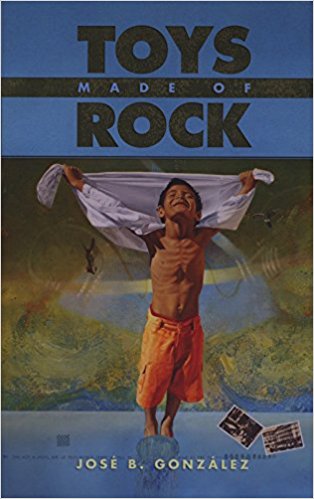
Jose B Gonzalez is a Fulbright scholar and author of International Book Award Finalist, Toys Made of Rock.

Coming back to Three Rivers is always a homecoming for me.  This is a college where I taught students who were as talented, as driven, and as hardworking as any other students I’ve ever met.

It’s a college that I loved nearly 25 years ago and it’s a college that I love to this day.   And I use the word, “love” intentionally.

We are at a time in which we consider people who use the word, “love” as weak, but we view those who use the language of hate as strong. And we have become so desensitized to the hate that we’re inhaling that we sometimes forget to exhale it. 

My advice to you, Class of 2017, is that no matter where you are in the next stage of your life, whether it’s in a new job or a new college, run from the language of hate.

Instead, remember a line so powerful that it can be found in two classics, One Hundred Years of Solitude and a Raisin the Sun, “There is Always Something Left to Love.”

As you move forward, the winds of hate will try to push you backwards but love will make you a better student, a better worker, and a better person.

In your next math class, if you’re going to tell your professor that you hate decimals, as if decimals have ever done anything to you, tell her how you love pi. Everyone loves pi.

In your new job, if you’re going to tell your boss that you hate the pay, tell her that you love the hours.

If you’re going to tell your boss that you hate the hours, tell her that you love the pay. Everybody loves to get paid.

Nothing productive rises out of hate.

You are part of a world where political campaigns are built on pillars of hate, where we don’t always recognize that hatred of immigrants means nothing more than a hatred of self, where hate speech has become common speech, where we can too easily become part of a hate wasteland.

Hating is easy. It requires much less work than love.

There is always something left to love.

And that is true about yourselves too.  In fact, as I’ve visited community colleges throughout the country, there are three things that they have in common. One is that they all have a crazy uncle who shows up at graduation. Where is that crazy uncle today?

Two is that they all have overworked faculty and staff.

And three—they all have students who have spent years beating themselves up and being tougher on themselves than any professor ever could be.

It’s no wonder we are caught up in Photoshopping our flaws, fixated on this myth called perfection.

We all have something we hate about ourselves. Look at me, I’m short, I have bad eyesight, and I love Krispy Kreme doughnuts a little too much.  There is a lot to Photoshop and hate here.

Throughout my life the winds of hate have howled at me. As much as I love Three Rivers, I certainly hated that moment when I was teaching a literature class here on a September day when even the board was smiling and the autumn trees were singing.  That day, someone opened my classroom door, walked in slowly and informed me that my father had died.

I hated the moments when people made fun of me when I was learning English and the moments when others hated me for the color of my skin.

But it was my love for my brown skin that led me to study Brown Literature, and it was my love of language that led me to become a writer and a professor of English.

We’ve got to love our skin and what’s inside that skin. There is always something left to love. 

The fact is you’ve had so many reasons to hate that you could have allowed yourselves to become poster children for hate.

As you commuted to school, I’m sure you didn’t exactly love traffic on 395 or on the obstacle course called I-95.

As you attended classes, you had jobs that were unforgiving, cars that wouldn’t behave, coughs that wouldn’t go away, and deadlines that wouldn’t cooperate. Yet, you refused to allow hate to defeat you.

It’s your love that has brought all of us here together on this memorable day.

Society needs people like you. Students who have persevered through storms of hate, and are ready to show the world that with the love of family, with the love FOR family, with the love of learning, and the love of self, anything is possible. 

Your diplomas are proof that you are ready to use love to make Three Rivers Community College prouder and make our communities and the three rivers that surround us stronger.

And that’s why, tonight, after all the hugs, after the crazy uncle who always stays too long leaves your celebration, be sure to take a look at yourself in the mirror.

Stare hard, and stare long, and say to yourself, “I’m ready to show the world what love can accomplish. I love that I worked hard for this degree, I love that my family is proud of me. And I love myself.” 

Congratulations and much love to you, Class of 2017. 


Purchase Toys Made of Rock

Source: https://www.youtube.com/watch?v=2J715FCa77...

Enjoyed this speech? Speakola is a labour of love and I’d be very grateful if you would share, tweet or like it. Thank you.

Facebook Twitter Facebook
In GUEST SPEAKER D Tags THREE RIVERS, COMMUNITY COLLEGE, LOVE, LATINO, BROWN NATION, EQUALITY, COMMENCEMENT, JOSE B GONZALEZ
Comment

Theo Epstein: 'We all have our rain delay moments', Yale Class Speech - 2017

May 30, 2017

20 May 2016, Yale,  New Haven, Connecticut, USA

Theo Epstein is the President of Baseball Operations for the Chicago Cubs, who broke a 108 year drought by winning the 2016 World Series.

Thank you... thank you. It appears we have some Cub fans here today. Alright, let’s get right to it then: how many of you are Cub fans? How many are Red Sox fans? how many are Yankee fans? I see. Yankee fans, the exits are located on either side toward the back... you can just head right out Phelps Gate!

President Salovey, Heads of College, College Deans, Members of the Faculty and Staff, good afternoon.

Members of the Class Council, Class Day Chairs Joana Andoh and Larry Milstein, Class Secretary Tommy Rosenkranz, Class Treasurer Mimi Pham, and the entire Yale Class of 2017, greetings and congratulations! I am honored to be with you today to help you celebrate, and I would like to thank Joana and Larry for inviting me on your behalf as well as for that kind introduction.

Your class has been witness to and a participant in a period of historic change at Yale: the inauguration of a new President; the creation of two new residential colleges; the renaming of a third; and, most savory of all, the introduction of Hanoi Fried Cape Shark.

I would like to recognize some of the members of your class who had special accomplishments this year:

the Yale baseball team, for just this week winning the Ivy League and earning its first NCAA tournament berth since 1994 ... congratulations;

the Yale football team for beating Harvard for the first time in 10 years... well done, Bulldogs; and Saybrook for an unprecedented commitment to the Saybrook Strip. Good job, Saybrook! I seem to remember back in my day we at least kept our underwear on and didn’t get hauled away by the Harvard police, but congratulations on taking it to the next level! That is what we call progress!

I would also like to thank some others who are here today in support:

First, my family, including my dad, Leslie, Class of ‘60, and my sister, Anya, Class of ’92. I know, despite your faith in me, you are mildly surprised that I am standing up here today as Class Day Speaker;• Next, my friends and classmates at Yale, with whom I discovered the great institutions of higher education – Toad’s Place and Rudy’s – and wasted many brain cells in the pursuit of the knowledge hidden there. I know you are as shocked as I am about this incredible honor here today.

And finally, a nod to my professors and especially my terrific graduate student teaching assistants. Thank you for all your invaluable tutelage. I know you were somewhat bemused that I made it to my own Class Day, so I am sure you are downright horrified that I am the one speaking here today!

I remember my years at Yale fondly, and, as you’ll find out, a Yale degree is something that stays with you the rest of your life. Back in 2002, when I was 28 years old, I stumbled into being named General Manager of the Boston Red Sox. Days after I was hired, my boss, Larry Lucchino, was visiting his old baseball colleague, President George W Bush, Class of ’68, in the White House. President Bush asked: "What are you doing naming a 28-year-old kid as your general manager? That's an absurd risk; he's far too young." Lucchino replied: "But, Mr. President, you don't understand, he's a Yale Man," — to which the President replied: "Sttrriiike Two!"

Like the former President, I didn’t do anything too serious with my career; I just worked in baseball. Yes, American’s National Pastime, but also, largely, just part of the bread and circuses of society, entertaining and distracting us while others like my twin brother Paul, a social worker, do the real work of holding our communities together. But there are certainly times when baseball is much more than bread and circus, times when baseball resonates deeply and meaningfully with many, many people, and times when a game that is built around overcoming failure can teach us all a few important lessons.

So, Class of 2017, if you'll indulge me, I'm going to tell you just one baseball story. It's a bit long, but don't worry you'll like the ending... unless you happen to be from Cleveland, in which case I am truly sorry! The story is about a very important game — Game Seven of last year's World Series — but has little to do with the actual outcome of the game.

For those who don’t follow baseball: a little background. I work for the Chicago Cubs, a team with a following so loyal and adoring and a history so forlorn that we were known nationwide as the Loveable Losers. As of last fall, the Cubs had not won the World Series since 1908. Think about that. 1908. That’s the Teddy Roosevelt administration. The Ottoman Empire was still around. That's two World Wars ago. (Well, I haven't checked the news since breakfast... let me look at my phone... oh, good, yes, still only two World Wars ago!) It was a 108-year drought, the longest in the history of professional sports. As the late Cubs broadcasting legend Jack Brickhouse said: "Hey, anybody can have a bad century."

I joined the Cubs after the 2011 season amid an inordinate and uncomfortable amount of media attention. The Chicago Sun-Times, I remember, ran a full-page, front-page photo-shop of me walking on water across Lake Michigan, as if by showing up I was going to miraculously fix the team’s fortunes. Imagine their disappointment, then, when I announced a long-term rebuilding plan focused on acquiring young players and winning in five years. One season and 101 losses later, the same paper ran the identical picture on the front page, but this time the only part of me above water was the tip of my nose!

One day in the early years, after a particularly humiliating double-digit loss at Wrigley, I was walking home amongst the fans in a bit of a foul mood and I remember I kept my head down, trying not to get recognized. A very charming elderly woman spotted me and came over to ask a question. “I appreciate what you are trying to do, young man, I really do. I understand why you are bringing in so many young players, but, tell me: exactly when are you planning on winning a World Series? I’m not sure how much time I have left.”

I was a little taken aback and all I could think of to say as I put my head back down to walk away was: “Ma’am, I hope you take your vitamins!” (That was five years ago. If it happened today I guess I would say: “Ma’am, I hope you don’t have any preexisting conditions!”)

After three years of arduous rebuilding, we had a nucleus of young players we believed in who were ready to break into the majors together. Many of these players were 21- and 22-years-old: your peers, your generation. Typically, it takes young players years to adjust to life in the big leagues and to start performing up to their capabilities. Most of the blame for this rests on these ridiculous old baseball norms that say young players are to be seen and not heard. That young players must follow and not lead. That young players must adhere to the established codes — from the dress code that requires them to wear suits and ties to the code that says major league players can't get too excited on the field or look like they are having too much fun.

Thankfully, we hired a manager in Joe Maddon who agreed it was time to turn these conventions on their heads. We asked our young players to be themselves, to show their personalities, to have fun, to be daring, to be bold. The dress code was changed from suit and tie to: "If you think you look hot, wear it!" Unburdened, and empowered, our young team flourished last season, winning 103 games, the most in baseball, and reached our first World Series since 1945. After fighting back from a three-games-to-one deficit against the Cleveland Indians, we faced a decisive Game Seven in Cleveland.

I watched Game Seven from the stands with my colleagues, my wife Marie, and my oldest son Jack, who was then eight years old. Jack, a big baseball fan and the math whiz of the family, kept me updated on the Cubs' win probability throughout the game. As we enjoyed a two-run lead after five innings, he tapped me on the leg: "Dad, we have a 67% chance of winning the World Series." "I know, buddy. It’s going well. But, remember, it’s baseball. Lots of things can happen." Later, we had a three-run lead with just four outs to go in the game, nobody on base, and the bottom of the Indians order coming up. Tens of millions of Cubs fans nationwide, counting down the outs, put their arms around loved ones – or called them – to keep them close for the big moment ahead.

Jack put his arm around me: "Dad, we have a 97% chance of winning the World Series!"

"I know, buddy, I know.” I said. “It’s so great. One batter at time, though. We still need four more outs. Don’t want to look too far ahead.”

"But, Dad, first time in 108 years!"

Then, out of nowhere, as storm clouds suddenly moved into the area: an infield single, a double, an errant fastball, a fateful swing, an impossible home run.... and a tie game.

Indians fans erupted, rocking the stadium on its foundation with ear-splitting cheers. Cubs fans and I slumped in our seats, heads in hands. I felt another tap on my leg. "Dad, we definitely have less than a 50% chance of winning the World Series now." I couldn't think of anything wise to say, so I just sat up in my seat, stared stoically out at the field, put one arm around my son, and with the other I patted his leg as reassuringly as I could.

Minutes later, the skies opened up and rain halted the action. It was just enough of a pause to ponder the magnitude of the situation. Extra innings in Game Seven of the World Series. An entire season, down to this one moment. A five-year plan, down to this moment. 108 years of patience and unrequited love from our fans, down to this moment.

Still in a bit of a daze, I cut through our clubhouse toward a meeting about the weather. Turning a corner, I saw, through the window of the weight room door, the backs of our players' blue jerseys, shoulder to shoulder and packed tightly, all 25 guys squeezed into a space designed for half that many. It was an unusual sight. We hardly ever had meetings and never during a game. I inched closer to the door and saw Aroldis Chapman, the pitcher who had surrendered the tying home run, in tears. I lingered just long enough to hear a few sentences.

“We would not even be here without you,” catcher David Ross said as he embraced Chapman. “We are going to win this for you. We are going to win this for each other.”

Outfielder Jason Heyward walked to the middle of the room: “We are the best team in baseball” he said. “We’ve leaned on each other all year. We’ve still got this. This is only going to make it sweeter.”

And then first baseman Anthony Rizzo: “Nobody can take this away from us. We have each other.”

Kyle Schwarber stood up with a bat in his hands: "We win this right here!"

I turned away, a big smile on my face, and headed to the weather meeting.

Ten minutes later, the rain cleared. Schwarber led off with a single, Ben Zobrist doubled just past the reach of the third baseman, and we took the lead. In the bottom of the 10th, with the tying run on base and the winning run at the plate, at 12:47 a.m., Kris Bryant fielded a slow roller with a gigantic smile on his face and threw to Rizzo for the final out. We had won the World Series. My wife, Jack and I embraced in celebration – equal parts ecstasy and relief. I noticed Jack’s mouth agape; the young mathematician was shocked and overjoyed that we had for once beaten the odds.

Later that morning, back in Chicago, the team bus passed a cemetery on the drive from O’Hare to Wrigley. We saw countless Cubs hats and pennants already draped lovingly over tombstones for family members who did not quite live to see the moment. The next day, five million triumphant Chicagoans from every corner of the immense city gathered downtown for a victory parade. The sea of blue was a beautiful sight; Chicago, fractious and endangered, was united in the aftermath of the championship.

After all the champagne had dried and we finally got a good night's sleep, I found myself returning to a simple question: what should I tell Jack and his younger brother, Drew, about this historic achievement; what is it, exactly, that I want them to hold on to?

I thought immediately of the players' meeting during the rain delay, and how connected they were with each other, how invested they were in each other's fates, how they turned each other's tears into determination. During rain delays players typically come in off the field and head to their own lockers, sit there by themselves, change their wet jerseys, check their phones, think about what has gone right and wrong during the game, and become engrossed in their own worlds. That would have been disastrous for our team during Game Seven — 25 players sitting alone at their lockers, lamenting the bad breaks, assigning blame, wallowing, wondering. Instead, they had the instinct to come together.

Actually, it was not an instinct; it was a choice.

One day I will tell Jack and Drew that some players — and some of us — go through our careers with our heads down, focused on our craft and our tasks, keeping to ourselves, worrying about our numbers or our grades, pursuing the next objective goal, building our resumes, protecting our individual interests. Other players — and others amongst us — go through our careers with our heads up, as real parts of a team, alert and aware of others, embracing difference, employing empathy, genuinely connecting, putting collective interests ahead of our own. It is a choice.

The former approach, keeping our heads down, seems safer and more efficient, and I guess sometimes it may be. The latter, connecting, keeping our heads up, allows us to lead, and, every now and then, to be part of something bigger than ourselves, and, therefore, to truly triumph. I know, I will tell them, because I have tried it both ways.

And I will tell Jack and Drew that we all have our rain delay moments. There will be times when everything you have been wanting, everything you have worked for, everything you have earned, everything you feel you deserve is snatched away in what seems like a personal and unfair blow. This, I will tell them, is called life. But when these moments happen, and they will, will you be alone at your locker with your head down, lamenting, divvying up blame; or will you be shoulder to shoulder with your teammates, connected, with your heads up, giving and receiving support?

And I will tell them not to wait until the rain comes to make this choice, because that can be too late. We weren't winners that night in Cleveland because we ended up with one more run than the Indians. If Zobrist's ball were four inches farther off the line, it would have been a double play and we would have lost the game. That was randomness; like much of life, it was arbitrary. We were winners that night in Cleveland because when things went really, really wrong — and then the rains came — our players already knew each other so well that they could come together; they already trusted each other so much that they could open up and be vulnerable, and they were already so connected that they could lift one another up. We had already won. That's why I had that smile on my face as I walked away from the weight room door.

I learned later that the players’ only meeting had been called by Heyward, a 27-year-old who was suffering through a terrible offensive season, by far the worst of his career. Most players who are having seasons that rough detach from the team and isolate themselves — either to the disabled list or to the periphery of the clubhouse. But Heyward stayed at the center of everything: he never stopped being invested in his teammates, opened up to them about his own struggles, and bought them suites on the road for gatherings. The first to speak was Ross, the 38-year-old backup catcher in his final season who made a career out of being a wonderful teammate (and who is now in the finals of Dancing With The Stars. And you thought you were having a good year?) Rossy was always reaching out to befriend the loneliest players, organizing team dinners, breaking down the barriers that sometimes arise between players of different backgrounds in the clubhouse. The last to speak was Rizzo, the young team leader who all season long was reminding his teammates they were going to make history together, have a parade, and spend the rest of eternity linked with one another. Anthony, a survivor of pediatric cancer, just celebrated the World Series by making a $3.5 million gift to Chicago's Lurie Children’s Hospital. Schwarber, who raced out of the meeting and right into the batter’s box, had torn two ligaments in his knee in the third game of the season – a 12-to-15 month injury. Rather than disappearing to a rehab facility, Schwarber, just 23, stayed connected with his team, getting his rehab work done early so nobody would have to see him in that state, and then functioning as an extra coach for his teammates the rest of the day. He kept telling his teammates he was going to find a way to help them win. Shocking the doctors and everyone else, Schwarber returned in just six months, right in time for the World Series. He hit over .400, including the single to start the deciding rally in Game Seven.

Early in my career, I used to think of players as assets, statistics on a spreadsheet I could use to project future performance and measure precisely how much they would impact our team on the field. I used to think of teams as portfolios, diversified collections of player assets paid to produce up to their projections to ensure the organization’s success. My head had been down. That narrow approach worked for a while, but it certainly had its limits. I grew and my team- building philosophy grew as well. The truth – as our team proved in Cleveland — is that a player’s character matters. The heartbeat matters. Fears and aspirations matter. The player’s impact on others matters. The tone he sets matters. The willingness to connect matters. Breaking down cliques and overcoming stereotypes in the clubhouse matters. Who you are, how you live among others — that all matters. The youngest team in World Series history with six starters under the age of 25; they helped me get my head up.

That is why, at the important moments in their lives, I’m going to keep telling my sons about the 2016 Cubs and that rain delay. And I’ll remind them – when they are graduating college or starting a new job, heading off to grad school or beginning a new life somewhere foreign – that they have a choice.

So, to the Class of 2017, as someone who has already been uplifted by members of your generation, I am thankful and in awe of what you all can accomplish when given the space to be free, to let your personalities out, and to figure it out. I am truly inspired by the traits that distinguish your generation — your diversity, your boldness, your optimism, your tolerance, your treatment of each other based on substance rather than on the labels that used to divide us.

I am so excited to see what lies ahead for you all. While there will undoubtedly be times here and there when you have to suck it up, follow the code, and put on that suit and tie, I urge you to remember that if you think you look hot, wear it! And please remember that even though so much can be quantified these days, the most important things cannot be. And, finally, when things go really, really wrong — and then when it rains on top of everything else — I ask you to choose to keep your heads up and come together, to connect, and to rally around one another, especially those who need it the most. It is likely to uplift you all.

Thank you, and congratulations.

Source: http://time.com/4787640/theo-epstein-cubs-...

Enjoyed this speech? Speakola is a labour of love and I’d be very grateful if you would share, tweet or like it. Thank you.

Facebook Twitter Facebook
In GUEST SPEAKER D Tags THEO EPSTEIN, CHICAGO CUBS, YALE UNIVERSITY, BASEBALL, WORLD SERIES, 2016 WORLD SERIES, TRANSCRIPT
Comment

Steven van Zandt: - 'The way to succeed universally is to be as local and as authentic as possible', Rutgers University - 2017

May 18, 2017

14 May 2017, Rutgers University, New Jersey, USA

I am here as a cautionary tale. I am the world's greatest advisor, not because I'm smart, but because I have screwed up every kind of way possible. (applause) Thank you. When I suggest something, I can speak with real authority, because I most likely did the opposite with a not very good result.

After a late but promising start, I found myself in 1990 unable to work. I had been in one of the most successful bands in the world, achieved a significant level of celebrity, but I couldn't work. I was informally, unofficially blackballed by my industry for my political activity. I calmly accepted my fate, and my mind went into a lengthy meditation. I had just been in the Sahara Desert researching the Saharawi, the people of the Western Sahara who are fighting a war with Morocco. That's what I did in those days, I'd identify an area of conflict where our government was involved, often on the wrong side, and I would go and check it out and I would write about it. That would be my last research trip for a while because when I got home, I learned that I had lost my record deal and nobody else was interested. And thus, began my New York version of Wandering the Wasteland.

My mind went back to the Sahara Desert and I did nothing but walk my dog for the next seven years. Gives you time to think, to reflect. How did I get there? I decided if I ever worked again, I would never stop. As I analysed my life and I began to separate back that which had become inseparable, the politics from the work.

I realised how lucky I had been to grow up when I did. It was a true renaissance period, where my standards would forever be set very high. It was only after years of analysing myself at that time, I realised what truly motivated me, what inspired me, what attracted my attention was something called 'greatness'. It was all around me growing up, but I hadn't felt it lately. And that's what separates the vitality of life from the mundane.

Somewhere over the course of about seven years, as I walked my dog, I decided greatness would be my business. It would be my obsession. If I ever worked again. And I've been tasting greatness ever since. Seeking it out, supporting it when I find it, creating it when I can. I decided life was just too short to tolerate and endorse the mediocrity that most of the world was drowning in back then, and it's worse now. The whining, the complaining, the endless excuses that get made for all the reasons why things can't happen. I knew I'd be running in quicksand when at least I'd be fighting to preserve the life force that is driven by reaching for greatness. How I got there, wandering seven years in that desert, that's the cautionary part. My generation and I had a great start. We were the super rich leaders of the free world after World War II. You should've seen us. Masters of the universe. We invented the suburbs. We constructed the entire highway system. Everybody had a car. We were mobile. Free. We invented rock and roll, and then we invented teenagers to dance to it. That's right, there was no such thing as teenagers before the 50s. You were an adolescent, had a few awkward years in between and then you were an adult. That was it.

Suddenly there was a new species of human being called the 'teenager', and a whole new marketplace was born to serve them. Starting with the music. This rock and roll thing was interesting. For those of you who aren't familiar with it, it's an ancient primitive art form you can probably still find on YouTube, or ask your grandparents about it. Actually, you had another rocker here last year giving his speech, as I recall. Yeah, he was a rock and roll guy. Anyway, rock was unique by being the only rock form ever half created by Blacks, half created by whites. Europe meets Africa. With healthy contributions by Latinos, and women, it was for the most part, white kids trying to imitate Black singers and failing gloriously, creating a new hybrid of music. It was represented quite accurately by Elvis Presley's first single. ‘Single’ being a piece of vinyl with a song on each side. It doesn't matter.

On the one side was blues, on the other side, hillbilly country. There it was. From the earliest records, rock would play a role in the future of American politics. The mix of Black and White that would eventually help define our country. As I said, combined with the contributions of Latinos and plenty of women contributing, the melting pot would melt in the arts long before it would melt in society. In fact, we're still working on that melt in society and your generation is gonna have to finish that job.

Because of the tax structure at the time, 90% at the top, we had a huge middle class, very few rich people, very few poor people. And are ready for this? At one point, the dollar had so much value, it was seriously talking about a four-day work week. And that was with one parent working in most households. Oh yeah, we started strong, baby. My generation were gonna save the world. We literally thought rock and roll was gonna change everything. We came into our teenage years at the peak of a music renaissance, as I mentioned, with the greatest music being made was also the most commercial. It was actually a resurrection because just before that, the early 60s, rock and roll had been declared dead. The pioneers of the 1950s that created it, were suddenly all gone. Little Richard thought the Russians launching Sputnik was a sign from God and joined the Ministry. Chuck Berry was in jail for transporting a minor across state lines. Elvis Presley was in the army. Buddy Holly and Richie Valens had died in a plane crash. Jerry Lee Lewis had married his 13-year old cousin and wondered why nobody was returning his phone calls. Everybody thought rock and roll was a temporary teenage fad that had come and gone. There were good records being made but things were slow.

February 9th, 1964, everything changes. I refer to it as the 'Big Bang'. A band called The Beatles came from England and appeared on the Ed Sullivan Variety Show that 70 million people viewed and tuned in for. And suddenly rock and roll was here to stay. The Beatles made being in a band, not only fun, but essential. The next day everybody had one. A band, I mean. And here's where we enter the picture. Only a handful of bands actually got out of the garage where they rehearsed, and mine was one of them. For a few years, that's all we thought about. Learning that craft. Then suddenly high school was over and everybody started disappearing. Everybody who had an option took it. College, military, a legit job, they moved away, whatever. And when the dust cleared, there were only two guys left standing in New Jersey: me and Bruce Springsteen.

I'd like to tell you an inspiring-type commencement story about how dedicated and persistent we were following our dream against all the odds. But the truth is we were freaks, misfits and outcasts incapable of doing anything else. We hung in there because we had no choice. We strengthened each other by truly believing in it, and rock and roll had literally become my religion by then and still is. We believed in the redemptive salvation of music. Bands were all about friendship, family, the posse, the gang. As I said in that clip, bands communicated community. To this day, the friendship we communicated from the stage is real. Because of our long friendship, as long as I'm standing next to Bruce Springsteen, it's a real band.

We would have the longest apprenticeship in the history of craft. It would be fifteen years from the first gigs we played as kids, to the time we actually had a hit. Fifteen years. The Beatles did it in five, the Rolling Stones did it in three. We were a little slow. But, what we had was tunnel vision. When you're learning a craft, you need that. Any craft. Focus. Everything else has to wait. Not only that - and this is where coming from New Jersey really helped - you need time to develop. Greatness isn't born. It's developed. Greatness is a decision you make. You make that decision every single day with everything you do, no matter how small. It's a habit, like anything else. Are you being casual? Are you distracted? Or are you doing it right? 100%. Whatever it is.

As if you are in the learning process, while you are in the learning process and you think you're being somehow inadequate, not up to the task, then you are not measuring correctly. You cannot be inadequate while you are developing. Give yourself a chance. Nobody is born great. But you look around today and how are you supposed to aspire for greatness when you have no access to it? Once you go out to the real world, you'll see what I mean. You have the greatness here, and your professors in the work. Out there in society, there aint no place for it. There's no expectation of greatness anymore. It's very scarce. And by the way, I'm not talking about the kind of great you put on a baseball cap. I'm talking about the real thing.

Our contemporary society has forgotten what greatness is because it has no time for it. Nobody expects to experience greatness. We may not even recognise it if we saw it. Reason why greatness is scarce is because development is scarce. Development takes time. Don't let the desperate panic of mediocrity that is all around you, uncomfortably hurry your development process. Anybody who needs an answer right now, you say 'no'. You'll make your own opportunities, you'll have the choice to choose the path to greatness, in spite of our contemporary society's low expectations. It'll be up to you.

Attention deficit disorder is no longer a disorder. It's nothing less than a paradigm shift. Your brains are faster than ours were. The next generation will be faster. You will have to find a way to separate that which is most useful when functioning quickly, like a math problem, and that which is useful to best enjoy slowly, like art. What? You thought I was gonna say sex? Another speech, another time.

The arts hold a special place in the human psyche. It is the common ground, spiritual centre of all humanity. We are able to communicate through art, regardless of our language differences. Please take every opportunity to seek it out and soak it up. The great poet W.B. Yeats said, "The world is full of magic things patiently waiting for our senses to grow sharper". Let me say it again, "The world is full of magic things patiently waiting for our senses to grow sharper." It is the highest, most sacred part of us, the divine transcendent part of us, and the more conversant you are with it, the younger one starts the better. The more you'll understand it, and the more it helps you understand life.

Art illuminates life. It can inspire, it can motivate, sometimes it exaggerates and helps us understand it's the gift that keeps on giving because it will tell you different things at different ages. A book, a painting, a song, a movie will have an entirely different meaning to you at different times of your lives. And this relationship takes development. It takes familiarity. Ultimately, the better we understand the divinity within that art illuminates, the more inspiration and motivation to achieve greatness in your everyday lives. In your everyday work. Let part of your brain relax and understand certain things are best understood and enjoyed slowly. That's what Yeats was talking about. That's how your senses get sharper, by slowing down. And that's how, once again, we will become a society that aspires to and surrounds ourselves with honours and recognises and achieves greatness... by slowing down.

We are the only country in the world where art is considered a luxury. You are going to have to change that. You might have to change administrations, but your generation will put art back in the classrooms and back as an essential part of our quality of life for all of society. Meanwhile, growing up in New Jersey in the 60s, the last thing in the world we thought about was art. We were just trying to survive. And we were lucky because we had less pressure simply by not being New York or Philadelphia. We also had low expectations. More importantly, the world had low expectations of us because we were from Jersey. We were the underdogs that somehow overcame the odds. Nobody saw us coming. That's something to take note of. Stay under the radar until you're ready. Then bam, blow minds. If you'll allow me this one quick digression, I believe you have an expression here, "Jersey roots, global reach". Is that right? Let me show you how that is applied and that it's not just a clever expression.

A few years ago, I took a crazy job starring on a Norwegian TV show called 'Lillehammer'. It was Netflix's first original show, and it was all going to be done in Norway, with subtitles. Everybody thought I was crazy. "Now, let me get this straight", my agent says, "you're gonna do some cockamamie local show in Norway, after being a principal actor in one of the biggest shows of all time, The Sopranos, right?" I said, "Right". So here's the thing, I became one of the writers, along with the husband and wife that created the show. And they say, "Listen, Norway has never sold a show to any other country. We want this to be the first". I say, "I would like it to be the first, also". So he asked me, "How can we make the show go universal?". And I thought for a minute, and I said, "You know what? I know exactly how to do this. We're gonna do precisely what I watched Bruce Springsteen do, and 20 years later, what Soprano's creator David Chase did."

The way to succeed universally is to be as local and as authentic as possible. The more authentic detail we can get in, the more the world is gonna be interested. Every Norwegian eccentricity, custom, tradition, embarrassment you can think of, I want in this show. Authenticity worked for Bruce, it worked for David Chase in Sopranos, and it worked for Lillehammer, which by the way ended up being sold to 130 countries and won Best Comedy of the World, two years in a row. Just saying.

But can you imagine the record company's faces when Bruce went in to discuss the cover of his first album, and he handed them a postcard that said "Greetings from Asbury Park". Now there had been stars from New Jersey before. Frank Sinatra, Count Basie. But their origins weren't exactly bragged about. From the 1950s comedy team Abbott and Costello, it was a laugh line. "Where are you from Lou?" "Patterson, New Jersey". Big laughs, big laughs. 'Jersey roots, global reach', Bruce Springsteen, Sopranos, Lillehammer, it works. Embrace your Jersey roots and authenticity. Jersey strong. It doesn't matter where you're from. You're in the Jersey family now.

Alright, back to 1980. I co-arrange and co-produce an album called 'The River' and the E Street Band finally breaks through... and just in time, we're already getting old. We achieved the impossible dream and suddenly the tunnel vision I told you about that you need when you're learning your craft, starts to fade. And I start wondering what I missed in those 15 years struggling to make it. Keep in mind, back then there's no news channels. There's no CNN, there's no computers, there's no cellphones. The news was something your parents watched at six o'clock. We don't know what's going on in the world, and we couldn't care less. So, okay. While we're focusing on learning our craft, we kind of missed a few things that our generation was busy doing. Civil rights, Vietnam, Summer of Love, Woodstock. Anyway, we're holding our first successful arena tour in Europe. A kid comes up to me and he says, "Why are you putting missiles in my country?". And I was like, "What are you, tripping?" You know, there's nothing but a fiddle in that case.

But days later, I couldn't shake it. It hit me like a ton of bricks. Once you leave America, you're not a guitar player, you're not a taxi driver, you're not a Democrat, you're not a Republican. You're an American. Well that was big news to me. "Wow. I'm American". Well what does that mean? I guess it means I'm responsible for what my government does. Like putting cruise missiles in Germany at the time. I didn't know any history, I didn't know anything. So I started reading books which was a new experience for me. I read everything I could about our foreign policies since World War II and I was shocked at what I was finding out. We weren't the heroes of democracy worldwide that I thought we were. In fact, we were very often, on the wrong side of conflicts, and I started getting emotionally engaged about it. I wondered why isn't anybody talking about all these dictators we're supporting all over the place? Why aren't we living up to the American ideal our Founding Fathers intended?

So I decided, since nobody else was doing it, this must be my job, my destiny. So I co-produced the next E Street Band album called 'Born in the USA', and after 15 years of work and finally having a little success, I leave the band to dedicate myself to international liberation and politics. A decision for the history books that will never be written and a featured spot in the 'Museum of Stupid.' First advice: never leave your power base, if you are lucky enough to have one. 'Born in the USA' comes out and sells a gazillion copies. And while the rest of the band is getting rich and buying their mansions, I'm hiding under a blanket in the back seat sneaking past a military blockade in Soweto while I research what's going on in South Africa. What a schmuck.

Much to my surprise, I find out I've got a part of my brain that I never knew existed. It was the opposite of the autistic side, which is always trying to find order and truth out of chaos, which I believe is the root of all artistic compulsion. But I happened upon this other part of my brain that functions with effortless logic. Every complex political problem suddenly had obvious solutions to me. I outlined 44 conflicts around the world that America was involved in. I started looking at them more closely. Latin America was full of despicable dictators on our payroll, and I would write about that. I researched our atrocities and ongoing injustices towards our own Native Americans. I wrote about that, including the unjustly imprisoned Leonard Pell Tier who's still in jail. But there was one place on my list I couldn't find much about, and that was South Africa. I heard they were going through major reforms in their apartheid government, which didn't allow Black people to vote. And I heard they kept the Black population contained in ghettos, strikingly similar to what we had only done in America, and that they were invulnerable. South Africa was super strong and that was it.

So I go down there twice hoping to see these reforms, and instead I find modern-day slavery only slightly disguised. And I cannot believe our government is supporting this. What I see is so totally intolerable, I decide the South African government has got to go. Okay, how do we do this? Wasn't much of an issue in America at the time. You'd see an occasional demonstration, but the public apathy was pathetic. It was simply not on the public radar. There was much more consciousness about it worldwide. United Nations had declared sanctions at one of the very first duties after being created. Arthur Ashe, a great African-American tennis player, had strengthened the sports boycott. And I knew the economic boycott would be the end game, so our job was to look up what was already going on and strengthen the cultural boycott, as the bridge between sports and economic boycott.

On the title track of my second album, I asked "Where is the voice of America?". Well, we're about to find out. We formed artists united against Apartheid and produced Sun City with 50 artists on it to make the issue undeniable and unavoidable in America. We made a point to include early hip-hop artists called rappers back then, against everybody's advice. "The rap thing is gonna be gone in a year", I was told. I disagreed. For the first time in history, Black artists were expressing themselves. Marvin Gaye had a fight over what's going on. Stevie Wonder also had a fight with his record company to express himself. White artists were expected to express themselves, ever since Bob Dylan introduced the idea. But that was not the case for Black artists, until rappers.

So me and Danny Schechter and Arthur Baker put Run DMC and the other rappers right next to Bob Dylan, Jackson Brown, Bruce Springsteen and Miles Davis. We were simultaneously making a statement to America about our own apartheid. In the end, it was all about getting the economic boycott done, supporting Ronald Dellums anti-Apartheid legislation. We needed a large groundswell to overcome the Ronald Reagan veto which we knew was coming. And we pulled it off. Suddenly, college campuses just like this came alive in protest. Senators and congressman's children were seeing our video on MTV and BET, and were demanding their fathers do something about it. It was the first time Ronald Reagan's veto overturned, and the rest fell like dominoes just like we wrote it up on paper. The banks cut off South Africa and they had to release Nelson Mandela. It was a stunning defeat for Reagan at the time. He was like god back then, but they never saw us coming until it was too late.

There's an equation for revolution if you wanna jot it down. "Have righteous cause, do the research, organise, strategize, execute". We did it once, so it can be done again. Granted, it was a rare and complete victory in a world of international liberation politics where success is measured one inch at a time. I wasn't a big enough celebrity to really pull it off. It was done by the celebrity of my friends and sheer, righteous, irrational will-power. In addition to whatever issue I was engaged in at the time, my intention was to politicise all my important friends, and make political engagement a normal part of our business, and that's what happened. But back then, it wasn't cool.

You could have social concerns. You could feed the hungry, like the amazing Bob Geldof and the wonderful work of Quincy Jones and Michael Jackson, but crossing that line into politics, naming names, pointing your finger at people and corporations as the source of problems, this was not cool. This was dangerous. "Oh my god, a bunch of crazy artists just run down the government." Record companies started getting concerned. "Are we next?" So, I walked my dog for seven years until the heat died down, and the industry eventually adjusted to artists being more outspoken and politically active as a normal part of our business. Mission accomplished.

At the same time, college campuses had become more politically conscious as well, and that energy exchange between music and students gets things done. At the end of my exile, the phone rings, "Hello, this is David Chase. You wanna be in my new TV show?" "Hey, I'll take a shot. I got nothing else to do". And a whole new adventure opened up that I didn't plan. All I had to do was take the highest standards I had in music, and make them my highest standards in the acting ring. Off I went, once again doing what I do best. Chasing greatness.

Summing up, what did I learn in this crazy life? Two things might come in handy. When your ship comes in, you'll probably be at the airport. You can make all the plans you want, but keep your eyes open for the unexpected opportunities because that's where most of life comes from. Keep your standards high, no matter what. Don't compare yourself to your contemporaries. Compare yourself to the best. Do your homework before you open your mouth. Find a way to do what you love because you're going to be doing it a long time. Hang out as often as you can with people smarter and better than you. Finish what you started. Don't listen to excuses and negativity about why something can't be done. Don't tolerate incompetence and mediocrity. Have pride in whatever you do. If you're gonna do something, do it right. When it comes to art, slow down. It's not a math problem. Let the senses soak it in. And give a little back on a regular basis, doesn't matter how small. You don't have to bring down a bad government everyday. Just do something nice for somebody. You'll feel better.

My generation was gonna change the world. We started some things, but you gotta finish them. We got civil rights and voting rights passed, now gerrymandering and voter suppression is taking it away. We started women's rights and LGBTQ rights, you gotta finish it. We've got separation of Church and State behind you, but be aware the biggest threat to this country is religious extremists. Some foreign, mostly domestic. We established environmental protection, and now the environment is under attack like never before. You know the future is green, I know the future is green. You're gonna finish the job. And don't be confused by all these scientific phrases like global warming, climate change. Just remember this. It's pollution. It's poison, okay? There's no acceptable level of poison in our air, food, ground or water. None, zero, zip, nada.

I leave you with this. My father was a proud ex-marine Goldwater Republican. He wouldn't recognise the party now. I paraphrase Barry Goldwater as a tribute to my late father. "Extremism in defense of the environment is no vice, and moderation in a pursuit of stopping pollution is no virtue. Lead us into a green future, reach for greatness, nothing less and make sure you have some fun along the way. Life should never be boring. Congratulations, go get them.

Source: http://1071theboss.com/watch-steven-van-za...

Enjoyed this speech? Speakola is a labour of love and I’d be very grateful if you would share, tweet or like it. Thank you.

Facebook Twitter Facebook
In GUEST SPEAKER D Tags STEVEN VAN ZANDT, RUTGERS, E-STREET BAND
Comment

Arnold Schwarzenegger - 'None of us can make it alone', University of Houston - 2017

May 18, 2017

12 May 2017, University of Houston, Texas, USA

Well, thank you very much. Thank you. Wow. I am now a cougar. Whose house? Who's house? Whose house? Let me try that. It is wonderful.

Thank you so much for the wonderful introduction, President Khator. It is a wonderful day to be here at the University and thank you also for the great work that you are doing on behalf of all of those students. Let's give a big, big hand for the wonderful work that your president is doing here at University.

I tell you, When I read her bio, I am so proud of her. What a great immigrant. How many great contributions she makes to this university, to this state, and to this country. When I heard that she was the first Indian immigrant to lead a comprehensive university in the United States, I say to myself, I'm going to hit it off really well with her. The reason is because I love going to places where I'm not the only one with an accent.

But seriously, I'm proud to be introduced by a fellow immigrant. And the students are very lucky here to have such a fantastic and talented leader. I also want to say thank you to the faculty. You have spent years teaching the students, inspiring them, and occasionally even arguing with them. But none of them will be here without you, so big hand to the faculty.

Finally, I would like to say thank you to the parents and to the families that are here today. You shaped the students from the beginnings of their lives, way before they became proud cougars. You have been there for them every step of the way, giving them advice and giving them affection, love, and pushing them along, and probably sometimes even worried about them. But thank you very much for all of the great work that you have done. Let's give the parents and the families a big hand of applause.

Now, to the students; This is a big day for all of you and I know some of you are going to say, 'Wait a minute, this is our day. Why is Schwarzenegger thanking everyone here in Houston? When is he going to get to us?'

Well, first of all, congratulations to all of you. I know that it took a huge vision, great vision, and a lot of work and a lot of studying and there is no one that can study for you. You have to do that yourself. So I want you all to know that I am very, very proud of all of you. Thank you for the great work that you have done.

Now, the diplomas — there will only be one name and this is yours, but I hope it doesn't confuse you and you think that maybe you made it that far by yourself. No, you didn't. It took a lot of help. None of us can make it alone. None of us. Not even the guy that is talking to you right now, that was the greatest bodybuilder of all times. Not even me, that has been the Terminator and went back in time to save the human race. Not even me that fought and killed predators with his bare hands.

I always tell people that you can call me anything that you want. You can call me Arnold. You can call me Schwarzenegger. You can call me the Austrian oak. You can call me Schwarzy. You can call me Arnie. But don't ever, ever call me the self‑made man.

But this is so important for you to understand. I didn't make it that far on my own. I mean, to accept that credit or that medal, would discount every single person that has helped me get here today, that gave me advice, that made an effort, that lifted me up when I fell. And it gives the wrong impression that we can do it all alone. None of us can. The whole concept of the self‑made man or woman is a myth.

Now, I know you are going to say, look, we have read so many stories about you and we saw documentaries where they talk about that you are the model of the American dream and that you're the perfect example of the self‑made man. Well, let me tell you, I have seen, and heard, and read those stories myself. Enjoyed reading them, but the fact of the matter is, it is not the whole story.

I didn't just materialize out of nowhere like the Terminator through a fireball in the streets of Los Angeles, and then all of a sudden I was there. No. I would have never made it in my life without the help. I happen to be someone, for instance, that believes in God. That we were created by God, but let's assume for a second that you are not into that, then you must also believe in — at least believe in a biological aspect, that parents creating us. I wouldn't be here without my parents creating me, nurturing me, feeding me, changing my diapers, loving me, hugging me, and all of that.

And then later on when I went to school there were the teachers, and then there where mentors, the coaches, and then my mother was there in the afternoon helping me do my homework and be tutoring. And then in the evening my father was there helping me in sports, coaching us in soccer and in the winters skiing, sledding, ice skating, ice curling, and all those kinds of things. My father taught me about discipline and my love and appreciation for sports. And he gave me my first great advice, by saying, 'Whatever you do, Arnold, be useful.'

So, you also read so many times that I decided from one day to the next to become a bodybuilding champion and I started training 5 hours a day and then I became the youngest Mr. Universe ever. Well, it is true, but the fact of the matter is, it is not the whole story, because if I wouldn't have met a lifeguard at the lake where I grew up and some bodybuilders that introduced me to weight training and taught me the first chin‑up on a branch of a tree of that lake, and that eventually introduced me also to a weightlifting club locally, where the coaches taught me powerlifting and weightlifting and bodybuilding. They helped me and they nurtured me. They pushed me.

And then eventually I saw a magazine with Reg Park on the cover. It said, Mr. Universe becomes Hercules. There was Reg Park in a Hercules pose on the cover. I bought that magazine. I read the story from the front to the end cover and let me tell you something. I read exactly how he trained; 5 hours a day. And how he became a champion, Mr. Universe three times, and how he went to America. And then discovered in the movies — Hercules' movies. Well, when I read that, I found my vision.

And let me tell you the most important thing in life is to have vision, to know exactly where you're vision. I found my vision and that magazine, Reg Park, gave me my blueprint for my life, and five years later, after training 5 hours a day, just like him and doing his exercises, I became, through his help and his inspiration, the youngest Mr. Universe ever.

And this is what made then Joe Weider the father of bodybuildings, the owner of a giant food supplement empire, the editor of Muscle and Fitness invited me to America. So, it was Joe Weider that brought me to America, to the greatest country in the world, to give me the opportunity to train in Gold's Gym and to get me a little apartment. I came over here with absolutely nothing. It was his help. I had $20 in the pocket and some sweaty clothes in the gym bag. I had this one little apartment and on Thanksgiving, the bodybuilders from Gold's Gym came to my apartment and they brought me pillows, dishes, silverware, all of those things I didn't have.

And even a black and white TV and the transistor radio, which I still have today on the end table next to my bed. The generosity I saw. The amount of help that I got when I came to America was absolutely extraordinary, saw firsthand how generous the American people are. And then in Gold's Gym, there was a magical place with all of the champions, Mr. Americas, Mr. World, Mr. Universe, everyone was training, powerlifters, Olympic champions and so on. And they helped me change from an amateur champion to a professional champion.

And after that, I won champion after championship, Seven times Mr. Olympia. You heard it all. And became the greatest bodybuilder of all times according to the bodybuilding magazine in 1975. Now this is just — with all of the help, I would not have made any of that by myself.

So, this is why I don't believe in the self‑made man and even when it comes to show business, it was the same thing. I mean — you read the stories that Schwarzenegger decided from one day to the next to retire from bodybuilding and to go and become an actor. And in no time, he did Conan the Barbarian and Terminator and Commander and so on. Well, it is true, but it is only half of the story because the reality of it is without a lot of help I wouldn't have made it.

First of all, it would have been fun to make it that easy and to be that easy, but it was very, very difficult to get into the movies. Very difficult. And only because I had help, I could get in because in the beginning every agent, every manager, every studio executive said, you will never become a leading man. Look at your body. You look like a monster.

I was upset about that because I trained so hard and for so long and all of a sudden they call me monsters, but the bottom line is, they said, 'This is the 70's. Twenty years they did Hercules. Movies today, the little guys are in; Dustin Hoffman, Al Pacino, Woody Allen. Those are the sex symbols of the 70's. Don't you understand it?' I said, 'Oh, my God. Who are they?' But they even belittled me with my accent.

They said, 'Look, the way you talk. I have to be very honest. I don't want to offend you, but you give me the creeps with your accent, with that German accent. It's scary.' They said, 'Maybe we can get you a job in Hogan's Heroes, in that TV show, to play a Nazi officer. And plus your name, Schwarzen, Schmitzl, or whatever it is, I can see that already up there on billboard, and people running in because of the name.'

The bottom line is, it was very, very difficult but only because I decided not to listen to the nay‑sayers and because I decided to work as hard as I did in bodybuilding, to take acting lessons, to take voice lessons, English lessons, speech lessons and accent removal lessons.

Now, I know you are going to say: 'Get your money back, Arnold.' But the bottom line is I ran around, 'The fine wine grows on a vine,' because the Germans always had difficulties with the F, W, and the V. The fine wine grows on a vine. And then, 'The sink is made out of zinc' and all those kinds of things. So, I did this thousands of time and eventually it worked. I started getting little parts and then I started getting bigger parts, and then eventually, even though it was very difficult, it was Dino De Laurentiis and Ed Pressman that came to me with Conan the Barbarian.

And if they wouldn't have helped me to get that part, I would not have broken through and become a leading man.

This movie came out — they spent $20 million, which in today's terms is around $200 million on that movie. It was number 1 in the box office. That was, for me, the big breakthrough. And at the press conference, the director even said, if we wouldn't have Schwarzenegger, we would have to build one because I was the only one that could act and had a body like that for Conan the Barbarian.

And then, of course, there was James Cameron that directed Terminator. When Terminator came out, James Cameron said, the reason why Terminator worked is because Schwarzenegger talks like a machine. Now, I don't know if I should take this as a compliment or what, but the bottom line is, it was the two things that the studio executives said would be big liability, became big, big assets and my career took off.

And this is why I always say thank you to the people that helped me along the way and not ever think that I'm a self‑made man because, not only was the producer and directors that are helpful, and the studio executives are helpful, but every person that works in a movie. As a matter of fact, when we have a wrap party, which is the party at the end of the movie, I always make sure every person gets invited to that wrap party, to say thank you to them at the wrap party. And go to the microphone and you say thank you to the cameraman because without him, I wouldn't look as great on the screen; to the makeup person; to the visual effects person; to the stunt people; the stunt coordinator; the cable pullers; craft services; and the list goes on and on and on. There's 280 people that work in a movie that make you look great on that screen so how can I say I'm a self‑made man?

So, this is why it is important for all of us to recognize and this is why I tell you, on every step of the way I had help. Even when I ran for governor, people say, 'One day he decided to run for governor and to take over the sixth largest economy in the world.' No, this is not the way it was.

Yes, I took over and yes, I won the governorship, but if it wouldn't have been for Jay Leno, who hosted the tonight show, who I called a week before and I said, 'I want to announce my candidacy on your show, on the Tonight Show because I want to sell myself as an outsider because the people in California are sick and tired of the typical politician.' So, he said to me, and he was a great friend, he said 'Yes. I'm going to help you with you that.'

And I announced, without anyone knowing, on August 6th, on the Tonight Show, my candidacy. And he even organized 100 journalists from politics to sit in the back when I announced my candidacy. So, this is the kind of help I got. Then, of course, I didn't even have a team yet. People came out of nowhere and just started helping organizing the campaign, and with fundraising, and with communication, and with all of those things. And I became, two months later, the governor of the state of California, but it took a lot of help.

And I have to say that it is important to acknowledge that because people make it always sound that you did all this yourself. I didn't. I did it with a lot of help. Yes, I was determined. Yes, I never listened to the nay‑sayers. Yes, I had a great vision. Yes, I had the fire in the belly and all of those things, but I didn't do it without the help.

And even when you then say, Schwarzenegger did the most unbelievable environmental laws in California, well guess how laws are done? It took the legislators — 120 legislators to negotiate for weeks and months at a time, and then to send down legislation and then you sign that. So you need help too.

I had a lot of help along the way and this is why it is so important for all of you to recognize that. And the biggest help, of course, was from America.

If I wouldn't have come to the United States, if I would have come to any other country, I would not have had the success. I mean, America has proven not only to the be the land of opportunity image‑wise, but America has proven to be the greatest country in the world. Anyone can make it!

This is why I always tell people, none of my careers would have happened if it wouldn't have been for the United States of America. I could have gone to the Middle East. Do you think I would stand here today? I could have gone to Africa. Do you think I would stand here today Or to Australia or to Asia, to any other country in Europe, it makes no difference. This place has given me the opportunity, step after step, all the way through all my three careers and the millions and millions of dollars I've made all because of America.

So, thank you, America, for the great thing that you're doing for immigrants that come over here.

And the reason why I want you to understand that is because as soon as you understand that you are here because of a lot of help, then you also understand that now is time to help others. That's what this is all about. You got to help others. Don't just think about yourself. Help others.

As my father‑in‑law, sergeant Shriver said, at Yale university commencement speech, just like I'm speaking right now here, except I speak to a better university, but he said — Sergeant Shriver said — you know he was the guy that created the Peace Corps, the Job Corps, Legal Aid to the poor and an extraordinarily human being under the Johnson and Kennedy administration.

So, he said to those students, he said, 'Tear down this mirror. Tear down this mirror that makes you always look at yourself and you will be able to look beyond this mirror and see the millions of people that need your help.'

And let me tell you something, when I heard that, it all made sense to me, that we have to go out and help. And this is why I got involved in special Olympics, to be the international coach of special Olympics, and then eventually became the chairman of the president's council on physical fitness and sports. I was appointed by President Bush, my favorite Houstonian and — I should not say the only one, but Barbara. I should add Barbara because I see them later on. I don't want to leave out Barbara here because otherwise, she gets really mad. Yeah, so anyway, So both of them.

And then drive through around all 50 states to promote health and fitness and then eventually started after‑school programs and now we are in 40 different — 48 different cities providing after‑school programs for over 100,000 kids and all this.

So, i mean it is — to me, it was very important to give back and also to go — every time I travel around the world, to go military bases and to visit our brave men and women that save us, that protect us, to say, thank you, thank you, thank you to them, anywhere in the world that I travel. So it is important to recognize that. So all I'm saying is, it is my challenge to you today to go ahead and to celebrate your accomplishment. You should.

This commencement is a great success and each of you earned your diplomas, but at some point, take a break from the celebration, away from the Instagrams and snapchats, and think about all of the people that help you. Make sure to go and to recognize President Khator and to say thank you to her for the great work that she has done. Say thank you to the deans of this university that are responsible to make this university so great.

Say thank you to the professors and associate professors, everyone that taught you and everyone that's responsible for you to be here today, and go to your parents and give them a big, big hug and tell them that you love them and thank you for everything that you have done to get me here today.

do that, And give something back to your community and to your state and to this country because remember, in the end, we are not going to be remembered for how much we made but for how much we have given.

Make sure that it is not about me. That it is about 'we.' Turn the 'me' into 'we,' and I guarantee you that you can change the world.

Thank you very much all of you cougars. Thank you.

And now I'm going to do a snapchat with my glasses. Let's hear it. Fantastic. Hasta La Vista, baby. I'll be back.

Source: http://time.com/4779796/arnold-schwarzeneg...

Enjoyed this speech? Speakola is a labour of love and I’d be very grateful if you would share, tweet or like it. Thank you.

Facebook Twitter Facebook
In GUEST SPEAKER D Tags ARNOLD SCHWARZENEGGER, UNIVERSITY OF HOUSTON, COMMENCEMENT, ARNIE, TRANSCRIPT, VIDEO
Comment

Sheryl Sandberg: 'We are not born with a certain amount of resilience', Virginia Tech - 2017

May 18, 2017

12 may 2017, Virginia Tech, Virginia, USA

Hello Hokies!

President Sands, esteemed faculty, proud parents, devoted friends, wet siblings... congratulations to all of you. But most importantly, congratulations to the Virginia Tech class of 2017!

I am honored to be with you and this San Francisco summer day feels just like home, just like it does with anything with “Tech” in its name.

I’m so delighted to be here with my friend, Regina Dugan. As you just heard, Regina used to run DARPA – for real! – and now she is developing breakthrough technologies at Facebook. In Hokie terms, she’s our Bruce Smith. And she is just one of so many alums doing amazing things around the world.

Today, class of 2017, you join them. And I’m thrilled for you. And thrilled for all of the people who are here supporting you – the people who have pushed you, dried your tears and laughed with you from your first day to this day. Let’s show them all of our thanks.

Commencement speeches can be pretty one-sided. The speaker – that’s me – imparts her hard- earned wisdom... or at least tries to. The graduates – that’s you – you sit in the rain today and listen like the thoughtful people you are. Then you hurl your caps in the air, hug your friends, let your parents take lots pictures of you – ( post them on Instagram, just one idea) – and head off into your amazing lives... maybe swinging by Sharkey’s for one last plate of wings before you go.

Today’s going to be a little bit different because I’m not going to talk about something I know and you don’t. I want to talk about something the Virginia Tech community knows all too well. Today, I want to talk about resilience.

This university is known for so many things. Your kindness and decency... your academic excellence... your deeply-felt school spirit. I’ve spent time at a lot of time at colleges – yes for work, but also because I might want to relive my 20s just a little.

Few people talk about their school the way Hokies talk about Virginia Tech. There is so much pride and unity here -- such a deep sense of identity, and I am going to prove it by asking you one simple question:

What’s a Hokie? [I am!] That’s it!

What you might not realize is that that Hokie spirit has made all of you more resilient. I’ve spent the last two years studying resilience because something happened in my life that demanded more of it than I ever would have thought possible.

Two years and eleven days ago, I lost my husband Dave suddenly and unexpectedly. Sometimes I still have a hard time saying the words because I can’t quite believe it actually happened. I woke up on what I thought would be a totally normal day. And my world just changed forever.

I know, important day — it’s raining, and I’m up here talking about death. But I promise you there’s a reason – and even one that’s not even sad.

Because what I’ve learned since losing Dave has fundamentally changed how I view this world and how I live in it. And I want to share it with you, on this day because I think it’s going to help you lead happier, healthier, and more joyful lives. and you deserve all of that.

Each of you walked a very unique path to reach this day. Some of you faced real trauma. All of you faced challenges. disappointment, heartache, loss, illness – all of these are so personal when they strike – but they are also so universal.

And then there are the shared losses. The Virginia Tech community knows this. You’ve stopped for a quiet moment by the 32 Hokie stones on the Drillfield, as I did with President Sands just this morning. You’ve joined your friends for the “Run in Remembrance.” You know that life can turn in an instant. And you know what it means to come together, to pull together, to grieve together, but, ultimately, to overcome together.

After Dave died, I did something I’ve done at other hard times in my life: I hit the books. With my friend Adam Grant, a psychologist who studies how we find meaning in our lives, I dove into the research on resilience and recovery.

The most important thing I learned is that we are not born with a certain amount of resilience. It is a muscle, and that means we can build it.

We build resilience into ourselves. We build resilience into the people we love. And we build it together, as a community. That’s called “collective resilience.” It’s an incredibly powerful force – and it’s one that our country and our world need a lot more of right about now. It is in our relationships with each other that we find our will to live, our capacity to love, and our ability to bring change into this world.

Class of 2017, you are particularly suited to the task of building collective resilience because you are graduating from Virginia Tech. Communities like this don’t just happen. They are formed and strengthened by people coming together in very specific ways. You’ve been part of that here, whether you knew it or not. As you go off and become leaders – and yes, you will lead, you are destined to lead – you can make the communities you join – and the communities you form – stronger.

Here’s where you start.

You can build collective resilience through shared experiences. You’ve had lots of those: jumping to “Enter Sandman,” - I saw that this morning, it’s incredible. Enduring the walk across the Drillfield in the winter (kind of like Jon Snow at the Wall), finding new loves and then NEW new loves, being there for each other through triumph and through disappointment. Every class, every meal, every all nighter has added another strand to a vast web that connects you to each other and to Hokies everywhere.

These ties do more than connect – they support. Nearly 30 years ago, a very talented young man made it from a very underprivileged background all the way to college, but then he didn’t finish. And when he dropped out, he said, “If only I had my posse with me, I would have graduated.” That insight led an amazing woman named Deborah Bial to create the Posse Foundation, which recruits high-potential students in teams of 10 to go from the same city to the same college. Posse kids have a 90 percent graduation rate from some of the best schools in the country.

We all need our posses – especially when life puts the obstacles in our path. Out there in the world, when you leave Virginia Tech, you’re going to have to build your own posse – and sometimes that’s going to mean asking for help.

This was never easy for me. Before Dave died, I tried to bother people as little as possible – and yes, “bothering people” is what I thought it was. But then my life changed and I needed my friends and family and colleagues more than I ever could have thought I would. My mom – who along with my dad is here with me today just like yours are here with you – stayed with me for the very first month, literally holding me as I cried myself to sleep. I had never felt weaker. But I learned that it takes strength to rely on others. There are times to lean in and there are times to lean on.

Building a posse also means acknowledging our friends’ challenges. Before I lost Dave, if a friend was going through something hard, I would usually say I am sorry – once. And then I wouldn’t bring it up again because I didn’t want to remind them of their pain. Losing my husband taught me how absurd that was – you can’t remind me I lost Dave. But like I had done with others, when people failed to mention it, it felt like there was a big, old elephant following me around everywhere I went.

It’s not only death that ushers in the elephant. You want to completely silence a room? Say you have cancer, that your father went to jail, that you just lost your job. We retreat into silence just when we need each other the most. Now, not everyone is going to want to talk about everything all the time. But saying to a friend, “I know you are suffering and I am here with you” can kick a very ugly elephant out of any room.

If you are in someone’s posse, don’t just offer to help in a generic way. Before I lost Dave, when a friend was in need, I would say, “Is there anything I can do?” And I meant it kindly – the problem is, that question kind of shifts the burden to the person in need. And when people asked me, I didn’t know how to answer the question. “Can you make Father’s Day go away?” Here’s a different approach. When my friend Dan Levy’s son was sick in the hospital, a friend texted him and said, “What do you not want on a burger?” Another friend texted from the lobby and said “I’m in the lobby of the hospital for a hug for the next hour whether you come down or not.”

You don’t have to do something huge. You don’t have to wait for someone to tell you exactly what they need. And you do not have to be someone’s best friend from the first grade to show up. If you are there for your friends, and let them be there for you – if you laugh together until your sides ache, if you hold each other as you cry, and maybe even bring them a burger with the wrong toppings before they ask – that won’t just make you more resilient, it will help you lead a deeper and more meaningful life.

We also build collective resilience through shared narratives. That might sound light – how important can a story be? But stories are vital. They’re how we explain our past and they are how we set expectations for our future. And they help us build the common understanding that creates a community in the first place.

Every time your friends tell their favorite tales – like, I don’t know, when Tech beat UVA in double overtime – you strengthen your bonds to each other.

Shared narratives are critical for fighting injustice and creating social change. A few years ago, we started LeanIn.Org to help work towards gender equality – helping women and men form Lean In circles – small groups that support each other’s ambitions. There are now more than 33,000 Circles in 150 countries. But It wasn’t until I lost Dave that I understood why Circles are thriving – it’s because they build collective resilience.

Not long ago, I was in Beijing and I had a chance to meet with women from Lean In Circles across China. Like in a lot of places, it’s not always easy to be a woman in China. If you’re unmarried past age 27, you’re called sheng nu – a “leftover woman.” And I thought the word “widow” was bad! The stigma that comes from being a leftover woman can be intense. One woman – a 36-year-old economics professor – was rejected by 15 men because - wait for it -- she was – too educated. After that, her father forbade her younger sister from going to graduate school.

But more than 80,000 women have come together in Lean In Circles to create a new narrative. One Circle created a play, The Leftover Monologues, which celebrates being “leftover” and tackles the topics too often unspoken, like sexual harassment, date rape, and homophobia. The world told them what their stories should be, and they said, actually, we’re writing a different story for ourselves. We are not leftover. We are strong and we will write our own story together.

Building collective resilience also means trying to understand how the world looks to those who have experienced it differently – because they are a different race, come from a different country, have an economic background unlike yours. We each have our own story but we can write new ones together – and that means seeing the values in each other’s points of view and looking for common ground.

Anyone here a little bit anxious about your future? Not sure where the future is taking you? Sometimes me too. And you know what helps you combat that fear? A very big idea captured in a very tiny word: hope.

There are many kinds of hope. There’s the hope that she wouldn’t swipe left. Sorry. There’s the hope that as you sit here your stuff will magically pack itself. Sorry. There’s the hope that it would stop raining. Double sorry. But my favorite kind of hope is called grounded hope — the understanding that if you take action you can make things better.

We normally think of hope as something that’s held in individual people. But hope – like resilience – is something we grow and nurture together. Just two days ago, I visited Mother Emanuel church in Charleston. We all know about the shooting that took place there just two years ago, claiming the lives of a pastor and eight worshippers. What happened afterwards was extraordinary. Instead of being consumed by hatred, the community came together to stand against racism and violence. As a local pastor Jermaine Watkins beautifully put it: “To hatred, we say no way, not today. To division, we say no way, not today. And to loss of hope, we say no way, not today.”

That was the theme of maybe the most touching Facebook post I’ve ever read – and let’s face it, I’ve read a lot of Facebook posts. This one was written by Antoine Leiris, a journalist in Paris whose wife Hélène was killed in the 2015 Paris attacks. Two days later – two days – he wrote an open letter to his wife’s killers. “On Friday night, you stole the life of an exceptional being, the love of my life, the mother of my son. But you will not have my hate. My 17-month-old son will play as we do every day, and all his life this little boy will defy you by being happy and free. Because you will not have his hate either.”

Strength like that makes all of us who see it stronger. Hope like that makes all of us more hopeful. That’s how collective resilience works – we lift each other up. This might seem very intuitive to you Hokies because these qualities of collective resilience – shared experiences, shared narratives, and shared hope – shine forth from every corner of this university. You are a testament to courage, faith and love – and that’s been true, not just for these past 10 years, but for over a century before then. This university means a lot to you, graduates... but it also means a lot to America and to the world. So many of us look to you as an example of how to stay strong and brave and true.

This is your legacy, Class of 2017. You will carry it with you – that capacity for finding strength in yourselves and building strength in the people around you.

Virginia Tech has given you a purpose, reflected in your motto, “That I May Serve.” An important way you can serve and lead is by helping build resilience in the world. We have a responsibility to help families and communities become more resilient – because none of us get through anything alone. We get through it together.

As you leave this beautiful campus and set out into the world, build resilience in yourselves. When tragedy or disappointment strike, know that deep inside you, you have the ability to get through anything. I promise you do. As the saying goes, we are more vulnerable than we ever thought, but we are stronger than we ever imagined.

Build resilient organizations. Speak up when you see injustice. Lend your time and your passion to the causes that matter. My favorite poster at Facebook reads, “Nothing at Facebook is someone else’s problem.” When you see something that’s broken and there is a lot that is broken out there, go fix it. Your motto demands that you do.

Build resilient communities. Virginia Tech founded the Global Forum on Resilience four years ago, and it’s doing outstanding work in this field. Be there for your friends and family. And I mean in person – not just in a message with a heart emoji. Even though those are pretty great too. Be there for your neighbors; it’s a divided time in our country, and we need you to help us heal. Lift each other up and celebrate each and every moment of joy. Because one of the most important ways you can build resilience is by cultivating gratitude.

Two years ago, if someone had told me that I would lose the love of my life and become more grateful, I would have never have believed them. But that’s what happened. because today I am more grateful now than I ever was before – for my family and especially my children. For my friends. For my work. For life itself.

A few months ago, my cousin Laura turned 50. Graduates, you may not appreciate that turning 50 happens soon and feels old – but your parents do. I called her that morning and I said, “Happy Birthday, Laura. But I am also calling to say in case you woke up this morning with that ‘oh my God, I’m 50’ thing. Don’t do that. This is the year Dave doesn’t turn 50.” Either we get older, or we don’t. No more jokes about growing old. Every year – every moment –even in the pouring rain –is an absolute gift.

You don’t have to wait for special occasions – like graduation – to feel and show your gratitude to your family, your friends, your professors, your baristas – everyone. Counting your blessings increases them. People who take the time to focus on the things they are grateful for are happier and healthier.

My New Year’s resolution last year was to write down three moments of joy before I went to bed each night. This very simple thing has changed my life. Because I realize I used to go to bed every night thinking about what I did wrong and what I was going to do wrong the next day. Now I go to sleep thinking of what went right. And when those moments of joy happen throughout the day, I notice them more because I know they’ll make the notebook. Try it. Start tonight, on this day full of happy memories – but maybe before you hit Big Al’s.

Graduates, on the path before you, you will have good days and you will have hard days. Go through all of them together. Seek shared experiences with all kinds of people. Write shared narratives that create the world you want to live in. Build shared hope in the communities you join and the communities you form. And above all, find gratitude for the gift of life itself and the opportunities it provides for meaning, for joy, and for love.

Tonight, when I write down my three moments of joy, I will write about this. About the hope and the amazing resilience of this community. And maybe you’ll write that I finally stopped talking.

You have the whole world in front of you. I cannot wait to see what you do with it.

Congratulations and go Hokies!

Source: http://fortune.com/2017/05/12/sheryl-sandb...

Enjoyed this speech? Speakola is a labour of love and I’d be very grateful if you would share, tweet or like it. Thank you.

Facebook Twitter Facebook
In GUEST SPEAKER D Tags SHERYL SANDBERG, VIRGINIA TECH, TRANSCRIPT, RESILIENCE, FACEBOOK, GRIEF, GRATITUDE
Comment

Natasha Trethewey: - 'In the words of Atlanta rapper T.I "Unhappy with the riches because you're piss poor morally"', Emory University - 2017

May 18, 2017

8 May 2017, Atlanta, Georgia

Good morning, members of the Knox College Community, President Amott, trustees, faculty, parents, and the graduating Class of 2014.  It's a great pleasure and honor to address you today in the birthplace of Carl Sandburg, a great poet of the people whose democratic vistas have compelled us to see the possibility of justice in the world.

I have visited this lovely place once before, but it is, more importantly, the history of Knox College, the commitment to abolition, to social justice, woven into its founding that makes my return today feel like a kind of homecoming. For that, I am grateful and, also, because I did not attend my own college graduation, I am grateful to share this day with you. I know that I missed out on something important, something I might have carried with me as a memory of a momentous day, a sense of triumph over difficult odds and a way to mark an important milestone that, at some moments, seemed I might never reach. Some of you have faced difficult odds thus far in your lives. Perhaps having to work while pursuing your studies, or dealing with an illness or disability, or serving as a caregiver for a family member. Many of you will have not, and, for that blessing, I am thankful and wish for you that it always be so. For all of you graduating today, I wish a smooth and lucky passage. 

This is a time of year I love, perhaps second only to the beginning of a new academic year; that first inkling of autumn in the air, the way the sharp pages of a newly acquired book or even the musty scent of an old one, suggests to me the endless possibilities for learning, for pursuing knowledge not only for my work as a poet, but also for the sheer pleasure of it. I love this time of year differently. I anticipate some time to rest, the brief respite of a few days vacation in the warmer months, so that I can begin again with renewed enthusiasm my life's work. But I also anticipate the reckoning again with my difficult past. You are perhaps feeling something quite different, perhaps relief to have completed this part of your education or melancholy at moving on from this stage in your life, excitement about the opportunities before you, or anxiety in these difficult times about the uncertain future. No doubt you've given this some serious thought.  Although my own passage was not smooth, I can still see in it a measure of luck. 

When I was a graduating senior, I had already experienced the most traumatic event of my life and had to overcome that hardship. In my freshman year, my mother was killed, gunned down in a parking lot by her second husband, her then ex-husband, a troubled Vietnam veteran with a history of mental illness. For the rest of my time in college, I was grieving. When I wasn't grieving, I was trying to carry on with my extracurricular activities, holding down a part time job and socializing with my friends. I was not doing much studying and only showing up in my classes enough to earn a gentlewoman's C average. I couldn't focus on school work, and I didn't know enough to forgive myself that fact and seek some kind of counseling that would have perhaps helped me contend with my grief and perform better at my studies.

I'd been an English major from the time I arrived at the university, but during those school years, I shopped around taking all sorts of classes and thinking I might change my major. I never did, though, not only because I liked literature in high school but also because I think I'd become complacent and not as invested in my education as I needed to be. It was my default choice. I can see now that I was lucky to be getting a liberal arts education that allowed me to explore a lot of different types of courses, as well as being offered a more concentrated education in a particular subject.

So many of my classmates seemed to know exactly what they were doing and why. And I envy that. I still do. I often wonder now what would be different about my life and career had I decided to become a history major. But I was without direction, a sampler, and fortunate that many of those courses I studied, I tried out if only for a semester, sustained my scattered attention in ways that I could not have anticipated.

Two of them stand out to me now. Perhaps you can already look back and recognize what course, academic experience, or faculty member has made what will be a lasting impact on your life. Back then, I could not see how what I was learning would give shape and purpose to my life, let alone a kind of redemption.

In the spring of my freshman year, the spring I lost my mother, I was taking an American History course. On the first day of class, the professor asked us to write down on note cards the names of our hometowns. Now, this was in the 1980s, before the ease of research on the Internet, so what the professor did is even more impressive to me as I look back on it now. We, too, were on the quarter system, and the next day when we came back to class, he introduced each of us by describing some significant historical events that had taken place at our hometowns.

Because my hometown was out of state, I sat there waiting for him to get to me, certain he couldn't have much to say about where I'd come from, a little town on the Mississippi Gulf Coast. But he did know something. And as I listened, I began to see myself as part of a larger history. Not just my personal history, but also geographical, cultural, social, political, and economic history that connected me to other people and that had already helped to shape me, to make me who I was.

From that one class, I took away a seed that grew in me the first real inklings of myself as a historical being. Not someone outside of history or adrift in it, but someone with a past that was older and more significant than my 19 years on Earth. I did not know then what that would mean to me years later when I finally had found my calling as a poet, deeply interested in writing about the intersections and contentions between personal and public history and about justice. Nor did I consider the ways in which I was on my way to being part of an educated and informed citizenry, who could fully participate in the ongoing shaping of my nation.

Within a few months of that second day of class, my mother would be dead, and I would find myself asking the question, more profoundly than I ever had before: How has this world as it now exists come to be what it is? At the moment, the question was no longer what we ask in our studies in general, not the usual way we ask how and why are things, but now a life and death matter. It had an immediacy that was bound to the fact of my being and whether I would survive and flourish or merely survive in the world I'd been given.

The other class was a food science course I took in my senior year. It was only a two credit course, but it was one of the most memorable of my college experience. We studied everything from the FDA and the USDA guidelines about the various grades of meat, food processing, labeling, and safety, to food-borne illnesses. In one assignment, in order to learn how to recognize which bacteria in food preparation had caused a particular illness, we had to solve cases in which we were like detectives, following the clues as the sleuth does in a mystery novel.

Until then, I had not known how much I could be drawn to a kind of scientific research, to investigation, to puzzling out using primary evidence the answer to some practical question affecting our lives. Nor did I realize that there were connections between a course like this one and my shock and disgust and pleasure upon reading in high school Upton Sinclair's 1906 novel, The Jungle, that details some of the early horrors of the meat packing industry in Chicago and the regulations that it spurred. Nor could I see that taken altogether, these courses and my English major were preparing me for the moment that I'd recognize what it was I had been meant to do, that it involved literature, not only reading it, but writing it and that the writing of it would involve an engagement with history, society, and culture, a curiosity that fostered a desire to do research, to go beyond disciplinary boundaries, to make my way in the world, not just in spite of certain setbacks, but building upon them. Those lessons that hardships and limitations, no matter what they are, can teach us.

Without realizing it, I'd been given the tools and the opportunity to think critically, to grapple with difficult knowledge, and to question assumptions and perceived notions about things. I had begun to ask more pointedly than ever before: How the world as it is now exists come to be what it is and what is my place in it? Questions that formed the scaffolding of a life built upon being consciously historical.  

Most of my other courses those years are a blur to me, now part of what seems like intuitive knowledge but is, as the best intuition is, the result of prolonged tuition. And in many ways, this is perhaps the best part of a liberal arts education. I was not studying to be a writer, but everything I studied has helped me become one, to answer my calling.

Today marks the day that you too have done that preliminary work, whether you are yet fully aware of it or not, and it is to be celebrated now and in the years to come as you continue to build upon the sound foundation of your excellent education. But this is not a time for complacency. In her essay "Resisting Amnesia," poet Adrienne Rich reminds us that one does indeed have a choice to become consciously historical. That is, a person who tries from memory and connectedness against amnesia and nostalgia. One who tries to describe her or his journeys. "Historical amnesia," she wrote, "is starvation of the imagination that no ongoing pursuit of knowledge can survive."

It was in that pursuit of knowledge that I was lucky enough to ensure my survival through what would not be a smooth passage. When I think back on those years, I have a momentary sense of terror that I might not have made it to where I am now, might not have survived personal tragedy and found a calling, a way to live in the world that continues to challenge and reward me beyond the necessary and pleasurable material comforts. And I can say without a doubt that my education, seemingly haphazard, and often blindly gained, saved me. It gave me a means of understanding my place in the world, a way to contend with history, law, and society, my role and rights as a citizen. A way to grapple with the political, societal, and socioeconomic context of the historical moment in which my mother was murdered.

Even now, it is hard to say that word. But I am a writer, and therefore, I am in the business of saying things precisely and of choosing to be consciously historical. Some people go blindly about their lives letting others decide the kind of world we're going to live in. Your education is a privilege that not everyone is able to attain and therefore, you have a greater responsibility as the educated citizenry to enter as the poet Robert Penn Warren put it, the world of action and liability. That is the necessity now, more than ever for historical awareness, civic duty, and social responsibility. To be truly educated is to resist the easy certainties of deeply ingrained and unexamined ideologies of soundbites and cliches in favor of an ongoing pursuit of knowledge, of truth, no matter how uncomfortable it makes you.

There are countless ways to enter that world of action and liability, to answer your own calling, in a way that will benefit not only yourselves and your loved ones, but can also serve the greater good. One of the things I love most about my calling, poetry, is that across time and space, it shows us not that we are different, but how we are alike. It connects us through the intimacy of a single voice speaking across the distances and through empathy to the lives of others, showing us a way to know ourselves in the mirror of someone else's experience. And, it allows us to say exactly, precisely, what we mean and to mean something else, perhaps even more important, at the same time.        

So, in closing, I'd like to read you a lovely poem by Richard Wilbur. It offers a fitting metaphor for this occasion, as you embark on writing the next chapter of your life's story. It's called "The Writer."

In her room at the prow of the house
Where light breaks, and the windows are tossed with linden,
My daughter is writing a story.

I pause in the stairwell, hearing
From her shut door a commotion of typewriter-keys
Like a chain hauled over a gunwale.

Young as she is, the stuff
Of her life is a great cargo, and some of it heavy:
I wish her a lucky passage.

But now it is she who pauses,
As if to reject my thought and its easy figure.
A stillness greatens, in which

The whole house seems to be thinking,
And then she is at it again with a bunched clamor
Of strokes, and again is silent.

I remember the dazed starling
Which was trapped in that very room, two years ago;
How we stole in, lifted a sash

And retreated, not to affright it;
And how for a helpless hour, through the crack of the door,
We watched the sleek, wild, dark

And iridescent creature
Batter against the brilliance, drop like a glove
To the hard floor, or the desktop,

And wait then, humped and bloody,
For the wits to try it again; and how our spirits
Rose when, suddenly sure,

It lifted off from a chair-back,
Beating a smooth course for the right window
And clearing the sill of the world.

It is always a matter, my darling,
Of life or death, as I had forgotten. I wish
What I wished you before, but harder.

How true, the sentiments of the poem, the stuff of our lives a great cargo, some of it heavy. The work, often difficult at times to clear the sill of the world in our pursuits. The way our lives are always a matter of life or death. Out of the stuff of my life and the gifts of a liberal arts education, I've found a way to live in the world that could nurture my soul, and, I like to think, the souls of others. There are myriad ways to do that. What will yours be? How lucky you are today to be poised before the sill of the world on the cusp of so much to come. I wish what I wished you before, but harder. Congratulations.

Source: http://www.ajc.com/local/pulitzer-prize-wi...

Enjoyed this speech? Speakola is a labour of love and I’d be very grateful if you would share, tweet or like it. Thank you.

Facebook Twitter Facebook
In GUEST SPEAKER D Tags NATASHA TRETHEWEY, POET, US POET LAUREATE, PULITZER PRIZE, WRITER, ACADEMIC, T.I., ATLANTA, EMORY, TRANSCRIPT
Comment

Peter Dinklage: 'I am happy to talk about the parallel lineages of the Targaryens and Lannisters later at the bar', Bennington College - 2012

May 17, 2017

1 June 2012, Bennington College, Vermont, USA

Don’t be frightened! When a Bennington student, 10 minutes before you come up to the podium hands you a mace, that he made,

If you don’t bring it to the podium with you, you will never be Bennington.

So I would like to thank you Ben for helping me put the fear of God in the audience tonight. But I have to put it down because I’m an actor, and I am really weak. That was heavy! It wasn’t like a prop. That shit was real!

Thanks Ben.

So now I’m going to read. And I’m not off book. So I might be looking down a lot.

Thank you, President Coleman, Brian Conover, faculty, students, family, alumni, some of whom are dear friends of mine who have travelled all the way from the big city to see me hopefully not humiliate myself tonight.

And especially thanks to you, the Graduating Class of 2012.

See, as a joke I wrote, hold for applause, and I was actually going to read that. So you kind of killed my joke!

Let’s do that again. 2012, hold for applause.

2012! Wow! I never thought I’d see 2012. I thought perhaps the Mayan calendar would prove correct. And the end of the world would have been the greatest excuse to get me out of this terrifying task of delivering the commencement speech. But wait! According to the Mayan calendar here, when does the world end? December — December 2012. Damn!

Okay. Maybe I shouldn’t talk to the graduates eager to start their new lives about the end of the world. Okay. Really? Really?

Of all the novelists, teachers, playwrights, poets, groundbreaking visual artists and pioneers of science, you got the TV actor. No, no, and I actually heard you petitioned for me. Oh, you fools!

You know what, for those of you who didn’t petition for me, I would love to later on talk about the problems in the Middle East and the downfall of the world economy. And for those of you who did petition for me, I don’t have any signed DVDs of the Game of Thrones. But I am happy to talk about the parallel lineages of the Targaryens and Lannisters later at the bar.

You see, it took all of my strength, and, of course, a little extra push from my wife Erica for me to agree to do this. Because I don’t do this. In my profession, I am told by people who know what they’re doing, where to stand, how to look, and most importantly, what to say. But you’ve got me — only me — my words unedited and as you will see quite embarrassing.

Okay, let me think.

I’m thinking. [But actually I didn’t read that. That was ad libbed.]

Let me think. What has — everyone and their uncle told me, as I desperately seek out advice on how to give a commencement address.

“Tell them what they want to hear.”

“Talk about your time at Bennington.”

“Know that there is no wrong speech.” I like that one.

“Just keep it brief.” That was my father-in-law.

“Be brutally honest. Tell them how hard it is after you graduate.” We’ll get back to that one.

“Just watch Meryl Streep’s commencement speech at Barnard and you’ll be fine.”

What did Beckett say: “I Can’t Go On, I’ll Go On”.

So even if I don’t burn in your hearts and minds long after this speech is over. Even if I don’t inspire you to reach for the stars and beyond. Even if I am erased from your memory after one glass of wine tonight — Where am I going with this? I can’t go on. I’ll go on.

You know, I won’t speak of my time here, like some old fishermen. You have already had your time here. You have your own story to tell.

But I have to say. For me, it did start here, in Vermont, on a very rainy night. It was 1987. And I was a prospective student. The rain was coming down so hard, it was impossible to see that I was meeting the person who would later become my greatest friend and collaborator. A freshman, who would, 17 years later, introduce me to the woman that became my wife. I’ll call him Sherm. Because I do.

It was late at night, on the road, right there near Booth House. And despite the dark night and the heavy rain, this place was so alive. The lights pulsed from each of the dorms.

Now I was a kid from New Jersey who went to an all-boys catholic high school. I was four-foot something. I mumbled when I spoke. I wore a sort of woman’s black velvet cape, black tights, combat boots and a scowl.

But here at Bennington, I was home. And I have to say it doesn’t get better. Let me clarify. There are not shinier more important people out there. Your fellow students, you friends sitting around you are as good as it gets. Twenty two years after my own graduation, I have worked with my rainy night friend and fellow graduate Sherm on countless productions he has written, in all stages of development from living rooms to off-Broadway.

Brooks, Ian, Justin, Brett, John, Matthew, Jim, Sean, Hyla, Nicki and The B are all classmates I shared my time with here and still work with, and am lucky to call my friends. We are very spoiled here. People always say to me, “for such a small school it seems like there are so many of you”. I find that really interesting. And I kind of think that’s perfect. We can’t help it. We burn very brightly. Please don’t ever stop.

Graduates, now when I sat where you are right sitting right now, I had so many dreams of where I wanted to go, who I wanted to be, and what I wanted to do. Theater companies I wanted to start with classmates. Movies, I wanted to be in. Directors I wanted to work with. Stories I needed to tell. It might take a little time, I thought. But it would happen. When I sat there, 22 years ago, what I didn’t want to think about is where I would be tomorrow. What I would have to start to do tomorrow.

And I graduated in 1991, a great year. A time of resurgence for independent films in this country. A time of relatively affordable rents in New York City. See, I assumed that I could make a living writing my plays, acting way off off off Broadway. And hopefully, you know, one day, join the actors I loved and respected in those independent films. TV – oh, what, no. What! Are you kidding me? No, didn’t even consider that. I had much more class than that. Much more self-respect than that. And so bothers —

What I didn’t have was cash, a bank account, a credit card, or an apartment. I just had debt. A big hungry, growing larger every moment debt.

So as you will tomorrow, I had to leave beautiful Vermont. Attack the life that I knew with socks and a tooth brush into my backpack. And I slept on ouch, after couch, after couch, after couch at friends’ apartments in New York. Until I wore out the rent paying roommates’ welcome.

I didn’t want a day job. I was an actor, I was a writer. I was a Bennington graduate. I had to get a day job. I dusted pianos at a piano store and let those streak for five months. I worked on the property of a Shakespeare scholar for a year pulling weeds and removing bees’ nests. I went on unemployment once but for not for long, I couldn’t handle the guilt.

Eventually I was able to pay rent for a spot on the floor of an apartment on the Lower East side. But my roommate had a breakdown and disappeared. He later resurfaced in a religious cult. I’m making this sound romantic. It really wasn’t.

I helped hang paintings at galleries, paintings that inspire you to think, I could do that.

And then finally, after two years of job and couch surfing, I got a job in application processing. As a data enterer at a place called Professional Examination Services. And I stayed for six years. Six years! Longer than my time at Bennington.

From the age of 23 to 29, well they loved me there. I was funny. I wore black no cap no tights. I smoked in the loading docks with the guys from the mail room and we shared how hung-over we all were. Everyone called each other shortie. What’s up short? How you doing shortie? So how so hung-over shortie?

I called in sick almost every Friday because I was out late the night before. I hated that job. And I clung to that job. Because of that job, I could afford my own place.

So I lived in Williamsburg, Brooklyn. Yeah, you say that now. Oh, my kingdom for a time machine. Yeah, that’s right. I lived in an industrial loft. My rent was $400 a month.

My dream of running a theater company with my friend and fellow Bennington graduate, Ian bell had died. I won’t go into those details but neither one of us had any business sense and the theater we lived in. It had no heat or hot water. We didn’t smell very good. But we had our youth, but youth gets old very quickly. You’ll see.

So Ian moved out to Seattle. And I moved up the street to my loft. And I still didn’t have heat.

In 1993, industrial loft meant not legal to live there. See, I don’t want this to sound cool and I feel like it’s sounding cool. Ad lib.

But I did have hot water — hot water in my bathroom, which a friend of mine using that bathroom once shouted, it smells exactly like. A summer camp in here. It was true. For some reason, in the middle of Brooklyn, there was earth in my shower – actual earth and then oh, look, mushrooms growing from the earth. But I was safe though.

The ideal fire control company was right across the street where they make all the chemicals that put out chemical fires. I did not fear a chemical fire. I would be OK. And all those chemicals in the air were OK too. Because up the street we had the spice factory, they made spices, and that just covered everything up in a nice cumin scent. I had a rat. But that was OK, because I got a cat. His name was Brian, no relation.

My grandmother had given me a pink pull-out couch. Oddly no friends or recent graduates wanted to crash on my couch. So I put the couch on its end, so Brian could climb it and look out the window.

I had only the one window. I myself could not look out the window. It was – it was quite high. So I had no heat. No girlfriend. What! Are you kidding me? No, acting agent. But I had a cat named Brian who told me of the world outside. And I stayed for 10 years. No, don’t pity me. There’s a happy ending.

When I was 29, I told myself the next acting job I get no matter what it pays, I will from now on, for better or worse, be a working actor. So I quit my position at the Professional Examination Services. My friends really weren’t happy about that, because it was so easy to find me when I worked there. Work – that was the only place I had the internet. This was at the beginning of the Internet.

And now I didn’t have either the internet or a cell phone or a job. But something good happened.

I got a little pink theater job in a play called Imperfect Love. Which led to a film called 13 Moons with the same writer. Which led to other roles. Which led to other roles. And I’ve worked as an actor ever since.

But I didn’t know that would happen. At 29, walking away from data processing, I was terrified.

Ten years in a place without heat. Six years at a job, I felt stuck in. Maybe I was afraid of change. Are you?

My parents didn’t have much money. But they struggled to send me to the best schools. And one of the most important things they did for me — and graduates, maybe you don’t want to hear this – is that once I graduated, I was on my own. Financially, it was my turn.

Parents are applauding, graduates are not. But this made me very hungry. Literally. I couldn’t be lazy. Now I’m totally lazy but back then, I couldn’t be.

And so at 29, in a very long last, I was in the company of the actors and writers and directors I’d start out that first year, that first day after school. I was. I am by their sides.

Raise the rest of your life to meet you. Don’t search for defining moments because they will never come. Well, the birth of your children, OK, of course, forget about it, that’s just six months. My life is forever changed, that’s most defining moment ever. But I’m talking about in the rest of your life and most importantly in your work. The moments that define you have already happened. And they will already happen again. And it passes so quickly.

So please bring each other along with you. Everyone you need is in this room. These are the shiny more important people.

Sorry, it sucks after graduation. It really does. I mean, I don’t know. At least it did for me. But that’s the only thing I know.

You just get a bit derailed. But soon something starts to happen. Trust me. A rhythm sets in. Just like it did after your first few days here. Just try not to wait until like me, you’re 29 before you find it. And if you are, that’s fine too. Some of us never find it. But you will, I promise you. You are already here. That’s such an enormous step all its own. You’ll find your rhythm, or continue the one you have already found.

I was walking downtown in Manhattan the other day. And I was approached by a group of very sweet young ladies. Easy. Actually they’re sort of running feverishly down the street after me. When they got to me breathless, it was really — they didn’t know what to say, or couldn’t form the words. But it came out that they were NYU freshmen. And they were majoring in musical theater. Of course, come on. They were like science majors. They are running after me.

“What musicals are you doing?” I inquired.

“Well,” one of them said, looking down at her shoes, “we aren’t allowed to be in plays in our freshman year”.

Now they were paying a very high tuition to not do what they love doing.

I think I said, “Well, hang in there”. What I should have said was, “Don’t wait until they tell you you are ready. Get in there”. Sing or quickly transfer to Bennington.

When I went to school here, if a freshman wanted to write direct and star in her own musical, the lights would already be hung for her.

Now I tell the story, because the world might say you are not allowed to yet. I waited a long time out in the world before I gave myself permission to fail. Please, don’t even bother asking, don’t bother telling the world you are ready. Show it. Do it.

What did Beckett say? “Ever tried. Ever failed. No matter. Try Again. Fail again. Fail better.”

Bennington Class of 2012, the world is yours. Treat everyone kindly and light up the night.

Thank you so much for having me here.


This terrific little mash up in under 2 mins with Game of Thrones clips is pretty ace.

Source: https://singjupost.com/peter-dinklage-91-a...

Enjoyed this speech? Speakola is a labour of love and I’d be very grateful if you would share, tweet or like it. Thank you.

Facebook Twitter Facebook
In GUEST SPEAKER D Tags PETER DINKLAGE, TRANSCRIPT, ACTOR, AUTOBIOGRAPHY, LIBERAL ARTS, BENNINGTON, COMMENCEMENT
5 Comments

Will Ferrell: 'Trust your gut', USC - 2017

May 13, 2017

12 May 2017, Uinversity of Southern California, USA

We are SC We are [SC]. We are [SC]. We are [SC]. Thank you. Thank you.

It is such an honor to deliver this year’s commencement address to the University of Southern California’s graduating class of 2017.

I would like to say thank you, graduates, for that warm welcome. I would also like to apologize to all the parents who are sitting there, saying, ‘Will Ferrell? Why will Ferrell? I hate Will Ferrell. I hate him. I hate his movies. He’s gross. Although he’s much better-looking in person. Has he lost weight?’

By the way, that discussion is happening out there right now.

Today I have also received an honorary doctorate, for which I would like to give my thanks to President Max Nikias. I would also like to recognize my esteemed fellow honorary doctorates, Suzanne Dworak-Peck, a great humanitarian and visionary in the field of social work. Dr. Gary Michelson, whose innovation as one of the country’s leading orthopedic spinal surgeons has revolutionized this field. Mark Ridley Thomas, a pillar of local and state government for over 25 years. David Ho whose work in AIDS research led him to be TIME Magazine’s Man of the Year for 1996. And one of the great actors of our time, Academy-Award winning actress Dame Helen Mirren.

And then there’s me. Will Ferrell, whose achievements include running naked through the city of Montrose in Old School. Montrose in the house, alright. Running around in my underwear and racing helmet, thinking that I’m on fire as Ricky Bobby in Talladega Nights. Running around in Elf tights eating gum off the ground and playing cowbell. I think my fellow doctorates would agree based on our achievements we are all on equal footing.

I want the university to know that I do not take this prestigious honor lightly. I’ve already instructed my wife and my children, from this point on, they have to address me as Dr. Ferrell. There will be no exceptions. Especially at our children’s various school functions and when opening Christmas presents. ‘Yay, we got the new Xbox, thank you Dad! I mean, Dr. Ferrell.’

I’ve been informed that I can now perform minimally invasive surgery at any time or any place, even if people don’t want it. In fact, I am legally obligated to perform minor surgery at the end of today’s ceremonies, or my doctor’s degree will be revoked. So if anyone has a sore tooth that needs to be removed or wants hernia surgery, please meet me at the “surgery center” – by “surgery center” I mean a windowless van I have parked over by the Coliseum.

The next time I’m flying and they ask if there’s a doctor on board, I can now confidently leap to my feet and scream, ‘I’m a doctor, what can I do? Yes, no problem, I can absolutely deliver that baby.’ Hopefully it will be on United Airlines, in which I will be immediately be subdued and dragged off the aircraft, which we all know will be recorded on someone’s iPhone and put on YouTube. You will hear me say, “Call Max Nikias, President of USC. He told me I’m a doctor.’ Rest assured, President Nikias, I will use my powers wisely.

Although this is my first commencement address I have delivered to an actual university, this is not my first commencement speech. The institutions to which I have spoken at previously include Bryman School of Nursing, DeVry Technical School, Debbie Dudeson School of Trucking, University of Phoenix, Hollywood DJ Academy and Trump University. I am still waiting to get paid from Trump University. In fact, it turns out I owe Trump University money for the honor to speak at Trump University.

You are the graduating class of 2017. And by every statistical analysis you are collectively considered the strongest class ever to graduate from this university. All of you have excelled in various courses of study. All of you, except for four students. And you know exactly who you are. If you would care to stand and reveal yourself right now, that would be great, those four students. There’s one. Two. Three, four, five, six, eight, more like 20. Very honest of you.

It is incredibly surreal, one might even say unbelievable, that I get to deliver this address to you. As a freshman in the fall of 1986, if you were to come up to me and say that in the year 2017 you, Will Ferrell, will be delivering the commencement address for USC, I would have hugged you with tears in my eyes.

I then would have asked this person from the future, ‘Does that mean I graduated?’

‘Yes, you did,’ says the person from the future.

‘What else can you tell me about the future?’

Future person turns to me and says, ‘I can tell you that you will become one of the most famous alumni in this university, mentioned in the same breath as John Wayne, Neil Armstrong and Rob Kardashian. You will be referenced in rap songs from Kanye West, to Little Wayne to Drake. Nas will say, ‘Get me real bonkers like Will Ferrell on cat tranquilizer.’’

‘Is that it?’ I would ask.

‘Yes, that sums it up. Except one other thing – in the future there will be something called Shake Shack. It will start in New York and then come to LA and people will wait hours for a milkshake that is definitely good but not that good that you should wait two hours.’

So yes, if I had heard all of that I would have been incredulous at best. But it turns out I did graduate in 1990 with a degree in Sports Information. Yes. You heard me, Sports Information. A program so difficult, so arduous, that they discontinued the major eight years after I left. Those of us with Sports Information degrees are an elite group. We are like the Navy Seals of USC graduates. There are very few of us and there was a high dropout rate.

So I graduate and I immediately get a job right out of college working for ESPN, right? Wrong. No, I moved right back home. Back home to the mean streets of Irvine, California. Yes. Irvine always gets that response. Pretty great success story, right? Yeah, I moved back home for a solid two years, I might add. And I was lucky, actually. Lucky that I had a very supportive and understanding mother, who is sitting out there in the crowd, who let me move back home. And she recognized that while I had an interest in pursuing sportscasting, my gut was telling me that I really wanted to pursue something else. And that something else was comedy.

For you see, the seeds for this journey were planted right here on this campus. This campus was a theater or testing lab if you will. I was always trying to make my friends laugh whenever I could find a moment. I had a work-study job at the humanities audiovisual department that would allow me to take off from time to time. By allow me, I mean I would just leave and they didn’t notice. So I would literally leave my job if I knew friends were attending class close by and crash a lecture while in character. My good buddy Emil, who’s also here today – Emil, in the house – Emil told me one day that I should crash his Thematic Options literature class one day. So I cobbled together a janitor’s outfit complete with work gloves, safety goggles, a dangling lit cigarette, and a bucket full of cleaning supplies. And then I proceeded to walk into the class, interrupting the lecture, informing the professor that I’d just been sent from Physical Plant to clean up a student’s vomit. True story.

What Emil neglected to tell me was that the professor of his class was Ronald Gottesman, a professor who co-edited the Norton Anthology of American literature. Needless to say a big-time guy. A month after visiting my friend’s class as a janitor, I was walking through the campus when someone grabbed me by the shoulder and it was Ron Gottesman. I thought for sure he was going to tell me to never do that again. Instead what he told me was that he loved my barging in on his class and that he thought it was one of the funniest things he’d ever seen and would I please do it again? So on invitation from Professor Gottesman I would barge in on his lecture class from time to time as the guy from Physical Plant coming by to check on things, and the professor would joyfully play along.

One time I got my hands on a power drill and I just stood outside the classroom door operating the drill for a good minute. Unbeknownst to me, Professor Gottesman was wondering aloud to his class, 'I wonder if we’re about to get a visit from our Physical Plant guy?' I then walked in as if on cue and the whole class erupted in laughter. After leaving, Professor Gottesman then weaved the surprise visit into his lecture on Walt Whitman and the Leaves of Grass. Moments like these encouraged me to think maybe I was funny to whole groups of people who didn’t know me, and this wonderful professor had no idea how his encouragement of me — to come and interrupt his class no less — was enough to give myself permission to be silly and weird.

My senior year I would discover a comedy and improv troupe called the Groundlings located on Melrose Avenue. This was the theater company and school that gave the starts to Laraine Newman, Phil Hartman, John Lovitz, Pee Wee Herman, Conan O’Brien, Lisa Kudrow to name a few. Later it would become my home where I would meet the likes of Chris Kattan, Cheri O’Teri, Ana Gasteyer, Chris Parnell, Maya Rudolph, Will Forte and Kristin Wiig. I went to one of their shows during the spring semester of my senior year and in fact got pulled up onstage during an audience participation sketch. I was so afraid and awestruck at what the actors were doing that I didn’t utter a word. And even in this moment of abject fear and total failure I found it to be thrilling to be on that stage. I then knew I wanted to be a comedic actor.

So starting in the fall of 1991, for the next three and a half years I was taking classes and performing in various shows at the Groundlings and around Los Angeles. I was even trying my hand at stand-up comedy. Not great stand-up, mind you, but enough material to get myself up in front of strangers. I would work the phones to invite all my SC friends to places like Nino’s Italian Restaurant in Long Beach, the San Juan Depot in San Juan, Capistrano, and the Cannery in Newport Beach. And those members of my Trojan family would always show up. My stand-up act was based mostly on material derived from watching old episodes of Star Trek. My opening joke was to sing the opening theme to Star Trek. [Sings]

Thank you. Not even funny, just weird. But I didn’t care, I was just trying to throw as many darts at the dart board, hoping that one would eventually stick. Now don’t get me wrong, I wasn’t extremely confident that I would succeed during this time period, and after moving back to LA there were many a night where in my LA apartment, I would sit down to a meal of spaghetti topped with mustard, with only $20 in my checking account and I would think to myself, ‘Oh well I can always be a substitute schoolteacher.’ And yes, I was afraid. You’re never not afraid. I’m still afraid. I was afraid to write this speech. And now, I’m just realizing how many people are watching me right now, and it’s scary. Can you please look away while I deliver the rest of the speech?

But my fear of failure never approached in magnitude my fear of what if. What if I never tried at all?

By the spring of 1995 producers from Saturday Night Live had come to see the current show at the Groundlings. After two harrowing auditions and two meetings with executive producer Lorne Michaels, which all took place over the course of six weeks, I got the word I was hired to the cast of Saturday Night Live for the ‘95-‘96 season.

I couldn’t believe it. And even though I went on to enjoy seven seasons on the show, it was rocky beginning for me. After my first show, one reviewer referred to me as ‘the most annoying newcomer of the new cast.’ Someone showed this to me and I promptly put it up on the wall in my office, reminding myself that to some people I will be annoying. Some people will not think I’m funny, and that that’s okay. One woman wrote to me and said she hated my portrayal of George W. Bush. It was mean-spirited, not funny and besides you have a fat face. I wrote her back and I said, I appreciate your letter and she was entitled to her opinion, but that my job as a comedian especially on a show like Saturday Night Live was to hold up a mirror to our political leaders and engage from time to time in satirical reflection. As for my fat face, you are 100% right. I’m trying to work on that. Please don’t hesitate to write me again if you feel like I’ve lost some weight in my face.

The venerable television critic for the Washington Post Tom Shales came up to me during my last season of the show. He told me congratulations on my time at the show and then he apologized for things he had written about me in some of his early reviews of my work. I paused for a second before I spoke, and then I said, ‘How dare you, you son of a bitch?’ I could tell this startled him, and then I told him I was kidding, and that I’d never read any of his reviews. It was true, I hadn’t read his reviews. In fact I didn’t read any reviews because once again, I was too busy throwing darts at the dartboard, all the while facing my fears.

Even as I left SNL, none of the studios were willing to take a chance on me as a comedy star. It took us three years of shopping Anchorman around before anyone would make it. When I left SNL all I really had was a movie called Old School that wouldn’t be released for another year, and a sub-par script that needed a huge rewrite about a man raised by elves at the North Pole.

Even now I still lose out on parts that I want so desperately. My most painful example was losing the role of Queen Elizabeth in the film The Queen. Apparently it came down to two actors, myself and Helen Mirren. The rest is history. Dame Helen Mirren, you stole my Oscar!

Now one may look at me as having great success, which I have in the strictest sense of the word, and don’t get me wrong, I love what I do and I feel so fortunate to get to entertain people. But to me, my definition of success is my 16-and-a-half-year marriage to my beautiful and talented wife, Vivica. Success are my three amazing sons, Magnus, 13, Matthias, 10 and Axel age 7. Right there, stand up guys, take a bow, there you go.

Success to me is my involvement in the charity Cancer for College, which gives college scholarships to cancer survivors, started by my great friend and SC alum Craig Pollard, a two-time cancer survivor himself, who thought of the charity while we were fraternity brothers at the Delt house, up on West Adams. Craig was also one of the members of my Trojan family sitting front-and-center at my bad stand-up comedy shows, cheering me on.

No matter how cliché it may sound you will never truly be successful until you learn to give beyond yourself. Empathy and kindness are the true signs of emotional intelligence, and that’s what Viv and I try to teach our boys. Hey Matthias, get your hands of Axel right now! Stop it. I can see you. Okay? Dr. Ferrell’s watching you.

To those of you graduates sitting out there who have a pretty good idea of what you’d like to do with your life, congratulations. For many of you who maybe don’t have it all figured out, it’s okay. That’s the same chair that I sat in. Enjoy the process of your search without succumbing to the pressure of the result. Trust your gut, keep throwing darts at the dartboard. Don’t listen to the critics and you will figure it out.

Class of 2017, I just want you to know you will never be alone on whatever path you may choose. If you do have a moment where you feel a little down just think of the support you have from this great Trojan family and imagine me, literally picture my face, singing this song gently into your ear: If I should stay, I would only be in your way. So I’ll go, but I know, I’ll think of you every step of the way. And I will always love you, will always love you, will always love you, Class of 2017. And I will always love you.

Thank you, fight on!

Source: https://www.youtube.com/watch?v=mfjGmBVAL-...

Enjoyed this speech? Speakola is a labour of love and I’d be very grateful if you would share, tweet or like it. Thank you.

Facebook Twitter Facebook
In GUEST SPEAKER D Tags WILL FARRELL, WHITNEY HOUSTON, ACTOR, COMEDIAN, COMMENCEMENT, USC, TRANSCRIPT
Comment

Ursula Le Guin: 'Success is somebody else’s failure', Mills College - 1983

May 13, 2017

May 1983, Mills College, Oakland, California, USA

I want to thank the Mills College Class of ’83 for offering me a rare chance: to speak aloud in public in the language of women.

I know there are men graduating, and I don’t mean to exclude them, far from it. There is a Greek tragedy where the Greek says to the foreigner, “If you don’t understand Greek, please signify by nodding.” Anyhow, commencements are usually operated under the unspoken agreement that everybody graduating is either male or ought to be. That’s why we are all wearing these twelfth-century dresses that look so great on men and make women look either like a mushroom or a pregnant stork. Intellectual tradition is male. Public speaking is done in the public tongue, the national or tribal language; and the language of our tribe is the men’s language. Of course women learn it. We’re not dumb. If you can tell Margaret Thatcher from Ronald Reagan, or Indira Gandhi from General Somoza, by anything they say, tell me how. This is a man’s world, so it talks a man’s language. The words are all words of power. You’ve come a long way, baby, but no way is long enough. You can’t even get there by selling yourself out: because there is theirs, not yours.

Maybe we’ve had enough words of power and talk about the battle of life. Maybe we need some words of weakness. Instead of saying now that I hope you will all go forth from this ivory tower of college into the Real World and forge a triumphant career or at least help your husband to and keep our country strong and be a success in everything - instead of talking about power, what if I talked like a woman right here in public? It won’t sound right. It’s going to sound terrible. What if I said what I hope for you is first, if — only if — you want kids, I hope you have them. Not hordes of them. A couple, enough. I hope they’re beautiful. I hope you and they have enough to eat, and a place to be warm and clean in, and friends, and work you like doing. Well, is that what you went to college for? Is that all? What about success?

Success is somebody else’s failure. Success is the American Dream we can keep dreaming because most people in most places, including thirty million of ourselves, live wide awake in the terrible reality of poverty. No, I do not wish you success. I don’t even want to talk about it. I want to talk about failure.

Because you are human beings you are going to meet failure. You are going to meet disappointment, injustice, betrayal, and irreparable loss. You will find you’re weak where you thought yourself strong. You’ll work for possessions and then find they possess you. You will find yourself — as I know you already have — in dark places, alone, and afraid.

What I hope for you, for all my sisters and daughters, brothers and sons, is that you will be able to live there, in the dark place. To live in the place that our rationalizing culture of success denies, calling it a place of exile, uninhabitable, foreign.

Well, we’re already foreigners. Women as women are largely excluded from, alien to, the self-declared male norms of this society, where human beings are called Man, the only respectable god is male, the only direction is up. So that’s their country; let’s explore our own. I’m not talking about sex; that’s a whole other universe, where every man and woman is on their own. I’m talking about society, the so-called man’s world of institutionalized competition, aggression, violence, authority, and power. If we want to live as women, some separatism is forced upon us: Mills College is a wise embodiment of that separatism. The war-games world wasn’t made by us or for us; we can’t even breathe the air there without masks. And if you put the mask on you’ll have a hard time getting it off. So how about going on doing things our own way, as to some extent you did here at Mills? Not for men and the male power hierarchy — that’s their game. Not against men, either — that’s still playing by their rules. But with any men who are with us: that’s our game. Why should a free woman with a college education either fight Machoman or serve him? Why should she live her life on his terms?

Machoman is afraid of our terms, which are not all rational, positive, competitive, etc. And so he has taught us to despise and deny them. In our society, women have lived, and have been despised for living, the whole side of life that includes and takes responsibility for helplessness, weakness, and illness, for the irrational and the irreparable, for all that is obscure, passive, uncontrolled, animal, unclean — the valley of the shadow, the deep, the depths of life. All that the Warrior denies and refuses is left to us and the men who share it with us and therefore, like us, can’t play doctor, only nurse, can’t be warriors, only civilians, can’t be chiefs, only indians. Well so that is our country. The night side of our country. If there is a day side to it, high sierras, prairies of bright grass, we only know pioneers’ tales about it, we haven’t got there yet. We’re never going to get there by imitating Machoman. We are only going to get there by going our own way, by living there, by living through the night in our own country.

So what I hope for you is that you live there not as prisoners, ashamed of being women, consenting captives of a psychopathic social system, but as natives. That you will be at home there, keep house there, be your own mistress, with a room of your own. That you will do your work there, whatever you’re good at, art or science or tech or running a company or sweeping under the beds, and when they tell you that it’s second-class work because a woman is doing it, I hope you tell them to go to hell and while they’re going to give you equal pay for equal time. I hope you live without the need to dominate, and without the need to be dominated. I hope you are never victims, but I hope you have no power over other people. And when you fail, and are defeated, and in pain, and in the dark, then I hope you will remember that darkness is your country, where you live, where no wars are fought and no wars are won, but where the future is. Our roots are in the dark; the earth is our country. Why did we look up for blessing — instead of around, and down? What hope we have lies there. Not in the sky full of orbiting spy-eyes and weaponry, but in the earth we have looked down upon. Not from above, but from below. Not in the light that blinds, but in the dark that nourishes, where human beings grow human souls.

Source: http://www.ursulakleguin.com/LeftHandMills...

Enjoyed this speech? Speakola is a labour of love and I’d be very grateful if you would share, tweet or like it. Thank you.

Facebook Twitter Facebook
In GUEST SPEAKER D Tags URSULA LE GUIN, MILLS COLLEGE, TRANSCRIPT, COMMENCEMENT
Comment
← Newer Posts

See my film!

Limited Australian Season

March 2025

Details and ticket bookings at

angeandtheboss.com

Support Speakola

Hi speech lovers,
With costs of hosting website and podcast, this labour of love has become a difficult financial proposition in recent times. If you can afford a donation, it will help Speakola survive and prosper.

Best wishes,
Tony Wilson.

Become a Patron!

Learn more about supporting Speakola.

Featured political

Featured
Jon Stewart: "They responded in five seconds", 9-11 first responders, Address to Congress - 2019
Jacinda Ardern: 'They were New Zealanders. They are us', Address to Parliament following Christchurch massacre - 2019
Dolores Ibárruri: "¡No Pasarán!, They shall not pass!', Defense of 2nd Spanish Republic - 1936
Jimmy Reid: 'A rat race is for rats. We're not rats', Rectorial address, Glasgow University - 1972

Featured eulogies

Featured
For Geoffrey Tozer: 'I have to say we all let him down', by Paul Keating - 2009
for James Baldwin: 'Jimmy. You crowned us', by Toni Morrison - 1988
for Michael Gordon: '13 days ago my Dad’s big, beautiful, generous heart suddenly stopped beating', by Scott and Sarah Gordon - 2018

Featured commencement

Featured
Tara Westover: 'Your avatar isn't real, it isn't terribly far from a lie', The Un-Instagrammable Self, Northeastern University - 2019
Tim Minchin: 'Being an artist requires massive reserves of self-belief', WAAPA - 2019
Atul Gawande: 'Curiosity and What Equality Really Means', UCLA Medical School - 2018
Abby Wambach: 'We are the wolves', Barnard College - 2018
Eric Idle: 'America is 300 million people all walking in the same direction, singing 'I Did It My Way'', Whitman College - 2013
Shirley Chisholm: ;America has gone to sleep', Greenfield High School - 1983

Featured sport

Featured
Joe Marler: 'Get back on the horse', Harlequins v Bath pre game interview - 2019
Ray Lewis : 'The greatest pain of my life is the reason I'm standing here today', 52 Cards -
Mel Jones: 'If she was Bradman on the field, she was definitely Keith Miller off the field', Betty Wilson's induction into Australian Cricket Hall of Fame - 2017
Jeff Thomson: 'It’s all those people that help you as kids', Hall of Fame - 2016

Fresh Tweets


Featured weddings

Featured
Dan Angelucci: 'The Best (Best Man) Speech of all time', for Don and Katherine - 2019
Hallerman Sisters: 'Oh sister now we have to let you gooooo!' for Caitlin & Johnny - 2015
Korey Soderman (via Kyle): 'All our lives I have used my voice to help Korey express his thoughts, so today, like always, I will be my brother’s voice' for Kyle and Jess - 2014

Featured Arts

Featured
Bruce Springsteen: 'They're keepers of some of the most beautiful sonic architecture in rock and roll', Induction U2 into Rock Hall of Fame - 2005
Olivia Colman: 'Done that bit. I think I have done that bit', BAFTA acceptance, Leading Actress - 2019
Axel Scheffler: 'The book wasn't called 'No Room on the Broom!', Illustrator of the Year, British Book Awards - 2018
Tina Fey: 'Only in comedy is an obedient white girl from the suburbs a diversity candidate', Kennedy Center Mark Twain Award -  2010
Tina Fey: 'Only in comedy is an obedient white girl from the suburbs a diversity candidate', Kennedy Center Mark Twain Award - 2010

Featured Debates

Featured
Sacha Baron Cohen: 'Just think what Goebbels might have done with Facebook', Anti Defamation League Leadership Award - 2019
Greta Thunberg: 'How dare you', UN Climate Action Summit - 2019
Charlie Munger: 'The Psychology of Human Misjudgment', Harvard University - 1995
Lawrence O'Donnell: 'The original sin of this country is that we invaders shot and murdered our way across the land killing every Native American that we could', The Last Word, 'Dakota' - 2016