• Genre
  • About
  • Submissions
  • Donate
  • Search
Menu

Speakola

All Speeches Great and Small
  • Genre
  • About
  • Submissions
  • Donate
  • Search

Commencement and Graduation

Inspiring, humorous, wisdom imparting. Some of the best speeches are delivered in the educational context. Upload your commencement or graduation speech here.

Oprah Winfrey: 'We are more alike than we are different', Smith University - 2017

February 27, 2018

20 May 2017, Smith University, Northampton, Massachusetts, USA

For many years, I was in television. I've been in television since I was 19 years old. I started anchoring the news in Nashville at 19. And in the beginning, when you're 19, you're just happy to have a job. I was happy to be on TV. And I would run into people in the grocery store, and they would say, "Oh, you're that lady. You're on TV?"

"Yeah, I'm on TV."

It wasn't until I was about 30 years old, coming to Chicago, that I realised that I no longer wanted to just be on TV. I was actually interviewing members of the Ku Klux Klan one day, skinheads, from the Ku Klux Klan. You can learn from everything. No opportunity is wasted. And in the middle of the interview, I saw them signalling each other. And I recognised that I thought I was having a conversation, exposing how crazy their ideals were. And watching them signal each other, I could see that they were also having a private conversation. I thought I was using them to expose hatred and vitriol. But they were using me as their recruitment platform.

So I made a decision that I would no longer be used by television, that I would figure out a way to let television be used by me, to turn it into a platform that could be of service to the viewers. And in the moment of that decision, my life changed, because I no longer was just doing a show. I was no longer just being on a show. I made the clear intention to use every show to inform, to encourage, to inspire, to uplift, and entertain at the same time. And I decided that the notion of intention, knowing why you want to do something, not just doing it, but understanding the why behind the doing, could also change the paradigm for every show.

So I said to my producers, I will only do shows that are in alignment with my truth. I will not allow myself to be put in a chair, talking to somebody, who I am not aligned to in some way, that I can present myself in truth. I will not fake it.

I will not fake it.

This understanding that there is an alignment between who you are and what you do is what real authentic, what authentic empowerment is. It's what Gary Zukav calls in his book, Seat of the Soul, the real, true empowerment. The only empowerment is when your personality, when you use who you are, what you've been given, the gifts you hold, to serve the calling that you have been brought to earth to serve.

So when I figured that out, the show took off. The secret is, how do you use yourself? How do you use your whole self, your being, your full expression, as an offering really, as a full, open prayer to life?

That's what I've learned to do. My entire life is an open prayer to that which is the greatest, highest calling for myself.

So you actually do what Smith has been encouraging you to do since you entered the gates. You shift the paradigm to service. Service, you say. You save a life. You ask this question. Everybody who is still exploring where to go next, you ask the question, "How can I be used? Life, use me. Use me. Show me, through my talents and my gifts. Show me through what I know, what I need to know, what I have yet to learn, how to be used in the greater service to life."

You ask that question, and I guarantee you, Smithies, the answer will be returned and rewarded to you with fulfillment, which is really the major definition of success for me. If you ask the question, "How can I be used," and then get still enough for the answer. Because what I've discovered in all of my years of conversations and interviews with people, anytime you have to go and ask everybody else what is the answer to a question, it means you haven't gotten still enough yourself to quiet out the noise of the world, to listen to your inner GPS, your inner guidance that always knows, that knows right now what is the best next right thing for you to do.

It's your calling to serve because you are a woman of the world. And whatever your chosen field, I know this, that when you shift the paradigm to how can I be used? How can I use my art, my painting, my music, my medical skills? How can I use my listening, my caring, in service to that which is greater than myself? You shift the paradigm to service and the reward comes.

What I love about what has happened with all of the Smithy girls here is that you've learned to see the other. Don't think I didn't notice all the Black Lives Matter signs on all the houses, which I'm told you all, each house through discussions and discernment, came to the conclusion that that would be the banner that would be carried throughout all of the houses, that you all understood that social justice for all really matters.

I appreciate that. I appreciate that. You see the other, notice the other, and recognise that our differences make us whole, that our differences make us a whole nation. Differences make us a whole wide world.

You know, the reason why I could talk to over 37,858 people, but who's counting, in individual conversations from every place and station in life, is that I figured out early on what Maya Angelou had taught me, and that is we are more alike than we are different.

And the most important thing I learned, I want to share with you. I learned it through thousands and thousands and thousands and thousands of conversations, every day, where I tried to be so fully present with every person, to see them, to hear them. And I started to notice early in my career, that after every interview, no matter who I was talking to, the person would say, when I finished the interview, "Was that okay? Was that okay? How was that? How'd that go? Did I do all right?"

So I started to think about, what is that? Why does everybody, including Beyonce, with all her Beyonceness, at the end of dancing on stage, hand me the mic and say, "Was that okay?" It's because every person, every argument you've ever been in, every confrontation or conversation, every person just wants to know they were heard. Every argument you have with your friends is not about whatever it is you're arguing about. It's ultimately about, "Do you hear me?" And many of you have even said, when you don't feel you're being heard, "Can you just hear me? Can you hear me? Can you see me? And could you understand that what I'm saying to you actually matters?"

And I have found that no matter what the conversation, or the confrontation, or the experience, if you can mirror back to that person, "Yes, I hear you, and this is what you're saying." Whether you choose to do it or not, just being heard makes all the difference, being validated, because everybody wants to be heard.

And what I've learned is, when you can do that, and create your work and your life based on an intention to serve with purpose, make it your intention to serve through your life with purpose, you will have a blessed life.

Source: https://www.smith.edu/news/oprah-winfrey-a...

Enjoyed this speech? Speakola is a labour of love and I’d be very grateful if you would share, tweet or like it. Thank you.

Facebook Twitter Facebook
In GUEST SPEAKER D Tags OPRAH WINFREY, SMITH COLLEGE, AUTHENITICITY, KU KLUX KLAN, TRANSCRIPT, BEYONCE, TELEVISION, TELEIVISION HOST, OPRAH
Comment

Jim Yong Kim: 'We lived, as you can tell, the classic All-American, Korean family grows up in a small town in Iowa story', NU 2013

December 4, 2017

6 May 2013, Northeastern University, USA

Members of the Class of 2013,

Ladies and gentlemen

It’s a great privilege to be here today with all of you, especially the members of the Class of 2013 and your families and friends. You should be very proud.  This is a day for memories, a day to savor.  A day, also, to join in honoring those who two weeks ago responded so courageously in the face of tragedy-including Northeastern students and staff who provided critical care and support to victims of the attack.

It’s truly an honor to stand before you just at the moment when you're leaving this great University and about to step into your life, the script of which is yet to be written.  Throughout my years in the academy, I’ve loved commencements because they embody those rare moments in our modern culture when ritual, tradition and a bit of pageantry brighten our lives. 

But I’m sure many of you are more than a little concerned about what the future will bring, and I just want to say to you today that not only is your future uncertain, but the overwhelming likelihood is that it’s far more uncertain than you think.  And you know what, that’s a good thing.  A recent study by a group of psychologists in the journal Science found that people are extremely poor at predicting their futures. The study showed that, for example, a typical 20-year-old woman’s predictions for life changes in the next decade of her life were not nearly as radical as the typical 30-year-old woman’s recollection of how much she had changed in her 20s. In other words, 20-year-olds had little idea of just how much they would change over the next ten years.  And this sort of discrepancy persisted among respondents all the way into their 60s.

This study’s findings are essentially the story of my life.  In fact, even before I was born, given the obstacles my parents faced, I would never have predicted that I would, in fact, be born.  My father spent his childhood in North Korea and, at the age of 19, escaped across the border into South Korea, leaving his parents, his brothers and sisters, his entire extended family -- everything he had ever known -- behind. He had no money.  Still, he managed to enroll in the Seoul National University Dental School and became a dentist.  He told me stories about how he had so little money he often could only afford to buy lunch from the illegal noodle vendors on the street. Once when he was eating his contraband ramyun next to the vendor, police came and chased after the vendors and their customers.  But while he ran, my father kept eating his noodles because he knew he wouldn’t be able to afford another bowl.

My mother was born in China near Shanghai among a small community of Korean expatriates.  After returning to Korea, on a day she will never forget toward the end of the Korean War, her mother -- my grandmother -- went outside to hang the laundry and never returned, probably either kidnapped or killed by North Korean soldiers.  At one point during the war, with the battles closing in around her, at the age of 17, my mother became a refugee and literally walked, with her younger sister on her back, for 200 miles to escape the fighting.  Luckily, she was able to resume her schooling in a tent in the southern city of Masan.  She was an excellent student and with great good luck she received a scholarship from a secret women’s society in the United States and was able to enroll as a freshman at Morehead State College in Nashville, Tennessee. 

Through almost unthinkably divergent and unlikely paths, my parents ended up meeting  through mutual friends who had gathered in New York City during the Christmas holidays along with the few hundred Korean students who were living in the United States at that time.  They fell in love, married in New York, where my older brother was born, then returned to Korea.

I was born in Seoul and when I was five, my family moved back to the United States and we eventually settled in Muscatine, Iowa. My father opened his dental practice, and my mother set to work on her PhD in philosophy at the University of Iowa.  In the late 60’s, influenced by my mother’s passion for social justice, we watched the civil rights and anti-war movements unfold from our living room in Muscatine.  We lived, as you can tell, the classic All-American, Korean family grows up in a small town in Iowa story.  We fully embraced our lives in the heartland of this great country. 

As you might imagine, there weren’t a lot of Asians in Iowa in the 60’s and 70’s but happily, one of the most popular shows at that time was Kung Fu, the story of a former Shaolin priest, half-Chinese, half-American, who comes to the United States to find his American father.  So while we were outsiders in Iowa in a profound sense, at least the bully kids left us alone, because they thought all Asians knew Kung Fu - even my sister, and she was 3 when we moved to Iowa.   I played quarterback on the high school football team -- but don’t be too impressed, we had the longest losing streak in the nation by the time I was done with my senior year.  Years and years went by without a single victory.  It was said that grandfathers of my teammates had contributed to the multi-generational streak.

After high school, I eventually ended up at Brown University, and I remember one particular day vividly.  My father picked me up at the airport after I flew back to Muscatine from Providence, and when we were driving home, he asked me, “So what are you thinking of studying?”

I told him I was excited about philosophy and political science.

I thought I could make a difference in the world and I was thinking of going into politics.

My father put on the blinker, pulled off the road, and turned off the car.

He turned to me in the back seat.

“Look,” he said, “once you finish your medical residency, you can do anything you want.”

You see, my father knew all about uncertainty.  He knew that it’s impossible to be sure about where you might end up in life.  And he worried that his own success might have deprived his children of the opportunity to understand deeply the meaning of running away from the noodle police while, of course, finishing your noodles.  He wanted me to have a skill and he wanted me to butt my head up against the joy but also the hard reality of finishing medical school, finishing residency and caring for patients in life-or-death situations.   

I’m so grateful to my father. 

So far I’ve told you that life is uncertain, but you already knew that.  What I really want you to know is that you have abundant tools to face that uncertainty and to lead an extraordinary life, even beyond your wildest dreams.

Roy Baumeister is a psychologist who has devoted his career to studying the qualities in human beings that lead them to achieve what he calls “positive outcomes.”  In this fascinating field, researchers have found that two traits are most consistently associated with success: intelligence and willpower.  In Baumeister’s book entitled Willpower, we learn that efforts to permanently increase intelligence have failed, but people can in fact improve their willpower.  Baumeister and his colleagues have shown that taking certain actions to improve willpower is the surest way to a more successful life.  Moreover, they’ve shown that willpower is like a muscle that can be built with practice, but also, if you don’t actively exercise your willpower, your capacity to do so will atrophy just like your stomach muscles if you stop doing sit-ups.  They’ve even learned that because willpower is associated with a certain part of your brain, maintaining glucose levels in your blood to feed that part of your brain is critical for sustaining your willpower!

Looked at from another angle, a group of researchers has shown that, more than talent, practice is what determines mastery over any given skill or ability.  Malcolm Gladwell, in his book Outliers, popularized an important body of work that showed that the path to mastery requires 10,000 hours of practice.  Books with titles like “talent is overrated” have been published to make the point.   

Now I want you to know that there’s really good news here, especially for Northeastern graduates.  By graduating today, you’ve shown your families and the world that you have plenty of IQ points to accomplish anything you set out to achieve.  Willpower, discipline and focus -- the essential qualities for success that everyone needs -- are in your hands to develop and build.  As Baumeister shows in his book, you can indeed go to the willpower gym and come out mentally buff, ready to take on the world. 

Now about the 10,000 hours it takes to achieve mastery.  Well, because you’ve studied here at Northeastern, you’ve got a head start.  My own estimate is that, through your cooperative education in which you’ve received both classroom knowledge and practical knowledge, you all deserve at least a couple of thousand hours of discount off the standard 10,000.  Good for you and congratulations!

But in addition to thinking about uncertainty and willpower, there’s one more thing I want you to try to will yourself to remember today.  I want you to think about how you can use time effectively and for good in this complex world. 

Back in Iowa, my mother used to read to me the writings of Martin Luther King, Jr. In Dr. King’s “Letter from a Birmingham Jail,” he writes about the need to understand the urgency of the present.  He recounts an experience with a white moderate -- an ally of the civil rights movement -- who wrote to him saying that he, Dr. King, was in too great a hurry and that “the lessons of Christ take time to come to earth.”  African Americans, the moderate argued, would eventually -- eventually -- be granted their full civil rights.

Dr. King responded, and I quote: "Such an attitude stems from a tragic misconception of time and a strangely irrational notion that there is something in the flow of time that will inevitably cure all ills.  Actually, time itself is neutral.  It can be used destructively or constructively.  More and more I feel that the people of ill will have used time much more effectively than the people of goodwill.  We will have to repent in this generation not merely for the hateful words and actions of the bad people, but for the appalling silence of the good people."  End quote.

With all the willpower I can muster, I try to bring the sense of urgency in Dr. King’s words to my work today.  I do this with an understanding that I still have no idea of what the future may bring.  After all, I had no idea that I would not only get my medical degree but also a PhD in anthropology at an institution known as that "small technical school" just up Huntington Ave from the historic legendary campus of Northeastern University.  I had no idea that I would help found an organization, Partners in Health, with my colleague Paul Farmer and others and eventually work in 10 countries around the world.  I had no idea that my experience at Partners In Health would lead to my taking charge of the World Health Organization’s HIV/AIDS efforts and to starting a campaign to treat 3 million people by the year 2005.  And with only minimal experience in academic administration, I was given the enormous honor of becoming  President of Dartmouth College.  Finally, completely out of the blue, last year President Obama asked me to stand as a candidate to lead the World Bank Group. 

Always with some trepidation, I embraced these completely unexpected opportunities, and now I find myself in one of the most interesting jobs in the world.  The World Bank Group is an extraordinary organization, founded in the 1940’s to rebuild Europe after World War II.  Over the 66 years of its existence, it has evolved into the premier development institution in the world. 

Just two weeks ago, the World Bank Group governing body endorsed a target to end extreme poverty by 2030 -- just 17 years from now.  Our Governors, who are made up of the Ministers of Finance and Development of 188 member countries, also endorsed a goal to boost shared prosperity, so that the bottom 40% of income earners in our member states can share in economic growth.  Our Governors also emphasized that prosperity must be shared with future generations, which means that we will be leaders in tackling climate change, because we know that climate change has the potential to wipe out many of the development gains of the past decades and plunge people back into poverty. 

By setting such bold targets for our organization and setting an expiration date for extreme poverty in the world, our Governors have given us the gift of focus and urgency.  We will now use time to drive forward what we hope will be a signal achievement in human history. 

In closing, my challenge to you is this: set bold goals, deliberately and consciously build your willpower, and use your time well.  You are so fortunate.  Northeastern’s co-op program and emphasis on experiential learning make this one of the most innovative educational models in the world today.  With co-op options now in more than 90 countries, in all types of organizations, this University has given you an unexcelled preparation for global citizenship.  As countries around the world, including the United States, search for ways to overhaul higher education, they’re looking to Northeastern’s example.  Through your hard work in these past four years, you’ve acquired something exceptional: the foundations for critical and self-critical thinking, joined to the practical skills to solve tough problems in the real world.

These are extraordinary qualifications.  They give you power -- and responsibility.

Like my father on the streets of Seoul -- though in a different way -- you face a world of uncertainty.  Don’t fear that uncertainty.  Embrace it.  Use it.  Uncertainty means that nothing is predetermined.  Uncertainty means that the future is yours to shape -- with the force of your will, the force of your intellect, and the force of your compassion.  Uncertainty is freedom. Take that freedom and run with it.  And please don’t forget to eat some noodles as you go.  You’ll need the glucose to feed your impressive well-toned willpower.

Thank you very much, and congratulations to the graduating class.

Source: https://www.youtube.com/watch?v=dx8qk98_NE...

Enjoyed this speech? Speakola is a labour of love and I’d be very grateful if you would share, tweet or like it. Thank you.

Facebook Twitter Facebook
In GUEST SPEAKER D Tags WORLD BANK, PRESIDENT, TRANSCRIPT, JIM YONG KIM
Comment

John G Roberts Jnr: 'Once a week you should write a note to someone, not an email, a note', Cardigan Mountain School - 2017

July 3, 2017

June 2017, Canaan, New Hampshire, USA

 Thank you. Thank you very much. Thank you. Thank you. Thank you very much. Thank you very much.

"Rain," somebody said, "Is like confetti from heaven." So, even the heavens are celebrating this morning, joining the rest of us at this wonderful commencement ceremony.

Before we go any further graduates, you have an important task to perform, because behind you are your parents and guardians. Two or three or four years ago, they drove into Cardigan, dropped you off, helped you get settled and then turned around and drove back out the gates. It was an extraordinary sacrifice for them. They drove down the trail of tears back to an emptier and lonelier house. They did that because the decision about your education they knew was about you. It was not about them.

That sacrifice and others they made have brought you to this point. This morning is not just about you. It is also about them. So, I hope you will stand up and turn around and give them a great round of applause. Please. Now when somebody asks me, "How the remarks at Cardigan went," I will be able to say, "They were interrupted by applause."

Congratulations Class of 2017, you've reached an important milestone. An important stage of your life is behind you. I'm sorry to be the one to tell you it is the easiest stage of your life, but it is in the books. Now while you've been at Cardigan, you have all been a part of an important international community as well. I think that needs to be particularly recognised. [Spanish 00:07:59]. Cardigan [foreign language 00:08:18].

Now around the country today, at colleges, high schools, middle schools, commencement speakers are standing before impatient graduates and they are almost always saying the same things.

They will say that, "Today is a commencement exercise. It is a beginning, not an end. You should look forward." I think that is true enough. However, I think if you're going to look forward and to figure out where you're going, it's good to know where you've been and to look back as well. I think if you look back to your first afternoon here at Cardigan, perhaps you'll recall that you were lonely. Perhaps you will recall that you were a little scared, a little anxious, and now look at you. You are surrounded by friends that you call brothers and you are confident in facing the next step in your education.

It is worth trying to think why that is so. When you do, I think you may appreciate that it was because of the support of your classmates in the classroom, on the athletic field, and in the dorms. As far as the confidence goes, I think you will appreciate that it is not because you succeeded at everything you did, but because with the help of your friends you were not afraid to fail. If you did fail, you got up and tried again. If you failed again, you got up and tried again. If you failed again, it might be time to think about doing something else, but it was not just success, but not being afraid to fail that brought you to this point.

Now the commencement speakers will typically also wish you good luck and extend good wishes to you. I will not do that and I'll tell you why. From time to time, in the years to come, I hope you will be treated unfairly so that you will come to know the value of justice. I hope that you will suffer betrayal because that will teach you the importance of loyalty. Sorry to say, but I hope you will be lonely from time to time so that you don't take friends for granted. I wish you bad luck, again, from time to time so that you will be conscious of the role of chance in life and understand that your success is not completely deserved and that the failure of others is not completely deserved either. When you lose as you will from time to time, I hope every now and then your opponent will gloat over your failure as a way for you to understand the importance of sportsmanship.

I hope you'll be ignored so you know the importance of listening to others. I hope you will have just enough pain to learn compassion. Whether I wish these things are not, they're going to happen. Whether you benefit from them or not will depend upon your ability to see the message in your misfortunes. Now commencement speakers are also expected to give some advice. They give grand advice and they give some useful tips. The most common grand advice they give is for you to be yourself. It is an odd piece of advice to give people dressed identically, but you should be yourself, but you should understand what that means. Unless you are perfect, it does mean, don't make any changes. In a certain sense, you should not be yourself. You should try to become something better.

People say, "Be yourself," because they want you to resist the impulse to conform to what others want you to be. You can't be yourself if you don't learn who you are and you can't learn who you are unless you think about it. The Greek philosopher Socrates said, "The unexamined life is not worth living." While just do it may be a good model for some things, it's not a good model when it's trying to figure out how to live your life that is before you. One important clue to living a good life is to not to try to live the good life. The best way to lose the values that are central to who you are is frankly not to think about them at all. So, that's the deep advice. Now some tips as you get ready to go to your new school.

Over the last couple of years I've gotten to know many of young men pretty well and I know you are good guys, but you are also privileged young men. If you weren't privileged when you came here, you're privileged now because you have been here. My advice is don't act like it. When you get to your new school, walk up and introduce yourself to the person who is raking the leaves, shovelling the snow or emptying the trash. Learn their name and call them by their name during your time at the school. Another piece of advice, when you pass by people you don't recognise on the walks, smile, look them in the eye and say, "Hello." The worst thing that will happen is that you will become known as the young man who smiles and says, "Hello." That is not a bad thing to start with.

You've been in this school with just boys. Most of you will be going to a school with girls. I have no advice for you. The last bit of advice I'll give you is very simple, but I think it could make a difference in your life. Once a week you should write a note to someone, not an email, a note on a piece of paper. It will take you exactly 10 minutes. Talk to an adult. Let them tell you what a stamp is. You can put the stamp on the envelope. Again, 10 minutes, once a week. I will help you. Right now, I will dictate to you the first note you should write. It will say, "Dear," fill in the name of a teacher at Cardigan Mountain School. Say, "I have started at this new school. We are reading blank in English. Football or soccer practise is hard, but I'm enjoying it. Thank you for teaching me."

Put it in an envelop, put a stamp on it, and send it. It will mean a great deal to people who, for reasons most of us cannot contemplate, have dedicated themselves to teaching middle school boys. As I said, that will take you exactly 10 minutes a week. By the end of the school year, you will have sent notes to 40 people. 40 people will feel a little more special because ... You did. They will think you are very special because of what you did. Now what else is going to carry that dividend during your time at school? Enough advice. I would like to end by reading some important lyrics. I cited the Greek philosopher Socrates earlier. These lyrics are from the great American philosopher Bob Dylan. They're almost 50 years old. He wrote them for his son, Jesse, who he was missing while he was on tour.

They list the hopes that a parent might have for a son and for a daughter. They're also good goals for a son and a daughter. The wishes are beautiful. They're timeless. They're universal. They're good and true except for one. It is the wish that gives the song its title and its refrain. That wish is a parent's lament. It's not a good wish. So, these are the lyrics from Forever Young by Bob Dylan. "May God bless and keep you always. May your wishes all come true. May you always do for others and let others do for you. May you build a ladder to the stars, and climb on every rung, and May you stay forever young. May you grow up to be righteous. May you grow up to be true. May you always know the truth and see the lights surrounding you. May you always be courageous. Stand upright and be strong and may you stay forever young."

"May your hands always be busy. May your feet always be swift. May you have a strong foundation when the winds of changes shift. May your heart always be joyful. May your song always be sung and may you stay forever young." Thank you.


Source: http://www.scotusblog.com/media/commenceme...

Enjoyed this speech? Speakola is a labour of love and I’d be very grateful if you would share, tweet or like it. Thank you.

Facebook Twitter Facebook
In GUEST SPEAKER D Tags SCOTUS, JOHN G ROBERTS, MIDDLE SCHOOL GRADUATION, CHIEF JUSTICE, CARDIGAN MOUNTAIN SCHOOL
Comment

Mark Twain: 'You want to be very careful about lying; otherwise you are nearly sure to get caught', Advice to Youth - 1882

June 30, 2017

15 April 1882, Saturday Morning Club, Boston, Massachusetts, USA

This was a satirical essay performed more than a speech, but it reads like a commencement and is very funny.

Being told I would be expected to talk here, I inquired what sort of talk I ought to make. They said it should be something suitable to youth-something didactic, instructive, or something in the nature of good advice. Very well. I have a few things in my mind which I have often longed to say for the instruction of the young; for it is in one’s tender early years that such things will best take root and be most enduring and most valuable. First, then. I will say to you my young friends -- and I say it beseechingly, urgently --
   Always obey your parents, when they are present. This is the best policy in the long run, because if you don’t, they will make you. Most parents think they know better than you do, and you can generally make more by humoring that superstition than you can by acting on your own better judgment.


   Be respectful to your superiors, if you have any, also to strangers, and sometimes to others. If a person offend you, and you are in doubt as to whether it was intentional or not, do not resort to extreme measures; simply watch your chance and hit him with a brick. That will be sufficient. If you shall find that he had not intended any offense, come out frankly and confess yourself in the wrong when you struck him; acknowledge it like a man and say you didn’t mean to. Yes, always avoid violence; in this age of charity and kindliness, the time has gone by for such things. Leave dynamite to the low and unrefined.


   Go to bed early, get up early -- this is wise. Some authorities say get up with the sun; some say get up with one thing, others with another. But a lark is really the best thing to get up with. It gives you a splendid reputation with everybody to know that you get up with the lark; and if you get the right kind of lark, and work at him right, you can easily train him to get up at half past nine, every time -- it’s no trick at all.


   Now as to the matter of lying. You want to be very careful about lying; otherwise you are nearly sure to get caught. Once caught, you can never again be in the eyes to the good and the pure, what you were before. Many a young person has injured himself permanently through a single clumsy and ill finished lie, the result of carelessness born of incomplete training. Some authorities hold that the young out not to lie at all. That of course, is putting it rather stronger than necessary; still while I cannot go quite so far as that, I do maintain , and I believe I am right, that the young ought to be temperate in the use of this great art until practice and experience shall give them that confidence, elegance, and precision which alone can make the accomplishment graceful and profitable. Patience, diligence, painstaking attention to detail -- these are requirements; these in time, will make the student perfect; upon these only, may he rely as the sure foundation for future eminence. Think what tedious years of study, thought, practice, experience, went to the equipment of that peerless old master who was able to impose upon the whole world the lofty and sounding maxim that “Truth is mighty and will prevail” -- the most majestic compound fracture of fact which any of woman born has yet achieved. For the history of our race, and each individual’s experience, are sewn thick with evidences that a truth is not hard to kill, and that a lie well told is immortal. There is in Boston a monument of the man who discovered anesthesia; many people are aware, in these latter days, that that man didn’t discover it at all, but stole the discovery from another man. Is this truth mighty, and will it prevail? Ah no, my hearers, the monument is made of hardy material, but the lie it tells will outlast it a million years. An awkward, feeble, leaky lie is a thing which you ought to make it your unceasing study to avoid; such a lie as that has no more real permanence than an average truth. Why, you might as well tell the truth at once and be done with it. A feeble, stupid, preposterous lie will not live two years -- except it be a slander upon somebody. It is indestructible, then of course, but that is no merit of yours. A final word: begin your practice of this gracious and beautiful art early -- begin now. If I had begun earlier, I could have learned how.


   Never handle firearms carelessly. The sorrow and suffering that have been caused through the innocent but heedless handling of firearms by the young! Only four days ago, right in the next farm house to the one where I am spending the summer, a grandmother, old and gray and sweet, one of the loveliest spirits in the land, was sitting at her work, when her young grandson crept in and got down an old, battered, rusty gun which had not been touched for many years and was supposed not to be loaded, and pointed it at her, laughing and threatening to shoot. In her fright she ran screaming and pleading toward the door on the other side of the room; but as she passed him he placed the gun almost against her very breast and pulled the trigger! He had supposed it was not loaded. And he was right -- it wasn’t. So there wasn’t any harm done. It is the only case of that kind I ever heard of. Therefore, just the same, don’t you meddle with old unloaded firearms; they are the most deadly and unerring hings that have ever been created by man. You don’t have to take any pains at all with them; you don’t have to have a rest, you don’t have to have any sights on the gun, you don’t have to take aim, even. No, you just pick out a relative and bang away, and you are sure to get him. A youth who can’t hit a cathedral at thirty yards with a Gatling gun in three quarters of an hour, can take up an old empty musket and bag his grandmother every time, at a hundred. Think what Waterloo would have been if one of the armies had been boys armed with old muskets supposed not to be loaded, and the other army had been composed of their female relations. The very thought of it make one shudder.


   There are many sorts of books; but good ones are the sort for the young to read. remember that. They are a great, an inestimable, and unspeakable means of improvement. Therefore be careful in your selection, my young friends; be very careful; confine yourselves exclusively to Robertson’s Sermons, Baxter’s Saints' Rest, The Innocents Abroad, and works of that kind.


   But I have said enough. I hope you will treasure up the instructions which I have given you, and make them a guide to your feet and a light to your understanding. Build your character thoughtfully and painstakingly upon these precepts, and by and by, when you have got it built, you will be surprised and gratified to see how nicely and sharply it resembles everybody else’s.

Source: http://people.virginia.edu/~jdk3t/TwainAY....

Enjoyed this speech? Speakola is a labour of love and I’d be very grateful if you would share, tweet or like it. Thank you.

Facebook Twitter Facebook
In GUEST SPEAKER D Tags MARK TWAIN, ADVICE TO YOUTH, TRANSCRIPT
Comment

Jill Abramson: 'Get on with your knitting', Wake Forest - 2014

June 30, 2017

19 May 2014, Winston-Salem, North Carolina, USA

In the days before, Jill Abramson was sacked as editor of the New York Times. She refused to describe it as a resignation. This became a focus for her speech.

I think the only real news here today is your graduation from this great university. First of all, congratulations. I’m impressed that your achievements have attracted so much media attention. As well they should.

I’m so happy to be here to share this important day. My own college graduation is still a thrilling memory. In fact, I had breakfast this morning with one of my college classmates, Barclay Rives, now a proud parent of graduate sitting out here. One of my favorite family photos is of my busting-with-pride father at Harvard. A college dropout, he never got to wear his own cap and gown. So he crammed his 6-foot self into mine. He looked silly but radiant. I hope all of you in the Class of 2014 are lucky enough to have at least one parent or someone who helped raise you here today. A shout-out to all the parents, grandparents and others in the audience. My own children are recent college grads, so I know how full your hearts are today because your kids have worked so hard and achieved so much.

President Hatch suggested that I speak to you today about resilience, and I’m going to take his wise counsel. But I’m not quite finished with the parents part.

Very early last Thursday, my sister called me and she said, ‘I know dad would be as proud of you today as he was the day you became executive editor of the New York Times. I had been fired the previous day, so I knew what she was trying to say. It meant more to our father to see us deal with a setback and try to bounce back than to watch how we handled our successes. “Show what you are made of,” he would say.

Graduating from Wake Forest means you have experienced success already. And some of you – and now I’m talking to anyone who has been dumped – have not gotten the job you really wanted or have received those horrible rejection letters from grad school. You know the disappointment of losing or not getting something you badly want. When that happens, show what you are made of.

I was in China recently, and some of you know the New York Times website has been blocked by censors there for more than a year. That means in China that citizens cannot read the most authoritative coverage of their country. Every time I reflexively tried to open the New York Times website, I got the message that said, “Safari cannot open the page,” which made me become more and more furious.

While I was I Beijing, one of our Chinese journalists, Patrick Song, was detained for hours by authorities. The government meant to scare and intimidate him. Why was he detained? Simply because he worked as a truthful journalist. So what did he do? He came right back to work and quietly got on with things. “I did what I believe, and that makes me fearless,” Patrick told me after his ordeal.

You know, New York Times journalists risk their lives frequently to bring you the best report in the world. That’s why it is such an important and irreplaceable institution. And it was the honor of my life to lead the newsroom.

A couple of students I was talking to last night after I arrived, they know that I have some tattoos. One of them asked me, “Are you gonna get that Times ‘T’ that you have tattooed on your back removed?” Not a chance.

I faced a little challenge of my own not long ago. I got run over and almost killed by a truck in Times Square. You may begin to call me Calamity Jill, but stay with me here. But with the seventh anniversary of that accident approaching, I wrote an article about the risk to pedestrians with three Times colleagues who had also been struck and hurt. We mentioned a 9-year-old boy in the top of our story who had been hit and killed by a cab early in the year. A few days after the story was published, I got an email from Dana Lerner. It began, “Thank you for the article you wrote in last Sunday’s Times. The boy you mentioned was my son, Cooper Stock.” I met with Dana last Thursday and, you know, Cooper was just killed in January, but Dana, her husband and others are already working on a new law to make the streets safer. She is taking an unimaginable loss and already trying to do something constructive.

We human beings are a lot more resilient than we often realize. Resilient and perseverant. And there are so many examples of this. For me professionally, my heroes are Nan Robertson, a ground-breaking reporter at the New York Times, and Katharine Graham, the publisher of the Washington Post, which broke the Watergate story. They both faced discrimination in a much tougher, more male-dominated newspaper industry and they went on to win Pulitzer Prizes.

My colleague Jim Risen, who is standing up against an unfair Washington leak investigation, is another hero.

I co-authored a book about Anita Hill, who testified about sexual harassment before an all-white, all-male Senate Judiciary Committee in the 1990s. The Senators portrayed her as being – as one of her detractors so delicately put it – “a little bit nutty and a little bit slutty.” She turned that potential humiliation into a great career teaching at Brandeis University and writing books that tell truth to power. Anita was one of the many people who wrote me last week to say they are proud of me. Those messages are so appreciated.

Some of you have faced danger or even a soul-scorching loss, but most of you haven’t. And leaving the protective cocoon of school for the working world must seem scary. You will have a dozen different jobs and will try different things. Sure, losing a job you love hurts, but the work I revere, journalism that holds powerful institutions and people accountable, is what makes our democracy so resilient. And this is the work I will remain very much a part of.

My only reluctance in showing up today was that the small media circus following me would detract attention away from you, the fabulous Class of 2014. What total knockouts you are.

What’s next for me? I don’t know. So I’m in exactly the same boat as many of you. And like you, I’m a little scared but also excited. You know, I don’t really think Coach Manning could find as much use much use for me, but right after this speech, I have booked a private session with Andy Chan, whose career-counseling operation is a model for universities around the world.

When I was leaving my office for the last time, I grabbed a book off my shelf, Robert Frost Speaking on Campus. In closing, I’m going to leave you with some wisdom from the Colby College commencement speech the great poet gave in 1956. He described life after graduating as piece of knitting to go on with. What he meant is that life is always unfinished business, like the bits of knitting women used to carry around with them, to be picked up in different intervals. And for those of you who have never knitted, think of it as akin to your Tumblr: something you can pick up from time to time. My mother was a great knitter and she made some really magnificent things. But she also made a few itchy and frankly hideous sweaters for me. She left some things unfinished. So today you gorgeous, brilliant people, get on with your knitting.

Source: https://www.washingtonpost.com/news/post-n...

Enjoyed this speech? Speakola is a labour of love and I’d be very grateful if you would share, tweet or like it. Thank you.

Facebook Twitter Facebook
In GUEST SPEAKER D Tags JILL ABRAMSON, EDITOR, NEW YORK TIMES, SACKED, RESILIENCE, TRANSCRIPT, WAKE FOREST, COMMENCEMENT, JOUNRALIST
Comment

Leymah Gboweee: 'Step out of the shadows', Barnard College - 2013

June 30, 2017

19 May 2013, Barnard College, New York, USA

Leymah GBowee is a peace activist and founder of Women of Liberia Mass Action for Peace. She helped bring an end to the civil war in her country in 2003.

Thank you.  Please have your seats.  Someone once told me, the kids in America are born with whistles in their bellies.  There is nowhere in the world that girls can scream like America.  Thank you, President Spar.  This is truly an honor.  President Spar, Provost Bell, Board Chair Caruso, Dean Hinkson, faculty, student body, special guests, proud parents, distinguished ladies and gentleman, I’m honored to be here today at your 2013 Commencement.  To God be the glory for another wonderful rainy day. 

My sisters sometimes say to me, I have some tendency that is a little bit leaning towards crazy. So, I read stuff.  People do not go on websites and read negative things except they have a little mental issue.  So, as I was preparing for this commencement, something took me to Barnard website.  And there was this article, “Why Leymah Gbowee Commencement Speaker?”  And then after reading part of the article, I usually would just skip through and go down to the comments.  Trust me, you all did well, as compared to some of the sites that I go on.  But one of the comments that I like, because this site is B-W-O-G, and it said, “How awesome,” that was the comment, “for a G-B-O-W-E-E, to be speaking at Barnard, on, and then we’re talking about her on this site, B-W-O-G.  So, if you switch it around, except for the W-E that is my last name, but you were very nice to me.

I have been asked to send you off with some words of wisdom.  I’ll do my best on the wisdom part.  Words you will definitely get.  I ask you graduates to kindly focus for a moment, forget the parties afterwards.  Forget the presents that are awaiting you out there, and just journey with me, briefly, on the term, “Step out of the shadows.”  And most times when I’m speaking at commencements or speaking with girls or women, I tend to put on something that will cause you – even if you forgot what I said, to remember me.  Unfortunately, today, I don’t have one of my big head gears that will make you remember me, but please try to remember my pretty 41-year-old face. And I’m donning and 18-year old hair style.  So if you forget anything I say, don’t forget, she had a hairstyle like her daughter. 

Many years ago, I met an old woman.  Her name was Krubo Pewee. She was quite poor, and lived in a shanty rundown home, but she had an air of confidence and independence.  She walked with her shoulders up.  Curiosity actually led me to seek this woman out.  Every time I visited her, I would leave her some cash for food and medication, pitying her condition.  She always hesitated taking the money from me.  I would have to urge her before she reached out to take. 

One day, after several months of visitation and friendship, I handed her some money, and she said, thank you, but no thanks.  She said, Leymah, I’m not one of those people to take money or to always take from people.  I like giving back when I take.  I’m a business woman.  I love to watch my money grow, and I love to serve people through my business.  If you want to do me a favor, give me a loan, so that I can restart my business.  I asked her how much do you want?  She said, 200 US dollars.  In Liberian money, that is about $14,000.  I took $250 and gave to her. 

Six months later, I went back to her tiny village.  I saw a large kiosk, like a shop, rice, vegetables, and other provisions.  I was shocked, but elated at the same time.  She was more talkative, more relaxed, and we went on chatting about different things.  As we talked, she asked about my children.  And I told her about the headache of children being far away in school, and having to send money from Africa to the US, and she said – I did that too.  Of course I was shocked.  You send money to the US?  She said, yes.  In the early 70s, my brother got a scholarship as an aircraft maintenance engineer from Liberia.  And this scholarship only paid his fees.  So, I had to send him money every month.  So, I used to go and do bank drafts.  Those were the days long before Western Unions or Money Grams.  We talked about different things, and she revealed to me that from that kiosk, the previous one she had was what she used to educate that engineer, an IT consultant, a professional nurse, a community activist, and many more children of her relatives, siblings, and her own children.

Again, I was shocked.  Here is this woman, poor, sad, living in a shanty home, talking about all of these great people that she had educated.  But as we continued the conversation, I said, but you’ve done well to do all of this, and she would not for one moment take any credit for educating those individuals. She referred to herself as a shadow.  A shadow, what the shadow does, according to her, is accompany you.  It is never active.  It doesn’t feed or clothe you.  I told myself, a concept of her role in these people’s lives was wrong, but who was I to argue with a 76-year-old woman? 

Shadow does nothing.  And as I drove away from that place, I kept thinking about how she referred to herself.  And it dawned on me that this is how all over the world, women think.  They do a lot of the work, but they never really take any credit for what they do.  Their roles in the success or the successes of all of the different things, they always try to keep in the shadows.  Growing up, most times as young women and as girls, regardless of where you come from we are socialized as women to be humble.  In very extreme cases, be seen and never heard.  In some cases, walk on tiptoes. 

For many years, I heard the phrase, “Act like a lady.”  To sum it all up, we are expected to live our lives in the shadows, but we are also told to contribute our quota to the growth and development of the world.  I have a four-year-old who is going on 55, and she constantly comes back from my parents’ house, and says, Momma, Grandma said, “Girls don’t jump up and down.” And then I say to her, “Mok, Momma says, jump up and down as much as you want!”

Grandma says, “Good girls should read their books and be quite.” And then I say, “Mok Momma says, good girls should read their books and tell the world what they’ve read.”

The contradictions of our lives as women, is confusing for me as an activist, sometimes.  Sometimes, it’s enraging, and other times, it’s a little bit entertaining.  A few months ago, I dared to speak up against the current regime.  One of my uncles is a minister in this current regime.  And he called my dad, and this is the entertaining part.  Why can’t you control your daughter?  And my dad said to him, “She’s your niece. You go and control her.”  But between the two men who was supposed to be controlling me, no one dare come to control me.

We are told, for those of us who frequent international conferences and meetings, this is the decade of the women.  This is followed by local and international proclamations on the rights of women and girls.  These proclamations, in my opinion, are made to get us to put our best foot forward; get our brains working, and other instances get our well-manicured nails dirty.  However, we’ve seen also many examples of the reality of our situation.  For in this country, women can join the military, but until recently, could not engage in active combat.  My interpretation was that we are not to be put up front.  Our roles are to be positioned, uniquely, in the shadows.  In many other part of the world, including my own country Liberia, it is a struggle to convince fathers, and sometimes mothers that their daughters are worthy of being in school, and not in the shadows of the home. 

The story of Malala took the world by storm.  This is another example.  In college, many of you spend four years, especially in a women's college, listening to the rhetoric of the world, rhetoric that we hear at all international meetings about women's roles, responsibilities, and rights.  The real world, ladies, will teach you as it is still teaching me that it will never be handed down to you on flower beds of ease as my mother called it, or on a silver platter. 

You have to challenge, in most cases, keep your hand up, in other cases, and in some cases, break protocol if you are to step out of the shadows.  You were also taught some of the stories of great women, women who have left great legacies, Harriet Tubman enslaved, mildly epileptic, Black, and a woman.  Those were all qualities, and reasons for her to remain in the shadows.  She refused to do so.  She engaged one cause after the other. 

Susan B. Anthony, women's rights activist, freedom fighter, she refused to be in the shadows.  She spoke up in her lifetime about the inequalities between men and women, and freedom for those enslaved.  Her earlier fear of public speaking never hindered her from stepping out of the shadows.  These are just two examples of women of old in your context.  Today there are many more that we could cite. The lessons these women have taught, and are still teaching us is that we must learn, decide, and fight to break out of the shadows; break out about your pains. 

I just came back from Libya where I heard horrid stories, horrible stories about rape and abuse during the revolution, and I was told the story of this young lady who was brutally raped.  Her brothers locked her up, and because for them, her pain is to be kept in the shadows of their home, she broke free; ran away.  They tracked her down, and killed her because she was to remain in the shadows.  We went to this huge conference, and one of those young women who have also been in the shadows stepped out, and said, I want to speak about my rape.  She came, covered in black, standing in that room that I called 98.2% of men, and told her story of how she was kept in a room with 80 other women raped daily, abused daily. The men in that room hung their head.  I stood up, and applauded her because she refused to stay in the shadows of her pains.

Don't stay in the shadows.  Refuse to stay in the shadow.  Break out about your dreams.  Break out about your passion that you have for changing the world.  Break out about how you feel about things.  Never hold back.  Refuse to be in the shadows as you step out into this life. Don't be shy no matter how crazy it seems to you.  That crazy idea may just be the solution for some crazy global or local problem. 

From 1989 until 2003, the women of Liberia were also in the shadows.  However, in 2003, tired of being used, and misused by over-drug militias, we stepped out to front the demons of militarism and violence.  We refused to allow our bodies to be used anymore.  We knew we would die, but we refused to allow our legacies to be “they died without trying.”  We stepped out of the darkness of victimization, and into the light of activism and peace. 

We changed the global perception of Liberia being The Land of Child Soldiers to being The Land of Women in White. Today, the peace that we strived for in Liberia has been translated into many empowerment, and refusal to be seen, and not heard. Community women are demanding their rights, demanding justice for perpetrators of crimes against women, and demanding the provisions of basic social services.  We, as women of Liberia, are also demanding recognition for our contributions to the growth and development of our nation.  

Sheryl Sandberg, a good friend, and someone who I stand behind because she came ahead of me to Barnard writes in her book, Lean In, that women should step out, and unashamedly claim their spaces in their professional career striving to be out and on top.  This, my dear ladies, can only happen if you step out of the shadows.  I received a t-shirt once that read, "Good girls never make history."  I love it because it encourages me to remain in the light, and never step back into the shadows. 

So, I started with the story of Krubo Peewee in August of 2013, one of those she educated died, the aviation engineer.  I accompanied her to the family meeting planning the burial.  The entire time no one acknowledged her, or recognized her.  She sat in the back of the meeting sobbing quietly still hiding in the shadows somewhat hopeful that someone will recognize the role she played in this man's life.  It never happened. 

On the day of the funeral, I went along with her.  We sat in the church, and one-after-the-other people came, and paid tribute, and attributed his successes to one thing or the other; never the poor woman in the shanty run-down house.  Finally, the pastor announced, if there were no more tributes, they will continue with the other aspects of the program.  I was sitting, and screaming in my head, go for it, Krubo!  Stand up.  Say something.  Step out of the shadows. 

And, as if she could hear my mental scream, she stood up, straightened her shoulders, and walked up to the podium.  Here lies a man I saw so much ability in.  I live my life through him.  I did not go to school because our parents married me off early.  And, because I could make money, I sent him to school, and she went on to talk about her brother, and everything she did.  Afterwards, she turned to his children and his widow, and she said to them, “It's always good to recognize someone, anyone, regardless of their physical appearance when they have contributed to your success.”  As she walked out of the church, I followed and went, yes!

Distinguished graduates, as you journey through life, refuse to hide.  Each and every one of you has unique skills and qualities that the world needs. Being in the shadow will continue to keep our dark world, darker.  If all of you decide, or decided that this life you will step out, and do exactly what we need to do, you'll make the world a better place.  Like Krubo Peewee, you may be forced to step out of the shadows.  No matter how you decide to do so, always remember that stepping out of the shadows will ensure, your stepping out, will ensure that some girl will also find the strength to step out.

Many years ago, I made that decision. Four children, dirt broke, dirt poor, only two underwear, until today, I am traumatized, so I buy underwear like a crazy person. I have to say that.  Dirt poor, I went back to school, and I sat in my college classroom for three months, and never said a word.  Every time someone raised their hand, and said something, I said to myself, I could have said it better. 

On this fateful day, I got this philosophy assignment, and I put my all into that assignment, went back, and presented my papers, psychology; not philosophy, went back, presented my paper to my professor, and when he brought it, I had an F.  I looked at the paper, and something was telling me step out of the shadows.  As long as you remain in the shadows, you will continue to receive F.  I sat there, looked at that paper, looked, and thought, and looked, and thought, and mustered the courage; mustered the bravery.  After class, walked up to the professor sweating like a goat during wintertime, sweating, really sweating profusely, shaking like a leaf, and I said to him, “Sir, you miss-graded my paper.”

He looked at me with a stern face, and said, because this is my first time speaking to this man in three months, “Are you sure”?  And, I said, “Yes.”  I feel because I have never spoken up in class, you give me an F; you give me an F without reading my paper.  And then, he took it away from me, and said, if, and only in Africa the professor will do that, if you're telling a lie, you will be in trouble with me, and the only thing that rang in my head, he who is down, fear no fall.  He went back, and brought that paper on Monday, and I got an A+.

He saw the name, and never heard the voice, and thought that name is equivalent to F.  As you step out, please, you're more than F.  You're more than D.  You're more than C.  You're even more than B.  I tell my children the alphabet starts from A, and that's what God has put in every woman in this world.  You are an A.  Refuse to be in the shadows.  Because as you remain in the shadows, someone will miss-grade you, miss, or underpay you, misuse, abuse you.  Refuse to remain in the shadow.  Step out of the shadow.

And you decide to step out of the shadow, just in case some father, brother, sister, mother, or former professor tries to tell you that a girl has never done this before, remind them that a woman came all the way from Africa to tell us, the world is upside down.  Things are not what they used to be before.  The Black man is one of the best golfers.  

White boys are playing basketball very well.  Two women are president of Africa, and a White man and a Black man and his family now lives in The White House.

Step out of the shadows, and be the best God created you to be.  Congratulations, students.  Thank you, parents.  Well done, faculty.  God bless us all.  Thank you.

Source: https://barnard.edu/news/transcript-speech...

Enjoyed this speech? Speakola is a labour of love and I’d be very grateful if you would share, tweet or like it. Thank you.

Facebook Twitter Facebook
In GUEST SPEAKER D Tags LEYMAH GBOWEE, NOBEL PEACE PRIZE, LIBERA, AFRICA, TRANSCRIPT, WOMEN, FEMINISM, STEP OUT OF THE SHADOWS, WOMEN OF LIBERIA MASS ACTION FOR PEACE, LIBERIAN CIVIL WAR
Comment

Ellen Johnson Sirleaf: 'If your dreams do not scare you, they are not big enough', Harvard - 2011

June 30, 2017

26 May 2011, Harvard, Massachessetts, USA

Ellen Johnson Sirleaf is the current President of Liberia. She is the first woman to be elected Head of State in Africa.

President Drew Gilpin Faust, members of the Harvard Board of Overseers, members of the Harvard Corporation, faculty, staff and students, fellow alumni, members of the graduating Class of 2011, parents, family and friends, distinguished guests, ladies and gentlemen, friends:

I am honored not only to be the 360th Commencement speaker at my alma mater, but to do so in the year Harvard University celebrates 375 years of preparing minds as the oldest institution of higher learning in America. Thank you for the invitation and congratulations to you, Dr. Faust, the first female president of Harvard! It is a great privilege to share in Harvard’s distinguished and storied history. Harvard has produced presidents, prime ministers, a United Nations secretary-general, leaders in business, government, and the church. But more than anything, Harvard has produced the men and women on whose talent our societies function — the leaders in law, health, business, government, design, education, spirituality, and thought.

An event four decades ago put me on the path that has led me to where I am today. I participated, as a junior official of Liberia’s Department of Treasury, in a national development conference sponsored by our National Planning Council and a team of Harvard advisers working with Liberia. My remarks, which challenged the status quo, landed me in my first political trouble. The head of the Harvard team, recognizing, in a closed society, the potential danger I faced, facilitated the process that enabled me to become a Mason Fellow at the Kennedy School of Government. The Mason Program provided me with the opportunity to study a diversified curriculum for a master’s degree in public administration. Perhaps more importantly, in terms of preparation for leadership, the program enabled us to learn and interact with other Fellows and classmates who represented current and potential leaders from all continents.

I engaged, thrilled to be among the world’s best minds, yet overwhelmed by the reality of being a part of the world’s most prestigious institution of learning. As a result, I did things that I should have done, like studying hard, going to the stacks to do the research for the many papers and for better knowledge of the history of my country. I notice a few blank stares  — evidence of the generation gap — so let me explain: the stacks contained books, which people used to write, and other people used to read, before Google Scholar was created. I also did things that I should not have done, like exposing myself to frostbite when I joined students much younger than I to travel by bus to Washington, D.C., to demonstrate against U.S. involvement in the Vietnam War.

It is difficult to imagine achieving all that I have, without the opportunity to study at Harvard. It is, therefore, for me a profound honor to be counted as an alumna. I salute my fellow graduates who share that rich heritage of academic excellence and the pursuit of truth.

In preparation for this Address, I was pleasantly surprised to learn how far back Liberia’s connection to Harvard goes. The establishment of the Liberia College (now the University of Liberia) in 1862, the second-oldest institution of higher learning in West Africa, was led and funded by the Trustees of Donations for Education in Liberia. Simon Greenleaf, the Harvard College law professor who drafted Liberia’s Independence Constitution of 1847, was the founder and  president of the Trustees of Donations for Education in Liberia.

The first Liberian graduate of Harvard did so in 1920, and since then there has been a steady trail of Liberians to Cambridge. Most of them returned home to pursue successful careers.

Thank you, Harvard, and thank you to the many Mason Program professors, dead and alive, for the compliments you paid when my papers and interventions were top rate, and for the patience you showed when I struggled with quantitative analysis.

The self-confidence, sometimes called arrogance, that comes from being a Harvard graduate can also lead one down a dangerous path. It did for me. One year after my return from Cambridge, I was at it again, in a Commencement Address at my high school alma mater. I questioned the government’s failure to address long-standing inequalities in the society. This forced me into exile and a staff position at the World Bank. Other similar events would follow in a life of in and out of country, in and out of jail, in and out of professional service. There were times when I thought death was near, and times when the burden of standing tall by one’s conviction seemed only to result in failure. But through it all, my experience sends a strong message that failure is just as important as success.

Today I stand proud, as the first woman president of my country, Liberia. This has allowed me to lead the processes of change, change needed to address a long-standing environment characterized by awesome challenges: a collapsed economy, huge domestic and external debt arrears, dysfunctional institutions, destroyed infrastructure, poor regional and international relationships, and social capital destroyed by the scourge of war.

After election, I moved quickly in mobilizing our team, sought support from partners, and tackled the challenges. In five years, we formulated the laws and policies and strategies for growth and development. We removed the international sanctions on our primary exports; introduced and made public a cash-based budget; increased revenue by over 400 percent; and mobilized foreign direct investment worth 16 times the size of the economy when I assumed office. We built a small and professional army and coast guard, and moved the economy from negative growth to average around 6 percent. We have virtually eliminated a $4.9 billion external debt, settled a large portion of international institutional debt, as well as domestic arrears and suppliers’ credit. We restored electricity and pipe-borne water, lacking in the capital for two decades; reconstructed two modern universities and rural referral hospitals; constructed or reconstructed roads, bridges, schools, training institutions, local government facilities, and courts throughout the country; established and strengthened the institutional pillars of integrity; decentralized education by establishing community colleges; brought back the Peace Corps; and mobilized financial and technical resources from U.S. foundations, sororities, and individuals for support of programs aimed at the education of girls, the empowerment of adolescent youth, and improved working conditions for market women.

Nevertheless, the challenges for sustained growth and development remain awesome. Our stability is threatened by the thousands of returnees from U.S. prisons and regional refugee camps, the bulk of whom are lacking in technical skills. Our peace is threatened by the challenging neighborhood where we live: two of our three neighbors have either experienced, or narrowly avoided, civil war in the past year, and we patiently host their refugees, since not even a decade ago it was they who hosted so many of us. Implementation of our economic development agenda is constrained by low implementation and absorptive capacity, which means that we are not constrained by funding alone. Plans to enhance performance in governance move slower than desired due to long-standing institutional decay and a corrupted value system of dishonesty and dependency. The development of infrastructure is constrained by the high capital cost of restoration, brought about by the lack of maintenance and exacerbated by wanton destruction over two decades of conflict.

Yet, today, we are proud that young Liberian children are back in school, preparing themselves to play a productive part in the new Liberian society. Our seven-year-olds do not hear guns and do not have to run. They can smile again. We can thus say with confidence that we have moved our war-torn nation from turmoil to peace, from disaster to development, from dismay to hope. And it was the Liberian women who fought the final battle for peace, who came, their number and conviction the only things greater than their diversity, to demonstrate for the end to our civil war. I am, therefore, proud to stand before you, humbled by the success in representing the aspirations and expectations of Liberian women, African women, and, I dare to say, women worldwide.

Today I stand equally proud, as the first woman president of our African continent, a continent that has embraced the process of change and transformation. I am proud that Liberia became a beacon of hope in Africa. With few notable exceptions, Africa is no longer a continent of countries with corrupt big men who rule with iron fists. It is no longer the Dark Continent in continual economic free fall, wallowing in debt, poverty and disease.

When he addressed the Ghanaian Parliament in 2009, President Barack Obama reminded the people of Africa that it would no longer be the great men of the past who would transform the continent. The future of all of our countries is in the hands of the young people, people like you, Obama said, “brimming with talent and energy and hope, who can claim the future that so many in previous generations never realized.”

While many challenges persist, times have changed and the world you enter today, graduates of the Class of 2011, is much more accountable than the one we faced. At the beginning of this year, 17 elections were scheduled across our continent. In 1989, there were three democracies in sub-Saharan Africa; by 2008, there were 23. That is progress. This is a significant improvement from the days when violent overthrows were the default means of transition. A clear example stands out in West Africa. Although they did not get as much focus as postelection violence in Côte d’Ivoire, Niger and Guinea proved exemplary where the military oversaw democratic elections, turned power over to the civilian government, and returned to the barracks. In the case of Côte d’Ivoire, the Economic Community of West African States (ECOWAS) and the African Union recognized a nonincumbent as the legitimate winner. That, again, is progress.

We also see evidence of this progress in the African economy, which has been growing at more than 5 percent over the past decade. A recent African Development Bank report measured the rise of the middle class in Africa, totaling 313 million out of 1 billion Africans. The countries experiencing exceptional growth in their middle class include Ghana, Mozambique, Mali, Tanzania, Cape Verde, Botswana, Burkina Faso, and Rwanda. This middle class is changing the face of Africa. We are moving away from dependence on extractive industries and agriculture. There is a rising consumer class that helped brace Africa during the global economic crisis. This is emblematic not only of the progress in purchasing power in Africa, but in the progress that means you can still put food on the table for your family when the rains fail, that you can engage intelligently in political debates and hold your leaders accountable.

Instability and years of conflict in Liberia have pushed us to the bottom of this table in terms of the size of our middle class. We stubbornly refuse to accept this and are preparing a new development agenda that aims, through proper allocation of our natural resources, to graduate Liberia from development assistance in 10 years, and propels us to a middle-income country by 2030.

As Africa charts its economic path, we are taking advantage of South-South partnerships as China, India, and Brazil, not to mention Nigeria and Ghana, become more significant partners in our economic expansion. Their experience is closer to ours, and our cooperation going forward will be crucial.

Even as the African renaissance appears on course, we must recognize that some of this progress is driven by the same forces of commodity demand that led to temporary gains four decades ago. We are the source of raw materials, now to India and China as well as the Western world, yet we generate the least profits from these exhaustible resources. Moreover, we remain vulnerable to external price shocks and receive very little transfer of technology, or growth in related industries. Until we begin to make products to sell, build better road and rail systems, and improve the easy movement of people and goods across our borders; until we supply the engineers and geologists and marketers of our resources, our middle class will remain stunted.

In spite of these needs, and the fundamental economics of resource extraction, everywhere I travel in Africa, I see signs of a continent rising. We are producing more, manufacturing more, trading more, and cooperating more. Words like accountability, transparency, and reform are not just the calling card of some foreign donor; they are the words that must adjudicate closed-door decisions for those governments in Africa that seek re-election. There is a growing consensus on these issues, giving me great optimism about the future of Africa’s common economy and democratic prospects.

I am excited about Africa’s future, and more so about Liberia’s future. In a few months, the Liberian people will have the opportunity to select their political leadership. This means that Liberia will know a second peaceful democratic transition in six years: this in a country that was riven by political rivalries, tribalism, and civil war for two decades. It is, nonetheless, with cautious optimism that we approach this event and the future. Anxieties remain because we know that as impressive as Liberia’s rebirth has been, our achievements remain fragile and reversible.

I have no personal anxieties, however, for in a decades-long career in public service, I have learned many lessons that I can share with you today. In my journey, I have come to value hope and resilience. As an actor in Liberia’s history as it has unfolded over the last 40 years, I have seen these characteristics come full circle. I was there in the early ’70s, a decade after the independence movement had swept across Africa. Back then, the future appeared full of endless possibilities. Then across the continent there was a gradual descent into militarism, sectarian violence, and divisive ethnic politics. But I have been blessed with the opportunity to watch and participate as not only my nation but other African countries rise out of the ashes of war. With cautious optimism, it is my hope that I will continue to lead Liberia to consolidate and realize the dividends of peace.

As much as I have lived and experienced, what you graduates will know and do will far exceed it. History, it seems, is speeding up. After graduation, you leave the relative security, predictability, and certainty of these walls for a world full of uncertainties. Across the globe, entire societies are being transformed, new identities forged, and national stories retold. People your age across the world are becoming increasingly vocal about how they are governed and by whom. Old templates of control have been overturned as States struggle internally with issues about national character and destiny. People who, heretofore, had no say in those conversations are asserting themselves and taking a place at the table, with or without an invitation.

Ten years ago, information about the tragic events of September 11 came to us mainly through traditional media: radio, television, and … cnn.com. There was no Facebook, no YouTube, no Twitter and all the other social networking sites that my grandchildren now take for granted. In the intervening 10 years, young people like yourselves have gone on to use technology to improve the overall quality of life and created wealth. In those 10 years, the world has become smaller and more connected. The complex financial instruments of 10 years ago would seem quaint to the hedge funds and investment banks of today. In those 10 years, our markets and economies have become more connected and adjusted faster.

Just six months ago, the Tunisian revolution began, leading rapidly and inexorably to fundamental change across North Africa and the Middle East. Could this have happened without digital social media, or without heightened correlation of food prices across time and space? Could this have happened just 10 years ago, with the same preconditions but a different degree of connectivity? Can you imagine what the next 10 years will bring? The next 50?

In the time even before Friendster succumbed to Facebook, our world went through phases of transformation, and Harvard graduates, students, faculty, and commencement speakers have been key actors, writers, and chroniclers of those changes. In 1947, U.S. Secretary of State George Marshall stood in this very Yard before a graduating class such as this one to announce the plan to salvage Europe after the devastation caused by the Second World War:

He began, “I need not tell you, gentlemen, (I don’t know where the ladies were) that the world situation is very serious. But to speak more seriously” — Marshall said as he went on to advocate the well-known Marshall Plan. In time, we saw a rebounded Europe, and the subsequent rise of East Asia, have been the catalyzing forces behind Africa’s own recent progress.

When President John F. Kennedy, another Harvard graduate, spoke to this audience in 1956 as the junior senator from Massachusetts, he analyzed the tension between politicians and intellectuals. Of the politicians, Kennedy said, “We need both the technical judgment and the disinterested viewpoint of the scholar, to prevent us from becoming imprisoned by our own slogans.” In newly democratic societies, where ballots are marked with distinctive icons as well as names since many voters remain illiterate, the danger of sloganeering political populism is only greater, and can lead down the road of war, not just bad policy choices. Kennedy, of course, would go on to launch the Peace Corps, which has impacted the lives of millions throughout the world by bringing Americans across the ocean, teaching students and training teachers, and making our world a smaller place.

Ralph Ellison, speaking at the 1974 Commencement, told the graduates and alumni: “Let us not be dismayed, let us not lose faith simply because the correctives we have set in motion, and you have set in motion, took a long time.” Ellison believed that despite the challenge, the chance for national regeneration was there.

In the more recent past, Bill Gates, a famous Harvard attendee, has made our world smaller still by having all of us speak the same dialect, by connecting us electronically and opening doors that just one generation ago seemed to belong to the realm of science fiction. Today, because of him, we are closer to living in a global village.

With the election of Harvard graduate Barack Obama to the presidency of the United States, the face of American politics has been altered for good. In the sea change that his election represents, let me remind you, America, that Liberia has you beat on one score: We elected our first female president, perhaps 11 years before the United States might do so.

Today, I share more than a Harvard background with you. In a way, this is also a commencement year for me. Just as you end one journey today and begin the next, so too do I in November. As my first term as the president of Liberia comes to an end, I will be standing for re-election. The person who claims to be the strongest opposition contender is a Harvard graduate. But I want you to know that the incumbent, who is also a Harvard graduate, is determined to win. The relationship between Harvard and Liberia is thus secured and in good hands!

Harvard Graduates, Class of 2011: I urge you to be fearless about the future. Just because something has not been done yet, doesn’t mean it can’t be. I was never deterred from running for president just because there had never been any females elected head of state in Africa. Simply because political leadership in Liberia had always been a “boys’ club” didn’t mean it was right, and I was not deterred. Today, an unprecedented number of women hold leadership positions in our country, and we intend to increase that number.

As you approach your future, there will be ample opportunity to become jaded and cynical, but I urge you to resist cynicism — the world is still a beautiful place and change is possible. As I have noted here today, my path to the presidency was never straightforward or guaranteed. Prison, death threats, and exile provided every reason to quit, to forget about the dream, yet I persisted, convinced that my country and people are so much better than our recent history indicates. Looking back on my life, I have come to appreciate its difficult moments. I believe I am a better leader, a better person with a richer appreciation for the present because of my past.

The size of your dreams must always exceed your current capacity to achieve them. If your dreams do not scare you, they are not big enough. If you start off with a small dream, you may not have much left when it is fulfilled because along the way, life will task your dreams and make demands on you. I am, however, bullish about the future of our world because of you. We share one defining characteristic that prepares us to transform our world — we are all Harvard University graduates. When we add to that the traditional quests for excellence for which we are known, there is no telling what we can accomplish.

Go forth and embrace a future that awaits you.

I thank you.

Source: http://news.harvard.edu/gazette/story/2011...

Enjoyed this speech? Speakola is a labour of love and I’d be very grateful if you would share, tweet or like it. Thank you.

Facebook Twitter Facebook
In GUEST SPEAKER D Tags ELLEN JOHNSON, ELLEN JOHNSON SIRLEAF, HEAD OF STATE, LIBERAI, AFRICA, TRANSCRIPT, HARVARD
Comment

Maria Shriver: 'The Power of the Pause', USC Annenberg School - 2012

June 30, 2017

11 May 2012, Annenberg School, Los Angeles, California, USA

Good morning, Annenberg graduates and congratulations! You’ve made it through one of the most prestigious universities in the world. You are accomplishedand, yes, you are blessed.Blessed to be stepping out into the world with your degrees in journalism, PR, and Communication, right at the moment when it seems like everything in the world is about communication.

We’re communicating like never before, across borders and time zones, on platforms, devices, computers, tablets, phones, apps, games, you name it.Communicating 24/7, wired and wirelessly, talking, texting, and tweeting, trending and friending, to the other side of the room and the other side of the planet, spitting out the old, in order to consume the new.

Every minute you’re awake, you’re reaching out beyond yourself, way out beyond. It feels like the entire universe is an extension of your own nervous system.You communicate instantly, automatically, and effortlessly. For you communicating is like breathing.

And today, you’re raring to go, raring to go out into the “real” world, to get a job and transform the world of communication yet again. It’s a race to be next, to be first, and to be new. Sort of scary, isn’t it.

I get that because when I close my eyes, it feels like just yesterday that I sat where you are, and I remember exactly how I felt.

My boyfriend had hidden a bottle of champagne under his graduation robe for the celebration afterwards but me? I was anxious, and I was scared.I had applied for a job in TV news, but I hadn’t heard back. And I remember everybody was asking me, “What are you going to do after graduation? Do you have a job? What’s your job?” and I felt so bad about myself, because I didn’t have the answer.

I graduated in May, and for months I was asked “What are you going to do? What are you going to do?” which got me beating the living daylights out of myself, all the way until I landed a job in October.

Back then, I didn’t realize that that question, the “What-are-you-going to-do?” question dogs us all our lives.

When you get that assignment desk job in local TV, everyone asks you, “When are you going on The Air?” And then it’s “When are you going to the Network?”After you meet that special someone, people ask you, “When are you going to get married?” Then right away, it’s “When are you going to have a kid?” After that, “When are you going to have the next one?”

I remember when I wrote my first book, people would come up to me at book-signings and ask when the next book was coming out.Right in the middle of the Women’s Conferences I produced, people would ask me, “Who are you going to get to speak next year?”Even today at my age, people come up to me all the time asking, ‘Maria, What are you doing? What’s your job? Are you going back into television? Are you writing another book? Are you going to run another women’s conference? What are you doing?’

It’s like what we’re doing at this precise moment doesn’t even exist. Everyone is focused on the next thing. Everyone is racing to the Next Thing.Well, I got caught up in that for a really long time, so much so, that I could never really enjoy what I was doing, because I was always worried about what I was going to be doing.

I tell you all this, because I know right now everybody’s asking you those same questions: “What are you going to do after graduation? Do you have a job? Where will you be working? How much are they paying? Where are you going? Where will you be living? Who are you seeing?” Oh, my God, so many questions!

And here you are, sitting there ready to hit the fast forward button and find out the answers. I get that. I was just like you. I lived on fast forward.But today, I have one wish for you. Before you go out and press that fast forward button, I’m hoping, I’m praying, that you’ll have the courage to first press the pause button.

That’s right, the pause button. I hope if you learn anything from me today, you learn and rememberthe power of the pause.Pausing allows you to take a beat, to take a breath in your life. As everybody else is rushing around like a lunatic out there, I dare you to do the opposite.I’m asking you to do this, because I believe you have an important opportunity in front of you, graduates of The Annenberg School of Communication.

I’m asking you to learn how to pause because I believe the state of our communication is out of control. And you? I believe you have the incredible opportunity to fix it.You have the power, each and every one of you, to change the way we as a nation speak to one another. I truly believe you can change our national discourse for the better. You have the chance to change the way we talk to one another, what we read on the Web and newspapers and magazines, what we see on TV, what we hear on radio. You can help us change the channel.

I’m hoping you young men and women dare to bring change to our community by changing our communication. Change it from criticism and fault-finding to understanding and compassion. Change it from nay-saying and name-calling to acceptance and appreciation.Change it from dissembling and dishonesty to openness and explanation.Change from screaming to speaking.

Show us the way, Annenberg graduates. Take us out to what I’ve been calling “The Open Field”. Go there! Go beyond! I know you can do it because a communications degree means nothing today unless you know how to go beyond the easy into the unknown unless you know how to pause, how to listen.I know quite a bit about the communication business. I’ve done it through my TV news work, my books, and my website, in magazines, speeches, blogs, and conferences. And if you thought I was going to come here today to tell you how I’ve done all that, the answer is pretty simple. I worked my butt off!

You’ll have to work your butt off, too, but today, I’m saying that while you do that, it’s really important to pause along the way and take a break from communicating outwardly, so you can communicate inwardly, with yourself.

Pause and take the time to find out, what’s important to you. Find out what you love, what’s real and true to you — so it can infuse and inform your work and make it your own. Pause before you report something you don’t know is absolutely true, something that you haven’t corroborated with not just one, but two sources, as I was taught. And make sure that they’re two reliable sources. Pause before you put a rumor out there as fact. Just because you read it or saw it on TV or the Web, no matter how many times, doesn’t mean it’s true. Don’t just pass on garbage because you want to be first. There’s no glory in being first with garbage. Pause before you hit the “send” button and forward a picture that could ruin someone’s life — or write something nasty on someone’s Wall because you think it’s funny or clever. Believe me, it isn’t. Pause before you make judgments about people’s personal or professional decisions. Pause before you join in and disparage someone’s sexuality or intellectual ability. Pause before forwarding the untrue and inflammatory tidbits that have made it so difficult for would-be public servants and their families to step up and lead. Edmund Hillary once said, “It is not the mountain we conquer, but ourselves.”

Sometimes when you pause, you’ll realize you’re going to have to hold yourself back from acting out on your ego and your first impulse. Remember this; you have a degree from a prestigious Communication School. Communication has so much power to do good. Look at Kony-2012. And what about Egypt and Libya! In almost an instant, communicators toppled dictators and governments in place for decades!

That’s power, and with power, comes responsibility.

So remember to pause and reflect before you sign on with someone or some organization whose work you don’t admire and respect. Who you work for is as important as what you do.And if you don’t have a job yet and someone asks you “What are you going to do?” Just pause, and be aware of this fundamental truth,it’s okay not to know what you’re going to do! It’s okay not to have all the answers. You don’t have to be like I was at your age and beat yourself up for not knowing.

It’s okay to go with the truth and tell people, “You know what? It’s a tough job market out there. I’m not sure what I’m going be doing. I’m pausing, I’m open, and I’m looking at my options.” Hey, that’s exactly what I’m saying to people these days and so far, so good!And while you’re waiting for that perfect job, know this, there are so many incredible nonprofits out there doing important high-impact life-changing work. They can use your brains and talent in the meantime to help them communicate their mission and message.

You know, I didn’t invent this stop-everything-and-pause idea.Jesus fasted for forty days and nights in the desert. Henry David Thoreau went to Walden Pond. Ann Morrow Lindberg went to the sea. Buddha, Gandhi, Mother Teresa, the greatest and wisest have often stopped and withdrawn from active lives to journey within themselves. The wisdom they garnered there and shared with us has impacted the world.

But, hey, don’t worry! I’m not asking you for 40 days and nights! I’m only asking you to stop every so often and turn off your mobile device, put down the Angry Birds and the Words with Friends and take a moment. Stop to look up and look around. Pause and check in with yourselfand spend a moment there.

Feel your strength and your vulnerability. Acknowledge your goodness, and don’t be afraid of it. Look at your darkness and work to understand it, so you’ll have the power to choose who you’ll be in the world.

Women, look at your toughness and your softness. You can and should make room for both in your life. The world needs both. Men, find your gentleness, and wrap it into your manliness. You, too, can make room for both. The greatest men do.

Today, I pray that you will be able to pause and spend time with yourself to give thanks for the journey that has brought you here. Express your gratitude today to all those who made your journey possible.

Be grateful for all the love you have in your life and all the love you’ve ever had.And while you’re at it, how about pausing and doing something refreshingly different? Like talking to your mother or father or someone else you care deeply about, not just texting them but talking to them with your mouth!

And dare I suggest that you pause and write an actual thank you notewith a pen on paper? Believe it or not, there are people like me who never hire anybody who didn’t send them a hand-written note thanking them for the interview.

As for me, the truth is that today, I am deeply grateful. Grateful for the life I’ve lived that has brought me here and all the experiences I’ve had that have made me the communicator I am.Today I’m pausing to be in awe of this moment, that I’m attending my first child’s college graduation. Katherine, I’m in awe of you. I’m in awe of the woman you are, your grace and courage and strength. I’m so proud of all of you and what you’ve done to get here.

Oh, how this world needs you, young men and women with the guts to pause and acknowledge where you’re at and how you got here and then to change course if you need to and trust me, sometimes you’ll need to change course! But know you’ve got the strength to do it.

So today, as you head out into the Open Field of life, keep your mind open, keep your heart open. Don’t be afraid to be afraid. Courageous people often are afraid. In fact, that’s why they need courage in the first place!

Have the courage to go beyond your fears. Have the courage to go beyond judgment. Have the courage go beyond “shoulda-could-woulda.” Go beyond others’ rules and expectations.Live and write your own story and then be brave enough to communicate it authentically. Trust me, someone else will be inspired by it and learn from it.

Be committed to communicating the truth. Don’t get so caught up along the way in what you’re doing and where you’re going that you lose sight of your core values: who you are and what’s important in your life

And finally, remember this, whenever you’re in doubt ,pause and take a moment. Look at your options and check your intentions and then take the high road. Got it?

OK, then, that’s it! End of lesson.So now, Annenberg class of 2012 get out there and start communicating!Fight to make a difference in this world.Fight for good. Fight for fairness.Fight on!

Source: http://gradspeeches.com/2012/2012/maria-sh...

Enjoyed this speech? Speakola is a labour of love and I’d be very grateful if you would share, tweet or like it. Thank you.

Facebook Twitter Facebook
In GUEST SPEAKER D Tags MARIA SHRIVER, THE POWER OF THE PAUSE, ANNENBERG, TRANSCRIPT, TIME, IMPULSE
Comment
Jack Liu photography, 2014

Jack Liu photography, 2014

Ursula Le Guin: 'We are volcanoes', Bryn Mawr - 1986

June 30, 2017

May1986, Bryn Mawr College, Pennsylvania, USA

Thinking about what I should say to you made me think about what we learn in college; and what we unlearn in college; and then how we learn to unlearn what we learned in college and relearn what we unlearned in college, and so on. And I thought how I have learned, more or less well, three languages, all of them English; and how one of these languages is the one I went to college to learn. I thought I was going to study French and Italian, and I did, but what I learned was the language of power - of social power; I shall call it the father tongue.

This is the public discourse, and one dialect of it is speech-making-by politicians, commencement speakers, or the old man who used to get up early in a village in Central California a couple of hundred years ago and say things very loudly on the order of "People need to be getting up now, there are things we might be doing, the repairs on the sweathouse aren't finished and the tar-weed is in seed over on Bald Hill; this is a good time of day for doing things, and there'll be plenty of time for lying around when it gets hot this afternoon." So everybody would get up grumbling slightly, and some of them would go pick tarweed-probably the women. This is the effect, ideally, of the public discourse. It makes something happen, makes somebody - usually somebody else - do something, or at least it gratifies the ego of the speaker. The difference between our politics and that of a native Californian people is clear in the style of the public discourse. The difference wasn't clear to the White invaders, who insisted on calling any Indian who made a speech a "chief," because they couldn't comprehend, they wouldn't admit, an authority without supremacy-a non-dominating authority. But it is such an authority that I possess for the brief - we all hope it is decently brief - time I speak to you - I have no right to speak to you. What I have is the responsibility you have given me to speak to you.

The political tongue speaks aloud-and look how radio and television have brought the language of politics right back where it belongs - but the dialect of the father tongue that you and I learned best in college is a written one. It doesn't speak itself. It only lectures. It began to develop when printing made written language common rather than rare, five hundred years ago or so, and with electronic processing and copying it continues to develop and proliferate so powerfully, so dominatingly, that many believe this dialect - the expository and particularly the scientific discourse - is the highest form of language, the true language, of which all other uses of words are primitive vestiges.

And it is indeed an excellent dialect. Newton's Principia was written in it in Latin, and Descartes wrote Latin and French in it, establishing some of its basic vocabulary, and Kant wrote German in it, and Marx, Darwin, Freud, Boas, Foucault - all the great scientists and social thinkers wrote it. It is the language of thought that seeks objectivity.

I do not say it is the language of rational thought. Reason is a faculty far larger than mere objective thought. When either the political or the scientific discourse announces itself as the voice of reason, it is playing God, and should be spanked and stood in the corner. The essential gesture of the father tongue is not reasoning but distancing-making a gap, a space, between the subject or self and the object or other. Enormous energy is generated by that rending, that forcing of a gap between Man and World. So the continuous growth of technology and science fuels itself; the Industrial Revolution began with splitting the world-atom, and still by breaking the continuum into unequal parts we keep the imbalance from which our society draws the power that enables it to dominate every other culture, so that everywhere now everybody speaks the same language in laboratories and government buildings and head-quarters and offices of business, and those who don't know it or won't speak it are silent, or silenced. or unheard.

You came here to college to learn the language of power - to be empowered. If you want to succeed in business, government, law, engineering, science, education, the media, if you want to succeed, you have to be fluent in the language in which "success" is a meaningful word.

White man speak with forked tongue; White man speak dichotomy. His language expresses the values of the split world, valuing the positive and devaluing the negative in each redivision: subject/object, self/other, mind/body, dominant/submissive, active/passive, Man/Nature, man/woman, and so on. The father tongue is spoken from above. It goes one way. No answer is expected, or heard.

In our Constitution and the works of law, philosophy, social thought, and science, in its everyday uses in the service of justice and clarity, what I call the father tongue is immensely noble and indispensably useful. When it claims a privileged relationship to reality, it becomes dangerous and potentially destructive. It describes with exquisite accuracy the continuing destruction of the planet's ecosystem by its speakers. This word from its vocabulary, "ecosystem," is a word unnecessary except in a discourse that excludes its speakers from the ecosystem in a subject/object dichotomy of terminal irresponsibility.

The language of the fathers, of Man Ascending, Man the Conqueror, Civilized Man, is not your native tongue. It isn't anybody's native tongue. You didn't even hear the father tongue your first few years, except on the radio or TV, and then you didn't listen, and neither did your little brother, because it was some old politician with hairs in his nose yammering. And you and your brother had better things to do. You had another kind of power to learn. You were learning your mother tongue.

Using the father tongue, I can speak of the mother tongue only, inevitably, to distance it -- to exclude it. It is the other, inferior. It is primitive: inaccurate, unclear, coarse, limited, trivial, banal. It's repetitive, the same over and over, like the work called women's work; earthbound, housebound. It's vulgar, the vulgar tongue, common, common speech, colloquial, low, ordinary, plebeian, like the work ordinary people do, the lives common people live. The mother tongue, spoken or written, expects an answer. It is conversation, a word the root of which means "turning together." The mother tongue is language not as mere communication but as relation, relationship. It connects. It goes two ways, many ways, an exchange, a network. Its power is not in dividing but in binding, not in distancing but in uniting. It is written, but not by scribes and secretaries for posterity: it flies from the mouth on the breath that is our life and is gone, like the outbreath, utterly gone and yet returning, repeated, the breath the same again always, everywhere, and we all know it by heart.

John have you got your umbrella I think it's going to rain. Can you come play with me? If I told you once I told you a hundred times. Things here just aren't the same without Mother, I will now sign your affectionate brother James. Oh what am I going to do? So I said to her I said if he thinks she's going to stand for that but them there's his arthritis poor thing and no work. I love you. I hate you. I hate liver. Joan dear did you feed the sheep, don't just stand around mooning. Tell me what they said, tell me what you did. Oh how my feet do hurt. My heart is breaking. Touch me here, touch me again. Once bit twice shy. You look like what the cat dragged in. What a beautiful night. Good morning, hello, goodbye, have a nice day, thanks. God damn you to hell you lying cheat. Pass the soy sauce please. Oh shit. Is it grandma's own sweet pretty dear? What am I going to tell her? There there don't cry. Go to sleep now, go to sleep....Don't go to sleep!

It is a language always on the verge of silence and often on the verge of song. It is the language stories are told in. It is the language spoken by all children and most women, and so I call it the mother tongue, for we learn it from our mothers, and speak it to our kids. I'm trying to use it here in public where it isn't appropriate, not suited to the occasion, but I want to speak it to you because we are women and I can't say what I want to say about women in the language of capital M Man. If I try to be objective I will say, "This is higher and that is lower," I'll make a commencement speech about being successful in the battle of life, I'll lie to you; and I don't want to.

Early this spring I met a musician, the composer Pauline Oliveros, a beautiful woman like a grey rock in a streambed; and to a group of us, women, who were beginning to quarrel over theories in abstract, objective language - and I with my splendid Eastern-women's-college training in the father tongue was in the thick of the fight and going for the kill - to us, Pauline, who is sparing with words, said after clearing her throat, "Offer your experience as your truth." There was a short silence. When we started talking again, we didn't talk objectively, and we didn't fight. We went back to feeling our way into ideas, using the whole intellect not half of it, talking with one another, which involves listening. We tried to offer our experience to one another. Not claiming something: offering something.

How, after all, can one experience deny, negate, disprove, another experience? Even if I've had a lot more of it, your experience is your truth. How can one being prove another being wrong? Even if you're a lot younger and smarter than me, my being is my truth. I can offer it; you don't have to take it. People can't contradict each other, only words can: words separated from experience for use as weapons, words that make the wound, the split between subject and object, exposing and exploiting the object but disguising and defending the subject.

People crave objectivity because to be subjective is to be embodied, to be a body, vulnerable, violable. Men especially aren't used to that; they're trained not to offer but to attack. It's often easier for women to trust one another, to try to speak our experience in our own language, the language we talk to each other in, the mother tongue; so we empower each other.

But you and I have learned to use the mother tongue only at home or safe among friends, and many men learn not to speak it at all. They're taught that there's no safe place for them. From adolescence on, they talk a kind of degraded version of the father tongue with each other - sports scores, job technicalities, sex technicalities, and TV politics. At home, to women and children talking the mother tongue, they respond with a grunt and turn on the ball game. They have let themselves be silenced and dimly they know it, and so resent speakers of the mother tongue; women babble, gabble all the time.... Can't listen to that stuff.

Our schools and colleges, institutions of the patriarchy, generally teach us to listen to people in power, men or women speaking the father tongue; and so they teach us not to listen to the mother tongue, to what the powerless say, poor men, women, children: not to hear that as valid discourse.

I am trying to unlearn these lessons, along with other lessons I was taught by my society, particularly lessons concerning the minds, work, works, and being of women. I am a slow unlearner. But I love my unteachers - the feminist thinkers and writers and talkers and poets and artists and singers and critics and friends, from Wollstonecraft and Woolf through the furies and glories of the seventies and eighties - I celebrate here and now the women who for two centuries have worked for our freedom, the unteachers, the unmasters, the unconquerors, the unwarriors, women who have at risk and at high cost offered their experience as truth. "Let us NOT praise famous women!" Virginia Woolf scribbled in a margin when she was writing Three Guineas, and she's right, but still I have to praise these women and thank them for setting me free in my old age to learn my own language.

The third language, my native tongue, which I will never know though I've spent my life learning it: I'll say some words now in this language. First a name, just a person's name, you've heard it before. Sojourner Truth. That name is a language in itself. But Sojourner Truth spoke the unlearned language; about a hundred years ago, talking it in a public place, she said, "I have been forty years a slave and forty years free and would be here forty years more to have equal rights for all." Along at the end of her talk she said, "I wanted to tell you a mite about Woman's Rights, and so I came out and said so. I am sittin' among you to watch; and every one and awhile I will come out and tell you what time of night it is." She said, "Now I will do a little singing. I have not heard any singing since I came here."1

Singing is one of the names of the language we never learn, and here for Sojourner Truth is a little singing. It was written by Joy Harjo of the Creek people and is called "The Blanket Around Her."

maybe it is her birth
which she holds close to herself
or her death
which is just as inseparable
and the white wind
that encircles her is a part
just as
the blue sky
hanging in turquoise from her neck


oh woman
remember who you are
woman
it is the whole earth

So what am I talking about with this "unlearned language" - poetry, literature? Yes, but it can be speeches and science, any use of language when it is spoken, written, read, heard as art, the way dancing is the body moving as art. In Sojourner Truth's words you hear the coming together, the marriage of the public discourse and the private experience, making a power, a beautiful thing, the true discourse of reason. This is a wedding and welding back together of the alienated consciousness that I've been calling the father tongue and the undifferentiated engagement that I've been calling the mother tongue. This is their baby, this baby talk, the language you can spend your life trying to learn.

We learn this tongue first, like the mother tongue, just by hearing it or reading it; and even in our overcrowded, underfunded public high schools they still teach A Tale of Two Cities and Uncle Tom's Cabin; and in college you can take four solid years of literature, and even creative writing courses. But. It is all taught as if it were a dialect of the father tongue.

Literature takes shape and life in the body, in the womb of the mother tongue: always: and the Fathers of Culture get anxious about paternity. They start talking about legitimacy. They steal the baby. They ensure by every means that the artist, the writer, is male. This involves intellectual abortion by centuries of women artists, infanticide of works by women writers, and a whole medical corps of sterilizing critics working to purify the Canon, to reduce the subject matter and style of literature to something Ernest Hemingway could have understood.

But this is our native tongue, this is our language they're stealing: we can read it and we can write it, and what we bring to it is what it needs, the woman's tongue, that earth and savor, that relatedness, which speaks dark in the mother tongue but clear as sunlight in women's poetry, and in our novels and stories, our letters, our journals, our speeches. If Sojourner Truth, forty years a slave, knew she had the right to speak that speech, how about you? Will you let yourself be silenced? Will you listen to what men tell you, or will you listen to what women are saying? I say the Canon has been spiked, and while the Eliots speak only to the Lowells and the Lowells speak only to God, Denise Levertov comes stepping westward quietly, speaking to us.

There is no savor
more sweet, more salt

than to be glad to be
what, woman,

and who, myself,
I am, a shadow

that grows longer as the sun
moves, drawn out

on a thread of wonder.
If I bear burdens

they begin to be remembered
as gifts, goods, a basket

of bread that hurts
my shoulders but closes me

in fragrance. I can
eat as I go.

As I've been using the word "truth" in the sense of "trying hard not to lie," so I use the words "literature," "art," in the sense of "living well, living with skill, grace, energy" - like carrying a basket of bread and smelling it and eating as you go. I don't mean only certain special products made by specially gifted people living in specially privileged garrets, studios, and ivory towers - "High" Art; I mean also all the low arts, the ones men don't want. For instance, the art of making order where people live. In our culture this activity is not considered an art, it is not even considered work. "Do you work?" - and she, having stopped mopping the kitchen and picked up the baby to come answer the door, says, "No, I don't work. People who make order where people live are by doing so stigmatized as unfit for "higher" pursuits; so women mostly do it, and among women, poor, uneducated, or old women more often than rich, educated, and young ones. Even so, many people want very much to keep house but can't, because they're poor and haven't got a house to keep, or the time and money it takes, or even the experience of ever having seen a decent house, a clean room, except on TV. Most men are prevented from housework by intense cultural bias; many women actually hire another woman to do it for them because they're scared of getting trapped in it, ending up like the woman they hire, or like that woman we all know who's been pushed so far over by cultural bias that she can't stand up, and crawls around the house scrubbing and waxing and spraying germ killer on the kids. But even on her kneebones, where you and I will never join her, even she has been practicing as best she knows how a great, ancient, complex, and necessary art. That our society devalues it is evidence of the barbarity, the aesthetic and ethical bankruptcy, of our society.

As housekeeping is an art, so is cooking and all it involves - it involves, after all, agriculture, hunting, herding.... So is the making of clothing and all it involves.... And so on; you see how I want to revalue the word "art" so that when I come back as I do now to talking about words it is in the context of the great arts of living, of the woman carrying the basket of bread, bearing gifts, goods. Art not as some ejaculative act of ego but as a way, a skillful and powerful way of being in the world. I come back to words because words are my way of being in the world. I come back to words because words are my way of being in the world, but meaning by language as art a matter infinitely larger than the so-called High forms. Here is a poem that tries to translate six words by Hélène Cixous, who wrote The Laugh of the Medusa; she said, "Je suis là où ça parle," and I squeezed those six words like a lovely lemon and got out all the juice I could, plus a drop of Oregon vodka.

I'm there where
it's talking
Where that speaks I
am in that talking place
Where
that says
my being is
Where
my being there
is speaking
I am
And so
laughing
in a stone ear

The stone ear that won't listen, won't hear us, and blames us for its being stone.... Women can babble and chatter like monkeys in the wilderness, but the farms and orchards and gardens of language, the wheatfields of art - men have claimed these, fenced them off: No Trespassing, it's a man's world, they say. And I say,

oh woman
remember who you are
woman
it is the whole earth

We are told, in words and not in words, we are told by their deafness, by their stone ears, that our experience, the life experience of women, is not valuable to men - therefore not valuable to society, to humanity. We are valued by men only as an element of their experience, as things experienced; anything we may say, anything we may do, is recognized only if said or done in their service.

One thing we incontestably do is have babies. So we have babies as the male priests, lawmakers, and doctors tell us to have them, when and where to have them, how often, and how to have them; so that is all under control. But we are not to talk about having babies, because that is not part of the experience of men and so nothing to do with reality, with civilization, and no concern of art. - A rending scream in another room. And Prince Audrey comes in and sees his poor little wife dead bearing his son - Or Levin goes out into his fields and thanks his God for the birth of his son - And we know how Prince Audrey feels and how Levin feels and even how God feels, but we don't know what happened. Something happened, something was done, which we know nothing about. But what was it? Even in novels by women we are only just beginning to find out what it is that happens in the other room - what women do.

Freud famously said, "What we shall never know is what a woman wants." Having paused thoughtfully over the syntax of that sentence, in which WE are the plural but "a woman" apparently has no plural, no individuality - as we might read that a cow must be milked twice a day or a gerbil is a nice pet - WE might go on then to consider whether WE know anything about, whether WE have ever noticed, whether WE have ever asked a woman what she does - what women do.

Many anthropologists, some historians, and others have indeed been asking one another this question for some years now, with pale and affrighted faces - and they are beginning also to answer it. More power to them. The social sciences show us that speakers of the father tongue are capable of understanding and discussing the doings of the mothers, if they will admit the validity of the mother tongue and listen to what women say.

But in society as a whole the patriarchal mythology of what "a woman" does persists almost unexamined, and shapes the lives of women. "What are you going to do when you get out of school?" "Oh, well, just like any other woman, I guess I want a home and family" - and that's fine, but what is this home and family just like other women's? Dad at work, mom home, two kids eating apple pie? This family, which our media and now our government declare to be normal and impose as normative, this nuclear family now accounts for seven percent of the arrangements women live in in America. Ninety-three percent of women don't live that way. They don't do that. Many wouldn't if you gave it to them with bells on. Those who want that, who believe it's their one true destiny - what's their chance of achieving it? They're on the road to Heartbreak House. But the only alternative offered by the patriarchal mythology is that of the Failed Woman - the old maid, the barren woman, the castrating bitch, the frigid wife, the lezzie, the libber, the Unfeminine, so beloved of misogynists both male and female.

Now indeed there are women who want to be female men; their role model is Margaret Thatcher, and they're ready to dress for success, carry designer briefcases, kill for promotion, and drink the Right Scotch. They want to buy into the man's world, whatever the cost. And if that's true desire, not just compulsion born of fear, O.K.; if you can't lick 'em join 'em. My problem with that is that I can't see it as a good life even for men, who invented it and make all the rules. There's power in it, but not the kind of power I respect, not the kind of power that sets anybody free. I hate to see an intelligent woman voluntarily double herself up to get under the bottom line. Talk about crawling! And when she talks, what can she talk but father tongue? If she's the mouthpiece for the man's world, what has she got to say for herself?

Some women manage it - they may collude, but they don't sell out as women; and we know that when they speak for those who, in the man's world, are the others: women, children, the poor.... But it is dangerous to put on Daddy's clothes, though not, perhaps, as dangerous as it is to sit on Daddy's knees.

There's no way you can offer your experience as your truth if you deny your experience, if you try to be a mythical creature, the dummy woman who sits there on Big Daddy's lap. Whose voice will come out of her prettily hinged jaw? Who is it says yes all the time? Oh yes, yes, I will. Oh I don't know, you decide. Oh I can't do that. Yes hit me, yes rape me, yes save me, oh yes. That is how A Woman talks, the one in What-we-shall-never-know-is-what-A-Woman-wants.

A Woman's place, need I say, is in the home, plus at her volunteer work or the job where she's glad to get sixty cents for doing what men get paid a dollar for but that's because she's always on pregnancy leave but childcare? No! A Woman is home caring for her children! even if she can't. Trapped in this well-built trap, A Woman blames her mother for luring her into it, while ensuring that her own daughter never gets out; she recoils from the idea of sisterhood and doesn't believe women have friends, because it probably means something unnatural, and anyhow, A Woman is afraid of women. She's a male construct, and she's afraid women will deconstruct her. She's afraid of everything, because she can't change. Thighs forever thin and shining hair and shining teeth and she's my Mom, too, all seven percent of her. And she never grows old.

There are old women - little old ladies, as people always say; little bits, fragments of the great dummy statue goddess A Woman. Nobody hears if old women say yes or no, nobody pays them sixty cents for anything. Old men run things. Old men run the show, press the buttons, make the wars, make the money. In the man's world, the old man's world, the young men run and run and run until they drop, and some of the young women run with them. But old women live in the cracks, between the walls, like roaches, like mice, a rustling sound, a squeaking. Better lock up the cheese, boys. It's terrible, you turn up a corner of civilization and there are all these old women running around on the wrong side-

I say to you, you know, you're going to get old. And you can't hear me. I squeak between the walls. I've walked through the mirror and am on the other side, where things are all backwards. You may look with a good will and a generous heart, but you can't see anything in the mirror but your own face; and I, looking from the dark side and seeing your beautiful young faces, see that that's how it should be.

But when you look at yourself in the mirror, I hope you see yourself. Not one of the myths. Not a failed man - a person who can never succeed because success is basically defined as being male - and not a failed goddess, a person desperately trying to hide herself in the dummy Woman, the image of men's desires and fears. I hope you look away from those myths and into your own eyes, and see your own strength. You're going to need it. I hope you don't try to take your strength from men, or from a man. Secondhand experience breaks down a block from the car lot. I hope you'll take and make your own soul; that you'll feel your life for yourself pain by pain and joy by joy; that you'll feed your life, eat, "eat as you go" - you who nourish, be nourished! If being a cog in the machine or a puppet manipulated by others isn't what you want, you can find out what you want, your needs, desires, truths, powers, by accepting your own experience as a woman, as this woman, this body, this person, your hungry self. On the maps drawn by men there is an immense white area, terra incognita, where most women live. That country is all yours to explore, to inhabit, to describe.

But none of us lives there alone. Being human isn't something people can bring off alone; we need other people in order to be people. We need one another.

If a woman sees other women as Medusa, fears them, turns a stone ear to them, these days, all her hair may begin to stand up on end hissing, Listen, listen, listen! Listen to other women, your sisters, your mothers, your grandmothers - if you don't hear them how will you ever understand what your daughter says to you?

And the men who can talk, converse with you, not trying to talk through the dummy Yes-Woman, the men who can accept your experience as valid - when you find such a man love him, honor him! But don't obey him. I don't think we have any right to obedience. I think we have a responsibility to freedom.

And especially to freedom of speech. Obedience is silent. It does not answer. It is contained. Here is a disobedient woman speaking, Wendy Rose of the Hopi and Miwok people, saying in a poem called "The Parts of a Poet,"

parts of me are pinned
to earth, parts of me
undermine song, parts
of me spread on the water,
parts of me form a rainbow
bridge, parts of me follow
the sandfish, parts of me
are a woman who judges.

Now this is what I want: I want to hear your judgments. I am sick of the silence of women. I want to hear you speaking all the languages, offering your experience as your truth, as human truth, talking about working, about making, about unmaking, about eating, about cooking, about feeding, about taking in seed and giving out life, about killing, about feeling, about thinking; about what women do; about what men do; about war, about peace; about who presses the buttons and what buttons get pressed and whether pressing buttons is in the long run a fit occupation for human beings. There's a lot of things I want to hear you talk about.

This is what I don't want: I don't want what men have. I'm glad to let them do their work and talk their talk. But I do not want and will not have them saying or thinking or telling us that theirs is the only fit work or speech for human beings. Let them not take our work, our words, from us. If they can, if they will, let them work with us and talk with us. We can all talk mother tongue, we can all talk father tongue, and together we can try to hear and speak that language which may be our truest way of being in the world, we who speak for a world that has no words but ours. I know that many men and even women are afraid and angry when women do speak, because in this barbaric society, when women speak truly they speak subversively - they can't help it: if you're underneath, if you're kept down, you break out, you subvert. We are volcanoes. When we women offer our experience as our truth, as human truth, all the maps change. There are new mountains.

That's what I want - to hear you erupting. You young Mount St. Helenses who don't know the power in you - I want to hear you. I want to listen to you talking to each other and to us all: whether you're writing an article or a poem or a letter or teaching a class or talking with friends or reading a novel or making a speech or proposing a law or giving a judgment or singing the baby to sleep or discussing the fate of nations, I want to hear you. Speak with a woman's tongue. Come out and tell us what time of night it is! Don't let us sink back into silence. If we don't tell our truth, who will? Who'll speak for my children, and yours?

So I end with the end of a poem by Linda Hogan of the Chickasaw people, called "The Women Speaking."

Daughters, the women are speaking
They arrive
over the wise distances
on perfect feet.
Daughters, I love you.

Source: http://serendip.brynmawr.edu/sci_cult/legu...

Enjoyed this speech? Speakola is a labour of love and I’d be very grateful if you would share, tweet or like it. Thank you.

Facebook Twitter Facebook
In GUEST SPEAKER D Tags URSULA LE GUIN, BRYN MAWR, WE ARE VOLCANOES, TRANSCRIPT, COMMENCEMENT, WOMEN, LANGUAGE OF POWER, FATHER TONGUE, FEMINISM, PATRIACHY, POETRY
Comment

Viola Davis: 'Go on and live!', Providence College - 2012

June 30, 2017

24 May 2012, Providence College, Rhode Island, USA

You know, when John Garrity [’73; PC associate professor of theatre arts] picked me up from the airport, I said, “Oh my goodness, I’m so nervous I’m going to be speaking in front of 1,200 people”, and he said, “Try a little bit more than that.”  And I thought, “NOOOO!!” 

But really, I am so honored to be here, to impart my infinite wisdom, and I mean that facetiously, at your birth, beginning, start, threshold, genesis, kickoff, launch, commencement.  And I have to say that the content of my speech would have sounded totally different ten years ago, pre-marriage, pre-baby, pre-the passing of my father, pre-midlife.  I would have made a lot of stuff up, and been very self- congratulatory and self-righteous about what a wonderfully dramatic speech I gave, but how I neither lived nor believed none of it.  Thank God this is not ten years ago.

So, what can I give you?  A long-time friend of mine, Leah Franklin, after a passionate, late- night discussion, inspired me with a powerful, honest quote, and I’ll try to do it in her voice: “Oh V, you know, nobody ever tells you that life sucks.  I mean the only people who are happy are 2-year-olds and 80-year-old billionaires.”  Now, I get the 2-year-olds but the 80-

Year-old billionaire I didn’t get.  Well maybe Hugh Hefner, but …. 

And for some reason that marinated in my head and the only image I had was from the movie, The Exorcist. You know when Ellen Burstyn comes home late to find her assistant frantic, her assistant then whisks her upstairs to her pre-teen daughter Reagan’s room, played by Linda Blair. The room is freezing, dark, and Reagan, who is not really Reagan, but a demon, tied to a bed, covered with scars, breathing heavily, the room is really cold… and the assistant says, “I wasn’t going to bother you with this, but I thought you had to see it.”  She raises Reagan’s nightgown and on her abdomen, two words had been scratched: “Help me.”  And I thought, “That is such a great metaphor for life.”

I’m going to hit you with something deep.  You know, your authentic self is constantly trapped under the weight of the most negative forces in this world.  And it will be an everyday battle. You know, sometimes I felt, and you will feel, that who you are is hidden away like a piece of really great jewelry that you keep in a box, and you only take it out during special occasions.  Yet your everyday persona is a type of demonic possession.  But the demons aren’t gargoyles or red-faced men with horns, but everyone else’s dreams, desires, definitions of success, greed, the pursuit of personality instead of character, the exchange of love and family, for money and possessions, entitlement with no sense of responsibility, and the most frightening demon of all, lack of purpose.

If I do not know who I am, it is because I think I am the sort of person everyone around me wants to be.  Perhaps I’d never asked myself whether I really wanted to become whatever everyone else seems to want to become.  Perhaps if I only realized that I do not admire what everyone seems to admire, I would really begin to live after all.  You see the two most important days in your life are the day you were born and the day you discover why you were born.  Now I have only been able to slay dragons when I have kept these two important facts in sharp focus, because at some point in life, it will indeed suck.  Loss of a loved one, health issues, marriage, children, loss of passion, the discovery that what you thought you wanted in life … you don’t.  You veer off course, but all that while, that purpose, that thing that you were specifically, divinely made for will be looming in front of you. 

You know when I was 42, I was present at the passing of my father, and I remember the hospice worker telling my mom that he was very, very sick, and the only reason he was holding on was because he needed permission to go.  She had to tell him and she couldn’t.  Now, my vision of what I wanted to become and how I wanted to make a mark involved the musty, 1,200-seat theatres of New York City and the big screen.  I wanted to be an artist.  I had no vision of that 42-year-old woman at hospice, telling her dad to move on.  And here I was, with him desperately reaching out, clinging for life, and telling him “Go.” 

At 38, I got married in a white dress.  I thought never in my life will I get married.  I had dreams before the ceremony of taking an elevator to the 38th-floor of a building and stepping in and looking at me, and not the me of 38, but the me in my 20s.  Only the 20-year-old me was standing there, dead, zombie. Someone told me, “Well, marriage is like a death…you die to yourself.”  And there I was the next day, reciting those vows with great joy.

And children, no images of being a 46-year-old mother with a 2-year-old child entered the realms of my imagination.  Yet once again, here I am, facilitating a life, guiding with the knowledge that I cannot protect, but only love.  Stumbling at times, yelling internally, “Help me”, happy, disillusioned, exhausted, fulfilled, knowing that I am giving all I am, all I really am, to this life.  It’s said that humans are the only creatures that stay at their mother’s bosoms the longest.  Perhaps that’s why when we are thrust into the world, we flail and thrash, looking for a sanctuary, answers, to be saved.  The good news is that the privilege of a lifetime is being who you are, and as for the demons…you exorcise them.  How? To those who say, “What is my purpose?” I say, “You know.”  And to those who know, I say, “Jump!” 

The people, the heroes in our life have gone before us, the labyrinth is fully known and we’ve only to follow the thread of the hero path.  And where we had thought to find an abomination, we shall find God, and where we had thought to slay another, we shall slay ourselves, and where we thought to travel outward, we shall come to the center of our own existence. And where we thought to be alone, we shall be with all the world. 

And hey, you asked an actor to give your commencement speech, so, you know, the actor, the imagination, the flair, just goes wild. So the only thing once again churning through my head was a monologue from George C. Wolf’s The Colored Museum, and the character’s name is Topsy.  They say it’s the most overdone monologue in the world.  I say it can never be overdone, because the message is eternal.  And Topsy talks about a function she went to one night, way uptown. 

And baby, when I say uptown, I mean way, way , way , way, way, way, WAY uptown.  Somewhere between 125th street and infinity.  Inside was the largest gathering of black, Negro, colored Americans you’d ever want to see.  Over in one corner you got Nat Turner sipping champagne out of Eartha Kitts’ slipper.  Over in another corner you got Burt Williams and Malcolm X discussing existentialism as it relates to the shuffle ball change.  Girl, Aunt Jemima and Angela Davis was in the kitchen sharing a plate of greens and just going off about South Africa.  And then Fats sat down and started to work them 88s. And then Stevie joined in, and Miles, and Duke, and Ella, and Jimmy, and Charlie, and Sly, and Lightning, and Count, and Louie, and everybody joined in.  And I tell you, they were all up there dancing to the rhythm of one beat, dancing to the rhythm of their own definition, celebrating in their cultural madness.… And then the floor started to shake, and the walls started to move, and before anyone knew what was happening, the entire room lifted up off of the ground, defying logic and limitations and just went a-spinning and a-spinning and a-spinning until it just disappeared inside of my head. 
That’s right girl, there’s a party going on inside here.  That’s why when I walk down the street my hips just sashay all over the place, ’cuz I’m dancing to the music of the madness in me.  And whereas I used to jump into a rage whenever anyone tried to deny who I was, now all I do is give attitude, quicker than light, and go on about the business of me because I’m dancing to the madness in me.  And here, all this time I’d been thinking we gave up our drums, but no, we still got them.  I know I got mine. They here, in my speech, my walk, my hair, my God, my smile, my eyes and everything I need to get over this world is inside here, connecting me to everybody and everything that ever was.  So honey, don’t try to label or define me because I’m not what I was ten years ago or ten minutes ago.  I’m all of that and then some.  And whereas I can’t live inside yesterday’s pain, I can’t live without it. 

To the 1,200 heroes of Providence College, your commencement begins with the call to adventure and it comes full circle with your freedom to live, so I say, “Go on and live.”  Thank you so much. I am so honored to be here at this time. 

Source: http://eloquentwoman.blogspot.com.au/2012/...

Enjoyed this speech? Speakola is a labour of love and I’d be very grateful if you would share, tweet or like it. Thank you.

Facebook Twitter Facebook
In GUEST SPEAKER D Tags VIOLA DAVIS, ACTOR, THE HELP, PROVIDENCE COLLEGE, TRANSCRIPT, FAILURE, MONOLOGUE, GEORGE C WOLF, THE COLOURED MUSEUM
Comment

Carol Bartz: 'Embrace failure', UW-Madison - 2012

June 30, 2017

20 May 2012, University of Wisconsin - Madison, Wisconsin, USA

Are you guys bored? You’re looking awfully gloom. Say hi to me. Ok guys. Congratulations.

And a big congratulations to your mums and your mum figures because they worried about you every day since you came to Madison and rightly so. If they would know what happened on Thursday nights they would never, ever let you come here. And the problem that I’m going to explain to you is there ain’t no more Thursday nights. Once you get out of Madison it is not quite the same as that. And another tip I’m going give you before I start is when you do go out and get that job, sit in the front row. I mean seriously. You know who sits in the front row in companies I run? The ones that get the big raises, the ones that are known by management and the ones that are doers. If I can give you any tip, sit in the front row. And congratulations to those of you who at least edged up a little bit. Really. Take their names — oh, they already have grades so that doesn’t help. Ok.

I think that I should give you a little warning about the advice that you’re about to receive. It comes from a 63-year-old unemployed, recently fired, former CEO who occasionally has salty language. The salty language I’ll try to hold back in deference to your young ears but consider yourself warned. Also consider yourself fortunate because you’re here graduating from, I believe, the best university in the country. [applause]

I was so proud when Wisconsin passed Harvard as having the largest number of Fortune 500 CEOs. I was proud to be one of those. [applause]

Growing up in a farm town, Alma, Wisconsin, 800 people, I knew everybody [and] that was a real bummer. I was proud that because of this education that you have received and I received in 1971 — oh, a long time ago — that we can go anywhere in the world. We can be anything. We can do anything. And that’s what is ahead of you. Now, when I graduated in ’71, it wasn’t that much different feeling than now.
Had headlines were tough. The economy seemed tough. In fact, inflation was rampant. Unemployment was going to reach a 20 year high. The war in southeast asia was expanding. Yes, I did some nefarious things and I told some people and they told me not to say it any more. Economists said it was an era for the us and the global economy war was over and japan and european counties were going to dominate. They were the new rising super powers. So much for predictions.

But let me tell [you that in] 1971 with those headlines and no job it was a hard to look through what everybody was saying. I had a UW degree in computer science that was only a few years after the department was formed. Jobs in that field were scarce. They were especially scarce for somebody wearing a skirt. Still are. But 1971 was a special year in the us. That year the NASDAQ stock market began trading. In fact there wouldn’t be a Facebook, an fb symbol on the stock market in NASDAQ if they had not started in 1971. A new airline called southwest started flying. In california a company called intel invented the microprocessor.
You wouldn’t be on any of those devices that you’re on without the microprocessor and all the chip that followed. Wouldn’t be possible. See you’re looking real guilty there. You can tweet your mum later.

Accept I don’t think that your mum know what is a tweet is but she does know what a message is and I’m going to give a sound piece of advice to all the parents. When you message your kids, don’t sign your name. They think you’re stupid. [laughter] my 23-year-old says, mum, what is wrong with parents? We know it’s from you. And I said well, I say mama at the end. Isn’t that sweet? No, it’s stupid. So, parents, don’t sign your name. They know it is you.

So again back a little bit to ’71. We lifted the embargo with china and new service, cheap long distance from mci came about which was the last batch of excuses why we didn’t call home. You don’t know what long distance is but trust me it
was something. Now we didn’t see a lot of this coming. In fact, we just believed the events of that moment. And so my message to you is don’t believe all the
gloom and doom today. It is not going to shape your future because your work life is going to be very long. In fact, you’re the first generation that is actually going to have to work 50 years. Because you have to pay for all these people. [applause ] oh, big applause. Ya.

Now, before you decide to run out of here really it might sounds like an eternity but instead of thinking of it as a burden think of it as a series of opportunities.
You can have several careers. When you find a job this summer or start a job or start a company or whenever it is, you have a chance to do a lot of things in that 50 years. People used to talk about a career ladder and if you are lucky and diligent and sat in the front row and all that, you managed to go up that ladder one step at a time, that was boring and predictable. What’s happening now is that you can choose your different opportunities. Your different career lives. You have a real, real chance to do that. Back when I started at 3M and digital equipment corporation, everything was so predictable in the 70s and 80s.
Yes, it was the beginning of the computer age. But very, very much the beginning.
Computers didn’t talk to each other. Oh, gee, no internet, no apps, no iPhones. Nothing. No answering machines for heaven sakes. You don’t even know what those are because you never answer anything. Am I right? My daughter does not — will not answer e-mail. That is so old. She will answer ims only if I I'm her boyfriend. Because he’s scared of me. So that’s a hint actually because they won’t do it otherwise. There were no ping-pong tables. No beanbag chairs. No hoodies.


None of that back then. But as we advanced and as times have changed, especially in silicon valley, we are so eager for your voices.

We’re so eager for your ideas. We’re eager for your energy. And there is a whole new feeling about what you can do to help with us the economy. Now, the question is how are you going to take advantage of it? So no ceremony like this is finished without some unsolicited advice so this is mine.

First of all, hang with the right people. This is a collaborative world now. It is a very open collaborative world. You know that. From Facebook and all the other social media, LinkedIn or whatever and hang with the right people because if you hang with smart people you get smarter and hang with good people you get gooder.

I was computer science. I can’t spell and I can’t speak and I’m sorry it was lns. I don’t know why but there you go. So make sure that you hang with the right people. Second learn how to communicate. Learn to write a whole paragraph.
Not 140 characters. [applause ] learn how to explain your ideas in a succinct way.
Learn how to promote your products and services so that somebody is interested. Learn how to politely tell your boss that she’s wrong. Did you get that? She, girls? Come on. Woe. Ok.

And then after all that, readily, the most important thing, learn [how to] listen.


Listening is the most important skill you will have. People want to be heard.
People you work with. People you live with. People that work for you. They want to be heard. Learn how to really listen. Shut the mouth and listen. Sometimes I worry that this generation is always on transmit and never on receive. I know that is a hard concept for lns but that means input, output. Ok.

Now, my third piece is to accept failure and learn from it. Failure, especially in your 50 years of working, failure is so important to understand how it can
progress you forward. Not everybody in life knows how to take advantage of
failure. Everybody has failures of many kinds but how do you take advantage of failure? I think the greatest strength that we have in the us and especially in silicon valley is that we actually view failure as a sign of experience. We view failure as a way of life and those people are willing to take on risks to the road to innovation. I have a saying that I have used at my companies. Fail. Fast. Forward. Take risks. Fail. You’re not going to get hurt by that. Try and figure it out as quickly as possible that it is not the right thing. That’s the fast part. And move forward. Fail. Fast. Forward. Do not be afraid to take risks. Most of all, be really passionate and excited about what is in front of you. The virtue of that 50 year career that is you have a long time to plan plenty of space for the unexpected and take advantage of all of that. Plan to raise kids. It’s the best advance degree you can get. [applause]

Discover interests outside your work. I was rarely bored because I knew I could come home after a multi week trip after a hard day to my family, my garden, my books. Do something else. It is not just a work life. It is not just sports. Round yourself out. You have a long time to live and you want to be an interesting person. Always, with all of these plans I talked about, just be open for new things. Be open for any fork in the road. You might have a great career and something else comes along that you never thought of. Move over and try it.

I hope all of you have a chance to take the long view. I hope all of you relish this day with your friends and families. I wish you only the best for your future. Always be proud that you graduated from Wisconsin. Be great. Thank you. [applause]


Source: https://www.businessinsider.com.au/carol-b...

Enjoyed this speech? Speakola is a labour of love and I’d be very grateful if you would share, tweet or like it. Thank you.

Facebook Twitter Facebook
In GUEST SPEAKER D Tags CAROL BARTZ, YAHOO, CEO, UNIVERISTY OF WISCONSIN, TECH, INTERNET, DOT COM
Comment

Anna Quindlen: 'I’m afraid of living a life that seems more like a resume than an adventure story', Washington University - 2017

June 23, 2017

19 May 2017, Washington University, St Louis, Missouri, USA

Thank you, Chancellor Wrighton, and thank you so much for the profound honor of addressing the Washington University community on this very special day.

Commencement speeches are very difficult to craft, even in a year when the country doesn’t seem to be going through a nervous breakdown. After all, no one is here to hear me. Everyone is here for the sake of just a few words; the name of someone they love, or their own name. It’s almost the only thing I remember from my own commencement, even though the legendary anthropologist Margaret Mead was the commencement speaker. I don’t even remember the weather, although you probably won’t forget yours. I remember these three words:  “Anna Marie Quindlen,” and the look on my father’s face.

But it’s particularly hard to craft a message for people like you. Because you’re receiving a degree today from Washington University, I know this about all of you: You are what my grandmother used to call “The smart ones.” The children of the 99th percentile, the men and women of the top decile, accustomed to high test scores and high hopes. You are the people who make the checklists, who come up with plans, who are invested always in the right answer.

I know this, because I am one of you. And this is what I’ve learned, often with great difficulty: The checklist should be honored mostly in the breach. The plans are a tiny box that, followed slavishly, will smother you, and the right answer is sometimes the wrong answer.

What are the public names you recall sitting there of those people who did exactly what was considered the right thing, who followed the template, who met expectations? You cannot come up with one of them, because the people we know, the people we admire, the people whose names we carve into the cornices of buildings and see on the cover of books are deviants in the best sense of that term.

Jane Austen threw out the plan for a well‑read regency‑era woman. Frank Lloyd Wright threw out the plan for a young architect of his time. Bill Gates, Oprah Winfrey, Enrico Fermi, Lin‑Manuel Miranda, Martin Luther King, Marie Curie, Pablo Picasso, Toni Morrison, they all threw out the plan. The right answer was safe; the wrong answer, the one no one else came up with or followed or believed in, was transformational.

Ah, you say to yourself sitting there, “I cannot expect to be Jane Austen or Frank Lloyd Wright,” but what you can embrace is a life that feels like it belongs to you, not one made up of tiny fragments of the expectations of a society that, frankly, in most of its expectations, is not worthy of you. And that requires courage, not compliance; passion in lieu of simply plans.

Smart is good. Smart and hardworking is really good. Smart, hardworking and fearless, that’s the hat trick. You possess an invaluable credential that will soon be ratified here, but are you strong and smart enough to become who you might be were you not afraid? That’s the problem, isn’t it?

We slavishly seek what is correct because we are afraid. Caution is nothing but fear dressed up as common sense. Coloring books have come back into vogue for adults because there’s nothing quite so soothing as coloring inside the lines.

“The Road Less Traveled,” popular poem, unpopular life choice. The well‑trod road is so much safer.  But I tell you absolutely that the most terrifying choices I made in my life and the ones that other people saw as most foolhardy are the ones that brought greatest rewards. Because of some strange little voice inside, I zigged where I was expected to zag. I traded more good jobs than most people had ever had for new roles I thought were even scarier and chancier and potentially more rewarding. I took the ultimate flying leap in life and had three children in five years while my career was at its very peak.

Five years in, I left the op‑ed page of The New York Times to become a full‑time novelist. The publisher told me that I was the first person to willingly give up a Times column. Someone wrote that my decision showed that women are afraid of success. But I’m not afraid of success. I’m afraid of living a life that seems more like a resume than an adventure story, that doesn’t feel as though it belongs to me, a life full of dreams deferred until they evaporate entirely with the call of custom.

None of you want to have that sort of life, so you can’t let fear rule you. For your own sake and for the sake of this great nation, fear is what has poisoned our culture, our community and our character. The very worst things in this country are done out of fear. Homophobia, sexism, racism, religious bigotry, xenophobia, the embrace of demagogues, they all arise out of fear of that which is unknown or different.

Our political leaders don’t actually lead when they are afraid of being thrown out of office. Our corporations resist real innovation because they’re afraid of taking a chance.

In my former business, the news business, which I was proud and continue to be proud to call home, fear is the greatest of enemies. Without fear or favor, the business has to provide readers, listeners and viewers with searching stories, even if those are stories the powerful do not want you to hear or believe and do not want us to publish or disseminate, even if they are stories that offend and rage and distress the very readers we are bound to inform.

What is the point of free speech if we are always afraid to speak freely or if we embrace an echo chamber?

If we embrace an echo chamber in which liberals talk only to other liberals and conservatives only to other conservatives, and moderates feel as though no one is talking to them, as an opinion columnist nothing was more important to me before I wrote on any issue than to listen to those people who were in opposition to my position.

You cannot marshal a cogent argument without knowing the counterpoint. Yet, too often we fall silent, becoming our own censors out of fear. If we fail to allow the unpopular or even the unacceptable to be heard because of some sense of plain vanilla civility, it’s not civility at all. It is a denigration of the human capacity for thought, the suggestion that we are incapable of disagreement, argument or intellectual combat. It is the denial of everything this university stands for.

We parents sitting out there have known fear on your behalf. Make no mistake. We grew up with a simple equation. Our children would do better than we had. In my father’s Irish Catholic household, it was a simple equation. Ditch digger to cop to lawyer to judge in four generations. My mother’s Italian immigrant parents barely spoke English. Their granddaughter is a novelist. That’s the American story.

Many of my generation fear that doing better is not in the cards for you. We feel chagrined that you won’t inherit the SUV, the McMansion, the corner office, that you won’t do better than we did, but you are going to define what doing better means and do it better than we did. Because if you are people who see race and ethnicity, sexual orientation and gender identity as attributes not stereotypes, you will have done better than us.

If those of you who are male recognize in every way that those of us who are female are capable, equal and human and live that in the way you behave every day, you will have done better than us.

And on a more personal level, if you as a group ditch what has somehow become the 80‑hour work week and return us to a sane investment in our personal and professional lives, you will have done better than us.

Those of us of my generation have worked hard to pass on a better world, but we sometimes made a grave mistake in thinking that doing better was mathematical when it’s actually spiritual. Perhaps my favorite quote and the one I evoke most often is from the great writer Henry James. “Three things in human life are important: The first is to be kind; the second is to be kind; and the third is to be kind.”

If you follow those words in public service and private life, you will have done better, because we have today a world with too much of the kindness leached out of it, that is too often mean‑spirited, that seems to have lost track of the most valuable verse from the New Testament, the one about loving your neighbor.  Perhaps that’s because we’ve forgotten how to be kind to ourselves.

The right answer about how we should be, how we should behave is today so often a punitive one. We should be thinner, richer, slicker, surer, we should be tougher, harder. That’s all nonsense. I can assure you that when I look back over my life, “thin” and “rich” will be two of the last things I really care about.

Loving kindness, as Buddhism calls it, that’s what matters. That’s what lasts. That, and giving up on the right answer. In my line of work, the honorable creative failure is infinitely more important and more useful than the careful, little, connect‑the‑dots paragraph.  You have to have the courage to frighten yourself with what you attempt, whether it is a start‑up or a family, a novel or a marriage.

You’re lucky people, all of you. Most Americans will never get the kind of education you’ve earned here. In a culture in which knowledge seems to be moving at the speed of sound, the one thing that’s never obsolete is a world‑class university education.

In a recent interview, the CEO of Logitech said he loves hiring English majors. And I don’t just mention that because I was an English major. Critical thinking is a skill that never goes out of style, but being the lucky ones confers great responsibility and even a moral obligation. It is to model a particular kind of life, a life of audacity. America is greatest when it is audacious.

Never forget that this is a nation built on non‑compliance, begun with righteous resistance against the despotism of the privileged class. It is called the American Revolution, not the American Compromise. It is audacious to come here from another country without language or means and add to the fabric of this polyglot place.

It is audacious to send your child off to college when no one in your family has ever been before.

It is audacious to work to overturn laws and customs that for centuries have held fellow citizens as less than.

It is audacious to invent and it is audacious to dare and it is audacious to care and to live that caring conspicuously. Playing it safe is a slog. Taking a chance is getting on a skateboard.  When you come up with a checklist — job, check; spouse, check; home, check — don’t forget to ask yourself, “Are these the things I really want or is each of them what I assume I ought to want?” The difference between those two is the difference between a life and an existence.

T. S. Eliot, “Only those who risk going too far can possibly find out how far they can go.” George Eliot, or as it’s now safe to call her, Mary Anne Evans, “It is never too late to be what you might have been.”  It is never too early, either.

The status quo, business as usual, the way things have always been done, even, if you will, the right answer has failed us in nearly every area of life. Fear of setting a foot wrong, of criticism and judgment and even failure is unworthy of people like you.

The voice you should sometimes heed is the one that tells you you can’t, you shouldn’t, it’s too much, it’s too chancy. Don’t heed the fear. The fear a young English woman in a parsonage more than 200 years ago refused to acknowledge when she wrote “Pride and Prejudice.” The fear a neophyte architect refused to let steer his vision as he created uncommon buildings.

When I send a gift to a newborn, I always include the message, “Welcome to the world.”  Today I offer you a variation:  “Welcome to my world.”  It’s a world of achievers, planners, list makers, but it is greatest when it is the world that says, “Be brave. Take the leap. Do it.  Dare it. Courage.”

Congratulations.


Anna Quindlen has delivered many great commencements. Perhaps her most famous is Villanova in 2000, also on Speakola. She was our guest on episode 9 of the podcast.

Source: https://source.wustl.edu/2017/05/anna-quin...

Enjoyed this speech? Speakola is a labour of love and I’d be very grateful if you would share, tweet or like it. Thank you.

Facebook Twitter Facebook
In GUEST SPEAKER D Tags ANNA QUINDLEN, COMMENCEMENT, WASHINGTON UNIVERSITY, TRANSCRIPT, BE BRAVE, NOVELLIST, COLUMNIST, NEW YORK TIMES, COURAGE, CAREER
Comment

Ralph Waldo Emerson: 'The one thing in the world, of value, is the active soul', 'The American Scholar', Phi Beta Kappa Society, Cambridge - 1837

June 22, 2017

August 31 1837, First Parish of Cambridge, Cambridge, Massachusetts, USA

Mr. President and Gentlemen,

I greet you on the re-commencement of our literary year. Our anniversary is one of hope, and, perhaps, not enough of labor. We do not meet for games of strength or skill, for the recitation of histories, tragedies, and odes, like the ancient Greeks; for parliaments of love and poesy, like the Troubadours; nor for the advancement of science, like our cotemporaries in the British and European capitals. Thus far, our holiday has been simply a friendly sign of the survival of the love of letters amongst a people too busy to give to letters any more. As such, it is precious as the sign of an indestructible instinct. Perhaps the time is already come, when it ought to be, and will be, something else; when the sluggard intellect of this continent will look from under its iron lids, and fill the postponed expectation of the world with something better than the exertions of mechanical skill. Our day of dependence, our long apprenticeship to the learning of other lands, draws to a close. The millions, that around us are rushing into life, cannot always be fed on the sere remains of foreign harvests. Events, actions arise, that must be sung, that will sing themselves. Who can doubt, that poetry will revive and lead in a new age, as the star in the constellation Harp, which now flames in our zenith, astronomers announce, shall one day be the pole-star for a thousand years?

In this hope, I accept the topic which not only usage, but the nature of our association, seem to prescribe to this day, — the AMERICAN SCHOLAR. Year by year, we come up hither to read one more chapter of his biography. Let us inquire what light new days and events have thrown on his character, and his hopes.

It is one of those fables, which, out of an unknown antiquity, convey an unlooked-for wisdom, that the gods, in the beginning, divided Man into men, that he might be more helpful to himself; just as the hand was divided into fingers, the better to answer its end.

The old fable covers a doctrine ever new and sublime; that there is One Man, — present to all particular men only partially, or through one faculty; and that you must take the whole society to find the whole man. Man is not a farmer, or a professor, or an engineer, but he is all. Man is priest, and scholar, and statesman, and producer, and soldier. In the divided or social state, these functions are parcelled out to individuals, each of whom aims to do his stint of the joint work, whilst each other performs his. The fable implies, that the individual, to possess himself, must sometimes return from his own labor to embrace all the other laborers. But unfortunately, this original unit, this fountain of power, has been so distributed to multitudes, has been so minutely subdivided and peddled out, that it is spilled into drops, and cannot be gathered. The state of society is one in which the members have suffered amputation from the trunk, and strut about so many walking monsters, — a good finger, a neck, a stomach, an elbow, but never a man.

Man is thus metamorphosed into a thing, into many things. The planter, who is Man sent out into the field to gather food, is seldom cheered by any idea of the true dignity of his ministry. He sees his bushel and his cart, and nothing beyond, and sinks into the farmer, instead of Man on the farm. The tradesman scarcely ever gives an ideal worth to his work, but is ridden by the routine of his craft, and the soul is subject to dollars. The priest becomes a form; the attorney, a statute-book; the mechanic, a machine; the sailor, a rope of a ship.

In this distribution of functions, the scholar is the delegated intellect. In the right state, he is, Man Thinking. In the degenerate state, when the victim of society, he tends to become a mere thinker, or, still worse, the parrot of other men's thinking.

In this view of him, as Man Thinking, the theory of his office is contained. Him nature solicits with all her placid, all her monitory pictures; him the past instructs; him the future invites. Is not, indeed, every man a student, and do not all things exist for the student's behoof? And, finally, is not the true scholar the only true master? But the old oracle said, `All things have two handles: beware of the wrong one.' In life, too often, the scholar errs with mankind and forfeits his privilege. Let us see him in his school, and consider him in reference to the main influences he receives.

I. The first in time and the first in importance of the influences upon the mind is that of nature. Every day, the sun; and, after sunset, night and her stars. Ever the winds blow; ever the grass grows. Every day, men and women, conversing, beholding and beholden. The scholar is he of all men whom this spectacle most engages. He must settle its value in his mind. What is nature to him? There is never a beginning, there is never an end, to the inexplicable continuity of this web of God, but always circular power returning into itself. Therein it resembles his own spirit, whose beginning, whose ending, he never can find, — so entire, so boundless. Far, too, as her splendors shine, system on system shooting like rays, upward, downward, without centre, without circumference, — in the mass and in the particle, nature hastens to render account of herself to the mind. Classification begins. To the young mind, every thing is individual, stands by itself. By and by, it finds how to join two things, and see in them one nature; then three, then three thousand; and so, tyrannized over by its own unifying instinct, it goes on tying things together, diminishing anomalies, discovering roots running under ground, whereby contrary and remote things cohere, and flower out from one stem. It presently learns, that, since the dawn of history, there has been a constant accumulation and classifying of facts. But what is classification but the perceiving that these objects are not chaotic, and are not foreign, but have a law which is also a law of the human mind? The astronomer discovers that geometry, a pure abstraction of the human mind, is the measure of planetary motion. The chemist finds proportions and intelligible method throughout matter; and science is nothing but the finding of analogy, identity, in the most remote parts. The ambitious soul sits down before each refractory fact; one after another, reduces all strange constitutions, all new powers, to their class and their law, and goes on for ever to animate the last fibre of organization, the outskirts of nature, by insight.

Thus to him, to this school-boy under the bending dome of day, is suggested, that he and it proceed from one root; one is leaf and one is flower; relation, sympathy, stirring in every vein. And what is that Root? Is not that the soul of his soul? — A thought too bold, — a dream too wild. Yet when this spiritual light shall have revealed the law of more earthly natures, — when he has learned to worship the soul, and to see that the natural philosophy that now is, is only the first gropings of its gigantic hand, he shall look forward to an ever expanding knowledge as to a becoming creator. He shall see, that nature is the opposite of the soul, answering to it part for part. One is seal, and one is print. Its beauty is the beauty of his own mind. Its laws are the laws of his own mind. Nature then becomes to him the measure of his attainments. So much of nature as he is ignorant of, so much of his own mind does he not yet possess. And, in fine, the ancient precept, "Know thyself," and the modern precept, "Study nature," become at last one maxim.

II. The next great influence into the spirit of the scholar, is, the mind of the Past, — in whatever form, whether of literature, of art, of institutions, that mind is inscribed. Books are the best type of the influence of the past, and perhaps we shall get at the truth, — learn the amount of this influence more conveniently, — by considering their value alone.

The theory of books is noble. The scholar of the first age received into him the world around; brooded thereon; gave it the new arrangement of his own mind, and uttered it again. It came into him, life; it went out from him, truth. It came to him, short-lived actions; it went out from him, immortal thoughts. It came to him, business; it went from him, poetry. It was dead fact; now, it is quick thought. It can stand, and it can go. It now endures, it now flies, it now inspires. Precisely in proportion to the depth of mind from which it issued, so high does it soar, so long does it sing.

Or, I might say, it depends on how far the process had gone, of transmuting life into truth. In proportion to the completeness of the distillation, so will the purity and imperishableness of the product be. But none is quite perfect. As no air-pump can by any means make a perfect vacuum, so neither can any artist entirely exclude the conventional, the local, the perishable from his book, or write a book of pure thought, that shall be as efficient, in all respects, to a remote posterity, as to cotemporaries, or rather to the second age. Each age, it is found, must write its own books; or rather, each generation for the next succeeding. The books of an older period will not fit this.

Yet hence arises a grave mischief. The sacredness which attaches to the act of creation, — the act of thought, — is transferred to the record. The poet chanting, was felt to be a divine man: henceforth the chant is divine also. The writer was a just and wise spirit: henceforward it is settled, the book is perfect; as love of the hero corrupts into worship of his statue. Instantly, the book becomes noxious: the guide is a tyrant. The sluggish and perverted mind of the multitude, slow to open to the incursions of Reason, having once so opened, having once received this book, stands upon it, and makes an outcry, if it is disparaged. Colleges are built on it. Books are written on it by thinkers, not by Man Thinking; by men of talent, that is, who start wrong, who set out from accepted dogmas, not from their own sight of principles. Meek young men grow up in libraries, believing it their duty to accept the views, which Cicero, which Locke, which Bacon, have given, forgetful that Cicero, Locke, and Bacon were only young men in libraries, when they wrote these books.

Hence, instead of Man Thinking, we have the bookworm. Hence, the book-learned class, who value books, as such; not as related to nature and the human constitution, but as making a sort of Third Estate with the world and the soul. Hence, the restorers of readings, the emendators, the bibliomaniacs of all degrees.

Books are the best of things, well used; abused, among the worst. What is the right use? What is the one end, which all means go to effect? They are for nothing but to inspire. I had better never see a book, than to be warped by its attraction clean out of my own orbit, and made a satellite instead of a system. The one thing in the world, of value, is the active soul. This every man is entitled to; this every man contains within him, although, in almost all men, obstructed, and as yet unborn. The soul active sees absolute truth; and utters truth, or creates. In this action, it is genius; not the privilege of here and there a favorite, but the sound estate of every man. In its essence, it is progressive. The book, the college, the school of art, the institution of any kind, stop with some past utterance of genius. This is good, say they, — let us hold by this. They pin me down. They look backward and not forward. But genius looks forward: the eyes of man are set in his forehead, not in his hindhead: man hopes: genius creates. Whatever talents may be, if the man create not, the pure efflux of the Deity is not his; — cinders and smoke there may be, but not yet flame. There are creative manners, there are creative actions, and creative words; manners, actions, words, that is, indicative of no custom or authority, but springing spontaneous from the mind's own sense of good and fair.

On the other part, instead of being its own seer, let it receive from another mind its truth, though it were in torrents of light, without periods of solitude, inquest, and self-recovery, and a fatal disservice is done. Genius is always sufficiently the enemy of genius by over influence. The literature of every nation bear me witness. The English dramatic poets have Shakspearized now for two hundred years.

Undoubtedly there is a right way of reading, so it be sternly subordinated. Man Thinking must not be subdued by his instruments. Books are for the scholar's idle times. When he can read God directly, the hour is too precious to be wasted in other men's transcripts of their readings. But when the intervals of darkness come, as come they must, — when the sun is hid, and the stars withdraw their shining, — we repair to the lamps which were kindled by their ray, to guide our steps to the East again, where the dawn is. We hear, that we may speak. The Arabian proverb says, "A fig tree, looking on a fig tree, becometh fruitful."

It is remarkable, the character of the pleasure we derive from the best books. They impress us with the conviction, that one nature wrote and the same reads. We read the verses of one of the great English poets, of Chaucer, of Marvell, of Dryden, with the most modern joy, — with a pleasure, I mean, which is in great part caused by the abstraction of all time from their verses. There is some awe mixed with the joy of our surprise, when this poet, who lived in some past world, two or three hundred years ago, says that which lies close to my own soul, that which I also had wellnigh thought and said. But for the evidence thence afforded to the philosophical doctrine of the identity of all minds, we should suppose some preestablished harmony, some foresight of souls that were to be, and some preparation of stores for their future wants, like the fact observed in insects, who lay up food before death for the young grub they shall never see.

I would not be hurried by any love of system, by any exaggeration of instincts, to underrate the Book. We all know, that, as the human body can be nourished on any food, though it were boiled grass and the broth of shoes, so the human mind can be fed by any knowledge. And great and heroic men have existed, who had almost no other information than by the printed page. I only would say, that it needs a strong head to bear that diet. One must be an inventor to read well. As the proverb says, "He that would bring home the wealth of the Indies, must carry out the wealth of the Indies." There is then creative reading as well as creative writing. When the mind is braced by labor and invention, the page of whatever book we read becomes luminous with manifold allusion. Every sentence is doubly significant, and the sense of our author is as broad as the world. We then see, what is always true, that, as the seer's hour of vision is short and rare among heavy days and months, so is its record, perchance, the least part of his volume. The discerning will read, in his Plato or Shakspeare, only that least part, — only the authentic utterances of the oracle; — all the rest he rejects, were it never so many times Plato's and Shakspeare's.

Of course, there is a portion of reading quite indispensable to a wise man. History and exact science he must learn by laborious reading. Colleges, in like manner, have their indispensable office, — to teach elements. But they can only highly serve us, when they aim not to drill, but to create; when they gather from far every ray of various genius to their hospitable halls, and, by the concentrated fires, set the hearts of their youth on flame. Thought and knowledge are natures in which apparatus and pretension avail nothing. Gowns, and pecuniary foundations, though of towns of gold, can never countervail the least sentence or syllable of wit. Forget this, and our American colleges will recede in their public importance, whilst they grow richer every year.

III. There goes in the world a notion, that the scholar should be a recluse, a valetudinarian, — as unfit for any handiwork or public labor, as a penknife for an axe. The so-called `practical men' sneer at speculative men, as if, because they speculate or see, they could do nothing. I have heard it said that the clergy, — who are always, more universally than any other class, the scholars of their day, — are addressed as women; that the rough, spontaneous conversation of men they do not hear, but only a mincing and diluted speech. They are often virtually disfranchised; and, indeed, there are advocates for their celibacy. As far as this is true of the studious classes, it is not just and wise. Action is with the scholar subordinate, but it is essential. Without it, he is not yet man. Without it, thought can never ripen into truth. Whilst the world hangs before the eye as a cloud of beauty, we cannot even see its beauty. Inaction is cowardice, but there can be no scholar without the heroic mind. The preamble of thought, the transition through which it passes from the unconscious to the conscious, is action. Only so much do I know, as I have lived. Instantly we know whose words are loaded with life, and whose not.

The world, — this shadow of the soul, or other me, lies wide around. Its attractions are the keys which unlock my thoughts and make me acquainted with myself. I run eagerly into this resounding tumult. I grasp the hands of those next me, and take my place in the ring to suffer and to work, taught by an instinct, that so shall the dumb abyss be vocal with speech. I pierce its order; I dissipate its fear; I dispose of it within the circuit of my expanding life. So much only of life as I know by experience, so much of the wilderness have I vanquished and planted, or so far have I extended my being, my dominion. I do not see how any man can afford, for the sake of his nerves and his nap, to spare any action in which he can partake. It is pearls and rubies to his discourse. Drudgery, calamity, exasperation, want, are instructers in eloquence and wisdom. The true scholar grudges every opportunity of action past by, as a loss of power.

It is the raw material out of which the intellect moulds her splendid products. A strange process too, this, by which experience is converted into thought, as a mulberry leaf is converted into satin. The manufacture goes forward at all hours.

The actions and events of our childhood and youth, are now matters of calmest observation. They lie like fair pictures in the air. Not so with our recent actions, — with the business which we now have in hand. On this we are quite unable to speculate. Our affections as yet circulate through it. We no more feel or know it, than we feel the feet, or the hand, or the brain of our body. The new deed is yet a part of life, — remains for a time immersed in our unconscious life. In some contemplative hour, it detaches itself from the life like a ripe fruit, to become a thought of the mind. Instantly, it is raised, transfigured; the corruptible has put on incorruption. Henceforth it is an object of beauty, however base its origin and neighborhood. Observe, too, the impossibility of antedating this act. In its grub state, it cannot fly, it cannot shine, it is a dull grub. But suddenly, without observation, the selfsame thing unfurls beautiful wings, and is an angel of wisdom. So is there no fact, no event, in our private history, which shall not, sooner or later, lose its adhesive, inert form, and astonish us by soaring from our body into the empyrean. Cradle and infancy, school and playground, the fear of boys, and dogs, and ferules, the love of little maids and berries, and many another fact that once filled the whole sky, are gone already; friend and relative, profession and party, town and country, nation and world, must also soar and sing.

Of course, he who has put forth his total strength in fit actions, has the richest return of wisdom. I will not shut myself out of this globe of action, and transplant an oak into a flower-pot, there to hunger and pine; nor trust the revenue of some single faculty, and exhaust one vein of thought, much like those Savoyards, who, getting their livelihood by carving shepherds, shepherdesses, and smoking Dutchmen, for all Europe, went out one day to the mountain to find stock, and discovered that they had whittled up the last of their pine-trees. Authors we have, in numbers, who have written out their vein, and who, moved by a commendable prudence, sail for Greece or Palestine, follow the trapper into the prairie, or ramble round Algiers, to replenish their merchantable stock.

If it were only for a vocabulary, the scholar would be covetous of action. Life is our dictionary. Years are well spent in country labors; in town, — in the insight into trades and manufactures; in frank intercourse with many men and women; in science; in art; to the one end of mastering in all their facts a language by which to illustrate and embody our perceptions. I learn immediately from any speaker how much he has already lived, through the poverty or the splendor of his speech. Life lies behind us as the quarry from whence we get tiles and copestones for the masonry of to-day. This is the way to learn grammar. Colleges and books only copy the language which the field and the work-yard made.

But the final value of action, like that of books, and better than books, is, that it is a resource. That great principle of Undulation in nature, that shows itself in the inspiring and expiring of the breath; in desire and satiety; in the ebb and flow of the sea; in day and night; in heat and cold; and as yet more deeply ingrained in every atom and every fluid, is known to us under the name of Polarity, — these "fits of easy transmission and reflection," as Newton called them, are the law of nature because they are the law of spirit.

The mind now thinks; now acts; and each fit reproduces the other. When the artist has exhausted his materials, when the fancy no longer paints, when thoughts are no longer apprehended, and books are a weariness, — he has always the resource to live. Character is higher than intellect. Thinking is the function. Living is the functionary. The stream retreats to its source. A great soul will be strong to live, as well as strong to think. Does he lack organ or medium to impart his truths? He can still fall back on this elemental force of living them. This is a total act. Thinking is a partial act. Let the grandeur of justice shine in his affairs. Let the beauty of affection cheer his lowly roof. Those 'far from fame,' who dwell and act with him, will feel the force of his constitution in the doings and passages of the day better than it can be measured by any public and designed display. Time shall teach him, that the scholar loses no hour which the man lives. Herein he unfolds the sacred germ of his instinct, screened from influence. What is lost in seemliness is gained in strength. Not out of those, on whom systems of education have exhausted their culture, comes the helpful giant to destroy the old or to build the new, but out of unhandselled savage nature, out of terrible Druids and Berserkirs, come at last Alfred and Shakspeare.

I hear therefore with joy whatever is beginning to be said of the dignity and necessity of labor to every citizen. There is virtue yet in the hoe and the spade, for learned as well as for unlearned hands. And labor is everywhere welcome; always we are invited to work; only be this limitation observed, that a man shall not for the sake of wider activity sacrifice any opinion to the popular judgments and modes of action.

I have now spoken of the education of the scholar by nature, by books, and by action. It remains to say somewhat of his duties.

They are such as become Man Thinking. They may all be comprised in self-trust. The office of the scholar is to cheer, to raise, and to guide men by showing them facts amidst appearances. He plies the slow, unhonored, and unpaid task of observation. Flamsteed and Herschel, in their glazed observatories, may catalogue the stars with the praise of all men, and, the results being splendid and useful, honor is sure. But he, in his private observatory, cataloguing obscure and nebulous stars of the human mind, which as yet no man has thought of as such, — watching days and months, sometimes, for a few facts; correcting still his old records; — must relinquish display and immediate fame. In the long period of his preparation, he must betray often an ignorance and shiftlessness in popular arts, incurring the disdain of the able who shoulder him aside. Long he must stammer in his speech; often forego the living for the dead. Worse yet, he must accept, — how often! poverty and solitude. For the ease and pleasure of treading the old road, accepting the fashions, the education, the religion of society, he takes the cross of making his own, and, of course, the self-accusation, the faint heart, the frequent uncertainty and loss of time, which are the nettles and tangling vines in the way of the self-relying and self-directed; and the state of virtual hostility in which he seems to stand to society, and especially to educated society. For all this loss and scorn, what offset? He is to find consolation in exercising the highest functions of human nature. He is one, who raises himself from private considerations, and breathes and lives on public and illustrious thoughts. He is the world's eye. He is the world's heart. He is to resist the vulgar prosperity that retrogrades ever to barbarism, by preserving and communicating heroic sentiments, noble biographies, melodious verse, and the conclusions of history. Whatsoever oracles the human heart, in all emergencies, in all solemn hours, has uttered as its commentary on the world of actions, — these he shall receive and impart. And whatsoever new verdict Reason from her inviolable seat pronounces on the passing men and events of to-day, — this he shall hear and promulgate.

These being his functions, it becomes him to feel all confidence in himself, and to defer never to the popular cry. He and he only knows the world. The world of any moment is the merest appearance. Some great decorum, some fetish of a government, some ephemeral trade, or war, or man, is cried up by half mankind and cried down by the other half, as if all depended on this particular up or down. The odds are that the whole question is not worth the poorest thought which the scholar has lost in listening to the controversy. Let him not quit his belief that a popgun is a popgun, though the ancient and honorable of the earth affirm it to be the crack of doom. In silence, in steadiness, in severe abstraction, let him hold by himself; add observation to observation, patient of neglect, patient of reproach; and bide his own time, — happy enough, if he can satisfy himself alone, that this day he has seen something truly. Success treads on every right step. For the instinct is sure, that prompts him to tell his brother what he thinks. He then learns, that in going down into the secrets of his own mind, he has descended into the secrets of all minds. He learns that he who has mastered any law in his private thoughts, is master to that extent of all men whose language he speaks, and of all into whose language his own can be translated. The poet, in utter solitude remembering his spontaneous thoughts and recording them, is found to have recorded that, which men in crowded cities find true for them also. The orator distrusts at first the fitness of his frank confessions, — his want of knowledge of the persons he addresses, — until he finds that he is the complement of his hearers; — that they drink his words because he fulfils for them their own nature; the deeper he dives into his privatest, secretest presentiment, to his wonder he finds, this is the most acceptable, most public, and universally true. The people delight in it; the better part of every man feels, This is my music; this is myself.

In self-trust, all the virtues are comprehended. Free should the scholar be, — free and brave. Free even to the definition of freedom, "without any hindrance that does not arise out of his own constitution." Brave; for fear is a thing, which a scholar by his very function puts behind him. Fear always springs from ignorance. It is a shame to him if his tranquillity, amid dangerous times, arise from the presumption, that, like children and women, his is a protected class; or if he seek a temporary peace by the diversion of his thoughts from politics or vexed questions, hiding his head like an ostrich in the flowering bushes, peeping into microscopes, and turning rhymes, as a boy whistles to keep his courage up. So is the danger a danger still; so is the fear worse. Manlike let him turn and face it. Let him look into its eye and search its nature, inspect its origin, — see the whelping of this lion, — which lies no great way back; he will then find in himself a perfect comprehension of its nature and extent; he will have made his hands meet on the other side, and can henceforth defy it, and pass on superior. The world is his, who can see through its pretension. What deafness, what stone-blind custom, what overgrown error you behold, is there only by sufferance, — by your sufferance. See it to be a lie, and you have already dealt it its mortal blow.

Yes, we are the cowed, — we the trustless. It is a mischievous notion that we are come late into nature; that the world was finished a long time ago. As the world was plastic and fluid in the hands of God, so it is ever to so much of his attributes as we bring to it. To ignorance and sin, it is flint. They adapt themselves to it as they may; but in proportion as a man has any thing in him divine, the firmament flows before him and takes his signet and form. Not he is great who can alter matter, but he who can alter my state of mind. They are the kings of the world who give the color of their present thought to all nature and all art, and persuade men by the cheerful serenity of their carrying the matter, that this thing which they do, is the apple which the ages have desired to pluck, now at last ripe, and inviting nations to the harvest. The great man makes the great thing. Wherever Macdonald sits, there is the head of the table. Linnaeus makes botany the most alluring of studies, and wins it from the farmer and the herb-woman; Davy, chemistry; and Cuvier, fossils. The day is always his, who works in it with serenity and great aims. The unstable estimates of men crowd to him whose mind is filled with a truth, as the heaped waves of the Atlantic follow the moon.

For this self-trust, the reason is deeper than can be fathomed, — darker than can be enlightened. I might not carry with me the feeling of my audience in stating my own belief. But I have already shown the ground of my hope, in adverting to the doctrine that man is one. I believe man has been wronged; he has wronged himself. He has almost lost the light, that can lead him back to his prerogatives. Men are become of no account. Men in history, men in the world of to-day are bugs, are spawn, and are called `the mass' and `the herd.' In a century, in a millennium, one or two men; that is to say, — one or two approximations to the right state of every man. All the rest behold in the hero or the poet their own green and crude being, — ripened; yes, and are content to be less, so that may attain to its full stature. What a testimony, — full of grandeur, full of pity, is borne to the demands of his own nature, by the poor clansman, the poor partisan, who rejoices in the glory of his chief. The poor and the low find some amends to their immense moral capacity, for their acquiescence in a political and social inferiority. They are content to be brushed like flies from the path of a great person, so that justice shall be done by him to that common nature which it is the dearest desire of all to see enlarged and glorified. They sun themselves in the great man's light, and feel it to be their own element. They cast the dignity of man from their downtrod selves upon the shoulders of a hero, and will perish to add one drop of blood to make that great heart beat, those giant sinews combat and conquer. He lives for us, and we live in him.

Men such as they are, very naturally seek money or power; and power because it is as good as money, — the "spoils," so called, "of office." And why not? for they aspire to the highest, and this, in their sleep-walking, they dream is highest. Wake them, and they shall quit the false good, and leap to the true, and leave governments to clerks and desks. This revolution is to be wrought by the gradual domestication of the idea of Culture. The main enterprise of the world for splendor, for extent, is the upbuilding of a man. Here are the materials strown along the ground. The private life of one man shall be a more illustrious monarchy, — more formidable to its enemy, more sweet and serene in its influence to its friend, than any kingdom in history. For a man, rightly viewed, comprehendeth the particular natures of all men. Each philosopher, each bard, each actor, has only done for me, as by a delegate, what one day I can do for myself. The books which once we valued more than the apple of the eye, we have quite exhausted. What is that but saying, that we have come up with the point of view which the universal mind took through the eyes of one scribe; we have been that man, and have passed on. First, one; then, another; we drain all cisterns, and, waxing greater by all these supplies, we crave a better and more abundant food. The man has never lived that can feed us ever. The human mind cannot be enshrined in a person, who shall set a barrier on any one side to this unbounded, unboundable empire. It is one central fire, which, flaming now out of the lips of Etna, lightens the capes of Sicily; and, now out of the throat of Vesuvius, illuminates the towers and vineyards of Naples. It is one light which beams out of a thousand stars. It is one soul which animates all men.

But I have dwelt perhaps tediously upon this abstraction of the Scholar. I ought not to delay longer to add what I have to say, of nearer reference to the time and to this country.

Historically, there is thought to be a difference in the ideas which predominate over successive epochs, and there are data for marking the genius of the Classic, of the Romantic, and now of the Reflective or Philosophical age. With the views I have intimated of the oneness or the identity of the mind through all individuals, I do not much dwell on these differences. In fact, I believe each individual passes through all three. The boy is a Greek; the youth, romantic; the adult, reflective. I deny not, however, that a revolution in the leading idea may be distinctly enough traced.

Our age is bewailed as the age of Introversion. Must that needs be evil? We, it seems, are critical; we are embarrassed with second thoughts; we cannot enjoy any thing for hankering to know whereof the pleasure consists; we are lined with eyes; we see with our feet; the time is infected with Hamlet's unhappiness, —

"Sicklied o'er with the pale cast of thought."

Is it so bad then? Sight is the last thing to be pitied. Would we be blind? Do we fear lest we should outsee nature and God, and drink truth dry? I look upon the discontent of the literary class, as a mere announcement of the fact, that they find themselves not in the state of mind of their fathers, and regret the coming state as untried; as a boy dreads the water before he has learned that he can swim. If there is any period one would desire to be born in, — is it not the age of Revolution; when the old and the new stand side by side, and admit of being compared; when the energies of all men are searched by fear and by hope; when the historic glories of the old, can be compensated by the rich possibilities of the new era? This time, like all times, is a very good one, if we but know what to do with it.

I read with joy some of the auspicious signs of the coming days, as they glimmer already through poetry and art, through philosophy and science, through church and state.

One of these signs is the fact, that the same movement which effected the elevation of what was called the lowest class in the state, assumed in literature a very marked and as benign an aspect. Instead of the sublime and beautiful; the near, the low, the common, was explored and poetized. That, which had been negligently trodden under foot by those who were harnessing and provisioning themselves for long journeys into far countries, is suddenly found to be richer than all foreign parts. The literature of the poor, the feelings of the child, the philosophy of the street, the meaning of household life, are the topics of the time. It is a great stride. It is a sign, — is it not? of new vigor, when the extremities are made active, when currents of warm life run into the hands and the feet. I ask not for the great, the remote, the romantic; what is doing in Italy or Arabia; what is Greek art, or Provencal minstrelsy; I embrace the common, I explore and sit at the feet of the familiar, the low. Give me insight into to-day, and you may have the antique and future worlds. What would we really know the meaning of? The meal in the firkin; the milk in the pan; the ballad in the street; the news of the boat; the glance of the eye; the form and the gait of the body; — show me the ultimate reason of these matters; show me the sublime presence of the highest spiritual cause lurking, as always it does lurk, in these suburbs and extremities of nature; let me see every trifle bristling with the polarity that ranges it instantly on an eternal law; and the shop, the plough, and the leger, referred to the like cause by which light undulates and poets sing; — and the world lies no longer a dull miscellany and lumber-room, but has form and order; there is no trifle; there is no puzzle; but one design unites and animates the farthest pinnacle and the lowest trench.

This idea has inspired the genius of Goldsmith, Burns, Cowper, and, in a newer time, of Goethe, Wordsworth, and Carlyle. This idea they have differently followed and with various success. In contrast with their writing, the style of Pope, of Johnson, of Gibbon, looks cold and pedantic. This writing is blood-warm. Man is surprised to find that things near are not less beautiful and wondrous than things remote. The near explains the far. The drop is a small ocean. A man is related to all nature. This perception of the worth of the vulgar is fruitful in discoveries. Goethe, in this very thing the most modern of the moderns, has shown us, as none ever did, the genius of the ancients.

There is one man of genius, who has done much for this philosophy of life, whose literary value has never yet been rightly estimated; — I mean Emanuel Swedenborg. The most imaginative of men, yet writing with the precision of a mathematician, he endeavored to engraft a purely philosophical Ethics on the popular Christianity of his time. Such an attempt, of course, must have difficulty, which no genius could surmount. But he saw and showed the connection between nature and the affections of the soul. He pierced the emblematic or spiritual character of the visible, audible, tangible world. Especially did his shade-loving muse hover over and interpret the lower parts of nature; he showed the mysterious bond that allies moral evil to the foul material forms, and has given in epical parables a theory of isanity, of beasts, of unclean and fearful things.

Another sign of our times, also marked by an analogous political movement, is, the new importance given to the single person. Every thing that tends to insulate the individual, — to surround him with barriers of natural respect, so that each man shall feel the world is his, and man shall treat with man as a sovereign state with a sovereign state; — tends to true union as well as greatness. "I learned," said the melancholy Pestalozzi, "that no man in God's wide earth is either willing or able to help any other man." Help must come from the bosom alone. The scholar is that man who must take up into himself all the ability of the time, all the contributions of the past, all the hopes of the future. He must be an university of knowledges. If there be one lesson more than another, which should pierce his ear, it is, The world is nothing, the man is all; in yourself is the law of all nature, and you know not yet how a globule of sap ascends; in yourself slumbers the whole of Reason; it is for you to know all, it is for you to dare all. Mr. President and Gentlemen, this confidence in the unsearched might of man belongs, by all motives, by all prophecy, by all preparation, to the American Scholar. We have listened too long to the courtly muses of Europe. The spirit of the American freeman is already suspected to be timid, imitative, tame. Public and private avarice make the air we breathe thick and fat. The scholar is decent, indolent, complaisant. See already the tragic consequence. The mind of this country, taught to aim at low objects, eats upon itself. There is no work for any but the decorous and the complaisant. Young men of the fairest promise, who begin life upon our shores, inflated by the mountain winds, shined upon by all the stars of God, find the earth below not in unison with these, — but are hindered from action by the disgust which the principles on which business is managed inspire, and turn drudges, or die of disgust, — some of them suicides. What is the remedy? They did not yet see, and thousands of young men as hopeful now crowding to the barriers for the career, do not yet see, that, if the single man plant himself indomitably on his instincts, and there abide, the huge world will come round to him. Patience, — patience; — with the shades of all the good and great for company; and for solace, the perspective of your own infinite life; and for work, the study and the communication of principles, the making those instincts prevalent, the conversion of the world. Is it not the chief disgrace in the world, not to be an unit; — not to be reckoned one character; — not to yield that peculiar fruit which each man was created to bear, but to be reckoned in the gross, in the hundred, or the thousand, of the party, the section, to which we belong; and our opinion predicted geographically, as the north, or the south? Not so, brothers and friends, — please God, ours shall not be so. We will walk on our own feet; we will work with our own hands; we will speak our own minds. The study of letters shall be no longer a name for pity, for doubt, and for sensual indulgence. The dread of man and the love of man shall be a wall of defence and a wreath of joy around all. A nation of men will for the first time exist, because each believes himself inspired by the Divine Soul which also inspires all men.

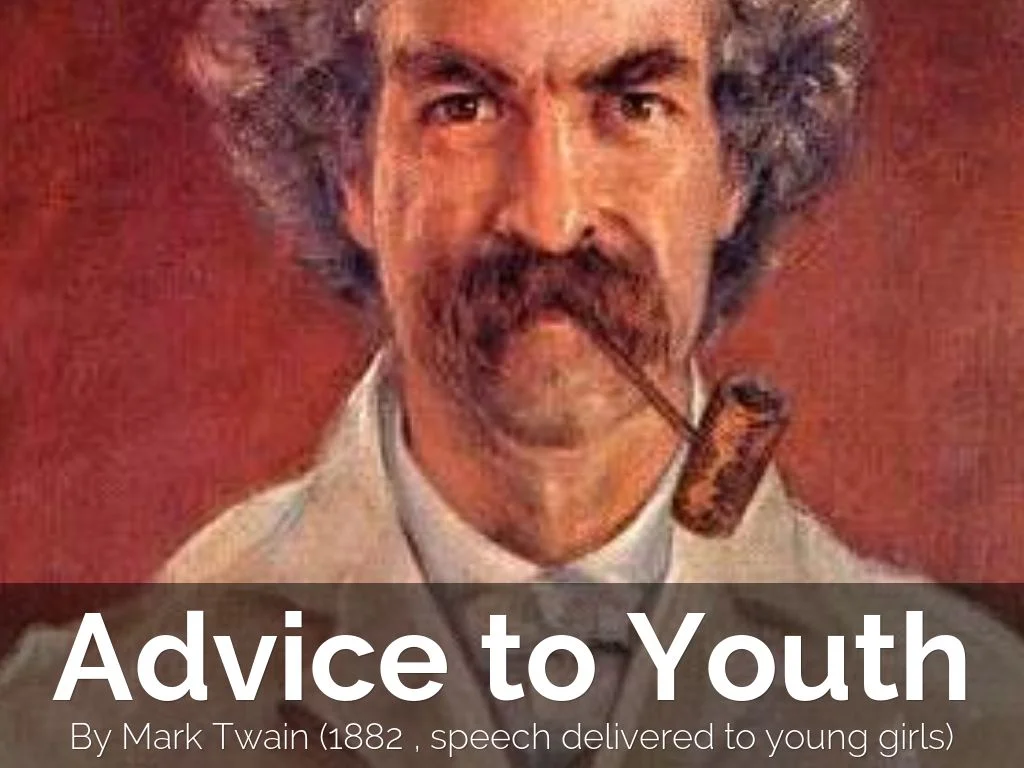
Source: http://www.emersoncentral.com/amscholar.ht...

Enjoyed this speech? Speakola is a labour of love and I’d be very grateful if you would share, tweet or like it. Thank you.

Facebook Twitter Facebook
In GUEST SPEAKER D Tags RALPH WALDO EMERSON, TRANSCRIPT, THE AMERICAN SCHOLAR, PHI BETA KAPPA, COMMENCEMENT
Comment

Virginia Rometty: 'It will not be a world of man versus machine, it will be a world of man plus machine', Northwestern - 2017

June 21, 2017

19 June 2015, Northwestern University, Evanston, Illinois, USA

Virginia Rometty is the first female CEO of IBM.

It is a great honor to get this degree, but it is a greater honor to sit and look at you, where I once sat and be up. To deliver your commencement speech.

I must say to all of you, as I remember sitting there, this is your day. Having been one of you, I know how hard you worked to get there. My own congratulations. One more applause for you from me. [applause] This is what happens with age. I will put my glasses on, and I will follow some advice. It was Franklin Roosevelt gave his son on speeches, he said, you be brief, you be sincere, and then you be seated.

Let me share what are three stories from my light. It is really the resulting lessons learned that i got the i humbly submit to you that as you leave, maybe somewhere down the line, you will find them of use. They come from three people close to me. One you will recognize, my mother. The other, my husband. For now, let's say, "a significant other."

The first story comes from my childhood. Like many, i grew up in a middle-class family not far from here, in a suburb of Chicago. I am the oldest. Like many of our time, we went to Sears for our school clothes. I remember one family vacation, a campout. It was a simple and very happy life. Then, one day, all of that changed. I was a teenager, and my father left my mother. In fact, he left us all. My mother, who had never worked a day in her life outside of our home found herself with four children, but soon, no money, no home, no food.

While she never ever complained, she never spoke of what happened, I must say, my brothers and sisters, we watched and we learned. She had to find a way to keep a roof over her head. She was so proud, she did what she had to do.

She found a way to go back to school in the day to get a degree, and then she worked at night so that we could quickly get by on her own. My mother was so determined to not let anyone define her as a failure, single mother, or anything worse, a victim. Through her actions, she taught us all - Never let anyone define you.

That is the first lesson i want to leave you with. Only you define who you are. Only you. [applause] i have to tell you, happy ending -- my mom got the associate degree and retired after 25 years from a hospital near Chicago. My brother and two sisters, they share among themselves five degrees from Dartmouth, Georgia Tech, and Northwestern, and think goodness for this doctorate because i was losing that race on number of degrees. [laughter]

My second story comes from early in my career. This is about risk-taking. I had worked for a senior executive, and he decided to go for a new job. He came in and said to me, 'Wonderful., you are the candidate to replace me.' I was called into the office and told with great excitement I would be offered this job.

I can remember my reaction. It was not the same great excitement. I looked at him and said, 'It is too early, I'm not ready, just give me a few more years and i will be ready for this, I need to go home and need top go sleep on it.' That evening, my husband -- he is up there ... well he's up in the stands. [laughter] my husband of 35 years -- oh boy . He says i never mention him, and then I do, and I mess it up. He sat and listened patiently to my story. He looked at me and said one thing. He said, 'do you think a man would have answered the question that way? I know you, in six months, you will be ready for something else.'

You know what, he was right. I went in the next day and i took that job. That takes me to my second lesson to leave you with - growth and comfort never coexist. I want you to close your eyes, if they are not already --  and ask yourself when have you learned the most, and I guarantee it will be when have you felt the most at risk.

This has proven to be a really important realization to me throughout my career. I have always looked for challenges, and I have found plenty.

This now brings you to my last story. This is about my quote "significant other." It is not about my past. It is about my future. A future I believe you're walking into.

So, it's early 2011, IBM Research has built a computing system, something the world has never seen. It is called Watson, now Watson is named after TJ Watson, IBM's founder and I am sitting not in a lab, but a TV studio. I'm watching Watson play Jeopardy against the two most successful human champions that have ever been.

Now I knew Watson, it stood on decades of our research, but now I'm watching Watson on television, doing something else. Watson talks, converses with Alex Trebek. He understands puns, metaphors, clues, buzzes, wagers, wins!

And it is an amazing moment. And one more time on the way home, i call my husband and say, and i remember to this day, 'I think i just saw history'.

I will come back to that story of Watson in a second.

But let me first share a brief perspective on the worldly you are walking into. I believe years from now, historians will look back and look at this as the dawn of a new era -- dawn of the new era. First, it is the new era of computing, something we call 'cognitive'.

Surprising as it may seem to all of you, the world has only known two eras of computing. I'm not going to make you engineers, don't worry about that. The first was the tabulating era,. machines that counted, that did the national census, this is what did the social security system. The second era is the programmable era, everything that you know to this day. Smarter systems, your smart phone, PC, no matter what it is. Now they do exactly what we tell them to do.

Now, you and we are entering a third era. Watson is an example of this. It's the first cognitive system. These are systems, you don't program them. they learn. They analyze more data than you will ever remember or handle. And they understand natural language, like i speak today. More importantly, like humans, I say, these systems reason. They deal with the gray area. When you go to make a decision, you think of and form a hypothesis and tested against -- test it against everything you know in your mind and quickly you come up with an answer.

But These systems do it with evidence and degrees of confidence. Some people call this artificial intelligence, now., AI. But the reality is this technology will enhance our thinking. Instead of artificial intelligence, i think it will augment our intelligence. It will not be a world of man versus machine, it will be a world of man plus machine.

In fact, i predict in our near future, every important decision mankind makes will be informed by cognitive system like Watson, and our lives and the world will be better off for it.

While this is hard to appreciate now, i think this dawn means that you sit at a very unique point in history. Footnote, there is one more thing -- the age you are facing is made possible by a natural resource. You recognize it around you. It is just the sheer amount of data.

One day you will look back and what steam was to the 18th century, electricity to the 19th centuryhydrocarbons to the 20th century, we are going to say data was to the 21st century. it's sheer volume is staggering. Every day, 500 million dvds worth of data is created. For all of you, 80% of the world's data was created during your junior and senior years.

This is why i think of it as a natural resource. It will be the phenomena of our time.

One more thing. The volume. Whether it is images, the photos you have taken, sensors, people blogging, texting -- which what some of you are probably doing maybe right now. I must tell you, normal systems will not understand it.

This brings you back to my story. It brings the back to Watson. And iIf you haven't guessed, he is is my "significant other." My husband is only one who did not want me to use significant other in this speech, by the way.

Since that day in Jeopardy 2011,. Watson has come a long way. Finance,. retail, insurance. But most of all hard at work in health care. In fact, we have had the honor of helping institutions like Memorial , cancer center, the New York Genome Center and the list goes on. Doctors will struggle with that exponential increase in information. By 2020, medical information will double every 72 days. But with the era we are about to enter, collaborators like Watson, abilty to digest all that information, then form hypotheses about your diagnosis and treatment. Our doctors will have a chance. 

So now it brings me forward to september 2012. It is another personal moment i will always remember. I was going to the theater with my husband in New york City, and Ihear someone yell out my name. I turned around and it is the CEO of a health care company that i work with. She looks at me and says, 'we will change the face of health care'. I fast forward to today and I tell many of my IBMers-- IBM has been privileged to play some of the greatest roles in history., whether it was to help do that census, to help land man on the moon, but make no mistake. Watson will be our modern-day moon shot.

And we will do our part to change the face ofhealth care.

Which brings me to the ending of the story. My final lesson to you -- Work on something that matters. Have a purpose. Northwestern has prepared you richly for this, but there is so much potential ahead. Choose your work with a purpose. You are all high achievers. You wanted to get here, and you got here. You will have many more goals in the years ahead. Do not confuse a goal with a purpose. You may find that purpose in business, public service, academia -- you choose.

But I hope for you is that you leave today with a purpose to change the world in some way. Congratulations again to the class of 2015, and to everyone who made this day possible for you. To paraphrase my earlier quote from Franklin Roosevelt, i hope i was brief, I know I was sincere, and now I will be seated.

Congratulations.

Source: https://www.c-span.org/video/?326217-1/vir...

Enjoyed this speech? Speakola is a labour of love and I’d be very grateful if you would share, tweet or like it. Thank you.

Facebook Twitter Facebook
In GUEST SPEAKER D Tags VIRGINIA ROMETTY, CEO, IBM, DATA, COMPUTERS, ARTIFICIAL INTELLIGENCE, AI, TRANSCRIPT, NORTHWESTERN, COGNITIVE COMPUTING
Comment

Maria Bamford: 'Was my alma mater lowballing me?', University of Minnesota - 2017

June 7, 2017

16 May 2017, University of Minnesota, USA

Oh my goodness. Oh my goodness. Hello. I completed my degree here in creative writing in 1993 and, I hope the following words reflect that education. I am honoured to be here. Thank you for listening.

Let me begin by talking about the elephant in the room at a liberal arts graduation ceremony. That is - money.

As a Minnesotan I am ashamed to admit that I love money.

I love a fair exchange of goods and services.

I love to buy things.

I love to get paid.

Also, perhaps, unlike most people of Norwegian heritage, I love full disclosure. I love open book accounting. What better way to combine these passions than by telling you the story of how I got paid to be speaking to you today.

Let us begin at the beginning. I will read a section of the email sent to me by the University, inviting me here. I'm paraphrasing for time, there are a lot more outrageous compliments. "We feel that as a graduate of the University of Minnesota, Maria is the perfect person to speak at the commencement. Clearly her path has taken her on to great success." This is my emphasis. "Normally, the college does not pay for commencement speakers. As you can imagine, being a state-funded institution, we have to be careful regarding the use of our resources."

Well, I thought to myself, "But I am a self-funded institution who needs to be careful regarding the use of my resources." Was my alma mater low-balling me?

I'm not a sitting governor. The football coach isn't living check to check.

My husband and I, we have two elderly, overweight dogs who need eye medication three times a day. Was the University of Minnesota College of Liberal Arts suggesting that I couldn't get paid for the exact job that I paid them to teach me how to get paid to do? That's what I meant.

Well, of course not.

This was just Goldy Gopher giving me a final exam. This is a very important one, a post-graduate course in the art of salary negotiation. I hope I passed. I went to my business advisor, Mr. Elliot Kashian. He is an Armenian-American business man living in West Milwaukee, Wisconsin. He's an aluminium siding salesman and a 79-year-old father of my dear friend, Jackie. I told him my story, he said one of the best pieces of advice I've ever gotten, which is ... You need to know this if you're gonna be a liberal arts major. "Never say no without a number."

I went back to the U, I counter-offered with $20,000. The University went dark. Two weeks response, nice waiting game, and came back with $10,000. Elliot Kashian wanted me to split the difference at $15,000 but I'm still from Duluth and filled with shame. I stand before you for the amount of $10,000. After taxes and commissions that's $5,000, it's the difference between gross and nett.

Also important to know, gross is the disgusting amount of money that you will never receive. Nett is the little bag that you get to take home, your sweet little roll. I am gonna get paid in cash with a gun on the table afterwards.

At this point you may say to yourself, "God, her voice is irritating. How can I avoid becoming this crass, money-grubbing comedian from Duluth with a visible tremor after being on several psychiatric medications?" Well, here is a list of very specific "don't's." I just want to let you know my salary for today will affect you directly later on the speech.

These are things ... if you don't want to become what you see before you, don't do these things.

Don't screw it up. Don't mess it up. Don't waste one minute. Don't with your Bachelor's from a fine college work only in pizza for five years. Don't busk for change on the streets of downtown Los Angeles playing a musical instrument poorly. Don't send your first tax return to the IRS with scrawling letters "Sorry! Smiley face. Don't get it." Don't do a touring Star Trek show of the southern states of this great nation where you have to say things like, "Greetings. I am Major [Lelanka 00:06:57] of the planet Bajor." "Get the F away from me!" "All right."

Don't date a Vulcan on said Star Trek show and get an STD. One of the most popular STDs you can get actually, I assume 50% of you have it. Afterwards, don't go to Planned Parenthood with that STD in Hollywood where the doctor says, "How did you let it get so bad?" You go to the Planned Parenthood in Hollywood, California and the doctor says, "How did you let it get so bad?" All right. Don't join five different 12-step support groups, none of which are AA, so people have to guess. "Hey, what is there besides AA?" Don't move to Adelaide, Australia for a year in hopes of marrying a clown, who is also bisexual and a meth addict.

By the way, these are all things I have done, if I haven't made that clear. Don't do your own bookkeeping in Quicken and QuickBooks and get audited by the IRS five times. Turns out they owed me $25. Kablam! I may be eccentric but I save my receipts in a bucket.

Don't move into cockroach-infested apartment where the landlord accepts sex for rent and then not have the money for rent. Wink. No, I was fine. I moved on to a friend's couch. Don't get fired by Warner Brothers, Nickelodeon, Super Crown Bookstore, Mark Ridley's Comedy Castle, the Tempe, Arizona Improv, a writing job for Martin Short, the TV show Hot in Cleveland with Betty White, and more to come. Don't leave jobs suddenly in tears: Harrah's Improv in Las Vegas, an hour before showtime in Chicago, or a TV commercial shoot for Target because you are overwhelmed and unable to talk. This is actually pretty difficult, at least it was for me. Don't try to kill yourself either actively or passively. Do stay alive, even for spite. If anyone is thinking of suicide don't do it. It's not the season for it. Late fall. I'm just telling you the statistics. In other words, don't F it up. Or if you're like me, do.

Keep trying. The cracks are where the light gets in. That which has been our greatest sorrow has been our deepest delight. Or the historic chant from the movie Meatballs in 1980 starring Bill Murray, "It just doesn't matter. It just doesn't matter. It just doesn't matter."

Now, back to money. Does anybody here have a debt to Sallie Mae? Oh my gosh, that's so exciting. To receive an invoice is to know that you are alive. Is anybody in the theatre arts programme that has a debt to Sallie Mae? You in the front row? Here, madame, how about you come up? Young lady, young lady. Good hustle, good hustle. Thank you so much. Come on up here if you can. Do you know, by the way, how much you are in debt for student loans? Not clear? Good to know. Good to know. My husband had debt for $17,000 in 1992 and now we just paid it for $53,000 this past year. What I'm giving to you is a check for $5,000 written to Sallie Mae. It has the address. I could've given you more, madame ... What is your name, I'm so sorry?

Elise: Elise.

Maria Bamford: Elise. I could've given you more but I did not negotiate for myself a higher salary. Good to know. Good to know. Thank you so much. Congratulations. Have a great day. Thank you so much.

Elise: Thank you so much. Thank you.

Maria Bamford: Enjoy.

Source: https://vimeo.com/217651951

Enjoyed this speech? Speakola is a labour of love and I’d be very grateful if you would share, tweet or like it. Thank you.

Facebook Twitter Facebook
In GUEST SPEAKER D Tags MARIA BAMFORD, UNIVERSITY OF MINNESOTA, COMMENCEMENT, LOWBALLING, TRANSCRIPT
Comment

Pharrell Williams: 'This generation is the first that understands that we need to lift up our women', NYU - 2017

June 7, 2017

17 May 2017, Yankee Stadium, New York City, New York, USA

Thank you. Hi everybody.

I'd like to start by thanking President Andrew Hamilton, Trustees and the NYU students and faculty for welcoming me into your halls last year and letting me have an experience that I honestly could have never imagined.

And I want to thank all of you for this humbling experience today. This is major. It's heavy. I am grateful. My mom is a lifelong educator — so this is gonna look good for me.

To be a part of a group like this is unimaginable. To speak on behalf of our group is an honor that I am not sure if I am qualified for. Their accomplishments... The body of work represented on this stage is staggering. We have history-makers. Miracle-workers in their own way. If their names aren't on buildings yet, they will be.

I like to say that I am forever a student, and its people like this that I'll forever learn from. They are fearless, boundless, multi-disciplined and multi-talented. They break down barriers and embody the focus and dedication this planet needs — even if, for Mark Kelly, it means leaving it from time to time.

Some may call them public servants, but their work is actually in service of humanity and standing with them here today… and it's blowing my mind.

In this day and age, it’s easy to lose sight of the fact that it's the people who serve humanity, that make our world go around. Most media and certainly social media would lead you to believe otherwise.

This group’s work doesn't fuel gossip. Sadly, it doesn't generate a lot of clicks amongst a sea of headlines designed to bait. Their work is often too important to be boiled down to just a quick headline. Their work has never been more important, yet as a society, we seem to celebrate less important achievements far more frequently. I am glad to be a part of a moment that recognizes these people.

Think about it… these great scientists, public servants, and activists cannot be bothered with building their Instagram followers. Or how many views they get on Youtube... But they are the real influencers. Their work makes us healthier, safer, more enriched, and more intelligent. Their work is designed to improve the quality of life for all people, not just themselves.

They are not motivated by attention. But rather, they are motivated by the idea of creating change. For the better.

I personally find that incredibly inspiring. I hope you do as well.

NYU — the school you all chose to attend — is going out of its way to honor this distinguished group. What will they honor you for someday? What will they honor you for?

Speaking to you guys today has me charged up. As you find your ways to serve humanity, it gives me great comfort knowing this generation is the first that understands that we need to lift up our women. Imagine the possibilities when we remove imbalance from the ether. Imagine the possibilities when women are not held back. Your generation is unraveling deeply entrenched laws, principles and misguided values that have held women back for far too long and therefore, have held us all back. The world you will live in will be better for it.

This is the first generation that navigates the world with the security and confidence to treat women as equal. You are the first ever. Our country has never seen this before. It makes some people uncomfortable. But just imagine the possibilities.

Today is in many ways a celebration of higher education.

I am forever a student... I believe it is a trait we all share. Yet we live in a time when a great education is harder and harder to come by.

But like anything in life, if there is enough demand, somebody will supply it.

To the graduates, you might think your time in education is done, but after you leave here today, I am asking you to let your actions out there in the world... fuel the demand for better education. Engage and inspire — whether on an individual level or loudly within your communities. Talk about your accomplishments. Be humble, but not too humble. Don't be invisible.

Sidebar... The days of being an anonymous activist or participant are over. How can we inspire if we are only behind the scenes? How will an anonymous donation ever inspire another? That was the way of previous generations. Don't be like them.

Let your actions serve as an endorsement for education and watch the demand rise.

Shining a light on a group of individuals like these on this stage also helps fuel the demand. It's why all of us standing here do what we do.

That same gene — those same feelings and adrenaline that fuel US — is inside all of you as well. Just like you, these recipients are brothers, sisters, sons, and daughters. We all put our pants on one leg at a time. We all have a daily commute, but we do so with an eye towards something bigger. Serving humanity.

There is no humanity without education. There is no education without demand.

You are all walking endorsements for education. Embrace it.

Thank you again to the students and faculty at NYU. Thank you to these remarkable individuals that I am standing with here. For your service, leadership and inspiration. We are all forever grateful.

Thank you.

Source: http://time.com/4782808/pharrell-williams-...

Enjoyed this speech? Speakola is a labour of love and I’d be very grateful if you would share, tweet or like it. Thank you.

Facebook Twitter Facebook
In GUEST SPEAKER D Tags PHARRELL WILLIAMS, SINGER, MUSICIAN, WOMEN, NYU, TRANSCRIPT
Comment

Hillary Clinton: 'Don't be afraid of your ambition, of your dreams, or even your anger', Wellesley College - 2017

June 7, 2017

26 May 2017, Wellesley College, Wellesley, Massachusetts, USA

Thank you. Thank you so much. Thank you very much for that warm welcome. I am so grateful to be here back at Wellesley, especially for President [Paula] Johnson's very first commencement, and would like to thank her, the trustees, families and friends, faculty, staff and guests for understanding and perpetuating the importance of this college: what it stands for, what it has meant and what it will do in the years ahead. And most importantly, it's wonderful to be here with another green class to say, congratulations to the class of 2017!

Now I have some of my dear friends here from my class, a green class of 1969. And I assume, or at least you can tell me later, unlike us, you actually have a class cheer. 1969 Wellesley. Yet another year with no class cheer. But it is such an honor to join with the college and all who have come to celebrate this day with you, and to recognize the amazing futures that await you.

You know, four years ago, maybe a little more or a little less for some of you — I told the trustees I was sitting with, after hearing Tala's speech, I didn't think I could get through it. So we'll blame allergy instead of emotion. But you know, you arrived at this campus. You arrived from all over. You joined students from 49 states and 58 countries. Now maybe you felt like you belonged right away. I doubt it. But maybe some of you did and you never wavered.

But maybe you changed your major three times and your hairstyle twice that many. Or maybe, after your first month of classes, you made a frantic collect call (ask your parents what that was) back to Illinois to tell your mother and father you weren't smart enough to be here. My father said, "Okay, come home." My mother said, "You have to stick it out." That's what happened to me.

But whatever your path, you dreamed big. You probably, in true Wellesley fashion, planned your academic and extracurricular schedule right down to the minute. So this day that you've been waiting for — and maybe dreading a little — is finally here.

As President Johnson said, I spoke at my commencement 48 years ago. I came back 25 years ago to speak at another commencement. I couldn't think of any place I'd rather be this year than right here.

Now, you may have heard that things didn't exactly go the way I planned. But you know what? I'm doing okay. I've gotten to spend time with my family, especially my amazing grandchildren. I was going to give the entire commencement speech about them but was talked out of it. Long walks in the woods, organizing my closets, right? I won't lie. Chardonnay helped a little, too.

But here's what helped most of all: remembering who I am, where I come from, and what I believe. And that is what Wellesley means to me. This college gave me so much. It launched me on a life of service and provided friends that I still treasure. So wherever your life takes you, I hope that Wellesley serves as that kind of touchstone for you.

Now if any of you are nervous about what you'll be walking into when you leave the campus, I know that feeling. I do remember my commencement. I'd been asked by my classmates to speak. I stayed up all night with my friends, the third floor of Davis, writing and editing my speech. By the time we gathered in the Academic Quad, I was exhausted. My hair was a wreck. The mortarboard made it worse. But I was pretty oblivious to all of that, because what my friends had asked me to do was to talk about our worries, and about our ability and responsibility to do something about them.

We didn't trust government, authority figures, or really anyone over 30, in large part thanks to years of heavy casualties and dishonest official statements about Vietnam, and deep differences over civil rights and poverty here at home. We were asking urgent questions about whether women, people of color, religious minorities, immigrants, would ever be treated with dignity and respect.

And by the way, we were furious about the past presidential election of a man whose presidency would eventually end in disgrace with his impeachment for obstruction of justice after firing the person running the investigation into him at the Department of Justice.

But here's what I want you to know. We got through that tumultuous time, and once again began to thrive as our society changed laws and opened the circle of opportunity and rights wider and wider for more Americans. We revved up the engines of innovation and imagination. We turned back a tide of intolerance and embraced inclusion. The "we" who did those things were more than those in power who wanted to change course. It was millions of ordinary citizens, especially young people, who voted, marched and organized.

Now, of course today has some important differences. The advance of technology, the impact of the internet, our fragmented media landscape, make it easier than ever to splinter ourselves into echo chambers. We can shut out contrary voices, avoid ever questioning our basic assumptions. Extreme views are given powerful microphones. Leaders willing to exploit fear and skepticism have tools at their disposal that were unimaginable when I graduated.

And here's what that means to you, the Class of 2017. You are graduating at a time when there is a full-fledged assault on truth and reason. Just log on to social media for 10 seconds. It will hit you right in the face. People denying science, concocting elaborate, hurtful conspiracy theories about child-abuse rings operating out of pizza parlors, drumming up rampant fear about undocumented immigrants, Muslims, minorities, the poor, turning neighbor against neighbor and sowing division at a time when we desperately need unity. Some are even denying things we see with our own eyes, like the size of crowds, and then defending themselves by talking about quote-unquote "alternative facts."

But this is serious business. Look at the budget that was just proposed in Washington. It is an attack of unimaginable cruelty on the most vulnerable among us, the youngest, the oldest, the poorest and hard-working people who need a little help to gain or hang on to a decent middle class life. It grossly under-funds public education, mental health and efforts even to combat the opioid epidemic. And in reversing our commitment to fight climate change, it puts the future of our nation and our world at risk. And to top it off, it is shrouded in a trillion-dollar mathematical lie. Let's call it what it is. It's a con. They don't even try to hide it.

Why does all this matter? It matters because if our leaders lie about the problems we face, we'll never solve them. It matters because it undermines confidence in government as a whole, which in turn breeds more cynicism and anger. But it also matters because our country, like this College, was founded on the principles of the Enlightenment — in particular, the belief that people, you and I, possess the capacity for reason and critical thinking, and that free and open debate is the lifeblood of a democracy. Not only Wellesley, but the entire American university system — the envy of the world — was founded on those fundamental ideals. We should not abandon them; we should revere them. We should aspire to them every single day, in everything we do.

And there's something else. As the history majors among you here today know all too well, when people in power invent their own facts, and attack those who question them, it can mark the beginning of the end of a free society. That is not hyperbole. It is what authoritarian regimes throughout history have done. They attempt to control reality — not just our laws and rights and our budgets, but our thoughts and beliefs.

Right now, some of you might wonder, well why am I telling you all this? You don't own a cable news network. You don't control the Facebook algorithm. You aren't a member of Congress —yet. Because I believe with all my heart that the future of America — indeed, the future of the world — depends on brave, thoughtful people like you insisting on truth and integrity, right now, every day. You didn't create these circumstances, but you have the power to change them.

Vaclav Havel, the dissident playwright, first President of the Czech Republic, wrote an essay called "The Power of the Powerless." And in it, he said: "The moment someone breaks through in one place, when one person cries out, 'The emperor is naked!' — when a single person breaks the rules of the game, thus exposing it as a game — everything suddenly appears in another light."

What he's telling us is if you feel powerless, don't. Don't let anyone tell you your voice doesn't matter. In the years to come, there will be trolls galore — online and in person — eager to tell you that you don't have anything worthwhile to say or anything meaningful to contribute. They may even call you a Nasty Woman. Some may take a slightly more sophisticated approach and say your elite education means you are out of touch with real people. In other words, "sit down and shut up." Now, in my experience, that's the last thing you should ever tell a Wellesley graduate.

And here's the good news. What you've learned these four years is precisely what you need to face the challenges of this moment. First, you learned critical thinking. I can still remember the professors who challenged me to make decisions with good information, rigorous reasoning, real deliberation. I know we didn't have much of that in this past election, but we have to get back to it. After all, in the words of my predecessor in the Senate, Daniel Patrick Moynihan, "Everyone is entitled to his own opinion, but not his own facts."

And your education gives you more than knowledge. It gives you the power to keep learning and apply what you know to improve your life and the lives of others. Because you are beginning your careers with one of the best educations in the world, I think you do have a special responsibility to give others the chance to learn and think for themselves, and to learn from them, so that we can have the kind of open, fact-based debate necessary for our democracy to survive and flourish. And along the way, you may be convinced to change your mind from time to time. You know what? That's okay. Take it from me, the former president of the Wellesley College Young Republicans.

Second, you learned the value of an open mind and an open society. At their best, our colleges and universities are free market places of ideas, embracing a diversity of perspectives and backgrounds. That's our country at our best, too. An open, inclusive, diverse society is the opposite of and antidote to a closed society, where there is only one right way to think, believe, and act. Here at Wellesley, you've worked hard to turn this ideal into a reality. You've spoken out against racism and sexism and xenophobia and discrimination of all kinds. And you've shared your own stories. And at times that's taken courage. But the only way our society will ever become a place where everyone truly belongs is if all of us speak openly and honestly about who we are, what we're going through. So keep doing that.

And let me add that your learning, listening, and serving should include people who don't agree with you politically. A lot of our fellow Americans have lost faith in the existing economic, social, political, and cultural conditions of our country.

Many feel left behind, left out, looked down on. Their anger and alienation has proved a fertile ground for false promises and false information. Their economic problems and cultural anxiety must be addressed, or they will continue to sign up to be foot-soldiers in the ongoing conflict between "us" and "them."

The opportunity is here. Millions of people will be hurt by the policies, including this budget that is being considered. And many of these same people don't want DREAMers deported their health care taken away. Many don't want to retreat on civil rights, women's rights, and LGBT rights. So if your outreach is rebuffed, keep trying. Do the right thing anyway. We're going to share this future. Better to do so with open hearts and outstretched hands than closed minds and clenched fists.

And third, here at Wellesley, you learned the power of service. Because while free and fierce conversations in classrooms, dorm rooms, dining halls are vital, they only get us so far. You have to turn those ideas and those values into action. This College has always understood that. The motto which you've heard twice already, "Not to be ministered unto, but to minister" is as true today as it ever was. If you think about it, it's kind of an old-fashioned rendering of President Kennedy's great statement, "Ask not what your country can do for you, ask what you can do for your country."

Not long ago, I got a note from a group of Wellesley alums and students who had supported me in the campaign. They worked their hearts out. And, like a lot of people, they're wondering: What do we do now?

Well I think there's only one answer, to keep going. Don't be afraid of your ambition, of your dreams, or even your anger – those are powerful forces. But harness them to make a difference in the world. Stand up for truth and reason. Do it in private – in conversations with your family, your friends, your workplace, your neighborhoods. And do it in public—in Medium posts, on social media, or grab a sign and head to a protest. Make defending truth and a free society a core value of your life every single day.

So wherever you wind up next, the minute you get there, register to vote, and while you're at it, encourage others to do so. And then vote in every election, not just the presidential ones. Bring others to vote. Fight every effort to restrict the right of law-abiding citizens to be able to vote as well. Get involved in a cause that matters to you. Pick one, start somewhere. You don't have to do everything, but don't sit on the sidelines. And you know what? Get to know your elected officials. If you disagree with them, ask questions. Challenge them. Better yet, run for office yourself some day. Now that's not for everybody, I know. And it's certainly not for the faint of heart. But it's worth it. As they say in one of my favorite movies, A League of Their Own, "It's supposed to be hard. The hard is what makes it great."

As Tala said, the day after the election, I did want to speak particularly to women and girls everywhere, especially young women, because you are valuable and powerful and deserving of every chance and opportunity in the world. Not just your future, but our future depends on you believing that. We need your smarts, of course, but we also need your compassion, your curiosity, your stubbornness. And remember, you are even more powerful because you have so many people supporting you, cheering you on, standing with you through good times and bad.

Our culture often celebrates people who appear to go it alone. But the truth is, that's not how life works. Anything worth doing takes a village. And you build that village by investing love and time into your relationships. And in those moments for whatever reason when it might feel bleak, think back to this place where women have the freedom to take risks, make mistakes, even fail in front of each other. Channel the strength of your Wellesley classmates and experiences. I guarantee you it'll help you stand up a little straighter, feel a little braver, knowing that the things you joked about and even took for granted can be your secret weapons for your future.

One of the things that gave me the most hope and joy after the election, when I really needed it, was meeting so many young people who told me that my defeat had not defeated them. And I'm going to devote a lot of my future to helping you make your mark in the world. I created a new organization called Onward Together to help recruit and train future leaders, and organize for real and lasting change. The work never ends.

When I graduated and made that speech, I did say, and some of you might have pictures from that day with this on it, "The challenge now is to practice politics as the art of making what appears to be impossible, possible." That was true then. It's truer today. I never could have imagined where I would have been 48 years later — certainly never that I would have run for the Presidency of the United States or seen progress for women in all walks of life over the course of my lifetime. And yes, put millions of more cracks in that highest and hardest glass ceiling.

Because just in those years, doors that once seemed sealed to women are now opened. They're ready for you to walk through or charge through, to advance the struggle for equality, justice, and freedom.

So whatever your dreams are today, dream even bigger. Wherever you have set your sights, raise them even higher. And above all, keep going. Don't do it because I asked you so. Do it for yourselves. Do it for truth and reason. Do it because the history of Wellesley and this country tells us it's often during the darkest times when you can do the most good. Double down on your passions. Be bold. Try, fail, try again, and lean on each other. Hold on to your values. Never give up on those dreams.

I'm very optimistic about the future, because I think, after we've tried a lot of other things, we get back to the business of America. I believe in you. With all my heart, I want you to believe in yourselves. So go forth, be great. But first, graduate.

Congratulations!

Source: http://www.cnbc.com/2017/05/28/hillary-cli...

Enjoyed this speech? Speakola is a labour of love and I’d be very grateful if you would share, tweet or like it. Thank you.

Facebook Twitter Facebook
In GUEST SPEAKER D Tags HILLARY CLINTON, WELLESLEY, SECRETARY OF STATE, PRESIDENTIAL CANDIDATE, DONALD TRUMP
Comment

Mark Zuckerberg: 'Finding your purpose isn't enough', Harvard University - 2017

June 7, 2017

25 May 2017, Harvard University, Boston, Massachusetts, USA

President Faust, Board of Overseers, faculty, alumni, friends, proud parents, members of the ad board, and graduates of the greatest university in the world. I’m honored to be with you today because, let’s face it, you accomplished something I never could. If I get through this speech, it’ll be the first time I actually finish something at Harvard. Class of 2017, congratulations!

I’m an unlikely speaker, not just because I dropped out, but because we’re technically in the same generation. We walked this yard less than a decade apart, studied the same ideas and slept through the same Ec10 lectures. We may have taken different paths to get here, especially if you came all the way from the Quad, but today I want to share what I’ve learned about our generation and the world we’re building together.

But first, the last couple of days have brought back a lot of good memories.

How many of you remember exactly what you were doing when you got that email telling you that you got into Harvard? I was playing Civilization and I ran downstairs, got my dad, and for some reason, his reaction was to video me opening the email. That could have been a really sad video. I swear getting into Harvard is still the thing my parents are most proud of me for.

What about your first lecture at Harvard? Mine was Computer Science 121 with the incredible Harry Lewis. I was late so I threw on a t-shirt and didn’t realize until afterwards it was inside out and backwards with my tag sticking out the front. I couldn’t figure out why no one would talk to me—except one guy, KX Jin, he just went with it. We ended up doing our problem sets together, and now he runs a big part of Facebook. And that, Class of 2017, is why you should be nice to people.

But my best memory from Harvard was meeting Priscilla. I had just launched this prank website Facemash, and the ad board wanted to “see me”. Everyone thought I was going to get kicked out. My parents came to help me pack. My friends threw me a going-away party. As luck would have it, Priscilla was at that party with her friend. We met in line for the bathroom in the Pfoho Belltower, and in what must be one of the all-time romantic lines, I said: “I’m going to get kicked out in three days, so we need to go on a date quickly.”

Actually, any of you graduating can use that line.

I didn’t end up getting kicked out—I did that to myself. Priscilla and I started dating. And, you know, that movie made it seem like Facemash was so important to creating Facebook. It wasn’t. But without Facemash I wouldn’t have met Priscilla, and she’s the most important person in my life, so you could say it was the most important thing I built in my time here.

We’ve all started lifelong friendships here, and some of us even families. That’s why I’m so grateful to this place. Thanks, Harvard.

Today I want to talk about purpose. But I’m not here to give you the standard commencement about finding your purpose. We’re millennials. We’ll try to do that instinctively. Instead, I’m here to tell you finding your purpose isn’t enough. The challenge for our generation is creating a world where everyone has a sense of purpose.

One of my favorite stories is when John F. Kennedy visited the NASA space center, he saw a janitor carrying a broom and he walked over and asked what he was doing. The janitor responded: “Mr. President, I’m helping put a man on the moon.”

Purpose is that sense that we are part of something bigger than ourselves, that we are needed, that we have something better ahead to work for. Purpose is what creates true happiness.

You’re graduating at a time when this is especially important. When our parents graduated, purpose reliably came from your job, your church, your community. But today, technology and automation are eliminating many jobs. Membership in communities is declining. Many people feel disconnected and depressed, and are trying to fill a void.

As I’ve traveled around, I’ve sat with children in juvenile detention and opioid addicts, who told me their lives could have turned out differently if they just had something to do, an after-school program or somewhere to go. I’ve met factory workers who know their old jobs aren’t coming back and are trying to find their place.

To keep our society moving forward, we have a generational challenge—to not only create new jobs, but create a renewed sense of purpose.

I remember the night I launched Facebook from my little dorm in Kirkland House. I went to Noch’s with my friend KX. I remember telling him I was excited to connect the Harvard community, but one day someone would connect the whole world.

The thing is, it never even occurred to me that someone might be us. We were just college kids. We didn’t know anything about that. There were all these big technology companies with resources. I just assumed one of them would do it. But this idea was so clear to us—that all people want to connect. So we just kept moving forward, day by day.

I know a lot of you will have your own stories just like this. A change in the world that seems so clear you’re sure someone else will do it. But they won’t. You will.

But it’s not enough to have purpose yourself. You have to create a sense of purpose for others. I found that out the hard way. You see, my hope was never to build a company, but to make an impact. And as all these people started joining us, I just assumed that’s what they cared about too, so I never explained what I hoped we’d build.

A couple years in, some big companies wanted to buy us. I didn’t want to sell. I wanted to see if we could connect more people. We were building the first News Feed, and I thought if we could just launch this, it could change how we learn about the world.

Nearly everyone else wanted to sell. Without a sense of higher purpose, this was the startup dream come true. It tore our company apart. After one tense argument, an advisor told me if I didn’t agree to sell, I would regret the decision for the rest of my life. Relationships were so frayed that within a year or so every single person on the management team was gone.

That was my hardest time leading Facebook. I believed in what we were doing, but I felt alone. And worse, it was my fault. I wondered if I was just wrong, an imposter, a 22 year-old kid who had no idea how the world worked.

Now, years later, I understand that is how things work with no sense of higher purpose. It’s up to us to create it so we can all keep moving forward together.

Today I want to talk about three ways to create a world where everyone has a sense of purpose: by taking on big meaningful projects together, by redefining equality so everyone has the freedom to pursue purpose, and by building community across the world.

First, let’s take on big meaningful projects.

Our generation will have to deal with tens of millions of jobs replaced by automation like self-driving cars and trucks. But we have the potential to do so much more together.

Every generation has its defining works. More than 300,000 people worked to put a man on the moon—including that janitor. Millions of volunteers immunized children around the world against polio. Millions of more people built the Hoover Dam and other great projects.

These projects didn’t just provide purpose for the people doing those jobs, they gave our whole country a sense of pride that we could do great things.

Now it’s our turn to do great things. I know, you’re probably thinking: I don’t know how to build a dam, or get a million people involved in anything.

But let me tell you a secret: No one does when they begin. Ideas don’t come out fully formed. They only become clear as you work on them. You just have to get started.

If I had to understand everything about connecting people before I began, I never would have started Facebook.

Movies and pop culture get this all wrong. The idea of a single eureka moment is a dangerous lie. It makes us feel inadequate since we haven’t had ours. It prevents people with seeds of good ideas from getting started.

Oh, you know what else movies get wrong about innovation? No one writes math formulas on glass. That’s not a thing.

It’s good to be idealistic. But be prepared to be misunderstood. Anyone working on a big vision will get called crazy, even if you end up right. Anyone working on a complex problem will get blamed for not fully understanding the challenge, even though it’s impossible to know everything upfront. Anyone taking initiative will get criticized for moving too fast, because there’s always someone who wants to slow you down.

In our society, we often don’t do big things because we’re so afraid of making mistakes that we ignore all the things wrong today if we do nothing. The reality is, anything we do will have issues in the future. But that can’t keep us from starting.

So what are we waiting for? It’s time for our generation-defining public works. How about stopping climate change before we destroy the planet, and getting millions of people involved manufacturing and installing solar panels? How about curing all diseases and asking volunteers to track their health data and share their genomes? Today we spend 50x more treating people who are sick than we spend finding cures so people don’t get sick in the first place. That makes no sense. We can fix this. How about modernizing democracy so everyone can vote online, and personalizing education so everyone can learn?

These achievements are within our reach. Let’s do them all in a way that gives everyone in our society a role. Let’s do big things, not only to create progress, but to create purpose. So taking on big meaningful projects is the first thing we can do to create a world where everyone has a sense of purpose.

The second is redefining equality to give everyone the freedom they need to pursue purpose. Many of our parents had stable jobs throughout their careers. Now we’re all entrepreneurial, whether we’re starting projects or finding or role. And that’s great. Our culture of entrepreneurship is how we create so much progress.

Now, an entrepreneurial culture thrives when it’s easy to try lots of new ideas. Facebook wasn’t the first thing I built. I also built games, chat systems, study tools and music players. I’m not alone. JK Rowling got rejected 12 times before publishing Harry Potter. Even Beyonce had to make hundreds of songs to get “Halo.” The greatest successes come from having the freedom to fail.

But today, we have a level of wealth inequality that hurts everyone. When you don’t have the freedom to take your idea and turn it into a historic enterprise, we all lose. Right now our society is way over-indexed on rewarding success and we don’t do nearly enough to make it easy for everyone to take lots of shots.

Let’s face it. There is something wrong with our system when I can leave here and make billions of dollars in 10 years while millions of students can’t afford to pay off their loans, let alone start a business.

Look, I know a lot of entrepreneurs, and I don’t know a single person who gave up on starting a business because they might not make enough money. But I know lots of people who haven’t pursued dreams because they didn’t have a cushion to fall back on if they failed.

We all know we don’t succeed just by having a good idea or working hard. We succeed by being lucky too. If I had to support my family growing up instead of having time to code, if I didn’t know I’d be fine if Facebook didn’t work out, I wouldn’t be standing here today. If we’re honest, we all know how much luck we’ve had.

Every generation expands its definition of equality. Previous generations fought for the vote and civil rights. They had the New Deal and Great Society. Now it’s our time to define a new social contract for our generation.

We should have a society that measures progress not just by economic metrics like GDP, but by how many of us have a role we find meaningful. We should explore ideas like universal basic income to give everyone a cushion to try new things. We’re going to change jobs many times, so we need affordable child care to get to work and health care that aren’t tied to one company. We’re all going to make mistakes, so we need a society that focuses less on locking us up or stigmatizing us. And as technology keeps changing, we need to focus more on continuous education throughout our lives.

And yes, giving everyone the freedom to pursue purpose isn’t free. People like me should pay for it. Many of you will do well and you should too.

That’s why Priscilla and I started the Chan Zuckerberg Initiative and committed our wealth to promoting equal opportunity. These are the values of our generation. It was never a question of if we were going to do this. The only question was when.

Millennials are already one of the most charitable generations in history. In one year, three of four US millennials made a donation and seven out of ten raised money for charity.

But it’s not just about money. You can also give time. I promise you, if you take an hour or two a week—that’s all it takes to give someone a hand, to help them reach their potential.

Maybe you think that’s too much time. I used to. When Priscilla graduated from Harvard she became a teacher, and before she’d do education work with me, she told me I needed to teach a class. I complained: “Well, I’m kind of busy. I’m running this company.” But she insisted, so I taught a middle-school program on entrepreneurship at the local Boys and Girls Club.

I taught them lessons on product development and marketing, and they taught me what it’s like feeling targeted for your race and having a family member in prison. I shared stories from my time in school, and they shared their hope of one day going to college too. For five years now, I’ve been having dinner with those kids every month. One of them threw me and Priscilla our first baby shower. And next year they’re going to college. Every one of them. First in their families.

We can all make time to give someone a hand. Let’s give everyone the freedom to pursue their purpose—not only because it’s the right thing to do, but because when more people can turn their dreams into something great, we’re all better for it.

Purpose doesn’t only come from work. The third way we can create a sense of purpose for everyone is by building community. And when our generation says “everyone,” we mean everyone in the world.

Quick show of hands: How many of you are from another country? Now, how many of you are friends with one of these folks? Now we’re talking. We have grown up connected.

In a survey asking millennials around the world what defines our identity, the most popular answer wasn’t nationality, religion or ethnicity, it was “citizen of the world”. That’s a big deal. Every generation expands the circle of people we consider “one of us.” For us, it now encompasses the entire world.

We understand the great arc of human history bends towards people coming together in ever greater numbers—from tribes to cities to nations—to achieve things we couldn’t on our own.

We get that our greatest opportunities are now global—we can be the generation that ends poverty, that ends disease. We get that our greatest challenges need global responses too—no country can fight climate change alone or prevent pandemics. Progress now requires coming together not just as cities or nations, but also as a global community.

But we live in an unstable time. There are people left behind by globalization across the world. It’s hard to care about people in other places if we don’t feel good about our lives here at home. There’s pressure to turn inwards.

This is the struggle of our time. The forces of freedom, openness and global community against the forces of authoritarianism, isolationism, and nationalism. Forces for the flow of knowledge, trade and immigration against those who would slow them down. This is not a battle of nations, it’s a battle of ideas. There are people in every country for global connection and good people against it.

This isn’t going to be decided at the UN either. It’s going to happen at the local level, when enough of us feel a sense of purpose and stability in our own lives that we can open up and start caring about everyone. The best way to do that is to start building local communities right now.

We all get meaning from our communities. Whether our communities are houses or sports teams, churches or music groups, they give us that sense we are part of something bigger, that we are not alone; they give us the strength to expand our horizons.

That’s why it’s so striking that for decades, membership in all kinds of groups has declined as much as one-quarter. That’s a lot of people who now need to find purpose somewhere else.

But I know we can rebuild our communities and start new ones because many of you already are.

I met Agnes Igoye, who’s graduating today. Where are you, Agnes? She spent her childhood navigating conflict zones in Uganda, and now she trains thousands of law-enforcement officers to keep communities safe.

I met Kayla Oakley and Niha Jain, graduating today, too. Stand up. Kayla and Niha started a nonprofit that connects people suffering from illnesses with people in their communities willing to help.

I met David Razu Aznar, graduating from the Kennedy School today. David, stand up. He’s a former city councilor who successfully led the battle to make Mexico City the first Latin American city to pass marriage equality—even before San Francisco.

This is my story too. A student in a dorm room, connecting one community at a time, and keeping at it until one day we connect the whole world.

Change starts local. Even global changes start small—with people like us. In our generation, the struggle of whether we connect more, whether we achieve our biggest opportunities, comes down to this—your ability to build communities and create a world where every single person has a sense of purpose.

Class of 2017, you are graduating into a world that needs purpose. It’s up to you to create it. Now, you may be thinking: Can I really do this?

Remember when I told you about that class I taught at the Boys and Girls Club? One day after class I was talking to them about college, and one of my top students raised his hand and said he wasn’t sure he could go because he’s undocumented. He didn’t know if they’d let him in.

Last year I took him out to breakfast for his birthday. I wanted to get him a present, so I asked him and he started talking about students he saw struggling and said, “You know, I’d really just like a book on social justice.”

I was blown away. Here’s a young guy who has every reason to be cynical. He didn’t know if the country he calls home—the only one he’s known—would deny him his dream of going to college. But he wasn’t feeling sorry for himself. He wasn’t even thinking of himself. He has a greater sense of purpose, and he’s going to bring people along with him.

It says something about our current situation that I can’t even say his name because I don’t want to put him at risk. But if a high-school senior who doesn’t know what the future holds can do his part to move the world forward, then we owe it to the world to do our part too.

Before you walk out those gates one last time, as we sit in front of Memorial Church, I am reminded of a prayer, Mi Shebeirach, that I say whenever I face a challenge, that I sing to my daughter thinking about her future when I tuck her into bed. It goes:”May the source of strength, who blessed the ones before us, help us find the courage to make our lives a blessing.”

I hope you find the courage to make your life a blessing.

Congratulations, Class of ’17! Good luck out there.

Source: https://qz.com/992048/mark-zuckerbergs-har...

Enjoyed this speech? Speakola is a labour of love and I’d be very grateful if you would share, tweet or like it. Thank you.

Facebook Twitter Facebook
In GUEST SPEAKER D Tags MARK ZUCKERBERG, HARVARD, FACEBOOK, TRANSCRIPT
2 Comments

Colson Whitehead: 'Welcome to the complications'. Connecticut College - 2017

June 7, 2017

21 May 2017, Connecticut College, New London, Connecticut

Somehow you did it. You made it through the meat grinder of elementary school, your teenage years, and now college, with most if not all of your limbs intact. That’s quite a feat. I salute you. There’s a great big world out there waiting for you, and all sorts of possibilities. Time for you to follow your star. Find a soulmate. Find yourself, finally.

Or so they say.

Any good story has three parts. Act I, where we meet the protagonist and establish the rules of the world. How do things work? What kind of person is our heroine, and what sort of world has she been born into? What does she want, how does she see herself? The all-important foundation of the narrative.

Then comes Act II – where the complications appear that set our heroine on her journey. These are the unexpected and unforeseen events that upend the rules of Act I. The meteor is on a collision course with Earth - what do we do? There’s an accident, an attack that destroys the peaceful order of everything has come before. A demented con man takes control of the country. That foundation of Act I is undermined, the assumptions of our heroine are tested.

Then we get to Act III, the synthesis of Act I and Act II. All the chaos of the middle section is brought to some kind of resolution. A new heroine is born out of her struggle. The meteor collides, or it doesn’t. Out of the rubble of the attack, a new city rises. The con man is exposed for his swindles and gets his just desserts, or doesn’t.

Thesis – antithesis – synthesis. I guess in college I might have used the analogy of Saturday evening – Saturday night – Sunday morning. Saturday evening is, “I’m sure looking forward to this party tonight!” Act I. Saturday night is the complication of Act II– all sorts of crazy stuff is happening at the party – clowns, chocolate pudding. And Sunday morning, in Act III, a new self awakes and says, “After that whole chocolate pudding thing last night, I’m going to have to reconsider some long-held beliefs about myself.”

The narrative arc of a story, a night. A life.

Like I said, you’ve just finished Act I. You know some things about the world. Have developed a few theories about how things work. Sure, that freshman year seminar on Marx added a wrinkle, and that social justice course really threw you for a loop – who knew all that was going on? — but you recovered splendidly. With the end of Act I, you’re ready to head out into the world, follow your star, find a soulmate. Find yourself. Believe in yourself, you can do anything.

Here come the complications.

“Find a soulmate.” Find the person who really gets you, understands what makes you tick like no other. The one person in the universe who can look past that front you present to the world and see the real you behind it. I’m not the first one to point this out, but in all probability, your soulmate is dead. It’s simple numbers, I’m not trying to be a negative Nelly. Scientists say that 107 billion people have lived on Earth up to this moment, and there are 7 billion people alive on the planet right now. The odds speak for themselves. Perhaps your soulmate was a humble servant in ancient Egypt, washing primitive textiles in the waters of the Nile, or a Christian soldier during the Crusades, trying to wipe out his Muslim brother on the other side of the battlefield. Or, less mundane, someone famous, a maker of history, like Napoleon or Harriet Tubman. Which would have sucked, because Napoleon and Harriet Tubman had to travel a lot for work and you wouldn’t see them that much, between the world conquest thing and Underground Railroad thing, and I don’t even think they had Skype back then.

Maybe your soulmate is not one of the 107 billion who have come before, but one of the 7 billion on Earth right now. And they’re an antique dealer in New Zealand, or a cook in food market in Thailand. Are you going to New Zealand any time soon, or Thailand? What are the chances that you’d run into each other even if you were going – meet eyes over an antique bust of Abraham Lincoln, or visit the kitchen to compliment the cook on the excellent beef larb? Maybe they’re sick that day. You can’t meet everyone. In fact some of you soon-to-be graduates are looking around right now going, “That guy was in my class? I’ve literally never seen him before!” It’s big world, and it conspires against you through numbers.

Maybe they’re 95 years old, and it’s some May – December soulmate situation, but sadly they won't live long enough for you to decide to go to New Zealand. It’s a tragedy. Or they’re not even born yet. You are one of their “107 billion people” who lived on Earth before they showed up. And you’ll never get to have a romantic dinner on that Martian colony where we’ve fled to because of global warming, never get a chance to say, “I’m lucky to have found you, and can you pass the Soylent Green.”

Complications.

“Follow your star.” At least here, you have it better than ancient peoples, and the fact that you live in the 20th century isn’t held against you. Back then, you had to squint at the night sky to find your star. Maybe it was in Ursa Minor, and you had to get up at 4 am to see it - taking into consideration the rotation of the earth - and you couldn’t even set an alarm on your iPhone to wake them up. Sure, nowadays we have light pollution from the cities and you have to go to the desert for a really unspoiled view, but we have telescopes. We have the Hubble telescope, a magnificent scientific achievement, that allows us to see stars as far away as 13 billion light years. And one them, one of those twinkling beauties in the eternal void is the one that speaks to you, guiding your life’s path through the darkness. Your odds have just shot up. Certainly in 10 trillion galaxies, each of which contains a 100 million stars, one of them shines just for you. All you have to do is look.

I hate to burst your Hubble bubble, but there are complications. Given how long it takes for light to travel through the vast and indifferent interstellar cold of the universe, the star you see tonight, beckoning, may have died millions of years ago. It’s light is only just reaching us, but it’s long, long dead, and we only think it is real. I’m sure it’s not the first time something in your life has turned out to be other than what it first seemed. Your freshman year roommate, for example. Maybe that perfect thing in the sky twinkling with promise and meaning has collapsed on itself long ago and become a supermassive black hole, the most deadly force in the universe, sucking up everything that strays into its gravitational field and obliterating it, rending it into atoms. An entity of pure destruction. Like your freshman year roommate.

And speaking of the failure of language and the troublesome problem of relativity, we come to “Find yourself.” By now you know the self is an ever-changing creature, a nebula of spinning gasses, swirling and reforming, seeking a coherent shape. There’s the you of your elementary school years, making your first tentative guesses at how people operate, how you operate. The teenage you, taking a stab at an identity apart from your family and friends, and making some really stupid clothing choices. And then college, finally set free from the home life that has defined, confined, and confounded you for so long. The mutable self. The complications of Act II, which will tip all you have been before into chaos, have been set up and abetted by really clever foreshadowing in Act I, by all those slippery you’s over the years. In some ways, you've always been a creature of chaos.

Complications, complications.

Which brings us to Act III. Synthesis. If you read about Hollywood, they’ll often complain about a script’s “Third Act problems.” The setup is great – Jennifer Lawrence is the spinster schoolteacher who comes back for her high school reunion. Channing Tatum is her long lost childhood sweetheart, he’s a…let's see…a marine biologist Navy Seal, just back from Afghanistan. Ice Cube plays the principal – he’s a riot. The reunion is full of shenanigans -- clowns, chocolate pudding -- but now we have figure out the Third Act. Do these two star-crossed lovers get together? What is this story saying about the world, saying about Love and Possibility? Do we have an uplifting story of triumph on our hands, or a tragedy? We didn’t bother to figure out the ending before we started rolling the cameras.

Act III is everything. No matter the strength of the foundation, the assorted catastrophes of the Second Act, if we don’t have ACT III, we’re really in trouble. Will the heroine pull it out in the end, or does she falter? Justice prevail, or the dull villainy of the world triumph? Here’s the problem of every storyteller – to make sense of the chaos, to gather all the plot strands into dramatic unity. To figure out the ending, no matter what the plot throws at you.

I've talked a lot about numbers, and the indifference of the universe. But maybe here, in Act III, the numbers are on your side, in the Walt Whitman-esque multitude of you. You add up to a lot, over the years -- the 4 year old you apprehending the otherness of other people for the first time, the 14 year old you recognizing yourself in a line of Shakespeare, the you sitting here right now, wondering what comes next. And those future selves, at 25 and 45 and 65, adapting, pratfalling, and picking themselves up. All those shifting, jostling you’s, and all their lessons. The universe may seem like a lonely place sometimes, but there are as many you’s as there are stars in the sky. Maybe one of them will step up at the right time and tell you what to make of it all.

Congratulations again on finishing Act I. Welcome to the complications.

Source: http://time.com/4788071/colson-whitehead-t...

Enjoyed this speech? Speakola is a labour of love and I’d be very grateful if you would share, tweet or like it. Thank you.

Facebook Twitter Facebook
In GUEST SPEAKER D Tags COLSON WHITEHEAD, PULITZER PRIZE, TRANSCRIPT, CONNECTICUT COLLEGE, COMMENCEMENT, WRITING AS METAPHOR, THREE ACTS
Comment

Helen Mirren: 'No good can ever come from tweeting at 3 a.m.!', Tulane University - 2017

June 7, 2017

20 May 2017, Tulane University, New Orleans, Louisiana, USA

President Fitts, Members of the Board, Faculty, Parents, Friends, the brilliant Branford Marsalis, the indomitable Diane Nash, the fascinating Shelley Taylor, RipTide the Pelican, and last but certainly never least, the great graduating class of 2017 – my greetings to you all.

And to all the graduates — the families here, the moms and dads, brothers and sisters, grandparents, aunts and uncles, and live-in lovers, not just hello, but congratulations! We salute you. And to the students. You did it! All those classes, all those essays, all those discussions and lectures, all those nights at the computer… and perhaps a greater test of endurance, all those nights at the Camellia Grill, the F&M and all those parties. And yet here you are, you finished the race, you made it through. Now you just have to listen to one more person talk — and I will do my best to not make it a lecture.

President Fitts, thank you for that lovely introduction

And I want to assure to you, you can relax, I’m prepared, I’ve done my homework for today.

Whenever I take on a role, I do my research to truly understand the character I’m playing. When I played a secret agent in Red, I learned how to fire a gun; when I played the Queen, I learned how she interacts with her advisers; and when I played a sadistic, horrible teacher in Teaching Mrs. Tingle, I went to observe some professors at LSU.

They taught me everything.

And to prepare for today, I did my research on what people expect from a commencement speaker. There are hundreds of tips out there — but really just three big ones.

First — Keep it short. No one wants to hear a 30-minute speech. So, that’s it, I’m done, see you at the bar. Make mine a vodka martini with a wedge of lime. The lime is because I’m a health fanatic.

The second point about commencements speeches: Talk about your journey and connect it to everything you have in common with the audience. So, today’s speech will contain advice for any of you born in England who decide to become Shakespearean actresses, and end up doing nude scenes in 10 films. I mentioned that just to see if any of your fathers are getting out their cellphones now to Google me. Dads. Stop. Inappropriate. Put it away. I mean the phone!

And number three. Everyone advises a commencement speaker to say one thing that the students will remember 40 years from now. Now that was hard — it took me weeks to come up with it. And then it came to me, something that I believe you will remember in the year 2057 because it is so true. Here it is. Get ready. “Whether you’re in the French Quarter or the Oval Office, no good can ever come from tweeting at 3 a.m.”

Speaking of 3 a.m., it’s great to be back in a city where I never seem to get to bed before 3 a.m.

Spending the past few days reacquainting myself with New Orleans, going to dinner, walking around your campus, I have just one question: Why the hell are you graduating? What possible reason is there to leave here and go find jobs? It makes no sense. It’s not too late, tell the dean to keep your diplomas and go back to your dorm.

Now, I am not a New Orleans virgin. I have loved The Big Easy all the way back to when Taylor brought me here to introduce to the city he loves just as much as he loves his hometown of Los Angeles. In fact, the first words out of my mouth as we turned off the 10 for the quarter and I looked down from the ramp was: “I want to die in this place.”

For a while, we owned a home here, and my stepson Rio started his bar empire here — Pal’s Lounge midtown and One Eyed Jack’s in the Quarter—and thank you for supporting it with your parents' hard-earned money.

So, I am still a tourist here, but one with history. New Orleans is my spiritual, artistic home.

After all, it was inevitable that I would fall for a place where it is virtually obligatory to have at least one feathered costume in your wardrobe at all times, a city where you can walk the streets with a cocktail in your hand, let alone one where you can turn a corner at 5:00 in the morning to find a solitary sax player providing the soundtrack to your morning commute.

It's funky, it's beautiful, it’s raunchy, it's sophisticated and elegant, it’s raw and imaginative and witty — violent and sleepy — believe me – long after you graduate, New Orleans will remain a part of your soul.

Okay, four minutes in. This is the exact moment in a traditional commencement speech where the speaker tries to share some pearls of wisdom.

And I will try to rise to the challenge for today is a big moment in your lives. You arrived as nervous, excited freshmen about to enter the uncertain world of higher education…and you now leave as nervous and excited seniors about to enter the even more uncertain world of adulthood. Hello cell phone bills, hello rent, hello car insurance, hello office politics, hello Netflix subscriptions, hello ambition, hello disappointment, and hello to the nerve-wracking yet heady moments when nothing goes to plan…and also hello to those rare, but more exciting and headier moments when something does actually go to plan.

Some of you have a clear idea of a plan and where adulthood will take you. You have known since you were 5 years old. Others of you have no idea, but don't worry, both ways work. My nephew left school at 16, became a bartender in London and then a plasterer and finished up as a successful writer in Hollywood. I did not go to drama school, as I very much wanted to, but instead went to a teacher's training college, where I didn't want to go. We both, my nephew and I, ended up where we were supposed to be.

The trick is to listen to your instinct, grab the opportunity when it presents itself and then give it your all. You will stumble and fall, you will experience both disaster and triumph, sometimes in the same day, but it's really important to remember that like a hangover, neither triumphs nor disasters last forever. They both pass and a new day arrives. Just try to make that new day count.

And to help you along the way, I want to share a few rules that I picked up during my life of disasters and triumphs. I call them "Helen’s Top 5 Rules for a Happy Life."

Rule number one: Don't need to rush to get married. I married Taylor a lot later in my life and it’s worked out great. And always give your partner the freedom and support to achieve their ambitions.

Number two: just treat people like people. A long, long time ago, an actress friend of mine did the most simple thing that taught me a huge lesson. We were in the backseat of a car being driven to the location where we were filming, and she was a smoker, in the prehistoric days when you could smoke in a car, and she got her cigarettes out and before she lit up, she offered the driver one. So simple, but, you know? Thoughtful. To her, he wasn't a “driver person,” but a “person person” who might want a smoke. Today she would probably be arrested for attempted murder but that’s a lesson I never forgot, and I am grateful to my actress friend to this day. So, remember that every single person, whether they have dominion over your life or not, deserves equal respect and generosity.

And an addendum to rule No. 2. No matter what sex you are, or race, be a feminist. In every country and culture that I have visited, from Sweden to Uganda, from Singapore to Mali, it is clear that when women are given respect, and the ability and freedom to pursue their personal dreams and ambitions, life improves for everyone. I didn't define myself as a feminist until quite recently, but I had always lived like a feminist and believed in the obvious: that women were as capable and as energetic and as inspiring as men. But to join a movement called feminism seemed too didactic, too political. However, I have come to understand that feminism is not an abstract idea but a necessity if we — and really by “we,” I mean you guys — are to move us forward and not backward into ignorance and fearful jealousy. So now, I am a declared feminist and I would encourage you to be the same.

Oh, and addendum to the addendum — never again allow a group of old, rather grumpy, rich white men define the health care of a country that is 50.8% women and 37% other races.

Okay, back to the rules.

Three: Ignore anyone who judges the way you look, especially if he or she is some anonymous creep lurking on the Internet. And if you are that person lurking on the Internet — STOP IT, just stop it, go outside and DO something.

Number Four: don't be afraid of fear. Those words bring me back to my grammar school and our headmistress, Mother Mary Mildred, an ancient Nun — is there any other type? — with one drooping eyelid and a lifetime lived behind the walls of a convent. She said those words to me the moment I walked into her class, a trembling 11 year old about to enter high school. Sixty years later and I will never forget those words or that teacher. I think what she meant was, don't let fear rule you. Now, mind you, sometimes it's wise to be afraid, like when you are about to take a dive into a pool with not enough water in it. Or drive a car drunk. In moments like those — be afraid, be very afraid and absolutely don't do it. And if you want more information on this, please visit a paraplegic ward. But for the moments when you are challenged by other fears – like “Am I good enough?” “Am I smart enough?” “Will I fail?” – throw caution to the winds, look fear straight-away in its ugly face, and barge forward. And when you get past it, turn around and give it a good swift kick in the ass. And thank Mother Mary Mildred.

And Helen’s Rule No. 5 for a happy life? Don’t overcomplicate things. You can navigate each day just by following some very practical dos and don’ts.

Like don't put hot cups on waxed wooden surfaces.

In fact, don’t ever wax wooden surfaces.

Don't procrastinate.

Do say thank you when it is merited.

Don't procrastinate… especially in saying thank you when it is merited.

Don't lose your sense of humor.

Do confront bullies.

Don't procrastinate.

Do open your heart to love.

Don’t confuse sex with love. Love generally lasts longer than two minutes.

Don't smoke tobacco… or chew it.

Don't dive into water if you don't know how deep it is.

And one more thing — don't procrastinate.

Actually, I would have had more dos and don’ts but I waited until the last minute this morning to compile the list.

Wait…one more, do call your parents at least once a week. Tell them you love them. Then ask for money. Not the other way around.

And parents – and I know this is where my speech gets serious — please know that however much your children can shock and horrify you, it’s all in the natural order of things.

My parents’ generation were born at the end of one world war, survived a global economic meltdown, and then fought a second world war. And of course, for their heroic efforts they were rewarded by my generation deciding to reject everything they stood for.

And you know what? We weren't altogether wrong.

The young never are, because they carry intrinsically within them the energy and idealism that will regenerate human life on this planet as it hurtles through time and space.

And we do need you to fix things, to make things right, to answer the big and troubling questions of this extraordinary modern world.

How is it that we have figured out how to put everything from our resting pulse rate to every book or song we’d ever want to read or listen to on our iPhones – and yet for six years we haven’t found a way to stop little children in Syria from being murdered by poisonous gas?

How is it that we have taken diseases like AIDS and turned them into manageable viruses controlled by revolutionary drugs – and yet we look around the world and see millions of people displaced, without homes, more than at any time since after World War II – suffering in teeming refugee camps?

And how is it that we have more billionaires under the age of 40 than ever before – and yet we know that the ravages of poverty which America witnessed here in the Superdome after Hurricane Katrina still linger not far from the magnificence of today’s commencement?

And that’s where you guys come in. We’re counting on you. We’re counting on you to be our “Generation Empathy” – our “Generation Cares” …our “Generation Game-changers.”

That’s how I see your generation – as empathetic, caring, game-changers — but also as one that is radical, brave and often making trouble. And I hope you’ll never stop because you are doing the right things at the right time at the right age.

Simply put — your decisions, based on your instincts, are pretty well inevitably correct.

So even if you decide to come home late tonight with a tattoo from Electric Ladyland, that tattoo is right for you… unless it’s a Mike Tyson face tattoo. Those are never right.

Which brings me to something that may actually tie us together: tattoos.

I know, it’s hard to believe, Dame Helen Mirren does have a tattoo. I got my tattoo when only Hells Angels, sailors and convicted felons got them. I’ll share the story.

When I was on my journey through young adulthood, in that glorious and confusing time that was the early 1970’s, I looked in a lot of different places for answers — eastern, western and all over the place.

And when I found one inspiring answer in Mayan wisdom that said so much in so few words, I had it tattooed on my left hand.

It’s a simple phrase: “Inlakesh.”

It means: “You are my other self. We are one. I am Another Yourself.”

The Mayans were on to something.

Because if I’m you – I have a responsibility to you. If you’re me – you have a responsibility to me.

The Mayans just had a more beautiful way of saying “we’re all in this together.”

We’re all in this together — remember that, so that you can make some sense out of and fix this crazy, crazy world.

I know you’ll do it. I know that the world you will build will be so very, very different from that world my parents envisioned. A smart phone to them would have been as alien as a little green man from Mars. For you, it is just the starting point of the tools that will be at your disposal to fix all that is broken. Robotics, computer intelligence, medical advances, the constant restless search for knowledge. Your lives will be exciting, revelatory, awesome, in the truest sense of that word.

And yet, the timeless truths of our common humanity, the ones that Shakespeare, Confucius, Moses, Christ, your grandparents and the Mayans understood, those truths will never change.

You are me and I am you.

So just remember the words we talked about today – in La'kesh.

And Class of 2017 – also remember the five words I know you learned at Tulane: Laissez les bons temps rouler!

Source: http://time.com/4787502/helen-mirren-speec...

Enjoyed this speech? Speakola is a labour of love and I’d be very grateful if you would share, tweet or like it. Thank you.

Facebook Twitter Facebook
In GUEST SPEAKER D Tags HELEN MIRREN, ACTOR, ACTRESS, COMMENCEMENT, TRANSCRIPT, TULANE UINIVERSITY
Comment
Older Posts →

See my film!

Limited Australian Season

March 2025

Details and ticket bookings at

angeandtheboss.com

Support Speakola

Hi speech lovers,
With costs of hosting website and podcast, this labour of love has become a difficult financial proposition in recent times. If you can afford a donation, it will help Speakola survive and prosper.

Best wishes,
Tony Wilson.

Become a Patron!

Learn more about supporting Speakola.

Featured political

Featured
Jon Stewart: "They responded in five seconds", 9-11 first responders, Address to Congress - 2019
Jacinda Ardern: 'They were New Zealanders. They are us', Address to Parliament following Christchurch massacre - 2019
Dolores Ibárruri: "¡No Pasarán!, They shall not pass!', Defense of 2nd Spanish Republic - 1936
Jimmy Reid: 'A rat race is for rats. We're not rats', Rectorial address, Glasgow University - 1972

Featured eulogies

Featured
For Geoffrey Tozer: 'I have to say we all let him down', by Paul Keating - 2009
for James Baldwin: 'Jimmy. You crowned us', by Toni Morrison - 1988
for Michael Gordon: '13 days ago my Dad’s big, beautiful, generous heart suddenly stopped beating', by Scott and Sarah Gordon - 2018

Featured commencement

Featured
Tara Westover: 'Your avatar isn't real, it isn't terribly far from a lie', The Un-Instagrammable Self, Northeastern University - 2019
Tim Minchin: 'Being an artist requires massive reserves of self-belief', WAAPA - 2019
Atul Gawande: 'Curiosity and What Equality Really Means', UCLA Medical School - 2018
Abby Wambach: 'We are the wolves', Barnard College - 2018
Eric Idle: 'America is 300 million people all walking in the same direction, singing 'I Did It My Way'', Whitman College - 2013
Shirley Chisholm: ;America has gone to sleep', Greenfield High School - 1983

Featured sport

Featured
Joe Marler: 'Get back on the horse', Harlequins v Bath pre game interview - 2019
Ray Lewis : 'The greatest pain of my life is the reason I'm standing here today', 52 Cards -
Mel Jones: 'If she was Bradman on the field, she was definitely Keith Miller off the field', Betty Wilson's induction into Australian Cricket Hall of Fame - 2017
Jeff Thomson: 'It’s all those people that help you as kids', Hall of Fame - 2016

Fresh Tweets


Featured weddings

Featured
Dan Angelucci: 'The Best (Best Man) Speech of all time', for Don and Katherine - 2019
Hallerman Sisters: 'Oh sister now we have to let you gooooo!' for Caitlin & Johnny - 2015
Korey Soderman (via Kyle): 'All our lives I have used my voice to help Korey express his thoughts, so today, like always, I will be my brother’s voice' for Kyle and Jess - 2014

Featured Arts

Featured
Bruce Springsteen: 'They're keepers of some of the most beautiful sonic architecture in rock and roll', Induction U2 into Rock Hall of Fame - 2005
Olivia Colman: 'Done that bit. I think I have done that bit', BAFTA acceptance, Leading Actress - 2019
Axel Scheffler: 'The book wasn't called 'No Room on the Broom!', Illustrator of the Year, British Book Awards - 2018
Tina Fey: 'Only in comedy is an obedient white girl from the suburbs a diversity candidate', Kennedy Center Mark Twain Award -  2010
Tina Fey: 'Only in comedy is an obedient white girl from the suburbs a diversity candidate', Kennedy Center Mark Twain Award - 2010

Featured Debates

Featured
Sacha Baron Cohen: 'Just think what Goebbels might have done with Facebook', Anti Defamation League Leadership Award - 2019
Greta Thunberg: 'How dare you', UN Climate Action Summit - 2019
Charlie Munger: 'The Psychology of Human Misjudgment', Harvard University - 1995
Lawrence O'Donnell: 'The original sin of this country is that we invaders shot and murdered our way across the land killing every Native American that we could', The Last Word, 'Dakota' - 2016