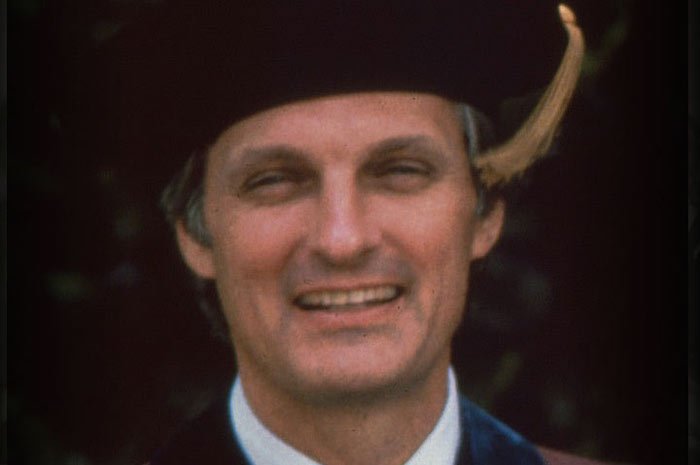
19 May, 2013. Thomas and Mack Center, Las Vegas, Nevada, USA
No transcript. If you feel like typing one, please email to submissions@speakola.com

Inspiring, humorous, wisdom imparting. Some of the best speeches are delivered in the educational context. Upload your commencement or graduation speech here.
19 May, 2013. Thomas and Mack Center, Las Vegas, Nevada, USA
No transcript. If you feel like typing one, please email to submissions@speakola.com
June 2008, Mountain View High School, Los Altos region, California, USA
Faculty and distinguished guests
You know, the only thing better than completing high school, is the chance to convey the entire experience, to a captive audience, through a lengthy speech comprised of highly personal anecdotes.
A chance which I now plan to take full advantage of.
Now I realise that some of you may be less than excited for what is about to pass, so in an attempt to fix this problem, I’ve invited my friend Jeff up here to accompany me, with some mood setting music, that I hope will enhance the speech greatly.
[music wafts in]
Relaxing isn’t it?
Now the speech is designed to exactly what YOU want to hear.
And if you just relax, and let this experience move you, you’ll find that as soon as you’re not interested in what I’m saying, your subconscious will automatically fade my voice, gently out of your senses.
Time will fly by for you, and you may even slip in and out of consciousness, as you are left to relax with the soothing sounds of the keyboard.
So now, if everyone’s ready ... I would like to begin our mystical journey through the high school experience.
[jaunty music change]
Our adventure begins with freshman year, easily our best year of high school although you may not appreciate it, [speaks deliberately inaudibly with large gesticulations, music carries on] ... that finding a date to homecoming is easy, if you sweat as much as I do, let me tell you ... [lapses into inaudible monologue again] ... that’s when I realised that everyone else’s bodies were changing too and I didn’t have to be embarrassed about what was happening to me. [lapses back into inaudible] ... by that time it was already four in the morning, and it would have taken me another three hours to have got all the maple syrup off a the walls [lapses into silent gesticulating] ... and that brings us to senior year.
Now don’t worry, your senior year of high school will be much simpler than the previous three, because, you’ve pretty much been checked out most of the time, but there is one little thing you should get out of the way, before you start caring, and I think I can best describe how that feels, with this metaphorical story.
Let’s say you’re a single guy, and you decide it’s time to start thinking about getting married. But you’re still young, you don’t want to rush into anything, so you spend years searching for the perfect girl. Every chance you get, you travel all over the country just to meet new people. Some you like more than others, some are too nerdy, some party too much, but finally, after all your searching, you think you’ve found the perfect one.
[dramatic music]
Oh she’s incredible, she’s fun, she’s smart, she’s sexy, everything you wanted in a woman.
You decide to propose.
But - you only get one shot, and you can’t screw it up, so you spend months agionising over how you’re going to do it. What you’re going to say to her. You set a deadline for yourself, so you cna’t put it off forever.
[Music faster]
And as the deadline approaches you begin to get more nervous, are you good enough, yes you perform well and get good marks, but is that all she wants? Does she need a man who can lead, or maybe you should have volunteered to coordinate that project last week. Does she want a man who can show compassion, or maybe you should have done more community service?
And maybe when that old woman asked you to help her across the street, you should have tricked her and laughed, it feels like everything you’ve been doing in your entire life has been leading up to this moment.
Finally the deadline is here
[Big dramatic piano]
Oh you’re so nervous. You’re sweating all over her. It’s like there’s ivy around your neck. She’s way out of your league. Is the ring big enough? Is it too late to go back? How many mistakes have you made so far? Can a public institution funded by a state government that’s millions of dollars in debt really provide the same level of education as an overpriced private school?
And then it’s over. You’ve submitted your proposal and there’s nothing more you can do.
And she looks at you ... and she says ...
[piano staccato]
Mmmmmm let me get back to you in like four months.
[jaunty music]
That’s pretty much what applying to college is like. You know what sucks the most about it? She’ll probably say no. But guess what you didn’t tell her. You proposed to like, hella backup chicks just in case she rejected you, and they’re all begging you to come and marry them instead.
So suck it Yale, I could never have married a smoker anyway.
Alright, now that we’ve completed high school, it’s time to start thinking about the future.
You know, a lot of people tell me that in like, twenty years, I’m going to go to a high school reunion, and I’m going to laugh at how stupid I was as a teenager.
I’d say, that sounds like a pretty good plan, because as teenagers, we’ve had to put up with a lot of ridiculous stuff to get to where we are today.
And as adults, we’re going to have to put up with a lot more ridiculous stuff to where we will be in twenty years.
And that’s been true for every generation. And I think the most important thing we can learn from that is, things just don’t always make sense. Life for example, if a couple of random guys give this really weird speech at your high school graduation, that you didn’t get at all, maybe it was just a dumb speech that wasn’t meant to be taken seriously
Or maybe, maybe they were trying to say that life is ridiculous, and that being able to make a fool of yourself in front of a lot of people and then laugh about it, is a great skill that’s vital for success in all fields of life.
But they were probably just being dumb. Anyway, it’s not important because I doubt that’s happened to anyone here.
Although ... if it did happen to you, make you sure you never forget the guys who gave that speech, because I bet they were awesome. And, attractive, though you may never have noticed it for the entire duration of high school.
Just a thought.
[music restarts]
Alright, I guess that pretty much sums up everything I have to say.
The only thing left is, congratulations to the Mountain View High School class of 2008, and to everyone who helped us get here.
I look forward to laughing with you all about this, in twenty years.
Thank you.
June 2013, Rundle College, Calgary, Alberta, Canada
My name’s Evan, and I’m here today to reflect upon the past years of our high school, predict our outstanding, bright futures, and hopefully reduce you all to tears.
I would like to start by saying this is a huge huge honour ... for you to all be here listening to me, what a treat for you!
This speech is lovingly titled, life beyond the Rundle vest... and I’m going to begin by saying, I’m not going to feed you all the Hallmark versions of a valedictory address, you know what I’m referring to [mimics] ‘as I look out here, I see future pioneers of technology, lawyers and surgeons' ... Don’t get your hopes up!
No no it’s cruel to give you such high hopes. We’re all going to be broke students for the next sixteen years, so get used to it.
Having high school come to an end is a bit surreal.
If anything for the reason that now I’ll have to buy my own loose grey slacks so that construction workers have something to whistle at.
More importantly, it accurately and concisely ends what has been for most of us three six, and for some twelve years of education at Rundle.
Throughout those years we’ve created special bonds with the physical campus, the teaching staff, and undoubtedly each other. Admittedly, when I began writing this, it was difficult to encapsulate what Rundle had been to me.
Apart from a place to go and worship Mr Howk every day.
And a place that says ‘there’s no excuse for speeding in the parking lot’. It sounds like a challenge!
I liken it to a big community, our diversity being our strength. And I would like to say that it has been a privilege to be part of this community for so long.
We all know the warm, safe, familiar feel of our Rundle sweaters. You know, forty percent nylon, sixty percent cotton. And pre-washed with the tears of school children.
For a long time now, this has been our identity. Something that identified us merely by appearance.
I grew fond of the uniform, because, personally I’m sick and tired of being outdressed by the overly stylish Keenan McVeigh.
The only one who could pull it off would be Lucas with his longshawn suit.
Although the scratch wool uniform made it seem as though we were all the same, it enabled us to have a certain unity, a togetherness. Similar itchy, red patches of eczema could only draw us closer together.
It was in those clothes that I learned math, English, most of chemistry, Mr. Franklin has a very soft voice, it’s not my fault, however this stylish ensemble has served a larger purpose than just covering my tattoos all these years.
It has become a constant in all of our lives. Something that nobody will physically miss, but the familiarity and the security we will all wish to have back.
So when I was looking back at the time spent at Rundle, between the embarrassing haircuts and everyone having braces at some point, it was the only thing that was consistent.
So when we finish our last diploma and we take our sweaters off for the very last time, we aren’;t just saying goodbye to highly fashionable outer wear, we say goodbye to years of memories and experiences that we’ve had.
In this regard, I’m not surprisingly not ashamed to admit that I’m going to miss the uniform.
But most importantly all the people I’ve met in it.
I would be remiss had I not take time to actually thanks some people.
Without # and her help, this speech would not exist, and I would certainly not be literate enough to read it. And with out Miss # something Ukrainian I would not actually be graduating, so her wonderful introduction would never have existed.
I thank both of those teachers from the bottom of my heart, that is already filled with love for myself.
When I look out at this auditorium today, I’m surprised that the # of Tim # isn’t actually here. Manages will surely be sad to see one of his best customers go.
What I do see are the smiles of good friends that have grown up with me, through the truly greasy years of junior high. It is with this sight that I speak directly to you, my fellow graduates.
There are seventy seven of us graduating today.
I feel as though I barely know some of you, something that I regret.
I also regret knowing far far too much about some of you.
For example, nobody should ever be comfortable enough with somebody to ask, ‘Brooke, yogurt doesn’t’ have an expiry date, right?’
To hear the answer is ‘you’re fine, the good folks at Yoplait would not do that to you.’
Your all lucky to see Josh here today, and not in his natural habitat of the West Side Gym. I’ll be surprised if he doesn’t try to bicep curl his diploma.
To have the future Yankees hall of famer, Ryan Cozoli graduate with us today, it’s a true honour.
There’s one guy who doesn’t need a high school diploma to know how to spell win.
And Angus, I won’t make any jokes about you. Please don’t hurt me!
This is the first time I’ve seen some of you girls without Starbucks cups in your hands. I’m al little weirded out that you were able to sit still for so long. Yeah, resting heart rate, it’s weird isn’t it?
I would like to have something insightful to say about the future. But the simple truth is, I’m absolutely terrified of it. I have not marketable skills, reading gives me a headache, I’m not a particularly hard worker.
I put the fun, in fundamentally incapable. And the can in ‘cannot do most simple tasks’.
Most of you will never see me again, depending how often you check the FBI’s most wanted list.
Although I’ve established that many of you are much more talented than I, and thus more qualified to give this advice, my final and only partition of wisdom is this:
Regardless of your experience here over the past years, we have shaped each other, for better or for worse. We all wore that uniform together, becoming strong, capable individuals. And that is due to the people you are sitting with, right now.
Try to remember them as they are now, and not at that tall awkward stage of grade 8 that some of us may still be in.
I would like to truly thank all of you for giving me the honour of speaking on your behalf.
But most importantly, for being the best community that I could ask for for the last six years of my life.
We’ve now all gotten through high school, which is no easy feat. Most importantly, we got through it together.
Congratulations, class of 2013.
May 2008, East Jessamine High School, Nicholasville, Kentucky, USA
I want to say how honoured I am to stand before you all.
My friends, my classmates, my family, my academic adjudicators, and the people who thought their connecting flight to Chicago was leaving out of this terminal.
Go outside. Take the moving sidewalk. But before we begin, Southland has kindly asked me to point out your emergency exits on the left, and the right of the building, and in case my speech crashes, your seats do double as a floatation device.
Now I’m not trying to start off by making fun of Southland. I don’t think you realise what a rush it is to speak in a building of this size and magnitude. I google earthed this place on the way in to give to some of my family as directions, and it took up two pages. It’s very impressive.
Yet before I stood before this crowd, I thought I wouldn’t see any friends. I thought there’d be too many people for me to pick you out one by one. But that’s what I found to amaze me standing before you. When I look around, I see people who over the last twelve years, I have grown very close to. So close to, today, instead of giving the speech I had in theory planned, I’m going to tell you about a dream I’ve had.
No not that dream, don’t worry.
But over the past twelve years, I’ve had a some sort of reoccurring dream about this day. I dreamed that I would stand before you all, and I would get to say those words that you’ve been waiting to hear over those twelve long years ... twelve long hard painful years. Congratulations East Jessamine High School Class of 2008, [singing] ‘looks like we made it after all’. Sorry I forgot to tell you. Sometimes I dream in musicals.
And then after I sang that song, some [ ??] would come up here, and ask us to take these funny looking cat toys off our geometrically shaped hats. And moving to the other side. And then in my dream, they play that awful, 'As We Go On' song, and I would shed a tear. Now today is the day I get to live out that dream, standing before you all today. Someone’s going to come up here - tell us to move our tassles, and god forbid they play a different song at graduation one year!
I suggest Freebird if you’re looking for something for next year’s ceremonies.
But one thing that’s different about today and my dream. Okay a couple of things are different. You’re all fully clothed. You don’t have animal heads and angel wings. And I’m not going to have to change my sheets when I leave here hopefully. But one thing solely is different. Standing before you today, the most emotionally charged day of my life to this point, the first major milestone on the path to my inevitable successes, I thought I would need to cry, but for some reason, I have no urge to tear -- happy or sad.
Partially because I know if I did, WK would never let me live it down. For how many times I’ve told the story over the years, how in fifth grade every time Wes would steal my chocolate milk, and I’d poke him in the stomach, and once he cried. But a more legitimate reason for my lack of tears would be this ... and I can’t express it better than Dr Seuss said before me:
'Don’t cry because it’s over, smile because it happened.'
But when I read this quotation, when preparing for this speech, I felt kind of selfish thinking that I would cry today standing before you all. Would I look back at the memories we’ve shared together as a class over the past twelve years? I should be smiling for the rest of the summer, maybe even longer if I didn’t have to go to college at the end of it.
And for the record, I am going to college, I’m sorry if you lost that bet.
Standing in the cafeteria, tenth grade, watching AH teach our grade the very practical definition of collateral damage in a food fight as he hit everybody around us. Hitting JB in the face by accident in French class. Winning ‘Air Band’. Losing Air Band, even though, we kinda shoulda won, whatever.
The West Jessamine student section holding up a picture of Justin and I in a very compromising position. I have somebody else, I don’t want to talk about it in front of everyone.
These memories are more important than anything else I had over the last twelve years. More important that this cap and gown. Or this ... [class of 2008 scarf] ok whatever that is. But here’s what I want to make sure that you know this. These should not be the best twelve years of your life. That is a pain I don’t wish on any of my enemies. If CATS testing and portfolios are the best years of your life then you have done something wrong.
So this is what I want to stress to you today. As my last, and honestly I never expected very much from any of you, first demand as Commander-in-Chief, I want all of you to leave here today, and make memories so happy, so great, that if these memories that we’re talking about today’s sole job was to make a shelf for your new ones, they would fail the weight. Because that’s what life’s about.
So as I sit down today and have somebody come up here and tell us to turn our tassles, because I doubt they’d let me do it for fear that I’d sing again, I start to put this day to memory. Because that’s what I realised I want all of my memories to come from. Dreams I got to live out, I can now reflect upon down the road. I’m sure I’m not the only one who has dreamed about walking across the stage in this ridiculous attire. It means a lot to all of you, it’s why you’re still here. So that’s what I want to tell you. Live out your dreams, quickly, because you don’t know how much longer we all have left. Live them out, but once you have, lay them out, fast enough to make new ones, live them out too. So one day, when I meet you all again down the road, we’ll have some awesome stories to talk about.
Congratulations, I honour you all, and good luck. Not that any one of you should need it.
May 2013, Pine View High School, Florida
Good afternoon.
My name’s Arjun.
Graduates, parents, Coach Bay and the [half show oysters], esteemed faculty and administration, and of course Dr Dean.
Good afternoon, and congratulations to the Pine View Class of 2013.
I would like to say, thank you for giving me this opportunity to speak. I am a hundred percent sure you will regret it. Now, I would be remiss if I addressed the class of 2013 without mentioning a classmate who is no longer with us. TR was an amazing friend of mine, a brilliant violinist, and a genuinely good person. And I’m truly saddened that he couldn’t be graduating with all of us today. I would hope that in all we can do we will never forget TR, our classmate, and that we can keep his memory alive.
But before I begin I want to apologise for the abundance of quotes that I will employ today. I thought it was only appropriate given how quotatiously inclined our departing principal Mr Lago is, to include the wise words of many sagacious individuals. With that I’d like to start with a quote from rapper and philosopher Nick Minaj. In her conveniently titled song High School, she sings [singing] ‘anywhere, everywhere, baby it’s your world, aint it /Baby it’s your world, aint it?’
I could go on but I digress.
I realise that I probably shouldn’t be saying ‘aint’ at a celebration of the triumph of education. But that is my theme for today, ladies and gentlemen, babies it’s your world. You just have to own it. Being a graduate of Pine View High School means you ‘ll be left on your own to conquer the real world. It means there is no more hand holding, no more living with mom and dad, no more wildly inappropriate PhD commentary, and sadly, no more Nacho Day.
Graduating means using your Pine View education to be successful, and to give back to the community that we have been so blessed to come from. Yet recalling the thirteenth president or the derivative of 4x4, is not the education that will really make you change this world. (By the way it’s Millard Filmore and 16x3). This dumb guy Albert Einstein once said, ‘education is what remains after one has forgotten everything he learned in school’. After so many years at Pine View, we have learned how to learn, and have been taught not so much what to think, but how to think. And that is the true measure of our Pine View education.
More than anything, I urge you all to dream and to dare and don’t be afraid of failing in your aspirations. My boy Teddy Roosevelt once said, ‘far better is it to dare mighty things, to win glorious triumphs, even though checked by failure, than to live in the grey twilight that knows no victory nor defeat .
And that my friends, is what we should do.
From this country’s inception, from when our founding fathers dared to envision a brand new nation, to the space race, when Americans dared to put a man on the moon, to the glorious KFC double down, when we dared to replace the bread on a sandwich with not one but two chicken patties! Ladies and gentleman, success has always been about daring.
So the thought I’ll leave you with today is in your post high school life, don’t shy away from using your many gifts. Whether you want to be a big time lawyer, a chemist, whether you want to be a doctor, yes I’m talking to the Indian kids out there, whether you want to be an SNL cast member, or whether you just want to ‘play the por-tes’. Go for it. And apply to be on MTV, may they always help you out.
But seriously, if you don’t dare, you’ll just be another smart kid. So, I hope you do, because, baby, it’s your world. Aint it?
Thank you.
21 May, 2011, USA
[Enters to 'Old Time Rock n Roll']
My last day of high school went a little like this.
7am Waking up in the morning. Gotta be fresh. I gotta have my bowl! I’ve got to have cereal. I’ve gotta to get to the bus stop to get my bus. Wait! I see my friends. [inaudible] in the front seat, [inaudible] in the back seat. I gotta to make up my mind. Which seat can I take? As I try to make this life changing decision I thought to myself, ‘it’s Friday’. Good Friday. I’ve got to get down on Friday. Everybody is looking forward to the weekend. Friday. Friday. Partyin’! Partyin! Yeah! Fun, fun, fun, fun. Looking forward to the weekend. Time was running by so fast and then I remembered, ‘I have a speech to write for graduation’. Yesterday was Thursday - Thursday - which makes today Friday, Friday. Tomorrow is Saturday, and then Sunday comes afterwards. Only a couple of days left until the biggest moment in our high school careers.
We’re so excited. We’re so excited! Looking forward to the weekend.
Saturday came around I thought of all the times we’d never said never. Class of 2011, I’m going to tell you one time! Your world has been my world. Your fight my fight. And your breath has been my breath. And we’ve needed some Tic Tacs along the way. You know you love me, and I know you care, so just shout never and I’ll be there. Only for games, or just a text, I’ll be in college soon so I won’t have time or money to drive to some [inaudible].
Um, eeeny meeny, miney, mo - Ryan. [singling] You smile, I smile.
Guys I know we’re all very charming, so I’m going to need a tally. I mean I can put me down for at least one [inaudible] girl. Spencer, can I put you down for a two a week? We all should just pull our weight on this one. I know we’d rather study but it’s a sacrifice we should make. For all the girls.
As I imagined today’s speeches, that were going to be given, I thought ‘that should be me holding her hand’, figuratively of course, that should be me making you laugh, that should be me staying so sad, that should be me, that should be me.
I wrote this next part as a tribute to my favourite math teacher. ‘Never never never never never. I never thought that I’d see so much homework / I never thought that I’d be bored to tears /And there’s just no turning back / I really don’t dig this math / I gotta give everything I have /It’s trigonometry!’ You know I’m just joking Mr Edgar. You’re not really my favourite math teacher.
No but seriously, I’d like to share a dream I’ve had with you. A dream that has been reoccurring over the years. Don’t worry, not that dream. This is a dream where I stand in front of my friends, my family and my academic adjudicators, and congratulate the class of 2011 on a job - done. Today that dream of mine has become a reality. So congratulations class of 2011 -
[singing] ‘Looks like we made it’
Oh I forgot to mention. I dream in musicals.
It’s as [inaudible] says, ‘Today is the first day of the rest of our lives, and so is tomorrow.’
And now, for a man who needs no introduction.
[walks off to laughter]
8 June 1978, Harvard University
I am sincerely happy to be here on the occasion of the 327th commencement of this old and most prestigious university. My congratulations and very best wishes to all of today's graduates.
Harvard's motto is "VERITAS." Many of you have already found out, and others will find out in the course of their lives, that truth eludes us if we do not concentrate our attention totally on it's pursuit. But even while it eludes us, the illusion of knowing it still lingers and leads to many misunderstandings. Also, truth seldom is pleasant; it is almost invariably bitter. There is some bitterness in my today's speech too, but I want to stress that it comes not from an adversary, but from a friend.
Three years ago in the United States I said certain things which at that time appeared unacceptable. Today, however, many people agree with what I then said.
The split in today's world is perceptible even to a hasty glance. Any of our contemporaries readily identifies two world powers, each of them already capable of entirely destroying the other. However, understanding of the split often is limited to this political conception: that danger may be abolished through successful diplomatic negotiations or by achieving a balance of armed forces. The truth is that the split is a much [more] profound [one] and a more alienating one, that the rifts are more than one can see at first glance. This deep manifold split bears the danger of manifold disaster for all of us, in accordance with the ancient truth that a kingdom -- in this case, our Earth -- divided against itself cannot stand.
There is the concept of Third World: thus, we already have three worlds. Undoubtedly, however, the number is even greater; we are just too far away to see. Any ancient and deeply rooted, autonomous culture, especially if it is spread on a wide part of the earth's surface, constitutes an autonomous world, full of riddles and surprises to Western thinking. As a minimum, we must include in this category China, India, the Muslim world, and Africa, if indeed we accept the approximation of viewing the latter two as compact units.
For one thousand years Russia belonged to such a category, although Western thinking systematically committed the mistake of denying its autonomous character and therefore never understood it, just as today the West does not understand Russia in Communist captivity. It may be that in past years Japan has increasingly become a distant part of the West. I am no judge here. But as to Israel, for instance, it seems to me that it's been the part from the western world, in that its state system is fundamentally linked to religion.
How short a time ago, relatively, the small, new European world was easily seizing colonies everywhere, not only without anticipating any real resistance, but also usually despising any possible values in the conquered people's approach to life. On the face of it, it was an overwhelming success. There were no geographic frontiers [limits] to it. Western society expanded in a triumph of human independence and power. And all of a sudden in the 20th century came the discovery of its fragility and friability.
We now see that the conquests proved to be short lived and precarious -- and this, in turn, points to defects in the Western view of the world which led to these conquests. Relations with the former colonial world now have turned into their opposite and the Western world often goes to extremes of subservience, but it is difficult yet to estimate the total size of the bill which former colonial countries will present to the West and it is difficult to predict whether the surrender not only of its last colonies, but of everything it owns, will be sufficient for the West to foot the bill.
But the blindness of superiority continues in spite of all and upholds the belief that the vast regions everywhere on our planet should develop and mature to the level of present day Western systems, which in theory are the best and in practice the most attractive. There is this belief that all those other worlds are only being temporarily prevented (by wicked governments or by heavy crises or by their own barbarity and incomprehension) from taking the way of Western pluralistic democracy and from adopting the Western way of life. Countries are judged on the merit of their progress in this direction.
However, it is a conception which develops out of Western incomprehension of the essence of other worlds, out of the mistake of measuring them all with a Western yardstick. The real picture of our planet's development is quite different and which about our divided world gave birth to the theory of convergence between leading Western countries and the Soviet Union. It is a soothing theory which overlooks the fact that these worlds are not at all developing into similarity. Neither one can be transformed into the other without the use of violence. Besides, convergence inevitably means acceptance of the other side's defects, too, and this is hardly desirable.
If I were today addressing an audience in my country, examining the overall pattern of the world's rifts, I would have concentrated on the East's calamities. But since my forced exile in the West has now lasted four years and since my audience is a Western one, I think it may be of greater interest to concentrate on certain aspects of the West, in our days, such as I see them.
A decline in courage may be the most striking feature which an outside observer notices in the West in our days. The Western world has lost its civil courage, both as a whole and separately, in each country, each government, each political party, and, of course, in the United Nations. Such a decline in courage is particularly noticeable among the ruling groups and the intellectual elite, causing an impression of loss of courage by the entire society. Of course, there are many courageous individuals, but they have no determining influence on public life.
Political and intellectual bureaucrats show depression, passivity, and perplexity in their actions and in their statements, and even more so in theoretical reflections to explain how realistic, reasonable, as well as intellectually and even morally worn it is to base state policies on weakness and cowardice. And decline in courage is ironically emphasized by occasional explosions of anger and inflexibility on the part of the same bureaucrats when dealing with weak governments and with countries not supported by anyone, or with currents which cannot offer any resistance. But they get tongue-tied and paralyzed when they deal with powerful governments and threatening forces, with aggressors and international terrorists.
Should one point out that from ancient times declining courage has been considered the beginning of the end?
When the modern Western states were created, the principle was proclaimed that governments are meant to serve man and man lives to be free and to pursue happiness. See, for example, the American Declaration of Independence. Now, at last, during past decades technical and social progress has permitted the realization of such aspirations: the welfare state.
Every citizen has been granted the desired freedom and material goods in such quantity and of such quality as to guarantee in theory the achievement of happiness -- in the morally inferior sense of the word which has come into being during those same decades. In the process, however, one psychological detail has been overlooked: the constant desire to have still more things and a still better life and the struggle to attain them imprint many Western faces with worry and even depression, though it is customary to conceal such feelings. Active and tense competition fills all human thoughts without opening a way to free spiritual development.
The individual's independence from many types of state pressure has been guaranteed. The majority of people have been granted well-being to an extent their fathers and grandfathers could not even dream about. It has become possible to raise young people according to these ideals, leaving them to physical splendor, happiness, possession of material goods, money, and leisure, to an almost unlimited freedom of enjoyment. So who should now renounce all this? Why? And for what should one risk one's precious life in defense of common values and particularly in such nebulous cases when the security of one's nation must be defended in a distant country? Even biology knows that habitual, extreme safety and well-being are not advantageous for a living organism. Today, well-being in the life of Western society has begun to reveal its pernicious mask.
Western society has given itself the organization best suited to its purposes based, I would say, one the letter of the law. The limits of human rights and righteousness are determined by a system of laws; such limits are very broad. People in the West have acquired considerable skill in interpreting and manipulating law. Any conflict is solved according to the letter of the law and this is considered to be the supreme solution. If one is right from a legal point of view, nothing more is required. Nobody will mention that one could still not be entirely right, and urge self-restraint, a willingness to renounce such legal rights, sacrifice and selfless risk. It would sound simply absurd. One almost never sees voluntary self-restraint. Everybody operates at the extreme limit of those legal frames.
I have spent all my life under a Communist regime and I will tell you that a society without any objective legal scale is a terrible one indeed. But a society with no other scale than the legal one is not quite worthy of man either. A society which is based on the letter of the law and never reaches any higher is taking very scarce advantage of the high level of human possibilities. The letter of the law is too cold and formal to have a beneficial influence on society. Whenever the tissue of life is woven of legalistic relations, there is an atmosphere of moral mediocrity, paralyzing man's noblest impulses. And it will be simply impossible to stand through the trials of this threatening century with only the support of a legalistic structure.
In today's Western society the inequality has been revealed [in] freedom for good deeds and freedom for evil deeds. A statesman who wants to achieve something important and highly constructive for his country has to move cautiously and even timidly. There are thousands of hasty and irresponsible critics around him; parliament and the press keep rebuffing him. As he moves ahead, he has to prove that each single step of his is well-founded and absolutely flawless. Actually, an outstanding and particularly gifted person who has unusual and unexpected initiatives in mind hardly gets a chance to assert himself. From the very beginning, dozens of traps will be set out for him. Thus, mediocrity triumphs with the excuse of restrictions imposed by democracy.
It is feasible and easy everywhere to undermine administrative power and in fact it has been drastically weakened in all Western countries. The defense of individual rights has reached such extremes as to make society as a whole defenseless against certain individuals. It's time, in the West -- It is time, in the West, to defend not so much human rights as human obligations.
Destructive and irresponsible freedom has been granted boundless space. Society appears to have little defense against the abyss of human decadence, such as, for example, misuse of liberty for moral violence against young people, such as motion pictures full of pornography, crime, and horror. It is considered to be part of freedom and theoretically counterbalanced by the young people's right not to look or not to accept. Life organized legalistically has thus shown its inability to defend itself against the corrosion of evil.
And what shall we say criminality as such? Legal frames, especially in the United States, are broad enough to encourage not only individual freedom but also certain individual crimes. The culprit can go unpunished or obtain undeserved leniency with the support of thousands of public defenders. When a government starts an earnest fight against terrorism, public opinion immediately accuses it of violating the terrorist's civil rights. There are many such cases.
Such a tilt of freedom in the direction of evil has come about gradually, but it was evidently born primarily out of a humanistic and benevolent concept according to which there is no evil inherent to human nature. The world belongs to mankind and all the defects of life are caused by wrong social systems, which must be corrected. Strangely enough, though the best social conditions have been achieved in the West, there still is criminality and there even is considerably more of it than in the pauper and lawless Soviet society.
The press too, of course, enjoys the widest freedom. (I shall be using the word press to include all media.) But what sort of use does it make of this freedom?
Here again, the main concern is not to infringe the letter of the law. There is no true moral responsibility for deformation or disproportion. What sort of responsibility does a journalist or a newspaper have to his readers, or to his history -- or to history? If they have misled public opinion or the government by inaccurate information or wrong conclusions, do we know of any cases of public recognition and rectification of such mistakes by the same journalist or the same newspaper? It hardly ever happens because it would damage sales. A nation may be the victim of such a mistake, but the journalist usually always gets away with it. One may -- One may safely assume that he will start writing the opposite with renewed self-assurance.
Because instant and credible information has to be given, it becomes necessary to resort to guesswork, rumors, and suppositions to fill in the voids, and none -- and none of them will ever be rectified; they will stay on in the readers' memories. How many hasty, immature, superficial, and misleading judgments are expressed every day, confusing readers, without any verification. The press -- The press can both simulate public opinion and miseducate it. Thus, we may see terrorists described as heroes, or secret matters pertaining to one's nation's defense publicly revealed, or we may witness shameless intrusion on the privacy of well-known people under the slogan: "Everyone is entitled to know everything." But this is a false slogan, characteristic of a false era. People also have the right not to know and it's a much more valuable one. The right not to have their divine souls [stuffed with gossip, nonsense, vain talk.] A person who works and leads a meaningful life does not need this excessive burdening flow of information.
Hastiness and superficiality are the psychic disease of the 20th century and more than anywhere else this disease is reflected in the press. Such as it is, however, the press has become the greatest power within the Western countries, more powerful than the legislative power, the executive, and the judiciary. And one would then like to ask: By what law has it been elected and to whom is it responsible? In the communist East a journalist is frankly appointed as a state official. But who has granted Western journalists their power, for how long a time, and with what prerogatives?
There is yet another surprise for someone coming from the East, where the press is rigorously unified. One gradually discovers a common trend of preferences within the Western press as a whole. It is a fashion; there are generally accepted patterns of judgment; there may be common corporate interests, the sum effect being not competition but unification. Enormous freedom exists for the press, but not for the readership because newspaper[s] mostly develop stress and emphasis to those opinions which do not too openly contradict their own and the general trend.
Without any censorship, in the West fashionable trends of thought and ideas are carefully separated from those which are not fashionable; nothing is forbidden, but what is not fashionable will hardly ever find its way into periodicals or books or be heard in colleges. Legally your researchers are free, but they are conditioned by the fashion of the day. There is no open violence such as in the East; however, a selection dictated by fashion and the need to match mass standards frequently prevent independent-minded people giving their contribution to public life. There is a dangerous tendency to flock together and shut off successful development. I have received letters in America from highly intelligent persons, maybe a teacher in a faraway small college who could do much for the renewal and salvation of his country, but his country cannot hear him because the media are not interested in him. This gives birth to strong mass prejudices, to blindness, which is most dangerous in our dynamic era. There is, for instance, a self-deluding interpretation of the contemporary world situation. It works as a sort of a petrified armor around people's minds. Human voices from 17 countries of Eastern Europe and Eastern Asia cannot pierce it. It will only be broken by the pitiless crowbar of events.
I have mentioned a few traits of Western life which surprise and shock a new arrival to this world. The purpose and scope of this speech will not allow me to continue such a review, to look into the influence of these Western characteristics on important aspects of a nation's life, such as elementary education, advanced education in the humanities and art.
It is almost universally recognized that the West shows all the world a way to successful economic development, even though in the past years it has been strongly disturbed by chaotic inflation. However, many people living in the West are dissatisfied with their own society. They despise it or accuse it of not being up to the level of maturity attained by mankind. A number of such critics turn to socialism, which is a false and dangerous current.
I hope that no one present will suspect me of offering my personal criticism of the Western system to present socialism as an alternative. Having experienced -- Having experienced applied socialism in a country where the alternative has been realized, I certainly will not speak for it. The well-known Soviet mathematician Shafarevich, a member of the Soviet Academy of Science, has written a brilliant book under the title Socialism; it is a profound analysis showing that socialism of any type and shade leads to a total destruction of the human spirit and to a leveling of mankind into death. Shafarevich's book was published in France -- Shafarevich's book was published in France almost two years ago and so far no one has been found to refute it. It will shortly be published in the United States.
But should someone ask me whether I would indicate the West such as it is today as a model to my country, frankly I would have to answer negatively. No, I could not recommend your society in its present state as an ideal for the transformation of ours. Through intense suffering our country has now achieved a spiritual development of such intensity that the Western system in its present state of spiritual exhaustion does not look attractive. Even those characteristics of your life which I have just mentioned are extremely saddening.
A fact which cannot be disputed is the weakening of human beings in the West while in the East they are becoming firmer and stronger -- 60 years for our people and 30 years for the people of Eastern Europe. During that time we have been through a spiritual training far in advance of Western experience. Life's complexity and mortal weight have produced stronger, deeper, and more interesting characters than those generally [produced] by standardized Western well-being.
Therefore, if our society were to be transformed into yours, it would mean an improvement in certain aspects, but also a change for the worse on some particularly significant scores. It is true, no doubt, that a society cannot remain in an abyss of lawlessness, as is the case in our country. But it is also demeaning for it to elect such mechanical legalistic smoothness as you have. After the suffering of many years of violence and oppression, the human soul longs for things higher, warmer, and purer than those offered by today's mass living habits, introduced by the revolting invasion of publicity, by TV stupor, and by intolerable music.
There are meaningful warnings which history gives a threatened or perishing society. Such are, for instance, the decadence of art, or a lack of great statesmen. There are open and evident warnings, too. The center of your democracy and of your culture is left without electric power for a few hours only, and all of a sudden crowds of American citizens start looting and creating havoc. The smooth surface film must be very thin, then, the social system quite unstable and unhealthy.
But the fight for our planet, physical and spiritual, a fight of cosmic proportions, is not a vague matter of the future; it has already started. The forces of Evil have begun their offensive; you can feel their pressure, and yet your screens and publications are full of prescribed smiles and raised glasses. What is the joy about?
Very well known representatives of your society, such as George Kennan, say: We cannot apply moral criteria to politics. Thus, we mix good and evil, right and wrong, and make space for the absolute triumph of absolute Evil in the world. On the contrary, only moral criteria can help the West against communism's well planned world strategy. There are no other criteria. Practical or occasional considerations of any kind will inevitably be swept away by strategy. After a certain level of the problem has been reached, legalistic thinking induces paralysis; it prevents one from seeing the size and meaning of events.
In spite of the abundance of information, or maybe because of it, the West has difficulties in understanding reality such as it is. There have been naive predictions by some American experts who believed that Angola would become the Soviet Union's Vietnam or that Cuban expeditions in Africa would best be stopped by special U.S. courtesy to Cuba. Kennan's advice to his own country -- to begin unilateral disarmament -- belongs to the same category. If you only knew how the youngest of the Kremlin officials laugh at your political wizards. As to Fidel Castro, he frankly scorns the United States, sending his troops to distant adventures from his country right next to yours.
However, the most cruel mistake occurred with the failure to understand the Vietnam war. Some people sincerely wanted all wars to stop just as soon as possible; others believed that there should be room for national, or communist, self-determination in Vietnam, or in Cambodia, as we see today with particular clarity. But members of the U.S. anti-war movement wound up being involved in the betrayal of Far Eastern nations, in a genocide and in the suffering today imposed on 30 million people there. Do those convinced pacifists hear the moans coming from there? Do they understand their responsibility today? Or do they prefer not to hear?
The American Intelligentsia lost its nerve and as a consequence thereof danger has come much closer to the United States. But there is no awareness of this. Your shortsighted politicians who signed the hasty Vietnam capitulation seemingly gave America a carefree breathing pause; however, a hundredfold Vietnam now looms over you. That small Vietnam had been a warning and an occasion to mobilize the nation's courage. But if a full-fledged America suffered a real defeat from a small communist half-country, how can the West hope to stand firm in the future?
I have had occasion already to say that in the 20th century Western democracy has not won any major war without help and protection from a powerful continental ally whose philosophy and ideology it did not question. In World War II against Hitler, instead of winning that war with its own forces, which would certainly have been sufficient, Western democracy grew and cultivated another enemy who would prove worse, as Hitler never had so many resources and so many people, nor did he offer any attractive ideas, or have a large number of supporters in the West as the Soviet Union. At present, some Western voices already have spoken of obtaining protection from a third power against aggression in the next world conflict, if there is one. In this case the shield would be China. But I would not wish such an outcome to any country in the world. First of all, it is again a doomed alliance with Evil; also, it would grant the United States a respite, but when at a later date China with its billion people would turn around armed with American weapons, America itself would fall prey to a genocide similar to the in Cambodia in our days.
And yet -- no weapons, no matter how powerful, can help the West until it overcomes its loss of willpower. In a state of psychological weakness, weapons become a burden for the capitulating side. To defend oneself, one must also be ready to die; there is little such readiness in a society raised in the cult of material well-being. Nothing is left, then, but concessions, attempts to gain time, and betrayal. Thus at the shameful Belgrade conference free Western diplomats in their weakness surrendered the line where enslaved members of Helsinki Watchgroups are sacrificing their lives.
Western thinking has become conservative: the world situation should stay as it is at any cost; there should be no changes. This debilitating dream of a status quo is the symptom of a society which has come to the end of its development. But one must be blind in order not to see that oceans no longer belong to the West, while land under its domination keeps shrinking. The two so-called world wars (they were by far not on a world scale, not yet) have meant internal self-destruction of the small, progressive West which has thus prepared its own end. The next war (which does not have to be an atomic one and I do not believe it will) may well bury Western civilization forever.
Facing such a danger, with such splendid historical values in your past, at such a high level of realization of freedom and of devotion to freedom, how is it possible to lose to such an extent the will to defend oneself?
How has this unfavorable relation of forces come about? How did the West decline from its triumphal march to its present sickness? Have there been fatal turns and losses of direction in its development? It does not seem so. The West kept advancing socially in accordance with its proclaimed intentions, with the help of brilliant technological progress. And all of a sudden it found itself in its present state of weakness.
This means that the mistake must be at the root, at the very basis of human thinking in the past centuries. I refer to the prevailing Western view of the world which was first born during the Renaissance and found its political expression from the period of the Enlightenment. It became the basis for government and social science and could be defined as rationalistic humanism or humanistic autonomy: the proclaimed and enforced autonomy of man from any higher force above him. It could also be called anthropocentricity, with man seen as the center of everything that exists.
The turn introduced by the Renaissance evidently was inevitable historically. The Middle Ages had come to a natural end by exhaustion, becoming an intolerable despotic repression of man's physical nature in favor of the spiritual one. Then, however, we turned our backs upon the Spirit and embraced all that is material with excessive and unwarranted zeal. This new way of thinking, which had imposed on us its guidance, did not admit the existence of intrinsic evil in man nor did it see any higher task than the attainment of happiness on earth. It based modern Western civilization on the dangerous trend to worship man and his material needs. Everything beyond physical well-being and accumulation of material goods, all other human requirements and characteristics of a subtler and higher nature, were left outside the area of attention of state and social systems, as if human life did not have any superior sense. That provided access for evil, of which in our days there is a free and constant flow. Merely freedom does not in the least solve all the problems of human life and it even adds a number of new ones.
However, in early democracies, as in the American democracy at the time of its birth, all individual human rights were granted because man is God's creature. That is, freedom was given to the individual conditionally, in the assumption of his constant religious responsibility. Such was the heritage of the preceding thousand years. Two hundred or even fifty years ago, it would have seemed quite impossible, in America, that an individual could be granted boundless freedom simply for the satisfaction of his instincts or whims. Subsequently, however, all such limitations were discarded everywhere in the West; a total liberation occurred from the moral heritage of Christian centuries with their great reserves of mercy and sacrifice. State systems were -- State systems were becoming increasingly and totally materialistic. The West ended up by truly enforcing human rights, sometimes even excessively, but man's sense of responsibility to God and society grew dimmer and dimmer. In the past decades, the legalistically selfish aspect of Western approach and thinking has reached its final dimension and the world wound up in a harsh spiritual crisis and a political impasse. All the glorified technological achievements of Progress, including the conquest of outer space, do not redeem the 20th century's moral poverty which no one could imagine even as late as in the 19th Century.
As humanism in its development became more and more materialistic, it made itself increasingly accessible to speculation and manipulation by socialism and then by communism. So that Karl Marx was able to say that "communism is naturalized humanism."
This statement turned out not to be entirely senseless. One does see the same stones in the foundations of a despiritualized humanism and of any type of socialism: endless materialism; freedom from religion and religious responsibility, which under communist regimes reach the stage of anti-religious dictatorships; concentration on social structures with a seemingly scientific approach. This is typical of the Enlightenment in the 18th Century and of Marxism. Not by coincidence all of communism's meaningless pledges and oaths are about Man, with a capital M, and his earthly happiness. At first glance it seems an ugly parallel: common traits in the thinking and way of life of today's West and today's East? But such is the logic of materialistic development.
The interrelationship is such, too, that the current of materialism which is most to the left always ends up by being stronger, more attractive, and victorious, because it is more consistent. Humanism without its Christian heritage cannot resist such competition. We watch this process in the past centuries and especially in the past decades, on a world scale as the situation becomes increasingly dramatic. Liberalism was inevitably displaced by radicalism; radicalism had to surrender to socialism; and socialism could never resist communism. The communist regime in the East could stand and grow due to the enthusiastic support from an enormous number of Western intellectuals who felt a kinship and refused to see communism's crimes. And when they no longer could do so, they tried to justify them. In our Eastern countries, communism has suffered a complete ideological defeat; it is zero and less than zero. But Western intellectuals still look at it with interest and with empathy, and this is precisely what makes it so immensely difficult for the West to withstand the East.
I am not examining here the case of a world war disaster and the changes which it would produce in society. As long as we wake up every morning under a peaceful sun, we have to lead an everyday life. There is a disaster, however, which has already been under way for quite some time. I am referring to the calamity of a despiritualized and irreligious humanistic consciousness.
To such consciousness, man is the touchstone in judging everything on earth -- imperfect man, who is never free of pride, self-interest, envy, vanity, and dozens of other defects. We are now experiencing the consequences of mistakes which had not been noticed at the beginning of the journey. On the way from the Renaissance to our days we have enriched our experience, but we have lost the concept of a Supreme Complete Entity which used to restrain our passions and our irresponsibility. We have placed too much hope in political and social reforms, only to find out that we were being deprived of our most precious possession: our spiritual life. In the East, it is destroyed by the dealings and machinations of the ruling party. In the West, commercial interests suffocate it. This is the real crisis. The split in the world is less terrible -- The split in the world is less terrible than the similarity of the disease plaguing its main sections.
If humanism were right in declaring that man is born only to be happy, he would not be born to die. Since his body is doomed to die, his task on earth evidently must be of a more spiritual nature. It cannot be unrestrained enjoyment of everyday life. It cannot be the search for the best ways to obtain material goods and then cheerfully get the most of them. It has to be the fulfillment of a permanent, earnest duty so that one's life journey may become an experience of moral growth, so that one may leave life a better human being than one started it. It is imperative to review the table of widespread human values. Its present incorrectness is astounding. It is not possible that assessment of the President's performance be reduced to the question how much money one makes or of unlimited availability of gasoline. Only voluntary, inspired self-restraint can raise man above the world stream of materialism.
It would be retrogression to attach oneself today to the ossified formulas of the Enlightenment. Social dogmatism leaves us completely helpless in front of the trials of our times. Even if we are spared destruction by war, our lives will have to change if we want to save life from self-destruction. We cannot avoid revising the fundamental definitions of human life and human society. Is it true that man is above everything? Is there no Superior Spirit above him? Is it right that man's life and society's activities have to be determined by material expansion in the first place? Is it permissible to promote such expansion to the detriment of our spiritual integrity?
If the world has not come to its end, it has approached a major turn in history, equal in importance to the turn from the Middle Ages to the Renaissance. It will exact from us a spiritual upsurge: We shall have to rise to a new height of vision, to a new level of life where our physical nature will not be cursed as in the Middle Ages, but, even more importantly, our spiritual being will not be trampled upon as in the Modern era.
This ascension will be similar to climbing onto the next anthropologic stage. No one on earth has any other way left but -- upward.
23 May, 2014, New School University, New York
Welcome graduating class of 2014 and congratulations. You did it! You made it! How do you feel?
I guess I can only hazard a guess which means thinking back to my own graduation in England in 1997, and extrapolate from it. Did I feel like you? I should say first that some elements of the day were rather different. I wasn’t in a stadium listening to a speech. I was in an eighteenth century hall, kneeling before the dean who spoke Latin and held one of my fingers. Don’t ask me why.
Still the essential facts were the same.
Like you I was finally with my degree and had made of myself - a graduate. Like you I now had two families, the old boring one that raised me, and an exciting new one consisting of a bunch of freaks I’d met in college.
But part of the delightful anxiety of graduation day was trying to find a way to blend these two tribes, with their differing haircuts and political views, and hygiene standards and tastes in music. I felt like a character in two different movies. And so old! I really believed I was ancient. Impossibly distant in experience from the freshmen only three years below. I was as likely to befriend a squirrel as a freshman. Which strange relationship with time is perhaps unique to graduates and toddlers. Nowadays at aged 38, if I meet somebody who’s 41, I don’t conclude that friendship is impossible between us. But when I was 21, the gap between me and an 18 year old seemed insurmountable. Just like my four year old daughter, who’d rather eat sand than have a play date with a one year old.
And what else? Oh the love dramas. So many love dramas. Mine, other people’s. They take up such a large part of college life it seems unfair not to have them properly reflected in the transcript. Any full account of my university years should include the fact that I majored in English literature, with a minor in drunken discussions on the difference between loving somebody and being ‘in love’ with that person. What can I tell you, it was the 90s. We were really into ourselves. We were into self curation. In the 90s, we even had a year called ‘Year of Trousers’ which signified any kind of ethnic or exotic pants one wore back home from a distant (ideally third world) country. And these trousers were meant to alert to a passing stranger that we’d been somewhere fascinating, and thus adding further colour to our unique personalities.
Personally I couldn’t afford the year off but I was very compelled by those trousers.
In short, the thing I wanted most in the world was to be an individual. I thought that’s what my graduation signified, that I had gone from being one of the many, to one of the few. To one of the ones who would have ‘choices’ in life. After all my father didn’t have many choices, his father had none at all. Unlike them, I had gone to university. I was a special individual. Looking back it’s easy to diagnose a case of self-love. People are always accusing students of self-love, or self obsession. And this is a bit confusing because college surely encourages the habit. You concentrate on yourself in order to improve yourself. Isn’t that the whole idea? And out of this process hopefully, emerge strikingly competent individuals, with high self esteem, prepared for personal achievement.
When we graduate, though, things can get a little complicated. For how are meant to think of this fabulous person, we’ve taken such care of creating. If university made me special did that mean I was worth more than my father, more than his father before him?
Did it mean that I should expect more from life than them? Did I deserve more?
What does it really mean to be one of ‘the few’?
Are the fruits of our education a sort of gift, to be circulated generously through the world, or are we to think of ourselves as pure commodity, on sale to the highest bidder? Well let’s be honest you’re probably feeling pulled in several direction right now. And that’s perfectly natural.
In the 90s the post graduation dilemma was usually presented to us as a straight ethical choice, between working for the banks, and doing selfless charitable work. The comical extremity of the choice I now see was perfectly deliberate. It meant you didn’t have to take it too seriously. And so we peeled off from each other. Some of us, many of us, joined the banks. But those that didn’t had not special cause to pat ourselves on the back. With rare exceptions, we all pursue self interest more or less. It wasn’t a surprise. We’d been raised that way. Born in the seventies, we did not live through austerity, did not go to war like my father, or his father. For the most part we did not join large political or ideological movements. We simply inherited the advantages for which a previous generation had fought.
And the thing that so many of us feared was the idea of being subsumed back into the collective from which we’d come. Of being returned to the world of the many. Or doing any work at all in that world.
In my case this new attitude was particularly noticeable. My own mother was a social worker, and I had teachers in my rowdy state school who had themselves been educated at precisely the elite institution I would later join. But amongst my college friends, I know of no one who made that choice. For the most part, we were uninterested in what we considered to be ‘unglamorous pursuits’. We valued individuality above all things. You can thank my generation for the invention of the word ‘supermodel’, and the popularisation of ‘celebrity’ and ‘lifestyle’, often used in conjunction with each other. Reality TV - that was us. Also televised talent shows. Also ug boots - you’re welcome, millennials! And when the fussier amongst us detected in these visions of prestigious individuality something perhaps a little crass and commericalised, our solution was to go in some ways further down the same road, to out individuate a celebrated individual.
We became hipsters. Defined by the ways we weren’t like everybody else. One amusing, much commented upon consequence of this was that we all ended up individuals of the same type. Not one-of-a-kind, but one ... of-a kind.
But there was another aspect I now find melancholic. We isolated ourselves. It took us the longest time to work out that we needed each other. You may have noticed that even now we seem somewhat stunned by quite ordinary human pursuits, like having children or living in a neighbourhood, or getting ill. We are always writing lifestyle articles about such matters in the Sunday papers. That's because, until very recently, we thought we were going to get through this whole life thing purely on our own steam. Even if we were no fans of the ex-British Prime Minister Margaret Thatcher, we had unwittingly taken her most famous slogan and embedded it deep within our own lives. 'There is no such thing as society,' she said. We were unique individuals. What did we need with society? But then it turned out that the things that have happened to everybody since the dawn of time also happened to us. Our parents got old and ill. Our children needed schools and somewhere to play. We wanted trains that ran on time. We needed each other. It turned out we were just human — like everybody.
Now I might have this completely backward, but I get the sense that something different is going on in your generation. Something hopeful. You seem to be smarter sooner. Part of these smarts is surely born out of crisis. In the '90s we had high employment and a buoyant economy. We could afford to spend weeks worrying about the exact length and shape of our beards, or whether Kurt Cobain was a sell-out. Your situation is more acute. You have so many large, collective tasks ahead, and you know that. We had them too, but paid little attention, so now I’m afraid it falls to you. The climate, the economy, the sick relationship between the individual prestige of the first world and the anonymity of the third —these are things only many hands can fix working together. You are all individuals but you are also part of a generation and generations are defined by the projects they take on together.
Even at the level of slogan you decided to honour the contribution of the many over the few, that now famous ’99 Percent’. As far as slogans go, which is not very far, yours still sounds more thoughtful to me than the slogans of my youth which were fatally effected by advertising. Be strong. Be fast. Be bold. Be different. Be you ... be you, that was always the take away. And when my peers grew up, and went into advertising, they spread that message far and wide. ‘Just be you,’ screams the label on the shampoo bottle. ‘Just be you,’ cries your deodorant. Because you’re worth it. You get about fifty commencement speeches a day, and that’s before you’ve even left the bathroom.
I didn’t think you’d want any more of that from me. Instead I want to speak in favour of recognising our place within ‘the many’. Not only as a slogan, much less as a personal sacrifice, but rather as a potential source of joy in your life.
Here is a perhaps silly example. It happened to me recently at my mother’s birthday. Around midnight it came time to divide out the rum cake, and I, not naturally one of life’s volunteers, was press ganged into helping. A small circle of women surrounded me, dressed in West African wraps and headscarves, in imitation of their ancestors. ‘Many hands make short work,’ said one, and passed me a stack of paper plates. It was my job to take the plated slices through the crowd. Hardly any words passed between us as we went about our collective tasks, but each time we set a new round upon a tray, I detected a hum of deep satisfaction at our many hands forming this useful human chain. Occasionally as I gave out each slice of cake, an older person would look up and murmur, ‘Oh you’re Yvonne’s daughter,’ but for the most part it was the cake itself that received the greeting or a little nod or a smile, for it was the duty of the daughter to hand out cake and no further commentary was required. And it was while doing what I hadn't realised was my duty that I felt what might be described as the exact opposite of the sensation I have standing in front of you now. Not puffed up with individual prestige, but immersed in the beauty of the crowd. Connected if only in gesture to an ancient line of practical women working in companionable silence in the service of their community. It's such a ludicrously tiny example of the collective action and yet clearly still so rare in my own life that even this minor instance of it struck me.
Anyway my point is that it was a beautiful feeling, and it was over too soon. And when I tried to look for a way to put it into this speech, I was surprised how difficult it was to find the right words to describe it. So many of our colloquial terms for this ‘work of many hands’ are sunk in infamy. ‘Human chain’ to start with; ‘cog in the machine; ‘brick in the wall’. In such phrases we sense the long shadow of the twentieth century, with its brutal collective movements.
We do not trust the collective, we’ve seen what submission to it can do. We believe instead in the individual, here in America, especially. Now I also believe in the individual, I’m so grateful for the three years of college that helped make more or less of an individual out of me — teaching me how to think, and write. You may well ask, who am I to praise the work of many hands, when I myself chose the work of one pair of hands, the most isolated there is.
I can’t escape that accusation. I can only look at my own habit of self love and ask, ‘what is the best use I can make of this utterly human habit?’ Can I make a gift of myself in some other way? I know for sure I haven’t done it half as much as I could or should have. I look at the fine example of my friend, the writer and activist Dave Eggers, and see a man who took his own individual prestige and parlayed it into an extraordinary collective action — 826 National, in which many hands work to create educational opportunities for disadvantaged kids all over this country.
And when you go to one of Dave’s not for profit tutoring centres, you don’t find selfless young people grimly sacrificing themselves for others. What you see is joy. Dave’s achievement is neither quite charity or simple individual philanthropy. It’s a collective effort that gets people involved in each other’s lives.
I don’t mean to speak meanly of philanthropy. Generally speaking, philanthropy is always better than no help at all, but it is also in itself a privilege of the few. And I think none of us want communities to rise or fall dependent upon the whims of the very rich. I think we would rather be involved in each other’s lives and that what stop us, most often, is fear.
We fear that the work of many hands will obscure the beloved outline of our individual selves. But perhaps this self you’ve been treasuring for so long is itself the work of many hands. Speaking personally, I owe so much to the hard work of my parents, the education and health care systems in my country, to the love and care of my friends.
And even if one’s individual prestige, such as it is, represents an entirely solo effort, the result of sheer hard work, does that everywhere and always mean that you deserve the largest possible slice of the pie?
These are big questions, and it is collectively that you’ll have to decide them. Everything from the remuneration of executives to the idea of the commons itself, depends on it. And at the core of the question, is what it really means to be the ‘the few’ and ‘the many’. Throughout your adult life your going to have a daily choice to throw your lot in with one or the other. And a lot of people, most people, even people without the luxury of your choices, are going to suggest to you, over and over, that only an idiot chooses to join the many, when he could be one of the few.
Only an idiot chooses public over private, shared over gated, communal over unique. Mrs Thatcher, who was such a genius at witty aphorisms, one said, ‘a man who beyond the age of twenty-six, finds himself on a bus, can count himself a failure.’
I’ve always been fascinated by that quote. By its dark assumption that even something as natural as sharing a journey with another person represents a form of personal denigration. The best reply to it that I know is that famous line of Terence, the Roman playwright. Homo sum, humani nihil a me alienum puto. ‘I am a human being. I consider nothing that is human alien to me.’
Montaigne like that so much he had carved into the beams of his ceiling. Some people interpret it as a call to toleration. I find it stronger than that, I think it’s a call to love. Now full disclosure, most of the time I don’t find it easy to low my fellow humans. I’m still that solipsistic 21 year old. But the times I’ve been able to get over myself and get involved at whatever level, well what I’m trying to say is those have proved the most valuable moments of my life.
And I never would have guessed that back in 1997. Oh I would have paid lip service to it, as a noble idea, but I wouldn’t have believed it. And the thing is, it’s not even a question of ethics or self sacrifice or moral high ground, it’s actually totally selfish. Being with people, doing for people, it’s going to bring you joy. Unexpectedly, it just feels better.
It feels good to give your unique and prestigious selves a slip every now and then and confess your membership in this unwieldy collective called the human race.
For one thing, it’s far less lonely, and for another thing contra to Mrs Thatcher, some of the best conversations you’ll ever hear will be on public transport. If it weren’t for the New York and London subway systems, my novels would be books of blank pages.
But I'm preaching to the converted. I see you, gazing into your phones as you walk down Broadway. And I know solipsism must be a constant danger, as it is for me, as it has been for every human since the dawn of time, but you’ve also got this tremendous, contrapuntal force propelling you into the world.
For aren’t you always connecting to each other? Forever communicating, rarely scared of strangers, wildly open, ready to tell anyone everything? Doesn’t online anonymity tear at the very idea of a prestige individual? Aren't young artists collapsing the border between themselves and their audience? Aren’t young coders determined on an all access world in which everybody is an equal participant? Are the young activists content just to raise the money and run? No. They want to be local, grassroots, involved. Those are all good instincts. I'm so excited to think of you pursuing them. Hold on to that desire for human connection. Don’t let anyone scare you out of it.
Walk down these crowded streets with a smile on your face. Be thankful you get to walk so close to other humans. It's a privilege. Don't let your fellow humans be alien to you, and as you get older and perhaps a little less open than you are now, don’t assume that exclusive always and everywhere means better. It may only mean lonelier. There will always be folks hard selling you the life of the few: the private schools, private planes, private islands, private life. They are trying to convince you that hell is other people. Don't believe it. We are far more frequently each other's shelter and correction, the antidote to solipsism, and so many windows on this world.
Thank you.
June 1980, Connecticut College, USA
I'm here today for a very special reason.
When my daughter, Eve, was small, every dinner conversation would go roughly the same way. I would introduce a fascinating topic. Then I would make some glittering comments and generally attack it from all sides until Eve or one of her sisters would indicate a sufficiently low level of interest to make me grind to a stuttering halt.
Now Eve is graduating college and I've been asked by her class if I would give a little talk.
Of course I accepted.This will be the first time in 21 years that she'll listen to one of my speeches all the way through.
As I stand here, I'm probably experiencing what most parents feel today. A desire, a little inner tug, to say something that will count in a special way.
Deep in our hearts we know that the best things said come last. People will talk for hours saying nothing much and then linger at the door with words that come with a rush from the heart. Doorways, it seems, are where the truth is told. We are all gathered at a doorway today. It's the end of something and the beginning of something else. And my guess is there will be a lot of lingering at the door today with the hope that one of us will say something that will somehow express what can't be said in words.
We linger there with our hand on the knob chattering away like Polonius to Laertes. Now remember "neither a borrower nor a lender be"... and don't forget "This above all: To thine own self be true and it must follow, as the night the day, thou canst not then be false to any man." But the very best things said often slip out completely unheralded and preceded by the words, "Oh, by the way."
I hear that patients will talk to their therapists for an hour, hardly saying anything, and just as they're leaving, turn at the door and say, "Oh, by the way," and in one sentence reveal everything they've been avoiding for 50 minutes.
In real life, when Polonius had finished giving all that fatherly advice to his son, who probably wasn't paying all that much attention anyway, he must have said - just as the boy was stepping into his boat - "Oh, by the way, if you get into any trouble, don't forget you can always call me at the office." As we stand in the doorway today, these are my parting words to my daughter, Eve. I may sound a little like Polonius, Eve, but Polonius and I have something in common - like all fathers, we love to hear ourselves talk. And there are so many things I want to tell you.
The first thing I want to say is don't be scared. With all the giddy excitement you feel - and that I feel with you as you graduate - my guess is you're also feeling a little uncertain today. You're suddenly a grown woman with your whole life in your hands. And you're being flung into a world that's running about as smoothly as a car with square wheels. I want you to know that it's OK to be uncertain. I'm uncertain, too. In a world like this, it's appropriate to be uncertain. You're an adult in a time when the leaders of the world are behaving like children whose demands are not negotiable. Where the central image of our day is a terrorist one: humane concerns inhumanely expressed. And where the only response to this is impotent fury.
If you weren't a little uncertain, I'd be nervous for you. You've been preparing yourself all these years, but you're not sure for what. You know what you want to do when you leave school, but you're not entirely sure what it will be like - how it will work out. Some of your classmates don't have any idea what they'll do for the rest of their lives. And that's all right, too, because all of you have learned the most important thing that any school could teach you - you've learned to learn.
If you feel a little off balance, it's understandable. Adulthood has come upon you suddenly and you're not all that sure you're ready for it. I think that sometimes I'm not ready for adulthood either - yours or mine.
The day before yesterday you were a baby I was afraid to hold because you seemed so fragile. Yesterday, all I could feel was helplessness when you broke your small, 9-year-old arm. Only this morning you were a teenager. As I get older, the only thing that speeds up is time. But as much as it's true that time is a thief, time also leaves something in exchange. With time comes experience - and however uncertain you may be about the rest of the world, at least about your own work you will be sure.
And that's something else I want to tell you as we stand in this doorway today. Love your work. If you always put your heart into everything you do, you really can't lose.
If your heart is in it, you'll probably succeed, and if it isn't in it, you probably won't succeed. But the reason you can't lose is that whether you wind up making a lot of money or not, you will have had a wonderful time, and no one will ever be able to take that away from you.
I want to tell you everything. I want to squeeze things great and small into this lingering good-bye. I want to tell you to keep laughing.
I used to be afraid that writing and acting in comedies might be a frivolous occupation, but when I think about all the good that laughing does for people, I get the feeling that making people laugh can be noble work. You have a wonderful laugh. You gurgle when you laugh. Keep gurgling. Be sure to gurgle three times a day for your own well being. There are people who think that the only thing that separates humans from the rest of the animals is their ability to laugh. I'm not so sure anything separates us from the rest of the animals except perhaps our extreme egotism that leads us to think that they're animals and we're not. But I do notice that when people are laughing, they're generally not killing one another. So keep laughing yourself and if you can get other people to join you in your laughter, you may help keep this shaky boat afloat.
I want to tell you things that will see you through. I have this helpless urge to pass on maxims to you. But we live in new times. Strange times. Even the Golden Rule doesn't seem adequate to pass on to a daughter. There should be something added to it. You know how I love amendments. You knew I wanted to amend the Constitution, but you probably didn't know I wanted to amend the Golden Rule as well. Here's my Golden Rule for a tarnished age: Be fair with others but then keep after them until they're fair with you.
It's a complex world. I hope you'll learn to make distinctions. You know how much I love logic. I always felt that the most important parts of my education were learning to reason and learning to use language well. That's why when you were a very little girl, I started trying to give you lessons in logic. I smile when I think that to this day, you can still remember what I passed on to you as the first rule of logic: A thing cannot both be and not be at the same time and in the same respect. (In your head, you're saying that along with me right now, aren't you?) You were kind enough to take a logic course because I had spoken too highly of it, only to find out that they teach symbolic logic now and they never even mention the first rule of logic. But whatever mode you reason in, I hope you'll always make distinctions. A peach is not its fuzz, a toad is not its warts, a person is not his or her crankiness. If we can make distinctions, we can be tolerant, and we can get to the heart of our problems instead of wrestling endlessly with their gross exteriors. And once you make a habit of making distinctions, you'll begin challenging your own assumptions. Your assumptions are your windows on the world. Scrub them off every once in a while or the light won't come in. If you challenge your own, you won't be so quick to accept the unchallenged assumptions of others. You'll be a lot less likely to be caught up in bias or prejudice or be influenced by people who ask you to hand over your brains, your soul or your money because they have everything all figured out for you.
I don't have the rhythms or style of Polonius today but I have all his doddering urgency.
I want to tell you to be as smart as you can but to try to remember that it's always better to be wise than to be smart. And don't be upset that it takes a long, long time to find wisdom because nobody knows where wisdom can be found. It tends to break out at unexpected times like a rare virus and mostly people with compassion and understanding are susceptible to it.
The door is inching a little closer toward the latch and I still haven't said it. You'll be gone and I won't have found the words. Let me dig a little deeper.
Let me go back to when I was in college. There were words that had power for me then - maybe they will for you now.
I had forgotten how much this idea meant to me - how much I wrote about it and thought about it. It was the essence of a philosophy that was very popular at the time and it's one of the most helpful and cheerful ideas I've ever heard.
It's this: Life is absurd and meaningless and full of nothingness. Possibly this doesn't strike you as helpful and cheerful, but I think it is, because it's honest and because it goads you on.
I had a teacher in those days who saw me with a book by Jean Paul Sartre under my arm and he said to me, "Be careful, if you read too much of that you'll start walking around dressed in black, looking wan, doing nothing for the rest of your life." Well, I read the book anyway and as it turned out, I'm tanned and lovely, I'm rich and productive and I'm happy like nobody's business.
Maybe it was my natural optimism at work, but what I saw and warmed to in the existentialist writings was that life is meaningless unless you bring meaning to it; that it is up to us to create our own existence. Unless you do something, unless you make something it's as though you aren't there.
I was very taken at the time by a Catholic existentialist called Gabriel Marcel who spoke about fidelity as essential to existence. Fidelity had a special meaning for him - it meant presence - being there with the people around you. None of this seemed dour to me. Existentialism was supposed to be the philosophy of despair. But not to me - because it faced the cold hard stone you hit when you touch rock bottom and I saw in it a way to bound back up again. No matter how loving or loved we are, it eventually occurs to most of us - that deep, deep down inside there, we're all alone. I'm not telling you this to depress you or to turn your eyes away from the soft flutter of blossoms on a day in spring. But I know that winter's coming and when the moment comes for you to wrestle with that cold loneliness which is every person's private monster, I want you to face the damn thing. I want you to see it for what it is and win.
This spring is the fulfillment of an era in a way. It was news back then when people declared God to be dead, but now Sartre is dead - and in a curious way so is the optimism that spawned his pessimism. The distressing reality is that 25 years ago when I was in college we all talked about nothingness but moved into a world of effort and endeavor. And now no one much talks about nothingness but the world itself, the one you will move into, is filled with it.
You may not feel it right now, not on a day like this. Maybe it's something that strikes you - not when you graduate college - but only when your child does. But whenever that sense of absurdity hits you, I want you to be ready. It will have a hard time getting hold of you if you're already in motion. You can learn the skills of your profession. You can use those skills and others you have learned here and you can dig into the world and push it into better shape.
For one thing, you can clean the air and water. Some people feel that lead poisoning was a major cause of the fall of the Roman Empire, because the ruling class had their food cooked in expensive pots that were lined with lead. They didn't know any better, but we don't have that excuse. Now almost 2,000 years later a numher of American com-panies have hit upon the incredibly clever idea of getting rid of their industrial waste by putting it into our food. Not directly of course; that would be too expensive. First they put it in the ground - then it goes into the water, and the next thing you know you're eating a sludgeburger. You can do something about that.
Or you can try to make the justice system work, You can bring the day a little closer when the rich and privileged have to live by the same standards as the poor and the outcast.
Or you can try to put an end to organized crime - that happy family whose main objective is to convince us they don't exist while they destroy a whole generation with drugs and suck the life from our economy.
Or you can step gingerly in the path of the lumbering behemoth of nuclear power. And you can ask the simple question: What ever happened to the principle of no radiation without representation?
Or you can keep the tiger of war away from our gates for awhile longer. You can do what you can to keep old men from sending children away to die. They're tuning up for the song of war now. They're making preparations and trial excursions. They're tickling our anger. They're asking us if we're ready to pour the cream of our youth out onto the ground where it will seep into the earth and disappear forever. Tell them we're not. The time to stop the next war is now - before it starts.
If you want to take absurdity by the neck and shake it till its brains rattle, you can try to find out how it is that people can see one another as less than human. How people can be capable of both nuture and torture. How we can worry and fret about a little girl caught in a mine shaft, spending days and nights getting her out but then burn a village to the ground and destroy all its people with hardly the blink of an eye. When the new draft was proposed a few months ago, some kids raised signs that said "Nothing is worth dying for." I don't agree. I don't feel that nothing is worth dying for, but since I was very young I questioned if anything is worth killing for. If you're interested, you can question that,too,and you can try to find out why people all over the world, of every country, of every class, of every religion have,at one time or another,found it so easy, for reasons large and small, to use other people, to make them suffer and to just plain do away with them.
And while you're doing all of that, there's something else you can do. You can pass on the torch that's been carried from Seneca Falls. Remember that every right you have as a woman was won for you by women fighting hard. Everything else you have is a privilege, not a right. A privilege is given and taken away at the pleasure of those in power. There are little girls being born right now who won't even have the same rights you do when they grow up unless you do something to maintain them and extend the range of equality for women. The soup of civilized life is a nourishing stew but it doesn't keep bubbling on its own. Put something back in the pot as you leave for the people in line behind you.
There are, of course, hundreds of things you can work on, and they're all fairly impossible to achieve, so there's plenty to keep you busy for the rest of your life. I can't promise you this will ever completely reduce that sense of absurdity, but it may get it down to a managable level. It will allow you once in awhile to take a glorious vacation from nothingness and bask in the feeling that,all in all, things do seem to be moving forward. I can see your brow knitting in that way that I love. That crinkle between your eyebrows that signals your doubt and your skepticism just as it does on the forehead of your mother and your Grandpa Simon. The genetic code is signaling your doubt to me right now. Why - on a day of such excitement and hope should I be talking of nothingness and decay? Because I want you to focus that hope and level that excitement into coherent rays that will strike like a laser at the targets of our discontent.
I want you to be potent; to do good when you can and to hold your wit and your intelligence like a shield against other people's wantonness. And above all, to laugh and enjoy yourself in a life of your own choosing and in a world of your own making. I want you to be strong and aggressive and tough and resilient and full of feeling. I want you to be everything that's you, deep at the center of your being.
I want you to have chutzpah.
Nothing important was ever accomplished without chutzpah. Columbus had chutzpah. The signers of the Declaration of Independence had chutzpah. Don't ever aim your doubt at yourself. Laugh at yourself, but don't doubt yourself. Whenever you wonder about yourself, look up at the stars swirling around in the heavens and just realize how tiny and puny they are. They're supposed to be gigantic explosions and they're just these insignificant little dots. If you step back from things far enough you realize how important and powerful you are. Be bold. Let the strength of your desire give force and moment to your every step. Move with all of yourself. When you embark for strange places don't leave any of yourself safely on shore. They may laugh at you if you don't discover India. Let them laugh. India's already there. You'll come back with a brand new America. Have the nerve to go into unexplored territory. Be brave enough to live life creatively. The creative is the place where no one else has ever been. It is not the previously known. You have to leave the city of your comfort and go into the wilderness of your intuition. You can't get there by bus, only by hard work and risk and by not quite knowing what you're doing, but what you'll discover will be wonderful. What you'll discover will be yourself.
Well, those are my parting words as today's door closes softly between us. There will be other partings and other last words in our lives so if today's lingering at the threshold didn't quite speak the unspeakable, maybe the next one will.
I'll let you go now
So long, be happy.
Oh, by the way, I love you.
May 2010, University of Tennessee, Knoxville, USA
Well thank you very much. I am so thrilled by that and I appreciate the opportunity to come here and, not just to receive that, but to say congratulations to all of you. This is your day.
I gave a commencement speech one year at MIT and in doing research for it, I found that in their early years, their commencement speaker dropped dead right in the middle of the speech. Since it was more than 100 years ago, I figured it was okay to joke about it.I told them I was only the second stiffest commencement speaker that they had ever had.
You’d be surprised if I didn’t make at least brief mention of the one problem that I think is the biggest item of unfinished business on our agenda and that is the climate crisis. Just 40 miles west of here, I passed by there on the way up here yesterday from Middle Tennessee. You remember that coal ash spill? What it has in common with the spill in the Gulf of Mexico is it’s connected to our dependence on carbon-based fuels.
The biggest uncontrolled gusher of pollution, by far, is the global warming pollution we’re putting up there all the time at the rate of 90 million tons per day.
Your generation is going to be the generation that succeeds in completing this transition.
I remember as a very young boy, 13 years old, when I heard a challenge issued to our country by President John F. Kennedy calling for us to put a person on the moon and bring him back safely in 10 years. I remember how many people said, “That’s impossible to do. He shouldn’t have made that pledge.” but eight years and two months later, Neil Armstrong and Buzz Aldrin set foot on the surface of the moon. The day they did, a great cheering went up in Houston, Texas at mission control and the average age of those systems engineers cheering in Houston was 26, which means their average age when they heard that challenge was 18.
This university’s motto, “You shall know the truth and the truth shall set you free.” The truth can be, indeed, inconvenient, but the single most important choice that any of us make as individuals and as a society is between the hard right and the easy wrong.
I believe in my heart that we are going to solve this crisis. I believe that this is the greatest opportunity that our society has ever had and I’m excited about the fact that from this day forward, you’re going to be a part of all of the great work that that our society is doing.
I say congratulations to you and thank you again for having me here. We’ve got everything we need to succeed, with the possible exception of political will but in the United States of America, political will is a renewable resource. Thank you and congratulations.
13 May, 2012, Syracuse University, USA
Thank you very much. Madam Chancellor, members of the Board of Trustees, members of the faculty and administration, parents and friends, honored guests and graduates, thank you for inviting me to speak today at this magnificent Commencement ceremony.
There's a story about a man and a woman who have been married for 40 years. One evening at dinner the woman turns to her husband and says, "You know, 40 years ago on our wedding day you told me that you loved me and you haven't said those words since." They sit in silence for a long moment before the husband says "If I change my mind, I'll let you know."
Well, it's been a long time since I sat where you sit, and I can remember looking up at my teachers with great admiration, with fondness, with gratitude and with love. Some of the teachers who were there that day are here this day and I wanted to let them know that I haven't changed my mind.
There's another story. Two newborn babies are lying side by side in the hospital and they glance at each other. Ninety years later, through a remarkable coincidence, the two are back in the same hospital lying side by side in the same hospital room. They look at each other and one of them says, "So what'd you think?"
It's going to be a very long time before you have to answer that question, but time shifts gears right now and starts to gain speed. Just ask your parents whose heads, I promise you, are exploding right now. They think they took you home from the maternity ward last month. They think you learned how to walk last week. They don't understand how you could possibly be getting a degree in something today. They listened to "Cats in the Cradle" the whole car ride here.
I'd like to say to the parents that I realized something while I was writing this speech: the last teacher your kids will have in college will be me. And that thought scared the hell out of me. Frankly, you should feel exactly the same way. But I am the father of an 11-year-old daughter, so I do know how proud you are today, how proud your daughters and your sons make you every day, and that they did just learn how to walk last week, that you'll never not be there for them, that you love them more than they'll ever know and that it doesn’t matter how many degrees get put in their hand, they will always be dumber than you are.
And make no mistake about it, you are dumb. You're a group of incredibly well-educated dumb people. I was there. We all were there. You're barely functional. There are some screw-ups headed your way. I wish I could tell you that there was a trick to avoiding the screw-ups, but the screw-ups, they're a-coming for ya. It's a combination of life being unpredictable, and you being super dumb.
Today is May 13th and today you graduate. Growing up, I looked at my future as a timeline of graduations in which every few years, I'd be given more freedom and reward as I passed each milestone of childhood. When I get my driver's license, my life will be like this; when I'm a senior, my life will be like that; when I go off to college, my life will be like this; when I move out of the dorms, my life will be like that; and then finally, graduation. And on graduation day, I had only one goal left, and that was to be part of professional theater. We have this in common, you and I—we want to be able to earn a living doing what we love. Whether you're a writer, mathematician, engineer, architect, butcher, baker or candlestick maker, you want an invitation to the show.
Today is May 13th, and today you graduate, and today you already know what I know: to get where you're going, you have to be good, and to be good where you're going, you have to be damned good. Every once in a while, you'll succeed. Most of the time you'll fail, and most of the time the circumstances will be well beyond your control.
When we were casting my first movie, "A Few Good Men," we saw an actor just 10 months removed from the theater training program at UCLA. We liked him very much and we cast him in a small, but featured role as an endearingly dimwitted Marine corporal. The actor had been working as a Domino's Pizza delivery boy for 10 months, so the news that he'd just landed his first professional job and that it was in a new movie that Rob Reiner was directing, starring Tom Cruise and Jack Nicholson, was met with happiness. But as is often the case in show business, success begets success before you've even done anything, and a week later the actor's agent called. The actor had been offered the lead role in a new, as-yet-untitled Milos Forman film. He was beside himself. He felt loyalty to the first offer, but Forman after all was offering him the lead. We said we understood, no problem, good luck, we'll go with our second choice. Which, we did. And two weeks later, the Milos Forman film was scrapped. Our second choice, who was also making his professional debut, was an actor named Noah Wyle. Noah would go on to become one of the stars of the television series "ER" and hasn't stopped working since. I don't know what the first actor is doing, and I can't remember his name. Sometimes, just when you think you have the ball safely in the end zone, you're back to delivering pizzas for Domino's. Welcome to the NFL.
In the summer of 1983, after I graduated, I moved to New York to begin my life as a struggling writer. I got a series of survival jobs that included bartending, ticket-taking, telemarketing, limo driving, and dressing up as a moose to pass out leaflets in a mall. I ran into a woman who'd been a senior here when I was a freshman. I asked her how it was going and how she felt Syracuse had prepared her for the early stages of her career. She said, "Well, the thing is, after three years you start to forget everything they taught you in college. But once you've done that, you'll be fine." I laughed because I thought it was funny and also because I wanted to ask her out, but I also think she was wrong.
As a freshman drama student—and this story is now becoming famous—I had a play analysis class—it was part of my requirement. The professor was Gerardine Clark. (applause) If anybody was wondering, the drama students are sitting over there (applause). The play analysis class met for 90 minutes twice a week. We read two plays a week and we took a 20-question true or false quiz at the beginning of the session that tested little more than whether or not we'd read the play. The problem was that the class was at 8:30 in the morning, it met all the way down on East Genesee, I lived all the way up at Brewster/Boland, and I don't know if you've noticed, but from time to time the city of Syracuse experiences inclement weather. All this going to class and reading and walking through snow, wind chill that's apparently powered by jet engines, was having a negative effect on my social life in general and my sleeping in particular. At one point, being quizzed on "Death of a Salesman," a play I had not read, I gave an answer that indicated that I wasn't aware that at the end of the play the salesman dies. And I failed the class. I had to repeat it my sophomore year; it was depressing, frustrating and deeply embarrassing. And it was without a doubt the single most significant event that occurred in my evolution as a writer. I showed up my sophomore year and I went to class, and I paid attention, and we read plays and I paid attention, and we discussed structure and tempo and intention and obstacle, possible improbabilities, improbable impossibilities, and I paid attention, and by God when I got my grades at the end of the year, I'd turned that F into a D. I'm joking: it was pass/fail.
But I stood at the back of the Eisenhower Theater at the Kennedy Center in Washington watching a pre-Broadway tryout of my plays, knowing that when the curtain came down, I could go back to my hotel room and fix the problem in the second act with the tools that Gerry Clark gave me. Eight years ago, I was introduced to Arthur Miller at a Dramatists Guild function and we spent a good part of the evening talking. A few weeks later when he came down with the flu he called and asked if I could fill in for him as a guest lecturer at NYU. The subject was "Death of a Salesman." You made a good decision coming to school here.
I've made some bad decisions. I lost a decade of my life to cocaine addiction. You know how I got addicted to cocaine? I tried it. The problem with drugs is that they work, right up until the moment that they decimate your life. Try cocaine, and you'll become addicted to it. Become addicted to cocaine, and you will either be dead, or you will wish you were dead, but it will only be one or the other. My big fear was that I wasn't going to be able to write without it. There was no way I was going to be able to write without it. Last year I celebrated my 11-year anniversary of not using coke. (applause) Thank you. In that 11 years, I've written three television series, three movies, a Broadway play, won the Academy Award and taught my daughter all the lyrics to "Pirates of Penzance." I have good friends.
You'll meet a lot of people who, to put it simply, don't know what they're talking about. In 1970 a CBS executive famously said that there were four things that we would never, ever see on television: a divorced person, a Jewish person, a person living in New York City and a man with a moustache. By 1980, every show on television was about a divorced Jew who lives in New York City and goes on a blind date with Tom Selleck.
Develop your own compass, and trust it. Take risks, dare to fail, remember the first person through the wall always gets hurt. My junior and senior years at Syracuse, I shared a five-bedroom apartment at the top of East Adams with four roommates, one of whom was a fellow theater major named Chris. Chris was a sweet guy with a sly sense of humor and a sunny stage presence. He was born out of his time, and would have felt most at home playing Mickey Rooney's sidekick in "Babes on Broadway." I had subscriptions back then to Time and Newsweek. Chris used to enjoy making fun of what he felt was an odd interest in world events that had nothing to do with the arts. I lost touch with Chris after we graduated and so I'm not quite certain when he died. But I remember about a year and a half after the last time I saw him, I read an article in Newsweek about a virus that was burning its way across the country. The Centers for Disease Control was calling it "Acquired Immune Deficiency Syndrome" or AIDS for short. And they were asking the White House for $35 million for research, care and cure. The White House felt that $35 million was way too much money to spend on a disease that was only affecting homosexuals, and they passed. Which I'm sure they wouldn't have done if they'd known that $35 million was a steal compared to the $2 billion it would cost only 10 years later.
Am I saying that Chris would be alive today if only he'd read Newsweek? Of course not. But it seems to me that more and more we've come to expect less and less of each other, and that's got to change. Your friends, your family, this school expect more of you than vocational success.
Today is May 13th and today you graduate and the rules are about to change, and one of them is this: Decisions are made by those who show up. Don't ever forget that you're a citizen of this world.
Don't ever forget that you're a citizen of this world, and there are things you can do to lift the human spirit, things that are easy, things that are free, things that you can do every day. Civility, respect, kindness, character. You're too good for schadenfreude, you're too good for gossip and snark, you're too good for intolerance—and since you're walking into the middle of a presidential election, it's worth mentioning that you're too good to think people who disagree with you are your enemy. Unless they went to Georgetown, in which case, they can go to hell. (Laughter)
Don't ever forget that a small group of thoughtful people can change the world. It's the only thing that ever has.
Rehearsal's over. You're going out there now, you're going to do this thing. How you live matters. You're going to fall down, but the world doesn't care how many times you fall down, as long as it's one fewer than the number of times you get back up.
For the class of 2012, I wish you joy. I wish you health and happiness and success, I wish you a roof, four walls, a floor and someone in your life that you care about more than you care about yourself. Someone who makes you start saying "we" where before you used to say "I" and "us" where you used to say "me." I wish you the quality of friends I have and the quality of colleagues I work with. Baseball players say they don't have to look to see if they hit a home run, they can feel it. So I wish for you a moment—a moment soon—when you really put the bat on the ball, when you really get a hold of one and drive it into the upper deck, when you feel it. When you aim high and hit your target, when just for a moment all else disappears, and you soar with wings as eagles. The moment will end as quickly as it came, and so you'll have to have it back, and so you'll get it back no matter what the obstacles. A lofty prediction, to be sure, but I flat out guarantee it.
Today is May 13th, and today you graduate, and my friends, you ain't seen nothin' yet. Thank you, and congratulations.
12 November 1998, St Kilda Town Hall, Melbourne, Australia
Justice Cummins, Professor Crommelin, faculty staff, guests, graduating students and last but not least, people who just rooted up their Equity exam and will be back again next year.
Let me start by saying that as an alumni speaker, I feel I have an underlying obligation to be boring. After all, I am if nothing else a traditionalist, and figure that if it was good enough for my year to sit through a meandering fifteen minute anecdote about an amusing water cooler incident in 1963, it’s good enough for you guys.
The year was 1963. I was 9 years from being born. There was this water cooler. It contained water. The water was wet and cold. When applied to people nearby the water could make people wet and cold. People got wet … and cold.
That’s not quite word perfect in the sense that there are about eight and a half thousand of them missing, but you get the idea. What I’m trying to say is that except for some wonderful, inspiring exceptions, all of whom have shown up to the dinner tonight, old people are irrelevant and boring.
One of the things I wish people had told me when I finished my degree is that until I actually received my degree certificate, I was a graduand. Given the short period of life spent as a graduand, I think it’s important at least to know that you are one. If only to use the word graduand as often as possible in social situations.
‘Are you a student?’
‘No, I’m a graduand.’
‘A graduand?’
‘Yes, a graduand.’
If you haven’t been punched in the face by this point, go on to explain that graduand is the gerund adjective form of graduate, and means ‘about to graduate’. This should put the question of whether or not you get punched in the face beyond any doubt.
I won’t actually express an opinion as to whether you should invest 60-odd dollars in attending your graduation or whether you should wait for your days as a graduand to expire by post. What I will express an opinion on is whether or not you should buy the video on sale afterwards. Don’t buy the video. The video is seriously, seriously slow. It opens well with a wide shot which does a reasonable job of capturing Wilson Hall in all its vinyled glory, but then hits some problems, failing to move from that wide shot for two and half hours. The centrepiece of the film is undoubtedly the stairs up to the stage, as about three hundred people, thrown together because they’re names fall in the same half of the alphabet, trudge up and down these stairs.
I was actually tempted to grab a copy of the video, just for the sort of fun I could have with it should I ever have kids in future years:
‘Dad, can we get a video’
‘Yeah, no worries. Why don’t we watch Graduation 95 again.’
‘Awww Dad!’
Although it’s not my habit to tell the end of movies, I will say that in the tense last moments of ‘Graduation 95’, the Zeds do get to graduate.
I’ve decided to perform somewhat of a community service tonight, and share with you a story from my first week as an articled clerk at Minter Ellison. I’m doing so because if things are looking a bit desperate in those first few days in March next year, you might be able to look back at this and say to yourself ‘well at least I haven’t attempted to impersonate a statutory authority’.
It happened like this. I was about six days into articles when a solicitor asked me to find out whether two properties registered in identical names were in fact owned by the same person. I asked how I should do this, and she told me to ‘use my initiative’. This was her first big mistake.
I decided that I would call both residences and listen to the voices at the end of the phone. If the voices were the same, I figured that I could conclude the same person owned the properties. Stage one went well. I got an answering machine, and after ringing it seven times, figured I had a good handle on what voice number one sounded like.
Stage two went less well. Whereas many people might have pretended to be a radio disc jockey or a wrong number, I decided that the way to go would be to pretend to be from the Australian Electoral Commission, and conduct an impromptu survey on postal voting at the recent council elections.
‘Hi, I’m Tony Wilson,’ I said.
I’ve since learned from friends in the espionage game, that when involved in a covert operation, it is unusual for someone to give his or her real name.
‘Yeah’ he replied.
‘Sir I was wondering if you would mind answering a few questions in relation to postal voting at the recent council elections.’
‘OK, if it’s quick.’ he said.
‘Well sir, could you start by telling me what electorate you belong to’.
He paused for a moment or two.
‘Mate, if you were really from the Australian Electoral Commission wouldn’t you know that?
It was my turn to pause.
‘Yes, I suppose I would’
He then hung up, and I realised that amidst my bungling, I’d not even managed to work out if his voice was the same as the one on the answering machine. An hour or so later, the slow moving cogs of the Wilson brain had cranked over, and I decided to actually call the Australian Electoral Commission myself to work out whether the name in question was duplicated on the electoral roll. I made the call, and was on hold at the Commission when my secretary walked into my office,
‘The Australian Electoral Commission is on line 2,’ she said.
‘No, I have the Australian Electoral Commission on line 1, I replied.
Once we determined that the Australian Electoral Commission was on both line 2 and line 1, I realised I was in some significant trouble. I hung up from my hold music to face some music of a different kind.
‘Hello, are you Tony Wilson,’
I explained that I was.
‘Mr Wilson, we’ve received a complaint from a gentleman who says that you have recently attempted to impersonate an officer of the Australian Electoral Commission. Is that true?’
There was no point lying, just as there’d been no point in impersonating a statutory authority in the first place.
‘Nooo.’
Ten minutes later, on my sixth day of articles, I found myself choking back tears and telling the whole story to my supervising partner. I even suffered the embarrassment of having to write the whole everything down in a memo. Still a lesson was learned that day, and in the two years that followed, there was a tacit understanding between the partners that I was not under any circumstances to be called upon to use my initiative again.
By August of last year I knew that I wasn’t going to cope with a lifetime of being a solicitor in a big firm. To borrow an analogy from Forrest Gump’s mother, life was indeed turning out to be a box of chocolates, but the pricks had only remembered to include the Turkish Delights. I reflected upon my first eighteen months at Minters, and realised that the standout moment had been mobilising thirteen angry articled clerks to smash up a photocopier with a sledge-hammer for the annual mid-year video. I had to face facts. The law was not for me. My calling was elsewhere.
I initially thought it might have lain in smashing up other large inanimate objects, so I spent August and the early part of September walking around the streets at night with a sledge-hammer. But then I re-watched the mid-year video, and decided that what had made me happy was the process of making it. Selecting camera angles. Choosing music. Suddenly it dawned on me that I was a film-maker trapped in a Nino Cerruti suit, and that the sooner I found some tight black T-shirts and began experimenting with facial hair, the sooner I could start sitting around in cafés calling myself a film-maker.
By September 1997, I was calling myself a film-maker. By October, I decided that it was about time to borrow a camera and actually film something. Race Around the World applications were due around then, and Rita Zammit, a Minters colleague recommended I make a film about the coach of her son’s under-7 soccer team. The coach’s name was Paolo, he was Italian and couldn’t speak a word of English. He therefore coached his six-year-old charges through an interpreter, driving them with the zeal of a man with his sights set on a World Cup. Despite the fact many of the boys couldn’t read, they had to sit through blackboard sessions where Paolo explained tactics. The players’ diets were monitored, with Paolo adamant that the boys should have ‘tea and dry-biscuits at least two hours before the game and nothing else’. One boy was berated for staying up too late the night before watching TV.
Needless to say, the boys were hopeless, and got thumped week in, week out. It was pure gold.
As I watched all this unfold before me, Rita, who was translating, asked what I would do if I was selected as a racer on the back of her story. ‘I’ll buy you a ticket to Rome,’ I said. Rita and I are currently in discussion as to what I could have possibly meant by ‘I’ll buy you a ticket to Rome’. Rita is of the opinion that I meant that I would buy her a ticket to Rome, whereas I’m taking a less literal approach, and am arguing that although she may have thought I meant Rome, I did in fact mean Bayswater. The battle is pretty much ongoing, and the latest update is that Rita wants to know that if I did mean Bayswater, why the hell hasn’t she seen a ticket to Bayswater either. She may have a point.
Once my application video was submitted, I slipped into a state that can only be described as Race obsession. My files were given a well-deserved Christmas break, and I became the second least productive member of the legal profession in the world, behind only Ally McBeal.
It was announced on the radio that at exactly 5.30 on December 19th, the 36 people who were still in contention would be contacted and given an interview time. That day I left work early, because if the call didn’t come, I wanted to be able to peacefully pass away in my own bed. Once home, I passed a solid hour rubbing steel wool slowly over the surface of a griller, staring into the metal in the hope it might magically reveal my future, praying that the phone would ring. And then at 5.30, with the griller looking as clean as it has ever looked, it rang.
When I look back now I feel a bit sorry for Don - after all he was just asking about renting a room we’d advertised. Poor Lauren, who also rang about the room at 5.43 didn’t fare much better, and on hanging up from her I collapsed on the couch, opened a beer, and commenced watching my application film one last time. And then, barely before Paolo had uttered his first profanity, the phone was ringing again. This time it was Polly, beautiful Polly who I’ve never met before or since, who offered me an interview, and an eight in 36 chance to race around the world.
My interview went well, and on February 6th I was one of 13 selected for the four-week finalist course at the Australian Film Television and Radio School in Sydney. It was a harrowing four weeks - a bit like a summer clerkship on speed. The thirteen of us were pushed together 16 hours per day, and nobody wanted to be the one in the group ‘who couldn’t get along with the others’. So we all became best friends, but best friends with a twist, in the sense that we also wouldn’t have minded if a couple of the other 12 keeled over and died.
There were some sickening moments in those four weeks. The worst was perhaps when I realised that I was the only one of the thirteen who didn’t own a CD called ‘The Rebirth of Cool Volume 5’. The very fact there was a volume 5 meant that cool had probably been reborn for some time, but they just hadn’t published the birth notice in the Law Institute Journal. I spent the first week feeling like I was standing on the edge of a very happening dance-floor, quietly sipping a beer, waiting for the DJ to play something by Bonnie Tyler.
Still, it turned out that the selection panel (or the jury as they called themselves) were looking for diversity, and when they asked me in my final interview why they should pick me, I said they should pick me to represent footballers, young professionals and everyone who didn’t own ‘The Rebirth of Cool Volume 5’.
It must have worked, because on March 13, Friday the 13th, I was picked as a racer.
My brother asked me yesterday why law students would want to hear a speech at the valedictory dinner from somebody who is no longer a lawyer. I explained to him that they didn’t, that nobody ever wants to hear a speech, and that these functions work best if everyone just drinks beer and sleaze dances. But as I’m already up here, and have the opportunity to inflict further pain on those of you who have needed to go to the toilet for more than an hour, I do want to leave you with three pieces of advice:
The first relates to Lord Wilberforce’s ‘but for’ test. You should use it freely and enthusiastically. For with his deceptively simple ‘but for’ test, his worship gave us a special gift. After all, but for the ‘but for’ test, how would we ever be able to tell when stuff is causing stuff?
Secondly, you don’t owe it to anybody to be miserable. Many of you will love the law, some of you won’t. I was always worried that if I quit being a solicitor, I’d feel I’d wasted seven years of my life. The truth is that this is a fabulous degree, and when people find out you have one they think you can do all sorts of things. So if you wake up one morning feeling miserable about your job, do what I did, which was whinge for about 18 months, then spend 6 months talking very seriously about getting out and doing something, and then finally throw every ounce of energy into something that’s about as likely as winning Tattslotto.
The truth is that I was extraordinarily lucky, but the point still holds - don’t sit around waiting for things to get better, because sometimes they just don’t. To continue the box of chocolates analogy, whilst life doesn’t always have to serve up something off the top shelf at Haig’s, it’s time to act if you’ve let things slip below the quality of, say, a family-sized block of ‘Snack’.
My third piece of advice relates to leaving university. As graduands who are soon to be graduates, you now have an obligation to ram very long, very boring stories down the throats of anyone under eighteen. Repeat after me, these were ‘the best days of your lives’. And remember, the story should not have a beginning, a middle or an end, and should not be in any way relevant to your audience.
As a good case in point, I am going to go out tonight with a tribute to a lecturer from my university days, who I’d like to say helped change my life, but can’t, because he just didn’t. When we first encountered him in 1992, he always taught barefoot, but then in 1993 he fell in love with a psychiatrist and started wearing suits. He was also famous for making every law student in our year pay $50 cash for a case book, written by his good self, consisting of High Court decisions handed down before 1980. He was a legend. He is a legend. The man’s name is Mr Fred Ellinghaus, and the very mention of that name makes me want to sing.
KILLING ME SOFTLY WITH CONTRACTS
We ventured to the lecture
And some were heard to muse
That person teaching ContractS
S’not wearing any shoes
He may have been a genius,
But boy was his class tedious
Running my hair through my fingers
Leaving some drool on the page
Killing me softly with Contracts
Killing me softly with Contracts
Ripping our hears out, with his gags
Killing me softly with Contracts
The casebook was quite yellow
The casebook was quite dear
The casebook had been written
In the latter Whitlam years
But still I went and bought it
Right from the one who taught it
Running my hair through my fingers
Leaving some drool on the page
Killing me softly with Contracts
Killing me softly with Contracts
Ripping our hearts out with his gags
Killing me softly with Contracts
I tried to dig implied terms
I really tried like hell
I even tried to love Dean J’s test for estoppel
What tragic inspiration
Made the bastards teach frustration
Running my hair through my fingers
Leaving some drool on the page
Killing me softly with Contracts
Killing me softly with Contracts
Ripping our hears out, with his gags
Killing me softly with Contracts
Thank you.
November, 1995, Malvern Town Hall, Melbourne, Australia
Judge Curtain, Professor Crommelin, faculty staff, guests, students, ex-students, people who have attended lectures for five years without actually enrolling,
I remember when I was a student - young, idealistic, and ready to change the world. Unfortunately like a good many others in our faculty, I was also somewhat keen on sleeping. which meant changing the world had to be slotted somewhere into the early afternoon. Results were not initially forthcoming. Still. a group of us stuck at it for about two hours a day over five years, generally doing our most productive work in the upstairs coffee lounge. If we had to name our greatest success it would probably be achieving lasting peace in Northern Ireland - basically the culmination of a plan forcing Catholics and Protestants to negotiate, under threat of being set upon by Students for Christ.
For most of us, this is the last function we will attend in the law school as law students. A lucky few might have a supp or two to look forward to, but in general terms this is the last hurrah. The first function we attended as *law students was the First Year dinner - or First Year smorgasbord - as it is generally termed by the later year students who constitute the vast majority of those who attend. The Dean of the Law School, Professor Crommelin was doing his diplomatic duties on this particular evening and was sitting at my end of the table. I decided to get acquainted.
"Hello, I'm Tony Wilson."
"Michael Crommelin, pleased to meet you" came the reply.
I was happy with how the conversation was going. After all, if I'd learned nothing else from the Meatballs trilogy it was that I wanted to be on this bloke's good side when the inevitable misguided toga parties and itching powder raids took place. Then I decided to introduce my new friend to Kimberly Kane.
"Professor Crommelin have you met Kim? Kim this is the Dean"
Kim, whom I would later discover has an ability to raise the gaffe to the highest form of art, quickly began carrying the conversation. Yes she was excited about doing law. Yes she was enjoying her wonton soup. Everything was going smoothly and it seemed only a matter of time before Kim secured herself the editorship of the Law Review. Unfortunately, when it came Kim's turn to embark upon some introductions of her own, things went horribly, horribly wrong.
"Shelley have you met Dean? Dean this is Shelley".
Still, she wasn't the only one struggling to come to terms with the new language of university life. My own personal low-light came in the second or third month of semester when I finally plucked up the courage to ask my torts teacher why so many judges have first names that begin with "J". I'd simply assumed that all of Australia's Johns, Jeremys and Jemimas had opted for a career on the bench.
The early nineties came and went with barely a sigh. By second year most of us had bulked up enough to walk upright through the wind tunnels near the law library, which made getting to and from the Student Union quicker and easier. I toyed for a while with becoming a radical, inspired by the deeds and misdeeds of the Austudy 5, but eventually decided against it because of the great primary coloured hairspray shortage of 1992.
Surely the standout memory of second year must relate to Contracts law. Not to the subject matter itself of course, which eloped with my knowledge of Con & Admin to the far recesses of The Clyde about half an hour after the exam. but rather to the complete Fred Ellinghaus Contracts experience. The bad news is that this particular subject, and its eccentric bare-footed prophet had such a profound impact upon me that I decided to write a song about it. The even worse news is that I'm now about to sing it. For humanitarian reasons Sebastian Hughes, who for a period sported the greatest blonde afro of the post-Garfunkel era, will provide the accompaniment. The song is called "Killing Me Softly With Contracts".
We ventured to the lecture
And some were heard to muse
That person teaching Contracts
S’not wearing any shoes
He may have been a genius,
But boy was his class tedious
Running my hair through my fingers
Leaving some drool on the page
Killing me softly with Contracts
Killing me softly with Contracts
Ripping our hears out, with his gags
Killing me softly with Contracts
The casebook was quite yellow
The casebook was quite dear
The casebook had been written
In the latter Whitlam years
But still I went and bought it
Right from the one who taught it
CHORUS
I tried to dig implied terms
I really tried like hell
I even tried to love Dean J’s test for estoppel
What tragic inspiration
Made the bastards teach frustration
CHORUS
By 1993 the Law Library expanded to have two photocopiers in working order, causing the photocopier to law student ratio to plunge to 1 for every 500 students. Unfortunately these halcyon days of university administration couldn't last, and today students look back on the two working photocopier era as being part of a golden past. This was also the year many of us embarked upon Property Law. If Fred Ellinghaus had been killing us softly with Contracts, it's fair to say that Murray Raff was positively disembowelling us with Property. But whatever his faults were. you always had to have a soft spot for Murray for the simple reason that he was willing to share his slides of Europe with us to help explain the Torrens system. His basic reasoning seemed to be as follows - the Torrens system originated in Germany; the Torrens system has something to do with this course; I'm trying to teach this course, so here's a picture of me putting away a Wiener schnitzel on the streets of Berlin. It was inspirational stuff.
I always know when it's exam time because I start brushing my teeth five or six times a day. Can't be too clean. I say to myself. Wouldn't want my Equity notes to think I’ve got bad breath. Another fairly sure sign is the Motor Market. In swot vac I read it because strictly speaking it's part of the newspaper which strictly speaking is part of the greater educational order of things. And after all, isn't that what swot vac is all about? - Education.
It is amazing to think that those of us who are finishing will probably never go back inside the Exhibition Buildings again. Mind you, it is not inconceivable that the Exhibition Buildings will become a sort of 'Vietnam" for this generation of law student. I know that there aren't too many nights when I m not back in there ...dreaming ... dreaming of the crush for an exam number. Dreaming of fully loaded, fully tabbed sets of notes and of the silent smiling, geriatric invigilators stalking the aisles: dreaming of unstable desks and pens and booklets
and misplaced student cards; dreaming of the faces on the ones being left behind doing three hour examinations - some of them just nineteen, twenty years of age; dreaming of the horror … the horror of....(pause)
Look there'll be home and caravan shows at the Exhibition Buildings. Everyone will tell me that they're very informative and that it's safe to go, but I'll never go back. [Head in hands] Never ... go ...back....
But of all the exam nightmares to haunt us in the years to come, I daresay there will be none more vivid than the PA announcement nightmare. The Exhibition Buildings PA system. when it is working, basically exists to scare the living daylights out of students who may finally have settled down enough to begin to construct an answer. A typical one might go something like this:
"Students sitting for 730 301 Advanced Administrative Law ... There is an error on page three of the exam booklet - question two, paragraph three ... Would students please amend the sentence beginning "Phil gave the cherry picker to Abbey" to read 'Phil gave the cherry picker to Ainslie ... Thank you."
On the first day of first year law. Robert Evans said to his TPL class, "the study of law will alter your mind. None or you will ever be the same". He then read us some Elizabethan poetry, gave us a wide-eyed smile and struck a pose which would later be made famous by Krusty the Clown. Five years down the track and one can't help but think that Robert was right. Two days ago, a group of us were having a conversation as to who was the best House of Lords judge. The debate basically ran along two lines. One group thought Lord Morris of Borthy Gest should be number one, for the simple reason that he is from Borthy Gest. Another group were equally strident in singing the praises of Lord Wilberforce. who revolutionised not just tort law but life as we know it with his deceptively simple "but for" test.
An ugly verbal fracas eventuated with the Borthy Gestians refusing to give an inch until they were eventually persuaded to the Wilberforce line by the sheer strength and versatility of the "but for" test. After all, but for the fact Lord Morris was from Borthy Gest, he would not even have been considered in the first place.
The people who participated in this conversation probably should be named, for they surely they deserve to face some degree of social ostracism. But instead it will merely be offered as a catastrophic example of a mind-altering legal education spinning wildly out of control.
It's hard not to feel completely, ecstatic about the occasion of our finishing our degrees. Maybe it’s relief. maybe it's satisfaction, maybe it's just that five years is a hell of a long time and most of us are ready to do something else. Nevertheless, as time goes on and alarm clocks begin to play an increasing role in our daily lives, this attitude will no doubt change. I certainly plan to dedicate much of my later life to telling and re-telling long-winded meandering anecdotes about my university days as "the best days of my life". It will be my prerogative as an old person, and I encourage you all to do the same.
As the organ transplant salesperson said in Monty Python's 'The Meaning of Life "remember that you're standing on a planet that's revolving, revolving at 900 miles an hour", As we step tentatively into our post-university lives, one could be mistaken for thinking that the Earth has even shifted up a gear. If anyone needs further convincing on this point, consider this recent experience in a McDonalds drive thru:
"Hello sir, can I take your order?"
"Could I please have a McFeast and a large fries"
Two seconds later her headphones crackled with disturbing news regarding my order "Um, excuse me sir, there's going to be a thirty second wait on that McFeast. Will that be okay."
I didn't know what to say, but I did know that I had to say it quickly. After all, too long a delay and time would be up, and none of us would ever know if I was okay about the thirty second wait. After weighing the pros and cons, I squeaked out a yes, with barely five seconds to spare.’
Thank you to Julie, Shail, Anna and all the organisers for all the effort which has gone into making this evening a success. Thank you also for the invitation to do this speech - if you could call this hotchpotch of thoughts and memories a speech. Perhaps if U2's Bono were here tonight he might have assessed it as follows: "It's not so much a speech as a collection of bullshit'".
Long after most of us have forgotten that a charitable trust can be administered cy pres, we will remember our times at university for what they really were - a time for learning, living, falling in love, falling out of love, talking. laughing, sleeping, recovering and creative footnoting. To the academic staff who face an uphill battle each year to make the curriculum fresh and invigorating, we thank you. To the administrative staff who recently triumphed in having the paper dispensers in the Law Library toilets lowered to eye level, we thank you. And to the friends who have provided me with what undoubtedly have been the best years of my life, I thank you. In the words of that most politically incorrect advertisement for Roses chocolates - to everyone "thank you very much, thank you very, very, very much."
May 9, 2015, Tuskegee University, Alabama, USA
Thank you all. Thank you so much. Let’s let our graduates rest themselves. You’ve worked hard for those seats!
Let me start by thanking President Johnson for that very gracious introduction, and for awarding me with this honorary degree from an extraordinary institution. I am proud to have this degree -- very proud. Thank you. Thank you so much.
I want to recognize Major General Williams; Congresswoman Sewell; Zachary; Kalauna; to all of the trustees, the faculty, the staff here at Tuskegee University. Thank you -- thank you so much for this warm welcome, this tremendous hospitality. And I'm so glad to be here.
Before I begin, I just want to say that my heart goes out to everyone who knew and loved Eric Marks, Jr. I understand he was such a talented young man, a promising aerospace engineer who was well on his way to achieving his dream of following in the footsteps of the Tuskegee Airmen. And Eric was taken from us far too soon. And our thoughts and prayers will continue to be with his family, his friends, and this entire community.
I also have to recognize the Concert Choir. Wow, you guys are good! Well done! Beautiful song. (Applause.) And I have to join in recognizing all the folks up in the stands -- the parents, siblings, friends -- (applause) -- so many others who have poured their love and support into these graduates every step of the way. Yeah, this is your day. Your day.
Now, on this day before Mother’s Day, I’ve got to give a special shout-out to all the moms here. Yay, moms! And I want you to consider this as a public service announcement for anyone who hasn’t bought the flowers or the cards or the gifts yet -- all right? I’m trying to cover you. But remember that one rule is “keep mom happy.” All right?
And finally, most of all, I want to congratulate the men and women of the Tuskegee University Class of 2015! T-U!
AUDIENCE: You know!
MRS. OBAMA: I love that. We can do that all day. I'm so proud of you all. And you look good. Well done!
You all have come here from all across the country to study, to learn, maybe have a little fun along the way -- from freshman year in Adams or Younge Hall -- to those late night food runs to The Coop. I did my research. To those mornings you woke up early to get a spot under The Shed to watch the Golden Tigers play. Yeah! I've been watching! At the White House we have all kinds of ways.
And whether you played sports yourself, or sang in the choir, or played in the band, or joined a fraternity or sorority -- after today, all of you will take your spot in the long line of men and women who have come here and distinguished themselves and this university.
You will follow alums like many of your parents and grandparents, aunts and uncles -- leaders like Robert Robinson Taylor, a groundbreaking architect and administrator here who was recently honored on a postage stamp. You will follow heroes like Dr. Boynton Robinson -- who survived the billy clubs and the tear gas of Bloody Sunday in Selma. The story of Tuskegee is full of stories like theirs -- men and women who came to this city, seized their own futures, and wound up shaping the arc of history for African Americans and all Americans.
And I’d like to begin today by reflecting on that history -- starting back at the time when the Army chose Tuskegee as the site of its airfield and flight school for black pilots.
Back then, black soldiers faced all kinds of obstacles. There were the so-called scientific studies that said that black men’s brains were smaller than white men’s. Official Army reports stated that black soldiers were “childlike,” “shiftless,” “unmoral and untruthful,” and as one quote stated, “if fed, loyal and compliant.”
So while the Airmen selected for this program were actually highly educated -- many already had college degrees and pilots licenses -- they were presumed to be inferior. During training, they were often assigned to menial tasks like housekeeping or landscaping. Many suffered verbal abuse at the hands of their instructors. When they ventured off base, the white sheriff here in town called them “boy” and ticketed them for the most minor offenses. And when they finally deployed overseas, white soldiers often wouldn’t even return their salutes.
Just think about what that must have been like for those young men. Here they were, trained to operate some of the most complicated, high-tech machines of their day -- flying at hundreds of miles an hour, with the tips of their wings just six inches apart. Yet when they hit the ground, folks treated them like they were nobody -- as if their very existence meant nothing.
Now, those Airmen could easily have let that experience clip their wings. But as you all know, instead of being defined by the discrimination and the doubts of those around them, they became one of the most successful pursuit squadrons in our military. (Applause.) They went on to show the world that if black folks and white folks could fight together, and fly together, then surely -- surely -- they could eat at a lunch counter together. Surely their kids could go to school together.
You see, those Airmen always understood that they had a “double duty” -- one to their country and another to all the black folks who were counting on them to pave the way forward. So for those Airmen, the act of flying itself was a symbol of liberation for themselves and for all African Americans.
One of those first pilots, a man named Charles DeBow, put it this way. He said that a takeoff was -- in his words -- “a never-failing miracle” where all “the bumps would smooth off… [you’re] in the air… out of this world… free.”
And when he was up in the sky, Charles sometimes looked down to see black folks out in the cotton fields not far from here -- the same fields where decades before, their ancestors as slaves. And he knew that he was taking to the skies for them -- to give them and their children something more to hope for, something to aspire to.
And in so many ways, that never-failing miracle -- the constant work to rise above the bumps in our path to greater freedom for our brothers and sisters -- that has always been the story of African Americans here at Tuskegee.
Just think about the arc of this university’s history. Back in the late 1800s, the school needed a new dormitory, but there was no money to pay for it. So Booker T. Washington pawned his pocket watch to buy a kiln, and students used their bare hands to make bricks to build that dorm -- and a few other buildings along the way.
A few years later, when George Washington Carver first came here for his research, there was no laboratory. So he dug through trash piles and collected old bottles, and tea cups, and fruit jars to use in his first experiments.
Generation after generation, students here have shown that same grit, that same resilience to soar past obstacles and outrages -- past the threat of countryside lynchings; past the humiliation of Jim Crow; past the turmoil of the Civil Rights era. And then they went on to become scientists, engineers, nurses and teachers in communities all across the country -- and continued to lift others up along the way.
And while the history of this campus isn’t perfect, the defining story of Tuskegee is the story of rising hopes and fortunes for all African Americans.
And now, graduates, it’s your turn to take up that cause. And let me tell you, you should feel so proud of making it to this day. And I hope that you’re excited to get started on that next chapter. But I also imagine that you might think about all that history, all those heroes who came before you -- you might also feel a little pressure, you know -- pressure to live up to the legacy of those who came before you; pressure to meet the expectations of others.
And believe me, I understand that kind of pressure. I’ve experienced a little bit of it myself. You see, graduates, I didn’t start out as the fully-formed First Lady who stands before you today. No, no, I had my share of bumps along the way.
Back when my husband first started campaigning for President, folks had all sorts of questions of me: What kind of First Lady would I be? What kinds of issues would I take on? Would I be more like Laura Bush, or Hillary Clinton, or Nancy Reagan? And the truth is, those same questions would have been posed to any candidate’s spouse. That’s just the way the process works. But, as potentially the first African American First Lady, I was also the focus of another set of questions and speculations; conversations sometimes rooted in the fears and misperceptions of others. Was I too loud, or too angry, or too emasculating? Or was I too soft, too much of a mom, not enough of a career woman?
Then there was the first time I was on a magazine cover -- it was a cartoon drawing of me with a huge afro and machine gun. Now, yeah, it was satire, but if I’m really being honest, it knocked me back a bit. It made me wonder, just how are people seeing me.
Or you might remember the on-stage celebratory fist bump between me and my husband after a primary win that was referred to as a “terrorist fist jab.” And over the years, folks have used plenty of interesting words to describe me. One said I exhibited “a little bit of uppity-ism.“ Another noted that I was one of my husband’s “cronies of color.” Cable news once charmingly referred to me as “Obama’s Baby Mama.”
And of course, Barack has endured his fair share of insults and slights. Even today, there are still folks questioning his citizenship.
And all of this used to really get to me. Back in those days, I had a lot of sleepless nights, worrying about what people thought of me, wondering if I might be hurting my husband’s chances of winning his election, fearing how my girls would feel if they found out what some people were saying about their mom.
But eventually, I realized that if I wanted to keep my sanity and not let others define me, there was only one thing I could do, and that was to have faith in God’s plan for me. I had to ignore all of the noise and be true to myself -- and the rest would work itself out.
So throughout this journey, I have learned to block everything out and focus on my truth. I had to answer some basic questions for myself: Who am I? No, really, who am I? What do I care about?
And the answers to those questions have resulted in the woman who stands before you today. (Applause.) A woman who is, first and foremost, a mom. Look, I love our daughters more than anything in the world, more than life itself. And while that may not be the first thing that some folks want to hear from an Ivy-league educated lawyer, it is truly who I am. So for me, being Mom-in-Chief is, and always will be, job number one.
Next, I’ve always felt a deep sense of obligation to make the biggest impact possible with this incredible platform. So I took on issues that were personal to me -- issues like helping families raise healthier kids, honoring the incredible military families I’d met on the campaign trail, inspiring our young people to value their education and finish college.
Now, some folks criticized my choices for not being bold enough. But these were my choices, my issues. And I decided to tackle them in the way that felt most authentic to me -- in a way that was both substantive and strategic, but also fun and, hopefully, inspiring.
So I immersed myself in the policy details. I worked with Congress on legislation, gave speeches to CEOs, military generals and Hollywood executives. But I also worked to ensure that my efforts would resonate with kids and families -- and that meant doing things in a creative and unconventional way. So, yeah, I planted a garden, and hula-hooped on the White House Lawn with kids. I did some Mom Dancing on TV. I celebrated military kids with Kermit the Frog. I asked folks across the country to wear their alma mater’s T-shirts for College Signing Day.
And at the end of the day, by staying true to the me I’ve always known, I found that this journey has been incredibly freeing. Because no matter what happened, I had the peace of mind of knowing that all of the chatter, the name calling, the doubting -- all of it was just noise. It did not define me. It didn’t change who I was. And most importantly, it couldn’t hold me back. I have learned that as long as I hold fast to my beliefs and values -- and follow my own moral compass -- then the only expectations I need to live up to are my own.
So, graduates, that’s what I want for all of you. I want you all to stay true to the most real, most sincere, most authentic parts of yourselves. I want you to ask those basic questions: Who do you want to be? What inspires you? How do you want to give back? And then I want you to take a deep breath and trust yourselves to chart your own course and make your mark on the world.
Maybe it feels like you’re supposed to go to law school -- but what you really want to do is to teach little kids. Maybe your parents are expecting you to come back home after you graduate -- but you’re feeling a pull to travel the world. I want you to listen to those thoughts. I want you to act with both your mind, but also your heart. And no matter what path you choose, I want you to make sure it’s you choosing it, and not someone else.
Because here’s the thing -- the road ahead is not going to be easy. It never is, especially for folks like you and me. Because while we’ve come so far, the truth is that those age-old problems are stubborn and they haven’t fully gone away. So there will be times, just like for those Airmen, when you feel like folks look right past you, or they see just a fraction of who you really are.
The world won’t always see you in those caps and gowns. They won’t know how hard you worked and how much you sacrificed to make it to this day -- the countless hours you spent studying to get this diploma, the multiple jobs you worked to pay for school, the times you had to drive home and take care of your grandma, the evenings you gave up to volunteer at a food bank or organize a campus fundraiser. They don't know that part of you.
Instead they will make assumptions about who they think you are based on their limited notion of the world. And my husband and I know how frustrating that experience can be. We’ve both felt the sting of those daily slights throughout our entire lives -- the folks who crossed the street in fear of their safety; the clerks who kept a close eye on us in all those department stores; the people at formal events who assumed we were the “help” -- and those who have questioned our intelligence, our honesty, even our love of this country.
And I know that these little indignities are obviously nothing compared to what folks across the country are dealing with every single day -- those nagging worries that you’re going to get stopped or pulled over for absolutely no reason; the fear that your job application will be overlooked because of the way your name sounds; the agony of sending your kids to schools that may no longer be separate, but are far from equal; the realization that no matter how far you rise in life, how hard you work to be a good person, a good parent, a good citizen -- for some folks, it will never be enough.
And all of that is going to be a heavy burden to carry. It can feel isolating. It can make you feel like your life somehow doesn’t matter -- that you’re like the invisible man that Tuskegee grad Ralph Ellison wrote about all those years ago. And as we’ve seen over the past few years, those feelings are real. They’re rooted in decades of structural challenges that have made too many folks feel frustrated and invisible. And those feelings are playing out in communities like Baltimore and Ferguson and so many others across this country.
But, graduates, today, I want to be very clear that those feelings are not an excuse to just throw up our hands and give up. (Applause.) Not an excuse. They are not an excuse to lose hope. To succumb to feelings of despair and anger only means that in the end, we lose.
But here’s the thing -- our history provides us with a better story, a better blueprint for how we can win. It teaches us that when we pull ourselves out of those lowest emotional depths, and we channel our frustrations into studying and organizing and banding together -- then we can build ourselves and our communities up. We can take on those deep-rooted problems, and together -- together -- we can overcome anything that stands in our way.
And the first thing we have to do is vote. Hey, no, not just once in a while. Not just when my husband or somebody you like is on the ballot. But in every election at every level, all of the time. Because here is the truth -- if you want to have a say in your community, if you truly want the power to control your own destiny, then you’ve got to be involved. You got to be at the table. You’ve got to vote, vote, vote, vote. That’s it; that's the way we move forward. That’s how we make progress for ourselves and for our country.
That’s what’s always happened here at Tuskegee. Think about those students who made bricks with their bare hands. They did it so that others could follow them and learn on this campus, too. Think about that brilliant scientist who made his lab from a trash pile. He did it because he ultimately wanted to help sharecroppers feed their families. Those Airmen who rose above brutal discrimination -- they did it so the whole world could see just how high black folks could soar. That’s the spirit we’ve got to summon to take on the challenges we face today.
And you don’t have to be President of the United States to start addressing things like poverty, and education, and lack of opportunity. Graduates, today -- today, you can mentor a young person and make sure he or she takes the right path. Today, you can volunteer at an after-school program or food pantry. Today, you can help your younger cousin fill out her college financial aid form so that she could be sitting in those chairs one day. But just like all those folks who came before us, you’ve got to do something to lay the groundwork for future generations.
That pilot I mentioned earlier -- Charles DeBow -- he didn’t rest on his laurels after making history. Instead, after he left the Army, he finished his education. He became a high school English teacher and a college lecturer. He kept lifting other folks up through education. He kept fulfilling his “double duty” long after he hung up his uniform.
And, graduates, that’s what we need from all of you. We need you to channel the magic of Tuskegee toward the challenges of today. And here’s what I really want you to know -- you have got everything you need to do this. You’ve got it in you. Because even if you’re nervous or unsure about what path to take in the years ahead, I want you to realize that you’ve got everything you need right now to succeed. You’ve got it.
You’ve got the knowledge and the skills honed here on this hallowed campus. You’ve got families up in the stands who will support you every step of the way. And most of all, you’ve got yourselves -- and all of the heart, and grit, and smarts that got you to this day.
And if you rise above the noise and the pressures that surround you, if you stay true to who you are and where you come from, if you have faith in God’s plan for you, then you will keep fulfilling your duty to people all across this country. And as the years pass, you’ll feel the same freedom that Charles DeBow did when he was taking off in that airplane. You will feel the bumps smooth off. You’ll take part in that “never-failing miracle” of progress. And you’ll be flying through the air, out of this world -- free.
God bless you, graduates. I can’t wait to see how high you soar. Love you all. Very proud. Thank you.
17 September, 2013, University of Western Australia, Australia
In darker days, I did a corporate gig at a conference for this big company who made and sold accounting software. In a bid, I presume, to inspire their salespeople to greater heights, they’d forked out 12 grand for an Inspirational Speaker who was this extreme sports dude who had had a couple of his limbs frozen off when he got stuck on a ledge on some mountain. It was weird. Software salespeople need to hear from someone who has had a long, successful and happy career in software sales, not from an overly-optimistic, ex-mountaineer. Some poor guy who arrived in the morning hoping to learn about better sales technique ended up going home worried about the blood flow to his extremities. It’s not inspirational – it’s confusing.
And if the mountain was meant to be a symbol of life’s challenges, and the loss of limbs a metaphor for sacrifice, the software guy’s not going to get it, is he? Cos he didn’t do an arts degree, did he? He should have. Arts degrees are awesome. And they help you find meaning where there is none. And let me assure you, there is none. Don’t go looking for it. Searching for meaning is like searching for a rhyme scheme in a cookbook: you won’t find it and you’ll bugger up your soufflé.
Point being, I’m not an inspirational speaker. I’ve never lost a limb on a mountainside, metaphorically or otherwise. And I’m certainly not here to give career advice, cos… well I’ve never really had what most would call a proper job.
However, I have had large groups of people listening to what I say for quite a few years now, and it’s given me an inflated sense of self-importance. So I will now – at the ripe old age of 38 – bestow upon you nine life lessons. To echo, of course, the 9 lessons and carols of the traditional Christmas service. Which are also a bit obscure.
You might find some of this stuff inspiring, you will find some of it boring, and you will definitely forget all of it within a week. And be warned, there will be lots of hokey similes, and obscure aphorisms which start well but end up not making sense.
So listen up, or you’ll get lost, like a blind man clapping in a pharmacy trying to echo-locate the contact lens fluid.
Here we go:
1. You Don’t Have To Have A Dream.
Americans on talent shows always talk about their dreams. Fine, if you have something that you’ve always dreamed of, like, in your heart, go for it! After all, it’s something to do with your time… chasing a dream. And if it’s a big enough one, it’ll take you most of your life to achieve, so by the time you get to it and are staring into the abyss of the meaninglessness of your achievement, you’ll be almost dead so it won’t matter.
I never really had one of these big dreams. And so I advocate passionate dedication to the pursuit of short-term goals. Be micro-ambitious. Put your head down and work with pride on whatever is in front of you… you never know where you might end up. Just be aware that the next worthy pursuit will probably appear in your periphery. Which is why you should be careful of long-term dreams. If you focus too far in front of you, you won’t see the shiny thing out the corner of your eye. Right? Good. Advice. Metaphor. Look at me go.
2. Don’t Seek Happiness
Happiness is like an orgasm: if you think about it too much, it goes away. Keep busy and aim to make someone else happy, and you might find you get some as a side effect. We didn’t evolve to be constantly content. Contented Australophithecus Afarensis got eaten before passing on their genes.
3. Remember, It’s All Luck
You are lucky to be here. You were incalculably lucky to be born, and incredibly lucky to be brought up by a nice family that helped you get educated and encouraged you to go to Uni. Or if you were born into a horrible family, that’s unlucky and you have my sympathy… but you were still lucky: lucky that you happened to be made of the sort of DNA that made the sort of brain which – when placed in a horrible childhood environment – would make decisions that meant you ended up, eventually, graduating Uni. Well done you, for dragging yourself up by the shoelaces, but you were lucky. You didn’t create the bit of you that dragged you up. They’re not even your shoelaces.
I suppose I worked hard to achieve whatever dubious achievements I’ve achieved … but I didn’t make the bit of me that works hard, any more than I made the bit of me that ate too many burgers instead of going to lectures while I was here at UWA.
Understanding that you can’t truly take credit for your successes, nor truly blame others for their failures will humble you and make you more compassionate.
Empathy is intuitive, but is also something you can work on, intellectually.
4. Exercise
I’m sorry, you pasty, pale, smoking philosophy grads, arching your eyebrows into a Cartesian curve as you watch the Human Movement mob winding their way through the miniature traffic cones of their existence: you are wrong and they are right. Well, you’re half right – you think, therefore you are… but also: you jog, therefore you sleep well, therefore you’re not overwhelmed by existential angst. You can’t be Kant, and you don’t want to be.
Play a sport, do yoga, pump iron, run… whatever… but take care of your body. You’re going to need it. Most of you mob are going to live to nearly a hundred, and even the poorest of you will achieve a level of wealth that most humans throughout history could not have dreamed of. And this long, luxurious life ahead of you is going to make you depressed!
But don’t despair! There is an inverse correlation between depression and exercise. Do it. Run, my beautiful intellectuals, run. And don’t smoke. Natch.
5. Be Hard On Your Opinions
A famous bon mot asserts that opinions are like arse-holes, in that everyone has one. There is great wisdom in this… but I would add that opinions differ significantly from arse-holes, in that yours should be constantly and thoroughly examined.
We must think critically, and not just about the ideas of others. Be hard on your beliefs. Take them out onto the verandah and beat them with a cricket bat.
Be intellectually rigorous. Identify your biases, your prejudices, your privilege.
Most of society’s arguments are kept alive by a failure to acknowledge nuance. We tend to generate false dichotomies, then try to argue one point using two entirely different sets of assumptions, like two tennis players trying to win a match by hitting beautifully executed shots from either end of separate tennis courts.
By the way, while I have science and arts grads in front of me: please don’t make the mistake of thinking the arts and sciences are at odds with one another. That is a recent, stupid, and damaging idea. You don’t have to be unscientific to make beautiful art, to write beautiful things.
If you need proof: Twain, Adams, Vonnegut, McEwen, Sagan, Shakespeare, Dickens. For a start.
You don’t need to be superstitious to be a poet. You don’t need to hate GM technology to care about the beauty of the planet. You don’t have to claim a soul to promote compassion.
Science is not a body of knowledge nor a system of belief; it is just a term which describes humankind’s incremental acquisition of understanding through observation. Science is awesome.
The arts and sciences need to work together to improve how knowledge is communicated. The idea that many Australians – including our new PM and my distant cousin Nick – believe that the science of anthropogenic global warming is controversial, is a powerful indicator of the extent of our failure to communicate. The fact that 30% of this room just bristled is further evidence still. The fact that that bristling is more to do with politics than science is even more despairing.
6. Be a teacher.
Please? Please be a teacher. Teachers are the most admirable and important people in the world. You don’t have to do it forever, but if you’re in doubt about what to do, be an amazing teacher. Just for your twenties. Be a primary school teacher. Especially if you’re a bloke – we need male primary school teachers. Even if you’re not a Teacher, be a teacher. Share your ideas. Don’t take for granted your education. Rejoice in what you learn, and spray it.
7. Define Yourself By What You Love
I’ve found myself doing this thing a bit recently, where, if someone asks me what sort of music I like, I say “well I don’t listen to the radio because pop lyrics annoy me”. Or if someone asks me what food I like, I say “I think truffle oil is overused and slightly obnoxious”. And I see it all the time online, people whose idea of being part of a subculture is to hate Coldplay or football or feminists or the Liberal Party. We have tendency to define ourselves in opposition to stuff; as a comedian, I make a living out of it. But try to also express your passion for things you love. Be demonstrative and generous in your praise of those you admire. Send thank-you cards and give standing ovations. Be pro-stuff, not just anti-stuff.
8. Respect People With Less Power Than You.
I have, in the past, made important decisions about people I work with – agents and producers – based largely on how they treat wait staff in restaurants. I don’t care if you’re the most powerful cat in the room, I will judge you on how you treat the least powerful. So there.
9. Don’t Rush.
You don’t need to already know what you’re going to do with the rest of your life. I’m not saying sit around smoking cones all day, but also, don’t panic. Most people I know who were sure of their career path at 20 are having midlife crises now.
I said at the beginning of this ramble that life is meaningless. It was not a flippant assertion. I think it’s absurd: the idea of seeking “meaning” in the set of circumstances that happens to exist after 13.8 billion years worth of unguided events. Leave it to humans to think the universe has a purpose for them. However, I am no nihilist. I am not even a cynic. I am, actually, rather romantic. And here’s my idea of romance:
You will soon be dead. Life will sometimes seem long and tough and, god, it’s tiring. And you will sometimes be happy and sometimes sad. And then you’ll be
old. And then you’ll be dead.
There is only one sensible thing to do with this empty existence, and that is: fill it. Not fillet. Fill. It.
And in my opinion (until I change it), life is best filled by learning as much as you can about as much as you can, taking pride in whatever you’re doing, having compassion, sharing ideas, running(!), being enthusiastic. And then there’s love, and travel, and wine, and sex, and art, and kids, and giving, and mountain climbing … but you know all that stuff already.
It’s an incredibly exciting thing, this one, meaningless life of yours. Good luck.
Thank you for indulging me.
Tim Minchin's acclaimed musical, Matilda, is crurrently touring Australia. You can purchase tickets here.
May 17, 2012, University of the Arts, London, United Kingdom
I never really expected to find myself giving advice to people graduating from an establishment of higher education. I never graduated from any such establishment. I never even started at one. I escaped from school as soon as I could, when the prospect of four more years of enforced learning before I'd become the writer I wanted to be was stifling.
I got out into the world, I wrote, and I became a better writer the more I wrote, and I wrote some more, and nobody ever seemed to mind that I was making it up as I went along, they just read what I wrote and they paid for it, or they didn't, and often they commissioned me to write something else for them.
Which has left me with a healthy respect and fondness for higher education that those of my friends and family, who attended Universities, were cured of long ago.
Looking back, I've had a remarkable ride. I'm not sure I can call it a career, because a career implies that I had some kind of career plan, and I never did. The nearest thing I had was a list I made when I was 15 of everything I wanted to do: to write an adult novel, a children's book, a comic, a movie, record an audiobook, write an episode of Doctor Who... and so on. I didn't have a career. I just did the next thing on the list.
So I thought I'd tell you everything I wish I'd known starting out, and a few things that, looking back on it, I suppose that I did know. And that I would also give you the best piece of advice I'd ever got, which I completely failed to follow.
First of all: When you start out on a career in the arts you have no idea what you are doing.
This is great. People who know what they are doing know the rules, and know what is possible and impossible. You do not. And you should not. The rules on what is possible and impossible in the arts were made by people who had not tested the bounds of the possible by going beyond them. And you can.
If you don't know it's impossible it's easier to do. And because nobody's done it before, they haven't made up rules to stop anyone doing that again, yet.
Secondly, If you have an idea of what you want to make, what you were put here to do, then just go and do that.
And that's much harder than it sounds and, sometimes in the end, so much easier than you might imagine. Because normally, there are things you have to do before you can get to the place you want to be. I wanted to write comics and novels and stories and films, so I became a journalist, because journalists are allowed to ask questions, and to simply go and find out how the world works, and besides, to do those things I needed to write and to write well, and I was being paid to learn how to write economically, crisply, sometimes under adverse conditions, and on time.
Sometimes the way to do what you hope to do will be clear cut, and sometimesit will be almost impossible to decide whether or not you are doing the correct thing, because you'll have to balance your goals and hopes with feeding yourself, paying debts, finding work, settling for what you can get.
Something that worked for me was imagining that where I wanted to be – an author, primarily of fiction, making good books, making good comics and supporting myself through my words – was a mountain. A distant mountain. My goal.
And I knew that as long as I kept walking towards the mountain I would be all right. And when I truly was not sure what to do, I could stop, and think about whether it was taking me towards or away from the mountain. I said no to editorial jobs on magazines, proper jobs that would have paid proper money because I knew that, attractive though they were, for me they would have been walking away from the mountain. And if those job offers had come along earlier I might have taken them, because they still would have been closer to the mountain than I was at the time.
I learned to write by writing. I tended to do anything as long as it felt like an adventure, and to stop when it felt like work, which meant that life did not feel like work.
Thirdly, When you start off, you have to deal with the problems of failure. You need to be thickskinned, to learn that not every project will survive. A freelance life, a life in the arts, is sometimes like putting messages in bottles, on a desert island, and hoping that someone will find one of your bottles and open it and read it, and put something in a bottle that will wash its way back to you: appreciation, or a commission, or money, or love. And you have to accept that you may put out a hundred things for every bottle that winds up coming back.
The problems of failure are problems of discouragement, of hopelessness, of hunger. You want everything to happen and you want it now, and things go wrong. My first book – a piece of journalism I had done for the money, and which had already bought me an electric typewriterfrom the advance – should have been a bestseller. It should have paid me a lot of money. If the publisher hadn't gone into involuntary liquidation between the first print run selling out and the second printing, and before any royalties could be paid, it would have done.
And I shrugged, and I still had my electric typewriter and enough money to pay the rent for a couple of months, and I decided that I would do my best in future not to write books just for the money. If you didn't get the money, then you didn't have anything. If I did work I was proud of, and I didn't get the money, at least I'd have the work.
Every now and again, I forget that rule, and whenever I do, the universe kicks me hard and reminds me. I don't know that it's an issue for anybody but me, but it's true that nothing I did where the only reason for doing it was the money was ever worth it, except as bitter experience. Usually I didn't wind up getting the money, either. The things I did because I was excited, and wanted to see them exist in reality have never let me down, and I've never regretted the time I spent on any of them.
The problems of failure are hard.
The problems of success can be harder, because nobody warns you about them.
The first problem of any kind of even limited success is the unshakable conviction that you are getting away with something, and that any moment now they will discover you. It's Imposter Syndrome, something my wife Amanda christened the Fraud Police.
In my case, I was convinced that there would be a knock on the door, and a man with a clipboard (I don't know why he carried a clipboard, in my head, but he did) would be there, to tell me it was all over, and they had caught up with me, and now I would have to go and get a real job, one that didn't consist of making things up and writing them down, and reading books I wanted to read. And then I would go away quietly and get the kind of job where you don't have to make things up any more.
The problems of success. They're real, and with luck you'll experience them. The point where you stop saying yes to everything, because now the bottles you threw in the ocean are all coming back, and have to learn to say no.
I watched my peers, and my friends, and the ones who were older than me and watch how miserable some of them were: I'd listen to them telling me that they couldn't envisage a world where they did what they had always wanted to do any more, because now they had to earn a certain amount every month just to keep where they were. They couldn't go and do the things that mattered, and that they had really wanted to do; and that seemed as a big a tragedy as any problem of failure.
And after that, the biggest problem of success is that the world conspires to stop you doing the thing that you do, because you are successful. There was a day when I looked up and realised that I had become someone who professionally replied to email, and who wrote as a hobby. I started answering fewer emails, and was relieved to find I was writing much more.
Fourthly, I hope you'll make mistakes. If you're making mistakes, it means you're out there doing something. And the mistakes in themselves can be useful. I once misspelled Caroline, in a letter, transposing the A and the O, and I thought, “Coraline looks like a real name...”
And remember that whatever discipline you are in, whether you are a musician or a photographer, a fine artist or a cartoonist, a writer, a dancer, a designer, whatever you do you have one thing that's unique. You have the ability to make art.
And for me, and for so many of the people I have known, that's been a lifesaver. The ultimate lifesaver. It gets you through good times and it gets you through the other ones.
Life is sometimes hard. Things go wrong, in life and in love and in business and in friendship and in health and in all the other ways that life can go wrong. And when things get tough, this is what you should do.
Make good art.
I'm serious. Husband runs off with a politician? Make good art. Leg crushed and then eaten by mutated boa constrictor? Make good art. IRS on your trail? Make good art. Cat exploded? Make good art. Somebody on the Internet thinks what you do is stupid or evil or it's all been done before? Make good art. Probably things will work out somehow, and eventually time will take the sting away, but that doesn't matter. Do what only you do best. Make good art.
Make it on the good days too.
And Fifthly, while you are at it, make your art. Do the stuff that only you can do.
The urge, starting out, is to copy. And that's not a bad thing. Most of us only find our own voices after we've sounded like a lot of other people. But the one thing that you have that nobody else has is you. Your voice, your mind, your story, your vision. So write and draw and build and play and dance and live as only you can.
The moment that you feel that, just possibly, you're walking down the street naked, exposing too much of your heart and your mind and what exists on the inside, showing too much of yourself. That's the moment you may be starting to get it right.
The things I've done that worked the best were the things I was the least certain about, the stories where I was sure they would either work, or more likely be the kinds of embarrassing failures people would gather together and talk aboutuntil the end of time. They always had that in common: looking back at them, people explain why they were inevitable successes. While I was doing them, I had no idea.
I still don't. And where would be the fun in making something you knew was going to work?
And sometimes the things I did really didn't work. There are stories of mine that have never been reprinted. Some of them never even left the house. But I learned as much from them as I did from the things that worked.
Sixthly. I will pass on some secret freelancer knowledge. Secret knowledge is always good. And it is useful for anyone who ever plans to create art for other people, to enter a freelance world of any kind. I learned it in comics, but it applies to other fields too. And it's this:
People get hired because, somehow, they get hired. In my case I did something which these days would be easy to check, and would get me into trouble, and when I started out, in those pre-internet days, seemed like a sensible career strategy: when I was asked by editors who I'd worked for, I lied. I listed a handful of magazines that sounded likely, and I sounded confident, and I got jobs. I then made it a point of honour to have written something for each of the magazines I'd listed to get that first job, so that I hadn't actually lied, I'd just been chronologically challenged... You get work however you get work.
People keep working, in a freelance world, and more and more of today's world is freelance, because their work is good, and because they are easy to get along with, and because they deliver the work on time. And you don't even need all three. Two out of three is fine. People will tolerate how unpleasant you are if your work is good and you deliver it on time. They'll forgive the lateness of the work if it's good, and if they like you. And you don't have to be as good as the others if you're on time and it's always a pleasure to hear from you.
When I agreed to give this address, I started trying to think what the best advice I'd been given over the years was.
And it came from Stephen King twenty years ago, at the height of the success of Sandman. I was writing a comic that people loved and were taking seriously. King had liked Sandman and my novel with Terry Pratchett, Good Omens, and he saw the madness, the long signing lines, all that, and his advice was this:
“This is really great. You should enjoy it.”
And I didn't. Best advice I got that I ignored.Instead I worried about it. I worried about the next deadline, the next idea, the next story. There wasn't a moment for the next fourteen or fifteen years that I wasn't writing something in my head, or wondering about it. And I didn't stop and look around and go, this is really fun. I wish I'd enjoyed it more. It's been an amazing ride. But there were parts of the ride I missed, because I was too worried about things going wrong, about what came next, to enjoy the bit I was on.
That was the hardest lesson for me, I think: to let go and enjoy the ride, because the ride takes you to some remarkable and unexpected places.
And here, on this platform, today, is one of those places. (I am enjoying myself immensely.)
To all today's graduates: I wish you luck. Luck is useful. Often you will discover that the harder you work, and the more wisely you work, the luckier you get. But there is luck, and it helps.
We're in a transitional world right now, if you're in any kind of artistic field, because the nature of distribution is changing, the models by which creators got their work out into the world, and got to keep a roof over their heads and buy sandwiches while they did that, are all changing. I've talked to people at the top of the food chain in publishing, in bookselling, in all those areas, and nobody knows what the landscape will look like two years from now, let alone a decade away. The distribution channels that people had built over the last century or so are in flux for print, for visual artists, for musicians, for creative people of all kinds.
Which is, on the one hand, intimidating, and on the other, immensely liberating. The rules, the assumptions, the now-we're supposed to's of how you get your work seen, and what you do then, are breaking down. The gatekeepers are leaving their gates. You can be as creative as you need to be to get your work seen. YouTube and the web (and whatever comes after YouTube and the web) can give you more people watching than television ever did. The old rules are crumbling and nobody knows what the new rules are.
So make up your own rules.
Someone asked me recently how to do something she thought was going to be difficult, in this case recording an audio book, and I suggested she pretend that she was someone who could do it. Not pretend to do it, but pretend she was someone who could. She put up a notice to this effect on the studio wall, and she said it helped.
So be wise, because the world needs more wisdom, and if you cannot be wise, pretend to be someone who is wise, and then just behave like they would.
And now go, and make interesting mistakes, make amazing mistakes, make glorious and fantastic mistakes. Break rules. Leave the world more interesting for your being here. Make good art.
2004, Wellesley College
I have to confess to all of you, Madame President, Board of Trustees, members of the faculty, relatives, friends, students. I have had some conflicted feelings about accepting this invitation to deliver the Commencement Address to Wellesley’s Class of 2004. My initial response, of course, was glee, a very strong sense of pleasure at, you know, participating personally and formally in the rites of an institution with this reputation: 125 years of history in women’s education, an enviable rostrum of graduates, its commitment sustained over the years in making a difference in the world, and its successful resistance to challenges that women’s colleges have faced from the beginning and throughout the years. An extraordinary record-and I was delighted to be asked to participate and return to this campus.
But my second response was not so happy. I was very anxious about having to figure out something to say to this particular class at this particular time, because I was really troubled by what could be honestly said in 2004 to over 500 elegantly educated women, or to relatives and friends who are relieved at this moment, but hopeful as well as apprehensive. And to a college faculty and administration dedicated to leadership and knowledgeable about what that entails. Well, of course, I could be sure of the relatives and the friends, just tell them that youth is always insulting because it manages generation after generation not only to survive and replace us, but to triumph over us completely.
And I would remind the faculty and the administration of what each knows: that the work they do takes second place to nothing, nothing at all, and that theirs is a first order profession. Now, of course to the graduates I could make reference to things appropriate to your situations–the future, the past, the present, but most of all happiness. Regarding the future, I would have to rest my case on some bromide, like the future is yours for the taking. Or, that it’s whatever you make of it. But the fact is it is not yours for the taking. And it is not whatever you make of it. The future is also what other people make of it, how other people will participate in it and impinge on your experience of it.
But I’m not going to talk anymore about the future because I’m hesitant to describe or predict because I’m not even certain that it exists. That is to say, I’m not certain that somehow, perhaps, a burgeoning ménage a trois of political interests, corporate interests and military interests will not prevail and literally annihilate an inhabitable, humane future. Because I don’t think we can any longer rely on separation of powers, free speech, religious tolerance or unchallengeable civil liberties as a matter of course. That is, not while finite humans in the flux of time make decisions of infinite damage. Not while finite humans make infinite claims of virtue and unassailable power that are beyond their competence, if not their reach. So, no happy talk about the future.
Maybe the past offers a better venue. You already share an old tradition of an uncompromisingly intellectual women’s college, and that past and that tradition is important to both understand and preserve. It’s worthy of reverence and transmission. You’ve already learned some strategies for appraising the historical and economical and cultural past that you have inherited. But this is not a speech focusing on the splendor of the national past that you are also inheriting.
You will detect a faint note of apology in the descriptions of this bequest, a kind of sorrow that accompanies it, because it’s not good enough for you. Because the past is already in debt to the mismanaged present. And besides, contrary to what you may have heard or learned, the past is not done and it is not over, it’s still in process, which is another way of saying that when it’s critiqued, analyzed, it yields new information about itself. The past is already changing as it is being reexamined, as it is being listened to for deeper resonances. Actually it can be more liberating than any imagined future if you are willing to identify its evasions, its distortions, its lies, and are willing to unleash its secrets.
But again, it seemed inappropriate, very inappropriate, for me to delve into a past for people who are in the process of making one, forging their own, so I consider this focusing on your responsibility as graduates-graduates of this institution and citizens of the world-and to tell you once again, repeat to you the admonition, a sort of a wish, that you go out and save the world. That is to suggest to you that with energy and right thinking you can certainly improve, certainly you might even rescue it. Now that’s a heavy burden to be placed on one generation by a member of another generation because it’s a responsibility we ought to share, not save the world, but simply to love it, meaning don’t hurt it, it’s already beaten and scoured and gasping for breath. Don’t hurt it or enable others who do and will. Know and identify the predators waving flags made of dollar bills. They will say anything, promise anything, do everything to turn the planet into a casino where only the house cards can win-little people with finite lives love to play games with the infinite. But I thought better of that, selecting your responsibilities for you. If I did that, I would assume your education had been in vain and that you were incapable of deciding for yourself what your responsibilities should be.
So, I’m left with the last thing that I sort of ignored as a topic. Happiness. I’m sure you have been told that this is the best time of your life. It may be. But if it’s true that this is the best time of your life, if you have already lived or are now living at this age the best years, or if the next few turn out to be the best, then you have my condolences. Because you’ll want to remain here, stuck in these so-called best years, never maturing, wanting only to look, to feel and be the adolescent that whole industries are devoted to forcing you to remain.
One more flawless article of clothing, one more elaborate toy, the truly perfect diet, the harmless but necessary drug, the almost final elective surgery, the ultimate cosmetic-all designed to maintain hunger for stasis. While children are being eroticized into adults, adults are being exoticized into eternal juvenilia. I know that happiness has been the real, if covert, target of your labors here, your choices of companions, of the profession that you will enter. You deserve it and I want you to gain it, everybody should. But if that’s all you have on your mind, then you do have my sympathy, and if these are indeed the best years of your life, you do have my condolences because there is nothing, believe me, more satisfying, more gratifying than true adulthood. The adulthood that is the span of life before you. The process of becoming one is not inevitable. Its achievement is a difficult beauty, an intensely hard won glory, which commercial forces and cultural vapidity should not be permitted to deprive you of.
Now, if I can’t talk inspiringly and hopefully about the future or the past or the present and your responsibility to the present or happiness, you might be wondering why I showed up. If things are that dour, that tentative, you might ask yourself, what’s this got to do with me? What about my life? I didn’t ask to be born, as they say. I beg to differ with you. Yes, you did! In fact, you insisted upon it. It’s too easy, you know, too ordinary, too common to not be born. So your presence here on Earth is a very large part your doing.
So it is up to the self, that self that insisted on life that I want to speak to now-candidly-and tell you the truth that I have not really been clearheaded about, the world I have described to you, the one you are inheriting. All my ruminations about the future, the past, responsibility, happiness are really about my generation, not yours. My generation’s profligacy, my generation’s heedlessness and denial, its frail ego that required endless draughts of power juice and repeated images of weakness in others in order to prop up our own illusion of strength, more and more self congratulation while we sell you more and more games and images of death as entertainment. In short, the palm I was reading wasn’t yours, it was the splayed hand of my own generation and I know no generation has a complete grip on the imagination and work of the next one, not mine and not your parents’, not if you refuse to let it be so. You don’t have to accept those media labels. You need not settle for any defining category. You don’t have to be merely a taxpayer or a red state or a blue state or a consumer or a minority or a majority.
Of course, you’re general, but you’re also specific. A citizen and a person, and the person you are is like nobody else on the planet. Nobody has the exact memory that you have. What is now known is not all what you are capable of knowing. You are your own stories and therefore free to imagine and experience what it means to be human without wealth. What it feels like to be human without domination over others, without reckless arrogance, without fear of others unlike you, without rotating, rehearsing and reinventing the hatreds you learned in the sandbox. And although you don’t have complete control over the narrative (no author does, I can tell you), you could nevertheless create it.
Although you will never fully know or successfully manipulate the characters who surface or disrupt your plot, you can respect the ones who do by paying them close attention and doing them justice. The theme you choose may change or simply elude you, but being your own story means you can always choose the tone. It also means that you can invent the language to say who you are and what you mean. But then, I am a teller of stories and therefore an optimist, a believer in the ethical bend of the human heart, a believer in the mind’s disgust with fraud and its appetite for truth, a believer in the ferocity of beauty. So, from my point of view, which is that of a storyteller, I see your life as already artful, waiting, just waiting and ready for you to make it art.
Thank you.
May 17, 2004, University of Pennsylvania, USA
My name is Bono and I am a rock star. Don’t get me too excited because I use four letter words when I get excited. I’d just like to say to the parents, your children are safe, your country is safe, the FCC has taught me a lesson and the only four letter word I’m going to use today is PENN. Come to think of it, Bono is a four-letter word. The whole business of obscenity – I don’t think there’s anything certainly more unseemly than the site of a rock star in academic robes. It’s a bit like when people put their King Charles spaniels in little tartan sweats and hats. It’s not natural, and it doesn’t make the dog any smarter.
It’s true we were here before with U2 and I would like to thank them for giving me a great life, as well as you. I’ve got a great rock and roll band that normally stand in the back when I’m talking to thousands of people in a football stadium and they were here with me I think it was seven years ago. Actually then I was with some other sartorial problems. I was wearing a mirror ball suit and I emerged from a forty-foot high revolving lemon. It was a cross between a space ship, a disco and a plastic fruit. I guess it was at that point when your Trustees decided to give me their highest honor.
Doctor of Laws, wow! I know it’s an honor, and it really is an honor, but are you sure? Doctor of Law, all I can think about is the laws I’ve broken. Laws of nature, laws of physics, laws of the Commonwealth of Pennsylvania, and on a memorable night in the late seventies, I think it was Newton’s law of motion sickness. No, it’s true, my resume reads like a rap sheet. I have to come clean. I’ve broken a lot of laws, and the ones I haven’t I’ve certainly thought about. I have sinned in thought, word, and deed and God forgive me; actually God forgave me, but why would you? I’m here getting a doctorate, getting respectable, getting in the good graces of the powers that be, I hope it sends you students a powerful message: Crime does pay.
So I humbly accept the honor, keeping in mind the words of a British playwright, John Mortimer it was, “No brilliance is needed in the law, nothing but common sense and relatively clean fingernails.” Well, at best I’ve got one of the two. But no, I never went to college, I’ve slept in some strange places, but the library wasn’t one of them. I studied rock and roll and I grew up in Dublin in the ’70s; music was an alarm bell for me, it woke me up to the world. I was 17 when I first saw The Clash, and it just sounded like revolution. The Clash were like, “This is a public service announcement - with guitars.”
I was the kid in the crowd who took it at face value. Later I learned that a lot of the rebels were in it for the t-shirt. They’d wear the boots but they wouldn’t march. They’d smash bottles on their heads but they wouldn’t go to something more painful, like a town hall meeting. By the way I felt like that myself until recently. I didn’t expect change to come so slow. So agonizingly slow. I didn’t realize that the biggest obstacle to political and social progress wasn’t the Free Masons, or the Establishment, or the boot heal of whatever you consider the man to be, it was something much more subtle.
As the Provost just referred to, a combination of our own indifference and the Kafkaesque labyrinth of those you encounter as people vanish down the corridors of bureaucracy. So for better or worse that was my education. I came away with a clear sense of the difference music could make in my own life, in other peoples lives if I did my job right, which if you’re a singer in a rock band means avoiding the obvious pitfalls, like say a mullet hairdo. If anyone here doesn’t know what a mullet is, by the way, your education’s certainly not complete. I’d ask for your money back. For a lead singer like me, a mullet is, I would suggest, arguably more dangerous than a drug problem. Yes, I had a mullet in the ’80s.
Now this is the point where the faculty start smiling uncomfortably and thinking maybe they should have offered me the honorary bachelors degree instead of the full blown (“He should have been the bachelor’s one; he’s talking about mullets and stuff…”); and if they’re asking what on earth I’m doing here, I think it’s a fair question: what am I doing here? More to the point: what are you doing here? Because if you don’t mind me saying so, this is a strange ending to an Ivy League education. Four years in these historic halls thinking great thoughts and now you’re sitting in a stadium better suited for football listening to an Irish rock star give a speech that is so far mostly about himself. What are you doing here?
Actually I saw something in the paper last week about Kermit the Frog giving a commencement address somewhere. One of the students was complaining, “I worked my ass off for four years to be addressed by a sock?” You have worked your ass off for this. For four years you’ve been buying, trading, and selling, everything you’ve got in this marketplace of ideas. The intellectual hustle. Your pockets are full, even if your parents’ are empty, and now you’ve got to figure out what to spend it on. Well, the going rate for change is not cheap. Big ideas are expensive. The University has had its share of big ideas. Benjamin Franklin had a few, so did Justice Brennen and in my opinion so does Judith Rodin. What a gorgeous girl. They all knew that if you’re gonna be good at your word if you’re gonna live up to your ideals and your education, it’s gonna cost you. So my question, I suppose, is: What’s the big idea? What’s your big idea? What are you willing to spend your moral capital, your intellectual capital, your cash, your sweat equity in pursuing outside of the walls of the University of Pennsylvania?
There’s a truly great Irish poet; his name is Brendan Kennelly, and he has this epic poem called the Book of Judas, and there’s a line in that poem that never leaves my mind: “If you want to serve the age, betray it.” What does that mean to betray the age? Well to me betraying the age means exposing its conceits, its foibles, its phony moral certitudes. It means telling the secrets of the age and facing harsher truths. Every age has its massive moral blind spots. We might not see them, but our children will. Slavery was one of them and the people who best served that age were the ones who called it as it was, which was ungodly and inhuman. Ben Franklin called it when he became president of the Pennsylvania Abolition Society. Segregation. There was another one. America sees this now but it took a civil rights movement to betray their age. And 50 years ago the U.S. Supreme Court betrayed the age May 17, 1954, Brown vs. Board of Education came down and put the lie to the idea that separate can ever really be equal. Amen to that.
Fast forward 50 years May 17, 2004, what are the ideas right now worth betraying? What are the lies we tell ourselves now? What are the blind spots of our age? What’s worth spending your post-Penn lives trying to do or undo? It might be something simple. It might be something as simple as our deep down refusal to believe that every human life has equal worth. Could that be it? Could that be it?
Each of you will probably have your own answer, but for me that is it. And for me the proving ground has been Africa. Africa makes a mockery of what we say, at least what I say, about equality. It questions our pieties and our commitments because there’s no way to look at what’s happening over there and it’s effect on all of us and conclude that we actually consider Africans as our equal before God. There is no chance.
An amazing event happened here in Philadelphia in 1985, Live Aid, that whole ‘We Are The World’ phenomenon, the concert that happened here. Well after that concert I went to Ethiopia with my wife, Ali; we were there for a month and an extraordinary thing happened to me. We used to wake up in the morning and the mist would be lifting; we’d see thousands and thousands of people who’d been walking all night to our food station were we were working. One man – I was standing outside talking to the translator – had this beautiful boy and he was saying to me in Amharic, I think it was, I said I can’t understand what he’s saying; and this nurse who spoke English and Amharic said to me, he’s saying will you take his son. He’s saying please take his son; he would be a great son for you. I was looking puzzled and he said, “You must take my son because if you don’t take my son, my son will surely die. If you take him he will go back to where he is and get an education.” (Probably like the ones we’re talking about today.) I had to say no; that was the rules there and I walked away from that man.
I’ve never really walked away from it. But I think about that boy and that man and that’s when I started this journey that’s brought me here into this stadium. Because at that moment I became the worst scourge on God’s green earth, a rock star with a cause. Christ! Except it isn’t the cause. Seven thousand Africans dying every day of preventable, treatable disease like AIDS? That’s not a cause. That’s an emergency. And when the disease gets out of control because most of the population lives on less than one dollar a day? That’s not a cause. That’s an emergency.
And when resentment builds because of unfair trade rules and the burden of unfair debt (they are debts, by the way, that keep Africans poor)? That’s not a cause. That’s an emergency. So – We Are The World, Live Aid, Start Me Off, it was an extraordinary thing and really that event was about charity. But 20 years on I’m not that interested in charity. I’m interested in justice. There’s a difference. Africa needs justice as much as it needs charity. Equality for Africa is a big idea. It’s a big expensive idea. I see the Wharton graduates now getting out the math on the back of their programs; numbers are intimidating aren’t they, but not to you!
But the scale of the suffering and the scope of the commitment, they often numb us into a kind of indifference. Wishing for the end to AIDS and extreme poverty in Africa is like wishing that gravity didn’t make things so damn heavy. We can wish it, but what the hell can we do about it? Well, more than we think. We can’t fix every problem – corruption, natural calamities are part of the picture here – but the ones we can, we must. The debt burden, as I say, unfair trade, as I say, sharing our knowledge, the intellectual copyright for lifesaving drugs in a crisis; we can do that. And because we can, we must. Because we can, we must. Amen.
This is the straight truth. The righteous truth. It’s not a theory; it’s a fact. The fact is that this generation – yours, my generation – we’re the first generation that can look at poverty and disease, look across the ocean to Africa and say with a straight face, we can be the first to end this stupid extreme poverty, where, in a world of plenty, a child can die for lack of food in it’s belly. We can be the first generation. It might take a while, but we can be that generation that says no to stupid poverty. It’s a fact, the economists confirm it. It’s an expensive fact but cheaper than say the Marshall Plan that saved Europe from communism and fascism. And cheaper I would argue than fighting wave after wave of terrorism’s new recruits. That’s the economics department over there, very good. It’s a fact. So why aren’t we pumping our fists in the air and cheering about it? Well probably because when we admit we can do something about it, we’ve got to do something about it. For the first time in history we have the know-how, we have the cash, we have the lifesaving drugs, but do we have the will?
Yesterday, here in Philadelphia, at the Liberty Bell, I met a lot of Americans who do have the will. From arch religious conservatives to young secular radicals, I just felt an incredible overpowering sense that this was possible. We’re calling it the ONE campaign, to put an end to AIDS and extreme poverty in Africa. They believe we can do it; so do I. I really, really do believe it. I just want you to know, I think this is obvious, but I’m not really going in for the warm fuzzy feeling thing; I’m not a hippy; I do not have flowers in my hair; I come from punk rock, all right. The Clash wore army boots not Birkenstocks. I believe America can do this! I believe that this generation can do this. In fact I want to hear an argument about why we shouldn’t.
I know idealism is not playing on the radio right now; you don’t see it on TV; irony is on heavy rotation, the knowingness, the smirk, the tired joke. I’ve tried them all out but I’ll tell you this, outside this campus, and even inside it, idealism is under siege beset by materialism, narcissism and all the other isms of indifference. Baggism, Shaggism. Raggism. Notism. Graduationism. Chismism; I don’t know. Where’s John Lennon when you need him?
But I don’t want to make you cop to idealism, not in front of your parents, or your younger siblings. But what about Americanism? Will you cop to that at least? It’s not everywhere in fashion these days. Americanism. Not very big in Europe, truth be told. No less on Ivy League college campuses. But it all depends on your definition of Americanism. Me, I’m in love with this country called America. I’m a huge fan of America, I’m one of those annoying fans, you know the ones that read the CD notes and follow you into bathrooms and ask you all kinds of annoying questions about why you didn’t live up to that. I’m that kind of fan.
I read the Declaration of Independence and I’ve read the Constitution of the United States, and they are some liner notes dude. As I said yesterday I made my pilgrimage to Independence Hall, and I love America because America is not just a country, it’s an idea. You see my country, Ireland, is a great country, but it’s not an idea. America is an idea, but it’s an idea that brings with it some baggage, like power brings responsibility. It’s an idea that brings with it equality, but equality, even though it’s the highest calling, is the hardest to reach. The idea that anything is possible, that’s one of the reasons why I’m a fan of America. It’s like hey, look there’s the moon up there, lets take a walk on it, bring back a piece of it. That’s the kind of America that I’m a fan of.
In 1771 your founder, Mr. Franklin, spent three months in Ireland and Scotland to look at the relationship they had with England to see if this could be a model for America, whether America should follow their example and remain a part of the British Empire. Franklin was deeply, deeply distressed by what he saw. In Ireland he saw how England had put a stranglehold on Irish trade, how absentee English landlords exploited Irish tenant farmers and how those farmers in Franklin’s words, “lived in retched hovels of mud and straw, were clothed in rags and subsisted chiefly on potatoes.” Not exactly the American dream.
So instead of Ireland becoming a model for America, America became a model for Ireland in our own struggle for independence. When the potatoes ran out, millions of Irish men, women and children packed their bags got on a boat and showed up right here. And we’re still doing it. We’re not even starving anymore. Loads of potatoes! In fact if there’s any Irish out there, I’ve breaking news from Dublin: the potato famine is over you can come home now. But why are we still showing up? Because we love the idea of America. We love the crackle and the hustle, we love the spirit that gives a finger to fate, the spirit that says there’s no hurdle we can’t clear and no problem we can’t fix… [sound of helicopter above the stadium] Oh, here comes the Brits! Only joking. No problem we can’t fix.
So what’s the problem that we want to apply all this energy and intellect to? Every era has its defining struggle and the fate of Africa is one of ours. It’s not the only one, but in the history books it’s easily going to make the top five, what we did or what we did not do. It’s a proving ground, as I said earlier, for the idea of equality. But whether it’s this or something else, I hope you’ll pick a fight and get in it. Get your boots dirty; get rough; steel your courage with a final drink there at Smoky Joe’s, one last primal scream and go. Sing the melody line you hear in your own head; remember, you don’t owe anybody any explanations; you don’t owe your parents any explanations; you don’t owe your professors any explanations.
You know, I used to think the future was solid or fixed, something you inherited like an old building that you move into when the previous generation moves out or gets chased out. But it’s not. The future is not fixed; it’s fluid. You can build your own building, or hut or condo, whatever; this is the metaphor part of the speech by the way. But my point is that the world is more malleable than you think and it’s waiting for you to hammer it into shape. Now if I were a folksinger I’d immediately launch into “If I Had a Hammer” right now, get you all singing and swaying. But as I say I come from punk rock, so I’d rather have the bloody hammer right here in my fist. That’s what this degree of yours is, a blunt instrument. So go forth and build something with it. Remember what John Adams said about Ben Franklin, “He does not hesitate at our boldest Measures but rather seems to think us too irresolute.” Well this is the time for bold measures and this is the country and you are the generation.
Thank you.
11 May, 2008, Duke University, Wallace Wade Stadium, NC, USA
The very least you can do in your life is to figure out what you hope for. The most you can do is live inside that hope, running down its hallways, touching the walls on both sides.
Let me begin that way: with an invocation of your own best hopes, thrown like a handful of rice over this celebration. Congratulations, graduates. Congratulations, parents, on the best Mother's Day gift ever. Better than all those burnt-toast breakfasts: these, your children grown tall and competent, educated to within an inch of their lives.
What can I say to people who know almost everything? There was a time when I surely knew, because I'd just graduated from college myself, after writing down the sum of all human knowledge on exams and research papers. But that great pedagogical swilling-out must have depleted my reserves, because decades have passed and now I can't believe how much I don't know. Looking back, I can discern a kind of gaseous exchange in which I exuded cleverness and gradually absorbed better judgment. Wisdom is like frequent-flyer miles and scar tissue; if it does accumulate, that happens by accident while you're trying to do something else. And wisdom is what people will start wanting from you, after your last exam. I know it's true for writers - -- when people love a book, whatever they say about it, what they really mean is: it was wise. It helped explain their pickle. My favorites are the canny old codgers: Neruda, Garcia Marquez, Doris Lessing. Honestly, it is harrowing for me to try to teach 20-year-old students, who earnestly want to improve their writing. The best I can think to tell them is: Quit smoking, and observe posted speed limits. This will improve your odds of getting old enough to be wise.
If I stopped there, you might have heard my best offer. But I am charged with postponing your diploma for about 15 more minutes, so I'll proceed, with a caveat. The wisdom of each generation is necessarily new. This tends to dawn on us in revelatory moments, brought to us by our children. For example: My younger daughter is eleven. Every morning, she and I walk down the lane from our farm to the place where she meets the school bus. It's the best part of my day. We have great conversations. But a few weeks ago as we stood waiting in the dawn's early light, Lily was quietly looking me over, and finally said: "Mom, just so you know, the only reason I'm letting you wear that outfit is because of your age." The alleged outfit will not be described here; whatever you're imagining will perfectly suffice. (Especially if you're picturing "Project Runway" meets "Working with Livestock.") Now, I believe parents should uphold respect for adult authority, so I did what I had to do. I hid behind the barn when the bus came.
And then I walked back up the lane in my fly regalia, contemplating this new equation: "Because of your age." It's okay now to deck out and turn up as the village idiot. Hooray! I am old enough. How does this happen? Over a certain age, do you become invisible? There is considerable evidence for this in movies and television. But mainly, I think, you're not expected to know the rules. Everyone knows you're operating on software that hasn't been updated for a good while.
The world shifts under our feet. The rules change. Not the Bill of Rights, or the rules of tenting, but the big unspoken truths of a generation. Exhaled by culture, taken in like oxygen, we hold these truths to be self-evident: You get what you pay for. Success is everything. Work is what you do for money, and that's what counts. How could it be otherwise? And the converse of that last rule, of course, is that if you're not paid to do a thing, it can't be important. If a child writes a poem and proudly reads it, adults may wink and ask, "Think there's a lot of money in that?" You may also hear this when you declare a major in English. Being a good neighbor, raising children: the road to success is not paved with the likes of these. Some workplaces actually quantify your likelihood of being distracted by family or volunteerism. It's called your coefficient of Drag. The ideal number is zero. This is the Rule of Perfect Efficiency.
Now, the rule of "Success" has traditionally meant having boatloads of money. But we are not really supposed to put it in a boat. A house would the customary thing. Ideally it should be large, with a lot of bathrooms and so forth, but no more than four people. If two friends come over during approved visiting hours, the two children have to leave. The bathroom-to-resident ratio should at all times remain greater than one. I'm not making this up, I'm just observing, it's more or less my profession. As Yogi Berra told us, you can observe a lot just by watching. I see our dream-houses standing alone, the idealized life taking place in a kind of bubble. So you need another bubble, with rubber tires, to convey yourself to places you must visit, such as an office. If you're successful, it will be a large, empty-ish office you don't have to share. If you need anything, you can get it delivered. Play your cards right and you may never have to come face to face with another person. This is the Rule of Escalating Isolation.
And so we find ourselves in the chapter of history I would entitle: Isolation and Efficiency, and How They Came Around to Bite Us in the Backside. Because it's looking that way. We're a world at war, ravaged by disagreements, a bizarrely globalized people in which the extravagant excesses of one culture wash up as famine or flood on the shores of another. Even the architecture of our planet is collapsing under the weight of our efficient productivity. Our climate, our oceans, migratory paths, things we believed were independent of human affairs. Twenty years ago, climate scientists first told Congress that unlimited carbon emissions were building toward a disastrous instability. Congress said, we need to think about that. About ten years later, nations of the world wrote the Kyoto Protocol, a set of legally binding controls on our carbon emissions. The US said, we still need to think about it. Now we can watch as glaciers disappear, the lights of biodiversity go out, the oceans reverse their ancient orders. A few degrees looked so small on the thermometer. We are so good at measuring things and declaring them under control. How could our weather turn murderous, pummel our coasts and push new diseases like denge fever onto our doorsteps? It's an emergency on a scale we've never known. We've responded by following the rules we know: Efficiency, Isolation. We can't slow down our productivity and consumption, that's unthinkable. Can't we just go home and put a really big lock on the door?
Not this time. Our paradigm has met its match. The world will save itself, don't get me wrong. The term "fossil fuels" is not a metaphor or a simile. In the geological sense, it's over. The internal combustion engine is so 20th Century. Now we can either shift away from a carbon-based economy, or find another place to live. Imagine it: we raised you on a lie. Everything you plug in, turn on or drive, the out-of-season foods you eat, the music in your ears. We gave you this world and promised you could keep it running on: a fossil substance. Dinosaur slime, and it's running out. The geologists only disagree on how much is left, and the climate scientists are now saying they're sorry but that's not even the point. We won't get time to use it all. To stabilize the floods and firestorms, we'll have to reduce our carbon emissions by 80 percent, within a decade.
Heaven help us get our minds around that. We're still stuck on a strategy of bait-and-switch: Okay, we'll keep the cars but run them on ethanol made from corn! But -- we use petroleum to grow the corn. Even if you like the idea of robbing the food bank to fill up the tank, there is a math problem: it takes nearly a gallon of fossil fuel to render an equivalent gallon of corn gas. By some accounts, it takes more. Think of the Jules Verne novel in which the hero is racing Around the World in 80 Days, and finds himself stranded in the mid-Atlantic on a steamship that's run out of coal. It's day 79. So Phileas Fogg convinces the Captain to pull up the decks and throw them into the boiler. "On the next day the masts, rafts and spars were burned. The crew worked lustily, keeping up the fires. There was a perfect rage for demolition." The Captain remarked, "Fogg, you've got something of the Yankee about you." Oh, novelists. They always manage to have the last word, even when they are dead.
How can we get from here to there, without burning up our ship? That will be central question of your adult life: to escape the wild rumpus of carbon-fuel dependency, in the nick of time. You'll make rules that were previously unthinkable, imposing limits on what we can use and possess. You will radically reconsider the power relationship between humans and our habitat. In the words of my esteemed colleague and friend, Wendell Berry, the new Emancipation Proclamation will not be for a specific race or species, but for life itself. Imagine it. Nations have already joined together to rein in global consumption. Faith communities have found a new point of agreement with student activists, organizing around the conviction that caring for our planet is a moral obligation. Before the last UN Climate Conference in Bali, thousands of U.S. citizens contacted the State Department to press for binding limits on carbon emissions. We're the five percent of humans who have made 50 percent of all the greenhouse gases up there. But our government is reluctant to address it, for one reason: it might hurt our economy.
For a lot of history, many nations said exactly the same thing about abolishing slavery. We can't grant humanity to all people, it would hurt our cotton plantations, our sugar crop, our balance of trade. Until the daughters and sons of a new wisdom declared: We don't care. You have to find another way. Enough of this shame.
Have we lost that kind of courage? Have we let economic growth become our undisputed master again? As we track the unfolding disruption of natural and global stabilities, you will be told to buy into business as usual: You need a job. Trade your future for an entry level position. Do what we did, preserve a profitable climate for manufacture and consumption, at any cost. Even at the cost of the other climate -- the one that was hospitable to life as we knew it. Is anyone thinking this through? In the awful moment when someone demands at gunpoint, "Your money or your life," that's not supposed to be a hard question.
A lot of people, in fact, are rethinking the money answer. Looking behind the cash-price of everything, to see what it cost us elsewhere: to mine and manufacture, to transport, to burn, to bury. What did it harm on its way here? Could I get it closer to home? Previous generations rarely asked about the hidden costs. We put them on layaway. You don't get to do that. The bill has come due. Some European countries already are calculating the "climate cost" on consumer goods and adding it to the price. The future is here. We're examining the moralities of possession, inventing renewable technologies, recovering sustainable food systems. We're even warming up to the idea that the wealthy nations will have to help the poorer ones, for the sake of a reconstructed world. We've done it before. That was the Marshall Plan. Generosity is not out of the question. It will grind some gears in the machine of Efficiency. But we can retool.
We can also rethink the big, lonely house as a metaphor for success. You are in a perfect position to do that. You've probably spent very little of your recent life in a free-standing unit with a bathroom-to-resident ratio of greater than one. (Maybe more like 1:200.) You've been living so close to your friends, you didn't have to ask about their problems, you had to step over them to get into the room. As you moved from dormitory to apartment to whatever (and by whatever I think I mean Central Campus) you've had such a full life, surrounded by people, in all kinds of social and physical structures, none of which belonged entirely to you. You're told that's all about to change. That growing up means leaving the herd, starting up the long escalator to isolation.
Not necessarily. As you leave here, remember what you loved most in this place. Not Orgo 2, I'm guessing, or the crazed squirrels or even the bulk cereal in the Freshman Marketplace. I mean the way you lived, in close and continuous contact. This is an ancient human social construct that once was common in this land. We called it a community. We lived among our villagers, depending on them for what we needed. If we had a problem, we did not discuss it over the phone with someone in Bubaneshwar. We went to a neighbor. We acquired food from farmers. We listened to music in groups, in churches or on front porches. We danced. We participated. Even when there was no money in it. Community is our native state. You play hardest for a hometown crowd. You become your best self. You know joy. This is not a guess, there is evidence. The scholars who study social well-being can put it on charts and graphs. In the last 30 years our material wealth has increased in this country, but our self-described happiness has steadily declined. Elsewhere, the people who consider themselves very happy are not in the very poorest nations, as you might guess, nor in the very richest. The winners are Mexico, Ireland, Puerto Rico, the kinds of places we identify with extended family, noisy villages, a lot of dancing. The happiest people are the ones with the most community.
You can take that to the bank. I'm not sure what they'll do with it down there, but you could try. You could walk out of here with an unconventionally communal sense of how your life may be. This could be your key to a new order: you don't need so much stuff to fill your life, when you have people in it. You don't need jet fuel to get food from a farmer's market. You could invent a new kind of Success that includes children's poetry, butterfly migrations, butterfly kisses, the Grand Canyon, eternity. If somebody says "Your money or your life," you could say: Life. And mean it. You'll see things collapse in your time, the big houses, the empires of glass. The new green things that sprout up through the wreck -- - those will be yours.
The arc of history is longer than human vision. It bends. We abolished slavery, we granted universal suffrage. We have done hard things before. And every time it took a terrible fight between people who could not imagine changing the rules, and those who said, "We already did. We have made the world new." The hardest part will be to convince yourself of the possibilities, and hang on. If you run out of hope at the end of the day, to rise in the morning and put it on again with your shoes. Hope is the only reason you won't give in, burn what's left of the ship and go down with it. The ship of your natural life and your children's only shot. You have to love that so earnestly -- - you, who were born into the Age of Irony. Imagine getting caught with your Optimism hanging out. It feels so risky. Like showing up at the bus stop as the village idiot. You may be asked to stand behind the barn. You may feel you're not up to the task.
But think of this: what if someone had dared you, three years ago, to show up to some public event wearing a big, flappy dress with sleeves down to your knees. And on your head, oh, let's say, a beanie with a square board on top. And a tassel! Look at you. You are beautiful. The magic is community. The time has come for the square beanie, and you are rocked in the bosom of the people who get what you're going for. You can be as earnest and ridiculous as you need to be, if you don't attempt it in isolation. The ridiculously earnest are known to travel in groups. And they are known to change the world. Look at you. That could be you.
I'll close with a poem:
Hope; An Owner's Manual
Look, you might as well know, this thing
is going to take endless repair: rubber bands,
crazy glue, tapioca, the square of the hypotenuse.
Nineteenth century novels. Heartstrings, sunrise:
all of these are useful. Also, feathers.
To keep it humming, sometimes you have to stand
on an incline, where everything looks possible;
on the line you drew yourself. Or in
the grocery line, making faces at a toddler
secretly, over his mother's shoulder.
You might have to pop the clutch and run
past all the evidence. Past everyone who is
laughing or praying for you. Definitely you don't
want to go directly to jail, but still, here you go,
passing time, passing strange. Don't pass this up.
In the worst of times, you will have to pass it off.
Park it and fly by the seat of your pants. With nothing
in the bank, you'll still want to take the express.
Tiptoe past the dogs of the apocalypse that are sleeping
in the shade of your future. Pay at the window.
Pass your hope like a bad check.
You might still have just enough time. To make a deposit.
Congratulations, graduates.
25 May, 1996, Wellesley College, Massachusetts, USA
President Walsh, trustees, faculty, friends, noble parents...and dear class of 1996, I am so proud of you. Thank you for asking me to speak to you today. I had a wonderful time trying to imagine who had been ahead of me on the list and had said no; I was positive you'd have to have gone to Martha Stewart first. And I meant to call her to see what she would have said, but I forgot. She would probably be up here telling you how to turn your lovely black robes into tents. I will try to be at least as helpful, if not quite as specific as that.
I'm very conscious of how easy it is to let people down on a day like this, because I remember my own graduation from Wellesley very, very well, I am sorry to say. The speaker was Santha Rama Rau who was a woman writer, and I was going to be a woman writer. And in fact, I had spent four years at Wellesley going to lectures by women writers hoping that I would be the beneficiary of some terrific secret—which I never was. And now here I was at graduation, under these very trees, absolutely terrified. Something was over. Something safe and protected. And something else was about to begin. I was heading off to New York and I was sure that I would live there forever and never meet anyone and end up dying one of those New York deaths where no one even notices you're missing until the smell drifts into the hallway weeks later. And I sat here thinking, "OK, Santha, this is my last chance for a really terrific secret, lay it on me," and she spoke about the need to place friendship over love of country, which I must tell you had never crossed my mind one way or the other.
I want to tell you a little bit about my class, the class of 1962. When we came to Wellesley in the fall of 1958, there was an article in the Harvard Crimson about the women's colleges, one of those stupid mean little articles full of stereotypes, like girls at Bryn Mawr wear black. We were girls then, by the way, Wellesley girls. How long ago was it? It was so long ago that while I was here, Wellesley actually threw six young women out for lesbianism. It was so long ago that we had curfews. It was so long ago that if you had a boy in your room, you had to leave the door open six inches, and if you closed the door you had to put a sock on the doorknob. In my class of, I don't know, maybe 375 young women, there were six Asians and 5 Blacks. There was a strict quota on the number of Jews. Tuition was $2,000 a year and in my junior year it was raised to $2,250 and my parents practically had a heart attack.
How long ago? If you needed an abortion, you drove to a gas station in Union, New Jersey, with $500 in cash in an envelope and you were taken, blindfolded, to a motel room and operated on without an anesthetic. On the lighter side, and as you no doubt read in the New York Times magazine, and were flabbergasted to learn, there were the posture pictures. We not only took off most of our clothes to have our posture pictures taken, we took them off without ever even thinking, this is weird, why are we doing this?—not only that, we had also had speech therapy—I was told I had a New Jersey accent I really ought to do something about, which was a shock to me since I was from Beverly Hills, California, and had never set foot in the state of New Jersey... not only that, we were required to take a course called Fundamentals, Fundies, where we actually were taught how to get in and out of the back seat of the car. Some of us were named things like Winkie. We all parted our hair in the middle. How long ago was it? It was so long ago that among the things that I honestly cannot conceive of life without, that had not yet been invented: panty hose, lattes, Advil, pasta (there was no pasta then, there was only spaghetti and macaroni)—I sit here writing this speech on a computer next to a touch tone phone with an answering machine and a Rolodex, there are several CDs on my desk, a bottle of Snapple, there are felt-tip pens and an electric pencil sharpener... well, you get the point, it was a long time ago.
Anyway, as I was saying, the Crimson had this snippy article which said that Wellesley was a school for tunicata—tunicata apparently being small fish who spend the first part of their lives frantically swimming around the ocean floor exploring their environment, and the second part of their lives just lying there breeding. It was mean and snippy, but it had the horrible ring of truth, it was one of those do-not-ask-for-whom-the-bell-tolls things, and it burned itself into our brains. Years later, at my 25th reunion, one of my classmates mentioned it, and everyone remembered what tunacata were, word for word.
My class went to college in the era when you got a masters degrees in teaching because it was "something to fall back on" in the worst case scenario, the worst case scenario being that no one married you and you actually had to go to work. As this same classmate said at our reunion, "Our education was a dress rehearsal for a life we never led." Isn't that the saddest line? We weren't meant to have futures, we were meant to marry them. We weren't' meant to have politics, or careers that mattered, or opinions, or lives; we were meant to marry them. If you wanted to be an architect, you married an architect. Non Ministrare sed Ministrari—you know the old joke, not to be ministers but to be ministers' wives.
I've written about my years at Wellesley, and I don't want to repeat myself any more than is necessary. But I do want to retell one anecdote from the piece I did about my 10th Wellesley reunion. I'll tell it a little differently for those of you who read it. Which was that, during my junior year, when I was engaged for a very short period of time, I thought I might transfer to Barnard my senior year. I went to see my class dean and she said to me, "Let me give you some advice. You've worked so hard at Wellesley, when you marry, take a year off. Devote yourself to your husband and your marriage." Of course it was stunning piece of advice to give me because I'd always intended to work after college. My mother was a career woman, and all of us, her four daughters, grew up understanding that the question, "What do you want to be when you grow up?" was as valid for girls as for boys. Take a year off being a wife. I always wondered what I was supposed to do in that year. Iron? I repeated the story for years, as proof that Wellesley wanted its graduates to be merely housewives. But I turned out to be wrong, because years later I met another Wellesley graduate who had been as hell-bent on domesticity as I had been on a career. And she had gone to the same dean with the same problem, and the dean had said to her, "Don't have children right away. Take a year to work." And so I saw that what Wellesley wanted was for us to avoid the extremes. To be instead, that thing in the middle. A lady. We were to take the fabulous education we had received here and use it to preside at dinner table or at a committee meeting, and when two people disagreed we would be intelligent enough to step in and point out the remarkable similarities between their two opposing positions. We were to spend our lives making nice.
Many of my classmates did exactly what they were supposed to when they graduated from Wellesley, and some of them, by the way, lived happily ever after. But many of them didn't. All sorts of things happened that no one expected. They needed money so they had to work. They got divorced so they had to work. They were bored witless so they had to work. The women's movement came along and made harsh value judgments about their lives—judgments that caught them by surprise, because they were doing what they were supposed to be doing, weren't they? The rules had changed, they were caught in some kind of strange time warp. They had never intended to be the heroines of their own lives, they'd intended to be—what?—First Ladies, I guess, first ladies in the lives of big men. They ended up feeling like victims. They ended up, and this is really sad, thinking that their years in college were the best years of their lives.
Why am I telling you this? It was a long time ago, right? Things have changed, haven't they? Yes, they have. But I mention it because I want to remind you of the undertow, of the specific gravity. American society has a remarkable ability to resist change, or to take whatever change has taken place and attempt to make it go away. Things are different for you than they were for us. Just the fact that you chose to come to a single-sex college makes you smarter than we were—we came because it's what you did in those days—and the college you are graduating from is a very different place. All sorts of things caused Wellesley to change, but it did change, and today it's a place that understands its obligations to women in today's world. The women's movement has made a huge difference, too, particularly for young women like you. There are women doctors and women lawyers. There are anchorwomen, although most of them are blonde. But at the same time, the pay differential between men and women has barely changed. In my business, the movie business, there are many more women directors, but it's just as hard to make a movie about women as it ever was, and look at the parts the Oscar-nominated actresses played this year: hooker, hooker, hooker, hooker, and nun. It's 1996, and you are graduating from Wellesley in the Year of the Wonderbra. The Wonderbra is not a step forward for women. Nothing that hurts that much is a step forward for women.
What I'm saying is, don't delude yourself that the powerful cultural values that wrecked the lives of so many of my classmates have vanished from the earth. Don't let the New York Times article about the brilliant success of Wellesley graduates in the business world fool you—there's still a glass ceiling. Don't let the number of women in the work force trick you—there are still lots of magazines devoted almost exclusively to making perfect casseroles and turning various things into tents.
Don't underestimate how much antagonism there is toward women and how many people wish we could turn the clock back. One of the things people always say to you if you get upset is, don't take it personally, but listen hard to what's going on and, please, I beg you, take it personally. Understand: Every attack on Hillary Clinton for not knowing her place is an attack on you. Underneath almost all those attacks are the words: Get back, get back to where you once belonged. When Elizabeth Dole pretends that she isn't serious about her career, that is an attack on you. The acquittal of O.J. Simpson is an attack on you. Any move to limit abortion rights is an attack on you—whether or not you believe in abortion. The fact that Clarence Thomas is sitting on the Supreme Court today is an attack on you.
Above all, be the heroine of your life, not the victim. Because you don't have the alibi my class had—this is one of the great achievements and mixed blessings you inherit: Unlike us, you can't say nobody told you there were other options. Your education is a dress rehearsal for a life that is yours to lead. Twenty-five years from now, you won't have as easy a time making excuses as my class did. You won't be able to blame the deans, or the culture, or anyone else: you will have no one to blame but yourselves. Whoa.
So what are you going to do? This is the season when a clutch of successful women—who have it all —give speeches to women like you and say, to be perfectly honest, you can't have it all. Maybe young women don't wonder whether they can have it all any longer, but in case any of you are wondering, of course you can have it all. What are you going to do? Everything, is my guess. It will be a little messy, but embrace the mess. It will be complicated, but rejoice in the complications. It will not be anything like what you think it will be like, but surprises are good for you. And don't be frightened: you can always change your mind. I know: I've had four careers and three husbands. And this is something else I want to tell you, one of the hundreds of things I didn't know when I was sitting here so many years ago: you are not going to be you, fixed and immutable you, forever. We have a game we play when we're waiting for tables in restaurants, where you have to write the five things that describe yourself on a piece of paper. When I was your age, I would have put: ambitious, Wellesley graduate, daughter, Democrat, single. Ten years later not one of those five things turned up on my list. I was: journalist, feminist, New Yorker, divorced, funny. Today not one of those five things turns up in my list: writer, director, mother, sister, happy. Whatever those five things are for you today, they won't make the list in ten years—not that you still won't be some of those things, but they won't be the five most important things about you. Which is one of the most delicious things available to women, and more particularly to women than to men. I think. It's slightly easier for us to shift, to change our minds, to take another path. Yogi Berra, the former New York Yankee who made a specialty of saying things that were famously maladroit, quoted himself at a recent commencement speech he gave. "When you see a fork in the road," he said, "take it." Yes, it's supposed to be a joke, but as someone said in a movie I made, don't laugh this is my life, this is the life many women lead: Two paths diverge in a wood, and we get to take them both. It's another of the nicest things about being women; we can do that. Did I say it was hard? Yes, but let me say it again so that none of you can ever say the words, nobody said it was so hard. But it's also incredibly interesting. You are so lucky to have that life as an option.
Whatever you choose, however many roads you travel, I hope that you choose not to be a lady. I hope you will find some way to break the rules and make a little trouble out there. And I also hope that you will choose to make some of that trouble on behalf of women. Thank you. Good luck. The first act of your life is over. Welcome to the best years of your lives.