
People say he was like Jim Morrison or something, but he wasn't moribund and a bit of a lagoob like Ol' Jimbo was. They both know how to use their hips, and they had good hair. And there's a lot more to it.
But watching performances of theirs, whether it be the US festival in '83, I remember seeing that very soon after it was happening and, "Oh, that's an Australian band playing at this massive festival." I guess as a band, as well, they just wanted it, really wanted it. And they had some real songwriting nous. They could do that big stage thing. And when that got lambasted and looked down upon when oiks like us were coming up, I thought, "But we want that. We just kind of don't know how to do that." To find that, in that pop world, someone who had what people would deem rock 'n roll is, in many ways, a really fantastic combination.
A person like him that's still a great performer at any time, from the get-go until he died... You just couldn't really keep your eyes off him. There was an ARIA Awards, maybe 1996, and INXS were performing. I think they did Elegantly Wasted at the show, I think. And I was excited to see them, I was a fan. And we were being touted as the hot young things, and so backstage I ran into Michael, and he kind of looked drawn and tired, but still very handsome. And I can't remember the exact conversation, because I get starstruck like anybody, and he said, "Oh, good to see you again." And he said also, "I guess it's your year." And I said, "I don't want it to be our year, I'm just glad to be here," or something like that.
But, yeah, the months before, though, were just absolutely pillared. INXS and Michael, if not personally, then a specter of it, was being absolutely lambasted by elements of the Australian press that now go, "Oh, wasn't he just the greatest rockstar?" He got given, and the band, after the Concert for Life, and there seemed to be this feeling that they were of another era, and it was though they were big and flash, and that wasn't what rock 'n roll was nowadays.
Now kind of knowing what went on, the skullduggerous nature of what went on around that, I just think everyone coming out and talking about Michael the way they do now, I think, "Just remember the way you behaved back then. Some of you could hang your heads in shame, really."
Gal Gadot: ' I want to share this award with all the women and men who stand for what's right', #SeeHer Critics Choice Award - 2018
12 January 2018, Los Angeles, California, USA
Throughout my career, I was always asked to describe my dream role. And it was clear to me that I wanted to portray a strong and independent woman—a real one. The irony in this is that later, I was cast as Wonder Woman, and all of these qualities I looked for, I found in her. She's full of heart, strength, compassion, and forgiveness. She sees wrong that must be made right; she takes action when everyone around her is idle. She commands the attention of the world. And in doing so, she sets a positive example for humanity.
Wonder Woman also struggles with her own love and hopes, she gets confused, insecure, and she's not perfect. And that's what makes her real. We wanted her to be universal, to be an inspiration to all people all around the world, and our plan was to make sure we didn't give too much attention to the fact that she's a woman.
The whole process of creating this film inspired me, and I hope we managed to inspire others. Now, when I started acting, there were very few female-led movies, and even fewer female directors. This year, three of the top-grossing films were female-led, and one of them was directed by my wonderful Patty Jenkins. There were eight other films in [the] top 100 which were directed by females. So although this is progress, there is still a long way to go.
Patty just shared an anecdote with me. And she said someone told her that his three-year-old saw the movie, and when the movie ended, the boy said, "When I grow up, I want to be a woman!" So as artists, and as filmmakers, I believe it's not only our job to entertain, but our duty to inspire and educate for love and respect.
In the past weeks and months, we've been witnessing a movement in our industry and society, and I want to share this award with all the women and men who stand for what's right: Standing for those who can't stand or speak for themselves. My promise and commitment to all of you is that I will never be silenced, and we will continue: band together to make strides, uniting for equality.
Millie Bobby Brown: 'If you don't have anything nice to say, just don't say it', MTV Awards - 2018
16 June 1018, Barker Hangar, Santa Monica, California, USA
Since I know there are many young people watching this, and even to the adults too, they could probably use the reminder that I was taught – that if you don't have anything nice to say, then don't say it.
There should be no space in this world for bullying, and I'm not going to tolerate it and neither should any of you. If you need a reminder of how worthy you are, and to rise above the hate, message me on Instagram.
Andrew Garfield: 'For the right to live and love as we are created to', Tony Awards - 2018
10 June 2018, Radio City Music Hall, New York City, USA
At a moment in time where maybe the most important thing that we remember right now is the sanctity of the human spirit, it is the profound privilege of my life to play Prior Walter in Angels in America because he represents the purest spirit of humanity, and especially that of the LGBTQ community.
It is a spirit that says no to oppression. It is a spirit that says no to bigotry, no to shame, no to exclusion.
It is a spirit that says we are all made perfectly. And we all belong. So I dedicate this award to the countless LGBTQ people who have fought and died to protect that spirit, to protect that message for the right to live and love as we are created to.
We are all sacred, so let’s just bake a cake for everyone who wants a cake to be baked!
Frances McDormand : 'Look around you, because we all have stories to tell', Best Actress, Academy Awards - 2018
17 April 2018, Los Angeles, USA
Okay, so I'm hyperventilating a little bit. If I fall over, pick me up cause I've got some things to say. So I think this is what Chloe Kim must have felt like after doing back-to-back 1080s in the Olympic halfpipe. Did you see that? Okay, that's what it feels like.
I want to thank Martin McDonagh, look what you did. We are a bunch of hooligans and anarchists but we do clean up nice. I want to thank every single person in this building. And my sister Dorothy. I love you, Dot. And I especially want to thank my clan, Joel and Pedro "McCoen." These two stalwart individuals were well-raised by their feminist mother. They value themselves, each other and those around them. I know you are proud of me and that fills me with everlasting joy.
And now I want to get some perspective. If I may be so honored to have all the female nominees in every category stand with me in this room tonight, the actors—Meryl, if you do it, everybody else will, c'mon—the filmmakers, the producers, the directors, the writers, the cinematographer, the composers, the songwriters, the designers. C'mon! Okay, look around everybody. Look around, ladies and gentlemen, because we all have stories to tell and projects we need financed. Don't talk to us about it at the parties tonight. Invite us into your office in a couple days, or you can come to ours, whatever suits you best, and we'll tell you all about them. I have two words to leave with you tonight, ladies and gentlemen: 'inclusion rider.'
Bruce Springsteen: 'They're keepers of some of the most beautiful sonic architecture in rock and roll', Induction U2 into Rock Hall of Fame - 2005
14 March 2005, Waldorf-Astoria Hotel, New York, USA
Uno, dos, tres, catorce. That translates as one, two, three, fourteen. That is the correct math for a rock and roll band. For in art and love and rock and roll, the whole had better equal much more than the sum of its parts, or else you're just rubbing two sticks together searching for fire. A great rock band searches for the same kind of combustible force that fueled the expansion of the universe after the big bang. You want the earth to shake and spit fire. You want the sky to split apart and for God to pour out.
It's embarrassing to want so much, and to expect so much from music, except sometimes it happens -- the Sun Sessions, Highway 61, Sgt. Peppers, the Band, Robert Johnson, Exile on Main Street, Born to Run -- whoops, I meant to leave that one out (laughter) -- the Sex Pistols, Aretha Franklin, the Clash, James Brown, the power of Public Enemy's "It Takes A Nation Of Millions To Hold Us Back". This is music meant to take on not only the powers that be, but on a good day, the universe and God himself -- if he was listening. It's man's accountability, and U2 belongs on this list.
It was the early '80s. I went with Pete Townsend, who always wanted to catch the first whiff of those about to unseat us, to a club in London. There they were: A young Bono -- single-handedly pioneering the Irish mullet; (laughter) the Edge -- what kind of name was that?; Adam and Larry. I was listening to the last band of whom I would be able to name all of its members. They had an exciting show and a big, beautiful sound. They lifted the roof.
We met afterwards and they were nice young men. They were Irish. Irish! Now, this would play an enormous part in their success in the States. For what the English occasionally have the refined sensibilities to overcome, we Irish and Italians have no such problem. We come through the door fists and hearts first. U2, with the dark, chiming sound of heaven at their command -- which, of course, is the sound of unrequited love and longing, their greatest theme -- their search for God intact. This was a band that wanted to lay claim to not only this world but had their eyes on the next one, too.
Now, they're a real band; each member plays a vital part. I believe they actually practice some form of democracy -- toxic poison in a band's head. In Iraq, maybe. In rock, no! Yet they survive. They have harnessed the time bomb that exists in the heart of every great rock and roll band that usually explodes, as we see regularly from this stage. But they seemed to have innately understood the primary rule of rock band job security: "Hey, asshole, the other guy is more important than you think he is!" They are both a step forward and direct descendants of the great bands who believed rock music could shake things up in the world, who dared to have faith in their audience, who believed if they played their best it would bring out the best in you. They believed in pop stardom and the big time. Now this requires foolishness and a calculating mind. It also requires a deeply held faith in the work you're doing and in its powers to transform. U2 hungered for it all, and built a sound, and they wrote the songs that demanded it. They're keepers of some of the most beautiful sonic architecture in rock and roll.
The Edge. The Edge. The Edge. The Edge. (applause) He is a rare and true guitar original and one of the subtlest guitar heroes of all time. He's dedicated to ensemble playing and he subsumes his guitar ego in the group. But do not be fooled. Take Jimi Hendrix, Chuck Berry, Neil Young, Pete Townshend -- guitarists who defined the sound of their band and their times. If you play like them, you sound like them. If you are playing those rhythmic two-note sustained fourths, drenched in echo, you are going to sound like the Edge, my son. Go back to the drawing board and chances are you won't have much luck. There are only a handful of guitar stylists who can create a world with their instruments, and he's one of them. The Edge's guitar playing creates enormous space and vast landscapes. It is a thrilling and a heartbreaking sound that hangs over you like the unsettled sky. In the turf it stakes out, it is inherently spiritual. It is grace and it is a gift.
Now, all of this has to be held down by something. The deep sureness of Adam Clayton's bass and the rhythms of Larry Mullen's elegant drumming hold the band down while propelling it forward. It's in U2's great rhythm section that the band finds its sexuality and its dangerousness. Listen to "Desire," "She Moves in Mysterious Ways," [sic] the pulse of "With or Without You." Together Larry and Adam create the element that suggests the ecstatic possibilities of that other kingdom -- the one below the earth and below the belt -- that no great rock band can lay claim to the title without.
Now Adam always strikes me as the professorial one, the sophisticated member. He creates not only the musical but physical stability on his side of the stage. The tone and depth of his bass playing has allowed the band to move from rock to dance music and beyond. One of the first things I noticed about U2 was that underneath the guitar and the bass, they have these very modern rhythms going on. Rather than a straight 2 and 4, Larry often plays with a lot of syncopation, and that connects the band to modern dance textures. The drums often sounded high and tight and he was swinging down there, and this gave the band a unique profile and allowed their rock textures to soar above on a bed of his rhythm.
Now Larry, of course, besides being an incredible drummer, bears the burden of being the band's requisite "good-looking member," (laughter) something we somehow overlooked in the E Street Band. (laughter) We have to settle for "charismatic." Girls love on Larry Mullen! I have a female assistant that would like to sit on Larry's drum stool. A male one, too. We all have our crosses to bear.
Bono...where do I begin? Jeans designer, soon-to-be World Bank operator, just plain operator, seller of the Brooklyn Bridge -- oh hold up, he played under the Brooklyn Bridge, that's right. Soon-to-be mastermind operator of the Bono burger franchise, where more than one million stories will be told by a crazy Irishman. Now I realize that it's a dirty job and somebody has to do it, but don't quit your day job yet, my friend. You're pretty good at it, and a sound this big needs somebody to ride herd over it.
And ride herd over it he does. His voice, big-hearted and open, thoroughly decent no matter how hard he tries. Now he's a great frontman. Against the odds, he is not your mom's standard skinny, ex-junkie archetype. He has the physique of a rugby player...well, an ex-rugby player. Shaman, shyster, one of the greatest and most endearingly naked messianic complexes in rock and roll. (laughter) God bless you, man! It takes one to know one, of course.
You see, every good Irish and Italian-Irish front man knows that before James Brown there was Jesus. So hold the McDonald arches on the stage set, boys, we are not ironists. We are creations of the heart and of the earth and of the stations of the cross -- there's no getting out of it. He is gifted with an operatic voice and a beautiful falsetto rare among strong rock singers. But most important, his is a voice shot through with self-doubt. That's what makes that big sound work. It is this element of Bono's talent -- along with his beautiful lyric writing -- that gives the often-celestial music of U2 its fragility and its realness. It is the questioning, the constant questioning in Bono's voice, where the band stakes its claim to its humanity and declares its commonality with us.
Now Bono's voice often sounds like it's shouting not over top of the band but from deep within it. "Here we are, Lord, this mess, in your image." He delivers all of this with great drama and an occasional smirk that says, "Kiss me, I'm Irish." He's one of the great front men of the past twenty years. He is also one of the only musicians to devote his personal faith and the ideals of his band into the real world in a way that remains true to rock's earliest implications of freedom and connection and the possibility of something better.
Now the band's beautiful songwriting -- "Pride (In The Name of Love)," "Sunday Bloody Sunday," "I Still Haven't Found What I'm Looking For," "One," "Where the Streets Have No Name," "Beautiful Day" -- reminds us of the stakes that the band always plays for. It's an incredible songbook. In their music you hear the spirituality as home and as quest. How do you find God unless he's in your heart? In your desire? In your feet? I believe this is a big part of what's kept their band together all of these years.
See, bands get formed by accident, but they don't survive by accident. It takes will, intent, a sense of shared purpose, and a tolerance for your friends' fallibilities...and they of yours. And that only evens the odds. U2 has not only evened the odds but they've beaten them by continuing to do their finest work and remaining at the top of their game and the charts for 25 years. I feel a great affinity for these guys as people as well as musicians.
Well...there I was sitting down on the couch in my pajamas with my eldest son. He was watching TV. I was doing one of my favorite things -- I was tallying up all the money I passed up in endorsements over the years (laughter) and thinking of all the fun I could have had with it. Suddenly I hear "Uno, dos, tres, catorce!" I look up. But instead of the silhouettes of the hippie wannabes bouncing around in the iPod commercial, I see my boys!
Oh, my God! They sold out!
Now...what I know about the iPod is this: It is a device that plays music. Of course their new song sounded great, my guys are doing great, but methinks I hear the footsteps of my old tape operator Jimmy Iovine somewhere. Wily. Smart. Now, personally, I live an insanely expensive lifestyle that my wife barely tolerates. I burn money, and that calls for huge amounts of cash flow. But I also have a ludicrous image of myself that keeps me from truly cashing in. (laughter) You can see my problem. Woe is me.
So the next morning, I call up Jon Landau -- or as I refer to him, "the American Paul McGuinness" -- and I say, "Did you see that iPod thing?" And he says, "Yes." And he says, "And I hear they didn't take any money." And I said, "They didn't take any money?!" And he says, "No." I said, "Smart, wily Irish guys." (laughter) Anybody...anybody...can do an ad and take the money. But to do the ad and not take the money...that's smart. That's wily. I say, "Jon, I want you to call up Bill Gates or whoever is behind this thing and float this: A red, white, and blue iPod signed by Bruce "the Boss" Springsteen. Now remember, no matter how much money he offers, don't take it!" (laughter)
At any rate...at any rate, after that evening, for the next month or so, I hear emanating from my lovely 14-year-old son's room, day after day, down the hall calling out in a voice that has recently dropped very low: Uno, dos, tres, catorce. The correct math for rock and roll. Thank you, boys.
(applause)
This band...this band has carried their faith in the great inspirational and resurrective power of rock and roll. It never faltered, only a little bit. They believed in themselves, but more importantly, they believed in "you, too." Thank you Bono, the Edge, Adam, and Larry. Please welcome U2 into the Rock and Roll Hall of Fame.

Elaine May: 'I'm going to win this guy's Tony', Best Leading Actress, Tony Awards - 2019
10 June 2019, Radio City Music Hall, New York, USA
I've never won a nomination for acting before, so I wanna tell you how I did it.
I got in a play written by Kenneth Lonergan. It was about his family, I played his grandmother. My director was Scott Ellis, my producer was Scott Rudin.
My family was played by everyone you've ever wanted to be on stage with. Joan Allen was my daughter, Lucas Hedges was my grandson, David Cromer was my son in law and Michael Cera was my only friend. And, at the end of the play, I died. Now, my death was described onstage by Lucas Hedges so brilliantly. He described it, so heartbreaking, he was so touching, that watching from the wings, I thought, 'I'm gonna win this guy's Tony.'
Margaret Lindsay Holton: "I learn by doing. This is my basic mantra for life", 'The Act and Art of Writing' - 2019
21 March 2019, Art Gallery of Hamilton, Ontario, Canada
Good afternoon ladies - and gentlemen - Thank you for coming.
First off, I must apologize for reading from this prepared script. Without my 'notes', I fear I would take us on a wildly unpredictable journey to unexpected and unusual places - as is the propensity of my wandering and inquiring mind ...
The problem is: our minds are always 'on' ... We day-dream, we fantasize, we reason, we debate and we chatter incessantly with ourselves. In so doing, we think a lot about a lot of different people and a lot of different things. Visual IDEAS ricochet through various time portals, expanding and contracting, in imagined and real geographic locations. As a result, our imaginations are constantly 'becoming' ... Collectively, our singular imagination is very much ALIVE.
To many, I have what is called, an 'active imagination'. I am sure most of you are familiar with this attribute - or, as some believe - affliction ...
This particular facility has proven to be both a blessing and a curse over my nearly 50 odd years of 'art creation'. An 'active imagination' soothes. It can also hound. An 'active imagination' has propelled me forward into new endeavours. Equally, it has held me back with compounding thoughts of catastrophic fear.
An 'active imagination' ricochets through the prisms of our minds. Ever active, it constantly produces a dazzling cascade of competing thoughts and emotions.
Initially, I was a bit surprised to be invited to speak to you today.
Some of you may recall that I spoke here eight years ago in 2011.
At that time, I gave a overview of my life's work as a practicing artist in the visual arts. I included a demonstration of my black & white pinhole photography, my multi-layered and multi-coloured photo-collages, my international typeface-designs now in commercial use since the 1980s, and I included an overview of my signature 'naive-surreal-folk-abstract' paintings. A slide show of those different disciplines accompanied that talk.
I made clear then, that, in the main, I am self-taught.
I learn by doing. This is my basic mantra for Life: Learn by Doing.
---
Today, I will introduce you to another discipline that I am attempting to do as best as I can - the Act and Art of Writing.
At this point in my life, in my early 60s, I am very lucky that I have the basic financial freedom to do what I want, when I want. I am, thus, at liberty to pursue my own work. That said, I do not, like so many of you here, own my own home on land that I own. There is no husband in my studio and I have no children to look after. I work and live alone, and have done so, for over 30 years. For the most part, this suits me very well.
How did I get to where I am today? --- You will need some background.
In my youth, during my 20s, I was beholden to various employment venues that governed MY TIME. When I was 32, I started my own Canadian fine furniture design practice in Toronto. In this way, I became a 'self-employed' woman at a relatively early age. For the next 14 years, I designed and produced, on commission, signature Canadian fine-furniture for many of the Greater-Toronto area 'nouveau riche'.
I learned a lot about people then and saw plenty. Interior Designer, Brian Gluckstein, who many of you may know, was a regular client. I designed and produced bedroom suites for the children of theater impresario, Garth Drabinsky. I designed artifact boxes for The Royal Ontario Museum and the front entrance of the library for the Norman Jewison's Canadian Film Centre on Bayview Avenue. I was also involved in the new kitchen design for Indigo Book founder, Heather Reisman. And, all told, I did quite well with this discipline until, quite simply, I got bored. Mainly, I grew tired of continuously having to explain the difference between mahogany, oak and pine ...
In 1998, when I was 43, I wrote my second novel, The Gilded Beaver by Anonymous. That novel documented, in semi-fictional form, much of my previous 'design' journey. It won the Hamilton Arts Council 'Best Fiction' Award in 1999.
Since then, I have devoted a greater proportion of my time to writing - first, in a 'get-wet' amateurish way, for a start-up news blog in Burlington, and then, on a more professional basis, for a larger news blog in Hamilton - Raise the Hammer - under the editorial tutelage of the gifted Ryan McGreal.
During the following decade, I began to hone my journalistic skills, not only as a writer of factual stories, but as a 'photo-journalist'. I started to add photographs to my articles. One, then two, then three. Soon thereafter, I started to add short video clips. I would often spend an hour or more with an engaging personality and video-tape it - first on my Canon camera - then latterly, on my Apple ipod. I learned to edit these single-take interviews down to 8 to 10 minute short films that would accompany my articles. For five years, I organically learned about the tools and language of film - albeit on a very small scale. I was learning by doing.
During that period, I began to craft short stories again, just for the sheer fun of it. I wrote an imagined short story about World War 1. In that tall tale, a broken shell-shock soldier returns from the frontlines of Vimy to a rural family where all are struggling to survive in the aftermath of The Great War. Initially, in the story, it does not go well for him. But the tale does have a happy ending! -- Two years later, I was lucky to have this unpublished work selected as the LAST story of a short story anthology, entitled 'ENGRAVED: Canadian Stories of World War One'. Being the last story in a collection of short stories is a very good place to be. It closes out the volume in both tone and imagery.
I then became intrigued by the conceptual possibility of turning that good short story into a short film.
I proceeded to learn what I had to do in order to do that. This is very much the way my mind works ... The mind is constantly asking - Who, What, When, Where, Why and HOW?
During the early development of my first narrative short film, I joined several local Facebook film-making groups and became a founding member of FAB - the Filmmakers Alliance of Burlington. Our monthly meet-ups at a local coffee shop established a local film production network where newbies (like me), as well as veterans of the trade, could get together to chat about their latest projects.
Within a year, I had finished the final draft of my first screenplay for 'The Frozen Goose'. I then put out a casting call to local actors and actresses - and cast the five needed to tell the story. I hired the film crew: the cameraman, sound recordist, prop master, and borrowed and bought period costumes for the production. I secured insurance permits for the shooting locations on both public and private lands, and began summer rehearsals with the two starring children.
In short, within one brief year, I became a PRODUCER, DIRECTOR and WRITER of 'The Frozen Goose'. Financing for the film was secured from multiple sources: family, friends, associates and an on-line IndieGoGo campaign. I can proudly say, I shot, edited and packaged the final 25 minute film - on time and 'on budget' - for just under $12,000.
The raw digital footage was shot during the coldest week in February of 2016. By the fall of that same year, the commissioned score, titles, credits and final edit were completed. The film poster was designed by me and I transferred the final film onto a 'For Sale' limited-run DVD. It sold out within three weeks.
'The Frozen Goose' premiered at the Art Gallery of Burlington on September 6th of 2016, with the then Mayor, Rick Goldring, and the now CEO, Robert Stevens, presiding. There were two sold-out screenings with a toe-tapping musical interlude performed by the local Celtic trio, Whiskey Epiphany. That gifted trio was fronted by the phenomenally gifted fiddler, David McLean. David's merry music can be heard throughout the film.
'The Frozen Goose' then went on to screen, twice, at the Hamilton Film Festival in 2017. At the end of that year, it aired on COGECO and CABLE 14 and it was finally picked up by a Canadian distributor for the cross-national audio-visual school and library markets in Canada.
DONE!
From start to finish, I believe I made a not too shabby FIRST narrative short film. I knew it wasn't perfect - by an stretch - but, on route, I had learned a great deal more about the Act and Art of storytelling IN FILM.
I tell you this now because I hope to give you a better understanding of how 'words composed on the page' become, 'words and visuals delivered on the screen'.
Every great movie starts with a script.
---
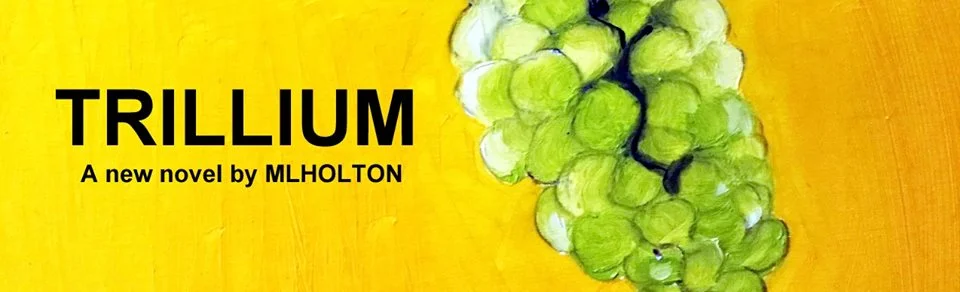
Recently, I completed my third novel, TRILLIUM. I wrote it during most of last year, in 2018.
From February to October, I sat down at my laptop and wrote diligently from 10am to 6pm, five days a week, taking only a one hour break for lunch to clear my head and re-charge. By mid-October, I sent the manuscript off to my chosen printers in Quebec and did a quick proof of the cover design and cover specifications. I was very pleased with myself that I was 'on schedule' when I released it in a limited Canadian produced 'Artist First Edition' at the end of October. -- DONE!
But Live and LEARN.
That 'Artist First Edition' is - regrettably - far from perfect. I had goofed big time.
After a much-needed break and breather, I casually went back to look at the then published book. I was dismayed to discovered I had made numerous silly mistakes, too-many-to-mention. Ashamed at my gaffs, I immediately withdrew the book from the marketplace and began an intense clean-up.
The FINAL work has just been released as an updated 340 page paperback and e-book in January of this year. Today, I continue to kick myself at my prior impatience 'to-get-it-to-print'. I had made an embarrassing error. BUT, there is no point in crying over spilt milk. What's done is done. ...
We live and we learn ...
Today, I am offering you the remaining IMPERFECT 'Artist First Editions' for just $20 per copy. Ironically, for a serious collector, that's a surprisingly good deal for a 'first edition' novel.
Otherwise, I have promo cards available for you on the so that you can find it on-line.
---
This new written work of mine, this 340 page historical novel, TRILLIUM, is very different from my prior attempts at factual and fictional story-telling. Instead of a standard protagonist and antagonist, or a somewhat predictable love triangle, I crafted an extended multi-generational cast of colourful and challenging characters who cover 250 years of settlement and growth in the wine-making district of Niagara. It is a full-fledged 'adult' novel that concerns itself with on-going topics of concern to adults. I wanted a broad palette to explore a number of different and timely issues.
This wide-ranging story - with all its up-and-downs and roll-a-rounds - in love, lust, revenge, larceny and a mysterious murder - cloaks the real purpose of any story.
And what, you might wonder, is that?
What is the purpose of any story?
Fundamentally - every story - ever told - has a moral - be it focused on Virtue or Vice.
TRILLIUM, the novel, isn't just about lip-smacking wine-making, salacious and furtive lusting, bug-eyed young love or the alluring glimmer of gold. No. Trillium is about morality. It is about the Good in people. It is about the Bad in people. It is about the choices people make about the Right Way and the Wrong Way of living a human life. How we, as people, LIVE is amplified by preceding generations who, covertly and overtly, shape and nurture the next generation ...
TRILLIUM is about Life.
The underlying theme of TRILLIUM, from start to finish, focuses on my growing concern about our apparent diminishing capacity to survive as a healthy and compassionate species on this amazing planet. Yes, heavy and heady stuff. ... But this singular and primary thought did guide me in the writing of this new work.
TRILLIUM deliberately weaves in and out of an assortment of moral dilemmas. Some are heart-breaking and tragic. Some are comical, witty and wise. Some are downright diabolical and evil, while some are pure and angelic. I wrote TRILLIUM to share a broad perspective about humanity. It is filled with the capricious, the colourful and the careless - all kinds of real-time personalities.
---
I would now like to dive a little bit deeper into the ACT and ART of 'writing a story. What MAKES a Writer Write? --- What compels a person to do set down and put words to paper? --- Why bother?
---
It's a bit of a long-winded answer, but please, bear with me.
Ever since I can remember, I have had a writing box. Most writers do.
This box is a compost heap of peripatetic ideas and sideswiped observations.
Something will catch a writer’s eye or ear or fancy and it will get jotted down, then, later, tossed into the box. Stubby pencil scratches on found bits of paper, full-length manuscripts of fluttering foolscap, half-composed computer print-outs or verdant wet-pen epistles - ALL these items get tossed into the box.
There, IDEAS will sit for a time to germinate. Two days - or two decades - per item is not an uncommon gestation period. Why? Because IDEA SEEDS vary.
My writing box is a living ‘WORDS-in-progress’ garden.
When I return at different times to view my young shoots, I often find that some ideas have not taken root (pithy but pointless) --- or that others must be zealously weeded out (verbose ravings). Yet, I will also often see the formation of a healthy new bud- especially when a single word reverberates. New growth struggles on an old growth IDEA. One thought - or one IDEA - may pollinate another. With these latter discoveries, I will start to feverishly prune-edit, cultivate-rewrite and otherwise happily tend to my quixotic word garden.
Some tales began long ago and have only recently come to final fruition. TRILLIUM was just such a story. I wrote the preliminary outline for this work over 10 years ago. Back then, I had an inkling that I needed to write a long, involved, rooted, yet evolving story - about rural family life ...
Other stories in my writing box have been grafted onto different ideas creating hybrids. 'The Frozen Goose' short story then screenplay falls into this category.
And some stories, I know, to a seasoned and urban urbane editor, may still need some heavy pruning .... However, I have kept these scraggly 'wild ones’ because they still radiate an exploratory and experimental sheen. I find they have their own rare merit - and honest beauty. And I know, if left longer to germinate, those struggling seeds will eventually sprout too.
...
Well-told stories are a delight to our senses. Our listening imaginations discern certain features repeated in pattern. Certain repeated words shimmer in different contexts. When words reverberate through us, they give us meaning. Like the word, 'colour', heard often here today. That word is reverberating in our collective mind ...
Stories are also ephemeral. The stories we hear, read, see or think today will be gone tomorrow. They will have grown and gently morphed into something else overnight as we artfully re-arrange them into our own personal perceptions and root them in our muddy memories. In this way, scintillating private stories, shared by others, become linked to intimate and well-loved stories of our own.
Soon, a good story, well told, becomes everyone's story.
...
So, how does one become a writer?
I believe it starts at a very young age when the joy-filled discovery of words is so fresh and intoxicating. Learning a new word suddenly explains, very clearly, what we are struggling so hard to say. -- Yes! No! - and then - Maybe ....
There is an immediate resonance with a new word discovery. New words sharpen our perceptions and refine our feelings. Developing vocabularies help us to better understand who we are becoming ...
In my case, I gave my first hand-written poem to my mother - 'Flowers In May' - when I was 9 years old. At the time, it was a bold act. I was showing and giving her a testament of my deep love of language. "See mum? -- Read what I have just written!"
At a very early age, I became a ferocious reader and, thanks to my parents, I discovered the attendant pleasures of owning a well-thumbed dictionary and a good thesaurus.
Words, in and of themselves, became sparkling phonetic jewels of wonderment.
I read and read and read ...,.
...
In my late teens, in the mid 1970, when thrust from the gentle rural countryside of South-western Ontario into the heady cosmopolitan environment at the University of Toronto to do a B.A. in Literature and Philosophy, I was instantly seduced by the surprising rhetorical possibilities of language.
I had long known there was emotive logic and persuasive argument - but to learn that ‘rhetoric’ itself was a studied and applied linguistic ‘science’ - well - that was eye-opening. I immediately wanted to understand what differentiated the written word of lawyers, say, from those of a journalist, or a writer of science fiction, or a passionate playwright or an enigmatic poet. I soon learned that each sub-discipline within the writing realm had its own particular rules of conduct and delivery.
It also seemed to me that the worlds of politics and commerce constantly erupted in all these types of writing. Politics and commerce shaped the tone of the language used. When a lawyer spoke or wrote of law, it was very different than when a playwright or poet spoke or wrote about law. To this day, Shakespeare remains the indisputable Master interpreter of these different shades of meaning according to their different roots of usage. He knew well that a speaker's role implies different meaning .
...
Playing with language became an obsessive preoccupation. Bawdy and cheeky limericks, ethereal and dainty haikus and popular pop-song lyrics jostled with the playfulness of words. As a concrete example, The Beatles group of the 1960s understood this playfulness very well. --- They invented - 'coo-coo-ca-choo' .... 'I am the Walrus' ... and re-worked 'I wanna hold your hand' to beguile us.
At university, I also began to understand that men and women DO experience and interpret the world very differently. It is evident in the different tone and choice of words used to express differing points of view. I explored a diversity of these sex-based ‘voices’ in my first book of published poetry, 'On Top of Mount Nemo'. Throughout that very early work, I played with these different sexual points-of-view and twirled them within the multiple refractions of our common perceptual prism. Words were such fun.
After graduating with a four-year Lit & Philosophy degree, with an independent study year at the University of Edinburgh where I focused on the history of the English language, and dusty too from several continental sojourns - I then settled down to the onerous task of ‘working-for-a-living' from 'dawn-to-dusk’.
I naturally gravitated towards entry level jobs that dealt with words, and was particularly drawn to Advertising and Copywriting. I started out as an Assistant Editor at an radio industry magazine, the FM Guide, under the supervision of Andrew Marshall, the proprietor, married to Canadian labour historian, Heather Robertson. Andrew and Heather were didactic wordsmiths who helped sharpen my ear.
Other short term jobs followed that allowed me to perceive and evaluate what I increasingly considered to be a loosely federated Advertising Empire that psychically dominated North America ...
I worked, for awhile, as a production assistant for a busy commercial film house and ran scripts and story boards back and forth to advertising clients.
Within this advertising empire, I soon learned that we think and become what we watch and consume. In this instance, the connecting and resonating link is the language of ‘sales’.
Sales is generated by believable or catchy advertising copy. Punchy slogans and riveting sound bites still seduce even the most wary and wry.
During the decade of the 1980′s, while setting up my own fine furniture design business in Toronto, my mind continued to race forward to find those literary nuggets that endured beyond the advertising hype.
When the 1990′s were upon us, the surround-sounds of multi-media seemed intensely focused on the emerging cyber-sphere and its nascent McLuhan-esque offspring: the internet.
Writing, and even reading, took on new dimensions as the lines slowly started to blur between the Real and the Un-Real. Television and Photography increasingly replaced the Printed Word. Vision soon dominated. The once prized and eloquent use of language became the cheap side-kick to a riveting photo image.
Think of 'Tony the Tiger' or 'the Tiger in your tank' based on an unbelievably engaging visual. Written words became spit as needed. In North America, we were increasingly being sold the IDEA that we needed everything – our body urges and our emotional needs – instantly gratified - with no thought of consequence. Plugged in, we sucked it all in, and soon every last one of us became addicted.
Computers, (with their oddly-named 'mice'), were soon added to our already plugged-in homes that housed those flickering tell-a-vision windows of fabricated reality.
...
In the middle of the 1990′s, the explosive Bre-X gold fraud scandal, (of salting a gold find in Borneo), was one of many riveting news items. We watched as 'Canada the Good' quietly fell from grace in the global business community. Ordinary investors lost faith and trust in the hustlers and hustle of the markets. Dot and telecom technology stocks floundered. Many collapsed overnight. Research-in-Motion and Nortel went bankrupt. Insider trading scandals and continued corporate-accounting fraud rattled the cages of commerce. Enron became a household word. And then, Dolly, the sheep, was cloned ...
Yet, it seemed to me, that even then - underlying this hurly-burly consumption and destruction - there were certain immutable Truths.
The Earth continues to revolve around the Sun.
This fact is unlikely to change anytime soon.
Towards the end of the 90′s, as I was entering my fourth decade on this planet, I began my second novel, The Gilded Beaver By Anonymous. Yes, it encapsulated much of what I had gleaned over the past decade as a designer. But also in that work, I was exploring and writing like a psychic geologist. ... I was constantly looking for noteworthy nuggets to pass along ... After winning the writing award for that work, I knew I was on to something ... I quietly kept at it and wrote when I could, tossing more SEED IDEAS into my writing box garden.
...
Something marvelous seemed to occur when we tipped into the twenty-first century. Remember? The century clocked over from 1999 to 2000. -- Aside from the doomsday clock-watchers, we were filled with a fresh new optimism and a sincere hope for our global future. All the dilapidated debris of the previous millennium momentarily disappeared and there was this unexpected gush of euphoria. -- We seemed to be on the right path, moving in the right direction ...
And yet.
Here we are today, in the final year of a second bloody and anxious decade, 2019.
We seem to have lost not only our footing but our moral centers.
The prospect of a new nuclear war and the continuous threats of ‘terrorism’ hang over our heads like threatening storm clouds. Outrageous atrocities – man’s inhumanity to man – unimagined even a short time ago – are now routinely reported. We addictively watch global events unfold on our televisions or scroll and swipe our way through social media on the internet. We're permanently plugged into our preferred apps and constantly engaging on our preferred social platforms. We hunger and we thirst for MORE.
Meanwhile, men - and yes, it is mostly men - continue to fight territorial squabbles over precious and diminishing natural resources on our finite planet.
Everyone is shoving, pushing and grabbing.
Camps of ‘Us’ and ‘Them’ are erupting everywhere. ---
It's starting to look like it's all going to explode soon ....
We seem to be on the edge of a cataclysmic melt-down ...
And yet – I ask you ----
Are these media-generated stories the real stories?
Are they the enduring stories that we all need to survive?
As a mature and aging woman on this planet, I do not think so.
We do not need to self-destruct.
...
To my mind, the time has come to re-discover the precious precision of words.
From my end, to sharpen my pen and strengthen my voice, I entered the Humber School of Writer's 'Graduate Creative Writing Program' in 2004. For the next eight months, I corresponded with two-time Giller Prize winner, M.G.Vassanji: a very seasoned Asian-Indian writer, best known for his Tanzanian-Toronto-centric novels - 'The Book of Secrets' and 'The In-between Worlds of Vikram Lall.'
Vassanji and I slowly worked back and forth through the unfinished snippets and short stories smoldering in my writing box.
Some seed IDEAS he liked, and some SHOOTS he didn’t. His periodic question marks in the columns of my manuscripts made me re-think my structures, my use of styles and my intentions. His attentive and thoughtful readings helped me to refine my essential reason for writing.
He helped me further define my future responsibility as a writing artist.
--- In many ways, it is the oldest story in the book. ---
Any true writer - any real writer worth their salt - is - at core - a CARETAKER.
Today, it seems this early story-telling Truth must be told again and again, in every language, in every medium, and with every voice: We are ALL Caretakers.
As a writing artist, I have planted my thoughts in a variety of different ‘voices’ to reflect the manners and mores of our times.
I now pass them on to you in my latest novel offering - TRILLIUM.
Please let my thoughts ricochet within you.
Cross-pollinate. Re-cultivate them.
Find again the sweet joy of warbling words.
And then, CARE TAKE …
Use the potent power of our shared stories.
Thank you.
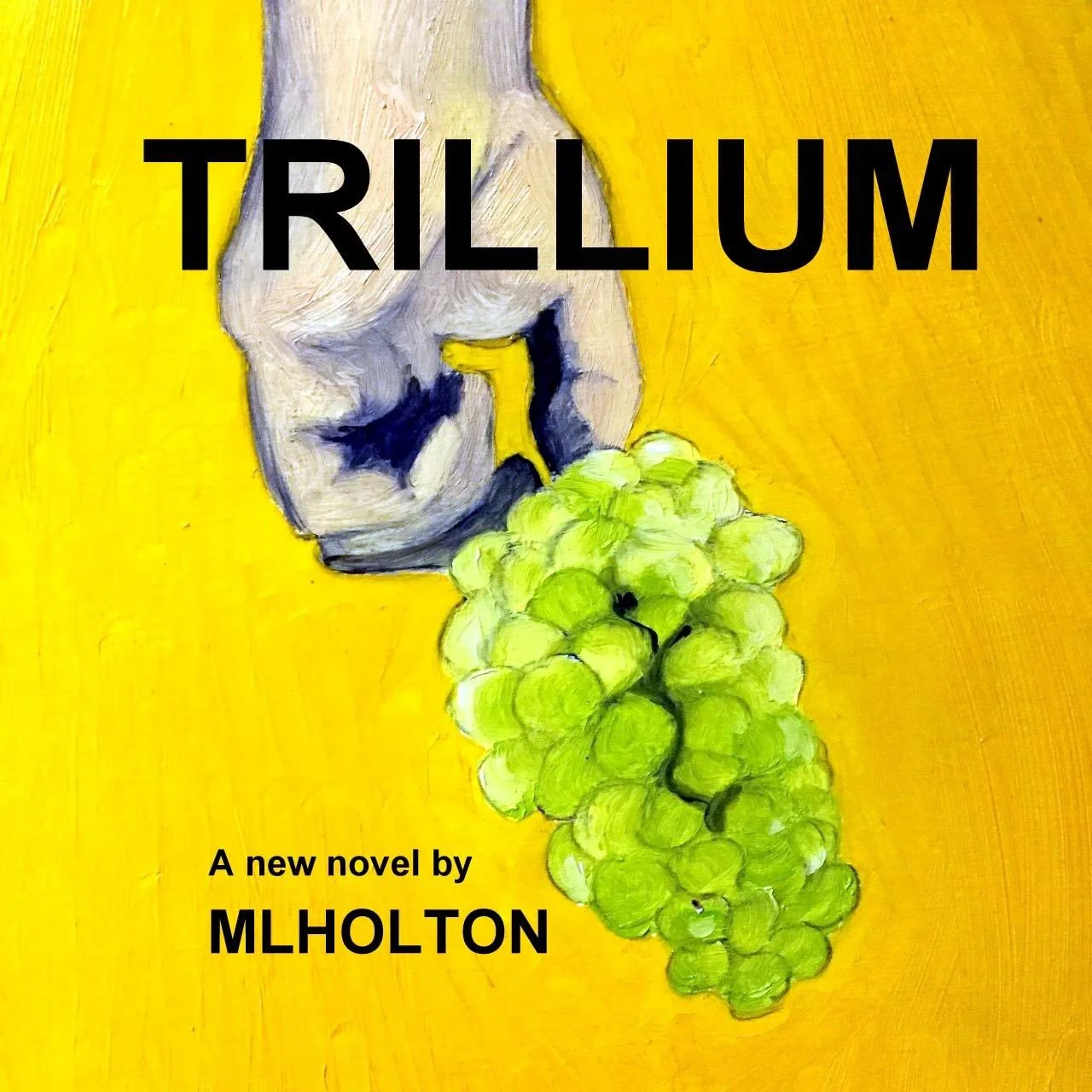
TRILLIUM, released in January 2019 in an e-book and trade paperback, can be found on Amazon.CA > https://amzn.to/2q0iEeL
Alternate e-book formats - (Kobo, Indigo, Apple etc) - are here > https://books2read.com/TRILLIUM
The FROZEN GOOSE film & trailer, referenced in the lecture, can be seen here > https://thefrozengoose.vhx.tv/
Margaret Lindsay Holton
Golden Horseshoe Artist & Canadian Author
T Bone Burnett: 'We are in a battle for the survival of our species', SXSW keynote - 2019

13 March 2019,. Hilton Austin, Texas, USA
I am going to begin today with a quote from Marshall McLuhan from his 1962 book, “The Gutenberg Galaxy”:
“Instead of tending toward a vast Alexandrian library the world has become a computer, an electronic brain, exactly as an infantile piece of science fiction. And as our senses have gone outside us, Big Brother goes inside.”
I would like to come to you today with a message of unity and love and peace, and I will try to get there by the end, but I have to begin by stating a fact that must be becoming obvious to most people by now- the fact that we are in a battle, a battle for the survival of our species, and our enemy, is within.
Three weeks ago in a landmark report on disinformation and fake news, the British parliament said that Facebook and other big tech companies “should be subject to a compulsory code of ethics to tackle … the abuse of users’ data and the bullying of smaller firms.”
The report says, “Companies like Facebook should not be allowed to behave like ‘digital gangsters’ in the online world, considering themselves to be ahead of and beyond the law.”
The Guardian wrote that this is the first “comprehensive attempt of a major legislative body to peer into the … economy of data manipulation and voter influence.”
Damian Collins, chair of the parliament’s Digital, Culture, Media and Sport Committee said, “The guiding principle of the ‘move fast and break things’ culture [is] that it is better to apologize than ask permission. We need a radical shift in the balance of power between the platforms and the people.”
In The New Yorker’s Feb. 25, 2019 report titled “Private Mossad for Hire,” Uzi Shaya, a former senior Israeli intelligence officer, said, “Social media allows you to reach virtually anyone and to play with their minds. You can do whatever you want. You can be whoever you want. It’s a place where wars are fought, elections are won, and terror is promoted. There are no regulations. It is a no man’s land.”
Marshall McLuhan began his work as a follower of the French Catholic idealist philosopher, Pierre Teilhard de Chardin. Teilhard believed that the electronic universe was an extension of our nervous systems and would knit us together into a godhead, which he called “the Omega Point”. McLuhan, also a Catholic, started there, but by the end of his life, he believed that the electronic universe was a “blatant manifestation of the Antichrist.” Satan, he said, “is a very great electric engineer.”
The Internet has failed.
Here is a quote from Tim Berners-Lee, who drew the original diagram for the world wide web on a napkin, and who now has Dr. Frankenstein’s remorse.
“We demonstrated that the Web had failed instead of served humanity, as it was supposed to have done, and failed in many places. [The Web] has ended up producing—with no deliberate action of the people who designed the platform — a large-scale emergent phenomenon which is anti-human.”
As the Internet pioneer Ethan Zuckerman of MIT recently wrote, “It’s obvious now that what we did was a fiasco, so let me remind you that what we wanted to do was something brave and noble.” What they wanted to do was to create a communication system that was decentralized and cooperative. One of the early networks that Stewart Brand and Ken Kesey built was called the Whole Earth Lectronic Link. That’s how utopian their aspirations were. But today there is a growing understanding that the internet has morphed into an insidious surveillance and propaganda machine.
Berners-Lee has said he is “devastated” by what his creation has become, and he is working to “re-decentralize” the web with a new project he calls Solid. I sincerely wish him the best of luck, but from where I stand, we would do well to scrap this first internet project- we should break up these advertising platform monopolies, and we should start from scratch to build an electronic communications system founded on hard and fast ethics rather than utopian fantasies.
(Thomas More coined the word Utopia from two Greek words- eutopia, which meant a good place and outopia, which meant no place at all.)
By now, it is clear that what was begun as a mission to connect and unite mankind has mutated into a pernicious distortion machine that has disconnected mankind and put us at each other’s throats, and in doing so has destroyed and is destroying institutions and knowledge that have taken centuries to develop.
As my friend Roger McNamee says, at this point it is all the rest of us against the 130,000 or so employees of Facebook and Google, whose objective it is to hybridize us with machines. Ray Kurzweil, Google’s Director of Engineering, predicts that humans will be hybrids by the year 2030. Their goal is to automate us.
In the beginning of the last century, Sigmund Freud’s nephew, Edward Bernays, realized that he could use his uncle’s concepts- such as the understanding that we are driven to act by unconscious impulses- to control and manipulate mass culture.
At the beginning of the first world war, Bernays was the press agent for Enrico Caruso, plying the trade that was then called propaganda. He had run many successful campaigns, and as the United States entered the war, he worked for Woodrow Wilson to promote the idea the we were fighting not to restore the old empires of Europe, but rather to “Make the world safe for democracy.” By positioning Wilson as the “Liberator of the people, who would create a new world were the individual would be free”, he was able to make Wilson a hero of the masses.
The throngs that greeted Wilson upon his arrival at the Paris Peace talks gave Bernays the insight that if this sort of mass manipulation could be used during war, it could be used during peace.
After the war, with the Germans giving propaganda a bad name, Bernays rebranded his practice, opening the Council on Public Relations — a phrase he coined — and began working for various corporations including the American Tobacco Corporation. At the time there was a taboo against women smoking and Bernays was asked to break that taboo so that the company could sell more cigarettes.
During the 1929 Easter parade around Central Park in New York, Bernays arranged for a group of debutantes to hide cigarettes under their clothes and, at an arranged corner, pull out and light what he called “Torches of Freedom.” Having notified the international press of the event, there were scores of photographers — including ones hired by Bernays — at that corner, and the pictures went out all over the world. In that one symbolic act, he was able to link a woman’s right to smoke with a woman’s right to vote — with the Women’s Liberation Movement. He linked a woman smoking a cigarette with the Statue of Liberty. Those pictures snapped the world.
This devious process has now been mechanized and automated.
Until England recently joined the fray, Germany had been leading the world on the extreme dangers of the Facebook and Google monopolies, because Germany in the 1920s, was the first country to fall into a propaganda created mass hypnosis. The Germans have felt it.
Historian Robert Ensor wrote at the time that “Hitler puts no limit on what can be done by propaganda; people will believe anything, provided they are told it often enough and emphatically enough, and that contradicters are either silenced or smothered in calumny.”
This, of course, is all too familiar.
To stay human, to survive as a species, we have to wrest our communications out of the control of the lust for power, the avarice, larceny, hubris, deceit and self-delusion of the heads of Google and Facebook
I am confident that we can do this. Six years ago my friend Jon Taplin and I spoke at a conference at MIT. We caused a lot of trouble because of our assertion that musicians have the right to determine how and where their music is distributed. The Free Culture sect was in ascendance on campuses then, but things have changed.
The chronicle of reform movements demonstrates that history is made by abrupt transitions. The 1890s are remembered as the Gilded Age, where plutocrats like J. P. Morgan and John D. Rockefeller asserted control over the U.S. economy and politics. By 1906, both Rockefeller and Morgan were being forced by antitrust regulators to break up their vast holdings. When I gave the keynote address at the Americana Music Festival addressing the problem of the tech monopolies in the fall of 2016, I thought we were in 1896, not 1906.
But today, just three years later, we are, in fact, at the beginning of a profound change in how we view tech monopolies. Since that time, the German led European Union has fined Google 7.7 billion dollars (American), the largest antitrust fines in history, for abusing its search monopoly, the British parliament has picked up the torch, and there is increasing evidence that American politicians and regulators are open to new regulation of these tech monopolies. Within the next six months the FCC will probably fine Facebook billions of dollars for the Cambridge Analytica breach. This is in part because the mounting evidence of the destructive role that both Facebook and Google played in the American election of 2016 proved to be one of the primary causes of Individual One’s so called victory.
But the crisis Facebook and Google have created goes way beyond the election. We have come to the realization that we have entrusted them with our most intimate data, and that they are not worthy of that trust. They have betrayed our trust by engineering their platforms to be addictive, and by making enormous fortunes selling — monetizing “in the parlance of our times,” to quote Maude Lebowski — surreptitiously selling those data that we have unknowingly handed over to them for free, for nothing.
Stewart Brand is often quoted as saying. “Information wants to be free.” The other half of the quotation, always omitted by the Free Culture sect is, “Information wants to be expensive, because it’s so valuable. The right information in the right place changes your life.”
I have come here today to this right place to bring you a right piece of information.
Your information is extremely valuable.
To realize that, all you have to do is look at the valuations of the companies that have been confiscating your information and making vast fortunes without compensation to you, the owners of that information, companies that have instead manipulated you and your friends and families by that information.
If we search the internet we find that Facebook is worth somewhere around $475 billion. Google is worth about $785 billion, give or take a few billion — together, about a trillion and a quarter dollars.
This — and much, much more — is what your collective information is worth. In fact, there is no way to put a monetary value on something such as privacy for which the intrinsic value is immeasurable.
Mark Zuckerberg tells us the age of privacy is over. At Harvard, he started what was then called Facemash as a place to rate girls by their pictures — which had been stolen from student housing directories — girls who were, I am certain, thrilled to be rated by the Ivy League incel community. Here is part of a text conversation between him and one of his friends outlining how he was planning to deal with his competition, the website Harvard Connect:
FRIEND: so have you decided what you are going to do about the websites?
ZUCK: yea i’m going to fuck them
ZUCK: probably in the year
ZUCK: *ear
ZUCK: yea so if you ever need info about anyone at harvard
ZUCK: just ask
ZUCK: i have over 4000 emails, pictures, addresses, sns
FRIEND: what!? how’d you manage that one?
ZUCK: people just submitted it
ZUCK: i don’t know why
ZUCK: they “trust me”
ZUCK: dumb fucks
Having been exposed, he now claims to have grown and changed, but by now we have profound evidence that he has not, and in fact, his lust for power has made him worse, has made him into a James Bond villain.
He may be Zuckerberg, but make no mistake — you are the mark.
The Fourth Amendment to the Constitution of the United States asserts that the right of the people to be secure in their persons, houses, papers, and effects, against unreasonable searches and seizures, shall not be violated. Well, unreasonable searches and seizures are Google and Facebook’s business models.
There are laws against phone tapping, yet on the internet, all communications are tapped, at all times, with impunity.
This has been an epic invasion of privacy.
While he buys up all the houses around his house to protect his privacy, neither he nor any of the other one dimensional Randian intellectual lightweights in Silicon Valley gets to declare that the age of privacy is over.
It is time for him and them to get out of our lives, out of our private lives, out of our common life.
Theirs is a fundamental miscalculation. They don’t know the difference between connection and disconnection. They don’t know the difference between information and disinformation. They don’t know the difference between creation and destruction.
Information does not want anything. We want information.
But as the tech companies have made vast fortunes selling our information, they have hidden from us the crucial information we need to survive as a species.
These technologists lack humanity.
This era — an era marked by a new field of economics called Surveillance Capitalism — has been a global revenge of the nerds.
For those to whom surveillance capitalism is a new term, here is Shoshana Zuboff’s definition of that term from her mighty book, The Age of Surveillance Capitalism:
1. A new economic order that claims human experience as free material for hidden commercial practices of extraction, prediction, and sales;
2. A parasitic economic logic in which the production of goods and services is subordinated to a new global architecture of behavioral modification;
3. A rogue mutation of capitalism marked by concentrations of wealth, knowledge, and power unprecedented in human history;
8. An extrapolation of critical human rights that is best understood as a coup from above: an overthrow of the people’s sovereignty.
The goal of technology is to create efficiency.
The goal of art is to create conscience.
Art is not efficient.
Efficiency is not an attribute of the good.
Efficiency can be efficient for good or evil, but as it has worked out in practice, efficiency would seem to be a prime attribute of evil.
Without conscience, efficiency has the potential for apocalyptic evil.
These surveillance capitalists do not have the ethical foundation to be able to order society as they have presumed to do.
They lack conscience.
I will stay with the artists. Artists contain the accumulated knowledge of generations. Artists create conscience. The artists are our only hope.
The sciences have failed us. The churches have failed us. The politicians have failed us.
I am here today to strongly encourage all of you artists to not give in to the extreme intimidation of a sad group of very rich, emotionally and intellectually stunted people who threaten to destroy centuries of human experience and hard won knowledge, who threaten to destroy our race — the only race we have, the human race — but instead to stand up for yourselves, to stand up for humanity.
Abraham Lincoln said, “America will never be destroyed from the outside. If we falter and lose our freedoms, it will be because we destroyed ourselves.” Dr Martin Luther King, Jr said, “And one of the great liabilities of life is that all too many people find themselves living amid a great period of social change, and yet they fail to develop the new attitudes, the new mental responses, that the new situation demands. They end up sleeping through a revolution.” We must ask ourselves, are we sleeping through the Surveillance Capitalism Revolution?
Our understanding of the Internet as a propaganda machine rather than simply a benign, ever-flowing source of information changed in 2016. Jacques Ellul defined propaganda this way, “an inner control over the individual by a social force, which means that it deprives him of himself.”
Please think of this talk as a prayer that we become reunited with our selves.
At about the same time as Bernays was fusing his uncle’s innovations with propaganda, the Russian psychologist, Ivan Pavlov, began researching the responses of dogs to being fed that led to our understanding of conditioned responses. If the dog would be fed accompanied by the ringing of a bell, soon the dog would begin to salivate merely at the ringing of a bell, if no food was present.
We are also susceptible to this sort of manipulation.
On social media, the like is the bell ringing.
In 1938, Orson Welles produced a radio play of the HG Wells novel, “War of the Worlds,” which led to a national panic that we were being invaded by aliens (from outer space), demonstrating the power of media to manipulate the mass unconscious, or to put it more clearly, to manipulate masses of people without their being conscious they were being manipulated. With the mechanized, automated electronic programming capabilities of today, we can see how easy it has become to fabricate — for millions of credulous people — an alien (not from outer space) invasion.
Rush Limbaugh’s rise paralleled that of Ronald Reagan. Fox News was launched in 1996 and was in enough markets by 2000 to help elect our boy, George Bush. But the hijacking of social media as a propaganda organ is distinctly different from partisan radio and television.
Our smartphones are with us every waking hour, whereas television and radio are not regularly ingested in our workplaces. We check our phones 150 times per day and Facebook alone gets 54 minutes of our time per day.
But big changes will happen if we approach the problem of monopolization of the Internet with honesty, a sense of history, and a determination to protect what we all agree is important: our cultural inheritance. We all need the access to information the Internet provides, but we need to be able to share information about ourselves with our friends without unwittingly supporting a corporation’s profits.
Facebook and Google must be willing to alter their business models to protect our privacy and help thousands of artists create a sustainable culture for the centuries, not just make a few software designers billionaires.
In the 1998 Digital Millennium Copyright Act (DMCA §512), the telecom giants, AT&T, Verizon, et al, negotiated a liability shield for copyright infringement called the Safe Harbor Provision, which stipulated that the digital platforms were not responsible for the material posted on their platforms. This was an unwise decision.
Among other serious problems, it allowed YouTube to become a massive infringement machine that made tens of billions of dollars for its owners while returning between nothing and a small fraction of that money, to the owners of the material posted on their platform. It also led to the posting of tens of thousands of Isis and Ku Klux Klan recruitment videos, as well as thriving pedophilia communities with untold thousands of photographs and videos of schoolchildren, among other horrors.
The Safe Harbor provision needs to be amended. Now.
Without the Safe Harbor provision, these Surveillance Capitalists would have to protect and defend their platforms, and in doing so, protect and defend us.
If artists do not want their work on YouTube or Facebook for free, they should be able to file a takedown notice, and then it would become the responsibility of the platform to block that content from ever being uploaded. All the tools needed to make this happen already exist.
Second, we need to reform our privacy regulations. The EU is taking the lead on this with their General Data Privacy Regulation act (GDPR) which went into effect in early 2018. The U.S. should follow the European leadership on this front.
But we also must understand that the people who run Google, Facebook, etc., are just at the beginning of a long project to change our world, so this battle has only just begun. Yuval Noah Harari, author of Sapiens, calls their project Dataism:
“Dataists further believe that given enough biometric data and computing power, this all-encompassing system could understand humans much better than we understand ourselves. Once that happens, humans will lose their authority, and humanist practices such as democratic elections will become as obsolete as rain dances and flint knives.”
We need to confront this techno-determinism with real solutions, before it is too late. An autonomous technology has taken over the traditional values of all our cultures and rendered the differences among them superficial. This has led to disruptions and schisms in crucial parts of our lives- the arts, education, journalism, politics, and others, but most alarmingly, in our selves. Marshall McLuhan said that a medium surrounds a previous medium and turns the previous medium into an art form, as film did with novels, as television did with film, and as the internet has now done with television.
Through the technological advances of the last century, from radio to film to television and now to the world wide web, we have become deft at the treacherous processes of programming and conditioning.
As you know, programmers make programs, and what they do is called programming. Today, we have programs and programmers everywhere. Where we once had radio programmers and television programs, billions of people now are turning themselves into programmers, and- more significantly- into programs.
As one result of this programming pandemic, we are losing the ability to discern fact from fiction.
Another result is that large segments of our societies are subjects of mass hypnosis.
I undertake the pursuit of the solutions to these problems with optimism, because I believe in the power of music, paintings, theater, books, and movies — the power of art — to change the world. As the writer Toni Morrison observed, “The history of art, whether it’s in music or written or what have you, has always been bloody, because dictators and people in office and people who want to control and deceive know exactly the people who will disturb their plans. And those people are artists. They’re the ones that sing the truth. And that is something that society has got to protect.” I know that brave and passionate art is worth protecting and is more than just click bait for global advertising monopolies. Art is not information. Art is above information. Art changes everything.
The last 10 years have seen the wholesale destruction of the creative economy — journalists, musicians, authors, and filmmakers — wrought by parasitic tech monopolies. The monopolies’ dominance in Artificial Intelligence will extend this creative destruction to much of the service economy, including transportation, medicine, and retail.
There is not a single politician in America talking about this and, when the flood of unemployment brought about by the Artificial Intelligence revolution is upon us, we will not be ready. Treasury Secretary Steven Mnuchin was recently quoted as saying that the robotics and AI revolution would not arrive for 100 years. He said, “I think that is so far in the future — in terms of Artificial Intelligence taking over American jobs—I think we’re, like, so far away from that that it is not even on my radar screen.”
His radar screen is blank. In actual fact, he has no radar screen. That is an imbecilic statement.
Mnuchin’s former employer, Goldman Sachs, recently reported that self-driving cars could eliminate 300,000 jobs per year starting in 2022. Both sides of this argument cannot be true, but we are forging ahead with a vision of an AI universe with almost no political debate. We know this is true because of the deafening silence from the politicians in the last ten years, as 50 percent of the jobs in journalism were eliminated and revenues at both music companies and newspapers fell by 70 percent. Who was there to speak for the creative workers of the world?
The companies that will win the AI race will be the companies that are already in the forefront: Google, Facebook and Amazon. As AI venture capitalist Kai-Fu Lee recently wrote, “AI is an industry in which strength begets strength: The more data you have, the better your product; the better your product, the more data you can collect; the more data you can collect, the more talent you can attract; the more talent you can attract, the better your product.”
These companies are already pushing out of tech into other sectors of the economy, as Amazon’s acquisition of Whole Foods demonstrates. Google’s life sciences division, Verily, is producing glucose-monitoring contact lenses for diabetics, wrist computers that read diagnostic nanoparticles injected into the blood stream, implantable devices that modify electrical signals that pass along nerves, medication robots, human augmentation and human brain simulation devices. Google’s autonomous car division is already working with Avis to manage their forthcoming self-driving car fleet. As for Facebook’s brand extension plans into video, they recently bid $800 million for the worldwide rights to broadcast Indian Cricket on their platform, only to be outbid by Rupert Murdoch’s Star India. These are just the start of many initiatives to extend the tech giants’ technologies into many parts of the American economy.
We need a communications system that is not dependent on surveillance marketing and that allows creative artists to take advantage of the zero-marginal-cost economics of the Web. I have no illusion that the existing business structures of cultural marketing will change and/or go away, but we can build a parallel structure that will benefit all creators. The only way this will happen is if, in Peter Thiel’s “deadly race between politics and technology,” the people’s voice (politics) wins. The leaders of Google and Facebook may seem to some like benevolent plutocrats, but, in fact, they are malevolent and without ethics. On top of that, the time for plutocracy is over.
Neil Postman wrote, “Those who cultivate competence in the use of a new technology become an elite group that are granted undeserved authority and prestige by those who have no such competence.”
Orwell feared that the truth would be hidden from us.
Huxley feared that the truth would be drowned in a sea of irrelevance.
They were both right.
We cannot and will not allow the tyranny of the programs and programmers of these electronic philistines to destroy us.
So, understanding the lesson of the propagandists that people are driven to act not by information, but rather by emotion, I pray that this talk has touched your emotions. To that end, I will leave you with two short poems by Czeslaw Milosz, the first is “You Who Wronged.”
You who wronged a simple man
Bursting into laughter at the crime,
And kept a pack of fools around you
To mix good and evil, to blur the line,
Though everyone bowed down before you,
Saying virtue and wisdom lit your way,
Striking gold medals in your honor,
Glad to have survived another day,
Do not feel safe. The poet remembers.
You can kill one, but another is born.
The words are written down, the deed, the date.
And you’d have done better with a winter dawn,
A rope, and a branch bowed beneath your weight.
Now, I’m going to reprogram you. Here is Milosz in a better mood in his poem, “Gift.”
A day so happy.
Fog lifted early, I worked in the garden.
Hummingbirds were stopping over honeysuckle flowers.
There was no thing on earth I wanted to possess.
I knew no one worth envying him.
Whatever evil I had suffered, I forgot.
To think that once I was the same man did not embarrass me.
In my body I felt no pain.
When straightening up, I saw the blue sea and sails.
Poetry rings to the high heavens.
We cannot and will not trade art, privacy, and our souls for the banal trivialities that the surveillance capitalists offer us.
In 2012, when we first raised these issues at MIT, no one was listening. Now, people are paying attention. We are advancing to higher ground. But the journey is not finished. As Dr. King said, “I may not get there with you, but I believe in the promised land.”
The goal of art is to create conscience.
You are equal to the task.
Thank you, love to you, and may God bless and keep you always.
Stanley Donen: 'In musicals, that's when we do a song', Academy Award Life Achievement - 1997
23 March 1998, Shrine Auditorium and Expo Centre, California, USA
Marty, it's backwards, I should be giving this to you, believe me. And I want to thank the Board of Governors for this cute little fella which to me looks titanic. Tonight, words seem inadequate. In musicals that's when we do a song, so... [music begins, singing:]
Heaven, I'm in heaven,
and my heart beats so that I can hardly speak,
and I seem to find the happiness I seek,
when we're out together dancing cheek to cheek.
[Does a brief tap dance; continues speaking with the music.]
I'm going to let you in on the secret of being a good director. For the script you get Larry Gelbart, or Peter Stone, or Huyck and Katz, or Frederic Raphael -- like that. If it's a musical, for the songs you get George and Ira Gershwin, or Arthur Freed and Herb Brown, or Leonard Bernstein and Comden and Green, or Alan Lerner and Fritz Loewe -- like that. Then you cast Cary Grant, or Audrey Hepburn, Fred Astaire, Gene Kelly, Sophia Loren, Richard Burton, Rex Harrison, Gregory Peck, Elizabeth Taylor, Burt Reynolds, Gene Hackman or Frank Sinatra -- like that. When filming starts you show up and you stay the hell out of the way. But you've got to show up, you've got to show up. Otherwise you can't take the credit and get one of these fellas. Thank you very much.
Olivia Colman: 'Done that bit. I think I have done that bit', BAFTA acceptance, Leading Actress - 2019
10 February 2019, London, United Kingdom
Thank you so much. It's really big.
I don't know -- I do know what to say. I have actually written something down. I do know.
To my fellow nominees, to be in the same company as you is such an extraordinary honour. I think the work you all did was so beautiful.
Very shaky. Sorry. I can't read it either.
All the producers. Fox and Element and everyone therein. And Nadia and Sandy and all of your teams. Hi. We're having an amazing night, aren't we? We're going to get so pissed later!
Yorgos Lanthimos -- I don't know, I can't think of the words to thank you enough for letting me do this. My most favourite time ever.
The thing I really want to do is, Emma and Rachel -- must keep it together -- not just for your performances but for what you did after the cameras stopped rolling. And we've never talked about this, and I find it very emotional, but you were the best and classiest and coolest honour guard any woman could ever have, and I love you. Ems isn't here, but we love you too, Em, somewhere in America.
Oh, God, what else am I meant to say? Done that bit. I think I have done that bit ...
Yes. So this is -- sorry. I swear I'm going to go in a minute!
This is for -- not for the lead, it's for a lead, and as far as I'm concerned, all three of us are the same and should be the lead, and it's weird that we can't do that. But this is for all three of us. It's got my name on it, but we can scratch in some other names.
Thank you so much.
Lady Gaga; 'So if you see someone who's hurting, don't look away', Grammy acceptance, 'Shallow' -2019
10 February 2019, Low Angeles, USA
If I don't get another chance to say this, I just want to say I'm so proud to be a part of a movie that addresses mental health issues. They're so important. A lot of artists deal with that. And we gotta take care of each other. So if you see somebody that's hurting, don't look away. And if you're hurting, even though it might be hard, try to find that bravery within yourself to dive deep and go tell somebody and take them up in your head with you.
Anna Paquin: 'i'd like to thank Jane, Jan and Holly', Academy Award acceptance - 1994
21 March 1994, Dorothy Chandler Pavillion, Los Angeles, USA
[Long excited silence]
I'd like to thank the Academy for the honor of letting me be here today. I'd like to thank Jane, Jan and Holly for making this all possible. I'd like thank Eddie Campbell, Pat Quirke, and Beanie* for taking such good care of me during the making of the film.
Spike Lee: 'Let's all mobilise, let's all be on right side of history', Academy Award acceptance - 2019
24 February 2019, Los Angeles, California, USA
The word today is “irony.” The date, the 24th. The month, February, which also happens to be the shortest month of the year, which also happens to be Black History month. The year, 2019. The year, 1619. History. Her story. 1619. 2019. 400 years.
Four hundred years. Our ancestors were stolen from Mother Africa and bought to Jamestown, Virginia, enslaved. Our ancestors worked the land from can’t see in the morning to can’t see at night. My grandmother, Zimmie Shelton Retha, who lived to be 100 years young, who was a Spelman College graduate even though her mother was a slave. My grandmother who saved 50 years of Social Security checks to put her first grandchild — she called me Spikie-poo — she put me through Morehouse College and NYU grad film. NYU!
Before the world tonight, I give praise to our ancestors who have built this country into what it is today along with the genocide of its native people. We all connect with our ancestors. We will have love and wisdom regained, we will regain our humanity. It will be a powerful moment. The 2020 presidential election is around the corner. Let’s all mobilize. Let’s all be on the right side of history. Make the moral choice between love versus hate. Let’s do the right thing! You know I had to get that in there.

Paul Kelly: 'This is where we make our communities', Don't Kill Live Music Rally - 2019
21 February 2019., Hyde Park, Sydney, Australia
This was a statement read aloud at the rally, which Paul Kelly couldn’t attend.,
I first started playing in Sydney in the late seventies.
French’s Tavern on Oxford Street was the first I remember.
Bondi RSL, The Trade Union Club, Graphic Arts Club, Kardomah Cafe, The Manzil Room.
Fuck we never got out of the Manzil ‘til after dawn.
Later on the Strawberry Hills Hotel, the Hopetoun, Dee Why, Salinas, The Annandale, War and Peace.
Many of these places have gone but their legacy lives on in the venues and the festivals under threat today.
You don’t learn how to write a song in school.
You don’t do a TAFE course in How to Play In Front of An Audience.
These places were my universities.
I still go to music festivals, pubs, clubs, and cafes all the time to do extra study.
Take a little refresher course.
Listen and learn.
This is where we grow and thrive, love and hate, compete and cooperate.
This where we make our communities, carve our sound, and develop our unique art.
Fight for it!
PK.
Glenn Close: 'We have to find personal fulfillment. We have to follow our dreams', Golden Globes - 2019
6 January 2019, Los Angeles, USA
Oh my gosh! Thank you so much Hollywood Foreign Press, this is such a great honor. And I'm so honored to be with my category sisters. And we've gotten to know each other a little bit so far and I can't wait to spend more time with you. Everything that you did this year—or, what you're here for—we all should be up here together.
I want to thank Meg Wolitzer for writing this incredible novel and Jane Anderson for adapting it, Rosalie Swedlin and Claudia Bluemhuber for the passionate—it took 14 years to make this film! I was attached to it thanks to my wonderful Kevin and Franklin who were behind me and said, "Yes, this is a great story and we need to stay with it until it happens."
You know, it was called The Wife. I think that's why it took 14 years to get made. To play a character who is so internal, I’m thinking of my mom who really sublimated herself to my father her whole life. And in her 80s she said to me, "I feel like I haven’t accomplished anything."And it was so not right. And I feel like what I've learned from this whole experience is, women, we’re nurturers, that’s what’s expected of us. We have our children, we have our husbands if we're lucky enough, and our partners. But we have to find personal fulfillment. We have to follow our dreams. We have to say, "I can do that, and I should be allowed to do that."
When I was little I felt like Muhammad Ali, who was destined to be a boxer. I felt destined to be an actress. I saw the early Disney films and Hayley Mills and I said, Oh, I can do that! And I’m here today. It will have been 45 years in September that I am a working actress, and I cannot imagine a more wonderful life.
Thank you Björn Runge who is here who directed The Wife, who trusted the close up, who knew where to put the camera and how to light us. Jonathan Pryce, what a great partner. My daughter Annie who laid the foundation of this character, I love you my darling. Thank you so much.
Jeff Bridges: ' All of us are trim tabs', Cecil B. DeMille award, Golden Globes - 2019
6 January 2018, Los Angeles, California, USA
Thank you, Chris [Pine], for those kind words! And Sam [Elliott, who narrated an introductory video], where is Sam? Oh, man. The stranger. Oh, man. Thank you, Hollywood Foreign Press, this is really a wonderful honor. I’m so challenged up here, because there are so many people to thank, you know? It’s a collaborative art form here. I’m gonna, I’m gonna thank some folks. I’m gonna thank my sweetheart, Sue. My God! Forty-five years of support and love. I wouldn’t be up here without you, my dear. And my brother Beau. Sister, Cindy. Your love and support. And how lucky are we to have our folks, man? Lloyd and Dorothy! Aghhhhh. Thank you! I’m wearing your cuffs, Dad. I’m wearing your cuff links. They’re your dad’s, too.
Oh, man. I’ve gotta thank my representatives. I don’t know where — wave your hands, guys, I want to see if I can — they’re keeping the whole boat afloat. I can’t see ya. There they are: David Schiff, Rick Kurtzman, Jean Sievers, Bob Wallerstein, Liz Dalling, my trusty assistant Becky Pedretti. Who am I forgetting? Oh, Frank Page. You know who I gotta mention is Loyd Catlett. He’s my stand-in. We’ve done close to 70 films together. Can you believe that? He’s the thread through the whole deal, starting from “Last Picture Show.”
And speaking of “Last Picture Show,” I’ve gotta thank my dear friend Peter Bogdanovich, who kicked the whole party off for me, man. I’m so blessed to have him start my whole career. Let’s see, well, the brothers. The Coen brothers, c’mon. I mean, true masters. If I’m lucky, I’ll be associated with the Dude for the rest of my life. I feel so honored to be a part of that film. Great movie.
And look at my brother, Steve Kloves, right? “Fabulous Baker Boys.” First time out and he comes up with that great movie. I gotta thank him. I gotta thank Scott Cooper. I don’t know if Scotty is here tonight, but “Crazy Heart.” Yeah, man, huh? Scott, man. Sets a great vibe to make wonderful things happen.
Oh, another first-time guy I was so lucky to work with: the late, great Michael Cimino, who directed “Thunderbolt and Lightfoot.” That was his first movie. I can remember going into his office the day before we started shooting, and I said to Mike, “Man, I’m so sorry, but I think you made a terrible mistake. I’m not feeling this guy at all. I feel so inadequate. I’m giving you late notice, I know, but please fire me.” He looked at me and said, “Jeff, you know the game tag?” I say, “Yeah.” He says, “You’re it.” I say, “What do you mean I’m it?” He says, “You are the guy. You couldn’t make a mistake if you wanted to. You know, the life of this character is coming through you. It’s a done deal.” I say, “Oh, all right. That’s a wonderful vote of confidence and a great perspective to look at this thing.”
And I used it, of course, in that film — and in all the other movies that I’ve done, as well as my life. You know, I’ve been tagged. I guess we all have been tagged, right? We’re all alive. Right here, right now! This is happening. We’re alive!
Being in the life of the movies, you know, I kind of look through my life through the filter of movies. I find directors and fellow actors all over the place in my life. One guy, he had nothing to do with the movies, but I’ve taken a lot of direction from him. That’s Bucky Fuller. Bucky, he’s most famous for the geodesic dome, but he made a great observation about these oceangoing tankers. And he noticed that the engineers were particularly challenged by how to turn this thing, you know? They got this big rudder, it took too much energy to turn the rudder to turn the ship. So they came up with a brilliant idea. Let’s put a little rudder on the big rudder. The little rudder will turn the big rudder, the big rudder will turn the ship. The little rudder is called a trim tab.
Bucky made the analogy that a trim tab is an example of how the individual is connected to society and how we affect society. And I like to think of myself as a trim tab. All of us are trim tabs. We might seem like we’re not up to the task, but we are, man. We’re alive! We can make a difference! We can turn this ship in the way we wanna go, man! Towards love, creating a healthy planet for all of us.
So I wanna thank the Hollywood Foreign Press for tagging me, and I wanna tag you all. You’re all trim tabs. Tag, you’re it! Thank you!
Kasey Chambers: 'Just don't be a dickhead', ARIA Hall of Fame - 2018
28 November 2018, Sydney, Australia
I’ve got my speech in my shoe.
I had nowhere else to put it.
I’ve had the same roadie for thirty years. My best mate Worm. He’s not a musician, he’s not a singer, he’s not musical, one day he said to me, a long time ago, I got a line for you for a song, you can have it if you want. ‘Barricades and brick walls won’t keep me from you’.
I basically owe my whole career to my roadie, Worm.
I wouldn’t be here if it wasn’t for Worm and his wife Bern, they’re my two best friends.
I think the two main things I’ve learned about how to survive in the music business is: always I have be true to yourself; and
To Find your tribe.
And I think your real tribe will always encourage you to be true to yourself, and won’t try to change you into something that you’re not.
And I have just had the most amazing tribe that you could possibly imagine.
My mum and dad, the two best role models that anybody could ever ask for, my Mum’s down there, she’s the most inspiring woman that I know, my mum has basically taught me over the years that being a bitch doesn’t make you strong and being strong doesn’t make you a bitch.
To know the difference, to know the difference.
You can be strong and kind at the same time.
My dad up there, the best advice my dad ever gave me, was ‘just don’t be dickhead’. I know it doesn’t sound very profound, but it actually has been the best advice to follow.
Seriously, you don’t need to be a dickhead to get ahead in this business.
You really don’t.
You don’t have to drag other people down to get ahead in this business. Don’t even worry what everyone else is doing. Just do your own thing and try not to be a dickhead about it.
Maliga Hodge, it’s such an honour to work with you for over 20 years, you’re my voice of reason. You’re so inspiring to work with every day. You’re so inspiring to me as a woman, and a mother, and I hope we’ll get another twenty years together, if you’ll put up with me.
My big brother Nash, you pick me up whenever I fall down. You drag me back down whenever I get my head too far up in the clouds. But you always walk beside me, you always have, and I just love you and Ronnie with all my heart, it really is as much yours, this Hall of Fame, as it is mine., So thank you.
Lastly my three greatest creations with the help of Cossie and Shane, my three kids Talon, Arlo and Poet.
Not only do you guys put up with the crazy life that we’ve given you but you also really embrace it, and enhance it. God knows you challenge it, but … I’m so proud to be your mum, I really am, and I hope that at the end of the day I have just inspired you to find something in your life that makes you feel alive, and work really hard, and always be true to yourself, and in the words of my greatest musical influence, just don’t be a dickhead!
Thank you, I never thought I’d be standing uyp here on a stage gertting something like this, honestly. I started out as a little girl around a campfire singing country songs on the Nullabor Plain. I am so proud to have become a strong woman. in the music industry.
But I don’t think I’m standing up here because I’m a strong woman.
I don’t think I’m standing up here in spite of being a strong woman either.
I actually think i’m standing up here because I’m just myself, and I think that’s all that any of us ever need to be.
John Cleese: 'Creativity is not a talent. It is a way of operating', Video Arts - 1991
23 January 1991, Grosvenor House Hotel, London, United Kingdom
You know, when Video Arts asked me if I'd like to talk about creativity I said “no problem!” No problem! Because telling people how to be creative is easy, it's only being it that's difficult.
I knew it would be particularly easy for me because I've spent the last 25 years watching how various creative people produce their stuff, and being fascinating to see if I could figure out what makes folk, including me, more creative.
What is more, a couple of years ago I got very excited because a friend of mine who runs the psychology department at Sussex University, Brian Bates, showed me some research on creativity done at Berkley in the 70s by a brilliant psychologist called Donald MacKinnon which seemed to confirm in the most impressively scientific way all the vague observations and intuitions that I'd had over the years.
The prospect of settling down for quite serious study of creativity for the purpose of tonight's gossip was delightful. Having spent several weeks on it, I can state categorically that what I have to tell you tonight about how you can all become more creative is a complete waste of time.
So I think it would be much better if I just told jokes instead.
You know the lightbulb jokes? How many Poles does it take to screw in a lightbulb? One to hold the bulb, four to turn the table. How many folksingers does it take to change a lightbulb? Answer: five, one to change the bulb and four to sing about how much better the old one was. How many socialists does it take to change a lightbulb? Answer: We're not going to change it, we think it works. How many creative art–
The reason why it is futile for me to talk about creativity is that it simply cannot be explained, it's like Mozart's music or Van Gogh's painting or Saddam Hussein's propaganda. It is literally inexplicable.
Freud, who analyzed practically everything else, repeatedly denied that psychoanalysis could shed any light whatsoever on the mysteries of creativity.
And Brian Bates wrote to me recently “Most of the best research on creativity was done in the 60s and 70s with a quite dramatic drop-off in quantity after then,” largely, I suspect because researchers began to feel that they had reached the limits of what science could discover about it.
In fact, the only thing from the research that I could tell you about how to be creative is the sort of childhood that you should have had, which is of limited help to you at this point in your lives.
However there is one negative thing that I can say, and it's “negative” because it is easier to say what creativity isn't.
A bit like the sculptor who when asked how he had sculpted a very fine elephant, explained that he'd taken a big block of marble and then knocked away all the bits that didn't look like an elephant.
Now here's the negative thing: Creativity is not a talent. It is not a talent, it is a way of operating.
So how many actors does it take to screw in a lightbulb? Answer: thousands. Only one to do it but thousands to say “I could have done that.” How many Jewish mothers does it take to screw in a lightbulb? Answer: Don't mind me, I'll just sit here in the dark, nobody cares about… How many surgeons —
You see when I say “a way of operating” what I mean is this: creativity is not an ability that you either have or do not have.
It is, for example, (and this may surprise you) absolutely unrelated to IQ (provided that you are intelligent above a certain minimal level that is) but MacKinnon showed in investigating scientists, architects, engineers, and writers that those regarded by their peers as “most creative” were in no way whatsoever different in IQ from their less creative colleagues.
So in what way were they different?
MacKinnon showed that the most creative had simply acquired a facility for getting themselves into a particular mood — “a way of operating” — which allowed their natural creativity to function.
In fact, MacKinnon described this particular facility as an ability to play.
Indeed he described the most creative (when in this mood) as being childlike. For they were able to play with ideas… to explore them… not for any immediate practical purpose but just for enjoyment. Play for its own sake.
Now, about this mood.
I'm working at the moment with Dr. Robin Skynner on a successor to our psychiatry book Families and How To Survive Them we're comparing the ways in which psychologically healthy families function (the ways in which such families function) with the ways in which the most successful corporations and organizations function.
We've become fascinated by the fact that we can usually describe the way in which people function at work in terms of two modes: open and closed.
So what I can just add now is that creativity is not possible in the closed mode.
Ok, so how many American network TV executives does it take to screw in a lightbulb? Answer: Does it have to be a lightbulb? How many doorke–
Let me explain a little. By the “closed mode” I mean the mode that we are in most of the time when at work.
We have inside us a feeling that there's lots to be done and we have to get on with it if we're going to get through it all.
It's an active (probably slightly anxious) mode, although the anxiety can be exciting and pleasurable.
It's a mode which we're probably a little impatient, if only with ourselves.
It has a little tension in it, not much humor.
It's a mode in which we're very purposeful, and it's a mode in which we can get very stressed and even a bit manic, but not creative.
By contrast, the open mode, is relaxed… expansive… less purposeful mode… in which we're probably more contemplative, more inclined to humor (which always accompanies a wider perspective) and, consequently, more playful.
It's a mood in which curiosity for its own sake can operate because we're not under pressure to get a specific thing done quickly. We can play, and that is what allows our natural creativity to surface.
Let me give you an example of what I mean.
When Alexander Fleming had the thought that led to the discovery of penicillin, he must have been in the open mode.
The previous day, he'd arranged a number of dishes to that culture would grow upon them.
On the day in question, he glanced at the dishes, and he discovered that on one of them no culture had appeared.
Now, if he'd been in the closed mode he would have been so focused upon his need for “dishes with cultures grown upon them” that when he saw that one dish was of no use to him for that purpose he would quite simply have thrown it away.
Thank goodness, he was in the open mode so he became curious about why the culture had not grown on this particular dish. And that curiosity, as the world knows, led him to the lightbulb — I'm sorry, to penicillin.
Now in the closed mode an uncultured dish is an irrelevance. In the open mode, it's a clue.
Now, one more example: one of Alfred Hitchcock's regular co-writers has described working with him on screenplays.
He says, “When we came up against a block and our discussions became very heated and intense, Hitchcock would suddenly stop and tell a story that had nothing to do with the work at hand. At first, I was almost outraged, and then I discovered that he did this intentionally. He mistrusted working under pressure. He would say “We're pressing, we're pressing, we're working too hard. Relax, it will come.” And, says the writer, of course it finally always did.
But let me make one thing quite clear: we need to be in the open mode when we're pondering a problem but once we come up with a solution, we must then switch to the closed mode to implement it. Because once we've made a decision, we are efficient only if we go through with it decisively, undistracted by doubts about its correctness.
For example, if you decide to leap a ravine, the moment just before take-off is a bad time to start reviewing alternative strategies. When you're attacking a machine-gun post you should not make a particular effort to see the funny side of what you are doing.
Humor is a natural concomitant in the open mode, but it's a luxury in the closed.
No, once we've taken a decision we should narrow our focus while we're implementing it, and then after it's been carried out we should once again switch back to the open mode to review the feedback rising from our action, in order to decide whether the course that we have taken is successful, or whether we should continue with the next stage of our plan. Whether we should create an alternative plan to correct any error we perceive.
And then back into the closed mode to implement that next stage, and so on.
In other words, to be at our most efficient we need to be able to switch backwards and forwards between the two modes.
But here's the problem: we too often get stuck in the closed mode.
Under the pressures which are all too familiar to us we tend to maintain tunnel vision at times when we really need to step back and contemplate the wider view.
This is particularly true, for example, of politicians. The main complaint about them from their non-political colleagues is that they become so addicted to the adrenaline that they get from reacting to events on an hour-by-hour basis that they almost completely lose the desire or the ability to ponder problems in the open mode.
And that's it. Well… 20 minutes to go… So, how many women's libbers does it take to change a lightbulb? Answer: 37, one to screw it in, and 36 to make a documentary about it. How many psychiatrists does it take to change a lightbulb? The answer: only one, but the lightbulb has really got to want to change.
Oh, there is one, just one, other thing that I can say about creativity.
There are certain conditions which do make it more likely that you'll get into the open mode, and that something creative will occur.
More likely… you can't guarantee anything will occur. You might sit around for hours as I did last Tuesday, and nothing.
Zilch.
Bupkis.
Not a sausage.
Nevertheless I can at least tell you how to get yourselves into the open mode. You need five things:
Space
Time
Time
Confidence
a 22 inch waist
Sorry, my mind was wondering. I'm getting into the open mode too quickly. Instead of a 22 inch waist, you need humor. I do beg your pardon.
Let's take space first: you can't become playful and therefore creative if you're under your usual pressures, because to cope with them you've got to be in the closed mode.
So you have to create some space for yourself away from those demands. And that means sealing yourself off.
You must make a quiet space for yourself where you will be undisturbed.
Next: Time. It's not enough to create space, you have to create your space for a specific period of time. You have to know that your space will last until exactly 3:30, and that at that moment your normal life will start again.
And it's only by having a specific moment when your space starts and an equally specific moment when your space stops that you can seal yourself off from the every day closed mode in which we all habitually operate.
And I'd never realized how vital this was until I read a historical study of play by a Dutch historian called Johan Huizinga6 and in it he says “Play is distinct from ordinary life, both as to locality and duration. This is its main characteristic: its secludedness, its limitedness. Play begins and then (at a certain moment) it is over. Otherwise, it's not play.”
So combining the first two factors we create an “oasis of quiet” for ourselves by setting the boundaries of space and of time.
Now creativity can happen, because play is possible when we are separate from everyday life.
So, you've arranged to take no calls, you've closed your door, you've sat down somewhere comfortable, take a couple of deep breaths and if you're anything like me, after you've pondered some problem that you want to turn into an opportunity for about 90 seconds, you find yourself thinking “Oh I forgot I've got to call Jim… oh, and I must tell Tina that I need the report on Wednesday and not Thursday which means I must move my lunch with Joe and Damn! I haven't called St. Paul's about getting Joe's daughter an interview and I must pop out this afternoon to get Will's birthday present and those plants need watering and none of my pencils are sharpened and Right! I've got too much to do, so I'm going to start by sorting out my paper clips and then I shall make 27 phone calls and I'll do some thinking tomorrow when I've got everything out of the way.”
Because, as we all know, it's easier to do trivial things that are urgent than it is to do important things that are not urgent, like thinking.
And it's also easier to do little things we know we can do than to start on big things that we're not so sure about.
So when I say create an oasis of quiet know that when you have, your mind will pretty soon start racing again. But you're not going to take that very seriously, you just sit there (for a bit) tolerating the racing and the slight anxiety that comes with that, and after a time your mind will quiet down again.
Now, because it takes some time for your mind to quiet down it's absolutely no use arranging a “space/time oasis” lasting 30 minutes, because just as you're getting quieter and getting into the open mode you have to stop and that is very deeply frustrating. So you must allow yourself a good chunk of time. I'd suggest about an hour and a half. Then after you've gotten to the open mode, you'll have about an hour left for something to happen, if you're lucky.
But don't put a whole morning aside. My experience is that after about an hour-and-a-half you need a break. So it's far better to do an hour-and-a-half now and then an hour-and-a-half next Thursday and maybe an hour-and-a-half the week after that, than to fix one four-and-a-half hour session now.
There's another reason for that, and that's factor number three: time.
Yes, I know we've just done time, but that was half of creating our oasis.
Now I'm going to tell you about how to use the oasis that you've created.
Why do you still need time?
Well, let me tell you a story. I was always intrigued that one of my Monty Python colleagues who seemed to be (to me) more talented than I was {but} did never produce scripts as original as mine. And I watched for some time and then I began to see why. If he was faced with a problem, and fairly soon saw a solution, he was inclined to take it. Even though (I think) he knew the solution was not very original.
Whereas if I was in the same situation, although I was sorely tempted to take the easy way out, and finish by 5 o'clock, I just couldn't. I'd sit there with the problem for another hour-and-a-quarter, and by sticking at it would, in the end, almost always come up with something more original.
It was that simple.
My work was more creative than his simply because I was prepared to stick with the problem longer.
So imagine my excitement when I found that this was exactly what MacKinnon found in his research. He discovered that the most creative professionals always played with a problem for much longer before they tried to resolve it, because they were prepared to tolerate that slight discomfort and anxiety that we all experience when we haven't solved a problem.
You know I mean, if we have a problem and we need to solve it, until we do, we feel (inside us) a kind of internal agitation, a tension, or an uncertainty that makes us just plain uncomfortable. And we want to get rid of that discomfort. So, in order to do so, we take a decision. Not because we're sure it's the best decision, but because taking it will make us feel better.
Well, the most creative people have learned to tolerate that discomfort for much longer. And so, just because they put in more pondering time, their solutions are more creative.
Now the people I find it hardest to be creative with are people who need all the time to project an image of themselves as decisive.
And who feel that to create this image they need to decide everything very quickly and with a great show of confidence.
Well, this behavior I suggest sincerely, is the most effective way of strangling creativity at birth.
But please note I'm not arguing against real decisiveness. I'm 100% in favor of taking a decision when it has to be taken and then sticking to it while it is being implemented.
What I am suggesting to you is that before you take a decision, you should always ask yourself the question, “When does this decision have to be taken?” And having answered that, you defer the decision until then, in order to give yourself maximum pondering time, which will lead you to the most creative solution.
And if, while you're pondering, somebody accuses you of indecision say, “Look, Babycakes, I don't have to decide 'til Tuesday, and I'm not chickening out of my creative discomfort by taking a snap decision before then, that's too easy.”
So, to summarize: the third factor that facilitates creativity is time, giving your mind as long as possible to come up with something original.
Now the next factor, number 4, is confidence.
When you are in your space/time oasis, getting into the open mode, nothing will stop you being creative so effectively as the fear of making a mistake.
Now if you think about play, you'll see why. To play is experiment: “What happens if I do this? What would happen if we did that? What if…?”
The very essence of playfulness is an openness to anything that may happen. The feeling that whatever happens, it's ok. So you cannot be playful if you're frightened that moving in some direction will be “wrong” — something you “shouldn't have done.”
Well, you're either free to play, or you're not.
As Alan Watts puts it, you can't be spontaneous within reason.
So you've got risk saying things that are silly and illogical and wrong, and the best way to get the confidence to do that is to know that while you're being creative, nothing is wrong. There's no such thing as a mistake, and any drivel may lead to the break-through.
And now, the last factor, the fifth: humor.
Well, I happen to think the main evolutionary significance of humor is that it gets us from the closed mode to the open mode quicker than anything else.
I think we all know that laughter brings relaxation, and that humor makes us playful, yet how many times important discussions been held where really original and creative ideas were desperately needed to solve important problems, but where humor was taboo because the subject being discussed was {air quotes} “so serious”?
This attitude seems to me to stem from a very basic misunderstanding of the difference between ‘serious' and ‘solemn'.
Now I suggest to you that a group of us could be sitting around after dinner, discussing matters that were extremely serious like the education of our children, or our marriages, or the meaning of life (and I'm not talking about the film), and we could be laughing, and that would not make what we were discussing one bit less serious.
Solemnity, on the other hand… I don't know what it's for. I mean, what is the point of it? The two most beautiful memorial services that I've ever attended both had a lot of humor, and it somehow freed us all, and made the services inspiring and cathartic.
But solemnity? It serves pomposity, and the self-important always know with some level of their consciousness that their egotism is going to be punctured by humor — that's why they see it as a threat. And so dishonestly pretend that their deficiency makes their views more substantial, when it only makes them feel bigger.
No, humor is an essential part of spontaneity, an essential part of playfulness, an essential part of the creativity that we need to solve problems, no matter how ‘serious' they may be.
So when you set up a space/time oasis, giggle all you want.
And there, ladies and gentlemen, are the five factors which you can arrange to make your lives more creative:
Space, time, time, confidence, and Lord Jeffrey Archer.
So, now you know how to get into the open mode, the only other requirement is that you keep mind gently 'round the subject you're pondering.
You'll daydream, of course, but you just keep bringing your mind back, just like with meditation. Because, and this is the extraordinary thing about creativity, if you just keep your mind resting against the subject in a friendly but persistent way, sooner or later you will get a reward from your unconscious, probably in the shower later. Or at breakfast the next morning, but suddenly you are rewarded, out of the blue a new thought mysteriously appears.
If you've put in the pondering time first.
So, how many Cecil Parkinsons does it take to change a lightbulb? Answer: two, one to screw it in, one to screw it up. How many account executives does it take to screw in a lightbulb? Answer: Can I get back to you on that? How many Norwei— Oh, sorry, how many Yugoslav— how many Malt– how many Dutch— I'm out of jokes.
Oh! One thing! Looking at you all reminds me, I think it's easy to be creative if you've got other people to play with.
I always find that if two (or more) of us throw ideas backwards and forwards I get to more interesting and original places than I could have ever have gotten to on my own. But there is a danger, a real danger, if there's one person around you who makes you feel defensive, you lose the confidence to play, and it's goodbye creativity.
So always make sure your play friends are people that you like and trust.
And never say anything to squash them either, never say “no” or “wrong” or “I don't like that.”
Always be positive, and build on what is being said:
“Would it be even better if…”
“I don't quite understand that, can you just explain it again?”
“Go on…”
“What if…?”
“Let's pretend…”
Try to establish as free an atmosphere as possible.
Sometimes I wonder if the success of the Japanese isn't partly due to their instinctive understanding of how to use groups creatively.
Westerners are often amazed at the unstructured nature of Japanese meetings but maybe it's just that very lack of structure, that absence of time pressure, that frees them to solve problems so creatively. And how clever of the Japanese sometimes to plan that un-structured-ness by, for example, insisting that the first people to give their views are the most junior, so that they can speak freely without the possibility of contradicting what's already been said by somebody more important.
Four minutes left… How many Irish– sorry, sorry
Well, look, the very last thing that I can say about creativity is this: it's like humor. In a joke, the laugh comes at a moment when you connect two different frameworks of reference in a new way.
Example: there's the old story about a woman doing a survey into sexual attitudes who stops an airline pilot and asks him, amongst other things, when he last had sexual intercourse. He replies “Nineteen fifty eight.” Now, knowing airline pilots, the researcher is surprised, and queries this. “Well,” says the pilot, “it's only twenty-one ten now.”
We laugh, eventually, at the moment of contact between two frameworks of reference: the way we express what year it is and the 24-hour clock.
Now, having an idea, a new idea, is exactly the same thing. It's connecting two hitherto separate ideas in a way that generates new meaning.
Now, connecting different ideas isn't difficult, you can connect cheese with motorcycles or moral courage with light green, or bananas with international cooperation. You can get any computer to make a billion random connection for you, but these new connections or juxtapositions are significant only if they generate new meaning.
So as you play you can deliberately try inventing these random juxtapositions, and then use your intuition to tell you whether any of them seem to have significance for you. That's the bit the computer can't do. It can produce millions of new connections, but it can't tell which one smells interesting.
And, of course, you'll produce some juxtapositions which are absolutely ridiculous, absurd. Good for you!
Because Edward de Bono (who invented the notion of lateral thinking) specifically suggests in his book PO: Beyond Yes and No that you can try loosening up your assumptions by playing with deliberately crazy connections. He calls such absurd ideas “Intermediate Impossibles.”
And he points out the use of an Intermediate Impossible is completely contrary to ordinary logical thinking in which you have to be right at each stage.
It doesn't matter if the Intermediate Impossible is right or absurd, it can nevertheless be used as a stepping stone to another idea that is right. Another example of how, when you're playing, nothing is wrong.
So, to summarize: if you really don't know how to start, or if you got stuck, start generating random connections, and allow your intuition to tell you if one might lead somewhere interesting.
Well, that really is all I can tell you that won't help you to be creative. Everything.
And now, in the two minutes left, I can come to the important part, and that is, how to stop your subordinates {from} becoming creative too, which is the real threat.
Because, believe me no one appreciates better than I do what trouble creative people are. And how they stop decisive, hard-nosed bastards like us from running businesses efficiently.
I mean, we all know, we encourage someone to be creative, the next thing is they're rocking the boat, coming up with ideas, and asking us questions. Now if we don't nip this kind of thing in the bud, we'll have to start justifying our decisions by reasoned argument. And sharing information — the concealment of which gives us considerable advantages in our power struggles.
So, here's how to stamp out creativity in the rest of the organization and get a bit of respect going.
One: Allow subordinates no humor, it threatens your self-importance and especially your omniscience. Treat all humor as frivolous or subversive.
Because subversive is, of course, what humor will be in your setup, as it's the only way that people can express their opposition, since (if they express it openly) you're down on them like a ton of bricks.
So let's get this clear: blame humor for the resistance that your way of working creates. Then you don't have to blame your way of working. This is important. And I mean that solemnly. Your dignity is no laughing matter.
Second: keeping ourselves feeling irreplaceable involves cutting everybody else down to size, so don't miss an opportunity to undermine your employees' confidence.
A perfect opportunity comes when you're reviewing work that they've done. Use your authority to zero in immediately on all the things you can find wrong. Never, never balance the negatives with positives, only criticize, just as your school teachers did.
Always remember: praise makes people uppity.
Third: Demand that people should always be actively doing things. If you catch anyone pondering, accuse them of laziness and/or indecision. This is to starve employees of thinking time because that leads to creativity and insurrection. So demand urgency at all times, use lots of fighting talk and war analogies, and establish a permanent atmosphere of stress, of breathless anxiety, and crisis.
In a phrase: keep that mode closed.
In this way we no-nonsense types can be sure that the tiny, tiny, microscopic quantity of creativity in our organization will all be ours!
But! Let your vigilance slip for one moment, and you could find yourself surrounded by happy, enthusiastic, and creative people whom you might never be able to completely control ever again!
So be careful.
Thank you, and good night. Thank you.
Betty White: 'First lady, yes, she's that old, she was the first one, way, way back’ Emmys - 2018
18 August 2018, Los Angeles, California, USA
Oh, my goodness. Oh, my goodness. Thank you. I’m just going to quit while I'm ahead! Oh, my goodness, goodness, goodness. This is very exciting. I thought the biggest, most exciting night I had ever had, I'm talking to Lorne Michaels now, was the night that he gave me an honor. But boy, you topped yourself tonight, Lorne.
(She stops to let Alec Baldwin kiss her hand.) You think i'm going to miss a chance when I get it?
Somebody said something the other day about 'First Lady of Television.' And I took it as a big compliment. And then I heard her talking to her daughter a little later, she said, ‘First lady, yes, she's that old, she was the first one, way, way back.’ But little did I dream then that I would be here. It's incredible that I'm still in this business, that I'm still -- and you are still putting up with me.
No, I’m thanking you. It's incredible that you can stay in a career this long and still have people put up with you. I wish they did that at home. I want to thank Lorne Michaels for doing not only this tonight, but all the wonderful things he's done with me -- no, for me. And all I can say is, it's such a blessed business to be in, and how lucky can I be, and how much I say, thank you to each and every one of you. Thank you so much.