• Genre
  • About
  • Submissions
  • Donate
  • Search
Menu

Speakola

All Speeches Great and Small
  • Genre
  • About
  • Submissions
  • Donate
  • Search
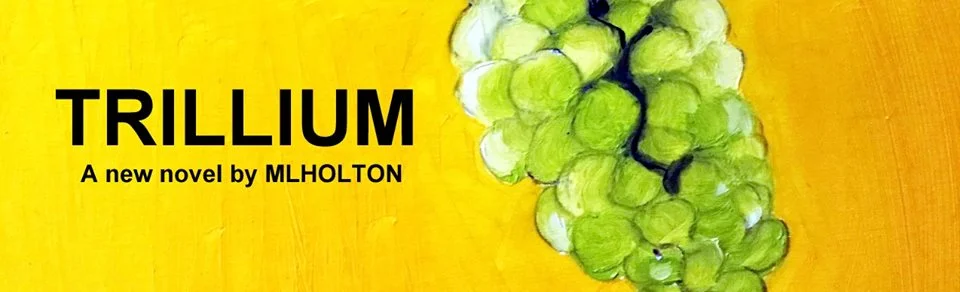
Header - TRILLIUM by MLHolton.jpg

Margaret Lindsay Holton: "I learn by doing. This is my basic mantra for life", 'The Act and Art of Writing' - 2019

May 18, 2019

21 March 2019, Art Gallery of Hamilton, Ontario, Canada

Good afternoon ladies - and gentlemen - Thank you for coming.

First off, I must apologize for reading from this prepared script. Without my 'notes', I fear I would take us on a wildly unpredictable journey to unexpected and unusual places - as is the propensity of my wandering and inquiring mind ...

The problem is: our minds are always 'on' ... We day-dream, we fantasize, we reason, we debate and we chatter incessantly with ourselves. In so doing, we think a lot about a lot of different people and a lot of different things. Visual IDEAS ricochet through various time portals, expanding and contracting, in imagined and real geographic locations. As a result, our imaginations are constantly 'becoming' ... Collectively, our singular imagination is very much ALIVE.

To many, I have what is called, an 'active imagination'. I am sure most of you are familiar with this attribute - or, as some believe - affliction ...

This particular facility has proven to be both a blessing and a curse over my nearly 50 odd years of 'art creation'. An 'active imagination' soothes. It can also hound. An 'active imagination' has propelled me forward into new endeavours. Equally, it has held me back with compounding thoughts of catastrophic fear.

An 'active imagination' ricochets through the prisms of our minds. Ever active, it constantly produces a dazzling cascade of competing thoughts and emotions.

Initially, I was a bit surprised to be invited to speak to you today.

Some of you may recall that I spoke here eight years ago in 2011.

At that time, I gave a overview of my life's work as a practicing artist in the visual arts. I included a demonstration of my black & white pinhole photography, my multi-layered and multi-coloured photo-collages, my international typeface-designs now in commercial use since the 1980s, and I included an overview of my signature 'naive-surreal-folk-abstract' paintings. A slide show of those different disciplines accompanied that talk.

I made clear then, that, in the main, I am self-taught.

I learn by doing. This is my basic mantra for Life: Learn by Doing.

---

Today, I will introduce you to another discipline that I am attempting to do as best as I can - the Act and Art of Writing.

At this point in my life, in my early 60s, I am very lucky that I have the basic financial freedom to do what I want, when I want. I am, thus, at liberty to pursue my own work. That said, I do not, like so many of you here, own my own home on land that I own. There is no husband in my studio and I have no children to look after. I work and live alone, and have done so, for over 30 years. For the most part, this suits me very well.

How did I get to where I am today? --- You will need some background.

In my youth, during my 20s, I was beholden to various employment venues that governed MY TIME. When I was 32, I started my own Canadian fine furniture design practice in Toronto. In this way, I became a 'self-employed' woman at a relatively early age. For the next 14 years, I designed and produced, on commission, signature Canadian fine-furniture for many of the Greater-Toronto area 'nouveau riche'.

I learned a lot about people then and saw plenty. Interior Designer, Brian Gluckstein, who many of you may know, was a regular client. I designed and produced bedroom suites for the children of theater impresario, Garth Drabinsky. I designed artifact boxes for The Royal Ontario Museum and the front entrance of the library for the Norman Jewison's Canadian Film Centre on Bayview Avenue. I was also involved in the new kitchen design for Indigo Book founder, Heather Reisman. And, all told, I did quite well with this discipline until, quite simply, I got bored. Mainly, I grew tired of continuously having to explain the difference between mahogany, oak and pine ...

In 1998, when I was 43, I wrote my second novel, The Gilded Beaver by Anonymous. That novel documented, in semi-fictional form, much of my previous 'design' journey. It won the Hamilton Arts Council 'Best Fiction' Award in 1999.

Since then, I have devoted a greater proportion of my time to writing - first, in a 'get-wet' amateurish way, for a start-up news blog in Burlington, and then, on a more professional basis, for a larger news blog in Hamilton - Raise the Hammer - under the editorial tutelage of the gifted Ryan McGreal.

During the following decade, I began to hone my journalistic skills, not only as a writer of factual stories, but as a 'photo-journalist'. I started to add photographs to my articles. One, then two, then three. Soon thereafter, I started to add short video clips. I would often spend an hour or more with an engaging personality and video-tape it - first on my Canon camera - then latterly, on my Apple ipod. I learned to edit these single-take interviews down to 8 to 10 minute short films that would accompany my articles. For five years, I organically learned about the tools and language of film - albeit on a very small scale. I was learning by doing.

During that period, I began to craft short stories again, just for the sheer fun of it. I wrote an imagined short story about World War 1. In that tall tale, a broken shell-shock soldier returns from the frontlines of Vimy to a rural family where all are struggling to survive in the aftermath of The Great War. Initially, in the story, it does not go well for him. But the tale does have a happy ending! -- Two years later, I was lucky to have this unpublished work selected as the LAST story of a short story anthology, entitled 'ENGRAVED: Canadian Stories of World War One'. Being the last story in a collection of short stories is a very good place to be. It closes out the volume in both tone and imagery.

I then became intrigued by the conceptual possibility of turning that good short story into a short film.

I proceeded to learn what I had to do in order to do that. This is very much the way my mind works ... The mind is constantly asking - Who, What, When, Where, Why and HOW?

During the early development of my first narrative short film, I joined several local Facebook film-making groups and became a founding member of FAB - the Filmmakers Alliance of Burlington. Our monthly meet-ups at a local coffee shop established a local film production network where newbies (like me), as well as veterans of the trade, could get together to chat about their latest projects.

Within a year, I had finished the final draft of my first screenplay for 'The Frozen Goose'. I then put out a casting call to local actors and actresses - and cast the five needed to tell the story. I hired the film crew: the cameraman, sound recordist, prop master, and borrowed and bought period costumes for the production. I secured insurance permits for the shooting locations on both public and private lands, and began summer rehearsals with the two starring children.

In short, within one brief year, I became a PRODUCER, DIRECTOR and WRITER of 'The Frozen Goose'. Financing for the film was secured from multiple sources: family, friends, associates and an on-line IndieGoGo campaign. I can proudly say, I shot, edited and packaged the final 25 minute film - on time and 'on budget' - for just under $12,000.

The raw digital footage was shot during the coldest week in February of 2016. By the fall of that same year, the commissioned score, titles, credits and final edit were completed. The film poster was designed by me and I transferred the final film onto a 'For Sale' limited-run DVD. It sold out within three weeks.

'The Frozen Goose' premiered at the Art Gallery of Burlington on September 6th of 2016, with the then Mayor, Rick Goldring, and the now CEO, Robert Stevens, presiding. There were two sold-out screenings with a toe-tapping musical interlude performed by the local Celtic trio, Whiskey Epiphany. That gifted trio was fronted by the phenomenally gifted fiddler, David McLean. David's merry music can be heard throughout the film.

'The Frozen Goose' then went on to screen, twice, at the Hamilton Film Festival in 2017. At the end of that year, it aired on COGECO and CABLE 14 and it was finally picked up by a Canadian distributor for the cross-national audio-visual school and library markets in Canada.

DONE!

From start to finish, I believe I made a not too shabby FIRST narrative short film. I knew it wasn't perfect - by an stretch - but, on route, I had learned a great deal more about the Act and Art of storytelling IN FILM.

I tell you this now because I hope to give you a better understanding of how 'words composed on the page' become, 'words and visuals delivered on the screen'.

Every great movie starts with a script.

---

Recently, I completed my third novel, TRILLIUM. I wrote it during most of last year, in 2018.

From February to October, I sat down at my laptop and wrote diligently from 10am to 6pm, five days a week, taking only a one hour break for lunch to clear my head and re-charge. By mid-October, I sent the manuscript off to my chosen printers in Quebec and did a quick proof of the cover design and cover specifications. I was very pleased with myself that I was 'on schedule' when I released it in a limited Canadian produced 'Artist First Edition' at the end of October. -- DONE!

But Live and LEARN.

That 'Artist First Edition' is - regrettably - far from perfect. I had goofed big time.

After a much-needed break and breather, I casually went back to look at the then published book. I was dismayed to discovered I had made numerous silly mistakes, too-many-to-mention. Ashamed at my gaffs, I immediately withdrew the book from the marketplace and began an intense clean-up.

The FINAL work has just been released as an updated 340 page paperback and e-book in January of this year. Today, I continue to kick myself at my prior impatience 'to-get-it-to-print'. I had made an embarrassing error. BUT, there is no point in crying over spilt milk. What's done is done. ...

We live and we learn ...

Today, I am offering you the remaining IMPERFECT 'Artist First Editions' for just $20 per copy. Ironically, for a serious collector, that's a surprisingly good deal for a 'first edition' novel.

Otherwise, I have promo cards available for you on the so that you can find it on-line.

---

This new written work of mine, this 340 page historical novel, TRILLIUM, is very different from my prior attempts at factual and fictional story-telling. Instead of a standard protagonist and antagonist, or a somewhat predictable love triangle, I crafted an extended multi-generational cast of colourful and challenging characters who cover 250 years of settlement and growth in the wine-making district of Niagara. It is a full-fledged 'adult' novel that concerns itself with on-going topics of concern to adults. I wanted a broad palette to explore a number of different and timely issues.

This wide-ranging story - with all its up-and-downs and roll-a-rounds - in love, lust, revenge, larceny and a mysterious murder - cloaks the real purpose of any story.

And what, you might wonder, is that?

What is the purpose of any story?

Fundamentally - every story - ever told - has a moral - be it focused on Virtue or Vice.

TRILLIUM, the novel, isn't just about lip-smacking wine-making, salacious and furtive lusting, bug-eyed young love or the alluring glimmer of gold. No. Trillium is about morality. It is about the Good in people. It is about the Bad in people. It is about the choices people make about the Right Way and the Wrong Way of living a human life. How we, as people, LIVE is amplified by preceding generations who, covertly and overtly, shape and nurture the next generation ...

TRILLIUM is about Life.

The underlying theme of TRILLIUM, from start to finish, focuses on my growing concern about our apparent diminishing capacity to survive as a healthy and compassionate species on this amazing planet. Yes, heavy and heady stuff. ... But this singular and primary thought did guide me in the writing of this new work.

TRILLIUM deliberately weaves in and out of an assortment of moral dilemmas. Some are heart-breaking and tragic. Some are comical, witty and wise. Some are downright diabolical and evil, while some are pure and angelic. I wrote TRILLIUM to share a broad perspective about humanity. It is filled with the capricious, the colourful and the careless - all kinds of real-time personalities.

---

I would now like to dive a little bit deeper into the ACT and ART of 'writing a story. What MAKES a Writer Write? --- What compels a person to do set down and put words to paper? --- Why bother?

---

It's a bit of a long-winded answer, but please, bear with me.

Ever since I can remember, I have had a writing box. Most writers do.

This box is a compost heap of peripatetic ideas and sideswiped observations.

Something will catch a writer’s eye or ear or fancy and it will get jotted down, then, later, tossed into the box. Stubby pencil scratches on found bits of paper, full-length manuscripts of fluttering foolscap, half-composed computer print-outs or verdant wet-pen epistles - ALL these items get tossed into the box.

There, IDEAS will sit for a time to germinate. Two days - or two decades - per item is not an uncommon gestation period. Why? Because IDEA SEEDS vary.

My writing box is a living ‘WORDS-in-progress’ garden.

When I return at different times to view my young shoots, I often find that some ideas have not taken root (pithy but pointless) --- or that others must be zealously weeded out (verbose ravings). Yet, I will also often see the formation of a healthy new bud- especially when a single word reverberates. New growth struggles on an old growth IDEA. One thought - or one IDEA - may pollinate another. With these latter discoveries, I will start to feverishly prune-edit, cultivate-rewrite and otherwise happily tend to my quixotic word garden.

Some tales began long ago and have only recently come to final fruition. TRILLIUM was just such a story. I wrote the preliminary outline for this work over 10 years ago. Back then, I had an inkling that I needed to write a long, involved, rooted, yet evolving story - about rural family life ...

Other stories in my writing box have been grafted onto different ideas creating hybrids. 'The Frozen Goose' short story then screenplay falls into this category.

And some stories, I know, to a seasoned and urban urbane editor, may still need some heavy pruning .... However, I have kept these scraggly 'wild ones’ because they still radiate an exploratory and experimental sheen. I find they have their own rare merit - and honest beauty. And I know, if left longer to germinate, those struggling seeds will eventually sprout too.

...

Well-told stories are a delight to our senses. Our listening imaginations discern certain features repeated in pattern. Certain repeated words shimmer in different contexts. When words reverberate through us, they give us meaning. Like the word, 'colour', heard often here today. That word is reverberating in our collective mind ...

Stories are also ephemeral. The stories we hear, read, see or think today will be gone tomorrow. They will have grown and gently morphed into something else overnight as we artfully re-arrange them into our own personal perceptions and root them in our muddy memories. In this way, scintillating private stories, shared by others, become linked to intimate and well-loved stories of our own.

Soon, a good story, well told, becomes everyone's story.

...

So, how does one become a writer?

I believe it starts at a very young age when the joy-filled discovery of words is so fresh and intoxicating. Learning a new word suddenly explains, very clearly, what we are struggling so hard to say. -- Yes! No! - and then - Maybe ....

There is an immediate resonance with a new word discovery. New words sharpen our perceptions and refine our feelings. Developing vocabularies help us to better understand who we are becoming ...

In my case, I gave my first hand-written poem to my mother - 'Flowers In May' - when I was 9 years old. At the time, it was a bold act. I was showing and giving her a testament of my deep love of language. "See mum? -- Read what I have just written!"

At a very early age, I became a ferocious reader and, thanks to my parents, I discovered the attendant pleasures of owning a well-thumbed dictionary and a good thesaurus.

Words, in and of themselves, became sparkling phonetic jewels of wonderment.

I read and read and read ...,.

...

In my late teens, in the mid 1970, when thrust from the gentle rural countryside of South-western Ontario into the heady cosmopolitan environment at the University of Toronto to do a B.A. in Literature and Philosophy, I was instantly seduced by the surprising rhetorical possibilities of language.

I had long known there was emotive logic and persuasive argument - but to learn that ‘rhetoric’ itself was a studied and applied linguistic ‘science’ - well - that was eye-opening. I immediately wanted to understand what differentiated the written word of lawyers, say, from those of a journalist, or a writer of science fiction, or a passionate playwright or an enigmatic poet. I soon learned that each sub-discipline within the writing realm had its own particular rules of conduct and delivery.

It also seemed to me that the worlds of politics and commerce constantly erupted in all these types of writing. Politics and commerce shaped the tone of the language used. When a lawyer spoke or wrote of law, it was very different than when a playwright or poet spoke or wrote about law. To this day, Shakespeare remains the indisputable Master interpreter of these different shades of meaning according to their different roots of usage. He knew well that a speaker's role implies different meaning .

...

Playing with language became an obsessive preoccupation. Bawdy and cheeky limericks, ethereal and dainty haikus and popular pop-song lyrics jostled with the playfulness of words. As a concrete example, The Beatles group of the 1960s understood this playfulness very well. --- They invented - 'coo-coo-ca-choo' .... 'I am the Walrus' ... and re-worked 'I wanna hold your hand' to beguile us.

At university, I also began to understand that men and women DO experience and interpret the world very differently. It is evident in the different tone and choice of words used to express differing points of view. I explored a diversity of these sex-based ‘voices’ in my first book of published poetry, 'On Top of Mount Nemo'. Throughout that very early work, I played with these different sexual points-of-view and twirled them within the multiple refractions of our common perceptual prism. Words were such fun.

After graduating with a four-year Lit & Philosophy degree, with an independent study year at the University of Edinburgh where I focused on the history of the English language, and dusty too from several continental sojourns - I then settled down to the onerous task of ‘working-for-a-living' from 'dawn-to-dusk’.

I naturally gravitated towards entry level jobs that dealt with words, and was particularly drawn to Advertising and Copywriting. I started out as an Assistant Editor at an radio industry magazine, the FM Guide, under the supervision of Andrew Marshall, the proprietor, married to Canadian labour historian, Heather Robertson. Andrew and Heather were didactic wordsmiths who helped sharpen my ear.

Other short term jobs followed that allowed me to perceive and evaluate what I increasingly considered to be a loosely federated Advertising Empire that psychically dominated North America ...

I worked, for awhile, as a production assistant for a busy commercial film house and ran scripts and story boards back and forth to advertising clients.

Within this advertising empire, I soon learned that we think and become what we watch and consume. In this instance, the connecting and resonating link is the language of ‘sales’.

Sales is generated by believable or catchy advertising copy. Punchy slogans and riveting sound bites still seduce even the most wary and wry.

During the decade of the 1980′s, while setting up my own fine furniture design business in Toronto, my mind continued to race forward to find those literary nuggets that endured beyond the advertising hype.

When the 1990′s were upon us, the surround-sounds of multi-media seemed intensely focused on the emerging cyber-sphere and its nascent McLuhan-esque offspring: the internet.

Writing, and even reading, took on new dimensions as the lines slowly started to blur between the Real and the Un-Real. Television and Photography increasingly replaced the Printed Word. Vision soon dominated. The once prized and eloquent use of language became the cheap side-kick to a riveting photo image.

Think of 'Tony the Tiger' or 'the Tiger in your tank' based on an unbelievably engaging visual. Written words became spit as needed. In North America, we were increasingly being sold the IDEA that we needed everything – our body urges and our emotional needs – instantly gratified - with no thought of consequence. Plugged in, we sucked it all in, and soon every last one of us became addicted.

Computers, (with their oddly-named 'mice'), were soon added to our already plugged-in homes that housed those flickering tell-a-vision windows of fabricated reality.

...

In the middle of the 1990′s, the explosive Bre-X gold fraud scandal, (of salting a gold find in Borneo), was one of many riveting news items. We watched as 'Canada the Good' quietly fell from grace in the global business community. Ordinary investors lost faith and trust in the hustlers and hustle of the markets. Dot and telecom technology stocks floundered. Many collapsed overnight. Research-in-Motion and Nortel went bankrupt. Insider trading scandals and continued corporate-accounting fraud rattled the cages of commerce. Enron became a household word. And then, Dolly, the sheep, was cloned ...

Yet, it seemed to me, that even then - underlying this hurly-burly consumption and destruction - there were certain immutable Truths.

The Earth continues to revolve around the Sun.

This fact is unlikely to change anytime soon.

Towards the end of the 90′s, as I was entering my fourth decade on this planet, I began my second novel, The Gilded Beaver By Anonymous. Yes, it encapsulated much of what I had gleaned over the past decade as a designer. But also in that work, I was exploring and writing like a psychic geologist. ... I was constantly looking for noteworthy nuggets to pass along ... After winning the writing award for that work, I knew I was on to something ... I quietly kept at it and wrote when I could, tossing more SEED IDEAS into my writing box garden.

...

Something marvelous seemed to occur when we tipped into the twenty-first century. Remember? The century clocked over from 1999 to 2000. -- Aside from the doomsday clock-watchers, we were filled with a fresh new optimism and a sincere hope for our global future. All the dilapidated debris of the previous millennium momentarily disappeared and there was this unexpected gush of euphoria. -- We seemed to be on the right path, moving in the right direction ...

And yet.

Here we are today, in the final year of a second bloody and anxious decade, 2019.

We seem to have lost not only our footing but our moral centers.

The prospect of a new nuclear war and the continuous threats of ‘terrorism’ hang over our heads like threatening storm clouds. Outrageous atrocities – man’s inhumanity to man – unimagined even a short time ago – are now routinely reported. We addictively watch global events unfold on our televisions or scroll and swipe our way through social media on the internet. We're permanently plugged into our preferred apps and constantly engaging on our preferred social platforms. We hunger and we thirst for MORE.

Meanwhile, men - and yes, it is mostly men - continue to fight territorial squabbles over precious and diminishing natural resources on our finite planet.

Everyone is shoving, pushing and grabbing.

Camps of ‘Us’ and ‘Them’ are erupting everywhere. ---

It's starting to look like it's all going to explode soon ....

We seem to be on the edge of a cataclysmic melt-down ...

And yet – I ask you ----

Are these media-generated stories the real stories?

Are they the enduring stories that we all need to survive?

As a mature and aging woman on this planet, I do not think so.

We do not need to self-destruct.

...

To my mind, the time has come to re-discover the precious precision of words.

From my end, to sharpen my pen and strengthen my voice, I entered the Humber School of Writer's 'Graduate Creative Writing Program' in 2004. For the next eight months, I corresponded with two-time Giller Prize winner, M.G.Vassanji: a very seasoned Asian-Indian writer, best known for his Tanzanian-Toronto-centric novels - 'The Book of Secrets' and 'The In-between Worlds of Vikram Lall.'

Vassanji and I slowly worked back and forth through the unfinished snippets and short stories smoldering in my writing box.

Some seed IDEAS he liked, and some SHOOTS he didn’t. His periodic question marks in the columns of my manuscripts made me re-think my structures, my use of styles and my intentions. His attentive and thoughtful readings helped me to refine my essential reason for writing.

He helped me further define my future responsibility as a writing artist.

--- In many ways, it is the oldest story in the book. ---

Any true writer - any real writer worth their salt - is - at core - a CARETAKER.

Today, it seems this early story-telling Truth must be told again and again, in every language, in every medium, and with every voice: We are ALL Caretakers.

As a writing artist, I have planted my thoughts in a variety of different ‘voices’ to reflect the manners and mores of our times.

I now pass them on to you in my latest novel offering - TRILLIUM.

Please let my thoughts ricochet within you.

Cross-pollinate. Re-cultivate them.

Find again the sweet joy of warbling words.

And then, CARE TAKE …

Use the potent power of our shared stories.

Thank you.
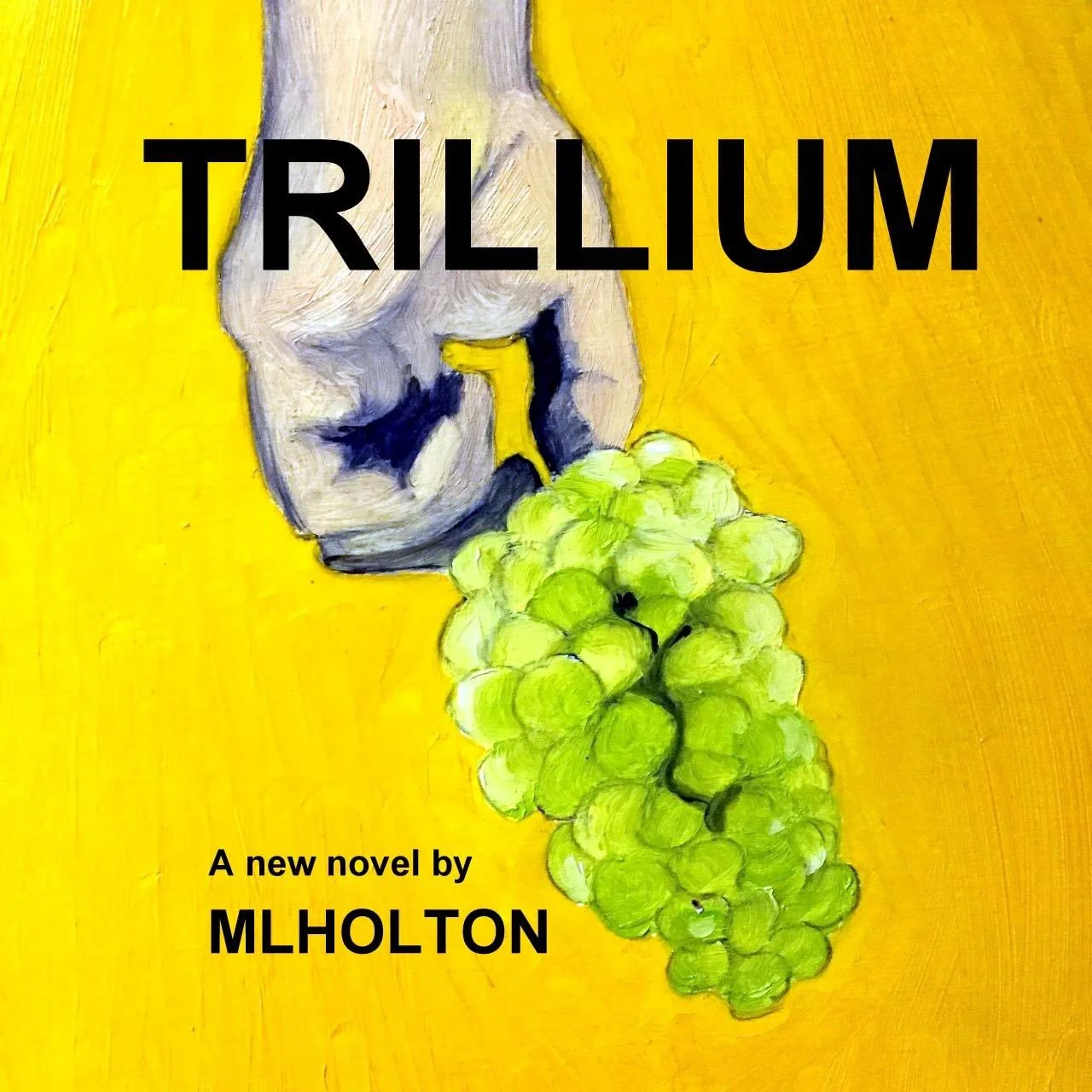
Cover Image - Book Title & Author.jpg


TRILLIUM, released in January 2019 in an e-book and trade paperback, can be found on Amazon.CA > https://amzn.to/2q0iEeL

Alternate e-book formats - (Kobo, Indigo, Apple etc) - are here > https://books2read.com/TRILLIUM

The FROZEN GOOSE film & trailer, referenced in the lecture, can be seen here > https://thefrozengoose.vhx.tv/

Margaret Lindsay Holton

Golden Horseshoe Artist & Canadian Author
https://canadadaphotography.blogspot.ca

Enjoyed this speech? Speakola is a labour of love and I’d be very grateful if you would share, tweet or like it. Thank you.

Facebook Twitter Facebook
In BOOKS 2 Tags MARGARET LINDSAY HOLTON, ART GALLERY OF HAMILTON, ONTARIO, AUTHOR, TRILLIUM, NOVEL, ML HOLTON, TRANSCRIPT, SPEAKERS SERIES, AUTHOR TALK, CREATIVITY, LEARN BY DOING, SELF TAUGHT
Comment

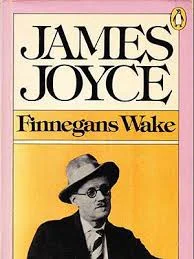
James Joyce: 'The chittering waters of. Flittering bats, fieldmice bawk talk', Finnegan's Wake - 1929

June 23, 2017

The audio (recorded in 1929) is of James Joyce reading the Anna Livia Plurabelle section of Finnegans Wake. It's a chattering dialogue between two washer women who as night falls become a tree and a stone. (pages 213-216, or the last few pages of part 1)

Well, you know or don't you kennet or haven't I told you every telling has a taling and that's the he and the she of it. Look, look, the dusk is growing! My branches lofty are taking root. And my cold cher's gone ashley. Fieluhr? Filou! What age is at? It saon is late. 'Tis endless now senne eye or erewone last saw Waterhouse's clogh. They took it asunder, I hurd thum sigh. When will they reassemble it? O, my back, my back, my bach! I'd want to go to Aches-les-Pains. Pingpong! There's the Belle for Sexaloitez! And Concepta de Send-us-pray! Pang! Wring out the clothes! Wring in the dew! Godavari, vert the showers! And grant thaya grace! Aman. Will we spread them here now? Ay, we will. Flip! Spread on your bank and I'll spread mine on mine. Flep! It's what I'm doing. Spread! It's churning chill. Der went is rising. I'll lay a few stones on the hostel sheets. A man and his bride embraced between them. Else I'd have folded and sprinkled them only. And I'll tie my butcher's apron here. It's suety yet. The strollers will pass it by. Six shifts, ten kerchiefs, nine to hold to the fire and one for the code, the convent napkins, twelve, one baby's shawl. Good mother Jossiph knows, she said. Whose head? Mutter snores? Deataceas! Wharnow are alle her childer, say? In kingdome gone or power to come or gloria be to them farther? Allalivial, allalluvial! Some here, more no more, more again lost alla stranger. I've heard tell that same brooch of the Shannons was married into a family in Spain. And all the Dunders de Dunnes in Markland's Vineland beyond Brendan's herring pool takes number nine in yangsee's hats. And one of Biddy's beads went bobbing till she rounded up lost histereve with a marigold and a cobbler's candle in a side strain of a main drain of a manzinahurries off Bachelor's Walk. But all that's left to the last of the Meaghers in the loup of the years prefixed and between is one kneebuckle and two hooks in the front. Do you tell me that now? I do in troth. Orara por Orbe and poor Las Animas! Ussa, Ulla, we're umbas all! Mezha, didn't you hear it a deluge of times, ufer and ufer, respund to spond? You deed, you deed! I need, I need! It's that irrawaddyng I've stoke in my aars. It all but husheth the lethest zswound. Oronoko! What's your trouble? Is that the great Finnleader himself in his joakimono on his statue riding the high horse there forehengist? Father of Otters, it is himself! Yonne there! Isset that? On Fallareen Common? You're thinking of Astley's Amphitheayter where the bobby restrained you making sugarstuck pouts to the ghostwhite horse of the Peppers. Throw the cobwebs from your eyes, woman, and spread your washing proper! It's well I know your sort of slop. Flap! Ireland sober is Ireland stiff. Lord help you, Maria, full of grease, the load is with me! Your prayers. I sonht zo! Madammangut! Were you lifting your elbow, tell us, glazy cheeks, in Conway's Carrigacurra canteen? Was I what, hobbledyhips? Flop! Your rere gait's creakorheuman bitts your butts disagrees. Amn't I up since the damp dawn, marthared mary allacook, with Corrigan's pulse and varicoarse veins, my pramaxle smashed, Alice Jane in decline and my oneeyed mongrel twice run over, soaking and bleaching boiler rags, and sweating cold, a widow like me, for to deck my tennis champion son, the laundryman with the lavandier flannels? You won your limpopo limp fron the husky hussars when Collars and Cuffs was heir to the town and your slur gave the stink to Carlow. Holy Scamander, I sar it again! Near the golden falls. Icis on us! Seints of light! Zezere! Subdue your noise, you hamble creature! What is it but a blackburry growth or the dwyergray ass them four old codgers owns. Are you meanam Tarpey and Lyons and Gregory? I meyne now, thank all, the four of them, and the roar of them, that draves that stray in the mist and old Johnny MacDougal along with them. Is that the Poolbeg flasher beyant, pharphar, or a fireboat coasting nyar the Kishtna or a glow I behold within a hedge or my Garry come back from the Indes? Wait till the honeying of the lune, love! Die eve, little eve, die! We see that wonder in your eye. We'll meet again, we'll part once more. The spot I'll seek if the hour you'll find. My chart shines high where the blue milk's upset. Forgivemequick, I'm going! Bubye! And you, pluck your watch, forgetmenot. Your evenlode. So save to jurna's end! My sights are swimming thicker on me by the shadows to this place. I sow home slowly now by own way, moy-valley way. Towy I too, rathmine.

Ah, but she was the queer old skeowsha anyhow, Anna Livia, trinkettoes! And sure he was the quare old buntz too, Dear Dirty Dumpling, foostherfather of fingalls and dotthergills. Gaffer and gammer we're all their gangsters. Hadn't he seven dams to wive him? And every dam had her seven crutches. And every crutch had its seven hues. And each hue had a differing cry. Sudds for me and supper for you and the doctor's bill for Joe John. Befor! Bifur! He married his markets, cheap by foul, I know, like any Etrurian Catholic Heathen, in their pinky limony creamy birnies and their turkiss indienne mauves. But at milkidmass who was the spouse? Then all that was was fair. Tys Elvenland! Teems of times and happy returns. The seim anew. Ordovico or viricordo. Anna was, Livia is, Plurabelle's to be. Northmen's thing made southfolk's place but howmulty plurators made eachone in person? Latin me that, my trinity scholard, out of eure sanscreed into oure eryan! Hircus Civis Eblanensis! He had buckgoat paps on him, soft ones for orphans. Ho, Lord! Twins of his bosom. Lord save us! And ho! Hey? What all men. Hot? His tittering daughters of. Whawk?

Can't hear with the waters of. The chittering waters of. Flittering bats, fieldmice bawk talk. Ho! Are you not gone ahome? What Thom Malone? Can't hear with bawk of bats, all thim liffeying waters of. Ho, talk save us! My foos won't moos. I feel as old as yonder elm. A tale told of Shaun or Shem? All Livia's daughter-sons. Dark hawks hear us. . .My ho head halls. I feel as heavy as yonder stone. Tell me of John or Shaun? Who were Shem and Shaun the living sons or daughters of? Night now! Tell me, tell me, tell me, elm! Night night! Telmetale of stem or stone. Beside the rivering waters of, hitherandthithering waters of. Night!

Source: http://mentalfloss.com/article/33666/hear-...

Enjoyed this speech? Speakola is a labour of love and I’d be very grateful if you would share, tweet or like it. Thank you.

Facebook Twitter Facebook
In READING Tags JAMES JOYCE, FINNEGAN'S WAKE, TRANSCRIPT, AUDIO, NOVEL, READING, IRELAND, DIAGLOGUE, ANNA LIVIA PLURABELLE
Comment

James Joyce: 'You pray to a local and obscure idol', reading from Ulysses - 1924

June 23, 2017

recorded 1924

Mr Chairman, ladies and gentlemen: Great was my admiration in listening to the remarks addressed to the youth of Ireland a moment since by my learned friend. It seemed to me that I had been transported into a country far away from this country, into an age remote from this age, that I stood in ancient Egypt and that I was listening to the speech of some highpriest of that land addressed to the youthful Moses. His listeners held their cigarettes poised to hear, their smoke ascending in frail stalks that flowered with his speech. And let our crooked smokes. Noble words coming. Look out. Could you try your hand at it yourself?

— And it seemed to me that I heard the voice of that Egyptian highpriest raised in a tone of like haughtiness and like pride. I heard his words and their meaning was revealed to me. From the Fathers It was revealed to me that those things are good which yet are corrupted which neither if they were supremely good nor unless they were good could be corrupted. Ah, curse you! That's saint Augustine.

— Why will you jews not accept our culture, our religion and our language? You are a tribe of nomad herdsmen; we are a mighty people. You have no cities nor no wealth: our cities are hives of humanity and our galleys, trireme and quadrireme, laden with all manner merchandise furrow the waters of the known globe. You have but emerged from primitive conditions: we have a literature, a priesthood, an agelong history and a polity. Nile. Child, man, effigy. By the Nilebank the babemaries kneel, cradle of bulrushes: a man supple in combat: stonehorned, stonebearded, heart of stone.

— You pray to a local and obscure idol: our temples, majestic and mysterious, are the abodes of Isis and Osiris, of Horus and Ammon Ra. Yours serfdom, awe and humbleness: ours thunder and the seas. Israel is weak and few are her children: Egypt is an host and terrible are her arms. Vagrants and daylabourers are you called: the world trembles at our name. A dumb belch of hunger cleft his speech. He lifted his voice above it boldly:

— But, ladies and gentlemen, had the youthful Moses listened to and accepted that view of life, had he bowed his head and bowed his will and bowed his spirit before that arrogant admonition he would never have brought the chosen people out of their house of bondage nor followed the pillar of the cloud by day. He would never have spoken with the Eternal amid lightnings on Sinai's mountaintop nor ever have come down with the light of inspiration shining in his countenance and bearing in his arms the tables of the law, graven in the language of the outlaw.

Source: https://www.youtube.com/watch?v=ZhW0TrzWGm...

Enjoyed this speech? Speakola is a labour of love and I’d be very grateful if you would share, tweet or like it. Thank you.

Facebook Twitter Facebook
In READING Tags JAMES JOYCE, ULYSSES, READING, RECORDING, AUDIO, NOVEL, BOOK, IRELAND, MODERNISM
Comment

Lionel Shriver: 'You’re not supposed to try on other people’s hats', Brisbane Writers Festival keynote - 2016

September 25, 2016

8 September 2016, Brisbane, Australia

I hate to disappoint you folks, but unless we stretch the topic to breaking point this address will not be about “community and belonging.” In fact, you have to hand it to this festival’s organisers: inviting a renowned iconoclast to speak about “community and belonging” is like expecting a great white shark to balance a beach ball on its nose.

The topic I had submitted instead was “fiction and identity politics,” which may sound on its face equally dreary.

But I’m afraid the bramble of thorny issues that cluster around “identity politics” has got all too interesting, particularly for people pursuing the occupation I share with many gathered in this hall: fiction writing. Taken to their logical conclusion, ideologies recently come into vogue challenge our right to write fiction at all. Meanwhile, the kind of fiction we are “allowed” to write is in danger of becoming so hedged, so circumscribed, so tippy-toe, that we’d indeed be better off not writing the anodyne drivel to begin with.

Let’s start with a tempest-in-a-teacup at Bowdoin College in Brunswick, Maine. Earlier this year, two students, both members of student government, threw a tequila-themed birthday party for a friend. The hosts provided attendees with miniature sombreros, which—the horror— numerous partygoers wore.

When photos of the party circulated on social media, campus-wide outrage ensued. Administrators sent multiple emails to the “culprits” threatening an investigation into an “act of ethnic stereotyping.” Partygoers were placed on “social probation,” while the two hosts were ejected from their dorm and later impeached. Bowdoin’s student newspaper decried the attendees’ lack of “basic empathy.”

The student government issued a “statement of solidarity” with “all the students who were injured and affected by the incident,” and demanded that administrators “create a safe space for those students who have been or feel specifically targeted.” The tequila party, the statement specified, was just the sort of occasion that “creates an environment where students of colour, particularly Latino, and especially Mexican, feel unsafe.” In sum, the party-favour hats constituted – wait for it – “cultural appropriation.”

Curiously, across my country Mexican restaurants, often owned and run by Mexicans, are festooned with sombreros – if perhaps not for long. At the UK’s University of East Anglia, the student union has banned a Mexican restaurant from giving out sombreros, deemed once more an act of “cultural appropriation” that was also racist.

Now, I am a little at a loss to explain what’s so insulting about a sombrero – a practical piece of headgear for a hot climate that keeps out the sun with a wide brim. My parents went to Mexico when I was small, and brought a sombrero back from their travels, the better for my brothers and I to unashamedly appropriate the souvenir to play dress-up. For my part, as a German-American on both sides, I’m more than happy for anyone who doesn’t share my genetic pedigree to don a Tyrolean hat, pull on some leiderhosen, pour themselves a weisbier, and belt out the Hoffbrauhaus Song.

But what does this have to do with writing fiction? The moral of the sombrero scandals is clear: you’re not supposed to try on other people’s hats. Yet that’s what we’re paid to do, isn’t it? Step into other people’s shoes, and try on their hats.

In the latest ethos, which has spun well beyond college campuses in short order, any tradition, any experience, any costume, any way of doing and saying things, that is associated with a minority or disadvantaged group is ring-fenced: look-but-don’t-touch. Those who embrace a vast range of “identities” – ethnicities, nationalities, races, sexual and gender categories, classes of economic under-privilege and disability – are now encouraged to be possessive of their experience and to regard other peoples’ attempts to participate in their lives and traditions, either actively or imaginatively, as a form of theft.

Yet were their authors honouring the new rules against helping yourself to what doesn’t belong to you, we would not have Malcolm Lowry’s Under the Volcano. We wouldn’t have most of Graham Greene’s novels, many of which are set in what for the author were foreign countries, and which therefore have Real Foreigners in them, who speak and act like foreigners, too.

In his masterwork English Passengers, Matthew Kneale would have restrained himself from including chapters written in an Aboriginal’s voice – though these are some of the richest, most compelling passages in that novel. If Dalton Trumbo had been scared off of describing being trapped in a body with no arms, legs, or face because he was not personally disabled – because he had not been through a World War I maiming himself and therefore had no right to “appropriate” the isolation of a paraplegic – we wouldn’t have the haunting 1938 classic, Johnny Got His Gun.

We wouldn’t have Maria McCann’s erotic masterpiece, As Meat Loves Salt – in which a straight woman writes about gay men in the English Civil War. Though the book is nonfiction, it’s worth noting that we also wouldn’t have 1961’s Black Like Me, for which John Howard Griffin committed the now unpardonable sin of “blackface.” Having his skin darkened – Michael Jackson in reverse – Griffin found out what it was like to live as a black man in the segregated American South. He’d be excoriated today, yet that book made a powerful social impact at the time.

The author of Who Owns Culture? Appropriation and Authenticity in American Law, Susan Scafidi, a law professor at Fordham University who for the record is white, defines cultural appropriation as “taking intellectual property, traditional knowledge, cultural expressions, or artifacts from someone else’s culture without permission. This can include unauthorised use of another culture’s dance, dress, music, language, folklore, cuisine, traditional medicine, religious symbols, etc.”

What strikes me about that definition is that “without permission” bit. However are we fiction writers to seek “permission” to use a character from another race or culture, or to employ the vernacular of a group to which we don’t belong? Do we set up a stand on the corner and approach passers-by with a clipboard, getting signatures that grant limited rights to employ an Indonesian character in Chapter Twelve, the way political volunteers get a candidate on the ballot?

I am hopeful that the concept of “cultural appropriation” is a passing fad: people with different backgrounds rubbing up against each other and exchanging ideas and practices is self-evidently one of the most productive, fascinating aspects of modern urban life.

But this latest and little absurd no-no is part of a larger climate of super-sensitivity, giving rise to proliferating prohibitions supposedly in the interest of social justice that constrain fiction writers and prospectively makes our work impossible.

So far, the majority of these farcical cases of “appropriation” have concentrated on fashion, dance, and music: At the American Music Awards 2013, Katy Perry got it in the neck for dressing like a geisha. According to the Arab-American writer Randa Jarrar, for someone like me to practice belly dancing is “white appropriation of Eastern dance,” while according to the Daily Beast Iggy Azalea committed “cultural crimes” by imitating African rap and speaking in a “blaccent.”

The felony of cultural sticky fingers even extends to exercise: at the University of Ottawa in Canada, a yoga teacher was shamed into suspending her class, “because yoga originally comes from India.” She offered to re-title the course, “Mindful Stretching.” And get this: the purism has also reached the world of food. Supported by no less than Lena Dunham, students at Oberlin College in Ohio have protested “culturally appropriated food” like sushi in their dining hall (lucky cusses— in my day, we never had sushi in our dining hall), whose inauthenticity is “insensitive” to the Japanese.

Seriously, we have people questioning whether it’s appropriate for white people to eat pad Thai. Turnabout, then: I guess that means that as a native of North Carolina, I can ban the Thais from eating barbecue. (I bet they’d swap.)

This same sensibility is coming to a bookstore near you. Because who is the appropriator par excellence, really? Who assumes other people’s voices, accents, patois, and distinctive idioms? Who literally puts words into the mouths of people different from themselves? Who dares to get inside the very heads of strangers, who has the chutzpah to project thoughts and feelings into the minds of others, who steals their very souls? Who is a professional kidnapper? Who swipes every sight, smell, sensation, or overheard conversation like a kid in a candy store, and sometimes take notes the better to purloin whole worlds? Who is the premier pickpocket of the arts?

The fiction writer, that’s who.

This is a disrespectful vocation by its nature – prying, voyeuristic, kleptomaniacal, and presumptuous. And that is fiction writing at its best. When Truman Capote wrote from the perspective of condemned murderers from a lower economic class than his own, he had some gall. But writing fiction takes gall.

As for the culture police’s obsession with “authenticity,” fiction is inherently inauthentic. It’s fake. It’s self-confessedly fake; that is the nature of the form, which is about people who don’t exist and events that didn’t happen. The name of the game is not whether your novel honours reality; it’s all about what you can get away with.

In his 2009 novel Little Bee, Chris Cleave, who as it happens is participating in this festival, dared to write from the point of view of a 14-year-old Nigerian girl, though he is male, white, and British. I’ll remain neutral on whether he “got away with it” in literary terms, because I haven’t read the book yet.

But in principle, I admire his courage – if only because he invited this kind of ethical forensics in a review out of San Francisco: “When a white male author writes as a young Nigerian girl, is it an act of empathy, or identity theft?” the reviewer asked. “When an author pretends to be someone he is not, he does it to tell a story outside of his own experiential range. But he has to in turn be careful that he is representing his characters, not using them for his plot.”

Hold it. OK, he’s necessarily “representing” his characters, by portraying them on the page. But of course he’s using them for his plot! How could he not? They are his characters, to be manipulated at his whim, to fulfill whatever purpose he cares to put them to.

This same reviewer recapitulated Cleave’s obligation “to show that he’s representing [the girl], rather than exploiting her.” Again, a false dichotomy.

Of course he’s exploiting her. It’s his book, and he made her up. The character is his creature, to be exploited up a storm. Yet the reviewer chides that “special care should be taken with a story that’s not implicitly yours to tell” and worries that “Cleave pushes his own boundaries maybe further than they were meant to go.”

What stories are “implicitly ours to tell,” and what boundaries around our own lives are we mandated to remain within? I would argue that any story you can make yours is yours to tell, and trying to push the boundaries of the author’s personal experience is part of a fiction writer’s job.

I’m hoping that crime writers, for example, don’t all have personal experience of committing murder. Me, I’ve depicted a high school killing spree, and I hate to break it to you: I’ve never shot fatal arrows through seven kids, a teacher, and a cafeteria worker, either. We make things up, we chance our arms, sometimes we do a little research, but in the end it’s still about what we can get away with – what we can put over on our readers.

Because the ultimate endpoint of keeping out mitts off experience that doesn’t belong to us is that there is no fiction. Someone like me only permits herself to write from the perspective of a straight white female born in North Carolina, closing on sixty, able-bodied but with bad knees, skint for years but finally able to buy the odd new shirt. All that’s left is memoir.

And here’s the bugbear, here’s where we really can’t win. At the same time that we’re to write about only the few toys that landed in our playpen, we’re also upbraided for failing to portray in our fiction a population that is sufficiently various.

My most recent novel The Mandibles was taken to task by one reviewer for addressing an America that is “straight and white”. It happens that this is a multigenerational family saga – about a white family. I wasn’t instinctively inclined to insert a transvestite or bisexual, with issues that might distract from my central subject matter of apocalyptic economics. Yet the implication of this criticism is that we novelists need to plug in representatives of a variety of groups in our cast of characters, as if filling out the entering class of freshmen at a university with strict diversity requirements.

You do indeed see just this brand of tokenism in television. There was a point in the latter 1990s at which suddenly every sitcom and drama in sight had to have a gay or lesbian character or couple. That was good news as a voucher of the success of the gay rights movement, but it still grew a bit tiresome: look at us, our show is so hip, one of the characters is homosexual!

We’re now going through the same fashionable exercise in relation to the transgender characters in series like Transparent and Orange is the New Black.

Fine. But I still would like to reserve the right as a novelist to use only the characters that pertain to my story.

Besides: which is it to be? We have to tend our own gardens, and only write about ourselves or people just like us because we mustn’t pilfer others’ experience, or we have to people our cast like an I’d like to teach the world to sing Coca-Cola advert?

For it can be dangerous these days to go the diversity route. Especially since there seems to be a consensus on the notion that San Francisco reviewer put forward that “special care should be taken with a story that’s not implicitly yours to tell.”

In The Mandibles, I have one secondary character, Luella, who’s black. She’s married to a more central character, Douglas, the Mandible family’s 97-year-old patriarch. I reasoned that Douglas, a liberal New Yorker, would credibly have left his wife for a beautiful, stately African American because arm candy of color would reflect well on him in his circle, and keep his progressive kids’ objections to a minimum. But in the end the joke is on Douglas, because Luella suffers from early onset dementia, while his ex-wife, staunchly of sound mind, ends up running a charity for dementia research. As the novel reaches its climax and the family is reduced to the street, they’re obliged to put the addled, disoriented Luella on a leash, to keep her from wandering off.

Behold, the reviewer in the Washington Post, who groundlessly accused this book of being “racist” because it doesn’t toe a strict Democratic Party line in its political outlook, described the scene thus: “The Mandibles are white. Luella, the single African American in the family, arrives in Brooklyn incontinent and demented. She needs to be physically restrained. As their fortunes become ever more dire and the family assembles for a perilous trek through the streets of lawless New York, she’s held at the end of a leash. If The Mandibles is ever made into a film, my suggestion is that this image not be employed for the movie poster.”

Your author, by implication, yearns to bring back slavery.

Thus in the world of identity politics, fiction writers better be careful. If we do choose to import representatives of protected groups, special rules apply. If a character happens to be black, they have to be treated with kid gloves, and never be placed in scenes that, taken out of context, might seem disrespectful. But that’s no way to write. The burden is too great, the self-examination paralysing. The natural result of that kind of criticism in the Post is that next time I don’t use any black characters, lest they do or say anything that is short of perfectly admirable and lovely.

In fact, I’m reminded of a letter I received in relation to my seventh novel from an Armenian-American who objected – why did I have to make the narrator of We Need to Talk About Kevin Armenian? He didn’t like my narrator, and felt that her ethnicity disparaged his community. I took pains to explain that I knew something about Armenian heritage, because my best friend in the States was Armenian, and I also thought there was something dark and aggrieved in the culture of the Armenian diaspora that was atmospherically germane to that book. Besides, I despaired, everyone in the US has an ethnic background of some sort, and she had to be something!

Especially for writers from traditionally privileged demographics, the message seems to be that it’s a whole lot safer just to make all your characters from that same demographic, so you can be as hard on them as you care to be, and do with them what you like. Availing yourself of a diverse cast, you are not free; you have inadvertently invited a host of regulations upon your head, as if just having joined the EU. Use different races, ethnicities, and minority gender identities, and you are being watched.

I confess that this climate of scrutiny has got under my skin. When I was first starting out as a novelist, I didn’t hesitate to write black characters, for example, or to avail myself of black dialects, for which, having grown up in the American South, I had a pretty good ear. I am now much more anxious about depicting characters of different races, and accents make me nervous.

In describing a second-generation Mexican American who’s married to one of my main characters in The Mandibles, I took care to write his dialogue in standard American English, to specify that he spoke without an accent, and to explain that he only dropped Spanish expressions tongue-in-cheek. I would certainly think twice – more than twice – about ever writing a whole novel, or even a goodly chunk of one, from the perspective of a character whose race is different from my own – because I may sell myself as an iconoclast, but I’m as anxious as the next person about attracting vitriol. But I think that’s a loss. I think that indicates a contraction of my fictional universe that is not good for the books, and not good for my soul.

Writing under the pseudonym Edward Schlosser on Vox, the author of the essay “I’m a Liberal Professor, and My Liberal Students Scare Me” describes higher education’s “current climate of fear” and its “heavily policed discourse of semantic sensitivity” – and I am concerned that this touchy ethos, in which offendedness is used as a weapon, has spread far beyond academia, in part thanks to social media.

Why, it’s largely in order to keep from losing my fictional mojo that I stay off Facebook and Twitter, which could surely install an instinctive self-censorship out of fear of attack. Ten years ago, I gave the opening address of this same festival, in which I maintained that fiction writers have a vested interest in protecting everyone’s right to offend others – because if hurting someone else’s feelings even inadvertently is sufficient justification for muzzling, there will always be someone out there who is miffed by what you say, and freedom of speech is dead. With the rise of identity politics, which privileges a subjective sense of injury as actionable basis for prosecution, that is a battle that in the decade since I last spoke in Brisbane we’ve been losing.

Worse: the left’s embrace of gotcha hypersensitivity inevitably invites backlash. Donald Trump appeals to people who have had it up to their eyeballs with being told what they can and cannot say. Pushing back against a mainstream culture of speak-no-evil suppression, they lash out in defiance, and then what they say is pretty appalling.

Regarding identity politics, what’s especially saddened me in my recent career is a trend toward rejecting the advocacy of anyone who does not belong to the group. In 2013, I published Big Brother, a novel that grew out of my loss of my own older brother, who in 2009 died from the complications of morbid obesity. I was moved to write the book not only from grief, but also sympathy: in the years before his death, as my brother grew heavier, I saw how dreadfully other people treated him – how he would be seated off in a corner of a restaurant, how the staff would roll their eyes at each other after he’d ordered, though he hadn’t requested more food than anyone else.

I was wildly impatient with the way we assess people’s characters these days in accordance with their weight, and tried to get on the page my dismay at how much energy people waste on this matter, sometimes anguishing for years over a few excess pounds. Both author and book were on the side of the angels, or so you would think.

But in my events to promote Big Brother, I started to notice a pattern. Most of the people buying the book in the signing queue were thin. Especially in the US, fat is now one of those issues where you either have to be one of us, or you’re the enemy. I verified this when I had a long email correspondence with a “Healthy at Any Size” activist, who was incensed by the novel, which she hadn’t even read. Which she refused to read. No amount of explaining that the novel was on her side, that it was a book that was terribly pained by the way heavy people are treated and how unfairly they are judged, could overcome the scrawny author’s photo on the flap.

She and her colleagues in the fat rights movement did not want my advocacy. I could not weigh in on this material because I did not belong to the club. I found this an artistic, political, and even commercial disappointment – because in the US and the UK, if only skinny-minnies will buy your book, you’ve evaporated the pool of prospective consumers to a puddle.

I worry that the clamorous world of identity politics is also undermining the very causes its activists claim to back. As a fiction writer, yeah, I do sometimes deem my narrator an Armenian. But that’s only by way of a start. Merely being Armenian is not to have a character as I understand the word.

Membership of a larger group is not an identity. Being Asian is not an identity. Being gay is not an identity. Being deaf, blind, or wheelchair-bound is not an identity, nor is being economically deprived. I reviewed a novel recently that I had regretfully to give a thumbs-down, though it was terribly well intended; its heart was in the right place. But in relating the Chinese immigrant experience in America, the author put forward characters that were mostly Chinese. That is, that’s sort of all they were: Chinese. Which isn’t enough.

I made this same point in relation to gender in Melbourne last week: both as writers and as people, we should be seeking to push beyond the constraining categories into which we have been arbitrarily dropped by birth. If we embrace narrow group-based identities too fiercely, we cling to the very cages in which others would seek to trap us. We pigeonhole ourselves. We limit our own notion of who we are, and in presenting ourselves as one of a membership, a representative of our type, an ambassador of an amalgam, we ask not to be seen.

The reading and writing of fiction is obviously driven in part by a desire to look inward, to be self-examining, reflective. But the form is also born of a desperation to break free of the claustrophobia of our own experience.

The spirit of good fiction is one of exploration, generosity, curiosity, audacity, and compassion. Writing during the day and reading when I go to bed at night, I find it an enormous relief to escape the confines of my own head. Even if novels and short stories only do so by creating an illusion, fiction helps to fell the exasperating barriers between us, and for a short while allows us to behold the astonishing reality of other people.

The last thing we fiction writers need is restrictions on what belongs to us. In a recent interview, our colleague Chris Cleave conceded, “Do I as an Englishman have any right to write a story of a Nigerian woman? … I completely sympathise with the people who say I have no right to do this. My only excuse is that I do it well.”

Which brings us to my final point. We do not all do it well. So it’s more than possible that we write from the perspective of a one-legged lesbian from Afghanistan and fall flat on our arses. We don’t get the dialogue right, and for insertions of expressions in Pashto we depend on Google Translate.

Halfway through the novel, suddenly the protagonist has lost the right leg instead of the left one. Our idea of lesbian sex is drawn from wooden internet porn. Efforts to persuasively enter the lives of others very different from us may fail: that’s a given. But maybe rather than having our heads taken off, we should get a few points for trying. After all, most fiction sucks. Most writing sucks. Most things that people make of any sort suck. But that doesn’t mean we shouldn’t make anything.

The answer is that modern cliché: to keep trying to fail better. Anything but be obliged to designate my every character an ageing five-foot-two smartass, and having to set every novel in North Carolina.

We fiction writers have to preserve the right to wear many hats – including sombreros.

Source: https://www.theguardian.com/commentisfree/...

Enjoyed this speech? Speakola is a labour of love and I’d be very grateful if you would share, tweet or like it. Thank you.

Facebook Twitter Facebook
In BOOKS Tags LIONEL SHRIVER, TH3E MANDIBLES, BRISBANE WRITERS FESTIVAL, OPENING NIGHT, IDENTITY POLITICS, CULTURAL APPROPRIATION, NOVELIST, NOVEL, ART, TRANSCRIPT, CONTROVERSY, SPEAKOLIES 2016
Comment
Here is Fiona Capp with subsequent novel Gotland.

Here is Fiona Capp with subsequent novel Gotland.

Clare Wright: 'Jemma Musk is a fully embodied character', launch of Fiona Capp's Musk and Byrne - 2008

August 4, 2016

9 May 2008, North Fitzroy Arms, Melbourne, Australia

In his 1899 Reminiscences of the Ballarat Goldfield, J. Graham Smith tells the story of Algyron Ratcliff, the ill-fated second son of Irish nobility.  Algyron fell in love with and secretly married Mathilde Rolleston, the daughter of a Protestant minister.  Algyron was promptly disowned, and like many a second son, immigrated to the gold fields of Victoria with his new bride and her sister Gwendoline.  At Ballarat, ‘Algy’ couldn’t find a digging mate to suit his patrician standards, so ‘Gwenny’ volunteered to become a miner.  At first Algy refused her outrageous offer, but they soon ratified their new partnership over a cup of tea.  Gwenny worked the windlass and went down the mine shaft, while Algy, who was of delicate health, kept his feet above the ground.  Gwenny wore men’s clothing to disguise her identity; not, as she tells it, because she was ashamed of her new calling, but for the sake of her brother-in-law, whose manliness might be called into question by fellow miners.

 “In one way I liked it”, she told her chronicler Graham Smith.  “There is a subtle fascination in searching for the precious metal.  I was not frightened to come in contact with the diggers, as I was of being overhauled by the licence hunters.”

 Gwenny boasted to her sister Mathilde of her new-found skills and talents.  “See what an amount of knowledge my digging apprenticeship has given me.  I can talk of alluvial stratas, of sandstone, pipe-clay, and slate bottoms, of alluvial and quartz deposits.”

“My dear Gwenny”, interrupted Mrs Ratcliff, who kept house for her husband and subversive sister, “I believe you will be less contented and joyous when you resume your proper situation in the old country than you have been in Australia with all its discomforts”.

This alternative women’s liberation narrative — the story of freedoms found by women on the gold rush frontier — is repeated by Harriet, another cross-dressing Irish girl who accompanied her brother to the diggings in 1854, the year of the Eureka uprising. Harriet was performing a quiet rebellion of her own.  “I purchased a broad felt hat, a sort of tunic or smock of coarse blue cloth, trousers to conform, boots of a miner, and thus parting with my sex for a season (I hoped a better one), behold me an accomplished candidate for mining operations, and all the perils and inconveniences they might be supposed to bring”.  Writing home to Ireland she confided, “Wild the life is, certainly, but full of excitement and hope; and, strange as it is, I almost fear to tell you, that I do not wish it to end”.  Could Harriet’s season of transgression possibly be made to last a lifetime?

These are the words of Mathilde, Gwendoline and Harriet, culled from the archives of mid-nineteenth century Victoria.  But they could be the voice of Jemma Musk, the heroine in Fiona Capp’s new novel, Musk and Byrne, which I have the great pleasure of launching here tonight. I couldn’t help but recall these tales of feminine transmutation and defiance of the gender order, hewn from my own current research into the role of women at the Eureka Stockade, when reading Fiona’s wonderful book. Both tell tales of outlaws, those who live without society’s moral and ideological sanction. There is, of course, one major difference.  As an historian, I trade in the factual.  As a novelist, Fiona has wrought a magnificent fiction.

I know that in inviting me to launch her book, Fiona has been extremely anxious about the accuracy of the historical detail she employs to craft the story of the artist Jemma, her hard-working Swiss immigrant husband Gotardo, and the dashing, seductive geologist Nathanial Byrne.  It strikes me that it takes a lot of courage to write historical fiction in the post-Secret River era.  Perhaps Fiona was worried I would take Inga-esque exception to her method or her conclusions. 

In her widely read 2006 Quarterly Essay, “The History Question: Who Owns the Past?”, Inga Clendinnen lined up historians and novelists on opposite sides of a gaping chasmthat she calls ‘the moral contract’.  Novelists, she tells us, are at liberty to ‘kick loose, inventing things which might have happened but we don’t know did, because they are the kind of things that records always miss’.  Novelists, Clendinnen argues, ‘enjoy their space for invention because their only binding contract is with their readers, and that is ultimately not to instruct or to reform, but to delight’.  Historians, on the other hand, must endure ‘the burden of dealing with the real’.  Clendinnen disclosed — in the most public of forums — that the novelist’s ‘practiced slither between “this is a serious work of history” and “judge me only on my literary art” has always annoyed me’.  Kate Grenville obviously copped the rough end of Inga’s exasperation.

I am very pleased, for Fiona’s sake and for my own, to be able to say that Musk and Byrne did not, in any way, irritate, aggravate, infuriate, denigrate or humiliate my historian’s sensibility.  To my mind, Fiona has upheld the moral contract to her readers to delight and captivate, while also holding true to the spirit of the times and the people she has so meticulously portrayed.  To answer your doubts, Fiona, I don’t honestly know whether all the details are correct.  In fact, your insecurity proved infectious.  Reading the book, I got to worrying about my grasp of the historical minutiae.  Did goldfields’ buildings have bluestone foundations in 1868?  Were the streets macadamised?  Did babies sleep in cots big enough to fit a curled-up man?  I really don’t know.  And — may Inga be my judge — I don’t much care.  To my mind, this book gets it right.

And this is why.  I believed in Jemma Musk.  I believed in Jemma Musk in a way that, I must admit, I did not believe in Kate Grenville’s William Thornton, whose inner life was invested with too much of a contemporary sensibility for my comfort.  Nor did I believe so thoroughly in Lucy Strange, the heroine in Gail Jones’s acclaimed Sixty Lights, who, like Jemma Musk, is a woman at odds with her era, pushing the boundaries of conventional wisdoms and orthodoxies. Yet, for me, Lucy Strange never quite inhabited her temporal landscape in a way that was convincing to someone who has spent over a decade investigating the lives of women — especially challenging, nonconformist women — in the nineteenth century.

But Jemma Musk is a fully embodied character, largely because — and I know this doesn’t sound very academic — largely because Fiona has given her a subjectivity that feels right.  In Musk and Byrne,  Fiona takes her readers deep into the emotional landscape of her historical protagonists.  Apart from the beautiful writing and gripping plot, this is the aspect of the book that most stirred my imagination — historical and modern.  These are the details that I feasted upon, the very ‘kind of things that records always miss’. 

How did women experience the loss of a child?  Just because it was as common as mud, did they grieve the loss any less bitterly than women in our medically advanced times?  To what ends did their suffering drive them?  And how did women who were not content to keep within the circumscribed borders of a settled domestic life create an identity that was outside the fold?  How did it feel to know that neighbours, employers, husbands could daily occupy subterranean spaces yet could not fathom the mysterious depths of a woman’s heart?  At what price freedom?

These, to me, are the sort of historical questions that have no concrete, empirical answer.  This is the unmistakable terrain of the novelist.  There is a pivotal scene in the book where the earth suddenly collapses under Jemma and Gotardo’s property, rupturing along invisible fault lines created by the honeycomb of mining tunnels that run under their land.

Jemma is at the kitchen trough washing the dishes and looking out over the yard while Gotardo drives the bullock dray over the soil of the vegetable patch in preparation for planting.  The bullock plods backwards and forwards across her field of vision and she barely registers its presence until Gotardo suddenly cries out and lurches drunkenly from his seat.  He is still holding the reins as the bullock dives headlong into the earth, as if summoned by a call from the underworld, the dray following the bullock’s descent into the gaping ground.  As the cave-in tears across the field like a sizzling fuse, Gotardo manages to jump clear of the dray just in time, his fall cushioned by the freshly turned earth.  When Jemma reaches her husband, he is on his knees staring with disbelief at the deep cavity into which his bullock and dray have plunged.  (111)

It’s an arresting image, I think, and one that becomes a thematic signpost for other human and fateful betrayals to follow, where all that’s solid melts into air, where seismic shifts can happen in an instant and one is left to contend with the rubble of existence.  This book is not so much about centres and margins — as you might expect in a tale of outlaws and immigrants.  Rather, it’s all about layers and surfaces, external appearances and interior realities.

But in the hands of a novelist so technically capable, so historically empathetic and so psychologically attuned as Fiona, you can trust that in Musk and Byrne we are taken on an exhilarating ride across a literary topography that is mercifully free of chasms, rifts and other insufferable holes.  Despite Fiona’s recent article in the Age, where she espoused the need to re-position women symbolically in outlaw mythologies, there are no hidden agendas in this book. It’s not a period piece disguising a progressive plot.  It’s neither contrived nor disingenuous.  Again, this is why I believed in Jemma Musk.

There is one more passage I’d like to read, perhaps my favourite in the book.  Jemma has abandoned her home and family.  She’s changed her identity, not by donning male clothing, but, conversely, by playing the role of a dutiful wife and devoted maternal figure.  It is during the night that Jemma’s own emotional ruptures appear, groaning under the tension between her inner and her outer life.  Jemma and Nathanial are making love.

And now without warning, without even a word, she turns to him and suddenly ignites.  As soon as he touches her, she is molten, imploring him to go on.  There are no rules for this kind of lovemaking; them must make them up as they go.  He has the sensation of them falling into darkness, into a vast space without gravity … Jemma tears at his shoulders with her fingernails, fighting him off and drawing him close, wrestling to fill the emptiness that can’t be filled.  She claws and bites him, as if inciting him to return the pain.  It is clear to him what she is seeking.  Annihilation.  For nothing else to exist.  To be consumed by the fire of their bodies … And so they toil through the night until Jemma finds the oblivion she seeks. (224)

Whether Mathilde, Gwendoline or Harriet ever experienced such agony and ecstasy I will never know.  On the surface, these real women and the fictional Jemma Musk share much in common, conjoined by their defiance of expected roles and pathways, their transgressive acts and their pleasure in the wild possibilities of frontier living.  But I have Fiona to thank for leaving me with the remarkable impression of what it might really have been like to be a woman on the edge.

It is with great admiration and respect that I declare Musk and Byrne officially launched.


Enjoyed this speech? Speakola is a labour of love and I’d be very grateful if you would share, tweet or like it. Thank you.

Facebook Twitter Facebook
In BOOKS Tags CLARE WRIGHT, BOOK LAUNCH, MUSK AND BYRNE, FIONA CAPP, NOVEL, HISTORICAL FICTION, TRANSCRIPT
Comment

Claire Zorn: 'I am a glitch in the system', CBCA Accceptance - 2015

September 1, 2015

Speech from 2.50 on video

21 August, 2015, Melbourne Town Hall, Australia

Claire Zorn was accepting the Children's Book Council of Australia's Book of the Year award for Older Readers.

I often say that I write for my seventeen-year-old-self. Right now my seventeen-year-old-self is standing here saying, ‘What the frig? How did this happen?’

I’m the kid who had a panic attack in the middle of her first HSC English exam and left. I’m not here because of the wonders of our education system, I am a glitch in the system. I’ve had the opportunity to visit a number of high schools recently and I’m not sure all that much has changed. When it comes to education we are very concerned with rankings and bell curves.  It’s worth noting that I was discouraged from taking on what was then called three unit related English because my ranking wasn’t high enough. We want our kids to perform. We teach them to play Tchaikovsky by rote, but disable their ability to write their own music. I had teachers who fought against the obsession with marks and rankings and focused on nurturing my creativity, but I think that is like trying to light a candle in a cyclone, if you will allow me to get a bit Elton John.

I must thank my darling dad who told me over and over again that creativity was immeasurably valuable and must be held on to. I must thank my mum who gave the me stubbornness and determination required to pursue an artistic path.

Creative minds are vulnerable and mine has caused it’s fair share of problems, I would not have survived, much less written any books without the love and support of my husband, Nathan. Of course my thanks also go to my Publisher Kristina Schultz at UQP and my editor and co-conspirator, Kristy Bushnell.

I will finish by saying that this wonderful award does not qualify me to go into schools and give students the formula for a good piece of writing. I have no interest in improving their rankings. It does qualify me to visit high schools, look those kids in the eye — the off-beat ones, the weird ones, the ones who haven’t done that Biology assignment but have written 67,000 words, sometimes on their phones — and tell them that they will be okay.  

To the Children’s Book Council: thank you for this award, I can not tell you how much this means to me, especially seventeen-year-old me.

Enjoyed this speech? Speakola is a labour of love and I’d be very grateful if you would share, tweet or like it. Thank you.

Facebook Twitter Facebook
In BOOKS Tags CBCA, LOVEOZYA, BOOK OF THE YEAR, NOVEL, CLAIR ZORN, AUSTRALIA
Comment

See my film!

Limited Australian Season

March 2025

Details and ticket bookings at

angeandtheboss.com

Support Speakola

Hi speech lovers,
With costs of hosting website and podcast, this labour of love has become a difficult financial proposition in recent times. If you can afford a donation, it will help Speakola survive and prosper.

Best wishes,
Tony Wilson.

Become a Patron!

Learn more about supporting Speakola.

Featured political

Featured
Jon Stewart: "They responded in five seconds", 9-11 first responders, Address to Congress - 2019
Jacinda Ardern: 'They were New Zealanders. They are us', Address to Parliament following Christchurch massacre - 2019
Dolores Ibárruri: "¡No Pasarán!, They shall not pass!', Defense of 2nd Spanish Republic - 1936
Jimmy Reid: 'A rat race is for rats. We're not rats', Rectorial address, Glasgow University - 1972

Featured eulogies

Featured
For Geoffrey Tozer: 'I have to say we all let him down', by Paul Keating - 2009
for James Baldwin: 'Jimmy. You crowned us', by Toni Morrison - 1988
for Michael Gordon: '13 days ago my Dad’s big, beautiful, generous heart suddenly stopped beating', by Scott and Sarah Gordon - 2018

Featured commencement

Featured
Tara Westover: 'Your avatar isn't real, it isn't terribly far from a lie', The Un-Instagrammable Self, Northeastern University - 2019
Tim Minchin: 'Being an artist requires massive reserves of self-belief', WAAPA - 2019
Atul Gawande: 'Curiosity and What Equality Really Means', UCLA Medical School - 2018
Abby Wambach: 'We are the wolves', Barnard College - 2018
Eric Idle: 'America is 300 million people all walking in the same direction, singing 'I Did It My Way'', Whitman College - 2013
Shirley Chisholm: ;America has gone to sleep', Greenfield High School - 1983

Featured sport

Featured
Joe Marler: 'Get back on the horse', Harlequins v Bath pre game interview - 2019
Ray Lewis : 'The greatest pain of my life is the reason I'm standing here today', 52 Cards -
Mel Jones: 'If she was Bradman on the field, she was definitely Keith Miller off the field', Betty Wilson's induction into Australian Cricket Hall of Fame - 2017
Jeff Thomson: 'It’s all those people that help you as kids', Hall of Fame - 2016

Fresh Tweets


Featured weddings

Featured
Dan Angelucci: 'The Best (Best Man) Speech of all time', for Don and Katherine - 2019
Hallerman Sisters: 'Oh sister now we have to let you gooooo!' for Caitlin & Johnny - 2015
Korey Soderman (via Kyle): 'All our lives I have used my voice to help Korey express his thoughts, so today, like always, I will be my brother’s voice' for Kyle and Jess - 2014

Featured Arts

Featured
Bruce Springsteen: 'They're keepers of some of the most beautiful sonic architecture in rock and roll', Induction U2 into Rock Hall of Fame - 2005
Olivia Colman: 'Done that bit. I think I have done that bit', BAFTA acceptance, Leading Actress - 2019
Axel Scheffler: 'The book wasn't called 'No Room on the Broom!', Illustrator of the Year, British Book Awards - 2018
Tina Fey: 'Only in comedy is an obedient white girl from the suburbs a diversity candidate', Kennedy Center Mark Twain Award -  2010
Tina Fey: 'Only in comedy is an obedient white girl from the suburbs a diversity candidate', Kennedy Center Mark Twain Award - 2010

Featured Debates

Featured
Sacha Baron Cohen: 'Just think what Goebbels might have done with Facebook', Anti Defamation League Leadership Award - 2019
Greta Thunberg: 'How dare you', UN Climate Action Summit - 2019
Charlie Munger: 'The Psychology of Human Misjudgment', Harvard University - 1995
Lawrence O'Donnell: 'The original sin of this country is that we invaders shot and murdered our way across the land killing every Native American that we could', The Last Word, 'Dakota' - 2016