• Genre
  • About
  • Submissions
  • Donate
  • Search
Menu

Speakola

All Speeches Great and Small
  • Genre
  • About
  • Submissions
  • Donate
  • Search

Eulogies

Some of the most moving and brilliant speeches ever made occur at funerals. Please upload the eulogy for your loved one using the form below.

For Douglas MacLeod: '‘What luck, what luck for all of us to have known him!, by Colleen Burke - 2021

May 25, 2022

Facebook won’t allow embed video. Visit link here and go to 2:11;20 to watch Colleen beautiful speech

3 December 2021, Victorian Pride Centre, Melbourne, Australia

Doug and Stephen have spoiled me rotten almost my entire adult life. When I was in my twenties, I told them I wanted a sperm cocktail if I wasn’t married with kids by the time I was 35. I didn’t care who was the Dad, you couldn’t choose one over the other.

‘DougnSteve’ has been one word for a long time: Doug who made laugh and Stephen who loves to laugh. If the baby was blonde or dark we’d know who the Dad was.

I learned about the world through both these men. I always thought of them as much, much older as they were, always so good at being adults. They’d take me to beautiful restaurants, to a 5-star resort and tell me stories about exotic things like mortgages and volcanoes. I’d often find a fiddy in my bag after visiting, to pay for a vet bill or a bald tyre when I thought acting in profit share plays was the way to go. They have always been there for me when pets, parents and people I loved died. ‘You know where we are, we are here,’ is Stephen’s most common phrase. Stephen who sends a thank you note if you had them over lunch. Who says “oh poor baby, when I had a cold” or some minor ailment. Anyway we’ve heard beautiful stories about Doug’s past and I’d like to talk about the end of the story for our storyteller, when the heroes shine through. Some of you know it and some of you won’t.

Doug had an amazing career but the most important part of Doug’s life was Stephen.

I’ve followed their love story for a very long time. They had been together for a short time when I was first smitten by Doug’s charms. It’s been a 40-year marriage that became official in 2018! Stephen would like to thank Magda for her contribution to marriage equality. Stephen had been a carer for Doug after his stroke for a long time, and Doug had survived his first bout of encephalitis when they got married. When Doug was in ICU the first time with this disease, surrounded by machines, the doctors were completely mystified, it took them quite a while to diagnose. Stephen was terrified, there were a million tubes and wires to Doug’s skull and Doug was delirious and when he told the nurses scurrying around him, “This is my boyfriend and this is my girlfriend, and they both like looking at naked men.” Anyway he made it through but he knew he had come close to dying that first round with encephalitis and was determined to marry his man.

His speech at their wedding was very typical of Doug, “there is enormous pressure on me as a writer to come up with the right words so I looked to the greats: I searched through the sonnets of Shakespeare, none of them were good enough for my Stephen; I looked to Chaucer, to Blake, none of them were right. So I looked to the words of the great…. Ronnie Barker: “What luck! What luck to have met this man, this beautiful, kind and sweet man, what luck, what luck!“

I’ve put up a photo of Doug with Sascha my dog. They had something special going on —we’d go for walks and Doug said he felt really powerful walking my wolf. Walking was still a challenge after his stroke. I took him to a bar for dinner in Fitzroy Street where the barman had invited me in previously, and made of a fuss of my dogs. I thought it would be fun for Doug. Anyway, it was a busy Friday night and the owner was pissed off because the dogs were taking up room as they do, spreading themselves out on the floor. He still served us dinner but he was grumpy, and as we were leaving Doug slipped him a 20 to thank him. That’s who Doug was, gracious and polite.

My dogs were a way to reach Doug when he had no words, when he was very ill. He could commune with Sascha but not Tinker so much…. her head was too big apparently. You will see them together later and thank goodness The Alfred and the rehab allows pets on the bed, on the white sheets, no questions asked. During that very harrowing time which, fortunately, Doug had little to no memory of, there were moments of great beauty where his soul, character and talent shone through. On the few occasions I visited him when Stephen wasn’t actually there, (Stephen would have to be almost terminal himself to not be there, he showed up from breakfast to dinner every day for a year bringing Doug delicacies and comfort, never leaving his side, you couldn’t drag him away). Anyway there was a time when Doug could only communicate in verse, he complemented me on fine attire, I can’t remember how he rhymed, something brilliant… and when Stephen called on the phone “You’re company to me is sweeter than wine” and another brilliant rhyme, I won’t even try. Apparently, this rhyming thing happens to other patients too but Doug sounded like Shakespeare. No wonder the nurses loved him

Another time he was really distressed as he could only hum — words weren’t coming out. The man who could repeat the script from a movie word for word after seeing it once, couldn’t speak! So I played him the humming chorus. He calmed down, the composer, the musician that he was, began humming the notes perfectly. A moment of great beauty. No wonder the nurses loved him.

Once he was really concerned, as he was convinced that every object in the rehab room was about to fly and he wanted me to leave to be safe. Our very own Dr Who episode. Stephen and Doug shared a great love, and Doug and I shared a great love of Dr Who. This is who he was even in his confusion, he wanted to put my safety above his. Doug always wanted to write a Dr Who episode. What a fucking cracker it would have been. Great beauty.

When Doug came down with encephalitis a second time, he came close to dying many times and the doctors were convinced he would never leave hospital. And the reason he survived this long is down to one thing, and one thing only — Stephen’s love, and his mantra “you’re getting better Douglas, You’re getting better”. Stephen who moved heaven and earth and brought in a High Court judge to bring him home after a year in hospital. And he gave Doug the best life he possibly could. Stephen who would bring books to any nurse in hospital who was kind to Doug, the nurse who took Doug for wheelies in his wheelchair, the nurse who took the time to hold Doug’s hand. Pretty much every nurse who cared for Doug would fall in love with this man, who was always polite and courteous even when he was in great pain.

Stephen created a family of carers in their home. ‘Home’ that sacred word. I’m bringing you home, Doug. They brought Doug joy; Andrew, Sachie and Nathan, their good friend David and the lady who brought cake, I’m sorry I can’t remember your name, all these amazing humans were Prozac to Doug. They showed up the day he died, showed up to his cremation and showed up today. I think true love is not that heady romance at the start of a relationship, it’s showing up every day as Stephen has done for the last 10 years when things were tough. Let’s face it, things the last three years were hellish. This man who is made of integrity and warmth and empathy. Who tethered the lifeline to Doug in his astronaut pyjamas and kept him going, kept him wanting to live. Despite all the pain that Doug was in, he just wanted to keep waking up and seeing Stephen’s face. I know you all want to show Stephen how sorry you are but keep it brief today. He’s keeping it together beautifully, but there’s years to come when you can show Stephen some love.

I’d like to thank everyone who has showed up today, who’ve given their time and brought their love. I’d like to pay tribute to the people at this amazing venue, the people on the front desk who were always so welcoming, to Justine the CEO who gave us so much time, to Ingrid the venue coordinator who bought those stunning rainbow cups for us to use, and to Dannii and to Michael from Joy FM who went above and beyond to make all this happen. I hope it’s the start of many marriages, celebrations and funerals for this community. What a gorgeous space for it to be held in.

When Doug was dying, I played him the humming chorus again. The doctors told us that hearing is the last sense to go. I thought I must sing, I must sing, bring him some comfort, but I’m really not a good singer. I started playing him my Spotify playlist on my phone, it was all so sudden, just to give him some music. Mama Cass came on — ‘Dream a Little Dream of Me’. I tried to sing along. Poor Doug who we thought was unconscious raised his hand in an ‘oh god, make it stop’ motion. Stephen got more morphine for him. Doug had given his last bit of feedback which we all valued so much. I think the review of your life is who shows up to your funeral. The love of your life and a large group of beautiful friends.

What luck, what luck for all of us to have known him!

We love you Doug


Enjoyed this speech? Speakola is a labour of love and I’d be very grateful if you would share, tweet or like it. Thank you.

Facebook Twitter Facebook
In PUBLIC FIGURE D Tags DOUG MCLEOD, DOUGLAS MCLEOD, COLLEEN BURKE, FRIEND, COMEDY WRITER, ACTOR, TERMINAL ILLNESS, CARING, TRANSCRIPT, LGBTIQ, MARRIAGE EQUALITY, AUTHOR, THE COMEDY COMPANY, END OF LIFE
Comment
baldwin and morrison.jpg

for James Baldwin: 'Jimmy. You crowned us', by Toni Morrison - 1988

August 15, 2018

20 December 1987, published New York Times, USA

Jimmy, there is too much to think about you, and too much to feel. The difficulty is your life refuses summation - it always did - and invites contemplation instead. Like many of us left here I thought I knew you. Now I discover that in your company it is myself I know. That is the astonishing gift of your art and your friendship: You gave us ourselves to think about, to cherish. We are like Hall Montana* watching ''with new wonder'' his brother saints, knowing the song he sang is us, ''He is us.''

I never heard a single command from you, yet the demands you made on me, the challenges you issued to me, were nevertheless unmistakable, even if unenforced: that I work and think at the top of my form, that I stand on moral ground but know that ground must be shored up by mercy, that ''the world is before [ me ] and [ I ] need not take it or leave it as it was when [ I ] came in.''

Well, the season was always Christmas with you there and, like one aspect of that scenario, you did not neglect to bring at least three gifts. You gave me a language to dwell in, a gift so perfect it seems my own invention. I have been thinking your spoken and written thoughts for so long I believed they were mine. I have been seeing the world through your eyes for so long, I believed that clear clear view was my own. Even now, even here, I need you to tell me what I am feeling and how to articulate it. So I have pored again through the 6,895 pages of your published work to acknowledge the debt and thank you for the credit. No one possessed or inhabited language for me the way you did. You made American English honest - genuinely international. You exposed its secrets and reshaped it until it was truly modern dialogic, representative, humane. You stripped it of ease and false comfort and fake innocence and evasion and hypocrisy. And in place of deviousness was clarity. In place of soft plump lies was a lean, targeted power. In place of intellectual disingenuousness and what you called ''exasperating egocentricity,'' you gave us undecorated truth. You replaced lumbering platitudes with an upright elegance. You went into that forbidden territory and decolonized it, ''robbed it of the jewel of its naivete,'' and un-gated it for black people so that in your wake we could enter it, occupy it, restructure it in order to accommodate our complicated passion - not our vanities but our intricate, difficult, demanding beauty, our tragic, insistent knowledge, our lived reality, our sleek classical imagination - all the while refusing ''to be defined by a language that has never been able to recognize [ us ] .'' In your hands language was handsome again. In your hands we saw how it was meant to be: neither bloodless nor bloody, and yet alive.

It infuriated some people. Those who saw the paucity of their own imagination in the two-way mirror you held up to them attacked the mirror, tried to reduce it to fragments which they could then rank and grade, tried to dismiss the shards where your image and theirs remained - locked but ready to soar. You are an artist after all and an artist is forbidden a career in this place; an artist is permitted only a commercial hit. But for thousands and thousands of those who embraced your text and who gave themselves permission to hear your language, by that very gesture they ennobled themselves, became unshrouded, civilized.

The second gift was your courage, which you let us share: the courage of one who could go as a stranger in the village and transform the distances between people into intimacy with the whole world; courage to understand that experience in ways that made it a personal revelation for each of us. It was you who gave us the courage to appropriate an alien, hostile, all-white geography because you had discovered that ''this world [ meaning history ] is white no longer and it will never be white again.'' Yours was the courage to live life in and from its belly as well as beyond its edges, to see and say what it was, to recognize and identify evil but never fear or stand in awe of it. It is a courage that came from a ruthless intelligence married to a pity so profound it could convince anyone who cared to know that those who despised us ''need the moral authority of their former slaves, who are the only people in the world who know anything about them and who may be, indeed, the only people in the world who really care anything about them.'' When that unassailable combination of mind and heart, of intellect and passion was on display it guided us through treacherous landscape as it did when you wrote these words - words every rebel, every dissident, revolutionary, every practicing artist from Capetown to Poland from Waycross to Dublin memorized: ''A person does not lightly elect to oppose his society. One would much rather be at home among one's compatriots than be mocked and detested by them. And there is a level on which the mockery of the people, even their hatred, is moving, because it is so blind: It is terrible to watch people cling to their captivity and insist on their own destruction.''

The third gift was hard to fathom and even harder to accept. It was your tenderness - a tenderness so delicate I thought it could not last, but last it did and envelop me it did. In the midst of anger it tapped me lightly like the child in Tish's** womb: ''Something almost as hard to catch as a whisper in a crowded place, as light and as definite as a spider's web, strikes below my ribs, stunning and astonishing my heart . . . the baby, turning for the first time in its incredible veil of water, announces its presence and claims me; tells me, in that instant, that what can get worse can get better . . . in the meantime - forever - it is entirely up to me.'' Yours was a tenderness, of vulnerability, that asked everything, expected everything and, like the world's own Merlin, provided us with the ways and means to deliver. I suppose that is why I was always a bit better behaved around you, smarter, more capable, wanting to be worth the love you lavished, and wanting to be steady enough to witness the pain you had witnessed and were tough enough to bear while it broke your heart, wanting to be generous enough to join your smile with one of my own, and reckless enough to jump on in that laugh you laughed. Because our joy and our laughter were not only all right, they were necessary.

You knew, didn't you, how I needed your language and the mind that formed it? How I relied on your fierce courage to tame wildernesses for me? How strengthened I was by the certainty that came from knowing you would never hurt me? You knew, didn't you, how I loved your love? You knew. This then is no calamity. No. This is jubilee. ''Our crown,'' you said, ''has already been bought and paid for. All we have to do,'' you said, ''is wear it.''

And we do, Jimmy. You crowned us.

* A character in ''Just Above My Head'';

** a character in ''If Beale Street Could Talk''; two novels by James Baldwin.

Source: http://www.nytimes.com/books/98/03/29/spec...

Enjoyed this speech? Speakola is a labour of love and I’d be very grateful if you would share, tweet or like it. Thank you.

Facebook Twitter Facebook
In PUBLIC FIGURE C Tags TONI MORRISON, JAMES BALDWIN, FIREND, FRIEND, AUTHOR, TRANSCRIPT, OBITUARY
2 Comments
Nen.jpg

For Nen: 'She leaves a deep hole for such a tiny woman', by Kim Kane - 2017

December 23, 2017

17 November 2017, St John's, Toorak, Melbourne, Australia

There have been a number of sad moments this week. Opening a Word document, something I do regularly as a writer, and naming it ‘Nen’s Eulogy’ was a shock.

Constantly overriding the autocorrect on my phone -- which still changes the name ‘Ben’ to ‘Nen’, was a shock.

Making the plum pudding for the very first time without Nen – even if it was just having her issue directions from the couch as she did last year -- was a shock.

Seeing Nen’s little dog, Timmy, lying down outside her bedroom.

Throwing out Nen’s favourite shoes, the ‘comfy’ones’ that I had been urging her to replace because, as I kept trying to tell her, no deserving poor would want those…

And writing four simple words, four impossible words, Nen died on Tuesday.

I don’t know when these things will get easier. I don’t know that I want them to. But a little over a week ago, my grandmother sat down to watch the Melbourne Cup, the race that stops the Nation. And this year, it not only stopped the Nation, it also stopped Nen.

Before this week, I don’t think I understood death – that there can be good deaths – and my grandmother lived a fine life, but she had the great luck of a fine death, and for that I will always be exceptionally grateful. Nen did not want to die alone. And she didn’t. She died surrounded by family and flowers.

Over the last week, all of us sat with Nen and we told her how much she had meant to us. We got time to say goodbye and time to say thank you. Nen was able to listen to her interstate grandchildren and to her brother on the phone. She got time to say goodbye to her son and grandson. Mum, T and I took turns to sit by her bed, while the other two lay on a mattress in the bathroom, Harry Potter style. This caused a nurse to look horrified as she peered into the shower cubicle in the dark ‘Just how many relative are in there?’

And even in death, Nen was still fun and funny.

She was able to flirt with her favourite nurse Kai/Kye, even after she failed to recognize her own daughter – charm was in that girl’s DNA.

She hated to be underestimated and she had sass in spades, sass enough to roll her eyes when asked by the neurologist whether she could manage a blink.

When the minister administered last rites in the hospital, Nen sat up and barked ‘I’m fine’.

But this eulogy is not just about Nen’s death, it’s about Nen’s life, it is about a woman who lived as she wished, independently until 91 and a half, fit, elegant, charismatic and full of vim.

Nen was always the grandmother in the tailored pants and a jaunty little hat. She was always chic. She was a grandmother of whom I was immensely proud because people always commented how young and gorgeous she looked.  But of course she was young. Nen was a grandmother in her 40s.  She was younger than me and parenting a married woman who lived a hemisphere away and a teenage son on a surfboard. No wonder she had time to brush her hair.

Nen was a hoarder. Born of war time and ration cards, Nen was of a generation that was environmental because they had done without and never quite trusted it wouldn’t happen again. Consequently, she never threw anything out. Nothing. Need one of those tags that does up a bread bag? Second drawer. There’s a sack of them. 50 years worth of multigrain.

Nen loved a bargain, Nen chased bargains like they were a blood sport. She would buy a pallet of loo paper to get it at 23c a roll. Her house was often full of strange foods she picked up because it was just too hard to go past 24 pink iced donuts with a best before day of 4 November at $2.99. It gave her great pleasure just to watch them going off at that price. Besides, Nen only ever saw best before dates as a guideline rather than a deadline. If it was burnt, scrape it down. If it was mouldy, slice it off, if it was black, toss it in the freezer.

Nen was strong. The thing I learnt through observing Nen, is that you don’t just cruise into 90. You work at it. You still haul your shopping trolley up hill to the shops every day. You still walk the dog at 91 and a half. You are still mattocking your 2000m2 garden at 89. It was therefore fitting that Nen’s granddaughters helped carry her coffin out of the church this morning.

Nen was a health nut before health nuts starred on Instagram. Nen loved a bit of crudité. Bran on cereal. Porridge. All that celery. That celery is genetic. But having monitored treats for her children and then her grandchildren, Nen’s standards really slipped when it came to her great grandchildren and she used to proudly tell me that Tommy calls her ‘Bickie Nenny’. There were no rules at Nen’s. And if there were rules imposed by the parents, Nen overruled them. I would go out of the room and return to find Nen feeding the boys chocolate biscuits, Pringles and cordial half an hour before dinner. As a friend reminded my sister and me yesterday, when Nen took her out to buy a treat as a child in the 80s, they came back with a flannel. That’s the sort of treat the grandmother of my childhood was famous for.

Nen never drove in Melbourne. She had too many ks to clock up on her fitbit. But for those Sydneysiders who have seen Nen drive, there was nothing more nerve-wracking. Or to be more accurate, not seeing Nen drive. Nen was so tiny you actually couldn’t see her behind the wheel. Even propped up on her driving cushion.

Golly gosh. The car’s driving itself! It’s like driving Miss Daisy without Daisy. Look closely and you’d just sees her hands clutching the wheel [action].

Us girls inherited much from Nen: Her wit, her charm, her bunions. One of her greatest lessons, however, was that a job not done properly is not worth doing at all. I still say that as I force my way through unpacking the dishwasher, my tax or the unbearable crusade that is my son’s violin practice. Nen set very high standards for herself and was exacting about others. At no point was this proven more strongly, than one afternoon when I was 16 and constructing my fake ID at the kitchen table. Watching me hash this operation, Nen snapped. ‘Oh I’ll do it’, snatched the pencil from me and expertly executed a federal felony motivated not by the desire to break the law as much as a desire to do the job properly. I was busting to get caught just so I could explain to a magistrate that my grandmother had made it for me. Of course the job was done so properly that ID was inscrutable.

While Nen was an expert at fake ID, and certainly embraced a number of modern ideas, she never quite got on top of technology. On hearing her mobile in her handbag, Nen stopped and said. ‘Oh Mr Whippy’s changed its tune’.

Nen added contacts to her mobile by sticking names on post-it notes to the back of her phone. But she did embrace modern conveniences in fashion and became a terrific fan of both the puffer jacket and pol-ar fleece which got her through her Melbourne winters.

Nen had a terrific sense of the ridiculous. She was still willing to hop in the booster seat to travel in my car at 90. She wore bunny ears with the children at Easter, antlers at Christmas time and she delighted in games like Headbanz in which she had a card stuck to her head and tried to guess whether she was a tomato or a can of condensed milk.

Nen loved children. Any walk with Nen was slow but not because she couldn’t hip flick with the best of the speed walkers for most of her life, but because she would stop to chat to every baby. But Nen loved no babies more than those in her own family and it has been a great privilege to have had her here in Melbourne watching her great grandchildren grow up.

Nen’s commitment to family was decidedly unWASP; she carved her own family culture. She was caring to the very end. Dazed and confused in emergency, she was still caring with every last ounce of strength, comforting my sister as she cried.

Nen’s desire to nurture, came, I suspect, from the trauma of boarding school – she was sent away at 10 and returned home only twice a year. She often spoke of her mother waiting for her four children to arrive on the drive, waiting with her arms outstretched for her brood. I look at our children now and wonder how on earth she did it. This meant that Nen made her home a home in which everybody was cared for. Lean cuisine was not in Nen’s freezer or her vernacular and she never took family for granted. Until very recently, nothing was too much.Nen flew down from Sydney to help mind our children so that I could attend the Sydney Writers Festival. When we were children, she flew down from Sydney to see our school concerts. She sewed navy flannel petticoats for us to wear under our itchy school skirts. She laboured to create beautiful cakes for our birthdays and smocked our party dresses.

Almost two years ago our family toasted Nen for her 90th birthday. We were so lucky to have a grandparent so present in our lives and in the lives of our children and we knew it.

Nen died as she lived. Adored. She leaves a deep hole for such a tiny woman, one I cannot even begin to reconcile.

Darling Nen, our grand matriarch. Vale, farewell. We love you.


xxx


Australian author Kim Kane's award winning time slip novel, 'When the Lyrebird Calls' is dedated to Nen. (Allen & Unwin, 2015)

lyrebird cover.jpg


Enjoyed this speech? Speakola is a labour of love and I’d be very grateful if you would share, tweet or like it. Thank you.

Facebook Twitter Facebook
In SUBMITTED 2 Tags TRANSCRIPT, GRANDDAUGHTER, GRANDMOTHER, FUNERAL, EULOGY, NEN, AUTHOR, KIM KANE
Comment

for Michelle McNamara: 'She hasn’t left a void. She’s left a blast crater', by Patton Oswalt - 2016

May 5, 2016

published 3 May 2016, Time magazine, California, USA

Michelle McNamara was a true crime author and blogger, and her husband Patton Oswalt is comedian and movie actor. published Time website. There is no available video or audio of this eulogy.

Michelle Eileen McNamara entered the world on April 14, 1970.

On April 14, 2016 she turned 46.

One week later she was gone.

That’s the kind of opening Michelle would have written. She’d have done it better. Added one perfect adjective or geographical shading to pull you in. The pulling in of you, the reader, was never aggressive, calculating or desperate. She didn’t have to raise her voice.

She was a true crime writer—first on her blog, TrueCrimeDiary.com. More than 150 precise, haunting entries about subjects like “The Man With the Hammer,” “Devil in Michigan,” “The Ice Maiden and the Genius,” “Syko Sam” and “The Desert Bunker Murders.” There were also thoughtful, provocative ruminations on abiding crime topics—“The Big Fake Called The Fugue State,” “Crowdsleuthing” and “DNA (hooray).” There was also a fascinating entry called “#bloodbath,” a speculative masterpiece about how the Manson murders might have been different—or not happened at all—if our current social media infrastructure had existed in 1969.

This drew the attention of Los Angeles Magazine, who hired Michelle to write an article about “The Golden State Killer” (a name she coined)—the worst unsolved string of homicides in California history.

The article drew the attention of Harper Collins, who hired her to write a massive book about The Golden State Killer. This was the project she was 2½ years into when her story stopped, sometime on the morning of April 21.

Those are facts but not her entire story. Her life also involved social work in Belfast and Oakland, and screenwriting in Los Angeles, and teaching creative writing at Minnesota State, and motherhood and marriage and glorious, lost years on the outskirts of the early 90s Chicago music scene, where she also worked for a young Michelle Obama. One day Michelle Obama’s husband came into the office to speak to the staff. He was impressive and funny. Another encounter, another memory in a life spent fascinated with people and relationships and the unknown.

The reaction to her passing, the people who are shocked at her senseless absence, is a testament to how she steered her life with joyous, wicked curiosity. Cops and comedians call—speechless or sending curt regards. Her family is devastated but can’t help remember all of the times she made them laugh or comforted them, and they smile and laugh themselves. She hasn’t left a void. She’s left a blast crater.

I loved her. This is the first time I’ve been able to use “I” writing this. Probably because there hasn’t been much of an “I” since the morning of April 21. There probably won’t be for a while. Whatever there is belongs to my daughter—to our daughter. Alice.

Five days after Michelle was gone, Alice and I were half-awake at dawn, after a night of half-sleeping. Alice sat up in bed. Her face was silhouetted in the dawn light of the bedroom windows. I couldn’t see her expression. I just heard her voice: “When your mom dies you’re the best memory of her. Everything you do and say is a memory of her.”

That’s the kind of person Michelle created and helped shape.

That was Michelle. That is Michelle.

I love her.

Source: http://time.com/4316653/patton-oswalt-reme...

Enjoyed this speech? Speakola is a labour of love and I’d be very grateful if you would share, tweet or like it. Thank you.

Facebook Twitter Facebook
In PUBLIC FIGURE B Tags PATTON OSWALT, HUSBAND, MICHELLE MCNAMARA, TRUE CRIME, WRITER, AUTHOR, OBITUARY, DAUGHTER, TRANSCRIPT, SPEAKOLIES CELEB
Comment

for Bob Ellis: 'Oh, how I will miss Bob’s one-sentence emails – and his three page emails', by Bill Shorten - 2016

April 11, 2016

9 April 2016, Sydney, Australia

There is no available video or audio of this speech.

We gather today – family, friends, comrades, readers, actors, correspondents and co-authors - in celebration of a man who wrung every last drop from life.

Who drained his overflowing cup to its very dregs.

Last Sunday, in the hours after Anne gave Chloe and I the sad news and the spontaneous Labor telephone tree spread the bad news – Bob Ellis is gone…

I don’t know how others reacted, but I went to my bookshelves and I pulled out some of Bob’s books, including my prized first edition of Goodbye Jerusalem, to revisit his words.

I turned on my computer and re-read the hundreds of personal emails Bob had sent me.

And I realised the marvellous flow of Bob Ellis was ended.

And what a terrible loss this would be, not just for those who knew and loved him, but all those now denied a chance to get to know him.

So today, I stand before you as the leader of the Labor party Bob loved, the Labor party to which he returned the phrase ‘true believers’.

And more importantly I stand here as a friend who will miss him very much.

To Bob’s incredibly talented, loving wife Annie – and to your children – I offer the sympathies of our Labor family, in your loss.

To all the members of Bob’s remarkable family that he loved so much, thank you for sharing him with the rest of us.

Oh, how I will miss Bob’s one-sentence emails – and his three page emails.

Sometimes sent miraculously seconds after a press conference or a parliamentary debate.

I will miss his unflinching support and loyalty.

I will miss his advice – but also his ability to listen – to lend an ear and share what he called ‘night thoughts’.

I will miss his unerring knack for saying something wickedly, shamefully, brilliantly, impossibly rude about our opponents – past and present. 

In fact, if I had a dollar for every killer line Bob had sent me over my years in politics, I’d almost be able to afford the legal costs of using them.

On days such as today, we inevitably ponder the road less travelled.

And I must say, from time to time when Bob sent through something particularly, scandalously unprintable by way of helpful suggestion.

I would think to myself…imagine if he had won the Mackellar by-election in 1994.

Imagine what Bob Ellis would have done with parliamentary privilege!

Pages and pages of beautiful words have been written about Bob this past week.

I think he would have thoroughly approved of the effort and energy spent by people like Guy Rundle, David Marr and Mike Rann – among others – on finding just the right phrase to capture the genius of Ellis.

For prose was Bob’s greatest gift – and a truly unique one.

Words will be his enduring legacy.

Not words gathering dust down in the library stacks.

But in battered copies of The Things we did Last Summer, taken down from beach-house shelves, or unearthed in hostel lobbies.

Still gripping the reader anew, with their unflinching honesty, their arresting character sketches.

Above all the sense of immediacy and urgency, the feeling that enterprises of great moment were buffeting the narrator through history, live.

In an age when political rhetoric and political writing can be seen as an exercise in paint-by-numbers, Bob was no mere wordsmith.

Not for him the hammer and anvil, beating clichés and weasel words into the blunt, dullness that blights so many political statements and corporate manuals and recorded messages.

There was nothing mechanical, nothing predictable, nothing rigid or repetitive about Bob.

He put his shambolic, contrary, discursive and brilliant self on the page – in style and in substance.

The Ellis mode is easy to imitate…

The long run-on sentence, sluggishly setting out towards its subject like a sleeper train through a country station late at night; semicolons spacing out the melancholy burden of change and decay;  sub-clauses like skiffs beating back the current on a slow-flowing river, before enlivened, alarmed, enraged, the languid water surges and – leaping over the falls – ends. 

Or perhaps you disagree?

Because with Bob, there was always the hook.

The psychological snare he’d planted three paragraphs up the page.

And just as you strode through the scrub, convinced you had his argument safely in hand, the Ellis rope drew tight around your ankle, and turned your world upside down.

As supple and smooth as his prose could be – there was always a hard edge of thoughtfulness. 

Guy Rundle called it Australian but not Antipodean.

And there’s something to that.

The honesty, the irreverence, the sense of a generation making a go of it here in a big country full of small towns.

Breaking free from dull nights on bleak streets cut off from the wider world.

Overturning fustiness and convention, British accents reading the ABC news before Homicide, a lean diet of the cultural cringe and two-dimensional identity.

Striking out in search of a new voice and new ideas.

The voice of a genuinely Australian social democracy shaped by ideas and ideals.

The new sense that Australia’s own time was coming, at last.

We might try, today - and in classrooms and lecture theatres for years to come - to examine the various component parts of Bob’s work – but he was far greater than the sum of them.

To say Bob had a way with words is like saying Les Murray is handy with a limerick or Cate Blanchett has excellent diction.

Like his remarkable life, no mere analysis can do Bob or his words justice.

For me then, the best way to farewell my friend Bob is in his own words.

And so it goes, at funerals he wrote 17 years ago:

“It’s a question of words in the end – how well we say I’ve loved you all my life, or it’s good to have been your friend.

And how well in the church we say the words and sing the songs that end the tale of a particular soul’s trajectory through a particular time on earth.

Words that say thank you adequately, so long, it’s been a privilege.”

Rest in peace, Digger.


Enjoyed this speech? Speakola is a labour of love and I’d be very grateful if you would share, tweet or like it. Thank you.

Facebook Twitter Facebook
In EDITORS CHOICE Tags BOB ELLIS, AUTHOR, BILL SHORTEN, LABOR PARTY, ALP, SPEECHWRITER, ACTIVIST, TRANSCRIPT, FULL TRANSCRIPT, SPEAKOLIES CELEB
Comment

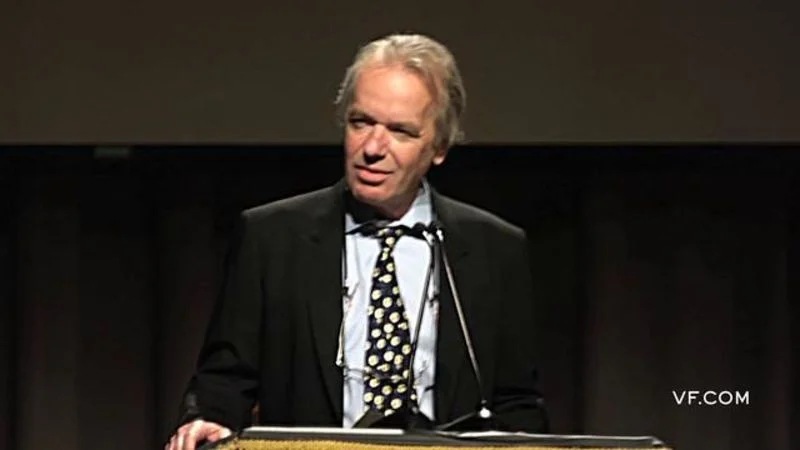
for Christopher Hitchens: 'As if Christopher felt the only person really worth really arguing with was The Hitch'' by Martin Amis - 2012

December 6, 2015

Video from 1.34.11

20 April 2012, Vanity Fair Memorial, Cooper Union, New York, USA

I'm Martin Amis, or 'Little Keith', as Hitch always called me. 'My dear little Keith', he used to call me, and I used to call him, 'my dear Hitch'. The most salient and striking thing about Christopher is how widely he was loved. Not just by us, family and friends, but by you. And one struggles to think of a public intellectual with a following half as passionate.

I wonder why this is? There are several elements in it I think, before I reach for the central one.

First -- very handsome. In a phrase that he used to like using, 'handsomer than a man has the right to be'. And we were both very fond of Humbert Humbert's self description in Lolita where he says about halfway through the novel, “I wonder if during the course of these tragic notes, I have sufficiently stressed the sending quality of my striking, if perhaps somewhat brutal good looks”.

Hitch wasn't, his good looks weren't brutal, they were sort of full and friendly. And my middle daughter, Fernanda, was once in the kitchen, age 5, and she said “it look's like Hitch”, and the man on the screen was the handsome actor, Sam Neil.

I also think that his voice was very important. It was a perfect voice, without any mannerism or any kinds of poncy intonations, that I can't seem to purge my own voice of. And as I said, contributing as I told you, to the charisma of The Hitch.

“The Hitch has landed”, he used to say on the phone when he landed at Heathrow. And when we did Charlie Rhodes the other night, when we remembered him, I and others. Charlie, I think, was surprised and a bit alarmed to learn that Hitch often referred to himself in the third person.

This is not a habit consonant with cloudless mental health in most cases. Though, The Hitch was one of the sanest people I've ever known -- not always rational, and by no means always prudent, but penetratingly sane. He knew who he was.

He was also something of a self-mythologiser. 'The Hitch has landed'.

When he took up the Cypriot cause, partitioned Cyprus, he told me, “I'm such a good friend of the Cypriot people, that when I arrive, it says in the headlines of the Nicosia Morning Post, it says “Hitch Flies In”. I said, “what does it say when you leave?” he said, “Hitch Flies Out”.

Very early on, in our early twenties, I said, “Does that girl like The Hitch?”, and he said, “She loves The Hitch, she wants to marry The Hitch”.

Another time he said, “Martin, you're always coming out with phrases like this,”, he says, “Whenever there is injustice, immiseration or oppression, the pen of The Hitch will flash from it's scabbard.”

I've got several stories where Hitch comes out with a great line, and he didn't like this one, he said it was anti-climactic, but I'm very fond of this story. And it seems to crystallise something, and lead us to what was perhaps the heart of the charisma of The Hitch.

He and I were in South Hampton in Long Island having driven that far from where we were staying, in search of the most violent possible film on the Island. This was our idea of happiness, it was to take a bottle of whiskey into a film like Dirty Beast or Scum. Nothing could top that, anyway we were pathetically reduced to Wesley Snipes. And trudging rather grimly towards the cinema, and I said, “No one's recognised The Hitch for at least ten minutes”. And usually he is, every few, ten or twenty yards he's stopped by someone, and then he has a long and friendly conversation with them. And if you ever signed books with The Hitch, he would have a long and friendly conversation with everyone in his queue. Anyway, I said ten minutes must have gone by, and he said, “Longer.” He said, “Much longer -- at least fifteen minutes.” And he said, “And I get more and more pissed off, the longer it goes on.”

He said, “I keep thinking, what can they feel, what can they care, what can they know if they don't recognise The Hitch.”

And as we approached the cinema there was a elderly party rather awkwardly perched on a hydrant, and as we were entering the cinema, he said, “Do you love us, or do you hate us?”.

What he meant was, America, and Americans, he didn't mean him and his wife.

And Hitch said, “I beg your pardon?”

He said, “Do you love us or do you hate us?”.

And Hitch said, “It depends on how you behave.” he said, and went straight into the cinema, rather than sort of curling up with him for half an hour.

I thought that was very good, but also slightly misleading, as if what Hitch did was calmly appraise American behaviour, or whatever reality you presented him with, and give it his judicious appraisal, but he wasn't like that. And we wouldn't have loved him so much if he'd been like that -- there are plenty of people who are like that.

It was more, I think that he was bored by the phrase contrarian, but, what he was was an auto-contrarian. He contradicted himself. As if Christopher felt the only person really worth really arguing with was The Hitch. So we see him tie himself up in knots with supporting Ralph Nader, Bush-Cheney in 2004, collusion in the impeachment of Bill Clinton, and Iraq of course.

And what people don't see, but I think sense, is that he suffered very much from those isolations that he brought on himself.

After the Clinton business, I rang him up, and I'd seen him on television looking not well, and I said to him “How are things?” And he said, “Man, I'm living in a world of pain.” he said. This was two or three weeks after he'd broken [the story].

And he suffered very much I think about Iraq, he didn't talk about it, but you watched him watching the news, and when the vote, when the first democratic election took place in Iraq, the excitement was sort of suppressed excitement, it showed; and the misery during the civil war period of 2005/06.

He was like a Houdini, where he was right most of the time, but every now and then he would go out on a limb, and he would shackle himself so dramatically, that had he escaped, or partially escaped, it would have been all the more amazing.

And that was why he was loved, I think.

He made intellection dramatic with this argument with the self.

I'll just end now with one of his favourite phrases was, 'what could be more agreeable', he used to say. It was one of his very English remarks. He would say it while he, I and others settled down for sixteen or seventeen hours of food, drink, tobacco and conversation. And I just want to ask, who could be more agreeable than The Hitch?

To end on a wishful note, what could be more infinitely agreeable, imagine what it would do to your heart, if The Hitch had landed, and he was on his way to join us here, at Cooper Union.

Thank you.

Source: https://www.youtube.com/watch?v=Er8YIqfOy6...

Enjoyed this speech? Speakola is a labour of love and I’d be very grateful if you would share, tweet or like it. Thank you.

Facebook Twitter Facebook
In PUBLIC FIGURE A Tags CHRISTOPHER HITCHENS, MARTIN AMIS, FRIEND, INTELLECTUAL, AUTHOR, VANITY FAIR
Comment

For Maya Angelou: 'She spoke to the essence of black women', by Michelle Obama - 2014

August 3, 2015

June 7, 2014, Wake Forest University's Wait Chapel, North Carolina, USA

To the family — Guy, to all of you — to the friends, President Clinton, Oprah, my mother Cicely Tyson, Ambassador Young — let me just share something with you: My mother, Marian Robinson, never cares about anything I do. But when Dr. Maya Angelou passed, she said, “You’re going, aren’t you?” I said, “Well, Mom, I’m not really sure, I have to check with my schedule’ she said “You are going. Right?” I said “Well, I’m gonna get back to you, I have to check with the people, figure it out.” I came back and said that I was scheduled to go and she said “That’s good. Now I’m happy.”

It is such a profound honor — truly a proud honor — to be here today on behalf of myself and my husband as we celebrate one of the greatest spirits our world has ever known, our dear friend Dr. Maya Angelou. In the Book of Psalms it reads, “I praise you for I am fearfully and wonderfully made; wonderful are your works, my soul knows very well. My frame was not hidden from you when I was being made in secret, intricately woven in the depths of the earth.”

What a perfect description of Maya Angelou and the gift she gave to her family and all who loved her. She taught us that we are each wonderfully made, intricately woven and put on this earth for purpose far greater than we could ever imagine.

When I think of Maya Angelou I think of the affirming power of her words. The first time I read “Phenomenal Woman” I was struck by how she celebrated black women’s beauty like no one had ever dared to before. Our curves, our stride, our strength, our grace. Her words were clever, and sassy. They were powerful and sexual and boastful. And in that one singular poem, Maya Angelou spoke to the essence of black women but she also graced us with an anthem for all women, a call for all of us to embrace our God-given beauty.

And oh, how desperately black girls needed that message. As a young woman I needed that message. As a child, my first doll was Malibu Barbie — that was the standard for perfection. That was what the world told me to aspire to.

But then I discovered Maya Angelou, and her words lifted me right out of my own little head. Her message was very simple: She told us that our worth had nothing to do with what the world might say. Instead she said, “Each of us comes form the creator trailing wisps of glory.” She reminded us that we must each find our own voice, decide our own value, and then announce it to the world with all the pride and joy that is our birthright as members of the human race.

Dr. Angelou’s words sustained me on every step of my journey. Through lonely moments in ivy-covered classrooms and colorless skyscrapers. Through blissful moments mothering two splendid baby girls. Through long years on the campaign trail where at times my very womanhood was dissected and questioned. For me, that was the power of Maya Angelou’s words — words so powerful that they carried a little black girl from the South Side of Chicago all the way to the White House.

And today as First Lady whenever the term “authentic” is used to describe me I take it as a tremendous compliment because I know that I am following in the footsteps of great women like Maya Angelou. But really, I am just a beginner. I am baby authentic.

Maya Angelou, now she was the original. She was the master. For at a time when there were such stifling constraints on how black women could exist in the world, she serenely disregarded all the rules with fiercely passionate unapologetic self. She was comfortable in every inch of her gloriously brown skin.

But for Dr. Angelou her own transition was never enough. You see, she didn’t just want to be phenomenal herself. She wanted us all to be phenomenal right alongside her.

So that’s what she did throughout her lifetime. She gathered so many of us under her wing. I wish I was a daughter. But I was right under that wing — sharing her wisdom, her genius and her boundless love.

I first came into her presence in 2008, when she spoke at a campaign rally here in North Carolina. At that point she was in a wheelchair, hooked up to an oxygen tank to help her breathe. But let me tell you, she rolled up like she owned the place. She took the stage as she always did — like she’d been born there. And I was so completely awed and overwhelmed by her presence I could barely concentrate on what she was saying to me.

But while I don’t remember her exact words I do remember exactly how she made me feel.

She made me feel like I owned the place, too. She made me feel like I had been born on that stage right next to her. And I remember thinking to myself, “Maya Angelou knows who I am! And she is rooting for me! So now, I’m good. I can do this. I can do this.”

And that’s really true for us all. Because in so many ways Maya Angelou knew us. She knew our hope, our pain, our ambition, our fear, our anger, our shame. And she assured us that in spite of it all — in fact, because of it all — we were good. And in doing so, she paved the way for me, and Oprah and so many others just to be our good ol’ black women selves. She showed us that eventually, if we stayed true to who we are, then the world would embrace us.

And she did this not just for black women but for all women. For all human beings. She taught us all that it is okay to be your regular old self, whatever that is. Your poor self, your broken self, your brilliant, bold, phenomenal self. That was Maya Angelou’s reach.

She touched me, she touched you, she touched all of you she touched people all across the globe — including a young white woman from Kansas who named her daughter after Maya and raised her son to be the first black President of the United States.

So when I heard that Dr. Angelou had passed, I felt a deep sense of loss. I also felt a profound sense of peace — because there is no question that Maya Angelou will always be with us. Because there was something truly divine about Maya. I know that now as always, she is right where she belongs.

May her memory be a blessing to us all.

Thank you. God bless.

This is the poem Michelle Obama refers to. From poetryfoundation.org

Phenomenal Woman


Pretty women wonder where my secret lies.
I’m not cute or built to suit a fashion model’s size   
But when I start to tell them,
They think I’m telling lies.
I say,
It’s in the reach of my arms,
The span of my hips,   
The stride of my step,   
The curl of my lips.   
I’m a woman
Phenomenally.
Phenomenal woman,   
That’s me.
I walk into a room
Just as cool as you please,   
And to a man,
The fellows stand or
Fall down on their knees.   
Then they swarm around me,
A hive of honey bees.   
I say,
It’s the fire in my eyes,   
And the flash of my teeth,   
The swing in my waist,   
And the joy in my feet.   
I’m a woman
Phenomenally.
Phenomenal woman,
That’s me.
Men themselves have wondered   
What they see in me.
They try so much
But they can’t touch
My inner mystery.
When I try to show them,   
They say they still can’t see.   
I say,
It’s in the arch of my back,   
The sun of my smile,
The ride of my breasts,
The grace of my style.
I’m a woman
Phenomenally.
Phenomenal woman,
That’s me.
Now you understand
Just why my head’s not bowed.   
I don’t shout or jump about
Or have to talk real loud.   
When you see me passing,
It ought to make you proud.
I say,
It’s in the click of my heels,   
The bend of my hair,   
the palm of my hand,   
The need for my care.   
’Cause I’m a woman
Phenomenally.
Phenomenal woman,
That’s me.

Source: https://medium.com/thelist/michelle-obama-...

Enjoyed this speech? Speakola is a labour of love and I’d be very grateful if you would share, tweet or like it. Thank you.

Facebook Twitter Facebook
In EDITORS CHOICE Tags TRANSCRIPT & VIDEO, MAYA ANGELOU, WRITER, USA, MICHELLE OBAMA, CIVIL RIGHTS, POET, FIRST LADY, AUTHOR
Comment

See my film!

Limited Australian Season

March 2025

Details and ticket bookings at

angeandtheboss.com

Support Speakola

Hi speech lovers,
With costs of hosting website and podcast, this labour of love has become a difficult financial proposition in recent times. If you can afford a donation, it will help Speakola survive and prosper.

Best wishes,
Tony Wilson.

Become a Patron!

Learn more about supporting Speakola.

Featured political

Featured
Jon Stewart: "They responded in five seconds", 9-11 first responders, Address to Congress - 2019
Jacinda Ardern: 'They were New Zealanders. They are us', Address to Parliament following Christchurch massacre - 2019
Dolores Ibárruri: "¡No Pasarán!, They shall not pass!', Defense of 2nd Spanish Republic - 1936
Jimmy Reid: 'A rat race is for rats. We're not rats', Rectorial address, Glasgow University - 1972

Featured eulogies

Featured
For Geoffrey Tozer: 'I have to say we all let him down', by Paul Keating - 2009
for James Baldwin: 'Jimmy. You crowned us', by Toni Morrison - 1988
for Michael Gordon: '13 days ago my Dad’s big, beautiful, generous heart suddenly stopped beating', by Scott and Sarah Gordon - 2018

Featured commencement

Featured
Tara Westover: 'Your avatar isn't real, it isn't terribly far from a lie', The Un-Instagrammable Self, Northeastern University - 2019
Tim Minchin: 'Being an artist requires massive reserves of self-belief', WAAPA - 2019
Atul Gawande: 'Curiosity and What Equality Really Means', UCLA Medical School - 2018
Abby Wambach: 'We are the wolves', Barnard College - 2018
Eric Idle: 'America is 300 million people all walking in the same direction, singing 'I Did It My Way'', Whitman College - 2013
Shirley Chisholm: ;America has gone to sleep', Greenfield High School - 1983

Featured sport

Featured
Joe Marler: 'Get back on the horse', Harlequins v Bath pre game interview - 2019
Ray Lewis : 'The greatest pain of my life is the reason I'm standing here today', 52 Cards -
Mel Jones: 'If she was Bradman on the field, she was definitely Keith Miller off the field', Betty Wilson's induction into Australian Cricket Hall of Fame - 2017
Jeff Thomson: 'It’s all those people that help you as kids', Hall of Fame - 2016

Fresh Tweets


Featured weddings

Featured
Dan Angelucci: 'The Best (Best Man) Speech of all time', for Don and Katherine - 2019
Hallerman Sisters: 'Oh sister now we have to let you gooooo!' for Caitlin & Johnny - 2015
Korey Soderman (via Kyle): 'All our lives I have used my voice to help Korey express his thoughts, so today, like always, I will be my brother’s voice' for Kyle and Jess - 2014

Featured Arts

Featured
Bruce Springsteen: 'They're keepers of some of the most beautiful sonic architecture in rock and roll', Induction U2 into Rock Hall of Fame - 2005
Olivia Colman: 'Done that bit. I think I have done that bit', BAFTA acceptance, Leading Actress - 2019
Axel Scheffler: 'The book wasn't called 'No Room on the Broom!', Illustrator of the Year, British Book Awards - 2018
Tina Fey: 'Only in comedy is an obedient white girl from the suburbs a diversity candidate', Kennedy Center Mark Twain Award -  2010
Tina Fey: 'Only in comedy is an obedient white girl from the suburbs a diversity candidate', Kennedy Center Mark Twain Award - 2010

Featured Debates

Featured
Sacha Baron Cohen: 'Just think what Goebbels might have done with Facebook', Anti Defamation League Leadership Award - 2019
Greta Thunberg: 'How dare you', UN Climate Action Summit - 2019
Charlie Munger: 'The Psychology of Human Misjudgment', Harvard University - 1995
Lawrence O'Donnell: 'The original sin of this country is that we invaders shot and murdered our way across the land killing every Native American that we could', The Last Word, 'Dakota' - 2016