• Genre
  • About
  • Submissions
  • Donate
  • Search
Menu

Speakola

All Speeches Great and Small
  • Genre
  • About
  • Submissions
  • Donate
  • Search

Eulogies

Some of the most moving and brilliant speeches ever made occur at funerals. Please upload the eulogy for your loved one using the form below.

For Ernie Page: 'Ernie Page was Labor to his core', Celebration of Life, by Edwin Plummer - 2018

October 27, 2023

30 May 2018, Ted Whittle Auditorium, Kingsford, Sydney, NSW, Australia

My sincere condolences to Barbara, to Ernie’s children Harry, Therese, Matthew, Janemaree and Rebecca and to Ernie’s wider family.

It’s an honour to be asked to say a few words here today.

Ernie Page was Labor to his core.

His belief in the values that underpin, and the people who are members of, the great Australian Labor Party was, I think, part of his very being.

It is with that in mind that I want to share with you some of what I believe to be Ernie’s most important public policy achievements,

·       as an Alderman,

·       as a Mayor,

·       as a Member of the NSW Parliament, and

·       as a Minister in the NSW Government.

First, as a member of Waverley Council for a phenomenal 25 years.

One of his lasting, and I believe most significant achievements was to broaden the horizons of local government.

He always believed there was more to local government than just roads, rates and rubbish …. much more.

His vision was clear.

He saw local government as an instrument progressive Labor should use to improve the lives of working people, of ordinary people, and of those who were disadvantaged in our society.

It was one way – and in a local community a very effective way – to promote social justice and equality.

So in Waverley from the 1960s and well into the 1970s – the age of Gough Whitlam and Don Dunstan – he broadened the horizon of local government and in so doing, inspired many activists and future local councillors.

…I know that, because I was one of those inspired.

·       He opened Waverley’s first public library … more on that in a moment.

·       Waverley implemented local government’s first ever affordable housing strategy, to protect the rental housing in which low income residents lived from developers, a first for NSW and a policy future Labor administrations under Barbara Armitage and Paul Pearce were to continue and expand.

·       Council became involved in the provision of child care, its first centre opening in 1976 in Gardiners Road Bondi Junction:

… and I know our former Member for Phillip, Jeannette McHugh, and former Waverly Deputy Mayor and Member of the NSW Legislative Council, Ann Symonds, were leaders in what was then a controversial but now widely accepted and unambiguously necessary area of government activity.

·       Council began directly providing services to support older residents, particularly the frail aged, and children and youth

·       A Community Services Department was established in the council to drive implementation of the community and social agenda within the council administration

·       And Waverley Council started supporting and nurturing the arts, a newfound belief in local government’s role in promoting and celebrating cultural diversity.

And, while he was Member for Waverley, Bondi Beach was saved, quite literally, from the wrecking ball.

A magnificent community-based campaign in the mid-1980s led by Waverley Labor – including Ernie and local councillors – and working with the local Bondi community – repulsed the push by the then Liberal Council to bulldoze the beach front and create, in their words, a high rise “Camelot by the Sea”.

That’s a segue to the Bondi Pavilion, which Ernie passionately supported.

I went down to Bondi on the weekend, and saw that stone tablet in the pavilion foyer, on which is inscribed:

This tablet commemorates the official opening of the Bondi Pavilion Community Centre on 25th June 1978, being the 50th Anniversary of the Pavilion.

Then appear the names:

·       The Honourable Neville Wran QC MP, and

·       Alderman E T Page, BE BComm, Mayor of Waverley

That was 40 years ago, almost to the day.

And as we know, twice since, the community and Waverley Labor have fought to protect the pavilion from privatisation or wholesale commercialisation, and on each occasion successfully.

Turning to Ernie’s time as Minister for Local Government, during Bob Carr’s first Labor Government.

It is my firm belief that Ernie was not only “one of the best” but the best Local Government Minister – and certainly the most popular –this state has ever seen, certainly in my lifetime.

Working then in his ministerial office, along with Paul Tracey and Freda Backes, we saw the local government reform agenda being rolled out.

And if you flick through today’s local government statute book, you will see Ernie’s fingerprints throughout its several hundred pages.

In those four years we saw:

·       Laws to use the rating system to encourage the retention of affordable housing and the protection of high conservation value private land.

·       Laws to require local government to apply the principles of ecologically sustainable development and prepare annual state of the environment reports.

·       Stronger freedom of information laws to ensure residents had open access to council information and council meetings.

·       New laws to significantly strengthen the protection of community land, including public parks and community buildings.

·       New laws to recognise, for the first time, the benefits of local government cooperating and sharing resources regionally.

·       Laws to require councils to exercise their functions consistent with the principles of cultural diversity.

·       Reformed and strengthened companion animals laws

·       New laws to democratise voting in the City of Sydney.

And so on…

I’ll close with what I believe to be perhaps Ernie’s greatest legacy to his local community … Waverley Library.

What he did greatly benefitted the people of Waverley

…of that there is no doubt.

But, more broadly, he showed that public library services and providing free access to books and knowledge was core business for local government.

…and that benefitted the people of NSW.

With his great friend and future Chief Librarian Ron Lander, Ernie bought an old bowling alley in Bondi Junction and turned it into a public library, one that I started visiting as a five year old in 1969 and which, for me, became a window to a wider world.

It was only ever intended it to be a temporary site, so it was a memorable moment when, under Barbara Armitage’s mayoralty, we opened the new purpose-built library in 1999 almost next door, with both Ernie and Ron present as guests of honour.

To give you an idea why Ernie believed so passionately in the social worth of public libraries, I can do no better than quote his own words.

Speaking in the NSW Legislative Assembly on a bill that Ernie argued would dilute guaranteed free access to library resources he said, and I quote:

“Freedom of equity of access to the public library is essential to the democratic process and to the social and economic welfare of the community.  This freedom can be inhibited as much by poverty as by censorship.”

Fine words indeed. He knew well that free access to knowledge promotes equality.

I’ll end where I began….

Ernie Page was Labor to his core

During his long political career, he changed the lives of many in our local community and he changed them for the better.

…we will miss him greatly.
Enjoyed this speech? Speakola is a labour of love and I’d be very grateful if you would share, tweet or like it. Thank you.

Facebook Twitter Facebook
In PUBLIC FIGURE D Tags ERNIE PAGE, COUNCILLOR, WAVERLEY COUNCIL, COOGEE, TRANSCRIPT, LOCAL GOVERNMENT, POLITICIAN, LOCAL MEMBER, MINISTER, LABOR PARTY, ALP, AUSTRALIAN LABOR PARTY
Comment

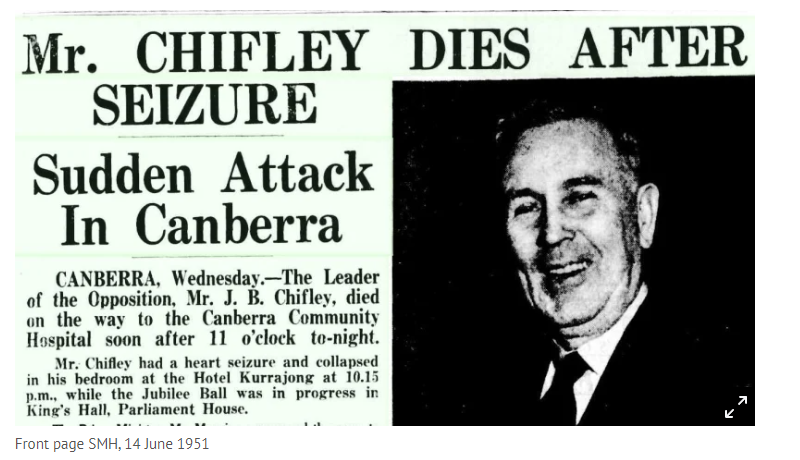
For Ben Chifley: 'On this sorrowful occasion, the festivities of tonight should end', by Sir Robert Menzies - 1951

June 2, 2022

13 June 1951, Jubilee Ball, Canberra, Australia

Mr Chifley, former Prime Minister of Australia and leader of the Opposition, collapsed and died of a cardiac arrest during the course of a jubilee ball. The Prime Minister announced his passing.

It is my sorrowful duty to tell you that tonight, during this celebration, Mr. Chifley, former Prime Minister and Leader of the Opposition, has died.

I do not want to try even to talk about him, because, although we were political opponents, he was a great friend of mine and yours, and a fine Australian.

You will agree that it is appropriate on this sorrowful occasion, that the festivities of tonight should end, and, therefore, in the circumstances there will be no more music.

I do suggest that you have supper and that we then leave quietly, having in our minds very great sorrow for the passing of a fine Australian.

It does not matter about party politics in a case like this: Oddly, enough, in Parliament we get to know each other very well, and we sometimes find we have a warmest friendship among people whose politics are not our own.

Mr. Chifley served this country magnificently for many years.

Sorrow of his own people is shared equally by myself and members of the Government.

I hope this cruel blow for Mrs. Chifley will be softened by the knowledge that there is no Australian who hears this sad news tonight will not have a tear to shed for a man who has served his country.

Indeed, he has served his country and undoubtedly he has hastened his own passing by his devotion to his own land, and, indeed, to the people of the world.

Source: https://www.jenolancaves.org.au/about/hist...

Enjoyed this speech? Speakola is a labour of love and I’d be very grateful if you would share, tweet or like it. Thank you.

Facebook Twitter Facebook
In PUBLIC FIGURE D Tags BEN CHIFLEY, SIR ROBERT MENZIES, DEATH, SUDDEN DEATH, JUBILEE BALL, AUSTRALIAN POLITICS, LABOR PARTY, TRANSCRIPT, 1950s, 1951, HEART ATTACK
Comment

for Gough Whitlam: 'You would go to the barricades wth such a man', by Graham Freudenberg - 2014

March 2, 2021

5 November 2014, Sydney Town Hall, Sydney, Australia

Source: https://www.youtube.com/watch?v=yZbzQ3qymU...

Enjoyed this speech? Speakola is a labour of love and I’d be very grateful if you would share, tweet or like it. Thank you.

Facebook Twitter Facebook
In PUBLIC FIGURE D Tags GOUGH WHITLAM, GRAHAM FREUDENBERG, TRANSCRIPT, LABOR, LABOR PARTY, SPEECHWRITER, WHITLAM, PRIME MINISTER, STATE FUNERAL
Comment
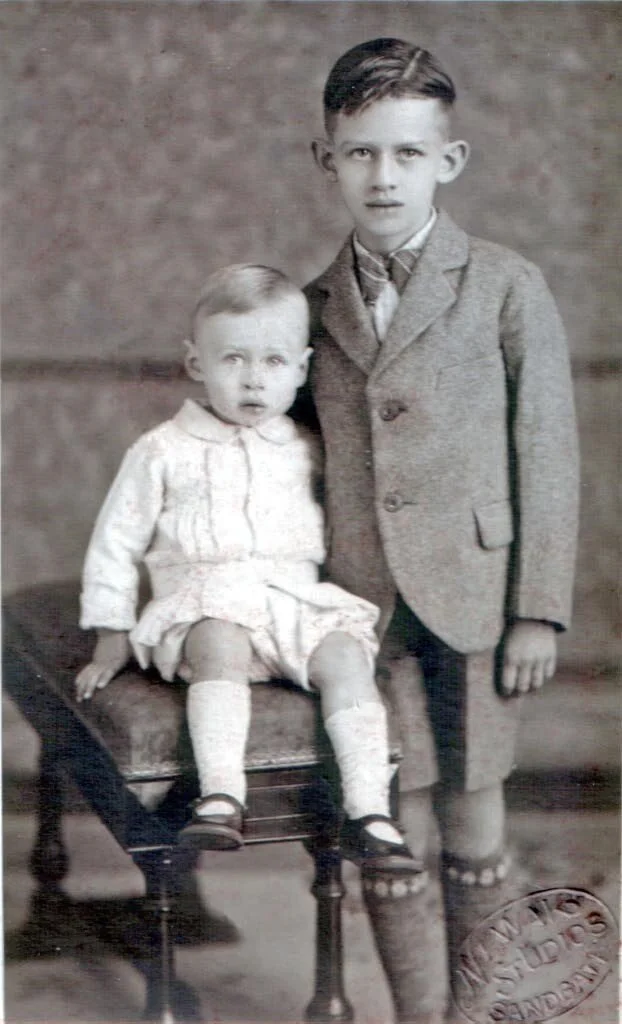
Pete Gillies (right) with younger brother Basil

Pete Gillies (right) with younger brother Basil

For Pete Gillies: 'We give God thanks and glory for Pete’s wonderful and productive life', by Andrew Gillies - 2005

August 28, 2020

July 2005, Aspley, Queensland, Australia

Pete William Gillies 23/1/1928 - 28/5/2004

For reasons now obscure, Pete Gillies was registered as Pete (and not Peter) William Gillies when he was born on the 23rd of January 1928 in Toowoomba to Olive and William Gillies. Olive & William were graziers on the family station “Plainview”. This station was near Dalby and was a large and highly successful enterprise.

Pete did not really get to know much of his father Bill, as Bill died when Pete was only six, and Pete’s only other sibling - Basil was only an infant. Bill had only sisters and Basil & Pete were too young to take over the farm, so the property was split up and sold. Olive and the boys moved to Brisbane’s north east suburbs to be near Olive's family, living first at Sandgate and then at Northgate.

During this time the boys both grew into young men. Pete did his high schooling at BBC graduating in 1945 Eventually Olive and Basil moved to Zillmere and established a poultry farm with some market gardening. By this time however Pete had heard and followed the call to ministry in the Presbyterian church. He first served as a Home Missionary, in numerous areas during breaks in study. Placements included Holland Park, Tambourine Mountain, and Maleny.

During this time he was pursuing his Arts degree and also theological studies. He was ordained in 1953 and accepted his first call to ministry in Innisfail where he remained for 5 years until 1957 when he accepted a call to the inner city Brisbane suburb of Hawthorne.

It was not here but on a church based holiday tour to Tasmania that Pete met a young teacher, Glenda Gillingham, a Methodist from the Sandgate area. A romance flourished and the two were married on the 9th of January 1960. Before long there were two additions to the family. Ian William born in 1961 and Keith Raymond in 1962.

During this period there was a shortage of Presbyterian Ministers in Victoria, and at the General Assembly in Melbourne Pete was headhunted to help fill this shortage. In 1962 he accepted a call to Morwell in Gippsland. Here in 1967, Andrew Peter was born. Just 12 months later Pete accepted a call to Merbein near Mildura in Victoria’s west and then in 1971 to North Altona- Newport in Melbourne’s western suburbs.

Both Glenda and Pete missed their extended family in Queensland, especially after the death of Pete’s beloved mother Olive in 1971. So in 1974 Pete accepted a call back to Queensland and North Ipswich. From Morwell on, all these parishes except for the first year or so in North Ipswich were co-operative Methodist/ Presbyterian and sometimes Congregational. During his time at North Ipswich, Pete’s Brother Basil came to live with the family due to his failing eye-sight.

In 1981, now part of the Uniting Church, the family moved to Camp Hill where Pete had accepted a call to the Coorparoo parish. They were minus one member because Keith had become a cadet announcer with radio 4MB in Maryborough. In 1982 Keith married Helen Carney, which meant that Glenda was no longer the only girl in the family. In 1986 after over thirty-five years in ministry, Pete was unwillingly forced to retire on health grounds.

The family moved to the old farm house at Zillmere which Basil owned. The farm had been subdivided in the 1970s. Pete remained active in ministry in retirement. He did supply at Aspley Parish in the year of his retirement. He also did supply as Chaplain to Prince Charles Hospital in quite recent years. He was never able to become an associate minister despite his strong desire to be one, but this did not stop him. Pete got himself elected as an elder, and was a very faithful visitor.

He loved taking his turn at prayers and readings. At one stage, until the presbytery disallowed it, he got himself elected as a lay representative to Presbytery. Whenever he was asked he would take a service. For almost all of the 18 years he lived at Zillmere Pete organised the Christians in Dialogue ecumenical studies in the Aspley, Geebung, Zillmere area - and this last Sunday was probably the first time he had missed the Week of Prayer for Christian Unity service in all that time. In recent years he did not often get the chance to preach until he was invited to preach monthly for the Crossroads service at New Farm. Despite being largely incapacitated, he managed to do his last service at New Farm on April the sixth, having to catch a number busses there and back.

On Monday the 24th of May Pete was admitted to Prince Charles, for rehabilitation, to get him more mobile. Shortly after admission, Pete had a raised temperature and was placed on an antibiotic drip. On Thursday night he suffered sudden and unexpected breathlessness and heart failure and died the early hours of Friday morning in the cardiac unit of the hospital. These are the bare facts of Pete’s life.

There was however much more to his character. Pete had real determination. You’ve already heard how Pete when determined to do something, like being involved in ministry, could not be stopped. If he couldn’t do it the normal way, he’d find some way around it. In Innisfail, the bathroom was under the verandah & the verandah floor had holes in it. The Session Clerk told him there were no builders available to patch the holes. Pete himself was never a handyman, so he found a builder, got him to do the repairs, and presented the bill to the committee of management.

In these last days when he was confined to a wheel chair or a walking frame, he insisted on paying the paper bill himself. It took him half an hour to get from the car to the counter and back, but he did it. The greatest sign of his determination was the way he never let his many illnesses stop him from doing anything he really wanted to do. From teenage years he suffered from a permanent bronchitis like condition, which hospitalised him at least once. From the time he was a young man he suffered from uneven pigmentation in his skin and had skin cancers removed on a regular basis. In Innisfail he got tropical ulcers in his ears, which probably contributed to his later deafness. From the 1970s on he suffered from high blood pressure. From the 80’s on he suffered from a heart condition and in the mid 80’s he developed bi-polar disorder or manic depression. He also had major bowel cancer surgery and surgery on an enlarged prostate. In the 90s he was diagnosed as borderline diabetic and then with Parkinson’s disease. In the 2000’s it was discovered he had a blocked artery to the brain which prevented him driving, but not getting around - it’s amazing where busses and trains will take you if you’re prepared to use them. In the last twelve months of his life he developed sciatica, which made it very painful to walk.

None of this stopped him, not any of it, apart from the sciatica and only really in this last five weeks. Despite the pain, it didn’t stop him at the start of this year travelling by himself by train to Andrew’s recent induction into the Clermont and Capella congregations. His illnesses did not stop him from being a Rotarian, serving as a board member on multiple occasions, and also as President of the Chermside club, with a perfect attendance record for over 30 years until he reached exemption age. It did not stop him from being an A grade doubles pennant winning champion in church union tennis, in the glory days of the 50s, as well as being the association secretary. He was a keen cricketer, and cricket follower - being a member of the cricketers club and attending countless shield, test and one day games. He was a member of the Geographic Society, the English Association, a Friend of the Ipswich Art Gallery, and loved to attend public lectures on diverse subjects as well as musical and theatrical performances. Most recently he especially enjoyed the BMAC concerts.

On any occasion he could he would go out and also eat out. he loved to be with people. Nothing could stop him. And this list is far from complete.

Not only did he have incredible determination, Pete had a thirst and passion for knowledge. Many people who never met Pete will know his voice and face. That’s because he appeared on numerous television and radio quiz shows. In the early days he appeared on “Information Please” and “Bob Dyer’s Pick-a-box.” He was on “Money Makers,” in all three of its incarnations, the Coles Quiz, Great Temptation, won the major prize on Casino 10, and appeared on three series of Mastermind making it to the quarter finals twice and the semi-finals once. Most contestants did best on their special subjects and less well at their general knowledge - Pete excelled at general knowledge. When trivia nights came into vogue Pete attended every one he could get to and only the most severe of illnesses would stop him. A recent highlight was his appearance on Who Wants to be a Millionaire - he didn’t make it to the hot seat - his reactions were too slow but he got all three questions right.

He was also a keen debater, representing University of Queensland at the national titles, with the team winning that title at least one year. In addition to his BA Pete completed a Grad Dip in Religious Education and qualified for his MA although the thesis never quite got finished. He never tired of learning new things and not just facts and dates, he remembered names and people and all about them for years, often after only the briefest of meetings. He was determined, he had a passion for knowledge and Pete had a passion for justice.

In the mid to late 60’s when Pete was in Country Victoria he joined forces with his Methodist colleague - the Rev. Brian Howe (later to be deputy Prime Minister), to protest against the Viet Nam war. In Queensland he frequently took part in various justice related activities. For the Synod he was Chairperson of the Social responsibility committee for a number of years. For ten years (1971-1980) he was a member of the Labor party. His interest in these areas never flagged, he attended protests, wrote letters, tried to organise English classes for oppressed migrant workers, volunteered as an industrial chaplain, went to information nights and gave donations.

In most houses religion and politics are banned from the dinner table - in our house they were the main themes of most conversations. In our household while salvation was most definitely by grace through faith in Christ, that salvation was to lead to the life of good works for which we were created. Pete held his convictions strongly but he was always open to argument, and could be persuaded to a different point of view if the case was strong and just.

He was determined, committed to justice, had a passion for knowledge and Pete loved his family.

Like most Dads of his era, Pete was sometimes emotionally distant from his children, but he took a real pride in their achievements. Although not a fan of quizzes, Ian takes after his Father in his ability to store and recall knowledge. Pete was very proud of Ian’s success in It’s Academic and Who What and Where, and also in his matriculating and gaining entry to University in more recent years.

He was also proud of Keith’s success in the world of radio and in nabbing a wife. He never stopped encouraging Andrew & Ian in this regard. He was really pleased to be able to conduct Keith & Helen’s wedding. If one of the boys was on the phone he always wanted to speak to us- often at great length. He was very happy that Andrew followed in his footsteps into ministry and liked to show him off when he got the chance.

One of the proudest days of his life was when Glenda graduated with a BTh from the BCT and he went in to bat for her when she was not accepted as a candidate for the deaconate. He always made sure that the boys had all they needed, sacrificing financially to enable Keith to go to a private school and help Andrew to get through Uni.

He loved his family, he was committed to justice, he had a passion for knowledge he had real determination, and Pete also had a passion for the Gospel. In the 50s and 60s Pete was a supporter of and involved in the Billy Graham crusades. As we heard earlier he had a passion for preaching and leading worship. He never really enjoyed RE but taught it willingly. His greatest strength in ministry was visiting. He could talk to and when in pastoral mode, he could listen to anyone. He could gently proclaim the promises of God and was always willing to pray with those he visited. His brief ministry at Prince Charles was deeply appreciated by staff and patients alike. For may years he was a board member and also secretary of CTAQ - because he could see the importance of TV as a medium for presenting the Gospel.

Two incidents relate both his passion for the Gospel, and the central place it took in his life. In what was supposed to have been his final service at Camp Hill, the children’s address was not a moralising sermon, but a simple statement by Pete to the children, that he hoped that they would come to know Jesus Christ as their Lord and Saviour.

The other incident is recalled by Andrew. “I’d gone with Dad to give him some company when he preached at Bald Hills. He began by saying that today was Social Justice Sunday. The old man in front of me groaned. But then he said, but while I’ll be using the prayers for social justice Sunday I won’t be preaching on that today, because it’s St Andrew’s Day. When he said this I groaned - because Dad was always going on about our Scottish heritage, kilts, shortbread, highland dancing, Rabbie Burns, and Dad has a great collection of bagpipe records. But when it came to the sermon, instead of Scottish kitsch, he spoke about Andrew in the Gospels and how he introduced other people to Jesus- his brother Peter, the young boy with the loaves and fish and the text for that day which was the Greeks wanting to see Jesus. He encouraged the congregation to do what St Andrew had done- introduce others to Jesus. ”

Pete William Gillies had real determination, he had a thirst for knowledge, he loved his family, he had a passion for Justice and also a passion for the Gospel. In his retirement speech to Synod, he called on us to be prophetic. Through his life he practiced and so calls us to acts of compassion, and in the sermon at Bald Hills he calls on us to proclaim the Good News of Jesus. The same Jesus who by his love and grace, gives us the foundation for our good works of compassion and Justice. The same Jesus who was the foundation for Pete’s life, faith and ministry.

Like all of us Pete was far from perfect, but we loved him and love him still. We will keenly miss him until in time we will meet him in heaven, where the pain and frustration of these last few months will be healed, and where the life time burden of illness will be lifted. Minister, pastor, prophet, teacher, friend, team member, husband, and Dad, his mark on us will never fade.

And so we give God thanks and glory for Pete’s wonderful and productive life.

Enjoyed this speech? Speakola is a labour of love and I’d be very grateful if you would share, tweet or like it. Thank you.

Facebook Twitter Facebook
In SUBMITTED 4 Tags PETE GILLIES, ANDREW GILLIES, FATHER, SON, PRESYTERIAN, CHURCH, MINISTRY, QUEENSLAND, TRANSCRIPT, FAMILY, QUIZ SHOWS, TRIVIA, LABOR PARTY
Comment

for Bob Ellis: 'Oh, how I will miss Bob’s one-sentence emails – and his three page emails', by Bill Shorten - 2016

April 11, 2016

9 April 2016, Sydney, Australia

There is no available video or audio of this speech.

We gather today – family, friends, comrades, readers, actors, correspondents and co-authors - in celebration of a man who wrung every last drop from life.

Who drained his overflowing cup to its very dregs.

Last Sunday, in the hours after Anne gave Chloe and I the sad news and the spontaneous Labor telephone tree spread the bad news – Bob Ellis is gone…

I don’t know how others reacted, but I went to my bookshelves and I pulled out some of Bob’s books, including my prized first edition of Goodbye Jerusalem, to revisit his words.

I turned on my computer and re-read the hundreds of personal emails Bob had sent me.

And I realised the marvellous flow of Bob Ellis was ended.

And what a terrible loss this would be, not just for those who knew and loved him, but all those now denied a chance to get to know him.

So today, I stand before you as the leader of the Labor party Bob loved, the Labor party to which he returned the phrase ‘true believers’.

And more importantly I stand here as a friend who will miss him very much.

To Bob’s incredibly talented, loving wife Annie – and to your children – I offer the sympathies of our Labor family, in your loss.

To all the members of Bob’s remarkable family that he loved so much, thank you for sharing him with the rest of us.

Oh, how I will miss Bob’s one-sentence emails – and his three page emails.

Sometimes sent miraculously seconds after a press conference or a parliamentary debate.

I will miss his unflinching support and loyalty.

I will miss his advice – but also his ability to listen – to lend an ear and share what he called ‘night thoughts’.

I will miss his unerring knack for saying something wickedly, shamefully, brilliantly, impossibly rude about our opponents – past and present. 

In fact, if I had a dollar for every killer line Bob had sent me over my years in politics, I’d almost be able to afford the legal costs of using them.

On days such as today, we inevitably ponder the road less travelled.

And I must say, from time to time when Bob sent through something particularly, scandalously unprintable by way of helpful suggestion.

I would think to myself…imagine if he had won the Mackellar by-election in 1994.

Imagine what Bob Ellis would have done with parliamentary privilege!

Pages and pages of beautiful words have been written about Bob this past week.

I think he would have thoroughly approved of the effort and energy spent by people like Guy Rundle, David Marr and Mike Rann – among others – on finding just the right phrase to capture the genius of Ellis.

For prose was Bob’s greatest gift – and a truly unique one.

Words will be his enduring legacy.

Not words gathering dust down in the library stacks.

But in battered copies of The Things we did Last Summer, taken down from beach-house shelves, or unearthed in hostel lobbies.

Still gripping the reader anew, with their unflinching honesty, their arresting character sketches.

Above all the sense of immediacy and urgency, the feeling that enterprises of great moment were buffeting the narrator through history, live.

In an age when political rhetoric and political writing can be seen as an exercise in paint-by-numbers, Bob was no mere wordsmith.

Not for him the hammer and anvil, beating clichés and weasel words into the blunt, dullness that blights so many political statements and corporate manuals and recorded messages.

There was nothing mechanical, nothing predictable, nothing rigid or repetitive about Bob.

He put his shambolic, contrary, discursive and brilliant self on the page – in style and in substance.

The Ellis mode is easy to imitate…

The long run-on sentence, sluggishly setting out towards its subject like a sleeper train through a country station late at night; semicolons spacing out the melancholy burden of change and decay;  sub-clauses like skiffs beating back the current on a slow-flowing river, before enlivened, alarmed, enraged, the languid water surges and – leaping over the falls – ends. 

Or perhaps you disagree?

Because with Bob, there was always the hook.

The psychological snare he’d planted three paragraphs up the page.

And just as you strode through the scrub, convinced you had his argument safely in hand, the Ellis rope drew tight around your ankle, and turned your world upside down.

As supple and smooth as his prose could be – there was always a hard edge of thoughtfulness. 

Guy Rundle called it Australian but not Antipodean.

And there’s something to that.

The honesty, the irreverence, the sense of a generation making a go of it here in a big country full of small towns.

Breaking free from dull nights on bleak streets cut off from the wider world.

Overturning fustiness and convention, British accents reading the ABC news before Homicide, a lean diet of the cultural cringe and two-dimensional identity.

Striking out in search of a new voice and new ideas.

The voice of a genuinely Australian social democracy shaped by ideas and ideals.

The new sense that Australia’s own time was coming, at last.

We might try, today - and in classrooms and lecture theatres for years to come - to examine the various component parts of Bob’s work – but he was far greater than the sum of them.

To say Bob had a way with words is like saying Les Murray is handy with a limerick or Cate Blanchett has excellent diction.

Like his remarkable life, no mere analysis can do Bob or his words justice.

For me then, the best way to farewell my friend Bob is in his own words.

And so it goes, at funerals he wrote 17 years ago:

“It’s a question of words in the end – how well we say I’ve loved you all my life, or it’s good to have been your friend.

And how well in the church we say the words and sing the songs that end the tale of a particular soul’s trajectory through a particular time on earth.

Words that say thank you adequately, so long, it’s been a privilege.”

Rest in peace, Digger.


Enjoyed this speech? Speakola is a labour of love and I’d be very grateful if you would share, tweet or like it. Thank you.

Facebook Twitter Facebook
In EDITORS CHOICE Tags BOB ELLIS, AUTHOR, BILL SHORTEN, LABOR PARTY, ALP, SPEECHWRITER, ACTIVIST, TRANSCRIPT, FULL TRANSCRIPT, SPEAKOLIES CELEB
Comment

See my film!

Limited Australian Season

March 2025

Details and ticket bookings at

angeandtheboss.com

Support Speakola

Hi speech lovers,
With costs of hosting website and podcast, this labour of love has become a difficult financial proposition in recent times. If you can afford a donation, it will help Speakola survive and prosper.

Best wishes,
Tony Wilson.

Become a Patron!

Learn more about supporting Speakola.

Featured political

Featured
Jon Stewart: "They responded in five seconds", 9-11 first responders, Address to Congress - 2019
Jacinda Ardern: 'They were New Zealanders. They are us', Address to Parliament following Christchurch massacre - 2019
Dolores Ibárruri: "¡No Pasarán!, They shall not pass!', Defense of 2nd Spanish Republic - 1936
Jimmy Reid: 'A rat race is for rats. We're not rats', Rectorial address, Glasgow University - 1972

Featured eulogies

Featured
For Geoffrey Tozer: 'I have to say we all let him down', by Paul Keating - 2009
for James Baldwin: 'Jimmy. You crowned us', by Toni Morrison - 1988
for Michael Gordon: '13 days ago my Dad’s big, beautiful, generous heart suddenly stopped beating', by Scott and Sarah Gordon - 2018

Featured commencement

Featured
Tara Westover: 'Your avatar isn't real, it isn't terribly far from a lie', The Un-Instagrammable Self, Northeastern University - 2019
Tim Minchin: 'Being an artist requires massive reserves of self-belief', WAAPA - 2019
Atul Gawande: 'Curiosity and What Equality Really Means', UCLA Medical School - 2018
Abby Wambach: 'We are the wolves', Barnard College - 2018
Eric Idle: 'America is 300 million people all walking in the same direction, singing 'I Did It My Way'', Whitman College - 2013
Shirley Chisholm: ;America has gone to sleep', Greenfield High School - 1983

Featured sport

Featured
Joe Marler: 'Get back on the horse', Harlequins v Bath pre game interview - 2019
Ray Lewis : 'The greatest pain of my life is the reason I'm standing here today', 52 Cards -
Mel Jones: 'If she was Bradman on the field, she was definitely Keith Miller off the field', Betty Wilson's induction into Australian Cricket Hall of Fame - 2017
Jeff Thomson: 'It’s all those people that help you as kids', Hall of Fame - 2016

Fresh Tweets


Featured weddings

Featured
Dan Angelucci: 'The Best (Best Man) Speech of all time', for Don and Katherine - 2019
Hallerman Sisters: 'Oh sister now we have to let you gooooo!' for Caitlin & Johnny - 2015
Korey Soderman (via Kyle): 'All our lives I have used my voice to help Korey express his thoughts, so today, like always, I will be my brother’s voice' for Kyle and Jess - 2014

Featured Arts

Featured
Bruce Springsteen: 'They're keepers of some of the most beautiful sonic architecture in rock and roll', Induction U2 into Rock Hall of Fame - 2005
Olivia Colman: 'Done that bit. I think I have done that bit', BAFTA acceptance, Leading Actress - 2019
Axel Scheffler: 'The book wasn't called 'No Room on the Broom!', Illustrator of the Year, British Book Awards - 2018
Tina Fey: 'Only in comedy is an obedient white girl from the suburbs a diversity candidate', Kennedy Center Mark Twain Award -  2010
Tina Fey: 'Only in comedy is an obedient white girl from the suburbs a diversity candidate', Kennedy Center Mark Twain Award - 2010

Featured Debates

Featured
Sacha Baron Cohen: 'Just think what Goebbels might have done with Facebook', Anti Defamation League Leadership Award - 2019
Greta Thunberg: 'How dare you', UN Climate Action Summit - 2019
Charlie Munger: 'The Psychology of Human Misjudgment', Harvard University - 1995
Lawrence O'Donnell: 'The original sin of this country is that we invaders shot and murdered our way across the land killing every Native American that we could', The Last Word, 'Dakota' - 2016