• Genre
  • About
  • Submissions
  • Donate
  • Search
Menu

Speakola

All Speeches Great and Small
  • Genre
  • About
  • Submissions
  • Donate
  • Search

Eulogies

Some of the most moving and brilliant speeches ever made occur at funerals. Please upload the eulogy for your loved one using the form below.

for Les Carlyon: 'Won't keep you, Les', by Andrew Rule - 2019

March 22, 2019

12 March 2019, Flemington, Melbourne,Australia

Above clip is whole service. Andrew Rule’s eulogy begins at 43.40.

Dear Les,

Won’t keep you, mate.

A lot of people here have heard you say that.

“Won’t keep you.”

An hour later, there you’d be, still yarning.

‘Won’t keep you, Les’

It’s the password to the Carlyon Club. It had a lot of members.

For a quiet man, you could talk on anything: history; newspapers; literature. And racing, of course. Not just gallopers but trotters and horses in general ... and working dogs and drenching sheep and tips on practical harness maintenance.

When Truman Capote died the best obituary on him wasn’t in The New York Times: it was yours. He was in your head with Larry McMurtry and Hemingway and Lawson and Tolstoy … and other great artists like Harry White and Roy Higgins and Ted Whitten and Manikato.

All equal opportunity subjects in Les World.

In 1980 I was a kid on The Age. Neil Mitchell was sports editor and heard me talking about horse breaking. Might as well have been talking Swahili for all Mitch knew -- but he knew “Les” would be interested. Everyone at The Age talked about you, even though you hadn’t been there for a few years by then.

So Mitch calls you, has the big chat, then gives me the handpiece. And that was that. The start of a 40-year conversation.

Remember how you read the manuscript of my first book in 1988? I took it to the house in Sevenoaks St. It wasn’t hard to spot:

The only house in Balwyn with a tractor in the carport.

(Won’t keep you, Les.)

It’s the hour before dawn as I write this.

Best hour of the day, you always said: “Never miss a sunrise, Andy. If you don’t stay up all night get up before dawn.”

God knows when you actually slept.

Dawn spoke to you. I reckon you sensed racing stables coming alive while the ordinary world slept. You called it Racing’s Closed Society. You loved it and no one described it better …

The thump of the bags of dirty straw and the tap of the farrier’s hammer. Strappers swearing at horses. The blue heeler straining at the chain, trying to eat the new apprentice kid.

You understood them, the horse people who shared your taste for the Jockey’s Breakfast -- a smoke and a good look round. There are plenty of them here today, Les.

There’s Patto over there: Led in forty-six Cup winners and broke in a couple of thousand horses. I asked him once why they rated you and he growled, ‘Because Les gets it right.’

Apart from everything else, you’re the poet laureate of the track.

You didn’t invent Bart Cummings -- he did that himself -- but you were first to catch his likeness, way back in 1974. The eyebrows curling up ‘like a creeper’ are now part of the language. Then there’s the story about Bart and the Pommy health inspector who told him the stable had “too many flies” -- and Bart straightaway asks ‘How many am I allowed to have?”

You made Bart a national figure, bigger than racing. Without you, Les, there’d be no bronze statue of him downstairs.

(Won’t keep you, Les.)

The way that restless mind of yours hummed after midnight. It wasn’t just the stables calling, was it? Your body clock was set in the last Golden Era of newspapers, the 1960s and 1970s. You’d come home still wired from the daily miracle of producing a paper, stay that way until dawn, I suspect. Even after you left that life, it never really left you, did it?

You once said you wondered how you would have gone in America, testing yourself among the best in the land that produced so many of our heroes: Twain and Mencken, Joe Palmer and Joe Liebling, Runyon and Red Smith. You didn’t go, but their words came to you. You absorbed them. We all learn by imitation and repetition but you added other things -- intelligence, that prodigious memory -- and imagination

Under the homespun, hard-bitten exterior you were the most sensitive of men, with an intellect to match that soaring imagination. You showed it again and again, but never more than in the opening chapters of Gallipoli. It was mesmerising. The night I started reading it, I couldn’t stop. And I dreamed about the charge at the Nek.

The year Gallipoli came out, we got a plumber to our place. Seventeen stone of tattoos in a blue singlet. A van full of tools -- and sitting on the dash, next to a meat pie and an empty stubby, was a copy of Gallipoli. Norm the plumber just had to have it to read at lunch time. When I told you, you were delighted -- but not surprised. Your readers were real people, everyday people, you said. “You’ll never sell many books if your readers are only the people who read broadsheet reviews,” you told me.

(Won’t keep you, Les.)

Some of us got to see you lay out a page, write a killer headline and caption and rewrite copy, turning lead into gold. You could do nearly anything in a newspaper except run the presses. The truth is, you were always one thing: a perfectionist about anything that interested you.

I once went up to your study/ library. It was also a smokehouse, you had maybe 1000 books in there and every one was pickled in tobacco smoke. You reached into your storeroom, (where you kept a perfect WW1 officer’s military saddle, as you do) and grabbed a bridle you’d made, stitched to fit just one horse. No buckles. Made to fit like a glove. Perfect.

That was you, Les. You made things perfect. But words were always top of the list.

I saw you get one letter out of place in 40 years. I make more mistakes every day.

As Chopper Read said, ‘Even Beethoven had his critics.’

But you don’t have many. You collected friends and admirers the way a lamp attracts moths.

As Neil says, some of your ‘boys’ were girls -- like Jen Byrne and Corrie Perkin and Virginia Trioli and Jill Baker.

Last week when the sad news broke, a group of your female admirers gathered for a drink and swapped Les stories. One leaned over to Jen Byrne and said, ‘Les wrote like an angel -- but there was always one horse too many’.

Don’t worry, mate. That one’s from Sydney and she wouldn’t know. AS IF you could ever have one horse too many.

Les, you’re a father, grandfather, prose stylist, critic, historian, mentor and mate.

A teacher who never stopped learning.

You turned knowledge into wisdom. Best of all, you were kind as well as clever. A rare quinella in the biggest race of all, the human race.

Pushing words around the page, you said writing was.

You pushed millions of words for nearly 60 years. Every one ground down to a perfect finish. It was the only thing that really mattered, apart from your family.

But you knew that what mattered more than the words left on the page were the ones you left out. Your tribute to Denise in your last book says it all: “I owe her more than words can say.” There it is: a lifetime of love and gratitude in eight words.

Les, we’re all we’re all going to miss you more than words can say.

**************


Andrew Rule also wrote a newspaper obituary for his great friend which appeared in the Herald Sun and is reproduced with permission below.

Les Carlyon, giant of Australian journalism, liked to quote Red Smith, giant of American sports journalism.

“Dying is no big deal,” Smith once told mourners at a friend’s funeral. “The least of us will manage that. Living is the trick.”

Carlyon fetched that line from his prodigious memory in honour of his contemporary Peter McFarline, sports writer and once Washington correspondent for this company.

But the sentiment — about living with purpose, rather than making a grand exit — fits Carlyon himself.

Right up to the final weeks of the illness that ended his life this week Les worked at the craft that made his name. His soaring intellect was anchored by homespun principles.

He was always on the reader’s side. He never joined the authors “club” nor any other, really, except the Australian War Memorial board he was invited to join because of his remarkable military histories, Gallipoli and The Great War. He was welcome at any club in the land, especially of the horse racing variety, but would usually be writing or with his wife Denise and their children and grandchildren.

Les had his weaknesses — cigarettes and black coffee, reading and racing — but never succumbed to the temptation to take himself seriously. But he did take his work seriously. It showed, in sentence after flawless sentence of crisp prose he kept up for nearly 60 years and millions of words.

Les Carlyon was born in that increasingly foreign country – 1940s rural Victoria – and never forgot it. Part of him was always the kid from up Elmore way but some talents need a broader canvas. Like his fellow artist, the late champion jockey Roy Higgins, young Carlyon quit the country to further his career: in his case to work at this newspaper’s forerunner, The Sun News-Pictorial, in 1960.

The Sun was as unpretentious as it was popular. It relied on appealing to ordinary readers. Carlyon the cub reporter quickly learned to make words short and sharp.

By age 21, fitting part-time study around full-time work, the rising star had been lured “across town” to write for the opposition newspaper, where he would cap a rapid rise to become editor at 33 before suffering a bout of the recurring pneumonia that has finally ended his life. He would later return as editor-in-chief at the Herald & Weekly Times but was best known for his precision at the solitary business of writing.

“Hero” and “champion” are so overused as to debase the currency. Carlyon was one of few entitled to be described that way by the many who admired him.

To want to meet a writer because you like their work, a writer once noted, is like wanting to meet the goose because you like pate. It can be a disappointment to meet heroes, but meeting Les was no let down. For a modest man, he was a good talker about shearers or Shakespeare and from Tony Soprano to Tolstoy.

He wasn’t one for pomp and privilege, had a faintly puritanical distrust of the trappings of wealth and power unless maybe it involved an unraced two-year-old. Yet he was on first-name terms with the wealthy and powerful.

When Les was “gonged” with the top award in the Honours list in 2014, it was a great thing and not befoe time. But Leslie Allen Carlyon AC was still “Les” to his friends.

He delighted in the story of the English publishers who decided (wisely) to publish his best-selling Gallipoli, but rejected his lifetime byline by printing “L.A. Carlyon” on the cover.

It seemed to the Londoners no serious author’s name could possibly be contracted to “Les” on a hardback in England. That made Les laugh. All that mattered to him is that readers liked the book.

For him, getting the story right was everything. He did it for decades and helped others do the same.

He was not only talented and tenacious but patient and kind with it. Who knows how many people he called — and how many called him — for “a yarn” late at night.

He shared knowledge without lecturing or hectoring, ego or spite. Few touched by genius are as generous. He treated his extended family of writers, reporters, publishers and broadcasters almost as well as he did his favourites — horses and horse people.

Jennifer Byrne would become a national media identity – in print then television – but nursed lessons learned as a teenage reporter from her first news editor.

Byrne recalls a “lean stripe of a man built like one of the racehorses he loved who took a bunch of know-nothing cadets and showed us how to become journalists.

“He showed by doing, by being the best writer on the paper. He wrote like an angel and produced stories which were also lessons. He was scrupulous about facts, generous in spirit, his stories full of unlikely winners and gallant losers; you could call them Runyonesque except for their depth and elegance.

“As time passed, we became friends, and I saw how much work went into what read so easily. He gave us chances we muffed, and helped us do better. He praised lightly but when it came, it was like a sunburst. To Sir with Love? Well, yes, but I am eternally grateful for the advice he gave and example he set, as are so many others. Les was the best of our business, and unforgettable.”

That testimonial speaks for the many people Les helped. They know who they are; they could staff their own newspaper, radio station or publishing house.

Carlyon influenced his followers deftly, the way the best teachers can. As for his own influences, there were the Americans like Red Smith and Twain and Runyon and Joe Palmer, but there was also Henry Lawson and Tolstoy and more.

He wrote about any subject with flair – but about racing with something like love. His collection of racing stories, True Grit, has barely been out of print in 25 years. No one does it better.

He went to Tasmania after the Port Arthur massacre and wrote what he saw at the scene. He wrote a timeless account of Princess Diana’s funeral. He went to Hiroshima to record the 50thanniversary of the atom bomb. He wrote about heroes from Bradman to Ali to Clive James and about those grand stayers Kingston Town, Tommy Smith and especially Bart Cummings. He wrote about business and politics, sport and war. He never wrote about himself.

Carlyon grew up in the shadows of the Depression and war, before the fashion for self-promotion took hold. He wrote countless words across decades but the “perpendicular pronoun” is as rare in his work as a spelling mistake or a clumsy phrase.

Carlyon did not invent Bart Cummings but was first to capture the likeness that helped turn a horse trainer into a national treasure.

He wrote of Cummings: “He was pragmatic and mystical, likeable and unknowable. Racing might be about desperates. Cummings was too casual to be desperate. He wasn’t like anyone else: he was simply Bart.”

The theme is that by being his own man, ignoring fame and fashion, Cummings accidentally found both, to become a figure comparable only with Bradman – in stand-alone success and bulletproof self-belief.

Les Carlyon spoke all over the world in the last 25 years but never more movingly than at the memorial service for Roy Higgins in 2014.

Everyone liked Roy, he said, “because he was so easy to like. He was the benign presence, he was humble, he was generous, he was courteous, he didn’t carry grudges, he didn’t look back, he wasn’t sour or cynical. He had time for everyone, be they the prime minister or a down-at-heel punter cadging for a tip.

“He was a great human being and that might be the biggest story, because it’s harder to be a great human being.”

All words that fit the man who wrote them.
Enjoyed this speech? Speakola is a labour of love and I’d be very grateful if you would share, tweet or like it. Thank you.

Facebook Twitter Facebook
In SUBMITTED 3 Tags LES CARLYON, ANDREW RULE, GALLIPOLI, HORSE RACING, THE TRACK, WRITER, OBITUARY
Comment
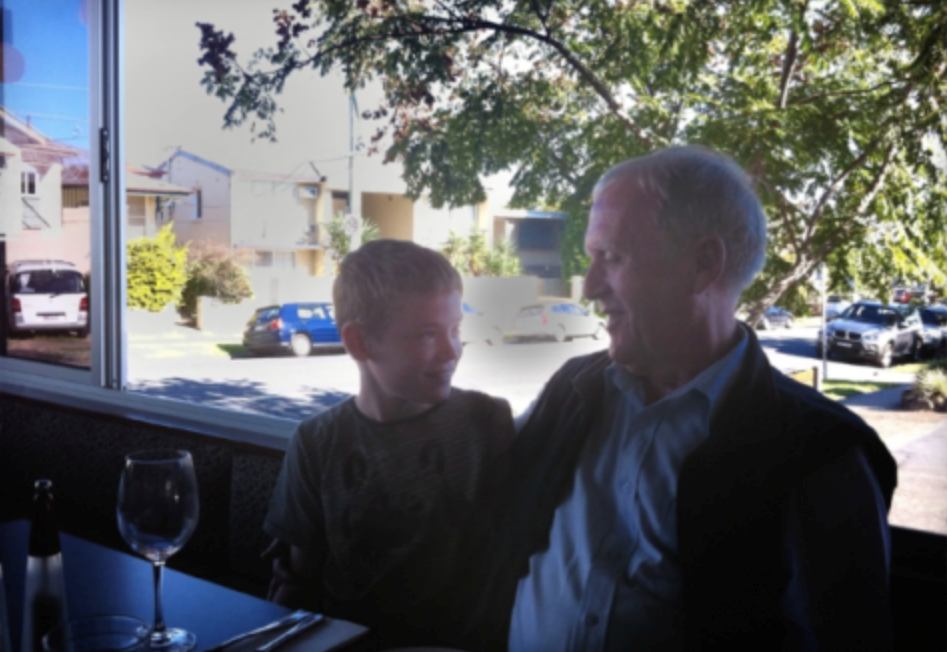
John Birmingham with his father, also John.

John Birmingham with his father, also John.

for John Birmingham: 'It is only now he is gone, that we look up and find half the sky gone with him', by his son John Birmingham: - 2017

August 1, 2017

Our father was the sheltering sky, the wide vessel of our universe.

Read More

Enjoyed this speech? Speakola is a labour of love and I’d be very grateful if you would share, tweet or like it. Thank you.

Facebook Twitter Facebook
In SUBMITTED 2 Tags JOHN BIRMINGHAM, WRITER, COLUMNIST, FATHER, SON, TRANSCRIPT
Comment
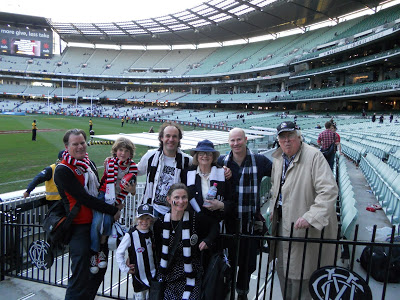
Arfur Sublet, far right, with his (mainly) Collingwood brood at 2010 Grand Final replay. Anna is kneeling at front.

Arfur Sublet, far right, with his (mainly) Collingwood brood at 2010 Grand Final replay. Anna is kneeling at front.

for Robert 'Arfur' Sublet: 'Time on, final quarter, but this time the siren has sounded to end the game', by daughter Anna Sublet - 2015

June 29, 2016

11 November 2015, Wattle Park Chalet, Melbourne, Australia

A few years ago, when dad was home alone facing what he felt at the time was a medical emergency, he began to write us an email. He thought his time was up. The subject line was:

Time on, final quarter...

As happened many times with dad, that time he defied the odds and got to play on!

Dad was eternally optimistic about his situation when it came to medical issues. Maybe it was more pure stubbornness or defiance-he was never going gentle into that good night. He certainly wanted to rage rage against the dying of the light. 

He never complained. He didn't bemoan his situation, nor moan about pain. At times he grimaced, as if he were trying to deal with a jolt of electricity to his limbs. Once I thought he was groaning about the antics of us kids, getting progressively noisier and more drunk as we downed another bottle of red. No, he wasn't annoyed at us, of course he never was! He was in pain, but sometimes we hadn't known it. He was permanently of good humour, with a great sense of fun, a wonderful laugh and a love of stirring.

Football, and barracking for Collingwood, was a bond we shared as a family, though mum was the outlier as a nominal Blues fan. Going to the G with dad as a kid was one of those rituals which makes me think of the MCG as a cathedral-a field of drama and endeavour, of high emotions and passions. It was certainly a place of worship. We went throughout my childhood, and I have great memories of sitting side by side on the old wooden benches. Sometimes Arfur would nearly get into some argie bargy with an opposing supporter. Just for the hell of it! I will always remember him yelling, in a guttural mangle : GO COLLINGWOOD!

In 2010, we knew things were bad when Dad wasn't well enough to come to the Collingwood St Kilda Grand Final with us all. Thanks goodness the game was a draw! We were all there the next week to see the Pies bring home their first flag in 20 years. It meant so much to us all that Dad could be there. There are some great photos from that day, though the sad faces belong to Noah and Mark who barrack for the Saints. (Yes, it was a very tough week in our household!)

Growing up in our gorgeous house in Camberwell, I have many wonderful memories of Dad. The smell of mower petrol on his gardening pants, the greasy feel of the fabric, as I touched the trousers, hanging in the shed; the scent of freshly cut grass after he had mown three or four levels of lawn. Him laying bricks to pave an area under the tree, or making a tea-tree fence to shield us from the railway station. That fence is still there.

One of the strong images is of Arfur standing on the back verandah in his undies, smoking one of his many Marlboro cigarettes of the day. Sometimes we took the cigarettes and burned them-he never really got mad at us; he always had more!

When we were teenagers, Dad ran for election as a councillor in Camberwell. He didn't get involved for personal glory, or from ambition. He wanted to preserve the amenity of the area and make a useful contribution. He went to meetings nearly every night, giving his time to constituents. Many years later, I also stood for election to local government in Darebin, along with my partner Mark. We didn't get elected but I know that having seen Dad get involved in local democracy had inspired me.

Some of this spirit goes right back to the Eureka Stockade, where Charles Sublet de Bougy fought for the rights of the diggers. Robert’s Swiss ancestor, Charles, came from a small village called Bougy. He came in search of gold, but found a home instead. Robert's involvement with Eureka's Children was something I was keenly interested in, and we all attended Ballarat marches and museum openings, working alongside Gough Whitlam, who was patron at the time that Dad was heavily involved.

I found an old essay on my political socialisation that I had written at Uni. Here is what I had written about dad:

'Dad...conveyed a strong sense that equality was of paramount importance amongst any group of people. H(e had a) fair, just, anti-selfishness and anti-greed stance...'

When writing about my respect for (or lack of respect for!) authority, I wrote extensively about how little I respected the hypocritical teachers at my school, and also politicians of all persuasions (funny that!). However, I wrote: 

'I have not been totally disillusioned due to the effect of dad's calm and steady, unobtrusive and smooth-running depiction of control.'

Dad didn't force his views and values upon us-he wanted to allow us freedom to explore ideas and beliefs. 

He and mum had been married in the Catholic Church, although he was an agnostic with no interest in adhering to religious belief systems. I always marvelled that he never actively undermined mum's religion; he never said 'that's rubbish' to us as young kids. When he married mum in the church (because he would do anything to marry her!) he made a commitment to bring us up with a Catholic education. Just to say: it didn't stick!  But he was a man of his word. As Pete sings in his song 'what you say, you do.'

Arfur was a man of constant, constant love. It never wavered. He was reluctant to show too much emotion at times, while at other times he let it be clearly seen. He had a great laugh and was great company-he even made connections across language barriers. He had a beautiful voice, and was also a good dancer. He was a loving and funny grandfather, always good for a hug. He has given countless hours of advice and support to all of us, even as adults when we came to him for his solid wisdom. He was so generous with this love and support.

He was also a helpful and encouraging critic, when it came to my writing. I am glad he got to see some of my words published, especially about an issue in which he had a stake of personal family history: the Eureka Stockade. I will miss sharing political observations and discussions with him.

We left for New York when he was fairly unwell but he had been unwell before. He wanted us to go and enjoy my 50th birthday celebration, and I believed he would be fine, as usual, and his time of muddle and complications would be got through as invariably happened.

This time it went wrong. We decided to fly home early when we learned he was not able to receive dialysis. Charlie tells me he raised his arms with two clenched fists when he heard we were coming home. We didn't make it back in time to see him, but I know he heard me when I spoke to him from LA airport. I was so sure he would hang on til we got home, but maybe knowing we were on our way was enough for him. And now, it must be enough for us...

I drank a lot of negronis in New York City to toast my dad. I didn't know we'd never share one again.

Time on, final quarter, but this time the siren has sounded to end the game.

Cheers, to Arfur! Well played.

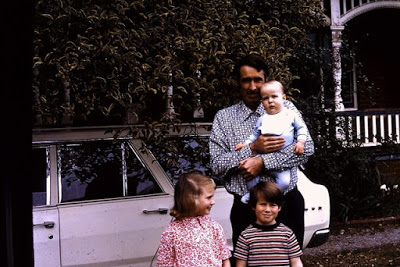
Robert 'Arfur' Sublet' with his three hildren and the family Valiant.

Robert 'Arfur' Sublet' with his three hildren and the family Valiant.

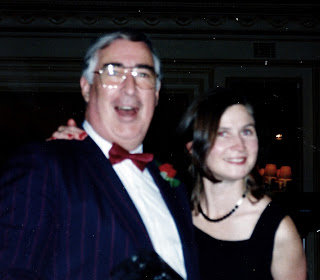
Arfur and Anna at Rippponlea party.

Arfur and Anna at Rippponlea party.

Enjoyed this speech? Speakola is a labour of love and I’d be very grateful if you would share, tweet or like it. Thank you.

Facebook Twitter Facebook
In SUBMITTED 2 Tags ROBERT SUBLET, ARFUR, COLLINGWOOD, ANNA SUBLET, WRITER, FATHER, DAUGHTER, FAMILY, TRANSCRIPT
1 Comment

for Michelle McNamara: 'She hasn’t left a void. She’s left a blast crater', by Patton Oswalt - 2016

May 5, 2016

published 3 May 2016, Time magazine, California, USA

Michelle McNamara was a true crime author and blogger, and her husband Patton Oswalt is comedian and movie actor. published Time website. There is no available video or audio of this eulogy.

Michelle Eileen McNamara entered the world on April 14, 1970.

On April 14, 2016 she turned 46.

One week later she was gone.

That’s the kind of opening Michelle would have written. She’d have done it better. Added one perfect adjective or geographical shading to pull you in. The pulling in of you, the reader, was never aggressive, calculating or desperate. She didn’t have to raise her voice.

She was a true crime writer—first on her blog, TrueCrimeDiary.com. More than 150 precise, haunting entries about subjects like “The Man With the Hammer,” “Devil in Michigan,” “The Ice Maiden and the Genius,” “Syko Sam” and “The Desert Bunker Murders.” There were also thoughtful, provocative ruminations on abiding crime topics—“The Big Fake Called The Fugue State,” “Crowdsleuthing” and “DNA (hooray).” There was also a fascinating entry called “#bloodbath,” a speculative masterpiece about how the Manson murders might have been different—or not happened at all—if our current social media infrastructure had existed in 1969.

This drew the attention of Los Angeles Magazine, who hired Michelle to write an article about “The Golden State Killer” (a name she coined)—the worst unsolved string of homicides in California history.

The article drew the attention of Harper Collins, who hired her to write a massive book about The Golden State Killer. This was the project she was 2½ years into when her story stopped, sometime on the morning of April 21.

Those are facts but not her entire story. Her life also involved social work in Belfast and Oakland, and screenwriting in Los Angeles, and teaching creative writing at Minnesota State, and motherhood and marriage and glorious, lost years on the outskirts of the early 90s Chicago music scene, where she also worked for a young Michelle Obama. One day Michelle Obama’s husband came into the office to speak to the staff. He was impressive and funny. Another encounter, another memory in a life spent fascinated with people and relationships and the unknown.

The reaction to her passing, the people who are shocked at her senseless absence, is a testament to how she steered her life with joyous, wicked curiosity. Cops and comedians call—speechless or sending curt regards. Her family is devastated but can’t help remember all of the times she made them laugh or comforted them, and they smile and laugh themselves. She hasn’t left a void. She’s left a blast crater.

I loved her. This is the first time I’ve been able to use “I” writing this. Probably because there hasn’t been much of an “I” since the morning of April 21. There probably won’t be for a while. Whatever there is belongs to my daughter—to our daughter. Alice.

Five days after Michelle was gone, Alice and I were half-awake at dawn, after a night of half-sleeping. Alice sat up in bed. Her face was silhouetted in the dawn light of the bedroom windows. I couldn’t see her expression. I just heard her voice: “When your mom dies you’re the best memory of her. Everything you do and say is a memory of her.”

That’s the kind of person Michelle created and helped shape.

That was Michelle. That is Michelle.

I love her.

Source: http://time.com/4316653/patton-oswalt-reme...

Enjoyed this speech? Speakola is a labour of love and I’d be very grateful if you would share, tweet or like it. Thank you.

Facebook Twitter Facebook
In PUBLIC FIGURE B Tags PATTON OSWALT, HUSBAND, MICHELLE MCNAMARA, TRUE CRIME, WRITER, AUTHOR, OBITUARY, DAUGHTER, TRANSCRIPT, SPEAKOLIES CELEB
Comment

For Tom Uren: 'You were a champion, Tom. You’re in the company of legends now', by Martin Flanagan

December 11, 2015

4 February 2015, Sydney Town Hall, Sydney, New South Wales

There is no video or audio of this speech.

Tom Uren was a mountain of a man. I first met him in 1987 when I rang and asked if I could do a story on him. I’m interested in boxing, I said. He said, I don’t talk about boxing. I said my father was on the Burma railway with you. He immediately invited me into his home.

The article meant a lot to me but the Sydney magazine for which I wrote chose to take my portrait of this big, complex man and make him smaller and simpler to fit their pre-conceptions.  I rang Tom and told him I was resigning. His voice thundered down the phone: “Don’t you ever resign!!! You stay in and maintain the struggle!!” That was when our relationship started in earnest.

Tom was a magnificent mixture of a man. The fact he had been a boxer was used by his political opponents to denigrate him, but the aesthetic side of his nature was unusually strong. He loved beauty and saw it in both his wives, Patricia and Christine.  More than once, in his later years, I saw him call Christine Patricia and, being the remarkable woman that she is, Christine received it as a compliment. Tom was so proud of his friendship with the painter Lloyd Rees. He often related how Whitlam said he made Tom spokesman for the environment because Whitlam admired the home environments Tom created.  Tom could laugh, he could cry. He had wisdom; he had ego. Tom Uren was more than happy being Tom Uren.

I told Tom a couple of months before he died that I thought he had a great life. He saw two Australian legends up close, Weary Dunlop and Gough Whitlam. If he was smeared and attacked for his political beliefs in the 1950s, ‘60s and ‘70s, he lived to see himself become someone regarded with sufficient affection by the general public to have him declared a national treasure.

The way Tom told me his story, the major influence on his early life was his mother Agnes. He had an older brother who’d been given to a grieving relative to bring up so that Agnes had twice the love to shower upon Tom. “She taught me to love myself,” he told me. And he did. Tom was the also big kid who has the supreme confidence that comes with being good at most sport. He was a junior champion with the Freshwater Surf Club, he was a good rugby league player. He left school at the age of 13 because he could get a job and his father couldn’t. He took up boxing and aimed to become a champion. At 20, he fought for the Australian heavyweight title and lost.  Tom told me the flu beat him, not the other fighter.

One of the things that sustained him on the Burma Railway was the desire to become a champion boxer. Another was the beauty of the jungle - each evening, he made a point of taking in the trees, the flowers, the birds. At the time, he was still a Christian who kneeled to say his prayers each night. Presumably, none of his army mates said too much because Tom had, after all, fought for the Australian heavyweight title. My father once told me that as a young man Tom Uren had a magnificent physique.

 The five men I have known well who were on the Burma Railway have not been not like other men I’ve met, except maybe some Aboriginal elders. They saw a lot, suffered a lot and each of them had  a deep well of compassion. They went to Hell but weren’t defeated spiritually. Up close, 21-year-old Tom saw a true leader, Weary Dunlop, save lives by taxing his officers to buy medicines and extra food for the seriously ill.  An English group of 400 prisoners camped nearby.  In four weeks, only 50 were left  alive. Tom never forgot stepping over dead bodies going to work each morning.

What kept the Australians alive in greater numbers? Tom’s answer was their “spirit of collectivism”. Tom’s creed became that the strongest man takes the heaviest end of the log. Tom was the strongest man. He stepped between guards and prisoners being beaten. When Tommy got hit, he told his mates it was okay - he could take a punch. He was going to London after the war to be a champion.

He spent the last year of the war in a prison camp in Japan. He saw the discoloured sky above Hiroshima after the atomic bomb. That last year, working in a mine with Japanese civilians, changed him. He realised he didn’t hate the Japanese people. He hated what he called militarism.  And that may have been Yom Uren’s biggest achievement - he grew beyond hate.  

The war ended and he worked a passage on a steamer to England. He took a job stoking the furnaces but the heat re-activated the malaria in his system. A British sportswriter wrote upon his arrival, “He dresses like Anthony Eden, has tons of personality and his name is Tommy Uren”. Another sportswriter wrote that he’d never seen a fighter get up off the canvas as m any times as Tom did in his first fight. One hundred bouts of malaria had taken something from his physical vitality that could never be restored. In the dark of a cinema trying to straighten his broken nose, he was overcome with loneliness. He returned to Australia and Patricia.

If you can judge a man by his friends, you can surely judge him by his great enduring mate from the Burma Railway. For Tom, that was Blue Butterworth. Blue was Weary’s batman and if Weary Dunlop’s is a legend then Blue is a necessary part of that legend also because most of the risks that Weary took  Blue did too. As brave as Weary and as quick-witted, Blue was a bricklayer after the war. He died in 2011; Tom told me he missed Blue every day thereafter.

In 1960, Tom returned to Japan and attended a conference on banning atomic and nuclear weapons. He delivered a speech, giving the Japanese a forthright view of Japanese politics at the time and ended by saying the dropping of atomic bombs on Nagasaki and Hiroshima was a crime against humanity. And this was just the start of his political career. One day, I asked him, “When did you become an environmentalist?”. He replied, “When I went back to Thailand and found the jungle cut down”.

Tom could drive you mad. How well I remember the day we went to see Gough Whitlam in his offices in central Sydney. Tom was responsible for the building as Minister for Administrative Services in the Hawke government.  The man behind the front desk didn’t know who Tom was.  Didn’t know! He was the Minister for Administrative Services in the Hawke government! There was a minor scene. Then we met Whitlam, which was like looking Australian history in the face. Afterwards we caught a train down to Woy Woy to see Blue and Tom used my left ear to broadcast a speech to the people of western Sydney urging them to rise up against the state government. In the end, I got up and went to another carriage.  When Christine told me it was Tom’s wish that today’s service only go for one hour, I did say to her, “I take it he won’t be speaking then”.

But I also know I’m not the only person here today who can say that Tom Uren was like a godfather to them. Tom believed humans could grow. He had grown -  during his early years in the Labor Party, he had been, in his words, a bigoted anti-Catholic; as an old man, he would list Pope John XXIII as one of his principal influences. If Tom was a person who thought highly of himself, he never stopped thinking of others. When he poured his belief into you, it was like standing beneath a waterfall from which you emerged larger.  Tom lived a public life that ran in a straight line from first to last.  He shrugged off going to prison for his political beliefs and, ultimately, he never despaired,  because Tom Uren believed that, regardless of race or colour or creed, there are always in the world what he called “people of goodwill” to whom we can appeal. You were a champion, Tom. You’re in the company of legends now.


Enjoyed this speech? Speakola is a labour of love and I’d be very grateful if you would share, tweet or like it. Thank you.

Facebook Twitter Facebook
In PUBLIC FIGURE A Tags TOM UREN, MARTIN FLANAGAN, WRITER, POLITICIAN, BURMA RAILWAY, GOUGH WHITLAM, BOB HAWKE
Comment

For Maya Angelou: 'She spoke to the essence of black women', by Michelle Obama - 2014

August 3, 2015

June 7, 2014, Wake Forest University's Wait Chapel, North Carolina, USA

To the family — Guy, to all of you — to the friends, President Clinton, Oprah, my mother Cicely Tyson, Ambassador Young — let me just share something with you: My mother, Marian Robinson, never cares about anything I do. But when Dr. Maya Angelou passed, she said, “You’re going, aren’t you?” I said, “Well, Mom, I’m not really sure, I have to check with my schedule’ she said “You are going. Right?” I said “Well, I’m gonna get back to you, I have to check with the people, figure it out.” I came back and said that I was scheduled to go and she said “That’s good. Now I’m happy.”

It is such a profound honor — truly a proud honor — to be here today on behalf of myself and my husband as we celebrate one of the greatest spirits our world has ever known, our dear friend Dr. Maya Angelou. In the Book of Psalms it reads, “I praise you for I am fearfully and wonderfully made; wonderful are your works, my soul knows very well. My frame was not hidden from you when I was being made in secret, intricately woven in the depths of the earth.”

What a perfect description of Maya Angelou and the gift she gave to her family and all who loved her. She taught us that we are each wonderfully made, intricately woven and put on this earth for purpose far greater than we could ever imagine.

When I think of Maya Angelou I think of the affirming power of her words. The first time I read “Phenomenal Woman” I was struck by how she celebrated black women’s beauty like no one had ever dared to before. Our curves, our stride, our strength, our grace. Her words were clever, and sassy. They were powerful and sexual and boastful. And in that one singular poem, Maya Angelou spoke to the essence of black women but she also graced us with an anthem for all women, a call for all of us to embrace our God-given beauty.

And oh, how desperately black girls needed that message. As a young woman I needed that message. As a child, my first doll was Malibu Barbie — that was the standard for perfection. That was what the world told me to aspire to.

But then I discovered Maya Angelou, and her words lifted me right out of my own little head. Her message was very simple: She told us that our worth had nothing to do with what the world might say. Instead she said, “Each of us comes form the creator trailing wisps of glory.” She reminded us that we must each find our own voice, decide our own value, and then announce it to the world with all the pride and joy that is our birthright as members of the human race.

Dr. Angelou’s words sustained me on every step of my journey. Through lonely moments in ivy-covered classrooms and colorless skyscrapers. Through blissful moments mothering two splendid baby girls. Through long years on the campaign trail where at times my very womanhood was dissected and questioned. For me, that was the power of Maya Angelou’s words — words so powerful that they carried a little black girl from the South Side of Chicago all the way to the White House.

And today as First Lady whenever the term “authentic” is used to describe me I take it as a tremendous compliment because I know that I am following in the footsteps of great women like Maya Angelou. But really, I am just a beginner. I am baby authentic.

Maya Angelou, now she was the original. She was the master. For at a time when there were such stifling constraints on how black women could exist in the world, she serenely disregarded all the rules with fiercely passionate unapologetic self. She was comfortable in every inch of her gloriously brown skin.

But for Dr. Angelou her own transition was never enough. You see, she didn’t just want to be phenomenal herself. She wanted us all to be phenomenal right alongside her.

So that’s what she did throughout her lifetime. She gathered so many of us under her wing. I wish I was a daughter. But I was right under that wing — sharing her wisdom, her genius and her boundless love.

I first came into her presence in 2008, when she spoke at a campaign rally here in North Carolina. At that point she was in a wheelchair, hooked up to an oxygen tank to help her breathe. But let me tell you, she rolled up like she owned the place. She took the stage as she always did — like she’d been born there. And I was so completely awed and overwhelmed by her presence I could barely concentrate on what she was saying to me.

But while I don’t remember her exact words I do remember exactly how she made me feel.

She made me feel like I owned the place, too. She made me feel like I had been born on that stage right next to her. And I remember thinking to myself, “Maya Angelou knows who I am! And she is rooting for me! So now, I’m good. I can do this. I can do this.”

And that’s really true for us all. Because in so many ways Maya Angelou knew us. She knew our hope, our pain, our ambition, our fear, our anger, our shame. And she assured us that in spite of it all — in fact, because of it all — we were good. And in doing so, she paved the way for me, and Oprah and so many others just to be our good ol’ black women selves. She showed us that eventually, if we stayed true to who we are, then the world would embrace us.

And she did this not just for black women but for all women. For all human beings. She taught us all that it is okay to be your regular old self, whatever that is. Your poor self, your broken self, your brilliant, bold, phenomenal self. That was Maya Angelou’s reach.

She touched me, she touched you, she touched all of you she touched people all across the globe — including a young white woman from Kansas who named her daughter after Maya and raised her son to be the first black President of the United States.

So when I heard that Dr. Angelou had passed, I felt a deep sense of loss. I also felt a profound sense of peace — because there is no question that Maya Angelou will always be with us. Because there was something truly divine about Maya. I know that now as always, she is right where she belongs.

May her memory be a blessing to us all.

Thank you. God bless.

This is the poem Michelle Obama refers to. From poetryfoundation.org

Phenomenal Woman


Pretty women wonder where my secret lies.
I’m not cute or built to suit a fashion model’s size   
But when I start to tell them,
They think I’m telling lies.
I say,
It’s in the reach of my arms,
The span of my hips,   
The stride of my step,   
The curl of my lips.   
I’m a woman
Phenomenally.
Phenomenal woman,   
That’s me.
I walk into a room
Just as cool as you please,   
And to a man,
The fellows stand or
Fall down on their knees.   
Then they swarm around me,
A hive of honey bees.   
I say,
It’s the fire in my eyes,   
And the flash of my teeth,   
The swing in my waist,   
And the joy in my feet.   
I’m a woman
Phenomenally.
Phenomenal woman,
That’s me.
Men themselves have wondered   
What they see in me.
They try so much
But they can’t touch
My inner mystery.
When I try to show them,   
They say they still can’t see.   
I say,
It’s in the arch of my back,   
The sun of my smile,
The ride of my breasts,
The grace of my style.
I’m a woman
Phenomenally.
Phenomenal woman,
That’s me.
Now you understand
Just why my head’s not bowed.   
I don’t shout or jump about
Or have to talk real loud.   
When you see me passing,
It ought to make you proud.
I say,
It’s in the click of my heels,   
The bend of my hair,   
the palm of my hand,   
The need for my care.   
’Cause I’m a woman
Phenomenally.
Phenomenal woman,
That’s me.

Source: https://medium.com/thelist/michelle-obama-...

Enjoyed this speech? Speakola is a labour of love and I’d be very grateful if you would share, tweet or like it. Thank you.

Facebook Twitter Facebook
In EDITORS CHOICE Tags TRANSCRIPT & VIDEO, MAYA ANGELOU, WRITER, USA, MICHELLE OBAMA, CIVIL RIGHTS, POET, FIRST LADY, AUTHOR
Comment

See my film!

Limited Australian Season

March 2025

Details and ticket bookings at

angeandtheboss.com

Support Speakola

Hi speech lovers,
With costs of hosting website and podcast, this labour of love has become a difficult financial proposition in recent times. If you can afford a donation, it will help Speakola survive and prosper.

Best wishes,
Tony Wilson.

Become a Patron!

Learn more about supporting Speakola.

Featured political

Featured
Jon Stewart: "They responded in five seconds", 9-11 first responders, Address to Congress - 2019
Jacinda Ardern: 'They were New Zealanders. They are us', Address to Parliament following Christchurch massacre - 2019
Dolores Ibárruri: "¡No Pasarán!, They shall not pass!', Defense of 2nd Spanish Republic - 1936
Jimmy Reid: 'A rat race is for rats. We're not rats', Rectorial address, Glasgow University - 1972

Featured eulogies

Featured
For Geoffrey Tozer: 'I have to say we all let him down', by Paul Keating - 2009
for James Baldwin: 'Jimmy. You crowned us', by Toni Morrison - 1988
for Michael Gordon: '13 days ago my Dad’s big, beautiful, generous heart suddenly stopped beating', by Scott and Sarah Gordon - 2018

Featured commencement

Featured
Tara Westover: 'Your avatar isn't real, it isn't terribly far from a lie', The Un-Instagrammable Self, Northeastern University - 2019
Tim Minchin: 'Being an artist requires massive reserves of self-belief', WAAPA - 2019
Atul Gawande: 'Curiosity and What Equality Really Means', UCLA Medical School - 2018
Abby Wambach: 'We are the wolves', Barnard College - 2018
Eric Idle: 'America is 300 million people all walking in the same direction, singing 'I Did It My Way'', Whitman College - 2013
Shirley Chisholm: ;America has gone to sleep', Greenfield High School - 1983

Featured sport

Featured
Joe Marler: 'Get back on the horse', Harlequins v Bath pre game interview - 2019
Ray Lewis : 'The greatest pain of my life is the reason I'm standing here today', 52 Cards -
Mel Jones: 'If she was Bradman on the field, she was definitely Keith Miller off the field', Betty Wilson's induction into Australian Cricket Hall of Fame - 2017
Jeff Thomson: 'It’s all those people that help you as kids', Hall of Fame - 2016

Fresh Tweets


Featured weddings

Featured
Dan Angelucci: 'The Best (Best Man) Speech of all time', for Don and Katherine - 2019
Hallerman Sisters: 'Oh sister now we have to let you gooooo!' for Caitlin & Johnny - 2015
Korey Soderman (via Kyle): 'All our lives I have used my voice to help Korey express his thoughts, so today, like always, I will be my brother’s voice' for Kyle and Jess - 2014

Featured Arts

Featured
Bruce Springsteen: 'They're keepers of some of the most beautiful sonic architecture in rock and roll', Induction U2 into Rock Hall of Fame - 2005
Olivia Colman: 'Done that bit. I think I have done that bit', BAFTA acceptance, Leading Actress - 2019
Axel Scheffler: 'The book wasn't called 'No Room on the Broom!', Illustrator of the Year, British Book Awards - 2018
Tina Fey: 'Only in comedy is an obedient white girl from the suburbs a diversity candidate', Kennedy Center Mark Twain Award -  2010
Tina Fey: 'Only in comedy is an obedient white girl from the suburbs a diversity candidate', Kennedy Center Mark Twain Award - 2010

Featured Debates

Featured
Sacha Baron Cohen: 'Just think what Goebbels might have done with Facebook', Anti Defamation League Leadership Award - 2019
Greta Thunberg: 'How dare you', UN Climate Action Summit - 2019
Charlie Munger: 'The Psychology of Human Misjudgment', Harvard University - 1995
Lawrence O'Donnell: 'The original sin of this country is that we invaders shot and murdered our way across the land killing every Native American that we could', The Last Word, 'Dakota' - 2016