• Genre
  • About
  • Submissions
  • Donate
  • Search
Menu

Speakola

All Speeches Great and Small
  • Genre
  • About
  • Submissions
  • Donate
  • Search

Eulogies

Some of the most moving and brilliant speeches ever made occur at funerals. Please upload the eulogy for your loved one using the form below.

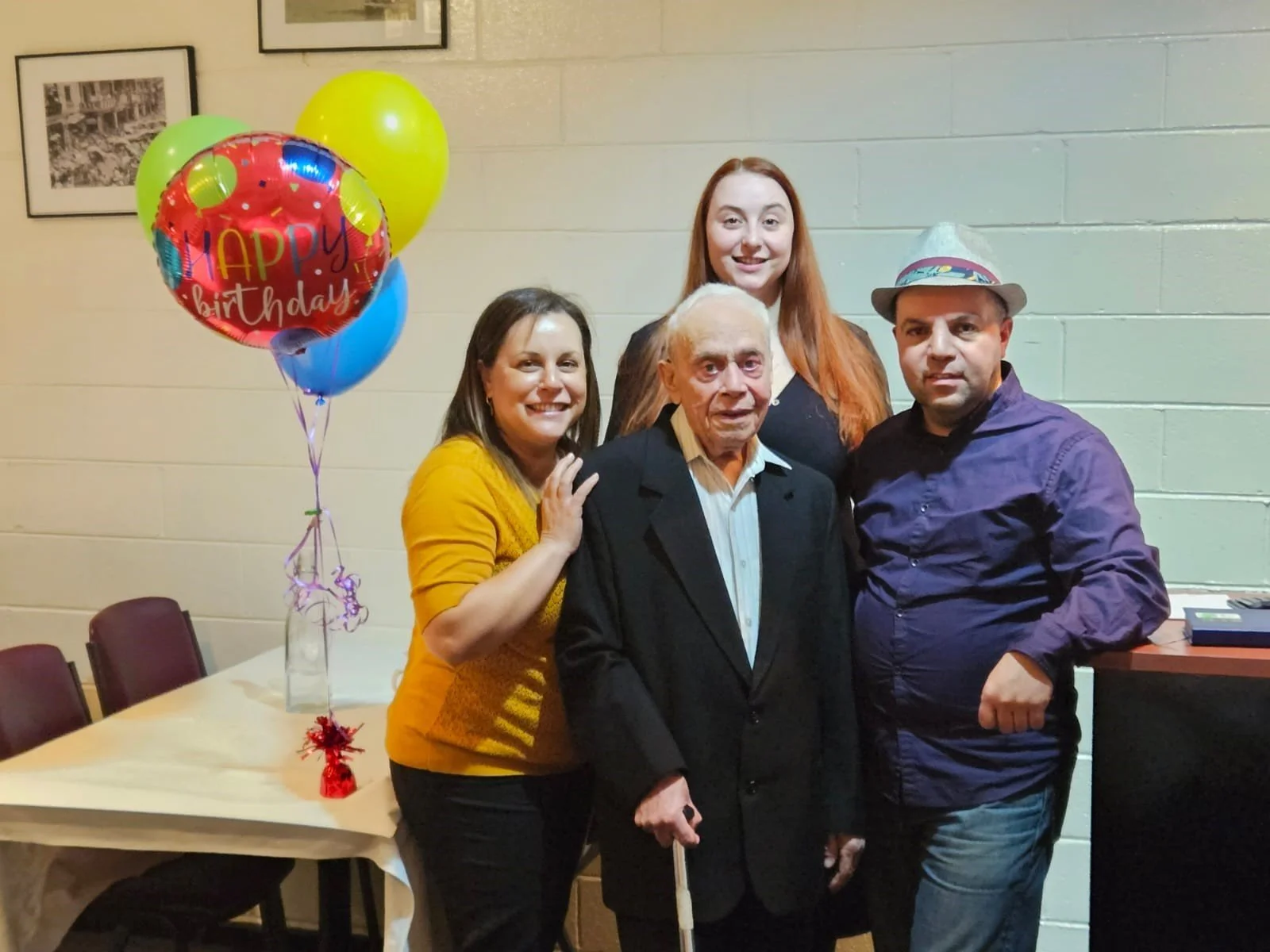
For Grigory Kats: 'A long, adventurous and fruitful life', by grandson Alex Kats - 2025

September 10, 2025

2 September 2025, Melbourne, Australia

Eulogy commences at 4.36 in above video

My grandfather was a man of many contrasts, a complicated man, but also a man of principle, strong-willed, tough yet caring and devoted. He lived according to principles that he created for himself, dedicated the first part of his adulthood to providing for his family after living through episodes that no one should, and spent the second half of his life in a foreign land, but one that he quickly embraced and came to love.

He was also a man of many names. His full Russian name was Gri-gory Yefimovitch Kats, his Hebrew name was Gershon ben Chaim HaKohen, but the name most of his Russian friends and family called him was simply Grisha. In the army he was Officer Kats and later Captain Kats, in the Communist Party he was Comrade Kats, in Australia he was either Gregory or Mr Kats.

In his more than 99 years, he was many things to many people, but deep down he was a family man, the last survivor of his generation and very resilient, in more ways than one. His kids called him Papa, his grandkids called him Grandpa or sometimes the Russian equivalent, Deda, and his great grandkids also called him Grandpa. One example of his devotion to family was when my sister Rachel was just a baby, and we all lived with our grandparents whilst our mother was in hospital. One evening, my dad was working nightshift, grandma and my aunt were out, I was staying over at a friend’s, so it was up to grandpa to babysit the six-month old. But he had the sniffles and as the evening wore on, got significantly sicker. In his old style way, he hadn’t told anyone he was sick and didn’t want to infect the baby, so he didn’t allow himself to enter the baby’s room and had a very miserable few hours trying to comfort the child from another room whilst blowing his own nose and feeling sorry for himself. In spite of everything, he kept to his principles. I suspect his wife and daughter got an earful when they got home, but it is a story he told proudly because it is one that shows the man he had become – a family man of principle.

But it wasn’t always that way. He was born on 10 June 1926 in Uman, Ukraine, a town that has now become synonymous with Jewish pilgrimages. In those days it was mostly populated by pious Jews, and his was one such family. He was the seventh child in his family, though two had died before he was even born. His parents, Chaim and Chaya – whose names are both derived from the Hebrew word for life – were well known in town, with his father acting as the Shamash of their local shule. By the time he was born, his parents were more ready to become grandparents than parents again, and in fact, just months after Grigory was born, the eldest of the family, his sister Roza, gave birth to her own son and also became his wet nurse. For the first few years of his life, he thought his sister was his own mother. Though they walked across the street to visit his parents on a daily basis, he initially thought they were his grandparents.

By the time of Grigory’s birth, the family consisted of Itzhak, who was known at home as Alex and is the one I am named after, who was 11 years older than Grigory; Nakhum, who was 17 years older, Yaakov, who was 19 years older, and Roza, who was 21 at the time of his birth.

In almost every way, Grigory was not only the youngest in his family, but sometimes felt forgotten. He grew up with his nephew Dimitry, who was virtually his twin brother, and life was mostly idyllic in their little hamlet in a very Jewish part of town, but he never quite knew where he fit in or what his place in society was. What he did learn however was that he had to be resilient and fend for himself. As a 6 or 7 year old, he survived a Stalin imposed famine, after which the extended family was split up, and for Jewish life in the shtetls of Ukraine, it was the beginning of the end. His family, like so many others, simply walked out of a house and town they had lived in for generations and only took what they could carry. For his mother, that meant all the family’s Mezuzahs and other mostly Jewish heirlooms, but by the time they arrived in Moscow, Jewish practice for all of them except his mother, also fell by the wayside. So much so that when Grigory turned 13 in 1939, he didn’t even have a Bar Mitzvah because of the impending war.

He was however very adventurous and enterprising. When they first arrived in Moscow, he was still constantly hungry but easily made friends. He was also a natural leader, so one day he led his group of friends to the woods behind their neighbourhood where they found an old farmhouse, though it looked abandoned. They did however find a few large barrels filled with freshly picked mushrooms. For hours, they filled their stomachs with the fungi, and came back for the next few days until all the shrooms were consumed. But from that day on, he developed a lifelong distaste for mushrooms because every time he saw them, they reminded him of famine, starvation and poverty. He vowed then never to be in a situation where he would have to again beg for money or food, and developed his own version of a moral compass.   

Still in high school, he joined a pre-military academy, and one October day in 1941, after arriving at school, all the boys from his school, with just the clothes on their backs and their satchels in hand, were herded onto a train and taken north to Siberia. It would be more than a week before he could call home to tell his family where he was, and a few months before supplies arrived. They stayed there, in an abandoned coalmine till late 1944, undertaking schooling as well as military training, ready to be called up if and when required. But they were never required. Unlike others, in his time in Siberia he never got frostbite and didn’t even get sick. Sometimes he would pray to the god he no longer believed in to get sick, just so that he could end up in the warmth of the sick bay, but his prayers were in vain.

After school and after the war, he stayed in the army and went to Officer’s school, but on a brief visit back to his family home in Moscow in the summer of 1945, he discovered that only his mother, his sister with her family, and his brother Nachum had survived. Two brothers had been killed and his father had died just days earlier when he knew the war was finally over.

Grigory barely even had time to grieve because he literally had to leave the next day. One of his first postings as an Officer was to the town of Stanislav, later renamed Ivano Frankivsk, back in Ukraine. He rented an apartment and the Jewish landlady immediately took a liking to him. Apart from charging him a reduced rate, she kept asking if he was ready for a Shidduch because she was a matchmaker. He eventually agreed, and just weeks before his 20th birthday, he went on a date with Gizella Miller, known to everyone as Nina. She was from the Polish town of Yazlovetz, which is now part of Ukraine, and had come to Stanislav after the war. Within weeks they were living together, but his apartment was too small and she shared with members of her family, so Grigory, using all of his well-honed Chutzpah, negotiated his way to a small but nicely appointed one room apartment in a Jewish neighbourhood.

By April 1947, they were ready to get married, but with rabbis unavailable, synagogues closed and no money, they simply went to the registry office, brought along a Jewish couple from their building as witnesses, signed all the paperwork, had a L’Chaim afterwards, and with no fuss, then went back to work.

In December 1947 they welcomed the arrival of their son Yefim, also known as Chaim, named after Grigory’s father. Five and a bit years later, they had a daughter, whom they named Maya, after Nina’s father, Majer (pronounced Meir). For 17 years, Grigory had a career in the Russian Army, rising to the rank of Captain, and in that time, he and the family were stationed all over the country and even in Hungary for a time, following the revolution in that country. He even had a few near death experiences, but always pulled through unscathed, even when others around him got injured. He rose no higher than captain, in part because of insubordination. Though it wasn’t accidental or inadvertent defiance; he simply decided that some rules didn’t make sense to him so he refused to follow them. But he was very clever and cunning, using his Yiddishe Kop, to decide which rules he could get away with breaking. This was a trait that stayed with him his whole life.

In the army Grigory was briefly a weightlifter and generally very good at sport. He even at one point also coached a basketball team. For someone so short, he was always a big character and everyone obeyed him. This served him well in his next career move as the manager of an elite rowing academy. Part of his role was to arrange their training camps around the country, and to manage their international travel when they went abroad for European competitions. This is when he used his cunning and Chutzpah again, and on many occasions got much better deals for his teams than anyone had before. He sometimes even gave his teams days off to explore the sights of the towns they were in, which was virtually unheard of.

In the 1970s, after Nina’s brother had come to Australia and his son was making plans to also leave mother Russia, Grigory would have none of it because he was still a proud member of the Communist party, though he also know that Jewish life in Russia was not ideal and both he and his son had lost job opportunities because they were Jewish. So although he was very reluctant to leave when his son, daughter in law and baby grandson left Russia, a year later he was also finally convinced to leave.

Grigory, Nina and their daughter Maya arrived in Melbourne in April 1980. Less than half a year later, their second grandchild was born and soon after Grigory found a role as the manager of a poultry shop on Chapel Street owned by the Fleiszig family. It wasn’t a kosher shop and he didn’t care, but working for a Jewish family always gave him comfort. For us as grandkids, it was also fun to visit the shop, to have plenty of chicken and fresh eggs at home, and to see him being in charge. He never shied away from hard work and carried heavy boxes on a daily basis. But he also knew how to have a good time.

Using his Chutzpah again, with almost no money and broken English, he managed to convince a bank manager to grant him a home loan without a deposit, and that apartment in Elwood was the site of very many Russian Jewish gatherings. In fact, Grigory and Nina became known as the Russian Jewish matchmakers of Melbourne, whilst their home was sometimes called the little restaurant on Avoca Avenue, such were grandma’s cooking skills and grandpa’s hosting skills. We had many adventures there as kids, including most of our Jewish festival celebrations growing up. Grandpa wasn’t always too keen about them, but grandma insisted and he mostly knew when to keep his mouth shut. It also became the place where grandma especially doted on all her grandkids, including her new granddaughter who was born in late 1989. For all of us grandkids, our grandparents were always loving, supportive and very generous. I even lived at my grandparents’ home for some months in the early 90s.

Grigory meanwhile became a fan of nice cars, and every few years he bought a new one. They used that car, together with other couples, to travel around most of Australia, with their favourite destination being the Gold Coast. Grigory could do that drive from Melbourne in a day and a half, and loved soaking up the sunshine and the playing the pokies with friends. They often also drove to Echuca just for the day to play the pokies across the border in NSW. They never won too much, but the adventure of it always excited Grigory.

By the time they arrived in Australia, Grigory had completely forsaken his commitment to Communism. Their one and only overseas trip was to Israel in 1993. It was a dream come true for Nina and an eye opening experience for Grigory. Both of them loved the place but didn’t understand it. But for Grigory especially, that trip cemented his anti-Communism stance, so much so that he became a conservative voter.

He retired in 1998, just months before his beloved wife died. It is probably not a coincidence that she died on 27 August, and he died on 29 August, both within the Hebrew month of Elul. After her passing, he was never quite the same. On many occasions, he would say that he wished she was with him to enjoy their retirement together. He had two short-lived relationships in his later years, but it was clear he still missed his wife. He would also say, whenever we called and asked him how he was, now that he was alone, that he was “Still Alive.” That became his catchphrase, and even he would sometimes joke about it.

In many ways, although he retired from the army, the army never left him. He was always a pedant, extremely punctual, a resilient, determined and stubborn man, who said what he thought and usually didn’t concern himself with the repercussions of his words. As he aged, these traits became even more obvious. He didn’t have a lot of hobbies, but meeting his friends was one, and together they settled into a well-honed routine of going to his favourite coffee shop on Centre Road and having coffee and cake there every day at 11am. He was also a pessimistic optimist who believed he would survive to the next day, but just in case, went shopping every day whilst on Centre Rd and only bought what he need for tomorrow. One time, ahead of a public holiday, Rachel and I called him to ask if we could join him the following day for coffee. He loved the idea, but when we said we could be free from 10, he said, “Why 10? Coffee time is at 11.” 

The beginning of his own demise started with the death of his wife and increased significantly after the death of his daughter eight years ago. Just before that point he stopped driving and started to walk with a stick. He was physically and mentally much older, but remained fiercely independent, and even when we found carers for him to look after him at home, he rejected some of them – unsurprisingly all the male ones – because they didn’t conform to his standards. Even in the last few years, as his dementia increased and so did his falls, he still didn’t want to go into care and continued to have very strong views about the world. He also wanted to ensure that when the apartment he bought after grandma died was finally sold, that we would get the best value for it. Thinking about his family legacy was never far from his mind. At this point I want to publicly thank the carers and staff at Jewish Care who looked after him.

The family members that he liked and still recognised were the ones that he cared about right up to his final days. And those final days, though they came quickly in the end, there were at least five occasions between Covid and last week, when there were calls to say that he was on his final legs, but somehow his will to live was strong. Even just a couple of months ago, he repeated his commonly articulated phrase, that ‘It’s very hard to die.” And in his case it was certainly true. But in the end, once the palliative treatment began last Wednesday, on 27 August – the same date that grandma died – it only took two days. Now he has been reunited with his dear wife and they will be buried together in the double plot that he bought many years ago.

We were all blessed to have him in our lives for as long as we did, and he certainly led a long, adventurous and fruitful life, one that we will never forget and one that we will take great appreciation from.

Yehi Zichron Baruch – May his memory be a blessing

Enjoyed this speech? Speakola is a labour of love and I’d be very grateful if you would share, tweet or like it. Thank you.

Facebook Twitter Facebook
In SUBMITTED 4 Tags GRIGORY KATS, GRANDFATHER, GRANDSON, ALEX KATS, UKRAINE, JEWISH, TRANSCRIPT
Comment

for Melville John 'Jack' Wade: "What the eyes don't see the heart doesn't grieve", by Leticia Keighley - 2015

September 5, 2016

10 September 2015, Springvale Crematorium, Melbourne, Australia

Eulogy first published on Embracing Wade webpage, dedicated to Jack's grandson Wade.

What the eyes don't see the heart doesn't grieve,

I remember being at nan and pop's one night for tea. Nan was cooking dinner and she was cutting up onions and garlic.

"I thought pop didn't eat onions and garlic" I said,

"What the eyes don't see the heart doesn't grieve" was her response with a wink.

For as long as I can remember my eyes have seen some wonderful times with my pop. My memories of these events will never fade because the stories have been shared around like prized treasures to any one who will listen like Sammy and I running in to his room and nearly breaking his bones as we jumped on the bed with him still in it. Or the time I marched with him on Anzac Day and saw the pride he had in his eyes for his mates and for me being there.

I saw little things like sitting at the old laminate table in the kitchen watching pop peel a whole apple with a knife as the peel fell away in one long ribbon from beginning to end. I remember picking passionfruit off the back fence and the smell of the jasmine and Hoya that grew all over the front porch.

I saw the look of respect in the eyes of anyone who spoke of pop.

I have fond memories of pop before he had the stroke but it was my time with him afterwards where I learned the most about him. Yes, a lot of the old Jack was gone afterwards, his body wouldn't move in the same way and he was muddled by the medication some of the time but I saw that a lot of the old Jack was still in there. I used to visit him most Fridays for the last 3 or 4 years and I saw a man who was living a life he never wanted to live but still retained the strength, determination and gentlemanly qualities of old. He still cracked a joke and flirted shamelessly with nurses. He could still pull names and dates from deep within the recesses of his mind without pausing for breath and he still marched on believing that this was a problem to be fixed and something to be conquered. I’ll never forget the time he thought I was one of the physios and set about showing me how he could get up and take a step. Around 400 serious OHS violations were committed until he worked out who I was…he thought it was hilarious.

I saw that his right arm barely changed and every time I looked at it I was transported back to the times he used a spade or a pick in his garden. That right hand never lost its strength and even up to his final days he still had a vice like grip.

I saw the love he had for Wade and the understanding we shared about raising a child with extra needs. Sometimes we would have a whole conversation with our eyes and he would end it with a slow nod and a long blink which said, I believe in you. I saw that no matter how sad or frustrated he felt on any day, he always raised his hand for a little wave to Wade and listened as he tried to entertain him with the latest song and dance routine. I saw how much he loved watching him grow and reach new milestones all the time.

I saw how hard it was at times for him in the home but I also saw my nan by his side 6 days a week almost every week for 5 and a half years.

I saw his final breath and I saw a 70 year marriage of total love and devotion come to an end and because my eyes saw all of those things, my heart is grieving today.
 

Source: https://www.facebook.com/embracingwade/pho...

Enjoyed this speech? Speakola is a labour of love and I’d be very grateful if you would share, tweet or like it. Thank you.

Facebook Twitter Facebook
In SUBMITTED 2 Tags GRANDFATHER, SPECIAL NEEDS, LETICIA KEIGHLEY, STROKE, POP, TRANSCRIPT
1 Comment

For Thomas Harry Bowles: 'Dad absolutely adored living in the bush, amongst the animals, birds and garden', by Jan, Martin and Nick Bowles - 2016

March 25, 2016

11 March 2016, Bendigo, Victoria, Australia

Thomas Harry Bowles was born in Bendigo on the 26th of September 1945. He was the first born of Louisa “Hilda” Bowles (Jasper) and the tenth born to Percival Harry Bowles.  Already there were his five half brothers Viv, Les, Herb, Ken, Gordon and four half sisters Evelyn, Jess, Dulcie and Lily and their children.  Uncle Jack and Aunty Cath followed to make up a dozen. 

Dad’s childhood was spent on the family farm “Axeton” at Sweenies Creek 15 kilometres from Bendigo.  The farm was run on the MD&K system, ie Mum, Dad and Kids with the emphasis on manual labour, hand milking cows, harvesting fruit, feeding pigs and picking tomatoes.  

Dad started school in December 1951, transitioning for the 1952 school year.  His classmates all started in October 1951.  Dad presumed that being his mother's golden boy, she was reluctant to send him for the first couple of months. Dad’s love of gardening was instilled at home, but flourished at school, because when religious education classes were taught, Dad being from one of the three protestant families was sent out to do the gardening. Some of the catholic kids thought Dad and co got the better part of the deal.  

The commencement of his schooling started a 7 year association with his 24 inch fixed wheel bicycle, riding to school with Jack and Cathy, along with a few Gleesons and a few FitzGibbons.  

Dad loved the school sports.  He could run and jump, his high jump record being 5ft 7inches which at the time was his height. When discussing high jump, Dad always finished with ‘and there was no fosbury flop or western roll because you landed in sand, so it was only scissor kick.’ He got into a bit of trouble with his first hop step and jump attempt as he landed beyond the sandpit. The Eppalock team was nearly unbeatable in the sack races.  Using a technique he successfully instructed 3 of his 4 children on at a back to Donald event in the mid 80s at the sesquicentenary.

After completing primary school, Dad assumed he would attend the technical college where all the country kids went, but unexpectedly found himself enrolled at the Bendigo High School.  He commenced in 1958 and soon established himself in many of the A sides sporting teams.  

Cricket was Dad’s great passion.  He recently told Lucy that the things that had helped him through some tough times were cricket, work and mum.  Then advising, not necessarily in that order.   Dad was a very good cricketer.   He made the Strathfieldsaye team of the century. At Golden Square he won the Bendigo Batting Average.  In Donald he made a name for himself as an all rounder at Services.  In his 40s he was talked out of retirement to play out at Rich Avon.  We suspect with the aim of recruiting his 3 talented sons!!  We all have wonderful memories of playing cricket at Rich Avon, in the backyard and at Darkee’s nets together.  This is something Dad really wanted as he didn’t have this relationship with his own father.  Anyway, I won’t bore you here with the stories and statistics of cricket, as no doubt Poey will do that at drinks later on.

After completing High School, Dad commenced his working career, firstly as a clerk in an admin office at Buffalo River near Mytleford.  In 1965 after a long weekend at Mt. Buffalo,  Dad was a passenger in a car involved in a head on collision.  His girlfriend at the time Lois Pearce, was driving and tragically died as a result of the accident.  Dad was badly injured.  His femur was broken and he had severe facial injuries including losing part of his upper jaw and teeth.  He spent months in the Benalla hospital which was no doubt a joy for the staff there. According to Uncle Jack this was a terrible time for all the family.  He finally left with his leg in a full length calliper with the prospects of a lengthy rehabilitation in front of him. A fairly daunting thought for a young man who loved leading such an active life.  His surgeons last words of advice were do not let any football trainers touch you!

It was during this recovery period that Dad started seeing Mum. Dad was good mates with Mum’s older brother Alex who was studying in NZ at the time. Dad said with a very cheeky grin and the nostril flare we are all familiar with, that asking after Alex was the perfect excuse to talk to the very beautiful blonde from Bridgewater.  When we asked him what he would like mentioned in his eulogy he indicated with a thumb over his shoulder that maybe we should mention Janet.  By his own admission Dad reflected that he has not always been the easiest husband to live with, but that when he was broken on the footpath Mum lifted him up.  To start from this point to have a 46 year marriage is a fantastic effort, so Mum thanks from Dad.

Mum and Dad were married on 27th December 1969.  This was the only weekend in summer with no cricket.  The honeymoon was cut short to get back for the following Saturday, only for the game to be cancelled due to rain.... Mum is still dirty on this.   Us four kids all turned up Tom Jnr, Martin, Nick and Lucinda.  Mum and Dad’s relationship was entertaining from a spectators point of view. Feisty, passionate, full of laughter, full of loyalty, and behind closed doors full of love.  A special mention to the story that involved Mum throwing a plate at Dad, him stating, ‘Haha you missed’, mum stating ‘if I wanted to Hit you I would have. It was worth a broken plate.’  

In 1972, Dad interviewed for the position of Shire Secretary at the Shire of Donald.  He thought it would be good practice to be interviewed by actual councillors and whether he was the best or the only applicant he ended up at the age of 26 appointed as the Shire Secretary.  This role proved challenging, the toughest being changing the local government act to allow the Shire to purchase the meatworks, and then subsequently closing them at a cost of 200 jobs. Not to give up on local jobs an idea was created to recruit an Industrial Promotion Officer.  The position was filled by Graham “Pickles” Harris.  This led to many adventures such as turning a church into a shirt factory, introducing a yabbie farm, a steel fabricator, and the most famous Kookas Country Kookies.  These jobs all bought families and dollars to the Donald economy.  

Dad attended local council meetings and had a shared respect for the councillors, particularly those who agreed with his and Darkee’s point of view.  Some of these points of views often found their way into the editorial of the Donald Birchip now Buloke Times scribed by Robin Letts.  Dad always had the broader community in mind, he loved his time in lions club and volunteering in a huge number of local sporting and community groups.   Dad relished being Shire Secretary and maintained this role until local councils were amalgamated in 1995.  Dad was bitterly disappointed when the amalgamation occurred, fearing that small country towns would lose their identity.

Dad was then persuaded by his loyal backers to run for state government as an independent candidate. Dad ran a serious campaign for three weeks . The night of his election corresponded with Martins 21st. This was a huge celebration, mum on crutches with a snapped Achilles, everyone watching the tv with the election updates and the young ones celebrating Martin’s 21st. Dad had an amazing campaign having a 22% swing against the sitting member.   

12 McCulloch Street in Donald was our home and holds special memories.  All 4 of us kids were born and educated in Donald. A lasting memory of Dad is a beer in one hand, hose in the other tending to his garden at the end of a working day.  No doubt Mum was inside, stopping fights, making sure homework was done and cooking dinner. But Dad needed a break after the long commute.  Across the road.

In the 25 years spent in Donald, Dad developed some wonderful friendships.  This has been obvious to us over the last few weeks with many special people reaching out to Dad, Mum and us through phone calls and letters and visits.  I won’t single anyone out but Thank you to everyone.  

From Donald, Mum and Dad moved back to Bendigo to the Allara Motor Lodge in White Hills. The family business was truly this, mum and dad working side by side. Not always harmonious, however, from Lucy’s point of view, this endeavour created an opportunity for the boys to come home more frequently and the family plus partners worked and played together.   After this Mum and Dad eventually moved to Kangaroo Flat, where Dad absolutely adored living in the bush, amongst the animals, birds and garden.  Even a lack of water couldn’t stop him as he grew an impressive selection of succulents.

*Moving to Bendigo enabled Mum and Dad to both re-establish relationships with old friends and to be closer to family.   Dads strongest friendship was recreated with an old school and cricket mate, Poey.   David and Dad, or Dad and Dave brewed beer together, drank together, solved the worlds problems together.  Both loved this time and no doubt they became better batsman and bowlers as the years went by.   

Dads time in Bendigo bought two new loves.  Bike riding and Bowles Family History.  He loved touring local cemeteries to research and the end result was the self published book dating the Bowles family back to 1828.  He was responsible for the 4 yearly reunion for descendants of his father Percival Harry, and loved to be able to attend the most recent one at the end of February.

Mum and Dad’s time in Bendigo was a great time for our family.  Lots of weddings, Sarah, Anna, Leah and Thommo were added to the family, and birth of grand children.   We loved to watch the cricket team of grandchildren establish a loving relationship with their “Grumpy”.  Molly, Angus and Hamish will miss talking footy about  the Freo Shockers and the Twats. Alastair and Owen will miss his book reading and his presence at sleep overs in school holidays.  Charlie, Walter, Harry and Bella will all miss cricket with grumpy and general banter that he excelled in.    Sol will miss riding his bike, walking to kinder and seeing Grumpy everyday but mainly miss the constant supply of liquorice all sorts.  We will all make sure that Ari knows who his Grumpy was and how much he loved him.

Dad had been a fantastic provider.  He took pride in being known as a tight arse but has looked after all of us exceptionally well.  We asked for nothing as kids, he enabled us to get good educations, and to experience a life he may not have had the opportunity to.  We have been so lucky to have had the time to thank him for all he has done for each of us.  He moved to Geelong to make sure before he left Mum was set up.  In meeting with the palliative care team when asked if he had any concerns, Dad was more interested in our welfare than his own.

It’s a value he carried throughout his life and we love and thank him for it.


Enjoyed this speech? Speakola is a labour of love and I’d be very grateful if you would share, tweet or like it. Thank you.

Facebook Twitter Facebook
In SUBMITTED 2 Tags THOMAS BOWLES, BENDIGO, FATHER, GRANDFATHER, PALLIATIVE
Comment

For Jerzy Krupinski: 'It's always been hard to reconcile the guy that evaded the Nazis for 5 years, but was barely able to change a light-bulb' by Ben Cook - 2014

December 6, 2015

22 March 2014, Melbourne Australia

I remember Dzia Dzia's retirement party when I was about 7 years old. When the then state minister for education Tom Roper gave a speech I realised the Dzia Dzia must've been pretty important. Then growing up, hearing the stories and reading his book, I came to learn what a brave man he was, considered a hero by many. 12 years ago, at the age of 82, he was proof reading my masters thesis and advising me on some pretty hard-core statistical analysis, I really became aware of what a sharp and intelligent guy he was.

But those aren't the things that define Dzia Dzia for me.

When I think of Dzia Dzia, I think of what a generous, loveable and unself-consciously quirky person he was. And to be honest, it's always been hard to reconcile the guy that evaded the Nazis for 5 years, but was barely able to change a light-bulb, let alone a tyre.

I think of Dzia Dzia the swimmer, well into his 70s banging out 800m a day in the Brighton Sea baths, and swimming deep into the colder months. But if you've got the image of Dzia Dzia slicing through the water like a seal, I'll have to shatter that illusion. His was more a hybrid of breast stroke, and, let's face it, dog paddle. But he didn't care about the aesthetics. He just loved swimming and that's the point. He kept swimming in the sea baths until getting rescued became such a regular occurrence that the life guards politely insisted he look at other options.

I don't think Dzia Dzia ever owned a pair of Reeboks, but their old slogan "Life is not a spectator sport" suited him perfectly. For him, sport is about participation, not watching.

But not all sports were created equal. I remember once he walked in when we were watching cricket, he watched for a minute, and then he said "I don't see the point of this game, sometimes they hit it, sometimes they don't, sometimes they run, sometimes they don't". And he walked out leaving us dumbfounded. After such a brutally succinct dismissal, cricket has never been the same for me.

I think of Dzia Dzia's infatuation with the Centre Road shopping center in Bentleigh, which he claimed was the best in Melbourne. Multiple fruit shops, multiple butchers, and each with their specialty. And a shopping trip would consist of a visit to whichever had the cheapest price of whatever he needed. If that meant green apples at one shop, and red apples at another, so be it. And if he had to sacrifice quality for price, that's wasn't an issue either.

Not that he saw it that way. Dzia Dzia was always adamant that expensive wines, whiskeys and perfumes were a waste of money. Why spend $100 on bottle of Channel No 5 when you can get a perfectly good replica for $15. But getting mum a bottle of Channelette perfume for Christmas was a mistake he only made once. And whether or not he really believed this, it was a good way to torment my dad and uncle Peter - I don't think you guys ever did manage to arrange the double blind whiskey test.

I think of Dzia Dzia's massive repertoire of jokes. A couple stand out, but not as much as Babcia's immortal observation: "with these jokes you can hang yourself."

And his driving?

Well, I had a bit here about his driving. But before the service I noticed that as the funeral director was wheeling the coffin through the door back behind me, he miscued and bumped the coffin into the door frame. I thought that was a lovely tribute. Especially the way he sheepishly checked to see if anyone had noticed, and then continued as if nothing had happened.

Remarkable for the fact that he kept his license deep into his 80s, as much as that he got it in the first place. Mum says you'll take 1000 reversing dings over one serious accident. But I say, just turn around and have a look.

But lastly, wherever Dzia Dzia may have moved onto now, I hope the waitresses have been forewarned not to bring out his tea before his dessert. Dessert can wait, but the tea goes cold and you've got nothing to wash down your dessert with. And if the waitresses haven't been forewarned, they'll find out pretty quickly.

So Dzia Dzia, I know you were a hero to many, but you weren't to me. You were our Dzia Dzia, I love you for that. And I say with deep affection, there will never be another like you.

Enjoyed this speech? Speakola is a labour of love and I’d be very grateful if you would share, tweet or like it. Thank you.

Facebook Twitter Facebook
In SUBMITTED 2 Tags JERZY KRUPINSKY, BEN COOK, GRANDFATHER, DZIA DZIA, POLAND, FUNNY
Comment

For Jerzy Krupinski: "He was 18 when the Nazis invaded Poland", by grandson Peter Cook - 2013

August 31, 2015

Written 20 March, 2013, Melbourne (delivered a few days later)

Jerzy Krupinski 20/02/1920 – 19/03/2014

Last night at 8:25pm my grandfather (Dziadzia in Polish) passed away at 94 years of age. He died about as well as you can, peacefully, in his home, surrounded by his family.

He was born in Warsaw Poland almost a century ago, and has lived a life that is almost incomprehensible to me, living now in Australia.

He was 18 when the Nazis invaded Poland. At 19 his parents were both dead, as was most of his extended family. He was in the Warsaw Ghetto, looking after his little sister, his aunt, his cousin, his fiancée (my grandmother, Babcia) and her sister. He saw the writing on the wall early enough to smuggle them all out of the Ghetto, and then looked after them all for the rest of the war in different parts of Poland, hidden by different people, with new identities.

Out of all of my Dziadzia’s and my Babcia’s extended families, all of their aunts, uncles, cousins, parents and grandparents, these were the only survivors. At the end of the war there was my Dziadzia and the five women he had smuggled out of the Ghetto.

There were some close calls. Dziadzia’s sister Nelly got sent to a concentration camp, but got processed as a Pole and not a Jew, and so she survived and was reunited with her brother after the war. Auntie Nelly is still living in Prague. My great aunt Genia was on a train to a concentration camp, and jumped off through a hole in the floor of the carriage where a plank had been worked loose. The guy who jumped after her was shot, but she survived.

Within a year of the war being over my mother was born.

Despite having seen humanity at it’s worst, and felt the impact of the holocaust in the most direct way possible, Dziadzia remained optimistic. He joined the Communist Party, finished his medical studies, and threw himself into rebuilding Poland under a different model.

Fast forward 14 years, and Stalin was giving Hitler a run for his money in the worst-bloke-in-history stakes. Again my dziadzia saw the writing on the wall (with a little nudge from my babcia – I’m leaving with or without you), and left for Australia.

My mother only found out she was Jewish at the age of 14 upon leaving Poland. After six weeks on a boat they all arrived in Melbourne.

At 40, my age, Dziadzia was in Australia, learning his fourth language (Polish, Russian and French weren’t that helpful apparently), re-sitting his medical exams, and starting from scratch with his two teenage girls.

He had seen genocide first hand, seen the promise of Communism disintegrate, and was entering what he calls his fourth life, starting everything again. If anyone had the right to throw in the towel, or turn to drink, it was him.

But instead he embarked on this chapter of his live with the same optimism and determination that he had brought to everything else. He ended up as the head of the Victorian Institute of Mental Health Research, the first non-Psychiatrist admitted as a fellow of the Royal Australia & New Zealand College of Psychiatry, a widely respected and admired physician, who published prolifically and had made an enormous contribution in his field.  

Although if you asked him what he was most proud of, he would have said his daughters, his grandkids, and more recently his great grandchildren.

If I can channel just a fraction of his courage, his persistence, his optimism, and his faith in humanity (despite all the evidence he had to the contrary), I reckon I’ll be alright.


Source: http://petercook.com/2014/03/20/jerzy-krup...

Enjoyed this speech? Speakola is a labour of love and I’d be very grateful if you would share, tweet or like it. Thank you.

Facebook Twitter Facebook
In SUBMITTED Tags GRANDSON, GRANDFATHER, HOLOCAUST, AUSTRALIA, IMMIGRATION
Comment

See my film!

Limited Australian Season

March 2025

Details and ticket bookings at

angeandtheboss.com

Support Speakola

Hi speech lovers,
With costs of hosting website and podcast, this labour of love has become a difficult financial proposition in recent times. If you can afford a donation, it will help Speakola survive and prosper.

Best wishes,
Tony Wilson.

Become a Patron!

Learn more about supporting Speakola.

Featured political

Featured
Jon Stewart: "They responded in five seconds", 9-11 first responders, Address to Congress - 2019
Jacinda Ardern: 'They were New Zealanders. They are us', Address to Parliament following Christchurch massacre - 2019
Dolores Ibárruri: "¡No Pasarán!, They shall not pass!', Defense of 2nd Spanish Republic - 1936
Jimmy Reid: 'A rat race is for rats. We're not rats', Rectorial address, Glasgow University - 1972

Featured eulogies

Featured
For Geoffrey Tozer: 'I have to say we all let him down', by Paul Keating - 2009
for James Baldwin: 'Jimmy. You crowned us', by Toni Morrison - 1988
for Michael Gordon: '13 days ago my Dad’s big, beautiful, generous heart suddenly stopped beating', by Scott and Sarah Gordon - 2018

Featured commencement

Featured
Tara Westover: 'Your avatar isn't real, it isn't terribly far from a lie', The Un-Instagrammable Self, Northeastern University - 2019
Tim Minchin: 'Being an artist requires massive reserves of self-belief', WAAPA - 2019
Atul Gawande: 'Curiosity and What Equality Really Means', UCLA Medical School - 2018
Abby Wambach: 'We are the wolves', Barnard College - 2018
Eric Idle: 'America is 300 million people all walking in the same direction, singing 'I Did It My Way'', Whitman College - 2013
Shirley Chisholm: ;America has gone to sleep', Greenfield High School - 1983

Featured sport

Featured
Joe Marler: 'Get back on the horse', Harlequins v Bath pre game interview - 2019
Ray Lewis : 'The greatest pain of my life is the reason I'm standing here today', 52 Cards -
Mel Jones: 'If she was Bradman on the field, she was definitely Keith Miller off the field', Betty Wilson's induction into Australian Cricket Hall of Fame - 2017
Jeff Thomson: 'It’s all those people that help you as kids', Hall of Fame - 2016

Fresh Tweets


Featured weddings

Featured
Dan Angelucci: 'The Best (Best Man) Speech of all time', for Don and Katherine - 2019
Hallerman Sisters: 'Oh sister now we have to let you gooooo!' for Caitlin & Johnny - 2015
Korey Soderman (via Kyle): 'All our lives I have used my voice to help Korey express his thoughts, so today, like always, I will be my brother’s voice' for Kyle and Jess - 2014

Featured Arts

Featured
Bruce Springsteen: 'They're keepers of some of the most beautiful sonic architecture in rock and roll', Induction U2 into Rock Hall of Fame - 2005
Olivia Colman: 'Done that bit. I think I have done that bit', BAFTA acceptance, Leading Actress - 2019
Axel Scheffler: 'The book wasn't called 'No Room on the Broom!', Illustrator of the Year, British Book Awards - 2018
Tina Fey: 'Only in comedy is an obedient white girl from the suburbs a diversity candidate', Kennedy Center Mark Twain Award -  2010
Tina Fey: 'Only in comedy is an obedient white girl from the suburbs a diversity candidate', Kennedy Center Mark Twain Award - 2010

Featured Debates

Featured
Sacha Baron Cohen: 'Just think what Goebbels might have done with Facebook', Anti Defamation League Leadership Award - 2019
Greta Thunberg: 'How dare you', UN Climate Action Summit - 2019
Charlie Munger: 'The Psychology of Human Misjudgment', Harvard University - 1995
Lawrence O'Donnell: 'The original sin of this country is that we invaders shot and murdered our way across the land killing every Native American that we could', The Last Word, 'Dakota' - 2016