• Genre
  • About
  • Submissions
  • Donate
  • Search
Menu

Speakola

All Speeches Great and Small
  • Genre
  • About
  • Submissions
  • Donate
  • Search

Eulogies

Some of the most moving and brilliant speeches ever made occur at funerals. Please upload the eulogy for your loved one using the form below.

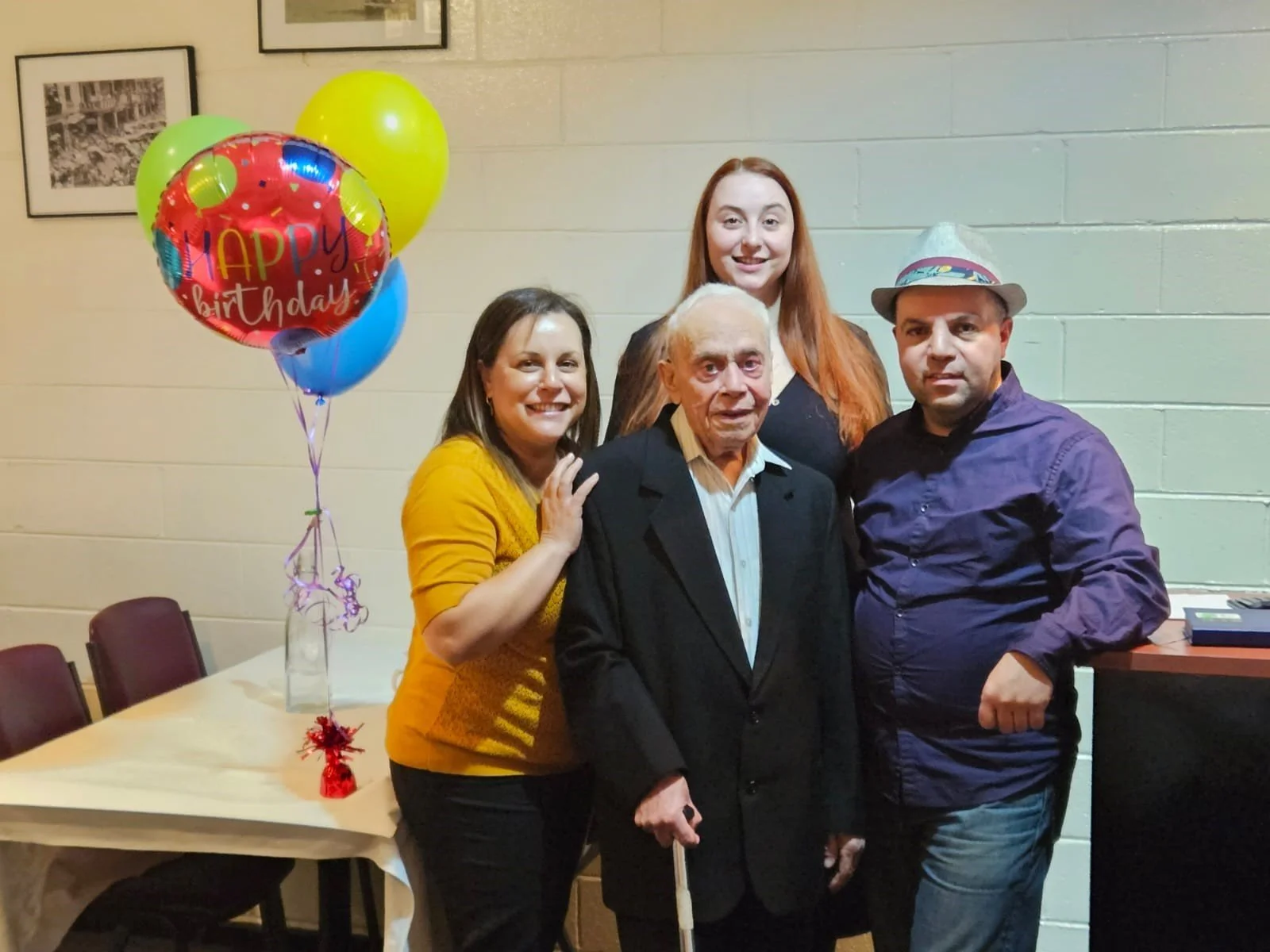
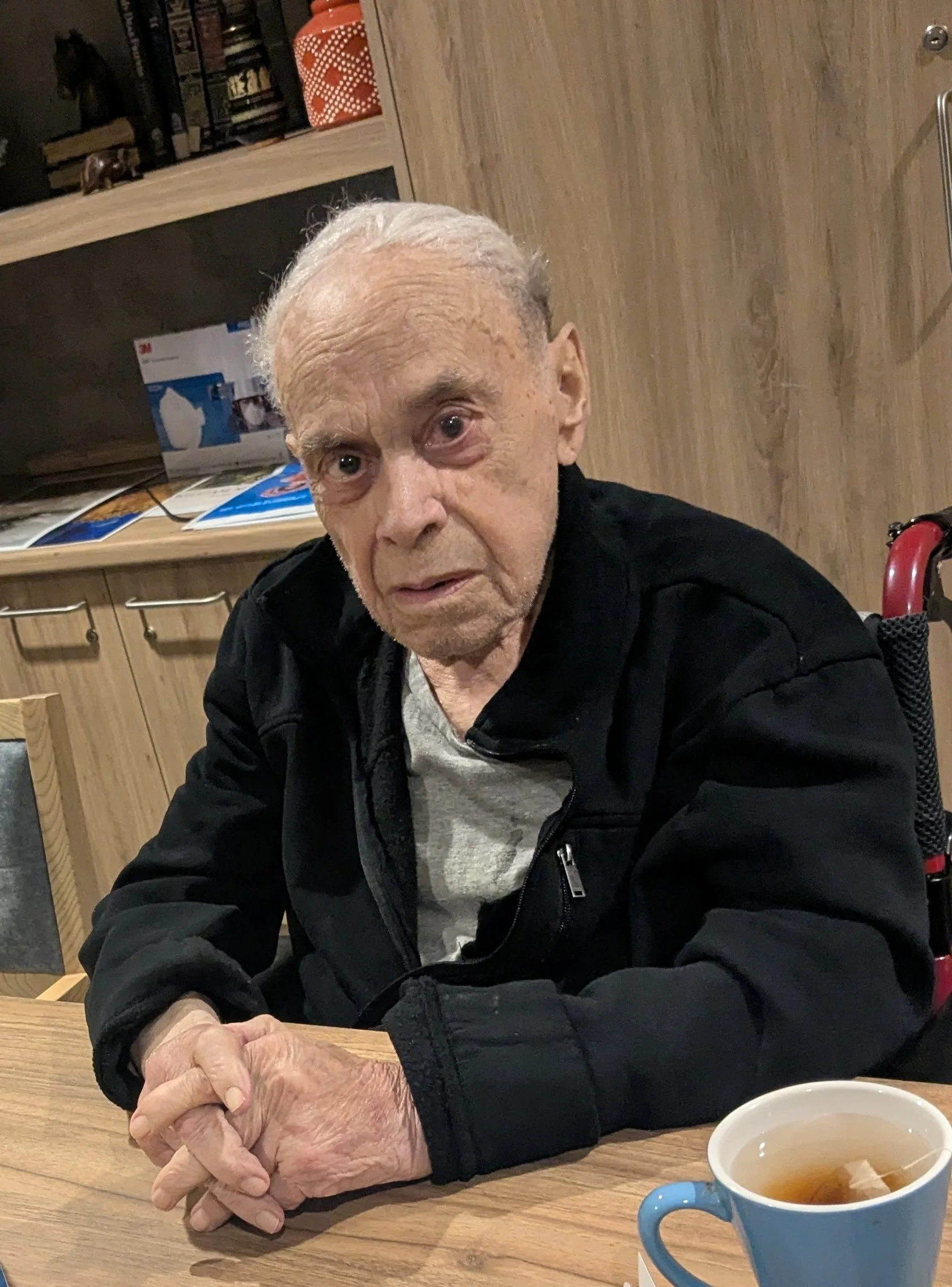
For Grigory Kats: 'A long, adventurous and fruitful life', by grandson Alex Kats - 2025

September 10, 2025

2 September 2025, Melbourne, Australia

Eulogy commences at 4.36 in above video

My grandfather was a man of many contrasts, a complicated man, but also a man of principle, strong-willed, tough yet caring and devoted. He lived according to principles that he created for himself, dedicated the first part of his adulthood to providing for his family after living through episodes that no one should, and spent the second half of his life in a foreign land, but one that he quickly embraced and came to love.

He was also a man of many names. His full Russian name was Gri-gory Yefimovitch Kats, his Hebrew name was Gershon ben Chaim HaKohen, but the name most of his Russian friends and family called him was simply Grisha. In the army he was Officer Kats and later Captain Kats, in the Communist Party he was Comrade Kats, in Australia he was either Gregory or Mr Kats.

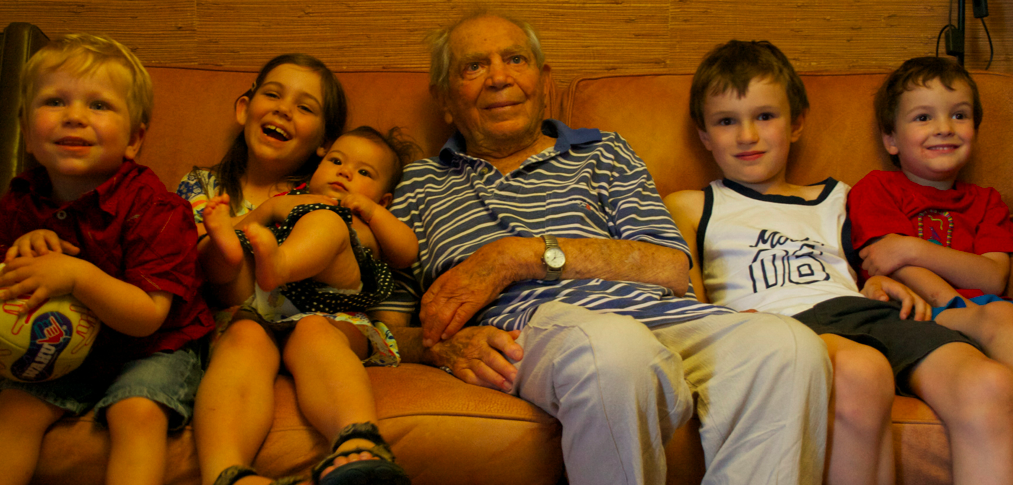
In his more than 99 years, he was many things to many people, but deep down he was a family man, the last survivor of his generation and very resilient, in more ways than one. His kids called him Papa, his grandkids called him Grandpa or sometimes the Russian equivalent, Deda, and his great grandkids also called him Grandpa. One example of his devotion to family was when my sister Rachel was just a baby, and we all lived with our grandparents whilst our mother was in hospital. One evening, my dad was working nightshift, grandma and my aunt were out, I was staying over at a friend’s, so it was up to grandpa to babysit the six-month old. But he had the sniffles and as the evening wore on, got significantly sicker. In his old style way, he hadn’t told anyone he was sick and didn’t want to infect the baby, so he didn’t allow himself to enter the baby’s room and had a very miserable few hours trying to comfort the child from another room whilst blowing his own nose and feeling sorry for himself. In spite of everything, he kept to his principles. I suspect his wife and daughter got an earful when they got home, but it is a story he told proudly because it is one that shows the man he had become – a family man of principle.

But it wasn’t always that way. He was born on 10 June 1926 in Uman, Ukraine, a town that has now become synonymous with Jewish pilgrimages. In those days it was mostly populated by pious Jews, and his was one such family. He was the seventh child in his family, though two had died before he was even born. His parents, Chaim and Chaya – whose names are both derived from the Hebrew word for life – were well known in town, with his father acting as the Shamash of their local shule. By the time he was born, his parents were more ready to become grandparents than parents again, and in fact, just months after Grigory was born, the eldest of the family, his sister Roza, gave birth to her own son and also became his wet nurse. For the first few years of his life, he thought his sister was his own mother. Though they walked across the street to visit his parents on a daily basis, he initially thought they were his grandparents.

By the time of Grigory’s birth, the family consisted of Itzhak, who was known at home as Alex and is the one I am named after, who was 11 years older than Grigory; Nakhum, who was 17 years older, Yaakov, who was 19 years older, and Roza, who was 21 at the time of his birth.

In almost every way, Grigory was not only the youngest in his family, but sometimes felt forgotten. He grew up with his nephew Dimitry, who was virtually his twin brother, and life was mostly idyllic in their little hamlet in a very Jewish part of town, but he never quite knew where he fit in or what his place in society was. What he did learn however was that he had to be resilient and fend for himself. As a 6 or 7 year old, he survived a Stalin imposed famine, after which the extended family was split up, and for Jewish life in the shtetls of Ukraine, it was the beginning of the end. His family, like so many others, simply walked out of a house and town they had lived in for generations and only took what they could carry. For his mother, that meant all the family’s Mezuzahs and other mostly Jewish heirlooms, but by the time they arrived in Moscow, Jewish practice for all of them except his mother, also fell by the wayside. So much so that when Grigory turned 13 in 1939, he didn’t even have a Bar Mitzvah because of the impending war.

He was however very adventurous and enterprising. When they first arrived in Moscow, he was still constantly hungry but easily made friends. He was also a natural leader, so one day he led his group of friends to the woods behind their neighbourhood where they found an old farmhouse, though it looked abandoned. They did however find a few large barrels filled with freshly picked mushrooms. For hours, they filled their stomachs with the fungi, and came back for the next few days until all the shrooms were consumed. But from that day on, he developed a lifelong distaste for mushrooms because every time he saw them, they reminded him of famine, starvation and poverty. He vowed then never to be in a situation where he would have to again beg for money or food, and developed his own version of a moral compass.   

Still in high school, he joined a pre-military academy, and one October day in 1941, after arriving at school, all the boys from his school, with just the clothes on their backs and their satchels in hand, were herded onto a train and taken north to Siberia. It would be more than a week before he could call home to tell his family where he was, and a few months before supplies arrived. They stayed there, in an abandoned coalmine till late 1944, undertaking schooling as well as military training, ready to be called up if and when required. But they were never required. Unlike others, in his time in Siberia he never got frostbite and didn’t even get sick. Sometimes he would pray to the god he no longer believed in to get sick, just so that he could end up in the warmth of the sick bay, but his prayers were in vain.

After school and after the war, he stayed in the army and went to Officer’s school, but on a brief visit back to his family home in Moscow in the summer of 1945, he discovered that only his mother, his sister with her family, and his brother Nachum had survived. Two brothers had been killed and his father had died just days earlier when he knew the war was finally over.

Grigory barely even had time to grieve because he literally had to leave the next day. One of his first postings as an Officer was to the town of Stanislav, later renamed Ivano Frankivsk, back in Ukraine. He rented an apartment and the Jewish landlady immediately took a liking to him. Apart from charging him a reduced rate, she kept asking if he was ready for a Shidduch because she was a matchmaker. He eventually agreed, and just weeks before his 20th birthday, he went on a date with Gizella Miller, known to everyone as Nina. She was from the Polish town of Yazlovetz, which is now part of Ukraine, and had come to Stanislav after the war. Within weeks they were living together, but his apartment was too small and she shared with members of her family, so Grigory, using all of his well-honed Chutzpah, negotiated his way to a small but nicely appointed one room apartment in a Jewish neighbourhood.

By April 1947, they were ready to get married, but with rabbis unavailable, synagogues closed and no money, they simply went to the registry office, brought along a Jewish couple from their building as witnesses, signed all the paperwork, had a L’Chaim afterwards, and with no fuss, then went back to work.

In December 1947 they welcomed the arrival of their son Yefim, also known as Chaim, named after Grigory’s father. Five and a bit years later, they had a daughter, whom they named Maya, after Nina’s father, Majer (pronounced Meir). For 17 years, Grigory had a career in the Russian Army, rising to the rank of Captain, and in that time, he and the family were stationed all over the country and even in Hungary for a time, following the revolution in that country. He even had a few near death experiences, but always pulled through unscathed, even when others around him got injured. He rose no higher than captain, in part because of insubordination. Though it wasn’t accidental or inadvertent defiance; he simply decided that some rules didn’t make sense to him so he refused to follow them. But he was very clever and cunning, using his Yiddishe Kop, to decide which rules he could get away with breaking. This was a trait that stayed with him his whole life.

In the army Grigory was briefly a weightlifter and generally very good at sport. He even at one point also coached a basketball team. For someone so short, he was always a big character and everyone obeyed him. This served him well in his next career move as the manager of an elite rowing academy. Part of his role was to arrange their training camps around the country, and to manage their international travel when they went abroad for European competitions. This is when he used his cunning and Chutzpah again, and on many occasions got much better deals for his teams than anyone had before. He sometimes even gave his teams days off to explore the sights of the towns they were in, which was virtually unheard of.

In the 1970s, after Nina’s brother had come to Australia and his son was making plans to also leave mother Russia, Grigory would have none of it because he was still a proud member of the Communist party, though he also know that Jewish life in Russia was not ideal and both he and his son had lost job opportunities because they were Jewish. So although he was very reluctant to leave when his son, daughter in law and baby grandson left Russia, a year later he was also finally convinced to leave.

Grigory, Nina and their daughter Maya arrived in Melbourne in April 1980. Less than half a year later, their second grandchild was born and soon after Grigory found a role as the manager of a poultry shop on Chapel Street owned by the Fleiszig family. It wasn’t a kosher shop and he didn’t care, but working for a Jewish family always gave him comfort. For us as grandkids, it was also fun to visit the shop, to have plenty of chicken and fresh eggs at home, and to see him being in charge. He never shied away from hard work and carried heavy boxes on a daily basis. But he also knew how to have a good time.

Using his Chutzpah again, with almost no money and broken English, he managed to convince a bank manager to grant him a home loan without a deposit, and that apartment in Elwood was the site of very many Russian Jewish gatherings. In fact, Grigory and Nina became known as the Russian Jewish matchmakers of Melbourne, whilst their home was sometimes called the little restaurant on Avoca Avenue, such were grandma’s cooking skills and grandpa’s hosting skills. We had many adventures there as kids, including most of our Jewish festival celebrations growing up. Grandpa wasn’t always too keen about them, but grandma insisted and he mostly knew when to keep his mouth shut. It also became the place where grandma especially doted on all her grandkids, including her new granddaughter who was born in late 1989. For all of us grandkids, our grandparents were always loving, supportive and very generous. I even lived at my grandparents’ home for some months in the early 90s.

Grigory meanwhile became a fan of nice cars, and every few years he bought a new one. They used that car, together with other couples, to travel around most of Australia, with their favourite destination being the Gold Coast. Grigory could do that drive from Melbourne in a day and a half, and loved soaking up the sunshine and the playing the pokies with friends. They often also drove to Echuca just for the day to play the pokies across the border in NSW. They never won too much, but the adventure of it always excited Grigory.

By the time they arrived in Australia, Grigory had completely forsaken his commitment to Communism. Their one and only overseas trip was to Israel in 1993. It was a dream come true for Nina and an eye opening experience for Grigory. Both of them loved the place but didn’t understand it. But for Grigory especially, that trip cemented his anti-Communism stance, so much so that he became a conservative voter.

He retired in 1998, just months before his beloved wife died. It is probably not a coincidence that she died on 27 August, and he died on 29 August, both within the Hebrew month of Elul. After her passing, he was never quite the same. On many occasions, he would say that he wished she was with him to enjoy their retirement together. He had two short-lived relationships in his later years, but it was clear he still missed his wife. He would also say, whenever we called and asked him how he was, now that he was alone, that he was “Still Alive.” That became his catchphrase, and even he would sometimes joke about it.

In many ways, although he retired from the army, the army never left him. He was always a pedant, extremely punctual, a resilient, determined and stubborn man, who said what he thought and usually didn’t concern himself with the repercussions of his words. As he aged, these traits became even more obvious. He didn’t have a lot of hobbies, but meeting his friends was one, and together they settled into a well-honed routine of going to his favourite coffee shop on Centre Road and having coffee and cake there every day at 11am. He was also a pessimistic optimist who believed he would survive to the next day, but just in case, went shopping every day whilst on Centre Rd and only bought what he need for tomorrow. One time, ahead of a public holiday, Rachel and I called him to ask if we could join him the following day for coffee. He loved the idea, but when we said we could be free from 10, he said, “Why 10? Coffee time is at 11.” 

The beginning of his own demise started with the death of his wife and increased significantly after the death of his daughter eight years ago. Just before that point he stopped driving and started to walk with a stick. He was physically and mentally much older, but remained fiercely independent, and even when we found carers for him to look after him at home, he rejected some of them – unsurprisingly all the male ones – because they didn’t conform to his standards. Even in the last few years, as his dementia increased and so did his falls, he still didn’t want to go into care and continued to have very strong views about the world. He also wanted to ensure that when the apartment he bought after grandma died was finally sold, that we would get the best value for it. Thinking about his family legacy was never far from his mind. At this point I want to publicly thank the carers and staff at Jewish Care who looked after him.

The family members that he liked and still recognised were the ones that he cared about right up to his final days. And those final days, though they came quickly in the end, there were at least five occasions between Covid and last week, when there were calls to say that he was on his final legs, but somehow his will to live was strong. Even just a couple of months ago, he repeated his commonly articulated phrase, that ‘It’s very hard to die.” And in his case it was certainly true. But in the end, once the palliative treatment began last Wednesday, on 27 August – the same date that grandma died – it only took two days. Now he has been reunited with his dear wife and they will be buried together in the double plot that he bought many years ago.

We were all blessed to have him in our lives for as long as we did, and he certainly led a long, adventurous and fruitful life, one that we will never forget and one that we will take great appreciation from.

Yehi Zichron Baruch – May his memory be a blessing

Enjoyed this speech? Speakola is a labour of love and I’d be very grateful if you would share, tweet or like it. Thank you.

Facebook Twitter Facebook
In SUBMITTED 4 Tags GRIGORY KATS, GRANDFATHER, GRANDSON, ALEX KATS, UKRAINE, JEWISH, TRANSCRIPT
Comment
Photo Mary Foote

Photo Mary Foote

for Vivian Rippy: 'The only way to get hurt in this life is to care', by Chirstopher Eckes - 2017

January 31, 2018

Harriosn, Ohio, USA

It’s the little things that seem to stand out the most—her rolled up Kleenexes, her colorful muumuus, her iced tea and fried chicken, the aroma of her kitchen or a “yoo-hoo” from the other side of the door letting you know it was all right to come in.

I’ll remember her tapping her foot to Lawrence Welk or cheering for Johnny Bench (her favorite ball player). There are so many things that I can see and feel as if they had just happened.

I’m sure everyone here has memories much like mine. They are good memories, something we’ll always have to cherish. It isn’t often in our lives that we come across someone so special that that person stays with you forever. Grandma was that kind of person.

The only way to get hurt in this life is to care. Grandma cared more than most, loved more than most and was made to suffer more than most because of just how much she cared.

But no matter how many times she was knocked down or made to endure things that no one should, she just kept coming back; caring more and loving more—opening herself up to even more pain. Yet there were never any complaints or bitterness—it was the only way she knew how to live.

The kind of love Grandma felt for us was a love without condition. She may not have approved of everything we did, may not have liked some of the decisions we made, but she didn’t lecture, she didn’t judge. She just kept loving us, letting us know that she was there and if we ever needed her, we could count on her to listen, to comfort, to help.

She lived a simple life. It didn’t take much to make her happy—a phone call, a card, a visit or a kiss before saying good night. We were the most important people in the world to her. She lived to make our lives better and was proud of us.

To think that someone like her felt that way about us should make us all feel more than just a little good. We can never forget that there is a part of her in each of us, something that she gave to us and asked nothing for in return.

Money can be squandered and property ruined, but what we inherited from her cannot be damaged, destroyed or lost. It is permanent, and it keeps her from becoming just a wonderful memory. It allows her in so many ways to remain just as alive as always—alive through us.

There have been and will be times in our lives when situations arise where we’ll want so much to talk to her, be with her or ask her just what we should do. I hope that, when those times come, we can begin to look to each other and find that part of her that she gave to each of us.

Maybe we can learn to lean on each other and rely on each other the way we always knew that we could with her. Maybe then she won’t seem quite so far away.

So, for your wisdom, your humor, tenderness and compassion, your understanding, your patience and your love; thank you, Grandma. After you, Grandma, the mold was indeed broken. Thank you so much. I love you.

Source: https://www.rd.com/culture/grandson-eulogy...

Enjoyed this speech? Speakola is a labour of love and I’d be very grateful if you would share, tweet or like it. Thank you.

Facebook Twitter Facebook
In SUBMITTED 3 Tags VIVIAN RIPPY, GRANDMOTHER, GRANDSON, OHIO, READERS DIGEST, TRANSCRIPT
Comment

For Robert McGregor: 'Dear Dr Pop', by Tim (on behalf of baby Tom) McGregor - 2013

April 5, 2016

23 August 2013, Brighton, Melbourne, Australia

Tom was worried about being asleep during the ceremony and so wanted me to pass on a special message to Dad, or Dr Pop as he was known to Tom.  We sat down to write a letter and this is what Tom said [play Iphone raspberry noises].  I translated all that as follows:

Dear Dr Pop

I’ve only known you for about 8 ½ months, but I think I’ve figured out some important things about you that will help me in the future.

First, you liked Jags a lot.  Dad had a Jag because he wanted to impress you.  I liked being driven around in that car.  Now we have an Audi because Mum wanted a sensible, family car.  I don’t think Germans are sensible.  I think Jags are sensible…and cool.  I will demand to be driven to school in a Jag and I will also drive one when I am older.  I’ll wear Ray Bans like you too because they are also sensible…and cool.

Secondly, you really liked Essendon.  I have been conflicted.  Mum likes Buddy Franklin so I have a lot of Hawthorn stuff.  Then Mum found out that Dad started barracking for Hawthorn because his Grandad did, so Mum decided I should barrack for Essendon because you did.  Dad got a big shock when he took me to visit you in hospital and unwrapped my blankets to find me dressed in an Essendon jumper.  Oh, how we laughed.  Since then, Dad keeps randomly saying things like “peptides”, “amino acids”, “denial” and “Demetriou” whenever I wear my jumper.  I wish you were around to explain what that means.  Essendon definitely seem very fit.

Thirdly, you liked Victoria and insisted that it is the greatest country on earth.  I now understand that there are too many New South Wales players in the Australian cricket team, that it is really Victorian rather than Australian Rules Football and that all the best wines are from Rutherglen, not the Barossa.

Fourthly, you had a beautiful baritone singing voice and were quite an actor with the Peninsula Light Operatic Society.  Dad has been singing and playing some guitar tunes to me recently which, frankly, I humour him into thinking he’s doing a good job.  I also hear Dad tried to be an actor like you but wound up on Neighbours.  Look, in deference to you, I will encourage Dad to keep at it, even if it is tough to watch.

Fifthly, you really loved Granny Mac a lot.  Even when you were sleeping last Saturday, I could see you were holding her hand.  I hope Mum and Dad always hold hands like that too.

Sixthly, you were amazing at English and helped dumb kids and dumb teachers get really smart.  I already know that Mum is bad at English but, so far, she can read me books.  Dad is good at English but probably overplays his hand in dinner conversations and seems a bit of a try hard.  I think you may have come in handy for when I am at school.  If I am running into difficulties on that front, I will say the following to Mum and Dad: “Gee, imagine if Dr Pop was here and how much better my grades would be.  What’s wrong with you two?”.

Finally, you were a really good Dad to Macca, Andy, Dad & Matty and a great Grandad to me.  If I am running into difficulties with Dad, I will say the following to him “Gee, are you sure that’s what Dr Pop would have wanted”?  Hopefully this will help him to be as good a Dad as you were.

Yours sincerely

Tom Robert Dodger McGregor


The McGregor boys also lost their mother to cancer just weeks later. Tim and Rohan McGregor's eulogy for Margaret McGregor is also on Speakola.

Enjoyed this speech? Speakola is a labour of love and I’d be very grateful if you would share, tweet or like it. Thank you.

Facebook Twitter Facebook
In SUBMITTED Tags ROBERT MCGREGOR, TIM MCGREGOR, FATHER, SON, GRANDSON
Comment

For Jerzy Krupinski: "He was 18 when the Nazis invaded Poland", by grandson Peter Cook - 2013

August 31, 2015

Written 20 March, 2013, Melbourne (delivered a few days later)

Jerzy Krupinski 20/02/1920 – 19/03/2014

Last night at 8:25pm my grandfather (Dziadzia in Polish) passed away at 94 years of age. He died about as well as you can, peacefully, in his home, surrounded by his family.

He was born in Warsaw Poland almost a century ago, and has lived a life that is almost incomprehensible to me, living now in Australia.

He was 18 when the Nazis invaded Poland. At 19 his parents were both dead, as was most of his extended family. He was in the Warsaw Ghetto, looking after his little sister, his aunt, his cousin, his fiancée (my grandmother, Babcia) and her sister. He saw the writing on the wall early enough to smuggle them all out of the Ghetto, and then looked after them all for the rest of the war in different parts of Poland, hidden by different people, with new identities.

Out of all of my Dziadzia’s and my Babcia’s extended families, all of their aunts, uncles, cousins, parents and grandparents, these were the only survivors. At the end of the war there was my Dziadzia and the five women he had smuggled out of the Ghetto.

There were some close calls. Dziadzia’s sister Nelly got sent to a concentration camp, but got processed as a Pole and not a Jew, and so she survived and was reunited with her brother after the war. Auntie Nelly is still living in Prague. My great aunt Genia was on a train to a concentration camp, and jumped off through a hole in the floor of the carriage where a plank had been worked loose. The guy who jumped after her was shot, but she survived.

Within a year of the war being over my mother was born.

Despite having seen humanity at it’s worst, and felt the impact of the holocaust in the most direct way possible, Dziadzia remained optimistic. He joined the Communist Party, finished his medical studies, and threw himself into rebuilding Poland under a different model.

Fast forward 14 years, and Stalin was giving Hitler a run for his money in the worst-bloke-in-history stakes. Again my dziadzia saw the writing on the wall (with a little nudge from my babcia – I’m leaving with or without you), and left for Australia.

My mother only found out she was Jewish at the age of 14 upon leaving Poland. After six weeks on a boat they all arrived in Melbourne.

At 40, my age, Dziadzia was in Australia, learning his fourth language (Polish, Russian and French weren’t that helpful apparently), re-sitting his medical exams, and starting from scratch with his two teenage girls.

He had seen genocide first hand, seen the promise of Communism disintegrate, and was entering what he calls his fourth life, starting everything again. If anyone had the right to throw in the towel, or turn to drink, it was him.

But instead he embarked on this chapter of his live with the same optimism and determination that he had brought to everything else. He ended up as the head of the Victorian Institute of Mental Health Research, the first non-Psychiatrist admitted as a fellow of the Royal Australia & New Zealand College of Psychiatry, a widely respected and admired physician, who published prolifically and had made an enormous contribution in his field.  

Although if you asked him what he was most proud of, he would have said his daughters, his grandkids, and more recently his great grandchildren.

If I can channel just a fraction of his courage, his persistence, his optimism, and his faith in humanity (despite all the evidence he had to the contrary), I reckon I’ll be alright.


Source: http://petercook.com/2014/03/20/jerzy-krup...

Enjoyed this speech? Speakola is a labour of love and I’d be very grateful if you would share, tweet or like it. Thank you.

Facebook Twitter Facebook
In SUBMITTED Tags GRANDSON, GRANDFATHER, HOLOCAUST, AUSTRALIA, IMMIGRATION
Comment

For Lee Kwan Yew: 'Yeye showed me that you could make a difference in this world', by grandson Li Hongyi - 2015

July 16, 2015

29 March 2015, Mandai Crematorium, Singapore

Some years ago when I was preparing to go to university, Yeye gave me a camera. This was the first and only time he ever gave me a present. Over the next few years I got deeply into photography and took thousands of photos of my time in college. After I graduated I got a book printed with my favourite ones. I presented it to him as a thank you for his gift and hopefully to show him I had done something good with it.

Yeye was more than a grandfather to me. He was an inspiration. As a child, I looked up to him and wanted to grow up to be the kind of man he was. And even now, I still do.

We would have lunch with Yeye and Nainai every Sunday at their house. We always ate simple things: mee rebus, nasi lemak, popiah. He was never one concerned with luxury or lavishness. The idea that he would care about how fancy his food was or what brand his clothes were was ridiculous. His mind was always on more important things. He would have discussions with our parents while my cousins and I would sit by the side and listen. I would always feel a bit silly after listening. He made me realize how petty all my little concerns were and how there were so many bigger problems in the world. He made me want to do something more with my life.

He was not an especially charming man. Yet when he spoke you felt compelled to listen. Because when he spoke you knew he was being straight with you. He was not trying to cajole or flatter. He would be completely frank and honest. After speaking to him in person you knew that his speeches were not puffed up fluff. They were truly his opinions on the matters he cared most about. He would never echo empty slogans or narrow-minded ideologies; it was always thoroughly researched and well-considered perspectives. I had the privilege once of accompanying Yeye to a ceremony in Washington where he was receiving an award. Hearing him speak and watching the entire room listen made me feel so proud. His charisma came not from showmanship but from pure substance.

Yeye understood the limits of his knowledge. He made it a point to try and understand the flaws and risks of his own perspectives better than anyone else. This was especially true when it came to Singapore. He refused to let blind nationalism run this country into the ground. He cared deeply about this country and made sure that he was aware of any weaknesses that could cause us harm. And yet he was very proud of Singapore and confident that we could be better.

Yeye showed me that you could make a difference in this world. Not just that you could make a difference, but that you could do it with your head held high. You didn’t have to lie, cheat, or steal. You didn’t have to charm, flatter, or cajole. You didn’t have to care about frivolous things or play silly games. You could do something good with your life, and the best way to do so was to have good principles and conduct yourself honourably.

People admired Yeye for his brilliant mind. They admired him for his ability to lead and rally us together. They admired him for all of his staggering accomplishments. These are all true. But to me, what made him a great man was the person he chose to be. A man of character, clarity, and conviction. We should remember him less as a man who gave us great gifts, and more as a man who showed us the kind of people we could be.

When Yeye gave me that camera years ago, he wrote me a note. It was a simple note without any flowery language or cheap sentiment. He simply told me that he hoped I made good use of it. I hope I have.

Enjoyed this speech? Speakola is a labour of love and I’d be very grateful if you would share, tweet or like it. Thank you.

Facebook Twitter Facebook
In EDITORS CHOICE Tags GRANDSON, PRIME MINISTER, LEE KWAN YEW
Comment

See my film!

Limited Australian Season

March 2025

Details and ticket bookings at

angeandtheboss.com

Support Speakola

Hi speech lovers,
With costs of hosting website and podcast, this labour of love has become a difficult financial proposition in recent times. If you can afford a donation, it will help Speakola survive and prosper.

Best wishes,
Tony Wilson.

Become a Patron!

Learn more about supporting Speakola.

Featured political

Featured
Jon Stewart: "They responded in five seconds", 9-11 first responders, Address to Congress - 2019
Jacinda Ardern: 'They were New Zealanders. They are us', Address to Parliament following Christchurch massacre - 2019
Dolores Ibárruri: "¡No Pasarán!, They shall not pass!', Defense of 2nd Spanish Republic - 1936
Jimmy Reid: 'A rat race is for rats. We're not rats', Rectorial address, Glasgow University - 1972

Featured eulogies

Featured
For Geoffrey Tozer: 'I have to say we all let him down', by Paul Keating - 2009
for James Baldwin: 'Jimmy. You crowned us', by Toni Morrison - 1988
for Michael Gordon: '13 days ago my Dad’s big, beautiful, generous heart suddenly stopped beating', by Scott and Sarah Gordon - 2018

Featured commencement

Featured
Tara Westover: 'Your avatar isn't real, it isn't terribly far from a lie', The Un-Instagrammable Self, Northeastern University - 2019
Tim Minchin: 'Being an artist requires massive reserves of self-belief', WAAPA - 2019
Atul Gawande: 'Curiosity and What Equality Really Means', UCLA Medical School - 2018
Abby Wambach: 'We are the wolves', Barnard College - 2018
Eric Idle: 'America is 300 million people all walking in the same direction, singing 'I Did It My Way'', Whitman College - 2013
Shirley Chisholm: ;America has gone to sleep', Greenfield High School - 1983

Featured sport

Featured
Joe Marler: 'Get back on the horse', Harlequins v Bath pre game interview - 2019
Ray Lewis : 'The greatest pain of my life is the reason I'm standing here today', 52 Cards -
Mel Jones: 'If she was Bradman on the field, she was definitely Keith Miller off the field', Betty Wilson's induction into Australian Cricket Hall of Fame - 2017
Jeff Thomson: 'It’s all those people that help you as kids', Hall of Fame - 2016

Fresh Tweets


Featured weddings

Featured
Dan Angelucci: 'The Best (Best Man) Speech of all time', for Don and Katherine - 2019
Hallerman Sisters: 'Oh sister now we have to let you gooooo!' for Caitlin & Johnny - 2015
Korey Soderman (via Kyle): 'All our lives I have used my voice to help Korey express his thoughts, so today, like always, I will be my brother’s voice' for Kyle and Jess - 2014

Featured Arts

Featured
Bruce Springsteen: 'They're keepers of some of the most beautiful sonic architecture in rock and roll', Induction U2 into Rock Hall of Fame - 2005
Olivia Colman: 'Done that bit. I think I have done that bit', BAFTA acceptance, Leading Actress - 2019
Axel Scheffler: 'The book wasn't called 'No Room on the Broom!', Illustrator of the Year, British Book Awards - 2018
Tina Fey: 'Only in comedy is an obedient white girl from the suburbs a diversity candidate', Kennedy Center Mark Twain Award -  2010
Tina Fey: 'Only in comedy is an obedient white girl from the suburbs a diversity candidate', Kennedy Center Mark Twain Award - 2010

Featured Debates

Featured
Sacha Baron Cohen: 'Just think what Goebbels might have done with Facebook', Anti Defamation League Leadership Award - 2019
Greta Thunberg: 'How dare you', UN Climate Action Summit - 2019
Charlie Munger: 'The Psychology of Human Misjudgment', Harvard University - 1995
Lawrence O'Donnell: 'The original sin of this country is that we invaders shot and murdered our way across the land killing every Native American that we could', The Last Word, 'Dakota' - 2016