• Genre
  • About
  • Submissions
  • Donate
  • Search
Menu

Speakola

All Speeches Great and Small
  • Genre
  • About
  • Submissions
  • Donate
  • Search

Eulogies

Some of the most moving and brilliant speeches ever made occur at funerals. Please upload the eulogy for your loved one using the form below.

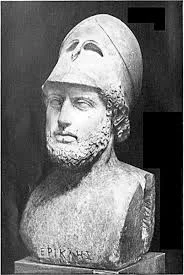
For the war dead: 'Comfort, therefore, not condolence, is what I have to offer to the parents of the dead', Pericles - 431-404 BC

July 16, 2015

circa 431-404 BC, Athens, annual public funeral for war dead

Most of my predecessors in this place have commended him who made this speech part of the law, telling us that it is well that it should be delivered at the burial of those who fall in battle. For myself, I should have thought that the worth which had displayed itself in deeds would be sufficiently rewarded by honours also shown by deeds; such as you now see in this funeral prepared at the people's cost. And I could have wished that the reputations of many brave men were not to be imperilled in the mouth of a single individual, to stand or fall according as he spoke well or ill. For it is hard to speak properly upon a subject where it is even difficult to convince your hearers that you are speaking the truth. On the one hand, the friend who is familiar with every fact of the story may think that some point has not been set forth with that fullness which he wishes and knows it to deserve; on the other, he who is a stranger to the matter may be led by envy to suspect exaggeration if he hears anything above his own nature. For men can endure to hear others praised only so long as they can severally persuade themselves of their own ability to equal the actions recounted: when this point is passed, envy comes in and with it incredulity. However, since our ancestors have stamped this custom with their approval, it becomes my duty to obey the law and to try to satisfy your several wishes and opinions as best I may.

I shall begin with our ancestors: it is both just and proper that they should have the honour of the first mention on an occasion like the present. They dwelt in the country without break in the succession from generation to generation, and handed it down free to the present time by their valour. And if our more remote ancestors deserve praise, much more do our own fathers, who added to their inheritance the empire which we now possess, and spared no pains to be able to leave their acquisitions to us of the present generation. Lastly, there are few parts of our dominions that have not been augmented by those of us here, who are still more or less in the vigour of life; while the mother country has been furnished by us with everything that can enable her to depend on her own resources whether for war or for peace. That part of our history which tells of the military achievements which gave us our several possessions, or of the ready valour with which either we or our fathers stemmed the tide of Hellenic or foreign aggression, is a theme too familiar to my hearers for me to dilate on, and I shall therefore pass it by. But what was the road by which we reached our position, what the form of government under which our greatness grew, what the national habits out of which it sprang; these are questions which I may try to solve before I proceed to my panegyric upon these men; since I think this to be a subject upon which on the present occasion a speaker may properly dwell, and to which the whole assemblage, whether citizens or foreigners, may listen with advantage.

Our constitution does not copy the laws of neighbouring states; we are rather a pattern to others than imitators ourselves. Its administration favours the many instead of the few; this is why it is called a democracy. If we look to the laws, they afford equal justice to all in their private differences; if no social standing, advancement in public life falls to reputation for capacity, class considerations not being allowed to interfere with merit; nor again does poverty bar the way, if a man is able to serve the state, he is not hindered by the obscurity of his condition. The freedom which we enjoy in our government extends also to our ordinary life. There, far from exercising a jealous surveillance over each other, we do not feel called upon to be angry with our neighbour for doing what he likes, or even to indulge in those injurious looks which cannot fail to be offensive, although they inflict no positive penalty. But all this ease in our private relations does not make us lawless as citizens. Against this fear is our chief safeguard, teaching us to obey the magistrates and the laws, particularly such as regard the protection of the injured, whether they are actually on the statute book, or belong to that code which, although unwritten, yet cannot be broken without acknowledged disgrace.

Further, we provide plenty of means for the mind to refresh itself from business. We celebrate games and sacrifices all the year round, and the elegance of our private establishments forms a daily source of pleasure and helps to banish the spleen; while the magnitude of our city draws the produce of the world into our harbour, so that to the Athenian the fruits of other countries are as familiar a luxury as those of his own.

If we turn to our military policy, there also we differ from our antagonists. We throw open our city to the world, and never by alien acts exclude foreigners from any opportunity of learning or observing, although the eyes of an enemy may occasionally profit by our liberality; trusting less in system and policy than to the native spirit of our citizens; while in education, where our rivals from their very cradles by a painful discipline seek after manliness, at Athens we live exactly as we please, and yet are just as ready to encounter every legitimate danger. In proof of this it may be noticed that the Lacedaemonians do not invade our country alone, but bring with them all their confederates; while we Athenians advance unsupported into the territory of a neighbour, and fighting upon a foreign soil usually vanquish with ease men who are defending their homes. Our united force was never yet encountered by any enemy, because we have at once to attend to our marine and to dispatch our citizens by land upon a hundred different services; so that, wherever they engage with some such fraction of our strength, a success against a detachment is magnified into a victory over the nation, and a defeat into a reverse suffered at the hands of our entire people. And yet if with habits not of labour but of ease, and courage not of art but of nature, we are still willing to encounter danger, we have the double advantage of escaping the experience of hardships in anticipation and of facing them in the hour of need as fearlessly as those who are never free from them.

Nor are these the only points in which our city is worthy of admiration. We cultivate refinement without extravagance and knowledge without effeminacy; wealth we employ more for use than for show, and place the real disgrace of poverty not in owning to the fact but in declining the struggle against it. Our public men have, besides politics, their private affairs to attend to, and our ordinary citizens, though occupied with the pursuits of industry, are still fair judges of public matters; for, unlike any other nation, regarding him who takes no part in these duties not as unambitious but as useless, we Athenians are able to judge at all events if we cannot originate, and, instead of looking on discussion as a stumbling-block in the way of action, we think it an indispensable preliminary to any wise action at all. Again, in our enterprises we present the singular spectacle of daring and deliberation, each carried to its highest point, and both united in the same persons; although usually decision is the fruit of ignorance, hesitation of reflection. But the palm of courage will surely be adjudged most justly to those, who best know the difference between hardship and pleasure and yet are never tempted to shrink from danger. In generosity we are equally singular, acquiring our friends by conferring, not by receiving, favours. Yet, of course, the doer of the favour is the firmer friend of the two, in order by continued kindness to keep the recipient in his debt; while the debtor feels less keenly from the very consciousness that the return he makes will be a payment, not a free gift. And it is only the Athenians, who, fearless of consequences, confer their benefits not from calculations of expediency, but in the confidence of liberality.

In short, I say that as a city we are the school of Hellas, while I doubt if the world can produce a man who, where he has only himself to depend upon, is equal to so many emergencies, and graced by so happy a versatility, as the Athenian. And that this is no mere boast thrown out for the occasion, but plain matter of fact, the power of the state acquired by these habits proves. For Athens alone of her contemporaries is found when tested to be greater than her reputation, and alone gives no occasion to her assailants to blush at the antagonist by whom they have been worsted, or to her subjects to question her title by merit to rule. Rather, the admiration of the present and succeeding ages will be ours, since we have not left our power without witness, but have shown it by mighty proofs; and far from needing a Homer for our panegyrist, or other of his craft whose verses might charm for the moment only for the impression which they gave to melt at the touch of fact, we have forced every sea and land to be the highway of our daring, and everywhere, whether for evil or for good, have left imperishable monuments behind us. Such is the Athens for which these men, in the assertion of their resolve not to lose her, nobly fought and died; and well may every one of their survivors be ready to suffer in her cause.

Indeed if I have dwelt at some length upon the character of our country, it has been to show that our stake in the struggle is not the same as theirs who have no such blessings to lose, and also that the panegyric of the men over whom I am now speaking might be by definite proofs established. That panegyric is now in a great measure complete; for the Athens that I have celebrated is only what the heroism of these and their like have made her, men whose fame, unlike that of most Hellenes, will be found to be only commensurate with their deserts. And if a test of worth be wanted, it is to be found in their closing scene, and this not only in cases in which it set the final seal upon their merit, but also in those in which it gave the first intimation of their having any. For there is justice in the claim that steadfastness in his country's battles should be as a cloak to cover a man's other imperfections; since the good action has blotted out the bad, and his merit as a citizen more than outweighed his demerits as an individual. But none of these allowed either wealth with its prospect of future enjoyment to unnerve his spirit, or poverty with its hope of a day of freedom and riches to tempt him to shrink from danger. No, holding that vengeance upon their enemies was more to be desired than any personal blessings, and reckoning this to be the most glorious of hazards, they joyfully determined to accept the risk, to make sure of their vengeance, and to let their wishes wait; and while committing to hope the uncertainty of final success, in the business before them they thought fit to act boldly and trust in themselves. Thus choosing to die resisting, rather than to live submitting, they fled only from dishonour, but met danger face to face, and after one brief moment, while at the summit of their fortune, escaped, not from their fear, but from their glory.

So died these men as became Athenians. You, their survivors, must determine to have as unfaltering a resolution in the field, though you may pray that it may have a happier issue. And not contented with ideas derived only from words of the advantages which are bound up with the defence of your country, though these would furnish a valuable text to a speaker even before an audience so alive to them as the present, you must yourselves realize the power of Athens, and feed your eyes upon her from day to day, till love of her fills your hearts; and then, when all her greatness shall break upon you, you must reflect that it was by courage, sense of duty, and a keen feeling of honour in action that men were enabled to win all this, and that no personal failure in an enterprise could make them consent to deprive their country of their valour, but they laid it at her feet as the most glorious contribution that they could offer. For this offering of their lives made in common by them all they each of them individually received that renown which never grows old, and for a sepulchre, not so much that in which their bones have been deposited, but that noblest of shrines wherein their glory is laid up to be eternally remembered upon every occasion on which deed or story shall call for its commemoration. For heroes have the whole earth for their tomb; and in lands far from their own, where the column with its epitaph declares it, there is enshrined in every breast a record unwritten with no tablet to preserve it, except that of the heart. These take as your model and, judging happiness to be the fruit of freedom and freedom of valour, never decline the dangers of war. For it is not the miserable that would most justly be unsparing of their lives; these have nothing to hope for: it is rather they to whom continued life may bring reverses as yet unknown, and to whom a fall, if it came, would be most tremendous in its consequences. And surely, to a man of spirit, the degradation of cowardice must be immeasurably more grievous than the unfelt death which strikes him in the midst of his strength and patriotism!

Comfort, therefore, not condolence, is what I have to offer to the parents of the dead who may be here. Numberless are the chances to which, as they know, the life of man is subject; but fortunate indeed are they who draw for their lot a death so glorious as that which has caused your mourning, and to whom life has been so exactly measured as to terminate in the happiness in which it has been passed. Still I know that this is a hard saying, especially when those are in question of whom you will constantly be reminded by seeing in the homes of others blessings of which once you also boasted: for grief is felt not so much for the want of what we have never known, as for the loss of that to which we have been long accustomed. Yet you who are still of an age to beget children must bear up in the hope of having others in their stead; not only will they help you to forget those whom you have lost, but will be to the state at once a reinforcement and a security; for never can a fair or just policy be expected of the citizen who does not, like his fellows, bring to the decision the interests and apprehensions of a father. While those of you who have passed your prime must congratulate yourselves with the thought that the best part of your life was fortunate, and that the brief span that remains will be cheered by the fame of the departed. For it is only the love of honour that never grows old; and honour it is, not gain, as some would have it, that rejoices the heart of age and helplessness.

Turning to the sons or brothers of the dead, I see an arduous struggle before you. When a man is gone, all are wont to praise him, and should your merit be ever so transcendent, you will still find it difficult not merely to overtake, but even to approach their renown. The living have envy to contend with, while those who are no longer in our path are honoured with a goodwill into which rivalry does not enter. On the other hand, if I must say anything on the subject of female excellence to those of you who will now be in widowhood, it will be all comprised in this brief exhortation. Great will be your glory in not falling short of your natural character; and greatest will be hers who is least talked of among the men, whether for good or for bad.

My task is now finished. I have performed it to the best of my ability, and in word, at least, the requirements of the law are now satisfied. If deeds be in question, those who are here interred have received part of their honours already, and for the rest, their children will be brought up till manhood at the public expense: the state thus offers a valuable prize, as the garland of victory in this race of valour, for the reward both of those who have fallen and their survivors. And where the rewards for merit are greatest, there are found the best citizens.

And now that you have brought to a close your lamentations for your relatives, you may depart.
Source: http://legacy.fordham.edu/halsall/ancient/...

Enjoyed this speech? Speakola is a labour of love and I’d be very grateful if you would share, tweet or like it. Thank you.

Facebook Twitter Facebook
In EDITORS CHOICE Tags ANCIENT GREECE
Comment

For Mohandas Gandhi: by Jawaharlal Nehru, 'The light has gone out of our lives and there is darkness everywhere,' - 1948

July 2, 2015

30 January, 1948, national radio broadcast

Friends and Comrades,

The light has gone out of our lives and there is darkness everywhere. I do not know what to tell you and how to say it. Our beloved leader, Bapu as we called him, the Father of the Nation, is no more. Perhaps I am wrong to say that. Nevertheless, we will never see him again as we have seen him for these many years. We will not run to him for advice and seek solace from him, and that is a terrible blow, not to me only, but to millions and millions in this country. And it is a little difficult to soften the blow by any other advice that I or anyone else can give you.

The light has gone out, I said, and yet I was wrong. For the light that shone in this country was no ordinary light. The light that has illumined this country for these many years will illumine this country for many more years, and a thousand years later, that light will be seen in this country and the world will see it and it will give solace to innumerable hearts. For that light represented something more than the immediate past, it represented the living, the eternal truths, reminding us of the right path, drawing us from error, taking this ancient country to freedom.

All this has happened when there was so much more for him to do. We could never think that he was unnecessary or that he had done his task. But now, particularly, when we are faced with so many difficulties, his not being with us is a blow most terrible to bear.

A madman has put an end to his life, for I can only call him mad who did it, and yet there has been enough of poison spread in this country during the past years and months, and this poison has had an effect on people’s minds. We must face this poison, we must root out this poison, and we must face all the perils that encompass us, and face them not madly or badly, but rather in the way that our beloved teacher taught us to face them.

The first thing to remember now is that none of us dare misbehave because he is angry. We have to behave like strong and determined people, determined to face all the perils that surround us, determined to carry out the mandate that our great teacher and our great leader has given us, remembering always that if, as I believe, his spirit looks upon us and sees us, nothing would displease his soul so much as to see that we have indulged in any small behaviour or any violence.

So we must not do that. But that does not mean that we should be weak, but rather that we should, in strength and in unity, face all the troubles that are in front of us. We must hold together, and all our petty troubles and difficulties and conflicts must be ended in the face of this great disaster. A great disaster is a symbol to us to remember all the big things of life and forget the small things of which we have thought too much. In his death he has reminded us of the big things of life, the living truth, and if we remember that, then it will be well with India…

It was proposed by some friends that Mahatmaji’s body should be embalmed for a few days to enable millions of people to pay their last homage to him. But it was his wish, repeatedly expressed, that no such thing should happen, that this should not be done, that he was entirely opposed to any embalming of his body, and so we decided that we must follow his wishes in this matter, however much others might have wished otherwise.

And so the cremation will take place on Saturday in Delhi city by the side of the Jamuna River. On Saturday forenoon, about 11.30 a.m., the bier will be taken out at Birla House and it will follow a prescribed road and go to the Jamuna River. The cremation will take place there at about 4 p.m. The place and the route will be announced by radio and the Press.

People in Delhi who wish to pay their last homage should gather along this route. I will not advise too many of them to come to Birla House, but rather to gather on both sides of this long route from Birla House to the Jamuna River. And I trust that they will remain there in silence without any demonstrations. That is the best way and the most fitting way to pay homage to this great soul. Also, Saturday should be a day of fasting and prayer for all of us.

Those who live elsewhere, out of Delhi and in other parts of India, will no doubt take such part as they can in this last homage. For them also, let this be a day of fasting and prayer. And at the appointed time for cremation, that is 4 p.m. on Saturday afternoon, people should go to the river or to the sea and offer prayers there. And while we pray, the greatest prayer that we can offer is to take a pledge to dedicate ourselves to the truth, and to the cause for which this great countryman of ours lived and for which he has died. That is the best prayer that we can offer him and his memory. That is the best prayer we can offer to India and ourselves.

JAI HIND.

Source: http://www.thehindu.com/opinion/op-ed/we-m...

Enjoyed this speech? Speakola is a labour of love and I’d be very grateful if you would share, tweet or like it. Thank you.

Facebook Twitter Facebook
In EDITORS CHOICE Tags GANDHI, NEHRU, INDIA, 1940s, ASSASSINATION
1 Comment

For Sonny Bono: 'He could see above the tallest people', Cher - 1998

July 2, 2015

9 January 1998, Palm Springs, CA, USA

Please excuse my papers, but I've been writing this stupid eulogy for the last 48 hours. And, of course, I know that this would make Sonny really happy. It's like Den said: "He got the last laugh on you."

So because I've had to write some of it down doesn't mean that I'm unprepared. It just means that I'm over prepared in that this is probably the most important thing I've ever done in my life. Don't pay any attention [weeping].

This is probably going to happen from time to time. And I also know that he is some place loving this.... Also, I have to wear the glasses that I made so much fun of him. I called him Mr. Magoo. I said, "You know, you've got to get some better glasses. You know, I don't care if you're Republican or not, you've got to look cooler than this." So now I have to wear the glasses that I make fun of him for saying. There are a couple of things -- I want to tell some stories -- but there are a couple of things I really want to get perfect for him. So I have to read....

Some people were under the misconception that Son was a short man, but he was heads and tails taller than anyone else. He could see above the tallest people. He had a vision of the future and just how he was going to build it. And his enthusiasm was so great that he just swept everybody along with him. Not that we knew where he was going, but we just wanted to be there. He was also successful at anything he ever tried. Not the first time he tried maybe, but he just -- he kept going. If he was really -- But if he really wanted something, he kept going until he achieved it....Once he told me that, when he was a teenager, he got his nose broken six times because he used to get into fights with guys that were much bigger than him. And he said that they would just be beating the crap out of him and would just be keep going back and going back and going back. I said, "Well, why?" And he said, "Because eventually I would just wear them down." And if you know him, we all got worn down.

Some people thought that Son wasn't very bright, but he was smart enough to take an introverted 16-year-old girl and a scrappy little Italian guy with a bad voice and turn them into the most successful and beloved couple of this generation. And some people thought that Son wasn't to be taken seriously because he allowed himself to be the butt of the jokes on the Sonny and Cher show. What people don't realize is that he created Sonny and Cher. And -- And he knew what was right for us, you know? He just always knew the right thing. And he wanted to make people laugh so much that he had the confidence to be the butt of the joke because he created the joke.

When I was 16 years old, I met Sonny -- Salvatore Philip Bono. And the first time I ever saw him, he walked in this room. And I had never seen anything like him before in my life. Because he was Sonny way before we were Sonny and Cher. He had this thing about him. He walked into this room, and I swear to God I saw him and like everybody else in the room was just washed away in this soft kind of focus filter -- kind of like when Maria saw Tony at the dance. And -- And I looked at him, and he had like this weird hair-do between Caesar and Napoleon. As a matter of fact, one of the first things that he ever told me was that he was a descendant of Napoleon, and that his father had shortened the name of Bonaparte to Bono when they came to this country. But that he didn't want to make too big of a deal out of this. Now you have to realize, at this time, he was talking to a girl who thought that Mount Rushmore was a natural phenomenon. So we were definitely a marriage made in heaven....

I lied to him about how old I was. I've told this story, but somehow it always keeps coming back. I told him that I was 18, and of course I wasn't. I was the most bizarre 16-year-old that you probably would come across. I had all kinds of phobias and all kinds of insecurities and all kinds of energies that just couldn't be harnessed. Except Son saw something. And I didn't have a place to stay and he said, "You know, you can come and live with me because I have twin beds and really I don't find you attractive." I didn't really know how to take it, but I was really glad to have a place to stay.

And when people would call or come over and say, "Who's that girl?" "Oh, that's just Cher." We spent this whole time together and I was just Cher. I was this kid and he kind of took care of me. I told my mom I was living with a stewardess. And every time that my mom would call, I always said, "Mom, call me before you come over." Every time my mom would call, I'd grab all of Sonny's clothes and run down the street and throw all his clothes into my girlfriend's living room window. And I lost most of his clothes that year. One time he came into the house and he had his jockey shorts in his hand and he said, "Cher, you've just got to stop doing this. I found these on the street."

So nothing happened with us romantically until my mom made me move out. When I was packing my things, we both just looked at each other and we started crying and I didn't even know why. And then I just realized once I was there that I just missed him so much -- I was so used to him being a part of my life. And I also had to tell him at that time that I wasn't 18. That I was 17, but I was about to turn 18. And when we were crying -- he actually cried too -- I said, "Well, I'm not 17 about to turn 18. I'm 16 about to turn 17, but I can't go through the rest of my life without you. So if my mother threatens to put you in jail, could you just do it anyway." So my mother kept threatening him all that year. But then I turned 18 and everything was all right.

I want to close...but I wanted to tell Mary and Chesare and Chianna how proud I am of what he made himself after we were separated and his accomplishments. And I know that a person just doesn't decide to become a Congressman in the middle of their life and then be one. But it's so typical of Sonny to do something so crazy like that. And also it puts my mind at peace to know that in the end of his days that he had such a wonderful family life. And I know how much he loved Mary and Chesare and Chianna. And I know how much they loved him. And also I know how much he loved his friends. He was the greatest friend. And if you'd seen our house for the last five days -- Mary's house for the last five days -- we can't get rid of everybody. Everybody's just there, you know. And it's the way he would have wanted it. He would have been in the middle cooking -- not eating, just tasting. And making everybody else eat.

So the last thing I want to say is, when I was young, there was this section in the Reader's Digest. And it was called "The Most Unforgettable Character I've Ever Met." And for me that person is Sonny Bono. And no matter how long I live or who I meet in my life, that person will always be "Son" for me.

Thank you.   

Source: http://www.americanrhetoric.com/speeches/c...

Enjoyed this speech? Speakola is a labour of love and I’d be very grateful if you would share, tweet or like it. Thank you.

Facebook Twitter Facebook
In EDITORS CHOICE Tags CHER, SONNY BONO, SINGER, USA, 1990s
Comment

For Diana Spencer: 'A girl given the name of the ancient goddess of hunting was, in the end, the most hunted person of the modern age' by Charles Spencer - 1997

July 2, 2015

6 September 1997, Westminster Abbey, London, UK

I stand before you today the representative of a family in grief, in a country in mourning before a world in shock.

We are all united not only in our desire to pay our respects to Diana but rather in our need to do so. For such was her extraordinary appeal that the tens of millions of people taking part in this service all over the world via television and radio who never actually met her, feel that they too lost someone close to them in the early hours of Sunday morning. It is a more remarkable tribute to Diana than I can ever hope to offer her today.

Diana was the very essence of compassion, of duty, of style, of beauty. All over the world she was a symbol of selfless humanity. All over the world, a standard bearer for the rights of the truly downtrodden, a very British girl who transcended nationality. Someone with a natural nobility who was classless and who proved in the last year that she needed no royal title to continue to generate her particular brand of magic.

Today is our chance to say thank you for the way you brightened our lives, even though God granted you but half a life. We will all feel cheated always that you were taken from us so young and yet we must learn to be grateful that you came along at all. Only now that you are gone do we truly appreciate what we are now without and we want you to know that life without you is very, very difficult.

We have all despaired at our loss over the past week and only the strength of the message you gave us through your years of giving has afforded us the strength to move forward.

There is a temptation to rush to canonise your memory, there is no need to do so. You stand tall enough as a human being of unique qualities not to need to be seen as a saint. Indeed to sanctify your memory would be to miss out on the very core of your being, your wonderfully mischievous sense of humour with a laugh that bent you double.

Your joy for life transmitted where ever you took your smile and the sparkle in those unforgettable eyes. Your boundless energy which you could barely contain.

But your greatest gift was your intuition and it was a gift you used wisely. This is what underpinned all your other wonderful attributes and if we look to analyse what it was about you that had such a wide appeal we find it in your instinctive feel for what was really important in all our lives.

Without your God-given sensitivity we would be immersed in greater ignorance at the anguish of Aids and HIV sufferers, the plight of the homeless, the isolation of lepers, the random destruction of landmines.

Diana explained to me once that it was her innermost feelings of suffering that made it possible for her to connect with her constituency of the rejected.

And here we come to another truth about her. For all the status, the glamour, the applause, Diana remained throughout a very insecure person at heart, almost childlike in her desire to do good for others so she could release herself from deep feelings of unworthiness of which her eating disorders were merely a symptom.

The world sensed this part of her character and cherished her for her vulnerability whilst admiring her for her honesty.

The last time I saw Diana was on July 1, her birthday in London, when typically she was not taking time to celebrate her special day with friends but was guest of honour at a special charity fundraising evening. She sparkled of course, but I would rather cherish the days I spent with her in March when she came to visit me and my children in our home in South Africa. I am proud of the fact apart from when she was on display meeting President Mandela we managed to contrive to stop the ever-present paparazzi from getting a single picture of her - that meant a lot to her.

These were days I will always treasure. It was as if we had been transported back to our childhood when we spent such an enormous amount of time together - the two youngest in the family.

Fundamentally she had not changed at all from the big sister who mothered me as a baby, fought with me at school and endured those long train journeys between our parents' homes with me at weekends.

It is a tribute to her level-headedness and strength that despite the most bizarre-like life imaginable after her childhood, she remained intact, true to herself.

There is no doubt that she was looking for a new direction in her life at this time. She talked endlessly of getting away from England, mainly because of the treatment that she received at the hands of the newspapers. I don't think she ever understood why her genuinely good intentions were sneered at by the media, why there appeared to be a permanent quest on their behalf to bring her down. It is baffling.

My own and only explanation is that genuine goodness is threatening to those at the opposite end of the moral spectrum. It is a point to remember that of all the ironies about Diana, perhaps the greatest was this - a girl given the name of the ancient goddess of hunting was, in the end, the most hunted person of the modern age.

She would want us today to pledge ourselves to protecting her beloved boys William and Harry from a similar fate and I do this here Diana on your behalf. We will not allow them to suffer the anguish that used regularly to drive you to tearful despair.

And beyond that, on behalf of your mother and sisters, I pledge that we, your blood family, will do all we can to continue the imaginative way in which you were steering these two exceptional young men so that their souls are not simply immersed by duty and tradition but can sing openly as you planned.

We fully respect the heritage into which they have both been born and will always respect and encourage them in their royal role but we, like you, recognise the need for them to experience as many different aspects of life as possible to arm them spiritually and emotionally for the years ahead. I know you would have expected nothing less from us.

William and Harry, we all cared desperately for you today. We are all chewed up with the sadness at the loss of a woman who was not even our mother. How great your suffering is, we cannot even imagine.

I would like to end by thanking God for the small mercies he has shown us at this dreadful time. For taking Diana at her most beautiful and radiant and when she had joy in her private life. Above all we give thanks for the life of a woman I am so proud to be able to call my sister, the unique, the complex, the extraordinary and irreplaceable Diana whose beauty, both internal and external, will never be extinguished from our minds.

Source: http://www.bbc.co.uk/news/special/politics...

Enjoyed this speech? Speakola is a labour of love and I’d be very grateful if you would share, tweet or like it. Thank you.

Facebook Twitter Facebook
In EDITORS CHOICE Tags PRINCESS DIANA, ROYALTY, UK, 1990S
Comment

for Clementa Pinckney: 'May grace now lead them home', Barack Obama (Charleston Shootings) -2015

July 2, 2015

26 June, 2015, TD Arena, Charleston, SC, USA

The Bible calls us to hope. To persevere, and have faith in things not seen.

"They were still living by faith when they died," Scripture tells us. "They did not receive the things promised; they only saw them and welcomed them from a distance, admitting that they were foreigners and strangers on Earth."

We are here today to remember a man of God who lived by faith. A man who believed in things not seen. A man who believed there were better days ahead, off in the distance. A man of service who persevered, knowing full well he would not receive all those things he was promised, because he believed his efforts would deliver a better life for those who followed.

To Jennifer, his beloved wife; to Eliana and Malana, his beautiful, wonderful daughters; to the Mother Emanuel family and the people of Charleston, the people of South Carolina.

I cannot claim to have the good fortune to know Reverend Pinckney well. But I did have the pleasure of knowing him and meeting him here in South Carolina, back when we were both a little bit younger. (Laughter.) Back when I didn't have visible grey hair. (Laughter.) The first thing I noticed was his graciousness, his smile, his reassuring baritone, his deceptive sense of humor -- all qualities that helped him wear so effortlessly a heavy burden of expectation.

Friends of his remarked this week that when Clementa Pinckney entered a room, it was like the future arrived; that even from a young age, folks knew he was special. Anointed. He was the progeny of a long line of the faithful -- a family of preachers who spread God's word, a family of protesters who sowed change to expand voting rights and desegregate the South. Clem heard their instruction, and he did not forsake their teaching.

He was in the pulpit by 13, pastor by 18, public servant by 23. He did not exhibit any of the cockiness of youth, nor youth's insecurities; instead, he set an example worthy of his position, wise beyond his years, in his speech, in his conduct, in his love, faith, and purity.

As a senator, he represented a sprawling swath of the Lowcountry, a place that has long been one of the most neglected in America. A place still wracked by poverty and inadequate schools; a place where children can still go hungry and the sick can go without treatment. A place that needed somebody like Clem. (Applause.)

His position in the minority party meant the odds of winning more resources for his constituents were often long. His calls for greater equity were too often unheeded, the votes he cast were sometimes lonely. But he never gave up. He stayed true to his convictions. He would not grow discouraged. After a full day at the capitol, he'd climb into his car and head to the church to draw sustenance from his family, from his ministry, from the community that loved and needed him. There he would fortify his faith, and imagine what might be.

Reverend Pinckney embodied a politics that was neither mean, nor small. He conducted himself quietly, and kindly, and diligently. He encouraged progress not by pushing his ideas alone, but by seeking out your ideas, partnering with you to make things happen. He was full of empathy and fellow feeling, able to walk in somebody else's shoes and see through their eyes. No wonder one of his senate colleagues remembered Senator Pinckney as "the most gentle of the 46 of us -- the best of the 46 of us."

Clem was often asked why he chose to be a pastor and a public servant. But the person who asked probably didn't know the history of the AME church. (Applause.) As our brothers and sisters in the AME church know, we don't make those distinctions. "Our calling," Clem once said, "is not just within the walls of the congregation, but...the life and community in which our congregation resides." (Applause.)

He embodied the idea that our Christian faith demands deeds and not just words; that the "sweet hour of prayer" actually lasts the whole week long -- (applause) -- that to put our faith in action is more than individual salvation, it's about our collective salvation; that to feed the hungry and clothe the naked and house the homeless is not just a call for isolated charity but the imperative of a just society.

What a good man. Sometimes I think that's the best thing to hope for when you're eulogized -- after all the words and recitations and resumes are read, to just say someone was a good man. (Applause.)

You don't have to be of high station to be a good man. Preacher by 13. Pastor by 18. Public servant by 23. What a life Clementa Pinckney lived. What an example he set. What a model for his faith. And then to lose him at 41 -- slain in his sanctuary with eight wonderful members of his flock, each at different stages in life but bound together by a common commitment to God.

Cynthia Hurd. Susie Jackson. Ethel Lance. DePayne Middleton-Doctor. Tywanza Sanders. Daniel L. Simmons. Sharonda Coleman-Singleton. Myra Thompson. Good people. Decent people. God-fearing people. (Applause.) People so full of life and so full of kindness. People who ran the race, who persevered. People of great faith.

To the families of the fallen, the nation shares in your grief. Our pain cuts that much deeper because it happened in a church. The church is and always has been the center of African-American life -- (applause) -- a place to call our own in a too often hostile world, a sanctuary from so many hardships.

Over the course of centuries, black churches served as "hush harbors" where slaves could worship in safety; praise houses where their free descendants could gather and shout hallelujah -- (applause) -- rest stops for the weary along the Underground Railroad; bunkers for the foot soldiers of the Civil Rights Movement. They have been, and continue to be, community centers where we organize for jobs and justice; places of scholarship and network; places where children are loved and fed and kept out of harm's way, and told that they are beautiful and smart -- (applause) -- and taught that they matter. (Applause.) That's what happens in church.

That's what the black church means. Our beating heart. The place where our dignity as a people is inviolate. When there's no better example of this tradition than Mother Emanuel -- (applause) -- a church built by blacks seeking liberty, burned to the ground because its founder sought to end slavery, only to rise up again, a Phoenix from these ashes. (Applause.)

When there were laws banning all-black church gatherings, services happened here anyway, in defiance of unjust laws. When there was a righteous movement to dismantle Jim Crow, Dr. Martin Luther King, Jr. preached from its pulpit, and marches began from its steps. A sacred place, this church. Not just for blacks, not just for Christians, but for every American who cares about the steady expansion -- (applause) -- of human rights and human dignity in this country; a foundation stone for liberty and justice for all. That's what the church meant. (Applause.)

We do not know whether the killer of Reverend Pinckney and eight others knew all of this history. But he surely sensed the meaning of his violent act. It was an act that drew on a long history of bombs and arson and shots fired at churches, not random, but as a means of control, a way to terrorize and oppress. (Applause.) An act that he imagined would incite fear and recrimination; violence and suspicion. An act that he presumed would deepen divisions that trace back to our nation's original sin.

Oh, but God works in mysterious ways. (Applause.) God has different ideas. (Applause.)

He didn't know he was being used by God. (Applause.) Blinded by hatred, the alleged killer could not see the grace surrounding Reverend Pinckney and that Bible study group -- the light of love that shone as they opened the church doors and invited a stranger to join in their prayer circle. The alleged killer could have never anticipated the way the families of the fallen would respond when they saw him in court -- in the midst of unspeakable grief, with words of forgiveness. He couldn't imagine that. (Applause.)

The alleged killer could not imagine how the city of Charleston, under the good and wise leadership of Mayor Riley -- (applause) -- how the state of South Carolina, how the United States of America would respond -- not merely with revulsion at his evil act, but with big-hearted generosity and, more importantly, with a thoughtful introspection and self-examination that we so rarely see in public life.

Blinded by hatred, he failed to comprehend what Reverend Pinckney so well understood -- the power of God's grace. (Applause.)

This whole week, I've been reflecting on this idea of grace. (Applause.) The grace of the families who lost loved ones. The grace that Reverend Pinckney would preach about in his sermons. The grace described in one of my favorite hymnals -- the one we all know: Amazing grace, how sweet the sound that saved a wretch like me. (Applause.) I once was lost, but now I'm found; was blind but now I see. (Applause.)

According to the Christian tradition, grace is not earned. Grace is not merited. It's not something we deserve. Rather, grace is the free and benevolent favor of God -- (applause) -- as manifested in the salvation of sinners and the bestowal of blessings. Grace.

As a nation, out of this terrible tragedy, God has visited grace upon us, for he has allowed us to see where we've been blind. (Applause.) He has given us the chance, where we've been lost, to find our best selves. (Applause.) We may not have earned it, this grace, with our rancor and complacency, and short-sightedness and fear of each other -- but we got it all the same. He gave it to us anyway. He's once more given us grace. But it is up to us now to make the most of it, to receive it with gratitude, and to prove ourselves worthy of this gift.

For too long, we were blind to the pain that the Confederate flag stirred in too many of our citizens. (Applause.) It's true, a flag did not cause these murders. But as people from all walks of life, Republicans and Democrats, now acknowledge -- including Governor Haley, whose recent eloquence on the subject is worthy of praise -- (applause) -- as we all have to acknowledge, the flag has always represented more than just ancestral pride. (Applause.) For many, black and white, that flag was a reminder of systemic oppression and racial subjugation. We see that now.

Removing the flag from this state's capitol would not be an act of political correctness; it would not be an insult to the valor of Confederate soldiers. It would simply be an acknowledgment that the cause for which they fought -- the cause of slavery -- was wrong -- (applause) -- the imposition of Jim Crow after the Civil War, the resistance to civil rights for all people was wrong. (Applause.) It would be one step in an honest accounting of America's history; a modest but meaningful balm for so many unhealed wounds. It would be an expression of the amazing changes that have transformed this state and this country for the better, because of the work of so many people of goodwill, people of all races striving to form a more perfect union. By taking down that flag, we express God's grace. (Applause.)

But I don't think God wants us to stop there. (Applause.) For too long, we've been blind to the way past injustices continue to shape the present. Perhaps we see that now. Perhaps this tragedy causes us to ask some tough questions about how we can permit so many of our children to languish in poverty, or attend dilapidated schools, or grow up without prospects for a job or for a career. (Applause.)

Perhaps it causes us to examine what we're doing to cause some of our children to hate. (Applause.) Perhaps it softens hearts towards those lost young men, tens and tens of thousands caught up in the criminal justice system -- (applause) -- and leads us to make sure that that system is not infected with bias; that we embrace changes in how we train and equip our police so that the bonds of trust between law enforcement and the communities they serve make us all safer and more secure. (Applause.)

Maybe we now realize the way racial bias can infect us even when we don't realize it, so that we're guarding against not just racial slurs, but we're also guarding against the subtle impulse to call Johnny back for a job interview but not Jamal. (Applause.) So that we search our hearts when we consider laws to make it harder for some of our fellow citizens to vote. (Applause.) By recognizing our common humanity by treating every child as important, regardless of the color of their skin or the station into which they were born, and to do what's necessary to make opportunity real for every American -- by doing that, we express God's grace. (Applause.)

For too long --

AUDIENCE: For too long!

For too long, we've been blind to the unique mayhem that gun violence inflicts upon this nation. (Applause.) Sporadically, our eyes are open: When eight of our brothers and sisters are cut down in a church basement, 12 in a movie theater, 26 in an elementary school. But I hope we also see the 30 precious lives cut short by gun violence in this country every single day; the countless more whose lives are forever changed -- the survivors crippled, the children traumatized and fearful every day as they walk to school, the husband who will never feel his wife's warm touch, the entire communities whose grief overflows every time they have to watch what happened to them happen to some other place.

The vast majority of Americans -- the majority of gun owners -- want to do something about this. We see that now. (Applause.) And I'm convinced that by acknowledging the pain and loss of others, even as we respect the traditions and ways of life that make up this beloved country -- by making the moral choice to change, we express God's grace. (Applause.)

We don't earn grace. We're all sinners. We don't deserve it. (Applause.) But God gives it to us anyway. (Applause.) And we choose how to receive it. It's our decision how to honor it.

None of us can or should expect a transformation in race relations overnight. Every time something like this happens, somebody says we have to have a conversation about race. We talk a lot about race. There's no shortcut. And we don't need more talk. (Applause.) None of us should believe that a handful of gun safety measures will prevent every tragedy. It will not. People of goodwill will continue to debate the merits of various policies, as our democracy requires -- this is a big, raucous place, America is. And there are good people on both sides of these debates. Whatever solutions we find will necessarily be incomplete.

But it would be a betrayal of everything Reverend Pinckney stood for, I believe, if we allowed ourselves to slip into a comfortable silence again. (Applause.) Once the eulogies have been delivered, once the TV cameras move on, to go back to business as usual -- that's what we so often do to avoid uncomfortable truths about the prejudice that still infects our society. (Applause.) To settle for symbolic gestures without following up with the hard work of more lasting change -- that's how we lose our way again.

It would be a refutation of the forgiveness expressed by those families if we merely slipped into old habits, whereby those who disagree with us are not merely wrong but bad; where we shout instead of listen; where we barricade ourselves behind preconceived notions or well-practiced cynicism.

Reverend Pinckney once said, "Across the South, we have a deep appreciation of history -- we haven't always had a deep appreciation of each other's history." (Applause.) What is true in the South is true for America. Clem understood that justice grows out of recognition of ourselves in each other. That my liberty depends on you being free, too. (Applause.) That history can't be a sword to justify injustice, or a shield against progress, but must be a manual for how to avoid repeating the mistakes of the past -- how to break the cycle. A roadway toward a better world. He knew that the path of grace involves an open mind -- but, more importantly, an open heart.

That's what I've felt this week -- an open heart. That, more than any particular policy or analysis, is what's called upon right now, I think -- what a friend of mine, the writer Marilyn Robinson, calls "that reservoir of goodness, beyond, and of another kind, that we are able to do each other in the ordinary cause of things."

That reservoir of goodness. If we can find that grace, anything is possible. (Applause.) If we can tap that grace, everything can change. (Applause.)

Amazing grace. Amazing grace.

(Begins to sing) -- Amazing grace -- (applause) -- how sweet the sound, that saved a wretch like me; I once was lost, but now I'm found; was blind but now I see. (Applause.)

Clementa Pinckney found that grace.

Cynthia Hurd found that grace.

Susie Jackson found that grace.

Ethel Lance found that grace.

DePayne Middleton-Doctor found that grace.

Tywanza Sanders found that grace.

Daniel L. Simmons, Sr. found that grace.

Sharonda Coleman-Singleton found that grace.

Myra Thompson found that grace.

Through the example of their lives, they've now passed it on to us. May we find ourselves worthy of that precious and extraordinary gift, as long as our lives endure. May grace now lead them home. May God continue to shed His grace on the United States of America. (Applause.)

full transcript

Source: http://www.vox.com/2015/6/26/8854855/read-...

Enjoyed this speech? Speakola is a labour of love and I’d be very grateful if you would share, tweet or like it. Thank you.

Facebook Twitter Facebook
In EDITORS CHOICE Tags CHARLESTON, MEMORIAL, OBAMA, TRANSCRIPT
Comment

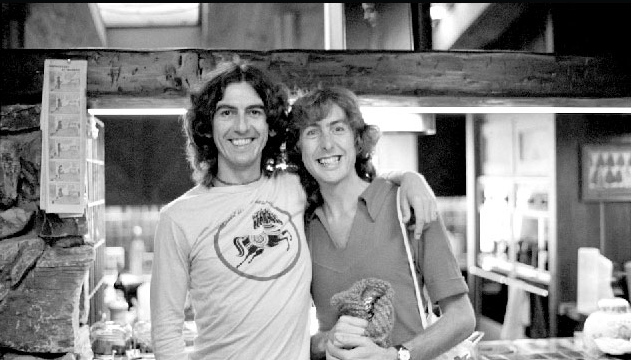
For George Harrison: by Eric Idle, 'He paid for the movie The Life of Brian, because he wanted to see it' - 2002

July 2, 2015

3 July, 2002, Hollywood Bowl, LA, USA

When they told me they were going to induct my friend George Harrison into the Hollywood Bowl Hall of Fame posthumously: my first thought was – I bet he won’t show up.

Because, unlike some others one might mention – but won’t – he really wasn’t in to honors.

He was one of those odd people who believe that life is somehow more important than show business.

Which I know is a heresy here in Hollywood, and I’m sorry to bring it up here in the very Bowel of Hollywood but I can hear his voice saying “oh very nice, very useful, a posthumous award – where am I supposed to put it? What’s next for me then? A posthumous Grammy? An ex-Knighthood? An After-Lifetime Achievement Award?

He’s going to need a whole new shelf up there.

So: posthumously inducted – sounds rather unpleasant: sounds like some kind of after-life enema.

But Induct – in case you are wondering – comes from the word induce – meaning to bring on labor by the use of drugs.

And Posthumous is actually from the Latin post meaning after and hummus meaning Greek food.

So I like to think that George is still out there somewhere – pregnant and breaking plates at a Greek restaurant.

I think he would prefer to be inducted posthumorously because he loved comedians – poor sick sad deranged lovable puppies that we are – because they – like him – had the ability to say the wrong thing at the right time – which is what we call humor.

He put Monty Python on here at The Hollywood Bowl, and he paid for the movie The Life of Brian, because he wanted to see it.

Still the most anybody has ever paid for a Cinema ticket.

His life was filled with laughter and even his death was filled with laughter… In the hospital he asked the nurses to put fish and chips in his IV.

The doctor – thinking he was delusional – said to his son “don’t worry, we have a medical name for this condition.”

Yes said Dhani “humor.”

And I’m particularly sorry Dhani isn’t here tonight – because I wanted to introduce him by saying “Here comes the son” – but sadly that opportunity for a truly bad joke has gone, as has Dhani’s Christmas present from me.

George once said to me “if we’d known we were going to be The Beatles we’d have tried harder.”

What made George special – apart from his being the best guitarist in the Beatles – was what he did with his life after they achieved everything.

He realized that this fame business was – and I’ll use the technical philosophical term here – complete bullshit.

And he turned to find beauty and truth and meaning in life – and more extraordinarily – found it.

This is from his book I Me Mine:

“The things that most people are struggling for is fame or fortune or wealth or position – and really none of that is important because in the end death will take it all away. So you spend your life struggling for something, which is in effect a waste of time… I mean I don’t want to be lying there as I’m dying thinking ‘oh shit I forgot to put the cat out.'”

And he wasn’t. He passed away – here in LA – with beauty and dignity surrounded by people he loved.

Because he had an extraordinary capacity for friendship.

People loved him all over the planet.

George was in fact a moral philosopher: his life was all about a search for truth, and preparing himself for death.

Which is a bit weird for someone in rock and roll. They’re not supposed to be that smart. They’re supposed to be out there looking for Sharon. Not the meaning of life.

Michael Palin said George’s passing was really sad but it does make the afterlife seem much more attractive.

He was a gardener – he grew beauty in everything he did – in his life, in his music, in his marriage and as a father.

I was on an island somewhere when a man came up to him and said “George Harrison, oh my god, what are you doing here?” – and he said “Well everyone’s got to be somewhere.”

Well alas he isn’t here. But we are. And that’s the point. This isn’t for him. This is for us, because we want to honor him. We want to remember him, we want to say Thanks George for being. And we really miss you. So lets take a look at some of the places he got to in his life.

Video montage is shown of George Harrison’s life, from youthful Beatle to mature solo artist.

Well he’s still not here. But we do have someone very special who was very dear to him – who is here. The first man to perform with the Beatles. The one and only Billy Preston.

Billy Preston and a chorus of vocalists sing Harrison’s “My Sweet Lord.”

Thank you Billy Preston.

So this is the big drag about posthumous awards: there’s no one to give ’em to.

So I’m gonna keep this and put it next to the one I got last year. No, I’m going to give it to the love of his life, his dark sweet lady, dear wonderful Olivia Harrison, who is with us here tonight. Liv, you truly know what it is to be without him.

Thank you Hollywood Bowl you do good to honor him. Goodnight.

We would like to thank Eric Idle for generously promoting this speech.

Similar to this on Speakola:

John Cleese's eulogy for Graham Chapman

Visit our homepage.

Source: http://www.goodfuneralguide.co.uk/2011/11/...

Enjoyed this speech? Speakola is a labour of love and I’d be very grateful if you would share, tweet or like it. Thank you.

Facebook Twitter Facebook
In EDITORS CHOICE Tags GEORGE HARRISON, MUSICIAN, FUNNY[, ERIC IDLE, GOLD SPEAKOLIE
1 Comment

Space Shuttle Challenger Crew: 'We've never had a tragedy like this', Ronald Reagan - 1986

July 2, 2015

28 January, 1986, Oval Office, Washington DC

Ladies and gentlemen, I'd planned to speak to you tonight to report on the state of the Union, but the events of earlier today have led me to change those plans. Today is a day for mourning and remembering.

Nancy and I are pained to the core by the tragedy of the shuttle Challenger. We know we share this pain with all of the people of our country. This is truly a national loss.

Nineteen years ago, almost to the day, we lost three astronauts in a terrible accident on the ground. But we've never lost an astronaut in flight; we've never had a tragedy like this. And perhaps we've forgotten the courage it took for the crew of the shuttle; but they, the Challenger Seven, were aware of the dangers, but overcame them and did their jobs brilliantly. We mourn seven heroes: Michael Smith, Dick Scobee, Judith Resnik, Ronald McNair, Ellison Onizuka, Gregory Jarvis, and Christa McAuliffe. We mourn their loss as a nation together.

For the families of the seven, we cannot bear, as you do, the full impact of this tragedy. But we feel the loss, and we're thinking about you so very much. Your loved ones were daring and brave, and they had that special grace, that special spirit that says, "Give me a challenge and I'll meet it with joy." They had a hunger to explore the universe and discover its truths. They wished to serve, and they did. They served all of us.

We've grown used to wonders in this century. It's hard to dazzle us. But for 25 years the United States space program has been doing just that. We've grown used to the idea of space, and perhaps we forget that we've only just begun. We're still pioneers. They, the members of the Challenger crew, were pioneers.

And I want to say something to the schoolchildren of America who were watching the live coverage of the shuttle's takeoff. I know it is hard to understand, but sometimes painful things like this happen. It's all part of the process of exploration and discovery. It's all part of taking a chance and expanding man's horizons. The future doesn't belong to the fainthearted; it belongs to the brave. The Challenger crew was pulling us into the future, and we'll continue to follow them.

I've always had great faith in and respect for our space program, and what happened today does nothing to diminish it. We don't hide our space program. We don't keep secrets and cover things up. We do it all up front and in public. That's the way freedom is, and we wouldn't change it for a minute.

We'll continue our quest in space. There will be more shuttle flights and more shuttle crews and, yes, more volunteers, more civilians, more teachers in space. Nothing ends here; our hopes and our journeys continue.

I want to add that I wish I could talk to every man and woman who works for NASA or who worked on this mission and tell them: "Your dedication and professionalism have moved and impressed us for decades. And we know of your anguish. We share it."

There's a coincidence today. On this day 390 years ago, the great explorer Sir Francis Drake died aboard ship off the coast of Panama. In his lifetime the great frontiers were the oceans, and an historian later said, "He lived by the sea, died on it, and was buried in it." Well, today we can say of the Challenger crew: Their dedication was, like Drake's, complete.

The crew of the space shuttle Challenger honored us by the manner in which they lived their lives. We will never forget them, nor the last time we saw them, this morning, as they prepared for their journey and waved goodbye and "slipped the surly bonds of earth" to "touch the face of God.

Source: http://history.nasa.gov/reagan12886.html

Enjoyed this speech? Speakola is a labour of love and I’d be very grateful if you would share, tweet or like it. Thank you.

Facebook Twitter Facebook
In EDITORS CHOICE Tags PRESIDENTS, RONALD REAGAN, SPACE SHUTTLE, USA, CHALLENGER, NASA
Comment

Olklahoma Bombing Memorial: 'Our words seem small beside the loss you have endured', Bill Clinton - 1995

June 30, 2015

23 April, 1995, Olklahoma City, OK, USA

Thank you very much, Governor Keating and Mrs. Keating, Reverend Graham, to the families of those who have been lost and wounded, to the people of Oklahoma City, who have endured so much, and the people of this wonderful state, to all of you who are here as our fellow Americans.

I am honored to be here today to represent the American people. But I have to tell you that Hillary and I also come as parents, as husband and wife, as people who were your neighbors for some of the best years of our lives.

Today our nation joins with you in grief. We mourn with you. We share your hope against hope that some may still survive. We thank all those who have worked so heroically to save lives and to solve this crime -- those here in Oklahoma and those who are all across this great land, and many who left their own lives to come here to work hand in hand with you. We pledge to do all we can to help you heal the injured, to rebuild this city, and to bring to justice those who did this evil.

This terrible sin took the lives of our American family, innocent children in that building, only because their parents were trying to be good parents as well as good workers; citizens in the building going about their daily business; and many there who served the rest of us -- who worked to help the elderly and the disabled, who worked to support our farmers and our veterans, who worked to enforce our laws and to protect us. Let us say clearly, they served us well, and we are grateful.

But for so many of you they were also neighbors and friends. You saw them at church or the PTA meetings, at the civic clubs, at the ball park. You know them in ways that all the rest of America could not. And to all the members of the families here present who have suffered loss, though we share your grief, your pain is unimaginable, and we know that. We cannot undo it. That is God's work.

Our words seem small beside the loss you have endured. But I found a few I wanted to share today. I've received a lot of letters in these last terrible days. One stood out because it came from a young widow and a mother of three whose own husband was murdered with over 200 other Americans when Pan Am 103 was shot down. Here is what that woman said I should say to you today:

The anger you feel is valid, but you must not allow yourselves to be consumed by it. The hurt you feel must not be allowed to turn into hate, but instead into the search for justice. The loss you feel must not paralyze your own lives. Instead, you must try to pay tribute to your loved ones by continuing to do all the things they left undone, thus ensuring they did not die in vain.

Wise words from one who also knows.

You have lost too much, but you have not lost everything. And you have certainly not lost America, for we will stand with you for as many tomorrows as it takes.

If ever we needed evidence of that, I could only recall the words of Governor and Mrs. Keating:

If anybody thinks that Americans are mostly mean and selfish, they ought to come to Oklahoma. If anybody thinks Americans have lost the capacity for love and caring and courage, they ought to come to Oklahoma.

To all my fellow Americans beyond this hall, I say, one thing we owe those who have sacrificed is the duty to purge ourselves of the dark forces which gave rise to this evil. They are forces that threaten our common peace, our freedom, our way of life. Let us teach our children that the God of comfort is also the God of righteousness: Those who trouble their own house will inherit the wind.1 Justice will prevail.

Let us let our own children know that we will stand against the forces of fear. When there is talk of hatred, let us stand up and talk against it. When there is talk of violence, let us stand up and talk against it. In the face of death, let us honor life. As St. Paul admonished us, Let us "not be overcome by evil, but overcome evil with good."2

Yesterday, Hillary and I had the privilege of speaking with some children of other federal employees -- children like those who were lost here. And one little girl said something we will never forget. She said, "We should all plant a tree in memory of the children." So this morning before we got on the plane to come here, at the White House, we planted that tree in honor of the children of Oklahoma. It was a dogwood with its wonderful spring flower and its deep, enduring roots. It embodies the lesson of the Psalms -- that the life of a good person is like a tree whose leaf does not wither.³

My fellow Americans, a tree takes a long time to grow, and wounds take a long time to heal. But we must begin. Those who are lost now belong to God. Some day we will be with them. But until that happens, their legacy must be our lives.

Thank you all, and God bless you.

Source: http://www.americanrhetoric.com/speeches/w...

Enjoyed this speech? Speakola is a labour of love and I’d be very grateful if you would share, tweet or like it. Thank you.

Facebook Twitter Facebook
In EDITORS CHOICE Tags PRESIDENTS, MEMORIAL, TERRORISM
Comment

For Michael Jackson: 'Wasn’t nothing strange about your Daddy. It was strange what your Daddy had to deal with', Rev Al Sharpton - 2009

May 13, 2015

7 July 2009, Staples Center, Los Angeles, California, USA

All over the world today, people are gathered in love vigils to celebrate the life of a man that taught the world how to love.

People may be wondering why there’s such an emotional outburst. But you would have to understand the journey of Michael to understand what he meant to all of us. For these that sit here as the Jackson family -- a mother and father with nine children that rose from a working class family in Gary, Indiana -- they had nothing but a dream. No one believed in those days that these kind of dreams could come true. But they kept on believing and Michael never let the world turn him around from his dreams.

I first met Michael around 1970 -- Black Expo, Chicago, Illinois -- Reverend Jesse Jackson, who stood by this family till now, and from that day as a cute kid to this moment, he never gave up dreaming. It was that dream that changed culture all over the world. When Michael started, it was a different world. But because Michael kept going, because he didn’t accept limitations, because he refused to let people decide his boundaries, he opened up the whole world.

In the music world, he put on one glove, pulled his pants up and broke down the color curtain where now our videos are shown and magazines put us on the cover. It was Michael Jackson that brought Blacks and Whites and Asians and Latinos together. It was Michael Jackson that made us sing, "We are the World" and feed the hungry long before Live Aid.

Because Michael Jackson kept going, he created a comfort level where people that felt they were separate became interconnected with his music. And it was that comfort level that kids from Japan and Ghana and France and Iowa and Pennsylvania got comfortable enough with each other till later it wasn’t strange to us to watch Oprah on television. It wasn’t strange to watch Tiger Woods golf. Those young kids grew up from being teenage, comfortable fans of Michael to being 40 years old and being comfortable to vote for a person of color to be the President of the United States of America.

Michael did that. Michael made us love each other. Michael taught us to stand with each other. There are those that like to dig around mess. But millions around the world -- we’re going to uphold his message. It’s not about mess. It’s about his love message. As you climb up steep mountains, sometime[s] you scar your knee. Sometime[s] you break your skin. But don’t focus on the scars; focus on the journey. Michael beat ‘em. Michael rose to the top. He out-sang his cynics. He out-danced his doubters. He out-performed the pessimists. Every time he got knocked down, he got back up. Every time you counted him out, he came back in. Michael never stopped Michael never stopped. Michael never stopped.

I want to [s]ay to Mrs. Jackson and Joe Jackson, his sisters and brothers: We thank you for giving us someone that taught us love, someone that taught us hope. We want to thank you because we know it was your dream too.

We know that your heart is broken. I know you have some comfort from the letter from the President of the United States and Nelson Mandela. But this was your child. This was your brother. This was your cousin. Nothing will fill your hearts’ loss. But I hope the love that people are showing will make you know he didn’t live in vain. And I want his three children to know: Wasn’t nothing strange about your Daddy. It was strange what your Daddy had to deal with. But he dealt with it --

He dealt with it anyway.

He dealt with it for us.

So some came today, Mrs. Jackson, to say goodbye to Michael.

I came to say, thank you.

Thank you -- because you never stopped.

Thank you -- because you never gave up.

Thank you -- 'cause you never gave out.

Thank you -- 'cause you tore down our divisions.

Thank you -- because you eradicated barriers.

Thank you 'cause you gave us hope.

Thank you Michael. Thank you Michael. Thank you Michael.

Enjoyed this speech? Speakola is a labour of love and I’d be very grateful if you would share, tweet or like it. Thank you.

Facebook Twitter Facebook
In EDITORS CHOICE Tags SINGER, FAMOUS
1 Comment

For Unknown Soldier: 'He is all of them. And he is one of us', by Paul Keating - 1993

May 13, 2015

 11 November 1993, Australian War Memorial, Canberra, Australia

We do not know this Australian's name and we never will. We do not know his rank or his battalion. We do not know where he was born, nor precisely how and when he died. We do not know where in Australia he had made his home or when he left it for the battlefields of Europe. We do not know his age or his circumstances – whether he was from the city or the bush; what occupation he left to become a soldier; what religion, if he had a religion; if he was married or single. We do not know who loved him or whom he loved. If he had children we do not know who they are. His family is lost to us as he was lost to them. We will never know who this Australian was.

Yet he has always been among those whom we have honoured. We know that he was one of the 45,000 Australians who died on the Western Front. One of the 416,000 Australians who volunteered for service in the First World War. One of the 324,000 Australians who served overseas in that war and one of the 60,000 Australians who died on foreign soil. One of the 100,000 Australians who have died in wars this century.

He is all of them. And he is one of us.

This Australia and the Australia he knew are like foreign countries. The tide of events since he died has been so dramatic, so vast and all-consuming, a world has been created beyond the reach of his imagination.

He may have been one of those who believed that the Great War would be an adventure too grand to miss. He may have felt that he would never live down the shame of not going. But the chances are he went for no other reason than that he believed it was his duty - the duty he owed his country and his King.

Because the Great War was a mad, brutal, awful struggle, distinguished more often than not by military and political incompetence; because the waste of human life was so terrible that some said victory was scarcely discernible from defeat; and because the war which was supposed to end all wars in fact sowed the seeds of a second, even more terrible, war -  we might think this Unknown Soldier died in vain.

But, in honouring our war dead, as we always have and as we do today, we declare that this is not true.

For out of the war came a lesson which transcended the horror and tragedy and the inexcusable folly.

It was a lesson about ordinary people – and the lesson was that they were not ordinary.

On all sides they were the heroes of that war; not the generals and the politicians but the soldiers and sailors and nurses – those who taught us to endure hardship, to show courage, to be bold as well as resilient, to believe in ourselves, to stick together.

The Unknown Australian Soldier we inter today was one of those who by his deeds proved that real nobility and grandeur belong not to empires and nations but to the people on whom they, in the last resort, always depend.

That is surely at the heart of the ANZAC story, the Australian legend which emerged from the war. It is a legend not of sweeping military victories so much as triumphs against the odds, of courage and ingenuity in adversity. It is a legend of free and independent spirits whose discipline derived less from military formalities and customs than from the bonds of mateship and the demands of necessity.

It is a democratic tradition, the tradition in which Australians have gone to war ever since.

This Unknown Australian is not interred here to glorify war over peace; or to assert a soldier's character above a civilian's; or one race or one nation or one religion above another; or men above women; or the war in which he fought and died above any other war; or of one generation above any that has or will come later.

The Unknown Soldier honours the memory of all those men and women who laid down their lives for Australia.

His tomb is a reminder of what we have lost in war and what we have gained.

We have lost more than 100,000 lives, and with them all their love of this country and all their hope and energy.

We have gained a legend: a story of bravery and sacrifice and, with it, a deeper faith in ourselves and our democracy, and a deeper understanding of what it means to be Australian.

It is not too much to hope, therefore, that this Unknown Australian Soldier might continue to serve his country - he might enshrine a nation's love of peace and remind us that in the sacrifice of the men and women whose names are recorded here there is faith enough for all of us.

The Hon. P.J. Keating MP
Prime Minister of Australia

Enjoyed this speech? Speakola is a labour of love and I’d be very grateful if you would share, tweet or like it. Thank you.

Facebook Twitter Facebook
In EDITORS CHOICE Tags AUSTRALIA, FAMOUS, UNKNOWN SOLDIER
Comment
← Newer Posts

See my film!

Limited Australian Season

March 2025

Details and ticket bookings at

angeandtheboss.com

Support Speakola

Hi speech lovers,
With costs of hosting website and podcast, this labour of love has become a difficult financial proposition in recent times. If you can afford a donation, it will help Speakola survive and prosper.

Best wishes,
Tony Wilson.

Become a Patron!

Learn more about supporting Speakola.

Featured political

Featured
Jon Stewart: "They responded in five seconds", 9-11 first responders, Address to Congress - 2019
Jacinda Ardern: 'They were New Zealanders. They are us', Address to Parliament following Christchurch massacre - 2019
Dolores Ibárruri: "¡No Pasarán!, They shall not pass!', Defense of 2nd Spanish Republic - 1936
Jimmy Reid: 'A rat race is for rats. We're not rats', Rectorial address, Glasgow University - 1972

Featured eulogies

Featured
For Geoffrey Tozer: 'I have to say we all let him down', by Paul Keating - 2009
for James Baldwin: 'Jimmy. You crowned us', by Toni Morrison - 1988
for Michael Gordon: '13 days ago my Dad’s big, beautiful, generous heart suddenly stopped beating', by Scott and Sarah Gordon - 2018

Featured commencement

Featured
Tara Westover: 'Your avatar isn't real, it isn't terribly far from a lie', The Un-Instagrammable Self, Northeastern University - 2019
Tim Minchin: 'Being an artist requires massive reserves of self-belief', WAAPA - 2019
Atul Gawande: 'Curiosity and What Equality Really Means', UCLA Medical School - 2018
Abby Wambach: 'We are the wolves', Barnard College - 2018
Eric Idle: 'America is 300 million people all walking in the same direction, singing 'I Did It My Way'', Whitman College - 2013
Shirley Chisholm: ;America has gone to sleep', Greenfield High School - 1983

Featured sport

Featured
Joe Marler: 'Get back on the horse', Harlequins v Bath pre game interview - 2019
Ray Lewis : 'The greatest pain of my life is the reason I'm standing here today', 52 Cards -
Mel Jones: 'If she was Bradman on the field, she was definitely Keith Miller off the field', Betty Wilson's induction into Australian Cricket Hall of Fame - 2017
Jeff Thomson: 'It’s all those people that help you as kids', Hall of Fame - 2016

Fresh Tweets


Featured weddings

Featured
Dan Angelucci: 'The Best (Best Man) Speech of all time', for Don and Katherine - 2019
Hallerman Sisters: 'Oh sister now we have to let you gooooo!' for Caitlin & Johnny - 2015
Korey Soderman (via Kyle): 'All our lives I have used my voice to help Korey express his thoughts, so today, like always, I will be my brother’s voice' for Kyle and Jess - 2014

Featured Arts

Featured
Bruce Springsteen: 'They're keepers of some of the most beautiful sonic architecture in rock and roll', Induction U2 into Rock Hall of Fame - 2005
Olivia Colman: 'Done that bit. I think I have done that bit', BAFTA acceptance, Leading Actress - 2019
Axel Scheffler: 'The book wasn't called 'No Room on the Broom!', Illustrator of the Year, British Book Awards - 2018
Tina Fey: 'Only in comedy is an obedient white girl from the suburbs a diversity candidate', Kennedy Center Mark Twain Award -  2010
Tina Fey: 'Only in comedy is an obedient white girl from the suburbs a diversity candidate', Kennedy Center Mark Twain Award - 2010

Featured Debates

Featured
Sacha Baron Cohen: 'Just think what Goebbels might have done with Facebook', Anti Defamation League Leadership Award - 2019
Greta Thunberg: 'How dare you', UN Climate Action Summit - 2019
Charlie Munger: 'The Psychology of Human Misjudgment', Harvard University - 1995
Lawrence O'Donnell: 'The original sin of this country is that we invaders shot and murdered our way across the land killing every Native American that we could', The Last Word, 'Dakota' - 2016