• Genre
  • About
  • Submissions
  • Donate
  • Search
Menu

Speakola

All Speeches Great and Small
  • Genre
  • About
  • Submissions
  • Donate
  • Search

Commencement and Graduation

Inspiring, humorous, wisdom imparting. Some of the best speeches are delivered in the educational context. Upload your commencement or graduation speech here.

Leymah Gboweee: 'Step out of the shadows', Barnard College - 2013

June 30, 2017

19 May 2013, Barnard College, New York, USA

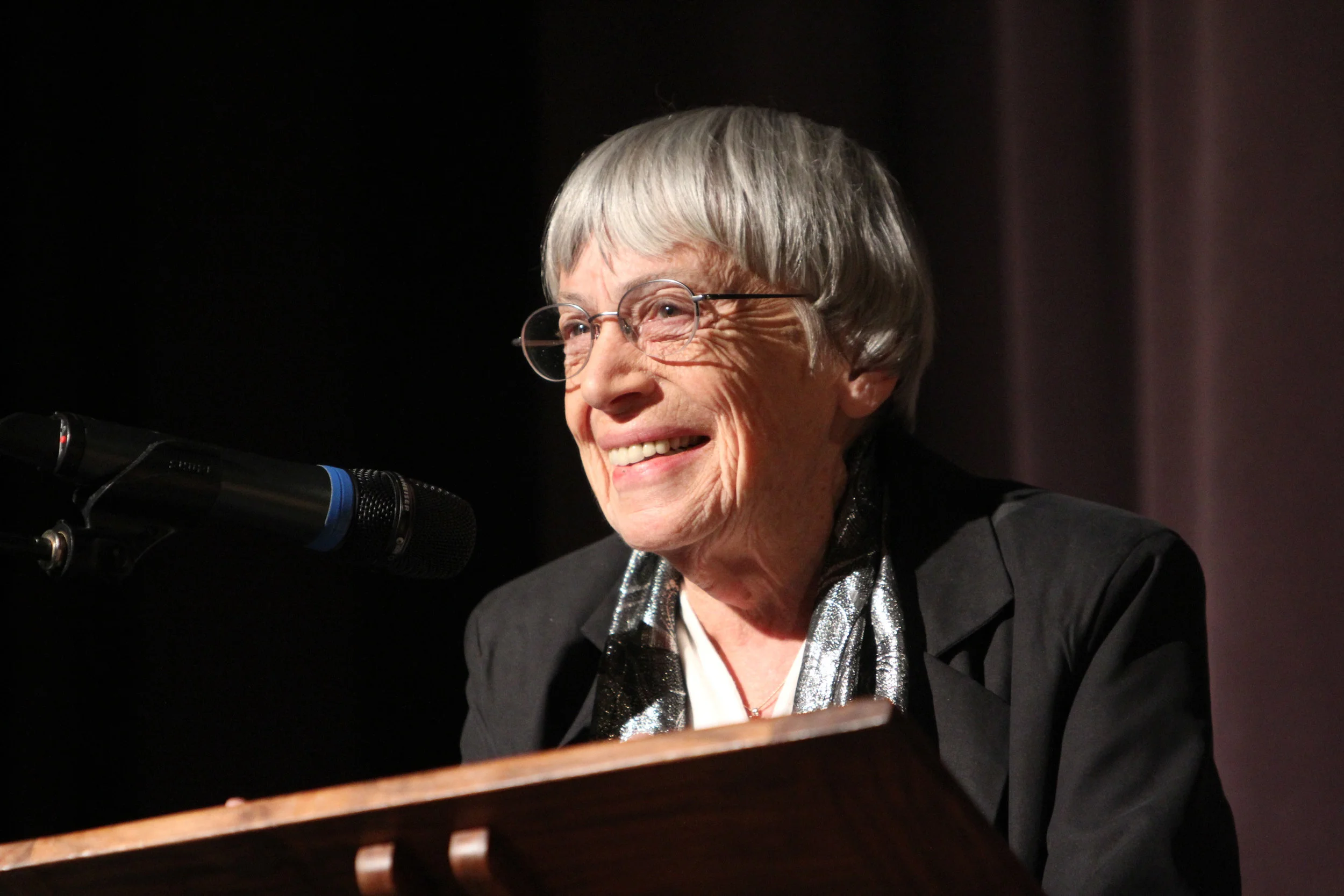
Leymah GBowee is a peace activist and founder of Women of Liberia Mass Action for Peace. She helped bring an end to the civil war in her country in 2003.

Thank you.  Please have your seats.  Someone once told me, the kids in America are born with whistles in their bellies.  There is nowhere in the world that girls can scream like America.  Thank you, President Spar.  This is truly an honor.  President Spar, Provost Bell, Board Chair Caruso, Dean Hinkson, faculty, student body, special guests, proud parents, distinguished ladies and gentleman, I’m honored to be here today at your 2013 Commencement.  To God be the glory for another wonderful rainy day. 

My sisters sometimes say to me, I have some tendency that is a little bit leaning towards crazy. So, I read stuff.  People do not go on websites and read negative things except they have a little mental issue.  So, as I was preparing for this commencement, something took me to Barnard website.  And there was this article, “Why Leymah Gbowee Commencement Speaker?”  And then after reading part of the article, I usually would just skip through and go down to the comments.  Trust me, you all did well, as compared to some of the sites that I go on.  But one of the comments that I like, because this site is B-W-O-G, and it said, “How awesome,” that was the comment, “for a G-B-O-W-E-E, to be speaking at Barnard, on, and then we’re talking about her on this site, B-W-O-G.  So, if you switch it around, except for the W-E that is my last name, but you were very nice to me.

I have been asked to send you off with some words of wisdom.  I’ll do my best on the wisdom part.  Words you will definitely get.  I ask you graduates to kindly focus for a moment, forget the parties afterwards.  Forget the presents that are awaiting you out there, and just journey with me, briefly, on the term, “Step out of the shadows.”  And most times when I’m speaking at commencements or speaking with girls or women, I tend to put on something that will cause you – even if you forgot what I said, to remember me.  Unfortunately, today, I don’t have one of my big head gears that will make you remember me, but please try to remember my pretty 41-year-old face. And I’m donning and 18-year old hair style.  So if you forget anything I say, don’t forget, she had a hairstyle like her daughter. 

Many years ago, I met an old woman.  Her name was Krubo Pewee. She was quite poor, and lived in a shanty rundown home, but she had an air of confidence and independence.  She walked with her shoulders up.  Curiosity actually led me to seek this woman out.  Every time I visited her, I would leave her some cash for food and medication, pitying her condition.  She always hesitated taking the money from me.  I would have to urge her before she reached out to take. 

One day, after several months of visitation and friendship, I handed her some money, and she said, thank you, but no thanks.  She said, Leymah, I’m not one of those people to take money or to always take from people.  I like giving back when I take.  I’m a business woman.  I love to watch my money grow, and I love to serve people through my business.  If you want to do me a favor, give me a loan, so that I can restart my business.  I asked her how much do you want?  She said, 200 US dollars.  In Liberian money, that is about $14,000.  I took $250 and gave to her. 

Six months later, I went back to her tiny village.  I saw a large kiosk, like a shop, rice, vegetables, and other provisions.  I was shocked, but elated at the same time.  She was more talkative, more relaxed, and we went on chatting about different things.  As we talked, she asked about my children.  And I told her about the headache of children being far away in school, and having to send money from Africa to the US, and she said – I did that too.  Of course I was shocked.  You send money to the US?  She said, yes.  In the early 70s, my brother got a scholarship as an aircraft maintenance engineer from Liberia.  And this scholarship only paid his fees.  So, I had to send him money every month.  So, I used to go and do bank drafts.  Those were the days long before Western Unions or Money Grams.  We talked about different things, and she revealed to me that from that kiosk, the previous one she had was what she used to educate that engineer, an IT consultant, a professional nurse, a community activist, and many more children of her relatives, siblings, and her own children.

Again, I was shocked.  Here is this woman, poor, sad, living in a shanty home, talking about all of these great people that she had educated.  But as we continued the conversation, I said, but you’ve done well to do all of this, and she would not for one moment take any credit for educating those individuals. She referred to herself as a shadow.  A shadow, what the shadow does, according to her, is accompany you.  It is never active.  It doesn’t feed or clothe you.  I told myself, a concept of her role in these people’s lives was wrong, but who was I to argue with a 76-year-old woman? 

Shadow does nothing.  And as I drove away from that place, I kept thinking about how she referred to herself.  And it dawned on me that this is how all over the world, women think.  They do a lot of the work, but they never really take any credit for what they do.  Their roles in the success or the successes of all of the different things, they always try to keep in the shadows.  Growing up, most times as young women and as girls, regardless of where you come from we are socialized as women to be humble.  In very extreme cases, be seen and never heard.  In some cases, walk on tiptoes. 

For many years, I heard the phrase, “Act like a lady.”  To sum it all up, we are expected to live our lives in the shadows, but we are also told to contribute our quota to the growth and development of the world.  I have a four-year-old who is going on 55, and she constantly comes back from my parents’ house, and says, Momma, Grandma said, “Girls don’t jump up and down.” And then I say to her, “Mok, Momma says, jump up and down as much as you want!”

Grandma says, “Good girls should read their books and be quite.” And then I say, “Mok Momma says, good girls should read their books and tell the world what they’ve read.”

The contradictions of our lives as women, is confusing for me as an activist, sometimes.  Sometimes, it’s enraging, and other times, it’s a little bit entertaining.  A few months ago, I dared to speak up against the current regime.  One of my uncles is a minister in this current regime.  And he called my dad, and this is the entertaining part.  Why can’t you control your daughter?  And my dad said to him, “She’s your niece. You go and control her.”  But between the two men who was supposed to be controlling me, no one dare come to control me.

We are told, for those of us who frequent international conferences and meetings, this is the decade of the women.  This is followed by local and international proclamations on the rights of women and girls.  These proclamations, in my opinion, are made to get us to put our best foot forward; get our brains working, and other instances get our well-manicured nails dirty.  However, we’ve seen also many examples of the reality of our situation.  For in this country, women can join the military, but until recently, could not engage in active combat.  My interpretation was that we are not to be put up front.  Our roles are to be positioned, uniquely, in the shadows.  In many other part of the world, including my own country Liberia, it is a struggle to convince fathers, and sometimes mothers that their daughters are worthy of being in school, and not in the shadows of the home. 

The story of Malala took the world by storm.  This is another example.  In college, many of you spend four years, especially in a women's college, listening to the rhetoric of the world, rhetoric that we hear at all international meetings about women's roles, responsibilities, and rights.  The real world, ladies, will teach you as it is still teaching me that it will never be handed down to you on flower beds of ease as my mother called it, or on a silver platter. 

You have to challenge, in most cases, keep your hand up, in other cases, and in some cases, break protocol if you are to step out of the shadows.  You were also taught some of the stories of great women, women who have left great legacies, Harriet Tubman enslaved, mildly epileptic, Black, and a woman.  Those were all qualities, and reasons for her to remain in the shadows.  She refused to do so.  She engaged one cause after the other. 

Susan B. Anthony, women's rights activist, freedom fighter, she refused to be in the shadows.  She spoke up in her lifetime about the inequalities between men and women, and freedom for those enslaved.  Her earlier fear of public speaking never hindered her from stepping out of the shadows.  These are just two examples of women of old in your context.  Today there are many more that we could cite. The lessons these women have taught, and are still teaching us is that we must learn, decide, and fight to break out of the shadows; break out about your pains. 

I just came back from Libya where I heard horrid stories, horrible stories about rape and abuse during the revolution, and I was told the story of this young lady who was brutally raped.  Her brothers locked her up, and because for them, her pain is to be kept in the shadows of their home, she broke free; ran away.  They tracked her down, and killed her because she was to remain in the shadows.  We went to this huge conference, and one of those young women who have also been in the shadows stepped out, and said, I want to speak about my rape.  She came, covered in black, standing in that room that I called 98.2% of men, and told her story of how she was kept in a room with 80 other women raped daily, abused daily. The men in that room hung their head.  I stood up, and applauded her because she refused to stay in the shadows of her pains.

Don't stay in the shadows.  Refuse to stay in the shadow.  Break out about your dreams.  Break out about your passion that you have for changing the world.  Break out about how you feel about things.  Never hold back.  Refuse to be in the shadows as you step out into this life. Don't be shy no matter how crazy it seems to you.  That crazy idea may just be the solution for some crazy global or local problem. 

From 1989 until 2003, the women of Liberia were also in the shadows.  However, in 2003, tired of being used, and misused by over-drug militias, we stepped out to front the demons of militarism and violence.  We refused to allow our bodies to be used anymore.  We knew we would die, but we refused to allow our legacies to be “they died without trying.”  We stepped out of the darkness of victimization, and into the light of activism and peace. 

We changed the global perception of Liberia being The Land of Child Soldiers to being The Land of Women in White. Today, the peace that we strived for in Liberia has been translated into many empowerment, and refusal to be seen, and not heard. Community women are demanding their rights, demanding justice for perpetrators of crimes against women, and demanding the provisions of basic social services.  We, as women of Liberia, are also demanding recognition for our contributions to the growth and development of our nation.  

Sheryl Sandberg, a good friend, and someone who I stand behind because she came ahead of me to Barnard writes in her book, Lean In, that women should step out, and unashamedly claim their spaces in their professional career striving to be out and on top.  This, my dear ladies, can only happen if you step out of the shadows.  I received a t-shirt once that read, "Good girls never make history."  I love it because it encourages me to remain in the light, and never step back into the shadows. 

So, I started with the story of Krubo Peewee in August of 2013, one of those she educated died, the aviation engineer.  I accompanied her to the family meeting planning the burial.  The entire time no one acknowledged her, or recognized her.  She sat in the back of the meeting sobbing quietly still hiding in the shadows somewhat hopeful that someone will recognize the role she played in this man's life.  It never happened. 

On the day of the funeral, I went along with her.  We sat in the church, and one-after-the-other people came, and paid tribute, and attributed his successes to one thing or the other; never the poor woman in the shanty run-down house.  Finally, the pastor announced, if there were no more tributes, they will continue with the other aspects of the program.  I was sitting, and screaming in my head, go for it, Krubo!  Stand up.  Say something.  Step out of the shadows. 

And, as if she could hear my mental scream, she stood up, straightened her shoulders, and walked up to the podium.  Here lies a man I saw so much ability in.  I live my life through him.  I did not go to school because our parents married me off early.  And, because I could make money, I sent him to school, and she went on to talk about her brother, and everything she did.  Afterwards, she turned to his children and his widow, and she said to them, “It's always good to recognize someone, anyone, regardless of their physical appearance when they have contributed to your success.”  As she walked out of the church, I followed and went, yes!

Distinguished graduates, as you journey through life, refuse to hide.  Each and every one of you has unique skills and qualities that the world needs. Being in the shadow will continue to keep our dark world, darker.  If all of you decide, or decided that this life you will step out, and do exactly what we need to do, you'll make the world a better place.  Like Krubo Peewee, you may be forced to step out of the shadows.  No matter how you decide to do so, always remember that stepping out of the shadows will ensure, your stepping out, will ensure that some girl will also find the strength to step out.

Many years ago, I made that decision. Four children, dirt broke, dirt poor, only two underwear, until today, I am traumatized, so I buy underwear like a crazy person. I have to say that.  Dirt poor, I went back to school, and I sat in my college classroom for three months, and never said a word.  Every time someone raised their hand, and said something, I said to myself, I could have said it better. 

On this fateful day, I got this philosophy assignment, and I put my all into that assignment, went back, and presented my papers, psychology; not philosophy, went back, presented my paper to my professor, and when he brought it, I had an F.  I looked at the paper, and something was telling me step out of the shadows.  As long as you remain in the shadows, you will continue to receive F.  I sat there, looked at that paper, looked, and thought, and looked, and thought, and mustered the courage; mustered the bravery.  After class, walked up to the professor sweating like a goat during wintertime, sweating, really sweating profusely, shaking like a leaf, and I said to him, “Sir, you miss-graded my paper.”

He looked at me with a stern face, and said, because this is my first time speaking to this man in three months, “Are you sure”?  And, I said, “Yes.”  I feel because I have never spoken up in class, you give me an F; you give me an F without reading my paper.  And then, he took it away from me, and said, if, and only in Africa the professor will do that, if you're telling a lie, you will be in trouble with me, and the only thing that rang in my head, he who is down, fear no fall.  He went back, and brought that paper on Monday, and I got an A+.

He saw the name, and never heard the voice, and thought that name is equivalent to F.  As you step out, please, you're more than F.  You're more than D.  You're more than C.  You're even more than B.  I tell my children the alphabet starts from A, and that's what God has put in every woman in this world.  You are an A.  Refuse to be in the shadows.  Because as you remain in the shadows, someone will miss-grade you, miss, or underpay you, misuse, abuse you.  Refuse to remain in the shadow.  Step out of the shadow.

And you decide to step out of the shadow, just in case some father, brother, sister, mother, or former professor tries to tell you that a girl has never done this before, remind them that a woman came all the way from Africa to tell us, the world is upside down.  Things are not what they used to be before.  The Black man is one of the best golfers.  

White boys are playing basketball very well.  Two women are president of Africa, and a White man and a Black man and his family now lives in The White House.

Step out of the shadows, and be the best God created you to be.  Congratulations, students.  Thank you, parents.  Well done, faculty.  God bless us all.  Thank you.
Source: https://barnard.edu/news/transcript-speech...

Enjoyed this speech? Speakola is a labour of love and I’d be very grateful if you would share, tweet or like it. Thank you.

Facebook Twitter Facebook
In GUEST SPEAKER D Tags LEYMAH GBOWEE, NOBEL PEACE PRIZE, LIBERA, AFRICA, TRANSCRIPT, WOMEN, FEMINISM, STEP OUT OF THE SHADOWS, WOMEN OF LIBERIA MASS ACTION FOR PEACE, LIBERIAN CIVIL WAR
Comment
Jack Liu photography, 2014

Jack Liu photography, 2014

Ursula Le Guin: 'We are volcanoes', Bryn Mawr - 1986

June 30, 2017

May1986, Bryn Mawr College, Pennsylvania, USA

Thinking about what I should say to you made me think about what we learn in college; and what we unlearn in college; and then how we learn to unlearn what we learned in college and relearn what we unlearned in college, and so on. And I thought how I have learned, more or less well, three languages, all of them English; and how one of these languages is the one I went to college to learn. I thought I was going to study French and Italian, and I did, but what I learned was the language of power - of social power; I shall call it the father tongue.

This is the public discourse, and one dialect of it is speech-making-by politicians, commencement speakers, or the old man who used to get up early in a village in Central California a couple of hundred years ago and say things very loudly on the order of "People need to be getting up now, there are things we might be doing, the repairs on the sweathouse aren't finished and the tar-weed is in seed over on Bald Hill; this is a good time of day for doing things, and there'll be plenty of time for lying around when it gets hot this afternoon." So everybody would get up grumbling slightly, and some of them would go pick tarweed-probably the women. This is the effect, ideally, of the public discourse. It makes something happen, makes somebody - usually somebody else - do something, or at least it gratifies the ego of the speaker. The difference between our politics and that of a native Californian people is clear in the style of the public discourse. The difference wasn't clear to the White invaders, who insisted on calling any Indian who made a speech a "chief," because they couldn't comprehend, they wouldn't admit, an authority without supremacy-a non-dominating authority. But it is such an authority that I possess for the brief - we all hope it is decently brief - time I speak to you - I have no right to speak to you. What I have is the responsibility you have given me to speak to you.

The political tongue speaks aloud-and look how radio and television have brought the language of politics right back where it belongs - but the dialect of the father tongue that you and I learned best in college is a written one. It doesn't speak itself. It only lectures. It began to develop when printing made written language common rather than rare, five hundred years ago or so, and with electronic processing and copying it continues to develop and proliferate so powerfully, so dominatingly, that many believe this dialect - the expository and particularly the scientific discourse - is the highest form of language, the true language, of which all other uses of words are primitive vestiges.

And it is indeed an excellent dialect. Newton's Principia was written in it in Latin, and Descartes wrote Latin and French in it, establishing some of its basic vocabulary, and Kant wrote German in it, and Marx, Darwin, Freud, Boas, Foucault - all the great scientists and social thinkers wrote it. It is the language of thought that seeks objectivity.

I do not say it is the language of rational thought. Reason is a faculty far larger than mere objective thought. When either the political or the scientific discourse announces itself as the voice of reason, it is playing God, and should be spanked and stood in the corner. The essential gesture of the father tongue is not reasoning but distancing-making a gap, a space, between the subject or self and the object or other. Enormous energy is generated by that rending, that forcing of a gap between Man and World. So the continuous growth of technology and science fuels itself; the Industrial Revolution began with splitting the world-atom, and still by breaking the continuum into unequal parts we keep the imbalance from which our society draws the power that enables it to dominate every other culture, so that everywhere now everybody speaks the same language in laboratories and government buildings and head-quarters and offices of business, and those who don't know it or won't speak it are silent, or silenced. or unheard.

You came here to college to learn the language of power - to be empowered. If you want to succeed in business, government, law, engineering, science, education, the media, if you want to succeed, you have to be fluent in the language in which "success" is a meaningful word.

White man speak with forked tongue; White man speak dichotomy. His language expresses the values of the split world, valuing the positive and devaluing the negative in each redivision: subject/object, self/other, mind/body, dominant/submissive, active/passive, Man/Nature, man/woman, and so on. The father tongue is spoken from above. It goes one way. No answer is expected, or heard.

In our Constitution and the works of law, philosophy, social thought, and science, in its everyday uses in the service of justice and clarity, what I call the father tongue is immensely noble and indispensably useful. When it claims a privileged relationship to reality, it becomes dangerous and potentially destructive. It describes with exquisite accuracy the continuing destruction of the planet's ecosystem by its speakers. This word from its vocabulary, "ecosystem," is a word unnecessary except in a discourse that excludes its speakers from the ecosystem in a subject/object dichotomy of terminal irresponsibility.

The language of the fathers, of Man Ascending, Man the Conqueror, Civilized Man, is not your native tongue. It isn't anybody's native tongue. You didn't even hear the father tongue your first few years, except on the radio or TV, and then you didn't listen, and neither did your little brother, because it was some old politician with hairs in his nose yammering. And you and your brother had better things to do. You had another kind of power to learn. You were learning your mother tongue.

Using the father tongue, I can speak of the mother tongue only, inevitably, to distance it -- to exclude it. It is the other, inferior. It is primitive: inaccurate, unclear, coarse, limited, trivial, banal. It's repetitive, the same over and over, like the work called women's work; earthbound, housebound. It's vulgar, the vulgar tongue, common, common speech, colloquial, low, ordinary, plebeian, like the work ordinary people do, the lives common people live. The mother tongue, spoken or written, expects an answer. It is conversation, a word the root of which means "turning together." The mother tongue is language not as mere communication but as relation, relationship. It connects. It goes two ways, many ways, an exchange, a network. Its power is not in dividing but in binding, not in distancing but in uniting. It is written, but not by scribes and secretaries for posterity: it flies from the mouth on the breath that is our life and is gone, like the outbreath, utterly gone and yet returning, repeated, the breath the same again always, everywhere, and we all know it by heart.

John have you got your umbrella I think it's going to rain. Can you come play with me? If I told you once I told you a hundred times. Things here just aren't the same without Mother, I will now sign your affectionate brother James. Oh what am I going to do? So I said to her I said if he thinks she's going to stand for that but them there's his arthritis poor thing and no work. I love you. I hate you. I hate liver. Joan dear did you feed the sheep, don't just stand around mooning. Tell me what they said, tell me what you did. Oh how my feet do hurt. My heart is breaking. Touch me here, touch me again. Once bit twice shy. You look like what the cat dragged in. What a beautiful night. Good morning, hello, goodbye, have a nice day, thanks. God damn you to hell you lying cheat. Pass the soy sauce please. Oh shit. Is it grandma's own sweet pretty dear? What am I going to tell her? There there don't cry. Go to sleep now, go to sleep....Don't go to sleep!

It is a language always on the verge of silence and often on the verge of song. It is the language stories are told in. It is the language spoken by all children and most women, and so I call it the mother tongue, for we learn it from our mothers, and speak it to our kids. I'm trying to use it here in public where it isn't appropriate, not suited to the occasion, but I want to speak it to you because we are women and I can't say what I want to say about women in the language of capital M Man. If I try to be objective I will say, "This is higher and that is lower," I'll make a commencement speech about being successful in the battle of life, I'll lie to you; and I don't want to.

Early this spring I met a musician, the composer Pauline Oliveros, a beautiful woman like a grey rock in a streambed; and to a group of us, women, who were beginning to quarrel over theories in abstract, objective language - and I with my splendid Eastern-women's-college training in the father tongue was in the thick of the fight and going for the kill - to us, Pauline, who is sparing with words, said after clearing her throat, "Offer your experience as your truth." There was a short silence. When we started talking again, we didn't talk objectively, and we didn't fight. We went back to feeling our way into ideas, using the whole intellect not half of it, talking with one another, which involves listening. We tried to offer our experience to one another. Not claiming something: offering something.

How, after all, can one experience deny, negate, disprove, another experience? Even if I've had a lot more of it, your experience is your truth. How can one being prove another being wrong? Even if you're a lot younger and smarter than me, my being is my truth. I can offer it; you don't have to take it. People can't contradict each other, only words can: words separated from experience for use as weapons, words that make the wound, the split between subject and object, exposing and exploiting the object but disguising and defending the subject.

People crave objectivity because to be subjective is to be embodied, to be a body, vulnerable, violable. Men especially aren't used to that; they're trained not to offer but to attack. It's often easier for women to trust one another, to try to speak our experience in our own language, the language we talk to each other in, the mother tongue; so we empower each other.

But you and I have learned to use the mother tongue only at home or safe among friends, and many men learn not to speak it at all. They're taught that there's no safe place for them. From adolescence on, they talk a kind of degraded version of the father tongue with each other - sports scores, job technicalities, sex technicalities, and TV politics. At home, to women and children talking the mother tongue, they respond with a grunt and turn on the ball game. They have let themselves be silenced and dimly they know it, and so resent speakers of the mother tongue; women babble, gabble all the time.... Can't listen to that stuff.

Our schools and colleges, institutions of the patriarchy, generally teach us to listen to people in power, men or women speaking the father tongue; and so they teach us not to listen to the mother tongue, to what the powerless say, poor men, women, children: not to hear that as valid discourse.

I am trying to unlearn these lessons, along with other lessons I was taught by my society, particularly lessons concerning the minds, work, works, and being of women. I am a slow unlearner. But I love my unteachers - the feminist thinkers and writers and talkers and poets and artists and singers and critics and friends, from Wollstonecraft and Woolf through the furies and glories of the seventies and eighties - I celebrate here and now the women who for two centuries have worked for our freedom, the unteachers, the unmasters, the unconquerors, the unwarriors, women who have at risk and at high cost offered their experience as truth. "Let us NOT praise famous women!" Virginia Woolf scribbled in a margin when she was writing Three Guineas, and she's right, but still I have to praise these women and thank them for setting me free in my old age to learn my own language.

The third language, my native tongue, which I will never know though I've spent my life learning it: I'll say some words now in this language. First a name, just a person's name, you've heard it before. Sojourner Truth. That name is a language in itself. But Sojourner Truth spoke the unlearned language; about a hundred years ago, talking it in a public place, she said, "I have been forty years a slave and forty years free and would be here forty years more to have equal rights for all." Along at the end of her talk she said, "I wanted to tell you a mite about Woman's Rights, and so I came out and said so. I am sittin' among you to watch; and every one and awhile I will come out and tell you what time of night it is." She said, "Now I will do a little singing. I have not heard any singing since I came here."1

Singing is one of the names of the language we never learn, and here for Sojourner Truth is a little singing. It was written by Joy Harjo of the Creek people and is called "The Blanket Around Her."

maybe it is her birth
which she holds close to herself
or her death
which is just as inseparable
and the white wind
that encircles her is a part
just as
the blue sky
hanging in turquoise from her neck


oh woman
remember who you are
woman
it is the whole earth

So what am I talking about with this "unlearned language" - poetry, literature? Yes, but it can be speeches and science, any use of language when it is spoken, written, read, heard as art, the way dancing is the body moving as art. In Sojourner Truth's words you hear the coming together, the marriage of the public discourse and the private experience, making a power, a beautiful thing, the true discourse of reason. This is a wedding and welding back together of the alienated consciousness that I've been calling the father tongue and the undifferentiated engagement that I've been calling the mother tongue. This is their baby, this baby talk, the language you can spend your life trying to learn.

We learn this tongue first, like the mother tongue, just by hearing it or reading it; and even in our overcrowded, underfunded public high schools they still teach A Tale of Two Cities and Uncle Tom's Cabin; and in college you can take four solid years of literature, and even creative writing courses. But. It is all taught as if it were a dialect of the father tongue.

Literature takes shape and life in the body, in the womb of the mother tongue: always: and the Fathers of Culture get anxious about paternity. They start talking about legitimacy. They steal the baby. They ensure by every means that the artist, the writer, is male. This involves intellectual abortion by centuries of women artists, infanticide of works by women writers, and a whole medical corps of sterilizing critics working to purify the Canon, to reduce the subject matter and style of literature to something Ernest Hemingway could have understood.

But this is our native tongue, this is our language they're stealing: we can read it and we can write it, and what we bring to it is what it needs, the woman's tongue, that earth and savor, that relatedness, which speaks dark in the mother tongue but clear as sunlight in women's poetry, and in our novels and stories, our letters, our journals, our speeches. If Sojourner Truth, forty years a slave, knew she had the right to speak that speech, how about you? Will you let yourself be silenced? Will you listen to what men tell you, or will you listen to what women are saying? I say the Canon has been spiked, and while the Eliots speak only to the Lowells and the Lowells speak only to God, Denise Levertov comes stepping westward quietly, speaking to us.

There is no savor
more sweet, more salt

than to be glad to be
what, woman,

and who, myself,
I am, a shadow

that grows longer as the sun
moves, drawn out

on a thread of wonder.
If I bear burdens

they begin to be remembered
as gifts, goods, a basket

of bread that hurts
my shoulders but closes me

in fragrance. I can
eat as I go.

As I've been using the word "truth" in the sense of "trying hard not to lie," so I use the words "literature," "art," in the sense of "living well, living with skill, grace, energy" - like carrying a basket of bread and smelling it and eating as you go. I don't mean only certain special products made by specially gifted people living in specially privileged garrets, studios, and ivory towers - "High" Art; I mean also all the low arts, the ones men don't want. For instance, the art of making order where people live. In our culture this activity is not considered an art, it is not even considered work. "Do you work?" - and she, having stopped mopping the kitchen and picked up the baby to come answer the door, says, "No, I don't work. People who make order where people live are by doing so stigmatized as unfit for "higher" pursuits; so women mostly do it, and among women, poor, uneducated, or old women more often than rich, educated, and young ones. Even so, many people want very much to keep house but can't, because they're poor and haven't got a house to keep, or the time and money it takes, or even the experience of ever having seen a decent house, a clean room, except on TV. Most men are prevented from housework by intense cultural bias; many women actually hire another woman to do it for them because they're scared of getting trapped in it, ending up like the woman they hire, or like that woman we all know who's been pushed so far over by cultural bias that she can't stand up, and crawls around the house scrubbing and waxing and spraying germ killer on the kids. But even on her kneebones, where you and I will never join her, even she has been practicing as best she knows how a great, ancient, complex, and necessary art. That our society devalues it is evidence of the barbarity, the aesthetic and ethical bankruptcy, of our society.

As housekeeping is an art, so is cooking and all it involves - it involves, after all, agriculture, hunting, herding.... So is the making of clothing and all it involves.... And so on; you see how I want to revalue the word "art" so that when I come back as I do now to talking about words it is in the context of the great arts of living, of the woman carrying the basket of bread, bearing gifts, goods. Art not as some ejaculative act of ego but as a way, a skillful and powerful way of being in the world. I come back to words because words are my way of being in the world. I come back to words because words are my way of being in the world, but meaning by language as art a matter infinitely larger than the so-called High forms. Here is a poem that tries to translate six words by Hélène Cixous, who wrote The Laugh of the Medusa; she said, "Je suis là où ça parle," and I squeezed those six words like a lovely lemon and got out all the juice I could, plus a drop of Oregon vodka.

I'm there where
it's talking
Where that speaks I
am in that talking place
Where
that says
my being is
Where
my being there
is speaking
I am
And so
laughing
in a stone ear

The stone ear that won't listen, won't hear us, and blames us for its being stone.... Women can babble and chatter like monkeys in the wilderness, but the farms and orchards and gardens of language, the wheatfields of art - men have claimed these, fenced them off: No Trespassing, it's a man's world, they say. And I say,

oh woman
remember who you are
woman
it is the whole earth

We are told, in words and not in words, we are told by their deafness, by their stone ears, that our experience, the life experience of women, is not valuable to men - therefore not valuable to society, to humanity. We are valued by men only as an element of their experience, as things experienced; anything we may say, anything we may do, is recognized only if said or done in their service.

One thing we incontestably do is have babies. So we have babies as the male priests, lawmakers, and doctors tell us to have them, when and where to have them, how often, and how to have them; so that is all under control. But we are not to talk about having babies, because that is not part of the experience of men and so nothing to do with reality, with civilization, and no concern of art. - A rending scream in another room. And Prince Audrey comes in and sees his poor little wife dead bearing his son - Or Levin goes out into his fields and thanks his God for the birth of his son - And we know how Prince Audrey feels and how Levin feels and even how God feels, but we don't know what happened. Something happened, something was done, which we know nothing about. But what was it? Even in novels by women we are only just beginning to find out what it is that happens in the other room - what women do.

Freud famously said, "What we shall never know is what a woman wants." Having paused thoughtfully over the syntax of that sentence, in which WE are the plural but "a woman" apparently has no plural, no individuality - as we might read that a cow must be milked twice a day or a gerbil is a nice pet - WE might go on then to consider whether WE know anything about, whether WE have ever noticed, whether WE have ever asked a woman what she does - what women do.

Many anthropologists, some historians, and others have indeed been asking one another this question for some years now, with pale and affrighted faces - and they are beginning also to answer it. More power to them. The social sciences show us that speakers of the father tongue are capable of understanding and discussing the doings of the mothers, if they will admit the validity of the mother tongue and listen to what women say.

But in society as a whole the patriarchal mythology of what "a woman" does persists almost unexamined, and shapes the lives of women. "What are you going to do when you get out of school?" "Oh, well, just like any other woman, I guess I want a home and family" - and that's fine, but what is this home and family just like other women's? Dad at work, mom home, two kids eating apple pie? This family, which our media and now our government declare to be normal and impose as normative, this nuclear family now accounts for seven percent of the arrangements women live in in America. Ninety-three percent of women don't live that way. They don't do that. Many wouldn't if you gave it to them with bells on. Those who want that, who believe it's their one true destiny - what's their chance of achieving it? They're on the road to Heartbreak House. But the only alternative offered by the patriarchal mythology is that of the Failed Woman - the old maid, the barren woman, the castrating bitch, the frigid wife, the lezzie, the libber, the Unfeminine, so beloved of misogynists both male and female.

Now indeed there are women who want to be female men; their role model is Margaret Thatcher, and they're ready to dress for success, carry designer briefcases, kill for promotion, and drink the Right Scotch. They want to buy into the man's world, whatever the cost. And if that's true desire, not just compulsion born of fear, O.K.; if you can't lick 'em join 'em. My problem with that is that I can't see it as a good life even for men, who invented it and make all the rules. There's power in it, but not the kind of power I respect, not the kind of power that sets anybody free. I hate to see an intelligent woman voluntarily double herself up to get under the bottom line. Talk about crawling! And when she talks, what can she talk but father tongue? If she's the mouthpiece for the man's world, what has she got to say for herself?

Some women manage it - they may collude, but they don't sell out as women; and we know that when they speak for those who, in the man's world, are the others: women, children, the poor.... But it is dangerous to put on Daddy's clothes, though not, perhaps, as dangerous as it is to sit on Daddy's knees.

There's no way you can offer your experience as your truth if you deny your experience, if you try to be a mythical creature, the dummy woman who sits there on Big Daddy's lap. Whose voice will come out of her prettily hinged jaw? Who is it says yes all the time? Oh yes, yes, I will. Oh I don't know, you decide. Oh I can't do that. Yes hit me, yes rape me, yes save me, oh yes. That is how A Woman talks, the one in What-we-shall-never-know-is-what-A-Woman-wants.

A Woman's place, need I say, is in the home, plus at her volunteer work or the job where she's glad to get sixty cents for doing what men get paid a dollar for but that's because she's always on pregnancy leave but childcare? No! A Woman is home caring for her children! even if she can't. Trapped in this well-built trap, A Woman blames her mother for luring her into it, while ensuring that her own daughter never gets out; she recoils from the idea of sisterhood and doesn't believe women have friends, because it probably means something unnatural, and anyhow, A Woman is afraid of women. She's a male construct, and she's afraid women will deconstruct her. She's afraid of everything, because she can't change. Thighs forever thin and shining hair and shining teeth and she's my Mom, too, all seven percent of her. And she never grows old.

There are old women - little old ladies, as people always say; little bits, fragments of the great dummy statue goddess A Woman. Nobody hears if old women say yes or no, nobody pays them sixty cents for anything. Old men run things. Old men run the show, press the buttons, make the wars, make the money. In the man's world, the old man's world, the young men run and run and run until they drop, and some of the young women run with them. But old women live in the cracks, between the walls, like roaches, like mice, a rustling sound, a squeaking. Better lock up the cheese, boys. It's terrible, you turn up a corner of civilization and there are all these old women running around on the wrong side-

I say to you, you know, you're going to get old. And you can't hear me. I squeak between the walls. I've walked through the mirror and am on the other side, where things are all backwards. You may look with a good will and a generous heart, but you can't see anything in the mirror but your own face; and I, looking from the dark side and seeing your beautiful young faces, see that that's how it should be.

But when you look at yourself in the mirror, I hope you see yourself. Not one of the myths. Not a failed man - a person who can never succeed because success is basically defined as being male - and not a failed goddess, a person desperately trying to hide herself in the dummy Woman, the image of men's desires and fears. I hope you look away from those myths and into your own eyes, and see your own strength. You're going to need it. I hope you don't try to take your strength from men, or from a man. Secondhand experience breaks down a block from the car lot. I hope you'll take and make your own soul; that you'll feel your life for yourself pain by pain and joy by joy; that you'll feed your life, eat, "eat as you go" - you who nourish, be nourished! If being a cog in the machine or a puppet manipulated by others isn't what you want, you can find out what you want, your needs, desires, truths, powers, by accepting your own experience as a woman, as this woman, this body, this person, your hungry self. On the maps drawn by men there is an immense white area, terra incognita, where most women live. That country is all yours to explore, to inhabit, to describe.

But none of us lives there alone. Being human isn't something people can bring off alone; we need other people in order to be people. We need one another.

If a woman sees other women as Medusa, fears them, turns a stone ear to them, these days, all her hair may begin to stand up on end hissing, Listen, listen, listen! Listen to other women, your sisters, your mothers, your grandmothers - if you don't hear them how will you ever understand what your daughter says to you?

And the men who can talk, converse with you, not trying to talk through the dummy Yes-Woman, the men who can accept your experience as valid - when you find such a man love him, honor him! But don't obey him. I don't think we have any right to obedience. I think we have a responsibility to freedom.

And especially to freedom of speech. Obedience is silent. It does not answer. It is contained. Here is a disobedient woman speaking, Wendy Rose of the Hopi and Miwok people, saying in a poem called "The Parts of a Poet,"

parts of me are pinned
to earth, parts of me
undermine song, parts
of me spread on the water,
parts of me form a rainbow
bridge, parts of me follow
the sandfish, parts of me
are a woman who judges.

Now this is what I want: I want to hear your judgments. I am sick of the silence of women. I want to hear you speaking all the languages, offering your experience as your truth, as human truth, talking about working, about making, about unmaking, about eating, about cooking, about feeding, about taking in seed and giving out life, about killing, about feeling, about thinking; about what women do; about what men do; about war, about peace; about who presses the buttons and what buttons get pressed and whether pressing buttons is in the long run a fit occupation for human beings. There's a lot of things I want to hear you talk about.

This is what I don't want: I don't want what men have. I'm glad to let them do their work and talk their talk. But I do not want and will not have them saying or thinking or telling us that theirs is the only fit work or speech for human beings. Let them not take our work, our words, from us. If they can, if they will, let them work with us and talk with us. We can all talk mother tongue, we can all talk father tongue, and together we can try to hear and speak that language which may be our truest way of being in the world, we who speak for a world that has no words but ours. I know that many men and even women are afraid and angry when women do speak, because in this barbaric society, when women speak truly they speak subversively - they can't help it: if you're underneath, if you're kept down, you break out, you subvert. We are volcanoes. When we women offer our experience as our truth, as human truth, all the maps change. There are new mountains.

That's what I want - to hear you erupting. You young Mount St. Helenses who don't know the power in you - I want to hear you. I want to listen to you talking to each other and to us all: whether you're writing an article or a poem or a letter or teaching a class or talking with friends or reading a novel or making a speech or proposing a law or giving a judgment or singing the baby to sleep or discussing the fate of nations, I want to hear you. Speak with a woman's tongue. Come out and tell us what time of night it is! Don't let us sink back into silence. If we don't tell our truth, who will? Who'll speak for my children, and yours?

So I end with the end of a poem by Linda Hogan of the Chickasaw people, called "The Women Speaking."

Daughters, the women are speaking
They arrive
over the wise distances
on perfect feet.
Daughters, I love you.

Source: http://serendip.brynmawr.edu/sci_cult/legu...

Enjoyed this speech? Speakola is a labour of love and I’d be very grateful if you would share, tweet or like it. Thank you.

Facebook Twitter Facebook
In GUEST SPEAKER D Tags URSULA LE GUIN, BRYN MAWR, WE ARE VOLCANOES, TRANSCRIPT, COMMENCEMENT, WOMEN, LANGUAGE OF POWER, FATHER TONGUE, FEMINISM, PATRIACHY, POETRY
Comment

Clare Wright: 'In Search of the Divine Mother of the Macrob Sisterhood', The Mac. Robertson Girls High School - 2007

November 4, 2015

27 November, 2007, Melbourne Town Hall, Melbourne, Australia

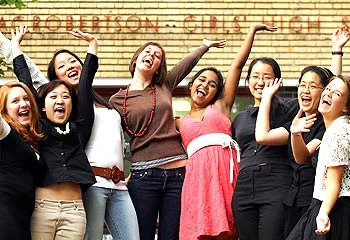
Principal Garvey, teachers, students, parents, friends, distinguished guests – thank you for inviting me to speak to you tonight.  It is a great honour, and not a little daunting too.  I well remember my own Macrob Speech Night in 1986 – good lord, 21 years ago, can that really be true? – and what an immense privilege it felt to be seated in this great hall, let alone gracing its stage.

The last time I addressed an audience of Macrob students was at a Monday morning General Assembly when I was in Year 11.  I was the elected studentrepresentative on School Council and due to give my monthly report on Council business to the student body.  I remember being seated on stage in the more modest school hall, waiting my turn while the Guest Speaker gave her talk.  On this occasion the illustrious speaker was the novelist Helen Garner, the mother of one of my classmates.  Her daughter, Alice, had recently conducted a survey of her friends on behalf of Helen, canvassing for ideas for the talk.  What would we like to hear about?  What could she possibly have to say that would stimulate and entertain a polyglot group of smarty-pants’s like us?  ‘She can talk about anything she likes’, I said to Alice, ‘EXCEPT WOMEN.  Anything but women!  We know we’re wonderful.  We know we can do anything’.  With a dramatic roll of my eyes, I thus dismissed the logic of all those other notable women who had fronted up to our General Assemblies to inspire our dreams and ambitions with tales of their own achievements, and exhort us to make the most of our prodigiousskills and talents.

So after my indignant display of self-belief, I was deflated like a balloon when Helen began her speech like this: ‘With apologies to the girl who said she didn’t want to hear about women, that’s exactly what I’m going to talk about because I can’t think of anything more important’.  Perched up on stage, trapped between Miss Blood and Mrs McNair with nowhere to run and nowhere to hide, I felt a hot wave of humiliation wash over me.  I hope that tonight I don’t come away feeling quite so vulnerable and exposed.  If I look like a rabbit caught in the headlights of your scrutiny, at least you’ll know why.

Helen Garner later sent me a note – I have it still, folded tenderly in a little box of keepsakes – that explained why she had framed me like that.  She was amazed and exhilarated, she said, to hear the almost wearied self-confidence and optimism of girls of her daughter’s generation.  It made her feel, she said, like all the hard work of the women’s movement in which she’d so stridently struggled had been worth it after all if what had been created was a cohort of such headstrong, resilient girls.

I must admit that some two decades later,  I look back on that self-assured teenager I was and marvel myself at her certainty in the inherent power and ability vested in her womanhood.  I fear that some of the other intrinsic ‘features’ of womanhood that I have experienced, including infertility, traumatic child birth and postnatal depression, have knocked some of the stuffing out of that bright-eyed girl.  It would, in certain respects, be easy for me to regale you with tales of my own professional successes: my academic qualifications, my accolades, my teaching experience, my writing career, my work in federal politics, my media appearances.  Each of these areas has provided me with a great deal of personal satisfaction and a reasonable degree of public influence.  I am proud of my efforts and believe that my contribution to scholarship and public culture – particularly in the arena of feminist history – has begun to repay the debt I feel I owe to society for the opportunities afforded by my first-rate publicly funded education, my dedicated teachers and my ever-supportive parents.

But I am also mindful of what happened at my twenty-year Macrob reunion last year, at which a few dozen of my fellow alumni buzzed around in the new school wing and filled in the gaps since we had thrown off our grey blazers and long socks for good.  (Good riddance, we all said to long socks!)  Now it was my turn to be amazed by the fact that none of us was particularly interested in what others were doing for a living.  We all assumed that our talented former class mates had found fascinating, challenging vocations for themselves.  ‘I’m a doctor’ or ‘I’m a lawyer’ rolled off the tongue, but did not make a lasting impact.   Much to my surprise, what we lingered over were the pictures of each other’s children, secreted away in our wallets and handbags.  ‘This is my Lucy, and here is my Sam.  That was a few years ago now.  Here they are at Luna Park.  Lucy just lost her first tooth.  Sam was in a dreadful mood that day’.  The childless among us hung back, looking slightly chastened by the intimate sharing of birth stories and complicit laughter at our toddlers’ wild antics.

Was this 2006, or 1966? Hadn’t Germaine Greer claimed in her earth-shattering 1974 critique of patriarchy, The Female Eunuch, that biology is not destiny?  Could she have been wrong?  Greer, Garner and their international compatriots battled to change the attitudes and institutions that confined women to their roles as wives and mothers, limiting their participation in public life and confining their social purpose to one of reproduction.  But judging by the enthusiasm that my former classmates showed for each other’s happy snaps, was it possible that the communal gratification in our experience as mothers outstripped pride in our professional achievements?

These are provocative and potentially dangerous questions to be posing.  Women have, for over two hundred years, fought tooth and nail to overcome the prejudice and discrimination against their sex based on the notion that women are by nature best suited to the private sphere of home and family while men, by predetermined nature, are more appropriately stationed in the public sphere of commerce and industry.  On the eve of the centenary of women’s suffrage in Victoria, we should not forget that only one hundred years ago, women could not vote in this state.  Opposition to women’s citizenship rights was based on the idea that homes and families would be systematically destroyed if women were encouraged to take an interest in civic life.  We can now laugh smugly at such a crazy notion – and yet there is still much work to be done before we finally break down all the barriers to women’s advancement within and enjoyment of the public sphere.  Equal pay, paid maternity leaveand affordable, high quality child care will be campaigns my and your generation must win before we can claim that feminism’s work has been done.  (And that is only in a wealthy country like ours, not even dreaming of raising the quality of life for women in developing nations where contaminated water kills five million people every year.)

So why would I want to raise the issue of women’s intense pleasure and satisfaction with their destiny as mothers when Helen Garner’s generation of feminists fought so hard, and so effectively, to break women free of the socially constructed prison of conventional femininity?

Well, I suppose it because I believe my time at Macrob equipped me very well for many aspects of my life.  It buoyed my confidence in my intellectual capacities.  It inspired my belief that I could go out into the world and do whatever the hell I wanted to do.  It fostered a desire to make a difference.  It nurtured a democratic temperament that valued other people for their humanity, not their background or their status.  It developed qualities of independence and discipline and self-control.  It taught me to respect myself and to respect the authority of women.

But what it did not do – and perhaps this is not the role of public education, even girls’ education in this day and age, and believe me I am not pointing the finger or laying blame – what my very fine, much beloved school did not do was prepare me for the parts of a woman’s life that have nothing to do with achievement or success or advancement or independence or mastery or control.   What my non-professional experience of the world (thus far) has taught me is that life is not a performance sport.  We can strive to be the best student, or the best doctor, or the best lawyer or the best historian, and there will be tests we can take – or paces we can put ourselves through – that will mark and measure our pre-eminence.  We will be applauded and rewarded for our efforts.  But if we try to measure the accomplishments of our womanhood, and particularly our motherhood, by the same paradigms of success and failure, we are bound, like Sisyphus, to fail.  (Or, if it’s more apposite to evoke a Greek goddess, like Medusa, we are forever destined to have a bad hair day.) If we carry the principles and strategies of competition into our relationships, we inevitably come out the losers.

We have just witnessed an historic federal election that was very much, I believe, a contest fought over values. In the end, the electorate voted overwhelmingly to throw out a government that had sought to ingratiate into our culture the idea that ruthless disregard for the rights and principles of fairness and decency is justified by economic growth, material accumulation and unlimited consumption.  We now have a female deputy prime minister who has vowed to restore some of the autonomy and social consideration that all families need to hold tight.  Let us hope that the corporatist worship of private wealth and scorn for vulnerability will no longer set our public standards and drive our public processes.  How does this aspiration relate to my message tonight?  Well, I think the election results mirrors my strong sense that the prize at the top of the professional ladder can not be measured by economic value alone.  As women, we cannot expect to buy our way out of the deficits in our physiology, or the chaos of our emotional lives, or the unexpected pitfalls that might appear before us.  We can neither outsmart nor outspend the hard-wired contingencies of a woman’s life.

Let me make it quite clear that I am in no way advocating a return to the days when the shape and destiny of a woman’s life was predetermined by her sex.  Women are wonderful and we can do anything.  (Although possibly not all of us are wonderful enough to do everything all at once!)  But, in the end, what will secure our wellbeing, I believe, are the social connections – the friends, the family, the partners and the children – with whom we can share our weaknesses as well as our strengths, our doubts as well as our knowledge, and our fears as well as our convictions.

Motherhood may seem a very long way off to most of you.  The average age for first time mothers in Australia today is about 30, up by 3 and a half years since 1985.  You can do the maths to work out how many more years it will be, if these demographic patterns continue, before most of you start your own families.  And, if current trends persist, up to 25% of you will never become mothers at all. (So you’ll have to bring photos of your cat to your high school reunion.) Perhaps my reflections seem as irrelevant to you as Helen Garner’s talk about the 1970s women’s movement appeared to me twenty years ago.

Schools, like grandmothers, provide an important anchor point in the life of a young woman.  I recently lost my 92 year-old grandmother.  I had the honour of writing a eulogy for her funeral.  If I may, I’d like to conclude with some of those words, spoken with love.  ‘When I was feeling lost and alone as an 18 year-old travelling abroad, my grandmother consoled me with the words, “Always be true to yourself”.  She didn’t mean that it was okay to be self-centred or individualistic; indeed throughout her long life my grandma showed through her deeds that she was committed to public service.  What she meant was to trust in your heart and have faith in your judgment, staying true to your principles and beliefs’.

As you leave the familiar harbour of this venerable school, to chart new waters and navigate your own bold course, I hope that what you might stow away from my reflections tonight is a sense that to enjoy the full quality of life and experience that our affluent nation, our exemplary education and our hard-working feminist foremothers have provided us with, it is vital to nurture and develop the whole woman in you.  It’s vital to care for your body and your spirit and your heart as well as your mind.  And it’s vital to nourish and enrich the family, community and society in which you daily live through the practice of compassion and understanding.

Thank you again for inviting me here tonight.  I wish you all well for your future success and happiness.  And if you want to see the photos of my kids, I’ll show you later.


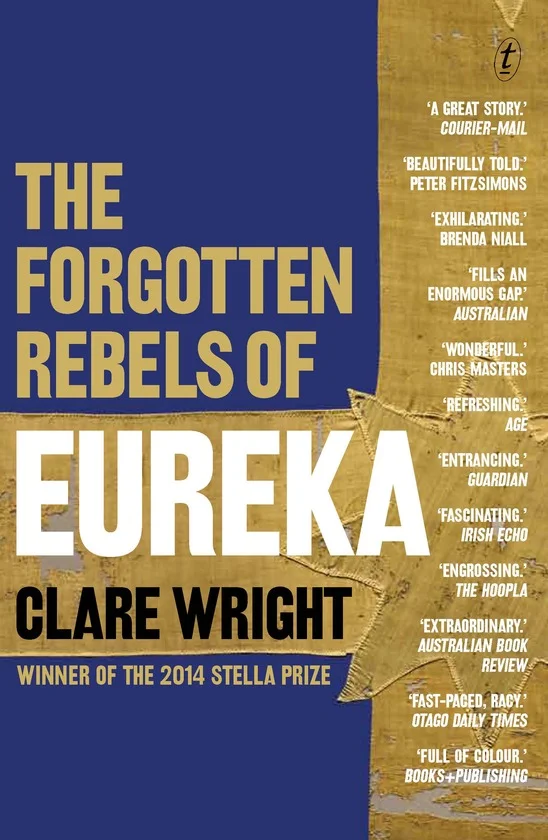
Buy Clare's fantastic book, for which she was awarded The Stella Prize.


Enjoyed this speech? Speakola is a labour of love and I’d be very grateful if you would share, tweet or like it. Thank you.

Facebook Twitter Facebook
In STUDENT HIGH SCHOOL Tags CLARE WRIGHT, WOMEN, ROLE OF WOMEN, HELEN GARNER, FEMINISM
Comment

See my film!

Limited Australian Season

March 2025

Details and ticket bookings at

angeandtheboss.com

Support Speakola

Hi speech lovers,
With costs of hosting website and podcast, this labour of love has become a difficult financial proposition in recent times. If you can afford a donation, it will help Speakola survive and prosper.

Best wishes,
Tony Wilson.

Become a Patron!

Learn more about supporting Speakola.

Featured political

Featured
Jon Stewart: "They responded in five seconds", 9-11 first responders, Address to Congress - 2019
Jacinda Ardern: 'They were New Zealanders. They are us', Address to Parliament following Christchurch massacre - 2019
Dolores Ibárruri: "¡No Pasarán!, They shall not pass!', Defense of 2nd Spanish Republic - 1936
Jimmy Reid: 'A rat race is for rats. We're not rats', Rectorial address, Glasgow University - 1972

Featured eulogies

Featured
For Geoffrey Tozer: 'I have to say we all let him down', by Paul Keating - 2009
for James Baldwin: 'Jimmy. You crowned us', by Toni Morrison - 1988
for Michael Gordon: '13 days ago my Dad’s big, beautiful, generous heart suddenly stopped beating', by Scott and Sarah Gordon - 2018

Featured commencement

Featured
Tara Westover: 'Your avatar isn't real, it isn't terribly far from a lie', The Un-Instagrammable Self, Northeastern University - 2019
Tim Minchin: 'Being an artist requires massive reserves of self-belief', WAAPA - 2019
Atul Gawande: 'Curiosity and What Equality Really Means', UCLA Medical School - 2018
Abby Wambach: 'We are the wolves', Barnard College - 2018
Eric Idle: 'America is 300 million people all walking in the same direction, singing 'I Did It My Way'', Whitman College - 2013
Shirley Chisholm: ;America has gone to sleep', Greenfield High School - 1983

Featured sport

Featured
Joe Marler: 'Get back on the horse', Harlequins v Bath pre game interview - 2019
Ray Lewis : 'The greatest pain of my life is the reason I'm standing here today', 52 Cards -
Mel Jones: 'If she was Bradman on the field, she was definitely Keith Miller off the field', Betty Wilson's induction into Australian Cricket Hall of Fame - 2017
Jeff Thomson: 'It’s all those people that help you as kids', Hall of Fame - 2016

Fresh Tweets


Featured weddings

Featured
Dan Angelucci: 'The Best (Best Man) Speech of all time', for Don and Katherine - 2019
Hallerman Sisters: 'Oh sister now we have to let you gooooo!' for Caitlin & Johnny - 2015
Korey Soderman (via Kyle): 'All our lives I have used my voice to help Korey express his thoughts, so today, like always, I will be my brother’s voice' for Kyle and Jess - 2014

Featured Arts

Featured
Bruce Springsteen: 'They're keepers of some of the most beautiful sonic architecture in rock and roll', Induction U2 into Rock Hall of Fame - 2005
Olivia Colman: 'Done that bit. I think I have done that bit', BAFTA acceptance, Leading Actress - 2019
Axel Scheffler: 'The book wasn't called 'No Room on the Broom!', Illustrator of the Year, British Book Awards - 2018
Tina Fey: 'Only in comedy is an obedient white girl from the suburbs a diversity candidate', Kennedy Center Mark Twain Award -  2010
Tina Fey: 'Only in comedy is an obedient white girl from the suburbs a diversity candidate', Kennedy Center Mark Twain Award - 2010

Featured Debates

Featured
Sacha Baron Cohen: 'Just think what Goebbels might have done with Facebook', Anti Defamation League Leadership Award - 2019
Greta Thunberg: 'How dare you', UN Climate Action Summit - 2019
Charlie Munger: 'The Psychology of Human Misjudgment', Harvard University - 1995
Lawrence O'Donnell: 'The original sin of this country is that we invaders shot and murdered our way across the land killing every Native American that we could', The Last Word, 'Dakota' - 2016