• Genre
  • About
  • Submissions
  • Donate
  • Search
Menu

Speakola

All Speeches Great and Small
  • Genre
  • About
  • Submissions
  • Donate
  • Search

Commencement and Graduation

Inspiring, humorous, wisdom imparting. Some of the best speeches are delivered in the educational context. Upload your commencement or graduation speech here.

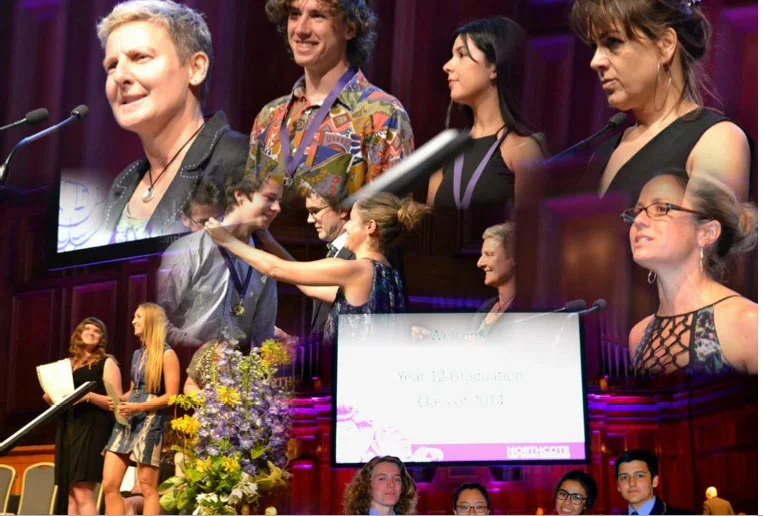
Clare Wright: 'Be ambitious, be creative, take risks', Northcote High School - 2014

November 5, 2015

26 October, 2014, Northcote High School, Melbourne, Australia

In keeping with the spirit of reconciliation, I’d acknowledge the traditional owners of the lands on which we gather today, the Wurrundjeri people, and pay my respects to their Elders, past, present and emerging. I recognize that this has always been a place of teaching, learning and celebrating rites of passage.

I’d also like to thank Kate Morris for inviting me to give the valedictory speech tonight. It’s a great honour and a great pleasure to have the chance to join you all in this special milestone event.

I reckon I’m well placed in several respects to stand behind the microphone.

For one, I was myself a Year 12 students once, back when dinosaurs roamed the earth, and I well remember my own Graduation Night in this very room.  I thought it was boring and unnecessary and bloated to bursting by long-winded speeches delivered by pompous, self-satisfied adults giving well-meaning advice that I was sure we’d all forgot by the time we spilled out onto Swanston Street and tried to find an underage drink.

I’m also the parent of two kids at Northcote High, one who will be doing his Year 12 next year.   So I have some idea of the anxieties and pressures that beset today’s high school students, particularly at the pointy end of your secondary education.  I know from the inside what those uncertainties and misgivings about the next step look like.

And, because I work at a university, I’m actually on the front line of what does happen next in that great leap forward.  Not all of you will go on to a tertiary education, but most of you will experience not only the sense of elation in finally achieving some hard-won freedom and autonomy but also the disappointment and frustration of life’s inevitable crash landings.  I watch those first year students wave and flail around and bob up and down in the heaving tide of new experiences and expectations, but I’ve yet to see one drown.

So now that I’ve convinced you that I’m the right woman for the job tonight, or perhaps that I’m one of those smug windbags I abhorred when I was 17, let me begin.  I want to tell you a bit about me, a bit about you, and a bit about the country we live in.

First to me: my favourite topic.  I did my Year 12, or HSC as it was known then, at MacRobertson Girls High School in 1986.  (The Maths Methods students have just figured out I’m 45.)  I got straight A’s for my final exams, with a perfect 100% in English.  It was the last perfect thing I ever did, though it would take me until I was about 40 to realize that perfection wasn’t the goal.  I took a Gap Year, worked and lived in Canada, travelled in Europe on the money I made waitressing in Toronto.  I lied on my job application.  Told the restaurant manager I was 18 and knew how to make a good coffee.  (I was from Melbourne wasn’t I?)  I snogged boys and ate a lot of junk food.  From those experiences I learnt that it’s hard to make a good coffee, that it’s much easier to get boys to kiss you than to take you seriously, and that eating fast food was about as satisfying as being a fast girl. 

I came back to Australia and started an Arts/Law Degree at Melbourne Uni.  I did Law because that’s what you were expected to do if you got straight A’s in your Year 12 exams.  I spent a lot of the first semester of Uni crying.  I felt homesick in my own home and I hated Law.  (Well, I actually loved the intellectual rigour of Law as a discipline, but I could see that Law as a profession was going to right for me.)

But in the midst of that confusing, lonely year, I was very lucky.  I fell in love twice.  I fell in love with the boy who is now my husband and the father of my three children.  We’ve been together for 26 years, enjoying a relationship of true companionship, respect, conversation and humour.  I also fell in love with History, the Uni subject I most adored, despite the fact that I had no idea what I could possible do with it.  And I was fortunate for another reason: when I told my parents I wanted to drop Law and just study History, they told me to do whatever made me happy.  They told me to do what I must do, and do it well.  (I later discovered that’s a line out of a Bob Dylan song, but it was well chosen for the occasion.)

And so, that is what I have done.  I did an Honours degree in History, a Masters degree in History, a PhD and postdoctoral research in history.  I’ve published two history books and made two history documentaries for tv.  I’ve won awards and received numerous grants and scholarships.  But I also need you to know that my path to professional success and personal fulfillment hasn’t been all straight and narrow.  I’ve suffered periods of depression and anxiety, moments of profound despair, and run myself ragged in the attempt to be 100% in control and on top of my game.  I learnt the hard way that it’s ok to fail every once and a while.

I tell you all this because I’m sick to death of watching successful women either undermine their own achievements or blame themselves for every blemish. 

Girls, be proud of your accomplishments, don’t apologise for your strengths and talents, don’t be afraid to take up too much space, don’t be silent about your dreams and your grievances.  There is enough in our public culture to demean and trivialize you, and enough in even our own homes to threaten and belittle you, that you do not need to contribute to your own denigration.   And boys, trust the women around you.  They will be your friends, your workmates, your bosses, your lovers and your staunchest allies.  Give them credit where credit is due, and give yourself some credit too: credit for having the courage to swim against the tide of prejudice and discrimination that can so easily carry us away.

Since the death of Gough Whitlam earlier this week, there has been a lot of reflection about the legacy of this larger-than-life former Prime Minister.  Whitlam came to power at a time in Australia’s history when there was a great wave of restless energy and ambition, largely on the part of young people, to change the world that they had no choice but to live in.  The era was not unlike the gold rush period that my latest book is about: a youthful population who were angry about the fact that they had no right to participate in the institutions or systems of making the very laws that governed them.  Later, once men had secured democratic voting entitlements, women also began to fight for their rights to be heard, to be recognized, to be treated as full and equal citizens.  And in the 1960s white men and women came together to support indigenous Australians to also be included in the democratic process.  At this same time, young men were being sent off to fight a war that most Australians didn’t support – imagine that: instead of leaving school and going to uni or learning a trade or starting your own business, you are being shipped off to Vietnam whether you like it or not — and non-European people could still be excluded from entering the country under the legal framework of the White Australia Policy.  Successive conservative governments had turned a blind eye to the changes in the Australian population and the global movement towards social justice.

And then along came Gough – with the election campaign slogan IT’S TIME.  Time for a better, stronger, fairer Australia.  Time to use power to make a difference.  You will have heard a lot this week about his reforms: indigenous land rights, single mother’s pensions, free tertiary education.  But I want to read you some lines from one of my favourite of Whitlam’s speeches.  He said these words in Ballarat on 3 December 1973, while unveiling a newly restored Eureka Flag.

He said: “the kind of nationalism that every country needs … is a benign and constructive nationalism [that] has to do with self-confidence, with maturity, with originality, with independence of mind.  If Australia is to remain in the forefront of nations … if it is determined to be a true source of power and ideas in the world, a generous and tolerant nation respected for its generosity and tolerance, then I believe that something like ‘the new nationalism’ must play a part in our government and in the lives of us all”.

With his deeds in the parliament, and his carefully chosen words at moments like these, Whitlam created a vision of the sort of country Australia could be.  He wanted this country to be the BEST country it could be.  He didn’t try to instill fear and anxiety among the Australian people.  He didn’t say that it was okay to be a bigot or a racist or a homophobe or a sexist pig because what harm was there in a little fun right?  He didn’t try to set neighbor against neighbor; community against community, in the hope that a scared and vulnerable population would cling to the familiar terrain of what they already knew of the world and its ways.  “Better the devil you know”, goes the saying (or the Kylie Minogue song if you’d prefer), but that is such a monumentally unadventurous and conformist position from which to face life that no self-respecting teenager could ever agree.  “Workers of the world: you’ve got nothing to lose but your chains” is the aphorism I prefer.  If you don’t try to change the world, who will?

So what does all this have to do with you.  Gough Whitlam was the Prime Minister in 1972, long before you were born.  Ancient history.  And I’m certainly not trying to turn you all into Marxists.

But listen closely to Whitlam’s language: self-confidence, maturity, originality, independence of mind, generosity, tolerance.  These were all values and attributes that Whitlam wanted for Australia.  And as you make this tentative but inevitable leap from high school to the world of work and higher education, they are exactly the skills and outcomes I wish for each and every one of you.

Some, but not all, of you will be high flyers.  Few of you, I sincerely trust, will be low hanging fruit. You have been given far too good an education to resort to that.  Most of you will live quietly productive lives, making objects, making homes, making children, making money, making grand designs.  I hope more of you are producers than consumers.  You will be happier, believe me.  But all of you will have to make choices about what sort of person you want to be and what sort of a country you want to live in.

And here I have only one piece of advice: do what you must do, and do it well.

Be ambitious, be creative, take risks with your ideas, your philosophies, your opinions. Make mistakes, learn from them, reach out when you are flailing and throw others a line when you can see that they are not waving but drowning too.

In other words, be your best self.  It’s all — and everything — you can be.
Enjoyed this speech? Speakola is a labour of love and I’d be very grateful if you would share, tweet or like it. Thank you.

Facebook Twitter Facebook
In STUDENT HIGH SCHOOL Tags CLARE WRIGHT, NORTHCOTE HIGH SCHOOL, WOMEN, WHITLAM, INDIGEONOUS AUSTRALIANS, HISTORY, HISTORIAN, YEAR 12, HIGH SCHOOL
Comment

Clare Wright: 'In Search of the Divine Mother of the Macrob Sisterhood', The Mac. Robertson Girls High School - 2007

November 4, 2015

27 November, 2007, Melbourne Town Hall, Melbourne, Australia

Principal Garvey, teachers, students, parents, friends, distinguished guests – thank you for inviting me to speak to you tonight.  It is a great honour, and not a little daunting too.  I well remember my own Macrob Speech Night in 1986 – good lord, 21 years ago, can that really be true? – and what an immense privilege it felt to be seated in this great hall, let alone gracing its stage.

The last time I addressed an audience of Macrob students was at a Monday morning General Assembly when I was in Year 11.  I was the elected studentrepresentative on School Council and due to give my monthly report on Council business to the student body.  I remember being seated on stage in the more modest school hall, waiting my turn while the Guest Speaker gave her talk.  On this occasion the illustrious speaker was the novelist Helen Garner, the mother of one of my classmates.  Her daughter, Alice, had recently conducted a survey of her friends on behalf of Helen, canvassing for ideas for the talk.  What would we like to hear about?  What could she possibly have to say that would stimulate and entertain a polyglot group of smarty-pants’s like us?  ‘She can talk about anything she likes’, I said to Alice, ‘EXCEPT WOMEN.  Anything but women!  We know we’re wonderful.  We know we can do anything’.  With a dramatic roll of my eyes, I thus dismissed the logic of all those other notable women who had fronted up to our General Assemblies to inspire our dreams and ambitions with tales of their own achievements, and exhort us to make the most of our prodigiousskills and talents.

So after my indignant display of self-belief, I was deflated like a balloon when Helen began her speech like this: ‘With apologies to the girl who said she didn’t want to hear about women, that’s exactly what I’m going to talk about because I can’t think of anything more important’.  Perched up on stage, trapped between Miss Blood and Mrs McNair with nowhere to run and nowhere to hide, I felt a hot wave of humiliation wash over me.  I hope that tonight I don’t come away feeling quite so vulnerable and exposed.  If I look like a rabbit caught in the headlights of your scrutiny, at least you’ll know why.

Helen Garner later sent me a note – I have it still, folded tenderly in a little box of keepsakes – that explained why she had framed me like that.  She was amazed and exhilarated, she said, to hear the almost wearied self-confidence and optimism of girls of her daughter’s generation.  It made her feel, she said, like all the hard work of the women’s movement in which she’d so stridently struggled had been worth it after all if what had been created was a cohort of such headstrong, resilient girls.

I must admit that some two decades later,  I look back on that self-assured teenager I was and marvel myself at her certainty in the inherent power and ability vested in her womanhood.  I fear that some of the other intrinsic ‘features’ of womanhood that I have experienced, including infertility, traumatic child birth and postnatal depression, have knocked some of the stuffing out of that bright-eyed girl.  It would, in certain respects, be easy for me to regale you with tales of my own professional successes: my academic qualifications, my accolades, my teaching experience, my writing career, my work in federal politics, my media appearances.  Each of these areas has provided me with a great deal of personal satisfaction and a reasonable degree of public influence.  I am proud of my efforts and believe that my contribution to scholarship and public culture – particularly in the arena of feminist history – has begun to repay the debt I feel I owe to society for the opportunities afforded by my first-rate publicly funded education, my dedicated teachers and my ever-supportive parents.

But I am also mindful of what happened at my twenty-year Macrob reunion last year, at which a few dozen of my fellow alumni buzzed around in the new school wing and filled in the gaps since we had thrown off our grey blazers and long socks for good.  (Good riddance, we all said to long socks!)  Now it was my turn to be amazed by the fact that none of us was particularly interested in what others were doing for a living.  We all assumed that our talented former class mates had found fascinating, challenging vocations for themselves.  ‘I’m a doctor’ or ‘I’m a lawyer’ rolled off the tongue, but did not make a lasting impact.   Much to my surprise, what we lingered over were the pictures of each other’s children, secreted away in our wallets and handbags.  ‘This is my Lucy, and here is my Sam.  That was a few years ago now.  Here they are at Luna Park.  Lucy just lost her first tooth.  Sam was in a dreadful mood that day’.  The childless among us hung back, looking slightly chastened by the intimate sharing of birth stories and complicit laughter at our toddlers’ wild antics.

Was this 2006, or 1966? Hadn’t Germaine Greer claimed in her earth-shattering 1974 critique of patriarchy, The Female Eunuch, that biology is not destiny?  Could she have been wrong?  Greer, Garner and their international compatriots battled to change the attitudes and institutions that confined women to their roles as wives and mothers, limiting their participation in public life and confining their social purpose to one of reproduction.  But judging by the enthusiasm that my former classmates showed for each other’s happy snaps, was it possible that the communal gratification in our experience as mothers outstripped pride in our professional achievements?

These are provocative and potentially dangerous questions to be posing.  Women have, for over two hundred years, fought tooth and nail to overcome the prejudice and discrimination against their sex based on the notion that women are by nature best suited to the private sphere of home and family while men, by predetermined nature, are more appropriately stationed in the public sphere of commerce and industry.  On the eve of the centenary of women’s suffrage in Victoria, we should not forget that only one hundred years ago, women could not vote in this state.  Opposition to women’s citizenship rights was based on the idea that homes and families would be systematically destroyed if women were encouraged to take an interest in civic life.  We can now laugh smugly at such a crazy notion – and yet there is still much work to be done before we finally break down all the barriers to women’s advancement within and enjoyment of the public sphere.  Equal pay, paid maternity leaveand affordable, high quality child care will be campaigns my and your generation must win before we can claim that feminism’s work has been done.  (And that is only in a wealthy country like ours, not even dreaming of raising the quality of life for women in developing nations where contaminated water kills five million people every year.)

So why would I want to raise the issue of women’s intense pleasure and satisfaction with their destiny as mothers when Helen Garner’s generation of feminists fought so hard, and so effectively, to break women free of the socially constructed prison of conventional femininity?

Well, I suppose it because I believe my time at Macrob equipped me very well for many aspects of my life.  It buoyed my confidence in my intellectual capacities.  It inspired my belief that I could go out into the world and do whatever the hell I wanted to do.  It fostered a desire to make a difference.  It nurtured a democratic temperament that valued other people for their humanity, not their background or their status.  It developed qualities of independence and discipline and self-control.  It taught me to respect myself and to respect the authority of women.

But what it did not do – and perhaps this is not the role of public education, even girls’ education in this day and age, and believe me I am not pointing the finger or laying blame – what my very fine, much beloved school did not do was prepare me for the parts of a woman’s life that have nothing to do with achievement or success or advancement or independence or mastery or control.   What my non-professional experience of the world (thus far) has taught me is that life is not a performance sport.  We can strive to be the best student, or the best doctor, or the best lawyer or the best historian, and there will be tests we can take – or paces we can put ourselves through – that will mark and measure our pre-eminence.  We will be applauded and rewarded for our efforts.  But if we try to measure the accomplishments of our womanhood, and particularly our motherhood, by the same paradigms of success and failure, we are bound, like Sisyphus, to fail.  (Or, if it’s more apposite to evoke a Greek goddess, like Medusa, we are forever destined to have a bad hair day.) If we carry the principles and strategies of competition into our relationships, we inevitably come out the losers.

We have just witnessed an historic federal election that was very much, I believe, a contest fought over values. In the end, the electorate voted overwhelmingly to throw out a government that had sought to ingratiate into our culture the idea that ruthless disregard for the rights and principles of fairness and decency is justified by economic growth, material accumulation and unlimited consumption.  We now have a female deputy prime minister who has vowed to restore some of the autonomy and social consideration that all families need to hold tight.  Let us hope that the corporatist worship of private wealth and scorn for vulnerability will no longer set our public standards and drive our public processes.  How does this aspiration relate to my message tonight?  Well, I think the election results mirrors my strong sense that the prize at the top of the professional ladder can not be measured by economic value alone.  As women, we cannot expect to buy our way out of the deficits in our physiology, or the chaos of our emotional lives, or the unexpected pitfalls that might appear before us.  We can neither outsmart nor outspend the hard-wired contingencies of a woman’s life.

Let me make it quite clear that I am in no way advocating a return to the days when the shape and destiny of a woman’s life was predetermined by her sex.  Women are wonderful and we can do anything.  (Although possibly not all of us are wonderful enough to do everything all at once!)  But, in the end, what will secure our wellbeing, I believe, are the social connections – the friends, the family, the partners and the children – with whom we can share our weaknesses as well as our strengths, our doubts as well as our knowledge, and our fears as well as our convictions.

Motherhood may seem a very long way off to most of you.  The average age for first time mothers in Australia today is about 30, up by 3 and a half years since 1985.  You can do the maths to work out how many more years it will be, if these demographic patterns continue, before most of you start your own families.  And, if current trends persist, up to 25% of you will never become mothers at all. (So you’ll have to bring photos of your cat to your high school reunion.) Perhaps my reflections seem as irrelevant to you as Helen Garner’s talk about the 1970s women’s movement appeared to me twenty years ago.

Schools, like grandmothers, provide an important anchor point in the life of a young woman.  I recently lost my 92 year-old grandmother.  I had the honour of writing a eulogy for her funeral.  If I may, I’d like to conclude with some of those words, spoken with love.  ‘When I was feeling lost and alone as an 18 year-old travelling abroad, my grandmother consoled me with the words, “Always be true to yourself”.  She didn’t mean that it was okay to be self-centred or individualistic; indeed throughout her long life my grandma showed through her deeds that she was committed to public service.  What she meant was to trust in your heart and have faith in your judgment, staying true to your principles and beliefs’.

As you leave the familiar harbour of this venerable school, to chart new waters and navigate your own bold course, I hope that what you might stow away from my reflections tonight is a sense that to enjoy the full quality of life and experience that our affluent nation, our exemplary education and our hard-working feminist foremothers have provided us with, it is vital to nurture and develop the whole woman in you.  It’s vital to care for your body and your spirit and your heart as well as your mind.  And it’s vital to nourish and enrich the family, community and society in which you daily live through the practice of compassion and understanding.

Thank you again for inviting me here tonight.  I wish you all well for your future success and happiness.  And if you want to see the photos of my kids, I’ll show you later.


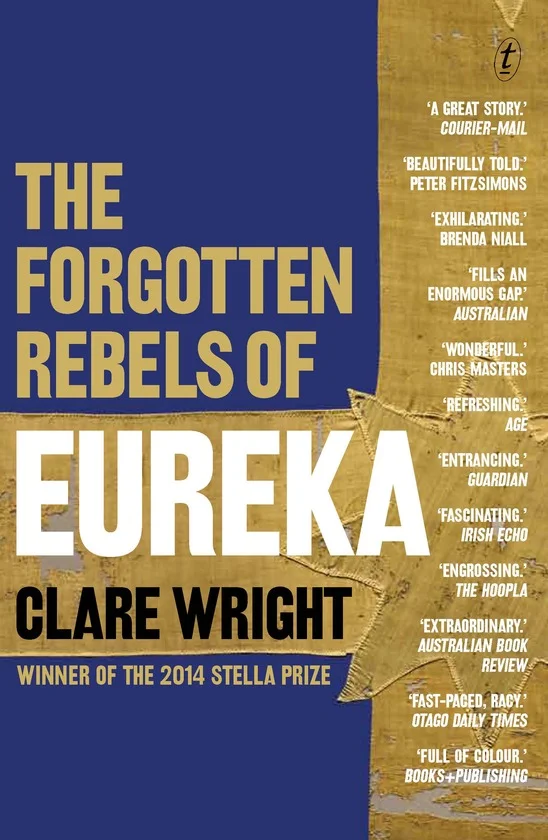
Buy Clare's fantastic book, for which she was awarded The Stella Prize.


Enjoyed this speech? Speakola is a labour of love and I’d be very grateful if you would share, tweet or like it. Thank you.

Facebook Twitter Facebook
In STUDENT HIGH SCHOOL Tags CLARE WRIGHT, WOMEN, ROLE OF WOMEN, HELEN GARNER, FEMINISM
Comment

See my film!

Limited Australian Season

March 2025

Details and ticket bookings at

angeandtheboss.com

Support Speakola

Hi speech lovers,
With costs of hosting website and podcast, this labour of love has become a difficult financial proposition in recent times. If you can afford a donation, it will help Speakola survive and prosper.

Best wishes,
Tony Wilson.

Become a Patron!

Learn more about supporting Speakola.

Featured political

Featured
Jon Stewart: "They responded in five seconds", 9-11 first responders, Address to Congress - 2019
Jacinda Ardern: 'They were New Zealanders. They are us', Address to Parliament following Christchurch massacre - 2019
Dolores Ibárruri: "¡No Pasarán!, They shall not pass!', Defense of 2nd Spanish Republic - 1936
Jimmy Reid: 'A rat race is for rats. We're not rats', Rectorial address, Glasgow University - 1972

Featured eulogies

Featured
For Geoffrey Tozer: 'I have to say we all let him down', by Paul Keating - 2009
for James Baldwin: 'Jimmy. You crowned us', by Toni Morrison - 1988
for Michael Gordon: '13 days ago my Dad’s big, beautiful, generous heart suddenly stopped beating', by Scott and Sarah Gordon - 2018

Featured commencement

Featured
Tara Westover: 'Your avatar isn't real, it isn't terribly far from a lie', The Un-Instagrammable Self, Northeastern University - 2019
Tim Minchin: 'Being an artist requires massive reserves of self-belief', WAAPA - 2019
Atul Gawande: 'Curiosity and What Equality Really Means', UCLA Medical School - 2018
Abby Wambach: 'We are the wolves', Barnard College - 2018
Eric Idle: 'America is 300 million people all walking in the same direction, singing 'I Did It My Way'', Whitman College - 2013
Shirley Chisholm: ;America has gone to sleep', Greenfield High School - 1983

Featured sport

Featured
Joe Marler: 'Get back on the horse', Harlequins v Bath pre game interview - 2019
Ray Lewis : 'The greatest pain of my life is the reason I'm standing here today', 52 Cards -
Mel Jones: 'If she was Bradman on the field, she was definitely Keith Miller off the field', Betty Wilson's induction into Australian Cricket Hall of Fame - 2017
Jeff Thomson: 'It’s all those people that help you as kids', Hall of Fame - 2016

Fresh Tweets


Featured weddings

Featured
Dan Angelucci: 'The Best (Best Man) Speech of all time', for Don and Katherine - 2019
Hallerman Sisters: 'Oh sister now we have to let you gooooo!' for Caitlin & Johnny - 2015
Korey Soderman (via Kyle): 'All our lives I have used my voice to help Korey express his thoughts, so today, like always, I will be my brother’s voice' for Kyle and Jess - 2014

Featured Arts

Featured
Bruce Springsteen: 'They're keepers of some of the most beautiful sonic architecture in rock and roll', Induction U2 into Rock Hall of Fame - 2005
Olivia Colman: 'Done that bit. I think I have done that bit', BAFTA acceptance, Leading Actress - 2019
Axel Scheffler: 'The book wasn't called 'No Room on the Broom!', Illustrator of the Year, British Book Awards - 2018
Tina Fey: 'Only in comedy is an obedient white girl from the suburbs a diversity candidate', Kennedy Center Mark Twain Award -  2010
Tina Fey: 'Only in comedy is an obedient white girl from the suburbs a diversity candidate', Kennedy Center Mark Twain Award - 2010

Featured Debates

Featured
Sacha Baron Cohen: 'Just think what Goebbels might have done with Facebook', Anti Defamation League Leadership Award - 2019
Greta Thunberg: 'How dare you', UN Climate Action Summit - 2019
Charlie Munger: 'The Psychology of Human Misjudgment', Harvard University - 1995
Lawrence O'Donnell: 'The original sin of this country is that we invaders shot and murdered our way across the land killing every Native American that we could', The Last Word, 'Dakota' - 2016