• Genre
  • About
  • Submissions
  • Donate
  • Search
Menu

Speakola

All Speeches Great and Small
  • Genre
  • About
  • Submissions
  • Donate
  • Search

Andrew Pollack: 'We, as a country failed our children', guns discussion with President Trump, post Parkland School Shooting - 2018

February 24, 2018

22 February 2018, White House, Washington DC, USA

We’re here because my daughter has no voice. She was murdered last week, and she was taken from us. Shot nine times on the third floor.

We, as a country, failed our children. This shouldn’t happen. We go to the airport — I can’t get on a plane with a bottle of water. But we leave it — some animal can walk into a school and shoot our children. It’s just not right, and we need to come together as a country and work on what’s important, and that’s protecting our children in the schools. That’s the only thing that matters right now. Everyone has to come together and not think about different laws. We need to come together, as a country — not different parties — and figure out how we protect the schools. It’s simple. It’s not difficult.

We protect airports. We protect concerts, stadiums, embassies, the Department of Education that I walked in today that has a security guard in the elevator. How do you think that makes me feel? In the elevator, they got a security guard.

I’m very angry that this happened, because it keeps happening. 9/11 happened once, and they fixed everything. How many schools, how many children have to get shot? It stops here with this administration and me. I’m not going to sleep until it’s fixed.

And, Mr. President, we’re going to fix it, because I’m going to fix it. I’m not going to rest. And look it, my boys need to live with this. I want to see everyone — you guys look at this. Me, I’m a man, but to see your children go through this, bury their sister.

So that’s why I’m keep saying this, because I want it to sink in, not forget about this. We can’t forget about it. All these school shootings, it doesn’t make sense. Fix it. It should have been one school shooting, and we should have fixed it. And I’m pissed, because my daughter I’m not going to see again. She’s not here. She’s not here. She’s in North Lauderdale, at — whatever it is — King David Cemetery. That’s where I go to see my kid now. And it stops if we all work together and come up with the right idea. And it’s school safety. It’s not about gun laws right now; that’s another fight, another battle. Let’s fix the schools, and then you guys can battle it out, whatever you want.

But we need our children safe. Monday, tomorrow, whatever day it is, your kids are going to go to school. You think everyone’s kids are safe? I didn’t think it was going to happen to me. If I knew that, I would have been at the school every day if I knew it was that dangerous.

It’s enough. Let’s get together and work with the president and fix the schools. That’s it.  No other discussions. Security, whatever we have to do — get the right people, the consultants. These are our commodities. I’m never going to see my kid again. I want you all to know that. Never, ever will I see my kid. That’s how — I want it to sink in. It’s eternity. My beautiful daughter, I’m never going to see again.

And it’s simple. It’s not — we could fix — this is my son Huck, who has to deal with this too. You have something to say, son?

Source: https://www.washingtonpost.com/news/answer...

Enjoyed this speech? Speakola is a labour of love and I’d be very grateful if you would share, tweet or like it. Thank you.

Facebook Twitter Facebook
In LAWS AND JUSTICE, INTERNATIONAL Tags ANDREW POLLACK, TRANSCRIPT, PREISDENT TRUMP, SECOND AMENDMENT, WHITE HOUSE
Comment

Damien Mander: Modern Warrior, TEDx talk, Sydney - 2013

January 31, 2018

15 May 2013, Sydney, Australia

My story begins in Zimbabwe with a brave park ranger named Orpheus and an injured buffalo. And Orpheus looked at the buffalo on the ground, and he looked at me, and as our eyes met, there was an unspoken grief between the three of us. She was a beautifully wild and innocent creature, and Orpheus lifted the muzzle of his rifle to her ear. [Gunshot]

And at that moment, she started to give birth. As life slipped from the premature calf, we examined the injuries. Her back leg had been caught in an eight-strand wire snare. She’d fought for freedom for so hard and so long that she’d ripped her pelvis in half. Well, she was finally free.

Ladies and gentlemen, today I feel a great sense of responsibility in speaking to you on behalf of those that never could. Their suffering is my grief, is my motivation. Martin Luther King best summarizes my call to arms here today. He said, “There comes a time when one must take a position that’s neither safe, nor political, nor popular. But he must take that position because his conscience tells him that it’s right.” Because his conscience tells him it is right.

At the end of this talk I’m going to ask you all a question. That question is the only reason I traveled here today all the way from the African savanna. That question for me has cleansed my soul. How you answer that question will always be yours.

I remember watching the movie The Wizard of Oz as a young kid, and I was never scared of the witch or the flying monkeys. My greatest fear was that I’d grow up like the Lion, without courage. And I grew up always asking myself if I thought I’d be brave?

Well, years after Dorothy had made her way back to Kansas, and the Lion had found his courage, I walked into a tattoo parlor and had the words ‘Seek and Destroy’ tattooed across my chest. And I thought that’d make me big and brave. But it’d take me almost a decade to grow into those words.

By the age of 20 I’d become a clearance diver in the navy. By 25, as a special operations sniper, I knew exactly how many clicks of elevation I needed on the scope of my rifle to take a headshot on a moving target from 700 meters away. I knew exactly how many grams of high explosives it takes to blast through a steel plate door from only a few meters away, without blowing myself, or my team, up behind me. And I knew that Baghdad was a shitty place, and when things go bang, well, people die.

Now back then, I’d no idea what a conservationist did, other than hug trees and piss off large corporations. I knew they had dreadlocks. I knew they smoked dope. I didn’t really give a shit about the environment, and why should I? I was the idiot that used to speed up in his car just trying to hit birds on the road. My life was a world away from conservation. I’d just spent nine years doing things in real life most people wouldn’t dream of trying on a Playstation.

Well, after 12 tours to Iraq as a so-called ‘mercenary’, the skills I had were good for one thing: I was programmed to destroy. Looking back now, on everything I’ve done, and the places I’ve been, in my heart, I’ve only ever performed one true act of bravery. And that was a simple choice of deciding ‘Yes’ or deciding ‘No’. But it was that one act which defines me completely and ensures there’ll never be separation between who I am, and what I do.

When I finally left Iraq behind me I was lost. Yeah I felt – aahh – I just had no idea where I was going in life or where I was meant to be and I arrived in Africa at the beginning of 2009. I was aged 29 at the time. Somehow, I always knew I’d find a purpose amongst chaos, and that’s exactly what happened. I’d no idea though, I’d find it in a remote part of the Zimbabwe bush.

And we were patrolling along, and the vultures circled in the air and as we got closer the stench of death hung there, in the air like a thick, dark veil, and sucked the oxygen out of your lungs. And as we got closer, there was a great bull elephant, resting on its side, with its face cut away. And the world around me stopped.

I was consumed by a deep and overwhelming sadness. Seeing innocent creatures killed like this hit me in a way like nothing before. I’d actually poached as a teenager and they’re memories I’ll take to the grave. Time had changed me though; something inside wasn’t the same. And it’s never going to be again.

I asked myself, “Does that elephant need its face more than some guy in Asia needs a tusk on his desk?” Well of course it bloody does, that was irrelevant. All that mattered there and then was: Would I be brave enough to give up everything in my life to try and stop the suffering of animals? This was the one true defining moment of my life: Yes or no?

I contacted my family the next day and began selling all my houses. These are assets a well-advised mercenary quickly acquires with the proceeds of war. My life-savings have since been used to found and grow the International Anti-Poaching Foundation. The IAPF is a direct-action, law enforcement organization. From drone technology, to an international qualification for rangers, we’re battling each and every day to bring military solutions to conservation’s thin green line.

Now my story may be slightly unique, but I’m not going to use it to talk to you today about the organization I run — in what probably could have been a pretty good fundraiser.

Remember, today is about the question I’m going to ask you at the end. Because it’s impossible for me to get up here and talk about just saving wildlife when I know the problem of animal welfare is much broader throughout society.

Remember, today is about the question I’m going to ask you at the end. Because it’s impossible for me to get up here and talk about just saving wildlife when I know the problem of animal welfare is much broader throughout society.

A few years after I saw that elephant I woke up very early one morning. I already knew the answer to the question I was about to ask myself, but it was the first time I’d put it into words: Does a cow value its life more than I enjoy a barbecue? See, I’d been guilty all this time of what’s termed ‘speciesism’. Speciesism is very much the same as racism or sexism. It involves the allocation of a different set of values, rights or special considerations to individuals, based solely on who or what they are. The realization of the flexible morality I’d used to suit my everyday conveniences made me sick in the stomach.

See, I’d loved blaming parts of Asia for their insatiable demand for ivory and rhino horn, and the way the region’s booming economic growth is dramatically increasing the illegal wildlife trade. When I woke up that morning though I realized, even though I’d dedicated my life to saving animals, in my mind I was no better than a poacher, or the guy in Asia with a tusk on his desk.

As this ‘over-consumptive meat-eater’ I’d referred to some animals as ‘beasts’. When in reality I’d been the beast: destructively obedient, a slave to my habits, a cold shoulder to my conscience. We’ve all had contact with pets or other animals in our lives. We can’t deny our understanding of the feelings that each animal has. The ability to suffer pain or loneliness and to fear.

Like us also, each animal has the ability to express contentment, to build family structures, and want of satisfying basic instincts and desires. For many of us though, that’s as far as we allow our imagination to explore before the truth inconveniences our habits. The disconnect that exists between consuming a product and the reality it takes to bring that product to market is a phenomenon to itself. Animals are treated like commodities and referred to as property. We call it ‘murder’ to kill a human being yet create legal and illegal industries out of what would be regarded as torture if humans were involved. And we pay people to do things to animals that none of us would engage in personally. Just because we don’t see it up close does not mean we’re not responsible.

Peter Singer, the man that popularized the term ‘speciesism’ wrote, “Although there may be differences between animals and humans they each share the ability to suffer. And we must give equal consideration to that suffering. Any position that allows similar cases to be treated in a dissimilar fashion fails to qualify as an acceptable moral theory.”

Around the world this year 65 billion animals will be killed in factory farms. How many animals’ lives is one human’s life worth? A meat-eater in this room will consume, on average, 8,000 animals in their lifetime. Ocean pollution, global warming and deforestation are driving us towards the next great mass-extinction and the meat industry is the greatest negative factor in all of these phenomena.

The illegal traffic in wildlife now ranks as one of the largest criminal industries in the world — it’s up there with drugs, guns and human trafficking. The ability to stop this devastation lies in the willingness of an international community to step in and preserve a dying global treasure.

Experimentation on animals – if animals are so like us that we can substitute using them instead of humans then surely they have the very same attributes that mean they deserve to be protected from harm? Whether we’re talking about factory farming, live export, poaching, the fur trade, logically, it’s all on the same playing field to me.

Suffering is suffering, and murder is murder. And the more helpless the victim, the more horrific the crime. Next time you think an animal lover is too emotional, too passionate, or even a little crazy, please remember we see things through a different lens.

So in a few days, my son’s going to be born. I find myself wondering, “What kind of world is he entering?” Are we going to be the generation that defines our failure as a species? I believe our generation will be judged by our moral courage to protect what’s right. And that every worthwhile action requires a level of sacrifice.

Well, I now offer myself, without reservation, to animals. And when I strip away all the material belongings around me, I see that I too, am an animal. We’re family. Together on one planet. And of the 5 million species on that planet, only one has the power to determine what level of suffering is acceptable for all other sentient beings to endure. Whether it’s eating less meat, contributing to the fight against poaching or speaking up for the voiceless, we all have choices. And small changes in our lives mean big changes in others’.

So now back to the beginning. My reason for being here is my question for you: Next time you have an opportunity to make a difference for animals, will you be brave enough? Yes or no?

Thank you very much.


Donate to the International Anti Poaching Association here

Source: https://singjupost.com/transcript-damien-m...

Enjoyed this speech? Speakola is a labour of love and I’d be very grateful if you would share, tweet or like it. Thank you.

Facebook Twitter Facebook
In INTERNATIONAL Tags DAMIEN MANDER, TEDX, TEDX TALK, TRANSCRIPT, SAS, POACHING, AFRICA, WILDLIFE, CONSERVATION, RANGER, COURAGE, ANIMALS, INSPIRING
Comment

Yanis Varoufakis: 'The money market is not equilibrating savings and investments', Fund Forum International, State of Europe - 2017

December 4, 2017

12 June 2017, Fund Forum International, Berlin, Germany

No transcript available

Source: https://www.yanisvaroufakis.eu/2017/06/12/...

Enjoyed this speech? Speakola is a labour of love and I’d be very grateful if you would share, tweet or like it. Thank you.

Facebook Twitter Facebook
In INTERNATIONAL Tags YANIS VAROUFAKIS, ECONOMIST, AGGREGATE DEMAND, INVESTMENT
Comment

Liu Xiaobo: "I have no enemies and no hatred", Nobel lecture - 2010

July 14, 2017

 10 December 2010, Stockholm, Sweden

In the course of my life, for more than half a century, June 1989 was the major turning point. Up to that point, I was a member of the first class to enter university when college entrance examinations were reinstated following the Cultural Revolution (Class of ‘'77). From BA to MA and on to PhD, my academic career was all smooth sailing. Upon receiving my degrees, I stayed on to teach at Beijing NormalUniversity. As a teacher, I was well received by the students. At the same time, I was a public intellectual, writing articles and books that created quite a stir during the 1980s, frequently receiving invitations to give talks around the country, and going abroad as a visiting scholar upon invitation from Europe and America. What I demanded of myself was this: whether as a person or as a writer, I would lead a life of honesty, responsibility, and dignity. After that, because I had returned from the U.S. to take part in the 1989 Movement, I was thrown into prison for "the crime of counter‑revolutionary propaganda and incitement." I also lost my beloved lectern and could no longer publish essays or give talks in China. Merely for publishing different political views and taking part in a peaceful democracy movement, a teacher lost his lectern, a writer lost his right to publish, and a public intellectual lost the opportunity to give talks publicly. This is a tragedy, both for me personally and for a China that has already seen thirty years of Reform and Opening Up.

When I think about it, my most dramatic experiences after June Fourth have been, surprisingly, associated with courts: My two opportunities to address the public have both been provided by trial sessions at the Beijing Municipal Intermediate People's Court, once in January 1991, and again today. Although the crimes I have been charged with on the two occasions are different in name, their real substance is basically the same - both are speech crimes.

Twenty years have passed, but the ghosts of June Fourth have not yet been laid to rest. Upon release from Qincheng Prison in 1991, I, who had been led onto the path of political dissent by the psychological chains of June Fourth, lost the right to speak publicly in my own country and could only speak through the foreign media. Because of this, I was subjected to year‑round monitoring, kept under residential surveillance (May 1995 to January 1996) and sent to Reeducation‑Through‑Labor (October 1996 to October 1999). And now I have been once again shoved into the dock by the enemy mentality of the regime. But I still want to say to this regime, which is depriving me of my freedom, that I stand by the convictions I expressed in my "June Second Hunger Strike Declaration" twenty years ago ‑ I have no enemies and no hatred. None of the police who monitored, arrested, and interrogated me, none of the prosecutors who indicted me, and none of the judges who judged me are my enemies. Although there is no way I can accept your monitoring, arrests, indictments, and verdicts, I respect your professions and your integrity, including those of the two prosecutors, Zhang Rongge and Pan Xueqing, who are now bringing charges against me on behalf of the prosecution. During interrogation on December 3, I could sense your respect and your good faith.

Hatred can rot away at a person's intelligence and conscience. Enemy mentality will poison the spirit of a nation, incite cruel mortal struggles, destroy a society's tolerance and humanity, and hinder a nation's progress toward freedom and democracy. That is why I hope to be able to transcend my personal experiences as I look upon our nation's development and social change, to counter the regime's hostility with utmost goodwill, and to dispel hatred with love.

Everyone knows that it was Reform and Opening Up that brought about our country's development and social change. In my view, Reform and Opening Up began with the abandonment of the "using class struggle as guiding principle" government policy of the Mao era and, in its place, a commitment to economic development and social harmony. The process of abandoning the "philosophy of struggle" was also a process of gradual weakening of the enemy mentality and elimination of the psychology of hatred, and a process of squeezing out the "wolf's milk" that had seeped into human nature. It was this process that provided a relaxed climate, at home and abroad, for Reform and Opening Up, gentle and humane grounds for restoring mutual affection among people and peaceful coexistence among those with different interests and values, thereby providing encouragement in keeping with humanity for the bursting forth of creativity and the restoration of compassion among our countrymen. One could say that relinquishing the "anti‑imperialist and anti‑revisionist" stance in foreign relations and "class struggle" at home has been the basic premise that has enabled Reform and Opening Up to continue to this very day. The market trend in the economy, the diversification of culture, and the gradual shift in social order toward the rule of law have all benefitted from the weakening of the “enemy mentality." Even in the political arena, where progress is slowest, the weakening of the enemy mentality has led to an ever‑growing tolerance for social pluralism on the part of the regime and substantial decrease in the force of persecution of political dissidents, and the official designation of the 1989 Movement has also been changed from "turmoil and riot" to "political disturbance." The weakening of the enemy mentality has paved the way for the regime to gradually accept the universality of human rights. In [1997 and] 1998 the Chinese government made a commitment to sign two major United Nations international human rights covenants, signaling China's acceptance of universal human rights standards. In 2004, the National People's Congress (NPC) amended the Constitution, writing into the Constitution for the first time that "the state respects and guarantees human rights," signaling that human rights have already become one of the fundamental principles of China's rule of law. At the same time, the current regime puts forth the ideas of “putting people first" and "Creating a harmonious society," signaling progress in the CPC's concept of rule.

I have also been able to feel this progress on the macro level through my own personal experience since my arrest.

Although I continue to maintain that I am innocent and that the charges against me are unconstitutional, during the one plus year since I have lost my freedom, I have been locked up at two different locations and gone through four pretrial police interrogators, three prosecutors, and two judges, but in handling my case, they have not been disrespectful, overstepped time limitations, or tried to force a confession. Their manner has been moderate and reasonable; moreover, they have often shown goodwill. On June 23, I was moved from a location where I was kept under residential surveillance to the Beijing Municipal Public Security Bureau's No. 1 Detention Center, known as "Beikan." During my six months at Beikan, I saw improvements in prison management.

In 1996, I spent time at the old Beikan (located at Banbuqiao). Compared to the old Beikan of more than a decade ago, the present Beikan is a huge improvement, both in terms of the "hard­ware" ‑ the facilities ‑ and the "software" ‑ the management. In particular, the humane management pioneered by the new Beikan, based on respect for the rights an integrity of detainees, has brought flexible management to bear on every aspect of the behavior of the correctional staff, and has found expression in the "comforting broadcasts," Repentance magazine, and music before meals, on waking and at bedtime. This style of management allows detainees to experience a sense of dignity and warmth, and stirs their consciousness in maintaining prison order and opposing the bullies among inmates. Not only has it provided a humane living environment for detainees, it has also greatly improved the environment for their litigation to take place and their state of mind. I've had close contact with correctional officer Liu Zheng, who has been in charge of me in my cell, and his respect and care for detainees could be seen in every detail of his work, permeating his every word and deed, and giving one a warm feeling. It was perhaps my good fortune to have gotten to know this sincere, honest, conscien­tious, and kind correctional officer during my time at Beikan.

It is precisely because of such convictions and personal experience that I firmly believe that China's political progress will not stop, and I, filled with optimism, look forward to the advent of a future free China. For there is no force that can put an end to the human quest for freedom, and China will in the end become.a nation ruled by law, where human rights reign supreme. I also hope that this sort of progress can be reflected in this trial as I await the impartial ruling of the collegial bench ‑ a ruling that will withstand the test of history.

If I may be permitted to say so, the most fortunate experience of these past twenty years has been the selfless love I have received from my wife, Liu Xia. She could not be present as an observer in court today, but I still want to say to you, my dear, that I firmly believe your love for me will remain the same as it has always been. Throughout all these years that I have lived without freedom, our love was full of bitterness imposed by outside circumstances, but as I savor its aftertaste, it remains boundless. I am serving my sentence in a tangible prison, while you wait in the intangible prison of the heart. Your love is the sunlight that leaps over high walls and penetrates the iron bars of my prison window, stroking every inch of my skin, warming every cell of my body, allowing me to always keep peace, openness, and brightness in my heart, and filling every minute of my time in prison with meaning. My love for you, on the other hand, is so full of remorse and regret that it at times makes me stagger under its weight. I am an insensate stone in the wilderness, whipped by fierce wind and torrential rain, so cold that no one dares touch me. But my love is solid and sharp, capable of piercing through any obstacle. Even if I were crushed into powder, I would still use my ashes to embrace you.

My dear, with your love I can calmly face my impending trial, having no regrets about the choices I've made and optimistically awaiting tomorrow. I look forward to [the day] when my country is a land with freedom of expression, where the speech of every citizen will be treated equally well; where different values, ideas, beliefs, and political views ... can both compete with each other and peacefully coexist; where both majority and minority views will be equally guaranteed, and where the political views that differ from those currently in power, in particular, will be fully respected and protected; where all political views will spread out under the sun for people to choose from, where every citizen can state political views without fear, and where no one can under any circumstances suffer political persecution for voicing divergent political views. I hope that I will be the last victim of China's endless literary inquisitions and that from now on no one will be incriminated because of speech.

Freedom of expression is the foundation of human rights, the source of humanity, and the mother of truth. To strangle freedom of speech is to trample on human rights, stifle humanity, and suppress truth.

In order to exercise the right to freedom of speech conferred by the Constitution, one should fulfill the social responsibility of a Chinese citizen. There is nothing criminal in anything I have done. [But] if charges are brought against me because of this, I have no complaints.

Thank you, everyone.

Enjoyed this speech? Speakola is a labour of love and I’d be very grateful if you would share, tweet or like it. Thank you.

Facebook Twitter Facebook
In INTERNATIONAL Tags NOBEL, POLITICAL PRISONER, TRANSCRIPT, DEMOCRACY, LIU XIAOBO, JUSTICE, ACTIVIST, NOBEL LECTURE, FREEDOM, CHINA
Comment

Angelina Jolie: 'We cannot pick and choose which human rights violations we will and won’t tolerate', World Refugee Day, UNHCR - 2015

June 21, 2017

20 June 2015, Midyat Refugee Camp, Mardin, Turkey

We are here for a simple reason: This region is at the epicentre of a global crisis. Nearly 60 million people are displaced from their homes. That is one in every 122 people on our planet. Our world has never been richer or healthier or more advanced. Yet never before have so many people been dispossessed and stripped of their basic human rights. We should call this what it is: not just a “refugee crisis,” but a crisis of global security and governance, that is manifesting itself in the worst refugee crisis ever recorded – and a time of mass displacement.

The greatest single source of these massive refugee flows is Syria. In the space of four years, Turkey has become the country with the largest number of refugees anywhere in the world, with 1.8 million displaced Syrian and Iraqis. Lebanon, where I was yesterday, is hosting an even greater density of displaced people: every fourth person in Lebanon is now a Syrian refugee. People are running out of places to run to. If you are an Iraqi or a Syrian fleeing violence, where do you go? Every border country is being pushed beyond its limits.

That is why we see so many dying at sea. It is not a “new trend,” it is a result of those fleeing country after country and finding no safe place. These are not economic migrants looking for a better life, these are desperate refugees who are fleeing war and persecution. The average stay in a refugee camp is 17 years. Think of your own life. Think of what that would mean. For many, it is their entire childhood. During displacement you might be able to get an education, or continue your education. But very likely, you will not.

As a refugee, you cannot legally work in a host country. So your skills and education will dull over those long years and your much-needed contribution will be lost. As a refugee you learn how the world feels about you. You know if your suffering causes outrage and compassion – or if it is mostly ignored. Familes like the six young people I met yesterday, living in Lebanon without parents, on half food rations and paying US$100 a month to live in a tent because UNHCR does not have the funds or capability to take full care of everyone - they know.

We should see this time in displacement as the time where we should take the most care, and give the most support. Not because they are vulnerable, but because in fact they are the future stability of all the countries we say we are so concerned about. So my first message is that it is due time for people to respect the plight of refugees and see their value. We must protect them, and invest in them. They are not a problem, they are part of the solution to this global crisis. They are the potential for the rebuilding and restabilization of countries.

But second, even more than this, I plead to the international community and leaders of the world to recognize what this moment in mass human displacement means. This is not just another day. This World Refuge Day marks some frightening truths about our inability to manage international crisis - about our inability to broker peace and find lasting solutions. Today – as happened every day on average last year – over 40,000 people will be forced from their homes. And it will be the same tomorrow. And the next day. And every day after that, if this political inertia continues.

It is hard to point to a single instance where as an international community we are decisively addressing the root causes of refugee flows. Displacement is multiplying because the wars don’t end, and countries emerging from conflict don’t get the support they need. We handle crises by discussing either boots on the ground or aid relief. The global crisis is showing us that this narrow view of dealing with conflict is wrong and ineffective. UNHCR, along with other UN and NGO agencies, cannot be expected to manage the chaos of a population the size of France displaced.

I have spent the last 14 years among the UNHCR staff. I know their dedication. Even love for refugees. I have also seen them overwhelmed and emotional over the last few years. They and other UN agencies and NGOs are filling a gap left by the international community. We are past the breaking point. The answer to a world crisis like this is not how many financial appeals can be met. Or in truth, by what percentage they can be met. I am of course grateful for the funds countries have contributed even if they are not enough to meet all the needs. But I say to those countries, your job is not to fund displacement but to prevent it. To end it.

Displacement at 60 million is a sign of our inability to work together as a community, to apply all our laws and uses our collective institutions effectively. To live by our standards and keep our word. There is an explosion of human suffering and displacement on a level that has never been seen before, and it cannot be managed by aid relief, it must be managed by diplomacy and law. This is a central problem. We cannot pick and choose which human rights violations we will and won’t tolerate.

We have the tools we need - the resolutions, the doctrines, the conventions, the courts. But if these tools are misused, inconsistently applied or applied in a self-serving way, we will continue on this trend of displacement and it will grow and grow. It is inhumane to expect all of these families to tolerate this kind of life. We all know what needs to be done, we must do better. And it is self-evident that we have to start with Syria.

I call, again, on the United Nations Security Council: Send your ministers and ambassadors here. Witness this crisis for yourself. See that it simply cannot go on. And that it is past time for a credible plan to reach a political solution to end the conflict. I thank the people of Turkey, Iraq, Lebanon and Jordan for their generosity, and all host countries. To all the families here, and around our world, marking this Holy Month, I say, “Ramadan Kareem.” And I pay tribute to refugees themselves - the people we rightly celebrate today, not only here in Turkey but around the world. Thank you.”


Related: See Angelina Jolie's famous speech on World Refugee Day 2009, also on Speakola.

Source: http://www.unhcr.org/558595e96.html

Enjoyed this speech? Speakola is a labour of love and I’d be very grateful if you would share, tweet or like it. Thank you.

Facebook Twitter Facebook
In INTERNATIONAL Tags ANGELINA JOLIE, REFUGEES, UNHCR, UNITED NATIONS, WORLD REFUGEE DAY, TRANSCRIPT, REFUGEE CRISIS, TURKEY, SYRIA
Comment

Chaim Herzog: 'This resolution based on hatred, falsehood and arrogance', Tears up UN Resolution 3379 - 1975

February 10, 2016

10 November 1975, United Nations, New York City, USA

Resolution 3379 before the third committee condemned Zionism as racism. This is the Israeli response. The resolution was reversed by the General Assembly in 1991.

It is symbolic that this debate, which may well prove to be a turning point in the fortunes of the United Nations and a decisive factor as to the possible continued existence of this organization, should take place on 10 November.

This night, 37 years ago, has gone down in history as the Kristallnacht, or the Night of the Crystals. This was the night of November 10, 1938 when Hitler's Nazi stormtroopers launched a co-ordinated attack on the Jewish community in Germany, burnt the synagogues in all the cities and made bonfires in the streets, of the Holy Books and the Scrolls of the Holy Laws and the Bible.

It was the night when Jewish homes were attacked and heads of families were taken away, many of them never to return. It was the night when the windows of all Jewish businesses and stores were smashed, covering the streets in the cities of Germany with a film of broken glass which dissolved into millions of crystals, giving that night the name of Kristallnacht, the Night of the Crystals.

It was the night which led eventually to the crematoria and the gaschambers, to Auschwitz, Birkenau, Dachau, Buchenwald, Theresienstadt, and others. It was the night which led to the most terrifying holocaust in the history of man.

It is indeed fitting, that this draft, conceived in the desire to deflect the Middle East from its moves towards peace, and born of a deep, pervading feeling of anti-Semitism, should come up for debate on this day which recalls one of the tragic days in one of the darkest periods of history. It is indeed fitting that the United Nations, which began its life as an anti-Nazi alliance, should, 30 years later, find itself on its way to becoming the world centre of anti-Semitism. Hitler would have felt at home on a number of occasions during the past year, listening to the proceedings in this form and, above all, to the proceedings during the debate on Zionism.

It is a sobering reflection indeed to consider to what this body has been dragged down, if we are obliged today to contemplate an attack on Zionism. For this attack constitutes not only an anti-Semitic attack of the foulest type, but also an attack in this world body on Judaism, one of the oldest-established religions in the world, a religion which has given the world the human values of the Bible, a religion, from which two other great religions, Christianity and Islam, sprang - a great and established religion that has given to the world the Bible with its Ten Commandments; the great prophets of old, Moses, Isaiah, Amos; the great thinkers of history, Maimonides, Spinoza, Marx, Einstein; many of the masters of the arts; and as high a percentage of Nobel Prize winners in the world, in the sciences, the arts and the humanities, as has been achieved by any other people on earth.

One can but ponder and wonder at the prospect of countries, which consider themselves to be part of the civilized world, joining in this first organized attack on an established religion since the Middle Ages. Yes, to these depths are we being dragged by those who propose this draft resolution to the Middle Ages.

The draft resolution before the Third Committee was originally a resolution condemning racism and colonialism, a subject on which consensus could have been achieved, a consensus which is of great importance to all of us and to our African colleagues in particular. However, instead of this being permitted to happen, a group of countries, drunk with the feeling of power inherent in the automatic majority, and without regard to the importance of achieving a consensus on this issue, railroaded the Committee in a contemptuous manner by the use of the automatic majority, into bracketing Zionism with the subject under discussion. Indeed, it is difficult to speak of this base move with any measure of restraint.

I do not come to this rostrum to defend the moral and historical values of the Jewish people. They do not need to be defended. They speak for themselves. They have given to mankind much of what is great and eternal. They have done for the spirit of man more than can readily be appreciated in a forum such as this one.

I come here to denounce the two great evils which menace society in general and a society of nations in particular. These two evils are hatred and ignorance. These two evils are the motivating force behind the proponents of this draft resolution and their supporters. These two evils characterize those who would drag this world organization, the idea of which was first conceived by the prophets of Israel, to the depths to which it has been dragged today.

The key to understanding Zionism lies in its name. In the Bible, the westernmost of the two hills of ancient Jerusalem was called Zion. The period was the tenth century B.C. In fact, the name "Zion" appears 152 times in the Old Testament referring to Jerusalem. The name is overwhelmingly a poetic and prophetic designation. The religious and emotional qualities of the name arise from the importance of Jerusalem as the Royal City and the City of the Temple. "Mount Zion" is the place where God dwells according to the Bible. Jerusalem or Zion, is a place where the Lord is King according to Isaiah, and where he has installed his King David, as quoted in the Psalms.

King David made Jerusalem the capital of Israel almost 3,000 years ago, and Jerusalem has remained the capital ever since. During the centuries the term "Zion" grew and expanded to mean the whole of Israel. The Israelites in exile could not forget Zion.

The Hebrew psalmist sat by the waters of Babylon and swore "If I forget thee, 0 Jerusalem, let my right hand forget her cunning." This oath has been repeated for thousands of years by Jews throughout the world. It is an oath which was made over 700 years before the advent of Christianity, and over 1,200 years before the advent of Islam.

In view of all these connotations, Zion came to mean the Jewish homeland, symbolic of Judaism, of Jewish national aspirations.

Every Jew, while praying to his God, wherever he is in the world, faces towards Jerusalem. These prayers have expressed for over 2,000 years of exile the yearning of the Jewish people to return to its ancient homeland, Israel. In fact, a continuous Jewish presence, in larger or smaller numbers, has been maintained in the country over the centuries.

Zionism is the name of the national movement of the Jewish people and is the modern expression of the ancient Jewish heritage. The Zionist ideal, as set out in the Bible, has been, and is, an integral part of the Jewish religion.

Zionism is to the Jewish people what the liberation movement of Africa and Asia have been to their peoples. Zionism is one of the most stirring and constructive national movements in human history. Historically, it is based on a unique and unbroken connection, extending some 4,000 years, between the People of the Book and the Land of the Bible.

In modern times, in the late 19th century, spurred by the twin forces of anti-Semitic persecution and nationalism, the Jewish people organized the Zionist movement in order to transform its dream into reality. Zionism, as a political movement, was the revolt of an oppressed nation against the depredations and wicked discrimination and oppression of the countries in which anti-Semitism flourished. It is indeed no coincidence at all, and not surprising, that the sponsors and supporters of this draft resolution include countries which are guilty of the horrible crime of anti-Semitism and discrimination to this very day.

Support for the aim of Zionism was written into the League of Nations Mandate for Palestine, and was again endorsed by the United Nations in 1947, when the General Assembly voted by an overwhelming majority for the restoration of Jewish independence in our ancient land.

The re-establishment of Jewish independence in Israel, after centuries of struggle to overcome foreign conquest and exile, is a vindication of the fundamental concepts of the equality of nations and of self-determination. To question the Jewish people's right to national existence and freedom, is not only to deny to the Jewish people the right accorded to every other people on this globe but is also to deny the central precepts of the United Nations.

For Zionism is nothing more - and nothing less - than the Jewish people's sense of origin and destination in the land, linked eternally with its name. It is also the instrument whereby the Jewish nation seeks an authentic fulfilment of itself. And the drama is enacted in the region in which the Arab nation has realized its sovereignty in 20 States, comprising a hundred million people in four and a half million square miles, with vast resources.

The issue therefore is not whether the world will come to terms with Arab nationalism. The question is, at what point Arab nationalism, with its prodigious glut of advantage, wealth and opportunity, will come to terms with the modest but equal rights of another Middle Eastern nation to pursue its life in security and peace.

The vicious diatribes on Zionism voiced here by Arab representatives, may give this Assembly the wrong impression, that while the rest of the world supported the Jewish national liberation movement, the Arab world was always hostile to Zionism. That is not the case. Arab leaders, cognizant of the rights of the Jewish people, fully endorsed the virtues of Zionism. Sheriff Hussein, the leader of the Arab world during the First World War, welcomed the return of the Jews to Palestine. His son, Emir Feisal, who represented the Arab world in the Paris Peace Conference had this to say about Zionism on March 3 1919:

"We Arabs, especially the educated among us, look with deepest sympathy on the Zionist movement... We will wish the Jews a hearty welcome home... We are working together for a reformed and revised Near East, and our two movements complement one another. The movement is national and not imperialistic. There is room in Syria for us both. Indeed, I think that neither can be a success without the other."

It is perhaps pertinent at this point to recall, that in 1947, when the question of Palestine was being debated in the United Nations, the Soviet Union strongly supported the Jewish independence struggle. It is particularly relevant to recall some of Mr. Andrei Gromyko's remarks on May 14 1947, one year before our independence:

"As we know, the aspirations of a considerable part of the Jewish people are linked with the problem of Palestine and of its future administration. This fact scarcely required proof.. During the last war, the Jewish people underwent exceptional sorrow and suffering. Without any exaggeration, this sorrow and suffering are indescribable. It is difficult to express them in dry statistics on the Jewish victims of the fascist aggressors. The Jews in the territories where the Hitlerites held sway, were subjected to almost complete physical annihilation. The total number of Jews who perished at the hands of the Nazi executioners is estimated at approximately six million..."

"The United Nations cannot and must not regard this situation with indifference, since this would be incompatible with the high principles proclaimed in its Charter, which provides for the defence of human rights, irrespective of race, religion or sex..."

The fact that no Western European State has been able to ensure the defence of the elementary rights of the Jewish people and to safeguard it against the violence of the fascist executioners, explains the aspirations of the Jews to establish their own State. It would be unjust not to take this into consideration and to deny the right of the Jewish people to realize this aspiration. Those were the words of Mr. Andrei Gromyko at the General Assembly session on May 14 1947.

How sad it is, to see here a group of nations, many of whom have but recently freed themselves from colonial rule, deriding one of the most noble liberation movements of this century, a movement which not only gave an example of encouragement and determination to the people struggling for independence, but also actively aided many of them during the period of preparation for their independence or immediately thereafter.

Here you have a movement, which is the embodiment of a unique pioneering spirit, of the dignity of labour, and of enduring human values, a movement which has presented to the world an example of social equality and open democracy, being associated in this resolution with abhorrent political concepts.

We, in Israel, have endeavored to create a society which strives to implement the highest ideals of society - political, social and cultural - for all the inhabitants of Israel, irrespective of religious belief, race or sex.

Show me another pluralistic society in this world in which, despite all the difficult problems among which we live, Jew and Arab live together with such a degree of harmony, in which the dignity and rights of man are observed before the law, in which no death sentence is applied, in which freedom of speech, of movement, of thought, of expression are guaranteed, in which even movements, which are opposed to our national aims, are represented in our Parliament.

The Arab delegates talk of racism. It lies not in their mouths. What has happened to the 800,000 Jews who lived for over 2,000 years in the Arab lands, who formed some of the most ancient communities long before the advent of Islam? Where are those communities? What happened to the people, what happened to their property?

The Jews were once one of the important communities in the countries of the Middle East, the leaders of thought, of commerce, of medical science. Where are they in Arab society today? You dare talk of racism when I can point with pride to the Arab ministers who have served in my government; to the Arab deputy speaker of my Parliament; to Arab officers and men serving of their own volition in our defence, border and police forces, frequently commanding Jewish troops; to the hundreds of thousands of Arabs from all over the Middle East crowding the cities of Israel every year; to the thousands of Arabs from all over the Middle East coming for medical treatment to Israel; to the peaceful coexistence which has developed; to the fact that Arabic is an official language in Israel on a par with Hebrew; to the fact that it is as natural for an Arab to serve in public office in Israel as it is incongruous to think of a Jew serving in any public office in any Arab country, indeed being admitted to many of them. Is that racism? It is not. That is Zionism.

It is our attempt to build a society, imperfect though it may be - and what society is perfect? - in which the visions of the prophets of Israel will be realized. I know that we have problems. I know that many disagree with our Government's policies. Many in Israel, too, disagree from time to time with the Government's policies, and are free to do so, because Zionism has created the first and only real democratic State in a part of the world that never really knew democracy and freedom of speech.

This malicious resolution, designed to divert us from its true purpose, is part of a dangerous anti-Semitic idiom which is being insinuated into every public debate by those who have sworn to block the current move towards accommodation and ultimately towards peace in the Middle East. This, together with similar moves, is designed to sabotage the efforts of the Geneva Conference for peace in the Middle East...

We are seeing here today but another manifestation of the bitter anti-Semitic, anti-Jewish hatred which animates Arab society. Who would have believed that in the year of 1975 the malicious falsehoods of the Elders of Zion would be distributed officially by Arab governments? Who would have believed that we would today contemplate an Arab society which teaches the vilest anti-Jewish hate in the kindergartens? Who would have believed that an Arab Head of State would feel obliged to indulge publicly in anti-Semitism of the cheapest nature when visiting a friendly nation?

We are being attacked by a society which is motivated by the most extreme form of racism known in the world today. This is the racism which was expressed so succinctly in the words of the leader of the Palestine Liberation Organization (PLO), Yasser Arafat, in his opening address at a symposium in Tripoli, Libya, and I quote: "There will be no presence in the region except for the Arab presence."

In other words, in the Middle East, from the Atlantic Ocean to the Persian Gulf, only one presence is allowed, and that is the Arab presence. No other people, regardless of how deep are its roots in the region, is to be permitted to enjoy its right of self-determination.

Look at the tragic fate of the Kurds of Iraq. Look at what happened to the black population in southern Sudan. Look at the dire peril in which an entire community of Christians finds itself in Lebanon. Look at the avowed policy of the PLO, which calls, in its Palestine Covenant, for the destruction of the State of Israel, which denies any form of compromise on the Palestine issue, and which, in the words of its representative only the other day in this building, considers Tel Aviv to be occupied territory.

Look at all this and you see before you the root cause of the pernicious resolution brought before this Assembly. You see the twin evils of this world at work: the blind hatred of the Arab proponents of this resolution, and the abysmal ignorance and wickedness of those who support them.

The issue before this assembly is not Israel and is not Zionism. The issue is the fate of this organization. Conceived in the spirit of the prophets of Israel, born out of an anti-Nazi alliance after the tragedy of the Second World War, it has degenerated into a forum which was this last week described by one of the leading writers in a foremost organ of social and liberal thought in the West as, and I quote:

"rapidly becoming one of the most corrupt and corrupting creations in the whole history of human institutions... almost without exception those in the majority come from States notable for racist oppression of every conceivable hue...

"Israel is a social democracy... its people and government have a profound respect for human life, so passionate indeed that, despite every conceivable provocation, they have refused for a quarter of a century to execute a single captured terrorist. They also have an ancient but vigorous culture, and a flourishing technology. The combination of national qualities they have assembled in their brief existence as a state is a perpetual and embittering reproach to most of the new countries whose representatives swagger about the United Nations building. So Israel is envied and hated, and efforts are made to destroy her. The extermination of the Israelis has long been the prime objective of the Terrorist international; they calculate that if they can break Israel, then all the rest of civilization is vulnerable to their assaults."

And then he goes on to conclude:

"The melancholy truth, I fear, is that the candles of civilization are burning low. The world is increasingly governed not so much by capitalism, or communism, or social democracy, or even tribal barbarism, as by a false lexicon of political cliches, accumulated over half a century and now assuming a kind of degenerate sacerdotal authority... We all know what they are..."

Over the centuries it has fallen to the lot of my people to be the testing agent of human decency, the touchstone of civilization, the crucible in which enduring human values are to be tested. A nation's level of humanity could invariably be judged by its behaviour towards its Jewish population. It always began with the Jews but never ended with them.

The anti-Jewish pogroms in Czarist Russia were but the tip of the iceberg which revealed the inherent rottenness of the regime which was soon to disappear in the storm of revolution. The anti-Semitic excesses of the Nazis merely foreshadowed the catastrophe which was to befall mankind in Europe.

This wicked resolution must sound the alarm for all decent people in the world. The Jewish people, as a testing agent, has unfortunately never erred. The implications inherent in this shameful move are terrifying indeed.

On this issue, the world as represented in this hall has divided itself into good and bad, decent and evil, human and debased. We, the Jewish people, will recall in history our gratitude to those nations, who stood up and were counted, and who refused to support this wicked proposition. I know that this episode will have strengthened the forces of freedom and decency in this world and will have fortified them in their resolve to strengthen the ideals they so value. I know that this episode will have strengthened Zionism as it has weakened the United Nations.

As I stand on this rostrum, the long and proud history of my people unravels itself before my inward eye, I see the oppressors of our people over the ages as they pass one after another in evil procession into oblivion. I stand here before you as the representative of a strong and flourishing people which has survived them all and which will survive this shameful exhibition and the proponents of this resolution. I stand here as the representative of a people one of whose prophets gave to this world the sublime prophecy which animated the founders of this world Organization and which graces the entrance to this building:

"...nation shall not lift up sword against nation, neither shall they learn war any more." (Isaiah ii, 4)

Three verses before that, the Prophet Isaiah proclaimed

"And it shall come to pass in the last days... for out of Zion shall go forth the law, and the word of the Lord from Jerusalem." (Isaiah, ii, 2 and 3)

As I stand on this rostrum, the great moments of Jewish history come to mind as I face you, once again outnumbered and the would-be victim of hate, ignorance and evil. I look back on those great moments. I recall the greatness of a nation which I have the honour to represent in this forum. I am mindful at this moment of the Jewish people throughout the world wherever they may be, be it in freedom or in slavery, whose prayers and thoughts are with me at this moment.

I stand here not as a supplicant. Vote as your moral conscience dictates to you. For the issue is not Israel or Zionism. The issue is the continued existence of the Organization which has been dragged to its lowest point of discredit by a coalition of despotisms and racists.

The vote of each delegation will record in history its country's stand on anti-Semitic racism and anti-Judaism. You yourselves bear the responsibility for your stand before history, for as such will you be viewed in history. But we, the Jewish people, will not forget.

For us, the Jewish people, this is but a passing episode in a rich and an event-filled history. We put our trust in our Providence, in our faith and beliefs, in our time-hallowed tradition, in our striving for social advance and human values, and in our people wherever they may be. For us, the Jewish people, this resolution, based on hatred, falsehood and arrogance, is devoid of any moral or legal value. For us, the Jewish people, this is no more than a piece of paper, and we shall treat it as such.



Source: http://www.haaretz.com/news/speech-by-isra...

Enjoyed this speech? Speakola is a labour of love and I’d be very grateful if you would share, tweet or like it. Thank you.

Facebook Twitter Facebook
In INTERNATIONAL Tags CHAIM HERZOG, UNITED NATIONS, ISRAEL, ZIONISM, RACISM
Comment

Angelina Jolie: 'I am here today to say that refugees are not numbers', World Refugee Day - 2009

January 19, 2016

18 June 2009, Washington DC, USA

We're here today to talk about millions of desperate families – families so cut-off from civilization that they don't even know that a day like this exists on their behalf. Millions. And numbers can illuminate but they can also obscure. So I am here today to say that refugees are not numbers. They’re not even just refugees. They are mothers and daughters and fathers and sons – they are farmers, teachers, doctors, engineers, they are individuals all. And most of all they are survivors – each one with a remarkable story that tells of resilience in the face of great loss. They are the most impressive people I have ever met and they are also some of the world's most vulnerable. Stripped of home and country, refugees are buffeted from every ill wind that blows across this planet.

I remember meeting a pregnant Afghani woman in a completely abandoned camp in Pakistan. She couldn't travel when everyone else was relocated because she was too late in her pregnancy. She was alone with her two children and another woman. There was nothing for miles around the camp – not a single tree, no other people in sight. So when they asked me to come in for tea I said I didn't feel it necessary. But being Afghans, they take pride in how they treat their guests so they insisted and they guided me into a small dirt house with no roof to keep out the scorching heat, and they dusted off the two old mats that they ate, slept and prayed on. And we sat and we talked and they were just the loveliest women. And then with a few twigs and a single tin cup of water, they made the last of their tea and insisted on me to enjoy it.

Since before the parable of the Widow’s Mite it has been known that those who have the least will give the most. Most refugee families will offer you the only food they have and pretend they're not hungry. And the generosity of the poor applies not only to refugees. We should never forget that more than 80% of refugees are hosted and have been for years and years in the poorest developing countries.

Pakistan, a country now facing a crisis with over two million of its own people despised is still hosting 1.7 million Afghans and has hosted millions of Afghan families for nearly thirty years. I remember before we said good-bye to the pregnant lady she pointed to a young boy. He had a dusty face, the brightest green eyes I have ever seen but such a sad look but she explained that he's always asking for more food. And it hurts her to say that they have nothing. And she asked if we would consider taking him, would we take her sons so he could eat. And she said it with tears in her eyes with such a desperation. A desperation unimaginable to every parent in this room. A few weeks later, a war in Afghanistan began and heavy fighting started right where they were. I've been back to that region three times and I look for them every time.

The threat of climate change, the competition for resources, and ever growing global inequality has created deepening intractable conflicts. Whether it be Darfur, Myanmar, or Swat Valley or some as yet unknown crisis. Mass migrations will be a feature of our future, and we must adjust to this living reality. And again I would urge you to look beyond the simple number and look instead at the individual.

I remember in Tanzania, I met a child in a tent. He sat on the dusty floor; he's been shot on the back and left paralyzed. And he crawled forward to shake my hand, he was no more than fifteen. He had bog pretty eyes, big wide sparkling smile, and after he'd been to, he's full of laughter and love. Later that night I asked whether he'd not been taken to a hospital or at least given a wheelchair and I was told that the boy's entire family had been killed so there was no one to look after him. And he'd not been accepted for asylum in a third. And the aid worker said they’d spent the money they could but they didn't have any more. And I thought about him all night and I wondered what I should do. And then I remembered the next thing I walked through the camp and I saw more victims of war. I saw small children full of hunger and fear, crying mothers, wounded fathers, I saw a sea of humanity - all desperate, all deserving.

There are hundreds of thousands in that camp and there are millions around the world. And at that time I felt hopeless and overwhelmed by the realization of the magnitude of the problem. But the later on that trip, I met an eight year old girl who had seen her family killed in front of her and she grabbed her baby brother and she ran into the jungle and survived, terrified an alone for two weeks. She managed to find bananas and feed herself and her brother. And when I met her she didn’t talk, she just walked back and forth and I kept trying to tell her how brave we thought she was. She just stared at the window. And a year later I came back to that same camp and i saw her again. She was still very shy but she was beginning to speak and she was sweet and polite but she still didn't care about [] me or visitors she just wanted to know how her brother was. He was with the doctors and she was just checking to make sure everything's gonna be okay. She was his mother now. That little girl had a depth and a strength that I will never know. And on that trip, and many that followed I came to know refugees as not only as the most vulnerable people on earth but as the most resilient.

As an American I know the strength that diversity has given my country. A country built by what now some would dismiss as asylum seekers or economic migrants. And I believe we must persuade the world that refugees must now be simply viewed as a burden. They are survivors. And they can bring those qualities to the service of their communities and the countries that shelter them.

If you see the individual, you see the education and knowledge the refugees pass on to their children because often it is all they have to pass on. It is why it's so important that we give them education. If you see the individual, you see the contribution that can be made by refugees to their host countries and how important they will be to their own land when eventually they return.

In the last nine years I have made many visits to the field with UNFCR. I do it to raise awareness for the plight of refugees but I also do it for me. The refugees I have met and spent time with have profoundly changed my life. The eight-year-old girl who saved her brother taught me what it is to be brave. The pregnant woman in Pakistan taught me what it is to be a mother. And the paralyzed boy who had been shot in the back with his big smile showed me the strength of an unbreakable spirit. So today, on world refugee day, I thank them for letting me into their lives. And I thank you for coming.


Related content: Angelina Jolie's speech in Turkey for World Refugee Day 2015, is also on Speakola.

"We are here for a simple reason: This region is at the epicentre of a global crisis. Nearly 60 million people are displaced from their homes. That is one in every 122 people on our planet."

Full transcript and video

Source: http://www.sweetspeeches.com/s/1705-angeli...

Enjoyed this speech? Speakola is a labour of love and I’d be very grateful if you would share, tweet or like it. Thank you.

Facebook Twitter Facebook
In INTERNATIONAL Tags ANGELINA JOLIE, WORLD REFUGEE DAY, MULTICULTURALISM, REFUGEES, TRANSCRIPT
Comment
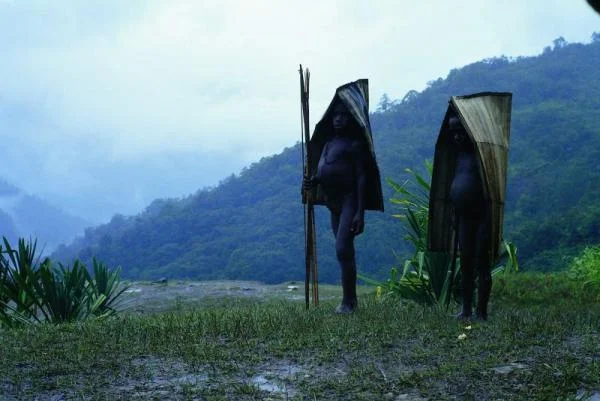
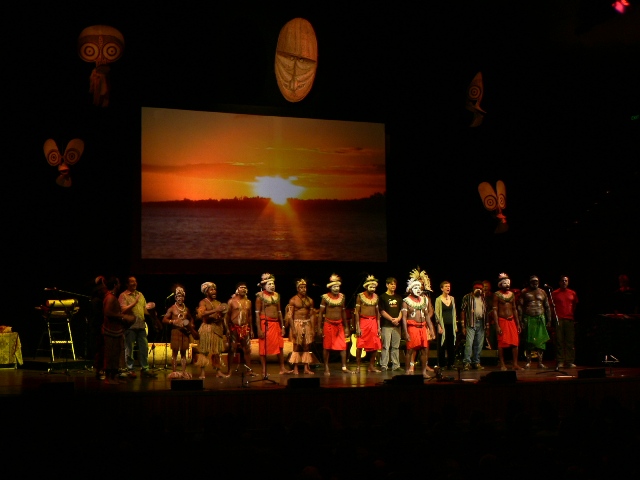
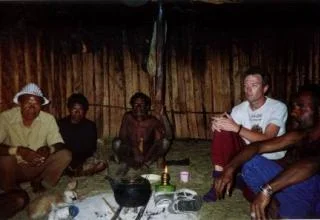
Photo David Bridie

Photo David Bridie

David Bridie: 'For God's sake Australia, have a look at the map!', Lowy Institute Lecture on PNG - 2015

December 11, 2015

2 December 2014, Lowy Institute, Sydney, Australia

Australia is a better country when it engages with its immediate neighbours in Melanesia. We are vastly different, but we are neighbours. We should learn from each other, we should be fascinated with each other, we should engage, we should assist, we should respect, we should collaborate and we should definitely listen to each other. If we do so, we will both be better off. More to the point, to be situated so close to this Melanesian wonderland and to ignore it, is foolishness in the extreme.             

Dip your toes into Melanesia and you will find evolving constitutions of emerging post-colonial states, an astounding array of species of flora and fauna (Google the way the Bird of Paradise turns itself inside out in its mating ritual), bright coloured coral fish that make a Leonid Afremov painting seem dull in comparison, active volcanoes, kustom, culture and conflict.

If you ever get the chance to look at an aerial photograph from Saibai Island in the Torres Strait over to the South coast of the Western Province of PNG, they are surprisingly close; it’s almost as if Australia is land locked.  You could wade through this stretch of water at low tide.

My now departed good friend, filmmaker Mark Worth, once wrote a letter to The Australian newspaper venting his frustration at Australia’s lack of concern for Papua New Guinea and the troubles in West Papua with the short sentence, “For God’s sake Australia, just have a look at the map”.

As a young child in the outer suburbs of Melbourne I remember flicking through an Australian atlas my parents had that contained a section on PNG at the back. The accompanying pictures featured intriguingly strange and different flora and fauna. The orchids, birds and death adders fascinated and amazed my active child’s mind. It was a terrain so vastly different to our immense flat dry ancient continent. 

Papua New Guinea should have been a source of massive fascination to Australia.  One of only two former Australian colonies, the place of wartime and pre-colonial history, home to a quarter of the world’s languages, and some of the most culturally intact peoples on the planet. People still living on the same land, working the same gardens and singing the same songs as generations of their ancestors.

This is where it was all happening.  But like our adherence to Hollywood, it was the USA’s backyard we fell for, not our own.

Our loss. 

At the age of 21 I started a band called Not Drowning, Waving with a wonderful guitarist named Johnny Phillips. In the arty world of the inner suburbs Melbourne music scene we projected films on the wall behind the stage and our visuals guy was the aforementioned fella - Mark Worth, who was also a filmmaker in his own right.

Mark had spent the first 16 years of his life on Manus Island, now infamous as the site of the processing centre for our so called “illegal” asylum seekers.  Mark’s father Geoff was in the navy at Lombrum near Lorengau.  

Mark would regale us with stories of growing up in PNG as we sat up late drinking beer after our gigs on tour. He could talk under water, a maus wara as he would be called in PNG - an enthusiast.  He said to me: “David, for your first trip overseas, don’t go to Europe, the UK or the USA. They are much the same as here. It’s an increasingly homogenous world. As a musician, as a person wanting to create and shift your thought patterns, you must go to PNG. PNG is a wonderland, it is life in the raw, and it is like going to another planet, it is, as they say, the Land of the Unexpected”

Hanging around the cultural sanctum of inner suburbs Melbourne in my university days, students and hipsters were more aware of the stories of America’s satellites such as Nicaragua, El Salvador and Guatemala than we were of our own Melanesian neighbours. It wasn’t as if there was not much of interest going on there; civil wars in Timor Leste, West Papua and Bougainville and the newly independent Vanuatu.

Surely our engaged young minds should have been fixed on our close regional neighbours? But I knew bugger all.  I would have thought any student with interest in the fields of history, science, geology, medicine, botany and especially religious studies would have found a wealth of intrigue in these countries. 

Mark had by now started the Super 8 club in Melbourne and made a film called ‘Duwai bilong Ninigos’, about the canoe makers from the remote Western Islands of PNG who would collect large floating logs that had wound their way out from the Sepik river 200 miles to the south of their remote atoll – master craftsmen of the sea. Mark enticed me to compose the soundtrack to his humble short documentary.  He played me recordings of pulsating Manus Island garamut drumming, joyous ukulele and 4-part harmony stringband music by the influential Paramena Strangers and the wall of sound that was Sanguma.

Sanguma incorporated traditional sing sing tumbuna music from a range of cultural groups all over PNG into their blend of funk and jazz.  When they came and played a gig at The Venue, Melbourne’s principle rock venue, I was gob smacked as I witnessed pulsating garamut drumming, Sepik bamboo flutes, jews harps and cascading vocal chants - sounds I had never heard before. As a musical artist always in search of inspiration and something new, this was one of the greatest gigs I had ever witnessed.

As a result of this engagement from afar, the hooks of PNG had begun to sink into my consciousness.

Melanesian Adventure namba one

In 1986, I followed through on Worthy’s advice and booked myself on my first overseas trip to PNG. I managed to convince four other mates, two men and two women, to accompany me on a holiday that took in Moresby, the Sepik, Madang, Manus, New Ireland and Rabaul. It was to change my life.

Escaping the Melbourne winter - ples bilong ice box as singer George Telek would come to call it- we spent a whirlwind two days in the dry bustling capital of Port Moresby.  We drank duty free gin with Henry - a young man we befriended at Jacksons Airport Customs - at 10pm on the foreshore Ela Beach, only to be told the following morning that under no circumstances should you ever go down to Ela beach after dark! Henry drove us around the settlements to visit his wantoks in the wee hours of the morning, my head spinning with the effects of the alcohol and the stunning excitement of being in a place where everything was new. I was gawking at every vista; my antenna was on full alert. It was only on further visits that it dawned on me that Moresby is a place where people come to find work and a party life, but often end up getting stuck there because it is expensive. And apart from the local Motuan people, these migrants of urbanisation don’t have land, contributing to the city’s edgy vibe.

Moresby was very different then from what it is now; an exciting burgeoning city whose time has arrived, with a growing middle class, a sense of confidence and pride and a beauty of its own, largely thanks to many of Powes Parkop’s urban policies of planting trees, placing artifacts in parks and roundabouts and keeping it clean.

From Moresby we travelled to the small bustling town of Wewak in the northwest. This was something different again. After an afternoon of body surfing out the front of the Windjammer Hotel with its puk puk bar, we headed down to the mighty Sepik River - one of the world’s great waterways. We definitely weren’t in Kansas anymore.

Sitting in the long dugout canoes as we headed up the tributary to Chambri Lakes, our guides were singing traditional melodies over the drone of the outboard motor.  We passed heavily populated village after village, smoke from riverbank fires gently wafted into the air, sago and yam gardens were visible beneath tropically ascending cloud formations. The Sepik had a heat to it unlike anything I’ve experienced. The temptation to dive in and cool off was mighty, but as Jeff Buckley discovered much to his detriment, these big rivers have a forceful current that you don’t argue with. The current flowed strong and dragged with it large clumps of land that floated down the centre, carrying birds hitching a ride out to the coast.

The Sepik village culture and art is astonishing; the ornate Big Haus Tambarans, the carvings, the people, and the songs rich with story. Lying awake inside my mosquito net in the small haus kunai huts where we slept, I listened to the symphony of insect and bird noises and accompanying village sounds of dogs, chickens and tok ples chatter and tried to take in all that we had witnessed in the preceding few days. This wasn’t my world. This was something completely different. Village life has a thick humid grass-roots atmosphere and ambience to it that I still to this day find inspiring. It is life in the raw. What you see is what you get. It challenges your preconceptions and it can be confronting, with few of the comforts of suburban life. I was in a foreign wonderland.

Grassroots village life makes you see the world somewhat differently. You stop and let life wash over you. Life slows down, colours are intense, sounds reverberate. The western world could learn much from the way these societies treat their elderly (lapuns) with respect, value their knowledge, and look after them with their extended family system. Our technologically savvy children could do well to observe the way children in PNG villages contribute to the necessary responsibilities of gardening, sweeping and caring for the family, not to mention the physical activity of climbing kulau trees and diving for fish and lobster that is everyday life for PNG kids.

Like the art of the central desert of Australia, the Sepik take on carving and design is idiosyncratic and multi-layered. In all my travels since, I have rarely come across a place with such unique and inspired artistic and cultural practice. Chambri Lakes is the home of my great friend the master mambu (bamboo flute) player Pius Wasi. Pius formed a band called Tambaran Culture after leaving Sanguma where he had been a junior member of the band. Tambaran Culture became an integral part of the Not Drowning, Waving touring party and Pius has been a musical companion to me ever since. He is a man of genuine cultural knowledge and we have collaborated on film soundtracks, recordings, festival music and dance performances.

We boarded a trade boat to Madang, sailing past the symmetrically perfect volcanic island of Manam as the sun rose gently on the cool clear morning. Fat schools of tuna leaping out of the shimmering ocean, villages scattered along the distant shore, the gentle rock of the boat crammed amongst travellers with bilum bags full of kau kau and unfortunate chickens on their way to market.

Then it was on to Manus, the old Admiralty Islands. Through a family friend of Mark’s, Jim Paliau, we ventured by ocean-going outrigger to the small coral Ponam Island.

Manus is home to the unique garamut drumming, an intricate ensemble style of drumming where the syncopated rhythms are understood better as melodies and dance accompaniment, played on elaborately carved slit log drums of different sizes. In two years’ time Not Drowning, Waving would venture back to Ponam Island for two weeks of recordings with these master drummers.

From Manus we caught the short flight to bilas peles (beautiful place) Kavieng, the main town of New Ireland province. After a night in the old Kavieng Hotel, where I was confronted with a man stuck in the maddening midst of malarial fever, we caught a liberating ride on the back tray of a copra truck, wind in our hair as we belted down the Bulimiski Highway named after the grand poo bah of the German New Guinea rule pre-World War One. We stayed a night in a glorious cliff top colonial house with an old school plantation owner who was an example of the bad old days, with appalling attitudes to the locals and a revolver in his side pocket.

From Namatanai we caught a short flight into the jewel of the Pacific, Rabaul, the old capital of PNG up until World War Two that gets its name from the Kuanuan word for mangrove. The flight takes you through the volcanoes, circling the harbor onto the runway on the isthmus, an enchanting descent into one of the most picturesque places I have ever been.

Namba two ples bilong mi

Ah, Rabaul - this was the beginning of something special – musically and personally.  That was my first visit – I have (so far) returned 35 times. It is my second home. Before the volcano destroyed the town in 1994, Rabaul was the jewel of the Pacific.  Mango Avenue, Casuarina Avenue, Queen Emma’s steps, the tree lined streets, the market abundant in produce.  Anything and everything grows in the rich soil of the Gazelle peninsula.

Catching a PMV bus in from near Kokopo to Rabaul town, I kept hearing this wonderful song “Abebe” by George Telek and the Moab Stringband. It was a bouncy stringband with a vocal to die for, about a butterfly spirit (Abebe means butterfly in the local tok ples, Kuanuan).

At this time, Rabaul had a thriving music industry - two 24 track-recording studios, Pacific Gold and CHM that ran 24 hours a day, seven days a week. There were gigs every night and Rabaul was home to two of the biggest PNG rock bands, Barike and Painim Wok (Telek’s rock band, doing a reformation tour in 2015), as well as a plethora of wondrous stringbands; Gilnata, Moab, Langa Vibrations, Revanmates and Junior Devils to name a few. Telek’s earlier stringband was The Junior Unbelievers Stringband, a great band name given the excessive missionary influence throughout the Pacific Islands.

Later that day I dropped into the Pacific Gold Studios, and serendipitously met George Telek and Glen Low.  Later that evening we caught up again at a barbecue on Pila Pila beach, staring out to Watom Island.  George, Glen and I drank SP, ate kakaruk (chicken) and talked about music. Both were huge Beatles and Credence fans, George still is, sadly my wantok Glen passed away from complications of Diabetes six years ago.

This was a fascinating conversation, three musicians from totally different worlds but our common link of music gave us a common language. Telek is the closest thing PNG has to a bona fide rock star. At the time Painim Wok cassettes were selling all around the country in massive numbers. The band’s co-founder John Warbat dressed in leather pants and jacket even during afternoon gigs with the temperature sitting at 33 degrees Celsius and 100% humidity, shredding away guitar hero style.

Little did George and I know that this barbecue on the beach would lead to us working together for the next 29 years, collaborating on the Not Drowning, Waving ‘Tabaran’ album, followed by me producing his five international solo albums plus one for the Moab Stringband, with an abundance of accompanying tours to all parts of Australia, the Solomon Islands, Vanuatu, the UK, USA and Europe. Telek would also collaborate with artists such as Archie Roach, Kev Carmody, Youssou N’Dour, Suzanne Vega, Bart Willoughby, Jimmy Little, Ngaiire and a host of others and garner an OBE for services to the PNG music industry. His anthem West Papua (Freedom) has such a following among West Papuans that it has become their defacto national anthem.

Not Drowning, Waving performing with George Telek, Photo: David Bridie

Not Drowning, Waving performing with George Telek, Photo: David Bridie

On my last night in Rabaul I spent the night in Raluana, Telek’s home village, and chilled down on the beach at Nrab point. Gazing out over Simpson Harbour, to the Beehives rock formation in the middle, to Nordup on the far side, to Tavurvur, the smallest of the volcanoes near Matupit - the one that would do the most damage in the 1994 eruption - I pondered how much history these people had witnessed over the last century and how much of this history Australia was a part of.

The 6-day war at Blanche Bay where the handsome Talili fought on behalf of his people in one of the first examples of organized native defence is a great feature film in the making. The life of the influential missionary George Brown, the Samoan Queen Emma and her commerce initiatives.  A German colony under Albert Hahn up until 1918, the Germans had an organized tram system and set up very fruitful plantations and commercial enterprises.

From there the Tolais endured British and then Australian rule where the town of Rabaul was the capital, until we left it high and dry in the lead up to the Japanese invasion. The local Tolai people and many Australian nurses, civilians and soldiers were caught behind Japanese lines to fend for themselves. Also of note was the sinking of the POW ship the Montevideo Maru where over 400 Australian POWs and nurses were killed.

JK McCarthy’s biography ‘Patrol Into Yesterday: My New Guinea Years’ is a riveting read.  One of the most positive accounts to come out of the Kiap and coast watcher era, McCarthy had the wisdom of Solomon about him and is perhaps the guiding example of what respectful engagement between our two countries should look like.

It is a cracking read.

Of equal fascination is the Matanguan Society’s role in agitating for indigenous rights in the lead up to independence, fortified by their Tumbuan society and secret belief system that has law and order, political and social objectives, represented in ritual form by the male Duk Duk and female Tubuan dances. Being secret, it was able to survive the vast changes brought about by missionary and colonial influences and remains strong and relevant today.

Leaving Rabaul we returned to Port Moresby, which was revealing having spent two months in the regions.  Moresby made more sense now after being out in Sepik and the islands.  We made a final visit to the museum, the Institute of PNG studies and the grand Parliament House; three important institutions that are still operating and are must-see places.

As we boarded the plane home at Jackson’s Airport, lining up with Australian mine workers straight out of their security compounds, my mind was filled to the brim with the exotic places and people of Papua New Guinea. Sounds and stories. Images and songs. Questions and enquiries. And many of these questions were not just about PNG but also about Australia-the way we live, the way we think, our approach to this wondrous world we find ourselves in.  My world had been shaken up and stirred. My approach to music and sound would never be the same again.


Source: http://auspng.lowyinstitute.org/publicatio...

Enjoyed this speech? Speakola is a labour of love and I’d be very grateful if you would share, tweet or like it. Thank you.

Facebook Twitter Facebook
In INTERNATIONAL Tags DAVID BRIDIE, MUSICIAN, MANUS, PNG, MELONESIA, TRANSCRIPT
2 Comments

See my film!

Limited Australian Season

March 2025

Details and ticket bookings at

angeandtheboss.com

Support Speakola

Hi speech lovers,
With costs of hosting website and podcast, this labour of love has become a difficult financial proposition in recent times. If you can afford a donation, it will help Speakola survive and prosper.

Best wishes,
Tony Wilson.

Become a Patron!

Learn more about supporting Speakola.

Featured political

Featured
Jon Stewart: "They responded in five seconds", 9-11 first responders, Address to Congress - 2019
Jacinda Ardern: 'They were New Zealanders. They are us', Address to Parliament following Christchurch massacre - 2019
Dolores Ibárruri: "¡No Pasarán!, They shall not pass!', Defense of 2nd Spanish Republic - 1936
Jimmy Reid: 'A rat race is for rats. We're not rats', Rectorial address, Glasgow University - 1972

Featured eulogies

Featured
For Geoffrey Tozer: 'I have to say we all let him down', by Paul Keating - 2009
for James Baldwin: 'Jimmy. You crowned us', by Toni Morrison - 1988
for Michael Gordon: '13 days ago my Dad’s big, beautiful, generous heart suddenly stopped beating', by Scott and Sarah Gordon - 2018

Featured commencement

Featured
Tara Westover: 'Your avatar isn't real, it isn't terribly far from a lie', The Un-Instagrammable Self, Northeastern University - 2019
Tim Minchin: 'Being an artist requires massive reserves of self-belief', WAAPA - 2019
Atul Gawande: 'Curiosity and What Equality Really Means', UCLA Medical School - 2018
Abby Wambach: 'We are the wolves', Barnard College - 2018
Eric Idle: 'America is 300 million people all walking in the same direction, singing 'I Did It My Way'', Whitman College - 2013
Shirley Chisholm: ;America has gone to sleep', Greenfield High School - 1983

Featured sport

Featured
Joe Marler: 'Get back on the horse', Harlequins v Bath pre game interview - 2019
Ray Lewis : 'The greatest pain of my life is the reason I'm standing here today', 52 Cards -
Mel Jones: 'If she was Bradman on the field, she was definitely Keith Miller off the field', Betty Wilson's induction into Australian Cricket Hall of Fame - 2017
Jeff Thomson: 'It’s all those people that help you as kids', Hall of Fame - 2016

Fresh Tweets


Featured weddings

Featured
Dan Angelucci: 'The Best (Best Man) Speech of all time', for Don and Katherine - 2019
Hallerman Sisters: 'Oh sister now we have to let you gooooo!' for Caitlin & Johnny - 2015
Korey Soderman (via Kyle): 'All our lives I have used my voice to help Korey express his thoughts, so today, like always, I will be my brother’s voice' for Kyle and Jess - 2014

Featured Arts

Featured
Bruce Springsteen: 'They're keepers of some of the most beautiful sonic architecture in rock and roll', Induction U2 into Rock Hall of Fame - 2005
Olivia Colman: 'Done that bit. I think I have done that bit', BAFTA acceptance, Leading Actress - 2019
Axel Scheffler: 'The book wasn't called 'No Room on the Broom!', Illustrator of the Year, British Book Awards - 2018
Tina Fey: 'Only in comedy is an obedient white girl from the suburbs a diversity candidate', Kennedy Center Mark Twain Award -  2010
Tina Fey: 'Only in comedy is an obedient white girl from the suburbs a diversity candidate', Kennedy Center Mark Twain Award - 2010

Featured Debates

Featured
Sacha Baron Cohen: 'Just think what Goebbels might have done with Facebook', Anti Defamation League Leadership Award - 2019
Greta Thunberg: 'How dare you', UN Climate Action Summit - 2019
Charlie Munger: 'The Psychology of Human Misjudgment', Harvard University - 1995
Lawrence O'Donnell: 'The original sin of this country is that we invaders shot and murdered our way across the land killing every Native American that we could', The Last Word, 'Dakota' - 2016