• Genre
  • About
  • Submissions
  • Donate
  • Search
Menu

Speakola

All Speeches Great and Small
  • Genre
  • About
  • Submissions
  • Donate
  • Search
mother teresa.jpg

Mother Teresa: 'we are teaching our beggars, our leprosy patients natural family planning', Nobel lecture - 1979

January 3, 2017

11 December 1979, Stockholm, Sweden

There is two minutes of audio of the speech at www.nobelprize.org

As we have gathered here together to thank God for the Nobel Peace Prize I think it will be beautiful that we pray the prayer of St. Francis of Assisi which always surprises me very much - we pray this prayer every day after Holy Communion, because it is very fitting for each one of us, and I always wonder that 4-500 years ago as St. Francis of Assisi composed this prayer that they had the same difficulties that we have today, as we compose this prayer that fits very nicely for us also. I think some of you already have got it - so we will pray together.

Let us thank God for the opportunity that we all have together today, for this gift of peace that reminds us that we have been created to live that peace, and Jesus became man to bring that good news to the poor. He being God became man in all things like us except sin, and he proclaimed very clearly that he had come to give the good news. The news was peace to all of good will and this is something that we all want - the peace of heart - and God loved the world so much that he gave his son - it was a giving - it is as much as if to say it hurt God to give, because he loved the world so much that he gave his son, and he gave him to Virgin Mary, and what did she do with him?

As soon as he came in her life - immediately she went in haste to give that good news, and as she came into the house of her cousin, the child - the unborn child - the child in the womb of Elizabeth, leapt with joy. He was that little unborn child, was the first messenger of peace. He recognised the Prince of Peace, he recognised that Christ has come to bring the good news for you and for me. And as if that was not enough - it was not enough to become a man - he died on the cross to show that greater love, and he died for you and for me and for that leper and for that man dying of hunger and that naked person lying in the street not only of Calcutta, but of Africa, and New York, and London, and Oslo - and insisted that we love one another as he loves each one of us. And we read that in the Gospel very clearly - love as I have loved you - as I love you - as the Father has loved me, I love you - and the harder the Father loved him, he gave him to us, and how much we love one another, we, too, must give each other until it hurts. It is not enough for us to say: I love God, but I do not love my neighbour. St. John says you are a liar if you say you love God and you don't love your neighbour. How can you love God whom you do not see, if you do not love your neighbour whom you see, whom you touch, with whom you live. And so this is very important for us to realise that love, to be true, has to hurt. It hurt Jesus to love us, it hurt him. And to make sure we remember his great love he made himself the bread of life to satisfy our hunger for his love. Our hunger for God, because we have been created for that love. We have been created in his image. We have been created to love and be loved, and then he has become man to make it possible for us to love as he loved us. He makes himself the hungry one - the naked one - the homeless one - the sick one - the one in prison - the lonely one - the unwanted one - and he says: You did it to me. Hungry for our love, and this is the hunger of our poor people. This is the hunger that you and I must find, it may be in our own home.

I never forget an opportunity I had in visiting a home where they had all these old parents of sons and daughters who had just put them in an institution and forgotten maybe. And I went there, and I saw in that home they had everything, beautiful things, but everybody was looking towards the door. And I did not see a single one with their smile on their face. And I turned to the Sister and I asked: How is that? How is it that the people they have everything here, why are they all looking towards the door, why are they not smiling? I am so used to see the smile on our people, even the dying one smile, and she said: This is nearly every day, they are expecting, they are hoping that a son or daughter will come to visit them. They are hurt because they are forgotten, and see - this is where love comes. That poverty comes right there in our own home, even neglect to love. Maybe in our own family we have somebody who is feeling lonely, who is feeling sick, who is feeling worried, and these are difficult days for everybody. Are we there, are we there to receive them, is the mother there to receive the child?

I was surprised in the West to see so many young boys and girls given into drugs, and I tried to find out why - why is it like that, and the answer was: Because there is no one in the family to receive them. Father and mother are so busy they have no time. Young parents are in some institution and the child takes back to the street and gets involved in something. We are talking of peace. These are things that break peace, but I feel the greatest destroyer of peace today is abortion, because it is a direct war, a direct killing - direct murder by the mother herself. And we read in the Scripture, for God says very clearly: Even if a mother could forget her child - I will not forget you - I have carved you in the palm of my hand. We are carved in the palm of His hand, so close to Him that unborn child has been carved in the hand of God. And that is what strikes me most, the beginning of that sentence, that even if a mother could forget something impossible - but even if she could forget - I will not forget you. And today the greatest means - the greatest destroyer of peace is abortion. And we who are standing here - our parents wanted us. We would not be here if our parents would do that to us. Our children, we want them, we love them, but what of the millions. Many people are very, very concerned with the children in India, with the children in Africa where quite a number die, maybe of malnutrition, of hunger and so on, but millions are dying deliberately by the will of the mother. And this is what is the greatest destroyer of peace today. Because if a mother can kill her own child - what is left for me to kill you and you kill me - there is nothing between. And this I appeal in India, I appeal everywhere: Let us bring the child back, and this year being the child's year: What have we done for the child? At the beginning of the year I told, I spoke everywhere and I said: Let us make this year that we make every single child born, and unborn, wanted. And today is the end of the year, have we really made the children wanted? I will give you something terrifying. We are fighting abortion by adoption, we have saved thousands of lives, we have sent words to all the clinics, to the hospitals, police stations - please don't destroy the child, we will take the child. So every hour of the day and night it is always somebody, we have quite a number of unwedded mothers - tell them come, we will take care of you, we will take the child from you, and we will get a home for the child. And we have a tremendous demand from families who have no children, that is the blessing of God for us. And also, we are doing another thing which is very beautiful - we are teaching our beggars, our leprosy patients, our slum dwellers, our people of the street, natural family planning.

And in Calcutta alone in six years - it is all in Calcutta - we have had 61,273 babies less from the families who would have had, but because they practise this natural way of abstaining, of self-control, out of love for each other. We teach them the temperature meter which is very beautiful, very simple, and our poor people understand. And you know what they have told me? Our family is healthy, our family is united, and we can have a baby whenever we want. So clear - those people in the street, those beggars - and I think that if our people can do like that how much more you and all the others who can know the ways and means without destroying the life that God has created in us.

The poor people are very great people. They can teach us so many beautiful things. The other day one of them came to thank and said: You people who have vowed chastity you are the best people to teach us family planning. Because it is nothing more than self-control out of love for each other. And I think they said a beautiful sentence. And these are people who maybe have nothing to eat, maybe they have not a home where to live, but they are great people. The poor are very wonderful people. One evening we went out and we picked up four people from the street. And one of them was in a most terrible condition - and I told the Sisters: You take care of the other three, I take of this one that looked worse. So I did for her all that my love can do. I put her in bed, and there was such a beautiful smile on her face. She took hold of my hand, as she said one word only: Thank you - and she died.

I could not help but examine my conscience before her, and I asked what would I say if I was in her place. And my answer was very simple. I would have tried to draw a little attention to myself, I would have said I am hungry, that I am dying, I am cold, I am in pain, or something, but she gave me much more - she gave me her grateful love. And she died with a smile on her face. As that man whom we picked up from the drain, half eaten with worms, and we brought him to the home. I have lived like an animal in the street, but I am going to die like an angel, loved and cared for. And it was so wonderful to see the greatness of that man who could speak like that, who could die like that without blaming anybody, without cursing anybody, without comparing anything. Like an angel - this is the greatness of our people. And that is why we believe what Jesus had said: I was hungry - I was naked - I was homeless - I was unwanted, unloved, uncared for - and you did it to me.

I believe that we are not real social workers. We may be doing social work in the eyes of the people, but we are really contemplatives in the heart of the world. For we are touching the Body of Christ 24 hours. We have 24 hours in this presence, and so you and I. You too try to bring that presence of God in your family, for the family that prays together stays together. And I think that we in our family don't need bombs and guns, to destroy to bring peace - just get together, love one another, bring that peace, that joy, that strength of presence of each other in the home. And we will be able to overcome all the evil that is in the world.

There is so much suffering, so much hatred, so much misery, and we with our prayer, with our sacrifice are beginning at home. Love begins at home, and it is not how much we do, but how much love we put in the action that we do. It is to God Almighty - how much we do it does not matter, because He is infinite, but how much love we put in that action. How much we do to Him in the person that we are serving.

Some time ago in Calcutta we had great difficulty in getting sugar, and I don't know how the word got around to the children, and a little boy of four years old, Hindu boy, went home and told his parents: I will not eat sugar for three days, I will give my sugar to Mother Teresa for her children. After three days his father and mother brought him to our home. I had never met them before, and this little one could scarcely pronounce my name, but he knew exactly what he had come to do. He knew that he wanted to share his love.

And this is why I have received such a lot of love from you all. From the time that I have come here I have simply been surrounded with love, and with real, real understanding love. It could feel as if everyone in India, everyone in Africa is somebody very special to you. And I felt quite at home I was telling Sister today. I feel in the Convent with the Sisters as if I am in Calcutta with my own Sisters. So completely at home here, right here.

And so here I am talking with you - I want you to find the poor here, right in your own home first. And begin love there. Be that good news to your own people. And find out about your next-door neighbour - do you know who they are? I had the most extraordinary experience with a Hindu family who had eight children. A gentleman came to our house and said: Mother Teresa, there is a family with eight children, they had not eaten for so long - do something. So I took some rice and I went there immediately. And I saw the children - their eyes shinning with hunger - I don't know if you have ever seen hunger. But I have seen it very often. And she took the rice, she divided the rice, and she went out. When she came back I asked her - where did you go, what did you do? And she gave me a very simple answer: They are hungry also. What struck me most was that she knew - and who are they, a Muslim family - and she knew. I didn't bring more rice that evening because I wanted them to enjoy the joy of sharing. But there were those children, radiating joy, sharing the joy with their mother because she had the love to give. And you see this is where love begins - at home. And I want you - and I am very grateful for what I have received. It has been a tremendous experience and I go back to India - I will be back by next week, the 15th I hope - and I will be able to bring your love.

And I know well that you have not given from your abundance, but you have given until it has hurt you. Today the little children they have - I was so surprised - there is so much joy for the children that are hungry. That the children like themselves will need love and care and tenderness, like they get so much from their parents. So let us thank God that we have had this opportunity to come to know each other, and this knowledge of each other has brought us very close. And we will be able to help not only the children of India and Africa, but will be able to help the children of the whole world, because as you know our Sisters are all over the world. And with this prize that I have received as a prize of peace, I am going to try to make the home for many people that have no home. Because I believe that love begins at home, and if we can create a home for the poor - I think that more and more love will spread. And we will be able through this understanding love to bring peace, be the good news to the poor. The poor in our own family first, in our country and in the world.

To be able to do this, our Sisters, our lives have to be woven with prayer. They have to be woven with Christ to be able to understand, to be able to share. Because today there is so much suffering - and I feel that the passion of Christ is being relived all over again - are we there to share that passion, to share that suffering of people. Around the world, not only in the poor countries, but I found the poverty of the West so much more difficult to remove. When I pick up a person from the street, hungry, I give him a plate of rice, a piece of bread, I have satisfied. I have removed that hunger. But a person that is shut out, that feels unwanted, unloved, terrified, the person that has been thrown out from society - that poverty is so hurtable and so much, and I find that very difficult. Our Sisters are working amongst that kind of people in the West. So you must pray for us that we may be able to be that good news, but we cannot do that without you, you have to do that here in your country. You must come to know the poor, maybe our people here have material things, everything, but I think that if we all look into our own homes, how difficult we find it sometimes to smile at each, other, and that the smile is the beginning of love.

And so let us always meet each other with a smile, for the smile is the beginning of love, and once we begin to love each other naturally we want to do something. So you pray for our Sisters and for me and for our Brothers, and for our Co-Workers that are around the world. That we may remain faithful to the gift of God, to love Him and serve Him in the poor together with you. What we have done we should not have been able to do if you did not share with your prayers, with your gifts, this continual giving. But I don't want you to give me from your abundance, I want that you give me until it hurts.

The other day I received 15 dollars from a man who has been on his back for twenty years, and the only part that he can move is his right hand. And the only companion that he enjoys is smoking. And he said to me: I do not smoke for one week, and I send you this money. It must have been a terrible sacrifice for him, but see how beautiful, how he shared, and with that money I bought bread and I gave to those who are hungry with a joy on both sides, he was giving and the poor were receiving. This is something that you and I - it is a gift of God to us to be able to share our love with others. And let it be as it was for Jesus. Let us love one another as he loved us. Let us love Him with undivided love. And the joy of loving Him and each other - let us give now - that Christmas is coming so close. Let us keep that joy of loving Jesus in our hearts. And share that joy with all that we come in touch with. And that radiating joy is real, for we have no reason not to be happy because we have no Christ with us. Christ in our hearts, Christ in the poor that we meet, Christ in the smile that we give and the smile that we receive. Let us make that one point: That no child will be unwanted, and also that we meet each other always with a smile, especially when it is difficult to smile.

I never forget some time ago about fourteen professors came from the United States from different universities. And they came to Calcutta to our house. Then we were talking about that they had been to the home for the dying. We have a home for the dying in Calcutta, where we have picked up more than 36,000 people only from the streets of Calcutta, and out of that big number more than 18,000 have died a beautiful death. They have just gone home to God; and they came to our house and we talked of love, of compassion, and then one of them asked me: Say, Mother, please tell us something that we will remember, and I said to them: Smile at each other, make time for each other in your family. Smile at each other. And then another one asked me: Are you married, and I said: Yes, and I find it sometimes very difficult to smile at Jesus because he can be very demanding sometimes. This is really something true, and there is where love comes - when it is demanding, and yet we can give it to Him with joy. Just as I have said today, I have said that if I don't go to Heaven for anything else I will be going to Heaven for all the publicity because it has purified me and sacrificed me and made me really ready to go to Heaven. I think that this is something, that we must live life beautifully, we have Jesus with us and He loves us. If we could only remember that God loves me, and I have an opportunity to love others as he loves me, not in big things, but in small things with great love, then Norway becomes a nest of love. And how beautiful it will be that from here a centre for peace has been given. That from here the joy of life of the unborn child comes out. If you become a burning light in the world of peace, then really the Nobel Peace Prize is a gift of the Norwegian people. God bless you!.

Source: http://www.nobelprize.org/mediaplayer/inde...

Enjoyed this speech? Speakola is a labour of love and I’d be very grateful if you would share, tweet or like it. Thank you.

Facebook Twitter Facebook
In RELIGION Tags MOTHER TERESA, NOBEL PEACE PRIZE, LAUREATE, NOBEL LECTURE, NOBEL PRIZE, CALCUTTA, TRANSCRIPT
Comment

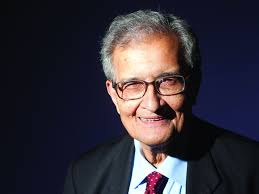
Amartya Sen: 'The importance of education', Commonwealth education conference - 2003

December 18, 2016

28 October 2003, Edinburgh, Scotland, UK

It is a great privilege for me to have the opportunity of speaking at this meeting of Commonwealth countries on education. I am also very happy that you have chosen Edinburgh as the venue of this important conference. I am very proud of my own association with Edinburgh, through being an alumnus of two universities here, Edinburgh University and Heriot-Watt University (admittedly my connections are only through honorary degrees but they generate a sense of closeness to the real students here), and also through belonging to the Royal Society of Edinburgh and having other associations with this great city. So I welcome you to beautiful Edinburgh and to its wonderful intellectual community, of which I am privileged to be a nomadic member, as something of an academic gypsy. But to this welcome I must add my belief that there could not be a better place for a meeting on "closing the gap" in education than the city of Adam Smith and David Hume, the earliest and greatest champions of education for all.

Why is it so important to close the educational gaps, and to remove the enormous disparities in educational access, inclusion and achievement? One reason, among others, is the importance of this for making the world more secure as well as more fair. HG Wells was not exaggerating when he said, in his Outline of History: "human history becomes more and more a race between education and catastrophe." If we continue to leave vast sections of the people of the world outside the orbit of education, we make the world not only less just, but also less secure.

The precariousness of the world is now greater than it already was in HG Wells's time in early twentieth century. Indeed, since the terrible events of September 11, 2001 - and what followed after that - the world has been very aware of problems of physical insecurity. But human insecurity comes in many different ways - not just though terrorism and violence. Indeed, even on the very day of September 11, 2001, more people died from Aids than from physical violence including the atrocity in New York. Human insecurity can develop in many different ways, and physical violence is only one of them. While it is important to fight terrorism and genocide (and in this too, education can have a big role, as I will presently discuss), we must also recognise the plural nature of human insecurity and its diverse manifestations.

As it happens, widening the coverage and effectiveness of basic education can have a powerfully preventive role in reducing human insecurity of nearly every kind. It is useful to consider briefly the different ways in which removing discrepancies and neglects in education can contribute to reducing human insecurity across the world.

The most basic issue relates to the elementary fact that illiteracy and innumeracy are forms of insecurity in themselves. Not to be able to read or write or count or communicate is a tremendous deprivation. The extreme case of insecurity is the certainty of deprivation, and the absence of any chance of avoiding that fate. The first and most immediate contribution of successful school education is a direct reduction of this basic deprivation - this extreme insecurity - which continues to ruin the lives of a large part of the global population, not least in the Commonwealth.

The difference that basic education can make to human life is easy to see. It is also readily appreciated even by the poorest of families. Speaking personally, it has been wonderful for me to observe how easily the importance of education is perceived even by the poorest and the most deprived of families. This emerges from some studies on primary education in India that we are currently undertaking (through the "Pratichi Trust" - a trust aimed at basic education and gender equity that I have been privileged to set up in India and Bangladesh through using my Nobel Prize money from 1998). As the results of our studies come in, it is remarkable to find how the parents from even the poorest and most depressed families long to give basic education to their children, to make them grow up without the terrible handicaps from which they - the parents - had themselves suffered.

Indeed, contrary to claims often made, we have not observed any basic reluctance by parents to send their children - daughters as well as boys - to school, provided affordable, effective and safe schooling opportunities actually exist in their neighbourhood. Of course, there are many obstacles in giving shape to the dreams of parents. The economic circumstances of the families often make it very hard for them to send their children to school, particularly when there are fees to be paid.

The obstacle of unaffordability must be firmly removed across the Commonwealth - indeed the world. I am, of course, aware that some champions of the market system want to leave school fees to the market forces. But this cannot but be a mistake given the social obligation to give the essential opportunity of schooling to all children. Indeed, Adam Smith, who provided the classic analysis of the power and reach of the market mechanism two and quarter centuries ago, wrote eloquently, sitting in Kirkcaldy (not far from here), why it would be wrong to leave this to the market:

For a very small expence the publick can facilitate, can encourage, and can even impose upon almost the whole body of the people, the necessity of acquiring those most essential parts of education.

There are other obstacles too. Sometimes the schools are very thinly staffed (many primary schools in developing countries have only one teacher), and parents are often worried about the safety of children, especially girl children (particularly in case the teacher fails to turn up, which seems to happen often enough in many of the poorer countries). Quite often, the parents' reluctance has a rational basis, and these gaps too need to be addressed.

There are other barriers as well. Very poor families often rely on labour contributions from everyone, even the children, and this can compete with the demands of schooling. This unfortunate practice, though generated out of hardship, must also be removed, through regulation as well as by making the economic benefits of schooling clearer to all. This brings us to the second issue in understanding the contribution of schooling in removing human insecurity. Basic education can be very important in helping people to get jobs and gainful employment. This economic connection, while always present, is particularly critical in a rapidly globalising world in which quality control and production according to strict specification can be crucial.

Not surprisingly, all the cases of speedy use of the opportunities of global commerce for the reduction of poverty have drawn on help from basic education on a wide basis. For example, in Japan, already in the mid-19th century the task was seen with remarkable clarity. The Fundamental Code of Education, issued in 1872 (shortly after the Meiji restoration in 1868), expressed the public commitment to make sure that there must be "no community with an illiterate family, nor a family with an illiterate person". Thus - with the closing of educational gaps - began Japan's remarkable history of rapid economic development. By 1910 Japan was almost fully literate, at least for the young, and by 1913, though still very much poorer than Britain or America, Japan was publishing more books than Britain and more than twice as many as the United States. The concentration on education determined, to a large extent, the nature and speed of Japan's economic and social progress.

Later on, particularly in the second half of the 20th century, South Korea, China, Taiwan, Hong Kong, Singapore, and other economies in East Asia followed similar routes and firmly focused on general expansion of education. Widespread participation in a global economy would have been hard to accomplish if people could not read or write, or produce according to specifications or instructions, or to have quality control.

Third, when people are illiterate, their ability to understand and invoke their legal rights can be very limited, and educational neglect can also lead to other kinds of deprivation. Indeed, this tends to be a persistent problem for people at the bottom of the ladder, whose rights are often effectively alienated because of their inability to read and see what they are entitled to demand and how. The educational gap clearly has a class connection.

It also has a gender connection since it can be a very important issue for women's security. Women are often deprived of their due, thanks to illiteracy. Not being able to read or write is a significant barrier for underprivileged women, since this can lead to their failure to make use even of the rather limited rights they may legally have (say, to own land, or other property, or to appeal against unfair judgment and unjust treatment). There are often legal rights in rulebooks that are not used because the aggrieved parties cannot read those rulebooks. Gaps in schooling can, thus, directly lead to insecurity by distancing the deprived from the ways and means of fighting against that deprivation.

Fourth, illiteracy can also muffle the political opportunities of the underdog, by reducing their ability to participate in political arena and to express their demands effectively. This can contribute directly to their insecurity, since the absence of voice in politics can entail a severe reduction of influence and the likelihood of just treatment of those who are kept on the wrong side of the gap.

Fifth, basic education can play a major role in tackling health problems in general and epidemics in particular. It is easy to see the importance of specialised health education (for example, on the way infections spread and how diseases can be prevented). But even general education can broaden a person's lines of thinking and generate social understanding in ways that may be extremely important in facing epidemiological problems. Indeed, some studies have suggested that general school education has a bigger impact on health than specialised health education itself has.

Sixth, empirical work in recent years has brought out very clearly how the relative respect and regard for women's well-being is strongly influenced by women's literacy and educated participation in decisions within and outside the family. Even the survival disadvantage of women compared with men in many developing countries (which leads to such terrible phenomenon as a hundred million of "missing women") seems to go down sharply - and may even get eliminated - with progress in women's empowerment, for which literacy is a basic ingredient.

There is also considerable evidence that fertility rates tend to go down sharply with greater empowerment of women. This is not surprising, since the lives that are most battered by the frequent bearing and rearing of children are those of young women, and anything that enhances their decisional power and increases the attention that their interests receive tends, in general, to prevent over-frequent child bearing. For example, in a comparative study of the different districts within India, it has clearly emerged that women's education and women's employment are the two most important influences in reducing fertility rates. In that extensive study, female education and employment are the only variables that have a statistically significant impact in explaining variations in fertility rates across more than three hundred districts that make up India. In understanding inter-regional differences, for example the fact the state of Kerala in India has a fertility rate of only 1.7 (which can be roughly interpreted as 1.7 children on average per couple) in contrast with many areas which have four children per couple (or even more), the level of female education provides the most effective explanation.

There is also much evidence that women's education and literacy tend to reduce the mortality rates of children. These and other connections between basic education of women and the power of women's agency (and its extensive reach) indicate why the gender gap in education produces heavy social penalties.

I have so far concentrated on gaps in access, inclusion and achievement that differentiate one group of people from another. But this is also a good occasion to reflect a little on the gaps - of a very different kind - that exist in the coverage of the school curriculum. The nature of the curriculum is, of course, of obvious relevance to the development of technical skills (such as computing) that facilitate participation in the contemporary world. But there are also other issues involved, since schooling can be deeply influential in the identity of a person and the way we see ourselves and each other.

This issue has received some attention recently in the special context of the role of fundamentalist religious schools, and there is need to pay attention to the narrowing of horizons, especially of children, that illiberal and intolerant education can produce. It is also important to recognise that lack of public facilities for the schooling of children often contributes greatly to the appeal and popularity of religious schools run by political militants.

Indeed, the nature of education is quite central to peace in the world. Recently the very deceptive perspective of the so-called "clash of civilisations" (championed particularly by Samuel Huntington) has gained much currency. It is important to see that what is most immediately divisive in this kind of theorising is not the silly idea of the inevitability of a clash (that too, but it comes later), but the equally shallow prior insistence on seeing human beings in terms of one dimension only, regarding them just as members of one civilisation or another (defined mostly in terms of religion), ignoring their other affiliations and involvements.

There are two mistakes here. First, the classification is very crude. For example, India is put in the box of Hindu civilisation, even though with its 130 million Muslims (more than the entire British and French populations put together), India has many more Muslims than most so-called "Muslim countries" in the world. Huntington's classification gives comfort only to Hindu sectarians.

The second mistake is to assume that a person's religion defines him or her reasonably adequately. But every human being's identities have many different components, related to nationality, language, location, class, occupation, history, religion, political beliefs, and so on. A Bangladeshi Muslim is not only a Muslim, but also a Bengali and possibly quite proud of the richness of the Bengali literature and other cultural achievements. Similarly, the history of the Arab world with which an Arab child today can potentially related is not only the achievements of Islam (important as they are), but also the great secular accomplishments in mathematics, science and literature which are part and parcel of Arab history. Even today when a scientist in, say, the Imperial College uses an "algorithm," he or she unconsciously celebrates the innovativeness of the ninth-century Arab mathematician, Al-Khwarizmi, from whose name the term algorithm is derived (the term "algebra" comes from his book, "Al Jabr wa-al-Muqabilah").

To define people just in terms of religion-based classification of civilisations can itself contribute to political insecurity, since in this view people are seen as simply belonging to, say, "the Muslim world," or "the Western world," or "the Hindu world," or "the Buddhist world," and so on. To ignore everything other than religion in classifying people is to set people up in potentially belligerent camps. I personally believe that even the UK government makes a mistake in expanding, rather than reducing faith-based state schools, adding for example Muslim schools, Hindu schools and Sikh schools to pre-existing Christian ones, especially when the new religious schools leave children very little opportunity to cultivate reasoned choice and decide how the various components of their identities (related respectively to language, literature, religion, ethnicity, cultural history, scientific interests, etc) should receive attention. There is need not only to discuss the importance of our common humanity, but also to stress the fact that our diversities can take many distinct forms and that we have to use our reasoning to decide how to see ourselves.

The importance of non-sectarian and non-parochial curricula that expand, rather than reduce, the reach of reason can be hard to exaggerate. Shakespeare talked about the fact that "some men are born great, some achieve greatness, and some have greatness thrust upon them." In the schooling of children, we have to make sure that we do not have smallness thrust upon the young.

The idea of the Commonwealth has something to offer on the philosophy behind such a broad approach. The Queen herself, as the head of the Commonwealth, put the basic perspective with clarity and force half a century ago, shortly after her coronation, in 1953:

The Commonwealth ... is an entirely new conception built on the highest qualities of the spirit of man: friendship, loyalty and the desire for freedom and peace.

In promoting friendship and loyalty, and in safeguarding the commitment to freedom and peace, basic education can play a vital part. This requires, on the one hand, that the facilities of education be available to all, and on the other, that children be exposed to ideas from many different backgrounds and perspectives and be encouraged to think for themselves and to reason.

Basic education is not just an arrangement for training to develop skills (important as that is), it is also a recognition of the nature of the world, with its diversity and richness, and an appreciation of the importance of freedom and reasoning as well as friendship. The need for that understanding - that vision - has never been stronger.

Source: https://www.theguardian.com/education/2003...

Enjoyed this speech? Speakola is a labour of love and I’d be very grateful if you would share, tweet or like it. Thank you.

Facebook Twitter Facebook
In EDUCATION Tags EDUCATION CONFERENCE, COMMONWEALTH, AMARTYA SEN, EDUCATION MINISTERS, TRANSCRIPT, INDIA, NOBEL PRIZE
Comment

John Eccles: 'To the brains of our predecessors we owe all of our inheritance of civilization and culture', Nobel banquet speech - 1963

September 6, 2016

10 December 1963, Stockholm, Sweden

Sir John Eccles receives his Nobel laureate first, followed by Allan L. Hodgkin, Andrew F. Huxley. He was an Australian who was educated at Warnambool High School and University of Melbourne School of Medicine. This is his banquet speech to students.

Your Majesties, Your Royal Highnesses, Your Excellencies, Ladies and Gentlemen, Fellow students, Mr. Drakenberg.

I have the great honour to reply on behalf of the Laureates on this magnificent occasion. We have greatly enjoyed your festive display and the fine style of your dancing and singing. As an old folk-dancer I particularly appreciated the grace and precision of your dancing. But it is to your thoughtful and sincere speech of welcome and congratulation that I wish especially to reply. This is the greatest day of our lives - the climax of long years of creative work. We feel a great expansion of personality. And now as I speak to you I feel elevated, as on some high platform. Let me then speak to you as an old student of some 60 years and give you young students two thoughts that have come to me with special vividness in these last years.

Firstly, I think we must realize the full negative impact of the new knowledge derived from the study of the moon, Venus and Mars and of the problems of space travel. As physiologists we can now predict with complete assurance that "Man is forever earth-bound". There is absolutely no possible place for man to live other than on this earth. We and our fellow men of all countries must realize that we share this wonderful, beautiful, salubrious earth as brothers and that there never will be anywhere else to go. This revelation should strongly reinforce the plea of Mr. Drakenberg for a world Government by United Nations.

My second thought is that in this present age we have tremendously underestimated the importance of biology. Possibly life is only in this planet, and even here only in an infinitesimally small fraction of the matter of this earth; yet it is of transcendent importance to us. We are of it, we are in the evolutionary story. The origin of each of us stems from codes of genetic inheritance. For us the most significant questions we can ask scientifically concern the working of our nervous systems - the marvellous reception, communication and storage devices that subserve all our perception, our thoughts, our memories, our actions, our creative imaginations, our ideals. To the brains of our predecessors we owe all of our inheritance of civilization and culture. And now we have the power of progress with great success in this study of nervous systems though of course we are still at a primitive level of understanding. This work needs the concentrated efforts of great intellects in the scientific disciplines of physics, chemistry, mathematics, as well as in biology. But as yet these great opportunities are relatively neglected as our scientific vision turns outwards from ourselves to the immensities of space and time and to the ultimate structure of matter. I am passionately devoted to the study of life, and particularly to the higher forms of life. For me the one great question that has dominated my life is: "What am I?" What is the meaning of this marvellous gift of life? The more we know, the more the mystery grows.

If you ask me: "What would I do if I were to begin my life's work now?" I would reply: "I would start where I have left off." I do hope that some of you young students accept this great challenge of trying to understand man scientifically, and that you devote yourselves with passion and joy to your chosen work, as Alfred Nobel would so much have desired. I finish by saying to you all: May God bless you!


Eccles award was shared with Allan L. Hodgkin, Andrew F. Huxley.

Source: http://www.nobelprize.org/nobel_prizes/med...

Enjoyed this speech? Speakola is a labour of love and I’d be very grateful if you would share, tweet or like it. Thank you.

Facebook Twitter Facebook
In SCIENCE AND TECHNOLOGY Tags JOHN ECCLES, MEDICINE, NOBEL PRIZE, BANQUET SPEECH, LIFE ON EARTH, EVOLUTIONARY BIOLOGY, SCIENCE, TRANSCRIPT
Comment

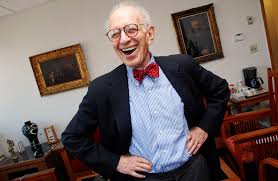
Eric Kandel: 'We have found that the neural networks of the brain are not fixed', Nobel banquet speech - 2000

September 6, 2016

10 December 2000, Stockholm, Sweden

Your Majesties, Your Royal Highnesses, Members of the Nobel Assembly, Ladies and Gentlemen,

Engraved above the entrance to the Temple of Apollo at Delphi was the maxim "Know thyself." Since Socrates and Plato first speculated on the nature of the human mind, serious thinkers through the ages - from Aristotle to Descartes, from Aeschylus to Strindberg and Ingmar Bergman - have thought it wise to understand oneself and one's behavior. But, in their quest for self-understanding, past generations have been confined intellectually, because their questions about mind have been restricted to the traditional frameworks of classical philosophy and psychology. They have asked: Are mental processes different from physical processes? How do new experiences become incorporated into the mind as memory?

Arvid Carlsson, Paul Greengard and I, the three of us whom you honor here tonight, and our generation of scientists, have attempted to translate abstract philosophical questions about mind into the empirical language of biology. The key principle that guides our work is that the mind is a set of operations carried out by the brain, an astonishingly complex computational device that constructs our perception of the external world, fixes our attention, and controls our actions.

We three have taken the first steps in linking mind to molecules by determining how the biochemistry of signaling within and between nerve cells is related to mental processes and to mental disorders. We have found that the neural networks of the brain are not fixed, but that communication between nerve cells can be regulated by neurotransmitter molecules discovered here in Sweden by your great school of molecular pharmacology.

In looking toward the future, our generation of scientists has come to believe that the biology of the mind will be as scientifically important to this century as the biology of the gene has been to the 20th century. In a larger sense, the biological study of mind is more than a scientific inquiry of great promise; it is also an important humanistic endeavor. The biology of mind bridges the sciences - concerned with the natural world - and the humanities - concerned with the meaning of human experience. Insights that come from this new synthesis will not only improve our understanding of psychiatric and neurological disorders, but will also lead to a deeper understanding of ourselves.

Indeed, even in our generation, we already have gained initial biological insights toward a deeper understanding of the self. We know that even though the words of the maxim are no longer encoded in stone at Delphi, they are encoded in our brains. For centuries the maxim has been preserved in human memory by these very molecular processes in the brain that you graciously recognize today, and that we are just beginning to understand.

On a personal note, allow me to thank Your Majesties, on behalf of all of us, for this splendid evening, and to raise a toast to self-understanding. Skoal!


Arvid Carlsson, Paul Greengard

Source: http://www.nobelprize.org/nobel_prizes/med...

Enjoyed this speech? Speakola is a labour of love and I’d be very grateful if you would share, tweet or like it. Thank you.

Facebook Twitter Facebook
In SCIENCE AND TECHNOLOGY Tags ERIC KANDEL, BRAIN BIOLOGY, NEURAL NETWORKS, NEUROSCIENCE, MEDICINE, NOBEL PRIZE, BANQUET SPEECH, TRANSCRIPT, ARVID CARLSSON, PAUL GREENGARD
Comment

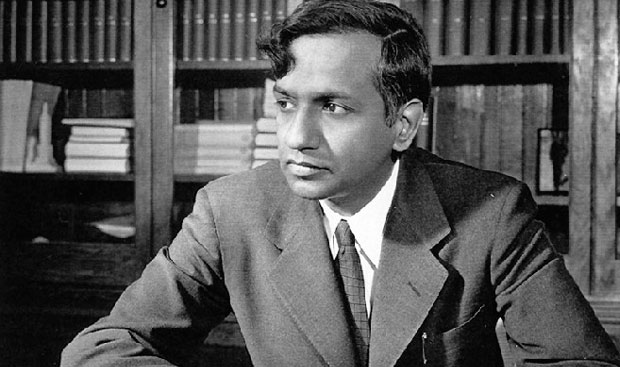
Subramanyan Chandrasekha: 'This is our triumph, this is our consolation', Nobel banquet speech - 1983

September 6, 2016

10 December 1983, Stockholm, Sweden

Your Majesties, Your Royal Highnesses, Ladies and Gentlemen,

The award of a Nobel Prize carries with it so much distinction and the number of competing areas and discoveries are so many, that it must of necessity have a sobering effect on an individual who receives the Prize. For who will not be sobered by the realization that among the past Laureates there are some who have achieved a measure of insight into Nature that is far beyond the attainment of most? But I am grateful for the award since it is possible that it may provide a measure of encouragement to those, who like myself, have been motivated in their scientific pursuits, principally, for achieving personal perspectives, while wandering, mostly, in the lonely byways of Science. When I say personal perspectives, I have in mind the players in Virginia Woolf's The Waves:

There is a square; there is an oblong. The players take the square and place it upon the oblong. They place it very accurately; they make a perfect dwelling-place. Very little is left outside. The structure is now visible; what is inchoate is here stated; we are not so various or so mean; we have made oblongs and stood them upon squares. This is our triumph; this is our consolation.

May I be allowed to quote some further lines from a writer of a very different kind. They are from Gitanjali, a poem by Rabindranath Tagore who was honoured on this same date exactly seventy years ago. I learnt the poem when I was a boy of twelve some sixty and more years ago; and the following lines have remained with me ever since:

Where the mind is without fear and the head is held high;
Where knowledge is free;
Where words come out from the depth of truth;
Where tireless striving stretches its arms towards perfection;
Where the clear stream of reason has not lost its way into the dreary desert sand of dead habit;
into that haven of freedom, Let me awake.

May I, on behalf of my wife and myself, express our immense gratitude to the Nobel Foundation for this noble reception in this noble city.

Source: http://www.nobelprize.org/nobel_prizes/phy...

Enjoyed this speech? Speakola is a labour of love and I’d be very grateful if you would share, tweet or like it. Thank you.

Facebook Twitter Facebook
In SCIENCE AND TECHNOLOGY Tags Chandrasekhar Limit, SUBRAMANYAN CHANDRASEKHA, ASTROPHYSICS, PHYSICS, NOBEL PRIZE, TRANSCRIPT
Comment

Richard Feynman: 'I suggested to myself, that electrons cannot act on themselves, they can only act on other electrons', Nobel lecture - 1965

September 6, 2016

11 December 1965, Stockholm, Sweden

Feynman was at Caltech and received Nobel Prize in physics for "their fundamental work in quantum electrodynamics, with deep-ploughing consequences for the physics of elementary particles"

We have a habit in writing articles published in scientific journals to make the work as finished as possible, to cover all the tracks, to not worry about the blind alleys or to describe how you had the wrong idea first, and so on. So there isn't any place to publish, in a dignified manner, what you actually did in order to get to do the work, although, there has been in these days, some interest in this kind of thing. Since winning the prize is a personal thing, I thought I could be excused in this particular situation, if I were to talk personally about my relationship to quantum electrodynamics, rather than to discuss the subject itself in a refined and finished fashion. Furthermore, since there are three people who have won the prize in physics, if they are all going to be talking about quantum electrodynamics itself, one might become bored with the subject. So, what I would like to tell you about today are the sequence of events, really the sequence of ideas, which occurred, and by which I finally came out the other end with an unsolved problem for which I ultimately received a prize.

I realize that a truly scientific paper would be of greater value, but such a paper I could publish in regular journals. So, I shall use this Nobel Lecture as an opportunity to do something of less value, but which I cannot do elsewhere. I ask your indulgence in another manner. I shall include details of anecdotes which are of no value either scientifically, nor for understanding the development of ideas. They are included only to make the lecture more entertaining.

I worked on this problem about eight years until the final publication in 1947. The beginning of the thing was at the Massachusetts Institute of Technology, when I was an undergraduate student reading about the known physics, learning slowly about all these things that people were worrying about, and realizing ultimately that the fundamental problem of the day was that the quantum theory of electricity and magnetism was not completely satisfactory. This I gathered from books like those of Heitler and Dirac. I was inspired by the remarks in these books; not by the parts in which everything was proved and demonstrated carefully and calculated, because I couldn't understand those very well. At the young age what I could understand were the remarks about the fact that this doesn't make any sense, and the last sentence of the book of Dirac I can still remember, "It seems that some essentially new physical ideas are here needed." So, I had this as a challenge and an inspiration. I also had a personal feeling, that since they didn't get a satisfactory answer to the problem I wanted to solve, I don't have to pay a lot of attention to what they did do.

I did gather from my readings, however, that two things were the source of the difficulties with the quantum electrodynamical theories. The first was an infinite energy of interaction of the electron with itself. And this difficulty existed even in the classical theory. The other difficulty came from some infinites which had to do with the infinite numbers of degrees of freedom in the field. As I understood it at the time (as nearly as I can remember) this was simply the difficulty that if you quantized the harmonic oscillators of the field (say in a box) each oscillator has a ground state energy of (½) and there is an infinite number of modes in a box of every increasing frequency w, and therefore there is an infinite energy in the box. I now realize that that wasn't a completely correct statement of the central problem; it can be removed simply by changing the zero from which energy is measured. At any rate, I believed that the difficulty arose somehow from a combination of the electron acting on itself and the infinite number of degrees of freedom of the field.

Well, it seemed to me quite evident that the idea that a particle acts on itself, that the electrical force acts on the same particle that generates it, is not a necessary one - it is a sort of a silly one, as a matter of fact. And, so I suggested to myself, that electrons cannot act on themselves, they can only act on other electrons. That means there is no field at all. You see, if all charges contribute to making a single common field, and if that common field acts back on all the charges, then each charge must act back on itself. Well, that was where the mistake was, there was no field. It was just that when you shook one charge, another would shake later. There was a direct interaction between charges, albeit with a delay. The law of force connecting the motion of one charge with another would just involve a delay. Shake this one, that one shakes later. The sun atom shakes; my eye electron shakes eight minutes later, because of a direct interaction across.

Now, this has the attractive feature that it solves both problems at once. First, I can say immediately, I don't let the electron act on itself, I just let this act on that, hence, no self-energy! Secondly, there is not an infinite number of degrees of freedom in the field. There is no field at all; or if you insist on thinking in terms of ideas like that of a field, this field is always completely determined by the action of the particles which produce it. You shake this particle, it shakes that one, but if you want to think in a field way, the field, if it's there, would be entirely determined by the matter which generates it, and therefore, the field does not have any independent degrees of freedom and the infinities from the degrees of freedom would then be removed. As a matter of fact, when we look out anywhere and see light, we can always "see" some matter as the source of the light. We don't just see light (except recently some radio reception has been found with no apparent material source).

You see then that my general plan was to first solve the classical problem, to get rid of the infinite self-energies in the classical theory, and to hope that when I made a quantum theory of it, everything would just be fine.

That was the beginning, and the idea seemed so obvious to me and so elegant that I fell deeply in love with it. And, like falling in love with a woman, it is only possible if you do not know much about her, so you cannot see her faults. The faults will become apparent later, but after the love is strong enough to hold you to her. So, I was held to this theory, in spite of all difficulties, by my youthful enthusiasm.

Then I went to graduate school and somewhere along the line I learned what was wrong with the idea that an electron does not act on itself. When you accelerate an electron it radiates energy and you have to do extra work to account for that energy. The extra force against which this work is done is called the force of radiation resistance. The origin of this extra force was identified in those days, following Lorentz, as the action of the electron itself. The first term of this action, of the electron on itself, gave a kind of inertia (not quite relativistically satisfactory). But that inertia-like term was infinite for a point-charge. Yet the next term in the sequence gave an energy loss rate, which for a point-charge agrees exactly with the rate you get by calculating how much energy is radiated. So, the force of radiation resistance, which is absolutely necessary for the conservation of energy would disappear if I said that a charge could not act on itself.

So, I learned in the interim when I went to graduate school the glaringly obvious fault of my own theory. But, I was still in love with the original theory, and was still thinking that with it lay the solution to the difficulties of quantum electrodynamics. So, I continued to try on and off to save it somehow. I must have some action develop on a given electron when I accelerate it to account for radiation resistance. But, if I let electrons only act on other electrons the only possible source for this action is another electron in the world. So, one day, when I was working for Professor Wheeler and could no longer solve the problem that he had given me, I thought about this again and I calculated the following. Suppose I have two charges - I shake the first charge, which I think of as a source and this makes the second one shake, but the second one shaking produces an effect back on the source. And so, I calculated how much that effect back on the first charge was, hoping it might add up the force of radiation resistance. It didn't come out right, of course, but I went to Professor Wheeler and told him my ideas. He said, - yes, but the answer you get for the problem with the two charges that you just mentioned will, unfortunately, depend upon the charge and the mass of the second charge and will vary inversely as the square of the distance R, between the charges, while the force of radiation resistance depends on none of these things. I thought, surely, he had computed it himself, but now having become a professor, I know that one can be wise enough to see immediately what some graduate student takes several weeks to develop. He also pointed out something that also bothered me, that if we had a situation with many charges all around the original source at roughly uniform density and if we added the effect of all the surrounding charges the inverse R square would be compensated by the R2 in the volume element and we would get a result proportional to the thickness of the layer, which would go to infinity. That is, one would have an infinite total effect back at the source. And, finally he said to me, and you forgot something else, when you accelerate the first charge, the second acts later, and then the reaction back here at the source would be still later. In other words, the action occurs at the wrong time. I suddenly realized what a stupid fellow I am, for what I had described and calculated was just ordinary reflected light, not radiation reaction.


But, as I was stupid, so was Professor Wheeler that much more clever. For he then went on to give a lecture as though he had worked this all out before and was completely prepared, but he had not, he worked it out as he went along. First, he said, let us suppose that the return action by the charges in the absorber reaches the source by advanced waves as well as by the ordinary retarded waves of reflected light; so that the law of interaction acts backward in time, as well as forward in time. I was enough of a physicist at that time not to say, "Oh, no, how could that be?" For today all physicists know from studying Einstein and Bohr, that sometimes an idea which looks completely paradoxical at first, if analyzed to completion in all detail and in experimental situations, may, in fact, not be paradoxical. So, it did not bother me any more than it bothered Professor Wheeler to use advance waves for the back reaction - a solution of Maxwell's equations, which previously had not been physically used.


Professor Wheeler used advanced waves to get the reaction back at the right time and then he suggested this: If there were lots of electrons in the absorber, there would be an index of refraction n, so, the retarded waves coming from the source would have their wave lengths slightly modified in going through the absorber. Now, if we shall assume that the advanced waves come back from the absorber without an index - why? I don't know, let's assume they come back without an index - then, there will be a gradual shifting in phase between the return and the original signal so that we would only have to figure that the contributions act as if they come from only a finite thickness, that of the first wave zone. (More specifically, up to that depth where the phase in the medium is shifted appreciably from what it would be in vacuum, a thickness proportional to l/(n-1). ) Now, the less the number of electrons in here, the less each contributes, but the thicker will be the layer that effectively contributes because with less electrons, the index differs less from 1. The higher the charges of these electrons, the more each contribute, but the thinner the effective layer, because the index would be higher. And when we estimated it, (calculated without being careful to keep the correct numerical factor) sure enough, it came out that the action back at the source was completely independent of the properties of the charges that were in the surrounding absorber. Further, it was of just the right character to represent radiation resistance, but we were unable to see if it was just exactly the right size. He sent me home with orders to figure out exactly how much advanced and how much retarded wave we need to get the thing to come out numerically right, and after that, figure out what happens to the advanced effects that you would expect if you put a test charge here close to the source? For if all charges generate advanced, as well as retarded effects, why would that test not be affected by the advanced waves from the source?

I found that you get the right answer if you use half-advanced and half-retarded as the field generated by each charge. That is, one is to use the solution of Maxwell's equation which is symmetrical in time and that the reason we got no advanced effects at a point close to the source in spite of the fact that the source was producing an advanced field is this. Suppose the source s surrounded by a spherical absorbing wall ten light seconds away, and that the test charge is one second to the right of the source. Then the source is as much as eleven seconds away from some parts of the wall and only nine seconds away from other parts. The source acting at time t=0 induces motions in the wall at time +10. Advanced effects from this can act on the test charge as early as eleven seconds earlier, or at t= -1. This is just at the time that the direct advanced waves from the source should reach the test charge, and it turns out the two effects are exactly equal and opposite and cancel out! At the later time +1 effects on the test charge from the source and from the walls are again equal, but this time are of the same sign and add to convert the half-retarded wave of the source to full retarded strength.

Thus, it became clear that there was the possibility that if we assume all actions are via half-advanced and half-retarded solutions of Maxwell's equations and assume that all sources are surrounded by material absorbing all the the light which is emitted, then we could account for radiation resistance as a direct action of the charges of the absorber acting back by advanced waves on the source.

Many months were devoted to checking all these points. I worked to show that everything is independent of the shape of the container, and so on, that the laws are exactly right, and that the advanced effects really cancel in every case. We always tried to increase the efficiency of our demonstrations, and to see with more and more clarity why it works. I won't bore you by going through the details of this. Because of our using advanced waves, we also had many apparent paradoxes, which we gradually reduced one by one, and saw that there was in fact no logical difficulty with the theory. It was perfectly satisfactory.

We also found that we could reformulate this thing in another way, and that is by a principle of least action. Since my original plan was to describe everything directly in terms of particle motions, it was my desire to represent this new theory without saying anything about fields. It turned out that we found a form for an action directly involving the motions of the charges only, which upon variation would give the equations of motion of these charges. The expression for this action A is

where

where is the four-vector position of the ith particle as a function of some parameter . The first term is the integral of proper time, the ordinary action of relativistic mechanics of free particles of mass mi. (We sum in the usual way on the repeated index m.) The second term represents the electrical interaction of the charges. It is summed over each pair of charges (the factor ½ is to count each pair once, the term i=j is omitted to avoid self-action) .The interaction is a double integral over a delta function of the square of space-time interval I2 between two points on the paths. Thus, interaction occurs only when this interval vanishes, that is, along light cones.

The fact that the interaction is exactly one-half advanced and half-retarded meant that we could write such a principle of least action, whereas interaction via retarded waves alone cannot be written in such a way.

So, all of classical electrodynamics was contained in this very simple form. It looked good, and therefore, it was undoubtedly true, at least to the beginner. It automatically gave half-advanced and half-retarded effects and it was without fields. By omitting the term in the sum when i=j, I omit self-interaction and no longer have any infinite self-energy. This then was the hoped-for solution to the problem of ridding classical electrodynamics of the infinities.

It turns out, of course, that you can reinstate fields if you wish to, but you have to keep track of the field produced by each particle separately. This is because to find the right field to act on a given particle, you must exclude the field that it creates itself. A single universal field to which all contribute will not do. This idea had been suggested earlier by Frenkel and so we called these Frenkel fields. This theory which allowed only particles to act on each other was equivalent to Frenkel's fields using half-advanced and half-retarded solutions.

There were several suggestions for interesting modifications of electrodynamics. We discussed lots of them, but I shall report on only one. It was to replace this delta function in the interaction by another function, say, f(I2ij), which is not infinitely sharp. Instead of having the action occur only when the interval between the two charges is exactly zero, we would replace the delta function of I2 by a narrow peaked thing. Let's say that f(Z) is large only near Z=0 width of order a2. Interactions will now occur when T2-R2 is of order a2 roughly where T is the time difference and R is the separation of the charges. This might look like it disagrees with experience, but if a is some small distance, like 10-13 cm, it says that the time delay T in action is roughly or approximately, - if R is much larger than a, T=R±a2/2R. This means that the deviation of time T from the ideal theoretical time R of Maxwell, gets smaller and smaller, the further the pieces are apart. Therefore, all theories involving in analyzing generators, motors, etc., in fact, all of the tests of electrodynamics that were available in Maxwell's time, would be adequately satisfied if were 10-13 cm. If R is of the order of a centimeter this deviation in T is only 10-26 parts. So, it was possible, also, to change the theory in a simple manner and to still agree with all observations of classical electrodynamics. You have no clue of precisely what function to put in for f, but it was an interesting possibility to keep in mind when developing quantum electrodynamics.

It also occurred to us that if we did that (replace d by f) we could not reinstate the term i=j in the sum because this would now represent in a relativistically invariant fashion a finite action of a charge on itself. In fact, it was possible to prove that if we did do such a thing, the main effect of the self-action (for not too rapid accelerations) would be to produce a modification of the mass. In fact, there need be no mass mi, term, all the mechanical mass could be electromagnetic self-action. So, if you would like, we could also have another theory with a still simpler expression for the action A. In expression (1) only the second term is kept, the sum extended over all i and j, and some function replaces d. Such a simple form could represent all of classical electrodynamics, which aside from gravitation is essentially all of classical physics.

Although it may sound confusing, I am describing several different alternative theories at once. The important thing to note is that at this time we had all these in mind as different possibilities. There were several possible solutions of the difficulty of classical electrodynamics, any one of which might serve as a good starting point to the solution of the difficulties of quantum electrodynamics.

I would also like to emphasize that by this time I was becoming used to a physical point of view different from the more customary point of view. In the customary view, things are discussed as a function of time in very great detail. For example, you have the field at this moment, a differential equation gives you the field at the next moment and so on; a method, which I shall call the Hamilton method, the time differential method. We have, instead (in (1) say) a thing that describes the character of the path throughout all of space and time. The behavior of nature is determined by saying her whole spacetime path has a certain character. For an action like (1) the equations obtained by variation (of Xim (ai)) are no longer at all easy to get back into Hamiltonian form. If you wish to use as variables only the coordinates of particles, then you can talk about the property of the paths - but the path of one particle at a given time is affected by the path of another at a different time. If you try to describe, therefore, things differentially, telling what the present conditions of the particles are, and how these present conditions will affect the future you see, it is impossible with particles alone, because something the particle did in the past is going to affect the future.

Therefore, you need a lot of bookkeeping variables to keep track of what the particle did in the past. These are called field variables. You will, also, have to tell what the field is at this present moment, if you are to be able to see later what is going to happen. From the overall space-time view of the least action principle, the field disappears as nothing but bookkeeping variables insisted on by the Hamiltonian method.

As a by-product of this same view, I received a telephone call one day at the graduate college at Princeton from Professor Wheeler, in which he said, "Feynman, I know why all electrons have the same charge and the same mass" "Why?" "Because, they are all the same electron!" And, then he explained on the telephone, "suppose that the world lines which we were ordinarily considering before in time and space - instead of only going up in time were a tremendous knot, and then, when we cut through the knot, by the plane corresponding to a fixed time, we would see many, many world lines and that would represent many electrons, except for one thing. If in one section this is an ordinary electron world line, in the section in which it reversed itself and is coming back from the future we have the wrong sign to the proper time - to the proper four velocities - and that's equivalent to changing the sign of the charge, and, therefore, that part of a path would act like a positron." "But, Professor", I said, "there aren't as many positrons as electrons." "Well, maybe they are hidden in the protons or something", he said. I did not take the idea that all the electrons were the same one from him as seriously as I took the observation that positrons could simply be represented as electrons going from the future to the past in a back section of their world lines. That, I stole!

To summarize, when I was done with this, as a physicist I had gained two things. One, I knew many different ways of formulating classical electrodynamics, with many different mathematical forms. I got to know how to express the subject every which way. Second, I had a point of view - the overall space-time point of view - and a disrespect for the Hamiltonian method of describing physics.

I would like to interrupt here to make a remark. The fact that electrodynamics can be written in so many ways - the differential equations of Maxwell, various minimum principles with fields, minimum principles without fields, all different kinds of ways, was something I knew, but I have never understood. It always seems odd to me that the fundamental laws of physics, when discovered, can appear in so many different forms that are not apparently identical at first, but, with a little mathematical fiddling you can show the relationship. An example of that is the Schrödinger equation and the Heisenberg formulation of quantum mechanics. I don't know why this is - it remains a mystery, but it was something I learned from experience. There is always another way to say the same thing that doesn't look at all like the way you said it before. I don't know what the reason for this is. I think it is somehow a representation of the simplicity of nature. A thing like the inverse square law is just right to be represented by the solution of Poisson's equation, which, therefore, is a very different way to say the same thing that doesn't look at all like the way you said it before. I don't know what it means, that nature chooses these curious forms, but maybe that is a way of defining simplicity. Perhaps a thing is simple if you can describe it fully in several different ways without immediately knowing that you are describing the same thing.

I was now convinced that since we had solved the problem of classical electrodynamics (and completely in accordance with my program from M.I.T., only direct interaction between particles, in a way that made fields unnecessary) that everything was definitely going to be all right. I was convinced that all I had to do was make a quantum theory analogous to the classical one and everything would be solved.

So, the problem is only to make a quantum theory, which has as its classical analog, this expression (1). Now, there is no unique way to make a quantum theory from classical mechanics, although all the textbooks make believe there is. What they would tell you to do, was find the momentum variables and replace them by , but I couldn't find a momentum variable, as there wasn't any.

The character of quantum mechanics of the day was to write things in the famous Hamiltonian way - in the form of a differential equation, which described how the wave function changes from instant to instant, and in terms of an operator, H. If the classical physics could be reduced to a Hamiltonian form, everything was all right. Now, least action does not imply a Hamiltonian form if the action is a function of anything more than positions and velocities at the same moment. If the action is of the form of the integral of a function, (usually called the Lagrangian) of the velocities and positions at the same time

then you can start with the Lagrangian and then create a Hamiltonian and work out the quantum mechanics, more or less uniquely. But this thing (1) involves the key variables, positions, at two different times and therefore, it was not obvious what to do to make the quantum-mechanical analogue.

I tried - I would struggle in various ways. One of them was this; if I had harmonic oscillators interacting with a delay in time, I could work out what the normal modes were and guess that the quantum theory of the normal modes was the same as for simple oscillators and kind of work my way back in terms of the original variables. I succeeded in doing that, but I hoped then to generalize to other than a harmonic oscillator, but I learned to my regret something, which many people have learned. The harmonic oscillator is too simple; very often you can work out what it should do in quantum theory without getting much of a clue as to how to generalize your results to other systems.

So that didn't help me very much, but when I was struggling with this problem, I went to a beer party in the Nassau Tavern in Princeton. There was a gentleman, newly arrived from Europe (Herbert Jehle) who came and sat next to me. Europeans are much more serious than we are in America because they think that a good place to discuss intellectual matters is a beer party. So, he sat by me and asked, "what are you doing" and so on, and I said, "I'm drinking beer." Then I realized that he wanted to know what work I was doing and I told him I was struggling with this problem, and I simply turned to him and said, "listen, do you know any way of doing quantum mechanics, starting with action - where the action integral comes into the quantum mechanics?" "No", he said, "but Dirac has a paper in which the Lagrangian, at least, comes into quantum mechanics. I will show it to you tomorrow."

Next day we went to the Princeton Library, they have little rooms on the side to discuss things, and he showed me this paper. What Dirac said was the following: There is in quantum mechanics a very important quantity which carries the wave function from one time to another, besides the differential equation but equivalent to it, a kind of a kernal, which we might call K(x', x), which carries the wave function j(x) known at time t, to the wave function j(x') at time, t+e Dirac points out that this function K was analogous to the quantity in classical mechanics that you would calculate if you took the exponential of ie, multiplied by the Lagrangian imagining that these two positions x,x' corresponded t and t+e. In other words,

Professor Jehle showed me this, I read it, he explained it to me, and I said, "what does he mean, they are analogous; what does that mean, analogous? What is the use of that?" He said, "you Americans! You always want to find a use for everything!" I said, that I thought that Dirac must mean that they were equal. "No", he explained, "he doesn't mean they are equal." "Well", I said, "let's see what happens if we make them equal."

So I simply put them equal, taking the simplest example where the Lagrangian is ½Mx2 - V(x) but soon found I had to put a constant of proportionality A in, suitably adjusted. When I substituted for K to get

and just calculated things out by Taylor series expansion, out came the Schrödinger equation. So, I turned to Professor Jehle, not really understanding, and said, "well, you see Professor Dirac meant that they were proportional." Professor Jehle's eyes were bugging out - he had taken out a little notebook and was rapidly copying it down from the blackboard, and said, "no, no, this is an important discovery. You Americans are always trying to find out how something can be used. That's a good way to discover things!" So, I thought I was finding out what Dirac meant, but, as a matter of fact, had made the discovery that what Dirac thought was analogous, was, in fact, equal. I had then, at least, the connection between the Lagrangian and quantum mechanics, but still with wave functions and infinitesimal times.

It must have been a day or so later when I was lying in bed thinking about these things, that I imagined what would happen if I wanted to calculate the wave function at a finite interval later.

I would put one of these factors eieL in here, and that would give me the wave functions the next moment, t+e and then I could substitute that back into (3) to get another factor of eieL and give me the wave function the next moment, t+2e and so on and so on. In that way I found myself thinking of a large number of integrals, one after the other in sequence. In the integrand was the product of the exponentials, which, of course, was the exponential of the sum of terms like eL. Now, L is the Lagrangian and e is like the time interval dt, so that if you took a sum of such terms, that's exactly like an integral. That's like Riemann's formula for the integral Ldt, you just take the value at each point and add them together. We are to take the limit as e-0, of course. Therefore, the connection between the wave function of one instant and the wave function of another instant a finite time later could be obtained by an infinite number of integrals, (because e goes to zero, of course) of exponential where S is the action expression (2). At last, I had succeeded in representing quantum mechanics directly in terms of the action S.

This led later on to the idea of the amplitude for a path; that for each possible way that the particle can go from one point to another in space-time, there's an amplitude. That amplitude is e to the times the action for the path. Amplitudes from various paths superpose by addition. This then is another, a third way, of describing quantum mechanics, which looks quite different than that of Schrödinger or Heisenberg, but which is equivalent to them.

Now immediately after making a few checks on this thing, what I wanted to do, of course, was to substitute the action (1) for the other (2). The first trouble was that I could not get the thing to work with the relativistic case of spin one-half. However, although I could deal with the matter only nonrelativistically, I could deal with the light or the photon interactions perfectly well by just putting the interaction terms of (1) into any action, replacing the mass terms by the non-relativistic (Mx2/2)dt. When the action has a delay, as it now had, and involved more than one time, I had to lose the idea of a wave function. That is, I could no longer describe the program as; given the amplitude for all positions at a certain time to compute the amplitude at another time. However, that didn't cause very much trouble. It just meant developing a new idea. Instead of wave functions we could talk about this; that if a source of a certain kind emits a particle, and a detector is there to receive it, we can give the amplitude that the source will emit and the detector receive. We do this without specifying the exact instant that the source emits or the exact instant that any detector receives, without trying to specify the state of anything at any particular time in between, but by just finding the amplitude for the complete experiment. And, then we could discuss how that amplitude would change if you had a scattering sample in between, as you rotated and changed angles, and so on, without really having any wave functions.

It was also possible to discover what the old concepts of energy and momentum would mean with this generalized action. And, so I believed that I had a quantum theory of classical electrodynamics - or rather of this new classical electrodynamics described by action (1). I made a number of checks. If I took the Frenkel field point of view, which you remember was more differential, I could convert it directly to quantum mechanics in a more conventional way. The only problem was how to specify in quantum mechanics the classical boundary conditions to use only half-advanced and half-retarded solutions. By some ingenuity in defining what that meant, I found that the quantum mechanics with Frenkel fields, plus a special boundary condition, gave me back this action, (1) in the new form of quantum mechanics with a delay. So, various things indicated that there wasn't any doubt I had everything straightened out.

It was also easy to guess how to modify the electrodynamics, if anybody ever wanted to modify it. I just changed the delta to an f, just as I would for the classical case. So, it was very easy, a simple thing. To describe the old retarded theory without explicit mention of fields I would have to write probabilities, not just amplitudes. I would have to square my amplitudes and that would involve double path integrals in which there are two S's and so forth. Yet, as I worked out many of these things and studied different forms and different boundary conditions. I got a kind of funny feeling that things weren't exactly right. I could not clearly identify the difficulty and in one of the short periods during which I imagined I had laid it to rest, I published a thesis and received my Ph.D.

During the war, I didn't have time to work on these things very extensively, but wandered about on buses and so forth, with little pieces of paper, and struggled to work on it and discovered indeed that there was something wrong, something terribly wrong. I found that if one generalized the action from the nice Langrangian forms (2) to these forms (1) then the quantities which I defined as energy, and so on, would be complex. The energy values of stationary states wouldn't be real and probabilities of events wouldn't add up to 100%. That is, if you took the probability that this would happen and that would happen - everything you could think of would happen, it would not add up to one.

Another problem on which I struggled very hard, was to represent relativistic electrons with this new quantum mechanics. I wanted to do a unique and different way - and not just by copying the operators of Dirac into some kind of an expression and using some kind of Dirac algebra instead of ordinary complex numbers. I was very much encouraged by the fact that in one space dimension, I did find a way of giving an amplitude to every path by limiting myself to paths, which only went back and forth at the speed of light. The amplitude was simple (ie) to a power equal to the number of velocity reversals where I have divided the time into steps and I am allowed to reverse velocity only at such a time. This gives (as approaches zero) Dirac's equation in two dimensions - one dimension of space and one of time .

Dirac's wave function has four components in four dimensions, but in this case, it has only two components and this rule for the amplitude of a path automatically generates the need for two components. Because if this is the formula for the amplitudes of path, it will not do you any good to know the total amplitude of all paths, which come into a given point to find the amplitude to reach the next point. This is because for the next time, if it came in from the right, there is no new factor ie if it goes out to the right, whereas, if it came in from the left there was a new factor ie. So, to continue this same information forward to the next moment, it was not sufficient information to know the total amplitude to arrive, but you had to know the amplitude to arrive from the right and the amplitude to arrive to the left, independently. If you did, however, you could then compute both of those again independently and thus you had to carry two amplitudes to form a differential equation (first order in time).

And, so I dreamed that if I were clever, I would find a formula for the amplitude of a path that was beautiful and simple for three dimensions of space and one of time, which would be equivalent to the Dirac equation, and for which the four components, matrices, and all those other mathematical funny things would come out as a simple consequence - I have never succeeded in that either. But, I did want to mention some of the unsuccessful things on which I spent almost as much effort, as on the things that did work.

To summarize the situation a few years after the way, I would say, I had much experience with quantum electrodynamics, at least in the knowledge of many different ways of formulating it, in terms of path integrals of actions and in other forms. One of the important by-products, for example, of much experience in these simple forms, was that it was easy to see how to combine together what was in those days called the longitudinal and transverse fields, and in general, to see clearly the relativistic invariance of the theory. Because of the need to do things differentially there had been, in the standard quantum electrodynamics, a complete split of the field into two parts, one of which is called the longitudinal part and the other mediated by the photons, or transverse waves. The longitudinal part was described by a Coulomb potential acting instantaneously in the Schrödinger equation, while the transverse part had entirely different description in terms of quantization of the transverse waves. This separation depended upon the relativistic tilt of your axes in spacetime. People moving at different velocities would separate the same field into longitudinal and transverse fields in a different way. Furthermore, the entire formulation of quantum mechanics insisting, as it did, on the wave function at a given time, was hard to analyze relativistically. Somebody else in a different coordinate system would calculate the succession of events in terms of wave functions on differently cut slices of space-time, and with a different separation of longitudinal and transverse parts. The Hamiltonian theory did not look relativistically invariant, although, of course, it was. One of the great advantages of the overall point of view, was that you could see the relativistic invariance right away - or as Schwinger would say - the covariance was manifest. I had the advantage, therefore, of having a manifestedly covariant form for quantum electrodynamics with suggestions for modifications and so on. I had the disadvantage that if I took it too seriously - I mean, if I took it seriously at all in this form, - I got into trouble with these complex energies and the failure of adding probabilities to one and so on. I was unsuccessfully struggling with that.

Then Lamb did his experiment, measuring the separation of the 2S½ and 2P½ levels of hydrogen, finding it to be about 1000 megacycles of frequency difference. Professor Bethe, with whom I was then associated at Cornell, is a man who has this characteristic: If there's a good experimental number you've got to figure it out from theory. So, he forced the quantum electrodynamics of the day to give him an answer to the separation of these two levels. He pointed out that the self-energy of an electron itself is infinite, so that the calculated energy of a bound electron should also come out infinite. But, when you calculated the separation of the two energy levels in terms of the corrected mass instead of the old mass, it would turn out, he thought, that the theory would give convergent finite answers. He made an estimate of the splitting that way and found out that it was still divergent, but he guessed that was probably due to the fact that he used an unrelativistic theory of the matter. Assuming it would be convergent if relativistically treated, he estimated he would get about a thousand megacycles for the Lamb-shift, and thus, made the most important discovery in the history of the theory of quantum electrodynamics. He worked this out on the train from Ithaca, New York to Schenectady and telephoned me excitedly from Schenectady to tell me the result, which I don't remember fully appreciating at the time.

Returning to Cornell, he gave a lecture on the subject, which I attended. He explained that it gets very confusing to figure out exactly which infinite term corresponds to what in trying to make the correction for the infinite change in mass. If there were any modifications whatever, he said, even though not physically correct, (that is not necessarily the way nature actually works) but any modification whatever at high frequencies, which would make this correction finite, then there would be no problem at all to figuring out how to keep track of everything. You just calculate the finite mass correction Dm to the electron mass mo, substitute the numerical values of mo+Dm for m in the results for any other problem and all these ambiguities would be resolved. If, in addition, this method were relativistically invariant, then we would be absolutely sure how to do it without destroying relativistically invariant.

After the lecture, I went up to him and told him, "I can do that for you, I'll bring it in for you tomorrow." I guess I knew every way to modify quantum electrodynamics known to man, at the time. So, I went in next day, and explained what would correspond to the modification of the delta-function to f and asked him to explain to me how you calculate the self-energy of an electron, for instance, so we can figure out if it's finite.

I want you to see an interesting point. I did not take the advice of Professor Jehle to find out how it was useful. I never used all that machinery which I had cooked up to solve a single relativistic problem. I hadn't even calculated the self-energy of an electron up to that moment, and was studying the difficulties with the conservation of probability, and so on, without actually doing anything, except discussing the general properties of the theory.

But now I went to Professor Bethe, who explained to me on the blackboard, as we worked together, how to calculate the self-energy of an electron. Up to that time when you did the integrals they had been logarithmically divergent. I told him how to make the relativistically invariant modifications that I thought would make everything all right. We set up the integral which then diverged at the sixth power of the frequency instead of logarithmically!

So, I went back to my room and worried about this thing and went around in circles trying to figure out what was wrong because I was sure physically everything had to come out finite, I couldn't understand how it came out infinite. I became more and more interested and finally realized I had to learn how to make a calculation. So, ultimately, I taught myself how to calculate the self-energy of an electron working my patient way through the terrible confusion of those days of negative energy states and holes and longitudinal contributions and so on. When I finally found out how to do it and did it with the modifications I wanted to suggest, it turned out that it was nicely convergent and finite, just as I had expected. Professor Bethe and I have never been able to discover what we did wrong on that blackboard two months before, but apparently we just went off somewhere and we have never been able to figure out where. It turned out, that what I had proposed, if we had carried it out without making a mistake would have been all right and would have given a finite correction. Anyway, it forced me to go back over all this and to convince myself physically that nothing can go wrong. At any rate, the correction to mass was now finite, proportional to where a is the width of that function f which was substituted for d. If you wanted an unmodified electrodynamics, you would have to take a equal to zero, getting an infinite mass correction. But, that wasn't the point. Keeping a finite, I simply followed the program outlined by Professor Bethe and showed how to calculate all the various things, the scatterings of electrons from atoms without radiation, the shifts of levels and so forth, calculating everything in terms of the experimental mass, and noting that the results as Bethe suggested, were not sensitive to a in this form and even had a definite limit as ag0.

The rest of my work was simply to improve the techniques then available for calculations, making diagrams to help analyze perturbation theory quicker. Most of this was first worked out by guessing - you see, I didn't have the relativistic theory of matter. For example, it seemed to me obvious that the velocities in non-relativistic formulas have to be replaced by Dirac's matrix a or in the more relativistic forms by the operators . I just took my guesses from the forms that I had worked out using path integrals for nonrelativistic matter, but relativistic light. It was easy to develop rules of what to substitute to get the relativistic case. I was very surprised to discover that it was not known at that time, that every one of the formulas that had been worked out so patiently by separating longitudinal and transverse waves could be obtained from the formula for the transverse waves alone, if instead of summing over only the two perpendicular polarization directions you would sum over all four possible directions of polarization. It was so obvious from the action (1) that I thought it was general knowledge and would do it all the time. I would get into arguments with people, because I didn't realize they didn't know that; but, it turned out that all their patient work with the longitudinal waves was always equivalent to just extending the sum on the two transverse directions of polarization over all four directions. This was one of the amusing advantages of the method. In addition, I included diagrams for the various terms of the perturbation series, improved notations to be used, worked out easy ways to evaluate integrals, which occurred in these problems, and so on, and made a kind of handbook on how to do quantum electrodynamics.

But one step of importance that was physically new was involved with the negative energy sea of Dirac, which caused me so much logical difficulty. I got so confused that I remembered Wheeler's old idea about the positron being, maybe, the electron going backward in time. Therefore, in the time dependent perturbation theory that was usual for getting self-energy, I simply supposed that for a while we could go backward in the time, and looked at what terms I got by running the time variables backward. They were the same as the terms that other people got when they did the problem a more complicated way, using holes in the sea, except, possibly, for some signs. These, I, at first, determined empirically by inventing and trying some rules.

I have tried to explain that all the improvements of relativistic theory were at first more or less straightforward, semi-empirical shenanigans. Each time I would discover something, however, I would go back and I would check it so many ways, compare it to every problem that had been done previously in electrodynamics (and later, in weak coupling meson theory) to see if it would always agree, and so on, until I was absolutely convinced of the truth of the various rules and regulations which I concocted to simplify all the work.

During this time, people had been developing meson theory, a subject I had not studied in any detail. I became interested in the possible application of my methods to perturbation calculations in meson theory. But, what was meson theory? All I knew was that meson theory was something analogous to electrodynamics, except that particles corresponding to the photon had a mass. It was easy to guess the d-function in (1), which was a solution of d'Alembertian equals zero, was to be changed to the corresponding solution of d'Alembertian equals m2. Next, there were different kind of mesons - the one in closest analogy to photons, coupled via , are called vector mesons - there were also scalar mesons. Well, maybe that corresponds to putting unity in place of the , I would here then speak of "pseudo vector coupling" and I would guess what that probably was. I didn't have the knowledge to understand the way these were defined in the conventional papers because they were expressed at that time in terms of creation and annihilation operators, and so on, which, I had not successfully learned. I remember that when someone had started to teach me about creation and annihilation operators, that this operator creates an electron, I said, "how do you create an electron? It disagrees with the conservation of charge", and in that way, I blocked my mind from learning a very practical scheme of calculation. Therefore, I had to find as many opportunities as possible to test whether I guessed right as to what the various theories were.

One day a dispute arose at a Physical Society meeting as to the correctness of a calculation by Slotnick of the interaction of an electron with a neutron using pseudo scalar theory with pseudo vector coupling and also, pseudo scalar theory with pseudo scalar coupling. He had found that the answers were not the same, in fact, by one theory, the result was divergent, although convergent with the other. Some people believed that the two theories must give the same answer for the problem. This was a welcome opportunity to test my guesses as to whether I really did understand what these two couplings were. So, I went home, and during the evening I worked out the electron neutron scattering for the pseudo scalar and pseudo vector coupling, saw they were not equal and subtracted them, and worked out the difference in detail. The next day at the meeting, I saw Slotnick and said, "Slotnick, I worked it out last night, I wanted to see if I got the same answers you do. I got a different answer for each coupling - but, I would like to check in detail with you because I want to make sure of my methods." And, he said, "what do you mean you worked it out last night, it took me six months!" And, when we compared the answers he looked at mine and he asked, "what is that Q in there, that variable Q?" (I had expressions like (tan -1Q) /Q etc.). I said, "that's the momentum transferred by the electron, the electron deflected by different angles." "Oh", he said, "no, I only have the limiting value as Q approaches zero; the forward scattering." Well, it was easy enough to just substitute Q equals zero in my form and I then got the same answers as he did. But, it took him six months to do the case of zero momentum transfer, whereas, during one evening I had done the finite and arbitrary momentum transfer. That was a thrilling moment for me, like receiving the Nobel Prize, because that convinced me, at last, I did have some kind of method and technique and understood how to do something that other people did not know how to do. That was my moment of triumph in which I realized I really had succeeded in working out something worthwhile.

At this stage, I was urged to publish this because everybody said it looks like an easy way to make calculations, and wanted to know how to do it. I had to publish it, missing two things; one was proof of every statement in a mathematically conventional sense. Often, even in a physicist's sense, I did not have a demonstration of how to get all of these rules and equations from conventional electrodynamics. But, I did know from experience, from fooling around, that everything was, in fact, equivalent to the regular electrodynamics and had partial proofs of many pieces, although, I never really sat down, like Euclid did for the geometers of Greece, and made sure that you could get it all from a single simple set of axioms. As a result, the work was criticized, I don't know whether favorably or unfavorably, and the "method" was called the "intuitive method". For those who do not realize it, however, I should like to emphasize that there is a lot of work involved in using this "intuitive method" successfully. Because no simple clear proof of the formula or idea presents itself, it is necessary to do an unusually great amount of checking and rechecking for consistency and correctness in terms of what is known, by comparing to other analogous examples, limiting cases, etc. In the face of the lack of direct mathematical demonstration, one must be careful and thorough to make sure of the point, and one should make a perpetual attempt to demonstrate as much of the formula as possible. Nevertheless, a very great deal more truth can become known than can be proven.

It must be clearly understood that in all this work, I was representing the conventional electrodynamics with retarded interaction, and not my half-advanced and half-retarded theory corresponding to (1). I merely use (1) to guess at forms. And, one of the forms I guessed at corresponded to changing d to a function f of width a2, so that I could calculate finite results for all of the problems. This brings me to the second thing that was missing when I published the paper, an unresolved difficulty. With d replaced by f the calculations would give results which were not "unitary", that is, for which the sum of the probabilities of all alternatives was not unity. The deviation from unity was very small, in practice, if a was very small. In the limit that I took a very tiny, it might not make any difference. And, so the process of the renormalization could be made, you could calculate everything in terms of the experimental mass and then take the limit and the apparent difficulty that the unitary is violated temporarily seems to disappear. I was unable to demonstrate that, as a matter of fact, it does.

It is lucky that I did not wait to straighten out that point, for as far as I know, nobody has yet been able to resolve this question. Experience with meson theories with stronger couplings and with strongly coupled vector photons, although not proving anything, convinces me that if the coupling were stronger, or if you went to a higher order (137th order of perturbation theory for electrodynamics), this difficulty would remain in the limit and there would be real trouble. That is, I believe there is really no satisfactory quantum electrodynamics, but I'm not sure. And, I believe, that one of the reasons for the slowness of present-day progress in understanding the strong interactions is that there isn't any relativistic theoretical model, from which you can really calculate everything. Although, it is usually said, that the difficulty lies in the fact that strong interactions are too hard to calculate, I believe, it is really because strong interactions in field theory have no solution, have no sense they're either infinite, or, if you try to modify them, the modification destroys the unitarity. I don't think we have a completely satisfactory relativistic quantum-mechanical model, even one that doesn't agree with nature, but, at least, agrees with the logic that the sum of probability of all alternatives has to be 100%. Therefore, I think that the renormalization theory is simply a way to sweep the difficulties of the divergences of electrodynamics under the rug. I am, of course, not sure of that.

This completes the story of the development of the space-time view of quantum electrodynamics. I wonder if anything can be learned from it. I doubt it. It is most striking that most of the ideas developed in the course of this research were not ultimately used in the final result. For example, the half-advanced and half-retarded potential was not finally used, the action expression (1) was not used, the idea that charges do not act on themselves was abandoned. The path-integral formulation of quantum mechanics was useful for guessing at final expressions and at formulating the general theory of electrodynamics in new ways - although, strictly it was not absolutely necessary. The same goes for the idea of the positron being a backward moving electron, it was very convenient, but not strictly necessary for the theory because it is exactly equivalent to the negative energy sea point of view.

We are struck by the very large number of different physical viewpoints and widely different mathematical formulations that are all equivalent to one another. The method used here, of reasoning in physical terms, therefore, appears to be extremely inefficient. On looking back over the work, I can only feel a kind of regret for the enormous amount of physical reasoning and mathematically re-expression which ends by merely re-expressing what was previously known, although in a form which is much more efficient for the calculation of specific problems. Would it not have been much easier to simply work entirely in the mathematical framework to elaborate a more efficient expression? This would certainly seem to be the case, but it must be remarked that although the problem actually solved was only such a reformulation, the problem originally tackled was the (possibly still unsolved) problem of avoidance of the infinities of the usual theory. Therefore, a new theory was sought, not just a modification of the old. Although the quest was unsuccessful, we should look at the question of the value of physical ideas in developing a new theory.

Many different physical ideas can describe the same physical reality. Thus, classical electrodynamics can be described by a field view, or an action at a distance view, etc. Originally, Maxwell filled space with idler wheels, and Faraday with fields lines, but somehow the Maxwell equations themselves are pristine and independent of the elaboration of words attempting a physical description. The only true physical description is that describing the experimental meaning of the quantities in the equation - or better, the way the equations are to be used in describing experimental observations. This being the case perhaps the best way to proceed is to try to guess equations, and disregard physical models or descriptions. For example, McCullough guessed the correct equations for light propagation in a crystal long before his colleagues using elastic models could make head or tail of the phenomena, or again, Dirac obtained his equation for the description of the electron by an almost purely mathematical proposition. A simple physical view by which all the contents of this equation can be seen is still lacking.

Therefore, I think equation guessing might be the best method to proceed to obtain the laws for the part of physics which is presently unknown. Yet, when I was much younger, I tried this equation guessing and I have seen many students try this, but it is very easy to go off in wildly incorrect and impossible directions. I think the problem is not to find the best or most efficient method to proceed to a discovery, but to find any method at all. Physical reasoning does help some people to generate suggestions as to how the unknown may be related to the known. Theories of the known, which are described by different physical ideas may be equivalent in all their predictions and are hence scientifically indistinguishable. However, they are not psychologically identical when trying to move from that base into the unknown. For different views suggest different kinds of modifications which might be made and hence are not equivalent in the hypotheses one generates from them in ones attempt to understand what is not yet understood. I, therefore, think that a good theoretical physicist today might find it useful to have a wide range of physical viewpoints and mathematical expressions of the same theory (for example, of quantum electrodynamics) available to him. This may be asking too much of one man. Then new students should as a class have this. If every individual student follows the same current fashion in expressing and thinking about electrodynamics or field theory, then the variety of hypotheses being generated to understand strong interactions, say, is limited. Perhaps rightly so, for possibly the chance is high that the truth lies in the fashionable direction. But, on the off-chance that it is in another direction - a direction obvious from an unfashionable view of field theory - who will find it? Only someone who has sacrificed himself by teaching himself quantum electrodynamics from a peculiar and unusual point of view; one that he may have to invent for himself. I say sacrificed himself because he most likely will get nothing from it, because the truth may lie in another direction, perhaps even the fashionable one.

But, if my own experience is any guide, the sacrifice is really not great because if the peculiar viewpoint taken is truly experimentally equivalent to the usual in the realm of the known there is always a range of applications and problems in this realm for which the special viewpoint gives one a special power and clarity of thought, which is valuable in itself. Furthermore, in the search for new laws, you always have the psychological excitement of feeling that possible nobody has yet thought of the crazy possibility you are looking at right now.

So what happened to the old theory that I fell in love with as a youth? Well, I would say it's become an old lady, that has very little attractive left in her and the young today will not have their hearts pound anymore when they look at her. But, we can say the best we can for any old woman, that she has been a very good mother and she has given birth to some very good children. And, I thank the Swedish Academy of Sciences for complimenting one of them. Thank you.

Source: http://www.nobelprize.org/nobel_prizes/phy...

Enjoyed this speech? Speakola is a labour of love and I’d be very grateful if you would share, tweet or like it. Thank you.

Facebook Twitter Facebook
In SCIENCE AND TECHNOLOGY Tags RICHARD FEYNMAN, NOBEL PRIZE, PHYSICS, TRANSCRIPT, ELECTRONS, ATOM
Comment

Richard Feynman: 'I believe that has some significance for our problem', testimony to Rogers Commission regarding Challenger disaster -

September 6, 2016

1986, Roger Commission report submitted 9 July 2006 to President Reagan

Feynman was a great Nobel prize winning scientist. He conducted a little experiment as part of the Rogers Commission that is one of the great public 'gotcha' moments ever, and testament to the power of an inquiring mind. The temperature on Challenger launch day was 32F.

Feynman: Before the event, from information that was available and understanding that was available, was it fully appreciated everywhere, that this seal would become unsatisfactory at some temperature, and was there some sort of a suggestion of a temperature at which the SRB shouldn’t be run?

NASA personnel : Yes sir, there was a suggestion of that, to answer the first question- given the configuration that we ran that the seal would function at that temperature. That was the final judgment.

----

Feynman: I took this stuff that I got out of your seal, and I put it in ice water, and I discovered that when you put some pressure on it for a while and then undo it, it doesn’t stretch back, it stays the same dimension. In other words ... for a fewseconds at least, and more seconds than that, there’s no resilience in this particular material, when it’s at a temperature of thirty two degrees. I believe that has some significance for our problem.

Source: https://www.youtube.com/watch?v=raMmRKGkGD...

Enjoyed this speech? Speakola is a labour of love and I’d be very grateful if you would share, tweet or like it. Thank you.

Facebook Twitter Facebook
In SCIENCE AND TECHNOLOGY Tags CHALLENGER DISASTER, RICHARD FEYNMAN, NASA, SCIENCE, EXPERIMENTS, SCIENTIFIC INQUIRY, ROGERS COMMISSION, NOBEL PRIZE, SPACE TRAVEL, SPACE DISASTER, TRANSCRIPT
Comment

James Watson: 'How we discovered DNA", TED Talks - 2005

September 5, 2016

23 February 2005, TED2005, Monterey, California, USA

This talk was delivered for TED2005. You can find full video and transcript here.

Well, I thought there would be a podium, so I'm a bit scared. (Laughter) Chris asked me to tell again how we found the structure of DNA. And since, you know, I follow his orders, I'll do it. But it slightly bores me. (Laughter) And, you know, I wrote a book. So I'll say something -- (Laughter) -- I'll say a little about, you know, how the discovery was made, and why Francis and I found it. And then, I hope maybe I have at least five minutes to say what makes me tick now.

 In back of me is a picture of me when I was 17. I was at the University of Chicago, in my third year, and I was in my third year because the University of Chicago let you in after two years of high school. So you -- it was fun to get away from high school -- (Laughter) -- because I was very small, and I was no good in sports, or anything like that.

But I should say that my background -- my father was, you know, raised to be an Episcopalian and Republican, but after one year of college, he became an atheist and a Democrat. (Laughter) And my mother was Irish Catholic, and -- but she didn't take religion too seriously. And by the age of 11, I was no longer going to Sunday Mass, and going on birdwatching walks with my father. So early on, I heard of Charles Darwin. I guess, you know, he was the big hero. And, you know, you understand life as it now exists through evolution.

And at the University of Chicago I was a zoology major, and thought I would end up, you know, if I was bright enough, maybe getting a Ph.D. from Cornell in ornithology. Then, in the Chicago paper, there was a review of a book called "What is Life?" by the great physicist, Schrodinger. And that, of course, had been a question I wanted to know. You know, Darwin explained life after it got started, but what was the essence of life?

 And Schrodinger said the essence was information present in our chromosomes, and it had to be present on a molecule. I'd never really thought of molecules before. You know chromosomes, but this was a molecule, and somehow all the information was probably present in some digital form. And there was the big question of, how did you copy the information?

So that was the book. And so, from that moment on, I wanted to be a geneticist -- understand the gene and, through that, understand life. So I had, you know, a hero at a distance. It wasn't a baseball player; it was Linus Pauling. And so I applied to Caltech and they turned me down. (Laughter) So I went to Indiana, which was actually as good as Caltech in genetics, and besides, they had a really good basketball team. (Laughter) So I had a really quite happy life at Indiana. And it was at Indiana I got the impression that, you know, the gene was likely to be DNA. And so when I got my Ph.D., I should go and search for DNA.

So I first went to Copenhagen because I thought, well, maybe I could become a biochemist, but I discovered biochemistry was very boring. It wasn't going anywhere toward, you know, saying what the gene was; it was just nuclear science. And oh, that's the book, little book. You can read it in about two hours. And -- but then I went to a meeting in Italy. And there was an unexpected speaker who wasn't on the program, and he talked about DNA. And this was Maurice Wilkins. He was trained as a physicist, and after the war he wanted to do biophysics, and he picked DNA because DNA had been determined at the Rockefeller Institute to possibly be the genetic molecules on the chromosomes. Most people believed it was proteins. But Wilkins, you know, thought DNA was the best bet, and he showed this x-ray photograph. Sort of crystalline. So DNA had a structure, even though it owed it to probably different molecules carrying different sets of instructions. So there was something universal about the DNA molecule. So I wanted to work with him, but he didn't want a former birdwatcher, and I ended up in Cambridge, England.

So I went to Cambridge, because it was really the best place in the world then for x-ray crystallography. And x-ray crystallography is now a subject in, you know, chemistry departments. I mean, in those days it was the domain of the physicists. So the best place for x-ray crystallography was at the Cavendish Laboratory at Cambridge. And there I met Francis Crick. I went there without knowing him. He was 35. I was 23. And within a day, we had decided that maybe we could take a shortcut to finding the structure of DNA. Not solve it like, you know, in rigorous fashion, but build a model, an electro-model, using some coordinates of, you know, length, all that sort of stuff from x-ray photographs. But just ask what the molecule -- how should it fold up?

And the reason for doing so, at the center of this photograph, is Linus Pauling. About six months before, he proposed the alpha helical structure for proteins. And in doing so, he banished the man out on the right, Sir Lawrence Bragg, who was the Cavendish professor. This is a photograph several years later, when Bragg had cause to smile. He certainly wasn't smiling when I got there, because he was somewhat humiliated by Pauling getting the alpha helix, and the Cambridge people failing because they weren't chemists. And certainly, neither Crick or I were chemists, so we tried to build a model. And he knew, Francis knew Wilkins. So Wilkins said he thought it was the helix. X-ray diagram, he thought was comparable with the helix.

So we built a three-stranded model. The people from London came up. Wilkins and this collaborator, or possible collaborator, Rosalind Franklin, came up and sort of laughed at our model. They said it was lousy, and it was. So we were told to build no more models; we were incompetent. (Laughter) And so we didn't build any models, and Francis sort of continued to work on proteins. And basically, I did nothing. And -- except read. You know, basically, reading is a good thing; you get facts. And we kept telling the people in London that Linus Pauling's going to move on to DNA. If DNA is that important, Linus will know it. He'll build a model, and then we're going to be scooped.

 And, in fact, he'd written the people in London: Could he see their x-ray photograph? And they had the wisdom to say "no." So he didn't have it. But there was ones in the literature. Actually, Linus didn't look at them that carefully. But about, oh, 15 months after I got to Cambridge, a rumor began to appear from Linus Pauling's son, who was in Cambridge, that his father was now working on DNA. And so, one day Peter came in and he said he was Peter Pauling, and he gave me a copy of his father's manuscripts. And boy, I was scared because I thought, you know, we may be scooped. I have nothing to do, no qualifications for anything. (Laughter)

And so there was the paper, and he proposed a three-stranded structure. And I read it, and it was just -- it was crap. (Laughter) So this was, you know, unexpected from the world's -- (Laughter) -- and so, it was held together by hydrogen bonds between phosphate groups. Well, if the peak pH that cells have is around seven, those hydrogen bonds couldn't exist. We rushed over to the chemistry department and said, "Could Pauling be right?" And Alex Hust said, "No." So we were happy. (Laughter)

And, you know, we were still in the game, but we were frightened that somebody at Caltech would tell Linus that he was wrong. And so Bragg said, "Build models." And a month after we got the Pauling manuscript -- I should say I took the manuscript to London, and showed the people. Well, I said, Linus was wrong and that we're still in the game and that they should immediately start building models. But Wilkins said "no." Rosalind Franklin was leaving in about two months, and after she left he would start building models. And so I came back with that news to Cambridge, and Bragg said, "Build models." Well, of course, I wanted to build models. And there's a picture of Rosalind. She really, you know, in one sense she was a chemist, but really she would have been trained -- she didn't know any organic chemistry or quantum chemistry. She was a crystallographer.

And I think part of the reason she didn't want to build models was, she wasn't a chemist, whereas Pauling was a chemist. And so Crick and I, you know, started building models, and I'd learned a little chemistry, but not enough. Well, we got the answer on the 28th February '53. And it was because of a rule, which, to me, is a very good rule: Never be the brightest person in a room, and we weren't. We weren't the best chemists in the room. I went in and showed them a pairing I'd done, and Jerry Donohue -- he was a chemist -- he said, it's wrong. You've got -- the hydrogen atoms are in the wrong place. I just put them down like they were in the books. He said they were wrong.

So the next day, you know, after I thought, "Well, he might be right." So I changed the locations, and then we found the base pairing, and Francis immediately said the chains run in absolute directions. And we knew we were right. So it was a pretty, you know, it all happened in about two hours. From nothing to thing. And we knew it was big because, you know, if you just put A next to T and G next to C, you have a copying mechanism. So we saw how genetic information is carried. It's the order of the four bases. So in a sense, it is a sort of digital-type information. And you copy it by going from strand-separating. So, you know, if it didn't work this way, you might as well believe it, because you didn't have any other scheme. (Laughter)

But that's not the way most scientists think. Most scientists are really rather dull. They said, we won't think about it until we know it's right. But, you know, we thought, well, it's at least 95 percent right or 99 percent right. So think about it. The next five years, there were essentially something like five references to our work in "Nature" -- none. And so we were left by ourselves, and trying to do the last part of the trio: how do you -- what does this genetic information do? It was pretty obvious that it provided the information to an RNA molecule, and then how do you go from RNA to protein? For about three years we just -- I tried to solve the structure of RNA. It didn't yield. It didn't give good x-ray photographs. I was decidedly unhappy; a girl didn't marry me. It was really, you know, sort of a shitty time. (Laughter)

So there's a picture of Francis and I before I met the girl, so I'm still looking happy. (Laughter) But there is what we did when we didn't know where to go forward: we formed a club and called it the RNA Tie Club. George Gamow, also a great physicist, he designed the tie. He was one of the members. The question was: How do you go from a four-letter code to the 20-letter code of proteins? Feynman was a member, and Teller, and friends of Gamow. But that's the only -- no, we were only photographed twice. And on both occasions, you know, one of us was missing the tie. There's Francis up on the upper right, and Alex Rich -- the M.D.-turned-crystallographer -- is next to me. This was taken in Cambridge in September of 1955. And I'm smiling, sort of forced, I think, because the girl I had, boy, she was gone. (Laughter)

And so I didn't really get happy until 1960, because then we found out, basically, you know, that there are three forms of RNA. And we knew, basically, DNA provides the information for RNA. RNA provides the information for protein. And that let Marshall Nirenberg, you know, take RNA -- synthetic RNA -- put it in a system making protein. He made polyphenylalanine, polyphenylalanine. So that's the first cracking of the genetic code, and it was all over by 1966. So there, that's what Chris wanted me to do, it was -- so what happened since then? Well, at that time -- I should go back. When we found the structure of DNA, I gave my first talk at Cold Spring Harbor. The physicist, Leo Szilard, he looked at me and said, "Are you going to patent this?" And -- but he knew patent law, and that we couldn't patent it, because you couldn't. No use for it. (Laughter)

And so DNA didn't become a useful molecule, and the lawyers didn't enter into the equation until 1973, 20 years later, when Boyer and Cohen in San Francisco and Stanford came up with their method of recombinant DNA, and Stanford patented it and made a lot of money. At least they patented something which, you know, could do useful things. And then, they learned how to read the letters for the code. And, boom, we've, you know, had a biotech industry. And, but we were still a long ways from, you know, answering a question which sort of dominated my childhood, which is: How do you nature-nurture?

And so I'll go on. I'm already out of time, but this is Michael Wigler, a very, very clever mathematician turned physicist. And he developed a technique which essentially will let us look at sample DNA and, eventually, a million spots along it. There's a chip there, a conventional one. Then there's one made by a photolithography by a company in Madison called NimbleGen, which is way ahead of Affymetrix. And we use their technique. And what you can do is sort of compare DNA of normal segs versus cancer. And you can see on the top that cancers which are bad show insertions or deletions. So the DNA is really badly mucked up, whereas if you have a chance of surviving, the DNA isn't so mucked up. So we think that this will eventually lead to what we call "DNA biopsies." Before you get treated for cancer, you should really look at this technique, and get a feeling of the face of the enemy. It's not a -- it's only a partial look, but it's a -- I think it's going to be very, very useful.

So, we started with breast cancer because there's lots of money for it, no government money. And now I have a sort of vested interest: I want to do it for prostate cancer. So, you know, you aren't treated if it's not dangerous. But Wigler, besides looking at cancer cells, looked at normal cells, and made a really sort of surprising observation. Which is, all of us have about 10 places in our genome where we've lost a gene or gained another one. So we're sort of all imperfect. And the question is well, if we're around here, you know, these little losses or gains might not be too bad. But if these deletions or amplifications occurred in the wrong gene, maybe we'll feel sick.

 So the first disease he looked at is autism. And the reason we looked at autism is we had the money to do it. Looking at an individual is about 3,000 dollars. And the parent of a child with Asperger's disease, the high-intelligence autism, had sent his thing to a conventional company; they didn't do it. Couldn't do it by conventional genetics, but just scanning it we began to find genes for autism. And you can see here, there are a lot of them. So a lot of autistic kids are autistic because they just lost a big piece of DNA. I mean, big piece at the molecular level. We saw one autistic kid, about five million bases just missing from one of his chromosomes. We haven't yet looked at the parents, but the parents probably don't have that loss, or they wouldn't be parents. Now, so, our autism study is just beginning. We got three million dollars. I think it will cost at least 10 to 20 before you'd be in a position to help parents who've had an autistic child, or think they may have an autistic child, and can we spot the difference? So this same technique should probably look at all. It's a wonderful way to find genes.

And so, I'll conclude by saying we've looked at 20 people with schizophrenia. And we thought we'd probably have to look at several hundred before we got the picture. But as you can see, there's seven out of 20 had a change which was very high. And yet, in the controls there were three. So what's the meaning of the controls? Were they crazy also, and we didn't know it? Or, you know, were they normal? I would guess they're normal. And what we think in schizophrenia is there are genes of predisposure, and whether this is one that predisposes -- and then there's only a sub-segment of the population that's capable of being schizophrenic.

Now, we don't have really any evidence of it, but I think, to give you a hypothesis, the best guess is that if you're left-handed, you're prone to schizophrenia. 30 percent of schizophrenic people are left-handed, and schizophrenia has a very funny genetics, which means 60 percent of the people are genetically left-handed, but only half of it showed. I don't have the time to say. Now, some people who think they're right-handed are genetically left-handed. OK. I'm just saying that, if you think, oh, I don't carry a left-handed gene so therefore my, you know, children won't be at risk of schizophrenia. You might. OK? (Laughter)

So it's, to me, an extraordinarily exciting time. We ought to be able to find the gene for bipolar; there's a relationship. And if I had enough money, we'd find them all this year. I thank you.

Source: https://www.ted.com/talks/james_watson_on_...

Enjoyed this speech? Speakola is a labour of love and I’d be very grateful if you would share, tweet or like it. Thank you.

Facebook Twitter Facebook
In SCIENCE AND TECHNOLOGY Tags JAMES WATSON, DNA, FRANCIS CRICK, CRICK AND WATSON, NOBEL PRIZE, GENETICS
Comment
elie wiesel.png

Elie Wiesel: 'Indifference, the most insidious danger of all', Nobel Prize acceptance - 1986

December 13, 2015

Video available at Nobelprize.com

10 December 1986, Stoickholm, Sweden

According to Jewish tradition, there are moments where one must make a blessing and give a benediction, and this is such a moment. With your permission, your majesty, this is such a moment. [gives blessing - Hebrew]

Thank you oh lord for giving us this day ...

It is with a profound sense of humility that I accept the honor, the highest there is, that you have chosen to bestow upon me. I know: your choice transcends my person. Do I have the right to represent the multitudes who have perished?

Do I have the right to accept this great honor on their behalf?

I do not. That would be presumptuous. No one may speak for the dead, no one may interpret their mutilated dreams and visions. Yet at moments such as this I sense their presence, I always do. I sense my parents. I sense my little sister. How can I not sense, how can I not sense the presence of those who were part of you. Friends, teachers, companions.

But this honour belongs to those who remember them. This honour belongs to all the survivors, to their children, and through us, to the Jewish people with whose destiny I have always identified.

I remember: it happened yesterday or eternities ago, a young Jewish boy discovered the kingdom of night. I remember his bewilderment, I remember his anguish. It all happened so fast. The ghetto. The decrees. The persecution. The deportation. The sealed cattle car. The fiery altar upon which the history of my people and the future of mankind were meant to be sacrificed.

I remember that young boy asked his father: "Tell me" he said, "Can this be true?" This is the twentieth century after all. This is not the Middle Ages. Who would allow such crimes to be committed? How could the world remain silent?"

And now that very boy is turning to me: "Tell me," he says. "What have you done with my years? What have you done with your life which is mine?"

And then I tell him that I have tried. That I have tried to keep memory alive. That I have tried to fight those who would forget. Because if we forget, we are guilty, we are accomplices. We could not prevent their deaths the first time. But if we forget them they will be killed a second time and this time it will be our responsibility.

So I also explained to that boy how naive he was, how naive we all were -- the world did know and remained silent. And that is why I swore never to be silent whenever and wherever human beings endure suffering and humiliation.

We must speak. We must take sides. For neutrality helps the oppressor, never the victim.

Silence encourages the tormentor, never the tormented.

Sometimes we must interfere. When human lives are endangered, when human dignity is in jeopardy, national borders and sensitivities become irrelevant.

Wherever men or women are persecuted because of their race, religion, or political views, that place must – at that moment – become the center of the universe.

Of course, since I am a Jew profoundly rooted in my people's memory and tradition, my first response is to Jewish fears, Jewish needs, Jewish crises. For I belong to a traumatized generation, one that experienced the abandonment and solitude of my people. It would be unnatural for me not to make Jewish priorities my own. It would be unnatural for me not to love Isreael with all my heart, as I do.

Please remember what I remember. Isreal if god forbid defeated, it would be the end of Israel. The only country in the world which is so endangered totally in its existence. How can people such as myself not think in these terms.

But I am also of course committed to Soviet Jews who need freedom. And Jews in Arab lands who need solidarity. But I said that Jewish priorities are my first priorities, but they are not exclusive. Others as important to me. Other people, other ideas, other situations, other tragedies matter to me.

Apartheid is, in my view, as abhorrent as anti-Semitism. To me, Andrei Sakharov's isolation is as much of a disgrace as Josef Biegun's imprisonment, and Ivan Nudl's exile. As is the denial of Solidarity and its leader Lech Walesa's right to dissent. And Nelson Mandela's interminable imprisonment.

There is so much injustice and suffering crying out for our attention: victims of hunger, of racism, and political persecution. Certain fascist regimes, like in Chile, or Marxist regimes like in Ethiopia and other places of the world, where writers and poets are prisoners, and there are so many prisoners in so many lands -- by the Left and the extreme left and by the Right and the extreme right.

Now you know as I do that human rights are being violated on every continent. More people are oppressed than free. How can one not be sensitive to their plight? Human suffering anywhere, concerns men and women everywhere. And in spite of what some extreme critics have said about me,  that principle applies in my life also to the Palestinians, to whose plight I am sensitive but whose methods I deplore when they lead to violence.

Violence is not the answer. Terrorism is the most dangerous of answers. I know they are frustrated, and that is understandable, and something must be done about it. The refugees in the refugee camps and their misery, the children and their fear, the uprooted and their hopelessness, I know. Something must be done about their situation, I know that too.

Both the Jewish people and the Palestinian people have lost too many sons, and shed too much blood. This must stop. And all attempts to stop it must be encoruaged, peacefully.  Israel will cooperate, I am sure of that. I trust Israel, for I have faith in the Jewish people. Let Israel be given a chance, let hatred and danger be removed from her horizons, and there will be peace in and around the Holy Land.

Yes, I have faith. I have faith in the God of Abraham and Isaac and Jacob. I even have faith in His creation. Without faith no action would be possible. And action is the only remedy to indifference. Indifference, the most insidious danger of all. Isn't this the meaning of Alfred Nobel's legacy? Wasn't his fear of war a shield against war?

There is so much to be done, and there is much that can be done. I have learned it in my life, one person – a Raoul Wallenberg, an Albert Schweitzer, a Martin Luther King -- one person of integrity, of courage, can make a difference, a difference of life and death. And therefore I know that as long as one dissident is in prison, our freedom cannot be true. As long as one child is hungry, our lives will be filled with anguish and shame. For I have seen children hungry. What all these victims need above all is to know that they are not alone; that we are not forgetting them, that when their voices are stifled we shall lend them ours, that while their freedom depends on ours, the quality of our freedom depends on theirs.

This is what I say to the young Jewish boy wondering what I have done with his years. It is in his name that I speak to you and that I express to you my deepest gratitude. No one is capable of gratitude as one who has emerged from the kingdom of night. We know that every moment is a moment of grace, every hour is an offering; and not to share them would mean to betray them and mean not to be worthy of them. Our lives no longer belong to us alone; they belong to all those who need us desperately.

Thank you, Chairman Aarvik. Thank you, members of the Nobel Committee. Thank you, people of Norway, for declaring on this singular occasion that our survival has meaning for mankind.

Source: http://www.nobelprize.org/mediaplayer/inde...

Enjoyed this speech? Speakola is a labour of love and I’d be very grateful if you would share, tweet or like it. Thank you.

Facebook Twitter Facebook
In EQUALITY Tags ELIE WIESEL, NOBEL PRIZE, NOBEL PEACE PRIZE, HOLOCAUST, ANTI-SEMITISM, APARTHEID, FREEDOM OF SPEECH, TRANSCRIPT
Comment

See my film!

Limited Australian Season

March 2025

Details and ticket bookings at

angeandtheboss.com

Support Speakola

Hi speech lovers,
With costs of hosting website and podcast, this labour of love has become a difficult financial proposition in recent times. If you can afford a donation, it will help Speakola survive and prosper.

Best wishes,
Tony Wilson.

Become a Patron!

Learn more about supporting Speakola.

Featured political

Featured
Jon Stewart: "They responded in five seconds", 9-11 first responders, Address to Congress - 2019
Jacinda Ardern: 'They were New Zealanders. They are us', Address to Parliament following Christchurch massacre - 2019
Dolores Ibárruri: "¡No Pasarán!, They shall not pass!', Defense of 2nd Spanish Republic - 1936
Jimmy Reid: 'A rat race is for rats. We're not rats', Rectorial address, Glasgow University - 1972

Featured eulogies

Featured
For Geoffrey Tozer: 'I have to say we all let him down', by Paul Keating - 2009
for James Baldwin: 'Jimmy. You crowned us', by Toni Morrison - 1988
for Michael Gordon: '13 days ago my Dad’s big, beautiful, generous heart suddenly stopped beating', by Scott and Sarah Gordon - 2018

Featured commencement

Featured
Tara Westover: 'Your avatar isn't real, it isn't terribly far from a lie', The Un-Instagrammable Self, Northeastern University - 2019
Tim Minchin: 'Being an artist requires massive reserves of self-belief', WAAPA - 2019
Atul Gawande: 'Curiosity and What Equality Really Means', UCLA Medical School - 2018
Abby Wambach: 'We are the wolves', Barnard College - 2018
Eric Idle: 'America is 300 million people all walking in the same direction, singing 'I Did It My Way'', Whitman College - 2013
Shirley Chisholm: ;America has gone to sleep', Greenfield High School - 1983

Featured sport

Featured
Joe Marler: 'Get back on the horse', Harlequins v Bath pre game interview - 2019
Ray Lewis : 'The greatest pain of my life is the reason I'm standing here today', 52 Cards -
Mel Jones: 'If she was Bradman on the field, she was definitely Keith Miller off the field', Betty Wilson's induction into Australian Cricket Hall of Fame - 2017
Jeff Thomson: 'It’s all those people that help you as kids', Hall of Fame - 2016

Fresh Tweets


Featured weddings

Featured
Dan Angelucci: 'The Best (Best Man) Speech of all time', for Don and Katherine - 2019
Hallerman Sisters: 'Oh sister now we have to let you gooooo!' for Caitlin & Johnny - 2015
Korey Soderman (via Kyle): 'All our lives I have used my voice to help Korey express his thoughts, so today, like always, I will be my brother’s voice' for Kyle and Jess - 2014

Featured Arts

Featured
Bruce Springsteen: 'They're keepers of some of the most beautiful sonic architecture in rock and roll', Induction U2 into Rock Hall of Fame - 2005
Olivia Colman: 'Done that bit. I think I have done that bit', BAFTA acceptance, Leading Actress - 2019
Axel Scheffler: 'The book wasn't called 'No Room on the Broom!', Illustrator of the Year, British Book Awards - 2018
Tina Fey: 'Only in comedy is an obedient white girl from the suburbs a diversity candidate', Kennedy Center Mark Twain Award -  2010
Tina Fey: 'Only in comedy is an obedient white girl from the suburbs a diversity candidate', Kennedy Center Mark Twain Award - 2010

Featured Debates

Featured
Sacha Baron Cohen: 'Just think what Goebbels might have done with Facebook', Anti Defamation League Leadership Award - 2019
Greta Thunberg: 'How dare you', UN Climate Action Summit - 2019
Charlie Munger: 'The Psychology of Human Misjudgment', Harvard University - 1995
Lawrence O'Donnell: 'The original sin of this country is that we invaders shot and murdered our way across the land killing every Native American that we could', The Last Word, 'Dakota' - 2016