• Genre
  • About
  • Submissions
  • Donate
  • Search
Menu

Speakola

All Speeches Great and Small
  • Genre
  • About
  • Submissions
  • Donate
  • Search

Ken Robinson: 'Creativity is as important in education as literacy', Do Schools Kill Creativity, TED - 2016

December 3, 2018

February 2006. TED 2006, Monterey, California, USA

Appears in full on TED

Good morning. How are you?

It's been great, hasn't it? I've been blown away by the whole thing. In fact, I'm leaving.

There have been three themes running through the conference which are relevant to what I want to talk about. One is the extraordinary evidence of human creativity in all of the presentations that we've had and in all of the people here. Just the variety of it and the range of it. The second is that it's put us in a place where we have no idea what's going to happen, in terms of the future. No idea how this may play out.

I have an interest in education. Actually, what I find is everybody has an interest in education. Don't you? I find this very interesting. If you're at a dinner party, and you say you work in education — Actually, you're not often at dinner parties, frankly.

If you work in education, you're not asked.

And you're never asked back, curiously. That's strange to me. But if you are, and you say to somebody, you know, they say, “What do you do?” and you say you work in education, you can see the blood run from their face. They're like, “Oh my God,” you know,

“Why me?”

“My one night out all week.”

But if you ask about their education, they pin you to the wall. Because it's one of those things that goes deep with people, am I right? Like religion, and money and other things. So I have a big interest in education, and I think we all do. We have a huge vested interest in it, partly because it's education that's meant to take us into this future that we can't grasp. If you think of it, children starting school this year will be retiring in 2065. Nobody has a clue, despite all the expertise that's been on parade for the past four days, what the world will look like in five years' time. And yet we're meant to be educating them for it. So the unpredictability, I think, is extraordinary.

And the third part of this is that we've all agreed, nonetheless, on the really extraordinary capacities that children have — their capacities for innovation. I mean, Sirena last night was a marvel, wasn't she? Just seeing what she could do. And she's exceptional, but I think she's not, so to speak, exceptional in the whole of childhood. What you have there is a person of extraordinary dedication who found a talent. And my contention is, all kids have tremendous talents. And we squander them, pretty ruthlessly.

So I want to talk about education and I want to talk about creativity. My contention is that creativity now is as important in education as literacy, and we should treat it with the same status.

(Applause) Thank you.

That was it, by the way. Thank you very much.

So, 15 minutes left.

Well, I was born… no.

I heard a great story recently — I love telling it — of a little girl who was in a drawing lesson. She was six, and she was at the back, drawing, and the teacher said this girl hardly ever paid attention, and in this drawing lesson, she did. The teacher was fascinated. She went over to her, and she said, “What are you drawing?” And the girl said, “I'm drawing a picture of God.” And the teacher said, “But nobody knows what God looks like.” And the girl said, “They will, in a minute.”

When my son was four in England — Actually, he was four everywhere, to be honest.

If we're being strict about it, wherever he went, he was four that year. He was in the Nativity play. Do you remember the story?

No, it was big, it was a big story. Mel Gibson did the sequel, you may have seen it.

“Nativity II.” But James got the part of Joseph, which we were thrilled about. We considered this to be one of the lead parts. We had the place crammed full of agents in T-shirts: “James Robinson IS Joseph!” (Laughter) He didn't have to speak, but you know the bit where the three kings come in? They come in bearing gifts, gold, frankincense and myrrh. This really happened. We were sitting there and I think they just went out of sequence, because we talked to the little boy afterward and we said, “You OK with that?” And he said, “Yeah, why? Was that wrong?” They just switched. The three boys came in, four-year-olds with tea towels on their heads, and they put these boxes down, and the first boy said, “I bring you gold.” And the second boy said, “I bring you myrrh.” And the third boy said, “Frank sent this.”

What these things have in common is that kids will take a chance. If they don't know, they'll have a go. Am I right? They're not frightened of being wrong. I don't mean to say that being wrong is the same thing as being creative. What we do know is, if you're not prepared to be wrong, you'll never come up with anything original — if you're not prepared to be wrong. And by the time they get to be adults, most kids have lost that capacity. They have become frightened of being wrong. And we run our companies like this. We stigmatize mistakes. And we're now running national education systems where mistakes are the worst thing you can make. And the result is that we are educating people out of their creative capacities.

Picasso once said this, he said that all children are born artists. The problem is to remain an artist as we grow up. I believe this passionately, that we don't grow into creativity, we grow out of it. Or rather, we get educated out of it. So why is this?

I lived in Stratford-on-Avon until about five years ago. In fact, we moved from Stratford to Los Angeles. So you can imagine what a seamless transition that was.

Actually, we lived in a place called Snitterfield, just outside Stratford, which is where Shakespeare's father was born. Are you struck by a new thought? I was. You don't think of Shakespeare having a father, do you? Do you? Because you don't think of Shakespeare being a child, do you? Shakespeare being seven? I never thought of it. I mean, he was seven at some point. He was in somebody's English class, wasn't he?

How annoying would that be?

“Must try harder.”

Being sent to bed by his dad, you know, to Shakespeare, “Go to bed, now! And put the pencil down.”

“And stop speaking like that.”

“It's confusing everybody.”

Anyway, we moved from Stratford to Los Angeles, and I just want to say a word about the transition. My son didn't want to come. I've got two kids; he's 21 now, my daughter's 16. He didn't want to come to Los Angeles. He loved it, but he had a girlfriend in England. This was the love of his life, Sarah. He'd known her for a month.

Mind you, they'd had their fourth anniversary, because it's a long time when you're 16. He was really upset on the plane, he said, “I'll never find another girl like Sarah.” And we were rather pleased about that, frankly —

Because she was the main reason we were leaving the country.

But something strikes you when you move to America and travel around the world: Every education system on Earth has the same hierarchy of subjects. Every one. Doesn't matter where you go. You'd think it would be otherwise, but it isn't. At the top are mathematics and languages, then the humanities, and at the bottom are the arts. Everywhere on Earth. And in pretty much every system too, there's a hierarchy within the arts. Art and music are normally given a higher status in schools than drama and dance. There isn't an education system on the planet that teaches dance everyday to children the way we teach them mathematics. Why? Why not? I think this is rather important. I think math is very important, but so is dance. Children dance all the time if they're allowed to, we all do. We all have bodies, don't we? Did I miss a meeting?

Truthfully, what happens is, as children grow up, we start to educate them progressively from the waist up. And then we focus on their heads. And slightly to one side.

If you were to visit education, as an alien, and say “What's it for, public education?” I think you'd have to conclude, if you look at the output, who really succeeds by this, who does everything that they should, who gets all the brownie points, who are the winners — I think you'd have to conclude the whole purpose of public education throughout the world is to produce university professors. Isn't it? They're the people who come out the top. And I used to be one, so there.

And I like university professors, but you know, we shouldn't hold them up as the high-water mark of all human achievement. They're just a form of life, another form of life. But they're rather curious, and I say this out of affection for them. There's something curious about professors in my experience — not all of them, but typically, they live in their heads. They live up there, and slightly to one side. They're disembodied, you know, in a kind of literal way. They look upon their body as a form of transport for their heads.

Don't they? It's a way of getting their head to meetings.

If you want real evidence of out-of-body experiences, get yourself along to a residential conference of senior academics, and pop into the discotheque on the final night.

And there, you will see it. Grown men and women writhing uncontrollably, off the beat.

Waiting until it ends so they can go home and write a paper about it.

Our education system is predicated on the idea of academic ability. And there's a reason. Around the world, there were no public systems of education, really, before the 19th century. They all came into being to meet the needs of industrialism. So the hierarchy is rooted on two ideas.

Number one, that the most useful subjects for work are at the top. So you were probably steered benignly away from things at school when you were a kid, things you liked, on the grounds that you would never get a job doing that. Is that right? Don't do music, you're not going to be a musician; don't do art, you won't be an artist. Benign advice — now, profoundly mistaken. The whole world is engulfed in a revolution.

And the second is academic ability, which has really come to dominate our view of intelligence, because the universities designed the system in their image. If you think of it, the whole system of public education around the world is a protracted process of university entrance. And the consequence is that many highly-talented, brilliant, creative people think they're not, because the thing they were good at at school wasn't valued, or was actually stigmatized. And I think we can't afford to go on that way.

In the next 30 years, according to UNESCO, more people worldwide will be graduating through education than since the beginning of history. More people, and it's the combination of all the things we've talked about — technology and its transformation effect on work, and demography and the huge explosion in population.

Suddenly, degrees aren't worth anything. Isn't that true? When I was a student, if you had a degree, you had a job. If you didn't have a job, it's because you didn't want one. And I didn't want one, frankly. (Laughter) But now kids with degrees are often heading home to carry on playing video games, because you need an MA where the previous job required a BA, and now you need a PhD for the other. It's a process of academic inflation. And it indicates the whole structure of education is shifting beneath our feet. We need to radically rethink our view of intelligence.

We know three things about intelligence. One, it's diverse. We think about the world in all the ways that we experience it. We think visually, we think in sound, we think kinesthetically. We think in abstract terms, we think in movement. Secondly, intelligence is dynamic. If you look at the interactions of a human brain, as we heard yesterday from a number of presentations, intelligence is wonderfully interactive. The brain isn't divided into compartments. In fact, creativity — which I define as the process of having original ideas that have value — more often than not comes about through the interaction of different disciplinary ways of seeing things.

By the way, there's a shaft of nerves that joins the two halves of the brain called the corpus callosum. It's thicker in women. Following off from Helen yesterday, this is probably why women are better at multi-tasking. Because you are, aren't you? There's a raft of research, but I know it from my personal life. If my wife is cooking a meal at home — which is not often, thankfully.

No, she's good at some things, but if she's cooking, she's dealing with people on the phone, she's talking to the kids, she's painting the ceiling, she's doing open-heart surgery over here. If I'm cooking, the door is shut, the kids are out, the phone's on the hook, if she comes in I get annoyed. I say, “Terry, please, I'm trying to fry an egg in here.”

“Give me a break.”

Actually, do you know that old philosophical thing, if a tree falls in a forest and nobody hears it, did it happen? Remember that old chestnut? I saw a great t-shirt recently, which said, “If a man speaks his mind in a forest, and no woman hears him, is he still wrong?”

And the third thing about intelligence is, it's distinct. I'm doing a new book at the moment called “Epiphany,” which is based on a series of interviews with people about how they discovered their talent. I'm fascinated by how people got to be there. It's really prompted by a conversation I had with a wonderful woman who maybe most people have never heard of, Gillian Lynne. Have you heard of her? Some have. She's a choreographer, and everybody knows her work. She did “Cats” and “Phantom of the Opera.” She's wonderful. I used to be on the board of The Royal Ballet, as you can see. Anyway, Gillian and I had lunch one day and I said, “How did you get to be a dancer?” It was interesting. When she was at school, she was really hopeless. And the school, in the '30s, wrote to her parents and said, “We think Gillian has a learning disorder.” She couldn't concentrate; she was fidgeting. I think now they'd say she had ADHD. Wouldn't you? But this was the 1930s, and ADHD hadn't been invented at this point. It wasn't an available condition.

People weren't aware they could have that.

Anyway, she went to see this specialist. So, this oak-paneled room, and she was there with her mother, and she was led and sat on this chair at the end, and she sat on her hands for 20 minutes while this man talked to her mother about the problems Gillian was having at school. Because she was disturbing people; her homework was always late; and so on, little kid of eight. In the end, the doctor went and sat next to Gillian, and said, “I've listened to all these things your mother's told me, I need to speak to her privately. Wait here. We'll be back; we won't be very long,” and they went and left her.

But as they went out of the room, he turned on the radio that was sitting on his desk. And when they got out, he said to her mother, “Just stand and watch her.” And the minute they left the room, she was on her feet, moving to the music. And they watched for a few minutes and he turned to her mother and said, “Mrs. Lynne, Gillian isn't sick; she's a dancer. Take her to a dance school.”

I said, “What happened?” She said, “She did. I can't tell you how wonderful it was. We walked in this room and it was full of people like me. People who couldn't sit still. People who had to move to think.” Who had to move to think. They did ballet, they did tap, jazz; they did modern; they did contemporary. She was eventually auditioned for the Royal Ballet School; she became a soloist; she had a wonderful career at the Royal Ballet. She eventually graduated from the Royal Ballet School, founded the Gillian Lynne Dance Company, met Andrew Lloyd Webber. She's been responsible for some of the most successful musical theater productions in history, she's given pleasure to millions, and she's a multi-millionaire. Somebody else might have put her on medication and told her to calm down.

What I think it comes to is this: Al Gore spoke the other night about ecology and the revolution that was triggered by Rachel Carson. I believe our only hope for the future is to adopt a new conception of human ecology, one in which we start to reconstitute our conception of the richness of human capacity. Our education system has mined our minds in the way that we strip-mine the earth: for a particular commodity. And for the future, it won't serve us. We have to rethink the fundamental principles on which we're educating our children.

There was a wonderful quote by Jonas Salk, who said, “If all the insects were to disappear from the Earth, within 50 years all life on Earth would end. If all human beings disappeared from the Earth, within 50 years all forms of life would flourish.” And he's right.

What TED celebrates is the gift of the human imagination. We have to be careful now that we use this gift wisely and that we avert some of the scenarios that we've talked about. And the only way we'll do it is by seeing our creative capacities for the richness they are and seeing our children for the hope that they are. And our task is to educate their whole being, so they can face this future. By the way — we may not see this future, but they will. And our job is to help them make something of it.

Thank you very much.
Source: https://www.ted.com/talks/ken_robinson_say...

Enjoyed this speech? Speakola is a labour of love and I’d be very grateful if you would share, tweet or like it. Thank you.

Facebook Twitter Facebook
In EDUCATION Tags KEN ROBINSON, SIR KEN ROBINSON, DO SCHOOLS KILL CREATIVITY, TRANSCRIPT, TED TALKS, TED2006, EDUCATION, CREATIVITY
Comment

Indira Gandhi: 'The special respnsibility of the women of India', Indraprastha College For Women - 1974

December 28, 2016

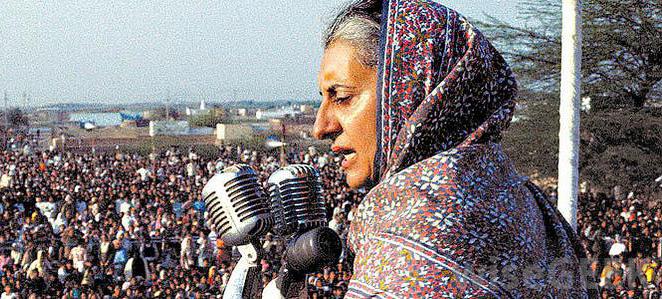
23 November 1974, Indraprastha College For Women, New Dehli, India

An ancient Sanskrit saying says, woman is the home and the home is the basis of society. It is as we build our homes that we can build our country. If the home is inadequate -- either inadequate in material goods and necessities or inadequate in the sort of friendly, loving atmosphere that every child needs to grow and develop -- then that country cannot have harm ony and no country which does not have harmony can grow in any direction at all.

That is why women's education is almost more important than the education of boys and men. We -- and by "we" I do not mean only we in India but all the world -- have neglected women education. It is fairly rece nt. Of course, not to you but when I was a child, the story of early days of women's education in England, for instance, was very current. Everybody remembered what had happened in the early days.

I remember what used to happen here. I still remember the days when living in old Delhi even as a small child of seven or eight. I had to go ou t in a doli if I left the house. We just did not walk. Girls did not walk in the streets. First, you had your sari with which you covered your head, then you had another shawl or something with which you covered your hand and all the body, then you had a white shawl, with which every thing was covered again although your face was open fortunately. Then you were i n the doli, which again was covered by another cloth. And this was in a family or community which did not observe purdah of any kind at all. In fact, all our social functions always were mixed functions but this was the atmosphere of the city and of the country.

Now, we have got education and there is a debate all over the country whether this education is adequate to the needs of society or the needs of our young people. I am one of those who always believe that education needs a thorough overhauling. But at the same time, I think that everything in our education is not bad, that even the present education has produced very fine men and women, specially scientists and experts in different fields, who are in great demand all over the world and even in the most affluent countries. Many of our young people leave us and go abroad because they get higher salaries, they get better conditions of work.

But it is not all a one-sided business because there are many who are persuaded and cajoled to go even when they are reluctant. We know of first class students, especially in medicine or nuclear energy for instance, they are approached long before they have passed out and offered all kinds of inducements to go out. Now, that shows that people do consider that they have a standard of knowledge and capability which will be useful any where in the world.

So, that is why I say that there is something worthwhile. It also shows that our own ancient philosophy has taught us that nothing in life is entirely bad or entirely good. Everything is somewhat of a mixture and it depends on us and our capability how we can extract the good, how we can make use of what is around us. There are people who through observation can learn from anything that is around them. There are others who can be surrounded by the most fascinating people, the most wonderful books, and other things and who yet remain quite closed in and they are unable to take anything from this wealth around them.

Our country is a very rich country. It is rich in culture, it is rich in many old traditions -- old and even modern tradition. Of course, it has a lot of bad things too and some of the bad things are in the society -- superstition, which has grown over the years and which sometimes clouds over the shining brightness of ancient thought and values, eternal values. Then, of course, there is the physical poverty of large numbers of our people. That is something which is ugly and that hampers the growth of millions of young boys and girls. Now, all these bad things we have to fight against and that is what we are doing since Independence.

But, we must not allow this dark side of the picture which, by the way, exists in every country in the world. Even the most rich country in the world has its dark side, but usually other people hide their dark sides and they try to project the shining side or the side of achievement. Here in India, we seem to want to project the worst side of society. Before anybody does anything, he has to have, of course, knowledge and capability, but along with it he has to have a certain amount of pride in what he or she is doing. He has to have self-confidence in his own ability. If your teacher tells, "You cannot do this," even if you are a very bright student I think every time you will find, it will be more and more difficult for you to do it. But if your teacher encourages saying, "Go along you have done very good work, now try a little harder," then you will try a little harder and you will be able to do it. And it is the same with societies and with countries.

This country, India, has had remarkable achievements to its credit, of course in ancient times, but even in modern times, I think there are a few modern stories, success stories, which are as fascinating as the success story of our country. It is true that we have not banished poverty, we have not banished many of our social ills, but if you compare us to what we were just about 27 years ago, I think that you will not find a single other country that has been able to achieve so much under the most difficult circumstances.

Today, we are passing through specially dark days. But these are not dark days for India alone. Except for the countries which call themselves socialist and about which we do not really know very much, every other country has the same sort of economic problems, which we have. Only a few countries, which have very small populations, have no unemployment. Otherwise, the rich countries also today have unemployment. They have shortages of essential articles. They have shortages even of food.

I do not know how many of you know that the countries of Western Europe and Japan import 41 per cent of their food needs, whereas India imports just under two per cent. Yet, somehow we ourselves project an image that India is out with the begging bowl. And naturally when we ourselves say it, other people will say it much louder and much stronger. It is true, of course, that our two per cent is pretty big because we are a very big country and we have a far bigger population than almost any country in the world with the exception of China. We have to see and you, the educated women, because it is great privilege for you to have higher education, you have to try and see our problems in the perspective of what has happened here in this country and what is happening all over the world.

There is today great admiration for certain things that have happened in other countries where the society is quite differently formed, where no dissent is allowed. The same people who admire that system or the achievements of that system are the ones who say there is dictatorship here even though, I think, nobody has yet been able to point out to me which country has more freedom of expression or action. So, something is said and a lot of people without thinking keep on repeating it with additions until an entirely distorted picture of the country and of our people is presented.

As I said, we do have many shortcomings, whether it is the government, whether it is the society. Some are due to our traditions because, as I said, not all tradition is good. And one of the biggest responsibilities of the educated women today is how to synthesise what has been valuable and timeless in our ancient traditions with what is good and valuable in modern thought. All that is modern is not good just as all that is old is neither all good nor all bad. We have to decide, not once and for all but almost every week, every month what is coming out that is good and useful to our country and what of the old we can keep and enshrine in our society. To be modern, most people think that it is something of a manner of dress or a manner of speaking or certain habits and customs, but that is not really being modern. It is a very superficial part of modernity.

For instance, when I cut my hair, it was because of the sort of life that I was leading. We were all in the movement. You simply could not have long hair and go in the villages and wash it every day. So, when you lead a life, a particular kind of life, your clothes, your everything has to fit into that life if you are to be efficient. If you have to go in the villages and you have to bother whether your clothes are going to be dirty, then you cannot be a good worker. You have to forget everything of that kind. That is why, gradually, clothes and so on have changed in some countries because of the changes in the life-style. Does it suit our life-style or what we want to do or not? If it does, maybe we have to adopt some of these things not merely because it is done in another country and perhaps for another purpose. But what clothes we wear is really quite unimportant. What is important is how we are thinking.

Sometimes, I am very sad that even people who do science are quite unscientific in their thinking and in their other actions -- not what they are doing in the laboratories but how they live at home or their attitudes towards other people. Now, for India to become what we want it to become with a modern, rational society and firmly based on what is good in our ancient tradition and in our soil, for this we have to have a thinking public, thinking young women who are not content to accept what comes from any part of the world but are willing to listen to it, to analyse it and to decide whether it is to be accepted or whether it is to be thrown out and this is the sort of education which we want, which enables our young people to adjust to this changing world and to be able to contribute to it.

Some people think that only by taking up very high jobs, you are doing something important or you are doing national service. But we all know that the most complex machinery will be ineffective if one small screw is not working as it should and that screw is just as important as any big part. It is the same in national life. There is no job that is too small; there is no person who is too small. Everybody has something to do. And if he or she does it well, then the country will run well.

In our superstition, we have thought that some work is dirty work. For instance, sweeping has been regarded as dirty. Only some people can do it; others should not do it. Now we find that manure is the most valuable thing that the world has today and many of the world's economies are shaking because there is not enough fertilizer -- and not just the chemical fertilizer but the ordinary manure, night-soil and all that sort of thing, things which were considered dirty.

Now it shows how beautifully balanced the world was with everything fitted in with something else. Everything, whether dirty or small, had a purpose. We, with our science and technology, have tried to -- not purposely, but somehow, we have created an imbalance and that is what is troubling, on a big scale, the economies of the world and also people and individuals. They are feeling alienated from their societies, not only in India but almost in every country in the world, except in places where the whole purpose of education and government has to be to make the people conform to just one idea. We are told that people there are very happy in whatever they are doing. If they are told to clean the streets, well, if he is a professor he has to clean the streets, if he is a scientist he has to do it, and we were told that they are happy doing it. Well, if they are happy, it is alright.

But I do not think in India we can have that kind of society where people are forced to do things because we think that they can be forced maybe for 25 years, maybe for 50 years, but sometime or the other there will be an explosion. In our society, we allow lots of smaller explosions because we think that that will guard the basic stability and progress of society and prevent it from having the kind of chaotic explosion which can retard our progress and harmony in the country.

So, I hope that all of you who have this great advantage of education will not only do whatever work you are doing keeping the national interests in view, but you will make your own contribution to creating peace and harmony, to bringing beauty in the lives of our people and our country. I think this is the special responsibility of the women of India. We want to do a great deal for our country, but we have never regarded India as isolated from the rest of the world. What we want to do is to make a better world. So, we have to see India's problems in the perspective of the larger world problems.

It has given me great pleasure to be with you here. I give my warm congratulations to those who are doing well and my very good wishes to all the others that they will also do much better. This college has had a high reputation but we must always see that we do better than those who were there before us. So, good luck and good wishes to you.


Source: http://www.edchange.org/multicultural/spee...

Enjoyed this speech? Speakola is a labour of love and I’d be very grateful if you would share, tweet or like it. Thank you.

Facebook Twitter Facebook
In EDUCATION Tags INDIRA GANDHI, GANDHI, INDIA, INDIAN POLITICS, WOMEN, EDUCATION OF WOMEN, EDUCATION, TRANSCRIPT, UNIVERSITY, INDRAPRASTHA UNIVERSITY
Comment

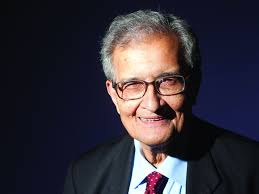
Amartya Sen: 'The importance of education', Commonwealth education conference - 2003

December 18, 2016

28 October 2003, Edinburgh, Scotland, UK

It is a great privilege for me to have the opportunity of speaking at this meeting of Commonwealth countries on education. I am also very happy that you have chosen Edinburgh as the venue of this important conference. I am very proud of my own association with Edinburgh, through being an alumnus of two universities here, Edinburgh University and Heriot-Watt University (admittedly my connections are only through honorary degrees but they generate a sense of closeness to the real students here), and also through belonging to the Royal Society of Edinburgh and having other associations with this great city. So I welcome you to beautiful Edinburgh and to its wonderful intellectual community, of which I am privileged to be a nomadic member, as something of an academic gypsy. But to this welcome I must add my belief that there could not be a better place for a meeting on "closing the gap" in education than the city of Adam Smith and David Hume, the earliest and greatest champions of education for all.

Why is it so important to close the educational gaps, and to remove the enormous disparities in educational access, inclusion and achievement? One reason, among others, is the importance of this for making the world more secure as well as more fair. HG Wells was not exaggerating when he said, in his Outline of History: "human history becomes more and more a race between education and catastrophe." If we continue to leave vast sections of the people of the world outside the orbit of education, we make the world not only less just, but also less secure.

The precariousness of the world is now greater than it already was in HG Wells's time in early twentieth century. Indeed, since the terrible events of September 11, 2001 - and what followed after that - the world has been very aware of problems of physical insecurity. But human insecurity comes in many different ways - not just though terrorism and violence. Indeed, even on the very day of September 11, 2001, more people died from Aids than from physical violence including the atrocity in New York. Human insecurity can develop in many different ways, and physical violence is only one of them. While it is important to fight terrorism and genocide (and in this too, education can have a big role, as I will presently discuss), we must also recognise the plural nature of human insecurity and its diverse manifestations.

As it happens, widening the coverage and effectiveness of basic education can have a powerfully preventive role in reducing human insecurity of nearly every kind. It is useful to consider briefly the different ways in which removing discrepancies and neglects in education can contribute to reducing human insecurity across the world.

The most basic issue relates to the elementary fact that illiteracy and innumeracy are forms of insecurity in themselves. Not to be able to read or write or count or communicate is a tremendous deprivation. The extreme case of insecurity is the certainty of deprivation, and the absence of any chance of avoiding that fate. The first and most immediate contribution of successful school education is a direct reduction of this basic deprivation - this extreme insecurity - which continues to ruin the lives of a large part of the global population, not least in the Commonwealth.

The difference that basic education can make to human life is easy to see. It is also readily appreciated even by the poorest of families. Speaking personally, it has been wonderful for me to observe how easily the importance of education is perceived even by the poorest and the most deprived of families. This emerges from some studies on primary education in India that we are currently undertaking (through the "Pratichi Trust" - a trust aimed at basic education and gender equity that I have been privileged to set up in India and Bangladesh through using my Nobel Prize money from 1998). As the results of our studies come in, it is remarkable to find how the parents from even the poorest and most depressed families long to give basic education to their children, to make them grow up without the terrible handicaps from which they - the parents - had themselves suffered.

Indeed, contrary to claims often made, we have not observed any basic reluctance by parents to send their children - daughters as well as boys - to school, provided affordable, effective and safe schooling opportunities actually exist in their neighbourhood. Of course, there are many obstacles in giving shape to the dreams of parents. The economic circumstances of the families often make it very hard for them to send their children to school, particularly when there are fees to be paid.

The obstacle of unaffordability must be firmly removed across the Commonwealth - indeed the world. I am, of course, aware that some champions of the market system want to leave school fees to the market forces. But this cannot but be a mistake given the social obligation to give the essential opportunity of schooling to all children. Indeed, Adam Smith, who provided the classic analysis of the power and reach of the market mechanism two and quarter centuries ago, wrote eloquently, sitting in Kirkcaldy (not far from here), why it would be wrong to leave this to the market:

For a very small expence the publick can facilitate, can encourage, and can even impose upon almost the whole body of the people, the necessity of acquiring those most essential parts of education.

There are other obstacles too. Sometimes the schools are very thinly staffed (many primary schools in developing countries have only one teacher), and parents are often worried about the safety of children, especially girl children (particularly in case the teacher fails to turn up, which seems to happen often enough in many of the poorer countries). Quite often, the parents' reluctance has a rational basis, and these gaps too need to be addressed.

There are other barriers as well. Very poor families often rely on labour contributions from everyone, even the children, and this can compete with the demands of schooling. This unfortunate practice, though generated out of hardship, must also be removed, through regulation as well as by making the economic benefits of schooling clearer to all. This brings us to the second issue in understanding the contribution of schooling in removing human insecurity. Basic education can be very important in helping people to get jobs and gainful employment. This economic connection, while always present, is particularly critical in a rapidly globalising world in which quality control and production according to strict specification can be crucial.

Not surprisingly, all the cases of speedy use of the opportunities of global commerce for the reduction of poverty have drawn on help from basic education on a wide basis. For example, in Japan, already in the mid-19th century the task was seen with remarkable clarity. The Fundamental Code of Education, issued in 1872 (shortly after the Meiji restoration in 1868), expressed the public commitment to make sure that there must be "no community with an illiterate family, nor a family with an illiterate person". Thus - with the closing of educational gaps - began Japan's remarkable history of rapid economic development. By 1910 Japan was almost fully literate, at least for the young, and by 1913, though still very much poorer than Britain or America, Japan was publishing more books than Britain and more than twice as many as the United States. The concentration on education determined, to a large extent, the nature and speed of Japan's economic and social progress.

Later on, particularly in the second half of the 20th century, South Korea, China, Taiwan, Hong Kong, Singapore, and other economies in East Asia followed similar routes and firmly focused on general expansion of education. Widespread participation in a global economy would have been hard to accomplish if people could not read or write, or produce according to specifications or instructions, or to have quality control.

Third, when people are illiterate, their ability to understand and invoke their legal rights can be very limited, and educational neglect can also lead to other kinds of deprivation. Indeed, this tends to be a persistent problem for people at the bottom of the ladder, whose rights are often effectively alienated because of their inability to read and see what they are entitled to demand and how. The educational gap clearly has a class connection.

It also has a gender connection since it can be a very important issue for women's security. Women are often deprived of their due, thanks to illiteracy. Not being able to read or write is a significant barrier for underprivileged women, since this can lead to their failure to make use even of the rather limited rights they may legally have (say, to own land, or other property, or to appeal against unfair judgment and unjust treatment). There are often legal rights in rulebooks that are not used because the aggrieved parties cannot read those rulebooks. Gaps in schooling can, thus, directly lead to insecurity by distancing the deprived from the ways and means of fighting against that deprivation.

Fourth, illiteracy can also muffle the political opportunities of the underdog, by reducing their ability to participate in political arena and to express their demands effectively. This can contribute directly to their insecurity, since the absence of voice in politics can entail a severe reduction of influence and the likelihood of just treatment of those who are kept on the wrong side of the gap.

Fifth, basic education can play a major role in tackling health problems in general and epidemics in particular. It is easy to see the importance of specialised health education (for example, on the way infections spread and how diseases can be prevented). But even general education can broaden a person's lines of thinking and generate social understanding in ways that may be extremely important in facing epidemiological problems. Indeed, some studies have suggested that general school education has a bigger impact on health than specialised health education itself has.

Sixth, empirical work in recent years has brought out very clearly how the relative respect and regard for women's well-being is strongly influenced by women's literacy and educated participation in decisions within and outside the family. Even the survival disadvantage of women compared with men in many developing countries (which leads to such terrible phenomenon as a hundred million of "missing women") seems to go down sharply - and may even get eliminated - with progress in women's empowerment, for which literacy is a basic ingredient.

There is also considerable evidence that fertility rates tend to go down sharply with greater empowerment of women. This is not surprising, since the lives that are most battered by the frequent bearing and rearing of children are those of young women, and anything that enhances their decisional power and increases the attention that their interests receive tends, in general, to prevent over-frequent child bearing. For example, in a comparative study of the different districts within India, it has clearly emerged that women's education and women's employment are the two most important influences in reducing fertility rates. In that extensive study, female education and employment are the only variables that have a statistically significant impact in explaining variations in fertility rates across more than three hundred districts that make up India. In understanding inter-regional differences, for example the fact the state of Kerala in India has a fertility rate of only 1.7 (which can be roughly interpreted as 1.7 children on average per couple) in contrast with many areas which have four children per couple (or even more), the level of female education provides the most effective explanation.

There is also much evidence that women's education and literacy tend to reduce the mortality rates of children. These and other connections between basic education of women and the power of women's agency (and its extensive reach) indicate why the gender gap in education produces heavy social penalties.

I have so far concentrated on gaps in access, inclusion and achievement that differentiate one group of people from another. But this is also a good occasion to reflect a little on the gaps - of a very different kind - that exist in the coverage of the school curriculum. The nature of the curriculum is, of course, of obvious relevance to the development of technical skills (such as computing) that facilitate participation in the contemporary world. But there are also other issues involved, since schooling can be deeply influential in the identity of a person and the way we see ourselves and each other.

This issue has received some attention recently in the special context of the role of fundamentalist religious schools, and there is need to pay attention to the narrowing of horizons, especially of children, that illiberal and intolerant education can produce. It is also important to recognise that lack of public facilities for the schooling of children often contributes greatly to the appeal and popularity of religious schools run by political militants.

Indeed, the nature of education is quite central to peace in the world. Recently the very deceptive perspective of the so-called "clash of civilisations" (championed particularly by Samuel Huntington) has gained much currency. It is important to see that what is most immediately divisive in this kind of theorising is not the silly idea of the inevitability of a clash (that too, but it comes later), but the equally shallow prior insistence on seeing human beings in terms of one dimension only, regarding them just as members of one civilisation or another (defined mostly in terms of religion), ignoring their other affiliations and involvements.

There are two mistakes here. First, the classification is very crude. For example, India is put in the box of Hindu civilisation, even though with its 130 million Muslims (more than the entire British and French populations put together), India has many more Muslims than most so-called "Muslim countries" in the world. Huntington's classification gives comfort only to Hindu sectarians.

The second mistake is to assume that a person's religion defines him or her reasonably adequately. But every human being's identities have many different components, related to nationality, language, location, class, occupation, history, religion, political beliefs, and so on. A Bangladeshi Muslim is not only a Muslim, but also a Bengali and possibly quite proud of the richness of the Bengali literature and other cultural achievements. Similarly, the history of the Arab world with which an Arab child today can potentially related is not only the achievements of Islam (important as they are), but also the great secular accomplishments in mathematics, science and literature which are part and parcel of Arab history. Even today when a scientist in, say, the Imperial College uses an "algorithm," he or she unconsciously celebrates the innovativeness of the ninth-century Arab mathematician, Al-Khwarizmi, from whose name the term algorithm is derived (the term "algebra" comes from his book, "Al Jabr wa-al-Muqabilah").

To define people just in terms of religion-based classification of civilisations can itself contribute to political insecurity, since in this view people are seen as simply belonging to, say, "the Muslim world," or "the Western world," or "the Hindu world," or "the Buddhist world," and so on. To ignore everything other than religion in classifying people is to set people up in potentially belligerent camps. I personally believe that even the UK government makes a mistake in expanding, rather than reducing faith-based state schools, adding for example Muslim schools, Hindu schools and Sikh schools to pre-existing Christian ones, especially when the new religious schools leave children very little opportunity to cultivate reasoned choice and decide how the various components of their identities (related respectively to language, literature, religion, ethnicity, cultural history, scientific interests, etc) should receive attention. There is need not only to discuss the importance of our common humanity, but also to stress the fact that our diversities can take many distinct forms and that we have to use our reasoning to decide how to see ourselves.

The importance of non-sectarian and non-parochial curricula that expand, rather than reduce, the reach of reason can be hard to exaggerate. Shakespeare talked about the fact that "some men are born great, some achieve greatness, and some have greatness thrust upon them." In the schooling of children, we have to make sure that we do not have smallness thrust upon the young.

The idea of the Commonwealth has something to offer on the philosophy behind such a broad approach. The Queen herself, as the head of the Commonwealth, put the basic perspective with clarity and force half a century ago, shortly after her coronation, in 1953:

The Commonwealth ... is an entirely new conception built on the highest qualities of the spirit of man: friendship, loyalty and the desire for freedom and peace.

In promoting friendship and loyalty, and in safeguarding the commitment to freedom and peace, basic education can play a vital part. This requires, on the one hand, that the facilities of education be available to all, and on the other, that children be exposed to ideas from many different backgrounds and perspectives and be encouraged to think for themselves and to reason.

Basic education is not just an arrangement for training to develop skills (important as that is), it is also a recognition of the nature of the world, with its diversity and richness, and an appreciation of the importance of freedom and reasoning as well as friendship. The need for that understanding - that vision - has never been stronger.

Source: https://www.theguardian.com/education/2003...

Enjoyed this speech? Speakola is a labour of love and I’d be very grateful if you would share, tweet or like it. Thank you.

Facebook Twitter Facebook
In EDUCATION Tags EDUCATION CONFERENCE, COMMONWEALTH, AMARTYA SEN, EDUCATION MINISTERS, TRANSCRIPT, INDIA, NOBEL PRIZE
Comment

See my film!

Limited Australian Season

March 2025

Details and ticket bookings at

angeandtheboss.com

Support Speakola

Hi speech lovers,
With costs of hosting website and podcast, this labour of love has become a difficult financial proposition in recent times. If you can afford a donation, it will help Speakola survive and prosper.

Best wishes,
Tony Wilson.

Become a Patron!

Learn more about supporting Speakola.

Featured political

Featured
Jon Stewart: "They responded in five seconds", 9-11 first responders, Address to Congress - 2019
Jacinda Ardern: 'They were New Zealanders. They are us', Address to Parliament following Christchurch massacre - 2019
Dolores Ibárruri: "¡No Pasarán!, They shall not pass!', Defense of 2nd Spanish Republic - 1936
Jimmy Reid: 'A rat race is for rats. We're not rats', Rectorial address, Glasgow University - 1972

Featured eulogies

Featured
For Geoffrey Tozer: 'I have to say we all let him down', by Paul Keating - 2009
for James Baldwin: 'Jimmy. You crowned us', by Toni Morrison - 1988
for Michael Gordon: '13 days ago my Dad’s big, beautiful, generous heart suddenly stopped beating', by Scott and Sarah Gordon - 2018

Featured commencement

Featured
Tara Westover: 'Your avatar isn't real, it isn't terribly far from a lie', The Un-Instagrammable Self, Northeastern University - 2019
Tim Minchin: 'Being an artist requires massive reserves of self-belief', WAAPA - 2019
Atul Gawande: 'Curiosity and What Equality Really Means', UCLA Medical School - 2018
Abby Wambach: 'We are the wolves', Barnard College - 2018
Eric Idle: 'America is 300 million people all walking in the same direction, singing 'I Did It My Way'', Whitman College - 2013
Shirley Chisholm: ;America has gone to sleep', Greenfield High School - 1983

Featured sport

Featured
Joe Marler: 'Get back on the horse', Harlequins v Bath pre game interview - 2019
Ray Lewis : 'The greatest pain of my life is the reason I'm standing here today', 52 Cards -
Mel Jones: 'If she was Bradman on the field, she was definitely Keith Miller off the field', Betty Wilson's induction into Australian Cricket Hall of Fame - 2017
Jeff Thomson: 'It’s all those people that help you as kids', Hall of Fame - 2016

Fresh Tweets


Featured weddings

Featured
Dan Angelucci: 'The Best (Best Man) Speech of all time', for Don and Katherine - 2019
Hallerman Sisters: 'Oh sister now we have to let you gooooo!' for Caitlin & Johnny - 2015
Korey Soderman (via Kyle): 'All our lives I have used my voice to help Korey express his thoughts, so today, like always, I will be my brother’s voice' for Kyle and Jess - 2014

Featured Arts

Featured
Bruce Springsteen: 'They're keepers of some of the most beautiful sonic architecture in rock and roll', Induction U2 into Rock Hall of Fame - 2005
Olivia Colman: 'Done that bit. I think I have done that bit', BAFTA acceptance, Leading Actress - 2019
Axel Scheffler: 'The book wasn't called 'No Room on the Broom!', Illustrator of the Year, British Book Awards - 2018
Tina Fey: 'Only in comedy is an obedient white girl from the suburbs a diversity candidate', Kennedy Center Mark Twain Award -  2010
Tina Fey: 'Only in comedy is an obedient white girl from the suburbs a diversity candidate', Kennedy Center Mark Twain Award - 2010

Featured Debates

Featured
Sacha Baron Cohen: 'Just think what Goebbels might have done with Facebook', Anti Defamation League Leadership Award - 2019
Greta Thunberg: 'How dare you', UN Climate Action Summit - 2019
Charlie Munger: 'The Psychology of Human Misjudgment', Harvard University - 1995
Lawrence O'Donnell: 'The original sin of this country is that we invaders shot and murdered our way across the land killing every Native American that we could', The Last Word, 'Dakota' - 2016