• Genre
  • About
  • Submissions
  • Donate
  • Search
Menu

Speakola

All Speeches Great and Small
  • Genre
  • About
  • Submissions
  • Donate
  • Search

Bhagat Singh: 'Bombs and pistols do not make a revolution', Appeal statement - 1929

October 15, 2019

Bhagat Singh and B.K. Dutt threw two bombs from the visitors' gallery. in the Central Assembly Hall, Delhi. This statement was on appeal to Sessions court. Bhagat Singh was hanged in 1931.

MY LORDS,

We are neither lawyers nor masters of English language, nor holders of degrees. Therefore, please do not expect any oratorial speech from us. We therefore pray that instead of going into the language mistakes of our statement Your Lordships will try to understand the real sense of it.

Leaving other points to our lawyers, I will confine myself to one point only. The point is very important in this case. The point is as to what were our intentions and to what extent we are guilty. This is a very complicated question and no one will be able to express before you that height to mental elevation which inspired us to think and act in a particular manner. We want that this should be kept in mind while assessing our intentions our offence. According to the famous jurist Solomon, one should not be punished for his criminal offence if his aim is not against law.

We had submitted a written statement in the Sessions Court. That statement explains our aim and, as such, explains our intentions also. But the learned judge dismissed it with one stroke of pen, saying that “generally the operation of law is not affected by how or why one committed the offence. In this country the aim of the offence is very rarely mentioned in legal commentaries”.

My Lords, our contention is that under the circumstances the learned judge ought to have judged us either by the result of our action or on the basis of the psychological part of our statement. But he did not take any of these factors into consideration.

The point to be considered is that the two bombs we threw in the Assembly did not harm anybody physically or economically. As such the punishment awarded to us is not only very harsh but revengeful also. Moreover, the motive knowing his psychology. And no one can do justice to anybody without taking his motive into consideration. If we ignore the motive, the biggest generals of the world will appear like ordinary murderers; revenue officers will look like thieves and cheats. Even judges will be accused of murder. This way the entire social system and the civilisation will be reduced to murders, thefts and cheating. If we ignore the motive, the government will have no right to expect sacrifice from its people and its officials. Ignore the motive and every religious preacher will be dubbed as a preacher of falsehoods, and every prophet will be charged of misguiding crores of simple and ignorant people.

If we set aside the motive, then Jesus Christ will appear to be a man responsible for creating disturbances, breaking peace and preaching revolt, and will be considered to be a “dangerous personality” in the language of the law. But we worship him. He commands great respect in our hearts and his image creates vibrations of spiritualism amongst us. Why? Because the inspiration behind his actions was that of a high ideal. The rulers of that age could not recognise that high idealism. They only saw his outward actions. Nineteen centuries have passed since then. Have we not progressed during this period? Shall we repeat that mistake again? If that be so, then we shall have to admit that all the sacrifices of the mankind and all the efforts of the great martyrs were useless and it would appear as if we are still at the same place where we stood twenty centuries back.

From the legal point of view also, the question of motive is of special importance. Take the example of General Dyer. He resorted to firing and killed hundreds of innocent and unarmed people. But the military court did not order him to be shot. It gave him lakhs of rupees as award. Take another example. Shri Kharag Bahadur Singh, a young Gurkha, Killed a Marwari in Calcutta. If the motive be set aside, then Kharag Bahadur Singh ought to have been hanged. But he was awarded a mild sentence of a few years only. He was even released much before the expiry of his sentence. Was there any loophole in the law that he escaped capital punishment? Or, was the charge of murder not proved against him? Like us, he also accepted the full responsibility of his action, but he escaped death. He is free today. I ask Your Lordship, why was he not awarded capital punishment? His action was well calculated and well planned. From the motive end, his action was more serious and fatal than ours. He was awarded a mild punishment because his intentions were good. He saved the society from a dirty leech who had sucked the life-blood of so many pretty young girls. Kharag Singh was given a mild punishment just to uphold the formalities of the law.

This principle (that the law does not take motive into consideration - ed.) is quite absurd. This is against the basic principles of the law which declares that “the law is for man and not man for the law”. As such, why the same norms are not being applied to us also? It is quite clear that while convicting Kharag Singh his motive was kept in mind, otherwise a murderer can never escape the hangman’s noose. Are we being deprived of the ordinary advantage of the law because our offence is against the government, or because our action has a political importance?

My Lords, under these circumstances, please permit us to assert that a government which seeks shelter behind such mean methods has no right to exist. If it is exists, it is for the time being only, and that too with the blood of thousands of people on its head. If the law does not see the motive there can be no justice, nor can there be stable peace. Mixing of arsenic (poison) in the flour will not be considered to be a crime, provided its purpose is to kill rats. But if the purpose is to kill a man, it becomes a crime of murder. Therefore, such laws which do not stand the test of reason and which are against the principle of justice should be abolished. Because of such unjust laws, many great intellectuals had to adopt the path of revolt.

The facts regarding our case are very simple. We threw two bombs in the legislative Assembly on April 8, 1929. As a result of the explosion, a few persons received minor scratches. There was pandemonium in the chamber, hundreds of visitors and members of the Assembly ran out. Only my friend B.K. Dutt and myself remained seated in the visitors gallery and offered ourselves for arrest. We were tried for attempt to murder, and convicted for life. As mentioned above, as a result of the bomb explosion, only four or five persons were slightly injured and one bench got damaged. We offered ourselves for arrest without any resistance. The Sessions Judge admitted that we could have very easily escaped, had we had any intention like that. We accepted our offence and gave a statement explaining our position. We are not afraid of punishment. But we do not want that we should be wrongly understood. The judge removed a few paragraphs from our statement. This we consider to be harmful for our real position.

A proper study of the full text of our statement will make it clear that, according to us, our country is passing through a delicate phase. We saw the coming catastrophe and thought it proper to give a timely warning with a loud voice, and we gave the warning in the manner we thought proper. We may be wrong. Our line of thinking and that of the learned judge may be different, but that does not mean that we be deprived of the permission to express our ideas, and wrong things be propagated in our name.

In our statement we explained in detail what we mean by “Long Live Revolution” and “Down With Imperialism”. That formed the crux of our ideas. That portion was removed from our statement. Generally a wrong meaning is attributed to the word revolution. That is not our understanding. Bombs and pistols do not make revolution. That is not our understanding. The sword of revolution is sharpened on the whetting-stone of ideas. This is what we wanted to emphasise. By revolution we mean the end of the miseries of capitalist wars. It was not proper to pronounce judgement without understanding our aims and objects and the process of achieving them. To associate wrong ideas with our names is out and out injustice.

It was very necessary to give the timely warning that the unrest of the people is increasing and that the malady may take a serious turn, if not treated in time and properly. If our warning is not heeded, no human power will be able to stop it. We took this step to give proper direction to the storm. We are serious students of history. We believe that, had the ruling powers acted correctly at the proper time, there would have been no bloody revolutions in France and Russia. Several big power of the world tried to check the storm of ideas and were sunk in the atmosphere of bloodshed. The ruling people cannot change the flow of the current. We wanted to give the first warning. Had we aimed at killing some important personalities, we would have failed in the attainment of our aim.

My Lords, this was the aim and the spirit behind our action, and the result of the action corroborates our statement. There is one more point which needs elucidation, and that is regarding the strength of the bombs. Had we had no idea of the strength of the bombs, there would have been no question of our throwing them in the presence of our respected national leader like Pandit Motilal Nehru, Shri Kelkar, Shri Jayaker and Shri Jinnah. How could we have risked the lives of our leaders? After all we are not mad and, had we been so, we would have certainly been sent to the lunatic asylum, instead of being put in jail.

We had full knowledge about the strength of the bombs and that is why we acted with so much confidence. It was very easy to have thrown the bombs on the occupied benches, but it was difficult to have thrown them on unoccupied seats. Had we not of saner mind or had we been mentally unbalanced, the bombs would have fallen on occupied benches and not in empty places.

Therefore I would say that we should be rewarded for the courage we showed in carefully selecting the empty places. Under these conditions, My Lords, we think we have not been understood, My Lords, we think we have not been understood properly. We have not come before you to get our sentences reduced. We have come here to clarify our position. We want that we should not be given any unjust treatment, nor should any unjust opinion be pronounced about us. The question of punishment is of secondary importance before us.
Source: https://frontline.thehindu.com/static/html...

Enjoyed this speech? Speakola is a labour of love and I’d be very grateful if you would share, tweet or like it. Thank you.

Facebook Twitter Facebook
In LAWS AND JUSTICE Tags BHAGAT SINGH, B.K. DUTT, BOMBING, STATEMENT, SESSIONS COURT, MOTIVE, TRANSCRIPT, REVOLUTION, INDIA, FREE INDIA
Comment

Mahatma Gandhi: 'to preach disaffection towards the existing system of Government has become almost a passion with me', Statement in the Great Trial - 1922

December 29, 2016

18 March 1922, Bombay High Court, Bombay, India

In March 1922, Gandhi was tried before Mr. Broomfield, I.C.S., District & Sessions Judge of Ahmedabad, for sedition in respect of two articles, which he had written in his paper "Young India". The charges related to sedition and non cooperation.

Here is Gandhi’s statement:

Before I read this statement I would like to state that I entirely endorse the learned Advocate-General’s remarks in connection with my humble self. I think that he has made, because it is very true and I have no desire whatsoever to conceal from this court the fact that to preach disaffection towards the existing system of Government has become almost a passion with me, and the Advocate-General is entirely in the right when he says that my preaching of disaffection did not commence with my connection with Young India but that it commenced much earlier, and in the statement that I am about to read, it will be my painful duty to admit before this court that it commenced much earlier than the period stated by the Advocate-General. It is a painful duty with me but I have to discharge that duty knowing the responsibility that rests upon my shoulders, and I wish to endorse all the blame that the learned Advocate-General has thrown on my shoulders in connection with the Bombay occurrences, Madras occurrences and the Chauri Chuara occurrences. Thinking over these things deeply and sleeping over them night after night, it is impossible for me to dissociate myself from the diabolical crimes of Chauri Chaura or the mad outrages of Bombay. He is quite right when he says, that as a man of responsibility, a man having received a fair share of education, having had a fair share of experience of this world, I should have known the consequences of every one of my acts. I know them. I knew that I was playing with fire. I ran the risk and if I was set free I would still do the same. I have felt it this morning that I would have failed in my duty, if I did not say what I said here just now.

I wanted to avoid violence. Non-violence is the first article of my faith. It is also the last article of my creed. But I had to make my choice. I had either to submit to a system which I considered had done an irreparable harm to my country, or incur the risk of the mad fury of my people bursting forth when they understood the truth from my lips. I know that my people have sometimes gone mad. I am deeply sorry for it and I am, therefore, here to submit not to a light penalty but to the highest penalty. I do not ask for mercy. I do not plead any extenating act. I am here, therefore, to invite and cheerfully submit to the highest penalty that can be inflicted upon me for what in law is a deliberate crime, and what appears to me to be the highest duty of a citizen. The only course open to you, the Judge, is, as I am going to say in my statement, either to resign your post, or inflict on me the severest penalty if you believe that the system and law you are assisting to administer are good for the people. I do not except that kind of conversion. But by the time I have finished with my statement you will have a glimpse of what is raging within my breast to run this maddest risk which a sane man can run.

[He then read out the written statement : ] I owe it perhaps to the Indian public and to the public in England, to placate which this prosecution is mainly taken up, that I should explain why from a staunch loyalist and co-operator, I have become an uncompromising disaffectionist and non-co-operator. To the court too I should say why I plead guilty to the charge of promoting disaffection towards the Government established by law in India.
My public life began in 1893 in South Africa in troubled weather. My first contact with British authority in that country was not of a happy character. I discovered that as a man and an Indian, I had no rights. More correctly I discovered that I had no rights as a man because I was an Indian.

But I was not baffled. I thought that this treatment of Indians was an excrescence upon a system that was intrinsically and mainly good. I gave the Government my voluntary and hearty co-operation, criticizing it freely where I felt it was faulty but never wishing its destruction.
Consequently when the existence of the Empire was threatened in 1899 by the Boer challenge, I offered my services to it, raised a volunteer ambulance corps and served at several actions that took place for the relief of Ladysmith. Similarly in 1906, at the time of the Zulu ‘revolt’, I raised a stretcher bearer party and served till the end of the ‘rebellion’. On both the occasions I received medals and was even mentioned in dispatches. For my work in South Africa I was given by Lord Hardinge a Kaisar-i-Hind gold medal. When the war broke out in 1914 between England and Germany, I raised a volunteer ambulance cars in London, consisting of the then resident Indians in London, chiefly students. Its work was acknowledge by the authorities to be valuable. Lastly, in India when a special appeal was made at the war Conference in Delhi in 1918 by Lord Chelmsford for recruits, I struggled at the cost of my health to raise a corps in Kheda, and the response was being made when the hostilities ceased and orders were received that no more recruits were wanted. In all these efforts at service, I was actuated by the belief that it was possible by such services to gain a status of full equality in the Empire for my countrymen.

The first shock came in the shape of the Rowlatt Act-a law designed to rob the people of all real freedom. I felt called upon to lead an intensive agitation against it. Then followed the Punjab horrors beginning with the massacre at Jallianwala Bagh and culminating in crawling orders, public flogging and other indescribable humiliations. I discovered too that the plighted word of the Prime Minister to the Mussalmans of India regarding the integrity of Turkey and the holy places of Islam was not likely to be fulfilled. But in spite of the forebodings and the grave warnings of friends, at the Amritsar Congress in 1919, I fought for co-operation and working of the Montagu-Chemlmsford reforms, hoping that the Prime Minister would redeem his promise to the Indian Mussalmans, that the Punjab wound would be healed, and that the reforms, inadequate and unsatisfactory though they were, marked a new era of hope in the life of India.
But all that hope was shattered. The Khilafat promise was not to be redeemed. The Punjab crime was whitewashed and most culprits went not only unpunished but remained in service, and some continued to draw pensions from the Indian revenue and in some cases were even rewarded. I saw too that not only did the reforms not mark a change of heart, but they were only a method of further raining India of her wealth and of prolonging her servitude.

I came reluctantly to the conclusion that the British connection had made India more helpless than she ever was before, politically and economically. A disarmed India has no power of resistance against any aggressor if she wanted to engage, in an armed conflict with him. So much is this the case that some of our best men consider that India must take generations, before she can achieve Dominion Status. She has become so poor that she has little power of resisting famines. Before the British advent India spun and wove in her millions of cottages, just the supplement she needed for adding to her meagre agricultural resources. This cottage industry, so vital for India’s existence, has been ruined by incredibly heartless and inhuman processes as described by English witness. Little do town dwellers how the semi-starved masses of India are slowly sinking to lifelessness. Little do they know that their miserable comfort represents the brokerage they get for their work they do for the foreign exploiter, that the profits and the brokerage are sucked from the masses. Little do realize that the Government established by law in British India is carried on for this exploitation of the masses. No sophistry, no jugglery in figures, can explain away the evidence that the skeletons in many villages present to the naked eye. I have no doubt whatsoever that both England and the town dweller of India will have to answer, if there is a God above, for this crime against humanity, which is perhaps unequalled in history. The law itself in this country has been used to serve the foreign exploiter. My unbiased examination of the Punjab Marital Law cases has led me to believe that at least ninety-five per cent of convictions were wholly bad. My experience of political cases in India leads me to the conclusion, in nine out of every ten, the condemned men were totally innocent. Their crime consisted in the love of their country. In ninety-nine cases out of hundred, justice has been denied to Indians as against Europeans in the courts of India. This is not an exaggerated picture. It is the experience of almost every Indian who has had anything to do with such cases. In my opinion, the administration of the law is thus prostituted, consciously or unconsciously, for the benefit of the exploiter.

The greater misfortune is that the Englishmen and their Indian associates in the administration of the country do not know that they are engaged in the crime I have attempted to describe. I am satisfied that many Englishmen and Indian officials honestly systems devised in the world, and that India is making steady, though, slow progress. They do not know, a subtle but effective system of terrorism and an organized display of force on the one hand, and the deprivation of all powers of retaliation or self-defense on the other, as emasculated the people and induced in them the habit of simulation. This awful habit has added to the ignorance and the self-deception of the administrators. Section 124 A, under which I am happily charged, is perhaps the prince among the political sections of the Indian Penal Code designed to suppress the liberty of the citizen. Affection cannot be manufactured or regulated by law. If one has no affection for a person or system, one should be free to give the fullest expression to his disaffection, so long as he does not contemplate, promote, or incite to violence. But the section under which mere promotion of disaffection is a crime. I have studied some of the cases tried under it; I know that some of the most loved of India’s patriots have been convicted under it. I consider it a privilege, therefore, to be charged under that section. I have endeavored to give in their briefest outline the reasons for my disaffection. I have no personal ill-will against any single administrator, much less can I have any disaffection towards the King’s person. But I hold it to be a virtue to be disaffected towards a Government which in its totality has done more harm to India than any previous system. India is less manly under the British rule than she ever was before. Holding such a belief, I consider it to be a sin to have affection for the system. And it has been a precious privilege for me to be able to write what I have in the various articles tendered in evidence against me.

In fact, I believe that I have rendered a service to India and England by showing in non-co-operation the way out of the unnatural state in which both are living. In my opinion, non-co-operation with evil is as much a duty as is co-operation with good. But in the past, non-co-operation has been deliberately expressed in violence to the evil-doer. I am endeavoring to show to my countrymen that violent non-co-operation only multiples evil, and that as evil can only be sustained by violence, withdrawal of support of evil requires complete abstention from violence. Non-violence implies voluntary submission to the penalty for non-co-operation with evil. I am here, therefore, to invite and submit cheerfully to the highest penalty that can be inflicted upon me for what in law is deliberate crime, and what appears to me to be the highest duty of a citizen. The only course open to you, the Judge and the assessors, is either to resign your posts and thus dissociate yourselves from evil, if you feel that the law you are called upon to administer is an evil, and that in reality I am innocent, or to inflict on me the severest penalty, if you believe that the system and the law you are assisting to administer are good for the people of this country, and that my activity is, therefore, injurious to the common weal.

Judge’s response:

Judge: Mr. Gandhi, you have made my task easy in one way by pleading guilty to the charge.  Nevertheless, what remains, namely the determination of a just sentence, is perhaps as difficult a proposition as a Judge in this country could have to face.  The law is no respecter of persons.  Nevertheless, it would be impossible to ignore the fact that you are in a different category from any person I have ever tried or am likely ever to try.  It would be impossible to ignore the fact that in the eyes of millions of your countrymen you are a great patriot and a great leader; even all those who differ from you in politics look up to you as a man of high ideals and of noble and even saintly life.  I have to deal with you in one character only.  It is not my duty, and I do not presume to judge or criticise you in any other character.  It is my duty to judge you as a man subject to the law, who has by his own admission broken the law, and committed what to an ordinary man must appear to be a grave offence against such law.  I do not forget that you have consistently preached against violence, or that you have on many occasions, as I am willing to believe, done much to prevent violence.
 
But having regard to the nature of your political teaching and the nature of many of those to whom it was addressed, how you can have continued to believe that violence and anarchy would not be the inevitable consequence, it passes my capacity to understand.  There are probably few people in India who do not sincerely regret that you should have made it impossible for any Government to leave you at liberty.  But it is so, I am trying to balance what is due to you against what appears to me to be necessary in the interest of the public; and I propose, in passing sentence, to follow the precedent of the case, in many respects similar to this case, that was decided some twelve years ago, the case of Mr. Bal Gangadhar Tilak, under the same section.  The sentence that was passed upon him as it finally stood, was a sentence of simple imprisonment for six years.  You will not consider it unreasonable, I think, that you should be classed with Mr. Tilak; and that is the sentence two years' simple imprisonment on each count of the charge, six years in all, which I feel it my duty to pass upon you. "The Judge added, "if the course of events in India should make it possible for Governmentto reduce the period and release you, nobody would be better pleased than I.

Historian Ramachandra Guha, author of ‘Gandhi 1914-48: The Years that Changed the World’ (Viking 2018) speaks about Gandhi’s famous speech on our podcast.


Source: http://www.mkgandhi.org/speeches/gto1922.h...

Enjoyed this speech? Speakola is a labour of love and I’d be very grateful if you would share, tweet or like it. Thank you.

Facebook Twitter Facebook
In LAWS AND JUSTICE Tags MAHATMA GANDHI, STATEMENT IN THE GREAT TRIAL, TRANSCRIPT, DEFENSE, NON VIOLENCE, INDIA
Comment

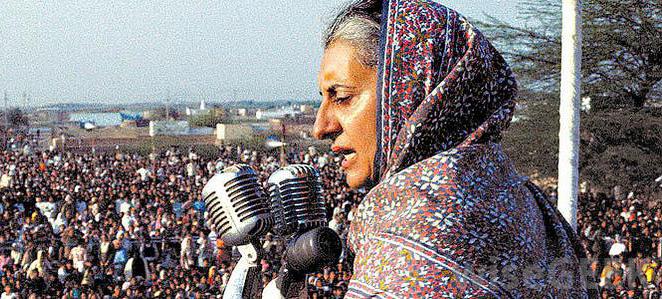
Indira Gandhi: 'The special respnsibility of the women of India', Indraprastha College For Women - 1974

December 28, 2016

23 November 1974, Indraprastha College For Women, New Dehli, India

An ancient Sanskrit saying says, woman is the home and the home is the basis of society. It is as we build our homes that we can build our country. If the home is inadequate -- either inadequate in material goods and necessities or inadequate in the sort of friendly, loving atmosphere that every child needs to grow and develop -- then that country cannot have harm ony and no country which does not have harmony can grow in any direction at all.

That is why women's education is almost more important than the education of boys and men. We -- and by "we" I do not mean only we in India but all the world -- have neglected women education. It is fairly rece nt. Of course, not to you but when I was a child, the story of early days of women's education in England, for instance, was very current. Everybody remembered what had happened in the early days.

I remember what used to happen here. I still remember the days when living in old Delhi even as a small child of seven or eight. I had to go ou t in a doli if I left the house. We just did not walk. Girls did not walk in the streets. First, you had your sari with which you covered your head, then you had another shawl or something with which you covered your hand and all the body, then you had a white shawl, with which every thing was covered again although your face was open fortunately. Then you were i n the doli, which again was covered by another cloth. And this was in a family or community which did not observe purdah of any kind at all. In fact, all our social functions always were mixed functions but this was the atmosphere of the city and of the country.

Now, we have got education and there is a debate all over the country whether this education is adequate to the needs of society or the needs of our young people. I am one of those who always believe that education needs a thorough overhauling. But at the same time, I think that everything in our education is not bad, that even the present education has produced very fine men and women, specially scientists and experts in different fields, who are in great demand all over the world and even in the most affluent countries. Many of our young people leave us and go abroad because they get higher salaries, they get better conditions of work.

But it is not all a one-sided business because there are many who are persuaded and cajoled to go even when they are reluctant. We know of first class students, especially in medicine or nuclear energy for instance, they are approached long before they have passed out and offered all kinds of inducements to go out. Now, that shows that people do consider that they have a standard of knowledge and capability which will be useful any where in the world.

So, that is why I say that there is something worthwhile. It also shows that our own ancient philosophy has taught us that nothing in life is entirely bad or entirely good. Everything is somewhat of a mixture and it depends on us and our capability how we can extract the good, how we can make use of what is around us. There are people who through observation can learn from anything that is around them. There are others who can be surrounded by the most fascinating people, the most wonderful books, and other things and who yet remain quite closed in and they are unable to take anything from this wealth around them.

Our country is a very rich country. It is rich in culture, it is rich in many old traditions -- old and even modern tradition. Of course, it has a lot of bad things too and some of the bad things are in the society -- superstition, which has grown over the years and which sometimes clouds over the shining brightness of ancient thought and values, eternal values. Then, of course, there is the physical poverty of large numbers of our people. That is something which is ugly and that hampers the growth of millions of young boys and girls. Now, all these bad things we have to fight against and that is what we are doing since Independence.

But, we must not allow this dark side of the picture which, by the way, exists in every country in the world. Even the most rich country in the world has its dark side, but usually other people hide their dark sides and they try to project the shining side or the side of achievement. Here in India, we seem to want to project the worst side of society. Before anybody does anything, he has to have, of course, knowledge and capability, but along with it he has to have a certain amount of pride in what he or she is doing. He has to have self-confidence in his own ability. If your teacher tells, "You cannot do this," even if you are a very bright student I think every time you will find, it will be more and more difficult for you to do it. But if your teacher encourages saying, "Go along you have done very good work, now try a little harder," then you will try a little harder and you will be able to do it. And it is the same with societies and with countries.

This country, India, has had remarkable achievements to its credit, of course in ancient times, but even in modern times, I think there are a few modern stories, success stories, which are as fascinating as the success story of our country. It is true that we have not banished poverty, we have not banished many of our social ills, but if you compare us to what we were just about 27 years ago, I think that you will not find a single other country that has been able to achieve so much under the most difficult circumstances.

Today, we are passing through specially dark days. But these are not dark days for India alone. Except for the countries which call themselves socialist and about which we do not really know very much, every other country has the same sort of economic problems, which we have. Only a few countries, which have very small populations, have no unemployment. Otherwise, the rich countries also today have unemployment. They have shortages of essential articles. They have shortages even of food.

I do not know how many of you know that the countries of Western Europe and Japan import 41 per cent of their food needs, whereas India imports just under two per cent. Yet, somehow we ourselves project an image that India is out with the begging bowl. And naturally when we ourselves say it, other people will say it much louder and much stronger. It is true, of course, that our two per cent is pretty big because we are a very big country and we have a far bigger population than almost any country in the world with the exception of China. We have to see and you, the educated women, because it is great privilege for you to have higher education, you have to try and see our problems in the perspective of what has happened here in this country and what is happening all over the world.

There is today great admiration for certain things that have happened in other countries where the society is quite differently formed, where no dissent is allowed. The same people who admire that system or the achievements of that system are the ones who say there is dictatorship here even though, I think, nobody has yet been able to point out to me which country has more freedom of expression or action. So, something is said and a lot of people without thinking keep on repeating it with additions until an entirely distorted picture of the country and of our people is presented.

As I said, we do have many shortcomings, whether it is the government, whether it is the society. Some are due to our traditions because, as I said, not all tradition is good. And one of the biggest responsibilities of the educated women today is how to synthesise what has been valuable and timeless in our ancient traditions with what is good and valuable in modern thought. All that is modern is not good just as all that is old is neither all good nor all bad. We have to decide, not once and for all but almost every week, every month what is coming out that is good and useful to our country and what of the old we can keep and enshrine in our society. To be modern, most people think that it is something of a manner of dress or a manner of speaking or certain habits and customs, but that is not really being modern. It is a very superficial part of modernity.

For instance, when I cut my hair, it was because of the sort of life that I was leading. We were all in the movement. You simply could not have long hair and go in the villages and wash it every day. So, when you lead a life, a particular kind of life, your clothes, your everything has to fit into that life if you are to be efficient. If you have to go in the villages and you have to bother whether your clothes are going to be dirty, then you cannot be a good worker. You have to forget everything of that kind. That is why, gradually, clothes and so on have changed in some countries because of the changes in the life-style. Does it suit our life-style or what we want to do or not? If it does, maybe we have to adopt some of these things not merely because it is done in another country and perhaps for another purpose. But what clothes we wear is really quite unimportant. What is important is how we are thinking.

Sometimes, I am very sad that even people who do science are quite unscientific in their thinking and in their other actions -- not what they are doing in the laboratories but how they live at home or their attitudes towards other people. Now, for India to become what we want it to become with a modern, rational society and firmly based on what is good in our ancient tradition and in our soil, for this we have to have a thinking public, thinking young women who are not content to accept what comes from any part of the world but are willing to listen to it, to analyse it and to decide whether it is to be accepted or whether it is to be thrown out and this is the sort of education which we want, which enables our young people to adjust to this changing world and to be able to contribute to it.

Some people think that only by taking up very high jobs, you are doing something important or you are doing national service. But we all know that the most complex machinery will be ineffective if one small screw is not working as it should and that screw is just as important as any big part. It is the same in national life. There is no job that is too small; there is no person who is too small. Everybody has something to do. And if he or she does it well, then the country will run well.

In our superstition, we have thought that some work is dirty work. For instance, sweeping has been regarded as dirty. Only some people can do it; others should not do it. Now we find that manure is the most valuable thing that the world has today and many of the world's economies are shaking because there is not enough fertilizer -- and not just the chemical fertilizer but the ordinary manure, night-soil and all that sort of thing, things which were considered dirty.

Now it shows how beautifully balanced the world was with everything fitted in with something else. Everything, whether dirty or small, had a purpose. We, with our science and technology, have tried to -- not purposely, but somehow, we have created an imbalance and that is what is troubling, on a big scale, the economies of the world and also people and individuals. They are feeling alienated from their societies, not only in India but almost in every country in the world, except in places where the whole purpose of education and government has to be to make the people conform to just one idea. We are told that people there are very happy in whatever they are doing. If they are told to clean the streets, well, if he is a professor he has to clean the streets, if he is a scientist he has to do it, and we were told that they are happy doing it. Well, if they are happy, it is alright.

But I do not think in India we can have that kind of society where people are forced to do things because we think that they can be forced maybe for 25 years, maybe for 50 years, but sometime or the other there will be an explosion. In our society, we allow lots of smaller explosions because we think that that will guard the basic stability and progress of society and prevent it from having the kind of chaotic explosion which can retard our progress and harmony in the country.

So, I hope that all of you who have this great advantage of education will not only do whatever work you are doing keeping the national interests in view, but you will make your own contribution to creating peace and harmony, to bringing beauty in the lives of our people and our country. I think this is the special responsibility of the women of India. We want to do a great deal for our country, but we have never regarded India as isolated from the rest of the world. What we want to do is to make a better world. So, we have to see India's problems in the perspective of the larger world problems.

It has given me great pleasure to be with you here. I give my warm congratulations to those who are doing well and my very good wishes to all the others that they will also do much better. This college has had a high reputation but we must always see that we do better than those who were there before us. So, good luck and good wishes to you.


Source: http://www.edchange.org/multicultural/spee...

Enjoyed this speech? Speakola is a labour of love and I’d be very grateful if you would share, tweet or like it. Thank you.

Facebook Twitter Facebook
In EDUCATION Tags INDIRA GANDHI, GANDHI, INDIA, INDIAN POLITICS, WOMEN, EDUCATION OF WOMEN, EDUCATION, TRANSCRIPT, UNIVERSITY, INDRAPRASTHA UNIVERSITY
Comment

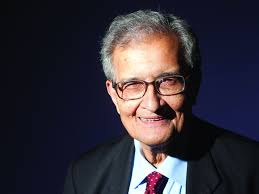
Amartya Sen: 'The importance of education', Commonwealth education conference - 2003

December 18, 2016

28 October 2003, Edinburgh, Scotland, UK

It is a great privilege for me to have the opportunity of speaking at this meeting of Commonwealth countries on education. I am also very happy that you have chosen Edinburgh as the venue of this important conference. I am very proud of my own association with Edinburgh, through being an alumnus of two universities here, Edinburgh University and Heriot-Watt University (admittedly my connections are only through honorary degrees but they generate a sense of closeness to the real students here), and also through belonging to the Royal Society of Edinburgh and having other associations with this great city. So I welcome you to beautiful Edinburgh and to its wonderful intellectual community, of which I am privileged to be a nomadic member, as something of an academic gypsy. But to this welcome I must add my belief that there could not be a better place for a meeting on "closing the gap" in education than the city of Adam Smith and David Hume, the earliest and greatest champions of education for all.

Why is it so important to close the educational gaps, and to remove the enormous disparities in educational access, inclusion and achievement? One reason, among others, is the importance of this for making the world more secure as well as more fair. HG Wells was not exaggerating when he said, in his Outline of History: "human history becomes more and more a race between education and catastrophe." If we continue to leave vast sections of the people of the world outside the orbit of education, we make the world not only less just, but also less secure.

The precariousness of the world is now greater than it already was in HG Wells's time in early twentieth century. Indeed, since the terrible events of September 11, 2001 - and what followed after that - the world has been very aware of problems of physical insecurity. But human insecurity comes in many different ways - not just though terrorism and violence. Indeed, even on the very day of September 11, 2001, more people died from Aids than from physical violence including the atrocity in New York. Human insecurity can develop in many different ways, and physical violence is only one of them. While it is important to fight terrorism and genocide (and in this too, education can have a big role, as I will presently discuss), we must also recognise the plural nature of human insecurity and its diverse manifestations.

As it happens, widening the coverage and effectiveness of basic education can have a powerfully preventive role in reducing human insecurity of nearly every kind. It is useful to consider briefly the different ways in which removing discrepancies and neglects in education can contribute to reducing human insecurity across the world.

The most basic issue relates to the elementary fact that illiteracy and innumeracy are forms of insecurity in themselves. Not to be able to read or write or count or communicate is a tremendous deprivation. The extreme case of insecurity is the certainty of deprivation, and the absence of any chance of avoiding that fate. The first and most immediate contribution of successful school education is a direct reduction of this basic deprivation - this extreme insecurity - which continues to ruin the lives of a large part of the global population, not least in the Commonwealth.

The difference that basic education can make to human life is easy to see. It is also readily appreciated even by the poorest of families. Speaking personally, it has been wonderful for me to observe how easily the importance of education is perceived even by the poorest and the most deprived of families. This emerges from some studies on primary education in India that we are currently undertaking (through the "Pratichi Trust" - a trust aimed at basic education and gender equity that I have been privileged to set up in India and Bangladesh through using my Nobel Prize money from 1998). As the results of our studies come in, it is remarkable to find how the parents from even the poorest and most depressed families long to give basic education to their children, to make them grow up without the terrible handicaps from which they - the parents - had themselves suffered.

Indeed, contrary to claims often made, we have not observed any basic reluctance by parents to send their children - daughters as well as boys - to school, provided affordable, effective and safe schooling opportunities actually exist in their neighbourhood. Of course, there are many obstacles in giving shape to the dreams of parents. The economic circumstances of the families often make it very hard for them to send their children to school, particularly when there are fees to be paid.

The obstacle of unaffordability must be firmly removed across the Commonwealth - indeed the world. I am, of course, aware that some champions of the market system want to leave school fees to the market forces. But this cannot but be a mistake given the social obligation to give the essential opportunity of schooling to all children. Indeed, Adam Smith, who provided the classic analysis of the power and reach of the market mechanism two and quarter centuries ago, wrote eloquently, sitting in Kirkcaldy (not far from here), why it would be wrong to leave this to the market:

For a very small expence the publick can facilitate, can encourage, and can even impose upon almost the whole body of the people, the necessity of acquiring those most essential parts of education.

There are other obstacles too. Sometimes the schools are very thinly staffed (many primary schools in developing countries have only one teacher), and parents are often worried about the safety of children, especially girl children (particularly in case the teacher fails to turn up, which seems to happen often enough in many of the poorer countries). Quite often, the parents' reluctance has a rational basis, and these gaps too need to be addressed.

There are other barriers as well. Very poor families often rely on labour contributions from everyone, even the children, and this can compete with the demands of schooling. This unfortunate practice, though generated out of hardship, must also be removed, through regulation as well as by making the economic benefits of schooling clearer to all. This brings us to the second issue in understanding the contribution of schooling in removing human insecurity. Basic education can be very important in helping people to get jobs and gainful employment. This economic connection, while always present, is particularly critical in a rapidly globalising world in which quality control and production according to strict specification can be crucial.

Not surprisingly, all the cases of speedy use of the opportunities of global commerce for the reduction of poverty have drawn on help from basic education on a wide basis. For example, in Japan, already in the mid-19th century the task was seen with remarkable clarity. The Fundamental Code of Education, issued in 1872 (shortly after the Meiji restoration in 1868), expressed the public commitment to make sure that there must be "no community with an illiterate family, nor a family with an illiterate person". Thus - with the closing of educational gaps - began Japan's remarkable history of rapid economic development. By 1910 Japan was almost fully literate, at least for the young, and by 1913, though still very much poorer than Britain or America, Japan was publishing more books than Britain and more than twice as many as the United States. The concentration on education determined, to a large extent, the nature and speed of Japan's economic and social progress.

Later on, particularly in the second half of the 20th century, South Korea, China, Taiwan, Hong Kong, Singapore, and other economies in East Asia followed similar routes and firmly focused on general expansion of education. Widespread participation in a global economy would have been hard to accomplish if people could not read or write, or produce according to specifications or instructions, or to have quality control.

Third, when people are illiterate, their ability to understand and invoke their legal rights can be very limited, and educational neglect can also lead to other kinds of deprivation. Indeed, this tends to be a persistent problem for people at the bottom of the ladder, whose rights are often effectively alienated because of their inability to read and see what they are entitled to demand and how. The educational gap clearly has a class connection.

It also has a gender connection since it can be a very important issue for women's security. Women are often deprived of their due, thanks to illiteracy. Not being able to read or write is a significant barrier for underprivileged women, since this can lead to their failure to make use even of the rather limited rights they may legally have (say, to own land, or other property, or to appeal against unfair judgment and unjust treatment). There are often legal rights in rulebooks that are not used because the aggrieved parties cannot read those rulebooks. Gaps in schooling can, thus, directly lead to insecurity by distancing the deprived from the ways and means of fighting against that deprivation.

Fourth, illiteracy can also muffle the political opportunities of the underdog, by reducing their ability to participate in political arena and to express their demands effectively. This can contribute directly to their insecurity, since the absence of voice in politics can entail a severe reduction of influence and the likelihood of just treatment of those who are kept on the wrong side of the gap.

Fifth, basic education can play a major role in tackling health problems in general and epidemics in particular. It is easy to see the importance of specialised health education (for example, on the way infections spread and how diseases can be prevented). But even general education can broaden a person's lines of thinking and generate social understanding in ways that may be extremely important in facing epidemiological problems. Indeed, some studies have suggested that general school education has a bigger impact on health than specialised health education itself has.

Sixth, empirical work in recent years has brought out very clearly how the relative respect and regard for women's well-being is strongly influenced by women's literacy and educated participation in decisions within and outside the family. Even the survival disadvantage of women compared with men in many developing countries (which leads to such terrible phenomenon as a hundred million of "missing women") seems to go down sharply - and may even get eliminated - with progress in women's empowerment, for which literacy is a basic ingredient.

There is also considerable evidence that fertility rates tend to go down sharply with greater empowerment of women. This is not surprising, since the lives that are most battered by the frequent bearing and rearing of children are those of young women, and anything that enhances their decisional power and increases the attention that their interests receive tends, in general, to prevent over-frequent child bearing. For example, in a comparative study of the different districts within India, it has clearly emerged that women's education and women's employment are the two most important influences in reducing fertility rates. In that extensive study, female education and employment are the only variables that have a statistically significant impact in explaining variations in fertility rates across more than three hundred districts that make up India. In understanding inter-regional differences, for example the fact the state of Kerala in India has a fertility rate of only 1.7 (which can be roughly interpreted as 1.7 children on average per couple) in contrast with many areas which have four children per couple (or even more), the level of female education provides the most effective explanation.

There is also much evidence that women's education and literacy tend to reduce the mortality rates of children. These and other connections between basic education of women and the power of women's agency (and its extensive reach) indicate why the gender gap in education produces heavy social penalties.

I have so far concentrated on gaps in access, inclusion and achievement that differentiate one group of people from another. But this is also a good occasion to reflect a little on the gaps - of a very different kind - that exist in the coverage of the school curriculum. The nature of the curriculum is, of course, of obvious relevance to the development of technical skills (such as computing) that facilitate participation in the contemporary world. But there are also other issues involved, since schooling can be deeply influential in the identity of a person and the way we see ourselves and each other.

This issue has received some attention recently in the special context of the role of fundamentalist religious schools, and there is need to pay attention to the narrowing of horizons, especially of children, that illiberal and intolerant education can produce. It is also important to recognise that lack of public facilities for the schooling of children often contributes greatly to the appeal and popularity of religious schools run by political militants.

Indeed, the nature of education is quite central to peace in the world. Recently the very deceptive perspective of the so-called "clash of civilisations" (championed particularly by Samuel Huntington) has gained much currency. It is important to see that what is most immediately divisive in this kind of theorising is not the silly idea of the inevitability of a clash (that too, but it comes later), but the equally shallow prior insistence on seeing human beings in terms of one dimension only, regarding them just as members of one civilisation or another (defined mostly in terms of religion), ignoring their other affiliations and involvements.

There are two mistakes here. First, the classification is very crude. For example, India is put in the box of Hindu civilisation, even though with its 130 million Muslims (more than the entire British and French populations put together), India has many more Muslims than most so-called "Muslim countries" in the world. Huntington's classification gives comfort only to Hindu sectarians.

The second mistake is to assume that a person's religion defines him or her reasonably adequately. But every human being's identities have many different components, related to nationality, language, location, class, occupation, history, religion, political beliefs, and so on. A Bangladeshi Muslim is not only a Muslim, but also a Bengali and possibly quite proud of the richness of the Bengali literature and other cultural achievements. Similarly, the history of the Arab world with which an Arab child today can potentially related is not only the achievements of Islam (important as they are), but also the great secular accomplishments in mathematics, science and literature which are part and parcel of Arab history. Even today when a scientist in, say, the Imperial College uses an "algorithm," he or she unconsciously celebrates the innovativeness of the ninth-century Arab mathematician, Al-Khwarizmi, from whose name the term algorithm is derived (the term "algebra" comes from his book, "Al Jabr wa-al-Muqabilah").

To define people just in terms of religion-based classification of civilisations can itself contribute to political insecurity, since in this view people are seen as simply belonging to, say, "the Muslim world," or "the Western world," or "the Hindu world," or "the Buddhist world," and so on. To ignore everything other than religion in classifying people is to set people up in potentially belligerent camps. I personally believe that even the UK government makes a mistake in expanding, rather than reducing faith-based state schools, adding for example Muslim schools, Hindu schools and Sikh schools to pre-existing Christian ones, especially when the new religious schools leave children very little opportunity to cultivate reasoned choice and decide how the various components of their identities (related respectively to language, literature, religion, ethnicity, cultural history, scientific interests, etc) should receive attention. There is need not only to discuss the importance of our common humanity, but also to stress the fact that our diversities can take many distinct forms and that we have to use our reasoning to decide how to see ourselves.

The importance of non-sectarian and non-parochial curricula that expand, rather than reduce, the reach of reason can be hard to exaggerate. Shakespeare talked about the fact that "some men are born great, some achieve greatness, and some have greatness thrust upon them." In the schooling of children, we have to make sure that we do not have smallness thrust upon the young.

The idea of the Commonwealth has something to offer on the philosophy behind such a broad approach. The Queen herself, as the head of the Commonwealth, put the basic perspective with clarity and force half a century ago, shortly after her coronation, in 1953:

The Commonwealth ... is an entirely new conception built on the highest qualities of the spirit of man: friendship, loyalty and the desire for freedom and peace.

In promoting friendship and loyalty, and in safeguarding the commitment to freedom and peace, basic education can play a vital part. This requires, on the one hand, that the facilities of education be available to all, and on the other, that children be exposed to ideas from many different backgrounds and perspectives and be encouraged to think for themselves and to reason.

Basic education is not just an arrangement for training to develop skills (important as that is), it is also a recognition of the nature of the world, with its diversity and richness, and an appreciation of the importance of freedom and reasoning as well as friendship. The need for that understanding - that vision - has never been stronger.

Source: https://www.theguardian.com/education/2003...

Enjoyed this speech? Speakola is a labour of love and I’d be very grateful if you would share, tweet or like it. Thank you.

Facebook Twitter Facebook
In EDUCATION Tags EDUCATION CONFERENCE, COMMONWEALTH, AMARTYA SEN, EDUCATION MINISTERS, TRANSCRIPT, INDIA, NOBEL PRIZE
Comment

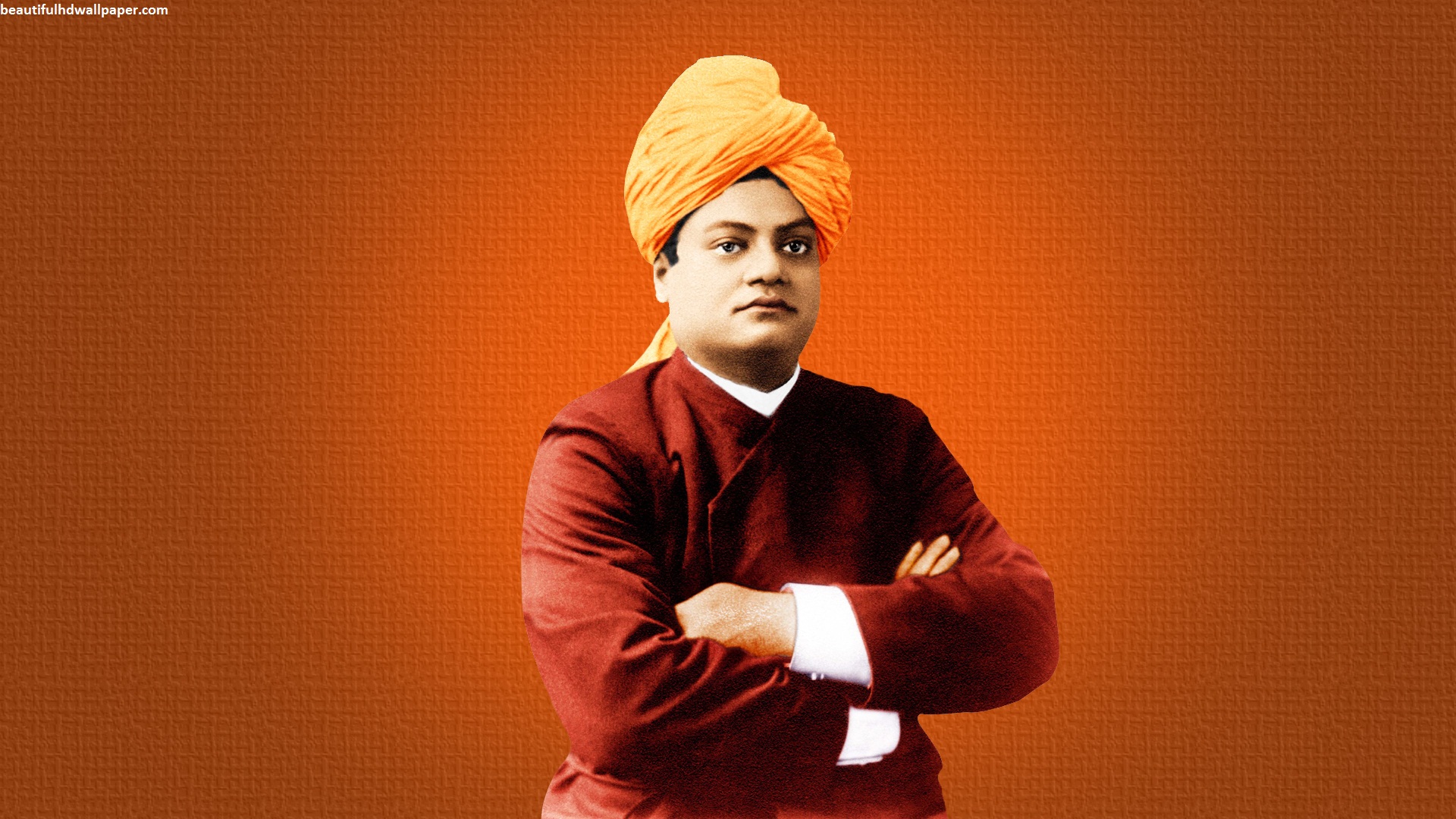
Swami Vivekananda: 'Sectarianism, bigotry, and its horrible descendant, fanaticism, have long possessed this beautiful earth', Parliament of religions, Chicago - 1893

December 18, 2016

11 September 1893, Chicago, Illonois, USA

Sisters and brothers of America

It fills my heart with joy unspeakable to rise in response to the warm and cordial welcome which you have given us. l thank you in the name of the most ancient order of monks in the world; I thank you in the name of the mother of religions; and I thank you in the name of the millions and millions of Hindu people of all classes and sects. My thanks, also, to some of the speakers on this platform who, referring to the delegates from the Orient, have told you that these men from far-off nations may well claim the honor of bearing to different lands the idea of toleration.I am proud to belong to a religion which has taught the world both tolerance and universal acceptance. We believe not only in universal toleration, but we accept all religions as true. I am proud to belong to a nation which has sheltered the persecuted and the refugees of all religions and all nations of the earth. I am proud to tell you that we have gathered in our bosom the purest remnant of the Israelites, who came to the southern India and took refuge with us in the very year in which their holy temple was shattered to pieces by Roman tyranny. I am proud to belong to the religion which has sheltered and is still fostering the remnant of the grand Zoroastrian nation. I will quote to you, brethren, a few lines from a hymn which I remember to have repeated from my earliest boyhood, which is every day repeated by millions of human beings:

As the different streams having there sources in different places all mingle their water in the sea, so, O Lord, the different paths which men take through different tendencies, various though they appear, crooked or straight, all lead to thee.

The present convention, which is one of the most august assemblies ever held, is in itself a vindication, a declaration to the world, of the wonderful doctrine preached in the Gita:


Whosoever comes to Me, through whatsoever form, I reach him; all men are struggling through paths which in the end lead to me.

Sectarianism, bigotry, and its horrible descendant, fanaticism, have long possessed this beautiful earth. They have filled the earth with violence, drenched it often and often with human blood, destroyed civilization, and sent whole nations to despair. Had it not been for these horrible demons, human society would be far more advanced than it is now. But their time is come; and I fervently hope that the bell that tolled this morning in honor of this convention may be the death-knell of all fanaticism, of all persecutions with the sword or with the pen, and of all uncharitable feelings between persons wending their way to the same goal.

Enjoyed this speech? Speakola is a labour of love and I’d be very grateful if you would share, tweet or like it. Thank you.

Facebook Twitter Facebook
In RELIGION Tags HINDUISM, SWAMI VIVEKANANDA, PARLIAMENT OF RELIGIONS, 19TH CENTURY, INDIA
Comment

See my film!

Limited Australian Season

March 2025

Details and ticket bookings at

angeandtheboss.com

Support Speakola

Hi speech lovers,
With costs of hosting website and podcast, this labour of love has become a difficult financial proposition in recent times. If you can afford a donation, it will help Speakola survive and prosper.

Best wishes,
Tony Wilson.

Become a Patron!

Learn more about supporting Speakola.

Featured political

Featured
Jon Stewart: "They responded in five seconds", 9-11 first responders, Address to Congress - 2019
Jacinda Ardern: 'They were New Zealanders. They are us', Address to Parliament following Christchurch massacre - 2019
Dolores Ibárruri: "¡No Pasarán!, They shall not pass!', Defense of 2nd Spanish Republic - 1936
Jimmy Reid: 'A rat race is for rats. We're not rats', Rectorial address, Glasgow University - 1972

Featured eulogies

Featured
For Geoffrey Tozer: 'I have to say we all let him down', by Paul Keating - 2009
for James Baldwin: 'Jimmy. You crowned us', by Toni Morrison - 1988
for Michael Gordon: '13 days ago my Dad’s big, beautiful, generous heart suddenly stopped beating', by Scott and Sarah Gordon - 2018

Featured commencement

Featured
Tara Westover: 'Your avatar isn't real, it isn't terribly far from a lie', The Un-Instagrammable Self, Northeastern University - 2019
Tim Minchin: 'Being an artist requires massive reserves of self-belief', WAAPA - 2019
Atul Gawande: 'Curiosity and What Equality Really Means', UCLA Medical School - 2018
Abby Wambach: 'We are the wolves', Barnard College - 2018
Eric Idle: 'America is 300 million people all walking in the same direction, singing 'I Did It My Way'', Whitman College - 2013
Shirley Chisholm: ;America has gone to sleep', Greenfield High School - 1983

Featured sport

Featured
Joe Marler: 'Get back on the horse', Harlequins v Bath pre game interview - 2019
Ray Lewis : 'The greatest pain of my life is the reason I'm standing here today', 52 Cards -
Mel Jones: 'If she was Bradman on the field, she was definitely Keith Miller off the field', Betty Wilson's induction into Australian Cricket Hall of Fame - 2017
Jeff Thomson: 'It’s all those people that help you as kids', Hall of Fame - 2016

Fresh Tweets


Featured weddings

Featured
Dan Angelucci: 'The Best (Best Man) Speech of all time', for Don and Katherine - 2019
Hallerman Sisters: 'Oh sister now we have to let you gooooo!' for Caitlin & Johnny - 2015
Korey Soderman (via Kyle): 'All our lives I have used my voice to help Korey express his thoughts, so today, like always, I will be my brother’s voice' for Kyle and Jess - 2014

Featured Arts

Featured
Bruce Springsteen: 'They're keepers of some of the most beautiful sonic architecture in rock and roll', Induction U2 into Rock Hall of Fame - 2005
Olivia Colman: 'Done that bit. I think I have done that bit', BAFTA acceptance, Leading Actress - 2019
Axel Scheffler: 'The book wasn't called 'No Room on the Broom!', Illustrator of the Year, British Book Awards - 2018
Tina Fey: 'Only in comedy is an obedient white girl from the suburbs a diversity candidate', Kennedy Center Mark Twain Award -  2010
Tina Fey: 'Only in comedy is an obedient white girl from the suburbs a diversity candidate', Kennedy Center Mark Twain Award - 2010

Featured Debates

Featured
Sacha Baron Cohen: 'Just think what Goebbels might have done with Facebook', Anti Defamation League Leadership Award - 2019
Greta Thunberg: 'How dare you', UN Climate Action Summit - 2019
Charlie Munger: 'The Psychology of Human Misjudgment', Harvard University - 1995
Lawrence O'Donnell: 'The original sin of this country is that we invaders shot and murdered our way across the land killing every Native American that we could', The Last Word, 'Dakota' - 2016