• Genre
  • About
  • Submissions
  • Donate
  • Search
Menu

Speakola

All Speeches Great and Small
  • Genre
  • About
  • Submissions
  • Donate
  • Search

Gloria Steinem: 'It really is a revolution', Address to the Women of America, founding of NWPC - 1971

March 8, 2023

10 July 1971, Washington DC, USA

This is he only text and audio excerpt I’ve been able to find of this famous speech

This is no simple reform. It really is a revolution. Sex and race because they are easy and visible differences have been the primary ways of organizing human beings into superior and inferior groups and into the cheap labor on which this system still depends. We are talking about a society in which there will be no roles other than those chosen or those earned. We are really talking about humanism.

Source: https://www.youtube.com/watch?v=iPKhJQ-Jsr...

Enjoyed this speech? Speakola is a labour of love and I’d be very grateful if you would share, tweet or like it. Thank you.

Facebook Twitter Facebook
In EQUALITY 3 Tags GLORIA STEINEM, NWPC, NATIONAL WOMEN'S POLITICAL CAUCAS, TRANSCRIPT, 1970s, 1971, FEMINISM, GENDER POLITICS, HUMANISM, REVOLUTION, SECOND WAVE FEMINISM
Comment

Bhagat Singh: 'Bombs and pistols do not make a revolution', Appeal statement - 1929

October 15, 2019

Bhagat Singh and B.K. Dutt threw two bombs from the visitors' gallery. in the Central Assembly Hall, Delhi. This statement was on appeal to Sessions court. Bhagat Singh was hanged in 1931.

MY LORDS,

We are neither lawyers nor masters of English language, nor holders of degrees. Therefore, please do not expect any oratorial speech from us. We therefore pray that instead of going into the language mistakes of our statement Your Lordships will try to understand the real sense of it.

Leaving other points to our lawyers, I will confine myself to one point only. The point is very important in this case. The point is as to what were our intentions and to what extent we are guilty. This is a very complicated question and no one will be able to express before you that height to mental elevation which inspired us to think and act in a particular manner. We want that this should be kept in mind while assessing our intentions our offence. According to the famous jurist Solomon, one should not be punished for his criminal offence if his aim is not against law.

We had submitted a written statement in the Sessions Court. That statement explains our aim and, as such, explains our intentions also. But the learned judge dismissed it with one stroke of pen, saying that “generally the operation of law is not affected by how or why one committed the offence. In this country the aim of the offence is very rarely mentioned in legal commentaries”.

My Lords, our contention is that under the circumstances the learned judge ought to have judged us either by the result of our action or on the basis of the psychological part of our statement. But he did not take any of these factors into consideration.

The point to be considered is that the two bombs we threw in the Assembly did not harm anybody physically or economically. As such the punishment awarded to us is not only very harsh but revengeful also. Moreover, the motive knowing his psychology. And no one can do justice to anybody without taking his motive into consideration. If we ignore the motive, the biggest generals of the world will appear like ordinary murderers; revenue officers will look like thieves and cheats. Even judges will be accused of murder. This way the entire social system and the civilisation will be reduced to murders, thefts and cheating. If we ignore the motive, the government will have no right to expect sacrifice from its people and its officials. Ignore the motive and every religious preacher will be dubbed as a preacher of falsehoods, and every prophet will be charged of misguiding crores of simple and ignorant people.

If we set aside the motive, then Jesus Christ will appear to be a man responsible for creating disturbances, breaking peace and preaching revolt, and will be considered to be a “dangerous personality” in the language of the law. But we worship him. He commands great respect in our hearts and his image creates vibrations of spiritualism amongst us. Why? Because the inspiration behind his actions was that of a high ideal. The rulers of that age could not recognise that high idealism. They only saw his outward actions. Nineteen centuries have passed since then. Have we not progressed during this period? Shall we repeat that mistake again? If that be so, then we shall have to admit that all the sacrifices of the mankind and all the efforts of the great martyrs were useless and it would appear as if we are still at the same place where we stood twenty centuries back.

From the legal point of view also, the question of motive is of special importance. Take the example of General Dyer. He resorted to firing and killed hundreds of innocent and unarmed people. But the military court did not order him to be shot. It gave him lakhs of rupees as award. Take another example. Shri Kharag Bahadur Singh, a young Gurkha, Killed a Marwari in Calcutta. If the motive be set aside, then Kharag Bahadur Singh ought to have been hanged. But he was awarded a mild sentence of a few years only. He was even released much before the expiry of his sentence. Was there any loophole in the law that he escaped capital punishment? Or, was the charge of murder not proved against him? Like us, he also accepted the full responsibility of his action, but he escaped death. He is free today. I ask Your Lordship, why was he not awarded capital punishment? His action was well calculated and well planned. From the motive end, his action was more serious and fatal than ours. He was awarded a mild punishment because his intentions were good. He saved the society from a dirty leech who had sucked the life-blood of so many pretty young girls. Kharag Singh was given a mild punishment just to uphold the formalities of the law.

This principle (that the law does not take motive into consideration - ed.) is quite absurd. This is against the basic principles of the law which declares that “the law is for man and not man for the law”. As such, why the same norms are not being applied to us also? It is quite clear that while convicting Kharag Singh his motive was kept in mind, otherwise a murderer can never escape the hangman’s noose. Are we being deprived of the ordinary advantage of the law because our offence is against the government, or because our action has a political importance?

My Lords, under these circumstances, please permit us to assert that a government which seeks shelter behind such mean methods has no right to exist. If it is exists, it is for the time being only, and that too with the blood of thousands of people on its head. If the law does not see the motive there can be no justice, nor can there be stable peace. Mixing of arsenic (poison) in the flour will not be considered to be a crime, provided its purpose is to kill rats. But if the purpose is to kill a man, it becomes a crime of murder. Therefore, such laws which do not stand the test of reason and which are against the principle of justice should be abolished. Because of such unjust laws, many great intellectuals had to adopt the path of revolt.

The facts regarding our case are very simple. We threw two bombs in the legislative Assembly on April 8, 1929. As a result of the explosion, a few persons received minor scratches. There was pandemonium in the chamber, hundreds of visitors and members of the Assembly ran out. Only my friend B.K. Dutt and myself remained seated in the visitors gallery and offered ourselves for arrest. We were tried for attempt to murder, and convicted for life. As mentioned above, as a result of the bomb explosion, only four or five persons were slightly injured and one bench got damaged. We offered ourselves for arrest without any resistance. The Sessions Judge admitted that we could have very easily escaped, had we had any intention like that. We accepted our offence and gave a statement explaining our position. We are not afraid of punishment. But we do not want that we should be wrongly understood. The judge removed a few paragraphs from our statement. This we consider to be harmful for our real position.

A proper study of the full text of our statement will make it clear that, according to us, our country is passing through a delicate phase. We saw the coming catastrophe and thought it proper to give a timely warning with a loud voice, and we gave the warning in the manner we thought proper. We may be wrong. Our line of thinking and that of the learned judge may be different, but that does not mean that we be deprived of the permission to express our ideas, and wrong things be propagated in our name.

In our statement we explained in detail what we mean by “Long Live Revolution” and “Down With Imperialism”. That formed the crux of our ideas. That portion was removed from our statement. Generally a wrong meaning is attributed to the word revolution. That is not our understanding. Bombs and pistols do not make revolution. That is not our understanding. The sword of revolution is sharpened on the whetting-stone of ideas. This is what we wanted to emphasise. By revolution we mean the end of the miseries of capitalist wars. It was not proper to pronounce judgement without understanding our aims and objects and the process of achieving them. To associate wrong ideas with our names is out and out injustice.

It was very necessary to give the timely warning that the unrest of the people is increasing and that the malady may take a serious turn, if not treated in time and properly. If our warning is not heeded, no human power will be able to stop it. We took this step to give proper direction to the storm. We are serious students of history. We believe that, had the ruling powers acted correctly at the proper time, there would have been no bloody revolutions in France and Russia. Several big power of the world tried to check the storm of ideas and were sunk in the atmosphere of bloodshed. The ruling people cannot change the flow of the current. We wanted to give the first warning. Had we aimed at killing some important personalities, we would have failed in the attainment of our aim.

My Lords, this was the aim and the spirit behind our action, and the result of the action corroborates our statement. There is one more point which needs elucidation, and that is regarding the strength of the bombs. Had we had no idea of the strength of the bombs, there would have been no question of our throwing them in the presence of our respected national leader like Pandit Motilal Nehru, Shri Kelkar, Shri Jayaker and Shri Jinnah. How could we have risked the lives of our leaders? After all we are not mad and, had we been so, we would have certainly been sent to the lunatic asylum, instead of being put in jail.

We had full knowledge about the strength of the bombs and that is why we acted with so much confidence. It was very easy to have thrown the bombs on the occupied benches, but it was difficult to have thrown them on unoccupied seats. Had we not of saner mind or had we been mentally unbalanced, the bombs would have fallen on occupied benches and not in empty places.

Therefore I would say that we should be rewarded for the courage we showed in carefully selecting the empty places. Under these conditions, My Lords, we think we have not been understood, My Lords, we think we have not been understood properly. We have not come before you to get our sentences reduced. We have come here to clarify our position. We want that we should not be given any unjust treatment, nor should any unjust opinion be pronounced about us. The question of punishment is of secondary importance before us.

Source: https://frontline.thehindu.com/static/html...

Enjoyed this speech? Speakola is a labour of love and I’d be very grateful if you would share, tweet or like it. Thank you.

Facebook Twitter Facebook
In LAWS AND JUSTICE Tags BHAGAT SINGH, B.K. DUTT, BOMBING, STATEMENT, SESSIONS COURT, MOTIVE, TRANSCRIPT, REVOLUTION, INDIA, FREE INDIA
Comment
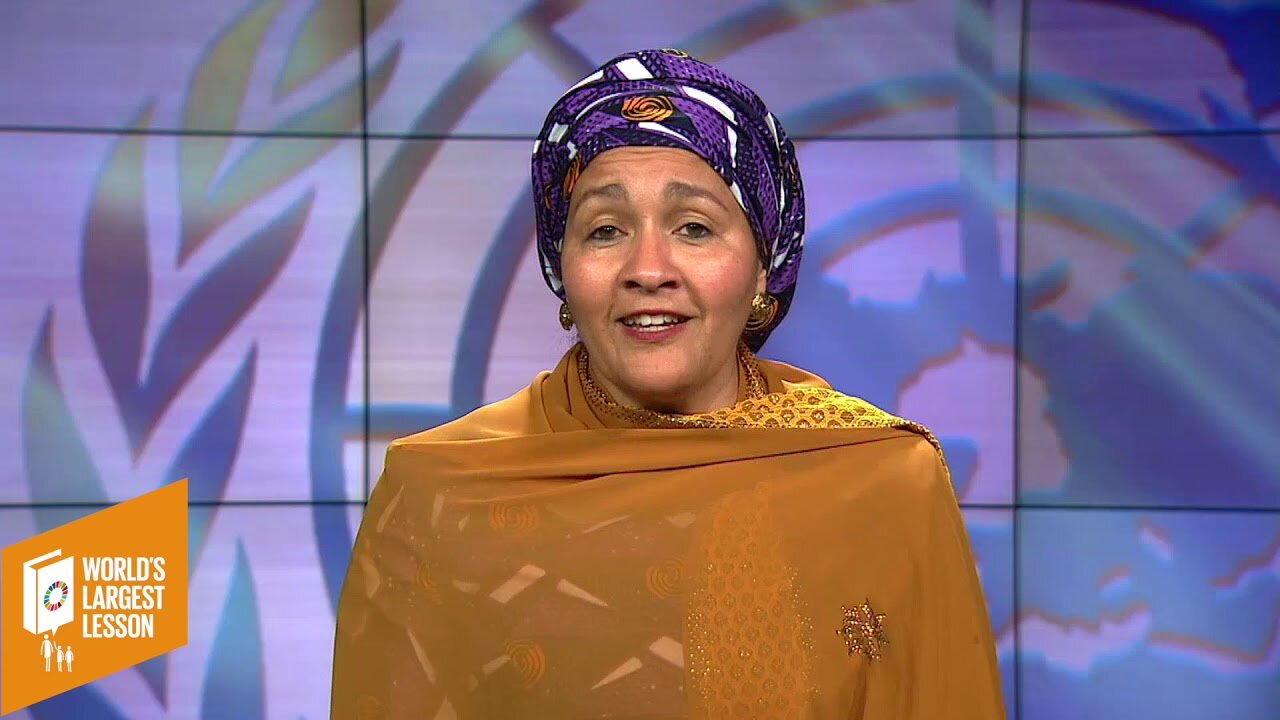
amina j mohammed.jpg

Amina J. Mohammed: 'In the Midst of Unprecedented, Unpredictable Technological Change', Mobile World Congress - 2019

October 7, 2019


25 February 2019, Barcelona, Spain

Address by Amina J. Mohammed, Deputy Secretary-General, United Nations


We are in the midst of technological change unprecedented in pace and scope and we cannot predict where it will lead.

What we do know, is that we need to start working much better together if we are to steer change for the good of all.

Within our lifetime, we’ve gone from digital technology being virtually unknown to now more than half of all humanity being connected to one another through the internet and mobile carriers.

Never before has a new technology spread so quickly. It took about fifty years in America for just a quarter of all households to adopt electricity. Access to the internet reached the same proportion of households in just seven years.

What will accelerating technological change mean for our children and our grandchildren?

Will they live in a world made more equitable, peaceful and just by technology or will they live in a world where technology has enabled the loss of privacy, increased autocratic control and fueled conflict and inequality?

How do we ensure that technology empowers us and doesn’t over-power us?

These are the critical questions of our time.

There are many reasons to be hopeful:

Past industrial revolutions have brought technological advances that improved living conditions for many and this digital age has great promise.

In agriculture with precision farming and the use of big data in weather forecasting, farmers are now more resilient against climate hazards.

In the health sector, we see frontier technologies related to genetics, vaccines, diagnosis aided by artificial intelligence and faster drug delivery saving thousands of lives, improving health outcomes and extending life expectancy.

Public services can grow more accessible, more accountable and inclusive thanks to digital identity powered by blockchain, facial recognition and other authentication technologies.

And while technology has been among the contributors to climate change, new and increasingly efficient technologies can now help us reduce net emission and create a cleaner world.

If we can work together to responsibly develop and implement such technologies, I believe we stand a better chance of achieving the Sustainable Development Goals by 2030 and passing on to the next generation a more equitable and prosperous planet.

But this future is not guaranteed.

Much with regard to our current path gives rise for concern:

The digital realm which we are embracing, and which increasingly also embraces us, reflects and exacerbates existing inequalities.

Today in the 21st century, in 2019, the proportion of women using the internet is 12 per cent lower than the proportion of men; this gender gap widens to 33 per cent in the least developed countries according to the ITU.

And it is not just access, women also have less opportunity: At the three major digital platforms, women make up less than 25 per cent of the technology staff.

And if they are looking for venture capital funding, women entrepreneurs can expect just two dollars for every 98 dollars given to male-founded start-ups.

While digital access and opportunity are critical issues, for millions of people in developing countries, technologies that were invented decades ago remain a dream.

I am talking about basic technology like modern sanitation or electricity. In many developing countries more people have access to mobile networks than to clean water.

Related to the issue of addressing inequality, there are ongoing concerns about how new technology will affect jobs. How can we prepare workers for an economy where accelerating technology adoption will disrupt tens of millions of jobs in a matter of years?

If there is a break-through in self-driving vehicles, what will happen to truck and taxi and car hire drivers? Is it likely that they can be absorbed by new jobs in coding or in e-commerce?

The reality is that these disruptions, if not well managed threaten to leave large proportions of our societies further behind, exacerbating inequality and polarization.

Beyond disruption to job markets, there are other emerging threats.

A significant increase in cyberattacks and cybercrimes are posing multiple challenges for governments, citizens and entrepreneurs.

Digital technology has introduced a whole new realm for inter-state conflict and for attacks by non-state actors be they privateers, terrorists or political activists.

Existing law, including international law applies to the digital domain but exactly how it is to be applied and how violators are to be reliably identified and held to account is not yet so clear.

Capacities among states to protect their citizens and companies against these threats, which by their nature have international reach, also differs enormously.

A related concern is that digital technology and the ubiquity of social media platforms, while doing so much to bring people together, can provide new scope for undermining democratic processes, for spreading toxic disinformation and disseminating hate speech.

The collection of data that fuels so much progress also poses critical new governance challenges on where the dividing line is to be drawn between the greater public good and the right to privacy, between the fundamental tenet of state sovereignty and the desirability of a free flow of information across borders.

Moreover, digital surveillance combined with artificial intelligence can help law enforcement but can also be used to violate privacy and persecute dissenting voices.

If we don’t better address these challenges, if we leave current negative trends inadequately attended to, we risk heading into a world where the convenience brought to many by technological progress, will be accompanied by societies that are more polarized, less democratic and with widening inequalities.

So, ladies and gentlemen, what can we do?

Let me propose four areas where I believe we need to focus efforts if we are to steer change and not just be victims of it.

First, we need to create the multi stakeholder, decentralized, cooperation mechanisms that will steer technological change for good.

The formulation of standards, of policies and norms at national, regional and at the international levels has not kept pace with the speed of new inventions and their applications.

In the past, new technology was largely government sponsored or quickly adopted and steered by governments. Today, industry and private enterprise are driving the changes. No direction can be set without them in a prominent seat at the table.

New approaches to governance need to be not only driven by all concerned stakeholders but also need to be faster and more nimble to keep up with the pace of change. Hence the need for decentralized networks rather than heavy, slow, top down approaches.

The difficulty of setting policy, of determining standards and where necessary, of creating norms for the digital realm should not distract us from its fundamental necessity. We can already see how our values, how our human rights, how our ethical standards can be undermined both through malicious use and unintended consequences. We cannot simply rely on the invisible hand of market dynamics to steer the way for us.

What would cooperative or governance frameworks look like that would measure up to the task?

The Secretary General convoked a high-level panel precisely to respond to this question. It is co led by a Melinda Gates and Jack Ma and made up of a group of distinguished entrepreneurs, academics, civil society representatives and senior members of government all working in the digital domain. They come from across the globe and the group is both gender-balanced and age diverse. It will present its report in June of this year.

A second area where we need to redouble our efforts is to ensure that the spread of digital technology is inclusive.

New technologies must be equally available within and among countries.

We must ensure that there are high quality networks for the poorest people and the poorest countries.

Inclusion also requires a recognition that the rights people have offline must also be protected online.

It is also critical for us to support leading innovators—including the many young entrepreneurs and women—who are demonstrating how intelligent connectivity can further development and well-being for all.

The companies that recognize the benefits of driving social good will be rewarded in the market place—many in the next generation of customers expect it and our planet desperately needs it.

A good example in this respect is the mobile industry’s Big Data for Social Good. It allows insights collected from mobile data to be used to support humanitarian action and promote peace. I encourage those of you who are not familiar with it to learn more about it and see how you can contribute to it.

A third area we need to focus on is education.

We need to repurpose our current education systems.

We need to invest in science, technology, engineering and mathematics. Where it does not exist, we need to add software coding to grade-school curricula.

We also need to teach much more about the interface of ethics and science, of human rights and technology, of sustainable development and technology.

But that is not enough: We need to repurpose our education systems for lifelong learning, for resilience and for emotional and social intelligence in the face of uncertainty and change.

Whatever skills are required at the beginning of a career are likely to be obsolete ten years later.

And careers that exist today may well no longer exist five or ten years from now.

The labour market will continue to increase in uncertainty and we must be prepared for that.

With the arrival of deep fakes and AI generated writing we will also need to educate ourselves and the next generation to better differentiate real from fake information.

This relates to the fourth area I want to highlight and that this event exemplifies: The need for greater reflection across disciplines.

As individuals, as parents, as societies, it is so easy, almost inevitable to get carried away by the current pace of change. Which one of us has not adapted to the 24/7 work environment made possible by our hand-held devices?

Which one of us has not used a mobile device to distract or entertain a small child as an alternative to human interaction?

Now I think we are beginning to learn we need to take a step back. We need to ask what excessive screen exposure does for the development of the young brain, what it does to our own mental health and well-being and what it does for the cohesion of our societies.

We need to reflect together across academic disciplines and across stakeholder groups. In the UN, the Secretary-General has challenged us all to get more tech savvy.

Likewise, I would argue business needs to grow more savvy about the social, ethical, political and development implications of the wave of technological change driving us on.

And we need to talk more to one another in events like the one today.

Ladies and gentlemen in conclusion,

The world we leave for those who come after us has to be a matter of our choice not a consequence of our neglect.

Do we want to have technology that enables an equitable, peaceful and just society, or will we live in a world where technology has enabled the loss of privacy, more autocratic control, more conflict, and more inequality?

My hope is that we will find new ways to bring governments, industry and civil society together to boost the opportunities and better manage the unintended and negative consequences.

In this era of accelerating change, technology can help us move from hope to reality. Let us embrace it and shape it for the betterment of all people, in particular those whom past and present generations have left behind.

Thank you.


Source: https://www.vsotd.com/featured-speech/mids...

Enjoyed this speech? Speakola is a labour of love and I’d be very grateful if you would share, tweet or like it. Thank you.

Facebook Twitter Facebook
In SOCIETY Tags AMINA J MOHAMMED, DEPUTY SECRETARY OF UNITED NATIONS, NIGERIA, TECHNOLOGY, CHANGE, REVOLUTION
Comment

Greta Thunberg: 'You are not mature enough to tell it like it is', COP Katowice - 2018

December 18, 2018

14 December 2018, Katowice, Poland

My name is Greta Thunberg. I am 15 years old. I am from Sweden.

I speak on behalf of Climate Justice Now.

Many people say that Sweden is just a small country and it doesn't matter what we do. But I've learned you are never too small to make a difference. And if a few children can get headlines all over the world just by not going to school, then imagine what we could all do together if we really wanted to.

But to do that, we have to speak clearly, no matter how uncomfortable that may be.

You only speak of green eternal economic growth because you are too scared of being unpopular.

You only talk about moving forward with the same bad ideas that got us into this mess, even when the only sensible thing to do is pull the emergency brake.

You are not mature enough to tell it like is.

Even that burden you leave to us children

But I don't care about being popular. I care about climate justice and the living planet.

Our civilization is being sacrificed for the opportunity of a very small number of people to continue making enormous amounts of money. Our biosphere is being sacrificed so that rich people in countries like mine can live in luxury.

It is the sufferings of the many which pay for the luxuries of the few.

The year 2078, I will celebrate my 75th birthday. If I have children maybe they will spend that day with me. Maybe they will ask me about you. Maybe they will ask why you didn't do anything while there still was time to act.

You say you love your children above all else, and yet you are stealing their future in front of their very eyes.

Until you start focusing on what needs to be done rather than what is politically possible, there is no hope.

We cannot solve a crisis without treating it as a crisis.

We need to keep the fossil fuels in the ground, and we need to focus on equity. And if solutions within the system are so impossible to find, maybe we should change the system itself.

We have not come here to beg world leaders to care. You have ignored us in the past and you will ignore us again.

We have run out of excuses and we are running out of time.

We have come here to let you know that change is coming, whether you like it or not. The real power belongs to the people. Thank you.

Source: https://www.youtube.com/watch?v=VFkQSGyeCW...

Enjoyed this speech? Speakola is a labour of love and I’d be very grateful if you would share, tweet or like it. Thank you.

Facebook Twitter Facebook
In ENVIRONMENT Tags GRETA THUNBERG, GLOBAL WARMING, TRANSCRIPT, CLIMATE JUSTICE, REVOLUTION, CHANGE
Comment
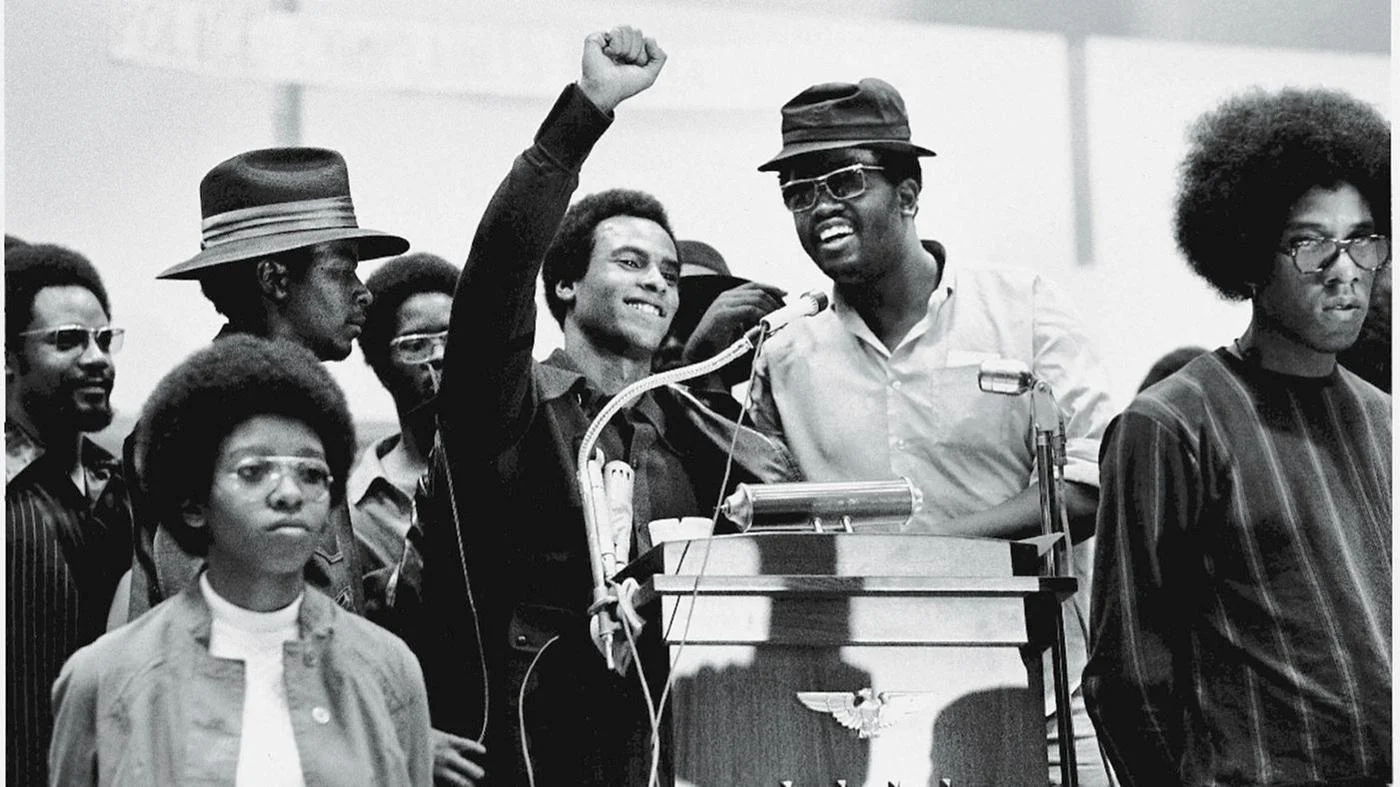
Huey Newton, co-founder of the Black Panther Party, has right arm raised next to speaker at lectern.

Huey Newton, co-founder of the Black Panther Party, has right arm raised next to speaker at lectern.

Huey P Newton: 'The women’s liberation front and gay liberation front are our friends', Black Panther rally - 1970

February 16, 2016

15 August 1970, New York City, New York, USA

During the past few years strong movements have developed among women and among homosexuals seeking their liberation. There has been some uncertainty about how to relate to these movements.

Whatever your personal opinions and your insecurities about homosexuality and the various liberation movements among homosexuals and women (and I speak of the homosexuals and women as oppressed groups), we should try to unite with them in a revolutionary fashion.

I say ”whatever your insecurities are” because as we very well know, sometimes our first instinct is to want to hit a homosexual in the mouth, and want a woman to be quiet. We want to hit a homosexual in the mouth because we are afraid that we might be homosexual; and we want to hit the women or shut her up because we are afraid that she might castrate us, or take the nuts that we might not have to start with.

We must gain security in ourselves and therefore have respect and feelings for all oppressed people. We must not use the racist attitude that the white racists use against our people because they are Black and poor. Many times the poorest white person is the most racist because he is afraid that he might lose something, or discover something that he does not have. So you’re some kind of a threat to him. This kind of psychology is in operation when we view oppressed people and we are angry with them because of their particular kind of behavior, or their particular kind of deviation from the established norm.

Remember, we have not established a revolutionary value system; we are only in the process of establishing it. I do not remember our ever constituting any value that said that a revolutionary must say offensive things towards homosexuals, or that a revolutionary should make sure that women do not speak out about their own particular kind of oppression. As a matter of fact, it is just the opposite: we say that we recognize the women’s right to be free. We have not said much about the homosexual at all, but we must relate to the homosexual movement because it is a real thing. And I know through reading, and through my life experience and observations that homosexuals are not given freedom and liberty by anyone in the society. They might be the most oppressed people in the society.

And what made them homosexual? Perhaps it’s a phenomenon that I don’t understand entirely. Some people say that it is the decadence of capitalism. I don’t know if that is the case; I rather doubt it. But whatever the case is, we know that homosexuality is a fact that exists, and we must understand it in its purest form: that is, a person should have the freedom to use his body in whatever way he wants.

That is not endorsing things in homosexuality that we wouldn’t view as revolutionary. But there is nothing to say that a homosexual cannot also be a revolutionary. And maybe I’m now injecting some of my prejudice by saying that “even a homosexual can be a revolutionary.” Quite the contrary, maybe a homosexual could be the most revolutionary.

When we have revolutionary conferences, rallies, and demonstrations, there should be full participation of the gay liberation movement and the women’s liberation movement. Some groups might be more revolutionary than others. We should not use the actions of a few to say that they are all reactionary or counter-revolutionary, because they are not.

We should deal with the factions just as we deal with any other group or party that claims to be revolutionary. We should try to judge, somehow, whether they are operating in a sincere revolutionary fashion and from a really oppressed situation. (And we will grant that if they are women they are probably oppressed.) If they do things that are unrevolutionary or counter-revolutionary, then criticize that action.

If we feel that the group in spirit means to be revolutionary in practice, but they make mistakes in interpretation of the revolutionary philosophy, or they do not understand the dialectics of the social forces in operation, we should criticize that and not criticize them because they are women trying to be free. And the same is true for homosexuals. We should never say a whole movement is dishonest when in fact they are trying to be honest. They are just making honest mistakes. Friends are allowed to make mistakes. The enemy is not allowed to make mistakes because his whole existence is a mistake, and we suffer from it. But the women’s liberation front and gay liberation front are our friends, they are our potential allies, and we need as many allies as possible.

We should be willing to discuss the insecurities that many people have about homosexuality. When I say “insecurities,” I mean the fear that they are some kind of threat to our manhood. I can understand this fear. Because of the long conditioning process which builds insecurity in the American male, homosexuality might produce certain hang-ups in us. I have hang-ups myself about male homosexuality. But on the other hand, I have no hang-up about female homosexuality. And that is a phenomenon in itself. I think it is probably because male homosexuality is a threat to me and female homosexuality is not.

We should be careful about using those terms that might turn our friends off. The terms “faggot” and “punk” should be deleted from our vocabulary, and especially we should not attach names normally designed for homosexuals to men who are enemies of the people, such as [Richard] Nixon or [John] Mitchell. Homosexuals are not enemies of the people.

We should try to form a working coalition with the gay liberation and women’s liberation groups. We must always handle social forces in the most appropriate manner. And this is really a significant part of the population, both women, and the growing number of homosexuals that we have to deal with.

ALL POWER TO THE PEOPLE!



Source: ...

Enjoyed this speech? Speakola is a labour of love and I’d be very grateful if you would share, tweet or like it. Thank you.

Facebook Twitter Facebook
In EQUALITY Tags HUEY P NEWTON, BLACK PANTHERS, AFRICAN AMERICAN RIGHTS, REVOLUTION, LGBT, WOMENS RIGHTS, TRANSCRIPT, GAY LIBERATION
Comment

See my film!

Limited Australian Season

March 2025

Details and ticket bookings at

angeandtheboss.com

Support Speakola

Hi speech lovers,
With costs of hosting website and podcast, this labour of love has become a difficult financial proposition in recent times. If you can afford a donation, it will help Speakola survive and prosper.

Best wishes,
Tony Wilson.

Become a Patron!

Learn more about supporting Speakola.

Featured political

Featured
Jon Stewart: "They responded in five seconds", 9-11 first responders, Address to Congress - 2019
Jacinda Ardern: 'They were New Zealanders. They are us', Address to Parliament following Christchurch massacre - 2019
Dolores Ibárruri: "¡No Pasarán!, They shall not pass!', Defense of 2nd Spanish Republic - 1936
Jimmy Reid: 'A rat race is for rats. We're not rats', Rectorial address, Glasgow University - 1972

Featured eulogies

Featured
For Geoffrey Tozer: 'I have to say we all let him down', by Paul Keating - 2009
for James Baldwin: 'Jimmy. You crowned us', by Toni Morrison - 1988
for Michael Gordon: '13 days ago my Dad’s big, beautiful, generous heart suddenly stopped beating', by Scott and Sarah Gordon - 2018

Featured commencement

Featured
Tara Westover: 'Your avatar isn't real, it isn't terribly far from a lie', The Un-Instagrammable Self, Northeastern University - 2019
Tim Minchin: 'Being an artist requires massive reserves of self-belief', WAAPA - 2019
Atul Gawande: 'Curiosity and What Equality Really Means', UCLA Medical School - 2018
Abby Wambach: 'We are the wolves', Barnard College - 2018
Eric Idle: 'America is 300 million people all walking in the same direction, singing 'I Did It My Way'', Whitman College - 2013
Shirley Chisholm: ;America has gone to sleep', Greenfield High School - 1983

Featured sport

Featured
Joe Marler: 'Get back on the horse', Harlequins v Bath pre game interview - 2019
Ray Lewis : 'The greatest pain of my life is the reason I'm standing here today', 52 Cards -
Mel Jones: 'If she was Bradman on the field, she was definitely Keith Miller off the field', Betty Wilson's induction into Australian Cricket Hall of Fame - 2017
Jeff Thomson: 'It’s all those people that help you as kids', Hall of Fame - 2016

Fresh Tweets


Featured weddings

Featured
Dan Angelucci: 'The Best (Best Man) Speech of all time', for Don and Katherine - 2019
Hallerman Sisters: 'Oh sister now we have to let you gooooo!' for Caitlin & Johnny - 2015
Korey Soderman (via Kyle): 'All our lives I have used my voice to help Korey express his thoughts, so today, like always, I will be my brother’s voice' for Kyle and Jess - 2014

Featured Arts

Featured
Bruce Springsteen: 'They're keepers of some of the most beautiful sonic architecture in rock and roll', Induction U2 into Rock Hall of Fame - 2005
Olivia Colman: 'Done that bit. I think I have done that bit', BAFTA acceptance, Leading Actress - 2019
Axel Scheffler: 'The book wasn't called 'No Room on the Broom!', Illustrator of the Year, British Book Awards - 2018
Tina Fey: 'Only in comedy is an obedient white girl from the suburbs a diversity candidate', Kennedy Center Mark Twain Award -  2010
Tina Fey: 'Only in comedy is an obedient white girl from the suburbs a diversity candidate', Kennedy Center Mark Twain Award - 2010

Featured Debates

Featured
Sacha Baron Cohen: 'Just think what Goebbels might have done with Facebook', Anti Defamation League Leadership Award - 2019
Greta Thunberg: 'How dare you', UN Climate Action Summit - 2019
Charlie Munger: 'The Psychology of Human Misjudgment', Harvard University - 1995
Lawrence O'Donnell: 'The original sin of this country is that we invaders shot and murdered our way across the land killing every Native American that we could', The Last Word, 'Dakota' - 2016