• Genre
  • About
  • Submissions
  • Donate
  • Search
Menu

Speakola

All Speeches Great and Small
  • Genre
  • About
  • Submissions
  • Donate
  • Search
al gore climate reality.jpg

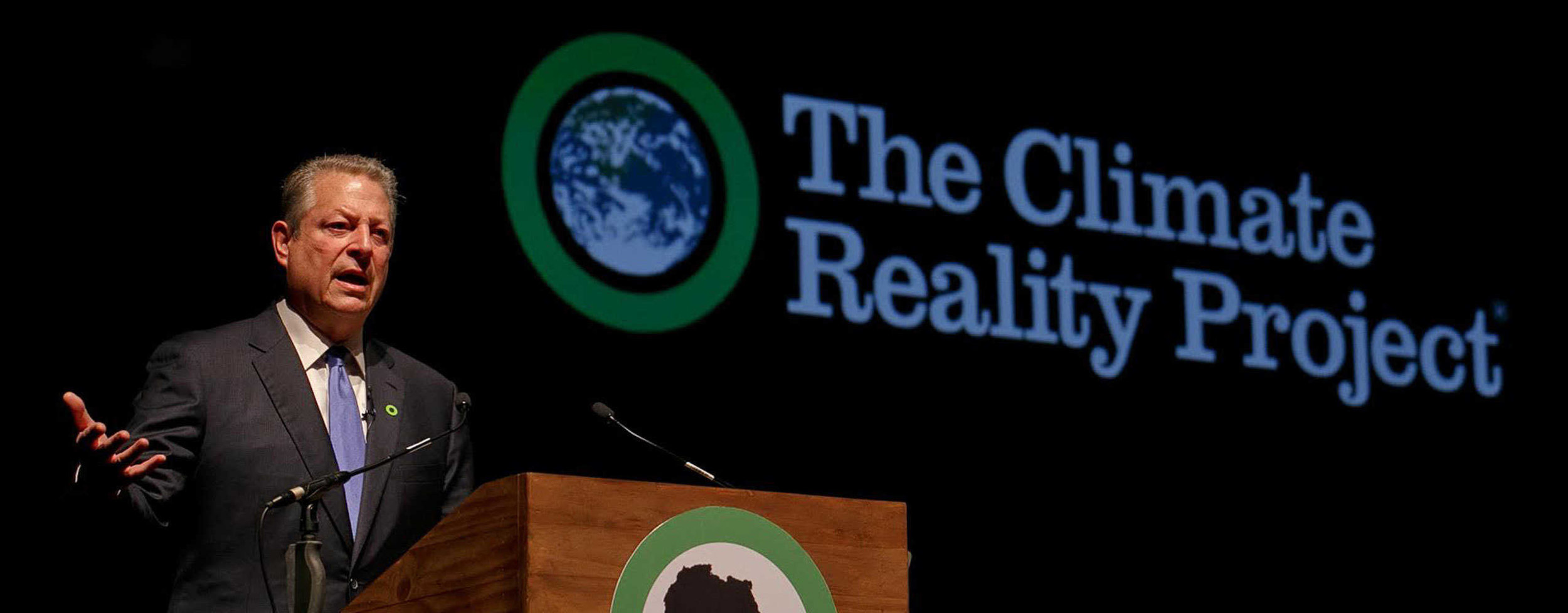
Al Gore: 'We could lose these conditions. We could lose what is most precious to us' Climate Reality Training - 2018

July 19, 2018

28 June 2018, Berlin, Germnay

The most painful experience that I have ever been through. We had been to a baseball game. It was a wonderful day and my child was holding my hand. One of his friends took out running across the street. I didn’t realize it because I was so busy. I looked back not fully aware of the moment then the hand… slipped… free… from mine. And then the tragedy unfolded ––The story has a happy ending — it was a full recovery despite everything. But it was a long experience of worries, dark and fearful thoughts. “One of my children were dying.” I was praying over what appeared to be a lifeless body. Suddenly two nurses showed up with their bags. They had been to the baseball game and they took their bags with them just in case there might be an accident. And there was. The ambulance came immediately.

The next 30 days and nights I spent in the hospital in the intensive care unit not knowing for much of that time what the outcome would be. And during those days and nights I remember so vividly going over my schedule and I looked at all these events that were scheduled for the next days, the next week, the week after that and the month after that. I remembered how many of those events that felt extremely important when I wrote them in my schedule, how much preparation I would be asked to do. How serious these matters were. They just blew off the pages as they were lighter than a feather — they no longer mattered at all… and I remember thinking about the agenda of action that I had mapped out for myself, issues that I was engaged in. There were so many of them. The only one that did not blow off that list was the climate crisis, because in some place it was connected in my heart to the main challenge of my life scoring the good health of my child.

And when I went back, finally, the healing continued outside the hospital, and full recovery began long after that. When I went back dealing with the climate crisis, it felt different to me, and I could not put into words what it was that felt so different.

Some 15 years passed after the incident, and during the making of the first movie “Inconvenient Truth,” the director David Guggenheim, during a very long day, interviewed me without a camera but continued to ask deeply personal questions. The conversation was so intense it was almost like a psychiatrist conversation. In other ways he was like a child that replied to every question with a “Yes, but why?”. During our conversation the day turned into night, and nobody moved or turned on the light because it was so intense. It was during that conversation I finally found the way to put words to describe what it was that felt different to me about the climate crisis after the event of this terrible tragedy that had happened and the aftermath of that terrible incident.

And here is what I learned.

We as human beings naturally protect ourselves against imagining or thinking deeply about the most terrible thing that could happen or the most unimaginable loss. If we did not protect ourselves against such thoughts life would be drained of a good deal of its joy. So it’s a natural phenomena. But I was confronted face to face brutally with the prospect of losing someone especially precious to me and it left a raw place in my heart. I learned so much from those who came up to me from all walks of life, sharing elevators with strangers, servers in restaurants, people I did not know who had read about this and told me of experiences they had had and reached out to me.

I figured out that one of the secrets about human condition of people that have suffered is that it binds people together and people that had suffered instinctively reach out to those they feel that is going through some difficult experience that really changed my life.

But it’s something else that was made clear to me. When I went back to really thinking deeply about the climate crisis it touched that one place in my heart and gave me a feeling that I was not capable of having before the pain that I had previously experienced. It caused me to feel for the first time this beautiful nature that we live in. This beautiful planet that’s ideal for living. The conditions that lead to the flourishing of humanity. We could lose these conditions. We could lose what is most precious to us.

I actually think that one of the many reasons for climate deniers is that human instinctively push away such thoughts.But we could lose it! We have not lost. It is still here. Damage has been done to which we must adapt. But the great loss that would be the most tragedy in the history of human species and many other species as well is still retreated, it could still be protected.

So go along with the knowledge that you been through. Go along with all the new relationships that you have established here. Go along with the feeling of passion why you were here in the first place that you must keep in your heart. The most valuable resource you have.

I want you to… I wanna share with you… this feeling that this precious earth of ours is…. beginning to slip…….. from our grasp. It has not slipped away. Now is the time to make sure it does not. So I close by asking you to hold on. We are going to win. With your help we will win. God bless you and thank you!

Source: https://www.vsotd.com/featured-speech/we-c...

Enjoyed this speech? Speakola is a labour of love and I’d be very grateful if you would share, tweet or like it. Thank you.

Facebook Twitter Facebook
In ENVIRONMENT Tags AL GORE, SON, ACCIDENT, CLIMATE CHANGE, CLIMATE DENIAL, TRANSCRIPT
Comment

Rob Carlton: 'That's my stick', Wheeler Centre Show & Tell - 2016

April 12, 2016

17 February 2016, Wheeler Centre, Melbourne, Australia

Tony Wilson hosted a 'Show and Tell for Grown Ups' session at the The Wheeler Centre. The other guests were Sofija Stefanovic and Alison Lester. There will be more Show and Tell for Grown Ups in July 2016.

Tony: It is, ladies and gentlemen, it's a stick.

Rob: If I put it there it blends into the background though, you can't see, it's got a camouflage going on. Maybe... can you see that? Alright. There you are.

Tony: It's a stick.

Rob: It's my stick!

Tony: So, talk us through, ah, a stick.

Rob: So, I was thinking about this, and this stick kinda comes within a story, within a story, I think. And certainly by the end of this, we'll know whether there's a story in it at all.

So that stick, was in my house growing up, it was always part of our lives. My mum and dad were amazing cooks, my dad loved cooking curries, and for as long as I can remember, that stick was in our kitchen, in Bayview, which was my home where you get a real sense of home.

And that stick was used to stir our curries.

And at some point, I think in my teens, I learned that that stick was brought into my family when – before I was born – about 18 months before I was born, when my mum and dad and two older sisters were living in New Zealand and my older brother Richard was born.

And at eight weeks of age, my brother Richard died of cot-death, and my mum and my dad and my sisters walked down to the beach, on a lonely cold, windy day. An Australian family sitting on a beach in New Zealand, trying to gather courage together, and they picked up that stick. And they bought it home. And I learned about that when I was in my teens, and it was always this wonderful thing, it was something that was just there and we always used it and it was part of our life.

And then my mum and dad got a bit older, and as wise parents do, when they start to get older, they divested themselves of all these things that, should they go under a bus, it won't mean anything to anyone else –

[adjusts wilting microphone] Hang on, I'm an old roadie, don't worry about this. Being an actor, you can pretty much do EVERY job...um ...Coffee anyone?

Tony: A long time since you've done those ones though, isn't it?

Rob: (laughs) So, yeah, when older people ... being sensible ... so they gave it to me. It was my stick. 'Cos I was the replacement boy. And so I now got this stick and I then have it my house and I've got twin boys, my eleven year old boys, and I explain to them everything that goes on in my life, and I tell them that this is my stick and this is how we came to get it. And they call it ‘The Stick Of Richard Life’. My little boys call it ‘The Stick Of Richard Life’, so that's the name.

So here's where the story gets into a bit of a different sort of story and it starts to go slightly skewiff. Right. Oh, and don't worry about me, I do get emotional, but trust me, I'm feeling fine ...(laughs)

So we then, in Sydney we do something that's called Story Club, and we sit down and write a sixteen hundred word story and we read it out in a big oversized chair. Now the theme of Story Club this month was 'Sense of impending doom' – write a story about when you had a sense of impending doom.

Now, here's the bizarre thing. I don't have a sense of impending doom. I've never had a sense of impending doom, and it remains one of the great mysteries of my life, how my mum and dad were able to bring me up in a world that was only ever going to shine on me, that was only ever going to give me joy and wonder and happiness if I showed it to the world.

I was never mollycoddled, I never ever got a sense that this world would take me away. And how my mum and dad did that after going through what they went through, remains a mystery.

So, I wrote this story. And I framed my story up with this stick, and talked about the irony of growing up without this impending doom, given everything I should have had should have been fear and worry.

So I write this story, and I read it out and it was good, man! I nailed it. (laughs)

But then, of course, I've gotta tell my mum and dad, and I’ve done this thing, and am I cashing in on the family heartache and grief? ... and then, oh dearie me, I wasn't doing that, I know what I'm like, I was honest and clear in my intent. So I wasn't doing that, but for the first time ever, I felt reticent. A little. To tell my mum and dad about my story that I'd written for fear of the emotions that it would bring up.

And shortly thereafter I came down to Melbourne, and I was having dinner, and I did think to myself, what shall I do in this situation? And so I do what I always do, I arrived and spilled my guts immediately - (laughs), that’s just how I roll.

And so that led to this, um – now we're gonna be here 'til eight o'clock – So I told my mum and dad, this is what I've done. And of course my mum and dad are amazing people, and so emotionally courageous, and transparent and we talked about that, the detail, I'd never really got an understanding of what my dad went through.

My dad’s framing of those horrible days back in New Zealand forty six years ago was always 'it was so much worse for your mum', 'you see, Rob, back then our lives, it was segregated, I would go to work but your mum was at home with the children, and she carried Richard, and she was looking after Richard, and she was with Richard for every hour of every day’, and this was my understanding of that time. And in fact, my story, when I wrote it, it focused on that moment that my sister would tell me, she stills remembers that moment of mum running down the garden path, saying 'He's gone! He's gone!'

And it's a heartbreaking image in my mind, but that was my memory of this time, and I wrote this story. So I have this interesting evening with my mum and dad, and then I go to the theatre just down here, and my older sister, by chance – it's her birthday and she's at the theatre – and she rarely goes to the theatre, and I hadn't organised to be there with her, she was there with her husband and we go and see a show together – it was poor – and we meet in the foyer afterwards, we go to the Curve Bar afterwards, and they say, ‘how are you’ and I say I'm really well, but I've just had this really interesting, incredible night with mum and dad talking about the detail of that day Richard died.’

And I said, ’you know, I'd talked about this, and I'd talked about that and I said about the moment with mum running down the garden path ... and I was just sad ...’

And she said, 'Oh, but Rob, that's not the clearest memory of my day.'

I said, ‘what is it?'

And she said, 'Dad.'

And I'd never heard anything about my Dad's response on that day. I'd only ever heard it through the prism of dad saying 'it was so much worse for your mum', and that was it.

I said, ‘What do you mean?’

Now I may lose it through this bit, again don't worry, I'm brave.

So we're standing in the Curve Bar, having this conversation, and my sister says, 'My most potent memory of that day, when they put Richard in the back of the ambulance – Dad banging on the roof of the ambulance, and howling.'

And she told me that, and I had this emotional punch, it was like a fist jamming into my chest and I literally went [howls] and bent down and started sobbing and sobbing, and I couldn't stand up and I bent down to my knees and it was, I was like a groaning wreck.

I've never felt anything like that in my life. Nothing since, nothing before. And at that moment I felt guilt, and I felt shame. I felt that I hadn't honoured my father's grief, I felt as a son I didn't really know the truth of the most horrific thing in my father's life. And I'd written a story and I honoured my mum and her bravery and courage and optimism.

But, I felt like I'd sold my father out a little bit.

It was an astonishing moment. And being what I am, I needed to kind of try and make a reparation. So, I thought about this and a week or two later I –

Oh and then mum and dad said, ‘Will you show us the story?’ Haah, shit! And it's mad. I mean like, it's an adventure story, it's a road trip story, so, no sense of impending doom, man. And me and my buddy go on a road trip, we hitch-hike, we spend a night with an attempted murderess, there's nudity, there's panel vans, there's you know, a lot of low-level criminality, and I think, but, you can read that mum and dad, but there's also The Stick Of Richard Life stuff.

So I sent it to them and Mum and Dad read it and they ring up and they say, 'Oh, we read your story' and say some nice (things) and dad gets on the phone, and he’s very proper and he says, 'Ooh helloo' – you know I've written plays – and he says, 'I've seen a lot of the things you've done, Rob, but, I've never read your prose, and they're quite beautiful, crisp, not too many long words, very clear, I mean beautifully done, a lovely story, obviously very sad, and I'm sure the people that heard it were crying, but in terms of the quality of the literature, very well done.'

I'm sittin' there thinking, fu-uck.

I said, 'Thanks dad, but I gotta say..', this thing – and I didn't want to talk about that moment [indicates banging on the roof of the ambulance] it was not for me to bring up, that moment -  but I did say, I'd been thinking about this, and I said, ‘You know dad, I really don't feel that I've ever really, I guess, honoured or accepted or talked to you about what you really went through, it's always been through the prism of a family, through the prism of what mum went through and what my sisters, but I never really ...’

And he said 'Oh no, well yes, it was obviously very very difficult, very sad', but – and then boom, like a switch, straight to the dominant story – it was so much worse for your mother, there was nothing really difficult for me, I had to go to work, this is the way it was, it's your mother, it's your mother, it's your mother.

And I didn't test it further, because that is my Dad's story.

Now, two things to come out of this: one, I think it gave me an insight into what it is different members of the family do, and when we come to an experience and we walk away with our own story of it, each member of a family, each member of that experience has their own narrative that they need so that they can keep moving forward in a way that helps everybody get forward. And at that point in time, I truly believe that my dad needed to sublimate the heartache and the pain of what it is to lose his only son, in order for my mum to repair, and my sisters to grow, and for me, should I arrive, to be born into a world that still has hope, and that every time I go to sleep isn't the most frightening time in the world, for a family. Which I think it would have been. So I think that's what my dad had to do, and that's what he clung to, and that was his story.

And then the thing I've been thinking on, in this last month – my dad died on Christmas Eve – it wasn't guilt I felt that day, or shame or sadness, when my sister told me about that image [indicates banging both hands on the roof] and the ambulance. I have a feeling it was an inherited memory.

The feeling was so visceral, it was so strong, it was, I mean, the time was instantaneous, when my sister said this was what your dad did, I hit the deck and I was howling, and I don't know how we as human beings learn, what we learn, what knowledge is innate, what we're born with, what's nature, what's nurture, but it's my feeling that that particular experience that my dad went through forty six years ago, has somehow, through the wonder of procreation found its way somewhere into my heart and body, and my dad's experience rests now with me.

That's my stick.

Rob discusses this speech and salon storytelling generally in episode 17 of the Speakola podcast


Source: http://www.wheelercentre.com/broadcasts/sh...

Enjoyed this speech? Speakola is a labour of love and I’d be very grateful if you would share, tweet or like it. Thank you.

Facebook Twitter Facebook
In HEALTH Tags ROB CARLTON, WHEELER CENTRE, SHOW AND TELL, TONY WILSON, TRANSCRIPT, FATHER, SON, MOTHER, COT DEATH, TRAGEDY, INHERITED MEMORY, SPEAKOLIES 2016, BRONZE SPEAKOLIE
2 Comments

Tony Wilson: 'Fine thanks, and you?', Cancer Council Arts Awards, 2012

September 9, 2015

29 July, 2012, Melbourne Australia

As always, it's a pleasure to be here today - this ceremony for me always has an almost ecclesiastical feel, as we share and honour work inspired by the pain and trauma of a cancer diagnosis. My category is the young writers category, and the task of judging these pieces is, I promise you, a half day, half box of tissues affair. But the standard is always exceptional and this year, I promise, is no exception.

We all know our own pain best. I don't wish to deflect from the outstanding work of young writers in the audience today, nor do I wish to conflate my pain with theirs. But given the cathartic notes this event is capable of adducing, I'll ask your permission to share a little of my past year, particularly in light of one entry that had an enormous impact on me.

I haven’t felt comfortable speaking much about Jack’s cerebral palsy. We found out on my wife’s birthday last year, a devastating ‘can you come in’ phone call from a paediatrician on the eve of our son’s discharge from the Mercy’s Special Care Nursery.

Amidst the intermittent joy of having a new baby, it’s been a year full of uncertainty and fear. How severe will it be? What faculties will be affected? Will he walk? Talk? Go to school? Have friends? Leave home? Fall in love?

Will he be okay when we die?

Will he be okay?

The best advice any medical practitioner gave me over the twelve months was a GP at Clifton Hill Medical Centre. ‘Stop trying to imagine the future because you won’t get it right. Life’s too mercurial for any of us to imagine what’s going to happen.’

I have been almost entirely unsuccessful at following this advice.

Nevertheless, I stand here today, and I feel capable of articulating the pain. The sharp grief of twelve months ago has been worn smooth by simple effluxion of time.

It’s my fifth year doing this job, and it’s always an emotional ceremony. As most of you know, the idea of the awards is that people who have been touched by cancer express their experience through art – whether it be film, photography, visual art, poetry or short stories.

Last year, as I stood here, I was full to the brim with my own sadness, and it overflowed into great show stopping sobs. I battled on, embarrassedly aware that everything had suddenly become about me, even when so many of you have your own battles, your own dark clouds to worry about.

Today, I won't fall apart. Certainly not in that way. Possibly because I’m feeling stronger, that the sadness for the loss of the dream of a perfect baby has been healed by time spent with the wonderful baby we do have. For Jack is wonderful, and the easiest parts of what has been a harrowing journey have been those spent with him in arms. But just as likely, it’s passage of time.  Maintaining the grief is as exhausting as maintaining the rage, and although the sadness is no longer so fresh that I’m breaking down in public situations, I’m still looking at every alert, crawling, fully-sighted one year old and thinking ‘not my baby’, and I’m still looking at active, able bodied adults and thinking ‘will he ever?’.

How does it go again? ‘Stop trying to imagine the future because you won’t get it right.’

The other consistent advice we have been given by other parents of children with disabilities is to accept help, support each other, and enjoy the victories when and if they occur. A poem we’ve been forwarded several times is ‘Welcome to Holland’ by Emily Pearl Kingston. It’s right about the windmills – they are very nice – but it’s also right about the pain. We wanted to go to Italy.

Of course pain is inevitable. it’s impossible to reach middle age without facing one or all of death, illness, unemployment, estrangement, betrayal, rejection or failure. One of the privileges of judging the Cancer Council Arts Awards is that the entrants lay bare their pain in a way that takes a courage and openness that I, as a writer, rarely feel capable of. Indeed I’m only saying this because these young artists we're honouring today inpsired me to do so.

There were many great entries, all of which are profiled on the Arts Awards website. You can vote for a favourite as part of the People’s Choice award. Here are a few of my mine:

In the children’s visual art category, Lanya Johns painted this amazing piece ‘Three Faces Have We’. Her artist statement reads:

“I remember hearing my Mum talk about a quote once that goes something like, ‘Everybody has two faces – be careful of those with three’. I feel sometimes like cancer has given us three faces. There is the public smiley face, the private and terrified face – and then the face that we all try to protect each other from seeing. We are lucky we three. We have each other, and all our faces.”

In the adult’s visual art category, the commended entry was ‘Ben’ by Vanessa Maccauley

In the Indigenous Art category, Rex Murray painted this affecting piece about the feeling of helplessness he had dealing with the death of his brother, the strong, active kid that he used to jump into rivers with as a kid.

And in the Children’s Writing section, the one that I judged, the winning entry was this tribute by Mena Sebo to her Mum, ‘I Love You as Much as You Love Me’.

But maybe the piece that spoke to me more than any other was the one I awarded the top prize in the Youth Writing section. It’s a poem by Elle Richards, ‘What goes unsaid’ and it’s about the everyday ‘how are you’ gambit that opens so many of our social interactions. It's called, 'What goes unsaid'

What Goes Unsaid

A friend stops and waves,
“Hey! It’s good to see you, how are you?”
I was only twelve.
Cancer had lurked in my hallway; tapped on my window.
It had seeped through the cracks in my wall.
I had breathed it in, let it fill my lungs.
It never left me,
never stopped haunting me.
Good morning Cancer,
but never goodnight.
It had shadowed the dark,
followed me to school.
It had entwined itself in my thoughts,
left me sleeping with the light on,
afraid of its presence,
angry at its power.
I had sat by as chemotherapy claimed my mother’s hair,
turned her skin yellow and made her bones weak.
I had watched radiation therapy.
Seen my mother’s body burned by clunking machines.
The machines had no feelings, they burned scar upon scar.
But my mother had feelings, and she cried.
A lot.
I had screamed.
Slammed doors, punched pillows.
I had felt anger claw at my stomach;
it had made me feel sick and alone.
I had let tears run to my mouth and soothe my cracked lips.
I cried until I felt no emotion at all. None.
I had seen my mother break down in the kitchen.
Screaming, panicking.
She had curled herself in a ball; hugged her knees and screamed.
I had sat next to her; I didn’t say anything.
I didn’t touch her. I just sat there.
Next to her.
Just as afraid.
I had been jealous of the gifts that landed at our front door.
Beautiful soaps and chocolates.
One after the other.
Not for me.
Not a single card or flower.
I had seen her with only one breast.
I had seen her, too sick and too tired to move.
I had seen my mother tangled in tubes.
Covered by white sheets,
white pillows,
white walls,
white floors.
And unnaturally white skin.
I had checked on her every morning.
Every
single
morning.
I checked while she was sleeping,
hoping she was just sleeping.
I had slipped into her bed and wrapped myself in her blankets.
I had gently maneuvered myself between her warm arms and cuddled my head near
her chest. Gingerly. Carefully.
I had rested my chin near the scars that were her breast.
And laid there, warm and comfortable,
but still afraid.
Always afraid.
But every scar on my mother’s chest,
every tube in her arm,
every tear on her face,
made me stronger.
And I believed if I gave all my strength to my mother, she would live.
So I blew it into a purple crystal and put it by her bed.
Now this man is smiling at me, asking how I am.
And it takes all my strength to reply simply;
“I’m good thanks, and you?”

Congratulations Elle. Congratulations to all our winners. Thank you.

Source: http://tonywilson.com.au/fine-thanks-and-y...

Enjoyed this speech? Speakola is a labour of love and I’d be very grateful if you would share, tweet or like it. Thank you.

Facebook Twitter Facebook
In HEALTH Tags CANCER, WRITING, DISABILITY, CEREBRAL PALSY, SON, FATHER, TONY WILSON, POEM, TRANSCRIPT
Comment

See my film!

Limited Australian Season

March 2025

Details and ticket bookings at

angeandtheboss.com

Support Speakola

Hi speech lovers,
With costs of hosting website and podcast, this labour of love has become a difficult financial proposition in recent times. If you can afford a donation, it will help Speakola survive and prosper.

Best wishes,
Tony Wilson.

Become a Patron!

Learn more about supporting Speakola.

Featured political

Featured
Jon Stewart: "They responded in five seconds", 9-11 first responders, Address to Congress - 2019
Jacinda Ardern: 'They were New Zealanders. They are us', Address to Parliament following Christchurch massacre - 2019
Dolores Ibárruri: "¡No Pasarán!, They shall not pass!', Defense of 2nd Spanish Republic - 1936
Jimmy Reid: 'A rat race is for rats. We're not rats', Rectorial address, Glasgow University - 1972

Featured eulogies

Featured
For Geoffrey Tozer: 'I have to say we all let him down', by Paul Keating - 2009
for James Baldwin: 'Jimmy. You crowned us', by Toni Morrison - 1988
for Michael Gordon: '13 days ago my Dad’s big, beautiful, generous heart suddenly stopped beating', by Scott and Sarah Gordon - 2018

Featured commencement

Featured
Tara Westover: 'Your avatar isn't real, it isn't terribly far from a lie', The Un-Instagrammable Self, Northeastern University - 2019
Tim Minchin: 'Being an artist requires massive reserves of self-belief', WAAPA - 2019
Atul Gawande: 'Curiosity and What Equality Really Means', UCLA Medical School - 2018
Abby Wambach: 'We are the wolves', Barnard College - 2018
Eric Idle: 'America is 300 million people all walking in the same direction, singing 'I Did It My Way'', Whitman College - 2013
Shirley Chisholm: ;America has gone to sleep', Greenfield High School - 1983

Featured sport

Featured
Joe Marler: 'Get back on the horse', Harlequins v Bath pre game interview - 2019
Ray Lewis : 'The greatest pain of my life is the reason I'm standing here today', 52 Cards -
Mel Jones: 'If she was Bradman on the field, she was definitely Keith Miller off the field', Betty Wilson's induction into Australian Cricket Hall of Fame - 2017
Jeff Thomson: 'It’s all those people that help you as kids', Hall of Fame - 2016

Fresh Tweets


Featured weddings

Featured
Dan Angelucci: 'The Best (Best Man) Speech of all time', for Don and Katherine - 2019
Hallerman Sisters: 'Oh sister now we have to let you gooooo!' for Caitlin & Johnny - 2015
Korey Soderman (via Kyle): 'All our lives I have used my voice to help Korey express his thoughts, so today, like always, I will be my brother’s voice' for Kyle and Jess - 2014

Featured Arts

Featured
Bruce Springsteen: 'They're keepers of some of the most beautiful sonic architecture in rock and roll', Induction U2 into Rock Hall of Fame - 2005
Olivia Colman: 'Done that bit. I think I have done that bit', BAFTA acceptance, Leading Actress - 2019
Axel Scheffler: 'The book wasn't called 'No Room on the Broom!', Illustrator of the Year, British Book Awards - 2018
Tina Fey: 'Only in comedy is an obedient white girl from the suburbs a diversity candidate', Kennedy Center Mark Twain Award -  2010
Tina Fey: 'Only in comedy is an obedient white girl from the suburbs a diversity candidate', Kennedy Center Mark Twain Award - 2010

Featured Debates

Featured
Sacha Baron Cohen: 'Just think what Goebbels might have done with Facebook', Anti Defamation League Leadership Award - 2019
Greta Thunberg: 'How dare you', UN Climate Action Summit - 2019
Charlie Munger: 'The Psychology of Human Misjudgment', Harvard University - 1995
Lawrence O'Donnell: 'The original sin of this country is that we invaders shot and murdered our way across the land killing every Native American that we could', The Last Word, 'Dakota' - 2016