• Genre
  • About
  • Submissions
  • Donate
  • Search
Menu

Speakola

All Speeches Great and Small
  • Genre
  • About
  • Submissions
  • Donate
  • Search
casey sullivan.jpg

Casey Sullivan: ;'Because of her, we can', NAIDOC week - 2018

September 23, 2019

8 July 2018, Tamworth, New South Wales, Australia

My name is Dr Casey Sullivan. I am a proud Wiradjuri woman. I am a daughter of Debbie Wadwell; also, a proud Wiradjuri woman. I am a granddaughter of Beverly Mclean. She was a beautiful strong Wiradjuri woman. I am great granddaughter of Madeline Davis. She, I am sure was a proud Wiradjuri woman. I am great great granddaughter of Maud .She was a strong indigenous woman. I am great great great granddaughter of Nellie. I know nothing of Nellie, for Maud was taken from Nellie and that line was lost.

Nellie has no last name, no tribe, no siblings, no parents. But with her it all began; my family begins, my story begins, and my life is possible because of her. Because of her I can.

Nellie’s daughter Maud was removed and placed on a property and at some time under the same sky I see she became the mother to Madeline. The property owner Mr Bruce was Madeline’s biological father, and he gave Maud his last name. Maud’s child belonged to a time where she would soon marry and have her own children.

From Nellie, Maud and Madeline my family begins to appear.

Strong, beautiful women.

Strong incredible Aboriginal women.

And through my mum and uncles hard earned research we have confirmed that we are strong Wiradjuri women. We belong. We have history and we have family.

My Family raised me in a small village outside Tamworth called Spring Ridge. I attended Spring Ridge Primary School. There were 3 other children in my year. My mum was a stay-at-home mum and my dad was a stockman at the feedlot. I was very lucky I was given the chance to go to school. I was born in a time when young aboriginal girls were encouraged to go to school. I loved school. I learnt new things every day. I played with my friends every single day.

But it has not always been this way.

Our grandmothers and even mothers grew up in a time where girls stayed home to help care for their siblings or they themselves become mothers. My Nan, Beverly, one of my favourite gifts the universe has offered me, was one of these children. She was a young indigenous girl who did not learn to read. She did not get the chance to go school and learn like the other kids.

So, one of my strongest memories of my Nan is seeing her sitting at the kitchen table, she was in her 50’s. And there was a lady teaching my Nan to read. I was already in primary school and she was learning around the same level as me. I was so proud of her. I’d never seen an adult learning before. She inspired me. Here was my Nan saying it was never too late. She was showing me that education is important no matter how old or young you are. I can still remember her saying to me “Gin a rin you can do anything you want when you grow up”. She always called me her little Gin and I loved her all the more for it.

In 2004 Nan was there with my mum and dad when I graduated from studying medicine at the University of New South Wales as a doctor; and her beautiful big smile still makes me smile when I remember that day.

Because of her I can.

Because of her I did.

I am a doctor because my Nan Inspired me. And that’s what we need more of. We need to be role models for our Indigenous kids. Women are strong matriarchal figures in Aboriginal culture. We all have sisters, daughters, mums, Aunts, Nans – Women who can inspire the next generation to say, “Because of her we can”.

We all have women in our lives that can change our future and plant the seeds that grow strong educated aboriginal women.

Now I am a doctor and i am a bit partial to science. So when i make a statement like “Because of her we can” I like to back it up and prove this with science. So Let me teach you some quick genetics. Inside us all is a special gift. (hold up blue bead) It is called maternal mitochondrial DNA. But don’t worry there won’t be a test. We will call this the “gift”. This gift gives our life energy. It gives us life for without it we cannot exist.

And this gift is given to each and everyone of us from our mother. Now this passes from mother to child completely unchanged. A gift that stays the same. Our dads add in their special gifts too so that each generation benefits from better treasures, (hold up small pale bead) so you might smile like your Dad or play sport like your dad. But with each of you remains this special gift.

This base genetic material given to you by your mother.

And she received it from her mother.

And her mother gave it to her.

A special gift passed down to each and every one of us which means if we look at that genetic material we can tell you exactly who you are, where you and your family came from, right back to your families first country and even past this. Right back until there would eventually be only one woman.

The first woman to ever give this gift.

The first keeper of the gift who began to share this amazing life giving genetic gift with her children.

So far science has uncovered one to the first women to ever exist. Her name was Lucy. She was 3ft tall and her bones were found in Africa. It doesn’t take much to imagine that this first woman, Lucy began to give this gift to her children. She just like my great, great, great grandmother had no last name, no known tribe, no siblings, no parents. And yet with her it too all began. Down through the generations passing her gift, mixing this gift with our fathers until standing here today you have me, we have you, we have us.

Because of her we can.

Beside you right now are strong beautiful women, our sisters, our mothers, our daughters, our grandmothers our Aunts all bearing this gift that can take us back to the beginning of time. And each of them with the ability to pass this gift unchanged onto the next generation.

Sons, husbands fathers- you are who you are because of a great woman, a mother who gave you this gift.

Because of her gift you can too.

Men be proud of your women, be proud of your beginning, adore and respect the gift she has to offer for it is older and more precious than you could ever imagine. So down through the years. (show beaded necklace)

Down through the generations from Nellie to Maud to Madeline.

From Madeline to Beverly from Beverly to Debbie.

From Debbie to me.

And from me to my 4 amazing strong Wiradjuri Children: Jack, Lucy, Mollie and Archie. Goes this gift, that only a woman, that only a mother can give. A beautiful thread through time connecting us each and all. Making a beautiful connection of life so full and precious, so colourful and intriguing. It is a gift of generations that I will continue to wear with great pride humility, care, respect and admiration, because of her it all began.

Because of her each and everyone of her I can.

So, I hold all of them and I thank each and everyone of the women who came before me and made me who I am. So, whomever she is to you. Whomever it is that your “her” is, remember all things are possible because of her.

Because of her you all can, and I thank her for she is a part of all of us.

necklace sullivan.jpg

Enjoyed this speech? Speakola is a labour of love and I’d be very grateful if you would share, tweet or like it. Thank you.

Facebook Twitter Facebook
In EQUALITY 3 Tags CASEY SULLIVAN, BECAUSE OF HER WE CAN, NAIDOC WEEK, ABORIGINAL AUSTRALIA, INDIGENOUS WOMAN, MOTHER, MOTHERS, DNA, METERNAL LINE, AFRICA, WIRADJURI
Comment

Simone Clements: 'Mummy, am I going to heaven?' Hayden's story, Redkite charity night - 2017

September 13, 2017

7 September 2017, Sofitel, Melbourne, Australia

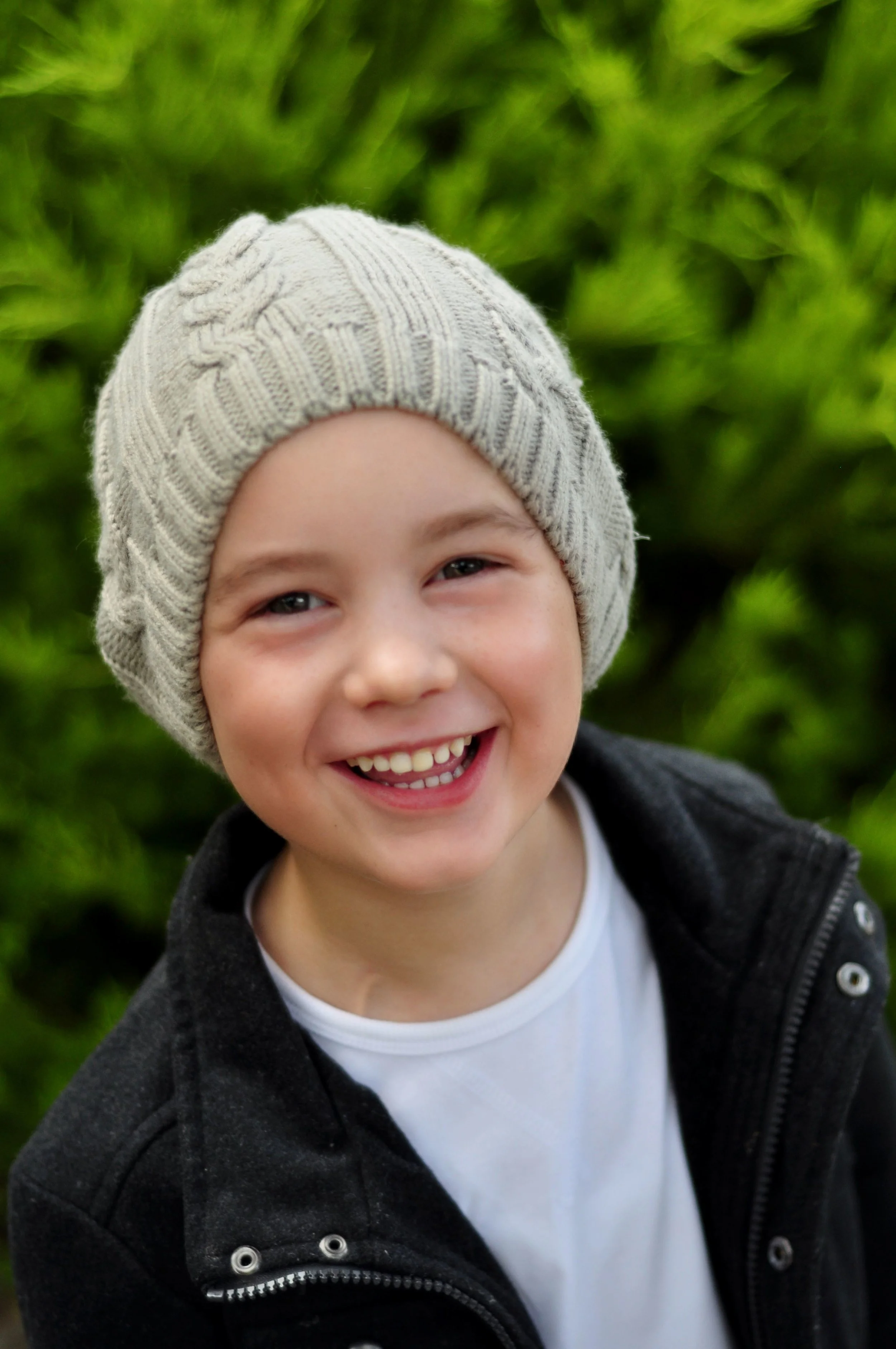
Redkite is a charity that raises money for families who have a child who has received a cancer diagnosis. The corporate quiz is their big fundraiser. Simone is the mother of Hayden. Video of speech embedded above.

Good evening Everyone,

My name is Simone Clements and I have been invited to talk to you tonight because our family has been a recipient of RedKite’s compassion, kindness and financial assistance. 

You may recognise us from TV,  New Idea magazine or advertising material but more recently from the National news and Newspapers as we are the family that had both of our cars stolen out of our driveway on a day we needed to get to the Royal Children’s Hospital for an MRI for our son.

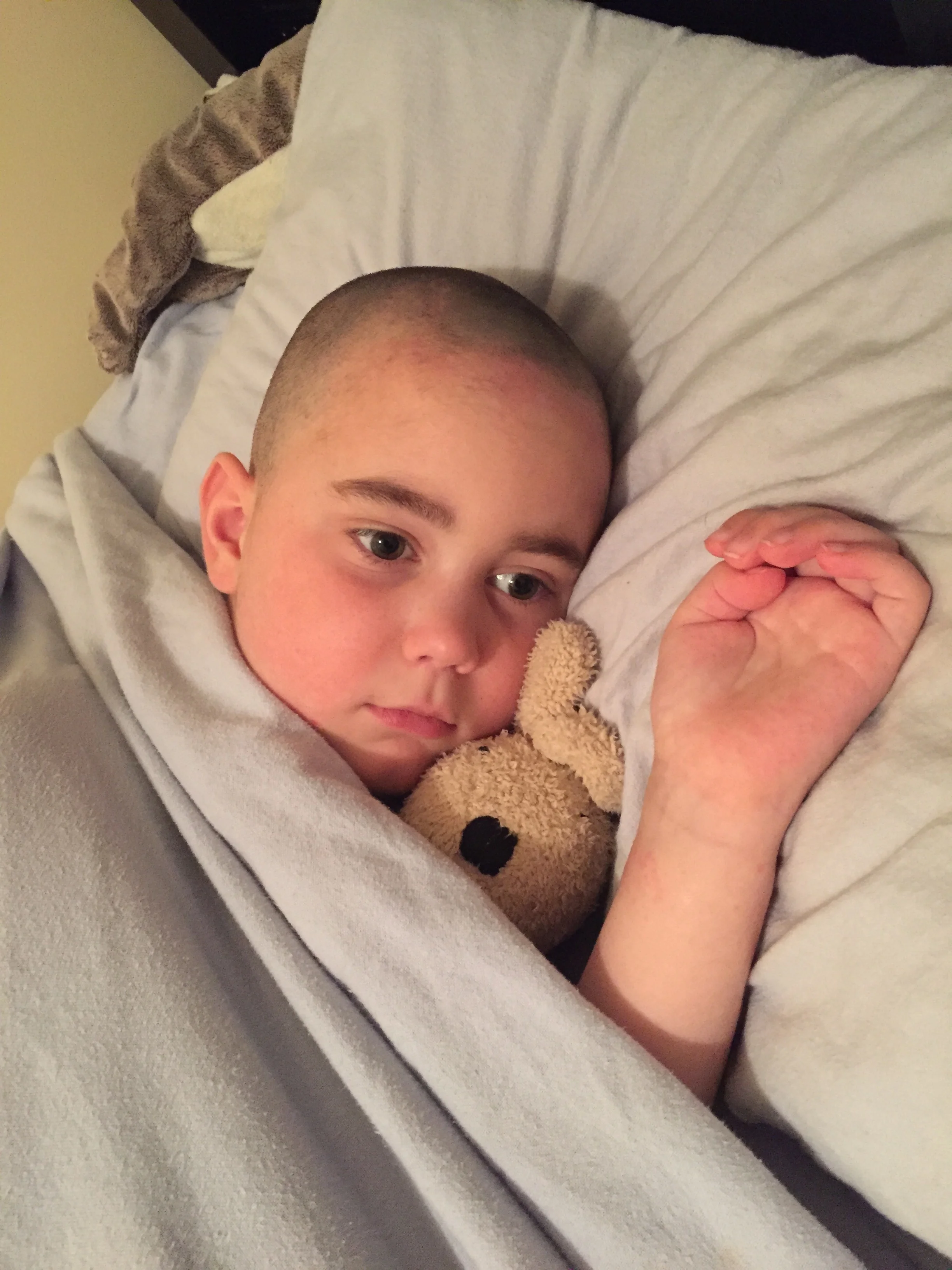
You see we have a little boy Hayden he is 6 years old and he was diagnosed with and inoperable, incurable brain tumour nearly two years ago and this is our story......

A few weeks after the twins 5th birthday Hayden began to complain that he couldn’t use his left hand and arm whilst dressing, immediately we sensed that something neurological was going on but we still had hope that maybe it was an injury.

We didn’t want to panic so we took him the Dr but when they suggested we take him to the Royal Children’s Hospital immediately, we knew it was serious and were overwhelmed with emotion.

As we raced him into the Royal Children’s hospital we began discussing the worst case scenario and preparing ourselves for what was to come. Upon arriving at the hospital he was rushed into a CT scan revealing a 4cm tumour in his brain stem. I remember feeling devastated, sick and barely able to breathe. I tried to be brave and I held it together in front of Hayden but eventually I was overcome with grief and shock and I had to leave the room. My knees went weak and I remember sobbing on the emergency department floor.

Nothing could take away my pain, it hurt so much.  I was grieving for the life that I had envisaged for our son and fearing the unknown.   Eventually, I pulled myself together and realised that all these feelings had to drive me to do whatever it was going to take to get our son through this journey. That became our family mantra, “Whatever it takes...”

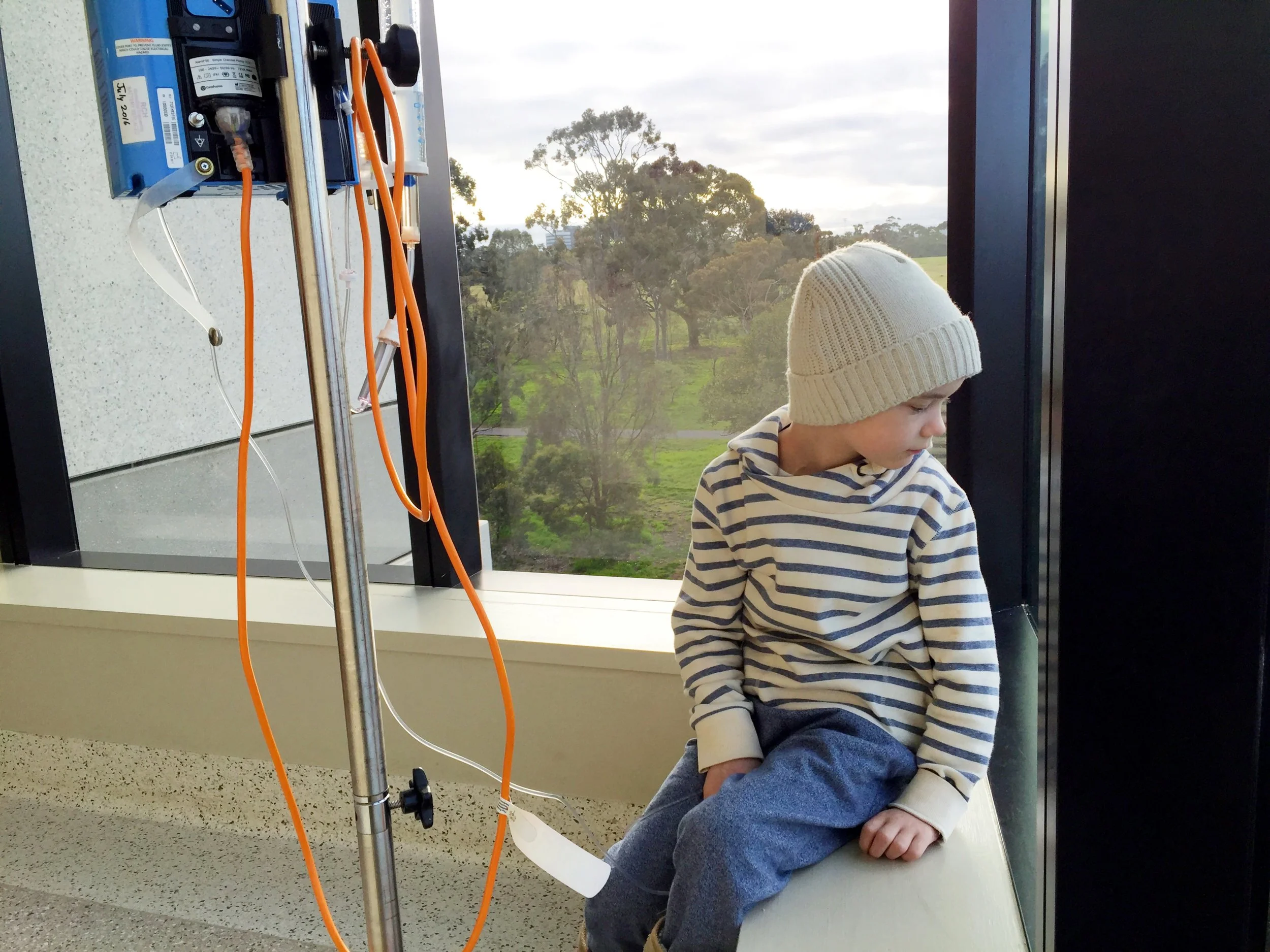
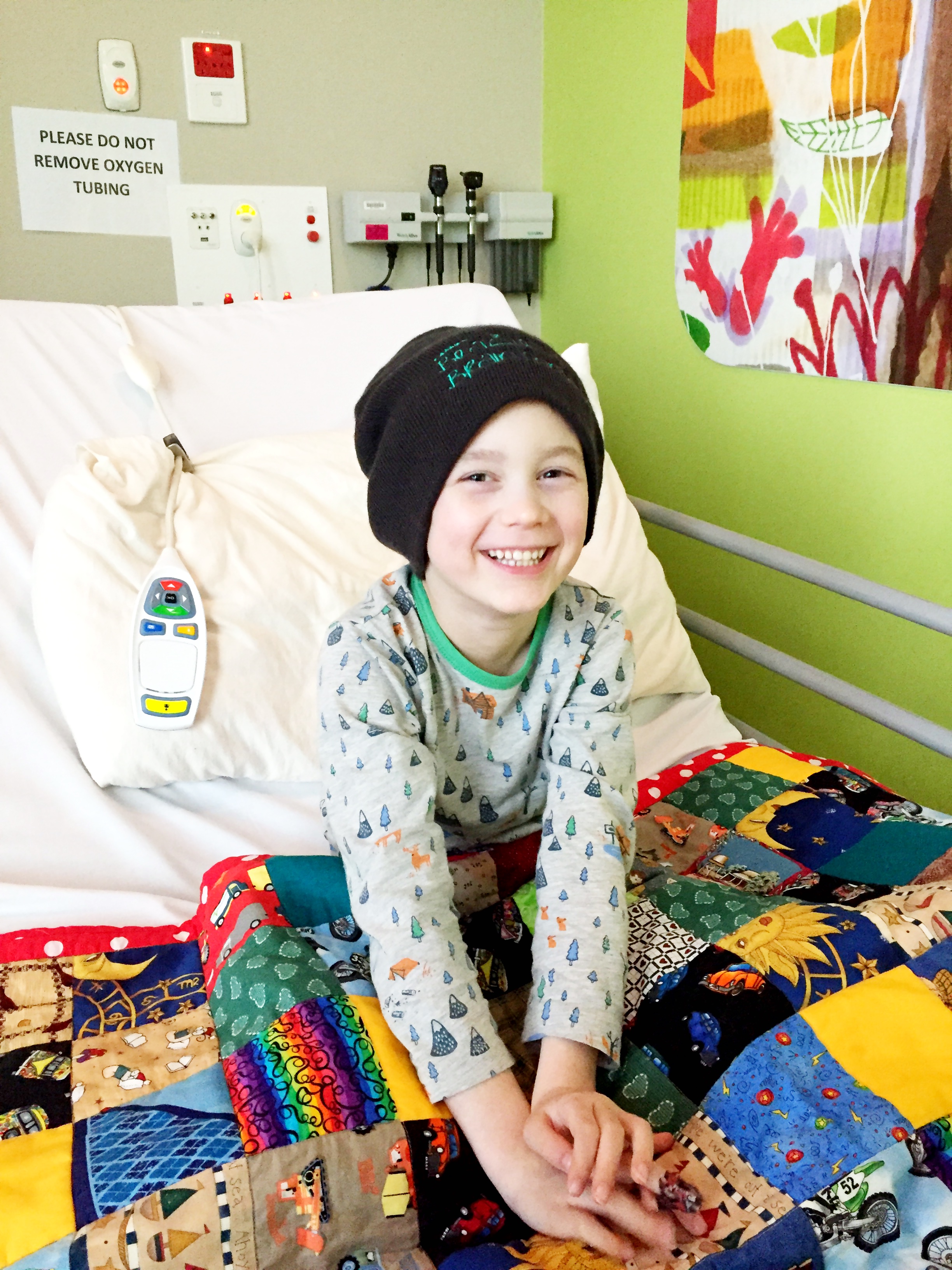
I stand here tonight so very proud of our family and the resilience we have shown bravely fighting this beast we call cancer. We took our inspiration from Hayden he is a hero, a little champion. He endured 36 rounds of chemo in 12 months, lost all mobility on his left side, put up with painful procedures, surgeries, MRI’s, x-rays, ultrasounds, examinations, countless blood tests, in and out of hospital for two years, powered through his rehab sessions even when he felt like giving up or it was too hard, he just smiled and got on with it impressing everyone with his attitude and charm.  

If you would like to watch his brave fight you can watch it on youtube called Hayden’s Journey. It’s a 30 minute glimpse into the 2 year struggle for a child diagnosed with a brain tumour.

I don’t know how he did what he did and I don’t know how we have survived the past 2 years but one thing I do know, we couldn’t have done it without our community, the kindness of strangers and the support that RedKite provided our family.

Cancer affects every aspect of your family’s life physically, emotionally, financially and psychologically. RedKite provided our family with much needed resources to manage our grief, counselling for our well being and made sure we didn’t have the extra stress of finding funds to pay bills, petrol, groceries and ongoing medical costs.

Funds raised for RedKite on nights like tonight for families like ours have contributed towards our bills, school fees, medications, rehabilitation equipment,  mobility aids, safety items in our house, Physio, OT , Dr and Therapy costs, psychologists, house cleaning and babysitters for our other children just to name a few. 

Hayden hospital 2.JPG


The contributions of individuals and companies are greatly appreciated by families like ours. I just can not begin to express our gratitude for all that RedKite have done for our family during such a difficult time.

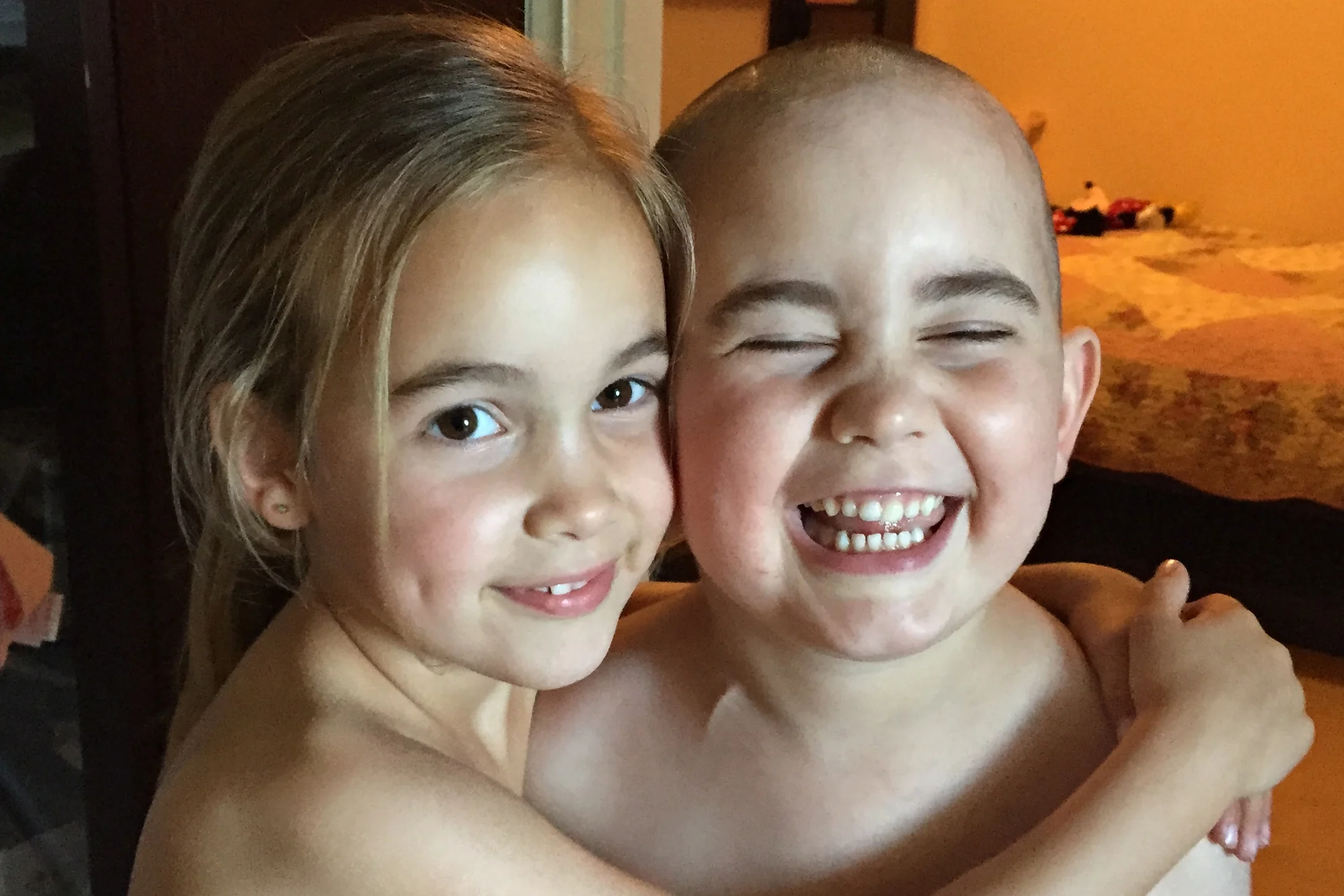
One night last week Hayden’s twin sister was snuggling a bunny that was given to her she calls it her worry bunny and she told me it wasn’t working. I said to her sometimes you need to tell grown ups your worries and that helps too. She took a breath and said softly, “I need to tell you I have a worry and it’s about Hayden. I braced myself and then she said it, ‘I’m worried that Hayden going to die from his brain tumour.” My heart sank and I responded with, ‘I know sweetheart this is my worry too, but the doctors are doing everything they can to help him and you know what, every day that we have him in our lives we need to tell him we love him and make the most of our time together.’ Young children shouldn’t have such worries weighing heavily on their minds.

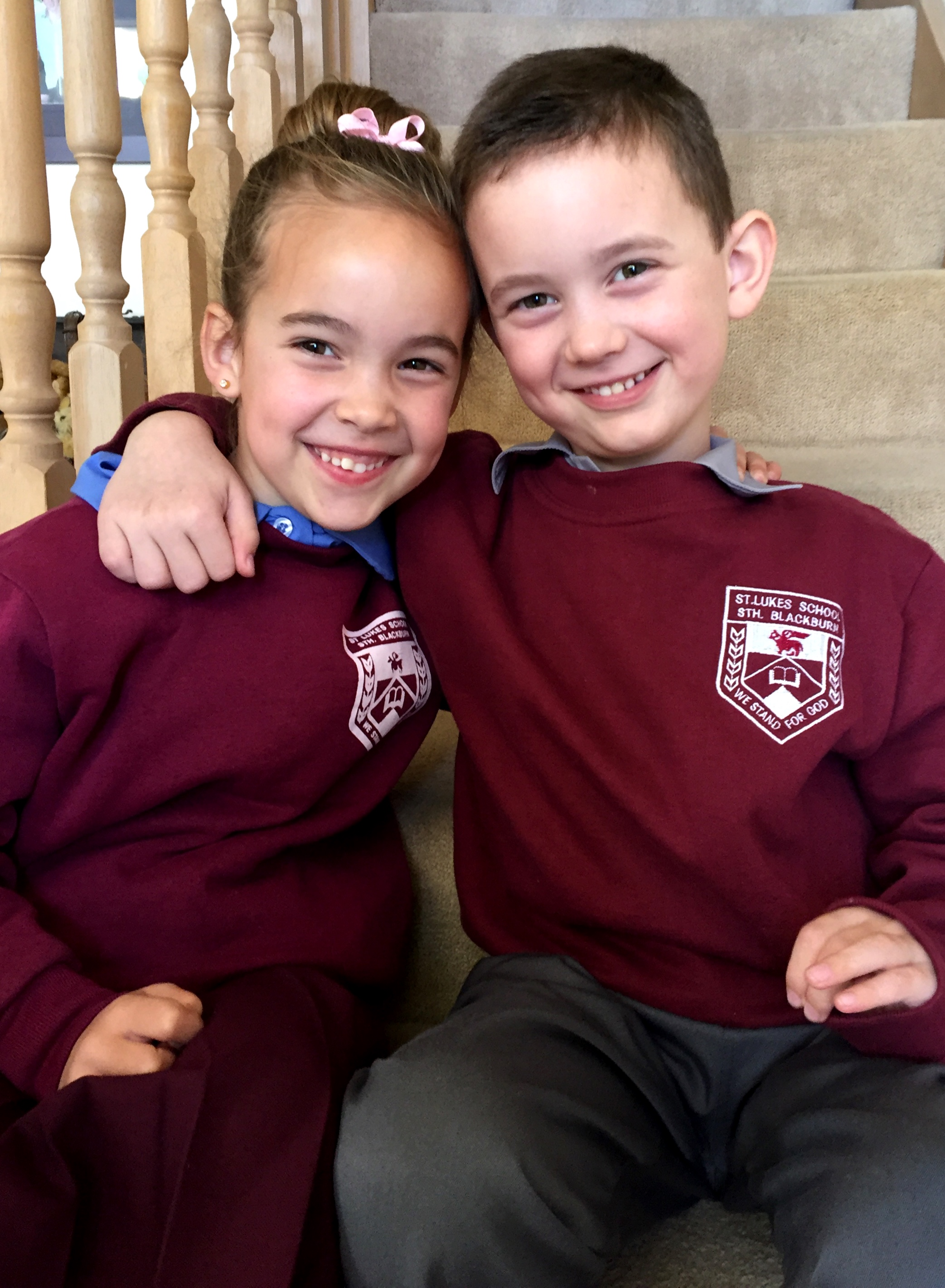
Twins Carlee and Hayden

Twins Carlee and Hayden

Carlee and Hayden

Carlee and Hayden


Another day that nearly broke me was when I was walking with Hayden in the wheelchair to get some fresh air he was so sick this day after chemo and he looked up at me and asked, ‘Mummy am I going to heaven?’ I didn’t know what to say so I just said, “Not today sweetheart hopefully not anytime soon.’

Hayden chemo.JPG


So as you can see dealing with childhood cancer these past two years has been pretty traumatic but knowing we had the support of people like you, companies, businesses and RedKite definitely relieved the pressure and we didn’t feel so alone. The financial aid that you generate goes a long way in helping families like ours and critically ill children.

We will never forget your kindness, generosity, well wishes and support.

From the bottom of our hearts and on behalf of families dealing with Childhood Cancer. 

Thankyou.

You can help Redkite provide essential support for families like Simone's by donating here. You can support Hayden's GoFundMe page here.

Simone and Hayden.jpg
Hayden bed.JPG
Source: http://www.redkite.org.au/

Enjoyed this speech? Speakola is a labour of love and I’d be very grateful if you would share, tweet or like it. Thank you.

Facebook Twitter Facebook
In HEALTH Tags SIMONE CLEMENTS, MOTHER, CANCER, REDKITE, CHILD CANCER, HAYDEN, CHARITY, CORPORATE QUIZ, TRANSCRIPT
Comment

Rob Carlton: 'That's my stick', Wheeler Centre Show & Tell - 2016

April 12, 2016

17 February 2016, Wheeler Centre, Melbourne, Australia

Tony Wilson hosted a 'Show and Tell for Grown Ups' session at the The Wheeler Centre. The other guests were Sofija Stefanovic and Alison Lester. There will be more Show and Tell for Grown Ups in July 2016.

Tony: It is, ladies and gentlemen, it's a stick.

Rob: If I put it there it blends into the background though, you can't see, it's got a camouflage going on. Maybe... can you see that? Alright. There you are.

Tony: It's a stick.

Rob: It's my stick!

Tony: So, talk us through, ah, a stick.

Rob: So, I was thinking about this, and this stick kinda comes within a story, within a story, I think. And certainly by the end of this, we'll know whether there's a story in it at all.

So that stick, was in my house growing up, it was always part of our lives. My mum and dad were amazing cooks, my dad loved cooking curries, and for as long as I can remember, that stick was in our kitchen, in Bayview, which was my home where you get a real sense of home.

And that stick was used to stir our curries.

And at some point, I think in my teens, I learned that that stick was brought into my family when – before I was born – about 18 months before I was born, when my mum and dad and two older sisters were living in New Zealand and my older brother Richard was born.

And at eight weeks of age, my brother Richard died of cot-death, and my mum and my dad and my sisters walked down to the beach, on a lonely cold, windy day. An Australian family sitting on a beach in New Zealand, trying to gather courage together, and they picked up that stick. And they bought it home. And I learned about that when I was in my teens, and it was always this wonderful thing, it was something that was just there and we always used it and it was part of our life.

And then my mum and dad got a bit older, and as wise parents do, when they start to get older, they divested themselves of all these things that, should they go under a bus, it won't mean anything to anyone else –

[adjusts wilting microphone] Hang on, I'm an old roadie, don't worry about this. Being an actor, you can pretty much do EVERY job...um ...Coffee anyone?

Tony: A long time since you've done those ones though, isn't it?

Rob: (laughs) So, yeah, when older people ... being sensible ... so they gave it to me. It was my stick. 'Cos I was the replacement boy. And so I now got this stick and I then have it my house and I've got twin boys, my eleven year old boys, and I explain to them everything that goes on in my life, and I tell them that this is my stick and this is how we came to get it. And they call it ‘The Stick Of Richard Life’. My little boys call it ‘The Stick Of Richard Life’, so that's the name.

So here's where the story gets into a bit of a different sort of story and it starts to go slightly skewiff. Right. Oh, and don't worry about me, I do get emotional, but trust me, I'm feeling fine ...(laughs)

So we then, in Sydney we do something that's called Story Club, and we sit down and write a sixteen hundred word story and we read it out in a big oversized chair. Now the theme of Story Club this month was 'Sense of impending doom' – write a story about when you had a sense of impending doom.

Now, here's the bizarre thing. I don't have a sense of impending doom. I've never had a sense of impending doom, and it remains one of the great mysteries of my life, how my mum and dad were able to bring me up in a world that was only ever going to shine on me, that was only ever going to give me joy and wonder and happiness if I showed it to the world.

I was never mollycoddled, I never ever got a sense that this world would take me away. And how my mum and dad did that after going through what they went through, remains a mystery.

So, I wrote this story. And I framed my story up with this stick, and talked about the irony of growing up without this impending doom, given everything I should have had should have been fear and worry.

So I write this story, and I read it out and it was good, man! I nailed it. (laughs)

But then, of course, I've gotta tell my mum and dad, and I’ve done this thing, and am I cashing in on the family heartache and grief? ... and then, oh dearie me, I wasn't doing that, I know what I'm like, I was honest and clear in my intent. So I wasn't doing that, but for the first time ever, I felt reticent. A little. To tell my mum and dad about my story that I'd written for fear of the emotions that it would bring up.

And shortly thereafter I came down to Melbourne, and I was having dinner, and I did think to myself, what shall I do in this situation? And so I do what I always do, I arrived and spilled my guts immediately - (laughs), that’s just how I roll.

And so that led to this, um – now we're gonna be here 'til eight o'clock – So I told my mum and dad, this is what I've done. And of course my mum and dad are amazing people, and so emotionally courageous, and transparent and we talked about that, the detail, I'd never really got an understanding of what my dad went through.

My dad’s framing of those horrible days back in New Zealand forty six years ago was always 'it was so much worse for your mum', 'you see, Rob, back then our lives, it was segregated, I would go to work but your mum was at home with the children, and she carried Richard, and she was looking after Richard, and she was with Richard for every hour of every day’, and this was my understanding of that time. And in fact, my story, when I wrote it, it focused on that moment that my sister would tell me, she stills remembers that moment of mum running down the garden path, saying 'He's gone! He's gone!'

And it's a heartbreaking image in my mind, but that was my memory of this time, and I wrote this story. So I have this interesting evening with my mum and dad, and then I go to the theatre just down here, and my older sister, by chance – it's her birthday and she's at the theatre – and she rarely goes to the theatre, and I hadn't organised to be there with her, she was there with her husband and we go and see a show together – it was poor – and we meet in the foyer afterwards, we go to the Curve Bar afterwards, and they say, ‘how are you’ and I say I'm really well, but I've just had this really interesting, incredible night with mum and dad talking about the detail of that day Richard died.’

And I said, ’you know, I'd talked about this, and I'd talked about that and I said about the moment with mum running down the garden path ... and I was just sad ...’

And she said, 'Oh, but Rob, that's not the clearest memory of my day.'

I said, ‘what is it?'

And she said, 'Dad.'

And I'd never heard anything about my Dad's response on that day. I'd only ever heard it through the prism of dad saying 'it was so much worse for your mum', and that was it.

I said, ‘What do you mean?’

Now I may lose it through this bit, again don't worry, I'm brave.

So we're standing in the Curve Bar, having this conversation, and my sister says, 'My most potent memory of that day, when they put Richard in the back of the ambulance – Dad banging on the roof of the ambulance, and howling.'

And she told me that, and I had this emotional punch, it was like a fist jamming into my chest and I literally went [howls] and bent down and started sobbing and sobbing, and I couldn't stand up and I bent down to my knees and it was, I was like a groaning wreck.

I've never felt anything like that in my life. Nothing since, nothing before. And at that moment I felt guilt, and I felt shame. I felt that I hadn't honoured my father's grief, I felt as a son I didn't really know the truth of the most horrific thing in my father's life. And I'd written a story and I honoured my mum and her bravery and courage and optimism.

But, I felt like I'd sold my father out a little bit.

It was an astonishing moment. And being what I am, I needed to kind of try and make a reparation. So, I thought about this and a week or two later I –

Oh and then mum and dad said, ‘Will you show us the story?’ Haah, shit! And it's mad. I mean like, it's an adventure story, it's a road trip story, so, no sense of impending doom, man. And me and my buddy go on a road trip, we hitch-hike, we spend a night with an attempted murderess, there's nudity, there's panel vans, there's you know, a lot of low-level criminality, and I think, but, you can read that mum and dad, but there's also The Stick Of Richard Life stuff.

So I sent it to them and Mum and Dad read it and they ring up and they say, 'Oh, we read your story' and say some nice (things) and dad gets on the phone, and he’s very proper and he says, 'Ooh helloo' – you know I've written plays – and he says, 'I've seen a lot of the things you've done, Rob, but, I've never read your prose, and they're quite beautiful, crisp, not too many long words, very clear, I mean beautifully done, a lovely story, obviously very sad, and I'm sure the people that heard it were crying, but in terms of the quality of the literature, very well done.'

I'm sittin' there thinking, fu-uck.

I said, 'Thanks dad, but I gotta say..', this thing – and I didn't want to talk about that moment [indicates banging on the roof of the ambulance] it was not for me to bring up, that moment -  but I did say, I'd been thinking about this, and I said, ‘You know dad, I really don't feel that I've ever really, I guess, honoured or accepted or talked to you about what you really went through, it's always been through the prism of a family, through the prism of what mum went through and what my sisters, but I never really ...’

And he said 'Oh no, well yes, it was obviously very very difficult, very sad', but – and then boom, like a switch, straight to the dominant story – it was so much worse for your mother, there was nothing really difficult for me, I had to go to work, this is the way it was, it's your mother, it's your mother, it's your mother.

And I didn't test it further, because that is my Dad's story.

Now, two things to come out of this: one, I think it gave me an insight into what it is different members of the family do, and when we come to an experience and we walk away with our own story of it, each member of a family, each member of that experience has their own narrative that they need so that they can keep moving forward in a way that helps everybody get forward. And at that point in time, I truly believe that my dad needed to sublimate the heartache and the pain of what it is to lose his only son, in order for my mum to repair, and my sisters to grow, and for me, should I arrive, to be born into a world that still has hope, and that every time I go to sleep isn't the most frightening time in the world, for a family. Which I think it would have been. So I think that's what my dad had to do, and that's what he clung to, and that was his story.

And then the thing I've been thinking on, in this last month – my dad died on Christmas Eve – it wasn't guilt I felt that day, or shame or sadness, when my sister told me about that image [indicates banging both hands on the roof] and the ambulance. I have a feeling it was an inherited memory.

The feeling was so visceral, it was so strong, it was, I mean, the time was instantaneous, when my sister said this was what your dad did, I hit the deck and I was howling, and I don't know how we as human beings learn, what we learn, what knowledge is innate, what we're born with, what's nature, what's nurture, but it's my feeling that that particular experience that my dad went through forty six years ago, has somehow, through the wonder of procreation found its way somewhere into my heart and body, and my dad's experience rests now with me.

That's my stick.

Rob discusses this speech and salon storytelling generally in episode 17 of the Speakola podcast


Source: http://www.wheelercentre.com/broadcasts/sh...

Enjoyed this speech? Speakola is a labour of love and I’d be very grateful if you would share, tweet or like it. Thank you.

Facebook Twitter Facebook
In HEALTH Tags ROB CARLTON, WHEELER CENTRE, SHOW AND TELL, TONY WILSON, TRANSCRIPT, FATHER, SON, MOTHER, COT DEATH, TRAGEDY, INHERITED MEMORY, SPEAKOLIES 2016, BRONZE SPEAKOLIE
2 Comments

Clare Wright: 'The Year My Brain Broke', Epic Fail event - 2014

September 3, 2015

30 July, 2014, Wheeler Centre, Melbourne, Australia

You have been promised a night of tales guaranteed to amuse.

I so wish that I had a funny story to tell you tonight.

I wish I was one of the performers in the annual Melbourne Comedy Festival event, Best Comedians, Worst Gigs, so that I could have you all in stitches as I regaled you with anecdotes of falling flat on my face in front of an audience: side-splittingly self-deprecating tales of humiliation, mockery and disgrace that only go to prove what a good comedian I really am.

I wish I could tell you about the time that I toppled into a swimming pool at the wake of a prominent sporty identity and had to wear the deceased’s clothes all night until my sodden ones had been put through the dryer.  Unfortunately, that was my husband in the pool, a banana peel moment of truly epic proportions.

I even wish I could tell you about the multiple rejections I received for my recent award-winning book and how, after a decade of work, I thought it would be exiled to the Orphanage for Abandoned Manuscripts before being miraculously rescued from obscurity and skyrocketing to stellar success.  But this is not what happened, and the truth — a bidding war between multiple publishers — is not the stuff of short poppy glory.

In fact there is little in my CV that would suggest I should be standing here on this pedestal of failure tonight.  I was a straight-A student at a select entry high school for academically gifted girls.  I achieved a perfect 100% for my HSC English exam.  I received First Class Honours for my Bachelor and Masters degrees and my PhD thesis won the prize for the best doctoral work in my discipline.  I have been awarded merit-based scholarships for all my tertiary courses, and a federal grant for my postdoctoral research.  My books have been on the best-sellers lists. My television documentary was a critical triumph, and my new documentary series will hit the screens on 19 August.  So no belly flops or banana peels there.

My domestic life is pretty cozy too.  I met the love of my life in first-year university and my husband and I have now been together for twenty-six years.  (All of them bliss, he would say with only the hint of an impudent smile.)  Together we are raising three delightful, healthy children, whose company we prefer to most other human or technological interaction.  Our warm and hospitable suburban home is filled with food, love and laughter.  We have an open door policy with friends and wildlife alike.  At the moment we are breaking bread with a dog, two cats, four rabbits, twelve guinea pigs and the ever-present chooks.    We have a beach house.

So it’s perhaps odd that when I was asked by the Wheeler Centre to participate in tonight’s panel, I knew immediately and instinctively what I would talk about.  For me, the two little words ‘epic fail’ cast me straight back to a moment so vivid and visceral it could be yesterday.

But it is seven years ago and I am in a car.  I am in my little navy blue Golf and I am driving back home to my beloved husband and beautiful family from a doctor’s appointment.  I have spent two hours talking to this doctor — a woman I have never met before but who has kindly spared me eight of her precious 15 minutes appointment slots and bulk-billed me to boot.  It is raining.  Or maybe it is not raining but I am crying so hard that my memory requires windshield wipers to hone its field of vision.

I am in a state but I am also in a car so I’m stopping at traffic lights and watching out for pedestrians.  And I’m talking out loud to myself, repeating two short sentences in a spin cycle of fear and self-loathing.

I’m sorry.  I have failed.  I’m sorry.  I have failed.  I’m sorry.

I drive and I cry and I chant this mantra to the rhythm of the rain.  Or perhaps into the blinding sunshine. Does it matter? I have no idea who I’m apologizing to.  But I know without a shadow of a doubt what I’m apologizing for: I have failed.

Later, I would come to think of 2007 as The Year My Brain Broke.  But there in the car that day all I knew was that I’d left the doctor’s office with a prescription for antidepressants, a referral to a psychiatrist, and the assurance that ‘no strength of character or force of will’ would get me through this.

But what was this?  This feeling of utter incompetence.  This knowledge of my complete inability to pull myself up by my bootstraps.  This incapacity to count my blessings.  This malfunction of every system I had ever put in place to stave of disaster, avert catastrophe and neutralize chaos.

According to the doctor — who I had to admit was a highly skilled professional who had not merely raised her eyes above her glasses at me and reached for her prescription pad but rather listened while I oozed gloom for two whole hours — according to this doctor I had severe clinical postnatal depression.

My third child, my only daughter, had been born two and a half years earlier. We were instantly bonded in a deep and abiding connection.  Every photo shows me beaming with pride and joy.  With her birth I experienced a deep sense of fulfillment and a circle that I wasn’t aware was broken had finally closed.

And yet…

For at least two years, I had struggled with the daily challenge to scale the summit of my own wretchedness.  Most days were like snorkeling through tar.  Dark, heavy, suffocating days punctuated by panic and a generalized sense of impending doom.  I experienced waking hallucinations of my baby toppling down the stairs.  A bomb in her pusher.  Snakes crawling next to the bunny rug where she kicked happily in the back yard.  At night when I slept, if I slept, which was rarely, I dreamed I was falling into a black abyss.  “So this is what it’s like” I’d think wistfully as I plummeted into the void, right before I woke bolt upright, mouth dry, heart racing.

But this couldn’t be postnatal depression, could it?  Depressed mums didn’t get out of bed, and cried all day, and shouted at people, and didn’t want to touch their babies, and were afraid they might hurt them.  I wasn’t any of these things.  I went to work, wrote and published, appeared on tv shows and made intelligent, amusing speeches.  I had a hot meal on the table every night, and clean school uniforms in the cupboards.  I had clean hair and happy kids.

Yes, I often felt red raw when watching the news or reading the paper, like my skin had been peeled away, gleaning on some deep gut level that it was my fault that a man had thrown his child off a bridge, or a group of teenagers had been mown down by a drunk driver, or a baby’s pusher had blown on the train tracks in a big wind.

And yes, I often started walking to the supermarket, or the swimming pool, or a café to meet friends, only to find myself frozen to the spot, certain that going to that place or doing that activity was wrong, and that I should have made a different decision, a better decision, and if I’d made THAT decision I wouldn’t be here, now, walking around in circles, unable to make up my mind whether to stay or go, pumped full of adrenalin, without a single good reason why I should either fight or take flight, but nonetheless primed for battle, certain I was going mad.

On the outside, I was a solid citizen.  On the inside, I had fractured into a million little pieces.

But it was not until 45 year-old Audrey Fagan, Chief Police Office of the ACT, was found hanging in her hotel room on a Queensland tropical island in April 2007 that I started to grasp that something was seriously wrong with me beyond my own failure to stop myself from feeling so rotten and acting so crazy. 

Stories on Fagan’s death all took the same line: why would such a competent, meticulous, successful mentor and mother take her own life? ‘Awesome mum solved all problems but her own’ read one headline. Amanda Vanstone was quoted saying “She was always happy, there was never any nastiness about her, she got along well with everybody." AFP Commissioner Mick Keelty said: "She was a very professional, very strong woman, and I think that's what has surprised all of us, that because she was such a strong woman, such a determined woman, it's a great lesson to all of us that everybody is vulnerable."

None of the articles said that Audrey Fagan had depression, though one story published in the Good Weekend magazine a few months after her death implied it.

Reading that piece at my kitchen table, I felt such a profound affinity with Fagan that my blood ran cold.  It was not long after that I found myself a doctor. 

Now that I am well again, I know, of course, that confronting the full force of my own vulnerability was not an epic fail.  In fact, it was the complete opposite.  Only I could make the decision to step back from the brink of the abyss.  Only I could start to love myself the way my friends and family loved me.  I had to find out for myself that life is not a performance sport; that achievement is a state of grace, not the sum total of relentless activity; that ego might not be a dirty work, but it can be a ruthless taskmaster; and that hard work often brings just rewards, but it’s not what sets you free.

Clare is a guest on episode 49 of the Speakola podcast


Source: http://www.wheelercentre.com/broadcasts/ep...

Enjoyed this speech? Speakola is a labour of love and I’d be very grateful if you would share, tweet or like it. Thank you.

Facebook Twitter Facebook
In HEALTH 2 Tags CLARE WRIGHT, DEPRESSION, POST-NATAL DEPRESSION, MOTHER, PARENT, MEDICAL, HEALTH, FAIL, TRANSCRIPT
Comment

See my film!

Limited Australian Season

March 2025

Details and ticket bookings at

angeandtheboss.com

Support Speakola

Hi speech lovers,
With costs of hosting website and podcast, this labour of love has become a difficult financial proposition in recent times. If you can afford a donation, it will help Speakola survive and prosper.

Best wishes,
Tony Wilson.

Become a Patron!

Learn more about supporting Speakola.

Featured political

Featured
Jon Stewart: "They responded in five seconds", 9-11 first responders, Address to Congress - 2019
Jacinda Ardern: 'They were New Zealanders. They are us', Address to Parliament following Christchurch massacre - 2019
Dolores Ibárruri: "¡No Pasarán!, They shall not pass!', Defense of 2nd Spanish Republic - 1936
Jimmy Reid: 'A rat race is for rats. We're not rats', Rectorial address, Glasgow University - 1972

Featured eulogies

Featured
For Geoffrey Tozer: 'I have to say we all let him down', by Paul Keating - 2009
for James Baldwin: 'Jimmy. You crowned us', by Toni Morrison - 1988
for Michael Gordon: '13 days ago my Dad’s big, beautiful, generous heart suddenly stopped beating', by Scott and Sarah Gordon - 2018

Featured commencement

Featured
Tara Westover: 'Your avatar isn't real, it isn't terribly far from a lie', The Un-Instagrammable Self, Northeastern University - 2019
Tim Minchin: 'Being an artist requires massive reserves of self-belief', WAAPA - 2019
Atul Gawande: 'Curiosity and What Equality Really Means', UCLA Medical School - 2018
Abby Wambach: 'We are the wolves', Barnard College - 2018
Eric Idle: 'America is 300 million people all walking in the same direction, singing 'I Did It My Way'', Whitman College - 2013
Shirley Chisholm: ;America has gone to sleep', Greenfield High School - 1983

Featured sport

Featured
Joe Marler: 'Get back on the horse', Harlequins v Bath pre game interview - 2019
Ray Lewis : 'The greatest pain of my life is the reason I'm standing here today', 52 Cards -
Mel Jones: 'If she was Bradman on the field, she was definitely Keith Miller off the field', Betty Wilson's induction into Australian Cricket Hall of Fame - 2017
Jeff Thomson: 'It’s all those people that help you as kids', Hall of Fame - 2016

Fresh Tweets


Featured weddings

Featured
Dan Angelucci: 'The Best (Best Man) Speech of all time', for Don and Katherine - 2019
Hallerman Sisters: 'Oh sister now we have to let you gooooo!' for Caitlin & Johnny - 2015
Korey Soderman (via Kyle): 'All our lives I have used my voice to help Korey express his thoughts, so today, like always, I will be my brother’s voice' for Kyle and Jess - 2014

Featured Arts

Featured
Bruce Springsteen: 'They're keepers of some of the most beautiful sonic architecture in rock and roll', Induction U2 into Rock Hall of Fame - 2005
Olivia Colman: 'Done that bit. I think I have done that bit', BAFTA acceptance, Leading Actress - 2019
Axel Scheffler: 'The book wasn't called 'No Room on the Broom!', Illustrator of the Year, British Book Awards - 2018
Tina Fey: 'Only in comedy is an obedient white girl from the suburbs a diversity candidate', Kennedy Center Mark Twain Award -  2010
Tina Fey: 'Only in comedy is an obedient white girl from the suburbs a diversity candidate', Kennedy Center Mark Twain Award - 2010

Featured Debates

Featured
Sacha Baron Cohen: 'Just think what Goebbels might have done with Facebook', Anti Defamation League Leadership Award - 2019
Greta Thunberg: 'How dare you', UN Climate Action Summit - 2019
Charlie Munger: 'The Psychology of Human Misjudgment', Harvard University - 1995
Lawrence O'Donnell: 'The original sin of this country is that we invaders shot and murdered our way across the land killing every Native American that we could', The Last Word, 'Dakota' - 2016