• Genre
  • About
  • Submissions
  • Donate
  • Search
Menu

Speakola

All Speeches Great and Small
  • Genre
  • About
  • Submissions
  • Donate
  • Search
Share a political speech

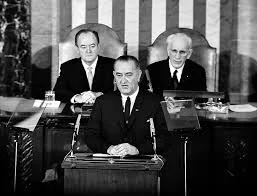
Lyndon Johnson: 'I am confident we shall overcome', Civil Rights Symposium, LBJ's last speech - 1972

December 13, 2019

12 December 1972, LBJ Library, Austin Texas, USA


Mr. Middleton, esteemed former Chief Justice, and Miss Warren, and all of you wonderful people who have come here to try to make life better for your fellowmen:

I sat in the adjoining room and watched the panel this morning and got great satisfaction and compensation in my own way in feeling that all is not lost, all has not been in vain. All we have to do is kind of reorganize, reevaluate; and Rome wasn’t built in a day and we can’t overcome all the injustices or make this a perfect world overnight. But we are on our way in. We are going to do just that before it is over.

I don't speak very often or very long. My doctor admonished me not to speak at all this morning, but I’m going to do that because I have some things I want to say to you. I have a touch of sentimentality about me which has cost me a great deal in my 40 years in public life.

I say to all of you women, [uncertain at 2:05], Barbara Jordan, Yvonne Burke, and [uncertain at 2:09] and so many of you that I can’t list them all, that it’s natural for me to get a certain amount of glory by seeing the advances you are making and I guess it’s just human for us to admire and be fond of the other sex, but when I listened in the adjoining room to Burke Marshall and Henry Gonzalez, Clarence Mitchell and Julian Bond whom I don't know so well but admire a great deal, I said to myself that I love these men more than a man ought to love another man, and that's my way of saying to you what great honor you do me by your presence and participation in these proceedings.

Of all the records that are housed in this library, 31 million papers over a 40-year period of public life, it is the record of this work that we have been discussing the last two days which had brought us here, that holds the most of myself within it and hold for me the most intimate meanings. In our system of government, honorable men honestly differ in their perceptions of government and what it’s really all about, and today, I can speak only of my own perception, and I’m so proud I live in a government where I can do that.

I believe that the essence of government lies with unceasing concern for the welfare and dignity and decency and innate integrity of life for every individual. I don't like to say this and I wish I didn't have to add these words to make it clear, but I will: Regardless of color, creed, ancestry, sex, or age.

Before I go any further, I want to interject, I’m so happy Miss Whitney Young is here. Her husband gave me great inspiration and leadership, and along with some of his colleagues, advanced these nation centuries in a decade. He is somewhere doing his good work today and it’s in behalf of this fellow man, wherever he is.

I do not want to say that I’ve always seen this matter in terms of the special plight of the Black man as clearly as I came to see it in the course of my life and experience and responsibility. Now, let me make it plain that when I say black, as I do a good many times in this little statement, I also mean brown and yellow and red, and all other people who suffer discrimination because of their color or their heritage. Every group meets its own special problems, of course, but in a very broad sense, the problem of equal justice applies to us all.

Up on the second floor of this library in a special exhibit designed especially for this occasion, you will see the original Emancipation Proclamation by which our great President Abraham Lincoln ordered that the slaves should be freed of their bondage. A decade ago, in year 1963, we observed the 100th anniversary of that proclamation signing. On Memorial Day of that fateful year, I was called upon as the last President to speak at Gettysburg Cemetery where a century before, words had been spoken which all of us have long remembered, and on that occasion, I said this, until justice is blind to color, until education is unaware of race, until opportunity is unconcerned with the color of men's skin, emancipation will be a proclamation but not a fact. To the extent that the proclamation of emancipation is not fulfilled in fact, to that extent, we have fallen short of assuring freedom to the freed.

When I spoke those words as Vice President, I could not know that the future would present me shortly with the opportunity and the responsibility to contribute more toward fulfilling the fact of emancipation. Even if I could have known what lay ahead, I’m not sure now that I could have believed at that time that the progress, which has been won in these past 10 years, is a fact.

Black Americans are voting now, where they were not voting at all 10 years ago, but let me say quickly that not enough are voting. Little more than half of all eligible Americans voted in the last national election. I don't know how many of those that didn't vote were Black, but I do know this, we have to come up with some kind of plan or incentive to perfect our democracy by seeing that more of our people do vote and I certainly mean to include more of our Black people.

Now, I don't know how to do it. I don't want to get into it from the hip, with compulsory voting, but we ask our young men, we require them by law to all go and register for the draft. We require all of our children to go to school. We require our people, under the great laws of privilege, to have a Social Security Number. I have no doubt but what this would be a better country and a purer democracy if 95% of our people voted and the 5% that didn't had an exemption because of illness or whatever it might be, but when the hand of government reached out to them, if they had to reach in their purse or pocket book and show a stamp that they had voted, for the party of their choice and the individual of their choice, this would be a better land.

Black Americans are working now where they were not working 10 years ago. Black Americans, Brown Americans, Americans of every color and every condition are eating now and shopping now, going to the bathroom now and riding now, and spending nights now and obtaining credit now, and giving now, and attending classes now, going and coming in dignity were and as they were never able to do in years before.

I walked out of this room yesterday and looked at the sea of faces and I thought how proud Thurgood Marshall must be. I first met him when he came here on behalf of Herman Sweatt so a Black boy could come to the University of Texas and to look at this audience in this beautiful university auditorium, and see the groups that are participating today must make him feel and must make the groups that supported him feel that all has not been in vain.

But now that I’ve said that, I want to say this, I don't want this symposium to come here and spend two days talking about what we have done, the progress had been much too small. We haven't done nearly enough. I'm kind of ashamed of myself that I had six years and couldn't do more than I did. I'm sure all of you feel the same way about it.

I often tell the story about, that was reported and a fact about Churchill and the women's lib movement, maybe prohibition movement, a little ahead of our women over here, went into him after the war and said they were shocked to hear that if all the alcohol he consumed during the war, the brandy that he had drunk were emptied in the room, it would come up to about here. And Churchill looked on with a certain amount of satisfaction and amusement, instead of letting his feathers ride up. And he purported to have replied, "My dear little ladies, so little have I done, so much yet I have to do."

So, let no one delude themselves that our work is done. By unconcern, by neglect, by complacent beliefs that our labors in the field of human rights are completed, we of today can seed our future with storms that would rage over the lives of our children and our children's children. Yesterday, it was commonly said the Black problem was a southern problem. Today, it is commonly said that the Black problem is an urban problem – a problem of the inner city. But as I see it, the truth is that the Black problem today, as it was yesterday and yesteryear, is not a problem of regions or states or cities or neighborhoods. It is a problem, a concern, and responsibility of this whole nation.

Moreover, and we cannot obscure this one fact, the black problem remains what it has always been: the simple problem of being Black in a White society. And that is a problem, which our efforts have not yet been addressed. To be Black, I believe to one who is Black or Brown or what not is to be proud, is to be worthy, is to be honorable. But to be Black in a White society is not to stand on level and equal ground. While the races may stand side-by-side, Whites stand on history's mountain and Blacks stand in history's hollow. And until we overcome unequal history, we cannot overcome unequal opportunity.

That is not, nor will it ever be, a very easy goal for us to achieve. Individuals and groups who have struggled along to gain advantages for themselves do not readily yield the gains of their struggles or their achievements so that others may have advantages or opportunities, but that is just the point now and always. There is no surrender, there is no loss involved, no advantage is safe, and no gain is secure in this society unless those advantages and those gains are opened up to all alike.

Where we have been concerned in the past for groups as groups, now we must become more concerned with individuals as individuals. As we have lifted the groups, the burdens of unequal law and custom, the next thrust of our effort must be to lift from individuals those burdens of unequal history. Not a White American in all this land would fail to be outraged if an opposing team tried to insert a 12th man in their football lineup to stop a Black fullback on the football field. Yet off the field, away from the stadium, outside of the reach of the television cameras, and the watching eyes of millions of their fellow men, every Black American in this land, man or woman, plays out life running against the 12th man of a history, that they did not make and a fate they did not choose.

In this challenge, our churches, our schools, our unions, our professions, our trades, our military, our private employers, and our government have a great duty from which they cannot turn. It is the duty of sustaining the momentum of this society's effort to equalize the history of some of our people so that we may open opportunity equally for all of our people.

Some may respond to these suggestions with exclamations of shock and dismay. Such proposals, they will say ask that special consideration be given to Black Americans rather than giving equal consideration to all Americans. I can only hear such protest through ears that are tuned by a lifetime to listening to the language of evasion. All that I hear now, I have heard before for 40 long years, in many forms and many forums. Give them the vote!

I saw a murder almost committed because I said that in 1937. Most people said, "unthinkable." Give them the right to sit wherever they wish on the bus. Impossible. Give them privilege of sitting at the same hotel, using the same restaurant, eating in the same counter, joining the same club, attending the same classroom. Never, never. Well, this crowd never I’ve heard since I was a little boy all my life. And what we commemorate on this great day is some of the work which has helped in some of the areas to make never now.

And I do not speak fulsomely. Most of that never would have been done without Burke Marshall, Roy Wilkins, Whitney Young, Chief Justice Warren, Julian Bond, all of those that are here today, Vernon Jordan. This never would have been done.

Now, here is what I want to say, what I have said is precisely the work which we must continue and this is a whole important part of this meeting – not all we have done, what we can do. So much, so little have we done. It oughtn't to take much place what we must do. So I think it’s time to leave aside the legalisms and euphemisms and eloquent evasions. It’s time we get down to business of trying to stand black and white on level ground.

For myself, I believe it’s time for all of us in government and out to face up to the challenge. We must review and reevaluate what we have done and what we are doing. In specific areas, we must set new goals, new objectives, and new standards; not merely what we can do to try to keep things quiet, but what we must do to make things better. How much time will be given to that in this meeting? How much time we are going to give in the days ahead? How are we going to employ that? Who is going to bring our groups together? Who is going to select that leadership? What type of leadership are you going to do?

Specifically, I believe that we must direct our thought and efforts to many, many fields; and I don't have a great staff and little I can contribute in the way of leadership, but if I can leave the thought with those of you who do make up a great staff and who serve as my staff, I want to suggest a few little relatively unimportant thoughts as just some of the things to be put on your agenda. Are the federal government, the state government, the foundation and the churches, the university is doing what they can and all that they should to assure enough Black scholarships for young Blacks in every field? The answer is no. Very little.

It gets back to the same thing. Herman Sweatt can come to this university now, but as someone said on the panel this morning, Henry Gonzalez, I think, "What good is he doing sitting at the counter to get a cup of coffee if he doesn't have 50 cents to get it?" And most of them just don't have it. That’s why they are not here. It's not their mother or their father who didn’t want them here. It's not that they don't have an ambition to be here. They just can’t do it and we’ve got to level out that ground son.

Or are professions such as law and medicine, accounting and engineering, and dentistry and architecture taking the initiative? Sounding the call to make certain that their educational programs are so planned and so conducted that Blacks are being prepared for the leadership courses and are being given the support that they must have if they are to complete the courses and to have genuine opportunities to establish themselves in positions of leadership, professional careers, and things of that matter after their college days.

Or are trade unions and all those concerned with vocational occupation doing the same to open up apprenticeships and training programs so that the Blacks, the group I spoke of, have a fair chance of entering and a fair chance of succeeding in these fields that are so vital to the future of our nation and to our country at this very moment?

Are our employers who have already made a start toward opening jobs to the Blacks doing what they can and should in order to make certain that Blacks qualify for advancement on the promotion ladder, and that the promotion ladder itself reaches out for the Blacks as it does for the others in our society?

What I’m saying is that we cannot take care of the goals to which we have committed ourselves simply by adopting a Black "star system." It is good and it is heartening and it is satisfying to see individual Blacks succeeding as stars in the field of politics, athletics, entertainment, and other activities where they have high visibility such as Clarence Mitchell referred to in his family. I felt almost as good in my own election -- not quite as good -- when Barbara and Yvonne were elected this year because I thought that we were moving forward and I enjoyed knowing of those elections about as much as I did in my own.

But we must not allow the visibility of a few to diminish the efforts to satisfy what is our real responsibility to the still unseen millions who are faced with that basic problem of being Black in a White society. So our objective must be to assure that all Americans play by the same rules and all Americans play against the same odds. Who among us would claim that that is true today? I feel this is the first work of any society which aspires to greatness, so let's be on with it. We know there is injustice. We know there is intolerance. We know there is discrimination and hate and suspicion, and we know there is division among us. But there is a larger truth. We have proved that great progress is possible. We know how much still remains to be done.

And if our efforts continue, and if our will is strong, and if our hearts are right, and if courage remains our constant companion, then, my fellow Americans, I am confident we shall overcome.

After his speech, LBJ returned to the podium to offer advice to the leaders and activists in the room.

"Until every boy and girl born into this land, whatever state, whatever color, can stand on the same level ground, our job will not be done!"

Lyndon johnson 2.jpg
Source: https://www.americanrhetoric.com/speeches/...

Enjoyed this speech? Speakola is a labour of love and I’d be very grateful if you would share, tweet or like it. Thank you.

Facebook Twitter Facebook
In 1960-79 C Tags LYNDON B JOHNSON, CIVIL RIGHTS SYMPOSIUM, LAST SPEECH, TRANSCRIPT, PRESIDENT, LBJ LIBRARY, CIVIL RIGHTS
Comment

Lyndon Johnson: 'Let us close the springs of racial poison', Remarks on Signing Civil Rights Act - 1964

February 9, 2018

2 July 1964, Washington DC, USA

My fellow Americans:

I am about to sign into law the Civil Rights Act of 1964. I want to take this occasion to talk to you about what that law means to every American.

One hundred and eighty-eight years ago this week a small band of valiant men began a long struggle for freedom. They pledged their lives, their fortunes, and their sacred honor not only to found a nation, but to forge an ideal of freedom—not only for political independence, but for personal liberty—not only to eliminate foreign rule, but to establish the rule of justice in the affairs of men.

That struggle was a turning point in our history. Today in far corners of distant continents, the ideals of those American patriots still shape the struggles of men who hunger for freedom.
This is a proud triumph. Yet those who founded our country knew that freedom would be secure only if each generation fought to renew and enlarge its meaning. From the minutemen at Concord to the soldiers in Viet-Nam, each generation has been equal to that trust.

Americans of every race and color have died in battle to protect our freedom. Americans of every race and color have worked to build a nation of widening opportunities. Now our generation of Americans has been called on to continue the unending search for justice within our own borders.

We believe that all men are created equal. Yet many are denied equal treatment.

We believe that all men have certain unalienable rights. Yet many Americans do not enjoy those rights.

We believe that all men are entitled to the blessings of liberty. Yet millions are being deprived of those blessings—not because of their own failures, but because of the color of their skin.
The reasons are deeply imbedded in history and tradition and the nature of man. We can understand—without rancor or hatred—how this all happened.

But it cannot continue. Our Constitution, the foundation of our Republic, forbids it. The principles of our freedom forbid it. Morality forbids it. And the law I will sign tonight forbids it.
That law is the product of months of the most careful debate and discussion. It was proposed more than one year ago by our late and beloved President John F. Kennedy. It received the bipartisan support of more than two-thirds of the Members of both the House and the Senate.

An overwhelming majority of Republicans as well as Democrats voted for it.

It has received the thoughtful support of tens of thousands of civic and religious leaders in all parts of this Nation. And it is supported by the great majority of the American people.

The purpose of the law is simple.

It does not restrict the freedom of any American, so long as he respects the rights of others.

It does not give special treatment to any citizen.

It does say the only limit to a man's hope for happiness, and for the future of his children, shall be his own ability.

It does say that there are those who are equal before God shall now also be equal in the polling booths, in the classrooms, in the factories, and in hotels, restaurants, movie theaters, and other places that provide service to the public.

I am taking steps to implement the law under my constitutional obligation to "take care that the laws are faithfully executed."

First, I will send to the Senate my nomination of LeRoy Collins to be Director of the Community Relations Service. Governor Collins will bring the experience of a long career of distinguished public service to the task of helping communities solve problems of human relations through reason and commonsense.

Second, I shall appoint an advisory committee of distinguished Americans to assist Governor Collins in his assignment.

Third, I am sending Congress a request for supplemental appropriations to pay for necessary costs of implementing the law, and asking for immediate action.

Fourth, already today in a meeting of my Cabinet this afternoon I directed the agencies of this Government to fully discharge the new responsibilities imposed upon them by the law and to do it without delay, and to keep me personally informed of their progress.

Fifth, I am asking appropriate officials to meet with representative groups to promote greater understanding of the law and to achieve a spirit of compliance.

We must not approach the observance and enforcement of this law in a vengeful spirit. Its purpose is not to punish. Its purpose is not to divide, but to end divisions—divisions which have all lasted too long. Its purpose is national, not regional.

Its purpose is to promote a more abiding commitment to freedom, a more constant pursuit of justice, and a deeper respect for human dignity.

We will achieve these goals because most Americans are law-abiding citizens who want to do what is right.

This is why the Civil Rights Act relies first on voluntary compliance, then on the efforts of local communities and States to secure the rights of citizens. It provides for the national authority to step in only when others cannot or will not do the job.

This Civil Rights Act is a challenge to all of us to go to work in our communities and our States, in our homes and in our hearts, to eliminate the last vestiges of injustice in our beloved country.

So tonight I urge every public official, every religious leader, every business and professional man, every workingman, every housewife—I urge every American—to join in this effort to bring justice and hope to all our people—and to bring peace to our land.

My fellow citizens, we have come now to a time of testing. We must not fail.

Let us close the springs of racial poison. Let us pray for wise and understanding hearts. Let us lay aside irrelevant differences and make our Nation whole. Let us hasten that day when our unmeasured strength and our unbounded spirit will be free to do the great works ordained for this Nation by the just and wise God who is the Father of us all.

Thank you and good night.

Source: https://millercenter.org/the-presidency/pr...

Enjoyed this speech? Speakola is a labour of love and I’d be very grateful if you would share, tweet or like it. Thank you.

Facebook Twitter Facebook
In 1960-79 B Tags LYNDON B JOHNSON, CIVIL RIGHTS, CIVIL RIGHTS ACT 1964, SIGNING REMARKS, TRANSCRIPT, PRESIDENT
Comment

Fannie Lou Hamer - 'All of this is on account of we want to register, to become first-class citizens', DNC Credentials Committee Testimony - 1964

November 17, 2016

22 August 1964, DNC, Atlantic City, New Jersey, USA

Mr. Chairman, and to the Credentials Committee, my name is Mrs. Fannie Lou Hamer, and I live at 626 East Lafayette Street, Ruleville, Mississippi, Sunflower County, the home of Senator James O. Eastland, and Senator Stennis.

It was the 31st of August in 1962 that eighteen of us traveled twenty-six miles to the county courthouse in Indianola to try to register to become first-class citizens. We was met in Indianola by policemen, Highway Patrolmen, and they only allowed two of us in to take the literacy test at the time. After we had taken this test and started back to Ruleville, we was held up by the City Police and the State Highway Patrolmen and carried back to Indianola where the bus driver was charged that day with driving a bus the wrong color.

After we paid the fine among us, we continued on to Ruleville, and Reverend Jeff Sunny carried me four miles in the rural area where I had worked as a timekeeper and sharecropper for eighteen years. I was met there by my children, who told me the plantation owner was angry because I had gone down -- tried to register.

After they told me, my husband came, and said the plantation owner was raising Cain because I had tried to register. And before he quit talking the plantation owner came and said, "Fannie Lou, do you know -- did Pap tell you what I said?"

And I said, "Yes, sir."

He said, "Well I mean that."

Said, "If you don't go down and withdraw your registration, you will have to leave." Said, "Then if you go down and withdraw," said, "you still might have to go because we're not ready for that in Mississippi."

And I addressed him and told him and said, "I didn't try to register for you. I tried to register for myself."

I had to leave that same night.

On the 10th of September 1962, sixteen bullets was fired into the home of Mr. and Mrs. Robert Tucker for me. That same night two girls were shot in Ruleville, Mississippi. Also, Mr. Joe McDonald's house was shot in.

And June the 9th, 1963, I had attended a voter registration workshop; was returning back to Mississippi. Ten of us was traveling by the Continental Trailway bus. When we got to Winona, Mississippi, which is Montgomery County, four of the people got off to use the washroom, and two of the people -- to use the restaurant -- two of the people wanted to use the washroom.

The four people that had gone in to use the restaurant was ordered out. During this time I was on the bus. But when I looked through the window and saw they had rushed out I got off of the bus to see what had happened. And one of the ladies said, "It was a State Highway Patrolman and a Chief of Police ordered us out."

I got back on the bus and one of the persons had used the washroom got back on the bus, too.

As soon as I was seated on the bus, I saw when they began to get the five people in a highway patrolman's car. I stepped off of the bus to see what was happening and somebody screamed from the car that the five workers was in and said, "Get that one there." And when I went to get in the car, when the man told me I was under arrest, he kicked me.

I was carried to the county jail and put in the booking room. They left some of the people in the booking room and began to place us in cells. I was placed in a cell with a young woman called Miss Ivesta Simpson. After I was placed in the cell I began to hear sounds of licks and screams. I could hear the sounds of licks and horrible screams. And I could hear somebody say, "Can you say, 'yes, sir,' nigger? Can you say 'yes, sir'?"

And they would say other horrible names.

She would say, "Yes, I can say 'yes, sir.'"

"So, well, say it."

She said, "I don't know you well enough."

They beat her, I don't know how long. And after a while she began to pray, and asked God to have mercy on those people.

And it wasn't too long before three white men came to my cell. One of these men was a State Highway Patrolman and he asked me where I was from. And I told him Ruleville. He said, "We are going to check this." And they left my cell and it wasn't too long before they came back. He said, "You are from Ruleville all right," and he used a curse word. And he said, "We're going to make you wish you was dead."

I was carried out of that cell into another cell where they had two Negro prisoners. The State Highway Patrolmen ordered the first Negro to take the blackjack. The first Negro prisoner ordered me, by orders from the State Highway Patrolman, for me to lay down on a bunk bed on my face. And I laid on my face, the first Negro began to beat me.

And I was beat by the first Negro until he was exhausted. I was holding my hands behind me at that time on my left side, because I suffered from polio when I was six years old.

After the first Negro had beat until he was exhausted, the State Highway Patrolman ordered the second Negro to take the blackjack.

The second Negro began to beat and I began to work my feet, and the State Highway Patrolman ordered the first Negro who had beat to sit on my feet -- to keep me from working my feet. I began to scream and one white man got up and began to beat me in my head and tell me to hush.

One white man -- my dress had worked up high -- he walked over and pulled my dress -- I pulled my dress down and he pulled my dress back up.

I was in jail when Medgar Evers was murdered.

All of this is on account of we want to register, to become first-class citizens. And if the Freedom Democratic Party is not seated now, I question America. Is this America, the land of the free and the home of the brave, where we have to sleep with our telephones off of the hooks because our lives be threatened daily, because we want to live as decent human beings, in America?

Thank you.


Source: http://www.americanrhetoric.com/speeches/f...

Enjoyed this speech? Speakola is a labour of love and I’d be very grateful if you would share, tweet or like it. Thank you.

Facebook Twitter Facebook
In 1960-79 C Tags SEGREGATION, VOTER REGISTRATION, MISSISSIPPI, CONGRESS, CIVIL RIGHT, JIM CROW, LYNDON B JOHNSON, TRANSCRIPT, FANNIE LOU HAMER, LBJ, FREEDOM SUMMER, CONGRESSIONAL HEARING', AFRICAN AMERICAN, CIVIL RIGHTS
Comment

Lyndon B. Johnson: 'I speak tonight for the dignity of man and the destiny of democracy', The American Promise - 1965

January 6, 2016

15 March 1965, Congress, Washington D.C., USA

[As delivered in person before a joint session of Congress]

Mr. Speaker, Mr. President, Members of the Congress:

I speak tonight for the dignity of man and the destiny of democracy.

I urge every member of both parties, Americans of all religions and of all colors, from every section of this country, to join me in that cause.

At times history and fate meet at a single time in a single place to shape a turning point in man's unending search for freedom. So it was at Lexington and Concord. So it was a century ago at Appomattox. So it was last week in Selma, Alabama.

There, long-suffering men and women peacefully protested the denial of their rights as Americans. Many were brutally assaulted. One good man, a man of God, was killed.

There is no cause for pride in what has happened in Selma. There is no cause for self-satisfaction in the long denial of equal rights of millions of Americans. But there is cause for hope and for faith in our democracy in what is happening here tonight.

For the cries of pain and the hymns and protests of oppressed people have summoned into convocation all the majesty of this great Government--the Government of the greatest Nation on earth.

Our mission is at once the oldest and the most basic of this country: to right wrong, to do justice, to serve man.

In our time we have come to live with moments of great crisis. Our lives have been marked with debate about great issues; issues of war and peace, issues of prosperity and depression. But rarely in any time does an issue lay bare the secret heart of America itself. Rarely are we met with a challenge, not to our growth or abundance, our welfare or our security, but rather to the values and the purposes and the meaning of our beloved Nation.

The issue of equal rights for American Negroes is such an issue. And should we defeat every enemy, should we double our wealth and conquer the stars, and still be unequal to this issue, then we will have failed as a people and as a nation.

For with a country as with a person, "What is a man profited, if he shall gain the whole world, and lose his own soul ?"

There is no Negro problem. There is no Southern problem. There is no Northern problem. There is only an American problem. And we are met here tonight as Americans--not as Democrats or Republicans-we are met here as Americans to solve that problem.

This was the first nation in the history of the world to be founded with a purpose. The great phrases of that purpose still sound in every American heart, North and South: "All men are created equal"--"government by consent of the governed"--"give me liberty or give me death." Well, those are not just clever words, or those are not just empty theories. In their name Americans have fought and died for two centuries, and tonight around the world they stand there as guardians of our liberty, risking their lives.

Those words are a promise to every citizen that he shall share in the dignity of man. This dignity cannot be found in a man's possessions; it cannot be found in his power, or in his position. It really rests on his right to be treated as a man equal in opportunity to all others. It says that he shall share in freedom, he shall choose his leaders, educate his children, and provide for his family according to his ability and his merits as a human being.

To apply any other test--to deny a man his hopes because of his color or race, his religion or the place of his birth--is not only to do injustice, it is to deny America and to dishonor the dead who gave their lives for American freedom.

THE RIGHT TO VOTE

Our fathers believed that if this noble view of the rights of man was to flourish, it must be rooted in democracy. The most basic right of all was the right to choose your own leaders. The history of this country, in large measure, is the history of the expansion of that right to all of our people.

Many of the issues of civil rights are very complex and most difficult. But about this there can and should be no argument. Every American citizen must have an equal right to vote. There is no reason which can excuse the denial of that right. There is no duty which weighs more heavily on us than the duty we have to ensure that right.

Yet the harsh fact is that in many places in this country men and women are kept from voting simply because they are Negroes.

Every device of which human ingenuity is capable has been used to deny this right. The Negro citizen may go to register only to be told that the day is wrong, or the hour is late, or the official in charge is absent. And if he persists, and if he manages to present himself to the registrar, he may be disqualified because he did not spell out his middle name or because he abbreviated a word on the application.

And if he manages to fill out an application he is given a test. The registrar is the sole judge of whether he passes this test. He may be asked to recite the entire Constitution, or explain the most complex provisions of State law. And even a college degree cannot be used to prove that he can read and write.

For the fact is that the only way to pass these barriers is to show a white skin.

Experience has clearly shown that the existing process of law cannot overcome systematic and ingenious discrimination. No law that we now have on the books-and I have helped to put three of them there--can ensure the right to vote when local officials are determined to deny it.

In such a case our duty must be clear to all of us. The Constitution says that no person shall be kept from voting because of his race or his color. We have all sworn an oath before God to support and to defend that Constitution. We must now act in obedience to that oath.

GUARANTEEING THE RIGHT TO VOTE

Wednesday I will send to Congress a law designed to eliminate illegal barriers to the right to vote.

The broad principles of that bill will be in the hands of the Democratic and Republican leaders tomorrow. After they have reviewed it, it will come here formally as a bill. I am grateful for this opportunity to come here tonight at the invitation of the leadership to reason with my friends, to give them my views, and to visit with my former colleagues.

I have had prepared a more comprehensive analysis of the legislation which I had intended to transmit to the clerk tomorrow but which I will submit to the clerks tonight. But I want to really discuss with you now briefly the main proposals of this legislation,

This bill will strike down restrictions to voting in all elections--Federal, State, and local--which have been used to deny Negroes the right to vote.

This bill will establish a simple, uniform standard which cannot be used, however ingenious the effort, to flout our Constitution.

It will provide for citizens to be registered by officials of the United States Government if the State officials refuse to register them.

It will eliminate tedious, unnecessary lawsuits which delay the right to vote.

Finally, this legislation will ensure that properly registered individuals are not prohibited from voting.

I will welcome the suggestions from all of the Members of Congress--I have no doubt that I will get some--on ways and means to strengthen this law and to make it effective. But experience has plainly shown that this is the only path to carry out the command of the Constitution.

To those who seek to avoid action by their National Government in their own communities; who want to and who seek to maintain purely local control over elections, the answer is simple:

Open your polling places to all your people.

Allow men and women to register and vote whatever the color of their skin.

Extend the rights of citizenship to every citizen of this land.

THE NEED FOR ACTION

There is no constitutional issue here. The command of the Constitution is plain.

There is no moral issue. It is wrong--deadly wrong--to deny any of your fellow Americans the right to vote in this country.

There is no issue of States rights or national rights. There is only the struggle for human rights.

I have not the slightest doubt what will be your answer.

The last time a President sent a civil rights bill to the Congress it contained a provision to protect voting rights in Federal elections. That civil rights bill was passed after 8 long months of debate. And when that bill came to my desk from the Congress for my signature, the heart of the voting provision had been eliminated.

This time, on this issue, there must be no delay, no hesitation and no compromise with our purpose.

We cannot, we must not, refuse to protect the right of every American to vote in every election that he may desire to participate in. And we ought not and we cannot and we must not wait another 8 months before we get a bill. We have already waited a hundred years and more, and the time for waiting is gone.

So I ask you to join me in working long hours--nights and weekends, if necessary--to pass this bill. And I don't make that request lightly. For from the window where I sit with the problems of our country I recognize that outside this chamber is the outraged conscience of a nation, the grave concern of many nations, and the harsh judgment of history on our acts.

WE SHALL OVERCOME

But even if we pass this bill, the battle will not be over. What happened in Selma is part of a far larger movement which reaches into every section and State of America. It is the effort of American Negroes to secure for themselves the full blessings of American life.

Their cause must be our cause too. Because it is not just Negroes, but really it is all of us, who must overcome the crippling legacy of bigotry and injustice.

And we shall overcome.

As a man whose roots go deeply into Southern soil I know how agonizing racial feelings are. I know how difficult it is to reshape the attitudes and the structure of our society.

But a century has passed, more than a hundred years, since the Negro was freed. And he is not fully free tonight.

It was more than a hundred years ago that Abraham Lincoln, a great President of another party, signed the Emancipation Proclamation, but emancipation is a proclamation and not a fact.

A century has passed, more than a hundred years, since equality was promised. And yet the Negro is not equal.

A century has passed since the day of promise. And the promise is unkept.

The time of justice has now come. I tell you that I believe sincerely that no force can hold it back. It is right in the eyes of man and God that it should come. And when it does, I think that day will brighten the lives of every American.

For Negroes are not the only victims. How many white children have gone uneducated, how many white families have lived in stark poverty, how many white lives have been scarred by fear, because we have wasted our energy and our substance to maintain the barriers of hatred and terror?

So I say to all of you here, and to all in the Nation tonight, that those who appeal to you to hold on to the past do so at the cost of denying you your future.

This great, rich, restless country can offer opportunity and education and hope to all: black and white, North and South, sharecropper and city dweller. These are the enemies: poverty, ignorance, disease. They are the enemies and not our fellow man, not our neighbor. And these enemies too, poverty, disease and ignorance, we shall overcome.

AN AMERICAN PROBLEM

Now let none of us in any sections look with prideful righteousness on the troubles in another section, or on the problems of our neighbors. There is really no part of America where the promise of equality has been fully kept. In Buffalo as well as in Birmingham, in Philadelphia as well as in Selma, Americans are struggling for the fruits of freedom.

This is one Nation. What happens in Selma or in Cincinnati is a matter of legitimate concern to every American. But let each of us look within our own hearts and our own communities, and let each of us put our shoulder to the wheel to root out injustice wherever it exists.

As we meet here in this peaceful, historic chamber tonight, men from the South, some of whom were at Iwo Jima, men from the North who have carried Old Glory to far corners of the world and brought it back without a stain on it, men from the East and from the West, are all fighting together without regard to religion, or color, or region, in Viet-Nam. Men from every region fought for us across the world 20 years ago.

And in these common dangers and these common sacrifices the South made its contribution of honor and gallantry no less than any other region of the great Republic--and in some instances, a great many of them, more.

And I have not the slightest doubt that good men from everywhere in this country, from the Great Lakes to the Gulf of Mexico, from the Golden Gate to the harbors along the Atlantic, will rally together now in this cause to vindicate the freedom of all Americans. For all of us owe this duty; and I believe that all of us will respond to it.

Your President makes that request of every American.

PROGRESS THROUGH THE DEMOCRATIC PROCESS

The real hero of this struggle is the American Negro. His actions and protests, his courage to risk safety and even to risk his life, have awakened the conscience of this Nation. His demonstrations have been designed to call attention to injustice, designed to provoke change, designed to stir reform.

He has called upon us to make good the promise of America. And who among us can say that we would have made the same progress were it not for his persistent bravery, and his faith in American democracy.

For at the real heart of battle for equality is a deep-seated belief in the democratic process. Equality depends not on the force of arms or tear gas but upon the force of moral right; not on recourse to violence but on respect for law and order.

There have been many pressures upon your President and there will be others as the days come and go. But I pledge you tonight that we intend to fight this battle where it should be fought: in the courts, and in the Congress, and in the hearts of men.

We must preserve the right of free speech and the right of free assembly. But the right of free speech does not carry with it, as has been said, the right to holler fire in a crowded theater. We must preserve the right to free assembly, but free assembly does not carry with it the right to block public thoroughfares to traffic.

We do have a right to protest, and a right to march under conditions that do not infringe the constitutional rights of our neighbors. And I intend to protect all those rights as long as I am permitted to serve in this office.

We will guard against violence, knowing it strikes from our hands the very weapons which we seek--progress, obedience to law, and belief in American values.

In Selma as elsewhere we seek and pray for peace. We seek order. We seek unity. But we will not accept the peace of stifled rights, or the order imposed by fear, or the unity that stifles protest. For peace cannot be purchased at the cost of liberty.

In Selma tonight, as in every--and we had a good day there--as in every city, we are working for just and peaceful settlement. We must all remember that after this speech I am making tonight, after the police and the FBI and the Marshals have all gone, and after you have promptly passed this bill, the people of Selma and the other cities of the Nation must still live and work together. And when the attention of the Nation has gone elsewhere they must try to heal the wounds and to build a new community.

This cannot be easily done on a battleground of violence, as the history of the South itself shows. It is in recognition of this that men of both races have shown such an outstandingly impressive responsibility in recent days--last Tuesday, again today,

RIGHTS MUST BE OPPORTUNITIES

The bill that I am presenting to you will be known as a civil rights bill. But, in a larger sense, most of the program I am recommending is a civil rights program. Its object is to open the city of hope to all people of all races.

Because all Americans just must have the right to vote. And we are going to give them that right.

All Americans must have the privileges of citizenship regardless of race. And they are going to have those privileges of citizenship regardless of race.

But I would like to caution you and remind you that to exercise these privileges takes much more than just legal right. It requires a trained mind and a healthy body. It requires a decent home, and the chance to find a job, and the opportunity to escape from the clutches of poverty.

Of course, people cannot contribute to the Nation if they are never taught to read or write, if their bodies are stunted from hunger, if their sickness goes untended, if their life is spent in hopeless poverty just drawing a welfare check.

So we want to open the gates to opportunity. But we are also going to give all our people, black and white, the help that they need to walk through those gates.

THE PURPOSE OF THIS GOVERNMENT

My first job after college was as a teacher in Cotulla, Tex., in a small Mexican-American school. Few of them could speak English, and I couldn't speak much Spanish. My students were poor and they often came to class without breakfast, hungry. They knew even in their youth the pain of prejudice. They never seemed to know why people disliked them. But they knew it was so, because I saw it in their eyes. I often walked home late in the afternoon, after the classes were finished, wishing there was more that I could do. But all I knew was to teach them the little that I knew, hoping that it might help them against the hardships that lay ahead.

Somehow you never forget what poverty and hatred can do when you see its scars on the hopeful face of a young child.

I never thought then, in 1928, that I would be standing here in 1965. It never even occurred to me in my fondest dreams that I might have the chance to help the sons and daughters of those students and to help people like them all over this country.

But now I do have that chance--and I'll let you in on a secret--I mean to use it. And I hope that you will use it with me.

This is the richest and most powerful country which ever occupied the globe. The might of past empires is little compared to ours. But I do not want to be the President who built empires, or sought grandeur, or extended dominion.

I want to be the President who educated young children to the wonders of their world. I want to be the President who helped to feed the hungry and to prepare them to be taxpayers instead of taxeaters.

I want to be the President who helped the poor to find their own way and who protected the right of every citizen to vote in every election.

I want to be the President who helped to end hatred among his fellow men and who promoted love among the people of all races and all regions and all parties.

I want to be the President who helped to end war among the brothers of this earth.

And so at the request of your beloved Speaker and the Senator from Montana; the majority leader, the Senator from Illinois; the minority leader, Mr. McCulloch, and other Members of both parties, I came here tonight--not as President Roosevelt came down one time in person to veto a bonus bill, not as President Truman came down one time to urge the passage of a railroad bill--but I came down here to ask you to share this task with me and to share it with the people that we both work for. I want this to be the Congress, Republicans and Democrats alike, which did all these things for all these people.

Beyond this great chamber, out yonder in 50 States, are the people that we serve. Who can tell what deep and unspoken hopes are in their hearts tonight as they sit there and listen. We all can guess, from our own lives, how difficult they often find their own pursuit of happiness, how many problems each little family has. They look most of all to themselves for their futures. But I think that they also look to each of us.

Above the pyramid on the great seal of the United States it says--in Latin--"God has favored our undertaking."

God will not favor everything that we do. It is rather our duty to divine His will. But I cannot help believing that He truly understands and that He really favors the undertaking that we begin here tonight.

NOTE: The address was broadcast nationally.


This video is the speech set to montage of civil rights movement.


Source: http://www.lbjlib.utexas.edu/johnson/archi...

Enjoyed this speech? Speakola is a labour of love and I’d be very grateful if you would share, tweet or like it. Thank you.

Facebook Twitter Facebook
In 1960-79 Tags LYNDON B JOHNSON, LBJ, THE AMERICAN PROMISE, PRESIDENTS, USA, CIVIL RIGHTS, SELMA, RACE RIOTS, TRANSCRIPT
Comment

Malcolm X: 'It'll be the ballot or the bullet', stump speech - 1964

October 5, 2015

12 April, 1964, Detroit, Michigan, USA

Mr. Moderator, Rev. Cleage, brothers and sisters and friends, and I see some enemies. [laughter, applause] In fact, I think we'd be fooling ourselves if we had an audience this large and didn't realize that there were some enemies present.

This afternoon we want to talk about the ballot or the bullet. The ballot or the bullet explains itself. But before we get into it, since this is the year of the ballot or the bullet, I would like to clarify some things that refer to me personally, concerning my own personal position.

I'm still a Muslim. That is, my religion is still Islam. [applause] My religion is still Islam. I still credit Mr. Muhammad for what I know and what I am. He's the one who opened my eyes. [applause] At present I am the minister of the newly founded Muslim Mosque Incorporated, which has its offices in the Theresa Hotel right in the heart of Harlem, that's the black belt in New York City. And when we realize that Adam Clayton Powell, is a Christian minister, he has Abyssinian Baptist Church, but at the same time he's more famous for his political struggling. And Dr. King is a Christian minister from Atlanta Georgia, or in Atlanta Georgia, but he's become more famous for being involved in the civil rights struggle. There's another in New York, Rev. Galamison, I don't know if you've heard of him out here, he's a Christian minister from Brooklyn, but has become famous for his fight against the segregated school system in Brooklyn. Rev. Cleage, right here, is a Christian minister, here in Detroit, he's head of the Freedom Now Party. All of these are Christian ministers [applause] …all of these are Christian ministers but they don't come to us as Christian ministers, they come to us as fighters in some other category.

I am a Muslim minister. The same as they are Christian ministers, I'm a Muslim minister. And I don't believe in fighting today on any one front, but on all fronts. [applause] In fact, I'm a Black Nationalist freedom fighter. [applause] Islam is my religion but I believe my religion is my personal business. [applause] It governs my personal life, my personal morals. And my religious philosophy is personal between me and the God in whom I believe, just as the religious philosophy of these others is between them and the God in whom they believe. And this is best this way. Were we to come out here discussing religion, we'd have too many differences from the out start and we could never get together.

So today, though Islam is my religious philosophy, my political, economic and social philosophy is black nationalism. You and I – [applause] As I say, if we bring up religion, we'll have differences, we'll have arguments, and we'll never be able to get together. But if we keep our religion at home, keep our religion in the closet, keep our religion between ourselves and our God, but when we come out here we have a fight that's common to all of us against a enemy who is common to all of us. [applause]

The political philosophy of black nationalism only means that the black man should control the politics and the politicians in his own community. The time when white people can come in our community and get us to vote for them so that they can be our political leaders and tell us what to do and what not to do is long gone. [applause]

By the same token, the time when that same white man, knowing that your eyes are too far open, can send another Negro in the community, and get you and me to support him, so that he can use him to lead us astray, those days are long gone too. [applause]

The political philosophy of black nationalism only means that if you and I are going to live in a black community – and that's where we're going to live, 'cause as soon as you move into one of their….soon as you move out of the black community into their community, it's mixed for a period of time, but they're gone and you're right there all by yourself again. [applause]

We must, we must understand the politics of our community and we must know what politics is supposed to produce. We must know what part politics play in our lives. And until we become politically mature, we will always be misled, led astray, or deceived or maneuvered into supporting someone politically who doesn't have the good of our community at heart. So the political philosophy of black nationalism only means that we will have to carry on a program, a political program, of reeducation – to open our people's eyes, make us become more politically conscious, politically mature. And then, we will – whenever we are ready to cast our ballot, that ballot will be cast for a man of the community, who has the good of the community at heart. [applause]

The economic philosophy of black nationalism only means that we should own and operate and control the economy of our community. You would never have found—you can't open up a black store in a white community. White man won't even patronize you. And he's not wrong. He got sense enough to look out for himself. It's you who don't have sense enough to look out for yourself. [applause]

The white man, the white man is too intelligent to let someone else come and gain control of the economy of his community. But you will let anybody come in and control the economy of your community, control the housing, control the education, control the jobs, control the businesses, under the pretext that you want to integrate. Nah, you're out of your mind. [applause]

The political … the economic philosophy of black nationalism only means that we have to become involved in a program of reeducation, to educate our people into the importance of knowing that when you spend your dollar out of the community in which you live, the community in which you spend your money becomes richer and richer, the community out of which you take your money becomes poorer and poorer. And because these Negroes, who have been misled, misguided, are breaking their necks to take their money and spend it with the Man, the Man is becoming richer and richer, and you're becoming poorer and poorer. And then what happens? The community in which you live becomes a slum. It becomes a ghetto. The conditions become rundown. And then you have the audacity to complain about poor housing in a rundown community, while you're running down yourselves when you take your dollar out. [applause]

And you and I are in a double trap because not only do we lose by taking our money someplace else and spending it, when we try and spend it in our own community we're trapped because we haven't had sense enough to set up stores and control the businesses of our community. The man who is controlling the stores in our community is a man who doesn't look like we do. He's a man who doesn't even live in the community. So you and I, even when we try and spend our money on the block where we live or the area where we live, we're spending it with a man who, when the sun goes down, takes that basket full of money in another part of the town. [applause]

So we're trapped, trapped, double-trapped, triple-trapped. Any way we go, we find that we're trapped. Any every kind of solution that someone comes up with is just another trap. But the political and economic philosophy of black nationalism…the economic philosophy of black nationalism shows our people the importance of setting up these little stores, and developing them and expanding them into larger operations. Woolworth didn't start out big like they are today; they started out with a dime store, and expanded, and expanded, and expanded until today they are all over the country and all over the world and they getting some of everybody's money.

Now this is what you and I – General Motors, the same way, it didn't start out like it is. It started out just a little rat-race type operation. And it expanded and it expanded until today it's where it is right now. And you and I have to make a start. And the best place to start is right in the community where we live. [applause]

So our people not only have to be reeducated to the importance of supporting black business, but the black man himself has to be made aware of the importance of going into business. And once you and I go into business, we own and operate at least the businesses in our community. What we will be doing is developing a situation, wherein, we will actually be able to create employment for the people in the community. And once you can create some employment in the community where you live, it will eliminate the necessity of you and me having to act ignorantly and disgracefully, boycotting and picketing some cracker someplace else trying to beg him for a job. [applause]

Anytime you have to rely upon your enemy for a job, you're in bad shape. [applause] When you — and he is your enemy. You wouldn't be in this country if some enemy hadn't kidnapped you and brought you here. [applause] On the other hand, some of you think you came here on the Mayflower. [laughter]

So as you can see, brothers and sisters, today – this afternoon it is not our intention to discuss religion. We're going to forget religion. If we bring up religion we'll be in an argument. And the best way to keep away from arguments and differences, as I said earlier, put your religion at home, in the closet, keep it between you and your God. Because if it hasn't done anything more for you than it has, you need to forget it anyway. [laughter, applause]

Whether you are a Christian or a Muslim or a nationalist, we all have the same problem. They don't hang you because you're a Baptist; they hang you 'cause you're black. [applause] They don't attack me because I'm a Muslim. They attack me 'cause I'm black. They attacked all of us for the same reason. All of us catch hell from the same enemy. We're all in the same bag, in the same boat.

We suffer political oppression, economic exploitation and social degradation. All of 'em from the same enemy. The government has failed us. You can't deny that. Any time you're living in the 20th century, 1964, and you walking around here singing "We Shall Overcome," the government has failed you. [applause] This is part of what's wrong with you, you do too much singing. [laughter] Today it's time to stop singing and start swinging. [laughter, applause]

You can't sing up on freedom. But you can swing up on some freedom. [cheering] Cassius Clay can sing. But singing didn't help him to become the heavyweight champion of the world. Swinging helped him. [applause]

So this government has failed us. The government itself has failed us. And the white liberals who have been posing as our friends have failed us. And once we see that all of these other sources to which we've turned have failed, we stop turning to them and turn to ourselves. We need a self-help program, a do-it-yourself philosophy, a do-it-right-now philosophy, a it's-already-too-late philosophy. This is what you and I need to get with. And the only time – the only way we're going to solve our problem is with a self-help program. Before we can get a self-help program started, we have to have a self-help philosophy. Black nationalism is a self-help philosophy.

What's so good about it – you can stay right in the church where you are and still take black nationalism as your philosophy. You can stay in any kind of civic organization that you belong to and still take black nationalism as your philosophy. You can be an atheist and still take black nationalism as your philosophy. This is a philosophy that eliminates the necessity for division and argument, 'cause if you're black, you should be thinking black. And if you're black and you not thinking black at this late date, well, I'm sorry for you. [applause]

Once you change your philosophy, you change your thought pattern. Once you change your thought pattern you change your attitude. Once you change your attitude it changes your behavior pattern. And then you go on into some action. As long as you got a sit-down philosophy you'll have a sit-down thought pattern. And as long as you think that old sit-down thought, you'll be in some kind of sit-down action. They'll have you sitting in everywhere. [laughter]

It's not so good to refer to what you're going to do as a sit-in. That right there castrates you. Right there it brings you down. What goes with it? What – think of the image of someone sitting. An old woman can sit. An old man can sit. A chump can sit, a coward can sit, anything can sit. Well, you and I been sitting long enough and it's time for us today to start doing some standing and some fighting to back that up. [applause]

When we look at other parts of this Earth upon which we live, we find that black, brown, red and yellow people in Africa and Asia are getting their independence. They're not getting it by singing, 'We Shall Overcome." No, they're getting it through nationalism. It is nationalism that brought about the independence of the people in Asia. Every nation in Asia gained its independence through the philosophy of nationalism. Every nation on the African continent that has gotten its independence brought it about through the philosophy of nationalism. And it will take black nationalism to bring about the freedom of 22 million Afro-Americans, here in this country, where we have suffered colonialism for the past 400 years. [applause]

America is just as much a colonial power as England ever was. America is just as much a colonial power as France ever was. In fact, America is more so a colonial power than they, because she is a hypocritical colonial power behind it. [applause] What is 20th — what, what do you call second-class citizenship? Why, that's colonization. Second-class citizenship is nothing but 20th slavery. How you gonna to tell me you're a second-class citizen? They don't have second-class citizenship in any other government on this Earth. They just have slaves and people who are free! Well, this country is a hypocrite! They try and make you think they set you free by calling you a second-class citizen. No, you're nothing but a 20th century slave. [applause]

Just as it took nationalism to remove colonialism from Asia and Africa, it'll take black nationalism today to remove colonialism from the backs and the minds of twenty-two million Afro-Americans here in this country. And 1964 looks like it might be the year of the ballot or the bullet. [applause]

Why does it look like it might be the year of the ballot or the bullet? Because Negroes have listened to the trickery and the lies and the false promises of the white man now for too long, and they're fed up. They've become disenchanted. They've become disillusioned. They've become dissatisfied. And all of this has built up frustrations in the black community that makes the black community throughout America today more explosive than all of the atomic bombs the Russians can ever invent. Whenever you got a racial powder keg sitting in your lap, you're in more trouble than if you had an atomic powder keg sitting in your lap. When a racial powder keg goes off, it doesn't care who it knocks out the way. Understand this, it's dangerous.

And in 1964, this seems to be the year. Because what can the white man use, now, to fool us? After he put down that March on Washington – and you see all through that now, he tricked you, had you marching down to Washington. Had you marching back and forth between the feet of a dead man named Lincoln and another dead man named George Washington, singing, "We Shall Overcome." [applause]

He made a chump out of you. He made a fool out of you. He made you think you were going somewhere and you end up going nowhere but between Lincoln and Washington. [laughter]

So today our people are disillusioned. They've become disenchanted. They've become dissatisfied. And in their frustrations they want action. And in 1964 you'll see this young black man, this new generation, asking for the ballot or the bullet. That old Uncle Tom action is outdated. The young generation don't want to hear anything about "the odds are against us." What do we care about odds? [applause]

When this country here was first being founded, there were thirteen colonies. The whites were colonized. They were fed up with this taxation without representation. So some of them stood up and said, "Liberty or death!" I went to a white school over here in Mason, Michigan. The white man made the mistake of letting me read his history books. [laughter] He made the mistake of teaching me that Patrick Henry was a patriot, and George Washington – wasn't nothing non-violent about ol' Pat, or George Washington. "Liberty or death" is was what brought about the freedom of whites in this country from the English. [applause]

They didn't care about the odds. Why, they faced the wrath of the entire British Empire. And in those days, they used to say that the British Empire was so vast and so powerful that the sun would never set on it. This is how big it was, yet these thirteen little scrawny states, tired of taxation without representation, tired of being exploited and oppressed and degraded, told that big British Empire, "Liberty or death." And here you have 22 million Afro-Americans, black people today, catching more hell than Patrick Henry ever saw. [applause]

And I'm here to tell you in case you don't know it – that you got a new, you got a new generation of black people in this country who don't care anything whatsoever about odds. They don't want to hear you ol' Uncle Tom, handkerchief-heads talking about the odds. No! [laughter, applause] This is a new generation. If they're going to draft these young black men, and send them over to Korea or to South Vietnam to face 800 million Chinese… [laughter, applause] If you're not afraid of those odds, you shouldn't be afraid of these odds. [applause]

Why is America – why does this loom to be such an explosive political year? Because this is the year of politics. This is the year when all of the white politicians are going to come into the Negro community. You never see them until election time. You can't find them until election time. [applause] They're going to come in with false promises. And as they make these false promises they're going to feed our frustrations, and this will only serve to make matters worse. I'm no politician. I'm not even a student of politics. I'm not a Republican, nor a Democrat, nor an American – and got sense enough to know it. [applause]

I'm one of the 22 million black victims of the Democrats. One of the 22 million black victims of the Republicans and one of the 22 million black victims of Americanism. [applause] And when I speak, I don't speak as a Democrat or a Republican, nor an American. I speak as a victim of America's so-called democracy. You and I have never seen democracy – all we've seen is hypocrisy. [applause]

When we open our eyes today and look around America, we see America not through the eyes of someone who has enjoyed the fruits of Americanism. We see America through the eyes of someone who has been the victim of Americanism. We don't see any American dream. We've experienced only the American nightmare. We haven't benefited from America's democracy. We've only suffered from America's hypocrisy. And the generation that's coming up now can see it. And are not afraid to say it. If you go to jail, so what? If you're black, you were born in jail. [applause]

If you black you were born in jail, in the North as well as the South. Stop talking about the South. As long as you south of the Canadian border, you South. [laughter, applause] Don't call Governor Wallace a Dixie governor, Romney is a Dixie Governor. [applause]

Twenty-two million black victims of Americanism are waking up and they are gaining a new political consciousness, becoming politically mature. And as they become – develop this political maturity, they're able to see the recent trends in these political elections. They see that the whites are so evenly divided that every time they vote, the race is so close they have to go back and count the votes all over again. Which means that any block, any minority that has a block of votes that stick together is in a strategic position. Either way you go, that's who gets it. You're in a position to determine who'll go to the White House and who'll stay in the doghouse. [laughter]

You're the one who has that power. You can keep Johnson in Washington D.C., or you can send him back to his Texas cotton patch. [applause] You're the one who sent Kennedy to Washington. You're the one who put the present Democratic administration in Washington, D.C. The whites were evenly divided. It was the fact that you threw 80 percent of your votes behind the Democrats that put the Democrats in the White House.

When you see this, you can see that the Negro vote is the key factor. And despite the fact that you are in a position to be the determining factor, what do you get out of it? The Democrats have been in Washington, D.C. only because of the Negro vote. They've been down there four years. And they're – all other legislation they wanted to bring up they've brought it up, and gotten it out of the way, and now they bring up you. And now they bring up you! You put them first and they put you last. Because you're a chump! [applause] A political chump.

In Washington, D.C., in the House of Representatives there are 257 who are Democrats. Only 177 are Republican. In the Senate there are 67 Democrats. Only 33 are Republicans. The party that you backed controls two-thirds of the House of Representatives and the Senate and still they can't keep their promise to you. 'Cause you're a chump. [applause]

Any time you throw your weight behind a political party that controls two-thirds of the government, and that party can't keep the promise that it made to you during election-time, and you're dumb enough to walk around continuing to identify yourself with that party, you're not only a chump but you're a traitor to your race. [applause]

What kind of alibi do come up with? They try and pass the buck to the Dixiecrats. Now, back during the days when you were blind, deaf and dumb, ignorant, politically immature, naturally you went along with that. But today, as your eyes come open, and you develop political maturity, you're able to see and think for yourself, and you can see that a Dixiecrat is nothing but a Democrat – in disguise. [applause]

You look at the structure of the government that controls this country, is controlled by 16 senatorial committees and 20 congressional committees. Of the 16 senatorial committees that run the government, 10 of them are in the hands of southern segregationists. Of the 20 congressional committees that run the government, 12 of them are in the hands of southern segregationists. And they're going to tell you and me that the South lost the war? [laughter, applause]

You, today, are in the hands of a government of segregationists. Racists, white supremacists, who belong to the Democratic party but disguise themselves as Dixiecrats. A Dixiecrat is nothing but a Democrat. Whoever runs the Democrats is also the father of the Dixiecrats. And the father of all of them is sitting in the White House. [applause] I say, and I'll say it again, you got a president who's nothing but a southern segregationist [applause] from the state of Texas. They'll lynch in Texas as quick as they'll lynch you in Mississippi. Only in Texas they lynch you with a Texas accent, in Mississippi they lynch you with a Mississippi accent. [cheering]

The first thing the cracker does when he comes in power, he takes all the Negro leaders and invites them for coffee. To show that he's all right. And those Uncle Toms can't pass up the coffee. [laughter, applause] They come away from the coffee table telling you and me that this man is all right [laughter]. 'Cause he's from the South and since he's from the South he can deal with the South. Look at the logic that they're using. What about Eastland? He's from the South. Why not make him the president? If Johnson is a good man 'cause he's from Texas, and being from Texas will enable him to deal with the South, Eastland can deal with the South better than Johnson! [laughter, applause]

Oh, I say you been misled. You been had. You been took. [laughter, applause] I was in Washington a couple of weeks ago while the senators were filibustering and I noticed in the back of the Senate a huge map, and on this map it showed the distribution of Negroes in America. And surprisingly, the same senators that were involved in the filibuster were from the states where there were the most Negroes. Why were they filibustering the civil rights legislation? Because the civil rights legislation is supposed to guarantee boarding rights to Negroes from those states. And those senators from those states know that if the Negroes in those states can vote, those senators are down the drain. [applause] The representatives of those states go down the drain.

And in the Constitution of this country it has a stipulation, wherein, whenever the rights, the voting rights of people in a certain district are violated, then the representative who's from that particular district, according to the Constitution, is supposed to be expelled from the Congress. Now, if this particular aspect of the Constitution was enforced, why, you wouldn't have a cracker in Washington, D.C. [applause]

But what would happen? When you expel the Dixiecrat, you're expelling the Democrat. When you destroy the power of the Dixiecrat, you are destroying the power of the Democratic Party. So how in the world can the Democratic Party in the South actually side with you, in sincerity, when all of its power is based in the South?

These Northern Democrats are in cahoots with the southern Democrats. [applause] They're playing a giant con game, a political con game. You know how it goes. One of 'em comes to you and make believe he's for you. And he's in cahoots with the other one that's not for you. Why? Because neither one of 'em is for you. But they got to make you go with one of 'em or the other.

So this is a con game, and this is what they've been doing with you and me all of these years. First thing, Johnson got off the plane when he become president, he ask, "Where's Dickey?" You know who Dickey is? Dickey is old southern cracker Richard Russell. Lookie here! Yes, Lyndon B. Johnson's best friend is the one who is a head, who's heading the forces that are filibustering civil rights legislation. You tell me how in the hell is he going to be Johnson's best friend? [applause] How can Johnson be his friend and your friend too? No, that man is too tricky. Especially if his friend is still ol' Dickey. [laughter, applause]

Whenever the Negroes keep the Democrats in power they're keeping the Dixiecrats in power. This is true! A vote for a Democrat is nothing but a vote for a Dixiecrat. I know you don't like me saying that. I'm not the kind of person who come here to say what you like. I'm going to tell you the truth whether you like it or not. [applause]

Up here in the North you have the same thing. The Democratic Party don't – they don't do it that way. They got a thing they call gerrymandering. They maneuver you out of power. Even though you can vote they fix it so you're voting for nobody. They got you going and coming. In the South they're outright political wolves, in the North they're political foxes. A fox and a wolf are both canine, both belong to the dog family. [laughter, applause] Now, you take your choice. You going to choose a northern dog or a southern dog? Because either dog you choose, I guarantee you, you'll still be in the doghouse.

This is why I say it's the ballot or the bullet. It's liberty or it's death. It's freedom for everybody or freedom for nobody. [applause] America today finds herself in a unique situation. Historically, revolutions are bloody, oh yes they are. They have never had a bloodless revolution. Or a non-violent revolution. That don't happen even in Hollywood [laughter] You don't have a revolution in which you love your enemy. And you don't have a revolution in which you are begging the system of exploitation to integrate you into it. Revolutions overturn systems. Revolutions destroy systems.

A revolution is bloody, but America is in a unique position. She's the only country in history, in the position actually to become involved in a bloodless revolution. The Russian Revolution was bloody, Chinese Revolution was bloody, French Revolution was bloody, Cuban Revolution was bloody. And there was nothing more bloody than the American Revolution. But today, this country can become involved in a revolution that won't take bloodshed. All she's got to do is give the black man in this country everything that's due him, everything. [applause]

I hope that the white man can see this. 'Cause if you don't see it you're finished. If you don't see it you're going to become involved in some action in which you don't have a chance. We don't care anything about your atomic bomb; it's useless, because other countries have atomic bombs. When two or three different countries have atomic bombs, nobody can use them. So it means that the white man today is without a weapon. If you want some action you've got to come on down to Earth, and there's more black people on Earth than there are white people. [applause]

I only got a couple more minutes. The white man can never win another war on the ground. His days of war – victory – his days of battleground victory are over. Can I prove it? Yes. Take all the action that's going on this Earth right now that he's involved in. Tell me where he's winning – nowhere. Why, some rice farmers, some rice farmers! Some rice-eaters ran him out of Korea, yes they ran him out of Korea. Rice-eaters, with nothing but gym shoes and a rifle and a bowl of rice, took him and his tanks and his napalm and all that other action he's supposed to have and ran him across the Yalu. Why? Because the day that he can win on the ground has passed.

Up in French Indochina, those little peasants, rice-growers, took on the might of the French army and ran all the Frenchmen, you remember Dien Bien Phu! The same thing happened in Algeria, in Africa. They didn't have anything but a rifle. The French had all these highly mechanized instruments of warfare. But they put some guerilla action on. And a white man can't fight a guerilla warfare. Guerilla action takes heart, take nerve, and he doesn't have that. [cheering] He's brave when he's got tanks. He's brave when he's got planes. He's brave when he's got bombs. He's brave when he's got a whole lot of company along with him. But you take that little man from Africa and Asia; turn him loose in the woods with a blade. A blade. [cheering] That's all he needs. All he needs is a blade. And when the sun comes down – goes down and it's dark, it's even-Stephen. [cheering]

So it's the, it's the ballot or the bullet. Today, our people can see that we're faced with a government conspiracy. This government has failed us. The senators who are filibustering concerning your and my rights, that's the government. Don't say it's southern senators, this is the government. This is a government filibuster. It's not a segregationist filibuster, it's a government filibuster. Any kind of activity that takes place on the floor of the Congress or the Senate, that's the government. Any kind of dilly-dallying, that's the government. Any kind of pussy-footing, that's the government. Any kind of act that's designed to delay or deprive you and me, right now, of getting full rights, that's the government that's responsible. And anytime you find the government involved in a conspiracy to violate the citizenship or the civil rights of a people in 1964, then you are wasting your time going to that government expecting redress. Instead you have to take that government to the world court and accuse it of genocide and all of the other crimes that it is guilty of today. [applause]

So those of us whose political and economic and social philosophy is black nationalism have become involved in the civil rights struggle. We have injected ourselves into the civil rights struggle. And we intend to expand it from the level of civil rights to the level of human rights. As long as you fight it on the level of civil rights, you're under Uncle Sam's jurisdiction. You're going to his court expecting him to correct the problem. He created the problem. He's the criminal! You don't take your case to the criminal, you take your criminal to court. [applause]

When the government of South Africa began to trample upon the human rights of the people of South Africa they were taken to the U.N. When the government of Portugal began to trample upon the rights of our brothers and sisters in Angola, it was taken before the U.N. Why, even the white man took the Hungarian question to the U.N. And just this week, Chief Justice Goldberg was crying over three million Jews in Russia, about their human rights – charging Russia with violating the U.N. Charter because of its mistreatment of the human rights of Jews in Russia. Now you tell me how can the plight of everybody on this Earth reach the halls of the United Nations and you have twenty-two million Afro-Americans whose churches are being bombed, whose little girls are being murdered, whose leaders are being shot down in broad daylight? Now you tell me why the leaders of this struggle have never taken [recording impaired ] [their case to the U.N.?]

So our next move is to take the entire civil rights struggle – problem – into the United Nations and let the world see that Uncle Sam is guilty of violating the human rights of 22 million Afro-Americans right down to the year of 1964 and still has the audacity or the nerve to stand up and represent himself as the leader of the free world? [cheering] Not only is he a crook, he's a hypocrite. Here he is standing up in front of other people, Uncle Sam, with the blood of your and mine mothers and fathers on his hands. With the blood dripping down his jaws like a bloody-jawed wolf. And still got the nerve to point his finger at other countries. In 1964 you can't even get civil rights legislation and this man has got the nerve to stand up and talk about South Africa or talk about Nazi Germany or talk about Portugal. No, no more days like those! [applause]

So I say in my conclusion, the only way we're going to solve it: we got to unite. We got to work together in unity and harmony. And black nationalism is the key. How we gonna overcome the tendency to be at each other's throats that always exists in our neighborhood? And the reason this tendency exists – the strategy of the white man has always been divide and conquer. He keeps us divided in order to conquer us. He tells you, I'm for separation and you for integration, and keep us fighting with each other. No, I'm not for separation and you're not for integration, what you and I are for is freedom. [applause] Only, you think that integration will get you freedom; I think that separation will get me freedom. We both got the same objective, we just got different ways of getting' at it. [applause]

So I studied this man, Billy Graham, who preaches white nationalism. That's what he preaches. [applause] I say, that's what he preaches. The whole church structure in this country is white nationalism, you go inside a white church – that's what they preaching, white nationalism. They got Jesus white, Mary white, God white, everybody white – that's white nationalism. [cheering]

So what he does – the way he circumvents the jealousy and envy that he ordinarily would incur among the heads of the church – whenever you go into an area where the church already is, you going to run into trouble. Because they got that thing, what you call it, syndicated … they got a syndicate just like the racketeers have. I'm going to say what's on my mind because the preachers already proved to you that they got a syndicate. [applause] And when you're out in the rackets, whenever you're getting in another man's territory, you know, they gang up on you. And that's the same way with you. You run into the same thing. So how Billy Graham gets around that, instead of going into somebody else's territory, like he going to start a new church, he doesn't try and start a church, he just goes in preaching Christ. And he says anybody who believe in him, you go wherever you find him.

So, this helps all the churches, and since it helps all the churches, they don't fight him. Well, we going to do the same thing, only our gospel is black nationalism. His gospel is white nationalism, our gospel is black nationalism. And the gospel of black nationalism, as I told you, means you should control your own, the politics of your community, the economy of your community, and all of the society in which you live should be under your control. And once you…feel that this philosophy will solve your problem, go join any church where that's preached. Don't join any church where white nationalism is preached. Why, you can go to a Negro church and be exposed to white nationalism. 'Cause when you are on – when you walk in a Negro church and see a white Jesus and a white Mary and some white angels, that Negro church is preaching white nationalism. [applause]

But, when you go to a church and you see the pastor of that church with a philosophy and a program that's designed to bring black people together and elevate black people, join that church. Join that church. If you see where the NAACP is preaching and practicing that which is designed to make black nationalism materialize, join the NAACP. Join any kind of organization – civic, religious, fraternal, political or otherwise that's based on lifting the black man up and making him master of his own community. [applause]

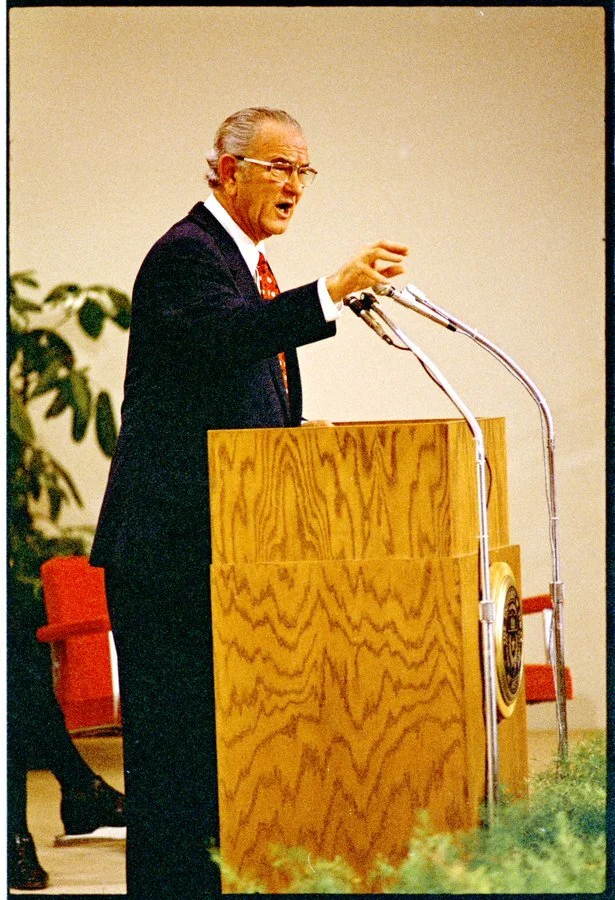
Source: http://www.edchange.org/multicultural/spee...

Enjoyed this speech? Speakola is a labour of love and I’d be very grateful if you would share, tweet or like it. Thank you.

Facebook Twitter Facebook
In 1960-79 Tags MALCOLM X, BALLOT OR THE BULLET, CIVIL RIGHTS, RACIAL EQUALITY, USA, TRANSCRIPT
Comment

Martin Luther King: 'It is a dream deeply rooted in the American dream', I Have a Dream Speech - 1963

August 6, 2015

28 August, 1963, Washington D.C., USA

I am happy to join with you today in what will go down in history as the greatest demonstration for freedom in the history of our nation.

Five score years ago, a great American, in whose symbolic shadow we stand today, signed the Emancipation Proclamation. This momentous decree came as a great beacon light of hope to millions of Negro slaves who had been seared in the flames of withering injustice. It came as a joyous daybreak to end the long night of their captivity.

But one hundred years later, the Negro still is not free. One hundred years later, the life of the Negro is still sadly crippled by the manacles of segregation and the chains of discrimination. One hundred years later, the Negro lives on a lonely island of poverty in the midst of a vast ocean of material prosperity. One hundred years later, the Negro is still languished in the corners of American society and finds himself an exile in his own land. And so we've come here today to dramatize a shameful condition.

In a sense we've come to our nation's capital to cash a check. When the architects of our republic wrote the magnificent words of the Constitution and the Declaration of Independence, they were signing a promissory note to which every American was to fall heir. This note was a promise that all men, yes, black men as well as white men, would be guaranteed the "unalienable Rights" of "Life, Liberty and the pursuit of Happiness." It is obvious today that America has defaulted on this promissory note, insofar as her citizens of color are concerned. Instead of honoring this sacred obligation, America has given the Negro people a bad check, a check which has come back marked "insufficient funds."

But we refuse to believe that the bank of justice is bankrupt. We refuse to believe that there are insufficient funds in the great vaults of opportunity of this nation. And so, we've come to cash this check, a check that will give us upon demand the riches of freedom and the security of justice.

We have also come to this hallowed spot to remind America of the fierce urgency of Now. This is no time to engage in the luxury of cooling off or to take the tranquilizing drug of gradualism. Now is the time to make real the promises of democracy. Now is the time to rise from the dark and desolate valley of segregation to the sunlit path of racial justice. Now is the time to lift our nation from the quicksands of racial injustice to the solid rock of brotherhood. Now is the time to make justice a reality for all of God's children.

It would be fatal for the nation to overlook the urgency of the moment. This sweltering summer of the Negro's legitimate discontent will not pass until there is an invigorating autumn of freedom and equality. Nineteen sixty-three is not an end, but a beginning. And those who hope that the Negro needed to blow off steam and will now be content will have a rude awakening if the nation returns to business as usual. And there will be neither rest nor tranquility in America until the Negro is granted his citizenship rights. The whirlwinds of revolt will continue to shake the foundations of our nation until the bright day of justice emerges.

But there is something that I must say to my people, who stand on the warm threshold which leads into the palace of justice: In the process of gaining our rightful place, we must not be guilty of wrongful deeds. Let us not seek to satisfy our thirst for freedom by drinking from the cup of bitterness and hatred. We must forever conduct our struggle on the high plane of dignity and discipline. We must not allow our creative protest to degenerate into physical violence. Again and again, we must rise to the majestic heights of meeting physical force with soul force.

The marvelous new militancy which has engulfed the Negro community must not lead us to a distrust of all white people, for many of our white brothers, as evidenced by their presence here today, have come to realize that their destiny is tied up with our destiny. And they have come to realize that their freedom is inextricably bound to our freedom.

We cannot walk alone.

And as we walk, we must make the pledge that we shall always march ahead.

We cannot turn back.

There are those who are asking the devotees of civil rights, "When will you be satisfied?" We can never be satisfied as long as the Negro is the victim of the unspeakable horrors of police brutality. We can never be satisfied as long as our bodies, heavy with the fatigue of travel, cannot gain lodging in the motels of the highways and the hotels of the cities. *We cannot be satisfied as long as the negro's basic mobility is from a smaller ghetto to a larger one. We can never be satisfied as long as our children are stripped of their self-hood and robbed of their dignity by signs stating: "For Whites Only."* We cannot be satisfied as long as a Negro in Mississippi cannot vote and a Negro in New York believes he has nothing for which to vote. No, no, we are not satisfied, and we will not be satisfied until "justice rolls down like waters, and righteousness like a mighty stream."

I am not unmindful that some of you have come here out of great trials and tribulations. Some of you have come fresh from narrow jail cells. And some of you have come from areas where your quest -- quest for freedom left you battered by the storms of persecution and staggered by the winds of police brutality. You have been the veterans of creative suffering. Continue to work with the faith that unearned suffering is redemptive. Go back to Mississippi, go back to Alabama, go back to South Carolina, go back to Georgia, go back to Louisiana, go back to the slums and ghettos of our northern cities, knowing that somehow this situation can and will be changed.

Let us not wallow in the valley of despair, I say to you today, my friends.

And so even though we face the difficulties of today and tomorrow, I still have a dream. It is a dream deeply rooted in the American dream.

I have a dream that one day this nation will rise up and live out the true meaning of its creed: "We hold these truths to be self-evident, that all men are created equal."

I have a dream that one day on the red hills of Georgia, the sons of former slaves and the sons of former slave owners will be able to sit down together at the table of brotherhood.

I have a dream that one day even the state of Mississippi, a state sweltering with the heat of injustice, sweltering with the heat of oppression, will be transformed into an oasis of freedom and justice.

I have a dream that my four little children will one day live in a nation where they will not be judged by the color of their skin but by the content of their character.

I have a dream today!

I have a dream that one day, down in Alabama, with its vicious racists, with its governor having his lips dripping with the words of "interposition" and "nullification" -- one day right there in Alabama little black boys and black girls will be able to join hands with little white boys and white girls as sisters and brothers.

I have a dream today!

I have a dream that one day every valley shall be exalted, and every hill and mountain shall be made low, the rough places will be made plain, and the crooked places will be made straight; "and the glory of the Lord shall be revealed and all flesh shall see it together."

This is our hope, and this is the faith that I go back to the South with.

With this faith, we will be able to hew out of the mountain of despair a stone of hope. With this faith, we will be able to transform the jangling discords of our nation into a beautiful symphony of brotherhood. With this faith, we will be able to work together, to pray together, to struggle together, to go to jail together, to stand up for freedom together, knowing that we will be free one day.

And this will be the day -- this will be the day when all of God's children will be able to sing with new meaning:

My country 'tis of thee, sweet land of liberty, of thee I sing.

Land where my fathers died, land of the Pilgrim's pride,

From every mountainside, let freedom ring!

And if America is to be a great nation, this must become true.

And so let freedom ring from the prodigious hilltops of New Hampshire.

Let freedom ring from the mighty mountains of New York.

Let freedom ring from the heightening Alleghenies of Pennsylvania.

Let freedom ring from the snow-capped Rockies of Colorado.

Let freedom ring from the curvaceous slopes of California.

But not only that:

Let freedom ring from Stone Mountain of Georgia.

Let freedom ring from Lookout Mountain of Tennessee.

Let freedom ring from every hill and molehill of Mississippi.

From every mountainside, let freedom ring.

And when this happens, and when we allow freedom ring, when we let it ring from every village and every hamlet, from every state and every city, we will be able to speed up that day when all of God's children, black men and white men, Jews and Gentiles, Protestants and Catholics, will be able to join hands and sing in the words of the old Negro spiritual:

                Free at last! Free at last!

                Thank God Almighty, we are free at last!

Preeminent MLK historian Dr Clayborne Carson, the man chosen by Coretta Scott King as the founding director of the Dr Martin Luther King Centre for Education and Research, was a guest on the podcast, talking about I Have a Dream and other speeches.

Source: http://www.americanrhetoric.com/speeches/m...

Enjoyed this speech? Speakola is a labour of love and I’d be very grateful if you would share, tweet or like it. Thank you.

Facebook Twitter Facebook
In 1960-79 Tags USA, MARTIN LUTHER KING, CIVIL RIGHTS, I HAVE A DREAM, RACIAL EQUALITY, TRANSCRIPT
Comment

See my film!

Limited Australian Season

March 2025

Details and ticket bookings at

angeandtheboss.com

Support Speakola

Hi speech lovers,
With costs of hosting website and podcast, this labour of love has become a difficult financial proposition in recent times. If you can afford a donation, it will help Speakola survive and prosper.

Best wishes,
Tony Wilson.

Become a Patron!

Learn more about supporting Speakola.

Featured political

Featured
Jon Stewart: "They responded in five seconds", 9-11 first responders, Address to Congress - 2019
Jacinda Ardern: 'They were New Zealanders. They are us', Address to Parliament following Christchurch massacre - 2019
Dolores Ibárruri: "¡No Pasarán!, They shall not pass!', Defense of 2nd Spanish Republic - 1936
Jimmy Reid: 'A rat race is for rats. We're not rats', Rectorial address, Glasgow University - 1972

Featured eulogies

Featured
For Geoffrey Tozer: 'I have to say we all let him down', by Paul Keating - 2009
for James Baldwin: 'Jimmy. You crowned us', by Toni Morrison - 1988
for Michael Gordon: '13 days ago my Dad’s big, beautiful, generous heart suddenly stopped beating', by Scott and Sarah Gordon - 2018

Featured commencement

Featured
Tara Westover: 'Your avatar isn't real, it isn't terribly far from a lie', The Un-Instagrammable Self, Northeastern University - 2019
Tim Minchin: 'Being an artist requires massive reserves of self-belief', WAAPA - 2019
Atul Gawande: 'Curiosity and What Equality Really Means', UCLA Medical School - 2018
Abby Wambach: 'We are the wolves', Barnard College - 2018
Eric Idle: 'America is 300 million people all walking in the same direction, singing 'I Did It My Way'', Whitman College - 2013
Shirley Chisholm: ;America has gone to sleep', Greenfield High School - 1983

Featured sport

Featured
Joe Marler: 'Get back on the horse', Harlequins v Bath pre game interview - 2019
Ray Lewis : 'The greatest pain of my life is the reason I'm standing here today', 52 Cards -
Mel Jones: 'If she was Bradman on the field, she was definitely Keith Miller off the field', Betty Wilson's induction into Australian Cricket Hall of Fame - 2017
Jeff Thomson: 'It’s all those people that help you as kids', Hall of Fame - 2016

Fresh Tweets


Featured weddings

Featured
Dan Angelucci: 'The Best (Best Man) Speech of all time', for Don and Katherine - 2019
Hallerman Sisters: 'Oh sister now we have to let you gooooo!' for Caitlin & Johnny - 2015
Korey Soderman (via Kyle): 'All our lives I have used my voice to help Korey express his thoughts, so today, like always, I will be my brother’s voice' for Kyle and Jess - 2014

Featured Arts

Featured
Bruce Springsteen: 'They're keepers of some of the most beautiful sonic architecture in rock and roll', Induction U2 into Rock Hall of Fame - 2005
Olivia Colman: 'Done that bit. I think I have done that bit', BAFTA acceptance, Leading Actress - 2019
Axel Scheffler: 'The book wasn't called 'No Room on the Broom!', Illustrator of the Year, British Book Awards - 2018
Tina Fey: 'Only in comedy is an obedient white girl from the suburbs a diversity candidate', Kennedy Center Mark Twain Award -  2010
Tina Fey: 'Only in comedy is an obedient white girl from the suburbs a diversity candidate', Kennedy Center Mark Twain Award - 2010

Featured Debates

Featured
Sacha Baron Cohen: 'Just think what Goebbels might have done with Facebook', Anti Defamation League Leadership Award - 2019
Greta Thunberg: 'How dare you', UN Climate Action Summit - 2019
Charlie Munger: 'The Psychology of Human Misjudgment', Harvard University - 1995
Lawrence O'Donnell: 'The original sin of this country is that we invaders shot and murdered our way across the land killing every Native American that we could', The Last Word, 'Dakota' - 2016