
• Genre
  • About
  • Submissions
  • Donate
  • Search
Menu

Speakola

All Speeches Great and Small
  • Genre
  • About
  • Submissions
  • Donate
  • Search
Share a political speech
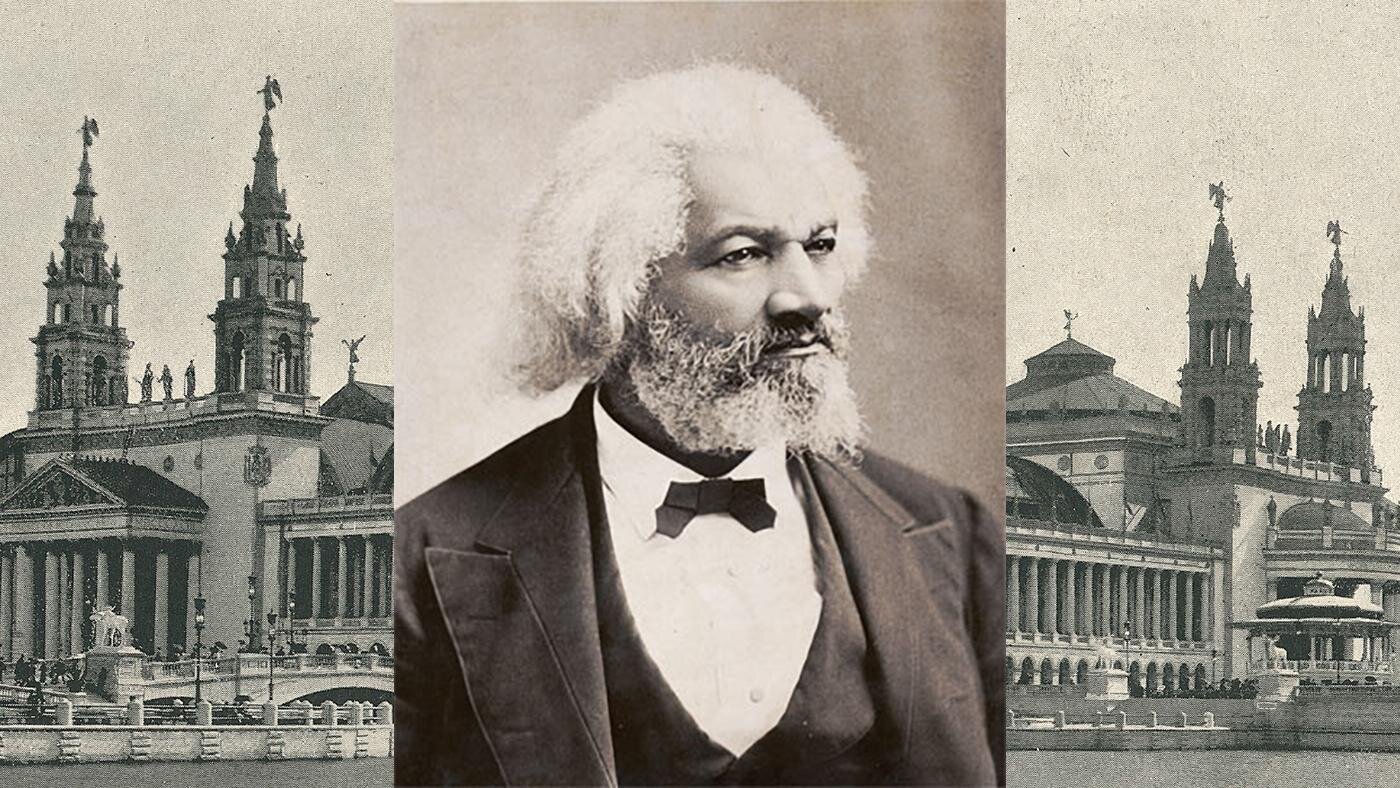
Frederick Douglass.jpg

Frederick Douglass: 'My subject is Haiti, the Black Republic', Lecture on Haiti - 1893

January 29, 2021

2 January 1893, Haiti Pavilion, Chicago World Fair, Illinois, USA

No man should presume to come before an intelligent American audience without a commanding object and an earnest purpose. In whatever else I may be deficient, I hope I am qualified, both in object and purpose, to speak to you this evening.

My subject is Haiti, the Black Republic; the only self-made Black Republic in the world. I am to speak to you of her character, her history, her importance and her struggle from slavery to freedom and to statehood. I am to speak to you of her progress in the line of civilization; of her relation with the United States; of her past and present; of her probable destiny; and of the bearing of her example as a free and independent Republic, upon what may be the destiny of the African race in our own country and elsewhere.

If, by a true statement of facts and a fair deduction from them, I shall in any degree promote a better understanding of what Haiti is, and create a higher appreciation of her merits and services to the world; and especially, if I can promote a more friendly feeling for her in this country and at the same time give to Haiti herself a friendly hint as to what is hopefully and justly expected of her by her friends, and by the civilized world, my object and purpose will have been accomplished.

There are many reasons why a good understanding should exist between Haiti and the United States. Her proximity; her similar government and her large and increasing commerce with us, should alone make us deeply interested in her welfare, her history, her progress and her possible destiny.

Haiti is a rich country. She has many things which we need and we have many things which she needs. Intercourse between us is easy. Measuring distance by time and improved steam navigation, Haiti will one day be only three days from New York and thirty-six hours from Florida; in fact our next door neighbor. On this account, as well as others equally important, friendly and helpful relations should subsist between the two countries. Though we have a thousand years of civilization behind us, and Haiti only a century behind her; though we are large and Haiti is small; though we are strong and Haiti is weak; though we are a continent and Haiti is bounded on all sides by the sea, there may come a time when even in the weakness of Haiti there may be strength to the United States.

Now, notwithstanding this plain possibility, it is a remarkable and lamentable fact, that while Haiti is so near us and so capable of being so serviceable to us; while, like us, she is trying to be a sister republic and anxious to have a government of the people, by the people and for the people; while she is one of our very best customers, selling her coffee and her other valuable products to Europe for gold, and sending us her gold to buy our flour, our fish, our oil, our beef and our pork; while she is thus enriching our merchants and our farmers and our country generally, she is the one country to which we turn the cold shoulder.

We charge her with being more friendly to France and to other European countries than to ourselves. This charge, if true, has a natural explanation, and the fault is more with us than with Haiti. No man can point to any act of ours to win the respect and friendship of this black republic. If, as is alleged, Haiti is more cordial to France than to the United States, it is partly because Haiti is herself French. Her language is French; her literature is French, her manners and fashions are French; her ambitions and aspirations are French; her laws and methods of government are French; her priesthood and her education are French; her children are sent to school in France and their minds are filled with French ideas and French glory.

But a deeper reason for coolness between the countries is this: Haiti is black, and we have not yet forgiven Haiti for being black [applause] or forgiven the Almighty for making her black. [Applause.] In this enlightened act of repentance and forgiveness, our boasted civilization is far behind all other nations. [Applause.] In every other country on the globe a citizen of Haiti is sure of civil treatment. [Applause.] In every other nation his manhood is recognized and respected. [Applause.] Wherever any man can go, he can go. [Applause.] He is not repulsed, excluded or insulted because of his color. [Applause.] All places of amusement and instruction are open to him. [Applause.] Vastly different is the case with him when he ventures within the border of the United States. [Applause.] Besides, after Haiti had shaken off the fetters of bondage, and long after her freedom and independence had been recognized by all other civilized nations, we continued to refuse to acknowledge the fact and treated her as outside the sisterhood of nations.

No people would be likely soon to forget such treatment and fail to resent it in one form or another. [Applause.] Not to do so would justly invite contempt.

In the nature of the country itself there is much to inspire its people with manliness, courage and self-respect. In its typography it is wonderfully beautiful, grand and impressive. Clothed in its blue and balmy atmosphere it rises from the surrounding sea in surpassing splendor. In describing the grandeur and sublimity of this country, the Haitian may well enough adopt the poetic description of our own proud country: [Applause.]

A land of forests and of rock,
Of deep blue sea and mighty rivers
Of mountains reared aloft to mock,
The thunder shock, the lightning's quiver;
My own green land forever.

It is a land strikingly beautiful, diversified by mountains, valleys, lakes, rivers and plains, and contains in itself all the elements of great and enduring wealth. Its limestone formation and foundation are a guarantee of perpetual fertility. Its tropical heat and insular moisture keep its vegetation fresh, green and vigorous all the year round. At an altitude of eight thousand feet, its mountains are still covered with woods of great variety and of great value. Its climate, varying with altitude like that of California, is adapted to all constitutions and productions.

Fortunate in its climate and soil, it is equally fortunate in its adaptation to commerce. Its shore line is marked with numerous indentations of inlets, rivers, bays and harbors, where every grade of vessel may anchor in safety. Bulwarked on either side by lofty mountains rich with tropical verdure from base to summit, its blue waters dotted here and there with the white wings of commerce from every land and sea, the Bay of Port au Prince almost rivals the far-famed Bay of Naples, the most beautiful in the world.

One of these bays has attracted the eyes of American statesmanship. The Mole St. Nicolas of which we have heard much and may hear much more, is a splendid habor. It is properly styled the Gibraltar of that country. It commands the Windward Passage, the natural gateway of the commerce both of the new and old world. Important now, our statesmanship sees that it will be still more important when the Nicaragua Canal shall be completed. Hence we want this harbor for a naval station. It is seen that the nation that can get it and hold it will be master of the land and sea in its neighborhood. Some rash things have been said by Americans about getting possession of this harbor. [Applause.] We are to have it peaceably, if we can, forcibly, if we must. I hardly think we shall get it by either process, [Applause.] for the reason that Haiti will not surrender peacefully, and it would cost altogether too much to wrest it from her by force. [Applause.] I thought in my simplicity when Minister and Council General to Haiti, that she might as an act of comity, make this concession to the United States, but I soon found that the judgment of the American Minister was not the judgment of Haiti. Until I made the effort to obtain it I did not know the strength and vigor of the sentiment by which it would be withheld. [Applause.] Haiti has no repugnance to losing control over a single inch of her territory. [Applause.] No statesman in Haiti would dare to disregard this sentiment. It could not be done by any government without costing the country revolution and bloodshed. [Applause.] I did not believe that President Harrison wished me to press the matter to any such issue. [Applause.] On the contrary, I believe as a friend to the colored race he desired peace in that country. [Applause.]

The attempt to create angry feeling in the United States against Haiti because she thought proper to refuse us the Mole St. Nicolas, is neither reasonable nor creditable. There was no insult or broken faith in the case. Haiti has the same right to refuse that we had to ask, and there was insult neither in the asking nor in the refusal. [Applause.]

Neither the commercial, geographical or numerical importance of Haiti is to be despised. [Applause.] If she wants much from the world, the world wants much that she possesses. [Applause.] She produces coffee, cotton, log-wood, mahogany and lignum-vitae. The revenue realized by the government from these products is between nine and ten millions of dollars. With such an income, if Haiti could be kept free from revolutions, she might easily become, in proportion to her territory and population, the richest country in the world. [Applause] And yet she is comparatively poor, not because she is revolutionary.

The population of Haiti is estimated to be nearly one million. I think the actual number exceeds this estimate. In the towns and cities of the country the people are largely of mixed blood and range all the way from black to white. But the people of the interior are of pure negro blood. The prevailing color among them is a dark brown with a dash of chocolate in it. They are in many respects a fine looking people. There is about them a sort of majesty. They carry themselves proudly erect as if conscious of their freedom and independence. [Applause.] I thought the women quite superior to the men. They are elastic, vigorous and comely. They move with the step of a blooded horse. The industry, wealth and prosperity of the country depends largely upon them. [Applause.] They supply the towns and cities of Haiti with provisions, bringing them from distances of fifteen and twenty miles, and they often bear an additional burden in the shape of a baby. This baby burden is curiously tied to the sides of the mother. They seem to think nothing of their burden, the length of the journey or the added weight of the baby. Thousands of these country women in their plain blue gowns and many colored turbans, every morning line the roads leading into Port au Prince. The spectacle is decidedly striking and picturesque. Much of the marketing is also brought down from the mountains on donkeys, mules, small horses and horned cattle. In the management of these animals we see in Haiti a cruelty inherited from the old slave system. They often beat them unmercifully.

I HAVE SAID THAT THE MEN did not strike me as equal to the women, and I think that this is largely due to the fact that most of the men are compelled to spend much of their lives as soldiers in the service of their country, and this is a life often fatal to the growth of all manly qualities. Every third man you meet within the streets of Port au Prince is a soldier. His vocation is unnatural. He is separated from home and industry. He is tempted to spend much of his time in gambling, drinking and other destructive vices; vices which never fail to show themselves repulsively in the manners and forms of those addicted to them. As I walked through the streets of Port au Prince and saw these marred, shattered and unmanly men, I found myself taking up over Haiti the lament of Jesus over Jerusalem, and saying to myself, "Haiti! Poor Haiti! When will she learn and practice the things that make for her peace and happiness?"

NO OTHER LAND HAS BRIGHTER SKIES. No other land has purer water, richer soil, or a more happily diversified climate. She has all the natural conditions essential to a noble, prosperous and happy country. [Applause.] Yet, there she is, torn and rent by revolutions, by clamorous factions and anarchies; floundering her life away from year in a laby rinth of social misery. Every little while we find her convulsed by civil war, engaged in the terrible work of death; frantically shedding her own blood and driving her best mental material into hopeless exile. Port au Prince, a city of sixty thousand souls, and capable of being made one of the healthiest, happiest and one of the most beautiful cities of the West Indies, has been destroyed by fire once in each twenty-five years of its history. The explanation is this: Haiti is a country of revolutions. They break forth without warning and without excuse. The town may stand at sunset and vanish in the morning. Splendid ruins, once the homes of the rich, meet us on every street. Great warehouses, once the property of successful merchants, confront us with their marred and shattered walls in different parts of the city. When we ask: "Whence these mournful ruins?" and "Why are they not rebuilt?" we are answered by one word-- a word of agony and dismal terror, a word which goes to the core of all this people's woes; It is, "revolution!" Such are the uncertainties and insecurities caused by this revolutionary madness of a part of her people, that no insurance company will insure property at a rate which the holder can afford to pay. Under such a condition of things a tranquil mind is impossible. There is ever a chronic, feverish looking forward to possible disasters. Incendiary fires; fires set on foot as a proof of dissatisfaction with the government; fires for personal revenge, and fires to promote revolution are of startling frequency. This is sometimes thought to be due to the character of the race. Far from it. [Applause.] The common people of Haiti are peaceful enough. They have no taste for revolutions. The fault is not with the ignorant many, but with the educated and ambitious few. Too proud to work, and not disposed to go into commerce, they make politics a business of their country. Governed neither by love nor mercy for their country, they care not into what depths she may be plunged. No president, however virtuous, wise and patriotic, ever suits them when they themselves happen to be out of power.

I wish I could say that these are the only conspirators against the peace of Haiti, but I cannot. They have allies in the United States. Recent developments have shown that even a former United States Minister, resident and Consul General to that country has considered against the present government of Haiti. It so happens that we have men in this country who, to accomplish their personal and selfish ends, will fan the flame of passion between the factions in Haiti and will otherwise assist in setting revolutions afoot. To their shame be it spoken, men in high American quarters have boasted to me of their ability to start a revolution in Haiti at pleasure. They have only to raise sufficient money, they say, with which to arm and otherwise equip the malcontents, of either faction, to effect their object. Men who have old munitions of war or old ships to sell; ships that will go down in the first storm, have an interest in stirring up strife in Haiti. It gives them a market for their worthless wares. Others of a speculative turn of mind and who have money to lend at high rates of interest are glad to conspire with revolutionary chiefs of either faction, to enable them to start a bloody insurrection. To them, the welfare of Haiti is nothing; the shedding of human blood is nothing; the success of free institutions is nothing, and the ruin of neighboring country is nothing. They are sharks, pirates and Shylocks, greedy for money, no matter at what cost of life and misery to mankind.

It is the opinion of many, and it is mine as well, that these revolutions would be less frequent if there were less impunity afforded the leaders of them. The so-called right of asylum is extended to them. This right is merciful to the few, but cruel to the many. While these crafty plotters of mischief fail in their revolutionary attempts, they can escape the consequences of their treason and rebellion by running into the foreign legations and consulates. Once within the walls of these, the right of asylum prevails and they know that they are safe from pursuit and will be permitted to leave the country without bodily harm. If I were a citizen of Haiti, I would do all I could to abolish this right of Asylum. During the late trouble at Port au Prince, I had under the protection of the American flag twenty of the insurgents who, after doing their mischief, were all safely embarked to Kingston without punishment, and since then have again plotted against the peace of their country. The strange thing is, that neither the government nor the rebels are in favor of the abolition of this so-called right of asylum, because the fortunes of war may at some time make it convenient to the one or the other of them to find such shelter.

Manifestly, this revolutionary spirit of Haiti is her curse, her crime, her greatest calamity and the explanation of the limited condition of her civilization. It makes her an object of distress to her friends at home and abroad. It reflects upon the colored race everywhere. Many who would have gladly believed in her ability to govern herself wisely and successfully are compelled at times to bow their heads in doubt and despair. Certain it is that while this evil spirit shall prevail, Haiti cannot rise very high in the scale of civilization. While this shall prevail, ignorance and superstition will flourish and no good thing can grow and prosper within her borders. While this shall prevail, she will resemble the man cutting himself among the tombs. While this shall prevail, her rich and fruitful soil will bring forth briers, thorns and noxious weeds. While this evil spirit shall prevail, her great natural wealth will be wasted and her splendid possibilities will be blasted. While this spirit shall prevail, she will sadden the hearts of her friends and rejoice the hearts of her enemies. While this spirit of turbulence shall prevail, confidence in her public men will be weakened, and her well-won independence will be threatened. Schemes of aggression and foreign protectorates will be invented. While this evil spirit shall prevail, faith in the value and stability of her institutions, so essential to the happiness and well-being of her people, will vanish. While it shall prevail, the arm of her industry will be paralyzed, the spirit of enterprise will languish, national opportunities will be neglected, the means of education will be limited the ardor of patriotism will be quenched, her national glory will be tarnished, and her hopes and the hopes of her friends will be blighted.

In its presence, commerce is interrupted, progress halts, streams go unbridged, highways go unrepaired, streets go unpaved, cities go unlighted, filth accumulates in her market places, evil smells affront the air, and disease and pestilence are invited to their work of sorrow, pain and death.

Port au Prince should be one of the finest cities in the world. There is no natural cause for its present condition. No city in the world is by nature more easily drained of impurities and kept clean. The land slopes to the water's edge, and pure sparkling mountain streams flow through its streets on their way to the sea. With peace firmly established within her borders, this city might be as healthy as New York, and Haiti might easily lead all the other islands of the Caribbean Sea in the race of civilization.

You will ask me about the President of Haiti. I will tell you. Whatever may be said or thought of him to the contrary I affirm that there is no man in Haiti, who more fully understands or more deeply feels the need of peace in his country than does President Hyppolite. No purer patriot ever ruled the country. His administration, from the first to the last, has had the welfare of his country in view. It is against the fierce revolutionary spirit of a part of his countrymen that he has had to constantly watch and contend. It has met him more fiercely at the seat of his government than elsewhere.

Unhappily, his countrymen are not his only detractors. Though a friend and benefactor of his country, and though bravely battling against conspiracy, treason and rebellion, instead of receiving the sympathy and support of the American Press and people, this man has been denounced as a cruel monster. I declare to you, than this, no judgment of President Hyppolite could be more unjust and more undeserved.

I know him well and have studied his character with care, and no man can look into his thoughtful face and hear his friendly voice without feeling that he is in the presence of a kind hearted man. The picture of him in the New York papers, which some of you have doubtless seen, does him no manner of justice, and, in fact, does him startling injustice. It makes him appear like a brute, while he is in truth a fine looking man, "black, but comely." His features are regular, his bearing dignified, his manner polished, and he makes for himself the impression of a gentleman and a scholar. His conduct during the recent troubles in Haiti was indeed, prompt, stern and severe, but, in the judgment of the most thoughtful and patriotic citizens of than country, it was not more stringent than the nature of the case required. Here, as elsewhere, desperate cases require desperate remedies. Governments must be a terror to evil-doers if they would be praised to those who do well. It will no do for a government with the knife of treason at its throat, to bear the sword in vain. [Applause.]

I invoke for the President of Haiti the charity and justice we once demanded for our President. Like Abraham Lincoln, President Hyppolite was duly elected President of Haiti and took the oath of office prescribed by his country, and when treason and rebellion raised their destructive heads, he like Mr. Lincoln, struck them down otherwise he would have been struck down by them. [Applause.] Hyppolite did the same. If one should be commended for his patriotism, so should the other. While representing the United States in Haiti, I was repeatedly charged in certain quarters, with being a friend to Haiti. I am not ashamed of that charge. I own at once, that the charge is true, and I would be ashamed to have it otherwise than true. I am indeed a friend to Haiti, but not in the sense my accusers would have you believe. They would have it that I preferred the interest of Haiti, to the just claims of my own country, and this charge I utterly deny and defy any man to prove it. I am a friend of Haiti and a friend of every other people upon whom the yoke of slavery had been imposed. In this I only stand with philanthropic men and women everywhere. I am the friend of Haiti in the same sense in which General Harrison, the President of the United States, himself is a friend of Haiti. I am glad to be able to say here and now of him, that I found in President Harrison no trace of the vulgar prejudice which is just now so malignant in some parts of our southern country towards the negro. He sent me not to represent in Haitiour race prejudice, but the best sentiments of our loyal, liberty-loving American people. No mean or mercenary mission was set before me. His advice to me was worthy of his lofty character. He authorized me in substance to do all that I could consistently with my duty to the United States, for the welfare of Haiti and, as far as I could, to persuade her to value and preserve her free institutions, and to remove all all ground for there proaches now hurled at her and at the colored race through her example.

The language of the President was worthy of the chief magistrate of the American people--a people who should be too generous to profit by the misfortune of others; too proud to stoop to meanness; to honest to practice duplicity; too strong to menance the weak, and every way too great to be small. I went to Haiti, imbued with the noble sentiments of General Harrison. For this reason, with others, I named him as worthy to be his own successor, and I could have named no other more worthy of the honor.

From the beginning of our century until now, Haiti and its inhabitants under one aspect or another, have, for various reasons, been very much in the thoughts of the American people. While slavery existed amongst us, her example was a sharp thorn in our side and a source of alarm and terror. She came into the sisterhood of nations through blood. She was described at the time of her advent, as a very hell of horrors. Her very name was pronounced with a shudder. She was a startling and frightful surprise and a threat to all slave-holders throughout the world, and the slave-holding world has had its questioning eye upon her career ever since.

By reason of recent events and abolition of slavery, the enfranchisement of the negro in our country, and the probable completion of the Nicaragua canal, Haiti has under another aspect, become, of late, interesting to American statesmen. More thought, more ink and paper have been devoted to her than to all the other West India Islands put together. This interest is both political and commercial, for Haiti is increasingly important in both respects. But aside from politics and aside from commerce, there is, perhaps, no equal number of people anywhere on the globe, in whose history, character and destiny there is more to awaken sentiment, thought and inquiry, than is found in the history of her people.

The country itself, apart from its people, has special attractions. First things have ever had a peculiar and romantic interest, simply because they are first things. In this, Haiti is fortunate. She has in many things been first. She has been made the theatre of great events. She was the first of all the cis-Atlantic world, upon which the firm foot of the progressive, aggressive and all-conquering white man was permanently set. Her grand old tropical forests, fields and mountains, were among the first of the New World to have their silence broken by trans-Atlantic song and speech. She was the first to be invaded by the Christian religion and to witness its forms and ordinances. She was the first to see a Christian church and to behold the cross of Christ. She was also the first to witness the bitter agonies of the negro bending under the blood-stained lash of Christian slave-holders. Happily too, for her, she was the first of the New World in which the black man asserted his right to be free and was brave enough to fight for his freedom and fortunate enough to gain it.

In thinking of Haiti, a painful, perplexing and contradictory fact meets us at the outset. It is: that negro slavery was brought to the New World by the same people from whom Haiti received her religion and her civilization. No people have ever shown greater religious zeal or have given more attention to the ordinances of the Christian church than have the Spaniards; yet no people were ever guilty of more injustice and blood-chilling cruelty to their fellowmen than these same religious Spaniards. Men more learned in the theory of religion than I am, may be able to explain and reconcile these two facts; but to my they seem to prove that men may be very pious, and yet very pitiless; very religious and yet practice the foulest crimes. These Spanish Christians found in Haiti a million of harmless men and women, and in less than sixty years they had murdered nearly all of them. With religion on their lips, the tiger in their hearts and the slave whip in their hands, they lashed these innocent natives to toil, death and extinction. When these pious souls had destroyed the natives, they opened the slave trade with Africa as a merciful device. Such, at least, is the testimony of history.

Interesting as Haiti is in being the cradle in which American religion and civilization were first rocked, its present inhabitants are still more interesting as having been actors in great moral and social events. These have been scarcely less portentous and startling than the terrible earthquakes which have some times moved their mountains and shaken down their towns and cities. The conditions in which the Republican Government of Haiti originated, were peculiar. The great fact concerning its people, is, that they were negro slaves and by force conquered their masters and made themselves free and independent. As a people thus made free and having remained so for eighty-seven years, they are now asked to justify their assumption of statehood at the bar of the civilized world by conduct becoming a civilized nation.

The ethnologist observes them with curious eyes, and questions them on the ground of race. The statesman questions their ability to govern themselves; while the scholar and philanthropist are interested in their progress, their improvement and the question of their destiny.

But, interesting as they are to all these and to others, the people of Haiti, by reason of ancestral identity, are more interesting to the colored people of the United States than to all others, for the Negro, like the Jew, can never part with his identity and race. Color does for the one what religion does for the other and makes both distinct from the rest of mankind. No matter where prosperity or misfortune may chance to drive the negro, he is identified with and shares the fortune of his race. We are told to go to Haiti; to go to Africa. Neither Haiti nor Africa can save us from common doom. Whether we are here or there, we must rise or fall with the race. Hence, we can do about as much for Africa or Haiti by good conduct and success here as anywhere else in the world. The talk of the bettering ourselves by getting rid of the white race, is a great mistake. It is about as idle for the black man to think of getting rid of the white man, as it is for the white man to think of getting rid of the black. They are just the two races which cannot be excluded from any part of the globe, nor can they exclude each other; so we might as well decide to live together here as to go elsewhere Besides, for obvious reasons, until we can make ourselves respected in the United States, we shall not be respected in Haiti,. Africa, or anywhere else.

Of my regard and friendship for Haiti, I have already spoken. I have, too, already spoken somewhat of her faults, as well, for they are many and grievous. I shall, however, show before I get through, that, with all her faults, you and I and all of us have reason to respect Haiti for her services to the cause of liberty and human equality throughout the world, and for the noble qualities she exhibited in all the trying conditions of her early history.

I have, since my return to the United States, been pressed on all sides to foretell what will be the future of Haiti-whether she will ever master and subdue the turbulent elements within her borders and become an orderly Republic. Whether she will maintain her liberty and independence, or, at last, part with both and become a subject of some one or another of the powerful nations of the world by which she seems to be coveted. The question still further is, whether she will fall away into anarchy, chaos and barbarism, or rise to the dignity and happiness of a highly civilized nation and be a credit to the colored race? I am free to say that I believe she will fulfill the latter condition and destiny. By one class of writers, however, such as Mr. Froude and his echoes, men and women who write what they know the prejudice of the hour will accept and pay for, this question has been vehemently answered already against Haiti and the possibilities of the negro race generally.

They tell us that Haiti is already doomed--that she is on the down-grade to barbarism; and, worse still, they affirm that when the negro is left to himself there or elsewhere, he inevitably gravitates to barbarism. Alas, for poor Haiti! and alas, for the poor negro everywhere, if this shall prove true!

The argument as stated against Haiti, is, that since her freedom, she has become lazy; that she is given to gross idolatry, and that these evils are on the increase. That voodooism, fetishism, serpent worship and cannibalism are prevalent there; that little children are fatted for slaughter and offered as sacrifices to their voodoo deities; that large boys and girls run naked through the streets of the towns and cities, and that things are generally going from bad to worse.

In reply to these dark and damning allegations, it will be sufficient only to make a general statement. I admit at once, that there is much ignorance and much superstition in Haiti. The common people there believe much in divinations, charms, witchcraft, putting spells on each other, and in the supernatural and miracle working power of their voodoo priests generally. Owing to this, there is a feeling of superstition and dread of each other, the destructive tendency of which cannot be exaggerated. But it is amazing how much of such darkness society has borne and can bear and is bearing without falling to pieces and without being hopelessly abandoned to barbarism.

Let it be remembered that superstition and idolatry in one form or another have not been in the past, nor are they in the present, confined to any particular place or locality, and that, even in our enlightened age, we need not travel far from our own country, from England, from Scotland, from Ireland, France, Germany or Spain to find considerable traces of gross superstition. We consult familiar spirits in America. Queen Victoria gets water from the Jordan to christen her children, as if the water of that river were any better than the water of any other river. Many go thousands of miles in this age of light to see an old seamless coat supposed to have some divine virtue. Christians at Rome kiss the great toe of a black image called St. Peter, and go up stairs on their knees, to gain divine favor. Here, we build houses and call them God's houses, and go into them to meet God, as if the Almighty dwelt in temples made with men's hands. I am not, myself, altogether free from superstition. I would rather sit at a table with twelve persons than at one with thirteen; and would rather see the new moon first over my right shoulder than over my left, though my reason tells me that it makes no manner of difference over which shoulder I see the new moon or the old. And what better is the material of one house than that of another?

Can man build a house more holy than the house which God himself has built for the children of men? If men are denied a future civilization because of superstition, there are others than the people of Haiti who must be so denied. In one form or another, superstition will be found everywhere and among all sorts of people, high or low. New England once believed in witches, and yet she has become highly civilized.

Haiti is charged with the terrible crime of sacrificing little children to her voodoo gods, and you will want to know what I have to say about this shocking allegation. My answer is: That while I lived in Haiti I made diligent inquiry about this alleged practice so full of horror. I questioned many persons concerning it, but I never met a man who could say that he ever saw an instance of the kind; nor did I ever see a man who ever met any other man who said he had seen such an act of human sacrifice. This I know is not conclusive, for strange things have sometimes been done in the name of God, and in the practice of religion. You know that our good father Abraham (not Abraham Lincoln) once thought that it would please Jehovah to have him kill his son Isaac and offer him a sacrifice on the altar. Men in all ages have thought to gain divine favor of their divinities or to escape their wrath by offering up to them something of great and special value. Sometimes it was the firstlings of the flock, and sometimes it was the fat of fed beasts, fed for the purpose of having it nice and acceptable to the divine being. As if a divine being could be greatly pleased with the taste or smell of such offerings. Men have become more sensible of late. They keep, smell and eat their fat beef and mutton themselves.

As to the little boys and girls running nude in the streets, I have to say, that while there are instances of the kind, and more of them we, with the ideas of our latitude, would easily tolerate, they are nevertheless the exceptions to the general rule in Haiti. You will see in the streets of Port au Prince, one hundred decently dressed children to one that is nude; yet, our newspaper correspondents and six-day tourists in Haiti, would lead you to think that nudity is there the rule and decent clothing the exception. It should be remembered also, that in a warm climate like that of Haiti, the people consider more the comfort of their children in this respect than any fear of improper exposure of their little innocent bodies.

A word about snake worship. This practice is not new in the history of religion. It is as old as Egypt and is a part of our own religious system. Moses lifted up the serpent in the wilderness as a remedy for a great malady, and our Bible tells us of some wonderful things done by the serpent in the way of miraculous healing. Besides, he seems to have been on hand and performed marvelous feats in the Garden of Eden, and to have wielded a potent and mysterious influence in deciding the fate of mankind for time and eternity. Without the snake, the plan of salvation itself would not be complete. No wonder then that Haiti, having heard so much of the serpent in these respectable quarters and sublime relations, has acquired some respect for a divinity so potent and so ancient.

But the future of Haiti. What is it to be? Will it be civilization or barbarism? Will she remain an independent state, or be swallowed up by one or another of the great states? Whither is she tending? In considering these questions, we should allow no prejudice to influence us on the one hand or the other. If it be true that the Negro, left to himself, lapses into barbarism, as is alleged; the Negro above and beyond all others in the world should know it and should acknowledge it.

But it is said that the people of Haiti are lazy. Well, with the conditions of existence so easy and the performance of work so uninviting, the wonder is not that the men of Haiti are lazy, but that they work at all. But it is not true that the people of Haiti are as lazy as they are usually represented to be. There is much hard work done in Haiti, both mental and physical. This is true, not only of accessible altitudes where the air is cool and bracing, but it is so in the low lands, where the climate is hot, parching and enervating. No one can see the ships afloat in the splendid harbors of Haiti, and see the large imports and exports of the country, without seeing also that somebody there has been at work. A revenue of millions does not come to a country where no work is done.

Plainly enough; we should take no snap judgment on a question so momentous. It should not be determined by a dash of the pen and upon mere appearances of the moment. There are ebbs and flows in the tide of human affairs, and Haiti is no exception to this rule. There have been times in her history when she gave promise of great progress, and others, when she seemed to retrograde . We should view her in the light broad light of her whole history, and observe well her conduct in the various vicissitudes through which she has passed. Upon such broad view I am sure Haiti will be vindicated.

It was once said by the great Daniel O'Connell, that the history of Ireland might be traced, like a wounded man through a crowd, by the blood. The same may be said of the history of Haiti as a free state. Her liberty was born in blood, cradled in misfortune, and has lived more or less in a storm of revolutionary turbulence. It is important to know how she behaved in these storms. As I view it, there is one great fundamental and soul-cheering fact concerning her. It is this: Despite all the trying vicissitudes of her history, despite all the machinations of her enemies at home, in spite of all temptations from abroad, despite all her many destructive revolutions, she has remained true to herself, true to her autonomy, and still remains a free and independent state. No power on this broad earth has yet induced or seduced her to seek a foreign protector, or has compelled her to bow her proud neck to a foreign government. We talk of assuming protectorate over Haiti. We had better not attempt it. The success of such an enterprise is repelled by her whole history. She would rather abandon her ports and harbors, retire to her mountain fastnesses, or burn her towns and shed her warm, red, tropical blood over their ashes than to submit to the degradation of any foreign yoke, however friendly. In whatever may be the sources of her shame and misfortune, she has one source of great complacency; she lives proudly in the glory of her bravely won liberty and her blood bought independence, and no hostile foreign foot has been allowed to tread her scared soil in peace from the hour of her independence until now. Her future autonomy is at least secure. Whether civilized or savage, whatever the future may have in store for her, Haiti is the black man's country, now forever. [Applause.]

In just vindication of Haiti, I can go one step further. I can speak of her, not only words of admiration, but words of gratitude as well. She has grandly served the cause of universal human liberty. We should not forget that the freedom you and I enjoy to-day; that the freedom that eight hundred thousand colored people enjoy in the British West Indies; the freedom that has come to the colored race the world over, is largely due to the brave stand taken by the black sons, of Haiti ninety years ago. When they struck for freedom, they builded better than they knew. Their swords were not drawn and could not be drawn simply for themselves alone. They were linked and interlinked with their race, and striking for their freedom, they struck for the freedom of every black man in the world. [Prolonged applause.]

It is said of ancient nations, that each had its special mission in the world and that each taught the world some important lesson. The Jews taught the world a religion, a sublime conception of the Deity. The Greeks taught the world philosophy and beauty. The Romans taught the world jurisprudence. England is foremost among the modern nations in commerce and manufactures. Germany has taught the world to think, while the American Republic is giving the world an example of a Government by the people, of the people and for the people. [Applause.] Among these large bodies, the little community of Haiti, anchored in the Caribbean Sea, has had her mission in the world, and a mission which the world had much need to learn. She has taught the world the danger of slavery and the value of liberty. In this respect she has been the greatest of all our modern teachers.

Speaking for the Negro, I can say, we owe much to Walker for his appeal; to John Brown [applause] for the blow struck at Harper's Ferry, to Lundy and Garrison for their advocacy [applause], We owe much especially to Thomas Clarkson, [applause], to William Wilberforce, to Thomas Fowell Buxton, and to the anti-slavery societies at home and abroad; but we owe incomparably more to Haiti than to them all. [Prolonged applause.] I regard her as the original pioneer emancipator of the nineteenth century. [Applause.] It was her one brave example that first of all started the Christian world into a sense of the Negro's manhood. I was she who first awoke the Christian world to a sense of "the danger of goading too far the energy that slumbers in a black man's arm." [Applause.] Until Haiti struck for freedom, the conscience of the Christian world slept profoundly over slavery. It was scarcely troubled even by a dream of this crime against justice and liberty. The Negro was in its estimation a sheep like creature, having no rights which white men were bound to respect, a docile animal, a kind of ass, capable of bearing burdens, and receiving strips from a white master without resentment, and without resistance. The mission of Haiti was to dispel this degradation and dangerous delusion, and to give to the world a new and true revelation of the black man's character. This mission she has performed and performed it well. [Applause.]

Until she spoke no Christian nation had abolished negro slavery. Until she spoke no christian nation had given to the world an organized effort to abolish slavery. Until she spoke the slave ship, followed by hungry sharks, greedy to devour the dead and dying slaves flung overboard to feed them, plouged in peace the South Atlantic painting the sea with the Negro's blood. Until she spoke, the slave trade was sanctioned by all the Christian nations of the world, and our land of liberty and light included. Men made fortunes by this infernal traffic, and were esteemed as good Christians, and the standing types and representations of the Saviour of the World. Until Haiti spoke, the church was silent, and the pulpit was dumb. Slavetraders lived and slave-traders died. Funeral sermons were preached over them, and of them it was said that they died in the triumphs of the christian faith and went to heaven among the just.

To have any just conception or measurement of the intelligence, solidarity and manly courage of the people of Haiti when under the lead of Toussaint L'Ouverture, [prolonged applause] and the dauntless Dessalines, you must remember what the conditions were by which they were surrounded; that all the neighboring islands were slaveholding, and that to no one of all these islands could she look for sympathy, support and co-operation. She trod the wine press alone. Her hand was against the Christian world, and the hand of the Christian world was against her. Her's was a forlorn hope, and she knew that she must do or die.

In Greek or Roman history nobler daring cannot be found. It will ever be a matter of wonder and astonishment to thoughtful men, that a people in abject slavery, subject to the lash, and kept in ignorance of letters, as these slaves were, should have known enough, or have had left in them enough manhood, to combine, to organize, and to select for themselves trusted leaders and with loyal hearts to follow them into the jaws of death to obtain liberty. [Applause.]

In forecasting the future of this people, then, I insist that some importance shall be given to this and to another grand initial fact: that the freedom of Haiti was not given as a boon, but conquered as a right ! [Applause.] Her people fought for it. They suffered for it, and thousands of them endured the most horrible tortures, and perished for it. It is well said that a people to whom freedom is given can never wear it as grandly as can they who have fought and suffered to gain it. Here, as elsewhere, what comes easily, is liable to go easily. But what man will fight to gain, that, man will fight to maintain. To this test Haiti was early subjected, and she stood this test like pure gold. [Applause.]

To re-enslave her brave self-emancipated sons of liberty, France sent in round number's, to Haiti during the years 1802-1803,50,000 of her veteran troops, commanded by he most experienced and skillful generals. History tells us what became of these brave and skillful warriors from France. It shows that they shared the fate of Pharaoh and his hosts. Negro manhood, Negro bravery, Negro military genius and skill, assisted by yellow fever and pestilence made short work of them. The souls of them by thousands were speedily sent into eternity, and their bones were scattered on the mountains of Haiti, there to bleach, burn and vanish under the fierce tropical sun. Since 1804 Haiti has maintained national independence. [Applause.] I fling these facts at the feet of the detractors of the Negro and of Haiti. They may help them to solve the problem of her future. They not only indicate the Negro's courage, but demonstrate his intelligence as well. [Applause.]

No better test of the intelligence of people can be had than is furnished in their laws, their institutions and their great men. To produce these in any considerable degree of perfection, a high order of ability is always required. Haiti has no cause to shrink from this test or from any other.

Human greatness is classified in three divisions: first, greatness of administration; second greatness of organization; and the third, greatness of discovery, the latter being the highest or der of human greatness. In all three of these divisions, Haiti appears to advantage. Her Toussaint L'Ouvertures, her Dessalines, her Christophes, her Petions, her Reguad and others, their enemies being judges, were men of decided ability. [Applause.] They were great in all the three department of human greatness. Let any man in our highly favored country, undertake to organize an army of raw recruits, and especially let any colored man undertake to organize men of his own color, and subject them to military discipline, and he will at once see the hard task that Haiti had on hand, in resisting France and slavery, and be held to admire the ability and character displayed by he sons in making and managing her armies and achieving her freedom. [Applause.]

But Haiti did more than raise armies and discipline troops. She organized a Government and maintained a Government during eighty-seven years. Though she has been ever and anon swept by whirlwinds of lawless turbulence; though she has been shaken by earthquakes of anarchy at home, and has encountered the chilling blasts of prejudice and hate from the outside world, though she has been assailed by fire and sword, from without and within, she has, through all the machinations of her enemies, maintained a well defined civil government, and maintains it to-day. [Applause.] She is represented at all courts of Europe, by able men, and, in turn, she has representatives from all the nations of Europe in her capitol.

She has her judiciary, her executive and legislative departments. She has her house of representatives and her senate. All the functions of government have been, and are now being, regularly performed within her domain. What does all this signify? I answer. Very much to her credit. If it be true that all present, and all the future rests upon all the past, there is a solid ground to hope for Haiti. There is a fair chance that she may yet be highly progressive, prosperous and happy. [Applause.]

Those who have studied the history of civilization, with the largest range of observation and the most profound philosophical generalization, tell us that men are governed by their antecedents; that what they did under one condition of affairs they will be likely to do under similar conditions, whenever such shall arise. Haiti has in the past, raised many learned, able and patriotic men. She has made wise laws for own government. Among her citizens she has had scholars and statesmen, learned editors, able lawyers and eminent physicians. She has now, men of education in the church and in her government, and she is now, as ever, in the trend of civilization. She may be slow and halting in the race, but her face is in the right direction. [Applause.]

THE STATEMENT THAT SHE IS ON THE DOWN GRADE TO BARBARISM is easily made, but hard to sustain. It is not all borne out by my observation and experience while in that country. It is my good fortune to possess the means of comparison, as to "what Haiti was and what Haiti is;" what she was twenty years ago, and what she is now. I visited that country twenty years ago and have spent much time there since, and I have no hesitation in saying that, with all that I have said of her revolutions and defective civilization, I can report a marked and gratifying improvement in the condition of her people, now, compared with what it was twenty years ago. [Applause.]

IN PORT AU PRINCE, which may be taken as a fair expression of the general condition of the country, I saw more apparent domestic happiness, more wealth, more personal neatness, more attention to dress, more carriage rolling through the streets, more commercial activity, more schools, more well clothed and well cared for children, more churches, more teachers, more Sisters of Charity more respect for marriage, more family comfort, more attention to sanitary conditions, more and better water supply, more and better Catholic clergy, more attention to religious observances, more elegant residences, and more of everything desirable than I saw there twenty years ago. [Applause.]

AT THAT TIME HAITI was isolated. She was outside of telegraphic communication with the civilized world. She now has such connection. She has paid for a cable of her own and with her own money.

THIS HAS BEEN ACCOMPLISHED under the much abused President Hyppolite. [Applause.] Then, there was no effort to light any of the streets. Now, the main streets are lighted. The streets are full of carriages at night, but none are allowed to appear without lighted lamps, and every attention is given to the peace and good order of the citizens. There is much loud talk in Haiti, but blows are seldom exchanged between Haitians.

EVEN HER REVOLUTIONS are less sanguinary and ruthless now, than formerly. They have in many cases been attended with great disregard of private rights, with destruction of property and the commission of other crimes, but nothing of the kind was permitted to occur in the revolution by which President Hyppolite, was raised to power. He was inaugurated in a manner as orderly as that inducting into office any President of the United States. [Applause.]

BEFORE WE DECIDE AGAINST THE probability of progress in Haiti, we should look into the history of the progress of other nations. Some of the most enlightened and highly civilized states of the world of to-day, were, a few centuries ago, as deeply depraved in morals, manners and customs, as Haiti is alleged to be now. Prussia, which is to-day the arbiter of peace and war in Europe and holds in her borders the profoundest thinkers of the nineteenth century, was, only three centuries ago, like Haiti, the theatre of warring factions, and the scene of flagrant immoralities. France, England, Italy and Spain have all gone through the strife and turmoil of factional war, the like of which now makes Haiti a by-word, and a hissing to a mocking earth. As they have passed through the period of violence, why may not Haiti do the same? [Applause.]

IT SHOULD ALSO BE REMEMBERED THAT HAITI IS STILL IN HER CHILDHOOD. Given her time! Give her time!! While eighty years may be a good old age for a man, it can only be as a year in the life of a nation. With a people beginning a national life as Haiti did, with such crude material within, and such antagonistic forces operating upon her from without, the marvel is, not that she is far in the rear of civilization, but that she has survived in any sense as a civilized nation.

THOUGH SHE IS STILL AN INFANT, she is out of the arms of her mother. Though she creeps, rather than walks; stumbles often and sometimes falls, her head is not broken, and she still lives and grows, and I predict, will yet be tall and strong. Her wealth is greater, her population is larger, her credit is higher, her currency is sounder, her progress is surer, her statesmen are abler, her patriotism is nobler, and her government is steadier and firmer than twenty years ago. I predict that out of civil strife, revolution and war, there will come a desire for peace. Out of division will come a desire for union; out of weakness a desire for strength, out of ignorance a desire for knowledge, and out of stagnation will come a desire for progress. [Applause.] Already I find in her a longing for peace. Already she feels that she has had enough and more than enough of war. Already she perceives the need of education, and is providing means to obtain it on a large scale. Already she has added five hundred schools to her forces of education, within the two years of Hyppolite's administration. [Applause,] In the face of such facts; in the face of the fact that Haiti still lives, after being boycotted by all the Christian world; in the face of the fact of her known progress within the last twenty years in the face of the fact that she has attached herself to the car of the world's civilization, I will not, I cannot believe that her star is to go out in darkness, but I will rather believe that whatever may happen of peace or war Haiti will remain in the firmament of nations, and, like the star of the north, will shine on and shine on forever. [Prolonged applause.]

DEDICATION CEREMONIES

Of the Haitian Pavilion

Then Mr Douglass continues:

Ladies and Gentlemen:-- .......... The first part of my mission here to-day is to speak a few words of this pavilion. In taking possession of it and dedicating it to the important purposes for which it has been erected within the grounds of the World's Columbian Exposition, Mr. Charles A. Preston and myself, as the Commissioners, appointed by the government of Haiti, to represent that government in all that belongs to such a mission in connection with the Exposition, wish to express our satisfaction with the work thus far completed. There have been times during the construction of this pavilion, when we were very apprehensive that its completion might be delayed to an inconvenient date. Solicitude on that point is now happily ended. The building which was once a thought is now a fact and speaks for itself. The vigor and punctuality of its builders are entitled to high praise. They were ready to give us possession before we were ready to accept it.

That some pains have been taken to have this pavilion in keeping with the place it occupies and to have it consistent with the character of the young nation it represents, is manifest. It is also equally manifest that it has been placed here at a considerable cost. The theory that the world was made out of nothing does not apply here. Material itself, it has required material aid to bring it into existence and to give it the character and completeness it possesses. It could not have been begun or finished without having behind it, the motive power of money, as well as the influence of an enligtened mind and a liberal spirit. It is no disparagement to other patriotic citizens of Haiti who have taken an interest in the subject of the World's Columbian Exposition, when I say, that we have found these valuable and necessary qualities pre-minently embodied in the President of the Republic of Haiti. His Excellency General Hyppolite, has been the supreme motive power and the main-spring by which this pavilion has found a place in these magnificent grounds. The moment when his attention was called to the importance of having his country well represented in this Exposition he comprehended the significance of the fact and has faithfully and with all diligence endeavored to forward such measures as were necessary to attain this grand result. It is an evidence not only of the high intelligence of President Hyppolite, but also of the confidence reposed in his judgment by his country-men that this building has taken its place here, amid the splendors and architectural wonders which have sprung up here as if by magic to dazzle and astonish the world. Whatever else may be said of President Hyppolite by his detractors he has thoroughly vindicated his sagacity and his patriotism by endeavoring to lead his country in the paths of peace, prosperity and glory. And as for herself, we may well say, that from the beginning of her national career until now, she has been true to herself and has been wisely sensible of her surroundings. No act of hers is more creditable than her presence here. She has never flinched when called by her right name. She has never been ashamed of her cause or of her color. Honored by an invitation from the government of the United States to take her place here, and be represented among the foremost civilized nations of the earth, she did not quail or hesitate. Her presence here to-day is a proof that she has the courage and ability to stand up and be counted in the great procession of our nineteenth century's civilization. [Applause]

Though this pavilion is modest in its dimensions and unpretentious in its architectural style and proportions, though it may not bear favorable comparison with the buildings of the powerful nations by which it is surrounded, I dare say, that it will not counted in any sense unworthy of the high place which it occupies or of the people whose interests it represents. The nations of the Old World can count their years by thousand, their populations by millions and their wealth by mountains of gold. It was not to be expected that Haiti with its limited territory, its slender population and wealth could rival, or would try to rival here the splendors created by those older nations, and yet I will be allowed to say for her, that it was in her power to have erected a building much larger and finer than the one we now occupy. She has however, wisely chosen to put no strain upon her resources and has been perfectly satisfied to erect an edifice, admirably adapted to its uses and entirely respectable in its appearance. In this she has shown her good taste not less than her good sense. [Applause.]

For ourselves as Commissioners under whose supervision and direction this pavilion has been erected, I may say, that we feel sure that Haiti will heartily approve our work and that no citizen of that country shall visit the World's Columbian Exposition will be ashamed of its appearance, or will fail to look upon it and contemplate it with satisfied complacency. Its internal appointments are consistent with its external appearance. They bear the evidence of proper and thoughtful consideration for the taste, comfort and convience of visitors, as well as for the appropriate display of the productions of the country which shall be here exhibited. Happy in these respects it is equally happy in another, Its location and situation are desirable. It is not a candle put under a bushel, but a city set upon a hill. [Applause.] For this we cannot too much commend the liberality of the honorable commissioners and managers of these grounds. They might have easily consulted the customs and prejudices unhappily existing in certain parts of our country, and relegated our little pavilion to an obscure and undesirable corner, but they have acted in the spirit of human brotherhood, and in harmony with the grand idea underlying this Exposition.

They have given us one of the very best sites which could have been selected. We cannot complain either of obscurity or isolation. We are situated upon one of the finest avenues of these grounds, standing upon our verandah we may view one of the largest of our inland seas, we may inhale its pure and refreshing breezes, we can contemplate its tranquil beauty in its calm and its awful sublimity and power when its crested billows are swept by the storm. The neighboring pavilions which surround us are the works and exponents of the wealth and genius of the greatest nations on the earth. Here upon this grand high way thus located, thus elevated and thus surrounded, our unpretentious pavilion will be sure to attract the attention of multitudes from all the civilized countries on the globe, and no one of all of them who shall know the remarkable and thrilling events in the history of the brave people here represented, will view it with other than sympathy, respect and esteem. [Applause.]

Finally, Haiti, will be happy to meet and welcome her friends here. While the gates of the World's Columbian Exposition shall be open, the doors of this pavilion shall be open and a warm welcome shall be given to all who shall see fit to honor us with their presence. Our emblems of welcome will be neither brandy nor wine. No intoxicants will be served here, but we shall give all comers a generous taste of our Haitian coffee, made in the best manner by Haitian hands. They shall find it pleasant in flavor and delightful in aroma. Here, as in the sunny climes of Haiti, we shall do honor to that country's hospitality which permits no weary traveler to set foot upon her rich soil and go away hungry or thirsty. [Applause.] Whether upon her fertile plains or on the verdant sides of her incomparable mountains, whether in the mansions of the rich or in the cottages of the poor, the stranger is ever made welcome there to taste her wholesome bread, her fragrant fruits and her delicious coffee. [Applause.] It is proposed that this generous spirit of Haiti shall pervade and characterize this pavilion during all the day that Haiti shall be represented upon these ample grounds.

But gentlemen, I am reminded that on this occasion we have another important topic which should not be passed over in silence. We meet to-day on the anniversary of the independence of Haiti and it would be an unpardonable omission not to remember it with all honor, at this time and in this place [Applause.]

Considering what the environments of Haiti were ninety years ago; considering the antecedents of her people, both at home and in Africa; considering their ignorance, their weakness, their want of military training; considering their destitution of the munitions of war, and measuring the tremendous moral and material forces that confronted and opposed them, the achievement of their independence, is one of the most remarkable and one of the most wonderful events in the history of this eventful century, and I may almost say, in the history of mankind. Our American Independence was a task of tremendous proportions. In contemplation of it the boldest held their breath and many brave men shrank from it appalled. But as herculean, as was that task and dreadful as were the hardships and sufferings is imposed, it was nothing in its terribleness when compared with the appalling nature of the war which Haiti dared to wage for her freedom and her independence. Her success was a surprise and a startling astonishment to the world. [Applause.] Our war of the Revolution had a thousand years of civilization behind it. The men who led it were descended from statement and heroes. Their ancestry, were the men who had defied the powers of royalty and wrested from an armed and reluctant king the grandest declaration of human rights ever given to the world. [Applause.] They had the knowledge and character naturally inherited from long years of personal and political freedom. They belonged to the ruling race of this world and the sympathy of the world was with them. But far different was it with the men of Haiti. The world was all against them. They were slaves accustomed to stand and tremble in the presence of haughty masters. Their education was obedience to the will of others, and their religion was patience and resignation to the rule of pride and cruelty. As a race they stood before the world as the most abject, helpless and degraded of mankind. Yet from these men of the negro race, came brave men, men who loved liberty more than life [Applause]; wisemen, statesmen, warriorsand heroes, men whose deeds stamp them as worthy to rank with the greatest and noblest of mankind; men who have gained their freedom and independence against odds as formidable as ever confronted a righteous cause or its advocates. Aye, and they not only gained their liberty and independence, but they have never surrendered what they gained to any power on earth. [Applause.] This precious inheritance they hold to-day, and I venture to say here in the ear of all the world that they never will surrender that inheritance. [Prolonged Applause.]

Much has been said of the savage and sangninary character of the warfare waged by the Haitians against their masters and against the invaders sent from France by Bonaparte with the purpose to enslave them; but impartial history records the fact, that every act of blood and torture committed by the Haitians during that war was more than duplicated by the French. The revolutionists did only what was essential to success in gaining their freedom and independence and what any other people assailed by such an enemy for such a purpose would have done. [Applause.]

They met deception with deception, arms with arms, harassing warfare with harassing warfare, fire with fire, blood with blood, and they never would have gained their freedom and independence if they had not thus matched the French at all points.

History will be searched in vain for a warrior, more humane, more free from the spirit of revenge, more disposed to protect him enemies, and less disposed to practice retaliation for acts of cruelty than General Toussiant L'Ouvertue. [Prolonged Applause.] His motto from the beginning of war to the end of his participation in it, was protection to the white colonists and no retaliation of injuries. [Applause.] No man in the island had been more loyal to France, to the French Republic and to Bonaparte was fitting out a large fleet and was about to send a large army to Haiti to conquer and reduce his people to slavery he, like a true patriot and a true man determined to defeat his infernal intention by preparing for defense. [Applause.]

Standing on the heights of Cape Samana he with his trusted generals watched and waited for the arrival of one of the best equipped and most formidable armies ever sent against a foe so comparatively weak and helpless as Haiti then appeared to be. It was composed of veteran troops, troops that had seen service on the Rhine, troops that had carried French arms in glory to Egypt and under the shadow of the eternal pyramids. He had at last seen the ships of this powerful army one after another to the number of fifty-four vessels come within the waters of his beloved country.

Who will ever be able to measure the mental agony of this man, as he stood on those heights and watched and waited for this enemy to arrive, coming with fetters and chains for the limbs and slave whips for the backs of his people. What heart does not ache even in the contemplation of his misery.

It is not for me here to trace the course and particulars of the then impending conflict and tell of the various features of this terrible war; a conflict that must ever be contemplated with a shudder. That must be left to history, left to the quiet and patience of the study.

Like all such prolonged conflicts, the tide of battle did not always set in the favor of the right. Crushing disaster, bitter disappointment, intense suffering, grievous defections and blasted hopes were often the lot of the defenders of liberty and independence. The patience, courage and fortitude with which these were borne, fully equals the same qualities exhibited by the armies of William the Silent, when contending for religious liberty against the superior armies of the Spanish Inquisition under Philip of Spain. It was more heroic in the brave Dutch people to defend themselves by the water of their dykes, than for the dusky sons of Haiti to defend their liberties by famine on their plains and fire on their mountains. The difference was simply the difference in color. True heroism is the same whether under one color or another, though men are not always sufficiently impartial to admit it. [Applause.]

The world will never cease to wonder at the failure of the French and the success of the blacks. Never did there appear a more unequal contest. The greatest military captain of the age backed by the most warlike nation in the world, had set his heart upon the subjugation of the despised sons of Haiti; he spared no pains and hesitated to employ no means however revolting to compass this purpose. Though he availed himself of bloodhounds from Cuba to hunt down and devour women and children; though he practiced fraud, duplicity and murder; though he scorned to observe the rules of civilized warfare; though he sent against poor Haiti his well-equipped and skillfully commanded army of fifty thousand men; though the people against whom his army came were unskilled in the arts of war; though by a treachery the most dishonorable and revolting the invaders captured and sent Toussaint L' Ouverture in chains to France to perish in an icy prison; though his swords were met with barrel hoops; though wasting war defaced and desolated the country for a dozen years--Haiti was still free! Her spirit was unbroken and her brave sons were still at large in her mountains ready to continue the war, if need be, for a century. [Applause.]

When Bonaparte had done his worst and the bones of his unfortunate soldiers whitened upon a soil made rich with patriot blood, and the shattered remnant of his army was glad to escape with its life, the heroic chiefs of Haiti in the year 1803 declared her INDEPENDENCE and she has made good that declaration down to 1893. [Prolonged applause] Her presence here to-day in the grounds of this World's Columbian Exposition at the end of the four hundredth anniversary of the discovery of the American Continent, it is ar re-affirmation of her existence and independence as a nation, and of her place among the sisterhood of nations. [Applause.] Col. Davis Speaks. When Mr. Douglas has finished, Director-General Davis was called upon. He said among other things:

I am here to signify by my presence the appreciation of Exposition management of the gallant little republic which thus leads all the foreign nations in the matter of completing its stately pavillion as a general rendezvous on these grounds for its visiting citizens. It is not in this handsome building alone that Haiti will be fittingly represented at the Fair. Allotments have been made to it in the Departments of Agriculture, Mines and Mining, Forestry, and others. With a sagacity that is full of promise for the future, Haiti, is preparing to give an object lesson, teaching the abundance and variety of its natural resources that are only awaiting development.

Had we the time there is much in the past as well as in the future of Haiti that would be pleasant food for thought and speculation. We do not forget that to Haiti Columbus gave the name of Hispaniola, because it was looked on by him as the choicest fruit his discovery, as well for the beauty of its mountains, valleys, rivers and plains as for the superiority of its inhabitants. Its natives were a well-formed and spirited race of a gentle and peaceable disposition, "fairer and handsomer than the natives of the other islands." They were hospitable to a fault as the people are there to-day. "There is not in the world," wrote Columbus, "a better nation nor a better land."

But the fairest of lands may be made, as Columbus himself came to learn to his sorrow, a theatre for treachery and malevolent aspersion. The very men whom he had lead into this veritable Utopia conspired to destroy him in order that they might reap the fruits of his genius and build their fame and fortunes upon the ruins of his own; and they actually succeeded in sending him home in chains from a port of this beautiful island. But now, after four centuries have passed, his fame is secure while the names of his maligners are lost in merited oblivion.

Source: http://faculty.webster.edu/corbetre/haiti/...

Enjoyed this speech? Speakola is a labour of love and I’d be very grateful if you would share, tweet or like it. Thank you.

Facebook Twitter Facebook
In Pre 1900 Tags FREDERICK DOUGLASS, HAITI, RACIAL EQUALITY, BLACK RIGHTS, TRANSCRIPT, LECTURE ON HAITI, CHICAGO
Comment

Barack Obama: 'Something happened back here in Selma, Alabama', Voting Rights March Commemoration - 2007

February 5, 2020

5 March 2007, Brown A.M.E. Church, Selma, Alabama, USA

Here today, I must begin because at the Unity breakfast this morning I was saving for last and the list was so long I left him out after that introduction. So I’m going to start by saying how much I appreciate the friendship and the support and the outstanding work that he does each and every day, not just in Capitol Hill but also back here in the district. Please give a warm round of applause for your Congressman Artur Davis.

It is a great honor to be here. Reverend Jackson, thank you so much. To the family of Brown A.M.E, to the good Bishop Kirkland, thank you for your wonderful message and your leadership.

I want to acknowledge one of the great heroes of American history and American life, somebody who captures the essence of decency and courage, somebody who I have admired all my life and were it not for him, I’m not sure I’d be here today, Congressman John Lewis.

I’m thankful to him. To all the distinguished guests and clergy, I’m not sure I’m going to thank Reverend Lowery because he stole the show. I was mentioning earlier, I know we’ve got C.T. Vivian in the audience, and when you have to speak in front of somebody who Martin Luther King said was the greatest preacher he ever heard, then you’ve got some problems.

And I’m a little nervous about following so many great preachers. But I’m hoping that the spirit moves me and to all my colleagues who have given me such a warm welcome, thank you very much for allowing me to speak to you here today.


You know, several weeks ago, after I had announced that I was running for the Presidency of the United States, I stood in front of the Old State Capitol in Springfield, Illinois; where Abraham Lincoln delivered his speech declaring, drawing in scripture, that a house divided against itself could not stand.

And I stood and I announced that I was running for the presidency. And there were a lot of commentators, as they are prone to do, who questioned the audacity of a young man like myself, haven’t been in Washington too long.

And I acknowledge that there is a certain presumptuousness about this.

But I got a letter from a friend of some of yours named Reverend Otis Moss Jr. in Cleveland, and his son, Otis Moss III is the Pastor at my church and I must send greetings from Dr. Jeremiah A. Wright Jr. but I got a letter giving me encouragement and saying how proud he was that I had announced and encouraging me to stay true to my ideals and my values and not to be fearful.

And he said, if there’s some folks out there who are questioning whether or not you should run, just tell them to look at the story of Joshua because you’re part of the Joshua generation.

So I just want to talk a little about Moses and Aaron and Joshua, because we are in the presence today of a lot of Moseses. We’re in the presence today of giants whose shoulders we stand on, people who battled, not just on behalf of African Americans but on behalf of all of America; that battled for America’s soul, that shed blood , that endured taunts and formant and in some cases gave — torment and in some cases gave the full measure of their devotion.

Like Moses, they challenged Pharaoh, the princes, powers who said that some are atop and others are at the bottom, and that’s how it’s always going to be.

There were people like Anna Cooper and Marie Foster and Jimmy Lee Jackson and Maurice Olette, C.T. Vivian, Reverend Lowery, John Lewis, who said we can imagine something different and we know there is something out there for us, too.

Thank God, He’s made us in His image and we reject the notion that we will for the rest of our lives be confined to a station of inferiority, that we can’t aspire to the highest of heights, that our talents can’t be expressed to their fullest. And so because of what they endured, because of what they marched; they led a people out of bondage.

They took them across the sea that folks thought could not be parted. They wandered through a desert but always knowing that God was with them and that, if they maintained that trust in God, that they would be all right. And it’s because they marched that the next generation hasn’t been bloodied so much.

It’s because they marched that we elected councilmen, congressmen. It is because they marched that we have Artur Davis and Keith Ellison. It is because they marched that I got the kind of education I got, a law degree, a seat in the Illinois senate and ultimately in the United States senate.

It is because they marched that i stand before you here today. I was mentioning at the Unity Breakfast this morning, my — at the Unity Breakfast this morning that my debt is even greater than that because not only is my career the result of the work of the men and women who we honor here today. My very existence might not have been possible had it not been for some of the folks here today. I mentioned at the Unity Breakfast that a lot of people been asking, well, you know, your father was from Africa, your mother, she’s a white woman from Kansas. I’m not sure that you have the same experience.

And I tried to explain, you don’t understand. You see, my Grandfather was a cook to the British in Kenya. Grew up in a small village and all his life, that’s all he was — a cook and a house boy. And that’s what they called him, even when he was 60 years old. They called him a house boy. They wouldn’t call him by his last name. Call him by his first name.

Sound familiar?

He had to carry a passbook around because Africans in their own land, in their own country, at that time, because it was a British colony, could not move about freely. They could only go where they were told to go. They could only work where they were told to work.

Yet something happened back here in Selma, Alabama. Something happened in Birmingham that sent out what Bobby Kennedy called, “Ripples of hope all around the world.” Something happened when a bunch of women decided they were going to walk instead of ride the bus after a long day of doing somebody else’s laundry, looking after somebody else’s children. When men who had PhD’s decided that’s enough and we’re going to stand up for our dignity. That sent a shout across oceans so that my grandfather began to imagine something different for his son. His son, who grew up herding goats in a small village in Africa could suddenly set his sights a little higher and believe that maybe a black man in this world had a chance.

What happened in Selma, Alabama and Birmingham also stirred the conscience of the nation. It worried folks in the White House who said, “You know, we’re battling Communism. How are we going to win hearts and minds all across the world? If right here in our own country, John, we’re not observing the ideals set fort in our Constitution, we might be accused of being hypocrites.” So the Kennedy’s decided we’re going to do an air lift. We’re going to go to Africa and start bringing young Africans over to this country and give them scholarships to study so they can learn what a wonderful country America is.

This young man named Barack Obama got one of those tickets and came over to this country. He met this woman whose great great-great-great-grandfather had owned slaves; but she had a good idea there was some craziness going on because they looked at each other and they decided that we know that the world as it has been it might not be possible for us to get together and have a child. There was something stirring across the country because of what happened in Selma, Alabama, because some folks are willing to march across a bridge. So they got together and Barack Obama Jr. was born. So don’t tell me I don’t have a claim on Selma, Alabama. Don’t tell me I’m not coming home to Selma, Alabama.

I’m here because somebody marched. I’m here because you all sacrificed for me. I stand on the shoulders of giants. I thank the Moses generation; but we’ve got to remember, now, that Joshua still had a job to do. As great as Moses was, despite all that he did, leading a people out of bondage, he didn’t cross over the river to see the Promised Land. God told him your job is done. You’ll see it. You’ll be at the mountain top and you can see what I’ve promised. What I’ve promised to Abraham and Isaac and Jacob. You will see that I’ve fulfilled that promise but you won’t go there.

We’re going to leave it to the Joshua generation to make sure it happens. There are still battles that need to be fought; some rivers that need to be crossed. Like Moses, the task was passed on to those who might not have been as deserving, might not have been as courageous, find themselves in front of the risks that their parents and grandparents and great grandparents had taken. That doesn’t mean that they don’t still have a burden to shoulder, that they don’t have some responsibilities. The previous generation, the Moses generation, pointed the way.

They took us 90% of the way there. We still got that 10% in order to cross over to the other side. So the question, I guess, that I have today is what’s called of us in this Joshua generation? What do we do in order to fulfill that legacy; to fulfill the obligations and the debt that we owe to those who allowed us to be here today?
Now, I don’t think we could ever fully repay that debt. I think that we’re always going to be looking back; but, there are at least a few suggestions that I would have in terms of how we might fulfill that enormous legacy. The first is to recognize our history. John Lewis talked about why we’re here today. But I worry sometimes — we’ve got black history month, we come down and march every year, once a year, we occasionally celebrate the various events of the civil rights movement, we celebrate Dr. Kings birthday but it strikes me that understanding our history and knowing what it means is an everyday activity.

Now, I don’t think we could ever fully repay that debt. I think that we’re always going to be looking back, but there are at least a few suggestions that I would have in terms of how we might fulfill that enormous legacy. The first is to recognize our history. John Lewis talked about why we’re here today. But I worry sometimes — we’ve got black history month, we come down and march every year, once a year. We occasionally celebrate the various events of the Civil Rights Movement, we celebrate Dr. King’s birthday, but it strikes me that understanding our history and knowing what it means, is an everyday activity.

Moses told the Joshua generation; don’t forget where you came from. I worry sometimes, that the Joshua generation in its success forgets where it came from. Thinks it doesn’t have to make as many sacrifices. Thinks that the very height of ambition is to make as much money as you can, to drive the biggest car and have the biggest house and wear a Rolex watch and get your own private jet, get some of that Oprah money. And I think that’s a good thing. There’s nothing wrong with making money, but if you know your history, then you know that there is a certain poverty of ambition involved in simply striving just for money. Materialism alone will not fulfill the possibilities of your existence. You have to fill that with something else. You have to fill it with the golden rule. You’ve got to fill it with thinking about others. And if we know our history, then we will understand that that is the highest mark of service.

Second thing that the Joshua generation needs to understand is that the principles of equality that were set fort and were battled for have to be fought each and every day. It is not a one-time thing. I was remarking at the unity breakfast on the fact that the single most significant concern that this justice department under this administration has had with respect to discrimination has to do with affirmative action. That they have basically spent all their time worrying about colleges and universities around the country that are given a little break to young African Americans and Hispanics to make sure that they can go to college, too.

I had a school in southern Illinois that set up a program for PhD’s in math and science for African Americans. And the reason they had set it up is because we only had less than 1% of the PhD’s in science and math go to African Americans. At a time when we are competing in a global economy, when we’re not competing just against folks in North Carolina or Florida or California, we’re competing against folks in China and India and we need math and science majors, this university thought this might be a nice thing to do. And the justice department wrote them a letter saying we are going to threaten to sue you for reverse discrimination unless you cease this program.

And it reminds us that we still got a lot of work to do, and that the basic enforcement of anti-discrimination laws, the injustice that still exists within our criminal justice system, the disparity in terms of how people are treated in this country continues. It has gotten better. And we should never deny that it’s gotten better. But we shouldn’t forget that better is not good enough. That until we have absolute equality in this country in terms of people being treated on the basis of their color or their gender, that that is something that we’ve got to continue to work on and the Joshua generation has a significant task in making that happen.
Third thing — we’ve got to recognize that we fought for civil rights, but we’ve still got a lot of economic rights that have to be dealt with. We’ve got 46 million people uninsured in this country despite spending more money on health care than any nation on earth. It makes no sense. As a consequence, we’ve got what’s known as a health care disparity in this nation because many of the uninsured are African American or Latino. Life expectancy is lower. Almost every disease is higher within minority communities. The health care gap.

Blacks are less likely in their schools to have adequate funding. We have less-qualified teachers in those schools. We have fewer textbooks in those schools. We got in some schools rats outnumbering computers. That’s called the achievement gap. You’ve got a health care gap and you’ve got an achievement gap. You’ve got Katrina still undone. I went down to New Orleans three weeks ago. It still looks bombed out. Still not rebuilt. When 9/11 happened, the federal government had a special program of grants to help rebuild. They waived any requirement that Manhattan would have to pay 10% of the cost of rebuilding. When Hurricane Andrew happened in Florida, 10% requirement, they waived it because they understood that some disasters are so devastating that we can’t expect a community to rebuild. New Orleans — the largest national catastrophe in our history, the federal government says where’s your 10%?

There is an empathy gap. There is a gap in terms of sympathizing for the folks in New Orleans. It’s not a gap that the American people felt because we saw how they responded. But somehow our government didn’t respond with that same sense of compassion, with that same sense of kindness. And here is the worst part, the tragedy in New Orleans happened well before the hurricane struck because many of those communities, there were so many young men in prison, so many kids dropping out, so little hope.

A hope gap. A hope gap that still pervades too many communities all across the country and right here in Alabama. So the question is, then, what are we, the Joshua generation, doing to close those gaps? Are we doing every single thing that we can do in Congress in order to make sure that early education is adequately funded and making sure that we are raising the minimum wage so people can have dignity and respect?

Are we ensuring that, if somebody loses a job, that they’re getting retrained? And that, if they’ve lost their health care and pension, somebody is there to help them get back on their feet? Are we making sure we’re giving a second chance to those who have strayed and gone to prison but want to start a new life? Government alone can’t solve all those problems, but government can help. It’s the responsibility of the Joshua generation to make sure that we have a government that is as responsive as the need that exists all across America. That brings me to one other point, about the Joshua generation, and that is this — that it’s not enough just to ask what the government can do for us– it’s important for us to ask what we can do for ourselves.

One of the signature aspects of the civil rights movement was the degree of discipline and fortitude that was instilled in all the people who participated. Imagine young people, 16, 17, 20, 21, backs straight, eyes clear, suit and tie, sitting down at a lunch counter knowing somebody is going to spill milk on you but you have the discipline to understand that you are not going to retaliate because in showing the world how disciplined we were as a people, we were able to win over the conscience of the nation. I can’t say for certain that we have instilled that same sense of moral clarity and purpose in this generation. Bishop, sometimes I feel like we’ve lost it a little bit.

I’m fighting to make sure that our schools are adequately funded all across the country. With the inequities of relying on property taxes and people who are born in wealthy districts getting better schools than folks born in poor districts and that’s now how it’s supposed to be. That’s not the American way. but I’ll tell you what — even as I fight on behalf of more education funding, more equity, I have to also say that , if parents don’t turn off the television set when the child comes home from school and make sure they sit down and do their homework and go talk to the teachers and find out how they’re doing, and if we don’t start instilling a sense in our young children that there is nothing to be ashamed about in educational achievement, I don’t know who taught them that reading and writing and conjugating your verbs was something white.

We’ve got to get over that mentality. That is part of what the Moses generation teaches us, not saying to ourselves we can’t do something, but telling ourselves that we can achieve. We can do that. We got power in our hands. Folks are complaining about the quality of our government, I understand there’s something to be complaining about. I’m in Washington. I see what’s going on. I see those powers and principalities have snuck back in there, that they’re writing the energy bills and the drug laws.

We understand that, but I’ll tell you what. I also know that, if cousin Pookie would vote, get off the couch and register some folks and go to the polls, we might have a different kind of politics. That’s what the Moses generation teaches us. Take off your bedroom slippers. Put on your marching shoes. Go do some politics. Change this country! That’s what we need. We have too many children in poverty in this country and everybody should be ashamed, but don’t tell me it doesn’t have a little to do with the fact that we got too many daddies not acting like daddies. Don’t think that fatherhood ends at conception. I know something about that because my father wasn’t around when I was young and I struggled.

Those of you who read my book know. I went through some difficult times. I know what it means when you don’t have a strong male figure in the house, which is why the hardest thing about me being in politics sometimes is not being home as much as I’d like and I’m just blessed that I’ve got such a wonderful wife at home to hold things together. Don’t tell me that we can’t do better by our children, that we can’t take more responsibility for making sure we’re instilling in them the values and the ideals that the Moses generation taught us about sacrifice and dignity and honesty and hard work and discipline and self-sacrifice. That comes from us. We’ve got to transmit that to the next generation and I guess the point that I’m making is that the civil rights movement wasn’t just a fight against the oppressor; it was also a fight against the oppressor in each of us.

Sometimes it’s easy to just point at somebody else and say it’s their fault, but oppression has a way of creeping into it. Reverend, it has a way of stunting yourself. You start telling yourself, Bishop, I can’t do something. I can’t read. I can’t go to college. I can’t start a business. I can’t run for Congress. I can’t run for the presidency. People start telling you– you can’t do something, after a while, you start believing it and part of what the civil rights movement was about was recognizing that we have to transform ourselves in order to transform the world. Mahatma Gandhi, great hero of Dr. King and the person who helped create the nonviolent movement around the world; he once said that you can’t change the world if you haven’t changed.

If you want to change the world, the change has to happen with you first and that is something that the greatest and most honorable of generations has taught us, but the final thing that I think the Moses generation teaches us is to remind ourselves that we do what we do because God is with us. You know, when Moses was first called to lead people out of the Promised Land, he said I don’t think I can do it, Lord. I don’t speak like Reverend Lowery. I don’t feel brave and courageous and the Lord said I will be with you. Throw down that rod. Pick it back up. I’ll show you what to do. The same thing happened with the Joshua generation.

Joshua said, you know, I’m scared. I’m not sure that I am up to the challenge, the Lord said to him, every place that the sole of your foot will tread upon, I have given you. Be strong and have courage, for I am with you wherever you go. Be strong and have courage. It’s a prayer for a journey. A prayer that kept a woman in her seat when the bus driver told her to get up, a prayer that led nine children through the doors of the little rock school, a prayer that carried our brothers and sisters over a bridge right here in Selma, Alabama. Be strong and have courage.

When you see row and row of state trooper facing you, the horses and the tear gas, how else can you walk? Towards them, unarmed, unafraid. When they come start beating your friends and neighbors, how else can you simply kneel down, bow your head and ask the Lord for salvation? When you see heads gashed open and eyes burning and children lying hurt on the side of the road, when you are John Lewis and you’ve been beaten within an inch of your life on Sunday, how do you wake up Monday and keep on marching?

Be strong and have courage, for I am with you wherever you go. We’ve come a long way in this journey, but we still have a long way to travel. We traveled because God was with us. It’s not how far we’ve come. That bridge outside was crossed by blacks and whites, northerners and southerners, teenagers and children, the beloved community of God’s children, they wanted to take those steps together, but it was left to the Joshua’s to finish the journey Moses had begun and today we’re called to be the Joshua’s of our time, to be the generation that finds our way across this river.

There will be days when the water seems wide and the journey too far, but in those moments, we must remember that throughout our history, there has been a running thread of ideals that have guided our travels and pushed us forward, even when they’re just beyond our reach, liberty in the face of tyranny, opportunity where there was none and hope over the most crushing despair. Those ideals and values beckon us still and when we have our doubts and our fears, just like Joshua did, when the road looks too long and it seems like we may lose our way, remember what these people did on that bridge.

Keep in your heart the prayer of that journey, the prayer that God gave to Joshua. Be strong and have courage in the face of injustice. Be strong and have courage in the face of prejudice and hatred, in the face of joblessness and helplessness and hopelessness. Be strong and have courage, brothers and sisters, those who are gathered here today, in the face of our doubts and fears, in the face of skepticism, in the face of cynicism, in the face of a mighty river.

Be strong and have courage and let us cross over that Promised Land together. Thank you so much everybody.

God bless.

Source: https://www.blackpast.org/african-american...

Enjoyed this speech? Speakola is a labour of love and I’d be very grateful if you would share, tweet or like it. Thank you.

Facebook Twitter Facebook
In 2000s MORE Tags BARACK OBAMA, TRANSCRIPT, SELMA COMMEMORATION, PRESIDENTIAL CAMPAIGN, GRANDFATHER, VOTING RIGHTS ACT, KENYA, RACIAL EQUALITY, CIVIL RIGHTS MOVEMENT
Comment

Marcus Garvey: 'Look for me in the whirlwind', Freedom speech - (circa) 1924

August 9, 2018

1924 (speculation), Harlem, New York, USA

..and protect the integrity of the Black millions and suffer! I decided to do the latter.

There is no future for a people who deny their past. My foreparents, my grandparents, my mother, my father, did not suffer and die to give me an education to slight, oppress or discourage my people.

Because whatsoever education I acquired out of their sacrifice of over 300 years, I shall use for the salvation of the 400 million Black people of the world. And the DAY when I forsake my people, may God almighty say there shall be no more life for you!

I unequivocally rejected the racist assumption of much white American Christianity. Namely, that God had created the Black man inferior, and that he'd intended Negroes to be a servant class, heavers of wood and drawers of water. Well, I predicated my view of man on the Doctrine of Imago Dei, "All men, regardless of color, are created in the image of God".

Now, from this premise comes the equality of all men and brotherhood of all men. The Biblical injunction of Acts 17:26 reminds us that he created, of one blood, all nations of men to dwell on the face of the earth, and is most interested in brotherhood within his own race. Because if Negroes are created in God's image, and Negroes are Black, then God must, in some sense, be Black!

If the white man has the idea of a white God, let him worship his God as he desires. We have found a new ideal. Because once our God has no color, and yet it is human to see everything through ones own spectacles, and since the white people have seen their God through their white spectacles, we have only now started to see our God through our own spectacles.

But we believe in the God of Ethiopia, the everlasting God, God the father, God the son, God the holy ghost, the one God of all ages. That is the God in whom we believe, but we shall worship him through the spectacles of Ethiopia.

For two hundred and fifty years we have struggled under the burden and rigors of slavery. We were maimed, we were brutalized, we were ravaged in every way. We are men. We have hopes, we have passions, we have feelings, we have desires, just like any other race.

The cry is raised all over the world of Canada for the Canadians, of America for the Americans, of England for the English, of France for the French, of Germany for the Germans. Do you think it unreasonable that we, the Blacks of the world, should raise a cry of Africa for the Africans?

The Negro is a MAN. We represent the New Negro. His back is not yet against the wall. We do not want his back against the wall, because that would be a peculiar and desperate position. We do not want him there. It is because of this that we are asking for fair compromise.

Well, the Belgians have control over the Belgian Congo which they cannot use. They have not the resources to develop, nor the intelligence. The French have more territory than they can develop. There's certain parts of Africa in which you cannot live at all, so it is for YOU to come together and give us a United States of Africa.

We are not going to be a race without a country. God never intended it, and we are not going to abuse God's confidence in us as men. We are men, human beings, capable of the same acts as any other race, possessing under fair circumstances, the same INTELLIGENCE as any other race.

Now, Africa's been sleeping, not dead, only sleeping. Today, Africa's walking around not only on her feet, but on her brains.

You can enslave, as was done for 300 years, the bodies of men. You can shackle the hands of men. You can shackle the feet of men. You can imprison the bodies of men. BUT YOU CANNOT SHACKLE OR IMPRISON THE MINDS OF MEN!

Dive down Black men and dig. Reach up Black men and women, and pull all nature's knowledge to you. Turn ye around and make a conquest of everything North and South, East and West. And then when you have wrought well, you will have merited God's blessing, you will have become God's chosen people, and naturally you will become leaders of the world.

And as you bow down to white man today, so will other races bow down to you and call you a race of masters, because of the superiority of your mind and your achievements.

Because, no race has the last word on culture and on civilization. They do not know what we are capable of. They do not know what we are thinking. They are thinking in terms of dreadnoughts, battleships, airplanes, submarines. You know what we're thinking about?... That is our own private business.

So give us credit for being able to use our minds. And with people becoming conscious of themselves, determined to use their minds, you do not know to what extent they can go. Liberate the minds of men and ultimately you will liberate the bodies of men.

We love the white race, not for social fellowship, but for the common brotherhood that God intended we should live. What satisfaction can anyone get in being happy and see his brother wallowing in filth, dirt and disease? How can you be happy living in luxury and your brother's living in disease, and then when you try to help the one out of the disease, the subtle culprit talks about disloyalty?

Black men at Carthage, Black men of Ethiopia, of Timbuktu, of Alexandria, gave the likes of civilization to this world. Ethiopia shall stretch forth her hands unto God, and Princes shall come out of Egypt.

Those classes, nations, races, have been quite quiet for over four centuries... who have merely born abuse, insult, humiliation,... whose forbearance can only be compared to the Prophet Job as likewise lifted his bowed head and raised it up to God's skies, and likewise cried out, "I am a man and demand a man's chance, and a man's treatment in this world!"

As I shall teach the Black man... I shall teach the Black man to see beauty in his own kind and stop bleaching his skin and otherwise looking like what he's not!

Back in the days of slavery, race mixture and race miscegenation had occurred BECAUSE THE AFRICAN WOMAN HAD NO PROTECTION FROM THE SLAVEMASTER. Therefore there is no need today for Black people to themselves freely continue a PRACTICE that SMACKS so much of slavery.

Our critics say that the race problem will be solved through higher education, through better education, then Black and white will come together. That day will never happen until Africa is redeemed. Because if those who, like W.E.B. du Bois, believe that the race problem will be solved in America through higher education, they will walk between now and eternity and never see the problem solved.

God made man lord of his creation, gave him possession and ownership of the world. And you have been so darned lazy, that you've allowed the other fellow to run away with the whole world, and now he's bluffing you and telling you that the world belongs to him and that you have no part in it!

I don't have to apologize to anybody for being Black, because God Almighty knew exactly what he was doing when he made me Black!

If Black people knew their glorious past, then they would be MORE inclined to respect themselves.

Yes. You heard of Johnnie Walker Red, and Black? Well, he had his adversities, but he's "still going strong".

Well, I intend with your help and God's grace to continue, because my work has only just begun. And future generations shall have in their hands the guide by which they shall know the sins of the 20th century. I know, and I know you too believe in time, where we shall wait patiently for 200 years if need be, to face our enemies through our posterity. When my enemies are satisfied... In life I shall come back, or in death even to serve you as I served before. In life I shall be the same, in death I shall be a TERROR to foes of African liberty.

If death has power, then count on me to be the real Marcus Garvey I would like to be!

If I may come in an earthquake or a plague or a pestilence, or if God would help me, then be assured that I shall NEVER desert you and make your enemies triumph over you!

Will I not go to hell a million times for you?

If I should die in Atlanta, my work will only just then begin. For I shall live in the physical or the spiritual to see the day of Africa's Glory.

When I am dead, wrap the mantle of the red, the black and the green around me, for in the new life I shall RISE UP with God's grace and blessings to lead the millions of the heights in the triumph, that you well know!

Look for me in a whirlwind or a storm! Look for me all around you! For with God's grace, I shall come back with countless millions of Black men and women who have died in America, those who have died in the West Indies, and those who have died in Africa, to aid you in the fight for liberty, freedom and life!

Any leadership that teaches you to depend upon another race is a leadership that will enslave you.

Any leadership that teaches you to depend upon another race is a leadership that will enslave you.

They gave leadership to our foreparents and that leadership made them slaves.

But we have decided to find a leadership of our own... to make ourselves free men. Our great scholars have advanced through the colleges and universities, have thrown away the blackened record.

Babylon did it.
Assyria did.
France under Napoleon did it.
Germany under Prince Von Bismarck did it.
England under...
America under George Washington did it.

AFRICA WITH 400 MILLION BLACK PEOPLE CAN DO IT.

If you cannot do it, if you are not prepared to do it, then you will DIE!
You race of cowards!
You race of imbeciles!
You race of good for nothings!

If you cannot do what other men have done, what other nations have done, what other races have done, THEN YOU HAD BETTER DIE!

Can we do it?
We can do it?
We shall do it.

We'll pray to God for vision and for leadership. And he has given us a universal vision... a vision that will not limit our possibilities to America,... a vision that will not limit our possibilities to the West Indies,.. but a vision that says there must be a free and redeemed Africa.

Christ the crucified.
Christ the despised.

We appeal to you to help, for succor, for leadership.

When you endeavored to carry your burden up the heights of Calvary...

When white men spurned you,...
when white men scorned you,...
when white men spat upon you,...
when white men pierced your side...

out of which blood and water gushed forth, it was a BLACK MAN, in the name of Simon the Cyrenian, who took your cross and bore it up the heights of Calvary.

And now that we are bearing our burden as being so heavy, we just ask that you just help us on up the heights.

Oh yes, the cause is grand, the cause is glory. Surely will shall not turn back. Oh sail on! Sail on! Sail on! Oh Mighty Ship of State, "Sail on!". Sail on until the flag of the red, the black and the green is perched upon the hilltops of Africa.

Because the time has come for the Black man to forget his hero worship of other races, and to create and emulate heroes of his own. We must canonize our own Saints, create our own Martyrs, and elevate to positions of fame and honor Black men and women who have made their distinct contributions to our racial history.

Sojourner Truth is worthy of a place of sainthood alongside of Joan of Arc. Crispus Attucks and George William Gordon are entitled to the halo of martyrdom with no less glory than the Martyrs of any other race. Toussaint L'Ouverture's brilliancy as a soldier or a statesman outshine that of any other people, hence, he's entitled to the highest place as a hero among men.

Because Africa's created millions and countless millions of Black men and women, in war and peace, whose luster and bravery outshine that of any other people. So why not see good and perfection in ourselves?

We must inspire a literature and promulgate a doctrine of our own without ANY APOLOGIES to the powers that be. That right is ours from God. Let sentiments and cross opinions go to the winds. We are entitled to our own opinion, and are not obligated to or bound by the opinions of others.

If others laugh at you, return the laughter to them. If they mimic you, return the compliment with equal force. Because they have no more right to dishonor, discredit you in manhood than you have in dealing with them. Honor them when they honor you. Disrespect and disregard them when they vilely treat you.

Their arrogance is but skin deep... an assumption that has no foundation in morals or in law.

They have sprung from the same family tree of obscurity as we have.
Their history is as rude in its primitiveness as ours.
Their ancestors were running wild and living in trees of branches like monkeys, as ours.
They made human sacrifices, ate the flesh of their own dead and wild meat from beasts for centuries, even as they have accused us of doing.
Their cannibalism is more prolonged than ours.

When we were embracing the banks of the Nile, they were still drinking blood out of the skulls of their conquered dead.
After our civilization had reached a new day of progress, they were still living in holes with bats, rats and other insects and animals.
After we had already unfathomed the mystery of the stars and reduced the heavenly constellations to minute and regular calculus, they were still backwoodsmen, living in ignorance and in blatant darkness.

The world is indebted to us for the benefits of civilization. They stole our arts and sciences from Africa. Then why should we be ashamed of ourselves?

Their modern improvements (are but duplicates of a grander civilization that we reflected thousands of years ago, without the advantage of what is buried and still hidden), to be reflected and resurrected by our generation and our posterity.

Why should we be discouraged if somebody laughs at us today? Who is to tell what tomorrow will bring forth? Did they not laugh at Christ, Moses, Muhammad? Was there not a Carthage, Greece and Rome? So we see and have changes every day, so pray, work, be steadfast and be not dismayed.

Because as the Jew is held together by his religion, the white race is, by the assumption and the unwritten law of superiority, the Mongolian by the precious tie of blood, likewise the Black man must unite in one grand racial hierarchy. Our union must know no clime, no nationality. But let us all hold together in every country, in every clime, making a racial empire upon which the sun shall never set.

Let no voice but your own speak to you from the depths. Let no influence but your own rouse you in time of peace and time of war. Hear all, but attend only to that which concerns you. Your allegiance shall be to your God, your race, your country.

Remember that the Jew in his political and economic urge is always first a Jew. The white man is first a white man under ALL CIRCUMSTANCES. So you can do no less, BE BLACK, BUY BLACK, THINK BLACK, AND ALL ELSE WILL TAKE CARE OF ITSELF!

Let no one inoculate you with evil doctrines to suit his own conveniences. Charity begins at home. So first to thyself be true, and thou canst not then be false to no man.

Because God and Nature first made us what we are, and out of our own creative genius, we make ourselves what we want to be. Follow always that great law. Let God and the sky be our limit, and eternity our measurement.

There is no height to which you cannot climb without the active intelligence of your own mind. Mind creates, and as much as we desire in nature, we can have through the creation of our own minds. And today being scientifically the weaker race, you shall treat others only as they treat you.

But in your homes and everywhere possible you must teach the higher development of science to your children, and make sure... and make sure that we have a race of scientists par excellence. For in religion and science lies our only hope to withstand the evil designs of modern materialism.

Never forget your God. Remember that we live, work, and pray for a binding racial hierarchy, whose only natural, spiritual and political limits shall be God and Africa, at home and abroad.

With one... With God's dearest blessings, I leave you for a while. ONE LOVE.

Source: http://marcusgarvey.com/?p=697

Enjoyed this speech? Speakola is a labour of love and I’d be very grateful if you would share, tweet or like it. Thank you.

Facebook Twitter Facebook
In 1920-39 MORE Tags MARCUS GARVEY, LOOK FOR ME IN THE WHIRLWIND, TRANSCRIPT, BLACK POWER, RACIAL EQUALITY, AFRICA, JAMAICA
1 Comment

Shirley Chisholm: 'He who pays the piper calls the tune', UCLA campaign speech - 1972

August 9, 2018

22 May 1972, UCLA, Los Angeles, California, USA 

Source: https://www.youtube.com/watch?v=7AsUOKYByB...

Enjoyed this speech? Speakola is a labour of love and I’d be very grateful if you would share, tweet or like it. Thank you.

Facebook Twitter Facebook
In 1960-79 B Tags SHIRLEY CHISHOLM, UCLA, CAMPAIGN SPEECH, PRESIDENTAIL CAMPAIGN, TRANSCRIPT, RACIAL EQUALITY, GENDER EQUALITY, WAGE INEQUALITY, LABOUR
Comment

John F. Kennedy: 'We face, therefore, a moral crisis as a country and as a people', Desegregation Order, University of Alabama - 1963

April 6, 2017

11 June 1963, Washington DC, USA


Good evening, my fellow citizens:

This afternoon, following a series of threats and defiant statements, the presence of Alabama National Guardsmen was required on the University of Alabama to carry out the final and unequivocal order of the United States District Court of the Northern District of Alabama. That order called for the admission of two clearly qualified young Alabama residents who happened to have been born Negro.

That they were admitted peacefully on the campus is due in good measure to the conduct of the students of the University of Alabama, who met their responsibilities in a constructive way.

I hope that every American, regardless of where he lives, will stop and examine his conscience about this and other related incidents. This Nation was founded by men of many nations and backgrounds. It was founded on the principle that all men are created equal, and that the rights of every man are diminished when the rights of one man are threatened.

Today we are committed to a worldwide struggle to promote and protect the rights of all who wish to be free. And when Americans are sent to Viet-Nam or West Berlin, we do not ask for whites only. It ought to be possible, therefore, for American students of any color to attend any public institution they select without having to be backed up by troops.

It ought to be possible for American consumers of any color to receive equal service in places of public accommodation, such as hotels and restaurants and theaters and retail stores, without being forced to resort to demonstrations in the street, and it ought to be possible for American citizens of any color to register and to vote in a free election without interference or fear of reprisal.

It ought to be possible, in short, for every American to enjoy the privileges of being American without regard to his race or his color. In short, every American ought to have the right to be treated as he would wish to be treated, as one would wish his children to be treated. But this is not the case.

The Negro baby born in America today, regardless of the section of the Nation in which he is born, has about one-half as much chance of completing a high school as a white baby born in the same place on the same day, one-third as much chance of completing college, one-third as much chance of becoming a professional man, twice as much chance of becoming unemployed, about one¬seventh as much chance of earning $10,000 a year, a life expectancy which is 7 years shorter, and the prospects of earning only half as much.

This is not a sectional issue. Difficulties over segregation and discrimination exist in every city, in every State of the Union, producing in many cities a rising tide of discontent that threatens the public safety. Nor is this a partisan issue. In a time of domestic crisis men of good will and generosity should be able to unite regardless of party or politics. This is not even a legal or legislative issue alone. It is better to settle these matters in the courts than on the streets, and new laws are needed at every level, but law alone cannot make men see right.

We are confronted primarily with a moral issue. It is as old as the scriptures and is as clear as the American Constitution.

The heart of the question is whether all Americans are to be afforded equal rights and equal opportunities, whether we are going to treat our fellow Americans as we want to be treated. If an American, because his skin is dark, cannot eat lunch in a restaurant open to the public, if he cannot send his children to the best public school available, if he cannot vote for the public officials who represent him, if, in short, he cannot enjoy the full and free life which all of us want, then who among us would be content to have the color of his skin changed and stand in his place? Who among us would then be content with the counsels of patience and delay?

One hundred years of delay have passed since President Lincoln freed the slaves, yet their heirs, their grandsons, are not fully free. They are not yet freed from the bonds of injustice. They are not yet freed from social and economic oppression. And this Nation, for all its hopes and all its boasts, will not be fully free until all its citizens are free.

We preach freedom around the world, and we mean it, and we cherish our freedom here at home, but are we to say to the world, and much more importantly, to each other that this is a land of the free except for the Negroes; that we have no second-class citizens except Negroes; that we have no class or caste system, no ghettoes, no master race except with respect to Negroes?

Now the time has come for this Nation to fulfill its promise. The events in Birmingham and elsewhere have so increased the cries for equality that no city or State or legislative body can prudently choose to ignore them.

The fires of frustration and discord are burning in every city, North and South, where legal remedies are not at hand. Re-dress is sought in the streets, in demonstrations, parades, and protests which create tensions and threaten violence and threaten lives.

We face, therefore, a moral crisis as a country and as a people. It cannot be met by repressive police action. It cannot be left to increased demonstrations in the streets. It cannot be quieted by token moves or talk. It is a time to act in the Congress, in your State and local legislative body and, above all, in all of our daily lives.

It is not enough to pin the blame on others, to say this is a problem of one section of the country or another, or deplore the fact that we face. A great change is at hand, and our task, our obligation, is to make that revolution, that change, peaceful and constructive for all.

Those who do nothing are inviting shame as well as violence. Those who act boldly are recognizing right as well as reality.

Next week I shall ask the Congress of the United States to act, to make a commitment it has not fully made in this century to the proposition that race has no place in American life or law. The Federal judiciary has upheld that proposition in a series of forthright cases. The executive branch has adopted that proposition in the conduct of its affairs, including the employment of Federal personnel, the use of Federal facilities, and the sale of federally financed housing.

But there are other necessary measures which only the Congress can provide, and they must be provided at this session. The old code of equity law under which we live commands for every wrong a remedy, but in too many communities, in too many parts of the country, wrongs are inflicted on Negro citizens and there are no remedies at law. Unless the Congress acts, their only remedy is in the street.

I am, therefore, asking the Congress to enact legislation giving all Americans the right to be served in facilities which are open to the public-hotels, restaurants, theaters, retail stores, and similar establishments.

This seems to me to be an elementary right. Its denial is an arbitrary indignity that no American in 1963 should have to endure, but many do.

I have recently met with scores of business leaders urging them to take voluntary action to end this discrimination and I have been encouraged by their response, and in the last 2 weeks over 75 cities have seen progress made in desegregating these kinds of facilities. But many are unwilling to act alone, and for this reason, nationwide legislation is needed if we are to move this problem from the streets to the courts.

I am also asking Congress to authorize the Federal Government to participate more fully in lawsuits designed to end segregation in public education. We have succeeded in persuading many districts to desegregate voluntarily. Dozens have admitted Negroes without violence. Today a Negro is attending a State-supported institution in every one of our 50 States, but the pace is very slow.

Too many Negro children entering segregated grade schools at the time of the Supreme Court's decision 9 years ago will enter segregated high schools this fall, having suffered a loss which can never be restored. The lack of an adequate education denies the Negro a chance to get a decent job.

The orderly implementation of the Supreme Court decision, therefore, cannot be left solely to those who may not have the economic resources to carry the legal action or who may be subject to harassment.

Other features will be also requested, including greater protection for the right to vote. But legislation, I repeat, cannot solve this problem alone. It must be solved in the homes of every American in every community across our country.

In this respect, I want to pay tribute to those citizens North and South who have been working in their communities to make life better for all. They are acting not out of a sense of legal duty but out of a sense of human decency.

Like our soldiers and sailors in all parts of the world they are meeting freedom's challenge on the firing line, and I salute them for their honor and their courage.

My fellow Americans, this is a problem which faces us all - in every city of the North as well as the South. Today there are Negroes unemployed, two or three times as many compared to whites, inadequate in education, moving into the large cities, unable to find work, young people particularly out of work without hope, denied equal rights, denied the opportunity to eat at a restaurant or lunch counter or go to a movie theater, denied the right to a decent education, denied almost today the right to attend a State university even though qualified. It seems to me that these are matters which concern us all, not merely Presidents or Congressmen or Governors, but every citizen of the United States.

This is one country. It has become one country because all of us and all the people who came here had an equal chance to develop their talents.

We cannot say to 10 percent of the population that you can't have that right; that your children can't have the chance to develop whatever talents they have; that the only way that they are going to get their rights is to go into the streets and demonstrate. I think we owe them and we owe ourselves a better country than that.

Therefore, I am asking for your help in making it easier for us to move ahead and to provide the kind of equality of treatment which we would want ourselves; to give a chance for every child to be educated to the limit of his talents.

As I have said before, not every child has an equal talent or an equal ability or an equal motivation, but they should have the equal right to develop their talent and their ability and their motivation, to make something of themselves.

We have a right to expect that the Negro community will be responsible, will uphold the law, but they have a right to expect that the law will be fair, that the Constitution will be color blind, as Justice Harlan said at the turn of the century.

This is what we are talking about and this is a matter which concerns this country and what it stands for, and in meeting it I ask the support of all our citizens.

Thank you very much.

Source: https://www.jfklibrary.org/Civil-Rights-Mi...

Enjoyed this speech? Speakola is a labour of love and I’d be very grateful if you would share, tweet or like it. Thank you.

Facebook Twitter Facebook
In 1960-79 B Tags JOHN F KENNEDY, UNIVERSITY OF ALABAMA, RACE, RACIAL EQUALITY, SEGREGATION, BROWN V BOARD OF EDUCATION, DESEGREGATION
Comment

Ray Nagin: 'This city will be chocolate at the end of the day.', aftermath of Hurricane Katrina - 2006

February 4, 2016

17 January 2006, City Hall, New Orleans, USA

These were off the cuff remarks at a MLK day event at City Hall. Nagin was later forced to apologise for 'Chocolate City' remark. He denied he was only interested in the African-American population, explaining "How do you make chocolate? You take dark chocolate, and you mix it with white milk and it becomes a delicious drink. That's the chocolate I'm talking about.'

I greet you all in the spirit of peace this morning. I greet you all in the spirit of love this morning, and more importantly, I greet you all in the spirit of unity. Because if we're unified, there's nothing we cannot do.

Now, I'm supposed to give some remarks this morning and talk about the great Dr. Martin Luther King Jr. You know when I woke up early this morning, and I was reflecting upon what I could say that could be meaningful for this grand occasion. And then I decided to talk directly to Dr. King.

Now you might think that's one Katrina post-stress disorder. But I was talking to him and I just wanted to know what would he think if he looked down today at this celebration. What would he think about Katrina? What would he think about all the people who were stuck in the Superdome and Convention Center and we couldn't get the state and the federal government to come do something about it? And he said, "I wouldn't like that."

And then I went on to ask him, I said, "Mr. King, when they were marching across the Mississippi River bridge, some of the folks that were stuck in the Convention Center, that were tired of waiting for food and tired of waiting on buses to come rescue them, what would he say as they marched across that bridge? And they were met at the parish line with attack dogs and machine guns firing shots over their heads?" He said, "I wouldn't like that either.''

Then I asked him to analyze the state of black America and black New Orleans today and to give me a critique of black leadership today. And I asked him what does he think about black leaders always or most of the time tearing each other down publicly for the delight of many? And he said, "I really don't like that either.''

And then finally, I said, "Dr. King, everybody in New Orleans is dispersed. Over 44 different states. We're debating whether we should open this or close that. We're debating whether property rights should trump everything or not. We're debating how should we rebuild one of the greatest cultural cities the world has ever seen. And yet still yesterday we have a second-line and everybody comes together from around this and that and they have a good time for the most part, and then knuckleheads pull out some guns and start firing into the crowd and they injure three people." He said, "I definitely wouldn't like that.''

And then I asked him, I said, "What is it going to take for us to move and live your dream and make it a reality?'' He said, "I don't think we need to pay attention anymore as much about the other folk and racists on the other side.'' He said the thing we need to focus on as a community, black folks I'm talking to, is ourselves.

What are we doing? Why is black-on-black crime such an issue? Why do our young men hate each other so much that they look their brother in the face and they will take a gun and kill him in cold blood? He said we as a people need to fix ourselves first. He said the lack of love is killing us. And it's time, ladies and gentlemen.

Dr. King, if he was here today, he would be talking to us about this problem, about the problem we have among ourselves. And as we think about rebuilding New Orleans, surely God is mad at America, he's sending hurricane after hurricane after hurricane and it's destroying and putting stress on this country. Surely he's not approving of us being in Iraq under false pretense. But surely he's upset at black America, also. We're not taking care of ourselves. We're not taking care of our women. And we're not taking care of our children when you have a community where 70 percent of its children are being born to one parent.

We ask black people: it's time. It's time for us to come together. It's time for us to rebuild a New Orleans, the one that should be a chocolate New Orleans. And I don't care what people are saying Uptown or wherever they are. This city will be chocolate at the end of the day.

This city will be a majority African-American city. It's the way God wants it to be. You can't have New Orleans no other way; it wouldn't be New Orleans. So before I get into too much more trouble, I'm just going to tell you in my closing conversation with Dr. King, he said, "I never worried about the good people -- or the bad people I should say -- who were doing all the violence during civil rights time.'' He said, "I worried about the good folks that didn't say anything or didn't do anything when they knew what they had to do.''

It's time for all of us good folk to stand up and say "We're tired of the violence. We're tired of black folks killing each other. And when we come together for a secondline, we're not going to tolerate any violence." Martin Luther King would've wanted it that way, and we should. God bless all.

Source: http://www.nola.com/news/t-p/stories/01170...

Enjoyed this speech? Speakola is a labour of love and I’d be very grateful if you would share, tweet or like it. Thank you.

Facebook Twitter Facebook
In 2000s Tags RAY NAGIN, MAYOR, NEW ORELANS, HURRICANE KATRINA, NATURAL DISASTER, RACIAL EQUALITY, MARTIN LUTHER KING, TRANSCRIPT
Comment

Nelson Mandela: 'I therefore place the remaining years of my life in your hands', first speech after release from prison - 1990

January 19, 2016

11 February 1990, Capte Town, South Africa

Friends, comrades and fellow South Africans.

I greet you all in the name of peace, democracy and freedom for all.

I stand here before you not as a prophet but as a humble servant of you, the people. Your tireless and heroic sacrifices have made it possible for me to be here today. I therefore place the remaining years of my life in your hands.

On this day of my release, I extend my sincere and warmest gratitude to the millions of my compatriots and those in every corner of the globe who have campaigned tirelessly for my release.

I send special greetings to the people of Cape Town, this city which has been my home for three decades. Your mass marches and other forms of struggle have served as a constant source of strength to all political prisoners.

I salute the African National Congress. It has fulfilled our every expectation in its role as leader of the great march to freedom.

I salute our President, Comrade Oliver Tambo, for leading the ANC even under the most difficult circumstances.

I salute the rank and file members of the ANC. You have sacrificed life and limb in the pursuit of the noble cause of our struggle.

I salute combatants of Umkhonto we Sizwe, like Solomon Mahlangu and Ashley Kriel who have paid the ultimate price for the freedom of all South Africans.

I salute the South African Communist Party for its sterling contribution to the struggle for democracy. You have survived 40 years of unrelenting persecution. The memory of great communists like Moses Kotane, Yusuf Dadoo, Bram Fischer and Moses Mabhida will be cherished for generations to come.

I salute General Secretary Joe Slovo, one of our finest patriots. We are heartened by the fact that the alliance between ourselves and the Party remains as strong as it always was.

I salute the United Democratic Front, the National Education Crisis Committee, the South African Youth Congress, the Transvaal and Natal Indian Congresses and COSATU and the many other formations of the Mass Democratic Movement.

I also salute the Black Sash and the National Union of South African Students. We note with pride that you have acted as the conscience of white South Africa. Even during the darkest days in the history of our struggle you held the flag of liberty high. The large-scale mass mobilisation of the past few years is one of the key factors which led to the opening of the final chapter of our struggle.

I extend my greetings to the working class of our country. Your organised strength is the pride of our movement. You remain the most dependable force in the struggle to end exploitation and oppression.

I pay tribute to the many religious communities who carried the campaign for justice forward when the organisations for our people were silenced.

I greet the traditional leaders of our country - many of you continue to walk in the footsteps of great heroes like Hintsa and Sekhukune.

I pay tribute to the endless heroism of youth, you, the young lions. You, the young lions, have energised our entire struggle.

I pay tribute to the mothers and wives and sisters of our nation. You are the rock-hard foundation of our struggle. Apartheid has inflicted more pain on you than on anyone else.

On this occasion, we thank the world community for their great contribution to the anti-apartheid struggle. Without your support our struggle would not have reached this advanced stage. The sacrifice of the frontline states will be remembered by South Africans forever.

My salutations would be incomplete without expressing my deep appreciation for the strength given to me during my long and lonely years in prison by my beloved wife and family. I am convinced that your pain and suffering was far greater than my own.

Before I go any further I wish to make the point that I intend making only a few preliminary comments at this stage. I will make a more complete statement only after I have had the opportunity to consult with my comrades.

Today the majority of South Africans, black and white, recognise that apartheid has no future. It has to be ended by our own decisive mass action in order to build peace and security. The mass campaign of defiance and other actions of our organisation and people can only culminate in the establishment of democracy. The destruction caused by apartheid on our sub-continent is in- calculable. The fabric of family life of millions of my people has been shattered. Millions are homeless and unemployed. Our economy lies in ruins and our people are embroiled in political strife. Our resort to the armed struggle in 1960 with the formation of the military wing of the ANC, Umkhonto we Sizwe, was a purely defensive action against the violence of apartheid. The factors which necessitated the armed struggle still exist today. We have no option but to continue. We express the hope that a climate conducive to a negotiated settlement will be created soon so that there may no longer be the need for the armed struggle.

I am a loyal and disciplined member of the African National Congress. I am therefore in full agreement with all of its objectives, strategies and tactics.

The need to unite the people of our country is as important a task now as it always has been. No individual leader is able to take on this enormous task on his own. It is our task as leaders to place our views before our organisation and to allow the democratic structures to decide. On the question of democratic practice, I feel duty bound to make the point that a leader of the movement is a person who has been democratically elected at a national conference. This is a principle which must be upheld without any exceptions.

Today, I wish to report to you that my talks with the government have been aimed at normalising the political situation in the country. We have not as yet begun discussing the basic demands of the struggle. I wish to stress that I myself have at no time entered into negotiations about the future of our country except to insist on a meeting between the ANC and the government.

Mr De Klerk has gone further than any other Nationalist president in taking real steps to normalise the situation. However, there are further steps as outlined in the Harare Declaration that have to be met before negotiations on the basic demands of our people can begin. I reiterate our call for, inter alia, the immediate ending of the State of Emergency and the freeing of all, and not only some, political prisoners. Only such a normalised situation, which allows for free political activity, can allow us to consult our people in order to obtain a mandate.

The people need to be consulted on who will negotiate and on the content of such negotiations. Negotiations cannot take place above the heads or behind the backs of our people. It is our belief that the future of our country can only be determined by a body which is democratically elected on a non-racial basis. Negotiations on the dismantling of apartheid will have to address the over- whelming demand of our people for a democratic, non-racial and unitary South Africa. There must be an end to white monopoly on political power and a fundamental restructuring of our political and economic systems to ensure that the inequalities of apartheid are addressed and our society thoroughly democratised.

It must be added that Mr De Klerk himself is a man of integrity who is acutely aware of the dangers of a public figure not honouring his undertakings. But as an organisation we base our policy and strategy on the harsh reality we are faced with. And this reality is that we are still suffering under the policy of the Nationalist government.

Our struggle has reached a decisive moment. We call on our people to seize this moment so that the process towards democracy is rapid and uninterrupted. We have waited too long for our freedom. We can no longer wait. Now is the time to intensify the struggle on all fronts. To relax our efforts now would be a mistake which generations to come will not be able to forgive. The sight of freedom looming on the horizon should encourage us to redouble our efforts.

It is only through disciplined mass action that our victory can be assured. We call on our white compatriots to join us in the shaping of a new South Africa. The freedom movement is a political home for you too. We call on the international community to continue the campaign to isolate the apartheid regime. To lift sanctions now would be to run the risk of aborting the process towards the complete eradication of apartheid.

Our march to freedom is irreversible. We must not allow fear to stand in our way. Universal suffrage on a common voters` role in a united democratic and non-racial South Africa is the only way to peace and racial harmony.

In conclusion I wish to quote my own words during my trial in 1964. They are true today as they were then:

"I have fought against white domination and I have fought against black domination. I have cherished the ideal of a democratic and free society in which all persons live together in harmony and with equal opportunities. It is an ideal which I hope to live for and to achieve. But if needs be, it is an ideal for which I am prepared to die."
Source: http://www.bet.com/news/global/2013/12/05/...

Enjoyed this speech? Speakola is a labour of love and I’d be very grateful if you would share, tweet or like it. Thank you.

Facebook Twitter Facebook
In 1980-99 Tags NELSON MANDELA, RELEASE FROM PRISON, SOUTH AFRICA, RACIAL EQUALITY, APARTHEID, TRANSCRIPT
Comment

Haile Selassie: 'Peace is not an "is", it is a "becoming".' United Nations - 1963

November 9, 2015

6 October, 1963, United Nations HQ, NYC, New York, USA

Mr. President, Distinguished Delegates:

Twenty-seven years ago, as Emperor of Ethiopia, I mounted the rostrum in Geneva, Switzerland, to address the League of Nations and to appeal for relief from the destruction which had been unleashed against my defenseless nation, by the Fascist invader.I spoke then both to and for the conscience of the world. My words went unheeded, but history testifies to the accuracy of the warning that I gave in 1936.

Today, I stand before the world organization which has succeeded to the mantle discarded by its discredited predecessor. In this body is enshrined the principle of collective security which I unsuccessfully invoked at Geneva. Here, in this Assembly, reposes the best - perhaps the last - hope for the peaceful survival of mankind.

In 1936, I declared that it was not the Covenant of the League that was at stake, but international morality. Undertakings, I said then, are of little worth if the will to keep them is lacking. The Charter of the United Nations expresses the noblest aspirations of man: abjuration of force in the settlement of disputes between states; the assurance of human rights and fundamental freedoms for all without distinction as to race, sex, language or religion; the safeguarding of international peace and security.

But these, too, as were the phrases of the Covenant, are only words; their value depends wholly on our will to observe and honor them and give them content and meaning. The preservation of peace and the guaranteeing of man's basic freedoms and rights require courage and eternal vigilance: courage to speak and act - and if necessary, to suffer and die - for truth and justice; eternal vigilance, that the least transgression of international morality shall not go undetected and unremedied. These lessons must be learned anew by each succeeding generation, and that generation is fortunate indeed which learns from other than its own bitter experience. This Organization and each of its members bear a crushing and awesome responsibility: to absorb the wisdom of history and to apply it to the problems of the present, in order that future generations may be born, and live, and die, in peace.

The record of the United Nations during the few short years of its life affords mankind a solid basis for encouragement and hope for the future. The United Nations has dared to act, when the League dared not in Palestine, in Korea, in Suez, in the Congo. There is not one among us today who does not conjecture upon the reaction of this body when motives and actions are called into question. The opinion of this Organization today acts as a powerful influence upon the decisions of its members. The spotlight of world opinion, focused by the United Nations upon the transgressions of the renegades of human society, has thus far proved an effective safeguard against unchecked aggression and unrestricted violation of human rights.

The United Nations continues to sense as the forum where nations whose interests clash may lay their cases before world opinion. It still provides the essential escape valve without which the slow build-up of pressures would have long since resulted in catastrophic explosion. Its actions and decisions have speeded the achievement of freedom by many peoples on the continents of Africa and Asia. Its efforts have contributed to the advancement of the standard of living of peoples in all corners of the world.

For this, all men must give thanks. As I stand here today, how faint, how remote are the memories of 1936. How different in 1963 are the attitudes of men. We then existed in an atmosphere of suffocating pessimism. Today, cautious yet buoyant optimism is the prevailing spirit. But each one of us here knows that what has been accomplished is not enough.

The United Nations judgments have been and continue to be subject to frustration, as individual member-states have ignored its pronouncements and disregarded its recommendations. The Organization's sinews have been weakened, as member-states have shirked their obligations to it. The authority of the Organization has been mocked, as individual member-states have proceeded, in violation of its commands, to pursue their own aims and ends. The troubles which continue to plague us virtually all arise among member states of the Organization, but the Organization remains impotent to enforce acceptable solutions. As the maker and enforcer of the international law, what the United Nations has achieved still falls regrettably short of our goal of an international community of nations.

This does not mean that the United Nations has failed. I have lived too long to cherish many illusions about the essential highmindedness of men when brought into stark confrontation with the issue of control over their security, and their property interests. Not even now, when so much is at hazard would many nations willingly entrust their destinies to other hands.

Yet, this is the ultimatum presented to us: secure the conditions whereby men will entrust their security to a larger entity, or risk annihilation; persuade men that their salvation rests in the subordination of national and local interests to the interests of humanity, or endanger man's future. These are the objectives, yesterday unobtainable, today essential, which we must labor to achieve.

Until this is accomplished, mankind's future remains hazardous and permanent peace a matter for speculation. There is no single magic formula, no one simple step, no words, whether written into the Organization's Charter or into a treaty between states, which can automatically guarantee to us what we seek. Peace is a day-to-day problem, the product of a multitude of events and judgments. Peace is not an "is", it is a "becoming." We cannot escape the dreadful possibility of catastrophe by miscalculation. But we can reach the right decisions on the myriad subordinate problems which each new day poses, and we can thereby make our contribution and perhaps the most that can be reasonably expected of us in 1963 to the preservation of peace. It is here that the United Nations has served us - not perfectly, but well. And in enhancing the possibilities that the Organization may serve us better, we serve and bring closer our most cherished goals.

I would mention briefly today two particular issues which are of deep concern to all men: disarmament and the establishment of true equality among men. Disarmament has become the urgent imperative of our time. I do not say this because I equate the absence of arms to peace, or because I believe that bringing an end to the nuclear arms race automatically guarantees the peace, or because the elimination of nuclear warheads from the arsenals of the world will bring in its wake that change in attitude requisite to the peaceful settlement of disputes between nations. Disarmament is vital today, quite simply, because of the immense destructive capacity of which men dispose.

Ethiopia supports the atmospheric nuclear test ban treaty as a step towards this goal, even though only a partial step. Nations can still perfect weapons of mass destruction by underground testing. There is no guarantee against the sudden, unannounced resumption of testing in the atmosphere.

The real significance of the treaty is that it admits of a tacit stalemate between the nations which negotiated it, a stalemate which recognizes the blunt, unavoidable fact that none would emerge from the total destruction which would be the lot of all in a nuclear war, a stalemate which affords us and the United Nations a breathing space in which to act.

Here is our opportunity and our challenge. If the nuclear powers are prepared to declare a truce, let us seize the moment to strengthen the institutions and procedures which will serve as the means for the pacific settlement of disputes among men. Conflicts between nations will continue to arise. The real issue is whether they are to be resolved by force, or by resort to peaceful methods and procedures, administered by impartial institutions. This very Organization itself is the greatest such institution, and it is in a more powerful United Nations that we seek, and it is here that we shall find, the assurance of a peaceful future.

Were a real and effective disarmament achieved and the funds now spent in the arms race devoted to the amelioration of man's state; were we to concentrate only on the peaceful uses of nuclear knowledge, how vastly and in how short a time might we change the conditions of mankind. This should be our goal.

When we talk of the equality of man, we find, also, a challenge and an opportunity; a challenge to breathe new life into the ideals enshrined in the Charter, an opportunity to bring men closer to freedom and true equality. and thus, closer to a love of peace.

The goal of the equality of man which we seek is the antithesis of the exploitation of one people by another with which the pages of history and in particular those written of the African and Asian continents, speak at such length. Exploitation, thus viewed, has many faces. But whatever guise it assumes, this evil is to be shunned where it does not exist and crushed where it does. It is the sacred duty of this Organization to ensure that the dream of equality is finally realized for all men to whom it is still denied, to guarantee that exploitation is not reincarnated in other forms in places whence it has already been banished.

As a free Africa has emerged during the past decade, a fresh attack has been launched against exploitation, wherever it still exists. And in that interaction so common to history, this in turn, has stimulated and encouraged the remaining dependent peoples to renewed efforts to throw off the yoke which has oppressed them and its claim as their birthright the twin ideals of liberty and equality. This very struggle is a struggle to establish peace, and until victory is assured, that brotherhood and understanding which nourish and give life to peace can be but partial and incomplete.

In the United States of America, the administration of President Kennedy is leading a vigorous attack to eradicate the remaining vestige of racial discrimination from this country. We know that this conflict will be won and that right will triumph. In this time of trial, these efforts should be encouraged and assisted, and we should lend our sympathy and support to the American Government today.

Last May, in Addis Ababa, I convened a meeting of Heads of African States and Governments. In three days, the thirty-two nations represented at that Conference demonstrated to the world that when the will and the determination exist, nations and peoples of diverse backgrounds can and will work together. in unity, to the achievement of common goals and the assurance of that equality and brotherhood which we desire.

On the question of racial discrimination, the Addis Ababa Conference taught, to those who will learn, this further lesson: That until the philosophy which holds one race superior and another inferior is finally and permanently discredited and abandoned: That until there are no longer first-class and second class citizens of any nation; That until the color of a man's skin is of no more significance than the color of his eyes; That until the basic human rights are equally guaranteed to all without regard to race; That until that day, the dream of lasting peace and world citizenship and the rule of international morality will remain but a fleeting illusion, to be pursued but never attained; And until the ignoble and unhappy regimes that hold our brothers in Angola, in Mozambique and in South Africa in subhuman bondage have been toppled and destroyed; Until bigotry and prejudice and malicious and inhuman self-interest have been replaced by understanding and tolerance and good-will; Until all Africans stand and speak as free beings, equal in the eyes of all men, as they are in the eyes of Heaven; Until that day, the African continent will not know peace. We Africans will fight, if necessary, and we know that we shall win, as we are confident in the victory of good over evil.

The United Nations has done much, both directly and indirectly to speed the disappearance of discrimination and oppression from the earth. Without the opportunity to focus world opinion on Africa and Asia which this Organization provides, the goal, for many, might still lie ahead, and the struggle would have taken far longer. For this, we are truly grateful.

But more can be done. The basis of racial discrimination and colonialism has been economic, and it is with economic weapons that these evils have been and can be overcome. In pursuance of resolutions adopted at the Addis Ababa Summit Conference, African States have undertaken certain measures in the economic field which, if adopted by all member states of the United Nations, would soon reduce intransigence to reason. I ask, today, for adherence to these measures by every nation represented here which is truly devoted to the principles enunciated in the Charter.

I do not believe that Portugal and South Africa are prepared to commit economic or physical suicide if honorable and reasonable alternatives exist. I believe that such alternatives can be found. But I also know that unless peaceful solutions are devised, counsels of moderation and temperance will avail for naught; and another blow will have been dealt to this Organization which will hamper and weaken still further its usefulness in the struggle to ensure the victory of peace and liberty over the forces of strife and oppression. Here, then, is the opportunity presented to us. We must act while we can, while the occasion exists to exert those legitimate pressures available to us, lest time run out and resort be had to less happy means.

Does this Organization today possess the authority and the will to act? And if it does not, are we prepared to clothe it with the power to create and enforce the rule of law? Or is the Charter a mere collection of words, without content and substance, because the essential spirit is lacking? The time in which to ponder these questions is all too short. The pages of history are full of instances in which the unwanted and the shunned nonetheless occurred because men waited to act until too late. We can brook no such delay.

If we are to survive, this Organization must survive. To survive, it must be strengthened. Its executive must be vested with great authority. The means for the enforcement of its decisions must be fortified, and, if they do not exist, they must be devised. Procedures must be established to protect the small and the weak when threatened by the strong and the mighty. All nations which fulfill the conditions of membership must be admitted and allowed to sit in this assemblage.

Equality of representation must be assured in each of its organs. The possibilities which exist in the United Nations to provide the medium whereby the hungry may be fed, the naked clothed, the ignorant instructed, must be seized on and exploited for the flower of peace is not sustained by poverty and want. To achieve this requires courage and confidence. The courage, I believe, we possess. The confidence must be created, and to create confidence we must act courageously.

The great nations of the world would do well to remember that in the modern age even their own fates are not wholly in their hands. Peace demands the united efforts of us all. Who can foresee what spark might ignite the fuse? It is not only the small and the weak who must scrupulously observe their obligations to the United Nations and to each other. Unless the smaller nations are accorded their proper voice in the settlement of the world's problems, unless the equality which Africa and Asia have struggled to attain is reflected in expanded membership in the institutions which make up the United Nations, confidence will come just that much harder. Unless the rights of the least of men are as assiduously protected as those of the greatest, the seeds of confidence will fall on barren soil.

The stake of each one of us is identical - life or death. We all wish to live. We all seek a world in which men are freed of the burdens of ignorance, poverty, hunger and disease. And we shall all be hard-pressed to escape the deadly rain of nuclear fall-out should catastrophe overtake us.

When I spoke at Geneva in 1936, there was no precedent for a head of state addressing the League of Nations. I am neither the first, nor will I be the last head of state to address the United Nations, but only I have addressed both the League and this Organization in this capacity. The problems which confront us today are, equally, unprecedented. They have no counterparts in human experience. Men search the pages of history for solutions, for precedents, but there are none. This, then, is the ultimate challenge. Where are we to look for our survival, for the answers to the questions which have never before been posed? We must look, first, to Almighty God, Who has raised man above the animals and endowed him with intelligence and reason. We must put our faith in Him, that He will not desert us or permit us to destroy humanity which He created in His image. And we must look into ourselves, into the depth of our souls. We must become something we have never been and for which our education and experience and environment have ill-prepared us. We must become bigger than we have been: more courageous, greater in spirit, larger in outlook. We must become members of a new race, overcoming petty prejudice, owing our ultimate allegiance not to nations but to our fellow men within the human community."

Source: http://www.nazret.com/history/him_un.php

Enjoyed this speech? Speakola is a labour of love and I’d be very grateful if you would share, tweet or like it. Thank you.

Facebook Twitter Facebook
In 1960-79 Tags HAILE SELASSIE, ETHIOPIA, AFRICA, NUCLEAR WEAPONS, LEAGUE OF NATIONS, PEACE, HEAD OF STATE, EMPEROR, RACISM, RACIAL EQUALITY, APARTHEID, TRANSCRIPT
Comment

Malcolm X: 'It'll be the ballot or the bullet', stump speech - 1964

October 5, 2015

12 April, 1964, Detroit, Michigan, USA

Mr. Moderator, Rev. Cleage, brothers and sisters and friends, and I see some enemies. [laughter, applause] In fact, I think we'd be fooling ourselves if we had an audience this large and didn't realize that there were some enemies present.

This afternoon we want to talk about the ballot or the bullet. The ballot or the bullet explains itself. But before we get into it, since this is the year of the ballot or the bullet, I would like to clarify some things that refer to me personally, concerning my own personal position.

I'm still a Muslim. That is, my religion is still Islam. [applause] My religion is still Islam. I still credit Mr. Muhammad for what I know and what I am. He's the one who opened my eyes. [applause] At present I am the minister of the newly founded Muslim Mosque Incorporated, which has its offices in the Theresa Hotel right in the heart of Harlem, that's the black belt in New York City. And when we realize that Adam Clayton Powell, is a Christian minister, he has Abyssinian Baptist Church, but at the same time he's more famous for his political struggling. And Dr. King is a Christian minister from Atlanta Georgia, or in Atlanta Georgia, but he's become more famous for being involved in the civil rights struggle. There's another in New York, Rev. Galamison, I don't know if you've heard of him out here, he's a Christian minister from Brooklyn, but has become famous for his fight against the segregated school system in Brooklyn. Rev. Cleage, right here, is a Christian minister, here in Detroit, he's head of the Freedom Now Party. All of these are Christian ministers [applause] …all of these are Christian ministers but they don't come to us as Christian ministers, they come to us as fighters in some other category.

I am a Muslim minister. The same as they are Christian ministers, I'm a Muslim minister. And I don't believe in fighting today on any one front, but on all fronts. [applause] In fact, I'm a Black Nationalist freedom fighter. [applause] Islam is my religion but I believe my religion is my personal business. [applause] It governs my personal life, my personal morals. And my religious philosophy is personal between me and the God in whom I believe, just as the religious philosophy of these others is between them and the God in whom they believe. And this is best this way. Were we to come out here discussing religion, we'd have too many differences from the out start and we could never get together.

So today, though Islam is my religious philosophy, my political, economic and social philosophy is black nationalism. You and I – [applause] As I say, if we bring up religion, we'll have differences, we'll have arguments, and we'll never be able to get together. But if we keep our religion at home, keep our religion in the closet, keep our religion between ourselves and our God, but when we come out here we have a fight that's common to all of us against a enemy who is common to all of us. [applause]

The political philosophy of black nationalism only means that the black man should control the politics and the politicians in his own community. The time when white people can come in our community and get us to vote for them so that they can be our political leaders and tell us what to do and what not to do is long gone. [applause]

By the same token, the time when that same white man, knowing that your eyes are too far open, can send another Negro in the community, and get you and me to support him, so that he can use him to lead us astray, those days are long gone too. [applause]

The political philosophy of black nationalism only means that if you and I are going to live in a black community – and that's where we're going to live, 'cause as soon as you move into one of their….soon as you move out of the black community into their community, it's mixed for a period of time, but they're gone and you're right there all by yourself again. [applause]

We must, we must understand the politics of our community and we must know what politics is supposed to produce. We must know what part politics play in our lives. And until we become politically mature, we will always be misled, led astray, or deceived or maneuvered into supporting someone politically who doesn't have the good of our community at heart. So the political philosophy of black nationalism only means that we will have to carry on a program, a political program, of reeducation – to open our people's eyes, make us become more politically conscious, politically mature. And then, we will – whenever we are ready to cast our ballot, that ballot will be cast for a man of the community, who has the good of the community at heart. [applause]

The economic philosophy of black nationalism only means that we should own and operate and control the economy of our community. You would never have found—you can't open up a black store in a white community. White man won't even patronize you. And he's not wrong. He got sense enough to look out for himself. It's you who don't have sense enough to look out for yourself. [applause]

The white man, the white man is too intelligent to let someone else come and gain control of the economy of his community. But you will let anybody come in and control the economy of your community, control the housing, control the education, control the jobs, control the businesses, under the pretext that you want to integrate. Nah, you're out of your mind. [applause]

The political … the economic philosophy of black nationalism only means that we have to become involved in a program of reeducation, to educate our people into the importance of knowing that when you spend your dollar out of the community in which you live, the community in which you spend your money becomes richer and richer, the community out of which you take your money becomes poorer and poorer. And because these Negroes, who have been misled, misguided, are breaking their necks to take their money and spend it with the Man, the Man is becoming richer and richer, and you're becoming poorer and poorer. And then what happens? The community in which you live becomes a slum. It becomes a ghetto. The conditions become rundown. And then you have the audacity to complain about poor housing in a rundown community, while you're running down yourselves when you take your dollar out. [applause]

And you and I are in a double trap because not only do we lose by taking our money someplace else and spending it, when we try and spend it in our own community we're trapped because we haven't had sense enough to set up stores and control the businesses of our community. The man who is controlling the stores in our community is a man who doesn't look like we do. He's a man who doesn't even live in the community. So you and I, even when we try and spend our money on the block where we live or the area where we live, we're spending it with a man who, when the sun goes down, takes that basket full of money in another part of the town. [applause]

So we're trapped, trapped, double-trapped, triple-trapped. Any way we go, we find that we're trapped. Any every kind of solution that someone comes up with is just another trap. But the political and economic philosophy of black nationalism…the economic philosophy of black nationalism shows our people the importance of setting up these little stores, and developing them and expanding them into larger operations. Woolworth didn't start out big like they are today; they started out with a dime store, and expanded, and expanded, and expanded until today they are all over the country and all over the world and they getting some of everybody's money.

Now this is what you and I – General Motors, the same way, it didn't start out like it is. It started out just a little rat-race type operation. And it expanded and it expanded until today it's where it is right now. And you and I have to make a start. And the best place to start is right in the community where we live. [applause]

So our people not only have to be reeducated to the importance of supporting black business, but the black man himself has to be made aware of the importance of going into business. And once you and I go into business, we own and operate at least the businesses in our community. What we will be doing is developing a situation, wherein, we will actually be able to create employment for the people in the community. And once you can create some employment in the community where you live, it will eliminate the necessity of you and me having to act ignorantly and disgracefully, boycotting and picketing some cracker someplace else trying to beg him for a job. [applause]

Anytime you have to rely upon your enemy for a job, you're in bad shape. [applause] When you — and he is your enemy. You wouldn't be in this country if some enemy hadn't kidnapped you and brought you here. [applause] On the other hand, some of you think you came here on the Mayflower. [laughter]

So as you can see, brothers and sisters, today – this afternoon it is not our intention to discuss religion. We're going to forget religion. If we bring up religion we'll be in an argument. And the best way to keep away from arguments and differences, as I said earlier, put your religion at home, in the closet, keep it between you and your God. Because if it hasn't done anything more for you than it has, you need to forget it anyway. [laughter, applause]

Whether you are a Christian or a Muslim or a nationalist, we all have the same problem. They don't hang you because you're a Baptist; they hang you 'cause you're black. [applause] They don't attack me because I'm a Muslim. They attack me 'cause I'm black. They attacked all of us for the same reason. All of us catch hell from the same enemy. We're all in the same bag, in the same boat.

We suffer political oppression, economic exploitation and social degradation. All of 'em from the same enemy. The government has failed us. You can't deny that. Any time you're living in the 20th century, 1964, and you walking around here singing "We Shall Overcome," the government has failed you. [applause] This is part of what's wrong with you, you do too much singing. [laughter] Today it's time to stop singing and start swinging. [laughter, applause]

You can't sing up on freedom. But you can swing up on some freedom. [cheering] Cassius Clay can sing. But singing didn't help him to become the heavyweight champion of the world. Swinging helped him. [applause]

So this government has failed us. The government itself has failed us. And the white liberals who have been posing as our friends have failed us. And once we see that all of these other sources to which we've turned have failed, we stop turning to them and turn to ourselves. We need a self-help program, a do-it-yourself philosophy, a do-it-right-now philosophy, a it's-already-too-late philosophy. This is what you and I need to get with. And the only time – the only way we're going to solve our problem is with a self-help program. Before we can get a self-help program started, we have to have a self-help philosophy. Black nationalism is a self-help philosophy.

What's so good about it – you can stay right in the church where you are and still take black nationalism as your philosophy. You can stay in any kind of civic organization that you belong to and still take black nationalism as your philosophy. You can be an atheist and still take black nationalism as your philosophy. This is a philosophy that eliminates the necessity for division and argument, 'cause if you're black, you should be thinking black. And if you're black and you not thinking black at this late date, well, I'm sorry for you. [applause]

Once you change your philosophy, you change your thought pattern. Once you change your thought pattern you change your attitude. Once you change your attitude it changes your behavior pattern. And then you go on into some action. As long as you got a sit-down philosophy you'll have a sit-down thought pattern. And as long as you think that old sit-down thought, you'll be in some kind of sit-down action. They'll have you sitting in everywhere. [laughter]

It's not so good to refer to what you're going to do as a sit-in. That right there castrates you. Right there it brings you down. What goes with it? What – think of the image of someone sitting. An old woman can sit. An old man can sit. A chump can sit, a coward can sit, anything can sit. Well, you and I been sitting long enough and it's time for us today to start doing some standing and some fighting to back that up. [applause]

When we look at other parts of this Earth upon which we live, we find that black, brown, red and yellow people in Africa and Asia are getting their independence. They're not getting it by singing, 'We Shall Overcome." No, they're getting it through nationalism. It is nationalism that brought about the independence of the people in Asia. Every nation in Asia gained its independence through the philosophy of nationalism. Every nation on the African continent that has gotten its independence brought it about through the philosophy of nationalism. And it will take black nationalism to bring about the freedom of 22 million Afro-Americans, here in this country, where we have suffered colonialism for the past 400 years. [applause]

America is just as much a colonial power as England ever was. America is just as much a colonial power as France ever was. In fact, America is more so a colonial power than they, because she is a hypocritical colonial power behind it. [applause] What is 20th — what, what do you call second-class citizenship? Why, that's colonization. Second-class citizenship is nothing but 20th slavery. How you gonna to tell me you're a second-class citizen? They don't have second-class citizenship in any other government on this Earth. They just have slaves and people who are free! Well, this country is a hypocrite! They try and make you think they set you free by calling you a second-class citizen. No, you're nothing but a 20th century slave. [applause]

Just as it took nationalism to remove colonialism from Asia and Africa, it'll take black nationalism today to remove colonialism from the backs and the minds of twenty-two million Afro-Americans here in this country. And 1964 looks like it might be the year of the ballot or the bullet. [applause]

Why does it look like it might be the year of the ballot or the bullet? Because Negroes have listened to the trickery and the lies and the false promises of the white man now for too long, and they're fed up. They've become disenchanted. They've become disillusioned. They've become dissatisfied. And all of this has built up frustrations in the black community that makes the black community throughout America today more explosive than all of the atomic bombs the Russians can ever invent. Whenever you got a racial powder keg sitting in your lap, you're in more trouble than if you had an atomic powder keg sitting in your lap. When a racial powder keg goes off, it doesn't care who it knocks out the way. Understand this, it's dangerous.

And in 1964, this seems to be the year. Because what can the white man use, now, to fool us? After he put down that March on Washington – and you see all through that now, he tricked you, had you marching down to Washington. Had you marching back and forth between the feet of a dead man named Lincoln and another dead man named George Washington, singing, "We Shall Overcome." [applause]

He made a chump out of you. He made a fool out of you. He made you think you were going somewhere and you end up going nowhere but between Lincoln and Washington. [laughter]

So today our people are disillusioned. They've become disenchanted. They've become dissatisfied. And in their frustrations they want action. And in 1964 you'll see this young black man, this new generation, asking for the ballot or the bullet. That old Uncle Tom action is outdated. The young generation don't want to hear anything about "the odds are against us." What do we care about odds? [applause]

When this country here was first being founded, there were thirteen colonies. The whites were colonized. They were fed up with this taxation without representation. So some of them stood up and said, "Liberty or death!" I went to a white school over here in Mason, Michigan. The white man made the mistake of letting me read his history books. [laughter] He made the mistake of teaching me that Patrick Henry was a patriot, and George Washington – wasn't nothing non-violent about ol' Pat, or George Washington. "Liberty or death" is was what brought about the freedom of whites in this country from the English. [applause]

They didn't care about the odds. Why, they faced the wrath of the entire British Empire. And in those days, they used to say that the British Empire was so vast and so powerful that the sun would never set on it. This is how big it was, yet these thirteen little scrawny states, tired of taxation without representation, tired of being exploited and oppressed and degraded, told that big British Empire, "Liberty or death." And here you have 22 million Afro-Americans, black people today, catching more hell than Patrick Henry ever saw. [applause]

And I'm here to tell you in case you don't know it – that you got a new, you got a new generation of black people in this country who don't care anything whatsoever about odds. They don't want to hear you ol' Uncle Tom, handkerchief-heads talking about the odds. No! [laughter, applause] This is a new generation. If they're going to draft these young black men, and send them over to Korea or to South Vietnam to face 800 million Chinese… [laughter, applause] If you're not afraid of those odds, you shouldn't be afraid of these odds. [applause]

Why is America – why does this loom to be such an explosive political year? Because this is the year of politics. This is the year when all of the white politicians are going to come into the Negro community. You never see them until election time. You can't find them until election time. [applause] They're going to come in with false promises. And as they make these false promises they're going to feed our frustrations, and this will only serve to make matters worse. I'm no politician. I'm not even a student of politics. I'm not a Republican, nor a Democrat, nor an American – and got sense enough to know it. [applause]

I'm one of the 22 million black victims of the Democrats. One of the 22 million black victims of the Republicans and one of the 22 million black victims of Americanism. [applause] And when I speak, I don't speak as a Democrat or a Republican, nor an American. I speak as a victim of America's so-called democracy. You and I have never seen democracy – all we've seen is hypocrisy. [applause]

When we open our eyes today and look around America, we see America not through the eyes of someone who has enjoyed the fruits of Americanism. We see America through the eyes of someone who has been the victim of Americanism. We don't see any American dream. We've experienced only the American nightmare. We haven't benefited from America's democracy. We've only suffered from America's hypocrisy. And the generation that's coming up now can see it. And are not afraid to say it. If you go to jail, so what? If you're black, you were born in jail. [applause]

If you black you were born in jail, in the North as well as the South. Stop talking about the South. As long as you south of the Canadian border, you South. [laughter, applause] Don't call Governor Wallace a Dixie governor, Romney is a Dixie Governor. [applause]

Twenty-two million black victims of Americanism are waking up and they are gaining a new political consciousness, becoming politically mature. And as they become – develop this political maturity, they're able to see the recent trends in these political elections. They see that the whites are so evenly divided that every time they vote, the race is so close they have to go back and count the votes all over again. Which means that any block, any minority that has a block of votes that stick together is in a strategic position. Either way you go, that's who gets it. You're in a position to determine who'll go to the White House and who'll stay in the doghouse. [laughter]

You're the one who has that power. You can keep Johnson in Washington D.C., or you can send him back to his Texas cotton patch. [applause] You're the one who sent Kennedy to Washington. You're the one who put the present Democratic administration in Washington, D.C. The whites were evenly divided. It was the fact that you threw 80 percent of your votes behind the Democrats that put the Democrats in the White House.

When you see this, you can see that the Negro vote is the key factor. And despite the fact that you are in a position to be the determining factor, what do you get out of it? The Democrats have been in Washington, D.C. only because of the Negro vote. They've been down there four years. And they're – all other legislation they wanted to bring up they've brought it up, and gotten it out of the way, and now they bring up you. And now they bring up you! You put them first and they put you last. Because you're a chump! [applause] A political chump.

In Washington, D.C., in the House of Representatives there are 257 who are Democrats. Only 177 are Republican. In the Senate there are 67 Democrats. Only 33 are Republicans. The party that you backed controls two-thirds of the House of Representatives and the Senate and still they can't keep their promise to you. 'Cause you're a chump. [applause]

Any time you throw your weight behind a political party that controls two-thirds of the government, and that party can't keep the promise that it made to you during election-time, and you're dumb enough to walk around continuing to identify yourself with that party, you're not only a chump but you're a traitor to your race. [applause]

What kind of alibi do come up with? They try and pass the buck to the Dixiecrats. Now, back during the days when you were blind, deaf and dumb, ignorant, politically immature, naturally you went along with that. But today, as your eyes come open, and you develop political maturity, you're able to see and think for yourself, and you can see that a Dixiecrat is nothing but a Democrat – in disguise. [applause]

You look at the structure of the government that controls this country, is controlled by 16 senatorial committees and 20 congressional committees. Of the 16 senatorial committees that run the government, 10 of them are in the hands of southern segregationists. Of the 20 congressional committees that run the government, 12 of them are in the hands of southern segregationists. And they're going to tell you and me that the South lost the war? [laughter, applause]

You, today, are in the hands of a government of segregationists. Racists, white supremacists, who belong to the Democratic party but disguise themselves as Dixiecrats. A Dixiecrat is nothing but a Democrat. Whoever runs the Democrats is also the father of the Dixiecrats. And the father of all of them is sitting in the White House. [applause] I say, and I'll say it again, you got a president who's nothing but a southern segregationist [applause] from the state of Texas. They'll lynch in Texas as quick as they'll lynch you in Mississippi. Only in Texas they lynch you with a Texas accent, in Mississippi they lynch you with a Mississippi accent. [cheering]

The first thing the cracker does when he comes in power, he takes all the Negro leaders and invites them for coffee. To show that he's all right. And those Uncle Toms can't pass up the coffee. [laughter, applause] They come away from the coffee table telling you and me that this man is all right [laughter]. 'Cause he's from the South and since he's from the South he can deal with the South. Look at the logic that they're using. What about Eastland? He's from the South. Why not make him the president? If Johnson is a good man 'cause he's from Texas, and being from Texas will enable him to deal with the South, Eastland can deal with the South better than Johnson! [laughter, applause]

Oh, I say you been misled. You been had. You been took. [laughter, applause] I was in Washington a couple of weeks ago while the senators were filibustering and I noticed in the back of the Senate a huge map, and on this map it showed the distribution of Negroes in America. And surprisingly, the same senators that were involved in the filibuster were from the states where there were the most Negroes. Why were they filibustering the civil rights legislation? Because the civil rights legislation is supposed to guarantee boarding rights to Negroes from those states. And those senators from those states know that if the Negroes in those states can vote, those senators are down the drain. [applause] The representatives of those states go down the drain.

And in the Constitution of this country it has a stipulation, wherein, whenever the rights, the voting rights of people in a certain district are violated, then the representative who's from that particular district, according to the Constitution, is supposed to be expelled from the Congress. Now, if this particular aspect of the Constitution was enforced, why, you wouldn't have a cracker in Washington, D.C. [applause]

But what would happen? When you expel the Dixiecrat, you're expelling the Democrat. When you destroy the power of the Dixiecrat, you are destroying the power of the Democratic Party. So how in the world can the Democratic Party in the South actually side with you, in sincerity, when all of its power is based in the South?

These Northern Democrats are in cahoots with the southern Democrats. [applause] They're playing a giant con game, a political con game. You know how it goes. One of 'em comes to you and make believe he's for you. And he's in cahoots with the other one that's not for you. Why? Because neither one of 'em is for you. But they got to make you go with one of 'em or the other.

So this is a con game, and this is what they've been doing with you and me all of these years. First thing, Johnson got off the plane when he become president, he ask, "Where's Dickey?" You know who Dickey is? Dickey is old southern cracker Richard Russell. Lookie here! Yes, Lyndon B. Johnson's best friend is the one who is a head, who's heading the forces that are filibustering civil rights legislation. You tell me how in the hell is he going to be Johnson's best friend? [applause] How can Johnson be his friend and your friend too? No, that man is too tricky. Especially if his friend is still ol' Dickey. [laughter, applause]

Whenever the Negroes keep the Democrats in power they're keeping the Dixiecrats in power. This is true! A vote for a Democrat is nothing but a vote for a Dixiecrat. I know you don't like me saying that. I'm not the kind of person who come here to say what you like. I'm going to tell you the truth whether you like it or not. [applause]

Up here in the North you have the same thing. The Democratic Party don't – they don't do it that way. They got a thing they call gerrymandering. They maneuver you out of power. Even though you can vote they fix it so you're voting for nobody. They got you going and coming. In the South they're outright political wolves, in the North they're political foxes. A fox and a wolf are both canine, both belong to the dog family. [laughter, applause] Now, you take your choice. You going to choose a northern dog or a southern dog? Because either dog you choose, I guarantee you, you'll still be in the doghouse.

This is why I say it's the ballot or the bullet. It's liberty or it's death. It's freedom for everybody or freedom for nobody. [applause] America today finds herself in a unique situation. Historically, revolutions are bloody, oh yes they are. They have never had a bloodless revolution. Or a non-violent revolution. That don't happen even in Hollywood [laughter] You don't have a revolution in which you love your enemy. And you don't have a revolution in which you are begging the system of exploitation to integrate you into it. Revolutions overturn systems. Revolutions destroy systems.

A revolution is bloody, but America is in a unique position. She's the only country in history, in the position actually to become involved in a bloodless revolution. The Russian Revolution was bloody, Chinese Revolution was bloody, French Revolution was bloody, Cuban Revolution was bloody. And there was nothing more bloody than the American Revolution. But today, this country can become involved in a revolution that won't take bloodshed. All she's got to do is give the black man in this country everything that's due him, everything. [applause]

I hope that the white man can see this. 'Cause if you don't see it you're finished. If you don't see it you're going to become involved in some action in which you don't have a chance. We don't care anything about your atomic bomb; it's useless, because other countries have atomic bombs. When two or three different countries have atomic bombs, nobody can use them. So it means that the white man today is without a weapon. If you want some action you've got to come on down to Earth, and there's more black people on Earth than there are white people. [applause]

I only got a couple more minutes. The white man can never win another war on the ground. His days of war – victory – his days of battleground victory are over. Can I prove it? Yes. Take all the action that's going on this Earth right now that he's involved in. Tell me where he's winning – nowhere. Why, some rice farmers, some rice farmers! Some rice-eaters ran him out of Korea, yes they ran him out of Korea. Rice-eaters, with nothing but gym shoes and a rifle and a bowl of rice, took him and his tanks and his napalm and all that other action he's supposed to have and ran him across the Yalu. Why? Because the day that he can win on the ground has passed.

Up in French Indochina, those little peasants, rice-growers, took on the might of the French army and ran all the Frenchmen, you remember Dien Bien Phu! The same thing happened in Algeria, in Africa. They didn't have anything but a rifle. The French had all these highly mechanized instruments of warfare. But they put some guerilla action on. And a white man can't fight a guerilla warfare. Guerilla action takes heart, take nerve, and he doesn't have that. [cheering] He's brave when he's got tanks. He's brave when he's got planes. He's brave when he's got bombs. He's brave when he's got a whole lot of company along with him. But you take that little man from Africa and Asia; turn him loose in the woods with a blade. A blade. [cheering] That's all he needs. All he needs is a blade. And when the sun comes down – goes down and it's dark, it's even-Stephen. [cheering]

So it's the, it's the ballot or the bullet. Today, our people can see that we're faced with a government conspiracy. This government has failed us. The senators who are filibustering concerning your and my rights, that's the government. Don't say it's southern senators, this is the government. This is a government filibuster. It's not a segregationist filibuster, it's a government filibuster. Any kind of activity that takes place on the floor of the Congress or the Senate, that's the government. Any kind of dilly-dallying, that's the government. Any kind of pussy-footing, that's the government. Any kind of act that's designed to delay or deprive you and me, right now, of getting full rights, that's the government that's responsible. And anytime you find the government involved in a conspiracy to violate the citizenship or the civil rights of a people in 1964, then you are wasting your time going to that government expecting redress. Instead you have to take that government to the world court and accuse it of genocide and all of the other crimes that it is guilty of today. [applause]

So those of us whose political and economic and social philosophy is black nationalism have become involved in the civil rights struggle. We have injected ourselves into the civil rights struggle. And we intend to expand it from the level of civil rights to the level of human rights. As long as you fight it on the level of civil rights, you're under Uncle Sam's jurisdiction. You're going to his court expecting him to correct the problem. He created the problem. He's the criminal! You don't take your case to the criminal, you take your criminal to court. [applause]

When the government of South Africa began to trample upon the human rights of the people of South Africa they were taken to the U.N. When the government of Portugal began to trample upon the rights of our brothers and sisters in Angola, it was taken before the U.N. Why, even the white man took the Hungarian question to the U.N. And just this week, Chief Justice Goldberg was crying over three million Jews in Russia, about their human rights – charging Russia with violating the U.N. Charter because of its mistreatment of the human rights of Jews in Russia. Now you tell me how can the plight of everybody on this Earth reach the halls of the United Nations and you have twenty-two million Afro-Americans whose churches are being bombed, whose little girls are being murdered, whose leaders are being shot down in broad daylight? Now you tell me why the leaders of this struggle have never taken [recording impaired ] [their case to the U.N.?]

So our next move is to take the entire civil rights struggle – problem – into the United Nations and let the world see that Uncle Sam is guilty of violating the human rights of 22 million Afro-Americans right down to the year of 1964 and still has the audacity or the nerve to stand up and represent himself as the leader of the free world? [cheering] Not only is he a crook, he's a hypocrite. Here he is standing up in front of other people, Uncle Sam, with the blood of your and mine mothers and fathers on his hands. With the blood dripping down his jaws like a bloody-jawed wolf. And still got the nerve to point his finger at other countries. In 1964 you can't even get civil rights legislation and this man has got the nerve to stand up and talk about South Africa or talk about Nazi Germany or talk about Portugal. No, no more days like those! [applause]

So I say in my conclusion, the only way we're going to solve it: we got to unite. We got to work together in unity and harmony. And black nationalism is the key. How we gonna overcome the tendency to be at each other's throats that always exists in our neighborhood? And the reason this tendency exists – the strategy of the white man has always been divide and conquer. He keeps us divided in order to conquer us. He tells you, I'm for separation and you for integration, and keep us fighting with each other. No, I'm not for separation and you're not for integration, what you and I are for is freedom. [applause] Only, you think that integration will get you freedom; I think that separation will get me freedom. We both got the same objective, we just got different ways of getting' at it. [applause]

So I studied this man, Billy Graham, who preaches white nationalism. That's what he preaches. [applause] I say, that's what he preaches. The whole church structure in this country is white nationalism, you go inside a white church – that's what they preaching, white nationalism. They got Jesus white, Mary white, God white, everybody white – that's white nationalism. [cheering]

So what he does – the way he circumvents the jealousy and envy that he ordinarily would incur among the heads of the church – whenever you go into an area where the church already is, you going to run into trouble. Because they got that thing, what you call it, syndicated … they got a syndicate just like the racketeers have. I'm going to say what's on my mind because the preachers already proved to you that they got a syndicate. [applause] And when you're out in the rackets, whenever you're getting in another man's territory, you know, they gang up on you. And that's the same way with you. You run into the same thing. So how Billy Graham gets around that, instead of going into somebody else's territory, like he going to start a new church, he doesn't try and start a church, he just goes in preaching Christ. And he says anybody who believe in him, you go wherever you find him.

So, this helps all the churches, and since it helps all the churches, they don't fight him. Well, we going to do the same thing, only our gospel is black nationalism. His gospel is white nationalism, our gospel is black nationalism. And the gospel of black nationalism, as I told you, means you should control your own, the politics of your community, the economy of your community, and all of the society in which you live should be under your control. And once you…feel that this philosophy will solve your problem, go join any church where that's preached. Don't join any church where white nationalism is preached. Why, you can go to a Negro church and be exposed to white nationalism. 'Cause when you are on – when you walk in a Negro church and see a white Jesus and a white Mary and some white angels, that Negro church is preaching white nationalism. [applause]

But, when you go to a church and you see the pastor of that church with a philosophy and a program that's designed to bring black people together and elevate black people, join that church. Join that church. If you see where the NAACP is preaching and practicing that which is designed to make black nationalism materialize, join the NAACP. Join any kind of organization – civic, religious, fraternal, political or otherwise that's based on lifting the black man up and making him master of his own community. [applause]

Source: http://www.edchange.org/multicultural/spee...

Enjoyed this speech? Speakola is a labour of love and I’d be very grateful if you would share, tweet or like it. Thank you.

Facebook Twitter Facebook
In 1960-79 Tags MALCOLM X, BALLOT OR THE BULLET, CIVIL RIGHTS, RACIAL EQUALITY, USA, TRANSCRIPT
Comment

Martin Luther King: 'It is a dream deeply rooted in the American dream', I Have a Dream Speech - 1963

August 6, 2015

28 August, 1963, Washington D.C., USA

I am happy to join with you today in what will go down in history as the greatest demonstration for freedom in the history of our nation.

Five score years ago, a great American, in whose symbolic shadow we stand today, signed the Emancipation Proclamation. This momentous decree came as a great beacon light of hope to millions of Negro slaves who had been seared in the flames of withering injustice. It came as a joyous daybreak to end the long night of their captivity.

But one hundred years later, the Negro still is not free. One hundred years later, the life of the Negro is still sadly crippled by the manacles of segregation and the chains of discrimination. One hundred years later, the Negro lives on a lonely island of poverty in the midst of a vast ocean of material prosperity. One hundred years later, the Negro is still languished in the corners of American society and finds himself an exile in his own land. And so we've come here today to dramatize a shameful condition.

In a sense we've come to our nation's capital to cash a check. When the architects of our republic wrote the magnificent words of the Constitution and the Declaration of Independence, they were signing a promissory note to which every American was to fall heir. This note was a promise that all men, yes, black men as well as white men, would be guaranteed the "unalienable Rights" of "Life, Liberty and the pursuit of Happiness." It is obvious today that America has defaulted on this promissory note, insofar as her citizens of color are concerned. Instead of honoring this sacred obligation, America has given the Negro people a bad check, a check which has come back marked "insufficient funds."

But we refuse to believe that the bank of justice is bankrupt. We refuse to believe that there are insufficient funds in the great vaults of opportunity of this nation. And so, we've come to cash this check, a check that will give us upon demand the riches of freedom and the security of justice.

We have also come to this hallowed spot to remind America of the fierce urgency of Now. This is no time to engage in the luxury of cooling off or to take the tranquilizing drug of gradualism. Now is the time to make real the promises of democracy. Now is the time to rise from the dark and desolate valley of segregation to the sunlit path of racial justice. Now is the time to lift our nation from the quicksands of racial injustice to the solid rock of brotherhood. Now is the time to make justice a reality for all of God's children.

It would be fatal for the nation to overlook the urgency of the moment. This sweltering summer of the Negro's legitimate discontent will not pass until there is an invigorating autumn of freedom and equality. Nineteen sixty-three is not an end, but a beginning. And those who hope that the Negro needed to blow off steam and will now be content will have a rude awakening if the nation returns to business as usual. And there will be neither rest nor tranquility in America until the Negro is granted his citizenship rights. The whirlwinds of revolt will continue to shake the foundations of our nation until the bright day of justice emerges.

But there is something that I must say to my people, who stand on the warm threshold which leads into the palace of justice: In the process of gaining our rightful place, we must not be guilty of wrongful deeds. Let us not seek to satisfy our thirst for freedom by drinking from the cup of bitterness and hatred. We must forever conduct our struggle on the high plane of dignity and discipline. We must not allow our creative protest to degenerate into physical violence. Again and again, we must rise to the majestic heights of meeting physical force with soul force.

The marvelous new militancy which has engulfed the Negro community must not lead us to a distrust of all white people, for many of our white brothers, as evidenced by their presence here today, have come to realize that their destiny is tied up with our destiny. And they have come to realize that their freedom is inextricably bound to our freedom.

We cannot walk alone.

And as we walk, we must make the pledge that we shall always march ahead.

We cannot turn back.

There are those who are asking the devotees of civil rights, "When will you be satisfied?" We can never be satisfied as long as the Negro is the victim of the unspeakable horrors of police brutality. We can never be satisfied as long as our bodies, heavy with the fatigue of travel, cannot gain lodging in the motels of the highways and the hotels of the cities. *We cannot be satisfied as long as the negro's basic mobility is from a smaller ghetto to a larger one. We can never be satisfied as long as our children are stripped of their self-hood and robbed of their dignity by signs stating: "For Whites Only."* We cannot be satisfied as long as a Negro in Mississippi cannot vote and a Negro in New York believes he has nothing for which to vote. No, no, we are not satisfied, and we will not be satisfied until "justice rolls down like waters, and righteousness like a mighty stream."

I am not unmindful that some of you have come here out of great trials and tribulations. Some of you have come fresh from narrow jail cells. And some of you have come from areas where your quest -- quest for freedom left you battered by the storms of persecution and staggered by the winds of police brutality. You have been the veterans of creative suffering. Continue to work with the faith that unearned suffering is redemptive. Go back to Mississippi, go back to Alabama, go back to South Carolina, go back to Georgia, go back to Louisiana, go back to the slums and ghettos of our northern cities, knowing that somehow this situation can and will be changed.

Let us not wallow in the valley of despair, I say to you today, my friends.

And so even though we face the difficulties of today and tomorrow, I still have a dream. It is a dream deeply rooted in the American dream.

I have a dream that one day this nation will rise up and live out the true meaning of its creed: "We hold these truths to be self-evident, that all men are created equal."

I have a dream that one day on the red hills of Georgia, the sons of former slaves and the sons of former slave owners will be able to sit down together at the table of brotherhood.

I have a dream that one day even the state of Mississippi, a state sweltering with the heat of injustice, sweltering with the heat of oppression, will be transformed into an oasis of freedom and justice.

I have a dream that my four little children will one day live in a nation where they will not be judged by the color of their skin but by the content of their character.

I have a dream today!

I have a dream that one day, down in Alabama, with its vicious racists, with its governor having his lips dripping with the words of "interposition" and "nullification" -- one day right there in Alabama little black boys and black girls will be able to join hands with little white boys and white girls as sisters and brothers.

I have a dream today!

I have a dream that one day every valley shall be exalted, and every hill and mountain shall be made low, the rough places will be made plain, and the crooked places will be made straight; "and the glory of the Lord shall be revealed and all flesh shall see it together."

This is our hope, and this is the faith that I go back to the South with.

With this faith, we will be able to hew out of the mountain of despair a stone of hope. With this faith, we will be able to transform the jangling discords of our nation into a beautiful symphony of brotherhood. With this faith, we will be able to work together, to pray together, to struggle together, to go to jail together, to stand up for freedom together, knowing that we will be free one day.

And this will be the day -- this will be the day when all of God's children will be able to sing with new meaning:

My country 'tis of thee, sweet land of liberty, of thee I sing.

Land where my fathers died, land of the Pilgrim's pride,

From every mountainside, let freedom ring!

And if America is to be a great nation, this must become true.

And so let freedom ring from the prodigious hilltops of New Hampshire.

Let freedom ring from the mighty mountains of New York.

Let freedom ring from the heightening Alleghenies of Pennsylvania.

Let freedom ring from the snow-capped Rockies of Colorado.

Let freedom ring from the curvaceous slopes of California.

But not only that:

Let freedom ring from Stone Mountain of Georgia.

Let freedom ring from Lookout Mountain of Tennessee.

Let freedom ring from every hill and molehill of Mississippi.

From every mountainside, let freedom ring.

And when this happens, and when we allow freedom ring, when we let it ring from every village and every hamlet, from every state and every city, we will be able to speed up that day when all of God's children, black men and white men, Jews and Gentiles, Protestants and Catholics, will be able to join hands and sing in the words of the old Negro spiritual:

                Free at last! Free at last!

                Thank God Almighty, we are free at last!

Preeminent MLK historian Dr Clayborne Carson, the man chosen by Coretta Scott King as the founding director of the Dr Martin Luther King Centre for Education and Research, was a guest on the podcast, talking about I Have a Dream and other speeches.

Source: http://www.americanrhetoric.com/speeches/m...

Enjoyed this speech? Speakola is a labour of love and I’d be very grateful if you would share, tweet or like it. Thank you.

Facebook Twitter Facebook
In 1960-79 Tags USA, MARTIN LUTHER KING, CIVIL RIGHTS, I HAVE A DREAM, RACIAL EQUALITY, TRANSCRIPT
Comment

Lyndon B Johnson: 'I speak tonight for the dignity of man and the destiny of democracy', Voting Rights Act - 1965

June 30, 2015

15 March 1965, Congress, Washington DC, USA

Mr. Speaker, Mr. President, Members of the Congress:

I speak tonight for the dignity of man and the destiny of democracy.

I urge every member of both parties, Americans of all religions and of all colors, from every section of this country, to join me in that cause.

At times history and fate meet at a single time in a single place to shape a turning point in man's unending search for freedom. So it was at Lexington and Concord. So it was a century ago at Appomattox. So it was last week in Selma, Alabama.

There, long-suffering men and women peacefully protested the denial of their rights as Americans. Many were brutally assaulted. One good man, a man of God, was killed.

There is no cause for pride in what has happened in Selma. There is no cause for self-satisfaction in the long denial of equal rights of millions of Americans. But there is cause for hope and for faith in our democracy in what is happening here tonight.

For the cries of pain and the hymns and protests of oppressed people have summoned into convocation all the majesty of this great Government--the Government of the greatest Nation on earth.

Our mission is at once the oldest and the most basic of this country: to right wrong, to do justice, to serve man.

In our time we have come to live with moments of great crisis. Our lives have been marked with debate about great issues; issues of war and peace, issues of prosperity and depression. But rarely in any time does an issue lay bare the secret heart of America itself. Rarely are we met with a challenge, not to our growth or abundance, our welfare or our security, but rather to the values and the purposes and the meaning of our beloved Nation.

The issue of equal rights for American Negroes is such an issue. And should we defeat every enemy, should we double our wealth and conquer the stars, and still be unequal to this issue, then we will have failed as a people and as a nation.

For with a country as with a person, "What is a man profited, if he shall gain the whole world, and lose his own soul ?"

There is no Negro problem. There is no Southern problem. There is no Northern problem. There is only an American problem. And we are met here tonight as Americans--not as Democrats or Republicans-we are met here as Americans to solve that problem.

This was the first nation in the history of the world to be founded with a purpose. The great phrases of that purpose still sound in every American heart, North and South: "All men are created equal"--"government by consent of the governed"--"give me liberty or give me death." Well, those are not just clever words, or those are not just empty theories. In their name Americans have fought and died for two centuries, and tonight around the world they stand there as guardians of our liberty, risking their lives.

Those words are a promise to every citizen that he shall share in the dignity of man. This dignity cannot be found in a man's possessions; it cannot be found in his power, or in his position. It really rests on his right to be treated as a man equal in opportunity to all others. It says that he shall share in freedom, he shall choose his leaders, educate his children, and provide for his family according to his ability and his merits as a human being.

To apply any other test--to deny a man his hopes because of his color or race, his religion or the place of his birth--is not only to do injustice, it is to deny America and to dishonor the dead who gave their lives for American freedom.

Our fathers believed that if this noble view of the rights of man was to flourish, it must be rooted in democracy. The most basic right of all was the right to choose your own leaders. The history of this country, in large measure, is the history of the expansion of that right to all of our people.

Many of the issues of civil rights are very complex and most difficult. But about this there can and should be no argument. Every American citizen must have an equal right to vote. There is no reason which can excuse the denial of that right. There is no duty which weighs more heavily on us than the duty we have to ensure that right.

Yet the harsh fact is that in many places in this country men and women are kept from voting simply because they are Negroes.

Every device of which human ingenuity is capable has been used to deny this right. The Negro citizen may go to register only to be told that the day is wrong, or the hour is late, or the official in charge is absent. And if he persists, and if he manages to present himself to the registrar, he may be disqualified because he did not spell out his middle name or because he abbreviated a word on the application.

And if he manages to fill out an application he is given a test. The registrar is the sole judge of whether he passes this test. He may be asked to recite the entire Constitution, or explain the most complex provisions of State law. And even a college degree cannot be used to prove that he can read and write.

For the fact is that the only way to pass these barriers is to show a white skin.

Experience has clearly shown that the existing process of law cannot overcome systematic and ingenious discrimination. No law that we now have on the books-and I have helped to put three of them there--can ensure the right to vote when local officials are determined to deny it.

In such a case our duty must be clear to all of us. The Constitution says that no person shall be kept from voting because of his race or his color. We have all sworn an oath before God to support and to defend that Constitution. We must now act in obedience to that oath.

Wednesday I will send to Congress a law designed to eliminate illegal barriers to the right to vote.

The broad principles of that bill will be in the hands of the Democratic and Republican leaders tomorrow. After they have reviewed it, it will come here formally as a bill. I am grateful for this opportunity to come here tonight at the invitation of the leadership to reason with my friends, to give them my views, and to visit with my former colleagues.

I have had prepared a more comprehensive analysis of the legislation which I had intended to transmit to the clerk tomorrow but which I will submit to the clerks tonight. But I want to really discuss with you now briefly the main proposals of this legislation,

This bill will strike down restrictions to voting in all elections--Federal, State, and local--which have been used to deny Negroes the right to vote.

This bill will establish a simple, uniform standard which cannot be used, however ingenious the effort, to flout our Constitution.

It will provide for citizens to be registered by officials of the United States Government if the State officials refuse to register them.

It will eliminate tedious, unnecessary lawsuits which delay the right to vote.

Finally, this legislation will ensure that properly registered individuals are not prohibited from voting.

I will welcome the suggestions from all of the Members of Congress--I have no doubt that I will get some--on ways and means to strengthen this law and to make it effective. But experience has plainly shown that this is the only path to carry out the command of the Constitution.

To those who seek to avoid action by their National Government in their own communities; who want to and who seek to maintain purely local control over elections, the answer is simple:

Open your polling places to all your people.

Allow men and women to register and vote whatever the color of their skin.

Extend the rights of citizenship to every citizen of this land.

There is no constitutional issue here. The command of the Constitution is plain.

There is no moral issue. It is wrong--deadly wrong--to deny any of your fellow Americans the right to vote in this country.

There is no issue of States rights or national rights. There is only the struggle for human rights.

I have not the slightest doubt what will be your answer.

The last time a President sent a civil rights bill to the Congress it contained a provision to protect voting rights in Federal elections. That civil rights bill was passed after 8 long months of debate. And when that bill came to my desk from the Congress for my signature, the heart of the voting provision had been eliminated.

This time, on this issue, there must be no delay, no hesitation and no compromise with our purpose.

We cannot, we must not, refuse to protect the right of every American to vote in every election that he may desire to participate in. And we ought not and we cannot and we must not wait another 8 months before we get a bill. We have already waited a hundred years and more, and the time for waiting is gone.

So I ask you to join me in working long hours--nights and weekends, if necessary--to pass this bill. And I don't make that request lightly. For from the window where I sit with the problems of our country I recognize that outside this chamber is the outraged conscience of a nation, the grave concern of many nations, and the harsh judgment of history on our acts.

But even if we pass this bill, the battle will not be over. What happened in Selma is part of a far larger movement which reaches into every section and State of America. It is the effort of American Negroes to secure for themselves the full blessings of American life.

Their cause must be our cause too. Because it is not just Negroes, but really it is all of us, who must overcome the crippling legacy of bigotry and injustice.

And we shall overcome.

As a man whose roots go deeply into Southern soil I know how agonizing racial feelings are. I know how difficult it is to reshape the attitudes and the structure of our society.

But a century has passed, more than a hundred years, since the Negro was freed. And he is not fully free tonight.

It was more than a hundred years ago that Abraham Lincoln, a great President of another party, signed the Emancipation Proclamation, but emancipation is a proclamation and not a fact.

A century has passed, more than a hundred years, since equality was promised. And yet the Negro is not equal.

A century has passed since the day of promise. And the promise is unkept.

The time of justice has now come. I tell you that I believe sincerely that no force can hold it back. It is right in the eyes of man and God that it should come. And when it does, I think that day will brighten the lives of every American.

For Negroes are not the only victims. How many white children have gone uneducated, how many white families have lived in stark poverty, how many white lives have been scarred by fear, because we have wasted our energy and our substance to maintain the barriers of hatred and terror?

So I say to all of you here, and to all in the Nation tonight, that those who appeal to you to hold on to the past do so at the cost of denying you your future.

This great, rich, restless country can offer opportunity and education and hope to all: black and white, North and South, sharecropper and city dweller. These are the enemies: poverty, ignorance, disease. They are the enemies and not our fellow man, not our neighbor. And these enemies too, poverty, disease and ignorance, we shall overcome.

Now let none of us in any sections look with prideful righteousness on the troubles in another section, or on the problems of our neighbors. There is really no part of America where the promise of equality has been fully kept. In Buffalo as well as in Birmingham, in Philadelphia as well as in Selma, Americans are struggling for the fruits of freedom.

This is one Nation. What happens in Selma or in Cincinnati is a matter of legitimate concern to every American. But let each of us look within our own hearts and our own communities, and let each of us put our shoulder to the wheel to root out injustice wherever it exists.

As we meet here in this peaceful, historic chamber tonight, men from the South, some of whom were at Iwo Jima, men from the North who have carried Old Glory to far corners of the world and brought it back without a stain on it, men from the East and from the West, are all fighting together without regard to religion, or color, or region, in Viet-Nam. Men from every region fought for us across the world 20 years ago.

And in these common dangers and these common sacrifices the South made its contribution of honor and gallantry no less than any other region of the great Republic--and in some instances, a great many of them, more.

And I have not the slightest doubt that good men from everywhere in this country, from the Great Lakes to the Gulf of Mexico, from the Golden Gate to the harbors along the Atlantic, will rally together now in this cause to vindicate the freedom of all Americans. For all of us owe this duty; and I believe that all of us will respond to it.

Your President makes that request of every American.

The real hero of this struggle is the American Negro. His actions and protests, his courage to risk safety and even to risk his life, have awakened the conscience of this Nation. His demonstrations have been designed to call attention to injustice, designed to provoke change, designed to stir reform.

He has called upon us to make good the promise of America. And who among us can say that we would have made the same progress were it not for his persistent bravery, and his faith in American democracy.

For at the real heart of battle for equality is a deep-seated belief in the democratic process. Equality depends not on the force of arms or tear gas but upon the force of moral right; not on recourse to violence but on respect for law and order.

There have been many pressures upon your President and there will be others as the days come and go. But I pledge you tonight that we intend to fight this battle where it should be fought: in the courts, and in the Congress, and in the hearts of men.

We must preserve the right of free speech and the right of free assembly. But the right of free speech does not carry with it, as has been said, the right to holler fire in a crowded theater. We must preserve the right to free assembly, but free assembly does not carry with it the right to block public thoroughfares to traffic.

We do have a right to protest, and a right to march under conditions that do not infringe the constitutional rights of our neighbors. And I intend to protect all those rights as long as I am permitted to serve in this office.

We will guard against violence, knowing it strikes from our hands the very weapons which we seek--progress, obedience to law, and belief in American values.

In Selma as elsewhere we seek and pray for peace. We seek order. We seek unity. But we will not accept the peace of stifled rights, or the order imposed by fear, or the unity that stifles protest. For peace cannot be purchased at the cost of liberty.

In Selma tonight, as in every--and we had a good day there--as in every city, we are working for just and peaceful settlement. We must all remember that after this speech I am making tonight, after the police and the FBI and the Marshals have all gone, and after you have promptly passed this bill, the people of Selma and the other cities of the Nation must still live and work together. And when the attention of the Nation has gone elsewhere they must try to heal the wounds and to build a new community.

This cannot be easily done on a battleground of violence, as the history of the South itself shows. It is in recognition of this that men of both races have shown such an outstandingly impressive responsibility in recent days--last Tuesday, again today,

The bill that I am presenting to you will be known as a civil rights bill. But, in a larger sense, most of the program I am recommending is a civil rights program. Its object is to open the city of hope to all people of all races.

Because all Americans just must have the right to vote. And we are going to give them that right.

All Americans must have the privileges of citizenship regardless of race. And they are going to have those privileges of citizenship regardless of race.

But I would like to caution you and remind you that to exercise these privileges takes much more than just legal right. It requires a trained mind and a healthy body. It requires a decent home, and the chance to find a job, and the opportunity to escape from the clutches of poverty.

Of course, people cannot contribute to the Nation if they are never taught to read or write, if their bodies are stunted from hunger, if their sickness goes untended, if their life is spent in hopeless poverty just drawing a welfare check.

So we want to open the gates to opportunity. But we are also going to give all our people, black and white, the help that they need to walk through those gates.

My first job after college was as a teacher in Cotulla, Tex., in a small Mexican-American school. Few of them could speak English, and I couldn't speak much Spanish. My students were poor and they often came to class without breakfast, hungry. They knew even in their youth the pain of prejudice. They never seemed to know why people disliked them. But they knew it was so, because I saw it in their eyes. I often walked home late in the afternoon, after the classes were finished, wishing there was more that I could do. But all I knew was to teach them the little that I knew, hoping that it might help them against the hardships that lay ahead.

Somehow you never forget what poverty and hatred can do when you see its scars on the hopeful face of a young child.

I never thought then, in 1928, that I would be standing here in 1965. It never even occurred to me in my fondest dreams that I might have the chance to help the sons and daughters of those students and to help people like them all over this country.

But now I do have that chance--and I'll let you in on a secret--I mean to use it. And I hope that you will use it with me.

This is the richest and most powerful country which ever occupied the globe. The might of past empires is little compared to ours. But I do not want to be the President who built empires, or sought grandeur, or extended dominion.

I want to be the President who educated young children to the wonders of their world. I want to be the President who helped to feed the hungry and to prepare them to be taxpayers instead of taxeaters.

I want to be the President who helped the poor to find their own way and who protected the right of every citizen to vote in every election.

I want to be the President who helped to end hatred among his fellow men and who promoted love among the people of all races and all regions and all parties.

I want to be the President who helped to end war among the brothers of this earth.

And so at the request of your beloved Speaker and the Senator from Montana; the majority leader, the Senator from Illinois; the minority leader, Mr. McCulloch, and other Members of both parties, I came here tonight--not as President Roosevelt came down one time in person to veto a bonus bill, not as President Truman came down one time to urge the passage of a railroad bill--but I came down here to ask you to share this task with me and to share it with the people that we both work for. I want this to be the Congress, Republicans and Democrats alike, which did all these things for all these people.

Beyond this great chamber, out yonder in 50 States, are the people that we serve. Who can tell what deep and unspoken hopes are in their hearts tonight as they sit there and listen. We all can guess, from our own lives, how difficult they often find their own pursuit of happiness, how many problems each little family has. They look most of all to themselves for their futures. But I think that they also look to each of us.

Above the pyramid on the great seal of the United States it says--in Latin--"God has favored our undertaking."

God will not favor everything that we do. It is rather our duty to divine His will. But I cannot help believing that He truly understands and that He really favors the undertaking that we begin here tonight.

NOTE: The address was broadcast nationally.

Source: http://www.lbjlib.utexas.edu/johnson/archi...

Enjoyed this speech? Speakola is a labour of love and I’d be very grateful if you would share, tweet or like it. Thank you.

Facebook Twitter Facebook
In 1960-79 C Tags USA, PRESIDENTS, RACIAL EQUALITY, JOHNSON
Comment

See my film!

Limited Australian Season

March 2025

Details and ticket bookings at

angeandtheboss.com

Support Speakola

Hi speech lovers,
With costs of hosting website and podcast, this labour of love has become a difficult financial proposition in recent times. If you can afford a donation, it will help Speakola survive and prosper.

Best wishes,
Tony Wilson.

Become a Patron!

Learn more about supporting Speakola.

Featured political

Featured
Jon Stewart: "They responded in five seconds", 9-11 first responders, Address to Congress - 2019
Jacinda Ardern: 'They were New Zealanders. They are us', Address to Parliament following Christchurch massacre - 2019
Dolores Ibárruri: "¡No Pasarán!, They shall not pass!', Defense of 2nd Spanish Republic - 1936
Jimmy Reid: 'A rat race is for rats. We're not rats', Rectorial address, Glasgow University - 1972

Featured eulogies

Featured
For Geoffrey Tozer: 'I have to say we all let him down', by Paul Keating - 2009
for James Baldwin: 'Jimmy. You crowned us', by Toni Morrison - 1988
for Michael Gordon: '13 days ago my Dad’s big, beautiful, generous heart suddenly stopped beating', by Scott and Sarah Gordon - 2018

Featured commencement

Featured
Tara Westover: 'Your avatar isn't real, it isn't terribly far from a lie', The Un-Instagrammable Self, Northeastern University - 2019
Tim Minchin: 'Being an artist requires massive reserves of self-belief', WAAPA - 2019
Atul Gawande: 'Curiosity and What Equality Really Means', UCLA Medical School - 2018
Abby Wambach: 'We are the wolves', Barnard College - 2018
Eric Idle: 'America is 300 million people all walking in the same direction, singing 'I Did It My Way'', Whitman College - 2013
Shirley Chisholm: ;America has gone to sleep', Greenfield High School - 1983

Featured sport

Featured
Joe Marler: 'Get back on the horse', Harlequins v Bath pre game interview - 2019
Ray Lewis : 'The greatest pain of my life is the reason I'm standing here today', 52 Cards -
Mel Jones: 'If she was Bradman on the field, she was definitely Keith Miller off the field', Betty Wilson's induction into Australian Cricket Hall of Fame - 2017
Jeff Thomson: 'It’s all those people that help you as kids', Hall of Fame - 2016

Fresh Tweets


Featured weddings

Featured
Dan Angelucci: 'The Best (Best Man) Speech of all time', for Don and Katherine - 2019
Hallerman Sisters: 'Oh sister now we have to let you gooooo!' for Caitlin & Johnny - 2015
Korey Soderman (via Kyle): 'All our lives I have used my voice to help Korey express his thoughts, so today, like always, I will be my brother’s voice' for Kyle and Jess - 2014

Featured Arts

Featured
Bruce Springsteen: 'They're keepers of some of the most beautiful sonic architecture in rock and roll', Induction U2 into Rock Hall of Fame - 2005
Olivia Colman: 'Done that bit. I think I have done that bit', BAFTA acceptance, Leading Actress - 2019
Axel Scheffler: 'The book wasn't called 'No Room on the Broom!', Illustrator of the Year, British Book Awards - 2018
Tina Fey: 'Only in comedy is an obedient white girl from the suburbs a diversity candidate', Kennedy Center Mark Twain Award -  2010
Tina Fey: 'Only in comedy is an obedient white girl from the suburbs a diversity candidate', Kennedy Center Mark Twain Award - 2010

Featured Debates

Featured
Sacha Baron Cohen: 'Just think what Goebbels might have done with Facebook', Anti Defamation League Leadership Award - 2019
Greta Thunberg: 'How dare you', UN Climate Action Summit - 2019
Charlie Munger: 'The Psychology of Human Misjudgment', Harvard University - 1995
Lawrence O'Donnell: 'The original sin of this country is that we invaders shot and murdered our way across the land killing every Native American that we could', The Last Word, 'Dakota' - 2016