
• Genre
  • About
  • Submissions
  • Donate
  • Search
Menu

Speakola

All Speeches Great and Small
  • Genre
  • About
  • Submissions
  • Donate
  • Search
Share a political speech

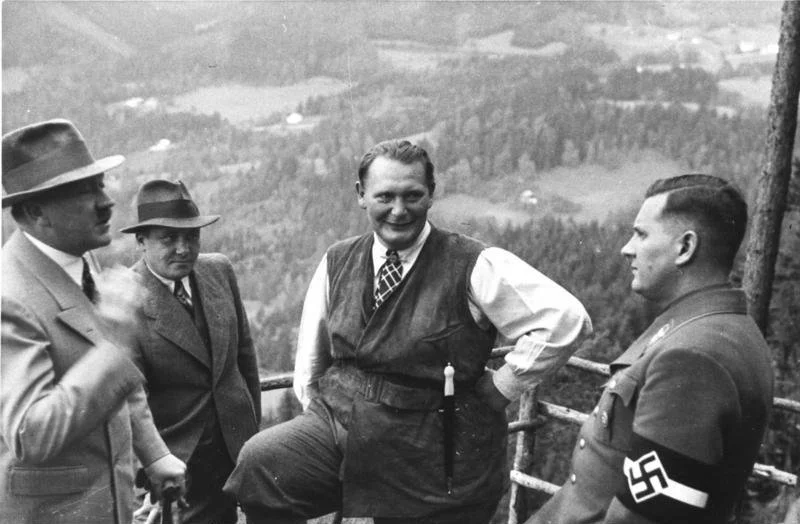
By Bundesarchiv, B 145 Bild-F051620-0043 / CC-BY-SA 3.0, CC BY-SA 3.0 de, https://commons.wikimedia.org/w/index.php?curid=5457481

Adolf Hitler: 'The relationship with Poland has become unbearable', Speech to the Commanders in Chief - 1939

September 8, 2026

22 August 1939, Berghof Retreat, Obersalzberg, Bavaria, Germany

I have called you together to give you a picture of the political situation, in order that you may have some insight into the individual factors on which I have based my decision to act, and in order to strengthen your confidence.

After this we shall discuss military details.

It was clear to me that a conflict with Poland had to come sooner or later. I had already made this decision in the spring, but I thought that I would first turn against the West in a few years, and only after that against the East. But the sequence of these things cannot be fixed. Nor should one close one’s eyes to threatening situations. I wanted first of all to establish a tolerable relationship with Poland in order to fight first against the West. But this plan, which appealed to me, could not be executed, as fundamental points had changed. It became clear to me that, in the event of a conflict with the West, Poland would attack us. Poland is striving for access to the sea. This further development appeared after the occupation of the Memel Territory, and it became clear to me that in certain circumstances a conflict with Poland might come at an inopportune moment. I give as reasons for this conclusion:

1. First of all, two factors related to persons:

There is myself and there is Mussolini.

Essentially all depends on me, on my existence, because of my political talents. Furthermore, the fact that probably no one will ever again have the trust of the whole German people as I have. There will probably never again in the future be a man with more authority than I have. My existence is therefore a factor of great value. But I can be eliminated at any time by a criminal or a lunatic.

The second person to be taken into account is the Duce. His existence is also decisive. If anything happens to him, Italy’s loyalty to the alliance will no longer be certain. The Italian Court is fundamentally opposed to the Duce. Above all, the Court regards the expansion of the empire as an encumbrance. The Duce is the man with the strongest nerves in Italy.

The third person who can be counted in our favor is Franco. We can ask only for benevolent neutrality from Spain. But this depends on Franco himself. He guarantees a certain uniformity and stability in the present system in Spain. We must accept the fact that Spain does not as yet have a Fascist party with our internal unity.

The other side presents a negative picture as far as authoritative persons are concerned. There is no exceptional person in England and France.

It is easy for us to make decisions. We have nothing to lose; we have everything to gain. Because of our restrictions [Einschränkungen] our economic situation is such that we can only hold out for a few more years. Göring can confirm this. We have no other choice, we must act. Our opponents will be risking a great deal and can gain only a little. Britain’s stake in a war is inconceivably great. Our enemies have leaders who are below the average. They lack exceptional persons, masters, men of action.

Besides the factors related to persons, the political situation is favorable for us: In the Mediterranean, rivalry between Italy, France, and England; in the Far East, tension between Japan and England; in the Middle East, tension which causes alarm in the Mohammedan world.

The English Empire did not emerge stronger from the last war. Nothing was achieved from the maritime point of view. Strife between England and Ireland. The Union of South Africa has become more independent. Concessions have had to be made to India. England is in the utmost peril. Unhealthy industrialization. A British statesman can only view the future with concern.

France’s position has also deteriorated, above all in the Mediterranean.

Further factors in our favor are these:

Since Albania, there has been a balance of power in the Balkans. Yugoslavia is infected with the fatal germ of decay because of her internal situation.

Romania has not grown stronger. She is open to attack and vulnerable. She is threatened by Hungary and Bulgaria. Since Kemal’s death, Turkey has been ruled by petty minds, unsteady, weak men.

All these favorable circumstances will no longer prevail in two or three year’s time. No one knows how much longer I shall live. Therefore, better a conflict now.

The creation of Greater Germany was a great achievement politically, but militarily it was doubtful, since it was achieved by bluff on the part of the political leaders. It is necessary to test the military. If at all possible, not in a general reckoning, but by the accomplishment of individual tasks.

The relationship with Poland has become unbearable. My Polish policy hitherto was contrary to the views of the people. My proposals to Poland (Danzig and the Corridor) were frustrated by England’s intervention. Poland changed her tone towards us. A permanent state of tension is intolerable. The power of initiative cannot be allowed to pass to others. The present moment is more favorable than in two or three years’ time. An attempt on my life or Mussolini’s could change the situation to our disadvantage. One cannot forever face one another with rifles cocked. One compromise suggested to us was that we should change our convictions and make gestures. They talked to us again in the language of Versailles. There was a danger of losing prestige. Now there still is a great probability that the West will not intervene. We must take the risk with ruthless determination. The politician must take a risk just as much as the general. We are faced with the harsh alternatives to strike or to face certain annihilation sooner or later.

I will refer to previous hazardous undertakings.

I would have been stoned if I had not been proven right. The most dangerous step was the entry into the neutral zone. Only a week before, I got a warning through France. I have always taken a great risk in the conviction that it would succeed.

Now it is also a great risk. Iron nerves, iron resolution.

The following particular reasons give me strength in my conviction. England and France have undertaken obligations which neither is in a position to fulfill. There is no real rearmament in England, but only propaganda. A great deal of harm was done by many Germans, who were not in agreement with me, saying and writing to English people after the solution of the Czech question: The Führer was proven right because you lost your nerve, because you capitulated too soon. This explains the present propaganda war. The English speak of a war of nerves. One factor in this war of nerves is the demonstration of increase in armaments. But what are the real facts about British rearmament? The naval construction program for 1938 has not yet been completed. Only the reserve fleet has been mobilized. Trawlers have been purchased. No substantial strengthening of the Navy before 1941 or 1942.

Little has been done on land. England will be able to send at most three divisions to the Continent. A few things have been done for the Air Force, but it is only a beginning. Anti-aircraft defense is in its initial stages. At the moment England has only 150 anti-aircraft guns. The new anti-aircraft guns have been ordered. It will be long time before enough have been produced. There is a shortage of predictors. England is still vulnerable from the air. This could change in two or three years. At the moment the English Air Force has only 130,000 men, France 72,000, Poland 15,000. England does not want the conflict to break out for two or three years.

The following is typical of England: Poland wanted a loan from England for her rearmament. England, however, only granted credits in order to make sure that Poland would buy in England, although England cannot deliver. This suggests that England does not really want to support Poland. She is not risking eight million pounds in Poland, although she poured five hundred million into China. England’s position in the world is very precarious. She will not take any risks.

France is short of men (decline in the birth rate). Little has been done for rearmament. The artillery is obsolete. France did not want to embark on this adventure. The West has only two possibilities for fighting against us:

1. Blockade: It will not be effective because of our autarky and because we have supply sources in Eastern Europe.

2. Attack in the West from the Maginot line: I consider this impossible.

Another possibility would be the violation of Dutch, Belgian and Swiss neutrality. I have no doubt that all these States, as well as Scandinavia, will defend their neutrality with all available means. England and France will not violate the neutrality of these countries. Thus in actual fact England cannot help Poland. There still remains an attack on Italy. Military intervention is out of the question. No one is counting on a long war. If Herr von Brauchitsch had said to me, “I need four years to conquer Poland,” I would have replied: “Then it’s impossible.” It is nonsense to say that England wants to wage a long war.

We will hold our position in the West until we have conquered Poland. We must bear in min our great production capacity. It is much greater than in 1914–1918.

The enemy had another hope, that Russia would become our enemy after the conquest of Poland. The enemy did not reckon with my great strength of purpose. Our enemies are small fry. I saw them in Munich.

I was convinced that Stalin would never accept the English offer. Russia has no interest in preserving Poland, and Stalin knows that it would mean the end of his régime, no matter whether his soldiers emerged from a war victorious or vanquished.

Litvinov’s replacement was decisive. I brought about the change with respect to Russia gradually. We got into political conversations in connection with the commercial treaty. Proposal for a non-aggression pact. Then came a comprehensive proposal from Russia. Four days ago I took a special step, which led to Russia replying yesterday that she is prepared to sign. Personal contact with Stalin is established. The day after tomorrow von Ribbentrop will conclude the treaty. Now Poland is in the position in which I wanted her.

We need not be afraid of a blockade. The East will supply us with grain, cattle, coal, lead, and zinc. It is a mighty aim, which demands great efforts. I am only afraid that at the last moment some swine or other will yet submit to me a plan for mediation.

The political objective goes further. A start has been made on the destruction of England’s hegemony. After I have made the political preparations, the way will be open for the soldiers.

Today’s announcement of the non-aggression pact with Russia came as a bombshell. The consequences cannot be foreseen. Stalin also said that this course will benefit both countries. The effect on Poland will be tremendous.

In reply, Göring thanked the Führer and assured him that the Wehrmacht would do their duty.

Source of English translation: Speech by the Führer to the Commanders in Chief on August 22, 1939, in United States Department of State, Documents on German Foreign Policy: From the Archives of the German Foreign Ministry. Washington, DC: United States Government Printing Office, 1957–1964. Series D (1937–1945), The Last Days of Peace, Volume 7: August 9–September 3, 1939. Document 192, pp. 200–04. Edited by GHI staff.

Source of original German text: Ansprache Hitlers an die Oberbefehlshaber am 22. August 1939 über seine Absicht, Krieg zu führen und seine politischen Vorbereitungen dazu, sowie Voraussagungen über die Haltung anderer europäischer Staaten und den wahrscheinlichen Kriegsverlauf (Beweisstück US-29), in Der Prozess gegen die Hauptkriegsverbrecher vor dem Internationalen Militärgerichtshof. Nürnberg 14. November 1945–1. Oktober 1946. Volume XXVI, Amtlicher Text–Deutsche Ausgabe, Urkunden und anderes Beweismaterial. Nuremberg 1947. Reprint: Munich, Delphin Verlag, 1989. Document 798-PS, pp. 338–44.

Source: https://germanhistorydocs.org/en/nazi-germ...

Enjoyed this speech? Speakola is a labour of love and I’d be very grateful if you would share, tweet or like it. Thank you.

Facebook Twitter Facebook
In 1920-39 MORE Tags ADOLF HITLER, WW2, INVASION OF POLAND, TRANSCRIPT, SPEECH TO THE COMMANDERS IN CHIEF, MILITARY ACTION, GERMANY, GERMAN HISTORY, NAZI, NAZI PARTY, CAUSES OF WW2, HITLER STALIN PACTG, HITLER STALIN PACT
Comment

Hilary Benn: 'What we know about fascists is that they need to be defeated', House of Commons - 2015

December 3, 2015

2 December 2015, House of Commons, United Kingdom

Described by his opposite number as "one of the truly great speeches in the house of Commons", Hilary Benn's speech drew cheers and applause from all sides.

Thank you very much Mr Speaker. Before I respond to the debate, I would like to say this directly to the Prime Minister: although my right honourable friend the Leader of the Opposition and I will walk into different division lobbies tonight, I am proud to speak from the same Despatch Box as him. My right honourable friend is not a terrorist sympathiser. He is an honest, a principled, a decent and a good man, and I think the Prime Minister must now regret what he said yesterday and his failure to do what he should have done today which is simply to say, ‘I am sorry.’

Now Mr Speaker, we have had an intense and impassioned debate – and rightly so, given the clear and present threat from Daesh, the gravity of the decision that rests upon the shoulders and the conscience of every single one of us, and the lives that we hold in our hands tonight. And whatever decision we reach, I hope we will treat one another with respect.

Now we have heard a number of outstanding speeches, and sadly time will prevent me from acknowledging them all but I would just like to single out the contributions both for and against the motion from my honourable and right honourable friends the members for Derby South [Margaret Beckett], Kingston Upon Hull West and Hessle [Alan Johnson], Normanton Pontefract and Castleford [Yvette Cooper], Barnsley Central [Dan Jarvis], Wakefield [Mary Creagh], Wolverhampton South East [Pat McFadden], Brent North [Barry Gardiner], Liverpool West Derby [Stephen Twigg], Wirral West [Margaret Greenwood], Stoke on Trent North [Ruth Smeeth], Birmingham Ladywood [Shabana Mahmood] and the honourable members for Reigate [Crispin Blunt], South West Wiltshire [Andrew Murrison], Tonbridge and Malling [John Stanley], Chichester [Andrew Tyrie] and Wells [James Heappey].

The question which confronts us in a very very complex conflict is at its heart very simple. What should we do with others to confront this threat to our citizens, our nation, other nations and the people who suffer under the yoke, the cruel yoke, of Daesh?

Carnage in Paris brought home to us the clear and present danger we face from them. It could just as easily have been London or Glasgow or Leeds or Birmingham – and it could still be. And I believe we have a moral and a practical duty to extend the action we are already taking in Iraq to Syria. And I am also clear, and I say this to my colleagues, that the conditions set out in the emergency resolution passed at the Labour party conference in September have been met. We now have a clear and unambiguous UN Security Council resolution 2249, paragraph five of which specifically calls on member states to take all necessary measures; to redouble and co-ordinate their efforts to prevent and suppress terrorist acts committed specifically by ISIL and to eradicate the safe haven they have established over significant parts of Iraq and Syria.

So the United Nations is asking us to do something. It is asking us to do something now. It is asking us to act in Syria as well as in Iraq. And it was a Labour government, if the honourable gentleman will bear with me, it was a Labour government that helped to found the United Nations at the end of the Second World War. And why did we do so? Because we wanted the nations of the world working together to deal with threats to international peace and security – and Daesh is unquestionably that.

So given that the United Nations has passed this resolution, given that such action would be lawful under Article 51 of the UN charter, because every state has the right to defend itself, why would we not uphold the settled will of the United Nations? Particularly when there is such support from within the region, including from Iraq.

We are part of a coalition of over 60 countries standing together shoulder to shoulder to oppose their ideology and their brutality. Now Mr Speaker, all of us understand the importance of bringing an end to the Syrian civil war, and there is now some progress on a peace plan because of the Vienna talks. They are the best hope we have of achieving a ceasefire. Now that would bring an end to Assad’s bombing, leading to a transitional government and elections. And why is that vital? Both because it will help in the defeat of Daesh, and because it would enable millions of Syrians who have been forced to flee to do what every refugee dreams of: they just want to be able to go home.

Now Mr Speaker, no one in this debate doubts the deadly serious threat we face from Daesh and what they do – although sometimes we find it hard to live with the reality. We know that in June four gay men were thrown off the fifth storey of a building in the Syrian city of Deir al-Zor. We know that in August the 82-year-old guardian of the antiquities of Palmyra, Professor Khaled al-Assad, was beheaded and his headless body was hung from a traffic light. And we know that in recent weeks there has been the discovery of mass graves in Sinjar, one said to contain the bodies of older Yazidi women murdered by Daesh because they were judged too old to be sold for sex. We know they have killed 30 British tourists in Tunisia, 224 Russian holidaymakers on a plane, 178 people in suicide bombings in Beirut , Ankara and Suruc, 130 people in Paris – including those young people in the Bataclan, whom Daesh, in trying to justify their bloody slaughter, called them apostates engaged in prostitution and vice. If it had happened here they could have been our children, and we know they are plotting more attacks.

So the question for each of us and for our national security is this: given that we know what they are doing, can we really stand aside and refuse to act fully in our self defence against those who are planning these attacks? Can we really leave to others the responsibility for defending our national security when it is our responsibility? And if we do not act, what message would that send about our solidarity with those countries that have suffered so much, including Iraq and our ally France. Now France wants us to stand with them , and President Hollande, the leader of our sister socialist party, has asked for our assistance and help. And as we are undertaking air strikes in Iraq, where Daesh’s hold has been reduced, and we are already doing everything but engage in air strikes in Syria, should we not play our full part?

Now Mr Speaker, it has been argued in the debate that air strikes achieve nothing. Not so. Look at how Daesh’s forward march has been halted in Iraq. The house will remember that 14 months ago people were saying, ‘They are almost at the gates of Baghdad.’ And that is why we voted to respond to the Iraqi government’s request for help to defeat them. Look at how their military capacity and their freedom of movement has been put under pressure. Ask the Kurds about Sinjar and Kobane. Now of course air strikes alone will not defeat Daesh, but they make a difference because they are giving them a hard time and it is making it more difficult for them to expand their territory.

Now I share the concerns that have been expressed this evening about potential civilian casualties. However unlike Daesh, none of us today act with the intent to harm civilians. Rather we act to protect civilians from Daesh, who target innocent people.

Now on the subject of ground troops to defeat Daesh, there has been much debate about the figure of 70,000 and the government must, I think, better explain that. But we know that most of them are currently engaged in fighting President Assad. But I tell you what else we know: it’s whatever the number - 70,000, 40,000, 80,000 - the current size of the opposition forces mean the longer we leave taking action, the longer Daesh will have to decrease that number. And so to suggest, Mr Speaker, that air strikes should not take place until the Syrian civil war has come to an end is, I think, to miss the urgency of the terrorist threat that Daesh poses to us and others and I think misunderstands the nature and objectives of the extension to air strikes that is being proposed.

And of course we should take action - it is not a contradiction between the two - to cut off Daesh’s support in the form of money and fighters and weapons, and of course we should give humanitarian aid and of course we should offer shelter to more refugees, including in this country, and of course we should commit to play our full part in helping to rebuild Syria when the war is over.

Now I accept that there are legitimate arguments, and we’ve heard them in the debate, for not taking this form of action now, and it is also clear that many members have wrestled and who knows, in the time that is left may still be wrestling, with what the right thing to do is. But I say the threat is now and there are rarely if ever perfect circumstances in which to deploy military forces. Now we heard very powerful testimony from the honourable member for Edisbury earlier when she quoted that passage, and I just want to read what Karwan Jamal Tahir, Kurdistan regional government high representative in London, said last week, and I quote: ‘Last June Daesh captured one third of Iraq overnight, and a few months later attacked the Kurdistan region. Swift air strikes by Britain, America and France, and the actions of our own Peshmerga saved us. We now have a border of 650 miles with Daesh. We have pushed them back and recently captured Sinjar. Again Western air strikes were vital. But the old border between Iraq and Syria does not exist. Daesh fighters come and go across this fictional boundary.’ And that is the argument, Mr Speaker, for treating the two countries as one if we are serious about defeating Daesh.

Now Mr Speaker, I hope the House will bear with me if I direct my closing remarks to my Labour friends and colleagues on this side of the House. As a party, we have always been defined by our internationalism. We believe we have a responsibility one to another. We never have and we never should walk by on the other side of the road. And we are here faced by fascists. Not just their calculated brutality, but their belief that they are superior to every single one of us here tonight, and all of the people that we represent. They hold us in contempt. They hold our values in contempt. They hold our belief in tolerance and decency in contempt. They hold our democracy, the means by which we will make our decision tonight, in contempt. And what we know about fascists is that they need to be defeated. And it is why, as we have heard tonight, socialists and trade unionists and others joined the International Brigade in the 1930s to fight against Franco. It’s why this entire House stood up against Hitler and Mussolini. It is why our party has always stood up against the denial of human rights and for justice. And my view, Mr Speaker, is that we must now confront this evil. It is now time for us to do our bit in Syria. And that is why I ask my colleagues to vote for this motion tonight.

Source: http://www.mirror.co.uk/news/uk-news/hilar...

Enjoyed this speech? Speakola is a labour of love and I’d be very grateful if you would share, tweet or like it. Thank you.

Facebook Twitter Facebook
In 2010s MORE Tags HILARY BENN, SYRIA, DAESH, ISIS, ISIL, AIR STRIKES, IRAQ, TERRORISM, MILITARY ACTION, TRANSCRIPT
Comment

See my film!

Limited Australian Season

March 2025

Details and ticket bookings at

angeandtheboss.com

Support Speakola

Hi speech lovers,
With costs of hosting website and podcast, this labour of love has become a difficult financial proposition in recent times. If you can afford a donation, it will help Speakola survive and prosper.

Best wishes,
Tony Wilson.

Become a Patron!

Learn more about supporting Speakola.

Featured political

Featured
Jon Stewart: "They responded in five seconds", 9-11 first responders, Address to Congress - 2019
Read more →
Jacinda Ardern: 'They were New Zealanders. They are us', Address to Parliament following Christchurch massacre - 2019
Read more →
Dolores Ibárruri: "¡No Pasarán!, They shall not pass!', Defense of 2nd Spanish Republic - 1936
Read more →
Jimmy Reid: 'A rat race is for rats. We're not rats', Rectorial address, Glasgow University - 1972
Read more →

Featured eulogies

Featured
For Geoffrey Tozer: 'I have to say we all let him down', by Paul Keating - 2009
Read more →
for James Baldwin: 'Jimmy. You crowned us', by Toni Morrison - 1988
Read more →
for Michael Gordon: '13 days ago my Dad’s big, beautiful, generous heart suddenly stopped beating', by Scott and Sarah Gordon - 2018
Read more →

Featured commencement

Featured
Tara Westover: 'Your avatar isn't real, it isn't terribly far from a lie', The Un-Instagrammable Self, Northeastern University - 2019
Read more →
Tim Minchin: 'Being an artist requires massive reserves of self-belief', WAAPA - 2019
Read more →
Atul Gawande: 'Curiosity and What Equality Really Means', UCLA Medical School - 2018
Read more →
Abby Wambach: 'We are the wolves', Barnard College - 2018
Read more →
Eric Idle: 'America is 300 million people all walking in the same direction, singing 'I Did It My Way'', Whitman College - 2013
Read more →
Shirley Chisholm: ;America has gone to sleep', Greenfield High School - 1983
Read more →

Featured sport

Featured
Joe Marler: 'Get back on the horse', Harlequins v Bath pre game interview - 2019
Read more →
Ray Lewis : 'The greatest pain of my life is the reason I'm standing here today', 52 Cards -
Read more →
Mel Jones: 'If she was Bradman on the field, she was definitely Keith Miller off the field', Betty Wilson's induction into Australian Cricket Hall of Fame - 2017
Read more →
Jeff Thomson: 'It’s all those people that help you as kids', Hall of Fame - 2016
Read more →

Fresh Tweets


Featured weddings

Featured
Dan Angelucci: 'The Best (Best Man) Speech of all time', for Don and Katherine - 2019
Read more →
Hallerman Sisters: 'Oh sister now we have to let you gooooo!' for Caitlin & Johnny - 2015
Read more →
Korey Soderman (via Kyle): 'All our lives I have used my voice to help Korey express his thoughts, so today, like always, I will be my brother’s voice' for Kyle and Jess - 2014
Read more →

Featured Arts

Featured
Bruce Springsteen: 'They're keepers of some of the most beautiful sonic architecture in rock and roll', Induction U2 into Rock Hall of Fame - 2005
Read more →
Olivia Colman: 'Done that bit. I think I have done that bit', BAFTA acceptance, Leading Actress - 2019
Read more →
Axel Scheffler: 'The book wasn't called 'No Room on the Broom!', Illustrator of the Year, British Book Awards - 2018
Read more →
Tina Fey: 'Only in comedy is an obedient white girl from the suburbs a diversity candidate', Kennedy Center Mark Twain Award -  2010
Tina Fey: 'Only in comedy is an obedient white girl from the suburbs a diversity candidate', Kennedy Center Mark Twain Award - 2010
Read more →

Featured Debates

Featured
Sacha Baron Cohen: 'Just think what Goebbels might have done with Facebook', Anti Defamation League Leadership Award - 2019
Read more →
Greta Thunberg: 'How dare you', UN Climate Action Summit - 2019
Read more →
Charlie Munger: 'The Psychology of Human Misjudgment', Harvard University - 1995
Read more →
Lawrence O'Donnell: 'The original sin of this country is that we invaders shot and murdered our way across the land killing every Native American that we could', The Last Word, 'Dakota' - 2016
Read more →