
• Genre
  • About
  • Submissions
  • Donate
  • Search
Menu

Speakola

All Speeches Great and Small
  • Genre
  • About
  • Submissions
  • Donate
  • Search
Share a political speech

David Cameron: 'The root cause of the threat we face is the extremist ideology itself', Ninestiles School - 2015

January 5, 2016

20 july 2015, Birmingham, United Kingdom

It’s great to be here at this outstanding school, Ninestiles School. Your inspiring teachers and your commitment to British values means you are not just achieving outstanding academic success, but you are building a shared community where children of many faiths and backgrounds learn not just with each other, but from each other too.

And that goes right to the heart of what I want to talk about today.

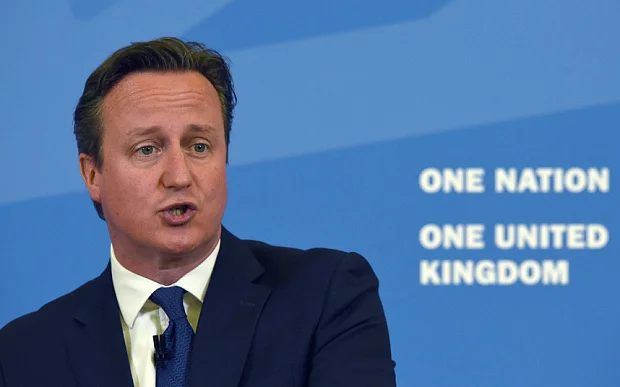
I said on the steps of Downing Street that this would be a ‘one nation’ government, bringing our country together.

Today, I want to talk about a vital element of that. How together we defeat extremism and at the same time build a stronger, more cohesive society.

My starting point is this.

Over generations, we have built something extraordinary in Britain – a successful multi-racial, multi-faith democracy. It’s open, diverse, welcoming – these characteristics are as British as queuing and talking about the weather. 

It is here in Britain where different people, from different backgrounds, who follow different religions and different customs don’t just rub alongside each other but are relatives and friends; husbands, wives, cousins, neighbours and colleagues.

It is here in Britain where in one or two generations people can come with nothing and rise as high as their talent allows.

It is here in Britain where success is achieved not in spite of our diversity, but because of our diversity.

So as we talk about the threat of extremism and the challenge of integration, we should not do our country down – we are, without a shadow of doubt, a beacon to the world.

And as we debate these issues, neither should we demonise people of particular backgrounds. Every one of the communities that has come to call our country home has made Britain a better place. And because the focus of my remarks today is on tackling Islamist extremism – not Islam the religion – let me say this.

I know what a profound contribution Muslims from all backgrounds and denominations are making in every sphere of our society, proud to be both British and Muslim, without conflict or contradiction.

And I know something else: I know too how much you hate the extremists who are seeking to divide our communities and how you loathe that damage they do.

As Prime Minister, I want to work with you to confront and defeat this poison. Today, I want to set out how. I want to explain what I believe we need to do as a country to defeat this extremism, and help to strengthen our multi-racial, multi-faith democracy.

Jihadi John, or Mohammed Emwazi, is one of the 'Five Brits a week' who travel to fight for Isis

Roots of the problem

It begins – it must begin – by understanding the threat we face and why we face it. What we are fighting, in Islamist extremism, is an ideology. It is an extreme doctrine.

And like any extreme doctrine, it is subversive. At its furthest end it seeks to destroy nation-states to invent its own barbaric realm. And it often backs violence to achieve this aim – mostly violence against fellow Muslims – who don’t subscribe to its sick worldview.

But you don’t have to support violence to subscribe to certain intolerant ideas which create a climate in which extremists can flourish.

Ideas which are hostile to basic liberal values such as democracy, freedom and sexual equality.

Ideas which actively promote discrimination, sectarianism and segregation.

Ideas – like those of the despicable far right – which privilege one identity to the detriment of the rights and freedoms of others.

And ideas also based on conspiracy: that Jews exercise malevolent power; or that Western powers, in concert with Israel, are deliberately humiliating Muslims, because they aim to destroy Islam. In this warped worldview, such conclusions are reached – that 9/11 was actually inspired by Mossad to provoke the invasion of Afghanistan; that British security services knew about 7/7, but didn’t do anything about it because they wanted to provoke an anti-Muslim backlash.

And like so many ideologies that have existed before – whether fascist or communist – many people, especially young people, are being drawn to it. We need to understand why it is proving so attractive.

CCTV still of 15-year-old Amira Abase, left, Kadiza Sultana,16, center, and Shamima Begum, 15, on their way to join Isis in Syria

Some argue it’s because of historic injustices and recent wars, or because of poverty and hardship. This argument, what I call the grievance justification, must be challenged.

So when people say “it’s because of the involvement in the Iraq War that people are attacking the West”, we should remind them: 9/11 – the biggest loss of life of British citizens in a terrorist attack – happened before the Iraq War.

When they say that these are wronged Muslims getting revenge on their Western wrongdoers, let’s remind them: from Kosovo to Somalia, countries like Britain have stepped in to save Muslim people from massacres – it’s groups like ISIL, Al Qaeda and Boko Haram that are the ones murdering Muslims.

Now others might say: it’s because terrorists are driven to their actions by poverty. But that ignores the fact that many of these terrorists have had the full advantages of prosperous families or a Western university education.

Now let me be clear, I am not saying these issues aren’t important. But let’s not delude ourselves. We could deal with all these issues – and some people in our country and elsewhere would still be drawn to Islamist extremism.

No – we must be clear. The root cause of the threat we face is the extremist ideology itself.

And I would argue that young people are drawn to it for 4 main reasons.

One – like any extreme doctrine, it can seem energising, especially to young people. They are watching videos that eulogise ISIL as a pioneering state taking on the world, that makes celebrities of violent murderers. So people today don’t just have a cause in Islamist extremism; iin ISIL, they now have its living and breathing expression.

Isis fighters celebrating in Fallujah, which the militants took in 2014

Two – you don’t have to believe in barbaric violence to be drawn to the ideology. No-one becomes a terrorist from a standing start. It starts with a process of radicalisation. When you look in detail at the backgrounds of those convicted of terrorist offences, it is clear that many of them were first influenced by what some would call non-violent extremists.

It may begin with hearing about the so-called Jewish conspiracy and then develop into hostility to the West and fundamental liberal values, before finally becoming a cultish attachment to death. Put another way, the extremist world view is the gateway, and violence is the ultimate destination.

Three: the adherents of this ideology are overpowering other voices within Muslim debate, especially those trying to challenge it. There are so many strong, positive Muslim voices that are being drowned out.

Ask yourself, how is it possible that when young teenagers leave their London homes to fight for ISIL, the debate all too often focuses on whether the security services are to blame? And how can it be that after the tragic events at Charlie Hebdo in Paris, weeks were spent discussing the limits of free speech and satire, rather than whether terrorists should be executing people full stop?

When we allow the extremists to set the terms of the debate in this way, is it any wonder that people are attracted to this ideology?

Four: there is also the question of identity.

For all our successes as multi-racial, multi-faith democracy, we have to confront a tragic truth that there are people born and raised in this country who don’t really identify with Britain – and who feel little or no attachment to other people here. Indeed, there is a danger in some of our communities that you can go your whole life and have little to do with people from other faiths and backgrounds.

The town of Dewsbury in West Yorkshire, the home of Mohammad Sidique Khan, the ringleader of the four suicide bombers that attacked London on July 7, 2005

So when groups like ISIL seek to rally our young people to their poisonous cause, it can offer them a sense of belonging that they can lack here at home, leaving them more susceptible to radicalisation and even violence against other British people to whom they feel no real allegiance.

So this is what we face – a radical ideology – that is not just subversive, but can seem exciting; one that has often sucked people in from non-violence to violence; one that is overpowering moderate voices within the debate and one which can gain traction because of issues of identity and failures of integration.

So we have to answer each 1 of these 4 points. If we do that, the right approach for defeating this extremism will follow.

In the autumn, we will publish our Counter-Extremism Strategy, setting out in detail what we will do to counter this threat. But today I want to set out the principles that we will adopt.

Counter-ideology

First, any strategy to defeat extremism must confront, head on, the extreme ideology that underpins it. We must take its component parts to pieces - the cultish worldview, the conspiracy theories, and yes, the so-called glamorous parts of it as well.

In doing so, let’s not forget our strongest weapon: our own liberal values. We should expose their extremism for what it is – a belief system that glorifies violence and subjugates its people – not least Muslim people.

We should contrast their bigotry, aggression and theocracy with our values. We have, in our country, a very clear creed and we need to promote it much more confidently. Wherever we are from, whatever our background, whatever our religion, there are things we share together.

We are all British. We respect democracy and the rule of law. We believe in freedom of speech, freedom of the press, freedom of worship, equal rights regardless of race, sex, sexuality or faith.

We believe in respecting different faiths but also expecting those faiths to support the British way of life. These are British values. And are underpinned by distinct British institutions. Our freedom comes from our Parliamentary democracy. The rule of law exists because of our independent judiciary. This is the home that we are building together.

Whether you are Muslim, Hindu, Jewish, Christian or Sikh, whether you were born here or born abroad, we can all feel part of this country – and we must now all come together and stand up for our values with confidence and pride.

And as we do so, we should together challenge the ludicrous conspiracy theories of the extremists. The world is not conspiring against Islam; the security services aren’t behind terrorist attacks; our new Prevent duty for schools is not about criminalising or spying on Muslim children. This is paranoia in the extreme.

In fact that duty will empower parents and teachers to protect children from all forms of extremism – whether Islamist or neo-Nazi.

Mr Cameron also took aim at the far-right

We should challenge together the conspiracy theories about our Muslim communities too and I know how much pain these can cause.

We must stand up to those who try to suggest that there is some kind of secret Muslim conspiracy to take over our government, or that Islam and Britain are somehow incompatible.

People who say these things are trying to undermine our shared values and make Muslims feel like they don’t belong here, and we will not let these conspiracy theorists win.

We must also de-glamourise the extremist cause, especially ISIL. This is a group that throws people off buildings, that burns them alive, and as Channel 4’s documentary last week showed, its men rape underage girls, and stone innocent women to death. This isn’t a pioneering movement – it is vicious, brutal, and a fundamentally abhorrent existence.

And here’s my message to any young person here in Britain thinking of going out there:

You won’t be some valued member of a movement. You are cannon fodder for them. They will use you.

If you are a boy, they will brainwash you, strap bombs to your body and blow you up.

A British man who called himself Abu Musa al-Britani reportedly blew himself up in a suicide bombing operation for Isis

If you are a girl, they will enslave and abuse you.

That is the sick and brutal reality of ISIL.

So when we bring forward our Counter- Extremism Strategy in the autumn, here are the things we will be looking at:

using people who really understand the true nature of what life is like under ISIL to communicate to young and vulnerable people the brutal reality of this ideology

empowering the UK’s Syrian, Iraqi and Kurdish communities, so they can have platforms from which to speak out against the carnage ISIL is conducting in their countries

countering this ideology better on the ground through specific de-radicalisation programmes

I also want to go much further in dealing with this ideology in prison and online. We need to have a total rethink of what we do in our prisons to tackle extremism. And we need our internet companies to go further in helping us identify potential terrorists online.

Many of their commercial models are built around monitoring platforms for personal data, packaging it up and selling it on to third parties. And when it comes to doing what’s right for their business, they are happy to engineer technologies to track our likes and dislikes. But when it comes to doing what’s right in the fight against terrorism, we too often hear that it’s all too difficult.

Well I’m sorry – I just don’t buy that.

They – the internet companies - have shown with the vital work they are doing in clamping down on child abuse images that they can step up when there is a moral imperative to act. And it’s now time for them to do the same to protect their users from the scourge of radicalisation.

And as we do all of this work to counter the Islamist extremist ideology, let’s also recognise that we will have to enter some pretty uncomfortable debates – especially cultural ones. Too often we have lacked the confidence to enforce our values, for fear of causing offence. The failure in the past to confront the horrors of forced marriage I view as a case in point. So is the utter brutality of Female Genital Mutilation (FGM).

It sickens me to think that there were nearly 4,000 cases of FGM reported in our country last year alone. Four thousand cases; think about that. And 11,000 cases of so called honour-based violence over the last 5 years – and that’s just the reported cases.

We need more co-ordinated efforts to drive this out of our society. More prosecutions. No more turning a blind eye on the false basis of cultural sensitivities. Why does this matter so much?

Well, think what passive tolerance says to young British Muslim girls.

We can’t expect them to see the power and liberating force of our values if we don’t stand up for them when they come under attack. So I am glad we have gone further than any government in tackling these appalling crimes. And we are keeping up the pressure on cultural practices that can run directly counter to these vital values.

That’s why the Home Secretary has already announced a review of sharia courts.

It’s why we have said we will toughen the regulations. so schools have to report children who go missing from school rolls mid-year – some of whom, we fear, may be being forced into marriage.

It’s why we legislated for authorities to seize the passports of people they suspect are planning on taking girls abroad for FGM – new protection orders which came into force last Friday and were used immediately by Bedfordshire police to prevent two girls being taken to Africa.

And it’s why today I can also announce we will consult on legislating for lifetime anonymity for victims of forced marriage, so that no-one should ever again feel afraid to come forward and report these horrific crimes.

There are other examples of this passive tolerance of practices running totally contrary to our values. The failure of social services, the police and local authorities, to deal with child sex abuse in places like Rotherham was frankly unforgiveable.

And look what happened in Tower Hamlets, in the heart of our capital city. We had political corruption on an epic scale: with voters intimidated and a court adjudicating on accusations of ‘undue spiritual influence’ for the first time since the 19th century. As the judge said: those in authority were too afraid to ‘confront wrongdoing for fear of allegations of racism’.

Well this has got to stop.

We need everyone – government, local authorities, police, schools, all of us – to enforce our values right across the spectrum.

Non-violent and violent

Second, as we counter this ideology, a key part of our strategy must be to tackle both parts of the creed – the non-violent and violent.

This means confronting groups and organisations that may not advocate violence – but which do promote other parts of the extremist narrative.

We’ve got to show that if you say “yes I condemn terror – but the Kuffar are inferior”, or “violence in London isn’t justified, but suicide bombs in Israel are a different matter” – then you too are part of the problem. Unwittingly or not, and in a lot of cases it’s not unwittingly, you are providing succour to those who want to commit, or get others to commit to, violence.

For example, I find it remarkable that some groups say “We don’t support ISIL” as if that alone proves their anti-extremist credentials. And let’s be clear Al-Qaeda don’t support ISIL. So we can’t let the bar sink to that level. Condemning a mass-murdering, child-raping organisation cannot be enough to prove you’re challenging the extremists.

We must demand that people also condemn the wild conspiracy theories, the anti-Semitism, and the sectarianism too. Being tough on this is entirely keeping with our values. We should challenge every part of the hateful ideology spread by neo-Nazis – so why shouldn’t we here?

Government has a key role to play in this. It’s why we ban hate preachers from our country. It’s why we threw out Abu Hamza and Abu Qatada. And it’s why, since my Munich speech in 2011, we have redirected public funds from bodies that promote non-violent extremism to those that don’t. We also need to do more in education.

We undertook an immediate review when it became apparent that extremists had taken over some of our schools in the so-called Trojan Horse scandal here in Birmingham. But I have to be honest here – one year on, although we are making progress, it is not quick enough. It has taken too long to take action against the governors and teachers involved in the scandal and to support the schools affected to turn themselves around.

So as we develop our Counter-Extremism Strategy, I want us to deal with these issues properly, and we will also bring forward further measures to guard against the radicalisation of children in some so-called supplementary schools or tuition centres.

And there’s something else we will do.

We need to put out of action the key extremist influencers who are careful to operate just inside the law, but who clearly detest British society and everything we stand for. These people aren’t just extremists. There are despicable far right groups too. And what links them all is their aim to groom young people and brainwash their minds.

And again let’s be clear who benefits most from us being tough on these non-violent extremists – it’s Muslim families living in fear that their children could be radicalised and run off to Syria, and communities worried about some poisonous far right extremists who are planning to attack your mosque.

So as part of our Extremism Bill, we are going to introduce new narrowly targeted powers to enable us to deal with these facilitators and cult leaders, and stop them peddling their hatred. And we will also work to strengthen Ofcom’s role to enable us to take action against foreign channels that broadcast hate preachers and extremist content.

But confronting non-violent extremism isn’t just about changing laws, it’s about all of us, changing our approach. Take, for example, some of our universities. Now, of course universities are bastions of free speech and incubators of new and challenging ideas. But sometimes they fail to see the creeping extremism on their campuses.

When David Irving goes to a university to deny the Holocaust – university leaders rightly come out and condemn him. They don’t deny his right to speak but they do challenge what he says. But when an Islamist extremist goes there to promote their poisonous ideology, too often university leaders look the other way through a mixture of misguided liberalism and cultural sensitivity.

As I said, this is not about clamping down on free speech. It’s just about applying our shared values uniformly.

And while I am it, I want to say something to the National Union of Students. When you choose to ally yourselves with an organisation like CAGE, which called Jihadi John a “beautiful young man” and told people to “support the jihad” in Iraq and Afghanistan, it really does, in my opinion, shame your organisation and your noble history of campaigning for justice.

We also need the support of families and communities too. The local environment, their families, their peers, their communities, are among the key influencers in any young person’s life. So if they hear parts of the extremist worldview in their home, or their wider community, it will help legitimise it in their minds.

And government will help where it can. I know how worried some people are that their children might turn to this ideology – and even seek to travel to Syria or Iraq.

So I can announce today we are going to introduce a new scheme to enable parents to apply directly to get their child’s passport cancelled to prevent travel.

Together, in partnership, let us protect our young people.

Islam

Now the third plank of our strategy is to embolden different voices within the Muslim community. Just as we do not engage with extremist groups and individuals, we’re now going to actively encourage the reforming and moderate Muslim voices. This is a significant shift in government approach – and an important one.

In the past, governments have been too quick to dismiss the religious aspect of Islamist extremism. That is totally understandable. It cannot be said clearly enough: this extremist ideology is not true Islam. I have said it myself many, many times, and it’s absolutely right to do so. And I’ll say it again today.

But simply denying any connection between the religion of Islam and the extremists doesn’t work, because these extremists are self-identifying as Muslims. The fact is from Woolwich to Tunisia, from Ottawa to Bali, these murderers all spout the same twisted narrative, one that claims to be based on a particular faith.

Now it is an exercise in futility to deny that. And more than that, it can be dangerous. To deny it has anything to do with Islam means you disempower the critical reforming voices; the voices that are challenging the fusing of religion and politics; the voices that want to challenge the scriptural basis which extremists claim to be acting on; the voices that are crucial in providing an alternative worldview that could stop a teenager’s slide along the spectrum of extremism.

These reforming voices, they have a tough enough time as it is: the extremists are the ones who have the money, the leaders, the iconography and the propaganda machines. We need to turn the tables.

We can’t stand neutral in this battle of ideas. We have to back those who share our values. So here’s my offer.

If you’re interested in reform; if you want to challenge the extremists in our midst; if you want to build an alternative narrative or if you just want to help protect your kids – we are with you and we will back you – with practical help, with funding, with campaigns, with protection and with political representation.

This should form a key part of our Counter-Extremism Strategy.

And let’s remember that it’s only the extremists who divide people into good Muslims and bad Muslims, by forcing their warped doctrine onto fellow Muslims and telling them that it is the only way to believe. Our new approach is about isolating the extremists from everyone else, so that all our Muslim communities can be free from the poison of Islamist extremism.

Now for my part, I am going to set up a new community engagement forum so I can hear directly from those out there who are challenging extremism. And I also want to issue a challenge to the broadcasters in our country. You are, of course, free to put whoever you want on the airwaves.

But there are a huge number of Muslims in our country who have a proper claim to represent liberal values in local communities – people who run credible charities, community organisations, councillors and MPs – including Labour MPs here in Birmingham – so do consider giving them the platform they deserve.

I know other voices may make for more explosive television – but please exercise your judgement, and do recognise the huge power you have in shaping these debates in a positive way.

Isolation and identity

The fourth and final part of our strategy must be to build a more cohesive society, so more people feel a part of it and are therefore less vulnerable to extremism.

And I want to say this directly to all young people growing up in our country.

I understand that it can be hard being young, and that it can be even harder being young and Muslim, or young and Sikh, or young and black in our country. I know that at times you are grappling with huge issues over your identity, neither feeling a part of the British mainstream nor a part of the culture from your parents’ background.

And I know that for as long as injustice remains – be it with racism, discrimination or sickening Islamophobia - you may feel there is no place for you in Britain. But I want you to know: there is a place for you and I will do everything I can to support you.

The speech I was proudest to give in the election campaign was where I outlined my 2020 vision for our black and minority ethnic communities.

20% more jobs; 20% more university places; a 20% increase in apprenticeship take-up and police and armed forces that are much more representative of the people they serve.

And it’s not just about representation – it’s about being in positions of influence, leadership and political power. That also means more magistrates, more school governors, more Members of Parliament, more councillors, and yes, Cabinet Ministers too.

When we discussed childcare at Cabinet last week (political content), the item was introduced by a Black British son of a single parent – Sam Gyimah, who was backed up by the daughter of Gujarati immigrants from East Africa – Priti Patel – and the first speaker was the son of Pakistani immigrants – Sajid Javid – whose father came to Britain to drive the buses.

So we’ve made good progress in recent years, including I am pleased to say – in my own political party. But we need to go further. Because it comes down to this.

We need young people to understand that here in the UK they can shape the future by being an active part of our great democracy.

Achieve this and more people from ethnic minority backgrounds will feel they have a real stake in our society. And at the same time we need to lift the horizons of some of our most isolated and deprived communities. At the moment we have parts of our country where opportunities remain limited; where language remains a real barrier; where too many women from minority communities remain trapped outside the workforce and where educational attainment is low.

So we need specific action here. So I can announce today I have charged Louise Casey to carry out a review of how to boost opportunity and integration in these communities and bring Britain together as one nation. She will look at issues like how we can ensure people learn English; how we boost employment outcomes, especially for women; how state agencies can work with these communities to properly promote integration and opportunity but also learning lessons from past mistakes - when funding was simply handed over to self-appointed ‘community leaders’ who sometimes used the money in a divisive way.

Louise will provide an interim report early next year. And we will use this report to inform our plans for funding a new wider Cohesive Communities Programme next year, focusing resources on improving integration and extending opportunity in those communities that most need it.

But as well as tackling isolation, there is one other area we must look at if we are to build a truly cohesive society – and that is segregation.

It cannot be right, for example, that people can grow up and go to school and hardly ever come into meaningful contact with people from other backgrounds and faiths. That doesn’t foster a sense of shared belonging and understanding – it can drive people apart. Now let’s be clear that these patterns of segregation in schools or housing are not the fault or responsibility of any particular community. This is a complex problem that dates back decades.

But we do need to recognise the scale of the challenge in some communities. Areas of cities and towns like Bradford or Oldham continue to be some of the most segregated parts of our country. And it’s no coincidence that these can be some of the places where community relations have historically been most tense, where poisonous far right and Islamist extremists desperately try to stoke tension and foster division.

Now let me be clear. I’m not talking about uprooting people from their homes or schools and forcing integration. But I am talking about taking a fresh look at the sort of shared future we want for our young people. In terms of housing, for example, there are parts of our country where segregation has actually increased or stayed deeply entrenched for decades.

So the government needs to start asking searching questions about social housing, to promote integration, to avoid segregated social housing estates where people living there are from the same single minority ethnic background.

Similarly in education, while overall segregation in schooling is declining, in our most divided communities, the education that our young people receive is actually even more segregated than the neighbourhoods they live in.

Now, bussing children to different areas is not the right approach for this country. Nor should we try to dismantle faith schools.

Many faith schools achieve excellent results and I’m the first to support the great education they provide. I chose one for my own children. Today I visited King David’s school, a Jewish school here in Birmingham where the majority of children are from faith backgrounds.

But it is right to look again more broadly at how we can move away from segregated schooling in our most divided communities. We have already said that all new faith academies and free schools must allocate half their places without reference to faith.

But now we’ll go further to incentivise schools in our most divided areas to provide a shared future for our children, whether by sharing the same site and facilities; by more integrated teaching across sites; or by supporting the creation of new integrated free schools in the most segregated areas.

At the same time, we will continue to back National Citizen Service, which is bringing together 16 and 17 year olds from every background and every part of our country.

Because when you see how NCS changes the perceptions that young people have of other communities – I’ve seen it myself many, many times – it should give us all the hope and the confidence that our young people can be the key to bringing our country together.

Conclusion

So this is how I believe we can win the struggle of our generation. Countering the extremist ideology by standing up and promoting our shared British values. Taking on extremism in all its forms – both violent and non-violent.

Empowering those moderate and reforming voices who speak for the vast majority of Muslims that want to reclaim their religion. And addressing the identity crisis that some young people feel by bringing our communities together and extending opportunity to all.

And I hope I have given a sense of how we have all got to contribute to this process. This isn’t an issue for just any one community or any one part of our society – it’s for all of us. Of course, Muslim communities have crucial parts to play. You are part of the solution. But we in government have got to deal with failure, like dealing with extremism in schools.

We need the police to step up and not stand by as crimes take place. We need universities to stand up against extremism; broadcasters to give platforms to different voices; and internet service providers to do their bit too. Together, we can do this.

Britain has never been cowed by fear or hatred or terror.

Our Great British resolve faced down Hitler; it defeated Communism; it saw off the IRA’s assaults on our way of life. Time and again we have stood up to aggression and tyranny.

We have refused to compromise on our values or to give up our way of life. And we shall do so again.

Together we will defeat the extremists and build a stronger and more cohesive country, for our children, our grandchildren and for every generation to come.
Source: http://www.independent.co.uk/news/uk/polit...

Enjoyed this speech? Speakola is a labour of love and I’d be very grateful if you would share, tweet or like it. Thank you.

Facebook Twitter Facebook
In 2010s MORE Tags DAVID CAMERON, PRIME MINISTERS, UNITED KINGDOM, RADICALISATION, ISLAM, ISIS, FASCISM, TRANSCRIPT
Comment

Barack Obama: 'Let's not forget that freedom is more powerful than fear' - San Bernardino response - 2015

December 7, 2015

video begins at 28.11

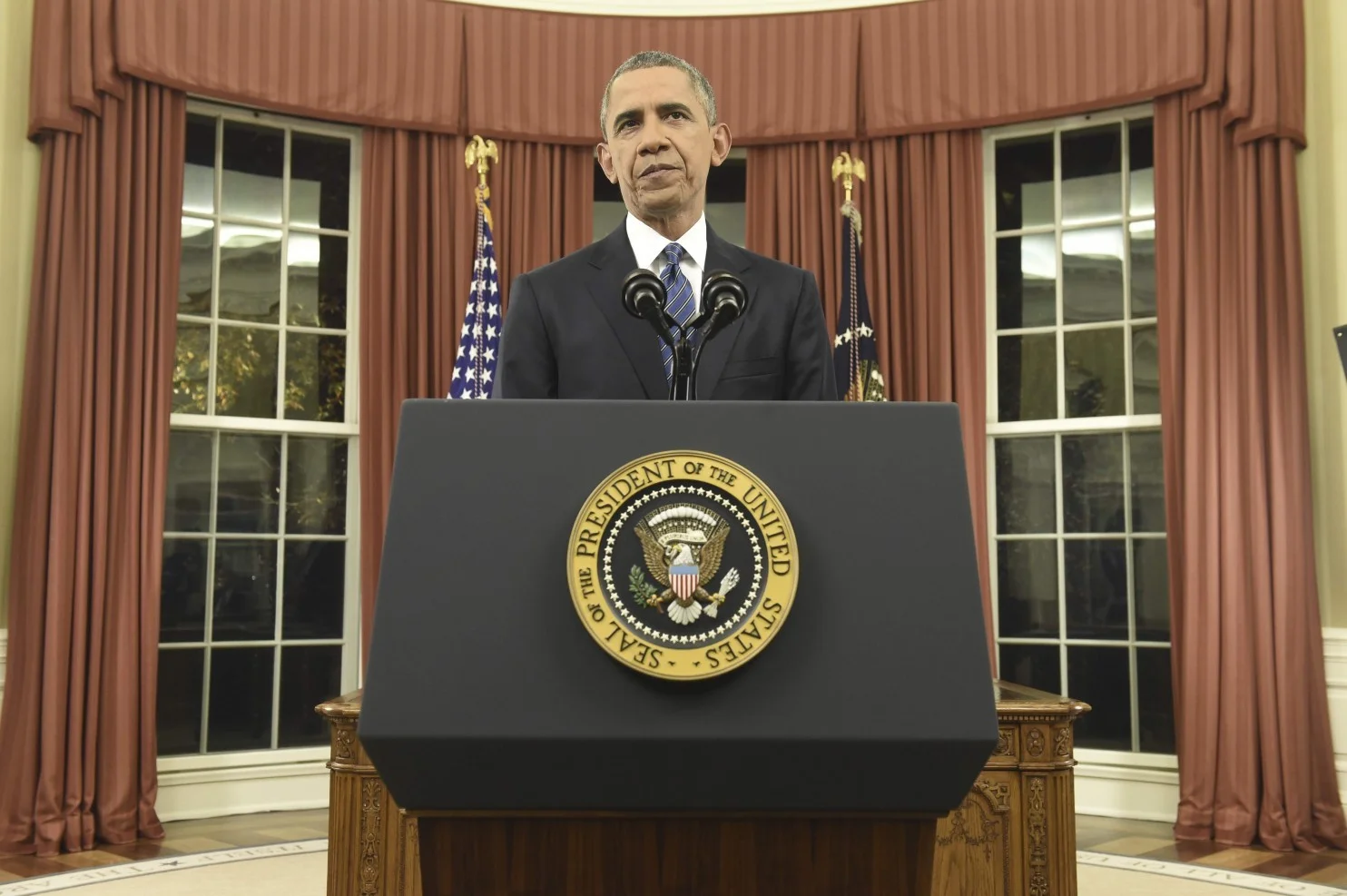
6 December 2015, Oval Office address, Washington DC, USA

Good evening. On Wednesday, 14 Americans were killed as they came together to celebrate the holidays. They were taken from family and friends who loved them deeply. They were white and black, Latino and Asian, immigrants, and American born, moms and dads, daughters and sons. Each of them served their fellow citizens. All of them were part of our American family.

Tonight I want to talk with you about this tragedy, the broader threat of terrorism and how we can keep our country safe. The FBI is still gathering the facts about what happened in San Bernardino, but here's what we know. The victims were brutally murdered and injured by one of their co-workers and his wife. So far, we have no evidence that the killers were directed by a terrorist organization overseas or that they were part of a broader conspiracy here at home. But it is clear that the two of them had gone down the dark path of radicalization, embracing a perverted interpretation of Islam that calls for war against America and the West. They had stockpiled assault weapons, ammunition, and pipe bombs.

So this was an act of terrorism designed to kill innocent people. Our nation has been at war with terrorists since Al Qaeda killed nearly 3,000 Americans on 9/11. In the process, we've hardened our defenses, from airports, to financial centers, to other critical infrastructure. Intelligence and law enforcement agencies have disrupted countless plots here and overseas and worked around the clock to keep us safe.

Our military and counterterrorism professionals have relentlessly pursued terrorist networks overseas, disrupting safe havens in several different countries, killing Osama Bin Laden, and decimating Al Qaeda's leadership.

Over the last few years, however, the terrorist threat has evolved into a new phase. As we've become better at preventing complex multifaceted attacks like 9/11, terrorists turn to less complicated acts of violence like the mass shootings that are all too common in our society. It is this type of attack that we saw at Fort Hood in 2009, in Chattanooga earlier this year, and now in San Bernardino.

And as groups like ISIL grew stronger amidst the chaos of war in Iraq and then Syria, and as the Internet erases the distance between countries, we see growing efforts by terrorists to poison the minds of people like the Boston Marathon bombers and the San Bernardino killers.

For seven years, I've confronted this evolving threat each and every morning in my intelligence briefing, and since the day I took this office, I have authorized U.S. forces to take out terrorists abroad precisely because I know how real the danger is.

As commander in chief, I have no greater responsibility than the security of the American people.

As a father to two young daughters who are the most precious part of my life, I know that we see ourselves with friends and co-workers at a holiday party like the one in San Bernardino. I know we see our kids in the faces of the young people killed in Paris.

And I know that after so much war, many Americans are asking whether we are confronted by a cancer that has no immediate cure.

Well, here's what I want you to know. The threat from terrorism is real, but we will overcome it. We will destroy ISIL and any other organization that tries to harm us. Our success won't depend on tough talk, or abandoning our values or giving into fear. That's what groups like ISIL are hoping for. Instead, we will prevail by being strong and smart, resilient and relentless. And by drawing upon every aspect of American power.

Here's how. First, our military will continue to hunt down terrorist plotters in any country where it is necessary. In Iraq and Syria, air strikes are taking out ISIL leaders, heavy weapons, oil tankers, infrastructure.

And since attacks in Paris, our closest allies, including France, Germany, and the United Kingdom, have ramped up their contributions to our military campaign which will help us accelerate our effort to destroy ISIL.

Second, we will continue to provide training and equipment to tens of thousands of Iraqi and Syrian forces fighting ISIL on the ground so that we take away their safe havens.

In both countries, we're deploying special operations forces who can accelerate that offensive. We've stepped up this effort since the attacks in Paris, and will continue to invest more in approaches that are working on the ground.

Third, we're working with friends and allies to stop ISIL's operations, to disrupt plots, cut off their financing, and prevent them from recruiting more fighters.

Since the attacks in Paris, we've surged merged intelligence sharing with our European allies. We're working with Turkey to seal its border with Syria, and we are cooperating with Muslim majority countries, and with our Muslim communities here at home, to counter the vicious ideology that ISIL promotes online.

Fourth, with American leadership, the international community has begun to establish a process and timeline to pursue cease-fires and a political resolution to the Syrian war.

Doing so will allow the Syrian people and every country, including our allies, but also countries like Russia, to focus on the common goal of destroying ISIL, a group that threatens us all.

This is our strategy to destroy ISIL. It is designed and supported by our military commanders and counterterrorism experts, together with 65 countries that have joined an American-led coalition. And we constantly examine our strategy to determine when additional steps are needed to get the job done.

That's why I've ordered the Departments of State and Homeland Security to review the visa waiver program under which the female terrorist in San Bernardino originally came to this country. And that's why I will urge high-tech and law enforcement leaders to make it harder for terrorists to use technology to escape from justice.

Now, here at home, we have to work together to address the challenge. There are several steps that Congress should take right away. To begin with, Congress should act to make sure no one on a no- fly list is able to buy a gun. What could possibly be the argument for allowing a terrorist suspect to buy a semiautomatic weapon? This is a matter of national security.

We also need to make it harder for people to buy powerful assault weapons, like the ones that were used in San Bernardino. I know there are some who reject any gun-safety measures, but the fact is that our intelligence and law-enforcement agencies, no matter how effective they are, cannot identify every would-be mass shooter, whether that individual was motivated by ISIL or some other hateful ideology.

What we can do, and must do, is make it harder for them to kill.

Next, we should put in place stronger screening for those who come to America without a visa so that we can take a hard look at whether they've traveled to war zones. And we're working with members of both parties in Congress to do exactly that.

Finally, if Congress believes, as I do, that we are at war with ISIL, it should go ahead and vote to authorize the continued use of military force against these terrorists.

For over a year, I have ordered our military to take thousands of air strikes against ISIL targets. I think it's time for Congress to vote to demonstrate that the American people are united and committed to this fight.

My fellow Americans, these are the steps that we can take together to defeat the terrorist threat.

Let me now say a word about what we should not do. We should not be drawn once more into a long and costly ground war in Iraq or Syria. That's what groups like ISIL want. They know they can't defeat us on the battlefield. ISIL fighters were part of the insurgency that we faced in Iraq. But they also know that if we occupy foreign lands, they can maintain insurgencies for years, killing thousands of our troops and draining our resources, and using our presence to draw new recruits.

The strategy that we are using now -- air strikes, special forces, and working with local forces who are fighting to regain control of their own country -- that is how we'll achieve a more sustainable victory, and it won't require us sending a new generation of Americans overseas to fight and die for another decade on foreign soil.

Here's what else we cannot do. We cannot turn against one another by letting this fight be defined as a war between America and Islam. That, too, is what groups like ISIL want.

ISIL does not speak for Islam. They are thugs and killers, part of a cult of death. And they account for a tiny fraction of a more than a billion Muslims around the world, including millions of patriotic Muslim-Americans who reject their hateful ideology.

Moreover, the vast majority of terrorist victims around the world are Muslim.

If we're to succeed in defeating terrorism, we must enlist Muslim communities as some of our strongest allies, rather than push them away through suspicion and hate.

That does not mean denying the fact that an extremist ideology has spread within some Muslim communities. It's a real problem that Muslims must confront without excuse.

Muslim leaders here and around the globe have to continue working with us to decisively and unequivocally reject the hateful ideology that groups like ISIL and Al Qaeda promote, to speak out against not just acts of violence, but also those interpretations of Islam that are incompatible with the values of religious tolerance, mutual respect, and human dignity.

But just as it is the responsibility of Muslims around the world to root out misguided ideas that lead to radicalization, it is the responsibility of all Americans, of every faith, to reject discrimination. It is our responsibility to reject religious tests on who we admit into this country. It's our responsibility to reject proposals that Muslim-Americans should somehow be treated differently. Because when we travel down that road, we lose. That kind of divisiveness, that betrayal of our values plays into the hands of groups like ISIL.

Muslim-Americans are our friends and our neighbors, our co- workers, our sports heroes. And, yes, they are our men and women in uniform who are willing to die in defense of our country. We have to remember that.

My fellow Americans, I am confident we will succeed in this mission because we are on the right side of history. We were founded upon a belief in human dignity that no matter who you are, or where you come from, or what you look like or what religion you practice, you are equal in the eyes of God and equal in the eyes of the law. Even in this political season, even as we properly debate what steps I and future presidents must take to keep our country safe. Let's make sure we never forget what makes us exceptional.  That we have always met challenges, whether war or depression, natural disasters or terrorist attacks, by coming together around our common ideals as one nation and one people.

So long as we stay true to that tradition, I have no doubt that America will prevail.

Thank you. God bless you. And may God bless the United States of America

Source: https://www.washingtonpost.com/news/the-fi...

Enjoyed this speech? Speakola is a labour of love and I’d be very grateful if you would share, tweet or like it. Thank you.

Facebook Twitter Facebook
In 2010s Tags BARACK OBBAMA, TERRORISM, SAN BERNARDINO, ISIL, ISIS, OVAL OFFICE, PRESIDENTS, IRAQ, SYRIA, TRANSCRIPT
Comment

Barack Obama: 'A steady, relentless effort to take out ISIL wherever they exist' ISIL Speech - 2015

December 7, 2015

10 September 2015, Washington DC, USA

My fellow Americans -- tonight, I want to speak to you about what the United States will do with our friends and allies to degrade and ultimately destroy the terrorist group known as ISIL.

As Commander-in-Chief, my highest priority is the security of the American people. Over the last several years, we have consistently taken the fight to terrorists who threaten our country. We took out Osama bin Laden and much of al Qaeda's leadership in Afghanistan and Pakistan. We've targeted al Qaeda's affiliate in Yemen, and recently eliminated the top commander of its affiliate in Somalia. We've done so while bringing more than 140,000 American troops home from Iraq, and drawing down our forces in Afghanistan, where our combat mission will end later this year. Thanks to our military and counterterrorism professionals, America is safer.

Still, we continue to face a terrorist threat. We cannot erase every trace of evil from the world, and small groups of killers have the capacity to do great harm. That was the case before 9/11, and that remains true today. That's why we must remain vigilant as threats emerge. At this moment, the greatest threats come from the Middle East and North Africa, where radical groups exploit grievances for their own gain. And one of those groups is ISIL -- which calls itself the "Islamic State."

Now let's make two things clear: ISIL is not "Islamic." No religion condones the killing of innocents, and the vast majority of ISIL's victims have been Muslim. And ISIL is certainly not a state. It was formerly al Qaeda's affiliate in Iraq, and has taken advantage of sectarian strife and Syria's civil war to gain territory on both sides of the Iraq-Syrian border. It is recognized by no government, nor the people it subjugates. ISIL is a terrorist organization, pure and simple. And it has no vision other than the slaughter of all who stand in its way.

In a region that has known so much bloodshed, these terrorists are unique in their brutality. They execute captured prisoners. They kill children. They enslave, rape, and force women into marriage. They threatened a religious minority with genocide. In acts of barbarism, they took the lives of two American journalists -- Jim Foley and Steven Sotloff.

So ISIL poses a threat to the people of Iraq and Syria, and the broader Middle East -- including American citizens, personnel and facilities. If left unchecked, these terrorists could pose a growing threat beyond that region -- including to the United States. While we have not yet detected specific plotting against our homeland, ISIL leaders have threatened America and our allies. Our intelligence community believes that thousands of foreigners -- including Europeans and some Americans -- have joined them in Syria and Iraq. Trained and battle-hardened, these fighters could try to return to their home countries and carry out deadly attacks.

I know many Americans are concerned about these threats. Tonight, I want you to know that the United States of America is meeting them with strength and resolve. Last month, I ordered our military to take targeted action against ISIL to stop its advances. Since then, we have conducted more than 150 successful airstrikes in Iraq. These strikes have protected American personnel and facilities, killed ISIL fighters, destroyed weapons, and given space for Iraqi and Kurdish forces to reclaim key territory. These strikes have helped save the lives of thousands of innocent men, women and children.

[President Obama: 'ISIL is not Islamic']President Obama: 'ISIL is not Islamic' 01:50

But this is not our fight alone. American power can make a decisive difference, but we cannot do for Iraqis what they must do for themselves, nor can we take the place of Arab partners in securing their region. That's why I've insisted that additional U.S. action depended upon Iraqis forming an inclusive government, which they have now done in recent days. So tonight, with a new Iraqi government in place, and following consultations with allies abroad and Congress at home, I can announce that America will lead a broad coalition to roll back this terrorist threat.

Our objective is clear: we will degrade, and ultimately destroy, ISIL through a comprehensive and sustained counter-terrorism strategy.

First, we will conduct a systematic campaign of airstrikes against these terrorists. Working with the Iraqi government, we will expand our efforts beyond protecting our own people and humanitarian missions, so that we're hitting ISIL targets as Iraqi forces go on offense. Moreover, I have made it clear that we will hunt down terrorists who threaten our country, wherever they are. That means I will not hesitate to take action against ISIL in Syria, as well as Iraq. This is a core principle of my presidency: if you threaten America, you will find no safe haven.

Second, we will increase our support to forces fighting these terrorists on the ground. In June, I deployed several hundred American service members to Iraq to assess how we can best support Iraqi Security Forces. Now that those teams have completed their work -- and Iraq has formed a government -- we will send an additional 475 service members to Iraq. As I have said before, these American forces will not have a combat mission -- we will not get dragged into another ground war in Iraq. But they are needed to support Iraqi and Kurdish forces with training, intelligence and equipment. We will also support Iraq's efforts to stand up National Guard Units to help Sunni communities secure their own freedom from ISIL control.

Across the border, in Syria, we have ramped up our military assistance to the Syrian opposition. Tonight, I again call on Congress to give us additional authorities and resources to train and equip these fighters. In the fight against ISIL, we cannot rely on an Assad regime that terrorizes its people; a regime that will never regain the legitimacy it has lost. Instead, we must strengthen the opposition as the best counterweight to extremists like ISIL, while pursuing the political solution necessary to solve Syria's crisis once and for all.

Third, we will continue to draw on our substantial counterterrorism capabilities to prevent ISIL attacks. Working with our partners, we will redouble our efforts to cut off its funding; improve our intelligence; strengthen our defenses; counter its warped ideology; and stem the flow of foreign fighters into -- and out of -- the Middle East. And in two weeks, I will chair a meeting of the UN Security Council to further mobilize the international community around this effort.

Fourth, we will continue providing humanitarian assistance to innocent civilians who have been displaced by this terrorist organization. This includes Sunni and Shia Muslims who are at grave risk, as well as tens of thousands of Christians and other religious minorities. We cannot allow these communities to be driven from their ancient homelands.

This is our strategy. And in each of these four parts of our strategy, America will be joined by a broad coalition of partners. Already, allies are flying planes with us over Iraq; sending arms and assistance to Iraqi Security Forces and the Syrian opposition; sharing intelligence; and providing billions of dollars in humanitarian aid. Secretary Kerry was in Iraq today meeting with the new government and supporting their efforts to promote unity, and in the coming days he will travel across the Middle East and Europe to enlist more partners in this fight, especially Arab nations who can help mobilize Sunni communities in Iraq and Syria to drive these terrorists from their lands. This is American leadership at its best: we stand with people who fight for their own freedom; and we rally other nations on behalf of our common security and common humanity.

My Administration has also secured bipartisan support for this approach here at home. I have the authority to address the threat from ISIL. But I believe we are strongest as a nation when the President and Congress work together. So I welcome congressional support for this effort in order to show the world that Americans are united in confronting this danger.

Now, it will take time to eradicate a cancer like ISIL. And any time we take military action, there are risks involved -- especially to the servicemen and women who carry out these missions. But I want the American people to understand how this effort will be different from the wars in Iraq and Afghanistan. It will not involve American combat troops fighting on foreign soil. This counter-terrorism campaign will be waged through a steady, relentless effort to take out ISIL wherever they exist, using our air power and our support for partner forces on the ground. This strategy of taking out terrorists who threaten us, while supporting partners on the front lines, is one that we have successfully pursued in Yemen and Somalia for years. And it is consistent with the approach I outlined earlier this year: to use force against anyone who threatens America's core interests, but to mobilize partners wherever possible to address broader challenges to international order.

My fellow Americans, we live in a time of great change. Tomorrow marks 13 years since our country was attacked. Next week marks 6 years since our economy suffered its worst setback since the Great Depression. Yet despite these shocks; through the pain we have felt and the grueling work required to bounce back -- America is better positioned today to seize the future than any other nation on Earth.

Our technology companies and universities are unmatched; our manufacturing and auto industries are thriving. Energy independence is closer than it's been in decades. For all the work that remains, our businesses are in the longest uninterrupted stretch of job creation in our history. Despite all the divisions and discord within our democracy, I see the grit and determination and common goodness of the American people every single day -- and that makes me more confident than ever about our country's future.

Abroad, American leadership is the one constant in an uncertain world. It is America that has the capacity and the will to mobilize the world against terrorists. It is America that has rallied the world against Russian aggression, and in support of the Ukrainian peoples' right to determine their own destiny. It is America -- our scientists, our doctors, our know-how -- that can help contain and cure the outbreak of Ebola. It is America that helped remove and destroy Syria's declared chemical weapons so they cannot pose a threat to the Syrian people -- or the world -- again. And it is America that is helping Muslim communities around the world not just in the fight against terrorism, but in the fight for opportunity, tolerance, and a more hopeful future.

America, our endless blessings bestow an enduring burden. But as Americans, we welcome our responsibility to lead. From Europe to Asia -- from the far reaches of Africa to war-torn capitals of the Middle East -- we stand for freedom, for justice, for dignity. These are values that have guided our nation since its founding. Tonight, I ask for your support in carrying that leadership forward. I do so as a Commander-in-Chief who could not be prouder of our men and women in uniform -- pilots who bravely fly in the face of danger above the Middle East, and service-members who support our partners on the ground.

When we helped prevent the massacre of civilians trapped on a distant mountain, here's what one of them said. "We owe our American friends our lives. Our children will always remember that there was someone who felt our struggle and made a long journey to protect innocent people."

That is the difference we make in the world. And our own safety -- our own security -- depends upon our willingness to do what it takes to defend this nation, and uphold the values that we stand for -- timeless ideals that will endure long after those who offer only hate and destruction have been vanquished from the Earth.

May God bless our troops, and may God bless the United States of America.

Source: http://edition.cnn.com/2014/09/10/politics...

Enjoyed this speech? Speakola is a labour of love and I’d be very grateful if you would share, tweet or like it. Thank you.

Facebook Twitter Facebook
In 2010s Tags PRESIDENTS, BARACK OBAMA, ISIL, ISIS, DAESH, OVAL OFFICE, TRANSCRIPT
Comment

Brian Eno: 'It isn’t the solution, it’s exactly what ISIL want' Stop the War rally - 2015

December 3, 2015

28 November 2015, London, United Kingdom

What we see here is a classic situation of the old aphorism, ‘to a man with a hammer, everything is a nail’. So, we see a situation that we hate, ISIL, and we happen to have a big army, so that must be the solution.

It isn’t the solution, it’s exactly what ISIL want.

If we want to make all their dreams come true, we should start bombing them.

They want to be the heroes, they want us to be the crusaders. And they want us to behave as badly as we possibly can.

And we will.

What we’ve seen this century is the abandonment of all the things that we thought were civilised behaviour.

We started torturing people. We imprisoned people without charge. We attack civilians. We target-assassinate people who we don’t really know if they’re the proper victims or not.

We’re doing everything that ISIL wants us to do at the moment.

Why don’t we start doing the clever thing and start following the money. Who is supporting ISIL?

[applause]

Well I can tell you why we’re not doing that because the people who are supporting ISIL are Saudi Arabia,  which is of course our ally, and  the biggest buyer of our weapons. We sell more weapons to Saudi Arabia than anybody else. So we’re not going to criticise those allies.

And Saudi Arabia is the biggest external funder of ISIS in the world. That’s our ally. That’s a nice situation isn’t it?

And of course, Turkey. Turkey is the country that is buying a lot of the oil that ISIL is producing. That funds ISIL more than anything else.

So two of the allies we’re going into this stupid war with, are the two people we should be criticising. Those are the two countries we should be working to defuse and to separate from ISIL.

We’re just digging ourselves into a hole.

We’re digging it deeper and deeper.

The whole of this century so far has been us digging a hole in the Middle East. And instead of getting out, we just keep digging.

So let’s stop digging.  Now.

Thank you.

Source: http://www.stopwar.org.uk/

Enjoyed this speech? Speakola is a labour of love and I’d be very grateful if you would share, tweet or like it. Thank you.

Facebook Twitter Facebook
In 2010s Tags BRIAN ENO, SYRIA, AIR STRIKES, STOP THE WAR COALITION RALLY, UNITED KINGDOM, DAESH, ISIL, ISIS
1 Comment

Hilary Benn: 'What we know about fascists is that they need to be defeated', House of Commons - 2015

December 3, 2015

2 December 2015, House of Commons, United Kingdom

Described by his opposite number as "one of the truly great speeches in the house of Commons", Hilary Benn's speech drew cheers and applause from all sides.

Thank you very much Mr Speaker. Before I respond to the debate, I would like to say this directly to the Prime Minister: although my right honourable friend the Leader of the Opposition and I will walk into different division lobbies tonight, I am proud to speak from the same Despatch Box as him. My right honourable friend is not a terrorist sympathiser. He is an honest, a principled, a decent and a good man, and I think the Prime Minister must now regret what he said yesterday and his failure to do what he should have done today which is simply to say, ‘I am sorry.’

Now Mr Speaker, we have had an intense and impassioned debate – and rightly so, given the clear and present threat from Daesh, the gravity of the decision that rests upon the shoulders and the conscience of every single one of us, and the lives that we hold in our hands tonight. And whatever decision we reach, I hope we will treat one another with respect.

Now we have heard a number of outstanding speeches, and sadly time will prevent me from acknowledging them all but I would just like to single out the contributions both for and against the motion from my honourable and right honourable friends the members for Derby South [Margaret Beckett], Kingston Upon Hull West and Hessle [Alan Johnson], Normanton Pontefract and Castleford [Yvette Cooper], Barnsley Central [Dan Jarvis], Wakefield [Mary Creagh], Wolverhampton South East [Pat McFadden], Brent North [Barry Gardiner], Liverpool West Derby [Stephen Twigg], Wirral West [Margaret Greenwood], Stoke on Trent North [Ruth Smeeth], Birmingham Ladywood [Shabana Mahmood] and the honourable members for Reigate [Crispin Blunt], South West Wiltshire [Andrew Murrison], Tonbridge and Malling [John Stanley], Chichester [Andrew Tyrie] and Wells [James Heappey].

The question which confronts us in a very very complex conflict is at its heart very simple. What should we do with others to confront this threat to our citizens, our nation, other nations and the people who suffer under the yoke, the cruel yoke, of Daesh?

Carnage in Paris brought home to us the clear and present danger we face from them. It could just as easily have been London or Glasgow or Leeds or Birmingham – and it could still be. And I believe we have a moral and a practical duty to extend the action we are already taking in Iraq to Syria. And I am also clear, and I say this to my colleagues, that the conditions set out in the emergency resolution passed at the Labour party conference in September have been met. We now have a clear and unambiguous UN Security Council resolution 2249, paragraph five of which specifically calls on member states to take all necessary measures; to redouble and co-ordinate their efforts to prevent and suppress terrorist acts committed specifically by ISIL and to eradicate the safe haven they have established over significant parts of Iraq and Syria.

So the United Nations is asking us to do something. It is asking us to do something now. It is asking us to act in Syria as well as in Iraq. And it was a Labour government, if the honourable gentleman will bear with me, it was a Labour government that helped to found the United Nations at the end of the Second World War. And why did we do so? Because we wanted the nations of the world working together to deal with threats to international peace and security – and Daesh is unquestionably that.

So given that the United Nations has passed this resolution, given that such action would be lawful under Article 51 of the UN charter, because every state has the right to defend itself, why would we not uphold the settled will of the United Nations? Particularly when there is such support from within the region, including from Iraq.

We are part of a coalition of over 60 countries standing together shoulder to shoulder to oppose their ideology and their brutality. Now Mr Speaker, all of us understand the importance of bringing an end to the Syrian civil war, and there is now some progress on a peace plan because of the Vienna talks. They are the best hope we have of achieving a ceasefire. Now that would bring an end to Assad’s bombing, leading to a transitional government and elections. And why is that vital? Both because it will help in the defeat of Daesh, and because it would enable millions of Syrians who have been forced to flee to do what every refugee dreams of: they just want to be able to go home.

Now Mr Speaker, no one in this debate doubts the deadly serious threat we face from Daesh and what they do – although sometimes we find it hard to live with the reality. We know that in June four gay men were thrown off the fifth storey of a building in the Syrian city of Deir al-Zor. We know that in August the 82-year-old guardian of the antiquities of Palmyra, Professor Khaled al-Assad, was beheaded and his headless body was hung from a traffic light. And we know that in recent weeks there has been the discovery of mass graves in Sinjar, one said to contain the bodies of older Yazidi women murdered by Daesh because they were judged too old to be sold for sex. We know they have killed 30 British tourists in Tunisia, 224 Russian holidaymakers on a plane, 178 people in suicide bombings in Beirut , Ankara and Suruc, 130 people in Paris – including those young people in the Bataclan, whom Daesh, in trying to justify their bloody slaughter, called them apostates engaged in prostitution and vice. If it had happened here they could have been our children, and we know they are plotting more attacks.

So the question for each of us and for our national security is this: given that we know what they are doing, can we really stand aside and refuse to act fully in our self defence against those who are planning these attacks? Can we really leave to others the responsibility for defending our national security when it is our responsibility? And if we do not act, what message would that send about our solidarity with those countries that have suffered so much, including Iraq and our ally France. Now France wants us to stand with them , and President Hollande, the leader of our sister socialist party, has asked for our assistance and help. And as we are undertaking air strikes in Iraq, where Daesh’s hold has been reduced, and we are already doing everything but engage in air strikes in Syria, should we not play our full part?

Now Mr Speaker, it has been argued in the debate that air strikes achieve nothing. Not so. Look at how Daesh’s forward march has been halted in Iraq. The house will remember that 14 months ago people were saying, ‘They are almost at the gates of Baghdad.’ And that is why we voted to respond to the Iraqi government’s request for help to defeat them. Look at how their military capacity and their freedom of movement has been put under pressure. Ask the Kurds about Sinjar and Kobane. Now of course air strikes alone will not defeat Daesh, but they make a difference because they are giving them a hard time and it is making it more difficult for them to expand their territory.

Now I share the concerns that have been expressed this evening about potential civilian casualties. However unlike Daesh, none of us today act with the intent to harm civilians. Rather we act to protect civilians from Daesh, who target innocent people.

Now on the subject of ground troops to defeat Daesh, there has been much debate about the figure of 70,000 and the government must, I think, better explain that. But we know that most of them are currently engaged in fighting President Assad. But I tell you what else we know: it’s whatever the number - 70,000, 40,000, 80,000 - the current size of the opposition forces mean the longer we leave taking action, the longer Daesh will have to decrease that number. And so to suggest, Mr Speaker, that air strikes should not take place until the Syrian civil war has come to an end is, I think, to miss the urgency of the terrorist threat that Daesh poses to us and others and I think misunderstands the nature and objectives of the extension to air strikes that is being proposed.

And of course we should take action - it is not a contradiction between the two - to cut off Daesh’s support in the form of money and fighters and weapons, and of course we should give humanitarian aid and of course we should offer shelter to more refugees, including in this country, and of course we should commit to play our full part in helping to rebuild Syria when the war is over.

Now I accept that there are legitimate arguments, and we’ve heard them in the debate, for not taking this form of action now, and it is also clear that many members have wrestled and who knows, in the time that is left may still be wrestling, with what the right thing to do is. But I say the threat is now and there are rarely if ever perfect circumstances in which to deploy military forces. Now we heard very powerful testimony from the honourable member for Edisbury earlier when she quoted that passage, and I just want to read what Karwan Jamal Tahir, Kurdistan regional government high representative in London, said last week, and I quote: ‘Last June Daesh captured one third of Iraq overnight, and a few months later attacked the Kurdistan region. Swift air strikes by Britain, America and France, and the actions of our own Peshmerga saved us. We now have a border of 650 miles with Daesh. We have pushed them back and recently captured Sinjar. Again Western air strikes were vital. But the old border between Iraq and Syria does not exist. Daesh fighters come and go across this fictional boundary.’ And that is the argument, Mr Speaker, for treating the two countries as one if we are serious about defeating Daesh.

Now Mr Speaker, I hope the House will bear with me if I direct my closing remarks to my Labour friends and colleagues on this side of the House. As a party, we have always been defined by our internationalism. We believe we have a responsibility one to another. We never have and we never should walk by on the other side of the road. And we are here faced by fascists. Not just their calculated brutality, but their belief that they are superior to every single one of us here tonight, and all of the people that we represent. They hold us in contempt. They hold our values in contempt. They hold our belief in tolerance and decency in contempt. They hold our democracy, the means by which we will make our decision tonight, in contempt. And what we know about fascists is that they need to be defeated. And it is why, as we have heard tonight, socialists and trade unionists and others joined the International Brigade in the 1930s to fight against Franco. It’s why this entire House stood up against Hitler and Mussolini. It is why our party has always stood up against the denial of human rights and for justice. And my view, Mr Speaker, is that we must now confront this evil. It is now time for us to do our bit in Syria. And that is why I ask my colleagues to vote for this motion tonight.

Source: http://www.mirror.co.uk/news/uk-news/hilar...

Enjoyed this speech? Speakola is a labour of love and I’d be very grateful if you would share, tweet or like it. Thank you.

Facebook Twitter Facebook
In 2010s MORE Tags HILARY BENN, SYRIA, DAESH, ISIS, ISIL, AIR STRIKES, IRAQ, TERRORISM, MILITARY ACTION, TRANSCRIPT
Comment

See my film!

Limited Australian Season

March 2025

Details and ticket bookings at

angeandtheboss.com

Support Speakola

Hi speech lovers,
With costs of hosting website and podcast, this labour of love has become a difficult financial proposition in recent times. If you can afford a donation, it will help Speakola survive and prosper.

Best wishes,
Tony Wilson.

Become a Patron!

Learn more about supporting Speakola.

Featured political

Featured
Jon Stewart: "They responded in five seconds", 9-11 first responders, Address to Congress - 2019
Jacinda Ardern: 'They were New Zealanders. They are us', Address to Parliament following Christchurch massacre - 2019
Dolores Ibárruri: "¡No Pasarán!, They shall not pass!', Defense of 2nd Spanish Republic - 1936
Jimmy Reid: 'A rat race is for rats. We're not rats', Rectorial address, Glasgow University - 1972

Featured eulogies

Featured
For Geoffrey Tozer: 'I have to say we all let him down', by Paul Keating - 2009
for James Baldwin: 'Jimmy. You crowned us', by Toni Morrison - 1988
for Michael Gordon: '13 days ago my Dad’s big, beautiful, generous heart suddenly stopped beating', by Scott and Sarah Gordon - 2018

Featured commencement

Featured
Tara Westover: 'Your avatar isn't real, it isn't terribly far from a lie', The Un-Instagrammable Self, Northeastern University - 2019
Tim Minchin: 'Being an artist requires massive reserves of self-belief', WAAPA - 2019
Atul Gawande: 'Curiosity and What Equality Really Means', UCLA Medical School - 2018
Abby Wambach: 'We are the wolves', Barnard College - 2018
Eric Idle: 'America is 300 million people all walking in the same direction, singing 'I Did It My Way'', Whitman College - 2013
Shirley Chisholm: ;America has gone to sleep', Greenfield High School - 1983

Featured sport

Featured
Joe Marler: 'Get back on the horse', Harlequins v Bath pre game interview - 2019
Ray Lewis : 'The greatest pain of my life is the reason I'm standing here today', 52 Cards -
Mel Jones: 'If she was Bradman on the field, she was definitely Keith Miller off the field', Betty Wilson's induction into Australian Cricket Hall of Fame - 2017
Jeff Thomson: 'It’s all those people that help you as kids', Hall of Fame - 2016

Fresh Tweets


Featured weddings

Featured
Dan Angelucci: 'The Best (Best Man) Speech of all time', for Don and Katherine - 2019
Hallerman Sisters: 'Oh sister now we have to let you gooooo!' for Caitlin & Johnny - 2015
Korey Soderman (via Kyle): 'All our lives I have used my voice to help Korey express his thoughts, so today, like always, I will be my brother’s voice' for Kyle and Jess - 2014

Featured Arts

Featured
Bruce Springsteen: 'They're keepers of some of the most beautiful sonic architecture in rock and roll', Induction U2 into Rock Hall of Fame - 2005
Olivia Colman: 'Done that bit. I think I have done that bit', BAFTA acceptance, Leading Actress - 2019
Axel Scheffler: 'The book wasn't called 'No Room on the Broom!', Illustrator of the Year, British Book Awards - 2018
Tina Fey: 'Only in comedy is an obedient white girl from the suburbs a diversity candidate', Kennedy Center Mark Twain Award -  2010
Tina Fey: 'Only in comedy is an obedient white girl from the suburbs a diversity candidate', Kennedy Center Mark Twain Award - 2010

Featured Debates

Featured
Sacha Baron Cohen: 'Just think what Goebbels might have done with Facebook', Anti Defamation League Leadership Award - 2019
Greta Thunberg: 'How dare you', UN Climate Action Summit - 2019
Charlie Munger: 'The Psychology of Human Misjudgment', Harvard University - 1995
Lawrence O'Donnell: 'The original sin of this country is that we invaders shot and murdered our way across the land killing every Native American that we could', The Last Word, 'Dakota' - 2016