• Genre
  • About
  • Submissions
  • Donate
  • Search
Menu

Speakola

All Speeches Great and Small
  • Genre
  • About
  • Submissions
  • Donate
  • Search
Share a political speech

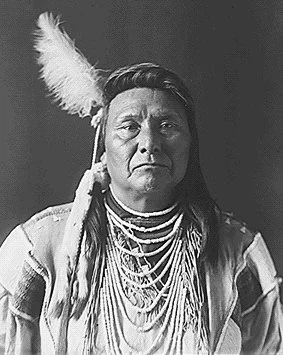
Nez Perce Chief Joseph: 'I will fight no more forever', Surrender speech - 1877

September 11, 2015

5 October, 1877, Bear Paw Mountains, Montana, USA

Tell General Howard I know his heart. What he told me before, I have it in my heart. I am tired of fighting. Our Chiefs are killed; Looking Glass is dead, Ta Hool Hool Shute is dead. The old men are all dead. It is the young men who say yes or no. He who led on the young men is dead. It is cold, and we have no blankets; the little children are freezing to death. My people, some of them, have run away to the hills, and have no blankets, no food. No one knows where they are - perhaps freezing to death. I want to have time to look for my children, and see how many of them I can find. Maybe I shall find them among the dead. Hear me, my Chiefs! I am tired; my heart is sick and sad. From where the sun now stands I will fight no more forever.

Source: http://www.historyplace.com/speeches/josep...

Enjoyed this speech? Speakola is a labour of love and I’d be very grateful if you would share, tweet or like it. Thank you.

Facebook Twitter Facebook
In Pre 1900 Tags CHIEF JOSEPH, NEZ PERCE, NATIVE AMERICAN, SURRENDER, I WILL FIGHT NO MORE FOREVER, TRANSCRIPT
Comment

Abraham Lincoln: 'I believe this government cannot endure, permanently half slave and half free' A House Divided speech - 1858

September 11, 2015

16 June, 1858, State House, Springfield, Illinois

Mr. President and Gentlemen of the Convention.

If we could first know where we are, and whither we are tending, we could then better judge what to do, and how to do it.

We are now far into the fifth year, since a policy was initiated, with the avowed object, and confident promise, of putting an end to slavery agitation.

Under the operation of that policy, that agitation has not only, not ceased, but has constantly augmented.

In my opinion, it will not cease, until a crisis shall have been reached, and passed.

"A house divided against itself cannot stand."

I believe this government cannot endure, permanently half slave and half free.

I do not expect the Union to be dissolved -- I do not expect the house to fall -- but I do expect it will cease to be divided.

It will become all one thing or all the other.

Either the opponents of slavery, will arrest the further spread of it, and place it where the public mind shall rest in the belief that it is in the course of ultimate extinction; or its advocates will push it forward, till it shall become alike lawful in all the States, old as well as new -- North as well as South.

Have we no tendency to the latter condition?

Let any one who doubts, carefully contemplate that now almost complete legal combination -- piece of machinery so to speak -- compounded of the Nebraska doctrine, and the Dred Scott decision. Let him consider not only what work the machinery is adapted to do, and how well adapted; but also, let him study the history of its construction, and trace, if he can, or rather fail, if he can, to trace the evidence of design and concert of action, among its chief architects, from the beginning.

But, so far, Congress only, had acted; and an indorsement by the people, real or apparent, was indispensable, to save the point already gained, and give chance for more.

The new year of 1854 found slavery excluded from more than half the States by State Constitutions, and from most of the national territory by congressional prohibition.

Four days later, commenced the struggle, which ended in repealing that congressional prohibition.

This opened all the national territory to slavery, and was the first point gained.

This necessity had not been overlooked; but had been provided for, as well as might be, in the notable argument of "squatter sovereignty," otherwise called "sacred right of self government," which latter phrase, though expressive of the only rightful basis of any government, was so perverted in this attempted use of it as to amount to just this: That if any one man, choose to enslave another, no third man shall be allowed to object.

That argument was incorporated into the Nebraska bill itself, in the language which follows: "It being the true intent and meaning of this act not to legislate slavery into any Territory or state, not to exclude it therefrom; but to leave the people thereof perfectly free to form and regulate their domestic institutions in their own way, subject only to the Constitution of the United States."

Then opened the roar of loose declamation in favor of "Squatter Sovereignty," and "Sacred right of self-government."

"But," said opposition members, "let us be more specific -- let us amend the bill so as to expressly declare that the people of the territory may exclude slavery." "Not we," said the friends of the measure; and down they voted the amendment.

While the Nebraska Bill was passing through congress, a law case involving the question of a negroe's freedom, by reason of his owner having voluntarily taken him first into a free state and then a territory covered by the congressional prohibition, and held him as a slave, for a long time in each, was passing through the U.S. Circuit Court for the District of Missouri; and both Nebraska bill and law suit were brought to a decision in the same month of May, 1854. The negroe's name was "Dred Scott," which name now designates the decision finally made in the case.

Before the then next Presidential election, the law case came to, and was argued in, the Supreme Court of the United States; but the decision of it was deferred until after the election. Still, before the election, Senator Trumbull, on the floor of the Senate, requests the leading advocate of the Nebraska bill to state his opinion whether the people of a territory can constitutionally exclude slavery from their limits; and the latter answers: "That is a question for the Supreme Court."

The election came. Mr. Buchanan was elected, and the indorsement, such as it was, secured. That was the second point gained. The indorsement, however, fell short of a clear popular majority by nearly four hundred thousand votes, and so, perhaps, was not overwhelmingly reliable and satisfactory.

The outgoing President, in his last annual message, as impressively as possible, echoed back upon the people the weight and authority of the indorsement.

The Supreme Court met again; did not announce their decision, but ordered a re-argument.

The Presidential inauguration came, and still no decision of the court; but the incoming President, in his inaugural address, fervently exhorted the people to abide by the forthcoming decision, whatever might be.

Then, in a few days, came the decision.

The reputed author of the Nebraska Bill finds an early occasion to make a speech at this capital indorsing the Dred Scott Decision, and vehemently denouncing all opposition to it.

The new President, too, seizes the early occasion of the Silliman letter to indorse and strongly construe that decision, and to express his astonishment that any different view had ever been entertained.

At length a squabble springs up between the President and the author of the Nebraska Bill, on the mere question of fact, whether the Lecompton constitution was or was not, in any just sense, made by the people of Kansas; and in that squabble the latter declares that all he wants is a fair vote for the people, and that he cares not whether slavery be voted down or voted up. I do not understand his declaration that he cares not whether slavery be voted down or voted up, to be intended by him other than as an apt definition of the policy he would impress upon the public mind -- the principle for which he declares he has suffered much, and is ready to suffer to the end.

And well may he cling to that principle. If he has any parental feeling, well may he cling to it. That principle, is the only shred left of his original Nebraska doctrine. Under the Dred Scott decision, "squatter sovereignty" squatted out of existence, tumbled down like temporary scaffolding -- like the mould at the foundry served through one blast and fell back into loose sand -- helped to carry an election, and then was kicked to the winds. His late joint struggle with the Republicans, against the Lecompton Constitution, involves nothing of the original Nebraska doctrine. That struggle was made on a point, the right of a people to make their own constitution, upon which he and the Republicans have never differed.

The several points of the Dred Scott decision, in connection with Senator Douglas' "care-not" policy, constitute the piece of machinery, in its present state of advancement. This was the third point gained.The working points of that machinery are:

First, that no negro slave, imported as such from Africa, and no descendant of such slave can ever be a citizen of any State, in the sense of that term as used in the Constitution of the United States.

This point is made in order to deprive the negro, in every possible event, of the benefit of this provision of the United States Constitution, which declares that--

"The citizens of each State shall be entitled to all privileges and immunities of citizens in the several States."

Secondly, that "subject to the Constitution of the United States," neither Congress nor a Territorial Legislature can exclude slavery from any United States Territory.

This point is made in order that individual men may fill up the territories with slaves, without danger of losing them as property, and thus to enhance the chances of permanency to the institution through all the future.

Thirdly, that whether the holding a negro in actual slavery in a free State, makes him free, as against the holder, the United States courts will not decide, but will leave to be decided by the courts of any slave State the negro may be forced into by the master.

This point is made, not to be pressed immediately; but, if acquiesced in for a while, and apparently indorsed by the people at an election, then to sustain the logical conclusion that what Dred Scott's master might lawfully do with Dred Scott, in the free State of Illinois, every other master may lawfully do with any other one, or one thousand slaves, in Illinois, or in any other free State.

Auxiliary to all this, and working hand in hand with it, the Nebraska doctrine, or what is left of it, is to educate and mould public opinion, at least Northern public opinion, to not care whether slavery is voted down or voted up.

This shows exactly where we now are; and partially, also, whither we are tending.

It will throw additional light on the latter, to go back, and run the mind over the string of historical facts already stated. Several things will now appear less dark and mysterious than they did when they were transpiring. The people were to be left "perfectly free" "subject only to the Constitution." What the Constitution had to do with it, outsiders could not then see. Plainly enough now, it was an exactly fitted niche, for the Dred Scott decision to afterward come in, and declare the perfect freedom of the people, to be just no freedom at all.

Why was the amendment, expressly declaring the right of the people to exclude slavery, voted down? Plainly enough now, the adoption of it would have spoiled the niche for the Dred Scott decision.

Why was the court decision held up? Why even a Senator's individual opinion withheld, till after the presidential election? Plainly enough now, the speaking out then would have damaged the "perfectly free" argument upon which the election was to be carried.

Why the outgoing President's felicitation on the indorsement? Why the delay of a reargument? Why the incoming President's advance exhortation in favor of the decision?

These things look like the cautious patting and petting of a spirited horse, preparatory to mounting him, when it is dreaded that he may give the rider a fall.

And why the hasty after indorsements of the decision by the President and others?

We can not absolutely know that all these exact adaptations are the result of preconcert. But when we see a lot of framed timbers, different portions of which we know have been gotten out at different times and places and by different workmen -- Stephen, Franklin, Roger, and James, for instance -- and when we see these timbers joined together, and see they exactly make the frame of a house or a mill, all the tenons and mortices exactly fitting, and all the lengths and proportions of the different pieces exactly adapted to their respective places, and not a piece too many or too few -- not omitting even scaffolding -- or, if a single piece be lacking, we can see the place in the frame exactly fitted and prepared to yet bring such piece in -- in such a case, we find it impossible not to believe that Stephen and Franklin and Roger and James all understood one another from the beginning, and all worked upon a common plan or draft drawn up before the first lick was struck.

It should not be overlooked that, by the Nebraska Bill, the people of a State, as well as Territory, were to be left "perfectly free" "subject only to the Constitution."

Why mention a State? They were legislating for territories, and not for or about States. Certainly the people of a State are and ought to be subject to the Constitution of the United States; but why is mention of this lugged into this merely territorial law? Why are the people of a territory and the people of a state therein lumped together, and their relation to the Constitution therein treated as being precisely the same?

While the opinion of the Court, by Chief Justice Taney, in the Dred Scott case, and the separate opinions of all the concurring Judges, expressly declare that the Constitution of the United States neither permits Congress nor a Territorial legislature to exclude slavery from any United States territory, they all omit to declare whether or not the same Constitution permits a state, or the people of a State, to exclude it.

Possibly, this is a mere omission; but who can be quite sure, if McLean or Curtis had sought to get into the opinion a declaration of unlimited power in the people of a state to exclude slavery from their limits, just as Chase and Macy sought to get such declaration, in behalf of the people of a territory, into the Nebraska bill -- I ask, who can be quite sure that it would not have been voted down, in the one case, as it had been in the other.

The nearest approach to the point of declaring the power of a State over slavery, is made by Judge Nelson. He approaches it more than once, using the precise idea, and almost the language too, of the Nebraska act. On one occasion his exact language is, "except in cases where the power is restrained by the Constitution of the United States, the law of the State is supreme over the subject of slavery within its jurisdiction."

In what cases the power of the states is so restrained by the U.S. Constitution, is left an open question, precisely as the same question, as to the restraint on the power of the territories was left open in the Nebraska act. Put that and that together, and we have another nice little niche, which we may, ere long, see filled with another Supreme Court decision, declaring that the Constitution of the United States does not permit a state to exclude slavery from its limits.

And this may especially be expected if the doctrine of "care not whether slavery be voted down or voted up, shall gain upon the public mind sufficiently to give promise that such a decision an be maintained when made.

Such a decision is all that slavery now lacks of being alike lawful in all the States.

Welcome, or unwelcome, such decision is probably coming, and will soon be upon us, unless the power of the present political dynasty shall be met and overthrown.

We shall lie down pleasantly dreaming that the people of Missouri are on the verge of making their State free; and we shall awake to the reality, instead, that the Supreme Court has made Illinois a slave State.

To meet and overthrow the power of that dynasty, is the work now before all those who would prevent that consummation.

This is what we have to do.

But how can we best do it?

There are those who denounce us openly to their own friends, and yet whisper us softly, that Senator Douglas is the aptest instrument there is, with which to effect that object. They wish us to infer all, from the facts, that he now has a little quarrel with the present head of the dynasty; and that he has regularly voted with us, on a single point, upon which, he and we, have never differed.

They remind us that he is a great man, and that the largest of us are very small ones. Let this be granted. But "a living dog is better than a dead lion." Judge Douglas, if not a dead lion for this work, is at least a caged and toothless one. How can he oppose the advances of slavery? He don't care anything about it. His avowed mission is impressing the "public heart" to care nothing about it.

A leading Douglas Democratic newspaper thinks Douglas' superior talent will be needed to resist the revival of the African slave trade.

Does Douglas believe an effort to revive that trade is approaching? He has not said so. Does he really think so? But if it is, how can he resist it? For years he has labored to prove it a sacred right of white men to take negro slaves into the new territories. Can he possibly show that it is less a sacred right to buy them where they can be bought cheapest? And, unquestionably they can be bought cheaper in Africa than in Virginia.

He has done all in his power to reduce the whole question of slavery to one of a mere right of property; and as such, how can he oppose the foreign slave trade -- how can he refuse that trade in that "property" shall be "perfectly free" -- unless he does it as a protection to the home production? And as the home producers will probably not ask the protection, he will be wholly without a ground of opposition.

Senator Douglas holds, we know, that a man may rightfully be wiser to-day than he was yesterday -- that he may rightfully change when he finds himself wrong.

But can we, for that reason, run ahead, and infer that he will make any particular change, of which he, himself, has given no intimation? Can we safely base our action upon any such vague inference?

Now, as ever, I wish not to misrepresent Judge Douglas' position, question his motives, or do ought that can be personally offensive to him.

Whenever, if ever, he and we can come together on principle so that our great cause may have assistance from his great ability, I hope to have interposed no adventitious obstacle.

But clearly, he is not now with us -- he does not pretend to be -- he does not promise to ever be.

Our cause, then, must be intrusted to, and conducted by its own undoubted friends -- those whose hands are free, whose hearts are in the work -- who do care for the result.

Two years ago the Republicans of the nation mustered over thirteen hundred thousand strong.

We did this under the single impulse of resistance to a common danger, with every external circumstance against us.

Of strange, discordant, and even, hostile elements, we gathered from the four winds, and formed and fought the battle through, under the constant hot fire of a disciplined, proud, and pampered enemy.

Did we brave all then to falter now? -- now -- when that same enemy is wavering, dissevered and belligerent?

The result is not doubtful. We shall not fail -- if we stand firm, we shall not fail.

Wise councils may accelerate or mistakes delay it, but, sooner or later the victory is sure to come.

Source: http://www.abrahamlincolnonline.org/lincol...

Enjoyed this speech? Speakola is a labour of love and I’d be very grateful if you would share, tweet or like it. Thank you.

Facebook Twitter Facebook
In Pre 1900 Tags A HOUSE DIVIDED, ABRAHAM LINCOLN, FULL TEXT, REENACTMENT, CIVIL WAR, PRESIDENTS, USA, TRANSCRIPT
Comment

Sojourner Truth: 'I have borne thirteen children, and seen most all sold off to slavery', Aint I A Woman speech - 1851

September 11, 2015

1851, Women's Convention, Akron, Ohio

Well, children, where there is so much racket there must be something out of kilter. I think that 'twixt the negroes of the South and the women at the North, all talking about rights, the white men will be in a fix pretty soon. But what's all this here talking about?

That man over there says that women need to be helped into carriages, and lifted over ditches, and to have the best place everywhere. Nobody ever helps me into carriages, or over mud-puddles, or gives me any best place! And ain't I a woman? Look at me! Look at my arm! I have ploughed and planted, and gathered into barns, and no man could head me! And ain't I a woman? I could work as much and eat as much as a man - when I could get it - and bear the lash as well! And ain't I a woman? I have borne thirteen children, and seen most all sold off to slavery, and when I cried out with my mother's grief, none but Jesus heard me! And ain't I a woman?

Then they talk about this thing in the head; what's this they call it? [someone whispers, "intellect"] That's it, honey. What's that got to do with women's rights or negroes' rights? If my cup won't hold but a pint, and yours holds a quart, wouldn't you be mean not to let me have my little half measure full?

Then that little man in black there, he says women can't have as much rights as men, 'cause Christ wasn't a woman! Where did your Christ come from? Where did your Christ come from? From God and a woman! Man had nothing to do with Him.

If the first woman God ever made was strong enough to turn the world upside down all alone, these women together ought to be able to turn it back , and get it right side up again! And now they is asking to do it, the men better let them.

Obliged to you for hearing me, and now old Sojourner ain't got nothing more to say.

Source: http://legacy.fordham.edu/halsall/mod/sojt...

Enjoyed this speech? Speakola is a labour of love and I’d be very grateful if you would share, tweet or like it. Thank you.

Facebook Twitter Facebook
In Pre 1900 Tags SOJOURNER TRUTH, AINT I A WOMAN, WOMEN'S RIGHTS, ABOLITIONIST, SLAVERY, TRANSCRIPT
Comment

William Wilberforce: 'A trade founded in iniquity, and carried on as this was, must be abolished', Abolition of Slave Trade - 1789

September 11, 2015

12 May, 1789, House of Commons, Westminster, England

When I consider the magnitude of the subject which I am to bring before the House—a subject, in which the interests, not of this country, nor of Europe alone, but of the whole world, and of posterity, are involved: and when I think, at the same time, on the weakness of the advocate who has undertaken this great cause—when these reflections press upon my mind, it is impossible for me not to feel both terrified and concerned at my own inadequacy to such a task. But when I reflect, however, on the encouragement which I have had, through the whole course of a long and laborious examination of this question, and how much candour I have experienced, and how conviction has increased within my own mind, in proportion as I have advanced in my labours;—when I reflect, especially, that however averse any gentleman may now be, yet we shall all be of one opinion in the end;—when I turn myself to these thoughts, I take courage—I determine to forget all my other fears, and I march forward with a firmer step in the full assurance that my cause will bear me out, and that I shall be able to justify upon the clearest principles, every resolution in my hand, the avowed end of which is, the total abolition of the slave trade. I wish exceedingly, in the outset, to guard both myself and the House from entering into the subject with any sort of passion. It is not their passions I shall appeal to—I ask only for their cool and impartial reason; and I wish not to take them by surprise, but to deliberate, point by point, upon every part of this question. I mean not to accuse any one, but to take the shame upon myself, in common, indeed, with the whole parliament of Great Britain, for having suffered this horrid trade to be carried on under their authority. We are all guilty—we ought all to plead guilty, and not to exculpate ourselves by throwing the blame on others; and I therefore deprecate every kind of reflection against the various descriptions of

people who are more immediately involved in this wretched business.

Having now disposed of the first part of this subject, I must speak of the transit of the slaves in the West Indies. This I confess, in my own opinion, is the most wretched part of the whole subject. So much misery condensed in so little room, is more than the human imagination had ever before conceived. I will not accuse the Liverpool merchants: I will allow them, nay, I will believe them to be men of humanity; and I will therefore believe, if it were not for the enormous magnitude and extent of the evil which distracts their attention from individual cases, and makes them think generally, and therefore less feelingly on the subject, they would never have persisted in the trade. I verily believe therefore, if the wretchedness of any one of the many hundred Negroes stowed in each ship could be brought before their view, and remain within the sight of the African Merchant, that there is no one among them whose heart would bear it. Let any one imagine to himself 6 or 700 of these wretches chained two and two, surrounded with every object that is nauseous and disgusting, diseased, and struggling under every kind of wretchedness! How can we bear to think of such a scene as this? One would think it had been determined to heap upon them all the varieties of bodily pain, for the purpose of blunting the feelings of the mind; and yet, in this very point (to show the power of human prejudice) the situation of the slaves has been described by Mr. Norris, one of the Liverpool delegates, in a manner which, I am sure will convince the House how interest can draw a film across the eyes, so thick, that total blindness could do no more; and how it is our duty therefore to trust not to the reasonings of interested men, or to their way of colouring a transaction. “Their apartments,” says Mr. Norris, “are fitted up as much for their advantage as circumstances will admit. The right ancle of one, indeed is connected with the left ancle of another by a small iron fetter, and if they are turbulent, by another on their wrists. They have several meals a day; some of their own country provisions, with the best sauces of African cookery; and by way of variety, another meal of pulse, &c. according to European taste. After breakfast they have water to wash themselves, while their apartments are perfumed with frankincense and lime-juice. Before dinner, they are amused after the manner of their country. The song and dance are promoted,” and, as if the whole was really a scene of pleasure and dissipation it is added, that games of chance are furnished. “The men play and sing, while the women and girls make fanciful ornaments with beads, which they are plentifully supplied with.” Such is the sort of strain in which the Liverpool delegates, and particularly Mr. Norris, gave evidence before the privy council. What will the House think when, by the concurring testimony of other witnesses, the true history is laid open. The slaves who are sometimes described as rejoicing at their captivity, are so wrung with misery at leaving their country, that it is the constant practice to set sail at night, lest they should be sensible of their departure. The pulse which Mr. Norris talks of are horse beans; and the scantiness, both of water and provision, was suggested by the very legislature of Jamaica in the report of their committee, to be a subject that called for the interference of parliament. Mr. Norris talks of frankincense and lime juice; when surgeons tell you the slaves are stowed so close, that there is not room to tread among them: and when you have it in evidence from sir George Yonge, that even in a ship which wanted 200 of her complement, the stench was intolerable. The song and the dance, says Mr. Norris, are promoted. It had been more fair, perhaps, if he had explained that word promoted. The truth is, that for the sake of exercise, these miserable wretches, loaded with chains, oppressed with disease and wretchedness, are forced to dance by the terror of the lash, and sometimes by the actual use of it. “I,” says one of the other evidences, “was employed to dance the men, while another person danced the women.” Such, then is the meaning of the word promoted; and it may be observed too, with respect to food, that an instrument is sometimes carried out, in order to force them to eat which is the same sort of proof how much they enjoy themselves in that instance also. As to their singing, what shall we say when we are told that their songs are songs of lamentation upon their departure which, while they sing, are always in tears, insomuch that one captain (more humane as I should conceive him, therefore, than the rest) threatened one of the women with a flogging, because the mournfulness of her song was too painful for his feelings. In order, however, not to trust too much to any sort of description, I will call the attention of the House to one species of evidence which is absolutely infallible. Death, at least, is a sure ground of evidence, and the proportion of deaths will not only confirm, but if possible will even aggravate our suspicion of their misery in the transit. It will be found, upon an average of all the ships of which evidence has been given at the privy council, that exclusive of those who perish before they sail, not less than 12½ per cent. perish in the passage. Besides these, the Jamaica report tells you, that not less than 4½ per cent. die on shore before the day of sale, which is only a week or two from the time of landing. One third more die in the seasoning, and this in a country exactly like their own, where they are healthy and happy as some of the evidences would pretend. The diseases, however, which they contract on shipboard, the astringent washes which are to hide their wounds, and the mischievous tricks used to make them up for sale, are, as the Jamaica report says, (a most precious and valuable report, which I shall often have to advert to) one principle cause of this mortality. Upon the whole, however, here is a mortality of about 50 per cent. and this among negroes who are not bought unless (as the phrase is with cattle) they are sound in wind and limb. How then can the House refuse its belief to the multiplied testimonies before the privy council, of the savage treatment of the negroes in the middle passage? Nay, indeed, what need is there of any evidence? The number of deaths speaks for itself, and makes all such enquiry superfluous. As soon as ever I had arrived thus far in my investigation of the slave trade, I confess to you sir, so enormous so dreadful, so irremediable did its wickedness appear that my own mind was completely made up for the abolition. A trade founded in iniquity, and carried on as this was, must be abolished, let the policy be what it might,—let the consequences be what they would, I from this time determined that I would never rest till I had effected its abolition.


Source: http://www.brycchancarey.com/abolition/wil...

Enjoyed this speech? Speakola is a labour of love and I’d be very grateful if you would share, tweet or like it. Thank you.

Facebook Twitter Facebook
In Pre 1900 Tags WILLIAM WILBERFORCE, ABOLITIONIST, HOUSE OF COMMONS, WESTMINSTER, 18th CENTURY, SLAVERY, TRANSCRIPT
Comment

Susan B Anthony: 'Are women persons?', Women's Right to Vote - 1873

September 10, 2015

1872-73, stump speech, Monroe County, New York, USA

Anthony was fined $100 for casting an illegal vote in the 1872 Presidential election

Friends and fellow citizens: I stand before you tonight under indictment for the alleged crime of having voted at the last presidential election, without having a lawful right to vote. It shall be my work this evening to prove to you that in thus voting, I not only committed no crime, but, instead, simply exercised my citizen's rights, guaranteed to me and all United States citizens by the National Constitution, beyond the power of any state to deny.

The preamble of the Federal Constitution says:

"We, the people of the United States, in order to form a more perfect union, establish justice, insure domestic tranquillity, provide for the common defense, promote the general welfare, and secure the blessings of liberty to ourselves and our posterity, do ordain and establish this Constitution for the United States of America."

It was we, the people; not we, the white male citizens; nor yet we, the male citizens; but we, the whole people, who formed the Union. And we formed it, not to give the blessings of liberty, but to secure them; not to the half of ourselves and the half of our posterity, but to the whole people - women as well as men. And it is a downright mockery to talk to women of their enjoyment of the blessings of liberty while they are denied the use of the only means of securing them provided by this democratic-republican government - the ballot.

For any state to make sex a qualification that must ever result in the disfranchisement of one entire half of the people, is to pass a bill of attainder, or, an ex post facto law, and is therefore a violation of the supreme law of the land. By it the blessings of liberty are forever withheld from women and their female posterity.

To them this government has no just powers derived from the consent of the governed. To them this government is not a democracy. It is not a republic. It is an odious aristocracy; a hateful oligarchy of sex; the most hateful aristocracy ever established on the face of the globe; an oligarchy of wealth, where the rich govern the poor. An oligarchy of learning, where the educated govern the ignorant, or even an oligarchy of race, where the Saxon rules the African, might be endured; but this oligarchy of sex, which makes father, brothers, husband, sons, the oligarchs over the mother and sisters, the wife and daughters, of every household - which ordains all men sovereigns, all women subjects, carries dissension, discord, and rebellion into every home of the nation.

Webster, Worcester, and Bouvier all define a citizen to be a person in the United States, entitled to vote and hold office.

The only question left to be settled now is: Are women persons? And I hardly believe any of our opponents will have the hardihood to say they are not. Being persons, then, women are citizens; and no state has a right to make any law, or to enforce any old law, that shall abridge their privileges or immunities. Hence, every discrimination against women in the constitutions and laws of the several states is today null and void, precisely as is every one against Negroes.

Anthony died in 1906, fighting to the end. Women's right to vote. was ratified by the 19th Amendment in August of 1920.


Source: http://www.historyplace.com/speeches/antho...

Enjoyed this speech? Speakola is a labour of love and I’d be very grateful if you would share, tweet or like it. Thank you.

Facebook Twitter Facebook
In Pre 1900 Tags SUFFRAGETTE, RIGHT TO VOTE, GENDER EQUALITY, SUSAN B ANTHONY, WOMEN, WOMEN'S RIGHTS, TRANSCRIPT
Comment

George Washington: 'the preservation of the sacred fire of liberty' - First inaugural speech - 1789

September 10, 2015

30 April,  1789, Federal Hall, New York City, NY,  USA

Among the vicissitudes incident to life no event could have filled me with greater anxieties than that of which the notification was transmitted by your order, and received on the 14th day of the present month. On the one hand, I was summoned by my Country, whose voice I can never hear but with veneration and love, from a retreat which I had chosen with the fondest predilection, and, in my flattering hopes, with an immutable decision, as the asylum of my declining years--a retreat which was rendered every day more necessary as well as more dear to me by the addition of habit to inclination, and of frequent interruptions in my health to the gradual waste committed on it by time. On the other hand, the magnitude and difficulty of the trust to which the voice of my country called me, being sufficient to awaken in the wisest and most experienced of her citizens a distrustful scrutiny into his qualifications, could not but overwhelm with despondence one who (inheriting inferior endowments from nature and unpracticed in the duties of civil administration) ought to be peculiarly conscious of his own deficiencies. In this conflict of emotions all I dare aver is that it has been my faithful study to collect my duty from a just appreciation of every circumstance by which it might be affected. All I dare hope is that if, in executing this task, I have been too much swayed by a grateful remembrance of former instances, or by an affectionate sensibility to this transcendent proof of the confidence of my fellow-citizens, and have thence too little consulted my incapacity as well as disinclination for the weighty and untried cares before me, my error will be palliated by the motives which mislead me, and its consequences be judged by my country with some share of the partiality in which they originated.

Such being the impressions under which I have, in obedience to the public summons, repaired to the present station, it would be peculiarly improper to omit in this first official act my fervent supplications to that Almighty Being who rules over the universe, who presides in the councils of nations, and whose providential aids can supply every human defect, that His benediction may consecrate to the liberties and happiness of the people of the United States a Government instituted by themselves for these essential purposes, and may enable every instrument employed in its administration to execute with success the functions allotted to his charge. In tendering this homage to the Great Author of every public and private good, I assure myself that it expresses your sentiments not less than my own, nor those of my fellow- citizens at large less than either. No people can be bound to acknowledge and adore the Invisible Hand which conducts the affairs of men more than those of the United States. Every step by which they have advanced to the character of an independent nation seems to have been distinguished by some token of providential agency; and in the important revolution just accomplished in the system of their united government the tranquil deliberations and voluntary consent of so many distinct communities from which the event has resulted can not be compared with the means by which most governments have been established without some return of pious gratitude, along with an humble anticipation of the future blessings which the past seem to presage. These reflections, arising out of the present crisis, have forced themselves too strongly on my mind to be suppressed. You will join with me, I trust, in thinking that there are none under the influence of which the proceedings of a new and free government can more auspiciously commence.

By the article establishing the executive department it is made the duty of the President "to recommend to your consideration such measures as he shall judge necessary and expedient." The circumstances under which I now meet you will acquit me from entering into that subject further than to refer to the great constitutional charter under which you are assembled, and which, in defining your powers, designates the objects to which your attention is to be given. It will be more consistent with those circumstances, and far more congenial with the feelings which actuate me, to substitute, in place of a recommendation of particular measures, the tribute that is due to the talents, the rectitude, and the patriotism which adorn the characters selected to devise and adopt them. In these honorable qualifications I behold the surest pledges that as on one side no local prejudices or attachments, no separate views nor party animosities, will misdirect the comprehensive and equal eye which ought to watch over this great assemblage of communities and interests, so, on another, that the foundation of our national policy will be laid in the pure and immutable principles of private morality, and the preeminence of free government be exemplified by all the attributes which can win the affections of its citizens and command the respect of the world. I dwell on this prospect with every satisfaction which an ardent love for my country can inspire, since there is no truth more thoroughly established than that there exists in the economy and course of nature an indissoluble union between virtue and happiness; between duty and advantage; between the genuine maxims of an honest and magnanimous policy and the solid rewards of public prosperity and felicity; since we ought to be no less persuaded that the propitious smiles of Heaven can never be expected on a nation that disregards the eternal rules of order and right which Heaven itself has ordained; and since the preservation of the sacred fire of liberty and the destiny of the republican model of government are justly considered, perhaps, as deeply, as finally, staked on the experiment entrusted to the hands of the American people.

Besides the ordinary objects submitted to your care, it will remain with your judgment to decide how far an exercise of the occasional power delegated by the fifth article of the Constitution is rendered expedient at the present juncture by the nature of objections which have been urged against the system, or by the degree of inquietude which has given birth to them. Instead of undertaking particular recommendations on this subject, in which I could be guided by no lights derived from official opportunities, I shall again give way to my entire confidence in your discernment and pursuit of the public good; for I assure myself that whilst you carefully avoid every alteration which might endanger the benefits of an united and effective government, or which ought to await the future lessons of experience, a reverence for the characteristic rights of freemen and a regard for the public harmony will sufficiently influence your deliberations on the question how far the former can be impregnably fortified or the latter be safely and advantageously promoted.

To the foregoing observations I have one to add, which will be most properly addressed to the House of Representatives. It concerns myself, and will therefore be as brief as possible. When I was first honored with a call into the service of my country, then on the eve of an arduous struggle for its liberties, the light in which I contemplated my duty required that I should renounce every pecuniary compensation. From this resolution I have in no instance departed; and being still under the impressions which produced it, I must decline as inapplicable to myself any share in the personal emoluments which may be indispensably included in a permanent provision for the executive department, and must accordingly pray that the pecuniary estimates for the station in which I am placed may during my continuance in it be limited to such actual expenditures as the public good may be thought to require.

Having thus imparted to you my sentiments as they have been awakened by the occasion which brings us together, I shall take my present leave; but not without resorting once more to the benign Parent of the Human Race in humble supplication that, since He has been pleased to favor the American people with opportunities for deliberating in perfect tranquillity, and dispositions for deciding with unparalleled unanimity on a form of government for the security of their union and the advancement of their happiness, so His divine blessing may be equally conspicuous in the enlarged views, the temperate consultations, and the wise measures on which the success of this Government must depend.

Source: http://www.ourdocuments.gov/doc.php?flash=...

Enjoyed this speech? Speakola is a labour of love and I’d be very grateful if you would share, tweet or like it. Thank you.

Facebook Twitter Facebook
In Pre 1900 Tags GEORGE WASHINGTON, PRESIDENTS, INAUGURATION, FIRST CONGRESS, FOUNDING FATHERS, TRANSCRIPT
Comment

William Jennings Bryan: 'You shall not crucify mankind upon a cross of gold' - DNC 1896

September 10, 2015

9 July, 1896, Democratic Party National Convention, Chicago, IL, USA

I would be presumptuous, indeed, to present myself against the distinguished gentlemen to whom you have listened if this were but a measuring of ability; but this is not a contest among persons. The humblest citizen in all the land when clad in the armor of a righteous cause is stronger than all the whole hosts of error that they can bring. I come to speak to you in defense of a cause as holy as the cause of liberty—the cause of humanity. When this debate is concluded, a motion will be made to lay upon the table the resolution offered in commendation of the administration and also the resolution in condemnation of the administration. I shall object to bringing this question down to a level of persons. The individual is but an atom; he is born, he acts, he dies; but principles are eternal; and this has been a contest of principle.

Never before in the history of this country has there been witnessed such a contest as that through which we have passed. Never before in the history of American politics has a great issue been fought out as this issue has been by the voters themselves.

On the 4th of March, 1895, a few Democrats, most of them members of Congress, issued an address to the Democrats of the nation asserting that the money question was the paramount issue of the hour; asserting also the right of a majority of the Democratic Party to control the position of the party on this paramount issue; concluding with the request that all believers in free coinage of silver in the Democratic Party should organize and take charge of and control the policy of the Democratic Party. Three months later, at Memphis, an organization was perfected, and the silver Democrats went forth openly and boldly and courageously proclaiming their belief and declaring that if successful they would crystallize in a platform the declaration which they had made; and then began the conflict with a zeal approaching the zeal which inspired the crusaders who followed Peter the Hermit. Our silver Democrats went forth from victory unto victory, until they are assembled now, not to discuss, not to debate, but to enter up the judgment rendered by the plain people of this country.

But in this contest, brother has been arrayed against brother, and father against son. The warmest ties of love and acquaintance and association have been disregarded. Old leaders have been cast aside when they refused to give expression to the sentiments of those whom they would lead, and new leaders have sprung up to give direction to this cause of freedom. Thus has the contest been waged, and we have assembled here under as binding and solemn instructions as were ever fastened upon the representatives of a people.

We do not come as individuals. Why, as individuals we might have been glad to compliment the gentleman from New York [Senator Hill], but we knew that the people for whom we speak would never be willing to put him in a position where he could thwart the will of the Democratic Party. I say it was not a question of persons; it was a question of principle; and it is not with gladness, my friends, that we find ourselves brought into conflict with those who are now arrayed on the other side. The gentleman who just preceded me [Governor Russell] spoke of the old state of Massachusetts. Let me assure him that not one person in all this convention entertains the least hostility to the people of the state of Massachusetts.

But we stand here representing people who are the equals before the law of the largest cities in the state of Massachusetts. When you come before us and tell us that we shall disturb your business interests, we reply that you have disturbed our business interests by your action. We say to you that you have made too limited in its application the definition of a businessman. The man who is employed for wages is as much a businessman as his employer. The attorney in a country town is as much a businessman as the corporation counsel in a great metropolis. The merchant at the crossroads store is as much a businessman as the merchant of New York. The farmer who goes forth in the morning and toils all day, begins in the spring and toils all summer, and by the application of brain and muscle to the natural resources of this country creates wealth, is as much a businessman as the man who goes upon the Board of Trade and bets upon the price of grain. The miners who go 1,000 feet into the earth or climb 2,000 feet upon the cliffs and bring forth from their hiding places the precious metals to be poured in the channels of trade are as much businessmen as the few financial magnates who in a backroom corner the money of the world.

We come to speak for this broader class of businessmen. Ah. my friends, we say not one word against those who live upon the Atlantic Coast; but those hardy pioneers who braved all the dangers of the wilderness, who have made the desert to blossom as the rose—those pioneers away out there, rearing their children near to nature’s heart, where they can mingle their voices with the voices of the birds—out there where they have erected schoolhouses for the education of their children and churches where they praise their Creator, and the cemeteries where sleep the ashes of their dead—are as deserving of the consideration of this party as any people in this country.

It is for these that we speak. We do not come as aggressors. Our war is not a war of conquest. We are fighting in the defense of our homes, our families, and posterity. We have petitioned, and our petitions have been scorned. We have entreated, and our entreaties have been disregarded. We have begged, and they have mocked when our calamity came.

We beg no longer; we entreat no more; we petition no more. We defy them!

The gentleman from Wisconsin has said he fears a Robespierre. My friend, in this land of the free you need fear no tyrant who will spring up from among the people. What we need is an Andrew Jackson to stand as Jackson stood, against the encroachments of aggregated wealth.

They tell us that this platform was made to catch votes. We reply to them that changing conditions make new issues; that the principles upon which rest Democracy are as everlasting as the hills; but that they must be applied to new conditions as they arise. Conditions have arisen and we are attempting to meet those conditions. They tell us that the income tax ought not to be brought in here; that is not a new idea. They criticize us for our criticism of the Supreme Court of the United States. My friends, we have made no criticism. We have simply called attention to what you know. If you want criticisms, read the dissenting opinions of the Court. That will give you criticisms.

They say we passed an unconstitutional law. I deny it. The income tax was not unconstitutional when it was passed. It was not unconstitutional when it went before the Supreme Court for the first time. It did not become unconstitutional until one judge changed his mind; and we cannot be expected to know when a judge will change his mind.

The income tax is a just law. It simply intends to put the burdens of government justly upon the backs of the people. I am in favor of an income tax. When I find a man who is not willing to pay his share of the burden of the government which protects him, I find a man who is unworthy to enjoy the blessings of a government like ours.

He says that we are opposing the national bank currency. It is true. If you will read what Thomas Benton said, you will find that he said that in searching history he could find but one parallel to Andrew Jackson. That was Cicero, who destroyed the conspiracies of Cataline and saved Rome. He did for Rome what Jackson did when he destroyed the bank conspiracy and saved America.

We say in our platform that we believe that the right to coin money and issue money is a function of government. We believe it. We believe it is a part of sovereignty and can no more with safety be delegated to private individuals than can the power to make penal statutes or levy laws for taxation.

Mr. Jefferson, who was once regarded as good Democratic authority, seems to have a different opinion from the gentleman who has addressed us on the part of the minority. Those who are opposed to this proposition tell us that the issue of paper money is a function of the bank and that the government ought to go out of the banking business. I stand with Jefferson rather than with them, and tell them, as he did, that the issue of money is a function of the government and that the banks should go out of the governing business.

They complain about the plank which declares against the life tenure in office. They have tried to strain it to mean that which it does not mean. What we oppose in that plank is the life tenure that is being built up in Washington which establishes an office-holding class and excludes from participation in the benefits the humbler members of our society. . . .

Let me call attention to two or three great things. The gentleman from New York says that he will propose an amendment providing that this change in our law shall not affect contracts which, according to the present laws, are made payable in gold. But if he means to say that we cannot change our monetary system without protecting those who have loaned money before the change was made, I want to ask him where, in law or in morals, he can find authority for not protecting the debtors when the act of 1873 was passed when he now insists that we must protect the creditor. He says he also wants to amend this platform so as to provide that if we fail to maintain the parity within a year that we will then suspend the coinage of silver. We reply that when we advocate a thing which we believe will be successful we are not compelled to raise a doubt as to our own sincerity by trying to show what we will do if we are wrong.

I ask him, if he will apply his logic to us, why he does not apply it to himself. He says that he wants this country to try to secure an international agreement. Why doesn’t he tell us what he is going to do if they fail to secure an international agreement. There is more reason for him to do that than for us to expect to fail to maintain the parity. They have tried for thirty years—thirty years—to secure an international agreement, and those are waiting for it most patiently who don’t want it at all.

Now, my friends, let me come to the great paramount issue. If they ask us here why it is we say more on the money question than we say upon the tariff question, I reply that if protection has slain its thousands the gold standard has slain its tens of thousands. If they ask us why we did not embody all these things in our platform which we believe, we reply to them that when we have restored the money of the Constitution, all other necessary reforms will be possible, and that until that is done there is no reform that can be accomplished.

Why is it that within three months such a change has come over the sentiments of the country? Three months ago, when it was confidently asserted that those who believed in the gold standard would frame our platforms and nominate our candidates, even the advocates of the gold standard did not think that we could elect a President; but they had good reasons for the suspicion, because there is scarcely a state here today asking for the gold standard that is not within the absolute control of the Republican Party.

But note the change. Mr. McKinley was nominated at St. Louis upon a platform that declared for the maintenance of the gold standard until it should be changed into bimetallism by an international agreement. Mr. McKinley was the most popular man among the Republicans ; and everybody three months ago in the Republican Party prophesied his election. How is it today? Why, that man who used to boast that he looked like Napoleon, that man shudders today when he thinks that he was nominated on the anniversary of the Battle of Waterloo. Not only that, but as he listens he can hear with ever increasing distinctness the sound of the waves as they beat upon the lonely shores of St. Helena.

Why this change? Ah, my friends. is not the change evident to anyone who will look at the matter? It is because no private character, however pure, no personal popularity, however great, can protect from the avenging wrath of an indignant people the man who will either declare that he is in favor of fastening the gold standard upon this people, or who is willing to surrender the right of self-government and place legislative control in the hands of foreign potentates and powers. . . .

We go forth confident that we shall win. Why? Because upon the paramount issue in this campaign there is not a spot of ground upon which the enemy will dare to challenge battle. Why, if they tell us that the gold standard is a good thing, we point to their platform and tell them that their platform pledges the party to get rid of a gold standard and substitute bimetallism. If the gold standard is a good thing, why try to get rid of it? If the gold standard, and I might call your attention to the fact that some of the very people who are in this convention today and who tell you that we ought to declare in favor of international bimetallism and thereby declare that the gold standard is wrong and that the principles of bimetallism are better—these very people four months ago were open and avowed advocates of the gold standard and telling us that we could not legislate two metals together even with all the world.

I want to suggest this truth, that if the gold standard is a good thing we ought to declare in favor of its retention and not in favor of abandoning it; and if the gold standard is a bad thing, why should we wait until some other nations are willing to help us to let it go?

Here is the line of battle. We care not upon which issue they force the fight. We are prepared to meet them on either issue or on both. If they tell us that the gold standard is the standard of civilization, we reply to them that this, the most enlightened of all nations of the earth, has never declared for a gold standard, and both the parties this year are declaring against it. If the gold standard is the standard of civilization, why, my friends, should we not have it? So if they come to meet us on that, we can present the history of our nation. More than that, we can tell them this, that they will search the pages of history in vain to find a single instance in which the common people of any land ever declared themselves in favor of a gold standard. They can find where the holders of fixed investments have.

Mr. Carlisle said in 1878 that this was a struggle between the idle holders of idle capital and the struggling masses who produce the wealth and pay the taxes of the country; and my friends, it is simply a question that we shall decide upon which side shall the Democratic Party fight. Upon the side of the idle holders of idle capital, or upon the side of the struggling masses? That is the question that the party must answer first; and then it must be answered by each individual hereafter. The sympathies of the Democratic Party, as described by the platform, are on the side of the struggling masses, who have ever been the foundation of the Democratic Party.

There are two ideas of government. There are those who believe that if you just legislate to make the well-to-do prosperous, that their prosperity will leak through on those below. The Democratic idea has been that if you legislate to make the masses prosperous their prosperity will find its way up and through every class that rests upon it.

You come to us and tell us that the great cities are in favor of the gold standard. I tell you that the great cities rest upon these broad and fertile prairies. Burn down your cities and leave our farms, and your cities will spring up again as if by magic. But destroy our farms and the grass will grow in the streets of every city in the country.

My friends, we shall declare that this nation is able to legislate for its own people on every question without waiting for the aid or consent of any other nation on earth, and upon that issue we expect to carry every single state in the Union.

I shall not slander the fair state of Massachusetts nor the state of New York by saying that when citizens are confronted with the proposition, “Is this nation able to attend to its own business?”—I will not slander either one by saying that the people of those states will declare our helpless impotency as a nation to attend to our own business. It is the issue of 1776 over again. Our ancestors, when but 3 million, had the courage to declare their political independence of every other nation upon earth. Shall we, their descendants, when we have grown to 70 million, declare that we are less independent than our forefathers? No, my friends, it will never be the judgment of this people. Therefore, we care not upon what lines the battle is fought. If they say bimetallism is good but we cannot have it till some nation helps us, we reply that, instead of having a gold standard because England has, we shall restore bimetallism, and then let England have bimetallism because the United States have.

If they dare to come out in the open field and defend the gold standard as a good thing, we shall fight them to the uttermost, having behind us the producing masses of the nation and the world. Having behind us the commercial interests and the laboring interests and all the toiling masses, we shall answer their demands for a gold standard by saying to them, you shall not press down upon the brow of labor this crown of thorns. You shall not crucify mankind upon a cross of gold.

Source: http://historymatters.gmu.edu/d/5354/

Enjoyed this speech? Speakola is a labour of love and I’d be very grateful if you would share, tweet or like it. Thank you.

Facebook Twitter Facebook
In Pre 1900 Tags DNC, DEMOCRATIC PARTY, WILLIAM JENNINGS BRYAN, CROSS OF GOLD, TRANSCRIPT, REENACTMENT
1 Comment

Actor Danny Glover reads abolitionist Frederick Douglass's "Fourth of July Speech, 1852" on October 5, 2005 in Los Angeles, California. Part of a reading from Voices of a People's History of the United States (Howard Zinn and Anthony Arnove.)

Frederick Douglass: 'What, to the American slave, is your Fourth of July?', 'The Hypocrisy of American Slavery' - 1852

September 10, 2015

4 July, 1852, Rochester, New York, USA

Fellow citizens, pardon me, and allow me to ask, why am I called upon to speak here today? What have I or those I represent to do with your national independence? Are the great principles of political freedom and of natural justice, embodied in that Declaration of Independence, extended to us? And am I, therefore, called upon to bring our humble offering to the national altar, and to confess the benefits, and express devout gratitude for the blessings resulting from your independence to us?

Would to God, both for your sakes and ours, that an affirmative answer could be truthfully returned to these questions. Then would my task be light, and my burden easy and delightful. For who is there so cold that a nation's sympathy could not warm him? Who so obdurate and dead to the claims of gratitude, that would not thankfully acknowledge such priceless benefits? Who so stolid and selfish that would not give his voice to swell the hallelujahs of a nation's jubilee, when the chains of servitude had been torn from his limbs? I am not that man. In a case like that, the dumb might eloquently speak, and the "lame man leap as an hart."

But such is not the state of the case. I say it with a sad sense of disparity between us. I am not included within the pale of this glorious anniversary! Your high independence only reveals the immeasurable distance between us. The blessings in which you this day rejoice are not enjoyed in common. The rich inheritance of justice, liberty, prosperity, and independence bequeathed by your fathers is shared by you, not by me. The sunlight that brought life and healing to you has brought stripes and death to me. This Fourth of July is yours, not mine. You may rejoice, I must mourn. To drag a man in fetters into the grand illuminated temple of liberty, and call upon him to join you in joyous anthems, were inhuman mockery and sacrilegious irony. Do you mean, citizens, to mock me, by asking me to speak today? If so, there is a parallel to your conduct. And let me warn you, that it is dangerous to copy the example of a nation (Babylon) whose crimes, towering up to heaven, were thrown down by the breath of the Almighty, burying that nation in irrecoverable ruin.

Fellow citizens, above your national, tumultuous joy, I hear the mournful wail of millions, whose chains, heavy and grievous yesterday, are today rendered more intolerable by the jubilant shouts that reach them. If I do forget, if I do not remember those bleeding children of sorrow this day, "may my right hand forget her cunning, and may my tongue cleave to the roof of my mouth!"

To forget them, to pass lightly over their wrongs and to chime in with the popular theme would be treason most scandalous and shocking, and would make me a reproach before God and the world.

My subject, then, fellow citizens, is "American Slavery." I shall see this day and its popular characteristics from the slave's point of view. Standing here, identified with the American bondman, making his wrongs mine, I do not hesitate to declare, with all my soul, that the character and conduct of this nation never looked blacker to me than on this Fourth of July.

Whether we turn to the declarations of the past, or to the professions of the present, the conduct of the nation seems equally hideous and revolting. America is false to the past, false to the present, and solemnly binds herself to be false to the future. Standing with God and the crushed and bleeding slave on this occasion, I will, in the name of humanity, which is outraged, in the name of liberty, which is fettered, in the name of the Constitution and the Bible, which are disregarded and trampled upon, dare to call in question and to denounce, with all the emphasis I can command, everything that serves to perpetuate slavery -- the great sin and shame of America! "I will not equivocate - I will not excuse." I will use the severest language I can command, and yet not one word shall escape me that any man, whose judgment is not blinded by prejudice, or who is not at heart a slave-holder, shall not confess to be right and just.

But I fancy I hear some of my audience say it is just in this circumstance that you and your brother Abolitionists fail to make a favorable impression on the public mind. Would you argue more and denounce less, would you persuade more and rebuke less, your cause would be much more likely to succeed. But, I submit, where all is plain there is nothing to be argued. What point in the anti-slavery creed would you have me argue? On what branch of the subject do the people of this country need light? Must I undertake to prove that the slave is a man? That point is conceded already. Nobody doubts it. The slave-holders themselves acknowledge it in the enactment of laws for their government. They acknowledge it when they punish disobedience on the part of the slave. There are seventy-two crimes in the State of Virginia, which, if committed by a black man (no matter how ignorant he be), subject him to the punishment of death; while only two of these same crimes will subject a white man to like punishment.

What is this but the acknowledgment that the slave is a moral, intellectual, and responsible being? The manhood of the slave is conceded. It is admitted in the fact that Southern statute books are covered with enactments, forbidding, under severe fines and penalties, the teaching of the slave to read and write. When you can point to any such laws in reference to the beasts of the field, then I may consent to argue the manhood of the slave. When the dogs in your streets, when the fowls of the air, when the cattle on your hills, when the fish of the sea, and the reptiles that crawl, shall be unable to distinguish the slave from a brute, then I will argue with you that the slave is a man!

For the present it is enough to affirm the equal manhood of the Negro race. Is it not astonishing that, while we are plowing, planting, and reaping, using all kinds of mechanical tools, erecting houses, constructing bridges, building ships, working in metals of brass, iron, copper, silver, and gold; that while we are reading, writing, and ciphering, acting as clerks, merchants, and secretaries, having among us lawyers, doctors, ministers, poets, authors, editors, orators, and teachers; that we are engaged in all the enterprises common to other men -- digging gold in California, capturing the whale in the Pacific, feeding sheep and cattle on the hillside, living, moving, acting, thinking, planning, living in families as husbands, wives, and children, and above all, confessing and worshipping the Christian God, and looking hopefully for life and immortality beyond the grave -- we are called upon to prove that we are men?

Would you have me argue that man is entitled to liberty? That he is the rightful owner of his own body? You have already declared it. Must I argue the wrongfulness of slavery? Is that a question for republicans? Is it to be settled by the rules of logic and argumentation, as a matter beset with great difficulty, involving a doubtful application of the principle of justice, hard to understand? How should I look today in the presence of Americans, dividing and subdividing a discourse, to show that men have a natural right to freedom, speaking of it relatively and positively, negatively and affirmatively? To do so would be to make myself ridiculous, and to offer an insult to your understanding. There is not a man beneath the canopy of heaven who does not know that slavery is wrong for him.

What! Am I to argue that it is wrong to make men brutes, to rob them of their liberty, to work them without wages, to keep them ignorant of their relations to their fellow men, to beat them with sticks, to flay their flesh with the lash, to load their limbs with irons, to hunt them with dogs, to sell them at auction, to sunder their families, to knock out their teeth, to burn their flesh, to starve them into obedience and submission to their masters? Must I argue that a system thus marked with blood and stained with pollution is wrong? No - I will not. I have better employment for my time and strength than such arguments would imply.

What, then, remains to be argued? Is it that slavery is not divine; that God did not establish it; that our doctors of divinity are mistaken? There is blasphemy in the thought. That which is inhuman cannot be divine. Who can reason on such a proposition? They that can, may - I cannot. The time for such argument is past.

At a time like this, scorching irony, not convincing argument, is needed. Oh! had I the ability, and could I reach the nation's ear, I would today pour out a fiery stream of biting ridicule, blasting reproach, withering sarcasm, and stern rebuke. For it is not light that is needed, but fire; it is not the gentle shower, but thunder. We need the storm, the whirlwind, and the earthquake. The feeling of the nation must be quickened; the conscience of the nation must be roused; the propriety of the nation must be startled; the hypocrisy of the nation must be exposed; and its crimes against God and man must be denounced.

What to the American slave is your Fourth of July? I answer, a day that reveals to him more than all other days of the year, the gross injustice and cruelty to which he is the constant victim. To him your celebration is a sham; your boasted liberty an unholy license; your national greatness, swelling vanity; your sounds of rejoicing are empty and heartless; your shouts of liberty and equality, hollow mock; your prayers and hymns, your sermons and thanksgivings, with all your religious parade and solemnity, are to him mere bombast, fraud, deception, impiety, and hypocrisy - a thin veil to cover up crimes which would disgrace a nation of savages. There is not a nation of the earth guilty of practices more shocking and bloody than are the people of these United States at this very hour.

Go search where you will, roam through all the monarchies and despotisms of the Old World, travel through South America, search out every abuse and when you have found the last, lay your facts by the side of the everyday practices of this nation, and you will say with me that, for revolting barbarity and shameless hypocrisy, America reigns without a rival.

Source: http://www.nolo.com/legal-encyclopedia/con...

Enjoyed this speech? Speakola is a labour of love and I’d be very grateful if you would share, tweet or like it. Thank you.

Facebook Twitter Facebook
In Pre 1900 Tags FREDERICK DOUGLASS, SLAVERY, ABOLITIONIST, INDEPENDENCE DAY, USA, CIVIL WAR, TRANSCRIPT
1 Comment

Patrick Henry: 'Give me liberty or give me death' - 1775

September 10, 2015

March, 1775, Second Virginia Convention, St john's Church, Richmond, Virginia

No man thinks more highly than I do of the patriotism, as well as abilities, of the very worthy gentlemen who have just addressed the House. But different men often see the same subject in different lights; and, therefore, I hope it will not be thought disrespectful to those gentlemen if, entertaining as I do, opinions of a character very opposite to theirs, I shall speak forth my sentiments freely, and without reserve. This is no time for ceremony. The question before the House is one of awful moment to this country. For my own part, I consider it as nothing less than a question of freedom or slavery; and in proportion to the magnitude of the subject ought to be the freedom of the debate. It is only in this way that we can hope to arrive at truth, and fulfil the great responsibility which we hold to God and our country. Should I keep back my opinions at such a time, through fear of giving offence, I should consider myself as guilty of treason towards my country, and of an act of disloyalty toward the majesty of heaven, which I revere above all earthly kings.

Mr. President, it is natural to man to indulge in the illusions of hope. We are apt to shut our eyes against a painful truth, and listen to the song of that siren till she transforms us into beasts. Is this the part of wise men, engaged in a great and arduous struggle for liberty? Are we disposed to be of the number of those who, having eyes, see not, and, having ears, hear not, the things which so nearly concern their temporal salvation? For my part, whatever anguish of spirit it may cost, I am willing to know the whole truth; to know the worst, and to provide for it.

I have but one lamp by which my feet are guided; and that is the lamp of experience. I know of no way of judging of the future but by the past. And judging by the past, I wish to know what there has been in the conduct of the British ministry for the last ten years, to justify those hopes with which gentlemen have been pleased to solace themselves, and the House? Is it that insidious smile with which our petition has been lately received? Trust it not, sir; it will prove a snare to your feet. Suffer not yourselves to be betrayed with a kiss. Ask yourselves how this gracious reception of our petition comports with these war-like preparations which cover our waters and darken our land. Are fleets and armies necessary to a work of love and reconciliation? Have we shown ourselves so unwilling to be reconciled, that force must be called in to win back our love? Let us not deceive ourselves, sir. These are the implements of war and subjugation; the last arguments to which kings resort. I ask, gentlemen, sir, what means this martial array, if its purpose be not to force us to submission? Can gentlemen assign any other possible motive for it? Has Great Britain any enemy, in this quarter of the world, to call for all this accumulation of navies and armies? No, sir, she has none. They are meant for us; they can be meant for no other. They are sent over to bind and rivet upon us those chains which the British ministry have been so long forging. And what have we to oppose to them? Shall we try argument? Sir, we have been trying that for the last ten years. Have we anything new to offer upon the subject? Nothing. We have held the subject up in every light of which it is capable; but it has been all in vain. Shall we resort to entreaty and humble supplication? What terms shall we find which have not been already exhausted? Let us not, I beseech you, sir, deceive ourselves. Sir, we have done everything that could be done, to avert the storm which is now coming on. We have petitioned; we have remonstrated; we have supplicated; we have prostrated ourselves before the throne, and have implored its interposition to arrest the tyrannical hands of the ministry and Parliament. Our petitions have been slighted; our remonstrances have produced additional violence and insult; our supplications have been disregarded; and we have been spurned, with contempt, from the foot of the throne. In vain, after these things, may we indulge the fond hope of peace and reconciliation. There is no longer any room for hope. If we wish to be free² if we mean to preserve inviolate those inestimable privileges for which we have been so long contending²if we mean not basely to abandon the noble struggle in which we have been so long engaged, and which we have pledged ourselves never to abandon until the glorious object of our contest shall be obtained, we must fight! I repeat it, sir, we must fight! An appeal to arms and to the God of Hosts is all that is left us!

They tell us, sir, that we are weak; unable to cope with so formidable an adversary. But when shall we be stronger? Will it be the next week, or the next year? Will it be when we are totally disarmed, and when a British guard shall be stationed in every house? Shall we gather strength by irresolution and inaction? Shall we acquire the means of effectual resistance, by lying supinely on our backs, and hugging the delusive phantom of hope, until our enemies shall have bound us hand and foot? Sir, we are not weak if we make a proper use of those means which the God of nature hath placed in our power. Three millions of people, armed in the holy cause of liberty, and in such a country as that which we possess, are invincible by any force which our enemy can send against us. Besides, sir, we shall not fight our battles alone. There is a just God who presides over the destinies of nations; and who will raise up friends to fight our battles for us. The battle, sir, is not to the strong alone; it is to the vigilant, the active, the brave. Besides, sir, we have no election. If we were base enough to desire it, it is now too late to retire from the contest. There is no retreat but in submission and slavery! Our chains are forged! Their clanking may be heard on the plains of Boston! The war is inevitable²and let it come! I repeat it, sir, let it come.

It is in vain, sir, to extenuate the matter. Gentlemen may cry, Peace, Peace²but there is no peace. The war is actually begun! The next gale that sweeps from the north will bring to our ears the clash of resounding arms! Our brethren are already in the field! Why stand we here idle? What is it that gentlemen wish? What would they have? Is life so dear, or peace so sweet, as to be purchased at the price of chains and slavery? Forbid it, Almighty God! I know not what course others may take; but as for me, give me liberty or give me death!

Source: http://www.history.org/almanack/life/polit...

Enjoyed this speech? Speakola is a labour of love and I’d be very grateful if you would share, tweet or like it. Thank you.

Facebook Twitter Facebook
In Pre 1900 Tags AMERICAN REVOLUTION, WAR OF INDEPENDENCE, PATRICK HENRY, VIRIGINA CONVENTION, DRAMATISATION, USA, WAR
Comment

Abraham Lincoln: 'Four score and seven years ago', Gettysburg Address - 1863

April 22, 2015

“That we here highly resolve that these dead shall not have died in vain—that this nation, under God, shall have a new birth of freedom — and that government of the people, by the people, for the people, shall not perish from the earth.”

Read More

Enjoyed this speech? Speakola is a labour of love and I’d be very grateful if you would share, tweet or like it. Thank you.

Facebook Twitter Facebook
In Pre 1900 Tags FAMOUS, POLITICS, AMERICAN POLITICS, PRESIDENTS, LINCOLN, WAR, CIVIL WAR, GETTYSBURG, TRANSCRIPT, REENACTMENT, GREATEST SPEECHES OF ALL TIME, GREATEST SPEECHES OF 19TH CENTURY, GREATEST SPEECHES BY AMERICAN PRESIDENTS, PRESIDENT, BATTLEFIELD, SOLEMN, SHORT SPEECH, CONSECRATION, WARTIME, DECLARATION OF INDEPENDENCE, FAMOUS SPEECHES, USA, AMERICA, REPUBLICAN PARTY
1 Comment
← Newer Posts

See my film!

Limited Australian Season

March 2025

Details and ticket bookings at

angeandtheboss.com

Support Speakola

Hi speech lovers,
With costs of hosting website and podcast, this labour of love has become a difficult financial proposition in recent times. If you can afford a donation, it will help Speakola survive and prosper.

Best wishes,
Tony Wilson.

Become a Patron!

Learn more about supporting Speakola.

Featured political

Featured
Jon Stewart: "They responded in five seconds", 9-11 first responders, Address to Congress - 2019
Jacinda Ardern: 'They were New Zealanders. They are us', Address to Parliament following Christchurch massacre - 2019
Dolores Ibárruri: "¡No Pasarán!, They shall not pass!', Defense of 2nd Spanish Republic - 1936
Jimmy Reid: 'A rat race is for rats. We're not rats', Rectorial address, Glasgow University - 1972

Featured eulogies

Featured
For Geoffrey Tozer: 'I have to say we all let him down', by Paul Keating - 2009
for James Baldwin: 'Jimmy. You crowned us', by Toni Morrison - 1988
for Michael Gordon: '13 days ago my Dad’s big, beautiful, generous heart suddenly stopped beating', by Scott and Sarah Gordon - 2018

Featured commencement

Featured
Tara Westover: 'Your avatar isn't real, it isn't terribly far from a lie', The Un-Instagrammable Self, Northeastern University - 2019
Tim Minchin: 'Being an artist requires massive reserves of self-belief', WAAPA - 2019
Atul Gawande: 'Curiosity and What Equality Really Means', UCLA Medical School - 2018
Abby Wambach: 'We are the wolves', Barnard College - 2018
Eric Idle: 'America is 300 million people all walking in the same direction, singing 'I Did It My Way'', Whitman College - 2013
Shirley Chisholm: ;America has gone to sleep', Greenfield High School - 1983

Featured sport

Featured
Joe Marler: 'Get back on the horse', Harlequins v Bath pre game interview - 2019
Ray Lewis : 'The greatest pain of my life is the reason I'm standing here today', 52 Cards -
Mel Jones: 'If she was Bradman on the field, she was definitely Keith Miller off the field', Betty Wilson's induction into Australian Cricket Hall of Fame - 2017
Jeff Thomson: 'It’s all those people that help you as kids', Hall of Fame - 2016

Fresh Tweets


Featured weddings

Featured
Dan Angelucci: 'The Best (Best Man) Speech of all time', for Don and Katherine - 2019
Hallerman Sisters: 'Oh sister now we have to let you gooooo!' for Caitlin & Johnny - 2015
Korey Soderman (via Kyle): 'All our lives I have used my voice to help Korey express his thoughts, so today, like always, I will be my brother’s voice' for Kyle and Jess - 2014

Featured Arts

Featured
Bruce Springsteen: 'They're keepers of some of the most beautiful sonic architecture in rock and roll', Induction U2 into Rock Hall of Fame - 2005
Olivia Colman: 'Done that bit. I think I have done that bit', BAFTA acceptance, Leading Actress - 2019
Axel Scheffler: 'The book wasn't called 'No Room on the Broom!', Illustrator of the Year, British Book Awards - 2018
Tina Fey: 'Only in comedy is an obedient white girl from the suburbs a diversity candidate', Kennedy Center Mark Twain Award -  2010
Tina Fey: 'Only in comedy is an obedient white girl from the suburbs a diversity candidate', Kennedy Center Mark Twain Award - 2010

Featured Debates

Featured
Sacha Baron Cohen: 'Just think what Goebbels might have done with Facebook', Anti Defamation League Leadership Award - 2019
Greta Thunberg: 'How dare you', UN Climate Action Summit - 2019
Charlie Munger: 'The Psychology of Human Misjudgment', Harvard University - 1995
Lawrence O'Donnell: 'The original sin of this country is that we invaders shot and murdered our way across the land killing every Native American that we could', The Last Word, 'Dakota' - 2016