
• Genre
  • About
  • Submissions
  • Donate
  • Search
Menu

Speakola

All Speeches Great and Small
  • Genre
  • About
  • Submissions
  • Donate
  • Search
Share a political speech
frederick douglass.png

Frederick Douglass: 'If there is no struggle, there is no progress', West India Emancipation speech - 1857

March 22, 2021

3 August, 1857, Canandaigua, New York, USA

The general sentiment of mankind is that a man who will not fight for himself, when he has the means of doing so, is not worth being fought for by others, and this sentiment is just. For a man who does not value freedom for himself will never value it for others, or put himself to any inconvenience to gain it for others. Such a man, the world says, may lie down until he has sense enough to stand up. It is useless and cruel to put a man on his legs, if the next moment his head is to be brought against a curbstone.

A man of that type will never lay the world under any obligation to him, but will be a moral pauper, a drag on the wheels of society, and if he too be identified with a peculiar variety of the race he will entail disgrace upon his race as well as upon himself. The world in which we live is very accommodating to all sorts of people. It will cooperate with them in any measure which they propose; it will help those who earnestly help themselves, and will hinder those who hinder themselves. It is very polite, and never offers its services unasked. Its favors to individuals are measured by an unerring principle in this—viz., respect those who respect themselves, and despise those who despise themselves. It is not within the power of unaided human nature to persevere in pitying a people who are insensible to their own wrongs and indifferent to the attainment of their own rights. The poet was as true to common sense as to poetry when he said,

Who would be free, themselves must strike the blow.

When O’Connell, with all Ireland at his back, was supposed to be contending for the just rights and liberties of Ireland, the sympathies of mankind were with him, and even his enemies were compelled to respect his patriotism. Kossuth, fighting for Hungary with his pen long after she had fallen by the sword, commanded the sympathy and support of the liberal world till his own hopes died out. The Turks, while they fought bravely for themselves and scourged and drove back the invading legions of Russia, shared the admiration of mankind. They were standing up for their own rights against an arrogant and powerful enemy; but as soon as they let out their fighting to the Allies, admiration gave way to contempt. These are not the maxims and teachings of a coldhearted world. Christianity itself teaches that man shall provide for his own house. This covers the whole ground of nations as well as individuals. Nations no more than individuals can innocently be improvident. They should provide for all wants—mental, moral and religious—and against all evils to which they are liable as nations. In the great struggle now progressing for the freedom and elevation of our people, we should be found at work with all our might, resolved that no man or set of men shall be more abundant in labors, according to the measure of our ability, than ourselves.

I know, my friends, that in some quarters the efforts of colored people meet with very little encouragement. We may fight, but we must fight like the Sepoys of India, under white officers. This class of Abolitionists don’t like colored celebrations, they don’t like colored conventions, they don’t like colored antislavery fairs for the support of colored newspapers. They don’t like any demonstrations whatever in which colored men take a leading part. They talk of the proud Anglo-Saxon blood as flippantly as those who profess to believe in the natural inferiority of races. Your humble speaker has been branded as an ingrate, because he has ventured to stand up on his own and to plead our common cause as a colored man, rather than as a Garrisonian. I hold it to be no part of gratitude to allow our white friends to do all the work, while we merely hold their coats. Opposition of the sort now referred to is partisan position, and we need not mind it. The white people at large will not largely be influenced by it. They will see and appreciate all honest efforts on our part to improve our condition as a people.

Let me give you a word of the philosophy of reform. The whole history of the progress of human liberty shows that all concessions yet made to her august claims have been born of earnest struggle. The conflict has been exciting, agitating, all-absorbing, and for the time being, putting all other tumults to silence. It must do this or it does nothing. If there is no struggle there is no progress. Those who profess to favor freedom and yet deprecate agitation are men who want crops without plowing up the ground; they want rain without thunder and lightning. They want the ocean without the awful roar of its many waters.

This struggle may be a moral one, or it may be a physical one, and it may be both moral and physical, but it must be a struggle. Power concedes nothing without a demand. It never did and it never will. Find out just what any people will quietly submit to and you have found out the exact measure of injustice and wrong which will be imposed upon them, and these will continue till they are resisted with either words or blows, or with both. The limits of tyrants are prescribed by the endurance of those whom they oppress. In the light of these ideas, Negroes will be hunted at the North and held and flogged at the South so long as they submit to those devilish outrages and make no resistance, either moral or physical. Men may not get all they pay for in this world, but they must certainly pay for all they get. If we ever get free from the oppressions and wrongs heaped upon us, we must pay for their removal. We must do this by labor, by suffering, by sacrifice, and if needs be, by our lives and the lives of others.

Hence, my friends, every mother who, like Margaret Garner, plunges a knife into the bosom of her infant to save it from the hell of our Christian slavery, should be held and honored as a benefactress. Every fugitive from slavery who, like the noble William Thomas at Wilkes Barre, prefers to perish in a river made red by his own blood to submission to the hell hounds who were hunting and shooting him should be esteemed as a glorious martyr, worthy to be held in grateful memory by our people. The fugitive Horace, at Mechanicsburgh, Ohio, the other day, who taught the slave catchers from Kentucky that it was safer to arrest white men than to arrest him, did a most excellent service to our cause. Parker and his noble band of fifteen at Christiana, who defended themselves from the kidnappers with prayers and pistols, are entitled to the honor of making the first successful resistance to the Fugitive Slave Bill. But for that resistance, and the rescue of Jerry and Shadrack, the man hunters would have hunted our hills and valleys here with the same freedom with which they now hunt their own dismal swamps.

There was an important lesson in the conduct of that noble Krooman in New York the other day, who, supposing that the American Christians were about to enslave him, betook himself to the masthead and with knife in hand said he would cut his throat before he would be made a slave. Joseph Cinque, on the deck of the Amistad, did that which should make his name dear to us. He bore nature’s burning protest against slavery. Madison Washington who struck down his oppressor on the deck of the Creole, is more worthy to be remembered than the colored man who shot Pitcairn at Bunker Hill.

My friends, you will observe that I have taken a wide range, and you think it is about time that I should answer the special objection to this celebration. I think so too. This, then, is the truth concerning the inauguration of freedom in the British West Indies. Abolition was the act of the British government. The motive which led the government to act no doubt was mainly a philanthropic one, entitled to our highest admiration and gratitude. The national religion, the justice and humanity cried out in thunderous indignation against the foul abomination, and the government yielded to the storm. Nevertheless a share of the credit of the result falls justly to the slaves themselves. “Though slaves, they were rebellious slaves.” They bore themselves well. They did not hug their chains, but according to their opportunities, swelled the general protest against oppression. What Wilberforce was endeavoring to win from the British senate by his magic eloquence the slaves themselves were endeavoring to gain by outbreaks and violence. The combined action of one and the other wrought out the final result. While one showed that slavery was wrong, the other showed that it was dangerous as well as wrong. Mr. Wilberforce, peace man though he was, and a model of piety, availed himself of this element to strengthen his case before the British Parliament, and warned the British government of the danger of continuing slavery in the West Indies. There is no doubt that the fear of the consequences, acting with a sense of the moral evil of slavery, led to its abolition. The spirit of freedom was abroad in the Islands. Insurrection for freedom kept the planters in a constant state of alarm and trepidation. A standing army was necessary to keep the slaves in their chains. This state of facts could not be without weight in deciding the question of freedom in these countries.

I am aware that the rebellious disposition of the slaves was said to arise out of the discussion which the Abolitionists were carrying on at home, and it is not necessary to refute this alleged explanation. All that I contend for is this: that the slaves of the West Indies did fight for their freedom, and that the fact of their discontent was known in England, and that it assisted in bringing about that state of public opinion which finally resulted in their emancipation. And if this be true, the objection is answered.

Again, I am aware that the insurrectionary movements of the slaves were held by many to be prejudicial to their cause. This is said now of such movements at the South. The answer is that abolition followed close on the heels of insurrection in the West Indies, and Virginia was never nearer emancipation than when General Turner kindled the fires of insurrection at Southampton.

Sir, I have now more than filled up the measure of my time. I thank you for the patient attention given to what I have had to say. I have aimed, as I said at the beginning, to express a few thoughts having some relation to the great interest of freedom both in this country and in the British West Indies, and I have said all that I mean to say, and the time will not permit me to say more.
Source: https://face2faceafrica.com/article/if-the...

Enjoyed this speech? Speakola is a labour of love and I’d be very grateful if you would share, tweet or like it. Thank you.

Facebook Twitter Facebook
In Pre 1900 Tags FREDERICK DOUGLASS, WEST INDIA EMANCIPATION SPEECH, SLAVERY, ABOLITIONIST, BLACK FREEDOM, GREAT SPEECES OF THE 19TH CENUTRY, 1857, ACTIVIST, AFRICAN AMERICAN, USA, TRANSCRIPT
Comment
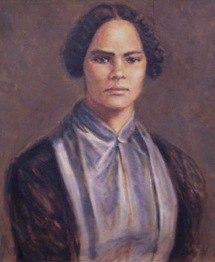
mARY ANN SHADD CARY.png

Mary Ann Shadd Cary: 'Break every yoke and let the oppressed go free', antil slavery sermon - 1858

February 16, 2018

6 April 1858, Chatham, Canada

Cary was born into an affluent free black family in Wilmington, Delaware. Nonetheless after the passage of the Fugitive Slave Act in 1850, Shadd joined thousands of other African Americans in emigrating to Canada. She was a vocal abolitionist. 

1st business of life, to love the Lord our God with heart and soul, and our neighbor as our self.—

We must then manifest love to God by obedience to his will—we must be cheerful workers in his cause at all times—on the Sabbath and other days[.]‌ The more readiness we evince the more we manifest our love, and as our field is directly among those of his creatures made in his own image in acting as themself who is no respecter of persons we must have failed in our duty until we become decided to waive all prejudices of Education[,] birth nation or training and make the test of our obedience God’s Equal command to love the neighbor as ourselves.—

These two great commandments, and upon which rest all the Law and the prophets, cannot be narrowed down to suit us but we must go up and conform to them. They proscribe neither nation nor sex—our neighbor may be either the oriental heathen the degraded European or the [en]slaved colored American. Neither must we prefer sex[,]‌ the slave mother as well as the slave-father. The oppress[ed], or nominally free woman of every nation or clime in whose soul is as evident by the image of God as in her more fortunate co[n]temporary of the male sex has a claim upon us by virtue of that irrevocable command equally as urgent. We cannot successfully evade duty because the suffering fellow woman be is only a woman! She too is a neighbor. The good samaritan of this generation must not take for their exemplars the priest and the Levite when a fellow wom[an] is among thieves—neither will they find their excuse in the custom as barbarous and anti-christian [sic] as any promulgated by pious Brahmin that they may be only females. The spirit of true philanthropy knows no sex. The true christian [sic] will not seek to exhume from the grave of the past its half developed customs and insist upon them as a substitute for the plain teachings of Jesus Christ, and the evident deductions of a more enlightened humanity.

There is too a fitness of time for any work for the benefit of God’s human creatures. We are told to keep Holy the Sabbath day. In what manner? Not by following simply the injunctions of those who bind heavy burdens, to say nothing about the same but as a man is better than a sheep but combining with God, worship the most active vigilance for the resur[r]‌ector from degradation[,] violence[,] and sin his creatures. In these cases particularly was the Sabbath made for man and woman if you please as there may be those who will not accept the term man in a generic sense. Christ has told us as it is lawful to lift a sheep out of the ditch on the Sabbath day, if a man is much better than a sheep.

Those with whom I am identified, namely the colored people of this country—and the women of the land are in the pit[,]‌ figuratively[,] are cast out. These were God[’]s requirements during the Prophecy of Isaiah and they are in full force today. God is the same yesterday[,] today[,] and forever. And upon this nation and to this people they come with all their significance[.] Within your grasp are three or four millions in chains in your southern territory and among and around about you are half a million allied to them by blood and to you by blood as were the Hebrew servants who realize the intensity of your hatred and oppression. You are the government[.] What it does to you enslaves the poor whites[,] [t]he free colored people[,] [t]he example of slave holders to accep[t] all.

What we aim to do is to put away this evil from among you and thereby pay a debt you now owe to humanity and to God[,]‌ and so turn from their chan[n]el the bitter waters of a moral servitude that is about overwhelming yourselves.

I speak plainly because of a common origin and because were it not for the monster slavery we would have a common destiny here—in the land of our birth. And because the policy of the American government so singularly set aside al[l]‌ows to all free speech and free thought: As the law of God must be to us the higher law in spite of powers[,] principalities[,] selfish priests[,] or selfish people to whom the minister it is important that we assert boldly that no where does God look upon this the chief of crimes with the least degree of allowance nor are we justified in asserting that he will tolerate those who in any wise support or sustain it.

Slavery[,]‌ American slavery[,] will not bear moral tests. It [exists] by striking down all the moral safeguards to society—[but] it is not then a moral institution. You are called upon as a man to deny and disobey the most noble impulses of manhood to aid a brother in distress—to refuse to strike from the limbs of those not bound for any crime the fetters by which his escape is obstructed. The milk of human kindness must be transformed into the bitter waters of hatred—you must return to his master he that hath escaped, no matter how every principle of manly independence revolts at the same. This feeling extends to every one allied by blood to the slave. And while we have in the North those who stand as guards to the institution the[y] must also volunteer as shippers away of the nominally free. You must drive from this home by a h[e]artless ostracism to the heathen shores when they fasted, bowed themselves, and spread sack cloth and ashes under them. Made long prayers &c[.] that they might be seen of men, but Isaiah told them God would not accept them. They must repent of their sins—put away iniquity from among them and then should their lights shine forth.

But we are or may be told that slavery is only an evil[,]‌ not a sin, and that too by those who say it was allowed among the Jews and therefore ought to be endured. Isaiah sets that matter to rest[.] [H]e shows that it is a sin handling it less delicately than many prophets in this generation. These are the sins that we are to spare[,] not the sin of enslaving men—of keeping back the hire of the laborer. You are to loose the bands of wickedness, to undo the heavy burdens[,] to break every yoke and to let the oppressed go free. To deal out bread to the hungry and to bring the poor [ . . . ] speaking. Their cry has long been ascending to the Lord who then will assume the responsibility of prescribing times and seasons and for the pleading of their cause—[and of] righteous causes—and who shall overrule the voice of woman? Emphatically the greatest sufferer from chattel slavery or political proscription on this God’s footstool? Say we have Christ’s example who heal[e]d the sexes indiscriminately thereby implying an equal inheritance—who rebuffed the worldling Martha and approved innovator Mary. The Him who respecteth not persons but who imposes Christian duties alike upon all sexes, and who in his wise providence metes out his retribution alike upon all.

So friends we suffer the oppressors of the age to lead us astray; instead of going to the source of truth for guidance we let the adversary guide us as to what is our duty and God[’]s word. The Jews thought to[o]‌ that they were doing [H]is requirements when they did only that which was but a small sacrifice.

Source: http://www.blackpast.org/1858-mary-ann-sha...

Enjoyed this speech? Speakola is a labour of love and I’d be very grateful if you would share, tweet or like it. Thank you.

Facebook Twitter Facebook
In Pre 1900 Tags MARY ANN SHADD CARY, ABOLITIONIST, CHURCH, SERMON, EXILE, CANADA, TRANSCRIPT, SLAVERY, CIVIL WAR
Comment

Sojourner Truth: 'I have borne thirteen children, and seen most all sold off to slavery', Aint I A Woman speech - 1851

September 11, 2015

1851, Women's Convention, Akron, Ohio

Well, children, where there is so much racket there must be something out of kilter. I think that 'twixt the negroes of the South and the women at the North, all talking about rights, the white men will be in a fix pretty soon. But what's all this here talking about?

That man over there says that women need to be helped into carriages, and lifted over ditches, and to have the best place everywhere. Nobody ever helps me into carriages, or over mud-puddles, or gives me any best place! And ain't I a woman? Look at me! Look at my arm! I have ploughed and planted, and gathered into barns, and no man could head me! And ain't I a woman? I could work as much and eat as much as a man - when I could get it - and bear the lash as well! And ain't I a woman? I have borne thirteen children, and seen most all sold off to slavery, and when I cried out with my mother's grief, none but Jesus heard me! And ain't I a woman?

Then they talk about this thing in the head; what's this they call it? [someone whispers, "intellect"] That's it, honey. What's that got to do with women's rights or negroes' rights? If my cup won't hold but a pint, and yours holds a quart, wouldn't you be mean not to let me have my little half measure full?

Then that little man in black there, he says women can't have as much rights as men, 'cause Christ wasn't a woman! Where did your Christ come from? Where did your Christ come from? From God and a woman! Man had nothing to do with Him.

If the first woman God ever made was strong enough to turn the world upside down all alone, these women together ought to be able to turn it back , and get it right side up again! And now they is asking to do it, the men better let them.

Obliged to you for hearing me, and now old Sojourner ain't got nothing more to say.

Source: http://legacy.fordham.edu/halsall/mod/sojt...

Enjoyed this speech? Speakola is a labour of love and I’d be very grateful if you would share, tweet or like it. Thank you.

Facebook Twitter Facebook
In Pre 1900 Tags SOJOURNER TRUTH, AINT I A WOMAN, WOMEN'S RIGHTS, ABOLITIONIST, SLAVERY, TRANSCRIPT
Comment

William Wilberforce: 'A trade founded in iniquity, and carried on as this was, must be abolished', Abolition of Slave Trade - 1789

September 11, 2015

12 May, 1789, House of Commons, Westminster, England

When I consider the magnitude of the subject which I am to bring before the House—a subject, in which the interests, not of this country, nor of Europe alone, but of the whole world, and of posterity, are involved: and when I think, at the same time, on the weakness of the advocate who has undertaken this great cause—when these reflections press upon my mind, it is impossible for me not to feel both terrified and concerned at my own inadequacy to such a task. But when I reflect, however, on the encouragement which I have had, through the whole course of a long and laborious examination of this question, and how much candour I have experienced, and how conviction has increased within my own mind, in proportion as I have advanced in my labours;—when I reflect, especially, that however averse any gentleman may now be, yet we shall all be of one opinion in the end;—when I turn myself to these thoughts, I take courage—I determine to forget all my other fears, and I march forward with a firmer step in the full assurance that my cause will bear me out, and that I shall be able to justify upon the clearest principles, every resolution in my hand, the avowed end of which is, the total abolition of the slave trade. I wish exceedingly, in the outset, to guard both myself and the House from entering into the subject with any sort of passion. It is not their passions I shall appeal to—I ask only for their cool and impartial reason; and I wish not to take them by surprise, but to deliberate, point by point, upon every part of this question. I mean not to accuse any one, but to take the shame upon myself, in common, indeed, with the whole parliament of Great Britain, for having suffered this horrid trade to be carried on under their authority. We are all guilty—we ought all to plead guilty, and not to exculpate ourselves by throwing the blame on others; and I therefore deprecate every kind of reflection against the various descriptions of

people who are more immediately involved in this wretched business.

Having now disposed of the first part of this subject, I must speak of the transit of the slaves in the West Indies. This I confess, in my own opinion, is the most wretched part of the whole subject. So much misery condensed in so little room, is more than the human imagination had ever before conceived. I will not accuse the Liverpool merchants: I will allow them, nay, I will believe them to be men of humanity; and I will therefore believe, if it were not for the enormous magnitude and extent of the evil which distracts their attention from individual cases, and makes them think generally, and therefore less feelingly on the subject, they would never have persisted in the trade. I verily believe therefore, if the wretchedness of any one of the many hundred Negroes stowed in each ship could be brought before their view, and remain within the sight of the African Merchant, that there is no one among them whose heart would bear it. Let any one imagine to himself 6 or 700 of these wretches chained two and two, surrounded with every object that is nauseous and disgusting, diseased, and struggling under every kind of wretchedness! How can we bear to think of such a scene as this? One would think it had been determined to heap upon them all the varieties of bodily pain, for the purpose of blunting the feelings of the mind; and yet, in this very point (to show the power of human prejudice) the situation of the slaves has been described by Mr. Norris, one of the Liverpool delegates, in a manner which, I am sure will convince the House how interest can draw a film across the eyes, so thick, that total blindness could do no more; and how it is our duty therefore to trust not to the reasonings of interested men, or to their way of colouring a transaction. “Their apartments,” says Mr. Norris, “are fitted up as much for their advantage as circumstances will admit. The right ancle of one, indeed is connected with the left ancle of another by a small iron fetter, and if they are turbulent, by another on their wrists. They have several meals a day; some of their own country provisions, with the best sauces of African cookery; and by way of variety, another meal of pulse, &c. according to European taste. After breakfast they have water to wash themselves, while their apartments are perfumed with frankincense and lime-juice. Before dinner, they are amused after the manner of their country. The song and dance are promoted,” and, as if the whole was really a scene of pleasure and dissipation it is added, that games of chance are furnished. “The men play and sing, while the women and girls make fanciful ornaments with beads, which they are plentifully supplied with.” Such is the sort of strain in which the Liverpool delegates, and particularly Mr. Norris, gave evidence before the privy council. What will the House think when, by the concurring testimony of other witnesses, the true history is laid open. The slaves who are sometimes described as rejoicing at their captivity, are so wrung with misery at leaving their country, that it is the constant practice to set sail at night, lest they should be sensible of their departure. The pulse which Mr. Norris talks of are horse beans; and the scantiness, both of water and provision, was suggested by the very legislature of Jamaica in the report of their committee, to be a subject that called for the interference of parliament. Mr. Norris talks of frankincense and lime juice; when surgeons tell you the slaves are stowed so close, that there is not room to tread among them: and when you have it in evidence from sir George Yonge, that even in a ship which wanted 200 of her complement, the stench was intolerable. The song and the dance, says Mr. Norris, are promoted. It had been more fair, perhaps, if he had explained that word promoted. The truth is, that for the sake of exercise, these miserable wretches, loaded with chains, oppressed with disease and wretchedness, are forced to dance by the terror of the lash, and sometimes by the actual use of it. “I,” says one of the other evidences, “was employed to dance the men, while another person danced the women.” Such, then is the meaning of the word promoted; and it may be observed too, with respect to food, that an instrument is sometimes carried out, in order to force them to eat which is the same sort of proof how much they enjoy themselves in that instance also. As to their singing, what shall we say when we are told that their songs are songs of lamentation upon their departure which, while they sing, are always in tears, insomuch that one captain (more humane as I should conceive him, therefore, than the rest) threatened one of the women with a flogging, because the mournfulness of her song was too painful for his feelings. In order, however, not to trust too much to any sort of description, I will call the attention of the House to one species of evidence which is absolutely infallible. Death, at least, is a sure ground of evidence, and the proportion of deaths will not only confirm, but if possible will even aggravate our suspicion of their misery in the transit. It will be found, upon an average of all the ships of which evidence has been given at the privy council, that exclusive of those who perish before they sail, not less than 12½ per cent. perish in the passage. Besides these, the Jamaica report tells you, that not less than 4½ per cent. die on shore before the day of sale, which is only a week or two from the time of landing. One third more die in the seasoning, and this in a country exactly like their own, where they are healthy and happy as some of the evidences would pretend. The diseases, however, which they contract on shipboard, the astringent washes which are to hide their wounds, and the mischievous tricks used to make them up for sale, are, as the Jamaica report says, (a most precious and valuable report, which I shall often have to advert to) one principle cause of this mortality. Upon the whole, however, here is a mortality of about 50 per cent. and this among negroes who are not bought unless (as the phrase is with cattle) they are sound in wind and limb. How then can the House refuse its belief to the multiplied testimonies before the privy council, of the savage treatment of the negroes in the middle passage? Nay, indeed, what need is there of any evidence? The number of deaths speaks for itself, and makes all such enquiry superfluous. As soon as ever I had arrived thus far in my investigation of the slave trade, I confess to you sir, so enormous so dreadful, so irremediable did its wickedness appear that my own mind was completely made up for the abolition. A trade founded in iniquity, and carried on as this was, must be abolished, let the policy be what it might,—let the consequences be what they would, I from this time determined that I would never rest till I had effected its abolition.


Source: http://www.brycchancarey.com/abolition/wil...

Enjoyed this speech? Speakola is a labour of love and I’d be very grateful if you would share, tweet or like it. Thank you.

Facebook Twitter Facebook
In Pre 1900 Tags WILLIAM WILBERFORCE, ABOLITIONIST, HOUSE OF COMMONS, WESTMINSTER, 18th CENTURY, SLAVERY, TRANSCRIPT
Comment

Actor Danny Glover reads abolitionist Frederick Douglass's "Fourth of July Speech, 1852" on October 5, 2005 in Los Angeles, California. Part of a reading from Voices of a People's History of the United States (Howard Zinn and Anthony Arnove.)

Frederick Douglass: 'What, to the American slave, is your Fourth of July?', 'The Hypocrisy of American Slavery' - 1852

September 10, 2015

4 July, 1852, Rochester, New York, USA

Fellow citizens, pardon me, and allow me to ask, why am I called upon to speak here today? What have I or those I represent to do with your national independence? Are the great principles of political freedom and of natural justice, embodied in that Declaration of Independence, extended to us? And am I, therefore, called upon to bring our humble offering to the national altar, and to confess the benefits, and express devout gratitude for the blessings resulting from your independence to us?

Would to God, both for your sakes and ours, that an affirmative answer could be truthfully returned to these questions. Then would my task be light, and my burden easy and delightful. For who is there so cold that a nation's sympathy could not warm him? Who so obdurate and dead to the claims of gratitude, that would not thankfully acknowledge such priceless benefits? Who so stolid and selfish that would not give his voice to swell the hallelujahs of a nation's jubilee, when the chains of servitude had been torn from his limbs? I am not that man. In a case like that, the dumb might eloquently speak, and the "lame man leap as an hart."

But such is not the state of the case. I say it with a sad sense of disparity between us. I am not included within the pale of this glorious anniversary! Your high independence only reveals the immeasurable distance between us. The blessings in which you this day rejoice are not enjoyed in common. The rich inheritance of justice, liberty, prosperity, and independence bequeathed by your fathers is shared by you, not by me. The sunlight that brought life and healing to you has brought stripes and death to me. This Fourth of July is yours, not mine. You may rejoice, I must mourn. To drag a man in fetters into the grand illuminated temple of liberty, and call upon him to join you in joyous anthems, were inhuman mockery and sacrilegious irony. Do you mean, citizens, to mock me, by asking me to speak today? If so, there is a parallel to your conduct. And let me warn you, that it is dangerous to copy the example of a nation (Babylon) whose crimes, towering up to heaven, were thrown down by the breath of the Almighty, burying that nation in irrecoverable ruin.

Fellow citizens, above your national, tumultuous joy, I hear the mournful wail of millions, whose chains, heavy and grievous yesterday, are today rendered more intolerable by the jubilant shouts that reach them. If I do forget, if I do not remember those bleeding children of sorrow this day, "may my right hand forget her cunning, and may my tongue cleave to the roof of my mouth!"

To forget them, to pass lightly over their wrongs and to chime in with the popular theme would be treason most scandalous and shocking, and would make me a reproach before God and the world.

My subject, then, fellow citizens, is "American Slavery." I shall see this day and its popular characteristics from the slave's point of view. Standing here, identified with the American bondman, making his wrongs mine, I do not hesitate to declare, with all my soul, that the character and conduct of this nation never looked blacker to me than on this Fourth of July.

Whether we turn to the declarations of the past, or to the professions of the present, the conduct of the nation seems equally hideous and revolting. America is false to the past, false to the present, and solemnly binds herself to be false to the future. Standing with God and the crushed and bleeding slave on this occasion, I will, in the name of humanity, which is outraged, in the name of liberty, which is fettered, in the name of the Constitution and the Bible, which are disregarded and trampled upon, dare to call in question and to denounce, with all the emphasis I can command, everything that serves to perpetuate slavery -- the great sin and shame of America! "I will not equivocate - I will not excuse." I will use the severest language I can command, and yet not one word shall escape me that any man, whose judgment is not blinded by prejudice, or who is not at heart a slave-holder, shall not confess to be right and just.

But I fancy I hear some of my audience say it is just in this circumstance that you and your brother Abolitionists fail to make a favorable impression on the public mind. Would you argue more and denounce less, would you persuade more and rebuke less, your cause would be much more likely to succeed. But, I submit, where all is plain there is nothing to be argued. What point in the anti-slavery creed would you have me argue? On what branch of the subject do the people of this country need light? Must I undertake to prove that the slave is a man? That point is conceded already. Nobody doubts it. The slave-holders themselves acknowledge it in the enactment of laws for their government. They acknowledge it when they punish disobedience on the part of the slave. There are seventy-two crimes in the State of Virginia, which, if committed by a black man (no matter how ignorant he be), subject him to the punishment of death; while only two of these same crimes will subject a white man to like punishment.

What is this but the acknowledgment that the slave is a moral, intellectual, and responsible being? The manhood of the slave is conceded. It is admitted in the fact that Southern statute books are covered with enactments, forbidding, under severe fines and penalties, the teaching of the slave to read and write. When you can point to any such laws in reference to the beasts of the field, then I may consent to argue the manhood of the slave. When the dogs in your streets, when the fowls of the air, when the cattle on your hills, when the fish of the sea, and the reptiles that crawl, shall be unable to distinguish the slave from a brute, then I will argue with you that the slave is a man!

For the present it is enough to affirm the equal manhood of the Negro race. Is it not astonishing that, while we are plowing, planting, and reaping, using all kinds of mechanical tools, erecting houses, constructing bridges, building ships, working in metals of brass, iron, copper, silver, and gold; that while we are reading, writing, and ciphering, acting as clerks, merchants, and secretaries, having among us lawyers, doctors, ministers, poets, authors, editors, orators, and teachers; that we are engaged in all the enterprises common to other men -- digging gold in California, capturing the whale in the Pacific, feeding sheep and cattle on the hillside, living, moving, acting, thinking, planning, living in families as husbands, wives, and children, and above all, confessing and worshipping the Christian God, and looking hopefully for life and immortality beyond the grave -- we are called upon to prove that we are men?

Would you have me argue that man is entitled to liberty? That he is the rightful owner of his own body? You have already declared it. Must I argue the wrongfulness of slavery? Is that a question for republicans? Is it to be settled by the rules of logic and argumentation, as a matter beset with great difficulty, involving a doubtful application of the principle of justice, hard to understand? How should I look today in the presence of Americans, dividing and subdividing a discourse, to show that men have a natural right to freedom, speaking of it relatively and positively, negatively and affirmatively? To do so would be to make myself ridiculous, and to offer an insult to your understanding. There is not a man beneath the canopy of heaven who does not know that slavery is wrong for him.

What! Am I to argue that it is wrong to make men brutes, to rob them of their liberty, to work them without wages, to keep them ignorant of their relations to their fellow men, to beat them with sticks, to flay their flesh with the lash, to load their limbs with irons, to hunt them with dogs, to sell them at auction, to sunder their families, to knock out their teeth, to burn their flesh, to starve them into obedience and submission to their masters? Must I argue that a system thus marked with blood and stained with pollution is wrong? No - I will not. I have better employment for my time and strength than such arguments would imply.

What, then, remains to be argued? Is it that slavery is not divine; that God did not establish it; that our doctors of divinity are mistaken? There is blasphemy in the thought. That which is inhuman cannot be divine. Who can reason on such a proposition? They that can, may - I cannot. The time for such argument is past.

At a time like this, scorching irony, not convincing argument, is needed. Oh! had I the ability, and could I reach the nation's ear, I would today pour out a fiery stream of biting ridicule, blasting reproach, withering sarcasm, and stern rebuke. For it is not light that is needed, but fire; it is not the gentle shower, but thunder. We need the storm, the whirlwind, and the earthquake. The feeling of the nation must be quickened; the conscience of the nation must be roused; the propriety of the nation must be startled; the hypocrisy of the nation must be exposed; and its crimes against God and man must be denounced.

What to the American slave is your Fourth of July? I answer, a day that reveals to him more than all other days of the year, the gross injustice and cruelty to which he is the constant victim. To him your celebration is a sham; your boasted liberty an unholy license; your national greatness, swelling vanity; your sounds of rejoicing are empty and heartless; your shouts of liberty and equality, hollow mock; your prayers and hymns, your sermons and thanksgivings, with all your religious parade and solemnity, are to him mere bombast, fraud, deception, impiety, and hypocrisy - a thin veil to cover up crimes which would disgrace a nation of savages. There is not a nation of the earth guilty of practices more shocking and bloody than are the people of these United States at this very hour.

Go search where you will, roam through all the monarchies and despotisms of the Old World, travel through South America, search out every abuse and when you have found the last, lay your facts by the side of the everyday practices of this nation, and you will say with me that, for revolting barbarity and shameless hypocrisy, America reigns without a rival.

Source: http://www.nolo.com/legal-encyclopedia/con...

Enjoyed this speech? Speakola is a labour of love and I’d be very grateful if you would share, tweet or like it. Thank you.

Facebook Twitter Facebook
In Pre 1900 Tags FREDERICK DOUGLASS, SLAVERY, ABOLITIONIST, INDEPENDENCE DAY, USA, CIVIL WAR, TRANSCRIPT
1 Comment

See my film!

Limited Australian Season

March 2025

Details and ticket bookings at

angeandtheboss.com

Support Speakola

Hi speech lovers,
With costs of hosting website and podcast, this labour of love has become a difficult financial proposition in recent times. If you can afford a donation, it will help Speakola survive and prosper.

Best wishes,
Tony Wilson.

Become a Patron!

Learn more about supporting Speakola.

Featured political

Featured
Jon Stewart: "They responded in five seconds", 9-11 first responders, Address to Congress - 2019
Jacinda Ardern: 'They were New Zealanders. They are us', Address to Parliament following Christchurch massacre - 2019
Dolores Ibárruri: "¡No Pasarán!, They shall not pass!', Defense of 2nd Spanish Republic - 1936
Jimmy Reid: 'A rat race is for rats. We're not rats', Rectorial address, Glasgow University - 1972

Featured eulogies

Featured
For Geoffrey Tozer: 'I have to say we all let him down', by Paul Keating - 2009
for James Baldwin: 'Jimmy. You crowned us', by Toni Morrison - 1988
for Michael Gordon: '13 days ago my Dad’s big, beautiful, generous heart suddenly stopped beating', by Scott and Sarah Gordon - 2018

Featured commencement

Featured
Tara Westover: 'Your avatar isn't real, it isn't terribly far from a lie', The Un-Instagrammable Self, Northeastern University - 2019
Tim Minchin: 'Being an artist requires massive reserves of self-belief', WAAPA - 2019
Atul Gawande: 'Curiosity and What Equality Really Means', UCLA Medical School - 2018
Abby Wambach: 'We are the wolves', Barnard College - 2018
Eric Idle: 'America is 300 million people all walking in the same direction, singing 'I Did It My Way'', Whitman College - 2013
Shirley Chisholm: ;America has gone to sleep', Greenfield High School - 1983

Featured sport

Featured
Joe Marler: 'Get back on the horse', Harlequins v Bath pre game interview - 2019
Ray Lewis : 'The greatest pain of my life is the reason I'm standing here today', 52 Cards -
Mel Jones: 'If she was Bradman on the field, she was definitely Keith Miller off the field', Betty Wilson's induction into Australian Cricket Hall of Fame - 2017
Jeff Thomson: 'It’s all those people that help you as kids', Hall of Fame - 2016

Fresh Tweets


Featured weddings

Featured
Dan Angelucci: 'The Best (Best Man) Speech of all time', for Don and Katherine - 2019
Hallerman Sisters: 'Oh sister now we have to let you gooooo!' for Caitlin & Johnny - 2015
Korey Soderman (via Kyle): 'All our lives I have used my voice to help Korey express his thoughts, so today, like always, I will be my brother’s voice' for Kyle and Jess - 2014

Featured Arts

Featured
Bruce Springsteen: 'They're keepers of some of the most beautiful sonic architecture in rock and roll', Induction U2 into Rock Hall of Fame - 2005
Olivia Colman: 'Done that bit. I think I have done that bit', BAFTA acceptance, Leading Actress - 2019
Axel Scheffler: 'The book wasn't called 'No Room on the Broom!', Illustrator of the Year, British Book Awards - 2018
Tina Fey: 'Only in comedy is an obedient white girl from the suburbs a diversity candidate', Kennedy Center Mark Twain Award -  2010
Tina Fey: 'Only in comedy is an obedient white girl from the suburbs a diversity candidate', Kennedy Center Mark Twain Award - 2010

Featured Debates

Featured
Sacha Baron Cohen: 'Just think what Goebbels might have done with Facebook', Anti Defamation League Leadership Award - 2019
Greta Thunberg: 'How dare you', UN Climate Action Summit - 2019
Charlie Munger: 'The Psychology of Human Misjudgment', Harvard University - 1995
Lawrence O'Donnell: 'The original sin of this country is that we invaders shot and murdered our way across the land killing every Native American that we could', The Last Word, 'Dakota' - 2016