• Genre
  • About
  • Submissions
  • Donate
  • Search
Menu

Speakola

All Speeches Great and Small
  • Genre
  • About
  • Submissions
  • Donate
  • Search
Share a political speech

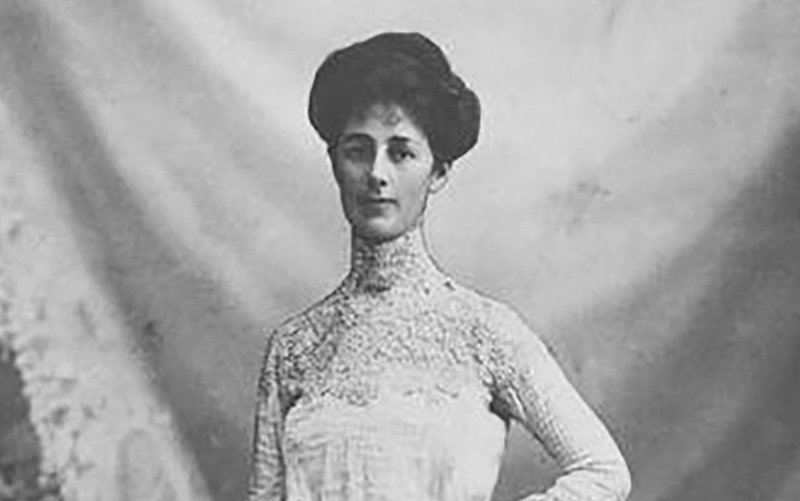
Vida Gioldstein, National Library of Australia

Vida Goldstein: 'The step I am taking is unique in the history of the world', campaign launch speech - 1903

March 15, 2023


14 October 1903, Liberty Hall, Portland, Victoria, Australia

This speech was sourced by podcast guest Professor Clare Wright for her book ‘You Daughters of Freedom’. It was originally reported verbatim in the Portland Gazette in the third person. Prof Wright changed it to first person to recreate the actual feel of the speech. It has also been abridged to be read at Sydney Writers Festival ‘Friends Romans Countrymen’ event in 2022. Audio used with permission.

Miss Goldstein, on rising, was met with loud applause.

The people of Portland all know why I have decided to open my campaign here, and I will only add that when that decision was announced the people of Melbourne wanted to know why I was going to Portland, and even where Portland was, and disappointment was felt that Melbourne had not been selected.

The step I am taking is unique in the history of the world, and may be called history- making in Australia. Portland is the place most connected with the early history of Australia, and the honour, I have decided, of the first address of a woman candidate for a seat in Parliament by the joint franchise should be given to Portland. (Applause.)

The idea of a woman candidate is so unusual in British Dominions that to some it seems a revolutionary step. There have been women in Parliament in Great Britain, but they are there by (hereditary) right and in the interests of their landed property and naturally are not parallel cases. They take their seats and consider such quite proper to represent their vested interests. We have got beyond that idea, and the right now is that of the franchise—the modern right now of every sane law-abiding citizen—the Government of the people by the people for the people, and which was secured in 1902, and which now is by man and woman for men and women.

So the old order passeth away and the old conditions for the Commonwealth of Australia changeth. The Australian nation has been the first to adopt that just democratic idea, without respect to property.

The Woman's Federal Political Association has requested me to be nominated for the Federal Election, and after consideration I have consented.

I will have all the hard work of holding meetings to organise my campaign, and naturally have to start out greatly handicapped to the men candidates. I hold a deep- rooted principal that woman should step out and assume her share of the responsibilities of the office … I know I must have those who believe in woman for home duties and such like against me, but I believe it is the duty of woman to take her share in the work to protect her interests, and that she should take the deepest interest in political matters.

Personally, I have no axe to grind, and if I desire a peaceful life I should remain out of politics. I believe, however, that woman should go in for some of these duties, not for self-interest or the amount of money hanging to it, as so many men do, but because it should be the duty of all to do the best they can for the State, one way or the other.

I am convinced I could do my share if elected to Parliament, (applause), and that expressions of opinion given on the floor of the House by woman will not be altogether valueless. (Applause.)

It used to be hard to get the ear of a member of Parliament if you were not a voter, but now we have one it is far different. There are many unjust laws on the Statute books … For instance the law of custodian in which the wife has no right to her children, and which the husband can will away, and the mother is absolutely without power to stop the taking away of her child. Do some of you now wonder we want a voice in the making of the laws? (Applause.)

If elected I do not intend to ally myself with anyone; I am going on my own. (Applause.)

I do not approve of party Government, as Government on strict party lines is Government by machinery. One objection is that it must be my party, right or wrong. Party organs, such as newspapers, are dangerous. The party arranges a platform and this is to be gone for blindly or as dictated to by the party organisations. (Applause.)

I favour the public democratic principle to think for one's self, and not to suffer the despotism of Russia.

Regarding the Fiscal Question, I must confess to be a protectionist—(applause)—although it would be more in my line to call myself a fiscal athiest. Women, children, duty, low wages, &c., are not ones which are troubled by the fiscal question. Over free trade and protection I do not get keenly excited—I let the men get excited instead.

I am in favor of White Australia, but against the deportation of the poor Kanakas, who have been brought to the State, and to deport them means in some cases death through intermarrying. They should not insist on the deportations. (Applause.) Having brought the Kanakas here our people should be prepared to bear the consequences, but no more should be allowed in. These people have been civilised, christianised, educated, and there is no reason to force them out. I am decidedly opposed to colored people coming in. Those who are going for a White Australia are going bald-headed for it. (Laughter.)

I am rather wobbly on Assisted Immigration, as I have seen a good deal of this since going to America, where I have seen 1oo,ooo dumped down in New York to swell the labor market and give cheap labor. (Applause.)

Arbitration and Conciliation have my support, as I believe it would stem endless trouble and loss, and do away with the bitterness and distress of lock-outs and strikes.

The establishing of a Federal Capital and building of a Transcontinental railway I am not in favor of, chiefly on account of the wild expense likely to be involved. (Applause.)

It is so seldom that I have such an opportunity to address a meeting like this that I can not resist the temptation to speak to the women and impress upon you the necessity of using your power to secure your rights!


Enjoyed this speech? Speakola is a labour of love and I’d be very grateful if you would share, tweet or like it. Thank you.

Facebook Twitter Facebook
In 1900-19 B Tags VIDA GOLDSTEIN, FIRST FEMALE CANDIDATE, WOMEN'S RIGHTS, SUFFRAGE, SUFFRAGISTS, SUFFRAGETTES, FRANCHISE, UNIVERSAL FRANCHISE, AUSTRALIAN POLITICS, WOMEN'S MOVEMENT, FEMINISM, EQUALITY, WHITE AUSTRALIA, RACISM, 1903 ELECTION, PORTLAND, VICTORIA, TRANSCRIPT, CLARE WRIGHT, SYDNEY WRITERS FESTIVAL, SWF
Comment
Theodore Roosevelt mothers.jpg

Theodore Roosevelt: 'As for the mother, her very name stands for loving unselfishness and self-abnegation', Speech to Congress of Mothers - 1905

July 29, 2021

13 March 1905, Washington DC, USA

In our modern industrial civilization there are many and grave dangers to counterbalance the splendors and the triumphs. It is not a good thing to see cities grow at disproportionate speed relatively to the country; for the small land owners, the men who own their little homes, and therefore to a very large extent the men who till farms, the men of the soil, have hitherto made the foundation of lasting national life in every State; and, if the foundation becomes either too weak or too narrow, the superstructure, no matter how attractive, is in imminent danger of falling.

But far more important than the question of the occupation of our citizens is the question of how their family life is conducted. No matter what that occupation may be, as long as there is a real home and as long as those who make up that home do their duty to one another, to their neighbors and to the State, it is of minor consequence whether the man's trade is plied in the country or the city, whether it calls for the work of the hands or for the work of the head.

But the nation is in a bad way if there is no real home, if the family is not of the right kind; if the man is not a good husband and father, if he is brutal or cowardly or selfish, if the woman has lost her sense of duty, if she is sunk in vapid self-indulgence or has let her nature be twisted so that she prefers a sterile pseudo-intellectuality to that great and beautiful development of character which comes only to those whose lives know the fullness of duty done, or effort made and self-sacrifice undergone.

In the last analysis the welfare of the State depends absolutely upon whether or not the average family, the average man and woman and their children, represent the kind of citizenship fit for the foundation of a great nation; and if we fail to appreciate this we fail to appreciate the root morality upon which all healthy civilization is based.

No piled-up wealth, no splendor of material growth, no brilliance of artistic development, will permanently avail any people unless its home life is healthy, unless the average man possesses honesty, courage, common sense, and decency, unless he works hard and is willing at need to fight hard; and unless the average woman is a good wife, a good mother, able and willing to perform the first and greatest duty of womanhood, able and willing to bear, and to bring up as they should be brought up, healthy children, sound in body, mind, and character, and numerous enough so that the race shall increase and not decrease.

There are certain old truths which will be true as long as this world endures, and which no amount of progress can alter. One of these is the truth that the primary duty of the husband is to be the homemaker, the bread-winner for his wife and children, and that the primary duty of the woman is to be the helpmeet, the housewife, and mother. The woman should have ample educational advantages; but save in exceptional cases the man must be, and she need not be, and generally ought not to be, trained for a lifelong career as the family breadwinner; and, therefore, after a certain point the training of the two must normally be different because the duties of the two are normally different. This does not mean inequality of function, but it does mean that normally there must be dissimilarity of function. On the whole, I think the duty of the woman the more important, the more difficult, and the more honorable of the two; on the whole I respect the woman who does her duty even more than I respect the man who does his.

No ordinary work done by a man is either as hard or as responsible as the work of a woman who is bringing up a family of small children; for upon her time and strength demands are made not only every hour of the day, but often every hour of the night. She may have to get up night after night to take care of a sick child, and yet must by day continue to do all her household duties as well; and if the family means are scant she must usually enjoy even her rare holidays taking her whole brood of children with her. The birth pangs make all men the debtors of all women. Above all our sympathy and regard are due to the struggling wives among those whom Abraham Lincoln called the plain people, and whom he so loved and trusted; for the lives of these women are often led on the lonely heights of quiet, self-sacrificing heroism.

Just as the happiest and most honorable and most useful task that can be set any man is to earn enough for the support of his wife and family, for the bringing up and starting in life of his children, so the most important, the most honorable and desirable task which can be set any woman is to be a good and wise mother in a home marked by self-respect and mutual forbearance, by willingness to perform duty, and by refusal to sink into self-indulgence or avoid that which entails effort and self-sacrifice. Of course there are exceptional men and exceptional women who can do and ought to do much more than this, who can lead and ought to lead great careers of outside usefulness in addition to—not as substitutes for—their home work; but I am not speaking of exceptions; I am speaking of the primary duties, I am speaking of the average citizens, the average men and women who make up the nation.

Inasmuch as I am speaking to an assemblage of mothers I shall have nothing whatever to say in praise of an easy life. Yours is the work which is never ended. No mother has an easy time, and most mothers have very hard times, and yet what true mother would barter her experience of joy and sorrow in exchange for a life of cold selfishness, which insists upon perpetual amusement and the avoidance of care, and which often finds its fit dwelling place in some flat designed to furnish with the least possible expenditure of effort the maximum of comfort and of luxury, but in which there is literally no place for children?

The woman who is a good wife, a good mother, is entitled to our respect as is no one else; but she is entitled to it only because, and so long as, she is worthy of it. Effort and self-sacrifice are the laws of worthy life for a man as for the woman; though neither the effort nor the self-sacrifice may be the same for the one as for the other. I do not in the least believe in the patient Griselda type of woman, in the woman who submits to gross and long-continued ill treatment, any more than I believe in a man who tamely submits to wrongful aggression. No wrongdoing is so abhorrent as wrongdoing by a man toward the wife and the children who should arouse every tender feeling in his nature. Selfishness toward them, the lack of tenderness toward them, lack of consideration for them, above all, brutality in any form toward them, should arouse the heartiest scorn and indignation in every upright soul.

I believe in the woman's keeping her self-respect just as I believe in the man's doing so. I believe in her rights just as much as I believe in the man's, and indeed a little more; and I regard marriage as a partnership, in which each partner is in honor bound to think of the rights of the other as well as of his or her own. But I think that the duties are even more important than the rights; and in the long run I think that the reward is ampler and greater for duty well done, than for the insistence upon individual rights, necessary though this, too, must often be. Your duty is hard, your responsibility great; but greatest of all is your reward. I do not pity you in the least On the contrary, I feel respect and admiration for you.

Into the woman's keeping is committed the destiny of the generations to come after us. In bringing up your children you mothers must remember that while it is essential to be loving and tender, it is no less essential to be wise and firm. Foolishness and affection must not be treated as interchangeable terms; and besides training your sons and daughters in the softer and milder virtues you must seek to give them those stem and hardy qualities which in after life they will surely need. Some children will go wrong in spite of the best training; and some will go right even when their surroundings are most unfortunate; nevertheless an immense amount depends upon the family training. If you mothers through weakness bring up your sons to be selfish and to think only of themselves, you will be responsible for much sadness among the women who are to be their wives in the future. If you let your daughters grow up idle, perhaps under the mistaken impression that as you yourselves have had to work hard they shall know only enjoyment, you are preparing them to be useless to others and burdens to themselves. Teach boys and girls alike that they are not to look forward to lives spent in avoiding difficulties, but to lives spent in overcoming difficulties. Teach them that work, for themselves and also for others, is not a curse, but a blessing; seek to make them happy, to make them enjoy life, but seek also to make them face life with the steadfast resolution to wrest success from labor and adversity, and to do their whole duty before God and to man. Surely she who can thus train her sons and her daughters is thrice fortunate among women.

There are many good people who are denied the supreme blessing of children, and for these we have the respect and sympathy always due to those who, from no fault of their own, are denied any of the other great blessings of life. But the man or woman who deliberately foregoes these blessings, whether from viciousness, coldness, shallow-heartedness, self-indulgence, or mere failure to appreciate aright the difference between the all-important and the unimportant—why, such a creature merits contempt as hearty as any visited upon the soldier who runs away in battle, or upon the man who refuses to work for the support of those dependent upon him, and who, though able-bodied, is yet content to eat in idleness the bread which others provide.

The existence of women of this type forms one of the most unpleasant and unwholesome features of modern life. If any one is so dim of vision as to fail to see what a thoroughly unlovely creature such a woman is, I wish he would read Judge Robert Grant's novel, "Unleavened Bread," ponder seriously the character of Selma, and think of the fate that would surely overcome any nation which developed its average and typical woman along such lines. Unfortunately, it would be untrue to say that this type exists only in American novels. That it also exists in American life is made unpleasantly evident by the statistics as to the dwindling families in some localities. It is made evident in equally sinister fashion by the census statistics as to divorce, which are fairly appalling; for easy divorce is now, as it ever has been, a bane to any nation, a curse to society, a menace to the home, an incitement to married unhappiness, and to immorality, an evil thing for men, and a still more hideous evil for women. These unpleasant tendencies in our American life are made evident by articles such as those which I actually read not long ago in a certain paper, where a clergyman was quoted, seemingly with approval, as expressing the general American attitude when he said that the ambition of any save a very rich man should be to rear two children only, so as to give his children an opportunity "to taste a few of the good things of life."

This man, whose profession and calling should have made him a moral teacher, actually set before others the ideal, not of training children to do their duty, not of sending them forth with stout hearts and ready minds to win triumphs for themselves and their country, not of allowing them the opportunity and giving them the privilege of making their own place in the world, but, forsooth, of keeping the number of children so limited that they might "taste a few good things!" The way to give a child a fair chance in life is not to bring it up in luxury, but to see that it has the kind of training that will give it strength of character. Even apart from the vital question of national life, and regarding only the individual interest of the children them selves, happiness in the true sense is a hundredfold more apt to come to any given member of a healthy family of healthy minded children, well brought up, well educated, but taught that they must shift for themselves, must win their own way, and by their own exertions make their own positions of usefulness, than it is apt to come to those whose parents themselves have acted on and have trained their children to act on the selfish and sordid theory that the whole end of life is "to taste a few good things."

The intelligence of the remark is on a par with its morality, for the most rudimentary mental process would have shown the speaker that if the average family in which there are children contained but two children the nation as a whole would decrease in population so rapidly that in two or three generations it would very deservedly be on the point of extinction, so that the people who had acted on this base and selfish doctrine would be giving place to others with braver and more robust ideals. Nor would such a result be in any way regrettable; for a race that practiced such doctrine—that is, a race that practiced race suicide—would thereby conclusively show that it was unfit to exist, and that it had better give place to people who had not forgotten the primary laws of their being.

To sum up, then, the whole matter is simple enough. If either a race or an individual prefers the pleasures of mere effortless ease, of self-indulgence, to the infinitely deeper, the infinitely higher pleasures that come to those who know the toil and the weariness, but also the joy, of hard duty well done, why, that race or that individual must inevitably in the end pay the penalty of leading a life both vapid and ignoble. No man and no woman really worthy of the name can care for the life spent solely or chiefly in the avoidance of risk and trouble and labor. Save in exceptional cases the prizes worth having in life must be paid for, and the life worth living must be a life of work for a worthy end, and ordinarily of work more for others than for one's self.

The man is but a poor creature whose effort is not rather for the betterment of his wife and children than for himself; and as for the mother, her very name stands for loving unselfishness and self-abnegation, and, in any society fit to exist, is fraught with associations which render it holy.

The woman's task is not easy—no task worth doing is easy—but in doing it, and when she has done it, there shall come to her the highest and holiest joy known to mankind; and having done it, she shall have the reward prophesied in Scripture; for her husband and her children, yes, and all people who realize that her work lies at the foundation of all national happiness and greatness, shall rise up and call her blessed.

Source: https://www.presidency.ucsb.edu/documents/...

Enjoyed this speech? Speakola is a labour of love and I’d be very grateful if you would share, tweet or like it. Thank you.

Facebook Twitter Facebook
In 1900-19 B Tags THEODORE ROOSEVELT, PRESIDENT, USA, MOTHERS, WOMEN, WOMEN'S RIGHTS, FEMINISM, TRANSCRIPT
Comment

Malcolm X: 'The most disrespected person in America, is the black woman', Speech to women - 1964

March 21, 2021

22 May 1962, Los Angeles, California, USA

\Who taught you to hate the texture of your hair? Who taught you to hate the color of your skin? To such extent you bleach, to get like the white man. Who taught you to hate the shape of your nose and the shape of your lips? Who taught you to hate yourself from the top of your head to the soles of your feet? Who taught you to hate your own kind? Who taught you to hate the race that you belong to so much so that you don’t want to be around each other? No… Before you come asking Mr. Muhammad does he teach hate, you should ask yourself who taught you to hate being what God made you.

We don’t steal, we don’t gamble, we don’t lie and we don’t cheat.

You can’t get into a whiskey bottle without getting past a government seal. You can’t buy a deck of cards without getting past a government seal. Here the white man makes the whiskey then puts you in jail for getting drunk. He sells you the cards and the dice and puts you in jail when he catches you using them.

The most disrespected person in America, is the black woman. The most un-protected person in America is the black woman. The most neglected person in America, is the black woman. And as Muslims, the honorable Elijah Muhammed teaches us to respect, our women, and to protect our women. And the only time a Muslim gets real violent, is when someone goes to molest his woman. We will kill you, for our women I’m making it plain yes, we will kill you for our women. We believe that if the white man, will do whatever is necessary, to see that his woman get respect and protection, then you and I will never be recognized as men. Until we stand up like men and pays the same penalty over the head of anyone, who puts his filthy hands out, to put it in a direction of our women.

Source: https://face2faceafrica.com/article/heres-...

Enjoyed this speech? Speakola is a labour of love and I’d be very grateful if you would share, tweet or like it. Thank you.

Facebook Twitter Facebook
In 1960-79 C Tags MALCOLM X, WOMEN, WOMEN'S RIGHTS, BLACK WOMEN, TRANSCRIPT, BLACK FREEDOM, 1960S, 1962, ISLAM, NATION OF ISLAM, ELIJAH MUHAMMAD
6 Comments
Leigh Sales.jpg

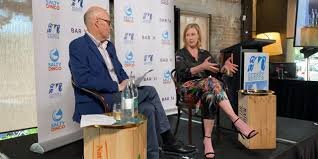
Leigh Sales: 'it is sickening to see this constant situation where powerful people and institutions exploit less powerful people', Sydney Media Club - 2021

March 19, 2021

17 March 2021, M Bar, Sydney, Australia

We are seeing women say that they have had enough. They have had enough of people in power using the system to enshrine their power and keep women as less powerful. But I also feel that that is fitting in a broader context about awareness of power generally, because I feel like every single night when I’m hosting 7.30, that I see stories in which people in power are exploiting or taking advantage of people with less power.

In many cases, people that they have been paid to care for, or have expressly said that they promise to serve and I see it all the time, every night on the show. I feel like I’m constantly asking myself this question ‘did something change in this country?’ Did something change, that the standard for behaviour now is not ‘I have to do the right thing’ or ‘I have to do what I promised I said I would do’, but instead ‘how much can I get away with?’

I think that, from what I hear people say on 7.30 Australians are sick of this kind of situation.

They’re sick of banks gouging their accounts with fees and charges while somehow missing large scale money laundering, that’s funnelling millions of dollars overseas to terrorism or child exploitation.

They’re sick of highly profitable nursing homes taking money from families, and then neglecting or abusing mum or dad.

They’re sick of financial advisors who promise to take people’s life savings and help them pay for their retirement, knowing the entire time that they’re fleecing them.

I think the unemployed, students, pensioners were pretty sick of being harassed by a powerful government department to repay debt that they never actually even owed in the first place.

People are tired of private health insurance constantly upping fees, then you go to a specialist and they go ‘oh sorry it’s not covered by private health’.

They’re sick of telecommunications companies that promised the world when you sign up for the Internet, and then when you’re having a problem with it and it won’t work, they won’t pick up their phone to answer your call in any kind of timely fashion.

They’re sick of rich multinational companies underpaying their workers and then not even having the common courtesy to ring people when those workers are killed on the job.

They’re sick of priests abusing children in their care, or scoutmasters. They’re sick of the priests who cover up for those kinds of priests.

They’re sick of 59-year-old teachers who rape 15-year-old students.

They’re sick of government after government telling people that they’ll close the gap on Indigenous life expectancy and then decade after decade it stubbornly remains at about 20 years. You have 20 years less life in Australia, apparently, if you’re Indigenous.

They’re sick of politicians acting like public money is their own private fund and giving development deals to their mates or grants to their political allies and in the worst cases are taking kickbacks to line their own pockets.

They’re sick of film producers, who have won life’s lotto and yet still treat young actors like they should be molested and manipulated.

Even the Australian Cricket team let down the ordinary Australian fan with cheating and ball-tampering. You can’t even trust as an Australian that you won’t be made a fool of by the Australian cricket team.

I mean, this is night after night on 7.30 that we have these stories and I just think it is sickening to see this constant situation where powerful people and institutions exploit less powerful people.

And I think from what the public says to me on the street, that they are sick of people coming on my show, when they get found out and saying, ‘oh, I’m so sorry, I had no idea this was happening – can’t take any more questions about it, because we’ve commissioned a report into it’. And then that report, when it comes through, sits in a bottom drawer, gathering dust and the same thing happens again and then they commission another report. It’s well past time that this kind of thing needs to change

What do a lot of these stories that I’ve mentioned have in common? Who holds the levers of power, mostly, in this country? In boardrooms? In CEO suites? In the media? In governments? In cabinet? It’s men.

And we are not doing a good enough job in this country, as you will see, any night when you watch 7.30, of looking after the least powerful members of our society.

Source: https://centralnews.com.au/2021/03/17/leig...

Enjoyed this speech? Speakola is a labour of love and I’d be very grateful if you would share, tweet or like it. Thank you.

Facebook Twitter Facebook
In 2020-29 A Tags LEIGH SALES, AUSTRALIA, 7.30, TELEVISION, CURRENT AFFAIRS, WOMEN, WOMEN'S RIGHTS, WOMEN'S MARCH, TRANSCRIPT, INEQUALITY, POWER, PATRIACHY, ABC TV, TELEVISION PRESENTER
Comment

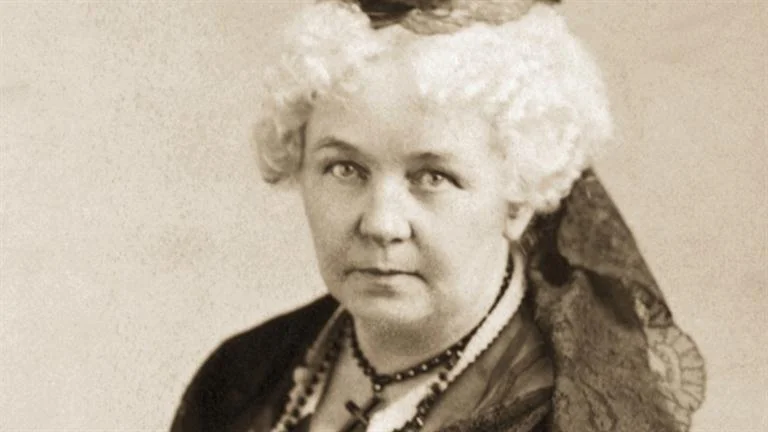
Elizabeth Cady Stanton: 'We hold these truths to be self-evident: that all men and women are created equal', Declaration of Sentiments, Seneca Falls Conference - 1848

June 9, 2016

19 July 1848. Seneca Falls, New York, USA

This is the founding moment of American feminism that Hillary Clinton referred to in her victory speech accepting the Democratic nomination.

When, in the course of human events, it becomes necessary for one portion of the family of man to assume among the people of the earth a position different from that which they have hitherto occupied, but one to which the laws of nature and of nature's God entitle them, a decent respect to the opinions of mankind requires that they should declare the causes that impel them to such a course.

We hold these truths to be self-evident: that all men and women are created equal; that they are endowed by their Creator with certain inalienable rights; that among these are life, liberty, and the pursuit of happiness; that to secure these rights governments are instituted, deriving their just powers from the consent of the governed. Whenever any form of government becomes destructive of these ends, it is the right of those who suffer from it to refuse allegiance to it, and to insist upon the institution of a new government, laying its foundation on such principles, and organizing its powers in such form, as to them shall seem most likely to effect their safety and happiness. Prudence, indeed, will dictate that governments long established should not be changed for light and transient causes; and accordingly all experience hath shown that mankind are more disposed to suffer. while evils are sufferable, than to right themselves by abolishing the forms to which they are accustomed. But when a long train of abuses and usurpations, pursuing invariably the same object, evinces a design to reduce them under absolute despotism, it is their duty to throw off such government, and to provide new guards for their future security. Such has been the patient sufferance of the women under this government, and such is now the necessity which constrains them to demand the equal station to which they are entitled. The history of mankind is a history of repeated injuries and usurpations on the part of man toward woman, having in direct object the establishment of an absolute tyranny over her. To prove this, let facts be submitted to a candid world.

The history of mankind is a history of repeated injuries and usurpations on the part of man toward woman, having in direct object the establishment of an absolute tyrranny over her. To prove this, let facts be submitted to a candid world.

He has never permitted her to exercise her inalienable right to the elective franchise.

He has compelled her to submit to laws, in the formation of which she had no voice.

He has withheld from her rights which are given to the most ignorant and degraded men--both natives and foreigners.

Having deprived her of this first right of a citizedn, the elective franchise, thereby leaving her without representation in the halls of legislation, he has oppressed her on all sides.

He has made her, if married, in the eye of the law, civilly dead.

He has taken from her all right in property, even to the wages she earns.

He has made her, morally, an irresponsible being, as she can commit many crimes with impunity, provided they be done in the presence of her husband. In the covenant of marriage, she is compelled to promise obedience to her husband, he becoming, to all intents and purposes, her master--the law giving him power to deprive her of her liberty, and to administer chastisement.

He has so framed the laws of divorce, as to what shall be the proper causes, and in case of separation, to whom the guardianship of the children shall be given, as to be wholly regardles of the happiness of women--the law, in all cases, going upon a flase supposition of the supremacy of man, and giving all power into his hands.

After depriving her of all rights as a married woman, if single, and the owner of property, he has taxed her to support a government which recognizes her only when her property can be made profitable to it.

He has monopolized nearly all the profitable employments, and from those she is permitted to follow, she receives but a scanty remuneration. He closes against her all the avenues to wealth and distinction which he considers most homorable to himself. As a teacher of theoloy, medicine, or law, she is not known.

He has denied her the facilities for obtaining a thorough education, all colleges being closed against her.

He allows her in church, as well as state, but a suborinate position, claiming apostolic authority for her exclusion from the ministry, and, with some exceptions, from any public participation in the affairs of the church.

He has created a false public sentiment by giving to the world a different code of morals for men and women, by which moral delinquencies which exclude women from society, are not only tolerated, but deemed of little account in man.

He has usurped the prerogative of Jehovah himself, claiming it as his right to assign for her a sphere of action, when that belongs to her conscience and to her God.

He has endeavored, in every way that he could, to destroy her conficence in her own powers, to lessen her self-respect, and to make her willing to lead a dependent and abject life.

Now, in view of this entire disfranchisement of one-half the people of this country, their social and religious degradation--in view of the unjust laws above mentioned, and because women do feel themselves aggrieved, oppressed, and fraudulently deprived of their most sacred rights, we insist that they have immediate admission to all the rights and privileges which belong to them as citizens of the United States.

Source: http://legacy.fordham.edu/halsall/mod/sene...

Enjoyed this speech? Speakola is a labour of love and I’d be very grateful if you would share, tweet or like it. Thank you.

Facebook Twitter Facebook
In Pre 1900 Tags WOMEN'S RIGHTS, SUFFRAGETTE, SENECA FALLS, FEMINISM, TRANSCRIPT, DECLARATION OF SENTIMENTS, HILLARY CLINTON
Comment

Hillary Clinton: 'We are living in what I call the Age of Participation', Women in the World summit - 2012

January 19, 2016

10 March 2012, Women in the World Summit, New York, 2012

So how do you like my jacket? (Laughter and applause.) I cannot believe what just happened. (Laughter.) I really had no idea what was going to be portrayed or done by Meryl. I thought we might get some extraordinary renditions of everyone from Aung San Suu Kyi to Indira Gandhi, a reprise of Margaret Thatcher. And it was quite astonishing because I’ve always admired her. And as she said, we do unfortunately throughout our lives as girls and women often cast an appraising eye on each other. I’m just glad she didn’t do a movie called The Devil Wears Pantsuits. (Laughter.)

But just as I marked various stages of my life by remembering what amazing role she was playing at the time, it is quite a humbling experience to have someone who I admire so greatly say what she said today. Because the work that I’ve done has been work that I felt drawn to for some of the same reasons that Meryl and I share these generational experiences, particularly these big-hearted mothers who challenged us to go as far as our efforts could take us.

So here we are at the end – it truly is the end – of the conference that has brought all of these women of the world, in the world, to New York. And I want to thank Tina Brown and her entire team that worked so hard to enable everyone to see what I get to see all the time. (Applause.) I just can’t thank you enough. (Applause.) 

Because for me, it has not been so much work as a mission, it has not been as strenuous as it has been inspiring, to have had the chance throughout my life, but certainly in these last 20 years, to have the privilege of meeting women and girls in our own country and then throughout the world who are taking a stand, whose voices are being heard, who are assuming the risks that come with sticking your neck out, whether you are a democracy activist in Burma or a Georgetown law student in the United States. (Applause.)

My life has been enriched, and I want yours to be as well. I am thrilled that so many of you have taken the time out of your own lives to celebrate these stories of these girls and women. And of course, now I hope that through your own efforts, through your own activism, through the foundations, through your political involvement, through your businesses, through every channel you have, you will leave here today thinking about what you too can do. Because when I flag in energy, when I do recognize that what my friends are telling me – that I need more sleep – is probably true, I think about the women whom I have had the honor to work with. Women like Dr. Gao, who Meryl met, who is about – well, she’s shorter than the podium. She is in her 80s now. She did have bound feet. She became a doctor and she was the physician who sounded the alarm about HIV/AIDS despite the Chinese Government’s efforts for years to silence her.

Or I think about Vera, the activist from Belarus whom I met. She’s worked so hard to shine a spotlight on the abuses happening right inside Europe one more time – another regime that believes silencing voices, locking up dissidents, rigging elections, is the only way to stay in power. So she and her allies brave the abuse every single day to say no, there is another way. 

Or Inex, who Meryl also mentioned, who I got to know during our efforts on behalfof the peace process in Northern Ireland. And she was reaching across all of these deep divides between the communities there, trying to forge understanding and build bridges. And like Muhtaren, the Pakistani young woman who had been so brutally assaulted for some absurd remnant out of an ancient belief in settling scores between families which should have no place in any country in the 21st century – (applause) – she was expected to kill herself. Well, of course; you’ve been shamed, you’ve been dishonored; through no fault of your own, you are now dead to us, so just finish the job. Well, she not only didn’t, but she is a living rebuke to not only those who assaulted her but to the government that did not recognize it needs to protect all of its girls and women, because without their full involvement in their society, there can never be the progress that is so necessary.

Now, I doubt any of these women would have ever imagined being mentioned on a stage by an Oscar-winning actress. I know I didn’t imagine I would be so mentioned on this stage. (Laughter.) But they are because they are special. We know about their stories. Somehow, we have seen their struggles break through the indifference and the resistance to telling the stories of girls and women who are struggling against such odds across the world. 

But they also represent so much more. Because this hall – I know because I know many of you – are filled with women and men who are on the front lines fighting for change, for justice, for freedom, for equal rights. And there are tens of millions more who need our support. So what does it mean to be a Woman in the World? Well, I too believe it means facing up to the obstacles you confront, and each of us confront different kinds. It means never giving up – giving up on yourself, giving upon your potential, giving up on your future. It means waking early, working hard, putting a family, a community, a country literally on your back, and building a better life.

You heard from Zin Mar Aung, the Burmese democracy activist who spoke earlier. When I met her late last year when I, on your behalf, on behalf of our country, went to Burma, I discussed with her and other activists what civil society would now be able to do to further the political and the economic reforms that the people so desperately need. And we did honor her along with nine extraordinary other women as International Women of Courage at the State Department. 

She, as you could see, came out of prison not embittered, although she had every right to be so, but determined, determined to make her contribution. She didn’t have time to feel sorry for herself, to worry whether her hair was the right shade or the right length. She got to work. And because of her, she’s founded four organizations, she’s working with young people and women to build civil society and citizenship. She raises funds for orphanages, she helps the families of political prisoners trying tore-enter into society, and she is one of those watering the seeds of democracy.

Or consider the young Nepali woman Suma, who sang so beautifully for us. (Applause.) You know what her story was. Six years old, sold into indentured servitude, working under desperate conditions, not allowed to go to school, not even allowed to speak her own native language. But then finally rescued by an NGO, an organization supported by the United States State Department, your tax dollars, called Room to Read, helped her enroll in a local school. We’ve helped 1,200 girls across India, Nepal, Bangladesh, and Sri Lanka complete their secondary education.

So there is much we can do together. And I have to tell you, I thought it was exquisitely appropriate as I woke up and was getting ready this morning to open The New York Times front page and see Christine Lagarde and Angela Merkel there. (Applause.) I know both of them and I think they are worthy of our appreciation and admiration, because boy, do they have hard jobs. Christine, who was here, is demonstrating not only her leadership at the IMF but also sending a message that there is no longer any reason that women cannot achieve in business, finance, the economy. And Chancellor Merkel is carrying Europe on her shoulders, trying to navigate through this very difficult economic crisis.

Now, I also heard a report of the call to action and the passion that Leymah Gbowee, our Nobel Peace Prize winner, along with President Ellen Johnson Sirleaf from Liberia summoned you to. Now, for those of you who have seen the movie Pray the Devil Back to Hell, you know what happened in Liberia in the spring of 2003. But for others of you who may not yet have seen it, I urge you to do so, because thousands of women from all walks of life – Christians and Muslims together – flooded the streets, marching, singing, praying. Dressed all in white, they sat in a fish market under the hot sun under a banner that said: “The women of Liberia want peace now.” 

And they built a network and they delivered for their children and for future generations. It was an extraordinary accomplishment. (Applause.)

And when the peace talks finally happened in Ghana – not in Liberia – they went to Ghana. They staged a sit-in at the negotiations, linked arms, blocked the doors until the men inside reached an agreement. So the peace was signed, the dictator fled, but still they did not rest. They turned their energies to building an enduring peace. They worked to elect Ellen Johnson Sirleaf, who became the first woman ever elected president of an African country. And in January, I had the honor of attending her second inauguration. (Applause.) 

I just saw my good friend, President Jahjaga of Kosovo. She’s a very young president, but already her life is a testament for what women can do to promote peace and security. She was still a student when the war started. She saw so much suffering. She wanted to help. So after finishing her studies, she became a police officer. She worked closely with international troops to forge a fragile peace. She rose through the ranks and eventually became the leader of the new Kosovo police force. And then just last year, she became the first woman elected president anywhere in the Balkans. (Applause.) And she has worked to bring her country together to promote the rule of law, ethnic reconciliation, regional stability – all the while standing up for the rights and opportunities of women and girls.

You can look around the world today and you can see the difference that individual women leaders are making. Dilma Rousseff in Brazil, former Chilean President Michelle Bachelet, who’s now leading UN women. They carry an enormous load for the rest of us, because it is hard for any leader – male or female. But I don’t fear contradiction when I say it is harder for women leaders. There are so many built-in expectations, stereotypes, caricatures that are still deeply embedded in psyches and cultures.

When I sat down alone for dinner with Aung San Suu Kyi back in November, it really did feel like meeting an old friend, even though it was the first time we’ve had a chance to see each other in person. Of course, from afar I had admired her and appreciated her courage. I went to the house where she had been unjustly imprisoned. Over dinner, we talked about the national struggle, but we also talked about the personal struggle. How does one who has been treated so unjustly overcome that personal sense of anger, of the years that were lost, families that were no longer seen, in order to be a leader that unites and brings people together? Nelson Mandela set such a high standard, and he often told me how going to prison forced him to overcome the anger he felt as a young man, because he knew when he walked out that prison door, if he were still angry, if he still was filled with hatred, he would still be in prison. 

Now, Aung San Suu Kyi, like Nelson Mandela, would have been remembered in history forever if she had not made the decision to enter politics, as he did as well. So there she is at, I think, 67, out traveling in an open car through the heat of the countryside, meeting crowds of tens of thousands, even hundreds of thousands, absorbing their hopes that they are putting on to her. She knows that when she crosses into politics, even though it is ultimately the way change is made that can last, she moves from being an icon to a politician. I know that route. (Laughter.) And I know how hard it is to be able to balance one’s ideals, one’s aspirations, with the give and take of any political process anywhere in the world. 

Now, we can tell stories all night and we can talk about the women who have inspired us. But what inspires me is not just who they are, but what they do. They roll their sleeves up and they get to work. And this has such important implications for our own country and for our national security, because our most important goals – from making peace and countering extremism to broadening prosperity and advancing democracy – depend to a very large degree on the participation and partnership of women. 

Nations that invest in women’s employment, health, and education are just more likely to have better outcomes. Their children will be healthier and better educated. And all over the world, we’ve seen what women do when they get involved in helping to bring peace. So this is not just the right thing to do for us to hold up these women, to support them, to encourage their involvement; this is a strategic imperative. 

And that’s why at the State Department, I’ve made women a cornerstone of American foreign policy. I’ve instructed our diplomats and development experts to partner with women, to find ways to engage and build on their unique strengths, help women start businesses, help girls attend school, push that women activists will be involved in peace talks and elections. It also means taking on discrimination, marginalization, rape as a tactic of war. I have seen the terrible abuses and what that does to the lives of women, and I know that we cannot rest until it is ended. 

In December, we launched a U.S. National Action Plan on Women, Peace, and Security, which is our roadmap for how we accelerate and institutionalize efforts across the United States Government to advance women’s participation. And we’re taking on some really tough problems. We’re trying to build local capacity. We’re giving grants to train women activists and journalists in Kenya in early-warning systems for violence. We’re supporting a new trauma center for rape victims in Sudan. We’re helping women in the Central African Republic access legal and economic services. We’re improving the collection of medical evidence for the prosecution of gender-based violence in the Democratic Republic of the Congo.

And that’s just the beginning, because from around the world, from Iraq and Afghanistan to Sudan to the new transitional democracies in the Middle East and North Africa, we’re expecting our embassies to develop local strategies to empower women politically, economically, and socially. 

But we are watching carefully what is happening. We are concerned about the revolutions in the Middle East and North Africa. They held so much promise, but they also carried real risks, especially for women. We saw women on the front lines of the revolutions, most memorably in Cairo’s Tahrir Square. They marched, they blogged, they tweeted, they risked their lives alongside their sons and brothers – all in the name of dignity and opportunity. But after the revolution, too often they have found their attempts to participate in their new democracies blocked. We were delighted that our great Supreme Court Justice Ruth Bader Ginsburg went on a State Department-sponsored trip to Egypt and Tunisia. And while there, she rightly said the daughters of the Middle East “should be able to aspire and achieve based on the talent God gave them and not be held back by any laws made by men.” (Applause.) 

Just a few weeks ago in a town hall meeting in Tunis, a young woman wearing a headscarf stood up and talked about her experience working in partnership with the U.S. Embassy in a program that we call Bridge to Democracy. She said that often people she met were surprised that a young women wearing a hijab would work with Americans, and that we would work with her. Gradually, she said, these preconceptions broke down and increasingly people are just eager to find new partners to help build their new democracy. I told her that in America, in Tunisia, anywhere in the world, women should have the right to make their own choices about what they wear, how they worship, the jobs they do, the causes they support. These are choices women have to make for themselves, and they are a fundamental test of democracy.

Now, we know that young woman in Tunisia and her peers across the region already are facing extremists who will try to strip their rights, curb their participation, limit their ability to make choices for themselves. Why extremists always focus on women remains a mystery to me. But they all seem to. It doesn’t matter what country they’re in or what religion they claim. They want to control women. They want to control how we dress, they want to control how we act, they even want to control the decisions we make about our own health and bodies. (Applause.) Yes, it is hard to believe that even here at home, we have to stand up for women’s rights and reject efforts to marginalize any one of us, because America needs to set an example for the entire world. (Applause.) And it seems clear to me that to do that, we have to live our own values and we have to defend our own values. We need to respect each other, empower all our citizens, and find common ground.

We are living in what I call the Age of Participation. Economic, political, and technological changes have empowered people everywhere to shape their own destinies in ways previous generations could never have imagined. All these women – these Women in the World – have proven that committed individuals, often with help, help from their friends, can make a difference in their own lives and far beyond.

So let me have the great privilege of ending this conference by challenging each of you. Every one of us needs to be part of the solution. Each of us must truly be a Woman in the World. We need to be as fearless as the women whose stories you have applauded, as committed as the dissidents and the activists you have heard from, as audacious as those who start movements for peace when all seems lost. Together, I do believe that it is part of the American mission to ensure that people everywhere, women and men alike, finally have the opportunity to live up to their own God-given potential. So let’s go forth and make it happen. Thank you very much. (Applause.)

 

Source: http://iipdigital.usembassy.gov/st/english...

Enjoyed this speech? Speakola is a labour of love and I’d be very grateful if you would share, tweet or like it. Thank you.

Facebook Twitter Facebook
In 2010s Tags HILLARY CLINTON, SECRETARY OF STATE, WOMEN'S RIGHTS, GENDER EQUALITY, WOMEN IN THE WORLD, TRANSCRIPT
Comment

Mark Twain: 'I should like to see the time come when women shall help to make the laws', Votes for Women - 1901

September 11, 2015

20 January, 1901, Hebrew Technical School for Girls, Temple Emmanuel, New York City, USA

It is a small help that I can afford, but it is just such help that one can give as coming from the heart through the mouth. The report of Mr. Meyer was admirable, and I was as interested in it as you have been. Why, I'm twice as old as he, and I've had so much experience that I would say to him, when he makes his appeal for help: "Don't make it for to-day or to-morrow, but collect the money on the spot."

We are all creatures of sudden impulse. We must be worked up by steam, as it were. Get them to write their wills now, or it may be too late by-and-by. Fifteen or twenty years ago I had an experience I shall never forget. I got into a church which was crowded by a sweltering and panting multitude. The city missionary of our town—Hartford—made a telling appeal for help. He told of personal experiences among the poor in cellars and top lofts requiring instances of devotion and help. The poor are always good to the poor. When a person with his millions gives a hundred thousand dollars it makes a great noise in the world, but he does not miss it; it's the widow's mite that makes no noise but does the best work.

I remember on that occasion in the Hartford church the collection was being taken up. The appeal had so stirred me that I could hardly wait for the hat or plate to come my way. I had four hundred dollars in my pocket, and I was anxious to drop it in the plate and wanted to borrow more. But the plate was so long in coming my way that the fever-heat of beneficence was going down lower and lower—going down at the rate of a hundred dollars a minute. The plate was passed too late. When it finally came to me, my enthusiasm had gone down so much that I kept my four hundred dollars—and stole a dime from the plate. So, you see, time sometimes leads to crime.

Oh, many a time have I thought of that and regretted it, and I adjure you all to give while the fever is on you.

Referring to woman's sphere in life, I'll say that woman is always right. For twenty-five years I've been a woman's rights man. I have always believed, long before my mother died, that, with her gray hairs and admirable intellect, perhaps she knew as much as I did. Perhaps she knew as much about voting as I.

I should like to see the time come when women shall help to make the laws. I should like to see that whip-lash, the ballot, in the hands of women. As for this city's government, I don't want to say much, except that it is a shame—a shame; but if I should live twenty-five years longer—and there is no reason why I shouldn't—I think I'll see women handle the ballot. If women had the ballot to-day, the state of things in this town would not exist.

If all the women in this town had a vote to-day they would elect a mayor at the next election, and they would rise in their might and change the awful state of things now existing here.


Source: http://www.gutenberg.org/files/3188/3188-h...

Enjoyed this speech? Speakola is a labour of love and I’d be very grateful if you would share, tweet or like it. Thank you.

Facebook Twitter Facebook
In 1900-19 Tags MARK TWAIN, VOTES FOR WOMEN, WOMEN'S RIGHTS, TRANSCRIPT
Comment

Sojourner Truth: 'I have borne thirteen children, and seen most all sold off to slavery', Aint I A Woman speech - 1851

September 11, 2015

1851, Women's Convention, Akron, Ohio

Well, children, where there is so much racket there must be something out of kilter. I think that 'twixt the negroes of the South and the women at the North, all talking about rights, the white men will be in a fix pretty soon. But what's all this here talking about?

That man over there says that women need to be helped into carriages, and lifted over ditches, and to have the best place everywhere. Nobody ever helps me into carriages, or over mud-puddles, or gives me any best place! And ain't I a woman? Look at me! Look at my arm! I have ploughed and planted, and gathered into barns, and no man could head me! And ain't I a woman? I could work as much and eat as much as a man - when I could get it - and bear the lash as well! And ain't I a woman? I have borne thirteen children, and seen most all sold off to slavery, and when I cried out with my mother's grief, none but Jesus heard me! And ain't I a woman?

Then they talk about this thing in the head; what's this they call it? [someone whispers, "intellect"] That's it, honey. What's that got to do with women's rights or negroes' rights? If my cup won't hold but a pint, and yours holds a quart, wouldn't you be mean not to let me have my little half measure full?

Then that little man in black there, he says women can't have as much rights as men, 'cause Christ wasn't a woman! Where did your Christ come from? Where did your Christ come from? From God and a woman! Man had nothing to do with Him.

If the first woman God ever made was strong enough to turn the world upside down all alone, these women together ought to be able to turn it back , and get it right side up again! And now they is asking to do it, the men better let them.

Obliged to you for hearing me, and now old Sojourner ain't got nothing more to say.

Source: http://legacy.fordham.edu/halsall/mod/sojt...

Enjoyed this speech? Speakola is a labour of love and I’d be very grateful if you would share, tweet or like it. Thank you.

Facebook Twitter Facebook
In Pre 1900 Tags SOJOURNER TRUTH, AINT I A WOMAN, WOMEN'S RIGHTS, ABOLITIONIST, SLAVERY, TRANSCRIPT
Comment

Susan B Anthony: 'Are women persons?', Women's Right to Vote - 1873

September 10, 2015

1872-73, stump speech, Monroe County, New York, USA

Anthony was fined $100 for casting an illegal vote in the 1872 Presidential election

Friends and fellow citizens: I stand before you tonight under indictment for the alleged crime of having voted at the last presidential election, without having a lawful right to vote. It shall be my work this evening to prove to you that in thus voting, I not only committed no crime, but, instead, simply exercised my citizen's rights, guaranteed to me and all United States citizens by the National Constitution, beyond the power of any state to deny.

The preamble of the Federal Constitution says:

"We, the people of the United States, in order to form a more perfect union, establish justice, insure domestic tranquillity, provide for the common defense, promote the general welfare, and secure the blessings of liberty to ourselves and our posterity, do ordain and establish this Constitution for the United States of America."

It was we, the people; not we, the white male citizens; nor yet we, the male citizens; but we, the whole people, who formed the Union. And we formed it, not to give the blessings of liberty, but to secure them; not to the half of ourselves and the half of our posterity, but to the whole people - women as well as men. And it is a downright mockery to talk to women of their enjoyment of the blessings of liberty while they are denied the use of the only means of securing them provided by this democratic-republican government - the ballot.

For any state to make sex a qualification that must ever result in the disfranchisement of one entire half of the people, is to pass a bill of attainder, or, an ex post facto law, and is therefore a violation of the supreme law of the land. By it the blessings of liberty are forever withheld from women and their female posterity.

To them this government has no just powers derived from the consent of the governed. To them this government is not a democracy. It is not a republic. It is an odious aristocracy; a hateful oligarchy of sex; the most hateful aristocracy ever established on the face of the globe; an oligarchy of wealth, where the rich govern the poor. An oligarchy of learning, where the educated govern the ignorant, or even an oligarchy of race, where the Saxon rules the African, might be endured; but this oligarchy of sex, which makes father, brothers, husband, sons, the oligarchs over the mother and sisters, the wife and daughters, of every household - which ordains all men sovereigns, all women subjects, carries dissension, discord, and rebellion into every home of the nation.

Webster, Worcester, and Bouvier all define a citizen to be a person in the United States, entitled to vote and hold office.

The only question left to be settled now is: Are women persons? And I hardly believe any of our opponents will have the hardihood to say they are not. Being persons, then, women are citizens; and no state has a right to make any law, or to enforce any old law, that shall abridge their privileges or immunities. Hence, every discrimination against women in the constitutions and laws of the several states is today null and void, precisely as is every one against Negroes.

Anthony died in 1906, fighting to the end. Women's right to vote. was ratified by the 19th Amendment in August of 1920.


Source: http://www.historyplace.com/speeches/antho...

Enjoyed this speech? Speakola is a labour of love and I’d be very grateful if you would share, tweet or like it. Thank you.

Facebook Twitter Facebook
In Pre 1900 Tags SUFFRAGETTE, RIGHT TO VOTE, GENDER EQUALITY, SUSAN B ANTHONY, WOMEN, WOMEN'S RIGHTS, TRANSCRIPT
Comment

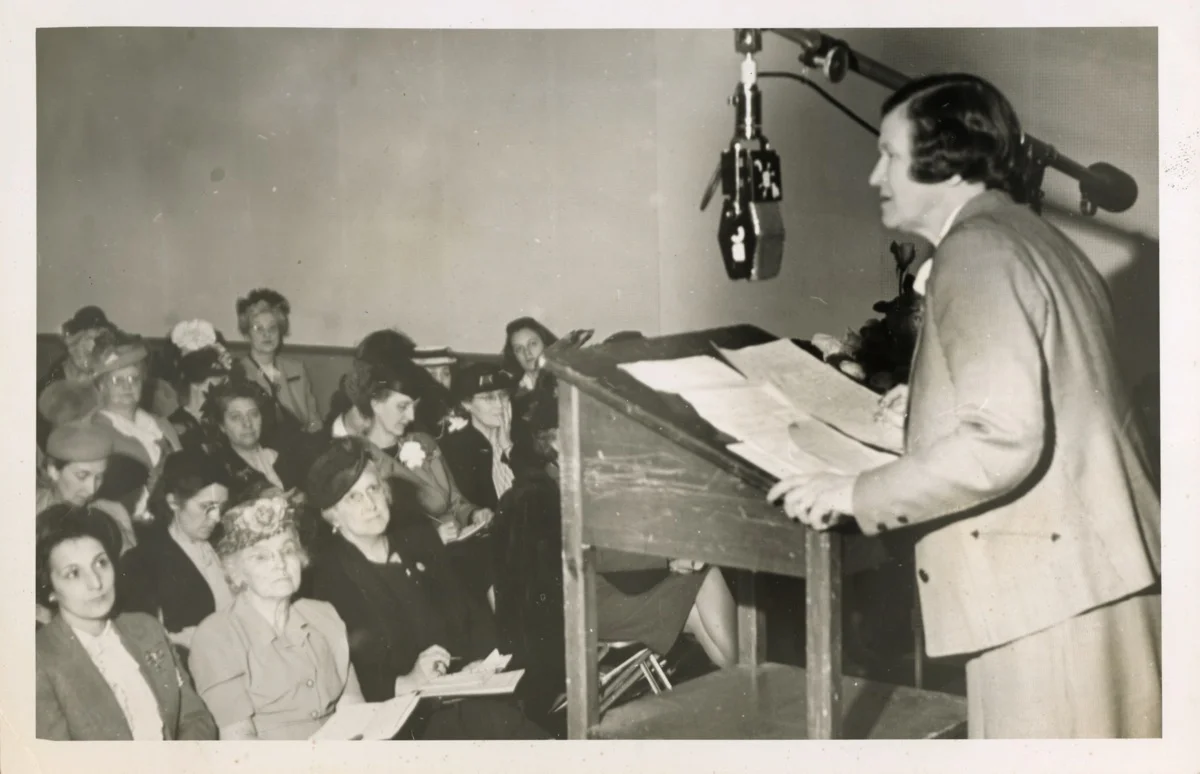
Jessie Street: 'Is it to be back to the kitchen?', ABC Broadcast - 1944

August 6, 2015

17 April 1944, ABC Radio National, Australia

Episode 21 of the podcast featured Lenore Coltheart talking about this famous speech, and actor Blazey Best recreating it.

There is a good deal of talk just now about what they are going to do after the war with
the women: Must they be made to return to the home? Are they going to take them out
of the factory, the office, off the land?

To me, this sort of discussion is very disquieting. It makes me think we’ve already
forgotten the reasons why we’re fighting this war. Aren’t we fighting for liberty, for
democracy and to eradicate fascism and Nazism in every form?

Surely we don’t mean liberty and democracy for men only? Indeed, I hope women will enjoy the liberty which they have helped to win and be permitted to choose what they want to do.

Do you remember that one of the first things the Nazis did when they came to power was to put women out of the professions, out of the factories? They barred the doors of the
universities to all but a few women and they severely limited women’s opportunities for
any kind of higher education; by these methods the Nazis forced women back to the
home – back to the kitchen.

I can’t help thinking that if any attempt is made here after the war to force women back to the home, it will be proof that facism still has strong roots in Australia.

Women should not be forced to return to the home, but they should be free to return there if they wish to. I don’t like what’s implied in the suggestion that women will have
to he forced back into the home – that’s a slight not only on home life, but also on the
work of bearing and rearing children, don’t you agree?

The greatest happiness for many women is to care for a home and to raise a family. The trouble in the past has been that society has failed to make it possible for all the women who wanted to have homes and raise families to do so.

And while we’re on the subject of women in the home, I think that this life could be
made attractive to many more women by developing amenities and customs that render
home less of a prison than it is to many women with young families.

Just think of the prospects of family life, as lived under present conditions, to a clever, energetic, bright young girl. Soon after marriage there will be a baby, and from then on she cannot move unencumbered. The more babies, the harder she has to work and the greater her
restrictions.

If we want more women to choose home life, we must make home life less hard. But how can we do this? Well, we can have crèches and kindergartens and supervised playgrounds where children can be left in safe surroundings. Then we must change many of our conventions. Why should a woman do all the work in the home?

Why can’t we, for example, have community kitchens and laundries? If a woman wants
to work outside the home, why shouldn’t she? Let her be free to choose. There’s just as
much and more reason to believe that the best interests of her family and of society will
be served by giving a woman a free choice than by expecting her to adhere to a lot of
worn-out conventions.

Anyway, the contribution that women can make to public life through the professions or
in industry is important. Women in the past have been very much hampered by their
inexperience in these spheres. They haven’t had the opportunity to qualify for representative positions or positions of control and direction. In other words, because of the lack of opportunity to gain experience they’re denied the opportunity of exerting any
influence in framing policies or directing public affairs.

I am pretty sure that many women will remain in industry after the war, for we shall be
in need of more skilled hands rather than less. Remember, we couldn’t exert a full war
effort until women were absorbed into industry; therefore, how can we exert a full peace
program without making use of their services?

Everyone knows how short we are of houses and hospitals and offices, of furniture, of bathroom and kitchen fittings, of curtains, wallpaper, clothing, foodstuffs, in fact, hundreds of commodities. Can you imagine the tremendous amount of work that will be required? Not only have we to make up the deficiency of the war years, but we must provide all these amenities on a much larger scale after the war.

There were large numbers of people before the war who had no homes, not even enough to eat; hospital accommodation was inadequate, and so on. Although all these could have been provided for a few million pounds, we believed we could not afford to better these conditions.

It took a total war to show us what we could do with our own resources. If we can raise money for war we can raise it for peace, surely. It would be inexcusable in the future to condemn people to live under the conditions so many endured before the war.

Why is there so much opposition to women remaining in industry?

The secret isn’t far to seek. It’s simply that they got paid less – they are cheap labour, certainly not, as so many have alleged, because they’re weaker or less efficient. Unfortunately, because
their labour is cheaper, women not only threaten the wage standards of men workers, but they also threaten the standard of living of all workers. The obvious and just way to avoid this is to give equal pay to men and women.

To put this in a nutshell, I believe that in a democratic, free society women should be at
liberty to choose whether they will take up home life or work outside the home; that
men and women should receive equal pay and equal opportunity; that home life should
be made less of a tie and the burden of raising a family be lightened. If we can face
these peacetime problems with the spirit of determination and conciliation with which
we’re facing our war problems, we may hope to solve them.

Source: http://famousspeeches.wikifoundry.com/page...

Enjoyed this speech? Speakola is a labour of love and I’d be very grateful if you would share, tweet or like it. Thank you.

Facebook Twitter Facebook
In 1940-59 Tags WOMEN'S RIGHTS, FEMINISM, ACTIVIST, TRANSCRIPT
Comment

Enid Lyons: ' This is the first occasion upon which a woman has addressed this House', Maiden speech - 1943

August 6, 2015

29 September 1943, Parliament House, Canberra, Australia

It would be strange indeed were I not to-night deeply conscious of the fact, if not a little awed by the knowledge, that on my shoulders rests a great weight of responsibility; because this is the first occasion upon which a woman has addressed this House. For that reason, it is an occasion which, for every woman in the Commonwealth, marks in some degree a turning point in history. I am well aware that, as I acquit myself in the work that I have undertaken for the next three years, so shall I either prejudice or enhance the prospects of those women who may wish to follow me in public service in the years to come. I know that many honorable members have viewed the advent of women to the legislative halls with something approaching alarm; they have feared, I have no doubt, the somewhat too vigorous use of a new broom. I wish to reassure them. I hold very sound views on brooms, and sweeping. Although I quite realize that a new broom is a very useful adjunct to the work of the housewife, I also know that it undoubtedly is very unpopular in the broom cupboard; and this particular new broom knows that she has a very great deal to learn from the occupants of - I dare not say this particular cupboard. At all events, she hopes to conduct herself with sufficient modesty and sufficient sense of her lack of knowledge at least to earn the desire of honorable members to give her whatever help they may be able to give. I believe, very sincerely, that any woman entering the public arena must be prepared to work as men work; she must justify herself not as a woman, but as a citizen; she must attack the same problems, and be prepared to shoulder the same burdens. But because I am a woman, and cannot divest myself of those qualities that are inherent in my sex, and because every one of us speaks broadly in the terms of one's own experience, honorable members will have to become accustomed to the application of the homely metaphors of the kitchen rather than those of the operating theatre, the workshop, or the farm. They must also become accustomed to the application to all kinds of measures of the touchstone of their effect upon the home and the family life. I hope that no one will imagine that that implies in any way a limitation of my political interests. Rather, it implies an everwidening outlook on every problem that faces the world to-day. Every subject, from high finance to international relations, from social security to the winning of the war, touches very closely the home and the family. The late King George V, as he neared the end of a great reign and a good life, made a statement upon which any one may base the whole of one's political philosophy, when he said, " The foundation of a nation's greatness is in the homes of its people ". Therefore, honorable members will not, I know, be surprised when I say that I am likely to be even more concerned with national character than with national effort.

Somewhere about the year 1830 there began a period in Australian history which for me has always held a peculiar fascination. I should like to have been born at about that time. I should like to have been alive in the days when bushrangers flourished, when life was hard and even raw, when gold was discovered, when the colonies became States, and when all of the great social and political movements were born which so coloured the fabric of Australian life; because, during all those years very much of what we now know as the Australian character was formed. It was during those years that we learned those things which still characterize the great bulk of our people - hatred of oppression, love of " a fair go ", a passion for justice. It was in those years that we developed those qualities of initiative and daring that have marked our men in every war in which they have fought - qualities which, I hope, will never be allowed to die. We are now on the threshold of such another era, when further formative measures will have to be taken; because we are to-day an organized community which no longer exists purely upon the initiative of its individual members, and if we would serve Australia well we must preserve those characteristics that were formed during that early period of our history.

I have been delighted, since I came here, to find the almost unanimity that exists in respect of the need for social service and in respect of many of the other problems that have been discussed in this chamber. In the matter of social security one thing stands out clearly in my mind. Such things are necessary in order that the weak shall not go to the wall, that the strong may be supported, that all may have justice. But we must never so blanket ourselves that those fine national qualities of which I have spoken shall no longer have play. I know so well that fear, want and idleness can kill the spirit of any people. But I know, too, that security can be bought at too great a cost - the cost of spiritual freedom. How, then, may we strike a balance? That, it seems to me, is the big question for us to decide to-day. There is one answer. We know perfectly well that any system of social security devised to-day must be financed largely from general taxation. Yet I would insist that every person in the community in receipt of any income whatsoever must make some contribution to the fund for social security. I want it to be an act of conscious citizenship. I want every child to be taught that when he begins to earn, then, for the first time, he will have the first privilege and right of citizenship - to begin to contribute to the great scheme that has been designed to serve him when he is no longer able to work and to help all of those who at any period of their lives may meet with distress or trouble. In such a scheme, I believe, there should be pensions for all; there should be no means test; those who have should contribute according to their means. But every one, however little he or she earns, should contribute something, be it only a three-penny stamp, as a sort of token payment for the advantage of Australian citizenship. In passing, let me say this: There is one reform, at least, that could be applied to our present pensions system, which would have the greatest effect in making a little brighter the lives of those upon whom the years are already closing in. I consider that every pensioner should have his or her pension posted to him or her in the form of a cheque. At the present time any pensioner who so wishes has the right to have the pension sent in that way, but few pensioners are aware of it. If that were done, I believe that not only would congestion in post offices be relieved, but also that a small contribution would be made to easing the burden of those who have come to old age or illness.

I am delighted that the honorable member for Denison Dr. Gaha should have secured the honour of having introduced to this chamber, in this debate, the subject of population. Other members also have seized upon that subject, apparently with a very great deal of pleasure, and have dealt with it at some length; but to the honorable member for Denison go the honours. I, like him, have pondered on this subject - not with my feet upon the mantle-piece, but knee-deep in shawls and feeding bottles. I have pondered it, surrounded by those who, by their very numbers, have done quite a good deal to boost the population of Australia. I believe that I have at least tried out some of the theories which would make for a better population, and that I know some of the difficulties that present themselves to any person who, in these days, desires to rear a family. One honorable member has spoken of the need for a greater population for reasons of defence. That, of course, is something that has to be considered. But there has also to be considered the fact that, unless we fill this country we shall have no justification in the years that are ahead for holding it at all.

Another honorable member spoke of the need for decentralization. On the north-west coast of Tasmania, which is a part of the district that I represent, there is, I believe, the best example of decentralization that is to be found anywhere in Australia; but I do not want the House to believe that that is why eleven members of the Lyons family were born at Devonport. I consider that something more than decentralization is necessary if the population of Australia is to be increased. It would be well to go back a little while and look for the reasons for the decline of population during the last 50 or 60 years. Two main reasons are ascribed, the first the growth of industrialism and the changed conditions resulting therefrom. Population became urban instead of rural, and the conditions in which children were brought up became less and less suitable. People were crowded. Housing was inadequate, and the large families went to the wall. The incidence of disease increased, and industrial disease came with the development of new occupations. The workers were unmercifully exploited. State paternalism became necessary, and even in State paternalism certain reasons for the decline of family life can be found. At the other end of the social scale other reasons can be found for the declining birth-rate. New inventions, and the provision of luxuries, provided new ways of spending incomes and leisure. There was less domestic help to be had. Finally, people began to think that the woman who became the mother of a family was something of a lunatic. About 30 years later she began to be regarded as something of a criminal lunatic. In the end the belief developed that it was a social virtue to produce fewer and fewer children. Where such a state of affairs exists, it is a matter of courage, even of hardihood, to have a family of more than two or three.

Still another reason for the declining birth-rate is sometimes advanced, a reason belonging to the moral rather than to the economic sphere. It is to be found in that strange reluctance to reproduce themselves that has overtaken the peoples of the past in the final years of their decline. That is a picture which none of us cares to contemplate. I agree with the honorable member for Denison that we cannot hope, merely by economic measures, to increase the birth-rate. Certain things are necessary to be done in order to ease the burden on families, but they must be looked upon only as measures of justice to those who are prepared to face their responsibilities. We need maternity and nursing services; we need some kind of domestic help service; we need better houses. But those things cannot in themselves revive the falling birth-rate. We must look to the basic wage, which at present provides for the needs of three children for every man who receives it; yet how many thousands of men in this country have no children at all? How many have fewer than three - yet the three notional children of the man who has not any militate against the success in life of the children in other families of six and seven and eight. The basic wage is meagre enough in all conscience - too meagre - but it should be estimated upon the needs of a man and his wife, or of a man who must provide later for a wife, and the children should be provided for by an extension of the child endowment system. Let the man's wages be a direct charge upon industry, but the children should be a charge on the whole community. If we hope to increase the birth-rate we must look to a resurgence of the national spirit, a resurgence of national vitality. We must look to a new concept of the dignity and worth of the family in the social order. I agree with Paul Bureau that the family is the matrix of humanity, the secret laboratory in which every unit of human society is prepared, organized and maintained, and if that laboratory is disorganized or chaotic, the most serious disorders in social life must be expected.

Let us pause for a moment and think, of the time when the war shall end. Many speakers in the course of this debate have said that they believe that the war will end during the life of this Parliament, and all too many people hope and believe that by the attainment of victory we shall step straight into the golden age. Nothing could be more foolish, because the golden age will arrive only when you and I and everyone else have made some contribution towards it. We shall have to plan for it, and work for it and sacrifice ourselves for it. We speak of the men corning back, who must be kept on Army rates of pay until suitable work can be found for them. It sounds easy, but it is very, very hard. First of all, what is suitable work for each of these men? It will not be sufficient merely to let them go out and take any kind of work. The employment offered them must provide a reasonable prospect of congenial occupation, perhaps for the greater part of their lives. And they will not want to stay on at Army rates of pay. They are young, eager and impatient, and they will be heartily sick of everything to do with the Army and with war. We must have patience for them. We must be prepared, particularly the women, to hold in stability those who have come back still in the grip of the restlessness engendered by war. Those who return will be, for the most part, in the age group of 20 to 30 years. They must be trained to a trade or profession. Our present apprenticeship cannot provide for their needs, and will have to be re-adjusted. Here, I believe, trade unionists can and will make a great contribution to national re-construction by considering and planning suitable alternatives to the laws which at present mean a great deal to them.

Almost every honorable member who has touched on this topic has spoken on housing. I, too, believe in a scheme of national housing. I believe that it will help in the re-absorption into industry of discharged men, but. I believe also that we face a grave danger that the housing scheme will be overloaded with unnecessary costs. We have in Australia what I call a bricks and mortar complex. We cannot carry on any activity without housing it in a palace. We want in the homes that are to be built something less than is provided in some of the houses that I have seen designed. We want good walls and strong foundations; we want good fittings, but we do not want something that will cost more than is necessary. Permanency in a cathedral is a wonderful thing, but no one wants a house to last for 300 years. We need houses with sufficient space, so that the housewife can work in comfort. There must be space for the children to move about, and there must be sufficient space about the house so that it will not readily become a part of a crowded slum.

There was a reference in the GovernorGeneral's Speech to an overhaul of the man-power situation. I hope that when the Government gives this matter its attention, it will re-adjust what I might call man-hours. At the present time, there are thousands of women in the services and in munitions factories. By a slight re-adjustment of hours, it should be possible for them to receive some training that would fit them for civil life, particularly in the domestic sphere where I hope most of them will eventually find their place. Each week they could receive one or two hours' training in domestic science in canteens attached to munitions establishments, hospitals or military camps, so that when the men come home, torn, worn and wrecked, as many of them will be by their war experiences, they will have women to meet and greet them who will not be immediately harassed by a lack of knowledge of domestic work, and the running of happy homes.

Now let me turn just for a moment to the international sphere. I have heard expressions of opinion that have surprised and even hurt me, and I have heard some that have cheered me greatly. Some honorable members have assured us that there can never be any hope that mankind will escape the horror of war that descends upon the world every now and then. Others have assured us that by international co-ordination we can usher in very quickly the reign of peace for which we all long. I stand somewhere between the two schools of thought. Because of what has happened to me in this war I have become disillusioned. For years I went about the world preaching the gospel of peace and friendship and co-operation. I believed with all my heart in disarmament, but I can never again advocate such a policy. I believe that we must arm ourselves to meet whatever danger may threaten us, but I also believe that we must co-operate with all those forces of good that are working for peace, and with all those people who have a will to peace, so that we may do whatever lies in our power to preserve peace in our time. However, it is not sufficient merely to co-operate, nor should we limit the sphere of goodwill. Surely we can see that if Germany should rise again in Europe, Japan will rise again in the east as surely as the sun itself rises. The other evening I, in common with many other honorable members, saw a film dealing with the war in Europe. There was one scene which portrayed the evacuation from Dunkirk. We saw how the German army flowed across the Low Countries and over northern France, and how the small British army was squeezed into an ever-decreasing compass, until finally it was compressed into the small area immediately around Dunkirk. Then the picture showed a mist on the water, and the voice of the announcer said this: " And then out of the mist there came a strange flotilla - warships and fishing smacks, and craft of all kinds filled the sea. It was the sea-going English come to rescue their own ". And I felt, as I believe every other person felt who saw the picture, that this indeed was one of the greatest moments in the history of our race. I thought then, as I think now, that we should not fail occasionally to pause and look back upon the great moments of our past. We go along, thinking always that we progress, but sometimes we have to pause and take stock. I think that every Australian should pause now and again and say to himself, " Only 150 years ago this land was wilderness. Now we have great cities, wonderful feats of engineering and beautiful buildings everywhere. And this is still a land of promise ". We cannot afford to neglect some recognition of our past, even though we gaze into the future.

Now, honorable members will forgive me, I know, when I say that I bear the name of one of whom it was said in this chamber that to him the problems of government were not problems of blue books, not problems of statistics, but problems of human values and human hearts and human feelings. That, it seems to me, is a concept of government that we might well cherish. It is certainly one that I hold very dear. I hope that I shall never forget that everything that takes place in this chamber goes out somewhere to strike a human heart, to influence the life of some fellow being, and I believe this, too, with all my heart that the duty of every government, whether in this country or any other, is to see that no man, because of the condition of his life, shall ever need lose his vision of the city of God.


Source: http://parlinfo.aph.gov.au/parlInfo/search...

Enjoyed this speech? Speakola is a labour of love and I’d be very grateful if you would share, tweet or like it. Thank you.

Facebook Twitter Facebook
In 1940-59 Tags WOMEN'S RIGHTS, AUSTRALIA, MAIDEN SPEECH, TRANSCRIPT
Comment

Emmeline Pankhurst: 'I am here as a soldier who has temporarily left the field of battle', Freedom or Death - 1913

August 6, 2015

13 November 1913, Hartford, Connecticut, USA

I do not come here as an advocate, because whatever position the suffrage movement may occupy in the United States of America, in England it has passed beyond the realm of advocacy and it has entered into the sphere of practical politics. It has become the subject of revolution and civil war, and so tonight I am not here to advocate woman suffrage. American suffragists can do that very well for themselves.

I am here as a soldier who has temporarily left the field of battle in order to explain - it seems strange it should have to be explained - what civil war is like when civil war is waged by women. I am not only here as a soldier temporarily absent from the field at battle; I am here - and that, I think, is the strangest part of my coming - I am here as a person who, according to the law courts of my country, it has been decided, is of no value to the community at all; and I am adjudged because of my life to be a dangerous person, under sentence of penal servitude in a convict prison.

It is not at all difficult if revolutionaries come to you from Russia, if they come to you from China, or from any other part of the world, if they are men. But since I am a woman it is necessary to explain why women have adopted revolutionary methods in order to win the rights of citizenship. We women, in trying to make our case clear, always have to make as part of our argument, and urge upon men in our audience the fact - a very simple fact - that women are human beings.

Suppose the men of Hartford had a grievance, and they laid that grievance before their legislature, and the legislature obstinately refused to listen to them, or to remove their grievance, what would be the proper and the constitutional and the practical way of getting their grievance removed? Well, it is perfectly obvious at the next general election the men of Hartford would turn out that legislature and elect a new one.

But let the men of Hartford imagine that they were not in the position of being voters at all, that they were governed without their consent being obtained, that the legislature turned an absolutely deaf ear to their demands, what would the men of Hartford do then? They couldn't vote the legislature out. They would have to choose; they would have to make a choice of two evils: they would either have to submit indefinitely to an unjust state of affairs, or they would have to rise up and adopt some of the antiquated means by which men in the past got their grievances remedied.

Your forefathers decided that they must have representation for taxation, many, many years ago. When they felt they couldn't wait any longer, when they laid all the arguments before an obstinate British government that they could think of, and when their arguments were absolutely disregarded, when every other means had failed, they began by the tea party at Boston, and they went on until they had won the independence of the United States of America.

It is about eight years since the word militant was first used to describe what we were doing. It was not militant at all, except that it provoked militancy on the part of those who were opposed to it. When women asked questions in political meetings and failed to get answers, they were not doing anything militant. In Great Britain it is a custom, a time-honoured one, to ask questions of candidates for parliament and ask questions of members of the government. No man was ever put out of a public meeting for asking a question. The first people who were put out of a political meeting for asking questions, were women; they were brutally ill-used; they found themselves in jail before 24 hours had expired.

We were called militant, and we were quite willing to accept the name. We were determined to press this question of the enfranchisement of women to the point where we were no longer to be ignored by the politicians.

You have two babies very hungry and wanting to be fed. One baby is a patient baby, and waits indefinitely until its mother is ready to feed it. The other baby is an impatient baby and cries lustily, screams and kicks and makes everybody unpleasant until it is fed. Well, we know perfectly well which baby is attended to first. That is the whole history of politics. You have to make more noise than anybody else, you have to make yourself more obtrusive than anybody else, you have to fill all the papers more than anybody else, in fact you have to be there all the time and see that they do not snow you under.

When you have warfare things happen; people suffer; the noncombatants suffer as well as the combatants. And so it happens in civil war. When your forefathers threw the tea into Boston Harbour, a good many women had to go without their tea. It has always seemed to me an extraordinary thing that you did not follow it up by throwing the whiskey overboard; you sacrificed the women; and there is a good deal of warfare for which men take a great deal of glorification which has involved more practical sacrifice on women than it has on any man. It always has been so. The grievances of those who have got power, the influence of those who have got power commands a great deal of attention; but the wrongs and the grievances of those people who have no power at all are apt to be absolutely ignored. That is the history of humanity right from the beginning.

Well, in our civil war people have suffered, but you cannot make omelettes without breaking eggs; you cannot have civil war without damage to something. The great thing is to see that no more damage is done than is absolutely necessary, that you do just as much as will arouse enough feeling to bring about peace, to bring about an honourable peace for the combatants; and that is what we have been doing.

We entirely prevented stockbrokers in London from telegraphing to stockbrokers in Glasgow and vice versa: for one whole day telegraphic communication was entirely stopped. I am not going to tell you how it was done. I am not going to tell you how the women got to the mains and cut the wires; but it was done. It was done, and it was proved to the authorities that weak women, suffrage women, as we are supposed to be, had enough ingenuity to create a situation of that kind. Now, I ask you, if women can do that, is there any limit to what we can do except the limit we put upon ourselves?

If you are dealing with an industrial revolution, if you get the men and women of one class rising up against the men and women of another class, you can locate the difficulty; if there is a great industrial strike, you know exactly where the violence is and how the warfare is going to be waged; but in our war against the government you can't locate it. We wear no mark; we belong to every class; we permeate every class of the community from the highest to the lowest; and so you see in the woman's civil war the dear men of my country are discovering it is absolutely impossible to deal with it: you cannot locate it, and you cannot stop it.

"Put them in prison," they said, "that will stop it." But it didn't stop it at all: instead of the women giving it up, more women did it, and more and more and more women did it until there were 300 women at a time, who had not broken a single law, only "made a nuisance of themselves" as the politicians say.

Then they began to legislate. The British government has passed more stringent laws to deal with this agitation than it ever found necessary during all the history of political agitation in my country. They were able to deal with the revolutionaries of the Chartists' time; they were able to deal with the trades union agitation; they were able to deal with the revolutionaries later on when the Reform Acts were passed: but the ordinary law has not sufficed to curb insurgent women. They had to dip back into the middle ages to find a means of repressing the women in revolt.

They have said to us, government rests upon force, the women haven't force, so they must submit. Well, we are showing them that government does not rest upon force at all: it rests upon consent. As long as women consent to be unjustly governed, they can be, but directly women say: "We withhold our consent, we will not be governed any longer so long as that government is unjust." Not by the forces of civil war can you govern the very weakest woman. You can kill that woman, but she escapes you then; you cannot govern her. No power on earth can govern a human being, however feeble, who withholds his or her consent.

When they put us in prison at first, simply for taking petitions, we submitted; we allowed them to dress us in prison clothes; we allowed them to put us in solitary confinement; we allowed them to put us amongst the most degraded of criminals; we learned of some of the appalling evils of our so-called civilisation that we could not have learned in any other way. It was valuable experience, and we were glad to get it.

I have seen men smile when they heard the words "hunger strike", and yet I think there are very few men today who would be prepared to adopt a "hunger strike" for any cause. It is only people who feel an intolerable sense of oppression who would adopt a means of that kind. It means you refuse food until you are at death's door, and then the authorities have to choose between letting you die, and letting you go; and then they let the women go.

Now, that went on so long that the government felt that they were unable to cope. It was [then] that, to the shame of the British government, they set the example to authorities all over the world of feeding sane, resisting human beings by force. There may be doctors in this meeting: if so, they know it is one thing to feed by force an insane person; but it is quite another thing to feed a sane, resisting human being who resists with every nerve and with every fibre of her body the indignity and the outrage of forcible feeding. Now, that was done in England, and the government thought they had crushed us. But they found that it did not quell the agitation, that more and more women came in and even passed that terrible ordeal, and they were obliged to let them go.

Then came the legislation - the "Cat and Mouse Act". The home secretary said: "Give me the power to let these women go when they are at death's door, and leave them at liberty under license until they have recovered their health again and then bring them back." It was passed to repress the agitation, to make the women yield - because that is what it has really come to, ladies and gentlemen. It has come to a battle between the women and the government as to who shall yield first, whether they will yield and give us the vote, or whether we will give up our agitation.

Well, they little know what women are. Women are very slow to rouse, but once they are aroused, once they are determined, nothing on earth and nothing in heaven will make women give way; it is impossible. And so this "Cat and Mouse Act" which is being used against women today has failed. There are women lying at death's door, recovering enough strength to undergo operations who have not given in and won't give in, and who will be prepared, as soon as they get up from their sick beds, to go on as before. There are women who are being carried from their sick beds on stretchers into meetings. They are too weak to speak, but they go amongst their fellow workers just to show that their spirits are unquenched, and that their spirit is alive, and they mean to go on as long as life lasts.

Now, I want to say to you who think women cannot succeed, we have brought the government of England to this position, that it has to face this alternative: either women are to be killed or women are to have the vote. I ask American men in this meeting, what would you say if in your state you were faced with that alternative, that you must either kill them or give them their citizenship? Well, there is only one answer to that alternative, there is only one way out - you must give those women the vote.

You won your freedom in America when you had the revolution, by bloodshed, by sacrificing human life. You won the civil war by the sacrifice of human life when you decided to emancipate the negro. You have left it to women in your land, the men of all civilised countries have left it to women, to work out their own salvation. That is the way in which we women of England are doing. Human life for us is sacred, but we say if any life is to be sacrificed it shall be ours; we won't do it ourselves, but we will put the enemy in the position where they will have to choose between giving us freedom or giving us death.

So here am I. I come in the intervals of prison appearance. I come after having been four times imprisoned under the "Cat and Mouse Act", probably going back to be rearrested as soon as I set my foot on British soil. I come to ask you to help to win this fight. If we win it, this hardest of all fights, then, to be sure, in the future it is going to be made easier for women all over the world to win their fight when their time comes.

Source: http://www.theguardian.com/theguardian/200...

Enjoyed this speech? Speakola is a labour of love and I’d be very grateful if you would share, tweet or like it. Thank you.

Facebook Twitter Facebook
In 1900-19 Tags SUFFRAGETTE, WOMEN'S RIGHTS, PANKHURST, UNITED KINGDOM, USA, ACTIVIST, TRANSCRIPT
Comment

See my film!

Limited Australian Season

March 2025

Details and ticket bookings at

angeandtheboss.com

Support Speakola

Hi speech lovers,
With costs of hosting website and podcast, this labour of love has become a difficult financial proposition in recent times. If you can afford a donation, it will help Speakola survive and prosper.

Best wishes,
Tony Wilson.

Become a Patron!

Learn more about supporting Speakola.

Featured political

Featured
Jon Stewart: "They responded in five seconds", 9-11 first responders, Address to Congress - 2019
Jacinda Ardern: 'They were New Zealanders. They are us', Address to Parliament following Christchurch massacre - 2019
Dolores Ibárruri: "¡No Pasarán!, They shall not pass!', Defense of 2nd Spanish Republic - 1936
Jimmy Reid: 'A rat race is for rats. We're not rats', Rectorial address, Glasgow University - 1972

Featured eulogies

Featured
For Geoffrey Tozer: 'I have to say we all let him down', by Paul Keating - 2009
for James Baldwin: 'Jimmy. You crowned us', by Toni Morrison - 1988
for Michael Gordon: '13 days ago my Dad’s big, beautiful, generous heart suddenly stopped beating', by Scott and Sarah Gordon - 2018

Featured commencement

Featured
Tara Westover: 'Your avatar isn't real, it isn't terribly far from a lie', The Un-Instagrammable Self, Northeastern University - 2019
Tim Minchin: 'Being an artist requires massive reserves of self-belief', WAAPA - 2019
Atul Gawande: 'Curiosity and What Equality Really Means', UCLA Medical School - 2018
Abby Wambach: 'We are the wolves', Barnard College - 2018
Eric Idle: 'America is 300 million people all walking in the same direction, singing 'I Did It My Way'', Whitman College - 2013
Shirley Chisholm: ;America has gone to sleep', Greenfield High School - 1983

Featured sport

Featured
Joe Marler: 'Get back on the horse', Harlequins v Bath pre game interview - 2019
Ray Lewis : 'The greatest pain of my life is the reason I'm standing here today', 52 Cards -
Mel Jones: 'If she was Bradman on the field, she was definitely Keith Miller off the field', Betty Wilson's induction into Australian Cricket Hall of Fame - 2017
Jeff Thomson: 'It’s all those people that help you as kids', Hall of Fame - 2016

Fresh Tweets


Featured weddings

Featured
Dan Angelucci: 'The Best (Best Man) Speech of all time', for Don and Katherine - 2019
Hallerman Sisters: 'Oh sister now we have to let you gooooo!' for Caitlin & Johnny - 2015
Korey Soderman (via Kyle): 'All our lives I have used my voice to help Korey express his thoughts, so today, like always, I will be my brother’s voice' for Kyle and Jess - 2014

Featured Arts

Featured
Bruce Springsteen: 'They're keepers of some of the most beautiful sonic architecture in rock and roll', Induction U2 into Rock Hall of Fame - 2005
Olivia Colman: 'Done that bit. I think I have done that bit', BAFTA acceptance, Leading Actress - 2019
Axel Scheffler: 'The book wasn't called 'No Room on the Broom!', Illustrator of the Year, British Book Awards - 2018
Tina Fey: 'Only in comedy is an obedient white girl from the suburbs a diversity candidate', Kennedy Center Mark Twain Award -  2010
Tina Fey: 'Only in comedy is an obedient white girl from the suburbs a diversity candidate', Kennedy Center Mark Twain Award - 2010

Featured Debates

Featured
Sacha Baron Cohen: 'Just think what Goebbels might have done with Facebook', Anti Defamation League Leadership Award - 2019
Greta Thunberg: 'How dare you', UN Climate Action Summit - 2019
Charlie Munger: 'The Psychology of Human Misjudgment', Harvard University - 1995
Lawrence O'Donnell: 'The original sin of this country is that we invaders shot and murdered our way across the land killing every Native American that we could', The Last Word, 'Dakota' - 2016