• Genre
  • About
  • Submissions
  • Donate
  • Search
Menu

Speakola

All Speeches Great and Small
  • Genre
  • About
  • Submissions
  • Donate
  • Search

Mike Coward: 'It long irked me that sports writing, in this country, has been devalued', ASC Lifetime Achievement Award - 2015

December 16, 2015

30 November 2015, Melboure, Australia

It's a bit disconcerting when John mentioned 50 years, and indeed it is. It’ll be 52 years on the 16th of December.  The first day that I was in the industry and I can remember it as though it was yesterday. That in itself is a trifle disconcerting, although at this age, perhaps it's rather gratifying.

We pulled up in North Terrace, in the car of my first mentor, Lawrie Jervis, and we went up into – and this was, of course, the defining moment, many of you won't even know that afternoon papers even existed, but there was a time when afternoon papers did exist. And it was the Adelaide News, where Rupert Murdoch of course built the Murdoch Empire, News International, and we went up through the side entrance, past the presses which would be rolling by ten to eleven, because it was the first of the four editions of the Adelaide News, the 'City and State' at ten to eleven.  And I can still remember the smell of the place. These were the hot metal days, different days to what we have today. The hot metal days were romantic, they were tough but they were beautiful. And in fact you could blindfold me for a period of my life, and I could tell you in what newspaper I was in this country where I'd worked. Whether it was the Adelaide News, whether it was the Adelaide Advertiser, whether it was the Melbourne Age in Spencer Street, or the Melbourne Herald at 44 Flinders Street, as it was then. In the Halcyon days when 1.1 million newspapers came out of 44 Flinders Street every day. Can you imagine that? 1.1 million newspapers came out of 44 Flinders Street every day.

And as I walked into that office, the words of Laurie Jervas, my mentor, were 'Be a journalist, before you're a sports writer'. It was the best advice one could ever have. And as a copy boy, that meant of course, being a copy boy for a good 10 months, doing the shipping news, the tide times, the wool sales. And getting on your treadly, on your bike, to go down to the weather bureau in West Terrace to get the map, the weather map, to bring it back to be published in the paper that very day.

We were paid sixpence a line, if we could find a story. If we could find a story that wasn't being covered as a copy boy, just to encourage you into the business, we were being paid four pounds thirteen three a week -- Rupert was at his best -- and there are traffic lights on the corner ofSturt Road and Marion Road in Sturt, which was my first story.

You remember those things, when you're a boy, you remember the red letter days of your life, a cadet on September the twenty seventh, 1964. A graded Journalist on March the twenty seventh 1967, they are red letter days in your life. All of here will have those memories of your first day in the business, in the industry and when you won your first promotion, and the significance of it and the importance of it.

I had the good fortune to be trained in afternoon newspapers and in agencies for the AAP. That's where I learned the disciplines, from police rounds and court rounds and general reporting. And those disciplines that you learn in those fields can be applied very successfully in the world of sport.

My love affair, as John mentioned, began as a child. My winter god was Bill Wedding. The great Norwood and South Australian Ruckman, who I'm glad to say took Nicholls, Shultz and Farmer apart on the MCG in 1963, as South Australia won for the first time over Victoria in thirty nine years. My Summer god was Les Favell, the charismatic opening batsman. He was a marvellous character, my good fortune over the time was to get to know both of my heroes, and both of them were men that you would have hoped they'd have been as a boy.

How lucky I was.

I did not write sport exclusively until 1973 when I returned from three wonderful years for AAP in London, and how lucky I was. Wimbledon in '70 and'71, the French Open Tennis Championship in '70 and '71, Johnny Famechon's World title fight in Rome against Vincente Saldivar, the Eishenhower Cup in Madrid, FA Cup finals in London and Glasgow, The Commonwealth Games in Edinburgh, the Olympic Games in Munich, my first cricket tour – Ian Chappell’s 1972 Ashes party.

So I give thanks for those three years, which led to such contentment; at the Advertiser in Adelaide for nine years, the Melbourne Age for three years , the Sydney Morning Herald for five years and for much of the past 20 as a freelancer, but with big responsibilities to The Australian Newspaper.

Sport has been generous to me, very generous, and so has it's people. It's players, it's administrators,  those who are passionate about it. Sport has given me an identity, and a true sense of purpose professionally. And I like to think that it has kept me young. I have mates in their 20s, I have mates in their 80s, that brings you together through sport. It's been a fulfilling working life for which I'm incredibly grateful, and there have been countless acquaintanceships and many many friendships.

And it's given me a confidence to move beyond reporting, to writing books, to broadcasting, to emceeing and to interviewing. The wonderful opportunity to meet so many colossal people of sport.

I am very grateful for this award and proud to be appended to a list of some of the wonderful names in sports which you saw scroll through on the screen as John was introducing me. To be recognised by the Australian Sports Commission with its commitment to all things that is great about sport and especially its emphasis on inclusiveness. That to me has been very important.

These awards are particularly significant and I hope reflect a changing view in the media. I think these awards are more significant than many people in this room realise. It long irked me that sports writing, in this country, has been devalued. In the United Kingdom and the United States of America and other places there is considerable kudos in being a sport writer. It had been a laudable ambition. Historically that has not been the case in Australia, despite the fact that our national identity has largely been forged through sporting achievement. And despite the fact that some of best writing has long been in sport, and it always has been. So I was interested in the Ministers observation and John's observations. And I hope that this new media and diverse media – and it is, as I can see in so many young people, particularly in the digital world, of which I have only got a very modest understanding, but wish you well in everything you do – and I sense, I sense that, I sense that this new and diverse media might bring about and continue to bring about this change. Change in attitude, and that sports writing will be valued, valued more highly than it has been historically, despite the eminence of some of those people.

I've had wonderful support throughout my career, even my late mother, Gwen or 'Shine' as I called her, who long remained unconvinced I could ever make a quid from sports journalism, never lost faith. Never lost the faith.

I mentioned my first mentor, Lawrie Jervis, whose mantra was to become a journalist before I was a sports writer, and I am thrilled his son Ian, my closest friend from school days is here tonight with his wife, Sara and their son Luke, my much-loved godson. And certainly I am in the debt of three exceptional sports editors, Merv Agars, of the Adelaide Advertiser, Neil Mitchell of The Age and Stan Wright of the Australian.

But most of all. I am indebted to my partner of 34 years, Peter Boully. His love, encouragement and support has been steadfast and unconditional, and for this I'm eternally grateful. I am a very fortunate man, the fact that he survived me writing 13 of my 14 books is a fair achievement.

In closing, I hope you allow me an observation or two. Can I ask that you not to lose the love of sport, the joy of sport, even the innocence and the simplicity of sport, however intense and sophisticated the competition comes. It is patently clear the world of sport is changing. Certainly the world of cricket is changing and changing rapidly as we're seeing tomorrow, yet again. Such is the so-called commercial and corporate imperative, we risk losing the essence of sport.

I know the corporate world plays a critical role, just as government does, I understand that, but we mustn't lose the essence of sport, the simplicity of sport that we can see every weekend morning, or in every school yard -- the simplicity and the joy of sport. We must work assiduously to preserve the beauty, integrity and unique characteristics and appeal of sport. We need to be on-guard. Much is being spun these days. Publicists, marketers, personal managers are spinning a lot. We have to be on-guard.

I cannot speak for all sports, but in cricket, access is an issue. Sportsmen and sportswomen must be accessible. They are community leaders, they're role models, they're representing us. They must be seen and they must be heard. This is but a gentle warning, just a shot across the bow. I appreciate I'm from a time when I could offer Rod Laver a lift in my 75 pounds Morris Minor after he had beaten Illie Nastase on boards at the Albert Hall; I could rendezvous with Ian Chappell at a deserted Adelaide race track to learn more that was happening in the World Series Cricket schism; I interviewed Dennis Lillee from the side of his bath at the Waldorf hotel in London, and Viv Richards at the side of his bed at the Boulevard Hotel in Sydney -- I should be so lucky!

Obviously the level of access is impossible today, but let’s trust our sportsmen and women, let them be who they are. Mutual trust and respect between sportsmen and women and their governors, and their minders and the media is hard-earned, but precious when attained. Be assured it is worth the effort.

How fortunate I've been. As I stand here, I can see Jack Nicklaus driving the 18th at St. Andrews, I can see Shane Gould and Bev Whitfield touching out the opposition in Munich; I can see Johnny Famechon being controversially denied points for his strategies against Vincente Saldivar in Rome; I can see Evonne Goolagong and John Newcombe dancing the victor’s waltz at the ball after Wimbledon; I can see Greg Chappell, David Gower and Brian Lara playing cricket with a beauty to inspire the poets, and indefatigable Allan Border humbly giving the kiss of life to Australian cricket.

How fortunate I have been, to share a place in the special grandstand with renowned scribes and commentators: Ray Robinson, Jack Fingleton, John Arlott, Ian Wooldridge, Bud Collins, Alan McGilvray, Ernie Christensen, Richie Benaud, Peter Roebuck, and today’s finest, Roy Masters, Gideon Haigh, Greg Baum, Peter Lalor, Malcolm Knox, Michael Atherton, Andrew Ramsey, and so many more.

How fortunate I have been.

I thank you, the Australian Sports Commission,  for this distinction and I heartily congratulate all the winners and finalists tonight. More power to you all. And again, thank you to my partner and rock,  Peter, and thank you all for the warmth of your reception tonight.


Source: https://www.youtube.com/watch?v=gA9UttMiBf...

Enjoyed this speech? Speakola is a labour of love and I’d be very grateful if you would share, tweet or like it. Thank you.

Facebook Twitter Facebook
In BROADCASTER 2 Tags MIKE COWARD, JOURNALIST, CRICKET, SPORTS WRITING, LIFETIME ACHIEVEMENT
Comment

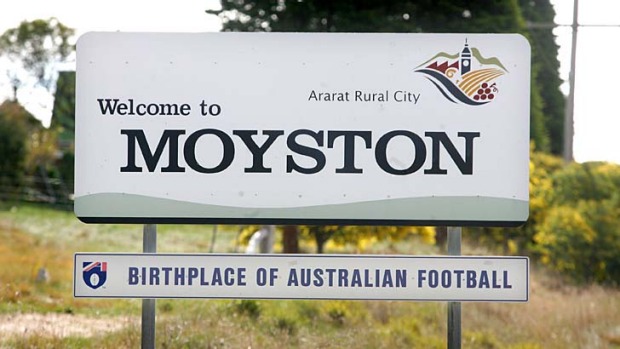
Martin Flanagan: 'Why Moyston Can Be To Australian Football What Bowral Is To Australian Cricket', Grassroots Sports Club lunch - 2015

December 11, 2015

23 March 2015, Grass Roots Sports Club, Melbourne, Australia

I want to talk today about the most moving game of football I saw last year. To explain why it moved me as it did I have to go back to 1987 and a trip I made to Yuendumu, a couple of hundred ks north-west of Alice Springs. Yuendumu is where Liam Jurrah comes from but this was before he was born.

I went to see a traditional Aboriginal football carnival with 32 communities competing. That weekend was to have a great impact on me but I only have time today to tell you about a couple of the things that happened.

The first was when I arrived, driving in past hundreds of humpies made from tin and sackcloth, trying to absorb the fact that this was my country, Australia, and I saw a white woman -- who turned out to be the community nurse, surrounded by a group of initiated tribal men. Without thought, I approached her and initiated conversation talking about the 32 teams on the way. And she said 26. And I said I was told 32 and she hissed out the side of her mouth, 'don’t you understand it’s men’s business.'

And, for the first time, I did. I understood I was on Aboriginal land. Also for the first time I sensed the presence of what Aboriginal people call THE LAW. The Law operates with dreadful certainty and that weekend the Pitjintjatjara were initiating their young men in the dreaming paths and where the dreaming paths crossed roads it was the roads that closed because with the group was the much-feared Red Ochre Man, the Pitjinjatjara lawman who still employed the death penalty.

That weekend, I met a feller called Ian King. He had played cricket for Queensland –- his mother was Aboriginal, his father was a black GI who came here during World War 2. He was wandering Australia trying to better understand his Aboriginality and he was the person who told me there was a connection between Aboriginal dance and Aboriginal football.

Aboriginal dance is about summoning spirits, particularly of the creatures that inhabit this land. Aboriginal football, the game we call marngrook, was played on a totemic not a tribal basis. The totems for Melbourne, for example, are the eagle and the crow. I am no expert in this area but I do know that the story of Bunjil the eagle goes a long way into western Victoria. Because the game was played on a totemic basis, the eagles team would have players from different tribes, players who might have previously been involved in tribal wars.

In this way, the game served to bring people together.

The final story I will tell you about the Yuendumu weekend is that on the third day, shortly after the grand final started, a child ran among the crowd saying he had seen the Red Ochre Man.

Within a few minutes the place was deserted and the ball was left sitting in the red sand.

What I’m asking you to do now is take that Aboriginal consciousness which I have tried to suggest to you and transport it to the year 1840 and a place in western Victoria called Moyston because, back then, it was out there too.

It was that large, that vivid, that strong.

And in the middle of it is a white kid called Tom Wills. His father Horatio has been the first white settler in the Ararat region, arriving in or around 1838.

I can’t tell you exactly who Tom Wills was any more than I can tell you exactly who Ned Kelly was, but there are some things I can tell you. I can tell you that while I’ve met whitefellers who can speak Aboriginal languages, I’ve never met one who grew up speaking the Aboriginal language for the place he grew up in.

As I said to a Jewish audience at the Melbourne Writers’ Festival, that’s like the difference between speaking Hebrew and English in Israel.

Moyston was in the lands of the Tjapwurrung. Tom Wills knew Tjapwurrung songs, he knew Tjapwurrung dances. He grew up playing with Tjapwurrung kids. Of course, he played their games; his whole life was about playing games.

What I want to talk about today is not so much Tom Wills as Moyston but, in case anyone hasn’t heard it, I will give a brief sketch of Tom’s amazing and ultimately tragic life. The Wills family believe they are an illegitimate branch of the Churchills, their convict forebear having been saved from the gallows by an eminent Churchill, the Duke of Marlborough.

The convict’s son - Tom’s father, Horatio - was a forceful, charismatic man who did many remarkable things including sending his second son to Germany to become a vigneron because he predicted Moyston would have a wine industry.

But he was also the son of a convict and uneducated. He sent Tom to the Rugby school in England. Tom returned six years later as a dandy with the reputation of being one of the best young cricketers in England.

Under Tom’s captaincy, Victoria beat New South Wales for the first time, that match being played in Melbourne in 1858. In the euphoria that followed Tom was appointed secretary of the Melbourne Cricket Club. Wanting to defeat New South Wales in Sydney, he urged the formation of a football competition to keep hi cricketers fit during the winter months and made the radical proclamation that we should have a game of our own.

And thus the game we call AFL was born.

Meantime, however, Tom’s father was not happy. Having sent his son to Rugby to become a great political leader, he found himself with a son who was only interested in games. Horatio’s political career had stalled because he was the son of a convict so he decided he would head out again to the frontier, which now lay in Queensland, and take Tom with him and make a man of him. They walked into the middle of a land war, their neighbouring squatter having shot Aboriginal people the week before they arrived.

Horatio Wills believed he could persuade the local Aboriginal people of his friendly intentions. Tom tried to warn him. The father brushed the son aside then had a premonition that death was imminent and sent Tom back down the track to get a dray. While he was away, the blacks attacked – it was the biggest killing of whites by blacks in Australian history. 22 dead - men, women, children. In retaliation, the whites and the native police killed possibly ten times as many blacks – again, men, women, children. Tom stayed up there, caught in the middle of a land war, for two years. His family, who believed Tom’s abilities in life were limited to bats and balls, sent up his younger brother to oversee him.

Tom returned to Melbourne like a Vietnam veteran – everybody had some idea of the war being fought at the frontier but no-one knew what he did about its reality. Then, in 1866, five years after his father was murdered by Aboriginal people, Tom Wills was at Lake Edenhope, coaching the Aboriginal cricket team that became the first Australian cricket team to tour England.

The Aboriginal team led the MCC on the first innings at Lord’s. With Tom in the team, they almost certainly would have won. He would have been the first Australian captain to have won at Lord’s and his life would have made some sort of sense. 

But Tom lost the political battle over control of the Aboriginal team just as he lost every political battle of his life. Tom’s attitude was “I’m the best - why wouldn’t you do what I say?”  The attitude of bodies like the committee of the Melbourne Cricket Club was, “You’re our employee – you’ll do as wesay”.

He had been drinking since his Rugby days. By now, he was a desperate alcoholic. Even so, according to an official history of the Carlton Football Club, in 1879 Tom managed to persuade a majority of delegates at a national conference inAdelaide that now was the time for the game to go international. Games can’t travel internationally until they’re codified, until they exist in a set of rules that can be written and read.  Australian football was codified before soccer and rugby. Tom wanted to send the Melbourne and Geelong clubs to England to play exhibition matches, or one to England and one to America. The proposition was carried in Adelaide but lost in Melbourne.

Tom Wills stabbed himself in the heart in 1880 and was buried in an unmarked grave at Heidelberg. His mother said, “Thomas – I never had a son called Thomas”, and he was forgotten.

But back at Moyston, the grand home Horatio Wills built with hand-made bricks still stands. It’s built in a square with a hollow interior to assist with its defence in the event of attack. Down the hill to the east is an area of flat land with a small waterway running through it. The locals say this is where the Tjapwurrung played their football. For a boy who loved games, it must have been like seeing the circus come to town. A few ks to the south is the Moyston footy ground.

Moyston Football Club fell on hard times in the 1990s. Willaura Football Club, just down the road, hadn’t won a flag since the 1970s. To survive, they merged but that seemed not enough. One night, Moyston Willaura, otherwise known as the Pumas, had only five players at training.  They approached the best player in the club’s history, Wild Dickenson. At 61, he made a comeback, playing when he had to. And a local farmer’s wife, Ruth Brain, was elected club president.

The Moyston Willaura footy club hung on for 2008, the AFL’s 150th, when surely their club would be the grass roots club that would bask in some of the glory of the Australian game and what it had become.

Instead they received an e-mail, delivered with the authority of the AFL, saying that the idea of the game having Aboriginal origins, while having sentimental appeal, was unfortunately not sustained by the latest research.

I am about to criticise someone, sports historian Gillian Hibbins, so I wish to say first what I respect in what she has done.  With Anne Mancine, she edited a biography of Tom Wills’s cousin, HCA Harrison – a most valuable book. Hibbins’ area is the Melbourne Cricket Club during the 1850s which she writes about authoritatively. Nor does it bother me one whit that she doesn’t like Tom Wills. A lot of people didn’t like Tom Wills.

But a lot of people did. He was like Warnie. He divided opinion in part between those who played with him and those who played against him. And he’d play with anyone.

Hibbins sees him as being temperamental, immature and selfish. The reason we need to hear that is because it’s what Tom Wills’ critics said in his day – and he had plenty of critics in the Melbourne Cricket Club, particularly after Tommy got into a fist fight with a few of the members after they called him a cheat.

Two members of the MCC committee were also influential journalists of the day. Anyone basing their view of the history of the game on the writing of those individuals will not be hearing the case for Tom Wills. One of them, Wills’ predecessor as captain of Victoria, alleged Wills broke his arm with a short ball when he couldn’t get him out any other way.

In 2008, the AFL celebrated its 150th year. An official history was produced and given an eminent place in the book was an essay by Gillian Hibbins titled “A Seductive Myth” and sub-titled “Wills and the Aboriginal Game”. Basically, her argument boiled down to the assertion that as there was no evidence of Aboriginal football being played at Moyston, it could not be assumed that it had.

What is at issue here is the prize of who invented the game. For a long time it was assumed that Australian football was a colonial off-shoot of 19th century English school games. Clearly, it was heavily influenced by them, but that does not sever Tom Wills’ link with Aboriginal football.  

Well here are three things I know about the debate as to whether Aboriginal football was played at Moyston. Number one – the local Aboriginal people, the Tjapwurrung, had their own word for football. Mingorm. Did the Italians invent the word macaroni without ever having seen or eaten a macaroni? Did any people in the history of the world ever invent a word for something which wasn’t there?

Number two – James Dawson was a Scottish squatter in the western district in the 1840s who actually liked Aboriginal people and spent a lot of time with them. His 1881 book Australian Aborigines. The Languages and Customs of Several Tribes of Aborigines in the Western District of Victoria, Australia … is one of Victoria’s treasures. Dawson describes a big coroboree at Terang where he gives an elaborate description of the Aboriginal football he saw being played, especially the leaping and kicking. Dawson lists the Tjapwurrung as being one of the tribes present.

This part of the argument was interpreted by Amy Saunders, a very smart Koori woman some of you may know from the band Tiddas, in the following terms: Do you know what they’re saying now? (By “they”, she means us, the whitefellers). “They’re saying there was a tribe of blackfellers in Victoria who didn’t like footy. Well, they must have all got killed out because there’s none of them around now”.

And, thirdly, the closest living person to the whole Tom Wills story is Lawton Wills Cooke, now into his 90s and here in Melbourne. He is the grandson of Tom Wills’s younger brother Horace. Horace told his daughter, Lawton’s mother, and she told Lawton that when Tom Wills was at Moyston he played Aboriginal football with a stuffed possum skin bound up in twine.

In 2008, I felt the Moyston Willaura Football and Netball Club had been done a grave injustice. And so, with its president, Ruth Brain, I took on the AFL. The first time I rang her she said, “Hang on, I’ll get a stick and write down your number in the dirt”. She was in a paddock. The second time I rang she was laying a netball court with Les, the old bloke from the next farm she ran to and from the footy each week.

Ruth was a boarder at Genazzano. She’d gone on to university but her heart was in the land so she’d gone home, got married a farmer and had four sons. She was red-haired and cheeky and brave. She knew the Tom Wills story as well as I did. She brought the footy club back to thriving health then became the first woman president of the Mininera and District Football League. I have heard it said she saved the indigenous game in the Mininera district. And, at 52, she died last year of heart failure.

Five days later, Moyston Willaura played for and won their first premiership. They fought for everything. On their hands and on their knees. My son-in-law came with me to the game. He is, like me, a Tasmanian of convict descent. A former coal-miner, he also has Aboriginal ancestry. Afterwards, when I asked him what he thought of the game, he said, “It was like she was there but wasn’t there”. You were aware of it from the moment you stepped into the ground. I have seen footy matches played to honour a spirit before but never for a woman and never as powerfully.

Ruth Brain’s vision was for Moyston to be to Australian football what Bowral is to Australian cricket. And my purpose in speaking to you here today is to commend that vision to you.

Enjoyed this speech? Speakola is a labour of love and I’d be very grateful if you would share, tweet or like it. Thank you.

Facebook Twitter Facebook
In BROADCASTER 2 Tags MARTIN FLANAGAN, TOM WILLS, MARNGROOK, AUSTRALIAN RULES, CRICKET, AFL, CODE ORIGINS, WESTERN DISTRICTS, MOYSTON
Comment
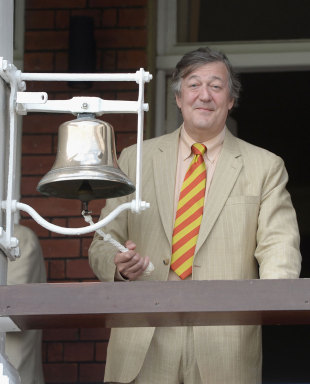
stephen fry.jpg

Stephen Fry: 'In the forty-five years that I have followed cricket, I have seen it threatened from all sides by the horrors of modern life', Lord's - 2009

December 1, 2015

14 July 2009, Lord's, London, United Kingdom

Thank you ladies and gentlemen, thank you very much indeed. It is an honour to stand before so many cricketing heroes from England and from Australia and at this, my favourite time of year. The time when that magical summer sound comes to our ears and gladdens our old hearts, the welcome sound of leather on Graham Swann.

I have been asked to say a few words – well more than a few. “You’ve twenty minutes to fill,” I was firmly told by the organisers. 20 minutes. Not sure how I’ll use all that time up. Perhaps in about ten minutes or so Andrew Strauss would be kind enough to send on a a physio, that should kill a bit of time.

Now, many of you will be wondering by what right I presume to stand and speak in front of this assembly of all that is high and fine and grand and noble and talented in the world of cricket, and to speak too in this very temple of all that is historic, majestic and ever so slightly preposterous and silly in that world? I certainly can’t lay claim to any great cricketing achievements. I can’t bat, I can’t field, I bowl off the wrong foot. That sounds like a euphemism for something else, doesn’t it? “They say he bowls off the wrong foot, know what I mean? He enters stage left. Let me put it this way, he poles from the Cambridge end of the punt.” Actually as a matter of fact, although it is true in every sense that I have always bowled off the wrong foot. I have decided, since Sunday, to go into the heterosexual breeding business. My first three sons will be called Collingwood Fry, Anderson Fry and Monty Fry. That’s if their mother can ever get them out, of course. But back to the original question you so intelligently, if rhetorically, asked. If I can’t play, what can I do? I can umpire, I suppose, after a fashion. A fashion that went out years ago around the time of those two peerless umpires, perhaps some of you are old enough to remember them, Jack Crapp and Arthur Fagg. I remember them. I remember them every morning, as a matter of fact: Crapp and Fagg. Though now, sadly, the law says we can no longer do it in public places. And I believe that may even apply to smoking too. Anyway. We were on the subject of why I’m speaking to you. I don’t play. I’m not even a cricketing commentator, journalist or writer. I suppose the only right I have to be amongst you, the cricketing élite, might derive from my being said to represent, here in the Long Room, all those who have spent their lives loving the game at a safe distance from the square. It is love for the game that brings me here.

In the forty-five years that I have followed cricket, I have seen it threatened from all sides by the horrors of modern life. The game has been an old-fashioned blushing maiden laid siege by coarse and vulgar suitors. A courtship pattern of defence, acceptance, capitulation and finally absorption has followed. When I started watching, A. R. Lewis played for and captained England as an amateur. The game could never recover surely, from being forced, against the will of many of those who ran this place, being forced to become solely a professional sport? I am just old enough to remember too the Basil D’Oliveira affair in all its unsavoury nastiness: the filth of racism and international politics was beginning to stain the pure white of the flannels. The one-day-game appeared, shyly at first. The balance of bat and ball, essential for cricket to make any sense as a sporting spectacle, became threatened, everyone agreed, by the covering of wickets which would privilege batsman, and then that necessary equipoise was threatened the other way by the arrival of extreme pace and the pitiless bouncer. The look and style of cricketers was apparently forever compromised by helmets and elastic waisted trouserings hideous to behold. Cane and canvas pads were replaced by wipe clean nylon fastened by Velcro. Kerry Packer arrived and sowed his own blend of discord. The continuing rise and mutation of one day cricket caused panic from Windermere to Woking as white balls and coloured pyjamas threatened the sanity of Telegraph readers everywhere. Rogue South African tours caused alarm and frenzy. Pitch invasions marked an end of the days when schoolboys could lie on their tummies by the boundary-rope filling in a green scoring book, until they got bored which they inevitably did, all except the speccy swatty ones who were laughed at and are now running the world. The rest of us were too busy asking the man in the Public Announcement tent to put out a message for our lost friends Ivor Harden, Hugh Janus, Seymour Cox and Mike Hunt. One turbulent decade began with John Snow getting barracked and bombarded with tinnies and ended with batsmen getting bounced and sledged. Cameras and microphones got closer and closer to the action to overhear the insults and demystify the bowling actions. The art of spin had disappeared, for ever, some believed. Cricketers wives wrote books about the overseas tours. Reverse swing seemed to arrive out of nowhere : “Not only does he bowl off the wrong foot. They say he swings it the other way.” Ball tampering became a matter of dinner party chat from Keswick to Canterbury . Clever 3-D images were painted on the grass round about the long stop area advertising power generation companies no one had ever heard of. Advertising was not only to be seen on the grass, but on the clothes, Vodafone and Castlemaine were stitched bigger and brighter on the shirts than the three lions and the wallabies and that mysterious silver feather that Kiwis seem so unaccountably fond of.

The county game was rent asunder into leagues and divisions that no one really understands; the politics and governance of cricket, with its contracts and coaches, its bloated fixture lists and auctions of broadcasting rights caused hand-wringing too, though many would rather it were neck-wringing.

Meanwhile, drugs, drinking binges, embarrassing text messages and other scandals continued to erupt like acne on a teenager.

South Africa returned to the fold as other countries entered the club of test playing nations. Kenya, Zimbabwe and Bangladesh.

Two of those speccy boys who used to score at the sidelines got their revenge, their names were Mr Lewis and Mr Duckworth.

To the dictionary of acronyms and initials were added ODI, T-20 and IPL. Power plays and baseball style pinch-hitters were swept in. The old lady of cricket was getting a right duffing up.

Yet, amazingly, none of these changes, professionalism, the covered wickets, helmets, day-night games, confirmed the dire prognostications of those who believed each one might hammer a stump into cricket’s fragile heart. For this same period of my cricket watching life saw some of the greatest matches in the game’s history. The 1981 and 2005 Ashes series, the Tied Test; a new aggression and boldness of stroke play that no one could disapprove of. Scoring rates went up and great batsmen emerged: Lara, Tendulkar and Ponting amongst many others. And miraculously, to keep the game balanced, Warne and Murali showed that far from being dead, spin bowling was supremely alive; even providing a new ball in the form of the doozra. Huge crowds and rising popularity in fresh territories confirmed cricket’s health. Levels of fitness and standards of fielding rocketed. And all the while, the game’s greatest expression, the 5 Day Test Match, led the way, providing the greatest entertainment, the most excitement and the deepest commitment from the players. All those mournful predictions had come to nothing. The greatest of games had triumphed again.

But now, now, in the age of the internet, just as the great, great players of the past ten years have one by one started to play their farewell matches and leave the field for ever, hideous new forces have been at work. The newly emerged South Africa became mired in scandal, intrigue and misery as the new disease of spread-betting lived up to its name and spread, spread like cholera through a slum. Grotesque emails from professional umpires hit the headlines; allegations of systematic cheating and match-fixing have become commonplace, a dismal and lamentably organised Shop Window for international cricket, its 2007 World Cup seemed to lay the game low: an incomprehensible and dreadful tragedy in the death of Bob Woolmer its ghastly and unforgettable legacy. As if that weren’t enough we were more recently treated to the embarrassing spectacle of cricket’s governors cosying up to a Texan fraudster with a helicopter and a bigger mouth than wallet.

A new kind of bitterness has entered some quarters of the game as ex-players become commentators, columnists and journalists and begin to turn on their erstwhile teammates, dispraising the current players, pouring scorn on their technique and deprecating their tactical nous. We have video of course and can see that these pundits know what they were talking about: historical archive reveals that Boycott, Botham, Gower, Atherton, Willis, and Hussein were never out playing a false shot, never shuffled across, never missed a captaincy trick, never dropped a catch, never posted a fielder in the wrong place and never bowled off line or off length in the entire course of their careers.

The benefits and the drawbacks of broadcast technology bewilder us. Hotspots and Hawkeye, referrals and replays, umpires have never been more pressured and exposed and greater more seismically structural questions have never been asked about the meaning and spirit of the game. The rewards are greater, the stakes are higher, the price of failure more public and humiliating.

So a hundred years on from cricket’s Golden Age of C. B. Fry here is another Fry, searching for a way to toast a game that appears to have become … well, toast.

We could choose to believe that and retreat into memories of an apparently innocent and gilded past. We could wash our hands of it all, or we could choose to continue to believe in the game. Not necessarily in its administrators, nor even its players, though most of them in all divisions of the game are proud and gifted. We could choose to have faith in cricket. I for one do truly believe that the game itself, as first played by shepherds in the south of England, the game that spread to every corner of the world, the supreme bat and ball competition, the greatest game ever devised, will continue to provide unimagined pleasures, that true drama will once more come centre stage, booting into the wings the tragedy and farce we have witnessed over the past decade in particular. There will be new scandals of course: that you can depend upon. Undreamt of debacles, imbroglios, furores, brouhahas, crimes, rows, walk-outs and embarrassments are waiting around the corner, quietly slipping the horseshoe into the boxing-glove and preparing to give the goddess Cricketina a sock in the jaw. But new geniuses, new historic last ball climaxes, new unimaginable heights of athletic, tactical and aesthetic pleasure await us too. It is up to the players to believe in the game and the cricketing administrators to believe in the players. But most of all it is up to us to keep the faith and be unashamed, be proud of our love of cricket. Here, in the very place that is so often called cricket’s Mecca, cathedral and temple, is the place for us all to pledge that faith. I do so happily as I raise a glass in toast, on behalf of cricket lovers everywhere to Andrew Strauss in his Benefit Year and his wonderful Team, to Ricky Ponting and his fine tourists and to cricket itself. For, to misappropriate Benjamin Franklin, Cricket is proof that God loves us and wants us to be happy. So then: raise your glasses, to Strauss, England, Australia and cricket.

© Stephen Fry 2009

Stephen Fry's latest book is 'More Fool Me'.


Source: http://www.stephenfry.com/2009/07/16/crick...

Enjoyed this speech? Speakola is a labour of love and I’d be very grateful if you would share, tweet or like it. Thank you.

Facebook Twitter Facebook
In BROADCASTER 2 Tags STEPHEN FRY, CRICKET, LORD'S
Comment

Michael Buffer: 'Let's get ready to rumble!', Starrcade 97 - 1997

November 13, 2015

28 December 1997, MCI Centre, Washington DC, USA

Tonight we are going to witness the most anticipated match in the history of professional wrestling. For the heavyweight championship of the world. Are you ready? Wrestling fans, are you rrrrrrrrrready? For the thousands in attendance. For the millions watching around the world. From the captial city of hte United States of America., Washington DC. Let's get to ready to rummmmmmmmbbbbbbleeee!

Source: https://www.youtube.com/watch?v=WvufFwdqMz...

Enjoyed this speech? Speakola is a labour of love and I’d be very grateful if you would share, tweet or like it. Thank you.

Facebook Twitter Facebook
In BROADCASTER 2 Tags MICHAEL BUFFER, LET'S GET READY TO RUMBLE, WRESTLING, PROFESSIONAL WRESTLING, RINGSIDE ANNOUNCER, MC, WWF, WWE
Comment
← Newer Posts

See my film!

Limited Australian Season

March 2025

Details and ticket bookings at

angeandtheboss.com

Support Speakola

Hi speech lovers,
With costs of hosting website and podcast, this labour of love has become a difficult financial proposition in recent times. If you can afford a donation, it will help Speakola survive and prosper.

Best wishes,
Tony Wilson.

Become a Patron!

Learn more about supporting Speakola.

Featured political

Featured
Jon Stewart: "They responded in five seconds", 9-11 first responders, Address to Congress - 2019
Jacinda Ardern: 'They were New Zealanders. They are us', Address to Parliament following Christchurch massacre - 2019
Dolores Ibárruri: "¡No Pasarán!, They shall not pass!', Defense of 2nd Spanish Republic - 1936
Jimmy Reid: 'A rat race is for rats. We're not rats', Rectorial address, Glasgow University - 1972

Featured eulogies

Featured
For Geoffrey Tozer: 'I have to say we all let him down', by Paul Keating - 2009
for James Baldwin: 'Jimmy. You crowned us', by Toni Morrison - 1988
for Michael Gordon: '13 days ago my Dad’s big, beautiful, generous heart suddenly stopped beating', by Scott and Sarah Gordon - 2018

Featured commencement

Featured
Tara Westover: 'Your avatar isn't real, it isn't terribly far from a lie', The Un-Instagrammable Self, Northeastern University - 2019
Tim Minchin: 'Being an artist requires massive reserves of self-belief', WAAPA - 2019
Atul Gawande: 'Curiosity and What Equality Really Means', UCLA Medical School - 2018
Abby Wambach: 'We are the wolves', Barnard College - 2018
Eric Idle: 'America is 300 million people all walking in the same direction, singing 'I Did It My Way'', Whitman College - 2013
Shirley Chisholm: ;America has gone to sleep', Greenfield High School - 1983

Featured sport

Featured
Joe Marler: 'Get back on the horse', Harlequins v Bath pre game interview - 2019
Ray Lewis : 'The greatest pain of my life is the reason I'm standing here today', 52 Cards -
Mel Jones: 'If she was Bradman on the field, she was definitely Keith Miller off the field', Betty Wilson's induction into Australian Cricket Hall of Fame - 2017
Jeff Thomson: 'It’s all those people that help you as kids', Hall of Fame - 2016

Fresh Tweets


Featured weddings

Featured
Dan Angelucci: 'The Best (Best Man) Speech of all time', for Don and Katherine - 2019
Hallerman Sisters: 'Oh sister now we have to let you gooooo!' for Caitlin & Johnny - 2015
Korey Soderman (via Kyle): 'All our lives I have used my voice to help Korey express his thoughts, so today, like always, I will be my brother’s voice' for Kyle and Jess - 2014

Featured Arts

Featured
Bruce Springsteen: 'They're keepers of some of the most beautiful sonic architecture in rock and roll', Induction U2 into Rock Hall of Fame - 2005
Olivia Colman: 'Done that bit. I think I have done that bit', BAFTA acceptance, Leading Actress - 2019
Axel Scheffler: 'The book wasn't called 'No Room on the Broom!', Illustrator of the Year, British Book Awards - 2018
Tina Fey: 'Only in comedy is an obedient white girl from the suburbs a diversity candidate', Kennedy Center Mark Twain Award -  2010
Tina Fey: 'Only in comedy is an obedient white girl from the suburbs a diversity candidate', Kennedy Center Mark Twain Award - 2010

Featured Debates

Featured
Sacha Baron Cohen: 'Just think what Goebbels might have done with Facebook', Anti Defamation League Leadership Award - 2019
Greta Thunberg: 'How dare you', UN Climate Action Summit - 2019
Charlie Munger: 'The Psychology of Human Misjudgment', Harvard University - 1995
Lawrence O'Donnell: 'The original sin of this country is that we invaders shot and murdered our way across the land killing every Native American that we could', The Last Word, 'Dakota' - 2016