• Genre
  • About
  • Submissions
  • Donate
  • Search
Menu

Speakola

All Speeches Great and Small
  • Genre
  • About
  • Submissions
  • Donate
  • Search
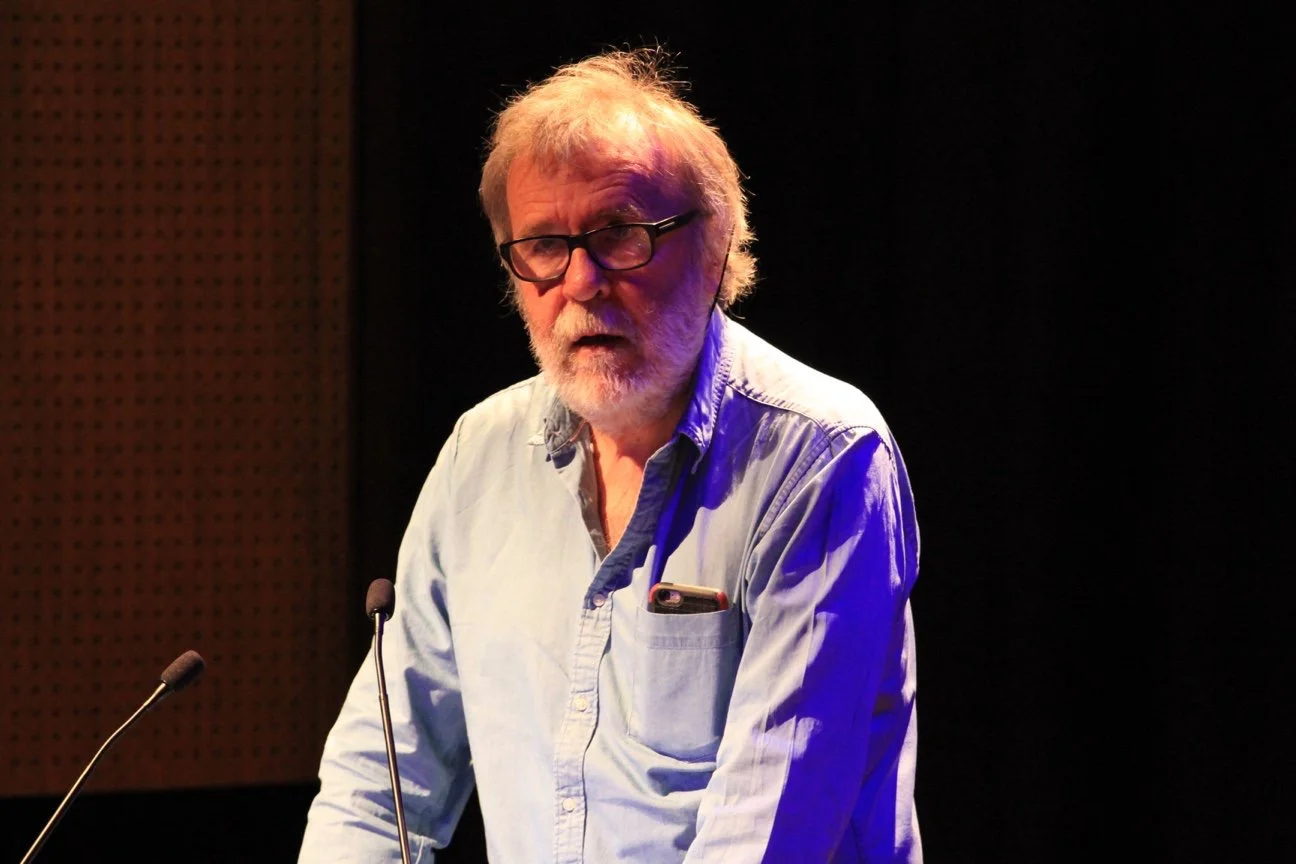
Matt Quartermaine.JPG

Matt Quartermaine: 'Thinking of you 2019', Footy Almaanc Grand Final Lunch - 2019

October 10, 2019

At the same event in 2019, comedian Matt Quartermaine penned this speech: ‘Thinking About You West Coast Eagles’

27 September 2019, Old Melbourne Hotel, Melbourne, Australia

(With apologies to Martin Flanagan... again)

Thinking of you 2019 AFL season, the 30th year of Australian Rules football under the AFL banner.
Thinking of you water boys, who can only come onto the ground now after a goal, or as it’s called on the Gold Coast; dehydration.
Thinking of you Joel Selwood a Captain who bleeds by example.
Thinking of you Nathan Buckley the most likeable Collingwood coach since...
Thinking of you Roaming Brian hoping your next segment is called Silent Brian.
Thinking of you stab pass, the only kick that sounds like a Game of Thrones location,
Thinking of you AFLX, especially when I need to cure my constipation.
Thinking of you Goal square. What are you doing here? Why do you even exist? What is your purpose anymore?
Thinking of you Kevin Bartlett and never ever forgetting Finey.
Thinking of you Premiership quarter especially all those teams that won the premiership quarters but not actual premiership.
Thinking of you AFL theme rounds because next year the AFL will expand the theme rounds to honour teams not going into the finals in the See Ya Round Round, the Italian community in the Rissole Round and the sexually ambiguous in the Bye Round.
Thinking of you GWS or as I like call you a team made up of players that could have been in my team.
Thinking of you sacked coaches, throwing empty tinnies at the TV, watching his ex team win the very next game with all the same people except him.
Thinking of you concussion.
Thinking of you National Anthem when 90,000 people stand as one, bow their heads and think of their team winning.
Thinking of you Hawthorn GWS Snow game in Canberra, because that was the most snow in Canberra since the Christopher Pyne’s going away party. “(Sniff) Who wants to buy some guns?”
Thinking of you Dusty, a player so famous he’s known by only one name like Beyonce, Drake and Gasometer.
Thinking of you behinds. No not the football ones
Thinking of you Collingwood supporters... but only when I need cheering up.
Thinking of you Steve Smith, because if they drug tested him, he'd piss runs!
Thinking of you Willie Rioli, who has made coaches everywhere terrified of the Gatorade shower.
Thanking you 2019.

This was performed at John Harms’ The Footy Almanac’s Grand Final Lunch as a follow up to last year’s ‘Thinking About You West Coast Eagles’. The site is sportswriting written by fans, for fans. It’s motto, ‘Sport. From the Heart’.

Source: https://www.footyalmanac.com.au/about-us/

Enjoyed this speech? Speakola is a labour of love and I’d be very grateful if you would share, tweet or like it. Thank you.

Facebook Twitter Facebook
In BROADCASTER Tags FOOTY ALMANAC, MATT QUARTERMAINE, THINKING OF YOU, MARTIN FLANAGAN, SEASON 2019, RECAP, FOOTY, AFL, FOOTY LUNCH, GRAND FINAL, 2019 GRAND FINAL, TRANSCRIPT
Comment

Bob Murphy: 'All of the laughs, the scraps, the yarns, the characters, the smells and the donuts', Norm Smith Oration - 2018

December 6, 2018

7 June 2018, Members Dining Room, MCC, Jolimont, Melbourne, Australia

So many things we love about our game have very little to do with the game itself. Perhaps like many of you in the room tonight, when I think about my love of the game, my imagination doesn’t run straight to the high marking forwards or the bone crunching tackles. My thoughts go to the taste of jam donuts and the smell of jasmine in early Spring.

My ambition was flamed watching football as a little kid in the outer and the reward for sitting through the entire game was a hot jam donut as the family began the search for the car in a sea of Commodores stretched out to the horizon. The donuts, as delicious as they were, were more than just a sugary treat. When I think back on those days now, they symbolise an optimism. “Maybe I could play in the big leagues one day...”

The exact moment when Spring hits is not always easy to judge, but for footballers it’s easy. That first whiff of jasmine in the air will tell you everything about where your season is at. If it’s been a good year, the jasmine lets you know that it’s finals time, potential glory reveals itself to you. If it’s been a bad year, the floral perfume is like a swift kick to the bollocks. There will be no big dance for you and your clan.

I was at a country wedding not so long ago and an hour before the ceremony, around the side of the farmhouse I came across one of the groomsman cleaning his R.M.Williams boots with Dubbin and a tattered rag. It moved me, to the point of tears. It reminded me of my Dad. He used to clean my footy boots with Dubbin and cloth before game of junior football I ever played.

Dad had three pieces of advice when it came to my football.

1. Hold your chest marks.

2. Man up

3. Kick with both feet.

In life, I have only one rule and I will break it tonight. DO NOT make a speech on the same night Martin Flanagan makes a speech. This is a bit like a rap battle between two pacifist, lefty, football romantics with a weakness for Van Morrison records.

I’ve got a book coming out next month, for those of you who don’t know. It’s called Leather Soul.

The theory was put to me when I was writing it that the overarching theme of the book would only emerge once it was almost complete, and I now believe that to be true. Looking back over the pages I see many arcs. A bit like chopping down a gum tree to find the rings in the timber. Spheres of time. Innocence arching all the way around to experience. A few knots of imperfection for good measure.

I’m about to turn 36 and my life can be easily split in two. The innocent, sensitive kid and the professional footballer. A couple of things have emerged out of this literary pursuit, for me anyway. One of them is the result of two opposing forces smashing into one another. My childhood was almost bereft of strict rules and schedules. As a school kid, my only real practical use for time and a clock was the understanding that I had to leave the house when the microwave read 8:21am. If I walked out the door at precisely that time, I would meet my school bus as it rounded the bend. A minute later and I would have to walk all the way to school and risk being late.

I was, in some ways, quite bohemian for a teenage boy in a conservative country town with a bowl cut hair do. I was free. I went from that straight into the cut-throat system of a professional football club. Rules, uniforms, routine and then more rules. It was a shock to the system. Professional football clubs can feel like the army in more colourful uniforms. I took a while to find some breathing space in its confines.

If my childhood and upbringing were easy, my football career was anything but. Every team, every player in the league is always trying to prove a point, and I suppose I was trying to prove that I could endure. Was I tough enough? Playing on in 2017 was clearly about one last chance at a premiership, but more than that I wanted to show people I could come back from a knee at 34 years of age and still mix it with the best. Who was I proving a point to? I’m not so sure. Maybe myself. I feel content that I ran the tank dry.

One of the rings in the gum tree was the draftee who nestled under the wing of the elders of our club at the time. Guys like Luke Darcy, Ben Harrison and Simon Garlick guided me with a firm but steady hand, and they gave me shelter from the storm. I was caught off guard by the paternal instincts that awoke in me when I had become an elder myself, and it was under my wing that I could provide similar refuge for the next generation. Young blokes like Easton Wood and Jordan Roughead were given everything I had and everything that had been handed down to me. The lineage of the locker room and the battlefield.

I was lucky to play alongside good men for much of the way. Maybe as a reaction to my gypsy hearted ways, I gravitated to blokes who you could set your compass to. Daniel Giansiracusa and Matty Boyd were like my north stars for years. A focal point to keep my ship on course. I always felt a sense of comfort walking up the race and seeing those guys next to me. That’s almost the highest accolade a teammate can bestow on another I reckon.

I’ve always been a fan of the great players. I got to play with so many, but Chris Grant and Marcus Bontempelli stand out. Complete players. Stars. That’s something to tell the grandkids. For all the nonsense in the analysis of the game, most of us still acknowledge that the special ones move differently. Something in the nuances of their play sets them apart from the rest of us.

Granty’s ability to pick up the flight of the ball in the air and mark it in front of his eyes with perfect timing – with danger all around – always left me feeling lucky to have such a close vantage point. Watching the Bont create a path in the chaos of play with his big frame has already become a trademark. Playing alongside him, I could hear the appreciation in the outer from our own supporters. It was even more graceful from a few feet away. With the ball in his hands he’d lope away in slow motion, like he was wading through waist-deep water, the sea of stragglers falling away in his wake, one by one. A football Moses. Or Jesus. Definitely biblical.

You’re not meant to meet your heroes, at least that’s how the old saying goes, but that didn’t ring true for me. I only met Robbie Flower a few times, but each time I left shaking my head, astonished by his gentle, easy manner. His lack of ego, in stark contrast to so many of his 80s contemporaries. A sweet man. A hero to any skinny bloke who has ever pulled on a jumper.

In the Murphy family, we supported three things. Paul Keating, Peter Daicos and the Richmond Tigers. Matthew Richardson and Wayne Campbell, along with a few of my Tiger heroes, have always been generous to me. They indulge all of my teenage questions and fascinations. They’re just my mates now, I guess, and that blows my mind, but I reserve some of that little kid’s awe and wonder. I think they secretly get a kick out of it too.

From a half back flank I got to watch the game over the shoulder of some of the very best players the game has seen. I spent an unforgettable night chasing with Stevie J and trying to keep pace with his verbal entertainment too. In the dying minutes of a close game the ball shot out of the centre square and I lunged to spoil it, but like a true cat he was after it again. He took the ball with me closing in and hand balled over his shoulder whilst looking the other way. His handball hit the mark and it resulted in a goal. Game over. Stevie waddled up next to me and I knew it was coming, “I usually save that shit for finals”. He was the best flanker I played on.

I had a few scraps along the way. Football is a bit like the jungle, every so often something or someone surprises you and takes you down. As I lay on the back of the motorised cart having just done my knee for the first time a young Collingwood supporter, no more than 10 years old, leant over the fence and screamed in my face, “Hey Murphy, you fucked my dream team!” Despite his youth, it did feel a bit harsh.

Family circles spin around this exposed tree stump like a vinyl record. Mum’s adventurous spirit runs through me like a mountain stream. I remember at various points of Bulldog crises she would give me a pearl of wisdom. My favourite was, “Don’t wait for the wind, grab the oars!”

My first football memory is being placed in front of my older brother Ben as my sister Bridget kicked the ball high above my head. Ben would scream “CAPPER!!!” and wrap his legs around my head as he attempted mark of the year, over and over again. I was four years old. That was my role in the team at the time.

Reflecting on the book when the last words had been written, I couldn’t ignore the fact that much of my story is about a father and a son. Dad and I watched the stars of the game from the outer at Waverley Park and I took him with me onto the field as I got a closer look over 18 years with the Bulldogs. It might be a long bow, but I felt like he was with me as we watched all the great players from this era within arm’s length, and for brief moments, teased at being a great player myself. I hope Dad feels like that too. Whatever I was on the field, I offer it up to my Dad as a gift for cleaning my boots every Friday night.

Family has broadened as I’ve gotten older too, of course. If you play for long enough – and I was blessed to play for a bloody long time – the relationship with your club changes. For a time your footy club is who you play for, and then at some point that club is a part of you and you are a part of it, linked forever. Like family. I love the Bulldogs. It might read as a throw-away line, but it’s a love that I would never mask behind any sort of ambiguity. Footscray and the Whitten Oval will always feel like home.

I have much to be grateful for, not least the chance to actually play, but one thing that jumps to mind is the notion of loyalty. It’s seemingly a fading currency in professional sport, or so I’m told. Loyalty in sport isn’t dead, just a little misrepresented. It’s not blind loyalty. Too much is at stake. The loyalty I’ve known in footy is a relationship – there must be an exchange of effort and goodwill. The Bulldogs and I were a good couple. I gave them everything I had. I hope they feel like they got a good deal, too. I’m a proud servant of the Bulldogs. Forever.

My book was never going to be titled MURPHY. I wasn’t that sort of player, and I didn’t have that kind of career. For a long time the title I had in mind was A Footballer’s Lot. Much of the book is a collection of stories of a footballer, that footballer just happened to be me. There were many other titles ...

I suppose it would be good manners to tell you that I never saw myself writing a book and that this “just kind of happened”, but that’s not true. After being encouraged many years ago by one of my heroes and my co-speaker tonight, Martin Flanagan, to write a different kind of footy book, I set my co-ordinates to doing just that. My hope was that this book would fill a gap. As a footballer, I was neither a champion nor a notable disgrace. The risk was that I wouldn’t have a story to tell. That in itself I found interesting, the notion of writing a footy book that shone a light on the middle ground. The highs and lows of a life in footy, the feel of the bumps along the path from inside the middle of the pack.

Then I became captain of the Bulldogs. A young football team caught fire, a club emerged from obscurity, and then something else happened. I’m still not entirely sure what that “something” was, but I know it involved a lot of hugging. I don’t know if we changed the game, but for a brief moment the Bulldogs were hip. There was a story.

It’s funny, but I’d never felt a part of my generation before that time. Even when I was a teenager at the underage disco, all the kids were screaming the words to grunge anthems like Smells Like Teen Spirit and Killing In The Name Of. Plenty of the kids were from broken homes; they meant it, they felt the songs in a way that I didn’t. I was secretly hoping the DJ would play the Beach Boys ‘Good Vibrations’. I enjoyed an angst-free world. A charmed childhood.

Regrettably, I spent much of my footy career either writing or daydreaming about footy, music and clothes from another time. Living in a cartoon world of nostalgia. And then my football club was thrown into crisis at the end of 2014, and I woke up. My three years as captain, I felt alive. I felt present. All the chips were on the table. There was a sense of desperation and defiance in the air. It was a “damn the torpedoes” kind of vibe. Every moment felt important. It was an exhilarating ride.

During the low ebb of October 2014, one inescapable thought kept throbbing in my head: “My football career has meant nothing.” It was a depressing thought. Fifteen years of getting to the line and the club was ultimately in a worse place than ever. And then something magical happened. I look at those last three years as a trilogy. The rise of `15, the glory of `16, and the struggle of `17.

The 2016 Premiership and “that” medal moment with Luke Beveridge are like a mountain in my life. But just like Uluru, the colour of the mountain changes in the light. On most days I see a beautiful landscape. A football fairytale rising out of the ground pointing towards the heavens. But there are other days too. There are times when just the memory of that day and that moment break my heart in two. Even now, I still brace myself when a stranger starts up a conversation with me about the premiership or the medal. I’m scared of what they might say. It all depends on the shade of the mountain on that day.

Writing a memoir demands a level of candour. It’s only recently I’ve come to accept that my greatest day in football was Grand Final day in 2016. But I must also acknowledge that my worst day in football was the very same day. As a leader of the club at that time I was so proud, the euphoria was so real. But I’m a footballer and I was not where I was meant to be. I felt that in my marrow. I will never get over it.

For a time, “Almost” was another title option, but it’s black humour might have been too obscure. On those dark days, it helps to remind myself that despite the twinges of heartache, they are nothing compared to that sense of being unfulfilled in 2014. I sit back now knowing that, at least, it meant something.

When you join a club you inherit its history, its mythology. There’s been a heavy load to carry in that regard if you chose to be a Bulldog. Survival and fightbacks aside, our one shining light was the premiership of 1954. It was so long ago that the only footage of the day is fuzzy and incomplete. A bit like a football Zapruder film. “Back and to the left”, another good title option now that I think of it. That premiership and its own mythology grew over time, the walk to the Footscray Town Hall became something of a metaphorical pilgrimage. These stories were glorious, but weathered, aged.

I felt at the time that the 2016 premiership healed a lot of the pain of our football club. Since 1954 there were so many losing seasons. Too many. The history books give us the ladder and the checks and balances of the wins and losses, but those columns don’t accurately record the emotional damage all of that losing causes. Too many people have left our footy club unhappy or bitter. There was something special about the 2016 team that brought a lot of people back and seemed to rekindle the love and attachment people once had for the club. All of us who have spent time at the club since 1954 had daydreamed about what it might look like if we won the flag again. What would a sea of Footscray supporters at the Whitten Oval look like the day after the battle was won? The reality was better than our dreams; how often can you say that in life?

After the historic presentation of the cup to the Bulldog people at our home ground, the inner sanctum of the club and their families came together at the Railway Hotel in Yarraville. That was special, too. So many beautiful people. So many characters with big hearts. That team, that finals series, felt like a shooting star. Magical. I was privileged to be amongst them. On the Monday, just the players reconvened at the same pub and things were, as you’d expect, pretty loose. It was still early in the day when I thought, as the oldest player, that a speech should be made.

I stood on a stool, pint in hand, and talked about the significance of history. I opined that some of the players with a medal around their neck might have some comprehension of what they’d just done, and maybe some of the older ones would have an even broader appreciation. But I told them to leave a bit of space for the possibility that it was even bigger than they thought. This premiership, for some long-suffering Bulldogs people, means they can actually die happy. I got down off my stool, content that I’d nailed it, and Matthew Boyd sidled up next to me. “Bit fucking morbid bringing dead people into it, don’t ya reckon?” I’ll miss that about footy clubs. Brutal truth.

Someone asked me recently what life was like having just retired from the AFL, and I told them it was a bit like leaving the Big Brother house after 18 years. The hyper-focus the game demands is now gone. It’s eight months since I last ran out as a player for the Dogs, and it’s starting to show. When I look at my legs both of my knees are lined by scars. The physical toll of the game has left harsh slashes across the flesh. Dermott Brereton once said that if you played more than 200 games of league football you had a daily reminder through some kind of physical ailment. He’s right, of course, and I limped to 312.

Both of my knees ache a bit when I go for a run these days, but I manage well enough once I get going. My toenails are yellowed and gnarled like bamboo from years of punishment, and the hint of a gut is starting to show, but it’s my neck that gives me the most grief. A “popped” disc in 2010 did the damage and it’s never fully recovered. Uncomfortable as these ailments are, they’re badges of honour too. I gave the game a pound of my flesh. There will be no comeback

If I look back again inside the circles of the fallen tree, I see two kicks. The first, a wobbling, floating, mongrel that came off my boot in my very first game against the Blues at Princes Park, and somehow went dead straight to put us in front deep in the last quarter. That glorious line turns all the way around the wood until it comes to meet itself some 18 years later. My last game of footy. With the game tightening, Lachy Hunter feeds me the ball and I see space in front of me. My heart lifts as I sense the moment. I could turn this game on its head, bring us back into the contest with a running shot from just inside the 50-metre line. I swing my leg through and it makes the sound of a bum piano chord. It could very well be the worst kick of my career. Off the side of the boot and into the stands, I get the Bronx cheers from the Hawthorn supporters. It’s my last ever touch in a game of footy.

My last kick was the kick of a man whose best days were long gone. I was done. If I were a racehorse at that point, they would have pulled the white sheet across and destroyed me at the track. If I’d kicked it sweetly, post high through the middle, I might be wondering if I should have played on. But I’m not. I don’t want to play anymore, I don’t have it in me anymore to get to the line. That’s a relief. I’m sure there will probably be little moments where I’d love for certain things, pine for the contest or the chase, the sweet kicking musical moments, but that’s life. I had my time.

And it was a wonderful time. I was the kid who played the game in the street until dark, dreaming, yearning what it might be like to actually play in the big league. And I did it. It was harder than I thought it would be, much harder. But to quote Tom Hanks in A League Of Their Own, “Of course it’s hard – it’s the hard that makes it great!”

I wasted a school education wondering what it might be like to play on the MCG in the fading light of an autumn Saturday afternoon with the game in the balance, and I did that. It was beautiful. Better than I could have imagined. The game hardened me, thickened my skin. For all of my idealistic babble about being a kid free of stress and full of adventure, I was a young adult that was almost bankrupt when it came to accountability. That can wear people down, and I wore a few out. The game beat some reality into me. Taught me about discipline and responsibility.

It also gave me moments to savour forever. Minutes before every game I played, I’d make my way into the trainers’ room and stick some Vicks up my nose. It was about putting on the armour. In those final few moments before you take the field you morph into a different character. What some people might call “white line fever” takes hold, but it looks and feels different for everyone.

The fever doesn’t turn everyone into Robbie Muir or even Glen Archer, but it puts you on edge. The fight or flight response fills your stomach and stretches out to tingle your fingers and toes. Your mind walks the high wire between loneliness and a deep sense of brotherhood. You’re a gang. The feeling is precious and pure.

The changerooms are quiet, but I can hear the frenzied noise of the masses in the distance, just beyond the concrete walls. Time moves like glue as the anticipation builds. To pass the time I pace the room, slap my hands together, put an arm around teammates to offer some words of comfort. I press resin into my hands and spread it around my palms so the ball will stick in my grip.

Despite the tension and storm clouds on the horizon, I try to keep a calm facade. I try for an easy smile to ease some of the tension in the room, but inside I'm like a pinball of thoughts, hopes, fears.

Someone gives the signal and we come together briefly with our coach. He gives us a final message. It doesn’t really matter what he says, it’s the symbolism of the picture. We are his boys. He’s with us. We break the tight circle and turn for the door. The noise grows louder.

As captain I get to walk out first, and the sense of pride and privilege never gets old as I look back on the team we have. My boys. Our support crew and a few ex-players line the walls respectfully as we leave the rooms and begin our ascent to the field. It’s the greatest feeling in the world. I walk slowly up the race, savouring the moment. Gradually picking it up to a jog as the field of play comes into view, we explode onto the ground as a team and our clan rise as one with us. Our theme song comes from the old sea shanty, “Sons of the Sea”, but we are the Sons of the West, and our tribal hymn blasts out across the stadium. We are snarlin’. You can’t touch us now. This is our childhood dream, and we’re all living it.

Now that I can’t play anymore, I know in my heart it’s these precious seconds that I miss the most.

I was a young, naïve kid with a brand new football in his heart. Over time, the leather aged from the bumps along the trail. The elements of Footscray winters and some glorious liniment-scented afternoons. All of the laughs, the scraps, the yarns, the characters, the smells and the donuts. The game. They all left a mark on me, on my leather soul. I wouldn’t change any of it.


Bob Murphy’s autobiography ‘Leather Soul’ is available through BlackInc books.

Bob Murphy Leather Soul (online).jpg

The companion oration to Bob Murphy’s is Martin Flanagan’s speech on the same night. It is also magnificent.

“People ask me who I barrack for - I barrack for the game. An American who lived in this city for some years once wrote me a letter which began: “You seem an intelligent man. Why do you write so much about football?”. Because it’s the culture I’m from. Footy’s a language I can speak.”

Full transcript and video


Source: https://www.youtube.com/watch?v=O2aXgNWha0...

Enjoyed this speech? Speakola is a labour of love and I’d be very grateful if you would share, tweet or like it. Thank you.

Facebook Twitter Facebook
In PLAYER 2 Tags ROBERT MURPHY, BOB MURPHY, NORM SMITH ORATION, WESTERN BULLDOGS, AUSTRALIAN RULES, AFL, LEATHER SOUL, TRANSCRIPT, MCC, MARTIN FLANAGAN, LUKE BEVERIDGE, FOOTSCRAY, BOOK, SPORTS BIOGRAPJHY
Comment

Matt Quatermaine: ' Thinking of you West Coast Eagles' (with apologies to Martin Flangan), Footy Almanac Grand Final lunch - 2018

September 29, 2018

28 September 2018, Melbourne Hotel, Melbourne, Australia

Eagles devotee Matt Quartermaine performed this peice for The Footy Almaanc Grand Final Lunch. The Alamanc is a community of writers and sports lovers started by sportswriter John Harms (author Play On, Malarkey Press) . The piece is a parody of Martin Flanagan’s beautiful Thinking About piece, performed by Martin on SEN a week earlier.

Thinking of you West Coast Eagles who came to Melbourne in 1987 the same year as me.

Thinking of you my brother Simon, who was one of the Eagles fans who chartered a plane in 2015 when their Grand Final was over in the first quarter.

Thinking of you Ross Glendinning - barrel-chested champion and first Eagles captain who has a medal named after him and WILL decide who gets it.

Thinking of you John Worsfold Premiership captain, premiership coach and Chemist, hired by Essendon to fix their drug culture.

Thinking of you Paul Peos because no one else will.

Thinking of you Brett Heady who they nicknamed Jobby because... it's a football team.

Thinking of you Ben Cousins, a player so shy he'd rather swim across the Swan River than talk to a policeman.

Thinking of you Scott Cummings because you now look like you ate half your team mates.

Thinking of you Bon Scott - choking back the tears and a little bit of vomit.

Thinking of you Michelle Sweeney - who has nothing to do with the Eagles but she was the prettiest girl in primary school and I still think about her.

Thinking of you Perth the most isolated city in the world because Adelaide is 2,200kms away and they want to know if they can be more isolated.

Thinking of you Barry Cable trapped under a tractor and didn't have a footy to handball into the gear stick to move the tractor forward.

Thinking of you Polly Farmer the footballer and the freeway with easy east/west travelling across the city of Perth.

Thinking of you Chard Haywood- because only in Perth would Dudley from Number 96 get a chat show.

Thinking of you Lillee when you caught Marsh sneaking a ciggie behind the nets and both of you went to put a bet on.

Thinking of you Kim Beazley governor of WA who I spotted after the 2005 grand final wearing a Sydney Swans scarf. Boo.

Thinking of you booing because it gives everyone over East the irrits.

Thinking of you Sir Charles Court premier of WA 1974 to 1982 who pronounced the state WEStern Australia and sent a convoy of drilling rigs and police across a picket line to drill on sacred Noonkenbah land and start the mining boom.

Thinking of you Jan De Jong, Dutch underground war hero, former chief instructor to the SAS and at who's Ju Jitsu school I trained and still got beaten up by bullies.

Thinking of you Rolf Harris the boy from Bassendean- Who tied a kangaroo down sport and then may or may not have interfered with it.

Thinking of you Indian Ocean where the water is wee warm.

Thinking of you Karl Langdon - Na I'm not really thinking about Karl Langdon.

Thinking of you Winged keel of Australia II which won the America's Cup and enabled millionaire owner Alan Bond to bypass building codes and construct a monstrous hotel right on the Scarborough beach foreshore.

Thinking of you Dirk Hartog, Dutch explorer, who in 1616 landed on Dirk Hartog island. Coincidence? I think not.

Thinking of you Skylab which NASA chose to crash a to earth in WA where it wouldn't hurt anyone.

Source: https://www.youtube.com/watch?v=968r5pwnzL...

Enjoyed this speech? Speakola is a labour of love and I’d be very grateful if you would share, tweet or like it. Thank you.

Facebook Twitter Facebook
In BROADCASTER Tags MATT QUARTERMAINE, COMEDIAN, FOOTY, TRANSCRIPT, WEST COAST EAGLES, EMPTY POCKETS, AFL, MARTIN FLANAGAN, THINKING ABOUT, SEASON 2018, WESTERN AUSTRLALIA
Comment
ron barassi.jpg

Martin Flanagan: 'Thinking about you, Ron Barassi', Demons monologue - 2018

September 20, 2018

Martin was a guest on episode 26 of the podcast, telling stories about the people in this speech in advance of 2021 Grand Final

20 September 2018, SEN radio, Melbourne, Australia

This stunning radio monologue was aired on Andy Maher’s Afternoons show on SEN, 20/9/18, before Melbourne’s do or die Prelinminary Final against West Coast.

Thinking about you Tom Wills and how it started with you 160 years ago, the oldest football club in the world still playing in the elite competition of its code.

Thinking about you Ivor Warne Smith, the best player my grandfather, a working man, ever saw. That was in the early 1920s – you were playing with Latrobe in Tassie. Later, you won two Brownlows with Melbourne. Still later, as chairman of selectors, you were the steady hand behind the volatile Norm Smith as Melbourne powered to six premierships.

Thinking about you Ron Barassi, how you were brought up by Norm Smith after you father, a Melbourne premiership player, was killed in action during World War 2. You were the game’s great moderniser and after you left Melbourne for Carlton in 1965 the Dees never won another.

Thinking about you Brian Dixon, how you played on the wing in five Melbourne premierships and then spent the next 50 years working to make Australian football an international game, how you were dismissed as an eccentric, just like Tom Wills was.

Thinking about you Ron Barassi, about interviewing you and raising the oft-told football legend that you invented handball as an offensive weapon at half-time in the 1970 grand final and you smashing the table with your big fist and crying out, “That is not true! Len Smith invented handball at Fitzroy in the 1960s!”. Part of what made you great was that you had a blazing inner truthfulness.

Thinking about you Robbie Flower, and going to the footy late in your career with Paul Kelly and seeing you get caught with the ball - Robbie Flower never got caught with the ball! – and Paul Kelly writing a piece on mortality and how the end comes to us all.

Thinking about you Sean Wight, wrongly called Irish by the Melbourne fans when you were actually Scottish, thinking about your epic clash with Dermott Brereton in the 1987 preliminary final, of the mark you took over Brereton in the first quarter, of the headlock you slapped on him when it got nasty.

Thinking about you, Jimmy, running across the mark in that game and the morgue-like silence that followed Buckenara’s goal that gave Hawthorn victory after Melbourne had led most of the day. Thinking how you told me you fled to Paris and on the Metro a man lent forward and said, “Aren’t you the bloke who ran across the mark in the preliminary final?”, and you knew you could never escape it, you’d have to go back, and you’d have to do better than you’d ever dreamed of doing to atone for your error. Four years later, you won the Brownlow. You told me you won the Brownlow because you ran across the mark. That’s how your mind worked, Jimmy. Each obstacle was an opportunity.

Thinking about you Jimmy - when you were dying – going to Yuendumu and the Warpiri tribal lands five hours north-west of Alice Springs because Liam Jurrah came from Yuendumu and, as club president, you’d told the Melbourne players you wanted to see the place every one of them was from. Everyone knew you were dying. The Warlpiri people were in awe of your act and I saw how whitefellers can pass into the dreaming of this land.

Thinking about you Liam Jurrah, taking the 2010 Mark of the Year, tumbling over the top of a pack in Adelaide, up so high you took it on the way down as you fell head-first to the ground and the commentator crying that one name, that one word, so that it reverberated around Australia: “JURR-A-A-H!”

Thinking about the night in the Long Room at the MCG when Liam Jurrah’s grandmother, who had come down from Yuendumu, addressed a club function in Warlpiri. Her language. Thinking about Liam telling me that, once when he had an injury, his grandmother and some other Warlpiri women elders sang it away.

Thinking about just how low Melbourne were at the time when Jimmy came back as president, thinking about their courageous captain James MacDonald, a slight man who seldom spoke but could knock you into next week with his hip and shoulder.

Thinking about you Andrew Mamonitis. The Dees were in serious debt and struggling for sponsors and Andrew Mamonitis was in a Kazakhstan restaurant in Moscow attending a meeting being run by the Russian internet company Kaspersky and a senior executive with the Oriental name of Harry Cheung invited ideas from the floor and Andrew Mamonitis made a pitch on behalf of a club playing a game no-one had heard of, saying it was a way for Kaspersky to enter the Australian market, and Harry Cheung got Kaspersky's Asian representative, a Swede called Povel Torudd, to ring the club and the club put Povel Torudd through to membership inquiries but Povel Torudd persisted and, eight days after Andrew Mamonitis made his pitch, Harry Cheung flew to Melbourne and clinched the deal.

Thinking about my friend David Bridie, about his steadfast support of the Melbourne Football Club and the people of West Papua and how I know this side of the grave he’ll never give up on either. Thinking about his daughters, Winnie and Stella. Feminist Demons.

Thinking about the woman in the cheer squad I sat behind and the kindness she showed the young man with the intellectual disability she was sitting with. Thinking about her offering me biscuits and a cup of tea.

Thinking about the Melbourne woman supporter I know who was taken from her mother at birth and adopted out. All she knew about her past was that she came from Melbourne so Melbourne became her team and in no-one does the heart beat more true for the red and the blue than it does in Penny Mackieson

Thinking about you Arthur Wilkinson, the Melbourne doorman who came to the club as a friend of Checker Hughes and was still there in 2008. As a youth, Arthur carried his swag outback and worked in the bush. All he carried with him was one set of clothes and a book of poetry. At his funeral, his son Mark said , “My father loved 3 things - the bush, my mother and the Melbourne Football club”. Thinking about you Mark Wilkinson, yours father’s successor as Melbourne doorman, standing alongside Barry King.

Thinking about you Nathan Jones and the joy in seeing a young player grow like a tree and become a champion.

Thinking about you Neville Jetta and a session I sat in on that you and Jeff Garlett ran, introducing your team-mates to Aboriginal culture, and afterwards your team-mates saying, “Why weren’t we taught this at school?”

Thinking about the match in 2015 when the Melbourne team wore wristbands in the colours of the Aboriginal flag as a gesture of solidarity with Adam Goodes.

Thinking about a day last year when Melbourne brought back Liam Jurrah, Aaron Davey and Ozzie Wannameira to launch their reconciliation action plan and they’re standing with Neville Jetta when Nathan Jones enters the room and the sound like a joyful clap of thunder as the five men embraced.

Thinking about you Big Max Gawn, how Jim Stynes spotted you early, saying you brought something special to the club, you like Jimmy being an outsider, Jimmy an Irishman, you from a Kiwi background bringing All-Black grit to the team.

Thinking about the book I wrote on the Bulldogs in 2016 and the injection they got from having fresh players return at the start of the finals and then seeing how young Jack Viney is playing, thinking about this Melbourne team and how strong and settled it looks.

Thinking about a photo I saw on Twitter of the spot in the Dublin mountains where Jimmy’s ashes are scattered, seeing a boulder with a plaque bearing his name and, draped over it, a Melbourne scarf. The red and the blue. It made me want to shout: “You’re still with us, Jimmy!”

Go Dees!

Source: https://player.whooshkaa.com/episode?id=27...

Enjoyed this speech? Speakola is a labour of love and I’d be very grateful if you would share, tweet or like it. Thank you.

Facebook Twitter Facebook
In BROADCASTER Tags THINKING ABOUT, MARTIN FLANAGAN, MELBOURNE FOOTBALL CLUB, FINALS
1 Comment

Martin Flanagan: 'Such extremes of poverty and wealth within one game', Norm Smith Oration - 2018

July 25, 2018

7 June 2018, Melbourne Cricket Club, MCG, Melbourne, Australia

If you drive through the Tasmanian midlands from Launceston to Hobart, as you pass through a clump of houses called Cleveland, you will see, on the left, Joe Pike’s paddock. This is where my father saw his first games of football as a child in the years immediately following World War 1. My grandfather, a railway ganger who could write no more than his name, was the backbone of the Cleveland Football Club. These were the years before electricity, before radio, and so my father’s earliest football memories were sitting around at night listening to his father and older brothers talk about the difficulty of getting a team because so many of the local lads had died at Gallipoli or on the Western Front. But when Cleveland got a team together, they played in Joe Pike’s paddock.  So that’s where it starts for me, what I like to call my footy dreaming.

Cleveland had something else. It had the memory of a champion. George Challis was a mathematics teacher who played football on the wing and was renowned for his speed and accurate passing. Challis had been one of Tasmania’s best at the national carnival of 1911, and one of Carlton’s best in the 1915 grand final when they overcame Collingwood. Within 12 months, Sergeant George Challis was blown to pieces in France. Nothing whatsoever of him remained but a large gravestone stands in his memory in the small churchyard opposite Joe Pike’s paddock. What have I got from football? Memories, lots of them.

In the aftermath of World War 1, a young returned solder who had been gassed and wounded and lost two brothers in the slaughter took up land outside Latrobe on Tasmania’s north west coast. My grandfather Patrick Flanagan followed Latrobe, having lived in the district since he was a boy. The story my grandfather told was that one day the returned soldier turned up at the cattle sales and had a kick with some of the local blokes and was persuaded to have a game with Latrobe. His name was Ivor Warne-Smith. He would later win two Brownlow medals with Melbourne and, as chairman of selectors, be the power behind the throne during the 1950s and ‘60s when Norm Smith’s Melbourne side won five premierships.

My grandfather only went to Hobart once in his life. That was to see Warne Smith lead the North West Football Union against the hated TFL, the Hobart-based association that thought it was the VFL and sought to rule accordingly. Warne Smith was injured early and the Union lost - or that was how the story came down to me 60 years later. That’s a long time for a story to travel, but something about the Australian game, some innate power it possesses, has been able to propel stories with rare power. That is also the reason why the pre-match entertainment before the Dreamtime at the G game may be the most powerful message Aboriginal Australia sends non-Aboriginal Australia this year. 

My mother’s family, the Learies, were farmers in the green hills up behind Devonport. They were musical people but they had footy stories, too. Before World War 1, when a 20-year-old member of the clan lay dying from what was then called a leaking heart, his brother went to the grand final between Ulverstone and Devonport with two carrier pigeons, one to send home a score at half-time, the other to send home a score at the end of the game.

My father, who was born in 1914, said that when he was a boy Victorian football results were just a paragraph in the Tasmanian papers. Everyone followed Tasmanian football. The biggest club in his world as a child was Campbell Town, 20 kilometres to Cleveland’s south. All his life Dad followed Tasmanian football. He never went to a single AFL or VFL game. I always said he didn’t barrack for an AFL team but when the Swans surged to that great premiership victory in 2005 I was amazed to find he wanted them to win. Why? Because of Laurie Nash.

Dad left Launceston High School just as the Great Depression hit. He later survived the war-time atrocity remembered as the Burma Railway, but he said that in some ways the Great Depression was worse. In the Great Depression, he said, “you saw whole families go under”. One of the few bright spots in that bleak reality was Laurie Nash. If the word genius can be applied to sport, it could probably be used in relation to Nash. He would open the bowling for Australia and offer to bowl bouncers back at Douglas Jardine’s English team during the Bodyline crisis. In Launceston football, he played for the City club under captain-coach Roy Cazaly. There were State premiers in 1930 and ’32 - in 1933, he joined South Melbourne, playing centre-half back against the wind and centre-half forward with it, and was a member of the Swans’ famous Foreign Legion premiership team of that year.

The City club, now called South Launceston, can trace its heritage back to the 1870s through the Cornwall club. In 2013, the AFL ushered South Launceston from the Statewide league and replaced them with a so-called “franchise” – the franchise folded within two years.  In the same year, the AFL foisted a name change upon the North Hobart Football Club which can date its heritage back to 1881. A club which had made a cumulative profit of $300,000 in the preceding 10 years made a loss of $100,000 over the next four years, lost three quarters  of its paying members and was headed, like the Tasmanian tiger, for extinction until, last year, when a group of determined North Hobart people won back control of their club. They now have no debt and some of the best juniors in the State. Go North!  

People ask me who I barrack for - I barrack for the game. An American who lived in this city for some years once wrote me a letter which began: “You seem an intelligent man. Why do you write so much about football?”. Because it’s the culture I’m from. Footy’s a language I can speak. I also happen to believe Australian football is, by world standards, a great game – that it is, in fact, Australia’s great athletic invention. Sir Arthur Conan Doyle, the creator of Victorian detective Sherlock Holmes, watched the 1920 VFL grand final between Collingwood and Richmond and declared that the Australian game was the most athletic of all the football codes. It is a game of courage and daring, of strength and physical grace. I was enchanted when I discovered it as an 11-year-old growing up in Burnie on Tasmania’s north-west coast. Five of the boys I played with or against went onto to play in the VFL/AFL. Between them, the two Burnie clubs. Burnie and Cooee, easily won the bulk of the premierships in that third of the island. I was therefore shocked to learn earlier this year that, unable to field a team, Burnie had followed Devonport in withdrawing from the Tasmanian Statewide League.

Popular sports like Australian rules football are constantly re-born in the eyes of children – in my case, between the ages of 11 and 13. I was 11 when the game captivated me. I was 12 when I listened – on a plastic transistor held against a steel girder to better the reception – to the classic 1967 grand final between Geelong and Richmond.  That same year, I also saw the Tasmanian State final between North Hobart and Wynyard which ended with the goal posts being pulled down by Wynyard supporters to prevent North Hobart full forward Dicky Collins shooting for goal, Wynyard supports having judged that he marked the ball after the siren.  When I spoke earlier this year at a function in Hobart celebrating the re-birth of the North Hobart Football Club, Dicky Collins attended and brought the ball – the ball he was holding when the goalposts were pulled down. The umpire, a man with the marvellously symbolic name of Pilgrim, never got to blow his whistle to end the match. The game is still being played, I like to say, out in the football dreamtime....

I have to thank football for the stories it has given me. Hundreds if not thousands of them. Here are  a few that come to mind. Liam Jurrah. I say in all seriousness that it is doubtful that ay professional sportsman playing in a major league anywhere in the world vaulted a bigger cultural gap than Liam Jurrah did to play AFL football. He may also come to be seen in the history of the game as Albert Namatjira as seen in the history of Australian art. My second story would be the Israeli-Palestinian AFL Peace Team. What was so moving about the Peace Team was that, through the medium of Australian football, two of the most conflicted groups on earth actually bought into the idea that they were one. The Israeli assault on Gaza in 2014 eventually tore them apart but, even so, one of the Israelis bravely continued the work. And, thirdly, in Tom Wills I found a character who is to me, like Ned Kelly, a figure who straddles a fault-line in the national psyche, who is best understood in the way that earthquakes are understood, the product of vast forces, mostly unseen, that suddenly erupt through an individual who may only be partially aware of what’s going on. Tom Wills, like Ned Kelly, is a big story in the continuing drama of what it means to be Australian. My fourth story is driving from Melbourne to Darwin with Michael Long, crossing this great land   of ours from south to north with someone who was known every time he stepped out of the car. My fifth is the Bulldogs coming from nowhere to win in 2016. I could go on....and on....and on...

I knew Tasmanian football in Tasmania was in serious trouble four years ago when I went to Hobart and the sports report on the evening news led with soccer – not EPL or A league but local soccer. Tasmanian soccer had replaced Tasmanian football as the dominant sporting story. This is not unrelated, I believe, to the fact that Tasmania has had only a single draft pick in the past two years. The power of Tasmanian football as a dreaming is much diminished. Four years ago, when I started asking around, I found to my disbelief that the Tasmanian Statewide League had been unable to secure a financial sponsor. Clubs were struggling to get sponsors for individual players. This was at a time when, back here in Melbourne, the AFL was congratulating itself on the fact it had secured a record sum for broadcasting rights to the game. How, I asked, could this be happening at the one time, such extremes of poverty and wealth within the one game, the one culture?

The answer is that the game has evolved into two very different cultures. Those at the top talk in terms of branding and product and market share, the language of corporate culture. The culture at the bottom was best described by Glenorchy Football Club president John McCann when he said two years ago that the ecosystem of Tasmanian football was sick. He was right on two counts - he was right that it was sick, and he was right that the grassroots game, that growth of more than 150 years, is best understood as an eco-system. The AFL and those around them talk about “the industry”. If football is an industry, it is at the most basic level a primary industry, but everywhere I go in Australia, I hear the same – that industry is struggling. And so tonight in moving this toast, can I say to all those who love the game and particularly to those who are responsible for its future – Ignore Grassroots Football At Your Peril.

To the Australian game!

Source: https://www.youtube.com/watch?v=83042ZxEGW...

Enjoyed this speech? Speakola is a labour of love and I’d be very grateful if you would share, tweet or like it. Thank you.

Facebook Twitter Facebook
In BROADCASTER Tags MARTIN FLANAGAN, NORM SMITH ORATION, TRANSCRIPT, TASMANIA, GRASS ROOTS FOOTY, AFL, FOOTY, AUSSIE RULES
Comment
flanagan swf.JPG

Martin Flanagan: 'Is sport the opiate of the people? Is sport the great distraction?' Sports Writers Festival, Opening night address - 2016

October 18, 2016

14 October 2016, Melbourne Town Hall, Melbourne, Australia

Opening oration at Sports Writers Festival. Tim Cahill features at Melbourne Town Hall tonight (18 October, 8pm) Tickets.

SPORT & POLITICS:  THE ADAM GOODES CASE RE-CONSIDERED, ONE YEAR ON.

for Doug Vickers

1.

In the 19th century, Karl Marx famously declared that religion was the opiate of the people.

In the 21st century, it seems fair to ask - is sport the opiate of the people?  Is sport the Great Distraction?

The poet TS Eliot said “humankind cannot bear too much reality”.  I happen to believe that’s true. Is sport now the principal means by which many of us insulate ourselves from reality? I think the answer to that is probably yes.

Someone once said that sport is the most important thing in the world that doesn’t matter.  At one level, I agree - but at the same time I never forget Nelson Mandela saying that sport has more power than governments to change social attitudes. That is true also.

Furthermore, sport has the power to illuminate aspects of our society and our social past that otherwise remain hidden.

My point is that sport - by which I mean popular sports that attract mass audiences - swing or pivoton a series of paradoxes so that often, in public arguments arising from sport, when others are absolute in their opinions, I find myself thinking. “Yes, but….”

2.

People have suggested thetheme I should address today is “Should sport ever be political?” I am tempted to reply – is sport ever not political?  It’s the story behind the creation of the modern Olympics. It’s the story behind the 1936 Olympics in Hitler’s Berlin.  It’s the story behind the State-sanctioned systematic doping instituted by Vladimir Putin’s regime in Russia and the turmoil since that was discovered, both the banning of Russian Olympians and Paralympians from the Rio Games and the subsequent hacking and release of the medical records of athletes who did compete. These are dark disturbing stories but the special magic of sport is that it also throws up bright, uplifting stories, too.

One of the best sports stories of my adult lifetime was the 1995 Rugby Union World Cup final between South Africa and New Zealand played in South Africa just at the time when people on the political extremes in that country were on the verge of initiating a full-on civil war. That story is expertly told in “Playing the Enemy” by John Carlin, one of my half dozen favourite books on sport. It was in John Carlin’s book that I found Mandela’s quote that sport has more power than governments to change social attitudes.  Who am I – who is any one among us? – to argue with Nelson Mandela on that score?

But just as the theme of politics and sport is universal, it also has to be understood locally. Right now in Melbourne, as Eddie McGuire found out to his cost, you’d be a fool if you thought the views of women don’t matter in footy debates.   Personally, in seeking to balance the views of the two sexes, I like the Aboriginal idea of men’s law and women’s law.  That is, there are two ways of seeing the world, two separate codes. They are not identical, but they have certain assumptions in common and need to co-exist.  In Australian football, this gets complicated since when I say I’m talking about football I usually mean men’s football. There is now also women’s football. And men’s football, throughout the length and breadth of the land, is hugely dependent upon the women working as volunteers around the clubs and not merely selling pies and cordial - as presidents, board members, commission members, secretaries, treasurers….. It’s a political fact that Australian football has to listen to the voices of women if it wants to have a future.

In 2000, a Dutch journalist writing a book on the great sporting events of the world attended the AFL grand final and tracked me down to ask two questions.  This was one of them: “The average percentage of women at premier league soccer matches in Europe is 13 per cent. With your game, it is 48 per cent. Why?” My answer is that women always seem to have been a big part of the game. The reason for this, I think, is that during the game’s adolescence, the period between 1858 and 1880, Australian football was basically free entertainment in the parks. Among the crowd which circled these games, there was neither a Members’ pavilion nor a ladies Pavilion. No-one could be prevented from attending since there no fences, everyone mixed as one.

The best account of an early match was provided by an English journalist who merely signed himself as the Vagabond. He saw Carlton play Melbourne at the Carlton ground in 1879. He describes the women he sees in the crowd, the lack of distinction between men and women, and between people of different religions and class. The Vagabond judged the game to be unruly and violent. He ultimately asked if it was to the detriment of civilized values and concluded that it was, thereby giving expression to an idea which has never really gone away and regularly re-surfaces, particularly during controversies about player behaviour. 

Social and political debates conducted through the medium of sport are like historical stews.  Sport is like a mask that people can hide behind and sound off so that many of the views that are expressed contain prejudices against women, prejudices against men, class prejudices, racial prejudices and prejudices against sport itself. One of the most radical and refreshing changes of our time has been young women flooding into sports that were previously regarded by some as the embodiment of male aggression and violence. If anyone wants further evidence of continued change in the culture of Australian football, it was surely Jobe Watson returning to Essendon after a year of exile and introspection in a cap with theword FEMINIST written on it.

Because sport is in everyone’s face all the time in this culture, everyone thinks they know about it.   Often, people who don’t like sport have opinions on sport which, when boiled down, come back to the fact that they don’t like Sam Newman or Shane Warne or some other cartoon character from the world of tabloid media, or they don’t like the fact that the endless shows on radio and television given to analysing sport serve to prevent people considering everything else that’s happening in the world.  Well, yes, it’s hard to argue with that. But, as I said before, it is also true that sport can be socially illuminating. An example of this can be seen right now on the walls of the Ian Potter Gallery in Carlton. Put together by Melbourne artist Grant Hobson, the exhibition is about the Koonibba Football Club, the oldest surviving Aboriginal football club in Australia. 

Central to the exhibition are 11 black-and-white portraits taken in 1939 at Koonibba, on South Australia’s Eyre Peninsula, as part of an investigation mounted by the Adelaide and Harvard universities. During the 1930s, there were intense discussions among academics, politicians and civil servants about what to do with Aboriginal people of mixed race or what was then called the "half-caste problem". Proposed solutions included eugenics or what was then termed "breeding out the colour". The 1939 photographs taken at Koonibba were like mugshots, the subjects being photographed from the front and side-on. The notes with the portraits, which artist Grant Hobson and a Koonibba elder found in the archives of the Adelaide museum, contained skull and facial measurements plus descriptions of skin and eye colours. If you track the history of the ideas of racial superiority underlying the 1939 expedition back into the 19th century, you’ll find they mutated with Darwin’s theory of evolution to produce the notion that there was a missing link between apes and human beings. Aboriginal people were portrayed as “the missing link”. The strength and durability of this idea was displayed this year when a young woman, a Port Adelaide supporter, threw a banana at Eddie Betts. 

However, what the self-styled “scientists” from Harvard and Adelaide universities didn’t appear to note when they visited Koonibba was that, beneath their threadbare clothing, nine of the 11 men they photographed were wearing Koonibba football guernseys. These were members of one of Koonibba’s most successful teams ever, remembered to this day as the Koonibba Invincibles. Famous AFL names associated with the Koonibba Football Club are Burgoyne, Betts and Wanganeen. Aaron Davey (Melbourne) and Alwyn Davey (Essendon) are grandsons of Koonibba’s Dick Davey. Daniel Wells (North Melbourne & Collingwood) and Graeme Johncock (Adelaide) are connected to Koonibba.  Put simply, I would not have learned the Koonibba story, if it were not for sport. There is so much about my country I wouldn’t know, if it were not for sport. There is so much about the world I would not know, were it not for sport.

3.

I now want to move to the biggest political issue in Australian football in recent times – the Adam Goodes affair of 2015. Before I do so, however, I want to make a few observations about contemporary politics. This is an age in which people are losing faith in democratic politics. This happened before, in the 1930s, most disastrously in Germany. Our belief in democracy being able to produce suitable social ends is being questioned by people on both the left and right. Into this state of political paralysis walks sport with its ready-made mass audience and its central place in to the entertainment industry.

Sport ideally is not about politics but in this culture sport provides one of the simplest and quickest ways of making a political point. What this gives rise to are debates about sport which are not really about sport, or are about sport and so much more. Outside football, non-Aboriginal Australians – and by that I specifically mean non-Aboriginal Australians of all races, colours and creeds - display little active interest in Aboriginal Australia. We all know this to be true – it’s our secret shame. It’s in this atmosphere that Adam Goodes gets called a monkey. It’s in this atmosphere that he points to a 13-year-old girl – by his own account, reacting to the voice, not knowing she is 13 – and she is marched from the stadium. After weeks of being booed, Goodes does a war dance and throws an imaginary spear into the crowd…. .

The main article I wrote about the Adam Goodes affair was actually about Chris Lewis, the last Aboriginal player to be booed as vehemently – in fact, far more vehemently – than Goodes was. In 1991, as West Coast built to its first ever premiership, Lewis established himself as one of the most promising young players in the competition. The following season, he copped full-on old-style racism and fought back – literally. He got the reputation of being a “dirty” player but his side of the case, his defence, wasn’t being put. He became the game’s outlaw. Its black outlaw. I defended him – the only journalist, as I recall, to do so – and we have maintained a relationship ever since. Chris Lewis has a warrior spirit but he told me when he was 21 that he’d “meet anyone half-way” and his life shows that he has been true to this belief. He has plenty of reasons to be racist, but isn’t.  That, I thought, was the point of the article but you wouldn’t have known it from the responses I got. In fact, I don’t remember a single response – and there were a lot - which dealt with what I thought the article was about.

I was sent racist abuse about Chris Lewis which was unchanged from what was said about him in the early 1990s. I had expected that. It was the other responses I hadn’t expected. For example, an Indian gentleman contacted me, demanding Adam Goodes’ mobile number. I had written a story on the Indian gentleman’s guru when she visited Australia some years earlier; he had been deeply impressed by the fact that I had accurately reported what she was saying about how to control our lives with positive thinking. He now advised me that, if he had Goodes’ number and the number of a senior figure in the Swans’ administration, he would advise them how to cure the problem with positive thinking.

I didn’t have Adam Goodes’ number and I would not have handed it out without his permission. Under the circumstances, my chances of getting that permission would have been nil. In the wake of my failure to provide him with Adam Goodes’ number, the Indian gentleman contacted me again saying that I should look deep into my heart and examine the racist feelings I harboured towards Aboriginal people. Why did the Indian gentleman deduce that I possessed racist feelings towards Aboriginal people? Because I had failed to give him Adam Goodes’ number so that he could solve the problem – or so he thought - with positive thinking.

Another reader – an articulate young man who was an avid Swans and Adam Goodes fan - wrote in accusing me of trying to create a historical scenario in which Michael Long was “the good guy” and Adam Goodes was “the bad guy”. I had tried to make the point that Adam Goodes represented something different, something new, at least to non-Aboriginal Australians. I’d just spent 13 years trying to writing a book with Michael Long, trying to see his story as he did and not as whitefellas do. In race politics, things are always changing. I said Michael Long was like Martin Luther King, Adam Goodes was like Malcolm X. I didn’t say Malcolm X was a bad guy, I didn’t say Michael Long was a good guy. But between Martin Luther King and Malcolm X there is, or was, a difference.

And Adam Goodes was different. I’d first noticed it reading his essay in the AFL’s official history published in 2008. Adam Goodes said things Aboriginal people don’t normally say to a non-Aboriginal audience. He called himself a half-caste. Aboriginal people, as a rule, never use the term “half-caste” - the Koori singer Archie Roach told me it made him feel like people were talking about cattle. In his 2008 essay, Goodes also wrote about his formative years. If I learnt one thing from my 13 years trying to write a book with Michael Long, it was how big the Stolen Generation, and the vast cultural divide it made for, is in the families descended from the stolen. Goodes’ father is a white man. His mother is Stolen Generation who grew up with minimal knowledge of her culture. At school, he copped it from white kids for being black and from black kids for being white.

I know of no other famous Australian story which starts at that point – the narrator being someone who’s an outsider in both worlds, Aboriginal and non-Aboriginal!  As I understand the story of his life, his understanding of his Aboriginality starts after he gets to the Swans and falls under the influence of Michael O’Loughlin.

During 2015, I didn’t write about Adam Goodes as if I knew him because I didn’t. We met once but I came away with the feeling that I hadn’t really met him. I think he’d say that too. We were polite with one another. I certainly don’t believe I would have won Adam Goodes’ respect then or now by writing an article that implied I know him better than I do. That’s why the article I wrote about the Goodes affair was actually about Chris Lewis. I know Chris Lewis. I could discuss the matter with him. I read the article to him before I filed it. He struggled with it but agreed to let me send out his message another time. Chris Lewis, Aboriginal warrior, will meet anyone half-way. Isn’t that what it’s all about? Meeting others half-way?

By now the Indian gentleman was texting me daily saying, “You must denounce racism! You must denounce racism”. I thought he was seriously misreading the cultural politics at play.  The Adam Goodes affair was my first confrontation with I call Trumpism. A lot of people were making pious calls for the AFL to act. A characteristic of Trumpism is that the old sources of cultural authority are suddenly without authority. Limp, ineffective. To the people who became intent on booing Adam Goodes no matter what, Gillon McLachlan, or what he is perceived as representing, was one of the reasons they were booing. To those same people, I was irrelevant, if in fact they had any idea who I was. I wrote that the only people who could stop the booing were the players. The Indian gentlemen went nuts. “They are only boys!” he cried. No, the players are young men who make adult choices about risk and injury for all to see on the football field and, commensurate with the skill and bravery they show in doing so, they win the broad respect of their audience.

Bulldogs CaptainBob Murphy led the way, writing an article in The Age in which he called the boos being directed at Goodes “blows to the soul”. I still wonder why more indigenous players didn’t stand up at the time. If Cyril Rioli, Sean Burgoyne and Bradley Hill had fronted a TV news camera and said to Hawthorn fans, “We represent you, you represent us. Each time you boo Adam Goodes, you’re booing us too”; if that had happened – and if, as a bonus, some of their whitefeller team-mates stood with them like the Melbourne players stood with their indigenous team-mates at that time – then, I reckon, there would have been a different conversation in the crowd between those doing the booing and the many non-Aboriginal people of all races and backgrounds who were opposed to it.

I had some sympathy with those who said booing has always been part of the game. It has. The football codes go back to medieval street games and street theatre. They’re about heroes and villains. They’re about booing and cheering. A football stadium is not a church. Proceedings are not conducted in an attitude of reverence. So, yes, I believe booing has always been part of the game. But I mean those words literally – booing is part of the game but there are moments when games cease to be games. 

In the 2000 Grand Final, Michael Long hit Melbourne player Troy Simmons with a hip and shoulder to the head and upper body which knocked Simmons senseless. I had spent quite a bit of time that year helping a young man who had broken his spine in a skiing accident adjust to life in a wheelchair. When Michael Long collected Troy Simmons, I saw how that same accident could occur on the football field and, for a long moment, feared that it had. The game ceased to be a game to me. I didn’t watch any more, I didn’t care who won.  Michael Long is someone I have deep respect and affection for, but this was something I had to discuss with him in the course of doing our book together.

Well, booing is part of the game but the game can cease to be a game and for me the booing of Adam Goodes did cease to be a game. It wasn’t just Adam Goodes who believed there was a racist element to the booing, virtually the whole of Aboriginal Australia did and lots of other people besides. Each week, more people felt the hurt being caused but still the booing went on. The beautiful Australian game became the ugly Australian game.

Essentially, what happened was that a debate or discussion we should be having as a nation but never do – the relationship between Aboriginal and non-Aboriginal Australia – had surfaced through the medium of the national game. Did Goodes being Australian of the Year have anything to do with it? In my opinion, without doubt, as became clear when figures like Alan Jones and News Limited columnist Miranda Devine entered the fray arguing (1) that the booing had nothing to do with Goodes being Aboriginal, that (2) they didn’t like the way he played but, (3) they didn’t like things he said as Australian of the Year - when he spoke as an Aboriginal Australian.

I found the debate around the Goodes affair confused and confusing. A traffic jam of a debate. For example, the issue of war dances. A war dance is a war dance. As Goodes said after he threw his imaginary spear, it’s a challenge. The New Zealand haka is the great war dance of world sport. But there are very clear rules about the performances of the haka, as there was nearly an all-in brawl after the Irish rugby team decided to counter it by moving forward and standing inches from the faces of the All Blacks as they were delivering it. And the challenge of the haka is never issued to the crowd – always to the other team.  When I wrote this during the Goodes debate, a reader wrote in saying that I was therefore anti-Goodes. I would like to have asked the reader - have you ever seen serious crowd misbehaviour at a sporting event close-up? I have, both attending soccer matches in Scotland and England in the late 1970s when there was a spirit of barely controlled violence all around you, and on my first visit to the MCG in 1971 to see a one-day match, when the place was awash with alcohol and police lost control of whole sections of the crowd.  

The journalist I thought who wrote best about the Goodes affair – by which I mean with the greatest penetration and insight – was Stan Grant.  When I met Stan Grant earlier this year at the Sydney Writers’ Festival, I said to him that the Goodes affair was both simple and complex. He agreed. Grant’s book, “Talking to my Country” - an extremely important Australian book, in my view – explains the complexity of Grant’s own journey as a man with both Aboriginal and non-Aboriginal heritage and how the tensions this has created in his life all came into focus for him during the Adam Goodes saga. One of the things Stan Grant’s book caused me to realise is that the Adam Goodes affair wasn’t merely about how non-Aboriginal Australians see Aboriginal Australians -  it was also about how non-Aboriginal Australians were being called upon to see Aboriginal Australians as they’d never seen them before!

Would I like to talk to Adam Goodes?  Of course. Have I got lots of questions to ask him?   Maybe  too many for a man walking a difficult and intensely personal path.  But at this year’s Sydney Writers’ Festival I heard that he had withdrawn permission for his biography, written by sportswriter Malcolm Knox, to appear. My understanding is that he  wants  to retire from the public gaze, as is his right. I am sorry about what happened to Adam Goodes but I am in no doubt he will be vindicated by history. In 25 years, probably less, he will be a huge figure in the history of the game. 

The AFL is routinely abused for having failed to eliminate racism. Two years ago, at the launch of the Long Walk, I sat with Michael Long on a panel while a television journalist said to him that the Adam Goodes affair was proof that he, Michael Long, had failed. You haven’t abolished racism, he cried.  This is a culture which provides huge public platforms for the likes of Donald Trump, Pauline Hanson and Andrew Bolt. Does anyone seriously believe that half a dozen sports stadiums around Australia are somehow going to be rendered immune from their combined effect?  The AFL can no more eliminate racism than it can end war. What the AFL can do is legislate for events which occur in its domain. have laws and enforce those laws, and thereby serve as a social model. Michael Long single-handedly revolutionised the cultural values of the game in 1993; that consensus held until the Goodes affair. We are now, historically speaking, entering new socio-political territory.

Recently, San Francisco 49ers quarterback Colin Kaepernick chose to sit rather than stand during the US National Anthem at a preseason game in protest against the treatment of black people and people of colour in his country. While I was preparing this speech I was asked, “Could that happen here?” Yes. And if it doesn’t happen here, something like it will happen in some other country around the world. I don’t believe the human frailties and weaknesses on display in the Goodes case are peculiar to any particular race or nationality. I take my faith from a dedication the great Aboriginal leader Patrick Dodson wrote for The Call, my book on Tom Wills: “The struggle never ends. The reward is the people you meet along the way”.  

I have tried to talk today about what happens when matters of national import arise through the medium of sport. I’ve also tried to frame the Goodes saga in a different way and untangle some of the knots that were drawn so tightly at the time. Another aspect of the relationship between politics and sport is the way people seize upon sport as a means of acquiring money and power. This happens in dictatorships, and by different means and to a lesser degree it happens in democracies. A famous Australian comedy was written about it called Strictly Ballroom. But there is little amusing about world bodies like FIFA and the IOC in which the most corrupt bodies and individuals have a history of flourishing shamelessly at the expense of the rest. I won’t talk about that in detail because you have another journalist speaking at this conference who is eminently more qualified to do so – David Walsh, the man who pursued cyclist Lance Armstrong for doping. These are serious subjects which deserve the serious discussions a forum such as this can provide.

But, whatever scepticism I have about the IOC, I still believe in the Olympic ideal. I still support the idea of young athletes from all over the world meeting every four years. I am in awe of the Paralympics. Ultimately, for better or worse, sport reflects human nature. One of my favourite sports stories happened one hundred years ago when the great armies in World War 1 ceased fighting on Christmas Day, met in no-man’s land, began kicking a can – maybe someone had a ball – and, in the mist of unprecedented human carnage, soldiers from both armies began playing with one another. One of those who disapproved intensely was Adolf Hitler. Why? Because he was a homicidal maniac and he understood intuitively that men who played together were less likely to kill one another. And, so, we are confronted with a struggle that never ends – sport is endlessly corruptible and there is a battle that has to be fought on that count. But sport, like hope, is constantly born anew and it is a fact that good things grow from it. And so I conclude today by saying: Play on.


See Tim Cahill tonight. (18/10/16, 8pm)


Enjoyed this speech? Speakola is a labour of love and I’d be very grateful if you would share, tweet or like it. Thank you.

Facebook Twitter Facebook
In BROADCASTER Tags SPORT AND POLITICS, SPORTS WRITERS FESTIVAL, MARTIN FLANAGAN, TRANSCRIPT, MARX, ADAM GOODES, SPEAKOLIES 2016
Comment

Martin Flanagan: 'Why Moyston Can Be To Australian Football What Bowral Is To Australian Cricket', Grassroots Sports Club lunch - 2015

December 11, 2015

23 March 2015, Grass Roots Sports Club, Melbourne, Australia

I want to talk today about the most moving game of football I saw last year. To explain why it moved me as it did I have to go back to 1987 and a trip I made to Yuendumu, a couple of hundred ks north-west of Alice Springs. Yuendumu is where Liam Jurrah comes from but this was before he was born.

I went to see a traditional Aboriginal football carnival with 32 communities competing. That weekend was to have a great impact on me but I only have time today to tell you about a couple of the things that happened.

The first was when I arrived, driving in past hundreds of humpies made from tin and sackcloth, trying to absorb the fact that this was my country, Australia, and I saw a white woman -- who turned out to be the community nurse, surrounded by a group of initiated tribal men. Without thought, I approached her and initiated conversation talking about the 32 teams on the way. And she said 26. And I said I was told 32 and she hissed out the side of her mouth, 'don’t you understand it’s men’s business.'

And, for the first time, I did. I understood I was on Aboriginal land. Also for the first time I sensed the presence of what Aboriginal people call THE LAW. The Law operates with dreadful certainty and that weekend the Pitjintjatjara were initiating their young men in the dreaming paths and where the dreaming paths crossed roads it was the roads that closed because with the group was the much-feared Red Ochre Man, the Pitjinjatjara lawman who still employed the death penalty.

That weekend, I met a feller called Ian King. He had played cricket for Queensland –- his mother was Aboriginal, his father was a black GI who came here during World War 2. He was wandering Australia trying to better understand his Aboriginality and he was the person who told me there was a connection between Aboriginal dance and Aboriginal football.

Aboriginal dance is about summoning spirits, particularly of the creatures that inhabit this land. Aboriginal football, the game we call marngrook, was played on a totemic not a tribal basis. The totems for Melbourne, for example, are the eagle and the crow. I am no expert in this area but I do know that the story of Bunjil the eagle goes a long way into western Victoria. Because the game was played on a totemic basis, the eagles team would have players from different tribes, players who might have previously been involved in tribal wars.

In this way, the game served to bring people together.

The final story I will tell you about the Yuendumu weekend is that on the third day, shortly after the grand final started, a child ran among the crowd saying he had seen the Red Ochre Man.

Within a few minutes the place was deserted and the ball was left sitting in the red sand.

What I’m asking you to do now is take that Aboriginal consciousness which I have tried to suggest to you and transport it to the year 1840 and a place in western Victoria called Moyston because, back then, it was out there too.

It was that large, that vivid, that strong.

And in the middle of it is a white kid called Tom Wills. His father Horatio has been the first white settler in the Ararat region, arriving in or around 1838.

I can’t tell you exactly who Tom Wills was any more than I can tell you exactly who Ned Kelly was, but there are some things I can tell you. I can tell you that while I’ve met whitefellers who can speak Aboriginal languages, I’ve never met one who grew up speaking the Aboriginal language for the place he grew up in.

As I said to a Jewish audience at the Melbourne Writers’ Festival, that’s like the difference between speaking Hebrew and English in Israel.

Moyston was in the lands of the Tjapwurrung. Tom Wills knew Tjapwurrung songs, he knew Tjapwurrung dances. He grew up playing with Tjapwurrung kids. Of course, he played their games; his whole life was about playing games.

What I want to talk about today is not so much Tom Wills as Moyston but, in case anyone hasn’t heard it, I will give a brief sketch of Tom’s amazing and ultimately tragic life. The Wills family believe they are an illegitimate branch of the Churchills, their convict forebear having been saved from the gallows by an eminent Churchill, the Duke of Marlborough.

The convict’s son - Tom’s father, Horatio - was a forceful, charismatic man who did many remarkable things including sending his second son to Germany to become a vigneron because he predicted Moyston would have a wine industry.

But he was also the son of a convict and uneducated. He sent Tom to the Rugby school in England. Tom returned six years later as a dandy with the reputation of being one of the best young cricketers in England.

Under Tom’s captaincy, Victoria beat New South Wales for the first time, that match being played in Melbourne in 1858. In the euphoria that followed Tom was appointed secretary of the Melbourne Cricket Club. Wanting to defeat New South Wales in Sydney, he urged the formation of a football competition to keep hi cricketers fit during the winter months and made the radical proclamation that we should have a game of our own.

And thus the game we call AFL was born.

Meantime, however, Tom’s father was not happy. Having sent his son to Rugby to become a great political leader, he found himself with a son who was only interested in games. Horatio’s political career had stalled because he was the son of a convict so he decided he would head out again to the frontier, which now lay in Queensland, and take Tom with him and make a man of him. They walked into the middle of a land war, their neighbouring squatter having shot Aboriginal people the week before they arrived.

Horatio Wills believed he could persuade the local Aboriginal people of his friendly intentions. Tom tried to warn him. The father brushed the son aside then had a premonition that death was imminent and sent Tom back down the track to get a dray. While he was away, the blacks attacked – it was the biggest killing of whites by blacks in Australian history. 22 dead - men, women, children. In retaliation, the whites and the native police killed possibly ten times as many blacks – again, men, women, children. Tom stayed up there, caught in the middle of a land war, for two years. His family, who believed Tom’s abilities in life were limited to bats and balls, sent up his younger brother to oversee him.

Tom returned to Melbourne like a Vietnam veteran – everybody had some idea of the war being fought at the frontier but no-one knew what he did about its reality. Then, in 1866, five years after his father was murdered by Aboriginal people, Tom Wills was at Lake Edenhope, coaching the Aboriginal cricket team that became the first Australian cricket team to tour England.

The Aboriginal team led the MCC on the first innings at Lord’s. With Tom in the team, they almost certainly would have won. He would have been the first Australian captain to have won at Lord’s and his life would have made some sort of sense. 

But Tom lost the political battle over control of the Aboriginal team just as he lost every political battle of his life. Tom’s attitude was “I’m the best - why wouldn’t you do what I say?”  The attitude of bodies like the committee of the Melbourne Cricket Club was, “You’re our employee – you’ll do as wesay”.

He had been drinking since his Rugby days. By now, he was a desperate alcoholic. Even so, according to an official history of the Carlton Football Club, in 1879 Tom managed to persuade a majority of delegates at a national conference inAdelaide that now was the time for the game to go international. Games can’t travel internationally until they’re codified, until they exist in a set of rules that can be written and read.  Australian football was codified before soccer and rugby. Tom wanted to send the Melbourne and Geelong clubs to England to play exhibition matches, or one to England and one to America. The proposition was carried in Adelaide but lost in Melbourne.

Tom Wills stabbed himself in the heart in 1880 and was buried in an unmarked grave at Heidelberg. His mother said, “Thomas – I never had a son called Thomas”, and he was forgotten.

But back at Moyston, the grand home Horatio Wills built with hand-made bricks still stands. It’s built in a square with a hollow interior to assist with its defence in the event of attack. Down the hill to the east is an area of flat land with a small waterway running through it. The locals say this is where the Tjapwurrung played their football. For a boy who loved games, it must have been like seeing the circus come to town. A few ks to the south is the Moyston footy ground.

Moyston Football Club fell on hard times in the 1990s. Willaura Football Club, just down the road, hadn’t won a flag since the 1970s. To survive, they merged but that seemed not enough. One night, Moyston Willaura, otherwise known as the Pumas, had only five players at training.  They approached the best player in the club’s history, Wild Dickenson. At 61, he made a comeback, playing when he had to. And a local farmer’s wife, Ruth Brain, was elected club president.

The Moyston Willaura footy club hung on for 2008, the AFL’s 150th, when surely their club would be the grass roots club that would bask in some of the glory of the Australian game and what it had become.

Instead they received an e-mail, delivered with the authority of the AFL, saying that the idea of the game having Aboriginal origins, while having sentimental appeal, was unfortunately not sustained by the latest research.

I am about to criticise someone, sports historian Gillian Hibbins, so I wish to say first what I respect in what she has done.  With Anne Mancine, she edited a biography of Tom Wills’s cousin, HCA Harrison – a most valuable book. Hibbins’ area is the Melbourne Cricket Club during the 1850s which she writes about authoritatively. Nor does it bother me one whit that she doesn’t like Tom Wills. A lot of people didn’t like Tom Wills.

But a lot of people did. He was like Warnie. He divided opinion in part between those who played with him and those who played against him. And he’d play with anyone.

Hibbins sees him as being temperamental, immature and selfish. The reason we need to hear that is because it’s what Tom Wills’ critics said in his day – and he had plenty of critics in the Melbourne Cricket Club, particularly after Tommy got into a fist fight with a few of the members after they called him a cheat.

Two members of the MCC committee were also influential journalists of the day. Anyone basing their view of the history of the game on the writing of those individuals will not be hearing the case for Tom Wills. One of them, Wills’ predecessor as captain of Victoria, alleged Wills broke his arm with a short ball when he couldn’t get him out any other way.

In 2008, the AFL celebrated its 150th year. An official history was produced and given an eminent place in the book was an essay by Gillian Hibbins titled “A Seductive Myth” and sub-titled “Wills and the Aboriginal Game”. Basically, her argument boiled down to the assertion that as there was no evidence of Aboriginal football being played at Moyston, it could not be assumed that it had.

What is at issue here is the prize of who invented the game. For a long time it was assumed that Australian football was a colonial off-shoot of 19th century English school games. Clearly, it was heavily influenced by them, but that does not sever Tom Wills’ link with Aboriginal football.  

Well here are three things I know about the debate as to whether Aboriginal football was played at Moyston. Number one – the local Aboriginal people, the Tjapwurrung, had their own word for football. Mingorm. Did the Italians invent the word macaroni without ever having seen or eaten a macaroni? Did any people in the history of the world ever invent a word for something which wasn’t there?

Number two – James Dawson was a Scottish squatter in the western district in the 1840s who actually liked Aboriginal people and spent a lot of time with them. His 1881 book Australian Aborigines. The Languages and Customs of Several Tribes of Aborigines in the Western District of Victoria, Australia … is one of Victoria’s treasures. Dawson describes a big coroboree at Terang where he gives an elaborate description of the Aboriginal football he saw being played, especially the leaping and kicking. Dawson lists the Tjapwurrung as being one of the tribes present.

This part of the argument was interpreted by Amy Saunders, a very smart Koori woman some of you may know from the band Tiddas, in the following terms: Do you know what they’re saying now? (By “they”, she means us, the whitefellers). “They’re saying there was a tribe of blackfellers in Victoria who didn’t like footy. Well, they must have all got killed out because there’s none of them around now”.

And, thirdly, the closest living person to the whole Tom Wills story is Lawton Wills Cooke, now into his 90s and here in Melbourne. He is the grandson of Tom Wills’s younger brother Horace. Horace told his daughter, Lawton’s mother, and she told Lawton that when Tom Wills was at Moyston he played Aboriginal football with a stuffed possum skin bound up in twine.

In 2008, I felt the Moyston Willaura Football and Netball Club had been done a grave injustice. And so, with its president, Ruth Brain, I took on the AFL. The first time I rang her she said, “Hang on, I’ll get a stick and write down your number in the dirt”. She was in a paddock. The second time I rang she was laying a netball court with Les, the old bloke from the next farm she ran to and from the footy each week.

Ruth was a boarder at Genazzano. She’d gone on to university but her heart was in the land so she’d gone home, got married a farmer and had four sons. She was red-haired and cheeky and brave. She knew the Tom Wills story as well as I did. She brought the footy club back to thriving health then became the first woman president of the Mininera and District Football League. I have heard it said she saved the indigenous game in the Mininera district. And, at 52, she died last year of heart failure.

Five days later, Moyston Willaura played for and won their first premiership. They fought for everything. On their hands and on their knees. My son-in-law came with me to the game. He is, like me, a Tasmanian of convict descent. A former coal-miner, he also has Aboriginal ancestry. Afterwards, when I asked him what he thought of the game, he said, “It was like she was there but wasn’t there”. You were aware of it from the moment you stepped into the ground. I have seen footy matches played to honour a spirit before but never for a woman and never as powerfully.

Ruth Brain’s vision was for Moyston to be to Australian football what Bowral is to Australian cricket. And my purpose in speaking to you here today is to commend that vision to you.

Enjoyed this speech? Speakola is a labour of love and I’d be very grateful if you would share, tweet or like it. Thank you.

Facebook Twitter Facebook
In BROADCASTER 2 Tags MARTIN FLANAGAN, TOM WILLS, MARNGROOK, AUSTRALIAN RULES, CRICKET, AFL, CODE ORIGINS, WESTERN DISTRICTS, MOYSTON
Comment

See my film!

Limited Australian Season

March 2025

Details and ticket bookings at

angeandtheboss.com

Support Speakola

Hi speech lovers,
With costs of hosting website and podcast, this labour of love has become a difficult financial proposition in recent times. If you can afford a donation, it will help Speakola survive and prosper.

Best wishes,
Tony Wilson.

Become a Patron!

Learn more about supporting Speakola.

Featured political

Featured
Jon Stewart: "They responded in five seconds", 9-11 first responders, Address to Congress - 2019
Jacinda Ardern: 'They were New Zealanders. They are us', Address to Parliament following Christchurch massacre - 2019
Dolores Ibárruri: "¡No Pasarán!, They shall not pass!', Defense of 2nd Spanish Republic - 1936
Jimmy Reid: 'A rat race is for rats. We're not rats', Rectorial address, Glasgow University - 1972

Featured eulogies

Featured
For Geoffrey Tozer: 'I have to say we all let him down', by Paul Keating - 2009
for James Baldwin: 'Jimmy. You crowned us', by Toni Morrison - 1988
for Michael Gordon: '13 days ago my Dad’s big, beautiful, generous heart suddenly stopped beating', by Scott and Sarah Gordon - 2018

Featured commencement

Featured
Tara Westover: 'Your avatar isn't real, it isn't terribly far from a lie', The Un-Instagrammable Self, Northeastern University - 2019
Tim Minchin: 'Being an artist requires massive reserves of self-belief', WAAPA - 2019
Atul Gawande: 'Curiosity and What Equality Really Means', UCLA Medical School - 2018
Abby Wambach: 'We are the wolves', Barnard College - 2018
Eric Idle: 'America is 300 million people all walking in the same direction, singing 'I Did It My Way'', Whitman College - 2013
Shirley Chisholm: ;America has gone to sleep', Greenfield High School - 1983

Featured sport

Featured
Joe Marler: 'Get back on the horse', Harlequins v Bath pre game interview - 2019
Ray Lewis : 'The greatest pain of my life is the reason I'm standing here today', 52 Cards -
Mel Jones: 'If she was Bradman on the field, she was definitely Keith Miller off the field', Betty Wilson's induction into Australian Cricket Hall of Fame - 2017
Jeff Thomson: 'It’s all those people that help you as kids', Hall of Fame - 2016

Fresh Tweets


Featured weddings

Featured
Dan Angelucci: 'The Best (Best Man) Speech of all time', for Don and Katherine - 2019
Hallerman Sisters: 'Oh sister now we have to let you gooooo!' for Caitlin & Johnny - 2015
Korey Soderman (via Kyle): 'All our lives I have used my voice to help Korey express his thoughts, so today, like always, I will be my brother’s voice' for Kyle and Jess - 2014

Featured Arts

Featured
Bruce Springsteen: 'They're keepers of some of the most beautiful sonic architecture in rock and roll', Induction U2 into Rock Hall of Fame - 2005
Olivia Colman: 'Done that bit. I think I have done that bit', BAFTA acceptance, Leading Actress - 2019
Axel Scheffler: 'The book wasn't called 'No Room on the Broom!', Illustrator of the Year, British Book Awards - 2018
Tina Fey: 'Only in comedy is an obedient white girl from the suburbs a diversity candidate', Kennedy Center Mark Twain Award -  2010
Tina Fey: 'Only in comedy is an obedient white girl from the suburbs a diversity candidate', Kennedy Center Mark Twain Award - 2010

Featured Debates

Featured
Sacha Baron Cohen: 'Just think what Goebbels might have done with Facebook', Anti Defamation League Leadership Award - 2019
Greta Thunberg: 'How dare you', UN Climate Action Summit - 2019
Charlie Munger: 'The Psychology of Human Misjudgment', Harvard University - 1995
Lawrence O'Donnell: 'The original sin of this country is that we invaders shot and murdered our way across the land killing every Native American that we could', The Last Word, 'Dakota' - 2016