• Genre
  • About
  • Submissions
  • Donate
  • Search
Menu

Speakola

All Speeches Great and Small
  • Genre
  • About
  • Submissions
  • Donate
  • Search

Jake 'The Snake' Roberts: 'A victim of your own greed, wallowing in the muck of avarice,' Wrestlemania VI - 1990

October 29, 2015

1 April, 1990, Skydome, Toronto, Canada

Jake "the Snake" Roberts' promo with Mean Gene Okerlund just prior to his match with "The Million Dollar Man" Ted DiBiase.

Well, well. The Million Dollar Man, Ted Dibiase. Here we are at Wrestlemania, and it's the biggest match of your career. Why? Because everything you stand for is on the line, mainly, the million dollar belt. Oh yeah, you see it can be yours once again. All you have to do is go through Damien, and Me. But you see, Damien and I don't forget, we remember all the times you made people grovel for your money. These were people far less fortunate than you, people who could use your money for essentials, and what did you do? You made fun of them. You humbled them and you humiliated them. Well, now it's my turn. I'm going to make you beg, Dibiase, you are going to get down on your hands and knees. This time, you'll be the one that's humbled. This time, you'll be the one that's humiliated, and this time, you will be the one that grovels for the money. And how appropriate, [laughs] that the money you grovel for is your very own. A victim of your own greed, wallowing in the muck of avarice.

Source: https://ukff.com/topic/64829-great-wrestli...

Enjoyed this speech? Speakola is a labour of love and I’d be very grateful if you would share, tweet or like it. Thank you.

Facebook Twitter Facebook
In PLAYER Tags PREGAME, MILLION DOLLAR MAN, WRESTLEMANIA VI, TV PROMO, TRASH TALK, WWF, TED DIBIASE, JAKE THE SNAKE, JAKE ROBERTS, WWE, PROFESSIONAL WRESTLING
1 Comment

Michael Sam: 'Great things can happen when you have the courage to be yourself', Arthur Ashe Courage Award, ESPYs - 2014

October 28, 2015

16 July, 2014, Nokia Center, Los Angeles, USA

Thank you so much, Dwayne, thank you, ESPN, and thank you, everyone. The Arthur Ashe Courage Award is a big honor, but much bigger than just me. This year I had a lot of experience being a part of something bigger than myself. At times, I felt like I'd been living in a massive storm, and I know this storm will end. But I'm here tonight to tell you the lessons I learned about love, respect, and being yourself will never leave me.

The late, great, Arthur Ashe wasn't just courageous, he was brilliant, too. In fact, he once put all the wisdom in the world in three short sentences: Stay where you are,- sorry, Start where you are, use what you have, do what you can. Those are the words to live by, whether you're black or white, young or old, straight or gay. So let me tell you why those words mean so much to me, like this award does.

First, start where you are. Like a lot of us, I didn't start on top. But it only drove me to get somewhere better. I was so lucky to have great father figures like Ronnie Pearl, my mentor and best friend. And great coaches like Gary Pinkel and Craig Smith, who knew my story, and did everything humanly possible to give it a better ending.

Next, use what you have. What I have is a privilege to play a game I love with all my heart. Football raised me. Football taught me about hard work, about discipline, and about teamwork. But whatever passion or talent you have, follow it. I followed mine, and it got me to this stage tonight, where I get to see a lot of my heroes looking back at me.

Finally, Arthur Ashe said do what you can. Those have been very meaningful words to me, and the way I see it, my responsibility in this moment in history is to stand up for everybody out there who wants nothing more than to be themselves openly. Recently, a friend asked me to talk to his sister, a young woman who was considering killing herself, rather than accepting and sharing with her loved ones the fact that she was gay. When we spoke, she told me that she would never consider hurting herself again, and that somehow my example, example would help her. [Applause.] It's, it's amazing to think, by what doing what we can we can all touch, change, and even save lives.

But I want to take a moment to thank some of my friends who've helped me. My team, Kerran Wise and Joe Barkett, young guys who took a chance on me, just like I took a chance on them. And Ken Sunshine. Ronnie and Candy Pearl, who've done so much to help me get here. My entire Mizzou family, for all the support they've given me, you will always be home. And to the Rams organization, Mr. Stan Cronkie, Les Snead, Coach Fisher, and my teammates. To my mother, a single mother who, somehow, raised eight kids, I love you dearly. Last but not least, Vito, people tell me that I'm their inspiration, but you are my inspiration.

Standing here tonight, looking out at all these legends who have already achieved so much is one of the thrills of my life. I promise to spend the rest of my life trying to, my best to live up to this honor and become the best football player I can. And finally, to anyone out there, especially young people, feeling like they don't fit in and would never be accepted, know this: great things can happen when you have the courage to be yourself.

Thank you, and God bless.

Source: http://genius.com/Michael-sam-arthur-ashe-...

Enjoyed this speech? Speakola is a labour of love and I’d be very grateful if you would share, tweet or like it. Thank you.

Facebook Twitter Facebook
In PLAYER Tags MICHAEL SAM, NFL, AMERICAN FOOTBALL, ARTHUR ASHE AWARD, ESPY AWARDS, GAY RIGHTS, EQUALITY
Comment

Stuart Scott: 'So, live. Live! Fight like hell!', Jimmy V Perseverance Award, ESPYs - 2014

October 28, 2015

16 July, 2014, Nokia Theatre, Los Angeles, CA, USA

You know tomorrow, all my boys are gonna be like "yo man, I saw you at the ESPYs with Peyton Manning, Money Mayweather and KD" and I'm gonna be like "yeah, whatever". Jack Bauer saved the world and he introduced me...

24 is my favourite TV show of all time so Kiefer Sutherland, thank you very much, I am very honored.

Every day I am reminded that our life's journey is really about the people who touch us. When I first heard that I was gonna be honoured with this reward, the very first thing that I did was - I was speechless, briefly. I've presented this award before. I mean, I've watched in awe as Kay Yow and Eric LeGrand and all these other great people have graced this stage. And although intellectually, I get it. I'm a public figure, I have a public job, I'm battling cancer, hopefully I'm inspiring - at my gut level, I really didn't think that I belonged with those great people. But I listened to what Jim Valvano said 21 years ago. The most poignant seven words ever uttered in any speech anywhere. "Don't give up, don't ever give up". Those great people didn't. Coach Valvano didn't. So, to be honoured with this, I now have a responsibility to also not ever give up. I'm not special. I just listened to what the man said. I listened to all that he said, everything that he asked of us. And that's the build for the foundation. And let me tell you, man, it works. I'm talking tangible benefits. You saw me in that clinical trial. Now, here's the thing about that. Coach Valvano's words 21 years ago helping me and thousands of people like me, right now. Direct benefits. That's why all of this, why we're here tonight, that's why it's so important. I also realized something else recently. You heard me kinda allude to it in the piece. I said "I'm not losing. I'm still here, I'm fighting. I'm not losing." But I've gotta amend that. When you die, that does not mean that you lose to cancer. You beat cancer by how you live, why you live and in the manner in which you live.

So, live. Live. Fight like hell. And when you get too tired to fight then lay down and rest and let somebody else fight for you. That's also very, very important. I can't do this "don't give up" thing all by myself. I've got thousands of people on Twitter and on the streets who encourage me. I've got these amazingly wonderful people at ESPN. I've got corporate executives - my bosses, this is true - who would text message me. They said "hey, I heard you had chemotherapy today, you want me to stop by on the way home from work and pick you up something to eat and bring it to you?" Seriously? Who does that? Whose boss does that? My bosses do that.

But even with all that the fight is still much more difficult than I even realized. What you didn't see in the piece is what's gone on probably the last ten days. I just got out of the hospital this past Friday. Seven day stay. Man, I crashed. I had liver complications. I had kidney failure. I had four surgeries in a span of seven days. I had tubes and wires running in and out of every part of my body. Guys, when I say every part of my body: every part of my body. As of Sunday, I didn't even know if I'd make it here. I couldn't fight. But doctors and nurses could. The people that I love and my friends and family - they could fight. My girlfriend, who slept on a very uncomfortable hospital cot by my side every night, she could fight. The people that I love did last week what they always do. They visited, they talked to me, they listened to me, they sat silent sometimes, they loved me. And that's another one of the components of the BeFoundation. This whole fight, this journey thing, is not a solo venture. This is something that requires support.

I called my big sister Susan a few days ago. Why? I needed to cry. It was that simple. And I know that I can call her, I can call my other sister Synthia, my brother Stephen, my mom and dad, and I can just cry. And those things are very important.

I have one more necessity. Eh, it's really two. Two very vibrant, intelligent, beautiful young ladies. The best thing I have ever done, the best thing I will ever do, is be a dad to Taelor and Sydni. It's true. I can't ever give up because I can't leave my daughters. Yes, sometimes I embarrass them. Sometimes, they think I'm a tyrant. That's a direct quote. There is an adjective that describes tyrant too, but I'm not gonna go there. But Taelor and Sydni, I love you guys more than I will ever be able to express. You two are my heartbeat. I am standing on this stage here tonight because of you.

My oldest daughter, Taelor, I wanted her to be here, but college sophomore, summer school, second semester's starting this week. Baby girl, I love you, but you go do you. You go do that. My littlest angel is here. My fourteen year old. Sydni, come up here and give dad a hug, because I need one.

I want to say thank you ESPN, thank you ESPYs, thank all of you. Have a great rest of your night and have a great rest of your life.

Source: http://genius.com/Stuart-scott-2014-espys-...

Enjoyed this speech? Speakola is a labour of love and I’d be very grateful if you would share, tweet or like it. Thank you.

Facebook Twitter Facebook
In BROADCASTER Tags STUART SCOTT, SPORTSCENTER ANCHOR, ESPN, BROADCASTER, HOST, CANCER, INSPIRATION
Comment

Pat Summit: 'You win in life with people', Arthur Ashe Courage Award, ESPYs - 2012

October 28, 2015

video from 13.08. The eight times NCAA championship winning basketball coach was diagnosed with early onset dementia in 2011.

11 July, 2012, Nokia Theatre, LA, USA

Thank you very much.

I've always said, you win in life with people. And i have been so blessed to have great people in my life. My son Tyler and I appreciate all of your support and during this time, that's the next challenge for me and Tyler. And it is time to fight, as I ask all of you to join with me together. So we will win. And I can tell you, tonight, I am deeply touched, as all of you heard my story, I'm gonna keep on keeping on. I promise you that.


Source: http://www.huffingtonpost.com/2012/07/11/p...

Enjoyed this speech? Speakola is a labour of love and I’d be very grateful if you would share, tweet or like it. Thank you.

Facebook Twitter Facebook
In COACH 2 Tags PAT SUMMIT, NCAA, BASKETBALL, COLLEGE BASKETBALL, WOMEN'S BASKETBALL, SPORT, ALZHEIMERS, DEMENTIA, ESPY AWARDS, ACCEPTANCE SPEECH
Comment

Daisy Pearce: 'They might talk about the mother-son rule, or the father-daughter rule', Best Female Player, Melbourne Football Club - 2015

October 21, 2015

11 September, 2015, Crown Casino, Melbourne, Australia

Let me take a moment just to soak that up, because I didn't think I'd ever get awarded Best and Fairest Award at a Melbourne Football Club Best and Fairest night, so I won't rush into this. This really is one of the most meaningful awards I've ever received. When I was told on Tuesday that I was going to receive this, I was amazed at how proud and honoured I felt. I mean, at the moment this team comes together for eight days a year. We train just four times together, and we only get to play in this club's wonderful red and blue jumper twice a year, but somehow tonight, winning this award, and when we run out onto the MCG or Etihad, we are fully-fledged Melbourne people.

I think my sense of pride is so enormous, not only because this is the pinnacle, the highest level at which us women can play AFL footy, but more because I am so honoured to be involved and connected to this club. When you think of the history of the Melbourne Football Club, it has forever been peppered with pioneers. I probably don't need to educate this audience, but the Melbourne Football Club wrote the rules of our game. It lobbied to recruit a young guy named Ron Barassi, trumping his own system through the innovation of the father-son rule. Barassi became a pioneer in his own right. As a player, the first of what was to become known as the ruck rover, and later as a revolutionary coach, demanding unprecedented discipline and dedication from his team.

it was Barassi and Melbourne that invented the Irish experiment, and through an ad in a local newspaper, recruited a lanky 18 year old from Dublin, who had previously only seen Australian football on TV. Six years later, in 1991, that lanky Irishman, the late Jim Stynes, won a Brownlow medal and the first of four 'Bluey' Truscott trophies.

It's now 2015. The father-son rule is commonplace. Ruck rovers are standard. Barassi's expectations from players in terms of how they prepared and committed to their careers has been the catalyst for the level of professionalism we see from AFL footballers today. There's an Irishman running around in nearly every game of AFL footy we see. None of them have won a Brownlow medal, but Jim Stynes was special, and his legacy goes far above and beyond what he achieved on the football field.

It is fitting, then, that the Melbourne women's team is here tonight. I was the first female ever drafted to an AFL club. It is no coincidence that that club was Melbourne. Again, the Melbourne Football Club has been the pioneers. It lobbied hard for the first ever AFL women's team, and was the driving force that convinced the AFL, through its passion and commitment to women in football, to sanction the first ever AFL women's game in 2013.

We've won all four AFL women's matches since, despite the AFL game development team's best efforts to even up the sides. Again, in my opinion, this is no fluke, because so far no number of flash new players rivals the amount of genuine support we have had from this club since the day we first walked into AAMI Park. Nothing rivals Paul Roos biting his nails from the boundary line late in the last quarter of our games, or Jack Grimes, Jordie McKenzie and Jack Viney, who have all helped to coach the women's team, doing fist pumps on the bench when we've kicked crucial goals.

Our coach, Michelle Cowan's leadership and ability to make us want to play good team footy for our red and blue jumper is unmatched. Nothing rivals the influence of the fact that this club genuinely cares. There are so many people to mention and thank for making this team not only possible but successful. Peter Jackson, CEO and Jennifer Watt, General Manager Marketing and Communications, your direction and leadership around women in football clearly influences this whole football club and organisation. Debbie Lee, community manager who not only seamlessly manages and coordinates our team, but has been a pioneer for women in football and was significant in getting the women's games off the ground. Russell Robertson, Club Development Manager, for enthusiastically helping to promote awareness and fundraising for the women's team and women's football in general since day one.

To Anna Harrington, Ryan Larkin and Matthew Goodrope, Matt Burgan, Sam Laidlaw and Ryan Earles, for your work through the media and your energy profiling us players in the women's game. To Paul and Tami Roos, Josh Mahoney, all the assistant coaches and the entire playing group for not only embracing us and not only making us feel welcome in your workplace and football club, but sharing your insights and expertise with us so that we have the best possible experience. To our team, Michelle Cowan, Shaun O'Loughlin, Adrian Pavese, Raoul Smith, Andy Hood, Martine Pearman, [Costi Denalo 00:05:45], Ashleigh Guest and Anthony DeJong, and to all the Melbourne members for your ongoing support, financially through donations on the team bus, a special mention here goes to Anthony Micallef who sponsored me this year, thank you.

And, to all Melbourne fans, for your presence and encouragement at our games. A special mention there to Sean Ducks, who I can hear yelling out. He hasn't missed a training, let alone a game. I thank all of you for not only improving me as a footballer and person, so that I stand up here tonight receiving the Melbourne Football Club Best Female Player for the first time, but also for the role you have played in giving all my teammates and generations of women and girls after us, the opportunity to play AFL footy at the highest level. The AFL has announced that they are committed to creating a national women's competition, which means that in 30 or 40 years time, football people will tell of how the Melbourne Football Club wrote the rules to the game. No doubt they'll still talk about Ron Barassi and Jim Stynes, but they will also talk about how the Melbourne Football Club were pioneers and started the first women's team. They might talk about the mother-son rule or the father-daughter rule, or better still, the mother-and-father-son rule, where you bypass the draft system altogether.

Thanks again, and I hope everyone has a great night, and congratulations to all the other award winners.

Source: https://www.youtube.com/watch?v=JR7fpYfW-V...

Enjoyed this speech? Speakola is a labour of love and I’d be very grateful if you would share, tweet or like it. Thank you.

Facebook Twitter Facebook
In PLAYER 3 Tags DAISY PEARSE, MELBOURNE FOOTBALL CLUB, AFL, WOMEN'S FOOTY
Comment

Titus O'Reilly: 'But when a bunch of racists are doing it too, maybe that’s a sign you should stop', Sydney Swans supporter group, Rnd 16 - 2015

October 20, 2015

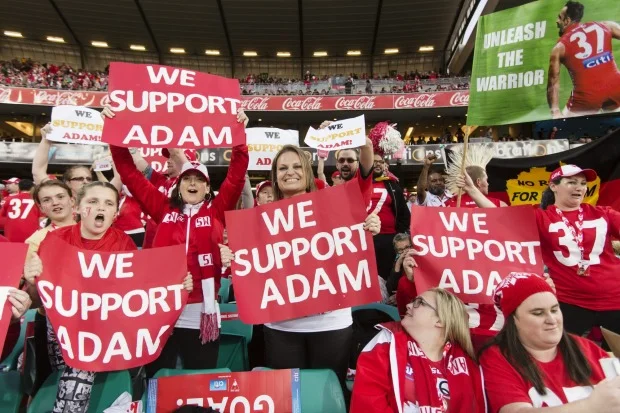
AFL satirist Titus O'Reilly gave this speech ahead of the Round 18 Sydney v Adelaide game at the SCG. It was at a pre game function and it was the week Adam Goodes didn’t play because of the booing. The emotion up there was one of white hot anger.

It’s terrific to be with you all here in Sydney today and in a fairly eventful week.

I’m also very happy this game is at the SCG but I do miss the rustic charm of the exposed metal bolts of ANZ Stadium.

I came up from Melbourne yesterday where there is obviously a lot of talk about Sydney at the moment.

I’ve always found the Sydney/Melbourne rivalry thing a bit strange.

After all they both have their attractions.

For example, you have the harbour bridge, an engineering and architectural triumph, we have a graffiti filled alley with a dumpster.

You have the Opera House, one of the great landmarks on the world, we have another graffiti filled alley but this one has a hard to find bar that seats just four people.

Being from Victoria and a consumer of only Melbourne media, I often have to be reminded that there are teams outside of Victoria.

The whole Victorian thing of supporting any Victorian club over an interstate one has always concerned me.

I feel pretty uncomfortable with any policy that requires you to be on Collingwood or Essendon’s side.

I was honoured to come speak to Sydney’s top supporter group and I’m told this group provides a lot of money to the Swans.

It must be nice to see your money going to a successful organisation that puts it to good use.

I’m a Melbourne supporter and that’s a bit like putting your money into an alpine fireplace.

There’s an immediate feeling of warmth, but it’s quickly over and suddenly you realise it’s all gone up in smoke.

So when I was asked to speak here, I thought I should brush up on my knowledge of the Swans.

I wanted someone who’d spent time here and had flourished in this great city.

Someone who had an affinity with Sydney and the Swans.

So I caught up with Eddie McGuire.

Now I wasn’t sure if he’d have an opinion or be willing to share his thoughts.

You may not know this but he’s a guy who usually likes to work quietly behind the scenes.

Speaking publicly is not usually his style but I thought it was worth a try.

So I sat down with him and said ‘what do you think of the Sydney Swans?’

So Eddie carefully explained to me how you northern clubs had secret underground laboratories.

These laboratories use the DNA of great AFL players to create ‘super footballers’ who are then trained in your unfair academies.

Really, Eddie thinks anything North of the Murray is basically North Korea.

Poor Collingwood, with their massive membership, financial clout and wall-to-wall media coverage.

It must be tough.

It’s always been a bit strange to me the controversies surrounding the Swans.

I’ve said this long before I was asked to speak here, so it’s not playing to the crowd, although I’m never above that.

For instance, the Cost of Living Allowance.

Basically, the argument has been; ‘how dare Sydney do something they’re legally allowed to do.’

In fact, it was what you were told to do.

And that’s the worst type of cheating! When you’re not cheating at all.

As if the other clubs would have said no to any advantage they can get their hands on.

What really upsets people though is the Swans have been successful in managing their club.

You’re doing all those things we said they could do and being smart about it.

How dare you!

Don’t you know that good administration in an AFL club just highlights how bad it is in others?

No wonder they’re upset.

Why couldn’t you have just recruited Karmichael Hunt?

No one would be angry with you then.

Hasn’t the Gold Coast Suns been a wonderful experiment?

It’s like a bad reality TV show.

Let’s get a bunch of eighteen year olds, stick them on the Gold Coast and then put an NRL player in with them.

How could that possibly go wrong?

Putting a sport team on the Gold Coast is like invading Russia in the winter, it never works.

I mean even Clive Palmer couldn’t get it to work.

Anyway, Sydney’s real mistake was stealing Buddy from GWS.

That basically ruined the AFL’s entire marketing strategy for the next five years.

The AFL had learnt the hard way that NRL players can’t play AFL, which is not surprising to anyone that has say, seen both games before.

So they needed Buddy at the Giants. They were desperate.

And you all ruined it by obeying the rules and putting together a better offer.

The pain lingers for them as Buddy has been a massive success at the Swans, especially once he realised what side of the road you drive on up here.

It’s why the AFL absolutely had to stop you trading last year for no real reason.

The AFL had no choice but to send a very clear message that following their rules is no protection from arbitrary decisions.

You have to remember, not long ago the AFL fined Melbourne for being found NOT GUILTY of tanking.

Now everyone knows they did it, although subsequent years have shown that might just be their resting state.

The AFL could have found Melbourne guilty, but it was more fun to say they were not guilty and then fine them anyway.

So the AFL can punish you whether you did something wrong or if you are completely innocent.

So basically, being in the AFL is like being in a marriage.

Anyway, I thought I should address the big issue at the moment, which has dominated the media this week.

Every one can see the big impact it is having on your club;

That issue of course is the large amount of stupid people in Australia.

We seem to have as much stupidity as we have iron ore.

If only China needed idiots; we could be richer and solve this problem.

You may have noticed that I’m a middle-aged white man and that makes me the perfect person to talk to you about racism.

If there’s one voice missing from the discussion surrounding Adam Goodes and the experience of being indigenous in Australia; it’s that of white men.

To be honest, white men are always a bit intimidated by any man who can dance.

Have you seen a white Australian male dance?

It usually involves both feet being rooted to the spot and a clear lack of understanding of what to do with their hands.

Spilling a drink while doing it is often a key feature.

What would be funny about this, if it wasn’t all so very sad, is grown adults saying they were intimidated by this dance.

Although that’s easy for me to say.

I wasn’t in the crowd and can only imagine how sharp that spear was.

What has been great this week, is having some of Australia’s great public intellectuals weighing in on the debate.

There’s been ex-footy players, AFL journalists, Shane Warne, Jason Akermanis and Sam Newman to name a few.

It’s just a shame no one asked Dawn Fraser for her opinion.

That would have meant we’d collected the entire set of ill informed sports people.

Obviously, these are the public intellectuals you want leading a debate on the complex and sensitive issue of race.

They all bring a deep personal understanding of what it’s like growing up indigenous in Australia.

What I do love about this debate is the arguments you get from those who want to keep booing.

Like this is what this is all about, not that it’s having a profound effect on a real person.

They honestly talk about their ‘right to boo’.

That must be in the Bill of Rights Australia doesn't have.

I actually had someone on Twitter tell me their right to boo Adam Goodes is protected by the First Amendment.

The first amendment! Where do I start with that?

We’re dealing with really stupid people here.

I mean who’s going around booing people all the time anyway?

Do these people ever boo people when they’re not in the safety of a crowd?

Just walk up to people and start booing?

I don’t know, maybe at their Reclaim Australia rallies they do.

That said, there have been a lot of times I’ve been stuck in a meeting and just wanted to start booing.

Any of you whose been in a board meeting would know that feeling.

Perhaps corporate Australia would be better off if you could boo the next consultant who suggesting something ridiculous and expensive.

I'm not saying everyone who boos Adam Goodes has been doing it for racist reasons.

Who truly knows?

But when a bunch of racists are doing it too, maybe that’s a sign you should stop.

It’s like if you have a long held opinion on a topic and then suddenly Brian Taylor starts saying the same thing.

You would immediately start questioning your own thinking on the topic and would definitely stop expressing it publicly.

If this was just about football and not racism, you would see others being booed.

I mean how does Adam Goodes get booed and James Hird doesn’t?

I guess racists have always had a soft spot for the blonde hair and blue eyes.

I like to focus on the fact that despite this horrible situation emerging, there are a lot of powerful and very good people on the right side of this debate.

We will win this.

We have what’s right on our side and the tide of history is flowing our way.

It’s just a shame that a great Australian has to go through this for Australia to wake up to itself.

I’m truly hopeful Adam is strong enough to handle all this but we need good people being vocal and lending him support.

Now moving on, if you listen to the media at the moment, you’d think Australian Rules football is about to fall off a cliff.

I just want to go on the record and say I actually quite like footy and I don't believe it's on the verge of imminent collapse.

I’m told saying that can lose me the media gigs I have.

But congestion is not going to end the game and we’re not going to be overrun by ‘soccer’ as the media breathlessly predict.

There’s actually a lot of good going on in footy at the moment.

Just this week, I watched a wonderful documentary on some Essendon players who travelled to India to spread the code over there.

Did anyone else see it?

For those that didn’t it was mostly just them clearing customs before they got on the return flight but still very powerful.

Basically it was like watching an episode of border security.

Still, a great initiative.

AFL is just so big in India at the moment so sending about five players for a clinic should push it over the top there.

Last night, we also had a great game with Richmond defeating Hawthorn in a game that has huge ramifications for the finals.

It means the Hawks can be beaten and I think that Sydney, Richmond, West Coast and Fremantle are all still chances.

Your guys have to step up. We need the Swans firing.

We can’t have Hawthorn win three in a row. It’s a world I don’t want to live in.

I can’t stand the idea of there being any more happy Hawks fans.

Then we have today’s game.

This should be a good one.

Today’s opponent, the Crows, are a team that we all have a fair bit of sympathy for at the moment.

It must be terrible to be living with the threat of Mick Malthouse coaching you.

They have a lot of good players Adelaide and we’ll soon know if Patrick Dangerfield is going to stay.

What a lucky guy, choosing between living in Geelong or Adelaide.

That’s the glamour of AFL for you.

So good luck today.

A Swans victory would be a wonderful end to a frankly horrible week.

Let’s hope your boys get it done.


Titus O'Reilly writes footy and sport articles, including his hilarious 'The Weekly Knee-Jerk Reaction' that are a must for sport lovers.

Enjoyed this speech? Speakola is a labour of love and I’d be very grateful if you would share, tweet or like it. Thank you.

Facebook Twitter Facebook
In BROADCASTER Tags TITUS O'REILLY, FOOTY, AFL, ADAM GOODES, AUSTRALIAN RULES, SYDNEY SWANS
4 Comments
Photo: Jodie Hutchinson

Photo: Jodie Hutchinson

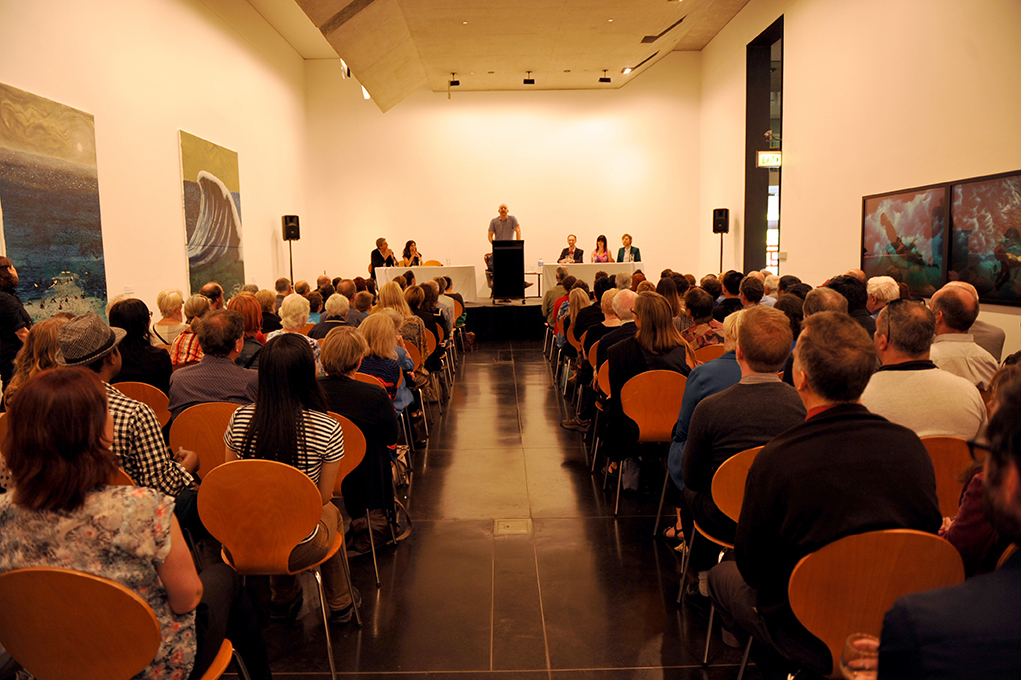
Tony Wilson: 'Art vee Sport. And yet another away fixture for us here at the gallery', Ian Potter debate - 2014

October 19, 2015

12 November, 2014, Ian Potter Gallery, University of Melbourne, Australia

The path to enlightenment, is it sport or is it art?

What we on the sport side like about the topic is that it’s either /or. Art versus sport. Art vee Sport. And yet another away fixture for us here at the gallery. Nevertheless we love that enlightenment is a fixture that either art or sport will win, and you only have to look at the history books to know sport has had the wood on art, especially since George W Bush started painting dogs.

In the last Enlightentest, you’ll remember we proved before tea on the second day that seeing Sam Newman flash his geriatric balls on national television did exactly the same job as Lucien Fried does, but with broader brushstrokes.

That’s the problem for art.

Yes it had a dominant era, back when Graeco-Roman wrestling and discus were pretty much the only sports, and, yes, some clever marketing people on the arts side thought to call their dominant period, ‘The Enlightenment’, but honestly, since Michaelangelo hung up his scaffold, it’s been sport, sport, sport.

On this side of the debate, we accept that popularity does not equal enlightenment. Just because a GWS game in June packs a bigger crowd than an entire season of Giselle, doesn’t mean we win. Just because Opera Australia is about to learn that ‘the Don’ in the popular imagination is not Don freaking Pasquale. Just because the masses clearly choose the high mark over the book mark — doesn’t mean that’s an enlightened choice.

But as it turns out, it is.

One of the problems for art is that it can’t really do anything that sport cannot.

Take literature. For sure, literature gives us stories, but I’m going to argue that sport gives us the same stories, except quicker and with fewer Russian famines. Insight into the human condition? Who has time to wade through A S Friggin Byatt and her world of impenetrable grey to find out who you are, when you can look up Shane Warne’s Wikipedia entry? Success, failure, love, infidelity, triumph, defeat, addiction, deceit, slight-of-hand. It’s all there. And as for the power of words, I hope our opponents don’t lecture us about the power of words. Literature has had its day on that front. From the day Ron Barassi wrote his famous ten by two letter word manifesto, ‘If It Is to be, it is up to me’, sport has been leading the way with respect to the power of words. Sports stars and coaches now set the language agenda, and I have little doubt that if Charles Dickens were penning A Tale of Two Cities today, he wouldn’t be opening with ‘It was the Best of the Times, it was the worst of times’. He’d be opening with ‘Yeah … nah …’

Sport now does the job of covering all the plotlines that used to be left to film, literature and theatre. To name just a few:

Life Of Pi – why slog through 300 odd pages of boy and tiger on boat when the Brisbane Lions are planning to have a real lion on the sidelines next year.

White Teeth – Zadie Smith wrote about a Pakistani girl coming of age in South London, when it really should have been about Shane Warne’s teeth bleaching if she was serious about engaging the subcontinent.

And what’s funnier? Shakespeare’s lame cross dressing comedies like The Twelfth Night or As you Like It – where everybody pretends that the nice couplets make up for the unrealistic storyline and the hammy acting, or a young Ricky Ponting actually getting into a fight at the Bourborn and Beefsteak because he’s been dancing with a woman who turns out to be a man?

That’s the sort of enlightenment sport offers.

Sport pretty much does all the cultural heavy lifting you need.

Why did Ian Mckewan even bother writing Atonement, when the whole issue of accidental swearing has been dealt with so effortlessly by Ian Chappell.

We don’t need Irvine Welsh for drug dramas when we’ve got James Hird and Essendon.

We don’t need The Theban plays and tales of Greek hubris when we’ve got James Hird and Essendon.

We don’t need Samuel Beckett and weird shit where everyone sits on stage in rubbish bins while we’ve got curling.

And we don’t need slow moving, turgid, Booker Prize winning literature while we’ve got golf.

And these sporting plotlines are churned out with effortless regularity. To quote Woody Allen, who reluctantly turned to comedy and film because he was too short to become a champion basketballer – ‘sport is the only drama where even the actors don’t know how it ends.’ It’s endlessly fascinating, whether matches follow a traditional Robert McKee endorsed three act structure, or whether it’s an improvisational masterpiece in anti-structure – a sort of athletic Schoenberg if you will. I realize that I’m using artistic metaphor here, and am doing so not because art is enlightening — we all know it isn’t — it’s just because we’re at The Ian Potter, and if I don’t crap on like this the other team won’t let me sit with them afterwards when they’re sipping Pinot Grigio and rabbiting on about structuralism and its place in the modern novel or some such bullshit — which I really need to do if I’m ever going to get this writing career happening.

In terms of language and the beauty of words, I understand that plays and literature still have their diehards. But the sad fact for book lovers is that a lot of what is said by the great masters, is now said more efficiently by 19-year-olds who have just received their media training at draft camp.

Again let’s turn to Steinbeck: this is how he tried to describe the immigration experience in The Grapes of Wrath:

"Two hundred and fifty thousand people over the road. Fifty thousand old cars – wounded, steaming. Wrecks along the road abandoned. Well, what happened to them? What happened to the folks in that car? Did they walk? Where are they? Where does the courage come from? Where does this terrible faith come from?
And here is a story you can hardly believe, but it’s true and it’s funny and it’s beautiful. There was a family of twelve and they were forced off the land. They had no car. They built a trailer out of junk and they loaded it with their possession.  They pulled it to the side of 66 and waited. And pretty soon a sedan picked them up. Five of them rode in the sedan and seven in the trailer, and a dog on the trailer. They got to California in two jumps. The man who pulled them fed them. And that’s true. But how can such courage be, and such faith in their own species? Very few things would teach such faith.
The people in flight from the terror behind – strange things happen to them, some bitterly cruel and some so beautiful that the faith is refired forever."

I mean, I quite like this passage, I think it packs a substantial descriptive punch. I think it says something about the failings of modern Australia, and the last line almost makes me cry. But didn’t Ross Lyon say pretty much the same thing in a whole lot fewer words when he said, ‘yeah, nah, we had a few passengers out there today.’

And so it’s over art. Pack up your paintbrushes and go seek employment designing away strips for football clubs. You were meant to teach us stuff about ourselves, but you didn’t. You got fixated on things that didn’t connect, starting with that freaking Duchamps urinal in 1917. And so sport came in and filled the void. Gave life meaning. Fed us stories. Constructed the narrative of our society. And so, in 500 years, will people really still be quoting Huxley and Orwell, Lennon and Brecht? I don’t think so.  Instead, we’ll be living in a world when the great philosophers are Sheedy, Lombardi, Maninga. And for wisdom, we will all make do with the words the late great Tom Hafey had printed on the back of his business card, and which I would advise the Ian Potter to take up as its artistic manifesto:

“Every morning in Africa, a gazelle wakes up. It knows it must run faster than the fastest lion or it’ll be killed. Every morning a lion wakes up. It knows it must outrun the slowest gazelle or it will starve to death. It doesn’t matter whether you’re a lion or a gazelle, when the sun comes up, you’d better be runnin’.”

And yes even in print, Tommy dropped the ‘g’.

Source: http://tonywilson.com.au/the-path-to-enlig...

Enjoyed this speech? Speakola is a labour of love and I’d be very grateful if you would share, tweet or like it. Thank you.

Facebook Twitter Facebook
In BROADCASTER Tags TONY WILSON, DEBATE, SPORT V ART, IAN POTTER
Comment
Angela Pippos, proving she hasn't broken out into a rash on entering gallery.Photo: Jodie Hutchinson

Angela Pippos, proving she hasn't broken out into a rash on entering gallery.

Photo: Jodie Hutchinson

Angela Pippos: 'Being bad at sport doesn’t give you license to belittle it', Ian Potter Debate - 2014

October 19, 2015

November 2014, Ian Potter Gallery, University of Melbourne, Australia

Angela Pippos was arguing for sport on the topic: 'The path to enlightenment, sport or art?' Tony Wilson's speech in the same debate appears here.

I remember walking through the Sistine Chapel – my thighs squeaking (I had been in Italy for two months and my “diet” of red wine – large glass thanks, and pasta, yes I will have seconds – was beginning to re-shape my once slender frame).

So there I was squeaking along, my neck bent backwards – eyes on the ceiling – a look of marvel fixed on my face.

The Creation of Adam, The Last Judgement – now here was a man touched by God. It moved me. Take me hostage and let me stand in awe forever (and bring me a pizza with the lot and a family-size bottle of Chianti. And don’t skimp on the garlic bread).

Michelangelo, sculptor-turned-painter – years on his back, lying on his own scaffolding. I wondered about the pain and suffering he endured, the epic scale of his achievements, his controversial lost fresco.

What were his inspirations? What did he do during his lunch break? All these questions …

You see, not all sports journalists fall into a deep sleep at the mention of the word ‘art’.

Not all sports journalists drag their knuckles and dribble at meal times. Not all of us faint at the sight of tofu, and not all of us break out in a rash when we go to into a museum.

Some of us even read books – books with small print and no pictures – not for a bet, or at gunpoint, but for actual pleasure.

Some of us love architecture, some of us even listen to, shock horror, classical music – and not while waiting to place a bet on the market mover for the last at Moonee Valley. No, some of us actually listen purely for joy.

It’s true that some sports journalists exhibit all the artistic finesse of a baboon, and it’s fair to say the closest some sports journos come to culture is eating a tub of yoghurt.

But it’s also true that some lovers of the arts have their heads so firmly wedged up their buttocks they’ve learnt to walk in the dark.

Being bad at sport doesn’t give you license to belittle it.

I have an appreciation of the arts. Of course I do. But sport has provided me with my own path – my own yellow brick road.

And what a journey it’s been.

The highs, what searing, searing highs. Tony Modra reaching to the heavens, back-to-back premierships in ’97 and ’98, both as underdogs; a serendipitous night out with the late, great Ayrton Senna (… it was a balmy Adelaide evening, the sweet smell of jasmine filled the air, the smile on his moist lips as I approached …); Cathy Freeman in full flight; Cadel Evans, glass of champagne in hand, yellow jersey his for the keeping.

So many glorious sporting moments, moments of inspiration, nail-biting tension, adversity and euphoria.

As a nation we bat above our average when it comes to sport. Unless, of course, you’re an Australian batsman.

Then there are the life lessons – learnt from such a tender age.

Sport was my first love.

I was rarely without a netball, football or cricket bat in my hand. I lived for Saturdays.

I believed I had the natural talent and flair to represent Australia on the netball court. Many a restless night was spent waiting for the growth spurt. If only Joyce Brown’s Netball The Australian Way, which I slept with under my pillow for two years, included a chapter on the realities of genetic disposition.

Sport has helped me make sense of the human soul – to understand what it’s like to be human – and learn how to grow (sadly not vertically), and learn how to love.

Sport has taken me gently by the hand and shown me the way; it’s taught me about friendship, teamwork and boundless human endeavour.

It’s taught me how to be gracious in defeat, like Kevin Muscat, and humble in victory, like Shane Warne.

It’s taught me about honesty – Adam Gilchrist.

Innovation – the Winged Keel.

Transparency – the Essendon Football Club.

Sport has led the way with its groundbreaking equality towards women – respect, recognition, equal pay, equal opportunities …  cough cough (sorry I seem to have something stuck in my throat).

Where was I? Ah yes, there is beauty in all things – golfing outfits, footballers’ haircuts, former AFL players squeezed into pastel shirts.

The rhythmic grace of the 23-stone darts marvel Phil ‘The Power’ Taylor; sumo wrestling, middle-aged men in lycra on Saturday mornings, curling, arm-wrestling, the world’s strongest man and Celebrity Splash.

So much diversity. So much beauty.

I have sport to thank for my spiritual balance and this brings me back to Michelangelo.

I did manage to find out what he did on his lunch break – and I was amazed to discover he actually played five-a-side football with his plasterers.

Did sport provide Michelangelo with some kind of inspiration?

And what about his controversial lost fresco? Well it’s recently been unearthed in Rome by the great art historian Umberto Lombardo – and it depicts, quite beautifully, a very dramatic penalty shootout between Jesus and his Apostles.

Jesus is in goal. He was, of course, a brilliant goalkeeper.

The painting shows Christ at full stretch tipping one over the bar from Simon Peter – who, legend has it, was a bad sport.

Matthew in the Corinthians quotes Judas: “Simon Peter assured me he never put his full weight behind the shot because he didn’t want to embarrass our Lord, but me and the lads knew he was just a sore loser.”

The truth is no one ever scored against Jesus.

So it could be argued that the inspiration behind Michelangelo’s great monument to what man is capable of achieving came from sport.

Ladies and gentlemen, the path to enlightenment is off the boot of Michelangelo – not his paintbrush.

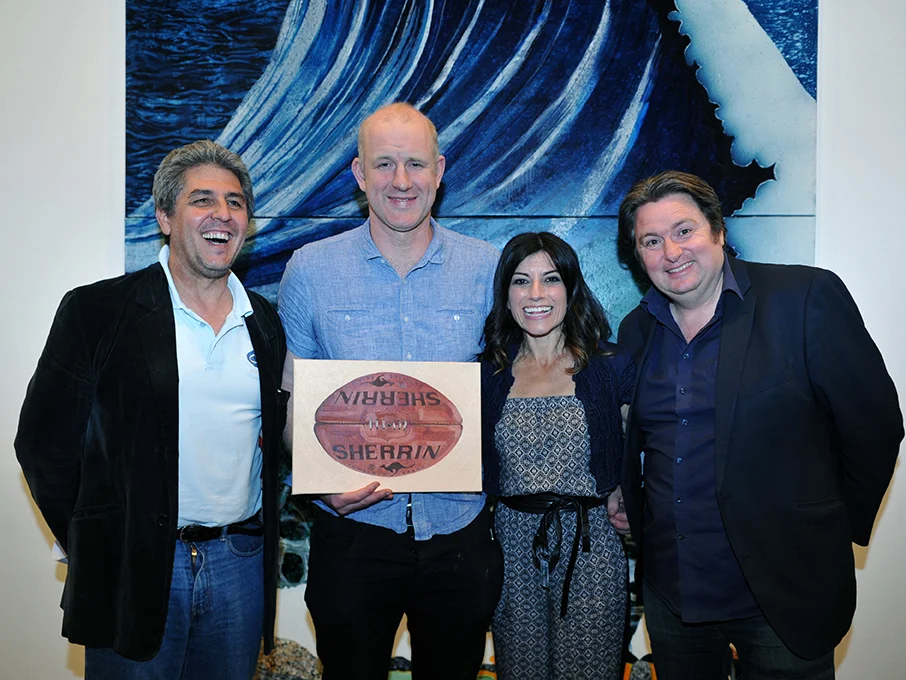
The sport team: John Harms, Tony Wilson.& Angela Pippos. With MC Dave O'Neill.

The sport team: John Harms, Tony Wilson.& Angela Pippos. With MC Dave O'Neill.

Source: http://thenewdaily.com.au/sport/2014/11/12...

Enjoyed this speech? Speakola is a labour of love and I’d be very grateful if you would share, tweet or like it. Thank you.

Facebook Twitter Facebook
In BROADCASTER Tags DEBATE, SPORT V ART, ANGELA PIPPOS
Comment

Anson Cameron - 'It’s written for losers, dweebs, fools, halfwits and toolshiners', launch The Footy Almanac - 2009

October 19, 2015

November 29, 2009, Clyde Hotel, Carlton, Melbourne, Australia

Anson Cameron is a novellist, speaker and Cats fan who was experiencing the giddy bliss of a Geelong's premiership when he launched The Footy Almanac.

Ladies and gentlemen

When John Harms rang me and asked me to launch the Footy Almanac I said, “I’m a congenial sort of guy, I’d love to, John. But I’m also a cultured kind of guy; a devotee of Tolstoy and Cervantes and Shakespeare. So tell me something about this Footy Almanac. I’m unfamiliar with it.’

He said, ‘Anson, It’s a chronicle of every game played through the AFL season.’

I said, ‘Who’s it written for?’

He said, ‘It’s the very lowest form of literature. It’s written for losers, dweebs, fools, halfwits and toolshiners.’

I said, ‘John... it’ll sell its arse off, a book like that. You’ve just mentioned everyone I know. Not only are you writing for fools, in the time-honoured tradition of Bryce Courtney and Dan Brown... but you’re writing for an audience already addicted to the product you’re pushing.’ I said, ‘John, it seems to me you and Paul have the modus operandi and the morals of a street-corner crack dealer.’

He said, ‘Shit, Anson, they told me you were good. But I didn’t know you were this good. You’ve seen through us at a glance.’

And I saw through him at a glance, ladies and gentlemen, because when my father was on his deathbed he said to me, “Don’t waste your time writing about love, Anson. Don’t waste your time pissing around trying to crack the case on the human condition. Write about football. Football is the new Love. Football explains the human condition. If the Elizabethan poets were alive now they’d be wracking their brains and banging their bewigged scones on a wall trying to come up with a word to rhyme with Selwood.  If you want to be Shakespeare in the age of Rudd, then football is your form, Anson. Tell stories that reek of liniment.”

I was, as usual, too stupid to take that advice.

But he was right.  It’s true. As there’s less drama and struggle in everyday life football rises up with all of its colour and movement and tragedy and comedy to fill the void.

There was a time when other things were more important than footy... but that time was long ago in an ignorant age when we lived hand to mouth and grovelled at the feet of Kings and tyrants. We are free now. We are educated. We have money. We have time. We have all the beer we can drink. We have designated drivers. Nothing is more important than footy now... especially with the Cats  winning flags at last.  Forget the love of a good woman. Forget the Miles fucking Franklin Award. It’s when we see Ablett appear spinning out of a pack with the Sherrin in his mitts heading goalward we know life is worthwhile.

They say that Long John Holmes (that was Long John Holmes, not Harms, I haven’t done the stats on the co-editors) they say Long John Holmes might have launched as many as ten thousand orgasms with his prodigious and highly obedient member.  And on first telling that might seem an impressive contribution to the sum of human happiness. But it seems a paltry achievement to me, when I remember that this September I saw Matthew Scarlett launch immeasurably more ecstasy than that with his big toe. Imagine that... his big toe. He made a whole city rise to its feet, palpitating at every orifice and screaming in ecstasy... with his big toe.

I talk of the toe-poke, ladies and gentlemen, I’ve watched it many times since. Call me sick. But for me, the beauty of that toe-poke will never fade.

And I’ve begun to wonder, since that glorious September day, how Johnny Turk would have reacted if our lads had arrived at Gallipoli in 1915 schooled at and skilled in the toe-poke. He would have retreated from the heights bewildered and befuddled in the face of this new dark art is my guess. Much as the St Kilda boys did. I doubt we’d be celebrating glorious defeat at Gallipoli, if we’d arrived as adepts of the toe-poke. I doubt it’s something the Ottoman could have countered.

Of all the five-hundred-page books I’ve ever read I think I’m safe in saying this is the only one that has ever climaxed in a toe-poke. And I’m glad it does. Because, though it might sound like pornography, the toe-poke, something that should be committed in a back room rather than at the MCG, we now know it as one of humanity’s grandest and noblest and most self-sacrificial achievements. And I move on from it reluctantly, for I could talk on the toe-poke all night.

And I move on to talk on my wannabe-slut sister, an otherwise intelligent and moral girl, who declares she would lie down in the sand and rut furiously with Cameron Ling on the main beach at Lorne while the Pier to Pub was being swum and feel no shame whatsoever. Isn’t that disgusting? It’s not the sort of tale I’d normally tell in public.  And I apologise for it.

But I tell it just to show the depth of her delusion. She finds Lingy beautiful. She’s smitten. And the people who have written this book are similarly smitten, each in their own way, similarly deluded, similarly committed, similarly passionate, about some player or some team. And that’s the thing. That’s the thing, ladies and gentlemen.

All the Holy books were written by propagandists. By partisans. By zealots. They are histories of tribes and they tell joyfully of the destruction and scattering of their enemies. Count The Footy Almanac among their number. For if you read this book you will know that in the year of Our Lord 2009 the righteous hooped demigods from across the bay have scattered their foes as chaff before the storm.

Yes the deadening hand of objectivity might be sufficient to write about unimportant things like politics or love or war ladies and gentlemen... but it just doesn’t cut it when it comes to telling of football. If you want pallid objectivity, try the media. They write about footy as if it were a science, or a business... they pretend it isn’t romance.

What you’ve got here is the tribal scream of a hundred zealots wearing their hearts on their sleeves and putting their balls or equivalent anatomy on the line.

The great rule in writing is to Care about what you write about. In effect... to barrack for something. And the people who wrote this book do. Which is what enables them to write with such boundless passion.

And in launching the Footy Almanac I feel like I’m throwing the gates of an asylum open and releasing a throng of beautiful, horny, lunatic preachers all ready to bark their own species of madness and love from the street corners of our town.

And it makes me feel good to do so. Because football is a beautiful madness and it needs its preachers.

So Congratulations to John and Paul on the cacophony of fevered voices they have collected here. They tell of Australian Rules Football like nobody else does.

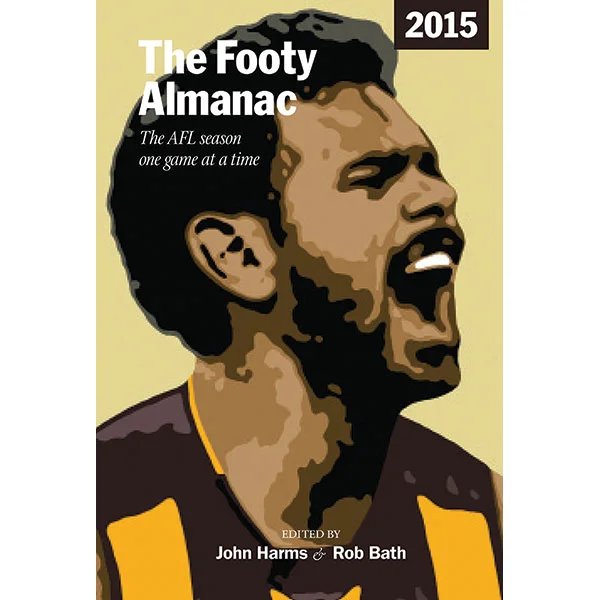
This speech, and many other superb examples of 'toolshiners' covering sport, exist on The Footy Almanac website. You can buy the 2015 Almanac here. Or click on Cyril!


Anson Cameron is a brilliant speaker who is featured more than once on Speakola. You can book him here.


Source: http://www.footyalmanac.com.au/footy-alman...

Enjoyed this speech? Speakola is a labour of love and I’d be very grateful if you would share, tweet or like it. Thank you.

Facebook Twitter Facebook
In BROADCASTER Tags SPORTS WRITING, SPORTS LITERATURE, THE FOOTY ALMANAC, JOHN HARMS[, ANSON CAMERON, BOOKS, AFL, AUSTRALIAN RULES, GEELONG
Comment

Terry Wallace: 'I'll spew up!' speech, versus Collingwood, The Year of the Dogs - 1996

September 30, 2015

28 July, 1996, Footscray v Collingwood, Melbourne Cricket Ground, Australia

I don't know about you blokes but I can't bear fucking losing a game like that! Look, fantastic effort but what does a fucking fantastic effort mean? It doesn't get us anything! We don't get diddly squat! We don't get a point. They don't just give us something for just fucking getting close! It means nothing. If you think that I'm going to be happy walking into this room when we get beaten still, we can't be! We just can't accept it! I don't know about you guys, but if I see one bloke walk out of here, getting a pat on the back from people out there for a good effort, I'll spew up! Because it's just not acceptable! We were a rabble in that first quarter, absolutely bloody disgraceful. Absolutely disgraceful. yeah, for three quarters we were worked our asses off, we worked our backsides off to get back into the game, but the game is about 120 minutes of footy, and that was the most winnable one that we get for a long time, and we just pissed it down the drain. We absolutely pissed that game down the drain. Don't any one of you forget about it. Take away one thing from this game. You have the ability to play in this competition and to play it very very very well. We cannot got from that [hand gesture] which we've displayed right in the three quarters, back to what we displayed in the first quarter ever again. Ever again.,

Go and have your showers, we'll see you back at the social club.


Similar content: Danny Southern's jumper presentation to Roarke Smith, mentioning death of his brother.


Source: https://www.youtube.com/watch?v=wkA7qx-WJl...

Enjoyed this speech? Speakola is a labour of love and I’d be very grateful if you would share, tweet or like it. Thank you.

Facebook Twitter Facebook
In COACH Tags AFL, FOOTY, COACH, SPRAY, POST GAME, TERRY WALLACE, WESTERN BULLDOGS, YEAR OF THE DOG
Comment

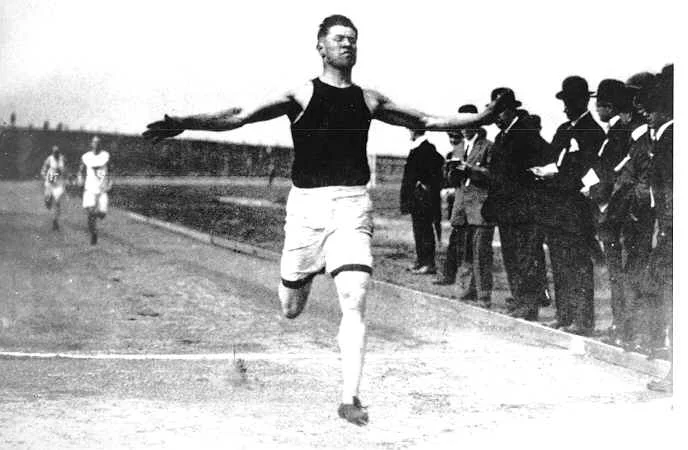
Jim Thorpe: 'Thanks, king', Decathlon gold medal presentation, Olympic Games - 1912

September 11, 2015

July 15, 1912, Stockholm, Sweden

Jim Thorpe was an American (also native American) decathlete who won gold in the decathlon. At the medal presentation, King Gustav of Sweden announced to Thorpe, "Sir, you are the greatest athlete in the world!". Thorpe's two word reply:

Thanks, king.

Source: https://en.wikipedia.org/wiki/Jim_Thorpe

Enjoyed this speech? Speakola is a labour of love and I’d be very grateful if you would share, tweet or like it. Thank you.

Facebook Twitter Facebook
In PLAYER Tags JIM THORPE, ATHLETE, ATHLETICS, SHORT SPEECH, OLYMPICS, MEDAL PRESENTATION, KING GUSTAV, DECATHLON
Comment

Kumar Sangakkara: 'I am today, and always, proudly Sri Lankan', MCC 'Spirit of Cricket' Lecture -2011

September 9, 2015

July 6, 2011, Lord's, London, UK (video in seven parts)

Mr President, my Lords, Ladies and gentlemen

Firstly I wish to sincerely thank the MCC for giving me the opportunity and great honour of delivering the 2011 Cowdrey Lecture.

I was in India after the World Cup when my manager called to pass on the message that CMJ was trying to get in touch with me to see whether I would like to deliver this year's lecture. I was initially hesitant given the fact we would be in the midst of the current ODI series, but after some reflection I realised that it was an invitation I should not turn down. To be the first Sri Lankan to be invited was not only a great honour for me, but also for my fellow countrymen.

Then I had to choose my topic. I suspect many of you might have anticipated that I pick one of the many topics being energetically debated today - the role of technology, the governance of the game, the future of Test cricket, and the curse of corruption, especially spot-fixing. All of the above are important and no doubt Colin Cowdrey, a cricketing legend with a deep affection for the game, would have strong opinions about them all.

For the record, I do too: I strongly believe that we have reached a critical juncture in the game's history and that unless we better sustain Test cricket, embrace technology enthusiastically, protect the game's global governance from narrow self-interest, and more aggressively root out corruption then cricket will face an uncertain future.

But, while these would all be interesting topics, deep down inside me I wanted to share with you a story, the story of Sri Lanka's cricket, a journey that I am sure Colin would have enjoyed greatly because I don't believe any cricket-playing nation in the world today better highlights the potential of cricket to be more than just a game.

This lecture is all about the Spirit of the Game and in this regard the story of cricket in Sri Lanka is fascinating. Cricket in Sri Lanka is no longer just a sport: it is a shared passion that is a source of fun and a force for unity. It is a treasured sport that occupies a celebrated place in our society.

It is remarkable that in a very short period an alien game has become our national obsession, played and followed with almost fanatical passion and love. A game that brings the nation to a standstill; a sport so powerful it is capable of transcending war and politics. I therefore decided that tonight I would like to talk about the Spirit of Sri Lanka's cricket.

The History of Sri Lanka

Ladies and Gentleman, the history of my country extends over 2500 years. A beautiful island situated in an advantageously strategic position in the Indian Ocean has long attracted the attentions of the world at times to both our disadvantage and at times to our advantage.

Sri Lanka is land rich in natural beauty and resources augmented by a wonderfully resilient and vibrant and hospitable people whose attitude to life has been shaped by volatile politics both internal and from without.

In our history you will find periods of glorious peace and prosperity and times of great strife, war and violence. Sri Lankans have been hardened by experience and have shown themselves to be a resilient and proud society celebrating at all times our zest for life and living.

Sri Lankans are a close knit community. The strength of the family unit reflects the spirit of our communities. We are an inquisitive and fun-loving people, smiling defiantly in the face of hardship and raucously celebrating times of prosperity.

Living not for tomorrow, but for today and savouring every breath of our daily existence. We are fiercely proud of our heritage and culture; the ordinary Sri Lankan standing tall and secure in that knowledge.

Over four hundred years of colonization by the Portuguese, the Dutch and the British has failed to crush or temper our indomitable spirit. And yet in this context the influence upon our recent history and society by the introduced sport of cricket is surprising and noteworthy. Sri Lankans for centuries have fiercely resisted the Westernisation of our society, at times summarily dismissing western tradition and influence as evil and detrimental.

Yet cricket, somehow, managed to slip through the crack in our anti-Western defences and has now become the most precious heirloom of our British Colonial inheritance. Maybe it is a result of our simple sense of hospitality where a guest is treated to all that we have and at times even to what we don't have.

If you a visit a rural Sri Lankan home and you are served a cup of tea you will find it to be intolerably sweet. I have at times experienced this and upon further inquiry have found that it is because the hosts believe that the guest is entitled to more of everything including the sugar. In homes where sugar is an ill-affordable luxury a guest will still have sugary tea while the hosts go without.

Sri Lanka's Cricketing Roots

Fittingly, as it happens, Colin Cowdrey and Sri Lanka's love for cricket had similar origins: Tea. Colin's father, Ernest, was a tea planter in India. While he was schooled in England, he played on his father's plantation where I am told he used to practice with Indian boys several years his elder. Cricket was introduced to Ceylon by men like Ernest, English tea planters, during the Colonial period of occupation that covered a span of about 150 years from 1796.

Credit for the game's establishment in Sri Lanka, though, also has to be given to the Anglican missionaries to whom the colonial government left the function of establishing the educational institutions.

By the latter half of the 19th century there grew a large group of Sri Lankan families who accumulated wealth by making use of the commercial opportunities thrown open by the colonial government.

However a majority of these families could not gain any high social recognition due to the prevalence of a rigid hierarchal caste system which labelled them until death to the caste they were born into. A possible way out to escape the caste stigma was to pledge their allegiance to the British crown and help the central seat of government.

The missionaries, assessing the situation wisely, opened superior fee levying English schools especially in Colombo for the affluent children of all races, castes and religions. By the dawn of the 20th Century the introduction of cricket to this educational system was automatic as the game had already ingrained into the English life; as Neville Cardus says "without cricket there can be no summer in that land."

Cricket was an expensive game needing playgrounds, equipment and coaches. The British missionaries provided all such facilities to these few schools. Cricket became an instant success in this English school system.

Most Sri Lankans considered cricket beyond their reach because it was confined to the privileged schools meant for the affluent.

The missionaries in due course arranged inter colligate matches backed by newspaper publicity to become a popular weekend social event to attend.

The newspapers carried all the details about the cricket matches played in the country and outside. As a result school boy cricketers became household names. The newspapers also gave prominent coverage to English county cricket and it had been often said that the Ceylonese knew more of county cricket than the English themselves.

Cricket clubs were formed around the dawn of the 20th century, designed to cater for the school leavers of affluent colleges. The clubs bore communal names like the Sinhalese Sports Club (SSC), Tamil Union, Burgher Recreation and the Moors Club, but if they were considered together they were all uniformly cultured with Anglicized values.

Inter-club matches were played purely for enjoyment as a sport. Club cricket also opened opportunities for the locals to mix socially with the British. So when Britain granted independence to Ceylon in 1948 it is no wonder cricket was a passion of the elitist class.

Although in the immediate post- independent period the Anglicized elite class was a small minority, they were pro-western in their political ideology and remained a powerful political lobby.

In the general elections immediately after independence, pro-elite governments were elected and the three Prime Ministers who headed the governments had played First XI cricket for premier affluent colleges and had been the members of SSC.

The period between 1960 and 1981 was one of slow progress in the game's popularity as the power transferred from the Anglicized elite to rising Socialist and Nationalist groups. Nevertheless, Sri Lanka was made an associate member of the ICC in 1965, gaining the opportunity to play unofficial test matches with players like Michael Tissera and Anura Tennakoon impressing as genuine world-class batsmen.

In 1981, thanks to the efforts of the late Honourable Gamini Dissanyake, the ICC granted Sri Lanka official Test status. It was obviously a pivotal time in our cricketing history. This was the start of a transformation of cricket from an elite sport to a game for the masses. Race Riots and Bloody Conflict

I do not remember this momentous occasion as a child. Maybe because I was only five years old, but also because it wasn't a topic that dominated conversation: the early 1980's was dominated by the escalation of militancy in the north into a full scale civil war that was to mar the next 30 years.

The terrible race riots of 1983 and a bloody communist insurgency amongst the youth was to darken my memories of my childhood and the lives of all Sri Lankans. I recollect now the race riots of 1983 now with horror, but for the simple imagination of a child not yet six it was a time of extended play and fun. I do not say this lightly as about 35 of our closest friends, all Tamils, took shelter in our home. They needed sanctuary from vicious politically-motivated goon squads and my father, like many other brave Sri Lankans from different ethnic backgrounds, opened his houses at great personal risk.

For me, though, it was a time where I had all my friends to play with all day long. The schools were closed and we'd play sport for hour after hour in the backyard - cricket, football, rounders…it was a child's dream come true. I remember getting annoyed when a game would be rudely interrupted by my parents and we'd all be ushered inside, hidden upstairs with our friends and ordered to be silent as the goon squads started searching homes in our neighbourhood.

I did not realise the terrible consequences of my friends being discovered and my father reminded me the other day of how one day during that period I turned to him and in all innocence said: "Is this going to happen every year as it is so much fun having all my friends live with us."

The JVP-led Communist insurgency rising out of our universities was equally horrific in the late 1980s. Shops, schools and universities were closed. People rarely stepped out of their homes in the evenings. The sight of charred bodies on the roadsides and floating corpses in the river was terrifyingly commonplace.

People who defied the JVP faced dire consequences. They even urged students of all schools to walk out and march in support of their aims. I was fortunate to be at Trinity College, one of the few schools that defied their dictates. Yet I was living just below Dharmaraja College where the students who walked out of its gates were met with tear gas and I would see students running down the hill to wash their eyes out with water from our garden tap.

My first cricket coach, Mr D.H. De Silva, a wonderful human being who coached tennis and cricket to students free of charge, was shot on the tennis coat by insurgents. Despite being hit in the abdomen twice, he miraculously survived when the gun held to his head jammed. Like many during and after that period, he fled overseas and started a new life in Australia. As the decade progressed, the fighting in the north and east had heightened to a full scale war. The Sri Lankan government was fighting the terrorist LTTE in a war that would drag our country's development back by decades.

This war affected the whole of our land in different ways. Families, usually from the lower economic classes, sacrificed their young men and women by the thousands in the service of Sri Lanka's military.

Even Colombo, a capital city that seemed far removed from the war's frontline, was under siege by the terrorists using powerful vehicle and suicide bombs. Bombs in public places targeting both civilians and political targets became an accepted risk of daily life in Sri Lanka. Parents travelling to work by bus would split up and travel separately so that if one of them died the other will return to tend to the family. Each and every Sri Lankan was touched by the brutality of that conflict.

People were disillusioned with politics and power and war. They were fearful of an uncertain future. The cycle of violence seemed unending. Sri Lanka became famous for its war and conflict.

It was a bleak time where we as a nation looked for inspiration - a miracle that would lift the pallid gloom and show us what we as a country were capable of if united as one, a beacon of hope to illuminate the potential of our peoples. That inspiration was to come in 1996.

An Identity Crisis

The pre-1995 era was a period during which Sri Lanka produced many fine cricketers but struggled to break free of the old colonial influences that had indoctrinated the way the game was played in Sri Lanka.

Even after gaining Test Status in 1981, Sri Lanka's cricket suffered from an identity crisis and there was far too little "Sri Lankan" in the way we played our cricket. Although there were exceptions, one being the much-talked about Sathasivam, who was a flamboyant and colourful cricketer, both on and off the field. He was cricketer in whose hand they say the bat was like a magic wand. Another unique batsman was Duleep Mendis, now our chief selector, who batted with swashbuckling bravado.

Generally, though, we played cricket by the book, copying the orthodox and conservative styles of the traditional cricketing powerhouses. There was none of the live-for-the moment and happy-go-lucky attitudes that underpin our own identity.

We had a competitive team, with able players, but we were timid, soft and did not yet fully believe in our own worth as individual players or as a team. I guess we were in many ways like the early West Indian teams: Calypso cricketers, who played the game as entertainers and lost more often than not albeit gracefully.

What we needed at the time was a leader. A cricketer from the masses who had the character, the ability and above all the courage and gall to change a system, to stand in the face of unfavourable culture and tradition, unafraid to put himself on the line for the achievement of a greater cause.

This much-awaited messiah arrived in the form of an immensely talented and slightly rotund Arjuna Ranatunga. He was to change the entire history of our cricketing heritage converting the game that we loved in to a shared fanatical passion that over 20 million people embraced as their own personal dream.

Arjuna's Leadership

The leadership of Arjuna during this period was critical to our emergence as a global force. It was Arjuna who understood most clearly why we needed to break free from the shackles of our colonial past and forge a new identity, an identity forged exclusively from Sri Lankan values, an identity that fed from the passion, vibrancy and emotion of normal Sri Lankans. Arjuna was a man hell-bent on making his own mark on the game in Sri Lanka, determined to break from foreign tradition and forge a new national brand of cricket.

Coming from Ananda College to the SSC proved to be a culture shock for him. SSC was dominated by students from St. Thomas' and Royal College, the two most elite schools in Colombo. The club's committee, membership and even the composition of the team was dominated by these elite schools.

Arjuna himself has spoken about how alien the culture felt and how difficult it was for him to adjust to try and fit in. As a 15-year-old school kid practising in the nets at the club, a senior stalwart of the club inquired about him. When told he was from the unfashionable Ananda College, he dismissed his obvious talents immediately: "We don't want any "Sarong Johnnie's" in this club."

As it turned out, Arjuna not only went to captain SSC for many years, he went onto break the stranglehold the elite schools had on the game. His goal was to impart in the team self-belief, to give us a backbone and a sense of self-worth that would inspire the team to look the opposition in the eye and stand equal, to compete without self-doubt or fear, to defy unhealthy traditions and to embrace our own Sri Lankan identity. He led fearlessly with unquestioned authority, but in a calm and collected manner that earned him the tag Captain Cool.

The first and most important foundation for our charge towards 1996 was laid. In this slightly over-weight and unfit southpaw, Sri Lanka had a brilliant general who for the first time looked to all available corners of our country to pick and choose his troops.

The Search for Unique Players

Arjuna better than anyone at the time realised that we needed an edge and in that regard he searched for players whose talents were so unique that when refined they would mystify and destroy the opposition.

In cricket, timing is everything. This proved to be true for the Sri Lankan team as well. We as a nation must be ever so thankful to the parents of Sanath Jayasuriya and Muthiah Muralitharan for having sired these two legends to serve our cricket at its time of greatest need.

From Matara came Sanath, a man from a humble background with an immense talent that was raw and without direction or refinement. A talent under the guidance of Arjuna that was harnessed to become one of the most destructive batting forces the game has ever known. It was talent never seen before and now with his retirement never to be seen again. Murali came from the hills of Kandy from a more affluent background. Starting off as a fast bowler and later changing to spin, he was blessed with a natural deformity in his bowling arm allowing him to impart so much spin on the ball that it spun at unthinkable angles. He brought wrist spin to off spin.

Arjuna's team was now in place and it was an impressive pool of talent, but they were not yet a team. Although winning the 1996 World Cup was a long-term goal, they needed to find a rallying point, a uniting factor that gave them a sense of "team", a cause to fight for, an event that not will not only bind the team together giving them a common focus but also rally the entire support of a nation for the team and its journey.

This came on Boxing Day at the MCG in 1995. Few realised it at the time, but the no balling of Murali for alleged chucking had far-reaching consequences. The issue raised the ire of the entire Sri Lankan nation. Murali was no longer alone. His pain, embarrassment and anger were shared by all. No matter what critics say, the manner in which Arjuna and team stood behind Murali made an entire nation proud. In that moment Sri Lanka adopted the cricketers simply as "our boys" or "Ape Kollo".

Gone was the earlier detachment of the Sri Lankan cricket fan and its place was a new found love for those 15 men. They became our sons, our brothers. Sri Lankans stood with them and shared their trials and tribulations.

The decision to no ball Murali in Melbourne was, for all Sri Lankans, an insult that would not be allowed to pass unavenged. It was the catalyst that spurred the Sri Lankan team on to do the unthinkable, become World Champions just 14 years after obtaining full ICC status. It is also important to mention that prior to 1981 more than 80% of the national players came from elite English schools, but by 1996 the same schools did not contribute a single player to the1996 World Cup squad.

The Unifying Impact of the 1996 World Cup

The impact of that World Cup victory was enormous, both broadening the game's grassroots as well as connecting all Sri Lankans with one shared passion. For the first time, children from outstations and government schools were allowed to make cricket their own. Cricket was opened up to the masses this unlocked the door for untapped talent to not only gain exposure but have a realistic chance of playing the game at the highest level.

These new grassroots cricketers brought with them the attributes of normal Sri Lankans, playing the game with a passion, joy and intensity that had hitherto been missing. They had watched Sanath, Kalu, Murali and Aravinda play a brand of cricket that not only changed the concept of one day cricket but was also instantly identifiable as being truly Sri Lankan.

We were no longer timid or soft or minnows. We had played and beaten the best in the world. We had done that without pretence or shame in a manner that highlighted and celebrated our national values, our collective cultures and habits. It was a brand of cricket we were proud to call our own, a style with local spirit and flair embodying all that was good in our heritage. The World Cup win gave us a new strength to understand our place in our society as cricketers. In the World Cup a country found a new beginning; a new inspiration upon which to build their dreams of a better future for Sri Lanka. Here were 15 individuals from different backgrounds, races, and religions, each fiercely proud of his own individuality and yet they united not just a team but a family.

Fighting for a common national cause representing the entirety of our society, providing a shining example to every Sri Lankan showing them with obvious clarity what it was to be truly Sri Lankan.

The 1996 World Cup gave all Sri Lankans a commonality, one point of collective joy and ambition that gave a divided society true national identity and was to be the panacea that healed all social evils and would stand the country in good stead through terrible natural disasters and a tragic civil war.

The 1996 World Cup win inspired people to look at their country differently. The sport overwhelmed terrorism and political strife; it provided something that everyone held dear to their hearts and helped normal people get through their lives.

The team also became a microcosm of how Sri Lankan society should be with players from different backgrounds, ethnicities and religions sharing their common joy, their passion and love for each other and their motherland.

Regardless of war, here we were playing together. The Sri Lanka team became a harmonising factor.

The Economic Impact of being World Champions

After the historic win the entire game of cricket in Sri Lanka was revolutionized. Television money started to pour into the cricket board's coffers. Large national and multinational corporations fought for sponsorship rights.

Cricketers started to earn real money both in the form of national contracts and endorsement deals. For the first time cricketers were on billboards and television advertising products, advertising anything from sausages to cellular networks.

Cricket became a viable profession and cricketers were both icons and role models. Personally, the win was very important for me. Until that time I was playing cricket with no real passion or ambition. I never thought or dreamed of playing for my country. This changed when I watched Sri Lanka play Kenya at Asgiriya. It was my final year in school and the first seed of my vision to play for my country was planted in my brain and heart when I witnessed Sanath, Gurasinghe and Aravinda produce a devastating display of batting. That seed of ambition spurted into life when, a couple of weeks later I watched on television that glorious final in Lahore. Everyone in Sri Lanka remembers where they were during that final. The cheering of a nation was a sound no bomb or exploding shell could drown. Cricket became an integral and all-important aspect of our national psyche.

Our cricket embodied everything in our lives, our laughter and tears, our hospitality our generosity, our music our food and drink. It was normality and hope and inspiration in a war-ravaged island. In it was our culture and heritage, enriched by our myriad ethnicities and religions. In it we were untouched, at least for a while, by petty politics and division. It is indeed a pity that life is not cricket. If it were we would not have seen the festering wounds of an ignorant war.

Bigger roles for the cricketers

The emergence of cricket and the new role of cricket within Sri Lankan society also meant that cricketers had bigger responsibilities than merely playing on the field. We needed to live positive lifestyles off the field and we need to also give back. The same people that applaud us every game need us to contribute back positively to their lives. We needed to inspire not just on the field but also off it.

The Tsunami was one such event. The death and destruction left in its wake was a blow our country could not afford. We were in New Zealand playing our first ODI. We had played badly and were sitting disappointed in the dressing room when, as usual, Sanath's phone started beeping. He read the SMS and told us a strange thing had just happened back home where "waves from the sea had flooded some areas". Initially we weren't too worried, assuming that it must have been a freak tide. It was only when we were back in the hotel watching the news coverage that we realized the magnitude of the devastation.

It was horrifying to watch footage of the waves sweeping through coastal towns and washing away in the blink of an eye the lives of thousands. We could not believe that it happened. We called home to check what is happening. "Is it true?" we asked. "How can the pictures be real?" we thought.

All we wanted to do was to go back home to be our families and stand together with our people. I remember landing at the airport on 31 December, a night when the whole of Colombo is normally light-up for the festivities, a time of music and laughter. But the town was empty and dark, the mood depressed and silent with sorrow. While we were thinking as to how we could help, Murali was quick to provide the inspiration.

Murali is a guy who has been pulled from all sides during his career, but he's always stood only alongside his team-mates and countrymen. Without any hesitation, he was on the phone to his contacts both local and foreign and in a matter of days along with the World Food Programme he had organised container loads of basic necessities of food, water and clothing to be distributed to the affected areas and people.

Amazingly, refusing to delegate the responsibility of distribution to the concerned authorities, he took it upon himself to accompany the convoys. It was my good fortune to be invited to join him. My wife and I along with Mahela, Ruchira Perera, our physio CJ Clark and many other volunteers drove alongside the aid convoys towards an experience that changed me as a person.

We based ourselves in Polonnaruwa, just north of Dambulla, driving daily to visit tsunami-ravaged coastal towns like Trincomalee and Batticaloa, as well as southern towns like Galle and Hambantota on later visits.

We visited shelter camps run by the Army and the LTTE and even some administered in partnership between them. Two bitter warring factions brought together to help people in a time of need.

In each camp we saw the effects of the tragedy written upon the faces of the young and old. Vacant and empty eyes filled with a sorrow and longing for homes and loved ones and livelihoods lost to the terrible waves.

Yet for us, their cricketers, they managed a smile. In the Kinniya Camp just south of Trincomalee, the first response of the people who had lost so much was to ask us if our families were okay. They had heard that Sanath and Upul Chandana's mothers were injured and they inquired about their health. They did not exaggerate their own plight nor did they wallow in it. Their concern was equal for all those around them.

This was true in all the camps we visited. Through their devastation shone the Sri Lankan spirit of indomitable resilience, of love, compassion, generosity and hospitality and gentleness. This is the same spirit in which we play our cricket. In this, our darkest hour, a country stood together in support and love for each other, united and strong. I experienced all this and vowed to myself that never would I be tempted to abuse the privilege that these very people had given me. The honour and responsibility of representing them on the field, playing a game they loved and adored.

The role the cricketers played in their personal capacities for post tsunami relief and re building was worthy of the trust the people of a nation had in them. Murali again stands out. His Seenigama project with his manager Kushil Gunasekera, which I know the MCC has supported, which included the rebuilding of over 1000 homes, was amazing.

The Lahore Attack

I was fortunate that during my life I never experienced violence in Sri Lanka first hand. They have been so many bomb explosions over the years but I was never in the wrong place at the wrong time.

In Colombo, apart from these occasional bombs, life was relatively normal. People had the luxury of being physically detached from the war. Children went to school, people went to work, I played my cricket.

In other parts of the country, though, people were putting their lives in harm's way every day either in the defence of their motherland or just trying to survive the geographical circumstances that made them inhabit a war zone.

For them, avoiding bullets, shells, mines and grenades, was imperative for survival. This was an experience that I could not relate to. I had great sympathy and compassion for them, but had no real experience with which I could draw parallels.

That was until we toured Pakistan in 2009. We set-off to play two Tests in Karachi and Lahore. The first Test played on a featherbed, past without great incident. The second Test was also meandering along with us piling up a big first innings when we departed for the ground on day three. Having been asked to leave early instead of waiting for the Pakistan bus, we were anticipating a day of hard toil for the bowlers.

At the back of the bus the fast bowlers were loud in their complaints. I remember Thilan Thushara being particularly vocal, complaining that his back was near breaking point. He joked that he wished a bomb would go off so we could all leave Lahore and go back home. Not thirty seconds had passed when we heard what sounded like fire crackers going off. Suddenly a shout came from the front: "Get down they are shooting at the bus."

The reaction was immediate. Everyone dived for cover and took shelter on the aisle or behind the seats. With very little space, we were all lying on top of each other. Then the bullets started to hit. It was like rain on a tin roof. The bus was at a standstill, an easy target for the gunmen.

As bullets started bursting through the bus all we could do was stay still and quiet, hoping and praying to avoid death or injury. Suddenly Mahela, who sits at the back of the bus, shouts saying he thinks he has been hit in the shin. I am lying next to Tilan. He groans in pain as a bullet hits him in the back of his thigh.

As I turn my head to look at him I feel something whizz past my ear and a bullet thuds into the side of the seat, the exact spot where my head had been a few seconds earlier. I feel something hit my shoulder and it goes numb. I know I had been hit, but I was just relieved and praying I was not going to be hit in the head.

Tharanga Paranvithana, on his debut tour, is also next to me. He stands up, bullets flying all around him, shouting "I have been hit" as he holds his blood-soaked chest. He collapsed onto his seat, apparently unconscious.

I see him and I think: "Oh my God, you were out first ball, run out the next innings and now you have been shot. What a terrible first tour." It is strange how clear your thinking is. I did not see my life flash by. There was no insane panic. There was absolute clarity and awareness of what was happening at that moment. I hear the bus roar in to life and start to move. Dilshan is screaming at the driver: "Drive…Drive". We speed up, swerve and are finally inside the safety of the stadium. There is a rush to get off the bus. Tharanga Paranawithana stands up. He is still bleeding and has a bullet lodged lightly in his sternum, the body of the bus tempering its velocity enough to be stopped by the bone.

Tilan is helped off the bus. In the dressing room there is a mixture of emotions: anger, relief, joy. Players and coaching staff are being examined by paramedics. Tilan and Paranavithana are taken by ambulance to the hospital.

We all sit in the dressing room and talk. Talk about what happened. Within minutes there is laughter and the jokes have started to flow. We have for the first time been a target of violence. We had survived.

We all realized that what some of our fellow Sri Lankans experienced every day for nearly 30 years. There was a new respect and awe for their courage and selflessness. It is notable how quickly we got over that attack on us. Although we were physically injured, mentally we held strong.

A few hours after the attack we were airlifted to the Lahore Air Force Base. Ajantha Mendis, his head swathed in bandages after multiple shrapnel wounds, suggests a game of Poker. Tilan has been brought back, sedated but fully conscious, to be with us and we make jokes at him and he smiles back.

We were shot at, grenades were thrown at us, we were injured and yet we were not cowed. We were not down and out. "We are Sri Lankan," we thought to ourselves, "and we are tough and we will get through hardship and we will overcome because our spirit is strong."

This is what the world saw in our interviews immediately after the attack: we were calm, collected, and rational. Our emotions held true to our role as unofficial ambassadors. A week after our arrival in Colombo from Pakistan I was driving about town and was stopped at a checkpoint. A soldier politely inquired as to my health after the attack. I said I was fine and added that what they as soldiers experience every day we only experienced for a few minutes, but managed to grab all the news headlines. That soldier looked me in the eye and replied: "It is OK if I die because it is my job and I am ready for it. But you are a hero and if you were to die it would be a great loss for our country."

I was taken aback. How can this man value his life less than mine? His sincerity was overwhelming. I felt humbled. This is the passion that cricket and cricketers evoke in Sri Lankans. This is the love that I strive every-day of my career to be worthy of.

Post 1996 Power Politics

Coming back to our cricket, the World Cup also brought less welcome changes with the start of detrimental cricket board politics and the transformation our cricket administration from a volunteer-led organisation run by well-meaning men of integrity into a multi-million dollar organisation that has been in turmoil ever since.

In Sri Lanka, cricket and politics have been synonymous. The efforts of Hon. Gamini Dissanayake were instrumental in getting Sri Lanka Test Status. He also was instrumental in building the Asgiriya international cricket stadium.

In the infancy of our cricket it was impossible to sustain the game without state patronage and funding. When Australia and West Indies refused to come to our country for the World Cup it was through government channels that the combined World Friendship XI came and played in Colombo to show the world that it was safe to play cricket here.

The importance of cricket to our society meant that at all times it enjoys benevolent state patronage. For Sri Lanka to be able to select a national team it must have membership of the Sports Ministry. No team can be fielded without the final approval of the Sports Minister. It is indeed a unique system where the board-appointed selectors can at any time be overruled and asked to reselect a side already chosen.

The Sports Minister can also exercise his unique powers to dissolve the cricket board if investigations reveal corruption or financial irregularity. With the victory in 1996 came money and power to the board and players. Players from within the team itself became involved in power games within the board. Officials elected to power in this way in turn manipulated player loyalty to achieve their own ends. At times board politics would spill over in to the team causing rift, ill feeling and distrust.

Accountability and transparency in administration and credibility of conduct were lost in a mad power struggle that would leave Sri Lankan cricket with no consistent and clear administration. Presidents and elected executive committees would come and go; government-picked interim committees would be appointed and dissolved.

After 1996 the cricket board has been controlled and administered by a handful of well-meaning individuals either personally or by proxy rotated in and out depending on appointment or election. Unfortunately to consolidate and perpetuate their power they opened the door of the administration to partisan cronies that would lead to corruption and wonton waste of cricket board finances and resources.

It was and still is confusing. Accusations of vote buying and rigging, player interference due to lobbying from each side and even violence at the AGMs, including the brandishing of weapons and ugly fist fights, have characterised cricket board elections for as long as I can remember.

The team lost the buffer between itself and the cricket administration. Players had become used to approaching members in power directly trading favours for mutual benefits and by 1999 all these changes in administration and player attitudes had transformed what was a close knit unit in 1996 into a collection of individuals with no shared vision or sense of team. The World Cup that followed in England in 1999 was a debacle: a first round exit.

Fortunately, though, the disastrous performance of the team proved to be a catalyst for further change within the dynamics of the Sri Lanka Cricket Team.

A new mix of players and a nice blend of youth and experience provided the context in which the old hierarchical structures within the team were dismantled in the decade that followed under the more consensual and inclusive leadership of Sanath, Marvan and Mahela. In the new team culture forged since 1999, individuals are accepted. The only thing that matters is commitment and discipline to the team. Individuality and internal debate are welcome. Respect is not demanded but earned. There was a new commitment towards keeping the team from board turmoil. It has been difficult to fully exclude it from our team dynamics because there are constant efforts to drag us back and in times of weakness and

doubt players have crossed the line. Still we have managed to protect and motivate our collective efforts towards one goal: winning on the field. We have to aspire to better administration. The administration needs to adopt the same values enshrined by the team over the years: integrity, transparency, commitment and discipline. Unless the administration is capable of becoming more professional, forward-thinking and transparent then we risk alienating the common man. Indeed, this is already happening. Loyal fans are becoming increasingly disillusioned. This is very dangerous because it is not the administrators or players that sustain the game- it is the cricket-loving public. It is their passion that powers cricket and if they turn their backs on cricket then the whole system will come crashing down.

The solution to this may be the ICC taking a stand to suspend member boards with any direct detrimental political interference and allegations of corruption and mismanagement. This will negate the ability to field representative teams or receive funding and other accompanying benefits from the ICC. But as a Sri Lankan I hope we have the strength to find the answers ourselves.

A Team Powered by Talent

While the team structure and culture itself was slowly evolving, our on-field success was primarily driven by the sheer talent and spirit of the uniquely talented players unearthed in recent times, players like Murali, Sanath, Aravinda, Mahela and Lasith.

Although our school cricket structure is extremely strong, our club structure remains archaic. With players diluted among 20 clubs it does not enable the national coaching staff to easily identify and funnel talented players through for further development. The lack of competitiveness of the club tournament does not lend itself to producing hardened first class professionals.

Various attempts to change this structure to condense and improve have been resisted by the administration and the clubs concerned, the main reason for this being that any elected cricket board that offended these clubs runs the risk of losing their votes come election time. At the same time, the instability of our administration is a huge stumbling block to the rapid face-change that we need. Indeed, it is amazing that that despite this system we are able to produce so many world-class cricketers.

However, the irony to this is that perhaps our biggest weakness has been our greatest strength. It is partly because of the lack of structure we are fortunate that the guys likes Lasith / Sanath / Murali and Mendis have escaped formalised textbook coaching. Had they been exposed to orthodox coaching then there is a very good chance that their skills would have been blunted. In all probability they would have been coached into ineffectiveness.

The Challenge Ahead for Sri Lanka

Nevertheless, despite abundant natural talent, we need to change our cricketing structure, we need to be more Sri Lankan rather than selfish, we need to condense our cricketing structure and ensure the that the best players are playing against each other at all times. We need to do this with an open mind, allowing both innovative thinking and free expression. In some respects we are doing that already, especially our coaching department anyway, which actively searches out for unorthodox talent.

We have recognised and learnt that our cricket is stronger when it is free-spirited and we therefore encourage players to express themselves and be open to innovation. There was a recent case where the national coaches were tipped off by a district coach running a bowling camp in the outstations. He'd discovered a volleyball player who ran to the crease slowly but then delivered the ball while in mid-air with a smash-like leap. His leap would land him quite a way down the pitch in the follow through. The district coach videorecorded his bowling for half an hour. National coaches in Colombo having watched the footage invited him out of curiosity a week later to come for formal training. The telephone call found him in a hospital bed tending a strained back as he had never bowled for such a long period as 30 minutes before in his life.

Another letter postmarked from a remote village in Sri Lanka had the writer claiming to be the fastest undiscovered bowler in Sri Lanka. A district coach investigating this claim found the writer to be a teenage Buddhist priest who insisted upon giving a demonstration of bowling while still dressed in his Saffron-coloured robes. Cricket in Sri Lanka tempts even the most chaste and holy.

On that occasion the interest in unique talent did not yield results. But the coaching staff will persevere in their search to unearth the next mystery bowler or cricketer who will take our cricket further forward.

Cricket's Heightened Importance in Sri Lanka's New Era

If we are able to seize the moment then the future of Sri Lanka's cricket remains very bright. I pray we do because cricket has such an important role to play in our island's future. Cricket played a crucial role during the dark days of Sri Lanka's civil war, a period of enormous suffering for all communities, but the conduct and performance of the team will have even greater importance as we enter a crucial period of reconciliation and recovery, an exciting period where all Sri Lankans aspire to peace and unity. It is also an exciting period for cricket where the re-integration of isolated communities in the north and east opens up new talent pools.

The spirit of cricket can and should remain and guiding force for good within society, providing entertain and fun, but also a shining example to all of how we all should approach our lives.

The war is now over. Sri Lanka looks towards a new future of peace and prosperity. I am eternally grateful for this. It means that my children will grow up without war and violence being a daily part of our lives. They will learn of its horrors not first-hand but perhaps in history class or through conversations for it is important that they understand and appreciate the great and terrible price our country and our people paid for the freedom and security they now enjoy.

In our cricket we display a unique spirit, a spirit enriched by lessons learned from a history spanning over two-and-a-half millennia. In our cricket you see the character of our people, our history, culture and tradition, our laughter, our joy, our tears and regrets. It is rich in emotion and talent. My responsibility as a Sri Lankan cricketer is to further enrich this beautiful sport, to add to it and enhance it and to leave a richer legacy for other cricketers to follow.

I will do that keeping paramount in my mind my Sri Lankan identity: play the game hard and fair and be a voice with which Sri Lanka can speak proudly and positively to the world. My loyalty will be to the ordinary Sri Lankan fan, their 20 million hearts beating collectively as one to our island rhythm and filled with an undying and ever-loyal love for this our game. Fans of different races, castes, ethnicities and religions who together celebrate their diversity by uniting for a common national cause. They are my foundation, they are my family. I will play my cricket for them. Their spirit is the true spirit of cricket. With me are all my people. I am Tamil, Sinhalese, Muslim and Burgher. I am a Buddhist, a Hindu, a follower of Islam and Christianity. I am today, and always, proudly Sri Lankan.


Source: http://www.espncricinfo.com/srilanka/conte...

Enjoyed this speech? Speakola is a labour of love and I’d be very grateful if you would share, tweet or like it. Thank you.

Facebook Twitter Facebook
In PLAYER Tags KUMAR SANGAKKARA, LORD'S, SPIRIT OF CRICKET, CRICKET, SRI LANKA
Comment
Margot Foster at 1984 LA Olympis. second from right

Margot Foster at 1984 LA Olympis. second from right

Margot Foster: MUSA Blues Awards - 2015

September 5, 2015

21 November, 2014, Copland Theatre, University of Melbourne

Distinguished guests, parents of Blues and most importantly all of you here today who are about to be awarded a full blue or half blue in recognition of your achievements in sport during the recent Australian University Games in Sydney in October.

It is my pleasure to be here as the president of the Melbourne University Sports Association and as a law and arts graduate of this university.  It is the role of MUSA, one of the oldest university sports associations in the country, founded in 1904, to represent the clubs and their members, the athletes, to ensure their best interests are looked after when it comes to resources, facilities and of course training, coaching and support for athletes, teams and crews.  This is done in conjunction with the university’s sports administration department Melbourne University Sport.

University Blues are awarded to athletes for “outstanding sporting performance representing the university” at an Australian University Games or Championships.  Blues have been awarded by the University of Melbourne since 1870 and follow in the long established tradition established by Oxford and Cambridge universities who each have their blues:  the navy blue for Oxford and the light blue for Cambridge.  Their rivalry is highlighted most publicly in the annual Boat Race on the Thames.  That race, so long for men only is, I am pleased to say now complemented by a women’s race over the same gruelling distance of 6.8km rowed in the dead of winter.

You are here because you have been nominated by your club, your coach or by MUS.  Those nominations are then deliberated on by the Blues Advisory Board a group formally constituted under the auspices of the Melbourne University Sports Association.  It comprises a number of experienced people from across sport at the university who consider and take very seriously their responsibility to maintain the standard of blues from year to year and between and amongst the different sports  recommending the awarding of blues and half blues, the highest sporting acknowledgement the university can bestow.  The Melbourne University Sports Association council then approves those recommendations.  I am pleased to note thata Distinguished Service Award will also be awarded tonight to a very worthy recipient.

Thank you so much to the members of the MUSA Blues Advisory Board who were available to meet at short notice between the Sydney AUG and this occasion to make these important decisions.  Whilst all are not here I’d like to acknowledge Cheryl McKinna  (athletics and basketball), Bob Girdwood (AFL and MUSA DSA) - Lisa Lovell (tennis DSA) Iain Scott  (football), Tony Steele  (cricket and squash), Ben Yeo (Water Polo DSA) Megan Lane (touch) and the MUS nominee Rod Warnecke who assisted me in this task. 


The University of Melbourne has produced many fine athletes over the years who were awarded Blues prior to becoming well known performers on the international stage bringing acclaim to themselves, their country and of course the university.  Many were household names of their eras:  John Landy, 1500m Olympic bronze medallist at the Melbourne 1956 Games and a former governor of Victoria; Ralph Doubell the 800 m winner at the 1968 Mexico Olympics in world record time; the late Dr Phil Law  (boxing), after whom one part of the Lazer Law Medal is named, himself a pioneer in Antarctic exploration; Sir Roderick Carnegie, a captain of industry and Sir James Gobbo, former governor and Supreme Court judge were both rowers in the late 40s and 50s, Geoff Rees, the Chairman of the Board of Sport and Australia’s first lightweight rowing world champion,  Dr Donald Cordner who played for the Demons and won a Brownlow, Kathy Watt former science student turned photographer who won gold on the bike in the road race  Barcelona in 1992; Peter Antonie current president of Melb Uni Boat Club who represented Australia on more occasions than you could imagine winning lightweight and heavyweight gold medals in rowing which is no mean feat.  And whilst there are many more I could mention, as but a selection of the illustrious company you are joining and will no doubt happily keep, I will conclude with Alice McNamara who loves her rowing so much (and as part of her training, and just for fun, she won the Eureka stair climb for the third time last weekend) she keeps on keeping on representing both Australia and the university winning her ninth blue last year.


I am particularly pleased to be here and to welcome you tonight as I too am a Blue in rowing.  I was fortunate to grow up well knowing what a blue was all about:  my father, a dual water polo Olympian,  was awarded full blues in each of water polo, swimming and tennis, one of a handful of triple blues in different sports, and it was something to which I aspired though never thought I would achieve.    I would not be standing here but for the fact that when I was at Trinity College I was made to go rowing.  I resisted and resisted but eventually relented, went for a row one early morning, was hooked and the rest is history.  I rowed for Trinity and for Melbourne Uni and was then fortunate to be selected in Olympic, Commonwealth Games and World Championship crews winning medals along the way.  I was able to combine elite sport whilst running my legal practice and I am grateful always that I was able to do both simultaneously though I am not sure it is possible in these times.  I have much to thank university sport for and have no doubt that all of you enjoy the opportunities that participating in sport at uni has provided as much as I did.   I encourage you to stay connected to university sport via your club or MUSA – in either a playing capacity or as a volunteer in  sports administration.  There can be no finer example of this commitment than that of Alf Lazer, the other half of the Lazer-Law medal, whose contribution to university sport, and to athletics particularly, spanned some 60 years before his retirement last year. 


It is with disappointment that I am unable to remain with you for the balance of these celebrations but I have an annual commitment to the Olympians Club of Victoria dinner which is on tonight this night being the closest Friday to the opening day of the Melbourne Olympic Games which was on 22nd November 1956.  Unfortunately this clash was unavoidable.  It has been my delight to be with you however for this short time and it is my pleasure to invite the Patron of Melbourne University Sports Association Dr Geoff Vaughan AO, a blue and a former Wallaby to present your certificates recognising your wonderful achievements.

In conclusion I hope to hear of your continued engagement with university sportand wish you well for your studies and your careers and your sporting endeavours.  I also hope that as I did, and others in this room have, that you might be able to do combine and meet the myriad challenges of study and career and sport, to the very best of your abilities, and participate and enjoy and succeed in each area of endeavour at the same time for a long time. 

Thank you.


Enjoyed this speech? Speakola is a labour of love and I’d be very grateful if you would share, tweet or like it. Thank you.

Facebook Twitter Facebook
In PLAYER Tags UNIVERSITY SPORT, OLYMPICS, BLUES, MARGOT FOSTER
Comment

Unknown: 'Cammo, dunno if I like ya', Coach post-game meltdown

September 4, 2015

Date unknown, a football ground, Melbourne, Australia

Was it seventy points we were up by at half time? Granty, seventy points? Yeah. We’ve lost by three. Go and f*** yourselves fellas.  I could rant and rave. I could rant and rave but I realised today that I am coaching a s*** football team. Today - today’s the day, not the day the teddy bear’s had their picnic, it was the day I realised I was coaching a bunch of blokes that aren’t - aren’t there? Physically, I don’t think we’re there. Mentally I don’t think we’re there. And it’s doing my f***en head in! I put the f***en time in each week, I’ll get Fammo to do the videos, I get bananas, I get lollies, I get Solo ... shove the f***en Solo up yer a***!

Seriously! Don’t open the can. Shove it up your f***en a***! I’m f***en sick of it! Each week, I put in till there’s no more to f***en put. I put in and I’m sick of it. Ben Kildo, you’ve had fifty five touches, win the f***en hard ball you red head c***! Cammo! ... dunno if I like ya. I love ya! But do you love playing footy? Morro, I’ll back you to the hills every week, cos I’ve got ya here. I’ve got ya here and I f***en love ya.  But get as a f***en goal ya c***! Ya f***en cost us the game! Go and root ya f***en mother! Cos yer shit! And we’ve lost! And you can all go f*** yourselves and next year I’m coaching St Albans.

Source: https://youtu.be/dQHEjHIweJY

Enjoyed this speech? Speakola is a labour of love and I’d be very grateful if you would share, tweet or like it. Thank you.

Facebook Twitter Facebook
In COACH Tags FOOTY, LOCAL FOOTY
4 Comments

Brendan McCartney: 'You hope you can be a guardian angel, when it's your turn', Rising Star speech - 2013

September 3, 2015

4 September, 2013, NAB Rising Star Award

You don’t get too much time to watch TV when you’re a senior coach but there are two ads that are favourites of mine ... the Rhonda and Ketut serial that just goes on and on and on, there’s Trent Too Goods just arrived on the scene so it’s going to be interesting to see the way it turns out, and my other favourite ad is the NAB ad, where Joel Selwood is explaining the virtues of what happens when you don’t kick well for goal to an eagerly listening young boy.

And it took me back to 2007 and it mightn’t surprise you to learn that Joel Selwood won this award that year, and every Monday morning he’d be in to do his clips with me at about seven thirty quarter to eight, and then he would proceed to go about the rest of his week. And one day he played exceptionally well but he kicked one goal four. He actually made a mistake. Joel Selwood made some errors, and another coach heard us doing our clips and he wandered in. And this is maybe where the ad has come from, I can’t guarantee it, but he was explaining to Joel in his own unique way, he had an incredible capacity this coach, and he now coaches the Port Adelaide football club, to give direct feedback without offending anyone, he’s an amazing coach and an amazing football person, and he explained to Joel: ‘Joel, if you kick the ball between the little stick and the big stick, you get one point. But if you kick it between the big sticks, you get six points! Now if you’d kicked all those balls between the big sticks, we would have won by eleven goals four, and not seven goals ... whatever it was’ . So maybe that’s where it came from, but, it almost was like Joel  talking to the little fella, and Kenny Hinkley talking to Joel.

We’re all here because we’ve been footified, i don’t know what they means, but I’m going to try to have a go at explaining it, what it’s done to me,. And it first hit me at the age of four, at the 1963 mid Murray grand final., between Niyah, and the all conquering Lalbert football cub, who hadn’t lost all year. The Niyah boys contained three McCartney brothers. The coach, my uncleBill, the gun centreman, Graham, my dad, and Uncle Doc, who was a famous senior sergeant in the west, who ended up becoming a great Western Bulldogs patron and member.

And he had a way with words, Doc. He once described himself as a cross between Buddy Franklin and Tony Lockett. A good mate of his, who was also a very good judge, refuted the above, but he said, there were a couple of correlations. Sure, Doc was a left footer, like Buddy. And just like Plugger, he had two arms and two legs. But he said that’s where the similarities ended. The person standing here talking that day was actually the mascot that day and I still have the photo to prove it.

In fact when it came time to run on the ground, I froze in a fit of panic and went no further. The sea of faces, I don’t know how many were there that day, certainly wasn’t an MCG crowd and the blue and gold streamers spooked me, and I stopped and I don’t remember much of the rest of the day. I was only four at the time. But what I learned over the journey, listening to my dad, and family and friends who came in and out of our house, was that to win that day, they’d have to play out of their skins, and they’d need a lot of luck. Because the team they were playing was all conquering, unbeaten, and they had a dead eye dick full forward who never, ever, missed.

Well legend has it that with two minutes to go, the dead eye dick got the ball twenty metres out from goal. You guessed the rest - he missed, and they hung on and won by a point.

Some forty years later, I was lucky enough to go back to that area, for their first grand final since the 1963 triumph. And help with training, and just give them a little bit of a talk about winning finals, and what it means to do your bit and play your role in a grand final, so your team and your club can get over the line. It’s funny where footy takes you. I grew up idolising those boys, who played in that premiership, and there’s no doubt about it, country towns are the world champs at pinning nicknames on people. In that team, Bluey, Tiger, Nifty, Happy, Lefty, Champ and my all time favourite, Chesty Coburn.

When you were born into our clan it wasn’t hard to be footified. Dad played at the highest level. Somewhere in our family exists the letter Footscray sent him to invite him to come down and train. That year was 1954. Pretty famous and symbolic in our club. The Rose brothers were family friends, Collingwood greats. And a Geelong player by the name of Bill Ryan was a great friend of dad’s. Bill Ryan was the Jeremy Howe of forty years ago. And for you young people in the room, YouTube him, number 26 at Geelong, it’s a lot of fun to watch.

As a way of life in our family, Sundays dominated the week. We went to church, and we only ever ate after the World of Sport panel. Only ever when the panel was finished. Sweets got fit around the mark of the day and the woodchop.  Young ones in the room,  you should youtube the World of Sport panel. It was orgnanised chaos, but some of the most amazing people came together and expoused the virtues of footy and who was going to win the flag. There was no 3.20 game there was nof.40 twilight game, so we got kicked outside to kick and scrap, and tackle and harass and wrestle for the rest of the day. And we did it as well as we could. It was fun being Jezza, Baldock, Hudson, Nicholls, again for the young people in the room I’ll translate the names, Cotchin, Murphy, Natanui and Hawkins. They were amazing players those boys in the old days, and I guess of the beauty of being able to be in the game for a long time is you see so many great people through the generations.

And don’t worry about the old boys, if a press was on, back in those days or if there was tagging, or an open forward line, or if they were packing up the stoppages, they all would have been fine.

It was a simple life, it was a good life, but it was a footy life. There’s six of us children in our clan, mum and dad are now gone, and they’ve all walked the footy journey with me in different ways and they all communicated in their own style.  During any one season, one sister will text, ‘Bren are you okay?’ ‘Yes, I’m fine.’ Another will send, ‘hang in there, you’ll be fine’. Sister number three will text, ‘Brenno, they’re hating you on facebook mate’, or two weeks later, ‘geez, don’t Tim and Andy just love you’ .

My youngest brother is a civilian. I use the word ‘civilian’ to describe non AFL footy people. He;s forever optimistic and full of great ideas. He’s a great footy man. My other brother, well he doesn’t text, not sure if he doesn’t want to, or doesn’t know how to. The translation for him not communicating is ‘get on with it, quit your sooking, and harden up.’

For me though,  it doesn’t really matter, just to know that they think enough is the important bit.

We’re a football family. Being footified can take you across a myriad of people, experiences and landscapes. It’s amazing the bonds, and memories and friendships it creates for you. I remember once on a cold wet day at North Geelong as a young and skinny kid, I was getting a lesson and it sort of went like this. A big burly opponent who I’d kicked a couple of goals on said, ‘son you get another kick, and I’m gonna belt you.’  Might surprise some people in the room, might not, I chirped back. My lights were about to go out when a guardian angel arrived. My coach Johnny Schofield arrived just in time and knocked him out. John Schofield, bless his soul, was Will Schofield’s dad. It’s a small world, footy.

A couple of years later on, an older boy, I was having my character challenged at half time by a really irate coach. Just a young man, making his way in a really competitive game of footy. I left the rooms at half time bereft of confidence, not really wanting to go back out there, we can all relate to that, with these words ringing in my ears - ‘if you don’t lift, you’re not going to get a game next week’. Right on cue, another guardian angel appeared. He put his arm around my shoulder and said, ‘you follow me around for the next ten minutes, and I’ll make sure you get a kick.’ He then preceded to give me three goals, one after the other. That man’s name, John Scarlett, Matthew Scarlett’s dad. It’s a small world, this game. 

In fact some events can leave an incredible impact on you. And you hope when you’re needed, you can be a guardian angel when it’s your turn, for the next generation. Isn’t that how it should be at a footy club, the older boys help the kids, and the leaders create the environment that is right.

The month of September is a great month anticipation and excitement, or in our case it’s a month of reflection. And you know for us, it’s the latter. It’s hard to switch off a footified football brain. You get asked your thoughts on who’s the best coach, who’s the best young player. And it got me thinking.  I was looking at the coaches in our game. I stopped at Al Clarkson, a coach I respect incredibly, and I started to imagine Clarko as a contestant on The Block. He’d be a handful, wouldn’t he? Scotty Cam would know he was alive.

And I started to think about our young players, and I linked it up with the show Survivor. O’Meara, Crouch, Vlaustin, Wines, imagine those boys as contestants on a show like that.  Competitive environment.

I look around the room and see the faces of young men, who are recognisable but not as recognisable as they will be in years to come. I also see the faces of people that I know well in the various clubs, who just work tirelessly to shape, mould and give their young boys the best opportunity.

But most of all I see the proud faces of the parents. It’s a proud badge, the parent of a young player who is better than most wears. It ‘s our national game, and every young boy wants to be the next star. So the parent of a young boy who is already recognisable in our talent pathways, they also become recognisable. There’s Brad Crouch’s dad. There’s Lachie Whitfield’s mum they say at the local footy, when in fact if you dig a bit deeper, they are no different to any other parent.  In fact if you scratch below the surface, what you have seen is they’ve gone above and beyond - the travel expenses, the support mechanisms they put in place, they’re the crutch for the bad news, and they’re the leveller for the good news. Usually their brothers and sisters have been footified as well., generally the whole family.

When I close my eyes, I can still hear the words of Margot Ottens in 1997. She said, ‘he’s a quiet boy,  a good boy. He won’t let you down.’ She was right about her boy Brad.  I still hear the words of Rick Harley when his son became All-Australian. He rang and said, ‘we both knew he would do something special one day.’ There was a lot a lot more to come for Tom. 

To share an after premiership beer with Ted Corey, Gary Enright, Cameron Ling’s dad, Andrew Mackie’s dad, wasn’t hard to guess where the decency, integrity, humility, and determination came from. To have Joe Giansiricusa spend game day on the road with us in Tasmania recently, and to hear him speak about it being one of the great days of his life, watching his boy Daniel prepare to play, to see the tension, feel the tension, embrace the unique smell of a footy change room, to witness the exhaustion and the fatigue of the boys after the game, he got to share that with his son.

I got the feeling that Joe was footified before that day, but even more so now. To the boys we draft to our club, my pledge to them always, and their parents, is that I’ll look after them, like they’re my own son. Responsibility is then mine to deliver on that pledge. It’s a responsibility I’m happy to accept, and something that has been building in me since that day in 1963.

One night recently - you do have some unique experiences with your boys - I was watching some vision, and I started to get frustrated at what I was seeing from this young man. So I messaged him, it went something like this: ‘I’m seeing some poor habits emerging in your game. Please come and see me tomorrow so we can work through them. ‘ Within thirty seconds came the reply, ‘Sweet m8. Can’t wait to c ya tomoz!’ It got me a little agitated, so I sent back, ‘this won’t be a social chat mate, we need to fix this up!’ Fifteen seconds later, ‘Sweet as, coach, can’t wait to get in there and get better! C ya tomoz!’ We worked through the vision the next morning, and as he walked out it got me thinking, about his future and this boy, the person the man that he’s going to be. His future is going to be brilliant. He’s a good listener, he works at his craft, and he can already deal with the tension, stress and scrutiny that this game throws at you. Young people with talent who have those life attributes, they are our next champions of the game, and I’m sure that there’s many in the room today.

And as this world changes, so quickly, the one thing that I don’t think we should forget is that the fundamental principles of life, they haven’t changed. Honesty, work ethic, respect, humility and commitment to doing what’s right. We’re all privileged to work in this industry. As tough as it gets, as brutal as it gets, we must all respect our clubs, respect the game, respect the governance of the game, and most of all, respect each other.

Thanks so much for listening.

Source: https://www.youtube.com/watch?v=EcAS6r5zGH...

Enjoyed this speech? Speakola is a labour of love and I’d be very grateful if you would share, tweet or like it. Thank you.

Facebook Twitter Facebook
In COACH Tags AFL, BRENDAN MCCARTNEY, FOOTY, RISING STAR, GRASSROOTS, PARENTS
Comment

John Harms: 'No, my father could not pass a cricket match' Australian Cricket Society - 2012

August 11, 2015

3 May, 2012, Australian Cricket Society, toast to cricket

Thanks to you Ken and the Cricket Society for the invitation to give this toast to a game we love. It’s a pleasure to be here.

Cricket is a brilliant game.

I can’t touch my toes, I have a gnarley finger that won’t bend in the cold, a liver which was enlarged by lingering in sticky-carpeted clubhouses throughout the 80s - and has never settled down – and, despite the therapy, I still wake screaming in the night as I re-live the dropping of the steepler which cost us a grand final…. yet I still believe that this great game has served me well. That grand final was just 26 years ago now, and, besides, it was the keeper’s catch.

No, cricket has served me well.

And it was always going to. Because of the many, many fine things my father did for me and for my three brothers, teaching us to love the game of cricket was one of the finest. He really loved it, and he helped us to really love it.

After I left home to go to university, I looked back on my childhood and I started to realise that my father had cricket in him. He had been an opening bowler with a classic Lindwall action and was sent in to bat at No 3. “to knock the shine off the ball”.

He played with us in the backyard, as did my mother, who had a wicked arm from hoicking spuds. She’d grown up on a potato farm in the Lockyer Valley.

Dad took time to teach us: to use our feet, to play the late cut “out of the keepers gloves”, to bowl leggies.

But I really knew Dad had cricket in him when I looked back at those Saturday afternoons when we would be driving around Toowoomba. We’d pass a cricket match at Newtown No. 1, or Godsall Street. Dad was one of those blokes who felt compelled to stop the car and watch for a while. “We’ll just get out and see what the opening bowler’s doing,” he’d say.  

So he’d bundle us out of the car and we’d walk to one end and watch for a few overs, and having worked out the batsman’s style he’d take us to that spot where the cricket ball was most likely to cross the boundary. And there we’d stand. I can remember as a tiny boy the rock-hard ball coming towards us, and we’d collect it, an under arm it back to the fieldsman whose heavy boots thundered across the ground towards us. He’d turn and throw a massive throw, over the moon. And jog back as the batting side continued to applause and yell things like “Shot, Macca.”

How would we ever hit the ball so hard? Or throw it so far?

No, my father could not pass a cricket match.

Nor could he pass on the opportunity to watch great batsmen. He was a clergyman; a pastor in the Lutheran church. So on Saturday afternoons he’d be busy preparing his sermon in his study with the radio on, Alan McGilvray describing the Test Match. Often it would get the better of him and he’d wander in to the lounge room to “see how the Australian batsmen were getting on”. Sometimes he’d stay.

I remember vividly Boxing Day of 1981 – it was a Saturday. He stayed all of that afternoon, to watch one of the great Test innings – the famous century from Kim Hughes (who will follow me to the lectern).

I should also mention that I rang my cousin Chris Harms today, who played for South Australia. Chris also has a therapist - from bowling at K.J. Hughes – whom he describes as “the scariest batsman he ever bowled at”.

Dad thought that was one of the great innings.

My father is no longer with us. He was a loving man; yet, for all of his capacity for love, and his pleasure in the aesthetic of sport and in fair play, he hated the Collingwood Football Club. He didn’t handle the loss to the Pies in the 2010 preliminary final too well – he died just after midnight.

But he left us with many memories. And he has left his children and his children’s children with a love of the game, and a respect for the game.

Our Theo, named after my father, is the oldest of our three. When I stand before him saying, “Watch the ball. Watch the ball,” I hear my father’s voice.

I only hope I can instil in my children the same depth of appreciation of this wonderful game: the game of cricket.

To cricket.

Source: http://

Enjoyed this speech? Speakola is a labour of love and I’d be very grateful if you would share, tweet or like it. Thank you.

Facebook Twitter Facebook
In BROADCASTER Tags CRICKET, AUTHOR, JOHN HARMS, COMMENTATOR, TOAST
3 Comments

Nigel 'Occa' Dransfield: "There was this chick that did this f*cken marathon" - 2002

August 11, 2015

2002, Shepherd's Bush Raiders v Regents Park, London Aussie Rules, London, UK

Occa's Shepherd's Bush were 45 point down in first quarter and won by 2 points. This speech almost certainly got them over the line.

Best way to win this f***en game is these c***heads here want us to get out of the centre. Best way to f***en stick it up everyone’s f***en a*** is to take this f***en last quarter.

Team: Cmon boys! Let’s go! C’mon!

Can you feel it now that we’ve got our hand on it! These c***s are f***en stopping! I’ve seen it before so don’t just stand there and do nothing. We’ve got the run of play now, so we can take this f***en game! Stick it up their f***en a***s they’re nothing!

[Inaudible, team yelling]

Look at each other in the eyes. You see the f***en desire there. Their f***en dead! They’re dead. We’ll take this game away from these c***s and take the bloody thing home. F*** these c***s we’re going to run all over them.

[edit]

Listen hard. I dunno if anyone saw the Olympics f***en somewhere in the eighties there was this chick that did this f***en marathon and she f***en fair enough she come f***en tenth or twentieth or something but that’s not important. The poor bitch was f***en running ... she actually f***en crawled to the f***en line. She didn’t f***en give up. She f***en pushed herself, she pushed herself, she pushed herself to near f***en exhaustion. That’s what I’m asking out of you blokes. To push yourselves right to the final hooter. [team] C’mon boys. And take this f***en prize away from these c***s. They don’t deserve it. We f***en do.

[Inaudible - yelling ] Let’s go take it off em!

Source: https://www.youtube.com/watch?v=thWqNof5nX...

Enjoyed this speech? Speakola is a labour of love and I’d be very grateful if you would share, tweet or like it. Thank you.

Facebook Twitter Facebook
In COACH Tags AUSTRALIAN RULES, COACH, LOCAL FOOTY, AFL, THREE QUARTER TIME, TRANSCRIPT, VIDEO
2 Comments

Allan Jeans: 'In Every Game There is Going to Be a Crossroad' - reenactment

August 11, 2015

AFL Legends 'The Coaches'

Regardless of all the theories and the strategies and all this. All it is is basically this. The ability to win the ball under pressure, select the right option, and execute it correctly. And the other thing is when you haven't got the ball is the ability to apply pressure to the players at all stages.

You've earned this opportunity. Some of the greatest players that have ever played this game has never ever been in this situation. Don't waste it, regardless of what goes on out on the ground. And long as we have the respect of each other,  the respect of our supporters, anda the respect of the football community, then we have known we have done our best.

What you're gotta do is your gonna win this game today. Not only are you going to play it moment by moment, contest by contest, quarter by quarter, and regardless of what the scores is, do not accept what's going on. When the occasions come, lead by example, lift yourself and win the contest, that will win the game.

In every game there is going to be a crossroad, and when you get to that crossroad, you either step up, or step you down. It is entirely all up to you. You make the decision, not me.

Source: https://www.youtube.com/watch?v=NR2Vu398p_...

Enjoyed this speech? Speakola is a labour of love and I’d be very grateful if you would share, tweet or like it. Thank you.

Facebook Twitter Facebook
In COACH Tags AFL, VFL, AUSTRALIAN RULES, ALLAN JEANS, REENACTMENT
1 Comment

Louis Van Gaal: '10 Matches, 13 points' - 2015

August 10, 2015

19 May, 2015, Manchester United Payer of the Year event, Manchester, United Kingdom

It's always difficult to give a resume of the season, but when you start a season with 10 matches and 13 points and you are a manager of a club, the most world famous club, then you play at home - and I am also a human being – and I have the experience of other clubs, that when you have that result, you are not very beloved by your fans.

But I came in the stadium of Old Trafford, 10 matches, 13 points, and I came in and thought to myself 'how do I have to behave myself?' and then the public were applauding, standing up, and I thought 'how is it possible that the fans are supporting me?'.

But thanks to that, we could continue, and not only me of course. My staff, but especially the players, because it is not so easy, when you are playing in such a great club as Manchester United, that you have 10 matches, 13 points, and a new manager who demands in another way from all the other managers. It's very difficult.

And with all the injuries, all the injuries of the first half of the season, and then we continue with the spirit in the team – unbelievable. And that's the credit to this team – the spirit in the team.

We came from, in my memory, 13th place to third position in the league. That was the highest classification, third position after such a bad start.

And then we had to believe, the players and also the staff, that we could end in second. I remember the meeting we had with the players, with the captain Wayne Rooney, saying we go for the second position in the league.

And I said 'YESSS!' [Van Gaal punches the air]. 'We GO for it! But, okay, Christmas time, Arsenal FA Cup, we lost. You remember the FA Cup game against Arsenal? We were the better team.

And the best player on the pitch in my opinion made an error and we lost that game. After that, the meeting I have just talked about was then.

Then you have to remember that we won six games in a row and then we went to Chelsea. You remember the away game at Chelsea? No, no, no, you have to listen.

At that time, we had 50 points and Wayne Rooney sat in the dressing-room and said 'We go for second place'. He said that, second position in the league table. Then six games in a row we won, then we go to Chelsea.

Who were the better team then? It's easy to say that now, in this room. I can believe it, but it's the truth. But we lost. We lost that game but can you imagine, when you have 80 per cent ball possession, 10 big possibilities, and they have three, they have three, and they win the game.

When we win that game, count the numbers of points we could have won, because after that we lost another two games, to lose three in a row.

But when you see that we had 13 points and Chelsea have 83 points [now], then we could have been champions.

So what I want to say to you is that we are VERY CLOSE [shouts] but, as a manager, I know that if it's not counting, we have to produce more.

And believe me, the players, also the staff, the organisation at Manchester United, shall do their utmost best and why? Because we have the best fans in the world. Thank-you for that and I will see you again next season.”

Van Gaal then came back on to the stage to thank a female saxophonist who had played at the event earlier in the evening.

I want to say something,” said Van Gaal, reclaiming the microphone. “Hello, hello, hey! Pay attention to the manager. Ryan Giggs said to me, and he is right, he is always right, but particularly in this case.

I have always said to you that you are the best fans in the world, but I was tonight a little bit disappointed, and I shall say why. I have seen a lady who plays the saxophone fantastically – give her a big applause!

Source: http://www.mirror.co.uk/sport/football/new...

Enjoyed this speech? Speakola is a labour of love and I’d be very grateful if you would share, tweet or like it. Thank you.

Facebook Twitter Facebook
In COACH 2 Tags COACH, MANAGER, PREMIER LEAGUE, PLAYER OF THE YEAR, POST SEASON
Comment

Derrick Moore: 'I know your heart', pre-game Georgia Tech - 2007

August 10, 2015

4 October, 2007, Bobby Dodd Stadium, Georgia, USA

There’s nothing like family.  At the end of the day when the sun sets that’s all you have. Ultimately that’s all you need.

(It’s) about your brothers, bleed and sweat together.  Fought through summer.  All the lifting and running for moments like these because you don’t ever get them back.

Thank you guys for your heart and soul because that’s what you’re going to put into it tonight.  And you’re going to do it for the guy on your left and the guy to your right cause that’s all that matters.

Guy to your left.  Guy to your right.  You know what time it is.  It’s time to turn the Yellow Jackets loose.  We didn’t come hear to play around.  We came to take care of business.

We start with the abilities the coaches have passed down to you.  Let every man take his assignment seriously.  Let him go out with confidence.  Let him handle every moment.

Let him stand in the face of the challenger and don’t retreat.  Empower these men to do what they came here to do.  And we’ll sing in the end, ‘We’re gonna fight till we can’t fight no more.”

Enjoyed this speech? Speakola is a labour of love and I’d be very grateful if you would share, tweet or like it. Thank you.

Facebook Twitter Facebook
In COACH Tags COLLEGE FOOTBALL, DERRICK MOORE, PREGAME
Comment
← Newer Posts Older Posts →

See my film!

Limited Australian Season

March 2025

Details and ticket bookings at

angeandtheboss.com

Support Speakola

Hi speech lovers,
With costs of hosting website and podcast, this labour of love has become a difficult financial proposition in recent times. If you can afford a donation, it will help Speakola survive and prosper.

Best wishes,
Tony Wilson.

Become a Patron!

Learn more about supporting Speakola.

Featured political

Featured
Jon Stewart: "They responded in five seconds", 9-11 first responders, Address to Congress - 2019
Jacinda Ardern: 'They were New Zealanders. They are us', Address to Parliament following Christchurch massacre - 2019
Dolores Ibárruri: "¡No Pasarán!, They shall not pass!', Defense of 2nd Spanish Republic - 1936
Jimmy Reid: 'A rat race is for rats. We're not rats', Rectorial address, Glasgow University - 1972

Featured eulogies

Featured
For Geoffrey Tozer: 'I have to say we all let him down', by Paul Keating - 2009
for James Baldwin: 'Jimmy. You crowned us', by Toni Morrison - 1988
for Michael Gordon: '13 days ago my Dad’s big, beautiful, generous heart suddenly stopped beating', by Scott and Sarah Gordon - 2018

Featured commencement

Featured
Tara Westover: 'Your avatar isn't real, it isn't terribly far from a lie', The Un-Instagrammable Self, Northeastern University - 2019
Tim Minchin: 'Being an artist requires massive reserves of self-belief', WAAPA - 2019
Atul Gawande: 'Curiosity and What Equality Really Means', UCLA Medical School - 2018
Abby Wambach: 'We are the wolves', Barnard College - 2018
Eric Idle: 'America is 300 million people all walking in the same direction, singing 'I Did It My Way'', Whitman College - 2013
Shirley Chisholm: ;America has gone to sleep', Greenfield High School - 1983

Featured sport

Featured
Joe Marler: 'Get back on the horse', Harlequins v Bath pre game interview - 2019
Ray Lewis : 'The greatest pain of my life is the reason I'm standing here today', 52 Cards -
Mel Jones: 'If she was Bradman on the field, she was definitely Keith Miller off the field', Betty Wilson's induction into Australian Cricket Hall of Fame - 2017
Jeff Thomson: 'It’s all those people that help you as kids', Hall of Fame - 2016

Fresh Tweets


Featured weddings

Featured
Dan Angelucci: 'The Best (Best Man) Speech of all time', for Don and Katherine - 2019
Hallerman Sisters: 'Oh sister now we have to let you gooooo!' for Caitlin & Johnny - 2015
Korey Soderman (via Kyle): 'All our lives I have used my voice to help Korey express his thoughts, so today, like always, I will be my brother’s voice' for Kyle and Jess - 2014

Featured Arts

Featured
Bruce Springsteen: 'They're keepers of some of the most beautiful sonic architecture in rock and roll', Induction U2 into Rock Hall of Fame - 2005
Olivia Colman: 'Done that bit. I think I have done that bit', BAFTA acceptance, Leading Actress - 2019
Axel Scheffler: 'The book wasn't called 'No Room on the Broom!', Illustrator of the Year, British Book Awards - 2018
Tina Fey: 'Only in comedy is an obedient white girl from the suburbs a diversity candidate', Kennedy Center Mark Twain Award -  2010
Tina Fey: 'Only in comedy is an obedient white girl from the suburbs a diversity candidate', Kennedy Center Mark Twain Award - 2010

Featured Debates

Featured
Sacha Baron Cohen: 'Just think what Goebbels might have done with Facebook', Anti Defamation League Leadership Award - 2019
Greta Thunberg: 'How dare you', UN Climate Action Summit - 2019
Charlie Munger: 'The Psychology of Human Misjudgment', Harvard University - 1995
Lawrence O'Donnell: 'The original sin of this country is that we invaders shot and murdered our way across the land killing every Native American that we could', The Last Word, 'Dakota' - 2016