• Genre
  • About
  • Submissions
  • Donate
  • Search
Menu

Speakola

All Speeches Great and Small
  • Genre
  • About
  • Submissions
  • Donate
  • Search

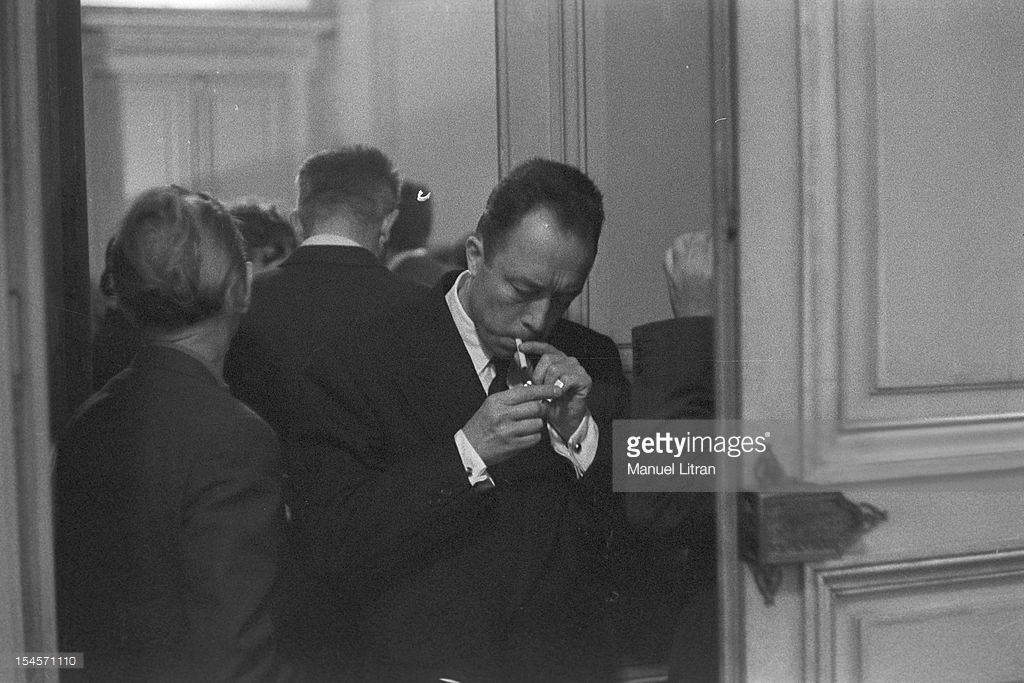
Albert Camus: 'For myself, I cannot live without my art', Nobel banquet speech - 1957

June 30, 2017

10 December 1957, City Hall, Stockholm, Sweden

In receiving the distinction with which your free Academy has so generously honoured me, my gratitude has been profound, particularly when I consider the extent to which this recompense has surpassed my personal merits. Every man, and for stronger reasons, every artist, wants to be recognized. So do I. But I have not been able to learn of your decision without comparing its repercussions to what I really am. A man almost young, rich only in his doubts and with his work still in progress, accustomed to living in the solitude of work or in the retreats of friendship: how would he not feel a kind of panic at hearing the decree that transports him all of a sudden, alone and reduced to himself, to the centre of a glaring light? And with what feelings could he accept this honour at a time when other writers in Europe, among them the very greatest, are condemned to silence, and even at a time when the country of his birth is going through unending misery?

I felt that shock and inner turmoil. In order to regain peace I have had, in short, to come to terms with a too generous fortune. And since I cannot live up to it by merely resting on my achievement, I have found nothing to support me but what has supported me through all my life, even in the most contrary circumstances: the idea that I have of my art and of the role of the writer. Let me only tell you, in a spirit of gratitude and friendship, as simply as I can, what this idea is.

For myself, I cannot live without my art. But I have never placed it above everything. If, on the other hand, I need it, it is because it cannot be separated from my fellow men, and it allows me to live, such as I am, on one level with them. It is a means of stirring the greatest number of people by offering them a privileged picture of common joys and sufferings. It obliges the artist not to keep himself apart; it subjects him to the most humble and the most universal truth. And often he who has chosen the fate of the artist because he felt himself to be different soon realizes that he can maintain neither his art nor his difference unless he admits that he is like the others. The artist forges himself to the others, midway between the beauty he cannot do without and the community he cannot tear himself away from. That is why true artists scorn nothing: they are obliged to understand rather than to judge. And if they have to take sides in this world, they can perhaps side only with that society in which, according to Nietzsche's great words, not the judge but the creator will rule, whether he be a worker or an intellectual.

By the same token, the writer's role is not free from difficult duties. By definition he cannot put himself today in the service of those who make history; he is at the service of those who suffer it. Otherwise, he will be alone and deprived of his art. Not all the armies of tyranny with their millions of men will free him from his isolation, even and particularly if he falls into step with them. But the silence of an unknown prisoner, abandoned to humiliations at the other end of the world, is enough to draw the writer out of his exile, at least whenever, in the midst of the privileges of freedom, he manages not to forget that silence, and to transmit it in order to make it resound by means of his art.

None of us is great enough for such a task. But in all circumstances of life, in obscurity or temporary fame, cast in the irons of tyranny or for a time free to express himself, the writer can win the heart of a living community that will justify him, on the one condition that he will accept to the limit of his abilities the two tasks that constitute the greatness of his craft: the service of truth and the service of liberty. Because his task is to unite the greatest possible number of people, his art must not compromise with lies and servitude which, wherever they rule, breed solitude. Whatever our personal weaknesses may be, the nobility of our craft will always be rooted in two commitments, difficult to maintain: the refusal to lie about what one knows and the resistance to oppression.

For more than twenty years of an insane history, hopelessly lost like all the men of my generation in the convulsions of time, I have been supported by one thing: by the hidden feeling that to write today was an honour because this activity was a commitment - and a commitment not only to write. Specifically, in view of my powers and my state of being, it was a commitment to bear, together with all those who were living through the same history, the misery and the hope we shared. These men, who were born at the beginning of the First World War, who were twenty when Hitler came to power and the first revolutionary trials were beginning, who were then confronted as a completion of their education with the Spanish Civil War, the Second World War, the world of concentration camps, a Europe of torture and prisons - these men must today rear their sons and create their works in a world threatened by nuclear destruction. Nobody, I think, can ask them to be optimists. And I even think that we should understand - without ceasing to fight it - the error of those who in an excess of despair have asserted their right to dishonour and have rushed into the nihilism of the era. But the fact remains that most of us, in my country and in Europe, have refused this nihilism and have engaged upon a quest for legitimacy. They have had to forge for themselves an art of living in times of catastrophe in order to be born a second time and to fight openly against the instinct of death at work in our history.

Each generation doubtless feels called upon to reform the world. Mine knows that it will not reform it, but its task is perhaps even greater. It consists in preventing the world from destroying itself. Heir to a corrupt history, in which are mingled fallen revolutions, technology gone mad, dead gods, and worn-out ideologies, where mediocre powers can destroy all yet no longer know how to convince, where intelligence has debased itself to become the servant of hatred and oppression, this generation starting from its own negations has had to re-establish, both within and without, a little of that which constitutes the dignity of life and death. In a world threatened by disintegration, in which our grand inquisitors run the risk of establishing forever the kingdom of death, it knows that it should, in an insane race against the clock, restore among the nations a peace that is not servitude, reconcile anew labour and culture, and remake with all men the Ark of the Covenant. It is not certain that this generation will ever be able to accomplish this immense task, but already it is rising everywhere in the world to the double challenge of truth and liberty and, if necessary, knows how to die for it without hate. Wherever it is found, it deserves to be saluted and encouraged, particularly where it is sacrificing itself. In any event, certain of your complete approval, it is to this generation that I should like to pass on the honour that you have just given me.

At the same time, after having outlined the nobility of the writer's craft, I should have put him in his proper place. He has no other claims but those which he shares with his comrades in arms: vulnerable but obstinate, unjust but impassioned for justice, doing his work without shame or pride in view of everybody, not ceasing to be divided between sorrow and beauty, and devoted finally to drawing from his double existence the creations that he obstinately tries to erect in the destructive movement of history. Who after all this can expect from him complete solutions and high morals? Truth is mysterious, elusive, always to be conquered. Liberty is dangerous, as hard to live with as it is elating. We must march toward these two goals, painfully but resolutely, certain in advance of our failings on so long a road. What writer would from now on in good conscience dare set himself up as a preacher of virtue? For myself, I must state once more that I am not of this kind. I have never been able to renounce the light, the pleasure of being, and the freedom in which I grew up. But although this nostalgia explains many of my errors and my faults, it has doubtless helped me toward a better understanding of my craft. It is helping me still to support unquestioningly all those silent men who sustain the life made for them in the world only through memory of the return of brief and free happiness.

Thus reduced to what I really am, to my limits and debts as well as to my difficult creed, I feel freer, in concluding, to comment upon the extent and the generosity of the honour you have just bestowed upon me, freer also to tell you that I would receive it as an homage rendered to all those who, sharing in the same fight, have not received any privilege, but have on the contrary known misery and persecution. It remains for me to thank you from the bottom of my heart and to make before you publicly, as a personal sign of my gratitude, the same and ancient promise of faithfulness which every true artist repeats to himself in silence every day.


Source: http://www.nobelprize.org/nobel_prizes/lit...

Enjoyed this speech? Speakola is a labour of love and I’d be very grateful if you would share, tweet or like it. Thank you.

Facebook Twitter Facebook
In BOOKS 2 Tags ALBERT CAMUS, TRANSCRIPT, NOVELIST, THE OUTSIDER, ALGIERS, NOBEL PRIZE, LITERATURE, WRITER
Comment

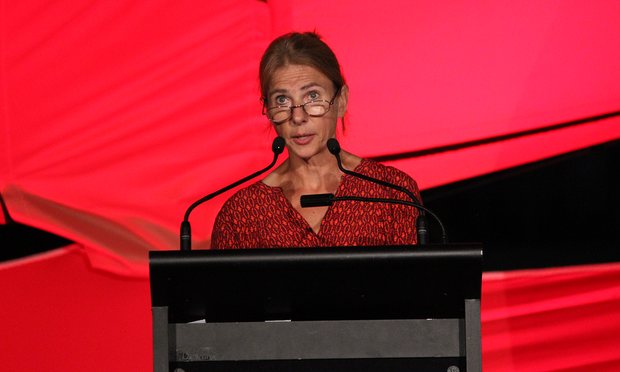
Lionel Shriver: 'You’re not supposed to try on other people’s hats', Brisbane Writers Festival keynote - 2016

September 25, 2016

8 September 2016, Brisbane, Australia

I hate to disappoint you folks, but unless we stretch the topic to breaking point this address will not be about “community and belonging.” In fact, you have to hand it to this festival’s organisers: inviting a renowned iconoclast to speak about “community and belonging” is like expecting a great white shark to balance a beach ball on its nose.

The topic I had submitted instead was “fiction and identity politics,” which may sound on its face equally dreary.

But I’m afraid the bramble of thorny issues that cluster around “identity politics” has got all too interesting, particularly for people pursuing the occupation I share with many gathered in this hall: fiction writing. Taken to their logical conclusion, ideologies recently come into vogue challenge our right to write fiction at all. Meanwhile, the kind of fiction we are “allowed” to write is in danger of becoming so hedged, so circumscribed, so tippy-toe, that we’d indeed be better off not writing the anodyne drivel to begin with.

Let’s start with a tempest-in-a-teacup at Bowdoin College in Brunswick, Maine. Earlier this year, two students, both members of student government, threw a tequila-themed birthday party for a friend. The hosts provided attendees with miniature sombreros, which—the horror— numerous partygoers wore.

When photos of the party circulated on social media, campus-wide outrage ensued. Administrators sent multiple emails to the “culprits” threatening an investigation into an “act of ethnic stereotyping.” Partygoers were placed on “social probation,” while the two hosts were ejected from their dorm and later impeached. Bowdoin’s student newspaper decried the attendees’ lack of “basic empathy.”

The student government issued a “statement of solidarity” with “all the students who were injured and affected by the incident,” and demanded that administrators “create a safe space for those students who have been or feel specifically targeted.” The tequila party, the statement specified, was just the sort of occasion that “creates an environment where students of colour, particularly Latino, and especially Mexican, feel unsafe.” In sum, the party-favour hats constituted – wait for it – “cultural appropriation.”

Curiously, across my country Mexican restaurants, often owned and run by Mexicans, are festooned with sombreros – if perhaps not for long. At the UK’s University of East Anglia, the student union has banned a Mexican restaurant from giving out sombreros, deemed once more an act of “cultural appropriation” that was also racist.

Now, I am a little at a loss to explain what’s so insulting about a sombrero – a practical piece of headgear for a hot climate that keeps out the sun with a wide brim. My parents went to Mexico when I was small, and brought a sombrero back from their travels, the better for my brothers and I to unashamedly appropriate the souvenir to play dress-up. For my part, as a German-American on both sides, I’m more than happy for anyone who doesn’t share my genetic pedigree to don a Tyrolean hat, pull on some leiderhosen, pour themselves a weisbier, and belt out the Hoffbrauhaus Song.

But what does this have to do with writing fiction? The moral of the sombrero scandals is clear: you’re not supposed to try on other people’s hats. Yet that’s what we’re paid to do, isn’t it? Step into other people’s shoes, and try on their hats.

In the latest ethos, which has spun well beyond college campuses in short order, any tradition, any experience, any costume, any way of doing and saying things, that is associated with a minority or disadvantaged group is ring-fenced: look-but-don’t-touch. Those who embrace a vast range of “identities” – ethnicities, nationalities, races, sexual and gender categories, classes of economic under-privilege and disability – are now encouraged to be possessive of their experience and to regard other peoples’ attempts to participate in their lives and traditions, either actively or imaginatively, as a form of theft.

Yet were their authors honouring the new rules against helping yourself to what doesn’t belong to you, we would not have Malcolm Lowry’s Under the Volcano. We wouldn’t have most of Graham Greene’s novels, many of which are set in what for the author were foreign countries, and which therefore have Real Foreigners in them, who speak and act like foreigners, too.

In his masterwork English Passengers, Matthew Kneale would have restrained himself from including chapters written in an Aboriginal’s voice – though these are some of the richest, most compelling passages in that novel. If Dalton Trumbo had been scared off of describing being trapped in a body with no arms, legs, or face because he was not personally disabled – because he had not been through a World War I maiming himself and therefore had no right to “appropriate” the isolation of a paraplegic – we wouldn’t have the haunting 1938 classic, Johnny Got His Gun.

We wouldn’t have Maria McCann’s erotic masterpiece, As Meat Loves Salt – in which a straight woman writes about gay men in the English Civil War. Though the book is nonfiction, it’s worth noting that we also wouldn’t have 1961’s Black Like Me, for which John Howard Griffin committed the now unpardonable sin of “blackface.” Having his skin darkened – Michael Jackson in reverse – Griffin found out what it was like to live as a black man in the segregated American South. He’d be excoriated today, yet that book made a powerful social impact at the time.

The author of Who Owns Culture? Appropriation and Authenticity in American Law, Susan Scafidi, a law professor at Fordham University who for the record is white, defines cultural appropriation as “taking intellectual property, traditional knowledge, cultural expressions, or artifacts from someone else’s culture without permission. This can include unauthorised use of another culture’s dance, dress, music, language, folklore, cuisine, traditional medicine, religious symbols, etc.”

What strikes me about that definition is that “without permission” bit. However are we fiction writers to seek “permission” to use a character from another race or culture, or to employ the vernacular of a group to which we don’t belong? Do we set up a stand on the corner and approach passers-by with a clipboard, getting signatures that grant limited rights to employ an Indonesian character in Chapter Twelve, the way political volunteers get a candidate on the ballot?

I am hopeful that the concept of “cultural appropriation” is a passing fad: people with different backgrounds rubbing up against each other and exchanging ideas and practices is self-evidently one of the most productive, fascinating aspects of modern urban life.

But this latest and little absurd no-no is part of a larger climate of super-sensitivity, giving rise to proliferating prohibitions supposedly in the interest of social justice that constrain fiction writers and prospectively makes our work impossible.

So far, the majority of these farcical cases of “appropriation” have concentrated on fashion, dance, and music: At the American Music Awards 2013, Katy Perry got it in the neck for dressing like a geisha. According to the Arab-American writer Randa Jarrar, for someone like me to practice belly dancing is “white appropriation of Eastern dance,” while according to the Daily Beast Iggy Azalea committed “cultural crimes” by imitating African rap and speaking in a “blaccent.”

The felony of cultural sticky fingers even extends to exercise: at the University of Ottawa in Canada, a yoga teacher was shamed into suspending her class, “because yoga originally comes from India.” She offered to re-title the course, “Mindful Stretching.” And get this: the purism has also reached the world of food. Supported by no less than Lena Dunham, students at Oberlin College in Ohio have protested “culturally appropriated food” like sushi in their dining hall (lucky cusses— in my day, we never had sushi in our dining hall), whose inauthenticity is “insensitive” to the Japanese.

Seriously, we have people questioning whether it’s appropriate for white people to eat pad Thai. Turnabout, then: I guess that means that as a native of North Carolina, I can ban the Thais from eating barbecue. (I bet they’d swap.)

This same sensibility is coming to a bookstore near you. Because who is the appropriator par excellence, really? Who assumes other people’s voices, accents, patois, and distinctive idioms? Who literally puts words into the mouths of people different from themselves? Who dares to get inside the very heads of strangers, who has the chutzpah to project thoughts and feelings into the minds of others, who steals their very souls? Who is a professional kidnapper? Who swipes every sight, smell, sensation, or overheard conversation like a kid in a candy store, and sometimes take notes the better to purloin whole worlds? Who is the premier pickpocket of the arts?

The fiction writer, that’s who.

This is a disrespectful vocation by its nature – prying, voyeuristic, kleptomaniacal, and presumptuous. And that is fiction writing at its best. When Truman Capote wrote from the perspective of condemned murderers from a lower economic class than his own, he had some gall. But writing fiction takes gall.

As for the culture police’s obsession with “authenticity,” fiction is inherently inauthentic. It’s fake. It’s self-confessedly fake; that is the nature of the form, which is about people who don’t exist and events that didn’t happen. The name of the game is not whether your novel honours reality; it’s all about what you can get away with.

In his 2009 novel Little Bee, Chris Cleave, who as it happens is participating in this festival, dared to write from the point of view of a 14-year-old Nigerian girl, though he is male, white, and British. I’ll remain neutral on whether he “got away with it” in literary terms, because I haven’t read the book yet.

But in principle, I admire his courage – if only because he invited this kind of ethical forensics in a review out of San Francisco: “When a white male author writes as a young Nigerian girl, is it an act of empathy, or identity theft?” the reviewer asked. “When an author pretends to be someone he is not, he does it to tell a story outside of his own experiential range. But he has to in turn be careful that he is representing his characters, not using them for his plot.”

Hold it. OK, he’s necessarily “representing” his characters, by portraying them on the page. But of course he’s using them for his plot! How could he not? They are his characters, to be manipulated at his whim, to fulfill whatever purpose he cares to put them to.

This same reviewer recapitulated Cleave’s obligation “to show that he’s representing [the girl], rather than exploiting her.” Again, a false dichotomy.

Of course he’s exploiting her. It’s his book, and he made her up. The character is his creature, to be exploited up a storm. Yet the reviewer chides that “special care should be taken with a story that’s not implicitly yours to tell” and worries that “Cleave pushes his own boundaries maybe further than they were meant to go.”

What stories are “implicitly ours to tell,” and what boundaries around our own lives are we mandated to remain within? I would argue that any story you can make yours is yours to tell, and trying to push the boundaries of the author’s personal experience is part of a fiction writer’s job.

I’m hoping that crime writers, for example, don’t all have personal experience of committing murder. Me, I’ve depicted a high school killing spree, and I hate to break it to you: I’ve never shot fatal arrows through seven kids, a teacher, and a cafeteria worker, either. We make things up, we chance our arms, sometimes we do a little research, but in the end it’s still about what we can get away with – what we can put over on our readers.

Because the ultimate endpoint of keeping out mitts off experience that doesn’t belong to us is that there is no fiction. Someone like me only permits herself to write from the perspective of a straight white female born in North Carolina, closing on sixty, able-bodied but with bad knees, skint for years but finally able to buy the odd new shirt. All that’s left is memoir.

And here’s the bugbear, here’s where we really can’t win. At the same time that we’re to write about only the few toys that landed in our playpen, we’re also upbraided for failing to portray in our fiction a population that is sufficiently various.

My most recent novel The Mandibles was taken to task by one reviewer for addressing an America that is “straight and white”. It happens that this is a multigenerational family saga – about a white family. I wasn’t instinctively inclined to insert a transvestite or bisexual, with issues that might distract from my central subject matter of apocalyptic economics. Yet the implication of this criticism is that we novelists need to plug in representatives of a variety of groups in our cast of characters, as if filling out the entering class of freshmen at a university with strict diversity requirements.

You do indeed see just this brand of tokenism in television. There was a point in the latter 1990s at which suddenly every sitcom and drama in sight had to have a gay or lesbian character or couple. That was good news as a voucher of the success of the gay rights movement, but it still grew a bit tiresome: look at us, our show is so hip, one of the characters is homosexual!

We’re now going through the same fashionable exercise in relation to the transgender characters in series like Transparent and Orange is the New Black.

Fine. But I still would like to reserve the right as a novelist to use only the characters that pertain to my story.

Besides: which is it to be? We have to tend our own gardens, and only write about ourselves or people just like us because we mustn’t pilfer others’ experience, or we have to people our cast like an I’d like to teach the world to sing Coca-Cola advert?

For it can be dangerous these days to go the diversity route. Especially since there seems to be a consensus on the notion that San Francisco reviewer put forward that “special care should be taken with a story that’s not implicitly yours to tell.”

In The Mandibles, I have one secondary character, Luella, who’s black. She’s married to a more central character, Douglas, the Mandible family’s 97-year-old patriarch. I reasoned that Douglas, a liberal New Yorker, would credibly have left his wife for a beautiful, stately African American because arm candy of color would reflect well on him in his circle, and keep his progressive kids’ objections to a minimum. But in the end the joke is on Douglas, because Luella suffers from early onset dementia, while his ex-wife, staunchly of sound mind, ends up running a charity for dementia research. As the novel reaches its climax and the family is reduced to the street, they’re obliged to put the addled, disoriented Luella on a leash, to keep her from wandering off.

Behold, the reviewer in the Washington Post, who groundlessly accused this book of being “racist” because it doesn’t toe a strict Democratic Party line in its political outlook, described the scene thus: “The Mandibles are white. Luella, the single African American in the family, arrives in Brooklyn incontinent and demented. She needs to be physically restrained. As their fortunes become ever more dire and the family assembles for a perilous trek through the streets of lawless New York, she’s held at the end of a leash. If The Mandibles is ever made into a film, my suggestion is that this image not be employed for the movie poster.”

Your author, by implication, yearns to bring back slavery.

Thus in the world of identity politics, fiction writers better be careful. If we do choose to import representatives of protected groups, special rules apply. If a character happens to be black, they have to be treated with kid gloves, and never be placed in scenes that, taken out of context, might seem disrespectful. But that’s no way to write. The burden is too great, the self-examination paralysing. The natural result of that kind of criticism in the Post is that next time I don’t use any black characters, lest they do or say anything that is short of perfectly admirable and lovely.

In fact, I’m reminded of a letter I received in relation to my seventh novel from an Armenian-American who objected – why did I have to make the narrator of We Need to Talk About Kevin Armenian? He didn’t like my narrator, and felt that her ethnicity disparaged his community. I took pains to explain that I knew something about Armenian heritage, because my best friend in the States was Armenian, and I also thought there was something dark and aggrieved in the culture of the Armenian diaspora that was atmospherically germane to that book. Besides, I despaired, everyone in the US has an ethnic background of some sort, and she had to be something!

Especially for writers from traditionally privileged demographics, the message seems to be that it’s a whole lot safer just to make all your characters from that same demographic, so you can be as hard on them as you care to be, and do with them what you like. Availing yourself of a diverse cast, you are not free; you have inadvertently invited a host of regulations upon your head, as if just having joined the EU. Use different races, ethnicities, and minority gender identities, and you are being watched.

I confess that this climate of scrutiny has got under my skin. When I was first starting out as a novelist, I didn’t hesitate to write black characters, for example, or to avail myself of black dialects, for which, having grown up in the American South, I had a pretty good ear. I am now much more anxious about depicting characters of different races, and accents make me nervous.

In describing a second-generation Mexican American who’s married to one of my main characters in The Mandibles, I took care to write his dialogue in standard American English, to specify that he spoke without an accent, and to explain that he only dropped Spanish expressions tongue-in-cheek. I would certainly think twice – more than twice – about ever writing a whole novel, or even a goodly chunk of one, from the perspective of a character whose race is different from my own – because I may sell myself as an iconoclast, but I’m as anxious as the next person about attracting vitriol. But I think that’s a loss. I think that indicates a contraction of my fictional universe that is not good for the books, and not good for my soul.

Writing under the pseudonym Edward Schlosser on Vox, the author of the essay “I’m a Liberal Professor, and My Liberal Students Scare Me” describes higher education’s “current climate of fear” and its “heavily policed discourse of semantic sensitivity” – and I am concerned that this touchy ethos, in which offendedness is used as a weapon, has spread far beyond academia, in part thanks to social media.

Why, it’s largely in order to keep from losing my fictional mojo that I stay off Facebook and Twitter, which could surely install an instinctive self-censorship out of fear of attack. Ten years ago, I gave the opening address of this same festival, in which I maintained that fiction writers have a vested interest in protecting everyone’s right to offend others – because if hurting someone else’s feelings even inadvertently is sufficient justification for muzzling, there will always be someone out there who is miffed by what you say, and freedom of speech is dead. With the rise of identity politics, which privileges a subjective sense of injury as actionable basis for prosecution, that is a battle that in the decade since I last spoke in Brisbane we’ve been losing.

Worse: the left’s embrace of gotcha hypersensitivity inevitably invites backlash. Donald Trump appeals to people who have had it up to their eyeballs with being told what they can and cannot say. Pushing back against a mainstream culture of speak-no-evil suppression, they lash out in defiance, and then what they say is pretty appalling.

Regarding identity politics, what’s especially saddened me in my recent career is a trend toward rejecting the advocacy of anyone who does not belong to the group. In 2013, I published Big Brother, a novel that grew out of my loss of my own older brother, who in 2009 died from the complications of morbid obesity. I was moved to write the book not only from grief, but also sympathy: in the years before his death, as my brother grew heavier, I saw how dreadfully other people treated him – how he would be seated off in a corner of a restaurant, how the staff would roll their eyes at each other after he’d ordered, though he hadn’t requested more food than anyone else.

I was wildly impatient with the way we assess people’s characters these days in accordance with their weight, and tried to get on the page my dismay at how much energy people waste on this matter, sometimes anguishing for years over a few excess pounds. Both author and book were on the side of the angels, or so you would think.

But in my events to promote Big Brother, I started to notice a pattern. Most of the people buying the book in the signing queue were thin. Especially in the US, fat is now one of those issues where you either have to be one of us, or you’re the enemy. I verified this when I had a long email correspondence with a “Healthy at Any Size” activist, who was incensed by the novel, which she hadn’t even read. Which she refused to read. No amount of explaining that the novel was on her side, that it was a book that was terribly pained by the way heavy people are treated and how unfairly they are judged, could overcome the scrawny author’s photo on the flap.

She and her colleagues in the fat rights movement did not want my advocacy. I could not weigh in on this material because I did not belong to the club. I found this an artistic, political, and even commercial disappointment – because in the US and the UK, if only skinny-minnies will buy your book, you’ve evaporated the pool of prospective consumers to a puddle.

I worry that the clamorous world of identity politics is also undermining the very causes its activists claim to back. As a fiction writer, yeah, I do sometimes deem my narrator an Armenian. But that’s only by way of a start. Merely being Armenian is not to have a character as I understand the word.

Membership of a larger group is not an identity. Being Asian is not an identity. Being gay is not an identity. Being deaf, blind, or wheelchair-bound is not an identity, nor is being economically deprived. I reviewed a novel recently that I had regretfully to give a thumbs-down, though it was terribly well intended; its heart was in the right place. But in relating the Chinese immigrant experience in America, the author put forward characters that were mostly Chinese. That is, that’s sort of all they were: Chinese. Which isn’t enough.

I made this same point in relation to gender in Melbourne last week: both as writers and as people, we should be seeking to push beyond the constraining categories into which we have been arbitrarily dropped by birth. If we embrace narrow group-based identities too fiercely, we cling to the very cages in which others would seek to trap us. We pigeonhole ourselves. We limit our own notion of who we are, and in presenting ourselves as one of a membership, a representative of our type, an ambassador of an amalgam, we ask not to be seen.

The reading and writing of fiction is obviously driven in part by a desire to look inward, to be self-examining, reflective. But the form is also born of a desperation to break free of the claustrophobia of our own experience.

The spirit of good fiction is one of exploration, generosity, curiosity, audacity, and compassion. Writing during the day and reading when I go to bed at night, I find it an enormous relief to escape the confines of my own head. Even if novels and short stories only do so by creating an illusion, fiction helps to fell the exasperating barriers between us, and for a short while allows us to behold the astonishing reality of other people.

The last thing we fiction writers need is restrictions on what belongs to us. In a recent interview, our colleague Chris Cleave conceded, “Do I as an Englishman have any right to write a story of a Nigerian woman? … I completely sympathise with the people who say I have no right to do this. My only excuse is that I do it well.”

Which brings us to my final point. We do not all do it well. So it’s more than possible that we write from the perspective of a one-legged lesbian from Afghanistan and fall flat on our arses. We don’t get the dialogue right, and for insertions of expressions in Pashto we depend on Google Translate.

Halfway through the novel, suddenly the protagonist has lost the right leg instead of the left one. Our idea of lesbian sex is drawn from wooden internet porn. Efforts to persuasively enter the lives of others very different from us may fail: that’s a given. But maybe rather than having our heads taken off, we should get a few points for trying. After all, most fiction sucks. Most writing sucks. Most things that people make of any sort suck. But that doesn’t mean we shouldn’t make anything.

The answer is that modern cliché: to keep trying to fail better. Anything but be obliged to designate my every character an ageing five-foot-two smartass, and having to set every novel in North Carolina.

We fiction writers have to preserve the right to wear many hats – including sombreros.

Source: https://www.theguardian.com/commentisfree/...

Enjoyed this speech? Speakola is a labour of love and I’d be very grateful if you would share, tweet or like it. Thank you.

Facebook Twitter Facebook
In BOOKS Tags LIONEL SHRIVER, TH3E MANDIBLES, BRISBANE WRITERS FESTIVAL, OPENING NIGHT, IDENTITY POLITICS, CULTURAL APPROPRIATION, NOVELIST, NOVEL, ART, TRANSCRIPT, CONTROVERSY, SPEAKOLIES 2016
Comment

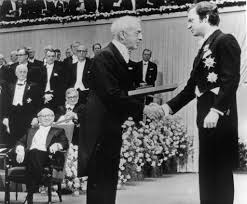
Saul Bellow: 'We do not, we writers, represent mankind adequately', Nobel acceptance - 1976

January 1, 2016

12 December 1976, Stockholm, Sweden

Video excerpt of Saul Bellow's speech here

I was a very contrary undergraduate more than 40 years ago. It was my habit to register for a course and then to do most of my reading in another field of study. So that when I should have been grinding away at "Money and Banking" I was reading the novels of Joseph Conrad. I have never had reason to regret this. Perhaps Conrad appealed to me because he was like an American - he was an uprooted Pole sailing exotic seas, speaking French and writing English with extraordinary power and beauty. Nothing could be more natural to me, the child of immigrants who grew up in one of Chicago's immigrant neighborhoods of course! - a Slav who was a British sea captain and knew his way around Marseilles and wrote an Oriental sort of English. But Conrad's real life had little oddity in it. His themes were straightforward - fidelity, command, the traditions of the sea, hierarchy, the fragile rules sailors follow when they are struck by a typhoon. He believed in the strength of these fragile-seeming rules, and in his art. His views on art were simply stated in the preface to The Nigger of the Narcissus. There he said that art was an attempt to render the highest justice to the visible universe: that it tried to find in that universe, in matter as well as in the facts of life, what was fundamental, enduring, essential. The writer's method of attaining the essential was different from that of the thinker or the scientist. These, said Conrad, knew the world by systematic examination. To begin with the artist had only himself; he descended within himself and in the lonely regions to which he descended, he found "the terms of his appeal". He appealed, said Conrad, "to that part of our being which is a gift, not an acquisition, to the capacity for delight and wonder... our sense of pity and pain, to the latent feeling of fellowship with all creation - and to the subtle but invincible conviction of solidarity that knits together the loneliness of innumerable hearts... which binds together all humanity - the dead to the living and the living to the unborn."

This fervent statement was written some 80 years ago and we may want to take it with a few grains of contemporary salt. I belong to a generation of readers that knew the long list of noble or noble-sounding words, words like "invincible conviction" or "humanity" rejected by writers like Ernest Hemingway. Hemingway spoke for the soldiers who fought in the First World War under the inspiration of Woodrow Wilson and other rotund statesmen whose big words had to be measured against the frozen corpses of young men paving the trenches. Hemingway's youthful readers were convinced that the horrors of the 20th Century had sickened and killed humanistic beliefs with their deadly radiations. I told myself, therefore, that Conrad's rhetoric must be resisted. But I never thought him mistaken. He spoke directly to me. The feeling individual appeared weak - he felt nothing but his own weakness. But if he accepted his weakness and his separateness and descended into himself intensifying his loneliness, he discovered his solidarity with other isolated creatures.

I feel no need now to sprinkle Conrad's sentences with skeptical salt. But there are writers for whom the Conradian novel - all novels of that sort - are gone forever. Finished. There is, for instance, M. Alain Robbe-Grillet, one of the leaders of French literature, a spokesman for "thingism" - choseisme. He writes that in great contemporary works, Sartre's Nausea, Camus' The Stranger, or Kafka's The Castle, there are no characters; you find in such books not individuals but - well, entities. "The novel of characters," he says, "belongs entirely in the past. It describes a period: that which marked the apogee of the individual." This is not necessarily an improvement; that Robbe-Grillet admits. But it is the truth. Individuals have been wiped out. "The present period is rather one of administrative numbers. The world's destiny has ceased, for us, to be identified with the rise and fall of certain men of certain families." He goes on to say that in the days of Balzac's bourgeoisie it was important to have a name and a character; character was a weapon in the struggle for survival and success. In that time, "It was something to have a face in a universe where personality represented both the means and the end of all exploration." But our world, he concludes, is more modest. It has renounced the omnipotence of the person. But it is more ambitious as well, "since it looks beyond. The exclusive cult of the 'human' has given way to a larger consciousness, one that is less anthropocentric." However, he comforts us, a new course and the promise of new discoveries lie before us.

On an occasion like this I have no appetite for polemics. We all know what it is to be tired of "characters". Human types have become false and boring. D.H. Lawrence put it early in this century that we human beings, our instincts damaged by Puritanism, no longer care for, were physically repulsive to one another. "The sympathetic heart is broken," he said. He went further, "We stink in each other's nostrils." Besides, in Europe the power of the classics has for centuries been so great that every country has its "identifiable personalities" derived from Molière, Racine, Dickens or Balzac. An awful phenomenon. Perhaps this is connected with the wonderful French saying. "Sil y a un caractère, il est mauvais." It leads one to think that the unoriginal human race tends to borrow what it needs from convenient sources, much as new cities have often been made out of the rubble of old ones. Then, too, the psychoanalytic conception of character is that it is an ugly rigid formation - something we must resign ourselves to, not a thing we can embrace with joy. Totalitarian ideologies, too, have attacked bourgeois individualism, sometimes identifying character with property. There is a hint of this in M. Robbe-Grillet's argument. Dislike of personality, bad masks, false being have had political results.

But I am interested here in the question of the artist's priorities. Is it necessary, or good, that he should begin with historical analysis, with ideas or systems? Proust speaks in Time Regained of a growing preference among young and intelligent readers for works of an elevated analytical, moral or sociological tendency. He says that they prefer to Bergotte (the novelist in Remembrance of Things Past) writers who seem to them more profound. "But," says Proust, "from the moment that works of art are judged by reasoning, nothing is stable or certain, one can prove anything one likes."

The message of Robbe-Grillet is not new. It tells us that we must purge ourselves of bourgeois anthropocentricism and do the classy things that our advanced culture requires. Character? "Fifty years of disease, the death notice signed many times over by the serious essayists," says Robbe-Grillet, "yet nothing has managed to knock it off the pedestal on which the 19th century had placed it. It is a mummy now, but one still enthroned with the same phony majesty, among the values revered by traditional criticism."

The title of Robbe-Grillet's essay is On Several Obsolete Notions. I myself am tired of obsolete notions and of mummies of all kinds but I never tire of reading the master novelists. And what is one to do about the characters in their books? Is it necessary to discontinue the investigation of character? Can anything so vivid in them now be utterly dead? Can it be that human beings are at a dead end? Is individuality really so dependent on historical and cultural conditions? Can we accept the account of those conditions we are so "authoritatively" given? I suggest that it is not in the intrinsic interest of human beings but in these ideas and accounts that the problem lies. The staleness, the inadequacy of these repels us. To find the source of trouble we must look into our own heads.

The fact that the death notice of character "has been signed by the most serious essayists" means only that another group of mummies, the most respectable leaders of the intellectual community, has laid down the law. It amuses me that these serious essayists should be allowed to sign the death notices of literary forms. Should art follow culture? Something has gone wrong.

There is no reason why a novelist should not drop "character" if the strategy stimulates him. But it is nonsense to do it on the theoretical ground that the period which marked the apogee of the individual, and so on, has ended. We must not make bosses of our intellectuals. And we do them no good by letting them run the arts. Should they, when they read novels, find nothing in them but the endorsement of their own opinions? Are we here on earth to play such games?

Characters, Elizabeth Bowen once said, are not created by writers. They pre-exist and they have to be found. If we do not find them, if we fail to represent them, the fault is ours. It must be admitted, however, that finding them is not easy. The condition of human beings has perhaps never been more difficult to define. Those who tell us that we are in an early stage of universal history must be right. We are being lavishly poured together and seem to be experiencing the anguish of new states of consciousness. In America many millions of people have in the last forty years received a "higher education" - in many cases a dubious blessing. In the upheavals of the Sixties we felt for the first time the effects of up-to-date teachings, concepts, sensitivities, the pervasiveness of psychological, pedagogical, political ideas.

Every year we see scores of books and articles which tell the Americans what a state they are in - which make intelligent or simpleminded or extravagant or lurid or demented statements. All reflect the crises we are in while telling us what we must do about them; these analysts are produced by the very disorder and confusion they prescribe for. It is as a writer that I am considering their extreme moral sensitivity, their desire for perfection, their intolerance of the defects of society, the touching, the comical boundlessness of their demands, their anxiety, their irritability, their sensitivity, their tendermindedness, their goodness, their convulsiveness, the recklessness with which they experiment with drugs and touch-therapies and bombs. The ex-Jesuit Malachi Martin in his book on the Church compares the modern American to Michelangelo's sculpture, The Captive. He sees "an unfinished struggle to emerge whole" from a block of matter. The American "captive" is beset in his struggle by "interpretations, admonitions, forewarnings and descriptions of himself by the self-appointed prophets, priests, judges and prefabricators of his travail," says Martin.

Let me take a little time to look more closely at this travail. In private life, disorder or near-panic. In families - for husbands, wives, parents, children - confusion; in civic behavior, in personal loyalities, in sexual practices (I will not recite the whole list; we are tired of hearing it) - further confusion. And with this private disorder goes public bewilderment. In the papers we read what used to amuse us in science fiction - The New York Times speaks of death rays and of Russian and American satellites at war in space. In the November Encounter so sober and responsible an economist as my colleague, Milton Friedman, declares that Great Britain by its public spending will soon go the way of poor countries like Chile. He is appalled by his own forecast. What - the source of that noble tradition of freedom and democratic rights that began with Magna Carta ending in dictatorship? "It is almost impossible for anyone brought up in that tradition to utter the word that Britain is in danger of losing freedom and democracy; and yet it is a fact!"

It is with these facts that knock us to the ground that we try to live. If I were debating with Professor Friedman I might ask him to take into account the resistance of institutions, the cultural differences between Great Britain and Chile, differences in national character and traditions, but my purpose is not to get into debates I can't win but to direct your attention to the terrible predictions we have to live with, the background of disorder, the visions of ruin.

You would think that one such article would be enough for a single number of a magazine but on another page of Encounter Professor Hugh Seton-Watson discusses George Kennan's recent survey of American degeneracy and its dire meaning for the world. Describing America's failure, Kennan speaks of crime, urban decay, drug-addiction, pornography, frivolity, deteriorated educational standards and concludes that our immense power counts for nothing. We cannot lead the world and, undermined by sinfulness, we may not be able to defend ourselves. Professor Seton-Watson writes, "Nothing can defend a society if its upper 100,000 men and women, both the decision-makers and those who help to mould the thinking of the decision-makers, are resolved to capitulate."

So much for the capitalist superpower. Now what about its ideological adversaries? I turn the pages of Encounter to a short study by Mr. George Watson, Lecturer in English at Cambridge, on the racialism of the Left. He tells us that Hyndman, the founder of the Social Democratic Federation, called the South African war the Jews' war; that the Webbs at times expressed racialist views (as did Ruskin, Carlyle and T. H. Huxley before them); he relates that Engels denounced the smaller Slav peoples of Eastern Europe as counter-revolutionary ethnic trash; and Mr. Watson in conclusion cites a public statement by Ulrike Meinhof of the West German "Red Army Faction" made at a judicial hearing in 1972 approving of "revolutionary extermination". For her, German anti-semitism of the Hitler period was essentially anticapitalist. "Auschwitz," she is quoted as saying, "meant that six million Jews were killed and thrown on the waste heap of Europe for what they were: money Jews (Geldjuden)."

I mention these racialists of the Left to show that for us there is no simple choice between the children of light and the children of darkness. Good and evil are not symmetrically distributed along political lines. But I have made my point; we stand open to all anxieties. The decline and fall of everything is our daily dread, we are agitated in private life and tormented by public questions.

And art and literature - what of them? Well, there is a violent uproar but we are not absolutely dominated by it. We are still able to think, to discriminate, and to feel. The purer, subtler, higher activities have not succumbed to fury or to nonsense. Not yet. Books continue to be written and read. It may be more difficult to reach the whirling mind of a modern reader but it is possible to cut through the noise and reach the quiet zone. In the quiet zone we may find that he is devoutly waiting for us. When complications increase, the desire for essentials increases too. The unending cycle of crises that began with the First World War has formed a kind of person, one who has lived through terrible, strange things, and in whom there is an observable shrinkage of prejudices, a casting off of disappointing ideologies, an ability to live with many kinds of madness, an immense desire for certain durable human goods - truth, for instance, or freedom, or wisdom. I don't think I am exaggerating; there is plenty of evidence for this. Disintegration? Well, yes. Much is disintegrating but we are experiencing also an odd kind of refining process. And this has been going on for a long time. Looking into Proust's Time Regained I find that he was clearly aware of it. His novel, describing French society during the Great War, tests the strength of his art. Without art, he insists, shirking no personal or collective horrors, we do not know ourselves or anyone else. Only art penetrates what pride, passion, intelligence and habit erect on all sides - the seeming realities of this world. There is another reality, the genuine one, which we lose sight of. This other reality is always sending us hints, which, without art, we can't receive. Proust calls these hints our "true impressions." The true impressions, our persistent intuitions, will, without art, be hidden from us and we will be left with nothing but a "terminology for practical ends which we falsely call life." Tolstoy put the matter in much the same way. A book like his Ivan Ilyitch also describes these same "practical ends" which conceal both life and death from us. In his final sufferings Ivan Ilyitch becomes an individual, a "character", by tearing down the concealments, by seeing through the "practical ends."

Proust was still able to keep a balance between art and destruction, insisting that art was a necessity of life, a great independent reality, a magical power. But for a long time art has not been connected, as it was in the past, with the main enterprise. The historian Edgar Wind tells us in Art and Anarchy that Hegel long ago observed that art no longer engaged the central energies of man. These energies were now engaged by science - a "relentless spirit of rational inquiry." Art had moved to the margins. There it formed "a wide and splendidly varied horizon." In an age of science people still painted and wrote poetry but, said Hegel, however splendid the gods looked in modern works of art and whatever dignity and perfection we might find "in the images of God the Father and the Virgin Mary" it was of no use: we no longer bent our knees. It is a long time since the knees were bent in piety. Ingenuity, daring exploration, freshness of invention replaced the art of "direct relevance." The most significant achievement of this pure art, in Hegel's view, was that, freed from its former responsibilities, it was no longer "serious." Instead it raised the soul through the "serenity of form above any painful involvement in the limitations of reality." I don't know who would make such a claim today for an art that raises the soul above painful involvements with reality. Nor am I sure that at this moment, it is the spirit of rational inquiry in pure science that engages the central energies of man. The center seems (temporarily perhaps) to be filled up with the crises I have been describing.

There were European writers in the 19th Century who would not give up the connection of literature with the main human enterprise. The very suggestion would have shocked Tolstoy and Dostoevski. But in the West a separation between great artists and the general public took place. They developed a marked contempt for the average reader and the bourgeois mass. The best of them saw clearly enough what sort of civilization Europe had produced, brilliant but unstable, vulnerable, fated to be overtaken by catastrophe, the historian Erich Auerbach tells us. Some of these writers, he says, produced "strange and vaguely terrifying works, or shocked the public by paradoxical and extreme opinions. Many of them took no trouble to facilitate the understanding of what they wrote - whether out of contempt for the public, the cult of their own inspiration, or a certain tragic weakness which prevented them from being at once simple and true."

In the 20th Century, theirs is still the main influence, for despite a show of radicalism and innovation our contemporaries are really very conservative. They follow their l9th-Century leaders and hold to the old standard, interpreting history and society much as they were interpreted in the last century. What would writers do today if it would occur to them that literature might once again engage those "central energies", if they were to recognize that an immense desire had arisen for a return from the periphery, for what was simple and true?

Of course we can't come back to the center simply because we want to; but the fact that we are wanted might matter to us and the force of the crisis is so great that it may summon us back to such a center. But prescriptions are futile. One can't tell writers what to do. The imagination must find its own path. But one can fervently wish that they - that we - would come back from the periphery. We do not, we writers, represent mankind adequately. What account do Americans give of themselves, what accounts of them are given by psychologists, sociologists, historians, journalists, and writers? In a kind of contractual daylight they see themselves in the ways with which we are so desperately familiar. These images of contractual daylight, so boring to Robbe-Grillet and to me, originate in the contemporary world view: We put into our books the consumer, civil servant, football fan, lover, television viewer. And in the contractual daylight version their life is a kind of death. There is another life coming from an insistent sense of what we are which denies these daylight formulations and the false life - the death in life - they make for us. For it is false, and we know it, and our secret and incoherent resistance to it cannot stop, for that resistance arises from persistent intuitions. Perhaps humankind cannot bear too much reality, but neither can it bear too much unreality, too much abuse of the truth.

We do not think well of ourselves; we do not think amply about what we are. Our collective achievements have so greatly "exceeded" us that we "justify" ourselves by pointing to them. It is the jet plane in which we commonplace human beings have crossed the Atlantic in four hours that embodies such value as we can claim. Then we hear that this is closing time in the gardens of the West, that the end of our capitalist civilization is at hand. Some years ago Cyril Connolly wrote that we were about to undergo "a complete mutation, not merely to be defined as the collapse of the capitalist system, but such a sea-change in the nature of reality as could not have been envisaged by Karl Marx or Sigmund Freud." This means that we are not yet sufficiently shrunken; we must prepare to be smaller still. I am not sure whether this should be called intellectual analysis or analysis by an intellectual. The disasters are disasters. It would be worse than stupid to call them victories as some statesmen have tried to do. But I am drawing attention to the fact that there is in the intellectual community a sizeable inventory of attitudes that have become respectable - notions about society, human nature, class, politics, sex, about mind, about the physical universe, the evolution of life. Few writers, even among the best, have taken the trouble to re-examine these attitudes or orthodoxies. Such attitudes only glow more powerfully in Joyce or D.H. Lawrence than in the books of lesser men; they are everywhere and no one challenges them seriously. Since the Twenties, how many novelists have taken a second look at D.H. Lawrence, or argued a different view of sexual potency or the effects of industrial civilization on the instincts? Literature has for nearly a century used the same stock of ideas, myths, strategies. "The most serious essayists of the last fifty years," says Robbe-Grillet. Yes, indeed. Essay after essay, book after book, confirm the most serious thoughts - Baudelairian, Nietzschean, Marxian, Psychoanalytic, etcetera, etcetera - of these most serious essayists. What Robbe-Grillet says about character can be said also about these ideas, maintaining all the usual things about mass society, dehumanization and the rest. How weary we are of them. How poorly they represent us. The pictures they offer no more resemble us than we resemble the reconstructed reptiles and other monsters in a museum of paleontology. We are much more limber, versatile, better articulated, there is much more to us, we all feel it.

What is at the center now? At the moment, neither art nor science but mankind determining, in confusion and obscurity, whether it will endure or go under. The whole species - everybody - has gotten into the act. At such a time it is essential to lighten ourselves, to dump encumbrances, including the encumbrances of education and all organized platitudes, to make judgments of our own, to perform acts of our own. Conrad was right to appeal to that part of our being which is a gift. We must hunt for that under the wreckage of many systems. The failure of those systems may bring a blessed and necessary release from formulations, from an over-defined and misleading consciousness. With increasing frequency I dismiss as merely respectable opinions I have long held - or thought I held - and try to discern what I have really lived by, and what others live by. As for Hegel's art freed from "seriousness" and glowing on the margins, raising the soul above painful involvement in the limitations of reality through the serenity of form, that can exist nowhere now, during this struggle for survival. However, it is not as though the people who engaged in this struggle had only a rudimentary humanity, without culture, and knew nothing of art. Our very vices, our mutilations, show how rich we are in thought and culture. How much we know. How much we even feel. The struggle that convulses us makes us want to simplify, to reconsider, to eliminate the tragic weakness which prevented writers - and readers - from being at once simple and true.

Writers are greatly respected. The intelligent public is wonderfully patient with them, continues to read them and endures disappointment after disappointment, waiting to hear from art what it does not hear from theology, philosophy, social theory, and what it cannot hear from pure science. Out of the struggle at the center has come an immense, painful longing for a broader, more flexible, fuller, more coherent, more comprehensive account of what we human beings are, who we are, and what this life is for. At the center humankind struggles with collective powers for its freedom, the individual struggles with dehumanization for the possession of his soul. If writers do not come again into the center it will not be because the center is pre-empted. It is not. They are free to enter. If they so wish.

The essence of our real condition, the complexity, the confusion, the pain of it is shown to us in glimpses, in what Proust and Tolstoy thought of as "true impressions". This essence reveals, and then conceals itself. When it goes away it leaves us again in doubt. But we never seem to lose our connection with the depths from which these glimpses come. The sense of our real powers, powers we seem to derive from the universe itself, also comes and goes. We are reluctant to talk about this because there is nothing we can prove, because our language is inadequate and because few people are willing to risk talking about it. They would have to say, "There is a spirit" and that is taboo. So almost everyone keeps quiet about it, although almost everyone is aware of it.

The value of literature lies in these intermittent "true impressions". A novel moves back and forth between the world of objects, of actions, of appearances, and that other world from which these "true impressions" come and which moves us to believe that the good we hang onto so tenaciously - in the face of evil, so obstinately - is no illusion.

No one who has spent years in the writing of novels can be unaware of this. The novel can't be compared to the epic, or to the monuments of poetic drama. But it is the best we can do just now. It is a sort of latter-day lean-to, a hovel in which the spirit takes shelter. A novel is balanced between a few true impressions and the multitude of false ones that make up most of what we call life. It tells us that for every human being there is a diversity of existences, that the single existence is itself an illusion in part, that these many existences signify something, tend to something, fulfill something; it promises us meaning, harmony and even justice. What Conrad said was true, art attempts to find in the universe, in matter as well as in the facts of life, what is fundamental, enduring, essential.

From Nobel Lectures, Literature 1968-1980, Editor-in-Charge Tore Frängsmyr, Editor Sture Allén, World Scientific Publishing Co., Singapore, 1993

Source: http://www.nobelprize.org/nobel_prizes/lit...

Enjoyed this speech? Speakola is a labour of love and I’d be very grateful if you would share, tweet or like it. Thank you.

Facebook Twitter Facebook
In BOOKS Tags SAUL BELLOW, NOVELIST, NOBEL PRIZE
Comment

See my film!

Limited Australian Season

March 2025

Details and ticket bookings at

angeandtheboss.com

Support Speakola

Hi speech lovers,
With costs of hosting website and podcast, this labour of love has become a difficult financial proposition in recent times. If you can afford a donation, it will help Speakola survive and prosper.

Best wishes,
Tony Wilson.

Become a Patron!

Learn more about supporting Speakola.

Featured political

Featured
Jon Stewart: "They responded in five seconds", 9-11 first responders, Address to Congress - 2019
Jacinda Ardern: 'They were New Zealanders. They are us', Address to Parliament following Christchurch massacre - 2019
Dolores Ibárruri: "¡No Pasarán!, They shall not pass!', Defense of 2nd Spanish Republic - 1936
Jimmy Reid: 'A rat race is for rats. We're not rats', Rectorial address, Glasgow University - 1972

Featured eulogies

Featured
For Geoffrey Tozer: 'I have to say we all let him down', by Paul Keating - 2009
for James Baldwin: 'Jimmy. You crowned us', by Toni Morrison - 1988
for Michael Gordon: '13 days ago my Dad’s big, beautiful, generous heart suddenly stopped beating', by Scott and Sarah Gordon - 2018

Featured commencement

Featured
Tara Westover: 'Your avatar isn't real, it isn't terribly far from a lie', The Un-Instagrammable Self, Northeastern University - 2019
Tim Minchin: 'Being an artist requires massive reserves of self-belief', WAAPA - 2019
Atul Gawande: 'Curiosity and What Equality Really Means', UCLA Medical School - 2018
Abby Wambach: 'We are the wolves', Barnard College - 2018
Eric Idle: 'America is 300 million people all walking in the same direction, singing 'I Did It My Way'', Whitman College - 2013
Shirley Chisholm: ;America has gone to sleep', Greenfield High School - 1983

Featured sport

Featured
Joe Marler: 'Get back on the horse', Harlequins v Bath pre game interview - 2019
Ray Lewis : 'The greatest pain of my life is the reason I'm standing here today', 52 Cards -
Mel Jones: 'If she was Bradman on the field, she was definitely Keith Miller off the field', Betty Wilson's induction into Australian Cricket Hall of Fame - 2017
Jeff Thomson: 'It’s all those people that help you as kids', Hall of Fame - 2016

Fresh Tweets


Featured weddings

Featured
Dan Angelucci: 'The Best (Best Man) Speech of all time', for Don and Katherine - 2019
Hallerman Sisters: 'Oh sister now we have to let you gooooo!' for Caitlin & Johnny - 2015
Korey Soderman (via Kyle): 'All our lives I have used my voice to help Korey express his thoughts, so today, like always, I will be my brother’s voice' for Kyle and Jess - 2014

Featured Arts

Featured
Bruce Springsteen: 'They're keepers of some of the most beautiful sonic architecture in rock and roll', Induction U2 into Rock Hall of Fame - 2005
Olivia Colman: 'Done that bit. I think I have done that bit', BAFTA acceptance, Leading Actress - 2019
Axel Scheffler: 'The book wasn't called 'No Room on the Broom!', Illustrator of the Year, British Book Awards - 2018
Tina Fey: 'Only in comedy is an obedient white girl from the suburbs a diversity candidate', Kennedy Center Mark Twain Award -  2010
Tina Fey: 'Only in comedy is an obedient white girl from the suburbs a diversity candidate', Kennedy Center Mark Twain Award - 2010

Featured Debates

Featured
Sacha Baron Cohen: 'Just think what Goebbels might have done with Facebook', Anti Defamation League Leadership Award - 2019
Greta Thunberg: 'How dare you', UN Climate Action Summit - 2019
Charlie Munger: 'The Psychology of Human Misjudgment', Harvard University - 1995
Lawrence O'Donnell: 'The original sin of this country is that we invaders shot and murdered our way across the land killing every Native American that we could', The Last Word, 'Dakota' - 2016