• Genre
  • About
  • Submissions
  • Donate
  • Search
Menu

Speakola

All Speeches Great and Small
  • Genre
  • About
  • Submissions
  • Donate
  • Search

Eulogies

Some of the most moving and brilliant speeches ever made occur at funerals. Please upload the eulogy for your loved one using the form below.

For Michael Gordon: "A defining column in the cathedral of Australian journalism and opinion" by Paul Keating - 2018

March 2, 2021

16 February 2018, MCG, Jolimont, Melbourne, Australia

Well, we're here to celebrate Michael's life and to mourn his passing, to pay tribute to his life's work, to regret his voice having been stilled. We're also here to share the grief and pass on our condolences to Robin and to his son and daughter, Scott and Sarah.

In a place of many pillars, Michael was a defining column in the cathedral of Australian journalism and opinion. He journalism was marked by its integrity and consistency, a point Jim has already referred to. Perpetually characterised by his own lack of self importance, his determination not to inject himself into his stories, the ability to stand back and talk.

He possessed journalism's most fundamental attribute — to dispassionately assemble facts, to present them in a digestible and intelligent way, to give the reader the credit of understanding their import, to allow the reader the opportunity to come to a conclusion without the story needing colouring.

Michael's journalism carried that quality of understatement, which over time engenders regard in a reader appreciative of fact and insight, particularly in the age of self-expression where bellicosity is too often the hallmark. it takes a strong presence of mind and sense of self to remain unharried, to remain both focused and content with one’s judgements. Michael's line was always marked by that focus and conscientiousness of purpose.

Long careers in journalism and the judgments which attend them are part of the skeins which form the fabric of the country and society. And the loss of any one, an important one, carries a loss to us all. This is why Michael's passing transcends even the primal loss carried by his family and friends.

He was always fascinated by ideas and as his career was fundamentally in political journalism, he was fascinated by political ideas. In my case, this brought him to extend his journalism to a book, which Jim has already mentioned, ‘A Question of Leadership’, which he had published in 1993. This was built around what journalists have since labelled my Plácido Domingo speech, the December 1990 addressed to the National Press Club, perhaps, not perhaps certainly my one and only unguarded speech to the gallery. And the cause of my unguardedness was the death of the secretary to the treasury the previous evening, who had returned from Melbourne to Canberra to participate in an athletics event, only to die tragically coming off the field. In the reflection and sombreness of it, the following night, I was not of a mind to offer an entertaining political speech when someone of such substance, conscientiousness and commitment had been taken from us.

So I focused on the topic of why we were all there. What would we doing there? What was the essence of our mission? What was our duty to public life? And what was the appropriate role of journalists in the political side show? And in the speech I spoke of participants and voyeurs — whether journalists wish to be part of an integral integral to the national project, or whether they wish to sit on the fence and remain voyeurs, to report the high points but too often in the context of sensationalism. Or were they going to be in it for the policy ride and share the uplift, the psychic income or then to be diverted by the then opposition’s alternatives?

I argued what was central to national progress was leadership. That politicians as a class change the world, and that good ones make it very much better.

That is providing they have support on the big upshifts —when we move the whole structure up. I was trying at the time to convey the righteousness of the project and the constructive role journalists had already played in the big reforms to that time, and to not now fall for what was then the Thatcherite agenda of the then opposition.

Well, this whole notion of leadership and the role of leaders and the co-option of the media in the project really got Michael's attention. Mainly for the reason he was already a committed participant, as both Jim and Robyn's remarks make clear, the patriot in him always willed him to the high road agenda. In reality, he could not resist it. The speech got me into great trouble, of course, because of my focus on leadership, where I had said that Australia had never had leadership of the kind that had been provided in the United States at critical by Washington Lincoln and Roosevelt. As it turned out, this caused certain offense in some quarters <laugh> that the United States had a deeper sense of itself than we had, and that it had snatched its independence had written a constitution to guarantee and protect it.

Nevertheless, Michael saw the Plácido Domingo speech as me laying out the contours of an even larger canvas than the reformation of the economy. And hence his book ‘A Question of Leadership’ was written to alert people to that possibility, to that likelihood. So when I became prime minister, it was no surprise to him that having given the country a new economic engine, I wanted to reorient Australia towards Asia, attempt a true reconciliation with the indigenes and embrace a Republic — to let the country discover its blood energy, to let us know who we are and what we are, to give us the power to head full steam into the fastest growing part of the world but with our heads held high.

Michael loved the whole set of ideas, from Mabo to native title, the throw to Asia and of course the Republic. He would occasionally opine what a terrible loss the shift to a Republic had been in later life in conversations I had with him, and agreed that Australia could never be a great country whileever it borrowed the monarch of another country. He understood that there are no queen bees in the human hive, and as Jefferson has said, a monarchy was, of its essence, a tyranny,

Michael believed in an enlightened cosmopolitan Australia, one at a point of justice with its indigenes, open to the world, and ready to embrace its vast neighbourhood. Like the rest of us, he had to end endure the provincialism and the halting progress, but he never stopped believing in the larger schematic.

We will truly miss him.
Source: https://www.youtube.com/watch?v=VSv81ePNld...

Enjoyed this speech? Speakola is a labour of love and I’d be very grateful if you would share, tweet or like it. Thank you.

Facebook Twitter Facebook
In PUBLIC FIGURE D Tags MICHAEL GORDON, PAUL KEATING, PRIME MINISTER, JOURNALIST, JOURNALISM, TRANSCRIPT
Comment

for Michael Gordon: "He would tap me on the shoulder and say, 'You're OK. You're strong'", by Ali Mullaie - 2018

March 23, 2018

16 February 2018, MCG, Melbourne, Australia

It is a great honour to be asked to share my story of my relationship with Michael Gordon.

I keep thinking and dreaming of Michael and the many things that were between us.

It is impossible to find the words that describe who he was to me.

He was the closest friend a person could have.

He was a father figure. A brother. A role model and he was my colleague when I worked at The Age in Information Technology.

He introduced me to his family Robyn, Sarah and Scott and I became a part of his family.

He helped me with job opportunities.

He was always there for me and I was there for him.

I could pick up the phone any time and speak to him.

We would meet for coffee, go for lunch and dinner.

He would take me on drives to Phillip Island.   

He took me to the footy and to the beaches where he went surfing.

He discussed his designs for the holiday house he was building.

He introduced me to the Australian way of life.

We hugged each other whenever we met.

We sent each other messages. When I was feeling down, he would tap me on the shoulder and say, 'You're OK. You're strong.'

We would talk about everything, or we said nothing and enjoyed each other's company. Or we would just have a laugh.

What can I say? We connected.

We first met on Nauru in the computer lab at Nauru College, where I was a teacher of English and computer science.

The connection was instant. I could feel it. I was appointed his interpreter.

We spent a lot of time walking around the island.

He wondered if my name was Ali or Sir, because everywhere I went, the students called me Sir.

He saw how they ran up to me and how we walked together.

He saw that the locals respected me because I taught their children and because I was engaged with the community. He understood my achievement.

On Nauru, I taught myself English and Computer Science.

I did not waste my time. But I had no family. Michael could truly hear me. Until then no one outside Nauru knew me. No one had told my story.

And because he was there, and spent time with me and with those inside the camp and because he listened he wrote the truth about our despair and our aspirations.

He did not see me as a victim.

Our friendship had nothing to do with this.

It was not based on sympathy.

He was human and he saw me as human.

I want to get the words right as if Michael is listening and can feel what I am saying.

We were born in separate countries and came from different cultures.

I was Hazara but it made no difference.

Our friendship was not about the past.

It was about now and about the future.

It was about total trust and about two human beings.

Two Australians.

I deeply miss him.

Enjoyed this speech? Speakola is a labour of love and I’d be very grateful if you would share, tweet or like it. Thank you.

Facebook Twitter Facebook
In SUBMITTED 3 Tags ALI MULLAIE, NAURU, MICHAEL GORDON, JOURNALIST, JOURNALISM, TEACHER, PACIFIC SOLUTION, REFUGEES, MEMORIAL
1 Comment

Footage courtesy of The Age and the Gordon Family.

for Michael Gordon: ' His smile came from deep down, like the sun appearing over a horizon', by Martin Flanagan - 2018

February 20, 2018

16 February 2018, MCG, Members Dining Room, Melbourne, Australia

Michael Gordon may be the most sensitive man I ever met. When you spoke to him, you could hear the words drop inside him. Like coins in a slot machine. If you said personal things about him, he would blush. His smile came from deep down, like the sun appearing over a horizon. If you asked him a question, there was always a pause, then a slight stammer preceding a rush of words. But not many words – he was a clear, precise thinker. And that was how he wrote – clearly, precisely.

I knew him in two ways. The first was as the sports editor when I arrived at The Age in 1985. He gave me a nickname – Flanners – which I still meet daily. He gave me my break as a sportswriter in sports-mad Melbourne. He made me feel that he loved what I did and I loved doing it for him. That never changed, regardless of our positions on the paper.

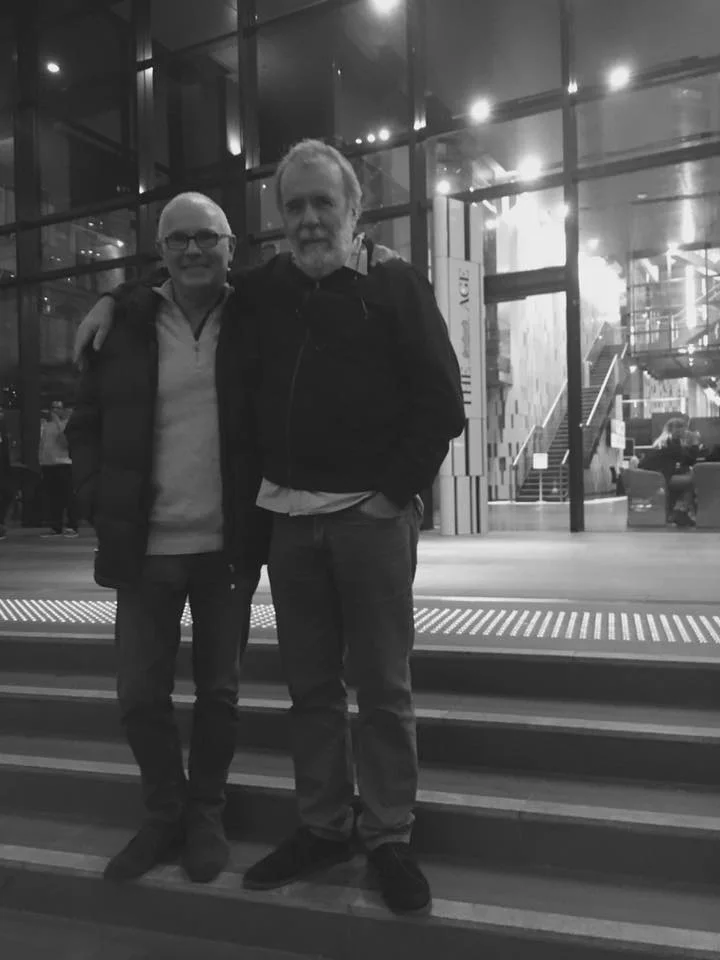
We separated from The Age at the same time, mid-way through last year. For my farewell column, I had a number of ideas. He told me which one to write – a story about my brother, Tim. I always did what he told me or asked me to do. He asked me to go to the office on his last day so I did that also. We left the building together.

He said we both got better as we got older. I certainly thought he did. He became more his own man, dared to do stories that weren’t going to get clicks on-line. At a time when - for some - clicks on-line were the measure of a journalist’s worth. He wrote stories about refugees, powerless people none of us really want to know about because the subject is threatening in so many ways.

What is remarkable about Micky’s journalism is its consistency.  He wrote about football, he wrote Aboriginal stories, he wrote about Canberra politics, he wrote about Manus Island refugees, and the subjects of all those very different stories seem to agree that he treated them fairly and well. Somehow his method successfully negotiated the difficulties peculiar to each area. That’s very rare, I reckon.

Alastair Clarkson is the dominant AFL coach of this era. No-one has come near to Michael’s portrait of Clarkson in his book, “Playing to Win”. The day after Micky died, I received a text from Patrick Dodson’s office. When will Kumunjai Gordon’s funeral be? Kumanjai. An Aboriginal term of respect for the recently departed. Both a Labor and Liberal Prime Minister have spoken of him since his death; a refugee on Manus Island said he was the one great Australian man he met.

What was the secret of Michael Gordon’s success? He was humble with a capital H, never opened his mouth before thinking, asked intelligent questions, never lost sight of those basic human truths the Americans describe as self-evident - and he reported his findings in an easy-to read way.

Last Sunday, I met a former Age employee at the supermarket. She was immediately tearful and I knew why – Michael Gordon. “I didn’t really know him,” she said. “It’s what he represented”.

We live in the era of fake news. There was not a single fake particle in Michael Gordon, and that was recognised in places as far apart as the Lodge in Canberra and the Manus Island Detention Centre. His life stands as an example of what journalism can be and do.

Micky and Martin leaving The Age.jpg
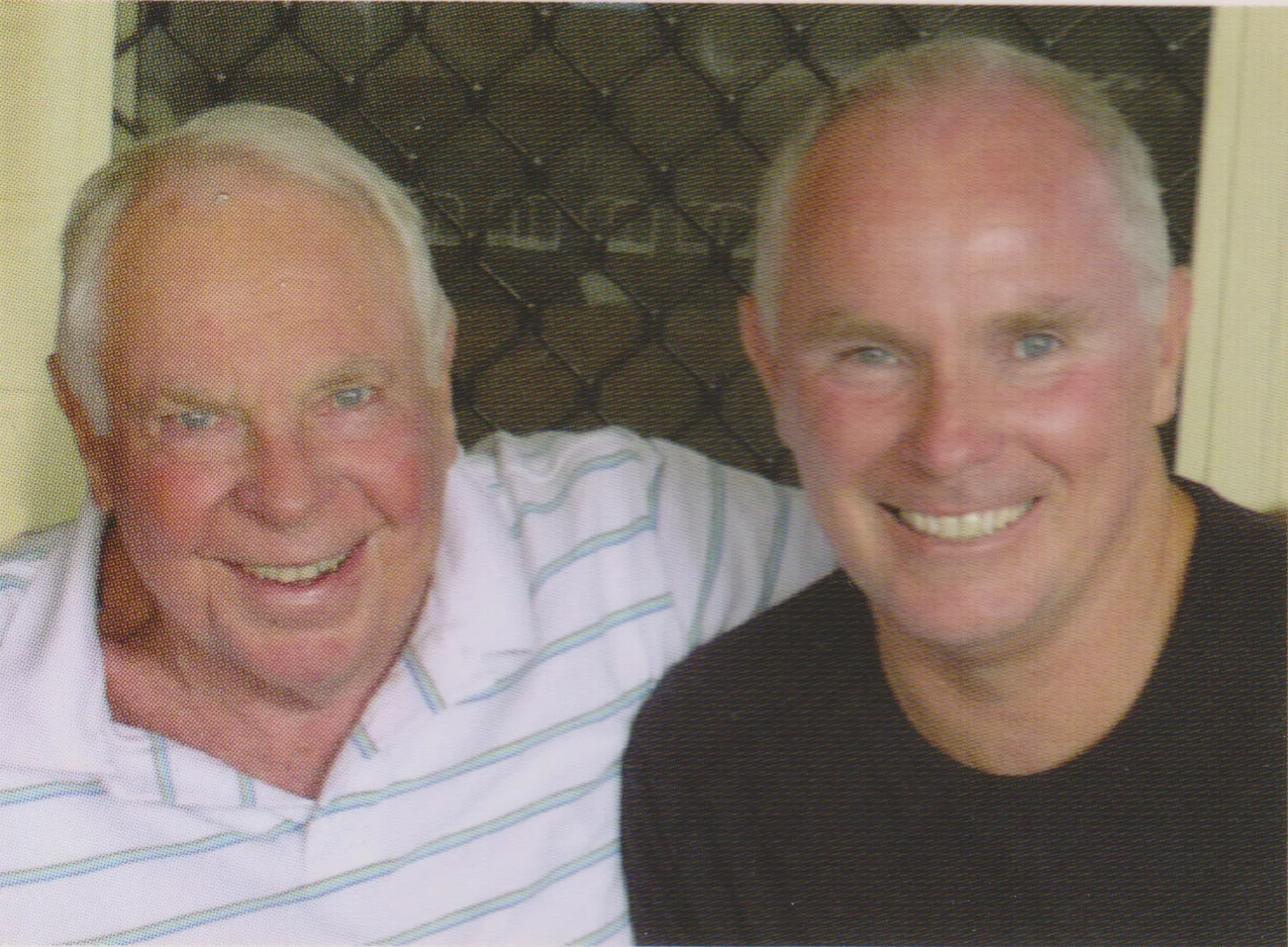
Gordon family.jpg


Related speech: Sarah and Scott Gordon also delivered amazing eulogies for their father and shared them with Speakola. " 13 days ago my Dad’s big, beautiful, generous heart suddenly stopped beating. And we didn’t see it coming. " Read and listen here.

Enjoyed this speech? Speakola is a labour of love and I’d be very grateful if you would share, tweet or like it. Thank you.

Facebook Twitter Facebook
In PUBLIC FIGURE C Tags MICHAEL GORDON, MARTIN FLANAGAN, JOURNALIST, THE AGE, TRANSCRIPT, FRIENDS, COLLEAGUE
1 Comment

For Harry Gordon: 'I miss you calling me kid, kid', by son Michael Gordon - 2015

July 29, 2015

5 February 2015, Melbourne Cricket Ground, Melbourne

I’d like to begin by sharing with you the opening of the memoir that Harry intended to write, but never progressed beyond the words I am about to read. It was tentatively titled The Boxer’s Son and this is how it began:

“When my father’s heart stopped beating, I was nursing his hand, stroking the back of it. His right hand, lumpy and gnarled: a paw that always seemed a bit large for such a small and compact man. It had been broken more than once, and never well mended, and the bumps around the back of the thumb made it feel like a chunk of mallee root.

“My father had been a prize-fighter, a bantamweight professional boxer, and that mis-shapen right hand had been his most significant tool of trade. It had done most of the damage he inflicted through close to 150 fights, many of them 20-rounders. It had even killed a man, another boxer who happened to be his best friend.

“I was perhaps 10 years old, maybe 12, when I first learned about the death of George Mendes. It was there in his scrapbook….”

And that is as far as he got.

*******

I grew up with the story of how Harry’s dad, my grandfather who we all called Pa, killed George Mendes, his best mate, after a reluctant Pa agreed to the fight because Mendes was having a child and needed the money; how Pa tragically caught him while he was mid-air, switching feet, with the result that he hit his head hard on the canvas and died; and how that fight effectively ended two brilliant careers.

What I didn’t know, until the last week, was how Pa got into the fight game. The answer was in one of dad’s scrap books.

As a paperboy, Pa fought for the prime spot to sell papers at Flinders Street station, though he had never been taught how to box or even been in a gym.  One of the fight promoters of the time, Arty Powell, used to allow a few of the paper boys in to see fights for free at the Pavillion, opposite Her Majesty’s Theatre in Exhibition Street, on condition that, in the event that someone on the bill failed to front up, they would enter the ring.

On March 25, 1917, it happened and young Harry, 15 years old and weighing seven stone and nine pounds (or 48 kilos), stepped into to the breach. He knocked out his opponent in the first round, and his next two fights ended the same way. Pa’s real name was Arthur Gordon Parish, but the promoter called him Harry Gordon and it stuck.

Pa went on to become one of the gamest fighters Australia ever produced, and he taught his son how to box in the back yard of their home in Elwood, with the result that Harry became middle weight champion at Melbourne High.

*****

If there was another trait that Harry inherited from his father, it was humility, and the ability to mix easily in any company.

Inside the Elwood house, on the lino kitchen floor, Harry’s mum, a former singer and dancer, with a capacity for exaggeration, used to teach little girls how to tap-dance to make some extra money during the Depression. So Harry learnt to tap-dance, too. Whatever imagination and creativity he possessed, Harry has said, came form his mum.

*******

Two weeks ago, I nursed my father’s hand, along with Johnny and Sally, and Joy, when his big heart stopped beating. It was in better shape than Pa’s.

In the preceding days, as we sat with Harry, I read to him from Hack Attack, Nick Davies’ account of how he broke the hacking scandal in the British press. It’s a pacy tale, and Harry enjoyed listening to it and would nod approvingly when Davies turned a neat phrase.

Early on, Davies observes that reporters are really very similar, and tend to run on a volatile combination of imagination and anxiety and luck. As generalisations go, it’s a good one, but it didn’t apply to Harry, who never seemed anxious and was propelled by a mix of curiosity, creativity, idealism and an ability to see some things that others could not.

Others in the press box who watched John Landy pass up the chance for a world record, to see that a fallen mate was OK, knew they had witnessed something special, but only Harry called it for what it was: one of the finest acts in the history of sport.

*****

In Hack Attack, Davies also paints a rather frightening portrait of the newsrooms of Fleet Street, especially the tabloids, suggesting they are run by puffed-up, foul-mouthed, self-important editors who can’t tell the difference between leadership and spite.

What struck me was how different this culture was from the one Harry nurtured when he was editor at The Sun and, later, editor-in-chief at the Courier Mail in Brisbane. Harry’s management strategy was to help his colleagues be the best they could be by encouraging, not intimidating, by rewarding (if only with his time and advice), not punishing.

The number of journalists who have made contact in recent days to describe how Harry either hired them, inspired them or shaped their careers is in the dozens, and reads like a who’s who of the profession.

It reminds me of the number of coaches who learnt their craft under Yabby Jeans at Hawthorn in the 80s, or the still growing band of Alastair Clarkson protégés who are making their marks at other clubs.

*******

Harry was blessed to have two innings in journalism and love. The first career began as a 16-year-old copy boy on the Daily Telegraph and Harry was, to quote from the title of his first book, a young man in a hurry: at 21, he was in Singapore, covering the execution of Japanese war criminals; at 24, in Korea covering a brutal war and seeing active service; at 27, in Helsinki, covering his first Olympics; and rising from one of the more junior to the most senior position at the Herald and Weekly Times during a career spanning 37 years.

He ran The Sun in the late sixties and summed up his feelings as editor in a note I found in his computer: “Finger on the pulse,” he wrote. “Answered every letter, loved it, great staff, great papers, big stories: the Kennedys, the moon landing, West Gate Bridge disaster, Ronald Ryan… great circulations. A golden time.”

*****

His first love was my mum, Dorothy Scott, who a was a member of the Maroubra Surf Life Saving Club.

Mum’s passing in 1984 was the great tragedy of Harry’s life, and his departure from the Herald and Weekly Times soon followed. It was then that the generosity he had shown to others was reciprocated with offers to be a contributing editor to the new Australian edition of Time magazine; to return to the Olympics and write columns at Seoul; to write The Hard Way, the history of the Hawthorn Football Club, which I worked with Harry to update as One For All in 2009; and to become the official historian of the Australian Olympic Committee.

The second love was Joy, who lived over the side fence and would toss over eggs or bread when Harry’s fridge was bare.

*******

Harry achieved a lot, but he had a lot of fun along the way, getting as big a kick out of frivolous things as he did standing up the Victorian Parliament, or Joh Bjekle-Petersen. Lou Richards tells the story of the day they sat at our house at Hawthorn, writing captions for the backs of footy cards and laughing themselves silly at their own jokes.

He loved his pattern of life, from the hall of fame selection committee meetings; to the trips away with Joy; to family get-togethers at Christmas; to Grand Final week, starting with the Carbine Club lunch, building to the lunch with old colleagues in journalism on the Friday and culminating with the big game.

This year he saw his 12th Hawthorn premiership, and after watching the game we met my kids and their mates at the Blazer Bar for a few celebratory beers. One of them, a Hawthorn supporter, later told me that talking with Harry was the highlight of his grand final.

*****

What sort of father was he? Most of all, he was passionate, someone who greeted each day with enthusiasm and a sense of adventure, generosity and optimism – traits that never left him. He was also competitive, whether the game was 21-up basketball, or beach cricket or (when he was younger) kick-to-kick.

He was proud of his kids and loyal, too, and sometimes to a point that defied logic. At my wedding, for instance, my brother had a disagreement with the person who ran the restaurant where we were celebrating and, as he tends to do, employed some colourful language to make a point. When the owner complained to Harry, he replied that it could not have been John because “my boys don’t swear”!

Over the years, Harry became more a sibling than a parent to us kids and even our kids, and Johnny, Harry and I were the Gordon brothers. We called each other 'kid' and I will always fondly recall how, when he came back from one extended trip overseas, he said: “I miss you calling me 'kid', kid.”

In hospital the day he died, I told him how I’d miss reading him the first paragraph of bigger pieces I had written before they were published. From underneath the oxygen mask, he retorted: “And the last!”

Harry worked hard on his first and final paragraphs, and what came in between flowed like a river. His last words were among his finest.

Addressing the family he told us he’d enjoyed a wonderful life and how grateful and full of love he felt – a sentiment that would be magnified if he was in this room today.

Enjoyed this speech? Speakola is a labour of love and I’d be very grateful if you would share, tweet or like it. Thank you.

Facebook Twitter Facebook
In SUBMITTED Tags JOURNALIST, FATHER, SON
Comment

See my film!

Limited Australian Season

March 2025

Details and ticket bookings at

angeandtheboss.com

Support Speakola

Hi speech lovers,
With costs of hosting website and podcast, this labour of love has become a difficult financial proposition in recent times. If you can afford a donation, it will help Speakola survive and prosper.

Best wishes,
Tony Wilson.

Become a Patron!

Learn more about supporting Speakola.

Featured political

Featured
Jon Stewart: "They responded in five seconds", 9-11 first responders, Address to Congress - 2019
Jacinda Ardern: 'They were New Zealanders. They are us', Address to Parliament following Christchurch massacre - 2019
Dolores Ibárruri: "¡No Pasarán!, They shall not pass!', Defense of 2nd Spanish Republic - 1936
Jimmy Reid: 'A rat race is for rats. We're not rats', Rectorial address, Glasgow University - 1972

Featured eulogies

Featured
For Geoffrey Tozer: 'I have to say we all let him down', by Paul Keating - 2009
for James Baldwin: 'Jimmy. You crowned us', by Toni Morrison - 1988
for Michael Gordon: '13 days ago my Dad’s big, beautiful, generous heart suddenly stopped beating', by Scott and Sarah Gordon - 2018

Featured commencement

Featured
Tara Westover: 'Your avatar isn't real, it isn't terribly far from a lie', The Un-Instagrammable Self, Northeastern University - 2019
Tim Minchin: 'Being an artist requires massive reserves of self-belief', WAAPA - 2019
Atul Gawande: 'Curiosity and What Equality Really Means', UCLA Medical School - 2018
Abby Wambach: 'We are the wolves', Barnard College - 2018
Eric Idle: 'America is 300 million people all walking in the same direction, singing 'I Did It My Way'', Whitman College - 2013
Shirley Chisholm: ;America has gone to sleep', Greenfield High School - 1983

Featured sport

Featured
Joe Marler: 'Get back on the horse', Harlequins v Bath pre game interview - 2019
Ray Lewis : 'The greatest pain of my life is the reason I'm standing here today', 52 Cards -
Mel Jones: 'If she was Bradman on the field, she was definitely Keith Miller off the field', Betty Wilson's induction into Australian Cricket Hall of Fame - 2017
Jeff Thomson: 'It’s all those people that help you as kids', Hall of Fame - 2016

Fresh Tweets


Featured weddings

Featured
Dan Angelucci: 'The Best (Best Man) Speech of all time', for Don and Katherine - 2019
Hallerman Sisters: 'Oh sister now we have to let you gooooo!' for Caitlin &amp; Johnny - 2015
Hallerman Sisters: 'Oh sister now we have to let you gooooo!' for Caitlin & Johnny - 2015
Korey Soderman (via Kyle): 'All our lives I have used my voice to help Korey express his thoughts, so today, like always, I will be my brother’s voice' for Kyle and Jess - 2014

Featured Arts

Featured
Bruce Springsteen: 'They're keepers of some of the most beautiful sonic architecture in rock and roll', Induction U2 into Rock Hall of Fame - 2005
Olivia Colman: 'Done that bit. I think I have done that bit', BAFTA acceptance, Leading Actress - 2019
Axel Scheffler: 'The book wasn't called 'No Room on the Broom!', Illustrator of the Year, British Book Awards - 2018
Tina Fey: 'Only in comedy is an obedient white girl from the suburbs a diversity candidate', Kennedy Center Mark Twain Award -  2010
Tina Fey: 'Only in comedy is an obedient white girl from the suburbs a diversity candidate', Kennedy Center Mark Twain Award - 2010

Featured Debates

Featured
Sacha Baron Cohen: 'Just think what Goebbels might have done with Facebook', Anti Defamation League Leadership Award - 2019
Greta Thunberg: 'How dare you', UN Climate Action Summit - 2019
Charlie Munger: 'The Psychology of Human Misjudgment', Harvard University - 1995
Lawrence O'Donnell: 'The original sin of this country is that we invaders shot and murdered our way across the land killing every Native American that we could', The Last Word, 'Dakota' - 2016