• Genre
  • About
  • Submissions
  • Donate
  • Search
Menu

Speakola

All Speeches Great and Small
  • Genre
  • About
  • Submissions
  • Donate
  • Search
casey sullivan.jpg

Casey Sullivan: ;'Because of her, we can', NAIDOC week - 2018

September 23, 2019

8 July 2018, Tamworth, New South Wales, Australia

My name is Dr Casey Sullivan. I am a proud Wiradjuri woman. I am a daughter of Debbie Wadwell; also, a proud Wiradjuri woman. I am a granddaughter of Beverly Mclean. She was a beautiful strong Wiradjuri woman. I am great granddaughter of Madeline Davis. She, I am sure was a proud Wiradjuri woman. I am great great granddaughter of Maud .She was a strong indigenous woman. I am great great great granddaughter of Nellie. I know nothing of Nellie, for Maud was taken from Nellie and that line was lost.

Nellie has no last name, no tribe, no siblings, no parents. But with her it all began; my family begins, my story begins, and my life is possible because of her. Because of her I can.

Nellie’s daughter Maud was removed and placed on a property and at some time under the same sky I see she became the mother to Madeline. The property owner Mr Bruce was Madeline’s biological father, and he gave Maud his last name. Maud’s child belonged to a time where she would soon marry and have her own children.

From Nellie, Maud and Madeline my family begins to appear.

Strong, beautiful women.

Strong incredible Aboriginal women.

And through my mum and uncles hard earned research we have confirmed that we are strong Wiradjuri women. We belong. We have history and we have family.

My Family raised me in a small village outside Tamworth called Spring Ridge. I attended Spring Ridge Primary School. There were 3 other children in my year. My mum was a stay-at-home mum and my dad was a stockman at the feedlot. I was very lucky I was given the chance to go to school. I was born in a time when young aboriginal girls were encouraged to go to school. I loved school. I learnt new things every day. I played with my friends every single day.

But it has not always been this way.

Our grandmothers and even mothers grew up in a time where girls stayed home to help care for their siblings or they themselves become mothers. My Nan, Beverly, one of my favourite gifts the universe has offered me, was one of these children. She was a young indigenous girl who did not learn to read. She did not get the chance to go school and learn like the other kids.

So, one of my strongest memories of my Nan is seeing her sitting at the kitchen table, she was in her 50’s. And there was a lady teaching my Nan to read. I was already in primary school and she was learning around the same level as me. I was so proud of her. I’d never seen an adult learning before. She inspired me. Here was my Nan saying it was never too late. She was showing me that education is important no matter how old or young you are. I can still remember her saying to me “Gin a rin you can do anything you want when you grow up”. She always called me her little Gin and I loved her all the more for it.

In 2004 Nan was there with my mum and dad when I graduated from studying medicine at the University of New South Wales as a doctor; and her beautiful big smile still makes me smile when I remember that day.

Because of her I can.

Because of her I did.

I am a doctor because my Nan Inspired me. And that’s what we need more of. We need to be role models for our Indigenous kids. Women are strong matriarchal figures in Aboriginal culture. We all have sisters, daughters, mums, Aunts, Nans – Women who can inspire the next generation to say, “Because of her we can”.

We all have women in our lives that can change our future and plant the seeds that grow strong educated aboriginal women.

Now I am a doctor and i am a bit partial to science. So when i make a statement like “Because of her we can” I like to back it up and prove this with science. So Let me teach you some quick genetics. Inside us all is a special gift. (hold up blue bead) It is called maternal mitochondrial DNA. But don’t worry there won’t be a test. We will call this the “gift”. This gift gives our life energy. It gives us life for without it we cannot exist.

And this gift is given to each and everyone of us from our mother. Now this passes from mother to child completely unchanged. A gift that stays the same. Our dads add in their special gifts too so that each generation benefits from better treasures, (hold up small pale bead) so you might smile like your Dad or play sport like your dad. But with each of you remains this special gift.

This base genetic material given to you by your mother.

And she received it from her mother.

And her mother gave it to her.

A special gift passed down to each and every one of us which means if we look at that genetic material we can tell you exactly who you are, where you and your family came from, right back to your families first country and even past this. Right back until there would eventually be only one woman.

The first woman to ever give this gift.

The first keeper of the gift who began to share this amazing life giving genetic gift with her children.

So far science has uncovered one to the first women to ever exist. Her name was Lucy. She was 3ft tall and her bones were found in Africa. It doesn’t take much to imagine that this first woman, Lucy began to give this gift to her children. She just like my great, great, great grandmother had no last name, no known tribe, no siblings, no parents. And yet with her it too all began. Down through the generations passing her gift, mixing this gift with our fathers until standing here today you have me, we have you, we have us.

Because of her we can.

Beside you right now are strong beautiful women, our sisters, our mothers, our daughters, our grandmothers our Aunts all bearing this gift that can take us back to the beginning of time. And each of them with the ability to pass this gift unchanged onto the next generation.

Sons, husbands fathers- you are who you are because of a great woman, a mother who gave you this gift.

Because of her gift you can too.

Men be proud of your women, be proud of your beginning, adore and respect the gift she has to offer for it is older and more precious than you could ever imagine. So down through the years. (show beaded necklace)

Down through the generations from Nellie to Maud to Madeline.

From Madeline to Beverly from Beverly to Debbie.

From Debbie to me.

And from me to my 4 amazing strong Wiradjuri Children: Jack, Lucy, Mollie and Archie. Goes this gift, that only a woman, that only a mother can give. A beautiful thread through time connecting us each and all. Making a beautiful connection of life so full and precious, so colourful and intriguing. It is a gift of generations that I will continue to wear with great pride humility, care, respect and admiration, because of her it all began.

Because of her each and everyone of her I can.

So, I hold all of them and I thank each and everyone of the women who came before me and made me who I am. So, whomever she is to you. Whomever it is that your “her” is, remember all things are possible because of her.

Because of her you all can, and I thank her for she is a part of all of us.

necklace sullivan.jpg

Enjoyed this speech? Speakola is a labour of love and I’d be very grateful if you would share, tweet or like it. Thank you.

Facebook Twitter Facebook
In EQUALITY 3 Tags CASEY SULLIVAN, BECAUSE OF HER WE CAN, NAIDOC WEEK, ABORIGINAL AUSTRALIA, INDIGENOUS WOMAN, MOTHER, MOTHERS, DNA, METERNAL LINE, AFRICA, WIRADJURI
Comment

Bruce Pascoe: 'Maybe the term "hunter-gathering" is just very convenient for people that wanted to take the land', NAIDOC Week - 2009

April 6, 2017

8 July 2009, Art Gallery of NSW, Sydney, Australia

Bruce Pascoe is a writer, editor and anthropologist of books such as Convincing Ground, Dark Emu and Fog a Dox. He is from theBunurong clan, of the Kulin nation.

Mr. Kirby was walking along the Murray River in 1839, and he came across a fisherman who was sitting on a weir that he had constructed into the river, and had made it in such a fashion that all the water was channelled through the weir and any fish that wanted to move up the river had to do so through a small net that had been placed in the river. Mr. Kirby sat down under a tree and watched this operation for some time, and noticed that there was a stick arrangement anchored into the ground, very fine, narrow stick and being tied down, so it had a lot of tension on the string, and the tie disappeared into the water.

He wasn't sure what was going on, whether it was a fishing rod or what the arrangement was, but then he noticed that a fish ... The stick released, and a fish flung over the fisherman's shoulder and landed behind him. Mr. Kirby noticed that the man was aware that he was being observed, and casually reached behind him, picked up the fish, and tossed into a basket and then leant back on his elbow and waited. This went on, Mr. Kirby's observation, for an hour or more, and every few minutes, another fish would be flung back over the fisherman's shoulder, and he would, with great insouciance, toss it into the basket.

Aboriginal people sometimes get a bit nervous when other aboriginal people use big words, but I'm a bookish sort of a person and I grew up with words and I loved them. Aboriginal people traditionally spoke seven or eight languages. We were the great wordsmith of the world, and one day, we'll recover that pride in the words. I'm happy to use insouciance because that's exactly what Mr. Kirby observed.

This man aware of being observed was proud of his achievement, and a bit disdainful of this other man watching him. He didn't even speak to the man, but he did observe how the tie from the springing stick was tied on to a noose. Every time a fish swam through the noose, it triggered the peg that was holding the noose down, and it flung the fish out of the water. This was engineering, and the man was very proud of his achievement.

 A man called Mitchell, on the Narran River on the Queensland-New South Wales border, right about the same time, rode through grasslands up to the withers of his horse, rode through those grasslands for nine miles. Throughout the nine miles, grass was stooped like the old English stoops that was set in piles, and he rode through this for nine miles.

Leichhardt was another man who visited that country and disappeared. Another man called Gregory came and followed in Leichhardt footsteps and hoof prints. They camped because they were tired and felt they were lost when they saw aboriginal people on these grasslands, and they witnessed them for three days while they repaired their carts, while they fixed up their horse's saddlery, they recovered their spirits and their health.

For three to four days, Gregory's people witnessed people harvesting grain. Then he saw a phenomenal thing. He saw people sowing grain, and the next day, saw people irrigating that grain. Later on, the harvested grain from the last season were sorted into stores, and some of it was put in pouches and worn around the neck, and was destined to be traded to neighbouring peoples. This was a trade in grain.

Mr. Smith from the Northern Territories, part aboriginal man, came across a number of people building what looked to him like a dam. He watched very carefully and very circumspectly, because these weren't his people. He stood back a mile off from this project and just watched. Eventually, the old men motioned him into the camp. He asked them about what they were doing. They said, "Oh, we're going to do another one tomorrow. You can watch that too if you like." The next day, another dam was built. That dam had an exit from it into some channels, which ran through flat ground, and those people were irrigating a crop.

Ernest Giles' brother, a bit earlier than this, was travelling through the Northern Territory, and came across huge stores of what he discovered was grain stored up in platforms three metres off the ground. Each of those stores weighted a tonne. He had never seen anything like it before, but it didn't stop him stealing it, because, once again, he was an explorer. He was lost, and he was angry. He took the grain that had been stored for the harvesters.

There was a woman of Cape Otway, and it was me who discovered her secrets, because near my home, near the Cape Otway log house at that time, I came across a midden that had been exposed by a great storm. Cape Otway is pretty good at having great storms. The face of the midden had sheared away and exposed a whole lot of tools, and they were the normal tools that you would find, axes, scythes, hammers, augers, bone spear points for sewing clothes.

There was one little stone, about that big, like a size of a top or a matchbox, and I couldn't work it out. It had various holes drilled in it of different dimensions, had notches on the side, and it has straight lines, and I couldn't work out what this was. I worried about it for days, and days, and days, and eventually, my mother came down. She was living at Apollo Bay not far away. My mother is blind, deaf, and epileptic but quite well. I gave it to my mother. I said, "What do you reckon this is?" She felt it, and she said, "Oh, this is a sewing kit."

She felt the holes, and she felt the lines. She said, "I used to have on like this when I was a kid made out of tin," and it was for sharpening needle points, bone needle points, getting an edge on the fine side of the needle, and notches for cutting twine. It was a very, very intimate thing, and I was more or less ashamed to be handling it. I did so in ignorance, but it wasn't really my business. I returned all those things to the site, and they're still there. I go back every now and then and see them.

Another man called Todd in 1835 was one of the very first white people to visit Victoria. He was supposed to be guarding the land for John Batman. John Batman had gone back to Tasmania because his nose was falling off. John Batman, the great discoverer of Victoria, had syphilis and his nose was falling off. He went back to Tasmania. There was a reason why he had syphilis. There was a reason why a lot of aboriginal people and aboriginal women in Tasmania had syphilis too.

Todd was told to wait there and not upset the aboriginal people. Todd wasn't a bad sort of a man. Now, if he was look after your milk bar or your pub or your hardware store, you could rely on his abilities, because he does seem like a decent sort of a bloke. He talked to the aboriginal people as much as he could, learned some words, seemed to be kind, gave people the things that they seemed to be interested in, accepted what he was given in return. It was a nice warm weather. Everything seem to be going pretty well.

Todd, in his spare time, because he seemed to have a lot of it, was happy to fish with the people, but also to make drawings of them as they fished or as they participated in other cultural activities. One of these drawings is a line of women and girls bending over with sticks about that long, and it's a transformative piece of Australian art. Not very good, but it's transformative because the women were digging up a yam pasture field, that if you look at the scale, is probably six, seven acres wide. It's a big paddock. It's full of yam daisy, and that's what those women were doing. They were digging up the yam daisy, selecting the mature tubers, and pressing them down. When they had selected their tubers, they'd press down the remaining tubers to regenerate the crop.

You can see all this in Todd's drawing. We're very, very fortunate to have it, because the next year, there was no yam daisy in Victoria. Wherever a sheep had roamed, they came across the yam pastures. They gravitated to them because they were such good eating. Sheep, because of their dentition, are able to crop the basal leaves of yam daisies right down to the ground. A kangaroo can't do it. A wombat can't do it. A bandicoot can't do it, but a sheep can. They wiped out the yam daisy in one season. You hardly can find a yam daisy in Victoria now. Some people are growing them commercially, but if you go along the railway tracks around Werribee and places like that, you'll see plenty of them.

What do you call what all these people saw? What I saw, what Mr. Kirby saw, what Mr. Mitchell, what Mr. Gregory, what Mr. Smith, what Mr. Giles, what Mr. Todd, what were they looking at? I'm having a battle at the moment with senior academics in Australia, which I'm losing profoundly because I'm not an academic. I'm just a bloke who lives in the bush, but I can read. These are the things I've read. I'm saying to people, as I'm saying to you, I'm proselytising, I'm using you, it looks to me as if these are not the habits of hunter-gatherers.

Aboriginal people are called hunter-gatherers. What's all this business of irrigating crops, harvesting crops, having granaries of over a tonne and several parcels, trading grain, cultivating yam pastures, having 3,000 kilometres of eel races around the town of Koroit in Victoria? What is going on? This isn't hunter-gathering. I'm asking you what you think. If we can't use words like horticulturist, because I've had the ruler over my knuckles for suggesting such a thing, we can't say tilling, I was admonished for that, we can't say, apparently, farming, we can't say cultivation, what is going on?

I know it's not hunter-gathering. Aboriginal people in that era knew it wasn't hunter-gathering. Maybe the term hunter-gathering is just very convenient for people that wanted to take the land, because if you're hunting and gathering, your possession of the soil is itinerant.

Source: https://www.youtube.com/watch?v=KMZ9cnP2vs...

Enjoyed this speech? Speakola is a labour of love and I’d be very grateful if you would share, tweet or like it. Thank you.

Facebook Twitter Facebook
In EQUALITY 2 Tags BRUCE PASCOE, ART GALLERY OF NSW, NAIDOC, NOT HUNTER GATHERERS, LINGUISTICS, ANTHROPOLOGIST, ANTHROPOLOGY, LANGUAGES, ENGINEERING[, ABORIGINAL AUSTRALIA, INDIGENOUS RIGHTS, FIRST PEOPLE
Comment

Lowitja O'Donoghue: 'Since the 1967 referendum, Australia has been living a lie', opening National Congress of Australia's First People - 2011

January 27, 2016

8 June 2011, Homebush, New South Wales, Australia

Brothers and sisters, let me begin with acknowledgement, thanks, commendation and congratulations. This gathering is, indeed, cause for celebration.

Firstly, I wish to acknowledge this place as Aboriginal land – always was, always
will be.

I thank Norma Ingram, Chicka Madden and the performers for their welcome. Such protocols are important to me – indeed, I’m sure, to all of us here today. They're about basic respect for people and place. They fit together. They are a part of what the Pitjantjatjara people – my mob – call ngapartji ngapartji. In other words ‘you give, I give…we share’.

I also thank the National Congress Co-Chairs Sam Jeffries and Josephine Bourne for their invitation to speak to you here today. I am honoured to be giving this opening address. I know you will also hear from many other speakers over the course of this gathering and I’m delighted to be in their company.

I take this opportunity to commend all of those whose efforts have brought us to this place today – the selfless women and men who spoke up for a national voice for our people, who shaped this National Congress, and have held it in their capable hands until now: the Steering Committee, the Ethics Council and the inaugural National Executive, including Co-Chairs Sam, Josephine and, earlier, Kerry Arabena.


Lastly, I congratulate all of you selected as delegates for this first national gathering, charged with taking the National Congress forward. This has not been by chance. It has been through a rigorous process that required you to ‘buy in’ and ‘step up’. A process that found you ready, willing and able to meet the challenges ahead.


As I look around the room, I see many familiar faces and friends. While I know that this speech may be reported in the media, I want you to know that it is not to them but to you – my people – that I speak today. You, whose individual and collective greatness is entirely capable of moving me to tears.


In a year or two, I will turn 80 years of age – a milestone that, shamefully, too few of our people reach. In terms of our average life span, this old girl’s odometer clicked over for a second run more than a decade ago.


During my lifetime, I have been bestowed with numerous honours and received many accolades. I have a string of letters after my name that, while I never se tout to acquire them, give me a certain amount of satisfaction – especially when I remember a particular matron back at Colebrook Children’s Home who never missed an opportunity to tell me that I would ‘never amount to anything’.

Little would make me more proud, however, than to see the National Congress succeed and for one of its first achievements to be helping to achieve true and lasting recognition of and protection for our people.

But more on that later. For now, let me focus on the National Congress and what it means to me. Far more than a shiny piece of plastic nestling in my purse – yes, I am a proud member, number 1865 – it means that our people have new reason to hope. Much of my message to you here today revolves around something that I fear has become unfashionable, perhaps even a dirty word, to some in our community. In our desire to have our diversity understood and accepted, some of us have forgotten that unity matters.


About 15 years ago, while still the Chairperson of the Aboriginal and Torres Strait Islander Commission (ATSIC), I was interviewed at length for the Australian Biography projecti. I had been talking about even earlier times, the heady days of the Federal Council for the Advancement of Aborigines and Torres Strait Islanders (FCAATSI) in the lead-up to the 1967 Referendum.

I spoke of the way we came together for a common purpose of improving the conditions for our people everywhere. I recalled that, back then, there was little federal funding for Aboriginal affairs so we financed this fight ourselves, also drawing upon the goodwill and donations of good-hearted non-Aboriginal people. To get to our meetings, we hitchhiked and pooled our money with a tarpaulin or blanket muster. We stayed in caravan parks or, if somebody was fortunate enough to have enough money to pay for a hotel room, we all camped in there together. In Canberra, that was often at Brassey House, now known as the
Brassey Hotel, where the staff kindly turned a blind eye to the fact that the numbers in the breakfast room of a morning often far outnumbered the number of guests they had registered!

These were interesting and exciting times – hard too – but times of real unity and solidarity amongst our people. The Australian Biography interviewer remarked that I seemed wistful, nostalgic. It was an insightful observation. To this day, I don’t believe we’ve ever recaptured that unity. Just what accounts for that leaching of something so fundamental and good, I can’t say. But I’ll be frank with you: I am placing considerable hope in this National Congress to help recapture it. Not for the sake of a placard or slogan but because, through unity, we will achieve much greater outcomes.


So many good things are happening in our communities. We are kicking goals, opening doors and breaking through the glass and brown ceilings. And, yet, the times when we wholeheartedly and unanimously celebrate these achievements are relatively few.

Sometimes, unfathomably, we gloss over the good. Or we snipe or think to ourselves ‘who do they think they are?’ Sometimes we let personal insecurities cloud our judgement. When honourable, hard-working people amongst us make mistakes, we’re quick to crucify them and slow to forget. Perhaps we do this unconsciously but the effect is just the same. It undermines
and disheartens worthy individuals and destabilises our organisations and communities. It dishonours the work of our heroes, past and present. They didn’t build what they did for us to tear it down. We’re better than that. Let it stop now, let us consciously decide that we will celebrate, nurture and support each other instead.


In some ways, this is a cautionary tale directed at each of you. Already, the National Congress has its detractors. Even before it was out of the showroom and on the road, there were those who made it clear that they’d like to see it in the scrap yard.


I am not talking about those who have legitimate, thoughtful suggestions on ways the National Congress model could be improved. I have no doubt at all that it can, should and will be improved in all kinds of ways over time; we should expect the third or even second National Congress to be considerably different to this one.


I am talking about a tide of naysayers who are standing by, waiting and even hoping for this organisation to fail. Their reasons are varied; some quite benign, others more disturbing. Old-fashioned racism may factor, and arrogance too. Some may view the National Congress as a threat to old status quos or new ones that have emerged since ATSIC disappeared. Sadly, others may be so beaten down by life’s challenges or past disappointments that their ability to
comprehend real potential and promise has atrophied.


To all of these people, I say simply: Think again. In my opinion, the reasons why the National Congress could fail are far outweighed by the reasons why it should succeed. There are many such reasons here at this gathering. Some elements of the media have led a brazen and destructive charge against the National Congress. How ironic that some of those for whom this organisation has the least application might feel so threatened by it.


I appeal to such detractors to give the National Congress a fair go. In fact, I challenge them: Would you have the courage to submit to the same rigorous process as those involved in the National Congress? How would you fare? And do you, too, have what it takes to be a builder, not a wrecker? To sacrifice a front-page story or political point for thoughtful analysis, debate and collaboration.


The National Congress, as it stands today, is the result of extensive nationwide consultations. A maker inevitably leaves his or her mark on their creation. Our people have spoken and our fingerprints are all over the National Congress. Wecan expect to be judged on our part in its creation and its success or otherwise.


As a result, this is an organisation that:
* Is a company, limited by guarantee, at arms length from government.
* Has built-in gender equity at all levels of representation.
* Sets new levels of excellence and expectation (unrivalled in Australian society, whether in government or the public, private or community sectors); and
* Has a structure interwoven with the golden threads of our communities; talented individuals and representative organisations across all spheres.


Some people regard me as a radical, others see me as quite conservative. I would say I’m both, as well as a pretty open book. My mixed feelings about the demise of ATSIC – for example, my belief that it was an organisation set up to fail, as well as my disappointment in some people and events of the past – are on the public record and I see no need to re-hash them here. Suffice to say that over the past six years, I have despaired over the absence of a national
Indigenous voice, a vehicle for our self-determination.

I will concede that, as the National Congress was being fashioned, I wondered at times whether our community had the goods when it came to electing the best people. Then, when the notion of an Ethics Council emerged, I questioned what right anyone had to judge any of us by standards not applicable anywhere else. I asked myself if the imposition of gender balance was really necessary. And when the proposed multi-tiered structure was revealed, I found it complicated.


Having now had time to metabolise all of these things, I have arrived at a point where I am comfortable with the National Congress as a working model. I venture that it is, as my friend Paul Keating last week described the national Native Title Act 1993, ‘necessarily complex’ but nonetheless inspired.

I am excited, for example, to see what emerges from the blending of individuals - many of you leaders in your fields – with representatives of sectoral, state and territory and national organisations constituted in various ways. And I have no doubt that gender balance would not have been achieved organically any time soon. Let it be declared, here and now, that the old ‘Boy’s Club’ is officially dead – in this forum at least. I thank my brothers for supporting our sisters in this. I think we can be proud that, together, we’ve done something that no-one else has had the guts to do.


I would like now to make a few humble suggestions and issue a few challenges to you as delegates. Some are borne from my own experience; others are just common sense. I say that you should expect the going to be tough and, regrettably, for things to get personal from time to time.

The path you have chosen is not for the fainthearted. Some of your biggest critics will be your own people, so steel yourselves.

A people’s movement will necessarily take time to build. I hope you will encourage membership of the National Congress – both within your own families and communities but also far beyond them.

Of course, an organisation with 100,000 inactive members may as well have none. It is not enough to say blithely, ‘I’m a member of the National Congress’ and do no more. That is having one foot inside the camp and the other foot out, ready to cut and run when the going gets tough. Every one of our people needs to decide: Are you out or are you in? And if you’re out, run your own race and let the rest of us run ours.

I am not the first person, nor will I be the last, to observe that the National Congress will only ever be as good, energetic, dynamic, staunch and fearless as all of its people – elected representatives, delegates such as yourselves, members and staff. And none of us should wait for the administration to do all of the heavy lifting.

Others have their roles to play too, including governments, opposition parties and
public servants.

The Federal Government has said that it will work with the National Congress, including on measures to close the gap in Indigenous life outcomes and opportunities. The National Congress must also work with governments of all persuasions on this, and everything else on our agenda. Common features of all of ATSIC’s successful negotiations with Government –
yes, there were some – were the ability to sensibly argue our position, hold our ground and maintain a good measure of diplomacy (even when it was hard to do). These will also hold the National Congress in good stead, especially when governments – themselves facing challenges – begin looking for easy ways out.

Don’t give them those outs. Send a message that the National Congress is here to stay.
One of the criticisms I have made of ATSIC is that, on a few occasions, it got too close to Government – for example, where Australia was represented as a country at international forums. We dealt with this at the Working Group on Indigenous Populations (WGIP) in Geneva by asking for and securing separate seats for ATSIC representatives, apart from Government and public servants.

Yesterday, I got the feeling that some people were a little afraid to mention ATSIC. I’m not one of them, because I know that lessons unlearned are opportunities lost. The National Congress can learn much from the experiences of ATSIC and others. In the international context, for example, it must always remember that it exists to advocate for our people, not for Australia per se. While taking a strategic and constructive approach, the National Congress must not be afraid to flex its muscles of independence where required.


For all of the talking that will take place here this week, I also hope there’ll be a great deal of listening. You have much to learn from each other. It is important that you come with ideas but none set in concrete, and without personal hobbyhorses that will achieve little for the greater good. After sharing and listening, you will be in a position to decide what issues are truly critical and should be addressed first.


Which brings me to my own personal number one priority – one in which I sincerely hope the National Congress will play a major role. It is something that can underpin the full plethora of other issues that the National Congress will be concerned with. I am talking about advancing constitutional reform, specifically recognising Aboriginal and Torres Strait Islander people in the Australian Constitution.

The Expert Panel on Constitutional Recognition of Aboriginal and Torres Strait Islander Peoples will advise the Federal Government on this before the end of the year, with a view to a referendum on the subject being held before the next federal election.


Since the 1967 Referendum, Australia has been living a lie. It has patted itself on the back as a fair country, one that treats its citizens equally and, especially, protects the vulnerable.
Don’t get me wrong. I am proud to have helped to secure the ‘Yes’ vote that recognised us as citizens and more than mere flora and fauna. It was important. But it also pains me to know that the Constitution still contains a potential discriminatory power, which can be used by the Commonwealth against our people or, indeed, any other race. And that it still lacks any explicit recognition of us or our place as the First Australians.


Of course, our founding document was framed in a different era. Many say we cannot judge it by today’s standards. Perhaps not but we can bring it into line with those standards. This would be good not only for our own heads and our hearts, as per advice from the Royal Australian and New Zealand College of Psychiatrists (RANZCP)iii, but also for the nation’s soul.


In order to succeed, we need political bipartisanship, which thankfully we have at present. And we need to secure the agreement of the Australian people. A national majority of voters, and a majority of voters in a majority of states – a Herculean task, and one that has seen many more referenda fail than succeed in the past.


Recent debate has swirled around how far we can push the issue of constitutional recognition, where the line is between success and failure? Does it limit matters to mere mention in a preamble that might be inserted in the Constitution? Or can we move beyond relative tokenism to something more meaningful?

I strongly hope for the latter. These will not be easy questions to answer but make no mistake – this is truly a once-in-a-lifetime opportunity to make things right for our country. This is
something around which the National Congress could play a valuable role; informing and encouraging our people to become actively involved and fully engaged. I hope that today’s various sessions on constitutional reform will help us all arrive at a better understanding of the mechanics, realities and possibilities of what lies ahead. In order to move beyond superficialities in a unified way, we first need to have an informed and robust discussion amongst ourselves.

I spoke earlier about doing justice to our heroes. I would like to leave you with words from a couple of my personal heroes, and some others who seem destined to be. They all go to some of what I have raised for the National Congress here today – pride, responsibility, strategy, the constructive role we can all play, and seizing the day.


First, two quotes from a great friend of our people, South Africa’s Archbishop Desmond Tutu. As he said: 'My father always used to say, ‘Don't raise your voice. Improve your argument’. Good sense does not always lie with the loudest shouters, nor can we say that a large, unruly crowd is always the best arbiter of what is right, and
Do your little bit of good where you are; it's those little bits of good put together that overwhelm the world.


And, finally, some wisdom from two sources from closer to home. Coincidentally, they’re both musical in origin but those who know me well know that I love a good singalong.


The first comes from the Colli Crew, talented youngsters from north-western New South Wales, whose rap song ‘Talk of the town’ I’m reliably informed is a hit on YouTube:

Think about the choices that you make.
Take control of your wheel, have no shame.
When you play the game, screw your head on straight.
Step up the plate, step up the plate.
Don’t wait til it’s too late.

And, one of my personal favourites – certainly more my own speed – Troy Cassar-Daley from his beautiful song ‘I love this place’


The world outside is a changing thing
One moment you’re out, next you’re in
I’ve got a good feeling that we’re going to win
If we don’t look back on the things that make us sorry
On the road ahead, I can see the sun is shining on your face
I love this place


Today, I’ve got a good feeling too. Thank you.

 

Source: http://nationalcongress.com.au/lowitja-odo...

Enjoyed this speech? Speakola is a labour of love and I’d be very grateful if you would share, tweet or like it. Thank you.

Facebook Twitter Facebook
In EQUALITY Tags LOWITJA O'DONOGUE, NATIONAL CONGRESS OF AUSTRALIA'S FIRST PEOPLE, ATSIC, UNITY, CONSTITUTIONAL REFORM, ABORIGINAL AUSTRALIA
Comment

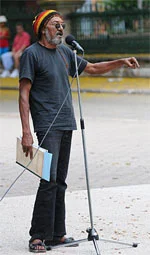
Dennis Walker: 'I know I’m arrogant, but as arrogant as I am, I could never be as arrogant as a white man in this country', Invasion Day protest - 2008

January 27, 2016

26 January 2008, Invasion Day rally, outside Parliament House, Brisbane, Australia

Transcript by Hamish Chitts, Brisbane, www.fightforaboriginalrights.blogspot.com

Thank you, I won’t bore you with the statistics of the devastation being wrecked upon us in this illegal occupation and the genocide happening as we speak. Suffice to say, and this is my pet baby, the incarceration rates are up, the deaths in custody are up. I don’t like it, I don’t know who does, except those who may profit from it I guess.

We need to begin to deal from our own sovereignty. Instead of the Union Jack being in their flag it should be our flag, we decide. This is by their law, Captain Cook was instructed by his sovereign King George III, “You are, with consent, to take advantage of convenient situations”. He did not get consent, there has never been any consent given in this country by any black fella as far as I know about anything they do. So there is no consent, the sovereign said get consent, Captain Cook did not get consent he acted as a false agent. That’s their law, not ours, their law. Any act of a false agent makes all laws that flow from it, including the First Fleet – the first boat people, all illegal. Now the way to get over that problem is to deal fairly and treaty it and work out our differences and get on with it.

However in their arrogance, and just in case you think I’m arrogant – I know I’m arrogant, but as arrogant as I am, I could never be as arrogant as a white man in this country and don’t say you as individuals aren’t responsible for it, you pay taxes so your police forces, your legislators and your courts do the dirty work for you. So don’t say you haven’t got a hand in this, you helped pay for this coming down on us. Don’t forget that it’s not just us they’re coming after, we are just the convenient scapegoats to get the uranium out so the state can keep the power. Your youth death rates are up too, they come for us today they’ll be coming for you tonight, I think James Baldwin said in the book The Fire Next Time.

I have been trying to get in touch with our Premier about this day, today. Unfortunately she’s not concerned about the fires she’s more concerned about the floods, which I can understand at the moment. So she didn’t have time to meet with me. However I did write her a letter asking for an audience and this letter said:

Dear Premier
I am writing to you as I am somewhat concerned at the ever increasing incarceration rates and deaths in custody of Indigenous people. As you are aware I have tired many ways to address these matters as did my mother before me and we both agreed the only way forward would be by treaty in order for all parties involved to be reconciled under God. I have drafted my Invasion Day message titled ‘A Time for Peace’ and I hoping to talk to you on these matters prior to that and thus this letter to obtain an appointment with you to discuss treaty and related matters.
Peace, prosperity and healing,

Dated Thursday 17 / 1 / 08

That was delivered to her parliamentary office along with enclosures, a copy of A Time for Peace, something I wrote and I’ll read out probably at Musgrave. Also included a copy of my treaty to lease. I also included a copy a letter of reference she gave to me back in 2002 when she was minister of education. She said:

Dear Mr Lynch
I write in support of the application made by Dennis Walker for financial assistance through the Brisbane City Council’s Community Development Assistance Grants to initiate a sacred treaty circles project. This project aims to contribute to the spiritual, environmental and social healing in the Brisbane region and through providing a focussed gathering point, commitment and gathering arena in order to reinforce traditional Aboriginal culture and enhance community relationships. I am very supportive of this goal and ask you that you look favourably on this application.
Thank you for your consideration, please do not hesitate to contact me if I can be of further assistance.
Yours sincerely
Anna Bligh MP
Member for South Brisbane, Minister for Education
1st March 2002

So they speak with a forked tongue. She couldn’t meet with me to discuss treaty so I could say, “Listen, we’ve got a deal going with the Queensland Government that may be a little humane and we may get a chance for some justice here, but we’ve still got to do this via a treaty process.” They’ve refused to meet, they’ve refused to talk, they continue the genocide, the death rates are up and the incarceration rates are up. What do we do? On March 11 and 12 we go to Canberra and put it to Rudd. Essentially the same thing – treaty now. If Rudd won’t deal we should go overseas and ask for the overseas community to treaty with us so we can get rid of the oppressor.

Thank you.

Source: http://www.treatyrepublic.net/content/denn...

Enjoyed this speech? Speakola is a labour of love and I’d be very grateful if you would share, tweet or like it. Thank you.

Facebook Twitter Facebook
In EQUALITY Tags DENNIS WALKER, AUSTRALIA DAY, INVASION DAY, INDIGENOUS RIGHTS, ABORIGINAL AUSTRALIA, TREATY, INVASION
1 Comment

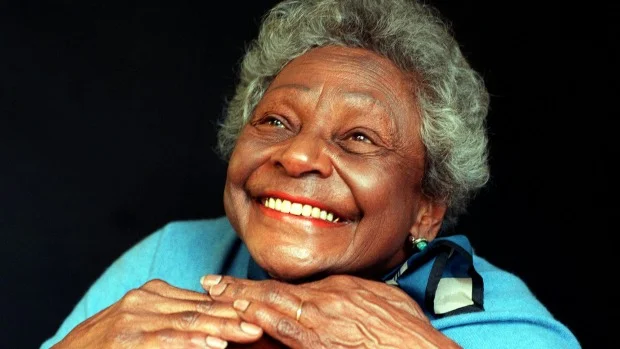
Faith Bandler: 'it’s time for us to remember that rights are not handed on a platter by governments, they have to be won', Faith, Hope and Reconciliation speech - 1999

January 27, 2016

August 1999, Woollongong, Australia


I first would like to thank the Indigenous people of the Illawarra for inviting me to come today. I was here once before and some of those past memories have been stirred with some of you whom I have had a chance to speak with, so thank you.


Lord Mayor, Evelyn Scott, Linda Burney and all honoured guests, when I put my thoughts together to come and speak to you this morning, I found a module in my thinking. It was getting in the way. There was a little sadness because I felt the reconciliation program had slowed since 1967 and then the considerable support for those who sponsored racism excused some of their terrible utterances in the name of free speech, and then the terrible tragedy revealed to us of the stolen children.


So briefly I will try to portray my thoughts of these days and the days before. Earlier we thought our efforts were set in stone. But the track hasn’t been easy and it was not so. It is hard to say what we have heard and seen recently, to hear it without shame and anger, and those are two elements which tend to stand in the way of the planning of good strategies.
Some who are here today have lived, breathed, struggled and climbed those ramparts of the rugged past, and when reaching the summit, have seen the ugliness when looking down – the disagreeable habits of those who close their eyes to the past, the willing ignorance and blindness to other peoples’ way of life, those who long for a homogeneous society where all think alike.


But I’m pleased to say that out there, there are decent people. They may have different cultures, different political beliefs, but they know there is a need to heal the wounds of the past, the terrible indignities.


My learning was rather hard and slow. It took some time for me to understand, when there are millions in the world today who are hungry, millions who are homeless, millions who are without work, the wrongfully imprisoned, the deaths in custody, the tortured, the mass murder of women and children, why in the name of creation our differences should matter. Why is it so hard to find our commonalities?


The most commonly voiced opinions of some who are willingly blind is that we focus on the failures and faults and too little praise is given. But if praise must be given it ought not to be given to the powerful but rather to the powerless, who patiently bear the brunt of many misdeeds and indecencies.


So in the struggle to reconcile you said it’s about working together. That will mean lightening the burden of that terrible baggage that has to do with our differences. And in the short term, there’s a fair bit to do about it.


Many have worked with determination, at most times against tremendous odds, with the talk-back jockeys lined up against them, and those who are deliberately blinkered and our troubled relationships with them. They are chained in their stubbornness, but we are free, and if we need to go forward without them, then we must.


To the youth present, and the not so young, let me say this: this movement should be one wherein we should ask not what is in it for me, but what is in it for us.


The fair-minded people out there can come along with us. None is without fault, none is without blemish, but they greatly outnumber the objectionable and the crude.


At this conference we might ask ourselves if our efforts are enough to make this country a better place for those who come after us. So you, the younger who are present, and those who are not present, have a hard job to do. You have brought change, true, but to eliminate some of the inbuilt attitudes of this society, the task is yet to be tackled.


This year Australia is celebrating 50 years of citizenship. Before 1949 we were all British subjects. Well, some were: it’s not 50 years since Indigenous Australians has the right to citizenship.


We are not to forget the White Australia Policy, introduced at the turn of this century, excluded the peoples from South Africa, the peoples from the Pacific Islands and all Asian countries from Australian citizenship rights. Non-Indigenous Australians had the influence of the White Australia Policy, and those to whom it applied were considered, at times, less than human beings.


Thus the campaign for Aboriginal citizenship rights, carried on from 1957 to 1967, was rather difficult. And it’s time for us to remember that rights are not handed on a platter by governments, they have to be won.


This conference in its deliberations will consider land rights. In the efforts to hold and protect their land from the invaders in 1788, there were many who lost their lives. There were fierce battles and conflict and, true, there were lulls, in the move for land rights. But even in the most isolated communities, the people spoke about their land.


For the executive of my council, FCAATSI, land rights seemed to be put on the back burner. It was the most poverty stricken in the whole of Australia, so we had to be careful with what few resources we had. These were the matters that had to do with equal wages for equal work, particularly for the black stockmen, and other needs like housing, education opportunities, freedom of movement, the false arrests. So these problems had to be dealt with and faced and we had to mobilise the forces to meet those needs.


Until 1962. Alec Vesper came down from the community at Woodenbong in the north of NSW, and he drove us on to form a subcommittee for land rights. I recall Alec addressing the 1962 FCAATSI Conference with the bible in one hand and the dictionary in the other hand, and he told us all to get up and fight for land rights. The result of that was that a subcommittee was formed to deal with land rights and Dulcie Fowler was the secretary.


Ken Brindle, whom I know the Illawarra people will remember with great affection, once complained to me that he couldn’t talk to Dulcie, because all she could talk about was land
rights. Dulcie initiated a petition addressed to the Federal Parliament for Aboriginal people to reclaim their land.


It’s a fitting time to mention briefly the struggle of the people for land rights of Mapoon, Weipa and Aurukun, particularly when Bauxite was found on their lands. And we might take strength by remembering their brave actions to combat the mining companies.


Jean Jimmy came to the south from Mapoon, and she told us how her people were forced by the police into boats to leave their land and as they sailed from Mapoon they saw their houses and their church on fire. Jean Jimmy and her people had an unforgivable fault in the eyes of the white people. They said the land they lived on and the land their forebears lived on for thousands of years was theirs.


Friends, what is reconciliation about? It is about promoting discussion. It is about the rights of the Indigenous people. It’s about those rights being enshrined in legislation. It’s about being watchful and remembering, and remembering that governments only might implement, and they might not. It’s about the violation of the first people’s rights, and it’s about valuing the differences of those cultures that make up this country.


In 1975, the Racial Discrimination Act was introduced. All rights must now be recognised, and it’s our job to make sure that they are. It is rare that a government will deliver out of the goodness of its heart, but history has shown that a genuine people’s movement can move more than governments. It can move mountains.


Dear friends, much pain has been endured in the past, and that pain is no longer designated to hopelessness. It’s time to move the process of reconciliation forward with a little more speed. That is the task. If not now, when? If not us, who?

Source: http://www.acmssearch.sl.nsw.gov.au/search...

Enjoyed this speech? Speakola is a labour of love and I’d be very grateful if you would share, tweet or like it. Thank you.

Facebook Twitter Facebook
In NATIONAL IDENTITY Tags FAITH BANDLER, RECONCILIATION, INDIGENOUS RIGHTS, ABORIGINAL AUSTRALIA, EQUALITY
Comment
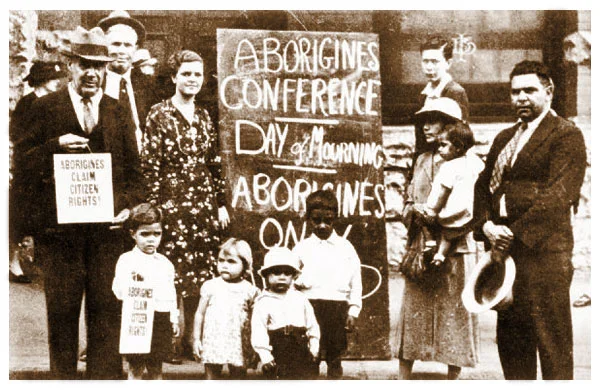
Jack Patton is at far right. Other conference organisers were William Cooper and William Ferguson.

Jack Patton is at far right. Other conference organisers were William Cooper and William Ferguson.

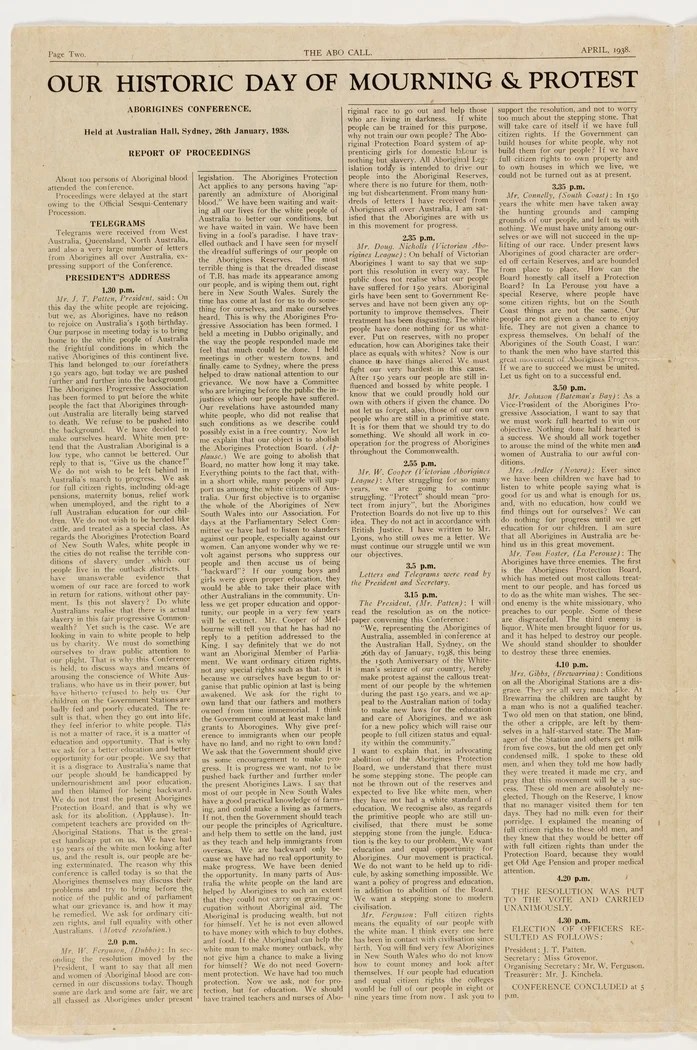
Jack Patten: 'Do white Australians realise that there is actual slavery in this fair, progressive Commonwealth?', Opening address to Day of Mourning protest - 1938

January 27, 2016

26 January 1938, Australian Hall, Sydney, Australia

Jack Patten was the President of the Aborigines Progressive Association.  For this historic protest event, he wore a dark suit and cut the figure or a huge League footballer. But he was a brilliant speaker, one of the best of his era.

On this day the white people are rejoicing, but we, as Aborigines, have no reason to rejoice on Australia’s 150th birthday. Our purpose in meeting today is to bring home to the white people of Australia the frightful conditions in which the native Aborigines of this continent live. This land belonged to our forefathers 150 years ago, but today we are pushed further and further into the background. The Aborigines Progressive Association has been formed to put before the white people the fact that Aborigines throughout Australia are literally being starved to death.

We refuse to be pushed into the background. We have decided to make ourselves heard. White men pretend that the Australian Aboriginal is a low type, who cannot be bettered. Our reply to that is, ‘Give us the chance!’ We do not wish to be left behind in Australia’s march to progress. We ask for full citizen rights including old-age pensions, maternity bonus, relief work when unemployed, and the right to a full Australian education for our children. We do not wish to be herded like cattle and treated as a special class.

As regards the Aborigines Protection Board of NSW, white people in the cities do not realise the terrible conditions of slavery under which our people live in the outback districts. I have unanswerable evidence that women of our race are forced to work in return for rations, without other payment.

Is this not slavery?

Do white Australians realise that there is actual slavery in this fair, progressive Commonwealth?

Yet such is the case. We are looking in vain for white people to help us by charity.

We must do something ourselves to draw public attention to our plight. This is why this Conference is held, to discuss ways and means of arousing the conscience of White Australians, who have us in their power, but have hitherto refused to help us.

Our children on the Government stations are badly fed and poorly educated. The result is that when they go out into life, they feel inferior to white people.

This is not a matter of race, this is a matter of education and opportunity.

This is why we ask for a better education and better opportunity for our people.

We say that it is a disgrace to Australia’s name that our people should be handicapped by undernourishment and poor education, and then blamed for being backward.

We do not trust the present Aborigines Protection Board and that why we ask for its abolition. [applause]

Incompetent teachers are provided on the Government stations. This is the greatest handicap put on us. We have had 150 years of white men looking after us, and the result is, our people are being exterminated.

The reason why this Conference is called today is that the Aborigines themselves may discuss their problems and try to bring before the notice of the public and of parliament what our grievance is, and how it may be remedied.

We ask for ordinary citizen rights, and full equality with white Australians. [moved resolution]

Source: http://www.pattenproject.com/jack/

Enjoyed this speech? Speakola is a labour of love and I’d be very grateful if you would share, tweet or like it. Thank you.

Facebook Twitter Facebook
In EQUALITY Tags JACK PATTON, DAY OF MOURNING, INDIGENOUS RIGHTS, ABORIGINAL AUSTRALIA, EQUALITY, SLAVERY, AUSTRALIA, PROTEST
Comment

Stan Grant: 'But every time we are lured into the light, we are mugged by the darkness of this country's history', Ethics Centre IQ2 debate - 2015

January 22, 2016

27 October 2015, City Recital Hall, Sydney, Australia

This speech was delivered in an IQ2 debate with the topic, 'Racism is destroying the Australian dream'. Also for the affirmative was Pallavi Sinha. For the negative was Jack Thompson and Rita Panahi. The full debate is here. 

Thank you. Thank you so much for coming along this evening, and I'd also like to extend my respects to my Gadigal brothers and sisters from my people, the Wiradjuri people.

In the winter of 2015, Australia turned to face itself. it looked into its soul and it had to ask this question. Who are we? What sort of a country do we want to be.

And this happened in a place that is most holy, most sacred to Australians. It happened on the sporting field, it happened on the football field. Suddenly the front page was on the back page, it was in the grandstand.

Thousands of voices rose to hound an indigenous man, a man who was told he wasn’t Australian, a man who was told he wasn’t Australian of the Year.

And they hounded that man into submission.

I can’t speak for the what lay in the hearts of the people who booed Adam Goodes. But I can tell you what we heard when we heard those boos.

We heard a sound that is very familiar to us.

We heard a howl.

We heard a howl that of humiliation has echoes across two centuries of dispossession, injustice, suffering and survival.

We heard the howl of the Australian dream, and it said to us again, you’re not welcome.

The Australian dream.

We sing of it, and we recite it in verse.

Australians all let us rejoice for we are young and free.

My people die young in this country, we die ten years younger than average Australians and we are far from free.

We are fewer than three percent of the Australian population and yet we are 25 percent, a quarter of those Australians locked up in our prisons, and if you are a juvenile it is worse, it’s fifty percent. An indigenous child is more likely to be locked up in prison than they are to finish high school.

I love a sunburned country

A land of sweeping plains

Of rugged mountain ranges

It reminds me that my people were killed on those plains, we were shot on those plains, disease ravaged us on those plains. I come from those plains. I come from a people west of the Blue Mountains, the Wiradjuri people, where in the 1820s the soldiers and settlers waged a war of extermination against my people. Yes, a war of extermination! That was the language used at the time, go to the Sydney Gazette, and look it up, and read about it. Martial law was declared, and my people could be shot on sight.

Those rugged mountain ranges, my people, women and children were herded over those ranges to their deaths.

The Australian dream.

The Australian dream is rooted in racism. It is the very foundation of the dream. It is there at the birth of the nation . It is there in terra nullius.  An empty land. A land for the taking.

Sixty thousand years of occupation.

A people who made the first seafaring journey in the history of mankind.

A people of law, a people of lore, a people of music and art and dance and politics, none of it mattered.

Because our rights were extinguished because we were not here according to British law. And when British people looked at us, they saw something subhuman, and if we were human at all, we occupied the lowest rung on civilisation’s ladder.

We were fly blown, stone age savages and that was the language that was used.

Charles Dickens, the great writer of the age, when referring to the noble savage of which we were counted among, said ‘it would be better that they be wiped off the face of the earth’. Captain Arthur Phillip, a man of enlightenment, a man who was instructed to make peace with the so called natives in a matter of years, was sending out raiding parties with instruction ‘bring back the severed heads of the black troublemakers’.

They were smoothing the dying pillow.  

My people were rounded up and put on missions, from where, if you escaped. You were hunted down, you were roped and tied and dragged back, and it happened here, it happened on the mission that my grandmother and great grandmother were from, the Warrengesda on the Darling Point of the Murrumbidgee River.

Read about it. It happened.

By 1901 when we became a nation, when we federated the colonies, we were nowhere. We’re not in the Constitution, save for ‘Race Provisions’ -- which allowed for laws to be made that would take our children, that would invade our privacy, that would tell us who we could marry and tell us where we could live.

The Australian dream.

By 1963, the year of my birth, the dispossession was continuing. Police came at gunpoint under cover of darkness to Mapoon an aboriginal community in Queensland, and they ordered people from their homes, and they burned those homes to the ground, and they gave the land to a bauxite mining company. And today those people remember that as ‘The Night of the Burning’.

In 1963 when I was born, I was counted amongst the flora and fauna, not among the citizens of this country.

Now you will hear things tonight, you will hear people say, ‘but you’ve done well!’

Yes I have, and I’m proud of it, and why have I done well?

I’ve done well because of who came before me.

I’ve done well because of my father, who lost the tips off three fingers working in saw mills to put food on our table, because he was denied an education.

My grandfather, who served to fight wars for this country when he was not yet a citizen and came back to a segregated land where he couldn’t even share a drink with his digger mates in the pub because he was black.

My great grandfather who was jailed for speaking his language to his grandson - my father - jailed for it!

My grandfather on my mother’s side who married a white woman who reached out to Australia, lived on the fringes of town, until the police came, put a gun to his head, bulldozed his tin humpy, and ran over over the graves of the three children he’d buried there.

That’s the Australian dream. I have succeeded in spite of the Australian dream, not because of it; and I have succeeded because of those people.

You might hear tonight, ‘but you have white blood in you.’ And if the white blood in me was here tonight, my grandmother, she would  tell you of how she was turned away from a hospital giving birth to her first child because she was giving birth to the child of a black person.

The Australian dream. We’re better than this.

I’ve have seen the worst of the world as a reporter. I’ve spent a decade in war zones, from Iraq to Afghanistan, and Pakistan. We are an extraordinary country, we are in so many respects the envy of the world. If I were sitting here, where my friends are tonight (gestures to opponents] I would be arguing passionately for this country.

But I stand here with my ancestors, and the view looks very different from where I stand.

The Australian dream.

We have our heroes.

Albert Namatjira painted the soul of this nation.

Vincent Lingiari put his hand out for Gough Whitlam to pour the sand of his country through his fingers, and say ‘this is my country’.

Cathy Freeman lit the torch for the Olympic Games.

But every time we are lured into the light, we are mugged by the darkness of this country's history.

Of course racism is killing the Australian dream! It is self evident that it is killing the Australian dream.

But we are better than that.

The people who stood up and supported Adam Goodes and said, ‘no more’, they are better than that.

The people who marched across the bridge for reconciliation, they are better than that.

The people who supported Kevin Rudd when he said sorry to the Stolen Generations, they are better than that.

My children and their non indigenous friends are better than that.

My wife who is non indigenous is better than that.

And one day I want to stand here, and be able to say as proudly and sing as loudly as anyone in this room, Australians all let us rejoice.

Thanks you.

Stan Grant was a wonderful guest on episode 8 of the podcast, talking about this speech.


Source: https://www.youtube.com/watch?v=uEOssW1rw0...

Enjoyed this speech? Speakola is a labour of love and I’d be very grateful if you would share, tweet or like it. Thank you.

Facebook Twitter Facebook
In EQUALITY Tags STAN GRANT, ABORIGINAL AUSTRALIA, RACISM, RACIAL EQUALITY, IQ2, ETHICS CENTRE, DEBATE, ADAM GOODES, STOLEN GENERATIONS, APARTHEID, DISPOSSESSION, TRANSCRIPT, VIDEO
3 Comments

See my film!

Limited Australian Season

March 2025

Details and ticket bookings at

angeandtheboss.com

Support Speakola

Hi speech lovers,
With costs of hosting website and podcast, this labour of love has become a difficult financial proposition in recent times. If you can afford a donation, it will help Speakola survive and prosper.

Best wishes,
Tony Wilson.

Become a Patron!

Learn more about supporting Speakola.

Featured political

Featured
Jon Stewart: "They responded in five seconds", 9-11 first responders, Address to Congress - 2019
Jacinda Ardern: 'They were New Zealanders. They are us', Address to Parliament following Christchurch massacre - 2019
Dolores Ibárruri: "¡No Pasarán!, They shall not pass!', Defense of 2nd Spanish Republic - 1936
Jimmy Reid: 'A rat race is for rats. We're not rats', Rectorial address, Glasgow University - 1972

Featured eulogies

Featured
For Geoffrey Tozer: 'I have to say we all let him down', by Paul Keating - 2009
for James Baldwin: 'Jimmy. You crowned us', by Toni Morrison - 1988
for Michael Gordon: '13 days ago my Dad’s big, beautiful, generous heart suddenly stopped beating', by Scott and Sarah Gordon - 2018

Featured commencement

Featured
Tara Westover: 'Your avatar isn't real, it isn't terribly far from a lie', The Un-Instagrammable Self, Northeastern University - 2019
Tim Minchin: 'Being an artist requires massive reserves of self-belief', WAAPA - 2019
Atul Gawande: 'Curiosity and What Equality Really Means', UCLA Medical School - 2018
Abby Wambach: 'We are the wolves', Barnard College - 2018
Eric Idle: 'America is 300 million people all walking in the same direction, singing 'I Did It My Way'', Whitman College - 2013
Shirley Chisholm: ;America has gone to sleep', Greenfield High School - 1983

Featured sport

Featured
Joe Marler: 'Get back on the horse', Harlequins v Bath pre game interview - 2019
Ray Lewis : 'The greatest pain of my life is the reason I'm standing here today', 52 Cards -
Mel Jones: 'If she was Bradman on the field, she was definitely Keith Miller off the field', Betty Wilson's induction into Australian Cricket Hall of Fame - 2017
Jeff Thomson: 'It’s all those people that help you as kids', Hall of Fame - 2016

Fresh Tweets


Featured weddings

Featured
Dan Angelucci: 'The Best (Best Man) Speech of all time', for Don and Katherine - 2019
Hallerman Sisters: 'Oh sister now we have to let you gooooo!' for Caitlin & Johnny - 2015
Korey Soderman (via Kyle): 'All our lives I have used my voice to help Korey express his thoughts, so today, like always, I will be my brother’s voice' for Kyle and Jess - 2014

Featured Arts

Featured
Bruce Springsteen: 'They're keepers of some of the most beautiful sonic architecture in rock and roll', Induction U2 into Rock Hall of Fame - 2005
Olivia Colman: 'Done that bit. I think I have done that bit', BAFTA acceptance, Leading Actress - 2019
Axel Scheffler: 'The book wasn't called 'No Room on the Broom!', Illustrator of the Year, British Book Awards - 2018
Tina Fey: 'Only in comedy is an obedient white girl from the suburbs a diversity candidate', Kennedy Center Mark Twain Award -  2010
Tina Fey: 'Only in comedy is an obedient white girl from the suburbs a diversity candidate', Kennedy Center Mark Twain Award - 2010

Featured Debates

Featured
Sacha Baron Cohen: 'Just think what Goebbels might have done with Facebook', Anti Defamation League Leadership Award - 2019
Greta Thunberg: 'How dare you', UN Climate Action Summit - 2019
Charlie Munger: 'The Psychology of Human Misjudgment', Harvard University - 1995
Lawrence O'Donnell: 'The original sin of this country is that we invaders shot and murdered our way across the land killing every Native American that we could', The Last Word, 'Dakota' - 2016