• Genre
  • About
  • Submissions
  • Donate
  • Search
Menu

Speakola

All Speeches Great and Small
  • Genre
  • About
  • Submissions
  • Donate
  • Search

Jonty Bush: 'She was stabbed to death by her boyfriend' , Young Australian of the Year - 2009

March 23, 2022

26 January 2013, Adelaide, South Australia, Australia

Good afternoon.

Well, thank you for having me. I'd like to start by acknowledging the traditional owners of the land on which we meet, both past and present and respectfully thank them and yourselves for the opportunity to stand here today and to share with you part of my story, and my personal and very humble thoughts on what makes Australia remarkable.

Particularly, given I understand that Lance Armstrong today is, is running the whole confession. So, you know, quite an appealing thing to stay home and watch that Oprah run through. So thank you for coming out and making the effort.

So what does make Australia remarkable? It's a question I've been asked many times since receiving the Young Australian of the year award in 2009, and a question which is highly subjective, depending on who you ask. So yesterday morning, I did probably what every one in my generation does, and I popped the question onto Facebook, 'What makes Australia so great', and predictably there was a varied response. I dunno if everyone can read that but —.

[lists virtues] positive sunny people, the coffee, the beaches, the fact that AFL would always be on the front page of the paper even if world war III was breaking out ... how we're surrounded by an ocean patrolled by the deadliest sharks in the world, sense of community is something that really shone through for people, they really related to that sense of community that Australia seems to have, safety growing up in a community, swimming, water slides, water sprinklers, you know, people really reflected on their own childhoods a lot. What else have we got in there? healthcare system, obviously someone's over in London and a bit dirty at the healthcare system at the moment, the people, the passion and the environment, and then David, the fact that it's not America.

What becomes apparent from this is that people I think are essentially meaning making species and will identify with the Australian traits and the mannerisms which means something to us. We go about our lives witnessing events and actions, forming connections and conflicts with others. And the meaning that we attach to those events begins to form a picture or a story, If you like, around who we are as individuals and how we connect in the world.

I'd like to illustrate this to you by sharing parts of my personal story. Not only to showcase one of the 20 million lives that makes up the tapestry of Australia, but to highlight how our own personal experiences influence what it is that we notice in the world around us.

On the 30th of July in the year 2000, I received a phone call informing me that my 19 year old sister had been in an accident. She'd been out the night before with her live-in boyfriend of just three months. And as far as I knew, she'd been safely tucked away in a hotel room, sleeping off a big night. Within the hours that followed. I learned that my sister had been murdered, she was stabbed to death by her boyfriend, the man who professed to love her. This was my first real taste of violence. My first experience of losing someone that close to me and as I'm sure it's obvious to you, but wasn't so obvious to me at the time, was an incredible turning point in my life. What I didn't see at that time was this one event significant enough in its own right, would mark one of the turning points in my life, and would take me on a journey of both great isolation as I alone discovered who I was and what I valued, but also togetherness as I've walked with others that would teach me about humanity, strength, and optimism. These are the traits that I both remember and loved most about Australia and the people who populate it — humanity, strength and optimism.

Just four months following the death of my sister, my father was assaulted. He was punched twice in the face, collapsed at the scene and was rushed to hospital where he was diagnosed with a subarachnoid haemorrhage, or bleeding in the brain. Now 2012 was an extraordinary year. In many regards, two events stand out for me in particular. One is that we reached our highest heights with Felix Baumgartner skydiving from an astonishing 24 miles above the Earth. And we also explored the depths of our ocean, with James Cameron being the first man to reach the Marianna trench, over 35,000 feet deep and a figure unattainable anywhere else in the ocean.

This day, nearly 13 years, since the death of my father, I still stand in wonderment of how we can and take our people to the edges of space and the depth of the oceans, and yet the mechanics of the human brain and in particular, how to heal it largely remain a mystery to us. On the 18th of November, 2000, just four months after my sister's death, my father's life support was turned off and he passed away as a result of his injuries. He was 49 years old, a father of three, his youngest being my brother who was just 13 years of age and a recent grandfather of an 18 month old.

I've always maintained that you never finish a book on a bad chapter, and the same can be said for our lives. You might tend to have complete control over the events in your life, but you are ultimately the author and narrator of your own story. We all choose where it goes next. For me, I wanted to write myself as the heroine of my story, not the victim. I wanted my life to tell a story of a young woman who experienced tragedy and yet rose above that to create the best life that she could, in a nation where opportunities are endless and where you go next is limited only by your own imagination.

Leaving a solid career in human resources. I journeyed into the victim support and advocacy area. Over the next decade, I worked with literally thousands of families who were bereaved through homicide. Many people I speak with outside of this field expressed to me how depressing this must be and how hopeless. To be honest, it's been anything but. There's nothing more inspiring than seeing another person standing strong in the face of adversity.

I've supported a man whose only two grandchildren were murdered, as at 80 years of age, he started a fundraising group in his local town of Emerald in Queensland, and every Friday night worked the pubs and clubs raising thousands of dollars to support children's causes. I've stood by the side of a mother of a murdered son, as the offender approached her to offer a teary apology. The strength that must have taken for him to make those dozen steps across the courtroom floor and to ask for her forgiveness is something that many of us can only imagine. And the courage that it took on her part to hug him and to say, I forgive you, formed a memory that made a lasting impression on me. As I decided that day, that if she could forgive that act, then there was nothing I couldn't work through.

Our nation's history and present are peppered by stories, just like these. Australia breeds resilience. On the one hand we're a nation with incredible gifts. We're a wealthy nation. In fact, one of the wealthiest nations in the history of the world. We're blessed with growth and opportunity and we are fortunate enough to have leaders in this country who convert these gifts into prosperity for many. But we're also presented with challenges. No one could forget days in our nation's history, such as the black Saturday bushfres in 2009. Over 300 fires burned through Victoria's heartland, affecting 78 communities and taking the lives of 173 people. Or the 2011 Queensland floods, affecting 70 communities and over 200,000 people. Thirty five lives were lost, and three quarters of the state was declared a disaster zone. These events, as catastrophic and devastating as they are, bring out something in the Australian people. Where other nations loot, panic and take advantage of the population's vulnerable, Australians are arguably at our most admirable in the face of adversity. The Red Cross Victorian Bushfire appeal received an unprecedented $378 million in donations, which is around about the equivalent of every Australian donating $20. it was the largest single charitable appeal in Australian history. Whilst more than 55,000 volunteers registered to clean up Brisbane alone during the 2011 floods with thousands more simply turning up, compromising their health and safety to help a stranger in need. It's no wonder with feats like these, that Australia consistently ranks as the world's number one nation on the World Giving Index.

I love that Australians don't take ourselves too seriously, that we believe in second chances, particularly when there's sports involved, and that we celebrate and aspire to be people of substance, rather than those of fleeting fame. (For those that dunno, that's the Kardashians.).

I love that we're encouraged to challenge the status quo, that we recognise that amazing things happen on the fringes. In 2007, I was honoured to become the first victim and youngest person to be the CEO of the Queensland homicide victim support group. One of the areas I wanted to tackle was society's attitudes around violence. At the time I and others were frustrated by the lack of voice and discussion given to the topic and what we could do to address it. For example, people being encouraged by our local city council, to ring up and dub in your neighbours if they breached their water restrictions, yes, you could have someone king hit from behind in Brisbane's entertainment, precinct, and not one witness would come forward. Further to that. I was concerned that this apathy towards violence was reflected in our criminal justice system in many ways, but notably through the 'accident excuse'.

The 'accident excuse' forms an integral part of Queensland's criminal code. In fact, it's in many criminal codes throughout Australia, and holds that a person cannot be criminally responsible for an event which occurs by accident. Critically. It asks jurors to consider whether the outcome from an act of violence, was reasonably foreseeable to the ordinary man. I first encountered this section of the legislation in 2002, during my father's manslaughter trial. The jury presiding in our case were asked how foreseeable was it that the two punches dealt to my father would result in a fatal outcome. On medication, and to my surprise, the jury reached a consensus that it was not foreseeable, that two punches could result in death and they delivered a verdict of not guilty with the offender walking free from court. I then encountered the accident section of the law soon after becoming CEO of the homicide group, where during the first 12 months, two cases, which proceeded through court were found to be not guilty because of the accident,excuse. Both cases involved seemingly minimal acts of violence, one or two punches, and in both cases juries determined that death was not a foreseeable outcome to the ordinary man.

These outcomes clearly had a devastating impact upon the surviving family. Imagine for a moment, not only losing someone you love suddenly and through violence, but then being asked to accept that even though the offender committed a criminal act when they assaulted the victim, because they didn't intend to cause death, and because to the ordinary person death isn't foreseeable, that offender now walks free from court.

It was this sense of injustice that led myself and others to do two things. The first thing was the lobby government to review and change the legislation surrounding the accident excuse. The second was to start an education campaign targeting our young people particularly, reminding them about the consequences of just one punch.

The One Punch Can Kill campaign was our solution to that social problem and has since been supported by the Queensland government. I know it's saved lives. I've had young people approach me to say how they place One Punch wristbands on their hands to stop them fighting with their peers. And it's also led to a national discussion around violence, its consequences, and what we can do to challenge the Australian norms, which support it.

Since embarking on this advocacy path, I've challenged politicians, spoken openly in the media against judges' decisions and implored people to raise our expectations of lawmakers. I've had incredible media support and, largely, community goodwill towards the campaign. In other countries throughout the world, I would've been lucky to make a headline. Whilst in some countries, as a woman protesting or challenging the laws, I would've been shot.

Late last year, I started a new project called Project 24, which aims to unite Australian women towards greater safety outcomes for other women, both nationally and globally. In just a few short months we've raised a considerable sum for our first project, a domestic violence shelter in the Solomon Islands.

And it was another great reminder of two things.

One is the beauty and the necessity of freedom. Australian nationals are born into it. We inherit it for no reason other than we were the lucky ones who happened to have Australian parents. And I reluctantly admit that many of us probably take it for granted. Whilst researching for Project 24, I was gutted by some of the stories I read, where women side of Australia were victimised often purely because they were women. I read of children under 10 years of age being sold as child brides, and of a woman who was gang raped only to be told by a judge that she was too old and ugly to be sexually assaulted. For these women, freedom is an aspirational concept, something to be desired, but never achieved. One of the greatest things I love about Australia is the freedom to be a woman, to be a young person, to speak my mind, to create waves and to create change without fear.

The second reminder I've had whilst working on Project 24 and the final point of my conversation with you is the impact that one person can make in the world. I grew up in a working class suburb in Tasmania, where most of my peers didn't graduate beyond year 10. Teenage pregnancy was the norm and unemployment was high. Despite two loving and hardworking parents, I spent my early years conditioned to believe that this was the future I had to look forward to. I've spent my adult life since challenging that deep-seated belief, expecting more of myself and believing that anyone no matter their origins can create a life they're proud of.

I love that in Australia, a small town Tasmanian girl who left home at 16 years of age and failed year 12, isn't typecast as a failure. That she could go on to complete a bachelor degree. And most recently her masters. That she can become the CEO of an organisation, that she can lobby and change the law, and change the way others view victims of crime. That one day she'd be recognised nationally for this and end up travelling Australia, speaking with communities about violence, whose opinions are published through the media, develops a career as a presenter and speaker, and most recently had dinner with Prince Charles and Camilla! That's me.

You can't really see it, but it is me!

Only in Australia. It's on this note, I'd like to sincerely thank the Australia Cay Council, its sponsors and supporters, for recognising the work of this small town Tasmanian girl, amidst the amazing work that's brought to your attention each and every year. I spoke earlier of meaning. You've given my life a whole new dimension of meaning, and I'm forever grateful that you saw and believed in me. So to the council supporters and sponsors, thank you very much.

I'd also just like to throw in a shameless plug for women. We are still always looking for women to join Project 24, to help us in our fundraising efforts to improve the safety and quality of life for women globally. So if there's women out there that would be interested in joining a good team, that's how you can get in touch with me. And if anyone wants to contact me directly, it's my details. So on that note, I'd like to thank everyone for listening. I hope it encourages you to consider the meaning that you attached to being Australian and have an awesome lunch.

Thanks very much.
Source: https://www.youtube.com/watch?v=AvKRnOhygS...

Enjoyed this speech? Speakola is a labour of love and I’d be very grateful if you would share, tweet or like it. Thank you.

Facebook Twitter Facebook
In NATIONAL IDENTITY Tags JOINTY BUSH, DOMESTIC VIOLENCE, MURDER, TRANSCRIPT, AUSTRALIA DAY LUNCEHON, YOUNG AUSTRALIAN OF THE YEAR, AUSTRALIAN, ONE PUNCH, ASSAULT, FATHER, DAUGHTER, SISTER, ACCIDENT EXCUSE, ONE PUNCH LAWS, PROJECT 24, WOMEN'S RIGHTS, GENDER EQUALITY, MANSLAUGHTER, INTENT TO KILL, FORGIVENESS
Comment

Killer Mike: 'It is your duty not to burn your own house down', Atlanta protests press conference - 2020

May 31, 2020

29 May 2020, Atlanta, Georgia, USA

I didn’t want to come, and I don’t want to be here. I’m the son of an Atlanta City Police Officer. My cousin is an Atlanta City Police Officer, and my other cousin he’s a police officer. I got a lot of love and respect for police officers down to the original eight police officers in Atlanta that, even after becoming police, had to dress in a YMCA because white officers didn’t want to get dressed with niggers.

And, here we are, 80 years later. I watched a white officer assassinate a black man, and I know that tore your heart out. I know it’s crippling, and I have nothing positive to say in this moment because I don’t want to be here. But, I’m responsible to be here because it wasn’t just Doctor King and people dressed nicely who marched and protested to progress this city and so many other cities. It was people like my grandmother, people like my aunts and uncles, who are members of the SCLC and NAACP. And, in particular, Reverend James Orange, Mrs. Alice Johnson and Reverend Love, who we just lost last year.

So, I’m duty bound to be here to simply say that it is your duty not to burn your own house down for anger with an enemy. It is your duty to fortify your own house so that you may be a house of refuge in times of organization. Now is the time to plot, plan, strategize, organize, and mobilize. It is time to beat up prosecutors you don’t like at the voting booth. It is time to hold mayoral offices accountable, chiefs and deputy chiefs. Atlanta is not perfect, we’re a lot better than we ever were, and we’re a lot better than cities are.

I’m mad as hell. I woke up wanting to see the world burn down yesterday because I’m tired of seeing black men die. He casually put his knee on a human being’s neck for nine minutes as he died like a zebra in the clutch of a lion’s jaw. And, we watch it like murder porn over and over again. That’s why children are burning to the ground. They don’t know what else to do.

It is the responsibility of us to make this better right now. We don’t want to see one officer charged. We want to see four officers prosecuted and sentenced. We don’t want to see Targets burning. We want to see the system that sets up for systemic racism burnt to the ground.

As I sit here in Georgia, home of Stephens, Georgia, former vice president of the Confederacy … White man said that fundamental law stated that whites were naturally the superior race, and the Confederacy was built on a Cornerstone. It’s called a Cornerstone Speech. Look it up. The Cornerstone Speech that blacks would be always be subordinate … That officer believed that speech because he killed that man like an animal.

In this city, officers have done horrendous things, and they have been prosecuted. This city’s cut different. In this city, you can find over 50 restaurants owned by black women. I didn’t say minority, and I didn’t say women of color. So, after you burn down your own home, what do you have left but char and ash?

CNN? Ted did a great thing. I love CNN. I love Cartoon Network. But, I’d like to say to CNN right now: karma’s a mother. Stop feeding fear and anger every day. Stop making people feel so fearful. Give them hope.

I’m glad they only took down a sign and defaced a building, and they’re not killing human beings like that policeman did. I’m glad they only destroyed some brick and mortar, and they didn’t rip a father from a son. They didn’t rip a son from a mother like the policeman did. When a man yells for his mother in duress and pain and she’s dead, he is essentially yelling, “Please, God. Don’t let it happen to me.” We watched that.

So, my question for us, on the other side of this camera, is after it burns, will we be left with char, or will we rise like a phoenix out of the ashes that Atlanta has always done? Will we use this as a moment to say that we will not do what other cities have done, and in fact, we will get better than we’ve been.

We got good enough to destroy cash bonds. You don’t have to worry about going to jail for something petty. We got smart enough to decriminalize marijuana. How smart are we going to be in the next 15 to 20 years, to keep us ahead of this curve so that, much like when South Africa suffered apartheid, you had Andy and other politicians that could make sure that Atlanta said, “Coca-Cola, we love you, but if you don’t pull out of South Africa, we’re going to leave. We’re not going to drink Coca-Cola anymore.” Coca-Cola jumped on their side, and apartheid ended.

So, we have an opportunity now because I’m mad. I don’t have any good advice. What I can tell you is that if you sit in your homes tonight instead of burning your home to the ground, you will have time to properly plot, plan, strategize, and organize and mobilize in an effective way.

Two of the most effective ways is first taking your butt to the computer and making sure you fill out your Census so that people know who you are and where you are. The next thing is making sure you exercise your political bully power and going to local elections and beating up the politicians that you don’t like.

You got a prosecutor that sent your partner to jail, and you know it was bullshit? Put a new prosecutor in there. Now’s your election to do it. You want a different senator that’s more progressive, that’s puts marijuana through? Now is the time to do that, but it is not time to burn down your own home.

I love and I respect you. I hate I don’t have more to say. I hate I can’t fix it in a snap. I hate Atlanta’s not perfect for as good as we are. But, we have to be better than this moment. We have to be better than burning down our own homes because if we lose Atlanta, what else we got? We lose an ability to plot, to plan, to strategize, to organize, and to properly mobilize.

I want you to go home. I want you to talk to 10 of your friends. I want you guys to come up with real solutions. I would like for the Atlanta city police department to bring back the community review board, one that Alice Johnson was formerly under, under Chief Turner. We need a review board here because we need to get ahead of it before an officer does some stupid shit. We need to get ahead of it.

That’s my recommendation to my mayor and my chief. Let’s get a review board. Let’s get ahead of it, and let’s give them power. We don’t need an officer that makes a mistake once, twice, three times and finally he kills a boy on national TV, and the next thing you know the country is burning down. We don’t need a dumb-ass president repeating what segregation has said. If you start looting, we start shooting. But, the problem is, some officers black, and some people going to shoot back. And, that’s not good for our community, either.

I love and respect you all. I hope that we find a way out of it because I don’t have the answers, but I do know we must plot. We must plan. We must strategize, organize, and mobilize. Thank you for allowing me some time to speak. I’d like to appreciate our chief, of what she said on YouTube. I thought it was very bold to do. I’d like to appreciate our mayor for talking to us like a black mama and telling us to take our ass at home, and I’d like to thank my friends for convincing me to come here. And, I defer to Joe Beasley now because he knows a hell of a lot more than we do. Thank you all.

Source: https://www.rev.com/blog/transcripts/rappe...

Enjoyed this speech? Speakola is a labour of love and I’d be very grateful if you would share, tweet or like it. Thank you.

Facebook Twitter Facebook
In EQUALITY 3 Tags KILLER MIKE, RIOTS, ATLANTA, MAYOR PRESS CONFERENCE, BLACK LIVES MATTER, GEORGE FLOYD, POLICE BRUTALITY, MURDER, RACISM, TRUMP, TRANSCRIPT
Comment
rumkowski-delivers-speech-in-lodz.jpg

Chaim Rumkowski: 'Give me your children', Lodz ghetto - 1942

March 2, 2018

4 September 1942, Lodz ghetto, Poland

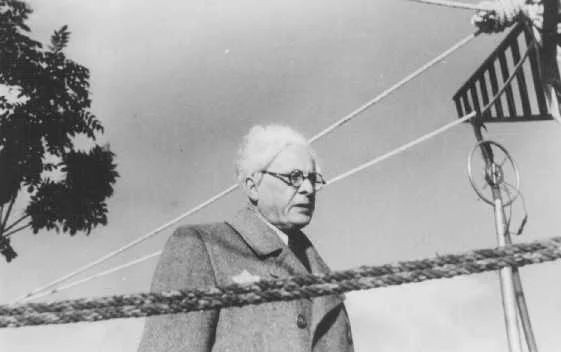
Chaim Rumkowski was an elder of the Lodz ghetto, 60 years old, a widower, who perhaps had some delusions of grandeur in his difficult role as go-between with the murderous Nazi regime. This is an extremely upsetting speech to read.

A grievous blow has struck the ghetto. They are asking us to give up the best we possess - the children and the elderly.

I was unworthy of having a child of my own, so I gave the best years of my life to children. I've lived and breathed with children, I never imagined I would be forced to deliver this sacrifice to the altar with my own hands. In my old age, I must stretch out my hands and beg: brothers and sisters - hand them over to me. Fathers and mothers: give me your children.

Yesterday afternoon, they gave me the order to send more than 20,000 Jews out of the ghetto, and if not - "We will do it!” So the question became, 'Should we take it upon ourselves, do it ourselves, or leave it to others to do?".

Well, we - that is, I and my closest associates - thought first not about "How many will perish?" but "How many is it possible to save?" And we reached the conclusion that, however hard it would be for us, we should take the implementation of this order into our own hands.

I must perform this difficult and bloody operation - I must cut off limbs in order to save the body itself. I must take children because, if not, others may be taken as well - God forbid.

I have no thought of consoling you today. Nor do I wish to calm you. I must lay bare your full anguish and pain.

I come to you like a bandit, to take from you what you treasure most in your hearts. I have tried, using every possible means, to get the order revoked. I tried - when that proved to be impossible - to soften the order. Just yesterday, I ordered a list of children aged nine - I wanted at least to save this one age-group: the nine to ten year olds. But I was not granted this concession.

On only one point did I succeed: in saving the ten year olds and up. Let this be a consolation to our profound grief.

There are, in the ghetto, many patients who can expect to live only a few days more, maybe a few weeks. I don't know if the idea is diabolical or not, but I must say it: "Give me the sick. In their place we can save the healthy."

Common sense dictates that the saved must be those who can be saved and those who have a chance of being rescued, not those who cannot be saved in any case.

We live in the ghetto. We live with so much restriction that we do not have enough even for the healthy, let alone for the sick. Each of us feeds the sick at the expense of our own health: we give our bread to the sick. We give them our meagre ration of sugar, our little piece of meat. And what's the result? Not enough to cure the sick, and we ourselves become ill. Of course, such sacrifices are the most beautiful and noble. But there are times when one has to choose: sacrifice the sick, who haven't the slightest chance of recovery and who also may make others ill, or rescue the healthy.

I could not deliberate over this problem for long; I had to resolve it in favour of the healthy.

In this spirit, I gave the appropriate instructions to the doctors, and they will be expected to deliver all incurable patients, so that the healthy, who want and are able to live, will be saved in their place.

I must tell you a secret: they requested 24,000 victims, 3,000 a day for eight days. I succeeded in reducing the number to 20,000, but only on the condition that these be children under the age of ten. Children ten and older are safe. Since the children and the aged together equal only some 13,000 souls, the gap will have to be filled with the sick.

I understand you, mothers; I see your tears, alright. I also feel what you feel in your hearts, you fathers who will have to go to work in the morning after your children have been taken from you, when just yesterday you were playing with your dear little ones. All this I know and feel.

Since four o'clock yesterday, when I first found out about the order, I have been utterly broken. I share your pain. I suffer because of your anguish, and I don't know how I'll survive this - where I'll find the strength to do so.

I can barely speak.

Help me carry out this action. I am trembling.

A broken Jew stands before you.

This is the most difficult of all orders I have ever had to carry out at any time. I reach out to you with my broken, trembling hands and beg: give into my hands the victims. So that we can avoid having further victims, and a population of 100,000 Jews can be preserved.

So, they promised me: If we deliver our victims by ourselves, there will be peace.

I understand what it means to tear off a part of the body.

So which is better?

What do you want?

That 80,000 to 90,000 Jews remain, or God forbid, that the whole population be annihilated?

You may judge as you please; my duty is to preserve the Jews who remain.

I do not speak to hot-heads. I speak to your reason and conscience. 

One needs the heart of a bandit to ask from you what I am asking. But put yourself in my place, think logically, and you'll reach the conclusion that I cannot proceed any other way.

The part that can be saved is much larger than the part that must be given away.

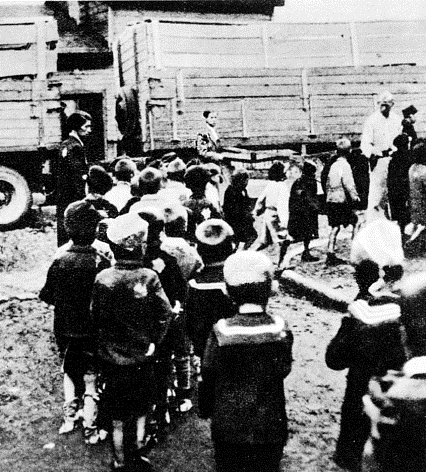
Holocaust survivor Abram Goldberg, 98, was present in the square that day and was a guest on the 41st episode of the podcast, speaking about that terrible day.


The children were deported from Lodz ghetto to death camp at Chelmno..

The children were deported from Lodz ghetto to death camp at Chelmno..

children lodz 2.gif
Source: https://www.speech.almeida.co.uk/chaim-rum...

Enjoyed this speech? Speakola is a labour of love and I’d be very grateful if you would share, tweet or like it. Thank you.

Facebook Twitter Facebook
In WAR & CONFLICT Tags CHAIM RUMKOWSKI, GIVE ME YOUR CHILDREN, TRANSCRIPT, LODZ GHETTO, NAZIS, THE HOLOCAUST, MURDER, GENOCIDE
1 Comment

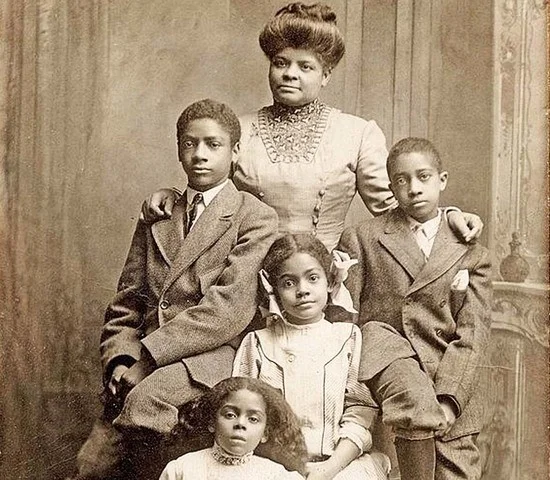
Ida B. Wells. 'Why is mob murder permitted by a Christian nation?', 'Lynching Our National Crime', National Negro Conference - 1909

February 19, 2018

31 May 1909, New York City, New York, USA

Ida B. Wells was the most famous anti lynching advocate of her time. She started in the 1890s, often a lone voice, and the cause took hold with the establishment of the NAACP around the time of this speech.

The lynching record for a quarter of a century merits the thoughtful study of the American people. It presents three salient facts: First, lynching is color-line murder. Second, crimes against women is the excuse, not the cause. Third, it is a national crime and requires a national remedy. Proof that lynching follows the color line is to be found in the statistics which have been kept for the past twenty-five years. During the few years preceding this period and while frontier law existed, the executions showed a majority of white victims. Later, however, as law courts and authorized judiciary extended into the far West, lynch law rapidly abated, and its white victims became few and far between.  Just as the lynch-law regime came to a close in the West, a new mob movement started in the South.

This was wholly political, its purpose being to suppress the colored vote by intimidation and murder. Thousands of assassins banded together under the name of Ku Klux Klans, “Midnight Raiders,” “Knights of the Golden Circle,” et cetera, et cetera, spread a reign of terror, by beating, shooting and killing colored in a few years, the purpose was accomplished, and the black vote was supressed. But mob murder continued. From 1882, in which year fifty-two were lynched, down to the present, lynching has been along the color line. Mob murder increased yearly until in 1892 more than two hundred victims were lynched and statistics show tht 3,284 men, women and children have been put to death in this quarter of a century. During the last ten years from 1899 to 1908 inclusive the number lynched was 959. Of this number 102 were white, while the colored victims numbered 857. No other nation, civilized or savage, burns its criminals; only under that Stars and Stripes is the human holocaust possible. Twenty-eight human beings burned at the stake, one of them a woman and two of them children, is the awful indictment against American civilization—the gruesome tribute which the nation pays to the color line.

Why is mob murder permitted by a Christian nation? What is the cause of this awful slaughter? This question is answered almost daily— always the same shameless falsehood that “Negroes are lynched to protect womanhood.” Standing before a Chautauqua assemblage, John Temple Graves, at once champion of lynching and apologist for lynchers, said: “The mob stands today as the most potential bulwark between the women of the South and such a carnival of crime as would infuriate the world and precipitate the annihilation of the Negro race.” This is the never-varying answer of lynchers and their apologists. All know that it is untrue. The cowardly lyncher revels in murder, then seeks to shield himself from public execration by claiming devotion to woman. But truth is mighty and the lynching record disc1oses the hypocrisy of the lyncher as well as his crime.

The Springfield, Illinois, mob rioted for two days, the militia of the entire state was called out, two men were lynched, hundreds of people driven from their homes, all because a white woman said a Negro assaulted her. A mad mob went to the jail, tried to lynch the victim of her charge and, not being able to find him, proceeded to pillage and burn the town and to lynch two innocent men. Later, after the police had found that the woman’s charge was false, she published a retraction, the indictment was dismissed and the intended victim discharged. But the lynched victims were dead. Hundreds were homeless and Illinois was disgraced.

As a final and complete refutation of the charge that lynching is occasioned by crimes against women, a partial record of lynchings is cited; 285 persons were lynched for causes as follows: Unknown cause, 92; no cause, 10; race prejudice, 49; miscegenation, 7; informing, 12; making threats, 11; keeping saloon, 3; practicing fraud, 5; practicing voodooism, 1; refusing evidence, 2; political causes, 5; disputing, 1; disobeying quarantine regulations, 2; slapping a child, 1; turning state’s evidence, 3; protecting a Negro, 1; to prevent giving evidence, 1; knowledge of larceny, 1; writing letter to white woman, 1; asking white woman to marry; 1; jilting girl, 1; having smallpox, 1; concealing criminal, 2; threatening political exposure, 1; self- defense, 6; cruelty; 1; insulting language to woman, 5; quarreling with white man, 2; colonizing Negroes, 1; throwing stones, 1; quarreling, 1; gambling, 1.

Is there a remedy, or will the nation confess that it cannot protect its protectors at home as well as abroad? Various remedies have been suggested to abolish the lynching infamy, but year after year, the butchery of men, women and children continues in spite of plea and protest. Education is suggested as a preventive, but it is as grave a crime to murder an ignorant man as it is a scholar. True, few educated men have been lynched, but the hue and cry once started stops at no bounds, as was clearly shown by the lynchings in Atlanta, and in Springfield, Illinois.

Agitation, though helpful, will not alone stop the crime. Year after year statistics are published, meetings are held, resolutions are adopted and yet lynchings go on. Public sentiment does measurably decrease the sway of mob law, but the irresponsible bloodthirsty criminals who swept through the streets of Springfield, beating an inoffensive law-abiding citizen to death in one part of the town, and in another torturing and shooting to death a man who for threescore years had made a reputation for honesty; integrity and sobriety, had raised a family and had accumulated property; were not deterred from their heinous crimes by either education or agitation.

The only certain remedy is an appeal to law. Lawbreakers must be made to know that human life is sacred and that every citizen of this country is first a citizen of the United States and secondly a citizen of the state in which he belongs. This nation must assert itself and protect its federal citizenship at home as well as abroad. The strong arm of the government must reach across state lines whenever unbridled lawlessness defies state laws and must give to the individual under the Stars and Stripes the same measure of protection it gives to him when he travels in foreign lands.

Federal protection of American citizenship is the remedy for lynching. Foreigners are rarely lynched in America. If, by mistake, one is lynched, the national government quickly pays the damages. The recent agitation in California against the Japanese compelled this nation to recognize that federal power must yet assert itself to protect the nation from the treason of sovereign states. Thousands of American citizens have been put to death and no President has yet raised his hand in effective protest, but a simple insult to a native of Japan was quite sufficient to stir the government at Washington to prevent the threatened wrong. If the government has power to protect a foreigner from insult, certainly it has power to save a citizen’s life.

The practical remedy has been more than once suggested in Congress. Senator Gallinger, of New Hampshire, in a resolution introduced in Congress called for an investigation “with the view of ascertaining whether there is a remedy for lynching which Congress may apply.” The Senate Committee has under consideration a bill drawn by A. E. Pillsbury, formerly Attorney General of Massachusetts, providing for federal prosecution of lynchers in cases where the state fails to protect citizens or foreigners. Both of these resolutions indicate that the attention of the nation has been called to this phase of the lynching question.

As a final word, it would be a beginning in the right direction if this conference can see its way clear to establish a bureau for the investigation and publication of the details of every lynching, so that the public could know that an influential body of citizens has made it a duty to give the widest publicity to the facts in each case; that it will make an effort to secure expressions of opinion all over the country against lynching for the sake of the country’s fair name; and lastly, but by no means least, to try to influence the daily papers of the country to refuse to become accessory to mobs either before or after the fact.

Several of the greatest riots and most brutal burnt offerings of the mobs have been suggested and incited by the daily papers of the offending community. If the newspaper which suggests lynching in its accounts of an alleged crime, could be held legally as well as morally responsible for reporting that “threats of lynching were heard”; or, “it is feared that if the guilty one is caught, he will be lynched”; or, “there were cries of ‘lynch him,’ and the only reason the threat was not carried out was because no leader appeared,” a long step toward a remedy will have been taken.

In a multitude of counsel there is wisdom. Upon the grave question presented by the slaughter of innocent men, women and children there should be an honest, courageous conference of patriotic, law-abiding citizens anxious to punish crime promptly, impartially and by due process of law, also to make life, liberty and property secure against mob rule.

Time was when lynching appeared to be sectional, but now it is national—a blight upon our nation, mocking our laws and disgracing our Christianity. “With malice toward none but with charity for all” let us undertake the work of making the “law of the land” effective and supreme upon every foot of American soil—a shield to the innocent; and to the guilty, punishment swift and sure.

Source: http://www.blackpast.org/1909-ida-b-wells-...

Enjoyed this speech? Speakola is a labour of love and I’d be very grateful if you would share, tweet or like it. Thank you.

Facebook Twitter Facebook
In LAWS AND JUSTICE Tags IDA B WELLS, LYNCHING, RACE CRIME, MURDER, TRANSCRIPT, MOB, NAACP, NATIONAL NEGRO CONFERENCE
1 Comment

Clarence Darrow: 'The life of the Negro race has been a life of tragedy', Ossian Sweet trial - 1926

February 1, 2018

19 May 1926, Detroit, Michigan, USA

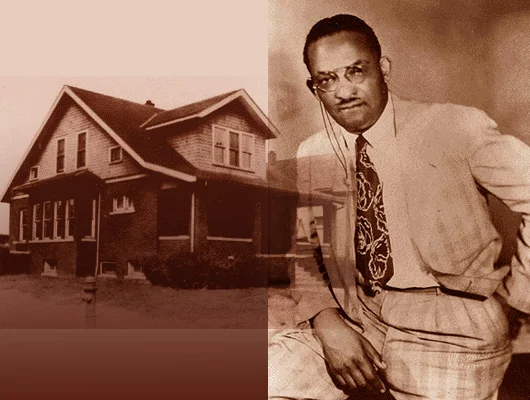
Dr. Ossian Sweet, his brother Henry, and nine other black men were charged with murder after a bystander was shot to death while the Sweets and their friends defended the doctor’s Detroit home from a violent white mob. The jury was all white. Darrow was hired by NAACP. Sweet was acquitted.

We come now to lay this man’s case in the hands of a jury of our peers.  The first defense and the last defense is the protection of home and life as provided by our law. We are willing to leave it here.

I feel, as I look at you, that we will be treated fairly and decently even understandingly and kindly. You know what this case is. You know why it is. You know that if white men had been lighting their way against colored men, nobody would ever have dreamed of a prosecution. And you know that from the beginning of this case to the end, up to the time you write your verdict, the prosecution is based on race prejudice and nothing else.

Gentlemen, I feel deeply on this subject; cannot help it. Let us take a little glance at the history of the Negro race.  It only needs a minute. It seems to me that the story would melt hearts of stone. I was born in America. I could have left it if I had wanted to go away. Some other men, reading about this land of freedom that we brag about on the Fourth of July, came voluntarily to America. These men, the defendants, are here because they could not help it. Their ancestors were captured in the jungles and on the plains of Africa, captured as you capture wild beasts, torn from their homes and their kindred; loaded into slave ships, packed like sardines in a box, half of them dying on the ocean passage; some jumping into the sea in their frenzy, when they had a chance to choose death in place of slavery. They were captured and brought here. They could not help it. They were bought and sold as slaves, to work without pay, because they were black. They were subject to all of this for generations, until finally they were given their liberty, so far as the law goes—and that is only a little way, because, after all, every human being’s life in this world is inevitably mixed with every other life and, no matter what laws we pass, no matter what precautions we take, unless the people we meet are kindly and decent and humane and liberty-loving, then there is no liberty. Freedom comes from human beings, rather than from laws and institutions

Now, that is their history, These people are the children of slavery. If the race that we belong to owes anything to any human being, or to any power in the universe they owe it to these black men. Above all other men, they owe an obligation and a duty to these black men that can never be repaid.  I never see one of them that I do not feel I ought to pay part of the debt of my race—and if you gentlemen feel as you should feel in this case, your emotions will be like mine.

Gentlemen, you are called into this case by chance. It took us a week to find you, a week of culling out prejudice and hatred. Probably we did not cull it all out at that; but we took the best and the fairest that we could find. It is up to you.

Your verdict means something in this ease. It means something more than the fate of this boy. It is not often that a case is submitted to twelve men where the decision may mean a milestone in the history of the human race. But this case does. And I hope and I trust that you have a feeling of responsibility that will make you take it and do your duty as citizens of a great nation, and as members of the human family, which is better still.1.

Let me say just a parting word for Henry Sweet, who has well-nigh been forgotten. I am serious, but it seems almost like a reflection upon this jury to talk as if I doubted your verdict. What has this boy done? This one boy now that I am culling out from all of the rest, and whose fate is in your hands—can you tell me what he has done? Can I believe myself? Am I standing in a court of justice where twelve men on their oaths are asked to take away the liberty of a boy twenty-one years of age, who has done nothing more than what Henry Sweet has done?

Gentlemen, you may think he shot too quick; you may think he erred in judgment; you may think that Dr. Sweet should not have gone there prepared to defend his home. But, what of this case of Henry Sweet? What has he done? I want to put it up to you, each one of you, individually. Dr. Sweet was his elder brother. He had helped Henry through school. He loved him. He had taken him into his home. Henry had lived with him and his wife he had fondled his baby. The doctor had promised Henry the money to go through school. Henry was getting his education, to take his place in the world, gentlemen--and this is a hard job. With his brother’s help, he has worked his way through college up to the last year. The doctor had bought a home. He feared danger. He moved in with his wife and he asked this boy to go with him. And this boy went to defend his brother, and his brother’s wife, and his child, and his home.

Do you think more of him or less of him for that? I never saw twelve men in my life – and I have looked at a good many faces of a good many juries--I never saw twelve men in my life that, if you could get them to understand a human case, were not true and right.

Should this boy have gone along and helped his brother? Or, should he have stayed away? What would you have done? And yet, gentlemen. here is a boy, and the president of his college came all the way from Ohio to tell you what he thinks of him. His teachers have come here, from Ohio, to tell you what they think of him. The Methodist bishop has come here to tell you what he thinks of him.

So, gentlemen, lam justified in saying that this boy is as kindly, as well disposed, as decent a man as one of you twelve. Do you think he ought to be taken out of his school and sent to the penitentiary? All right, gentlemen, if you think so, do it. It is your job, not mine. If you think so, do it. But if you do, gentlemen, if you should ever look into the face of your own boy, or your own brother, or look into your own heart, you will regret it in sackcloth and ashes. You know, if he committed any offense, it was being loyal and true to his brother whom he loved. I know where you will send him, and it will not be to a penitentiary.

Now, gentlemen, just one more word, and I am through with this case. I do not live in Detroit. But I have no feeling against this city. In fact, I shall always have the kindest remembrance of it, especially if this case results as I think and feel it will. I am the last one to come here to stir up race hatred, or any other hatred. do not believe in the law of hate. I may not be true to my ideals always, but I believe in the law of love, and I believe you can do nothing with hatred. I would like to see a time when man loves his fellow man and forgets his color or his creed. We will never be civilized until that time comes.

I know the Negro race has a long road to go. I believe that the life of the Negro race has been a life of tragedy, of injustice, of oppression. The law has made him equal, but man has not. And, after all, the last analysis is: What has man done’?--and not what has the law done? I know there is a long road ahead of him before he can take the place which I believe he should take. I know that before him there is sorrow, tribulation and death among the blacks, and perhaps the whites. lam sorry. would do what I could to avert it. I would advise patience; I would advise tolerance; I would advise understanding; I would advise all those things which are necessary for men who live together.

Gentlemen, what do you think of your duty in this case? I have watched day after day these black, tense faces that have crowded this court. These black faces that now are looking to you twelve whites, feeling that the hopes and fears of a race are in your keeping.

This case is about to end, gentlemen. To them, it is Life. Not one of their color sits on this jury. Their fate is in the hands of twelve whites. Their eyes are fixed on you, their hearts go out to you, and their hopes hang on your verdict.

This is all I ask you. On behalf of this defendant, on behalf of these helpless ones who turn to you, and more than that—on behalf of this great state, and this great city, which must face this problem and face it fairly—I ask you, in the name of progress and of the human race, to return a verdict of not guilty in this case.

Source: https://charlespaolino.com/2011/11/11/book...

Enjoyed this speech? Speakola is a labour of love and I’d be very grateful if you would share, tweet or like it. Thank you.

Facebook Twitter Facebook
In LAWS AND JUSTICE Tags SWEET TRIAL, CLARENCE DARROW, RACE, LYNCH MOB, HENRY SWEET, OSSIAN SWEET, HOME INVASION, HOUSE IS A CASTLE, MURDER, COURTROOM, TRANSCRIPT
Comment

See my film!

Limited Australian Season

March 2025

Details and ticket bookings at

angeandtheboss.com

Support Speakola

Hi speech lovers,
With costs of hosting website and podcast, this labour of love has become a difficult financial proposition in recent times. If you can afford a donation, it will help Speakola survive and prosper.

Best wishes,
Tony Wilson.

Become a Patron!

Learn more about supporting Speakola.

Featured political

Featured
Jon Stewart: "They responded in five seconds", 9-11 first responders, Address to Congress - 2019
Jacinda Ardern: 'They were New Zealanders. They are us', Address to Parliament following Christchurch massacre - 2019
Dolores Ibárruri: "¡No Pasarán!, They shall not pass!', Defense of 2nd Spanish Republic - 1936
Jimmy Reid: 'A rat race is for rats. We're not rats', Rectorial address, Glasgow University - 1972

Featured eulogies

Featured
For Geoffrey Tozer: 'I have to say we all let him down', by Paul Keating - 2009
for James Baldwin: 'Jimmy. You crowned us', by Toni Morrison - 1988
for Michael Gordon: '13 days ago my Dad’s big, beautiful, generous heart suddenly stopped beating', by Scott and Sarah Gordon - 2018

Featured commencement

Featured
Tara Westover: 'Your avatar isn't real, it isn't terribly far from a lie', The Un-Instagrammable Self, Northeastern University - 2019
Tim Minchin: 'Being an artist requires massive reserves of self-belief', WAAPA - 2019
Atul Gawande: 'Curiosity and What Equality Really Means', UCLA Medical School - 2018
Abby Wambach: 'We are the wolves', Barnard College - 2018
Eric Idle: 'America is 300 million people all walking in the same direction, singing 'I Did It My Way'', Whitman College - 2013
Shirley Chisholm: ;America has gone to sleep', Greenfield High School - 1983

Featured sport

Featured
Joe Marler: 'Get back on the horse', Harlequins v Bath pre game interview - 2019
Ray Lewis : 'The greatest pain of my life is the reason I'm standing here today', 52 Cards -
Mel Jones: 'If she was Bradman on the field, she was definitely Keith Miller off the field', Betty Wilson's induction into Australian Cricket Hall of Fame - 2017
Jeff Thomson: 'It’s all those people that help you as kids', Hall of Fame - 2016

Fresh Tweets


Featured weddings

Featured
Dan Angelucci: 'The Best (Best Man) Speech of all time', for Don and Katherine - 2019
Hallerman Sisters: 'Oh sister now we have to let you gooooo!' for Caitlin & Johnny - 2015
Korey Soderman (via Kyle): 'All our lives I have used my voice to help Korey express his thoughts, so today, like always, I will be my brother’s voice' for Kyle and Jess - 2014

Featured Arts

Featured
Bruce Springsteen: 'They're keepers of some of the most beautiful sonic architecture in rock and roll', Induction U2 into Rock Hall of Fame - 2005
Olivia Colman: 'Done that bit. I think I have done that bit', BAFTA acceptance, Leading Actress - 2019
Axel Scheffler: 'The book wasn't called 'No Room on the Broom!', Illustrator of the Year, British Book Awards - 2018
Tina Fey: 'Only in comedy is an obedient white girl from the suburbs a diversity candidate', Kennedy Center Mark Twain Award -  2010
Tina Fey: 'Only in comedy is an obedient white girl from the suburbs a diversity candidate', Kennedy Center Mark Twain Award - 2010

Featured Debates

Featured
Sacha Baron Cohen: 'Just think what Goebbels might have done with Facebook', Anti Defamation League Leadership Award - 2019
Greta Thunberg: 'How dare you', UN Climate Action Summit - 2019
Charlie Munger: 'The Psychology of Human Misjudgment', Harvard University - 1995
Lawrence O'Donnell: 'The original sin of this country is that we invaders shot and murdered our way across the land killing every Native American that we could', The Last Word, 'Dakota' - 2016