• Genre
  • About
  • Submissions
  • Donate
  • Search
Menu

Speakola

All Speeches Great and Small
  • Genre
  • About
  • Submissions
  • Donate
  • Search

Jonty Bush: 'She was stabbed to death by her boyfriend' , Young Australian of the Year - 2009

March 23, 2022

26 January 2013, Adelaide, South Australia, Australia

Good afternoon.

Well, thank you for having me. I'd like to start by acknowledging the traditional owners of the land on which we meet, both past and present and respectfully thank them and yourselves for the opportunity to stand here today and to share with you part of my story, and my personal and very humble thoughts on what makes Australia remarkable.

Particularly, given I understand that Lance Armstrong today is, is running the whole confession. So, you know, quite an appealing thing to stay home and watch that Oprah run through. So thank you for coming out and making the effort.

So what does make Australia remarkable? It's a question I've been asked many times since receiving the Young Australian of the year award in 2009, and a question which is highly subjective, depending on who you ask. So yesterday morning, I did probably what every one in my generation does, and I popped the question onto Facebook, 'What makes Australia so great', and predictably there was a varied response. I dunno if everyone can read that but —.

[lists virtues] positive sunny people, the coffee, the beaches, the fact that AFL would always be on the front page of the paper even if world war III was breaking out ... how we're surrounded by an ocean patrolled by the deadliest sharks in the world, sense of community is something that really shone through for people, they really related to that sense of community that Australia seems to have, safety growing up in a community, swimming, water slides, water sprinklers, you know, people really reflected on their own childhoods a lot. What else have we got in there? healthcare system, obviously someone's over in London and a bit dirty at the healthcare system at the moment, the people, the passion and the environment, and then David, the fact that it's not America.

What becomes apparent from this is that people I think are essentially meaning making species and will identify with the Australian traits and the mannerisms which means something to us. We go about our lives witnessing events and actions, forming connections and conflicts with others. And the meaning that we attach to those events begins to form a picture or a story, If you like, around who we are as individuals and how we connect in the world.

I'd like to illustrate this to you by sharing parts of my personal story. Not only to showcase one of the 20 million lives that makes up the tapestry of Australia, but to highlight how our own personal experiences influence what it is that we notice in the world around us.

On the 30th of July in the year 2000, I received a phone call informing me that my 19 year old sister had been in an accident. She'd been out the night before with her live-in boyfriend of just three months. And as far as I knew, she'd been safely tucked away in a hotel room, sleeping off a big night. Within the hours that followed. I learned that my sister had been murdered, she was stabbed to death by her boyfriend, the man who professed to love her. This was my first real taste of violence. My first experience of losing someone that close to me and as I'm sure it's obvious to you, but wasn't so obvious to me at the time, was an incredible turning point in my life. What I didn't see at that time was this one event significant enough in its own right, would mark one of the turning points in my life, and would take me on a journey of both great isolation as I alone discovered who I was and what I valued, but also togetherness as I've walked with others that would teach me about humanity, strength, and optimism. These are the traits that I both remember and loved most about Australia and the people who populate it — humanity, strength and optimism.

Just four months following the death of my sister, my father was assaulted. He was punched twice in the face, collapsed at the scene and was rushed to hospital where he was diagnosed with a subarachnoid haemorrhage, or bleeding in the brain. Now 2012 was an extraordinary year. In many regards, two events stand out for me in particular. One is that we reached our highest heights with Felix Baumgartner skydiving from an astonishing 24 miles above the Earth. And we also explored the depths of our ocean, with James Cameron being the first man to reach the Marianna trench, over 35,000 feet deep and a figure unattainable anywhere else in the ocean.

This day, nearly 13 years, since the death of my father, I still stand in wonderment of how we can and take our people to the edges of space and the depth of the oceans, and yet the mechanics of the human brain and in particular, how to heal it largely remain a mystery to us. On the 18th of November, 2000, just four months after my sister's death, my father's life support was turned off and he passed away as a result of his injuries. He was 49 years old, a father of three, his youngest being my brother who was just 13 years of age and a recent grandfather of an 18 month old.

I've always maintained that you never finish a book on a bad chapter, and the same can be said for our lives. You might tend to have complete control over the events in your life, but you are ultimately the author and narrator of your own story. We all choose where it goes next. For me, I wanted to write myself as the heroine of my story, not the victim. I wanted my life to tell a story of a young woman who experienced tragedy and yet rose above that to create the best life that she could, in a nation where opportunities are endless and where you go next is limited only by your own imagination.

Leaving a solid career in human resources. I journeyed into the victim support and advocacy area. Over the next decade, I worked with literally thousands of families who were bereaved through homicide. Many people I speak with outside of this field expressed to me how depressing this must be and how hopeless. To be honest, it's been anything but. There's nothing more inspiring than seeing another person standing strong in the face of adversity.

I've supported a man whose only two grandchildren were murdered, as at 80 years of age, he started a fundraising group in his local town of Emerald in Queensland, and every Friday night worked the pubs and clubs raising thousands of dollars to support children's causes. I've stood by the side of a mother of a murdered son, as the offender approached her to offer a teary apology. The strength that must have taken for him to make those dozen steps across the courtroom floor and to ask for her forgiveness is something that many of us can only imagine. And the courage that it took on her part to hug him and to say, I forgive you, formed a memory that made a lasting impression on me. As I decided that day, that if she could forgive that act, then there was nothing I couldn't work through.

Our nation's history and present are peppered by stories, just like these. Australia breeds resilience. On the one hand we're a nation with incredible gifts. We're a wealthy nation. In fact, one of the wealthiest nations in the history of the world. We're blessed with growth and opportunity and we are fortunate enough to have leaders in this country who convert these gifts into prosperity for many. But we're also presented with challenges. No one could forget days in our nation's history, such as the black Saturday bushfres in 2009. Over 300 fires burned through Victoria's heartland, affecting 78 communities and taking the lives of 173 people. Or the 2011 Queensland floods, affecting 70 communities and over 200,000 people. Thirty five lives were lost, and three quarters of the state was declared a disaster zone. These events, as catastrophic and devastating as they are, bring out something in the Australian people. Where other nations loot, panic and take advantage of the population's vulnerable, Australians are arguably at our most admirable in the face of adversity. The Red Cross Victorian Bushfire appeal received an unprecedented $378 million in donations, which is around about the equivalent of every Australian donating $20. it was the largest single charitable appeal in Australian history. Whilst more than 55,000 volunteers registered to clean up Brisbane alone during the 2011 floods with thousands more simply turning up, compromising their health and safety to help a stranger in need. It's no wonder with feats like these, that Australia consistently ranks as the world's number one nation on the World Giving Index.

I love that Australians don't take ourselves too seriously, that we believe in second chances, particularly when there's sports involved, and that we celebrate and aspire to be people of substance, rather than those of fleeting fame. (For those that dunno, that's the Kardashians.).

I love that we're encouraged to challenge the status quo, that we recognise that amazing things happen on the fringes. In 2007, I was honoured to become the first victim and youngest person to be the CEO of the Queensland homicide victim support group. One of the areas I wanted to tackle was society's attitudes around violence. At the time I and others were frustrated by the lack of voice and discussion given to the topic and what we could do to address it. For example, people being encouraged by our local city council, to ring up and dub in your neighbours if they breached their water restrictions, yes, you could have someone king hit from behind in Brisbane's entertainment, precinct, and not one witness would come forward. Further to that. I was concerned that this apathy towards violence was reflected in our criminal justice system in many ways, but notably through the 'accident excuse'.

The 'accident excuse' forms an integral part of Queensland's criminal code. In fact, it's in many criminal codes throughout Australia, and holds that a person cannot be criminally responsible for an event which occurs by accident. Critically. It asks jurors to consider whether the outcome from an act of violence, was reasonably foreseeable to the ordinary man. I first encountered this section of the legislation in 2002, during my father's manslaughter trial. The jury presiding in our case were asked how foreseeable was it that the two punches dealt to my father would result in a fatal outcome. On medication, and to my surprise, the jury reached a consensus that it was not foreseeable, that two punches could result in death and they delivered a verdict of not guilty with the offender walking free from court. I then encountered the accident section of the law soon after becoming CEO of the homicide group, where during the first 12 months, two cases, which proceeded through court were found to be not guilty because of the accident,excuse. Both cases involved seemingly minimal acts of violence, one or two punches, and in both cases juries determined that death was not a foreseeable outcome to the ordinary man.

These outcomes clearly had a devastating impact upon the surviving family. Imagine for a moment, not only losing someone you love suddenly and through violence, but then being asked to accept that even though the offender committed a criminal act when they assaulted the victim, because they didn't intend to cause death, and because to the ordinary person death isn't foreseeable, that offender now walks free from court.

It was this sense of injustice that led myself and others to do two things. The first thing was the lobby government to review and change the legislation surrounding the accident excuse. The second was to start an education campaign targeting our young people particularly, reminding them about the consequences of just one punch.

The One Punch Can Kill campaign was our solution to that social problem and has since been supported by the Queensland government. I know it's saved lives. I've had young people approach me to say how they place One Punch wristbands on their hands to stop them fighting with their peers. And it's also led to a national discussion around violence, its consequences, and what we can do to challenge the Australian norms, which support it.

Since embarking on this advocacy path, I've challenged politicians, spoken openly in the media against judges' decisions and implored people to raise our expectations of lawmakers. I've had incredible media support and, largely, community goodwill towards the campaign. In other countries throughout the world, I would've been lucky to make a headline. Whilst in some countries, as a woman protesting or challenging the laws, I would've been shot.

Late last year, I started a new project called Project 24, which aims to unite Australian women towards greater safety outcomes for other women, both nationally and globally. In just a few short months we've raised a considerable sum for our first project, a domestic violence shelter in the Solomon Islands.

And it was another great reminder of two things.

One is the beauty and the necessity of freedom. Australian nationals are born into it. We inherit it for no reason other than we were the lucky ones who happened to have Australian parents. And I reluctantly admit that many of us probably take it for granted. Whilst researching for Project 24, I was gutted by some of the stories I read, where women side of Australia were victimised often purely because they were women. I read of children under 10 years of age being sold as child brides, and of a woman who was gang raped only to be told by a judge that she was too old and ugly to be sexually assaulted. For these women, freedom is an aspirational concept, something to be desired, but never achieved. One of the greatest things I love about Australia is the freedom to be a woman, to be a young person, to speak my mind, to create waves and to create change without fear.

The second reminder I've had whilst working on Project 24 and the final point of my conversation with you is the impact that one person can make in the world. I grew up in a working class suburb in Tasmania, where most of my peers didn't graduate beyond year 10. Teenage pregnancy was the norm and unemployment was high. Despite two loving and hardworking parents, I spent my early years conditioned to believe that this was the future I had to look forward to. I've spent my adult life since challenging that deep-seated belief, expecting more of myself and believing that anyone no matter their origins can create a life they're proud of.

I love that in Australia, a small town Tasmanian girl who left home at 16 years of age and failed year 12, isn't typecast as a failure. That she could go on to complete a bachelor degree. And most recently her masters. That she can become the CEO of an organisation, that she can lobby and change the law, and change the way others view victims of crime. That one day she'd be recognised nationally for this and end up travelling Australia, speaking with communities about violence, whose opinions are published through the media, develops a career as a presenter and speaker, and most recently had dinner with Prince Charles and Camilla! That's me.

You can't really see it, but it is me!

Only in Australia. It's on this note, I'd like to sincerely thank the Australia Cay Council, its sponsors and supporters, for recognising the work of this small town Tasmanian girl, amidst the amazing work that's brought to your attention each and every year. I spoke earlier of meaning. You've given my life a whole new dimension of meaning, and I'm forever grateful that you saw and believed in me. So to the council supporters and sponsors, thank you very much.

I'd also just like to throw in a shameless plug for women. We are still always looking for women to join Project 24, to help us in our fundraising efforts to improve the safety and quality of life for women globally. So if there's women out there that would be interested in joining a good team, that's how you can get in touch with me. And if anyone wants to contact me directly, it's my details. So on that note, I'd like to thank everyone for listening. I hope it encourages you to consider the meaning that you attached to being Australian and have an awesome lunch.

Thanks very much.
Source: https://www.youtube.com/watch?v=AvKRnOhygS...

Enjoyed this speech? Speakola is a labour of love and I’d be very grateful if you would share, tweet or like it. Thank you.

Facebook Twitter Facebook
In NATIONAL IDENTITY Tags JOINTY BUSH, DOMESTIC VIOLENCE, MURDER, TRANSCRIPT, AUSTRALIA DAY LUNCEHON, YOUNG AUSTRALIAN OF THE YEAR, AUSTRALIAN, ONE PUNCH, ASSAULT, FATHER, DAUGHTER, SISTER, ACCIDENT EXCUSE, ONE PUNCH LAWS, PROJECT 24, WOMEN'S RIGHTS, GENDER EQUALITY, MANSLAUGHTER, INTENT TO KILL, FORGIVENESS
Comment

Mary Church Terrell: ‘What it means to be coloured in the capital of the U.S’, United Women's Club of Washington DC- 1906

August 14, 2018

 10 October 1906, United Women’s Club, Washington DC, USA

Washington, D.C., has been called "The Colored Man's Paradise." Whether this sobriquet was given to the national capital in bitter irony by a member of the handicapped race, as he reviewed some of his own persecutions and rebuffs, or whether it was given immediately after the war by an ex-slaveholder who for the first time in his life saw colored people walking about like free men, minus the overseer and his whip, history saith not.  It is certain that it would be difficult to find a worse misnomer for Washington than "The Colored Man's Paradise" if so prosaic a consideration as veracity is to determine the appropriateness of a name.

For fifteen years I have resided in Washington, and while it was far from being a paradise for colored people when I first touched these shores it has been doing its level best ever since to make conditions for us intolerable. As a colored woman I might enter Washington any night, a stranger in a strange land, and walk miles without finding a place to lay my head. Unless I happened to know colored people who live here or ran across a chance acquaintance who could recommend a colored boarding-house to me, I should be obliged to spend the entire night wandering about. Indians, Chinamen, Filipinos, Japanese and representatives of any other dark race can find hotel accommodations, if they can pay for them. The colored man alone is thrust out of the hotels of the national capital like a leper.

As a colored woman I may walk from the Capitol to the White House, ravenously hungry and abundantly supplied with money with which to purchase a meal, without finding a single restaurant in which I would be permitted to take a morsel of food, if it was patronized by white people, unless I were willing to sit behind a screen. As a colored woman I cannot visit the tomb of the Father of this country, which owes its very existence to the love of freedom in the human heart and which stands for equal opportunity to all, without being forced to sit in the Jim Crow section of an electric car which starts form the very heart of the city– midway between the Capital and the White House. If I refuse thus to be humiliated, I am cast into jail and forced to pay a fine for violating the Virginia laws....

As a colored woman I may enter more than one white church in Washington without receiving that welcome which as a human being I have the right to expect in the sanctuary of God....
Unless I am willing to engage in a few menial occupations, in which the pay for my services would be very poor, there is no way for me to earn an honest living, if I am not a trained nurse or a dressmaker or can secure a position as teacher in the public schools, which is exceedingly difficult to do. It matters not what my intellectual attainments may be or how great is the need of the services of a competent person, if I try to enter many of the numerous vocations in which my white sisters are allowed to engage, the door is shut in my face.

From one Washington theater I am excluded altogether. In the remainder certain seats are set aside for colored people, and it is almost impossible to secure others.... With the exception of the Catholic University, there is not a single white college in the national capitol to which colored people are admitted.... A few years ago the Columbian Law School admitted colored students, but in deference to the Southern white students the authorities have decided to exclude them altogether.

Some time ago a young woman who had already attracted some attention in the literary world by her volume of short stories answered an advertisement which appeared in a Washington newspaper, which called for the services of a skilled stenographer and expert typewriter....The applicants were requested to send specimens of their work and answer certain questions concerning their experience and their speed before they called in person. In reply to her application the young colored woman. . . received a letter from the firm stating that her references and experience were the most satisfactory that had been sent and requesting her to call. When she presented herself there was some doubt in the mind of the man to whom she was directed concerning her racial pedigree, so he asked her point-blank whether she was colored or white. When she confessed the truth the merchant expressed...deep regret that he could not avail himself of the services of so competent a person, but frankly admitted that employing a colored woman in his establishment in any except a menial position was simply out of the question....

Not only can colored women secure no employment in the Washington stores, department and otherwise, except as menials, and such positions, of course, are few, but even as customers they are not infrequently treated with discourtesy both by the clerks and the proprietor himself. . . .
Although white and colored teachers are under the same Board of Education and the system for the children of both races is said to be uniform, prejudice against the colored teachers in the public schools is manifested in a variety of ways. From 1870 to 1900 there was a colored superintendent at the head of the colored schools. During all that time the directors of the cooking, sewing, physical culture, manual training, music and art departments were colored people. Six years ago a change was inaugurated.  The colored superintendent was legislated out of office and the directorships, without a single exception, were taken from colored teachers and given to the whites....

Now, no matter how competent or superior the colored teachers in our public schools may be, they know that they can never rise to the height of a directorship, can never hope to be more than an assistant and receive the meager salary therefore, unless the present regime is radically changed....

Strenuous efforts are being made to run Jim Crow cars in the national capital.... Representative Heflin, of Alabama, who introduced a bill providing for Jim Crow street cars in the District of Columbia last winter, has just received a letter from the president of the East Brookland Citizens’ Association “indorsing the movement for separate street cars and sincerely hoping that you will be successful in getting this enacted into a law as soon as possible.” Brookland is a suburb of Washington.

The colored laborer’s path to a decent livelihood is by no means smooth. Into some of the trades unions here he is admitted, while from others he is excluded altogether. By the union men this is denied, although I am personally acquainted with skilled workmen who tell me they are not admitted into the unions because they are colored. But even when they are allowed to join the unions they frequently derive little benefit, owing to certain tricks of the trade. When the word passes round that help is needed and colored laborers apply, they are often told by the union officials that they have secured all the men they needed, because the places are reserved for white men, until they have been provided with jobs, and colored men must remain idle, unless the supply of white men is too small....

And so I might go on citing instance after instance to show the variety of ways in which our people are sacrificed on the altar of prejudice in the Capital of the United States and how almost insurmountable are the obstacles which block his path to success....

It is impossible for any white person in the United States, no matter how sympathetic and broad, to realize what life would mean to him if his incentive to effort were suddenly snatched away. To the lack of incentive to effort, which is the awful shadow under which we live, may be traced the wreck and ruin of score of colored youth. And surely nowhere in the world do oppression and persecution based solely on the color of the skin appear more hateful and hideous than in the capital of the United States, because the chasm between the principles upon which this Government was founded, in which it still professes to believe, and those which are daily practiced under the protection of the flag, yawn so wide and deep.

Source: http://www.americanrhetoric.com/speeches/m...

Enjoyed this speech? Speakola is a labour of love and I’d be very grateful if you would share, tweet or like it. Thank you.

Facebook Twitter Facebook
In EQUALITY 2 Tags MARY CHURCH TERRELL, WOMEN'S RIGHTS, CIVIL RIGHTS, WHAT IT MEANS TO BE COLORED, WASHINGTON DC, TRANSCRIPT, UNITED WOMEN'S CLUB
Comment

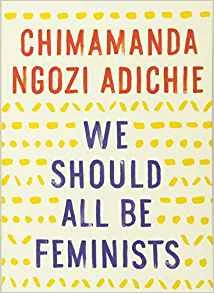
Chimamanda Adichie: 'We should all be feminists', TEDx Euston - 2012

February 20, 2018

1 December 2012, TEDx Euston, London, UK

So I would like to start by telling you about one of my greatest friends, Okoloma Maduewesi. Okoloma lived on my street and looked after me like a big brother. If I liked a boy, I would ask Okoloma's opinion. Okoloma died in the notorious Sosoliso plane crash in Nigeria in December of 2005. Almost exactly seven years ago. Okoloma was a person I could argue with, laugh with and truly talk to. He was also the first person to call me a feminist.

I was about fourteen, we were at his house, arguing. Both of us bristling with half bit knowledge from books that we had read. I don't remember what this particular argument was about, but I remember that as I argued and argued, Okoloma looked at me and said, "You know, you're a feminist." It was not a compliment.

(Laughter)

I could tell from his tone, the same tone that you would use to say something like, "You're a supporter of terrorism."

(Laughter)

I did not know exactly what this word "feminist" meant, and I did not want Okoloma to know that I did not know. So I brushed it aside, and I continued to argue. And the first thing I planned to do when I got home was to look up the word "feminist" in the dictionary.

Now fast forward to some years later, I wrote a novel about a man who among other things beats his wife and whose story doesn't end very well. While I was promoting the novel in Nigeria, a journalist, a nice, well-meaning man, told me he wanted to advise me. And for the Nigerians here, I'm sure we're all familiar with how quick our people are to give unsolicited advice. He told me that people were saying that my novel was feminist and his advice to me -- and he was shaking his head sadly as he spoke -- was that I should never call myself a feminist because feminists are women who are unhappy because they cannot find husbands.

(Laughter)

So I decided to call myself "a happy feminist." Then an academic, a Nigerian woman told me that feminism was not our culture and that feminism wasn't African, and that I was calling myself a feminist because I had been corrupted by "Western books." Which amused me, because a lot of my early readings were decidedly unfeminist. I think I must have read every single Mills & Boon romance published before I was sixteen. And each time I tried to read those books called "the feminist classics," I'd get bored, and I really struggled to finish them. But anyway, since feminism was un-African, I decided that I would now call myself "a happy African feminist." At some point I was a happy African feminist who does not hate men and who likes lip gloss and who wears high heels for herself but not for men.

(Laughter)

Of course a lot of this was tongue-in-cheek, but that word feminist is so heavy with baggage, negative baggage. You hate men, you hate bras, you hate African culture, that sort of thing.

Now here's a story from my childhood. When I was in primary school, my teacher said at the beginning of term that she would give the class a test and whoever got the highest score would be the class monitor. Now, class monitor was a big deal. If you were a class monitor, you got to write down the names of noisemakers --

(Laughter)

which was having enough power of its own. But my teacher would also give you a cane to hold in your hand while you walk around and patrol the class for noisemakers. Now, of course you were not actually allowed to use the cane. But it was an exciting prospect for the nine-year-old me. I very much wanted to be the class monitor. And I got the highest score on the test. Then, to my surprise, my teacher said that the monitor had to be a boy. She had forgotten to make that clear earlier because she assumed it was ... obvious.

(Laughter)

A boy had the second highest score on the test, and he would be monitor. Now, what was even more interesting about this is that the boy was a sweet, gentle soul who had no interest in patrolling the class with the cane, while I was full of ambition to do so. But I was female and he was male, and so he became the class monitor. And I've never forgotten that incident.

I often make the mistake of thinking that something that is obvious to me is just as obvious to everyone else. Now, take my dear friend Louis for example. Louis is a brilliant, progressive man, and we would have conversations and he would tell me, "I don't know what you mean by things being different or harder for women. Maybe in the past, but not now." And I didn't understand how Louis could not see what seems so self-evident. Then one evening, in Lagos, Louis and I went out with friends. And for people here who are not familiar with Lagos, there's that wonderful Lagos' fixture, the sprinkling of energetic men who hang around outside establishments and very dramatically "help" you park your car. I was impressed with the particular theatrics of the man who found us a parking spot that evening. And so as we were leaving, I decided to leave him a tip. I opened my bag, put my hand inside my bag, brought out my money that I had earned from doing my work, and I gave it to the man. And he, this man who was very grateful and very happy, took the money from me, looked across at Louis and said, "Thank you, sir!"

(Laughter)

Louis looked at me, surprised, and asked, "Why is he thanking me? I didn't give him the money." Then I saw realization dawn on Louis' face. The man believed that whatever money I had had ultimately come from Louis. Because Louis is a man.

Men and women are different. We have different hormones, we have different sexual organs, we have different biological abilities. Women can have babies, men can't. At least not yet.

(Laughter)

Men have testosterone and are in general physically stronger than women. There's slightly more women than men in the world, about 52 percent of the world's population is female. But most of the positions of power and prestige are occupied by men. The late Kenyan Nobel Peace laureate, Wangari Maathai, put it simply and well when she said: "The higher you go, the fewer women there are." In the recent US elections we kept hearing of the Lilly Ledbetter law, and if we go beyond the nicely alliterative name of that law, it was really about a man and a woman doing the same job, being equally qualified, and the man being paid more because he's a man.

So in the literal way, men rule the world, and this made sense a thousand years ago because human beings lived then in a world in which physical strength was the most important attribute for survival. The physically stronger person was more likely to lead, and men, in general, are physically stronger. Of course there are many exceptions.

(Laughter)

But today we live in a vastly different world. The person more likely to lead is not the physically stronger person; it is the more creative person, the more intelligent person, the more innovative person, and there are no hormones for those attributes. A man is as likely as a woman to be intelligent, to be creative, to be innovative. We have evolved; but it seems to me that our ideas of gender had not evolved.

Some weeks ago, I walked into a lobby of one of the best Nigerian hotels. I thought about naming the hotel, but I thought I probably shouldn't. And a guard at the entrance stopped me and asked me annoying questions, because their automatic assumption is that a Nigerian female walking into a hotel alone is a sex worker. And by the way, why do these hotels focus on the ostensible supply rather than the demand for sex workers? In Lagos I cannot go alone into many "reputable" bars and clubs. They just don't let you in if you're a woman alone, you have to be accompanied by a man. Each time I walk into a Nigerian restaurant with a man, the waiter greets the man and ignores me. The waiters are products --

(Laughter)

At this some women felt like, "Yes! I thought that!" The waiters are products of a society that has taught them that men are more important than women. And I know that waiters don't intend any harm. But it's one thing to know intellectually and quite another to feel it emotionally. Each time they ignore me, I feel invisible. I feel upset. I want to tell them that I am just as human as the man, that I'm just as worthy of acknowledgment. These are little things, but sometimes it's the little things that sting the most.

And not long ago, I wrote an article about what it means to be young and female in Lagos, and the printers told me, "It was so angry." Of course it was angry!

(Laughter)

I am angry. Gender as it functions today is a grave injustice. We should all be angry. Anger has a long history of bringing about positive change; but, in addition to being angry, I'm also hopeful. Because I believe deeply in the ability of human beings to make and remake themselves for the better.

Gender matters everywhere in the world, but I want to focus on Nigeria and on Africa in general, because it is where I know, and because it is where my heart is. And I would like today to ask that we begin to dream about and plan for a different world, a fairer world, a world of happier men and happier women who are truer to themselves. And this is how to start: we must raise our daughters differently. We must also raise our sons differently. We do a great disservice to boys on how we raise them; we stifle the humanity of boys. We define masculinity in a very narrow way, masculinity becomes this hard, small cage and we put boys inside the cage. We teach boys to be afraid of fear. We teach boys to be afraid of weakness, of vulnerability. We teach them to mask their true selves, because they have to be, in Nigerian speak, "hard man!" In secondary school, a boy and a girl, both of them teenagers, both of them with the same amount of pocket money, would go out and then the boy would be expected always to pay, to prove his masculinity. And yet we wonder why boys are more likely to steal money from their parents.

What if both boys and girls were raised not to link masculinity with money? What if the attitude was not "the boy has to pay" but rather "whoever has more should pay?" Now, of course because of that historical advantage, it is mostly men who will have more today, but if we start raising children differently, then in fifty years, in a hundred years, boys will no longer have the pressure of having to prove this masculinity. But by far the worst thing we do to males, by making them feel that they have to be hard, is that we leave them with very fragile egos. The more "hard man" the man feels compelled to be, the weaker his ego is. And then we do a much greater disservice to girls because we raise them to cater to the fragile egos of men. We teach girls to shrink themselves, to make themselves smaller, we say to girls, "You can have ambition, but not too much."

(Laughter)

"You should aim to be successful, but not too successful, otherwise you would threaten the man." If you are the breadwinner in your relationship with a man, you have to pretend that you're not, especially in public, otherwise you will emasculate him.

But what if we question the premise itself? Why should a woman's success be a threat to a man? What if we decide to simply dispose of that word, and I don't think there's an English word I dislike more than "emasculation." A Nigerian acquaintance once asked me if I was worried that men would be intimidated by me. I was not worried at all. In fact, it had not occurred to me to be worried because a man who would be intimidated by me is exactly the kind of man I would have no interest in.

(Laughter)

(Applause)

But still I was really struck by this. Because I'm female, I'm expected to aspire to marriage; I'm expected to make my life choices always keeping in mind that marriage is the most important. A marriage can be a good thing; it can be a source of joy and love and mutual support. But why do we teach girls to aspire to marriage and we don't teach boys the same?

I know a woman who decided to sell her house because she didn't want to intimidate a man who might marry her. I know an unmarried woman in Nigeria who, when she goes to conferences, wears a wedding ring because according to her, she wants the other participants in the conference to "give her respect." I know young women who are under so much pressure from family, from friends, even from work to get married, and they're pushed to make terrible choices. A woman at a certain age who is unmarried, our society teaches her to see it as a deep, personal failure. And a man at a certain age who is unmarried, we just think he hasn't come around to making his pick.

(Laughter)

It's easy for us to say, "Oh, but women can just say no to all of this." But the reality is more difficult and more complex. We're all social beings. We internalize ideas from our socialization. Even the language we use in talking about marriage and relationships illustrates this. The language of marriage is often the language of ownership rather than the language of partnership. We use the word "respect" to mean something a woman shows a man but often not something a man shows a woman.

Both men and women in Nigeria will say -- this is an expression I'm very amused by -- "I did it for peace in my marriage." Now, when men say it, it is usually about something that they should not be doing anyway.

(Laughter)

Sometimes they say it to their friends, it's something to say to their friends in a kind of fondly exasperated way, you know, something that ultimately proves how masculine they are, how needed, how loved. "Oh, my wife said I can't go to the club every night, so for peace in my marriage, I do it only on weekends."

(Laughter)

Now, when a woman says, "I did it for peace in my marriage," she's usually talking about giving up a job, a dream, a career. We teach females that in relationships, compromise is what women do. We raise girls to see each other as competitors -- not for jobs or for accomplishments, which I think can be a good thing, but for attention of men. We teach girls that they cannot be sexual beings in the way that boys are. If we have sons, we don't mind knowing about our sons' girlfriends. But our daughters' boyfriends? God forbid.

(Laughter)

But of course when the time is right, we expect those girls to bring back the perfect man to be their husbands. We police girls, we praise girls for virginity, but we don't praise boys for virginity, and it's always made me wonder how exactly this is supposed to work out because ...

(Laughter)

(Applause)

I mean, the loss of virginity is usually a process that involves ...

Recently a young woman was gang raped in a university in Nigeria, I think some of us know about that. And the response of many young Nigerians, both male and female, was something along the lines of this: "Yes, rape is wrong. But what is a girl doing in a room with four boys?" Now, if we can forget the horrible inhumanity of that response, these Nigerians have been raised to think of women as inherently guilty, and they have been raised to expect so little of men that the idea of men as savage beings without any control is somehow acceptable. We teach girls shame. "Close your legs." "Cover yourself." We make them feel as though by being born female they're already guilty of something. And so, girls grow up to be women who cannot see they have desire. They grow up to be women who silence themselves. They grow up to be women who cannot say what they truly think, and they grow up -- and this is the worst thing we did to girls -- they grow up to be women who have turned pretense into an art form.

(Applause)

I know a woman who hates domestic work, she just hates it, but she pretends that she likes it, because she's been taught that to be "good wife material" she has to be -- to use that Nigerian word -- very "homely." And then she got married, and after a while her husband's family began to complain that she had changed.

(Laughter)

Actually, she had not changed, she just got tired of pretending.

The problem with gender, is that it prescribes how we should be rather than recognizing how we are.

Now imagine how much happier we would be, how much freer to be our true individual selves, if we didn't have the weight of gender expectations. Boys and girls are undeniably different biologically, but socialization exaggerates the differences and then it becomes a self-fulfilling process. Now, take cooking for example. Today women in general are more likely to do the housework than men, the cooking and cleaning. But why is that? Is it because women are born with a cooking gene?

(Laughter)

Or because over years they have been socialized to see cooking as their role? Actually, I was going to say that maybe women are born with a cooking gene, until I remember that the majority of the famous cooks in the world, whom we give the fancy title of "chefs," are men.

I used to look up to my grandmother who was a brilliant, brilliant woman, and wonder how she would have been if she had the same opportunities as men when she was growing up.

Now today, there are many more opportunities for women than there were during my grandmother's time because of changes in policy, changes in law, all of which are very important. But what matters even more is our attitude, our mindset, what we believe and what we value about gender. What if in raising children we focus on ability instead of gender? What if in raising children we focus on interest instead of gender?

I know a family who have a son and a daughter, both of whom are brilliant at school, who are wonderful, lovely children. When the boy is hungry, the parents say to the girl, "Go and cook Indomie noodles for your brother."

(Laughter)

Now, the daughter doesn't particularly like to cook Indomie noodles, but she's a girl, and so she has to. Now, what if the parents, from the beginning, taught both the boy and the girl to cook Indomie? Cooking, by the way, is a very useful skill for boys to have. I've never thought it made sense to leave such a crucial thing, the ability to nourish oneself --

(Laughter)

in the hands of others.

(Applause)

I know a woman who has the same degree and the same job as her husband. When they get back from work, she does most of the housework, which I think is true for many marriages. But what struck me about them was that whenever her husband changed the baby's diaper, she said "thank you" to him. Now, what if she saw this as perfectly normal and natural that he should, in fact, care for his child?

(Laughter)

I'm trying to unlearn many of the lessons of gender that I internalized when I was growing up. But I sometimes still feel very vulnerable in the face of gender expectations. The first time I taught a writing class in graduate school, I was worried. I wasn't worried about the material I would teach because I was well-prepared, and I was going to teach what I enjoy teaching. Instead, I was worried about what to wear. I wanted to be taken seriously. I knew that because I was female I will automatically have to prove my worth. And I was worried that if I looked too feminine, I would not be taken seriously. I really wanted to wear my shiny lip gloss and my girly skirt, but I decided not to. Instead, I wore a very serious, very manly and very ugly suit.

(Laughter)

Because the sad truth is that when it comes to appearance we start off with men as the standard, as the norm. If a man is getting ready for a business meeting, he doesn't worry about looking too masculine and therefore not being taken for granted. If a woman has to get ready for business meeting, she has to worry about looking too feminine and what it says and whether or not she will be taken seriously.

I wish I had not worn that ugly suit that day. I've actually banished it from my closet, by the way. Had I then the confidence that I have now to be myself, my students would have benefited even more from my teaching, because I would have been more comfortable and more fully and more truly myself. I have chosen to no longer be apologetic for my femaleness and for my femininity.

(Applause)

And I want to be respected in all of my femaleness because I deserve to be. Gender is not an easy conversation to have. For both men and women, to bring up gender is sometimes to encounter almost immediate resistance. I can imagine some people here are actually thinking, "Women too do sef." Some of the men here might be thinking, "OK, all of this is interesting, but I don't think like that." And that is part of the problem.

That many men do not actively think about gender or notice gender is part of the problem of gender. That many men, say, like my friend Louis, that everything is fine now. And that many men do nothing to change it. If you are a man and you walk into a restaurant with a woman and the waiter greets only you, does it occur to you to ask the waiter, "Why haven't you greeted her?" Because gender can be --

(Laughter)

Actually, we may repose part of a longer version of this talk. So, because gender can be a very uncomfortable conversation to have, there are very easy ways to close it, to close the conversation. So some people will bring up evolutionary biology and apes, how, you know, female apes bow down to male apes and that sort of thing. But the point is we're not apes.

(Laughter)

(Applause)

Apes also live on trees and have earthworms for breakfast, and we don't. Some people will say, "Well, poor men also have a hard time." And this is true. But that is not what this --

(Laughter)

But this is not what this conversation is about. Gender and class are different forms of oppression. I actually learned quite a bit about systems of oppression and how they can be blind to one another by talking to black men.

I was once talking to a black man about gender and he said to me, "Why do you have to say 'my experience as a woman'? Why can't it be 'your experience as a human being'?" Now, this was the same man who would often talk about his experience as a black man.

Gender matters. Men and women experience the world differently. Gender colors the way we experience the world. But we can change that.

Some people will say, "Oh, but women have the real power, bottom power." And for non-Nigerians, bottom power is an expression which I suppose means something like a woman who uses her sexuality to get favors from men. But bottom power is not power at all. Bottom power means that a woman simply has a good root to tap into, from time to time -- somebody else's power. And then, of course, we have to wonder what happens when that somebody else is in a bad mood, or sick or impotent.

(Laughter)

Some people will say that a woman being subordinate to a man is our culture. But culture is constantly changing. I have beautiful twin nieces who are fifteen and live in Lagos. If they had been born a hundred years ago they would have been taken away and killed. Because it was our culture, it was our culture to kill twins.

So what is the point of culture? I mean there's the decorative, the dancing ... but also, culture really is about preservation and continuity of a people. In my family, I am the child who is most interested in the story of who we are, in our traditions, in the knowledge about ancestral lands. My brothers are not as interested as I am. But I cannot participate, I cannot go to umunna meetings, I cannot have a say. Because I'm female. Culture does not make people, people make culture. So if it is in fact true --

(Applause)

So if it is in fact true that the full humanity of women is not our culture, then we must make it our culture.

I think very often of my dear friend, Okoloma Maduewesi. May he and all the others who passed away in that Sosoliso crash continue to rest in peace. He will always be remembered by those of us who loved him. And he was right that day many years ago when he called me a feminist.

I am a feminist. And when I looked up the word in the dictionary that day, this is what it said: "Feminist: a person who believes in the social, political and economic equality of the sexes." My great grandmother, from the stories I've heard, was a feminist. She ran away from the house of the man she did not want to marry and ended up marrying the man of her choice. She refused, she protested, she spoke up whenever she felt she was being deprived of access, of land, that sort of thing.

My great grandmother did not know that word "feminist," but it doesn't mean that she wasn't one. More of us should reclaim that word. My own definition of feminist is: "A feminist is a man or a woman who says --

(Laughter)

(Applause)

A feminist is a man or a woman who says, "Yes, there's a problem with gender as it is today, and we must fix it. We must do better." The best feminist I know is my brother Kene. He's also a kind, good-looking, lovely man, and he's very masculine.

Thank you.

(Applause)

This speech was based on the book of the same title. Available here.

We should all be feminists.jpg
Source: https://www.ted.com/talks/chimamanda_ngozi...

Enjoyed this speech? Speakola is a labour of love and I’d be very grateful if you would share, tweet or like it. Thank you.

Facebook Twitter Facebook
In EQUALITY 2 Tags TEDX, EUSTON, CHIMAMANDA ADICHIE, WE SHOULD ALL BE FEMINISTS, TRANSCRIPT, NOVEL, NOVELIST, NIGERIAN, WOMEN'S RIGHTS
1 Comment

Rose McGowan: 'My name is Rose McGowan, and I am brave, and I am you', Women's Convention - 2017

October 28, 2017

27 October 2017, Detroit, Michigan, USA

This was McGowan's first speech post raising allegations of sexual assault against Harvey Weinstein.

Good morning, women, allies.

Thank you, Tarana Burke. Thank you to all of you fabulous, strong, powerful ‘Me Toos.’ Because we are all ‘Me Toos.’ And thank you, Tarana, for giving us two words and a hashtag that helped free us.

I have been silenced for 20 years. I have been slut-shamed. I have been harassed. I have been maligned, and you know what? I’m just like you — because what happened to me behind the scenes happens to all of us in this society. And that cannot stand, and it will not stand.

We are free. We are strong. We are one massive collective voice. That is what Rose Army is about. It is about all of us being roses in our own life. Not me. The actual flower — because we have thorns, and our thorns carry justice, and our thorns carry consequence. No more will we be shunted to the side. No more will we be hurt. It’s time to be whole. It’s time to rise. It’s time to be brave. In the face of unspeakable actions from one monster, we look away to another, the head monster of all right now. And they are the same, and they must die. It is time. The paradigm must be subverted. It is time. We’ve been waiting a very long time for this happen, but we don’t need to wait anymore because we’ve got this. We’ve got this, I know it.

My sisters, our allies, our brothers — we are no nation. We are no country. We belong to no flag. We are a planet of women, and you will hear us roar. I came to be a voice for all of us who’ve been told we were nothing, for all of us who’ve been looked down on, for all of us who’ve been grabbed by the motherf—ing pussy. No more. Name it. Shame it. Call it out. Join me, join all of us as we amplify each other’s voices and we do what is right for us and for our sisters and for this planet, mother Earth.

There are so many women that inspire me on a daily basis, and if I can be one ounce of that at any moment in time for any of you, I send you all of the strength that I have. Hollywood may seem like it’s an isolated thing, but it is not. It is the messaging system for your mind. It is the mirror that you’re given to look into — this is what you are as a woman, this is what you are as a man, this is what you are as a boy, girl, gay, straight, transgender. But it’s all told through 96% males in the Director’s Guild of America. That statistic has not changed since 1946, so we are given one view, and I know the men behind that view. And they should not be in your mind, and they should not be in mine. It’s time to clean house.

I want to thank you for being here, for giving me wings during this very difficult time. The triggering has been insane. The monster’s face everywhere, my nightmare. But I know I’m not alone because I’m just the same as the girl in the tiny little town who was raped by the football squad, and they have full dominance and control over the little town newspaper. There really is no actual difference. It’s the same situation, and that situation must end because it is not our shame. The scarlet letter is theirs. It is not ours. We are pure, we are strong, we are brave and we will fight. Pussies grab back. Women grab back. We speak, we yell, we march, we are here, we will not go away.

My name is Rose McGowan, and I am brave, and I am you.

Thank you. Right now, there is another mother country hurting that desperately needs our help, that desperately needs our attention, so I am honored to introduce the author, activist and academic Rosa Clemente from Puerto Rico.

Source: http://time.com/5000381/rose-mcgowan-harve...

Enjoyed this speech? Speakola is a labour of love and I’d be very grateful if you would share, tweet or like it. Thank you.

Facebook Twitter Facebook
In EQUALITY 2 Tags ROSE MCGOWAN, #METOO, TRANSCRIPT, SEXUAL ASSAULT, HARVEY WEINSTEIN, DONALD TRUMP, WOMEN'S CONVENTION, WOMEN'S RIGHTS, FEMINISM, SHAMING
Comment

Richard Denniss: 'Money. Power. Freedom', Victorian Women's Trust, Breakthrough - 2016

June 22, 2017

25 November 2016, Melbourne Town Hall, Melbourne, Australia

Richard Denniss is the Chief Economist at the Australia Institute. This is a speech unpacking the three big lies holding women back. It is republished with permission of the Victorian Women's Trust. Donate here for the advancement of Victorian women.

Ah thank you very much; it’s an honour to be here. Congratulations to Mary and everyone else who made this happen. I must say I was just talking to Clare [Wright] about her fantastic speech, that we were all privileged to hear, and I didn’t have time to point out to her that I was shocked and even a little disappointed because in that whole history of how women had tried to improve matters in Australia and globally, I didn’t hear any mention of economic modelling.

-Laughter-

No talk of submissions, parliamentary inquiries, a collection of the evidence base required to transform public policy. It’s probably because it’s not necessary or true.

So I want to talk today about how it is that a society as rich as Australia could for a century, for more than a century, overlook the needs of half of its population. I’m going to talk a little bit about the economics, and then we’ll end with the politics. But I just want to start with a true story. A couple of years ago I was invited to speak at one of these retreat type things that executives go to, to learn more about themselves. I often get wheeled in to be confronting, I don’t know why I get offered this role but they always latch on to it. Anyway, I was sitting there in this small group of people, about 15 or 20 people, mainly blokes but a few women. They’re all talking about career and work life balance, and how hard and stressful it is to be so rich.

-Laughter-

Oh you don’t understand the anxiety some of them go through, until they meet me. And I said, you know, people never realise when you’re setting them up, so I asked a few leading questions.

“Who here uses pay rises and bonuses to motivate their staff?”

“Oh yes, yes, yes, very important.”

“And who here thinks that if you’re recruiting new staff that, you know, the better salary you offer the higher quality of candidates that you select?”

“Oh yes, yes. Very important, get the incentives right.”

And I said, “Has anyone here got kids in childcare?”

A few hands go up. I said, “So how does it feel that your kids are being looked after by some of the lowest paid people in the country?”

-Applause-

You’re not going to like how this ends.

-Laughter-

Because I said, “You know, if you accept that you need good pay and good conditions to attract good staff, you must be alarmed that your kids are being cared for by some of the lowest paid people in the country?”

And one bloke, now I credit him for this because he was honest, he said, “Richard, I feel good about that.”

I said, “Why’s that?”

He said, “Well, I don’t want the people caring for my kids to be motivated by money.”

I said, “What, you don’t want them to be cared for by people like you?”

-Laughter-

You can see why I like my job, can’t you?

-Laughter-

And to his credit, he said, “Yeah, that’s exactly what I mean.”

That’s what you’re up against. That’s what you’re up against. The inequality in the Australian labour market is not some accident. It’s not some undiscovered problem that is yet to percolate to the top of the political agenda because of the lack of evidence. A lot of powerful people in Australia are entirely happy with it. That, is what you’re up against.

So what I want to talk to you about today, I want to tell you a story of lies and deception. It’s not Game of Thrones; it’s the Australian policy process. So basically I want to spell out what I think are the three big lies that are used to not cover up, but silence, they’re different. The three big lies that are used to silence our public debate when it comes to issues of gender inequality in Australia, and one big truth. Now you’ll hear lots of statistics over the course of the next couple of days, only a handful from me, but all of the statistics will pretty much lead you to the same observation. A girl born in Australia today, unless things change radically, will earn a lot less money in her lifetime than her brother. She will retire with less income, and less wealth than her brother. She will be more likely to suffer violence than her brother. This is the Australia we have built, and all of the statistics just keep telling us that this is true. The question is; will we do something about it? That’s what’s up for grabs, and that’s what’s exciting about being in a conference called Breakthrough.

Now of course inequality has many dimensions; gender is but one of them. But an inequality that effects more than 50% of the population, is a different kind of inequality, it’s a choice. You can’t pretend that there’s any form of oversight. You can’t pretend that there’s some form of transition or accumulation explanation. And often, if your Facebook feed looks anything like mine, you’ll see countless debates about “Was Trump elected because he’s a racist?” “No, no, it’s because he was sexist.” “No, no, it’s because he paid attention to the working class.” The reality is that it might be bits of all of those things and that when we try to divide things up into one and only one explanation, we end up with smaller and smaller, less powerful groups. What Donald Trump did with his racism and his sexism and his talk of class and his talk of everything, was build an incredible support base. But each of his supporters disagree with other supporters on many things, for those of us who oppose him, we have to understand that about ourselves as well as about them. But again I do think that gender inequality, while it’s not the only form of inequality in Australia, is a fundamentally important one if, and this is a big if, IF we want to build a better country. Again, there are plenty of people that like it just the way it is.

Now I know you’re excited to be here listening to a bloke talk about economics. I know there’s not enough of that in your lives, and credit to the organisers for wanting to fill that gap for you.

-Laughter-

But I can at least assure you that unlike most economic presentations you’ve heard; there will be no PowerPoint from me. I think power corrupts and PowerPoint corrupts absolutely.

-Laughter-

You can’t tell a good story, or, I can’t tell a good story without a point. So back to the big lies, the first of the three big lies is that inequality in Australia, gender inequality in Australia, in some way reflects some form of choice. That women are making the wrong choices, and because they’re making the wrong choices they get bad outcomes. If only women would make better choices, some of their inequality might go away. Let me just quote the great economic thinker David Koch.

-Laughter-

In a story entitled, perhaps I should say essay, “Why women need to take control of their super”. It talks about how women earn less than men. It talks about how women have a lot less money and super than men. Then he offers up some advice. I’ll skip through the advice quite quickly.

Step one, consolidate your funds, and don’t have multiple superannuation funds. Because if women consolidated their funds, that would solve the gender pay gap, wouldn’t it?

Look around, take advantage of government contributions, and let us know if you find any just for women. He didn’t say that bit, I added that. There are no women-centric government contributions to make up for the incredible disparity between men and women’s balances.

Maybe participate in salary sacrifice, he urges. Because let’s face it, low paid women have got so much money left over, having paid the rent.

Seek advice, maybe from people like David.

-Laughter-

Again, is this really gender specific advice to help overcome the structural difference between men and women’s incomes? And then step five; focus on your career. Quote, “Don’t be afraid to negotiate fairly when the time comes.” He says to the childcare worker, to the cleaner. “Negotiate fairly”, he says. Not even hard. He concludes that taking control of your super, “control”, taking control of your super by following these five steps, is a simple but powerful way towards gender equality in this country.

Now, I hope you’re a little bit angry, because I’m about to make you very angry. Please listen carefully and understand that this comes from a desire to help. If, and this is a big if, you want to close the gap between women’s superannuation balances and men’s, if that was your goal, then under the existing rules I will give you four bits of advice. It might sting a little, but my advice would work.

Step 1) Don’t go into the caring professions. Don’t. You will never, ever, match men’s super if you “choose” low paid work.

2) Don’t take time out of the labour market to care for children. If you understand the genius of compounding interest, you’ll know that the more you put away when you’re young, the more you’ll have when you’re old. So if you “choose” to take five or ten years out of the workforce to care for kids, don’t come and complain later when your super balance is a little low.

3) Don’t take time out of the workforce when you’re older to care for your parents, or your partner’s parents. Don’t do that.

4) And this is the summary one; be a man.

-Laughter-

We invented superannuation. It’s the last vestiges of the male breadwinner harvester man model. It works well, for well-paid people like me who don’t take lots of time out of the workforce. And to tell the ladies to shop around? Get your low fees, like superannuation is a bargain like a pair of shoes that if you look hard enough you will find, is obscene. But it is not an accident.

So the first lie is that inequalities in Australia are somehow reflective of bad choices. Now when of course we say bad choices, we mean choices that don’t look like choices that blokes typically make.

Lie number two; oh we need more evidence. We need more evidence. We can’t make big policy changes until we acquire the evidence. Sure, we’ve seen inequality for 100 years. Sure, we’ve seen other countries around the world have managed to address it. But we need more evidence. We don’t want to be rash. Wouldn’t want to act hastily, except of course if you’re Barnaby Joyce. I kid you not I’m going to urge you to emulate Barnaby a bit later, so don’t laugh too hard.

At a joint press conference with the Prime Minister Malcolm Turnbull, the Deputy Prime Minister Barnaby Joyce was talking effusively of the need to build a new dam in Queensland. And he said, and I’m quoting verbatim, “We need to get yellow things pushing dirt around, so we can get this country moving.” “Yellow things pushing dirt around”, said the Deputy Prime Minister. When quizzed by a journalist as to whether perhaps the yellow things weren’t pushing dirt as fast as he might like because the dam that he wanted built was yet to even prepare a business case he said, and I quote “Are the Queensland government fluffers? Or doers? Are they going to get stuck in? Are they gonna have a go?”

Must be fascinating to sit in cabinet these days. Someone comes along and says;

“Oh I’d like to spend a couple of hundred million dollars of tax payers money on a dam.”

“Yeah have a go! Get stuck in!”

Someone says, “Oh is there a business case for that? Is there any evidence to suggest that that’s a good dam?”

“What are you? A fluffer or a doer?!”

Yet, I’m glad you’re laughing, because that money is not going to be spent on domestic violence shelters for women. It’s not going to be spent doing anything to address low paid work in the publicly funded care sector. That money is going to the “doers” that are “pushing the dirt around” and that are “getting stuck in”. No one is sitting around asking for highfalutin business cases and evidence and stuff, because when you’re powerful you don’t need evidence. Evidence is what you tell powerless people to go and collect, to keep them busy, to come up with an obscene veneer for your inaction.

The third big lie is that we, in Australia, cannot afford to tackle these sorts of problems. That even if we could agree that we needed to spend a lot more money not just to make sure that kids got better childcare, but that carers got a wage that could pay the rent, and even allow a salary sacrifice or two, can’t afford to do it. Well let me be clear, you sit here today in one of the richest countries in the world in one of the richest cities in one of the richest countries in the world, at the richest point in world history. Australia can afford to do anything it wants. What it cannot afford;

-Applause-

Thank you. What it cannot afford to do is everything that it wants, and that’s what politics is about, deciding what’s important and what’s not. We can afford to do anything, but we cannot afford to do everything.

Last year the federal government spent around $430 billion dollars on goods and services and transfers, $430 billion. It gave away a further $130 billion in tax concessions, tax expenditures. So all up, federal government policy alone is shifting $560 billion a year. 1%, one per cent of $560 billion is $5.6 billion. $500 million would be 0.1%, 0.1% of government spending last year. Only an economist can say this, but $500 million is rounding error. It’s rounding error, you wouldn’t find it if you went looking for it in the national accounts. You reckon you guys could get $100 million for domestic violence crisis centres across the country? You reckon? Barnaby could get the yellow thingies pushing dirt around mate, get the country moving.

We are one of the richest countries in the world, but making us feel poor, making you feel poor, making women’s groups feel that there is some shortage of money is central, central, to the political strategy of the people who are winning. When I say the people who are winning I mean the people who are happy with things as they are, who have no intention of closing the gender pay gap or anything else. And I can prove this, that they have no intention of doing it, because we went to the last election promising, this government went to the last election promising $50 billion in tax cuts. That’s what a crisis they think the shortage of funding for childcare, aged care, and domestic violence policies is. That when faced with a choice between spending money on it or $50 billion in tax cuts, they went for the tax cuts.

They also found $50 billion for 12 new submarines, to replace the 6 of which we haven’t used yet. Because you can’t be too careful, can’t be too careful. And sure they were only going to cost $30 billion when we were going to buy them from overseas, but to create Aussie jobs, we’re going to spend $50 billion to build them in marginal seats in Adelaide. Because the current government that was adamant that there was no need to build them in Australia because it would be cheaper to buy them from overseas, was even more adamant that winning an election was more important than saving $20 billion. When powerful people want money they get it, when powerless people want money they’re told to collect some evidence.

So the big lies are all victim blaming, let’s be clear. Women are disadvantaged in the labour market and the income distribution because they make bad choices; that is blaming the victim. Women have failed to change policy in ways that would address these disadvantages because they haven’t collected enough evidence; is victim blaming. And we’d love to help, we’d love to help, oh we’d so love to help. It would be a priority to address gender disadvantage in Australia, but if we gave more money to women’s groups we’d have to take it from other people who need it more than you. And make you feel greedy for asking. Those are the three big lies that dominate and have dominated for decades, the economic lies that sit underneath the political comfort with entrenched inequality in Australia.

So what, if anything, are we doing to do about it? When I say we I mean Australia, and it’s an if. It’s not obvious that we’re keen to fix this problem. It’s not obvious that George Christensen wants to see abortion law reform in Queensland. It’s not obvious at all. So IF this group of people, or another group of people, wants to fix this, what are we going to do about it? Well my first bit of advice, I’m shifting now from the bizarre economics that we cannot do anything about it to the politics of what could we do about it, well the first bit of advice I’d give is to be like these conference organisers and think big. It’s actually easier in politics to solve big problems than small ones sometimes, because you can unite a larger group of people and you can cut through the processes and excuses that are used to divide and conquer. Division is death in politics, and it’s easy to divide desperate groups by playing them off against each other.

I have a confession to make; I sometimes lie to my children. I know you don’t, I’m a bit worried about the person sitting next to you though. My kids would love me to take them to Disneyland; they really want me to take them to Disneyland. I couldn’t think of anything worse. So I lie to them, and say we cannot afford to go. I’m comfortably middle-class, I’m very well paid by community standards, and I’m certainly paid a lot more money than cleaners and childcare workers. We could afford to go to Disneyland, but I can think of a dozen better things to do with the money. But I don’t debate with my children about what my priorities should be. I just lie to them; tell them we have no money. But that’s not how democracy is supposed to work. It’s all right because I’m a parent; I’m not an elected representative of the family. But your elected representatives lie to you; they lie to you and say that we cannot afford to do things. And what they meant to say is that we don’t want to. We don’t want to, we don’t want to spend more money on your priorities, we choose not to. Go away.

But it’s actually more polite to lie, isn’t it?

“Oh you’re a priority, that sounds tragic, I’d love to help, if only there was some money.”

“Could you get some money?”

“No, I’ve got tax cuts to give.”

This is not an accident. So IF my kids really wanted to put pressure on me. Well, so step one, understand that it’s one of the richest countries in the world. The notion that we, “cannot afford” to solve something is ridiculous. What we mean to say is that we would rather do something else. Democracy is designed to resolve those fights. IF my kids were to figure this out, they might come at me hard, “Dad, we’ve figured it out. We’ve found your bank balance. We know you’re well paid. We want to go to Disneyland.” They’ve got no chance, one of them loves Harry Potter, and one of them loves Disneyland.

“Hey kids, you choose, do you want to go to Harry Potter World or Disneyland? You choose. Fight amongst yourselves.”

That would never work would it? You would never be able to divide people by saying, “What do you think we should do? Should we be spending more money on childcare? Should we be spending more money on aged care? Should we be spending more money on paid parental leave? You choose. You choose. You all sort it out among yourselves and when you can agree on the one thing you want, come clap your hand and I might give it to you.” I’ve never heard The Business Council pushed on whether they want industrial relations reform or corporate tax cuts. If they were pushed, they would refuse to answer. They’d say, “You don’t understand economics.” That’s pretty funny, because no one does. “We need all of it. We need a package deal of reforms. We need industrial relations reform. We need it to be easier to sack our workers. We need lower tax cuts. We need free trade agreements. We need all of it.”

“Which is your priority?”

“All of it!”

They never divide, they never undermine each other. You never hear one business leader saying, “Oh I’d take the tax cuts and I’d give up on the push for higher reform if I got my tax cuts”, because powerful people unite. They don’t allow themselves to be played off, like hopefully my kids will one day. So, times up, it’s flashing, never accept the false choice. The big truth, the big truth, and the big opportunity, is that there are so many lies. But the big truth is that tackling gender inequality isn’t a women’s problem, it’s an Australian opportunity. Good lobbyists ask their government for some money, great lobbyists find some money for their Minister to solve their problem. Great leaders build a new country that’s big enough to fit their ambitions in. Go build a bigger and better Australia. Thank you very much.


Thanks to the Victorian Women's Trust for allowing speech to be republished. Visit their site.

Source: https://www.vwt.org.au/richard-denniss-mon...

Enjoyed this speech? Speakola is a labour of love and I’d be very grateful if you would share, tweet or like it. Thank you.

Facebook Twitter Facebook
In EQUALITY 2 Tags RICHARD DENNISS, ECONOMIST, WOMEN'S RIGHTS, CHILDCARE, GENDER EQUALITY
Comment

Margaret Sanger: 'We claim that woman should have the right over her own body and to say if she shall or if she shall not be a mother', The Morality of Birth Control - 1921

April 7, 2016

18 November 1921, Park Theatre, New York, USA

The meeting tonight is a postponement of one which was to have taken place at the Town Hall last Sunday evening. It was to be a culmination of a three day conference, two of which were held at the Hotel Plaza, in discussing the Birth Control subject in its various and manifold aspects.

The one issue upon which there seems to be most uncertainty and disagreement exists in the moral side of the subject of Birth Control.  It seemed only natural for us to call together scientists, educators, members of the medical profession and the theologians of all denominations to ask their opinion upon this uncertain and important phase of the controversy. Letters were sent to the most eminent men and women in the world. We asked in this letter, the following questions: 

1. Is over-population a menace to the peace of the world?  

2. Would the legal dissemination of scientific Birth Control information through the medium of clinics by the medical profession be the most logical method of checking the problem of over-population?

3. Would knowledge of Birth Control change the moral attitude of men and women toward the marriage bond or lower the moral standards of the youth of the country?

4. Do you believe that knowledge which enables parents to limit the families will make for human happiness, and raise the moral, social and intellectual standards of population?

We sent such a letter not only to those who, we thought, might agree with us, but we sent it also to our known opponents.  Most of these people answered.  Every one who answered did so with sincerity and courtesy, with the exception of one group whose reply to this important question as demonstrated at the Town Hall last Sunday evening was a disgrace to liberty-loving people, and to all traditions we hold dear in the United States. I believed that the discussion of the moral issue was one which did not solely belong to theologians and to scientists, but belonged to the people. And because I believed that the people of this country may and can discuss this subject with dignity and with intelligence I desired to bring them together, and to discuss it in the open.

When one speaks of moral, one refers to human conduct. This implies action of many kinds, which in turn depends upon the mind and the brain. So that in speaking of morals one must remember that there is a direct connection between morality and brain development. Conduct is said to be action in pursuit of ends, and if this is so, then we must hold the irresponsibility and recklessness in our action is immoral, while responsibility and forethought put into action for the benefit of the individual and the race becomes in the highest sense the finest kind of morality.

We know that every advance that woman has made in the last half century has been made with opposition, all of which has been based upon the grounds of immorality.  When women fought for higher education, it was said that this would cause her to become immoral and she would lose her place in the sanctity of the home.  When women asked for the franchise it was said that this would lower her standard of morals, that it was not fit that she should meet with and mix with the members of the opposite sex, but we notice that there was no objection to her meeting with the same members of the opposite sex when she went to church.

The church has ever opposed the progress of woman on the ground that her freedom would lead to immorality. We ask the church to have more confidence in women. We ask the opponents of this movement to reverse the methods of the church, which aims to keep women moral by keeping them in fear and in ignorance, and to inculcate into them a higher and truer morality based upon knowledge. And ours is the morality of knowledge. If we cannot trust woman with the knowledge of her own body, then I claim that two thousand years of Christian teaching has proved to be a failure.

We stand on the principle that Birth Control should be available to every adult man and woman.  We believe that every adult man and woman should be taught the responsibility and the right use of knowledge.  We claim that woman should have the right over her own body and to say if she shall or if she shall not be a mother, as she sees fit. We further claim that the first right of a child is to be desired. While the second right is that it should be conceived in love, and the third, that it should have a heritage of sound health.

Upon these principles the Birth Control movement in America stands. When it comes to discussing the methods of Birth Control, that is far more difficult.  There are laws in this country which forbid the imparting of practical information to the mothers of the land.  We claim that every mother in this country, either sick or well, has the right to the best, the safest, the most scientific information.  This information should be disseminated directly to the mothers through clinics by members of the medical profession, registered nurses and registered midwives.

Our first step is to have the backing of the medical profession so that our laws may be changed, so that motherhood may be the function of dignity and choice, rather than one of ignorance and chance. Conscious control of offspring is now becoming the ideal and the custom in all civilized countries. Those who oppose it claim that however desirable it may be on economic or social grounds, it may be abused and the morals of the youth of the country may be lowered.  Such people should be reminded that there are two points to be considered.  First, that such control is the inevitable advance in civilization.  Every civilization involves an increasing forethought for others, even for those yet unborn.  The reckless abandonment of the impulse of the moment and the careless regard for the consequences, is not morality. The selfish gratification of temporary desire at the expense of suffering to lives that will come may seem very beautiful to some, but it is not our conception of civilization, or is it our concept of morality.

In the second place, it is not only inevitable, but it is right to control the size of the family for by this control and adjustment we can raise the level and the standards of the human race.  While Nature’s way of reducing her numbers is controlled by disease, famine and war, primitive man has achieved the same results by infanticide, exposure of infants, the abandonment of children, and by abortion.  But such ways of controlling population is no longer possible for us.  We have attained high standards of life, and along the lines of science must we conduct such control.  We must begin farther back and control the beginnings of life.  We must control conception.  This is a better method, it is a more civilized method, for it involves not only greater forethought for others, but finally a higher sanction for the value of life itself.

Society is divided into three groups.  Those intelligent and wealthy members of the upper classes who have obtained knowledge of Birth Control and exercise it in regulating the size of their families.  They have already benefited by this knowledge, and are today considered the most respectable and moral members of the community. They have only children when they desire, and all society points to them as types that should perpetuate their kind.

The second group is equally intelligent and responsible.  They desire to control the size of their families, but are unable to obtain knowledge or to put such available knowledge into practice.

The third are those irresponsible and reckless ones having little regard for the consequence of their acts, or whose religious scruples prevent their exercising control over their numbers.  Many of this group are diseased, feeble-minded, and are of the pauper element dependent entirely upon the normal and fit members of society for their support.  There is no doubt in the minds of all thinking people that the procreation of this group should be stopped. For if they are not able to support and care for themselves, they should certainly not be allowed to bring offspring into this world for others to look after. We do not believe that filling the earth with misery, poverty and disease is moral.  And it is our desire and intention to carry on our crusade until the perpetuation of such conditions has ceased.

We desire to stop at its source the disease, poverty and feeble-mindedness and insanity which exist today, for these lower the standards of civilization and make for race deterioration.  We know that the masses of people are growing wiser and are using their own minds to decide their individual conduct.  The more people of this kind we have, the less immorality shall exist.  For the more responsible people grow, the higher do they and shall they attain real morality.

Source: http://www.americanrhetoric.com/speeches/m...

Enjoyed this speech? Speakola is a labour of love and I’d be very grateful if you would share, tweet or like it. Thank you.

Facebook Twitter Facebook
In HEALTH Tags BIRTH CONTROL, MARGARET SANGER, WOMEN'S RIGHTS, CONTRACEPTION, FEMINISM
Comment

Nellie McClung: 'Man’s place is to provide for his family, a hard enough task in these strenuous days' 'Should men vote? - 1914

March 28, 2016

28 January 1914, Manitoba, Canada

Nellie McClung was a Canadian suffragette from the province of Manitoba. Following a statment from the Premier of Manitoba, Sir Redmond Roblin, that giving women the vote would be tantamount to breaking up the home, McLung and fellow suffragettes staged a mock parliament. This was the most famous speech. Manitoba granted women the vote on 28 January 1916, exactly two years later.


 (Hands in front, locking fingers with the thumbs straight up, gently moving them up and down, before speaking….Teeter back on heels.) Gentlemen of the Delegation, I am glad to see you. (Cordial paternalism) Glad to see you—come any time, and ask for anything you like. We like delegations—and I congratulate this delegation on their splendid, gentlemanly manners. If the men in England had come before their Parliament with the frank courtesy you have shown, they might still have been enjoying the privilege of meeting their representatives in this friendly way.

But, gentlemen, you are your own answer to the question; you are the product of an age which has not seen fit to bestow the gift you ask, and who can say that you are not splendid specimens of mankind? No! No! any system which can produce the virile, splendid type of men we have before us today, is good enough for me, and (drawing up shoulders, facetious) if it is good enough for me—it is good enough for anybody.

But my dear young friends, I am convinced you do not know what you’re asking me to do (didactic, patient); you do not know what you ask. You have not thought of it, of course, with the natural thoughtlessness of your sex. You ask for something which may disrupt the whole course of civilization. Man’s place is to provide for his family, a hard enough task in these strenuous days. We hear of women leaving home, and we hear it with deepest sorrow. Do you know why women leave home? There is a reason. Home is not made sufficiently attractive. Would letting politics enter the home help matters? Ah no! Politics would unsettle our men. Unsettled men mean unsettled bills—unsettled bills mean broken homes—broken vows—and then divorce. (Heavy sorrow, apologetic for mentioning unpleasant things.)

(Exalted mood) Man has a higher destiny than politics! What is home without a bank account? The man who pays the grocer rules the world. Shall I call men away from the useful plow and harrow, to talk loud on street corners about things which do not concern them? Ah, no, I love the farm and the hallowed associations—the dear old farm, with the drowsy tinkle of cowbells at eventide. There I see my father’s kindly smile so full of blessing, hardworking, rough-handed man he was, maybe, but able to look the whole world in the face…. You ask me to change all this.

(Draw huge white linen handkerchief, crack it by the corner like a whip and blow nose like a trumpet) I am the chosen representative of the people, elected to the highest office this fair land has to offer. I must guard well its interests. No upsetting influence must mar our peaceful firesides. Do you never read, gentlemen? (Biting sarcasm) Do you not know of the disgraceful happenings in countries cursed by manhood suffrage? Do you not know the fearful odium into which the polls have fallen—is it possible you do not know the origin of that offensive word “Poll-cat”, do you not know that men are creatures of habit—give them an inch—and they will steal the whole sub-division, and although it is quite true, as you say, the polls are only open once in four years—when men once get the habit—who knows where it will end—it is hard enough to keep them at home now! No, history is full of unhappy examples of men in public life; Nero, Herod, King John—you ask me to set these names before your young people. Politics has a blighting, demoralizing influence on men. It dominates them, pursues them even after their earthly career is over. Time and again it has been proven that men came back and voted—even after they were dead.

So you ask me to disturb the sacred calm of our cemeteries? (Horrified) We are doing very well just as we are, very well indeed. Women are the best students of economy. Every woman is a student of political economy. We look very closely at every dollar of public money, to see if we couldn’t make a better use of it ourselves, before we spend it. We run our elections as cheaply as they are run anywhere. We always endeavour to get the greatest number of votes for the least possible amount of money. That is political economy.

(Responding to an outcry—furious) You think you can instruct a person older than yourself, do you—you, with the brains of a butterfly, the acumen of a bat; the backbone of a jelly-fish. You can tell me something, can you? I was managing governments when you were sitting in your high chair, drumming on a tin plate with a spoon. (Booming) You dare to tell me how a government should be conducted?

(Storming up and down, hands at right angles to the body) But I must not lose my temper (calming, dropping voice) and I never do—never—except when I feel like it—and am pretty sure I can get away with it. I have studied self-control, as you all know—I have had to, in order that I may be a leader. If it were not for this fatal modesty, which on more than one occasion has almost blighted my political career, I would say I believe I have been a leader, a factor in building up this fair province; I would say that I believe I have written my name large across the face of this province.

But gentlemen, I am still of the opinion, even after listening to your cleverly worded speeches, that I will go on just as I have been doing, without the help you so generously offer. My wish for this fair, flower-decked land is that I may long be spared to guide its destiny in world affairs. I know there is no one but me—I tremble when I think of what might happen to these leaderless lambs—but I will go forward confidently, hoping that the good ship may come safely into port, with the same old skipper on the bridge. We are not worrying about the coming election, as you may think. We rest in confidence of the result, and will proudly unfurl, as we have these many years, the same old banner of the grand old party that had gone down many times to disgrace, but thank God, never to defeat

Source: http://www.l-ruth-carter.com/blog/should-m...

Enjoyed this speech? Speakola is a labour of love and I’d be very grateful if you would share, tweet or like it. Thank you.

Facebook Twitter Facebook
In EQUALITY Tags NELLIE MCCLUNG, SUFFRAGETTE, EQUALITY, HUMOUR, SATIRE, MOCK PARLIAMENT, CANADA, MANITOBA, FEMINISM, WOMEN'S RIGHTS
1 Comment

Bella Abzug: 'Do you know me?', Centre for American Women and Politics (CAWP) - 1983

March 26, 2016

1983, parody ad shot at Rutgers Unviersity, New Jersey, USA

In 1970, Bella Abzug became the first Jewish woman to be elected to Congress. Her campaign slogan was 'A woman's place is in the house: The House of Representatives'. In 1973 she discovered that despite being in Congress, any credit card in her name had to read Mrs Martin Abzug and her husband had to sign for it. She fought to change the law, and did in 1974, when President Ford signed the Depository Institutions Amendments Act, 1974. 

Do you know me?

Well,  American Express did not know me, because when I was in the Congress of the united States, and I applied for an American Express card, they said I couldn’t get one unless my husband signed for it.

So I called up Martin, my husband and said, ‘what do you believe? Do you love me? Because American Express doesn’t and they you to sign for my card.’

He said, ‘I love you, Bella. I wouldn’t trade you even for Joe Namath (an American football quarterback], But American Express is going to have to give you your own card, and I’m going to fight with you until we do.’

And so in the Congress of the united states we passed the credit law, in which we were able to get women to get their own credit,  and so I didn’t know whether I should really get an American Express card, but I decided I would so I could tell this story.

So now i have an American Express card, so I can tell this story.

Women fought for their own credit, and American Express had to give in.

So carry an American Express card as a symbol of women’s right to credit!

[off camera applause]

Source: http://eloquentwoman.blogspot.com.au/2013/...

Enjoyed this speech? Speakola is a labour of love and I’d be very grateful if you would share, tweet or like it. Thank you.

Facebook Twitter Facebook
In EQUALITY Tags PARODY, WOMEN'S RIGHTS, BELLA ABZUG, AMERICAN EXPRESS, CREDIT LAWS, CREDIT CARDS, BANKING
Comment

See my film!

Limited Australian Season

March 2025

Details and ticket bookings at

angeandtheboss.com

Support Speakola

Hi speech lovers,
With costs of hosting website and podcast, this labour of love has become a difficult financial proposition in recent times. If you can afford a donation, it will help Speakola survive and prosper.

Best wishes,
Tony Wilson.

Become a Patron!

Learn more about supporting Speakola.

Featured political

Featured
Jon Stewart: "They responded in five seconds", 9-11 first responders, Address to Congress - 2019
Jacinda Ardern: 'They were New Zealanders. They are us', Address to Parliament following Christchurch massacre - 2019
Dolores Ibárruri: "¡No Pasarán!, They shall not pass!', Defense of 2nd Spanish Republic - 1936
Jimmy Reid: 'A rat race is for rats. We're not rats', Rectorial address, Glasgow University - 1972

Featured eulogies

Featured
For Geoffrey Tozer: 'I have to say we all let him down', by Paul Keating - 2009
for James Baldwin: 'Jimmy. You crowned us', by Toni Morrison - 1988
for Michael Gordon: '13 days ago my Dad’s big, beautiful, generous heart suddenly stopped beating', by Scott and Sarah Gordon - 2018

Featured commencement

Featured
Tara Westover: 'Your avatar isn't real, it isn't terribly far from a lie', The Un-Instagrammable Self, Northeastern University - 2019
Tim Minchin: 'Being an artist requires massive reserves of self-belief', WAAPA - 2019
Atul Gawande: 'Curiosity and What Equality Really Means', UCLA Medical School - 2018
Abby Wambach: 'We are the wolves', Barnard College - 2018
Eric Idle: 'America is 300 million people all walking in the same direction, singing 'I Did It My Way'', Whitman College - 2013
Shirley Chisholm: ;America has gone to sleep', Greenfield High School - 1983

Featured sport

Featured
Joe Marler: 'Get back on the horse', Harlequins v Bath pre game interview - 2019
Ray Lewis : 'The greatest pain of my life is the reason I'm standing here today', 52 Cards -
Mel Jones: 'If she was Bradman on the field, she was definitely Keith Miller off the field', Betty Wilson's induction into Australian Cricket Hall of Fame - 2017
Jeff Thomson: 'It’s all those people that help you as kids', Hall of Fame - 2016

Fresh Tweets


Featured weddings

Featured
Dan Angelucci: 'The Best (Best Man) Speech of all time', for Don and Katherine - 2019
Hallerman Sisters: 'Oh sister now we have to let you gooooo!' for Caitlin & Johnny - 2015
Korey Soderman (via Kyle): 'All our lives I have used my voice to help Korey express his thoughts, so today, like always, I will be my brother’s voice' for Kyle and Jess - 2014

Featured Arts

Featured
Bruce Springsteen: 'They're keepers of some of the most beautiful sonic architecture in rock and roll', Induction U2 into Rock Hall of Fame - 2005
Olivia Colman: 'Done that bit. I think I have done that bit', BAFTA acceptance, Leading Actress - 2019
Axel Scheffler: 'The book wasn't called 'No Room on the Broom!', Illustrator of the Year, British Book Awards - 2018
Tina Fey: 'Only in comedy is an obedient white girl from the suburbs a diversity candidate', Kennedy Center Mark Twain Award -  2010
Tina Fey: 'Only in comedy is an obedient white girl from the suburbs a diversity candidate', Kennedy Center Mark Twain Award - 2010

Featured Debates

Featured
Sacha Baron Cohen: 'Just think what Goebbels might have done with Facebook', Anti Defamation League Leadership Award - 2019
Greta Thunberg: 'How dare you', UN Climate Action Summit - 2019
Charlie Munger: 'The Psychology of Human Misjudgment', Harvard University - 1995
Lawrence O'Donnell: 'The original sin of this country is that we invaders shot and murdered our way across the land killing every Native American that we could', The Last Word, 'Dakota' - 2016