• Genre
  • About
  • Submissions
  • Donate
  • Search
Menu

Speakola

All Speeches Great and Small
  • Genre
  • About
  • Submissions
  • Donate
  • Search

Mehdi Hasan: ' I urge you all not to fuel the arguments of the phobes and bigots', Oxford Union debate - 2013

June 23, 2022

4 July 2013, Oxford Union, Oxford, United Kingdom
The debate topic was ‘That Islam is a religion of peace’. Mehdi was arguing for the affirmative.

Thank you very much, Mr. President. Ladies and gentlemen, good evening. As-salaam 'alykum. Lovely to see you all here tonight. We are having a very entertaining night, are we not, with some very interesting things being said from the other side of the House tonight.

Let me begin by saying as a Muslim, as a representative of Islam, I would consider myself an ambassador for Islam, a believer in Islam, a follower of Islam and its prophet. So in that capacity, let me begin by apologising to Anne-Marie for the Bali bombings. I apologise for the role of my religion, and me, and my people for the killing of Theo van Gogh, for 7/7... Yes. That was all of us. That was Islam. That was Muslims. That was the Quran. I mean, astonishing astonishing claims to make in the very first speech tonight - on a day like today - where the conservative prime minister of the United Kingdom is having to come out and point out that these kind of views are anathema. And I believe you're trying to stand for the Labour Party to become an MP in Brighton. If you do, and you make these comments, I'm guessing you'll have the whip withdrawn from you. But then again, UKIP's on the rise. They'll take you. The BNP, they might have something to say about your views.
Anne-Marie:
This is what Mehdi Hasan always does. It's what you always do. It's what you always do.

By the way, just on a factual point, since we heard a lot about the second speaker about how backward we Muslims all are. On a factual point, you said that Islam was born in Saudi Arabia. Islam was born in 610 AD. Saudi Arabia was born in 1932 AD. So you're only 1,322 years off. Not bad, not bad start there.

Talking of maths, by the way, a man named al-Khwarizmi was one of the greatest mathematicians of all time, a Muslim, worked in the golden age of Islam. He's the guy who came up with not just algebra, but algorithms. Without algorithms, you wouldn't have laptops. Without laptops, Daniel Johnson tonight wouldn't have been able to print out his speech in which he came to berate us Muslims for holding back the advance and intellectual achievements of the West, which all happened without any contribution from anyone else other than the Judeo-Christian people of Europe. In fact, Daniel David Levering, the Pulitzer Prize-winning historian and author of The Golden Crucible points out that there would be no Renaissance. There would be no reformation in Europe without the role played by Ibn Sina and Ibn Rushd and some of the great Muslim theologians, philosophers, scientists, in bringing Greek texts to Europe.

As for this being "our university," I will leave that to the imagination as to who is "our" and who is "their." I studied here too.

An astonishing, astonishing set of speeches so far making this case tonight. A mixture of, just, cherry-picked quotes, facts and figures, self-serving selective, a farrago of distortions, misrepresentations, misinterpretations, misquotations. Daniel talked about my article in the New Statesman, which got me a lot of flack where talked about the antisemitism that is prevalent in some parts of the Muslim community, which indeed it is. Of course, I didn't say in that piece, that it was caused by the religion of Islam. In fact, modern antisemitism in the Middle East was imported from - finish the sentence - Christian-Judeo, Christian Europe, where I believe some certain bad things happened to the Jewish people. In fact, Tom Friedman, Jewish-American columnist of New York Times told me in this very chamber last week that he believed, had Muslims been running Europe in the 1940's, six million extra Jews would still be alive today. So I'm not going to take lessons in antisemitism from someone who's here to defend the Judeo-Christian values of a continent that murdered six million Jews. Moving swiftly on. Moving swiftly on. Yes?

Speaker 3:
Aren't you doing exactly what the opposition [inaudible 00:03:58] .
Anne-Marie:
Absolutely.

Well, I'm about to make that point. No, no, no. I'm about to make the point. You're right. I agree with you. I agree with you. I agree with you 110%. That is my point. I don't think Europe is evil or bad. I'm a very proud European. I don't want to judge Europe on that basis, but if we're going to play this gutter game where we pull out the Bali bombing and we pull out examples of antisemitism in the Islamic community, then of course I'm going to come back and say, well, hold on. I mean, look, let's be very clear. Daniel here was a last-minute replacement for Douglas Murray who had to pull out, and Douglas and I have our well-documented differences, but to be fair to Douglas - as to be fair to Anne-Marie and to Peter - atheists!

Atheists, see all religions as evil, violent, threatening. What the problem I have with Daniel's speech is that Daniel comes here to rant this robust defence of Christianity forgetting that his fellow Christians, people who said they were acting in the name of Jesus, gave us The Crusades, the Spanish Inquisition, the anti-Jewish pogroms, European colonialism in Africa and Asia, the Lord's Resistance Army in Uganda, not to mention countless arson and bomb attacks on abortion clinics in the United States of America to this very day. I would like a little bit of humility from Daniel first, before he begins lecturing other communities and other faiths on violence, terror, and intolerance.

But I would say this: to address the gentleman's very valid point here, I'm not going to play that game. I don't actually believe that Christianity is a religion of violence and hate because of what the LRA does in Uganda, or what Crusaders did to Jews and Muslims in Jerusalem when they took back the city in the 12th or 13th, whatever century it was. I believe that Christianity, like Islam, like pretty much every mainstream religion, is based on love and compassion and faith. I do follow a religion in which 113 out of the 114 chapters of the Quran begins by introducing the God of Islam as a God of mercy and compassion. I would not have it any other way. I don't follow a religion which introduces my God to me as a God of war, as some kind of Greek god of wrath, as a God of hate and injustice.

Not at all. As Adam pointed out, you go through the Quran and you see the mercy and the love and the justice. And yes, you have verses that refer to warfare and violence. Of course it does. This is a motion about passivism. I'm not here to argue that Islam is a pacifistic faith. It is not. Islam allows military action, violence, in certain limited context. And yes, a minority of Muslims do take it out of that context. But is it religious? We've talked about Willich, Daniel and Anne-Marie have suggested that it's definitely religion that's behind all of this.

Well, actually what I find so amusing tonight, is we're having a debate about Islam and the opposition tonight have come forward - we have a graduate in law, a graduate in modern history, a graduate in chemistry. And you know, I admire all of their intellects and their abilities, but we don't have anyone who's actually an expert on Islam, a scholar of Islam, a historian of Islam, a speaker of Arabic, even a terrorism expert or a security expert, or a pollster let alone to talk about what Muslims believe or think. Instead, we have people coming here putting forward these views, putting forward these sweeping opinions.

Listen to Professor Robert Pape of the University of Chicago, one of America's leading terrorism experts who, unlike our esteemed opposition tonight, studied every single case of suicide terrorism between 1980 and 2005. 315 cases in total. And he concluded, and I quote, "There is little connection between suicide terrorism and Islamic fundamentalism or any of the world's religions. Rather, what nearly all suicide terrorist attacks have in common is a specific secular and strategic goal to compel modern democracies to withdraw military forces from territory that the terrorists considered to be their homeland." And the irony is, when we talk about terrorism, the irony is that the opposition and the Muslim terrorist, the Al-Qaeda types, actually have one thing in common because they both believe that Islam is a warlike, violent religion. They both agree on that. They have everything in common. Osama Bin Laden would be nodding along to everything he's heard tonight from the opposition side, he agrees with them!

The problem is that mainstream Muslims don't. The majority of Muslims around the world don't. In fact, a gentleman here has started quoting all sorts of polls. Gallup carried out the biggest poll of Muslims around the world of 50,000 Muslims in 35 countries. 93% of Muslims rejected 9/11 and suicide attacks. And of the 7% who didn't, they all - when polled and focus grouped - cited political reasons for their support for violence, not religious reasons.

And as for Islamic scholars and what they say, well, Daniel talks about our University of Oxford. We'll go down to Oxford Centre for Islamic Studies, get ahold of a man named Shaykh Afifi al-Akiti who is a massively well-credentialed and well-respected Islamic scholar who has studied across the world, who in the days after 7/7, published a fatwa denouncing terrorism in the name of Islam, calling for the protection of all non-combatants at all times, and describing suicide bombings as an innovation with no basis in Islamic law. Go and listen to Sheikh Tahir ul-Qadri, one of Pakistan's most famous Islamic scholars who published a 600-page fatwa condemning the killing of all innocents and also suicide bombings unconditionally without any ifs or buts.

There's nothing new here. This is mainstream Islam, mainstream scholarship, which has said this for years - you don't go out and kill people willy-nilly in the High Street or anywhere else, on a bus or a mall based on verses of the Quran that you cherry-picked without any context, any understanding, any interpretation or any commentary.

Point of information
Mehdi Hasan:
Please.

What about the stoning of women, for example in [crosstalk 00:09:31]
Anne-Marie:
It doesn't happen, apparently.
Mehdi Hasan:
I didn't say it doesn't happen at all. I never said it didn't happen. I don't blame Islam. Yes. It's a very good point. And a lot of us, a lot of us are campaigning against that and we're campaigning against it in the name of Islam. We're campaigning against it in the name of various interpretations of Islam. Anne-Marie comes and scares us with her talk of Sharia Law. I would like to see the book of Sharia Law. It doesn't exist. People argue over what Sharia Law is. And you empower the extremists by saying there is only one version. You empower them all. I don't believe you took any interruptions, Anne-Marie -

Anne-Marie:Several countries. Several countries -

Mehdi Hasan:
- so I think you should stay there for a moment.
Anne-Marie:
Several countries, not a tiny minority. Several countries.

Here's what we're dealing with. We are dealing with - I took your point. I took your point. Here we are dealing with a fourteen-hundred-year-old global religion followed by 1.6 billion people in every corner of the world. A quarter of humanity of all backgrounds, cultures, ethnicities, and yet the opposition tonight wants to generalise, stereotype, smear, in order to desperately win this debate. And here's my question, if we're going to generalise and smear: if, okay, people say yesterday's bombers and we've got to be careful, there's a trial going on. Were yesterday's attackers, sorry, motivated by Islam. Big debate. I don't believe they were. Let's say they were. Let's say Faisal Shahzad, the Times Square bomber was motivated by Islam. Let's assume for sake of argument that Richard Reid, the "Shoe Bomber," was motivated by Islam. If Islam is responsible for these killers, if Islam is what is motivating these people and Islam is therefore not a religion of peace but a religion of war, then ask yourself this question: why aren't the rest of us doing it?

Why is it such a tiny minority of Muslims are interpreting their religion in the way that the opposition claim they are? Let's assume there are 16,000 suicide bombers in the world. There aren't. Let's assume there are for the sake of argument. That's 0.001% of the Muslim population globally. What about the other 99.99% of Muslims who the opposition tonight, either ignore or smear? The reality is that the rest of us aren't blowing ourselves up tonight. The reality is that the opposition came here tonight, not worried about the fact that me and Adam might pull open our jackets and blow ourselves up tonight because we're followers of a warlike, warrior religion, which wants to take over Europe and Daniel's university. The issue is this. The issue is this.

Unless the opposition can tell us tonight - and Peter Atkins is here, one of our great atheist intellectuals, can tell us tonight - can they answer this question tonight? Why don't the vast majority of Muslims around the world behave as violently and aggressively as a tiny minority of politically motivated extremists. Then they might as well give up and stop pretending they have anything relevant to say about Islam or Muslims as a whole. Ladies and gentlemen, let me just say this to you. Think about what the opposite of this motion is. If you vote no tonight, think about what you're saying the opposites motion is. That Islam isn't a religion of peace. It's a religion of war, of violence, of terror, of aggression. That the people who follow Islam - me, my wife, my retired parents, my six year old child, that 1.8 million of your fellow British residents and citizens, and 1.6 billion people across the world, your fellow human beings - are all followers, promoters, believers in a religion of violence.

Do you really think that? Do you really believe that to be the case? They say that in the Oxford Union the most famous debate was in 1933 when Adolf Hitler looked out for the result of the King and Country motion where they voted against fighting for king and country and Hitler was listening out for the result. Well, tonight, 80 years on, there are two groups of people around the world who I would argue are waiting for the result of tonight's vote. There are the millions of peaceful, nonviolent, law-abiding Muslims both in the UK, Europe, Asia, Africa, and beyond who see Islam as the source of their identity, as a source of spiritual fulfilment, of hope, of solace. And there are the phobes, the haters, the bigots out there who want to push the clash of civilizations. Who want to divide all of us into "them" and "us" and "ours" and "their."

Ladies and gentleman, I urge you all not to fuel the arguments of the phobes and bigots. Don't legitimise their divisions, don't legitimise their hate. Trust those Muslims who you know, who you've met, who you hear, who don't believe in violence, who do want you to hear the peaceful message of the Quran as they believe it to be taught to the majority of Muslims. The Islam of peace and compassion and mercy, the Islam of the Quran, not of Al-Qaeda. Ladies and gentlemen, I begged to propose this motion to the House. I urge you to vote "Yes" tonight. Thank you very much for your time.


Enjoyed this speech? Speakola is a labour of love and I’d be very grateful if you would share, tweet or like it. Thank you.

Facebook Twitter Facebook
In RELIGION Tags MEHDI HASAN, HUFFINGTON POST, ISLAM, DEBATE, RELIGION, RELIGIOUS EXTEMISM, PEACE, AL QAEDA, ISIS, QARAN, ISLAMOPHOBIA, 2013, 2010S
Comment

Osama bin Laden: 'Your securIty is in your own hands', video address to American people - 2004

August 31, 2017

29 October 2004, videotape release, Pakistan

Praise be to Allah who created the creation for his worship and commanded them to be just and permitted the wronged one to retaliate against the oppressor in kind. To proceed:

Peace be upon he who follows the guidance: People of America this talk of mine is for you and concerns the ideal way to prevent another Manhattan, and deals with the war and its causes and results.

Before I begin, I say to you that security is an indispensable pillar of human life and that free men do not forfeit their security, contrary to Bush's claim that we hate freedom.

If so, then let him explain to us why we don't strike for example - Sweden? And we know that freedom-haters don't possess defiant spirits like those of the 19 - may Allah have mercy on them.

No, we fight because we are free men who don't sleep under oppression. We want to restore freedom to our nation, just as you lay waste to our nation. So shall we lay waste to yours.

No one except a dumb thief plays with the security of others and then makes himself believe he will be secure. Whereas thinking people, when disaster strikes, make it their priority to look for its causes, in order to prevent it happening again.

But I am amazed at you. Even though we are in the fourth year after the events of September 11th, Bush is still engaged in distortion, deception and hiding from you the real causes. And thus, the reasons are still there for a repeat of what occurred.

So I shall talk to you about the story behind those events and shall tell you truthfully about the moments in which the decision was taken, for you to consider.

I say to you, Allah knows that it had never occurred to us to strike the towers. But after it became unbearable and we witnessed the oppression and tyranny of the American/Israeli coalition against our people in Palestine and Lebanon, it came to my mind.

The events that affected my soul in a direct way started in 1982 when America permitted the Israelis to invade Lebanon and the American Sixth Fleet helped them in that. This bombardment began and many were killed and injured and others were terrorised and displaced.

I couldn't forget those moving scenes, blood and severed limbs, women and children sprawled everywhere. Houses destroyed along with their occupants and high rises demolished over their residents, rockets raining down on our home without mercy.

The situation was like a crocodile meeting a helpless child, powerless except for his screams. Does the crocodile understand a conversation that doesn't include a weapon? And the whole world saw and heard but it didn't respond.

In those difficult moments many hard-to-describe ideas bubbled in my soul, but in the end they produced an intense feeling of rejection of tyranny, and gave birth to a strong resolve to punish the oppressors.

And as I looked at those demolished towers in Lebanon, it entered my mind that we should punish the oppressor in kind and that we should destroy towers in America in order that they taste some of what we tasted and so that they be deterred from killing our women and children.

And that day, it was confirmed to me that oppression and the intentional killing of innocent women and children is a deliberate American policy. Destruction is freedom and democracy, while resistance is terrorism and intolerance.

This means the oppressing and embargoing to death of millions as Bush Sr did in Iraq in the greatest mass slaughter of children mankind has ever known, and it means the throwing of millions of pounds of bombs and explosives at millions of children - also in Iraq - as Bush Jr did, in order to remove an old agent and replace him with a new puppet to assist in the pilfering of Iraq's oil and other outrages.

So with these images and their like as their background, the events of September 11th came as a reply to those great wrongs, should a man be blamed for defending his sanctuary?

Is defending oneself and punishing the aggressor in kind, objectionable terrorism? If it is such, then it is unavoidable for us.

This is the message which I sought to communicate to you in word and deed, repeatedly, for years before September 11th.

And you can read this, if you wish, in my interview with Scott in Time Magazine in 1996, or with Peter Arnett on CNN in 1997, or my meeting with John Weiner in 1998.

You can observe it practically, if you wish, in Kenya and Tanzania and in Aden. And you can read it in my interview with Abdul Bari Atwan, as well as my interviews with Robert Fisk.

The latter is one of your compatriots and co-religionists and I consider him to be neutral. So are the pretenders of freedom at the White House and the channels controlled by them able to run an interview with him?  So that he may relay to the American people what he has understood from us to be the reasons for our fight against you?

If you were to avoid these reasons, you will have taken the correct path that will lead America to the security that it was in before September 11th. This concerned the causes of the war.

As for it's results, they have been, by the grace of Allah, positive and enormous, and have, by all standards, exceeded all expectations. This is due to many factors, chief among them, that we have found it difficult to deal with the Bush administration in light of the resemblance it bears to the regimes in our countries, half of which are ruled by the military and the other half which are ruled by the sons of kings and presidents.

Our experience with them is lengthy, and both types are replete with those who are characterised by pride, arrogance, greed and misappropriation of wealth. This resemblance began after the visits of Bush Sr to the region.

At a time when some of our compatriots were dazzled by America and hoping that these visits would have an effect on our countries, all of a sudden he was affected by those monarchies and military regimes, and became envious of their remaining decades in their positions, to embezzle the public wealth of the nation without supervision or accounting.

So he took dictatorship and suppression of freedoms to his son and they named it the Patriot Act, under the pretence of fighting terrorism. In addition, Bush sanctioned the installing of sons as state governors, and didn't forget to import expertise in election fraud from the region's presidents to Florida to be made use of in moments of difficulty.

All that we have mentioned has made it easy for us to provoke and bait this administration. All that we have to do is to send two mujahidin to the furthest point east to raise a piece of cloth on which is written al-Qaida, in order to make the generals race there to cause America to suffer human, economic, and political losses without their achieving for it anything of note other than some benefits for their private companies.

This is in addition to our having experience in using guerrilla warfare and the war of attrition to fight tyrannical superpowers, as we, alongside the mujahidin, bled Russia for 10 years, until it went bankrupt and was forced to withdraw in defeat.

All Praise is due to Allah.

So we are continuing this policy in bleeding America to the point of bankruptcy. Allah willing, and nothing is too great for Allah.

That being said, those who say that al-Qaida has won against the administration in the White House or that the administration has lost in this war have not been precise, because when one scrutinises the results, one cannot say that al-Qaida is the sole factor in achieving those spectacular gains.

Rather, the policy of the White House that demands the opening of war fronts to keep busy their various corporations - whether they be working in the field of arms or oil or reconstruction - has helped al-Qaida to achieve these enormous results.

And so it has appeared to some analysts and diplomats that the White House and us are playing as one team towards the economic goals of the United States, even if the intentions differ.

And it was to these sorts of notions and their like that the British diplomat and others were referring in their lectures at the Royal Institute of International Affairs. [When they pointed out that] for example, al-Qaida spent $500,000 on the event, while America, in the incident and its aftermath, lost - according to the lowest estimate - more than $500 billion.

Meaning that every dollar of al-Qaida defeated a million dollars by the permission of Allah, besides the loss of a huge number of jobs.

As for the size of the economic deficit, it has reached record astronomical numbers estimated to total more than a trillion dollars.

And even more dangerous and bitter for America is that the mujahidin recently forced Bush to resort to emergency funds to continue the fight in Afghanistan and Iraq, which is evidence of the success of the bleed-until-bankruptcy plan - with Allah's permission.

It is true that this shows that al-Qaida has gained, but on the other hand, it shows that the Bush administration has also gained, something of which anyone who looks at the size of the contracts acquired by the shady Bush administration-linked mega-corporations, like Halliburton and its kind, will be convinced. And it all shows that the real loser is ... you.

It is the American people and their economy. And for the record, we had agreed with the Commander-General Muhammad Ataa, Allah have mercy on him, that all the operations should be carried out within 20 minutes, before Bush and his administration notice.

It never occurred to us that the commander-in-chief of the American armed forces would abandon 50,000 of his citizens in the twin towers to face those great horrors alone, the time when they most needed him.

But because it seemed to him that occupying himself by talking to the little girl about the goat and its butting was more important than occupying himself with the planes and their butting of the skyscrapers, we were given three times the period required to execute the operations - all praise is due to Allah.

And it's no secret to you that the thinkers and perceptive ones from among the Americans warned Bush before the war and told him: "All that you want for securing America and removing the weapons of mass destruction - assuming they exist - is available to you, and the nations of the world are with you in the inspections, and it is in the interest of America that it not be thrust into an unjustified war with an unknown outcome."

But the darkness of the black gold blurred his vision and insight, and he gave priority to private interests over the public interests of America.

So the war went ahead, the death toll rose, the American economy bled, and Bush became embroiled in the swamps of Iraq that threaten his future. He fits the saying "like the naughty she-goat who used her hoof to dig up a knife from under the earth".

So I say to you, over 15,000 of our people have been killed and tens of thousands injured, while more than a thousand of you have been killed and more than 10,000 injured. And Bush's hands are stained with the blood of all those killed from both sides, all for the sake of oil and keeping their private companies in business.

Be aware that it is the nation who punishes the weak man when he causes the killing of one of its citizens for money, while letting the powerful one get off, when he causes the killing of more than 1000 of its sons, also for money.

And the same goes for your allies in Palestine. They terrorise the women and children, and kill and capture the men as they lie sleeping with their families on the mattresses, that you may recall that for every action, there is a reaction.

Finally, it behoves you to reflect on the last wills and testaments of the thousands who left you on the 11th as they gestured in despair. They are important testaments, which should be studied and researched.

Among the most important of what I read in them was some prose in their gestures before the collapse, where they say: "How mistaken we were to have allowed the White House to implement its aggressive foreign policies against the weak without supervision."

It is as if they were telling you, the people of America: "Hold to account those who have caused us to be killed, and happy is he who learns from others' mistakes."

And among that which I read in their gestures is a verse of poetry. "Injustice chases its people, and how unhealthy the bed of tyranny."

As has been said: "An ounce of prevention is better than a pound of cure."

And know that: "It is better to return to the truth than persist in error." And that the wise man doesn't squander his security, wealth and children for the sake of the liar in the White House.

In conclusion, I tell you in truth, that your security is not in the hands of Kerry, nor Bush, nor al-Qaida. No.

Your security is in your own hands. And every state that doesn't play with our security has automatically guaranteed its own security.

And Allah is our Guardian and Helper, while you have no Guardian or Helper. All peace be upon he who follows the Guidance.

Source: http://www.aljazeera.com/archive/2004/11/2...

Enjoyed this speech? Speakola is a labour of love and I’d be very grateful if you would share, tweet or like it. Thank you.

Facebook Twitter Facebook
In WAR & CONFLICT Tags OSAMA BIN LADEN, VIDEOTAPE, TERRORIST, TERRORISM, RELIGION, 9-11, SEPTEMBER 11, WAR ON TERROR, ISLAM
Comment

Rabbi Jonathan Sacks: 'The appearance of antisemitism in a culture is the first symptom of a disease', Understanding Antisemitism address to European Parliament - 2016

November 15, 2016

27 September 2016, European Parliament, Brussels, Belgium

The hate that begins with Jews never ends with Jews. That is what I want us to understand today. It wasn’t Jews alone who suffered under Hitler. It wasn’t Jews alone who suffered under Stalin. It isn’t Jews alone who suffer under ISIS or Al Qaeda or Islamic Jihad. We make a great mistake if we think antisemitism is a threat only to Jews. It is a threat, first and foremost, to Europe and to the freedoms it took centuries to achieve.

Antisemitism is not about Jews. It is about anti-Semites. It is about people who cannot accept responsibility for their own failures and have instead to blame someone else. Historically, if you were a Christian at the time of the Crusades, or a German after the First World War, and saw that the world hadn’t turned out the way you believed it would, you blamed the Jews. That is what is happening today. And I cannot begin to say how dangerous it is. Not just to Jews but to everyone who values freedom, compassion and humanity.

The appearance of antisemitism in a culture is the first symptom of a disease, the early warning sign of collective breakdown. If Europe allows antisemitism to flourish, that will be the beginning of the end of Europe. And what I want to do in these brief remarks is simply to analyze a phenomenon full of vagueness and ambiguity, because we need precision and understanding to know what antisemitism is, why it happens, why antisemites are convinced that they are not antisemitic.

First let me define antisemitism. Not liking Jews is not antisemitism. We all have people we don’t like. That’s OK; that’s human; it isn’t dangerous. Second, criticizing Israel is not antisemitism. I was recently talking to some schoolchildren and they asked me: is criticizing Israel antisemitism? I said No and I explained the difference. I asked them: Do you believe you have a right to criticize the British government? They all put up their hands. Then I asked, Which of you believes that Britain has no right to exist? No one put up their hands. Now you know the difference, I said, and they all did.

Antisemitism means denying the right of Jews to exist collectively as Jews with the same rights as everyone else. It takes different forms in different ages. In the Middle Ages, Jews were hated because of their religion. In the nineteenth and early twentieth century they were hated because of their race. Today they are hated because of their nation state, the state of Israel. It takes different forms but it remains the same thing: the view that Jews have no right to exist as free and equal human beings.

If there is one thing I and my contemporaries did not expect, it was that antisemitism would reappear in Europe within living memory of the Holocaust. The reason we did not expect it was that Europe had undertaken the greatest collective effort in all of history to ensure that the virus of antisemitism would never again infect the body politic. It was a magnificent effort of antiracist legislation, Holocaust education and interfaith dialogue. Yet antisemitism has returned despite everything.

On 27 January 2000, representatives of 46 governments from around the world gathered in Stockholm to issue a collective declaration of Holocaust remembrance and the continuing fight against antisemitism, racism and prejudice. Then came 9/11, and within days conspiracy theories were flooding the internet claiming it was the work of Israel and its secret service, the Mossad. In April 2002, on Passover, I was in Florence with a Jewish couple from Paris when they received a phone call from their son, saying, “Mum, Dad, it’s time to leave France. It’s not safe for us here anymore.”

In May 2007, in a private meeting here in Brussels, I told the three leaders of Europe at the time, Angela Merkel, President of the European Council, Jose Manuel Barroso, President of the European Commission, and Hans-Gert Pöttering, President of the European Parliament, that the Jews of Europe were beginning to ask whether there was a future for Jews in Europe.

That was more than nine years ago. Since then, things have become worse. Already in 2013, before some of the worst incidents, the European Union Agency for Fundamental Rights found that almost a third of Europe’s Jews were considering emigrating because of anti-Semitism. In France the figure was 46 percent; in Hungary 48 percent.

Let me ask you this. Whether you are Jewish or Christian, Muslim: would you stay in a country where you need armed police to guard you while you prayed? Where your children need armed guards to protect them at school? Where, if you wear a sign of your faith in public, you risk being abused or attacked? Where, when your children go to university, they are insulted and intimidated because of what is happening in some other part of the world? Where, when they present their own view of the situation they are howled down and silenced?

This is happening to Jews throughout Europe. In every single country of Europe, without exception, Jews are fearful for their or their children’s future. If this continues, Jews will continue to leave Europe, until, barring the frail and the elderly, Europe will finally have become Judenrein.

How did this happen? It happened the way viruses always defeat the human immune system, namely, by mutating. The new antisemitism is different from the old antisemitism, in three ways. I’ve already mentioned one. Once Jews were hated because of their religion. Then they were hated because of their race. Now they are hated because of their nation state. The second difference is that the epicenter of the old antisemitism was Europe. Today it’s the Middle East and it is communicated globally by the new electronic media.

The third is particularly disturbing. Let me explain. It is easy to hate, but difficult publicly to justify hate. Throughout history, when people have sought to justify anti-Semitism, they have done so by recourse to the highest source of authority available within the culture. In the Middle Ages, it was religion. So we had religious anti-Judaism. In post-Enlightenment Europe it was science. So we had the twin foundations of Nazi ideology, Social Darwinism and the so-called Scientific Study of Race. Today the highest source of authority worldwide is human rights. That is why Israel—the only fully functioning democracy in the Middle East with a free press and independent judiciary—is regularly accused of the five cardinal sins against human rights: racism, apartheid, crimes against humanity, ethnic cleansing and attempted genocide.

The new antisemitism has mutated so that any practitioner of it can deny that he or she is an antisemite. After all, they’ll say, I’m not a racist. I have no problem with Jews or Judaism. I only have a problem with the State of Israel. But in a world of 56 Muslim nations and 103 Christian ones, there is only one Jewish state, Israel, which constitutes one-quarter of one per cent of the land mass of the Middle East. Israel is the only one of the 193 member nations of the United Nations that has its right to exist regularly challenged, with one state, Iran, and many, many other groups, committed to its destruction.

Antisemitism means denying the right of Jews to exist as Jews with the same rights as everyone else. The form this takes today is anti-Zionism. Of course, there is a difference between Zionism and Judaism, and between Jews and Israelis, but this difference does not exist for the new antisemites themselves. It was Jews not Israelis who were murdered in terrorist attacks in Toulouse, Paris, Brussels and Copenhagen. Anti-Zionism is the antisemitism of our time.

In the Middle Ages Jews were accused of poisoning wells, spreading the plague, and killing Christian children to use their blood. In Nazi Germany they were accused of controlling both capitalist America and communist Russia. Today they are accused of running ISIS as well as America. All the old myths have been recycled, from the Blood Libel to the Protocols of the Elders of Zion. The cartoons that flood the Middle East are clones of those published in Der Sturmer one of the primary vehicles of Nazi propaganda between 1923 and 1945.

The ultimate weapon of the new antisemitism is dazzling in its simplicity. It goes like this. The Holocaust must never happen again. But Israelis are the new Nazis; the Palestinians are the new Jews; all Jews are Zionists. Therefore the real antisemites of our time are none other than the Jews themselves. And these are not marginal views. They are widespread throughout the Muslim world, including communities in Europe, and they are slowly infecting the far left, the far right, academic circles, unions, and even some churches. Having cured itself of the virus of antisemitism, Europe is being reinfected by parts of the world that never went through the self-reckoning that Europe undertook once the facts of the Holocaust became known.

How do such absurdities come to be believed? This is a vast and complex subject, and I have written a book about it, but the simplest explanation is this. When bad things happen to a group, its members can ask one of two questions: “What did we do wrong?” or “Who did this to us?” The entire fate of the group will depend on which it chooses.

If it asks, “What did we do wrong?” it has begun the self-criticism essential to a free society. If it asks, “Who did this to us?” it has defined itself as a victim. It will then seek a scapegoat to blame for all its problems. Classically this has been the Jews.

Anti-Semitism is a form of cognitive failure, and it happens when groups feel that their world is spinning out of control. It began in the Middle Ages, when Christians saw that Islam had defeated them in places they regarded as their own, especially Jerusalem. That was when, in 1096, on their way to the Holy Land, the Crusaders stopped first to massacre Jewish communities in Northern Europe. It was born in the Middle East in the 1920s with the collapse of the Ottoman Empire. Antisemitism re-emerged in Europe in the 1870s during a period of economic recession and resurgent nationalism. And it is re-appearing in Europe now for the same reasons: recession, nationalism, and a backlash against immigrants and other minorities. Antisemitism happens when the politics of hope gives way to the politics of fear, which quickly becomes the politics of hate.

This then reduces complex problems to simplicities. It divides the world into black and white, seeing all the fault on one side and all the victimhood on the other. It singles out one group among a hundred offenders for the blame. The argument is always the same. We are innocent; they are guilty. It follows that if we are to be free, they, the Jews or the state of Israel, must be destroyed. That is how the great crimes begin.

Jews were hated because they were different. They were the most conspicuous non-Christian minority in a Christian Europe. Today they are the most conspicuous non-Muslim presence in an Islamic Middle East. Anti-Semitism has always been about the inability of a group to make space for difference. No group that adopts it will ever, can ever, create a free society.

So I end where I began. The hate that begins with Jews never ends with Jews. Antisemitism is only secondarily about Jews. Primarily it is about the failure of groups to accept responsibility for their own failures, and to build their own future by their own endeavours. No society that has fostered antisemitism has ever sustained liberty or human rights or religious freedom. Every society driven by hate begins by seeking to destroy its enemies, but ends by destroying itself.

Europe today is not fundamentally antisemitic. But it has allowed antisemitism to enter via the new electronic media. It has failed to recognize that the new antisemitism is different from the old. We are not today back in the 1930s. But we are coming close to 1879, when Wilhelm Marr founded the League of Anti-Semites in Germany; to 1886 when Édouard Drumont published La France Juive; and 1897 when Karl Lueger became Mayor of Vienna. These were key moments in the spread of antisemitism, and all we have to do today is to remember that what was said then about Jews is being said today about the Jewish state.

The history of Jews in Europe has not always been a happy one. Europe’s treatment of the Jews added certain words to the human vocabulary: disputation, forced conversion, inquisition, expulsion, auto da fe, ghetto, pogrom and Holocaust, words written in Jewish tears and Jewish blood. Yet for all that, Jews loved Europe and contributed to it some of its greatest scientists, writers, academics, musicians, shapers of the modern mind.

If Europe lets itself be dragged down that road again, this will be the story told in times to come. First they came for the Jews. Then for the Christians. Then for the gays. Then for the atheists. Until there was nothing left of Europe’s soul but a distant, fading memory.

Today I have tried to give voice to those who have no voice. I have spoken on behalf of the murdered Roma, Sinti, gays, dissidents, the mentally and physically handicapped, and a million and a half Jewish children murdered because of their grandparents’ religion. In their name, I say to you: You know where the road ends. Don’t go down there again.

You are the leaders of Europe. Its future is in your hands. If you do nothing, Jews will leave, European liberty will die, and there will be a moral stain on Europe’s name that all eternity will not erase.

Stop it now while there is still time.

Source: http://www.rabbisacks.org/mutating-virus-u...

Enjoyed this speech? Speakola is a labour of love and I’d be very grateful if you would share, tweet or like it. Thank you.

Facebook Twitter Facebook
In EQUALITY 3 Tags JONATHAN SACKS, RABBI SACKS, EUROPEAN PARLIAMENT, TRANSCRIPT, RACE HATE, RELIGION, JUDAISM
Comment

Francis Collins: 'I had imagined faith and reason were at opposite poles', Veritas Forum, Berkeley - 2008

September 6, 2016

4 February 2008, The University of California, Berkeley, USA

Thank you very much Christopher (for) that kind introduction and Good evening to all of you. Good heavens this place is really filled up with people, which is wonderful to see. And the students who have worked so hard to put this effort together, together with the Veritas organization must be very happy to see this turnout on a rainy evening out here in Pasadena.

We are here to talk about big questions. Maybe the biggest question of all – does God exist? I won’t give you a proof tonight but I hope I will give you some things to think about – things that have led me from being an atheist to becoming a believer and a follower of Jesus. And I will try to explain to you that pathway in a fairly abbreviated form and also explain to you how I see no conflict between that perspective and that of a scientist who is rigorous in his views of data and won’t allow you to put one over on me when it comes to views of nature. But who also sees that the study of nature is not all there is.

So come let us reason together here this evening and see what we might learn and as Socrates said let us follow the truth whither soever it leads. And, of course, Veritas means truth and I think that is very much what this forum stands for. I would like to start perhaps by telling you a little bit about the science that I have had the privilege of being involved in, which is the study of our human DNA instruction book, the human genome. When the popular press reports on this, as they increasingly have been doing since the study of the human genome has gotten pretty far along, they invariably have covers such as this one of Time magazine that use double-helix as the motif because that is after all the wonderful structure of this wonderful molecule – the instruction molecule of all living things. They also, in this instance, seem to be depicting Adam and Eve, which is interesting as a question mark perhaps about whether these things are connected and I will certainly argue that the faith and the science perspectives are appropriate to consider together. But I have a sneaking suspicion that they have another motivation because I also notice in other magazines that have covers about DNA they always feature not only double helixes but naked people (laughter from the audience).

And you can draw your own conclusion about what editors have decided about how to sell magazines. So we are gonna talk about this molecule. This amazing double helix shown here spilling out of the nucleus of the cell carrying the information that needs to be passed from parent to child, generation after generation by the series of these chemical bases here abbreviated A, C, G and T. And it is the order of those letters that basically must be there in order to provide the instructions to take each organism from its original rather simple beginnings as a single cell to a rather fancy organism like a human being. The genome of an organism is its entire set of DNA instructions. The human genome adds up to 3.1 billion of those letters. And that is a phenomenal thing to think about. If we decided we were going to read the human genome tonight because it would be a useful thing to admire, we would probably regret it after we got started if we had made a real commitment to do that because we would be here, reading at an average pace of A, C, G, T, T and so on – 7 days a week, 24 hours a day for 31 years (laughter from the audience).

And we have that information now, which is a pretty amazing thing to say. And you have it. Even before we knew its sequence you had it already and it is inside each cell of your body. And every time the cell divides you got to copy the whole thing. And occasionally mistakes get made. And if they get made during your life, well, they may not cause much trouble. But if they happen to get made in a particularly vulnerable place they might start you on a path towards cancer. And if a mistake gets made in passing the DNA from parent to child, well then that child might end up with some kind of a birth defect. But once in a very long time that change might actually be beneficial and that, of course, is how evolution works, with gradual change applied to this DNA sequence over long periods of time, resulting in what Darwin put forward, by the means of natural selection, a gradual evolution and the introduction of new species.

So DNA is, if you are a biologist, kind of the center of the center here – in terms of trying to understand how the whole system works.

Time marker: 00:04:55

The Human Genome project was proposed rather controversially in the late 1980s and most of the scientific community was deeply skeptical about whether this was a good idea or not. It might cost too much money. It might not be feasible. It might just attract mediocre scientists cause it seemed kind of boring. Well, none of those things turned out to be true. It certainly wasn’t boring. And I am happy to report that, in fact, it went better than expected and for me as the person who had the privilege of serving as the project manager of this enterprise, to be able to announce not just a draft which we had in June of 2000 but a finished human genome in April 2003, exactly to the month fifty years after Watson and Crick described the double-helix, and completing all of the goals of the genome project more than 2 years ahead of schedule and more than 400 million dollars under budget, doggone it, which doesn’t happen very often (applause).

And I could give you hours of descriptions of what’s happened since April of 2003 in terms of taking this foundational information and building upon it particularly for medical benefit and for me as a physician that was one of the most exciting aspects of why we did this in the first place. I will spare you the details but I will say that I think the dream is beginning to come true of how this is going to apply for medical benefit because with these tools from the genome project we have been able, increasingly, and especially in the last couple of years to identify specific genetic risk factors for cancer, for heart disease, for diabetes, for asthma, for schizophrenia, for a long list of conditions that previously were very difficult to sort out. And in circumstances where knowing you are at high risk allows you to reduce that risk by changing your diet or your lifestyle or your medical surveillance, this opportunity to practice better prevention on an individualized basis is getting pretty exciting. And this is called personalized medicine and it applies not only to this kind of prevention but if you do get sick it may provide you with a better chance to get the right drug at the right dose instead of something that doesn’t work or perhaps even gives you a toxic side-effect and that’s what pharmacogenomics is about. And perhaps the biggest payoff in the long term, also the longest pipeline, is to take those discoveries of the real fundamentals of what causes these diseases and turn those into insights that will lead us to therapeutics be they gene therapies or drug therapies that are really targeted to the fundamental problem instead of some secondary effect. And we are beginning to see that now especially in the field of cancer. We will see much more of it over the coming decade. And I would predict that in another fifteen years, medicine will be radically different because of all of these developments stimulated by the genome project and with the scientific community plunging in with great energy and creativity to make the most of the opportunity.

So that’s what I have had the chance to do over the last eighteen years involved in the genome project and before that, chasing down genes for disease. And that has been a wonderful experience as a professional working with lots of other skilled people. Making great friends and having the chance to learn new things about biology that were not known before.

But now let me ask you to look at these two images because we are about to talk about the world view question. I think this is a provocative way to begin to think about that because what you see are two images that look somewhat similar to each other. But they stand in for somewhat different worldview perspectives. This being, of course, a beautiful stained glass window, the rose window in Westminster cathedral. And this is an unusual view of DNA – not looking at it from the side but looking down the long axis of DNA so you see that radial pattern. And the question that many people pose, which I pose to you tonight, is – okay, those are two world views, the scientific and the spiritual. Do you have to choose? Do you have to basically throw in your lot with one or the other and neglect the other one or is there a possibility here of being someone who could merge these two, not necessarily building a firewall between them, but actually having both of those perspectives within your own experience.

I think many people today are arguing that these worldviews are at war and that there is no way to reconcile them. That has not been my experience. And that’s what I particularly would like to share this evening and then I hopefully will have some time for questions from those of you who would like to pursue that in one way or another. So I think I owe you at this point a little bit more of a description about my spiritual perspective. I described my scientific pathway. How is it that I stand up here before you this evening in a distinguished university and talk about being a believer in God?

Time marker: 00:09:55

Many of you might have assumed that the only scientists who were those who learned faith in childhood, would have it later on. But that’s not my story. I was raised in a family that was wonderfully unconventional. My father had been a folk song collector in the 1930s in North Carolina. After the war he and my mother did the 60’s thing except that it was still the 40’s. And (laughter from the audience). I don’t think it involved drugs but they did buy a dirt farm and try to live off the land (speaker laughs). And that didn’t go very well. (They) discovered that it was not a credible way to have enough income to serve a growing family. I was born on that farm. By that time my father had gone back to teaching at the local college and my mother had started writing plays and they founded a theater in the grove of oak trees up above our farm house, which I am happy to say is about to have its 54th consecutive summer season. So I got raised in this wonderful mix of ideas of music, of theater, of the arts. My mother taught me at home until the sixth grade which was also very unconventional in the 1950’s and she taught me to love the experience of learning new things. But the one thing I didn’t learn much about was faith. My parents didn’t really denigrate religion. But they didn’t find it very relevant.

And so when I got to college I had those conversations that one has – even though I might have had some spiritual glimmers along the way, they quickly disappeared in those dormitory conversations where there is always an atheist who is determined to put forward that argument about why your faith is actually flawed and mine wasn’t even there at all. So it was pretty easy (laughter from the speaker) for the resident atheist to dismiss my leanings of any sort. I was probably an agnostic at that point although I didn’t know the word and then I went off to graduate school and studied physical chemistry and very much was involved in a theoretical approach to try and understand the behavior of atoms and molecules. And my faith really then rested upon second order differential equations (laughter from the audience) which are pretty cool by the way (speaker and audience laughs). Just the same, I became increasingly of a reductionist mode and materialist mode and I had even less tolerance then for hearing information of a spiritual sort and considered that to be irrelevant. Some cast … appropriately should be cast-off information left over from an earlier time.

But then I had a change of heart as far as what I wanted to do professionally. I loved what I was doing in Chemistry but I discovered that Biology which I had pretty much neglected actually had a lot going for it. Recombinant DNA was being invented. There was some chance here that we might actually begin to understand how life works at a fundamental level. And realizing that that was a real calling for me and also that I wasn’t sure whether I wanted to be a researcher or a practitioner, I went to medical school. That had not been part of my life plan and it’s still rather amazing the medical school let me in with that story. But they did.

I arrived in medical school as an atheist but it didn’t last. Because in that third year of medical school I found myself, as one does, taking care of patients. Wonderful people with terrible illnesses – illnesses that medicine was not going to be able to solve in many instances. People who saw the approach of death, knowing what was coming and, to my surprise, seemed to be at peace about it, because of their faith. That was puzzling. And as I tried to imagine myself in that situation, I knew I would not be at peace. I would be terrified. And that was a bit disturbing but I tried to put it out of my mind until one afternoon when a wonderful elderly woman who was my patient who had very advanced heart disease, that we had run out of options for, and who knew her life was coming to a close, told me in a very simple, sincere way about her faith and how that gave her courage and hope and peace about what was coming. And as she finished that description she looks at me, sort of quizzically, as I sat there silently feeling a little embarrassed and she said, Doctor, I have told you about my faith and we have talked about my family and I thought maybe you might say something (laughter from the audience).

And then she asks me the most simple question, Doctor, what do you believe? Nobody had ever asked me that question before, not like that, not in such a simple, sincere way. And I realized I didn’t know the answer.

Time marker: 00:15:01

I felt uneasy. I could feel my face flushing. I wanted to get out of there. Ice was cracking under my feet. Everything was all of a sudden, a muddle, by this simple question, Doctor, what do you believe? So that troubled me and I thought about it a little bit and realized what the problem was. I was a scientist or at least I thought I was and scientists are supposed to make decisions after they look at the data, after they look at the evidence. I had made a decision that there was no God and I had never really thought about looking at the evidence. That didn’t seem like a good thing. It was the decision that I wanted the answer to be but I had to admit that I didn’t really know whether I had chosen the answer on the basis of reason or whether because it was a convenient form of, perhaps, willful blindness to the evidence. I wasn’t sure there was any evidence but I figured I better go find out because I didn’t want to be in that spot again.

So what did I do? Well, you know, I figured, there are those world religions. What do they believe, I better find out. And I tried to read through some of those sacred texts and I got totally confused and frustrated and there was no Wikipedia to help me either (Laughter from the audience). It’s much easier now (speaker laughs lightly). There’s even a book on the shelf called World religions for Dummies, but they didn’t have that then either. So, at a loss, I knocked on the door of a minister, who lived down the road from me in Chapel Hill, North Carolina. And said, I don’t know what these people are talking about but I figure it’s time for me to learn. So, okay you must be a believer. At least I hope you are, you are a minister (both speaker and audience laugh). Let me ask you some questions. So I asked him a bunch of probably blasphemous questions and he was gracious about that. And, after a while said, you know you are on a journey here trying to figure out what’s true. You are not the first one. And, in fact, I have got a book here written by somebody who went on that same journey from an academic perspective in fact. It was a pretty distinguished Oxford scholar. He found around him there were people who were believers and he was puzzled about that and he set about to try to figure out why people believe and figured that he could shoot them down and. Well, why don’t you read the book and see what happened?

So he pulled this little book off the shelf and I took it home and began to read. And in the first two or three pages I realized that my arguments against faith were really those of a schoolboy. They had no real substance and the thoughtful reflections of this Oxford scholar whose name, of course, is C.S. Lewis, made me realize there was a great depth of thinking and reason that could be applied to the question of God. And that was a surprise. I had imagined faith and reason were at opposite poles. And here was this deep intellectual who is convincing me quickly, page by page, that actually reason and faith go hand in hand – though faith has the added component of revelation. Well, I had to learn more about that.

Over the course of the next year, kicking and screaming most of the way, because I did not want this to turn out the way that it seemed to be turning out, I began to realize that the evidence for the existence of God, while not proof, was actually pretty interesting. And it certainly made me realize that atheism would no longer be for me an acceptable choice. That it was the least rational of the options. I won’t go through the whole chronology as it actually happened but let me summarize for you the kinds of arguments that ultimately brought me around to the position of recognizing that belief in God was an entirely satisfying (intellectual) event but also something that I was increasingly discovering I had a spiritual hunger for.

And interestingly, some of the pointers to God had been in front of me all along, coming from the study of nature. And I hadn’t really thought about them but here they were. Here is one which seems like an obvious statement but maybe it is not so obvious.

* There is something instead of nothing.

No reason that should be.

* [Shown on screen:] “The unreasonable effectiveness of mathematics”.

This phrase of Wigner, the Nobel laureate in Physics, caught my eye – because I had been involved, of course, as a graduate student working with Quantum Mechanics, with Schrodinger’s equation. And one of the things that had appealed to me so much about mathematics and physics and chemistry was, how it was that this particular kind of depiction of matter and energy works. I mean, it really works well.

Time marker: 00:20:00

And a theory that is correct often turns out to be simple and beautiful. And why should that be? Why should mathematics be so unreasonably effective in describing nature?

Hmm.

* [Shown on screen:] The Big Bang

There’s the Big Bang. The fact that the universe had a beginning as virtually all scientists are now coming to the conclusion, about 13.7 billion years ago in an unimaginable singularity where the universe smaller than a golf ball suddenly appeared and then began flying apart and has been flying apart ever since. And we can calculate that singularity by noticing just how far those galaxies are receding from us and things like the background microwave radiation, the echo of that big bang, and of course, that presents a difficulty because our science cannot look back beyond that point and it seems that something came out of nothing. Well, nature isn’t supposed to allow that. So, if nature is not able to create itself, how did the universe get here? You can’t postulate that that was created by some natural force or you haven’t solved the problem because then okay, what created that natural force? So the only plausible, it seemed to me, explanation is that there must be some supernatural force that did the creating and, of course, that force would not need to be limited by space or even by time. Oh! Now we are getting somewhere. So, all right, let us imagine there is a creator, let us call that creator, God, who is supernatural, who is not bounded by space, not bounded by time and is a pretty darn good mathematician. And it is starting to make some sense here.

* [Shown on screen:] The precise tuning of physical constants in the universe.

Well, God must also be an incredible physicist because another thing I began to realize by a little more reading is that there is this phenomenal fine tuning of the universe that makes complexity and therefore life, possible. Those of you who study physics and chemistry will know that there is a whole series of laws that govern the behavior of matter and energy. They are simple beautiful equations but they have constants in them like the gravitational constant or the speed of light. And you cannot derive, at the present time, the value of those constants. They are what they are, they are givens. You have to do the experiment and measure them. Well, suppose they were a little different. Would that matter? Would anything change in our universe if the gravitational constant was a little stronger or a little weaker? Some days I think it is a little stronger but I don’t think it really is.

So that calculation got done. Particularly in the 1970s by Barrow and Tippler and the answer was astounding. That if you take any of these fifteen constants and you tweak them just a tiny little bit, the whole thing doesn’t work anymore. Take gravity, for instance. If gravity was just one part in about 10 billion weaker than it actually is then after the big bang there would be insufficient gravitational pull to result in the coalescence of stars and galaxies and planets and you and me. You would end up therefore with (an) infinitely expanding sterile universe. If gravity was just a tiny bit stronger, well, things would coalesce all right, but a little too soon. And the Big Bang would be followed after a while by a Big Crunch and we would not have the chance to appear because the timing wouldn’t be right. And that’s just one example. You can’t look at that data and not marvel at it. It is astounding to see the knife edge of improbability upon which our existence exists.

So what’s that about? Well, I can think of three possibilities. First of all, maybe theory will someday tell us that these constants have to have the value they have. That there is some a priori reason for that. Most physicists I talk to don’t think that is too likely. There might be relationships between them that have to be maintained – but not the whole thing. A second possibility – perhaps, we are one of an almost infinite series of other universes that have different values of those constants and, of course, we have to be in the one where everything turned out right or we wouldn’t be having this conversation. So that’s the multiverse hypothesis. And it is a defensible one as long as you are willing to accept the fact that you will probably never be able to observe those infinite series of other parallel universes. So that requires quite a leap of faith.

The third possibility is that this is intentional. That these constants have the value they do because that creator, God, who is a good mathematician, also knew that there was an important set of dials to set here, if this universe that was coming into being was going to be interesting. So take those three possibilities and which of them seems most plausible.

Time marker: 00:25:01

Apply Occam’s razor, if you will, which says that the simplest explanation is most likely correct. Well, I come down on number three, especially because I have already kind of gotten there in terms of the other arguments about the idea of a creator. And this is interesting but of course, so far how far have we got? We have gotten to Einstein’s God now. Because Einstein certainly marveled at the way in which mathematics worked. Einstein was not aware, as far as we know, of the fine tuning arguments, at quite this level. But probably would have embraced them in the same way.

But we haven’t really gotten to a theist God yet. We have gotten to a deist God. So how do we get there? Well, now we come back to Lewis in that first chapter of Mere Christianity, which is called, right and wrong as a clue to the meaning of the universe.

* [Shown on screen:] The moral Law.

And here what is being talked about is the moral law. I didn’t take philosophy in college so I didn’t really quite know what this was all about. But as I began to recognize what the argument was, it rang true. It rang true in a really startling way. One of those things where you realize I have known about this all my life but I have never really quite thought about it. So what’s the argument? The argument is that we humans are unique in the animal kingdom by apparently having a law that we are under although we seem free to break it because that happens every day. And the law is that there is something called right and there is something called wrong. And we are supposed to do the right thing and not the wrong thing. Again, we break that law, when we do, what do we do, we make an excuse. Which only means we believe the law must be true and we are trying to be let off the hook.

Now people will quickly object. Now, wait a minute. I can think of human cultures that did terrible things. How can you say they were under the moral law? Well, if you go and study those cultures, you will find out that the things that we consider terrible were, in their column, called right because of various cultural expectations. So clearly the moral law is universal but it is influenced in terms of particular actions and how they size up in the right and wrong assessment. Well, the moral law sometimes calls us to do some pretty dramatic things. Particularly in terms of altruism where you do something sacrificial for somebody else. What about that? People may argue, and they have and they will continue to, that this can all be explained by evolution. And those are useful arguments to look at.

So, for instance, if you are being altruistic to your own family, you can see how that might make sense from an evolutionary perspective because they share your DNA. So if you are helping their DNA survive, well it is yours too. And so that makes sense from a Darwinian argument about reproductive fitness. If you are being nice to somebody in expectation they will be nice to you later, a reciprocal form of altruism, well, okay, you can see also how that might make sense in terms of benefiting your reproductive success. You can even make arguments as Martin Novak has, at Harvard, that if you do computer modeling of things like the Prisoner’s Dilemma you can come up with motivations for entire groups to behave altruistically toward each other. But a consequence of that and all the other models that have been put together is that you still have to be hostile to people who are not in your group. Otherwise the whole thing falls apart as far as the evolutionary drive for successful competition.

Well, does that fit? Is that what we see in our own experience? Where are those circumstances where we think the moral law has been most dramatically at work? I would submit they are not when we are being just nice to our family or just nice to people who are going to be nice to us. Or even just when we are being nice to other people in our own group. The things that strike us, that cause us to marvel and to say that’s what human nobility is all about, are when that radical altruism extends beyond those categories.

When you see Mother Teresa in the streets of Calcutta picking up the dying, when you see Oscar Schindler risking his life to save Jews from the holocaust, when you see the good Samaritan. Or when you see Wesley Autrey. Wesley Autrey, a construction worker, African-American, standing on the subway platform in New York City and next to him, a young man, a graduate student, went into an epileptic seizure, and to the horror of everybody standing there, the student fell onto the tracks in front of an oncoming train.

With only a split second to make a decision, Wesley jumped onto the tracks as well, pulled the student still having the seizure in that small space in between the tracks, covered him with his own body, and the train rolled over both of them.

Time marker: 00:30:03

And miraculously, there was just enough clearance for them both to survive. And here’s a picture of the next day as Wesley describes the situation, standing next to the young man’s father. This was clearly radical altruism. These people were of no acquaintance of each other, had no likelihood of seeing each other in any other circumstance and belong to different groups as we seem to define them here in our society, one being African-American, one being white. And yet, New York went crazy and they should. What an amazing act! What an amazing risky thing to do! Now evolution would say, Wesley you, what were you thinking? Talk about ruining your reproductive fitness opportunities (laughter). This is a scandal, isn’t it? So think about that, again, I am not offering you a proof. But I do think when people try to argue that morality can be fully explained on evolutionary grounds, that’s a little bit too easy. That is a little bit too much of a just-so story. And perhaps it might ought to be thought about as potentially having some other reflected reason for its presence. And I would ask the question because Lewis asked it in his chapter. If you were looking not just for evidence of a God who was a mathematician and a physicist but a God who cared about human beings and who stood for what was good and holy and wanted his people to also be interested in what is good and holy, wouldn’t it be interesting to find written in your own heart this moral law which doesn’t otherwise make sense and which is calling you to do just that? That made a lot of sense to me.

So after going through these arguments over the course of a couple of years and it was that long, fighting them, oftentimes wishing that I had never started down this road cause it was leading me a place I wasn’t sure I wanted to go. I began to realize that I had a certain series of immutable issues that were leading me in the direction of awe, awe of something greater than myself, reflected here by this phrase from Immanuel Kant, the philosopher, “Two things fill me with constantly increasing admiration and awe, the longer and more earnestly I reflect on them: the starry heavens without and the Moral Law within.” My goodness, that’s just where I was.

But I had to figure out then, okay if there is the possibility of this kind of God and a God who cares about humans, what is that God really like? And now it was time to go back to the world’s religions and try to figure out what they tell us about that. And as I read through them, now somewhat better prepared, I could see there were great similarities between the great monotheistic religions and they actually resonated quite well with each other about many of the principles. And I found that quite gratifying, it was a big surprise because I had assumed they were radically different. But there were differences. Now about this time, I had also arrived at a point that was actually not comforting, which was the realization that if the moral law was a pointer to God and if God was good and holy, I was not. And as much as I tried to forgive myself for actions that were not consistent with that moral law they kept popping up. And therefore, just as I was beginning to perceive the person of God, in this sort of blurry way, that image was receding because of my own failures.

And I began to despair of whether this would ever be a relationship that I could claim or hope to have because of my own shortcomings. And into that area of increasing anxiety came the realization that there is a person in one of these faiths who has the solution to that. And that’s the person of Jesus Christ. Who not only claimed to know God but to be God and who in this amazing and incomprehensible at first but ultimately incredibly sensible, uplifting sacrificial act, died on the cross and then rose from the dead to provide this bridge between my imperfections and God’s holiness in a way that made more sense than I ever dreamed it could. I had heard those phrases about Christ died for your sins and I thought that was so much gibberish and suddenly, it wasn’t gibberish at all. And so, two years after I began this journey, on a hiking trip in the Cascade mountains up in Oregon with my mind cleared of those distractions that so often get in the way of realizing what is really true and important, I felt I had reached the point where I no longer had reasons to resist and I didn’t want to resist.

Time marker: 00:35:10

I had a hunger to give in to this. And so that day, I became a Christian. That was thirty one years ago.

And I was scared. And I was afraid I was going to turn into somebody very somber and lose my sense of humor and (laughter) probably be called to Africa the next week or something, but (more laughter) instead I discovered this great sense of peace and a joyfulness about having finally crossed that bridge and also to have done so in a fashion that seemed to live up to my hopes that faith would not be something you had to plunge into blindly but something where there was in fact, reason behind the decision. And I guess I should have known it because as I began to learn a bit more about the Bible, I encountered this verse in Matthew, where Jesus is being questioned about which is the greatest commandment in the law. The Pharisees here trying to trap Jesus into saying something they can point out as being inconsistent with the Old Testament. And Jesus replies Love the Lord your God with all your heart and with all your soul and with all your mind.

Wow! There it was, all your mind. We are supposed to use our minds when it comes to faith. Mark Knowles has written a book called the scandal of the evangelical mind to suggest that perhaps we haven’t done such a good job of that. And here it was, that’s part of the commandment. Love the Lord with all your mind.

Well okay, this was an exciting time. But I was already a scientist and I was already interested in genetics. So as I began to tell all these people that I knew of this good news. They said, doesn’t your head explode? (Laughter). You are in trouble boy, you are headed for a collision. These world views are not going to get along. And especially, isn’t evolution incompatible with faith? What are you going to do about that? So I had a lot of those conversations, in fact I have continued to have those over the course of quite a few years. There was one in particular that left an indelible mark on me and I thought, just for fun, I would share it with you. Because the inquisitor in this case is somebody you might recognize. Somebody with rather quick intellect and a sharp way of trying to convey his point. And if you stay up late at night, you might have actually seen him before. Because he tends to come on – I don’t know what times (over) in here but he comes on pretty late and it is Steven Colbert.

[Video shows a message to see the interview on youtube. Perhaps the interview was shown to the audience but clipped from this video.]

(Applause).

Well, that was a white knuckled experience. I thought when I went to be on Colbert that we would have a chance to talk about the plan before we are suddenly in front of millions of people but that’s not how it goes. I was there in the green room waiting for him to turn up. The clock’s ticking. It is five minutes before show time. He finally pops in and says, Oh! you are Collins. I am going to get you. You are gonna go down. (Laughter).

So that was the pre-interview and (laughter). So okay Steven, what really is your problem here? Let’s talk about this. If evolution is such a stumbling block in this science-faith conversation, we better ask the question whether it is well founded or not. And certainly there are people saying evolution is on its last legs; evolution is known by scientists to have many flaws but nobody wants to admit it. What is (are) the actual facts of the matter? Well, I can tell you from my perspective as somebody who studies DNA that DNA has become probably the strongest window into this question that we could imagine. Darwin could not possibly have imagined a better means of testing his theory except maybe for a time machine. Because along comes DNA with its digital code and it provides us insights that are really quite phenomenal.

And, in fact, the bottom line is that DNA tells us that Darwin’s theory was fundamentally right on target. We have not worked out some of the mathematical details of some of this. But I think it is fair to say that here in 2009, serious biologists almost universally see evolution as so fundamental that you can’t really think about life sciences without it at the core. So what’s some of the evidence to support what I just said? Well, looking at the fossil-record is one thing. I am not going to talk about that. I am going to talk about DNA because I think it gives us more detailed information. But the fossil record is entirely consistent with what I am going to say.

Time marker: 00:40:00

We have after all, compared now the genomes of multiple organisms. [As he speaks the following the screen shows the cover of Nature or Science magazine issues with each, or almost each, of the genomes mentioned being on the cover of a separate Nature/Science issue!] We not only sequenced the human genome, but the mouse, the chimpanzee, the dog, the honeybee, the sea urchin, the macaque. Good heavens the platypus (laughter). And those are just the ones that made the cover of Nature or Science. There is now about thirty more. And when you put the DNA sequences into a computer and ask the computer to make sense out of it, the computer doesn’t know what any of these organisms look like. Nor does it know about the fossil record. And the computer comes up with this diagram which is a tree, an evolutionary tree, consistent entirely with descent from a common ancestor. A tree that includes humans as part of this enterprise. And which agrees in detail with trees that people have previously put together based upon anatomy or the fossil record.

Now, you could argue, and people certainly have, that that doesn’t prove that common ancestry is right. If all those organisms instead were created by God as individual acts of special creation, it’s entirely plausible that God might use some of the same motifs in generating those organisms’ genomes and so the ones that looked most alike would have genomes that were most alike for functional reasons. And I could not refute that on the basis of this particular diagram. But let’s look a little deeper. Let’s look into the details of genes and also something called pseudo-genes and let me explain a particularly interesting feature of one little snippet of DNA as an example of this.

[Screen shows gene snippets of Human, Cow and Mouse.] So first of all we are looking here at three genes that happen to be in the same order in humans, cows, mice and quite a lot of other mammals as well. EPHX2, GULO and CLU are in that same order for these three species. Which in itself is, at least, suggestive of a common ancestor, otherwise why would these genes be clumped together this way. They are totally different in their functions. There doesn’t seem to be any logical reason why they need to be near each other. But they are. But I chose this particular set of genes for a reason because they tell a very interesting story. Because for the cow and the mouse, all three of those genes are functional. For the human, the one in the middle, GULO, when you look at its DNA sequence, it is really messed up. [Screen shows part of GULO gene in human with a RIP image covering it partially] In fact, it is what we would call a pseudo-gene. About half of its coding region has been deleted. It’s just not there. It cannot make a protein. It can’t do much of anything except travel along from generation to generation as a little DNA fossil of what used to be there. Now, is there a consequence of this? BTW this is a downgrade not an upgrade. Most of our genes are not like this but this one tells a particularly interesting story.

So GULO stands for Gulonolactone Oxidase. What in the world is that? Well, that’s the enzyme which is the final step in the synthesis of ascorbic acid or Vitamin C. And so, it is because of that pseudo-gene that deletion of GULO that those sailors got scurvy but the mice on the ship didn’t. Because this is, for us, as humans, one of those things that apparently we got along fine without, except in unusual circumstances. A mutation arose, there was no evolutionary drive to get rid of it, and so it is one we now have, we humans are all together, completely deficient in being able to make Vitamin C, whereas other animals are not.

Now look at that picture and try to contemplate how that could have come about in the absence of a common ancestor. If you are going to argue that these are individual acts of special creation then you would have to say that God intentionally placed a defective gene in the very spot where common ancestry would have predicted it to be. And God would have to do that presumably to test our faith but that sounds like a God that I don’t recognize. That sounds like a God who is involved in deception and not in truth. I could give you many more examples like this. But when you look at the details it seems inescapable that evolution is correct and that we humans are part of that.

[Screen shows: If evolution is true, does that leave any room for God?]

Well, if that’s true, does that leave any room for God? There are certainly those who are using evolution as a club over the head of believers, [screen shows the cover of a book, The God Delusion, Richard Dawkins], Richard Dawkins perhaps being the most visible. This book has sold millions of copies. One of those rare books that does not need a subtitle to tell you what it’s about (laughter). And Dawkins who is an incredibly gifted writer and articulator of evolutionary theory for the general public has shifted by the publication of this book into a very different space where he has become, really in a very antagonistic way, a critic of religion, not only claiming that it is unnecessary and ill-informed, but that it is evil.

Time marker: 00:45:03

And religion is basically responsible for most of the bad things in the world. Dawkins uses science as a core of his argument. Trying to demonstrate that in the absence of scientific proof of God’s existence the default answer should be that there is no God.

But of course, there is a problem here. [Screen shows: Atheism is the most daring of all dogmas, for it is the assertion of a universal negative. — G.K. Chesterton.] One of the problems is as Chesterton points out, the assertion of a universal negative, which is a daring dogma indeed. The other problem is a category error. If God has any significance in most religions, God has to be, at least in part, outside of nature, not bound by nature. Pantheists might be an exception but most other religions would certainly agree that God is not limited therefore by nature itself. Science is. Science really is only legitimately able to comment on things that are part of nature and science is really good at that. But if you are going to try to take the tools of science and disprove God, you are in the wrong territory. Science has to remain silent on the question of anything that falls outside of the natural world.

[Screen shows: TIME magazine cover, God vs. Science.] Dawkins and I had a debate about this in TIME magazine, which is still up on the web, if you want to go and look at it. And basically (we) went back and forth about a number of the issues, but this was an interesting part because I really challenged him about how it was possible from a scientific perspective to rule out categorically the presence of God. And if you read the interview, at the end, he does say, well, he couldn’t on a purely rational basis exclude the possibility of a supernatural being. But it would be so much grander and more complicated and awesome than anything humans could contemplate that it surely must not be the God we were all talking about (laughter). And I wanted to, you know, jump up and shout, Hallelujah, we have a convert, but I didn’t (laughter).

But it does reveal something that I think is important to notice and that is that oftentimes when people are trying to disprove or to throw stones at belief, they caricature belief in a way that makes it very narrow and small minded and the sort of thing that a mature believer wouldn’t recognize is the thing that is being torn apart. And of course, that’s the old trick of the debater, you mischaracterize your opponent’s position and then you dismantle it, and your opponent is left wondering, wait a minute, what happened there. I think that has very much been the case with the books by Hitchens and Harris and Dennet and by Dawkins himself, the four horsemen of the atheist apocalypse (laughter).

So, again, I would submit that if you want to be an atheist you cannot claim that reason completely supports your position. Because if the reason you were basing this upon is of science, it will fall short of being able to comment about God’s existence.

So what then? How can evolution and faith be reconciled? Have I led us into a dilemma here? By talking about my own faith conversion and then telling you that I think evolution is true. Well actually no. Forty percent of scientists are believers in a personal God. Most of them, from my experience, have arrived at the same way of putting this together, a way that is actually pretty simple and almost obvious. But it’s amazing how little it gets talked about. And it goes like this. Almighty God who is not limited in space or time created our universe 13.7 billion years ago with that fine-tuning, the parameters precisely set to allow the development of complexity over long periods of time.

[Screen shows: Almighty God, who is not limited in space or time, created a universe 13.7 billion years ago with its parameters precisely tuned to allow the development of complexity over long periods of time.]

All very intentional.

[Screen shows: God’s plan included the mechanism of evolution to create the marvelous diversity of living things on our planet. Most especially, that creative plan included human beings.]

God’s plan included the mechanism of evolution. That was the way in which the marvelous diversity of living things on our planet was to come to be. And most especially, that plan included us, human beings.

[Screen shows: After evolution, in the fullness of time, had prepared a sufficiently advanced neurological “house” (the brain), God gifted humanity with free will and with a soul. Thus humans received a special status, “made in God’s image”.]

After evolution, in the fullness of time, which is a long time for us but maybe a blink of the eye for God, had prepared a sufficiently advanced neurological house, the brain, which would be pretty necessary for what’s to come here, God then gifted humanity with free will and with a soul. Thus humans, at that point, received (their) special status, which in biblical terms, is made in God’s image. But I don’t think God is a kindly gentleman with a flowing white beard in the sky. I think made in God’s image is about mind and not about body.

[Screen shows: We humans used our free will to disobey God, leading to our realization of being in violation of the Moral Law. Thus we were estranged from God. For Christians, Jesus is the solution to that estrangement.]

We humans, having been given those gifts, and here you will recognize the story of the garden of Eden, used our free will to disobey God, leading to our realization of being in violation of the Moral Law, and thus we were estranged from God.

Time marker: 00:50:02

For Christians, as I learned, as I was trying to figure this all out, Jesus is the solution to that estrangement.

That’s it. A very simple but I think entirely compatible view that does no violence either to faith or to science and puts them in a harmonious position that both explains the way in which origins can be thought about and puts us in a position to be able to further explore the consequences.

Now this is often called “Theistic evolution”. It is not a term that many people are all that comfortable with including me. Evolution is the noun, theistic is the adjective. Sort of sounds like you are tipping the balance there in the favor of the scientific view and a lot of people aren’t quite sure what theistic means anyway. So maybe we need a better term. One possibility is to think about what this means. Well it means Life, Bios by God speaking us into being, the Logos. In the beginning was the word, the first chapter of John. Life through the word, Bios through Logos or just simply BioLogos. That is, perhaps, a useful alternative instead of theistic evolution. And in that regard, as the title of my book indicates, then maybe we could think about this universal code of life, the DNA molecule as the language of God.

Well, you were probably already thinking of objections. And that’s good and I am sure we will hear a few more in a little bit. One of the things that trouble people about the synthesis – is this just a little too easy? Well, some people are troubled about the looong time that evolution seemed to require to do this and why would God be so slow in getting to the point. Well, after all that’s our perspective. Because we are limited by this arrow of time where yesterday had to come before today and that had to come before tomorrow but remember that thing about God having to be outside of time in order to make sense as a creator. Well, that solves this one too. Because if God is outside of time then a process that seems really long to us may be incredibly short to God.

And tied along with that isn’t evolution a purely random process and doesn’t that take God out of it? Well, again it might seem random to us. But if God is outside of time, randomness doesn’t make sense anymore and God could have complete knowledge of the outcome in a process that seemed random to us and I suppose in that way you could say God is inhabiting the process all the way along. I don’t think this is a fundamental problem despite the way it is often portrayed as such.

[Screen shows: Can evolution account for highly complex biomachines like the bacterial flagellum?]

This is the intelligent design question. Can evolution really account for all of those fancy structures that we have inside our cells? The favorite poster child of I.D. being the bacterial flagellum. So what’s the argument here? Well, the bacterial flagellum is this little outboard motor that allows bacteria to zip around in a liquid solution and that flagellum has about thirty-two proteins that must come together in just the right way for the whole thing to work.

And if you inactivate just one of those thirty two proteins, it doesn’t work. So, in a simplistic way, you would really begin to wonder how this could ever come to pass on the basis of evolutionary steps because how could you have just by chance thirty one of those proteins coming along with no positive benefit and only when you got the thirty second one would something be of value in that organism would have a reproductive advantage. That doesn’t seem to be mathematically feasible and it isn’t if you think of it in those terms.

But as we study the bacterial flagellum and other examples like this, it becomes increasingly clear that this did not arise out of nowhere. That the parts of the bacterial flagellar motor have been recruited bit by bit from other structures and brought into this in a way that gradually built up its capacity to serve the function that we now so admire. And in that case that doesn’t sound so different than the standard process of gradual change over time with natural selection acting upon it.

So, I.D. turns out to be, and I am sorry to say this for those who have found this a very appealing perspective, but I think it is the truth that I.D. turns out to be putting God into a gap in scientific knowledge which is now getting rapidly filled. And that God of the gaps approach has not served faith well in the past and I don’t think it serves it well in this instance either. And unfortunately the church has in many ways attached themselves to I.D. theory as a way of resisting what was apparently a materialistic and atheistic assault coming from the evolutionists. But attaching yourself to an alternative theory which itself turns out to be flawed is not going to be a successful strategy and I think it is an unnecessary strategy.

Time marker: 00:54:57

Because if you think about it, I.D. is not only turning out to be science that is hard to defend it’s also sort of an unusual kind of theology cause it implies that God wasn’t quite getting it right at the beginning and had to keep stepping in and helping the process along because it wasn’t capable of generating the kind of complex structures that were needed for life. Wouldn’t it actually be a more awesome God who started the process off right at the beginning and didn’t have to step in that way? I might think so.

And then the one that I think that is most of concern to believers and I am sure there are people in this room who are already in that circumstance and wondering, now wait a minute, how do you really rectify what you just said about evolution was Genesis 1 and 2? And probably resonated a bit with the caricature that Colbert was presenting of that view. Well, all of this comes down to, what does science say and what does the scripture say, and are they really in conflict? And that requires one to get deeply into the question of scriptural interpretation, what is the meaning of a verse, what was the intention of the author, who was it intended to be written to, what is the original language, what do those words mean in that language, does this read like history of an eye witness, does this read like something that is more mythical and lyrical and poetic? I am not an expert in that area of hermeneutics but there are a lot of people who have spent their lives on that. And ultimately when it comes down to that conflict between genesis and science, it does seem that the conflict primarily results from (an) interpretation that insists on a literal reading, and that literal reading is actually a relatively recent arrival on the scene with many deep thinkers in theology down through the centuries, not having the sense at all that that was a required interpretation. Furthermore, if you read Genesis 1 and 2 carefully, and do that tonight if you are interested, you will notice that there are two stories of creation, and they don’t quite agree, in terms of the order of appearance of plants and humans. So they can’t both be literally correct. So maybe that’s supposed to be a suggestion to us, as we read those that there is something more intended here than a scientific treatise.

Given all of that, I think it is entirely possible to take those words in Genesis and fit them together with what science is teaching us about origins. And I was particularly gratified as I was wrestling with that to run across the writings of Saint Augustine. Augustine was mentioned in the introduction in a wonderful quote read from Augustine by Professor Christoph Koch. And Augustine was obsessed about this question of Genesis – wrote no less than four books about it. And tried to figure out what the meaning was. And ultimately concluded that there was no real way to know precisely what was intended by those verses and warned in a very prescient way, 1600 years ago, that people should be very careful therefore not to attach themselves to a particular interpretation that might turn out, when new discoveries were made, to be indefensible.

[Screen shows: In matters that are so obscure and far beyond our vision, we find in Holy Scripture passages which can be interpreted in very different ways without prejudice to the faith we have received. In such cases, we should not rush in headlong and so firmly take our stand on one side that, if further progress in the search for truth justly undermines this position, we too fall with it. Saint Augustine, 400 AD, The Literal Meaning of Genesis.]

Here’s that exhortation, writing about Genesis, In matters that are so obscure and far beyond our vision, we find in Holy Scripture passages which can be interpreted in very different ways without prejudice to the faith we have received. In such cases, we should not rush in headlong and so firmly take our stand on one side that if further progress in the search for truth, which sounds a bit like science, justly undermines this position, we too fall with it.

I wish that exhortation were referred to more often. So I have written about this in more detail in this book, The Language of God. I will give you two other books you might want to look at that refer to these issues in very thoughtful ways. One by my friend Darrel Falk who teaches at Point Loma called Coming to Peace with Science; another by Carl Giberson who teaches at Eastern Nazarene. This book just came out last summer called Saving Darwin. And of those of you who are scientists and are interested in being involved in conversations with other scientists, who are believers, trying to figure out how to fit this all together. Also (I) will give you the website of the American Scientific Affiliation [Screen shows www.asa3.org ] which counts some several thousand members who have this same perspective and have a wonderful journal and annual meetings to talk about these issues in deep ways.

So I am actually encouraged that we are having this conversation here at Caltech. I am encouraged that there seems to be an interest as evidenced by all of those who have turned out this evening in having the conversation. I am troubled by the fact that the stage often seems to be occupied by those at the extremes of the spectrum.

Time marker: 00:59:56

On the one hand, atheists who are arguing that science disproves God, on the other hand, fundamentalists who say that science can’t be trusted because it disagrees with their interpretation of particular scripture verses. But I think there is hope here for having this conversation go somewhere. Another thing that I have had the privilege of doing is to start a foundation called the BioLogos foundation. Coming soon, in about a month, there will be a web site with that url which will provide suggested answers to the thirty three most frequently asked questions that I have received in the last two years about science and faith from more than three thousand emails. And I hope that will turn out to be a useful resource for people who want to dig deeper than we have been able to go to this evening. [Screen shows: Coming soon: www.biologos.org ] And I hope you will also in a follow up to this evening, if you are interested in this topic, take advantage of some of the opportunities that the students have put together and also seek out ways to continue the conversations with students and, if you are interested, in churches around here – there are many of them as well that have this kind of a topic as an open area for discourse.

This is the most important question that we started with. Is there a God? My answer to that is yes. I can’t prove it. But I think the evidence is fairly compelling. If this is a question that interests you and you haven’t necessarily spent a lot of time on it, I would encourage you to. It’s probably not one of those you want to put off to the last minute. After all, you might get a pop quiz along the way (laughter).

But I am delighted that the Veritas forum provides this kind of opportunity for discussion and that Caltech has welcomed this kind of conversation to happen here tonight. And I thank all of you for your kind attention. (Applause).

Time marker: 01:01:48

[Another gentleman comes up the stage and thanks Dr. Collins. Then he starts the Q & A session. The Q & A session has not been transcribed in this document.]

Source: https://iami1.wordpress.com/2012/08/10/fra...

Enjoyed this speech? Speakola is a labour of love and I’d be very grateful if you would share, tweet or like it. Thank you.

Facebook Twitter Facebook
In SCIENCE AND TECHNOLOGY Tags FRANCIS COLLINS, GOD, GENETICS, BIG BANG, RELIGION, SCIENCE & RELIGION, SUPERNATURAL, NATURAL
Comment

Stephen Jay Gould: On Evolution - 1995

September 5, 2016

1995, web education program released by The Voyager Company

Gould's most significant contribution to evolutionary biology was the theory of punctuated equilibrium, which he developed with Niles Eldredge in 1972. The theory proposes that most evolution is characterized by long periods of evolutionary stability, which is infrequently punctuated by swift periods of branching evolution.


Source: https://www.youtube.com/watch?v=fHsW1wlcOp...

Enjoyed this speech? Speakola is a labour of love and I’d be very grateful if you would share, tweet or like it. Thank you.

Facebook Twitter Facebook
In SCIENCE AND TECHNOLOGY Tags STEPHEN JAY GOULD, FIRST PERSON: STEPHEN JAY GOULD ON EVOLUTION, BIOLOGIST, NATURAL SELECTION, RELIGION, SCIENCE & RELIGION
1 Comment

Carl Sagan: 'Man in his arrogance thinks himself a great work', Cosmos: A Personal Voyage (TV) - 1980

September 5, 2016

first aired 28 September 1980, PBS, USA

'See that star?”

"You mean that bright red one?” his daughter asks in return

"Yes, it might not be there anymore. It might be gone by now, exploded or something. Its light is still crossing space, just reaching our eyes now. But we don't see it as it is, we see it as it was.”

Many people experience a stirring sense of wonder when they first confront this simple truth. Why? why should it be so compelling. The immense distances to the stars and the galaxies means we see everything in the past. Some as they were before the earth came to be. Telescopes are time machines.

Long ago, when an early galaxy began to pour light out in to the surrounding darkness no witness could have known that billions of years later. Some remote clumps of rock and metal, ice and organic molecules would fall together to form a place that we call earth. And surely nobody could have imagined that life would arise, and thinking beings evolve who would one day capture a fraction of that light and would try to puzzle out what sent it on its way.

We can recognize here a shortcoming, in some circumstances serious, in our ability to understand the world. Characteristically, willie-nilly we seem compelled to project our own nature onto nature. Man in his arrogance thinks himself a great work worthy of the interposition of a deity. Darwin wrote in his notebook, more humble, and I think truer to consider himself created from animals.

We're johnny-come-latelys; we live in the cosmic boondocks; we emerged from microbes in muck; Apes are our cousins; our thoughts are not entirely our own, and on top of that we're making a mess of our planet and becoming a danger to ourselves.

The trapdoor beneath our feet swings open. We find ourselves in bottomless free fall. We are lost in a great darkness and there is nobody to send out a search party. Given so harsh a reality, of course we are inclined to shut our eyes and pretend that we are safe and snug at home, that the fall is only a bad dream. If it takes a little myth and ritual to get us through a night that seems endless, who among us cannot sympathize and understand?

We long to be here for a purpose. Even though, despite much self-deception, none is evident. The significance of our lives and our fragile planet is then determined by our own wisdom and courage. We are the custodians of life's meaning. We long for parents to care for us, to forgive us of our errors, to save us from our childish mistakes. But knowledge of preferable to ignorance. Better, by far, to embrace the harsh reality than a reassuring fable.

Modern science has been a voyage into the unknown, with a lesson in humility waiting at every stop. Our common sense intuitions can be mistaken. Our preferences don't count. We do not live in a privileged reference frame. If we crave some cosmic purpose, then let us find ourselves a worthy goal.


Related content: Richard Feynman, Cargo Cult speech, Caltech, "The first principle is that you must not fool yourself'.

During the Middle Ages there were all kinds of crazy ideas, such as that a piece of rhinoceros horn would increase potency. Then a method was discovered for separating the ideas--which was to try one to see if it worked, and if it didn't work, to eliminate it. This method became organized, of course, into science.

Read speech


Source: https://www.youtube.com/watch?v=cSrL0BXsO4...

Enjoyed this speech? Speakola is a labour of love and I’d be very grateful if you would share, tweet or like it. Thank you.

Facebook Twitter Facebook
In SCIENCE AND TECHNOLOGY Tags CARL SAGAN, MAN IN HIS ARROGANCE, TRANSCRIPT, COSMOS A PERSONAL VOYAGE, RELIGION, SCIENCE & RELIGION, EVOLUTION, MAN IN THE UNIVERSE, UNIVERSE
2 Comments

Christopher Hitchens: 'A celestial dictatorship, a kind of divine North Korea', Munk Debate - 2010

December 8, 2015

This is an edited version of the Munk Debate versus Tony Blair - 'Is religion a force for good in the world'. The full debate is on Speakola here.

Once you assume a creator and a plan, it makes us objects, in a cruel experiment, whereby we are created sick and commanded to be well. I'll repeat that: created sick, and then ordered to be well. And over us, to supervise this, is installed a celestial dictatorship, a kind of divine North Korea. Greedy, exigent—exigent, I would say more than exigent—greedy for uncritical praise from dawn until dusk and swift to punish the original sins with which it so tenderly gifted us in the very first place. However, let no one say there's no cure: salvation is offered, redemption, indeed, is promised, at the low price of the surrender of your critical faculties. Religion, it might be said—it must be said, would have to admit, makes extraordinary claims but though I would maintain that extraordinary claims require extraordinary evidence, rather daringly provides not even ordinary evidence for its extraordinary supernatural claims. Therefore, we might begin by asking, and I'm asking my opponent as well as you when you consider your voting, is it good for the world to appeal to our credulity and not to our skepticism? Is it good for the world to worship a deity that takes sides in wars and human affairs? To appeal to our fear and to our guilt, is it good for the world? To our terror, our terror of death, is it good to appeal? To preach guilt and shame about the sexual act and the sexual relationship, is this good for the world? And asking yourself all the while, are these really religious responsibilities, as I maintain they are? To terrify children with the image of hell and eternal punishment, not just of themselves, but of their parents and those they love. Perhaps worst of all, to consider women an inferior creation, is that good for the world, and can you name me a religion that has not done that? To insist that we are created and not evolved in the face of all the evidence. Religion forces nice people to do unkind things and also makes intelligent people say stupid things. Handed a small baby for the first time, is it your first reaction to think, "Beautiful, almost perfect, now please hand me the sharp stone for its genitalia that I may do the work of the Lord"?

... Well now, in fairness, no one was arguing that religion should or will die out of the world, and all I'm arguing is that it would be better if there was a great deal more by way of an outbreak of secularism. And I knew it would come up that we'd be told about charity, and I take this very seriously, because we know, ladies and gentlemen, as it happens, we're the first generation of people who do really, what the cure for poverty really is. It eluded people for a long, long time. The cure for poverty has a name, in fact: it's called the empowerment of women ... try it in Bangladesh, try it in Bolivia, it works—works all the time. Name me one religion that stands for that, or ever has. Wherever you look in the world and you try to remove the shackles of ignorance and disease stupidity from women, it is invariably the clericy that stands in the way, or in the case of—now, furthermore, if you are going to grant this to Catholic charities, say, which I would hope are doing a lot of work in Africa, if I was a member of a church that had preached that AIDS was not as bad as condoms, I'd be putting some conscience money into Africa too, I must say. But it won't bring—I'm sorry, I'm not trying to be funny. If I was trying to be funny, you mistook me. It won't bring back the millions of people who have died wretched deaths because of their teaching. That still goes on. I'd like to hear a word of apology from the religious about that, if it was on offer ..

... Do we grant to Hamas and to Hezbollah, both of whom will tell you, and incessantly do, "Look at our charitable work. Without us defending the poor of Gaza, the poor of Lebanon, where would they be? And they're right, they do a great deal of charitable work. It's nothing compared to the harm that they do, but it's a great deal of work all the same ...

...We don't require divine permission to know right from wrong. We don't need tablets administered to us ten at a time in tablet form on pain of death to be able to have a moral argument. No, we have the reasoning and the moral suasion of Socrates and of our own abilities. We don't need dictatorship to give us right from wrong, and that's my lot, thank you.

...I'm intrigued now, so religion could be a good thing after all, sometimes, we think, is now the proposition. What would a religion have to do to get that far? Well, I think it would have to give up all supernatural claims. It would have to say no, you are not to do this under the threat of reward, heaven, or the terror of punishment, hell. No, we can't offer you miracles. Find me the church that will say, "Forget all that. Faith healing, no." It would have to give that up. It would have to give up the idea of an eternal, unalterable authority figure who is judge, jury, and executioner, against whom there could be no appeal and who wasn't finished with you even when you died. That's quite a lot for religion to give up, don't you think? But who would not say we would be better off without it if it was, or what Tony Blair would like it to be like it to be, an aspect of humanism, an aspect of compassion, an aspect of the realizations of human solidarity, the knowledge we are all in fact bound up with one another, that we have responsibilities one to another, and as I do when I give blood, partly because I don't lose the pint forever, I can always get it back, but that there's a sense of pleasure to be had in helping your fellow creature. I think that should be enough, thank you.


Source: http://hitchensdebates.blogspot.com.au/201...

Enjoyed this speech? Speakola is a labour of love and I’d be very grateful if you would share, tweet or like it. Thank you.

Facebook Twitter Facebook
In RELIGION Tags CHRISTOPHER HITCHENS, EDITED SPEECH, MUNK DEBATE, RELIGION, BBC, IQ2, TRANSCRIPT
Comment

Christopher Hitchens v Tony Blair: 'Is religion a force for good in the world?', Munk Debate - 2010

December 8, 2015

26 November 2010, Munk Debate, Toronto, Canada

HITCHENS: Thank you, ladies and gentlemen. Thank you very much to the Munk family, great philanthropists for making this possible. Seven minutes, ladies and gentlemen, for the foundational argument between religion and philosophy leaves me hardly time to praise my distinguished opponent. In fact, I might have to seize a later chance of doing that. I think three and a half minutes for metaphysics and three and a half for the material world won't be excessive. And I have a text—and I have a text and it is from, because I won't take a religious text from a known extremist or fanatic, it's from Cardinal Newman, recently, by Mr. Blair's urging, beatified and on his way to canonization, a man whose Apologia made many Anglicans reconsider their fealty and made many people join the Roman Catholic church and is considered, I think, rightly a great Christian thinker. My text from the Apologia: "The Catholic church," said Newman, "holds it better for the sun and moon to drop from heaven, for the earth to fail and for all the many millions on it to die in extremist agony than that one soul, I will not say will be lost, but should commit one venial sin, should tell one willful untruth or should steal one farthing without excuse." You'll have to say it's beautifully phrased, ladies and gentlemen, but to me, and here's my proposition, what we have here, and picked from no mean source, is a distillation of precisely what is twisted and immoral in the faith mentality. Its essential fanaticism, its consideration of the human being as raw material and its fantasy of purity. Once you assume a creator and a plan, it makes us objects, in a cruel experiment, whereby we are created sick and commanded to be well. I'll repeat that: created sick, and then ordered to be well. And over us, to supervise this, is installed a celestial dictatorship, a kind of divine North Korea. Greedy, exigent—exigent, I would say more than exigent—greedy for uncritical praise from dawn until dusk and swift to punish the original sins with which it so tenderly gifted us in the very first place. However, let no one say there's no cure: salvation is offered, redemption, indeed, is promised, at the low price of the surrender of your critical faculties. Religion, it might be said—it must be said, would have to admit, makes extraordinary claims but though I would maintain that extraordinary claims require extraordinary evidence, rather daringly provides not even ordinary evidence for its extraordinary supernatural claims. Therefore, we might begin by asking, and I'm asking my opponent as well as you when you consider your voting, is it good for the world to appeal to our credulity and not to our skepticism? Is it good for the world to worship a deity that takes sides in wars and human affairs? To appeal to our fear and to our guilt, is it good for the world? To our terror, our terror of death, is it good to appeal? To preach guilt and shame about the sexual act and the sexual relationship, is this good for the world? And asking yourself all the while, are these really religious responsibilities, as I maintain they are? To terrify children with the image of hell and eternal punishment, not just of themselves, but of their parents and those they love. Perhaps worst of all, to consider women an inferior creation, is that good for the world, and can you name me a religion that has not done that? To insist that we are created and not evolved in the face of all the evidence. To say that certain books of legend and myth, man-made and primitive, are revealed, not man-made code. Religion forces nice people to do unkind things and also makes intelligent people say stupid things. Handed a small baby for the first time, is it your first reaction to think, "Beautiful, almost perfect, now please hand me the sharp stone for its genitalia that I may do the work of the Lord"? No, it is—as the great physicist Steven Weinberg has very aptly put it, "In the ordinary moral universe, the good will do the best they can, the worst will do the worst they can, but if you want to make good people do wicked things you'll need religion." Now, I've got now 1 minute and 57 seconds to say why I think this is very self-evident in our material world. Let me ask Tony again, because he's here, and because the place where he is seeking peace is the birthplace of monotheism, so you might think it was unusually filled with refulgence and love and peace. Everyone in the civilized world has roughly agreed, including the majority of Arabs and Jews and the international community, that there should be enough room for two states for two peoples in the same land, I think we have a rough agreement on that. Why can't we get it? The UN can't get it, the US can't get it, the Quartet can't get it, the PLO can't get it, the Israeli parliament can't get it, why can't they get it? Because the parties of God have a veto on it, and everybody knows that this is true. Because of the divine promises made about this territory, there will never be peacem there will never be compromise. There will instead be misery, shame and tyranny and people will kill each others' children for ancient books and caves and relics, and who is going to say this is good for the world? And that's just the example nearest to hand. Have you looked lately at the possibility that we used to discuss as children in fear, what will happen when Messianic fanatics get hold of an apocalyptic weapon? Well, we're about to find that out as we watch the Islamic republic of Iran and its party-of-God allies make a dress rehearsal for precisely this. Have you looked lately at the revival of czarism in Putin's Russia, where the black-cowled, black-coated leadership of Russian Orthodoxy is draped over an increasingly xenophobic, tyrannical, expansionist, and aggressive regime? Have you looked lately at the teaching in Africa and the consequences of it of a church that says, "AIDS may be wicked but not as wicked as condoms." That's exactly no seconds left, ladies and gentlemen. I have done my best. Believe me, I have more.

GRIFFITHS: Christopher, thank you for starting our debate. Mr. Blair, your opening remarks, please.

BLAIR: Thank you. First of all, let me say it is a real pleasure to be with you all this evening, to be back in Toronto. It's a particular privilege and honor to be with Christopher in this debate. Let me first of all say that I do not regard the leader of North Korea as a religious icon, you will be delighted to know. I'm going to make—it's a biblical number, seven—seven points in my seven minutes. The first is this: it is undoubtedly true that people commit horrific acts of evil in the name of religion. It is also undoubtedly true that people do acts of extraordinary common good inspired by religion. Almost half of health care in Africa is delivered by faith-based organizations, saving millions of lives. A quarter of worldwide HIV/AIDS care is provided by Catholic organizations. There is the fantastic work of Muslim and Jewish relief organizations. There are in Canada thousands of religious organizations that care for the mentally ill or disabled or disadvantaged or destitute. And here in Toronto, barely one and a half miles from here, is a shelter run by covenant house, a Christian charity for homeless youth in Canada. So the proposition that religion is unadulterated poison is unsustainable. It can be destructive; it can also create a deep well of compassion, and frequently does. And the second is that people are inspired to do such good by what I would say is the true essence of faith, which is, along with doctrine and ritual particular to each faith, a basic belief common to all faiths in serving and loving God through serving and loving your fellow human beings. As witnessed by the life and teaching of Jesus, one of love, selflessness and sacrifice, the meaning of the Torah. It was Rabbi Hillel who was once famously challenged by someone who said they would convert to religion if he could recite the whole of the Torah standing on one leg. He stood on one leg and said, "Do unto others as you would have them do unto you. That is the Torah, the rest is commentary, now go and do it." The teaching of prophet Mohammed, saving one life is as if you're saving the whole of humanity; the Hindu searching after selflessness; the Buddhist concepts of karuna, mudita, and metta which all subjugate selfish desires to care for others seek insistence on respect for others of another faith. That, in my view, is the true face of faith. And the values derived from this essence offer to many people a benign, positive, and progressive framework by which to live our daily lives, stimulating the impulse to do good, disciplining the propensity to be selfish and bad. And faith, defined in this way, is not simply faith as solace in times of need, though it can be, nor a relic of unthinking tradition, still less a piece of superstition or an explanation of biology. Instead, it answers a profound spiritual yearning, something we feel and sense instinctively. This is a spiritual presence, bigger, more important, more meaningful than just us alone, that has its own power separate from our power, and that even as the world's marvels multiply, makes us kneel in humility, not swagger in pride. And that if faith is seen in this way, science and religion are not incompatible, destined to fight each other, until eventually the cool reason of science extinguishes the fanatical flames of religion, rather, science educates us as to how the physical world is and how it functions and faiths educates us as to the purpose to which such knowledge is put, the values that should guide its use, and the limits of what science and technology can do not to make our lives materially richer but rather richer in spirit. And so imagine indeed a world without religious faith, not just no place of worship, no prayer, no scripture, but no men or women who, because of their faith, dedicating their lives to others, showing forgiveness where otherwise they wouldn't, believing through their faith that even the weakest and most powerless have rights, and they have a duty to defend them. And yes, I agree, in a world without religion, the religious fanatics may be gone, but I ask you, would fanaticism be gone? And then realize that such an imagined vision of a world without religion is not in fact new. The twentieth century was a century scarred by visions that had precisely that imagining in their vision, and at their heart and gave us Hitler and Stalin and Pol Pot. In this vision, obedience to the will of God was for the weak, it was the will of man that should dominate. So I do not deny for a moment that religion can be a force for evil, but I claim that where it is, it is based essentially on a perversion of faith and I assert that at least religion can also be a force for good, and where it is, that it's true to what I believe is the essence of faith. And I say that a world without religious faith would be spiritually, morally, and emotionally diminished. So I know very well that you can point, and quite rightly Christopher does, to examples of where people have used religion to do things that are terrible. And that have made the world a worse place. But I ask you not to judge all people of religious faith by those people, any more than we would judge politics by bad politicians, or indeed journalists by bad journalists. The question is, along with all the things that are wrong with religion, is there also something within it that helps the world to be better and people to do good? And I would submit there is. Thank you.

GRIFFITHS: Well Tony, your training in parliament, I can see, had you perfectly landing that right on the seven minute market. Ladies and gentlemen, we're moving into our rebuttal rounds and I'd like the audience to get engaged, to applaud when they hear something that the debaters say that they like, also to help me enforce our time limit. So when you see that clock ticking down, start applauding and that will move us through this in an orderly fashion. So Christopher, it's now your opportunity, in our first of two rebuttal rounds, to respond to Mr. Blair.

HITCHENS: Do I have four, is that right?

GRIFFITHS: Two rounds of rebuttals. Each of you has the opportunity to go back and forth, and yes, you have four minutes for each speaker within each of those rounds, if that's not too confusing.

HITCHENS: That sounds alright. I've got four minutes?

GRIFFITHS: Yes.

HITCHENS: Yeah, good. Then hold your applause, for heaven's sake. Well now, in fairness, no one was arguing that religion should or will die out of the world, and all I'm arguing is that it would be better if there was a great deal more by way of an outbreak of secularism. Logically, if Tony is right, I would be slightly better off, not much, but slightly better off, being a Wahabi Muslim or a "Twelver" Shia Muslim or a Jehovah's witness than I am, wallowing as I do, in mere secularism. All I'm arguing, and really seriously, is what we need is a great deal more of one and a great deal less of the second. And I knew it would come up that we'd be told about charity, and I take this very seriously, because we know, ladies and gentlemen, as it happens, we're the first generation of people who do really, what the cure for poverty really is. It eluded people for a long, long time. The cure for poverty has a name, in fact: it's called the empowerment of women. If you give women some control over the rate at which they reproduce, if you give them some say, take them off the animal cycle of reproduction to which nature and some doctrine—religious doctrine condemns them, and then if you'll throw in a handful of seeds perhaps and some credit, the floor of everything in that village, not just poverty, but education, health, and optimism will increase. It doesn't matter; try it in Bangladesh, try it in Bolivia, it works—works all the time. Name me one religion that stands for that, or ever has. Wherever you look in the world and you try to remove the shackles of ignorance and disease stupidity from women, it is invariably the clericy that stands in the way, or in the case of—now, furthermore, if you are going to grant this to Catholic charities, say, which I would hope are doing a lot of work in Africa, if I was a member of a church that had preached that AIDS was not as bad as condoms, I'd be putting some conscience money into Africa too, I must say. But it won't bring—I'm sorry, I'm not trying to be funny. If I was trying to be funny, you mistook me. It won't bring back the millions of people who have died wretched deaths because of their teaching. That still goes on. I'd like to hear a word of apology from the religious about that, if it was on offer, after all, otherwise I'd be accused of judging them by the worst of them, and this isn't done, as Tony says so wrongly, in the name of religion, it's a direct precept, practice, and enforceable discipline of religion, is it not, sir, in this case? I think you'll find that it is. But if you're going to say, all right, the Mormons will tell you the same, "You may think it's a bit cracked to think Joseph Smith found another bible buried in upstate New York, but you should see our missionaries in action." I'm not impressed. I'd rather have no Mormons, no missionaries quite honestly, and no Joseph Smith. Do we grant to Hamas and to Hezbollah, both of whom will tell you, and incessantly do, "Look at our charitable work. Without us defending the poor of Gaza, the poor of Lebanon, where would they be? And they're right, they do a great deal of charitable work. It's nothing compared to the harm that they do, but it's a great deal of work all the same. I'm also familiar with the teachings of the great Rabbi Hillel. I even know where he plagiarized the story from (if he had access to the stuff). The injunction not to do to another what would be repulsive done to yourself is found in the Analects of Confucius, if you want to date it, but actually it's found in the heart of every person in this room. Everybody knows that much. We don't require divine permission to know right from wrong. We don't need tablets administered to us ten at a time in tablet form on pain of death to be able to have a moral argument. No, we have the reasoning and the moral suasion of Socrates and our own abilities. We don't need dictatorship to give us right from wrong, and that's my lot, thank you.

GRIFFITHS: In the name of fairness and equity, Mr. Blair, I'm going to give you an additional 25 seconds for your first rebuttal.

BLAIR: First of all, I don't think we should think that because you can point to examples of prejudice in the name of religion, that bigotry and prejudice and wrongdoing are wholly owned subsidiaries of religion. There are plenty of examples of prejudice against women, against gay people, against others that come from outside the world of religion. And the claim that I make is not that everything the church has done in Africa is right but let me tell you one thing it did do, and it did it whilst I was Prime Minister of the UK: the churches together formed a campaign for the cancellation of debt, they came together, they succeeded, and the first beneficiaries of the cancellation of debt were young girls going to school in Africa, because for the first time they had free primary education. So I agree that not everything the church or the religious communities have done around the world is right, but I do say at least accept that there are people doing great work, day in, day out, who genuinely are not prejudiced or bigoted, but are working with people who are afflicted by famine and disease and poverty and they are doing it inspired by their faith. And of course it's the case that not everybody—of course it's the case that you do not have to be a person of faith in order to do good work, I've never claimed that, I would never claim that. I know lots of people, many, many people, who are people not of faith at all, but who do fantastic and decent work for their communities and for the world. My claim is just very simple: there are nonetheless people who are inspired by their faith to do good. I mean, I think of people I met some time ago in South Africa, nuns who were looking after children that were born with HIV/AIDS. These are people who are working and living alongside and caring for people inspired by their faith. Is it possible for them to have done that without their religious faith? Of course, it's possible for them to have done it. But the fact is, that's what motivated them. So what I say to you is at least—look, what we shouldn't do is end up in a situation where we say, "Right, we've got six hospices here and one suicide bomber there, and how does it all equalize out?" That's not a very productive way of arguing this. And actually, I thought one of the most interesting things that Christopher said is that we're not going to drive religion out of the world, and that's true, we're not. And actually, I think for people of faith to have debates with those who are secularists is actually good and right and healthy and it's what we should be doing. I'm not claiming that everyone should congregate on Myspace, I'm simply claiming one very simple thing: that if we can't drive religion out of the world because many people of faith believe it and believe it very deeply, let's at least see how we do make religion a force for good, how we do encourage those people of faith who are trying to do good, and how we unite those against those who want to pervert religion and turn it into a badge of identity used in opposition to others. So I would simply finish by saying this: there are many situations where faith has done wrong, but there are many situations in which wrong has been done without religion playing any part in it at all. So let us not condemn all people of religious faith because of the bigotry or prejudice shown by some, and let us at least acknowledge that some good has come out of religion, and that we should celebrate.

GRIFFITHS: Christopher, your second rebuttal, please.

HITCHENS: Oh I have a second one?

GRIFFITHS: You have a second one.

HITCHENS: Oh my God—an amazing test of audience tolerance. Well alright, well how splendidly you notice we progress, ladies and gentlemen. Now it's okay, some religious people are sort of all right. I think I seem to be bargaining one of the greater statesmen of the recent past down a bit. Not necessarily opposed to that. Just to finish on the charity point, I once did a lot of work with a man called Sebasti&atild;o Salgado, some of you will know him, great man, great photographer. He was the UNICEF ambassador on polio questions. I went to Calcutta with him, elsewhere. Nearly got rid of polio, nearly got rid of polio, nearly made it join smallpox as a disease, a thing of the past, a filthy memory, except for so many religious groups in Bengal and elsewhere, Afghanistan, West Africa and so on, telling their children, "Don't go and take the drops, it's a conspiracy. It's against God. It's against God's design." (By the way, that argument isn't terribly new, when smallpox was a scourge, Timothy Dwight, the great divine who was the head of Yale, said taking Dr. Jenner's injection was an interference with God's design as well.) That's sort of, by the way—you need something like UNICEF to get major work done if you want to alleviate poverty and misery and disease, and for me, my money will always go to organizations like Medecins Sans Frontiers, like Oxfam, and many others, who, strangely enough, go out into the world, do good for their fellow creatures for its own sake. They don't take the Bible along, as people do to Haiti all the time, we keep catching them doing it. Their money is being spent flat out on proselytization. It's a function of the old thing that was hand in hand with imperialism. It's the missionary tradition. They can call it charity if they will, but it doesn't stand a second look. So much on the business of doing good, except perhaps to add, since I have you for some extra minutes, Mr. Blair and I at different times gave quite a lot of our years to the Labour Party and to the Labour movement, and if the promise of religion was true—had been true, right up until the late nineteenth century in, say, Britain, or North America or Canada, that good works are what's required and should be enough, and those who give charity should be honored, those who receive it should be grateful, two rather revolting ideas in one, I have to say, there would be no need for human and social and political action, we could rely on being innately good, which we know we can't rely upon, and which I never suggested that we could or should. So, now what would—and I'm intrigued now, so religion could be a good thing after all, sometimes, we think, is now the proposition. What would a religion have to do to get that far? Well, I think it would have to give up all supernatural claims. It would have to say no, you are not to do this under the threat of reward, heaven, or the terror of punishment, hell. No, we can't offer you miracles. Find me the church that will say, "Forget all that. Faith healing, no." It would have to give that up. It would have to give up the idea of an eternal, unalterable authority figure who is judge, jury, and executioner, against whom there could be no appeal and who wasn't finished with you even when you died. That's quite a lot for religion to give up, don't you think? But who would not say we would be better off without it if it was, or what Tony Blair would like it to be like it to be, an aspect of humanism, an aspect of compassion, an aspect of the realizations of human solidarity, the knowledge we are all in fact bound up with one another, that we have responsibilities one to another, and as I do when I give blood, partly because I don't lose the pint forever, I can always get it back, but that there's a sense of pleasure to be had in helping your fellow creature. I think that should be enough, thank you.

GRIFFITHS: Tony, it must feel like the House of Commons all over again.

BLAIR: I don't know, so far they're a little politer actually.

GRIFFITHS: Your final rebuttal, please.

BLAIR: Yeah. It all depends, I guess, what your experience of religious people is. I mean, my experience of the people I was with last week in Africa, that include deeply religious people is not actually that they're doing what they're doing because of heaven and hell. They're doing it for love of their fellow human beings, and that's, I think, something very fine. What's more, that they believe that this love of their fellow human beings is bound up with their faith. So it's not something, you know—yes, of course, it is absolutely true, they might decide to do this, irrespective of the fact that they have religious faith, but their faith, they feel, is an impulse to do that good. And you know, I don't recognize the description of the work that they do in what Christopher said. In Sierra Leone, where I was, you have Christians and Muslims working together to deliver health care in that country. That's religion playing a positive role. They're working across the faith divide and doing it, because they again believe that their faith impels them to do that. When we look back in history, yes of course you can see plenty of examples of where religion has played a negative role. You can see great examples, for example in the abolition of slavery, where religious reformers joined with secular reformers in order to bring about the abolition of slavery. Let's get away from this idea that religion created poverty. You know, there are bad things that have happened in the world outside of religion. And when you look at the twentieth century and you see the great scars of political ideology, around views that had absolutely dramatically at their heart—fascism, the communism of Stalin—absolutely at their heart was the eradication of religion, and what I would say to you is, get rid of religion, but you're not going to get rid of fanaticism and you're not going to get rid of the wrong in the world. So the question is, how then do we make sense of religion having this vital part in the world today, since it is growing and not diminishing, how do we make sense of this? And this is where yes, there is an obligation on the people of faith to try and join across the faith divide with those of other faiths. That's reason for my foundation. We have people of different religious faiths, we've actually got a program where young people team up with each other of different faiths and work together in Africa on malaria, back in their own faith communities, and here in Canada. We have a schools program that allows schools to link up using the technology so that kids of different faiths can talk to each other across the world. And here's the thing, when they start to talk about their faith they don't actually talk in terms of heaven and hell and a God that's an executioner of those that do wrong, they talk in terms of their basic feeling that love of God can be expressed best through love of neighbor and actions in furtherance of the compassion and help needed by others. And this is—in 2007, you know, religious organizations in the US gave one and a half times the amount of aid that USAID did, not insignificant. So my point is very, very simple: you can list all the faults of religion, just as you can list the faults of the politicians, the journalists, and any other profession, but for people of faith, the reason why they try to do good, and when they do it, is because their faiths motivates them to do so and that is genuinely the proper face of faith.

GRIFFITHS: Well gentlemen, thank you for a terrific start to this debate. The time has now come to involve you, the audience, here at Roy Thomson hall, those written questions have been coming in and some have been passed on to me and our folks in the control room. Also, we're going to bring on our online audience through questions that have been debated on our discussion boards and I'm going to take some live questions from some younger audience members here on the stage. And in that regard, Christopher, we're going to start with a question from you. There's a young woman right here who would like to address you personally. Tell the audience your name and your question, please.

AUDIENCE MEMBER 1: Hi my name is Meg [indecipherable].

GRIFFITHS: Just hold on one second. We're going to get this microphone working. Is this microphone working? Try again.

AUDIENCE MEMBER 1: Hello?

GRIFFITHS: You go it.

AUDIENCE MEMBER 1: Ok. My name is Meg [indecipherable]. I'm a recent graduate from the University of Toronto and my question's in regards to globalization. This century, globalization will bring together as never before nations and peoples divided by wealth, geography, politics and race. So my question is: instead of fearing faith, why not embrace the shared values of the world's major religions as a way of uniting humankind?

GRIFFITHS: Great question. Christopher? Unity out of faith or disunity?

HITCHENS: Perfectly good question, but sounded—seemed to be phrased as a call for common humanism. I mean there's no—I didn't hear anyone say, "Wouldn't it be better if everyone at least joined some church or other?" Not a bit of it. Common humanism is, I think, not made particularly easier by the practice of religion and I'll tell you why: there's something about religion that is very often, at any rate, in its original monotheistic and Judaistic form, actually is, ab initio an expression of exclusivism. This is our God. This is the God who's made a covenant with our tribe. You find it all over the place. It isn't always as sectarian as foundational fundamentalist Judaism was and sometimes still is, but it's not unknown. I mean, it's always struck me as slightly absurd there'd be a special church for English people, although I can sort of see the point. It strikes me as positively sinister that Pope Benedict should want to restore the Catholic church to the claim it used to make, which is it is the one true church, and that all other forms of Christianity are, as he still puts it, defective and inadequate. How this helps to build your future world of co-operation and understanding is not known to me. If you tell me in the Balkans what your religion is, I can tell you what your nationality is. You're not a Catholic, you know less about Loyola than I do. But I know you're a Croat, and I know you're a Croat nationalist. Religion and, in fact any form of faith, because it is a surrender of reason, it's a surrender of reason in favor of faith, is a fantastic force multiplier, a tremendous intensifier—I was trying to say—of all things that are in fact divisive rather than inclusive and that's why its history is so stained with blood, not just of crimes against humanity, crimes against womanhood, crimes against reason and science, attacks upon medicine and enlightenment, all these appalling things that Tony kept defending himself from that I didn't even have time to bring up. No, but if you would just look at the way the Christians love each other in the wars of religion in Lebanon, or in former Yugoslavia, you will see that there is no conceivable way that by calling on the supernatural, you will achieve anything like your objective of a common humanism which is, I think you're quite right to say, our only chance of, I won't call it, salvation. Thank you.

GRIFFITHS: Tony, what I'd like you to do—there's another question on the stage, someone in a sense has the inverse question for you and it'd be a great opportunity for to respond to Hitchens at the same time. So let me go to Emily [Padden], a Trudeau scholar at Oxford University, who has a question for you, Mr. Blair.

AUDIENCE MEMBER 2: Thank you very much. My research is in armed conflict in sub-Saharan Africa and so the question I'd like to ask you Mr. Blair, if I may is: how do you argue that religion is a force for good in the world when the same faiths that bind peoples and groups also deepen divisions and exacerbate conflict?

GRIFFITHS: Great question.

BLAIR: To which my answer is they can do, and there are very many examples of that, but there are also examples, let me give you one from the Northern Ireland peace process, where in the end people from Protestant and Catholic churches got together and actually the religious leaders of those two churches tried to bring about a situation where people reached out across the faith divide. And so, what I would say to you is this exclusivism is not—you know, this type of excluding other people because they're different—let's just nail the myth that this is solely the prerogative of religion. I'm afraid this happens in many, many different walks of life. It's not what true religion is about. True religion is not about excluding somebody because they're different, true religion is actually about embracing someone who is different. That is why, you know, in every major religion, this concept of love of neighbor, and Christopher is absolutely right, Confucius did indeed say exactly something similar to Rabbi Hillel, of course Jesus said love your neighbour as yourself. If you look at Hinduism, Buddhism, the religion of Islam, after the death of the prophet Mohammed, Islam was actually at the forefront of science, was at the forefront of introducing proper rights for women, for the first time, in that part of the world. So the point is this, and this is really where the debate comes to, Christopher says, "Well, humanism is enough," and what I say to that is: but for some people of faith, it isn't enough. They actually believe that there is indeed a different and higher power simply than humanity, and that is not about them thinking of heaven and hell in some sort of old-fashioned sense of trying to terrorize people into submission to religion, they actually think of it as about how you fulfill your purpose as a human being in the service of others. And so, you know, when we say, "Well, that could be done by humanism," yes, it could, but the fact is for many people, it's driven by faith, and so yes, it's true, you can find examples of where religion has deepened the divide in countries in sub-Saharan Africa. You can also find examples of where religion has tried to overcome those divides by preaching what is the true message of religion, which is one of human compassion and love.

GRIFFITHS: Hitchens, let's have you come back on that because, not just Northern Ireland but Iraq, a war that you supported, religion played an important role arguably in the success of putting together post-invasion Iraq.

HITCHENS: I only think we should do this because the two questions were in effect the same and both very well phrased, and because I never like to miss out a chance to congratulate someone on being humorous, if only unintentionally. It's very touching for Tony to say that he recently went to a meeting that bridged a religious divide in Northern Ireland. Well, where does the religious divide come from? 400 years and more, in my own country of birth, of people killing each others' children, depending on what kind of Christian they were, and sending each others' children in rhetoric to hell, and making Northern Ireland the place, the most remarkable in northern Europe for unemployment, for ignorance, for poverty and for, I would say, stupidity too. And for them now to say, "Maybe we might consider breaching this gap." Well, I should bloody well think so. But I don't see how. If they had listened to the atheist community in Northern Ireland, which is a real thing, and if they had listened to the secular movement in Northern Ireland, which is a real thing and I know many people who have suffered dreadfully from membership in it, not excluding being pulled out of a car by a man in a balaclava and being asked, "Are you Catholic or Protestant?" He said, "I'm Jewish atheist, actually." "Well are you a Protestant Jewish atheist or a Catholic Jewish atheist?" You laugh, but it's not so funny when the party of God has a gun in your ear at the same time. And that was in Britain, and still is, to some extent, until recently. Rwanda: do I say that there would be no quarrel between Hutu and Tutsi, people in Rwanda? Belgian colonialism made it worse, but there are no doubt innate ethnic differences, or there are felt to be in Rwanda. But the fact of the matter is Rwanda is the most Christian country in Africa. In fact, by one account—that's to say, numbers of people in relation to numbers of churches—it's the most Christian country in the world, and the Hutu power genocide, at any rate, was preached from the pulpits, actually the pulpits of the Catholic church, as many of the people we are still looking for wanted in that genocide are hiding in the Vatican along with a number of other people who should be given up to international justice, by the way, quite a number of people. So since Tony seems to like religious people best when they are largely non-practicing, but just basically faithful, I will grant him that much. I say it's not entirely the fault of religion that this happened in Rwanda, but when it's preached from the pulpit as it was in Northern Ireland and in Rwanda, it does tend to make it very, very much worse. Thank you.

GRIFFITHS: Tony, just briefly come back on that, because you were intimately involved in the search for peace in Northern Ireland and I presume you had a very different perspective of the role faith played in the resolution of that conflict.

BLAIR: Yeah, and I now do work in Rwanda. First of all, I think it really would be bizarre to say that the conflict in Rwanda was a result of the Catholic church. I mean, Rwanda is a perfect indicator of what I'm saying, which is you can put aside religion, and still have the most terrible things happen. I mean, this was the worst genocide since the holocaust, it was committed on a tribal basis. Yes it's true there were members of the Catholic church who behaved badly in that context of Rwanda. There were also, by the way, members of the Catholic church and others of religious denomination who stood up and protected and died alongside people in Rwanda. So you know, you—and as for Northern Ireland, yes, of course, Protestant and Catholic, absolutely right, but you couldn't ignore the politics of the situation in Northern Ireland. It was to do with the relationship between Britain and Ireland going back over many, many centuries. So my point is very simple: of course religion has played a role and sometimes a very bad role in these situations, but not only religion. And what is at the heart of this is we wouldn't dream of condemning all of politics because politics had led to Hitler or Stalin or indeed what has happened in Rwanda. So let us not condemn the whole of religion or say that religion, when you look at it as a whole, is a force for bad because there are examples of where religion has had that impact. And so my—I think actually Rwanda and Northern Ireland are classic examples, even the Middle East peace process, I mean yes, I agree, you can look at all the religious issues there but let's not ignore the political issues either, and frankly at the moment the reason, and I can tell you this from first hand—well, but I can tell you from first hand experience, the reason we don't have an agreement at the moment between Palestinians and Israelis is not to do with the religious leaders on either side, it's a lot more to do with the political leaders, so it's my branch that has to take the blame for that. And therefore, what I would say is I actually think that yes, of course a lot of these conflicts have religious roots, I actually think it's possible for religious leaders to play a positive part in trying to resolve those, but in the end, it's for politics and religion to try and work out a way in which religion, in a world of globalization that is pushing people together, can play a positive rather than negative role, and if we concentrated on that, rather than trying to drive religion out, which is futile, to concentrate instead on how we actually get people of different faiths working together, learning from each other and living with each other, I think it would be a more productive mission. Thank you.

GRIFFITHS: Okay, let's—we like the applauding, so please continue that throughout the debate. Let's take a written question. My producers are telling me that we have a written question, we'll get that on the screen and Christopher this is for you to start with, interesting one: America is both one of the most religious countries in the world and also one of the most democratic and pluralistic, both now and arguably through much of its history. How do you explain that seeming paradox?

HITCHENS: Relatively simply, the United States has uniquely a constitution that forbids the government to take sides in any religious matter, or to sponsor a church, or to adopt any form of faith itself. As a result of which, anyone who wants to practice their religion in America has to do it as a volunteer. It's what de Tocqueville wrote about so well in his Democracy in America. Ever since Thomas Jefferson wrote to the Baptists of Danbury, Connecticut during his tenure as president, saying—you'll be familiar with the phrase I'm sure: "Rest assured," because they had written to them out of their fear of persecution in Connecticut, "Rest assured that there will ever be a wall of separation between the church and the state in this country," and the maintenance of that wall, which people like me have to defend every day against those who want garbage taught in schools and pseudo science in the name of Christ and other atrocities. The maintenance of that wall is the guarantee of the democracy. By the way, for a bonus, can anyone tell me who the Baptists of Danbury, Connecticut thought was persecuting them?

AUDIENCE MEMBERS: The Congregationalists.

HITCHENS: The Congregationalists of Danbury, Connecticut, well done. (Also, that argues, by the way, for the existence of a very small but real fan base of mine somewhere in this room.) Yes, now, it doesn't seem to matter very much now but it mattered then. Give those Congregationalists enough power, as they did have in Connecticut, and just you see just how unfurry they look compared to how dare so they behave now that we've disciplined them. Thank you.

GRIFFITHS: Tony, let me come to you with that same question. Is it just a case of American exceptionalism, or is this balance between pluralism and faith that's been achieved in America something that you're either seeing in other parts of the world or a model that can be exported globally?

BLAIR: Well I think what most people want to see is a situation where people of faith are able to speak in the public sphere but are not able to dictate, and that is a reasonable balance, and I think that most—you know, most people would accept.
But I think, you know, again what I would say about examples of where you get religious people that are fanatical in the views that they want to press on others, you know, fanaticism is not, as I say, it's not a wholly owned subsidiary of religion, I'm afraid. It can happen outside of religion too. So the question is, how do people of, if you like, good faith, who believe in pluralist democracy, how do we ensure that people who hold faith deeply are able to participate in society, and have the same ability to do that as everyone else without being kind of denigrated, but at the same time have to respect the fact that ultimately, democracy is about the will of the people and the will of the people as a whole. So I think that most people can get that balance right, and we are very lucky actually in our countries because we are in a situation where people of different faiths are free to practice their faith as they like and that is in my view an absolutely fundamental part of democracy, and it's something that people of religious faith have to be very clear about and stand up and do. And one of the reasons why for me I think it's—it's actually important for people of religious faith to have people like Christopher challenge us and say, "Ok, this is how we see religion, now you get out there and tell us how it's different and where it isn't different how you're going to make it so," and I think that's a positive and good thing. All I ask for is that where people of faith are speaking in the public sphere, then people accept that we have a right to do that, and that sometimes we do that actually because we believe in the things that we're saying, and we're not trying to subvert or change democracy. On the contrary, we simply want to be part of it, and our voice is a voice that has a right to be heard alongside the voice of others.

GRIFFITHS: I see Christopher writing furiously so I'm going to ask him to come back on that point.

HITCHENS: Well, I hadn't anything specially to add there, I think I would rather give another person a chance for a question.

GRIFFITHS: Well, it's a question that was debated for you, Christopher, on munkdebates.com in a lead-up to this evening, on our discussion board, many people saying that religion provides a sense of community in modern societies where immersed in a consumer culture, more often than not, living alongside fellow citizens who are more maybe self-directed than other-directed. What do you say about the pure community function of religion? Isn't that a public good—a valid public good of religious belief?

HITCHENS: Absolutely, I say good luck to it. The way I phrase it in my book, available at fine bookstores everywhere, is that I propose a pact with the faith, the faithful. I say—I'll take it again, I'll quote from the great Thomas Jefferson, I don't mind if my neighbor believes in 15 gods or in none, he neither by that breaks my leg nor picks my pocket. I would echo that and say that as long as you don't want your religion taught to my children in school, given a government subsidy, imposed on me by violence, any of these things, you are fine by me. I would prefer not even to know what it is that you do in that church of yours. In fact, if you force it on my attention, I will consider it a breach of that pact. Have your own bloody Christmas, and so on. Do your slaughtering, if possible, in an abattoir. And don't mutilate the genitals of your children. Because then I'm afraid it gets within the ambit of law. All right, don't you think that's reasonably pluralistic and humanitarian of me? I think it is. Why is it a vain hope on my part? Why is that? Has this pact ever been honored by the other side? Of course not. And it's a mystery to me, and I'll share it with you. If I believed that there was a savior who had been appointed or sent by—or a prophet—appointed or sent by a God who bore me in mind, and loved me, and wanted the best for me, if I believed that and that I possessed the means of grace and the hope of glory, to phrase it like that, I think, I don't know, I think I might be happy. They say it's the way to happiness. Why doesn't it make them happy? Don't you think it's a perfectly decent question? Why doesn't it? Because they won't be happy until you believe it too. And why is that? Because that's what their holy books tell them. Now, I'm sorry, it's enough with saying in the name of religion. Do these texts say that until every knee bows in the name of Jesus and so on, there will be no happiness? Of course it is what they say. It isn't just a private belief. It is rather, and I think always has been, and it's why I'm here, actually a threat to the idea of a peaceable community, and very often, as now, and frequently, a very palpable one. So I think that's the underlying energy that powers the friendly disagreement between Tony and myself.

GRIFFITHS: Tony, would you like to come back on that topic of religion and community or move on to another question? Let's move on? Also on our website, big discussion around the topic of religion and its role in the invasion of Iraq and Mr. Blair, the question is for you, and it's about something that many people posted about something you said once about the interplay of religion and politics, and to quote you directly, you said, "What faith can do is not tell you what is right, but give you the strength to do it." The question being: what role did faith play in your most important decision as Prime Minister, the invasion of Iraq?

BLAIR: We can nail this one pretty easily. It was not about religious faith. And, you know, one of the things that I sometimes say to people is, look, the thing about religion and religious faith is if you are a person of faith, it's part of your character, it defines you in many ways as a human being. It doesn't do the policy answers, I'm afraid. Ok? So as I used to say to people, you don't go into church and look heavenward and say to God, "Right, next year, the minimum wage, is it £6.50 or £7?" Unfortunately, He doesn't tell you the answer. And even on the major decisions that are to do with war and peace that I've taken, that they were decisions based on policy, and so they should be, and you may disagree with those decisions, but they were taken because I genuinely believed them to be right.

GRIFFITHS: So Christopher, the natural follow-on question to you is how did you square the circle, or maybe you didn't, between your support for the Iraq war and let's say the current then president, George W. Bush, in his very public evocation of faith in terms of his rhetoric around the invasion?

HITCHENS: Well, I don't remember, in fact I don't think you can point out to me any moment where George Bush said he was under divine order or had any divine warrant for the intervention in Iraq. In fact, I'm perfectly certain that...

GRIFFITHS: Well, he...

HITCHENS: ...he might not have minded at some points giving that impression. But he wanted to give that impression about everything that he did. George Bush is someone who, as with his immediate predecessor, after various experiments in faith, ended up in his wife's church, most comfortable place for him to be. She's, after all, is the one who said to him, "If you take another drink, you scumbag, I'm leaving and taking the kids," which is his way of saying he found Jesus and gave up the bottle. We know this to be true. Now, and like a good Methodist—I was in Methodist school for many years myself—like a good Methodist, George Bush says the following: "I've done all I can with this argument and with this conflict. From now on, all is in God's hands." That's quite different, I think. It would have made him a perfectly good Muslim, as a matter of fact. A combination of fatalism with a slightly sinister feeling of being chosen. Anyway. No, what was—surely what's striking most to the eye of those who observe the debate on what Tony Blair and I agree to call teh liberation of Iraq is the unanimous opposition of the leadership of every single Christian church to it, including the president's own and the other Prime Minister's own. The Methodist church of the United States adamantly opposed, the Vatican adamantly opposed, as it had been to the liberation of Kuwait in 1991. Not the first time in the world that a sort of sickly Christian passivity has been preached in the face of fascist dictatorship, and of course I was very surprised by the number of liberal Jews who took the same about a regime that harbored genocidal thoughts towards them, and if it comes to that—but I'm not the arbiter of what's rational in the mind of the religious thinker given the number of Muslims put to the sword by Saddam Hussein's regime, quite extraordinary to see the extent to which Muslim fundamentalists flocked to his defense. But I don't expect integrity or consistency from those quarters. But those of us who worked with the people, with Iraqi intellectuals like Kanan Makiya, with the Kurdish leadership, the secular left opposition of the popular—excuse me, the patriotic union of Kurdistan, the Iraqi Communist Party, you have to give it credit for this, many feminists and other secularists who worked for many years to bring down Saddam Hussein are very proud of our solidarity with those comrades, those brothers and sisters. We are still in touch with them, we have nothing to apologize for. It's those who would have kept a cannibal and a Caligula and a professional sadist in power who have the explaining to do. Thank you.

GRIFFITHS: I want to be conscious of our time and go to our two final onstage questions and I believe the first one is for Mr. Blair, a student at the Munk School of Global Affairs. Introduce yourself and ask your question of Mr. Blair.

AUDIENCE MEMBER 3: Yes. Good evening, my name is Jonah [Cantor] and my question pertains to something that has come up earlier this evening. Religion on both sides is often seen as an obstacle to peace in the Middle East, and I was wondering what role you believe faith can play in a positive manner in helping to bring peace between Israelis and Palestinians.

BLAIR: Well, I remember a few months back I was in Jericho and when you go out from Jericho, they took me up to—we went to visit the Mount of Temptation, which is where I think they take all the politicians, and the guide that was showing us around—the Palestinian guide, suddenly stopped at one point, and he said, "This part of the world," he said, "Moses, Jesus, Mohammed, why did they all have to come here?" And I sort of said, "Well, supposing they hadn't, would everyone be fine?" He said, "Ah, probably not." But you know, the religious leadership can play a part in this, for example, I don't think you will get a resolution of the issue of Jerusalem unless—which is a sacred and holy city to all three Abrahamic faiths—unless people of faith are prepared to try and find common ground, so they are entitled to worship in the way that they wish. And it's correct that in both Israel and Palestine, you see examples of religious fundamentalism and people espousing and doing extreme things as a result of their religion, but I can also tell you that there are rabbis and people of the Muslim faith on the Palestinian side who are desperately trying to find common ground and ways of working together. And I think part of the issue and the reason indeed for me starting my faith foundation is that we can argue forever the degree to which what is happening in the Middle East is a result of religion or the result of politics, but one thing is absolutely clear, that without those of religious faith playing a positive and constructive role, it's going to be very difficult to reach peace. So my view again, and I think this is in a sense one of the debates that underlies everything we've been saying this evening, is if it is correct that you're not going to simply eliminate religion, you know, you're not going to drive religion out of the world, then let's work on how we make those people of different faiths, even though they believe that their own faith is the path, so they believe, to salvation, how they can work across the faith divide in order to produce respect and understanding and tolerance, because believe it or not, amongst all the examples of prejudice and bigotry that Christopher quite rightly draws attention to, there are also examples of people of deep religious faith, Jewish, Muslim, and Christian, who are desperately trying to search for peace and with the right political will supporting that who would play a major part in achieving peace. So I agree that religion has to one degree created these problems, but actually people of different religious faiths working together can also be an important part of resolving these problems, and that's what we should do, and it's what we can do, and in respect of Jerusalem, it is absolutely imperative that we do do.

HITCHENS: A visitor goes to the Western wall—anything he can do. A visitor goes to the Western wall, sees a man tearing at his beard, banging his head on the wall, shoving messages into it at a rate of knots, wailing and flailing, watches with fascination. When the guy finally breaks he says, "Excuse me, I couldn't help noticing you were being unusually devout in your addresses to the wall, to the divine. Do you mind if I ask you what you're praying for?" He said, "I was praying that there should be peace, that there should be mutual love and respect between all the peoples in this area." And he said, "What do you think?" says the visitor. He says, "Well, it's like talking to the wall." But there are people who think talking to walls is actually a form of divine worship, in this part [indecipherable] and it's another instance, not that I didn't bring it up laboriously myself, but I don't mind it again, of the difference between Tony and myself. When he says—when he uses his giveaway phrase "in the name of religion," rather than "as a direct consequence of scriptural authority," which is what I mean when I talk about this. No one's going to deny, are they, that there are awards of real estate made in the Bible by none other than Jehovah himself, that land is promised to human primates over other human primates, in response to a divine covenant. [Coughing] (Do excuse me. Sorry, this sometimes happens.) No, that can't be denied. When David Ben-Gurion was Prime Minister of what he still called a secular state he called in Yigael Yadin and Finkelstein and the other Israeli archaeologists, professional guys, and said, "Go out into the desert and dig up the title deeds to our state. You'll find our legitimate"—that was instruction to the department of archaeology. They went, after they conquered Sinai and West Bank. They went even further afield looking for some evidence Moses had ever been there. They didn't find any because there never has been and there never will be any. But you cannot say that the foundational cause, casus belli in this region, the idea that God intervenes in real estate and territorial disputes, isn't inscribed in the text itself. And not only in the Jewish text but thanks to a foolish decision taken in the early Christian centuries where it was decided not to dump the New Testament and to start again just with the Nazarene story—great Christian theologians like Marcian were in favor of that. Why do we want to bring the darkness and tyranny and terror and death and blood and cultism of the first books along with us? Surely we should start again? No, we're saddling ourselves with all that. So this is a responsibility for the Christian world too. And need I add that there is no good Muslim who does not say that Allah tells us we can never give up an inch of Muslim land and that once our mosques are built there can be no retreat. It would be a betrayal, it would lead you straight to hell. In other words, yes, yes, they gibber and jabber, all of them, the three religions. Yeah, yeah, you're quite right, God awards land, it's just you've got the wrong title. No. This is what I mean when I say religion is a real danger to the survival of civilization, and that it makes this banal regional and national dispute which, if reduced to its real proportions, is a nothingness, if it makes that, not just lethally insoluble, but is drawing in other contending parties who really wish, openly wish, for an apocalyptic conclusion to it, as also bodied forth in the same scriptural texts, in other words that it will be the death of us all, the end of humanity, the end of the world, the end of the whole suffering veil of tears, which is what they secretly want. This is a failure of the parties of God and it's not something that happens because people misinterpret the texts, it's because they believe in them, that's the problem. Thank you.

GRIFFITHS: Tony, would you like a quick rejoinder or can I move on to our final question for this session?

BLAIR: If you like.

GRIFFITHS: Well great, we have, I think, the perfect final question and it's from another student at the Munk School for Global Affairs, Dana Wagner. Where are you Dana? Here you are.

WAGNER: A big part of this issue is our inability to stand in another's shoes with an open mind to understand a different world view. In this regard, can each of you tell us which of your opponent's arguments is the most convincing? Thank you.

BLAIR: Right. Now this definitely never happened in the House of Commons. I think that the most convincing argument is, and the argument that people of faith have got to deal with, is actually the argument that Christopher's just made, which is that the bad that is done in the name of religion is intrinsically grounded in the scripture of religion. That is the single most difficult argument. And since I've said it's a really difficult argument, I suppose I better give an answer to it. My answer to it is this: that there is, of course, that debate that goes on within religion, which is the degree to which, as it were, you look at scripture abstracted from its time, you pick out individual parts of it, you use those in order to justify whatever view you like, or whether, as I tried to do in my opening, you actually say well what is the essence of that faith and what is the essence of scripture? And of course, then what you realize is that yes, of course, if you believe, as a Muslim that we should live our lives according to the seventh century, then you will end up with some very extreme positions, but actually there are masses of Muslims who completely reject that as a view of Islam, and instead say no, of course, the prophet back then was somebody who brought order and stability and actually, for example, even though we today would want equality for women and many again, despite what people say, many Muslims would agree with that as well, and many Muslim women obviously, back then, actually what He did was extraordinary for that time. And also when you look at Christianity, yes of course you can point to issues that of that time now seem very strange and outdated, but on the other hand, when you take Christianity as a whole and ask what it means, and they say, "Well what draws people to it?" You know, what is it that made me as a student come to Christianity? It wasn't to do with some of the things that Christopher has just been describing, and you know, I understand that's—there are those traditions within religion, I understand that, I accept that, I see how people look at certain parts of scripture and draw those conclusions from it, but it's not what it means to me, it's not the essence of it. The essence of it is through the life of Jesus Christ, is a life of love and selflessness and sacrifice and that's what it means to me. And so I think the most difficult thing for people of faith is to be able to explain scripture in a way that makes sense to people in the modern world, and one of the things that we have actually begun recently is a dialogue called the common word, which is about Muslims and Christians trying to come together and through scripture find a common basis of co-operation and mutual respect. So, you know, yes, it is a difficult argument, that is the most difficult argument, I agree, but I also think there is an answer to it, and I think one of the values actually of having a debate like this, and in a sense, having someone making that point as powerfully as Christopher has made it, is that it does force people of faith to recognize that we have to deal with this argument, to take it on, and to make sure that not just in what we are trying to do, but in how we interpret our faith, we are making sure that what I describe as the essence of faith, which is serving God through the love of others, is indeed reflected not just in what we do but in the doctrines and the practice of our religion.

HITCHENS: Admirable question, thank you for it. The remark Tony made that I most agreed with this evening, I'll just hope that doesn't sound too minimal, was when he said that if religion was to disappear, things would by no means, as it were, automatically be okay. I mean, he phrased it better than that. But it would be what I regard as a necessary condition would certainly not be a sufficient one, at any rate religion won't disappear, but the hold it has on people's minds can be substantially broken and domesticated. He's quite right about that, of course. I hope I didn't seem at any point to have argued to the contrary. I come before you after all as a materialist. If we give up religion, we discover what actually we know already, whether we're religious or not, which is that we are somewhat imperfectly evolved primates on a very small planet in a very unimportant suburb of a solar system that is itself a negligible part of a very rapidly expanding and blowing apart cosmic phenomenon. These conclusions to me are a great deal more awe inspiring than what's contained in any burning bush or horse that flies overnight to Jerusalem or any other of that—a great deal more awe inspiring, as is any look through the Hubble telescope at what our real nature and future really is. So he was quite right to say that, and I would have been entirely wrong if I implied otherwise. I think I could say a couple of things for religion myself—would, in fact. First is what I call the apotropaic. We all have it: the desire not to be found to be claiming all the credit, a certain kind of modesty, you could almost say humility. People will therefore say they'll thank God when something happens that they are grateful for, or—there's no need to make this a religious thing. The Greeks had the concept of hubris as something to be avoided and criticized. But what the Greeks would also call the apotropaic, the view that not all the glory can be claimed by a load of primates like ourselves is a healthy reminder too. Second, the sense that there's something beyond the material, or if not beyond it, not entirely consistent materially with it, is, I think, a very important matter. What you could call the numinous or the transcendent, or at its best, I suppose, the ecstatic. I wouldn't trust anyone in this hall who didn't know what I was talking about. We know what we mean by it, when we think about certain kinds of music perhaps, certainly the relationship or the coincidence but sometimes very powerful between music and love. Landscape, certain kinds of artistic and creative work that appears not to have been done entirely by hand. Without this, we really would merely be primates. I think it's very important to appreciate the finesse of that, and I think religion has done a very good job of enshrining it in music and in architecture, not so much in painting in my opinion. And I think it's actually very important that we learn to distinguish the numinous in this way. I wrote a book about the Parthenon, I'll mention it briefly. I couldn't live without the Parthenon. I don't believe any civilized person could. If it was to be destroyed, you'd feel something much worse than the destruction of the first temple had occurred, it seems to me. But—and we would have lost an enormous amount of besides by way of our knowledge of symmetry and grace and harmony. But I don't care about the cult of Pallas Athena, it's gone. And as far as I know it's not to be missed. The Eleusinian mysteries have been demystified. The sacrifices, some of them human, that were made to those gods, are regrettable but have been blotted out and forgotten. And Athenian imperialism is also a thing of the past. What remains is the fantastic beauty and the faith that built it. The question is how to keep what is of value of this sort in art and in our own emotions and in our finer feelings the numinous, the transcendent, I will go as far as the ecstatic, and to distinguish it precisely from superstition and the supernatural which are designed to make us fearful and afraid and servile and which sometimes succeed only too well. Thank you.

GRIFFITHS: Well it's time now for the final act in our debate, closing statements. We'll do that in the reverse order of our opening remarks. So Christopher, I'm going to call on you, again, to speak your closing remarks, please.

HITCHENS: I'm not ready.

GRIFFITHS: Ok.

HITCHENS: I didn't know it was coming. And, Tony, what do you say, would you rather have another question? There are so many people who've got them.

BLAIR: I'm...

HITCHENS: [indecipherable] answer another question.

GRIFFITHS: Let's take another question? Ok.

HITCHENS: In other words, don't run away with the idea I've run out of stuff, ok? Yes, I'd rather be provoked if someone could do that.

BLAIR: Sure.

GRIFFITHS: Well let's do that. And I guess we'll give Christopher a pause here, a chance to drink and catch his breath and Tony, go to you on this—the whole question of, which has been at the center of this debate, on the rigidity or flexibility of religious doctrine. Your church, the Catholic Church, has just made a reversal of sorts on its policy around the use of condoms, allowed explicitly and only for the prevention of HIV/AIDS infection. Is that a positive? Is that an expression of flexibility or a critique of the decades of rigidity before this reversal?

BLAIR: Well, I welcome it. But you know—I mean, I'm one of the billion, I think, lay Catholics, so I don't—and I think many, many Catholics have different views on the whole range of issues upon which there is teaching by the Church. I just wanted to pick up something, if I might, that Christopher said, because I thought his discussion of the transcendent was very interesting, actually. I mean, for those of us of religious faith we acknowledge and believe that there is a power higher and separate from human power and in a way what Christopher is saying is, "Well, I don't—I can't accept that but I do accept there is something transcendent in the human experience and something numinous, something even ecstatic." You see, for me the belief in a higher power and the fact that we should be obedient to the will of that power and not simply our own will, I don't regard that as putting me in a position of "servility," is not the word I would use. I would use the word "obligation" and, you know, when I—it is of course absolutely true that when I can point to any of the acts that I say are inspired by religious faith, you can say, "Well, they could have easily been inspired by humanism." But I think that for those of us that are of faith and do believe that there is something actually more than simply human power this does give you, I think, a humility. It's not all that can give you a humility but it does. I think, and I have witnessed this myself, I remember—actually again, to refer to Northern Ireland—when I met some of the people who were the relatives of those that dies in the Omagh bombing, which came actually after the Good Friday Agreement and was the worst terrorist attack in the history of Northern Ireland, and I went to visit the relatives of the victims and I remember a man saying to me and—that—who had lost his loved one in the bombing—saying to me, "You know, I have prayed about this and I want you to know that this terrible act should make you all the more determined to reach peace and to not stop your quest for peace." And it is completely true that of course he could have come to such an extraordinary and, I would say, transcendent view of forgiveness and compassion without religious faith but it was what led him to that. And so, I think you can't ignore the fact that for many of us, actually religious faith is what shapes us in this direction and not because we are servile or base our religious faith on superstition or contrary to reason, indeed, which is why I've never seen a contradiction between Darwin and being someone of religious faith. But we do genuinely believe that it impels us in a way that is different and more imperative in a sense than anything else in our lives and, you know, in a way we wouldn't be being true to ourselves unless we admitted that. So that doesn't mean to say that someone who has no religious faith couldn't be just as good a person and that is—I do not claim for an instant that anybody who is religious—of religious faith is in some way a superior or better person than someone who isn't, but I do say that religion can and does, in the lives of millions, actually hundreds of millions, in fact, billions of people, does give them an impulse to be better people than otherwise they would be.

GRIFFITHS: We'd ask for your closing statement, five minutes. Your closing statement.

HITCHENS Five minutes each?

GRIFFITHS: Yep. So now onto our closing statements. Christopher, you will begin. You have five minutes on the clock.

HITCHENS: I think a way I might do it actually is by commenting on what Tony just said because he succeeded in doing what I had hoped I might get him to do earlier which is to allow me to drive him back onto the territory of metaphysics with which I began because we did need to transcend that and thus to get beyond questions like, "Well, are religious people good?" "Are they bad?" and other things that are very important. "Does religion make them behave better or worse?" and so forth. I'll give you and I'll challenge Tony on an example: I mentioned earlier our attachment to the Labour and socialist movement in our lifetimes. For a very long time we had in that movement a challenger, apparently from the left, the communist movement, which has only been dead a very short time now and actually hasn't died everywhere yet and which said it had a much more comprehensive and courageous and thoroughgoing answer than we did to the problems created by capitalism and imperialism and other things and really proposed a fighting solution. And if I was to point to you the number of heroic people who believed in that and the number of wonderful works of especially fiction, novels and essays written by people who believed in it—you could probably, all of you mention one of your own. If you were a Canadian—I hope they still teach about him in school, the great example of Norman Bethune, heroic doctor who went to volunteer in China during the civil war on the communist side, did amazing work, invented a form of battlefield blood transfusion, just one among many examples. It was the communists in many parts of Europe who barred the road to fascism in Spain and kept Madrid, for many years, from falling to Franco and Hitler and Mussolini. Ghandi may take credit for the Indian independence movement (too much in my view) but no one would deny the tremendous role played by the Indian communists in doing this, in helping to break the challenge—excuse me, break the hold of Great Britain on their country. As a matter of fact, some people find it embarrassing to concede this, but I don't, as a supporter of it myself, the African National Congress, Nelson Mandela's party, at least half of its members of the central committee and executives were members of the communist party until quite recently, very probably including Mandela himself. There's no doubt about it, there was real heroism and dignity and humanism to those people but we opposed it. We said it wouldn't work. Why won't it work? It's not worth the sacrifice of freedom that it implies. It implies that these things only can be done if you'll place yourself under an infallible leadership, one that, once it's made the decision has made that decision and you are bound by it—you might conceivably notice where I'm going here. It's why many of the people, the brilliant intellectuals who did leave it, left it very often for as high reasons of principle as they joined it in the first place and the names of their books are legion and legendary. The best known is called The God That Failed, precisely because it was an attempt at a bogus form, a surrogate of, religion. But let no one say, and when the history of it comes to be written, no one will be able to say that it didn't represent some high points in human history. But I repeat, it wasn't worth it that the sacrifice of mental and intellectual and moral freedom and that was the purpose of my original set of questions on the metaphysical side. Are you—consider yourselves and consider this carefully, ladies and gentlemen, brothers, sisters, comrades, friends—are you yourselves willing for the sake of certain elements of the numinous, perhaps for a great record of good works, as it's proposed by Tony, are you willing to say that you give your allegiance to an ultimate redeemer, because you're not really religious if you don't believe that there is a divine supervision involved. You don't have to believe it intervenes all the time. If you don't believe that, you're already half way out the door, you don't need me. But are you willing to pay the price for a permanent supervisor? Are you willing to pay the price of believing in things that are supernatural, miracles, afterlives, angels? Are you willing to admit, perhaps this most of all, are you willing to admit that human beings can be the interpreter of this divine figure? Because a religion means that you will have to follow someone who is your religious leader. You can't, try as you may, follow Jesus of Nazareth. It can't be done. You can try and do it, it can't be done. You'll have to follow his vicar on earth, Pope Benedict XXVI as presently, the—his own claim, not mine—the apostolic succession, the vicar of Christ on earth. You have to say that this person has divine authority. I maintain that that, and what goes with it, is too much of a sacrifice of the mental and intellectual freedom that is essential to us, to be tolerated, and you gain everything by repudiating that and standing up to your own full height and you gain much more than you will by pretending that you're a member of a flock or in any other way any kind of sheep. Thank you.

BLAIR: I've just—when Christopher was talking there about our times in the Labour Party together I was just recalling after we suffered our fourth election defeat in a row in the Labour Party, meeting a party member after the fourth defeat who said to me, "The people have now voted against us four times. What is wrong with them?" And you know, I would say that actually the example of communism shows that those that want to suppress freedom and that those that have a fanatical view of the way the world should work, those are not confined to the sphere of religious faith, I'm afraid. It is there in many, many different walks of life. So the question is, for me, this is not about how I, with a belief for me as a Christian, with the belief in Jesus Christ not how that makes me subject to oppression and servitude but, on the contrary, how that helps me find the best way of expressing the best of the human spirit. And it was actually Einstein who was not an atheist in fact, he believed in a supreme being, although he did not necessarily subscribe to organized religion, who said religion without science is blind, but he also went on to say science without religion is lame and I would say that, for me, faith is not about certainty. It is, in part, a reflection indeed of my own awareness of my own ignorance and, that though life's processes can be explained by science, nonetheless the meaning and purpose of life cannot be. And in that space, for me at least, lies not certainty in the scientific sense but a belief that is clear and insistent and I would say rational which is there is a higher power than human power and that higher power causes to lead better lives in accordance with a will more important than our own, not in order that we should be imprisoned by that superior will but, on the contrary, so that we can discipline and use our own will in furtherance of the things that represent the best in human beings and the best in humanity. So, I think this debate this evening has been a fascinating and I think deeply important debate about probably the single most important issue of the twenty-first century. I actually don't think the twenty-first century will be about fundamentalist political ideology. I accept it could be about fundamentalist, religious, or cultural ideology and the way that we avoid that is for those people of faith actually to be prepared to stand up and to debate those people who are of none and for those people who believe in a world of peaceful coexistence where people do cooperate together recognize that there are people with deeply held religious convictions and that those convictions impel them to be a part of that peaceful coexistence even though it is true, there are those who in the name of religion, and indeed as a consequence of religion, will sometimes do things that are horrific bad, evil, and, in my view, totally contrary to the true meaning of faith. So, I don't stand before you tonight and say that those of us of religious faith have always done right since that is plainly wrong, but I do say that throughout human history there have been examples of people inspired by faith that have actually, rather than contributed to the suppression of humanity, contributed to its liberation, spiritually, emotionally, and even materially and it is those people that I stand up for here with you tonight. Thank you.

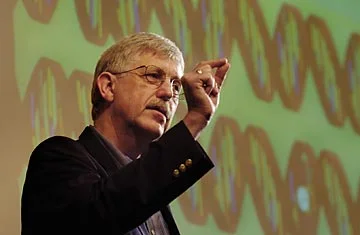
Source: http://hitchensdebates.blogspot.com.au/201...

Enjoyed this speech? Speakola is a labour of love and I’d be very grateful if you would share, tweet or like it. Thank you.

Facebook Twitter Facebook
In RELIGION Tags TONY BLAIR, TRANSCRIPT, CHARITY, MUNK DEBATE, CHRISTOPHER HITCHENS, RELIGION
1 Comment

Jesus Christ: 'Blessed art the poor in spirit', The Sermon on the Mount - 30 AD

September 11, 2015

30 AD, suggested site, Mount Eremos, Sea of Galilee

Matthew 5

1: And seeing the multitudes, he went up into a mountain: and when he was set, his disciples came unto him:

2: And he opened his mouth, and taught them, saying,

3: Blessed are the poor in spirit: for theirs is the kingdom of heaven.

4: Blessed are they that mourn: for they shall be comforted.

5: Blessed are the meek: for they shall inherit the earth.

6: Blessed are they which do hunger and thirst after righteousness: for they shall be filled.

7: Blessed are the merciful: for they shall obtain mercy.

8: Blessed are the pure in heart: for they shall see God.

9: Blessed are the peacemakers: for they shall be called the children of God.

10: Blessed are they which are persecuted for righteousness' sake: for theirs is the kingdom of heaven.

11: Blessed are ye, when men shall revile you, and persecute you, and shall say all manner of evil against you falsely, for my sake.

12: Rejoice, and be exceeding glad: for great is your reward in heaven: for so persecuted they the prophets which were before you.

13: Ye are the salt of the earth: but if the salt have lost his savour, wherewith shall it be salted? it is thenceforth good for nothing, but to be cast out, and to be trodden under foot of men.

14: Ye are the light of the world. A city that is set on an hill cannot be hid.

15: Neither do men light a candle, and put it under a bushel, but on a candlestick; and it giveth light unto all that are in the house.

16: Let your light so shine before men, that they may see your good works, and glorify your Father which is in heaven.

17: Think not that I am come to destroy the law, or the prophets: I am not come to destroy, but to fulfill.

18: For verily I say unto you, Till heaven and earth pass, one jot or one tittle shall in no wise pass from the law, till all be fulfilled.

19: Whosoever therefore shall break one of these least commandments, and shall teach men so, he shall be called the least in the kingdom of heaven: but whosoever shall do and teach them, the same shall be called great in the kingdom of heaven.

20: For I say unto you, That except your righteousness shall exceed the righteousness of the scribes and Pharisees, ye shall in no case enter into the kingdom of heaven.

21: Ye have heard that it was said by them of old time, Thou shalt not kill; and whosoever shall kill shall be in danger of the judgment.

22: But I say unto you, That whosoever is angry with his brother without a cause shall be in danger of the judgment: and whosoever shall say to his brother, Raca, shall be in danger of the council: but whosoever shall say, Thou fool, shall be in danger of hell fire.

23: Therefore if thou bring thy gift to the altar, and there rememberest that thy brother hath ought against thee;

24: Leave there thy gift before the altar, and go thy way; first be reconciled to thy brother, and then come and offer thy gift.

25: Agree with thine adversary quickly, whiles thou art in the way with him; lest at any time the adversary deliver thee to the judge, and the judge deliver thee to the officer, and thou be cast into prison.

26: Verily I say unto thee, Thou shalt by no means come out thence, till thou hast paid the uttermost farthing.

27: Ye have heard that it was said by them of old time, Thou shalt not commit adultery.

28: But I say unto you, That whosoever looketh on a woman to lust after her hath committed adultery with her already in his heart.
 

29: And if thy right eye offend thee, pluck it out, and cast it from thee: for it is profitable for thee that one of thy members should perish, and not that thy whole body should be cast into hell.

30: And if thy right hand offend thee, cut if off, and cast it from thee: for it is profitable for thee that one of thy members should perish, and not that thy whole body should be cast into hell.

31: It hath been said, Whosoever shall put away his wife, let him give her a writing of divorcement.

32: But I say unto you, That whosoever shall put away his wife, saving for the cause of fornication, causeth her to commit adultery: and whosoever shall marry her that is divorced committeth adultery.

33: Again, ye have heard that it hath been said by them of old time, Thou shalt not forswear thyself, but shalt perform unto the Lord thine oaths:

34: But I say unto you, Swear not at all; neither by heaven; for it is God's throne:

35: Nor by the earth; for it is his footstool: neither by Jerusalem; for it is the city of the great King.

36: Neither shalt thou swear by thy head, because thou canst not make one hair white or black.

37: But let your communication be, Yea, yea; Nay, nay: for whatsoever is more than these cometh of evil.

38: Ye have heard that it hath been said, An eye for an eye, and a tooth for a tooth:

39: But I say unto you, That ye resist not evil: but whosoever shall smite thee on thy right cheek, turn to him the other also.

40: And if any man will sue thee at the law, and take away thy coat, let him have thy cloke also.

41: And whosoever shall compel thee to go a mile, go with him twain.

42: Give to him that asketh thee, and from him that would borrow of thee turn not thou away.

43: Ye have heard that it hath been said, Thou shalt love thy neighbour, and hate thine enemy.

44: But I say unto you, Love your enemies, bless them that curse you, do good to them that hate you, and pray for them which despitefully use you, and persecute you;

45: That ye may be the children of your Father which is in heaven: for he maketh his sun to rise on the evil and on the good, and sendeth rain on the just and on the unjust.

46: For if ye love them which love you, what reward have ye? Do not even the publicans the same?

47: And if ye salute your brethren only, what do ye more than others? do not even the publicans so?

48: Be ye therefore perfect, even as your Father which is in heaven is perfect.

New International Version     New Revised Standard Version

Matthew 6

1: Take heed that ye do not your alms before men, to be seen of them: otherwise ye have no reward of your Father which is in heaven.

2: Therefore when thou doest thine alms, do not sound a trumpet before thee, as the hypocrites do in the synagogues and in the streets, that they may have glory of men. Verily I say unto you, They have their reward.

3: But when thou doest alms, let not thy left hand know what thy right hand doeth:

4: That thine alms may be in secret: and thy Father which seeth in secret himself shall reward thee openly.

5: And when thou prayest, thou shalt not be as the hypocrites are: for they love to pray standing in the synagogues and in the corners of the streets, that they may be seen of men. Verily I say unto you, They have their reward.

6: But thou, when thou prayest, enter into thy closet, and when thou hast shut thy door, pray to thy Father which is in secret; and thy Father which seeth in secret shall reward thee openly.

7: But when ye pray, use not vain repetitions, as the heathen do: for they think that they shall be heard for their much speaking.

8: Be not ye therefore like unto them: for your Father knoweth what things ye have need of, before ye ask him.

9: After this manner therefore pray ye: Our Father which art in heaven, Hallowed be thy name.

10: Thy kingdom come. Thy will be done in earth, as it is in heaven.

11: Give us this day our daily bread.

12: And forgive us our debts, as we forgive our debtors.

13: And lead us not into temptation, but deliver us from evil: For thine is the kingdom, and the power, and the glory, for ever. Amen.

14: For if ye forgive men their trespasses, your heavenly Father will also forgive you:

15: But if ye forgive not men their trespasses, neither will your Father forgive your trespasses.

16: Moreover when ye fast, be not, as the hypocrites, of a sad countenance: for they disfigure their faces, that they may appear unto men to fast. Verily I say unto you, They have their reward.

17: But thou, when thou fastest, anoint thine head, and wash thy face;

18: That thou appear not unto men to fast, but unto thy Father which is in secret: and thy Father, which seeth in secret, shall reward thee openly.

19: Lay not up for yourselves treasures upon earth, where moth and rust doth corrupt, and where thieves break through and steal:

20: But lay up for yourselves treasures in heaven, where neither moth nor rust doth corrupt, and where thieves do not break through nor steal:

21: For where your treasure is, there will your heart be also.

22: The light of the body is the eye: if therefore thine eye be single, thy whole body shall be full of light.

23: But if thine eye be evil, thy whole body shall be full of darkness. If therefore the light that is in thee be darkness, how great is that darkness!

24: No man can serve two masters: for either he will hate the one, and love the other; or else he will hold to the one, and despise the other. Ye cannot serve God and mammon.

25: Therefore I say unto you, Take no thought for your life, what ye shall eat, or what ye shall drink; nor yet for your body, what ye shall put on. Is not the life more than meat, and the body than raiment?

26: Behold the fowls of the air: for they sow not, neither do they reap, nor gather into barns; yet your heavenly Father feedeth them. Are ye not much better than they?

27: Which of you by taking thought can add one cubit unto his stature?

28: And why take ye thought for raiment? Consider the lilies of the field, how they grow; they toil not, neither do they spin:

29: And yet I say unto you, That even Solomon in all his glory was not arrayed like one of these.

30: Wherefore, if God so clothe the grass of the field, which to day is, and to morrow is cast into the oven, shall he not much more clothe you, O ye of little faith?

31: Therefore take no thought, saying, What shall we eat? or, What shall we drink? or, Wherewithal shall we be clothed?

32: (For after all these things do the Gentiles seek:) for your heavenly Father knoweth that ye have need of all these things.

33: But seek ye first the kingdom of God, and his righteousness; and all these things shall be added unto you.

34: Take therefore no thought for the morrow: for the morrow shall take thought for the things of itself. Sufficient unto the day is the evil thereof.

New International Version   New Revised Standard Version

Matthew 7  

1: Judge not, that ye be not judged.

2: For with what judgment ye judge, ye shall be judged: and with what measure ye mete, it shall be measured to you again.

3: And why beholdest thou the mote that is in thy brother's eye, but considerest not the beam that is in thine own eye?

4: Or how wilt thou say to thy brother, Let me pull out the mote out of thine eye; and, behold, a beam is in thine own eye?

5: Thou hypocrite, first cast out the beam out of thine own eye; and then shalt thou see clearly to cast out the mote out of thy brother's eye.

6: Give not that which is holy unto the dogs, neither cast ye your pearls before swine, lest they trample them under their feet, and turn again and rend you.

7: Ask, and it shall be given you; seek, and ye shall find; knock, and it shall be opened unto you:

8: For every one that asketh receiveth; and he that seeketh findeth; and to him that knocketh it shall be opened.

9: Or what man is there of you, whom if his son ask bread, will he give him a stone?

10: Or if he ask a fish, will he give him a serpent?

11: If ye then, being evil, know how to give good gifts unto your children, how much more shall your Father which is in heaven give good things to them that ask him?

12: Therefore all things whatsoever ye would that men should do to you, do ye even so to them: for this is the law and the prophets.

13: Enter ye in at the strait gate: for wide is the gate, and broad is the way, that leadeth to destruction, and many there be which go in thereat:

14: Because strait is the gate, and narrow is the way, which leadeth unto life, and few there be that find it.

15: Beware of false prophets, which come to you in sheep's clothing, but inwardly they are ravening wolves.

16: Ye shall know them by their fruits. Do men gather grapes of thorns, or figs of thistles?

17: Even so every good tree bringeth forth good fruit; but a corrupt tree bringeth forth evil fruit.

18: A good tree cannot bring forth evil fruit, neither can a corrupt tree bring forth good fruit.

19: Every tree that bringeth not forth good fruit is hewn down, and cast into the fire.

20: Wherefore by their fruits ye shall know them.

21: Not every one that saith unto me, Lord, Lord, shall enter into the kingdom of heaven; but he that doeth the will of my Father which is in heaven.

22: Many will say to me in that day, Lord, Lord, have we not prophesied in thy name? and in thy name have cast out devils? and in thy name done many wonderful works?

23: And then will I profess unto them, I never knew you: depart from me, ye that work iniquity.

24: Therefore whosoever heareth these sayings of mine, and doeth them, I will liken him unto a wise man, which built his house upon a rock:

25: And the rain descended, and the floods came, and the winds blew, and beat upon that house; and it fell not: for it was founded upon a rock.

26: And every one that heareth these sayings of mine, and doeth them not, shall be likened unto a foolish man, which built his house upon the sand:

27: And the rain descended, and the floods came, and the winds blew, and beat upon that house; and it fell: and great was the fall of it.

28: And it came to pass, when Jesus had ended these sayings, the people were astonished at his doctrine:

29: For he taught them as one having authority, and not as the scribes.

Source: http://www.americanrhetoric.com/speeches/s...

Enjoyed this speech? Speakola is a labour of love and I’d be very grateful if you would share, tweet or like it. Thank you.

Facebook Twitter Facebook
In RELIGION Tags JESUS CHRIST, CHRISTIANITY, RELIGION, SERMON ON THE MOUNT, SERMON, TRANSCRIPT
Comment

Jane Caro: 'Why hasn't the Dalai Lama been reincarnated as a girl?', IQ2 Debate - 2011

August 31, 2015

10 November, 2011,

Jane was debating in the negative team for the topic 'That Atheists are Wrong' for the Intelligence Squared series on ABC.

Atheists, like the religious, are wrong about many things, but they are not wrong about God. And the prima facie evidence that all current Gods are man made is of course, their treatment of women.

The idea that women are fully human is something that man-made religions seem to struggle with. I love the paradise that is offered to Islamic jihad warriors. Apparently, as martyrs for Allah they will receive their reward in heaven by disporting themselves with innumerable virgins. As one wit put it, imagine all those obedient, god-fearing Muslim women who keep themselves pure behind all encompassing clothing out of their devout worship of their God, only to find, that when they die, their reward for all that virginal vigilance is to end up as a whore for terrorists. My own response when I heard about this extraordinarily male-centric view of the eternal reward was to wonder what appalling sin those poor virgins must have committed to require such punishment. In other words, the terrorist’s heaven was clearly the virgin’s hell.

This fantasy of heaven, by the way, illustrates religion’s use of a classic advertising trick – they create fear of damnation in the powerless; women, slaves and the poor – then offer them hope of salvation – but only after they are dead. Religion has been used this way to keep all sorts of people in their place, but in my 9 minutes, I will concentrate on their effect on women.

Conveniently for the blokes who invented them, Gods of all kinds are entirely happy to see one half of humanity held in subjection to the other half. According to many of their earthly messengers, they have approved of and even commanded that women be beaten, raped – at least in marriage, and sold as property, either to husbands or masters. Gods have stated that a woman’s testimony and word is worth less than a mans, that she is not to be permitted to speak in public, take part in public life, take “headship” over a man, preach religion, or, in extreme cases, even appear in public. It was religious belief that drove what may be the longest and bloodiest pogrom in recorded human history; the persecution and execution of (in the vast majority of cases) vulnerable women accused of witchcraft across Europe between the 14th and 17th centuries.

In some parts of the world, in theocracies, we still watch Gods deny women and girls the right to work, travel, drive, get access to healthcare, or even walk the streets unaccompanied. In 2002, 14 schoolgirls died in a fire in Mecca, after being forced back into a burning building by religious police, because they were not properly covered.

Women’s lives only began to improve in the West when feminism emerged thanks to the secular Enlightenment. Mary Wollstonecraft, author of “Vindication of the Rights of Women”, could not provide a greater contrast to that first Mary, the so-called mother of God. No virgin, she was a vulnerable and suffering human being. Blessed (if you will excuse the term) with a shining intellect and the clear-eyed courage it took to see through millennia of male hypocrisy, she was despised and vilified in her own time – most often by the religious.

But her words took hold, and in the 300 years since she first put pen to paper, the lives of women and girls, at least in the developed world, have changed unarguably for the better. By almost any objective measure, women in the secular west are better off than they ever have been before. In terms of longevity, mental, physical, reproductive and emotional health, economic independence and human rights, today’s woman leaves her female ancestors for dead. Unfortunately, however, at almost every step representatives of God have resisted women’s progress.

The religious have variously opposed higher education for women, higher status employment for women, their right to vote, their right to enter parliament, their right to their own earnings, income and property, their right to their own children after divorce or separation, their right to resist domestic violence, their right to learn about their own bodies, their right to refuse sexual intercourse in marriage, or agree to it outside marriage, and their right to contraception, abortion and sexual information. Less than a century or so ago, if a woman was so badly damaged by successive child-bearing that doctors advised against further pregnancy, churches resisted her right to use (or even know about) contraception and she had to rely on the good will and restraint of her husband to avoid further catastrophic damage or even death. Only last year a nun was excommunicated for allowing the US hospital she ran to give an abortion to a woman who would have died without it.

When chloroform was invented in the 19th century, doctors immediately heralded it as a boon for birthing women. Church leaders condemned it because they believed women’s suffering in labour was ordained by God as punishment for Eve’s original sin. Fortunately for labouring women the then head of the Church of England was herself a birthing mother. Queen Victoria ignored her spiritual advisors as she gave birth to her nine children and grabbed chloroform with both hands, immediately making pain relief in childbirth acceptable.

To be fair, as women have made gains in the secular and developed world, many religious believers and leaders have changed their opinions and been persuaded about the universal benefit of female equality and opportunity. Many religious feminists argue passionately that there is nothing necessarily godly about the oppression of women, but –if as the Bible says – by their fruits shall ye judge them, even today they are on shaky ground.

It is no co-incidence that societies where women enjoy high levels of personal freedom are the richest and most stable in the world. We now understand that when you educate women and girls the benefits accrue to the entire family, rather than simply to the individual. There is even research to indicate that in societies with more women in positions of power and influence men have longer life expectancy. Can it also be a co-incidence that these societies are also among the most secular and, apart from the US, are often cited as those where belief in a God is dying most rapidly? Looked at from that perspective, it is almost as if God and women’s rights are diametrically opposed to one another. As one rises, the other falls. The fact that Gods and women appear to be so firmly in opposite corners is yet another indication to me that God’s are all about men.

It is impossible in 9 minutes to do justice to the fearful price women have paid as a result of man-made religion. I have not time to mention the fearful decimation of women by HIV in Africa, helped along by the wicked and paranoid misinformation about the permeability of condoms promoted by the Catholic Church. Suffice to say, four out of ten girls in Kenya are now HIV positive – many god-fearing virgins infected on their wedding night. For me, however, it is not just the gross history of religion’s treatment of women that informs my atheism. It is the simple fact of the one-eyed nature of all the world’s religions that finally convinces me that all Gods are man-made. Yes, even Buddhism, that last refuge of the fashionable western mystic. After all, why hasn’t the Dalai Lama ever been re-incarnated as a girl?

Source: http://www.abc.net.au/radionational/progra...

Enjoyed this speech? Speakola is a labour of love and I’d be very grateful if you would share, tweet or like it. Thank you.

Facebook Twitter Facebook
In RELIGION Tags ABC DEBATE, IQ2, TELEVISED DEBATE, RELIGION, ATHEISM, GOD, FEMINISM, TRANSCRIPT
1 Comment

See my film!

Limited Australian Season

March 2025

Details and ticket bookings at

angeandtheboss.com

Support Speakola

Hi speech lovers,
With costs of hosting website and podcast, this labour of love has become a difficult financial proposition in recent times. If you can afford a donation, it will help Speakola survive and prosper.

Best wishes,
Tony Wilson.

Become a Patron!

Learn more about supporting Speakola.

Featured political

Featured
Jon Stewart: "They responded in five seconds", 9-11 first responders, Address to Congress - 2019
Jacinda Ardern: 'They were New Zealanders. They are us', Address to Parliament following Christchurch massacre - 2019
Dolores Ibárruri: "¡No Pasarán!, They shall not pass!', Defense of 2nd Spanish Republic - 1936
Jimmy Reid: 'A rat race is for rats. We're not rats', Rectorial address, Glasgow University - 1972

Featured eulogies

Featured
For Geoffrey Tozer: 'I have to say we all let him down', by Paul Keating - 2009
for James Baldwin: 'Jimmy. You crowned us', by Toni Morrison - 1988
for Michael Gordon: '13 days ago my Dad’s big, beautiful, generous heart suddenly stopped beating', by Scott and Sarah Gordon - 2018

Featured commencement

Featured
Tara Westover: 'Your avatar isn't real, it isn't terribly far from a lie', The Un-Instagrammable Self, Northeastern University - 2019
Tim Minchin: 'Being an artist requires massive reserves of self-belief', WAAPA - 2019
Atul Gawande: 'Curiosity and What Equality Really Means', UCLA Medical School - 2018
Abby Wambach: 'We are the wolves', Barnard College - 2018
Eric Idle: 'America is 300 million people all walking in the same direction, singing 'I Did It My Way'', Whitman College - 2013
Shirley Chisholm: ;America has gone to sleep', Greenfield High School - 1983

Featured sport

Featured
Joe Marler: 'Get back on the horse', Harlequins v Bath pre game interview - 2019
Ray Lewis : 'The greatest pain of my life is the reason I'm standing here today', 52 Cards -
Mel Jones: 'If she was Bradman on the field, she was definitely Keith Miller off the field', Betty Wilson's induction into Australian Cricket Hall of Fame - 2017
Jeff Thomson: 'It’s all those people that help you as kids', Hall of Fame - 2016

Fresh Tweets


Featured weddings

Featured
Dan Angelucci: 'The Best (Best Man) Speech of all time', for Don and Katherine - 2019
Hallerman Sisters: 'Oh sister now we have to let you gooooo!' for Caitlin & Johnny - 2015
Korey Soderman (via Kyle): 'All our lives I have used my voice to help Korey express his thoughts, so today, like always, I will be my brother’s voice' for Kyle and Jess - 2014

Featured Arts

Featured
Bruce Springsteen: 'They're keepers of some of the most beautiful sonic architecture in rock and roll', Induction U2 into Rock Hall of Fame - 2005
Olivia Colman: 'Done that bit. I think I have done that bit', BAFTA acceptance, Leading Actress - 2019
Axel Scheffler: 'The book wasn't called 'No Room on the Broom!', Illustrator of the Year, British Book Awards - 2018
Tina Fey: 'Only in comedy is an obedient white girl from the suburbs a diversity candidate', Kennedy Center Mark Twain Award -  2010
Tina Fey: 'Only in comedy is an obedient white girl from the suburbs a diversity candidate', Kennedy Center Mark Twain Award - 2010

Featured Debates

Featured
Sacha Baron Cohen: 'Just think what Goebbels might have done with Facebook', Anti Defamation League Leadership Award - 2019
Greta Thunberg: 'How dare you', UN Climate Action Summit - 2019
Charlie Munger: 'The Psychology of Human Misjudgment', Harvard University - 1995
Lawrence O'Donnell: 'The original sin of this country is that we invaders shot and murdered our way across the land killing every Native American that we could', The Last Word, 'Dakota' - 2016