• Genre
  • About
  • Submissions
  • Donate
  • Search
Menu

Speakola

All Speeches Great and Small
  • Genre
  • About
  • Submissions
  • Donate
  • Search
Share a political speech

Vida Gioldstein, National Library of Australia

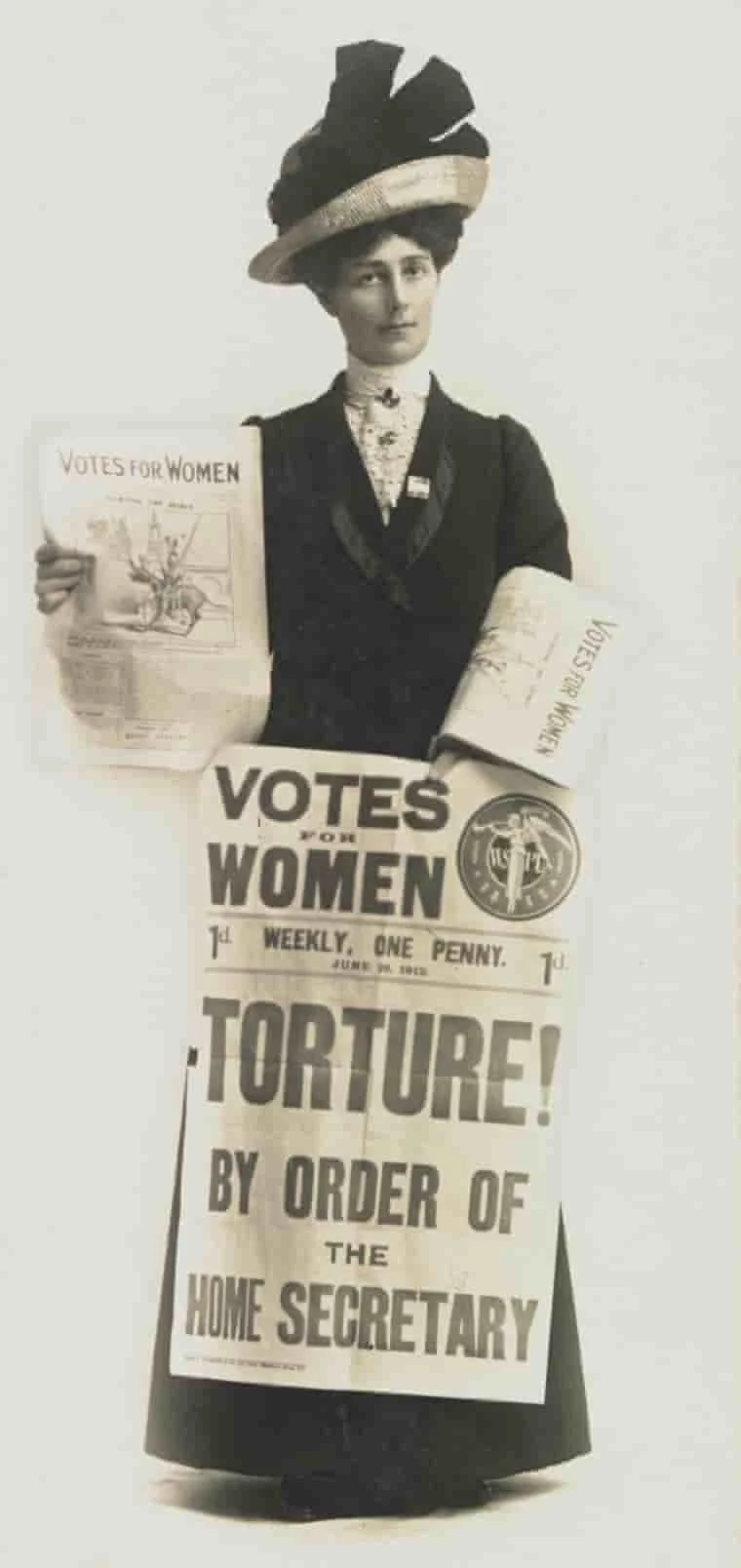
Vida Goldstein: 'The step I am taking is unique in the history of the world', campaign launch speech - 1903

March 15, 2023


14 October 1903, Liberty Hall, Portland, Victoria, Australia

This speech was sourced by podcast guest Professor Clare Wright for her book ‘You Daughters of Freedom’. It was originally reported verbatim in the Portland Gazette in the third person. Prof Wright changed it to first person to recreate the actual feel of the speech. It has also been abridged to be read at Sydney Writers Festival ‘Friends Romans Countrymen’ event in 2022. Audio used with permission.

Miss Goldstein, on rising, was met with loud applause.

The people of Portland all know why I have decided to open my campaign here, and I will only add that when that decision was announced the people of Melbourne wanted to know why I was going to Portland, and even where Portland was, and disappointment was felt that Melbourne had not been selected.

The step I am taking is unique in the history of the world, and may be called history- making in Australia. Portland is the place most connected with the early history of Australia, and the honour, I have decided, of the first address of a woman candidate for a seat in Parliament by the joint franchise should be given to Portland. (Applause.)

The idea of a woman candidate is so unusual in British Dominions that to some it seems a revolutionary step. There have been women in Parliament in Great Britain, but they are there by (hereditary) right and in the interests of their landed property and naturally are not parallel cases. They take their seats and consider such quite proper to represent their vested interests. We have got beyond that idea, and the right now is that of the franchise—the modern right now of every sane law-abiding citizen—the Government of the people by the people for the people, and which was secured in 1902, and which now is by man and woman for men and women.

So the old order passeth away and the old conditions for the Commonwealth of Australia changeth. The Australian nation has been the first to adopt that just democratic idea, without respect to property.

The Woman's Federal Political Association has requested me to be nominated for the Federal Election, and after consideration I have consented.

I will have all the hard work of holding meetings to organise my campaign, and naturally have to start out greatly handicapped to the men candidates. I hold a deep- rooted principal that woman should step out and assume her share of the responsibilities of the office … I know I must have those who believe in woman for home duties and such like against me, but I believe it is the duty of woman to take her share in the work to protect her interests, and that she should take the deepest interest in political matters.

Personally, I have no axe to grind, and if I desire a peaceful life I should remain out of politics. I believe, however, that woman should go in for some of these duties, not for self-interest or the amount of money hanging to it, as so many men do, but because it should be the duty of all to do the best they can for the State, one way or the other.

I am convinced I could do my share if elected to Parliament, (applause), and that expressions of opinion given on the floor of the House by woman will not be altogether valueless. (Applause.)

It used to be hard to get the ear of a member of Parliament if you were not a voter, but now we have one it is far different. There are many unjust laws on the Statute books … For instance the law of custodian in which the wife has no right to her children, and which the husband can will away, and the mother is absolutely without power to stop the taking away of her child. Do some of you now wonder we want a voice in the making of the laws? (Applause.)

If elected I do not intend to ally myself with anyone; I am going on my own. (Applause.)

I do not approve of party Government, as Government on strict party lines is Government by machinery. One objection is that it must be my party, right or wrong. Party organs, such as newspapers, are dangerous. The party arranges a platform and this is to be gone for blindly or as dictated to by the party organisations. (Applause.)

I favour the public democratic principle to think for one's self, and not to suffer the despotism of Russia.

Regarding the Fiscal Question, I must confess to be a protectionist—(applause)—although it would be more in my line to call myself a fiscal athiest. Women, children, duty, low wages, &c., are not ones which are troubled by the fiscal question. Over free trade and protection I do not get keenly excited—I let the men get excited instead.

I am in favor of White Australia, but against the deportation of the poor Kanakas, who have been brought to the State, and to deport them means in some cases death through intermarrying. They should not insist on the deportations. (Applause.) Having brought the Kanakas here our people should be prepared to bear the consequences, but no more should be allowed in. These people have been civilised, christianised, educated, and there is no reason to force them out. I am decidedly opposed to colored people coming in. Those who are going for a White Australia are going bald-headed for it. (Laughter.)

I am rather wobbly on Assisted Immigration, as I have seen a good deal of this since going to America, where I have seen 1oo,ooo dumped down in New York to swell the labor market and give cheap labor. (Applause.)

Arbitration and Conciliation have my support, as I believe it would stem endless trouble and loss, and do away with the bitterness and distress of lock-outs and strikes.

The establishing of a Federal Capital and building of a Transcontinental railway I am not in favor of, chiefly on account of the wild expense likely to be involved. (Applause.)

It is so seldom that I have such an opportunity to address a meeting like this that I can not resist the temptation to speak to the women and impress upon you the necessity of using your power to secure your rights!


Enjoyed this speech? Speakola is a labour of love and I’d be very grateful if you would share, tweet or like it. Thank you.

Facebook Twitter Facebook
In 1900-19 B Tags VIDA GOLDSTEIN, FIRST FEMALE CANDIDATE, WOMEN'S RIGHTS, SUFFRAGE, SUFFRAGISTS, SUFFRAGETTES, FRANCHISE, UNIVERSAL FRANCHISE, AUSTRALIAN POLITICS, WOMEN'S MOVEMENT, FEMINISM, EQUALITY, WHITE AUSTRALIA, RACISM, 1903 ELECTION, PORTLAND, VICTORIA, TRANSCRIPT, CLARE WRIGHT, SYDNEY WRITERS FESTIVAL, SWF
Comment

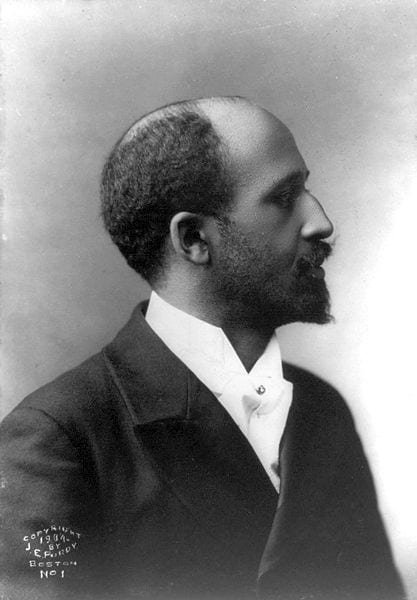
W.E.B. Du Bois: 'We must not falter, we may not shrink!' Niagara Movement speech - 1905

November 4, 2022

February 1905, Buffalo, New York, USA

The men of the Niagara Movement coming from the toil of the year’s hard work and pausing a moment from the earning of their daily bread turn toward the nation and again ask in the name of ten million the privilege of a hearing. In the past year the work of the Negro hater has flourished in the land. Step by step the defenders of the rights of American citizens have retreated. The work of stealing the black man’s ballot has progressed and the fifty and more representatives of stolen votes still sit in the nation’s capital. Discrimination in travel and public accommodation has so spread that some of our weaker brethren are actually afraid to thunder against color discrimination as such and are simply whispering for ordinary decencies.

Against this the Niagara Movement eternally protests. We will not be satisfied to take one jot or tittle less than our full manhood rights. We claim for ourselves every single right that belongs to a freeborn American, political, civil and social; and until we get these rights we will never cease to protest and assail the ears of America. The battle we wage is not for ourselves alone but for all true Americans. It is a fight for ideals, lest this, our common fatherland, false to its founding, become in truth the land of the thief and the home of the Slave–a by-word and a hissing among the nations for its sounding pretensions and pitiful accomplishment. Never before in the modern age has a great and civilized folk threatened to adopt so cowardly a creed in the treatment of its fellow-citizens born and bred on its soil. Stripped of verbiage and subterfuge and in its naked nastiness the new American creed says: Fear to let black men even try to rise lest they become the equals of the white. And this is the land that professes to follow Jesus Christ. The blasphemy of such a course is only matched by its cowardice.

In detail our demands are clear and unequivocal. First, we would vote; with the right to vote goes everything: Freedom, manhood, the honor of your wives, the chastity of your daughters, the right to work, and the chance to rise, and let no man listen to those who deny this.

We want full manhood suffrage, and we want it now, henceforth and forever.

Second. We want discrimination in public accommodation to cease. Separation in railway and street cars, based simply on race and color, is un-American, un-democratic, and silly. We protest against all such discrimination.

Third. We claim the right of freemen to walk, talk, and be with them that wish to be with us. No man has a right to choose another man’s friends, and to attempt to do so is an impudent interference with the most fundamental human privilege.

Fourth. We want the laws enforced against rich as well as poor; against Capitalist as well as Laborer; against white as well as black. We are not more lawless than the white race, we are more often arrested, convicted, and mobbed. We want justice even for criminals and outlaws. We want the Constitution of the country enforced. We want Congress to take charge of Congressional elections. We want the Fourteenth amendment carried out to the letter and every State disfranchised in Congress which attempts to disfranchise its rightful voters. We want the Fifteenth amendment enforced and No State allowed to base its franchise simply on color.

The failure of the Republican Party in Congress at the session just closed to redeem its pledge of 1904 with reference to suffrage conditions at the South seems a plain, deliberate, and premeditated breach of promise, and stamps that party as guilty of obtaining votes under false pretense.

Fifth, We want our children educated. The school system in the country districts of the South is a disgrace and in few towns and cities are Negro schools what they ought to be. We want the national government to step in and wipe out illiteracy in the South. Either the United States will destroy ignorance or ignorance will destroy the United States.

And when we call for education we mean real education. We believe in work. We ourselves are workers, but work is not necessarily education. Education is the development of power and ideal. We want our children trained as intelligent human beings should be, and we will fight for all time against any proposal to educate black boys and girls simply as servants and underlings, or simply for the use of other people. They have a right to know, to think, to aspire.

These are some of the chief things which we want. How shall we get them? By voting where we may vote, by persistent, unceasing agitation; by hammering at the truth, by sacrifice and work.

We do not believe in violence, neither in the despised violence of the raid nor the lauded violence of the soldier, nor the barbarous violence of the mob, but we do believe in John Brown, in that incarnate spirit of justice, that hatred of a lie, that willingness to sacrifice money, reputation, and life itself on the altar of right. And here on the scene of John Brown’s martyrdom we reconsecrate ourselves, our honor, our property to the final emancipation of the race which John Brown died to make free.

Our enemies, triumphant for the present, are fighting the stars in their courses. Justice and humanity must prevail. We live to tell these dark brothers of ours–scattered in counsel, wavering and weak–that no bribe of money or notoriety, no promise of wealth or fame, is worth the surrender of a people’s manhood or the loss of a man’s self-respect. We refuse to surrender the leadership of this race to cowards and trucklers. We are men; we will be treated as men. On this rock we have planted our banners. We will never give up, though the trump of doom finds us still fighting.

And we shall win. The past promised it, the present foretells it. Thank God for John Brown! Thank God for Garrison and Douglass! Sumner and Phillips, Nat Turner and Robert Gould Shaw, and all the hallowed dead who died for freedom! Thank God for all those to-day, few though their voices be, who have not forgotten the divine brotherhood of all men white and black, rich and poor, fortunate and unfortunate.

We appeal to the young men and women of this nation, to those whose nostrils are not yet befouled by greed and snobbery and racial narrowness: Stand up for the right, prove yourselves worthy of your heritage and whether born north or south dare to treat men as men. Cannot the nation that has absorbed ten million foreigners into its political life without catastrophe absorb ten million Negro Americans into that same political life at less cost than their unjust and illegal exclusion will involve?

Courage brothers! The battle for humanity is not lost or losing. All across the skies sit signs of promise. The Slav is raising in his might, the yellow millions are tasting liberty, the black Africans are writhing toward the light, and everywhere the laborer, with ballot in his hand, is voting open the gates of Opportunity and Peace. The morning breaks over blood-stained hills. We must not falter, we may not shrink. Above are the everlasting stars.

Source: https://teachingamericanhistory.org/docume...

Enjoyed this speech? Speakola is a labour of love and I’d be very grateful if you would share, tweet or like it. Thank you.

Facebook Twitter Facebook
In 1900-19 B Tags W.E.B. DU BOIS, TRANSCRIPT, NIAGARA MOVEMENT SPEECH, AFRICAN AMERICANS, RACE RELATIONS, FREEDOM, FRANCHISE, VOTING RIGHTS, BOOKER T WASHINGTON
Comment
Albert Beveridge.jpg

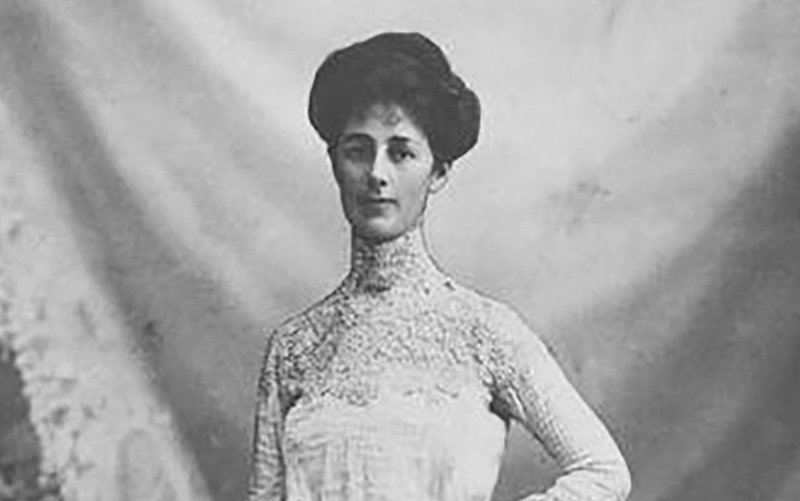
Albert Beveridge: The Phillipines are ours forever', pro imperialism speech - 1901

July 29, 2021

13 December 1901, Washington DC, USA

MR. PRESIDENT, the times call for candor. The Philippines are ours forever, "territory belonging to the United States," as the Constitution calls them. And just beyond the Philippines are China's illimitable markets. We will not retreat from either. We will not repudiate our duty in the archipelago. We will not abandon our opportunity in the Orient. We will not renounce our part in the mission of our race, trustee, under God, of the civilization of the world. And we will move forward to our work, not howling out regrets like slaves whipped to their burdens but with gratitude for a task worthy of our strength and thanksgiving to Almighty God that He has marked us as His chosen people, henceforth to lead in the regeneration of the world.

This island empire is the last land left in all the oceans. If it should prove a mistake to abandon it, the blunder once made would be irretrievable. If it proves a mistake to hold it, the error can be corrected when we will. Every other progressive nation stands ready to relieve us.

But to hold it will be no mistake. Our largest trade henceforth must be with Asia. The Pacific is our ocean. More and more Europe will manufacture the most it needs, secure from its colonies the most it con-sumes. Where shall we turn for consumers of our surplus? Geography answers the question. China is our natural customer. She is nearer to us than to England, Germany, or Russia, the commercial powers of the present and the future. They have moved nearer to China by securing permanent bases on her borders. The Philippines give us a base at the door of all the East.

Lines of navigation from our ports to the Orient and Australia, from the Isthmian Canal to Asia, from all Oriental ports to Australia converge at and separate from the Philippines. They are a self-supporting, dividend-paying fleet, permanently anchored at a spot selected by the strategy of Providence, commanding the Pacific. And the Pacific is the ocean of the commerce of the future. Most future wars will be conflicts for commerce. The power that rules the Pacific, therefore, is the power that rules the world. And, with the Philippines, that power is and will forever be the American Republic. . . .

But if they did not command China, India, the Orient, the whole Pacific for purposes of offense, defense, and trade, the Philippines are so valuable in themselves that we should hold them. I have cruised more than 2,000 miles through the archipelago, every moment a surprise at its loveliness and wealth. I have ridden hundreds of miles on the islands, every foot of the way a revelation of vegetable and mineral riches. . .

Here, then, senators, is the situation. Two years ago there was no land in all the world which we could occupy for any purpose. Our commerce was daily turning toward the Orient, and geography and trade developments made necessary our commercial empire over the Pacific. And in that ocean we had no commercial, naval, or military base. Today, we have one of the three great ocean possessions of the globe, located at the most commanding commercial, naval, and military points in the Eastern seas, within hail of India, shoulder to shoulder with China, richer in its own resources than any equal body of land on the entire globe, and peopled by a race which civilization demands shall be improved. Shall we abandon it?

That man little knows the common people of the republic, little understands the instincts of our race who thinks we will not hold it fast and hold it forever, administering just government by simplest methods. We may trick up devices to shift our burden and lessen our opportunity; they will avail us nothing but delay. We may tangle conditions by applying academic arrangements of self-government to a crude situation; their failure will drive us to our duty in the end.

The military situation, past, present, and prospective, is no reason for abandonment. Our campaign has been as perfect as possible with the force at hand. We have been delayed, first, by a failure to comprehend the immensity of our acquisition; and, second, by insufficient force; and, third, by our efforts for peace. In February, after the treaty of peace, General Otis had only 3,722 officers and men whom he had a legal right to order into battle. The terms of enlistment of the rest of his troops had expired, and they fought voluntarily and not on legal military compulsion. It was one of the noblest examples of patriotic devotion to duty in the history of the world.

Those who complain do so in ignorance of the real situation. We attempted a great task with insufficient means; we became impatient that it was not finished before it could fairly be commenced; and I pray we may not add that other element of disaster, pausing in the work before it is thoroughly and forever done. That is the gravest mistake we could possibly make, and that is the only danger before us. Our Indian wars would have been shortened, the lives of soldiers and settlers saved, and the Indians themselves benefited had we made continuous and decisive war; and any other kind of war is criminal because ineffective. We acted toward the Indians as though we feared them, loved them, hated them - a mingling of foolish sentiment, inaccurate thought, and paralytic purpose. . . .

Mr. President, that must not be our plan. This war is like all other wars. It needs to be finished before it is stopped. I am prepared to vote either to make our work thorough or even now to abandon it. A lasting peace can be secured only by overwhelming forces in ceaseless action until universal and absolutely final defeat is inflicted on the enemy. To halt before every armed force, every guerrilla band opposing us is dispersed or exterminated will prolong hostilities and leave alive the seeds of perpetual insurrection.

Even then we should not treat. To treat at all is to admit that we are wrong. And any quiet so secured will be delusive and fleeting. And a false peace will betray us; a sham truce will curse us. It is not to serve the purposes of the hour, it is not to salve a present situation that peace should be established. It is for the tranquillity of the archipelago forever. It is for an orderly government for the Filipinos for all the future. It is to give this problem to posterity solved and settled, not vexed and involved. It is to establish the supremacy of the American republic over the Pacific and throughout the East till the end of time.

It has been charged that our conduct of the war has been cruel. Senators, it has been the reverse. I have been in our hospitals and seen the Filipino wounded as carefully, tenderly cared for as our own. Within our lines they may plow and sow and reap and go about the affairs of peace with absolute liberty. And yet all this kindness was misunderstood, or rather not understood. Senators must remember that we are not dealing with Americans or Europeans. We are dealing with Orientals. We are dealing with Orientals who are Malays. We are dealing with Malays instructed in Spanish methods. They mistake kindness for weakness, forbearance for fear. It could not be otherwise unless you could erase hundreds of years of savagery, other hundreds of years of Orientalism, and still other hundreds of years of Spanish character and custom. . .

Mr. President, reluctantly and only from a sense of duty am I forced to say that American opposition to the war has been the chief factor in prolonging it. Had Aguinaldo not understood that in America, even in the American Congress, even here in the Senate, he and his cause were supported; had he not known that it was proclaimed on the stump and in the press of a faction in the United States that every shot his misguided followers fired into the breasts of American soldiers was like the volleys fired by Washington's men against the soldiers of King George, his insurrection would have dissolved before it entirely crystallized.

The utterances of American opponents of the war are read to the ignorant soldiers of Aguinaldo and repeated in exaggerated form among the common people. Attempts have been made by wretches claiming American citizenship to ship arms and ammunition from Asiatic ports to the Filipinos, and these acts of infamy were coupled by the Malays with American assaults on our government at home. The Filipinos do not understand free speech, and therefore our tolerance of American assaults on the American President and the American government means to them that our President is in the minority or he would not permit what appears to them such treasonable criticism. It is believed and stated in Luzon, Panay, and Cebu that the Filipinos have only to fight, harass, retreat, break up into small parties, if necessary, as they are doing now, but by any means hold out until the next presidential election, and our forces will be withdrawn.

All this has aided the enemy more than climate, arms, and battle. Senators, I have heard these reports myself; I have talked with the people; I have seen our mangled boys in the hospital and field; I have stood on the firing line and beheld our dead soldiers, their faces turned to the pitiless southern sky, and in sorrow rather than anger I say to those whose voices in America have cheered those misguided natives on to shoot our soldiers down, that the blood of those dead and wounded boys of ours is on their hands, and the flood of all the years can never wash that stain away. In sorrow rather than anger I say these words, for I earnestly believe that our brothers knew not what they did.

But, senators, it would be better to abandon this combined garden and Gibraltar of the Pacific, and count our blood and treasure already spent a profitable loss than to apply any academic arrangement of self-government to these children. They are not capable of self-government. How could they be? They are not of a self-governing race. They are Orientals, Malays, instructed by Spaniards in the latter's worst estate.

They know nothing of practical government except as they have witnessed the weak, corrupt, cruel, and capricious rule of Spain. What magic will anyone employ to dissolve in their minds and characters those impressions of governors and governed which three centuries of misrule has created? What alchemy will change the Oriental quality of their blood and set the self-governing currents of the American pouring through their Malay veins? How shall they, in the twinkling of an eye, be exalted to the heights of self-governing peoples which required a thousand years for us to reach, Anglo-Saxon though we are?

Let men beware how they employ the term "self-government." It is a sacred term. It is the watchword at the door of the inner temple of liberty, for liberty does not always mean self-government. Self-government is a method of liberty - the highest, simplest, best - and it is acquired only after centuries of study and struggle and experiment and instruction and all the elements of the progress of man. Self-government is no base and common thing to be bestowed on the merely audacious. It is the degree which crowns the graduate of liberty, not the name of liberty's infant class, who have not yet mastered the alphabet of freedom. Savage blood, Oriental blood, Malay blood, Spanish example - are these the elements of self-government?

We must act on the situation as it exists, not as we would wish it. I have talked with hundreds of these people, getting their views as to the practical workings of self-government. The great majority simply do not understand any participation in any government whatever. The most enlightened among them declare that self-government will succeed because the employers of labor will compel their employees to vote as their employer wills and that this will insure intelligent voting. I was assured that we could depend upon good men always being in office because the officials who constitute the government will nominate their successors, choose those among the people who will do the voting, and determine how and where elections will be held.

The most ardent advocate of self-government that I met was anxious that I should know that such a government would be tranquil because, as he said, if anyone criticized it, the government would shoot the offender. A few of them have a sort of verbal understanding of the democratic theory, but the above are the examples of the ideas of the practical workings of self-government entertained by the aristocracy, the rich planters and traders, and heavy employers of labor, the men who would run the government. . . .

In all other islands our government must be simple and strong. It must be a uniform government. Different forms for different islands will produce perpetual disturbance because the people of each island would think that the people of the other islands are more favored than they. In Panay I heard murmurings that we were giving Negros an American constitution. This is a human quality, found even in America, and we must never forget that in dealing with the Filipinos we deal with children.

And so our government must be simple and strong. Simple and strong! The meaning of those two words must be written in every line of Philippine legislation, realized in every act of Philippine administration.

A Philippine office in our Department of State; an American governor-general in Manila, with power to meet daily emergencies; possibly an advisory council with no power except that of discussing measures with the governor-general, which council would be the germ for future legislatures, a school in practical government; American lieutenant governors in each province, with a like council about him if possible, an American resident in each district and a like council grouped about him. Frequent and unannounced visits of provincial governors to the districts of their province; periodical reports to the governor-general; an American board of visitation to make semiannual trips to the archipelago without power of suggestion or interference to officials or people, but only to report and recommend to the Philippine office of our State Department; a Philippine civil service, with promotion for efficiency; the abolition of duties on exports from the Philippines; the establishment of import duties on a revenue basis, with such discrimination in favor of American imports as will prevent the cheaper goods of other nations from destroying American trade; a complete reform of local taxation on a just and scientific basis, beginning with the establishment of a tax on land according to its assessed value; the minting of abundant money for Philippine and Oriental use. The granting of franchises and concessions upon the theory of developing the resources of the archipelago, and therefore not by sale, but upon participation in the profits of the enterprise; the formation of a system of public schools everywhere with compulsory attendance rigidly enforced; the establishment of the English language throughout the Islands, teaching it exclusively in the schools and using it, through interpreters, exclusively in the courts; a simple civil code and a still simpler criminal code, and both common to all the islands except Sulu, Mindanao, and Paluan; American judges for all but smallest offenses; gradual, slow, and careful introduction of the best Filipinos into the working machinery of the government, no promise whatever of the franchise until the people have been prepared for it, all this backed by the necessary force to execute it - this outline of government the situation demands as soon as tranquillity is established. Until then military government is advisable. . . .

The men we send to administer civilized government in the Philippines must be themselves the highest examples of our civilization. I use the word "examples," for examples they must be in that word's most absolute sense. They must be men of the world and of affairs, students of their fellowmen, not theorists nor dreamers. They must be brave men, physically as well as morally. They must be as incorruptible as honor, as stainless as purity, men whom no force can frighten, no influence coerce, no money buy. Such men come high, even here in America. But they must be had.

Better pure military occupation for years than government by any other quality of administration. Better abandon this priceless possession, admit ourselves incompetent to do our part in the world-redeeming work of our imperial race; better now haul down the flag of arduous deeds for civilization and run up the flag of reaction and decay than to apply academic notions of self-government to these children or attempt their government by any but the most perfect administrators our country can produce. I assert that such administrators can be found. . . .

Mr. President, self-government and internal development have been the dominant notes of our first century; administration and the development of other lands will be the dominant notes of our second century. And administration is as high and holy a function as self-government, just as the care of a trust estate is as sacred an obligation as the management of our own concerns. Cain was the first to violate the divine law of human society which makes of us our brother's keeper. And administration of good government is the first lesson in self-government, that exalted estate toward which all civilization tends.

Administration of good government is not denial of liberty. For what is liberty? It is not savagery. It is not the exercise of individual will. It is not dictatorship. It involves government, but not necessarily self-government. It means law. First of all, it is a common rule of action, applying equally to all within its limits. Liberty means protection of property and life without price, free speech without intimidation, justice without purchase or delay, government without favor or favorites. What will best give all this to the people of the Philippines - American administration, developing them gradually toward self-government, or self-government by a people before they know what self-government means?

The Declaration of Independence does not forbid us to do our part in the regeneration of the world. If it did, the Declaration would be wrong, just as the Articles of Confederation, drafted by the very same men who signed the Declaration, was found to be wrong. The Declaration has no application to the present situation. It was written by self-governing men for self-governing men. It was written by men who, for a century and a half, had been experimenting in self-government on this continent, and whose ancestors for hundreds of years before had been gradually developing toward that high and holy estate.

The Declaration applies only to people capable of self-government. How dare any man prostitute this expression of the very elect of self-governing peoples to a race of Malay children of barbarism, schooled in Spanish methods and ideas? And you who say the Declaration applies to all men, how dare you deny its application to the American Indian? And if you deny it to the Indian at home, how dare you grant it to the Malay abroad?

The Declaration does not contemplate that all government must have the consent of the governed. It announces that man's "inalienable rights are life, liberty, and the pursuit of happiness; that to secure these rights governments are established among men deriving their just powers from the consent of the governed; that when any form of government becomes destructive of those rights, it is the right of the people to alter or abolish it." "Life, liberty, and the pursuit of happiness" are the important things; "consent of the governed" is one of the means to those ends.

If "any form of government becomes destructive of those ends, it is the night of the people to alter or abolish it," says the Declaration. "Any forms" includes all forms. Thus the Declaration itself recognizes other forms of government than those resting on the consent of the governed The word "consent" itself recognizes other forms, for "consent" means the understanding of the thing to which the "consent" is given; and there are people in the world who do not understand any form of government. And the sense in which "consent" is used in the Declaration is broader than mere understanding; for "consent" in the Declaration means participation in the government "consented" to. And yet these people who are not capable of "consenting" to any form of government must be governed.

And so the Declaration contemplates all forms of government which secure the fundamental rights of life, liberty, and the pursuit of happiness. Self-government, when that will best secure these ends, as in the case of people capable of self-government; other appropriate forms when people are not capable of self-government. And so the authors of the Declaration themselves governed the Indian without his consent; the inhabitants of Louisiana without their consent; and ever since the sons of the makers of the Declaration have been governing not by theory but by practice, after the fashion of our governing race, now by one form, now by another, but always for the purpose of securing the great eternal ends of life, liberty, and the pursuit of happiness, not in the savage but in the civilized meaning of those terms - life, according to orderly methods of civilized society; liberty regulated by law; pursuit of happiness limited by the pursuit of happiness by every other man.

If this is not the meaning of the Declaration, our government itself denies the Declaration every time it receives the representative of any but a republican form of government, such as that of the sultan, the czar, or other absolute autocrats, whose governments, according to the opposition's interpretation of the Declaration, are spurious governments because the people governed have not "consented" to them.

Senators in opposition are estopped from denying our constitutional power to govern the Philippines as circumstances may demand, for such power is admitted in the case of Florida, Louisiana, Alaska. How, then, is it denied in the Philippines? Is there a geographical interpretation to the Constitution? Do degrees of longitude fix constitutional limitations? Does a thousand miles of ocean diminish constitutional power more than a thousand miles of land?

The ocean does not separate us from the field of our duty and endeavor - it joins us, an established highway needing no repair and landing us at any point desired. The seas do not separate the Philippine Islands from us or from each other. The seas are highways through the archipelago, which would cost hundreds of millions of dollars to construct if they were land instead of water. Land may separate men from their desire; the ocean, never. Russia has been centuries in crossing Siberian wastes; the Puritans cross the Atlantic in brief and flying weeks.

If the Boers must have traveled by land, they would never have reached the Transvaal; but they sailed on liberty's ocean; they walked on civilization's untaxed highway, the welcoming sea. Our ships habitually sailed round the Cape and anchored in California's harbors before a single trail had lined the desert with the whitening bones of those who made it. No! No! The ocean unites us; steam unites us; electricity unites us; all the elements of nature unite us to the region where duty and interest call us.

There is in the ocean no constitutional argument against the march of the flag, for the oceans, too, are ours. With more extended coastlines than any nation of history; with a commerce vaster than any other people ever dreamed of, and that commerce as yet only in its beginnings; with naval traditions equaling those of England or of Greece, and the work of our Navy only just begun; with the air of the ocean in our nostrils and the blood of a sailor ancestry in our veins; with the shores of all the continents calling us, the Great Republic before I die will be the acknowledged lord of the world's high seas. And over them the republic will hold dominion, by virtue of the strength God has given it, for the peace of the world and the betterment of man.

No; the oceans are not limitations of the power which the Constitution expressly gives Congress to govern all territory the nation may acquire. The Constitution declares that "Congress shall have power to dispose of and make all needful rules and regulations respecting the territory belonging to the United States." Not the Northwest Territory only; not Louisiana or Florida only; not territory on this continent only but any territory anywhere belonging to the nation.

The founders of the nation were not provincial. Theirs was the geography of the world. They were soldiers as well as landsmen, and they knew that where our ships should go our flag might follow. They had the logic of progress, and they knew that the republic they were planting must, in obedience to the laws of our expanding race, necessarily develop into the greater republic which the world beholds today, and into the still mightier republic which the world will finally acknowledge as the arbiter, under God, of the destinies of mankind. And so our fathers wrote into the Constitution these words of growth, of expansion, of empire, if you will, unlimited by geography or climate or by anything but the vitality and possibilities of the American people: "Congress shall have power to dispose of and make all needful rules and regulations respecting the territory belonging to the United States."

The power to govern all territory the nation may acquire would have been in Congress if the language affirming that power had not been written in the Constitution; for not all powers of the national government are expressed. Its principal powers are implied. The written Constitution is but the index of the living Constitution. Had this not been true, the Constitution would have failed; for the people in any event would have developed and progressed. And if the Constitution had not had the capacity for growth corresponding with the growth of the nation, the Constitution would and should have been abandoned as the Articles of Confederation were abandoned. For the Constitution is not immortal in itself, is not useful even in itself. The Constitution is immortal and even useful only as it serves the orderly development of the nation. The nation alone is immortal. The nation alone is sacred. The Army is its servant. The Navy is its servant. The President is its servant. This Senate is its servant. Our laws are its methods. Our Constitution is its instrument. . . .

Mr. President, this question is deeper than any question of party politics; deeper than any question of the isolated policy of our country even; deeper even than any question of constitutional power. It is elemental. It is racial. God has not been preparing the English-speaking and Teutonic peoples for a thousand years for nothing but vain and idle self-contemplation and self-admiration. No! He has made us the master organizers of the world to establish system where chaos reigns. He has given us the spirit of progress to overwhelm the forces of reaction throughout the earth. He has made us adepts in government that we may administer government among savage and senile peoples. Were it not for such a force as this the world would relapse into barbarism and night. And of all our race He has marked the American people as His chosen nation to finally lead in the regeneration of the world. This is the divine mission of America, and it holds for us all the profit, all the glory, all the happiness possible to man. We are trustees of the world's progress, guardians of its righteous peace. The judgment of the Master is upon us: "Ye have been faithful over a few things; I will make you ruler over many things."

What shall history say of us? Shall it say that we renounced that holy trust, left the savage to his base condition, the wilderness to the reign of waste, deserted duty, abandoned glory, forget our sordid profit even, because we feared our strength and read the charter of our powers with the doubter's eye and the quibbler's mind? Shall it say that, called by events to captain and command the proudest, ablest, purest race of history in history's noblest work, we declined that great commission? Our fathers would not have had it so. No! They founded no paralytic government, incapable of the simplest acts of administration. They planted no sluggard people, passive while the world's work calls them. They established no reactionary nation. They unfurled no retreating flag.

That flag has never paused in its onward march. Who dares halt it now - now, when history's largest events are carrying it forward; now, when we are at last one people, strong enough for any task, great enough for any glory destiny can bestow? How comes it that our first century closes with the process of consolidating the American people into a unit just accomplished, and quick upon the stroke of that great hour presses upon us our world opportunity, world duty, and world glory, which none but the people welded into an invisible nation can achieve or perform?

Blind indeed is he who sees not the hand of God in events so vast, so harmonious, so benign. Reactionary indeed is the mind that perceives not that this vital people is the strongest of the saving forces of the world; that our place, therefore, is at the head of the constructing and redeeming nations of the earth; and that to stand aside while events march on is a surrender of our interests, a betrayal of our duty as blind as it is base. Craven indeed is the heart that fears to perform a work so golden and so noble; that dares not win a glory so immortal.

Do you tell me that it will cost us money? When did Americans ever measure duty by financial standards? Do you tell me of the tremendous toil required to overcome the vast difficulties of our task? What mighty work for the world, for humanity, even for ourselves has ever been done with ease? Even our bread must we eat by the sweat of our faces. Why are we charged with power such as no people ever knew if we are not to use it in a work such as no people ever wrought? Who will dispute the divine meaning of the fable of the talents?

Do you remind me of the precious blood that must be shed, the lives that must be given, the broken hearts of loved ones for their slain? And this is indeed a heavier price than all combined. And, yet, as a nation, every historic duty we have done, every achievement we have accomplished has been by the sacrifice of our noblest sons. Every holy memory that glorifies the flag is of those heroes who have died that its onward march might not be stayed. It is the nation's dearest lives yielded for the flag that makes it dear to us; it is the nation's most precious blood poured out for it that makes it precious to us. That flag is woven of heroism and grief, of the bravery of men and women's tears, of righteousness and battle, of sacrifice and anguish, of triumph and of glory. It is these which make our flag a holy thing.

Who would tear from that sacred banner the glorious legends of a single battle where it has waved on land or sea? What son of a soldier of the flag whose father fell beneath it on any field would surrender that proud record for the heraldry of a king? In the cause of civilization, in the service of the republic anywhere on earth, Americans consider wounds the noblest decorations man can win, and count the giving of their lives a glad and precious duty.

Pray God that spirit never falls. Pray God the time may never come when Mammon and the love of ease shall so debase our blood that we will fear to shed it for the flag and its imperial destiny. Pray God the time may never come when American heroism is but a legend like the story of the Cid. American faith in our mission and our might a dream dissolved, and the glory of our mighty race departed.

And that time will never come. We will renew our youth at the fountain of new and glorious deeds. We will exalt our reverence for the flag by carrying it to a noble future as well as by remembering its ineffable past. Its immortality will not pass, because everywhere and always we will acknowledge and discharge the solemn responsibilities our sacred flag, in its deepest meaning, puts upon us. And so, senators, with reverent hearts, where dwells the fear of God, the American people move forward to the future of their hope and the doing of His work.

Mr. President and senators, adopt the resolution offered that peace may quickly come and that we may begin our saving, regenerating, and uplifting work. Adopt it, and this bloodshed will cease when these deluded children of our islands learn that this is the final word of the representatives of the American people in Congress assembled. Reject it, and the world, history, and the American people will know where to forever fix the awful responsibility for the consequences that will surely follow such failure to do our manifest duty. How dare we delay when our soldiers' blood is flowing?

Source: https://china.usc.edu/us-senator-albert-j-...

Enjoyed this speech? Speakola is a labour of love and I’d be very grateful if you would share, tweet or like it. Thank you.

Facebook Twitter Facebook
In 1900-19 B Tags US SENATE, TRANSCRIPT, CUBAN WAR, CUBA, THE PHILLIPPINES, IMPERIALISM, EMPIRE, FOREIGN AFFAIRS, US FOREIGN POILICY, JINGOS
Comment
George Hoar 2.jpg

George Hoar: 'The Lust for Empire', speech against annexation of The Phillippines - 1900

July 29, 2021

17 April 1900 , US Senate, Washington DC, USA

It is not my purpose . . . to discuss the general considerations which affect any acquisition of sovereignty by the American people over the Philippine Islands, which has been or may be proposed. I am speaking today only of the theory of constitutional interpretation propounded by the senator from Connecticut. If at any time hereafter the senator shall seek to put his theories into practice by reducing to subjection a distant people, dwelling in the tropics, aliens in blood, most of them Moslem in faith, incapable to speak or comprehend our language, or to read or to write any language, to whom the traditions and the doctrines of civil liberty are unknown, it will be time to point out what terrible results and penalties this departure from our constitutional principles will bring upon us. . . .

The question is this: Have we the right, as doubtless we have the physical power, to enter upon the government of ten or twelve million subject people without constitutional restraint? Of that question the senator from Connecticut takes the affirmative. And upon that question I desire to join issue.

Mr. President, I am no strict constructionist. I am no alarmist. I believe this country to be a nation, a sovereign nation. I believe Congress to possess all the powers which are necessary to accomplish under the most generous and liberal construction the great objects which the men who framed the Constitution and the people who adopted it desired to accomplish by its instrumentality. I was bred, I might almost say I was born, in the faith which I inherited from the men whose blood is in my veins, of the party of Hamilton and Washington and Webster and Sumner, and not in that of Madison or Calhoun or the strict constructionists. . . .

I affirm that every constitutional power, whether it be called a power of sovereignty or of nationality - neither of which phrases is found in terms in the Constitution - or whether it be a power expressly declared and named therein, is limited to the one supreme and controlling purpose declared as that for which the Constitution itself was framed: "In order to form a more perfect union, establish justice, insure domestic tranquillity, provide for the common defense, promote the general welfare, and secure the blessings of liberty to ourselves and our posterity."

Now, the liberal constructionists claim that everything which is done to accomplish either of these purposes, unless expressly prohibited, may be constitutionally done by the lawmaking power. And in that I agree with them. The strict constructionist claims, and has claimed from the time of Madison, that these objects can only be accomplished after ways and fashions expressly described in the Constitution or necessarily implied therein. And in that I disagree with him.

But when the senator from Connecticut undertakes to declare that we may do such things not for the perfect union, the common defense, the general welfare of the people of the United States, or the securing of liberty to ourselves and our children, but for any fancied or real obligation to take care of distant peoples beyond our boundaries, not people of the United States, then I deny his proposition and tell him he can find nothing either in the text of the Constitution or the exposition of the fathers, or the judgments of courts from that day to this, to warrant or support his doctrine.

Further, the 1st Article of the Constitution declares: "All legislative powers herein granted shall be vested in a Congress of the United States." What becomes, in the light of that language, of the senator's repeated assertion that powers not denied may be so exercised? Is not legislative power a power of sovereignty? Therefore, according to the senator's logic, every power of legislation that any foreign government - legislative, constitutional, limited, or despotic - may exercise may be exercised by us. We have heard of limited monarchies, constitutional monarchies, despotisms tempered by assassination; but the logic of the senator from Connecticut makes a pure, unlimited, untempered despotism without any relief from assassins. . . .

But the question with which we now have to deal is whether Congress may conquer and may govern, without their consent and against their will, a foreign nation, a separate, distinct, and numerous people, a territory not hereafter to be populated by Americans, to be formed into American states and to take its part in fulfilling and executing the purposes for which the Constitution was framed, whether it may conquer, control, and govern this people, not for the general welfare, common defense, more perfect union, more blessed liberty of the people of the United States, but for some real or fancied benefit to be conferred against their desire upon the people so governed or in discharge of some fancied obligation to them, and not to the people of the United States.

Now, Mr. President, the question is whether the men who framed the Constitution, or the people who adopted it, meant to confer that power among the limited and restrained powers of the sovereign nation that they were creating. Upon that question I take issue with my honorable friend from Connecticut.

I declare not only that this is not among the express powers conferred upon the sovereignty they created, that it is not among the powers necessarily or reasonably or conveniently implied for the sake of carrying into effect the purposes of that instrument, but that it is a power which it can be demonstrated by the whole contemporaneous history and by our whole history since until within six months they did not mean should exist - a power that our fathers and their descendants have ever loathed and abhorred - and that they believed that no sovereign on earth could rightfully exercise it and that no people on earth could rightfully confer it. They not only did not mean to confer it but they would have cut off their right hands, every one of them, sooner than set them to an instrument which should confer it. . . .

Mr. President, the persons who favor the ratification of this treaty without conditions and without amendment differ among themselves certainly in their views, purposes, and opinions, and as they are so many of them honest and well-meaning persons, we have the right to say in their actual and real opinions. In general, the state of mind and the utterance of the lips are in accord. If you ask them what they want, you are answered with a shout: "Three cheers for the flag! Who will dare to haul it down? Hold onto everything you can get. The United States is strong enough to do what it likes. The Declaration of Independence and the counsel of Washington and the Constitution of the United States have grown rusty and musty. They are for little countries and not for great ones. There is no moral law for strong nations. America has outgrown Americanism."

Mr. President, when I hear from some of our friends this new doctrine of constitutional, interpretation, when I hear attributed to men in high places, counselors of the President himself, that we have outgrown the principles and the interpretation which were sufficient for our thirteen states and our 3 million people in the time of their weakness, and by which they have grown to 75 million and forty-five states, in this hour of our strength it seems to me these counselors would have this nation of ours like some prosperous thriving youth who reverses suddenly all the maxims and rules of living in which he has been educated and says to himself, "I am too big for the Golden Rule. I have outgrown the Ten Commandments. I no longer need the straight waistcoat of the moral law. Like Jeshuron I will wax fat and kick." . . .

In general, the friends of what is called imperialism or expansion content themselves with declaring that the flag which is taken down every night and put up again every morning over the roof of this Senate chamber, where it is in its rightful place, must never be taken down where it has once floated, whether that be its rightful place or not - a doctrine which . . . is not only without justification in international law, but, if it were implanted there, would make of every war between civilized and powerful nations a war of extermination or a war of dishonor to one party or the other.

If you cannot take down a national flag where it has once floated in time of war, we were disgraced when we took our flag down in Mexico and in Vera Cruz, or after the invasion of Canada; England was dishonored when she took her flag down after she captured this capital; and every nation is henceforth pledged to the doctrine that wherever it puts its military foot or its naval power with the flag over it, that must be a war to the death and to extermination or the honor of the state is disgraced by the flag of that nation being withdrawn.

[Hoar then continues his discussion of the constitutionality of imperialism. Move on to his broader ideological point.]

I have made a careful analysis of the constitutional argument of the senator from Connecticut. I think I can do it justice. I have not followed the precise order of his statements. But I have put them in logical order. He says:

First, that the United States is a nation, a sovereign.

Second, that as a nation it possesses every sovereign power not reserved in the Constitution to the states or the people.

Third, that the right to acquire territory was not reserved, and is therefore an inherent sovereign right.

Fourth, that it is a right upon which there is no limitation and that in regard to which there is no qualification.

Fifth, that in the right to acquire territory is found the right to govern it.

Sixth, that this right to govern it is also a sovereign right. . . .

Seventh, that it is a right without constitutional limit. . . .

This power to dispose of the territory or other property belonging to the United States and to make all needful rules and regulations respecting it, and the power implied from that provision, to acquire and hold territory or other property, like other constitutional powers, is a power to be exercised only for constitutional purposes. It is like the power to acquire and dispose of ships, or cannon, or public buildings, or a drove of pack mules, or a library, to be exercised in accomplishment of the purposes of the Constitution and not to be exercised where it is not reasonably necessary or convenient for the accomplishment of those purposes.

We have no more right to acquire land or hold it, or to dispose of it for an unconstitutional purpose, than we have a right to fit out a fleet or to buy a park of artillery for an unconstitutional purpose. Among the constitutional purposes for which Congress may acquire and hold territory and other property are the building of forts, and the establishment of post offices and subtreasuries and custom houses. In all these cases it is accomplishing a clearly constitutional purpose.

One of the constitutional purposes is the enlargement of the country by the admission of new states, and therefore Congress may lawfully acquire, hold, and dispose of territory with reference to the accomplishment of that great constitutional purpose, among others. It may also acquire adjoining or outlying territory, dispose of it, make rules and regulations for it for the purposes of national security and defense, although it may not be expected that the territory so acquired, held, and disposed of shall ever come into the Union as a state. That is, as many people think, the case of Hawaii.

Now, the disposing of and the making rules and regulations for territory acquired for either of these purposes necessarily involves the making laws for the government of the inhabitants - forever, if the territory is not to come in as a state, or during the growing and transition period if and until it shall come in as a state.

But, Mr. President, it is to be observed, and it should not be forgotten, that all this is a constitutional provision which looks chiefly at the land and territory as mere property. And it applies, so far as its terms and its general spirit and purpose are concerned, equally to public lands within a state as to those which are without it. And there is no other provision in the Constitution for making rules and regulations for the territory of the United States or its other property, in the case where the public lands are in Alabama or Florida or Iowa, than where they are in Alaska or Arizona or wherever the public lands are outside any state jurisdiction.

The framers of the Constitution were not thinking mainly and chiefly, when they enacted that clause, of lawmaking, of the government of men, of the rights of citizenship. They were thinking of public property; and although the lawmaking, the rights of men, citizenship have to be recognized from the necessity of the case where the public property is a large tract of land fit for human settlement, yet the language they used and the thought in their minds treated the element of property as the principal, and the element of citizenship as something only temporary and passing, only to last until the property, territory, and inhabitants can be given over to freedom under the jurisdiction of a state, to be admitted as an equal member of our political partnership.

And two things about this clause are quite significant. One is that it is not contained in the article which gives Congress general legislative powers, but is sandwiched in between the section providing for the admission of new states and the section providing for guaranteeing to every state a republican form of government, showing that they were not thinking of conferring a general legislative power over the inhabitants and were only thinking, so far as the inhabitants of a territory were concerned, of the transition or expectant period while they were awaiting admission to statehood. And, Mr. President, you are not now proposing to acquire or own property in the Philippines with dominion as a necessary incident; you are not thinking of the ownership of land there. You propose, now, to acquire dominion and legislative power and nothing else. Where in the Constitution is the grant of power to exercise sovereignty where you have no property? . . .

My proposition, summed up in a nutshell, is this: I admit you have the right to acquire territory for constitutional purposes, and you may hold land and govern men on it for the constitutional purpose of a seat of government or for the constitutional purpose of admitting it as a state. I deny the right to hold land or acquire any property for any purpose not contemplated by the Constitution. The government of foreign people against their will is not a constitutional purpose but a purpose expressly forbidden by the Constitution. Therefore I deny the right to acquire this territory and to hold it by the government for that purpose. . . .

Now, I claim that under the Declaration of Independence you cannot govern a foreign territory, a foreign people, another people than your own; that you cannot subjugate them and govern them against their will, because you think it is for their good, when they do not; because you think you are going to give them the blessings of liberty. You have no right at the cannon's mouth to impose on an unwilling people your Declaration of Independence and your Constitution and your notions of freedom and notions of what is good. That is the proposition which the senator asserted. He does not deny it now.

If the senator gets up and says, "I will not have those people in Iloilo subdued; I 'II not govern the Philippine Islands unless the people consent; they shall be consulted at every step," he would stand in a different position. That is what I am complaining of. When I asked the senator during his speech whether he denied that just governments rested on the consent of the governed, he said, in substance, that he did deny it - that is, his answer was "some of them"; and he then went on to specify places where government did not so rest.

The senator says, "Oh, we governed the Indians against their will when we first came here," long before the Declaration of Independence. I do not think so. I am speaking of other people. Now, the people of the Philippine Islands are clearly a nation - a people three and one-third times as numerous as our fathers were when they set up this nation. If gentlemen say that because we did what we did on finding a great many million square miles of forests and a few hundred or thousand men roaming over it without any national life, without the germ of national life, without the capacity for self-government, without self-government, without desiring self-government, was a violation of your principle, I answer, if it was a violation of your principle it was wrong.

It does not help us out any to say that 150 years ago we held slaves or did something else. If it be a violation of your principle, it is wrong. But if, as our fathers thought and as we all think, it was not a violation of the principle because there was not a people capable of national life or capable of government in any form, that is another thing.

But read the account of what is going on in Iloilo. The people there have got a government, with courts and judges, better than those of the people of Cuba, who, it was said, had a right to self-government, collecting their customs; and it is proposed to turn your guns on them, and say, "We think that our notion of government is better than the notion you have got yourselves." I say that when you put that onto them against their will and say that freedom as we conceive it, not freedom as they conceive it, public interest as we conceive it, not as they conceive it, shall prevail, and that if it does not we are to force it on them at the cannon's mouth - I say that the nation which undertakes that plea and says it is subduing these men for their good when they do not want to be subdued for their good will encounter the awful and terrible rebuke, "Beware of the leaven of the Pharisees, which is hypocrisy."

Source: academic.brooklyn.cuny.edu/history/johnson...

Enjoyed this speech? Speakola is a labour of love and I’d be very grateful if you would share, tweet or like it. Thank you.

Facebook Twitter Facebook
In 1900-19 B Tags GEORGE HOAR, THE LUST FOR EMPIRE, CUBAN WAR, UNITED STATES, IMPERIALISM, HAWKS, JINGOS, TRANSCRIPT, THE PHILLIPPINES, HENRY CABOT LODGE
Comment
Theodore Roosevelt mothers.jpg

Theodore Roosevelt: 'As for the mother, her very name stands for loving unselfishness and self-abnegation', Speech to Congress of Mothers - 1905

July 29, 2021

13 March 1905, Washington DC, USA

In our modern industrial civilization there are many and grave dangers to counterbalance the splendors and the triumphs. It is not a good thing to see cities grow at disproportionate speed relatively to the country; for the small land owners, the men who own their little homes, and therefore to a very large extent the men who till farms, the men of the soil, have hitherto made the foundation of lasting national life in every State; and, if the foundation becomes either too weak or too narrow, the superstructure, no matter how attractive, is in imminent danger of falling.

But far more important than the question of the occupation of our citizens is the question of how their family life is conducted. No matter what that occupation may be, as long as there is a real home and as long as those who make up that home do their duty to one another, to their neighbors and to the State, it is of minor consequence whether the man's trade is plied in the country or the city, whether it calls for the work of the hands or for the work of the head.

But the nation is in a bad way if there is no real home, if the family is not of the right kind; if the man is not a good husband and father, if he is brutal or cowardly or selfish, if the woman has lost her sense of duty, if she is sunk in vapid self-indulgence or has let her nature be twisted so that she prefers a sterile pseudo-intellectuality to that great and beautiful development of character which comes only to those whose lives know the fullness of duty done, or effort made and self-sacrifice undergone.

In the last analysis the welfare of the State depends absolutely upon whether or not the average family, the average man and woman and their children, represent the kind of citizenship fit for the foundation of a great nation; and if we fail to appreciate this we fail to appreciate the root morality upon which all healthy civilization is based.

No piled-up wealth, no splendor of material growth, no brilliance of artistic development, will permanently avail any people unless its home life is healthy, unless the average man possesses honesty, courage, common sense, and decency, unless he works hard and is willing at need to fight hard; and unless the average woman is a good wife, a good mother, able and willing to perform the first and greatest duty of womanhood, able and willing to bear, and to bring up as they should be brought up, healthy children, sound in body, mind, and character, and numerous enough so that the race shall increase and not decrease.

There are certain old truths which will be true as long as this world endures, and which no amount of progress can alter. One of these is the truth that the primary duty of the husband is to be the homemaker, the bread-winner for his wife and children, and that the primary duty of the woman is to be the helpmeet, the housewife, and mother. The woman should have ample educational advantages; but save in exceptional cases the man must be, and she need not be, and generally ought not to be, trained for a lifelong career as the family breadwinner; and, therefore, after a certain point the training of the two must normally be different because the duties of the two are normally different. This does not mean inequality of function, but it does mean that normally there must be dissimilarity of function. On the whole, I think the duty of the woman the more important, the more difficult, and the more honorable of the two; on the whole I respect the woman who does her duty even more than I respect the man who does his.

No ordinary work done by a man is either as hard or as responsible as the work of a woman who is bringing up a family of small children; for upon her time and strength demands are made not only every hour of the day, but often every hour of the night. She may have to get up night after night to take care of a sick child, and yet must by day continue to do all her household duties as well; and if the family means are scant she must usually enjoy even her rare holidays taking her whole brood of children with her. The birth pangs make all men the debtors of all women. Above all our sympathy and regard are due to the struggling wives among those whom Abraham Lincoln called the plain people, and whom he so loved and trusted; for the lives of these women are often led on the lonely heights of quiet, self-sacrificing heroism.

Just as the happiest and most honorable and most useful task that can be set any man is to earn enough for the support of his wife and family, for the bringing up and starting in life of his children, so the most important, the most honorable and desirable task which can be set any woman is to be a good and wise mother in a home marked by self-respect and mutual forbearance, by willingness to perform duty, and by refusal to sink into self-indulgence or avoid that which entails effort and self-sacrifice. Of course there are exceptional men and exceptional women who can do and ought to do much more than this, who can lead and ought to lead great careers of outside usefulness in addition to—not as substitutes for—their home work; but I am not speaking of exceptions; I am speaking of the primary duties, I am speaking of the average citizens, the average men and women who make up the nation.

Inasmuch as I am speaking to an assemblage of mothers I shall have nothing whatever to say in praise of an easy life. Yours is the work which is never ended. No mother has an easy time, and most mothers have very hard times, and yet what true mother would barter her experience of joy and sorrow in exchange for a life of cold selfishness, which insists upon perpetual amusement and the avoidance of care, and which often finds its fit dwelling place in some flat designed to furnish with the least possible expenditure of effort the maximum of comfort and of luxury, but in which there is literally no place for children?

The woman who is a good wife, a good mother, is entitled to our respect as is no one else; but she is entitled to it only because, and so long as, she is worthy of it. Effort and self-sacrifice are the laws of worthy life for a man as for the woman; though neither the effort nor the self-sacrifice may be the same for the one as for the other. I do not in the least believe in the patient Griselda type of woman, in the woman who submits to gross and long-continued ill treatment, any more than I believe in a man who tamely submits to wrongful aggression. No wrongdoing is so abhorrent as wrongdoing by a man toward the wife and the children who should arouse every tender feeling in his nature. Selfishness toward them, the lack of tenderness toward them, lack of consideration for them, above all, brutality in any form toward them, should arouse the heartiest scorn and indignation in every upright soul.

I believe in the woman's keeping her self-respect just as I believe in the man's doing so. I believe in her rights just as much as I believe in the man's, and indeed a little more; and I regard marriage as a partnership, in which each partner is in honor bound to think of the rights of the other as well as of his or her own. But I think that the duties are even more important than the rights; and in the long run I think that the reward is ampler and greater for duty well done, than for the insistence upon individual rights, necessary though this, too, must often be. Your duty is hard, your responsibility great; but greatest of all is your reward. I do not pity you in the least On the contrary, I feel respect and admiration for you.

Into the woman's keeping is committed the destiny of the generations to come after us. In bringing up your children you mothers must remember that while it is essential to be loving and tender, it is no less essential to be wise and firm. Foolishness and affection must not be treated as interchangeable terms; and besides training your sons and daughters in the softer and milder virtues you must seek to give them those stem and hardy qualities which in after life they will surely need. Some children will go wrong in spite of the best training; and some will go right even when their surroundings are most unfortunate; nevertheless an immense amount depends upon the family training. If you mothers through weakness bring up your sons to be selfish and to think only of themselves, you will be responsible for much sadness among the women who are to be their wives in the future. If you let your daughters grow up idle, perhaps under the mistaken impression that as you yourselves have had to work hard they shall know only enjoyment, you are preparing them to be useless to others and burdens to themselves. Teach boys and girls alike that they are not to look forward to lives spent in avoiding difficulties, but to lives spent in overcoming difficulties. Teach them that work, for themselves and also for others, is not a curse, but a blessing; seek to make them happy, to make them enjoy life, but seek also to make them face life with the steadfast resolution to wrest success from labor and adversity, and to do their whole duty before God and to man. Surely she who can thus train her sons and her daughters is thrice fortunate among women.

There are many good people who are denied the supreme blessing of children, and for these we have the respect and sympathy always due to those who, from no fault of their own, are denied any of the other great blessings of life. But the man or woman who deliberately foregoes these blessings, whether from viciousness, coldness, shallow-heartedness, self-indulgence, or mere failure to appreciate aright the difference between the all-important and the unimportant—why, such a creature merits contempt as hearty as any visited upon the soldier who runs away in battle, or upon the man who refuses to work for the support of those dependent upon him, and who, though able-bodied, is yet content to eat in idleness the bread which others provide.

The existence of women of this type forms one of the most unpleasant and unwholesome features of modern life. If any one is so dim of vision as to fail to see what a thoroughly unlovely creature such a woman is, I wish he would read Judge Robert Grant's novel, "Unleavened Bread," ponder seriously the character of Selma, and think of the fate that would surely overcome any nation which developed its average and typical woman along such lines. Unfortunately, it would be untrue to say that this type exists only in American novels. That it also exists in American life is made unpleasantly evident by the statistics as to the dwindling families in some localities. It is made evident in equally sinister fashion by the census statistics as to divorce, which are fairly appalling; for easy divorce is now, as it ever has been, a bane to any nation, a curse to society, a menace to the home, an incitement to married unhappiness, and to immorality, an evil thing for men, and a still more hideous evil for women. These unpleasant tendencies in our American life are made evident by articles such as those which I actually read not long ago in a certain paper, where a clergyman was quoted, seemingly with approval, as expressing the general American attitude when he said that the ambition of any save a very rich man should be to rear two children only, so as to give his children an opportunity "to taste a few of the good things of life."

This man, whose profession and calling should have made him a moral teacher, actually set before others the ideal, not of training children to do their duty, not of sending them forth with stout hearts and ready minds to win triumphs for themselves and their country, not of allowing them the opportunity and giving them the privilege of making their own place in the world, but, forsooth, of keeping the number of children so limited that they might "taste a few good things!" The way to give a child a fair chance in life is not to bring it up in luxury, but to see that it has the kind of training that will give it strength of character. Even apart from the vital question of national life, and regarding only the individual interest of the children them selves, happiness in the true sense is a hundredfold more apt to come to any given member of a healthy family of healthy minded children, well brought up, well educated, but taught that they must shift for themselves, must win their own way, and by their own exertions make their own positions of usefulness, than it is apt to come to those whose parents themselves have acted on and have trained their children to act on the selfish and sordid theory that the whole end of life is "to taste a few good things."

The intelligence of the remark is on a par with its morality, for the most rudimentary mental process would have shown the speaker that if the average family in which there are children contained but two children the nation as a whole would decrease in population so rapidly that in two or three generations it would very deservedly be on the point of extinction, so that the people who had acted on this base and selfish doctrine would be giving place to others with braver and more robust ideals. Nor would such a result be in any way regrettable; for a race that practiced such doctrine—that is, a race that practiced race suicide—would thereby conclusively show that it was unfit to exist, and that it had better give place to people who had not forgotten the primary laws of their being.

To sum up, then, the whole matter is simple enough. If either a race or an individual prefers the pleasures of mere effortless ease, of self-indulgence, to the infinitely deeper, the infinitely higher pleasures that come to those who know the toil and the weariness, but also the joy, of hard duty well done, why, that race or that individual must inevitably in the end pay the penalty of leading a life both vapid and ignoble. No man and no woman really worthy of the name can care for the life spent solely or chiefly in the avoidance of risk and trouble and labor. Save in exceptional cases the prizes worth having in life must be paid for, and the life worth living must be a life of work for a worthy end, and ordinarily of work more for others than for one's self.

The man is but a poor creature whose effort is not rather for the betterment of his wife and children than for himself; and as for the mother, her very name stands for loving unselfishness and self-abnegation, and, in any society fit to exist, is fraught with associations which render it holy.

The woman's task is not easy—no task worth doing is easy—but in doing it, and when she has done it, there shall come to her the highest and holiest joy known to mankind; and having done it, she shall have the reward prophesied in Scripture; for her husband and her children, yes, and all people who realize that her work lies at the foundation of all national happiness and greatness, shall rise up and call her blessed.

Source: https://www.presidency.ucsb.edu/documents/...

Enjoyed this speech? Speakola is a labour of love and I’d be very grateful if you would share, tweet or like it. Thank you.

Facebook Twitter Facebook
In 1900-19 B Tags THEODORE ROOSEVELT, PRESIDENT, USA, MOTHERS, WOMEN, WOMEN'S RIGHTS, FEMINISM, TRANSCRIPT
Comment

Andrew Fisher: 'To the last man and the last shilling', WW1 rally - 1914

August 6, 2015

31 July 1914, Colac, Victoria, Australia

Andrew Fisher was Australia's fifth Prime Minister. For more information see Museum of Australian Democracy entry.

...Turn your eyes to the European situation, and give your kindest feelings towards the mother country at this time. I sincerely hope that international arbitration will avail before Europe is convulsed in the greatest war of any time. All, I am sure, will regret the critical position existing at the present time, and pray that a disastrous war may be averted. But should the worst happen after everything has been done that honour will permit, Australians will stand beside our own to help and defend her to our last man and our last shilling ... [loud applause]

This segment of the speech is the only part reported in the first person


Source: http://www.blackincbooks.com/books/well-ma...

Enjoyed this speech? Speakola is a labour of love and I’d be very grateful if you would share, tweet or like it. Thank you.

Facebook Twitter Facebook
In 1900-19 B Tags PRIME MINISTERS, AUSTRALIA, ANDREW FISHER, WW1, WAR, EMPIRE, COLONIAL, TRANSCRIPT
Comment

See my film!

Limited Australian Season

March 2025

Details and ticket bookings at

angeandtheboss.com

Support Speakola

Hi speech lovers,
With costs of hosting website and podcast, this labour of love has become a difficult financial proposition in recent times. If you can afford a donation, it will help Speakola survive and prosper.

Best wishes,
Tony Wilson.

Become a Patron!

Learn more about supporting Speakola.

Featured political

Featured
Jon Stewart: "They responded in five seconds", 9-11 first responders, Address to Congress - 2019
Jacinda Ardern: 'They were New Zealanders. They are us', Address to Parliament following Christchurch massacre - 2019
Dolores Ibárruri: "¡No Pasarán!, They shall not pass!', Defense of 2nd Spanish Republic - 1936
Jimmy Reid: 'A rat race is for rats. We're not rats', Rectorial address, Glasgow University - 1972

Featured eulogies

Featured
For Geoffrey Tozer: 'I have to say we all let him down', by Paul Keating - 2009
for James Baldwin: 'Jimmy. You crowned us', by Toni Morrison - 1988
for Michael Gordon: '13 days ago my Dad’s big, beautiful, generous heart suddenly stopped beating', by Scott and Sarah Gordon - 2018

Featured commencement

Featured
Tara Westover: 'Your avatar isn't real, it isn't terribly far from a lie', The Un-Instagrammable Self, Northeastern University - 2019
Tim Minchin: 'Being an artist requires massive reserves of self-belief', WAAPA - 2019
Atul Gawande: 'Curiosity and What Equality Really Means', UCLA Medical School - 2018
Abby Wambach: 'We are the wolves', Barnard College - 2018
Eric Idle: 'America is 300 million people all walking in the same direction, singing 'I Did It My Way'', Whitman College - 2013
Shirley Chisholm: ;America has gone to sleep', Greenfield High School - 1983

Featured sport

Featured
Joe Marler: 'Get back on the horse', Harlequins v Bath pre game interview - 2019
Ray Lewis : 'The greatest pain of my life is the reason I'm standing here today', 52 Cards -
Mel Jones: 'If she was Bradman on the field, she was definitely Keith Miller off the field', Betty Wilson's induction into Australian Cricket Hall of Fame - 2017
Jeff Thomson: 'It’s all those people that help you as kids', Hall of Fame - 2016

Fresh Tweets


Featured weddings

Featured
Dan Angelucci: 'The Best (Best Man) Speech of all time', for Don and Katherine - 2019
Hallerman Sisters: 'Oh sister now we have to let you gooooo!' for Caitlin & Johnny - 2015
Korey Soderman (via Kyle): 'All our lives I have used my voice to help Korey express his thoughts, so today, like always, I will be my brother’s voice' for Kyle and Jess - 2014

Featured Arts

Featured
Bruce Springsteen: 'They're keepers of some of the most beautiful sonic architecture in rock and roll', Induction U2 into Rock Hall of Fame - 2005
Olivia Colman: 'Done that bit. I think I have done that bit', BAFTA acceptance, Leading Actress - 2019
Axel Scheffler: 'The book wasn't called 'No Room on the Broom!', Illustrator of the Year, British Book Awards - 2018
Tina Fey: 'Only in comedy is an obedient white girl from the suburbs a diversity candidate', Kennedy Center Mark Twain Award -  2010
Tina Fey: 'Only in comedy is an obedient white girl from the suburbs a diversity candidate', Kennedy Center Mark Twain Award - 2010

Featured Debates

Featured
Sacha Baron Cohen: 'Just think what Goebbels might have done with Facebook', Anti Defamation League Leadership Award - 2019
Greta Thunberg: 'How dare you', UN Climate Action Summit - 2019
Charlie Munger: 'The Psychology of Human Misjudgment', Harvard University - 1995
Lawrence O'Donnell: 'The original sin of this country is that we invaders shot and murdered our way across the land killing every Native American that we could', The Last Word, 'Dakota' - 2016