
• Genre
  • About
  • Submissions
  • Donate
  • Search
Menu

Speakola

All Speeches Great and Small
  • Genre
  • About
  • Submissions
  • Donate
  • Search
Share a political speech
Yukio Mishima.jpg

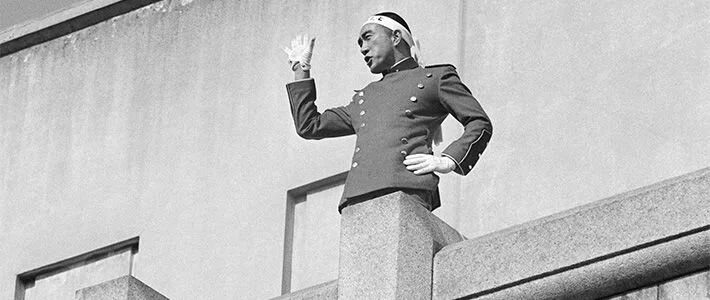
Yukio Mishima: 'It is a wretched affair', coup attempt - 1970

December 10, 2020

25 November 1970, JGSDF Camp Ichigaya, Tokyo, Japan

It is a wretched affair, to have to speak to Jieitai men in circumstances like these. I thought, that the Jieitai was the last hope of Nippon, the last stronghold of the Japanese soul. But..... Japanese people today think of most money, just money. where is our national spirit today? The politicians care nothing for Japan. they are greedy for power. The Jieitai, must be the soul of Nippon. The soldiers! The army! But.... we were betrayed by the Jieitai! Listen! Listen! Hear me out! We thought that the Jieitai was the soul of national honor! The nation has no spiritual foundation. that is why you don't agree with me! You don't understand Japan. The Jieitai must put things right! Listen! Be quiet, will you! Listen! Don't you hear! Listen! Hear me out! Just listen to me! What happened last year? On October 21? There was a demonstration, an anti-war demonstration. On October 21 last year. In Shinjuku. And the police put it down. The police! after that there was, and there will be, no chance to amend the Constitution. So, the Jiminto (the Liberal Democratic Party), the politicians, decided that they could use the police. The police would deal with the demonstrations, Don't you see? Look! The government did not use the Jieitai. The Armed Forces stayed in their barracks. The Constitution is fixed forever. There will be no chance to amend it. Do you understand? All right. Listen! Since last October 21, since that time, it is you who protect the Constitution. The Jieitai defends the Constitution. There will be no chance to amend it. Not for twenty years! The Jieitai waited for that chance, with tears in their eyes. Too late! Why don't you understand? Think about October 21 last year! Since that time I have waited for the Jieitai to act! When would the Jieitai come to its senses? I waited. there will be no further chance to revise the Constitution! The Jieitai will never become an army! It has no foundation, no center! The Jieitai must rise. Why? To protect Japan! You must protect Japan! To protect Japan! Yes, to protect Japan! Japanese tradition! Our history! Our culture! The Emperor! Listen! Listen! Listen! Listen! A man appeals to you! A man! I am staking my life on this! Do you hear? Do you follow me? If you do not rise with, if the Jieitai will not rise, the Constitution will never be amended! You will just be American mercenaries! American troops! I have waited for four years! Yes, four years! I wanted the Jietai to rise! Four years! I have come to the last thirty minutes, Yes the last thirty minutes. I am waiting, i want... Are you bushi? Are you men? You are soldiers! Then why do you not stand by the Constitution? You back the Constitution that denies your very existence! Then you have no future! You will never be saved! It is the end! The Constitution will remain forever. You are finished! You are unconstitutional! Listen! You are unconstitutional! The Jieitai is unconstitutional! You are all unconstitutional! Don't you understand? Don't you see what is happening? Don't you understand that it is you who defend the constitution? Why not? Why don't you understand? I have been waiting for you. Why don't you wake up? There you are in your tiny world. You do nothing for Nippon! Will any of you rise with me? You say that! Have you studied Bu (the warrior ethic)? Do you understand the way of the sword? What does the sword mean to a Japanese?... I ask you. Are you men? Are you bushi? I see that you are not. You will not rise. You will do nothing! The constitution means nothing to you. You are not interested. I have lost my dream of Jieitai! I salute the emperor! Tenno Heika Banzai! Tenno Heika Banzai!It is a wretched affair, to have to speak to Jieitai men in circumstances like these. I thought, that the Jieitai was the last hope of Nippon, the last stronghold of the Japanese soul. But..... Japanese people today think of most money, just money. where is our national spirit today? The politicians care nothing for Japan. they are greedy for power. The Jieitai, must be the soul of Nippon. The soldiers! The army! But.... we were betrayed by the Jieitai! Listen! Listen! Hear me out! We thought that the Jieitai was the soul of national honor! The nation has no spiritual foundation. that is why you don't agree with me! You don't understand Japan. The Jieitai must put things right! Listen! Be quiet, will you! Listen! Don't you hear! Listen! Hear me out! Just listen to me! What happened last year? On October 21? There was a demonstration, an anti-war demonstration. On October 21 last year. In Shinjuku. And the police put it down. The police! after that there was, and there will be, no chance to amend the Constitution. So, the Jiminto (the Liberal Democratic Party), the politicians, decided that they could use the police. The police would deal with the demonstrations, Don't you see? Look! The government did not use the Jieitai. The Armed Forces stayed in their barracks. The Constitution is fixed forever. There will be no chance to amend it. Do you understand? All right. Listen! Since last October 21, since that time, it is you who protect the Constitution. The Jieitai defends the Constitution. There will be no chance to amend it. Not for twenty years! The Jieitai waited for that chance, with tears in their eyes. Too late! Why don't you understand? Think about October 21 last year! Since that time I have waited for the Jieitai to act! When would the Jieitai come to its senses? I waited. there will be no further chance to revise the Constitution! The Jieitai will never become an army! It has no foundation, no center! The Jieitai must rise. Why? To protect Japan! You must protect Japan! To protect Japan! Yes, to protect Japan! Japanese tradition! Our history! Our culture! The Emperor! Listen! Listen! Listen! Listen! A man appeals to you! A man! I am staking my life on this! Do you hear? Do you follow me? If you do not rise with, if the Jieitai will not rise, the Constitution will never be amended! You will just be American mercenaries! American troops! I have waited for four years! Yes, four years! I wanted the Jietai to rise! Four years! I have come to the last thirty minutes, Yes the last thirty minutes. I am waiting, i want... Are you bushi? Are you men? You are soldiers! Then why do you not stand by the Constitution? You back the Constitution that denies your very existence! Then you have no future! You will never be saved! It is the end! The Constitution will remain forever. You are finished! You are unconstitutional! Listen! You are unconstitutional! The Jieitai is unconstitutional! You are all unconstitutional! Don't you understand? Don't you see what is happening? Don't you understand that it is you who defend the constitution? Why not? Why don't you understand? I have been waiting for you. Why don't you wake up? There you are in your tiny world. You do nothing for Nippon! Will any of you rise with me? You say that! Have you studied Bu (the warrior ethic)? Do you understand the way of the sword? What does the sword mean to a Japanese?... I ask you. Are you men? Are you bushi? I see that you are not. You will not rise. You will do nothing! The constitution means nothing to you. You are not interested. I have lost my dream of Jieitai! I salute the emperor! Tenno Heika Banzai! Tenno Heika Banzai!
Source: https://www.youtube.com/watch?v=Ctufj50w9a...

Enjoyed this speech? Speakola is a labour of love and I’d be very grateful if you would share, tweet or like it. Thank you.

Facebook Twitter Facebook
In 1960-79 C Tags COUP ATTEMPT, IT IS A WRETCHED AFFAIR, JIETAI, YUKIO MISHIMA, AUTHOR, EMPORER, ANTI CONSTITUTION, SUICIDE
Comment

Clive James: 'This was a harvest of our tallest poppies', Battersea ANZAC plaque commemoration - 1988

August 6, 2015

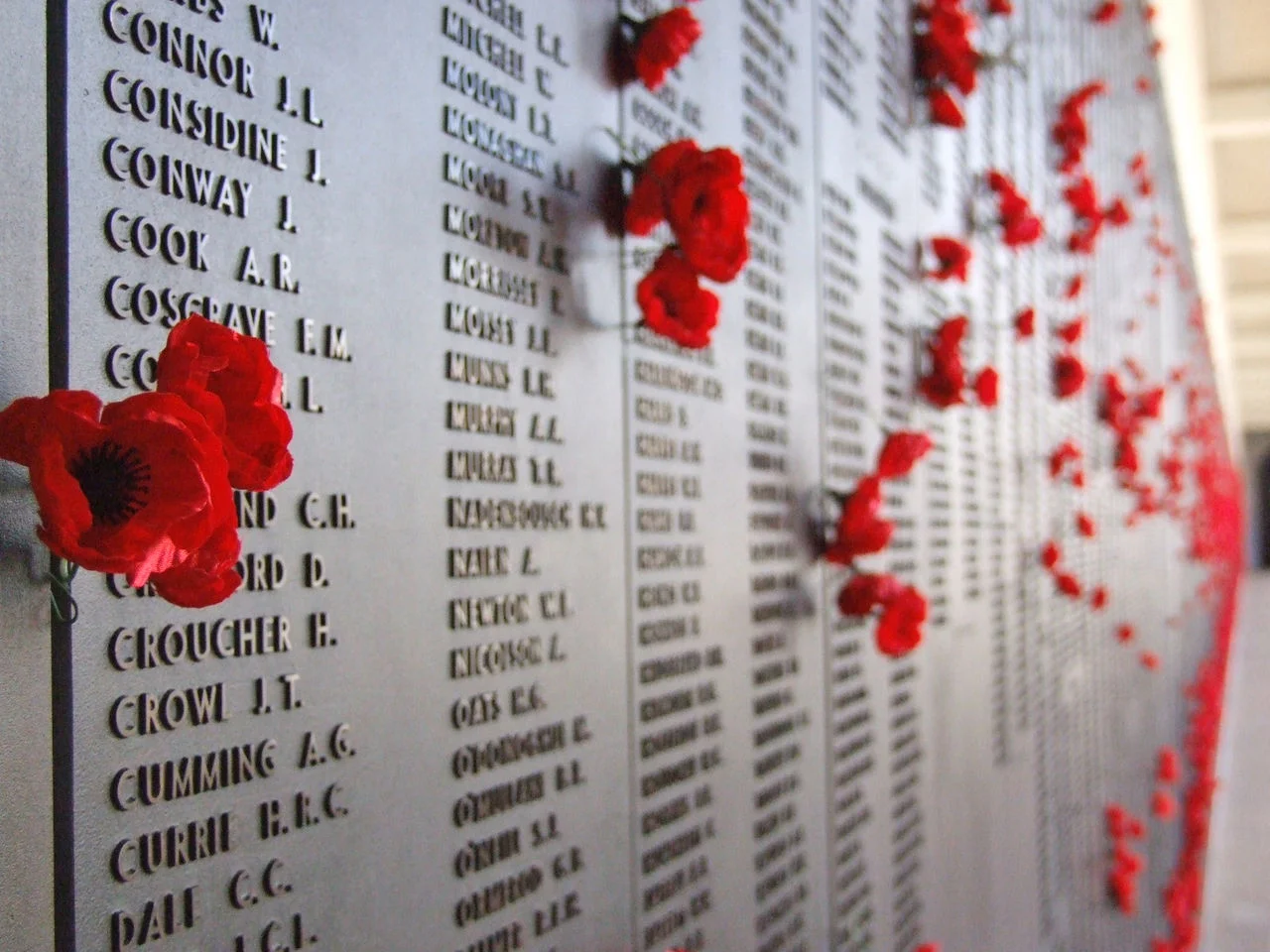
25 April, 1988, Anzac Day Address, Battersea Park, London

It’s said that whenever Winston Churchill fell prey to the fits of intense depression he called Black Dog, he would dream about Gallipoli and the Dardanelles, of the dead soldiers in the water and on the cliffs. The Dardanelles campaign had been his idea, and it was a brilliant idea: if it had been successful it would have altered the course of the war, breaking the murderous stalemate of trench warfare on the Western Front. It would have stemmed the slaughter. But it wasn’t successful, the enemy was waiting, and all that was altered was the course of many young lives – and of those, too many belonged to us, to Australia and New Zealand, little dominions with not much population, and certainly none of it to spare.

There was a harvest of our tallest poppies. A bitter harvest. Recently – by commentators with their own, no doubt heartfelt and even admirable purposes – the notion has been encouraged that the Anzacs were fed into the battle to save British lives, as Imperial cannon-fodder. The cruel fact was that three times as many British troops as Anzacs went into that cauldron and never came out. But the British were counting their troops in millions anyway, and soon they would be counting their dead by the same measure. For us, young men dead by the thousand was a lot, an awful lot, and the same was still true in the second war, and always will be true if it happens again.

But nothing quite like those wars, not even Vietnam, ever has happened again, or is likely to, and that consideration, perhaps, is nearer the heart of this ceremony than we might easily realize. The memory is fading, even as the myth grows, and it is fading precisely because we have got the world our parents dreamed of. In our generation and probably for all the generations to come, the privileged nations no longer fight each other, or will fight each other. It is, and will be, the sad fate of the underprivileged nations to do all that. In the meanwhile the way is open for our children to misinterpret history, and believe that a ceremony like this honours militarism. Except by our participation in this moment of solemnity – the solemnity that always courts pomposity, unless we can forget ourselves and remember those who never lived to stand on ceremony – how can we convince our children that the opposite is true?

Militarism, in both the great wars, was the enemy. It was why the enemy had to be fought. Almost all our dead were civilians in peacetime, and the aching gaps they left were not in the barracks but on the farms and in the factories, in the suburbs and the little towns with one pub. The thousands of Australian aircrew who died over Europe, and are commemorated here by this stone, would, had they lived, have made an important contribution to Australia’s burgeoning creative energy after World War Two. We might have found our full confidence much sooner. But without their valour and generosity we might never have found it at all. Had Hitler prevailed, and Britain gone under, nowhere in the world, not even America, would have remained free of his virulent influence. Those of us who are very properly concerned with what the Aborigines suffered at the hands of Anglo-Saxon culture should at least consider what they might have suffered at the hands of a Nazi culture, as it would undoubtedly have been transmitted by the occupying army of Hitler’s admiring ally. They would have been regarded as a problem with only one solution – a final solution.

When we say that the lives of any of our young men and women under arms were wasted we should be very careful what we mean. We who are lucky enough to live in the world they helped to make safe from institutionalized evil can’t expect any prizes for pronouncing that war is not glorious. They knew that. They fought the wars anyway, and that was their glory. It’s obviously true that the world would have been a better place if the wars had never happened, but it’s profoundly true that it would have been an infinitely worse place if they had not been fought and won.

All our dead would rather have lived in peace. But there was no peace. Now there is, and perhaps, in our protected, cushioned and lulling circumstances, one of the best ways to realize what life is really worth is to try to imagine the intensity with which they must have felt its value just before they lost it. Sacrifice is a large word, but no word can be large enough for that small moment. The only eloquence that fits is silence – which I will ask you to observe with me as I fulfil my gladly accepted duty and unveil this plaque.


Enjoyed this speech? Speakola is a labour of love and I’d be very grateful if you would share, tweet or like it. Thank you.

Facebook Twitter Facebook
In 1980-99 Tags WW1, CLIVE JAMES, TRANSCRIPT, WAR, AUTHOR, ANZAC DAY
1 Comment

Elie Wiesel: 'And now we knew, we learned, we discovered that the Pentagon knew', The Perils of Indifference - United Nations, 1999

August 6, 2015

12 April 1999, Washington D.C., USA

Mr. President, Mrs. Clinton, members of Congress, Ambassador Holbrooke, Excellencies, friends:

Fifty-four years ago to the day, a young Jewish boy from a small town in the Carpathian Mountains woke up, not far from Goethe's beloved Weimar, in a place of eternal infamy called Buchenwald. He was finally free, but there was no joy in his heart. He thought there never would be again. Liberated a day earlier by American soldiers, he remembers their rage at what they saw. And even if he lives to be a very old man, he will always be grateful to them for that rage, and also for their compassion. Though he did not understand their language, their eyes told him what he needed to know -- that they, too, would remember, and bear witness.

And now, I stand before you, Mr. President -- Commander-in-Chief of the army that freed me, and tens of thousands of others -- and I am filled with a profound and abiding gratitude to the American people. "Gratitude" is a word that I cherish. Gratitude is what defines the humanity of the human being. And I am grateful to you, Hillary, or Mrs. Clinton, for what you said, and for what you are doing for children in the world, for the homeless, for the victims of injustice, the victims of destiny and society. And I thank all of you for being here.

We are on the threshold of a new century, a new millennium. What will the legacy of this vanishing century be? How will it be remembered in the new millennium? Surely it will be judged, and judged severely, in both moral and metaphysical terms. These failures have cast a dark shadow over humanity: two World Wars, countless civil wars, the senseless chain of assassinations (Gandhi, the Kennedys, Martin Luther King, Sadat, Rabin), bloodbaths in Cambodia and Algeria, India and Pakistan, Ireland and Rwanda, Eritrea and Ethiopia, Sarajevo and Kosovo; the inhumanity in the gulag and the tragedy of Hiroshima. And, on a different level, of course, Auschwitz and Treblinka. So much violence; so much indifference.

What is indifference? Etymologically, the word means "no difference." A strange and unnatural state in which the lines blur between light and darkness, dusk and dawn, crime and punishment, cruelty and compassion, good and evil. What are its courses and inescapable consequences? Is it a philosophy? Is there a philosophy of indifference conceivable? Can one possibly view indifference as a virtue? Is it necessary at times to practice it simply to keep one's sanity, live normally, enjoy a fine meal and a glass of wine, as the world around us experiences harrowing upheavals?

Of course, indifference can be tempting -- more than that, seductive. It is so much easier to look away from victims. It is so much easier to avoid such rude interruptions to our work, our dreams, our hopes. It is, after all, awkward, troublesome, to be involved in another person's pain and despair. Yet, for the person who is indifferent, his or her neighbor are of no consequence. And, therefore, their lives are meaningless. Their hidden or even visible anguish is of no interest. Indifference reduces the Other to an abstraction.

Over there, behind the black gates of Auschwitz, the most tragic of all prisoners were the "Muselmanner," as they were called. Wrapped in their torn blankets, they would sit or lie on the ground, staring vacantly into space, unaware of who or where they were -- strangers to their surroundings. They no longer felt pain, hunger, thirst. They feared nothing. They felt nothing. They were dead and did not know it.

Rooted in our tradition, some of us felt that to be abandoned by humanity then was not the ultimate. We felt that to be abandoned by God was worse than to be punished by Him. Better an unjust God than an indifferent one. For us to be ignored by God was a harsher punishment than to be a victim of His anger. Man can live far from God -- not outside God. God is wherever we are. Even in suffering? Even in suffering.

In a way, to be indifferent to that suffering is what makes the human being inhuman. Indifference, after all, is more dangerous than anger and hatred. Anger can at times be creative. One writes a great poem, a great symphony. One does something special for the sake of humanity because one is angry at the injustice that one witnesses. But indifference is never creative. Even hatred at times may elicit a response. You fight it. You denounce it. You disarm it.

Indifference elicits no response. Indifference is not a response. Indifference is not a beginning; it is an end. And, therefore, indifference is always the friend of the enemy, for it benefits the aggressor -- never his victim, whose pain is magnified when he or she feels forgotten. The political prisoner in his cell, the hungry children, the homeless refugees -- not to respond to their plight, not to relieve their solitude by offering them a spark of hope is to exile them from human memory. And in denying their humanity, we betray our own.

Indifference, then, is not only a sin, it is a punishment.

And this is one of the most important lessons of this outgoing century's wide-ranging experiments in good and evil.

In the place that I come from, society was composed of three simple categories: the killers, the victims, and the bystanders. During the darkest of times, inside the ghettoes and death camps -- and I'm glad that Mrs. Clinton mentioned that we are now commemorating that event, that period, that we are now in the Days of Remembrance -- but then, we felt abandoned, forgotten. All of us did.

And our only miserable consolation was that we believed that Auschwitz and Treblinka were closely guarded secrets; that the leaders of the free world did not know what was going on behind those black gates and barbed wire; that they had no knowledge of the war against the Jews that Hitler's armies and their accomplices waged as part of the war against the Allies. If they knew, we thought, surely those leaders would have moved heaven and earth to intervene. They would have spoken out with great outrage and conviction. They would have bombed the railways leading to Birkenau, just the railways, just once.

And now we knew, we learned, we discovered that the Pentagon knew, the State Department knew. And the illustrious occupant of the White House then, who was a great leader -- and I say it with some anguish and pain, because, today is exactly 54 years marking his death -- Franklin Delano Roosevelt died on April the 12th, 1945. So he is very much present to me and to us. No doubt, he was a great leader. He mobilized the American people and the world, going into battle, bringing hundreds and thousands of valiant and brave soldiers in America to fight fascism, to fight dictatorship, to fight Hitler. And so many of the young people fell in battle. And, nevertheless, his image in Jewish history -- I must say it -- his image in Jewish history is flawed.

The depressing tale of the St. Louis is a case in point. Sixty years ago, its human cargo -- nearly 1,000 Jews -- was turned back to Nazi Germany. And that happened after the Kristallnacht, after the first state sponsored pogrom, with hundreds of Jewish shops destroyed, synagogues burned, thousands of people put in concentration camps. And that ship, which was already in the shores of the United States, was sent back. I don't understand. Roosevelt was a good man, with a heart. He understood those who needed help. Why didn't he allow these refugees to disembark? A thousand people -- in America, the great country, the greatest democracy, the most generous of all new nations in modern history. What happened? I don't understand. Why the indifference, on the highest level, to the suffering of the victims?

But then, there were human beings who were sensitive to our tragedy. Those non-Jews, those Christians, that we call the "Righteous Gentiles," whose selfless acts of heroism saved the honor of their faith. Why were they so few? Why was there a greater effort to save SS murderers after the war than to save their victims during the war? Why did some of America's largest corporations continue to do business with Hitler's Germany until 1942? It has been suggested, and it was documented, that the Wehrmacht could not have conducted its invasion of France without oil obtained from American sources. How is one to explain their indifference?

And yet, my friends, good things have also happened in this traumatic century: the defeat of Nazism, the collapse of communism, the rebirth of Israel on its ancestral soil, the demise of apartheid, Israel's peace treaty with Egypt, the peace accord in Ireland. And let us remember the meeting, filled with drama and emotion, between Rabin and Arafat that you, Mr. President, convened in this very place. I was here and I will never forget it.

And then, of course, the joint decision of the United States and NATO to intervene in Kosovo and save those victims, those refugees, those who were uprooted by a man, whom I believe that because of his crimes, should be charged with crimes against humanity.

But this time, the world was not silent. This time, we do respond. This time, we intervene.

Does it mean that we have learned from the past? Does it mean that society has changed? Has the human being become less indifferent and more human? Have we really learned from our experiences? Are we less insensitive to the plight of victims of ethnic cleansing and other forms of injustices in places near and far? Is today's justified intervention in Kosovo, led by you, Mr. President, a lasting warning that never again will the deportation, the terrorization of children and their parents, be allowed anywhere in the world? Will it discourage other dictators in other lands to do the same?

What about the children? Oh, we see them on television, we read about them in the papers, and we do so with a broken heart. Their fate is always the most tragic, inevitably. When adults wage war, children perish. We see their faces, their eyes. Do we hear their pleas? Do we feel their pain, their agony? Every minute one of them dies of disease, violence, famine.

Some of them -- so many of them -- could be saved.

And so, once again, I think of the young Jewish boy from the Carpathian Mountains. He has accompanied the old man I have become throughout these years of quest and struggle. And together we walk towards the new millennium, carried by profound fear and extraordinary hope.

Source: http://www.americanrhetoric.com/speeches/e...

Enjoyed this speech? Speakola is a labour of love and I’d be very grateful if you would share, tweet or like it. Thank you.

Facebook Twitter Facebook
In 1980-99 Tags ELIE WIESEL, AUTHOR, THE HOLOCAUST, WW2, GENOCIDE, TRANSCRIPT
Comment

See my film!

Limited Australian Season

March 2025

Details and ticket bookings at

angeandtheboss.com

Support Speakola

Hi speech lovers,
With costs of hosting website and podcast, this labour of love has become a difficult financial proposition in recent times. If you can afford a donation, it will help Speakola survive and prosper.

Best wishes,
Tony Wilson.

Become a Patron!

Learn more about supporting Speakola.

Featured political

Featured
Jon Stewart: "They responded in five seconds", 9-11 first responders, Address to Congress - 2019
Jacinda Ardern: 'They were New Zealanders. They are us', Address to Parliament following Christchurch massacre - 2019
Dolores Ibárruri: "¡No Pasarán!, They shall not pass!', Defense of 2nd Spanish Republic - 1936
Jimmy Reid: 'A rat race is for rats. We're not rats', Rectorial address, Glasgow University - 1972

Featured eulogies

Featured
For Geoffrey Tozer: 'I have to say we all let him down', by Paul Keating - 2009
for James Baldwin: 'Jimmy. You crowned us', by Toni Morrison - 1988
for Michael Gordon: '13 days ago my Dad’s big, beautiful, generous heart suddenly stopped beating', by Scott and Sarah Gordon - 2018

Featured commencement

Featured
Tara Westover: 'Your avatar isn't real, it isn't terribly far from a lie', The Un-Instagrammable Self, Northeastern University - 2019
Tim Minchin: 'Being an artist requires massive reserves of self-belief', WAAPA - 2019
Atul Gawande: 'Curiosity and What Equality Really Means', UCLA Medical School - 2018
Abby Wambach: 'We are the wolves', Barnard College - 2018
Eric Idle: 'America is 300 million people all walking in the same direction, singing 'I Did It My Way'', Whitman College - 2013
Shirley Chisholm: ;America has gone to sleep', Greenfield High School - 1983

Featured sport

Featured
Joe Marler: 'Get back on the horse', Harlequins v Bath pre game interview - 2019
Ray Lewis : 'The greatest pain of my life is the reason I'm standing here today', 52 Cards -
Mel Jones: 'If she was Bradman on the field, she was definitely Keith Miller off the field', Betty Wilson's induction into Australian Cricket Hall of Fame - 2017
Jeff Thomson: 'It’s all those people that help you as kids', Hall of Fame - 2016

Fresh Tweets


Featured weddings

Featured
Dan Angelucci: 'The Best (Best Man) Speech of all time', for Don and Katherine - 2019
Hallerman Sisters: 'Oh sister now we have to let you gooooo!' for Caitlin & Johnny - 2015
Korey Soderman (via Kyle): 'All our lives I have used my voice to help Korey express his thoughts, so today, like always, I will be my brother’s voice' for Kyle and Jess - 2014

Featured Arts

Featured
Bruce Springsteen: 'They're keepers of some of the most beautiful sonic architecture in rock and roll', Induction U2 into Rock Hall of Fame - 2005
Olivia Colman: 'Done that bit. I think I have done that bit', BAFTA acceptance, Leading Actress - 2019
Axel Scheffler: 'The book wasn't called 'No Room on the Broom!', Illustrator of the Year, British Book Awards - 2018
Tina Fey: 'Only in comedy is an obedient white girl from the suburbs a diversity candidate', Kennedy Center Mark Twain Award -  2010
Tina Fey: 'Only in comedy is an obedient white girl from the suburbs a diversity candidate', Kennedy Center Mark Twain Award - 2010

Featured Debates

Featured
Sacha Baron Cohen: 'Just think what Goebbels might have done with Facebook', Anti Defamation League Leadership Award - 2019
Greta Thunberg: 'How dare you', UN Climate Action Summit - 2019
Charlie Munger: 'The Psychology of Human Misjudgment', Harvard University - 1995
Lawrence O'Donnell: 'The original sin of this country is that we invaders shot and murdered our way across the land killing every Native American that we could', The Last Word, 'Dakota' - 2016