• Genre
  • About
  • Submissions
  • Donate
  • Search
Menu

Speakola

All Speeches Great and Small
  • Genre
  • About
  • Submissions
  • Donate
  • Search
Share a political speech

John Howard: 'An eclipse of humanity itself', Commemorative address at Hellfire Pass - 1998

June 14, 2023

25 April 1998, Hellfire Pass, Thailand

As we gather here to face the dawn,

We honour those who faced the night.

Not a night of rest, nor dreams,

Not a night of shared laughter or the warmth of homefire.

But a monstrous corruption of nature,

An eclipse of humanity itself.

And yet, when we look at the night sky,

the wonder we feel is surely for the stars, not the black veil behind them.

So too, our wonder is for these men, whose sparks of courage shine bright through the distance of time.

Their story of sacrifice and suffering, of constancy and compassion, illuminates the very essence of the Anzac spirit. For, of all our heroes, they were armed with human virtue alone and their victory was over the darkest recesses of the human heart.

To a superb tradition of self discipline under fire was added selflessness and ingenuity. To a heritage of wild reckless bravery was added cold calculated valour sustained for years.

To the world, proof was given that tyranny, in the end, has no power over the courage and decency of ordinary men and women.

It is an example to which we all aspire - as relevant in peace as to war, to our future as to our past.

And on this sacred day, at this most sacred place, we honour all Australian service men and women who gave or offered their lives in war.

We pay tribute to our veterans, unique Australians who have known the blessings and hardship of both conflict and peace.

On this day, we give grateful thanks to friends and allies who shared our danger, and we add our pledge that their loyalty will neither be forgotten nor unreturned.

On this day, we enrich ourselves for, it's been said, a nation reveals itself not only by the men it produces but by the men it honours, the men it remembers.

On this day most of all, we mourn the fallen - long years of love and talent lost, of potential unrealised, of generations unborn.

We would have them know of our firm and steadfast belief that they rest not in shades of darkness but bask in the brightness of an Australian sun.

We would have them know that we will remember them.


Source: https://pmtranscripts.pmc.gov.au/release/t...

Enjoyed this speech? Speakola is a labour of love and I’d be very grateful if you would share, tweet or like it. Thank you.

Facebook Twitter Facebook
In 1980-99 Tags JOHN HOWARD, TRANSCRIPT, THAI-BURMA RAILWAY
Comment

Charles Haughey: 'We are living away beyond our means', televised address -

January 4, 2017

9 January 1980,

I wish to talk to you this evening about the state of the nation’s affairs and the picture I have to paint is not, unfortunately, a very cheerful one.

The figures which are now just becoming available to us show one thing very clearly. As a community we are living away beyond our means. I do not mean that everyone in the community is living too well. Clearly many are not and have barely enough to get by. But taking us all together, we have been living at a rate which is simply not justified by the amount of goods and services we are producing.

To make up the difference, we have been borrowing enormous amounts of money, borrowing at a rat which just cannot continue. As few simple figures will make this very clear.

At home, the government’s current income from taxes and all other sources in 1979 fell short of what was needed to pay the running costs of the state by about £520m million. To meet this and our capital programme, we had to borrow in 1979 over £1000 million. That amount equals to one-seventh of our entire national output.

The situation in regard to our trading with the outside world in 1979 was bad also. Our income from abroad fell short of what we had to pay out by about £760 million which led to a fall in our reserves.

To fully understand our situation, we must look not just on the home scene but also on the troubled and unstable world around us. There are wars and rumours or wars. There is political instability in some of the most important areas of the world. A very serious threat exists to the world’s future supply of energy. We can no longer be sure that we will be able to go on paying the prices now being demanded for all the oil and other fuels we require to keep our factories going and to keep our homes and institutions supplied with light, heat and power they need. We will, of course push exploration for our own oil ahead as rapidly as possible but in the short term the burden of oil prices will continue to be a crushing one.

All this indicates that we must, first of all, as a matter of urgency, set about putting our domestic affairs in order and secondly, improving our trade with the rest of the world on so far as we can do so.

We will have to continue to cut down on government spending. The government is taking far too much by way of taxes from individual members of the community. But even this amount is not enough to meet our commitments. We will just have to reorganise government spending so that we can only undertake the things which we can afford.

In trying to bring government expenditure within manageable proportions, we will, of course, be paying particular attention to the needs of the poorer and weaker sections of the community and make sure they are looked after. Other essential community expenditure will have to be undertaken also. But there are many things which will just have to be curtailed or postponed, until such time as we can get the financial situation right.

There is one things above all else which we can do to help get the situation right and which is entirely within our control. I refer to industrial relations. Any further serious interruption in production, or in the provision of essential services, in 1980 would be a major disaster. I believe that everyone listening to me tonight shares my anxiety about our situation in that respect.

Strikes, go-slows, work-to-rule, stoppages in key industries and essentials services, were too often a feature of life in 1979. They caused suffering and hardship; at time it looked as if we were becoming one of those countries where basic services could not be relied upon to operate as part of normal life.

Immediately following my election as Taoiseach, I received countless messages from all over the country from people in every walk of life, appealing to me to do something about this situation.

Let us clearly understand, however that this is not a one-sided affair. Managements that do not give first-class attention to their firm’s industrial relations, who ignore situations and let them drift into confrontation, are just as blameworthy as the handful of wild men who slap an unofficial picket and stop thousands of workers from earning their living.

Apportioning blame, however, is not going to get us anywhere. What we need is a new way forward and that is my primary purpose, as head of government, in talking to you tonight.

Source: http://www.politics.ie/forum/history/69891...

Enjoyed this speech? Speakola is a labour of love and I’d be very grateful if you would share, tweet or like it. Thank you.

Facebook Twitter Facebook
In 1980-99 Tags CHARLES HAUGHEY, FF, IRELAND, IRISH PRIME MINISTER, TAOISEACH, CONSERVATIVE PARTY, TRANSCIRPT, THE TAOISEACH
Comment

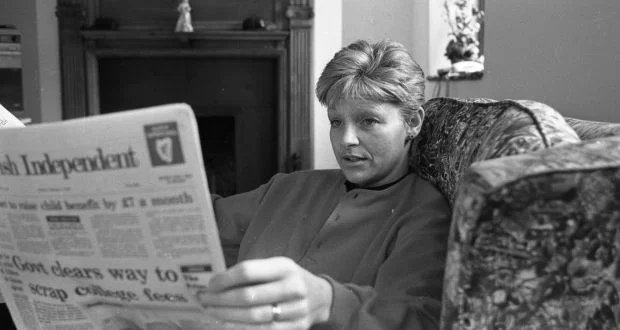
Taoiseach John Bruton: 'The murder of a journalist in the course of her work is sinister in the extreme', statement following murder of Veronica Guerin - 1996

January 4, 2017

26 June 1996, Dublin, Ireland

We are shocked when we hear of the death of any young person. We are even more shocked when we hear that her death was a result of murder, in cold blood, in broad daylight, on a roadside in Dublin. What makes it even more shocking is to hear that the young person murdered was an investigative reporter who was known for her determination to go about her business in a courageous, innovative and committed way. On behalf of the Government and on my own behalf I extend my deepest sympathy to her husband Graham, to her son, Cathal, and to the parents, family, friends and journalistic colleagues of Veronica Guerin. I telephoned my sympathy to the Sunday Independent and to the general secretary of the National Union of Journalists.

We in this House knew Veronica Guerin best as a journalist, but some Members will recall her contribution to the Forum for a New Ireland in 1982 and 1983. That was an early indication from a talented young person of her interest in Irish public life. Deputies opposite will be especially aware of her work for the Fianna Fáil delegation. Deputies in other parties who attended the forum will recall her tact, friendship and diplomacy as the forum sought to reach agreement, which it did, on a very important report. That agreement was greatly facilitated by the work of the late Veronica Guerin.

Her work in recent times established her as a particular gifted and professional investigative journalist. She wrote about the unacceptable face of life, about murders, drug dealing and crime. She did so with care and compassion. In doing so she made an important contribution to public life. Without the work she did, much of the recent public debate on crime would not have been as well informed as it was.

Her contribution to journalism was recognised not just at home but also abroad. In December 1995, Veronica won the prestigious International Press Freedom Award, and when it was being conferred on her at a ceremony in New York, she was cited for her fearless courage and determination. Veronica Guerin was a gifted journalist. Arising out of the work she was doing, her life was previously threatened, and she was attacked on at least three occasions. In February last year she was shot in her home, no doubt to discourage her from a particular line of journalistic investigation. From her hospital bed she said, on that occasion, “I won't be intimidated”, and she was not. She was not deterred. She continued her work undaunted and undiminished in her enthusiasm, despite this bloody intimidation.

The murder of a journalist in the course of her work is sinister in the extreme. Someone, somewhere, decided to take her life, and almost certainly did so to prevent information coming into the public arena. Journalism is a vital and well established element in our democracy. This country benefits from a strong, free media. The independence of the media is one of the hallmarks of a strong and vibrant democracy. Journalists must be independent not only of political influence, commercial influence, personal or sectoral influence; journalists must also now be independent of threats and terror from what-ever source. That a journalist should be callously murdered in the line of duty is an attack on democracy, because it is an attack on one of the pillars of our democracy. The full resources of the State will be brought to bear in bringing to justice those responsible for today's murder. Veronica Guerin deserves no less. Her family and friends, many of them in this House, deserve no less. Her journalistic colleagues deserve no less. The best tribute we can pay to her life and to her work is to redouble our efforts in the defence of democracy.

On a personal note, there is little that can be said on this occasion that can be of any immediate consolation to Veronica's husband, Graham, or to her small son, Cathal, who must now grow up to adulthood without his mother, but it may in time be some small consolation to them for it to be recalled to them the unparalleled shock seen on the faces of Deputies on all sides in this House when, some time this morning, the news of Veronica's killing spread through the House. Members felt this loss in a very personal way. Those expressions of utter speechlessness and utter inability to comprehend what had happened speak perhaps more eloquently than anything we can say now of the contribution that Veronica Guerin made during her all too short life, to the public life of this country. That knowledge may, in time, be of some small consolation to the people who suffer her loss so grievously now and for whom no words of consolation at this stage can serve.

Source: http://oireachtasdebates.oireachtas.ie/deb...

Enjoyed this speech? Speakola is a labour of love and I’d be very grateful if you would share, tweet or like it. Thank you.

Facebook Twitter Facebook
In 1980-99 Tags THE TAOISEACH, JOHN BRUTON, VERNOICA GUERIN, MURDER, ORGANISED CRIME, IRELAND, TRANSCRIPT, CRIME
Comment

Geraldine Ferraro - 'America is the land where dreams can come true for all of us',VP nomination acceptance, DNC - 1984

November 17, 2016

19 July 1984, DNC, San Francisco, California, USA

Ladies and gentlemen of the convention: My name is Geraldine Ferraro. I stand before you to proclaim tonight: America is the land where dreams can come true for all of us.

As I stand before the American people and think of the honor this great convention has bestowed upon me, I recall the words of Dr. Martin Luther King Jr., who made America stronger by making America more free.

He said: "Occasionally in life there are moments which cannot be completely explained by words. Their meaning can only be articulated by the inaudible language of the heart."

Tonight is such a moment for me.

My heart is filled with pride.

My fellow citizens, I proudly accept your nomination for vice president of the United States.

And I am proud to run with a man who will be one of the great presidents of this century, Walter F. Mondale.

The Future

Tonight, the daughter of a woman whose highest goal was a future for her children talks to our nation's oldest party about a future for us all.

Tonight, the daughter of working Americans tells all Americans that the future is within our reach - if we're willing to reach for it.

Tonight, the daughter of an immigrant from Italy has been chosen to run for [vice] president in the new land my father came to love.

Our faith that we can shape a better future is what the American dream is all about. The promise of our country is that the rules are fair. If you work hard and play by the rules, you can earn your share of America's blessings.

Those are the beliefs I learned from my parents. And those are the values I taught my students as a teacher in the public schools of New York City.

At night, I went to law school. I became an assistant district attorney, and I put my share of criminals behind bars. I believe: If you obey the law, you should be protected. But if you break the law, you should pay for your crime.

When I first ran for Congress, all the political experts said a Democrat could not win in my home district of Queens. But I put my faith in the people and the values that we shared. And together, we proved the political experts wrong.

In this campaign, Fritz Mondale and I have put our faith in the people. And we are going to prove the experts wrong again.

We are going to win, because Americans across this country believe in the same basic dream.

Elmore, Minn., and Queens

Last week, I visited Elmore, Minn., the small town where Fritz Mondale was raised. And soon Fritz and Joan will visit our family in Queens.

Nine hundred people live in Elmore. In Queens, there are 2,000 people on one block. You would think we would be different, but we're not.

Children walk to school in Elmore past grain elevators; in Queens, they pass by subway stops. But, no matter where they live, their future depends on education - and their parents are willing to do their part to make those schools as good as they can be.

In Elmore, there are family farms; in Queens, small businesses. But the men and women who run them all take pride in supporting their families through hard work and initiative.

On the Fourth of July in Elmore, they hang flags out on Main Street; in Queens, they fly them over Grand Avenue. But all of us love our country, and stand ready to defend the freedom that it represents.

Playing By The Rules

Americans want to live by the same set of rules. But under this administration, the rules are rigged against too many of our people.

It isn't right that every year, the share of taxes paid by individual citizens is going up, while the share paid by large corporations is getting smaller and smaller. The rules say: Everyone in our society should contribute their fair share.

It isn't right that this year Ronald Reagan will hand the American people a bill for interest on the national debt larger than the entire cost of the federal government under John F. Kennedy.

Our parents left us a growing economy. The rules say: We must not leave our kids a mountain of debt.

It isn't right that a woman should get paid 59 cents on the dollar for the same work as a man. If you play by the rules, you deserve a fair day's pay for a fair day's work.

It isn't right that - that if trends continue - by the year 2000 nearly all of the poor people in America will be women and children. The rules of a decent society say, when you distribute sacrifice in times of austerity, you don't put women and children first.

It isn't right that young people today fear they won't get the Social Security they paid for, and that older Americans fear that they will lose what they have already earned. Social Security is a contract between the last generation and the next, and the rules say: You don't break contracts. We're going to keep faith with older Americans.

We hammered out a fair compromise in the Congress to save Social Security. Every group sacrificed to keep the system sound. It is time Ronald Reagan stopped scaring our senior citizens.

It isn't right that young couples question whether to bring children into a world of 50,000 nuclear warheads.

That isn't the vision for which Americans have struggled for more than two centuries. And our future doesn't have to be that way.

Changes In The Air

Change is in the air, just as surely as when John Kennedy beckoned America to a new frontier; when Sally Ride rocketed into space and when Rev. Jesse Jackson ran for the office of president of the United States.

By choosing a woman to run for our nation's second highest office, you sent a powerful signal to all Americans. There are no doors we cannot unlock. We will place no limits on achievement.

If we can do this, we can do anything.

Tonight, we reclaim our dream. We're going to make the rules of American life work fairly for all Americans again.

To an Administration that would have us debate all over again whether the Voting Rights Act should be renewed and whether segregated schools should be tax exempt, we say, Mr. President: Those debates are over.

On the issue of civil, voting rights and affirmative action for minorities, we must not go backwards. We must - and we will - move forward to open the doors of opportunity.

To those who understand that our country cannot prosper unless we draw on the talents of all Americans, we say: We will pass the Equal Rights Amendment. The issue is not what America can do for women, but what women can do for America.

To the Americans who will lead our country into the 21st century, we say: We will not have a Supreme Court that turns the clock back to the 19th century.

To those concerned about the strength of American family values, as I am, I say: We are going to restore those values - love, caring, partnership - by including, and not excluding, those whose beliefs differ from our own. Because our own faith is strong, we will fight to preserve the freedom of faith for others.

To those working Americans who fear that banks, utilities, and large special interests have a lock on the White House, we say: Join us; let's elect a people's president; and let's have government by and for the American people again.

To an Administration that would savage student loans and education at the dawn of a new technological age, we say: You fit the classic definition of a cynic; you know the price of everything, but the value of nothing.

To our students and their parents, we say: We will insist on the highest standards of excellence because the jobs of the future require skilled minds.

To young Americans who may be called to our country's service, we say: We know your generation of Americans will proudly answer our country's call, as each generation before you.

This past year, we remembered the bravery and sacrifice of Americans at Normandy. And we finally paid tribute - as we should have done years ago - to that unknown soldier who represents all the brave young Americans who died in Vietnam.

Let no one doubt, we will defend America's security and the cause of freedom around the world. But we want a president who tells us what America is fighting for, not just what we are fighting against. We want a president who will defend human rights - not just where it is convenient - but wherever freedom is at risk - from Chile to Afghanistan, from Poland to South Africa.

To those who have watched this administration's confusion in the Middle East, as it has tilted first toward one and then another of Israel's long-time enemies and wondered. "Will America stand by her friends and sister democracy?" We say: America knows who her friends are in the Middle East and around the world.

America will stand with Israel always.

Finally, we want a President who will keep America strong, but use that strength to keep America and the world at peace. A nuclear freeze is not a slogan: It is a tool for survival in the nuclear age. If we leave our children nothing else, let us leave them this Earth as we found it - whole and green and full of life.

I know in my heart that Walter Mondale will be that president.

The Gift of Life

A wise man once said, "Every one of us is given the gift of life, and what a strange gift it is. If it is preserved jealously and selfishly, it impoverishes and saddens. But if it is spent for others, it enriches and beautifies."

My fellow Americans: We can debate policies and programs. But in the end what separates the two parties in this election campaign is whether we use the gift of life - for others or only ourselves.

Tonight, my husband, John, and our three children are in this hall with me. To my daughters, Donna and Laura, and my son, John Jr., I say: My mother did not break faith with me . . . and I will not break faith with you. To all the children of America, I say: The generation before ours kept faith with us, and like them, we will pass on to you a stronger, more just America.

Thank you.

Source: http://www.americanrhetoric.com/speeches/g...

Enjoyed this speech? Speakola is a labour of love and I’d be very grateful if you would share, tweet or like it. Thank you.

Facebook Twitter Facebook
In 1980-99 Tags GERALDINE FERRARO, DNC, DEMOCRATIC PARTY, DEMOCRATIC NATIONAL CONVENTION, GLASS CEILING, FEMINISM, FIRST WOMAN, VICE PRESIDENT NOMINEE, ACCEPTING NOMINATION, TRANSCRIPT
Comment

Mary Fisher: 'A Whisper of AIDS', GOP National Convention - 1992

November 17, 2016

19 August 1992, Houston, Texas, USA

Less than three months ago at platform hearings in Salt Lake City, I asked the Republican Party to lift the shroud of silence which has been draped over the issue of HIV and AIDS. I have come tonight to bring our silence to an end. I bear a message of challenge, not self-congratulation. I want your attention, not your applause.

I would never have asked to be HIV positive, but I believe that in all things there is a purpose; and I stand before you and before the nation gladly. The reality of AIDS is brutally clear. Two hundred thousand Americans are dead or dying. A million more are infected. Worldwide, forty million, sixty million, or a hundred million infections will be counted in the coming few years. But despite science and research, White House meetings, and congressional hearings, despite good intentions and bold initiatives, campaign slogans, and hopeful promises, it is -- despite it all -- the epidemic which is winning tonight.

In the context of an election year, I ask you, here in this great hall, or listening in the quiet of your home, to recognize that AIDS virus is not a political creature. It does not care whether you are Democrat or Republican; it does not ask whether you are black or white, male or female, gay or straight, young or old.

Tonight, I represent an AIDS community whose members have been reluctantly drafted from every segment of American society. Though I am white and a mother, I am one with a black infant struggling with tubes in a Philadelphia hospital. Though I am female and contracted this disease in marriage and enjoy the warm support of my family, I am one with the lonely gay man sheltering a flickering candle from the cold wind of his family’s rejection.

This is not a distant threat. It is a present danger. The rate of infection is increasing fastest among women and children. Largely unknown a decade ago, AIDS is the third leading killer of young adult Americans today. But it won’t be third for long, because unlike other diseases, this one travels. Adolescents don’t give each other cancer or heart disease because they believe they are in love, but HIV is different; and we have helped it along. We have killed each other with our ignorance, our prejudice, and our silence.

We may take refuge in our stereotypes, but we cannot hide there long, because HIV asks only one thing of those it attacks. Are you human? And this is the right question. Are you human? Because people with HIV have not entered some alien state of being. They are human. They have not earned cruelty, and they do not deserve meanness. They don’t benefit from being isolated or treated as outcasts. Each of them is exactly what God made: a person; not evil, deserving of our judgment; not victims, longing for our pity -- people, ready for support and worthy of compassion.

My call to you, my Party, is to take a public stand, no less compassionate than that of the President and Mrs. Bush. They have embraced me and my family in memorable ways. In the place of judgment, they have shown affection. In difficult moments, they have raised our spirits. In the darkest hours, I have seen them reaching not only to me, but also to my parents, armed with that stunning grief and special grace that comes only to parents who have themselves leaned too long over the bedside of a dying child.

With the President’s leadership, much good has been done. Much of the good has gone unheralded, and as the President has insisted, much remains to be done. But we do the President’s cause no good if we praise the American family but ignore a virus that destroys it.

We must be consistent if we are to be believed. We cannot love justice and ignore prejudice, love our children and fear to teach them. Whatever our role as parent or policymaker, we must act as eloquently as we speak -- else we have no integrity. My call to the nation is a plea for awareness. If you believe you are safe, you are in danger. Because I was not hemophiliac, I was not at risk. Because I was not gay, I was not at risk. Because I did not inject drugs, I was not at risk.

My father has devoted much of his lifetime guarding against another holocaust. He is part of the generation who heard Pastor Nemoellor come out of the Nazi death camps to say,

“They came after the Jews, and I was not a Jew, so, I did not protest. They came after the trade unionists, and I was not a trade unionist, so, I did not protest. Then they came after the Roman Catholics, and I was not a Roman Catholic, so, I did not protest. Then they came after me, and there was no one left to protest.”

The -- The lesson history teaches is this: If you believe you are safe, you are at risk. If you do not see this killer stalking your children, look again. There is no family or community, no race or religion, no place left in America that is safe. Until we genuinely embrace this message, we are a nation at risk.

Tonight, HIV marches resolutely toward AIDS in more than a million American homes, littering its pathway with the bodies of the young -- young men, young women, young parents, and young children. One of the families is mine. If it is true that HIV inevitably turns to AIDS, then my children will inevitably turn to orphans. My family has been a rock of support.

My 84-year-old father, who has pursued the healing of the nations, will not accept the premise that he cannot heal his daughter. My mother refuses to be broken. She still calls at midnight to tell wonderful jokes that make me laugh. Sisters and friends, and my brother Phillip, whose birthday is today, all have helped carry me over the hardest places. I am blessed, richly and deeply blessed, to have such a family.

But not all of you -- But not all of you have been so blessed. You are HIV positive, but dare not say it. You have lost loved ones, but you dare not whisper the word AIDS. You weep silently. You grieve alone. I have a message for you. It is not you who should feel shame. It is we -- we who tolerate ignorance and practice prejudice, we who have taught you to fear. We must lift our shroud of silence, making it safe for you to reach out for compassion. It is our task to seek safety for our children, not in quiet denial, but in effective action.

Someday our children will be grown. My son Max, now four, will take the measure of his mother. My son Zachary, now two, will sort through his memories. I may not be here to hear their judgments, but I know already what I hope they are. I want my children to know that their mother was not a victim. She was a messenger. I do not want them to think, as I once did, that courage is the absence of fear. I want them to know that courage is the strength to act wisely when most we are afraid. I want them to have the courage to step forward when called by their nation or their Party and give leadership, no matter what the personal cost.

I ask no more of you than I ask of myself or of my children. To the millions of you who are grieving, who are frightened, who have suffered the ravages of AIDS firsthand: Have courage, and you will find support. To the millions who are strong, I issue the plea: Set aside prejudice and politics to make room for compassion and sound policy.

To my children, I make this pledge: I will not give in, Zachary, because I draw my courage from you. Your silly giggle gives me hope; your gentle prayers give me strength; and you, my child, give me the reason to say to America, "You are at risk." And I will not rest, Max, until I have done all I can to make your world safe. I will seek a place where intimacy is not the prelude to suffering. I will not hurry to leave you, my children, but when I go, I pray that you will not suffer shame on my account.

To all within the sound of my voice, I appeal: Learn with me the lessons of history and of grace, so my children will not be afraid to say the word "AIDS" when I am gone. Then, their children and yours may not need to whisper it at all.

God bless the children, and God bless us all.

Good night.

Source: http://www.americanrhetoric.com/speeches/m...

Enjoyed this speech? Speakola is a labour of love and I’d be very grateful if you would share, tweet or like it. Thank you.

Facebook Twitter Facebook
In 1980-99 Tags AIDS, MARY FISHER, REPUBLICAN PARTY, EPIDEMIC, GEORGE H.W. BUSH, GOP, TRANSCRIPT
Comment

Jeane Kirkpatrick - 'Blame America First', GOP Convention speech - 1984

November 15, 2016

20 August 1984, Republcan Party Convention, Dallas, Texas, USA

Thank you very much for that warm welcome.

Thank you for inviting me.

This is the first Republican Convention I have ever attended.

I am grateful that you should invite me, a lifelong Democrat. On the other hand, I realize that you are inviting many lifelong Democrats to join this common cause.

I want to begin tonight by quoting the speech of the president whom I very greatly admire, Harry Truman, who once said to the Congress:

"The United States has become great because we, as a people, have been able to work together for great objectives even while differing about details."

He continued:

"The elements of our strength are many. They include our democratic government, our economic system, our great natural resources. But, the basic source of our strength is spiritual. We believe in the dignity of man."

That's the way Democratic presidents and presidential candidates used to talk about America.

These were the men who developed NATO, who developed the Marshall Plan, who devised the Alliance for Progress.

They were not afraid to be resolute nor ashamed to speak of America as a great nation. They didn't doubt that we must be strong enough to protect ourselves and to help others.

They didn't imagine that America should depend for its very survival on the promises of its adversaries.

They happily assumed the responsibilities of freedom.

I am not alone in noticing that the San Francisco Democrats took a very different approach.

Foreign Affairs

A recent article in The New York Times noted that "the foreign policy line that emerged from the Democratic National Convention in San Francisco is a distinct shift from the policies of such [Democratic] presidents as Harry S Truman, John F. Kennedy and Lyndon B. Johnson."

I agree.

I shall speak tonight of foreign affairs even though the other party's convention barely touched the subject.

When the San Francisco Democrats treat foreign affairs as an afterthought, as they did, they behaved less like a dove or a hawk than like an ostrich - convinced it would shut out the world by hiding its head in the sand.

Today, foreign policy is central to the security, to the freedom, to the prosperity, even to the survival of the United States.

And our strength, for which we make many sacrifices, is essential to the independence and freedom of our allies and our friends.

Ask yourself:

What would become of Europe if the United States withdrew?

What would become of Africa if Europe fell under Soviet domination?

What would become of Europe if the Middle East came under Soviet control?

What would become of Israel, if surrounded by Soviet client states?

What would become of Asia if the Philippines or Japan fell under Soviet domination?

What would become of Mexico if Central America became a Soviet satellite?

What then could the United States do?

These are questions the San Francisco Democrats have not answered. These are questions they haven't even asked.

Carter Administration

The United States cannot remain an open, democratic society if we are left alone - a garrison state in a hostile world.

We need independent nations with whom to trade, to consult and cooperate.

We need friends and allies with whom to share the pleasures and the protection of our civilization.

We cannot, therefore, be indifferent to the subversion of others' independence or to the development of new weapons by our adversaries or of new vulnerabilities by our friends.

The last Democratic administration did not seem to notice much, or care much or do much about these matters.

And at home and abroad, our country slid into real deep trouble.

North and South, East and West, our relations deteriorated.

The Carter administration's motives were good, but their policies were inadequate, uninformed and mistaken.

They made things worse, not better.

Those who had least, suffered most.

Poor countries grew poorer.

Rich countries grew poorer, too.

The United States grew weaker.

Meanwhile, the Soviet Union grew stronger.

The Carter administration's unilateral "restraint" in developing and deploying weapon systems was accompanied by an unprecedented Soviet buildup, military and political.

The Soviets, working on the margins and through the loopholes of SALT I, developed missiles of stunning speed and accuracy and targeted the cities of our friends in Europe.

They produced weapons capable of wiping out our land-based missiles.

And then, feeling strong, the Soviet leaders moved with boldness and skill to exploit their new advantages.

Facilities were completed in Cuba during those years that permit Soviet nuclear submarines to roam our coasts, that permit planes to fly reconnaissance missions over the eastern United States, and that permit Soviet electronic surveillance to monitor our telephone calls and our telegrams.

Those were the years the Ayatollah Khomeini came to power in Iran, while in Nicaragua and Sandanista developed a one-party dictatorship based on the Cuban model.

From the fall of Saigon in 1975 'til January 1981, Soviet influence expanded dramatically into Laos, Cambodia, Afghanistan, Angola, Ethiopia, Mozambique, South Yemen, Libya, Syria, Aden, Congo, Madagascar, Seychelles, Nicaragua, and Grenada.

Soviet block forces and advisers sought to guarantee what they called the "irreversibility" of their newfound influence and to stimulate insurgencies in a dozen other places.

During this period, the Soviet Union invaded Afghanistan, murdered its president and began a ghastly war against the Afghan people.

The American people were shocked by these events.

We were greatly surprised to learn of our diminished economic and military strength.

We were demoralized by the treatment of our hostages in Iran.

And we were outraged by harsh attacks on the United States in the United Nations.

As a result, we lost confidence in ourselves and in our government.

Jimmy Carter looked for an explanation for all these problems and thought he found it in the American people.

But the people knew better.

It wasn't malaise we suffered from; it was Jimmy Carter - and Walter Mondale.

Election of Ronald Reagan

And so, in 1980, the American people elected a very different president.

The election of Ronald Reagan marked an end to the dismal period of retreat and decline.

His inauguration, blessed by the simultaneous release of our hostages, signaled an end to the most humiliating episode in our national history.

The inauguration of President Reagan signaled a reaffirmation of historic American ideals.

Ronald Reagan brought to the presidency confidence in the American experience.

Confidence in the legitimacy and success of American institutions.

Confidence in the decency of the American people.

And confidence in the relevance of our experience to the rest of the world.

That confidence has proved contagious.

Our nation's subsequent recovery in domestic and foreign affairs, the restoration of military and economic strength has silenced the talk of inevitable American decline and reminded the world of the advantages of freedom.

President Reagan faced a stunning challenge and he met it.

In the 3 1/2 years since his inauguration, the United States has grown stronger, safer, more confident, and we are at peace.

The Reagan administration has restored the American economy.

It is restoring our military strength.

It has liberated the people of Grenada from terror and tyranny.

With NATO, it has installed missiles to defend the cities of Europe.

The Reagan administration has prevented the expulsion of Israel from the United Nations.

It has developed flexible new forms of international cooperation with which to deal with new threats to world order.

The Reagan administration has given more economic assistance to developing countries than any other administration or any other government, and has encouraged the economic freedom needed to promote self-sustaining economic growth.

The Reagan administration has helped to sustain democracy and encourage its development elsewhere.

And at each step of the way, the same people who were responsible for America's decline have insisted that the president's policies would fail.

They said we could never deploy missiles to protect Europe's cities.

But today Europe's cities enjoy that protection.

They said it would never be possible to hold an election in El Salvador because the people were too frightened and the country too disorganized.

But the people of El Salvador proved them wrong, and today President Napoleon Duarte has impressed the democratic world with his skillful, principled leadership.

They said we could not use America's strength to help others - Sudan, Chad, Central America, the Gulf states, the Caribbean nations - without being drawn into war.

But we have helped others resist Soviet, Libyan, Cuban subversion, and we are at peace.

Blame America First

They said that saving Grenada from terror and totalitarianism was the wrong thing to do - they didn't blame Cuba or the communists for threatening American students and murdering Grenadians - they blamed the United States instead.

But then, somehow, they always blame America first.

When our Marines, sent to Lebanon on a multinational peacekeeping mission with the consent of the United States Congress, were murdered in their sleep, the "blame America first crowd" didn't blame the terrorists who murdered the Marines, they blamed the United States.

But then, they always blame America first.

When the Soviet Union walked out of arms control negotiations, and refused even to discuss the issues, the San Francisco Democrats didn't blame Soviet intransigence. They blamed the United States.

But then, they always blame America first.

When Marxist dictators shoot their way to power in Central America, the San Francisco Democrats don't blame the guerrillas and their Soviet allies, they blame United States policies of 100 years ago.

But then, they always blame America first.

The American people know better.

They know that Ronald Reagan and the United States didn't cause Marxist dictatorship in Nicaragua, or the repression in Poland, or the brutal new offensives in Afghanistan, or the destruction of the Korean airliner, or the new attacks on religious and ethnic groups in the Soviet Union, or the jamming of western broadcasts, or the denial of Jewish emigration, or the brutal imprisonment of Anatoly Shcharansky and Ida Nudel, or the obscene treatment of Andrei Sakharov and Yelena Bonner, or the re-Stalinization of the Soviet Union.

The American people know that it's dangerous to blame ourselves for terrible problems that we did not cause.

They understand just as the distinguished French writer, Jean Francois Revel, understands the dangers of endless self- criticism and self-denigration.

He wrote: "Clearly, a civilization that feels guilty for everything it is and does will lack the energy and conviction to defend itself."

With the election of Ronald Reagan, the American people declared to the world that we have the necessary energy and conviction to defend ourselves, and that we have as well a deep commitment to peace.

And now, the American people, proud of our country, proud of our freedom, proud of ourselves, will reject the San Francisco Democrats and send Ronald Reagan back to the White House.

Thank you very much.

Source: http://edition.cnn.com/ALLPOLITICS/1996/co...

Enjoyed this speech? Speakola is a labour of love and I’d be very grateful if you would share, tweet or like it. Thank you.

Facebook Twitter Facebook
In 1980-99 Tags JEANE KIRKPATRICK, GOP, REPUBLICAN PARTY, BLAME AMERICA FIRST, TRANSCRIPT, CONVENTION SPEECHES
Comment

Paul Keating: ''A very ugly, resentful and xenophobic cat has been let out of the bag', The Myth of Monoculture, UNSW - 1996

September 30, 2016

11 November 1996, UNSW, Sydney, Australia

Paul Keating was the 24th Prime Minister of Australia. See his entry at Museum for Australian Democracy. He delivered this after his defeat in 1996. A growth in xenophobic sentiment through the election of Pauline Hanson and One Nation was evident in these months. 

When I last spoke in this auditorium in June, I talked about the growing interdependence between our domestic and foreign policy concerns. I said that the old divisions between what we do internally and what we do externally no longer substantially exist. 

I also spoke of the need for governments and others involved in foreign policy in Australia to confront growing fears in our society about the future and our engagement with the rest of the world.

I said these fears were linked to a yearning for an Australia which no longer exists.

Tonight I want to reflect on these problems from the other direction, from the inside. And to discuss Australia itself and what being an Australian means in the last decade of the twentieth century. And what perhaps it should mean in the twenty-first century.

Public debate in Australia over the past few months has been heavily concentrated on issues like immigration and Aboriginal affairs, on what the parameters of public debate should be and the issue of so-called political correctness.

It does seem a remarkable thing to me: here we are in the last half-decade of our first century as a nation, eighteen million of us on a continent almost the size of the United States, one of the oldest and most stable democracies in the world, sitting adjacent to the most extraordinary economic revolution in the history of the world, and what appears to concern some of us most is the colour of people’s skins.

It seems an eternity since we were talking about parallels between our own constitutional ambitions and those of Federation’s founding fathers. We who favour a republic drew some inspiration from the achievement of Federation and nationhood. We concerned ourselves with native title, education in civics, a modified multiculturalism, a new relationship with the countries of Asia. Suddenly the strongest parallel with the period in which our nation was created seems to be a preoccupation with racially based immigration.

It has been one of the saddest developments in our recent history. But we can learn from it and it may not be too late to arrest the process.

One result of the debate must surely be an improved understanding on the part of our politicians of this simple reality—there is no escaping the broad view.

Events and policies in different areas are all related. For example, what we say and do about our immigration policy has economic effects far beyond any spurious case that may be made about the effect of migrants on the availability of jobs. It affects the level of investment in Australia, the success of our business abroad—and these things by contrast have consequences for jobs which are anything but spurious. The links are not always direct but, as the business community has been making clear to the government, they exist and they are powerful.

Culture and identity, the structures and symbols of our government and the way we define ourselves as a nation are not distractions from the concerns of ordinary people, their income, their security, their mortgage payments and their children’s education and health. Rather, they are an intrinsic part of the way we secure these things.

Two years ago, some people were calling these matters diversions. They were not then, and they are not now.

In truth I think the pity is that at this mature stage of our national life we are still arguing about the most basic issues of our identity. By rights the argument should have been settled years ago. I would be glad if I never heard the word ‘identity’ again.

That is one of many reasons why I am utterly convinced that we should be a republic. It seems to me that the republic should be and can be the most natural and necessary step. We should be able to take it in our stride. And really we must.

And if Paul Keating saying these things sounds all too familiar or arouses suspicion in some hearts, here is the Australian Financial Review—hardly a republican organ or one easily diverted from the economic main game—in an editorial a month ago. We are going through ‘Throwback’, they said:

Australia cannot retreat behind a white picket fence . . . rather Australians must embrace the future and the Government must take the lead. This means adopting a positive outward-looking attitude to all parts of the world, including Asia, and encouraging an understanding of the benefits of immigration so that fear does not drive discussion of it. It means coming to terms with the various, and sometimes painful, histories of Australians and working towards creating a tolerant and inclusive society.

It means pursuing a republican constitution and a new distinctively Australian flag in time for the centenary of federation and the Sydney 2000 Olympics.

How doubly reassuring it would have been to have had such an expression of interest from the Financial Review during our days in office! Perhaps only now do they feel free to say what has been on their minds.

All this is by way of introduction.

I want to begin by saying something about the creation of the new Australia—and for all the recent signs of regression, I think the term still applies. And I want to talk about the role of government in nurturing that creation.

I feel obliged to make a few remarks about immigration and multiculturalism, including Asian migration and to touch on the issues facing indigenous Australians, their place in the new Australia and the implications of their treatment for the rest of us.

And I want to talk about the consequences of these things for the structures of Australian institutions, including the republic.

One of the strangest myths spread recently has been the one that under the Labor government debate in Australia was somehow strangled and the people cowered under a stupefying pall of ‘political correctness’. I know I have sometimes been held responsible for terrifying into silence those who disagreed with me.

Well, I obviously wasn’t much good at it. Timid little creatures like Bruce Ruxton and Alan Jones and Graeme Campbell seemed to me remarkably undeterred. Newspaper columns, letter pages and talkback radio shows were notably not unforthcoming in their criticism. During the native title debate, Aborigines, graziers and miners did not shirk from saying what they thought. Loggers and greens had their go. The monarchists were not overcome by their natural decorum.

In fact, we have to ask if we are not seeing here a classic case of the oppressors parading as victims.

To my mind, the infelicities and exaggerations of those who are trying to avoid harm and insult, or to make others feel better about their condition, is a relatively trivial sin compared with those whose aim, or effect, is to harm and to affront.

On the other hand, I don’t think I can be accused of being politically correct myself—unless expelling Graeme Campbell was politically correct, which I happen to think it was.

Over-zealousness can be an ugly thing, and I have no doubt it has done some harm here and there, but ‘political correctness’ is not the quasi-totalitarian evil some people are making it out to be.

On the other hand, it has provided a useful smoke-screen for some crude turnings in the national debate. A very ugly, resentful and xenophobic cat has been let out of the bag.

But I think it would be unwise to simply attempt to stuff the beast back and tie it up as best we can without attempting to understand why it escaped in the first place.

Or, more importantly, without developing the sophisticated political responses needed to ensure that a sense of national unity and purpose is restored and strengthened by the experience.

At least the current debate has more sharply focused the choices as we attempt to chart a course into the next century. In The End of Certainty, Paul Kelly wrote that the Australia brought into being through Federation was:

‘founded on faith in government authority; belief in egalitarianism; a method of judicial determination in centralised wage fixation; protection of its industry and its jobs; dependence upon a great power (first Britain, then America), for its security and its finance; and, above all, hostility to its geographical location, exhibited in fear of external domination and internal contamination from the peoples of the Asia/Pacific. Its bedrock ideology was protection; its solution, a Fortress Australia, guaranteed as part of an impregnable Empire spanning the globe.’

Almost a century later, as Kelly says, this introspective, defensive, dependent framework is a crumbling legacy. The major battleground of ideas in Australian politics has become one between what he calls the internationalist rationalists and the sentimentalist traditionalists— between those who know that the Australian Settlement is unsustainable and those who fight to retain it.

I am inclined to agree almost entirely with Kelly. I differ only in that I believe that fundamental philosophical differences between the two major sides of politics, in particular the approach to industrial relations and the role of government in social and economic policy, remain distinct.

But there is no doubt that his analysis is basically correct. And he is just as correct when he writes about the profound and pernicious impact of the White Australia policy—the death throes of which we are apparently still experiencing.

It is worth remembering that it was only 30 years ago that both the major parties abandoned White Australia as official policy; only twenty-odd since Whitlam gave us our first non-discriminatory immigration policy; and only fifteen since the term multiculturalism arrived in the official political lexicon under Malcolm Fraser.

The past fifteen years have been so full of rapid and profound change and, with the change, so much uncertainty, it is not so surprising that the Australia of Deakin and Hughes, Menzies and Calwell—that somewhat mythical place of cultural homogeneity and imperial benevolence— should have become an object of nostalgia.

But I think that beneath the nostalgia lies a deeper malaise which is more universal, more complex in its genesis, and altogether more difficult to grapple with. It is a condition which all modern western democracies are experiencing.

At its core is the loss of identity and spiritual frameworks wrought by the rolling tide of forces we wrap up in convenient catch-alls like ‘globalisation’: the feeling many of us have that our lives are increasingly beyond our individual control, that our cultural signposts are changing without our consent; that old definitions and boundaries are blurring; that the world is becoming an alarmingly small place, but also, paradoxically, moving beyond a human scale.

Essentially, the old certainties are passing. There is a feeling that community and nation-building are not cooperative efforts; that goals are not shared; that there is no guiding light; that modern life is leading to a greater sense of isolation; that, for all their promise, our technologies are often asocial; that modern economies spin wealth to the peripheries and away from the middle; that employment is insecure; that structural change leaves uncompensated losers in its wake; that the absence of widely shared and binding social and national values leaves people feeling disconnected and searching for some greater meaning in their lives.

The greater affluence, choices and mobility which most have is not leading to the fulfilment they had hoped for, and which they believe they had been promised.

Cynicism with the political process is one inevitable consequence of this: television hosts replace the politicians, talkback shows replace the parliaments—just about anything is seen to be more ‘empowering’ than the traditional institutions and processes of democracy.

You will not be surprised to hear me say that I find this a worrying development: nor if I tell you that I think Australian democratic institutions are no less democratic now than they have ever been and that Australian governments in recent times have never been more conscientious.

That is not to say that the traditional institutions and processes represent the limits of democracy, or that the politicians in the parliaments have not sometimes failed to deliver all that the people are entitled to expect.

But I do believe that the source of the present discontent is not the same as the target of its expression.

I think there is equally no question that what we are witnessing reflects in part a natural cycle in public affairs.

The prevailing orthodoxy is discharged for the new—only to find that the new is beginning another familiar cycle.

Writing in 1988, Arthur Schlesinger said:

‘The cycle turns and turns again. Each phase turning its natural course. The season of idealism and reform, where strong governments call for active public interest in national affairs and invoke government as a means of promoting the general welfare, eventually leaves the electorate exhausted by the process and disenchanted by the results.’

People are ready to respond to leaders who tell them they needn’t worry unduly about public affairs, that left to promote action and self-interest in an unregulated market, problems will solve themselves. This mood too, eventually runs its course. Problems neglected become acute, threaten to become unmanageable and demand remedy. People grow increasingly bored with selfish motives and vistas, increasingly weary of materialism and demand some larger meaning beyond themselves.

But what is new about the current cycle is that there is a feeling of frustration and resentment which goes beyond a rejection of the former orthodoxy.

The passing of the old certainties, the social maladies I have just mentioned, tell people that their diminished sense of fulfilment and esteem, and the disconnection they feel, has its cause in the preferences they see meted out by government.

In the effort to make sense of the frustrations they feel, they seek to stigmatise groups whom they see as a cause of their problems. Invariably, they are the weaker groups in society.

The danger, as JK Galbraith has pointed out in another context, is that ‘the tribulations of the margins will sooner or later begin to erode the contentment of the middle’. The growing number of stigmatised and disaffected will before long upset the value system of the many.

For, in the end, a society does exist as a whole and not in parts— something the Hanson devotees are finding out in another context.

If all this is a consequence of this change, we had better ask how and why we got to this point and whether there were really any alternatives.

Our starting point should be to remind ourselves just what a narrow escape from self-imposed marginalisation we have had.

In the immediate postwar decades we floated in the South Pacific as a sort of message in a bottle—a time capsule of what used to be.

We should not forget that up until the Australian Citizenship Act came into effect in 1949—less than 50 years ago—there were no Australian citizens as such. We were all simply British subjects. And it took a long time after that for many of us to stop feeling—or wishing—that we still were.

We felt secure in the assumption that the British and then the Americans stood steadfastly between us and the threat of the yellow peril. Our economy chugged along on the broad shoulders of the miners and farmers whose output more than made up for a sclerotic secondary industry camped behind a wall of protection.

Yet we may well have felt more certain of who we were and where we were headed.

We had built on the Gallipoli legend in both major theatres in the Second World War. We had stopped the Japanese on our doorstep (with a little help from our friends) and in so doing felt that we had finally earned a place in the world.

We enjoyed full employment; the first Holdens rolled off the production line and the world lined up to buy our unprocessed commodities. The 1956 Olympics and the Snowy Mountains Scheme seemed to confirm our assessment that we were finally a nation to be reckoned with.

Our sense of national identity was built on legends born of the struggle to subdue a difficult and alien landscape, on our deeds in war and sports, on a great soprano and a horse.

And, of course, we were white, and determined to stay that way.

What we didn’t realise until it was almost too late was that the paradise we thought we had exclusive possession of—bar the original inhabitants and they didn’t count—was a fool’s one.

The warning signs were all there, but no-one was really looking. So what had happened? To quote Paul Kelly again:

‘In 1870 Australia’s average income was about 40 per cent higher than any other nation. Over the next century Australia’s GDP growth per head was worse than any industrial country. World Bank statistics show that from the late nineteenth century to 1980, Australia fell from first place to fourteenth in terms of GDP per head. During the nineteenth century the Australian economy was relatively open; in the twentieth century it was relatively closed. The transition from success to failure ran parallel to a rise in protection.’

He points out that:

‘Australia’s share of world exports fell from 1.7 per cent in 1960 to 1.1 per cent in 1987, a measure of its closed economy and declining competitiveness. Australia was the only industrialised nation that failed to increase its proportion of exports to GDP over the thirty years from 1960. Australia’s ratio stayed at 13.5 per cent when the expected growth should have taken this ratio to about 19 per cent. In fact, since the mid-1980s Australia’s exports to GDP rose from 14.8 per cent to 19.2 per cent. But up until then, our performance was woeful. The rest of the world was experiencing a massive surge in trade and Australia was just not an effective participant. By the beginning of the 1970s we were well on the way to becoming an economic museum. And most of our political leaders were doing little more than wandering about the place looking uncomprehendingly at the exhibits; the rusty old factories built on tariffs with marketing objectives extending not much further than the surrounding suburbs; a primary industry still doing all right but feeling the pinch from competition in traditional markets; no service industries to speak of.’

The growing trade relationship with Japan apart, our relationship with the region in which we lived was governed mostly by ignorance and not a little fear—by prejudice. The White Australia policy was not the only expression of this, but it was the most striking. And why anybody should pretend otherwise, or suggest that we pretend otherwise to our children, I simply cannot understand.

The difficult economic and social recasting of the past couple of decades was an inevitable legacy of these misguided years and our refusal to recognise the profound changes that were occurring in a world to which our backs were largely turned.

These changes were the foundations of a modern, competitive economy. Labor was the government which made them, but it can be truly said that they were made by all Australians. Unions and business were active participants. And everyone lived with the effects. They did so because it was accepted that these changes were the only means of giving us a chance: a chance of a prosperous future in an unsentimental world which is waiting for no-one and owes no-one a living—at least not a country with our endowments.

If we are now experiencing the ripple effects of these changes, as we are, and if they have brought with them uncertainties, which they have, then it has to be said that the consequences of the alternative—to muddle along in progressive decline—are unthinkable.

And of course layered over the economic changes were others which were just as critical.

Postwar immigration, the demise of the unifying ethos of White Australia, the introduction of a non-discriminatory immigration policy, the influx of new migrants from the region, the transformation of the Asia Pacific from a region of military threat to one of economic dynamism, the belated realisation that self-reliance rather than fading historical allegiances is the key to our security, the irresistible struggle of our indigenous people for recognition and rights—all these things have rendered much of the old Australia—the one established by the Australian Settlement and still deeply embedded in the psyche of many of us—no longer relevant or useful.

Nor is it real. The great tragedy of the shamelessly regressive politics of Pauline Hanson is not so much that it is rooted in ignorance, prejudice and fear, though it is; not so much that it projects the ugly face of racism, though it does; not so much that it is dangerously divisive and deeply hurtful to many of her fellow Australians, though it is; not even that it will cripple our efforts to enmesh ourselves in a region wherein lie the jobs and prosperity of future generations of young Australians, though it will—the great tragedy is that it perpetrates a myth, a fantasy, a lie.

The myth of the monoculture. The lie that we can retreat to it.

The changes are permanent and, while we may be going through a consequent period of general uncertainty and unease, they are, in my view, almost universally for the better.

It is not going to seem this way to everyone of course, but Australia simply is a richer place these days: a far more open, creative, dynamic, diverse and worldly place.

And I’m not just talking about Double Bay and Paddington.

Our integration with the rest of the world has made more than the streets and the arts and the food more interesting: it has created new opportunities in agriculture and horticulture, tourism and hospitality, education, manufacturing, retailing, science, arts and entertainment. It has changed the nature of work and workplaces—and if there is a general hankering to go back to the old ones it can only be because a lot of people have forgotten what they were like.

This is to say nothing more than that we have joined the modern world but we could not have joined it without the changes.

Now, we can embrace this new Australia or we can reject it. That, fundamentally, is the choice I mentioned at the beginning. We can engage with it, recognise its potential and accept the fact that nothing in this world comes easy. We can work to sustain the momentum and expand the opportunities for our kids.

Or we can regress. We can retreat. We can stop to have a scratch— amuse ourselves with sectional interests. We can say this is too hard for Australians. It’s not us. They are not us. In the best traditions of the old Australia we can call a national smoko. We can relax—and be comfortable.

The latter is folly, but it is an option. We can retreat to a past that never was, and create a future that never can be anything but third-rate. But if we do, we can be sure that the world will not be in a hurry to forgive us or bail us out. Even if they forgave our prejudice they could never forget our stupidity.

In the last ten years 77 per cent of all export growth has been to East Asia. More than three-quarters of our future is there. And some Australian politicians are talking about a discriminatory immigration policy again.

Pauline Hanson or her sympathisers might say, who cares? But future generations will care—and they won’t readily understand why we were more persuaded by our prejudices or by perceived political advantage than by their needs.

In the current debate it is easy for people who do not share Pauline Hanson’s philosophy to throw up their hands and lament. You hear it around now—what has happened to the Australian people that they will listen to such prejudice and do themselves and their country such an injury?

But I don’t believe the responsibility lies principally with Pauline Hanson’s supporters or even, in the final analysis, with Pauline Hanson. You can find a Pauline Hanson anywhere and anytime. You can find substantial discontent with our immigration policy and multiculturalism anywhere and anytime. Had a referendum been held—or a people’s convention—to consider changing the White Australia policy in, say 1970, I don’t think there’s much doubt it would not have been changed. And had it not been changed, Australia would today be—deservedly—an international pariah, and in every way a much poorer country.

The fact is that it is the responsibility of governments to protect the national interest against the tide of prejudice. In all circumstances, including the present ones, the best protection is to maintain the momentum. We have to educate certainly, and you might recall that in office we were in the process of developing a national curriculum and community education program for just this purpose. But above all it is up to governments to maintain momentum. To keep the national eye on the national interest—not on the polling, at least not on crucial matters like this. If this immigration business has done nothing else, I hope it has persuaded a few more people of what an insidious caper polling can be.

If multicultural Australia, and with it our hard won good name for tolerance and fair play, falls over—the good name our generation has done more than any other to win—if that falls over, it will be because the government has stopped pedalling. And on the government’s head, not the people’s or Pauline Hanson’s, will the responsibility rest.

Australia’s postwar immigration policy was one of the greatest strategic decisions this country has made.

It transformed our country and strengthened our economy.

It has made Australia a culturally richer, more varied and much more interesting place to live. It has given us weight.

For half a century, when asked whether they supported the immigration program, most Australians would tell the pollsters, no.

But these responses—and we still see them—reflect in my view a shallow dissatisfaction, a feeling of apprehension about future competition for jobs, rather than a commentary on what has already been done.

Throughout these five decades successive governments persisted with the immigration program because it was in the national interest.

The level of the program rose and fell in reaction to economic activity.

And its composition changed too, in response to different national needs and to developments in the world.

It is important to be clear about the figures.

Forty two per cent of Australia’s population was born outside this country or have one parent who was born overseas.

The immigration program this year, including the refugee component, is about 83,000. Around one quarter are the spouses and fiancés of Australian residents. This means not just recently arrived immigrants, but young Australians who work or study overseas and want to marry—as I did—someone from another country.

The size of the program is hardly unreasonable in a population of 18 million. It is certainly not the cause of the unemployment problems in Australia.

The reasons we favour or oppose migration have more to do with the sort of country we want this to be than with any concern about migration’s impact on unemployment, or any expectation that it will provide an immediate boost to economic growth.

There is a perfectly reasonable debate to be had about immigration numbers in Australia. But that debate has hardly been absent from Australian politics over the years.

Some very sensible people worry on environmental grounds about whether Australia can sustain a much larger population.

I say that the environmental problems facing Australia, especially the quality of our soils and water, are indeed serious issues for us. And they need to be addressed. But the way to address them is not to slam down the shutters and put up a ‘house full’ sign at our borders.

My view on immigration is shaped by a belief that this country has extraordinary potential and that we will be better able to survive and prosper in the world if we have a young and growing population.

But this recent debate is not really about immigration per se— it is about Asian immigration, as most of the best known participants know full well.

The same codewords and subtext are seen in the debate about multiculturalism. It is a multiculturalism of the dark imagination which is on trial here, not the reality.

Multiculturalism is an inelegant word which has almost as many meanings as it has users. And I would be as happy as anyone to drop it from my vocabulary as soon as something better turns up.

But I wholeheartedly support its meaning and purpose.

In his book The Culture of Complaint, the critic Robert Hughes describes multiculturalism like this:

‘Multiculturalism asserts that people with different roots can co-exist, that they can learn to read the image-banks of others, that they can and should look across the frontiers of race, language, gender and age without prejudice or illusion.’

Like everything else in our society, multicultural policy reflects a balance of rights and responsibilities. It proclaims the right to express and share our individual cultural heritage, and the right of every Australian to equality of treatment and opportunity.

But it imposes responsibilities too. These are that the first loyalty of all Australians must be to Australia, that all must accept the basic principles of Australian society. These include the Constitution and the rule of law, parliamentary democracy, freedom of speech and religion, English as the national language, equality of the sexes, tolerance.

These descriptions of multicultural policy are not new. They are part and parcel of what multiculturalism in Australia has always been about, and few Australians would disagree with them.

In any case it is difficult to imagine the monocultural alternative in the late twentieth century. How could there be one model of Australianness with which we could all identify? Who would decide it? Would it ever change? How? Would it be an urban, suburban or rural Australianness? Male or female?

From the earliest times of European settlement, Australia has been a work in progress, redefining itself, shifting its image of what it means to be Australian in response to the changing world.

Yet these recent events have done considerable and utterly unnecessary harm to Australia’s reputation and to the principle of tolerance which had become a definitive part of the new Australia—and which made this country something of a model for others.

I have seen how the manifestations of the debate have played out in the region around us. I have seen the impact it has had on Asian Australians and on others in our community.

Damage has been done to our interests: our economic interests and to our international standing.

And just as important has been the effect on our confidence, and the pride we take in the society we have created here.

Ignorance and fear need to be confronted with knowledge and reassurance: not fanned by those who implicitly agree with the sentiments expressed, or who, even more culpably, seek to attach themselves for reasons of self-interest to whatever they think might be a passing current of public opinion.

There is so much more we need to do than have this futile and damaging exercise. Above all, we need to keep the momentum of our economic and social progress. This debate is a stick in our spokes—an almost incredible self-inflicted stumble.

Almost incredible not because the conditions are not ripe for grievances to be aired, but because there is so little justification for this one and so much for every one of us to lose.

Just as surely, the way we deal with the indigenous Australians will also determine how we are judged abroad and by future generations. It will always be a measure of our success as a country and the esteem in which we hold ourselves.

In 1992 I made a speech to a group of people gathered in Redfern for the launch of the International Year for the World’s Indigenous People. I said then that the way we manage to extend opportunity and care and dignity and hope to the indigenous people of Australia would be a fundamental test of our social goals and our national will: our ability to say to ourselves and the rest of the world that Australia is a first-rate social democracy, that we are what we should be—truly the land of the fair go and the better chance.

I also said, and I think it bears repeating in the current climate, that the process of reconciliation had to start with an act of recognition. Recognition that it was we non-Aboriginal Australians who did the dispossessing; and yet we had always failed to ask ourselves how we would feel if it had been done to us.

When I said these things, it was not my intention to impress guilt upon present generations of Australians for the actions of the past, but rather to acknowledge that we now share a responsibility to put an end to the suffering. I said explicitly that guilt is generally not a useful emotion and, in any case, the recommended treatment is confronting the past, not evading it.

It was the treatment we recommended to Germany and Japan after the Second World War. There are many people in this country who call the study of injustices done to Aboriginal Australians in our own past a ‘black armband’ version of history, or a ‘guilt industry’, yet who are among the first to decry any sign that Japan is hiding the facts of history from young Japanese.

It is not to inflict guilt on this and future generations of Australians that we should face the realities of Aboriginal dispossession, it is to acknowledge our responsibility and their right to know.

In fact, in recent years we have made great progress: through the Native Title legislation, the Indigenous Land Fund, the work of the Council for Aboriginal Reconciliation and various social programs. It has been a more than useful start to solving our most intractable problem.

Along the way we have made the extraordinary, if belated, discovery of an indigenous culture so rich, such a unique and integral part of the fabric of this continent, that its elements have become, over a very short time, the most internationally recognisable symbols of us all. It has become part of the world’s mental image of Australia, just as it has changed the way we see ourselves.

It will be a tragedy if we now squander all this—because there is so much more which has to be done.

Yet our policy in government revolved around one central premise: that this should be the moment in our history when we made a concerted effort to break the cycle of despair and disillusion that had engulfed successive generations of Aborigines and cast them on society’s scrap heap.

We believed that such a process would nevertheless represent a sound national investment. That a real and mutual sense of reconciliation would bring immense national dividends.

Reconciliation will not solve the material problems—the health, housing, education and other problems—but it is an essential part of the process. Goodwill and honesty will be needed on both sides. And I might say that representing the forcible removal of a generation of children from their parents as being little different from sending kids to boarding school is not an expression of goodwill and honesty.

Whatever the bean counters or the paternalists might say, the challenge is psychological and spiritual as well as material. This fact seems to have been lost somewhere along the way.

It seems to me that we will be able to debate these issues and to resolve them as a community much more successfully when the structures of our government and the symbols of our nation reflect better the underlying realities of who we are, where we live, and what we must yet do together.

One of the most important of these structural shifts is the move to a republic.

Last June I set out the then government’s preferred approach to what I continue to regard as one of the most critical steps we must take as a nation.

This is much more than shallow symbolism. Those who still argue that our continuing links with the British monarchy do not handicap our international efforts, and those who think we should go on waiting until every last one of us is in total agreement, simply do not understand the stakes we are playing for.

The overwhelming logic of the argument is not difficult to follow. Australia at the end of the millennium occupies a unique place in the world and makes a unique contribution to it.

An Australian head of state can embody and represent our values and traditions, our experience and contemporary aspirations, our cultural diversity and social complexity in a way that a British monarch who is also head of state of fifteen other member countries of the United Nations can no longer adequately hope to do.

One of the impediments to the nation at large in accepting a design for the shift to a republic is the question of what powers the Head of State might have and how that person ought be appointed. Is he or she to be elected at large or appointed upon election by both Houses of Parliament?

Let me take this opportunity, on November 11, to say a few further things about this.

In the model propounded by me when Prime Minister, I proposed that the so-called reserve powers should remain with the Head of State but that the source of the Head of State’s authority should be the two democratically elected chambers of the Parliament.

Some have argued the Head of State’s power should be defined down to remove the reserve function, making it explicit that such persons may act only upon the authority of ministers via the Executive Council. Such people argue that if the powers are less, and largely ceremonial, it is then safe to have the Head of State popularly elected.

The problem with this argument is that no one will agree as to what explicit powers should remain with the Head of State, how a deadlock between the House of Representatives and the Senate should be resolved, and whether the powers of the Head of State to deal with such a deadlock ought to be removed.

There is no agreement about this—none between the political parties or even within political parties.

Yet even if agreement was likely on the general principles, writing it down explicitly and succinctly for the purposes of a referendum for a change to the Constitution would, in my opinion, be nigh on impossible. The proposals would fall under the arguments about the detail.

Yet to leave the powers as they are with the Head of State, and see that person elected at large, would be to change our system of government absolutely.

In such circumstances, and in a very quick time, the premier person of power in the political system would be the Head of State and not the Prime Minister. The whole notion of power in a Cabinet headed by a Prime Minister would change, and the greater powers in the land would be vested in one popularly elected person—the Head of State.

On November 11 each year we reflect on the events of 1975, and on the powers that Sir John Kerr used and on his use of them.

It is particularly instructive now that we are debating what powers a Head of State ought have under a republican model and now that we are more aware of the power of the Senate to frustrate or block the will of the House of Representatives.

In my view Sir John Kerr did not abuse the reserve powers per se by using them to dissolve the House of Representatives for an election.

His abuse occurred in not taking the elected Prime Minister into his confidence, and appointing as Prime Minister the leader of the party who lost the previous election. And in persisting with this appointment after the House of Representatives expressed no confidence in his appointee.

The other abuse of the powers was his failure to wait within the timeframe governed by the appropriation to see if the Opposition Senate tactic would hold—that the appropriation bills would actually be blocked. To wait for an impasse to actually occur.

But if in fact a full deadlock had occurred, if an impasse had truly been reached and he had advised the elected Prime Minister that he believed advice from the Prime Minister to him recommending an election was the best course of action, it would be difficult to argue that the use of the powers in these circumstances would have been irresponsible or abusive.

These issues are still with us. With the nexus between the House of Representatives and the Senate, the Senate is bound to grow in size as population growth expands the numbers in the House of Representatives.

And as it grows, under its system of proportional election, the quotas for the election at large of a Senator for each State will gradually get smaller. They are small now.

Many more independents and single-issue representatives will be there over time. This will diminish the stabilising influences of the major parties, perhaps leading to more institutionalised instability.

In the event of an impasse or a deadlock, how should the nation secure a resolution of a problem? Does the maintenance of a reserve power in the hands of a Head of State provide a proper device to resolve an impasse or force a resolution of a dispute? Or would it amount to an anachronistic use of a residual and old power in a contemporary political setting?

If the source of the Head of State’s power is not popular election and is the delegated authority of the House of Representatives and the Senate, if the source of the power is diffuse and, in the case of the House of Representatives, fully representative of the community, then the source—as distinct from the instrument—derives from a contemporary and representative political authority. In these terms, the use of the powers would simply allow the country to avail itself of a device that could be useful in certain circumstances.

And given that the power has been used once, and only once, in 96 years and given that its operator subsequently suffered the broad admonition of the country for what was seen as his capricious use of the power—it is unlikely that any incumbent as Head of State would want to visit the same contumely on himself or herself.

And if it was used once and only once in 96 years, and given that the Senate is becoming more inherently unstable yet enjoys a wide panoply of powers given to it under the Constitution, and given that no agreement is likely about a delineation of the reserve powers or the power of the Senate itself—I do not see a grave threat to our polity by leaving the powers with the Head of State provided that the source of his or her power derives from the House and the Senate. Any such constitutional change should also be complemented with appropriate provisions for recall for improper or dubious behaviour by the Head of State.

I believe this approach is preferable to an unpredictable, unsolvable situation between the Houses and where a collection of members in the Senate may bail up the House of Representatives and the political system with it.

And if a collection of anti-migration candidates, a collection of Pauline Hansons, or Greens, or such-like were to bail the system up, in whose hands and judgement are we best left for a measured course of action to resolve an impasse: a Bill Deane sitting above the system? Or Senate independents or a major party behaving opportunistically, given that the likely path through such an impasse would be an election?

Such a system would ensure that whoever was elected was, as far as is humanly possible, ‘above politics.’

It is surely one of the great oddities of this debate that so many people have been both against a politician becoming head of state and yet for a popular election.

It was also extraordinary that while I was advocating the minimalist position—and that to be achieved only by referendum—my opponents succeeded in convincing people that something sinister was afoot—even to the point of claiming that I wanted to be the President of ‘Keating’s Republic’—when I was advocating an approach which guaranteed that it could never be.

On this day also, Remembrance Day, many Australians who fought in war will feel a huge attachment to the ethos and symbols of their period and their youth. But they fought for the right of younger generations to make their own stamp on Australia, to make their own way in the world.

Just as younger generations of Australians have appreciated and recognised the role of those who served in these great conflicts, they must now be afforded their own rights to their time in our history.

There is no better place to argue these issues than here at one of Australia’s great universities.

Because our campuses show us more clearly than almost anywhere else in the nation how far Australia has changed in the past 30 years and, more importantly, what the next 30 years will be like.

And because what I have been talking about tonight is a debate about the future, in which our young people hold the strongest stakes.

I want to end, therefore, by saying to the students here this evening and to those at other universities and schools and workplaces—this is your debate, about your country’s future, and its resolution will be yours.

I tried in my public life to say what I thought and how I felt about these matters, and to set in train processes which would help set Australia up for the twenty-first century.

But it will be for you and your generation to provide the good ideas and see that they don’t just stay that way: good ideas never acted upon. Never made reality.

It will be for you to decide how Australia preserves its place in a globalised world; how we cement our engagement with Asia; how well we are regarded and how well we regard ourselves. You will decide how, in the information age, we construct a society in which the wealth and knowledge and the opportunity and influence flow to the many and not the few. You will decide how much the idea of the fair go—the oldest Australian idea—is a reality of Australian life in the twenty-first century.

You will decide whether we can continue to persuade ourselves and the rest of the world that we are earning our privileges or simply enjoying them; making the most of our advantages or squandering them; facing up to the realities of Australian life—past, present and future—or pretending something else about them.

As you go—if you go wholeheartedly—I can assure you of two things. You will make mistakes—you will go too far in one direction, and not far enough in another; you will bring on consequences unforseen—and you will have to wear the blame.

That’s the first thing, but it’s not the most important.

The most important thing is not to be frightened off. It’s useful to put an ear to the ground, but there’s nothing more debilitating than trying to put both of them there. Think and do. Do even the things that don’t have to be done.

Better to wear some criticism than to never take responsibility for what should be done.

After all, what does a democracy mean if not the right, the privilege, the chance to take responsibility?

And when you’ve got a democracy like we have, why settle for anything less than taking it?

For remember this—if we lose momentum, if we drift or retreat, if we begin to let fear, ignorance or prejudice govern us—it won’t be me or my generation who pays the greatest price. We’ll drop off the back of the cart. It will be young Australians who will have to ride it into the twenty-first century—and just now I reckon they should be seriously planning the means by which they can get hold of the reins.

 

Source: http://www.keating.org.au/shop/item/for-th...

Enjoyed this speech? Speakola is a labour of love and I’d be very grateful if you would share, tweet or like it. Thank you.

Facebook Twitter Facebook
In 1980-99 Tags PAUL KEATING, PAULINE HANSON, JOHN HOWARD, MONOCULTURE, ABORIGINAL PEOPLE, IMMIGRATION, PRIME MINISTERS, AUSTRALIA, TRANSCRIPT
Comment

Mario Cuomo: 'Mr. President you ought to know that this nation is more a "Tale of Two Cities" than it is just a "Shining City on a Hill', DNC keynote - 1984

April 4, 2016

16 July 1984, San Francisco, California

Thank you very much.

On behalf of the great Empire State and the whole family of New York, let me thank you for the great privilege of being able to address this convention. Please allow me to skip the stories and the poetry and the temptation to deal in nice but vague rhetoric. Let me instead use this valuable opportunity to deal immediately with the questions that should determine this election and that we all know are vital to the American people.

Ten days ago, President Reagan admitted that although some people in this country seemed to be doing well nowadays, others were unhappy, even worried, about themselves, their families, and their futures. The President said that he didn't understand that fear. He said, "Why, this country is a shining city on a hill." And the President is right. In many ways we are a shining city on a hill.

But the hard truth is that not everyone is sharing in this city's splendor and glory. A shining city is perhaps all the President sees from the portico of the White House and the veranda of his ranch, where everyone seems to be doing well. But there's another city; there's another part to the shining the city; the part where some people can't pay their mortgages, and most young people can't afford one; where students can't afford the education they need, and middle-class parents watch the dreams they hold for their children evaporate.

In this part of the city there are more poor than ever, more families in trouble, more and more people who need help but can't find it. Even worse: There are elderly people who tremble in the basements of the houses there. And there are people who sleep in the city streets, in the gutter, where the glitter doesn't show. There are ghettos where thousands of young people, without a job or an education, give their lives away to drug dealers every day. There is despair, Mr. President, in the faces that you don't see, in the places that you don't visit in your shining city.

In fact, Mr. President, this is a nation -- Mr. President you ought to know that this nation is more a "Tale of Two Cities" than it is just a "Shining City on a Hill."

Maybe, maybe, Mr. President, if you visited some more places; maybe if you went to Appalachia where some people still live in sheds; maybe if you went to Lackawanna where thousands of unemployed steel workers wonder why we subsidized foreign steel. Maybe -- Maybe, Mr. President, if you stopped in at a shelter in Chicago and spoke to the homeless there; maybe, Mr. President, if you asked a woman who had been denied the help she needed to feed her children because you said you needed the money for a tax break for a millionaire or for a missile we couldn't afford to use.

Maybe -- Maybe, Mr. President. But I'm afraid not. Because the truth is, ladies and gentlemen, that this is how we were warned it would be. President Reagan told us from the very beginning that he believed in a kind of social Darwinism. Survival of the fittest. "Government can't do everything," we were told, so it should settle for taking care of the strong and hope that economic ambition and charity will do the rest. Make the rich richer, and what falls from the table will be enough for the middle class and those who are trying desperately to work their way into the middle class.

You know, the Republicans called it "trickle-down" when Hoover tried it. Now they call it "supply side." But it's the same shining city for those relative few who are lucky enough to live in its good neighborhoods. But for the people who are excluded, for the people who are locked out, all they can do is stare from a distance at that city's glimmering towers.

It's an old story. It's as old as our history. The difference between Democrats and Republicans has always been measured in courage and confidence. The Republicans -- The Republicans believe that the wagon train will not make it to the frontier unless some of the old, some of the young, some of the weak are left behind by the side of the trail. "The strong" -- "The strong," they tell us, "will inherit the land."

We Democrats believe in something else. We democrats believe that we can make it all the way with the whole family intact, and we have more than once. Ever since Franklin Roosevelt lifted himself from his wheelchair to lift this nation from its knees -- wagon train after wagon train -- to new frontiers of education, housing, peace; the whole family aboard, constantly reaching out to extend and enlarge that family; lifting them up into the wagon on the way; blacks and Hispanics, and people of every ethnic group, and native Americans -- all those struggling to build their families and claim some small share of America. For nearly 50 years we carried them all to new levels of comfort, and security, and dignity, even affluence. And remember this, some of us in this room today are here only because this nation had that kind of confidence. And it would be wrong to forget that.

So, here we are at this convention to remind ourselves where we come from and to claim the future for ourselves and for our children. Today our great Democratic Party, which has saved this nation from depression, from fascism, from racism, from corruption, is called upon to do it again -- this time to save the nation from confusion and division, from the threat of eventual fiscal disaster, and most of all from the fear of a nuclear holocaust.

That's not going to be easy. Mo Udall is exactly right -- it won't be easy. And in order to succeed, we must answer our opponent's polished and appealing rhetoric with a more telling reasonableness and rationality.

We must win this case on the merits. We must get the American public to look past the glitter, beyond the showmanship to the reality, the hard substance of things. And we'll do it not so much with speeches that sound good as with speeches that are good and sound; not so much with speeches that will bring people to their feet as with speeches that will bring people to their senses. We must make -- We must make the American people hear our "Tale of Two Cities." We must convince them that we don't have to settle for two cities, that we can have one city, indivisible, shining for all of its people.

Now, we will have no chance to do that if what comes out of this convention is a babel of arguing voices. If that's what's heard throughout the campaign, dissident sounds from all sides, we will have no chance to tell our message. To succeed we will have to surrender some small parts of our individual interests, to build a platform that we can all stand on, at once, and comfortably -- proudly singing out. We need -- We need a platform we can all agree to so that we can sing out the truth for the nation to hear, in chorus, its logic so clear and commanding that no slick Madison Avenue commercial, no amount of geniality, no martial music will be able to muffle the sound of the truth.

And we Democrats must unite. We Democrats must unite so that the entire nation can unite, because surely the Republicans won't bring this country together. Their policies divide the nation into the lucky and the left-out, into the royalty and the rabble. The Republicans are willing to treat that division as victory. They would cut this nation in half, into those temporarily better off and those worse off than before, and they would call that division recovery.

Now, we should not -- we should not be embarrassed or dismayed or chagrined if the process of unifying is difficult, even wrenching at times. Remember that, unlike any other Party, we embrace men and women of every color, every creed, every orientation, every economic class. In our family are gathered everyone from the abject poor of Essex County in New York, to the enlightened affluent of the gold coasts at both ends of the nation. And in between is the heart of our constituency -- the middle class, the people not rich enough to be worry-free, but not poor enough to be on welfare; the middle class -- those people who work for a living because they have to, not because some psychiatrist told them it was a convenient way to fill the interval between birth and eternity. White collar and blue collar. Young professionals. Men and women in small business desperate for the capital and contracts that they need to prove their worth.

We speak for the minorities who have not yet entered the mainstream. We speak for ethnics who want to add their culture to the magnificent mosaic that is America. We speak -- We speak for women who are indignant that this nation refuses to etch into its governmental commandments the simple rule "thou shalt not sin against equality," a rule so simple --

I was going to say, and I perhaps dare not but I will. It's a commandment so simple it can be spelled in three letters: E.R.A.

We speak -- We speak for young people demanding an education and a future. We speak for senior citizens. We speak for senior citizens who are terrorized by the idea that their only security, their Social Security, is being threatened. We speak for millions of reasoning people fighting to preserve our environment from greed and from stupidity. And we speak for reasonable people who are fighting to preserve our very existence from a macho intransigence that refuses to make intelligent attempts to discuss the possibility of nuclear holocaust with our enemy. They refuse. They refuse, because they believe we can pile missiles so high that they will pierce the clouds and the sight of them will frighten our enemies into submission.

Now we're proud of this diversity as Democrats. We're grateful for it. We don't have to manufacture it the way the Republicans will next month in Dallas, by propping up mannequin delegates on the convention floor. But we, while we're proud of this diversity, we pay a price for it. The different people that we represent have different points of view. And sometimes they compete and even debate, and even argue. That's what our primaries were all about. But now the primaries are over and it is time, when we pick our candidates and our platform here, to lock arms and move into this campaign together.

If you need any more inspiration to put some small part of your own difference aside to create this consensus, then all you need to do is to reflect on what the Republican policy of divide and cajole has done to this land since 1980. Now the President has asked the American people to judge him on whether or not he's fulfilled the promises he made four years ago. I believe, as Democrats, we ought to accept that challenge. And just for a moment let us consider what he has said and what he's done.

Inflation -- Inflation is down since 1980, but not because of the supply-side miracle promised to us by the President. Inflation was reduced the old-fashioned way: with a recession, the worst since 1932. Now how did we -- We could have brought inflation down that way. How did he do it? 55,000 bankruptcies; two years of massive unemployment; 200,000 farmers and ranchers forced off the land; more homeless -- more homeless than at any time since the Great Depression in 1932; more hungry, in this world of enormous affluence, the United States of America, more hungry; more poor, most of them women. And -- And he paid one other thing, a nearly 200 billion dollar deficit threatening our future.

Now, we must make the American people understand this deficit because they don't. The President's deficit is a direct and dramatic repudiation of his promise in 1980 to balance the budget by 1983. How large is it? The deficit is the largest in the history of the universe. It -- President Carter's last budget had a deficit less than one-third of this deficit. It is a deficit that, according to the President's own fiscal adviser, may grow to as much 300 billion dollars a year for "as far as the eye can see." And, ladies and gentlemen, it is a debt so large -- that is almost one-half of the money we collect from the personal income tax each year goes just to pay the interest. It is a mortgage on our children's future that can be paid only in pain and that could bring this nation to its knees.

Now don't take my word for it -- I'm a Democrat. Ask the Republican investment bankers on Wall Street what they think the chances of this recovery being permanent are. You see, if they're not too embarrassed to tell you the truth, they'll say that they're appalled and frightened by the President's deficit. Ask them what they think of our economy, now that it's been driven by the distorted value of the dollar back to its colonial condition. Now we're exporting agricultural products and importing manufactured ones. Ask those Republican investment bankers what they expect the rate of interest to be a year from now. And ask them -- if they dare tell you the truth -- you'll learn from them, what they predict for the inflation rate a year from now, because of the deficit.

Now, how important is this question of the deficit. Think about it practically: What chance would the Republican candidate have had in 1980 if he had told the American people that he intended to pay for his so-called economic recovery with bankruptcies, unemployment, more homeless, more hungry, and the largest government debt known to humankind? If he had told the voters in 1980 that truth, would American voters have signed the loan certificate for him on Election Day? Of course not! That was an election won under false pretenses. It was won with smoke and mirrors and illusions. And that's the kind of recovery we have now as well.

But what about foreign policy? They said that they would make us and the whole world safer. They say they have. By creating the largest defense budget in history, one that even they now admit is excessive -- by escalating to a frenzy the nuclear arms race; by incendiary rhetoric; by refusing to discuss peace with our enemies; by the loss of 279 young Americans in Lebanon in pursuit of a plan and a policy that no one can find or describe.

We give money to Latin American governments that murder nuns, and then we lie about it. We have been less than zealous in support of our only real friend -- it seems to me, in the Middle East -- the one democracy there, our flesh and blood ally, the state of Israel. Our -- Our policy -- Our foreign policy drifts with no real direction, other than an hysterical commitment to an arms race that leads nowhere -- if we're lucky. And if we're not, it could lead us into bankruptcy or war.

Of course we must have a strong defense! Of course Democrats are for a strong defense. Of course Democrats believe that there are times that we must stand and fight. And we have. Thousands of us have paid for freedom with our lives. But always -- when this country has been at its best -- our purposes were clear. Now they're not. Now our allies are as confused as our enemies. Now we have no real commitment to our friends or to our ideals -- not to human rights, not to the refuseniks, not to Sakharov, not to Bishop Tutu and the others struggling for freedom in South Africa.

We -- We have in the last few years spent more than we can afford. We have pounded our chests and made bold speeches. But we lost 279 young Americans in Lebanon and we live behind sand bags in Washington. How can anyone say that we are safer, stronger, or better?

That -- That is the Republican record. That its disastrous quality is not more fully understood by the American people I can only attribute to the President's amiability and the failure by some to separate the salesman from the product.

And, now -- now -- now it's up to us. Now it's up to you and to me to make the case to America. And to remind Americans that if they are not happy with all that the President has done so far, they should consider how much worse it will be if he is left to his radical proclivities for another four years unrestrained. Unrestrained.

Now, if -- if July -- if July brings back Ann Gorsuch Burford -- what can we expect of December? Where would -- Where would another four years take us? Where would four years more take us? How much larger will the deficit be? How much deeper the cuts in programs for the struggling middle class and the poor to limit that deficit? How high will the interest rates be? How much more acid rain killing our forests and fouling our lakes?

And, ladies and gentlemen, please think of this -- the nation must think of this: What kind of Supreme Court will we have?

Please. [beckons audience to settle down]

We -- We must ask ourselves what kind of court and country will be fashioned by the man who believes in having government mandate people's religion and morality; the man who believes that trees pollute the environment; the man that believes that -- that the laws against discrimination against people go too far; a man who threatens Social Security and Medicaid and help for the disabled. How high will we pile the missiles? How much deeper will the gulf be between us and our enemies? And, ladies and gentlemen, will four years more make meaner the spirit of the American people? This election will measure the record of the past four years. But more than that, it will answer the question of what kind of people we want to be.

We Democrats still have a dream. We still believe in this nation's future. And this is our answer to the question. This is our credo:

We believe in only the government we need, but we insist on all the government we need.

We believe in a government that is characterized by fairness and reasonableness, a reasonableness that goes beyond labels, that doesn't distort or promise to do things that we know we can't do.

We believe in a government strong enough to use words like "love" and "compassion" and smart enough to convert our noblest aspirations into practical realities.

We believe in encouraging the talented, but we believe that while survival of the fittest may be a good working description of the process of evolution, a government of humans should elevate itself to a higher order.

We -- Our -- Our government -- Our government should be able to rise to the level where it can fill the gaps that are left by chance or by a wisdom we don't fully understand. We would rather have laws written by the patron of this great city, the man called the "world's most sincere Democrat," St. Francis of Assisi, than laws written by Darwin.

We believe -- We believe as Democrats, that a society as blessed as ours, the most affluent democracy in the world's history, one that can spend trillions on instruments of destruction, ought to be able to help the middle class in its struggle, ought to be able to find work for all who can do it, room at the table, shelter for the homeless, care for the elderly and infirm, and hope for the destitute. And we proclaim as loudly as we can the utter insanity of nuclear proliferation and the need for a nuclear freeze, if only to affirm the simple truth that peace is better than war because life is better than death.

We believe in firm -- We believe in firm but fair law and order.

We believe proudly in the union movement.

We believe in a -- We believe -- We believe in privacy for people, openness by government.

We believe in civil rights, and we believe in human rights.

We believe in a single -- We believe in a single fundamental idea that describes better than most textbooks and any speech that I could write what a proper government should be: the idea of family, mutuality, the sharing of benefits and burdens for the good of all, feeling one another's pain, sharing one another's blessings -- reasonably, honestly, fairly, without respect to race, or sex, or geography, or political affiliation.

We believe we must be the family of America, recognizing that at the heart of the matter we are bound one to another, that the problems of a retired school teacher in Duluth are our problems; that the future of the child -- that the future of the child in Buffalo is our future; that the struggle of a disabled man in Boston to survive and live decently is our struggle; that the hunger of a woman in Little Rock is our hunger; that the failure anywhere to provide what reasonably we might, to avoid pain, is our failure.

Now for 50 years -- for 50 years we Democrats created a better future for our children, using traditional Democratic principles as a fixed beacon, giving us direction and purpose, but constantly innovating, adapting to new realities: Roosevelt's alphabet programs; Truman's NATO and the GI Bill of Rights; Kennedy's intelligent tax incentives and the Alliance for Progress; Johnson's civil rights; Carter's human rights and the nearly miraculous Camp David Peace Accord.

Democrats did it -- Democrats did it and Democrats can do it again. We can build a future that deals with our deficit. Remember this, that 50 years of progress under our principles never cost us what the last four years of stagnation have. And we can deal with the deficit intelligently, by shared sacrifice, with all parts of the nation's family contributing, building partnerships with the private sector, providing a sound defense without depriving ourselves of what we need to feed our children and care for our people. We can have a future that provides for all the young of the present, by marrying common sense and compassion.

We know we can, because we did it for nearly 50 years before 1980. And we can do it again, if we do not forget -- if we do not forget that this entire nation has profited by these progressive principles; that they helped lift up generations to the middle class and higher; that they gave us a chance to work, to go to college, to raise a family, to own a house, to be secure in our old age and, before that, to reach heights that our own parents would not have dared dream of.

That struggle to live with dignity is the real story of the shining city. And it's a story, ladies and gentlemen, that I didn't read in a book, or learn in a classroom. I saw it and lived it, like many of you. I watched a small man with thick calluses on both his hands work 15 and 16 hours a day. I saw him once literally bleed from the bottoms of his feet, a man who came here uneducated, alone, unable to speak the language, who taught me all I needed to know about faith and hard work by the simple eloquence of his example. I learned about our kind of democracy from my father. And I learned about our obligation to each other from him and from my mother. They asked only for a chance to work and to make the world better for their children, and they -- they asked to be protected in those moments when they would not be able to protect themselves. This nation and this nation's government did that for them.

And that they were able to build a family and live in dignity and see one of their children go from behind their little grocery store in South Jamaica on the other side of the tracks where he was born, to occupy the highest seat, in the greatest State, in the greatest nation, in the only world we would know, is an ineffably beautiful tribute to the democratic process.

And -- And ladies and gentlemen, on January 20, 1985, it will happen again -- only on a much, much grander scale. We will have a new President of the United States, a Democrat born not to the blood of kings but to the blood of pioneers and immigrants. And we will have America's first woman Vice President, the child of immigrants, and she -- she -- she will open with one magnificent stroke, a whole new frontier for the United States.

Now, it will happen. It will happen if we make it happen; if you and I make it happen. And I ask you now, ladies and gentlemen, brothers and sisters, for the good of all of us, for the love of this great nation, for the family of America, for the love of God: Please, make this nation remember how futures are built.

Thank you and God bless you.


Source: http://www.americanrhetoric.com/speeches/m...

Enjoyed this speech? Speakola is a labour of love and I’d be very grateful if you would share, tweet or like it. Thank you.

Facebook Twitter Facebook
In 1980-99 Tags MARIO CUOMO, DNC, 1984, PRESIDENTS, SUPPLY SIDE ECONOMICS, SHINING CITY, TRANSCRIPT
Comment

Ann Richards: 'Ginger Rogers did everything that Fred Astaire did. She just did it backwards and in high heels.' Democratic National Convention keynote - 1988

March 26, 2016

18 July 1988, Atlanta, Georgia, USA

Thank you. Thank you very much. Good evening, ladies and gentlemen. Buenas noches, mis amigos! I am delighted to be here with you this evening, because after listening to George Bush all these years, I figured you needed to know what a real Texas accent sounds like. Twelve years ago Barbara Jordan, another Texas woman, Barbara made the keynote address to this convention, and two women in 160 years is about par for the course.

But, if you give us a chance, we can perform. After all, Ginger Rogers did everything that Fred Astaire did. She just did it backwards and in high heels.

I want to announce to this nation that in a little more than 100 days, the Reagan-Meese-Deaver-Nofziger-Poindexter-North-Weinberger-Watt-Gorsuch-Lavell-Stockman-Haig-Bork-Noriega-George Bush will be over.

You know, tonight I feel a little like I did when I played basketball in the eighth grade. I thought I looked real cute in my uniform, and then I heard a boy yell from the bleachers, ''Make that basket, bird legs.''

And my greatest fear is that same guy is somewhere out there in the audience tonight, and he's going to cut me down to size. Real People With Real Problems

Because where I grew up there wasn't much tolerance for self-importance - people who put on airs. I was born during the Depression in a little comunity just outside Waco, and I grew up listening to Franklin Roosevelt on the radio.

Well, it was back then that I came to understand the small truths and the hardships that bind neighbors together. Those were real people with real problems. And they had real dreams about getting out of the Depression.

I can remember summer nights when we'd put down what we called a Baptist pallet, and we listened to the grown-ups talk. I can still hear the sound of the dominoes clicking on the marble slab my daddy had found for a tabletop.

I can still hear the laughter of the men telling jokes you weren't supposed to hear, talking about how big that old buck deer was, - laughing about mama putting Clorox in the well when a frog fell in.

They talked about war and Washington and what this country needed - they talked straight talk, and it came from people who were living their lives as best they could. And that's what we're gonna do tonight -we're going to tell how the cow ate the cabbage. A Letter From a Young Mother

I got a letter last week from a young mother in Lorena, Tex., and I want to read part of it to you.

She writes, ''Our worries go from payday to payday, just like millions of others, and we have two fairly decent incomes. But I worry how I'm going to pay the rising car insurance and food.

''I pray my kids don't have a growth spurt from August to December so I don't have to buy new jeans. We buy clothes at the budget stores and we have them fray, stretch in the first wash.

''We ponder and try to figure out how we're going to pay for college, and braces and tennis shoes. We don't take vacations and we don't go out to eat.

''Please don't think me ungrateful; we have jobs and a nice place to live, and we're healthy.

''We're the people you see every day in the grocery stores. We obey the laws, we pay our taxes, we fly our flags on holidays.

''And we plod along, trying to make it better for ourselves and our children and our parents. We aren't vocal anymore. I think maybe we're too tired.

''I believe that people like us are forgotten in America.''

Well, of course you believe you're forgotten, because you have been.

This Republican Administration treats us as if we were pieces of a puzzle that can't fit together. They've tried to put us into compartments and separate us from each other. Their political theory is ''divide and conquer.''

They've suggested time and time again that what is of interest to one group of Americans is not of interest to anyone else. We've been isolated, we've lumped into that sad phraseology called ''special interests.''

They've told farmers that they were selfish, that they would drive up food prices if they asked the Government to intervene on behalf of the family farm, and we watched farms go on the auction block while we bought food from foreign countries. Well, that's wrong. Families Are Falling Apart

They told working mothers it's all their fault that families are falling apart because they had to go to work to keep their kids in jeans, tennis shoes and college. And they're wrong.

They told American labor they were trying to ruin free enterprise by asking for 60 days' notice of plant closings, and that's wrong.

And they told the auto indusry, and the steel indusry, and the timber industry, and the oil industry, companies being threatened by foreign products flooding this country, that you're protectionist if you think the Government should enforce our trade laws. And that is wrong.

When they belittle us for demanding clean air and clean water, for trying to save the oceans and the ozone layer, that's wrong.

No wonder we feel isolated, and confused. We want answers, and their answer is that something is wrong with you.

Well, nothing's wrong with you - nothing wrong with you that you can't fix in November. One Group Against the Other

We've been told - we've been told that the interests of the South and Southwest are not the same interests as the North and the Northeast. They pit one group against the other. They've divided this country. And in our isolation we think government isn't going to help us, and we're alone in our feelings - we feel forgotten.

Well the fact is, we're not an isolated piece of their puzzle. We are one nation, we are the United States of America!

Now we Democrats believe that America is still the country of fair play, that we can come out of a small town or a poor neighborhood and have the same chance as anyone else, and it doesn't matter whether we are black or Hispanic, or disabled or women.

We believe that America is a country where small-business owners must succeed because they are the bedrock, backbone, of our economy.

We believe that our kids deserve good day care and public schools. We believe our kids deserve public schools where students can learn and teachers can teach.

And we want to believe that our parents will have a good retirement - and that we will too.

We Democrats believe that Social Security is a pact that cannot be broken. We want to believe that we can live out our lives without the terrible fear that an illness is going to bankrupt us and our children.

We Democrats believe that America can overcome any problem, including the dreaded disease called AIDS. We believe that America is still a country where there is more to life than just a constant struggle for money. And we believe that America must have leaders who show us that our struggles amount to something and contribute to something larger, leaders who want us to be all that we can be. In Praise of Jesse Jackson

We want leaders like Jesse Jackson.

Jesse Jackson is a leader and a teacher who can open our hearts and open our minds and stir our very souls. He's taught us that we are as good as our capacity for caring - caring about the drug problem, caring about crime, caring about education and caring about each other.

Now, in contrast, the greatest nation of the free world has had a leader for eight straight years that has pretended that he cannot hear our questions over the noise of the helicopter.

We know he doesn't want to answer. But we have a lot of questions. And when we get our questions asked, or there is a leak, or an investigation, the only answer we get is, ''I don't know,'' or ''I forgot.''

But you wouldn't accept that answer from your children. I wouldn't. Don't tell me ''you don't know'' or ''you forgot.'' Like Columbus Discovering America

We're not going to have the America that we want until we elect leaders who are going to tell the truth - not most days, but every day. Leaders who don't forget what they don't want to remember.

And for eight straight years George Bush hasn't displayed the slightest interest in anything we care about. And now that he's after a job that he can't get appointed to, he's like Columbus discovering America - he's found child care, he's found education.

Poor George, he can't help it - he was born with a silver foot in his mouth.

Well, no wonder - no wonder we can't figure it out - because the leadership of this nation is telling us one thing on TV and doing something entirely different.

They tell us - they tell us that they're fighting a war against terrorists. And then we find out that the White House is selling arms to the Ayatollah.

They tell us that they're fighting a war on drugs, and then people come on TV and testify that the C.I.A. and the D.E.A. and the F.B.I. knew they were flying drugs into America all along. And they're negotiating with a dictator who is shoveling cocaine into this country like crazy. I guess that's their Central American strategy. Two Paychecks to Make Ends Meet

Now they tell us that employment rates are great and that they're for equal opportunity, but we know it takes two paychecks to make ends meet today, when it used to take one, and the opportunity they're so proud of is low-wage, dead-end jobs.

And there is no major city in America where you cannot see homeless men sitting in parking lots holding signs that say, ''I will work for food.''

Now my friends, we really are at a crucial point in American history. Under this Administration we have devoted our resources into making this country a military colossus, but we've let our economic lines of defense fall into disrepair.

The debt of this nation is greater than it has ever been in our history. We fought a world war on less debt that the Republicans have built up in the last eight years. It's kind of like that brother-in-law who drives a flashy new car but he's always borrowing money from you to make the payments.

But let's take what they are proudest of, that is their stand on defense. We Democrats are committed to a strong America. And, quite frankly, when our leaders say to us we need a new weapon system, our inclination is to say, ''Well, they must be right.'' That Old Dog Won't Hunt

But when we pay billions for planes that won't fly, billions for tanks that won't fire and billions for systems that won't work, that old dog won't hunt.

And you don't have to be from Waco to know that when the Pentagon makes crooks rich and doesn't make America strong, that it's a bum deal.

Now I'm going to tell you - I'm really glad that our young people missed the Depression and missed the great big war. But I do regret that they missed the leaders that I knew, leaders who told us when things were tough and that we'd have to sacrifice, and that these difficulties might last awhile.

They didn't tell us things were hard for us because we were different, or isolated, or special interests. They brought us together and they gave us a sense of national purpose.

They gave us Social Security and they told us they were setting up a system where we could pay our own money in and when the time came for our retirement, we could take the money out.

People in rural areas were told that we deserved to have electric lights, and they were going to harness the energy that was necessary to give us electricity so that my grandmama didn't have to carry that coal oil lamp around.

And they told us that they were going to guarantee that when we put our money in the bank that the money was going to be there and it was going to be insured, they did not lie to us.

And I think that one of the saving graces of Democrats is that we are candid. We are straight talk. We tell people what we think.

And that tradition and those values live today in Michael Dukakis from Massachusetts.

Michael Dukakis knows that this country is on the edge of a great new era, that we're not afraid of change, that we're for thoughtful, truthful, strong leadership. Behind his calm there's an impatience, to unify this country and to get on with the future. Dukakis's 'Instincts' Are Lauded

His instincts are deeply American, they're tough and they're generous, and personally I have to tell you that I have never met a man who had a more remarkable sense of what is really important in life.

And then there's my friend and my teacher for many years, Senator Lloyd Bentsen. And I couldn't be prouder, both as a Texan and as a Democrat, because Lloyd Bentsen understands America - from the barrios to the boardroom. He knows how to bring us together, by regions, by economics, and by example. And he's already beaten George Bush once.

So when it comes right down to it, this election is a contest between those who are satisfied with what they have and those who know we can do better. That's what this election is really all about.

It's about the American dream - those who want to keep it for the few, and those who know it must be nurtured and passed along.

I'm a grandmother now. And I have one nearly perfect granddaughter named Lily. And when I hold that grandbaby, I feel the continuity of life that unites us, that binds generation to generation, that ties us with each other.

And sometimes I spread that Baptist pallet out on the floor and Lily and I roll a ball back and forth. And I think of all the families like mine, and like the one in Lorena, Tex., like the ones that nurture children all across America. Families and Nation the Same

And as I look at Lily, I know that it is within families that we learn both the need to respect individual human dignity and to work together for our common good. Within our families, within our nation, it is the same.

And as I sit there, I wonder if she'll every grasp the changes I've seen in my life - if she'll ever believe that there was a time when blacks could not drink from public water fountains, when Hispanic children were punished for speaking Spanish in the public schools and women couldn't vote.

I think of all the political fights I've fought and all the compromises I've had to accept as part payment. And I think of all the small victories that have added up to national triumphs. And all the things that never would have happened and all the people who would have been left behind if we had not reasoned and fought and won those battles together.

And I will tell Lily that those triumphs were Democratic Party triumphs.

I want so much to tell Lily how far we've come, you and I. And as the ball rolls back and forth, I want to tell her how very lucky she is. That, for all of our differences, we are still the greatest nation on this good earth.

And our strength lies in the men and women who go to work every day, who struggle to balance their family and their jobs, and who should never, ever be forgotten.

I just hope that, like her grandparents and her great-grandparents before, Lily goes on to raise her kids with the promise that echoes in homes all across America: that we can do better.

And that's what this election is all about. Thank you very much.

Source: http://www.nytimes.com/1988/07/19/us/trans...

Enjoyed this speech? Speakola is a labour of love and I’d be very grateful if you would share, tweet or like it. Thank you.

Facebook Twitter Facebook
In 1980-99 Tags ANN RICHARDS, GOVERNOR, ELECTIONS, DNC, DEMOCRATIC NATIONAL CONVENTION, DEMOCRATIC PARTY
Comment

George Carlin: 'Politicians don't actually say things, they INDICATE them', National Press Club - 1999

February 11, 2016

Transcribed part of speech begins at 10.33

13 May 1999, National Press Club, Washington DC, USA

This is an incomplete transcript made by Raven Developers. It covers the most famous 'rant' part of the speech. 

Now having somewhat successfully established my Press credentials and because you and I have at-least one thing in common which is that all of us deal with language all the time, I thought it might be nice today for me to come to you with some of my language complaints, certainly not to blame them on you, although off-course you’re implicated.

And not that you can help it, I mean the problem is really with the people you cover. The politicians, the celebrities, and the lawyers, and although their level of insincerity is astonishing, it's still kinda fun to hear them talk. In particular it's fun to listen to Washington talk. Whenever the issue of term limits comes up, I always tell people the only term limits I'm interested in would be to limit some of the terms used by politicians. They speak of course with great caution, because they must take care not to actually say anything. Proof of this according to their own words is that they don't actually say things, they INDICATE them:

POLITICIAN: AS I INDICATED YESTERDAY, AND AS THE PRESIDENT INDICATED TO ME...

But sometimes they don't INDICATE; they SUGGEST:

POLITICIAN: LET ME SUGGEST, AS I INDICATED YESTERDAY (LAUGHS)... I HAVEN'T DETERMINED THAT YET.

See they don't DECIDE; they DETERMINE. If it's a really serious matter, they make a JUDGMENT:

POLITICIAN: I HAVEN'T MADE A JUDGMENT ON THAT. WHEN THE HEARINGS HAVE CONCLUDED, I WILL MAKE A JUDGMENT OR I MIGHT MAKE AN ASSESSMENT. I'M NOT SURE; I HAVEN'T DETERMINED THAT YET (LAUGHS). BUT WHEN I DO, I'LL ADVISE YOU.

They don't TELL, they ADVISE:

POLITICIAN: I ADVISED HIM THAT I HAD MADE A JUDGMENT. THUS FAR, HE HASN'T RESPONDED.

They don't ANSWER; They RESPOND:

POLITICIAN: HE HASN'T RESPONDED TO MY INITIATIVE.

An INITIATIVE is an idea that isn't going anywhere! (LAUGHS)

POLITICIAN: WHEN HE RESPONDS TO MY INITIATIVE, I WILL REVIEW HIS RESPONSE, TAKE A POSITION AND MAKE A RECOMMENDATION.

See they don’t READ they REVIEW, they don’t have OPINIONS they take POSITIONS, and they don’t give ADVISE they make RECOMMENDATIONS. And so, a long last after each has RESPONDED to the others INITIATIVES and each has REVIEWED the others RESPONSES and everyone has taken a POSITION made a JUDGMENT and offered a RECOMMENDATION.......... NOW...... they have to do something! (LAUGHS)

But that would be much too direct! (LAUGHS), so instead they ADDRESS the PROBLEM (LAUGHS).

POLITICIAN: WERE ADDRESSING THE PROBLEM AND WE'LL SOON BE PROCEEDING.

That's a big activity here in Washington! (LAUGHS) PROCEEDING. they're always PROCEEDING or moving forward. A lot of that goes on:

QUESTION: SENATOR, HAVE YOU SOLVED THAT PROBLEM?
POLITICIAN: WELL, WE'RE MOVING FORWARD ON THAT.

And when they're not moving forward, they're moving something else forward... Such as the PROCESS:

POLITICIAN: WE HAVE TO MOVE THE PROCESS FORWARD SO WE CAN IMPLEMENT THE PROVISIONS OF THE INITIATIVE IN ORDER TO MEET THESE CHALLENGES. (LAUGHS)

No one has PROBLEMS anymore. CHALLENGES! That's why we need people who can make the TOUGH DECISIONS. TOUGH DECISIONS like:

POLITICIAN (PLANNING): HOW MUCH SOFT MONEY CAN I EXPECT TO COLLECT IN EXCHANGE FOR MY CORE VALUES? (CLAPS, LAUGHS)

So, that I can continue my work in Government. Off-course no politician would admit to such a lowly station as working in Government.

POLITICIAN: SERVING THE NATION. I'M SERVING THE NATION.

Another favorite distortion is Public Service.

POLITICIAN: I'M IN PUBLIC SERVICE, I LIKE AMERICA DON'T YOU? THE FOOD IS GREAT BUT PUBLIC SERVICE IS TERRIBLE. (LAUGHS)

Now, folks, a question for you. Do you think its possible that one of these POLITICIANS whose judgment is so poor that he honestly thinks of himself as serving the Nation might occasionally be expected to indulge in little patriotism... huh... What do you think? Well off-course not only is it possible its inevitable and that’s when he's at his very best and that's when he trots out the really good stuff. All across this great land of ours, the greatest nation on earth, the greatest nation in the history of the World and in times of military crisis you can be sure that someone in a suit in this town will eventually plant himself in front of a camera and carry on a great deal about the most powerful nation on the face of the earth.

Now normally during peace times the politician would refer to people in the military as:

POLITICIAN: OUR YOUNG MEN AND WOMEN STATIONED AROUND THE WORLD.

But in war times they quickly become, our brave young fighting men and women stationed half way around the world in places whose name's they(POLITICIANS) can't pronounce, wandering if they will ever see their loved ones again. For added emotional impact sons and daughters can always be substituted for men and women and so I think we can sum this up. I say that where the military is concern the extent of a POLITICIANS insincerity can be measured by how far around the world our soldiers are stationed and whether or not any of them(POLITICIANS) can pronounce it?

Incidentally, another way of expressing this sentiment is to say we're sending our young men and women to places the average American can't find on the map. I always thought it was kind of funny and someone out of character for a POLITICIAN to go out of his way to point out the low level of American intelligence (LAUGHS), when indeed his very job depends upon it. It would seem to fly in the face of that other rhetorical standby that:

POLITICIAN: THE AMERICAN PEOPLE ARE LOT SMARTER THAN THEY ARE GIVEN CREDIT FOR. (LAUGHS)

This is said with a straight face although it's obvious of course that the proposition is stated precisely backwards (LAUGHS). But the POLITICIANS, god bless them or something like that, they're are at their most entertaining when they're are in trouble. When they're in trouble, their explanations usually begin simply with words like MISS-COMMUNICATION;

QUESTION: WHAT DID YOU DO WRONG, SENATOR?
POLITICIAN: WELL, IT WAS A MISS-COMMUNICATION. OR: I WAS QUOTED OUT OF CONTEXT.

Better yet, and more ironic, 'THEY TWISTED MY WORDS.' Such a nice touch. A person who routinely spends his days torturing the language complains;

POLITICIAN: THEY TWISTED MY WORDS. (LAUGHS)

Then, as the controversy continues to heat up, he moves to his next level of complaint:

POLITICIAN: THE WHOLE THING HAS BEEN BLOWN OUT OF PROPORTION.

It's always the whole thing. Apparently no one has ever claimed that only a small portion of something (LAUGHS) was blown out of proportion. It has to be the WHOLE THING. That's because now he's feeling the heat and so as time passes and more evidence comes in he suddenly changes directions and tells us:

POLITICIAN: WERE TRYING TO GET TO THE BOTTOM OF THIS!

Now hes on the side of law and order, jiu jitsu really:

POLITICIAN: WE'RE TRYING TO GET TO THE BOTTOM OF THIS SO WE CAN GET THE FACTS OUT TO THE AMERICAN PEOPLE.

That's always a nice touch, American people. In fact at this point he might even say:

POLITICIAN: I'M WILLING TO TRUST IN THE FAIRNESS OF THE AMERICAN PEOPLE.

Clearly he's preparing us for something (LAUGHS). And so when finally all the facts come out and our subject seems quite guilty he employs that sublime use of the passive voice:

POLITICIAN: MISTAKES WERE MADE. MISTAKES WERE MADE, DON'T LOOK AT ME, PROBABLY SOMEONE IN MY OFFICE. THINGS ARE MOVING FASTER NOW, MISTAKES WERE MADE.

Is rapidly overtaken by:

POLITICIAN: THERE IS NO EVIDENCE, NO ONE HAS PROVEN ANYTHING EVENTUALLY I'LL BE EXONERATED. I'VE FAITH IN THE AMERICAN JUDICIAL SYSTEM.

And that certain sign that things are closing in:

POLITICIAN: WHATEVER HAPPENED TO INNOCENT UNTIL PROVEN GUILTY (LAUGHS)

Whatever happened... Well...Well he's about to find out! (LAUGHS) And we know this must be true because the next thing we hear from him is:

POLITICIAN: I JUST WANNA PUT THIS THING BEHIND ME AND GET ON WITH MY LIFE.

I just wanna put this behind me and that's an expression we hear a lot these days in all walks of lives. From people in all walks of life usually the person in question who has committed some unspeakable act.

Yes its true I strangled my wife, shot the triplets, set fire to the house and sold my young son to an old man on the train (LAUGHS) But now... I just wanna put this thing behind me and get on with my life (CLAPS, LAUGHS). That's the problem in this country too many people getting on with their lives. I think what we really need more of is ritual suicide, you know. Never mind the press conferences get the big knife out of the drawer.

Source: http://www.ravendevelopers.com/blog/2013/0...

Enjoyed this speech? Speakola is a labour of love and I’d be very grateful if you would share, tweet or like it. Thank you.

Facebook Twitter Facebook
In 1980-99 Tags GEORGE CARLIN, NATIONAL PRESS CLUB, POLITICIANS, POLITICAL SPEAK, SATIRE, COMEDY
1 Comment

Ronald Reagan: 'There is sin and evil in the world' , Evil Empire speech, National Association of Evangelicals - 1983

February 10, 2016

8 March 1983, Orlando, Florida, USA

Reverend clergy all, Senator Hawkins, distinguished members of the Florida congressional delegation, and all of you:

I can't tell you how you have warmed my heart with your welcome. I'm delighted to be here today.

Those of you in the National Association of Evangelicals are known for your spiritual and humanitarian work. And I would be especially remiss if I didn't discharge right now one personal debt of gratitude. Thank you for your prayers. Nancy and I have felt their presence many times in many ways. And believe me, for us they've made all the difference.

The other day in the East Room of the White House at a meeting there, someone asked me whether I was aware of all the people out there who were praying for the President. And I had to say, "Yes, I am. I've felt it. I believe in intercessionary prayer." But I couldn't help but say to that questioner after he'd asked the question that—or at least say to them that if sometime when he was praying he got a busy signal, it was just me in there ahead of him. [Laughter] I think I understand how Abraham Lincoln felt when he said, "I have been driven many times to my knees by the overwhelming conviction that I had nowhere else to go."

From the joy and the good feeling of this conference, I go to a political reception. [Laughter] Now, I don't know why, but that bit of scheduling reminds me of a story—[laughter]—which I'll share with you.

An evangelical minister and a politician arrived at Heaven's gate one day together. And St. Peter, after doing all the necessary formalities, took them in hand to show them where their quarters would be. And he took them to a small, single room with a bed, a chair, and a table and said this was for the clergyman. And the politician was a little worried about what might be in store for him. And he couldn't believe it then when St. Peter stopped in front of a beautiful mansion with lovely grounds, many servants, and told him that these would be his quarters.

And he couldn't help but ask, he said, "But wait, how—there's something wrong—how do I get this mansion while that good and holy man only gets a single room?" And St. Peter said, "You have to understand how things are up here. We've got thousands and thousands of clergy. You're the first politician who ever made it." [Laughter]

But I don't want to contribute to a stereotype. [Laughter] So, I tell you there are a great many God-fearing, dedicated, noble men and women in public life, present company included. And, yes, we need your help to keep us ever mindful of the ideas and the principles that brought us into the public arena in the first place. The basis of those ideals and principles is a commitment to freedom and personal liberty that, itself, is grounded in the much deeper realization that freedom prospers only where the blessings of God are avidly sought and humbly accepted.

The American experiment in democracy rests on this insight. Its discovery was the great triumph of our Founding Fathers, voiced by William Penn when he said: "If we will not be governed by God, we must be governed by tyrants." Explaining the inalienable rights of men, Jefferson said, "The God who gave us life, gave us liberty at the same time." And it was George Washington who said that "of all the dispositions and habits which lead to political prosperity, religion and morality are indispensable supports."

And finally, that shrewdest of all observers of American democracy, Alexis de Tocqueville, put it eloquently after he had gone on a search for the secret of America's greatness and genius—and he said: "Not until I went into the churches of America and heard her pulpits aflame with righteousness did I understand the greatness and the genius of America. . . . America is good. And if America ever ceases to be good, America will cease to be great."

Well, I'm pleased to be here today with you who are keeping America great by keeping her good. Only through your work and prayers and those of millions of others can we hope to survive this perilous century and keep alive this experiment in liberty, this last, best hope of man.

I want you to know that this administration is motivated by a political philosophy that sees the greatness of America in you, her people, and in your families, churches, neighborhoods, communities—the institutions that foster and nourish values like concern for others and respect for the rule of law under God.

Now, I don't have to tell you that this puts us in opposition to, or at least out of step with, a prevailing attitude of many who have turned to a modern-day secularism, discarding the tried and time-tested values upon which our very civilization is based. No matter how well intentioned, their value system is radically different from that of most Americans. And while they proclaim that they're freeing us from superstitions of the past, they've taken upon themselves the job of superintending us by government rule and regulation. Sometimes their voices are louder than ours, but they are not yet a majority.

An example of that vocal superiority is evident in a controversy now going on in Washington. And since I'm involved, I've been waiting to hear from the parents of young America. How far are they willing to go in giving to government their prerogatives as parents?

Let me state the case as briefly and simply as I can. An organization of citizens, sincerely motivated and deeply concerned about the increase in illegitimate births and abortions involving girls well below the age of consent, sometime ago established a nationwide network of clinics to offer help to these girls and, hopefully, alleviate this situation. Now, again, let me say, I do not fault their intent. However, in their well-intentioned effort, these clinics have decided to provide advice and birth control drugs and devices to underage girls without the knowledge of their parents.

For some years now, the federal government has helped with funds to subsidize these clinics. In providing for this, the Congress decreed that every effort would be made to maximize parental participation. Nevertheless, the drugs and devices are prescribed without getting parental consent or giving notification after they've done so. Girls termed "sexually active"—and that has replaced the word "promiscuous"—are given this help in order to prevent illegitimate birth or abortion.

Well, we have ordered clinics receiving federal funds to notify the parents such help has been given. One of the nation's leading newspapers has created the term "squeal rule" in editorializing against us for doing this, and we're being criticized for violating the privacy of young people. A judge has recently granted an injunction against an enforcement of our rule. I've watched TV panel shows discuss this issue, seen columnists pontificating on our error, but no one seems to mention morality as playing a part in the subject of sex.

Is all of Judeo-Christian tradition wrong? Are we to believe that something so sacred can be looked upon as a purely physical thing with no potential for emotional and psychological harm? And isn't it the parents' right to give counsel and advice to keep their children from making mistakes that may affect their entire lives?

Many of us in government would like to know what parents think about this intrusion in their family by government. We're going to fight in the courts. The right of parents and the rights of family take precedence over those of Washington-based bureaucrats and social engineers.

But the fight against parental notification is really only one example of many attempts to water down traditional values and even abrogate the original terms of American democracy. Freedom prospers when religion is vibrant and the rule of law under God is acknowledged. When our Founding Fathers passed the first amendment, they sought to protect churches from government interference. They never intended to construct a wall of hostility between government and the concept of religious belief itself.

The evidence of this permeates our history and our government. The Declaration of Independence mentions the Supreme Being no less than four times. "In God We Trust" is engraved on our coinage. The Supreme Court opens its proceedings with a religious invocation. And the members of Congress open their sessions with a prayer. I just happen to believe the schoolchildren of the United States are entitled to the same privileges as Supreme Court Justices and Congressmen.

Last year, I sent the Congress a constitutional amendment to restore prayer to public schools. Already this session, there's growing bipartisan support for the amendment, and I am calling on the Congress to act speedily to pass it and to let our children pray.

Perhaps some of you read recently about the Lubbock school case, where a judge actually ruled that it was unconstitutional for a school district to give equal treatment to religious and nonreligious student groups, even when the group meetings were being held during the students' own time. The first amendment never intended to require government to discriminate against religious speech.

Senators Denton and Hatfield have proposed legislation in the Congress on the whole question of prohibiting discrimination against religious forms of student speech. Such legislation could go far to restore freedom of religious speech for public school students. And I hope the Congress considers these bills quickly. And with your help, I think it's possible we could also get the constitutional amendment through the Congress this year.

More than a decade ago, a Supreme Court decision literally wiped off the books of 50 states statutes protecting the rights of unborn children. Abortion on demand now takes the lives of up to one and a half million unborn children a year. Human life legislation ending this tragedy will some day pass the Congress, and you and I must never rest until it does. Unless and until it can be proven that the unborn child is not a living entity, then its right to life, liberty, and the pursuit of happiness must be protected.

You may remember that when abortion on demand began, many, and, indeed, I'm sure many of you, warned that the practice would lead to a decline in respect for human life, that the philosophical premises used to justify abortion on demand would ultimately be used to justify other attacks on the sacredness of human life—infanticide or mercy killing. Tragically enough, those warnings proved all too true. Only last year a court permitted the death by starvation of a handicapped infant.

I have directed the Health and Human Services Department to make clear to every health care facility in the United States that the Rehabilitation Act of 1973 protects all handicapped persons against discrimination based on handicaps, including infants. And we have taken the further step of requiring that each and every recipient of federal funds who provides health care services to infants must post and keep posted in a conspicuous place a notice stating that "discriminatory failure to feed and care for handicapped infants in this facility is prohibited by federal law." It also lists a 24-hour, toll-free number so that nurses and others may report violations in time to save the infant's life.

In addition, recent legislation introduced in the Congress by Representative Henry Hyde of Illinois not only increases restrictions on publicly financed abortions, it also addresses this whole problem of infanticide. I urge the Congress to begin hearings and to adopt legislation that will protect the right of life to all children, including the disabled or handicapped.

Now, I'm sure that you must get discouraged at times, but you've done better than you know, perhaps. There's a great spiritual awakening in America, a renewal of the traditional values that have been the bedrock of America's goodness and greatness.

One recent survey by a Washington-based research council concluded that Americans were far more religious than the people of other nations; 95 percent of those surveyed expressed a belief in God and a huge majority believed the Ten Commandments had real meaning in their lives. And another study has found that an overwhelming majority of Americans disapprove of adultery, teenage sex, pornography, abortion, and hard drugs. And this same study showed a deep reverence for the importance of family ties and religious belief.

I think the items that we've discussed here today must be a key part of the nation's political agenda. For the first time the Congress is openly and seriously debating and dealing with the prayer and abortion issues—and that's enormous progress right there. I repeat: America is in the midst of a spiritual awakening and a moral renewal. And with your biblical keynote, I say today, "Yes, let justice roll on like a river, righteousness like a never-failing stream."

Now, obviously, much of this new political and social consensus I've talked about is based on a positive view of American history, one that takes pride in our country's accomplishments and record. But we must never forget that no government schemes are going to perfect man. We know that living in this world means dealing with what philosophers would call the phenomenology of evil or, as theologians would put it, the doctrine of sin.

There is sin and evil in the world, and we're enjoined by Scripture and the Lord Jesus to oppose it with all our might. Our nation, too, has a legacy of evil with which it must deal. The glory of this land has been its capacity for transcending the moral evils of our past. For example, the long struggle of minority citizens for equal rights, once a source of disunity and civil war, is now a point of pride for all Americans. We must never go back. There is no room for racism, anti-Semitism, or other forms of ethnic and racial hatred in this country.

I know that you've been horrified, as have I, by the resurgence of some hate groups preaching bigotry and prejudice. Use the mighty voice of your pulpits and the powerful standing of your churches to denounce and isolate these hate groups in our midst. The commandment given us is clear and simple: "Thou shalt love thy neighbor as thyself."

But whatever sad episodes exist in our past, any objective observer must hold a positive view of American history, a history that has been the story of hopes fulfilled and dreams made into reality. Especially in this century, America has kept alight the torch of freedom, but not just for ourselves but for millions of others around the world.

And this brings me to my final point today. During my first press conference as President, in answer to a direct question, I pointed out that, as good Marxist-Leninists, the Soviet leaders have openly and publicly declared that the only morality they recognize is that which will further their cause, which is world revolution. I think I should point out I was only quoting Lenin, their guiding spirit, who said in 1920 that they repudiate all morality that proceeds from supernatural ideas—that's their name for religion—or ideas that are outside class conceptions. Morality is entirely subordinate to the interests of class war. And everything is moral that is necessary for the annihilation of the old, exploiting social order and for uniting the proletariat.

Well, I think the refusal of many influential people to accept this elementary fact of Soviet doctrine illustrates an historical reluctance to see totalitarian powers for what they are. We saw this phenomenon in the 1930s. We see it too often today.

This doesn't mean we should isolate ourselves and refuse to seek an understanding with them. I intend to do everything I can to persuade them of our peaceful intent, to remind them that it was the West that refused to use its nuclear monopoly in the forties and fifties for territorial gain and which now proposes 50-percent cut in strategic ballistic missiles and the elimination of an entire class of land-based, intermediate-range nuclear missiles.

At the same time, however, they must be made to understand we will never compromise our principles and standards. We will never give away our freedom. We will never abandon our belief in God. And we will never stop searching for a genuine peace. But we can assure none of these things America stands for through the so-called nuclear freeze solutions proposed by some.

The truth is that a freeze now would be a very dangerous fraud, for that is merely the illusion of peace. The reality is that we must find peace through strength.

I would agree to a freeze if only we could freeze the Soviets' global desires. A freeze at current levels of weapons would remove any incentive for the Soviets to negotiate seriously in Geneva and virtually end our chances to achieve the major arms reductions which we have proposed. Instead, they would achieve their objectives through the freeze.

A freeze would reward the Soviet Union for its enormous and unparalleled military buildup. It would prevent the essential and long overdue modernization of United States and allied defenses and would leave our aging forces increasingly vulnerable. And an honest freeze would require extensive prior negotiations on the systems and numbers to be limited and on the measures to ensure effective verification and compliance. And the kind of a freeze that has been suggested would be virtually impossible to verify. Such a major effort would divert us completely from our current negotiations on achieving substantial reductions.

A number of years ago, I heard a young father, a very prominent young man in the entertainment world, addressing a tremendous gathering in California. It was during the time of the cold war, and communism and our own way of life were very much on people's minds. And he was speaking to that subject. And suddenly, though, I heard him saying, "I love my little girls more than anything——" And I said to myself, "Oh, no, don't. You can't—don't say that." But I had underestimated him. He went on: "I would rather see my little girls die now, still believing in God, than have them grow up under communism and one day die no longer believing in God."

There were thousands of young people in that audience. They came to their feet with shouts of joy. They had instantly recognized the profound truth in what he had said, with regard to the physical and the soul and what was truly important.

Yes, let us pray for the salvation of all of those who live in that totalitarian darkness—pray they will discover the joy of knowing God. But until they do, let us be aware that while they preach the supremacy of the state, declare its omnipotence over individual man, and predict its eventual domination of all peoples on the Earth, they are the focus of evil in the modern world.

It was C.S. Lewis who, in his unforgettable "Screwtape Letters," wrote: "The greatest evil is not done now in those sordid 'dens of crime' that Dickens loved to paint. It is not even done in concentration camps and labor camps. In those we see its final result. But it is conceived and ordered (moved, seconded, carried and minuted) in clear, carpeted, warmed, and well-lighted offices, by quiet men with white collars and cut fingernails and smooth-shaven cheeks who do not need to raise their voice."

Well, because these "quiet men" do not "raise their voices," because they sometimes speak in soothing tones of brotherhood and peace, because, like other dictators before them, they're always making "their final territorial demand," some would have us accept them at their word and accommodate ourselves to their aggressive impulses. But if history teaches anything, it teaches that simple-minded appeasement or wishful thinking about our adversaries is folly. It means the betrayal of our past, the squandering of our freedom.

So, I urge you to speak out against those who would place the United States in a position of military and moral inferiority. You know, I've always believed that old Screwtape reserved his best efforts for those of you in the church. So, in your discussions of the nuclear freeze proposals, I urge you to beware the temptation of pride—the temptation of blithely declaring yourselves above it all and label both sides equally at fault, to ignore the facts of history and the aggressive impulses of an evil empire, to simply call the arms race a giant misunderstanding and thereby remove yourself from the struggle between right and wrong and good and evil.

I ask you to resist the attempts of those who would have you withhold your support for our efforts, this administration's efforts, to keep America strong and free, while we negotiate real and verifiable reductions in the world's nuclear arsenals and one day, with God's help, their total elimination.

While America's military strength is important, let me add here that I've always maintained that the struggle now going on for the world will never be decided by bombs or rockets, by armies or military might. The real crisis we face today is a spiritual one; at root, it is a test of moral will and faith.

Whittaker Chambers, the man whose own religious conversion made him a witness to one of the terrible traumas of our time, the Hiss-Chambers case, wrote that the crisis of the Western World exists to the degree in which the West is indifferent to God, the degree to which it collaborates in communism's attempt to make man stand alone without God. And then he said, for Marxism-Leninism is actually the second oldest faith, first proclaimed in the Garden of Eden with the words of temptation, "Ye shall be as gods."

The Western World can answer this challenge, he wrote, "but only provided that its faith in God and the freedom He enjoins is as great as communism's faith in Man."

I believe we shall rise to the challenge. I believe that communism is another sad, bizarre chapter in human history whose last pages even now are being written. I believe this because the source of our strength in the quest for human freedom is not material, but spiritual. And because it knows no limitation, it must terrify and ultimately triumph over those who would enslave their fellow man. For in the words of Isaiah: "He giveth power to the faint; and to them that have no might He increased strength. . . . But they that wait upon the Lord shall renew their strength; they shall mount up with wings as eagles; they shall run, and not be weary. . . ."

Yes, change your world. One of our Founding Fathers, Thomas Paine, said, "We have it within our power to begin the world over again." We can do it, doing together what no one church could do by itself.

God bless you, and thank you very much.

Source: http://millercenter.org/president/speeches...

Enjoyed this speech? Speakola is a labour of love and I’d be very grateful if you would share, tweet or like it. Thank you.

Facebook Twitter Facebook
In 1980-99 Tags RONALD REAGAN, CS LEWIS, CHRISTIANITY, GOD, RELIGION, PRO LIFE, ANTI ABORTION, TRANSCRIPT
Comment

Margaret Thatcher: 'We are told [in the bible] we must work and use our talents to create wealth', The Sermon on the Mound - 1988

February 9, 2016

21 May 1988, General Assembly Church of Scotland, The Mound, Edinburgh, Scotland

I am greatly honoured to have been invited to attend the opening of this 1988 General Assembly of the Church of Scotland; and I am deeply grateful that you have now asked me to address you.

I am very much aware of the historical continuity extending over four centuries, during which the position of the Church of Scotland has been recognised in constitutional law and confirmed by successive Sovereigns. It sprang from the independence of mind and rigour of thought that have always been such powerful characteristics of the Scottish people, as I have occasion to know. [muted laughter] It has remained close to its roots and has inspired a commitment to service from all people.

I am therefore very sensible of the important influence which the Church of Scotland exercises in the life of the whole nation, both at the spiritual level and through the extensive caring services which are provided by your Church's department of social responsibility. And I am conscious also of the value of the continuing links which the Church of Scotland maintains with other Churches.

Perhaps it would be best, Moderator, if I began by speaking personally as a Christian, as well as a politician, about the way I see things. Reading recently, I came across the starkly simple phrase:

"Christianity is about spiritual redemption, not social reform".

Sometimes the debate on these matters has become too polarised and given the impression that the two are quite separate. But most Christians would regard it as their personal Christian duty to help their fellow men and women. They would regard the lives of children as a precious trust. These duties come not from any secular legislation passed by Parliament, but from being a Christian.

But there are a number of people who are not Christians who would also accept those responsibilities. What then are the distinctive marks of Christianity?

They stem not from the social but from the spiritual side of our lives, and personally, I would identify three beliefs in particular:

First, that from the beginning man has been endowed by God with the fundamental right to choose between good and evil. And second, that we were made in God's own image and, therefore, we are expected to use all our own power of thought and judgement in exercising that choice; and further, that if we open our hearts to God, He has promised to work within us. And third, that Our Lord Jesus Christ, the Son of God, when faced with His terrible choice and lonely vigil chose to lay down His life that our sins may be forgiven. I remember very well a sermon on an Armistice Sunday when our Preacher said, "No one took away the life of Jesus , He chose to lay it down".

I think back to many discussions in my early life when we all agreed that if you try to take the fruits of Christianity without its roots, the fruits will wither. And they will not come again unless you nurture the roots.

But we must not profess the Christian faith and go to Church simply because we want social reforms and benefits or a better standard of behaviour;but because we accept the sanctity of life, the responsibility that comes with freedom and the supreme sacrifice of Christ expressed so well in the hymn:

"When I survey the wondrous Cross, On which the Prince of glory died, My richest gain I count but loss, And pour contempt on all my pride."

May I also say a few words about my personal belief in the relevance of Christianity to public policy—to the things that are Caesar's?

The Old Testament lays down in Exodus the Ten Commandments as given to Moses , the injunction in Leviticus to love our neighbour as ourselves and generally the importance of observing a strict code of law. The New Testament is a record of the Incarnation, the teachings of Christ and the establishment of the Kingdom of God. Again we have the emphasis on loving our neighbour as ourselves and to "Do-as-you-would-be-done-by".

I believe that by taking together these key elements from the Old and New Testaments, we gain: a view of the universe, a proper attitude to work, and principles to shape economic and social life.

We are told we must work and use our talents to create wealth. "If a man will not work he shall not eat" wrote St. Paul to the Thessalonians. Indeed, abundance rather than poverty has a legitimacy which derives from the very nature of Creation.

Nevertheless, the Tenth Commandment—Thou shalt not covet—recognises that making money and owning things could become selfish activities. But it is not the creation of wealth that is wrong but love of money for its own sake. The spiritual dimension comes in deciding what one does with the wealth. How could we respond to the many calls for help, or invest for the future, or support the wonderful artists and craftsmen whose work also glorifies God, unless we had first worked hard and used our talents to create the necessary wealth? And remember the woman with the alabaster jar of ointment.

I confess that I always had difficulty with interpreting the Biblical precept to love our neighbours "as ourselves" until I read some of the words of C.S. Lewis. He pointed out that we don't exactly love ourselves when we fall below the standards and beliefs we have accepted. Indeed we might even hate ourselves for some unworthy deed.

None of this, of course, tells us exactly what kind of political and social institutions we should have. On this point, Christians will very often genuinely disagree, though it is a mark of Christian manners that they will do so with courtesy and mutual respect. [Applause] What is certain, however, is that any set of social and economic arrangements which is not founded on the acceptance of individual responsibility will do nothing but harm.

We are all responsible for our own actions. We can't blame society if we disobey the law. We simply can't delegate the exercise of mercy and generosity to others. The politicians and other secular powers should strive by their measures to bring out the good in people and to fight down the bad: but they can't create the one or abolish the other. They can only see that the laws encourage the best instincts and convictions of the people, instincts and convictions which I'm convinced are far more deeply rooted than is often supposed.

Nowhere is this more evident than the basic ties of the family which are at the heart of our society and are the very nursery of civic virtue. And it is on the family that we in government build our own policies for welfare, education and care.

You recall that Timothy was warned by St. Paul that anyone who neglects to provide for his own house (meaning his own family) has disowned the faith and is "worse than an infidel".

We must recognise that modern society is infinitely more complex than that of Biblical times and of course new occasions teach new duties. In our generation, the only way we can ensure that no-one is left without sustenence, help or opportunity, is to have laws to provide for health and education, pensions for the elderly, succour for the sick and disabled.

But intervention by the State must never become so great that it effectively removes personal responsibility. The same applies to taxation; for while you and I would work extremely hard whatever the circumstances, there are undoubtedly some who would not unless the incentive was there. And we need their efforts too.

Moderator, recently there have been great debates about religious education. I believe strongly that politicians must see that religious education has a proper place in the school curriculum. [Applause]

In Scotland, as in England, there is an historic connection expressed in our laws between Church and State. The two connections are of a somewhat different kind, but the arrangements in both countries are designed to give symbolic expression to the same crucial truth: that the Christian religion—which, of course, embodies many of the great spiritual and moral truths of Judaism—is a fundamental part of our national heritage. And I believe it is the wish of the overwhelming majority of people that this heritage should be preserved and fostered. [Applause] For centuries it has been our very life blood. And indeed we are a nation whose ideals are founded on the Bible.

Also, it is quite impossible to understand our history or literature without grasping this fact, and that's the strong practical case for ensuring that children at school are given adequate instruction in the part which the Judaic-Christian tradition has played in moulding our laws, manners and institutions. How can you make sense of Shakespeare and Sir Walter Scott, or of the constitutional conflicts of the 17th century in both Scotland and England, without some such fundamental knowledge?

But I go further than this. The truths of the Judaic-Christian tradition are infinitely precious, not only, as I believe, because they are true, but also because they provide the moral impulse which alone can lead to that peace, in the true meaning of the word, for which we all long.

To assert absolute moral values is not to claim perfection for ourselves. No true Christian could do that. What is more, one of the great principles of our Judaic-Christian inheritance is tolerance. People with other faiths and cultures have always been welcomed in our land, assured of equality under the law, of proper respect and of open friendship. There's absolutely nothing incompatible between this and our desire to maintain the essence of our own identity. There is no place for racial or religious intolerance in our creed.

When Abraham Lincoln spoke in his famous Gettysburg speech of 1863 of "government of the people, by the people, and for the people", he gave the world a neat definition of democracy which has since been widely and enthusiastically adopted. But what he enunciated as a form of government was not in itself especially Christian, for nowhere in the Bible is the word democracy mentioned. Ideally, when Christians meet, as Christians, to take counsel together their purpose is not (or should not be) to ascertain what is the mind of the majority but what is the mind of the Holy Spirit—something which may be quite different. [Applause]

Nevertheless I am an enthusiast for democracy. And I take that position, not because I believe majority opinion is inevitably right or true—indeed no majority can take away God-given human rights—but because I believe it most effectively safeguards the value of the individual, and, more than any other system, restrains the abuse of power by the few. And that is a Christian concept.

But there is little hope for democracy if the hearts of men and women in democratic societies cannot be touched by a call to something greater than themselves. Political structures, state institutions, collective ideals—these are not enough.

We Parliamentarians can legislate for the rule of law. You, the Church, can teach the life of faith.

But when all is said and done, the politician's role is a humble one. I always think that the whole debate about the Church and the State has never yielded anything comparable in insight to that beautiful hymn "I Vow to Thee my Country". It begins with a triumphant assertion of what might be described as secular patriotism, a noble thing indeed in a country like ours:

"I vow to thee my country all earthly things above; entire, whole and perfect the service of my love".

It goes on to speak of "another country I heard of long ago" whose King can't be seen and whose armies can't be counted, but "soul by soul and silently her shining bounds increase". Not group by group, or party by party, or even church by church—but soul by soul—and each one counts.

That, members of the Assembly, is the country which you chiefly serve. You fight your cause under the banner of an historic Church. Your success matters greatly—as much to the temporal as to the spiritual welfare of the nation. I leave you with that earnest hope that may we all come nearer to that other country whose "ways are ways of gentleness and all her paths are peace." [Applause]

Source: http://www.margaretthatcher.org/document/1...

Enjoyed this speech? Speakola is a labour of love and I’d be very grateful if you would share, tweet or like it. Thank you.

Facebook Twitter Facebook
In 1980-99 Tags MARGARET THATCHER, SCOTLAND, SERMON ON THE MOUND, PROSPERITY, GOD, RELIGION, CHRISTIANITY
Comment

Pat Buchanan: 'it's not the kind of change we can abide in a nation we still call "God's country"', RNC Concession speech - 1992

February 9, 2016

17 August 1992, Astrodome, Houston, Texas, USA

What a terrific crowd this is. What a terrific crowd.

This may even be larger than the crowd I had in Ellijay, Georgia. Don't laugh. We carried Ellijay.

Listen, my friends, we may have taken the long way home, but we finally got here to Houston. And the first thing I want to do tonight is to congratulate President George Bush and to remove any doubt about where we stand. The primaries are over; the heart is strong again; and the Buchanan brigades are enlisted -- all the way to a great Republican comeback victory in November.

My friends -- My friends, like many of you -- like many of you last month, I watched that giant masquerade ball up at Madison Square Garden, where 20,000 liberals and radicals came dressed up as moderates and centrists in the greatest single exhibition of cross-dressing in American political history.

You know, one -- one by one -- one by one the prophets of doom appeared at the podium. The Reagan decade, they moaned, was a terrible time in America, and they said the only way to prevent worse times is to turn our country's fate and our country's future over to the Party that gave us McGovern, Mondale, Carter, and Michael Dukakis. Where do they find these leaders? No way, my friends. The American people are not going to go back to the discredited liberalism of the 1960s and the failed liberalism of the 1970s, no matter how slick the package in 1992.

(Hold it, my friends.)

You know, the malcontents -- the malcontents of Madison Square Garden notwithstanding, the 1980s were not terrible years in America. They were great years. You know it. And I know it. And everyone knows it except for the carping critics who sat on the sidelines of history, jeering at one of the great statesmen of modern time: Ronald Reagan. You know out of -- Remember that time out of Jimmy Carter's days of malaise, Ronald Reagan crafted -- Ronald Reagan crafted the greatest peacetime economic recovery in history: three million new businesses, and 20 million new jobs. Under the Reagan Doctrine, one by one, it was the Communist dominos that began to fall. First, Grenada was liberated by U.S. airborne troops of the U.S. Marine Corps. Then, the mighty Red Army was driven out of Afghanistan with American weapons. And then in Nicaragua, that squalid Marxist regime was forced to hold free elections by Ronald Reagan's Contra army, and the Communists were thrown out of power. Fellow Americans you ought to remember, it was under our Party that the Berlin Wall came down and Europe was reunited. It was under our Party that the Soviet Empire collapsed, and the captive nations broke free.

You know it is said that every American President will be remembered in history with but a single sentence. George Washington was the father of his country. Abraham Lincoln freed the slaves and saved the Union. And Ronald Reagan won the Cold War. And it is time -- And it is just about time -- It is just about time that my old colleagues, the columnists and commentators, looking down on us tonight from their sky boxes and anchor booths, gave Ronald Reagan the full credit he deserves for leading America to victory in the Cold War. Most of all, my friends -- Most of all, Ronald Reagan made us proud to be Americans again. We never felt better about our country; and we never stood taller in the eyes of the world than when "the Gipper" was at the helm.

But we are here tonight, my friends, not only to celebrate, but to nominate. An American President has many roles. He is our first diplomat, the architect of American foreign policy. And which of these two men is more qualified for that great role? George Bush has been U.N. Ambassador, Director of the CIA, envoy to China. As Vice President, George Bush co-authored and cosigned the policies that won the Cold War. As President, George Bush presided over the liberation of Eastern Europe and the termination of the Warsaw Pact. And what about Mr. Clinton? Well, Bill Clinton -- Bill Clinton couldn't find 150 words to discuss foreign policy in an acceptance speech that lasted almost an hour. You know, as was said -- as was said of another Democratic candidate, Bill Clinton's foreign policy experience is pretty much confined to having had breakfast once at the International House of Pancakes.

You know, let's recall what happened -- let us look at the record and recall what happened. Under President George Bush, more human beings escaped from the prison house of tyranny to freedom than in any other four-year period in history.

And for any man -- let me tell you -- for any man to call this a record of failure is the cheap political rhetoric of politicians who only know how to build themselves up by tearing America down -- and we don't want that kind of leadership in the United States.

The presidency, my friends -- The presidency is also an office that Theodore Roosevelt called America's "bully pulpit." Harry Truman said it was "preeminently a place of moral leadership." George Bush is a defender of right-to-life, and a champion of the Judeo-Christian values and beliefs upon which America was founded.

Mr. Clinton -- Mr. Clinton however, has a different agenda. At its top is unrestricted -- unrestricted abortion on demand. When the Irish-Catholic Governor of Pennsylvania, Robert Casey, asked to say a few words on behalf of the 25 million unborn children destroyed since Roe v Wade, Bob Casey was told there was no room for him at the podium at Bill Clinton's convention, and no room at the inn. Yet -- Yet a militant leader of the homosexual rights movement could rise at that same convention and say: "Bill Clinton and Al Gore represent the most pro-lesbian and pro-gay ticket in history." And so they do. Bill Clinton says he supports "school choice" -- but only for state-run schools. Parents who send their children to Christian schools, or private schools, or Jewish schools, or Catholic schools, need not apply.

Elect me, and you get "two for the price of one," Mr. Clinton says of his lawyer-spouse. And what -- And what does Hillary believe? Well, Hillary believes that 12-year-olds should have the right to sue their parents. And Hillary has compared marriage and the family, as institutions, to slavery and life on an Indian reservation. Well, speak for yourself, Hillary.

Friends -- Friends, this -- This, my friends -- This is radical feminism. The agenda that Clinton & Clinton would impose on America: abortion on demand, a litmus test for the Supreme Court, homosexual rights, discrimination against religious schools, women in combat units. That's change, all right. But that's not the kind of change America needs. It's not the kind of change America wants. And it's not the kind of change we can abide in a nation we still call "God's country."

The President -- The President of the United States is also -- The President of the United States is also America's Commander-in-Chief. He's the man we authorize to send fathers and sons and brothers and friends into battle. George Bush was 17 years old when they bombed Pearl Harbor. He left his high school graduation; he walked down to the recruiting office; and he signed up to become the youngest fighter pilot in the Pacific war.

And Mr. Clinton? And Bill Clinton? I'll tell you where he was. I'll tell you where he was. I'll tell you where he was. Let me tell you where he was. I'll tell you -- I'll tell you where he was. When Bill Clinton's time came in Vietnam, he sat up in a dormitory room in Oxford, England, and figured out how to dodge the draft.

Let me ask the question to this convention: Which of these two men has won the moral authority to send young Americans into battle? I suggest respectfully -- I suggest respectfully, it is the American patriot and war hero, Navy Lieutenant J. G. George Herbert Walker Bush! My fellow Americans -- My fellow Americans, this campaign is about philosophy, and it is about character; and George Bush wins hands down on both counts. And it is time all of us came home and stood beside him.

As his running mate, Mr. Clinton chose Albert Gore. But just how moderate is Prince Albert? Well according to the National Taxpayers Union, Al Gore beat out Teddy Kennedy, two straight years, for the title of "biggest spender in the U.S. Senate" and Teddy Kennedy isn't moderate about anything. I'm not kidding. I'm not kidding about Teddy. How many 60-year-olds do you know who still go to Florida for spring break?

You know up at that great -- at that great big costume party they held up in New York, Mr. Gore made a startling declaration. Henceforth, Albert Gore said, the "central organizing principle" ofgovernments everywhere must be: the environment. Wrong, Albert. The central organizing principle of this republic is: freedom. And from the ancient -- And from the ancient forests -- from the ancient forests of Oregon and Washington, to the Inland Empire of California, America's great middle class has got to start standing up to these environmental extremists who put birds and rats and insects ahead of families, workers, and jobs.

One year ago -- You know, one year ago, my friends -- One year ago I could not have dreamt I would be here tonight. I was just one of many panelists on what President Bush calls "those crazy Sunday talk shows." But I disagreed with the President and so we challenged the President in the Republican primaries, and we fought as best we could. From February to June, President Bush won 33 of those primaries. I can't recall exactly how many we won. I'll get you the figure tomorrow.

But tonight I do want to speak from the heart to the 3 million people who voted for Pat Buchanan for President. I will never -- I will never -- I will never forget you, or the great honor you have done me. But I do believe -- I do believe deep in my heart that the right place for us to be now, in this presidential campaign, is right beside George Bush. This Party -- This Party is my home. This Party is our home and we've got to come home to it. And don't let anyone tell you any different.

Yes, we disagreed with President Bush, but we stand with him for the freedom to choose religious schools, and we stand with him against the amoral idea that gay and lesbian couples should have the same standing in law as married men and women. We stand with President Bush -- We stand with President Bush for right-to-life and for voluntary prayer in the public schools. And we stand against putting our wives and daughters and sisters into combat units of the United States Army. And we stand, my -- my friends -- We also stand with President Bush in favor of the right of small towns and communities to control the raw sewage of pornography that so terribly pollutes our popular culture. We stand with President Bush in favor of federal judges who interpret the law as written, and against would-be Supreme Court justices like Mario Cuomo who think they have a mandate to rewrite the Constitution.

Friends, this election is about more than who gets what. It is about who we are. It is about what we believe and what we stand for as Americans. There is a religious war going on in this country. It is a cultural war, as critical to the kind of nation we shall be as the Cold War itself. For this war is for the soul of America. And in that struggle for the soul of America, Clinton & Clinton are on the other side, and George Bush is on our side. And so to the Buchanan Brigades out there, we have to come home and stand beside George Bush.

In these six months of campaigning from Concord, New Hampshire to California, I came to know our country better than I have known it ever before in my life, and I gathered up memories that are going to be with me the rest of my days.

There was that day-long ride through the great state of Georgia in a bus Vice President Bush himself had used in 1988 called Asphalt One. The ride ended in a 9:00 PM speech in a tiny town in southern Georgia called Fitzgerald.

There were those workers at the James River Paper Mill, in Northern New Hampshire in a town called Groveton -- tough, hearty men. None of them would say a word to me as I came down the line, shaking their hands one by one. They were under a threat of losing their jobs at Christmas. And as I moved down the line, one tough fellow about my age just looked up and said to me, "Save our jobs."

Then there was the legal secretary that I met at the Manchester airport on Christmas Day who came running up to me and said, "Mr. Buchanan, I'm going to vote for you." And then she broke down weeping, and she said, "I've lost my job; I don't have any money, and they're going to take away my little girl. What am I going to do?"

My friends, these people are our people. They don't read Adam Smith or Edmund Burke, but they come from the same schoolyards and the same playgrounds and towns as we came from. They share our beliefs and our convictions, our hopes and our dreams. These are the conservatives of the heart. They are our people. And we need to reconnect with them. We need to let them know we know how bad they're hurting. They don't expect miracles of us, but they need to know we care.

There were the people -- There were the people that, my friends -- There were the people of Hayfork, a tiny town up in California's Trinity Alps, a town that is now under a sentence of death because a federal judge has set aside nine million acres for the habitat of the spotted owl -- forgetting about the habitat of the men and women who live and work in Hayfork.

And there were the brave people -- And there were the brave people of Koreatown who took the worst of those L.A. riots, but still live the family values we treasure, and who still deeply believe in the American dream.

Friends, in these wonderful -- In these wonderful 25 weeks of our campaign, the saddest days were the days of that riot in L.A., the worst riot in American history. But out of that awful tragedy can come a message of hope. Hours after that riot ended, I went down to the Army compound in South Los Angeles, where I met the troopers of the 18th Cavalry who had come to save the city of Los Angeles. An officer of the 18th Cav said, "Mr. Buchanan, I want you to talk to a couple of our troopers. And I went over and I met these young fellows. They couldn't have been 20 years old. They could not have been 20 years old. And they recounted their story.

They had come into Los Angeles late in the evening of the second day, and the rioting was still going on. And two of them walked up a dark street, where the mob had burned and looted every single building on the block but one, a convalescent home for the aged. And the mob was headed in, to ransack and loot the apartments of the terrified old men and women inside. The troopers came up the street, M-16s at the ready. And the mob threatened and cursed, but the mob retreated because it had met the one thing that could stop it: force, rooted in justice, and backed by moral courage.

Now, Greater -- Greater love than this -- "Greater love than this hath no man than that he lay down his life for his friend."¹ Here were 19-year-old boys ready to lay down their lives to stop a mob from molesting old people they did not even know. And as those boys took back the streets of Los Angeles, block by block, my friends, we must take back our cities, and take back our culture, and take back our country.

God bless you, and God bless America.

Source: http://www.americanrhetoric.com/speeches/p...

Enjoyed this speech? Speakola is a labour of love and I’d be very grateful if you would share, tweet or like it. Thank you.

Facebook Twitter Facebook
In 1980-99 Tags PAT BUCHANAN, CULTURE WAR SPEECH, GEROGE BUSH, BILL CLINTON, RIGHT TO LIFE
Comment

Thabo Mbeki: 'We are moving forward in the effort to combine ourselves into one nation of many colours', Inauguration as President - 1999

February 9, 2016

16 June 1999, Union Buildings, Pretoria, South Africa

I am honoured to welcome you all to our seat of government as we carry out the solemn act of the inauguration of the President of our Republic.

I feel greatly privileged that so many of you could travel from all corners of the globe, from everywhere in Africa and from all parts of our country to lend importance and dignity to this occasion.

That sense of privilege, which will stay with us for all time, is intensified by our recognition of the fact that never before have we, as a people, hosted this large a number of high level delegations representing the peoples of the world.

We thank you most sincerely for your presence which itself constitutes a tribute to the millions of our people and a profound statement of hope that all of us will, together, continue to expand the frontiers of human dignity.

For us, as South Africans, this day is as much a Day for the Inauguration of the new government as it is a Day of Salute for a generation that pulled our country out of the abyss and placed it on the pedestal of hope, on which it rests today.

I speak of the generation represented pre-eminently by our outgoing President, Nelson Mandela - the generation of Oliver Tambo, Walter Sisulu, Govan Mbeki, Albertina Sisulu, Ray Alexander and others.

Fortunately, some of these titans are present here today, as they should be. None of us can peer into their hearts to learn what they feel as this infant democracy they brought into the world begins its sixth year of existence.

But this I can say, that we who are their offspring know that we owe to them much of what is humane, noble and beautiful in the thoughts and actions of our people, as they strive to build a better world for themselves.

For throughout their lives, they struggled against everything that was ugly, mean, brutish and degrading of the dignity of all human beings.

And because they did, being prepared to pay the supreme price to uphold good over evil, they planted a legacy among our people which drives all of us constantly to return to the starting point and say - I am my brother's keeper! I am my sister's keeper!

And because we are one another's keepers, we surely must be haunted by the humiliating suffering which continues to afflict millions of our people.

Our nights cannot but be nights of nightmares while millions of our people live in conditions of degrading poverty.

Sleep cannot come easily when children get permanently disabled, both physically and mentally, because of lack of food.

No night can be restful when millions have no jobs, and some are forced to beg, rob and murder to ensure that they and their own do not perish from hunger.

Our minds will continue the restless inquiry to find out how it is possible to have a surfeit of productive wealth in one part of our common globe and intolerable poverty levels elsewhere on that common globe.

There can be no moment of relaxation while the number of those affected by HIV-AIDS continue to expand at an alarming pace.

Our days will remain forever haunted when frightening numbers of the women and children of our country fall victim to rape and other crimes of violence.

Nor can there be peace of mind when the citizens of our country feel they have neither safety nor security because of the terrible deeds of criminals and their gangs.

Our days and our nights will remain forever blemished as long as our people are torn apart and fractured into contending factions by reason of the racial and gender inequalities, which continue to characterise our society.

Neither can peace attend our souls as long as corruption continues to rob the poor of what is theirs and to corrode the value system, which sets humanity apart from the rest of the animal world.

The full meaning of liberation will not be realised until our people are freed both from oppression and from the dehumanising legacy of deprivation we inherited from our past.

What we did in 1994 was to begin the long journey towards the realisation of this goal. When the millions of our people went to the polls 12 days ago, they mandated us to pursue this outcome.

Our country is in that period of time which the seTswana-speaking people of Southern Africa graphically describe as "mahube a naka tsa kgomo" - the dawning of the dawn, when only the tips of the horn of the cattle can be seen etched against the morning sky.

As the sun continues to rise to banish the darkness of the long years of colonialism and apartheid, what the new light over our land must show is a nation diligently at work to create a better life for itself.

What it must show is a palpable process of the comprehensive renewal of our country - its rebirth - driven by the enormous talents of all our people, both black and white, and made possible by the knowledge and realisation that we share a common destiny, regardless of the shapes of our noses.

What we will have to see in the rising light is a government that is fully conscious of the fact that it has entered into a contract with the people, to work in partnership with them to build a winning nation.

In practical and measurable ways, we have to keep pace with the rising sun, progressing from despair to hope, away from a brutal past that forever seeks to drag us backwards towards a new tomorrow that speaks of change in a forward direction.

History and circumstance have given us the rare possibility to achieve these objective.

To ensure that we transform the possibility to reality, we will have to nurture the spirit among our people which made it possible for many to describe the transition of 1994 as a miracle - the same spirit which, in many respects, turned this year's election campaign into a festival in clebration of democracy.

As Africans, we are the children of the abyss, who have sustained a backward march for half-a-millennium.

We have been a source for human slaves. Our countries were turned into the patrimony of colonial powers. We have been victim to our own African predators.

If this is not merely the wish being father to the thought, something in the air seems to suggest that we are emerging out of the dreadful centuries which in the practice, and in the ideology and consciousness of some, defined us as sub-human.

As South Africans, whatever the difficulties, we are moving forward in the effort to combine ourselves into one nation of many colours, many cultures and divers origins.

No longer capable of being falsely defined as a European outpost in Africa, we are an African nation in the complex process simultaneously of formation and renewal.

And in that process, we will seek to educate both the young and ourselves about everything all our forebears did to uphold the torch of freedom.

It is in this spirit that we are, this year, observing the Centenary of the Commencement of the Anglo-Boer War and the 120th Anniversary of the Battle of Isandhlwana.

We will also work to rediscover and claim the African heritage, for the benefit especially of our young generations.

From South Africa to Ethiopia lie strewn ancient fossils which, in their stillness, speak still of the African origins of all humanity.

Recorded history and the material things that time left behind also speak of Africa's historic contribution to the universe of philosophy, the natural sciences, human settlement and organisation and the creative arts.

Being certain that not always were we the children of the abyss, we will do what we have to do to achieve our own Renaissance.

We trust that what we will do will not only better our own condition as a people, but will also make a contribution, however small, to the success of Africa's Renaissance, towards the identification of the century ahead of us as the African Century.

23 years ago this day, children died in Soweto, Johannesburg in a youth uprising which democratic South Africa honours as our National Youth Day.

As we speak, both our own, as well as international athletes, are competing in our annual Comrades Marathon which, this year, is dedicated to Nelson Mandela.

Our best wishes go to all these, the long distance runners of the Marathon.

Those who complete the course will do so only because they do not, as fatigue sets in, convince themselves that the road ahead is still too long, the inclines too steep, the loneliness impossible to bear and the prize itself of doubtful value.

We too, as the peoples of South Africa and Africa, must together run our own Comrades Marathon, as comrades who are ready to take to the road together, refusing to be discouraged by the recognition that the road is very long, the inclines very steep and that, at times, what we see as the end is but a mirage.

When the race is run, all humanity and ourselves will acknowledge the fact that we only succeeded because we succeeded to believe in our own dreams!

Every year the rains will fall to bless our efforts!

That too is a dream!

But because it is our dream, we are able still to demand of our ancestors - pula! nala!

Source: http://www.theguardian.com/world/1999/jun/...

Enjoyed this speech? Speakola is a labour of love and I’d be very grateful if you would share, tweet or like it. Thank you.

Facebook Twitter Facebook
In 1980-99 Tags THABO MBEKI, INAUGURATION, SOUTH AFRICA, PRESIDENTS, ANC
Comment

Thabo Mbeki: 'I am an African', On adoption of new South African Constitution - 1996

February 9, 2016

8 May 1996, Cape Town, South Africa

I am an African.

I owe by being to the hills and the valleys, the mountains and the glades, the rivers, the deserts, the trees, the flowers, the seas and the ever-changing seasons that define the face of our native land.

My body has frozen in our frosts and in our latter day snows. It has thawed in the warmth of our sunshine and melted in the heat of the midday sun. The crack and the rumble of the summer thunders, lashed by startling lightening, have been a cause both of trembling and of hope.

The fragrances of nature have been as pleasant to us as the sight of the wild blooms of the citizens of the veld.

The dramatic shapes of the Drakensberg, the soil-coloured waters of the Lekoa, iGqili noThukela, and the sands of the Kgalagadi, have all been panels of the set on the natural stage on which we act out the foolish deeds of the theatre of our day.

At times, and in fear, I have wondered whether I should concede equal citizenship of our country to the leopard and the lion, the elephant and the springbok, the hyena, the black mamba and the pestilential mosquito.

A human presence among all these, a feature on the face of our native land thus defined, I know that none dare challenge me when I say—I am an African!

I owe my being to the Khoi and the San whose desolate souls haunt the great expanses of the beautiful Cape - they who fell victim to the most merciless genocide our native land has ever seen, they who were the first to lose their lives in the struggle to defend our freedom and dependence and they who, as a people, perished in the result.

Today, as a country, we keep an audible silence about these ancestors of the generations that live, fearful to admit the horror of a former deed, seeking to obliterate from our memories a cruel occurrence which, in its remembering, should teach us not and never to be inhuman again.

I am formed of the migrants who left Europe to find a new home on our native land. Whatever their own actions, they remain still, part of me.

In my veins courses the blood of the Malay slaves who came from the East. Their proud dignity informs my bearing, their culture a part of my essence. The stripes they bore on their bodies from the lash of the slave master are a reminder embossed on my consciousness of what should not be done.

I am the grandchild of the warrior men and women that Hintsa and Sekhukhune led, the patriots that Cetshwayo and Mphephu took to battle, the soldiers Moshoeshoe and Ngungunyane taught never to dishonour the cause of freedom.

My mind and my knowledge of myself is formed by the victories that are the jewels in our African crown, the victories we earned from Isandhlwana to Khartoum, as Ethiopians and as the Ashanti of Ghana, as the Berbers of the desert.

I am the grandchild who lays fresh flowers on the Boer graves at St Helena and the Bahamas, who sees in the mind's eye and suffers the suffering of a simple peasant folk, death, concentration camps, destroyed homesteads, a dream in ruins.

I am the child of Nongqause. I am he who made it possible to trade in the world markets in diamonds, in gold, in the same food for which my stomach yearns.

I come of those who were transported from India and China, whose being resided in the fact, solely, that they were able to provide physical labour, who taught me that we could both be at home and be foreign, who taught me that human existence itself demanded that freedom was a necessary condition for that human existence.

Being part of all these people, and in the knowledge that none dare contest that assertion, I shall claim that - I am an African.

I have seen our country torn asunder as these, all of whom are my people, engaged one another in a titanic battle, the one redress a wrong that had been caused by one to another and the other, to defend the indefensible.

I have seen what happens when one person has superiority of force over another, when the stronger appropriate to themselves the prerogative even to annul the injunction that God created all men and women in His image.

I know what if signifies when race and colour are used to determine who is human and who, sub-human.

I have seen the destruction of all sense of self-esteem, the consequent striving to be what one is not, simply to acquire some of the benefits which those who had improved themselves as masters had ensured that they enjoy.

I have experience of the situation in which race and colour is used to enrich some and impoverish the rest.

I have seen the corruption of minds and souls as (word not readable) of the pursuit of an ignoble effort to perpetrate a veritable crime against humanity.

I have seen concrete expression of the denial of the dignity of a human being emanating from the conscious, systemic and systematic oppressive and repressive activities of other human beings.

There the victims parade with no mask to hide the brutish reality - the beggars, the prostitutes, the street children, those who seek solace in substance abuse, those who have to steal to assuage hunger, those who have to lose their sanity because to be sane is to invite pain.

Perhaps the worst among these, who are my people, are those who have learnt to kill for a wage. To these the extent of death is directly proportional to their personal welfare.

And so, like pawns in the service of demented souls, they kill in furtherance of the political violence in KwaZulu-Natal. They murder the innocent in the taxi wars.

They kill slowly or quickly in order to make profits from the illegal trade in narcotics. They are available for hire when husband wants to murder wife and wife, husband.

Among us prowl the products of our immoral and amoral past - killers who have no sense of the worth of human life, rapists who have absolute disdain for the women of our country, animals who would seek to benefit from the vulnerability of the children, the disabled and the old, the rapacious who brook no obstacle in their quest for self-enrichment.

All this I know and know to be true because—I am an African!

Because of that, I am also able to state this fundamental truth that I am born of a people who are heroes and heroines.

I am born of a people who would not tolerate oppression.

I am of a nation that would not allow that fear of death, torture, imprisonment, exile or persecution should result in the perpetuation of injustice.

The great masses who are our mother and father will not permit that the behaviour of the few results in the description of our country and people as barbaric.

Patient because history is on their side, these masses do not despair because today the weather is bad. Nor do they turn triumphalist when, tomorrow, the sun shines.

Whatever the circumstances they have lived through and because of that experience, they are determined to define for themselves who they are and who they should be.

We are assembled here today to mark their victory in acquiring and exercising their right to formulate their own definition of what it means to be African.

The constitution whose adoption we celebrate constitutes and unequivocal statement that we refuse to accept that our Africanness shall be defined by our race, colour, gender of historical origins.

It is a firm assertion made by ourselves that South Africa belongs to all who live in it, black and white.

It gives concrete expression to the sentiment we share as Africans, and will defend to the death, that the people shall govern.

It recognises the fact that the dignity of the individual is both an objective which society must pursue, and is a goal which cannot be separated from the material well-being of that individual.

It seeks to create the situation in which all our people shall be free from fear, including the fear of the oppression of one national group by another, the fear of the disempowerment of one social echelon by another, the fear of the use of state power to deny anybody their fundamental human rights and the fear of tyranny.

It aims to open the doors so that those who were disadvantaged can assume their place in society as equals with their fellow human beings without regard to colour, race, gender, age or geographic dispersal.

It provides the opportunity to enable each one and all to state their views, promote them, strive for their implementation in the process of governance without fear that a contrary view will be met with repression.

It creates a law-governed society which shall be inimical to arbitrary rule.

It enables the resolution of conflicts by peaceful means rather than resort to force.

It rejoices in the diversity of our people and creates the space for all of us voluntarily to define ourselves as one people.

As an African, this is an achievement of which I am proud, proud without reservation and proud without any feeling of conceit.

Our sense of elevation at this moment also derives from the fact that this magnificent product is the unique creation of African hands and African minds.

Bit it is also constitutes a tribute to our loss of vanity that we could, despite the temptation to treat ourselves as an exceptional fragment of humanity, draw on the accumulated experience and wisdom of all humankind, to define for ourselves what we want to be.

Together with the best in the world, we too are prone to pettiness, petulance, selfishness and short-sightedness.

But it seems to have happened that we looked at ourselves and said the time had come that we make a super-human effort to be other than human, to respond to the call to create for ourselves a glorious future, to remind ourselves of the Latin saying: Gloria est consequenda—Glory must be sought after!

Today it feels good to be an African.

It feels good that I can stand here as a South African and as a foot soldier of a titanic African army, the African National Congress, to say to all the parties represented here, to the millions who made an input into the processes we are concluding, to our outstanding compatriots who have presided over the birth of our founding document, to the negotiators who pitted their wits one against the other, to the unseen stars who shone unseen as the management and administration of the Constitutional Assembly, the advisers, experts and publicists, to the mass communication media, to our friends across the globe—congratulations and well done!

I am an African.

I am born of the peoples of the continent of Africa.

The pain of the violent conflict that the peoples of Liberia, Somalia, the Sudan, Burundi and Algeria is a pain I also bear.

The dismal shame of poverty, suffering and human degradation of my continent is a blight that we share.

The blight on our happiness that derives from this and from our drift to the periphery of the ordering of human affairs leaves us in a persistent shadow of despair.

This is a savage road to which nobody should be condemned.

This thing that we have done today, in this small corner of a great continent that has contributed so decisively to the evolution of humanity says that Africa reaffirms that she is continuing her rise from the ashes.

Whatever the setbacks of the moment, nothing can stop us now!
Whatever the difficulties, Africa shall be at peace!
However improbable it may sound to the sceptics, Africa will prosper!

Whoever we may be, whatever our immediate interest, however much we carry baggage from our past, however much we have been caught by the fashion of cynicism and loss of faith in the capacity of the people, let us err today and say—nothing can stop us now!


Here is an emotional abridged version overlaid with music and images.

Source: http://www.nathanielturner.com/iamanafrica...

Enjoyed this speech? Speakola is a labour of love and I’d be very grateful if you would share, tweet or like it. Thank you.

Facebook Twitter Facebook
In 1980-99 Tags THABO MBEKI, SOUTH AFRICA, PARLIAMENT, CONSTITUTION
Comment

Bill Clinton: - "Indeed I did have a relationship with Ms Lewinsky that was not appropriate", Address to nation - 1998

February 3, 2016

17 August 1998, Washington DC, USA

Good evening.

This afternoon in this room, from this chair, I testified before the Office of Independent Counsel and the grand jury.

I answered their questions truthfully, including questions about my private life, questions no American citizen would ever want to answer.

Still, I must take complete responsibility for all my actions, both public and private. And that is why I am speaking to you tonight.

As you know, in a deposition in January, I was asked questions about my relationship with Monica Lewinsky. While my answers were legally accurate, I did not volunteer information.

Indeed, I did have a relationship with Ms. Lewinsky that was not appropriate. In fact, it was wrong. It constituted a critical lapse in judgment and a personal failure on my part for which I am solely and completely responsible.

But I told the grand jury today and I say to you now that at no time did I ask anyone to lie, to hide or destroy evidence or to take any other unlawful action.

I know that my public comments and my silence about this matter gave a false impression. I misled people, including even my wife. I deeply regret that.

I can only tell you I was motivated by many factors. First, by a desire to protect myself from the embarrassment of my own conduct.

I was also very concerned about protecting my family. The fact that these questions were being asked in a politically inspired lawsuit, which has since been dismissed, was a consideration, too.

In addition, I had real and serious concerns about an independent counsel investigation that began with private business dealings 20 years ago - dealings, I might add, about which an independent federal agency found no evidence of any wrongdoing by me or my wife over two years ago.

The independent counsel investigation moved on to my staff and friends, then into my private life. And now the investigation itself is under investigation.

This has gone on too long, cost too much and hurt too many innocent people.

Now, this matter is between me, the two people I love most - my wife and our daughter - and our God. I must put it right, and I am prepared to do whatever it takes to do so.

Nothing is more important to me personally. But it is private, and I intend to reclaim my family life for my family. It's nobody's business but ours.

Even presidents have private lives. It is time to stop the pursuit of personal destruction and the prying into private lives and get on with our national life.

Our country has been distracted by this matter for too long, and I take my responsibility for my part in all of this. That is all I can do.

Now it is time - in fact, it is past time - to move on.

We have important work to do - real opportunities to seize, real problems to solve, real security matters to face.

And so tonight, I ask you to turn away from the spectacle of the past seven months, to repair the fabric of our national discourse, and to return our attention to all the challenges and all the promise of the next American century.

Thank you for watching. And good night.

Source: http://www.historyplace.com/speeches/clint...

Enjoyed this speech? Speakola is a labour of love and I’d be very grateful if you would share, tweet or like it. Thank you.

Facebook Twitter Facebook
In 1980-99 Tags BILL CLINTON, MONICA LEWINSKY, TRANSCRIPT, OVAL OFFICE, IMPEACHMENT, LEWINSKY SCANDAL, PRESIDENTS
Comment

Bill Clinton: 'Many believe there is an inevitable clash between Western civilization and Western values, and Islamic civilizations and values', UN General Assembly - 1998

February 3, 2016

21 September 1998, United Nations HQ, New York, USA

This was President Clinton's first major speech after his admissions in relation to the Lewinsky affair on 17 August 1998. He chose the topic of terrorism.

Thank you very much. Mr. President, Mr. Secretary-General, the delegates of this 53d session of the General Assembly, let me begin by thanking you for your very kind and generous welcome and by noting that at the opening of this General Assembly the world has much to celebrate.

Peace has come to Northern Ireland after 29 long years. Bosnia has just held its freest elections ever. The United Nations is actively mediating crises before they explode into war all around the world. And today, more people determine their own destiny than at any previous moment in history.

We celebrate the 50th anniversary of the Universal Declaration of Human Rights with those rights more widely embraced than ever before. On every continent, people are leading lives of integrity and self-respect, and a great deal of credit for that belongs to the United Nations.

Still, as every person in this room knows, the promise of our time is attended by perils. Global economic turmoil today threatens to undermine confidence in free markets and democracy. Those of us who benefit particularly from this economy have a special responsibility to do more to minimize the turmoil and extend the benefits of global markets to all citizens. And the United States is determined to do that.

We still are bedeviled by ethnic, racial, religious, and tribal hatreds; by the spread of weapons of mass destruction; by the almost frantic effort of too many states to acquire such weapons. And despite all efforts to contain it, terrorism is not fading away with the end of the 20th century. It is a continuing defiance of Article 3 of the Universal Declaration of Human Rights, which says, and I quote, "Everyone has the right to life, liberty, and security of person."

Here at the U.N., at international summits around the world, and on many occasions in the United States, I have had the opportunity to address this subject in detail, to describe what we have done, what we are doing, and what we must yet do to combat terror. Today I would like to talk to you about why all nations must put the fight against terrorism at the top of our agenda.

Obviously, this is a matter of profound concern to us. In the last 15 years, our citizens have been targeted over and over again: in Beirut; over Lockerbie; in Saudi Arabia; at home in Oklahoma City, by one of our own citizens, and even here in New York, in one of our most public buildings; and most recently on August 7th in Nairobi and Dar es Salaam, where Americans who devoted their lives to building bridges between nations, people very much like all of you, died in a campaign of hatred against the United States.

Because we are blessed to be a wealthy nation with a powerful military and worldwide presence active in promoting peace and security, we are often a target. We love our country for its dedication to political and religious freedom, to economic opportunity, to respect for the rights of the individual. But we know many people see us as a symbol of a system and values they reject, and often they find it expedient to blame us for problems with deep roots elsewhere.

But we are no threat to any peaceful nation, and we believe the best way to disprove these claims is to continue our work for peace and prosperity around the world. For us to pull back from the world's trouble spots, to turn our backs on those taking risks for peace, to weaken our own opposition to terrorism, would hand the enemies of peace a victory they must never have.

Still, it is a grave misconception to see terrorism as only, or even mostly, an American problem. Indeed, it is a clear and present danger to tolerant and open societies and innocent people everywhere. No one in this room, nor the people you represent, are immune.

Certainly not the people of Nairobi and Dar es Salaam; for every American killed there, roughly 20 Africans were murdered and 500 more injured, innocent people going about their business on a busy morning. Not the people of Omagh, in Northern Ireland, where the wounded and killed were Catholics and Protestants alike, mostly children and women—and two of them pregnant—people out shopping together, when their future was snuffed out by a fringe group clinging to the past. Not the people of Japan who were poisoned by sarin gas in the Tokyo subway. Not the people of Argentina who died when a car bomb decimated a Jewish community center in Buenos Aires. Not the people of Kashmir and Sri Lanka killed by ancient animosities that cry out for resolution. Not the Palestinians and Israelis who still die year after year, for all the progress toward peace. Not the people of Algeria, enduring the nightmare of unfathomable terror with still no end in sight. Not the people of Egypt, who nearly lost a second President to assassination. Not the people of Turkey, Colombia, Albania, Russia, Iran, Indonesia, and countless other nations where innocent people have been victimized by terror.

Now, none of these victims are American, but every one was a son or a daughter, a husband or wife, a father or mother, a human life extinguished by someone else's hatred, leaving a circle of people whose lives will never be the same. Terror has become the world's problem. Some argue, of course, that the problem is overblown, saying that the number of deaths from terrorism is comparatively small, sometimes less than the number of people killed by lightning in a single year. I believe that misses the point in several ways.

First, terrorism has a new face in the 1990's. Today, terrorists take advantage of greater openness and the explosion of information and weapons technology. The new technologies of terror and their increasing availability, along with the increasing mobility of terrorists, raise chilling prospects of vulnerability to chemical, biological, and other kinds of attacks, bringing each of us into the category of possible victim. This is a threat to all humankind.

Beyond the physical damage of each attack, there is an even greater residue of psychological damage, hard to measure but slow to heal. Every bomb, every bomb threat has an insidious effect on free and open institutions, the kinds of institutions all of you in this body are working so hard to build.

Each time an innocent man or woman or child is killed, it makes the future more hazardous for the rest of us, for each violent act saps the confidence that is so crucial to peace and prosperity. In every corner of the world, with the active support of U.N. agencies, people are struggling to build better futures, based on bonds of trust connecting them to their fellow citizens and with partners and investors from around the world.

The glimpse of growing prosperity in Northern Ireland was a crucial factor in the Good Friday Agreement. But that took confidence— confidence that cannot be bought in times of violence. We can measure each attack and the grisly statistics of dead and wounded, but what are the wounds we cannot measure?

In the Middle East, in Asia, in South America, how many agreements have been thwarted after bombs blew up? How many businesses will never be created in places crying out for investments of time and money? How many talented young people in countries represented here have turned their backs on public service? The question is not only how many lives have been lost in each attack but how many futures were lost in their aftermath.

There is no justification for killing innocents. Ideology, religion, and politics, even deprivation and righteous grievance, do not justify it. We must seek to understand the roiled waters in which terror occurs; of course, we must.

Often, in my own experience, I have seen where peace is making progress, terror is a desperate act to turn back the tide of history. The Omagh bombing came as peace was succeeding in Northern Ireland. In the Middle East, whenever we get close to another step toward peace, its enemies respond with terror. We must not let this stall our momentum. The bridging of ancient hatreds is, after all, a leap of faith, a break with the past, and thus a frightening threat to those who cannot let go of their own hatred. Because they fear the future, in these cases, terrorists seek to blow the peacemakers back into the past.

We must also acknowledge that there are economic sources of this rage as well. Poverty, inequality, masses of disenfranchised young people are fertile fields for the siren call of the terrorists and their claims of advancing social justice. But deprivation cannot justify destruction, nor can inequity ever atone for murder. The killing of innocents is not a social program.

Nevertheless, our resolute opposition to terrorism does not mean we can ever be indifferent to the conditions that foster it. The most recent U.N. human development report suggests the gulf is widening between the world's haves and have-nots. We must work harder to treat the sources of despair before they turn into the poison of hatred. Dr. Martin Luther King once wrote that the only revolutionary is a man who has nothing to lose. We must show people they have everything to gain by embracing cooperation and renouncing violence. This is not simply an American or a Western responsibility; it is the world's responsibility.

Developing nations have an obligation to spread new wealth fairly, to create new opportunities, to build new open economies. Developed nations have an obligation to help developing nations stay on the path of prosperity and— and—to spur global economic growth. A week ago I outlined ways we can build a stronger international economy to benefit not only all nations but all citizens within them.

Some people believe that terrorism's principal fault line centers on what they see as an inevitable clash of civilizations. It is an issue that deserves a lot of debate in this great hall. Specifically, many believe there is an inevitable clash between Western civilization and Western values, and Islamic civilizations and values. I believe this view is terribly wrong. False prophets may use and abuse any religion to justify whatever political objectives they have, even cold-blooded murder. Some may have the world believe that Almighty God himself, the Merciful, grants a license to kill. But that is not our understanding of Islam.

A quarter of the world's population is Muslim, from Africa to Middle East to Asia and to the United States, where Islam is one of our fastest growing faiths. There are over 1,200 mosques and Islamic centers in the United States, and the number is rapidly increasing. The 6 million Americans who worship there will tell you there is no inherent clash between Islam and America. Americans respect and honor Islam.

As I talk to Muslim leaders in my country and around the world, I see again that we share the same hopes and aspirations: to live in peace and security, to provide for our children, to follow the faith of our choosing, to build a better life than our parents knew, and pass on brighter possibilities to our own children. Of course, we are not identical. There are important differences that cross race and culture and religion which demand understanding and deserve respect.

But every river has a crossing place. Even as we struggle here in America, like the United Nations, to reconcile all Americans to each other and to find greater unity in our increasing diversity, we will remain on a course of friendship and respect for the Muslim world. We will continue to look for common values, common interests, and common endeavors. I agree very much with the spirit expressed by these words of Mohammed: "Rewards for prayers by people assembled together are twice those said at home."

When it comes to terrorism, there should be no dividing line between Muslims and Jews, Protestants and Catholics, Serbs and Albanians, developed societies and emerging countries. The only dividing line is between those who practice, support, or tolerate terror, and those who understand that it is murder, plain and simple.

If terrorism is at the top of the American agenda—and should be at the top of the world's agenda—what, then, are the concrete steps we can take together to protect our common destiny? What are our common obligations? At least, I believe, they are these: to give terrorists no support, no sanctuary, no financial assistance; to bring pressure on states that do; to act together to step up extradition and prosecution; to sign the global anti-terror conventions; to strengthen the biological weapons and chemical conventions; to enforce the Chemical Weapons Convention; to promote stronger domestic laws and control the manufacture and export of explosives; to raise international standards for airport security; to combat the conditions that spread violence and despair.

We are working to do our part. Our intelligence and law enforcement communities are tracking terrorist networks in cooperation with other governments. Some of those we believe responsible for the recent bombing of our Embassies have been brought to justice. Early this week I will ask our Congress to provide emergency funding to repair our Embassies, to improve security, to expand the worldwide fight against terrorism, to help our friends in Kenya and Tanzania with the wounds they have suffered.

But no matter how much each of us does alone, our progress will be limited without our common efforts. We also will do our part to address the sources of despair and alienation through the Agency for International Development in Africa, in Asia, in Latin America, in Eastern Europe, in Haiti, and elsewhere. We will continue our strong support for the U.N. Development Program, the U.N. High Commissioners for Human Rights and Refugees, UNICEF, the World Bank, the World Food Program. We also recognize the critical role these agencies play and the importance of all countries, including the United States, in paying their fair share.

In closing, let me urge all of us to think in new terms on terrorism, to see it not as a clash of cultures or political action by other means or a divine calling but a clash between the forces of the past and the forces of the future, between those who tear down and those who build up, between hope and fear, chaos and community.

The fight will not be easy. But every nation will be strengthened in joining it, in working to give real meaning to the words of the Universal Declaration on Human Rights we signed 50 years ago. It is very, very important that we do this together.

Eleanor Roosevelt was one of the authors of the Universal Declaration. She said in one of her many speeches in support of the United Nations, when it was just beginning, "All agreements and all peace are built on confidence. You cannot have peace and you cannot get on with other people in the world unless you have confidence in them."

It is not necessary that we solve all the world's problems to have confidence in one another. It is not necessary that we agree on all the world's issues to have confidence in one another. It is not even necessary that we understand every single difference among us to have confidence in one another. But it is necessary that we affirm our belief in the primacy of the Universal Declaration on Human Rights, and therefore, that together we say terror is not a way to tomorrow; it is only a throwback to yesterday. And together—together—we can meet it and overcome its threats, its injuries, and its fears with confidence. Thank you very much.


Source: http://www.state.gov/p/io/potusunga/207552...

Enjoyed this speech? Speakola is a labour of love and I’d be very grateful if you would share, tweet or like it. Thank you.

Facebook Twitter Facebook
In 1980-99 Tags UNITED NATIONS, TERRORISM, WEAPON'S OF MASS DESTRUCTION, BILL CLINTON, TRANSCRIPT
Comment

Aung San Suu Kyi: 'It is not power that corrupts but fear', Freedom from Fear -1990

January 20, 2016

October 1990, European Parliament, Strasbourg, Germany

This speech was written on the occasion of Aung San Suu Kyi, then under house arrest, being awarded the Sakharov Prize For Freedom of Thought, in absentia in 1990.

Fear of losing power corrupts those who wield it and fear of the scourge of power corrupts those who are subject to it. Most Burmese are familiar with the four a-gati, the four kinds of corruption.

Chanda-gati, corruption induced by desire, is deviation from the right path in pursuit of bribes or for the sake of those one loves. Dosa-gati is taking the wrong path to spite those against whom one bears ill will, and moga-gati is aberration due to ignorance. But perhaps the worst of the four is bhaya-gati, for not only does bhaya, fear, stifle and slowly destroy all sense of right and wrong, it so often lies at the root of the other three kinds of corruption. Just as chanda-gati, when not the result of sheer avarice, can be caused by fear of want or fear of losing the goodwill of those one loves, so fear of being surpassed, humiliated or injured in some way can provide the impetus for ill will. And it would be difficult to dispel ignorance unless there is freedom to pursue the truth unfettered by fear. With so close a relationship between fear and corruption it is little wonder that in any society where fear is rife corruption in all forms becomes deeply entrenched.


Public dissatisfaction with economic hardships has been seen as the chief cause of the movement for democracy in Burma, sparked off by the student demonstrations 1988. It is true that years of incoherent policies, inept official measures, burgeoning inflation and falling real income had turned the country into an economic shambles. But it was more than the difficulties of eking out a barely acceptable standard of living that had eroded the patience of a traditionally good-natured, quiescent people - it was also the humiliation of a way of life disfigured by corruption and fear.


The students were protesting not just against the death of their comrades but against the denial of their right to life by a totalitarian regime which deprived the present of meaningfulness and held out no hope for the future. And because the students' protests articulated the frustrations of the people at large, the demonstrations quickly grew into a nationwide movement. Some of its keenest supporters were businessmen who had developed the skills and the contacts necessary not only to survive but to prosper within the system. But their affluence offered them no genuine sense of security or fulfilment, and they could not but see that if they and their fellow citizens, regardless of economic status, were to achieve a worthwhile existence, an accountable administration was at least a necessary if not a sufficient condition. The people of Burma had wearied of a precarious state of passive apprehension where they were 'as water in the cupped hands' of the powers that be.


Emerald cool we may be

As water in cupped hands

But oh that we might be

As splinters of glass

In cupped hands.


Glass splinters, the smallest with its sharp, glinting power to defend itself against hands that try to crush, could be seen as a vivid symbol of the spark of courage that is an essential attribute of those who would free themselves from the grip of oppression. Bogyoke Aung San regarded himself as a revolutionary and searched tirelessly for answers to the problems that beset Burma during her times of trial. He exhorted the people to develop courage: 'Don't just depend on the courage and intrepidity of others. Each and every one of you must make sacrifices to become a hero possessed of courage and intrepidity. Then only shall we all be able to enjoy true freedom.'


The effort necessary to remain uncorrupted in an environment where fear is an integral part of everyday existence is not immediately apparent to those fortunate enough to live in states governed by the rule of law. Just laws do not merely prevent corruption by meting out impartial punishment to offenders. They also help to create a society in which people can fulfil the basic requirements necessary for the preservation of human dignity without recourse to corrupt practices. Where there are no such laws, the burden of upholding the principles of justice and common decency falls on the ordinary people. It is the cumulative effect on their sustained effort and steady endurance which will change a nation where reason and conscience are warped by fear into one where legal rules exist to promote man's desire for harmony and justice while restraining the less desirable destructive traits in his nature.
In an age when immense technological advances have created lethal weapons which could be, and are, used by the powerful and the unprincipled to dominate the weak and the helpless, there is a compelling need for a closer relationship between politics and ethics at both the national and international levels.

The Universal Declaration of Human Rights of the United Nations proclaims that 'every individual and every organ of society' should strive to promote the basic rights and freedoms to which all human beings regardless of race, nationality or religion are entitled. But as long as there are governments whose authority is founded on coercion rather than on the mandate of the people, and interest groups which place short-term profits above long-term peace and prosperity, concerted international action to protect and promote human rights will remain at best a partially realized struggle. There will continue to be arenas of struggle where victims of oppression have to draw on their own inner resources to defend their inalienable rights as members of the human family.


The quintessential revolution is that of the spirit, born of an intellectual conviction of the need for change in those mental attitudes and values which shape the course of a nation's development. A revolution which aims merely at changing official policies and institutions with a view to an improvement in material conditions has little chance of genuine success. Without a revolution of the spirit, the forces which produced the iniquities of the old order would continue to be operative, posing a constant threat to the process of reform and regeneration. It is not enough merely to call for freedom, democracy and human rights. There has to be a united determination to persevere in the struggle, to make sacrifices in the name of enduring truths, to resist the corrupting influences of desire, ill will, ignorance and fear.


Saints, it has been said, are the sinners who go on trying. So free men are the oppressed who go on trying and who in the process make themselves fit to bear the responsibilities and to uphold the disciplines which will maintain a free society. Among the basic freedoms to which men aspire that their lives might be full and uncramped, freedom from fear stands out as both a means and an end. A people who would build a nation in which strong, democratic institutions are firmly established as a guarantee against state-induced power must first learn to liberate their own minds from apathy and fear.


Always one to practise what he preached, Aung San himself constantly demonstrated courage - not just the physical sort but the kind that enabled him to speak the truth, to stand by his word, to accept criticism, to admit his faults, to correct his mistakes, to respect the opposition, to parley with the enemy and to let people be the judge of his worthiness as a leader. It is for such moral courage that he will always be loved and respected in Burma - not merely as a warrior hero but as the inspiration and conscience of the nation. The words used by Jawaharlal Nehru to describe Mahatma Gandhi could well be applied to Aung San:


'The essence of his teaching was fearlessness and truth, and action allied to these, always keeping the welfare of the masses in view.'


Gandhi, that great apostle of non-violence, and Aung San, the founder of a national army, were very different personalities, but as there is an inevitable sameness about the challenges of authoritarian rule anywhere at any time, so there is a similarity in the intrinsic qualities of those who rise up to meet the challenge. Nehru, who considered the instillation of courage in the people of India one of Gandhi's greatest achievements, was a political modernist, but as he assessed the needs for a twentieth-century movement for independence, he found himself looking back to the philosophy of ancient India: 'The greatest gift for an individual or a nation . .. was abhaya, fearlessness, not merely bodily courage but absence of fear from the mind.'
Fearlessness may be a gift but perhaps more precious is the courage acquired through endeavour, courage that comes from cultivating the habit of refusing to let fear dictate one's actions, courage that could be described as 'grace under pressure' - grace which is renewed repeatedly in the face of harsh, unremitting pressure.


Within a system which denies the existence of basic human rights, fear tends to be the order of the day. Fear of imprisonment, fear of torture, fear of death, fear of losing friends, family, property or means of livelihood, fear of poverty, fear of isolation, fear of failure. A most insidious form of fear is that which masquerades as common sense or even wisdom, condemning as foolish, reckless, insignificant or futile the small, daily acts of courage which help to preserve man's self-respect and inherent human dignity. It is not easy for a people conditioned by fear under the iron rule of the principle that might is right to free themselves from the enervating miasma of fear. Yet even under the most crushing state machinery courage rises up again and again, for fear is not the natural state of civilized man.


The wellspring of courage and endurance in the face of unbridled power is generally a firm belief in the sanctity of ethical principles combined with a historical sense that despite all setbacks the condition of man is set on an ultimate course for both spiritual and material advancement. It is his capacity for self-improvement and self-redemption which most distinguishes man from the mere brute. At the root of human responsibility is the concept of perfection, the urge to achieve it, the intelligence to find a path towards it, and the will to follow that path if not to the end at least the distance needed to rise above individual limitations and environmental impediments. It is man's vision of a world fit for rational, civilized humanity which leads him to dare and to suffer to build societies free from want and fear. Concepts such as truth, justice and compassion cannot be dismissed as trite when these are often the only bulwarks which stand against ruthless power.


Source: http://www.thirdworldtraveler.com/Burma/Fr...

Enjoyed this speech? Speakola is a labour of love and I’d be very grateful if you would share, tweet or like it. Thank you.

Facebook Twitter Facebook
In 1980-99 Tags AUNG SAN SUU KYI, BURMA, MYANMAR, HOUSE ARREST, SAKHAROV PRIZE, HUMAN RIGHTS, TRANSCRIPT
Comment

Nelson Mandela: 'I therefore place the remaining years of my life in your hands', first speech after release from prison - 1990

January 19, 2016

11 February 1990, Capte Town, South Africa

Friends, comrades and fellow South Africans.

I greet you all in the name of peace, democracy and freedom for all.

I stand here before you not as a prophet but as a humble servant of you, the people. Your tireless and heroic sacrifices have made it possible for me to be here today. I therefore place the remaining years of my life in your hands.

On this day of my release, I extend my sincere and warmest gratitude to the millions of my compatriots and those in every corner of the globe who have campaigned tirelessly for my release.

I send special greetings to the people of Cape Town, this city which has been my home for three decades. Your mass marches and other forms of struggle have served as a constant source of strength to all political prisoners.

I salute the African National Congress. It has fulfilled our every expectation in its role as leader of the great march to freedom.

I salute our President, Comrade Oliver Tambo, for leading the ANC even under the most difficult circumstances.

I salute the rank and file members of the ANC. You have sacrificed life and limb in the pursuit of the noble cause of our struggle.

I salute combatants of Umkhonto we Sizwe, like Solomon Mahlangu and Ashley Kriel who have paid the ultimate price for the freedom of all South Africans.

I salute the South African Communist Party for its sterling contribution to the struggle for democracy. You have survived 40 years of unrelenting persecution. The memory of great communists like Moses Kotane, Yusuf Dadoo, Bram Fischer and Moses Mabhida will be cherished for generations to come.

I salute General Secretary Joe Slovo, one of our finest patriots. We are heartened by the fact that the alliance between ourselves and the Party remains as strong as it always was.

I salute the United Democratic Front, the National Education Crisis Committee, the South African Youth Congress, the Transvaal and Natal Indian Congresses and COSATU and the many other formations of the Mass Democratic Movement.

I also salute the Black Sash and the National Union of South African Students. We note with pride that you have acted as the conscience of white South Africa. Even during the darkest days in the history of our struggle you held the flag of liberty high. The large-scale mass mobilisation of the past few years is one of the key factors which led to the opening of the final chapter of our struggle.

I extend my greetings to the working class of our country. Your organised strength is the pride of our movement. You remain the most dependable force in the struggle to end exploitation and oppression.

I pay tribute to the many religious communities who carried the campaign for justice forward when the organisations for our people were silenced.

I greet the traditional leaders of our country - many of you continue to walk in the footsteps of great heroes like Hintsa and Sekhukune.

I pay tribute to the endless heroism of youth, you, the young lions. You, the young lions, have energised our entire struggle.

I pay tribute to the mothers and wives and sisters of our nation. You are the rock-hard foundation of our struggle. Apartheid has inflicted more pain on you than on anyone else.

On this occasion, we thank the world community for their great contribution to the anti-apartheid struggle. Without your support our struggle would not have reached this advanced stage. The sacrifice of the frontline states will be remembered by South Africans forever.

My salutations would be incomplete without expressing my deep appreciation for the strength given to me during my long and lonely years in prison by my beloved wife and family. I am convinced that your pain and suffering was far greater than my own.

Before I go any further I wish to make the point that I intend making only a few preliminary comments at this stage. I will make a more complete statement only after I have had the opportunity to consult with my comrades.

Today the majority of South Africans, black and white, recognise that apartheid has no future. It has to be ended by our own decisive mass action in order to build peace and security. The mass campaign of defiance and other actions of our organisation and people can only culminate in the establishment of democracy. The destruction caused by apartheid on our sub-continent is in- calculable. The fabric of family life of millions of my people has been shattered. Millions are homeless and unemployed. Our economy lies in ruins and our people are embroiled in political strife. Our resort to the armed struggle in 1960 with the formation of the military wing of the ANC, Umkhonto we Sizwe, was a purely defensive action against the violence of apartheid. The factors which necessitated the armed struggle still exist today. We have no option but to continue. We express the hope that a climate conducive to a negotiated settlement will be created soon so that there may no longer be the need for the armed struggle.

I am a loyal and disciplined member of the African National Congress. I am therefore in full agreement with all of its objectives, strategies and tactics.

The need to unite the people of our country is as important a task now as it always has been. No individual leader is able to take on this enormous task on his own. It is our task as leaders to place our views before our organisation and to allow the democratic structures to decide. On the question of democratic practice, I feel duty bound to make the point that a leader of the movement is a person who has been democratically elected at a national conference. This is a principle which must be upheld without any exceptions.

Today, I wish to report to you that my talks with the government have been aimed at normalising the political situation in the country. We have not as yet begun discussing the basic demands of the struggle. I wish to stress that I myself have at no time entered into negotiations about the future of our country except to insist on a meeting between the ANC and the government.

Mr De Klerk has gone further than any other Nationalist president in taking real steps to normalise the situation. However, there are further steps as outlined in the Harare Declaration that have to be met before negotiations on the basic demands of our people can begin. I reiterate our call for, inter alia, the immediate ending of the State of Emergency and the freeing of all, and not only some, political prisoners. Only such a normalised situation, which allows for free political activity, can allow us to consult our people in order to obtain a mandate.

The people need to be consulted on who will negotiate and on the content of such negotiations. Negotiations cannot take place above the heads or behind the backs of our people. It is our belief that the future of our country can only be determined by a body which is democratically elected on a non-racial basis. Negotiations on the dismantling of apartheid will have to address the over- whelming demand of our people for a democratic, non-racial and unitary South Africa. There must be an end to white monopoly on political power and a fundamental restructuring of our political and economic systems to ensure that the inequalities of apartheid are addressed and our society thoroughly democratised.

It must be added that Mr De Klerk himself is a man of integrity who is acutely aware of the dangers of a public figure not honouring his undertakings. But as an organisation we base our policy and strategy on the harsh reality we are faced with. And this reality is that we are still suffering under the policy of the Nationalist government.

Our struggle has reached a decisive moment. We call on our people to seize this moment so that the process towards democracy is rapid and uninterrupted. We have waited too long for our freedom. We can no longer wait. Now is the time to intensify the struggle on all fronts. To relax our efforts now would be a mistake which generations to come will not be able to forgive. The sight of freedom looming on the horizon should encourage us to redouble our efforts.

It is only through disciplined mass action that our victory can be assured. We call on our white compatriots to join us in the shaping of a new South Africa. The freedom movement is a political home for you too. We call on the international community to continue the campaign to isolate the apartheid regime. To lift sanctions now would be to run the risk of aborting the process towards the complete eradication of apartheid.

Our march to freedom is irreversible. We must not allow fear to stand in our way. Universal suffrage on a common voters` role in a united democratic and non-racial South Africa is the only way to peace and racial harmony.

In conclusion I wish to quote my own words during my trial in 1964. They are true today as they were then:

"I have fought against white domination and I have fought against black domination. I have cherished the ideal of a democratic and free society in which all persons live together in harmony and with equal opportunities. It is an ideal which I hope to live for and to achieve. But if needs be, it is an ideal for which I am prepared to die."
Source: http://www.bet.com/news/global/2013/12/05/...

Enjoyed this speech? Speakola is a labour of love and I’d be very grateful if you would share, tweet or like it. Thank you.

Facebook Twitter Facebook
In 1980-99 Tags NELSON MANDELA, RELEASE FROM PRISON, SOUTH AFRICA, RACIAL EQUALITY, APARTHEID, TRANSCRIPT
Comment

Ronald Reagan: 'Forty years ago, at this moment, the air was dense with smoke and the cries of men', 40th anniversary of D-Day - 1984

January 19, 2016

6 June 1984, Pointe du Hoc, France

We're here to mark that day in history when the Allied armies joined in battle to reclaim this continent to liberty. For 4 long years, much of Europe had been under a terrible shadow. Free nations had fallen, Jews cried out in the camps, millions cried out for liberation. Europe was enslaved, and the world prayed for its rescue. Here in Normandy the rescue began. Here the Allies stood and fought against tyranny in a giant undertaking unparalleled in human history.

We stand on a lonely, windswept point on the northern shore of France. The air is soft, but 40 years ago at this moment, the air was dense with smoke and the cries of men, and the air was filled with the crack of rifle fire and the roar of cannon. At dawn, on the morning of the 6th of June, 1944, 225 Rangers jumped off the British landing craft and ran to the bottom of these cliffs. Their mission was one of the most difficult and daring of the invasion: to climb these sheer and desolate cliffs and take out the enemy guns. The Allies had been told that some of the mightiest of these guns were here and they would be trained on the beaches to stop the Allied advance.

The Rangers looked up and saw the enemy soldiers -- the edge of the cliffs shooting down at them with machineguns and throwing grenades. And the American Rangers began to climb. They shot rope ladders over the face of these cliffs and began to pull themselves up. When one Ranger fell, another would take his place. When one rope was cut, a Ranger would grab another and begin his climb again. They climbed, shot back, and held their footing. Soon, one by one, the Rangers pulled themselves over the top, and in seizing the firm land at the top of these cliffs, they began to seize back the continent of Europe. Two hundred and twenty-five came here. After 2 days of fighting, only 90 could still bear arms.

Behind me is a memorial that symbolizes the Ranger daggers that were thrust into the top of these cliffs. And before me are the men who put them there.

These are the boys of Pointe du Hoc. These are the men who took the cliffs. These are the champions who helped free a continent. These are the heroes who helped end a war.

Gentlemen, I look at you and I think of the words of Stephen Spender's poem. You are men who in your ``lives fought for life . . . and left the vivid air signed with your honor.''

I think I know what you may be thinking right now -- thinking ``we were just part of a bigger effort; everyone was brave that day.'' Well, everyone was. Do you remember the story of Bill Millin of the 51st Highlanders? Forty years ago today, British troops were pinned down near a bridge, waiting desperately for help. Suddenly, they heard the sound of bagpipes, and some thought they were dreaming. Well, they weren't. They looked up and saw Bill Millin with his bagpipes, leading the reinforcements and ignoring the smack of the bullets into the ground around him.

Lord Lovat was with him -- Lord Lovat of Scotland, who calmly announced when he got to the bridge, ``Sorry I'm a few minutes late,'' as if he'd been delayed by a traffic jam, when in truth he'd just come from the bloody fighting on Sword Beach, which he and his men had just taken.

There was the impossible valor of the Poles who threw themselves between the enemy and the rest of Europe as the invasion took hold, and the unsurpassed courage of the Canadians who had already seen the horrors of war on this coast. They knew what awaited them there, but they would not be deterred. And once they hit Juno Beach, they never looked back.

All of these men were part of a rollcall of honor with names that spoke of a pride as bright as the colors they bore: the Royal Winnipeg Rifles, Poland's 24th Lancers, the Royal Scots Fusiliers, the Screaming Eagles, the Yeomen of England's armored divisions, the forces of Free France, the Coast Guard's ``Matchbox Fleet'' and you, the American Rangers.

Forty summers have passed since the battle that you fought here. You were young the day you took these cliffs; some of you were hardly more than boys, with the deepest joys of life before you. Yet, you risked everything here. Why? Why did you do it? What impelled you to put aside the instinct for self-preservation and risk your lives to take these cliffs? What inspired all the men of the armies that met here? We look at you, and somehow we know the answer. It was faith and belief; it was loyalty and love.

The men of Normandy had faith that what they were doing was right, faith that they fought for all humanity, faith that a just God would grant them mercy on this beachhead or on the next. It was the deep knowledge -- and pray God we have not lost it -- that there is a profound, moral difference between the use of force for liberation and the use of force for conquest. You were here to liberate, not to conquer, and so you and those others did not doubt your cause. And you were right not to doubt.

You all knew that some things are worth dying for. One's country is worth dying for, and democracy is worth dying for, because it's the most deeply honorable form of government ever devised by man. All of you loved liberty. All of you were willing to fight tyranny, and you knew the people of your countries were behind you.

The Americans who fought here that morning knew word of the invasion was spreading through the darkness back home. They fought -- or felt in their hearts, though they couldn't know in fact, that in Georgia they were filling the churches at 4 a.m., in Kansas they were kneeling on their porches and praying, and in Philadelphia they were ringing the Liberty Bell.

Something else helped the men of D-day: their rockhard belief that Providence would have a great hand in the events that would unfold here; that God was an ally in this great cause. And so, the night before the invasion, when Colonel Wolverton asked his parachute troops to kneel with him in prayer he told them: Do not bow your heads, but look up so you can see God and ask His blessing in what we're about to do. Also that night, General Matthew Ridgway on his cot, listening in the darkness for the promise God made to Joshua: ``I will not fail thee nor forsake thee.''

These are the things that impelled them; these are the things that shaped the unity of the Allies.

When the war was over, there were lives to be rebuilt and governments to be returned to the people. There were nations to be reborn. Above all, there was a new peace to be assured. These were huge and daunting tasks. But the Allies summoned strength from the faith, belief, loyalty, and love of those who fell here. They rebuilt a new Europe together.

There was first a great reconciliation among those who had been enemies, all of whom had suffered so greatly. The United States did its part, creating the Marshall plan to help rebuild our allies and our former enemies. The Marshall plan led to the Atlantic alliance -- a great alliance that serves to this day as our shield for freedom, for prosperity, and for peace.

In spite of our great efforts and successes, not all that followed the end of the war was happy or planned. Some liberated countries were lost. The great sadness of this loss echoes down to our own time in the streets of Warsaw, Prague, and East Berlin. Soviet troops that came to the center of this continent did not leave when peace came. They're still there, uninvited, unwanted, unyielding, almost 40 years after the war. Because of this, allied forces still stand on this continent. Today, as 40 years ago, our armies are here for only one purpose -- to protect and defend democracy. The only territories we hold are memorials like this one and graveyards where our heroes rest.

We in America have learned bitter lessons from two World Wars: It is better to be here ready to protect the peace, than to take blind shelter across the sea, rushing to respond only after freedom is lost. We've learned that isolationism never was and never will be an acceptable response to tyrannical governments with an expansionist intent.

But we try always to be prepared for peace; prepared to deter aggression; prepared to negotiate the reduction of arms; and, yes, prepared to reach out again in the spirit of reconciliation. In truth, there is no reconciliation we would welcome more than a reconciliation with the Soviet Union, so, together, we can lessen the risks of war, now and forever.

It's fitting to remember here the great losses also suffered by the Russian people during World War II: 20 million perished, a terrible price that testifies to all the world the necessity of ending war. I tell you from my heart that we in the United States do not want war. We want to wipe from the face of the Earth the terrible weapons that man now has in his hands. And I tell you, we are ready to seize that beachhead. We look for some sign from the Soviet Union that they are willing to move forward, that they share our desire and love for peace, and that they will give up the ways of conquest. There must be a changing there that will allow us to turn our hope into action.

We will pray forever that some day that changing will come. But for now, particularly today, it is good and fitting to renew our commitment to each other, to our freedom, and to the alliance that protects it.

We are bound today by what bound us 40 years ago, the same loyalties, traditions, and beliefs. We're bound by reality. The strength of America's allies is vital to the United States, and the American security guarantee is essential to the continued freedom of Europe's democracies. We were with you then; we are with you now. Your hopes are our hopes, and your destiny is our destiny.

Here, in this place where the West held together, let us make a vow to our dead. Let us show them by our actions that we understand what they died for. Let our actions say to them the words for which Matthew Ridgway listened: ``I will not fail thee nor forsake thee.''

Strengthened by their courage, heartened by their value [valor], and borne by their memory, let us continue to stand for the ideals for which they lived and died.

Thank you very much, and God bless you all.


Source: http://www.historyplace.com/speeches/reaga...

Enjoyed this speech? Speakola is a labour of love and I’d be very grateful if you would share, tweet or like it. Thank you.

Facebook Twitter Facebook
In 1980-99 Tags RONALD REAGAN, D-DAY, WW2, ANNIVERSARY, NORMANDY, TRANSCRIPT
Comment
Older Posts →

See my film!

Limited Australian Season

March 2025

Details and ticket bookings at

angeandtheboss.com

Support Speakola

Hi speech lovers,
With costs of hosting website and podcast, this labour of love has become a difficult financial proposition in recent times. If you can afford a donation, it will help Speakola survive and prosper.

Best wishes,
Tony Wilson.

Become a Patron!

Learn more about supporting Speakola.

Featured political

Featured
Jon Stewart: "They responded in five seconds", 9-11 first responders, Address to Congress - 2019
Jacinda Ardern: 'They were New Zealanders. They are us', Address to Parliament following Christchurch massacre - 2019
Dolores Ibárruri: "¡No Pasarán!, They shall not pass!', Defense of 2nd Spanish Republic - 1936
Jimmy Reid: 'A rat race is for rats. We're not rats', Rectorial address, Glasgow University - 1972

Featured eulogies

Featured
For Geoffrey Tozer: 'I have to say we all let him down', by Paul Keating - 2009
for James Baldwin: 'Jimmy. You crowned us', by Toni Morrison - 1988
for Michael Gordon: '13 days ago my Dad’s big, beautiful, generous heart suddenly stopped beating', by Scott and Sarah Gordon - 2018

Featured commencement

Featured
Tara Westover: 'Your avatar isn't real, it isn't terribly far from a lie', The Un-Instagrammable Self, Northeastern University - 2019
Tim Minchin: 'Being an artist requires massive reserves of self-belief', WAAPA - 2019
Atul Gawande: 'Curiosity and What Equality Really Means', UCLA Medical School - 2018
Abby Wambach: 'We are the wolves', Barnard College - 2018
Eric Idle: 'America is 300 million people all walking in the same direction, singing 'I Did It My Way'', Whitman College - 2013
Shirley Chisholm: ;America has gone to sleep', Greenfield High School - 1983

Featured sport

Featured
Joe Marler: 'Get back on the horse', Harlequins v Bath pre game interview - 2019
Ray Lewis : 'The greatest pain of my life is the reason I'm standing here today', 52 Cards -
Mel Jones: 'If she was Bradman on the field, she was definitely Keith Miller off the field', Betty Wilson's induction into Australian Cricket Hall of Fame - 2017
Jeff Thomson: 'It’s all those people that help you as kids', Hall of Fame - 2016

Fresh Tweets


Featured weddings

Featured
Dan Angelucci: 'The Best (Best Man) Speech of all time', for Don and Katherine - 2019
Hallerman Sisters: 'Oh sister now we have to let you gooooo!' for Caitlin & Johnny - 2015
Korey Soderman (via Kyle): 'All our lives I have used my voice to help Korey express his thoughts, so today, like always, I will be my brother’s voice' for Kyle and Jess - 2014

Featured Arts

Featured
Bruce Springsteen: 'They're keepers of some of the most beautiful sonic architecture in rock and roll', Induction U2 into Rock Hall of Fame - 2005
Olivia Colman: 'Done that bit. I think I have done that bit', BAFTA acceptance, Leading Actress - 2019
Axel Scheffler: 'The book wasn't called 'No Room on the Broom!', Illustrator of the Year, British Book Awards - 2018
Tina Fey: 'Only in comedy is an obedient white girl from the suburbs a diversity candidate', Kennedy Center Mark Twain Award -  2010
Tina Fey: 'Only in comedy is an obedient white girl from the suburbs a diversity candidate', Kennedy Center Mark Twain Award - 2010

Featured Debates

Featured
Sacha Baron Cohen: 'Just think what Goebbels might have done with Facebook', Anti Defamation League Leadership Award - 2019
Greta Thunberg: 'How dare you', UN Climate Action Summit - 2019
Charlie Munger: 'The Psychology of Human Misjudgment', Harvard University - 1995
Lawrence O'Donnell: 'The original sin of this country is that we invaders shot and murdered our way across the land killing every Native American that we could', The Last Word, 'Dakota' - 2016