• Genre
  • About
  • Submissions
  • Donate
  • Search
Menu

Speakola

All Speeches Great and Small
  • Genre
  • About
  • Submissions
  • Donate
  • Search

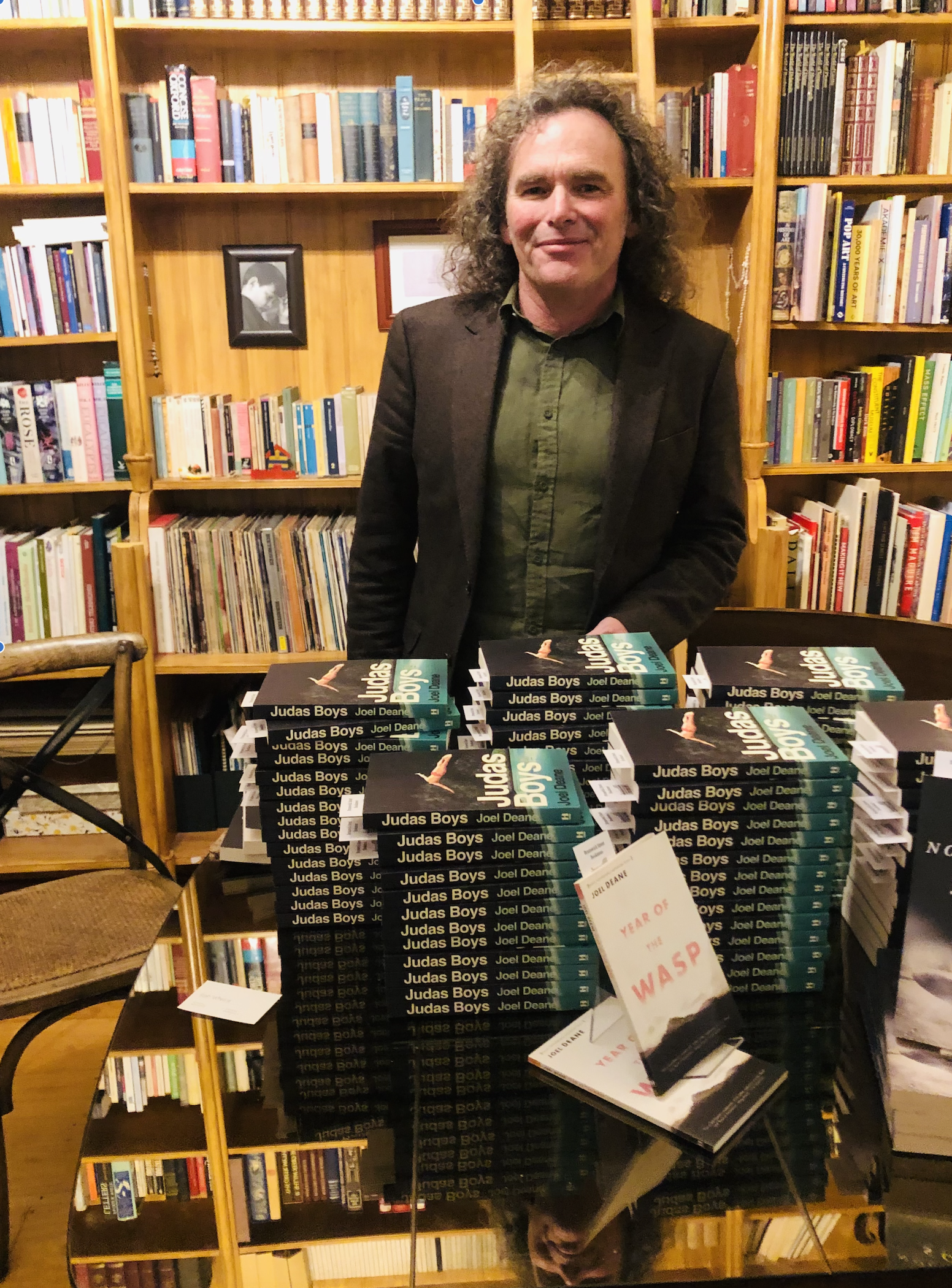
James Button: 'It's brilliant on the brightness, mystery, terror and cruelty of adolescence', launch of Joel Deane's Judas Boys - 2023

November 9, 2023

8 August 2023, Collingwood House, Melbourne, Australia

Last October Joel Deane published a poem on his blog -- intriguingly titled, Things I wish my father taught me. I’m going to read it to you.

Yesterday is
ash. Tomorrow is
smoke. Today is fire.

I don’t know what provoked Joel to write this fine little poem, but it’s hard not to think about the Black Saturdays of our recent past, and the fires that probably lie in our future.

Read that way it’s a grim, even apocalyptic, poem. But it can be read in another way.

Everything behind us has been reduced to embers, and the future can’t be seen – so don’t dwell too much on either of them.

What we have – the only thing we have -- is the fire of today. The spark, the light, the warmth that keep us alive.

Fire is death and fire is life; the potential instrument of humanity’s end, and of its beginning.

Everything in the poem turns on the two-faced nature of fire.

Joel knows better than most that good poems are in some ways allusive and elusive.

Their meanings – even the meanings of individual words within them – are often not clear.

The reader has to do the work.

And as we do the work, our imagination expands to fill the space the poet has left for us, and we find meanings in the poem that even the poet might not have intended.

But, of course, while Joel is first of all a poet, he’s not only a poet.

He has written three novels, and he wrote Catch and Kill, a superb account of the Bracks and Brumby Governments.

And, famously, he worked as a speechwriter for both those Premiers.

So a question that fascinates me: how does a poet become a political speechwriter?

How did Joel make the journey from the ambiguity of poetry to the brutal, cut-through clarity demanded by political speech?

How, and why, did he leave the Shire of poetry, where language is life itself, and enter the Mordor of politics, where lovely words go to die. 

When I was a speechwriter, I learnt that trying to guide your elegantly crafted lines through eight or 10 speech drafts while an army of public servants, advisers and media people pore over it is like trying to walk a baby gazelle across an eight-lane freeway at rush hour.

When Joel was appointed Steve Bracks’ speechwriter, The Age wrote an article about him and published one of his poems.

The Attorney-General Rob Hulls rang him up and said, “Your poetry’s shit, mate. It doesn’t rhyme.”

To which Joel replied, “Rob’s more of a dirty limerick man.”

But all frustrations aside, drafting speeches was one of the best things I’ve done as a writer, and I’m sure that was true for Joel as well.

In trying to capture the thought and voice of another person, you have to put away your ego. You sometimes have to express ideas you don’t agree with.

You have to understand, as Joel once wrote, that “Australian politics is suburban – it’s not the West Wing, it’s the sausage sizzle at Bunnings.”

I never had the pleasure of working with Joel but I have no doubt he was a good speechwriter.

He was in the job for the right reasons. He believed in the people he worked for and in the larger social democratic ideal that they embodied.

In a time of huge cynicism about political language, Joel still believes, as he once said, that rhetoric is a good thing in the hands of good people.

Still, the solitary writer in him couldn’t resist small rebellions, pebbles thrown under the chariot of power.

In 2005, he inserted the phrase, ‘constitutional conflagration,’ into one of Steve’s speeches, and somehow the advisers missed it.

It’s an iron rule of speechwriting: never insert anything that your boss might trip up on.

According to a book on White House speechwriters I read, one of them once put ‘indomitable’ into a presidential speech, and was told to take it out.

He replaced it with ‘indefatigable’ – and was sacked on the spot. His replacement put in ‘steadfast’.

Joel escaped the sack but he remembers watching his then chief of staff, Tim Pallas, making a bee line for him in the office after the speech.

Pallas said, very gently: “Mate, just wanted you to know that the Premier gave ‘conflagration’ a red-hot go.”

A few years later Joel had to write a speech for Pallas. He threw in a ‘conflagration’. Pallas did not give it a red-hot go.

Joel has dedicated Judas Boys to Michael Gurr – a close friend of his, and of mine, who died in 2017.

Joel and Michael wrote speeches together for Steve Bracks.

I feel envious not to have sat in on their conversations, as they riffed off each other.

Michael once wrote that writing speeches for state politics meant “dreaming of the Gettysburg Address and waking up to the Cheltenham Chamber of Commerce.”

But when he spoke at Michael’s memorial service, Steve Bracks said that when you delivered a speech written by Michael to the Cheltenham Chamber of Commerce, it always felt a bit like you were giving the Gettysburg Address.

I’m sure he would say the same about Joel.

As a former journalist, public servant, and press secretary, Joel was shaped by the newsroom, the bureaucracy and the political office.

He became a master of many voices – as the journalist Ken Haley wrote when he reviewed Catch and Kill, “Deane is several writers rather than one.”

All these cultures and languages Joel has lived in, all this poetry and politics, have shaped the writing of his new novel.

Joel began working on Judas Boys in 2017, soon after the deaths not only of Michael Gurr but of his father, Barry.

Both deaths were untimely and shocking, and left much bewilderment and sorrow in their wake.

Over the years, Joel had kept in touch with some of his old Catholic school mates, first at the Marist Brothers in Shepparton, then at St Kevin’s in Melbourne.

A few of these boys had suffered the abuse that we now know a lot about but that had been hushed up for decades.

Joel also dedicates his book to those boys “who lost their way and never made it back.”

With these awful events in his head, with an intense but entirely unfocussed feeling of anger, Joel began to write.

His labor in the salt mines of writing took six years and 25 drafts. It nearly killed him.

But I’m here to say that Joel’s pain is our gain.

Judas Boys is a gripping read, with strong characters, a total page turner.

I don’t want to say too much about the story. It’s an unfolding mystery, a roman a clef, as the French say. I want you to read it and turn that key for yourselves.

But I’ll say a few things.

Judas Boys is in no sense a hidden memoir, yet the writer has drawn on some crucial life experiences. They include a Catholic boyhood and education, and his moment as a small, frenetically whirring cog in the political machine.

His narrator, Pin -- short for his surname, Pinnock -- works for Benedict Cox, a Labor MP who wants to be Prime Minister but is having to do his time as Assistant Minister for Regional Tourism.

Now, Coxy is a piece of work. If you’ve spent any time around a political office, you’ll know the type.

Joel describes him like this:

“Cox is a trophy hunter. Everything he thinks, says, does, is geared to winning the silverware. He’s never told me what prize he’s after. He doesn’t have to. Some trophy hunters just want a seat in parliament, others want to be a minister, but they’re just making up the numbers. The thoroughbreds, the egomaniacs, dream big. They want to be prime minister, want it so much they fire themselves like a human cannonball at the world in the hope that the arc of their ambition falls in sync with the vagaries of the political gods. Cox is a thoroughbred.”

In this portrait I see Coxy so vividly. I reckon he wears a single-fronted navy-blue suit with a white shirt, very pointy black shoes, and spends a lot of time checking his phone.

He calls people ‘Comrade’, though he’s about as communist as Twiggy Forrest.

Many years earlier, Cox and Pin had boarded together at St Jude’s, the upmarket Catholic school that gives the book its name, Judas Boys.

The book ping-pongs between two time periods, between Pin’s dysfunctional years as a political operative and his dark years at St Jude’s.

At the school Pin’s main friend – if that’s the right word for such a sad, damaged relationship – is David O’Brien, known to everyone as OB.

I feel like I remember boys like OB – boys whose surface exuberance hides some deep sorrow.

Boys who we know really need our friendship but who are also so annoying they drive us away, leaving us with deep guilt that in the end we were not large enough to protect them.

Judas Boys is brilliant on the brightness, mystery, terror and cruelty of adolescence – at times it reminded me of Lord of the Flies.

Joel shows how feelings for a band, in this case Lloyd Cole and the Commotions, can capture the intense urges and no words of teenage male love.  

Or listen to this. Pin, now an adult, has just walked on stage to give a talk at the school he once attended:

“At first I don’t see the boys - just feel the impatience of so many young bodies harnessed, tied, and buttoned into matching uniforms.” That’s good writing.

Or the portrait of OB’s Dad, Tom. He is a classic absent father. He calls his son ‘sport’. Anyone raised in Australian masculinity knows that’s a problem.

Tom’s marriage to Mrs O’Brien – who is the object of Pin’s desire – is not good, to put it mildly. Joel manages to convey this in one brushstroke:

Pin, the narrator, is hiding in OB’s bedroom: “:I listened as Mr O’Brien banged about in the kitchen – he didn’t seem to know where anything was…”

But what we gradually learn – Joel is good at allowing the mist to come very slowly off the mountain he has created – is that the life of the father has been blighted by the same power that destroyed his son.

As OB will say: the spark that was stolen from me was also stolen from him.

The villain here is revealed so fleetingly that you might miss him, like the killer in the Antonioni movie Blow Up, seen for just a second as the pictures develop in the dark room.

But Joel catches him in another vivid brushstroke:

“His silver hair was slicked back, his green eyes cold, and his oversized head the shade of supermarket ham.”

Judas Boys is about the passing on of trauma -- through institutions and through families.

No doubt it has a bleak worldview. The writer understands how hard it is to shake oneself free of pain incurred early and ingrained very deep.

Yet the book’s final scene – to which Joel brings all his poetic gifts – evokes, with no sentimentality, a faint, fragile and haunting possibility of redemption. 

Joel, as I read Judas Boys, I wondered whether it marks a new direction for you.

Whether you have more to explore about all the cultures that formed you, and that have shaped your words.

And whether that exploration might take the form of poetry, memoir or more fiction.

And though you have already a fine body of work behind you, I am sure that the best lies ahead.

And so it gives me great pleasure to launch Judas Boys.

I urge you all to read it and to spread the word about it.

Let’s celebrate the fire that enables and drives Joel Deane to write, and trust that it will burn for a long time to come.
 

Source: https://www.joeldeane.net/blog

Enjoyed this speech? Speakola is a labour of love and I’d be very grateful if you would share, tweet or like it. Thank you.

Facebook Twitter Facebook
In BOOKS 2 Tags JOEL DEANE, JAMES BUTTON, AUTHOR, BOOK LAUNCH, LAUNCH, POETRY, JUDAS BOYS, BOOK, TRANSCRIPT
Comment

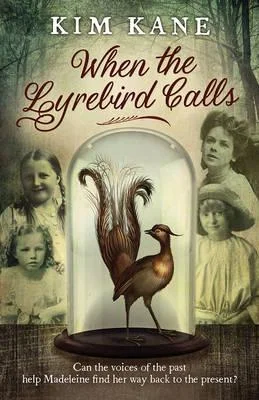
Kristen Hilton: 'This novel that is delicate in its detail and strong in its message', When the Lyrebird Calls launch - 2016

March 6, 2017

27 October 2016, Readings Kids, Carlton, Melbourne, Australia

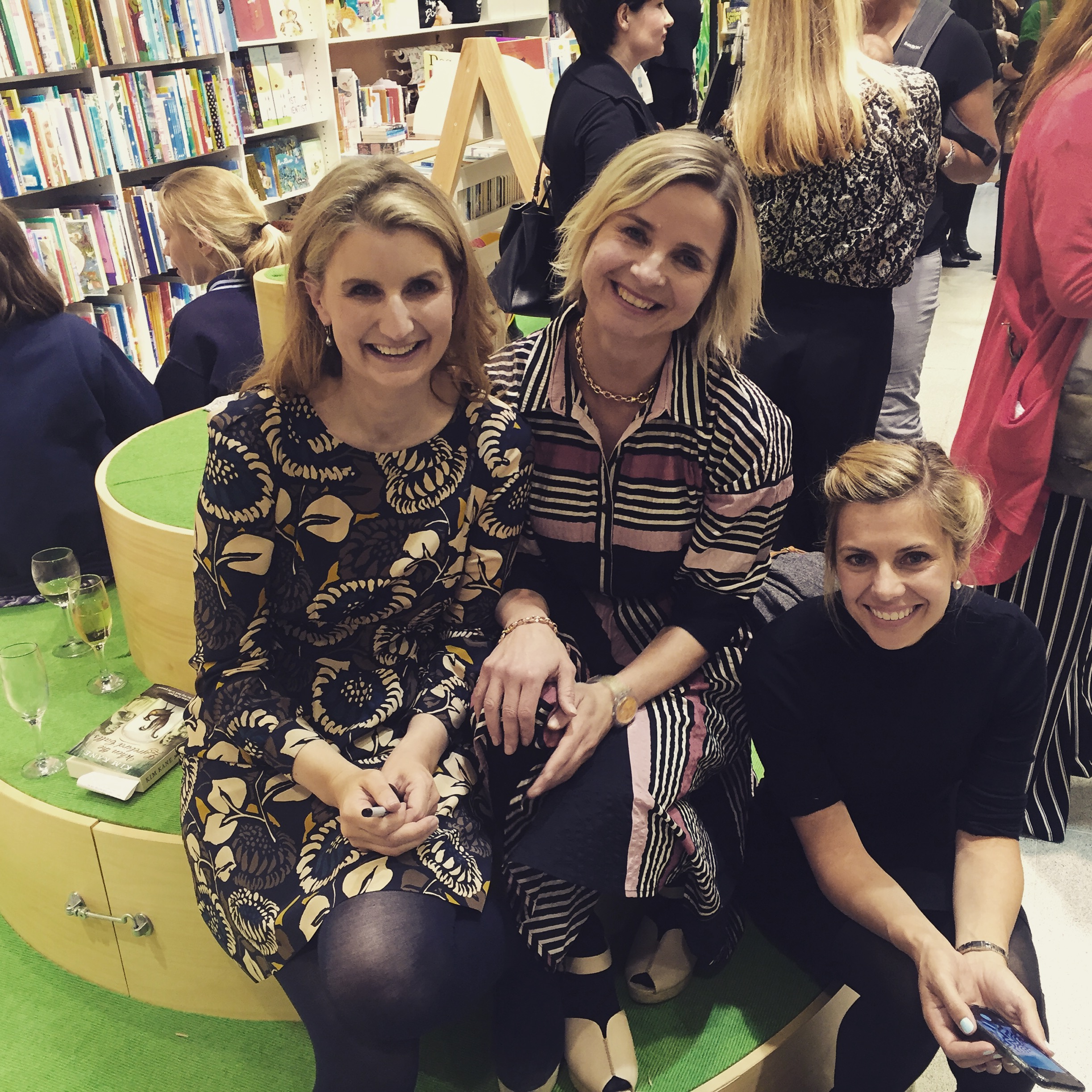
Kristen Hilton, far right, is a Commissioner at the Victorian Equal Opportunity and Human Rights Commission

Acknowledge traditional owners of the land

Because this is a time slip novel I am going to go back about 20 years when Kim and I crossed paths in the ‘Tower of Babylon’ also known as the John Medley building at Melbourne University studying German. A few years later we ended up at the same law firm – not the spiritual heartland for either of us as it turned out and some years later found ourselves sitting side by side at the Professional Writing Course at RMIT. It was during that course, maybe a decade ago that I first heard the voices of Gert and Madeline and it is cause for celebration that those words and ideas now find themselves in this beautiful book, in this lovely new shop (Readings Kids) and I hope, in the future, on school syllabuses.

Because the story is not just a one of imagination, rich character development and intrigue - it tells, in part the story of the development and maturation of our country. As the golden, serious and disappointingly sleazy Master Williamson drafts the laws of the federation, his sister leads the suffragist movement from a clandestine printing press set in Drummond Street not far from here. I wondered as I read of the volatile relationship between these siblings how our country might be different today if Master Williamson has listened more closely to his sister – if the women were at the drafting table instead of holding séances.

The book also points to the other critical civil rights movement which took place around the time, as Percy returns to Corranderk, a thriving Aboriginal enterprise and place of activism. When I go to talk to students about the history of social justice movements and human rights many of them refer to Nelson Mandela, Martin Luther King, Rosa Parkes – this is right and true, but what goes shamefully undervalued is the strong Aboriginal rights activists who have positively shaped our national narrative – people like Peter Coppin, Margaret Tucker, William Cooper – there is enough defiance and spirit in Percy to imagine that he might have belonged to this kin.

In addition to When the Lyrebirds Calls I read another lovely piece of literature this week. It was by a little known writer, Tom Schroeder. He sent me a letter – compelling and brief. In it he wrote:

“Dear Commissioner, it is unfair that women don’t have the same rights as men. If they have the exact same job, they should have the exact same rights. For example, did you know that women don’t get the same payments as men in some jobs. Here is a fact: women were not allowed to vote until 1908. Isn’t that crazy?

Men and women should be treated the same and fairly.’

Yours sincerely

Tom – Grade 2, Wembley Primary School.'

This letter resonated with me for lots of reasons. It is a letter of which Aunt Hen would have been proud, unlikely for her to imagine maybe that it was written by a young boy, and like many of Madeline’s sharp observations, it reminds us that while much has changed - the unbinding of corsets, celebration of the physical prowess of women, greater understanding of gender equity - our progress is not linear and not complete. At one point Nanny scolds Madeline telling her that ‘forthrightness is terribly unappealing in the female sex.’ Today, even in our national discourse, strong women with ideas and assertion are described as ‘shrill.’ Nanny’s hard line did not die with her. If you a woman in this country you are four times more likely to be subject to violence, you are more likely to be poor, you are likely to be discriminated against and the picture is even bleaker if you are a woman of color.

I also used the letter to goad my own grade 2 boy into doing his homework. I read it to him and he said “He is lying Mum.”

I said, “What do you mean? I have been talking to you about the gender pay gap all year.”

 “No,” he said. “There is no way that kid is only in Grade 2.”

But back to this author – when my 5 year old daughter finishes reading Ginger Green I will give her this book. This novel that is delicate in its detail and strong in its message. This novel within which you find characters across centuries of spirit, humour and passion – this book that is about ideas, loyalties and friendship – the collision of cultures and times. A work of lovely literature but also a girls’ handbook for activism.

Kim will tell you this book took 10 years to write and much has changed in her life in ten years and then again, maybe as Madeline reflects, not so much after all, because here we are a stone’s throw from Melbourne Uni, the RMIT writing class just around the corner, hanging out in Readings talking books.

It is a pleasure to commend your book Kim.


You can purchase 'When the L:yrebird Calls' here.

Click here for Sofie Laguna's launch speech.

Enjoyed this speech? Speakola is a labour of love and I’d be very grateful if you would share, tweet or like it. Thank you.

Facebook Twitter Facebook
In BOOKS 2 Tags KIM KANE, KRISTEN HILTON, VICTORIAN EQUAL OPPORTUINITY AND HUMAN RIGHTS COMMISSION, TRANSCRIPT, BOOK LAUNCH, WHEN THE LYREBIRD CALLS, TIME SLIP, ABORIGIANL RIGHTS, ACTIVISM, EQUALITY, GENDER EQUALITY, RACIAL EQUALITY
Comment

Annabel Crabb: 'I resolved that I would launch this book by reading aloud my own letter to Christopher’s children', launch Christopher Pyne's 'A Letter to My Children' - 2015

August 4, 2016

2 August 2015, Adelaide, Australia

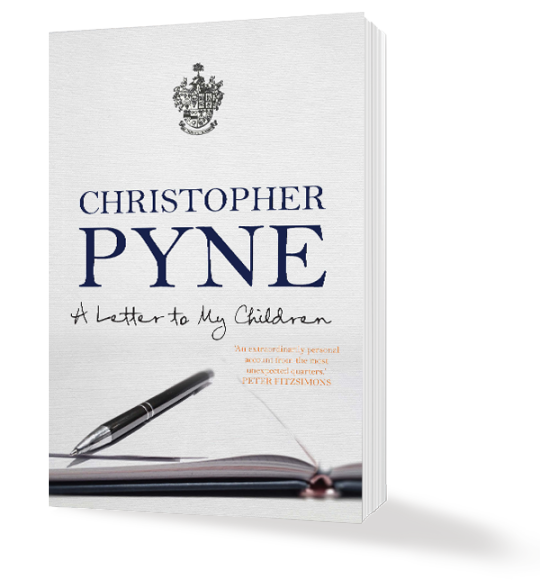
Annabel Crabb launched Christopher Pyne’s book, “A letter to my children” with her own letter to his children. Annabel letter was as follows:

We are all gathered here today because we have something in common. Either we love Christopher, or we are irreversibly related to him, or we are a little bit frightened of him. Or we are here for the sport. I won’t – being an irreproachable paragon of ABC independence – vouchsafe exactly where I am located on that spectrum, though I’m sure if you give it about 10 minutes Chris Kenny will write the definitive account.

I have known Christopher Pyne for many years. I knew him when he was no one. And the strange thing about Christopher is that even when he was a no one, he really did give the strongest possible impression of being a Someone. This peerless long-range optimism has paid off so richly that – a mere 25 years or so since I met him at the University of Adelaide, where he was a charmingly merciless campus Liberal trying to rebuild the Student’s Association in his own glorious image – he is now the charmingly merciless Federal Minister for Education, trying to rebuild the entire university sector in his own glorious image.

And now he has written a book. And – in one of the most rewarding tactical blunders of his political career – he has given me what I understand is a speaking slot of unlimited duration to hold forth on the subject of it and him tonight.

This book is audacious – let us not pretend otherwise. It was written during a truly punishing year as Education Minister, during which its author additionally foxtrotted with characteristic nimbleness through what must have been a rather delicate period of party leadership tension in February and March. Christopher – I should in fairness point out – insists that he wrote the book during his holidays, and while on planes, and helicopters, and on his way to Sophie Mirabella’s wedding, and so on.


The book itself is part Profiles In Courage, part Nancy Mitford and part Dreams Of My Father. In the modern Liberal Party, surely Christopher Pyne is the only person who could cheerfully borrow from two American Democratic presidents – one dead, one Kenyan – and live to tell the tale. I can only assume that George Brandis’s new arts funding organisation is hastening plans to finance the book’s inevitable production as a musical, and that is something I deeply commend. Efforts will need to be made, of course, to dissuade the Education Minister from playing himself.


In fact, I commend this book to you on many counts. I commend to you page 65, which has a very entertaining account of the young Christopher’s pivotal charming of local matriarch Lorna Luff in his quest for preselection in the seat of Sturt. I commend to you page 197, which gives us the long-awaited blow by blow account of what was said that night in 1995 between Christopher and the aspiring triple-bypass recipient John Howard – a conversation that of course, sadly, bought our hero a decade on the back bench. I also commend to you the book’s first chapter, which is a moving, honest, and insightful account of Remington Pyne’s death, and that event’s effect on his younger son.

I have known Christopher for a long time and had always assumed that his personal characteristics were – like Sleeping Beauty’s – the result of inconsistent degrees of attendance from good and bad witches at his christening. But when I read that chapter, in all seriousness, I understood a lot more about the man and the public figure that Christopher is – his urgency and his steeliness, and his utter indefatigability. Over the course of the rest of the book, with its sporadic and entertaining tales of growing up in a family where Christopher was reputed to be the shy one, I learned where his matchless sense of humour and fun comes from.

The life and exploits of Remington Pyne and a joy and inspiration to read, and I think it is a great public good to have them so lovingly recorded.

I do have one niggling concern. I would never suggest, of course, that Christopher M. Pyne is ever driven by ulterior motives, either in his political or private lives. But this letter to his children seems terribly convenient. A 240-page paean from a well-behaved, successful and industrious child to a Godlike, charming, respected father? Just what is Christopher trying to say to his children? Do I detect some subliminal expectation that the book’s addressees will respond – at some point, preferably as their matriculation project – with an answering published work of adulation for their own father? A heroic sculpture, perhaps, for North Terrace? Moving and informative as this book is, is it possible that it is also the most outrageous passive-aggressive parenting manoeuvre ever?

With that possibility in mind, I resolved that I would launch this book by reading aloud my own letter to Christopher’s children.

Dear Eleanor, Barnaby, Felix and Aurelia,

Don’t worry. I’ve read your father’s book, so you don’t have to. I am happy – in my responsible journalistic way – to summarise and provide you with the York notes. But I’m also going to pop in a few things Dad left out when itemising the key values indispensable to a successful life of public service.

Patience, courage, determination – yes, yes yes. You’ll need all those, fine. But there are other important principles you can learn from your father.

First: When Circumstances Change, Change Your Mind.

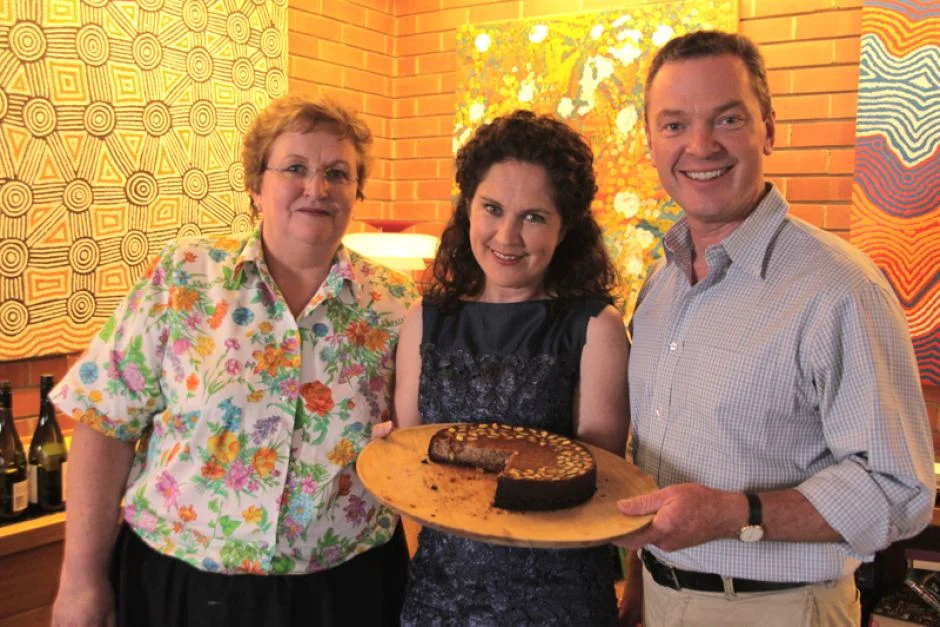
When I approached your Dad a few years back to be one of the guinea pigs for a new series called Kitchen Cabinet, he was at first hugely enthusiastic. We agreed that he would cook with Amanda Vanstone in her kitchen. We discussed serving Roquefort, as Roquefort is a cheese only available in Australia due to an especially commanding executive decision announced by your father on the 23rd of September 2005, when he was feeling his oats as the Parliamentary Secretary for Health, John Howard having cracked the freezer door slightly open. (That’s another tip, children: Always say ‘Yes’ to cheese.)

But as the filming date drew nearer, his mood grew darker and darker. ‘I’m not doing it,’ he’d ring up and wail. ‘It’s going to be a disaster. Amanda and I are going to be sitting there eating expensive cheese and drinking wine and looking like elites. Plus, she’ll tease me. Australians aren’t ready for a politician who talks with his hands. I’m not doing it!’

Children: On the day, I was obliged to be brutal. I told him he had no option of pulling out, and that the ABC had already flown four camera crew to Adelaide. And we know how strongly your father feels about prudence with ABC production resources in Adelaide. I got Mark Textor to call him pretending he had focus group polling suggesting that his participation would resonate particularly well in Klemzig. He turned up. We cooked lunch. All of your father’s worst fears were realised. As he left – to collect you from piano practice, Eleanor, I believe – I said to him ‘See – that wasn’t too bad, was it, Christopher?’ Through a frozen smile, he muttered: ‘Career-ending.’

Later, when the episode went to air, it spawned an unprecedented national wave of Pyne-love, first encountered by your father the morning after the broadcast, when someone approached him at, I believe, Hobart airport and declared: ‘You know, you’re not as much of a knob as I thought you were!’

I had a phone call soon after from your ebullient father, convinced that the show was the best idea he’d ever had. So remember, children: A bad idea is only a bad idea until it turns out to be a good idea.

Point Two: Negotiation.

I would have written more about this, but I know you are across it already. I’ve heard the stories about you four. When Christopher declared that he would move out if you children got one more pet, you bought a rabbit immediately. That’s smart. Always bluff in these situations. It’s what he’d do. And has he moved out? No. He hasn’t. Lesson learned. In short, kids: You’ve fixed it. That’s because you’re fixers. Good work.

Point Three: Loyalty.

Now this is an important one, tiny Pynies. Loyalty enhances the giver and the receiver. And loyalty is a significant part of your father’s credo in federal politics. Fifteen years or so into his political career, your father learned an additional, valuable lesson about loyalty: It works even better if you’re loyal to the actual person in charge, rather than the person you hope will one day be in charge. He’s never looked back, and neither will you.

Now, my dear little Pyne saplings – don’t worry. I’m not going to lecture you for page upon page upon page. I know perfectly well that you can get that at home.

But I want to mention two more things. The first is an unshakeable and central tenet in public life that is well recognised by your father, and acknowledged in his book, but nevertheless bears repetition.

And that is: Marry well. Your grandfather did, in the spectacular Margaret, as the book makes very clear. And so did your father. Really, that can make all the difference. And for the heavy price you pay, the four of you, for your father’s lifelong contribution to public service – the constant absences, the embarrassing Internet memes, photo shoots in The Australian, the inconvenience of studying in an education system over which your father has nominal control, the alarming ‘win at any price’ approach he adopts to games of ‘May I?’ or Monopoly – always remember, he made at least one truly brilliant decision in his life – to marry Carolyn, of whose wit, originality, decency and great good sense you will always be the beneficiaries.

The second is that – and I don’t mean to ease up on teasing your father for very long, because Lord knows there is no one on this good Earth who is more fun to tease than Christopher Pyne – there is a grandeur to public service, and he is right about that. Not grandeur in the ‘having your own helicopter’ sense. Grandeur in the untold possibilities of public service, where an inquiring mind and a stout heart can make anything possible, can change any injustice or idiocy or root out any corruption or stop any wastage of public resources. Grandeur in the sense of having a series of beliefs and having the courage and the intrepidity to prosecute them at lengths, and persist even when things are hard, rather than just reclining with a beverage to whine about the situation. (That, children, is the job of journalists, in case you were wondering).

So never cease to feel proud of your father for that, and for the fact that he brought Roquefort to Australia, and for the fact that he, and his father before him, worked hard and were adventurous and outrageous and not very good with pets and always had the capacity to laugh. Remember that your father – in an age where politics has become about caution and covering your behind and striving to say nothing at all that is memorable – has become not only one of the most powerful politicians of his time, but also one of the great characters. That’s not an easy thing to do nor is it an easy life to lead. It’s what I most admire in him.

Also remember that for all that you might have missed your father over the long years when he was absent for weeks at a time – imagine how much worse it would have been to have him at home.

Yours sincerely,

Annabel Crabb


Purchase book here.

Source: http://mupublishing.tumblr.com/post/125895...

Enjoyed this speech? Speakola is a labour of love and I’d be very grateful if you would share, tweet or like it. Thank you.

Facebook Twitter Facebook
In BOOKS Tags ANNABEL CRABB, CHRISTOPHER PYNE, AUTOBIOGRAPHY, BOOK LAUNCH, TRANSCRIPT, POLITICAL BIOGRAPHY, BOOKS
1 Comment
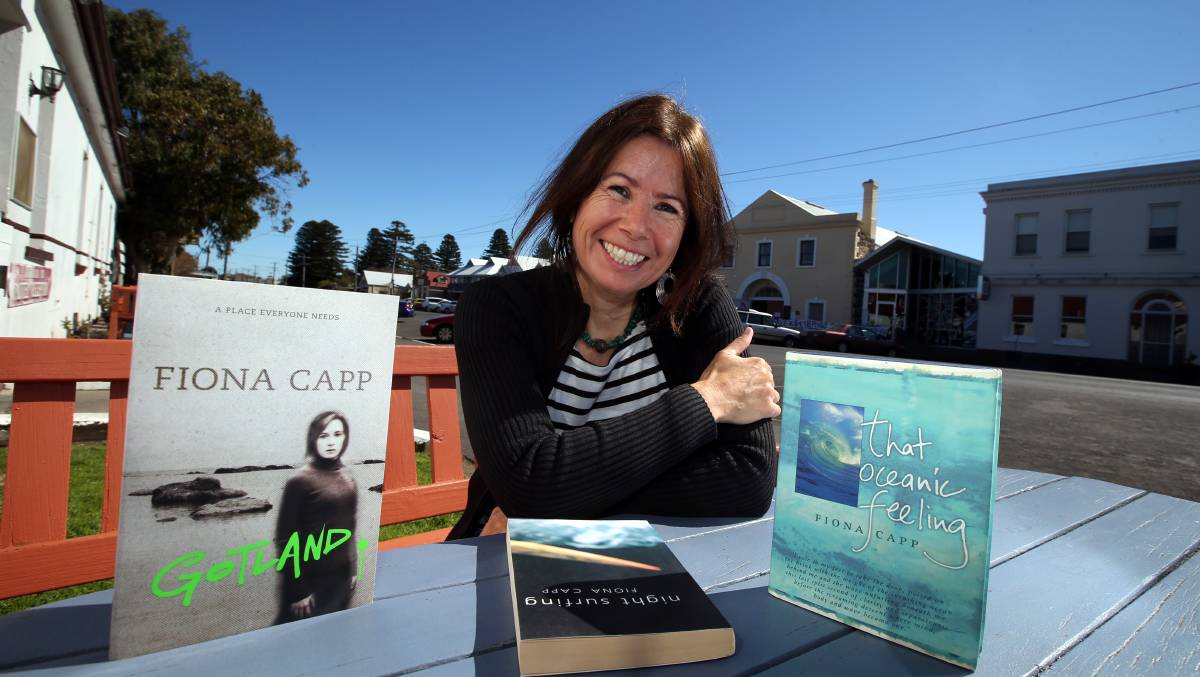
Here is Fiona Capp with subsequent novel Gotland.

Here is Fiona Capp with subsequent novel Gotland.

Clare Wright: 'Jemma Musk is a fully embodied character', launch of Fiona Capp's Musk and Byrne - 2008

August 4, 2016

9 May 2008, North Fitzroy Arms, Melbourne, Australia

In his 1899 Reminiscences of the Ballarat Goldfield, J. Graham Smith tells the story of Algyron Ratcliff, the ill-fated second son of Irish nobility.  Algyron fell in love with and secretly married Mathilde Rolleston, the daughter of a Protestant minister.  Algyron was promptly disowned, and like many a second son, immigrated to the gold fields of Victoria with his new bride and her sister Gwendoline.  At Ballarat, ‘Algy’ couldn’t find a digging mate to suit his patrician standards, so ‘Gwenny’ volunteered to become a miner.  At first Algy refused her outrageous offer, but they soon ratified their new partnership over a cup of tea.  Gwenny worked the windlass and went down the mine shaft, while Algy, who was of delicate health, kept his feet above the ground.  Gwenny wore men’s clothing to disguise her identity; not, as she tells it, because she was ashamed of her new calling, but for the sake of her brother-in-law, whose manliness might be called into question by fellow miners.

 “In one way I liked it”, she told her chronicler Graham Smith.  “There is a subtle fascination in searching for the precious metal.  I was not frightened to come in contact with the diggers, as I was of being overhauled by the licence hunters.”

 Gwenny boasted to her sister Mathilde of her new-found skills and talents.  “See what an amount of knowledge my digging apprenticeship has given me.  I can talk of alluvial stratas, of sandstone, pipe-clay, and slate bottoms, of alluvial and quartz deposits.”

“My dear Gwenny”, interrupted Mrs Ratcliff, who kept house for her husband and subversive sister, “I believe you will be less contented and joyous when you resume your proper situation in the old country than you have been in Australia with all its discomforts”.

This alternative women’s liberation narrative — the story of freedoms found by women on the gold rush frontier — is repeated by Harriet, another cross-dressing Irish girl who accompanied her brother to the diggings in 1854, the year of the Eureka uprising. Harriet was performing a quiet rebellion of her own.  “I purchased a broad felt hat, a sort of tunic or smock of coarse blue cloth, trousers to conform, boots of a miner, and thus parting with my sex for a season (I hoped a better one), behold me an accomplished candidate for mining operations, and all the perils and inconveniences they might be supposed to bring”.  Writing home to Ireland she confided, “Wild the life is, certainly, but full of excitement and hope; and, strange as it is, I almost fear to tell you, that I do not wish it to end”.  Could Harriet’s season of transgression possibly be made to last a lifetime?

These are the words of Mathilde, Gwendoline and Harriet, culled from the archives of mid-nineteenth century Victoria.  But they could be the voice of Jemma Musk, the heroine in Fiona Capp’s new novel, Musk and Byrne, which I have the great pleasure of launching here tonight. I couldn’t help but recall these tales of feminine transmutation and defiance of the gender order, hewn from my own current research into the role of women at the Eureka Stockade, when reading Fiona’s wonderful book. Both tell tales of outlaws, those who live without society’s moral and ideological sanction. There is, of course, one major difference.  As an historian, I trade in the factual.  As a novelist, Fiona has wrought a magnificent fiction.

I know that in inviting me to launch her book, Fiona has been extremely anxious about the accuracy of the historical detail she employs to craft the story of the artist Jemma, her hard-working Swiss immigrant husband Gotardo, and the dashing, seductive geologist Nathanial Byrne.  It strikes me that it takes a lot of courage to write historical fiction in the post-Secret River era.  Perhaps Fiona was worried I would take Inga-esque exception to her method or her conclusions. 

In her widely read 2006 Quarterly Essay, “The History Question: Who Owns the Past?”, Inga Clendinnen lined up historians and novelists on opposite sides of a gaping chasmthat she calls ‘the moral contract’.  Novelists, she tells us, are at liberty to ‘kick loose, inventing things which might have happened but we don’t know did, because they are the kind of things that records always miss’.  Novelists, Clendinnen argues, ‘enjoy their space for invention because their only binding contract is with their readers, and that is ultimately not to instruct or to reform, but to delight’.  Historians, on the other hand, must endure ‘the burden of dealing with the real’.  Clendinnen disclosed — in the most public of forums — that the novelist’s ‘practiced slither between “this is a serious work of history” and “judge me only on my literary art” has always annoyed me’.  Kate Grenville obviously copped the rough end of Inga’s exasperation.

I am very pleased, for Fiona’s sake and for my own, to be able to say that Musk and Byrne did not, in any way, irritate, aggravate, infuriate, denigrate or humiliate my historian’s sensibility.  To my mind, Fiona has upheld the moral contract to her readers to delight and captivate, while also holding true to the spirit of the times and the people she has so meticulously portrayed.  To answer your doubts, Fiona, I don’t honestly know whether all the details are correct.  In fact, your insecurity proved infectious.  Reading the book, I got to worrying about my grasp of the historical minutiae.  Did goldfields’ buildings have bluestone foundations in 1868?  Were the streets macadamised?  Did babies sleep in cots big enough to fit a curled-up man?  I really don’t know.  And — may Inga be my judge — I don’t much care.  To my mind, this book gets it right.

And this is why.  I believed in Jemma Musk.  I believed in Jemma Musk in a way that, I must admit, I did not believe in Kate Grenville’s William Thornton, whose inner life was invested with too much of a contemporary sensibility for my comfort.  Nor did I believe so thoroughly in Lucy Strange, the heroine in Gail Jones’s acclaimed Sixty Lights, who, like Jemma Musk, is a woman at odds with her era, pushing the boundaries of conventional wisdoms and orthodoxies. Yet, for me, Lucy Strange never quite inhabited her temporal landscape in a way that was convincing to someone who has spent over a decade investigating the lives of women — especially challenging, nonconformist women — in the nineteenth century.

But Jemma Musk is a fully embodied character, largely because — and I know this doesn’t sound very academic — largely because Fiona has given her a subjectivity that feels right.  In Musk and Byrne,  Fiona takes her readers deep into the emotional landscape of her historical protagonists.  Apart from the beautiful writing and gripping plot, this is the aspect of the book that most stirred my imagination — historical and modern.  These are the details that I feasted upon, the very ‘kind of things that records always miss’. 

How did women experience the loss of a child?  Just because it was as common as mud, did they grieve the loss any less bitterly than women in our medically advanced times?  To what ends did their suffering drive them?  And how did women who were not content to keep within the circumscribed borders of a settled domestic life create an identity that was outside the fold?  How did it feel to know that neighbours, employers, husbands could daily occupy subterranean spaces yet could not fathom the mysterious depths of a woman’s heart?  At what price freedom?

These, to me, are the sort of historical questions that have no concrete, empirical answer.  This is the unmistakable terrain of the novelist.  There is a pivotal scene in the book where the earth suddenly collapses under Jemma and Gotardo’s property, rupturing along invisible fault lines created by the honeycomb of mining tunnels that run under their land.

Jemma is at the kitchen trough washing the dishes and looking out over the yard while Gotardo drives the bullock dray over the soil of the vegetable patch in preparation for planting.  The bullock plods backwards and forwards across her field of vision and she barely registers its presence until Gotardo suddenly cries out and lurches drunkenly from his seat.  He is still holding the reins as the bullock dives headlong into the earth, as if summoned by a call from the underworld, the dray following the bullock’s descent into the gaping ground.  As the cave-in tears across the field like a sizzling fuse, Gotardo manages to jump clear of the dray just in time, his fall cushioned by the freshly turned earth.  When Jemma reaches her husband, he is on his knees staring with disbelief at the deep cavity into which his bullock and dray have plunged.  (111)

It’s an arresting image, I think, and one that becomes a thematic signpost for other human and fateful betrayals to follow, where all that’s solid melts into air, where seismic shifts can happen in an instant and one is left to contend with the rubble of existence.  This book is not so much about centres and margins — as you might expect in a tale of outlaws and immigrants.  Rather, it’s all about layers and surfaces, external appearances and interior realities.

But in the hands of a novelist so technically capable, so historically empathetic and so psychologically attuned as Fiona, you can trust that in Musk and Byrne we are taken on an exhilarating ride across a literary topography that is mercifully free of chasms, rifts and other insufferable holes.  Despite Fiona’s recent article in the Age, where she espoused the need to re-position women symbolically in outlaw mythologies, there are no hidden agendas in this book. It’s not a period piece disguising a progressive plot.  It’s neither contrived nor disingenuous.  Again, this is why I believed in Jemma Musk.

There is one more passage I’d like to read, perhaps my favourite in the book.  Jemma has abandoned her home and family.  She’s changed her identity, not by donning male clothing, but, conversely, by playing the role of a dutiful wife and devoted maternal figure.  It is during the night that Jemma’s own emotional ruptures appear, groaning under the tension between her inner and her outer life.  Jemma and Nathanial are making love.

And now without warning, without even a word, she turns to him and suddenly ignites.  As soon as he touches her, she is molten, imploring him to go on.  There are no rules for this kind of lovemaking; them must make them up as they go.  He has the sensation of them falling into darkness, into a vast space without gravity … Jemma tears at his shoulders with her fingernails, fighting him off and drawing him close, wrestling to fill the emptiness that can’t be filled.  She claws and bites him, as if inciting him to return the pain.  It is clear to him what she is seeking.  Annihilation.  For nothing else to exist.  To be consumed by the fire of their bodies … And so they toil through the night until Jemma finds the oblivion she seeks. (224)

Whether Mathilde, Gwendoline or Harriet ever experienced such agony and ecstasy I will never know.  On the surface, these real women and the fictional Jemma Musk share much in common, conjoined by their defiance of expected roles and pathways, their transgressive acts and their pleasure in the wild possibilities of frontier living.  But I have Fiona to thank for leaving me with the remarkable impression of what it might really have been like to be a woman on the edge.

It is with great admiration and respect that I declare Musk and Byrne officially launched.


Enjoyed this speech? Speakola is a labour of love and I’d be very grateful if you would share, tweet or like it. Thank you.

Facebook Twitter Facebook
In BOOKS Tags CLARE WRIGHT, BOOK LAUNCH, MUSK AND BYRNE, FIONA CAPP, NOVEL, HISTORICAL FICTION, TRANSCRIPT
Comment
Everybody at the launch, releasing their wishbirds

Everybody at the launch, releasing their wishbirds

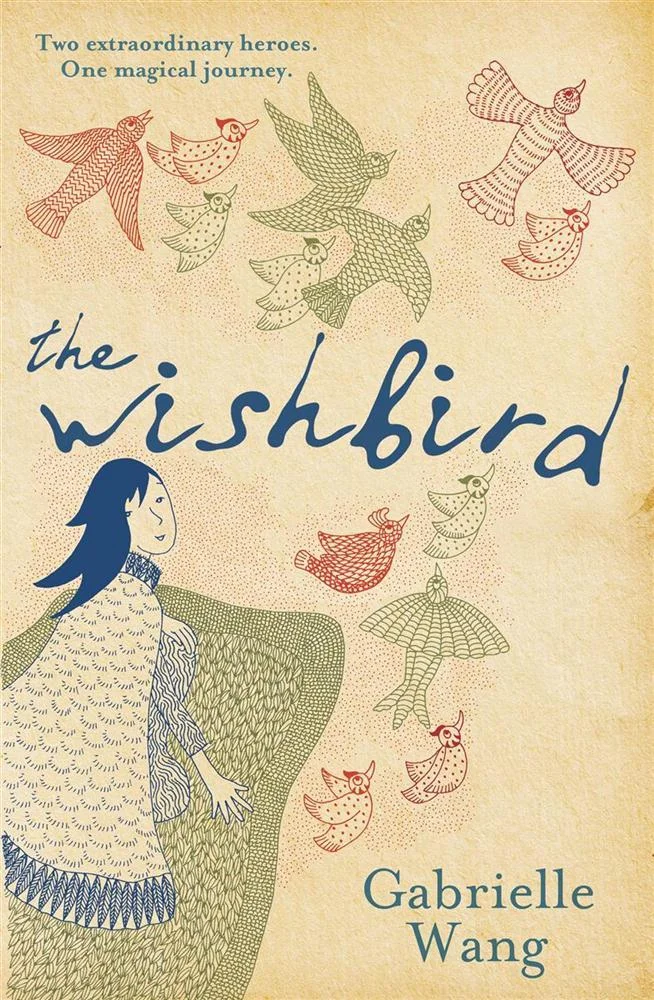
Cath Crowley: 'It isn’t just the pages that are made of silk, the words themselves seem to be', launch of Gabrielle Wang's 'The Wishbird' - 2013

December 4, 2015

27 July 2013, The Little Bookroom, North Carlton, Melbourne, Victoria

It’s my great pleasure to welcome you here to the launch of “The Wishbird” by Gabrielle Wang.

I told one of my friends that I was launching Gabrielle Wang’s book this Saturday. And she smiled and said, – that’s your magical friend. As opposed to the bulk of my friends who are – non-magical.

But that is how I feel about Gabrielle, even a chai tea with her is an adventure. She’s open to these lovely coincidences and she makes me feel as though writing is not just something I do at my desk, but something I live. She makes me believe that stories find us as much as we find them.

Author of “The Garden of Empress Cassia”, “The Pearl of Tiger Bay”, “The Hidden Monastery”, “The Lion Drummer”, “A Ghost in My Suitcase”, “Little Paradise”, “The Race for the Chinese Zodiac” and “Meet Poppy” from the Our Australian Girl Series.

She’s won the Aurealis Award twice; her books are CBCA notables, highly commended in the Prime Minister’s Literary Awards, shortlisted for the Sakura Medal, Premier’s Awards, YABBA and WAYBRA awards.

Gabi is an Ambassador for the Victorian Premier’s Reading Challenge, and anyone who has heard her speak will be in no doubt at how lucky they are to have her in this role.

I introduce to you the very magical on the page and in person – Gabrielle Wang, a woman with dream eyes and a wish bird heart.

***

I often have dreams about the books I’m going to launch, but none so beautiful than the one I had about “The Wishbird”. I dreamt that the pages were made of silk, and that the words had wings that fluttered.

I had the dream before I had even held the book. Not a surprising thing, if you know Gabi.

I felt quite certain that the dream had come from her that before she went to sleep that night Gabi yawned, thought about it, and flicked me off some of her landscape to get me started.

The only thing better than having a dream like that is being able to ring Gabi, or tweet her, and tell her that you had it.

Some time ago I saw a 3D film at Imax, “The Flight of the Butterflies”, about the migration of the monarch butterfly.

I sat in a dark cinema with a whole lot of little kids wearing 3D glasses, and the dark came down and the film came on, and the forest and the birds and the butterflies rose up and all around me, this lush world filled the cinema. All around me people reached to grab this floating world.

I felt as though I were reading “The Wishbird” in 3D glasses open the book and the world escapes off the page in gorgeous pictures and in words. It isn’t just the pages that are made of silk, the words themselves seem to be. Gabi sent me a modest dream, but then that’s the kind of person she is.

I know it can’t have been this easy, but it feels as though she opened her hands, and out the world flew.

Out flew The Wishbird, Mellow, a wonderful parent, as birds of course, can be, out flew Oriole – a girl who sings songs about rocks carved into strange shapes by the Wind, about her love for Mellow, the magical Wishbird, who is older than the ancient Banyan tree itself.

Out flew her wonderful descriptions, candied cumquats in the market of Soulless and the treasures that Boy finds, a silver ring with a tiny blue stone like a mouse’s tear.

The forest, moonlit, with nests made from fragrant Sandalwood twigs and lined with soft moss, a cluster of turquoise lakes that mirror the white fluffy clouds, and the city of nightmare that Oriole is being flown towards, the city of mouthless people.

Gabrielle’s characters are spectacular. Boy and Oriole are heroes, but they have flaws. They make each other stronger and better, as friends should do. They save each other, they become the heroes they need to be. They learn how to deal with anger and fear, about how to live with integrity when you’re hungry.

And they’re funny along the way. I love that on their scary journey, they make me laugh.

“Boy did not tell Oriole about the Demon Monster’s reputation for eating children, nor did he mention the moving statues in the garden.”

I agree boy, there are some things a girl just doesn’t need to know.

The book is genuinely suspenseful. Each scene leads you towards the next, telling you to hold your breath, wait, there is more to come and the way will be dangerous but don’t worry it will be lit – “the dungeon is dark and damp, but she (Oriole) still felt a little warm as she ate. And she still had her tongue. For now.”

It’s great storytelling incredibly moving- the idea that we can lose our dreams, our music, our forest, the threads that tie us to people close to us, even more frightening that our leaders can convince us that we that we don’t need these things anymore. Or that our leaders can convince us that strangers speaking a language we haven’t heard are to be feared.

It’s an important book.

Oriole must go into another world, where people don’t hear her voice as beautiful. She must endure being locked up and threatened by terrible things. And she must risk all to save the city, her forest, her family, her friend. She must believe that those who are lost, those who have committed brutal acts, are not beyond saving.

“The Wishbird” opens up a discussion on what it is to be human, and how easily we can be convinced that other people aren’t, and how easily our own humanity can be taken – or given – away.

This is a love story – love of words, of music, of dreams, of people, of nature, of colour, of flight.

It’s an adventure.

Open the page.

Let the words fly out.

Purchase the wishbird here

Source: http://cathcrowley.com.au/2013/07/the-wish...

Enjoyed this speech? Speakola is a labour of love and I’d be very grateful if you would share, tweet or like it. Thank you.

Facebook Twitter Facebook
In BOOKS Tags CATH CROWLEY, GABRIELLE WANG, BOOK LAUNCH, CHILDREN'S LITERATURE, YOUNG ADULT, LOVEOZYA
Comment

See my film!

Limited Australian Season

March 2025

Details and ticket bookings at

angeandtheboss.com

Support Speakola

Hi speech lovers,
With costs of hosting website and podcast, this labour of love has become a difficult financial proposition in recent times. If you can afford a donation, it will help Speakola survive and prosper.

Best wishes,
Tony Wilson.

Become a Patron!

Learn more about supporting Speakola.

Featured political

Featured
Jon Stewart: "They responded in five seconds", 9-11 first responders, Address to Congress - 2019
Jacinda Ardern: 'They were New Zealanders. They are us', Address to Parliament following Christchurch massacre - 2019
Dolores Ibárruri: "¡No Pasarán!, They shall not pass!', Defense of 2nd Spanish Republic - 1936
Jimmy Reid: 'A rat race is for rats. We're not rats', Rectorial address, Glasgow University - 1972

Featured eulogies

Featured
For Geoffrey Tozer: 'I have to say we all let him down', by Paul Keating - 2009
for James Baldwin: 'Jimmy. You crowned us', by Toni Morrison - 1988
for Michael Gordon: '13 days ago my Dad’s big, beautiful, generous heart suddenly stopped beating', by Scott and Sarah Gordon - 2018

Featured commencement

Featured
Tara Westover: 'Your avatar isn't real, it isn't terribly far from a lie', The Un-Instagrammable Self, Northeastern University - 2019
Tim Minchin: 'Being an artist requires massive reserves of self-belief', WAAPA - 2019
Atul Gawande: 'Curiosity and What Equality Really Means', UCLA Medical School - 2018
Abby Wambach: 'We are the wolves', Barnard College - 2018
Eric Idle: 'America is 300 million people all walking in the same direction, singing 'I Did It My Way'', Whitman College - 2013
Shirley Chisholm: ;America has gone to sleep', Greenfield High School - 1983

Featured sport

Featured
Joe Marler: 'Get back on the horse', Harlequins v Bath pre game interview - 2019
Ray Lewis : 'The greatest pain of my life is the reason I'm standing here today', 52 Cards -
Mel Jones: 'If she was Bradman on the field, she was definitely Keith Miller off the field', Betty Wilson's induction into Australian Cricket Hall of Fame - 2017
Jeff Thomson: 'It’s all those people that help you as kids', Hall of Fame - 2016

Fresh Tweets


Featured weddings

Featured
Dan Angelucci: 'The Best (Best Man) Speech of all time', for Don and Katherine - 2019
Hallerman Sisters: 'Oh sister now we have to let you gooooo!' for Caitlin & Johnny - 2015
Korey Soderman (via Kyle): 'All our lives I have used my voice to help Korey express his thoughts, so today, like always, I will be my brother’s voice' for Kyle and Jess - 2014

Featured Arts

Featured
Bruce Springsteen: 'They're keepers of some of the most beautiful sonic architecture in rock and roll', Induction U2 into Rock Hall of Fame - 2005
Olivia Colman: 'Done that bit. I think I have done that bit', BAFTA acceptance, Leading Actress - 2019
Axel Scheffler: 'The book wasn't called 'No Room on the Broom!', Illustrator of the Year, British Book Awards - 2018
Tina Fey: 'Only in comedy is an obedient white girl from the suburbs a diversity candidate', Kennedy Center Mark Twain Award -  2010
Tina Fey: 'Only in comedy is an obedient white girl from the suburbs a diversity candidate', Kennedy Center Mark Twain Award - 2010

Featured Debates

Featured
Sacha Baron Cohen: 'Just think what Goebbels might have done with Facebook', Anti Defamation League Leadership Award - 2019
Greta Thunberg: 'How dare you', UN Climate Action Summit - 2019
Charlie Munger: 'The Psychology of Human Misjudgment', Harvard University - 1995
Lawrence O'Donnell: 'The original sin of this country is that we invaders shot and murdered our way across the land killing every Native American that we could', The Last Word, 'Dakota' - 2016