• Genre
  • About
  • Submissions
  • Donate
  • Search
Menu

Speakola

All Speeches Great and Small
  • Genre
  • About
  • Submissions
  • Donate
  • Search

Eulogies

Some of the most moving and brilliant speeches ever made occur at funerals. Please upload the eulogy for your loved one using the form below.

Maureen Lynch: 'I said to her, “Are you ever going to say what you want to do – just once?” by son Sean Lynch - 2009

August 27, 2015

March 2009, Bundoora, Melbourne, Victoria, Australia

My mother passed away in 2009, one day prior to the beginning of a 4 week run I had to do at the Melbourne Comedy Festival with the trio, The Shambles. The festival show became pivitol for my grieving process during that time, but this was the hardest performance of them all (coming one week into the show run)

Thank you all for coming. In case we haven’t met, and there seems to be quite a lot of you out there – I am one of Maureen’s two sons. My name is Sean, or as Mum more often liked to refer to me as “get your haircut”.

In the last few days, I’ve quickly come to realise that the task of compiling a eulogy is near impossible. Aside from having to avoid sappiness or crying in front of a large crowd – the hardest task seems to have been trying to encapsulate, and do justice, to an entire life in the space of a few short minutes. Not simply to let you know what Mum did – but who she was.

The thing is, there is nothing I can say today that will ever give a complete picture of who Maureen Lynch (or Scully) was. I can only give you the insight into the woman I knew, the moments she shared and experienced with me. Hopefully, you can take that and mesh it with your own thoughts – along with the memories of those people you may chat to today, to give you something close to the complete picture. A constantly evolving puzzle for you to solve. So forgive me if I miss anything, or neglect to mention the things that made Mum unique to you – but I guess that’s the point, that she was part of your life in her own way – and hopefully, those are the things that will stick with you the most.

In looking back and thinking about Mums life, it’s really bizarre that it isn’t the major achievements that jump out at you - no matter how many events or moments that, on paper, may have defined her life – for some strange reason, it’s the seemingly insignificant ones, the ones at the time you may have ignored, which now seem the most important to grasp onto. Things like her religious obsession with watching Parkinson, (followed by Quincy and Diagnosis Murder), her outrageously dangerous driving skills, the love of one very specific Dame Edna facial expression, her freakish and almost stalker like knowledge about the lives of the members of Il Divo (and bear in mind, this is a fully grown woman who in the final months would fall asleep at the drop of a hat – but as soon as you threw on that II Divo dvd shot up like she’d just had 8 Red Bulls and a No Doze). Of course, we can’t forget Mum’s ability to predict the winner of every horse race AFTER it had finished “I was going to pick 3 6 and 8 and I would have won the trifecata”, or her complete inability to do any impressions whatsoever – each voice just seeming to merge into one strange American / upper class British sounding hybrid language...

I’ll remember the way Mum not only loved a good phone conversation- she loved a long one too. Now I’m sure many of you have experienced one of these at one time or another. And if you were one of those people on the other end of the line, you’ll have to fill me in later on what they were actually about. Because all I can remember is being woken up countless mornings to the sound of Mum on the phone, in what I can only assume is some kind of “mums language” that kids have yet to decode. “yeah, yeah... oh yeah... no, no... yeah, wha--- no... nrrgg, yeaaah”. And when it came to phone conversations, it seems Mum had no concept of audio range either – something she picked up from her own mother. If you didn’t hang up the phone without being deaf in one ear or early onset tinnitus at the end of the call – then you probably weren’t trying hard enough to keep the conversation going. In fact, there is a part of me that wonders that in the years to come, when I hear Mum’s voice in my head – I’ll wonder if it is just a fading memory, or is it simply Mum, thousands of light years away, talking on the phone in heaven.

Just little things like that - even something as simple as jokingly ballroom dancing together in the kitchen waiting for the potatoes to boil. In a way, I think that it was these seemingly insignificant moments which meant the most to Mum as well. In the last few months, me and Mum (or Mum and I, in case Grandpa wants to correct me) would take little day trips here and there. She really loved going to places with water or a stream – our most recent trip was up to a little bakery in Warrandyte which was right next to the river – why there? because “it’s just relaxing isn’t it”. She said that it always reminded her of the trips to the beach with her aunties as a kid, or simply the times of being walked up the St Kilda peer to get an icecream as a child – which, Aunty Joan, you’ll be glad to know, she often mentioned and always made a point of stressing just how much she really really adored those times. In a way, that's why the storybook of Mum’s life worked out as well as it could have under the circumstances – just a few weeks before she passed away, being able to watch her first born son celebrating his wedding, where else, but on the beach side. “It’s just relaxing isn’t it”.

Mum never really had any vices (aside from sneaking handfuls of chips into her mouth while standing at the cupboard when she thought no one was looking) - she was never a big drinker, she never smoked, and she didn’t part-take in the sort of idiotic activities most people of our age seem to do these days - which is why it was such an odd thing for her to be stricken with a disease that is often caused by those sort of selfish actions. But occasionally she did let loose during Mum and Dad’s monthly dinners with her friends the Joneses and the Johnstons. The general indication that she was onto her second glass of wine for the evening was when that infectious cackle of mums came bursting out of the Joneses dining room amidst a fiercely intense game of Trivial Pursuit. And when you heard that laugh mixed with Chris Jones belting out a “yo hoo hoo you beaaa-utyyyy” – all of us Lynch and Jones kids playing in the room down the hall knew it was nearly time to head home...

I think the reason Mum was so well mannered, always so polite – because if she didn’t like you, there was generally a pretty good reason - was that she grew up in a very old fashioned household in north Fitzroy with her dad, Jack, and mother, Edna – as well as her brother Kevin. But as a kid, Mum was as cheeky as a young girl could be growing up in a fairly religious and somewhat “by-the-book” household. She worked as a barmaid at her uncle’s bar when she was old enough to start saving for her first car – but she would often tell me that even before that, she remembered sitting outside of where the kegs would get changed as a little girl with her friend to smell the beer – just because they liked the smell of the hops – but as soon as they’d hear someone coming they would run away to avoid getting caught.

And Dad, I don’t want to be the one to break this to you – but it seems you weren’t Mum’s only love... there was a young man by the name of Peter Parasopolis who Mum secretly loved - Sure, she was 12 at the time, but first crushes count. In fact, she was so crafty (with her parents not allowing her to go to school dances) that she said her and her school friends would often just go to church just so she could have that 30 minutes after mass for that slight chance to speak to the boys, which she said she never really had the courage to do anyway.

But, for me, it is all of those little imperfections that made Mum so perfect and loveable – because those are the things that made her human, made her a real person, that made her more than just some details on a death certificate.

Mum was the blondest brunette I’ve ever known. Constantly requesting we “stop flicking and put Blue Heelers back on” no matter what day of the week it was, or even if the show was still in production. In fact, I don’t think she ever quite figured out the TV – it was only a few weeks ago that she finally discovered you could listen to a CD on a DVD player “even if you can’t see it?... ooh thats good isn’t it”.

And if death is considered “the big sleep”, heaven help those who are sleeping on the clouds next to mum because that woman snored so loudly that she could, ironically, wake the dead. It’s one of the many amazing DNA traits Mum passed onto me. She gave my brother Matt the ability to be ridiculously and neatly organised, she gave my sister Fi the good sense to embrace the love of her friends, she gave my little sis Kat the skill and god given ability to teach future generations of our children – she gave me sinus problems... thanks Mum!

When you are a child you can’t spend enough time with your parents, then when you hit 13 – 21 you can’t wait to get out of their sight quick enough – but around the twenty two mark I was lucky enough to start to get to know Mum better, as an actual person, as a friend and not just a mum. It’s something everyone should attempt to do with any of their family members when they feel ready, and I’m glad I got the chance to see and know her as something more than just “mum”. I asked her once, a year or so after her diagnosis when we started going for walks, if there was anything she’d like to do with the rest of her life. Sky dive, travel, eating the world’s largest apple slice – and she said it quite matter of factly “I’ve done everything I’ve ever wanted. I’ve raised my kids, I’ve seen them grow”. And that’s what she was like – it was never about her. In fact, you could never quite get a straight answer from her. “Mum, what do you want to do?” “Mum, what do you want to watch?” “Mum, what would you like to eat?” Her immediate response would be, “we can watch that if you want”, “we can get that if you want”, “we can do that it you want”. It was an amazing ability to always put someone else at ease – even sitting through endless episodes of Dad’s woefully terrible and dated TV shows, just to allow people to feel comfortable and not put out, and never complaining if no one ever returned the favour by sitting through an episode of City Homicide with her. Even on the last day at home, within the last 30 minutes of speaking with her, for what would be the last time she would ever be in her home again, as she sat in bed – I asked her, “what channel would you like me to put it on?” and she said “if you want to watch that, you can just leave it on that”. And I said to her, “are you ever going to say what you want to do – just once?”. And she just smiled and giggled.

Part of me thinks that’s what she wanted all along – to ensure everyone else felt special, to make sure everyone else felt comfortable, to make everyone else feel just that little bit spoiled. It’s a kind of devotion that I still can’t fathom, and can only hope to emulate. It’s a devotion that carried on into her Teaching , which was another big piece of Mum’s life. And quite honestly, she would be glad and touched to see so many familiar faces who have passed through St. Damian’s over the years here today. Or as her past students might know her better as - “Mrs Lunch” . And it couldn’t have been an easy task having to be a teacher at the same school where she was also a mother. She mentioned there were several occasions where staff challenged her attendance at after-school meetings because “she’s just a parent”. To which she said she would respond and say “I am a teacher and have as much right to be heard as anyone else” – although she regretted that she didn’t stand up for herself in those situations as often as she should have. But she would come home fuming about how annoying “those grade 5 terrors” were, but she always went back. Even in the last few months, she renewed her teaching registration – knowing full well she would never enter a classroom again – and I asked her why. She simply said “because if I don’t renew it, then it’s gone, I’m not a teacher any more”. I never understood how important that sense of identity that the title gave her until that moment, how much the job gave back to her along with what she gave to it.

It was around the time of Nana getting sick that things changed. It all happened so quickly. Nana was diagnosed and died within the space of a month, and shortly after mum was told of her own terminal illness. Throw in a couple of seizures and a brain tumour, chemo therapy and radio therapy and some dodgy legs – and you’ve got yourself a prime candidate for Domestic Blitz or at the very least, Oprah’s Big Give. But that’s not as I will remember her. To me, she will always be the polite one of the family (unlike the mumbling men in our house). The one that always ensured the house was spotless when the mere mention of a potential guest was uttered. And any time someone who wasn’t an immediate family member turned up, she would race to them like a puppy with a new toy.

The warmth that exploded from her was just phenomenal. In a way, I think my gal Jac, Kat's lad Ryan and Matt’s new wife Jane were some of the best things that ever happened to her as they always were able to match her energy and enthusiasm for conversation. She drove us to school and packed our lunches every single day, she would even walk the 30 minutes to this very school when we didn’t have the car. She stayed up until midnight to help finish our projects, the first to give you the right advice when you needed it, she had an intricate almost Gordon Gecko level knowledge of bank interest rates, she was the first to sit with you when you were scared, dinner at 6pm every night, the last to bed first to rise. She was the first to the scene when the sound of one of the Lynch clan needed to use “the infamous spew bucket” (because Dad “doesn’t do vomit”). However, the most bizarre thing about Mum was that until she showed the first signs of her terminal illness, in the 20 odd years I had lived up to that point - I don’t think I ever saw her with a cold, or the flu, or even slightly run down, despite picking up every snotty tissue and being by the side of every possible ill child to reside in the Lynch household. And while Dad may have steered clear of vomit duties – I really do need to mention that the phrase “in sickness and in health, till death do us part” never applied to anyone more than it did to Dad and Mum over the last three years in particular. They might have had different personalities, but he saw and experienced things no one should ever have to – but he did it, and his devotion was unparalleled and I know Mum was fully aware of it.

The reason we outlive the ones we love is so we know how important they were to us. Nothing will ever replace what Dad, Matt, Fiona, myself and Kathryn have lost this week – absolutely nothing. Knowing that our children will never get to know her is a travesty. So Mum, today we say farewell. And in the words of Parky : “thanks for joining us, it’s been wonderful having you here, hope to see you again - and on behalf of everyone here have a very good night... good night”.
 

Enjoyed this speech? Speakola is a labour of love and I’d be very grateful if you would share, tweet or like it. Thank you.

Facebook Twitter Facebook
In SUBMITTED Tags MOTHER, SON
Comment
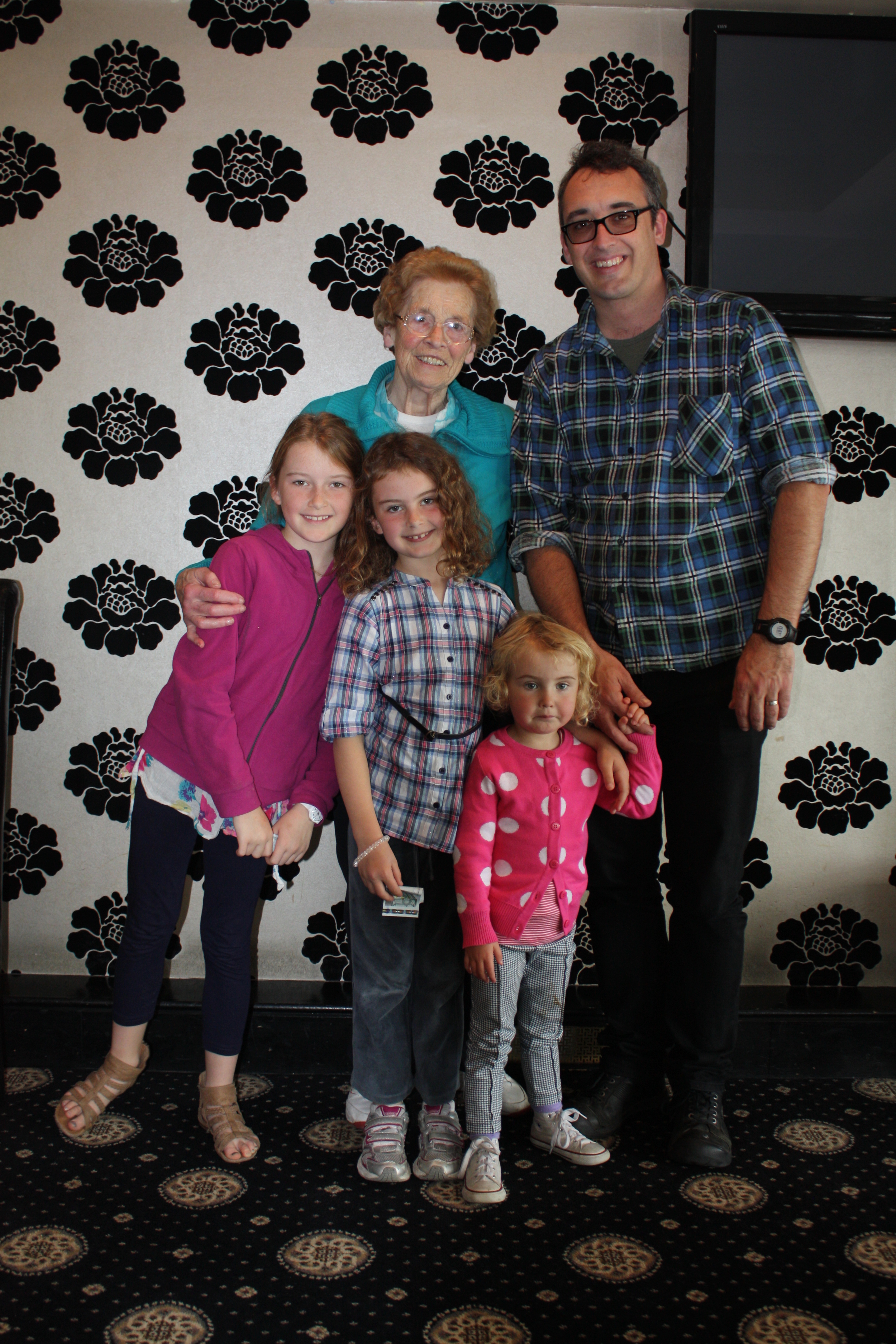
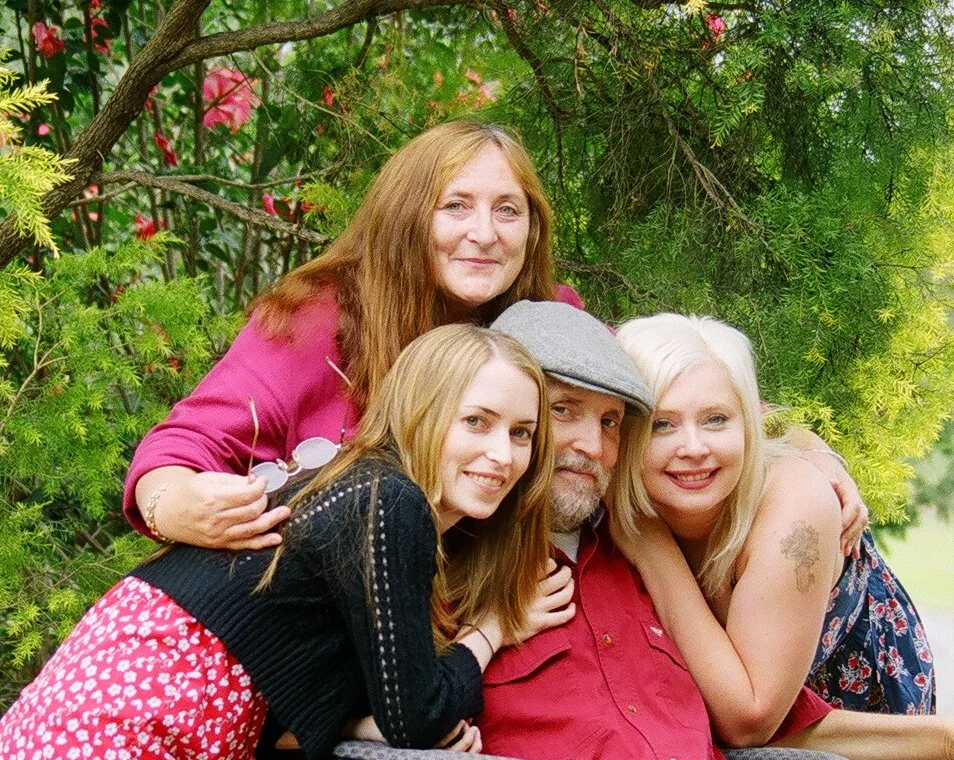
Don Mackay, with Therese (behind), Ali (left) and Melissa (right) - Boxing Day 2006

Don Mackay, with Therese (behind), Ali (left) and Melissa (right) - Boxing Day 2006

For Don Mackay: by Therese, Ian, Melissa & Ali

August 18, 2015

21 May, 2007

DONALD WILLIAM MACKAY - 4TH JULY 1950 - 17TH MAY 2007

Poem written by wife, Therese Mackay,  read at the funeral by the celebrant.

The Man and Me

Sleeping at night my palm opened flat on his chest,
Warmth feeding warmth, I know we are blessed.
No matter the day’s misunderstandings and blues;
No matter points made and lost;
No matter who thinks who’s the boss;
Sleeping always next to him is the life I would choose.

Re arranging pillows, blankets and such;
Both easy to fire off, yet both easy to touch.
Each unwilling to give way, equal to the end.
The Celt in us both, a marvellous brew,
Stirred and stirring, a wondrous stew.
Sleeping hand to chest our rousing battles mend.

Ah! And give me that fire, pure and unpolished,
And give me the spirit, no argument undemolished,
And give me the wickedness and its play,
Give me the empathy and knowing
Give me the common sense for our growing.
And let us wake hand to chest at the start of the day.

How dear to me is the man who breathes beside me at night?
How dear is the spirit, which gives his eyes their light?
How dear to me is the world we share?
There is no measure I can explain
But that his pain gives me also pain
And that our love is sometimes more than we can bear.

For me he stands, young, fair and clear-eyed as in youth.
For me, the things he feels I know, they are truth.
And I will hold these truths like rare and precious treasure,
For in a shifting sea of easy useless lies
The values of such truths are cherished ties
To the love which lives within the heart which is without measure.

So let me lie for hours, my hand upon his chest,
Thinking on the treasures with which we are blessed.
Such as our children treading out into the world to be,
Carrying the dreams of all our life;
Treasures as sacred as the man and wife
And as sacred as the love which binds the man to me.

With Love Therese

Ian Mackay's part (brother)

The dash between 1950 and 2007 is the period Don was with us. It is the most important dash that we know. It fulfils his life and the love that we know both from Don and to him.

My portion of Dons life is mainly from birth till his early twenties.

Born on 4th July 1950 the fourth child of Rod & Kath Mackay in the western town of Moree. His family consisted of firstly Jeanette… (Tet) Judith… (Jude) and myself, Ian. … Not counting the main proponents of the family Dad (Rod) & Mum (Kath).

My sisters used to dote on me until this kid called “Don” arrived, it changed after that and he became the dotee. That didn’t matter all that much as they couldn’t play marbles and didn’t go much on catching frogs.

Not much to do in Moree

One evening at dinner not long after his first birthday Don said to us and all, “We should go to the Snowy and build the Eucumbene Dam as they need people like us”. He was a very advanced child. As a group of half a dozen we set off to build a dam. Turns out it was a bit bigger than the six of us could handle, so we called in a few more people (1000 actually) it took about six years to complete. Those six years probably formed Don into the person he became in later years.

The things that we got up to as kids would have sent you to a home of some sort or other. It included, the four of us setting out for a bike ride of a lifetime, ending up in a pigsty at the original dam site, with a raging fire that could have burnt an average National park. Someone volunteered me to get Mum and Dad (Tet I’m sure) in a raging stormy freezing cold on a 10 mile ride in the dark, with the cavalry Mum & Dad the three eldest – me included were chastised severely. “What were you thinking taking this young baby out in this weather”. As quick as Tet said “Mum at least he is warm and dry and he is not a baby he is four years old. It ended well. The kids could do no wrong.

The Shooting

Don & I were shooting tadpoles and frogs in a creek near home. I had just shot a frog and Don said give me a shot: I gave him the slug gun and he said to me “see how you like it” and promptly shot me in the foot. That was the start of his GREENY ATTITUDE. Not content with the foot shooting when we got home he reloaded the slug gun and chased me around the house.

Fishing

A mate and myself were going fishing and knocked off a bunch of carrots from the headmaster's place to eat while fishing next thing Don and his mate Ian ‘Ackenzie’, his real name was Mackenzie but Don couldn’t get his tongue around that, caught us and dobbed us into the headmaster- Mr Faulkner. Don got extra points for that. The mate and I panicked when called to his office, but being a great teacher he didn’t go crook instead gave us a lesson on tying fishhooks.

The remainder of our stay in the Adaminaby Dam site was filled with family love and love of family a really great place to grow up as a child.

Dam completed, Don called us together again and said that the people were having troubles with a dam at Tan Tanungra and felt that we should help a fairly uneventful part of our lives Don schooled at New Adaminaby. Tet worked with Dad and Jude helped mum at the local shop.

Don again gathered us after our Sunday roast and weekly caster oil and said, “there are problems with a power site at the Lake Macquarie we should go and help”

Swansea this joint had it all
TV - never seen that
Beaches - been on holiday
Lakes - made them
Fishing - caught millions and masses of adventures that four kids from the Snowy had never seen.

Don became a super star at Soccer in the under 14s and we both completed schooling there. From there the family fragmented.

Tet married Jack Holmes and had a son Phillip all died in a car accident 1969.
Jude married Buddy who died in a car accident in 1965.
I married Monika and had a son Terry and daughter Jenny.
Jude remarried, Kevin and had a son Rodney and daughter Joanne.

Don said they were calling from Port Headland in WA. The family fragmented further, as mum and dad with Don in tow headed there to sort out the problems the Port mob encountered.

The problem solved and plans to return to Swansea were completed. However Dad encountered cancer and lost the battle in the Sir Charles Gardiner Hospital in Perth on 31 Jan 1966.

Don and mum returned to the eastern states, I got leave from Vietnam to see Dad before he passed but unfortunately due to slow transport missed seeing him before passing. My leave was far to short and I returned to Vietnam whilst Mum and Don went to Maroon country in Brisbane where the tied up with Jude.

With Brisbane a temporary base Don now 17 headed to Blackwater mines 4-500 kilometres west of Rocky. This part of his life was born “The wild child” bought new cars and demolished them at a rapid rate.

Mum returned to Cardiff and Don soon followed and sort of lost the Wild Child a bit when he met

Therese and had two daughters
Melissa in 1974
Alison in 1977.

The remainder of his story is related by Therese through Garry our celebrant.

To have known Don as a brother was a privilege and to have loved and be loved by him irreplaceable.

DON REST IN PEACE, WE ALL LOVE YOU.

Therese Mackay's part (wife)

Don and Therese met in Newcastle in 1972 and joined forces about three weeks after that meeting. Don was then working as a Fitter for Hodge Industrial installing underground petrol tanks and bowsers all across NSW.

In 1974 Melissa was born to them and Don’s boss offered them the use of a large caravan to use so that Don would not want to come home each weekend to be with his family and could spend months moving around NSW working.

This was a wonderful 18 months and there were few areas they did not get to spend time. Blayney in winter in an uninsulated caravan was an experience. Opening the van door at the tick gates and seeing their red kelpie, called Red, slithering around in the beetroot which had fallen out of the fridge, because someone had forgotten to put the pin in the fridge door was another.

Port Macquarie was one of the towns they visited and Don was offered work from Gordon Hunt should he ever move here.

In late ’76 they moved to Port Macquarie.

Alison was born in 1977 and the family was complete.

They lived in a small house just past Sea Acres near Johnson’s Fruit shop, which cost $12 a week. Here they were home. Chooks, ducks, a dog – Boris, cats – (Don was never too keen on these creatures) and Lucky - Don’s horse, two happy little girls and little money made this a happy home for Don and Therese

He worked on building sites and drove a backhoe and truck and was able to turn his hand to most things he tried.

In 1982 Don was badly injured while working in the canals behind Settlement City.

He became a quadriplegic and spent a seven-month stay at Royal North Shore Hospital (Sydney). Therese, Melissa and Alison moved for that period living near the hospital, with Therese’s eldest sister Veronica. All returned to Port Macquarie when Don was well enough

After a settling period, Don along with his wife Therese became involved in issues in which he believed in passionately. He lobbied Council in the ‘80’s for better wheelchair access and struck a deal with them that he would go halves in the cost of construction of wheelchair access on major access points around the CBD.

In the early ‘90’s he manned the RSPCA phone and was passionate about his commitment to this. Although it’s a well known fact Don was not a great cat lover, he abhorred cruelty of any sort and would too often be upset by the callousness of human beings to their pets and livestock.

His mother died in 1997. He not only looked out for his mother’s needs but also Therese’s mother and was always quick to see when others were had difficulties. He had a great compassion for others who were suffering illness or other.

When his sister Judy was dying in Queensland in 1998 he and Therese spent the last three months with her only leaving a few days before she passed away. This was a special time and he spent many days just quietly sitting by his sister’s bedside talking and laughing about family.

He believed ardently in the right of the individual to freedom of choice on issues regarding Fluoridation, and other and it is well known he did not suffer fools gladly. He was very active in the fight against the privatisation of Port Macquarie Hospital and he worked for years tirelessly to have the hospital returned to public hands.

Unfortunately he was stuck in bed on the day the Hospital Action Group had its celebration outside the hospital grounds once again when the hospital was finally handed back to the people of NSW in 2004, but he spent that morning harassing the local media, as was his wont, into speaking with the Hospital Action Group who were there from the beginning of the fight in early 1992.

He became actively involved in One Nation, and along with Marge Rowsell from Taree organised the original meeting in the Civic Centre when Pauline came to Port Macquarie and filled the Civic Centre to overflowing on a Tuesday morning. When Pauline moved away from One Nation so did Don. He was outraged by her jailing and worked as hard as he could writing letters etc to help raise awareness of the injustice often saying that if it could happen to such a public figure as Pauline, it could happen to any one of us, and that we each, on our own, must always fight against injustice when we are able…

When Pauline was released, fully exonerated he was over the moon.

Don and Therese moved out here to Craggy Island in early 2004. The sense of peace and beauty they both felt the first day they saw this place is still here with us and for Therese it is the essence of her husband and a fitting place for this service.

Becoming a Quadriplegic was bad enough, but Don was unlucky in that he was suffered constant pain and would comment on those few days when it totally lifted how good the day was. As the years went on this became much worse. His courage and endurance, still being able to be concerned about others, smiling, fooling about, being involved and interested and most of all never complaining, was truly wonderful to experience. It was heartbreaking at times when people did not understand his fragility and his exhaustion and bravery he showed by just facing the days at times.

The family are aware of the many roles Don played in life and on the small screen, where just the placement of a wig, or a hat and he would transform into little fat Eadie from Picnic at Hanging Rock which should now be known as “Picnic at Don Rock”…and his Mafia alter ego called “The Don” was done as seamlessly as he did everything.

There was the eighth day of the week “Don Day” which was a special day for the kids.

His force of personality and its many facets became something of a miracle to his family and especially Therese, Melissa and Alison. He was constantly concerned about their welfare, and that of the extended family, and he seemed to grow more compassionate, the more he suffered.

Melissa and Alison joke about the fact that they quickly learnt to never say they were bored because when they did he would give them jobs to do. Now adults they say they are grateful for this. He was fiercely independent and a gentle and concerned loving husband and father.

He passed away at his home on Thursday 17th May, two days before his eldest daughter Melissa and her fiancé Chris were due to be married. He had been in RNSH for 5 weeks and was flown home the night of his passing. Unable to speak because of the Ventilator for the past 5 weeks, when it was finally turned off, he softly talked and joked with those of us gathered for about two hours. He died with his family around him and was loved gently as he went with dignity and concern for others welfare the last things he expressed.

The manner of his passing after the terrible suffering he endured, will never be forgotten by those of us present, and has left us with no fear of death… none at all. Yet another of the precious gifts he left to those he loved. He was beautiful to the end and died quietly with his daughters and wife and other loved ones… in a quiet room... at home at last. He deserved such a peaceful seamless death to this life. His compassion and empathy for others; his sense of fun and stirring; his generosity; his unpredictability; his intense love of the natural world; so much, but more even was the love he held for his children Melissa and Alison, and his wife Therese. He loved them without conditions. Its known Don had his rough edges but the rough diamonds are always the best, and are always more precious

Thanks must go out to Therese’s sisters Veronica, Joan and Jackie for their support. Jackie spent the last day in the hospital with Don while the family drove home to meet the Air Ambulance. She went on the flight with him so that he always had someone with him he loved. Thanks to Carmel, Patsy, Mike, Rod, Neil and Renata, and Donna, and they know why.

The effort made by Don’s Doctor Dr Mark Stewart and the Air Ambulance and others made it possible for Don to have his last wish, which was to die at home.

He is survived by Therese his wife, Melissa and Alison his daughters and Ian his brother.

Goodbye for now our lovely Eadie… See you round like a rissole.

Melissa’s part (daughter)

One things for sure this world will never be the same again without Don or better known as Noddy to Ali, Mum and I.

Whenever I think of him it always makes me smile and a million memories come rushing to me. Each one making me happier. Dad had a wonderful sense of fun and a wicked wicked sense of humour. Which left a lot of people not quite sure, was he laughing at them? That made it funnier. Alison and I from a young age absolutely loved when he was being wickedly funny. Kids love it when someone can get away with saying and doing things naughty. Ali do you remember your first communion? I know mum and I sure do! Only 20 cents for a glass of water. We had some amazing times as a family, you couldn’t ask or wish for a better dad. He was always always there for you, and nothing was ever too much. The gap in our little family is going to be felt, but he is always with us, because he promised me once. I remember when dad was in hospital, his arms were tied with restraints, mum and I untied them and he stretched out his arms like he was going to fly away. I said jokingly, YOUR FREE! And he laughed and smiled it was the most beautiful smile. So I hope he is free and still has that beautiful smile, that I’ll never forget.

He deserves all the wonders of complete freedom and happiness.

Melissa Mackay
 

Alison’s part (daughter)

Where do I start, when trying to say goodbye, or a final “see you later” to you Dad? I know that you will always be with me & that I will meet you again, but for now you need to rest. I am so sorry for what happened to you at Royal North Shore Hospital, it was as you said “Shithouse”. We were lucky to have been with you at the end. I hope that you could feel all the love from us.

You & Mum gave us such a fun & rich childhood; there was always much laughter in the house. There are so many stories and great times that will always be with my heart. Thankyou for teaching me so many things its strange but I still remember each moment so clear when you taught me to tie my shoelaces, to dive properly into the pool, my times tables, telling the time on a real clock. All the times you watched me swimming by myself in the pool because I was always to scared jaws would get me if you weren’t watching. You would try to sneak away after a long while but I’d always catch you and you’d always come back out.

There were always lots of cuddles in our house, interesting games of monopoly, jobs if we admitted boredom, and there was always a right way to do jobs and a short time in which to begin them. That was just you though Dad and it became slightly amusing as we got older.

We have so many funny home videos of us four and others, but by far the best was our “Picnic at Don Rock!” you played Edie brilliantly and we have so many one-liners from it that will always make us laugh.

Thank you Dad for always being so helpful and kind to me. You always tried to make things better for me. All the phone calls over the last few years I will cherish. All the stories you told, all the silly voices we did. You taught me how to cope with things that were beyond my grasp, and always when the seriousness was over you’d get me chuckling again.

People tell me that I am like you in many ways and I am proud of that. You always taught me to stand up for myself too, which I am grateful for. You did so with such phrases as “Don’t take shit” and “are you gunna put up with that?” Dad you always taught me to be strong and fair. Two qualities that you have.

I will always love and cherish you, there have just been so many funny and warm times shared. I am so lucky to of have had a father like you, a friend like you and a teacher like you.

Take care Dad wherever you are right now, and always know how proud I am of you for who you are, how you lived, how you dealt with hardship’s, how you joked and how you loved.

I love you

Love always Ali

Enjoyed this speech? Speakola is a labour of love and I’d be very grateful if you would share, tweet or like it. Thank you.

Facebook Twitter Facebook
In SUBMITTED Tags FATHER, HUSBAND, BROTHER
Comment

For John 'Starky' Gigacz: 'Dovidenia, Starky', by son Andrew Gigacz

August 13, 2015

29 August, 2014, Melbourne, Australia

John Gigacz, my father, was born on the 3rd of August 1922 and died last Saturday, a long way from where his life began, in distance – his birthplace, Brezno in Slovakia is 15,500 kilometres from here; in time – Dad was 92 years old; and in cultural attitude – when Dad was a baby, he wasn’t a very good sleeper and his parents used opium to quiet him down – definitely not something that would be approved of today!

John grew up in the village of Sumiac, but his adult life would take him to a number of places around the world, firstly to America, including New York, a city he loved, and Chicago – or as he pronounced it, Chicago [as in ‘chip’]. (As you will hear shortly, John had a great command of the English language but pronunciation wasn’t always a strong suit.) His second major trip was to Austria, made by somewhat unusual means – he got there by swimming across the Danube in 1949 to escape the communist regime that controlled what was then Czechoslovakia, leaving behind his own mother and father, whom he would never see again.

After a year in Salzburg, John was granted refugee status and approved for migration to Australia. After a voyage of several months on a ship called the Hellenic Prince, he arrived in Australia in January 1951, and spent several weeks at a migrant centre in Bonegilla, not far from Albury, before taking a job, picking grapes along the Murray.

Keen to settle into the Australian way of life, John quickly befriended several fellow fruitpickers, and was happy to accompany them to the local pub. Never having been a heavy drinker, John spent one early night at the local trying to keep up with his mates but failed miserably. His mates took him back home in a wheelbarrow that evening.

John was also to meet his future wife, our Mum, while fruitpicking. Having crossed paths with her on several occasions and then lost contact, John bumped into the lady who would become the love of his life at Flinders Street station in 1953. Determined not to let her go this time, John met up with her the next day, presented her with a violet posy and asked her to marry him. Fortunately for all of us, she said yes.

John and Evelyn married at St Joseph’s Church in Hawthorn in November 1954 – John wearing the suit that I’m wearing now - and started a family soon after. Stefan was born in September 1955, with John, Anthony, Jamie, Katie and Andrew following over the next 10 years. John became an important part of the parish of Sacred Heart, always willing to lend a hand in the development of the Sacred Heart community. As I grew up, I remember him taking on many roles, helping out at working bees, reading at Mass, singing in the choir and doing countless visitations as a member of the St Vincent de Paul Society. He was a man of strong faith and Jesus was a guiding light for him throughout his life.

For his entire working life in Melbourne, John was employed at ICI in Deer Park, forming many friendships with his colleagues there, as well as through the Sacred Heart community. One of the people he met early in his time at ICI was a man by the name of Hugh. Before he met him, John had seen his name written down, and with English not being his first language, he decided to pronounce the name the way it was spelt: H-U-G-H. Upon their introduction, he said, “Pleased to meet you, Hoog-her”.

John in fact had a very strong grasp of the English language. He read voraciously and was always looking to improve himself. But he did struggle occasionally with the nuances of English pronunciation, grammar and syntax. I remember he used to ask, “How did Bulldogs go today?” Not, “How did THE Bulldogs go”, just, “How did Bulldogs go?” He also sometimes got words in the wrong order, or at least not in the order WE’D use. Instead of trial and error, it was error and trial. And with him it wasn’t the Big Bad Wolf, it was the Bad Big Wolf. And I remember him talking about the seven lives of a cat.  Perhaps in Slovakia things were so bad that cats couldn’t afford nine lives.

Slovakia in fact was never far from Dad’s mind. Once technology made phoning overseas a simple process, Dad would ring his sister Marca, regularly, catching up on all the latest news from his family and friends in his homeland and passing on news from faraway Australia.

Dad also never forgot how welcome he was made to feel when he came to Australia and he was keen to make others feel just as welcome in later years. He spent many a Sunday in the 1980s visiting the migrant hostel in Maribyrnong, helping out new arrivals – most from Vietnam – in whatever way he could.

Above all, John was devoted to his family, his wife – our mum – Evelyn, his six kids and 15 his grandchildren. There was nothing he wouldn’t do for us. He happily did the grocery shopping and he ferried us to and from swimming at dawn, or cricket on the weekends.

Mind you, things didn’t always go to plan. Once when shopping at the supermarket, he left baby Jamie waiting in the pram at the turnstile while he popped in and grabbed a few grocery items. (You could do that sort of thing in those days and no-one batted an eyelid.) After collecting and paying for the groceries, Dad went home and it was only when Mum asked, “Where’s baby Jamie?” that he realised he’d left him behind. Jamie was still there sleeping happily in the pram when Dad got back there in record time.

Dad was our barber when we were kids, even my sister Katie’s, which led to her looking like just another one of us boys in her early years. One time his aim was slightly askew and he snipped the top of Jamie’s ear off. Being the resourceful man that he was, Dad just sticky taped the tiny bit of ear back on. Amazingly, it worked!

Dad had a thing about hair. He thought men should be clean-shaven, with short hair and that hair should most definitely NOT be parted in the middle. When I started to grow my hair long (parted down the centre) and not shave very often in my late teens, he HATED it. One time we got into a huge argument about it, and Dad shouted “Real men don’t have hair like that!” It was at that moment that I realised he was standing under the picture of Jesus that was a permanent feature of our lounge room. I simply pointed at the picture and Dad turned around to see an image of our Lord, wearing a beard and long hair, parted down the middle. It was one of the very few times I saw him speechless. Dad had the last laugh on that one, though. Even if I wanted to grow long hair now I couldn’t!

But if he differed with his family on issues – and his political views differed vastly from mine and those of several other family members – he was always respectful of the right of others to have those different views. He would argue black and blue against them but he didn’t love his family and friends any less for having those views.

He loved us all very dearly and we all loved him as much. Thank you Dad for being a wonderful, loving husband to our mum Evelyn, a fantastic, caring father to all of us kids and a happily devoted “Starky” to your 15 grandkids.

Dovidenia, Starky

Enjoyed this speech? Speakola is a labour of love and I’d be very grateful if you would share, tweet or like it. Thank you.

Facebook Twitter Facebook
In SUBMITTED Tags JOHN GIGACZ, ANDREW GIGACZ, FATHER, SON, AFL, FOOTBALL
Comment

For Aunty Nuala: 'She was a woman painted in vivid colour', by nephew Joe Kelly

August 5, 2015

In 1973 we moved to the Australian town of Mildura.  If you have never been to Mildura it is hard to explain.  It sits as a desert outpost, marooned in a sea of red dust.  In 1973 it was a frontier town full of frontier people – people looking for a new start or to forget an old life.  By day the sun bleached all color from any life that pressed its way into the desert moonscape, by night the sandstorms stripped whatever was left.  This is where we made our home.

Our years in Mildura made us used to people who existed in shades – people who were polite but reserved.  People who told their stories in pauses, every exchange a trade of trust for detail.  In simple terms, the people we had known were hard to know and hard to please.

In 1983, our father Des died and life’s crazy tide delivered us back to Ireland – to Galway. Nothing in our life to date had prepared us for our Aunty Nuala.  She was a woman painted in vivid colour.  A woman of stories and history and trust and love.  A smoke tinged, brandy wielding character who, to us, looked like she could better Hemmingway in a bar fight and delight in telling you the tale.  Someone who said what she meant and meant every word of what she said. To our mum she was the fearless older sister, to us a protective auntie who helped us navigate a new and unfamiliar town.

Nuala found us in a state of disrepair. We had lost our father and lost the only home we knew.  Nuala was a skilled nurse who had for her entire life selflessly tended to the pain of others.  What is amazing about Nuala is that she did this while holding nothing back. To us, as to countless others, Nuala gave fully and unconditionally.  Intuitively she gave us space when we needed it and was the first to offer a shoulder to cry on.    She had a press that housed an unending supply of sweets and crisps.  She was magic.

Her throaty laugh is probably what we will miss the most.  That and her wild tales of her wilder youth in London, a footloose fancy-free nurse chasing adventure down every street.  She’ll remain in our memories a woman naturally full of vivacity, hilarity and gusto, a woman who loved bigger than anyone we have ever known, who poured that love into those around her. And we’ll be forever grateful that she was part of our family and we were part of hers.  We will be forever grateful that she shared with us her greatest loves – Tom and David.  We will love her and miss her.  But we will never forget her.


Enjoyed this speech? Speakola is a labour of love and I’d be very grateful if you would share, tweet or like it. Thank you.

Facebook Twitter Facebook
In SUBMITTED Tags AUNT, IRELAND, NEPHEW
Comment

For Kathleen Callinan: 'Sometimes death makes you leave out the bad bits but there were no bad bits', by son Damian - 2008

August 3, 2015

20 February, 2008, St Mary's Greensborough, Melbourne

Gidday … how are you going? … tough crowd … sorry, always wanted to say that!.

The others in the family don’t know this but a long time ago Mum said to me … ‘On the altar at my funeral I want a long stick … leaning against a priests cassock … on purple fabric … with a pair of large unworn men’s sandals’ … unfortunately I forgot all about it … but I turned up today and coincidentally the parish already had it set up … weird.

[It was Lent & I’d noticed the display at the previous night’s Rosary]

My name is Damian and I’m the youngest of Kathleen & Adrian’s Famous 5, though they are still yet to provide photographic evidence that would contradict rumours I’m adopted. Making me the Timmy of the Famous 5 … That’s the rest of the family down there … put your hands up … in laws & Bernie … grand kids … great grand kids … cousins … and if there are any illegitimate offspring out there, today’s probably not a good day to bring it up … I’ll introduce to the rest of the band … Aunty Dorothy on keys … Chris on guitar … and David on computer.

Dad said to me the other night that he had faith in me and I could say whatever I wanted to today … kind … but silly man. So hear we go …

I’ve been wondering over the last few days what mum has been up to she left us.

  • I presume the first thing she would have done when she arrived at the gates of heaven would have been to explain to St. Peter that she is allergic to garlic and that mushrooms disagree with her IBT … and asked about the vegetarian options for when Helen, Jo & I arrive.

  • She would then have made sure she had at least 2 remote control wands for the front gates for when she’s out after 7.

  • Once inside she would have found the best pie shop.

  • She would have then gone through the heaven gold book and pulled out any vouchers that members of the family could use.

  • Joined the library; the craft group and flashed her Beef & Burgundy life membership at Bacchus.

  • Once she got into her unit she would have made sure the VCR wasn’t too low for her to program … then put the kettle on, cracked a packet of jam fancies; sat down on her brand new Jason recliner and picked up the phone to ring God and chatted to him … for a fair while. She would have had a list of things to ask… mass times & happy hour times … made sure God reminded Adrian to put on his hat when he walked up to get the paper … & a shade cloth for the front of the unit would be good … & eventually the Lord would hold the phone slightly away from His ear and shake His head in wonder & finally realise that of all His creations, my mothers gift of speech was His indeed greatest triumph.

We’re not exactly sure what mum was doing in the fateful moment before the accident but one thing is certain … mum would have been mid sentence. What that sentence was, we’ll never know and it remains as one of the many ‘incomplete’ transactions with mum … Shell & David not getting to have the dinner with her they were about to enjoy … Paul not getting his Sunday night call in Townsville … Chris not getting to finish one of her crosswords … Net not taking mum down to Sorrento one more time before the rebuild.

But the great thing about mum is she didn’t die with incomplete thoughts. There was no ‘must get around to loving him a bit more soon’ … ‘must remember to tell her I love her’ … she did it all the time … a phone call rarely ended without a ‘love you lots.’ Even the tone of her voice instantly made you happy.

For those of you who don’t know her, here’s a beginners guide to my mum. I’ll start with something not many people know …

… ‘My mum could land an off break on a 10 cent piece!’ …

She’d always told us she played cricket as a schoolgirl at Santa Maria but we rarely saw any evidence … until one day.  I was playing alone in the backyard throwing the ball against the garage wall then hastily taking a stance to dispatch the ball back into the hydrangeas. Mum came out with a basket of washing under her arm. Tiring of my Bradmanesque solo test, I pestered her to play with me and eventually she relented. She took the ball and went to the Jeanie Mac end which afforded only the briefest of run ups. Now just on a good length of our pitch was ‘the hump’, that looked like an elephant had been buried arse up. Chris used to exploit it by relentlessly peppering me with bouncers until one day I ran inside with a hump growing out of my temple. I thought mum knew nothing about the hump but she found it first ball and soon had me flinching as a ball after ball spat from outside off back towards me keeping me trapped in my crease … after awhile I just said ‘I’ll give you hand with the washing.’


… ‘My mum could cook the apron off Margaret Fulton’ …

She could work her magic on everything … except rabbit. Her pavlova is the stuff of legend. The Andersons only used to have us over for Christmas ‘cos of mums Pav. Her scones were to die for … bad choice of words. Mum’s favoured cookbook was the red & white checked Women’s Weekly ‘Simple City.’ However, she began to outgrow the CWA style of cooking and sought nouveau cuisines and soon a ‘Mixed Grill’ was being replaced by ‘Kai Si Mingh’ and ‘Shepherds Pie’ by ‘Apricot Chicken.’ Paul says there was a minor revolt in the early 60’s but by the mid 70’s mum’s kitchen had put down the insurrection and her empire reached its zenith. It was at this pivotal moment in our family history that mum attempted a dish called  … ‘Brazillian Casserole’ … I’m not exactly sure what it was but given it’s name we can presume that it was perhaps a casserole without hair. The only two ingredients any of us remember are beef and … instant coffee. We put salt on it … pepper on it … even ice cream, but nothing could make it stay down. It was the only time dad ever wanted a dog so he could have slipped his plate under the table.

Her other triumph of recent years was the ‘Flying Bed & Butter Pudding.’ While mums cooking skills never faded, her mobility wasn’t so good of late. One night in Armstrong Street after another stellar entrée and main, mum popped into the kitchen to bring out the piece de resistance … ‘Berry Infused Bread & Butter Pudding’ She appeared in the door frame with tray in hand and then just as quickly disappeared as she tripped sending the entire dessert sprawling across the floor in a text book funniest home video moment. But rather than get upset she simply helped us pick up the least dodgy bits and we ate it anyway.

‘My mum could sew the apron off Tonia Toddman.’ …

Many in the room were the beneficiary of her skill and generosity of time. Net & Shell … & her good friends Dorothy & Gerry … & Aunty Joan … who would already have mum playing bridge up above by now wearing one of her frocks.

Having a mum who sewed a bit was probably more of a boon for my sisters than my brothers & I. For Net & Shell it meant an endless supply of dresses; skirts … even klots from the latest fashion magazines. For us it meant endless hours standing looking into shop windows staring at the clothes we would never wear. If I pointed out a garment in a shop a mum would take it off the rack, turn it inside out and say … ‘I can make that!’ She would then ‘have a go’ and make something just far enough away from the original for it to stand out … t-shirts with a skateboard motif but with a boat neck … denim shorts with pleats … Paul, Chris & I lived in fear of casual clothes days at school.

 … ‘My mum was a bit of spunk’ …

Have a look at her!! … Being the youngest, mum was in her mid 40’s by the time she was dropping me off to school & even at that age I’d look around at all the other younger mums and think … not a patch on my beautiful mum and no-one … no-one dressed as well as her … she made the 70’s her own!!

 … ‘My mum was grouse fun to go on holidays with’ …

Our family had many holidays, none more famous than the trip to Townsville to stay with the Dorney’s, most of whom have made the trek to be here today. 5 kids in a Holden station wagon for 2500 kilometres. I was only 3 at the time but I can remember some things. It’s funny when you are the youngest by some distance you tend to be absorbed into family stories whether you were there or not. I often think I can remember particular events I was part of simply because I’ve heard the stories so many times. Just after Pearl Harbour in ’41, we were all listening to the crystal set and mum said to us … ‘Remember the time we got held up by Ned Kelly?’ and I said … ‘Yeah … he took my ipod’ … and mum said … ‘Don’t be silly, you weren’t even born then … now go and get the mutton from the meatbox like I asked you before.’

Over recent years Jo & I have been lucky enough to have many trips way with mum and dad … and mum was such good company. She was so appreciative of us but the truth was, when one finished I couldn’t wait to plan the next one. The next plan was to take them on tour with me in June… mum and dad roadies of sorts… now dad has to show his bum crack and carry the speakers on his own.

… ’My mum is the most loving person I’ve ever known’ …

The only thing dad asked me to make sure I mentioned today was that her love was ‘unconditional.’ I thanked for them that in one of my shows and it meant a lot to both of them. But what does it mean? It means in mum’s case, an unfaltering love for dad … us … and Margie & John & Dorothy & The other Callinans & Andersons & Dorneys & O’Connells … there were no category 4 restrictions with mums love. And I’ve seen in the faces of my nieces, nephews and cousins today and in the hospital as we said our goodbyes to mum, how far that love spread.

No matter what we did she loved us the same. Dad does unconditional love at Olympic standard as well. Mum had multiple gold medals in the discipline. Through relationship breakdowns; career changes and whatever life threw at all of us … she has been the constant … the reassuring voice that would love you through anything … it sounds easy … it’s not. Most of us at least on occasions love with judgement and conditions … she never did.

On Saturday night … the night before the accident, Bernie my cousin and her husband Graeme had invited me to perform my show “Sportsman’s Night” at their Yarra Valley winery as part of the Grape Grazing Festival. Chris & Lisa offered to drive mum and dad up and soon it ballooned into a family reunion of sorts with siblings, cousins and friends of mum and dad as well. At one point in the show I said something wildly inappropriate about Mary McKillop, which I won’t mention in these hallowed walls lest they come down upon us, but see me outside where its safer & I’ll fill in the gaps. Anyway I found myself looking at mum as I spoke. Dad leaned over and put his hand on her lap, but mum looked at me like I’d just told her Chris Judd had had a change of heart and was going to Collingwood … she was beaming at me.

I loved my mum! And more and more as I got older. Sometimes I just wanted to squeeze her cos she was so cute and proud and loving. Sometimes death makes you leave out the bad bits but there were no bad bits.

Sure she used to bang on a bit, and she used to talk about doctors and priests too much … don’t worry, it was all good about you Steve, Jim & Owen … and she used to repeat stories all the time but we all do that … sure she used to bang on a bit and talk about priests and doctors and repeat stories but …

But most of all, my mum loved my dad … and he loved her! I’m so proud to have them as role models.

There’s been many varied chapters to their lives together … their post-war courting; electricity free Myrniong, Bacchus Marsh, Warragul, Watsonia; international travels … but to me it’s been the 24 years since dad retired that are the happiest. They have enjoyed every second together and have been like giddy teenagers.

They’ve loved their time at ‘The Village’ as they call it and happily call themselves Village People. Mum has lapped up life there in the same way she has attacked new challenges late in life … like the computer & the George Foreman grill … I went to happy hour with them one night and it was like being in the film Cocoon. I loved it … but I left hastily at the end in case I got invited to an orgy.

My dad has been heroically strong this week in the face of the most devastating event in his life but he has honoured mum and us and let her love carry him through. And his strength has helped me see mums spirit carry on in the family … I love my dad.

To finish I’m going to produce a document that will shock even my immediate family. Much has been made in recent years of dad and his long awaited memoirs, but unbeknownst to us, mum tiring of his slow progress has written her own.

I’ll just read a couple of extracts now … the rest will be published soon.

EXTRACT 1 – Splades

“I discovered the most marvellous thing in Myer yesterday. It looks like a spoon at first but when you look more closely, you can see that it also looks like a fork. They call it a splade. It’s beaut for eating canteloupe. I’m going to make it my life works to ensure that everyone in Australia has a set … then I’ll take on America!!”

EXTRACT 2 – Meeting Dad

“I was at the football this afternoon watching Brunswick YCW and I met the man of my dreams … boy was he a looker.  Anyway he was about to ask me out when Tom Duffy barged in and introduced me to some coot called Callinan who wants me to come on a date to watch him in the theatre. He’s got Buckleys.”

EXTRACT 3 – Myrniong

“Adrian has got a teaching post in the country. We will be living in a place called Myrniong which he tells me is a huge town with a warm climate and all the mod cons. Its close to everything so we won’t need a car”

EXTRACT 4 – Coffee Casserole 

“Sick of the family not appreciating my cooking so tonight I’m going to throw some instant coffee in a crockpot with some rabbit and call it something exotic … Brazillian casserole! Yeah that’ll do.” 

Jo has put together a photo montage with the assistance of Paul & Michelle and others finding their favourite photos. That’s right, my eulogy has a ‘film clip.’

But before we do that. Whenever we went away I would always buy something for mum. We did buy her a salad dressing but then suspected it may have contained garlic … but we did get her some loquat jam, which has been sitting in my car as I kept forgetting to give it to her. So to make sure I have no incomplete business with mum … here’s your jam mother dear.


Enjoyed this speech? Speakola is a labour of love and I’d be very grateful if you would share, tweet or like it. Thank you.

Facebook Twitter Facebook
In SUBMITTED Tags MOTHER, SON, AUSTRALIA, CATHOLIC, FUNNY, DAMIAN CALLINAN
Comment

For Harry Gordon: 'I miss you calling me kid, kid', by son Michael Gordon - 2015

July 29, 2015

5 February 2015, Melbourne Cricket Ground, Melbourne

I’d like to begin by sharing with you the opening of the memoir that Harry intended to write, but never progressed beyond the words I am about to read. It was tentatively titled The Boxer’s Son and this is how it began:

“When my father’s heart stopped beating, I was nursing his hand, stroking the back of it. His right hand, lumpy and gnarled: a paw that always seemed a bit large for such a small and compact man. It had been broken more than once, and never well mended, and the bumps around the back of the thumb made it feel like a chunk of mallee root.

“My father had been a prize-fighter, a bantamweight professional boxer, and that mis-shapen right hand had been his most significant tool of trade. It had done most of the damage he inflicted through close to 150 fights, many of them 20-rounders. It had even killed a man, another boxer who happened to be his best friend.

“I was perhaps 10 years old, maybe 12, when I first learned about the death of George Mendes. It was there in his scrapbook….”

And that is as far as he got.

*******

I grew up with the story of how Harry’s dad, my grandfather who we all called Pa, killed George Mendes, his best mate, after a reluctant Pa agreed to the fight because Mendes was having a child and needed the money; how Pa tragically caught him while he was mid-air, switching feet, with the result that he hit his head hard on the canvas and died; and how that fight effectively ended two brilliant careers.

What I didn’t know, until the last week, was how Pa got into the fight game. The answer was in one of dad’s scrap books.

As a paperboy, Pa fought for the prime spot to sell papers at Flinders Street station, though he had never been taught how to box or even been in a gym.  One of the fight promoters of the time, Arty Powell, used to allow a few of the paper boys in to see fights for free at the Pavillion, opposite Her Majesty’s Theatre in Exhibition Street, on condition that, in the event that someone on the bill failed to front up, they would enter the ring.

On March 25, 1917, it happened and young Harry, 15 years old and weighing seven stone and nine pounds (or 48 kilos), stepped into to the breach. He knocked out his opponent in the first round, and his next two fights ended the same way. Pa’s real name was Arthur Gordon Parish, but the promoter called him Harry Gordon and it stuck.

Pa went on to become one of the gamest fighters Australia ever produced, and he taught his son how to box in the back yard of their home in Elwood, with the result that Harry became middle weight champion at Melbourne High.

*****

If there was another trait that Harry inherited from his father, it was humility, and the ability to mix easily in any company.

Inside the Elwood house, on the lino kitchen floor, Harry’s mum, a former singer and dancer, with a capacity for exaggeration, used to teach little girls how to tap-dance to make some extra money during the Depression. So Harry learnt to tap-dance, too. Whatever imagination and creativity he possessed, Harry has said, came form his mum.

*******

Two weeks ago, I nursed my father’s hand, along with Johnny and Sally, and Joy, when his big heart stopped beating. It was in better shape than Pa’s.

In the preceding days, as we sat with Harry, I read to him from Hack Attack, Nick Davies’ account of how he broke the hacking scandal in the British press. It’s a pacy tale, and Harry enjoyed listening to it and would nod approvingly when Davies turned a neat phrase.

Early on, Davies observes that reporters are really very similar, and tend to run on a volatile combination of imagination and anxiety and luck. As generalisations go, it’s a good one, but it didn’t apply to Harry, who never seemed anxious and was propelled by a mix of curiosity, creativity, idealism and an ability to see some things that others could not.

Others in the press box who watched John Landy pass up the chance for a world record, to see that a fallen mate was OK, knew they had witnessed something special, but only Harry called it for what it was: one of the finest acts in the history of sport.

*****

In Hack Attack, Davies also paints a rather frightening portrait of the newsrooms of Fleet Street, especially the tabloids, suggesting they are run by puffed-up, foul-mouthed, self-important editors who can’t tell the difference between leadership and spite.

What struck me was how different this culture was from the one Harry nurtured when he was editor at The Sun and, later, editor-in-chief at the Courier Mail in Brisbane. Harry’s management strategy was to help his colleagues be the best they could be by encouraging, not intimidating, by rewarding (if only with his time and advice), not punishing.

The number of journalists who have made contact in recent days to describe how Harry either hired them, inspired them or shaped their careers is in the dozens, and reads like a who’s who of the profession.

It reminds me of the number of coaches who learnt their craft under Yabby Jeans at Hawthorn in the 80s, or the still growing band of Alastair Clarkson protégés who are making their marks at other clubs.

*******

Harry was blessed to have two innings in journalism and love. The first career began as a 16-year-old copy boy on the Daily Telegraph and Harry was, to quote from the title of his first book, a young man in a hurry: at 21, he was in Singapore, covering the execution of Japanese war criminals; at 24, in Korea covering a brutal war and seeing active service; at 27, in Helsinki, covering his first Olympics; and rising from one of the more junior to the most senior position at the Herald and Weekly Times during a career spanning 37 years.

He ran The Sun in the late sixties and summed up his feelings as editor in a note I found in his computer: “Finger on the pulse,” he wrote. “Answered every letter, loved it, great staff, great papers, big stories: the Kennedys, the moon landing, West Gate Bridge disaster, Ronald Ryan… great circulations. A golden time.”

*****

His first love was my mum, Dorothy Scott, who a was a member of the Maroubra Surf Life Saving Club.

Mum’s passing in 1984 was the great tragedy of Harry’s life, and his departure from the Herald and Weekly Times soon followed. It was then that the generosity he had shown to others was reciprocated with offers to be a contributing editor to the new Australian edition of Time magazine; to return to the Olympics and write columns at Seoul; to write The Hard Way, the history of the Hawthorn Football Club, which I worked with Harry to update as One For All in 2009; and to become the official historian of the Australian Olympic Committee.

The second love was Joy, who lived over the side fence and would toss over eggs or bread when Harry’s fridge was bare.

*******

Harry achieved a lot, but he had a lot of fun along the way, getting as big a kick out of frivolous things as he did standing up the Victorian Parliament, or Joh Bjekle-Petersen. Lou Richards tells the story of the day they sat at our house at Hawthorn, writing captions for the backs of footy cards and laughing themselves silly at their own jokes.

He loved his pattern of life, from the hall of fame selection committee meetings; to the trips away with Joy; to family get-togethers at Christmas; to Grand Final week, starting with the Carbine Club lunch, building to the lunch with old colleagues in journalism on the Friday and culminating with the big game.

This year he saw his 12th Hawthorn premiership, and after watching the game we met my kids and their mates at the Blazer Bar for a few celebratory beers. One of them, a Hawthorn supporter, later told me that talking with Harry was the highlight of his grand final.

*****

What sort of father was he? Most of all, he was passionate, someone who greeted each day with enthusiasm and a sense of adventure, generosity and optimism – traits that never left him. He was also competitive, whether the game was 21-up basketball, or beach cricket or (when he was younger) kick-to-kick.

He was proud of his kids and loyal, too, and sometimes to a point that defied logic. At my wedding, for instance, my brother had a disagreement with the person who ran the restaurant where we were celebrating and, as he tends to do, employed some colourful language to make a point. When the owner complained to Harry, he replied that it could not have been John because “my boys don’t swear”!

Over the years, Harry became more a sibling than a parent to us kids and even our kids, and Johnny, Harry and I were the Gordon brothers. We called each other 'kid' and I will always fondly recall how, when he came back from one extended trip overseas, he said: “I miss you calling me 'kid', kid.”

In hospital the day he died, I told him how I’d miss reading him the first paragraph of bigger pieces I had written before they were published. From underneath the oxygen mask, he retorted: “And the last!”

Harry worked hard on his first and final paragraphs, and what came in between flowed like a river. His last words were among his finest.

Addressing the family he told us he’d enjoyed a wonderful life and how grateful and full of love he felt – a sentiment that would be magnified if he was in this room today.

Enjoyed this speech? Speakola is a labour of love and I’d be very grateful if you would share, tweet or like it. Thank you.

Facebook Twitter Facebook
In SUBMITTED Tags JOURNALIST, FATHER, SON
Comment

For Jack Clancy: 'No-one ever sat on a bench as well as Jack Clancy', by Ray Wilson - 2014

July 16, 2015

3 April, 2014, The Boulevard, Kew, Melbourne

Most of the tributes to Jack have emphasized his extensive range of disciplines and interests. But we at University Blacks, given his 59 years of commitment to the club, could be forgiven for thinking it was his sole passion. Sort of an upmarket version of Collingwood’s Joffa.

With others covering Jack the family man, Jack the academic, Jack the innovator in film studies, Jack the crusader for the ABC, Jack the bon vivant, to name a few of this extraordinary man’s extraordinary talents, my focus falls to Jack and football.

First some facts. After a couple of seasons starring for the Blacks, one week mid season in 1957 Fitzroy selected him in the senior VFL team as a reserve. No interchange then, and Jack never took the field. A knee injury conspired to make it his only game. His coach Bill Stephen spoke at a luncheon in 2006 for Jack’s 50 years of service, and Bill reported that “no-one ever sat on a bench as well as Jack Clancy”.

He returned to the Blacks, played seniors for a few years, and in the University Reds and Blacks Reserves for what seemed forever. He won two best player in the competition awards, and captained and coached teams to premierships. He is in the Reds, now Fitzroy Reds, Team of the Century, and is honoured in the Melbourne University Team of the Modern Era, the period post 1945. Once retired, he held every possible office at the Blacks and the umbrella MUFC from chairman down. As he moved from being a contemporary of young players to an elder statesman, his ability to communicate with, understand and mentor them was amazing. It was all delivered with the hand of friendship and respect for the individual, no matter if it was the star player in the Seniors or the trainer for the Clubbies. I am so pleased my sons Tony and Ned, who are here today, knew him so well. A parent can’t buy that sort of help.

It is commonly said the test of a person is not in times of triumph, but adversity. Jack was one of only two long term supporters who, week after long week, followed the club in its 17 year slide from A Grade to E Grade by the 1990’s. Heroics of A Grade clashes with Old Xaverians and Old Scotch must have been distant memories while watching Blacks players being pulverized in the winter mud at Fawkner and Thomastown. Around such men is a culture moulded.

On the morning of the Blacks winning B Grade Grand Final in 2012, The Age carried a piece on the competing clubs. It quoted AFL legend David Parkin, who has stayed involved with the Blacks since his son coached us 10 years ago, as saying ”I’d have to say that the culture at the Blacks is the best culture of any footy club I’ve been involved with, including Carlton and Hawthorn.” On Jack’s tribute page 1980’s player Nick Heath has written, “Matthew Arnold said ‘Culture is the acquainting of ourselves with the best that has been known and said in the world, and thus with the history of the human spirit.’? Nick added “Seems like he knew Jack pretty well”.

Now Jack was no short term operator. For 33 years the Blacks’ best player count was held in the backyard at Acheron St. Patsy, the award winning translator could accurately translate the French word for tolerance as “Patsy Clancy”. For thousands of men that backyard holds some of their warmest, if foggiest, memories. And for most it is their only acquaintance with the complete works of George Eliot, or Schubert’s Trout Quintet in A Major.

The Blacks descent saw the historically mighty Blacks and the historically sociable Reds in the same grade, so Jack donated a cup. Paul Daffey’s book about grass roots football, Local Rites, records it “In 1998, the Rouge et Noir Cup was struck. The cup was named after the flamboyant 1836 novel, Le Rouge et le Noir by French writer Stendhal. Only in the Amateurs could football and French literature be mentioned in the same sentence.” What Daffey didn’t record was at a lunch to announce the cup Jack made the speech entirely in French, using an Irish accent.

Jack is the central character in a legendary story from intervarsity trips. The University of Tasmania players were on the same overnight train to Adelaide, and a cocktail of youthful competitiveness and youthful incapacity to handle alcohol caused a card game to cease being conducted with the participants remaining seated. The ensuing disturbance led to the police boarding the train at Ararat. A Tasmanian was quick to point to Jack as the instigator, and he was promptly bundled off the train and spent the night behind bars. Days later as the two teams lined up, some Melbourne players informed the Tasmanians that Jack was an absolute animal on the field, and was hell bent on retribution for his jailing. Amazingly his direct opponent was the police informant, who suitably terrified, never set foot near Jack all day, leaving him to kick six easy goals.

I’ve been back at the Blacks for just 15 years. We have won three senior premierships in the past 10 years and were a finalist in A Grade last year. I know that would have warmed Jack’s beautiful heart, by then housed in his failing body. From time to time I’m asked why I do it. I usually answer that a 160 year old club with such an admired culture, a culture which Jack Clancy helped mould in his own image and which has been such a positive influence on thousands of men, is worth the effort. What I hope I told Jack often enough is that his loyalty through the dark days was, and remains, such a powerful motivation that I and others would be ashamed not to follow his lead. All AFL clubs these days have leadership groups. The Blacks had Jack Clancy. I reckon we’ve had them covered for true leadership.

Rob Clancy rang me three weeks ago to ask about holding this function at the new Pavillion at the Melbourne University Oval. Jack would have loved that. But it is not available until May. But it is planned to take Jack back to the oval for a final visit, which fittingly for Jack will last for an eternity, as will his memory at University Blacks.

I have liked, admired and respected so many men and women I have met through football, but I loved Jack Clancy. I’ll miss him so much.

Source: http://www.footyalmanac.com.au/FA2015/jack...

Enjoyed this speech? Speakola is a labour of love and I’d be very grateful if you would share, tweet or like it. Thank you.

Facebook Twitter Facebook
In SUBMITTED Tags VFL, FOOTBALL, FRIEND, RAY WILSON, JACK CLANCY, AFL
1 Comment

For Keith Rule: 'Solomon in a singlet', Andrew Rule - 1998

July 15, 2015

27 June, 1998, Lake Tyers, Victoria, Australia

The morning after we got the news, I went out to your woodheap. There was that big old axe you used in the bush all those years ago, just as you'd left it, stuck in the chopping block like a signature. I split wood until the memories and the tears came flooding in. Then I dropped the axe back in the block, nose down, handle sticking up, as neat as you please. Just like you would, Dad.

Remember how we used to get around in the old Blitz army truck, the one you'd bought when you were 16 and drove for years before you got a licence? I hadn't started school, but I'd begun my education, sprawled on the petrol tank that doubled as a seat, my head on your lap, lulled by the old side-valve V-8 grumbling away behind its thin tin cowling.

I watched the way you used to pat the old girl into gear, those huge work-stained hands easing the gear stick through the unforgiving crash box while you double-clutched and caught the revs just right.

"Listen to her," you'd say as we labored up a hill with tons of timber or a bulldozer on the back, "slurping petrol fast as you could pour it out of a two-gallon bucket." And you'd laugh and sing King of the Road.

You turned 24 the week I was born, so I remember you as a young bloke, a father of three boys by 27. Fair-haired, under six foot and around 13 stone in the old scale, equal parts bone and muscle, common sense and good humor, wrapped inside a blue singlet with the honest smell of sweat and gum trees. You didn't alter much in 30 years. Later, people sometimes took us for brothers born a dozen years apart.

Like the best dogs, horses and people, you were tough, but never mean. We'd marvel at how you picked up hot coals when they fell from the fire, juggle them casually and toss them back. Your heart was a lot softer than your hands. Once, when a visitor produced sandwiches she'd made specially, you saw the one she offered had been fly-blown on the trip. Rather than hurt her feelings, you took it, thanked her, and ate it.

Chivalry, Mum called it.

Whatever it was about you, we liked it. Little boys in books wanted to be firemen or train drivers, but yours wanted to be sleeper cutters, like you . . .

You'd set up your landing in the shade, preferably to catch a lazy afternoon breeze sneaking up a gully from the lake. You'd fall a tree, measure off nine feet the ancient way, stepping out the log heel to toe, then saw it off and snig it to the landing with the tractor.

You'd belt the bark with the back of the axe to loosen it, then slit it open and lever it off as easily as a slaughterman skins sheep. You'd save sheets of stringy bark and, if it rained, we'd lean them against a tree, shelter under it and drink sweet coffee from your steel Thermos.

You used most tools well, but the axe was your favorite. Your good axe had an oversized head, razor sharp, and a succession of hickory handles worn silky smooth with use.

You could do nearly anything with it, and did.

At lunchtime, you'd put the sandwiches on a fresh-sawn sleeper, which smelt so sharp and sweet and clean, and cut them from corner to corner with the axe, as neatly as if you'd used a kitchen knife. You used it to sharpen the stubby carpenter's pencil for marking the ends of the logs. You used it as delicately as a scalpel to notch the ends of the log - right on the pencil mark - ready for the string line.

And, when you finished with the axe, you'd casually drop it, nose first, into the boards and stick it in perfectly, every time, with the handle rising just right. As neat as you please.
You'd shake the battered tin of blue powder to coat the string, stick it in those tiny cuts at each end, pull it taut, pluck it up and twang it. Presto! A straight blue line on the wet, virgin sapwood. You started the swing-saw and backed it rhythmically down the log, the machine straddling it with skinny legs on tiny tyres, the howling circular blade's cruel shark teeth throwing up a plume of sawdust as graceful as a rooster's tail . . .

And that's when your little boys got a chance to sneak into the bush, dragging the axe. We'd cut a whippy wattle stick, and "borrow" a length of your good cord as a bowstring. But only if you'd notch the ends of the bow with the axe. You always did, and more besides.

Sometimes, with two sure hits and a quick trim, you'd make a cricket bat from a sleeper offcut. You made us a ripper billy cart, the chassis made of hardwood, the front tapered with the axe, the steering a piece of light rope, like reins.

Your own childhood had been spent fishing, riding, shooting and swimming, and you always had a soft spot for childish pastimes. But you had limits. One day we squabbled too much over the swing you'd made with a tyre and a rope, slung from a big roundleaf tree. You vaulted the fence, axe in hand, and cut the rope without a word. Solomon in a singlet.

Later, after we'd reflected on our sins, you put the swing up again. That was you, Dad: slow to anger, quick to forgive and forget, always practical. You were never keen on punishment or revenge, and mostly turned the other cheek. About all that made you angry was injustice to another person or cruelty to animals.

You despised callousness or misplaced sentimentality that let animals suffer. If they were sick or injured, and couldn't be helped, you put them out of their misery.

With a bullet - or a lightning strike with the axe. "Quick and clean," you used to say. You always gave an old dog or an old horse a good feed and a pat before they took the walk from which only you returned.

Not that you liked killing anything. Remember your youngest boy conning you to let a sheep go instead of slaughtering it? You decided we could go without fresh meat rather than upset him. One of the few times I saw you angry in public was when you fronted a youth being rough with sheep in the saleyards. He got the message.

Our world was small, and it seemed to us you could do nearly anything in it that was worth doing. You could swim strongly, box a bit, shoot well and drive anything, and you taught us how. You'd started work at 14, got the truck at 16, had a bulldozer not long after you got the vote, and a pilot's licence. And, later, a couple of boats that gave us golden memories of summers on Lake Tyers.

You knew a thousand practical things, wisdom won from experience as a farmer and bushman.
Like the shine on your axe handle, it came only with time and hard work, but you were always willing to share it. All our lives you've shown people how to do things in that easygoing way, and kept learning yourself. "You can learn one thing from anybody," you always said.

You could sharpen any saw. You were a bush carpenter and mechanic, a handy welder and blacksmith. You grew up around horses, and helped drove cattle as a boy. You could stitch harness, use a stockwhip and a branding iron. You milked 26 Jersey cows and raised pigs. You could tan a kangaroo hide, set a wild dog trap, whistle a fox, rob a beehive, butcher a sheep or shear one. You could mend a chair or chair a meeting.

You cleared land, burning windrows and stumps, and sowed down pasture, but never wasted a stick of useful timber. You could quote Paterson and Gordon by the verse and drop a line of Shakespeare, Steele Rudd, Runyon or the Bible to suit most occasions. You could play tunes on a gumleaf, sing a lullaby in the local Aboriginal dialect, or make a bark humpy - a legacy of growing up on Lake Tyers Aboriginal station, where you were the only white player in the football teams of the early 1950s.

You played on heart and toughness. You had to. You played hurt every week because of what you nonchalantly called your "crook foot", a twisted instep caused by childhood polio that left you with a lifetime limp.

But your foot didn't stop you rucking four quarters without a rest in Nowa Nowa's winning grand final team of 1956. Your mates chaired you off the field, and they gave you a trophy for the most determined player. Mum still laughs about how all the local girls lined up to kiss you after that legendary game.

FOR A man who cut down plenty of trees, you loved them. You knew individual trees among thousands, and could find them in the bush years afterwards. You could look at a piece of sawn timber and say if it was grey or roundleaf box, mahogany or messmate, silvertop or stringybark.

Once, you amazed a neighbor by glancing at his new stockyards and telling him exactly where he'd poached the red box timber from, deep in the state forest two kilometres away.

When you went wheat farming on the open plains near Bendigo in the 1970s, you missed the tall timber and the whisper of wind in the gum leaves at night.

Perhaps that's one reason you were among the first to regrow trees on country where a century of ringbarking and burning had made bleak, bare paddocks. You planted, fenced in and watered hundreds of trees in a belt running a mile across the farm. You planted roadsides, and made plantations in places where salt was rising to blight the soil.

And still you missed the bush.

Your sleeper quota was gone, but you were younger than most sleeper cutters you'd known, and still strong. You'd been one of the last in East Gippsland to start out with a crosscut saw, a broadaxe and splitting wedges, tools that hadn't changed much since medieval times.

You learnt from axemen who'd worked in the bush since the turn of the century, and you spent your teens splitting logs into billets, then squaring them into sleepers with the broadaxe. And you never forgot how, even after chainsaws and swingsaws took over. Which is why, when Victoria's oldest farm, Emu Bottom, at Sunbury, needed authentic mortised posts and split rails to restore it so a television series could be filmed there, you took the contract. The owner, who was to become a friend over the following 20 years, was resigned to buying rare old fences to rebuild, but you told him you could split new posts and rails the traditional way. He was delighted.

And so began your second life as a bushman. You mortised posts and split rails for Emu Bottom, then hewed bush timber with the broadaxe to restore and extend its historic woolshed. People heard of your work and sought you out. You were invited to field days and demonstrations and started building showpiece fences and entrances all over Victoria.

One of your fences is part of a world-class jumping course at Werribee Park equestrian centre. You and an old mate put on an exhibition with the crosscut saw and broadaxe at the Scienceworks museum in Melbourne. You supplied and helped build more than a kilometre of picture-perfect post and rail on a $2 million vineyard and stud in the Yarra Valley.

Along the way you befriended a younger generation of timber men in the mountain ash forests above Healesville, loggers who'd grown up with machinery, but liked the way you could use old hand tools to turn timber into something special.

Like your own little boys long ago, they watched you study each log and niggle it with your hook to set it up just right before you struck a blow. They began saving logs for you that would split easily, helped you load up, shared a beer and a yarn with you after work and became your friends.

You were touched when one of "the young fellas" borrowed your wedges and a little advice to learn how to split rails and shape the ends with an axe. You obliged when a group dedicated to preserving old crafts asked you to give a step-by-step demonstration, which they filmed for posterity. And so, thanks to you, a dying craft has been saved.

But not the craftsman.

It took a while, Dad, but you've finally run up against something you can't fix with the axe. It's cancer, though none of us knew that until it was too late.

As I write this you lie in bed in the next room. I strain to hear you cough and clear your throat, and listen for the murmur of your voice, as you serve out the little time left to us. Those familiar sounds have become precious in a few short weeks.

If courage is grace under pressure, you've got it. As ever, your concerns have been for others, even as that strong body has wasted away, leaving little but strength of character.

I saw you sob for the first time in 40 years when you had to tell your mother you would die before she does. You thanked her for giving you a lovely childhood, and told us later you'd planned a eulogy for her that recalled those happy times. Instead, I'm writing yours, and it's the hardest job I've ever done.

You're sad, too, because you think you've let your grandchildren down. You'd decided to retire from farming and cut back the timber work to spend time with them. Only a few weeks before you became ill, you bought a nine-seat station wagon to drive them around. Instead, we used it just a month ago to take you on a last trip to the bush at Lake Tyers.

Well, Dad, you haven't let anybody down, ever. That's one reason so many people have come from all over to see you, as the news has spread on the bush telegraph. Every day, they stream in off the highway and down the gravel road to the old brick house to say goodbye. We knew you knew a lot of people; we didn't realise how many of them loved you, too.

You've always said that material things don't matter - that people do. "Remember, good friends are like gold," you told me the other day, your voice as strong as your body is frail.

Now, as the clock creeps towards midnight and the end of another precious day, so many memories still echo around my head, as they have these last bitter-sweet weeks.

You always liked the yarn about the stonemasons who were asked what they were doing.
"Cutting stone," one says sourly. "Making a living," says the next, matter of factly.
"I'm building a cathedral!" exclaims the third.

You've always been a cathedral builder. Always believed in what you were doing. Always shown that there can be art and dignity in simple things, in fashioning the functional so it pleases the eye.

Once, when you were burning huge windrows of fallen timber, watching a cascade of sparks shoot up to join the stars, you said that's the way you wanted to go. "I don't want to be buried in the cold, old ground," you said. "A man ought to make his own coffin and be put in a windrow."

Well, Dad, you've left your run a bit late to make your own coffin, but we'll do it for you. One of your friends has offered ironbark and box timber you dressed with a broadaxe for him; another some redgum from an ancient giant you felled, reluctantly, on the Campaspe River flats.

There'll be hand-forged horseshoes for handles, just the way you'd do it, and sprays of gumleaves from trees you planted. Your broadaxe, the one you started with 50 years ago, will be fixed to the lid. We might even get a truck about your own vintage and twitch you down tight with your own chain and twitch "dog".

You'll be gone, but you'll never be dead while we're around. You have nine grandchildren, and when we tell them how to do things, it will really be you that's teaching them.

When they learn to drive, they'll pat their way through the gears gently, like you did. With "just a trickle of throttle," like you always said.

When they cut wood they'll be using one of your axes. We'll show them how you split the tough ones. When they jam the blade, we'll show them how to free it without breaking the handle, the way you showed us.

And when they finish chopping, they'll drop it into the edge of the block, handle up, neat as you please. Just like you.

Life is mostly froth and bubble,
Two things stand like stone,
Kindness in another's trouble,
Courage in your own.

                                      -- Adam Lindsay Gordon

 Andrew Rule was the guest on the 44th episode of the Speakola podcast and recorded the eulogy for me.


Source: The Age, Saturday 27th June 1998, ...

Enjoyed this speech? Speakola is a labour of love and I’d be very grateful if you would share, tweet or like it. Thank you.

Facebook Twitter Facebook
In SUBMITTED Tags FATHER, SON, ANDREW RULE
2 Comments

For Frances Thompson: 'Thank you, God, for doing that. That way, and that quick', by daughter Sara Thompson

May 13, 2015

2008, Uploaded to YouTube, partial transcript, clip was replayed at Sara's own funeral when she died of breast cancer

That reminds me of a story, when my grandmother died we were all at my mothers house, and my mother had managed to get these three little children, four I guess, 'cos Zacher was there, and they ranged from age of about, I don't know there age range, I would on any other day but today I can't remember. But I think they were small children, maybe six, seven, eight, nine, ten. Something like that, and they were playing hand and foot. And f you've ever played that you'd know, it's, you've got to really think, and I was so impressed, that I said, 'Oh Mother, you know I think that's so great that you've taught 'em this skill, you know their going to learn so much from all the things' and she said, 'I don't wanna play candyland'. So that's how she handled that.

Being one of five children with a mother who is very busy and very hurried, it's not unusual for her to go through the whole list of the children, and some of the dogs, and some of the neighbourhood kids, before she figured out who was standing right in front of her. Bu you know it's a completely other thing to miss-spell your baby daughter's name. And one time, she came out to be with me

when I had cancer surgery and we went to a little party for one of my goddaughters and she wrote her a little birthday card and she said, 'from Sarah's mother', and she spelled it S A R A... and then she stuck an H on it. I don't have an H on the end of my name. So I looked at her like she was an alien, and said 'Who are you, and why can't you spell my name right?'. And I found out later that is what she had intended the spelling to be, now I'm in my late 30's when I hear this story, so there's a little screw up in the nursery and, well that's it. So what I realised, is that out of all the years, and all the times she'd written my name, that was the only time, she'd put an H on it. And when I found out that that's what she had intended to name me, I thought she went some place so that she went some place deep, some place far back, some place that's the most primitive mother feeling so that she could take care of me when I went through the surgery. So I got over it.

My mother and I over the last couple of decades have talked on the phone every week. And when you talk that much, and you're different, and you're far away, you say things that don't come out quite right. And so for an awful long time, ten minutes after we'd get off the phone, someone would be calling the other one back, and saying 'ok, I said this, but this is what I meant.' or 'I didn't mean to hurt your feelings', and sometimes it was Mother calling me, and sometimes it was me calling Mother, and this gets a little old after a while. Because, it's costly. And excruciating. So finally, one day, she said 'don't think another thing about it', and from that day on, we've said that many times. Because the fact is I knew what she meant, and she knew what I meant, 'don't think another thing about it'.

You know my mother was very smart. Very, very smart. But, she did have a trouble. She had some trouble with technology. She really didn't get answering machines. She really didn't get portable phones. And I don't know if you ever got a message from my mother on the answering machine, but it's like she's talking into a well or something.

She starts out,

            'This is your mother, ... Frances',

Well good, 'cos I thought it was my other mother.

            'Well, we just called to see how you were, and um...', and you could almost see her trying to, you know, kinda crawl in there '.er... ahh ...and we'll call you back', and she did this I think to my sister in law, '...we love you very much, Amen.'

But you know, she didn't get that you have to push the button now, to get the phone to go off, so if you listened a little longer you'd hear Daddy say, 'Did you talk to 'em?',

            'No, they weren't there.'

            'Well, who were you talkin' to?'

            'No, they weren't there. I left a message. But, I think I said "Amen".'

Next message,

            'This is your mother, ...Frances. I think I said "Amen". I don't know what in the world's wrong with me? Well we love you very much. Amen.'

But, I just have to tell you that, like everyone before, I'm so happy you're here and I'm so blessed.

My mother and I tried to take real good care of each other over the years, and when she died, I thought, well, I know she'll be all right now. But I don't know about me. Who's gonna take care of me? 'Cause I know God's taking care of her.

And it occurred to me yesterday, that she didn't need me any more, but she left behind people that do. And she couldn't take care of me any more, but she left behind people that could. And so, I know I'll be alright.

My friend Karen said, 'You know, Death came for your mother several times, and she ignored it. And then finally God said, 'No, I'm serious, and Ima take you right here, right now, where you can't get away.'

Thank you, God, for doing that. That way, and that quick, and in this place, which is filled with people who love her much.

Source: https://www.youtube.com/watch?v=SMXMau6KIF...

Enjoyed this speech? Speakola is a labour of love and I’d be very grateful if you would share, tweet or like it. Thank you.

Facebook Twitter Facebook
In SUBMITTED Tags DAUGHTER, GOD, MOTHER, RELIGIOUS, HEAVEN
Comment

For Chris Daffey: 'I’m not ready for goodbyes when the jokes have run out', by Tony Wilson - 2014

May 13, 2015

2 January, 2014, Templestowe, Melbourne, Australia

I first met Daff in the Minter Ellison boardroom at Market Street on a hot February day in 1996. We had what I remember as a brief, hilarious chat before the event took a turn when Daff fainted unconscious right in the middle of the party. When his eyes flicked open, there were about fifty people huddled around him and he had about two seconds to think before throwing a hand out from his position lying flat on his back. ‘Chris Daffey,’ he said, without missing a beat.

I knew he was something amazing then and there. I didn’t get to speak to him any more at that function because, in Daff’s words, ‘HR had me in the lifts and out of the building before you could say “public liability insurance”. I later found out that Daff wasn’t as immediately sure about me. Like me, he kept this document with mugshots and profiles of his fellow articled clerks. Unlike me, he pencilled a first impression against each name. ‘R-sole’ [spelled capital R sole] was the designation for future friend James Edwards. I was granted slightly more wiggle room, assessed merely as ‘Possible R-Sole’.

Articles began and so did our friendship. We’d meet at the level one billiards table every day, and spend hours drinking Coke, eating sandwiches and attempting to roll pool balls down the table in such a way that the number would ‘hang’ perfectly still on the side. ‘Ugly’ we’d say when the axis scrambled. ‘Ooooooooh,’ we’d say if we got a perfect release. Whoever got more ‘Ooooohs’ over the lunchtime won. There was always a game with Daff. And always a winner.

It was the early days of email, and god knows how many billable units were wasted as Daff corresponded, not just with me, but with a growing number of Minters colleagues caught in the beam of his charisma. Minters called its email system the ‘Minternet’, and Daff quickly worked out that the template had one important flaw. An unscrupulous sender could just spacebar his own name out of the ‘from’ window, and write the name of any other person he might want to pretend to be.

The result was sheer mayhem. I spent three hours flirting with a girl, thinking I was some chance for a date, without knowing Daff was emailing in falsetto from his cubical on level 8. I then attempted to get Daff back, and indeed had a notable success posing as his then girlfriend Kerry, but I was a man out of my depth. ‘The only thing that mitigates my joy is the knowledge you will get me back,’ I wrote in my moment of triumph, which was exactly the same thing he wrote when the inevitable occurred. Yep, a phone message from my awfulest client wasn’t actually from him. Suspecting nothing, I hastily rang the awfulest client, pleading with him not to take the stupidest course of imaginable. ‘What are you talking about?’ he said to me. ‘What the f*ck are you talking about?’ Yep, Not for the first time, Daff had gone too far.

Amidst all the drudgery of that articles year, we had so much fun. There had been mid-year articled clerk revues before, but Daff turned ours into an extravaganza. In one sketch, he used artfully positioned pot-plants, photocopier lids, chair backs and assorted paraphernalia to film every articled clerk getting about his or her lawyerly tasks, naked. I’ll never forget Ben Liu on his tummy in centrefold pose, his dignity protected by the ‘Hot Stocks’ edition of the BRW. There was the bit in which Daff and I stormed the front foyer of Blakes in chicken suits. There was a sign in the copy room that said ‘Don’t Abuse the Photocopiers’ so Daff thought it would be funny if we found an old one, and filmed ourselves smashing it up with sledge-hammers in the middle of a field, to the Carmina Burana. ‘Twelve Angry Articled Clerks’ we called it. It was such a good time. I sometimes think it was the experience making that mid-year production together that encouraged both of us to pursue creative careers.

Today, I have such conflicted feelings about Daff’s decision to write his novel. It was an agony to watch its progress, not because the output wasn’t terrific, it almost always was, but because the words flowed like treacle. In true Daff style, he kept spreadsheets documenting his daily word count, and the numbers were sometimes in two figures. He’d ring me up, asking for a preference between two words. ‘It doesn’t matter, Daff’ I’d say. ‘Nobody will notice. Just move on.’ But he couldn’t. It had to be perfect. One year became two years, which became three years. He spent one of those at my parents’ holiday place at Red Hill, calling me every night at 5pm when he went outside to watch the rabbits. Daff loved animals. The one member of our family who still doesn’t know he’s gone is his beloved Charley Dog.

The novel, when it finally came out in 2004, was brilliant. The working title was ‘ImpressingJenny’ but it was eventually called A Girl, A Smock, and a Simple Plan. After all those years writing, the publisher assigned a woman who mainly edited gardening titles to whipper snipper Daff’s prose. He fought a lot of battles in the edit, won enough for him to be justly proud of the novel, but perhaps lost the war. He said in his letter that this awful disease has been with him eight years. Like I said, I have really conflicted feelings about this book.

A Girl, A Smock was part-memoir, part-fiction and truly hilarious. Daff’s recall of the primary school universe was phenomenal, and those painstakingly sculpted, comedy maximised-sentences were indeed very nearly perfect. One of my many favourite bits is this:

“You see the way I looked at it, the hardest part about primary school for Lucas must have been his lack of preparation for it. When he first strolled through the gates on his way to Mrs MacCauley’s Prep Grade M, he would have had no idea whatsoever that he’d been handed a business card that said, ‘Lucas Tordby – Dropkick’. In fact, like almost all of us, he would have had quite the opposite idea. Years of being smothered by parental affection and encouragement leaves the average pre-schooler thinking he is the smartest, best-looking, most advanced ‘little bundle of joy’ in the world ever. Parents rarely opt for honesty in assessing their children. No mother ever turns to her six year old daughter and says, ‘Marcy, you’re as dumb as you are hideous, but I Iove you anyway.’ It’s just praise praise and more praise until every little trooper turning up for their first day of school thinks they’re God’s gift to humanity. If only parents fessed up to the lies they’ve told before they packed their kids off to school. If only fathers grabbed their sons by the shoulders before they sailed out the door and said:

“You know all that stuff your mother and I told you about being cute and clever and adorable? Well it’s a bunch of cobblers. You’re actually a bit of a bonehead, Son, and you might cop a little stick out there because of it.’

Daff was so naturally funny, so natural at everything. Writing probably wasn’t even his top talent – his aptitude for maths was frightening, and he could sort and evaluate arguments like no person I’ve ever met. He often said he should have done law-science. These last couple of years I’ve been telling him to become a politician, or a political adviser, or a speech writer, or a barrister, or a public speaking coach or a management consultant or a stock market analyst. His beloved Pop trained in Daff an ear for injustice, and so many of my political views were nurtured by his eloquence for a cause. He could also go completely off tap. Daff had literally hundreds of yahoo email addresses, all of which have been blocked by Andrew Bolt’s blog moderators. Not many people know this, but he was also on Twitter, trading blows with right wing trolls on #auspol. The reason you might not be following him is also quintessentially Daff. When Charmaine joined Twitter and racked up more followers than the then barely-tweeting @chrisdaffey, Daff said that part of her success could be credited to being a woman with a nice looking profile pic. To prove himself right, he took to Twitter as an unbelievably hot looking New Zealand woman named Libby, who just happened to love footy. Dreamteam and politics. Within months, he had a thousand followers. He also received a remarkable number of coffee or dinner requests from left leaning, footy loving males, some of whom were prominent media figures. Libby always declined. She wasn’t that sort of girl.

Some of Libby’s most popular tweets:

“If you watch the Die Hard series backwards, an old bald guy slowly learns how to act.”

“Gina Rinehart launches ‘Seven Step Success In Business’ course. Step 1: Inherit billion dollar mining empire. Steps 2-7: Enjoy.”

“Nick Riewoldt claims ‘outside forces’ destabilising club: “All we want to do is train hard, play footy & take pics of each others nads” #afl”

“Q: What does @AndrewBolt say when he sees himself naked in the mirror? A: God damn it, it’s leaning left again!”

Our friendship was often quite competitive. In our Dreamteam head to head, his team, the Hindsight Mayors leads 10-1 against my team, the Maribynong Mustangs. It is now a small comfort to know that in a time of desperation, this score-line brought untold joy.  He once asked, ‘how much better a footballer do you think you are than me,’ and I said, ‘Put it this way Daff, if I toss this ball in the air for the rest of time, it will be up to me to decide whether you ever get to touch it again.’ We played the game for the next five minutes. It ended with him round-arming me across the back of the head. We went through a phase of entering 25 words or less competitions, and for New Year’s Eve in the Year 2000, Daff won a seven course dinner for ten on the balcony at Southbank overlooking the Yarra and the fireworks. I came second and won a slab of Crown Lager and a bottle opener. When he rang to tell me, I was incredulous, moaning to him that his entry was the worst example of corporate toadying, and that mine was clearly superior. He eventually shut me up by saying, ‘Willo. I’m inviting you! For eff’s sake! If anyone should be complaining it’s me. I’ve beaten you into a long second and you’re a slab and a bottle opener up.’ What a night that ended up being.

Like Dods, Daff would occasionally let me know I was still a ‘new friend’ who still had work to do to get to that Ben, Lawson and Al A-level. Through sheer weight of time together, I got there. During Dreamteam season, we spoke literally every day. In the off season we cooled it off to two or three times a week. Daff was quite possibly better at being a friend than he was at all the other things combined. There are at least five of us who call Daff our best friend. We each only had one Daff. I told him everything. He prided himself on being ‘the vault’. Nothing any of us confided ever went further than Daff.

In 2004 Daff and I travelled overseas together. It was an amazing few weeks full of stories that have peppered the years since. They include:

  • Walking the streets of Paris playing a game Daff invented called ‘Bonsoir or Bonsnub’. You pick a Parisian, and with full eye contact and beaming smile, hit them with an enthusiastic ‘Bonsoir’. If you get a bonsoir back, it is a ‘bonsoir’. If not, it is a ‘bonsnub’. Player with most ‘bonsoirs’ wins. There was always a game and there was always a winner.

  • Sprinting drunkenly through the cobblestoned streets of Barcelona at midnight, with Daff shouting ‘you have no cartilages, you have no cartilages’ and me shouting back ‘I will chase you down like a dog’. I did chase him down too. Like a dog.

  • Daff walking into a hotel bathroom to discover me asleep on the toilet. ‘Oh god, Willo, he said as he woke me up. ‘It’s our Elvis moment.’

  • Getting shot at by a Barcelona street kid with a toy bow and arrow. Daff found the kid in the same place the next day and bought his bow and arrow to give to me as a Christmas present. I gave him DVD copies of ‘El Graduado’ and ‘Adios Mr Chips’.

Daff was the most generous friend I’ve ever known. The presents were always spectacular – a carefully curated assortment of chocolates, a calendar of George W Bushisms, a Playstation 3 for Tam’s and my wedding that I now can hardly look at without crying. He was a big kid who loved kid stuff to the end. Swap cards, figurines, light sabres, Junior mints, endless endless Macdonalds. He spent nearly $1000 on footy cards in the year … 2012.  The last time he went to Red Hill he took the skin off his face attempting the steepest part of the hill on a billy cart. No wonder the kids loved him. He played chasey with them like he wanted to, because he actually did. He chased with intent. He chased for hours and hours and hours. It was only the last time he visited that I thought, ‘he’s having to work hard at this today’. I remember telling the kids to give Daff a bit of a rest.

The gift I mentioned on facebook this week is probably the one that means the most to us. When Tam was pregnant with our first, Daff barracked so hard for Polly to be born on his birthday, and when she was, he went around the streets of Melbourne, taking photos to give her so she could know what her city looked like that day. He also gave her newspaper front pages. They were the 24th of January twins, separated 35 years to the day. He even photoshopped his own head on to a baby’s body to put it in his ‘Daff box’. When’s going to be the right day to give her that box, Daff? I can’t believe this is happening.

We all loved you so much, Daff. Polly is wearing the blue butterfly necklace you gave her. She hasn’t said a word to me about it. She just started wearing it as a quiet tribute. Tam is bursting into tears as she plays Wordament, the speed boggle app you got her addicted to. The big Wordament face-off never happened, and now it isn’t going to. Harry, the one you called ‘the circus strongman’ keeps asking ‘is Daff going to come over?’ and I keep having to say that you won’t be coming over now. Jack got to meet you, but now won’t really know you like the others. But I know you were so pleased when he said your name during the last visit. One day I’ll tell him about the sort of person you were. That when he was born in 2011, it was you who read books on cerebral palsy so you could talk to me about it. That it was you who went to this special effort for me. Because you worried how low I was going. And I didn’t do the same for you. Because you didn’t want me to. Because you didn’t want the dynamic of this friendship, this perfect friendship, to change. Because you were the fun one. Well for me, Daff, it has changed, now. I don’t want to be angry, and mostly I’m not, and one day I won’t be at all. How could you have been in so much pain and told so few of us. How could I not have seen it? You say we couldn’t have done anything and I have to believe that we couldn’t. But we’ll never really know if enough was done. How can we?

You once wrote a goodbye for me, Daff. It was for when I was leaving Minters, and it was short and funny — typically brilliant. I’ve kept it along with all your emails from that time. You called it ‘Goodbye Mr Slips’. You dubbed me ‘the William the Conquerer of personal space invasion’. You noted ‘Tony’s tendency to get up close and personal during conversations introduced many lunch companions to the concept of “passive eating”’. You said, ‘Only a fool would sit through a meal with Tony in a suit colour that didn’t match his order.’

They’re the sort of goodbyes we’re supposed to be doing, Daff. Funny, shit-stirring goodbyes. I’m not ready for proper goodbyes. I’m not ready for goodbyes when the jokes have run out. I’m not ready for today. One of the few images I had of old age, was of calling you from a retirement home to complain about Dreamteam. How can we be stuck at 10:1? How can it be forever 10:1?

I’ll miss you so much Daff. My best man and my best friend. I’ll miss you and treasure you for the rest of my life.

I made an episdoe of the podcast dedicated to this speech, our friendship, and an interview I did on Richard Fidler’s Conversations.

Source: http://tonywilson.com.au/my-best-man-my-be...

Enjoyed this speech? Speakola is a labour of love and I’d be very grateful if you would share, tweet or like it. Thank you.

Facebook Twitter Facebook
In SUBMITTED Tags BEST FRIEND, TONY WILSON, LAWYER
1 Comment
← Newer Posts

See my film!

Limited Australian Season

March 2025

Details and ticket bookings at

angeandtheboss.com

Support Speakola

Hi speech lovers,
With costs of hosting website and podcast, this labour of love has become a difficult financial proposition in recent times. If you can afford a donation, it will help Speakola survive and prosper.

Best wishes,
Tony Wilson.

Become a Patron!

Learn more about supporting Speakola.

Featured political

Featured
Jon Stewart: "They responded in five seconds", 9-11 first responders, Address to Congress - 2019
Jacinda Ardern: 'They were New Zealanders. They are us', Address to Parliament following Christchurch massacre - 2019
Dolores Ibárruri: "¡No Pasarán!, They shall not pass!', Defense of 2nd Spanish Republic - 1936
Jimmy Reid: 'A rat race is for rats. We're not rats', Rectorial address, Glasgow University - 1972

Featured eulogies

Featured
For Geoffrey Tozer: 'I have to say we all let him down', by Paul Keating - 2009
for James Baldwin: 'Jimmy. You crowned us', by Toni Morrison - 1988
for Michael Gordon: '13 days ago my Dad’s big, beautiful, generous heart suddenly stopped beating', by Scott and Sarah Gordon - 2018

Featured commencement

Featured
Tara Westover: 'Your avatar isn't real, it isn't terribly far from a lie', The Un-Instagrammable Self, Northeastern University - 2019
Tim Minchin: 'Being an artist requires massive reserves of self-belief', WAAPA - 2019
Atul Gawande: 'Curiosity and What Equality Really Means', UCLA Medical School - 2018
Abby Wambach: 'We are the wolves', Barnard College - 2018
Eric Idle: 'America is 300 million people all walking in the same direction, singing 'I Did It My Way'', Whitman College - 2013
Shirley Chisholm: ;America has gone to sleep', Greenfield High School - 1983

Featured sport

Featured
Joe Marler: 'Get back on the horse', Harlequins v Bath pre game interview - 2019
Ray Lewis : 'The greatest pain of my life is the reason I'm standing here today', 52 Cards -
Mel Jones: 'If she was Bradman on the field, she was definitely Keith Miller off the field', Betty Wilson's induction into Australian Cricket Hall of Fame - 2017
Jeff Thomson: 'It’s all those people that help you as kids', Hall of Fame - 2016

Fresh Tweets


Featured weddings

Featured
Dan Angelucci: 'The Best (Best Man) Speech of all time', for Don and Katherine - 2019
Hallerman Sisters: 'Oh sister now we have to let you gooooo!' for Caitlin & Johnny - 2015
Korey Soderman (via Kyle): 'All our lives I have used my voice to help Korey express his thoughts, so today, like always, I will be my brother’s voice' for Kyle and Jess - 2014

Featured Arts

Featured
Bruce Springsteen: 'They're keepers of some of the most beautiful sonic architecture in rock and roll', Induction U2 into Rock Hall of Fame - 2005
Olivia Colman: 'Done that bit. I think I have done that bit', BAFTA acceptance, Leading Actress - 2019
Axel Scheffler: 'The book wasn't called 'No Room on the Broom!', Illustrator of the Year, British Book Awards - 2018
Tina Fey: 'Only in comedy is an obedient white girl from the suburbs a diversity candidate', Kennedy Center Mark Twain Award -  2010
Tina Fey: 'Only in comedy is an obedient white girl from the suburbs a diversity candidate', Kennedy Center Mark Twain Award - 2010

Featured Debates

Featured
Sacha Baron Cohen: 'Just think what Goebbels might have done with Facebook', Anti Defamation League Leadership Award - 2019
Greta Thunberg: 'How dare you', UN Climate Action Summit - 2019
Charlie Munger: 'The Psychology of Human Misjudgment', Harvard University - 1995
Lawrence O'Donnell: 'The original sin of this country is that we invaders shot and murdered our way across the land killing every Native American that we could', The Last Word, 'Dakota' - 2016