• Genre
  • About
  • Submissions
  • Donate
  • Search
Menu

Speakola

All Speeches Great and Small
  • Genre
  • About
  • Submissions
  • Donate
  • Search
cooma cenotaph.jpg

Edith Mayhew: "God, help us...God, help us...God, help us”, 100th anniversary of Armistice Day - 2018

June 2, 2020

11 November 2018, St Paul’s Anglican Church, Cooma, NSW, Australia

In 1914 there had been no war between the major powers since 1871, what was then a long period of 43 years. Generals knew war as involving horses, sabres and rifles, not machine guns, gas, massive artillery, trenches, aircraft, tanks and submarines. Statesman and politicians were no wiser.

WW1 began in confusion, miscalculation and stupid mistakes, pretty much by accident. 4 years later it finished in much the same way, on this day 100 years ago.

For 4 years, while statesman and generals blundered, the massed armies of Europe and its dominions writhed in a gruesome festival of mud and blood.

What effect did that essentially European conflict have on Australia? Let me put the figures into terms that would apply to today’s Australian population.

2 million people enlisted

310,000 were killed, and 780,000 wounded, gassed or taken prisoner, a total of around 1.1 million directly affected.

And let’s relate it to our town. In Cooma, of a total population of around 3200, at least 53 were killed, and about twice that number were injured or gassed. There are 22 names on the pillars of the Uniting church alone, one of 4 major churches in the town at that time. Brass plates on the walls of this church show the effect on those who worshipped here.

Imagine with today’s population of about 7000, if 112 mostly young men were killed, and 250 wounded, just from Cooma township.

Any wonder there are more than 3000 war memorials in NSW alone.

It changed Australia probably more than it changed Europe.

Australian troops were the highest paid of all the forces. Australians were sent home for bad behaviour in greater numbers than other forces. Gallipoli was a disaster. Even had it been successful, Churchill’s campaign would almost certainly not have shortened the war at all.

Soldiers were not always straight of limb and true of eye. They didn’t always die with their face to the foe. One cook at Gallipoli was blown limb from limb when trying to unload food for breakfast. Many died of infections. Often it was not heroic or at all romantic.

But some great things came out of this most appalling of wars.

Australia became a nation. In theory it had been so since 1901, but for the first time Australians fought as the Australian Infantry Forces, along with the Kiwis. In that way the defeat at Gallipoli was the real birth of this country. We grew up, and in a war involving our “mother country”, we cut the apron strings from it.
There were numerous examples of bravery and courage. In extraordinary circumstances, ordinary people can doextraordinary things.

And there was mateship. In adversity the bonds between the soldiers grew strong. Soldiers fought for each other.

The first stirrings of respect for first Australians started in WW1. Indigenous Australians were valued members of the forces, and fought alongside Australians of European descent...although they had to enlist as “half caste”.

Australia produced a General head and shoulders above the field in WW1 for intelligence and ability, John Monash. As a part time soldier and a Jew, he had to be much smarter and capable to achieve command... and he was.

Soldiers learnt that the propaganda was wrong...the enemy were human, not monsters. Respect grew for other cultures. An enemy General, Attaturk, taught us a great lesson when he said

“There is no difference between the Johnnies and the Mehmets to us where they lay side by side here in this country of ours. You, the mothers who sent their sons from faraway countries, wipe away your tears; your sons are now lying in our bosom, and are in peace...after having lost their lives on this land they have become our sons as well”


Those words are now on an Australian memorial at Gallipoli.

Some wars are fought for freedom and democracy, and for the best of reasons. Remembering those who died in those wars is something most of us are comfortable with.

It is hard to make a case that WW1 was a just war.

But regard for those who risked and gave their lives should never be lessened by what we think of the righteousness of the cause.

It is simple really. We are a democracy. It is we who send troops to war, every one of us. If it is not we who go, then we owe a debt to those who do. It is right to honour them.

Remembering those who died, who were injured or who suffered from involvement with war should not , and must not depend on how we feel about that war.

It is right to honour and remember them. We do so today.

Sacrifice for others can be a reflection of the sacrifice of Jesus for us. John wrote “The greatest way to show love for friends is to die for them”. If that is true for humans, how much greater it is for God, our creator, to treat us as friends and sacrifice himself...that is what John was writing about.

There are wonderful ideas in many religions and philosophies, but surely none as impressive as a God who is always with us, always cares for us, and comes down to our level to sacrifice himself for us.

In a moment we will pray.

We will rejoice and celebrate the end of the madness that was WW1. We will thank God for the peace that most of us have lived our whole lives in.

But the three word prayer of the soldier, scared and fearing for his life in a trench on the hideous Western front in WW1 is perfect on its own. All of us can use this prayer. Every day.

He said “God HELP us ”...there may just have been an expletive in there too...then he realized what he was saying and said ”God, help us.”

It became his daily prayer, said three times...”God, help us...God, help us...God, help us”.

You see he acknowledged God was with him even in the worst situation.

He acknowledged God cared for him.

He asked for help, for himself and for others.

He wasn’t in a position to overthink it, or say a long prayer. He didn’t even say what help he wanted. He left that to God.

But his prayer was just right as it was.

When things are tough in our own lives, let us turn to God. Let that be our simple prayer too.
Please God, help us.

Amen

Enjoyed this speech? Speakola is a labour of love and I’d be very grateful if you would share, tweet or like it. Thank you.

Facebook Twitter Facebook
In WAR & CONFLICT Tags EDITH MAYHEW, TRANSCRIPT, ARMISTICE DAY, 100TH ANNIVERSARY, 1918, WW1, ST PAUL'S ANGLICAN CHURCH, PRAYER, GOD, WAR
Comment

William Westmoreland: "In my opinion the attack was diversionary", Response to Tet offensive - 1968

May 23, 2020

1 February 1968, Saigon, Vietnam

Reporter: (00:07)
General. How would you, assess yesterday's activities in today's? What is the enemy doing? Are these major attacks?

General: (00:16)
That's, E O D setting off a couple of M 79 [inaudible} I believe.

Reporter: (00:22)
How would you assess the enemy's purposes yesterday and today?

General: (00:25)
The enemy, very deceitfully has taken advantage of the Tet truce in order to create maximum consternation within south Vietnam, particularly in the populated areas. In my opinion, this is diversionary, to his main effort, which, he had planned to take place in Quảng Trị province. From Laos,, toward Khe Sanh and across the demilitarised zone. This attack is not yet materialised, his schedule has probably been thrown off balance because of our very effective air strikes. Now, yesterday the enemy exposed himself by virtue of this strategy and he suffered great casualties.

Source: https://www.npr.org/transcripts/580811124

Enjoyed this speech? Speakola is a labour of love and I’d be very grateful if you would share, tweet or like it. Thank you.

Facebook Twitter Facebook
In WAR & CONFLICT Tags GENERAL WESTMORELAND, VIETNAM WAR, GENERAL, LEADER ALLIED FORCES, TRANSCRIPT, WAR, TET OFFENSIVE
Comment

General George Patton: 'Men, you are the first Negro tankers ever to fight in the American army', Welcome to 761st Black Panther Tank Bettalion - 1944

October 14, 2019

1944, England (exact date unknown)

I am not supposed to be commanding this Army – I am not even supposed to be in England. Let the first bastards to find out be the goddam Germans. Some day I want them to rise on their hind legs & howl: ‘Jesus Christ, it’s that goddam Third Army & that son of a bitch Patton again’...There’s one great thing that you men can say when it’s all over & you’re at home once more. You can thank God that twenty years from now when you’re sitting by the fireside with your grandson on your knee, & he asks you when you did in the war, you won’t have to shift him to the other knee, cough & say, ‘I shoveled crap in Louisiana,

Now, gentlemen, doubtless from time to time there will be some complaints that we are pushing people too hard. I don’t give a good Goddamn about such complaints. I believe in the old and sound rule that an ounce of sweat is worth a gallon of blood. The harder we push, the more Germans we’ll kill, and gentlemen, the more Germans we kill, the fewer of our men will be killed. Pushing means fewer casualties. I want you to remember that.

There’s another thing I want you to remember. Forget this Goddamn business of worrying about our flanks. We must guard our flanks, but not to the extent that we don’t do anything else. Some Goddamned fool once said that flanks must be secured and since then sons of bitches all over the world have been going crazy guarding their flanks. We don’t want any of that in the Third Army. Flanks are something for the enemy to worry about, not us.

Also, I don’t want to get any messages saying. ‘I’m holding my position.’ We’re not holding anything! Let the Hun do that. We are advancing constantly and are not interested in holding anything, except the enemy. We’re going to hold on to him and kick the hell out of him all the time.

Our basic plan of operation is to advance & to keep on advancing regardless of whether we have to go over, under, or through the enemy. We have one motto, ‘L’audace, I’audace, toujours I’audace!’ Remember that, gentlemen. From here on out, until we win or die in the attempt, we willalways be audacious.

Men, you are the first Negro tankers ever to fight in the American army. I would never have asked for you if you were not good. I have nothing but the best in my army. I don’t care what color you are as long as you go up there and kill those Kraut sons-of-bitches. Everyone has their eyes on you and are expecting great things from you. Most of all, your race is looking forward to your success. Don’t let them down, &, damn you, don’t let me down! If you want me you can always fine min the lead tank.

Patton was killed in a road accident while commanding the US Fifth Army in occupied Germany in December 1945.

Source: https://www.losal.org/cms/lib/CA01000497/C...

Enjoyed this speech? Speakola is a labour of love and I’d be very grateful if you would share, tweet or like it. Thank you.

Facebook Twitter Facebook
In WAR & CONFLICT Tags GENERAL GEORGE PATTON, PATTON, ADDRESS TO 761ST BLACK PANTHER TANK BETALLION, TRANSCRIPT, SPEECH, WAR, WW2, AFRICAN AMERICAN, BLACK PANTHERS
Comment
Jack Bell 2017.jpg

Jack Bell: 'I was shot down, south of Musus, Libya, on the 23rd January 1942 at approximately 9.30 a.m. in a Bristol Bombay', Premier of Victoria ANZAC Day Luncheon - 2019

July 16, 2019

Distinguished guests, Ladies and Gentlemen, All Veterans.

I was shot down, south of Musus, Libya, on the 23rd January 1942 at approximately 9.30 a.m. in a Bristol Bombay. I can assure you this aircraft was travelling. It’s a big aircraft, ninety-four foot wing span and sixty-six feet long. But when a shell of that magnitude hits it, believe me it just knocks out everything.

Prior to the shell, we were struck with machine guns and point five Bofors guns. The plane was on fire as we came down through a cloud bank 1,000 feet above the ground – just like a shooting star. By the time we had dropped about 800 or 600 feet the plane was alight and the shell landed to the immediate right of me, behind the first pilot and to the left of the second pilot. This shell was built by the German armament company, Krupp.

The burst of the shrapnel caused havoc in the forward compartment plus also some parts of that shrapnel entered into the back area of the plane and into a pilot, the replacement pilot that we were flying with. In fact, it took an arm off. My friend the navigator, Tony Carter, was killed instantly. The first pilot was injured in the right leg badly and had it amputated later that day.

I myself was partially protected by the transformer and receiver, being the wireless operator. And I was only lacerated on the right leg, the abdomen and the right shoulder. But unfortunately, I was badly burned on getting out of the aircraft.

I didn’t realise how badly hurt I was until the second pilot asked me would I assist him in getting the first pilot out through the escape hatch in the forward cabin. Well he dropped on me. I then realised that I was ill. I was haemorrhaging, and I just completely passed out.

Being wounded and in the hands of the enemy you would expect that there would be very little notice taken of me by the enemy, but I was carefully rolled onto a stretcher and placed onto the back of a truck together with the other wounded.

We were transported for two and half hours to a little place called Antelat, right in the south of the Gulf of Sirte, where there was a fifth field hospital of the German Panzer Division, the 15th Panzer Division – the tank division.

In the selection of the wounded which were possibly twenty-five or thirty, they went not by nationality or whether they were enemy or their own people, but on the difficulty of the wound that they had to operate on. I was number three.

The first two were German pilots who had been shot down by Hurricanes, and they had abdominal wounds the same as myself. Unfortunately for them they died on the operating table.

The German doctor operated on me and saved me. I had fourteen stitches in my abdomen. There was no such thing as x-rays or waiting for later surgery. They just do it and get it over with. And he cared for me for the next six or seven days in that field hospital, daily coming in to dress that wound. He was a young man, in about I’d say his late thirties.

He was actually a German doctor who went to England after the First World War on the advice of is father to get proper instruction in operating. He was an abdominal surgeon in Harley Street. He used to go regularly back to Germany to do consultations on the Nazi big wigs. In August ’39 they wouldn’t let him out. And he said to me “Jack, they don’t’ trust me. I’m only second in charge, I’ll never be in charge”.

But we became, not friends, but very, very close and on the eighth, no the seventh day he came and said “We don’t take wounded back to Germany. Only the fit. We’ll be passing you over to the Italians”.

He wrapped my abdomen in a bandage, a wide bandage and inserted two overriding stitches to hold the wound together. “Cos”, he said, “you’ll be going by truck, on the back of a truck four hundred miles to Tripoli”. It took us four days and he gave me eight ampules of morphine. The morning we left, he injected an ampule into me and said “Jack, at night time inject yourself and in the morning inject yourself”. He forgot to tell me to do it before we got off the truck or onto the truck.

The first night we arrived at this little field station and I was rolled off the stretcher onto another stretcher in this little field hospital. I can assure you it hurt. And unbeknown to me of course – I was partially unconscious and drugging myself from then on. It took us four days.

There was only one road from Antelat to Tripoli and of course that was filled with military traffic. So, we used to run off into the desert. Unbeknownst to me, and during that trip, I must have suffered badly. I don’t know, because I was unconscious most of the time.

When we arrived at Tripoli, I was taken to a field hospital – it was a POW hospital – and put in a private room. I was too sick and too silly to understand what that meant. An Italian nurse came and looked after me and she said – she spoke perfect English – “I’m here. I’ll have to undress you and attend to your wound”. Well not only wounds, I had shrapnel in my leg. She said “We won’t worry about that. It will probably work itself out”.

Every stitch broke on that journey. Fourteen on the abdomen, plus the two over-riding stitches. So you can imagine I’d bled out. This had dried in the sun and was caked hard on my abdomen. She said “I’ll have to give you a drug”, and I had one ampule left and she shot me into the leg. I don’t remember it, but I do remember looking up one time and she was just lifting her head up like that and I could see tears coming down her eyes. I didn’t know how bad the wound was. I never saw it. But I can assure you that it was very severe. I was five months in Italian hospitals.

And I must tell you what I feel.

The word is compassion.

That German doctor could have quite easily snuffed me out. Hard to say it, but he saved my life and he had two German pilots die before me. The compassion he showed made me realise that he was an ordinary individual, exactly the same as you people here. He didn’t want to go to the war but necessity forced him, the same as we didn’t have to go to war either but we volunteered to go, to protect the Empire. He was so kind to me. For years I’ve been trying to trace that German doctor without success. I would like at least to speak to his family.

An Italian nurse spent every day for four more days when I was there, nursing and feeding me only. She bought a bowl of food and said “The intravenous injections are now stopping. You have to eat, otherwise you’ll die”. She bought in a bowl of pasta. I used to enjoy pasta at an Italian restaurant in Brisbane before the War. I tried to eat it but I couldn’t. I brought it up. She went out into the garden and there was a quince tree. She picked one or two quinces, I’m not sure. But she boiled those up for me and laced them with sugar and said you have to eat. And I ate it.

That girl – she was older than I was, much older, she was in her fifties I would imagine – showed me compassion that she didn’t have to show. But she did. It made me realise that they’re just nice people. Just like any of us.

Then I was shipped to Italy, to a place called Caserta, which is a suburb of Naples, on a vessel that used to come to Australia, the Aquila. It was then a hospital ship. The matron in charge was Countess Ciano, Mussolini’s daughter. We were in the bowels of the ship with all the prisoners and I couldn’t walk. I had to be virtually carried if I wished to go to the toilet. She individually came around and spoke to all of those prisoners in that horrible area, the bilge area. She spoke to every one of the prisoners. She didn’t have to do that either but she did it. So, I must say that I didn’t realise until probably seven or eight years later just how marvellous it was. How well I was treated by them. The compassion I was shown – by the enemy.

Billy Rudd was taken at Alamein and came into the prison camp in P.G. 57 in Grupignano, near Udine on the Trieste border. We never knew each other in that camp, but he was the same age. We met after the war and we’ve become very, very good friends.

In the prison camp when I was shuttled off to Germany, in September 1943, the train was cattle trucks with fifty to sixty prisoners of war in each truck. There was only one window letting air in. The sick and the wounded stood beneath it so they could get fresh air. We took it in turns to walk ‘round the ropeway inside, on the inside of the actual truck to get a breath of fresh air, because it did become rather fetid when we were stationary. It wasn’t so bad when we were moving because the wind came through the cracks in the floor.

Now our prison camp Stalag IVB in a little place called Mühlberg, south of Berlin, east of Leipzig and north of Dresden. There were thirty-three different nationalities. At times there were thirty-five thousand prisoners in that camp. At times, down to twenty-two thousand. There were approximately eight thousand British prisoners of war. Two thousand Air Force in our compound, of whom there was only one hundred and fifty-five Australians. Norm Ginn and I are the last survivors.

Please consider that the ordinary people in Germany were hungry also. Just as we were hungry. For instance, this meal that you’re going to eat or finish today, contained more calorie value than the Japanese prisoners of war were given in a week.

I’d like you to think about that.

How we’ve lasted so long I don’t’ know. There’s fifty-three Japanese boys still alive in Australia and fifty European. There’s forty odd in our membership in our ex POW Association in Melbourne. Lovely to have Billy here today.

Tolerance.

We had to get on because of the lack of food. Everybody was hungry. The rations that we got in Germany were slightly larger than the Japanese POWs, but unfortunately the potatoes were four years old. Spud farmers would recognise it. If you bury potatoes for four years, they’re not much good when they’re dug up. These were shipped to the prisoners. We’d see truck-loads of these potatoes come into the camp. They’d hose them, boil them, and most of them, about 80 percent of them, would be black. More likely, 90 percent of them. But we ate the little bits of white on them that was left, and threw the rest away.

Our daily soup ration was millet or sugar beet or pickled vegetables, which was three hundred mils a day. I did not know of any case at all when those thirty-three nationalities in prison, did not get on with each other. Some certainly played football. They had football teams, the round ball style. But they took their venom out on the football field. There was no sort of international fighting amongst them, each nationality. It was surprising, but it taught me the lesson of tolerance. Be tolerant. It’s amazing what it does.

Respect.

I only know one case of an Australian prisoner of war stealing in the three years, three months in which I was held captive. He was punished, and sent to Coventry for a month by Australian fellow prisoners. I don’t know of any other cases that occurred. But respect that was shown to us in that camp, all one hundred and fifty-five of us. We had responsible positions throughout.

During this time, of course I couldn’t lift anything because of the ruptures in my abdomen. I had a lump of protruding flesh and weeping wound about the size of a chicken egg. Roughly a small egg, which, when I came back to Australia had to be removed and I had to be resewn. They fixed the five ruptures plus two hernias which I had developed also whilst I was there.

Now the respect that we showed each other and the respect that was shown to us by our fellow prisoners was fantastic.

When you look at the world today and you can think of compassion and tolerance and respect. We’ve dropped a long way mate in the Articles of War, and of living in this world. I only wish that those three words would become part and parcel of our beliefs today.

I don’t know whether you are aware, buty I’m wearing a tie today which was presented to me by the Rats of Tobruk two months ago. The Rats of Tobruk were a funny mob. They were taken prisoner, no sorry, they were surrounded about a week ago from today. That’s seventy-nine years ago. There’s still some five active members in the Rats of Tobruk Club down in South Melbourne. I thank them very much for giving me this tie. It’s very special.

Thank you, ladies and gentlemen.

---oOo---

Delivered without notes and greeted with a sustained standing ovation

Enjoyed this speech? Speakola is a labour of love and I’d be very grateful if you would share, tweet or like it. Thank you.

Facebook Twitter Facebook
In WAR & CONFLICT Tags JACK BELL, AIRMAN, AIR FORCE, WORLD WAR 2, WW2, WWII, PRISONER OF WAR, WAR, RATS OF TOBRUK, LYBIA
Comment

Martin Luther King Jr: 'It really boils down to this: that all life is interrelated', Interconnected World sermon - 1964

January 31, 2018

24 December 1967, Ebenezer Baptist Church, Atlanta, USA

Also known as Christmas sermon on peace

This Christmas season finds us a rather bewildered human race. We have neither peace within nor peace without. Everywhere paralyzing fears harrow people by day and haunt them by night. Our world is sick with war; everywhere we turn we see its ominous possibilities. And yet, my friends, the Christmas hope for peace and good will toward all men can no longer be dismissed as a kind of pious dream of some utopian. If we don't have good will toward men in this world, we will destroy ourselves by the misuse of our own instruments and our own power. Wisdom born of experience should tell us that war is obsolete. There may have been a time when war served as a negative good by preventing the spread and growth of an evil force, but the very destructive power of modern weapons of warfare eliminates even the possibility that war may any longer serve as a negative good. And so, if we assume that life is worth living, if we assume that mankind has a right to survive, then we must find an alternative to war and so let us this morning explore the conditions for peace. Let us this morning think anew on the meaning of that Christmas hope: "Peace on Earth, Good Will toward Men." And as we explore these conditions, I would like to suggest that modern man really go all out to study the meaning of nonviolence, its philosophy and its strategy.

We have experimented with the meaning of nonviolence in our struggle for racial justice in the United States, but now the time has come for man to experiment with nonviolence in all areas of human conflict, and that means nonviolence on an international scale.

Now let me suggest first that if we are to have peace on earth, our loyalties must become ecumenical rather than sectional. Our loyalties must transcend our race, our tribe, our class, and our nation; and this means we must develop a world perspective. No individual can live alone; no nation can live alone, and as long as we try, the more we are going to have war in this world. Now the judgment of God is upon us, and we must either learn to live together as brothers or we are all going to perish together as fools.

Yes, as nations and individuals, we are interdependent. I have spoken to you before of our visit to India some years ago. It was a marvelous experience; but I say to you this morning that there were those depressing moments. How can one avoid being depressed when one sees with one's own eyes evidences of millions of people going to bed hungry at night? How can one avoid being depressed when one sees with ones own eyes thousands of people sleeping on the sidewalks at night? More than a million people sleep on the sidewalks of Bombay every night; more than half a million sleep on the sidewalks of Calcutta every night. They have no houses to go into. They have no beds to sleep in. As I beheld these conditions, something within me cried out: "Can we in America stand idly by and not be concerned?" And an answer came: "Oh, no!" And I started thinking about the fact that right here in our country we spend millions of dollars every day to store surplus food; and I said to myself: "I know where we can store that food free of charge? in the wrinkled stomachs of the millions of God's children in Asia, Africa, Latin America, and even in our own nation, who go to bed hungry at night."

It really boils down to this: that all life is interrelated. We are all caught in an inescapable network of mutuality, tied into a single garment of destiny. Whatever affects one directly, affects all indirectly. We are made to live together because of the interrelated structure of reality. Did you ever stop to think that you can't leave for your job in the morning without being dependent on most of the world? You get up in the morning and go to the bathroom and reach over for the sponge, and that's handed to you by a Pacific islander. You reach for a bar of soap, and that's given to you at the hands of a Frenchman. And then you go into the kitchen to drink your coffee for the morning, and that's poured into your cup by a South American. And maybe you want tea: that's poured into your cup by a Chinese. Or maybe you're desirous of having cocoa for breakfast, and that's poured into your cup by a West African. And then you reach over for your toast, and that's given to you at the hands of an English-speaking farmer, not to mention the baker. And before you finish eating breakfast in the morning, you've depended on more than half of the world. This is the way our universe is structured, this is its interrelated quality. We aren't going to have peace on earth until we recognize this basic fact of the interrelated structure of all reality.

Now let me say, secondly, that if we are to have peace in the world, men and nations must embrace the nonviolent affirmation that ends and means must cohere. One of the great philosophical debates of history has been over the whole question of means and ends. And there have always been those who argued that the end justifies the means, that the means really aren't important. The important thing is to get to the end, you see.

So, if you're seeking to develop a just society, they say, the important thing is to get there, and the means are really unimportant; any means will do so long as they get you there? they may be violent, they may be untruthful means; they may even be unjust means to a just end. There have been those who have argued this throughout history. But we will never have peace in the world until men everywhere recognize that ends are not cut off from means, because the means represent the ideal in the making, and the end in process, and ultimately you can't reach good ends through evil means, because the means represent the seed and the end represents the tree.

It's one of the strangest things that all the great military geniuses of the world have talked about peace. The conquerors of old who came killing in pursuit of peace, Alexander, Julius Caesar, Charlemagne, and Napoleon, were akin in seeking a peaceful world order. If you will read Mein Kampf closely enough, you will discover that Hitler contended that everything he did in Germany was for peace. And the leaders of the world today talk eloquently about peace. Every time we drop our bombs in North Vietnam, President Johnson talks eloquently about peace. What is the problem? They are talking about peace as a distant goal, as an end we seek, but one day we must come to see that peace is not merely a distant goal we seek, but that it is a means by which we arrive at that goal. We must pursue peaceful ends through peaceful means. All of this is saying that, in the final analysis, means and ends must cohere because the end is preexistent in the means, and ultimately destructive means cannot bring about constructive ends.

Now let me say that the next thing we must be concerned about if we are to have peace on earth and good will toward men is the nonviolent affirmation of the sacredness of all human life. Every man is somebody because he is a child of God. And so when we say "Thou shalt not kill," we're really saying that human life is too sacred to be taken on the battlefields of the world. Man is more than a tiny vagary of whirling electrons or a wisp of smoke from a limitless smoldering. Man is a child of God, made in His image, and therefore must be respected as such. Until men see this everywhere, until nations see this everywhere, we will be fighting wars. One day somebody should remind us that, even though there may be political and ideological differences between us, the Vietnamese are our brothers, the Russians are our brothers, the Chinese are our brothers; and one day we've got to sit down together at the table of brotherhood. But in Christ there is neither Jew nor Gentile. In Christ there is neither male nor female. In Christ there is neither Communist nor capitalist. In Christ, somehow, there is neither bound nor free. We are all one in Christ Jesus. And when we truly believe in the sacredness of human personality, we won't exploit people, we won't trample over people with the iron feet of oppression, we won't kill anybody.

There are three words for "love" in the Greek New Testament; one is the word "eros." Eros is a sort of esthetic, romantic love. Plato used to talk about it a great deal in his dialogues, the yearning of the soul for the realm of the divine. And there is and can always be something beautiful about eros, even in its expressions of romance. Some of the most beautiful love in all of the world has been expressed this way.

Then the Greek language talks about "philia," which is another word for love, and philia is a kind of intimate love between personal friends. This is the kind of love you have for those people that you get along with well, and those whom you like on this level you love because you are loved.

Then the Greek language has another word for love, and that is the word "agape." Agape is more than romantic love, it is more than friendship. Agape is understanding, creative, redemptive good will toward all men. Agape is an overflowing love which seeks nothing in return. Theologians would say that it is the love of God operating in the human heart. When you rise to love on this level, you love all men not because you like them, not because their ways appeal to you, but you love them because God loves them. This is what Jesus meant when he said, "Love your enemies." And I'm happy that he didn't say, "Like your enemies," because there are some people that I find it pretty difficult to like. Liking is an affectionate emotion, and I can't like anybody who would bomb my home. I can't like anybody who would exploit me. I can't like anybody who would trample over me with injustices. I can't like them. I can't like anybody who threatens to kill me day in and day out. But Jesus reminds us that love is greater than liking. Love is understanding, creative, redemptive good will toward all men. And I think this is where we are, as a people, in our struggle for racial justice. We can't ever give up. We must work passionately and unrelentingly for first-class citizenship. We must never let up in our determination to remove every vestige of segregation and discrimination from our nation, but we shall not in the process relinquish our privilege to love.

I've seen too much hate to want to hate, myself, and I've seen hate on the faces of too many sheriffs, too many white citizens' councilors, and too many Klansmen of the South to want to hate, myself; and every time I see it, I say to myself, hate is too great a burden to bear. Somehow we must be able to stand up before our most bitter opponents and say: "We shall match your capacity to inflict suffering by our capacity to endure suffering. We will meet your physical force with soul force. Do to us what you will and we will still love you. We cannot in all good conscience obey your unjust laws and abide by the unjust system, because non-cooperation with evil is as much a moral obligation as is cooperation with good, and so throw us in jail and we will still love you. Bomb our homes and threaten our children, and, as difficult as it is, we will still love you. Send your hooded perpetrators of violence into our communities at the midnight hour and drag us out on some wayside road and leave us half-dead as you beat us, and we will still love you. Send your propaganda agents around the country, and make it appear that we are not fit, culturally and otherwise, for integration, and we'll still love you. But be assured that we'll wear you down by our capacity to suffer, and one day we will win our freedom. We will not only win freedom for ourselves; we will so appeal to your heart and conscience that we will win you in the process, and our victory will be a double victory."

If there is to be peace on earth and good will toward men, we must finally believe in the ultimate morality of the universe, and believe that all reality hinges on moral foundations. Something must remind us of this as we once again stand in the Christmas season and think of the Easter season simultaneously, for the two somehow go together. Christ came to show us the way. Men love darkness rather than the light, and they crucified him, and there on Good Friday on the cross it was still dark, but then Easter came, and Easter is an eternal reminder of the fact that the truth-crushed earth will rise again. Easter justifies Carlyle in saying, "No lie can live forever." And so this is our faith, as we continue to hope for peace on earth and good will toward men: let us know that in the process we have cosmic companionship.

In 1963, on a sweltering August afternoon, we stood in Washington, D.C., and talked to the nation about many things. Toward the end of that afternoon, I tried to talk to the nation about a dream that I had had, and I must confess to you today that not long after talking about that dream I started seeing it turn into a nightmare. I remember the first time I saw that dream turn into a nightmare, just a few weeks after I had talked about it. It was when four beautiful, unoffending, innocent Negro girls were murdered in a church in Birmingham, Alabama. I watched that dream turn into a nightmare as I moved through the ghettos of the nation and saw my black brothers and sisters perishing on a lonely island of poverty in the midst of a vast ocean of material prosperity, and saw the nation doing nothing to grapple with the Negroes' problem of poverty. I saw that dream turn into a nightmare as I watched my black brothers and sisters in the midst of anger and understandable outrage, in the midst of their hurt, in the midst of their disappointment, turn to misguided riots to try to solve that problem. I saw that dream turn into a nightmare as I watched the war in Vietnam escalating, and as I saw so-called military advisors, sixteen thousand strong, turn into fighting soldiers until today over five hundred thousand American boys are fighting on Asian soil. Yes, I am personally the victim of deferred dreams, of blasted hopes, but in spite of that I close today by saying I still have a dream, because, you know, you can't give up in life. If you lose hope, somehow you lose that vitality that keeps life moving, you lose that courage to be, that quality that helps you go on in spite of all. And so today I still have a dream.

I have a dream that one day men will rise up and come to see that they are made to live together as brothers. I still have a dream this morning that one day every Negro in this country, every colored person in the world, will be judged on the basis of the content of his character rather than the color of his skin, and every man will respect the dignity and worth of human personality. I still have a dream that one day the idle industries of Appalachia will be revitalized, and the empty stomachs of Mississippi will be filled, and brotherhood will be more than a few words at the end of a prayer, but rather the first order of business on every legislative agenda. I still have a dream today that one day justice will roll down like water, and righteousness like a mighty stream. I still have a dream today that in all of our state houses and city halls men will be elected to go there who will do justly and love mercy and walk humbly with their God. I still have a dream today that one day war will come to an end, that men will beat their swords into plowshares and their spears into pruning hooks, that nations will no longer rise up against nations, neither will they study war any more. I still have a dream today that one day the lamb and the lion will lie down together and every man will sit under his own vine and fig tree and none shall be afraid. I still have a dream today that one day every valley shall be exalted and every mountain and hill will be made low, the rough places will be made smooth and the crooked places straight, and the glory of the Lord shall be revealed, and all flesh shall see it together. I still have a dream that with this faith we will be able to adjourn the councils of despair and bring new light into the dark chambers of pessimism. With this faith we will be able to speed up the day when there will be peace on earth and good will toward men. It will be a glorious day, the morning stars will sing together, and the sons of God will shout for joy.

Preeminent MLK historian Dr Clayborne Carson, the man chosen by Coretta Scott King as the founding director of the Dr Martin Luther King Centre for Education and Research, was a guest on the podcast, talking about I Have a Dream and other speeches.

Source: http://www.ecoflourish.com/Primers/educati...

Enjoyed this speech? Speakola is a labour of love and I’d be very grateful if you would share, tweet or like it. Thank you.

Facebook Twitter Facebook
In WAR & CONFLICT Tags MARTIN LUTHER KING, DR KING, MARTIN LUTHER KING JR, TRANSCRIPT, MASSEY LECTURE #5, CHRISTMAS SERMON ON PEACE, WAR, INTERCONNECTED WORLD, ENVIRONMENT
Comment

Netaji Subhash Chandra Bose: 'Give me blood and I promise you freedom!', speech to Indian National Army - 1944

December 18, 2016

video above is not famous speech below, but gives an example of Netaji Subhash Chandra Bose's speech style

1944, Burma

Netaji Subhash Chandra Bose gave this speech to the Indian National Army at a rally of Indians in Burma, in 1944.

Friends! Twelve months ago a new programme of ‘total mobilisation’ or ‘maximum sacrifice’ was placed before Indians in East Asia. Today I shall give you an account of our achievements during the past year and shall place before you our demands for the coming year. But, before I do so, I want you to realise once again what a golden opportunity we have for winning freedom. The British are engaged in a worldwide struggle and in the course of this struggle they have suffered defeat after defeat on so many fronts. The enemy having been thus considerably weakened, our fight for liberty has become very much easier than it was five years ago. Such a rare and God-given opportunity comes once in a century. That is why we have sworn to fully utilise this opportunity for liberating our motherland from the British yoke.

I am so very hopeful and optimistic about the outcome of our struggle, because I do not rely merely on the efforts of three million Indians in East Asia. There is a gigantic movement going on inside India and millions of our countrymen are prepared for maximum suffering and sacrifice in order to achieve liberty.

Unfortunately, ever since the great fight of 1857, our countrymen are disarmed, whereas the enemy is armed to the teeth. Without arms and without a modern army, it is impossible for a disarmed people to win freedom in this modern age. Through the grace of Providence and through the help of generous Nippon, it has become possible for Indians in East Asia to get arms to build up a modern army. Moreover, Indians in East Asia are united to a man in the endeavour to win freedom and all the religious and other differences that the British tried to engineer inside India, simply do not exist in East Asia.

Consequently, we have now an ideal combination of circumstances favouring the success of our struggle- and all that is wanted is that Indians should themselves come forward to pay the price of liberty. According to the programme of ‘total mobilisation,’ I demanded of you men, money and materials. Regarding men, I am glad to tell you that I have obtained sufficient recruits already. Recruits have come to us from every corner of east Asia- from China, Japan, Indo-China, Philippines, Java, Borneo, Celebes, Sumatra, Malaya, Thailand and Burma…

You must continue the mobilisation of men, money and materials with greater vigour and energy, in particular, the problem of supplies and transport has to be solved satisfactorily.

We require more men and women of all categories for administration and reconstruction in liberated areas. We must be prepared for a situation in which the enemy will ruthlessly apply the scorched earth policy, before withdrawing from a particular area and will also force the civilian population to evacuate as was attempted in Burma.

Those of you who will continue to work on the Home Front should never forget that East Asia- and particularly Burma- from our base for the war of liberation. If this base is not strong, our fighting forces can never be victorious. Remember that this is a ‘total war’- and not merely a war between two armies. That is why for a full one year I have been laying so much stress on ‘total mobilisation’ in the East.

There is another reason why I want you to look after the Home Front properly. During the coming months I and my colleagues on the War Committee of the Cabinet desire to devote our whole attention to the fighting front- and also to the task of working up the revolution inside India. Consequently, we want to be fully assured that the work at the base will go on smoothly and uninterruptedly even in our absence.

Friends, one year ago, when I made certain demands of you, I told you that if you give me ‘total mobilization,’ I would give you a ‘second front.’ I have redeemed that pledge. The first phase of our campaign is over. Our victorious troops, fighting side by side with Nipponese troops, have pushed back the enemy and are now fighting bravely on the sacred soil of our dear motherland.

Gird up your loins for the task that now lies ahead. I had asked you for men, money and materials. I have got them in generous measure. Now I demand more of you. Men, money and materials cannot by themselves bring victory or freedom. We must have the motive-power that will inspire us to brave deeds and heroic exploits.

It will be a fatal mistake for you to wish to live and see India free simply because victory is now within reach. No one here should have the desire to live to enjoy freedom. A long fight is still in front of us.

We should have but one desire today- the desire to die so that India may live- the desire to face a martyr’s death, so that the path to freedom may be paved with the martyr’s blood.

Friends! my comrades in the War of Liberation! Today I demand of you one thing, above all. I demand of you blood. It is blood alone that can avenge the blood that the enemy has spilt. It is blood alone that can pay the price of freedom. Give me blood and I promise you freedom.

Source: http://mocomi.com/netaji-subhash-chandra-b...

Enjoyed this speech? Speakola is a labour of love and I’d be very grateful if you would share, tweet or like it. Thank you.

Facebook Twitter Facebook
In WAR & CONFLICT Tags Netaji Subhash Chandra Bose, TRANSCRIPT, WAR, FORGOTTEN ARMY
Comment

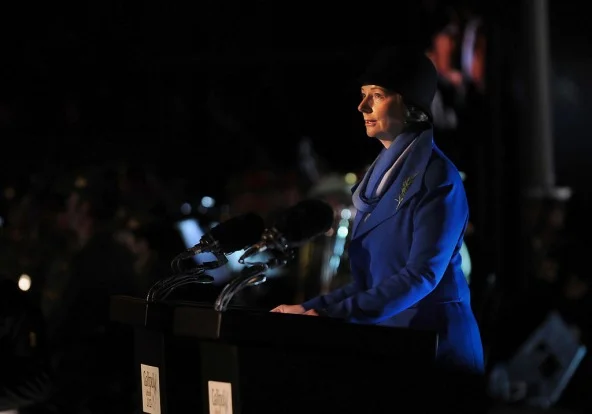
Julia Gillard: 'So this is a place hallowed by sacrifice and loss', Anzac Day - 2012

March 28, 2016

25 April 2012, Anzac Cove, Gallipoli, Turkey

Julia Gillard was the 27th Prime Minister of Australia, and the first woman to hold the position.

They were strangers in a strange land.

Men who came from "the ends of the earth" in an enterprise of hope to end a far-off, dreadful war.

But it was not to be.

Even at dawn, the shadows were already falling over this fate-filled day.

Advertisement

Here on these beaches and hills, so foreign and yet so familiar, a skilled enemy lay in wait, led by a man destined to become a great leader.

A world of war was described in the mortal struggles of a million men on the narrow confines of this peninsula.

For the allies, this was a battle of nations fought by great powers and the might of their empires for a wider strategic goal.

For the Turks, this was a defence of the soil and sanctity of home, for which Ataturk ordered his men not only to attack but to die.

And the men who fought here from our nation, our allies and from Turkey did die – terrible deaths that spared no age or rank or display of courage.

Over 130,000 men gave their lives in this place, two-thirds of them on the Turkish side and 8700 from Australia.

So this is a place hallowed by sacrifice and loss.

It is, too, a place shining with honour – and honour of the most vivid kind.

A place where foes met in equality and respect, and attained a certain nobility through their character and conduct.

Eight months later, this campaign ended as it had begun – at dawn.

At 3.57 on December 20, 1915, the last Diggers quietly slipped away.

They did not begrudge the victory of their enemy, which was hard-fought and deserved.

They did share a regret greater than any defeat – having to leave their mates behind.

So the Australian and New Zealand commander, General Godley, left a message asking the Ottoman forces to respect the Anzac graves.

But no such invitation was required.

The Turkish honoured our fallen and embraced them as their own sons.

And later they did something rare in the pages of history – they named this place in honour of the vanquished as Anzac Cove.

We therefore owe the Republic of Turkey a profound debt.

No nation could have better guarded our shrines or more generously welcomed our pilgrims.

A worthy foe has proved to be an even greater friend.

Through Turkey's hospitality, we do today what those who left these shores most dearly hoped:

We come back.

As we will always come back.

To give the best and only gift that can matter anymore – our remembrance.

We remember what the Anzacs did in war.

And for what they did to shape our nation in peace.

In this place, they taught us to regard Australia and nowhere else as home.

Here where they longed for the shape and scent of the gum leaf and the wattle, not the rose or the elm.

Where they remembered places called Weipa and Woolloomooloo, Toowoomba and Swan Hill.

Or the sight of Mt Clarence as their ships pulled away from Albany, for so many the last piece of Australian soil they would ever live to see.

This is the legend of Anzac, and it belongs to every Australian.

Not just those who trace their origins to the early settlers but those like me who are migrants and who freely embrace the whole of the Australian story as their own.

For Indigenous Australians, whose own wartime valour was a profound expression of the love they felt for the ancient land.

And for Turkish-Australians who have not one but two heroic stories to tell their children.

All of us remember, because all of us inhabit the freedom the Anzacs won for us.

These citizen-soldiers, who came here untested and unknown, and who "founded a deathless monument of valour" through the immensity of their sacrifice.

This dawn will turn to darkness at the ending of today.

But the sun will never set on the story of their deeds.

Now and for all time, we will remember them.

Lest We Forget.


 Julia Gillard’s speechwriter Michael Cooney is a guest on the 45th episode of the podcast, and talks about some pagination dramas that unfolded at Gallipoli!


Source: http://www.smh.com.au/federal-politics/a-p...

Enjoyed this speech? Speakola is a labour of love and I’d be very grateful if you would share, tweet or like it. Thank you.

Facebook Twitter Facebook
In WAR & CONFLICT Tags JULIA GILLARD, ANZAC DAY, ANZAC COVE, WAR, WW1, TURKEY
Comment

Neville Clark: 'We come to this sacred place not to glorify', The Spirit of ANZAC - 2014

March 15, 2016

25 April 2014, Shrine of Remembrance, Melbourne, Australia

Neville Clarke is a former headmaster of Mentone Grammar School in south eastern Melbourne.

We come to this sacred place not to glorify; certainly not to celebrate (the modern cult of celebrity would have been unrecognisable at ANZAC: as CJ Dennis's Ginger knew, 'It's a crook to tell / A tale that marks for praise a single one'.). If we are true to the purpose for which this Shrine was built, however, we come to commemorate. The Australian and New Zealand Army Corps gave to two new nations a new spirit which neither of them could have imagined before.

Australians and New Zealanders knew that they had to fight in 1914 because they knew the cost to themselves if the British Empire should go down – they'd go down with it. Australians and New Zealanders have not fought in wars to gain anything: Australians and New Zealanders have fought in wars not to lose something – freedom. To protect their nationhood – and their freedom – the A.N.Z.A.C. went to war with a spirit of determination which has marked their successors ever since.

The determination, for instance, of the tragic, successive waves of the Light Horse in the charge at The Nek in order to give the equally heroic New Zealanders the best chance of seizing Chunuk Bair, tactical key to the Gallipoli Peninsula.

The determination shown at Passchendaele by the Machine Gun Section Commander who wrote down his orders for his Section, all of whom had – like him – volunteered to man a potentially fatal outpost. His orders?

  1. This position will be held and the section will remain here until relieved.
  2. The enemy must not be allowed to interfere with this programme.
  3. If the section cannot remain here alive, it will remain here dead, but in any case it will remain here.
  4. Should all the guns be blown out, the section will use Mills grenades and other novelties.
  5. Finally, the position, as stated, will be held.

The section did indeed remain until relieved, fully 18 days later, and these orders became so famous along the Western Front that for many years they were promulgated in British Army Orders and, in 1940 in Dunkirk, were hailed in the press as 'the spirit that won the last war.' And the author, and Section Commander? A Tasmanian clergyman.

The determination of the Bomber Command aircrews to fly straight and level through the death zone to give themselves the best chance of hitting their targets in the Ruhr Valley.

The determination of the Captain and crew of HMAS 'Yarra' to protect a three-ship convoy by steering their own diminutive craft directly into the path of the Japanese heavy cruiser squadron.

The determination of the walking wounded from Kokoda not to clog up the 'fuzzy-wuzzy' stretcher line but to keep moving themselves, if necessary by crawling on their knees.

The determination of the POW's that no Australian should die alone on the Railway of Death.

The determination of the nursing sisters to maintain their honour and show o fear to their captors after the Banka Island massacre.

The determination of the exhausted division in the pivotal coastal sector at Alamein to bring upon themselves if necessary the whole weight of the Afrika Korps counter-attack to enable a break-out further inland.

The determination to mount the slopes of Maryang San, to advance through the rubber trees of Long Tan, or to search through the green valleys and up the desert crags of Afghanistan.

The determination to keep the home fires burning till the boys came home.

This spirit of determination has lead inevitably to sacrifice, not just the fact of sacrifice which, between 1914 and 1918 for instance, resulted in irreparable loss for two young nations, but also a spirit of sacrifice, a team spirit if you will, through which many lives were saved by selfless acts of courage, for the sake of comrades-in-arms, and ultimately for freedom.

And it was this spirit of sacrifice which was defined 2,000 years ago, and for all Eternity, by a brave and beloved leader whose words are engraved on the stone at the heart of this Shrine.

Greater love hath no man that this, that a man lay down his life for his friends.


Enjoyed this speech? Speakola is a labour of love and I’d be very grateful if you would share, tweet or like it. Thank you.

Facebook Twitter Facebook
In WAR & CONFLICT Tags SACRIFICE, SHRINE OF REMEBRANCE, NEVILLE CLARKE, WAR, HEADMASTER, ANZAC DAY
Comment

See my film!

Limited Australian Season

March 2025

Details and ticket bookings at

angeandtheboss.com

Support Speakola

Hi speech lovers,
With costs of hosting website and podcast, this labour of love has become a difficult financial proposition in recent times. If you can afford a donation, it will help Speakola survive and prosper.

Best wishes,
Tony Wilson.

Become a Patron!

Learn more about supporting Speakola.

Featured political

Featured
Jon Stewart: "They responded in five seconds", 9-11 first responders, Address to Congress - 2019
Jacinda Ardern: 'They were New Zealanders. They are us', Address to Parliament following Christchurch massacre - 2019
Dolores Ibárruri: "¡No Pasarán!, They shall not pass!', Defense of 2nd Spanish Republic - 1936
Jimmy Reid: 'A rat race is for rats. We're not rats', Rectorial address, Glasgow University - 1972

Featured eulogies

Featured
For Geoffrey Tozer: 'I have to say we all let him down', by Paul Keating - 2009
for James Baldwin: 'Jimmy. You crowned us', by Toni Morrison - 1988
for Michael Gordon: '13 days ago my Dad’s big, beautiful, generous heart suddenly stopped beating', by Scott and Sarah Gordon - 2018

Featured commencement

Featured
Tara Westover: 'Your avatar isn't real, it isn't terribly far from a lie', The Un-Instagrammable Self, Northeastern University - 2019
Tim Minchin: 'Being an artist requires massive reserves of self-belief', WAAPA - 2019
Atul Gawande: 'Curiosity and What Equality Really Means', UCLA Medical School - 2018
Abby Wambach: 'We are the wolves', Barnard College - 2018
Eric Idle: 'America is 300 million people all walking in the same direction, singing 'I Did It My Way'', Whitman College - 2013
Shirley Chisholm: ;America has gone to sleep', Greenfield High School - 1983

Featured sport

Featured
Joe Marler: 'Get back on the horse', Harlequins v Bath pre game interview - 2019
Ray Lewis : 'The greatest pain of my life is the reason I'm standing here today', 52 Cards -
Mel Jones: 'If she was Bradman on the field, she was definitely Keith Miller off the field', Betty Wilson's induction into Australian Cricket Hall of Fame - 2017
Jeff Thomson: 'It’s all those people that help you as kids', Hall of Fame - 2016

Fresh Tweets


Featured weddings

Featured
Dan Angelucci: 'The Best (Best Man) Speech of all time', for Don and Katherine - 2019
Hallerman Sisters: 'Oh sister now we have to let you gooooo!' for Caitlin & Johnny - 2015
Korey Soderman (via Kyle): 'All our lives I have used my voice to help Korey express his thoughts, so today, like always, I will be my brother’s voice' for Kyle and Jess - 2014

Featured Arts

Featured
Bruce Springsteen: 'They're keepers of some of the most beautiful sonic architecture in rock and roll', Induction U2 into Rock Hall of Fame - 2005
Olivia Colman: 'Done that bit. I think I have done that bit', BAFTA acceptance, Leading Actress - 2019
Axel Scheffler: 'The book wasn't called 'No Room on the Broom!', Illustrator of the Year, British Book Awards - 2018
Tina Fey: 'Only in comedy is an obedient white girl from the suburbs a diversity candidate', Kennedy Center Mark Twain Award -  2010
Tina Fey: 'Only in comedy is an obedient white girl from the suburbs a diversity candidate', Kennedy Center Mark Twain Award - 2010

Featured Debates

Featured
Sacha Baron Cohen: 'Just think what Goebbels might have done with Facebook', Anti Defamation League Leadership Award - 2019
Greta Thunberg: 'How dare you', UN Climate Action Summit - 2019
Charlie Munger: 'The Psychology of Human Misjudgment', Harvard University - 1995
Lawrence O'Donnell: 'The original sin of this country is that we invaders shot and murdered our way across the land killing every Native American that we could', The Last Word, 'Dakota' - 2016