• Genre
  • About
  • Submissions
  • Donate
  • Search
Menu

Speakola

All Speeches Great and Small
  • Genre
  • About
  • Submissions
  • Donate
  • Search
Share a political speech

Dominic Perrottet: 'This election was truly a race to the top', concession speech - 2023

April 3, 2023

25 March 2023, Sydney New South Wales, Australia

Friends, thank you so much for being here this evening. A short while ago, I called Chris Minns to congratulate him and the Labor Party on their election victory. The people of New South Wales, the great people of New South Wales tonight have decided to elect a Labor government in this state.

And that is a decision that we respect. I particularly tonight want to acknowledge the Leader of the Opposition. Elections can get ugly, but I believe this election truly was a race to the top, a genuine battle of ideas. And that's when politics is at its best. And in many ways that is due to Chris Minns and the way that he's carried himself throughout this campaign. And that's why I truly believe and have no doubt that he will make a fine 47th Premier of New South Wales, because I believe that he will lead with the same decency and the same integrity that he has led with so far.

And ultimately, I ask everybody across New South Wales, whatever your political persuasion, to get behind him, to get behind him. Because when New South Wales goes well, our country goes well. And that is something tonight I believe we can all get behind.

Now friends, it goes without saying. I think we all would would've wanted to have a different result this evening. But as a party, we as a government should be very proud of what we have achieved together. And I feel a profound sense of gratitude to have been able to serve the people of New South Wales.

Make no mistake. We've made history, been in government for the longest time since our party was formed, and our government has achieved so much in so many ways. We have kept New South Wales strong, free and fair.

Friends, New South Wales is a much better place today than it was 12 years ago, and that will be the legacy of our Liberal and Nationals government here in our state.

Our record is one of infrastructure, of investment and of imagination. We have rebuilt this state from the ground up with the biggest building agenda since federation. We built the first metros when they said it couldn't be done. Motorways that have changed the face of our city. More schools and hospitals than any government in our history and museums and stadiums befitting this world, class city and Australia's truly only global city.

We have laid also the foundations for a strong future, with three more metros and the second airport opening soon, this will turbocharge and transform our state for generations. And at the same time we've transformed service delivery, with record investments in health, in education, in public transport - not to mention Service New South Wales else.
And we've done the work, our government has done the hard work to keep our economy strong, to keep jobs plentiful. and taxes low, just like good Liberal governments do.
Now friends, when I took this job, I said I wanted to be a premier for families. And we have kept that promise, with record support for families across the board. But we've also dared to imagine a different future, where every child gets access to five days free preschool before they start kindergarten by getting of stamp duty, so that we help first home buyers reach that great Australian dream faster.

In a New South Wales State budget that is not propped up by the rivers of tears from the misery of problem gambling in this state.

Friends. Friends, we leave New South Wales a more stronger, more confident and more successful state than we found it. And we've achieved all of this whilst navigating some of the most difficult times, with droughts and fires and floods, we pushed through the pandemic and led our nation out of lockdown.

Difficult decisions. Difficult decisions, but the right decisions. I particularly want to acknowledge tonight our communities who have been significantly affected by floods. And I want to particularly acknowledge the community in the Northern Rivers. The devastation and the challenges that we saw will stay with me for the rest of my life. But what's more is the selflessness, the generosity, the spirit of service that I saw of our people in those regions in the most difficult times. And sometimes it's through the darkest times that brings out the best. But the values and that spirit that I had the great privilege to witness as Premier of this state, is something that will always be with me for the rest of my life. And it really shows to me how great Australia is and how great our people are.

Friends, tonight, can I say I am very proud to lead my Liberal team, but I stand on the shoulders of those who have come be before me. Barry O'Farrell, Mike Baird, and Gladys Berijiklian. Each of those leaders have left an indelible mark on our great state. Their legacies are strong, and New South Wales is a much better place for their leadership. And from my perspective, I couldn't have asked for better examples of leaders to learn from.
I want to thank my Coalition colleagues, for all the support they have shown me as premier of this state and during the campaign. My deputy and treasurer, Matt Keene, my former former Deputy Stuart Ayres. It doesn't appear that Stuart will have the result that he wanted, or that I wanted, this evening in Penrith, but Stuart can hold his head very high. He has served his community of Penrith incredibly well, and he has served our state with distinction. I want to thank the deputy, the deputy, premier, and leader of the National Party, Paul Toole. it has been a real privilege serving with him and he has been a champion for regional New South Wales, and in what is a difficult night for the Coalition, it has been a strong night for the National Party. And it shows that the National Party is the party of regional New South Wales.

I want to issue a special thank you to all the candidates for the Liberal party who put their hands up to run at this election. I want to particularly thank those who were unsuccessful, but also those who have lost their seats this evening. Politics is tough, but each of those members who weren't successful tonight have served their communities with distinction. And I want to thank them so much for their service to the people of New South Wales.
I want to acknowledge the Liberal Party organisation and particularly pass on my thanks to Chris Stone.

Chris has led a great team at Liberal Party headquarters, and he's run many campaigns, but to be part, for him to be part of this team and the leadership that he has shown, Chris, thank you so very much.

I want to thank all the ministerial and electorate staff who work tirelessly each and every day for the people of New South Wales. Thank you for everything that you have done over the last twelve years.

To all the volunteers, not just in the Liberal Party, but volunteers from all political parties who today spent much of the day handing out pamphlets, supporting our great democracy. Thank you for everything that you've done over the course of the day.

 But to everyone in the Liberal party, I'd say this. This next period of time will not be easy, but it will be necessary. It is a time to reflect. It is a time to rethink and ultimately to renew.
As leader of the Parliamentary Liberal Party. I take full responsibility for the loss this evening, and as a result, I will be standing down as the parliamentary leader of the Liberal part. It's very clear, we need a fresh start. We need a fresh start.

We did a fresh start for the liberal party. I want to thank the community of Epping and recognise their continued support. And thank them very much for supporting me at this election. Of all the 90 electorates across the state, Epping is the best. It is. I've had a few. It is the best, because it is my home. And thank you so much for your support.
Last lastly, and most importantly, I want to acknowledge my family, particularly Helen for everything she's done.

Helen is an amazing support. And I could not do this job and serve the people of our state without everything that she does for me and our family every single day. So thank you. To my kids, who should be a asleep, but they're probably not. Charlotte, Amelia, Annabelle, William, Harriet, Beatrice, and Celeste, you're not asleep. So just want to say I love you very much. Thank you for everything.

I want to finish tonight by saying that I didn't get into politics for a job. I got into politics to serve. And I want to thank every person across New South Wales for the great opportunity that you have given me. It has been an absolute honour and privilege, the greatest honour and privilege that I've had in my entire life. Thank you and good night.


Enjoyed this speech? Speakola is a labour of love and I’d be very grateful if you would share, tweet or like it. Thank you.

Facebook Twitter Facebook
In 2020-29 B Tags DONINIC PERROTTET, PREMIER, CONCESSION SPEECH, ELECTION, ELECTION 2023, STATE ELECTION, NEW SOUTH WALES, NSW, CHRIS MINNS, LIBERAL PARTY, COALITION, AUSTRALIAN POLITICS, CONSERVATIVE, THANK YOUS
Comment

Tony Abbott: 'The IPA has been freedom’s discerning friend', IPA's 70th birthday - 2013

January 31, 2023


4 April 2013, Melbourne, Australia

In a stark reminder of the forces forcing Abbott onto the Australian people, in a speech this week, Tony Abbott fawns over the reactionary think tank, obsequiously sucks up to mining magnate Gina Rinehart and sings paeans of praise to media monopolist Rupert Murdoch.

Andrew thank you so much for that truly lovely introduction. All I can say is: I prefer your judgments to your reminiscences!

Mr Premier, Mr Lord Mayor, Your Eminence, parliamentary colleagues, I don’t want to single anyone out because there are so many of them here but I should particularly mention the Shadow Attorney-General George Brandis who did such magnificent work in opposing the current government’s attacks on free speech, family members of the founder of the IPA, CD Kemp, Gina Rinehart, who has given what I’m sure is the best speech that any one will give tonight, ladies and gentlemen.


At one level, tonight we celebrate the 70th birthday of the Institute of Public Affairs; but at a deeper level we celebrate things that are timeless – the freedom that our civilisation has nurtured and the faith that has nurtured our civilisation. In celebrating the IPA, we celebrate its calling which is to support and sustain the public culture which has shaped our country and influenced so well the wider world.

In the Garden of Eden that Adam and Eve could do almost as they pleased but freedom turned out to have its limits and its abuses, as this foundational story makes only too clear. Yet without freedom we can hardly be human; hardly be worthy of creation in the image of God. From the Garden of Eden, to the Exodus, Athenian democracy, the Roman Senate, Magna Carta, the glorious revolution and American independence, the story of our civilisation has been the story of freedom and our struggles to achieve it.

Freedom, ladies and gentlemen, is what we yearn for but it can only exist within a framework of law so that every person’s freedom is consistent with the same freedom for everyone else. This is what the poet Tennyson meant when he described England as “a land of just and old renown, a land of settled government where freedom broadens slowly down from precedent to precedent”. At least in the English speaking tradition, liberalism and conservatism, love of freedom and respect for due process, have been easy allies.

The IPA, I want to say, has been freedom’s discerning friend. It has supported capitalism, but capitalism with a conscience. Not for the IPA, a single-minded dogmatism or opposition to all restraint; rather a sophisticated appreciation that freedom requires a social context and that much is expected from those to whom so much has been given. You’ve understood that freedom is both an end and a means; a good in itself, as well as necessary for full human flourishing.

I particularly congratulate the IPA and its marvelous director, John Roskam, for your work in defence of Western civilisation. Contemporary Australia has well and truly - and rightly - left behind the old cult of forgetfulness about our indigenous heritage. Alas, there is a new version of the great Australian silence – this time about the Western canon, the literature, the poetry, the music, the history and above all the faith without which our culture and our civilisation are unimaginable.

“Do unto others as you would have them do unto you” is the foundation of our justice. “Love your neighbour as you love yourself” is the foundation of our mercy. Faith has weakened but not, I’m pleased to say, this high mindedness which faith helped to spawn and which the IPA now helps to protect and to promote.

I want to say of the IPA that, unlike some other bodies dedicated to the promotion of an ideal, the IPA has never been too proud or too pure to campaign for its beliefs or to take sides in a good cause. Your campaign against the bill of rights caused a bad government to capitulate. You campaigned against the bill of rights because you understood that a democratic parliament, an incorruptible judiciary and a free press, rather than mere law itself, were the best guarantors of human rights.

You campaigned against the legislative prohibition against giving offence and I’m pleased to say that the author of those draft laws is now leaving the parliament. Well done IPA! And, of course, you campaigned against the public interest media advocate, an attack dog masquerading as a watchdog, designed to intimidate this government’s media critics and that legislation was humiliatingly withdrawn. John, whatever you did to persuade independent members of parliament, please, give it to me!

John, you’ve done very well with just 20 staff – but remember what Jesus of Nazareth did with just 12 and one of them turned out to be a rat!

John, there is one campaign where you will not prevail – namely your urgent advice to me in the IPA Review last August to be more like Gough Whitlam. You had a great deal of advice for me in that particular issue and I want to assure you that the Coalition will indeed repeal the carbon tax, abolish the Department of Climate Change, abolish the Clean Energy Fund. We will repeal Section 18C of the Racial Discrimination Act, at least in its current form. We will abolish new health and environmental bureaucracies. We will deliver $1 billion in red tape savings every year. We will develop northern Australia. We will repeal the mining tax. We will create a one stop shop for environmental approvals. We will privatise Medibank Private. We will trim the public service and we will stop throwing good money after bad on the NBN.

So, ladies and gentlemen, that is a big “yes” to many of the 75 specific policies you urged upon me in that particular issue of the magazine….but Gough Whitlam I will never be!

Now, as it happens, John Roskam is not the only member of this audience to have had some regard for Gough Whitlam. Based on his papers’ 1972, support for the Whitlam Government our guest of honour tonight was once described as a “recovering socialist”. I suspect we will discover later on just how completely he has been cured!

John Howard has said that Rupert Murdoch has been by far Australia’s most influential international businessman; but I would like to go a little further. Along with Sir John Monash, the Commander of the First AIF which saved Paris and helped to win the First World War, and Lord Florey a one-time provost of my old Oxford College, the co-inventor of penicillin that literally saved millions of lives, Rupert Murdoch is probably the Australian who has most shaped the world through the 45 million newspapers that News Corp sells each week and the one billion subscribers to News-linked programming.

Rupert Murdoch has sometimes changed his political allegiance but he’s never changed his fundamental principles. At least since the mid-70’s, those have been greater personal responsibility, smaller government, fewer regulations and support for open societies that don’t build walls against the world.

(This speech was given at the IPA 70th birthday event this week, MC'd by Andrew Bolt, with Rupert Murdoch as guest of honour and also featuring a speech by Gina Rinehart. The text is republished in full, unedited, from Tony Abbott's personal website.)


Enjoyed this speech? Speakola is a labour of love and I’d be very grateful if you would share, tweet or like it. Thank you.

Facebook Twitter Facebook
In 2010s MORE 5 Tags TONY ABBOTT, PRIME MINISTER, IPA, INSTITUTE OF PUBLIC AFFAIRS, CONSERVATISM, CONSERVATIVE, LIBERAL PARTY, FREEDOM, BILL OF RIGHTS, 2010, 2013, 2010s
Comment

Spiro Agnew: 'An effete core of impudent snobs', Des Moines speech about the mainstream media - 1969

February 8, 2022

13 November 1969, Des Moines, Iowa

Thank you very much, Governor Ray, Governor Ogilvie, Governor Tiemann, Mr. Boyd, Miss Peterson, the many distinguished officials of the Republican Party gathered for this Midwest regional meeting. It's indeed a pleasure for me to be here tonight. I had intended to make all three of the regional meetings that have been scheduled thus far, but unfortunately I had to scrub the Western one -- Hawaii was a little far at the moment, that time. But I'm glad to be here tonight and I look forward to attending the others.

I think it's obvious from the cameras here that I didn't come to discuss the ban on cyclamates or DDT. I have a subject I think is of great interest to the American people. Tonight I want to discuss the importance of the television medium to the American people. No nation depends more on the intelligent judgment of its citizens. And no medium has a more profound influence over public opinion. Nowhere in our system are there fewer checks on such vast power. So nowhere should there be more conscientious responsibility exercised than by the news media. The question is, "Are we demanding enough of our television news presentations?" "And are the men of this medium demanding enough of themselves?"

Monday night, a week ago, President Nixon delivered the most important address of his Administration, one of the most important of our decade. His subject was Vietnam. My hope, as his at that time, was to rally the American people to see the conflict through to a lasting and just peace in the Pacific. For 32 minutes, he reasoned with a nation that has suffered almost a third of a million casualties in the longest war in its history.

When the President completed his address -- an address, incidentally, that he spent weeks in the preparation of -- his words and policies were subjected to instant analysis and querulous criticism. The audience of 70 million Americans gathered to hear the President of the United States was inherited by a small band of network commentators and self-appointed analysts, the majority of whom expressed in one way or another their hostility to what he had to say.

It was obvious that their minds were made up in advance. Those who recall the fumbling and groping that followed President Johnson's dramatic disclosure of his intention not to seek another term have seen these men in a genuine state of non-preparedness. This was not it.

One commentator -- One commentator twice contradicted the President's statement about the exchange of correspondence with Ho Chi Minh. Another challenged the President's abilities as a politician. A third asserted that the President was following a Pentagon line. Others, by the expressions on their faces, the tone of their questions, and the sarcasm of their responses, made clear their sharp disapproval.

To guarantee in advance that the President's plea for national unity would be challenged, one network [A.B.C.] trotted out Averell Harriman for the occasion. Throughout the President's address, he waited in the wings. When the President concluded, Mr. Harriman recited perfectly. He attacked the Thieu Government as unrepresentative. He criticized the President's speech for various deficiencies. He twice issued a call to the Senate Foreign Relations Committee to debate Vietnam once again. He stated his belief that the Vietcong or North Vietnamese did not really want a military takeover of South Vietnam. And he told a little anecdote about a "very, very responsible" fellow he had met in the North Vietnamese delegation.

All in all, Mr. Harriman offered a broad range of gratuitous advice challenging and contradicting the policies outlined by the President of the United States. Where the President had issued a call for unity, Mr. Harriman was encouraging the country not to listen to him.

A word about Mr. Harriman. For 10 months he was America's chief negotiator at the Paris peace talks -- a period in which the United States swapped some of the greatest military concessions in the history of warfare for an enemy agreement on the shape of the bargaining table. Like Coleridge's Ancient Mariner, Mr. Harriman seems to be under some heavy compulsion to justify his failures to anyone who will listen. And the networks have shown themselves willing to give him all the air time he desires.

Now every American has a right to disagree with the President of the United States and to express publicly that disagreement. But the President of the United States has a right to communicate directly with the people who elected him, and the -- and the people of this country have the right to make up their own minds and form their own opinions about a Presidential address without having the President's words and thoughts characterized through the prejudices of hostile critics before they can even be digested.

When Winston Churchill rallied public opinion to stay the course against Hitler's Germany, he didn't have to contend with a gaggle of commentators raising doubts about whether he was reading public opinion right, or whether Britain had the stamina to see the world -- the war through. When President Kennedy rallied a nation in the Cuban missile crisis, his address to the people was not chewed over by a roundtable of critics who disparaged the course of action he'd asked America to follow.

The purpose of my remarks tonight is to focus your attention on this little group of men who not only enjoy a right of instant rebuttal to every Presidential address, but, more importantly, wield a free hand in selecting, presenting, and interpreting the great issues in our nation.

First, let's define that power.

At least 40 million Americans every night, it's estimated, watch the network news. Seven million of them view A.B.C., the remainder being divided between N.B.C. and C.B.S. According to Harris polls and other studies, for millions of Americans the networks are the sole source of national and world news. In Will Rogers' observation, what you knew was what you read in the newspaper. Today for growing millions of Americans, it's what they see and hear on their television sets.

Now how is this network news determined? A small group of men, numbering perhaps no more than a dozen anchormen, commentators, and executive producers, settle upon the 20 minutes or so of film and commentary that's to reach the public.

This selection is made from the 90 to 180 minutes that may be available. Their powers of choice are broad. They decide what 40 to 50 million Americans will learn of the day's events in the nation and in the world. We cannot measure this power and influence by the traditional democratic standards, for these men can create national issues overnight. They can make or break by their coverage and commentary a moratorium on the war. They can elevate men from obscurity to national prominence within a week. They can reward some politicians with national exposure and ignore others.

For millions of Americans the network reporter who covers a continuing issue -- like the ABM or civil rights -- becomes, in effect, the presiding judge in a national trial by jury.

It must be recognized that the networks have made important contributions to the national knowledge -- through news, documentaries, and specials. They have often used their power constructively and creatively to awaken the public conscience to critical problems. The networks made hunger and black lung disease national issues overnight. The TV networks have done what no other medium could have done in terms of dramatizing the horrors of war. The networks have tackled our most difficult social problems with a directness and an immediacy that's the gift of their medium. They focus the nation's attention on its environmental abuses -- on pollution in the Great Lakes and the threatened ecology of the Everglades. But it was also the networks that elevated Stokely Carmichael and George Lincoln Rockwell from obscurity to national prominence.

Nor is their power confined to the substantive. A raised eyebrow, an inflection of the voice, a caustic remark dropped in the middle of a broadcast can raise doubts in a million minds about the veracity of a public official or the wisdom of a Government policy. One Federal Communications Commissioner considers the powers of the networks equal to that of local, state, and Federal Governments all combined. Certainly it represents a concentration of -- of power over American public opinion unknown in history.

Now what do Americans know of the men who wield this power? Of the men who produce and direct the network news, the nation knows practically nothing. Of the commentators, most Americans know little other than that they reflect an urbane and assured presence, seemingly well-informed on every important matter. We do know that to a man these commentators and producers live and work in the geographical and intellectual confines of Washington, D.C., or New York City, the latter of which James Reston terms "the most unrepresentative community in the entire United States."

Both communities bask in their own provincialism, their own parochialism. We can deduce that these men read the same newspapers. They draw their political and social views from the same sources. Worse, they talk constantly to one another, thereby providing artificial reinforcement to their shared viewpoints. Do they allow their biases to influence the selection and presentation of the news? David Brinkley states, "objectivity is impossible" to normal human behavior. Rather, he says, we should strive for "fairness"

Another anchorman on a network news show contends, and I quote:

You can't expunge all your private convictions just because you sit in a seat like this and a camera starts to stare at you. I think your program has to reflect what your basic feelings are. I'll plead guilty to that.

Less than a week before the 1968 election, this same commentator charged that President Nixon's campaign commitments were no more durable than campaign balloons. He claimed that, were it not for the fear of the hostile reaction, Richard Nixon would be giving into, and I quote him exactly, "his natural instinct to smash the enemy with a club or go after him with a meat axe."

Had this slander been made by one political candidate about another, it would have been dismissed by most commentators as a partisan attack. But this attack emanated from the privileged sanctuary of a network studio and therefore had the apparent dignity of an objective statement.

The American people would rightly not tolerate this concentration of power in Government. Is it not fair and relevant to question its concentration in the hands of a tiny, enclosed fraternity of privileged men elected by no one and enjoying a monopoly sanctioned and licensed by Government? The views of a -- the majority of this fraternity do not -- and I repeat, not -- represent the views of America. And that is why such a great gulf existed between how the nation received the President's address and how the networks reviewed it.

Not only did the country receive the President's address warmer -- more warmly than the networks, but so also did the Congress of the United States. Yesterday, the President was notified that 300 individual Congressmen and 50 Senators of both parties had endorsed his efforts for peace. As with other American institutions, perhaps it is time that the networks were made more responsive to the views of the nation and more responsible to the people they serve.

Now I want to make myself perfectly clear: I'm not asking for Government censorship or any other kind of censorship. I am asking whether a form of censorship already exists when the news that 40 million Americans -- when the news that 40 million Americans receive each night is determined by a handful of men responsible only to their corporate employers and is filtered through a handful of commentators who admit to their own set of biases.

The questions I'm raising here tonight should have been raised by others long ago. They should have been raised by those Americans who have traditionally considered the preservation of freedom of speech and freedom of the press their special provinces of responsibility. They -- They should have been raised by those Americans who share the view of the late Justice Learned Hand that "right conclusions are more likely to be gathered out of a multitude of tongues than through any kind of authoritative selection."

Advocates for the networks have claimed a First Amendment right to the same unlimited freedoms held by the great newspapers of America. But the situations are not identical. Where The New York Times reaches 800,000 people, N.B.C. reaches 20 times that number on its evening news. Nor can the tremendous impact of seeing television film and hearing commentary be compared with reading the printed page.

A decade ago, before the network news acquired such dominance over public opinion, Walter Lippman spoke to the issue. He said,

There [is] is an essential and radical difference between television and printing...The three or four competing television stations control virtually all that can be received over the air by ordinary television sets. But besides the mass circulation dailies, there are [the] weeklies, [the] monthlies, [the] out-of-town newspapers and books. If a man does [not] like his newspaper, he can read another from out of town, or wait for a weekly news magazine. It [is] not ideal, but it [is] infinitely better than the situation in television. There, if a man does [not] like what the networks [offer him], all he can do is [to] turn them off, and listen to a phonograph (p.414).

"Networks," he stated,

which are few in number, have a virtual monopoly of a whole medium of communication. The newspapers of mass circulation have no monopoly [of] the medium of print (p.414).

Now a virtual monopoly of a whole medium of communication is not something that democratic people should blithely ignore. And we are not going to cut off our television sets and listen to the phonograph just because the airways belong to the networks. They don't. They belong to the people. As Justice Byron...White wrote in his landmark opinion six months ago, "It [is] the right of the viewers and listeners, not the right of the broadcasters, which is paramount."

Now it's argued that this power presents no danger in the hands of those who have used it responsibly. But as to whether or not the networks have abused the power they enjoy, let us call as our first witness, former Vice President Humphrey and the city of Chicago. According to Theodore White, television's intercutting of the film from the streets of Chicago with the "current proceedings on the floor of the convention created the most striking and false political picture of 1968 -- the nomination of a man for the American Presidency by the brutality and violence of merciless police."

If we are to believe a recent report of the House of Representatives Commerce Committee, then television's presentation of the violence in the streets worked an injustice on the reputation of the Chicago police. According to the committee findings, one network in particular presented, and I quote, "a one-sided picture which in large measure exonerates the demonstrators and protestors." Film of provocations of police that was available never saw the light of day, while the film of a police response which the protestors provoked was shown to millions.

Another network showed virtually the same scene of violence from three separate angles without making clear it was the same scene. And while the full report is reticent in drawing conclusions, it is not a document to inspire confidence in the fairness of the network news. Our knowledge of the impact of network news on the national mind is far from incomplete [sic] but some early returns are available. Again, we have enough information to raise serious questions about its effect on a democratic society.

Several years ago Fred Friendly, one of the pioneers of network news, wrote that its "missing ingredients" were "conviction, controversy, and a point of view" The networks have compensated with a vengeance.

And in the networks' endless pursuit of controversy, we should ask: "What is the end value -- to enlighten or to profit?" "What is the end result -- to inform or to confuse?" "How does the ongoing exploration for more action, more excitement, more drama serve our national search for internal peace and stability?"

Gresham's Law seems to be operating in the network news. Bad news drives out good news. The irrational is more controversial than the rational. Concurrence can no longer compete with dissent. One minute of Eldridge Cleaver is worth 10 minutes of Roy Wilkins. The labor crisis settled at the negotiating table is nothing compared to the confrontation that results in a strike -- or better yet, violence along the picket lines. Normality has become the nemesis of the network news.

Now the upshot of all this controversy is that a narrow and distorted picture of America often emerges from the televised news. A single, dramatic piece of the mosaic becomes in the minds of millions the entire picture. The -- The American who relies upon television for his news might conclude that the majority of American students are embittered radicals; that the majority of black Americans feel no regard for their country; that violence and lawlessness are the rule rather than the exception on the American campus. We know that none of these conclusions is true.

Perhaps the place to start looking for a credibility gap is not in the offices of the Government in Washington but in the studios of the networks in New York. Television may have destroyed the old stereotypes, but has it not created new ones in their places? What has this "passionate" pursuit of controversy done to the politics of progress through local compromise essential to the functioning of a democratic society?

The members of Congress or the Senate who follow their principles and philosophy quietly in a spirit of compromise are unknown to many Americans, while the loudest and most extreme dissenters on every issue are known to every man in the street. How many marches and demonstrations would we have if the marchers did not know that the ever-faithful TV cameras would be there to record their antics for the next news show?

We've heard demands that Senators and Congressmen and judges make known all their financial connections so that the public will know who and what influences their decisions and their votes. Strong arguments can be made for that view. But when a single commentator or producer, night after night, determines for millions of people how much of each side of a great issue they are going to see and hear, should he not first disclose his personal views on the issue as well? In this search for excitement and controversy, has more than equal time gone to the minority of Americans who specialize in attacking the United States -- its institutions and its citizens?

Tonight I've raised questions. I've made no attempt to suggest the answers. The answers must come from the media men. They are challenged to turn their critical powers on themselves, to direct their energy, their talent, and their conviction toward improving the quality and objectivity of news presentation. They are challenged to structure their own civic ethics -- to relate their great feeling with the great responsibilities they hold.

And the people of America are challenged, too -- challenged to press for responsible news presentations. The people can let the networks know that they want their news straight and objective. The people can register their complaints on bias through mail to the networks and phone calls to local stations. This is one case where the people must defend themselves, where the citizen, not the Government, must be the reformer; where the consumer can be the most effective crusader.

By way of conclusion, let me say that every elected leader in the United States depends on these men of the media. Whether what I've said to you tonight will be heard and seen at all by the nation is not my decision; it's not your decision -- it's their decision.

In tomorrow's edition of the Des Moines Register, you'll be able to read a news story detailing what I said tonight. Editorial comment will be reserved for the editorial page, where it belongs. Should not the same wall of separation exist between news and comment on the nation's networks?

Now my friends, we'd never trust such power, as I've described, over public opinion in the hands of an elected Government. It's time we questioned it in the hands of a small and unelected elite. The great networks have dominated America's airwaves for decades. The people are entitled to a full accounting of their stewardship.

Source: https://www.americanrhetoric.com/speeches/...

Enjoyed this speech? Speakola is a labour of love and I’d be very grateful if you would share, tweet or like it. Thank you.

Facebook Twitter Facebook
In 1960-79 C Tags SPIRO AGNEW, DES MOINES, MEDIA, MAINSTREAM MEDIA, MID WEST, TRANSCRIPT, NIXON, RICHARD NIXON, NIXON ADMINISTRATION, POPULARIMS, POPULARISM, PAT BUCHANAN, REPUBLICAN PARTY, CONSERVATIVE, VIETNAM WAR, PROTEST
Comment

Ronald Reagan: 'Once you begin a great movement, there's no telling where it will end', Farewell address to the nation - 1989

July 21, 2021

11 January 1989, Oval Office, Washington DC, USA

My fellow Americans, this is the 34th time I'll speak to you from the Oval Office, and the last. We've been together eight years now, and soon it'll be time for me to go. But before I do, I wanted to share some thoughts, some of which I have been saving for a long time.

It's been the honor of my life to be your President. So many of you have written the past few weeks to say thanks, but I could say as much to you. Nancy and I are grateful for the opportunity you gave us to serve.

One of the things about the Presidency is that you're always somewhat apart. You spend a lot of time going by too fast in a car someone else is driving, and seeing the people through tinted glass - the parents holding up a child, and the wave you saw too late and couldn't return. And so many times I wanted to stop, and reach out from behind the glass, and connect. Well, maybe I can do a little of that tonight.

People ask how I feel about leaving, and the fact is parting is "such sweet sorrow." The sweet part is California, and the ranch, and freedom. The sorrow? The goodbyes, of course, and leaving this beautiful place.

You know, down the hall and up the stairs from this office is the part of the White House where the President and his family live. There are a few favorite windows I have up there that I like to stand and look out of early in the morning. The view is over the grounds here to the Washington Monument, and then the Mall, and the Jefferson Memorial. But on mornings when the humidity is low, you can see past the Jefferson to the river, the Potomac, and the Virginia shore. Someone said that's the view Lincoln had when he saw the smoke rising from the battle of Bull Run. Well, I see more prosaic things: the grass on the banks, the morning traffic as people make their way to work, now and then a sailboat on the river. Reflections at a Window

I've been thinking a bit at that window. I've been reflecting on what the past eight years have meant, and mean. And the image that comes to mind like a refrain is a nautical one - a small story about a big ship, and a refugee, and a sailor.

It was back in the early Eighties, at the height of the boat people, and the sailor was hard at work on the carrier Midway, which was patrolling the South China Sea. The sailor, like most American servicemen, was young, smart and fiercely observant. The crew spied on the horizon a leaky little boat - and crammed inside were refugees from Indochina hoping to get to America. The Midway sent a small launch to bring them to the ship, and safety. As the refugees made their way through the choppy seas, one spied the sailor on deck, and stood up and called out to him. He yelled, "Hello, American sailor - Hello, Freedom Man."

A small moment with a big meaning, a moment the sailor, who wrote it in a letter, couldn't get out of his mind. And, when I saw it, neither could I.

Because that's what it has to - it was to be an American in the 1980's; We stood, again, for freedom. I know we always have but in the past few years the world - again, and in a way, we ourselves - rediscovered it.

It's been quite a journey this decade, and we held together through some stormy seas. And at the end, together, we are reaching our destination.

The fact is, from Grenada to the Washington and Moscow summits, from the recession of '81 to '82 to the expansion that began in late '82 and continues to this day, we've made a difference. Two Great Triumphs

The way I see it, there were two great triumphs, two things that I'm proudest of. One is the economic recovery, in which the people of America created - and filled - 19 million new jobs. The other is the recovery of our morale: America is respected again in the world, and looked to for leadership.

Something that happened to me a few years ago reflects some of this. It was back in 1981, and I was attending my first big economic summit, which was held that year in Canada. The meeting place rotates among the member countries. The opening meeting was a formal dinner for the heads of government of the seven industrialized nations. Well, I sat there like the new kid in school and listened, and it was all Francois this and Helmut that. They dropped titles and spoke to one another on a first-name basis. Well, at one point I sort of leaned in and said, "My name's Ron."

Well, in that same year, we began the actions we felt would ignite an economic comeback: cut taxes and regulation, started to cut spending. Soon the recovery began.

Two years later, another economic summit, with pretty much the same cast. At the big opening meeting, we all got together, and all of a sudden just for a moment I saw that everyone was just sitting there looking at me. And then one of them broke the silence. "Tell us about the American miracle," he said.

Well, back in 1980, when I was running for President, it was all so different. Some pundits said our programs would result in catastrophe. Our views on foreign affairs would cause war, our plans for the economy would cause inflation to soar and bring about economic collapse. I even remember one highly respected economist saying, back in 1982, that "The engines of economic growth have shut down here and they're likely to stay that way for years to come."

Well, he - and the other "opinion leaders" - were wrong. The fact is, what they called "radical" was really "right"; what they called "dangerous" was just "desperately needed." 'The Great Communicator'

And in all that time I won a nickname - "The Great Communicator." But I never thought it was my style or the words I used that made a difference - it was the content. I wasn't a great communicator, but I communicated great things, and they didn't spring full bloom from my brow, they came from the heart of a great nation - from our experience, our wisdom, and our belief in the principles that have guided us for two centuries.

They called it the Reagan Revolution, and I'll accept that, but for me it always seemed more like the Great Rediscovery: a rediscovery of our values and our common sense.

Common sense told us that when you put a big tax on something, the people will produce less of it. So we cut the people's tax rates, and the people produced more than ever before. The economy bloomed like a plant that had been cut back and could now grow quicker and stronger. Our economic program brought about the longest peacetime expansion in our history: real family income up, the poverty rate down, entrepreneurship booming and an explosion in research and new technology. We're exporting more now than ever because American industry became more competitive, and at the same time we summoned the national will to knock down protectionist walls abroad instead of erecting them at home.

Common sense also told us that to preserve the peace we'd have to become strong again after years of weakness and confusion. So we rebuilt our defenses - and this New Year we toasted the new peacefulness around the globe. Not only have the superpowers actually begun to reduce their stockpiles of nuclear weapons - and hope for even more progress is bright - but the regional conflicts that rack the globe are also beginning to cease. The Persian Gulf is no longer a war zone, the Soviets are leaving Afghanistan, the Vietnamese are preparing to pull out of Cambodia and an American-mediated accord will soon send 50,000 Cuban troops home from Angola. 'We Changed a World'

The lesson of all this was, of course, that because we're a great nation, our challenges seem complex. It will always be this way. But as long as we remember our first principles and believe in ourselves, the future will always be ours.

And something else we learned: once you begin a great movement, there's no telling where it'll end. We meant to change a nation, and instead, we changed a world.

Countries across the globe are turning to free markets and free speech - and turning away from the ideologies of the past. For them, the Great Rediscovery of the 1980's has been that, lo and behold, the moral way of government is the practical way of government. Democracy, the profoundly good, is also the profoundly productive.

When you've got to the point where you can celebrate the anniversaries of your 39th birthday you can sit back sometimes, review your life and see it flowing before you. For me, there was a fork in the river, and it was right in the middle of my life.

I never meant to go into politics: it wasn't my intention when I was young. But I was raised to believe you had to pay your way for the blessings bestowed on you. I was happy with my career in the entertainment world, but I ultimately went into politics because I wanted to protect something precious. 'We the People'

Ours was the first revolution in the history of mankind that truly reversed the course of government, and with three little words: "We the People."

"We the People" tell the Government what to do, it doesn't tell us. "We the people" are the driver - the Government is the car. And we decide where it should go, and by what route, and how fast. Almost all the world's constitutions are documents in which governments tell the people what their privileges are. Our Constitution is a document in which "We the People" tell the Government what it is allowed to do. "We the people" are free.

This belief has been the underlying basis for everything I tried to do these past eight years.

But back in the 1960's when I began, it seemed to me that we'd begun reversing the order of things - that through more and more rules and regulations and confiscatory taxes, the Government was taking more of our freedom. I went into politics in part to put up my hand and say, "Stop!" I was a citizen-politician, and it seemed the right thing for a citizen to do.

I think we have stopped a lot of what needed stopping. And I hope we have once again reminded people that man is not free unless government is limited. There's a clear cause and effect here that is as neat and predictable as a law of physics: as government expands, liberty contracts. Actions Based on Deeds

Nothing is less free than pure communism, and yet we have, the past few years, forged a satisfying new closeness with the Soviet Union. I've been asked if this isn't a gamble, and my answer is no, because we're basing our actions not on words but deeds.

The detente of the 1970's was based not on actions but promises. They'd promise to treat their own people and the people of the world better, but the gulag was still the gulag, and the state was still expansionist, and they still waged proxy wars in Africa, Asia and Latin America.

Well, this time, so far, it's different: President Gorbachev has brought about some internal democratic reforms and begun the withdrawal from Afghanistan. He has also freed prisoners whose names I've given him every time we've met.

But life has a way of reminding you of big things through small incidents. Once, during the heady days of the Moscow Summit, Nancy and I decided to break off from the entourage one afternoon to visit the shops on Arbat Street - that's a little street just off Moscow's main shopping area.

Even though our visit was a surprise, every Russian there immediately recognized us, and called out our names and reached for our hands. We were just about swept away by the warmth - you could almost feel the possibilities in all that joy. But within seconds, a K.G.B. detail pushed their way toward us and began pushing and shoving the people in the crowd. It was an interesting moment. It reminded me that while the man on the street in the Soviet Union yearns for peace, the Government is Communist - and those who run it are Communists - and that means we and they view such issues as freedom and human rights very differently. 'Keep Up Our Guard'

We must keep up our guard - but we must also continue to work together to lessen and eliminate tension and mistrust.

My view is that President Gorbachev is different from previous Soviet leaders. I think he knows some of the things wrong with his society and is trying to fix them. We wish him well. And we'll continue to work to make sure that the Soviet Union that eventually emerges from this process is a less threatening one.

What it all boils down to is this: I want the new closeness to continue. And it will as long as we make it clear that we will continue to act in a certain way as long as they continue to act in a helpful manner. If and when they don't - at first pull your punches. If they persist, pull the plug.

It's still trust - but verify.

It's still play - but cut the cards.

It's still watch closely - and don't be afraid to see what you see.

I've been asked if I have any regrets. Well, I do.

The deficit is one. I've been talking a great deal about that lately, but tonight isn't for arguments, and I'm going to hold my tongue.

But an observation: I've had my share of victories in the Congress, but what few people noticed is that I never won anything you didn't win for me. They never saw my troops; they never saw Reagan's Regiments, the American people. You won every battle with every call you made and letter you wrote demanding action. Much to Be Done

Well, action is still needed. If we're to finish the job, of Reagan's Regiments, we'll have to become the Bush Brigades. Soon he'll be the chief, and he'll need you every bit as much as I did.

Finally, there is a great tradition of warnings in Presidential farewells, and I've got one that's been on my mind for some time.

But oddly enough it starts with one of the things I'm proudest of in the past eight years; the resurgence of national pride that I called "the new patriotism." This national feeling is good, but it won't count for much, and it won't last unless it's grounded in thoughtfulness and knowledge.

An informed patriotism is what we want. And are we doing a good enough job teaching our children what America is and what she represents in the long history of the world?

Those of us who are over 35 or so years of age grew up in a different America. We were taught, very directly, what it means to be an American, and we absorbed almost in the air a love of country and an appreciation of its institutions. If you didn't get these things from your family you got them from the neighborhood, from the father down the street who fought in Korea or the family who lost someone at Anzio. Or you could get a sense of patriotism from school. And if all else failed, you could get a sense of patriotism from the popular culture. The movies celebrated democratic values and implicitly reinforced the idea that America was special. TV was like that, too, through the mid-Sixties. Ahead, to the Nineties

But now we're about to enter the Nineties, and some things have changed. Younger parents aren't sure that an unambivalent appreciation of America is the right thing to teach modern children. And as for those who create the popular culture, well-grounded patriotism is no longer the style.

Our spirit is back, but we haven't reinstitutionalized it. We've got to do a better job of getting across that America is freedom - freedom of speech, freedom of religion, freedom of enterprise - and freedom is special and rare. It's fragile; it needs protection.

We've got to teach history based not on what's in fashion but what's important: Why the pilgrims came here, who Jimmy Doolittle was, and what those 30 seconds over Tokyo meant. You know, four years ago, on the 40th anniversary of D-Day. I read a letter from a young woman writing to her late father, who'd fought on Omaha Beach. Her name was Lisa Zanatta Henn, and she said, we will always remember, we will never forget what the boys of Normandy did. Well, let's help her keep her word.

If we forget what we did, we won't know who we are. I am warning of an eradication of that - of the American memory that could result, ultimately, in an erosion of the American spirit.

Let's start with some basics - more attention to American history and a greater emphasis of civic ritual. And let me offer lesson No. 1 about America : All great change in America begins at the dinner table. So tomorrow night in the kitchen I hope the talking begins. And children, if your parents haven't been teaching you what it means to be an American - let 'em know and nail 'em on it. That would be a very American thing to do.

And that's about all I have to say tonight. Except for one thing.

The past few days when I've been at that window upstairs, I've thought a bit of the shining "city upon a hill." The phrase comes from John Winthrop, who wrote it to describe the America he imagined. What he imagined was important, because he was an early Pilgrim - an early "Freedom Man." He journeyed here on what today we'd call a little wooden boat, and, like the other pilgrims, he was looking for a home that would be free.

I've spoken of the shining city all my political life, but I don't know if I ever quite communicated what I saw when I said it. But in my mind, it was a tall proud city built on rocks stronger than oceans, wind swept, God blessed, and teeming with people of all kinds living in harmony and peace - a city with free ports that hummed with commerce and creativity, and if there had to be city walls, the walls had doors, and the doors were open to anyone with the will and the heart to get here.

That's how I saw it, and see it still. How Stands the City?

And how stands the city on this winter night? More prosperous, more secure and happier than it was eight years ago. But more than that: after 200 years, two centuries, she still stands strong and true on the granite ridge, and her glow has held steady no matter what storm.

And she's still a beacon, still a magnet for all who must have freedom, for all the Pilgrims from all the lost places who are hurtling through the darkness, toward home.

We've done our part. And as I "walk off into the city streets," a final word to the men and women of the Reagan Revolution - the men and women across America who for eight years did the work that brought America back:

My friends, we did it. We weren't just marking time, we made a difference. We made the city stronger - we made the city freer - and we left her in good hands.

All in all, not bad. Not bad at all.

And so, goodbye.

God bless you. And God bless the United States of America.

Source: https://www.nytimes.com/1989/01/12/news/tr...

Enjoyed this speech? Speakola is a labour of love and I’d be very grateful if you would share, tweet or like it. Thank you.

Facebook Twitter Facebook
In 1980-99 B Tags RONALD REAGAN, FAREWELL SPEECH, FAREWELL ADDRESS, TELEVISED ADDRESS, ADDRESS TO THE NATION, COLD WAR, CONSERVATIVE, REPUBLICAN PARTY, RNC, GOP, TRANSCRIPT, GREAT SPEECEHES, PEGGY NOONAN
Comment

Frederick Edwin Smith: 'I myself am a perfectly unrepentant member of the Tariff Reform League', maiden speech - 1906

August 30, 2017

11 March 1906, House of Commons, United Kingdom

FE Smith was a Conservative elected in Tory defeat by PM Lloyd George. He targeted the PM in this famous and eloquent speech, for exaggerating what would happen if tariffs were removed (slavery returning to Wales)

Mr. Speaker, sir,

in whatever section of the House hon. members may sit, or however profoundly they may differ from the economic views which underlie the remarks of the hon. member for Blackburn [Mr. Snowden], they will all, at least, desire to join in a tribute to the sincerity and ability displayed in the speech he has just delivered. Speaking for myself, I confess that I have been struck by the admissions which have been made by those hon. members who have spoken in favor of this resolution.

I venture to ask hon. members on the ministerial side, at the height of their triumph, to consider for a moment what is implicitly involved in their concessions. The hon. member for Blackburn has just told the House that sixty years of free trade have absolutely failed to ameliorate the condition of the working classes. That is a statement upon which the Opposition have reached some degree of agreement with the hon. member.

Where, however, we part company with him, is not upon the great and growing importance of still further ameliorating the condition of the working classes, but upon the feasibility of effectively assisting thirteen million people on the verge of starvation by a revision of railway rates, by unexplained dealings with mine-owners, or by loose, mischievous, and predatory proposals affecting those who happen to own land.

The hon. gentleman spoke with bitterness almost with contempt of persons possessing large incomes. I would entreat hon. members to make quite sure that they have cleared their minds of cant upon this question. When I hear vague and general proposals put forward at the expense of large incomes, without any precise explanation as to the principle upon which, or the extent to which those incomes are to be appropriated or tapped for the service of those who are less fortunate, I should like to make an elementary observation, that there are very few members in this House, whether in Opposition or on the benches opposite or below the gangway, whose principal business occupation it is not to provide themselves with as large an income as they honestly can.

If there is one profession to which that charge cannot be applied, it is, perhaps, the profession to which I myself belong. I, therefore, attach little importance to disparaging observations upon the rich, either from the hon. gentleman or from anyone else. Nor do I believe that the policy of unduly burdening the rich will be found on a just consideration of the action and interaction of economic forces to be of real advantage to the poor. Labour, after all, is immobile, whereas capital is always fugitive.

What other remedies has the hon. gentleman for the evils which he so clearly appreciates? He and his friends are alike barren in suggestion. Unemployment yearly grows chronic over a larger area, while a Parliament of Free Importers celebrates in academic resolutions the economic system which has depopulated rural England, has filled the emigrant steamers with fugitives from these happy shores, and has aggravated the evils of the most revolting slums in Christendom.

The progress of tonight's debate makes one profoundly conscious of the constructive shortcomings of the Cobdenism of today. I myself am a perfectly unrepentant member of the Tariff Reform League. I do not know how many members of the league there may be in the House; it may be that a division would show that they are not more numerous than the representatives of the Liberal League. I have, at least, the satisfaction of reflecting that, if tariff reform is found not to be a winning horse, I have not necessarily compromised my political future. I have in hon. and right hon. gentlemen opposite an admirable example of how to cut the painter of a similar league, with the maximum of political advancement, and the minimum of fidelity to a founder. Such a model of chivalrous loyalty is of great value to a young member of Parliament.

I suppose the resolution has been charitably designed to call attention to differences existing or supposed to exist in the Opposition. I should have thought that we might have looked to hon. gentlemen opposite for a little more charity. Hon. gentlemen opposite have had analogous difficulties. The question of when a tariff becomes protective is no doubt difficult, but not more so than the conundrum "When is a slave not a slave?" or the problem when, if ever, preferential treatment should be given to Roman Catholic schools.

All great political parties have skeletons in the cupboard, some with manacles on, and some with only their hands behind their backs. The quarrel I have with hon. gentlemen opposite is that they show an astonishing indelicacy in attempting to drag our skeleton into the open. Not satisfied with tomahawking our colleagues in the country, they ask the scanty remnant in the House to join in the scalp dance.

I do not think we can complain of the tone of a single speech which has been made from the opposite side of the House. We were particularly pleased with the remarks which fell from the hon. member for East Toxteth [Mr. Austin Taylor], for he entered the House, not like his new colleagues, on the crest of the wave, but rather by means of an opportune dive. Every one in the House will appreciate his presence, because there can be no greater compliment paid to the House by a member, than that he should be in our midst, when his heart is far away, and it must be clear to all who know the hon. member's scrupulous sense of honor, that his desire must be at the present moment to be amongst his constituents, who are understood to be at least as anxious to meet him.

The resolution before the House consists of two parts. In the first, we are asked to recognize the merits of what is described on an obscure prescriptive principle as free trade, and, in the second, we are invited to register the proposition that the country gave an unqualified verdict in its favor.

The word "unqualified" is in itself ambiguous, and may have more than one meaning. If we say that a man is an unqualified slave, we mean that his condition can be honestly described as completely servile, and not, merely, as semi-servile. If, on the other hand, we say that a man is an unqualified medical practitioner, or an unqualified Under-Secretary, we mean that he is not entitled to any particular respect, because he has not passed through the normal period of training, or preparation. It is, on the whole, probable that the word is used in the first sense in the present motion.

But, perhaps, it is necessary to distinguish even further. When hon. gentlemen opposite are successful at the polls, it is probably used in the first sense. In the comparatively few cases in which I and my friends were successful, it is used in the second. Birmingham, under circumstances which will never be effaced from the memory of hon. gentlemen, on whichever side of the House they sit, displayed the rare and beautiful quality of political constancy, and voted in all its divisions for tariff reform. [Laughter.] The result is sneered at, in the spirit of the laughter which we have just heard, as a triumph for Tammanyism, or, more profoundly analyzed by an eminent Nonconformist divine, as an instance of that mysterious dispensation, which occasionally permits the ungodly to triumph.

Hon. gentlemen opposite are, in fact, very much more successful controversialists than hon. members on this side of the House. It is far easier, if one is a master of scholarly irony, and of a charming literary style, to describe protection as a "stinking rotten carcass" than to discuss scientifically whether certain limited proposals are likely to prove protective in their incidence. It is far easier, if one has a strong stomach, to suggest to simple rustics, as the President of the Board of Trade [Mr. Lloyd-George] did, that, if the Tories came into power, they would introduce slavery on the hills of Wales.


Mr. Lloyd-George: I did not say that.


Mr. F.E. Smith: The right hon. gentleman would, no doubt, be extremely anxious to forget it, if he could. But, anticipating a temporary lapse of memory, I have in my hand the Manchester Guardian of January 16, 1906, which contains a report of his speech. The right hon. gentleman said:

"What would they say to introducing Chinamen at 1s. a day into the Welsh quarries? Slavery on the hills of Wales! Heaven forgive me for the suggestion!"


I have no means of judging how Heaven will deal with persons, who think it decent to make such suggestions. The distinction drawn by the right hon. gentleman is more worthy of the county court than of the Treasury Bench. I express a doubt whether any honest politician will ever acquit the right hon. gentleman of having deliberately given the impression to those he thus addressed that, if the Conservative party were returned, the hills of Wales would be polluted by conditions of industrial slavery.

The alternative construction is that the right hon. gentleman thought it worth his while, in addressing ignorant men [Cries of " No"] — In relation to the right hon. gentleman they are ignorant. Is that disputed? — to put before ignorant men an abstract and academic statement as to Chinese labor on the hills of Wales. If he did not mean his hearers to draw the false but natural inference, why make any reference to Chinese slavery as a conceivable prospect on the hills of Wales?

Was even Manchester won on the free trade issue? [Cries of " Yes."] I hear hon. gentlemen opposite say "Yes." I think they must be from the south of England. If Manchester was won on the free trade issue, perhaps hon. gentlemen will explain why repeated meetings were devoted to the less effective and attractive cry, and why specialist speakers like Mr. Creswell were brought down to discourse to the electors on the evils of Chinese slavery.

Mr. Speaker, I am not unaware that, owing to the eccentricities of municipal geography, Salford is not, technically, a part of Manchester, but a Salford member is near enough to wear the green turban of a pilgrimage to Cobden's Mecca. The hon. member for Salford [Mr. Hilaire Belloc] has stated that he was returned to the House, pledged to urge insistently on the Government, which profited by a false cry, the immediate repatriation of the coolies now on the Rand. Shall I be told that in that case the electors were giving an unqualified verdict for Cobdenism, or for what is called in this resolution free trade?

I do not think that the hon. and learned gentleman, who fought so strenuously in East Manchester [Mr. T. G. Horridge], will get up and tell the House that in his constituency the verdict was an unqualified one for free trade. I have some choice specimens of the bread that he threw on the waters in order, I suppose, to elicit this unqualified verdict.

He is reported, in the Manchester Guardian of 13th January, to have said that the Chinese had not been the means of bringing one single piece of white labor to South Africa. The hon. and learned gentleman appears to think that white labor is introduced in slabs. He said:

"You are voting, if you vote for Mr. Balfour, for the exclusion of white labor from South Africa"

— not for Cobdenism. The hon. gentleman continued: "Where was that thing going to stop?"

Mr. Speaker, this is precisely what we should like to know today. "Were they going to have Chinamen working in the mills at Bradford? Let the people of this division show by their votes" — what? Their devotion to free imports? No — "That they would have none of this wretched coolie labor in South Africa, and strike a blow for freedom tomorrow at the polls."

There is an interesting point of analogy between the hon. and learned gentleman and the "wretched coolies," of whom he has so low an opinion. Today he is in, and they are in, and it rather looks as if they are going to remain in as long as he and his friends.

It was in this way that the poorer districts of Manchester were captured — Cobden's Manchester. Did the hon. member, the Under-Secretary for the Colonies [Mr. Winston Churchill], use his great and growing local influence on behalf of what in his heart and conscience he knew to be the truth? I say "on behalf of what he knew to be the truth," because the hon. member is reported in the Manchester Guardian, as having said on June 12, 1903, that he was quite sure that supplies of native or Chinese labor would have to be obtained, and ought to be obtained for the mines in the interests of South Africa as a whole.

I will not weary the House with the whole of the Under-Secretary's peroration. I rather think it has been at the disposal of both parties in the House before undertaking a provincial tour.

Mr. Speaker, it is easy for the Under-Secretary to come to the House and state in the debate on the Address that he attempted to confine the issue at the election to the single point of Cobdenism, to the single merits of free trade, and that he had therefore no responsibility for an incendiary campaign. To that I reply, proximus ucalegon ardebat, which I may venture to construe proximus, in an adjacent constituency; ucalegon, the hon. and learned gentleman [Mr. T. G. Horridge]; ardebat, was letting off Chinese crackers.

The Under-Secretary did not then explain that the coolie processions, which his learned friend was so forward in organizing, were merely contributions to the problem of the unemployed, or that slavery was a terminological inexactitude. He profited by the storm of generous anger which these falsehoods, being believed, excited among the Lancashire democracy. He took what he could get, and thanked God for it. Mr. Speaker, the role of the receiver of stolen reputations is rather less respectable in the eyes of the man of spirit, than that of the principal thief.

I must, however, in candor admit that the question of cheap food was brought forward in many constituencies with great persistency and ingenuity. The hon. member for North Paddington [Mr. Chiozza Money], with an infinitely just appreciation of his own controversial limitations, relied chiefly on an intermittent exhibition of horse sausages as a witty, graceful, and truthful sally at the expense of the great German nation.

I do not understand what the Secretary of State for War means by saying that the Liberal Party has no ideas. The Liberal League always was a drag upon the holy wheel of progress. In Wales, apparently, they like it strong, and the President of the Board of Trade [Mr. Lloyd-George] informed one favored audience how large a part horse-flesh plays in the simple diet of the German home. The same speaker is never tired of maintaining that protection has tainted and corrupted German public life. I understand that any trade negotiations which may become necessary with Germany must be conducted through the right hon. gentleman. I am not sanguine of the outcome. If you have a difficult business transaction to carry through with a competitor, a prudent reflection would perhaps suggest that it is unwise to describe him publicly as a corrupt scoundrel, subsisting principally upon the flesh of horses.

I do not suppose that, now the fight is over, now that the strategy has been so brilliantly successful, away from the license of the platform, in the House, where their statements can be met and dealt with, hon. gentlemen will deny that the immediate effect of a 2s. duty on corn will be an illimitable development of colonial acreage suitable for the growth of wheat. [Cries of " Oh, oh," and loud derisive laughter.] I am astonished to hear sounds of derisive dissent, for I rather thought that at the time when Lord Rosebery, from whom I was quoting with verbal precision, made that prediction to frighten the English farmer from tariff reform, hon. gentlemen were in the same tabernacle, or furrow, or whatever was the momentary rendezvous of the Liberal party.

At the moment, hon. gentlemen will recollect, the other ship looked like sinking; there was a temporary slump in the "methods of barbarism " section. I venture to ask hon. gentlemen, to tell us in the candor of victory, whether any one really doubts that Canada would, in a few years, be able, under judicious stimulation, to supply the whole English consumption of wheat? [Cries of " No, no."] Sir Wilfrid Laurier says it can, and hon. gentlemen say it cannot. Perhaps the Under-Secretary for the Colonies [Mr. Winston Churchill], whom I am sorry not to see in his place, will put Sir Wilfrid Laurier on the black list with Lord Milner, [Mr. Churchill had recently stated in the House of Commons that he did not feel called upon to protect Lord Milner in the future.] and refuse to protect him any longer.

Does the House recollect La Fontaine's insect, the species is immaterial, which expired under the impression that it had afforded a lifelong protection to the lion, in whose carcass its life was spent?

There is hardly a Canadian statesman who does not go further than Sir Wilfrid Laurier in the direction of tariff reform. Earlier in the debate some reference was made to Mr. Fisher, and I desire to speak of Mr. Fisher's views and ability with great respect; it is not necessary to vilify any colonial politician with whom you disagree. But, in Canada, Mr. Fisher and Mr. Goldwin Smith are in a minority of two, and Canada has almost reached the stage one day, I hope, to be attained in England of exhibiting Free Importers in her museums.

An official report, ordered by the United States Government in 1902, found the district contributory to Winnipeg capable, within the lives of persons still living, of supplying enough wheat to provide for the consumption of the world. If this be true, or half true, what becomes of the nightmare of apprehension, which has made hon. gentlemen opposite so infinitely tedious for the last few years? If an illimitable supply of Canadian corn is coming in untaxed, what becomes of the little loaf? Once again, I recognize in hon. gentlemen opposite our electioneering masters, and I compliment them, if not on an unqualified verdict, at any rate, upon an unqualified inexactitude.

Some hon. gentleman ventured upon a more ambitious line of argument, and, in doing so, permanently enriched the economic knowledge of the country. We were told that it is not a disadvantage, but rather an advantage, that English factories should be removed abroad. Perhaps some consistent logician will shortly introduce a Bill offering bounties to capitalists who remove their works abroad. Let us by all means drive from the country everybody who has work to give, and then wave banners, like the hon. member for Merthyr Tydvil [Mr. Keir Hardie], in the "Right to Work Committee."

A fortnight ago hon. gentlemen opposite, calling in aid every resource of pathos, indulged in beautiful sentiments about the feeding of starving children. If the matter had been pressed to a division, I should have voted with them, but I should have done so without prejudice to my convictions as to the economic system which gave rise to the necessity. I should like to know how hon. gentlemen opposite explain the growing poverty of the poor. [Ministerial cries of " The War."]

Since this House of Commons met, we have heard a great deal about the war. I would suggest to hon. gentlemen, as a humble admirer of their methods, that, if they wish for targets in that matter, they ought to aim, not at the Opposition Benches, but at right hon. gentlemen who sit on the Front Government Bench.

Hon. gentle men opposite should remember that the present Secretary of State for War [Mr. Haldane] justly observed that the Boers waged the war, not only with the object of maintaining their independence, but also to undermine our authority in South Africa. And the present Attorney-General [Sir John Lawson Walton] said that the war could be shown to be as just, as it was inevitable, and to have been defensible on the grounds of freedom.

The circumstances of which you complain were anterior to the war. While the only panacea which hon. gentlemen opposite can suggest is the employment of broken-down artisans in planting trees, and constructing dams against the encroachment of the sea, the Unionist party need not be discouraged by their reverses at the polls. We will say of the goddess who presides over the polls, as Dryden said of Fortune in general:

I can enjoy her while she's kind;
But when she dances in the wind,
And shakes her wings, and will not stay,
I puff the prostitute away.


Was the verdict unqualified, having regard to the aggregate number of votes polled on behalf of Liberal members? The votes polled at the last election for Liberal, Labour, and Nationalist candidates were 3,300,000, while those polled for tariff reform candidates and other gentlemen sitting around me were 2,500,000. [Cries of " No ! Not true ! "] I gather that it is suggested that my figures are wrong. [Cries of " Yes."] They very probably are. I took them from the Liberal Magazine.

Perhaps the Minister of Education [Mr. Birrell, formerly Chairman of the Liberal Publications Department] was responsible for them, before he gave up the hecatomb line of business for the Christian toleration and charity department. I venture to suggest to hon. gentlemen opposite, that the figures I have quoted, so far as they are accurate, are not altogether discouraging to those who, for the first time after so many years of blind dogma, have challenged the verdict of the country on the issue of tariff reform.

What would hon. gentlemen who represent Ireland say, if it was suggested that they were Cobdenites? Will one of them get up to say that Cobdenism has brought prosperity or success to Ireland, or to guarantee that a representative Irish Parliament would not introduce a general tariff on foreign manufactured articles? The jury who gave this unqualified verdict are unaccountably silent. The spectacle of the Cobdenite hen cackling over a protectionist duckling of her own hatching in Ireland would add a partially compensating element of humor even to the prospect of Home Rule.

The Irish, and I may add, the Indian case for tariff reform were both once and for all conceded by the " infant community " admission of Adam Smith. Why do we force upon India and Ireland alike a system, of which every honest man knows that whether it be good or bad for us it denies to them the right to develop and mature their nascent industries upon the lines in which they themselves most earnestly believe, and in which every country in the world except Great Britain believes?

The answer is as short, as it is discreditable. We perpetuate this tyranny, in order that our Indian and Irish fellow-subjects may be forced to buy from our manufacturers articles which they would otherwise attempt to manufacture for themselves. In other words, we perpetuate in these two cases a compulsory and unilateral trade preference demonstrably the fruit of selfishness at the sacrifice of a voluntary and bilateral preference, based deep and strong upon mutual interest and mutual affection.

I have heard the majority on the other side of the House described as the pure fruit of the Cobdenite tree. I should rather say that they were begotten by Chinese slavery out of passive resistance, by a rogue sire out of a dam that roared. I read a short time ago that the Free Church Council claimed among its members as many as two hundred of hon. gentlemen opposite. [Ministerial cries of " Oh ! "]

The Free Church Council gave thanks publicly for the fact that Providence had inspired the electors with the desire and the discrimination to vote on the right side.

Mr. Speaker, I do not, more than another man, mind being cheated at cards. But I find it a little nauseating if my opponent then proceeds to ascribe his success to the favor of the Most High. What the future of this Parliament has in store for right hon. and hon. gentlemen opposite I do not know, but I hear that the Government propose to deny to the Colonial Conference of 1907 free discussion on the subject which the House is now debating, so as to prevent the statement of unpalatable truths.

I know that I am the insignificant representative of an insignificant numerical minority in this House, but I venture to warn the Government that the people of this country will neither forget nor forgive a party which, in the heyday of its triumph, denies to the infant Parliament of the Empire one jot or tittle of that ancient liberty of speech, which our predecessors in this House vindicated for themselves at the point of the sword.

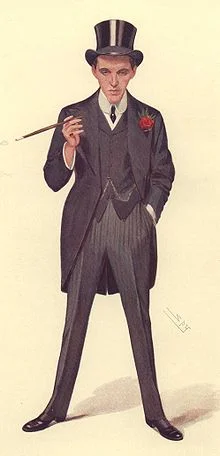
Source: http://www.emersonkent.com/speeches/maiden...

Enjoyed this speech? Speakola is a labour of love and I’d be very grateful if you would share, tweet or like it. Thank you.

Facebook Twitter Facebook
In 1900-19 Tags FE SMITH, FREDERICK EDWIN SMITH, TARRIFF REFORM LEAGUE, TORY, CONSERVATIVE, DAVID LLOYD GEORGE, TRANSCRIPT, WESTMINSTER
Comment

See my film!

Limited Australian Season

March 2025

Details and ticket bookings at

angeandtheboss.com

Support Speakola

Hi speech lovers,
With costs of hosting website and podcast, this labour of love has become a difficult financial proposition in recent times. If you can afford a donation, it will help Speakola survive and prosper.

Best wishes,
Tony Wilson.

Become a Patron!

Learn more about supporting Speakola.

Featured political

Featured
Jon Stewart: "They responded in five seconds", 9-11 first responders, Address to Congress - 2019
Jacinda Ardern: 'They were New Zealanders. They are us', Address to Parliament following Christchurch massacre - 2019
Dolores Ibárruri: "¡No Pasarán!, They shall not pass!', Defense of 2nd Spanish Republic - 1936
Jimmy Reid: 'A rat race is for rats. We're not rats', Rectorial address, Glasgow University - 1972

Featured eulogies

Featured
For Geoffrey Tozer: 'I have to say we all let him down', by Paul Keating - 2009
for James Baldwin: 'Jimmy. You crowned us', by Toni Morrison - 1988
for Michael Gordon: '13 days ago my Dad’s big, beautiful, generous heart suddenly stopped beating', by Scott and Sarah Gordon - 2018

Featured commencement

Featured
Tara Westover: 'Your avatar isn't real, it isn't terribly far from a lie', The Un-Instagrammable Self, Northeastern University - 2019
Tim Minchin: 'Being an artist requires massive reserves of self-belief', WAAPA - 2019
Atul Gawande: 'Curiosity and What Equality Really Means', UCLA Medical School - 2018
Abby Wambach: 'We are the wolves', Barnard College - 2018
Eric Idle: 'America is 300 million people all walking in the same direction, singing 'I Did It My Way'', Whitman College - 2013
Shirley Chisholm: ;America has gone to sleep', Greenfield High School - 1983

Featured sport

Featured
Joe Marler: 'Get back on the horse', Harlequins v Bath pre game interview - 2019
Ray Lewis : 'The greatest pain of my life is the reason I'm standing here today', 52 Cards -
Mel Jones: 'If she was Bradman on the field, she was definitely Keith Miller off the field', Betty Wilson's induction into Australian Cricket Hall of Fame - 2017
Jeff Thomson: 'It’s all those people that help you as kids', Hall of Fame - 2016

Fresh Tweets


Featured weddings

Featured
Dan Angelucci: 'The Best (Best Man) Speech of all time', for Don and Katherine - 2019
Hallerman Sisters: 'Oh sister now we have to let you gooooo!' for Caitlin & Johnny - 2015
Korey Soderman (via Kyle): 'All our lives I have used my voice to help Korey express his thoughts, so today, like always, I will be my brother’s voice' for Kyle and Jess - 2014

Featured Arts

Featured
Bruce Springsteen: 'They're keepers of some of the most beautiful sonic architecture in rock and roll', Induction U2 into Rock Hall of Fame - 2005
Olivia Colman: 'Done that bit. I think I have done that bit', BAFTA acceptance, Leading Actress - 2019
Axel Scheffler: 'The book wasn't called 'No Room on the Broom!', Illustrator of the Year, British Book Awards - 2018
Tina Fey: 'Only in comedy is an obedient white girl from the suburbs a diversity candidate', Kennedy Center Mark Twain Award -  2010
Tina Fey: 'Only in comedy is an obedient white girl from the suburbs a diversity candidate', Kennedy Center Mark Twain Award - 2010

Featured Debates

Featured
Sacha Baron Cohen: 'Just think what Goebbels might have done with Facebook', Anti Defamation League Leadership Award - 2019
Greta Thunberg: 'How dare you', UN Climate Action Summit - 2019
Charlie Munger: 'The Psychology of Human Misjudgment', Harvard University - 1995
Lawrence O'Donnell: 'The original sin of this country is that we invaders shot and murdered our way across the land killing every Native American that we could', The Last Word, 'Dakota' - 2016