• Genre
  • About
  • Submissions
  • Donate
  • Search
Menu

Speakola

All Speeches Great and Small
  • Genre
  • About
  • Submissions
  • Donate
  • Search
Share a political speech
Gopal Krishna Gokhale.jpg

Gopal Krishna Gokhale: 'I am giving up all this to embark on the stormy and uncertain sea of public life', Farewell speech, Fergusson College - 1902

October 15, 2019

19 September 1902, Fergusson College, Pune, India

Years ago I remember to have read the story of a man, who lived by the side of the sea, who had a nice cottage and fields that yielded him their abundance, and who was surrounded by a loving family. The world thought that he was very happy. But to him the sea had a strange fascination. When it lay gently, heaving like an infant asleep, it appealed to him; when it raged like an angry and roaring lion, it still appealed to him; till at last he could withstand the fatal fascination no longer. And so having disposed of everything and put his all into a boat, he launched it on the bosom of the sea. Twice was he was beaten back by the waves- a warning he would not heed. He made a third attempt when the pitiless sea overwhelmed him. To a certain extent this seems to me to be my position today. Here I am with a settled position in this College, and having for my colleagues, men with whom it is a pleasure and a privilege to work, and whose generosity in overlooking my many faults and magnifying any little services I may have rendered, has often touched me deeply. And yet, I am giving up all this to embark on the stormy and uncertain sea of public life. But I hear within me a voice which urges me to take this course, and I can only ask you to believe me when I say that it is purely from a sense of duty to the best interests of our country, that I am seeking this position of greater freedom, but not necessarily of less responsibility. Public life in this country has few rewards and many trials and discouragements...

Gokhale farewell Fergusson.jpg
Source: http://gokhale100.blogspot.com/2015/03/pos...

Enjoyed this speech? Speakola is a labour of love and I’d be very grateful if you would share, tweet or like it. Thank you.

Facebook Twitter Facebook
In 1900-19 Tags GOPAL KRISHNA GOKHALE, TRANSCRIPT, FAREWELL TO FERGUSSON COLLEGE, PUNE, ACADEMIC, PUBLIC LIFE, INDIAN POLITICS, MENTOR TO GANDHI
1 Comment

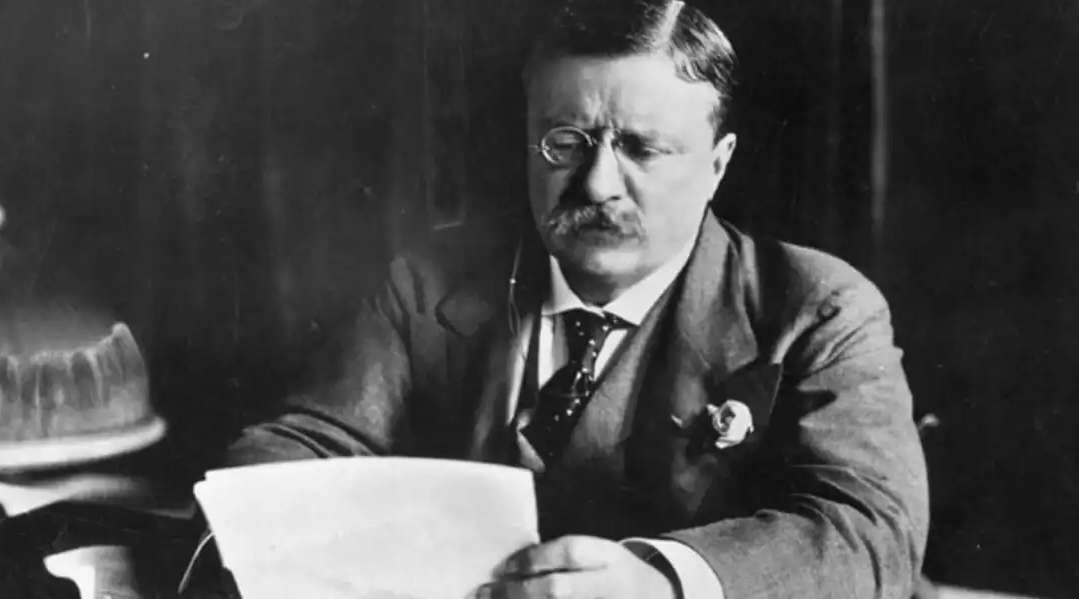
Theodore Roosevelt: 'Don't flinch, don't foul, and hit the line hard', Speech to The Boys' Progressive League - 1913

October 10, 2019

Roosevelt missed the event and offered this recording in absentia

3 July 1913, New York City, USA

In this way I desire to greet the Boy's Progressive League at their meeting in [at] the Hotel Manhattan. I feel that the Progressive Party should appeal peculiarly to the young men--and therefore to the boys--who ought [are] to be the next generation of voters. The principles for which we stand are the principles of fair play and a square deal for every man and every woman in the United States. A square deal politically, a square deal in matters social and industrial. I wish to see you boys join the Progressive Party, and act in that party and as good citizens in the same way I'd expect any one of you to act in a football game. In other words, don't flinch, don't foul, and hit the line hard.

Source: https://www.history.com/topics/us-presiden...

Enjoyed this speech? Speakola is a labour of love and I’d be very grateful if you would share, tweet or like it. Thank you.

Facebook Twitter Facebook
In 1900-19 Tags THEODORE ROOSEVELT, THE BOYS' PROGRESSIVE LEAGUE, PHONOGRAPH RECORDING, SPORT ANALOGY
Comment
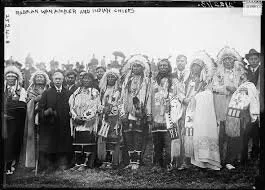
Rodman Wanamaker with Indian chiefs in 1913

Rodman Wanamaker with Indian chiefs in 1913

Woodrow Wilson: 'The great white father now calls you his brothers', Address to the American Indians - 1913

October 10, 2019

May or June 1913, Washington DC, USA

There are some dark figures in the history of the white man's dealing with the Indians, and many parts of the record are stained with the greed and avarice of those who have thought only of their own profit. But it is also true that the purposes and motives of this great government and of our nation as a whole towards the red men have been wise, just, and beneficent. The remarkable progress of our Indian brothers towards civilization is proof of it and open for all to see.

During the past half-century you have seen the schoolhouse take the place of the military post on your reservations; the administration of Indian affairs has been transferred from the military to the civil arm of the government. The education and industrial training the government has given you has enabled thousands of Indian men and women to take their places in civilization alongside their white neighbors. Thousands are living in substantial farmhouses on their own separate allotments of land. Hundreds of other have won places of prominence in the Professions, and some have worked their way into the halls of congress and into places of responsibility in our state and national governments. Thirty-thousand Indian children are enrolled in government, state, and mission schools. The great white father now calls you his brothers, not his children. Because you have shown in your education and in your settled ways of life staunch, manly, worthy qualities of sound character, the nation is about to give you distinguished recognition through the erection of a monument in honor of the Indian people, in the harbor of New York.

Source: https://en.wikisource.org/wiki/Address_to_...

Enjoyed this speech? Speakola is a labour of love and I’d be very grateful if you would share, tweet or like it. Thank you.

Facebook Twitter Facebook
In 1900-19 Tags WOODROW WILSON, NATIVE AMERICAN, ADDRESS TO THE AMERICAN INDIANS, TRANSCRIPT, PART RECORDING
Comment
William Howard Taft.jpg

William Howard Taft: 'The welfare of the farmer is vital to that of the whole country', Midwestern campaign tour - 1908

October 10, 2019

October 1908, Kansas City, Missouri, USA (rerecorded after event)

As the Republican platform says, the welfare of the farmer is vital to that of the whole country. The prosperity of the country rest peculiarly upon the prosperity of agriculture. Just now, one of the strongest hopes of returning good times is based on the business which the farmers’ crops are to afford. The Republican party during the last twelve years has accomplished extraordinary work in bringing the resources of the national government to the aid of the farmer. He is vitally interested in the restraining of excessive and unduly discriminating railroad rates, in the enforcement of the Pure Food Law, in the promotion of scientific agriculture, and in increasing the comforts of country life as by the extension of free rural delivery and the building of good roads. The free delivery in the postal service now reaches millions of our citizens and will be extended until every community in the land receives its full benefits. Everyone recognizes the essential and economic advantages of good country roads maintained more and more largely at public expense and less and less at the expense of the abutting owner. The policies of the present administration have most industriously promoted all these objects and cannot fail to commend themselves to the farmers’ approval. It is difficult to see how with his intelligent appreciation of the threats to business prosperity involved in democratic success at the polls he can do otherwise than give his full and hearty support to the continuation of the policies of the present administration under Republican auspices.

Enjoyed this speech? Speakola is a labour of love and I’d be very grateful if you would share, tweet or like it. Thank you.

Facebook Twitter Facebook
In 1900-19 Tags WILLIAM HOWARD TAFT, THE FARMER AND THE REPUBLICAN PARTY, TRANSCRIPT, RERECORDED, MIDWESTERN TOUR, KANSAS, PRESIDENT, CAMPAIGN SPEECH
Comment
Woodrow Wilson Peace without Victory.jpg

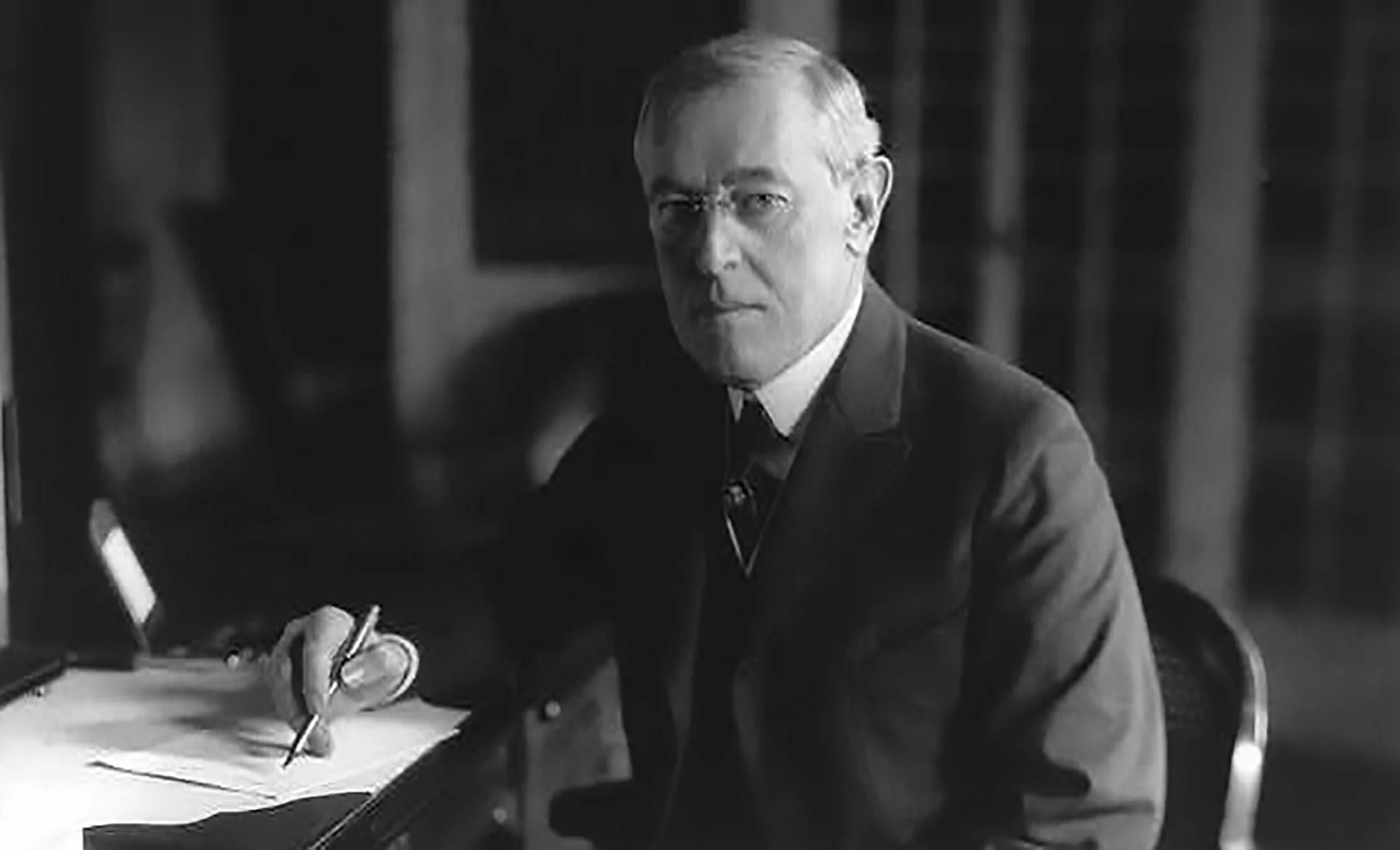
Woodrow Wilson: 'Peace without Victory', address to Senate - 1917

September 5, 2019


22 January 1917, Washington DC, USA

Gentlemen of the Senate,

On the 18th of December last, I addressed an identic note to the governments of the nations now at war requesting them to state, more definitely than they had yet been stated by either group of belligerents, the terms upon which they would deem it possible to make peace. I spoke on behalf of humanity and of the rights of all neutral nations like our own, many of whose most vital interests the war puts in constant jeopardy.

The Central Powers united in a reply which stated merely that they were ready to meet their antagonists in conference to discuss terms of peace. The Entente Powers have replied much more definitely and have stated, in general terms, indeed, but with sufficient definiteness to imply details, the arrangements, guarantees, and acts of reparation which they deem to be indispensable conditions of a satisfactory settlement. We are that much nearer a definite discussion of the peace which shall end the present war. We are that much nearer the discussion of the international concert which must thereafter hold the world at peace.

In every discussion of the peace that must end this war, it is taken for granted that that peace must be followed by some definite concert of power which will make it virtually impossible that any such catastrophe should ever overwhelm us again. Every lover of mankind, every sane and thoughtful man must take that for granted.

I have sought this opportunity to address you because I thought that I owed it to you, as the council associated with me in the final determination of our international obligations, to disclose to you without reserve the thought and purpose that have been taking form in my mind in regard to the duty of our government in the days to come, when it will be necessary to lay afresh and upon a new plan the foundations of peace among the nations.

It is inconceivable that the people of the United States should play no part in that great enterprise. To take part in such a service will be the opportunity for which they have sought to prepare themselves by the very principles and purposes of their polity and the approved practices of their government ever since the days when they set up a new nation in the high and honorable hope that it might, in all that it was and did, show mankind the way to liberty.

They cannot in honor withhold the service to which they are now about to be challenged. They do not wish to withhold it. But they owe it to themselves and to the other nations of the world to state the conditions under which they will feel free to render it.

That service is nothing less than this, to add their authority and their power to the authority and force of other nations to guarantee peace and justice throughout the world. Such a settlement cannot now be long postponed. It is right that before it comes, this government should frankly formulate the conditions upon which it would feel justified in asking our people to approve its formal and solemn adherence to a League for Peace. I am here to attempt to state those conditions.

The present war must first be ended; but we owe it to candor and to a just regard for the opinion of mankind to say that, so far as our participation in guarantees of future peace is concerned, it makes a great deal of difference in what way and upon what terms it is ended. The treaties and agreements which bring it to an end must embody terms which will create a peace that is worth guaranteeing and preserving, a peace that will win the approval of mankind, not merely a peace that will serve the several interests and immediate aims of the nations engaged . We shall have no voice in determining what those terms shall be, but we shall, I feel sure, have a voice in determining whether they shall be made lasting or not by the guarantees of a universal covenant; and our judgment upon what is fundamental and essential as a condition precedent to permanency should be spoken now, not afterwards when it may be too late.

No covenant of cooperative peace that does not include the peoples of the New World can suffice to keep the future safe against war; and yet there is only one sort of peace that the peoples of America could join in guaranteeing. The elements of that peace must be elements that engage the confidence and satisfy the principles of the American governments, elements consistent with their political faith and with the practical convictions which the peoples of America have once for all embraced and undertaken to defend.

I do not mean to say that any American government would throw any obstacle in the way of any terms of peace the governments now at war might agree upon or seek to upset them when made, whatever they might be. I only take it for granted that mere terms of peace between the belligerents will not satisfy even the belligerents themselves. Mere agreements may not make peace secure. It will be absolutely necessary that a force be created as a guarantor of the permanency of the settlement so much greater than the force of any nation now engaged, or any alliance hitherto formed or projected, that no nation, no probable combination of nations, could face or withstand it. If the peace presently to be made is to endure, it must be a peace made secure by the organized major force of mankind.

The terms of the immediate peace agreed upon will determine whether it is a peace for which such a guarantee can be secured. The question upon which the whole future peace and policy of the world depends is this: Is the present war a struggle for a just and secure peace, or only for a new balance of power? If it be only a struggle for a new balance of power, who will guarantee, who can guarantee the stable equilibrium of the new arrangement? Only a tranquil Europe can be a stable Europe. There must be, not a balance of power but a community power; not organized rivalries but a organized, common peace.

Fortunately we have received very explicit assurances on this point. The statesmen of both of the groups of nations now arrayed against one another have said, in terms that could not be misinterpreted, that it was no part of the purpose they had in mind to crush their antagonists. But the implications of these assurances may not be equally to all--may not be the same on both sides of the water. I think it will be serviceable if I attempt to set forth what we understand them to be.

They imply, first of all, that it must be a peace without victory. It is not pleasant to say this. I beg that I may be permitted to put my own interpretation upon it and that it may be understood that no other interpretation was in my thought. I am seeking only to face realities and to face them without soft concealments. Victory would mean peace forced upon the loser, a victor's terms imposed upon the vanquished. It would be accepted in humiliation, under duress, at an intolerable sacrifice, and would leave a sting, a resentment, a bitter memory upon which terms of peace would rest, not permanently but only as upon quicksand. Only a peace between equals can last. Only a peace the very principle of which is equality and a common participation in a common benefit. The right state of mind, the right feeling between nations, is as necessary for a lasting peace as is the just settlement of vexed questions of territory or of racial and national allegiance.

The equality of nations upon which peace must be founded if it is to last must be an equality of rights; the guarantees exchanged must neither recognize nor imply a difference between big nations and small, between those that are powerful and those that are weak. Right must be based upon the common strength, not upon the individual strength, of the nations upon whose concert peace will depend. Equality of territory or of resources there of course cannot be; nor any other sort of equality not gained in the ordinary peaceful and legitimate development of the peoples themselves. But no one asks or expects anything more than an equality of rights. Mankind is looking now for freedom of life, not for equipoises of power.

And there is a deeper thing involved than even equality of right among organized nations. No peace can last, or ought to last, which does not recognize and accept the principle that governments derive all their just powers from the consent of the governed, and that no right anywhere exists to hand peoples about from sovereignty to sovereignty as if they were property. I take it for granted, for instance, if I may venture upon a single example, that statesmen everywhere are agreed that there should be a united, independent, and autonomous Poland, and that, henceforth, inviolable security of life, of worship, and of industrial and social development should be guaranteed to all peoples who have lived hitherto under the power of governments devoted to a faith and purpose hostile to their own.

I speak of this, not because of any desire to exalt an abstract political principle which has always been held very dear by those who have sought to build up liberty in America but for the same reason that I have spoken of the other conditions of peace which seem to me clearly indispensable because I wish frankly to uncover realities. Any peace which does not recognize and accept this principle will inevitably be upset. It will not rest upon the affections or the convictions of mankind. The ferment of spirit of whole populations will fight subtly and constantly against it, and all the world will sympathize. The world can be at peace only if its life is stable, and there can be no stability where the will is in rebellion, where there is not tranquillity of spirit and a sense of justice, of freedom, and of right.

So far as practicable, moreover, every great people now struggling toward a full development of its resources and of its powers should be assured a direct outlet to the great highways of the sea. Where this cannot be done by the cession of territory, it can no doubt be done by the neutralization of direct rights of way under the general guarantee which will assure the peace itself. With a right comity of arrangement, no nation need be shut away from free access to the open paths of the world's commerce.

And the paths of the sea must alike in law and in fact be free. The freedom of the seas is the sine qua non of peace, equality, and cooperation. No doubt a somewhat radical reconsideration of many of the rules of international practice hitherto thought to be established may be necessary in order to make the seas indeed free and common in practically all circumstances for the use of mankind, but the motive for such changes is convincing and compelling. There can be no trust or intimacy between the peoples of the world without them. The free, constant, unthreatened intercourse of nations is an essential part of the process of peace and of development. It need not be difficult either to define or to secure the freedom of the seas if the governments of the world sincerely desire to come to an agreement concerning it.

It is a problem closely connected with the limitation of naval armaments and the cooperation of the navies of the world in keeping the seas at once free and safe. And the question of limiting naval armaments opens the wider and perhaps more difficult question of the limitation of armies and of all programs of military preparation. Difficult and delicate as these questions are, they must be faced with the utmost candor and decided in a spirit of real accommodation if peace is to come with healing in its wings, and come to stay.

Peace cannot be had without concession and sacrifice. There can be no sense of safety and equality among the nations if great preponderating armaments are henceforth to continue here and there to be built up and maintained. The statesmen of the world must plan for peace, and nations must adjust and accommodate their policy to it as they have planned for war and made ready for pitiless contest and rivalry. The question of armaments, whether on land or sea, is the most immediately and intensely practical question connected with the future fortunes of nations and of mankind.

I have spoken upon these great matters without reserve and with the utmost explicitness because it has seemed to me to be necessary if the world's yearning desire for peace was anywhere to find free voice and utterance. Perhaps I am the only person in high authority among all the peoples of the world who is at liberty to speak and hold nothing back. I am speaking as an individual, and yet I am speaking also, of course, as the responsible head of a great government, and I feel confident that I have said what the people of the United States would wish me to say.

May I not add that I hope and believe that I am in effect speaking for liberals and friends of humanity in every nation and of every program of liberty? I would fain believe that I am speaking for the silent mass of mankind everywhere who have as yet had no place or opportunity to speak their real hearts out concerning the death and ruin they see to have come already upon the persons and the homes they hold most dear.

And in holding out the expectation that the people and government of the United States will join the other civilized nations of the world in guaranteeing the permanence of peace upon such terms as I have named I speak with the greater boldness and confidence because it is clear to every man who can think that there is in this promise no breach in either our traditions or our policy as a nation, but a fulfillment, rather, of all that we have professed or striven for.

I am proposing, as it were, that the nations should with one accord adopt the doctrine of President Monroe as the doctrine of the world: that no nation should seek to extend its polity over any other nation or people, but that every people should be left free to determine its own polity, its own way of development--unhindered, unthreatened, unafraid, the little along with the great and powerful.

I am proposing that all nations henceforth avoid entangling alliances which would draw them into competitions of power, catch them in a net of intrigue and selfish rivalry, and disturb their own affairs with influences intruded from without. There is no entangling alliance in a concert of power. When all unite to act in the same sense and with the same purpose, all act in the common interest and are free to live their own lives under a common protection.

I am proposing government by the consent of the governed; that freedom of the seas which in international conference after conference representatives of the United States have urged with the eloquence of those who are the convinced disciples of liberty; and that moderation of armaments which makes of armies and navies a power for order merely, not an instrument of aggression or of selfish violence.

These are American principles, American policies. We could stand for no others. And they are also the principles and policies of forward-looking men and women everywhere, of every modern nation, of every enlightened community. They are the principles of mankind and must prevail.

President Wilson made this speech to the Senate in January 1917. Just over two months later, the U.S. joined the conflict.

Source: http://web.mit.edu/21h.102/www/Wilson%20Pe...

Enjoyed this speech? Speakola is a labour of love and I’d be very grateful if you would share, tweet or like it. Thank you.

Facebook Twitter Facebook
In 1900-19 Tags WOODROW WILSON, TRANSCRIPT, PEACE WITHOUT VICTORY, WW1, PRESIDENT, ADDRESS TO SENATE, PEACE
Comment
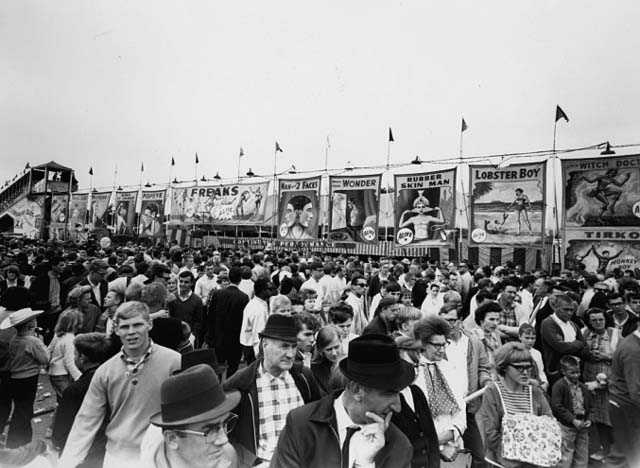
Minnesota state fair 1901.jpg

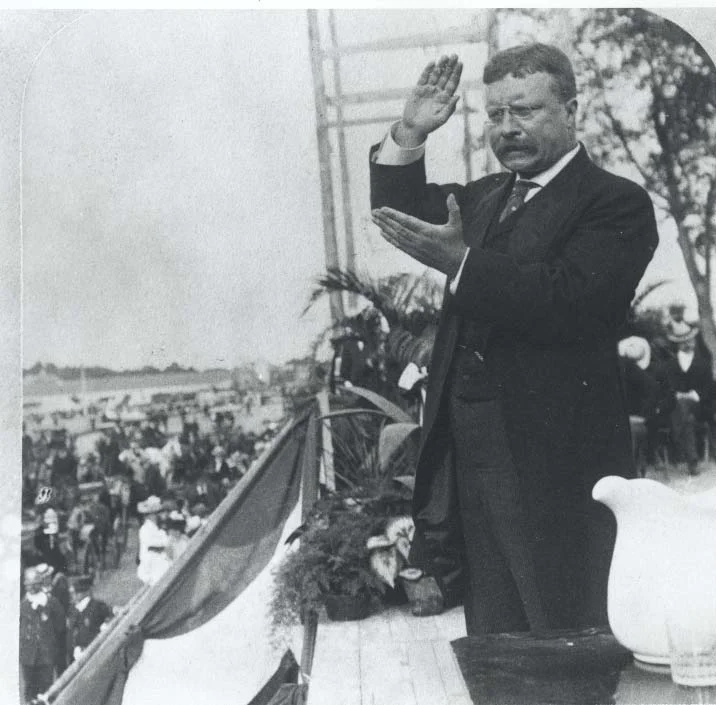
Theodore Roosevelt: 'Speak softly and carry a big stick', Minnesota State Fair - 1901

February 18, 2019

3 September 1901, Minnesota, USA

Four days after Roosevelt spoke at the fair, President McKinley was shot by an assassin in Buffalo, N.Y. and Vice President Roosevelt became President.


In his admirable series of studies of Twentieth century problems Dr. Lyman Abbott has pointed out that we are a nation of pioneers; that the first colonists to our shores were pioneers, and that pioneers selected out from among the descendants of these early pioneers, mingled with others selected afresh from the old world, pushed westward into the wilderness, and laid the foundations for new commonwealths. They were men of hope and energy; for the men of dull content or more dull despair had no part in the great movement into and across the new world. Our country has been populated by pioneers, and therefore it has in it more energy, more enterprise, more expansive power than any other in the wide world.

You whom I am now addressing stand, for the most part, but one generation removed from these pioneers. You are typical Americans, for you have done the great, the characteristic, the typical work of our American life. In making homes and carving out careers for yourselves, and your children, you have built up this state; throughout our history the success of the homemaker has been but another name for the upbuilding of the nation. The men who with ax in the forest and pick in the mountains and plow on the prairies, pushed to completion the dominion of our people over the American wilderness have given the definite shape to our nation. They have shown the qualities of daring, endurance and far-sightedness, of eager desire for victory and stubborn refusal to accept defeat, which go to make up the essential manliness of the American character. Above all they have recognized the practical form the fundamental law of success in American life – the law of worthy work, the law of high, resolute endeavor. We have but little room among our people for the timid, the irresolute and the idle, and it is no less true that there is scant room in the world at large for the nation with mighty thews that dares not to be great. …

Every father and mother here, if they are wise, will bring up their children not to shirk difficulties, but to meet them and overcome them; not to strive after a life of ignoble ease, but to strive to do their duty, first to themselves and their families and then to the whole state; and this duty must inevitably take the shape of work in some form or other. You, the sons of pioneers, if you are true to your ancestry, must make your lives as worthy as they made theirs. They sought for true success, and therefore they did not seek ease. They knew that success comes only to those who lead the life of endeavor. …

No hard and fast rule can be laid down as to where our legislation shall stop in interfering between man and man, between interest and interest. All that can be said is that it is highly undesirable on the one hand, to weaken individual initiative, and on the other hand, that in a constantly increasing number of cases we shall find it necessary in the future to shackle cunning as in the past we have shackled force.

It is not only highly desirable, but necessary, that there should be legislation which shall carefully shield the interest of wage workers, and which shall discriminate in favor of the hones and human employer by removing the disadvantages under which he stands when compared with unscrupulous competitors who have no conscience, and will do right only under fear of punishment.

Nor can legislation stop only with what are termed labor questions. The vast individual and corporate fortunes, the vast combinations of capital which have marked the development of our industrial system, create new conditions, and necessitate a change from the old attitude of state and the nation toward property. …

Right here let me make as vigorous a plea as I know how in favor of saying nothing that we do not mean, and of acting without hesitation up to whatever we say. A good many of you are probably acquainted with the old proverb, “Speak softly and carry a big stick – you will go far.” If a man continually blusters, if he lacks civility, a big stick will not save him from trouble, and neither will speaking softly avail, if back of the softness there does not lie strength, power. In private life there are few beings more obnoxious than the man who is always loudly boasting, and if the boaster is not prepared to back up his words, his position becomes absolutely contemptible. So it is with the nation. It is both foolish and undignified to indulge in undue self-glorification, and, above all, in loose-tongued denunciation of other peoples. Whenever on any point we come in contact with a foreign power, I hope that we shall always strive to speak courteously and respectfully of that foreign power.

Let us make it evident that we intend to do justice. Then let us make it equally evident that we will not tolerate injustice being done us in return. Let us further make it evident that we use no words which we are not which prepared to back up with deeds, and that while our speech is always moderate, we are ready and willing to make it good. Such an attitude will be the surest possible guarantee of that self-respecting peace, the attainment of which is and must ever be the prime aim of a self-governing people. …

This is the attitude we should take as regards the Monroe doctrine. There is not the least need of blustering about it. Still less should it be used as a pretext for our own aggrandizement at the expense of any other American state. But most emphatically, we must make it evident that we intend on this point ever to maintain the old American position. Indeed, it is hard to understand how any man can take any other position now that we are all looking forward to the building of the Isthmian canal. The Monroe doctrine is not international law, but there is no necessity that it should be. …

Our dealings with Cuba illustrate this, and should be forever a subject of just national pride. We speak in no spirit of arrogance when we state as a simple historic fact that never in recent times has any great nation acted with such disinterestedness as we have shown in Cuba. We freed the island from the Spanish yoke. We then earnestly did our best to help the Cubans in the establishment of free education, of law and order, of material prosperity, of the cleanliness necessary to salutary well-being in their great cities. We did all this at great expense of treasure, at some expense of life, and now we are establishing them in a free and independent commonwealth, and have asked in return nothing whatever save that at no time shall their independence be prostituted to the advantage of some foreign rival of ours, or so as to menace our well-being. To have failed to ask this would have amounted to national stultification on our part.

In the Philippines we have brought peace, and we are at this moment giving them such freedom and self-government as they could never under any conceivable conditions have obtained had we turned them loose to sink into a welter of blood, and confusion, or to become the prey of some strong tyranny without or within. The bare recital of the facts is sufficient to show that we did our duty, and what prouder title to honor can a nation have than to have done its duty? We have done our duty to ourselves, and we have done the higher duty of promoting the civilization of mankind. …

THEODORE ROOSEVELT BIG STICK 2.jpg

Barbarism has and can have no place in a civilized world. It is our duty toward the people living in barbarism to see that they are freed from their chains, and we can only free them by destroying barbarism itself. The missionary, the merchant and the soldier may each have to play a part in this destruction, and in the consequent uplifting of the people. Exactly as it is the duty of a civilized power scrupulously to respect the rights of all weaker civilized powers and gladly to help those who are struggling towards civilization, so it is its duty to put down savagery and barbarism. As in such a work human instruments must be used, and as human instruments are imperfect, this means that at times there will be injustices, that at times, merchant, or soldier, or even missionary may do wrong.

Let us instantly condemn and rectify such wrong when it occurs, and if possible punish the wrong-doer. But, shame, thrice shame to us, if we are so foolish as to make such occasional wrong-doing an excuse for failing to perform a great and righteous task. No only in our own land, but throughout history, the advance of civilization has been of incalculable benefit to mankind, and those through whom it has advanced deserve the higher honor. All honor to the missionary, all honor to the soldier, all honor to the merchant who now in our own day have done so much to bring light into the world’s dark places.

Let me insist again, for fear of possible misconstruction, upon the fact that our duty is two-fold, and that we must raise others while we are benefiting ourselves. In bringing order to the Philippines, our soldiers added a new page to the honor-roll of American history and they incalculably benefited the islanders themselves. Under the wise administration of Gov. Taft the islands now enjoy a peace and liberty of which they have hitherto never even dreamed. But this peace and liberty under the law must be supplemented by material, by industrial development, to the introduction of American industries and products; no merely because this will be a good thing for our people, but infinitely more because it will be of incalculable benefit to the people of the Philippines.

We shall make mistakes; and if we let these mistakes frighten us from work, we shall show ourselves weaklings. Half a century ago Minnesota and the two Dakotas were Indian hunting grounds. We committed plenty of blunders, and now and then worse than blunders, in our dealings with the Indians. But who does not admit at the present day that we were right in wresting from barbarism and adding to civilization the territory out of which we have made these beautiful states? And now we are civilizing the Indian and putting him on a level to which he could never have attained under the old conditions.

In the Philippines let us remember that the spirit and not the mere form of government is the essential matter. The Tagalogs have a hundred-fold the freedom under us that they would have if we had abandoned the islands. We are not trying to subjugate a people; we are trying to develop them, and make them a law-abiding, industrious and educated people, and we hope, ultimately, a self-governing people. In short, in the work we have done, we are but carrying out the true principles of our democracy. We work in a spirit of self-respect for ourselves and of good-will toward others, in a spirit of love for and of infinite faith in mankind. We do not blindly refuse to face the evils that exist; or the shortcomings inherent in humanity; but across blunderings and shirking, across selfishness and meanness of motive, across short-sightedness and cowardice, we gaze steadfastly toward the far horizon of golden triumph.

If you study our past history as a nation you will see we have made many blunders and have been guilty of many shortcomings, and yet that we have always in the end come out victorious because we have refused to be daunted by blunders and defeats—have recognized them, but have preserved in spite of them. So it must be in the future. We gird up our loins as a nation with the stern purpose to play our part manfully in winning the ultimate triumph, and therefore we turn scornfully aside from the paths of mere ease and idleness, and with unfaltering steps tread the rough road of endeavor, smiting down the wrong and battling for the right as Greatheart smote and battled in Bunyan’s immortal story.

Source: http://www.startribune.com/sept-3-1901-roo...

Enjoyed this speech? Speakola is a labour of love and I’d be very grateful if you would share, tweet or like it. Thank you.

Facebook Twitter Facebook
In 1900-19 Tags THEODORE ROOSEVELT, VICE PRESIDENT, SPEAK SOFTLY, BIG STICK, TRANSCRIPT, MINNESOTA, STATE FAIR, PRESIDENT MCKINLEY, ASSASSINATION
Comment

Henry Cabot Lodge: 'American I was born', Opposing League of Nations - 1919

February 1, 2018

12 August 1919, Washington DC, USA

Mr. President:

The independence of the United States is not only more precious to ourselves but to the world than any single possession. Look at the United States today. We have made mistakes in the past. We have had shortcomings. We shall make mistakes in the futureand fall short of our own best hopes. But none the less is there any country today on the face of the earth which can compare with this in ordered liberty, in peace, and in the largest freedom?

I feel that I can say this without being accused of undue boastfulness, for it is the simple fact, and in making this treaty and taking on these obligations all that we do is in a spirit of unselfishness and in a desire for the good of mankind. But it is well to remember that we are dealing with nations every oneof which has a direct individual interest to serve, and there is grave danger in an unshared idealism.

Contrast the United States with any country on the face of the earth today and ask yourself whether the situation of the United States is not the best to be found. I will go as far as anyone in world service, but the first step to world service is the maintenance of the United States.

I have always loved one flag and I cannot share that devotion [with] a mongrel banner created for a League.

You may call me selfish if you will, conservative or reactionary, or use any other harsh adjective you see fit to apply, but an American I was born, an American I have remained all my life. I can never be anything else but an American, and I must think of the United States first, and when I think of the United States first in an arrangement like this I am thinking of what is best for the world, for if the United States fails, the best hopes of mankind fail with it.

I have never had but one allegiance ‐I cannot divide it now. I have loved but one flag and I cannot share that devotion and give affection to the mongrel banner invented for a league. Internationalism, illustrated by the Bolshevik and by the men to whom all countries are alike provided they can make money out of them, is to me repulsive.

National I must remain, and in that way I like all other Americans can render the amplest service to the world. The United States is the world's best hope, but if you fetter her in the interests and quarrels of other nations, if you tangle her in the intrigues of Europe, you will destroy her power for good and endanger her very existence. Leave her to march freely through the centuries to come as in the years that have gone.

Strong, generous, and confident, she has nobly served mankind. Beware how you trifle with your marvellous inheritance, this great land of ordered liberty, for if we stumble and fall freedom and civilization everywhere will go down in ruin.

We are told that we shall 'break the heart of the world 'if we do not take this league just as it stands. I fear that the hearts of the vast majority of mankind would beat on strongly and steadily and without any quickening if the league were to perish altogether. If it should be effectively and beneficently changed the people who would lie awake in sorrow for a single night could be easily gathered in one not very large room but those who would draw a long breath of relief would reach to millions.

We hear much of visions and I trust we shall continue to have visions and dream dreams of a fairer future for the race. But visions are one thing and visionaries are another, and the mechanical appliances of the rhetorician designed to give a picture of a present which does not exist and of a future which no man can predict are as unreal and short‐lived as the steam or canvas clouds, the angels suspended on wires and the artificial lights of the stage.

They pass with the moment of effect and are shabby and tawdry in the daylight. Let us at least be real. Washington's entire honesty of mind and his fearless look into the face of all facts are qualities which can never go out of fashion and which we should all do well to imitate.

Ideals have been thrust upon us as an argument for the league until the healthy mind which rejects cant revolts from them. Are ideals confined to this deformed experiment upon a noble purpose, tainted, as it is, with bargains and tied to a peace treaty which might have been disposed of long ago to the great benefit of the world if it had not been compelled to carry this rider on its back? 'Post equitem sedet atra cura,' Horace tells us, but no blacker care ever sat behind any rider than we shall find in this covenant of doubtful and disputed interpretation as it now perches upon the treaty of peace.

No doubt many excellent and patriotic people see a coming fulfilment of noble ideals in the words 'league for peace.' We all respect and share these aspirations and desires, but some of us see no hope, but rather defeat, for them in this murky covenant. For we, too, have our ideals, even if we differ from those who have tried to establish a monopoly of idealism.

Our first ideal is our country, and we see her in the future, as in the past, giving service to all her people and to the world. Our ideal of the future is that she should continue to render that service of her own free will. She has great problems of her own to solve, very grim and perilous problems, and a right solution, if we can attain to it, would largely benefit mankind.

We would have our country strong to resist a peril from the West, as she has flung back the German menace from the East. We would not have our politics distracted and embittered by the dissensions of other lands. We would not have our country's vigour exhausted or her moral force abated, by everlasting meddling and muddling in every quarrel, great and small, which afflicts the world.

Our ideal is to make her ever stronger and better and finer, because in that way alone, as we believe, can she be of the greatest service to the world's peace and to the welfare of mankind

Source: https://ay12-14.moodle.wisc.edu/prod/plugi...

Enjoyed this speech? Speakola is a labour of love and I’d be very grateful if you would share, tweet or like it. Thank you.

Facebook Twitter Facebook
In 1900-19 Tags HENRY CABOT LODGE, ISOLATIONISM, WW1, TREATY OF VERSAILLES, WOODROW WILSON, TRANSCRIPT
Comment

Eugene Debs: 'The world of capitalism is collapsing; the world of Socialism is rising', Canton Ohio speech, 1915

February 1, 2018

16 June 1918, Canton, Ohio, USA

To speak for labor; to plead the cause of the men and women and children who toil to serve the working class, has always been to me a high privilege; (applause) a duty of love.

I have just returned from a visit over yonder (pointing to the workhouse) (laughter) where three of our most loyal comrades (applause) are paying the penalty for their devotion to the cause of the working class. (Applause.) They have come to realize, as many of us have, that it is extremely dangerous to exercise the constitutional right of free speech in a country fighting to make democracy safe in the world. (Applause.)

I realize that, in speaking to you this afternoon, that there are certain limitations placed upon the right of free speech. I must be exceedingly careful, prudent, as to what I say, and even more careful and more prudent as to how I say it. (Laughter.) I may not be able to say all I think; (laughter and applause) but I am not going to say anything that I do not think. (Applause.) But, I would rather a thousand times be a free soul in jail than to be a sycophant and coward on the streets. (Applause and Shouts.) They may put those boys in jail--and some of the rest of us in jail--but they cannot put the Socialist movement in jail. (Applause and Shouts.) . . .

There is but one thing that you have to be concerned about, and that is that you keep four-square with the principles of the international Socialist movement. (Applause.) It is only when you begin to compromise that trouble begins. (Applause.) So far as I am concerned, it does not matter what others may say, or think, or do, as long as I am sure that I am right with myself and the cause. (Applause.) There are so many who seek refuge in the popular side of a great question. On account of that, I hope, as a Socialist, I have long since learned how to stand alone. (Applause.)

Why should a Socialist be discouraged on the eve of the greatest triumph in all history of the Socialist movement? (Applause.) It is true that these are anxious trying days for us all--testing days for the women and men who are upholding the banner of the of the working class in the struggle of the working class of all the world against the exploiters of the world; (applause) a time in which the weak and cowardly will falter and fail and desert. They lack the fiber to endure the revolutionary test; they fall away; they disappear as if they had never been. On the other hand, they who are animated with the unconquerable spirit of the Social revolution, they who have the moral courage to stand erect and assert their convictions; stand by them; fight for them; go to jail or to hell for them; if need be--(applause and shouts) they are writing their names, in this crucial hour--they are writing their names in fadeless letters in the history of mankind. (Applause.) . . .

Are we opposed to Prussian militarism? (Laughter.) (Shouts from the crowd of "Yes." "Yes.") Why, we have been fighting it since the day the Socialist movement was born; (applause) and we are going to continue to fight it, day and night, until it is wiped from the face of the earth. (thunderous applause and cheers.) Between us there is no truce--no compromise. . . .

Socialism is a growing idea, an expanding philosophy. It is spreading over the face of the earth. It is as useless to resist it as it would be to try to arrest the sunrise on the morrow. It is coming, coming, coming, all along the line. . . . Here, in this assemblage (applause) I hear our heart beat responsive to the Bolsheviki of Russia. (Deafening and prolonged applause.) Yes, those heroic men and women, those unconquerable comrades, who have, by their sacrifice, added luster to the international movement. Those Russian comrades, who have made greater sacrifices, who have suffered more, who have shed more heroic blood than any like men or number of men and women anywhere else on earth, they have laid the foundation of the first real Democracy that ever drew--(great applause) the first real Democracy that ever drew the breath of life on God's footstool. (Applause.) And the very first act of that immortal revolution was to proclaim a state of peace with all the world, coupled with an appeal, no to the kings, not to the emperors, not to the rulers, not to the diplomats, but an appeal to the people of all nations. (Applause.) There is the very birth of Democracy, the quintessence of freedom. They made their appeal to the people of all nations, the Allies as well as the Central powers, to send representatives to a conference to lay down terms of peace that should be Democratic and lasting. Here was a fine--here was a fine opportunity to strike a blow to make democracy safe in the world. (Applause.) Was there any response to that noble appeal? And here let me say that that appeal will be written in letters of gold in the history of the world. (Applause.) Was there any response to that appeal? (From the crowd "No.") Not the slightest. . . .

Wars have been waged for conquest, for plunder. In the middle ages the feudal lords, who inhabited the castles whose towers may still be seen along the Rhine--whenever one of those feudal lords wished to enrich himself, then he made war on another. Why? They wanted to enlarge their domains. They wanted to increase their power, their wealth, and so they declared war upon each other. But they did not go to war any more than the Wall Street junkers go to war. (Applause.) The feudal lords, the barons, the economic predecessors of the modern capitalist, they declared all the wars. Who fought their battles? Their miserable serfs. And the serfs had been taught to believe that when their masters declared and waged war upon one another, it was their patriotic duty to fall upon one another, and to cut one another's throats, to murder one another for the profit and the glory of the plutocrats, the barons, the lords who held them in contempt. And that is war in a nutshell. The master class has always declared the war; the subject class has always fought the battles; the master class has had all to gain and nothing to lose, and the subject class has had nothing to gain and all to lose--including their lives. (Applause.) They have always taught you that it is your patriotic duty to go to war and to have yourselves slaughtered at a command. But in all of the history of the world you, the people, never had a voice in declaring war. You have never yet had. And here let me state a fact--and it cannot be repeated too often: the working class who fight the battles, the working class who make the sacrifices, the working class who shed the blood, the working class who furnish the corpses, the working class have never yet had a voice in declaring war. The working class have never yet had a voice in making peace. It is the ruling class that does both. They declare war; they make peace.

"Yours not to ask the question why; Yours but to do and die."

That is their motto, and we object on the part of the awakened workers.

If war is right, let it be declared by the people--you, who have your lives to lose; you certainly ought to have the right to declare war, if you consider war a necessary. (Applause.) . . .

If the war was over tomorrow, all of the prison doors would open. They just want to silence this voice during the war. The cases will be appealed, and they will remain pending in court many a month, perhaps years. What a compliment it is to the Socialist movement for telling the truth. The truth will make the people free. (Applause.) And the truth must not be permitted to reach the people. The truth has always been dangerous to the rule of the rogue, the exploiter, the robber. So the truth must be suppressed. That is why they are trying to drive out the Socialist movement; and every time they make the attempt, they add ten thousand voices proclaiming that Socialism has come to stay. (Applause.). . .

What you need is to organize, not along curved lines, but along revolutionary industrial lines. (Applause.) You will never vote in the Socialist republic. You are needed to organize it; and you have got to organize it in the industries--unite in the industries. the industrial union is the forerunner of industrial Democracy. In the shop is where the industrial Democracy has its beginning. Organize according to the industries, and minimize all the Gompers. Get together. United, very often your power becomes invincible. Organize to get up to your fullest capacity. Organize. Act together. And when you organize industrially, you will soon learn that you can manage industry as well as operate industry. You can soon find that you don't need the idle for your masters. They are simply parasites. They don't give you work. You give them jobs taking what you produce and that is all. Their function is to take what you produce. You can dispose of them. You don't need then to depend upon for your jobs. You ought to own your own tools; you ought to control your own jobs; you ought to be industrial free men instead of industrial slaves. Organize industrially. Make the organization complete. Then unite in the Socialist party. . . . Then, when we vote together and act together on the industrial pledge, we will develop the supreme power of the one class that can bring permanent peace to the world. We will have the courage. Industry will be organized. We will conquer the public power. We will transfer the title deeds of the railroads, the telegraph lines, the mills, the great industries--we will transfer them to the people; we will take possession in the name of the people. We will have industrial political Democracy. We will be the first free nation, whose government belongs to the people. Oh, this change will be universal; it will be permanent; it looks towards the light; it paves the way to emancipation. . . .

Yes, we are going to sweep into power in this nation and in every other nation on earth. We are going to destroy the capitalist institutions; we are going to recreate them as legally free institutions. Before you very eyes the world is being destroyed. The world of capitalism is collapsing; the world of Socialism is rising.

It is your duty to help build. We need builders of industry. Builders are necessary. We Socialists are the builders of the world that is to be. We are all agreed to do our part. We are inviting--aye, challenging you this afternoon, in the name of your own manhood, to join us. Help do your part. In due course of time the hour will strike, and this great cause--the greatest in history--will proclaim the emancipation of the working class and the brotherhood of all mankind. (Thunderous and prolonged applause.)

Source: http://college.cengage.com/history/ayers_p...

Enjoyed this speech? Speakola is a labour of love and I’d be very grateful if you would share, tweet or like it. Thank you.

Facebook Twitter Facebook
In 1900-19 Tags EUGENE V DEBS, SOCIALISM, CANTON OHIO SPEECH, SEDITION, TRANSCRIPT, SOCIALIST PARTY
Comment
Roger Casement.jpg

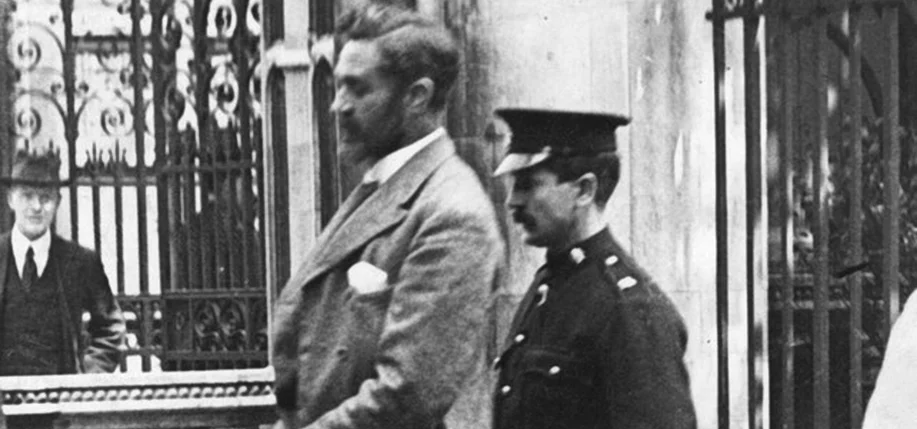
Roger Casement: 'In Ireland alone, in this twenthieth century, is loyalty held to be a crime',Speech from the dock - 1916

February 1, 2018

29 June 1916, London, Great Britain

Sir Roger Casement was a British soldier and consul, who was knighted before he took up the Irish nationalist cause in 1911. He was executed post Easter Uprising in 1916. This is his speech from the dock.

My Lord Chief Justice, as I wish my words to reach a much wider audience than I see before me here, I intend to read all that I propose to say. What I shall read now is something I wrote more than twenty days ago. I may say, my lord, at once, that I protest against the jurisdiction of this court in my case on this charge, and the argument, that I am now going to read, is addressed not to this court, but to my own countrymen.

There is an objection, possibly not good in law, but surely good on moral grounds, against the application to me here of this old English statute, 565 years old, that seeks to deprive an Irishman today of life and honour, not for "adhering to the King's enemies", but for adhering to his own people.

When this statute was passed, in 1351, what was the state of men's minds on the question of a far higher allegiance -- that of a man to God and His kingdom? The law of that day did not permit a man to forsake his Church, or deny his God, save with his life. The "heretic", then, had the same doom as the "traitor".

Today a man may forswear God and His heavenly kingdom, without fear or penalty -- all earlier statutes having gone the way of Nero's edicts against the Christians, but that constitutional phantom "the King" can still dig up from the dungeons and torture-chambers of the Dark Ages a law that takes a man's life and limb for an exercise of conscience.

If true religion rests on love, it is equally true that loyalty rests on love. The law that I am charged under has no parentage in love, and claims the allegiance of today on the ignorance and blindness of the past.

I am being tried, in truth, not by my peers of the live present, but by the fears of the dead past; not by the civilization of the twentieth century, but by the brutality of the fourteenth; not even by a statute framed in the language of the land that tries me, but emitted in the language of an enemy land -- so antiquated is the law that must be sought today to slay an Irishman, whose offence is that he puts Ireland first.

Loyalty is a sentiment, not a law. It rests on love, not on restraint. The government of Ireland by England rests on restraint, and not on law; and since it demands no love, it can evoke no loyalty...

Judicial assassination today is reserved only for one race of the King's subjects -- for Irishmen, for those who cannot forget their allegiance to the realm of Ireland. The Kings of England, as such, had no rights in Ireland up to the time of Henry VIII, save such as rested on compact and mutual obligation entered into between them and certain princes, chiefs, and lords of Ireland. This form of legal right, such as it was, gave no King of England lawful power to impeach an Irishman for high treason under this statute of King Edward III of England until an Irish Act, known as Poyning's Law, the tenth of Henry VII, was passed in 1494 at Drogheda, by the Parliament of the Pale in Ireland, and enacted as law in that part of Ireland. But, if by Poyning's Law an Irishman of the Pale could be indicted for high treason under this Act, he could be indicted in only one way, and before one tribunal -- by the laws of the Realm of Ireland and in Ireland. The very law of Poyning, which, I believe, applies this statute of Edward III to Ireland, enacts also for the Irishman's defence "all these laws by which England claims her liberty".

And what is the fundamental charter of an Englishman's Liberty? That he shall be tried by his peers. With all respect, I assert this court is to me, an Irishman, charged with this offence, a foreign court -- this jury is for me, an Irishman, not a jury of my peers to try me on this vital issue, for it is patent to every man of conscience that I have a right, an indefeasible right, if tried at all, under this statute of high treason, to be tried in Ireland, before an Irish court and by an Irish jury. This court, this jury, the public opinion of this country, England, cannot but be prejudiced in varying degrees against me, most of all in time of war. I did not land in England. I landed in Ireland. It was to Ireland I came; to Ireland I wanted to come; and the last place I desired to land was in England.

But for the Attorney-General of England there is only "England"; there is no Ireland; there is only the law of England, no right of Ireland; the liberty of Ireland and of an Irishman is to be judged by the power of England. Yet for me, the Irish outlaw, there is a land of Ireland, a right of Ireland, and a charter for all Irishmen to appeal to, in the last resort, a charter, that even the very statutes of England itself cannot deprive us of -- nay more, a charter that Englishmen themselves assert as the fundamental bond of law that connects the two kingdoms. This charge of high treason involves a moral responsibility, as the very terms of the indictment against myself recite, inasmuch as I committed the acts I am charged with to the "evil example of others in like case". What was the evil example I set to others in the like case, and who were these others? The "evil example" charged is that I asserted the right of my own country and the "others" I appealed to, to aid my endeavour, were my own countrymen. The example was given, not to Englishmen, but to Irishmen, and the "like case" can never arise in England, but only in Ireland. To Englishmen I set no evil example, for I made no appeal to them. I asked no Englishman to help me. I asked Irishmen to fight for their rights. The "evil example" was only to other Irishmen, who might come after me, and in "like case" seek to do as I did. How, then, since neither my example, nor my appeal was addressed to Englishmen, can I be rightfully tried by them?

If I did wrong in making that appeal to Irishmen to join with me in an effort to fight for Ireland, it is by Irishmen, and by them alone, I can be rightfully judged. From this court and its jurisdiction I appeal to those I am alleged to have wronged, and to those I am alleged to have injured by my "evil example" and claim that they alone are competent to decide my guilt or innocence. If they find me guilty, the statute may affix the penalty, but the statute does not override or annul my right to seek judgment at their hands.

This is so fundamental a right, so natural a right, so obvious a right, that it is clear that the Crown were aware of it when they brought me by force and by stealth from Ireland to this country. It was not I who landed in England, but the Crown who dragged me here, away from my own country to which I had returned with a price upon my head, away from my own countrymen whose loyalty is not in doubt, and safe from the judgment of my peers whose judgment I do not shrink from. I admit no other judgment but theirs. I accept no verdict save at their hands.

I assert from this dock that I am being tried here, not because it is just, but because it is unjust. Place me before a jury of my own countrymen, be it Protestant or Catholic, Unionist or Nationalist, Sinn Féineach or Orangemen, and I shall accept the verdict, and bow to the statute and all its penalties. But I shall accept no meaner finding against me, than that of those, whose loyalty I have endangered by my example, and to whom alone I made appeal. If they adjudge me guilty, then guilty I am. It is not I who am afraid of their verdict -- it is the Crown. If this is not so, why fear the test? I fear it not. I demand it as my right.

This is the condemnation of English rule, of English-made law, of English government in Ireland, that it dare not rest on the will of the Irish people, but exists in defiance of their will: that it is a rule, derived not from right, but from conquest.

Conquest, my Lord, gives no title; and, if it exists over the body, it fails over the mind. It can exert no empire over men's reason and judgment and affections; and it is from this law of conquest without title to the reason, judgment, and affection of my own countrymen that I appeal.

I can answer for my own acts and speeches. While one English party was responsible for preaching a doctrine of hatred, designed to bring about civil war in Ireland, the other, and that the party in power, took no active steps to restrain a propaganda that found its advocates in the Army, Navy, and Privy Council -- in the House of Parliament, and in the State Church -- a propaganda the methods of whose expression were so grossly illegal and utterly unconstitutional that even the Lord Chancellor of England could find only words and no repressive action to apply to them. Since lawlessness sat in high places in England, and laughed at the law as at the custodians of the law, what wonder was it that Irishmen should refuse to accept the verbal protestations of an English Lord Chancellor as a sufficient safeguard for their lives and liberties? I know not how all my colleagues on the Volunteer Committee in Dublin reviewed the growing menace, but those with whom I was in closest cooperation redoubled, in face of these threats from without, our efforts to unite all Irishmen from within. Our appeals were made to Protestant and Unionist as much almost as to Catholic and Nationalist Irishmen.

We hoped that, by the exhibition of affection and goodwill on our part toward our political opponents in Ireland, we should yet succeed in winning them from the side of an English party whose sole interest in our country lay in its oppression in the past, and in the present in its degradation to the mean and narrow needs of their political animosities. It is true that they based their actions, so they averred, on "ears for the empire", and on a very diffuse loyalty that took in all the peoples of the empire, save only the Irish. That blessed word empire that bears so paradoxical resemblance to charity! For if charity begins at home, empire begins in other men's homes, and both may cover a multitude of sins. I, for one, was determined that Ireland was much more to me than empire, and, if charity begins at home, so must loyalty. Since arms were so necessary to make our organization a reality, and to give to the minds of Irishmen, menaced with the most outrageous threats, a sense of security, it was our bounden duty to get arms before all else. I decided, with this end in view, to go to America, with surely a better right to appeal to Irishmen there for help in an hour of great national trial, than those envoys of empire could assert for their weekend descents on Ireland, or their appeals to Germany.

If, as the right honourable gentleman, the present Attorney-General, asserted in a speech at Manchester, Nationalists would neither fight for Home Rule nor pay for it, it was our duty to show him that we knew how to do both. Within a few weeks of my arrival in the United States, the fund that had been opened to secure arms for the Volunteers of Ireland amounted to many thousands of pounds. In every case the money subscribed, whether it came from the purse of the wealthy man, or from the still readier pocket of the poor man, was Irish gold.

We have been told, we have been asked to hope, that after this war Ireland will get Home Rule, as a reward for the lifeblood shed in a cause which, whomever else its success may benefit, can surely not benefit Ireland. And what will Home Rule be in return for what its vague promise has taken, and still hopes to take away from Ireland? It is not necessary to climb the painful stairs of Irish history -- that treadmill of a nation, whose labours are as vain for her own uplifting as the convict's exertions are for his redemption, to review the long list of British promises made only to be broken -- of Irish hopes, raised only to be dashed to the ground. Home Rule, when it comes, if come it does, will find an Ireland drained of all that is vital to its very existence unless it be that unquenchable hope we build on the graves of the dead. We are told that if Irishmen go by the thousand to die, not for Ireland, but for Flanders, for Belgium, for a patch of sand in the deserts of Mesopotamia, or a rocky trench on the heights of Gallipoli, they are winning self-government for Ireland. But if they dare to lay down their lives on their native soil, if they dare to dream even that freedom can be won only at home by men resolved to fight for it there, then they are traitors to their country, and their dream and their deaths are phases of a dishonourable phantasy.

But history is not so recorded in other lands. In Ireland alone, in this twentieth century, is loyalty held to be a crime. If loyalty be something less than love and more than law, then we have had enough of such loyalty for Ireland and Irishmen. If we are to be indicted as criminals, to be shot as murderers, to be imprisoned as convicts, because our offence is that we love Ireland more than we value our lives, then I do not know what virtue resides in any offer of self-government held out to brave men on such terms. Self-government is our right, a thing born in us at birth, a thing no more to be doled out to us, or withheld from us, by another people than the right to life itself -- than the right to feel the sun, or smell the flowers, or to love our kind. It is only from the convict these things are withheld, for crime committed and proven and Ireland, that has wronged no man, has injured no land, that has sought no dominion over others -- Ireland is being treated today among the nations of the world as if she were a convicted criminal. If it be treason to fight against such an unnatural fate as this, then I am proud to be a rebel, and shall cling to my "rebellion" with the last drop of my blood. If there be no right of rebellion against the state of things that no savage tribe would endure without resistance, then I am sure that it is better for men to fight and die without right than to live in such a state of right as this. Where all your rights have become only an accumulated wrong, where men must beg with bated breath for leave to subsist in their own land, to think their own thoughts, to sing their own songs, to gather the fruits of their own labours, and, even while they beg, to see things inexorably withdrawn from them -- then, surely, it is a braver, a saner and truer thing to be a rebel, in act and in deed, against such circumstances as these, than to tamely accept it, as the natural lot of men.

Source: https://www.newstatesman.com/2010/03/irela...

Enjoyed this speech? Speakola is a labour of love and I’d be very grateful if you would share, tweet or like it. Thank you.

Facebook Twitter Facebook
In 1900-19 Tags ROGER CASEMENT, IRELAND, HOME RULE, SPEECH FROM THE DOCK, EXECUTION, EASTER UPRISING
Comment
Lloyd George wales.png

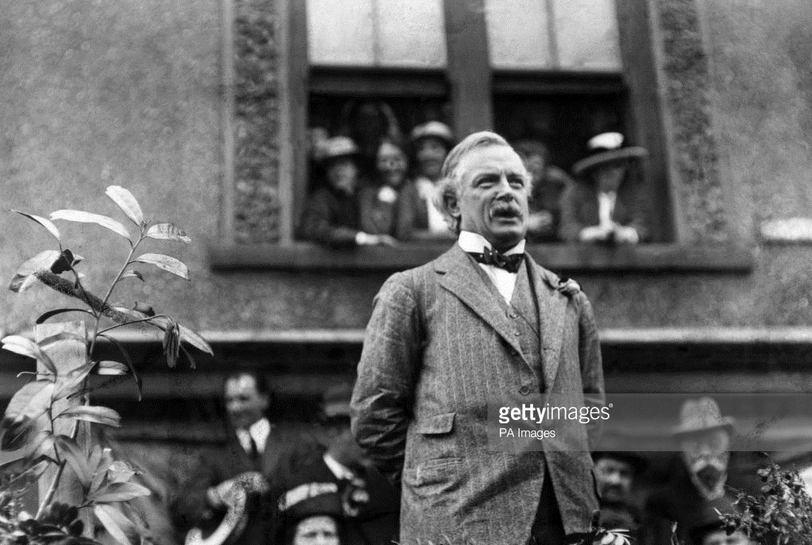
David Lloyd George: 'This is the story of two little nations', Great Pinnacle of Sacrifice - 1914

February 1, 2018

21 September 1914, Queens Hall, London, United Kingdom

This is the story of two little nations. The world owes much to the little nations

The greatest art in the world was the work of little nations; the most enduring literature of the world came from little nations; the greatest literature of England came when she was a nation of the size of Belgium fighting a great Empire. The heroic deeds that thrill humanity through generations were the deeds of little nations fighting for their freedom. Yes and the salvation of mankind came through a little nation. 

God has chosen little nations as the vessels by which He carriesHis choicest wines to the lips of humanity, to rejoice their hearts, to exalt their vision, to stimulate and strengthen their faith; and if we had stood by when two little nations were being crushed and broken by the brutal hands of barbarism, our shame would have rung down the everlasting ages.

But Germany insists that this is an attack by a lower civilization upon a higher one. As a matter of fact, the attack was begun by the civilization which calls itself the higher one. I am no apologist for Russia; she has perpetrated deeds of which I have no doubt her best sons are ashamed. What Empire has not? But Germany is the last Empire to point the finger of reproach at Russia. 

Russia has made sacrifices for freedom—great sacrifices. 

Do you remember the cry of Bulgaria when she was torn by the most insensate tyranny that Europe has ever seen? Who listened to that cry? The only answer of the “higher civilization” was that the liberty of the Bulgarian peasants was not worth the life of a single Pomeranian’soldiers. But the “rude barbarians” of the North sent their sons by the thousand to die for Bulgarian freedom. What about England? Go to Greece, the Netherlands, Italy, Germany, and France—in all those lands I could point out places where the sons of Britain have died for the freedom of those people. France has made sacrifices for the freedom of other lands than her own. Can you name a single country in the world for the freedom of which modern Prussia has ever sacrificed a single life? 

By the test of our faith the highest standard of civilization is the readiness to sacrifice for others. 

 Have you read the Kaiser’s speeches? They are full of the glitter and bluster of German militarism—“mailed fist” and “shining armor”. Poor old mailed fist! Its knuckles are getting a little bruised. Poor shining armor! The shine is being knocked out of it. There is the same swagger and boastfulness runing through the whole of the speeches. The extract which was given in the British weekly this week is a very remarkable product as an illustration of the spirit we have to fight. It is the Kaiser’s speech to his soldiers on the way to the front: 

Remember that the German people are the chosen of God. On me, the German Emperor, the Spirit of God has descended. I am His sword, His weapon and His Vicegerent. Woe to the disobedient, and death to cowards and unbelievers. 

Lunacy is always distressing, but sometimes it is dangerous; and when you get it manifested in the head of the State, and it has become the policy of a great Empire, it is about time that it should be ruthlessly put away. 

I do not believe he meant all these speeches; it is simply the martial straddle he had acquired. But there were men around him who meant every word of them. This was their religion. Treaties? They tangle the feet of Germany in her advance. Cut them with the sword! Little nations? They hinder the advance of Germany heel. The Russia Slav? He challenges the supremacy of Germany in Europe. 

Hurl your legions at him and massacre him! Britain? She is a constant menace to the predominance of Germany in the world. 

Wrest the trident out of her hand. 

Christianity? Sickly sentimentalism about sacrifice for others! Poor pap for German digestion! 

We will have a new diet. We will force it upon the world. It will be made in Germany—the diet of blood and iron. What remains? Treaties have gone. The honor of nations has gone. Libery has gone. What is left? Germany. Germany is left!“

Deutschland über Alles!”

That is what we are fighting —that claim to predominance of a material, hard civilization which, if it once rulers and sways the word, liberty goes, democracy vanishes. And unless Britain and her sons come to the rescue it will be a dark day for humanity. 

Have you followed the Prussian Junker ’and his doings? We are not fighting the German people are under the heel of this military caste, and it will be a day of rejoicing for the German peasant, artisan and trader when the military caste is broken. You know its pretensions. 

They give themselves the air of demigods. They walk the pavements and civilians and their wives are swept into the gutter; they have no right to stand in the way of a great Prussia soldier. Men, women, nations—they all have to go. He thinks all he has to say is, “We are in a hurry.”

 That is the answer he gave to Belgium -“Rapidity of action is Germany’s greatest asset,” which means, “I am in a hurry; clear out of my way”

 You know the type of motorist, the terror of the roads, with a sixty-horse-power car, who thinks the roads are made for him, and knock down anybody who impedes the actin of his car by a single mile an hour. The Prussian Junker is the road-hog of Europe. Small nationalities in his way are hurled to the roadside, bleeding and broken. Women and children are crushed under the wheels of his cruel car, and Britain is ordered out of his road. All I can say is this: if the old Britain spirit is alive in British hearts, that bully will be torn from his seat. Were he to win, it, would be the greatest catastrophe that has befallen democracy since the day of the Holy Alliance and its ascendancy. 

 They think we cannot beat them. It will not be easy. It will be a long job; it will be a terrible war; but in the end we shall march through terror to triumph. 

We shall need all our qualities—every quality that Britain and its people possess—prudence in counsel, daring in action, tenacity in purpose, courage in defeat, moderation in victory; in all things faith.   

It has pleased them to believe and to preach the belief that we are a decadent and degenerate people. They proclaim to the world through their professors that we are a nonheroic nation skulking behind our mahogany counters, whilst we egg on more gallant races to their destruction. This is a description given of us in Germany- “a timorous, craven nation, trusting to its Fleet”

 I think they are beginning to find their mistake out already - and there are half a million young men of Britain who have already registered a vow to their King that they will cross the seas and hurl that insult to Britain courage against its perpetrators on the battlefields of France and Germany. We want half a million more; and we shall get them. 

I envy you young people your opportunity. They have put up the age limit for the Army, but I am sorry to say I have marched a good many years even beyond that. It is a great opportunity, and opportunity that only comes once in many centuries to the children of men. 

For most generations sacrifice comes in drab and weariness of spirit. It comes to you today, and it comes today to us all, in the form of the glow and trill of a great movement for liberty, that impels millions throughout Europe to the same noble end. 

It is a great war for the emancipation of Europe from the thralldom of a military caste which has thrown its shadows upon two generations of men, and is now plunging the world into a welter of bloodshed and  death. 

Some have already given their lives. 

There are some who have given more than their own lives; they have their courage, and may God be their comfort and their strength. 

But their reward is at hand; those who have fallen have died consecrated deaths. 

They have taken their part in the making of a new Europe—a new world. I can see signs of its coming in the glare of the battle-field. 

The people will gain more by this struggle in all lands than they comprehend at the present moment. It is true they will be free of the greatest menace to their freedom. That is not all. There is something infinitely greater and more enduring which is emerging and more exalted than the old. I see among all classes, high and low, shedding them of selfishness, a new recognition that the honor of the country does not depend merely on the maintenance of its glory in the stricken field, but also in protecting its homes from distress. It is bringing a new outlook for all classes. The great flood of luxury and sloth which had submerged the land is receding, and a New Britain is appearing. 

We can see for the first time the fundamental things that matter in life and that have been obscured from our vision by the tropical growth of prosperity. 

May I tell you in a simple parable what I think this war is doing for us? I know a valley in North Wales, between the mountains and the sea. It is a beautiful valley, sung, comfortable, and sheltered by the mountains from all the bitter blasts. 

But it is very enervating, and I remember how the boys were in the habit of mountains in the distance, and to be stimulated and freshened by the breezes which came from the hilltops, and by the great spectacle of their grandeur. We have been living in the sheltered valley for generations. We have been too comfortable and too indulgent—many, perhaps, too selfish—and the tern hand of fate has scourged us to an elevation where we can see the great everlasting thngs that matter for a nation the great peaks we had forgotten, of Honor, Duty, Patriotism, and, clad in glittering white, the great pinnacle of Sacrifice pointing like arugged finger as to Heaven. 

We shall descend into the valleys again; but as long as the men and women of this generation last, they will carry in their hearts the image of those great mountain peaks whose foundations are not shaken, though Europe rock and sway in the convulsions of a great war. 

Source: https://wenku.baidu.com/view/21673020af45b...

Enjoyed this speech? Speakola is a labour of love and I’d be very grateful if you would share, tweet or like it. Thank you.

Facebook Twitter Facebook
In 1900-19 Tags DAVID LLOYD GEORGE, GREAT PINNACLE OF SACRIFICE, QUEENS HALL, WW1, WORLD WAR 1, TRANSCRIPT, BRITAIN, EUROPE, GERMANY, KAISER
Comment
This photo is from a sufragettes rally in 1913, not speech below.

This photo is from a sufragettes rally in 1913, not speech below.

Keir Hardie: 'The Sunshine of Socialism", 21st Annioversary of formation of Independent Labour Party - 1914

February 1, 2018

11 April 1914, Bradford, England

I shall not weary you by repeating the tale of how public opinion has changed during those twenty-one years. But, as an example, I may recall the fact that in those days, and for many years thereafter, it was tenaciously upheld by the public authorities, here and elsewhere, that it was an offence against laws of nature and ruinous to the State for public authorities to provide food for starving children, or independent aid for the aged poor. Even safety regulations in mines and factories were taboo. They interfered with the ‘freedom of the individual’. As for such proposals as an eight-hour day, a minimum wage, the right to work, and municipal houses, any serious mention of such classed a man as a fool.

These cruel, heartless dogmas, backed up by quotations from Jeremy Bentham, Malthus, and Herbert Spencer, and by a bogus interpretation of Darwin’s theory of evolution, were accepted as part of the unalterable laws of nature, sacred and inviolable, and were maintained by statesmen, town councillors, ministers of the Gospel, and, strangest of all, by the bulk of Trade Union leaders. That was the political, social and religious element in which our Party saw the light. There was much bitter fighting in those days. Even municipal contests evoked the wildest passions.And if today there is a kindlier social atmosphere it is mainly because of twenty-one years’ work of the ILP.

Scientists are constantly revealing the hidden powers of nature. By the aid of the X-rays we can now see through rocks and stones; the discovery of radium has revealed a great force which is already healing disease and will one day drive machinery; Marconi, with his wireless system of telegraphy and now of telephony, enables us to speak and send messages for thousands of miles through space.

Another discoverer, through means of the same invisible medium, can blow up ships, arsenals, and forts at a distance of eight miles.

But though these powers and forces are only now being revealed, they have existed since before the foundation of the world. The scientists, by sympathetic study and laborious toil, have brought them within our ken. And so, in like manner, our Socialist propaganda is revealing hidden and hitherto undreamed of powers and forces in human nature.

Think of the thousands of men and women who, during the past twenty-one years, have toiled unceasingly for the good of the race. The results are already being seen on every hand, alike in legislation and administration. And who shall estimate or put a limit to the forces and powers which yet lie concealed in human nature?

Frozen and hemmed in by a cold, callous greed, the warming influence of Socialism is beginning to liberate them. We see it in the growing altruism of Trade Unionism. We see it, perhaps, most of all in the awakening of women. Who that has ever known woman as mother or wife has not felt the dormant powers which, under the emotions of life, or at the stern call of duty are even now momentarily revealed? And who is there who can even dimly forecast the powers that lie latent in the patient drudging woman, which a freer life would bring forth? Woman, even more than the working class, is the great unknown quantity of the race.

Already we see how their emergence into politics is affecting the prospects of men. Their agitation has produced a state of affairs in which even Radicals are afraid to give more votes to men, since they cannot do so without also enfranchising women. Henceforward we must march forward as comrades in the great struggle for human freedom.

The Independent Labour Party has pioneered progress in this country, is breaking down sex barriers and class barriers, is giving a lead to the great women’s movement as well as to the great working-class movement. We are here beginning the twenty-second year of our existence. The past twenty-one years have been years of continuous progress, but we are only at the beginning. The emancipation of the worker has still to be achieved and just as the ILP in the past has given a good, straight lead, so shall the ILP in the future, through good report and through ill, pursue the even tenor of its way, until the sunshine of Socialism and human freedom break forth upon our land.

Source: https://labourlist.org/2014/04/keir-hardie...

Enjoyed this speech? Speakola is a labour of love and I’d be very grateful if you would share, tweet or like it. Thank you.

Facebook Twitter Facebook
In 1900-19 Tags KEIR HARDIE, SOCIALISM, WW1, SUNSHINE OF SOCIALISM, LABOUR PARTY, INDEPENDENT LABOUR PARTY, TRANSCRIPT, ANNIVERSARY
Comment

Keir Hardie: 'Socialism proposes to dethrone the brute god Mammon", House of Commons speech - 1901

February 1, 2018

1901, House of Commons, London, England

Keir Hardie became the first leader of the British Labour Party

I make no apology for bringing the question of Socialism before the House of Commons. It has long commanded the attention of the best minds in the country. It is a growing force in the thought of the world, and whether men agree or disagree with it, they have to reckon with it, and may as well begin by understanding it.

I begin by pointing out that the growth of our national wealth, instead of bringing comfort to the masses of the people, is imposing additional burdens on them. We are told on highest authority that some 300 years ago to total wealth of the English nation was 100 millions sterling. At the beginning of the last century it had increased to 2,000 millions, and this year it is estimated to be 13,000 millions. While our population during the last century increased three and a half times, the wealth of the community increased over six times. But one factor in our national life remained with us all through the century, and is still with us, and that is that at the bottom of the social scale there is a mass of poverty and misery equal in magnitude to that which obtained one hundred years ago. I submit that the true test of progress is not the accumulation of wealth in the hands of the few, but the elevation of the people as a whole. I admit frankly that considerable improvement was made in the condition of the working people during the last century. At the beginning of the 19th century the nation industrially was sick almost unto death. It was at that time passing from the old system of handy craft - under which every man was his own employer and his own capitalist, and traded directly with his customer - to the factory system which the introduction of machinery brought into existence. During these 100 years the wealth of the nation accumulated and the condition of the working classes as compared with the early years of the century improved, but I respectfully submit to the House that there was more happiness, more comfort and more independence before machinery began to accumulate wealth.

The high standard of comfort and reached by the labouring classes at the end of the last century has not brought them that happiness which pertained in England three hundred years ago, when there was no machinery, no large capitalists, no private property in land, as we know it today, and when every person had the right to use the land for the purpose of producing food for himself and his family. I said that improvement was made during the last century, but I would qualify that statement in this respect - that practically the whole of that improvement was made during the first 75 years. During the last quarter of the century the condition of the working classes has been practically stationary. There have been slight increases of wages here and reductions of hours there, but the landlord with his increased rent has more than absorbed any advantage that may have been gained.

We are rapidly approaching the point when the nation will be called upon to decide between an uncontrolled monopoly conducted for the benefit and in the interests of its principal shareholders, and a monopoly owned, controlled and manipulated by the state in the interests of the nation as a whole. I do not require to go far afield for arguments to support that part of my statement concerning the danger which the application of wealth in a few hands is bringing upon us. This House and the British nation know to their cost the danger which comes from allowing men to grow rich and permitting them to use their wealth to corrupt the press, to silence the pulpit, to degrade our national life, and to bring reproach and shame upon a great people, in order that a few unscrupulous scoundrels might be able to add to their ill-gotten gains. The war in South Africa is a millionaires' war. The troubles in China are due to the desire of the capitalists to exploit the people of that country, as they would fain exploit the people of South Africa. Much of the jealousy and bad blood existing between this country and France is traceable to the fact that we went to war in Egypt to suppress a popular uprising, seeking freedom for the people, in order that the interests of our bond-holders might be secured. Socialism, by placing the land and the instruments of production in the hands of the community, eliminates only the idle, useless class at both ends of the scale. Half a million of the people of this country benefit by the present system; the remaining millions of toilers and business men do not. The pursuit of wealth corrupts the manhood of men. We are called upon at the beginning of the 20th century to decide the question propounded in the Sermon on the Mount, as to whether we will worship God or Mammon. The present day is a Mammon worshipping age. Socialism proposes to dethrone the brute god Mammon and to lift humanity into its place. I beg to submit, in this very imperfect fashion, the resolution on the paper, merely promising that the last has not been heard the Socialist movement either in the country or on the floor of this House, but that, just as sure as radicalism democratised the system of government politically in the last century, so will socialism democratise the country industrially during this century upon which we just entered.

Source: http://www.archive.8m.net/hardie.htm

Enjoyed this speech? Speakola is a labour of love and I’d be very grateful if you would share, tweet or like it. Thank you.

Facebook Twitter Facebook
In 1900-19 Tags KEIR HARDIE, SOCIALISM, INCOME INEQUALITY, EQUALITY, POVERTY, TRANSCRIPT, HOUSE OF COMMONS
Comment

Theodopre Roosevelt: 'The new nationalism', Osawatomie speech - 1910

February 1, 2018

August 1910, Osawatomie, Kansas, USA

We come here today to commemorate one of the epoch-making events of the long struggle for the rights of man--the long struggle for the uplift of humanity. Our country--this great Republic-means nothing unless it means the triumph of a real democracy, the triumph of popular government, and, in the long run, of an economic system under which each man shall be guaranteed the opportunity to show the best that there is in him. That is why the history of America is now the central feature of the history of the world; for the world has set its face hopefully toward our democracy; and, O my fellow citizens, each one of you carries on your shoulders not only the burden of doing well for the sake of your country, but the burden of doing well and of seeing that this nation does well for the sake of mankind.

There have been two great crises in our country’s history: first, when it was formed, and then, again, when it was perpetuated; and, in the second of these great crises--in the time of stress and strain which culminated in the Civil War, on the outcome of which depended the justification of what had been done earlier, you men of the Grand Army, you men who fought through the Civil War, not only did you justify your generation, but you justified the wisdom of Washington and Washington’s colleagues. If this Republic had been founded by them only to be split asunder into fragments when the strain came, then the judgment of the world would have been that Washington’s work was not worth doing. It was you who crowned Washington’s work, as you carried to achievement the high purpose of Abraham Lincoln.

Now, with this second period of our history the name of John Brown will forever be associated; and Kansas was the theatre upon which the first act of the second of our great national life dramas was played. It was the result of the struggle in Kansas which determined that our country should be in deed as well as in name devoted to both union and freedom; that the great experiment of democratic government on a national scale should succeed and not fail. In name we had the Declaration of Independence in 1776; but we gave the lie by our acts to the words of the Declaration of Independence until 1865; and words count for nothing except in so far as they represent acts. This is true everywhere; but, O my friends, it should be truest of all in political life. A broken promise is bad enough in private life. It is worse in the field of politics. No man is worth his salt in public life who makes on the stump a pledge which he does not keep after election; and, if he makes such a pledge and does not keep it, hunt him out of public life. I care for the great deeds of the past chiefly as spurs to drive us onward in the present. I speak of the men of the past partly that they may be honored by our praise of them, but more that they may serve as examples for the future.

It was a heroic struggle; and, as is inevitable with all such struggles, it had also a dark and terrible side. Very much was done of good, and much also of evil; and, as was inevitable in such a period of revolution, often the same man did both good and evil. For our great good fortune as a nation, we, the people of the United States as a whole, can now afford to forget the evil, or, at least, to remember it without bitterness, and to fix our eyes with pride only on the good that was accomplished. Even in ordinary times there are very few of us who do not see the problems of life as through a glass, darkly; and when the glass is clouded by the murk of furious popular passion, the vision of the best and the bravest is dimmed. Looking back, we are all of us now able to do justice to the valor and the disinterestedness and the love of the right, as to each it was given to see the right, shown both by the men of the North and the men of the South in that contest which was finally decided by the attitude of the West. We can admire the heroic valor, the sincerity, the self-devotion shown alike by the men who wore the blue and the men who wore the gray; and our sadness that such men should have to fight one another is tempered by the glad knowledge that ever hereafter their descendants shall be fighting side by side, struggling in peace as well as in war for the uplift of their common country, all alike resolute to raise to the highest pitch of honor and usefulness the nation to which they all belong. As for the veterans of the Grand Army of the Republic, they deserve honor and recognition such as is paid to no other citizens of the Republic; for to them the republic owes it all; for to them it owes its very existence. It is because of what you and your comrades did in the dark years that we of to-day walk, each of us, head erect, and proud that we belong, not to one of a dozen little squabbling contemptible commonwealths, but to the mightiest nation upon which the sun shines.

I do not speak of this struggle of the past merely from the historic standpoint. Our interest is primarily in the application to-day of the lessons taught by the contest a half a century ago. It is of little use for us to pay lip-loyalty to the mighty men of the past unless we sincerely endeavor to apply to the problems of the present precisely the qualities which in other crises enabled the men of that day to meet those crises. It is half melancholy and half amusing to see the way in which well-meaning people gather to do honor to the men who, in company with John Brown, and under the lead of Abraham Lincoln, faced and solved the great problems of the nineteenth century, while, at the same time, these same good people nervously shrink from, or frantically denounce, those who are trying to meet the problems of the twentieth century in the spirit which was accountable for the successful solution of the problems of Lincoln’s time.

Of that generation of men to whom we owe so much, the man to whom we owe most is, of course, Lincoln. Part of our debt to him is because he forecast our present struggle and saw the way out. He said:

"I hold that while man exists it is his duty to improve not only his own condition, but to assist in ameliorating mankind."

And again:

"Labor is prior to, and independent of, capital. Capital is only the fruit of labor, and could never have existed if labor had not first existed. Labor is the superior of capital, and deserves much the higher consideration."

If that remark was original with me, I should be even more strongly denounced as a Communist agitator than I shall be anyhow. It is Lincoln’s. I am only quoting it; and that is one side; that is the side the capitalist should hear. Now, let the working man hear his side.

"Capital has its rights, which are as worthy of protection as any other rights. . . . Nor should this lead to a war upon the owners of property. Property is the fruit of labor; . . . property is desirable; is a positive good in the world."

And then comes a thoroughly Lincoln-like sentence:

"Let not him who is houseless pull down the house of another, but let him work diligently and build one for himself, thus by example assuring that his own shall be safe from violence when built."

It seems to me that, in these words, Lincoln took substantially the attitude that we ought to take; he showed the proper sense of proportion in his relative estimates of capital and labor, of human rights and property rights. Above all, in this speech, as in many others, he taught a lesson in wise kindliness and charity; an indispensable lesson to us of today. But this wise kindliness and charity never weakened his arm or numbed his heart. We cannot afford weakly to blind ourselves to the actual conflict which faces us today. The issue is joined, and we must fight or fail.

In every wise struggle for human betterment one of the main objects, and often the only object, has been to achieve in large measure equality of opportunity. In the struggle for this great end, nations rise from barbarism to civilization, and through it people press forward from one stage of enlightenment to the next. One of the chief factors in progress is the destruction of special privilege. The essence of any struggle for healthy liberty has always been, and must always be, to take from some one man or class of men the right to enjoy power, or wealth, or position, or immunity, which has not been earned by service to his or their fellows. That is what you fought for in the Civil War, and that is what we strive for now.

At many stages in the advance of humanity, this conflict between the men who possess more than they have earned and the men who have earned more than they possess is the central condition of progress. In our day it appears as the struggle of freemen to gain and hold the right of self-government as against the special interests, who twist the methods of free government into machinery for defeating the popular will. At every stage, and under all circumstances, the essence of the struggle is to equalize opportunity, destroy privilege, and give to the life and citizenship of every individual the highest possible value both to himself and to the commonwealth. That is nothing new. All I ask in civil life is what you fought for in the Civil War. I ask that civil life be carried on according to the spirit in which the army was carried on. You never get perfect justice, but the effort in handling the army was to bring to the front the men who could do the job. Nobody grudged promotion to Grant, or Sherman, or Thomas, or Sheridan, because they earned it. The only complaint was when a man got promotion which he did not earn.

Practical equality of opportunity for all citizens, when we achieve it, will have two great results. First, every man will have a fair chance to make of himself all that in him lies; to reach the highest point to which his capacities, unassisted by special privilege of his own and unhampered by the special privilege of others, can carry him, and to get for himself and his family substantially what he has earned. Second, equality of opportunity means that the commonwealth will get from every citizen the highest service of which he is capable. No man who carries the burden of the special privileges of another can give to the commonwealth that service to which it is fairly entitled.

I stand for the square deal. But when I say that I am for the square deal, I mean not merely that I stand for fair play under the present rules of the game, but that I stand for having those rules changed so as to work for a more substantial equality of opportunity and of reward for equally good service. One word of warning, which, I think, is hardly necessary in Kansas. When I say I want a square deal for the poor man, I do not mean that I want a square deal for the man who remains poor because he has not got the energy to work for himself. If a man who has had a chance will not make good, then he has got to quit. And you men of the Grand Army, you want justice for the brave man who fought, and punishment for the coward who shirked his work. Is that not so?

Now, this means that our government, National and State, must be freed from the sinister influence or control of special interests. Exactly as the special interests of cotton and slavery threatened our political integrity before the Civil War, so now the great special business interests too often control and corrupt the men and methods of government for their own profit. We must drive the special interests out of politics. That is one of our tasks to-day. Every special interest is entitled to justice--full, fair, and complete--and, now, mind you, if there were any attempt by mob-violence to plunder and work harm to the special interest, whatever it may be, that I most dislike, and the wealthy man, whomsoever he may be, for whom I have the greatest contempt, I would fight for him, and you would if you were worth your salt. He should have justice. For every special interest is entitled to justice, but not one is entitled to a vote in Congress, to a voice on the bench, or to representation in any public office. The Constitution guarantees protection to property, and we must make that promise good. But it does not give the right of suffrage to any corporation.

The true friend of property, the true conservative, is he who insists that property shall be the servant and not the master of the commonwealth; who insists that the creature of man’s making shall be the servant and not the master of the man who made it. The citizens of the United States must effectively control the mighty commercial forces which they have called into being.

There can be no effective control of corporations while their political activity remains. To put an end to it will be neither a short nor an easy task, but it can be done.

We must have complete and effective publicity of corporate affairs, so that the people may know beyond peradventure whether the corporations obey the law and whether their management entitles them to the confidence of the public. It is necessary that laws should be passed to prohibit the use of corporate funds directly or indirectly for political purposes; it is still more necessary that such laws should be thoroughly enforced. Corporate expenditures for political purposes, and especially such expenditures by public-service corporations, have supplied one of the principal sources of corruption in our political affairs.

It has become entirely clear that we must have government supervision of the capitalization, not only of public-service corporations, including, particularly, railways, but of all corporations doing an interstate business. I do not wish to see the nation forced into the ownership of the railways if it can possibly be avoided, and the only alternative is thoroughgoing and effective legislation, which shall be based on a full knowledge of all the facts, including a physical valuation of property. This physical valuation is not needed, or, at least, is very rarely needed, for fixing rates; but it is needed as the basis of honest capitalization.

We have come to recognize that franchises should never be granted except for a limited time, and never without proper provision for compensation to the public. It is my personal belief that the same kind and degree of control and supervision which should be exercised over public-service corporations should be extended also to combinations which control necessaries of life, such as meat, oil, or coal, or which deal in them on an important scale. I have no doubt that the ordinary man who has control of them is much like ourselves. I have no doubt he would like to do well, but I want to have enough supervision to help him realize that desire to do well.

I believe that the officers, and, especially, the directors, of corporations should be held personally responsible when any corporation breaks the law.

Combinations in industry are the result of an imperative economic law which cannot be repealed by political legislation. The effort at prohibiting all combination has substantially failed. The way out lies, not in attempting to prevent such combinations, but in completely controlling them in the interest of the public welfare. For that purpose the Federal Bureau of Corporations is an agency of first importance. Its powers, and, therefore, its efficiency, as well as that of the Interstate Commerce Commission, should be largely increased. We have a right to expect from the Bureau of Corporations and from the Interstate Commerce Commission a very high grade of public service. We should be as sure of the proper conduct of the interstate railways and the proper management of interstate business as we are now sure of the conduct and management of the national banks, and we should have as effective supervision in one case as in the other. The Hepburn Act, and the amendment to the act in the shape in which it finally passed Congress at the last session, represent a long step in advance, and we must go yet further.

There is a wide-spread belief among our people that, under the methods of making tariffs which have hitherto obtained, the special interests are too influential. Probably this is true of both the big special interests and the little special interests. These methods have put a premium on selfishness, and, naturally, the selfish big interests have gotten more than their smaller, though equally selfish, brothers. The duty of Congress is to provide a method by which the interest of the whole people shall be all that receives consideration. To this end there must be an expert tariff commission, wholly removed from the possibility of political pressure or of improper business influence. Such a commission can find the real difference between cost of production, which is mainly the difference of labor cost here and abroad. As fast as its recommendations are made, I believe in revising one schedule at a time. A general revision of the tariff almost inevitably leads to logrolling and the subordination of the general public interest to local and special interests.

The absence of effective State, and, especially, national, restraint upon unfair money-getting has tended to create a small class of enormously wealthy and economically powerful men, whose chief object is to hold and increase their power. The prime need to is to change the conditions which enable these men to accumulate power which it is not for the general welfare that they should hold or exercise. We grudge no man a fortune which represents his own power and sagacity, when exercised with entire regard to the welfare of his fellows. Again, comrades over there, take the lesson from your own experience. Not only did you not grudge, but you gloried in the promotion of the great generals who gained their promotion by leading their army to victory. So it is with us. We grudge no man a fortune in civil life if it is honorably obtained and well used. It is not even enough that it should have been gained without doing damage to the community. We should permit it to be gained only so long as the gaining represents benefit to the community. This, I know, implies a policy of a far more active governmental interference with social and economic conditions in this country than we have yet had, but I think we have got to face the fact that such an increase in governmental control is now necessary.

No man should receive a dollar unless that dollar has been fairly earned. Every dollar received should represent a dollar’s worth of service rendered-not gambling in stocks, but service rendered. The really big fortune, the swollen fortune, by the mere fact of its size, acquires qualities which differentiate it in kind as well as in degree from what is possessed by men of relatively small means. Therefore, I believe in a graduated income tax on big fortunes, and in another tax which is far more easily collected and far more effective-a graduated inheritance tax on big fortunes, properly safeguarded against evasion, and increasing rapidly in amount with the size of the estate.

The people of the United States suffer from periodical financial panics to a degree substantially unknown to the other nations, which approach us in financial strength. There is no reason why we should suffer what they escape. It is of profound importance that our financial system should be promptly investigated, and so thoroughly and effectively revised as to make it certain that hereafter our currency will no longer fail at critical times to meet our needs.

It is hardly necessary to me to repeat that I believe in an efficient army and a navy large enough to secure for us abroad that respect which is the surest guaranty of peace. A word of special warning to my fellow citizens who are as progressive as I hope I am. I want them to keep up their interest in our international affairs; and I want them also continually to remember Uncle Sam’s interests abroad. Justice and fair dealings among nations rest upon principles identical with those which control justice and fair dealing among the individuals of which nations are composed, with the vital exception that each nation must do its own part in international police work. If you get into trouble here, you can call for the police; but if Uncle Sam gets into trouble, he has got to be his own policeman, and I want to see him strong enough to encourage the peaceful aspirations of other people’s in connection with us. I believe in national friendships and heartiest good-will to all nations; but national friendships, like those between men, must be founded on respect as well as on liking, on forbearance as well as upon trust. I should be heartily ashamed of any American who did not try to make the American government act as justly toward the other nations in international relations as he himself would act toward any individual in private relations. I should be heartily ashamed to see us wrong a weaker power, and I should hang my head forever if we tamely suffered wrong from a stronger power.

Of conservation I shall speak more at length elsewhere. Conservation means development as much as it does protection. I recognize the right and duty of this generation to develop and use the natural resources of our land; but I do not recognize the right to waste them, or to rob, by wasteful use, the generations that come after us. I ask nothing of the nation except that it so behave as each farmer here behaves with reference to his own children. That farmer is a poor creature who skins the land and leaves it worthless to his children. The farmer is a good farmer who, having enabled the land to support himself and to provide for the education of his children, leaves it to them a little better than he found it himself. I believe the same thing of a nation.

Moreover, I believe that the natural resources must be used for the benefit of all our people, and not monopolized for the benefit of the few, and here again is another case in which I am accused of taking a revolutionary attitude. People forget now that one hundred years ago there were public men of good character who advocated the nation selling its public lands in great quantities, so that the nation could get the most money out of it, and giving it to the men who could cultivate it for their own uses. We took the proper democratic ground that the land should be granted in small sections to the men who were actually to till it and live on it. Now, with the water-power, with the forests, with the mines, we are brought face to face with the fact that there are many people who will go with us in conserving the resources only if they are to be allowed to exploit them for their benefit. That is one of the fundamental reasons why the special interests should be driven out of politics. Of all the questions which can come before this nation, short of the actual preservation of its existence in a great war, there is none which compares in importance with the great central task of leaving this land even a better land for our descendants than it is for us, and training them into a better race to inhabit the land and pass it on. Conservation is a great moral issue, for it involves the patriotic duty of insuring the safety and continuance of the nation. Let me add that the health and vitality of our people are at least as well worth conserving as their forests, waters, lands, and minerals, and in this great work the national government must bear a most important part.

I have spoken elsewhere also of the great task which lies before the farmers of the country to get for themselves and their wives and children not only the benefits of better farming, but also those of better business methods and better conditions of life on the farm. The burden of this great task will fall, as it should, mainly upon the great organizations of the farmers themselves. I am glad it will, for I believe they are all well able to handle it. In particular, there are strong reasons why the Departments of Agriculture of the various states, the United States Department of Agriculture, and the agricultural colleges and experiment stations should extend their work to cover all phases of farm life, instead of limiting themselves, as they have far too often limited themselves in the past, solely to the question of the production of crops. And now a special word to the farmer. I want to see him make the farm as fine a farm as it can be made; and let him remember to see that the improvement goes on indoors as well as out; let him remember that the farmer’s wife should have her share of thought and attention just as much as the farmer himself.

Nothing is more true than that excess of every kind is followed by reaction; a fact which should be pondered by reformer and reactionary alike. We are face to face with new conceptions of the relations of property to human welfare, chiefly because certain advocates of the rights of property as against the rights of men have been pushing their claims too far. The man who wrongly holds that every human right is secondary to his profit must now give way to the advocate of human welfare, who rightly maintains that every man holds his property subject to the general right of the community to regulate its use to whatever degree the public welfare may require it.

But I think we may go still further. The right to regulate the use of wealth in the public interest is universally admitted. Let us admit also the right to regulate the terms and conditions of labor, which is the chief element of wealth, directly in the interest of the common good. The fundamental thing to do for every man is to give him a chance to reach a place in which he will make the greatest possible contribution to the public welfare. Understand what I say there. Give him a chance, not push him up if he will not be pushed. Help any man who stumbles; if he lies down, it is a poor job to try to carry him; but if he is a worthy man, try your best to see that he gets a chance to show the worth that is in him. No man can be a good citizen unless he has a wage more than sufficient to cover the bare cost of living, and hours of labor short enough so after his day’s work is done he will have time and energy to bear his share in the management of the community, to help in carrying the general load. We keep countless men from being good citizens by the conditions of life by which we surround them. We need comprehensive workman’s compensation acts, both State and national laws to regulate child labor and work for women, and, especially, we need in our common schools not merely education in book-learning, but also practical training for daily life and work. We need to enforce better sanitary conditions for our workers and to extend the use of safety appliances for workers in industry and commerce, both within and between the States. Also, friends, in the interest of the working man himself, we need to set our faces like flint against mob-violence just as against corporate greed; against violence and injustice and lawlessness by wage-workers just as much as against lawless cunning and greed and selfish arrogance of employers. If I could ask but one thing of my fellow countrymen, my request would be that, whenever they go in for reform, they remember the two sides, and that they always exact justice from one side as much as from the other. I have small use for the public servant who can always see and denounce the corruption of the capitalist, but who cannot persuade himself, especially before election, to say a word about lawless mob-violence. And I have equally small use for the man, be he a judge on the bench or editor of a great paper, or wealthy and influential private citizen, who can see clearly enough and denounce the lawlessness of mob-violence, but whose eyes are closed so that he is blind when the question is one of corruption of business on a gigantic scale. Also, remember what I said about excess in reformer and reactionary alike. If the reactionary man, who thinks of nothing but the rights of property, could have his way, he would bring about a revolution; and one of my chief fears in connection with progress comes because I do not want to see our people, for lack of proper leadership, compelled to follow men whose intentions are excellent, but whose eyes are a little too wild to make it really safe to trust them. Here in Kansas there is one paper which habitually denounces me as the tool of Wall Street, and at the same time frantically repudiates the statement that I am a Socialist on the ground that that is an unwarranted slander of the Socialists.

National efficiency has many factors. It is a necessary result of the principle of conservation widely applied. In the end, it will determine our failure or success as a nation. National efficiency has to do, not only with natural resources and with men, but it is equally concerned with institutions. The State must be made efficient for the work which concerns only the people of the State; and the nation for that which concerns all the people. There must remain no neutral ground to serve as a refuge for lawbreakers, and especially for lawbreakers of great wealth, who can hire the vulpine legal cunning which will teach them how to avoid both jurisdictions. It is a misfortune when the national legislature fails to do its duty in providing a national remedy, so that the only national activity is the purely negative activity of the judiciary in forbidding the State to exercise power in the premises.

I do not ask for the over centralization; but I do ask that we work in a spirit of broad and far-reaching nationalism where we work for what concerns our people as a whole. We are all Americans. Our common interests are as broad as the continent. I speak to you here in Kansas exactly as I would speak in New York or Georgia, for the most vital problems are those which affect us all alike. The National Government belongs to the whole American people, and where the whole American people are interested, that interest can be guarded effectively only by the National Government. The betterment which we seek must be accomplished, I believe, mainly through the National Government.

The American people are right in demanding that New Nationalism, without which we cannot hope to deal with new problems. The New Nationalism puts the national need before sectional or personal advantage. It is impatient of the utter confusion that results from local legislatures attempting to treat national issues as local issues. It is still more impatient of the impotence which springs from over division of governmental powers, the impotence which makes it possible for local selfishness or for legal cunning, hired by wealthy special interests, to bring national activities to a deadlock. This New Nationalism regards the executive power as the steward of the public welfare. It demands of the judiciary that it shall be interested primarily in human welfare rather than in property, just as it demands that the representative body shall represent all the people rather than any one class or section of the people.

I believe in shaping the ends of government to protect property as well as human welfare. Normally, and in the long run, the ends are the same; but whenever the alternative must be faced, I am for men and not for property, as you were in the Civil War. I am far from underestimating the importance of dividends; but I rank dividends below human character. Again, I do not have any sympathy with the reformer who says he does not care for dividends. Of course, economic welfare is necessary, for a man must pull his own weight and be able to support his family. I know well that the reformers must not bring upon the people economic ruin, or the reforms themselves will go down in the ruin. But we must be ready to face temporary disaster, whether or not brought on by those who will war against us to the knife. Those who oppose reform will do well to remember that ruin in its worst form is inevitable if our national life brings us nothing better than swollen fortunes for the few and the triumph in both politics and business of a sordid and selfish materialism.

If our political institutions were perfect, they would absolutely prevent the political domination of money in any part of our affairs. We need to make our political representatives more quickly and sensitively responsive to the people whose servants they are. More direct action by the people in their own affairs under proper safeguards is vitally necessary. The direct primary is a step in this direction, if it is associated with a corrupt-services act effective to prevent the advantage of the man willing recklessly and unscrupulously to spend money over his more honest competitor. It is particularly important that all moneys received or expended for campaign purposes should be publicly accounted for, not only after election, but before election as well. Political action must be made simpler, easier, and freer from confusion for every citizen. I believe that the prompt removal of unfaithful or incompetent public servants should be made easy and sure in whatever way experience shall show to be most expedient in any given class of cases.

One of the fundamental necessities in a representative government such as ours is to make certain that the men to whom the people delegate their power shall serve the people by whom they are elected, and not the special interests. I believe that every national officer, elected or appointed, should be forbidden to perform any service or receive any compensation, directly or indirectly, from interstate corporations; and a similar provision could not fail to be useful within the States.

The object of government is the welfare of the people. The material progress and prosperity of a nation are desirable chiefly so long as they lead to the moral and material welfare of all good citizens. Just in proportion as the average man and woman are honest, capable of sound judgment and high ideals, active in public affairs,-but, first of all, sound in their home, and the father and mother of healthy children whom they bring up well,-just so far, and no farther, we may count our civilization a success. We must have-I believe we have already-a genuine and permanent moral awakening, without which no wisdom of legislation or administration really means anything; and, on the other hand, we must try to secure the social and economic legislation without which any improvement due to purely moral agitation is necessarily evanescent. Let me again illustrate by a reference to the Grand Army. You could not have won simply as a disorderly and disorganized mob. You needed generals; you needed careful administration of the most advanced type; and a good commissary-the cracker line. You well remember that success was necessary in many different lines in order to bring about general success. You had to have the administration at Washington good, just as you had to have the administration in the field; and you had to have the work of the generals good. You could not have triumphed without the administration and leadership; but it would all have been worthless if the average soldier had not had the right stuff in him. He had to have the right stuff in him, or you could not get it out of him. In the last analysis, therefore, vitally necessary though it was to have the right kind of organization and the right kind of generalship, it was even more vitally necessary that the average soldier should have the fighting edge, the right character. So it is in our civil life. No matter how honest and decent we are in our private lives, if we do not have the right kind of law and the right kind of administration of the law, we cannot go forward as a nation. That is imperative; but it must be an addition to, and not a substitute for, the qualities that make us good citizens. In the last analysis, the most important elements in any man’s career must be the sum of those qualities which, in the aggregate, we speak of as character. If he has not got it, then no law that the wit of man can devise, no administration of the law by the boldest and strongest executive, will avail to help him. We must have the right kind of character-character that makes a man, first of all, a good man in the home, a good father, and a good husband-that makes a man a good neighbor. You must have that, and, then, in addition, you must have the kind of law and the kind of administration of the law which will give to those qualities in the private citizen the best possible chance for development. The prime problem of our nation is to get the right type of good citizenship, and, to get it, we must have progress, and our public men must be genuinely progressive.

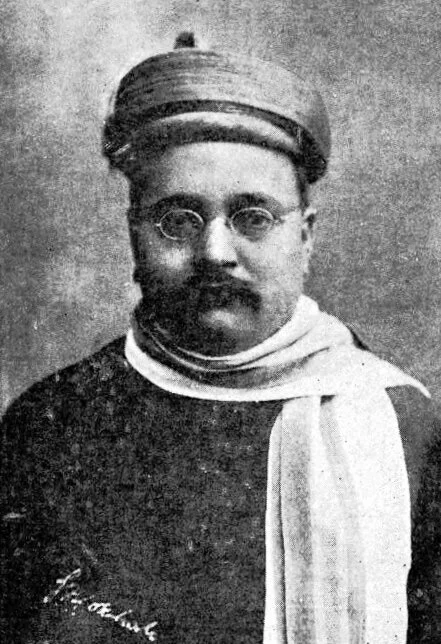
Source: https://obamawhitehouse.archives.gov/blog/...

Enjoyed this speech? Speakola is a labour of love and I’d be very grateful if you would share, tweet or like it. Thank you.

Facebook Twitter Facebook
In 1900-19 Tags THEODORE ROOSEVELT, THE NEW NATIONALISM, OSAWATOMIE SPEECH, CIVIL WAR, GOVERNMENT POWER, TRANSCRIPT
Comment

David Lloyd George: 'Why should I put burdens on the people?', Limehouse speech - 1909

February 1, 2018

31 July 1909, London, England

A few months ago a meeting was held not far from this hall in the heart of the City of London, demanding that the Government should launch into enormous expenditure on the Navy. That meeting ended up with a resolution promising that those who passed the resolution would give financial support to the Government in their undertaking. There have been two or three meetings held in the City of London since, attended by the same class of people but not ending up with a resolution promising to pay. On the contrary, we are spending the money, but they wont pay. What has happened since to alter their tone? Simply that we have sent in the bill. We started our four Dreadnoughts. They cost eight millions of money. We promised them four more. They cost another eight millions.

Somebody has got to pay; and then these gentlemen say: Perfectly true; somebody has got to pay but we would rather that somebody were somebody else. We started building; we wanted money to pay for the building; so we sent the hat round. We sent it round amongst the workmen and winders of Derbyshire and Yorkshire, the weavers of High Peak and the Scotsmen of Dumfries who, like all their countrymen, know the value of money. They all dropped in their coppers. We went round Belgravia; and there has been such a howl ever since that it has completely deafened us.

Taxes that will bring forth fruit

But they say 'It is not so much the Dreadnoughts we object to; it is Pensions'. If they objected to Pensions, why did they promise them? They won elections on the strength of their promises. It is true they never carried them out. Deception is always a pretty contemptible vice, but to deceive the poor is the meanest of all. But they say, 'When we promised Pensions, we meant Pensions at the expense of people for whom they were provided. We simply meant to bring in a Bill to compel workmen to contribute to their own Pensions'. If that is what they meant why did they not say so? The Budget, as your Chairman has already so well reminded you, is introduced not merely for the purpose of raising barren taxes, but taxes that are fertile, taxes that will bring forth fruit - the security of the country, which is paramount in the minds of all. The provision for the aged and deserving poor - it was time it was done. It is rather a shame for a rich country like ours - probably the richest in the world, if not the richest the world has ever seen, that it should allow those who have toiled all their days to end in penury and possibly starvation. It is rather hard that an old workman should have to find his way to the gates of the tomb, bleeding and footsore, through the brambles and thorns of poverty. We cut a new path for him, an easier one, a pleasanter one, through fields of waving corn. We are raising money to pay for the new road, aye, and to widen it, so that 200,000 paupers shall be able to join in the march. There are so many in the country blessed by Providence with great wealth, and if there are amongst them men who grudge out of their riches a fair contribution towards the less fortunate of their fellow-countrymen they are very shabby rich men. We propose to do more by means of the Budget. We are raising money to provide against the evils and the sufferings that follow from unemployment. We are raising money for the purpose of assisting our great friendly societies to provide for the sick and the widows and orphans. We are providing money to enable us to develop the resources of our own land. I do not believe any fair-minded man would challenge the justice and the fairness of the objects which we have in view in raising this money.

But there are some of them who say, 'The taxes themselves are unjust, unfair, unequal, oppressive notably so the land taxes'. They are engaged, not merely in the House of Commons, but outside the House of Commons, in assailing these taxes with a concentrated and sustained ferocity which will not allow even a comma to escape with its life. Now, are these taxes really so wicked? Let us examine them; because it is perfectly clear that the one part of the Budget that attracts all the hostility and animosity is that part which deals with the taxation of land. Well, now let us examine it. I do not want you to consider merely abstract principles. I want to invite your attention to a number of concrete cases; fair samples to show you how in these concrete illustrations our Budget proposals work. Now let us take them. Let us take first of all the tax on undeveloped land and on increment.

The fraud of the few and the folly of the many

Not far from here, not so many years ago, between the Lea and the Thames you had hundreds of acres of land which was not very useful even for agricultural purposes. In the main it was a sodden marsh. The commerce and the trade of London increased under Free Trade, the tonnage of your shipping went up by hundreds of thousands of tons and by millions; labour was attracted from all parts of the country to cope with all this trade and business which was done here. What happened? There was no housing accommodation. This Port of London became overcrowded, and the population overflowed. That was the opportunity of the owners of the marsh. All that land became valuable building land, and land which used to be rented at £2 or £3 an acre has been selling within the last few years at £2,000 an acre, £3,000 an acre, £6,000 an acre, £8,000 an acre. Who created that increment? Who made that golden swamp? Was it the landlord? Was it his energy? Was it his brains - a very bad look out for the place if it were - his forethought? It was purely the combined efforts of all the people engaged in the trade and commerce of the Port of London - trader, merchant, shipowner, dock labourer, workman, everybody except the landlord. Now, you follow that transaction. Land worth £2 or £3 an acre running up to thousands.

During the time it was ripening the landlord was paying his rates and taxes, not on £2 or £3 an acre. It was agricultural land, and because it was agricultural land a munificent Tory Government voted a sum of two millions to pay half the rates of those poor distressed landlords, and you and I had to pay taxes in order to enable those landlords to pay half their rates on agricultural land, while it was going up every year by hundreds of pounds through your efforts and the efforts of your neighbours. Well, now, that is coming to an end. On the walls of Mr Balfour's meeting last Friday were the words: 'We protect against fraud and folly. So do I. These things I am gong to tell you of have only been possible up to the present through the fraud of the few and the folly of the many'.

We mean to value all the land in the kingdom

Now, what is going to happen in the future? In future those landlords will have to contribute to the taxation of the country on the basis of the real value - only one halfpenny in the pound! Only a halfpenny! And that is what all the howling is about. But there is another little tax called the increment tax. For the future what will happen? We mean to value all the land in the kingdom. And here you can draw no distinction between agricultural land and other land, for the simple reason that East and West Ham was agricultural land a few years ago! And if land goes up in the future by hundreds and thousands an acre through the efforts of the community, the community will get 20 per cent. of that increment. Ah! What a misfortune it is that there was not a Chancellor of the Exchequer who did this thirty years ago. Only thirty years ago, and we should now be enjoying an abundant revenue from this source.

Now I have given you West Ham. Let me give you a few more cases. Take cases like Golders Green and other cases of similar kind where the value of land has gone up in the course, perhaps, of a couple of years through a new tramway or a new railway being opened. Golders Green is a case in point. A few years ago there was a plot of land there which was sold at £160. Last year I went and opened a Tube railway there.

What was the result? This year that very piece of land has been sold for £2,100 - £160 before the railway was opened - before I was there - £2,100 now. I am entitled to 20 per cent. Now there are many cases where landlords take advantage of the exigencies of commerce and of industry - take advantage of the needs of municipalities and even of national needs and of the monopoly which they have got in land in a particular neighbourhood in order to demand extortionate prices. Take the very well known case of the Duke of Northumberland when a County Council wanted to buy a small plot of land as a site for a school to train the children, who in due course would become the men labouring on his property. The rent was quite an insignificant thing.

His contribution to the rates - I forget - I think it was on the basis of 30s. an acre. What did he demand for it for a school? £900 an acre. All we say is this - Mr Buxton and I say - if it is worth £900, let him pay taxes on £900.

There are several of these cases that I want to give to you. Take the town of Bootle, a town created very much in the same way as these towns in the East of London - purely by the commerce of Liverpool. In 1879, the rates of Bootle were £9,000 a year - the ground rents were £10,000 - so that the landlord was receiving more from the industry of the community than all the rates derived by the municipality for the benefit of the town.

In 1898 the rates had gone up to £94,000 a year - for improving the place, constructing roads, laying out parks and extending lighting and opening up the place. But the ground landlord was receiving in ground rents £100,000. It is time that he should pay for this value. A case was given me from Richmond which is very interesting. The Town Council of Richmond recently built some workmen's cottages under a housing scheme. The land appeared on the rate-book as of the value of £4, and being agricultural the landlord paid only half the rates, and you and I paid the rest for him. It is situated on the extreme edge of the borough, therefore not very accessible, and the Town Council naturally thought they would get it cheap. But they did not know their landlord. They had to pay £2,000 an acre for it. The result is that instead of having a good housing scheme with plenty of gardens and open space, plenty of breathing space, plenty of room for the workmen at the end of their days, forty cottages had to be crowded on two acres. Now if the land had been valued at its true value, the landlord would have been at any rate contributing his fair share of the public revenue, and it is just conceivable that he might have been driven to sell at a more reasonable price.

I do not want to weary you with these cases. But I could give you many. I am a member of a Welsh County Council, and landlords even in Wales are not more reasonable. The police committee the other day wanted a site for a police station. Well, you might have imagined that if a landlord sold land cheaply for anything it would have been for a police station. The housing of the working classes that is a different matter. But a police station means security for property.

Not at all. The total population of Carnarvonshire is not as much - I am not sure it is as great - as the population of Limehouse alone. It is a scattered area; no great crowded populations there. And yet they demanded for a piece of land which was contributing 2s. a year to the rates, £2,500 an acre! All we say is, If their land is as valuable as all that, let it have the same value in the assessment book as it seems to possess in the auction-room. There are no end of these cases.

There was case from Greenock the other day. The Admiralty wanted a torpedo range. Here was an opportunity for patriotism! These are the men who want an efficient Navy to protect our shores, and the Admiralty state that one element in efficiency is straight shooting, and say: We want a range for practice for torpedoes on the coast of Scotland. There was a piece of land there. It was rated at something like £11 10s. a year. They went to the landlord - they had to pay for it - well now, just you guess, whilst I am finding it out. It had a rating value of £11 2s., and it was sold to the nation for £27,225. And these are the gentlemen who accuse us of robbery and spoliation! Now all we say is this: In future you must pay one halfpenny in the pound on the real value of your land.

In addition to that, if the value goes up - not owing to your efforts - if you spend money on improving it we will give you credit for it - but if it goes up owing to the industry and the energy of the people living in that locality, one-fifth of that increment shall in future be taken as a toll by the State. They say: Why should you tax this increment on landlords and not on other classes of the community? They say: You are taxing the landlord because the value of his property is going up through the growth of population, through the increased prosperity for the community. Does not the value of a doctor's business go up in the same way?

The landlord is a gentleman who does not earn his wealth

Ah, fancy their comparing themselves for a moment! What is the landlord's increment? Who is the landlord? The landlord is a gentleman - I have not a word to say about him in his personal capacity - the landlord is a gentleman who does not earn his wealth. He does not even take the trouble to receive his wealth. He has a host of agents and clerks to receive it for him. He does not even take the trouble to spend his wealth. He has a host of people around him to do the actual spending for him. He never sees it until he comes to enjoy it. His sole function, his chief pride, is stately consumption of wealth produced by others. What about the doctor's income? How does the doctor earn his income? The doctor is a man who visits our homes when they are darkened with the shadow of death: who, by his skill, his trained courage, his genius, wrings hope out of the grip of despair, wins life out of the fangs of the Great Destroyer. All blessings upon him and his divine art of healing that mends bruised bodies and anxious hearts. To compare the reward which he gets for that labour with the wealth which pours into the pockets of the landlord purely owing to the possession of his monopoly is a piece - if they will forgive me for saying so - of insolence which no intelligent man would tolerate. Now that is the halfpenny tax on unearned increment.

This system is not business, it is blackmail

Now I come to the reversion tax. What is the reversion tax? You have got a system in the country which is not tolerated in any other country of the world, except, I believe, Turkey; the system whereby landlords take advantage of the fact that they have got complete control over the land to let it for a term of years, spend money upon it in building, in developing it. You improve the building, and year by year the value passes into the pockets of the landlord, and at the end of sixty, seventy, eighty or ninety years the whole of it passes away to the pockets of a man who never spent a penny upon it. In Scotland they have a system of nine hundred and ninety-nine years lease. The Scotsmen have a very shrewd idea that at the end of nine hundred and ninety-nine years there will probably be a better land system in existence, and they are prepared to take their chance of the millennium coming round by that time. But in this country we have sixty years leases. I know districts - quarry districts in Wales where a little bit of barren rock where you could not feed a goat, where the landlord could not get a shilling an acre for agricultural rent, is let to quarrymen for the purpose of building houses, where 30s or £2 a house is charged for ground rent. The quarryman builds his house. He goes to a building society to borrow money. He pays out of his hard-earned weekly wage contributions to the building society for ten, twenty or thirty years. By the time he becomes an old man he has cleared off the mortgage, and more than half the value of the house has passed into the pockets of the landlord.

You have got cases in London here. There is the famous Gorringe case. In that case advantage was taken of the fact that a man has built up a great business, and they say: Here you are, you have built up a great business, you cannot take it away; you cannot move to other premises because your trade and goodwill are here; your lease is coming to an end, and we decline to renew it except on the most oppressive terms.

The Gorringe case is a very famous case. It was the case of the Duke of Westminster. Oh, these dukes, how they harass us! Mr Gorringe had got a lease of the premises at a few hundred pounds a year ground rent. He built up a great business there. He was a very able business man, and when the end of the lease came he went to the Duke of Westminster, and he said: Will you renew my lease? I want to carry on my business here. He said: Oh yes, I will; but I will do it on condition than the few hundreds a year you pay for ground rent shall in the future be £4,000 a year. In addition to that he had to pay a fine - a fine, mind you! - of £50,000, and he had to build up huge premises at enormous expense according to plans submitted to the Duke of Westminster. All I can say to this - if it is confiscation and robbery for us to say to that duke, being in need of money for public purposes, we will take 10 per cent. of all you have got, for that purpose, what would you call his taking nine-tenths from Mr Gorringe?

These are the cases we have got to deal with. Look at all this leasehold system. This system - it is the system I am attacking, not individuals - is not business, it is blackmail. I have no doubt some of you have taken the trouble to peruse some of these leases, and they are really worth reading, and I will guarantee that if you circulate copies of some of these building and mining leases at Tariff Reform meetings, and if you can get workmen at those meetings and the business men to read them, they will come away sadder but much wiser men. What are they? Ground rent is a part of it - fines, fees; you are to make no alteration without somebody's consent. Who is that somebody? It is the agent of the landlord. A fee to him. You must submit the plans to the landlords architect and get his consent. There is a fee to him. There is a fee to the surveyor; and then, of course, you cannot keep the lawyer out - he always comes in. And a fee to him. Well, that is the system, and the landlords come to us in the House of Commons and they say: If you go on taxing reversions we will grant no more leases? Is not that horrible? No more leases! No more kindly landlords with all their retinue of good fairies - agents, surveyors, lawyers - ready always to receive ground rents, fees, premiums, fines, reversions - no more, never again! They will not do it. We cannot persuade them. They wont have it. The landlord has threatened us that if we proceed with the Budget he will take his sack clean away from the hopper, and the grain which we are all grinding our best to fill his sack will go into our own. Oh, I cannot believe it.

There is a limit even to the wrath of outraged landlords. We must really appease them; we must offer up some sacrifice to them. Suppose we offer the House of Lords to them? Well, you seem rather to agree with that. I will make the suggestion to them.

I say their day of reckoning is at hand

Now, unless I am wearying you, I have just one other land tax, and that is a tax on royalties. The landlords are receiving eight millions a year by way of royalties.

What for? They never deposited the coal there. It was not they who planted these great granite rocks in Wales, who laid the foundations of the mountains.

Was it the landlord? And yet he, by some divine right, demands as his toll - for merely the right for men to risk their lives in hewing these rocks - eight millions a year. Take any coalfield. I went down to a coalfield the other day, and they pointed out to me many collieries there. They said: 'You see that colliery there. The first man who went there spent a quarter of a million in sinking shafts, in driving mains and levels. He never got coal, and he lost his quarter of a million. The second man who came spent 100,000 - and he failed. The third man came along, and he got the coal'. What was the landlord doing in the meantime. The first man failed; but the landlord got his royalty, the landlord got his dead-rent - and a very good name for it. The second man failed, but the landlord got his royalty.

These capitalists put their money in, and I said: 'When the cash failed what did the landlord put in?' He simply put in the bailiffs. The capitalist risks, at any rate, the whole of his money; the engineer puts his brains in; the miner risks his life.

I was telling you I went down a coalmine the other day. We sank into a pit half a mile deep. We then walked underneath the mountain, and we did about three-quarters of a mile with rock and shale above us. The earth seemed to be straining - around us and above us - to crush us in.

You could see the pit-props bent and twisted and sundered until you saw their fibres split in resisting the pressure. Sometimes they give way, and then there is mutilation and death. Often a spark ignites, the whole pit is deluged in fire, and the breath of life is scorched out of hundreds of breasts by the consuming flame. In the very next colliery to the one I descended just a few years ago three hundred people lost their lives in that way. And yet when the Prime Minister and I knock at the door of these great landlords, and say to them: 'Here, you know these poor fellows who have been digging up royalties at the risk of their lives, some of them are old, they have survived the perils of their trade, they are broken, they can earn no more. Wont you give them something towards keeping them out of the workhouse?' they scowl at us, and we say: 'Only a hapenny, just a copper'. They say: 'You thieves!' and they turn their dogs on to us, and you can hear their bark every morning. If this is an indication of the view taken by these great landlords of their responsibility to the people who at the risk of life create their wealth, then I say their day of reckoning is at hand.

The other day at the great Tory meeting held at the Cannon Street Hotel they had blazoned on the walls, 'We protest against the Budget in the name of democracy, liberty and justice'. Where does the democracy come in in this landed system? Where is the liberty in our leasehold system? Where is the seat of justice in all these transactions?

The ownership of land is not merely an enjoyment, it is a stewardship

I claim that the tax we impose on land is fair, is just and is moderate. They go on threatening that if we proceed, they will cut down their benefactions and discharge labour. What kind of labour? What is the labour they are going to choose for dismissal? Are they going to threaten to devastate rural England by feeding and dressing themselves? Are they going to reduce their gamekeepers? Ah, that would be sad! The agricultural labourer and the farmer might then have some part of the game which they fatten with their labour. But what would happen to you in the season? No week-end shooting with the Duke of Norfolk or anyone.

But that is not the kind of labour they are going to cut down. They are going to cut down productive labour - their builders and their gardeners - and they are going to ruin their property so that it shall not be taxed.

All I can say is this - the ownership of land is not merely an enjoyment, it is a stewardship. It has been reckoned as such in the past; and if they cease to discharge their functions, the security and defence of the country, looking after the broken in their villages and in their neighbourhoods then these functions which are part of the traditional duties attached to the ownership of land, and which have given to it its title - if they cease to discharge those functions, the time will come to reconsider the conditions under which the land is held in this country.

No country, however rich, can permanently afford to have quartered upon its revenue a class which declines to do the duty which it was called upon to perform since the beginning. And, therefore, it is one of the prime duties of statesmanship to investigate those conditions. But I do not believe it. They have threatened and menaced like that before. They have seen it is not to their interest to carry out these futile menaces. They are not protesting against paying their fair share of taxation of the land, and they are doing so by saying: 'You are burdening industry; you are putting burdens upon the people which they cannot bear'. Ah! They are not thinking of themselves. Noble souls! It is not the great dukes they are feeling for, it is the market gardener, it is the builder; and it was, until recently, the smallholder. In every debate in the House of Commons they said: 'We are not worrying for ourselves. We can afford it without broad acres; but just think of the little man who has only got a few acres'. And we were so very impressed with this tearful appeal that at last we said: We will leave him out. And I almost expected to see Mr Pretyman jump over the table when I said it, fall on my neck and embrace me. Instead of that he stiffened up, his face wreathed with anger, and he said: 'The Budget is more unjust than ever'.

We are placing burdens on the broadest shoulders. Why should I put burdens on the people? I am one of the children of the people. I was brought up amongst them. I know their trials; and God forbid that I should add one grain of trouble to the anxieties which they bear with such patience and fortitude. When the Prime Minister did me the honour of inviting me to take charge of the National Exchequer at a time of great difficulty, I made up my mind, in framing the Budget which was in front of me, that at any rate no cupboard should be barer, no lot would be harder. By that test I challenge them to judge the Budget.

Source: http://www.beersandpolitics.com/discursos/...

Enjoyed this speech? Speakola is a labour of love and I’d be very grateful if you would share, tweet or like it. Thank you.

Facebook Twitter Facebook
In 1900-19 Tags DAVID LLOYD GEORGE, THE PEOPLE'S BUDGET, LIBERAL, PRIME MINISTER, ENGLAND, TRANSCRIPT
Comment

Woodrow Wilson: 'You will say, “Is the league an absolute guaranty against war?”', the Pueblo speech, lobbying for Treaty of Versailles and League of Nations - 1919

August 30, 2017

25 September 1919, Pueblo, Colorado, USA

President Wilson attended Versailles and was desperate to have the USA ratify treaty and be part of League of Nations. It didn't happen. This was his stump speech on a tour of nation lobbying for League of Nations.

Mr. Chairman and fellow countrymen, it is with a great deal of genuine pleasure that I find myself in Pueblo, and I feel it a compliment that I should be permitted to be the first speaker in this beautiful hall. One of the advantages of this hall, as I look about, is that you are not too far away from me, because there is nothing so reassuring to men who are trying to express the public sentiment as getting into real personal contact with their fellow citizens. I have gained a renewed impression as I have crossed the continent this time of the homogeneity of this great people to whom we belong. They come from many stocks, but they are all of one kind. They come from many origins, but they are all shot through with the same principles and desire the same righteous and honest things. I have received a more inspiring impression this time of the public opinion of the United States than it was ever my privilege to receive before.

The chief pleasure of my trip has been that it has nothing to do with my personal fortunes, that it has nothing to do with my personal reputation, that it has nothing to do with anything except the great principles uttered by Americans of all sorts and of all parties which we are now trying to realize at this crisis of the affairs of the world. But there have been unpleasant impressions as well as pleasant impressions, my fellow citizens, as I have crossed the continent. I have perceived more and more that men have been busy creating an absolutely false impression of what the treaty of peace and the covenant of the league of nations contain and mean. I find, more-over, that there is an organized propaganda against the league of nations and against the treaty proceeding from exactly the same sources that the organized propaganda proceeded from which threatened this country here and there with disloyalty. And I want to say–I cannot say it too often–any man who carries a hyphen about with him carries a dagger that he is ready to plunge into the vitals of this Republic whenever he gets ready. If I can catch any man with a hyphen in this great contest, I will know that I have caught an enemy of the Republic. My fellow citizens, it is only certain bodies of foreign sympathies, certain bodies of sympathy with foreign nations that are organized against this great document which the American representatives have brought back from Paris. Therefore, in order to clear away the mists, in order to remove the impressions, in order to check the falsehoods that have clustered around this great subject, I want to tell you a few very simple things about the treaty and the covenant.

Do not think of this treaty of peace as merely a settlement with Germany. It is that. It is a very severe settlement with Germany, but there is not anything in it that she did not earn. Indeed, she earned more than she can ever be able to pay for, and the punishment exacted of her is not a punishment greater than she can bear, and it is absolutely necessary in order that no other nation may ever plot such a thing against humanity and civilization. But the treaty is so much more than that. It is not merely a settlement with Germany; it is a readjustment of those great injustices which underlie the whole structure of European and Asiatic society. This is only the first of several treaties. They are all constructed upon the same plan. The Austrian treaty follows the same lines. The treaty with Hungary follows the same lines. The treaty with Bulgaria follows the same lines. The treaty with Turkey, when it is formulated, will follow the same lines. What are those lines? They are based upon the purpose to see that every government dealt with in this great settlement is put in the hands of the people and taken out of the hands of coteries and of sovereigns who had no right to rule over the people. It is a people’s treaty, that accomplishes by a great sweep of practical justice the liberation of men who never could have liberated themselves, and the power of the most powerful nations has been devoted not to their aggrandizement but to the liberation of people whom they could have put under their control if they had chosen to do so. Not one foot of territory is demanded by the conquerors, not one single item of submission to their authority is demanded by them. The men who sat around that table in Paris knew that the time had come when the people were no longer going to consent to live under masters, but were going to live the lives that they chose themselves, to live under such governments as they chose to erect. That is the fundamental principle of this great settlement.

And we did not stop with that. We added a great international charter for the rights of labor. Reject this treaty, impair it, and this is the consequence to the laboring men of the world, that there is no international tribunal which can bring the moral judgments of the world to bear upon the great labor questions of the day. What we need to do with regard to the labor questions of the day, my fellow countrymen, is to lift them into the light, is to lift them out of the haze and distraction of passion, of hostility, into the calm spaces where men look at things without passion. The more men you get into a great discussion the more you exclude passion. Just so soon as the calm judgment of the world is directed upon the question of justice to labor, labor is going to have a forum such as it never was supplied with before, and men everywhere are going to see that the problem of labor is nothing more nor less than the problem of the elevation of humanity. We must see that all the questions which have disturbed the world, all the questions which have eaten into the confidence of men toward their governments, all the questions which have disturbed the processes of industry, shall be brought out where men of all points of view, men of all attitudes of mind, men of all kinds of experience, may contribute their part to the settlement of the great questions which we must settle and cannot ignore.

At the front of this great treaty is put the covenant of the league of nations. It will also be at the front of the Austrian treaty and the Hungarian treaty and the Bulgarian treaty and the treaty with Turkey. Every one of them will contain the covenant of the league of nations, because you cannot work any of them without the covenant of the league of nations. Unless you get the united, concerted purpose and power of the great Governments of the world behind this settlement, it will fall down like a house of cards. There is only one power to put behind the liberation of mankind, and that is the power of mankind. It is the power of the united moral forces of the world, and in the covenant of the league of nations, the moral forces of the world are mobilized. For what purpose? Reflect, my fellow citizens, that the membership of this great league is going to include all the great fighting nations of the world, as well as the weak ones. It is not for the present going to include Germany, but for the time being Germany is not a great fighting country. All the nations that have power that can be mobilized are going to be members of this League, including the United States. And what do they unite for? They enter into a solemn promise to one another that they will never use their power against one another for aggression; that they never will impair the territorial integrity of a neighbor; that they never will interfere with the political independence of a neighbor; that they will abide by the principle that great populations are entitled to determine their own destiny and that they will not interfere with that destiny; and that no matter what differences arise amongst them they will never resort to war without first having done one or other of two things–either submitted the matter of controversy to arbitration, in which case they agree to abide by the result without question, or submitted it to the consideration of the council of the league of nations, laying before that council all the documents, all the facts, agreeing that the council can publish the documents and the facts to the whole world, agreeing that there shall be six months allowed for the mature consideration of those facts by the council, and agreeing that at the expiration of these six months, even if they are not then ready to accept the advice of the council with regard to the settlement of the dispute, they will still not go to war for another three months. In other words, they consent, no matter what happens, to submit every matter of difference between them to the judgment of mankind, and just so certainly as they do that, my fellow citizens, war will be in the far background, war will be pushed out of that foreground of terror in which it has kept the world for generation after generation, and men will know that there will be a calm time of deliberate counsel. The most dangerous thing for a bad cause is to expose it to the opinion of the world. The most certain way that you can prove that a man is mistaken is by letting all his neighbors know what he thinks, by letting all his neighbors discuss what he thinks, and if he is in the wrong, you will notice that he will stay at home, he will not walk on the street. He will be afraid of the eyes of his neighbors. He will be afraid of their judgment of his character. He will know that his cause is lost unless he can sustain it by the arguments of right and of justice. The same law that applies to individuals applies to nations.

But you say, “We have heard that we might be at a disadvantage in the league of nations.” Well, whoever told you that either was deliberately falsifying or he had not read the covenant of the league of nations. I leave him the choice. I want to give you a very simple account of the organization of the league of nations and let you judge for yourselves. It is a very simple organization. The power of the league, or rather the activities of the league, lie in two bodies. There is the council, which consists of one representative from each of the principal allied and associated powers–that is to say, the United States, Great Britain, France, Italy, and Japan, along with four other representatives of the smaller powers chosen out of the general body of the membership of the league. The council is the source of every active policy of the league, and no active policy of the league can be adopted without a unanimous vote of the council. That is explicitly stated in the covenant itself. Does it not evidently follow that the league of nations can adopt no policy whatever without the consent of the United States? The affirmative vote of the representative of the United States is necessary in every case. Now, you have heard of six votes belonging to the British Empire. Those six votes are not in the council. They are in the assembly, and the interesting thing is that the assembly does not vote. I must qualify that statement a little, but essentially it is absolutely true. In every matter in which the assembly is given a voice, and there are only four or five, its vote does not count unless concurred in by the representatives of all the nations represented on the council, so that there is no validity to any vote of the assembly unless in that vote also the representative of the United States concurs. That one vote of the United States is as big as the six votes of the British Empire. I am not jealous for advantage, my fellow citizens, but I think that is a perfectly safe situation. There is no validity in a vote, either by the council or the assembly, in which we do not concur. So much for the statements about the six votes of the British Empire.

Look at it in another aspect. The assembly is the talking body. The assembly was created in order that anybody that purposed anything wrong would be subjected to the awkward circumstance that everybody could talk about it. This is the great assembly in which all the things that are likely to disturb the peace of the world or the good understanding between nations are to be exposed to the general view, and I want to ask you if you think it was unjust, unjust to the United States, that speaking parts should be assigned to the several portions of the British Empire? Do you think it unjust that there should be some spokesman in debate for that fine little stout Republic down in the Pacific, New Zealand? Do you think it unjust that Australia should be allowed to stand up and take part in the debate–Australia, from which we have learned some of the most useful progressive policies of modern time, a little nation only five million in a great continent, but counting for several times five in its activities and in its interest in liberal reform? Do you think it unjust that that little Republic down in South Africa, whose gallant resistance to being subjected to any outside authority at all we admired for so many months and whose fortunes we followed with such interest, should have a speaking part? Great Britain obliged South Africa to submit to her sovereignty, but she immediately after that felt that it was convenient and right to hand the whole self-government of that colony over to the very men whom she had beaten. The representatives of South Africa in Paris were two of the most distinguished generals of the Boer Army, two of the realest men I ever met, two men that could talk sober counsel and wise advice, along with the best statesmen in Europe. To exclude Gen. Botha and Gen. Smuts from the right to stand up in the parliament of the world and say something concerning the affairs of mankind would be absurd. And what about Canada? Is not Canada a good neighbor? I ask you. Is not Canada more likely to agree with the United States than with Great Britain? Canada has a speaking part. And then, for the first time in the history of the world, that great voiceless multitude, that throng hundreds of millions strong in India, has a voice, and I want to testily that some of the wisest and most dignified figures in the peace conference at Paris came from India, men who seemed to carry in their minds an older wisdom than the rest of us had, whose traditions ran back into so many of the unhappy fortunes of mankind that they seemed very useful counselors as to how some ray of hope and some prospect of happiness could be opened to its people. I for my part have no jealousy whatever of those five speaking parts in the assembly. Those speaking parts cannot translate themselves into five votes that can in any matter override the voice and purpose of the United States.

Let us sweep aside all this language of jealousy. Let us be big enough to know the facts and to welcome the facts, because the facts are based upon the principle that America has always fought for, namely, the equality of self-governing peoples, whether they were big or little–not counting men, but counting rights, not counting representation, but counting the purpose of that representation. When you hear an opinion quoted you do not count the number of persons who hold it; you ask, “Who said that?” You weigh opinions, you do not count them, and the beauty of all democracies is that every voice can be heard, every voice can have its effect, every voice can contribute to the general judgment that is finally arrived at. That is the object of democracy. Let us accept what America has always fought for, and accept it with pride that America showed the way and made the proposal. I do not mean that America made the proposal in this particular instance; I mean that the principle was an American principle, proposed by America.

When you come to the heart of the covenant, my fellow citizens, you will find it in article 10, and I am very much interested to know that the other things have been blown away like bubbles. There is nothing in the other contentions with regard to the league of nations, but there is something in article 10 that you ought to realize and ought to accept or reject. Article 10 is the heart of the whole matter. What is article 10? I never am certain that I can from memory give a literal repetition of its language, but I am sure that I can give an exact interpretation of its meaning. Article 10 provides that every member of the league covenants to respect and preserve the territorial integrity and existing political independence of every other member of the league as against external aggression. Not against internal disturbance. There was not a man at that table who did not admit the sacredness of the right of self-determination, the sacredness of the right of any body of people to say that they would not continue to live under the Government they were then living under, and under article 11 of the covenant, they are given a place to say whether they will live under it or not. For following article 10 is article 11, which makes it the right of any member of the league at any time to call attention to anything, anywhere, that is likely to disturb the peace of the world or the good understanding between nations upon which the peace of the world depends. I want to give you an illustration of what that would mean.

You have heard a great deal–something that was true and a great deal that was false–about that provision of the treaty which hands over to Japan the rights which Germany enjoyed in the Province of Shantung in China. In the first place, Germany did not enjoy any rights there that other nations had not already claimed. For my part, my judgment, my moral judgment, is against the whole set of concessions. They were all of them unjust to China, they ought never to have been exacted, they were all exacted by duress from a great body of thoughtful and ancient and helpless people. There never was any right in any of them. Thank God, America never asked for any, never dreamed of asking for any. But when Germany got this concession in 1898, the Government of the United States made no protest whatsoever. That was not because the Government of the United States was not in the hands of high-minded and conscientious men. It was. William McKinley was President and John Hay was Secretary of State–as safe hands to leave the honor of the United States in as any that you can cite. They made no protest because the state of international law at that time was that it was none of their business unless they could show that the interests of the United States were affected, and the only thing that they could show with regard to the interests of the United States was that Germany might close the doors of Shantung Province against the trade of the United States. They, therefore, demanded and obtained promises that we could continue to sell merchandise in Shantung. Immediately following that concession to Germany there was a concession to Russia of the same sort, of Port Arthur, and Port Arthur was handed over subsequently to Japan on the very territory of the United States. Don’t you remember that, when Russia and Japan got into war with one another the war was brought to a conclusion by a treaty written at Portsmouth, N.H., and in that treaty, without the slightest intimation from any authoritative sources in America that the Government of the United States had any objection, Port Arthur, Chinese territory, was turned over to Japan? I want you distinctly to understand that there is no thought of criticism in my mind. I am expounding to you a state of international law. Now, read articles 10 and 11. You will see that international law is revolutionized by putting morals into it. Article 10 says that no member of the league, and that includes all these nations that have done these things unjustly to China, shall impair the territorial integrity or the political independence of any other member of the league. China is going to be a member of the league. Article 11 says that any member of the League can call attention to anything that is likely to disturb the peace of the world or the good understanding between nations, and China is for the first time in the history of mankind afforded a standing before the jury of the world. I, for my part, have a profound sympathy for China, and I am proud to have taken part in an arrangement which promises the protection of the world to the rights of China. The whole atmosphere of the world is changed by a thing like that, my fellow citizens. The whole international practice of the world is revolutionized.

But, you will say, “What is the second sentence of article 10? That is what gives very disturbing thoughts.” The second sentence is that the council of the league shall advise what steps, if any, are necessary to carry out the guaranty of the first sentence, namely, that the members will respect and preserve the territorial integrity and political independence of the other members. I do not know any other meaning for the word “advise” except “advise.” The council advises, and it cannot advise without the vote of the United States. Why gentlemen should fear that the Congress of the United States would be advised to do something that it did not want to do I frankly cannot imagine, because they cannot even be advised to do anything unless their own representative has participated in the advice. It may be that that will impair somewhat the vigor of the league, but, nevertheless, the fact is so, that we are not obliged to take any advice except our own, which to any man who wants to go his own course is a very satisfactory state of affairs. Every man regards his own advice as best, and I dare say every man mixes his own advice with some thought of his own interest. Whether we use it wisely or unwisely, we can use the vote of the United States to make impossible drawing the United States into any enterprise that she does not care to be drawn into.

Yet article 10 strikes at the taproot of war. Article 10 is a statement that the very things that have always been sought in imperialistic wars are henceforth forgone by every ambitious nation in the world. I would have felt very lonely, my fellow countrymen, and I would have felt very much disturbed if, sitting at the peace table in Paris, I had supposed that I was expounding my own ideas. Whether you believe it or not, I know the relative size of my own ideas; I know how they stand related in bulk and proportion to the moral judgments of my fellow countrymen, and I proposed nothing whatever at the peace table at Paris that I had not sufficiently certain knowledge embodied the moral judgment of the citizens of the United States. I had gone over there with, so to say, explicit instructions. Don’t you remember that we laid down 14 points which should contain the principles of the settlement? They were not my points. In every one of them I was conscientiously trying to read the thought of the people of the United States, and after I uttered those points, I had every assurance given me that could be given me that they did speak the moral judgment of the United States and not my single judgment. Then, when it came to that critical period just a little less than a year ago, when it was evident that the war was coming to its critical end, all the nations engaged in the war accepted those 14 principles explicitly as the basis of the armistice and the basis of the peace. In those circumstances I crossed the ocean under bond to my own people and to the other governments with which I was dealing. The whole specification of the method of settlement was written down and accepted beforehand, and we were architects building on those specifications. It reassures me and fortifies my position to find how, before I went over men whose judgment the United States has often trusted were of exactly the same opinion that I went abroad to express. Here is something I want to read from Theodore Roosevelt:

“The one effective move for obtaining peace is by an agreement among all the great powers in which each should pledge itself not only to abide by the decisions of a common tribunal but to back its decisions by force. The great civilized nations should combine by solemn agreement in a great world league for the peace of righteousness; a court should be established. A changed and amplified Hague court would meet the requirements, composed of representatives from each nation, whose representatives are sworn to act as judges in each case and not in a representative capacity.” Now, there is article 10. He goes on and says this: “The nations should agree on certain rights that should not be questioned, such as territorial integrity, their right to deal with their domestic affairs, and with such matters as whom they should admit to citizenship. All such guarantee each of their number in possession of these rights.”

Now, the other specification is in the covenant. The covenant in another portion guarantees to the members the independent control of their domestic question. There is not a leg for these gentlemen to stand on when they say that the interests of the United States are not safeguarded in the very points where we are most sensitive. You do not need to be told again that the covenant expressly says that nothing in this covenant shall be construed as affecting the validity of the Monroe doctrine, for example. You could not be more explicit than that. And every point of interest is covered, partly for one very interesting reason. This is not the first time that the Foreign Relations Committee of the Senate of the United States has read and considered this covenant. I brought it to this country in March last in a tentative, provisional form, in practically the form that it now has, with the exception of certain additions which I shall mention immediately. I asked the foreign relations committees of both houses to come to the White House, and we spent a long evening in the frankest discussion of every portion that they wished to discuss. They made certain specific suggestions as to what should be contained in this document when it was to be revised. I carried those suggestions to Paris, and every one of them was adopted. What more could I have done? What more could have been obtained? The very matters upon which these gentlemen were most concerned were the right of withdrawal, which is now expressly stated; the safeguarding of the Monroe doctrine, which is now accomplished; the exclusion from action by the league of domestic questions, which is now accomplished. All along the line, every suggestion of the United States was adopted after the covenant had been drawn up in its first form and had been published for the criticism of the world. There is a very true sense in which I can say this is a tested American document.

I am dwelling upon these points, my fellow citizens, in spite of the fact that I dare say to most of you they are perfectly well known, because in order to meet the present situation we have got to know what we are dealing with. We are not dealing with the kind of document which this is represented by some gentlemen to be; and inasmuch as we are dealing with a document simon-pure in respect of the very principles we have professed and lived up to, we have got to do one or other of two things–we have got to adopt it or reject it. There is no middle course. You can not go in on a special-privilege basis of your own. I take it that you are too proud to ask to be exempted from responsibilities which the other members of the league will carry. We go in upon equal terms or we do not go in at all; and if we do not go in, my fellow citizens, think of the tragedy of that result–the only sufficient guaranty of the peace of the world withheld! Ourselves drawn apart with that dangerous pride which means that we shall be ready to take care of ourselves, and that means that we shall maintain great standing armies and an irresistible navy; that means we shall have the organization of a military nation; that means we shall have a general staff, with the kind of power that the general staff of Germany had; to mobilize this great manhood of the Nation when it pleases, all the energy of our young men drawn into the thought and preparation for war. What of our pledges to the men that lie dead in France? We said that they went over there, not to prove the prowess of America or her readiness for another war, but to see to it that there never was such a war again. It always seems to make it difficult for me to say anything, my fellow citizens, when I think of my clients in this case. My clients are the children; my clients are the next generation. They do not know what promises and bonds I undertook when I ordered the armies of the United States to the soil of France, but I know, and I intend to redeem my pledges to the children; they shall not be sent upon a similar errand.

Again and again, my fellow citizens, mothers who lost their sons in France have come to me and, taking my hand, have shed tears upon it not only, but they have added, “God bless you, Mr. President!” Why, my fellow citizens, should they pray God to bless me? I advised the Congress of the United States to create the situation that led to the death of their sons. I ordered their sons oversea. I consented to their sons being put in the most difficult parts of the battle line, where death was certain, as in the impenetrable difficulties of the forest of Argonne. Why should they weep upon my hand and call down the blessings of God upon me? Because they believe that their boys died for something that vastly transcends any of the immediate and palpable objects of the war. They believe, and they rightly believe, that their sons saved the liberty of the world. They believe that wrapped up with the liberty of the world is the continuous protection of that liberty by the concerted powers of all civilized people. They believe that this sacrifice was made in order that other sons should not be called upon for a similar gift–the gift of life, the gift of all that died–and if we did not see this thing through, if we fulfilled the dearest present wish of Germany and now dissociated ourselves from those alongside whom we fought in the war, would not something of the halo go away from the gun over the mantelpiece, or the sword? Would not the old uniform lose something of its significance? These men were crusaders. They were not going forth to prove the might of the United States. They were going forth to prove the might of justice and right, and all the world accepted them as crusaders, and their transcendent achievement has made all the world believe in America as it believes in no other nation organized in the modern world. There seems to me to stand between us and the rejection or qualification of this treaty the serried ranks of those boys in khaki, not only those boys who came home, but those dear ghosts that still deploy upon the fields of France.

My friends, on last Decoration Day, I went to a beautiful hillside near Paris, where was located the cemetery of Suresnes, a cemetery given over to the burial of the American dead. Behind me on the slopes was rank upon rank of living American soldiers, and lying before me upon the levels of the plain was rank upon rank of departed American soldiers. Right by the side of the stand where I spoke there was a little group of French women who had adopted those graves, had made themselves mothers of those dear ghosts by putting flowers every day upon those graves, taking them as their own sons, their own beloved, because they had died in the same cause–France was free and the world was free because America had come! I wish that some men in public life who are now opposing the settlement for which these men died could visit such a spot as that. I wish that the thought that comes out of those graves could penetrate their consciousness. I wish that they could feel the moral obligation that rests upon us not to go back on those boys, but to see the thing through, to see it through to the end and make good their redemption of the world. For nothing less depends upon this decision, nothing less than the liberation and salvation of the world.

You will say, “Is the league an absolute guaranty against war?” No; I do not know any absolute guaranty against the errors of human judgment or the violence of human passion, but I tell you this: With a cooling space of nine months for human passion, not much of it will keep hot. I had a couple of friends who were in the habit of losing their tempers, and when they lost their tempers they were in the habit of using very unparliamentary language. Some of their friends induced them to make a promise that they never swear inside the town limits. When the impulse next came upon them, they took a streetcar to go out of town to swear, and by the time they got out of town they did not want to swear. They came back convinced that they were just what they were, a couple of unspeakable fools, and the habit of getting angry and of swearing suffered great inroads upon it by that experience. Now, illustrating the great by the small, that is true of the passions of nations. It is true of the passions of men however you combine them. Give them space to cool off. I ask you this: If this is not an absolute insurance against war, do you want no insurance at all? Do you want nothing? Do you want not only no probability that war will not recur, but the probability that it will recur? The arrangements of justice do not stand of themselves, my fellow citizens. The arrangements of this treaty are just, but they need the support of the combined power of the great nations of the world. And they will have that support. Now that the mists of this great question have cleared away, I believe that men will see the truth, eye to eye and face to face. There is one thing that the American people always rise to and extend their hand to, and that is the truth of justice and of liberty and of peace. We have accepted that truth and we are going to be led by it, and it is going to lead us, and, through us the world, out into pastures of quietness and peace such as the world never dreamed of before.

Source: http://voicesofdemocracy.umd.edu/wilson-th...

Enjoyed this speech? Speakola is a labour of love and I’d be very grateful if you would share, tweet or like it. Thank you.

Facebook Twitter Facebook
In 1900-19 Tags THE PUEBLO SPEECH, WOODROW WILSON, LEAGUE OF NATIONS, VERSAILLES, UNITED STATES, UNITED NATIONS, WW1, PEACE, TRANSCRIPT
Comment

Frederick Edwin Smith: 'I myself am a perfectly unrepentant member of the Tariff Reform League', maiden speech - 1906

August 30, 2017

11 March 1906, House of Commons, United Kingdom

FE Smith was a Conservative elected in Tory defeat by PM Lloyd George. He targeted the PM in this famous and eloquent speech, for exaggerating what would happen if tariffs were removed (slavery returning to Wales)

Mr. Speaker, sir,

in whatever section of the House hon. members may sit, or however profoundly they may differ from the economic views which underlie the remarks of the hon. member for Blackburn [Mr. Snowden], they will all, at least, desire to join in a tribute to the sincerity and ability displayed in the speech he has just delivered. Speaking for myself, I confess that I have been struck by the admissions which have been made by those hon. members who have spoken in favor of this resolution.

I venture to ask hon. members on the ministerial side, at the height of their triumph, to consider for a moment what is implicitly involved in their concessions. The hon. member for Blackburn has just told the House that sixty years of free trade have absolutely failed to ameliorate the condition of the working classes. That is a statement upon which the Opposition have reached some degree of agreement with the hon. member.

Where, however, we part company with him, is not upon the great and growing importance of still further ameliorating the condition of the working classes, but upon the feasibility of effectively assisting thirteen million people on the verge of starvation by a revision of railway rates, by unexplained dealings with mine-owners, or by loose, mischievous, and predatory proposals affecting those who happen to own land.

The hon. gentleman spoke with bitterness almost with contempt of persons possessing large incomes. I would entreat hon. members to make quite sure that they have cleared their minds of cant upon this question. When I hear vague and general proposals put forward at the expense of large incomes, without any precise explanation as to the principle upon which, or the extent to which those incomes are to be appropriated or tapped for the service of those who are less fortunate, I should like to make an elementary observation, that there are very few members in this House, whether in Opposition or on the benches opposite or below the gangway, whose principal business occupation it is not to provide themselves with as large an income as they honestly can.

If there is one profession to which that charge cannot be applied, it is, perhaps, the profession to which I myself belong. I, therefore, attach little importance to disparaging observations upon the rich, either from the hon. gentleman or from anyone else. Nor do I believe that the policy of unduly burdening the rich will be found on a just consideration of the action and interaction of economic forces to be of real advantage to the poor. Labour, after all, is immobile, whereas capital is always fugitive.

What other remedies has the hon. gentleman for the evils which he so clearly appreciates? He and his friends are alike barren in suggestion. Unemployment yearly grows chronic over a larger area, while a Parliament of Free Importers celebrates in academic resolutions the economic system which has depopulated rural England, has filled the emigrant steamers with fugitives from these happy shores, and has aggravated the evils of the most revolting slums in Christendom.

The progress of tonight's debate makes one profoundly conscious of the constructive shortcomings of the Cobdenism of today. I myself am a perfectly unrepentant member of the Tariff Reform League. I do not know how many members of the league there may be in the House; it may be that a division would show that they are not more numerous than the representatives of the Liberal League. I have, at least, the satisfaction of reflecting that, if tariff reform is found not to be a winning horse, I have not necessarily compromised my political future. I have in hon. and right hon. gentlemen opposite an admirable example of how to cut the painter of a similar league, with the maximum of political advancement, and the minimum of fidelity to a founder. Such a model of chivalrous loyalty is of great value to a young member of Parliament.

I suppose the resolution has been charitably designed to call attention to differences existing or supposed to exist in the Opposition. I should have thought that we might have looked to hon. gentlemen opposite for a little more charity. Hon. gentlemen opposite have had analogous difficulties. The question of when a tariff becomes protective is no doubt difficult, but not more so than the conundrum "When is a slave not a slave?" or the problem when, if ever, preferential treatment should be given to Roman Catholic schools.

All great political parties have skeletons in the cupboard, some with manacles on, and some with only their hands behind their backs. The quarrel I have with hon. gentlemen opposite is that they show an astonishing indelicacy in attempting to drag our skeleton into the open. Not satisfied with tomahawking our colleagues in the country, they ask the scanty remnant in the House to join in the scalp dance.

I do not think we can complain of the tone of a single speech which has been made from the opposite side of the House. We were particularly pleased with the remarks which fell from the hon. member for East Toxteth [Mr. Austin Taylor], for he entered the House, not like his new colleagues, on the crest of the wave, but rather by means of an opportune dive. Every one in the House will appreciate his presence, because there can be no greater compliment paid to the House by a member, than that he should be in our midst, when his heart is far away, and it must be clear to all who know the hon. member's scrupulous sense of honor, that his desire must be at the present moment to be amongst his constituents, who are understood to be at least as anxious to meet him.

The resolution before the House consists of two parts. In the first, we are asked to recognize the merits of what is described on an obscure prescriptive principle as free trade, and, in the second, we are invited to register the proposition that the country gave an unqualified verdict in its favor.

The word "unqualified" is in itself ambiguous, and may have more than one meaning. If we say that a man is an unqualified slave, we mean that his condition can be honestly described as completely servile, and not, merely, as semi-servile. If, on the other hand, we say that a man is an unqualified medical practitioner, or an unqualified Under-Secretary, we mean that he is not entitled to any particular respect, because he has not passed through the normal period of training, or preparation. It is, on the whole, probable that the word is used in the first sense in the present motion.

But, perhaps, it is necessary to distinguish even further. When hon. gentlemen opposite are successful at the polls, it is probably used in the first sense. In the comparatively few cases in which I and my friends were successful, it is used in the second. Birmingham, under circumstances which will never be effaced from the memory of hon. gentlemen, on whichever side of the House they sit, displayed the rare and beautiful quality of political constancy, and voted in all its divisions for tariff reform. [Laughter.] The result is sneered at, in the spirit of the laughter which we have just heard, as a triumph for Tammanyism, or, more profoundly analyzed by an eminent Nonconformist divine, as an instance of that mysterious dispensation, which occasionally permits the ungodly to triumph.

Hon. gentlemen opposite are, in fact, very much more successful controversialists than hon. members on this side of the House. It is far easier, if one is a master of scholarly irony, and of a charming literary style, to describe protection as a "stinking rotten carcass" than to discuss scientifically whether certain limited proposals are likely to prove protective in their incidence. It is far easier, if one has a strong stomach, to suggest to simple rustics, as the President of the Board of Trade [Mr. Lloyd-George] did, that, if the Tories came into power, they would introduce slavery on the hills of Wales.


Mr. Lloyd-George: I did not say that.


Mr. F.E. Smith: The right hon. gentleman would, no doubt, be extremely anxious to forget it, if he could. But, anticipating a temporary lapse of memory, I have in my hand the Manchester Guardian of January 16, 1906, which contains a report of his speech. The right hon. gentleman said:

"What would they say to introducing Chinamen at 1s. a day into the Welsh quarries? Slavery on the hills of Wales! Heaven forgive me for the suggestion!"


I have no means of judging how Heaven will deal with persons, who think it decent to make such suggestions. The distinction drawn by the right hon. gentleman is more worthy of the county court than of the Treasury Bench. I express a doubt whether any honest politician will ever acquit the right hon. gentleman of having deliberately given the impression to those he thus addressed that, if the Conservative party were returned, the hills of Wales would be polluted by conditions of industrial slavery.

The alternative construction is that the right hon. gentleman thought it worth his while, in addressing ignorant men [Cries of " No"] — In relation to the right hon. gentleman they are ignorant. Is that disputed? — to put before ignorant men an abstract and academic statement as to Chinese labor on the hills of Wales. If he did not mean his hearers to draw the false but natural inference, why make any reference to Chinese slavery as a conceivable prospect on the hills of Wales?

Was even Manchester won on the free trade issue? [Cries of " Yes."] I hear hon. gentlemen opposite say "Yes." I think they must be from the south of England. If Manchester was won on the free trade issue, perhaps hon. gentlemen will explain why repeated meetings were devoted to the less effective and attractive cry, and why specialist speakers like Mr. Creswell were brought down to discourse to the electors on the evils of Chinese slavery.

Mr. Speaker, I am not unaware that, owing to the eccentricities of municipal geography, Salford is not, technically, a part of Manchester, but a Salford member is near enough to wear the green turban of a pilgrimage to Cobden's Mecca. The hon. member for Salford [Mr. Hilaire Belloc] has stated that he was returned to the House, pledged to urge insistently on the Government, which profited by a false cry, the immediate repatriation of the coolies now on the Rand. Shall I be told that in that case the electors were giving an unqualified verdict for Cobdenism, or for what is called in this resolution free trade?

I do not think that the hon. and learned gentleman, who fought so strenuously in East Manchester [Mr. T. G. Horridge], will get up and tell the House that in his constituency the verdict was an unqualified one for free trade. I have some choice specimens of the bread that he threw on the waters in order, I suppose, to elicit this unqualified verdict.

He is reported, in the Manchester Guardian of 13th January, to have said that the Chinese had not been the means of bringing one single piece of white labor to South Africa. The hon. and learned gentleman appears to think that white labor is introduced in slabs. He said:

"You are voting, if you vote for Mr. Balfour, for the exclusion of white labor from South Africa"

— not for Cobdenism. The hon. gentleman continued: "Where was that thing going to stop?"

Mr. Speaker, this is precisely what we should like to know today. "Were they going to have Chinamen working in the mills at Bradford? Let the people of this division show by their votes" — what? Their devotion to free imports? No — "That they would have none of this wretched coolie labor in South Africa, and strike a blow for freedom tomorrow at the polls."

There is an interesting point of analogy between the hon. and learned gentleman and the "wretched coolies," of whom he has so low an opinion. Today he is in, and they are in, and it rather looks as if they are going to remain in as long as he and his friends.

It was in this way that the poorer districts of Manchester were captured — Cobden's Manchester. Did the hon. member, the Under-Secretary for the Colonies [Mr. Winston Churchill], use his great and growing local influence on behalf of what in his heart and conscience he knew to be the truth? I say "on behalf of what he knew to be the truth," because the hon. member is reported in the Manchester Guardian, as having said on June 12, 1903, that he was quite sure that supplies of native or Chinese labor would have to be obtained, and ought to be obtained for the mines in the interests of South Africa as a whole.

I will not weary the House with the whole of the Under-Secretary's peroration. I rather think it has been at the disposal of both parties in the House before undertaking a provincial tour.

Mr. Speaker, it is easy for the Under-Secretary to come to the House and state in the debate on the Address that he attempted to confine the issue at the election to the single point of Cobdenism, to the single merits of free trade, and that he had therefore no responsibility for an incendiary campaign. To that I reply, proximus ucalegon ardebat, which I may venture to construe proximus, in an adjacent constituency; ucalegon, the hon. and learned gentleman [Mr. T. G. Horridge]; ardebat, was letting off Chinese crackers.

The Under-Secretary did not then explain that the coolie processions, which his learned friend was so forward in organizing, were merely contributions to the problem of the unemployed, or that slavery was a terminological inexactitude. He profited by the storm of generous anger which these falsehoods, being believed, excited among the Lancashire democracy. He took what he could get, and thanked God for it. Mr. Speaker, the role of the receiver of stolen reputations is rather less respectable in the eyes of the man of spirit, than that of the principal thief.

I must, however, in candor admit that the question of cheap food was brought forward in many constituencies with great persistency and ingenuity. The hon. member for North Paddington [Mr. Chiozza Money], with an infinitely just appreciation of his own controversial limitations, relied chiefly on an intermittent exhibition of horse sausages as a witty, graceful, and truthful sally at the expense of the great German nation.

I do not understand what the Secretary of State for War means by saying that the Liberal Party has no ideas. The Liberal League always was a drag upon the holy wheel of progress. In Wales, apparently, they like it strong, and the President of the Board of Trade [Mr. Lloyd-George] informed one favored audience how large a part horse-flesh plays in the simple diet of the German home. The same speaker is never tired of maintaining that protection has tainted and corrupted German public life. I understand that any trade negotiations which may become necessary with Germany must be conducted through the right hon. gentleman. I am not sanguine of the outcome. If you have a difficult business transaction to carry through with a competitor, a prudent reflection would perhaps suggest that it is unwise to describe him publicly as a corrupt scoundrel, subsisting principally upon the flesh of horses.

I do not suppose that, now the fight is over, now that the strategy has been so brilliantly successful, away from the license of the platform, in the House, where their statements can be met and dealt with, hon. gentlemen will deny that the immediate effect of a 2s. duty on corn will be an illimitable development of colonial acreage suitable for the growth of wheat. [Cries of " Oh, oh," and loud derisive laughter.] I am astonished to hear sounds of derisive dissent, for I rather thought that at the time when Lord Rosebery, from whom I was quoting with verbal precision, made that prediction to frighten the English farmer from tariff reform, hon. gentlemen were in the same tabernacle, or furrow, or whatever was the momentary rendezvous of the Liberal party.

At the moment, hon. gentlemen will recollect, the other ship looked like sinking; there was a temporary slump in the "methods of barbarism " section. I venture to ask hon. gentlemen, to tell us in the candor of victory, whether any one really doubts that Canada would, in a few years, be able, under judicious stimulation, to supply the whole English consumption of wheat? [Cries of " No, no."] Sir Wilfrid Laurier says it can, and hon. gentlemen say it cannot. Perhaps the Under-Secretary for the Colonies [Mr. Winston Churchill], whom I am sorry not to see in his place, will put Sir Wilfrid Laurier on the black list with Lord Milner, [Mr. Churchill had recently stated in the House of Commons that he did not feel called upon to protect Lord Milner in the future.] and refuse to protect him any longer.

Does the House recollect La Fontaine's insect, the species is immaterial, which expired under the impression that it had afforded a lifelong protection to the lion, in whose carcass its life was spent?

There is hardly a Canadian statesman who does not go further than Sir Wilfrid Laurier in the direction of tariff reform. Earlier in the debate some reference was made to Mr. Fisher, and I desire to speak of Mr. Fisher's views and ability with great respect; it is not necessary to vilify any colonial politician with whom you disagree. But, in Canada, Mr. Fisher and Mr. Goldwin Smith are in a minority of two, and Canada has almost reached the stage one day, I hope, to be attained in England of exhibiting Free Importers in her museums.

An official report, ordered by the United States Government in 1902, found the district contributory to Winnipeg capable, within the lives of persons still living, of supplying enough wheat to provide for the consumption of the world. If this be true, or half true, what becomes of the nightmare of apprehension, which has made hon. gentlemen opposite so infinitely tedious for the last few years? If an illimitable supply of Canadian corn is coming in untaxed, what becomes of the little loaf? Once again, I recognize in hon. gentlemen opposite our electioneering masters, and I compliment them, if not on an unqualified verdict, at any rate, upon an unqualified inexactitude.

Some hon. gentleman ventured upon a more ambitious line of argument, and, in doing so, permanently enriched the economic knowledge of the country. We were told that it is not a disadvantage, but rather an advantage, that English factories should be removed abroad. Perhaps some consistent logician will shortly introduce a Bill offering bounties to capitalists who remove their works abroad. Let us by all means drive from the country everybody who has work to give, and then wave banners, like the hon. member for Merthyr Tydvil [Mr. Keir Hardie], in the "Right to Work Committee."

A fortnight ago hon. gentlemen opposite, calling in aid every resource of pathos, indulged in beautiful sentiments about the feeding of starving children. If the matter had been pressed to a division, I should have voted with them, but I should have done so without prejudice to my convictions as to the economic system which gave rise to the necessity. I should like to know how hon. gentlemen opposite explain the growing poverty of the poor. [Ministerial cries of " The War."]

Since this House of Commons met, we have heard a great deal about the war. I would suggest to hon. gentlemen, as a humble admirer of their methods, that, if they wish for targets in that matter, they ought to aim, not at the Opposition Benches, but at right hon. gentlemen who sit on the Front Government Bench.

Hon. gentle men opposite should remember that the present Secretary of State for War [Mr. Haldane] justly observed that the Boers waged the war, not only with the object of maintaining their independence, but also to undermine our authority in South Africa. And the present Attorney-General [Sir John Lawson Walton] said that the war could be shown to be as just, as it was inevitable, and to have been defensible on the grounds of freedom.

The circumstances of which you complain were anterior to the war. While the only panacea which hon. gentlemen opposite can suggest is the employment of broken-down artisans in planting trees, and constructing dams against the encroachment of the sea, the Unionist party need not be discouraged by their reverses at the polls. We will say of the goddess who presides over the polls, as Dryden said of Fortune in general:

I can enjoy her while she's kind;
But when she dances in the wind,
And shakes her wings, and will not stay,
I puff the prostitute away.


Was the verdict unqualified, having regard to the aggregate number of votes polled on behalf of Liberal members? The votes polled at the last election for Liberal, Labour, and Nationalist candidates were 3,300,000, while those polled for tariff reform candidates and other gentlemen sitting around me were 2,500,000. [Cries of " No ! Not true ! "] I gather that it is suggested that my figures are wrong. [Cries of " Yes."] They very probably are. I took them from the Liberal Magazine.

Perhaps the Minister of Education [Mr. Birrell, formerly Chairman of the Liberal Publications Department] was responsible for them, before he gave up the hecatomb line of business for the Christian toleration and charity department. I venture to suggest to hon. gentlemen opposite, that the figures I have quoted, so far as they are accurate, are not altogether discouraging to those who, for the first time after so many years of blind dogma, have challenged the verdict of the country on the issue of tariff reform.

What would hon. gentlemen who represent Ireland say, if it was suggested that they were Cobdenites? Will one of them get up to say that Cobdenism has brought prosperity or success to Ireland, or to guarantee that a representative Irish Parliament would not introduce a general tariff on foreign manufactured articles? The jury who gave this unqualified verdict are unaccountably silent. The spectacle of the Cobdenite hen cackling over a protectionist duckling of her own hatching in Ireland would add a partially compensating element of humor even to the prospect of Home Rule.

The Irish, and I may add, the Indian case for tariff reform were both once and for all conceded by the " infant community " admission of Adam Smith. Why do we force upon India and Ireland alike a system, of which every honest man knows that whether it be good or bad for us it denies to them the right to develop and mature their nascent industries upon the lines in which they themselves most earnestly believe, and in which every country in the world except Great Britain believes?

The answer is as short, as it is discreditable. We perpetuate this tyranny, in order that our Indian and Irish fellow-subjects may be forced to buy from our manufacturers articles which they would otherwise attempt to manufacture for themselves. In other words, we perpetuate in these two cases a compulsory and unilateral trade preference demonstrably the fruit of selfishness at the sacrifice of a voluntary and bilateral preference, based deep and strong upon mutual interest and mutual affection.

I have heard the majority on the other side of the House described as the pure fruit of the Cobdenite tree. I should rather say that they were begotten by Chinese slavery out of passive resistance, by a rogue sire out of a dam that roared. I read a short time ago that the Free Church Council claimed among its members as many as two hundred of hon. gentlemen opposite. [Ministerial cries of " Oh ! "]

The Free Church Council gave thanks publicly for the fact that Providence had inspired the electors with the desire and the discrimination to vote on the right side.

Mr. Speaker, I do not, more than another man, mind being cheated at cards. But I find it a little nauseating if my opponent then proceeds to ascribe his success to the favor of the Most High. What the future of this Parliament has in store for right hon. and hon. gentlemen opposite I do not know, but I hear that the Government propose to deny to the Colonial Conference of 1907 free discussion on the subject which the House is now debating, so as to prevent the statement of unpalatable truths.

I know that I am the insignificant representative of an insignificant numerical minority in this House, but I venture to warn the Government that the people of this country will neither forget nor forgive a party which, in the heyday of its triumph, denies to the infant Parliament of the Empire one jot or tittle of that ancient liberty of speech, which our predecessors in this House vindicated for themselves at the point of the sword.

Source: http://www.emersonkent.com/speeches/maiden...

Enjoyed this speech? Speakola is a labour of love and I’d be very grateful if you would share, tweet or like it. Thank you.

Facebook Twitter Facebook
In 1900-19 Tags FE SMITH, FREDERICK EDWIN SMITH, TARRIFF REFORM LEAGUE, TORY, CONSERVATIVE, DAVID LLOYD GEORGE, TRANSCRIPT, WESTMINSTER
Comment

Vladimir Ilyich Lenin: 'Power to the Soviets', rally for revolution - 1917

June 23, 2017

First published Rabochy Put No. 10, 27 September 1917, delivered prior to that, Moscow, Russia

The key question of every revolution is undoubtedly the question of state power. Which class holds power decides everything. When Dyelo Naroda, the paper of the chief governing party in Russia, recently complained (No. 147) that, owing to the controversies over power, both the question of the Constituent Assembly and that of bread are being forgotten, the Socialist-Revolutionaries should have been answered, “Blame yourselves. For it is the wavering and indecision of your party that are mostly to blame for ‘ministerial leapfrog’, the interminable postponements of the Constituent Assembly, and the undermining by the capitalists of the planned and agreed measures of a grain monopoly and of providing the country with bread.”

The question of power cannot be evaded or brushed aside, because it is the key question determining everything in a revolution’s development, and in its foreign and domestic policies. It is an undisputed fact that our revolution has “wasted” six months in wavering over the system of power; it is a fact resulting from the wavering policy of the Socialist-Revolutionaries and Mensheviks. In the long run, these parties’ wavering policy was determined by the class position of the petty bourgeoisie, by their economic instability in the struggle between capital and labour.

The whole issue at present is whether the petty-bourgeois democrats have learned anything during these great, exceptionally eventful six months. If not, then the revolution is lost, and only a victorious uprising of the proletariat can save it. If they have learned something, the establishment of a stable, unwavering power must be begun immediately.   Only if power is based, obviously and unconditionally, on a majority of the population can it be stable during a popular revolution, i.e., a revolution which rouses the people, the majority of the workers and peasants, to action. Up to now state power in Russia has virtually remained in the hands of the bourgeoisie, who are compelled to make only particular concessions (only to begin withdrawing them the following day), to hand out promises (only to fail to carry them out), to search for all sorts of excuses to cover their domination (only to fool the people by a show of “honest coalition”), etc., etc. In words it claims to be a popular, democratic, revolutionary government, but in deeds it is an anti-popular, undemocratic, counter-revolutionary, bourgeois government. This is the contradiction which has existed so far and which has been a source of the complete instability and inconsistency of power, of that “ministerial leapfrog” in which the S.R.s and Mensheviks have been engaged with such unfortunate (for the people) enthusiasm.

In early June 1917 1 told the All-Russia Congress of Soviets[1] that either the Soviets would be dispersed and die an inglorious death, or all power must be transferred to them. The events of July and August very convincingly bore out these words. No matter what lies the lackeys of the bourgeoisie—Potresov, Plekhanov and others, who designate as “broadening the base” of power its virtual transfer to a tiny minority of the people, to the bourgeoisie, the exploiters—may resort to, only the power of the Soviets can be stable, obviously based on a majority of the people.

Only Soviet power could be stable and not be overthrown even in the stormiest moments of the stormiest revolution. Only this power could assure a continuous and broad development of the revolution, a peaceful struggle of parties within the Soviets. Until this power is created, there will inevitably be indecision, instability, vacillation, endless “crises of power”, a constant farce of ministerial leapfrog, outbreaks on the Right and on the Left.

The slogan, “Power to the Soviets”, however, is very often, if not in most cases, taken quite incorrectly to mean   a “Cabinet of the parties of the Soviet majority”. We would like to go into more detail on this very false notion.

A “Cabinet of the parties of the Soviet majority” means a change of individual ministers, with the entire old government apparatus left intact—a thoroughly bureaucratic and thoroughly undemocratic apparatus incapable of carrying out serious reforms, such as are contained even in the S.R. and Menshevik programmes.

“Power to the Soviets” means radically reshaping the entire old state apparatus, that bureaucratic apparatus which hampers everything democratic. It means removing this apparatus and substituting for it a new, popular one, i.e., a truly democratic apparatus of Soviets, i.e., the organised and armed majority of the people—the workers, soldiers and peasants. It means allowing the majority of the people initiative and independence not only in the election of deputies, but also in state administration, in effecting reforms and various other changes.

To make this difference clearer and more comprehensible, it is worth recalling a valuable admission made some time ago by the paper of the governing party of the S.R.s, Dyelo Naroda. It wrote that even in those ministries which were in the hands of socialist Ministers (this was written during the notorious coalition with the Cadets, when some Mensheviks and S.R.s were ministers), the entire administrative apparatus had remained unchanged, and hampered work.

This is quite understandable. The entire history of the bourgeois-parliamentary, and also, to a considerable extent, of the bourgeois-constitutional, countries shows that a change of ministers means very little, for the real work of administration is in the hands of an enormous army of officials. This army, however, is undemocratic through and through, it is connected by thousands and millions of threads with the landowners and the bourgeoisie and is completely dependent on them. This army is surrounded by an atmosphere of bourgeois relations, and breathes nothing but this atmosphere. It is set in its ways, petrified, stagnant, and is powerless to break free of this atmosphere. It can only think, feel, or act in the old way. This army is bound by servility to rank, by certain privileges of “Civil”   Service; the upper ranks of this army are, through the medium of shares and banks, entirely enslaved by finance capital, being to a certain extent its agent and a vehicle of its interests and influence.

It is the greatest delusion, the greatest self-deception, and a deception of the people, to attempt, by means of this state apparatus, to carry out such reforms as the abolition of landed estates without compensation, or the grain monopoly, etc. This apparatus can serve a republican bourgeoisie, creating a republic in the shape of a “monarchy without a monarch”, like the French Third Republic, but it is absolutely incapable of carrying out reforms which would even seriously curtail or limit the rights of capital, the rights of “sacred private property”, much less abolish those rights. That is why it always happens, under all sorts of “coalition” Cabinets that include “socialists”, that these socialists, even when individuals among them are perfectly honest, in reality turn out to be either a useless ornament of or a screen for the bourgeois government, a sort of lightning conductor to divert the people’s indignation from the government, a tool for the government to deceive the people. This was the case with Louis Blanc in 1848, and dozens of times in Britain and France, when socialists participated in Cabinets. This is also the case with the Chernovs and Tseretelis in 1917. So it has been and so it will be as long as the bourgeois system exists and as long as the old bourgeois, bureaucratic state apparatus remains intact.

The Soviets of Workers’, Soldiers’ and Peasants’ Deputies are particularly valuable because they represent a new type of state apparatus, which is immeasurably higher, incomparably more democratic. The S.R.s and Mensheviks have done everything, the possible and the impossible, to turn the Soviets (particularly the Petrograd Soviet and the All-Russia Soviet, i.e., the Central Executive Committee) into useless talking shops which, under the guise of “control”, merely adopted useless resolutions and suggestions which the government shelved with the most polite and kindly smile. The “fresh breeze” of the Kornilov affair, however, which promised a real storm, was enough for all that was musty in the Soviet to blow away for a while, and for the initiative of the revolutionary people to begin   expressing itself as something majestic, powerful and invincible.

Let all sceptics learn from this example from history. Let those who say: “We have no apparatus to replace the old one, which inevitably gravitates towards the defence of the bourgeoisie,” be ashamed of themselves. For this apparatus exists. It is the Soviets. Don’t be afraid of the people’s initiative and independence. Put your faith in their revolutionary organisations, and you will see in all realms of state affairs the same strength, majesty and invincibility of the workers and peasants as were displayed in their unity and their fury against Kornilov.

Lack of faith in the people, fear of their initiative and independence, trepidation before their revolutionary energy instead of all-round and unqualified support for it—this is where the S.R. and Menshevik leaders have sinned most of all. This is where we find one of the deepest roots of their indecision, their vacillation, their infinite and infinitely fruitless attempts to pour new wine into the old bottles of the old, bureaucratic state apparatus.

Take the history of the democratisation of the army in the 1917 Russian revolution, the history of the Chernov Ministry, of Palchinsky’s “reign”, and of Peshekhonov’s resignation—you will find what we have said above strikingly borne out at every step. Because there was no full confidence in the elected, soldiers’ organisations and no absolute observance of the principle of soldiers electing their commanding officers, the Kornilovs, Kaledins and counter-revolutionary officers came to be at the head of the army. This is a fact. Without deliberately closing one’s eyes, one cannot fail to see that after the Kornilov affair Kerensky’s government is leaving everything as before, that in fact it is bringing back the Kornilov affair. The appointment of Alexeyev, the “peace” with the Klembovskys, Gagarins, Bagrations and other Kornilov men, and leniency in the treatment of Kornilov and Kaledin all very clearly prove that Kerensky is in fact bringing back the Kornilov affair.

There is no middle course. This has been shown by experience. Either all power goes to the Soviets and the army is made fully democratic, or another Kornilov affair occurs.

And what about the history of the Chernov Ministry? Didn’t it prove that every more or less serious step towards actually satisfying the peasants’ needs, every step showing confidence in the peasants and in their mass organisations and actions, evoked very great enthusiasm among them? Chernov, however, had to spend almost four months “haggling” with the Cadets and bureaucrats, who by endless delays and intrigues finally forced him to resign without having accomplished anything. For and during these four months the landowners and capitalists “won the game”—they saved the landed estates, delayed the convocation of the Constituent Assembly, and even started a number of repressions against the land committees.

There is no middle course. This has been shown by experience. Either all power goes to the Soviets both centrally and locally, and all land is given to the peasants immediately, pending the Constituent Assembly’s decision, or the landowners and capitalists obstruct every step, restore the landowners’ power, drive the peasants into a rage and carry things to an exceedingly violent peasant revolt.

The same thing happened when the capitalists (with the aid of Palchinsky) crushed every more or less serious attempt to supervise production, when the merchants thwarted the grain monopoly and broke up the regulated democratic distribution of grain and other foodstuffs just begun by Peshekhonov.

What is now necessary in Russia is not to invent “new reforms”, not to make “plans” for “comprehensive” changes. Nothing of the kind. This is how the situation is depicted—deliberately depicted in a false light—by the capitalists, the Potresovs, the Plekhanovs, who shout against “introducing socialism” and against the “dictatorship of the proletariat”. The situation in Russia in fact is such that the unprecedented burdens and hardships of the war, the unparalleled and very real danger of economic dislocation and famine have of themselves suggested the way out, have of themselves not only pointed out, but advanced reforms and other changes as absolutely necessary. These changes must be the grain monopoly, control over production and distribution, restriction of the issue of paper money, a fair exchange of grain for manufactured goods, etc.

Everyone recognises measures of this kind and in this direction as inevitable, and in many places they have already been launched from the most diverse sides. They have already been launched, but they have been and are being obstructed everywhere by the resistance of the landowners and the capitalists, which is being put up through the Kerensky government (an utterly bourgeois and Bonapartist government in reality), through the old bureaucratic state apparatus, and through the direct and indirect pressure of Russian and “Allied” finance capital.

Not so long ago I. Prilezhayev, lamenting the resignation of Peshekhonov and the collapse of the fixed prices and the grain monopoly, wrote in Dyelo Naroda (No. 147):

“Courage and resolve are what our governments of all compositions have lacked. . . . The revolutionary democrats must not wait; they must themselves show initiative, and intervene in the economic chaos in a planned way. . . . If anywhere, it is here that a firm course and a determined government are necessary.”

That goes without saying. Words of gold. The only trouble is that the author forgot that the question of the firm course to take, of courage and resolve, is not a personal matter, but a question of which class is capable of manifesting courage and resolve. The only class capable of this is the proletariat. A courageous and resolute government ..steering a firm course is nothing but the dictatorship of the proletariat and the poor peasants. I. Prilezhayev unwittingly longs for this dictatorship.

What would such a dictatorship mean in practice? It would mean nothing but the fact that the resistance of the Kornilov men would be broken and the democratisation of the army restored and completed. Two days after its creation ninety-mine per cent of the army would be enthusiastic supporters of this dictatorship. This dictatorship would give land to the peasants and ‘full power to the local peasant committees. How can anyone in his right senses doubt that the peasants would support this dictatorship? What Peshekhonov only promised (“the resistance of the capitalists has been. broken” was what Peshekhonov actually said in his famous speech before the Congress of Soviets), this dictatorship would put into effect, would translate into reality. At the same time the democratic organisations of   food supply, control, etc., that have already begun to form would in no way be eliminated. They would, on the contrary, be supported and developed, and all obstacles in the way of their work would be removed.

Only the dictatorship of the proletariat and the poor peasants is capable of smashing the resistance of the capitalists, of displaying truly supreme courage and determination in the exercise of power, and of securing the enthusiastic, selfless and truly heroic support of the masses both ‘in the army and among the peasants.

Power to the Soviets—this is the only way to make further progress gradual, peaceful and smooth, keeping perfect pace with the political awareness and resolve of the majority of the people and with their own experience. Power to the Soviets means the complete transfer of the country’s administration and economic control into the hands of the workers and peasants, to whom nobody would dare offer resistance and who, through practice, through their own experience, would soon learn how to distribute the land, products and grain properly.

Source: https://www.marxists.org/archive/lenin/wor...

Enjoyed this speech? Speakola is a labour of love and I’d be very grateful if you would share, tweet or like it. Thank you.

Facebook Twitter Facebook
In 1900-19 Tags VLADIMIR LENIN, SOVIET UNION, RUSSIA, POWER TO THE SOVIETS, TRANSCRIPT, ENGLISH, RUSSIAN REVOLUTION, VI LENIN
Comment

Woodrow Wilson: 'The world msust be made safe for democracy', Seeking Declaration of War - 1917

June 23, 2017

2 April 1917, Congress, Washington DC, USA

Gentlemen of the Congress:

I have called the Congress into extraordinary session because there are serious, very serious, choices of policy to be made, and made immediately, which it was neither right nor constitutionally permissible that I should assume the responsibility of making.

On the 3d of February last I officially laid before you the extraordinary announcement of the Imperial German Government that on and after the 1st day of February it was its purpose to put aside all restraints of law or of humanity and use its submarines to sink every vessel that sought to approach either the ports of Great Britain and Ireland or the western coasts of Europe or any of the ports controlled by the enemies of Germany within the Mediterranean. That had seemed to be the object of the German submarine warfare earlier in the war, but since April of last year the Imperial Government had somewhat restrained the commanders of its undersea craft in conformity with its promise then given to us that passenger boats should not be sunk and that due warning would be given to all other vessels which its submarines might seek to destroy, when no resistance was offered or escape attempted, and care taken that their crews were given at least a fair chance to save their lives in their open boats. The precautions taken were meagre and haphazard enough, as was proved in distressing instance after instance in the progress of the cruel and unmanly business, but a certain degree of restraint was observed The new policy has swept every restriction aside. Vessels of every kind, whatever their flag, their character, their cargo, their destination, their errand, have been ruthlessly sent to the bottom without warning and without thought of help or mercy for those on board, the vessels of friendly neutrals along with those of belligerents. Even hospital ships and ships carrying relief to the sorely bereaved and stricken people of Belgium, though the latter were provided with safe-conduct through the proscribed areas by the German Government itself and were distinguished by unmistakable marks of identity, have been sunk with the same reckless lack of compassion or of principle.

I was for a little while unable to believe that such things would in fact be done by any government that had hitherto subscribed to the humane practices of civilized nations. International law had its origin in the at tempt to set up some law which would be respected and observed upon the seas, where no nation had right of dominion and where lay the free highways of the world. By painful stage after stage has that law been built up, with meagre enough results, indeed, after all was accomplished that could be accomplished, but always with a clear view, at least, of what the heart and conscience of mankind demanded. This minimum of right the German Government has swept aside under the plea of retaliation and necessity and because it had no weapons which it could use at sea except these which it is impossible to employ as it is employing them without throwing to the winds all scruples of humanity or of respect for the understandings that were supposed to underlie the intercourse of the world. I am not now thinking of the loss of property involved, immense and serious as that is, but only of the wanton and wholesale destruction of the lives of noncombatants, men, women, and children, engaged in pursuits which have always, even in the darkest periods of modern history, been deemed innocent and legitimate. Property can be paid for; the lives of peaceful and innocent people can not be. The present German submarine warfare against commerce is a warfare against mankind.

It is a war against all nations. American ships have been sunk, American lives taken, in ways which it has stirred us very deeply to learn of, but the ships and people of other neutral and friendly nations have been sunk and overwhelmed in the waters in the same way. There has been no discrimination. The challenge is to all mankind. Each nation must decide for itself how it will meet it. The choice we make for ourselves must be made with a moderation of counsel and a temperateness of judgment befitting our character and our motives as a nation. We must put excited feeling away. Our motive will not be revenge or the victorious assertion of the physical might of the nation, but only the vindication of right, of human right, of which we are only a single champion.

When I addressed the Congress on the 26th of February last, I thought that it would suffice to assert our neutral rights with arms, our right to use the seas against unlawful interference, our right to keep our people safe against unlawful violence. But armed neutrality, it now appears, is impracticable. Because submarines are in effect outlaws when used as the German submarines have been used against merchant shipping, it is impossible to defend ships against their attacks as the law of nations has assumed that merchantmen would defend themselves against privateers or cruisers, visible craft giving chase upon the open sea. It is common prudence in such circumstances, grim necessity indeed, to endeavour to destroy them before they have shown their own intention. They must be dealt with upon sight, if dealt with at all. The German Government denies the right of neutrals to use arms at all within the areas of the sea which it has proscribed, even in the defense of rights which no modern publicist has ever before questioned their right to defend. The intimation is conveyed that the armed guards which we have placed on our merchant ships will be treated as beyond the pale of law and subject to be dealt with as pirates would be. Armed neutrality is ineffectual enough at best; in such circumstances and in the face of such pretensions it is worse than ineffectual; it is likely only to produce what it was meant to prevent; it is practically certain to draw us into the war without either the rights or the effectiveness of belligerents. There is one choice we can not make, we are incapable of making: we will not choose the path of submission and suffer the most sacred rights of our nation and our people to be ignored or violated. The wrongs against which we now array ourselves are no common wrongs; they cut to the very roots of human life.

With a profound sense of the solemn and even tragical character of the step I am taking and of the grave responsibilities which it involves, but in unhesitating obedience to what I deem my constitutional duty, I advise that the Congress declare the recent course of the Imperial German Government to be in fact nothing less than war against the Government and people of the United States; that it formally accept the status of belligerent which has thus been thrust upon it, and that it take immediate steps not only to put the country in a more thorough state of defense but also to exert all its power and employ all its resources to bring the Government of the German Empire to terms and end the war.

What this will involve is clear. It will involve the utmost practicable cooperation in counsel and action with the governments now at war with Germany, and, as incident to that, the extension to those governments of the most liberal financial credits, in order that our resources may so far as possible be added to theirs. It will involve the organization and mobilization of all the material resources of the country to supply the materials of war and serve the incidental needs of the nation in the most abundant and yet the most economical and efficient way possible. It will involve the immediate full equipment of the Navy in all respects but particularly in supplying it with the best means of dealing with the enemy's submarines. It will involve the immediate addition to the armed forces of the United States already provided for by law in case of war at least 500,000 men, who should, in my opinion, be chosen upon the principle of universal liability to service, and also the authorization of subsequent additional increments of equal force so soon as they may be needed and can be handled in training. It will involve also, of course, the granting of adequate credits to the Government, sustained, I hope, so far as they can equitably be sustained by the present generation, by well conceived taxation....

While we do these things, these deeply momentous things, let us be very clear, and make very clear to all the world what our motives and our objects are. My own thought has not been driven from its habitual and normal course by the unhappy events of the last two months, and I do not believe that the thought of the nation has been altered or clouded by them I have exactly the same things in mind now that I had in mind when I addressed the Senate on the 22d of January last; the same that I had in mind when I addressed the Congress on the 3d of February and on the 26th of February. Our object now, as then, is to vindicate the principles of peace and justice in the life of the world as against selfish and autocratic power and to set up amongst the really free and self-governed peoples of the world such a concert of purpose and of action as will henceforth ensure the observance of those principles. Neutrality is no longer feasible or desirable where the peace of the world is involved and the freedom of its peoples, and the menace to that peace and freedom lies in the existence of autocratic governments backed by organized force which is controlled wholly by their will, not by the will of their people. We have seen the last of neutrality in such circumstances. We are at the beginning of an age in which it will be insisted that the same standards of conduct and of responsibility for wrong done shall be observed among nations and their governments that are observed among the individual citizens of civilized states.

We have no quarrel with the German people. We have no feeling towards them but one of sympathy and friendship. It was not upon their impulse that their Government acted in entering this war. It was not with their previous knowledge or approval. It was a war determined upon as wars used to be determined upon in the old, unhappy days when peoples were nowhere consulted by their rulers and wars were provoked and waged in the interest of dynasties or of little groups of ambitious men who were accustomed to use their fellow men as pawns and tools. Self-governed nations do not fill their neighbour states with spies or set the course of intrigue to bring about some critical posture of affairs which will give them an opportunity to strike and make conquest. Such designs can be successfully worked out only under cover and where no one has the right to ask questions. Cunningly contrived plans of deception or aggression, carried, it may be, from generation to generation, can be worked out and kept from the light only within the privacy of courts or behind the carefully guarded confidences of a narrow and privileged class. They are happily impossible where public opinion commands and insists upon full information concerning all the nation's affairs.

A steadfast concert for peace can never be maintained except by a partnership of democratic nations. No autocratic government could be trusted to keep faith within it or observe its covenants. It must be a league of honour, a partnership of opinion. Intrigue would eat its vitals away; the plottings of inner circles who could plan what they would and render account to no one would be a corruption seated at its very heart. Only free peoples can hold their purpose and their honour steady to a common end and prefer the interests of mankind to any narrow interest of their own.

Does not every American feel that assurance has been added to our hope for the future peace of the world by the wonderful and heartening things that have been happening within the last few weeks in Russia? Russia was known by those who knew it best to have been always in fact democratic at heart, in all the vital habits of her thought, in all the intimate relationships of her people that spoke their natural instinct, their habitual attitude towards life. The autocracy that crowned the summit of her political structure, long as it had stood and terrible as was the reality of its power, was not in fact Russian in origin, character, or purpose; and now it has been shaken off and the great, generous Russian people have been added in all their naive majesty and might to the forces that are fighting for freedom in the world, for justice, and for peace. Here is a fit partner for a league of honour.

One of the things that has served to convince us that the Prussian autocracy was not and could never be our friend is that from the very outset of the present war it has filled our unsuspecting communities and even our offices of government with spies and set criminal intrigues everywhere afoot against our national unity of counsel, our peace within and without our industries and our commerce. Indeed it is now evident that its spies were here even before the war began; and it is unhappily not a matter of conjecture but a fact proved in our courts of justice that the intrigues which have more than once come perilously near to disturbing the peace and dislocating the industries of the country have been carried on at the instigation, with the support, and even under the personal direction of official agents of the Imperial Government accredited to the Government of the United States. Even in checking these things and trying to extirpate them we have sought to put the most generous interpretation possible upon them because we knew that their source lay, not in any hostile feeling or purpose of the German people towards us (who were, no doubt, as ignorant of them as we ourselves were), but only in the selfish designs of a Government that did what it pleased and told its people nothing. But they have played their part in serving to convince us at last that that Government entertains no real friendship for us and means to act against our peace and security at its convenience. That it means to stir up enemies against us at our very doors the intercepted Zimmermann note to the German Minister at Mexico City is eloquent evidence.

We are accepting this challenge of hostile purpose because we know that in such a government, following such methods, we can never have a friend; and that in the presence of its organized power, always lying in wait to accomplish we know not what purpose, there can be no assured security for the democratic governments of the world. We are now about to accept gage of battle with this natural foe to liberty and shall, if necessary, spend the whole force of the nation to check and nullify its pretensions and its power. We are glad, now that we see the facts with no veil of false pretence about them, to fight thus for the ultimate peace of the world and for the liberation of its peoples, the German peoples included: for the rights of nations great and small and the privilege of men everywhere to choose their way of life and of obedience. The world must be made safe for democracy. Its peace must be planted upon the tested foundations of political liberty. We have no selfish ends to serve. We desire no conquest, no dominion. We seek no indemnities for ourselves, no material compensation for the sacrifices we shall freely make. We are but one of the champions of the rights of mankind. We shall be satisfied when those rights have been made as secure as the faith and the freedom of nations can make them.

Just because we fight without rancour and without selfish object, seeking nothing for ourselves but what we shall wish to share with all free peoples, we shall, I feel confident, conduct our operations as belligerents without passion and ourselves observe with proud punctilio the principles of right and of fair play we profess to be fighting for.

I have said nothing of the governments allied with the Imperial Government of Germany because they have not made war upon us or challenged us to defend our right and our honour. The Austro-Hungarian Government has, indeed, avowed its unqualified endorsement and acceptance of the reckless and lawless submarine warfare adopted now without disguise by the Imperial German Government, and it has therefore not been possible for this Government to receive Count Tarnowski, the Ambassador recently accredited to this Government by the Imperial and Royal Government of Austria-Hungary; but that Government has not actually engaged in warfare against citizens of the United States on the seas, and I take the liberty, for the present at least, of postponing a discussion of our relations with the authorities at Vienna. We enter this war only where we are clearly forced into it because there are no other means of defending our rights.

It will be all the easier for us to conduct ourselves as belligerents in a high spirit of right and fairness because we act without animus, not in enmity towards a people or with the desire to bring any injury or disadvantage upon them, but only in armed opposition to an irresponsible government which has thrown aside all considerations of humanity and of right and is running amuck. We are, let me say again, the sincere friends of the German people, and shall desire nothing so much as the early reestablishment of intimate relations of mutual advantage between us -- however hard it may be for them, for the time being, to believe that this is spoken from our hearts. We have borne with their present government through all these bitter months because of that friendship -- exercising a patience and forbearance which would otherwise have been impossible. We shall, happily, still have an opportunity to prove that friendship in our daily attitude and actions towards the millions of men and women of German birth and native sympathy, who live amongst us and share our life, and we shall be proud to prove it towards all who are in fact loyal to their neighbours and to the Government in the hour of test. They are, most of them, as true and loyal Americans as if they had never known any other fealty or allegiance. They will be prompt to stand with us in rebuking and restraining the few who may be of a different mind and purpose. If there should be disloyalty, it will be dealt with with a firm hand of stern repression; but, if it lifts its head at all, it will lift it only here and there and without countenance except from a lawless and malignant few.

It is a distressing and oppressive duty, gentlemen of the Congress, which I have performed in thus addressing you. There are, it may be, many months of fiery trial and sacrifice ahead of us. It is a fearful thing to lead this great peaceful people into war, into the most terrible and disastrous of all wars, civilization itself seeming to be in the balance. But the right is more precious than peace, and we shall fight for the things which we have always carried nearest our hearts -- for democracy, for the right of those who submit to authority to have a voice in their own governments, for the rights and liberties of small nations, for a universal dominion of right by such a concert of free peoples as shall bring peace and safety to all nations and make the world itself at last free. To such a task we can dedicate our lives and our fortunes, everything that we are and everything that we have, with the pride of those who know that the day has come when America is privileged to spend her blood and her might for the principles that gave her birth and happiness and the peace which she has treasured. God helping her, she can do no other.

Source: https://wwi.lib.byu.edu/index.php/Wilson%2...

Enjoyed this speech? Speakola is a labour of love and I’d be very grateful if you would share, tweet or like it. Thank you.

Facebook Twitter Facebook
In 1900-19 Tags WOODROW WILSON, SPEECH TO CONGRESS, WW1, WORLD WAR 1, TRANSCRIPT
Comment

Bal Gangadhar Tilak: 'Freedom is my birthright', 1st anniversary Home Rule League - 1917

December 18, 2016

April 1917, Nashik, India

I am young in spirit though old in body. I do not wish to lose this privilege of youth. To deny the growing capacity to my thinking power is to admit that I have no right to speak on this resolution. Whatever I am going to speak today is eternally young. The body might grow old, decrepit and it might perish, but the soul is immortal. Similarly, if there might be an apparent lull in our Home Rule activities, the freedom of the spirit behind it is eternal and indestructible, and it will secure liberty for us.

The Soul means Parameshwar and the mind will not get peace till it gets identified with Him. If one body is worn out the soul will take another: so assures the Gita. This philosophy is quite old. Freedom is my birthright. So long as it is awake within me, I am not old. No weapon can cut this spirit, no fire can burn it, no water can wet it, no wind can dry it. I say further that no CID can burn it. I declare the same principle to the Superintendent of Police who is sitting before me, to the Collector who had been invited to attend this meeting and to the Government shorthand writer who is busy taking down notes of our speeches.

This principle will not disappear even if it seems to be killed. We ask for Home Rule and we must get it. The Science which ends in Home Rule is the Science of Politics and not the one which ends in slavery. The Science of Politics is the "Vedas" of the country. You have a soul and I only want to wake it up. I want to tear off the blind that has been let down by ignorant, designing and selfish people. The Science of Politics consists of two parts. The first is Divine and the second is Demonic. The slavery of a Nation comes into the latter part. There cannot be a moral justification for the Demonic part of the Science of Politics. A Nation which might justify this is guilty of sin in the sight of God. Some people have the courage to declare what is harmful to them and some have not that courage. The political and religious teaching consists in giving the knowledge of this principle. Religious and political teachings are not separate, though they appear to be so on account of foreign rule. All philosophies are included in the Science of Politics.

Who does not know the meaning of Home Rule? Who does not want it? Would you like it, if I enter your house and take possession of your cooking department? I must have the right to manage the affairs in my own house. It is only lunatics and children who do not know how to manage their own affairs.

The cardinal creed of the conferences is that a member must be above 21 years of age; do you not, therefore, think that you want your own rights? Not being lunatics or children you uuderstand your own business, your own rights and, therefore, you know Home Rule. We are told we are not fit for Home Rule. A century has passed away and the British Rule has not made us fit for Home Rule; now we will make our own efforts and fit ourselves for it.

To offer irrelevant excuses, to hold out any temptation and to make other offers will be putting a stigma on the English policy. England is trying to protect the small state of Belgium with the help of India; how can it then say that we should not have Home Rule? Those who find fault with us are avaricious people. But there are people who find fault even with the All-Merciful God. We must work hard to save the soul of our Nation without caring for anything. The good of our country consists in guarding this - our birthright. The Congress has passed this Home Rule resolution. The Provincial Conference is only a child of the Congress, which submits to mandates of its father. We will follow Shri Ramachandra in obeying the order of our father the Congress. We are determined to make efforts to get this resolution enforced even if the effort leads us to the desert, compels us to live incognito, makes us suffer any hardship and even if it finally brings us to death. Shri Ramachandra did it. Do not pass this resolution by merely clapping your hands but by taking a solemn vow that you will work for it. We will work for it by every possible constitutional and law-abiding method to get Home Rule.

Through the grace of God, England has changed its mind towards us. We feel our efforts will not be without success. England proudly thought that a tiny nation might be able to protect the Empire by itself. This pride has gone down. England has now begun to feel that it must make changes in the constitution of the Empire. Lloyd George has openly confessed that England cannot go on without the help of India. All notions about a Nation of a thousand years old have to be changed. The English people have discovered that the wisdom of all their parties is not sufficient. The Indian soldiers have saved the lives of the British soldiers on the French battlefield and have showed their bravery. Those who once considered us as slaves have begun now to call us brothers. God has brought about all these changes. We must push our demands while the notion of this brotherhood is existing in the minds of the English. We must inform them that we, thirty crores of the Indian people, are ready to lay down our lives for the Empire; and that while we are with them none shall dare cast an evil glance at the Empire.

Related content: Mahatma Gandhi "There is no room for anarchism in India', Banaras University 1916.

" I wish to tender my humble apology for the long delay that took place before I was able to reach this place. And you will readily accept the apology when I tell you that I am not responsible for the delay nor is any human agency responsible for it. "

Full speech

Source: http://www.youthaffairz.in/historyjuly2012...

Enjoyed this speech? Speakola is a labour of love and I’d be very grateful if you would share, tweet or like it. Thank you.

Facebook Twitter Facebook
In 1900-19 Tags BAL GANGADHAR TILAK, TRANSCRIPT, HOME RULE LEAGUE, FREEDOM IS MY BIRTHRIGHT, INDEPENDENCE, INDIA, BRITISH RULE
Comment

Kaiser Wilhelm II: 'Just as a thousand years ago the Huns under their King Attila made a name for themselves', 'Hunnerede', speech to troops departing to Boxer Rebellion - 1900

April 13, 2016

The official version released by palace did not have specific reference to Atila and the Huns.

27 July 1900, Bremerhaven, Germany


Great overseas tasks have fallen to the new German Empire, tasks far greater than many of my countrymen expected. The German Empire has, by its very character, the obligation to assist its citizens if they are being set upon in foreign lands. The tasks that the old Roman Empire of the German nation was unable to accomplish, the new German Empire is in a position to fulfill. The means that make this possible is our army.


It has been built up during thirty years of faithful, peaceful labor, following the principles of my blessed grandfather. You, too, have received your training in accordance with these principles, and by putting them to the test before the enemy, you should see whether they have proved their worth in you. Your comrades in the navy have already passed this test; they have shown that the principles of your training are sound, and I am also proud of the praise that your comrades have earned over there from foreign leaders. It is up to you to emulate them.

A great task awaits you: you are to revenge the grievous injustice that has been done. The Chinese have overturned the law of nations; they have mocked the sacredness of the envoy, the duties of hospitality in a way unheard of in world history. It is all the more outrageous that this crime has been committed by a nation that takes pride in its ancient culture. Show the old Prussian virtue. Present yourselves as Christians in the cheerful endurance of suffering. May honor and glory follow your banners and arms. Give the whole world an example of manliness and discipline.

You know full well that you are to fight against a cunning, brave, well-armed, and cruel enemy. When you encounter him, know this: no quarter will be given. Prisoners will not be taken. Exercise your arms such that for a thousand years no Chinese will dare to look cross-eyed at a German. Maintain discipline. May God’s blessing be with you, the prayers of an entire nation and my good wishes go with you, each and every one. Open the way to civilization once and for all! Now you may depart! Farewell, comrades!”

The unofficial but correct version of the crucial passage reads as follows:

“Should you encounter the enemy, he will be defeated! No quarter will be given! Prisoners will not be taken! Whoever falls into your hands is forfeited. Just as a thousand years ago the Huns under their King Attila made a name for themselves, one that even today makes them seem mighty in history and legend, may the name German be affirmed by you in such a way in China that no Chinese will ever again dare to look cross-eyed at a German.”


Source: http://germanhistorydocs.ghi-dc.org/sub_do...

Enjoyed this speech? Speakola is a labour of love and I’d be very grateful if you would share, tweet or like it. Thank you.

Facebook Twitter Facebook
In 1900-19 Tags KAISER WILHELM II, BOXER REBELLION, GERMANY, GERMAN, HUN SPEECH, CHINA, CHINESE, MILITARISM, TRANSCRIPT, TRANSLATED, HUNNEREDE
Comment
Older Posts →

See my film!

Limited Australian Season

March 2025

Details and ticket bookings at

angeandtheboss.com

Support Speakola

Hi speech lovers,
With costs of hosting website and podcast, this labour of love has become a difficult financial proposition in recent times. If you can afford a donation, it will help Speakola survive and prosper.

Best wishes,
Tony Wilson.

Become a Patron!

Learn more about supporting Speakola.

Featured political

Featured
Jon Stewart: "They responded in five seconds", 9-11 first responders, Address to Congress - 2019
Jacinda Ardern: 'They were New Zealanders. They are us', Address to Parliament following Christchurch massacre - 2019
Dolores Ibárruri: "¡No Pasarán!, They shall not pass!', Defense of 2nd Spanish Republic - 1936
Jimmy Reid: 'A rat race is for rats. We're not rats', Rectorial address, Glasgow University - 1972

Featured eulogies

Featured
For Geoffrey Tozer: 'I have to say we all let him down', by Paul Keating - 2009
for James Baldwin: 'Jimmy. You crowned us', by Toni Morrison - 1988
for Michael Gordon: '13 days ago my Dad’s big, beautiful, generous heart suddenly stopped beating', by Scott and Sarah Gordon - 2018

Featured commencement

Featured
Tara Westover: 'Your avatar isn't real, it isn't terribly far from a lie', The Un-Instagrammable Self, Northeastern University - 2019
Tim Minchin: 'Being an artist requires massive reserves of self-belief', WAAPA - 2019
Atul Gawande: 'Curiosity and What Equality Really Means', UCLA Medical School - 2018
Abby Wambach: 'We are the wolves', Barnard College - 2018
Eric Idle: 'America is 300 million people all walking in the same direction, singing 'I Did It My Way'', Whitman College - 2013
Shirley Chisholm: ;America has gone to sleep', Greenfield High School - 1983

Featured sport

Featured
Joe Marler: 'Get back on the horse', Harlequins v Bath pre game interview - 2019
Ray Lewis : 'The greatest pain of my life is the reason I'm standing here today', 52 Cards -
Mel Jones: 'If she was Bradman on the field, she was definitely Keith Miller off the field', Betty Wilson's induction into Australian Cricket Hall of Fame - 2017
Jeff Thomson: 'It’s all those people that help you as kids', Hall of Fame - 2016

Fresh Tweets


Featured weddings

Featured
Dan Angelucci: 'The Best (Best Man) Speech of all time', for Don and Katherine - 2019
Hallerman Sisters: 'Oh sister now we have to let you gooooo!' for Caitlin & Johnny - 2015
Korey Soderman (via Kyle): 'All our lives I have used my voice to help Korey express his thoughts, so today, like always, I will be my brother’s voice' for Kyle and Jess - 2014

Featured Arts

Featured
Bruce Springsteen: 'They're keepers of some of the most beautiful sonic architecture in rock and roll', Induction U2 into Rock Hall of Fame - 2005
Olivia Colman: 'Done that bit. I think I have done that bit', BAFTA acceptance, Leading Actress - 2019
Axel Scheffler: 'The book wasn't called 'No Room on the Broom!', Illustrator of the Year, British Book Awards - 2018
Tina Fey: 'Only in comedy is an obedient white girl from the suburbs a diversity candidate', Kennedy Center Mark Twain Award -  2010
Tina Fey: 'Only in comedy is an obedient white girl from the suburbs a diversity candidate', Kennedy Center Mark Twain Award - 2010

Featured Debates

Featured
Sacha Baron Cohen: 'Just think what Goebbels might have done with Facebook', Anti Defamation League Leadership Award - 2019
Greta Thunberg: 'How dare you', UN Climate Action Summit - 2019
Charlie Munger: 'The Psychology of Human Misjudgment', Harvard University - 1995
Lawrence O'Donnell: 'The original sin of this country is that we invaders shot and murdered our way across the land killing every Native American that we could', The Last Word, 'Dakota' - 2016